
LEXINGTON ROAD
GR. ALBERT MOHLER, JR.
PRESIDENT’S MESSAGE
reetings from Lexington Road, where The Southern Baptist Theological Seminary and Boyce College are determined to “be steadfast, immovable, always abounding in the work of the Lord” (1 Cor 15:58). That’s a lot for any generation of Christians to claim, but that is the command of the apostle Paul, and it is an essential mark of authentic Christianity.
That’s the point of this institution, and that was made clear when the school was founded. James P. Boyce saw the rise of theological liberalism and doctrinal subversion when he laid the foundation for Southern Seminary in his 1856 address that led to our founding. Even then, Boyce called for a school that would span undergraduate to doctoral studies and serve churches through academic excellence. At the very foundation of the enterprise, Boyce called for doctrinal fidelity and a commitment to the unchanging and unchangeable authority of the Holy Scriptures.
In our generation, the stakes are so high. So many of the schools that once defended Christian truth have now abandoned it. So many schools failed what we can rightly call the “steadfastness test.” Furthermore, many of those same schools are embarrassed even by their Christian origins.
I am so thankful for this school, this faculty, and the students now enrolled at Boyce College and Southern Seminary. They are also steadfast, growing in faith and in the knowledge of our Lord Jesus Christ. I cannot tell you how thankful I am for them.
We get to teach the unfathomable riches of the Bible, the glory of Christian doctrine, the comprehensive truth of the Christian worldview, the power of the gospel of Jesus Christ, and the moral principles and commands that are requisite to Christian faithfulness. We get to see creation honored, God’s law obeyed, the gospel preached, and what the Puritans called practical Christianity lived out.
This is a strange age, but what a wonderful opportunity for true Christian learning, for the preparation of faithful young Christians for a lifetime of obedience and service, and for teaching that leads to steadfastness.
If you want to see the glory of that calling lived out, just come to the campus. If you want to see such a stewardship firsthand, come join us. With you, we pray for a generation of young Christians that will stand against the tide and push hard against the age, who will stand firm with conviction and also with joy. Thank you for all you do to make this all possible. Our sacred pledge is to stand with you, steadfast.
To God be the glory. Amen.
Spring 2026
Copyright © 2026
The Southern Baptist Theological Seminary
Vice President of Communications and Managing Editor: Jacob Percy
Creative Director: Samantha Rice
Copy Editor: Hannah Miller
Designer: Ruth Bayles
Senior Design Manager: Anna Vanden Brink
Photographers: Mark Schisler, Kelsie Keeter
News Writer: Travis Hearne
Subscription Information: Lexington Road Magazine is published by The Southern Baptist Theological Seminary, 2825 Lexington Road, Louisville, KY 40206. The magazine is distributed digitally at equip.sbts.edu/magazine.
If you would like to request a hard copy, please reach out by emailing communications@sbts.edu.
Mail:
The Southern Baptist Theological Seminary, 2825 Lexington Road, Louisville, KY 40206
Online: sbts.edu
Email: communications@sbts.edu
Telephone: (502) 897-4000
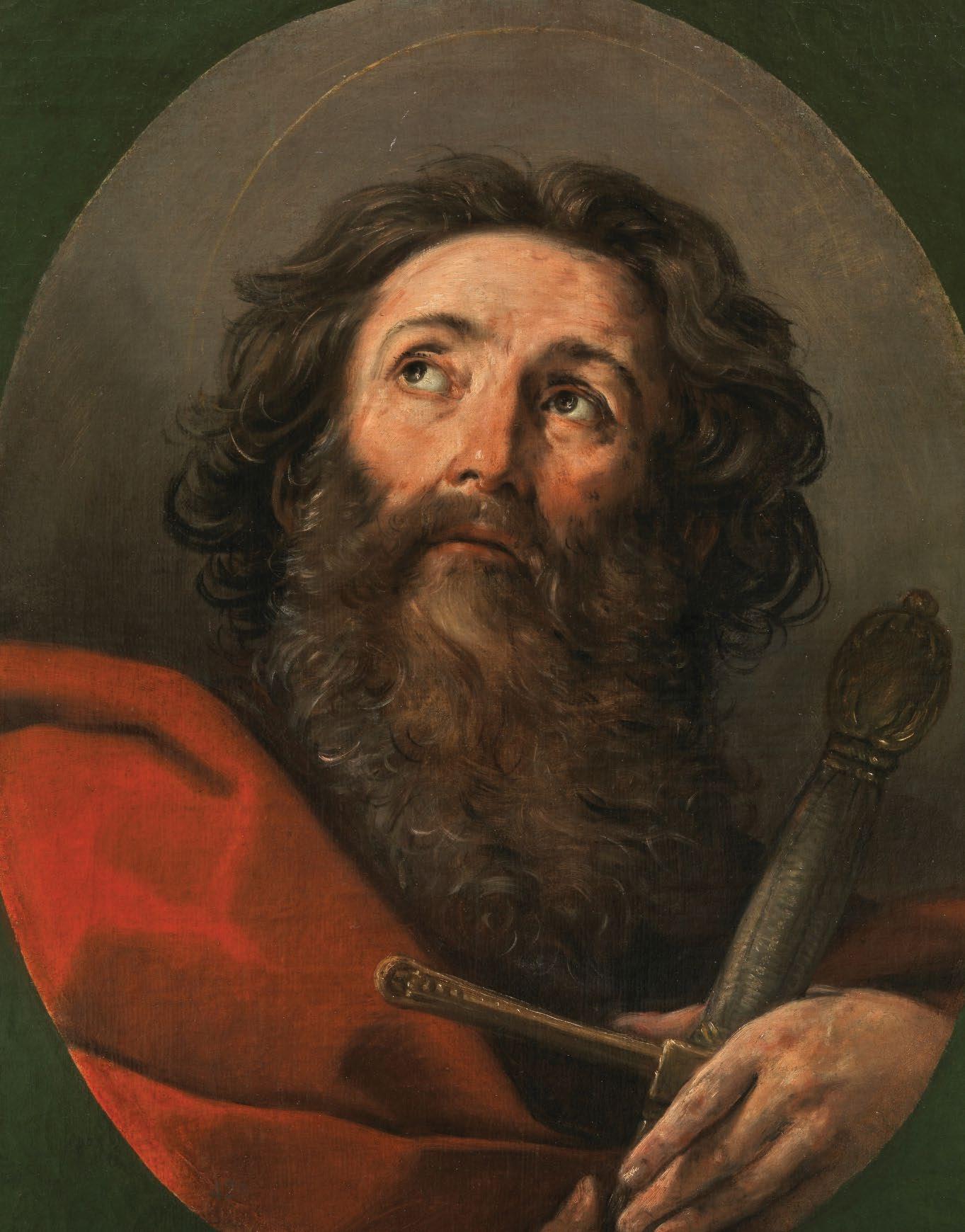
Cover Art: Saint Paul, Guido Reni, 1633 to 1634
IN THIS ISSUE


Albert Mohler, Jr.
Andrew T. Walker
Jeremy Pierre
by Jason Thacker
FOUNDATIONS
18 You Can’t Follow Jesus If You Don’t Trust His Word by Timothy Paul Jones
34 Why Doctrine Holds Us Together by Gregg R. Allison
44 Assurance in an Age of Anxiety and in Times of Crisis by Robert D. Jones IN CONVERSATION
56 A Conversation with Ben Cornish Forgotten No Longer: Equipping the Hidden Pastors of the Global Church
61 Office Hours with Daniel Stevens
65 Office Hours with Ayman S. Ibrahim
80 A Chapel Message from Eric Smith A Haunting Ending
But thanks be to God, who gives us the victory through our Lord Jesus Christ. Therefore, my beloved brothers, be steadfast, immovable, always abounding in the work of the Lord, knowing that in the Lord your labor is not in vain.
1 CO rin TH i A n S 15:57–58
Steadfast: Standing on Truth in a Faithless Age
by R. Albert Mohler, Jr.
We are living in an increasingly faithless age. Thankfully, this does not mean an age in which Christianity has gone into a final retreat, nor is it an age without many faithful churches and courageous Christian believers. But there is no question that authentic Christianity is confronted with headwinds of incredible hostility. The biblical mandate for Christ’s people is to remain steadfast.
The apostle Paul lists steadfastness among the marks of authentic ministry in 1 Timothy 6:11. The apostle James instructs believers to “let steadfastness have its full effect” in James 1:4 and, in the power of Christ’s resurrection from the dead, believers are instructed by Paul in 1 Corinthians 15:58 to “be steadfast, immovable, always abounding in the work of the Lord, knowing that in the Lord your labor is not in vain.”
This steadfastness is grounded in the objective truths of the gospel and the unchanging character of God. So, how can Christians miss this point?
We now stand right at the century mark of a great theological divide that transformed Christianity in the modern world. The 1920s were the high-water mark of what became known as the FundamentalistModernist controversy in America. This series of titanic theological battles reshaped the American theological landscape and left virtually no major denomination untouched.
What happened? Theological liberalism happened. Rightly understood, theological liberalism was an attempt to remake Christianity to retain the Christian faith’s intellectual credibility and cultural relevance in the modern age. The modernist movement in theology was rooted in the emergence of Protestant liberalism among German scholars, who in the second half of the nineteenth century began to argue that humanity had entered a new and bold intellectual age in which human reason, not divine revelation, would reign. In the wake of the Enlightenment, scholars attempted to reset Christian theology on a purely rational basis. Germany’s most
prominent New Testament scholar, Rudolf Bultmann, basically argued that people who use electric lights don’t believe in biblical miracles. In his view, it was that simple.
The liberals, who often called themselves modernists, sought to remake Christianity so that it would be credible in this modern age of autonomous reason and technological marvels. Charles Darwin replaced creation with evolution, Friedrich Nietzsche declared that God is dead, Freud replaced theology with therapy, and Karl Marx called for revolution in the godless age. A minor renovation of Christian theology was not going to work.
Just about one hundred years ago, Harry Emerson Fosdick, the most famous liberal preacher of the age, delivered the Lyman Beecher Lectures at Yale, the oldest endowed lectureship on preaching in the United States (the second-oldest, by the way, are the Broadus Lectures on Preaching at Southern Seminary). Fosdick was a self-declared modernist who believed in absolutely no permanent theological truths. He argued: “All theology tentatively phrases in current thought and language the best that, up to date, thinkers on religion have achieved; and the most hopeful thing about any system of theology is that it will not last.”1
Fosdick meant exactly what he stated. In his view, the Christian faith claims no fixed truths, no permanent doctrines, no eternal meaning. Everything is up for negotiation. In his Beecher lectures, Fosdick told young preachers that they had better understand that the world has changed. The old doctrines are outmoded and embarrassing. Fosdick asserted that the Bible is itself an embarrassment, and that is especially true of the Old Testament. How can you expect sophisticated modern people to come to your church if you preach such embarrassing nonsense?
1 Harry Emerson Fosdick, quoted in Bradley J. Longfield, The Presbyterian Controversy: Fundamentalists, Modernists, and Moderates (New York: Oxford University Press, 1991), 29.
It’s clear enough that Fosdick was determined to cast every old doctrine aside in order to remake the faith. In his view, the Bible was a great embarrassment and a pastoral problem. Congregations still largely saw the Bible as the Word of God, so the up-to-date preacher must take that fact into consideration. He has to say something about the Bible, but “a new approach to the Bible has been forced upon us.”2 Fosdick’s own view was clear enough: “We know now that every idea in the Bible started from primitive and childlike origins and, with however many setbacks and delays, grew in scope and height toward the culmination in Christ’s thought.”3 But don’t get the wrong idea—for Fosdick didn’t like the New Testament miracles, either.
The liberals recast Christianity for a new age, shorn of biblical embarrassments, crude doctrines, and troublesome miracles. The conservatives fought back, but generally lost control of the major denominations, especially in the northern regions. The conservatives and the liberals faced off and fought it out, and the conservatives lost—and lost big.
There is another really important part of this story that many people do not connect. Fosdick and so many of the liberals argued that it was Christian doctrine that would have to go so that Christian morality could survive. To put it a bit differently, they were sure that the biblical miracles would have to go, but that the ethical teachings of Christianity could continue. That assumption was ridiculous. They no longer believed that Jesus turned water into wine or that the waters of the Red Sea were parted, but they did believe that marriage was exclusively the union of a man and a woman and that divorce was morally wrong. They were really clear on the sinfulness of homosexuality. Within their own lifetimes, the foolishness of their assumption was made abundantly
2. Harry Emerson Fosdick, The Modern Use of the Bible (New York: Macmillan, 1924), 11.
3 Fosdick, The Modern Use of the Bible, 11.
clear. You know the story now: The churches that abandoned the Bible have also abandoned marriage, Christian sexual morality, and even the essential meaning of male and female. Throw out the authority of Scripture, abandon the faith once for all to the saints, and the rainbow flags will soon fly.
Historian Bradley Longfield observed that the liberals did not only redefine doctrine; they undermined the entire structure: “Liberalism not only departed from the historic Christian tradition on every fundamental doctrine but, most important, denied the value of doctrine itself.”4
The lessons from that century-old controversy will be found in many books—and have. But the main issue for Christians today is understanding the call to steadfastness in the faith. We must be steadfast as we stand on the inerrancy and full authority of the Word of God, on the faith once for all delivered, and on the power of the gospel preached to the nations.
And, I hasten to add, we must be joyously steadfast. Jesus Christ is Lord, Jesus saves, and the Word of God stands. In that light, we understand Paul’s command to be steadfast and immovable. Take your stand and hold it, and to God be the glory.
4 Longfield, The Presbyterian Controversy, 29.
Standing Firm in the Moral Storm: Ethics in a Culture That Won’t
Sit Still
by Andrew T. Walker
There is a particular kind of exhaustion that comes not from losing arguments but from watching the goalposts move mid-sentence. You make a careful case for human dignity grounded in the nature of things. By the time you finish, the terms have shifted so that aged and infirm individuals now qualify as less dignified. You defend the family. The word “family” gets quietly renegotiated to now include surrogate third-parties. You point out that biology is morally relevant. You are told, with a straight face, that biology is itself a social construction. The culture, it turns out, will not sit still long enough to be reasoned with. Norms constantly evolve beneath the flux of shifting moralities. I have been making these arguments long enough to recognize what is actually
going on here. What presents itself as a series of isolated cultural debates—over gender, sexuality, marriage, the beginning and end of life—is not, at the outer boundaries, a series of debates at all. It is one debate. Beneath the surface noise is a single, unified metaphysical revolt. We are not watching a society change its collective mind about a handful of contested issues. We are watching a civilization try to cut itself loose from the very conditions that made moral reasoning possible. The storm is not ethical at its root. It is ontological. It is a war about the nature of reality, and the ethical chaos is downstream of that.
You cannot understand where we are without grasping where we went wrong. Because we have gotten ontology wrong, our ethics quickly follow. Christian ethics, which is what this article is focusing on, is grounded in what is (creation) before it prescribes what we ought to do (moral action).
God establishes the moral architecture of reality in creation, orders goods according to His will, and restores human moral agency in Christ.
Western moral thought, at its best, rested on a coherent picture of the world. Though historians debate just how unified the past was under a single expansive Christian canopy, it is no overstatement to suggest that earlier times, at a minimum, understood reality as having a fixed structure. Human beings had a nature. That nature was oriented toward certain ends—not ends we invented, but ends baked into what we are, discoverable by reason, capable of supporting a common moral life. This picture did not appear from nowhere. It was the accumulated inheritance of Greek philosophy, Roman law, Jewish tradition, and Christian theology. Aristotle gave us the insight that things have ends built into their natures. Augustine rooted the moral order in love rightly directed. Aquinas showed that natural law is nothing less than participation in divine reason. The Reformers, Calvin especially, insisted that conscience retains the moral law even after the fall, because that law is not an ecclesiastical imposition but a feature of creation itself. Underneath each of these voices is a shared belief in ontological grounding.
What has collapsed in our moment is not simply Christianity’s account of ethics. It is the metaphysical architecture in our culture on which any serious ethics must stand. Abandon teleology, and you lose the concept of human nature as something given and normative; it mutates into a constructed, malleable concept. Lose human nature, and you lose the rational ground for human dignity. You are left with the naked assertion that human beings matter for reasons they cannot explain, which turns out not to be selfsustaining. What fills the vacuum is power. Rights become whatever the dominant class determines them to be—endlessly negotiated, revocable at will. Morality collapses into social consensus, elite fiat, or, failing that, individual preference. This is not progress.
It is a very old regression dressed in humanitarian vocabulary. It is moral barbarism.
What makes our specific moment so disorienting is not just the speed of the collapse but its inversion. Previous moral revolutions, for all their faults, typically claimed to be recovering something real. The abolitionists appealed to natural equality. The suffragists appealed to rational dignity. They were arguing about the proper application of principles, principles they took to be real and binding. The current revolution does not work that way. It does not appeal to nature; it rejects nature as a valid category. It does not appeal to reason; it treats reason with suspicion, elevating emotion and will as primary drivers. It does not seek to apply moral principles more consistently; rather, it seeks to expose them as instruments of oppression. And it prosecutes its case entirely in the language of compassion, liberation, and human flourishing, which makes it genuinely difficult to oppose without being heard as cruel. It is a deadly, toxic stew of weaponized emotionalism, contradictory rights-claims, legal positivism, and empty-headed relativism.
That is the storm’s most dangerous feature. It does not present itself as an attack on morality. It presents itself as the fulfillment of it. Every demand for capitulation arrives wrapped in the rhetoric of rights and inclusion. To hold the line is to be labeled a bigot. To stand firm is to be accused of causing harm. The inversion is nearly complete, to the point that secular progressivism exhibits its own fatigue that it cannot admit.
So, What Does It Actually Mean to Stand Firm Here?
First, you have to know what you are standing on Stubbornness is not a virtue unless it is stubbornness in the right direction. Christians must recover genuine confidence in an ontological foundation which posits the only coherent basis for moral realism—the
conviction, grounded in both reason and revelation, that moral truths are discovered, not invented. They are not the products of cultural negotiation. They correspond to reality: to the nature of things, to the ends for which human beings were made, to the order embedded in creation by a rational and good God. This is not a sectarian claim you have to accept on faith before you can evaluate it. It is a claim about the nature of nature, one that practical reason can assess and that the moral intuitions of virtually every human civilization have broadly confirmed up until twenty minutes ago.
The natural law tradition makes exactly this point, and Christians should be far more comfortable with it than most evangelical churches currently are. The Bible, along with our use of reason, posits basic human goods that are self-evidently worth pursuing and that provide rational foundations for moral norms. These are not merely Christian goods. They are human goods built, ultimately, from the wellspring of God’s creative authorship revealed both in visual revelation (creation order), verbal revelation (Scripture), and visceral revelation (conscience). They can be identified by anyone reasoning carefully about what it means to live well as the kind of creatures we are. Scripture confirms, deepens, and clarifies what reason can identify. But it does not operate in a vacuum, and Christian moral engagement in the public square is not about smuggling sectarian commitments into secular
debate. We are pointing to the moral grammar already written into the human situation. The fact that this grammar is increasingly illegible to people is a diagnostic symptom, not a refutation.
Second, and here I want to be blunt, holding the line requires genuine courage, not its various substitutes. Not aggression, not self-righteousness, not the performative outrage that passes for moral seriousness in online discourse. Actual courage: the willingness to say true things clearly when saying them carries real costs. And the costs are real. Speaking plainly about human nature, about the goods of marriage and family, about the sanctity of life from conception to natural death can disqualify you from polite company in ways that were, not long ago, unimaginable. You have to decide whether you believe what you say you believe.
Augustine wrote The City of God while Rome was burning. That is worth sitting with. He was not writing from a position of cultural confidence. He was writing in the middle of genuine civilizational collapse, watching the world he had known come apart. His response was not despair. It was not an accommodation. It was relentless intellectual clarity in naming what Rome had gotten wrong, tracing the theological roots of its failure, and articulating a more coherent account of justice and human flourishing. That is the model. Not unbounded optimism that things will necessarily improve. It
“That is the storm’s most dangerous feature. It does not present itself as an attack on morality. It presents itself as the fulfillment of it.”
is about clarity and accepting (and fighting against) what can be the tragedy of modern moral dissolution.
Third, standing firm does not mean standing still. Our ethics, though persuasive on their own, require active advance to be put into practice. The moral framework must be applied freshly because the challenges take new forms. The basic goods of human nature do not change. But gender medicine is different from anything Aquinas addressed. The ethics of artificial intelligence raises questions Calvin could not have anticipated in their particulars. The tradition must be brought forward, not revised to make it palatable, but genuinely applied to new situations with real rigor. The people who tell you the Christian tradition has nothing to say to contemporary problems have simply not done the work (or the reading).
One more thing, and this matters more than the rest: the gospel is not a supplement to Christian ethics. It is its ground. Natural law can establish that a moral order exists. It cannot explain why that order will ultimately prevail, or why it is worth defending at personal cost, or why human beings, broken and confused as we are, keep reaching for something that transcends the immediate gratification on offer. For that, you need the news that the author of the moral order has entered history, has borne the accumulated weight of human moral failure, assuaged divine wrath, and has walked out of a tomb a living, breathing human. The resurrection is not sentimentalism. The resurrection is the reason for Christian moral confidence because creation is not evacuated of substance or purpose.
Which means Christians engage this cultural moment with neither the panic of people who think everything is lost nor the naivety of people who think niceness will win the day. We engage with the sobriety of people who know the diagnosis is serious and the physician is sovereign.
The exhaustion is real. I understand it. My inbox and social media replies are dented by people who
do not like Christian ethics. But exhaustion usually signals that we have been fighting on the wrong terms, where treating cultural victories as the point rather than faithful witness as the point. We are not responsible for converting the culture. We are responsible for telling the truth about it, as clearly, charitably, and persistently as we can.
The culture will not sit still. The storm will not stop. If our ethics are true, which I believe they are, they are stubborn.
And the moral order inscribed into creation by a wise and good God has not moved. Stand on it.
God and the Transgender Debate: What Does the Bible Actually Say about Gender Identity?
by Andrew T. Walker
A compassionate, biblically grounded resource helping Christians understand gender identity, respond to transgender ideology, and engage culture with conviction and care.
“Our ethics, though persuasive on their own, require active advance to be put into practice. The moral framework must be applied freshly because the challenges take new forms.”
You Can’t Follow Jesus If You Don’t Trust His Word
by Timothy Paul Jones
“Well, I actually do think Jesus was probably raised from the dead,” the young woman measures each syllable carefully as she turns her gaze toward the ceiling. “I just don’t believe the Bible, and I don’t want to be a Christian if I have to believe everything in the Bible.”
This week’s student ministry gathering was winding down. A few minutes earlier, I had wrapped up a series on the Bible and sexuality with an exposition of Paul’s words to the Thessalonians: “For God has not called us to impurity but to live in holiness. Consequently, anyone who rejects this does not reject man but God, who gives you his Holy Spirit” (1 Thess 4:7–8 CSB). I closed my message with an appeal for anyone who had not yet trusted Jesus to believe the gospel. That’s part of what brought this ninth-grader to the edge of the stage after the service ended.
“So what is it that keeps you from wanting to become a follower of Jesus?” I ask. A year ago, this young woman had never set foot inside a church building. Now, she’s been
participating in student ministry for several months, and she’s even attended Sunday morning services a couple of times.
“It’s not that I don’t want to follow Jesus,” she replies quickly. “I’m great with following Jesus. I just don’t know that I can believe all the things the Bible says.”
“And what is it about the Bible you don’t want to believe?” I have already had a couple of interactions with this student, and I am fairly sure I know where the conversation is headed.
She draws a deep breath. “Like I told you before, I think I might actually be a guy even though I was born a girl. According to what you said tonight, the Bible isn’t in favor of being transgender. I think Jesus is alive. I just can’t believe what the Bible says if the Bible won’t let me be who I feel like I am.”
This young woman was willing to accept the miracle of the resurrection. Yet she also recognized that Christian faith requires more than mere assent. And so, despite her acceptance of the evidence for the resurrection, she was not ready to embrace Christian faith. She wanted to accept the parts of Scripture that described Jesus and his resurrection while rejecting
the sections that challenged her own confused selfconception. She was open to the possibility of a risen Jesus, but she did not want to submit to the moral teachings of Scripture. She’s not alone.
Less Skeptical about Miracles, More Skeptical about Scripture
An increasing number of people today seem to be willing to accept the miracles described in Scripture while rejecting the moral witness of Scripture. Of course, the tendency to accept the parts of God’s Word that please us while ignoring the portions we dislike is not new. That inclination is as old as sin. What has shifted over the past few decades has to do with which aspects of God’s revelation seem most scandalous to those whose hearts are not submitted to God. At one time, the miracles described in Scripture seemed like the most difficult texts for people to trust. In response, defenders of the Christian faith focused on providing evidence that Jesus was the risen Lord, not merely a human teacher. “You can shut him up for a fool, you can spit at him and kill him as a demon; or you can fall at his feet and call him Lord and God,” C. S. Lewis declared in the middle of the twentieth century. “But let us not come with any patronising nonsense about his being a great human teacher. He has not left that open to us. He did not intend to.”1
I am not suggesting that any of us should stop contending that Jesus was more than a great human teacher. Christians should persist in providing evidence for the living Lord and the miracles in Scripture. And yet, the miracles of Scripture may no longer be the aspect of Christian faith that seems the most scandalous. One result is that it is increasingly not enough to stop in our apologetics at anything less than the comprehensive authority of the entirety of Scripture.
1. C. S. Lewis, Mere Christianity (New York: Macmillan, 1952), 52.
According to a recent analysis of more than three decades of data, belief in miracles has increased in the United States, despite the rise of secularity.2 And yet, throughout the same era, people have grown more skeptical about the reliability of Scripture.3 A widespread rejection of biblical sexual ethics has been multiplying at the same time.4 People seem to have grown less skeptical about miracles but more skeptical about the Bible and its moral witness. Thus, in many Western contexts, it has become less offensive to confess that Jesus is the risen Lord than it is to declare that the cosmos created by Jesus is one in which gender does not change and same-sex marriages are not marriages at all.
If our defenses of the Christian faith never go beyond providing historical evidence for a miraculous event, we may be overlooking people’s most pressing doubts about the faith, which have less to do with the miracles and more to do with the Scriptures and Christian morals. Every Christian should be able to give evidence for the historicity of Jesus’s miracles and the resurrection, but we should never stop there. The lordship of the risen Jesus is inseparable from the truth and authority of God’s written Word.
2. Ryan Burge, “Do You Believe in Miracles?,” Graphs About Religion, September 19, 2024, https://www.graphsaboutreligion.com/p/do-youbelieve-in-miracles?utm_source=publication-search.
3. Only 36 percent of Americans agree “the Bible is totally accurate in all the principles it presents,” Jeffery Fulks et al., State of the Bible: USA 2025 (Philadelphia: American Bible Society, 2025), 149, 152. In 2022, a new high of 29 perecent of Americans said the Bible is nothing more than “fables, legends, history and moral precepts recorded by man,” Frank Newport, “Fewer in U. S. Now See Bible as Literal Word of God,” Gallup, July 6, 2022, https://news.gallup.com/pol l/394262/fewer-bible-literal-word-god.aspx.
4. Gregory Smith et al., “Religion and Views on LGBTQ Issues and Abortion,” Pew Research, February 26, 2025, https://www.pewresearch.org/religion/2025/02/26/ religion-and-views-on-lgbtq-issues-and-abortion/.
The Miracle of the Resurrection and the Authority of Scripture
Modern defenders of the Christian faith have rightly emphasized the strength of the historical evidence for the resurrection of Jesus. The apostolic eyewitnesses would have known if the resurrection of Jesus had been uncertain or untrue. These witnesses endured intense persecution for their claims about Jesus, and none of them changed their story. Since people will not typically suffer and die for a claim they know is a lie, their persistence in their profession all the way to the point of persecution and death provides strong evidence for the truth of the resurrection.
But these witnesses provided evidence for far more than the miracle of the resurrection.
The apostolic witnesses also linked the reality of the resurrection to the reliability of the written Word of God. Jesus did not merely die and rise again as a historical curiosity. According to one of the earliest Christian confessions of faith, Jesus died and returned to life “according to the Scriptures” (1 Cor 15:3–4). Simon Peter’s sermon on the Day of Pentecost likewise linked the resurrection of Jesus with the Scriptures, declaring that this miracle fulfilled the words of a psalm: “You will not allow your faithful one to see decay” (Ps 16:10; Acts 2:31).
The reality of the resurrection was inseparable from the testimony of the Old Testament. What’s more, the same early witnesses who wrote about the resurrection also described how Jesus himself insisted on the truth of these texts (Matt 12:38–39; 24:37–38; Luke 11:29–32; 17:2–627; John 6:32; 10:35). For Jesus, the truth-telling nature of God his Father guaranteed the truth-conveying nature of the Old Testament.
The truth of the New Testament is linked to the resurrection of Jesus, no less than the Old Testament. That is because every text in your New Testament originated with a Christ-commissioned eyewitness of the resurrection or with a close associate of one of these witnesses. Matthew’s and John’s Gospels
derived from two witnesses within the initial band of disciples. John also penned three epistles that carry his name, as well as the book of Revelation. Mark wrote his Gospel based on Simon Peter’s firsthand testimony about Jesus, and Peter himself wrote two epistles.5 Paul was commissioned by the risen Lord Jesus on the road to Damascus and produced thirteen letters addressed to churches and individuals. Although no one knows for certain who wrote the book of Hebrews, the writer was closely connected to Paul through Timothy (Heb 13:23). Luke, the author of the third Gospel and Acts, was one of Paul’s close associates (Col 4:14; Phil 1:24). The authors of the epistles of James and Jude were among the half-brothers of Jesus who saw him alive and trusted him as their Lord (Acts 1:14; 1 Cor 15:7; Gal 1:19). All of these texts could be traced to Christcommissioned witnesses of the resurrection, and they carried the authority of Jesus himself. Thus, Paul placed a teaching of Jesus from Luke’s Gospel alongside a quotation from the Old Testament and treated both texts as Scripture (Luke 10:7; 1 Tim 5:18). Peter likewise grouped Paul’s epistles with the Old Testament Scriptures (2 Pet 3:15–16). This pattern of recognizing divine authority in the apostolic writings persisted throughout the earliest generations of Christians. In the second century, a pastor named Serapion declared that his church received the writings of apostolic eyewitnesses “just as we receive Christ.”6
The resurrection produced Christ-commissioned witnesses, and these witnesses produced Spiritinspired texts that were received as the words of Christ himself. Thus, the miracle of the resurrection
5. For evidence of Mark as Peter’s interpreter, see the words of Papias in Eusebius of Caesarea, Historia Ecclesiastica, 3.39.15–16 as well as the description of the Gospels in Irenaeus of Lyon, Adversus Haereses, 3.10.5.
6. Eusebius of Caesarea, Historia Ecclesiastica, 6.12.3.
can never be unhitched from the authority of the written Word of God. To follow the risen Lord Jesus is to submit to the absolute authority of the triune God as revealed in Holy Scripture. If anyone claims to follow Jesus but does not trust the texts Jesus trusted and commissioned, that person is not actually following Jesus at all. And that’s the point I wanted to help the young woman in our church’s student ministry to see.
Declaring the Whole Truth of God’s Word
I pause and pray silently before continuing my conversation. This young woman is deeply confused, but she is also a precious image of God whose life will last past the rise and fall of all the kingdoms of this earth. I want her to hear God’s truth spoken not only with clarity but also with “gentleness and reverence” (1 Pet 3:16).
“You said you’re open to following Jesus, but you’re not ready to believe the Bible,” I say. “Would you be willing to look with me at what Jesus believed about the Bible he knew?” And so we begin looking together at how Jesus loved and trusted the Scriptures. Defenses of the Christian faith may start with the order of the cosmos or the historical truth of the resurrection or any number of other evidences, but our defenses should never end there. Until we declare the full truth and authority of God’s written Word, our apologetic will always remain incomplete. What Christians confess regarding the Scriptures is simply— in the words of Sinclair Ferguson—that “the Father does not lie to his Son. The Son does not lie to the Spirit. The Spirit did not lie to the apostles … and the apostles did not lie to us.”7 Thus, the foundation of our defense is nothing more or less than the truth-telling character of God himself.
7. Sinclair Ferguson, “Inerrancy and Pneumatology,” (speech given at The Inerrancy Summit, The Master’s Seminary, Los Angeles, CA, March 3–8, 2015).
Why Should I Trust the Bible?
by Timothy Paul Jones
An accessible case for biblical trustworthiness, addressing skeptical claims about Scripture’s accuracy, transmission, and authority with clarity and conviction.
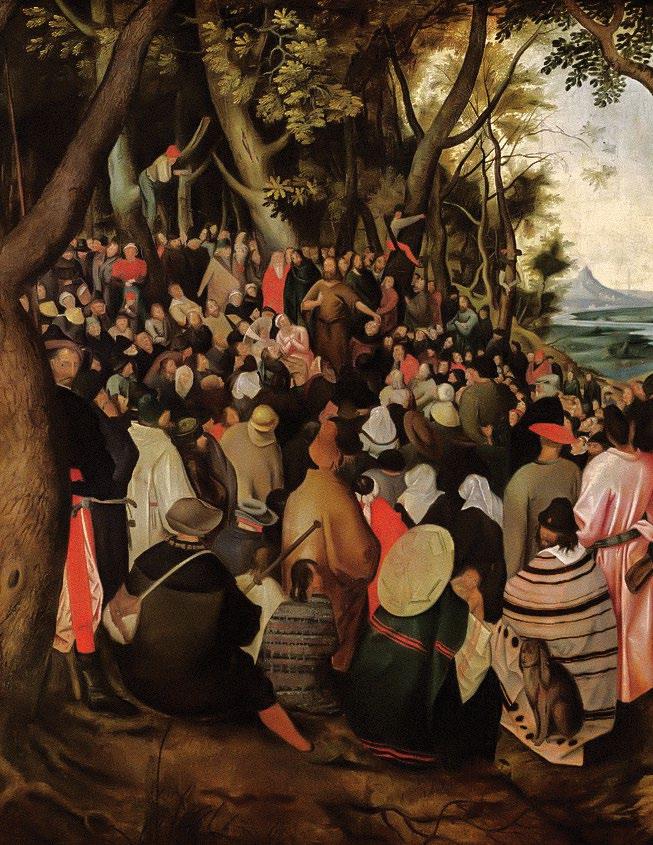
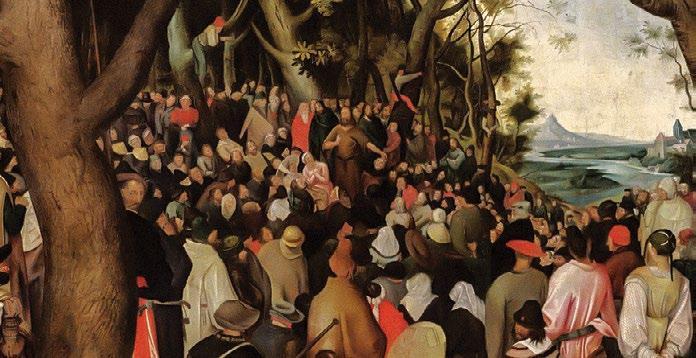
The Sermon of Saint John the Baptist, Pieter Bruegel the Elder, 1566
Patterns of Promise: How Typology Helps Us Read the Bible With Hope
by Jim Hamilton
In the midst of his discussion of the strong, the weak, Christian freedom, and not causing one another to stumble in Romans 14–15, Paul quotes Psalm 69:9 in Romans 15:3. From the way the statement is quoted, some have concluded that Paul presents the Lord Jesus as the speaker of the words of the Psalm.1 My concern with that interpretation arises from the fact that in Psalm 69, David seems to be speaking out of his own, personal, historical experience. Is there a way to affirm that David speaks of his own experience and that Paul correctly sees that what happened to David is fulfilled in Christ? In this short piece, I say there is a way, and that way is called typology.
Having cited the passage as being typologically fulfilled in Christ, Paul proceeds
1. See, for instance, Richard B. Hays, “Christ Prays the Psalms: Israel’s Psalter as Matrix of Early Christology,” in The Conversion of the Imagination: Paul as Interpreter of Israel’s Scripture, by Richard B. Hays (Grand Rapids: William B. Eerdmans, 2005), 101–18.
to inform the Christians in the congregation in Rome that the Old Testament was written for their instruction. We need to understand the typology that we, too, might be instructed by the Old Testament.
Paul writes in Romans 15:4, “For whatever was written in former days was written for our instruction, that through endurance and through the encouragement of the Scriptures we might have hope.”2 To understand how his words instruct and encourage us that we might endure in hope, we have to understand typology. Paul has just quoted Psalm 69:9 in Romans 15:3 to explain how the example of the Lord Jesus should inform the obligation of the strong in their bearing with the failings of the weak in the church in Rome (Rom 15:1–2). Typology helps us to understand how Psalm 69 is fulfilled in the Lord Jesus, setting us up to be instructed regarding how it applies to us as well.
In what follows, I will define typology before discussing Romans 15:1–7 in more detail.
2. Unless otherwise noted, all Bible translations in this article are from the ESV.
Defining Typology
Typology is God-ordained, author-intended historical correspondence and escalation in significance between people, events, and institutions across the Bible’s salvation-historical narrative. To explain this definition, I will unpack it phrase by phrase.
The phrase “God-ordained” points to the way that God sovereignly, providentially orchestrated history so that, for instance, there would be real similarities between people like Adam, Noah, Abraham, Isaac, Jacob, Joseph, Moses, David, and others, and that the patterns seen in the lives of these figures would culminate and be fulfilled when similar things happened to Jesus of Nazareth. These people really lived. These events really happened. And God made it so that patterns would be repeated and then later fulfilled.
Moving to the next phrase, “author-intended,” takes us into the realm of both the inspiration of the Holy Spirit and the intellectual labor of the biblical authors. We are affirming that God by his Spirit ensured that the human authors of Scripture, from Moses forward, noticed the parallels, correctly understood them, and wrote their accounts to draw attention to these parallels. This means that Old Testament authors like Moses, Isaiah, David, and the others fully understood that what they were writing was looking back in order to look forward. In the case of someone like David, he understood what Moses wrote in the Torah, saw the parallels, for instance, between Joseph, Moses, and himself, and knew that as he described his own experience, he was contributing an installment in the pattern of the righteous sufferer, fully expecting that pattern to be fulfilled in the one to come.
We will take “historical correspondence” and “escalation” together. Earle Ellis refers to these as the fundamental components of typology.3 Authors
3. E. Earle Ellis, foreword to Typos: The Typological Interpretation of the Old Testament in the New, by Leonhard Goppelt, trans. Donald H. Madvig (Grand Rapids: William B. Eerdmans, 1982), ix–xx.
forge historical correspondence by the reuse of key terms and phrases, by the quotation of whole lines from earlier material, and by repetitions in sequences of events—the same things happen in the same, or almost the same, order. As these repetitions occur, a growing sense of expectation, or escalation in significance, builds as the pattern happens over and over, causing the audience’s expectation of fulfillment to grow.
Typology tends to focus on parallels between people, such as those named above (Joseph, Moses, David, Jesus). It also looks at events, such as the exodus, which is previewed in the lives of Abraham and Jacob, then happens in the lifetime of Moses, and then is used to forecast what God will do at the conquest and beyond, culminating in the consummation of salvation. We also see parallels between institutions, such as marriage and the Levitical sacrificial system.4
As an example of the kind of thing we have described, let’s consider the God-ordained, authorintended typology that David built into Psalm 69, which Paul correctly sees fulfilled in Christ, even as it also gives instructions to Christians in their walk of faith in the life of the local church.
Psalm 69 in Romans 15
In Psalm 69:1–4, David likens the difficulty his enemies cause him to the Noahic floodwaters. In verse 5, he confesses his own folly and sin, before praying that the believing remnant would not be put to shame because of him in verse 6. In view of what Paul will say in Romans 15, note David’s concern for the good of God’s people.
Then, in verse 7, he asserts that his devotion to the Lord has resulted in those who hate the Lord heaping reproach upon him. Verse 8 details how the
4. For elaboration of virtually everything in this piece, see James M. Hamilton Jr., Typology: Understanding the Bible’s Promise-Shaped Patterns, How Old Testament Expectations are Fulfilled in Christ (Grand Rapids: Zondervan Academic, 2022).
rejection extended to his own brothers, recalling both the way that Joseph’s brothers sold him into slavery and the way David’s brothers answered him harshly when he arrived to check on them. In John 7, the brothers of the Lord Jesus are not on board with his program.
The second line of verse 9 is the part quoted in Romans 15:3, and the first line of verse 9 is quoted in John 2:17. The verse reads, “For zeal for your house has consumed me, and the reproaches of those who reproach you have fallen on me” (Ps 69:9). In context, David explains the hostility of his enemies and how his desire to build the temple, his zeal for God’s house, seems to have dominated his life and thought. As a result, whose who were eager to heap reproach on the Lord made David the target for their hatred of God.
David was zealous to build the temple, and that zeal prompted the reproaches of the God-haters in his day. Jesus was zealous to build the fulfillment of the temple, the church, and that zeal prompted the reproaches of the God-haters in his day.5
David understood and presented himself as an installment in a pattern already familiar from the experiences of Joseph and Moses. Jesus fulfills the pattern.
Romans 15:1–7
We are now in a position to understand how Paul quotes Psalm 69:9 in Romans 15:3. Paul addresses what seem to be differences in scruple between Jew and Gentile Christians in Romans 14. The strong in faith appear to be those who understand that they have freedom in Christ from the constraints of the Old Testament law. The one who is weak in faith, by contrast, “eats only vegetables” (Rom 14:2), “esteems one day as better than another” (14:5), and continues to regard certain things as “unclean” (14:14). Paul
5. For further discussion of John 2, see James M. Hamilton Jr., In the Beginning Was the Word: Finding Meaning in the Literary Structure of the Gospel of John (Grand Rapids: Baker Books, 2025).
identifies himself with the strong “We who are strong” (15:1), and so “esteems all days alike” (14:5) and knows and is persuaded in the Lord “that nothing is unclean in itself” (14:14).
By writing in this way, Paul indicates that he thinks the believers in the congregation at Rome need to move from a position of weakness to a position of strength. They should fully embrace the new covenant realities about all of life being an opportunity to be a living sacrifice (Rom 12:1–2), making every day holy to the Lord (14:5), and believing that Jesus declared all foods clean (Mark 7:19; cf. Acts 10:15; Heb 7:12).
As the weak are growing in this strength, Paul asserts in Romans 15:1, “We who are strong have an obligation to bear with the failings of the weak, and not to please ourselves.” These hangups about certain days and foods are regarded as “failings.” When Paul says the strong should “bear with” them, he indicates that rather than excommunicate, ostracize, or shame the weak, the strong should carry the weak forward. The strong have a responsibility to help the weak move toward strength, which in this case involves living out the implications of the new covenant. The strong are to help the weak rather than please themselves. Pleasing themselves would take the form of enjoying all the freedoms of the new covenant with no concern for the sensitive consciences of brothers and sisters in Christ raised under the Mosaic Covenant. These Jewish background believers understandably need time and instruction to grow comfortable with new covenant freedom from the law, and the strong are to carry them forward to that freedom rather than disregarding them while indulging their own freedom.
Paul explains in Romans 15:2 that what he urges the strong to do actually fulfills the law (love God and neighbor, Rom 13:10; cf. Matt 7:12), so the strong should not please himself but “his neighbor for his good, to build him up.” Paul expects the strong to build positive relationships with people weaker in faith, that they might help those weaker in faith move
toward the good. Building up one’s neighbor means helping that weak neighbor get to the strong position of freedom in Christ.
The next step in Paul’s argument comes in verse 3, where he asserts that the strong should carry the weak forward, building them up in faith for their good, because to do so is to be Christlike. Paul explains in Romans 15:3, “For Christ did not please himself, but as it is written, ‘The reproaches of those who reproached you fell on me.’”
The strong should not please themselves by indulging their freedoms without reference to helping the weak toward freedom (Rom 15:1). Rather he should please his neighbor for the neighbor’s good, to build him up (15:2), because Christ did not indulge all his freedom and gladness but took on flesh and came to suffer and save to carry us forward to freedom and strength for our good (15:3). The Lord Jesus could have remained in heaven in the fulness of glory and the bliss of his fellowship with the Father and the Spirit, worshiped by the heavenly hosts. Instead, he humbled himself and became obedient unto death on a cross (Phil 2:5–11).
By the quotation of Psalm 69:9, Paul asserts that in the same way that David became the focal point on earth for the hatred of God’s enemies, so the Lord Jesus became the focal point on earth for the hatred of God’s enemies. This aligns the suffering of Jesus with the suffering of all the faithful from Abel to Zechariah, but particularly with David, who presented himself in the Psalms after the pattern of Joseph and Moses.
David’s experience was an installment in the pattern of the righteous sufferer, and the Lord Jesus fulfilled that typological pattern. This is what Paul means to communicate by quoting Psalm 69:9 in Romans 15:3.
When Paul proceeds to say in Romans 15:4, “For whatever was written in former days was written for our instruction, that through the encouragement of the Scriptures we might have hope,” he essentially
says what Matthew presents Jesus saying: “Blessed are you when others revile you and persecute you and utter all kinds of evil against you falsely on my account. Rejoice and be glad, for your reward is great in heaven, for so they persecuted the prophets who were before you” (Matt 5:11–12).
David suffered for his devotion to God, and he did this for the benefit of God’s people; things worked out well for him. Jesus suffered for his devotion to God for the benefit of God’s people, and things worked out well for him. Knowing these patterns from the Scriptures gives hope to God’s people that things will work out well for them as well, and that hope encourages them, powering their endurance through the difficulties of carrying the weak that they might become strong.
Typology: Understanding the Bible’s Promise-Shaped Patterns
by James M. Hamilton Jr.
A rigorous, rewarding guide to biblical typology, tracing Old Testament promise-patterns through their organic development and ultimate fulfillment in Jesus Christ.
Scholarship Worthy of the Truth
Find the doctoral degree that strengthens you and your church from Southern Seminary.
SBTS.EDU/DEGREE-FINDER
When Doubt Comes: Shepherding the Weary and the Wandering
by Jeremy Pierre
“And have mercy on those who doubt” (Jude 11).
The Discovery of Doubt
Around here, faith isn’t easy. You discover this when you get into pastoral ministry, when you suddenly find people letting you behind the social curtain they put up in most situations. For some reason not clear to you, and probably not to them either, people give you access to the quiet part of their thinking. With you, they say the quiet part out loud, the unsanctioned things that feel out of place at church. Things about God and life and the strange movements that can happen in the soul. They talk to you about doubt.
You might expect doubt in a baby believer or a college student at a state school. But pastoral ministry—or really, any kind of ministry to people—will make you realize that doubt appears in a thousand forms, sneaking into all kinds of people. Established businessmen, high school athletes, first-time moms. Even senior saints who seem to glow
with godliness. Even they may grab your forearm and tell you the dark things.
I think that was the single most surprising thing to me early on. Men and women who appear formidable to everyone else often do not see themselves that way. I remember feeling unease as older saints, their faces lined and leathered with proof of their endurance, suddenly got wet in the eyes, looking at me pleadingly. I, a young man with my springtime faith, listened as these wintered saints disclosed their doubts and uncertainty. Those winters had gotten into them. It was difficult for me to understand, looking out at life through the overconfident eyes of youth.
Doubt is temporary unbelief. That’s why it can stalk genuine believers. It’s not a permanent state of disbelief. It’s not an outright refusal to acknowledge that God speaks only what is true because he himself is true. It’s not the fixed position of a heart void of faith, dead from the life of God. But, boy, can it feel that way sometimes. The strongest and longest Christians, who have overcome impossible odds time after time, can still fall into seasons of doubt, seasons when it’s hard to take God at his Word.
God’s Mercy on Those Who Doubt
That’s an uncomfortable truth, isn’t it? That even the mighty ones are not so mighty. Believers never escape their weakness. They never grow past their need— their right now need—for God to sustain their faith. And have mercy on those who doubt. Jude’s words come as an unexpectedly soft close to a letter that up to that point feels more like a closed-fist punch. This short letter is a solid jab to the chin. The whole letter is twenty-five verses, the majority of which are on the offense against a certain kind of danger. Jude warns believers of creepers and deceivers, of scoffers and rebels who are trying to unseat their faith. His descriptions of these bad guys are punchy, insightful, and poetically brilliant. It lands right on the chin. But notice whose chin. His fist is aimed not at the doubting believer, but at the opposing forces that wear them down and put them in a weakened state, so that doubts find their way through. His main exhortation to believers, repeated and emphasized, is to contend for the faith. Yes, that’s the faith once for all delivered to the saints —an identifiable confession that Jesus is the Christ, against all other claims. But Jude’s purpose in this short letter is not to spell out the exact contents of this doctrine. He left that to more loquacious writers, like Paul and Peter. Rather, he uses his limited ink to emphasize that each believer must personally guard their belief against these opposing forces. Contend for your faith. Strive against anything that opposes your own trust that Jesus is who he says he is. Fight against your doubts.
Keeping the Faith is Overwhelming, and Christians Get Weary
Jude’s main exhortation in this letter has sweat behind it. His opening command “contend for the faith” (v. 3) is echoed in the twin command to “keep yourselves in the love of God” (v. 21), which involves “building yourselves up in your most holy faith” (v. 20), “praying in the Holy Spirit” (v. 20), and “waiting for the mercy
of our Lord Jesus Christ that leads to eternal life” (v. 21). Fighting, guarding, building, praying, waiting. There’s sweat behind these verbs.
But this sweat is not the strain of simple labor. It is a strain against something. The whole letter is about the opposition that must be resisted. Hungry, grasping opponents who work their way in and work your faith down. Jude calls them creepers, perverts, sensualists, deniers of the Master (v. 4). They were rebellious like the generation delivered from Egypt, rebellious like the angels who followed Satan on his villainous arch, rebellious like Sodom and Gomorrah in their corruption (v. 5–7). They claim authority that the archangel Michael himself would not dare to claim (v. 8–9). They are brash, harsh, and unrelenting. They demand that their new way is best, against the old way of believing.
It is exhausting to contend all the time. Christians find themselves in one battle after another, against a world that seems to manufacture bad ideas— new ways of getting around the old truth that Jesus Christ is Master and Lord. Think for a moment of the innumerable messages of unbelief shelling the ears of believers in the world they occupy. It wears on a believer’s soul. It saps their strength for fighting back. It makes them weary.
Keeping the Faith is Tedious, and Christians Can Wander What makes this constant shelling all the worse is that their message appeals to the very weariness it creates. It offers pleasure and rest from the strain of holding fast. This is by design. The hostility of the world wears believers down, then offers them an escape from their weariness. It makes them fight for what they believe, but then appeals to the darker comforts they secretly want. And this strategy is made all the more effective because it is not usually a full-frontal assault but a steady artillery pounding. There is no thrill of battle, no assurance that, as intense as the fighting is, at least it will be over soon. No, these opponents let believers
sit in their muddy trenches, tediously bombing them every so often throughout the night.
Contending for the faith is boring like that. It is as thrilling as keeping your feet dry and your head down. Opponents know this, and that’s why their appeal is all about personal desire. Jude describes their motivation as “following their own sinful desires” (v. 16) and “their own ungodly passions’” (v. 17). They are like animals living on instinct, urging believers to join them (v. 12). Like Cain and Balaam and Korah (v. 11), like the wicked men proliferating across the land in Enoch’s day (v. 14–16), these are grumblers, malcontents, following their own sinful wants.
And sometimes believers wander after them. The message of the opponent gets into them—the message of discontentment, dissatisfaction with their natural place, falling into unnatural desire. They begin to navigate not by the fixed morning star of Jesus Christ, but by the “wandering stars” (v. 13) of false desire.
When Christians are Weary or Wandering, Doubts Find Their Way In
This is the deadly brilliance of the opponents’ strategy. Wear believers out and get them to wander, then their defenses thin out. Those thin spots are where doubts can enter. As I said earlier, doubts are temporary unbelief. They are the misgivings a believer has about the Lord and about what the Lord has said. In short, it is to distrust God’s character and God’s Word. Doubts are conditioned by suffering (like weariness) and by sin (like wandering).
Didn’t Simon Peter display both in the mighty presence of Jesus? On one occasion, having toiled to fish all night with nothing to show, Peter was nevertheless commanded by Jesus to lower his nets one more time. At Jesus’s word, Peter was so overwhelmed with success that his boat began to sink. His response? “Depart from me, for I am a sinful man, O Lord” (Luke 5:8). He feared the presence of
this man who was God. Why? He was made suddenly, sharply aware of his sin.
On another perhaps more famous occasion, Peter saw another miracle of Jesus as he walked across the sea in the middle of a windstorm. The disciples were terrified—first of the storm, then of Jesus himself. Nevertheless, Jesus commanded Peter to join him out on the water. “But when he saw the wind, he was afraid, and beginning to sink he cried out, ‘Lord, save me’” (Matt 14:30). Peter feared the magnitude of those opposing forces. Why? He was suddenly, sharply aware of his weakness.
Doubts gain their place in our hearts when we see any opponent as more prominent than our Lord. Peter would eventually learn that his sin was not stronger than his gracious Master. And he would also learn that the raging water was no match for the One who called him. But the Lord used the presence of doubt in Peter’s heart as an opportunity to teach him something about their relationship.
Doubts Become an Occasion for Believers to See Again What God Contributes to the Relationship Versus What They Contribute
Sometimes the chronological order of things is of the utmost importance. Such is the case in Jesus’s response to Peter sinking faithlessly into the sea.
“Jesus immediately reached out his hand and took hold of him, saying to him, ‘Oh you of little faith, why did you doubt?’” (Matt 14:31). Jesus’s first response to Peter’s doubt was to reach out and take hold of him. His second was to point out his doubts. In pastoral ministry, we must never reverse that order.
Jude follows this same pattern. You see it when you step back and look at the whole letter. At first glance, it seems like the main thrust of the letter is to exhort believers to contend for the faith and to keep yourselves in the love of God. To keep is to hold onto. It seems that Jude’s main concern is that they hold onto God’s love. But a second, more lingering look at
the letter makes something else more prominent. He begins with, “To those who are called, beloved in God the Father and kept for Jesus Christ” (v. 1) and closes with “Now to him who is able to keep you” (v. 24). To keep is to hold onto. The same verbal concept, but with a different actor. Not us, but God.
What God teaches believers through their doubting is this: “I keep you. You don’t keep yourself. So take me at my word.” The difference between how God relates to us and how we relate to him is simple. His love for us is the cause, our love for him is the effect. In other words, his keeping us is the cause of our keeping faith with him. It is never the reverse. We contribute weakness and doubt, while God contributes strength and certainty. The Lord never wearies and never wanders in his love for us, though we often do so in our love for him.
Even faith is a gift. To anyone who asks, faith is a gift sent from a generous Father, secured by the faithful Son, delivered by the present Spirit (Luke 11:10–13). Remember, doubt is temporary unbelief. It is not the permanent state of a believer, not because of anything the believer himself produced.
Shepherding the Weary and the Wandering is Best Done With the Stubborn Voice of Mercy It always blows me away that the mighty disciples, on whose testimony Jesus has built his church, had doubts among them even after seeing the resurrected Jesus. The end of both Matthew’s and Luke’s Gospels note this. When Jesus came and stood among his chattering disciples, he said, “Why are you troubled, and why do doubts arise in your hearts?” (Luke 24:38). Even the verse directly preceding the Great Commission that ends Matthew’s Gospel says, “And when they saw him they worshiped him, but some doubted” (Matt 28:17).
Jesus’s response to doubt in both situations is to draw their attention not primarily to their failure, but to his success, from their weakness to his strength,
from their insufficiency to his sufficiency. Look, see my hands and feet. It’s me. I won life back for you, just like I said. All authority in heaven and on earth is mine. I am with you. Trust me.
That’s what mercy is. It is Jesus Christ disclosing himself to us, and stubbornly insisting that his love is the main issue at hand, not our weariness or our wanderings. To shepherd the weary and the wandering, pastors need to speak with the same voice.
The (Re)Discovery of Mercy
Around here, faith isn’t easy. The biblical writers knew this. That’s why they insisted on mercy for those who doubt. Even many-wintered saints, who ought to know by now the magnitude and unchangeability of God’s love for them, sometimes forget. The opposition wears them down. Winter gets into them.
What they need is mercy. Mercy in the same form as what Jesus gave: a stubborn insistence that our confidence must be God-to-us, not us-to-God. This is the very thing that strengthens faith and obedience. To rediscover the astonishing truth that God’s love, like the sun in winter, has not lost a single degree in its measureless output of heat. The change was never in God. The change is only in a world tilted away from him. That’s what winter is.
But the sun burns on, untouched by the tiltings of this world. That’s true for young believers fresh in their discovery of mercy. That’s true of aging believers leaning heavily on that old mercy. All of us rely on God’s insistence to do what he intended before the beginning: to welcome his children into the eternal summer of his presence.
“The difference between how God relates to us and how we relate to him is simple. His love for us is the cause, our love for him is the effect. In other words, his keeping us is the cause of our keeping faith with him. It is never the reverse. We contribute weakness and doubt, while God contributes strength and certainty.”
Why Doctrine Holds Us Together
by Gregg R. Allison
Steadfast, coming from the Old English word stedefæst, joins stede, referencing “place,” and fæst, signifying “fixed.” A warrior who was stedefæst in battle “stood fast” or remained “fixed in place” as the combat raged around him. Transposed to a description of a person’s character, steadfastness became the virtue of fierce loyalty, unswerving devotion, and staunch faithfulness.
We Christians are exhorted to “continue in the faith, stable and steadfast, not shifting from the hope of the gospel that you heard” (Col 1:23). As the warrior of old stood “fixed in place” in battle, so too should we, with this promise if we do: “Blessed is the one who endures trials, because when he has stood the test he will receive the crown of life that God has promised to those who love him” (Jas 1:12 CSB).
Sometimes it’s hard to be steadfast. Not only do trials disturb us, but so do temptations that loom large and distractions that waylay our attention from God and his ways. Doubts may rise as we wonder if God
really loves us (when we’ve lost a job or had a health scare), forgives us (after the umpteenth time we’ve committed that same sin), and providentially cares for us (when our world seems out of control and our culture pressures us to conform to its craziness). Perhaps we look for security in financial stability or by chasing after more things to minimize the uncertainties and fears.
There is a better solution: Christian doctrine provides unity, clarity, and steadfastness for Christian faith in the midst of doubt and insecurity. Specifically, important doctrines—election, union with Christ, justification, adoption, perseverance, aspects of the doctrine of Christ, aspects of the doctrine of the Holy Spirit, and aspects of the doctrine of Scripture— cohere together and thus provide the foundation for our assurance of salvation. If we ground our assurance of belonging to Christ now and forever in key truths— about God, his work in our life, and his words of promise in Scripture—then we will stand our ground when we battle trials, temptations, doubts, and fears. Steadfastness in faith and assurance of salvation await us.
Election
God has chosen us in Christ “before the foundation of the world” (Eph 1:3). This is his gracious election, by which the Father marked us out eternally, “according to the purpose of him who works all things according to the counsel of his will” (Eph 1:11). Based on his sovereign plan and grace, election has nothing to do with our good works or merits. Not being dependent on us, his choice endures forever and cannot be reversed; we can’t undo what he has declared. How we rightly respond is two-fold: we live lives that are holy and blameless (Eph 1:4), and we engage in “the praise of his glorious grace, with which he has blessed us in the Beloved” (Eph 1:6).
Union with Christ
God has united us with Christ, which is his mighty work to join us in eternal covenant with his Son, who has accomplished our salvation. Through this union with Christ (Rom 6:1–11), the Father grants us every benefit of salvation: grace, regeneration, redemption, eternal life, justification, sanctification, and glorification. As Christ dwells in us, and we dwell in him (John 15:1–5; Gal 2:20), this union is unshakeable and everlasting; we never have to fear that the bond will be broken.
Justification
God has justified us, which is his declaration that we are not guilty but righteous instead. Through the atoning sacrifice of Christ—he died in our place, bearing the penalty of sin for us—we are forgiven, never having to fear condemnation (Rom 8:1). Through his perfect obedience—he lived a holy life under God’s law—we are considered righteous before God because Christ’s righteousness is credited to us. Such justification has nothing to do with merit or earning God’s favor by good works; rather, it is received by faith in him (Rom 3–8; Gal 2:15–3:29). This divine declaration stands forever.
Adoption
God has adopted us so that he is our Father and we are his children. Through adoption, God has taken us as sinful people—enemies who were alienated from him—and joined us as beloved children into his family forever. As children of God, we “were born, not of blood nor of the will of the flesh nor of the will of man, but of God” through believing in Jesus (John 1:12–13). This means that our adoption cannot be undone but endures forever.
Perseverance
God steadfastly holds us in Christ throughout our entire life. Perseverance is God’s mighty act of constantly guarding us by his power, through our ongoing faith, until our salvation is complete. This promised inheritance “is imperishable, undefiled, and unfading, kept in heaven” (1 Pet 1:4); thus, it is absolutely secure and guaranteed. Divine power dependably protects us from overwhelming sin, temptation, demonic attack, and persecution; thus, we cannot ultimately abandon the faith and lose our salvation.
Aspects of the Doctrine of Christ: Pledges and Prayers
Jesus Christ engages in two ongoing works that contribute to the steadfastness we desire. First, he unfailingly pledges to hold on to us, never lose us, never cast us out, and give us eternal life. This is the purpose for which the Father sent the Son. As Jesus urged, “this is the will of him [the Father] who sent me, that I should lose nothing of all that he has given me, but raise it up on the last day” (John 6:37–40; cf. 10:27–30). Second, Jesus unceasing prayers for our ongoing salvation. This is a function of Jesus the High Priest: because “he holds his priesthood permanently, because he continues forever. Consequently, he is able to save to the uttermost those who draw near to God through him, since he always lives to make
“A significant contributing factor to such ongoing dedication to the Lord and continuous devotion to his will for our lives is Christian doctrine; it dissipates doubt and arouses assurance of salvation.”
intercession for them” (Heb 7:23–25; cf. John 17:24). Jesus will fulfill his pledge and continue to pray for us, so we can be confident that we will experience eternal salvation.
Aspects of the Doctrine of the Holy Spirit: Sanctification and Sealing
The Holy Spirit also engages in ongoing works that foster our steadfastness. The first is his role in sanctification, which is the continuing work by which we undergo progressive transformation into Christlikeness. Crucially, this development features a cooperation between the Spirit and us, as Scripture urges: “work out your own salvation with fear and trembling, for it is God who works in you, both to will and to work for his good pleasure.” Our role in sanctification—working out our salvation—entails understanding and applying Scripture (Ps 1:2–3), praying (1 Thess 5:16–18; Phil 4:6), worshiping regularly with other believers (Heb 10:24–25), mortifying sin (Rom 6:12–14), and yielding to the Spirit (Gal 5:16–26; Eph 5:18). As the divine agent in our sanctification, the Spirit’s role entails guiding us (Rom 8:1–17), praying for us (Rom 8:26–27), producing Christlike character (Gal 5:22–23), stimulating unity among us (Eph 4:3), and kindling hope (Rom 15:13). Importantly, the work of the Spirit is the source of and empowerment for our work in sanctification. Thus, though our feeble efforts and troublesome failures may result in halting and uneven progress
toward conformity to Jesus Christ, the Holy Spirit will never abandon us but will eventually bring about the fullness of our salvation.
The Spirit’s second work is sealing by which he marks us as belonging to God forever (Eph 1:13). Specifically, this work is described as (1) a downpayment, similar to earnest money that a homebuyer gives as a pledge that the remainder of the purchase price will be eventually paid (Eph 1:14); (2) the firstfruits, like the initial measure of a harvest collected in anticipation of the remainder still to be reaped (2 Thess 2:13); and (3) the guarantee of salvation that will be completed at Christ’s return (2 Cor 1:22). These pledges offer us great confidence. The Spirit’s second work is the assurance of salvation, as “the Spirit himself bears witness with our spirit that we are children of God” (Rom 8:16). Deep down in our core, we know that we are and will remain Jesus’s disciples.
Aspects of the Doctrine of Scripture: Promises
The Word of God further promotes our steadfastness. Specifically, Scripture offers us many promises of eternal life, such as the following: “And this is the testimony, that God gave us eternal life, and this life is in his Son. Whoever has the Son has life; whoever does not have the Son of God does not have life. I write these things to you who believe in the name of the Son of God, that you may know that you have eternal life” (1 John 5:11–13). By faith, then, we trust
the promises of God’s Word and receive assurance. As we rely by faith on God’s oath and unchangeableness, we know with certainty that his purpose for us is unfailing, and thus we receive “strong encouragement to hold fast to the hope set before us” (Heb 6:17–18).
In this regard, it is not just a matter of telling ourselves or others, “just believe” or “just trust God.” Often, we and others truly desire to believe but find it difficult to do so. So here is another promise from Scripture: “faith comes from hearing, and hearing through the word of Christ” (Rom 10:17). Through consistent and constant attention to God’s Word for ourselves—and by our encouragement of others to do likewise—faith in his promises will be ignited and assurance of his ongoing work will exponentially grow.
Conclusion
Like the warriors of old who stood “fixed in place” in battle, so too can we be steadfast. A significant contributing factor to such ongoing dedication to the Lord and continuous devotion to his will for our lives is Christian doctrine; it dissipates doubt and arouses assurance of salvation. Even more significantly than grounding our human steadfastness in doctrines such as election, justification, the pledges and prayers of Christ, and the promises of Scripture, God himself, who is perfectly steadfast, is our unshakeable foundation. He is steadfast in love and unwavering in faithfulness (Ps 25:10), even to the point that “if we are faithless, he remains faithful—for he cannot deny himself” (2 Tim 2:13). These divine attributes prompt us to trust him and be thankful (Ps 13:5), and to rely on his constancy and power to strengthen our resolve to stand fast in the faith (Heb 12:1–3).
Being Christian in a World of Distractions
by Jason Thacker
For years, I received a weekly notification on Sunday morning around 9:00 a.m. on my iPhone. This specific notification was quite revealing about all of the things I did that week, and also, by default, what I failed to do as well. I am still not sure why that message always came right about the time my family and I were heading out of the house on the way to gather with our local church, but it was always a bit jarring to me, especially as it seemed that I could always hit a high score each week. For some reason, that notification stopped arriving on Sunday morning, but I now have a widget on my home screen with a detailed graph of exactly how I spent my time on my devices that week.
The screentime settings on my iPhone have long been a useful set of tools for me to think about how and where I have been spending time. Obviously, it does not show everything I do during a week, but it does reveal the amount of time I have often been distracted from some of the most important things in life. This screentime feature can
show you which apps you use the most, how many times you pick up your phone, and the exact time you spend on specific websites. For me, this information is a helpful barometer for how my week has been and what is going on, as our screentime usage can at times correspond in some ways to the stresses, anxieties, and pressures that we each face. These devices are not in themselves bad, but often do distract us and can become forms of escape.
These little devices never really leave our side and can easily become tools of distraction as we seek to avoid our ever-growing to-do list, put off certain conversations, numb ourselves from the challenges we face in our days, or simply disconnect from the immediacies of life and “relax” a bit. Ironically, though, additional screentime often has the reverse effect, as our hearts, minds, and souls are rarely calmer and steadied by mindless scrolling. We tend to be more anxious, isolated, and distracted as a people than ever before, despite the promises of how these tools were going to revolutionize our lives for the good.1
1. Jonathan Haidt, The Anxious Generation: How the Great Rewiring of Childhood Is Causing an Epidemic of Mental Illness (New York: Penguin Press, 2024).
“All technologies, especially digital ones, can become ways we amuse and distract ourselves from the people and things that truly matter, whether that be our relationship with God, caring for our families and friends, or even how we serve the Lord in our churches and vocational callings.”
Amid the challenges and stresses of life, especially for those called to ministry, we must recognize the formative power of technology and how these tools alter our perception of God, ourselves as human beings, and the world around us in distinct, yet subtle ways. Not only do our tools shape us and our world, but they can also become avenues for us to distract ourselves from what many philosophers call the transcendentals or properties of being that exist beyond our immediate experience and world. These tools often turn our gaze inward, instead of upward toward God. Truth, beauty, and goodness are rooted in God himself and transcend the daily struggles and pressures we face each day. All technologies, especially digital ones, can become ways we amuse and distract ourselves from the people and things that truly matter, whether that be our relationship with God, caring for our families and friends, or even how we serve the Lord in our churches and vocational callings.
Amusing and Distracting Ourselves
In 1985, sociologist Neil Postman published one of his most wellknown works about the power of technology, namely television in his day, to transform some of the most important aspects of our lives into mere entertainment and distraction. Postman’s main argument was that television revolutionized society as it took serious subjects like
politics, history, art, and the ways we are informed through the news into works of mere entertainment.2 These vital aspects of life together in society became mere “vaudeville acts,” trivialized entertainment-driven spectacles. But rather than simply amusing and entertaining ourselves, it seems that today’s technologies also have a design by which we are able to distract or distance ourselves from some of the most important things in life. Whether we convince ourselves that we simply need a few minutes to “relax” and next thing we know we have been scrolling for hours or when we feel overwhelmed and “doomscroll” trying to find information that we hope will bring the long desired solace, we often turn to these devices in pursuit of peace, comfort, and distraction from what is right in front of us.
Just as Postman noted how the “now … this” moment of cable TV news reveals how short our attention spans are as we are basically told we have thought enough about one thing and need to move to the next, we live in a world of constant distraction that may not even allow us 30 seconds to focus on something that truly matters before we are distracted by something that promises ease, efficiency, and entertainment. We see this phenomenon at play almost everywhere we turn in society today.
2. Neil Postman, Amusing Ourselves to Death: Public Discourse in the Age of Show Business, 20th anniv. ed. (New York: Penguin Books, 2006).
Think about the last meal you had with a friend or your family, where our devices are often within arm’s reach at all times, often placed neatly next to us on the table. Even if you had the awareness not to be on your phone during a meal because of how rude it can come across, we often confidently place the device screen down to communicate to others that we are truly “present” with them. But that little device reminds us and everyone else around us that we can quickly duck out if things become boring, timeconsuming, or we just need a hit of the dopamineinduced drive to wonder what we might be missing out on. Even as I write this, my phone is right next to me, and it likely is for you as well, unless you are reading this on your device, which ironically proves the point in some ways about the peak of digital saturation and distraction in our day. You likely will not even be able to finish the piece without getting at least one notification as well. If our devices are constantly distracting us, what are they drawing our attention away from?
Distraction from Truth
Most of us grew up in a day when we were constantly told that “just because it’s on the internet doesn’t make it true.” Even the great Abraham Lincoln once noted in a viral meme, “Don’t believe everything you read on the internet.” The irony about the internet is that it can be a source of great information, but since everyone can access it and post it, it is also a source of great misinformation. Technology often has a double-edged sword effect, but these tools are clearly not neutral.
One of the most significant challenges the church faces in society today is the manipulation of truth, which has become a tool used to push certain agendas upon us in ways that often distract us from reality itself. We live in a day where truth has not only been reduced to mere pragmatism and coherence with what we already believe, but also in a time where we are increasingly dependent upon our
devices for access to news and information. Via these technological devices, we have countless false visions of truth being pushed upon us at such a rate that it is difficult at times to wisely navigate the overwhelming nature of what we are facing.
We live in an era of information overload, which Alan Jacobs describes as “a sense that we are always receiving more sheer data than we know how to evaluate.”3 He goes on to note that this pattern of information overload is partnered with social acceleration, which he defines as “the perception that the world is not only changing but faster and faster.” We are engaged in a “battlefield of information,” where we must quickly triage what we encounter before being forced to jump to another, often unrelated topic. This excess of information is not making us wiser or more virtuous.
Instead, we are often encouraged to prioritize the immediate and to neglect the ultimate, focusing on what will deliver results in the moment (often personal happiness or simple distraction) rather than what may be good for our souls and society in the long run. Paired with this information overload is the reality that many of the messages we receive are crafted to elicit emotional responses shaped to fit the medium. They are calculated to generate outrage, disdain for our neighbors, or even a lack of concern for particular social issues, and the result is corrosive for the future of our politics and social order.
Distraction from Beauty
But more than simply a distraction from truth, the church also faces a world where true beauty has been reduced to mere personal preference, and the small things in life have become trivial as we are constantly seeking more and better entertainment and distraction from life. We see this with the alarming nature of screen time among both adults and children,
3. Alan Jacobs, Breaking Bread with the Dead: A Guide to a Tranquil Mind (New York: Penguin Press, 2020), 12.
where it seems we cannot even go to a place like the beach without a little device in our faces. It also strikes me as odd at a sunrise or sunset on vacation, where countless people arrive early or stay late to video and photograph the sunset instead of simply beholding the view.
We seek to capture so much of what is going on around us that we often fail to appreciate the beauty in the first place. Instead of looking at the sunrise or sunset, we just look at it on our devices. We capture it instead of beholding it. Theologian and ethicist Jacob Shatzer captures this well by playing off the old adage “when you have a hammer, everything looks like a nail.” He writes, “When you have a smartphone with a camera, everything looks like a status update.”4 Shatzer is revealing that these tools are not morally neutral, as they shape how we view the world around us, including what captures our attention and gaze. Instead of experiencing beauty, especially in community with those around us, we settle for documenting it to show others. Obviously, capturing video and audio is not a bad thing in itself and can be a way to remember certain details or relive a moment, but the rate at which we capture things and see the world at times through our devices is troubling on a number of levels.
Not only can this trivialize life, making it a set of things to be captured or portrayed according to our desire for the adoration or “likes” of others, but also technology can turn our gaze from ultimate beauty by distracting us like an “ignorant child who wants to go on making mud pies in a slum because he cannot imagine what is meant by the offer of a holiday at the sea,” as C. S. Lewis noted in The Weight of Glory 5
4. Jacob Shatzer, Transhumanism and the Image of God: Today’s Technology and the Future of Christian Discipleship (Downers Grove, IL: IVP Academic, 2019), 7.
5. C. S. Lewis, The Weight of Glory and Other Addresses (San Francisco: HarperSanFrancisco, 2001), 25–26.
Maybe at times, we could simply put down our devices and experience true beauty, where our gaze is turned beyond us, without seeking to capture or bottle it for future use. Try to live in the moment rather than be distracted from it.
Distraction from Goodness
Being distracted from truth and beauty naturally leads to a place where we are distracted by true goodness. In our contemporary technological society, we are all tempted at times to believe that the things we want in life must be good for us. Given the power of technology to shape and reshape our lives, we tend to employ a technological mindset to questions of goodness and morality as well. If we can seek control over our world, including our own bodies, it seems natural then for many that we are also able to control and alter what we consider the aim of the good life. Philosophers have long used the idea of the good life to describe the study of ethics and morality. Most people desire to be happy, but often differ on what they consider the good life to be. Philosopher John Stuart Mill captures this idea nicely by stating, “From the dawn of philosophy, the question concerning the summum bonum, or, what is the same thing, concerning the foundation of morality, has been accounted the main problem in speculative thought, has occupied the most gifted intellects and divided them into sects and schools carrying a vigorous warfare against one another.”6
The summum bonum, or highest good in life, is what drives every decision we make as human beings, but the problem is that we often disagree with how best to define it. In our current age, the summum bonum is often seen as something we get to define or refine to our liking rather than something discovered. Technology often tempts us with the allure of power
6. John Stuart Mill, Utilitarianism and the 1868 Speech on Capital Punishment, ed. George Sher, 2nd ed. (Indianapolis: Hackett, 2001), 1.
and control, giving us the sense that we are our own kings and queens, ultimately in a position to decide what is truly good for us in life. This temptation to be distracted from true goodness found in God himself is one of the strongest in contemporary life, as we often settle for mere imitations of the highest good.
Being Christian Amid the Distractions
Given the realities we face as Christians today, it can feel at times quite overwhelming once we recognize the challenges we face today. Not only are we daily faced with distractions from truth, beauty, and goodness, but we are often bombarded with so much that we simply cannot hope to keep up or process all that is before us. These distractions can take on many forms in our lives whether that be the false realities of online influencers who tell stories of truth, beauty, and goodness that do not accord with reality or social media posts that presents us with a perfectly curated picture of life, designed to merely cohere with what we already want out of life, Christians must recognize that technology is not merely a neutral set of tools but one that is shaping everything about us and our world. These tools are subtly shaping our perception of God, who is himself truth, beauty, and goodness. These transcendentals are fundamental realities of our creator God that we are all hardwired to pursue, even if we are often distracted from their true source in our technological age.
This week, instead of being your high score on your screen time app, try to double down on being present with those God has placed in your life. Whether that be your best friend, spouse, kids, or church community, take this opportunity to slow down in an age of efficiency, speed, and convenience to focus on what truly matters in life. Focus on the things that transcend the here and now as you pursue the good life God has created you for, instead of being distracted by shallow substitutes for truth, beauty, and goodness.
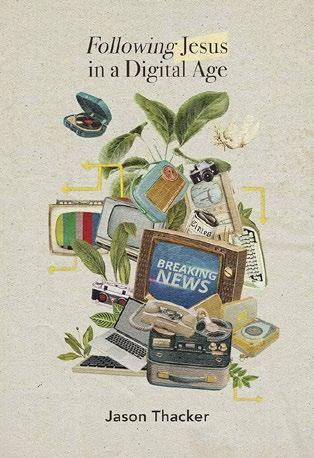
Following Jesus in a Digital Age
by Jason Thacker
A biblical guide to navigating digital culture, equipping Christians with wisdom for misinformation, social media, privacy, and polarization in a technology-saturated world.
Assurance in an Age of Anxiety and in Times of Crisis
by Robert D. Jones
Walk with me through a time tunnel or, if you’re a fan of an old TV show, take a quantum leap back 500 years. You’re in Germany, it’s the year 1520, and you face daily sharp opposition from all the religious leaders around you. Where do you turn?
Well, if your name is Martin Luther, you might whisper to your close friend, “Come, let us sing the forty-sixth psalm together, and then let the devil do his worst.” This psalm underlies Luther’s famous hymn, “A Mighty Fortress Is Our God.”
Next to Psalm 23, Psalm 46 is likely the most popular and most comforting psalm in the history of God’s people. Charles Haddon Spurgeon called it “The Song of Holy Confidence.” Maybe its popularity lies in the stunning images of earthquakes, streams, and toppled
kingdoms. Or maybe because it fuses two dynamic attributes of God—his presence and his power—amid severe crises. These twin truths stand tall before us like unfallen twin towers.
While we need the Lord’s powerful presence at all times, the three stanzas of Psalm 46 suggest three occasions when we especially need these twin truths.
First, Count on God’s Powerful Presence When You Face Sudden Crises (Verses 1–3)
In the opening three verses, the Psalmist envisions an earthquake-like crisis.
1 God is our refuge and strength, a helper who is always found in times of trouble.
2 Therefore we will not be afraid, though the earth trembles and the mountains topple into the depths of the seas,
3 though its water roars and foams and the mountains quake with its turmoil. Selah
If you have experienced an earthquake, you know the upsetting feeling of having the ground move beneath your feet. I was in a third-story office when I experienced only a minor quake, but enough to distress me as the floor and walls swayed. Verses 2–3 graphically describe an intense quake: a trembling earth, mountains shaking and sliding, and tsunami waves crashing against the shore.
Perhaps you have never experienced an earthquake, but you might have suffered other natural disasters, like hurricanes, tornadoes, or even the frustration of frozen pipes. But there are plenty of other unexpected crises you have experienced or fear that you might experience one day:
• A sudden fall brings a broken hip.
• Your boss fires you for no valid reason.
• You lose your baby in the womb.
• A lump appears in your body.
• Your spouse is unfaithful.
Of course, I could list more, but so could you! What does God say to you when catastrophes come? The psalmist erects our twin towers: God is present, and God is powerful. In verse 1, we see his presence; he is “always found in times of trouble.” Picture a three-year-old boy who comes face-to-face with a growling dog. Does the boy growl back? No. He runs behind the sturdy legs of his father. For us, verse 1 means that God meets us at the very point of crisis, “in” the time of trouble.
Moreover, he is also all-powerful. He is our “refuge”—a place into which we can run for safety. As our “strength,” he vigorously fortifies us. And as our “helper,” he provides the divine assistance we need. And so, because of his presence combined with his power, we can confidently say, “Therefore, we will not be afraid.”
Simply put, this means you will never face a crisis alone. God is near you—very present, ever present, always ready, and always eager to receive and
respond to your 911 call without delay. Sometimes, when we fear some future tragedy, a well-meaning friend might try to comfort us, “Don’t worry, it’ll probably never happen.” And that’s probably true. But it actually might happen, and we must not build our lives on probabilities. The Bible’s counsel is so much stronger: “World, hit me with your best shot! My God is my refuge, my strength, and my helper in times of trouble.” The little word “though” in verse 2 allows us to imagine the worst-case scenario yet confidently assert his powerful presence with us even if that happens.
This does not mean you will never lose a child, break a hip, or get fired. It does mean God will be with you and God will help you.
But there’s a second occasion when we need Psalm 46.
Second, Count on God’s Powerful Presence When You Face Opposition from Others (Verses 4–7)
In the second stanza, we learn about a city, a river, and another earth-shaking event.
4 There is a river— its streams delight the city of God, the holy dwelling place of the Most High.
5 God is within her; she will not be toppled. God will help her when the morning dawns.
6 Nations rage, kingdoms topple; the earth melts when he lifts his voice.
7 The Lord of Armies is with us; the God of Jacob is our stronghold. Selah
The “city” in verse 4 refers to Jerusalem, the city where God chose to place his name and dwell with his people in a special way. Yet in the new covenant, God no longer dwells in a special way on a particular patch of Palestinian earth. He now dwells with us, his church—the “Jerusalem above” (Gal 4:26)—the new city of God.
This city also has a “river.” But what river flows through Jerusalem? None. We find our answer ten psalms earlier in Psalm 36:8, where God gives his people “drink from the river of your delights.” The river in Psalm 46:4 refers metaphorically to God’s provisions of his sustaining grace for us (this river mega-theme flows through the entire Bible, from Gen 2 through Rev 22, and in between: Ps 1:3; Isa 33:21; 51:3; Ezek 47; Joel 3:18; John 7:37–39; Rev 7:17).
In this desert setting, this river metaphor assures you of God’s splashing grace, of his spiritual water that quenches your thirst and saturates your life. In contrast to the chaotic, destructive, crashing waves of verse 3, this river of God’s love in verse 4 laps up against our sides and gives us life.
Verse 5 then tells us that God is in the midst of the city. Unlike the mountains toppled into the sea (v. 2), God’s holy city will not be toppled. Even if the ground beneath us shifts with earthquake force, God’s church will not be shaken. God’s powerful presence stabilizes his church.
When does God’s city need his protective help? Verse 5 answers, “when the morning dawns.” This doesn’t mean you need to rise each day at 6:00 a.m. or that you’ll miss God’s special help for that day if you sleep in. Instead, the psalmist simply recognizes that ancient battles began at daybreak. Ancient armies didn’t have electricity, battery-powered lights, or night vision goggles. And so our psalm promises God’s powerful help at dawn, at the specific point of Israel’s need. Indeed, as we saw in verse 1, God our helper “is always found in times of trouble.”
Verse 6 then describes that help: “Nations rage, kingdoms topple; the earth melts when he lifts his voice.” Like the mountains in verse 2’s earthquake— but precisely unlike God’s stabilized city—God topples the earthly kingdoms. He lifts his voice and destroys his enemies who rage against him.
Of course, you likely won’t have an army attack you, but you might face other forms of opposition:
• Your boss doesn’t like you and bypasses you for a deserved promotion.
• Your coworkers oppose your Christian commitments and seize on your imperfections to gossip about you and call you a hypocrite.
• Your in-laws criticize the way you raise your children.
• You face racism or sexism or ageism or other forms of bias and mistreatment on the job.
Do you believe verses 5–6 are God’s promises for you? Do you cry out to him for help? Do you believe the LORD will help you at the exact point your crisis dawns? Or do you react with worry and fear? Or anger? Or despair?
And so the refrain in verse 7 highlights our neverfalling twin towers: “The Lord of Armies is with us; the God of Jacob is our stronghold.” He is present, and he is powerful—present, not absent; powerful, not wimpy. You would do well in your fight against worry, anxiety, and fear to memorize verses like verses 1 and 7. We’ve seen two occasions when we need God’s powerful presence. Let’s consider a third occasion.
Third, Count on God’s Powerful Presence When You Face an Unknown Future (Verses 8–11)
Here, in the third stanza, the psalmist surveys the broader scene and shows God’s power over all the nations.
8 Come, see the works of the Lord, who brings devastation on the earth.
9 He makes wars cease throughout the earth. He shatters bows and cuts spears to pieces; he sets wagons ablaze.
10 “Stop fighting, and know that I am God, exalted among the nations, exalted on the earth.”
11 The Lord of Armies is with us; the God of Jacob is our stronghold. Selah
In verse 8, the psalmist invites us to “come and see” the evidence of the Lord’s powerful presence, his active judgments he has brought upon the nations, and the wreckage he has wrought through Israel’s military victories. We don’t know which victories he has in mind in verse 9; there are too many to list. Maybe it’s the exodus out of Egypt, or the many victories God brought about through Joshua. Or the many victories the LORD enabled David to achieve in 1 and 2 Samuel. But whatever specific conquests the psalmist has in mind, he invites us to come and see the broken spears, the burned chariots, and the dead bones of God’s enemies. He wants us to see those displays of his power and learn to trust and obey him.
Of course, in the crises we face, we don’t expect military intervention. God doesn’t promise to stop your boss’s mistreatment of you or remove him from your company and exalt you. Nor will he necessarily change your in-laws, coworkers, or others who oppose you. He instead holds out a bigger vision.
The quote marks in verse 10 show the switch in speakers from the psalmist to God himself, “Stop fighting, and know that I am God.” God is speaking to the nations, telling them to surrender, to lay down their arms, to stop resisting him. English translations that render it as “Be still” might wrongly suggest that God is promising some kind of pietistic, privatized invitation to hear God’s still small voice. While God, through his Spirit, brings us internal assurances based on his Word, the context of verses 8–11 presents something grander. God calls all his enemies to quit their opposition and submit to him as the exalted Warrior King over all the nations. From his exalted throne, he commands them to repent and turn to him—the LORD, Yahweh, the God of Israel. Like an old Hollywood cop movie, God says, “You’re surrounded. Come out with your hands up!”
What does this mean for God’s people? In this command to the nations, God’s people find great comfort in knowing that our God is God over all the
earth, that he is powerfully present for his glory and our good, that he will defeat all his enemies, and that we can trust him even when we don’t know what will happen next.
The Psalm then ends in verse 11 with the same refrain from verse 7. Our twin towers stand tall and unfallen: God is present with us, and he is a powerful force for us. My colleague Jim Hamilton’s concluding comment on this psalm captures God’s future glorious purposes for us his people: “Psalm 46 sings the day when he will establish his reign, put an end to war, burn its implements, remake the world, wipe away every tear, restore his people to life, glorify their bodies like his own, bring them to the river, and let them eat from the tree of life that stands on its shores.”1
In an age of anxiety and in times of crises, may this vision strengthen your soul and carry you forward into the age to come.
1. James M. Hamilton Jr., Psalms, Evangelical Biblical Theology Commentary, vol. 1 (Bellingham, WA: Lexham Academic, 2021), 478.
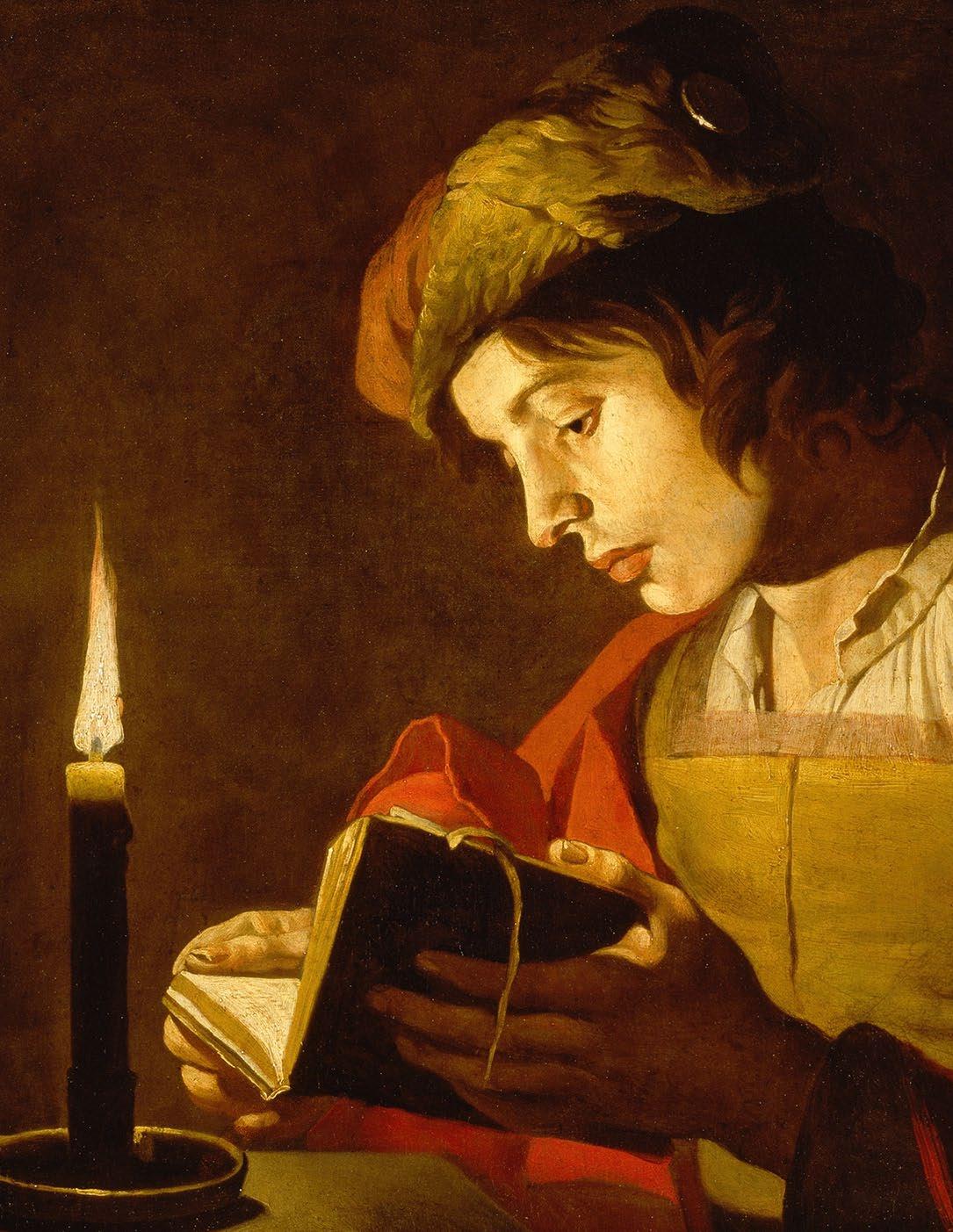
A Young Man Reading by Candlelight, Matthias Stom, 1630
“The Splendor of Their Cause”: The Ancient Church and the Cost of Conviction
by Michael A. G. Azad Haykin
The Emergence of the Term “Martyr” as a Technical Term
Our word “martyr” is derived from the Greek word martys, originally a legal term that was used of a witness in a court of law. Such a person was one who had direct knowledge or experience of certain persons, events, or circumstances and was therefore in a position to give evidence. In the New Testament, the term and its cognates are frequently applied to Christians, who bear witness to Christ, often in real courts of law, when his claims are disputed, and their fidelity is tested by persecution. The transition of this word within the early Christian communities from “witness” to what the English term “martyr” entails is an
excellent gauge of what was happening to Christians as they bore witness to Christ in the years after his death and resurrection.
In Acts 1:8, the risen Jesus tells the apostles that they will be his “witnesses” (martyres) in Jerusalem, Judaea, Samaria, and to the ends of the earth. At this point, the word does not have the association of death, although in Acts 22:20 we do read of the “blood of Stephen,” the Lord’s “witness,” being shed. But it is really not until the end of the writing of the New Testament canon that the term martys acquired the association with death.
At the end of the apostolic era, the risen Christ in Revelation 2 commends his servant Antipas, his “faithful witness,” who was slain for his faith at Pergamum, “where Satan dwells” (Rev 2:12–13). Pergamum was a key center of emperor worship in
Asia Minor, the first town in the province to build a temple to a Roman emperor, namely Augustus Caesar. It may well have been Antipas’s refusal to confess Caesar as Lord and worship him that led to his martyrdom. In fact, it has been estimated that by the mid-first century, eighty or so cities in Asia Minor had erected temples devoted to the cult of the emperor. Thus, the word martys seems to have acquired its future meaning first in the Christian communities in Asia Minor, where the violent encounter between church and empire was particularly intense. In this regard, it is certainly not fortuitous that Asia Minor was unusually fond of the violent entertainment of the gladiatorial shows. There was, in fact, a training school for gladiators at Pergamum. Along with this passion for such violence, there would have been a demand for victims over and above the requisite gladiators. Thus, recourse was had to Christians, among others. And so, the word martys became restricted in its usage to a single signification: bearing witness to the person and work of Christ to the very point of death. Stephen and Antipas were the first of many such martyrs in the Roman Empire. It is vital to note here that the term “martyr” is thus a Christian term. To use it, as our western media sometimes does, of terrorists who die in the act of killing other human beings is utterly foreign to the meaning of the word.
Vibia Perpetua
During the second century and the first half of the third century, state persecution of the church was sporadic and usually a local affair that was initiated by individual governors. In other words, while there were not thousands of martyrs during this period, martyrdom was a reality with which anyone who professed Christ during this era had to reckon. Let us consider two examples from the church in North Africa, which was a leading center of Christianity in late antiquity.
In the year 201, the Roman emperor, Septimius Severus (145–211), who had become the head of the empire in 197, issued an edict forbidding anyone to become a Jew or a Christian. The Roman governor of Carthage in North Africa, Publius Aelius Hilarianus, a man steeped in Roman idolatry and paganism, was eager to enforce the edict. And so, immediately prior to some gladiatorial games celebrating the birthday of Septimius Severus’s son, Geta (189–211), in March of 203, he had a number of Christians arrested. Eventually six were put on trial: four men—Saturninus and Secundulus, who were slaves, Revocatus, and their teacher, Saturus, and two women, Felicitas (or Felicity) and Vibia Perpetua (181–203), a noble-born Roman matron who was twenty-two years old with a newborn son.
In typical Roman fashion, they were asked to offer a sacrifice to the gods for the safety of the emperor or face death. They all refused and on March 7, 203, five of them—Secundulus had died in prison—were martyred in the Roman amphitheater in Carthage, the ruins of which can be seen to this day as a UNESCO World Heritage site in Tunis, Tunisia.
Now, we know the details about this incident because there is a prison diary that Perpetua kept while she was awaiting trial. After Perpetua’s death, a Christian author took her diary, provided it with an introduction, added Saturus’s own account of his time in prison, and finally concluded the book with details of the martyrs’ deaths.
When Perpetua was first imprisoned, she wrote in her diary, “I was terrified, as I had never experienced such darkness.” The prison cell was also jammed with prisoners so that the heat was stifling. And on top of all this, Perpetua was worried sick about her baby, who was with her. Relief came from the help of two deacons, Tertius and Pomponius, who came to the prison—in so doing, they risked being imprisoned themselves—and they asked the Roman guards to move Perpetua and the others to a better part of the
prison. Perpetua was able to cuddle her baby son and nurse him. Her mother also arrived with her brother, and Perpetua gave her baby to them to look after for a number of days.
Perpetua’s father also came to the prison and desperately tried to convince Perpetua to give up her faith. Perpetua wrote in her diary:
My father not only wished to turn me from my purpose with arguments, but also persisted in trying to break down my faith through his affection for me. “Father,” said I, “do you see, for example, this vessel lying here—a jug, or whatever it is?” “I see it,” said he. “Can one call anything by any other name than what it is?” “No,” said he. “So neither can I call myself anything else than what I am, a Christian.”
Perpetua’s father appears again in the diary at the time of the sentencing of Perpetua and her companions. A huge crowd had gathered to witness the sentencing in the public forum, and among them was Perpetua’s father, who arrived with her baby son. Again, in Perpetua’s words:
My father appeared on the scene with my boy … begging me, “Pity your child.” Then Hilarianus the procurator … said, “Spare your father’s grey hairs; spare your infant boy. Sacrifice for the safety of the Emperor.” And I replied, “I am not going to.” “Are you a Christian?” asked Hilarianus, and I said, “I am.”
… Then he pronounced sentence against us all and condemned us to the beasts.
As it turned out, Perpetua died at the hands of a gladiator. He hesitated to slit her throat, and the editor of her diary tells us that she guided his trembling hand to her throat. Her fellow Carthaginian, the theologian Tertullian (fl.190–215), called her a “most courageous martyr.”
Cyprian of Carthage
Thascius Caecilius Cyprianus (c.200–258) had been radically converted from a lifestyle of public prominence, luxury, and wealth in his early forties and subsequently served as the bishop of Carthage for about a decade. His leadership was especially important during the first empire-wide persecution of the church, initiated by the Emperor Decius (c.201–251).
In the late summer of 257, he was exiled from Carthage and placed under house arrest. He was arraigned before the Roman proconsul Aspasius Paternus, who informed Cyprian that he had been instructed by the emperor Valerian (c.199–264) and his son and co-emperor, Gallienus (218–268), to require all within the empire to engage in the traditional worship of the Roman state. Cyprian was asked where he stood on this matter.
The bishop of Carthage replied:
I am a Christian and a bishop. I recognize no other gods but the one true God who made heaven and
“Cyprian told the deacons who were present to pay the executioner ‘twenty-five pieces of gold’ … Here, though, Cyprian powerfully turned his death by decapitation into a final act of witness: this man was doing him the remarkable service of sending him to his God.”
“In fact, the martyr was essential to the identity of the Ancient Church. His or her body was the boundary between church and state and between church and culture.”
earth, the sea, and all that is in them. This is the God to whom we Christians pay homage; night and day we pray to him for you and for all of humanity, as well as for the health of the emperors themselves.
When pressed by Paternus to recant, Cyprian refused. Surprisingly, Paternus did not have him executed at this point. Rather, he exiled him to the nearby city of Curubis (modern Korba in Tunisia) and effectively placed him under house arrest.
Paternus’s successor, Galerius Maximus, was not so lenient. When it came to Christianity, he was quite prepared to mete out brutal punishment to believers. In August of 258, he condemned a large number of Christians—at least 150 or so—to a brutal death in a pit of lime in Utica, which was not far from Carthage. These martyrs were later remembered as the mass candida, “the white mass,” a term that Augustine (354–430), many years later, explained in his Sermon 306 to be a reference to the large number who were killed together. The adjective “white” was used, he reckoned, due to the splendor of their cause.
The very next month, on September 14, 258, Cyprian was returned to Carthage to stand trial for his faith. Galerius held the trial on the estate of a friend on the outskirts of Carthage. When Galerius ordered Cyprian to worship the Roman gods, Cyprian’s reply was terse and to the point: “I will not.” Galerius threatened
him, but Cyprian’s faith did not waver. “Do as you have been ordered,” he told the Roman official.
Galerius took time to consult with his staff. Cyprian had been a man of influence and substance in Carthage, and ordering his death would be no light matter. This was possibly a reason why Aspasius Paternus had had him exiled and placed under house arrest. Galerius, though, felt he had no choice but to pass the death penalty.
In his decision, he described Christianity as a “conspiracy (conspiratio),” literally, “a breathing together.” In legal contexts, this word was employed to describe an organized plot against the state. Galerius went on to state that Cyprian, as the leader of this band of conspirators, was thus guilty of “a most heinous crime.” In other words, being a Christian was nothing less than an act of political treason. He then read out his decision— and there were a good number of Christians present, presumably praying for their bishop—“Thascius Cyprian is sentenced to die by the sword.”
At this point, a number of the believers began yelling that they wished to die with their beloved leader.
Cyprian was taken behind the estate where one of his elders, a man named Julian, helped him tie a strip of cloth around his eyes. Before he did so, though, Cyprian told the deacons who were present to pay the executioner “twenty-five pieces of gold.”
To the Romans, such an act would initially have seemed totally odd: you
pay a man for killing you! Here, though, Cyprian powerfully turned his death by decapitation into a final act of witness: this man was doing him the remarkable service of sending him to his God. A judicial killing was thus turned into a moment of pastoral witness to the lordship of Jesus Christ and the joy that awaited all of his followers in the world beyond this one.
Martyrdom and Christian identity
The church in the first three centuries after the birth of Christ was a Church of martyrs. In fact, the martyr was essential to the identity of the Ancient Church. His or her body was the boundary between church and state and between church and culture. Moreover, the martyr bore witness to the nature of the church’s conviction, in the words of the American poetess, Emily Dickinson (1830–1886), that:
This world is not conclusion; A sequel stands beyond. Invisible, as music, But positive, as sound … To gain it, men have shown Contempt of generations, And crucifixion known.
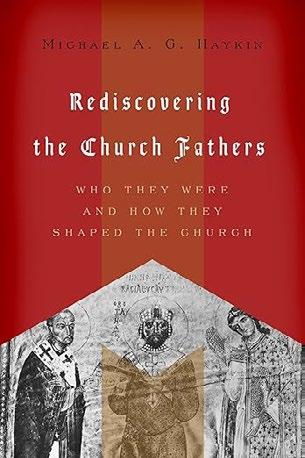
Rediscovering the Church Fathers: Who They Were and How They Shaped the Church
by Michael A. G. Haykin
An introduction to the church fathers, surveying seven key figures from AD 100–500 whose lives and teaching continue to shape Christian faith today.
While he was still speaking to the people, behold, his mother and his brothers stood outside, asking to speak to him. But he replied to the man who told him, “Who is my mother, and who are my brothers?” And stretching out his hand toward his disciples, he said, “Here are my mother and my brothers! For whoever does the will of my Father in heaven is my brother and sister and mother.
MATTHEW 12:46–50
A Conversation with Ben Cornish
Forgotten No Longer: Equipping the Hidden Pastors of the Global Church
Ben Cornish (PhD, Southern Seminary) serves as president of Teaching Truth International (TTI)—a Christian missions organization dedicated to providing free, in-person theological training to under-resourced pastors and church leaders in the developing world. Driven by the conviction that the Great Commission requires not just evangelism but ongoing teaching, TTI exists to equip these “forgotten pastors” to preach the gospel faithfully, confront false doctrine, and disciple their own communities for generations to come. The following interview explores the need for access to reliable ministry training and Cornish’s heart for serving the “hidden corners of the world.”
WHEN DID YOU NOTICE A MINISTRY LIKE TEACHING TRUTH INTERNATIONAL WAS NECESSARY?
In 1995, shortly after the collapse of the former Soviet Union, my dad, Rick Cornish—who was pastoring in Kansas at the time—received an invitation to teach New Testament at a newly established Christian college in Ukraine. My family and I joined him on his second trip. I was just ten years old.
There, I saw the desperate hunger to study God’s Word among pastors and future missionaries who had traveled to Ukraine from across the former USSR. Many were the sons of fathers who had led underground churches, including fathers who were killed or exiled for their faith. Rather than thwarting the gospel, this persecution seemed to have put steel in their bones. They would stop at nothing to study the Scriptures.
Like my dad, I returned from that trip convinced that the future of missions must prioritize theological education, especially for the under-resourced pastors throughout the world. It has been the joy of a lifetime to work alongside him doing this very thing for the past 14 years.
YOUR MINISTRY’S MISSION STATEMENT IS “TEACHING THE FORGOTTEN PASTORS WHO SERVE IN THE HIDDEN CORNERS OF THE WORLD.” WHO ARE THE FORGOTTEN PASTORS?
This term was coined in 2013 by our Tanzanian partner, David Akondowe, when he described the work we were doing among rural African pastors: “These pastors have no Bible school. They have no theological books. They do not know any missionaries. But they serve as pastors. They are unseen by the world and unseen even by the church. They are the forgotten pastors.”
In our organization, we define these men as pastors, aspiring pastors, church leaders, and indigenous missionaries who are serving in ministry but who have never received biblical training. In many cases, if it were not for our conferences, they would have no access to such training. As one Tanzanian pastor told us years ago, “I have been a pastor for forty years, and today is my first day of Bible training.”
When a pastor joins one of our trainings for the first time, I often ask him to share with me the basic gospel message, and far too many have struggled to do so.
Some of the more remote people groups we serve are considered reached (more than 2 percent evangelical), but on the ground, some of these groups appear to be unreached again. They have pastors and pulpits but no gospel of grace. One of the largest “evangelical” denominations in Southeast Africa is led by a false prophet who is spreading the man-centered message of miracles and money. His pulpit is devoid of Christ. Yet the pastors across his nation who listen to him on the radio believe he is a “man of God,” and so they propagate his ideas deep into the African bush.
Surely this is why Jesus, in Matthew 28:19–20, included two activities in the Great Commission to make disciples—baptizing and teaching. If we do the first and neglect the second, within one generation, those people groups may face the real danger of becoming unreached again
Teaching Truth International, therefore, exists to teach God’s Word to under-resourced pastors and church leaders so they can teach others also. By training them to articulate the gospel clearly and to exposit the Scriptures rightly, the gospel will go forth with power among their own people and into neighboring communities.
HOW DO YOU PROVIDE THEOLOGICAL EDUCATION?
We provide free in-person training for pastors and church leaders. Typically, we send a team of two
Bible teachers to a city in an underserved country in partnership with a local church, pastors’ association, or missions organization. Our indigenous partners organize, promote, and host the training at a church, where we teach for 6 to 7 hours a day.
God has raised up faithful translators who work with us months in advance to translate our teaching manuscripts. These manuscripts are then printed, bound, and given to every pastor at the conference. For many participants, this curriculum becomes the only biblical resource available in their own language. The translators then serve alongside during the lectures and Q&A sessions at the conference.
Our teaching focuses on hermeneutics, systematic theology, local apologetics, and especially expository teaching through books of the Bible. In addition to lectures, pastors participate in small-group discussions, hermeneutics exercises, and Q&A sessions. In some locations, we also administer exams, conduct evangelism training and neighborhood outreach, and preach the gospel on local radio.
WHAT SPECIFIC AREAS OF TRAINING DO THE PASTORS YOU WORK WITH NEED IN ORDER TO REACH THEIR COMMUNITIES?
The most significant gap we observe in pastoral ability is in hermeneutics. Many pastors do not know how to read the Bible in context. As a result, the authority and sufficiency of Scripture are readily affirmed in theory but then in practice: pastors preach from their dreams, pull verses out of context, quote famous false teachers, and promote the false message of health and wealth.
We have repeatedly observed that churches promoting prosperity theology often incorporate syncretistic practices influenced by local animism.
Our ministry is committed to confronting false teaching. By God’s grace, we have seen hundreds of pastors repent of false doctrine. One Zambian pastor who scored the highest grade on our five-year comprehensive exam told me that during his first
Teaching Truth pastors’ conference, he realized that he had been promoting a false gospel. Cut to the heart, he returned home, publicly repented before his church, and committed to faithfully expositing God’s Word. He even urged his denominational leaders to repent as well—though sadly, they did not respond with the same humility.
WHAT HAVE BEEN THE BIGGEST CHALLENGES THE MINISTRY HAS FACED?
By God’s grace, one of our biggest strengths is our teaching team, which is full of graduates from The Southern Baptist Theological Seminary. They are more than competent for the task at hand.
Even so, challenges persist. Because we focus on pastors who have little or no access to theological resources in their first language—or relationships with faithful missionaries—many lack the educational skills that we learned in elementary school.
For example, on a recent trip to West Africa, our VP of Education, Dr. Jamin Eben, gave a short lesson on simple learning methods, including the use of flashcards to aid memorization. The pastors had never heard of flashcards before.
Many of the pastors we serve work full-time jobs, have limited reading comprehension, and little time to prepare for ministry. Some also hold worldview assumptions shaped by local religious traditions. One of our students shared a story of having to rebuke another pastor who was sacrificing animals for the sins of his church. We often say at TTI, “If they are willing to learn, heretics are welcome in class.” Yet even true shepherds have to unlearn old habits as much as they learn new ones.
WHAT IS YOUR HOPE FOR THE FUTURE OF TEACHING TRUTH
INTERNATIONAL?
Our ministry is a global effort, providing pastoral training in Latin America, Africa, and Asia, but the
demand for Bible teaching far outpaces our ability to meet the need—the demand actually outpaces the ability of all Bible schools and seminaries on earth to meet it. This reality is apparent to us at Teaching Truth International as we receive far more invitations to train pastors around the world than we could ever accept.
We are praying that the Lord would raise up additional missionary teachers to join our team—especially nonAmericans who hold a master’s degree or higher. This would help us move toward our larger vision to make Bible training more easily accessible as we seek to establish a Teaching Truth training center within 1,000 miles of every forgotten pastor on earth. Achieving that vision, however, will require a Christian network far larger than our team of missionary teachers— namely, partnerships with supporting churches.
Local churches in the West are vital to the mission of teaching the forgotten pastors. We are deeply grateful for the churches that have supported this work for years or even decades. Yet with our current and projected growth, Teaching Truth needs more like-minded churches and believers who will partner with us.
You can begin by signing up for our newsletters and committing to pray for us. Sponsor a pastors’ conference or contribute toward our annual global fund. Invite us to your church to share this mission with your congregation. Partnering churches may also send their pastors to serve alongside our staff as associate teachers.
The global church needs leaders who are faithful to the gospel and who preach the Scriptures with an unwavering commitment to biblical fidelity. With your help, we can make this training accessible to more pastors around the world.
Learn more at TeachingTruthInternational.org
Strengthening the Church Through Partnership
Southern Seminary partners with churches to align ministry training with accredited degree pathways. Internships, residencies, and classes can now count toward undergraduate and graduate credit.

LEARN MORE AT
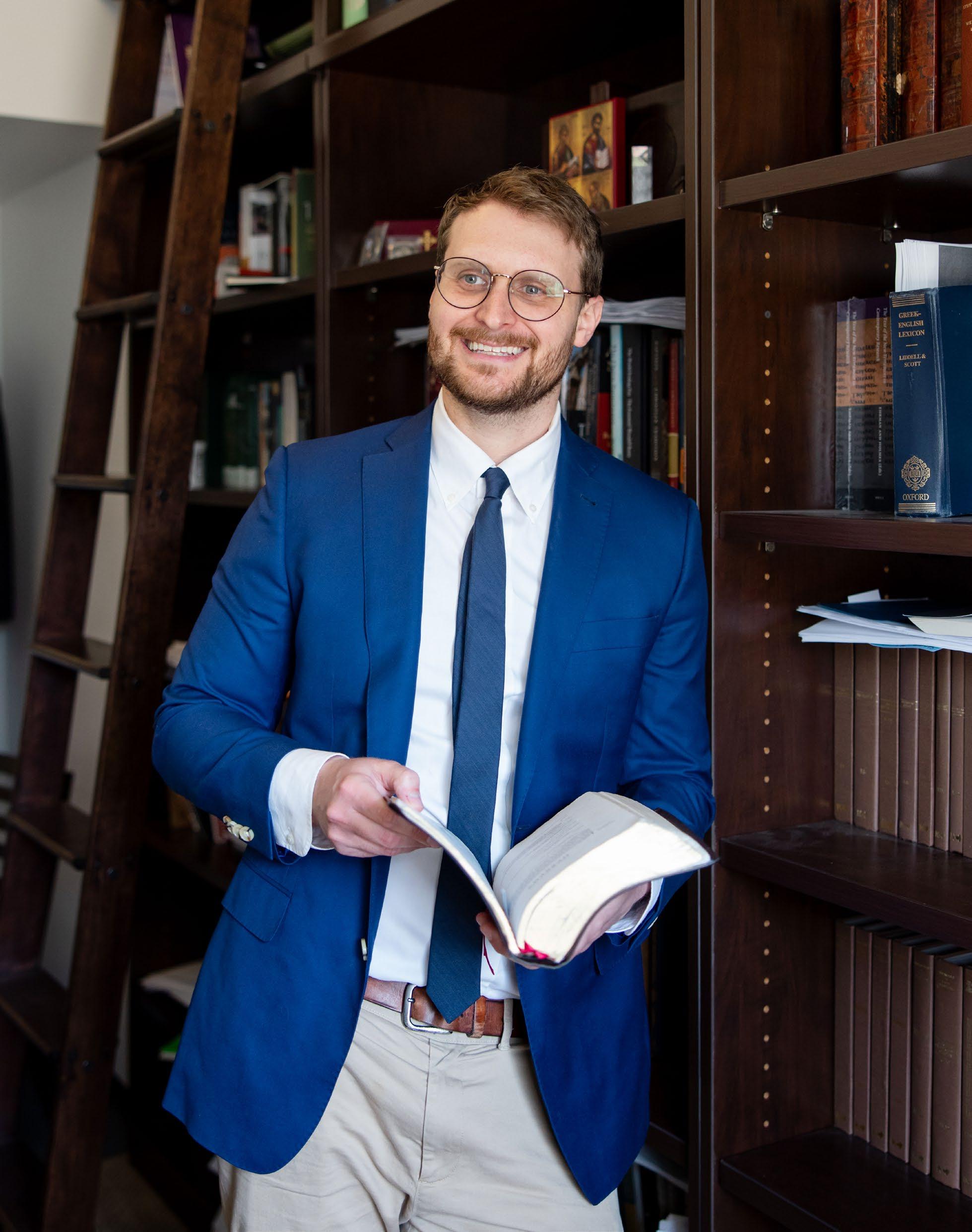
OFFICE HOURS
WITH DANIEL STEVENS
Dr. Daniel Stevens serves as Professor of New Testament at Boyce College. Known for his ability to bring students into close, careful reading of the biblical text, Stevens models the conviction that Scripture must be both studied rigorously and embraced personally. His path to the classroom emerged out of sincere love for the church and a growing sense that God called and equipped him to teach.
HOW DID YOU KNOW YOU WANTED TO BE A TEACHER?
I started suspecting in undergrad. I was informally teaching in small groups and at church, and I really enjoyed it. I thought I had some aptitude. I also taught high school-level English while I finished seminary. I really enjoyed that. The combination of all those things made me suspect early on that if the doors opened, I should try to teach.
HOW DID YOU ARRIVE AT BOYCE COLLEGE?
I started studying ancient Greek in undergrad. I had become a Christian in high school, and I knew that the New Testament was written in Greek. I also knew that you should always read things in the language they were written in. So, I wanted to learn that. I started as a biology major with a Greek minor, and after about a year, I realized I was procrastinating chemistry by reading Greek. I embraced that.
I studied throughout undergrad, started serving more on campus and in church, and felt called to serve the church however I could. That led me to seminary. I went on staff at a church during that time and kept throwing myself into New Testament electives and ThM classes during my MDiv, because I had that head
start with four years of ancient Greek. At the end of that, I figured I still wanted to serve the church and asked what doors were going to open. An opportunity to go into grad school came up. Then I worked at the Museum of the Bible for three years as their research director. During that time, I got married, had a kid, and was living in a small apartment just outside of DC. But I missed teaching. I was looking for that kind of opportunity, and this one at Boyce came up. I was contacted by Dr. Bruce, we started talking, and it has been wonderful since.
WHEN A STUDENT TAKES YOUR CLASS, WHAT IS THE MAIN THING YOU WANT THEM TO WALK AWAY WITH?
The main thing I want them to walk away with is a deepened love for the Scriptures, and a sense that they can, in fact, read them to their profit. On average, I’ve found that students at Boyce are very eager. They take reading the Bible seriously, and they want to learn. Many of them have a lot of zeal and have grown up in the church, but haven’t yet had much experience reading at a close or detailed level. When they’re exposed to that, they love it, and they take it up. That’s exactly what I love to see.
HOW DO YOU SEE YOUR ROLE AS A MENTOR? IS THERE A PARTICULAR PHILOSOPHY YOU BRING TO THAT?
I had one student who was in both New Testament Survey I and II. Every so often, you get a particularly excitable student who gets very into the discussion. We were going through the Gospel of Mark and spent time in the story of the healing of Jairus’ daughter and the woman with the flow of blood. At the end of class, he shouted out, “You should preach this somewhere!” That just showed me he was engaged and encouraged, and I was very happy about that.
Then, as part of the relationship you build with students, I was asked to preach at a dorm meeting, and I decided to use that very passage. In the next class, I was able to tell him it was coming, and afterward we got to talk about it and further encourage him from it. It was just a wonderful moment.
To some extent, I understand my role as a mentor as simply being open to meet with students outside of class. I try to be very available—coffee, office hours, whatever it takes. I also try to show both formally in class and informally in conversation that what we cover in these courses isn’t just academic.
One thing I emphasize at the beginning of every New Testament Survey course is that to interpret the New Testament is to encounter a text that has authority over us. A text that makes claims upon our lives. No act of interpretation is complete, or even accurate, unless we grow in the love of God and neighbor that it calls us to, and in obedience to what it says we ought to do.
Truth Comes First
At Boyce College, we believe a student’s foundation matters.
In every class, in every major, Scripture shapes the way students think, live, and lead. Surrounded by a Christ-centered community and guided by faculty who care about their walk with Christ, your student won’t just be prepared for a career. They’ll be prepared for life.
Explore how Boyce College prepares students for a life of Maximum Faithfulness.
Learn more at BOYCECOLLEGE.COM/VISIT



OFFICE HOURS
WITH AYMAN S. IBRAHIM
Dr. Ayman Ibrahim serves as the Bill and Connie Jenkins Professor of Islamic Studies at Southern Seminary and is the Director of the Jenkins Center for a Christian Understanding of Islam. Born and raised in Egypt, Ibrahim has taught in various countries in both the Western and Muslim worlds. Driven by the conviction that the gospel mandate extends to every people group, including the world’s 1.8 billion Muslims, Ibrahim devotes his scholarly life to equipping Christians to understand Islam rigorously and engage Muslims faithfully. His teaching combines careful academic study with an unwavering Christ-centered foundation.
HOW DID YOU BEGIN STUDYING ISLAM FROM A CHRISTIAN PERSPECTIVE?
You cannot avoid thinking theologically when you are reading about Islam and how Muslims live. That conviction was sharpened during my own years of doctoral study, where I learned that the Christian truth claims can stand on a firm foundation—especially in comparison to other world religions, which are built on unstable ground and founded on unsubstantiated claims. That has never left me.
That same instinct to think carefully carries over into every area of life. Anytime you encounter an Islamic text or interact with a Muslim about their worldview, their mindset, and their claims, you cannot engage those things without asking: What does the Word say about this? How would the biblical God view these Islamic claims or these Muslim practices? You cannot separate theology from missiology.
WHY SHOULD CHRISTIANS CARE ABOUT STUDYING ISLAM?
I tell people that I teach Christians, pastors, missionaries, counselors, and others how to understand Islam as an ideology so that we can
interact with Muslims as people, reaching out to them with the gospel of hope. That is how I summarize my work.
Islam is the religion adopted by at least 20 percent of the world’s population, and Southern Seminary is driven by gospel proclamation—locally and globally. We take the gospel seriously, and so the study of Islam is taken seriously as well. We study the most recent rigorous scholarship on Islam, but we do so from a biblical lens and a Christ-centered perspective. How do you answer the accusations and challenges Islam poses to Christianity, to Christ, and to Christian belief? How do you engage from a Christ-centered disposition and a biblical lens? Those are the questions that drive everything we do.
To serve the church in its interaction with that 20 percent, we need to help pastors and missionaries not only understand Islam as an ideology and worldview, and Muslims as people following that ideology, but also to drive the conversation about Islam in writing.
WHAT DO YOU HOPE TO PASS ON TO YOUR STUDENTS?
The more you study Islam, its history, and its texts, the more you grow in love for Christ, his teaching, and his character. So even though we are studying a world religion, our hope is always to magnify Christ, to elevate Christ, and to bring his fame to those around us. Many universities study Islam critically, and they may do good work. But we are motivated by theology. We examine Islam not only critically but through a theological lens. We are driven by what the Bible says.
I want to encourage students who have a desire to write about Islam, to serve Muslims, to serve in Muslim-majority countries, or to shape the broader conversation about Islam in our world. Southern Seminary is the place to study because we balance two things very well: rigorous critical engagement with Islam based on its primary sources and an unwavering commitment to the gospel. We are top-notch academically, and we do not compromise the gospel. We are driven by our love for Christ to serve the church in its proclamation of the gospel among Muslims. Our students are engaging in vital discussions—militant Islam, Christian-Muslim apologetics, women in Islam, and more. The work they are producing reflects that balance. I cannot express how proud I am of what God is doing through them.
Choose a Faculty You Can Trust.
The right faculty makes all the difference. At Southern Seminary, you’ll be taught by trusted leaders who have written the books, lead in the church, and trained thousands to serve with conviction and clarity.
SBTS.EDU/MDIV

Paul Akin, Provost and Professor of Christian Missions
IN PRINT
The fear of the LORD is the beginning of knowledge; fools despise wisdom and instruction.
PROVERBS 1:7
The latest books from Southern Seminary and Boyce College faculty reflect our enduring commitment to serve the church through scholarship that is faithful, rigorous, and accessible. These works exemplify the kind of theological depth and clarity our students engage with every day in the classroom. At Southern Seminary and Boyce College, you study with the authors.
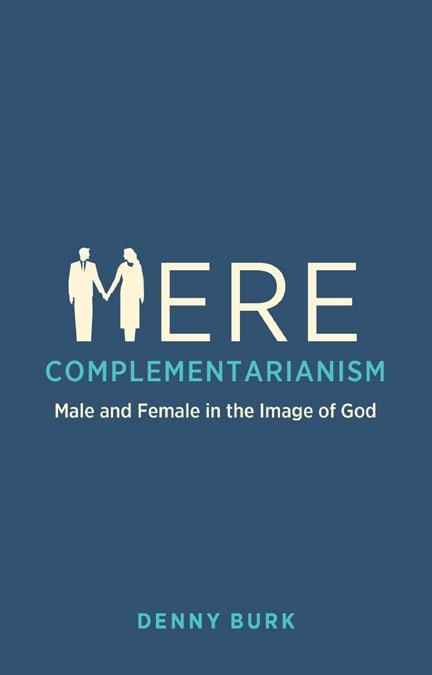
Mere Complementarianism: Male and Female in the Image of God
by Denny Burk
CHRISTIAN FOCUS PUBLICATIONS |
$24.99
Mere Complementarianism by Denny Burk is a clear, compelling, and timely guide to understanding God’s good design for men and women. Drawing from Scripture, natural law, and the historic Christian tradition, Burk cuts through confusion to present a faithful, accessible vision of biblical complementarianism—one that is rooted in creation, clarified in Scripture, and essential for a flourishing church and home.
The Letter to the Ephesians: An Exegetical and Theological Commentary
by Thomas R. Schreiner
BAKER ACADEMIC
| $48.98
Leading New Testament scholar Thomas R. Schreiner illuminates the text of Ephesians in this important, stand-alone commentary. Writing from an evangelical and Reformed perspective, Schreiner’s focus is on exegesis of the text and on drawing out theological significance. For each section of text, Schreiner examines the flow of thought and then provides a verse-by-verse interpretation. His introduction to the letter deals briefly with topics such as authorship, historical setting, and epistolary structure. Schreiner’s focus on exegesis and robust theological interpretation makes this an ideal resource for pastors, students, Bible teachers, and educated lay readers.
Becoming a Disciple of the King: A Theology of Matthew (New Testament Theology Series)
by Jonathan T. Pennington CROSSWAY
| $19.99
In this volume of the New Testament Theology series, scholar and pastor Jonathan T. Pennington explores the key theology and themes of Matthew to help readers gain a clearer understanding of both Scripture and Jesus. Whether you’re a pastor, student, or thoughtful believer, this book will deepen your grasp of Christ and inspire a life that reflects his character.
What Is Critical Theory?: A Concise Christian Analysis
by Bradley G. Green CROSSWAY
| $19.99
This book offers a balanced and thoughtful analysis of the core principles and implications of critical theory, as well as the published works of its key philosophers and their views concerning biblical themes, including creation and reality; sin and the human dilemma; and redemption, history, and eschatology. Through his concise Christian perspective, Bradley G. Green helps readers articulate what critical theory is—a view of human nature in opposition to the gospel narrative.
Paul’s Gospel in Romans: Vertical, Horizontal, and Cosmic Dimensions
by Jarvis J. Williams
BAKER ACADEMIC | $22.99
In this book, Jarvis J. Williams argues that Paul’s gospel in Romans is the announcement of good news that by Jesus Christ’s death and resurrection, God has fulfilled all his redemptive promises for Jews, Gentiles, and the world. He further argues that Paul’s gospel has at least three dimensions: vertical, horizontal, and cosmic.
God and Country: Upholding Faith, History, and National Identity
by John D. Wilsey
B&H
ACADEMIC
| $18.90
Is nationalism always a threat to Christian faith? In God and Country: Upholding Faith, History, and National Identity, John D. Wilsey argues that nationalism is a complex phenomenon with varied expressions, some dangerously opposed to Christianity, others potentially compatible with a biblical worldview. Wilsey demonstrates how nationalism can become a surrogate religion, even cloaking itself in Christian language, and illustrates that this danger isn’t confined to one side of the political spectrum.
Waking From the Dust: Daniel 12:2 and Resurrection Hope in Biblical Theology
by Mitchell L. Chase
LEXHAM
ACADEMIC
| $29.74
In Waking from the Dust, Mitchell L. Chase argues that Daniel 12:2 sprouts from the rich soil of Old Testament resurrection hope. Chase shows how Daniel 12 draws from earlier biblical texts and informs later intertestamental texts. Though rarely quoted explicitly, Daniel 12 nonetheless guided the New Testament authors as they expressed eschatological hope in light of Christ’s resurrection.
Between Worlds: John A. Broadus, the Southern Baptist Seminary, and the Prospects of the New South
by Eric C. Smith
LSU PRESS | $26.96
John A. Broadus (1827–95) was a highly influential Southern Baptist leader, preacher, scholar, and educator during the latter half of the nineteenth century. He cofounded the Southern Baptist Theological Seminary, which today is among the largest seminaries in the world. Broadus’s enduring impact on American preaching stems in part from his 1870 homiletics manual, a widely adopted textbook that ministers continue to use today. A prominent southerner before and after the Civil War, Broadus actively shaped his region during the shift from the Old South to the New. Eric C. Smith’s Between Worlds the first scholarly biography of Broadus joins recent historical scholarship in reevaluating Broadus’s legacy.
The Theological Tracts of Anne Dutton (Vol. 2)
edited by Matthew D. Haste H&E ACADEMIC | $24.99
Though she was one of the most published females of the eighteenth century, Anne Dutton is not well-known today. From a remote village in England, she authored over fifty works and published hundreds of letters, demonstrating a combination of theological acumen, spiritual wisdom, and fervent piety that came to be appreciated on both sides of the Atlantic during the Evangelical Awakening. This volume contains forty selections from the primary theological treatises in Anne Dutton’s corpus. Each excerpt was chosen for its representative value with the goal of providing a window into her theology as a Calvinistic Baptist heavily influenced by the experimental piety of the English Puritans. In her own words, Dutton wrote “for the good of souls and the glory of God.” May such worthy goals be realized in the years ahead as a new generation of readers engages with her works.
FROM LEXINGTON ROAD
Do not be conformed to this world, but be transformed by the renewal of your mind, that by testing you may discern what is the will of God, what is good and acceptable and perfect.
ROMANS 12:2
NEWS
New PhD Concentration at Southern Seminary Focuses on Christian Engagement with Islam
by Travis Hearne
Building on years of course offerings and doctoral research related to Islam, the new PhD concentration in Islamic Studies formalizes a focused track designed to prepare scholars, pastors, and missionaries for thoughtful, theologically grounded engagement with the Muslim world.
Mohler Calls Students to Long Faithfulness While Time Is Short at Spring Convocation
by Jacob Percy
Mohler’s convocation message highlighted the confrontation between Jesus and the Pharisees and Sadducees, who came “to test him” and demanded a sign from heaven. Mohler pointed out the irony of the request. In Matthew’s Gospel, it follows repeated public signs of Christ’s power, including healings and the feeding of thousands. The issue was not a lack of evidence. It was a refusal to see what those signs meant.
Shawn Wright Offers Six Cautions to Those Considering Aggressive Theological Retrieval in Faculty Address
by Travis Hearne
Shawn Wright, Professor of Church History at The Southern Baptist Theological Seminary, delivered the Faculty Address titled “The Reformation, Baptists, and Biblical Retrieval Theology” to colleagues and students. Wright framed his address in light of growing evangelical interest in aggressive retrieval, which has tempted believers to abandon Baptist or even Protestant convictions.
JANUARY 30, 2026
FEBRUARY 4, 2026
Read the full articles at sbts.edu/news
FEBRUARY 4, 2026
Southern Seminary Launches Initiative to Align Seminary Education with Local Church Training
by Travis Hearne
Southern Seminary has announced a new Church Partnerships initiative designed to formalize its longstanding commitment to serving local churches. The Church Partnerships program acknowledges that across the country, churches are already training future pastors, ministry leaders, and staff through internships, apprenticeships, residency programs, and structured theological instruction.
Confidence for the Classroom: How Boyce College Helps Future Educators Flourish
by Travis Hearne
Now in his third year of teaching, Caleb Bledsoe says the preparation he received at Boyce College made a lasting difference as he stepped into his first classroom. “While nothing truly prepares a young educator for the first days of school, I recall feeling well-equipped when I took over my own classroom because of Boyce,” Bledsoe said.
“Preaching is God’s Ordinary Means to Do Extraordinary Things,” Joel R.
Beekes Says in Mullins Lectures
by Travis Hearne
Southern Seminary recently hosted Joel Beeke where he spoke at chapel, engaged with students, and presented the Mullins Lectures on “Reformed Experiential Preaching.” In the lectures, Beeke urged aspiring pastors to preach with conviction—believing God uses the ordinary means of preaching to perform extraordinary works of redemption.
Southern Seminary Trustees Affirm Faithful Stewardship and Advance Mission at Spring 2026 Meeting
by Jacob Percy
The Board of Trustees of The Southern Baptist Theological Seminary convened on Monday, April 13, for their annual Spring meeting to adopt the operating budget, approve faculty promotions, elect new board officers, and honor outgoing trustees. Throughout the meeting, trustees received reports from the financial board, the audit committee, and standing committees covering every area of institutional life, affirming the health of the seminary and the faithfulness of its leadership.
FEBRUARY 26, 2026
MARCH 13, 2026
MARCH 27, 2026
APRIL 15, 2026
PODCASTS
The Briefing
with Albert Mohler
The Briefing is a daily analysis of news and events from a Christian worldview. Each weekday, President R. Albert Mohler, Jr. helps listeners think biblically about culture, politics, and the moral challenges of our time.

Thinking in Public
with Albert Mohler
Thinking in Public is a series of conversations with the day’s leading thinkers. In each episode, Dr. Mohler engages writers, scholars, and public intellectuals on the ideas shaping the church and the world.

In the Library
with Albert Mohler
In the Library features Dr. R. Albert Mohler, Jr. in long-form conversations with leading authors, scholars, and cultural thinkers on ideas shaping the world today.
From global missions to biblical theology to cultural analysis, these podcasts reflect the theological depth and Great Commission heartbeat of Southern Seminary and Boyce College.
The Pastor Well Podcast with
Hershael York
Hosted by Dr. Hershael York, pastor and longtime preaching professor at Southern Seminary, The Pastor Well Podcast offers reflections on ministry drawn from decades of pastoral experience. Available in both audio and video, each episode offers biblical insight and practical encouragement for those called to shepherd the church.

Amazon to the Himalayas with
Paul Akin
Hosted by Dr. Paul Akin, Provost of Southern Seminary, Amazon to the Himalayas highlights the work of the global church and the unstoppable mission of God. Each Wednesday, listeners hear stories from the frontlines and conversations that inspire faithfulness in the Great Commission.
Bible Talk
Bible Talk is a podcast from 9Marks and Southern Seminary. Tune in each week as Jim Hamilton, Sam Emadi, and Alex Duke have accessible conversations about the Bible and biblical theology—showing how the whole Bible fits together and points to Christ.
A Chapel Message from Eric Smith
A Haunting Ending
Dr. Smith serves as Associate Professor of Church History. He came to Southern Seminary in 2022 after several years of adjunct work for the school. He has served in pastoral ministry since 2008, and has been the senior pastor of Sharon Baptist Church in Savannah, Tennessee, since 2013. He is married to Candace and has three children. To watch the full sermon, visit youtube.com/southernseminary.
“Now Samuel had died, and all Israel had mourned for him and buried him in Ramah, his own city. And Saul had put the mediums and the necromancers out of the land. The Philistines assembled and came and encamped at Shunem. And Saul gathered all Israel, and they encamped at Gilboa. When Saul saw the army of the Philistines, he was afraid, and his heart trembled greatly … ”(1 Samuel 28:3–25).
“That cannot be you. It sounds like a different person!”
A few months back, I found a recording of one of my earliest sermons. I was a college student, the same age as many of you in here, probably about 20 years old. I played a little clip of it for my wife, my closest friends, and the people who serve on staff with me at my church, and they all said the same thing. “That can’t be you! That sounds like a totally different person!”
And it’s true. My voice was not as deep and resonant, my accent was not as sophisticated as it is before you today. It was higher and more country, kind of like those people they interview after a tornado blows through a small southern town. I know that’s how I sounded. But I also knew it was me. Because I vividly remembered that night at my home church, with my skinny little neck poking out of those baggy,
early-2000s suits. So nervous about getting the text right, about staying within my time, and just honoring Jesus.
I knew that it was me, but their words still stuck with me: “That sounds like a different person.” And it made me think of this story of Saul. Saul is someone who, if you go back to 1 Samuel chapter nine, begins with such incredible promise. It was a bright, beautiful morning the day that he knelt in the dirt and let the prophet Samuel pour the oil of God on his head, anointing him as the first king of Israel, the leader of God’s people. He set out to fight the Lord’s battles, and serve God’s people, and even speak God’s words: “Saul was among the prophets,” we’re told. That’s how he began.
And yet he ends on a dark night, wearing a cheap disguise, using an assumed name, recklessly violating every law of God, face-down before the spirits of the dead in a witch’s house. He looks like a different person. We don’t even recognize him. That can’t be you.
I think Saul’s story is one of the most tragic in all of the Bible, and also one of the most fascinating. I thought that, as dark as it is, it might serve us well in a place like this, where so many of us are starting out to serve the Lord, with such a bright future of promise
ahead. It might serve us well to spend a few minutes with this haunting ending of a man who made some very consequential decisions.
There’s a Decision that Should Haunt Us (28:3–7)
At this point in his life, Saul has fought and won scores of battles. He’s been quite a successful king and military leader, by many standards. And yet, as he looks out on the Philistine forces encamped against him for tomorrow’s engagement, he is full of fear. His heart trembles greatly within him. Fear has defined this man. He’s been afraid of failing. Afraid of losing the people. Afraid of losing his kingdom and his influence. And now he’s afraid of dying.
Saul responds to that fear by doing what we would expect a king of Israel to do: he inquires of Yahweh. But here’s the first surprise in a story that’s full of surprises: he gets no answer. He can’t get through to Yahweh! Not by prophet. Not by the Urim, those holy yes-or-no instruments the priest would use when making decisions. He even tries to lie down and dream a dream to get some direction from the Lord. But he can’t do that either. And he is descending into terror.
It’s really hard to watch. We feel sorry for Saul at the beginning of this story! Except that this is what Saul wanted. God had spoken to Saul many years ago with a very clear word, a very clear message: to repent. To repent of his disobedience, to turn from his rebellion, to realign his heart with the call and the authority of God. And Saul didn’t like that message. Ever since, Saul has been desperately trying to silence the voice of God in his life. There are no prophets because he’s run them all off. There’s no Urim because he slaughtered the priests. Saul has isolated himself from anyone or anything that would possibly bring correction to his course. He has silenced his own conscience. And now he reaches the great crisis of his life and finds that God has nothing more to say to him. That is a very terrifying place to be.
It seems like a great time to seek God and his mercy, to go back to that initial word, to repent, to deal with what God has been trying to deal with Saul about all this time. But instead of seeking God in his mercy, he calls for a servant and whispers, “Seek for me a medium.”
I think that’s the next big shock of the story. For Israel’s king to say that, it’s about as scandalous as it gets. We’re not in kindergarten-level sin anymore: this is the hard stuff! This is exactly what God prohibited expressly in Deuteronomy 18. He calls it “an abomination.” It’s the opposite of trusting God: to bypass the God who has spoken and revealed himself to us, and try to peer into your future and grasp some kind of control through other means, through other powers.
Saul knows better! Saul, the king, had staged a massive public campaign to rid the land of all that pagan practice. For Saul to knowingly reject the word of God and make a deal with the devil? Well, after chapter after chapter of Saul making horrible decisions, the Bible says this is the decision that is his great breach of faith with the Lord. That’s how the Chronicler describes it. First Chronicles chapter 10, verse 13: “He consulted a medium and did not seek the guidance of Yahweh.”
It sure looked like he was trying his best to seek the guidance of Yahweh, didn’t it? But apparently, it’s possible to look like you are seeking the Lord, but not to seek him at all. Apparently, there is a difference between seeking answers from God and surrendering my heart to God. There’s a difference between wanting God for who he is, whatever he has to say, and just using God for what he can do for me. I’m not sure that Saul ever learned the difference in those things. And I think it’s possible to serve the Lord openly and publicly, to be surrounded by the things of God year after year, and never learn the difference.
So God doesn’t tell Saul what he wants to hear, and he makes this decision to cross over to the dark
side and get the answers he’s looking for. That’s a decision that should haunt us. It makes me ask the question: What am I doing right now, today, with the clear word of God that he’s spoken to me? What am I doing with what I know he wants me to do?
There’s a Deception that Should Haunt Us (28:8–19)
I think “deception” is a good word for this section, because Saul turns out to be a highly skilled deceiver. And it starts with the deception of his own people. If you’re Israel’s king, you can’t very well call for the royal motorcade to drive over to the witch’s house in the village of En-dor on the night before a battle! It’s a bad look! You know how it is whenever you do something privately that you’ve condemned others for publicly. You can’t be open and honest about that. You’ve got to sneak around. So Saul takes off his royal robes, puts on a disguise, waits until it’s dark, takes two handpicked men who are okay with this kind of thing, and they skirt around the Philistine forces to knock on the door of a witch.
But when he gets there, he has to deceive the witch, too. As a matter of fact, the witch comes off a little more righteous than Saul throughout a lot of this story. When he shows up—this tall, distinguishedlooking man in a trench coat, in the middle of the night—the witch is a little suspicious. She smells a sting. She brings up his public righteousness: “Don’t you know that King Saul won’t tolerate this kind of evil? What kind of trap are you trying to lead me into?”
And yet Saul responds by swearing by the name of Yahweh that they won’t be punished for this.
But I think Saul’s most successful deception in the story is the one he pulls off on himself. Isn’t it odd that Saul wants to call up Samuel? To talk to a prophet at a satanic ritual? I’m a pastor. People don’t want to talk to me on the beer aisle at Walmart! And Saul wants to talk to the prophet of God? The very preacher who told him that God was going to tear the
kingdom away from him for his disobedience? That’s the message Saul has spent his last years resisting and fighting so violently!
But I think that’s the point of witchcraft. Why do people dabble in it? They do it because they want control, don’t they? Instead of submitting to God, trusting God, and yielding control to God, they want to take control. It’s why people consult their horoscopes, palm readers, or astrologers. It’s why Anakin Skywalker bowed down before Emperor Palpatine. You go to the dark side to try to get some control. I think fearful Saul believes that by allying himself with the powers of darkness, he’ll finally be able to control Samuel. He’s going to summon him up and make him give him the answers, give him the game plan, tell him how to get out of this horrible situation he’s created for himself.
But the story shows that neither Saul nor the witch is in control at all. As dark as this story is, I think there’s a lot of dark humor here, too. Because once Saul and the witch start doing their thing, it gets a little comical. The witch begins her routine, and then she screams. She freaks out! Why? Because it’s working. She’s used to sprinkling some essential oils and reading a fortune cookie: “I see you have… . a decision to make in your life.” She’s not used to seeing a god coming up out of the earth! She immediately turns on Saul and says, “You deceived me! I don’t want any part of this!” And it’s Saul who urges her on, soothes her, reassures her: “No, no. It’s okay. Don’t be afraid.” That’s what God tells his people!
And sure enough, it looks like it’s Samuel. The old man wearing the robe of the prophet. That same robe that Saul had reached out and grabbed and torn the day Samuel pronounced judgment on him and turned to walk away. Saul knows this is Samuel, and so he gets on his face and bows down. The man who won’t bow down to the word of God bows down to the spirits of the dead, thinking to himself, “It’s working! I’m going to get my answers! I’m going to get what I want!”
But then he gets another clue that this might not go his way. Because you expect Samuel to come up and say, “Oh, great Master Saul, Summoner of the Dead, command what you will!” And instead, Samuel sounds like you if I’d called you at 4:00 this morning and woken you up: “Why have you disturbed me!?” That’s a little unsettling if you think you’re going to manipulate this person into doing whatever you want.
But it doesn’t stop Saul. He just spills his story. And when he does, when he gives an account of why he’s consulting the dead, we see just how deep Saul’s self-deception goes. He says, “I’m in such distress. The Philistines are against me, God’s against me, and he won’t answer me. What else could I do? Now tell me what I’m supposed to do.” If you go back and look at Saul’s story, you’ll find that whenever Saul sins, he always has a great story for it. Saul always has a reason for his rebellion. He’s always in impossible circumstances. He’s always the victim. It’s never his fault. He has been telling himself these stories to soothe his conscience for years. And you know what’s so dangerous about telling yourself lies like that? You start to believe them. And I think Saul has finally believed his own lies.
But at some point, all our self-deception comes to an end. What I think is going on is that Saul is like one of those computer scammers who gets a senior citizen to answer the phone, gains access to their webcam, and empties their bank account. Only to find that he has tangled with a superior hacker who has taken over the scammer’s computer! I think Saul came into this séance to get some hot new tips from the dark side, and instead finds he’s gotten hold of a Baptist preacher who gives him that same old word of God he’s been trying so hard to escape.
And Samuel gives it to him straight. He says, “Saul, I don’t know why you’re having a conversation with me when you just told me you’re not right with God. If God is against you, who can be for you? The Philistines are not your biggest problem. You are your
biggest problem. Your refusal to listen to the Word of God, to obey it—and when you don’t, to deal with it, to make it right, to repent and turn. That’s why God’s not answering you! You haven’t dealt with what he’s already said. So God is still tearing your kingdom away. He’s still going to give it to David. And I’ll be seeing you tomorrow, because all you’ve done is make it worse.”
The only comparable story I could think of this week is when Balak, the king of Moab, hires Balaam, the false prophet, to speak a curse over Israel. And God hijacks the situation and makes Balaam pronounce blessing over his people. What a shock that was for Balak! And what a shock it is for Saul and this witch to find that a sovereign God has found him out, in the last place Saul thought he could go undiscovered: the tent of a witch, trying to commune with the dead. At the end of all our self-deception, all of our wonderful reasons for why we are not obeying the clear word of God, at some point, the truth is going to find us. It’s going to confront us. And we’re just going to have to deal with the God who has spoken. There’s the deception that should haunt us.
There’s a Disappointment that Should Haunt Us (20–25)
After that, Saul falls flat on the ground. He’s so tall, head and shoulders above everyone else in Israel, which is what made him such an ideal king. And yet now he’s prostrate on the ground. Weak with hunger and fasting. Consumed by fear. But this is the part where the last glimmer of hope rises up in my heart for Saul. Because I’ve seen Mickey’s Christmas Carol about 35 times, and I know that it’s at this point, after the ghosts show up, that Scrooge repents. So I’m thinking, “This is it! Saul’s about to get right!”
But instead of hearing Saul’s prayers, we hear the voice of the witch, who has suddenly become Aunt Bee: “Hey, big guy, you look hungry. You know what would make you feel so much better? A good home-
cooked meal.” Who could eat after that word? Who could possibly eat after hearing your doom spoken by God through a ghost? At first, Saul refuses: “I’m not going to eat.” But then the servants urge him. The witch urges him. And Saul agrees. With the words of God still ringing in his ears, calling him to repent, he listens and obeys instead the words of a witch and the words of the people around him instead. He sits, like a small boy, at the foot of the bed of a necromancer, and watches her scurry around the kitchen to make him his last meal.
This is a pattern in Saul’s life. He has always obeyed the voice of everyone but the voice of God. At first, it seemed acceptable because he was obeying the voice of Samuel, under the influence of God’s prophet. But very quickly, it was the people who God called him to lead that he began to listen to. Always so fearful, so insecure, so small in his own eyes. He was always so desperate to please the people, to hear their praises, to retain their support, to hang on to their love. And so he compromised here, and gave way there, until Saul eventually lost his soul.
Can that happen to a servant of God? To someone called to lead God’s people? Saul, in the end, makes an awful trade. He exchanges the approval of God for the approval of man. And in the end, he can’t even hold onto that. In 1 Samuel 9–10, he begins his career feasting in the prophet’s house. He ends it choking down this creepy pseudo-Passover meal of unleavened bread in a witch’s house, then staggers off into the night and doesn’t repent. What a disappointing ending.
It is a haunting story. I think it’s supposed to haunt us. But I have found that when you put off repentance, and put off repentance, and put off repentance … it often never happens at all. I remember a verse that Dr. Beougher had us memorize in evangelism class years ago: “Seek the Lord while he may be found; call upon him while he is near. Let the wicked forsake his ways and the unrighteous man
his thoughts. Let him turn to the Lord, for he will have compassion on him, and to our God, for he will abundantly pardon (Isa 55:6).” It’s while the Lord is dealing with you. While you know something’s not right. That’s when you’ve got to repent.
I admit that I’m drawn to this story for personal reasons as well. I turn 40 on Saturday. Some people, when they turn 40, go skydiving. Others run with the bulls. I sought my thrill by preaching about a witch at Southern Seminary’s Chapel. I’m drawn to this story because I know that 20 years after that early sermon, it is only the grace of God that keeps me from becoming someone my closest loved ones can’t even recognize. I know better now than I did then how easy it is to substitute public service of God for private surrender to God. To live in the grip of the corrupting fear of man rather than in the clean fear of the Lord.
And so I want to remind us all that our only hope is in the better King than Saul. Who searches us out underneath all of our manipulation and self-deception and rationalization, who finds us out, confronts us with the awful truth about who we are, and then provides a way of escape. This King, Jesus Christ, who went out into the night for us, bearing our sin. Who was our true Passover Lamb. Who went down into death and came up again to redeem us from all those times we feared the wrong things and bowed before the wrong powers. The one who has now poured out his Holy Spirit into our hearts, filling us with his love that is better than life. His love is better than any kingdom, any praise, any position. Let’s pray that he would keep us abiding in him.
Father, in Jesus’s name, we ask that you would accomplish what only you can, by the power of your Holy Spirit. Keep us abiding in your Word, in your truth, so that all the way to the end, we serve you and seek you and surrender to you, for your glory. In Jesus’s name we pray. Amen.

Lexington Road is a resource from Southern Seminary and Boyce College—named for the road our campus has called home since 1926. From this place, faculty have trained generations of church leaders with biblical truth and theological clarity. This resource continues that legacy, offering timely articles that equip the church and reflect the kind of biblical conviction and theological clarity essential for faithfulness in all of life—so that the people of God “may be perfect, throughly furnished unto all good works” (2 Tim 3:17).