


By Liam Hinck
I’m finally getting old. I’ve run from it for a long time, but the second I turned 22, I hit an unavoidable period in my life when I started developing the tendencies of an old man. For example, in the grocery store the other day, the thought of buying a 12-pack of caffeine-free Diet Coke genuinely crossed my mind. I mean, it makes sense; I love Diet Coke and I want to be able to drink it in the wee hours of the night, but seriously? I don’t think caffeine-free Diet Coke has drawn the eye of anyone under the age of 50 ever, yet there I was. The other signs are there as well. I’m conscious of the state of the stock market, I instinctively mention the weather in small talk and I’ve found myself watching an increasing amount of home renovation videos online.
I’ve also developed the habit of revisiting the things that once brought me immense joy in the past. Every few months, I boot up Overwatch and play it for a week, realize that I peaked in 8th grade (High diamond by the way), and repeat the cycle over and again. I also am eating like a dog, I think I eat roughly the same thing every day: a protein bar, an energy drink and some sort of sandwich variant for dinner. I think that’s a staple part of becoming old, doing the same thing every day, whether it’s food or work or day-to-day routine. Okay, to be honest, I don’t know if either of those last two things is a sign of becoming old, I’m new to it, so I’m just guessing.
In my senior years, I’ve become adept at picking up on the little cues that people give in day-to-day life. As the sun sets on my time here at Stony Brook and at the Press, sensed the feeling of angst from the people who will take over the magazine next year. These are some of my closest friends, and I hope they know how confident I am in them. They’ve blown me away with their passion to create and are some of the hardest-working people I’ve ever met. Without them, our magazine wouldn’t be even a quarter as beautiful as it is, and their growth this year was extraordianry. I’m so proud of who they’ve blossomed into, and I know that the Press is in good hands.
So please, enjoy all of our hard work we’ve put into this magazine. I’m eternally grateful to my past self for joining The Press; this is a chapter of my life that I’ll never forget. The only thing I regret is that I didn’t troll the Statesman more in my time here. So if you’re a part of the Statesman and reading this: Fuck you.
Lets go Mets. Dueces.

March/April 2026
Executive Editor
Managing Editor
Associate Editor
Business Manager
Lead Graphics Editor
Lead Copy Editor
Features Editor
Culture Editor
Opinions Editor
Music Editor
Multimedia Editor
Graphics Editors
Ombud Team
Liam Hinck
Kaan Ozcan
Sonia Zahid
Brian Chen
Sonia Zahid
Erin Wetterhahn
Christiana Hadjipavlis
Samantha Sanso
Vik Pepaj
Steven Ospina Delgado
Natalia Secor-Friedman
Angie Choe
Sophia Chen
Antonio Mochmann
Kaitlyn Schwanemann
Elene Mokhevishvili
Ali Jacksi
Marie Lolis
Aman Rahman
Jessica Castagna
Sophie Beckman
Ivan Vuong
Layne Groom
Emma Ehrhard
Jane Montalto
Rafael Cruvinel
Leanne Pastore
Sammie Aguirre
Sydney Corwin
Naomi Idehen
The Press is located on the third floor of the SAC and is always looking for artists, writers, graphic designers, critics, photographers and creatives!
Meetings are Wednesdays in SAC 307K at 1 PM and 7:30 PM.
Scan with Spotify to hear what we’ve been listening to lately:

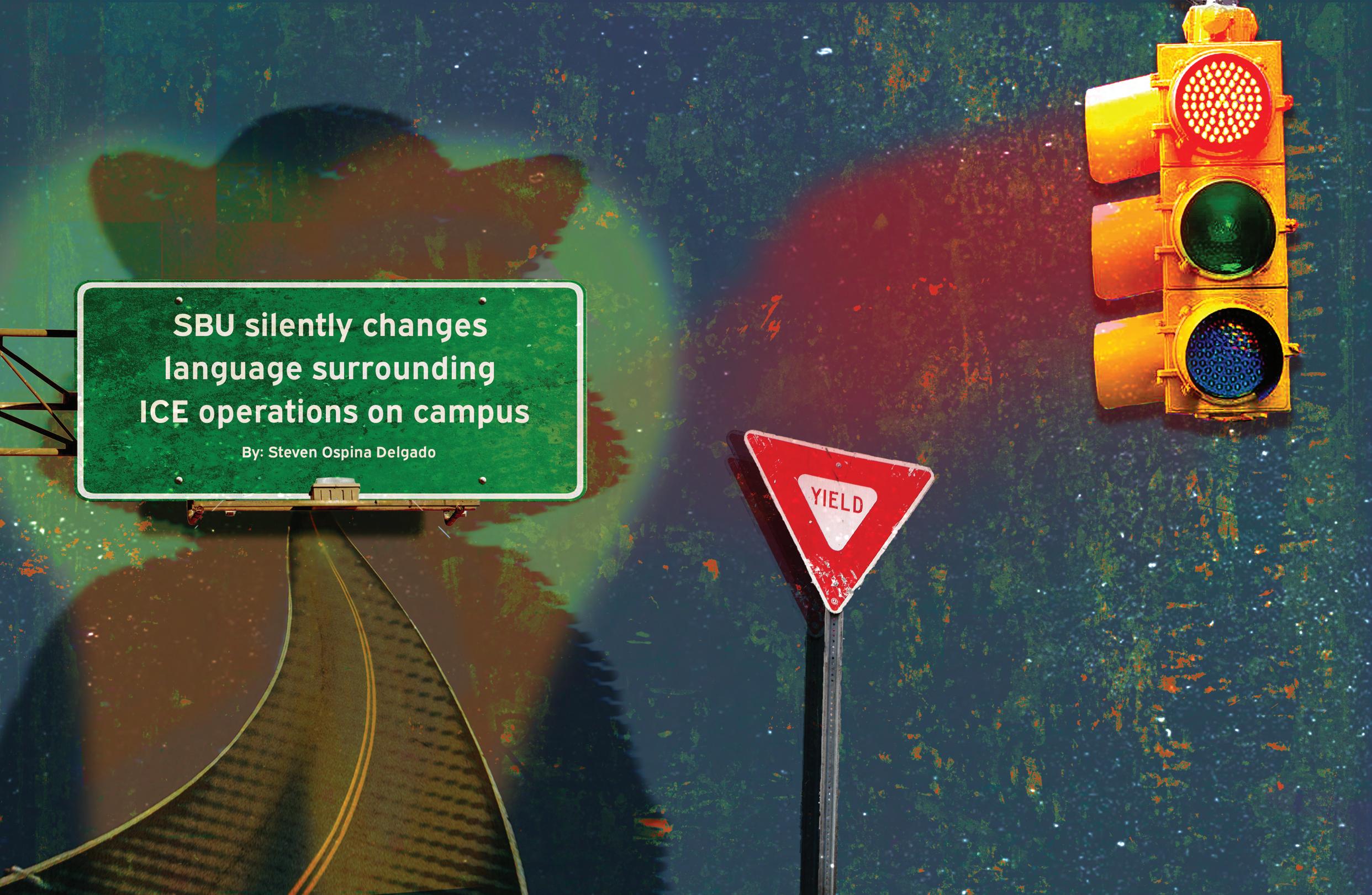
Stony Brook University is, for many, a place of opportunity. Over 3,400 international students travel from around the globe to receive their education from New York’s #1 public university.
Instead of worrying about their rigorous academics however, they face a much larger concern: being thrown out of the United States.
Since President Donald Trump’s inauguration, countless immigrants have been deported or have left the U.S. out of fear of being deported. As of January, just under 3 million “illegal aliens” have left, or been deported from the U.S., according to the Department of Homeland Security.
SBU’s response — or lack thereof — hasn’t reassured students, especially given the current state of immigration policy.
In February, SBU students and staff protested the SBU administration’s inaction. They demanded the adminis-
tration put protections for international and immigrant students in place, and commit to not cooperating with ICE activity on campus.
Formerly known as sensitive locations, ICE designates colleges and universities as protected areas — areas that are “generally avoided” unless there is a security threat.
SBU’s Visa and Immigration Services (VIS) website previously reflected this policy. It stated that “enforcement actions should not occur outside of extraordinary circumstances.” This was accompanied with a faulty link that seemingly led to a description of what a sensitive location is.
The website now makes no mention of sensitive locations.
During President Trump’s 2025 inauguration, he rescinded the 2021 Guidelines for Enforcement Actions in or Near Protected Areas policy. The memo, which rescinded the sensitive location
policy, stated “it is not necessary … to create bright line rules regarding where our immigration laws are permitted to be enforced.”
When asked about the change on the website and how the university is supporting international students amid recent immigration enforcement changes, an SBU official said:
“International students are a vital part of our university community, and we remain committed to supporting them and ensuring their safety. We work closely with SUNY and state partners, and we are connected with the New York State Office for New Americans to provide legal resources and academic guidance. We will continue to comply with all applicable federal, state, and local laws.”
The statement didn’t acknowledge the change on the website. SBU has not made an announcement regarding the change on the website either.
Despite student protests and demands, the university hasn’t made statements addressing them, making some students feel uneasy.
Nancy Hiemstra, an immigration policy expert and SBU professor, says neutrality won’t be enough to calm student fears.
“Stony Brook really should officially say: ‘Our police will not cooperate with ICE,’ and reaffirm their emphasis on education of all students,” she said. “For a lot of students, not having that public affirmation is really disappointing and adds to fears.”
Stress from the revocation and subsequent reinstatement of 11 student visas lingers on campus, threatening the security many international students believed they had. When a student has their F-1 visa revoked, they usually have 15 days to leave the country and overstaying a student visa can result in arrest or deportation.
The university has said it advocates for international students and reinstating the 11 revoked visas, but many students — especially Latino Americans — still don’t feel safe on campus.
Latin Americans make up the overwhelming majority of this year’s ICE detainees, and a recent Supreme Court ruling allows ICE agents to continue racial profiling in immigration policing.
“There’s so much to create a sense of fear in immigrants and non-white people because they’re racially profiling across the board.” Hiemstra said. “They feel a sense of fear in daily lives meaning that they don’t do a lot of normal activities.”
One person that has felt the impact is Christopher Avilla, a Salvadoran-Honduran SBU student who fears not only his friends’ and family’s safety, but his own.
“My dad’s uncle just recently got deported,” Avilla said. “When it first started, I wasn’t expecting it to affect me, but I didn’t go out all this summer because, unfortunately, I’m at risk. I myself am at risk, my family’s at risk, so it’s just better to stay at home.”
Avilla also expressed disdain towards SBU’s decision to remove the link from its VIS website.
“For a university this massive, worrying about [ICE] disgusts me because it not only affects the student body but it can also lead into families being drawn in if God forbid ICE did come onto campus.”
Latino Americans aren’t the only ones experiencing anxiety over potential deportation. The issue expands to students studying on an F-1 visa as well.
An SBU student on an F-1 visa spoke under the condition of anonymity, due to fear of deportation. They said they feel restricted in their freedoms due to their immigration status.
“When I came [to the U.S.] I promised myself not to join protests from the danger of getting out and losing my visa,” the student said. “I feel kind of threatened. I don’t feel free to protest.”
The student added that they don’t want to go back to their home country, and wants to work after graduating in the U.S.
When asked about international students’ safety concerns, SBU officials responded with a statement similar to the previous one:
“International students contribute greatly to our university and we will continue to do everything possible to support our impacted students and keep them safe. We work closely with SUNY and state partners and we are connected to the New York State Office for New Americans for legal support and academic guidance, while taking every effort to protect the identities of students affected.”
Students have vocalized their frustrations towards the university, made clear by the protesters’ demands towards SBU administration. SBU has not yet made a response to the demands.
Hiemstra said the university hasn’t “come out with as strong a statement as some faculty would like to see, like saying ICE is not allowed.”
“They’ve said they won’t share [student] information, but some stronger statements would be appreciated.” ■
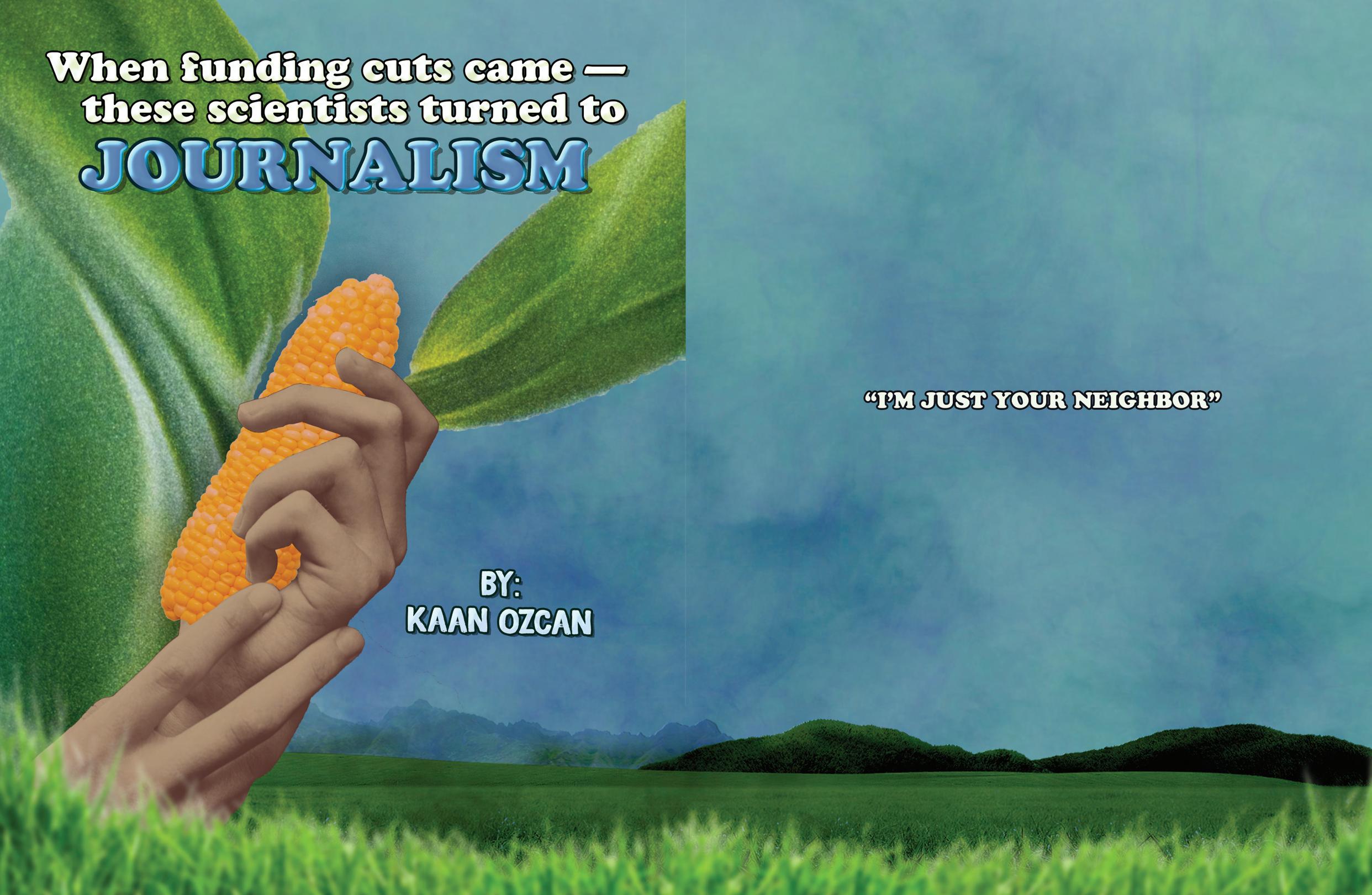
For Isako Di Tomassi, federally funded research was the whole reason she became a scientist; and without it, she might have never become one.
Now a third-year Ph.D. student at Cornell University studying plant pathology, Tomassi is using her voice — and her writing — to fight for the research that made her a scientist.
Tomassi was first exposed to a science career through a research experience for undergraduates (REU). These programs, typically supported through the National Science Foundation and meant to boost young scientists’ careers, were recently downsized due to funding and DEI concerns.
“These programs really aim to make a diverse and inclusive talent pool,” she said. “It gives opportunities for students who might not have access to these opportunities to do research a chance to participate and become scientists.”
Tomassi was one of these students, and said these programs were crucial to her as someone who had to support herself financially through college.
But now, Tomassi says she feels “uncertain” about her future in science, due to funding cuts. Even if grants have not been completely terminated, billions of dollars have been frozen, leaving researchers unsure of if and when their funding will come.
When Tomassi’s Ph.D. advisor, a federal scientist who worked for the U.S. Department of Agriculture was fired because of funding cuts, Tomassi said it was “devastating.”
To make matters worse, she saw posts on social media supporting the actions.
When she posted online about her advisor’s firing, the comments were celebrating. People were wondering why researchers like Tomassi or her advisor were receiving so much money to conduct research that seemed largely unnecessary.
The general public didn’t seem to understand the work scientists like Tomassi were doing, or why it was important.
That was the impetus to begin the McClintock Letters.
Spearheaded by Tomassi and her cofounder, Emma Scales, the McClintock Letters initiative is a science communication project that publishes opinion pieces written by scientists about their work and why it should continue to be funded.
From protecting apples in Washington state to developing novel insecticides in Indiana, the initiative has published over 200 op-eds defending federally funded science across 46 states.
“We wanted to kind of move the needle on the public perception of the value of federally funded research,” Tomassi said.
“We need to build that trust and that connection with the public and with the communities we are part of and from.”
In addition to publishing letters across the country, Tomassi said the initiative teaches scientists on how to write and communicate their work, skills that they otherwise would have never learned.
“We’re trained to write in this jargonheavy, highly technical way,” she said. “But writing an opinion piece or letter to the editor about your work for a local newspaper is very different. And it’s important that scientists are trained to communicate in this way to the public.”
Tomassi added that communication was the biggest barrier between the scientists and the public. She believes the kinds of comments she received supporting scientific funding cuts were because scientists lack the skills to communicate their work.
“This is something that we as scientists, as scientific institutions, as researchers, need to do a better job of communicating, how important the work we do is.”
While a senior at Emory University, Erin Morrow underwent heart surgery to correct her electrical heart disorder, heart block. The disorder causes the top and bottom chambers of a heart to be out of sync, resulting in a slow heartbeat.
The potentially deadly disorder was corrected with a pacemaker she received when she was freshly 21. The pacemaker was made possible by federally funded research.
“The pacemaker wouldn’t have existed without decades of federal investment and research,” Morrow said. “Both into the medical device itself but also just the basic science behind how the heart’s electrical system works. And if that federally funded research hadn’t happened I don’t know if I’d be here today.”
Now a fourth-year Ph.D. student in cognitive neuroscience at UCLA, Morrow said her experiences as a scientist and patient puts her in a “unique position.”
While Morrow wasn’t directly impacted by cuts, her institution has been battling the Trump administration for months, and only recently had its $500 million research fund restored.
“I’m just your neighbor”
Morrow was a part of the grassroots group of early-career researchers to expand the McClintock Letters. Her oped was published in the Marietta Daily Journal over the summer. She said local newspapers were a way to “cut through” the noise of federal funding news, and connect with her own community.
“When I published my McClintock Letter in my local hometown newspaper, people were realizing there is a scientist in their community,” she said. “Scientists are embedded within communities, they’re community members, their journey into science has been shaped by their community. I’m just your neighbor.”
Like Tomassi, Morrow said communication is a key issue when it comes to increasing the public’s understanding of scientific research. They both agreed that scientists aren’t incentivized to communicate their work or share it with the world.
But Morrow said there’s another aspect to communication: humanity.
“I think it really just comes down to like, talking to people. Remembering you’re human first and scientist second.”
While the initiative hasn’t hit its goal of publishing a thousand op-eds yet, Tomassi and Morrow still have the same goal of connection.
“It’s just incredible to be able to make these community connections with scientists, to really get out there and be talking to people,” Tomassi said.
“We’re just people at the end of the day,” Morrow said. “And these grant cuts are about people, and I think that’s the message we need to convey.” ■
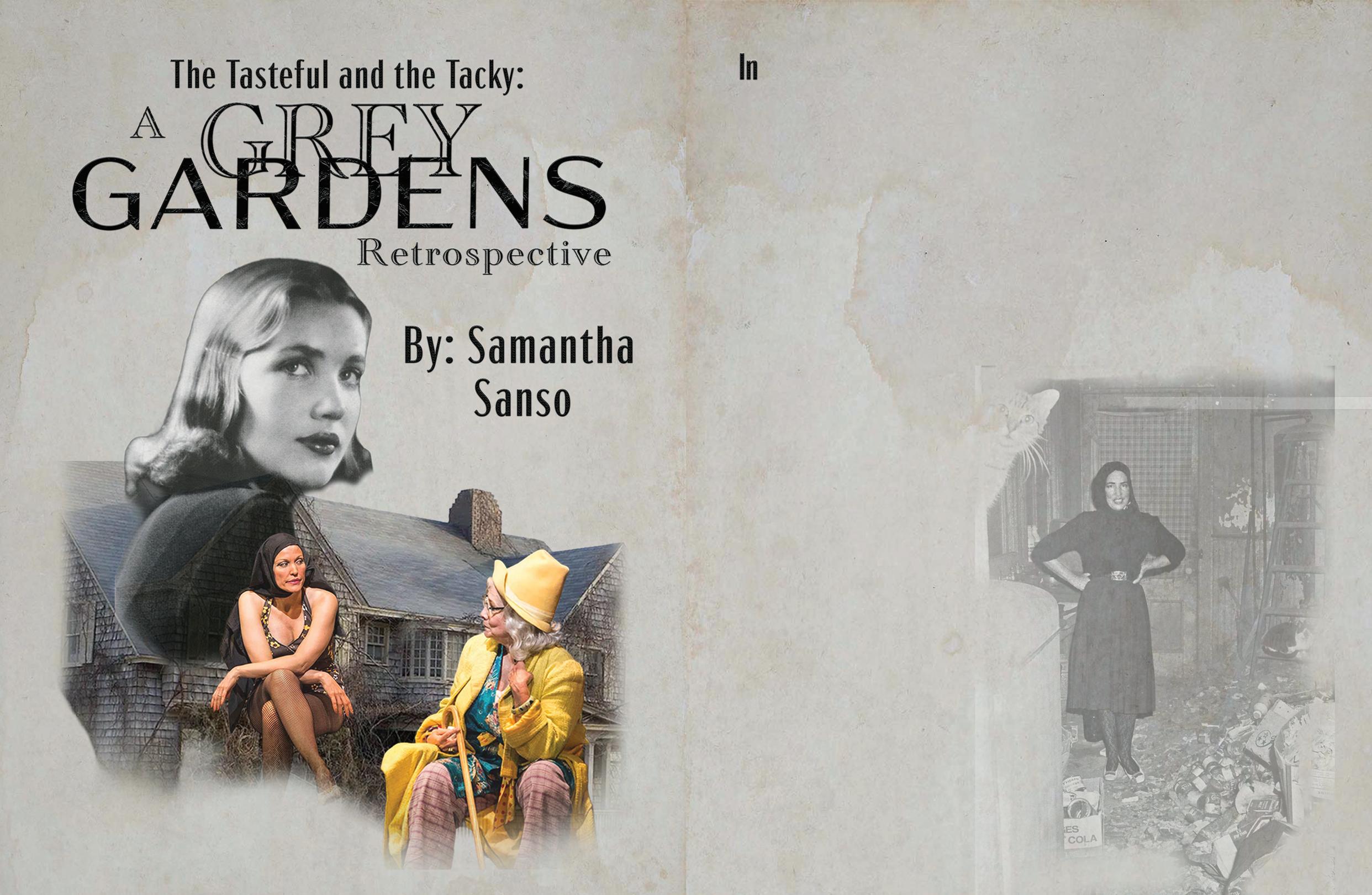
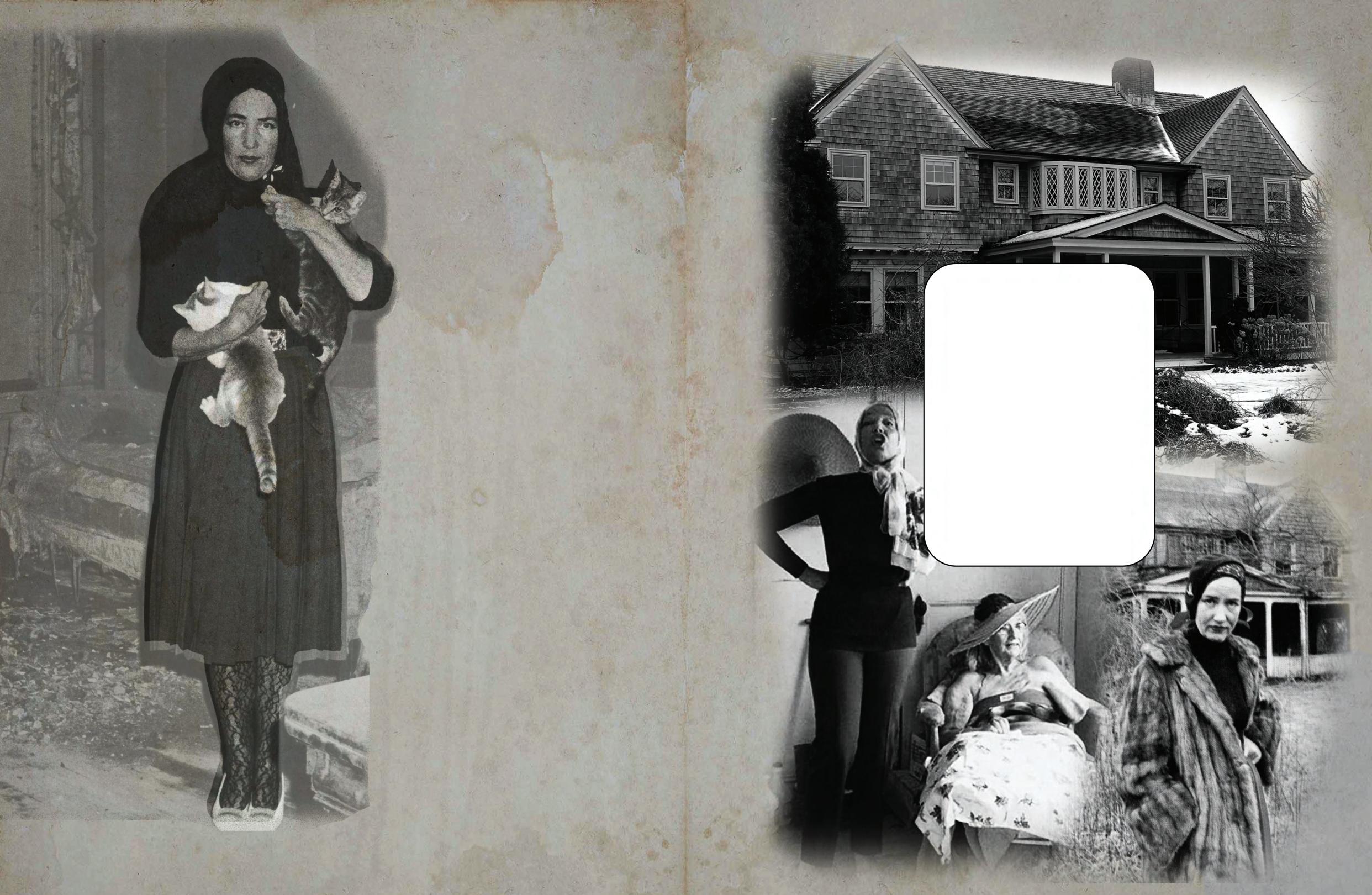
Grey Gardens, Little Edie, wearing white kitten heels, performs her iconic dance in honor of July Fourth. Her shoes appear in frame first, guiding her as she struts down the eponymous estate’s rotting staircase. They are the brightest object in the entire sequence, outcompeting her handheld flag’s white stripes and perhaps only rivaled by her dazed smile.
Each scene in the documentary brims with a similar sad eccentricity. The lives of Little Edie and her mother, Big Edie, as they flounder about the dilapidated mansion are showcased with no restrictions. Luckily for viewers, what the two women lack in funds they compensate for in their rich personalities. In the 50 years since its release, Grey Gardens has become a highly regarded film exploring class exile, family relationships and to some, a twofold tale of disturbance.
When she completes her descent, the documentarians, Albert and David Maysles, pan the camera up her body. Little Edie is revealed to be wearing black sheer stockings, a black leotard and of course, a red and blue headscarf, chicly tied in a knot underneath the left side of her chin. She begins to twirl and glide in and out of the frame, testing the adeptness of the cameramen as she unpredictably moves about waving a miniature American flag.
Her dance has come to be one of Grey Gardens’ memorable moments that, like most of the documentary, is construed in both a positive and negative light. Many finish the film and praise it as a story of rebellion against the status quo; two women are fighting against their family and the town of East Hampton for their right to live in solitude in a shambolic home. Others struggle to observe it as a counter-cultural tale and instead view it as a sob story of two women exiled by a world unprepared for them.
Favorite scenes differ amongst watchers as well; some love the bickering between the two women, while others feel their hearts break as battles between Big and Little Edie unfold. Yet an undeniable appeal of the film is the fashion, particularly that of Little Edie.
To commemorate its 50th anniversary, the Paris Theater in New York City — the same theater where it initially debuted — held a special viewing of the film where jeweler Alexis Bittar, actress Julia Fox and Albert Maysles’ daughter, Rebekah Maysles introduced it.
The event called for homages to be made towards Big and Little Edie. When I stood across the street from the Paris with two friends, we watched the waltz of those entering beneath the dazzling marquis. In Little Edie fashion and Fox’s glamour, our soon-to-be fellow moviegoers donned gaudy headscarves, flowing blouses of a plethora of patterns, cat-eyed sunglasses
and the occasional fur coat.
By comparison, my friends and I had agreed to wear all black, incorporating a few touches of our own. One of my companions stood her ground across from the Paris sporting chunky platform boots, wearing a voguish Ulla Johnson dress, tiered with white ruffles around the collar. In a very “Little Edie and her towel headscarves” custom, she reinvented the dress’ purpose as a Wednesday Addams costume for a previous Halloween. My other companion wore a black steampunk vest and black cargo pants, blending the new and the antiquated through his attire — again, in Grey Gardens fashion. I wore a vest emblazoned with buttons, brooches and pins, remembering Little Edie’s incorporation of similar items to jazz up her towel headscarves and towel skirts.
Our fellow attendees’ attire visually reflected an appreciation of the film; Little Edie’s most iconic outfits were recreated throughout the theater. One individual wore a black leotard and black shorts, remembering the debutante’s iconic dance. For every three people who did not wear
bandanas or scarves, like my friends and I, there were nearly an equal number of people to make up for the lack of them. So much so that when Rebekah Maysles pranced onto the stage, matching the audience’s eccentric outfits through her own, she commented on “all of the Little Edies in the audience.” The subdued monochrome palettes of my friends and I were mirrored through Fox, who wore a black headwrap held together by a ginormous bow.
Fox, whose introduction I had most anticipated, asked the question that many have after watching Big and Little Edie’s lives unravel: Were the women crazy? And if so, does it matter?
She touched on the poignancy of their story and rebuked the claims of Bittar, who said more than once that the women were alcoholics (there is no proof of this, as Fox defended). By easing us into the experience, she unintentionally prepared us for the offbeat journey of watching an equally offbeat film.
Until this point, I had only watched Grey Gardens twice, devouring its bizarreness
both times. But after each viewing, the film left a sour aftertaste in my mouth. Perhaps it was because I could not stomach the idea of feeding raccoons in my attic with stale bread and kibble for cats. It is also a struggle for me to imagine eating corn that I boiled in a bed already contaminated by plates of rotting food. I do not think I could withstand moving about in designer clothes on a floor littered by empty boxes and weeks’ worth of newspapers, actively defending the opulent life I could have had. But this is the life that the women in the film live with a flippant attitude of normalcy. I never finished the film feeling that I had watched a comical story, even though there are moments of humor sprinkled throughout the film.
The moviegoers in Little Edie costumes and the intense clapping when the movie began did not initially appear as a bad omen. Yet as I sat and watched the film, I began to feel that something was awry. Nearly every three minutes, laughter roared throughout the theater. Humor does not seep through every scene, but to an outside observer listening in through the closed theater doors, one might assume it did. As the women bickered on screen, the audience cheered them on; at Big Edie’s birthday dinner with two visibly uncomfortable guests, the audience giggled; when one of the dozens of wild cats living in the home defecated behind a portrait in the women’s bedroom, the audience clapped.
Watching the heads of the jovial moviegoers in front of me tip backwards as they laughed was nearly as uncomfortable as watching the drama unfold on screen. About an hour into the film, the noise was superfluous and seemed mean-spirited. The audience was not laughing with the women, but at them. After the theater lights turned on, it became apparent that garbage had accumulated in the aisles, as popcorn buckets and paper cups drained of soda littered the floor. The Little Edies in the audience flooded the aisles with color, as vibrant headscarves bopped out towards the front doors, leaving Grey Gardens behind and venturing back into the present day.
When my friends and I regrouped, our first discussion centered not around the film itself but the excessive laughter that accompanied it. For all the well-dressed moviegoers, their taste did not translate into their consumption of Big and Little Edie’s story. Instead, the tackiness that was evaded in the costumes transformed into a peculiar viewing of the movie. Although our fellow moviegoers had escaped the Grey Gardens screening unscathed — in fact, they may have left feeling emboldened — we were left pondering how a haunting documentary could be seen through such a distorted lens of humor.
Fox’s initial question — were the women actually crazy — is partly why audiences keep returning to Grey Gardens. When the documentary was initially released, some critics shamed the film as a tale of exploitation, as the women’s lifestyle is undeniably abnormal. We are peering into the strange, dishevelled lives of two women, turning the audience into not just viewers, but voyeurs. Contemporary viewers and the stars of the film — and stars they are — are separated by five decades, but it is imperative to remember that Grey Gardens explores the lives of two women who were victims of their time and, most tragically, of themselves. Little Edie, who repeatedly dresses up to walk around a house that crumbles around her, reminds us that “it’s very difficult to keep the line between the past and the present.”
Her sentiment rang truer than ever amongst the poor taste displayed in the Paris that day. ■
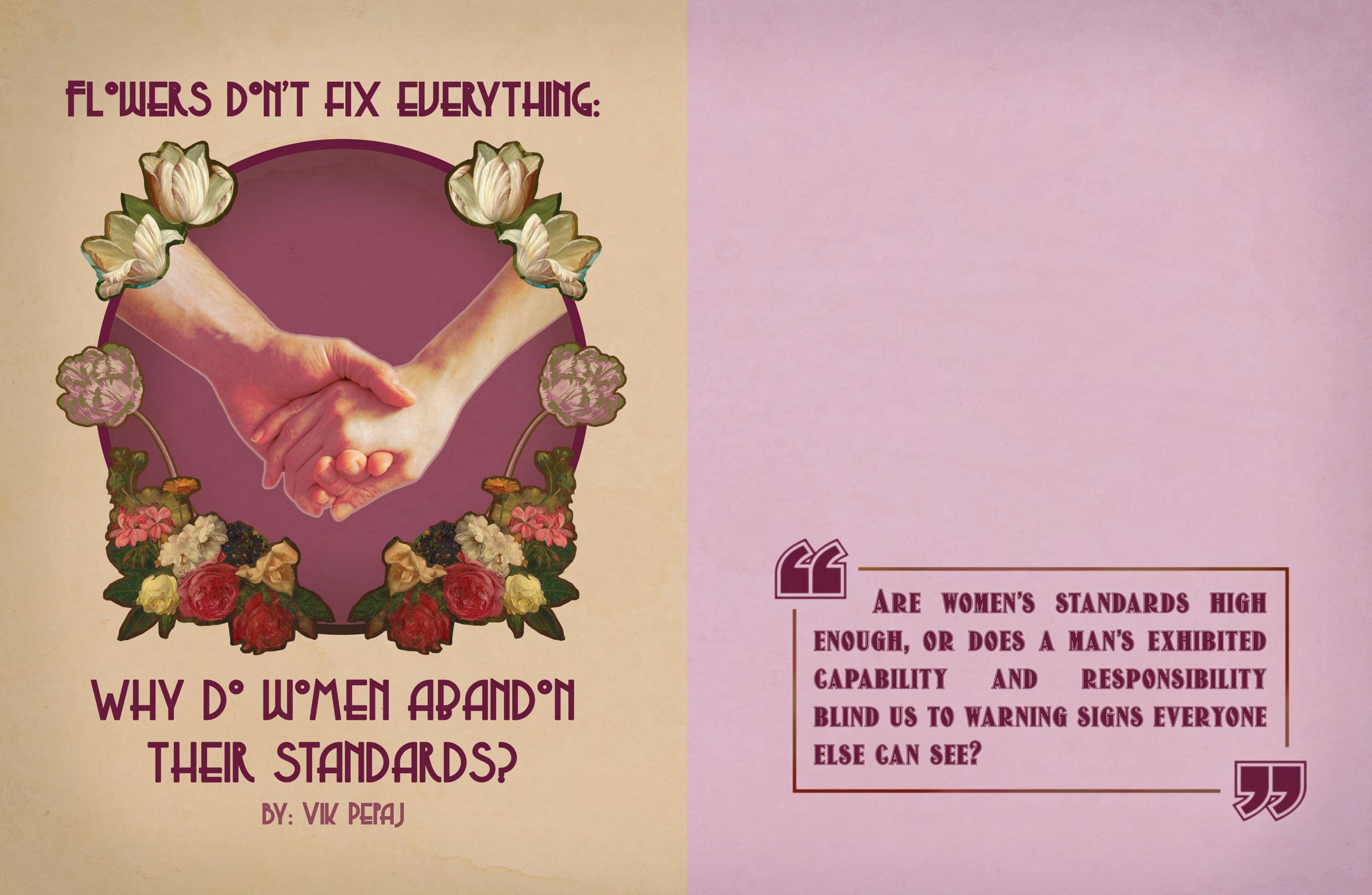
Nothing’s better than going on a great date. The next day, you might reminisce on the romance and the fun you had. For Samantha Sanso, however, reminiscing only made her realize the flaws in the man she saw.
Women’s dating standards are increasingly debated online. Whether it’s wanting the bare minimum or expecting princess treatment, women do indeed have higher standards than they did 20 years ago.
More women than men think it’s harder to find someone who meets their expectations. Similarly, more women report difficulty in finding someone even looking for the same type of relationship as them.
Often, women find men who appear successful, self-assured and mature. Yet, when examining these men on a deeper level, they find a lack of commitment hidden behind these charms.
Make no mistake, these women have high standards and a confidence that should guide them away from men like this. They simply become blind to these red flags because the guy they’re dating initially checks certain boxes that other men don’t.
In the end, they are continuously willing to celebrate so little without asking for more.
So the question remains: Are women’s standards high enough, or does a man’s exhibited capability and responsibility blind us to warning signs everyone else can see?
Continuously, I’ve been on dates with men who seem to have it all. We share similar values and have intellectual conversations. They’re organized and responsible, working towards goals and keeping their apartments neat and clean. They display genuine emotional maturity and seem to understand the importance of basic respect.
Bare minimum to some, but admittedly a gold mine to me and many others.
But eventually, when things don’t work out and we go our separate ways, I’ll look back and notice the tiny inconsistencies I missed. The occasional condescending tone, the long wait times between texts and the slightly pushy nature when he goes in for that first kiss.
This reflection always leads me to the same question: How could I have been so blind?
Sanso, a senior at SBU, asked herself the same question. She recalled a man she met while upstate, who, months later, responded to a story she had posted. After some back and forth flirting, the two eventually
agreed to hang out.
What followed was multiple cancellations and a lack of communication, with her date assuming she would be picking him up. “This wasn’t something that was discussed … Like, I didn’t agree to come get you,” she said.
Sanso, despite these red flags, admits to having fun on the date, “We had a blast … He and I got along so well.”
However, when examining a photo she had taken of him, she realized a glaring issue she hadn’t noticed the day prior.
“I was reminiscing, and I looked at the picture, and I was like, ‘Oh my god. There is no way that this man has hickeys on his neck.’”
She, like so many other women, had missed every sign that this man hadn’t considered her feelings. When asked what convinced her to see him again, Sanso admitted, “He was genuinely nice.” And while being nice is a great quality, what happens when it blinds you to every red flag, and worse, leads you into an unhealthy relationship?
26% of women say dating is riskier compared to 13% of men, and while Sanso’s experiences were overall harmless, they were the exception and not the rule.
Failing to hold the men in our lives to a higher standard can potentially lead to destructive behavior that can be difficult to spot until it’s too late. For over a year, this was senior Ni’yah-Marie Preacely’s reality.
When Preacely got with her ex-boyfriend, she was admittedly going through a difficult time. Having just lost a family member and experiencing money troubles, the only person she felt she could confide in was her ex. He was exactly what she needed in a time of crisis, driving her around and buying her family food whenever he could. Soon, however, he began using these kind acts to excuse his other upsetting behavior, leaving Preacely conflicted.
“He would consistently cross most of the boundaries I would set,” she said, “He would smoke before driving with me and then get upset at me for being upset.”
Preacely also noted how he would let others interfere with their relationship. “His mom kept being rude to me and undermining our relationship, and he would never stand up for me.”
Preacely felt guilty for breaking up with her ex, who had continuously mistreated her. In her eyes, the good he did outweighed the ways he’d hurt her. She found herself asking, “Am I a bad person for wanting to leave this relationship?”
This is the exact feeling an SBU freshman faced after entering a relationship full of emotional manipulation and distress.
Choosing to remain anonymous to avoid her ex-boyfriend contacting her, the student described her ex as initially “emotionally intelligent” and someone who “knew how to treat a woman, and talk to one.“
However, on their earlier dates, she noticed unsavory behavior that later became predatory. While at a music festival, her ex asked if he could kiss her. Although she said no, he seemed disappointed and continued asking until she eventually gave in.
“I was like, ‘You know, he’s chill, right?’ But like, I should have picked up the red flag of him trying to pressure me,” she said. “But at that point I was still like ‘Oh my God, this man’s perfect.’”
The two were together for nine months. During this time, he continued to pressure her until the end of their relationship, even sexually assaulting her while visiting for his birthday.
“I was manipulating myself into thinking everything was fine because I wanted it to be fine. I wanted to pretend I was okay with everything.”
This student wanted to protect her perception of her ex-boyfriend. She wanted to believe the man she’d initially fallen for was a reality, despite his repulsive behavior towards her proving otherwise. It was easier to ignore his flaws, and it resulted in him hurting her.
they found it very or somewhat difficult to find people to date, it’s clear that dating is hard for everyone. But for women, they seem to have trouble finding people who make them feel safe, meet their expectations and want the same things they do. When looking at the statistics, why wouldn’t women jump at the chance to be in a relationship that seems even slightly promising?
It makes sense that women would see a few positive features of a man they’re dating, and let the negatives slip through the cracks. It may feel easier to ignore these things than to address them or jump back into a dating pool with no feasible prospects. However, refusing to acknowledge the setbacks of someone you’re dating could leave you frustrated and alone, or, worse, put you in direct danger.
While it’s normal to have flaws and to accept someone for their flaws, it isn’t normal to ignore them altogether. Not for the fantasy of a man who’s displayed bare-minimum attributes, especially when they’d expect the same and more from women.
No longer can we allow the menzz we date to take advantage of our unwillingness to want more for ourselves. We must stop grading them on a curve because they have never and would never grade us on one.■
With 75% of daters say- ing


Critically acclaimed director Emerald Fennell may have jeopardized her new film’s success because of her self-fulfilling artistic oversight. The movie, slated to release Valentine’s day, is an adaptation of Emily Brontë’s novel Wuthering Heights.
The film’s first teaser trailer was met with immediate online criticism after its release in September. The general consensus was that Fennell’s most damning offense was casting Jacob Elordi as Heathcliff — a character who Brontë repeatedly describes as dark skinned.
One user on X shared their disappointment about Elordi’s casting and wrote: “heathcliff is described as a dark-skinned brown man in the book, and a major plot point is that he was subjected to racist abuse by his adopted family. but yeah sure jacob elordi is perfect!”
Brontë’s Wuthering Heights follows the dark romance between Catherine Earnshaw and Heathcliff as they maneuver life’s societal conventions in Yorkshire, England in the late 18th century.
Heathcliff, who is often shunned because he’s an orphan, is called a “beggarly interloper” and an “imp of Satan.”
Throughout the novel, he is repeatedly called other derogatory insults such as: “savage,” “beggar,” “dog” alongside others.
In the novel, Heathcliff reveals his insecurities about his race, and compares himself to a white character, Edgar Linton.
“I wish I had light hair and a fair skin, and was dressed and behaved as well, and had a chance of being as rich as he will be!”
Race is an inherent aspect of Heathcliff’s personal develop-
ment as a character and a necessary factor in understanding why the other characters treat him so differently. It’s confusing why Fennell believes Elordi can bring this character to life.
zIn her perspective, Elordi may be the actor who she envisioned would best fulfill this role, yet her decision to brush past the inherent racial identity attached to this character inadvertently speaks to a larger issue of how media tends to take a colorblind approach regarding issues about race.
On why she casted Elordi, Fennell says it’s because he “looked exactly like the illustration of Heathcliff on the first book that [she] read.”
When at the world premiere of Wuthering Heights, Fennell is asked the same question and elaborates on it further: “I think the thing is everyone who loves this book has such a personal connection to it, and so you can only ever make the movie that you sort of imagined yourself when you read it. I don’t know, I think I was focusing on the pseudo-masochistic elements of it.”
Fennell’s choice to erase Heathcliff’s identity is cowardly and avoidant. With Elordi cast, she has no obligation to address issues of racial prejudice within her adaptation and can focus on self-indulgently exploring elements of the novel she deems as worthy. Fennell can bring her Wuthering Heights fantasy to life while Brontë’s nuanced exploration of societal inequality is pushed aside.
Casting director, Kharmel Cochrane, has even gone on record to say, “[Y]ou really don’t need to be accurate. It’s just a book. That is not based on real life. It’s all art.”
Catherine and Heathcliff’s relationship is complex, messy and dramatic because their difference in class and race amplify the stakes. Without those stressors, the inherent risk of their relationship not being accepted amongst their peers is not there.
However, after the release of the official trailer in November, it’s now explicitly clear that Fennell is not intending for this film to serve as an exact adaptation.
The surreal set designs and inaccurate time period costumes are pushed to the forefront while the story’s essence is overshadowed by Fennell’s emphasis on contemporary aesthetics. However, the deliberate decision to showcase how loosely the film is pulling from the source material doesn’t excuse the whitewashing of its characters.
If creative teams behind projects like Wuthering Heights are so willing to abandon such an integral part of their protagonist’s identity, it signals that racial prejudice is a topic that is not interesting or worthy enough of being explored in their work.
Fennell’s artistic vision may have stunned the world with Saltburn, but her decision to cast Elordi as a means of fulfilling her teenage Wuthering Heights fantasy has setback the film’s potential of being recognized as a groundbreaking adaptation of the novel. ■
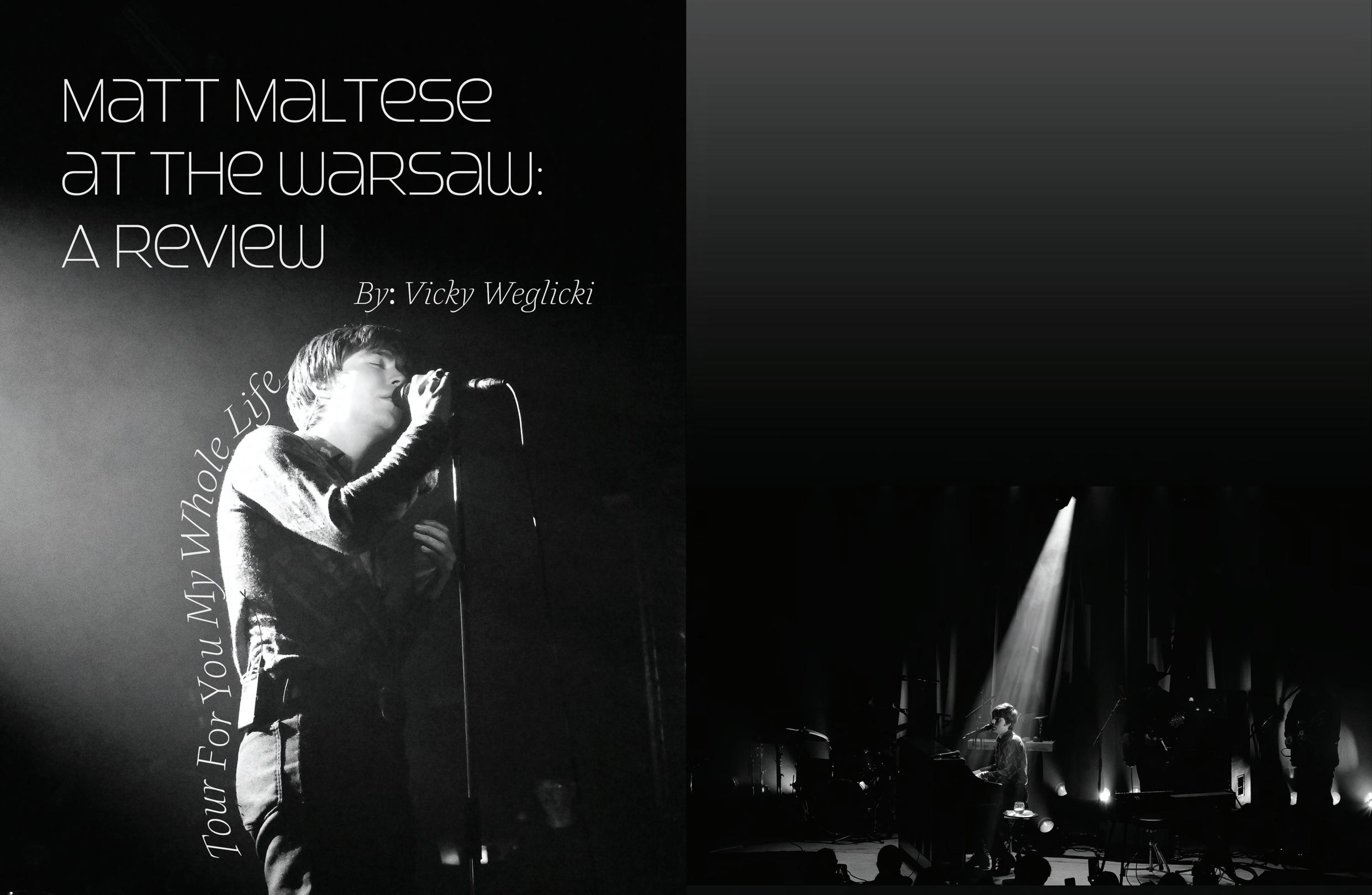
His silhouette cut through the huge blue lights that burst outward toward the crowd.
The venue’s soft blue lighting bouncing off Matt Maltese created an ethereal ambiance complementing his gentle piano playing filled the venue as the crowd burst into song. I restrained myself from joining, focusing instead on capturing his graceful essence with my camera.
The British-Canadian artist has been a staple in the music scene for years, known for his emotional releases long before his song, “As the World Caves In,” rose in popularity. Maltese performed at The Warsaw with Cornelia Murr as the opener on September 29th. It was my first time covering a concert, and it happened to be one of my favorite artists. I’m such a fan because his music resonates with me and his lyrics seem to capture emotions I’ve felt but couldn’t articulate.
I’ve attended countless concerts for “bigger” artists and for a singer with six million monthly listeners, I thought the concert would feel less intimate, but this ended up being one of the most personal shows I’ve attended. It has a capacity of 1,000 and there was a different connection between the audience and Maltese at The Warsaw. The
venue was not completely packed due to a last-minute location change, but it ended up creating a more deeply personal atmosphere.
Throughout the night, Maltese spoke to the audience as if he was speaking to a big group of friends. In between songs, he made jokes to the audience about how different the U.S. is compared to England. I giggled when he described a taxi as a “carriage” and the subway at “the tube.” Continuing the tour’s tradition, he celebrated an audience member’s birthday, inviting them on stage and singing to them. Maltese gave her a warm hug the moment she stepped on stage, melting everyone’s hearts – including mine. The girl was hysterically sobbing, likely in complete shock. The band members sat her down, placed a birthday hat on her head, handed her a cupcake with a lit candle and sang his song “Happy Birthday.” Despite being visibly shaken and in tears, she sang with him and the crowd. I was in awe. It was incredible to see an artist bring one of his fans on stage and show them such affection. It may seem insignificant, but it created a lifelong memory for that girl.
Many of Maltese’s lyrics resonate because they are contradictory and speak to us about something that’s universally
experienced. I, like many, have been in a relationship that made me feel on top of the world, but at the same time like I was stuck in a nightmare.
You’re the only one
Makes me feel alive
You’re the only one
Makes me wanna go home and Curl up and die
Maltese’s vocals were raw, unapologetically vulnerable. The Warsaw quickly became a safe environment where it felt okay to cry alongside strangers. An artist who is so honest and open about their feelings is one who reaches into the hearts of fans and comforts them. Maltese’s performance radiated both love and despair, reaching into the hearts of fans, comforting them.
While I wasn’t the one on stage during his rendition of “Happy Birthday,” seeing him and his band treat the girl with such tenderness warmed my heart. This heartfelt moment with a fan perfectly encapsulates his kindness and humility as both a person and artist. It’s clear that he genuinely loves and appreciates his fans. As the title of his encore song says, “Everyone Adores You (At Least I Do).” ■
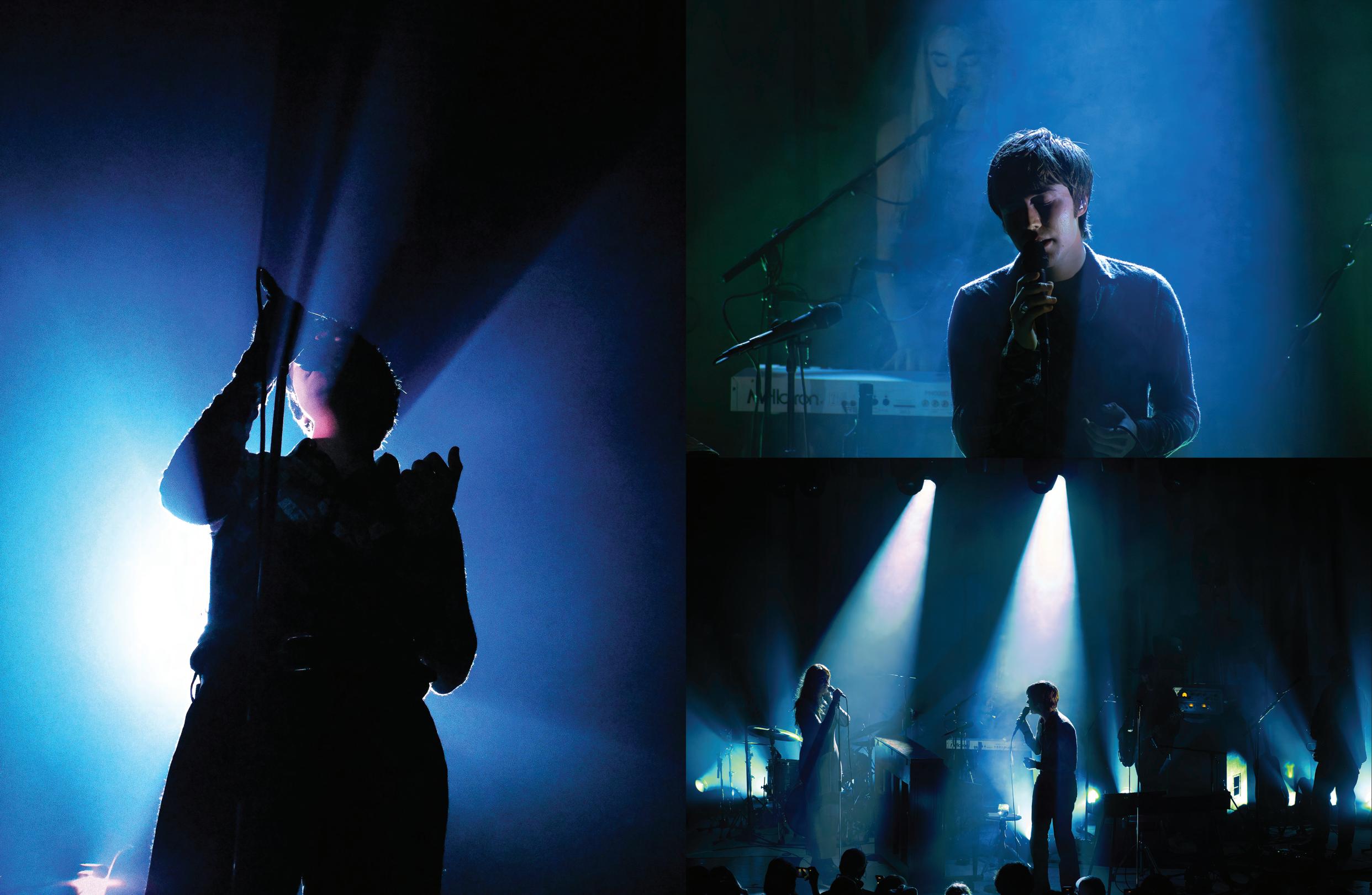
It’s not the cheapest time to be a college student. The total student loan debt in the U.S. is nearly $2 trillion, affecting a staggering 42.5 million Americans. The average borrower owes almost $40,000.
Recent college graduates face a job market that’sslowed in recent years, with their unemployment rates soaring past those of the rest of the U.S. population. With all these cataclysmic numbers, one might wonder: is a college degree worth the hefty price tag?
With this pivotal question, it is crucial to consider the intellectual value of pursuing higher learning. Going to college isn’t purchasing a tool to unlock some lucrative professional future. Really, it’s buying a forge in which you, the student –a blank piece of metal – undergo a transformative experience, reshaping who you are and what you are capable of. College isn’t a master key; it’s what makes you one, and
that in and of itself is priceless.
Before lauding the abstract intellectual and societal value of a higher education, it’s important to note there is still an inherent financial value in graduating from a university — a fact that seems to be increasingly overlooked in public discourse. More often than I can recall, there’s been clamoring for a repudiation of America’s higher education system.
This notable shift in the perceived value of college education has become a talking point for many influential figures on the right. The late Charlie Kirk, a prominent conservative activist famous for speaking at college campuses, said that “the vast majority of kids that go to college shouldn’t be there at all.”
The wealthiest man in the world and onetime “special government employee” for the Trump administration, tech billionaire Elon Musk, has called college “overrated,” say-
ing, “I think college is basically for fun and to prove that you can do your chores, but they are not for learning.”
Many are left wondering — why waste the time, and more importantly, the money, pursuing a college degree when they are being told that they shouldn’t be there? Why choose a litany of chores over other avenues of economic success more readily available?
There are seemingly countless routes one can take to find financial paydirt in today’s society. Have a company pay your way through trade school, and you’ll quickly find relatively lucrative work as a plumber or an electrician. After all, somebody has to get paid to make the world go round. Or put your mind, passion and the innumerable power of the internet to use and pave your way as an entrepreneur or influencer, devoting yourself to some online exploit that could pay you to
do what you love.
All of this is good and well, if you know what you want out of life and see a path forward. But to forsake higher learning simply because of perceived financial pitfalls is to deprive yourself of a flourishing financial future.
Of course, the cost of college in the U.S. can be exceedingly exorbitant. The price of tuition has far outpaced that of inflation over the past half-century, meaning the bloated cost of college increasingly seems out of reach for the average American. A price tag on an Ivy League education could run you a staggering quarter of a million dollars. That’s quite a sum, but it isn’t indicative of the average college student not attending an elite private institution.
There are numerous ways for a student to avoid the high-priced sticker of what’s thought of as a conventional college education. For one, 43% of college undergraduates attend community colleges. While this isn’t what many may have in mind when they embark on their academic journey, it can still serve as a fruitful and exceedingly affordable launching pad for their next educational stop, or even into the workforce.
There’s also the accessibility of online courses, which are now taken by some 26% of students exclusively, enabling them to take classes at a reduced cost, conveniently. Pell grants and financial aid, along with the digestible pricing of instate public school tuition, also offer students a chance at a college education that doesn’t break the bank. That’s not to say these paths are effortless and without their own challenges, but it’s an opportunity for students to chase their dreams without feeling beholden to the financial restraints placed upon them.
The simple fact is that the longterm financial benefits of getting your degree still far outstrip any other alternative. College graduates earn substantially more than high school graduates. Individuals
with a bachelor’s degree earn a median weekly income of over $1,500, more than twice that of those with only a high school diploma. Even with a depressed job market, the unemployment rate for all college graduates remains significantly lower than that of those without a degree. At the end of the day, college degrees still pay the bills despite the high price tag.
More importantly, beyond the financial advantages of pursuing a college degree, there are also the non-monetary considerations that may make it worthwhile regardless. Going to college is not only a springboard into the professional world, but a time to cultivate who you are as a
per-
son and set a foundation for a more fulfilling life.
College makes living a longer, more engaging life, all the more accessible. Graduates tend to lead healthier lives, with lower rates of obesity and smoking, and can expect a life expectancy much higher than their less educated peers.
Graduates are also more likely to participate in their communities. Higher rates of volunteering, donating to charities and voting point to individuals more deeply ingrained in their communities and the world at large. This civic and communal engagement is indicative of a larger trend: that those who graduate from college tend to have a keener sense of how to improve their lives and the lives of those around them.
College, more than anything, is a time to expand your horizons, to experience a new way of thinking. It’s a chance for future accountants to
take classes on Aristotle or Shakespeare, or for creative writing majors to learn about climate change or anthropology. It’s where you learn to think critically and deeply, gaining a better understanding of the world around you — equipping you not just for your future job, but for your future as a well-rounded human being.
If college is a forge and you’re a malleable piece of metal, then all the classwork, the tests, the challenging new ideas you come across, are all the heat and pressure of a blacksmith’s workshop. Just the right conditions to transform you into something new, something useful.
The people you meet along the way, the professors, mentors and classmates you work with, are the master smiths and their tools, hammering and bending and shaping you into a key capable of unlocking any door. Whether that door is your future career, some unforeseen endeavor or any of the obstacles and opportunities life will inevitably throw your way, you’ll be assured knowing you’re well-equipped to handle it.
Sure, there are a million reasons — or rather, tens of thousands of dollars — to consider whether or not college may be worth it. But it’s helpful to remember that, in the long term and under the right approach, there’s no safer bet. Even more crucially, it’s worthwhile to remember that it offers a transformative experience, a place to grow intellectually, socially and emotionally. And it’s impossible to put a price on that. ■

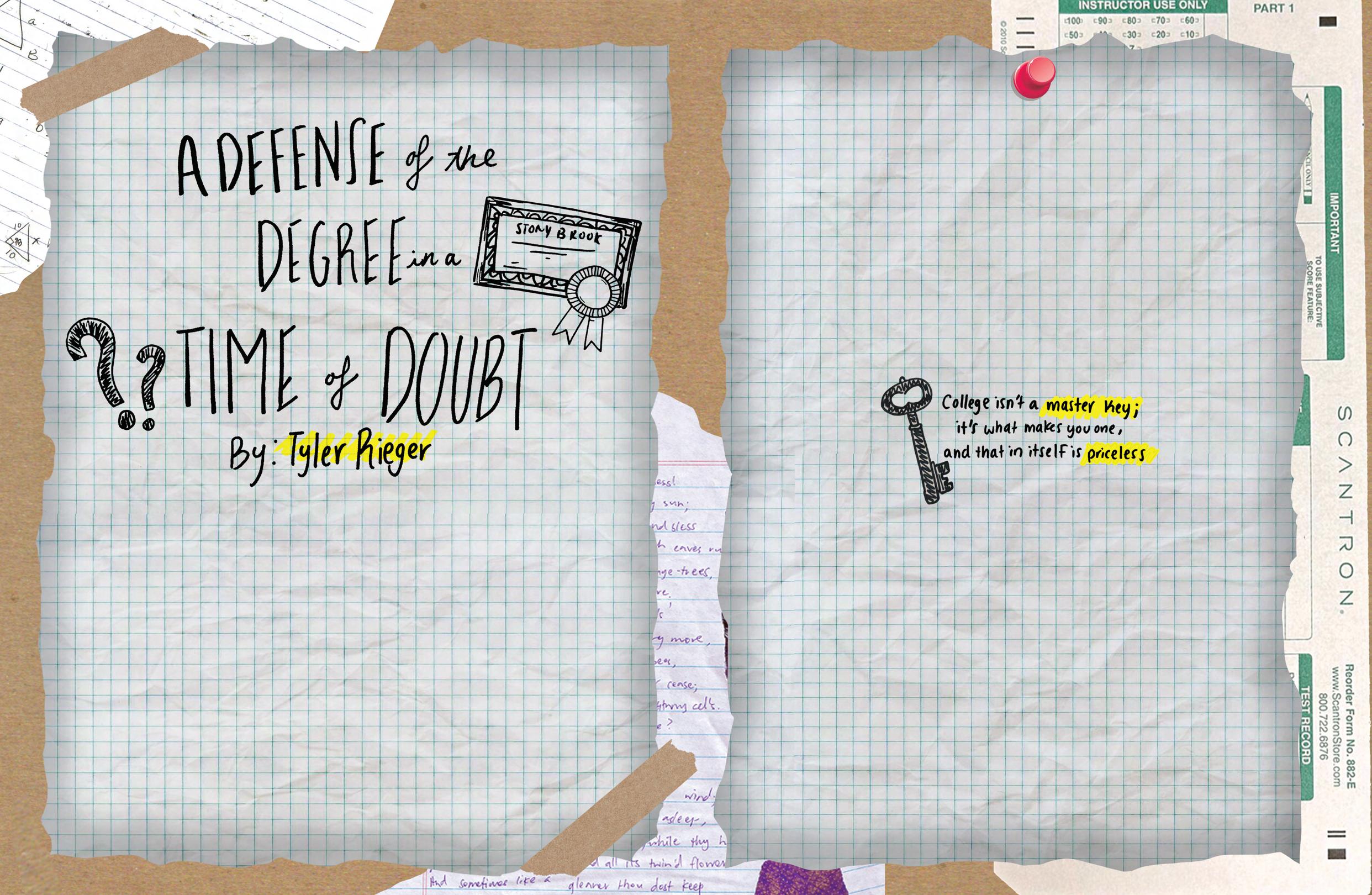
Tired of $10 Pocky and $13 bags of Doritos? A neat trick to get a secret discount in the Emporium is to stuff your pockets and fucking book it! The Emporium doesn’t even mind, as a matter of fact, they encourage it! Steal from the Emporium Fridays take place weekly this semester.
We at the Press have recently discovered a simple way to make easy money on campus that is only TWO effortless steps.
Sign a contract with a music artist or group. Here’s your job: You’ll write articles “reviewing” their music and be paid for each one that’s published.
Find somewhere to publish your biased work. (Pro Tip: Don’t let them find out you’re being paid for a good review.) We recommend the Statesman; they are all for publishing these kinds of reviews. For any inquiries, please email contracts@ sbstatesman.com.
And just like that, you are absolutely printing money.
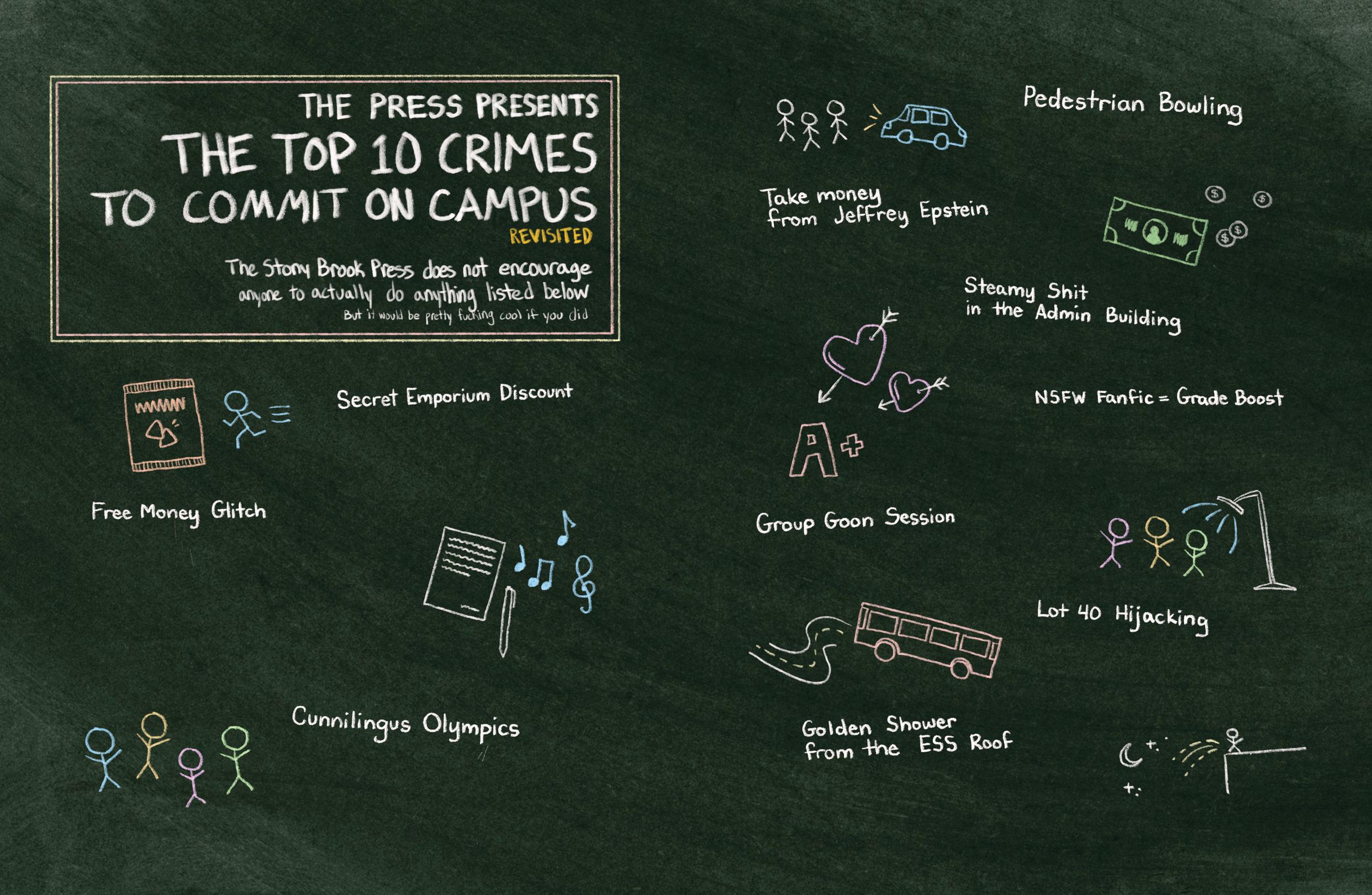
The best box eaters across Stony Brook University fiercely compete to find out who the cunnilingus G.O.A.T.’s are. Grab a group of friends and compete against groups like the les- bians and frat boys. Bi-sexual women with boyfriends are banned from participating.
For commuter students sick of slow walking pedestrians in the crosswalks, especially those who don’t do a little jog, just hit them with your car! Bonus points for those riding electric scooters.
Follow in the footsteps of former SBU staff members and (allegedly) take money from Jeffrey Epstein. Imagine the bliss of no longer worrying about textbook prices or meal plan costs. Money is money, right?
Release your frustrations with those who run the university by hiding a log of poop in the admin building. The better the hiding spot, the more fun the search will be!
Anyone in need of extra credit MUST try this method! Instead of answering the discussion board, write a dirty, indepth, freaky, not-safe-for-work fan fiction between you and your professor and throw it on Brightspace for all to see. Most professors LOVE this, and your grade will be boosted by three letter grades.
Dying for a group goon session with your lads? No better place than the showers of the Computer Science building, we all know nobody will be in there.
Take back what’s yours. Give commuters what they deserve: a free field trip. The only necessary action will be removing the bus driver; choose whatever method you deem fitting. Give everyone a glimpse of Long Island’s most beautiful at- tractions, like Jericho Turnpike rush hour traffic, or introduce them to the kind, lovely people of the Hamptons.
We can’t talk about poop without talking about pee. If you’re chasing a new thrill, try baptizing the students below in a warm golden shower, perfect for the colder weather. The code to the roof door is 8341. ■
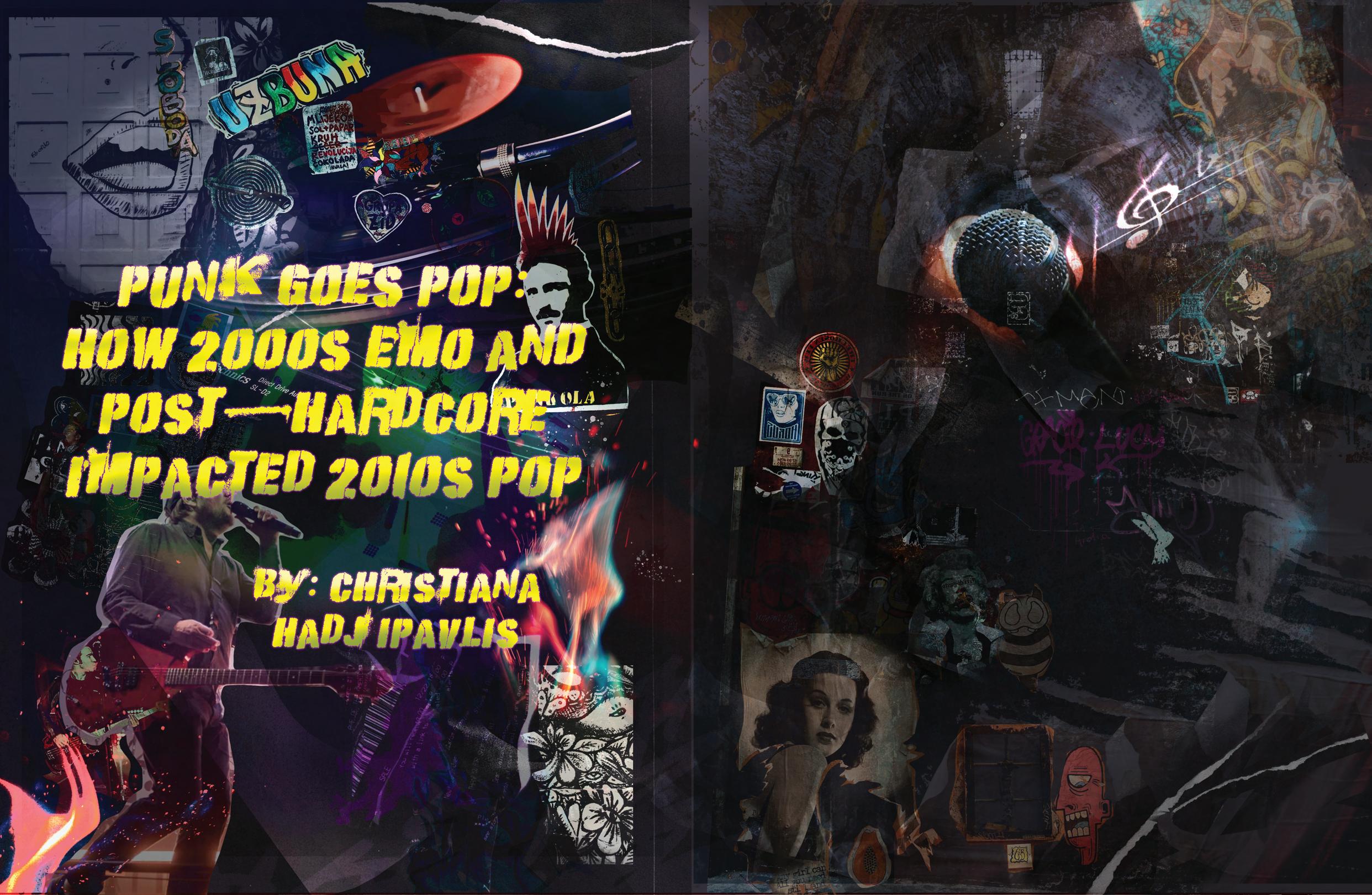
If you think back to your middle school emo phase, bands that had their heyday nearly 20 years ago might come to mind. While the bands themselves were left behind in the 2000s emo craze, many popular artists of the 2010s had their own emo phases, influencing their work and resulting in a lasting impact on pop for the following decade.
The 2010s saw continued interest in hip-hop and R&B from previous decades, as well as a surge in electronic music’s popularity. It’s seen in Taylor Swift’s “1989,” a widely acclaimed synth-pop album. It’s seen in Ariana Grande’s work, who spent the decade releasing R&B-inspired and EDM-influenced music. DJs like Zedd and Skrillex were also brought to the forefront, becoming defining artists for the decade. So, where do we see the emo influence?
A few defining artists of the 2010s have cited those from the 2000s emo scenes as influences on their work. Halsey named bands like My Chemical Romance and Brand New as influences in their songwriting and lyricism. As part of the promotion for her most recent album, “The Great Impersonator,” she did a photo shoot impersonating Amy Lee of Evanescence.
Taylor Swift drew inspiration from Fall Out Boy and Paramore, and featured both bands’ lead singers on the rerelease of her 2010 album “Speak Now.”
Parts for the general defining sound of pop for the 2010s, and even today, also have their ties to recording artists from that 2000s scene. Think of Charli XCX’s 2024 release “BRAT,” one of the most acclaimed albums of all time. The album has strong hyperpop ties, with Charli XCX citing SOPHIE as a major influence on her work. Sophie’s work can
be traced all the way back to electropop band 3OH!3.
The 2010s saw the birth of an EDM subgenre with SOPHIE, called hyperpop. This genre exaggerates pop characteristics by utilizing brash synths and excessive distortion, merging pop and electronic music in new, experimental ways. Artists such as Kesha and Britney Spears are credited with setting the stage for some aspects of hyperpop, but one of the earlier artists to draw the blueprint was also 3OH!3.
3OH!3 started out as a crunkcore band, a mid-2000s genre that combines elements of crunk, post-hardcore and electronic music. They’re best known for their single “DONTTRUSTME” and their collaboration with Katy Perry on a remix of their single “STARSTRUKK.”
The band utilized blown-out synths and voice modulation, taking pop to mind-boggling extremes, which helped lay the groundwork for later acts within pop and electronic music.
We can also look at the broader genre of EDM. Another product of the mid2000s emo and post-hardcore craze is Sonny Moore, former lead vocalist of post-hardcore band From First to Last, now known as Skrillex. After three years as the band’s vocalist, Moore went on to become one of the most well-known DJs of the 2010s. He became the most Grammy-awarded EDM act and a direct contributor to the EDM craze of the decade.
Looking more generally at music throughout the 2010s, the emo-pop tie can be traced to Decaydance Records, an independent label founded by Fall Out Boy bassist Pete Wentz. The first three bands signed were Panic! At The Disco, Gym Class Heroes and Cobra
Starship.
Panic! At The Disco gained popularity through their association with the 2000s emo scene, but had frequent genre shifts over the years, jumping from Beatles-inspired psychedelic rock to pop rock and synth-pop by the start of the 2010s. They fully shifted to pop in the mid-to-late 2010s and saw major mainstream success with albums “Death of a Bachelor” and “Pray for the Wicked.”
Gym Class Heroes—which released “Stereo Hearts” featuring Adam Levine—shifted to something more pop-adjacent leading up to 2011, blending elements of rock, hip-hop and funk into their work.
Alongside Gym Class Heroes was Cobra Starship. When Cobra Starship started releasing music, their work was primarily a mix of dance rock and electropop, with some pop-punk influences. The band shifted towards synthpop with each release, citing electronic dance music as a big inspiration for their later work. “You Make Me Feel…” featuring Sabi was released and peaked at No. 7 on the Billboard charts, becoming their greatest commercial success.
All of these bands and their successes helped kick-start the emo-pop trend for the rest of the decade. And despite the fact they had a relatively short stint in the mainstream, they left their mark on the music industry and helped define the sound of the next decade.
So the next time you throw on a Taylor Swift album, or relive your BRAT summer, think back to those emo bands for helping set the stage for their success. ■
A picturesque hamlet on Long Island’s North Shore, renowned by tourists and residents alike for its ties to the Culper Spy Ring during the Revolutionary War. But another piece of history is concealed behind this well-known historical account.
Long before colonial settlements and spy rings, the men, women and children of the Setalcott Nation walked the land. They are Setauket’s namesake: Their history intricately woven into Long Island’s fabric.
Understanding their legacy goes beyond being familiar with local history. It helps ensure that the rich tapestry of Indigenous cultures on Long Island remains an integral part of our historical and cultural roots.
Despite their enduring presence, the tribe continues to fight for federal recognition today — a paramount step to secure access to essential resources and ensure Setalcott descendants always have a rightful place on their ancestral land.
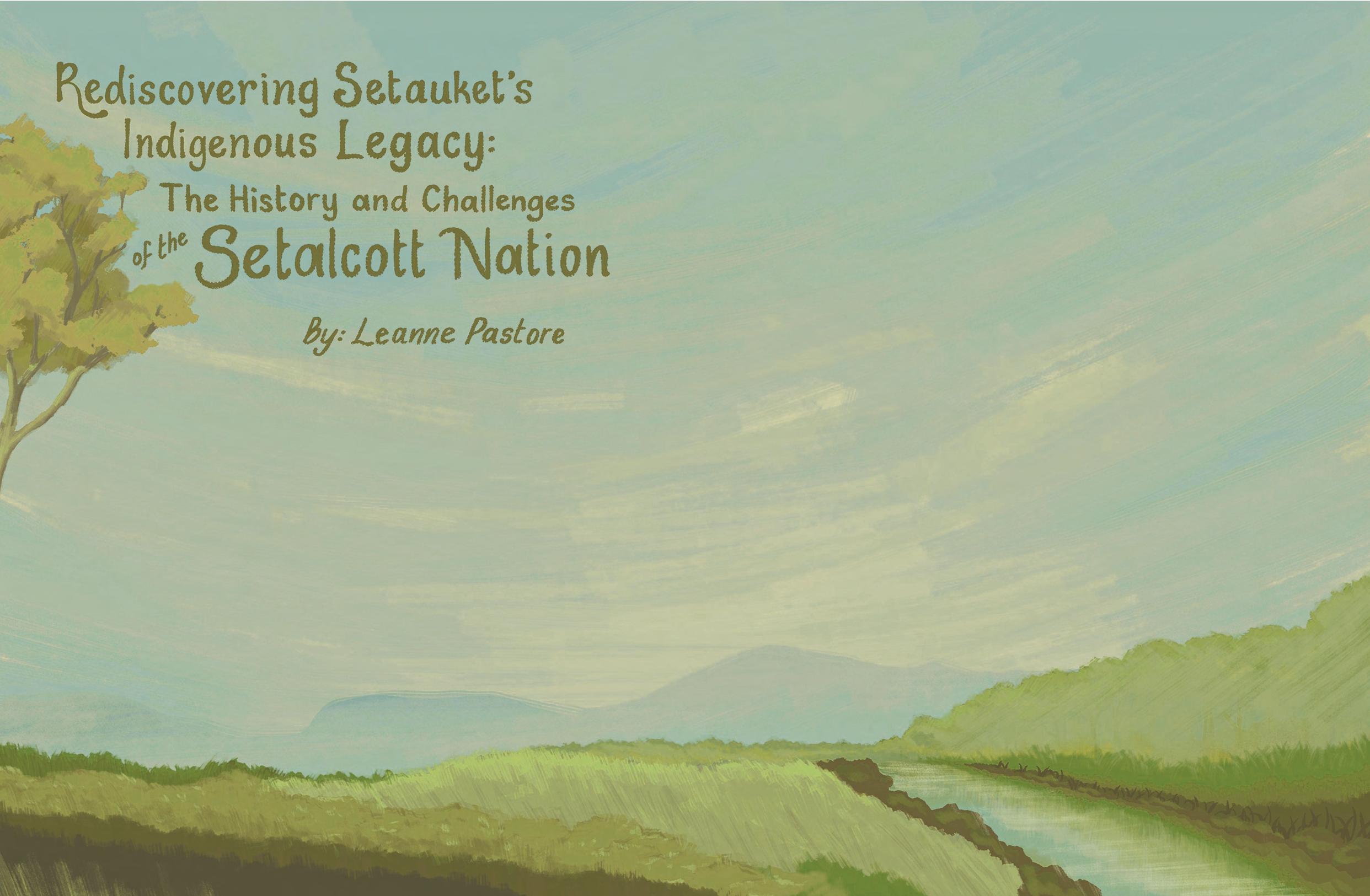
Setalcott history traces the tribe’s presence in present-day northern Brookhaven back to the end of the last ice age, approximately 12,000 years ago. Although Setauket was their central territory, they also settled in surrounding towns to the east — Riverhead and Southampton — and the west — Smithtown and Islip.
Kevin Sells, a descendant who embraces his role as a historian and archivist for the Setalcott, said his DNA revealed ancestry tied to migration across the Bering Strait: Insights which suggest tribe members traveled across the icy expanse that connected Asia and North America before arriving at the Eastern seaboard.
After the ice age, Long Island transformed into a hospitable environment. Its mild climate and fertile soil enabled the Setalcott to thrive. The land yielded plentiful crops, with corn as a staple, and the surrounding waters, teeming with marine life, provided both nourishment and trade opportunities.
“Long Island turned out to be very sup-
portive of human life,” Sells said, originally from Bridgeport, Connecticut, and now living in Tucson, Arizona. “It’s nicely positioned. The temperate climate was good for people who were used to it being very cold. The sea was full, and the [Long Island] Sound was particularly plentiful.”
The Long Island Sound not only provided sustenance but also embodied the Setalcott’s spiritual beliefs, with the tribe’s sacred animals — whale, turtle, seal and bluefish — central to their worldview, inhabiting the water.
According to Sells, the most significant of these animals was the eel. Descending from West Meadow Creek, the eel entered the Sound adjacent to where the Setauket Mill House in Frank Melville Memorial Park stands today. He added that tribe members worked in the Mill until it closed during World War II.
Eel skin provided the Setalcott with a unique, vital resource: Leather, which helped ensure warmth during Long Island’s harsh winters.
It also became a crucial commodity for trade in the late 1600 and early 1700s, as the material can be used to make boots, vests and purses. Sells said tribe members colloquially called themselves “the eel people.”
The tribe also made full use of the densely wooded area. Carving essential housing structures out of lumber protected them from environmental elements and wildlife. This included the framework of their longhouses, which Sells likened to the Māori wharenui of New Zealand. Sells believes that the Setalcott’s expertise in woodcraft likely influenced male tribe members’ later work in Long Island’s booming construction and shipbuilding industries in the late 19th and early 20th centuries.
The Setalcott were among the first Indigenous tribes to encounter colonizers on Long Island when settlers from New England arrived in Setauket in 1655.
On April 14, 1655, 15 Setalcott members, led by their leader, Warawakmy, signed a treaty with six Englishmen to sell land stretching from the Long Island Sound to present-day Mount Sinai, Belle Terre and Nissequogue. The document, signed by the colonists and Setalcott members, remains displayed in Brookhaven’s Town Hall in Farmingville.
In the aftermath of this land transaction, tribe members were forced to adapt to the encroachment of their territory and its shifting dynamics, marking the beginning of a tumultuous era as the Setalcott people grappled with displacement from their rightful home.
“They bought about 35 acres,” Barbara Russell, historian for the Town of Brookhaven said. “The English settlers had the transfer of land for a price. The Native Americans did not have that same sense — they didn’t know that they were giving up that land. So they lost that freedom to occupy the land as they saw, as they had before.”
With paper currency not in use in the United States until the 1690s, as a form of payment for the land, the Setalcott bartered six kettles, 10 coats, 100 needles, seven chests of powder, 10 wampum, a dozen hoes and hatchets,
50 metal drills, 10 pounds of lead and a pair of children’s stockings, according to Brookhaven’s town records.
As colonizers continued to encroach, tribe members were relocated to areas like Minasseroke, also known as Little Neck or Strong’s Neck, where they formed bonds with other oppressed communities, which included Quakers and freed enslaved people. Sells recounts that Setalcott lore speaks of tribe members offering safe houses to aid the enslaved on their way to freedom.
This land transaction marked the beginning of a long struggle the Setalcott continues to face today as they grapple with the loss of their homeland.
After centuries of resilience, descendants of the Setalcott, like Sells, are dedicated to preserving the tribe’s history and culture. These efforts, like the annual corn festival and powwow at Setauket Elementary School, which the tribe has hosted for the past 16 years, expand beyond remembrance, but aim to educate Long Island’s youth. Sells expressed that Setauket’s local government has been nothing but supportive. Unfortunately, this has not been the case at the state or federal level.
Today, the Setalcott tribe fights for federal recognition, seeking to bypass acknowledgment on the New York State level. Sells said the tribe is looking to skip state recognition after multiple attempts passed through the legislature, only to be rejected at Gov. Hochul’s desk.
Recognition at the federal level offers a tribe access to vital resources and affirms their sovereignty, which empowers them to self-govern without outside interference. It is a crucial step for preserving a tribe’s culture, as this ensures that descendants of said tribe can continue to practice and celebrate their ancestral traditions for generations to come. For the Setalcott, this would also mean restoring their land in
Setauket.
Achieving this status is a formidable challenge that requires time, dedication and persistence to navigate bureaucratic hurdles. This arduous journey was exemplified by the Shinnecock Nation, which finally received federal recognition in 2010 after tirelessly fighting for three decades.
There are currently only 574 federally recognized tribes in the United States, with the number of federally recognized tribes in New York relatively small, at nine — a stark contrast to Alaska, with 229, and California, with 110 — the two states with the highest number.
Meeting the stringent criteria set by the federal government has resulted in many tribes across the country, including descendants of the Setalcott, continuing to face challenges to obtain rightful acknowledgment. However, in spite of the difficult journey ahead, they remain steadfast in their pursuit to reclaim their rightful space on their ancestral lands.
“My goal is to see us amass some land,” Sells said. “We are literally being priced out. Our elders can’t afford the taxes on their properties. So, I would like to see us be able to get enough continuous land to put into trusts for the tribe, so we always have a place there.”■
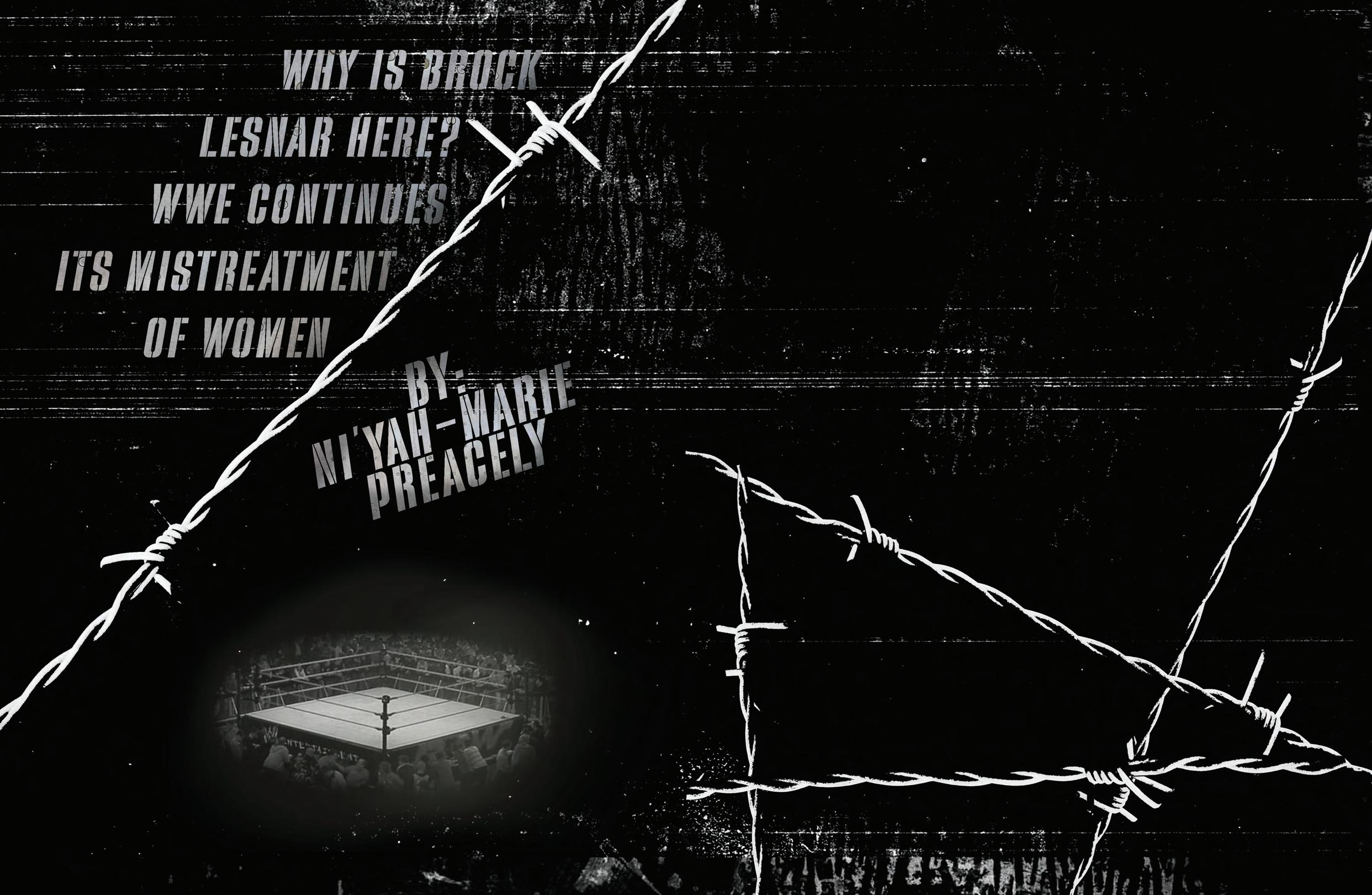
At the end of WWE’s SummerSlam, an emotional John Cena took in the crowd during one of his final premium live events. That beautiful moment commemorating Cena’s retirement tour was then soured by the return of WWE superstar, as well as an alleged coconspirator and sex trafficker, Brock Lesnar.
Lesnar was officially named in an amended federal lawsuit by former WWE employee Janel Grant. She initially filed the lawsuit in January 2024, accusing WWE cofounder Vince McMahon and former WWE executive John Laurinaitis of sex trafficking, physical and emotional abuse, negligence and sexual assault. The backlash from the lawsuit resulted in McMahon’s retirement as executive chairman in 2024.
According to the suit, Grant alleged that McMahon forced her to make pornographic content for Lesnar personally, implying her job was on the line. Lesnar was not named as a defendant in the lawsuit and was not personally being sued by Grant herself.
The question on both my and other female WWE fans’ minds: Why is Lesnar here?
WWE has had significant financial success in the past couple of years. Their flagship show, Monday Night Raw, premiered on Netflix after a $5 billion deal. They also finalized anoth- er five-year, multi-billion-dollar deal in
which ESPN acquired the exclusive U.S. streaming rights to all premium live events.
So, given all this success, why do they need Lesnar? They clearly don’t need him for ticket sales, and all his presence shows is WWE’s lack of awareness and caring for Grant and women in general.
This isn’t the first time WWE has been ignorant of a woman’s allegation against company personnel. In 2024, former WWE referee Rita Chatterton accused McMahon of rape. While McMahon was never officially charged with the crime, how many more times will these allegations be ignored?
Recently, WWE has experienced an increase in popularity regarding its female talent. Chief Content Officer Paul “Triple H” Levesque enthusiastically said on the Netflix docuseries “WWE: Unreal,” “There’s f***ing five women that are great for every guy.”
This wasn’t always the case for women wrestlers. They had to fight to lose the “divas” moniker and to not only be there for “bra and panties” matches, whose sole purpose was to pander to the male gaze. The WWE fans, 40% of them being female, were frustrated with how women wrestlers were portrayed.
In 2015, the hashtag #GiveDivasaChance trended on Twitter, and fans started to show more interest in the women’s matches. Eventually, progress began within the company. It started with longer matches, then storylines began to receive more attention, and the focus shifted to their athletic ability. WWE even called it the “Women’s Revolution.” In the other flagship show, NXT, women are regularly main eventing. The NXT women’s wrestlers have been quoted on the show saying, “The NXT
women’s roster is the best in the world.”
It’s understood that WWE lives for the shock value and wants to cater to fans in some way, like when stars return at the Royal Rumble or when an unsuspecting babyface turns heel after a loss at WrestleMania. Fan favorite AJ Lee, 10 years removed from her last appearance, made an electric return to the canvas to the surprise of over 120 million fans across social media. Whereas Lesnar’s return only garnered 75 million views. Shock value shouldn’t matter more than women’s safety.
Lesnar’s return doesn’t make sense from a business standpoint. It alienates WWE women fans, and it brings negative publicity. It’s almost as if WWE executives aren’t thinking about the repercussions of their actions.
WWE has said nothing, refusing to acknowledge the allegations against Lesnar. McMahon continues to deny any involvement in the alleged crime. There has been no form of damage control. It comes off as a “this is what it is” attitude.
I remember feeling vindicated when the WWE dropped the title of “Divas” and renamed the “Divas Championship” to the “Women’s Championship” in 2016. It felt like the women were getting the re- spect they deserved.
But now, after ig- noring McMahon and Lesnar’s allegations, the WWE keeps taking one step forward, then three steps back. It’s tiresome and frustrating as a fan. Women in the sports world aren’t taken as serious- ly as men, especially when it comes to fan bases.
This is very par for the course by them, but WWE should know better by now. ■
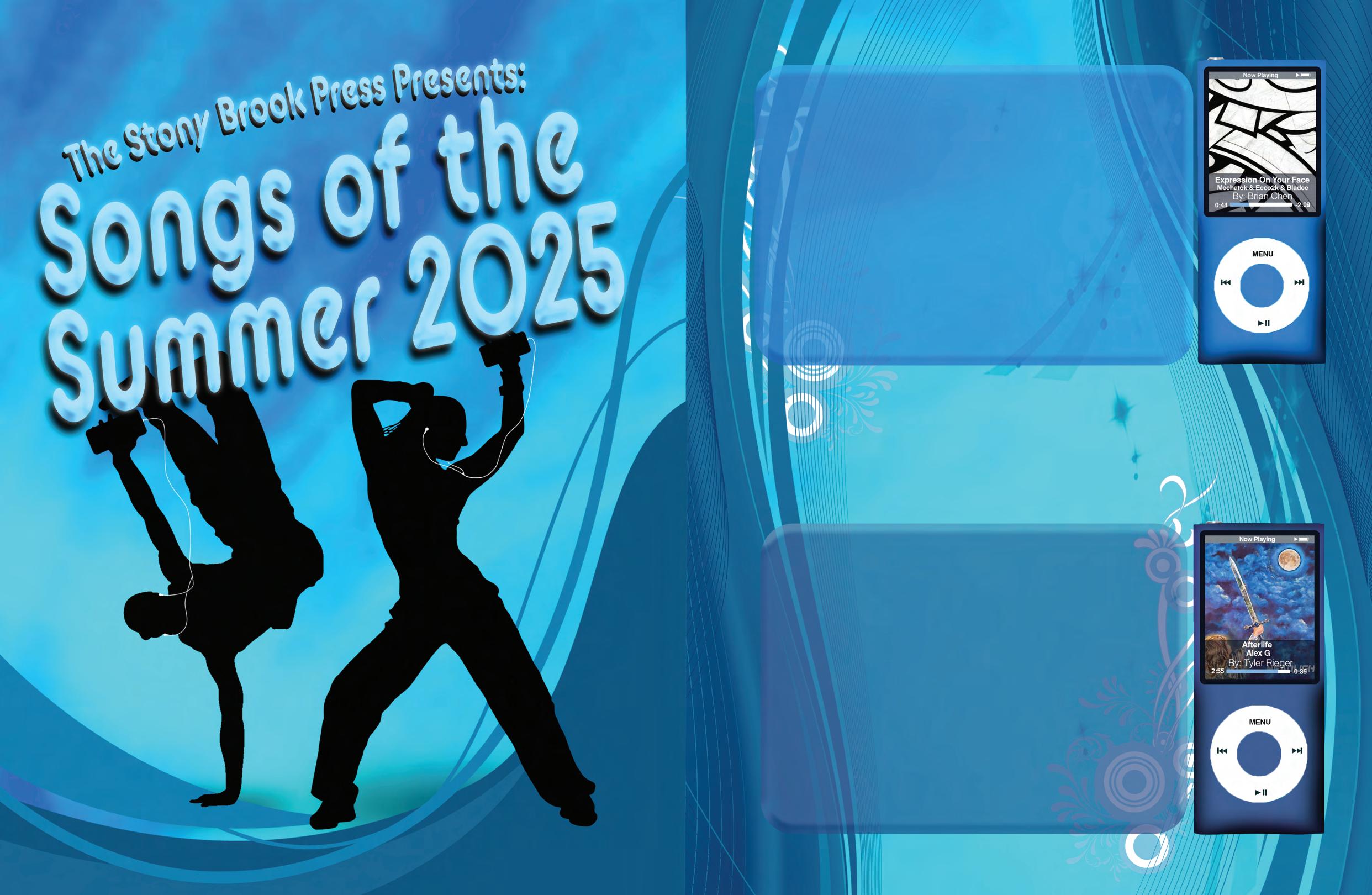
The world is a different place when you’re behind the wheel. It’s no longer just about getting from Point A to Point B, but also the space in between. This summer, that space became my very own when I finally got around to getting my license. With it came the newfound, unbridled freedom to drive aimlessly, get lost and absolutely obey traffic laws on quiet late-night drives.
“Expression On Your Face” dropped just five days before my scheduled road test. I remember making a mental list of all the songs I’d listen to the moment I had my license in hand. Amidst Crystal Castles, 2hollis and NewJeans, this was at the top. And it was better than I’d ever imagined.
The opening synths and
Summertime often feels likeas if it has an expiration date. Of course, every season comes to a close, but summer has a fleeting, almost intrinsically wistful quality to it. Summer is a stopgap of sorts, a break from the mundanity of ordinary life. For the youth, it’s a brief reprieve from the rigors of the academic world. For adults, it’s a vacation from work that ends far too quickly. Either way, the season of summer is less a seamless component of the changing year, and more a sudden, yet delightful break from the trivial routines of life – and one that ends all too abruptly.
No song I’ve listened to this past summer has better encapsulated that ephemeral sentiment more than Alex G’s “Afterlife,” the lead single from his
Bladee’s distorted vocals set the intensity from the very beginning. It’s the kind of start that makes you turn the volume all the way up.
It’s the wrong taste, don’t waste that change/It’s the expressiononyourface
As the beats kick in, Ecco2k takes over. He’s hushed and wispy, a melodic sigh in contrast to Bladee’s intentionally abrasive, 8-bit-sounding delivery.
I’m touched by nobody/I show affection to the floor
The song’s two divergent voices weave seamlessly together over a neon-coated electropop track. Listening to it over the gentle hum of a car engine and with cool air rushing through rolled down windows feels like pure, unadulterated independence.
From Applebee’s after a Bibi concert to a Hong Kong trip with my brother, I made so many memories this summer. But under the silent moon and warm glow of the dashboard with streetlights blurring into golden streaks, I felt the true satisfaction of navigating the world on my own terms. “Expression On Your Face” soundtracked the turning of a new chapter in my life, and I’m excited for what comes next.
10th album, Headlights. Alex G, whose unique sound of folky aesthetics blended with indie poprock transcends genre, brings an enthusiastic vitality to this new track.
Carried by a rhythmic, almost humming mandolin, “Afterlife” is a song that pulses with whimsical energy. The mandolin, accompanied by a synth’sthe majestic tones of a synth evoking a pipe organ on a Sunday morning, and Alex G himself shrieking in a euphoric, childlike falsetto, all serve to foster thea song’s of a transportive nature.
All at once, it reminds me of what it feels like to be a carefree kid, running around on a hot summer day. Yet, there remains a twinge of introspection, too. A reminder that the past has escaped us, and
the future, no matter how uncertain, is inescapable. The way the music sounds is fantastical, and the lyrics, too, transcend the conventional. There is no unmistakable message, no poignant story to follow. The lyrics convey an ambiguity of time and emotion – whether it’s in this life, the next or somewhere in between.
The post-chorus repeatedly rings out, “When the light came / Big and bright / I began another life.” There is an existential evolution at play, the momentum of life’s experiences pushing us ever forward. But in this song, just like in summer, there’s a respite from the inevitable progression of time. We aren’t beholden to our pasts, nor do our futures doom us. It’s simply okay to be in the now.
Try to imagine my grief for a moment: In May, I decide not to make the trip to Brooklyn to see my favorite artist, Jane Remover, which I later regret. The days following the show, I repeatedly see videos of the opener, a name I’ve never heard before, Lucy Bedroque. Their stage presence absolutely captivates me.
I then dive deep into the rabbit hole that is Bedroque’s discography, and their song “Yes, you may” particularly catches my ear. The next three months were a period of grieving for me; each time a Bedroque or Remover song plays, I’m reminded of the grave mistake I made by not going to that show.
I mean, the tickets were

My summer nights were spent wandering Hell’s Kitchen with friends. Post-club debriefs in humid streets, cigarette fumes seeping into our conversations, while our eardrums tried to recover from the Lady Gaga that was blasting only a few minutes ago. I’d kick myself in the morning when I would inevitably wake up with a splitting headache.
I spent a lot of time throughout the year worrying. About what, I wish I could articulate. This summer I worried less. Was it the exhaustion from my previous nights that left my mind incapable of forming an anxious thought?
“Headphones On” by Addison Rae — an artist I preemptively judged for lacking creativity or depth
less than $30, so why didn’t I go? I don’t know, maybe I was too lazy to make the drive. What a pitiful excuse.
“Yes, you may” combines elegance, stemming from Bedroque’s otherworldly vocal range and harmonization, with modern-day underground rap. Think Imogen Heap meets 2hollis.
It’s this unique combination of vocal range and new-age sound that makes Bedroque a consistent staple on my playlist. I am enthralled by their sound. It’s something I’ve never heard before, and I love it.
Now, back to my grief. The thought of being at that show
and the blissful feeling that would’ve come with it. To be in the crowd for two artists whose music is so full of life and energy could have quite possibly changed my life. I would pay top dollar today to go to a show where Bedroque opens for Jane Remover. But I can’t change the past, and I must accept the mistake I made.
I can’t and won’t ever forgive myself for the rest of time. I promise I’m not exaggerating.
— spells out the feelings I struggle to communicate. In her single, Rae doesn’t even attempt to hide her personal turmoil: her parents’ public divorce, the unstoppable force comparison is in her life. Things that may (or may not depending on your celebrity status) happen to you, too.
Despite her inability to heal and move on, Rae teaches us a lesson on sucking it up. Rather than dwell on it all, she suggests we “surrender to the moment.”
Guess I gotta accept the pain/Need a cigarette to make me feel better/Every good thing comes my way/ SoIputmyheadphoneson
Like Rae, we all deal with our own share of problems. But instead of letting our
problems destroy us from the inside, Rae suggests we accept them and enjoy what life has to offer. Our problems won’t disappear at the snap of a finger, so you might as well meet up with your friends at the club at 10 p.m., and face the late-night nauseating train ride.
I didn’t spend my summer worry-free, but I definitely spent it worrying less. When you stop thinking about the downs for just one second, you get to see the beauty outside of your own anxieties. You surely don’t need to pay $50 on a hot dog at 3 a.m. to figure that out, though.
Ben Platt covered Addison Rae’s song “Diet Pepsi” at the 2025 Las Culturistas Culture Awards, and it may be the best cover of the year. Rae’s original has its own fun, upbeat melody, but Platt’s interpretation transformed it into something completely new. With a live string orchestra, he delivered an emotional, ballad-style performance that made the song feel raw and honest.
For me, this cover is my “90 in a 50” — because the song gives such an emotional rush, it feels like I can’t help but drive past the limit. One random summer night, there were five of us packed into my tiny red Hyundai, windows down and music blasting. My car’s bass system was unmatched, and every single vocal shift, string and layered harmony hit us in full force.
I love canoeing, but I’m not very good at it. Although I had canoed before, it had been years since I’d done it in Samoa. Whereas my sister, cousins and best friend would glide across the water, I capsized every few minutes. As someone who hates doing things I’m not naturally good at, watching them zoom past me while I quite literally flopped felt very embarrassing. My Polynesian ancestors may have navigated the oceans using only the stars, but I couldn’t even navigate the shallow water of the resort beach.
But after a while, even when the salt water blinded me and burned my nose, I became comfortable with the fact that I was not very talented at canoeing. And it was freeing to admit that I was bad at it!
On “Hammer”, Lorde also
It felt like we were ascending into heaven, or more accurately, (safely) flying down the empty streets.
Untouched,XO Younglust,let’s-
When we drive in your car, I’myourbaby
Losing all my innocence in the back seat
Say you love, say you love, sayyouloveme
Of course, we weren’t losing our innocence in the backseat, we were keeping it. 17-year-old girls savoring late-night freedom with our best friends. It reminded us of how quickly summer passed, how change was inevitable and the bittersweet reality of leaving my friends for college. More than anything, it made us feel alive,
free and careless. In those moments, I was taking everything in — the scenery, the laughter of my friends and the love and innocence of our youth.
Platt’s cover isn’t just some regular song to me; it’s a memory and feeling of what it means to be a high school girl, capturing the bittersweet truth that nothing stays the same forever.
makes peace with not knowing, which may seem surprising for an artist praised for her wisdom. When she was just 16, she released her debut album, Pure Heroine, whichmade a name for herself as a precocious young artist with sharp insights about coming of age. Her now-classic second album, Melodrama, is acclaimed as a de facto guide to navigating your first heartbreak. And with Solar Power, perhaps her most polarizing album, she wrote to her audience, who are now grown up, about dealing with stress and anxiety in a constantly changing climate.
But on her most recent work, Virgin, and on the track “Hammer” specifically, Lorde makes a shocking concession: maybe she’s not the omniscient oracle we’ve all heralded her as for over a decade now. While
singers have always admitted their flaws in their writing, very rarely do they do so in such a direct manner.
Imighthavebeenbornagain
I’m ready to feel like I don’t have the answers
Hearing Lorde sing gleefully about how she might be just as lost as we are, I felt inspired. As my boat flipped on itself and my loved ones sped ahead, I realized that I, too, needed to be okay with not knowing sometimes: not knowing how to canoe properly, not knowing how to beat my sister at Scrabble, not knowing how to solve certain math problems and occasionally not knowing what to write! I initially thought of each capsize as a failure — and honestly, they kinda were — but they were also opportunities to try again.
On July 31 at 8 p.m., a timestamp I mentally marked weeks prior, Chappell Roan finally released her highly anticipated song “The Subway.” Before the intriguing promotional work began —– where an auburn-haired figure, likened to The Addams Family’s Cousin Itt, was spotted haunting the L train —– a snippet of Roan’s latest hit captured attention on TikTok. At least, it certainly captured mine.
Made you the villain, evil for justmovingon
Iseeyourshadow,Iseeiteven withthelightson
I made a promise if in four monthsthisfeelingain’tgone Well,fuckthiscity,I’mmoving to Saskatchewan
When I first listened to “The Subway” in its entirety, I was driving home from work at 9 p.m. Before Roan arrived at
the aforementioned second verse, I had already found the song singable, sonically appealing and, to my surprise, contagiously wistful. My own sense of yearning made me curious I was curious by my own sense of yearning, since I had nothing to consciously yearn for. I began questioning what aspect of the song had struck such a strong, melancholic chord with me. I did not relate to the intense heartbreak that Roan sings of;, I seldom commute on the subway, and I assuredly have never felt a pull towards Saskatchewan, even in the face of unbearable adversity (has anybody, besides Roan?).
After replaying the song four and a half times, which is as long as my 20-minute20 minute commute would allow me to, I pulled into my driveway and had a startling realization. The final hours of July were upon us, and August was, quite liter-

When Lorde first announced she’d be releasing her fourth studio album Virgin, the concept of having a “Lorde Summer” consumed all my thoughts. In the same way “BRAT Summer” had consumed people’s lives last year, I knew this album would define mine. As one of my favorite artists, she has taken every feeling and experience I’ve had and made it into expertly produced music.
The single for the album “Man of the Year” showcased how the album would represent the sense of dread and freedom. Her lyrics are contemplative and bittersweet, filled with a sense of confusion and, at the same time, self-awareness. It showed how Virgin would be a reflection on the people who left her destroyed, eventually allowing her to rebuild. However, no song on the album ended up showing this better than “David”.
And once I could sing again I sworeI’dneverletmyselfsing
“David” sonically begins as soft and slow, bringing Lorde’s vocals to the forefront. As the song progresses, she tells this story of someone she let take everything from her. The music begins to rise, taking her power as a singer as well.
I made you God cause it was all that I knew how to do / But I don’tbelongtoanyone
The more the song progresses, the more the music distorts and the louder it becomes. By the end, the distortion becomes impossible to withstand. Lorde has put every piece of herself on this track, exposing the shame that comes with allowing someone to become the most important person to you despite how badly they’ve treated you. While beautiful, the production forces you to feel as uneasy as she does with this revelation, overtaking you and her completely. AmIevergon’loveagain?
ally, on the horizon. Time appeared to rapidly speed up as the sun began to set on the illusory freedoms that only June and July can offer a student. When the song reached its outro for the final time, as Roan moved between a powerful belt of She’s got a way and She got away, I realized that my “she” was summer break, and I had not fully appreciated her. My blithe on-summer-break attitude and sun-kissed skin would soon fade away, leaving me to bittersweetly reminiscereminiscence on bygone days, much like Roan does throughout the song. “The Subway” gave me something to miss despite my unbroken heart, a testament to not only Roan’s musical ingenuity, but also the power of a perfectly timed release.
Will you ever feel like a friend?
“David” effectively delivers the theme of “Lorde Summer.” Suddenly, the music returns to the subdued production from the very beginning. Left fully bare by both the song and the album, Lorde lays out how difficult it can be to continue despite coming to terms with a heartbreaking situation. She’s self-aware enough to know that the way she’s been treated is manipulative and caused her to lose her identity. Knowing how all-consuming her love became, and understanding the impact this person left on her, she still struggles to see if she could allow herself to be in that vulnerable position again. She’s no longer battling the past or the music, but reflecting on herself and where she goes from here. Summer will not fix you, but it can give you the stepping stones to get over whoever broke you in the first place.
Whenever I listen to a song for the first time, my brain’s default setting is to figure out how I would choreograph a dance routine for it. What style of dance would I choose? Would it be a solo or a large group routine? What little details did the artist bake into the music that I can extract with a sharp movement?
With each additional listen, I’ll keep fine-tuning the details. Do I want a closed fist or a flat hand for a pose? What face should be made at this exact moment? Every little component gets adjusted, all to make the routine sharper, tighter and cleaner until it’s perfected.
“I <3 YOU” serves as an infectious and glamorous disco-pop anthem, one that deserves to be overused at every dance competition for at least the next three years.
I grew up dancing. It’s the first
Tyler, The Creator surprised fans with his July release, DON’T TAP THE GLASS, announced just two days in advance. My friends and I had just watched him perform live at the Governors Ball Music Festival earlier that summer, so we had been ecstatic. The album centers on staying present without judgment and pushes back against the rising phone addiction among our generation. While it carries the energy of Tyler’s past work, “Sugar On My Tongue” stands out for its summer vibe, beginning with rapid knocks that set a strong, exciting beat. The music I tend to enjoy is one where you can dance and this fits the criteria completely. The main sound used is sampled from the Black Eyed Peas song “My Humps” which brings forth nostalgia of simpler times. The Black Eyed Peas dominated the radio while I was growing up and it was interesting to see how Tyler used their beat in a way that really elevated it. The first verse continues
thing I ever loved. That said, I fall into a batch of dancers who aren’t good enough to become professionals or join their college’s dance team, so their time dancing ends once they graduate high school. After a full year without taking dance classes, I became detached from something I once imagined I’d never be able to live without.
This song came out around the time dance studios have their recitals, which for me was always the culmina- tion of a full year’s sweat and energy. The first time I listened to it, I could imagine the stage lights, the heat, the nervous bubbling and excite -
ment waiting backstage to show the audience what you’ve put so much effort into. It’s exactly the kind of song I would’ve begged zmy dance teacher to use for the recital that year.
Iloveyou,andIknowthatyou love me too
Iwantyou,andIknowthatyou want me too
Iloveyou,I’vebeenwaitingto makeyoumine
I want to be holding you tonight
“I <3 YOU” was made to be a celebration of love, and while the lyrics describe something completely different, the words “I love you” are probably the simplest way for me to describe how I feel about dance. This song reconnected me to the happiest, freest part of myself.
with that fast beat and features short and snappy lyrics.
Building on the high-energy atmosphere, the pre-chorus is lively and catchy. It plays around with the flow and creates an enjoyable buildup to an effortless chorus. Taking inspiration from the 1970s and 1980s disco era, the song features heavy repetition of lyrics throughout, creating a groove that is simple to follow. During the summer, I listened to a lot of music from that era and this album was a great finale to the experience. The chorus mainly repeats the song title, but Tyler’s inflection and flow make it memorable and fun to sing along to. While the song is not incredibly complex, his clever wordplay and double entendres capture a spirit of exploration and enjoyment without attachment.
There is a sharp change in tone towards the end, slowing the lyrics and melody. But the knocking from the intro quickly returns, and the song jumps back into the main beat with Ty-
ler’s quiet words adding ambiance. Tyler samples “King of the Beats” by Mantronix, which adds to the high energy of this moment. For me, this acts as a dance break after the song finishes. It’s a moment where you can just bop to the loud beat and rhythm.
Tell your mama (tell your mama) / Tell your daddy (tell your daddy) / Tell the world / Tell the world
Tyler’s “Sugar On My Tongue” is an incredible song that captures the essence of summer. It perfectly encapsulates the buzzing energy of dancing with no remorse, and is that not what every summer night should feel like? All you need for those warmer days is this enjoyable and lively song.
There’s something so defeating about not being able to see your partner when you feel like you need them the most. If you relate, be on the lookout for Sunvale, an upand-coming sad girl ready to bring new themes to the genre that won’t fail to tug at your heartstrings.
Under the alias Sunvale, Selah Estes has proven herself in the playlists of many depressed teenagers. Through only her debut single, “under the weather.” Estes pulled the heartstrings of her cozy, yet strong community of dedicated listeners.
Estes’ inspiration to write her debut single arose on one night when she was exceptionally sick. The combination of yearning for a partner who’s far away coupled with physical unwellness would eventually become “under the weather.”
Many midwest emo artists speak on heartbreak, but Estes is the voice of emos that
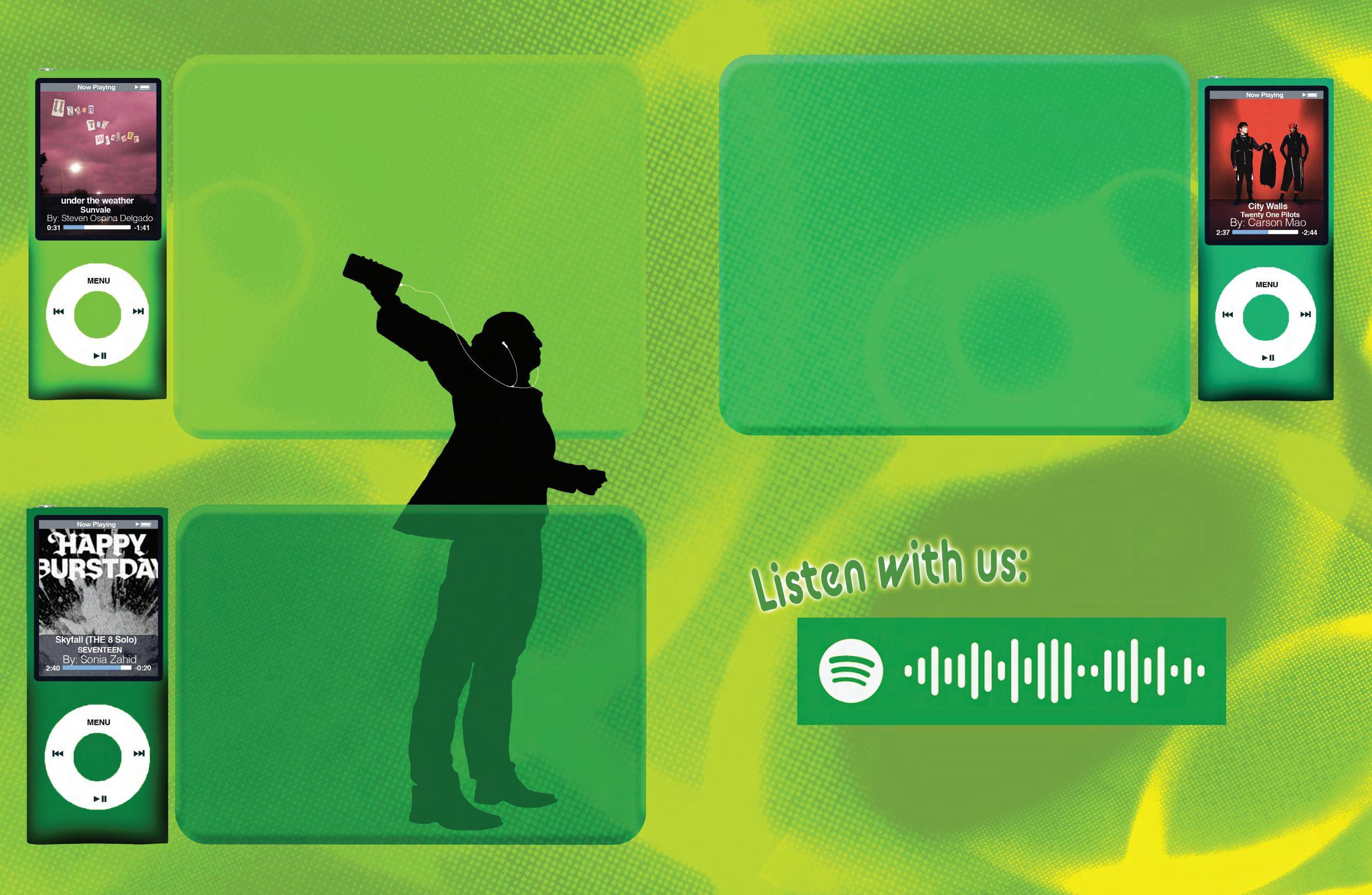
When the summer heat rolled around, I learned I’d be leaving my hometown for good in just a few months. Naturally, it didn’t sit quite right with me. It was hard to even think about not being around the free weekly concerts, Polish delis and vintage car shows I always knew I had.
After a day or two of mulling over the news, vigor fueled me to bring a piece of my town with me. There was no way I’d so easily be able to let everything go. How could I? I devised a plan right then: I’d pay attention to every moment of every day and snap photos until my phone storage was full. That way, they’d always be a part of my life, and I wouldn’t possibly forget them.
On one of my last bus rides back from work, after I had taken roughly a thousand photos of the window view, I put
struggle with something a bit different: long-distance relationships. The only thing that can match the sorrow of being alone is having someone and being lonely.
“A lot of times when he couldn’t call, I’d sit in the corner of my couch and watch cartoons,” Estes told The Press.
Truthfully, it’s a feeling yearners around the world can relate to; at least, it’s one I feel all too familiar with.
My partner lives a busy life almost 50 miles away from me. It gets lonely not being able to be by her side for at least an hour a week. As any long-distance couple, there’s only so
much daily video calls can do, nothing will replace seeing and embracing her.
Estes nails it on the head, sometimes all I can do is curl up in a corner and watch cartoons, desiring for my partner to have her arms around me.
“under the weather” makes me feel seen. I can resonate with Estes’ feeling through the genre’s twinkly sound. Estes makes emo for yearners; she speaks to those who miss love, rather than those who want it. Estes’ ability to bring something fresh to the conversation will result in her uprising within the emo community, keep an eye on her, because she spoke to me this last summer.
in my earbuds and listened to THE 8’s “Skyfall” for the first time.
A flying bird leaves no trace, he sang, airy and distant behind the intensity of the song.
The lyric instantly left me confused. I couldn’t wrap my head around it! Maybe it was something lost in translation, and I would have to figure it out myself. Or maybe it referenced another song of his?
Whatever it was, it stuck in my mind for a while. I thought about it once I reached my bus stop, and I thought about it while getting ready for bed. I remembered it while making breakfast the next morning and thought about it then, too.
The time ended up passing just like that. In between the exciting synths and heart-racing beat drop, I had my last commute from my beloved
LIRR station, my last sunrise in the kitchen and my last lazy morning in my bedroom. I got my last piece of mail in my creaky mailbox and treated it the same way I usually did: ripped it open and threw it in the trash.
When the time came to leave, I was so caught up in my thoughts that I packed up everything in a frenzy and left. I hardly gave anything a onceover. It was only when I listened to “Skyfall” again a few days after classes began that I realized I’d already said all my goodbyes, and I didn’t even know it. I didn’t leave a single trace behind.
I’ve never been too invested in Twenty One Pilots before this year. I had heard a decent amount of praise for both their concepts and eclecticism, so I listened to Trench and Clancy some time ago. While I came away with high regards for the former, I left Clancy without really seeing myself coming back to the band.
That is, until Breach released this year.
It was with my first listen to “City Walls” that I knew this album was going to be something different. In just one song, the band fits callbacks, a story, mesmerizing production, fiery rapping and an unforgettable chorus. It is the best song ever released on a Twenty One Pilots album, and much of that is because of how well it concludes the band’s longtime fictional world, tying the darker reality of mental health with a constant presence of optimism.
In just the first few seconds, the heavy bass continues to
build and then explodes into this great, cinematic combination of guitar and drums. This energy continues to expand with every rapped verse and sung chorus, building more and more anticipation towards the song’s climax.
I wonder where you are / I wanted to you to show me / The way around those city walls/ The way on through / I wonderwhereyouare/Iwantedtoyoutoshowme/Butnow the night was falle / Abandonedbythesun
Our main character tries to find “the way around those city walls,” only to end up failing because the sun (hope) “abandon[s]” him and the night (depression) falls on him again. His light wasn’t there for him in the moment where it mattered most. Kind of gloomy, but the song stays hopeful as woodwinds elevate the layers of cinematic tension, carrying you through to the moment of revelation in the song’s powerful conclusion.
It’s here where we’re reminded of the inescapable truth: that mental health is ultimately a natural struggle of ours, and that while overcoming it might only be temporary, we’re still able to rely on the support from those closest to us to keep giving us the light we need to try again and again.
This message, this song and this world all came together in one, five-minute culmination of ideas and ended with me falling in love with the band. Maybe not all of their music, but absolutely for the concepts behind them. Through this, I was brought back to the times I would spend reading about fictional worlds and analyzing lore for whatever was my hyperfixation at the time. “City Walls” was a sign of comfort for me, an indicator that I could still appreciate the art of storytelling even as I grew older — especially if stories could come in the form of music as ambitious as this.