


The Santa Barbara County Digital Equity Coalition is dedicated to bridging the digital divide and ensuring that all residents have access to the resources and skills needed to thrive in an increasingly digital world.
This report summarizes the coalition’s activities and progress throughout 2025, focusing on digital literacy trainings, partner organizations’ initiatives, and changes in county-wide broadband adoption rates.
| www. sbcdec.org
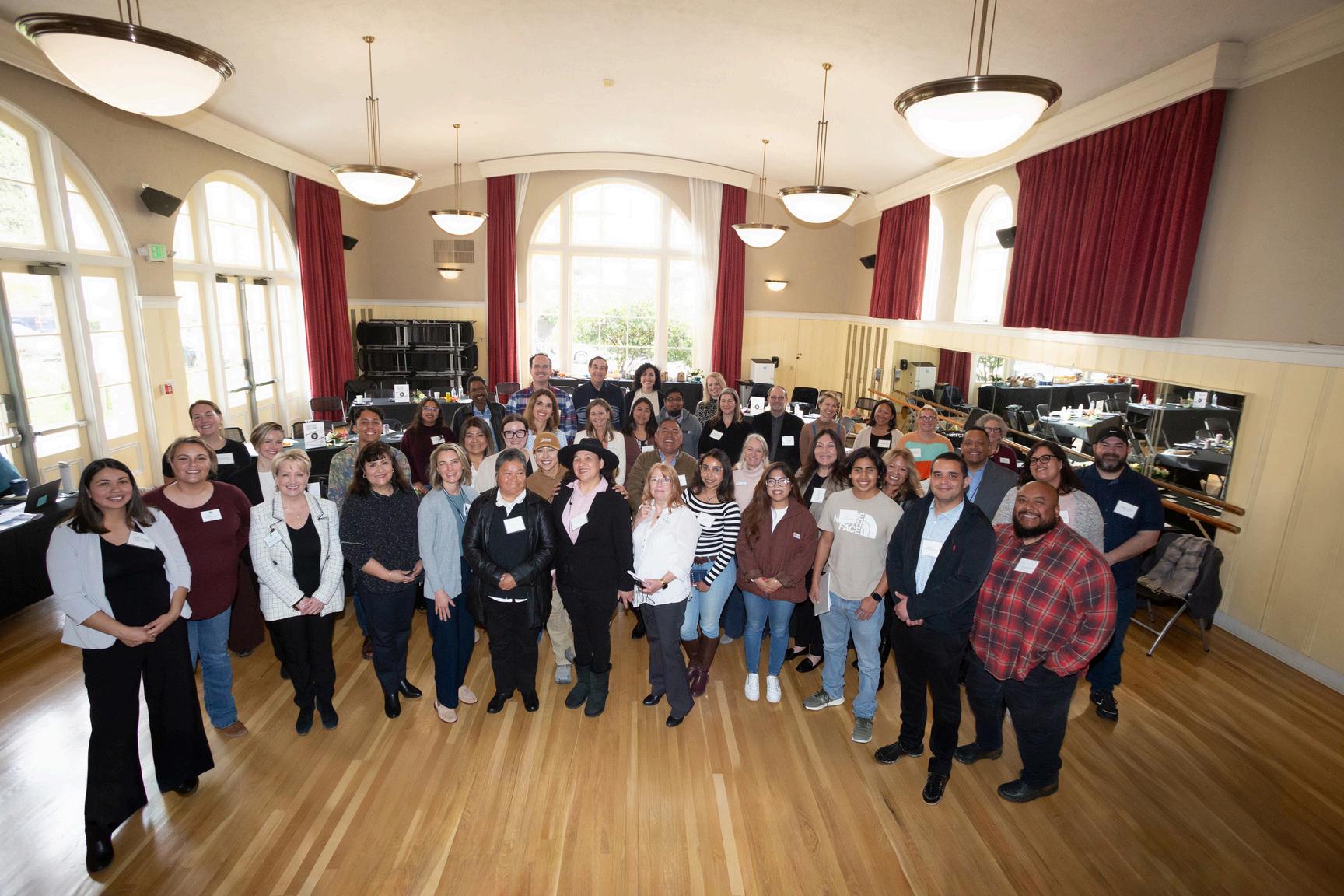
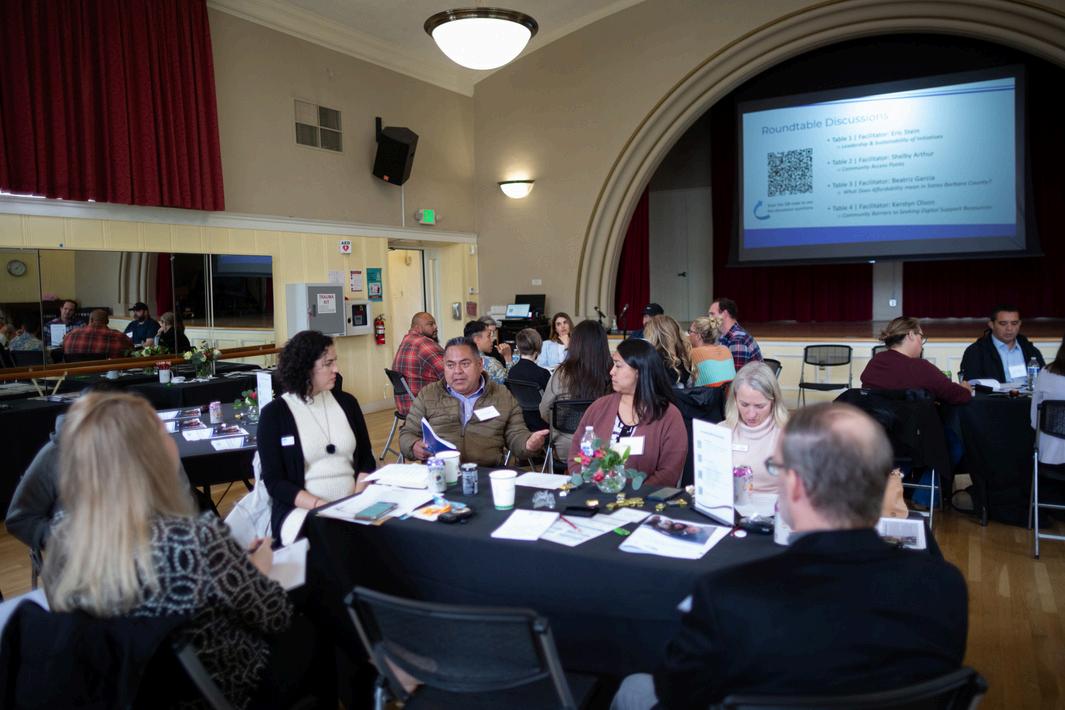
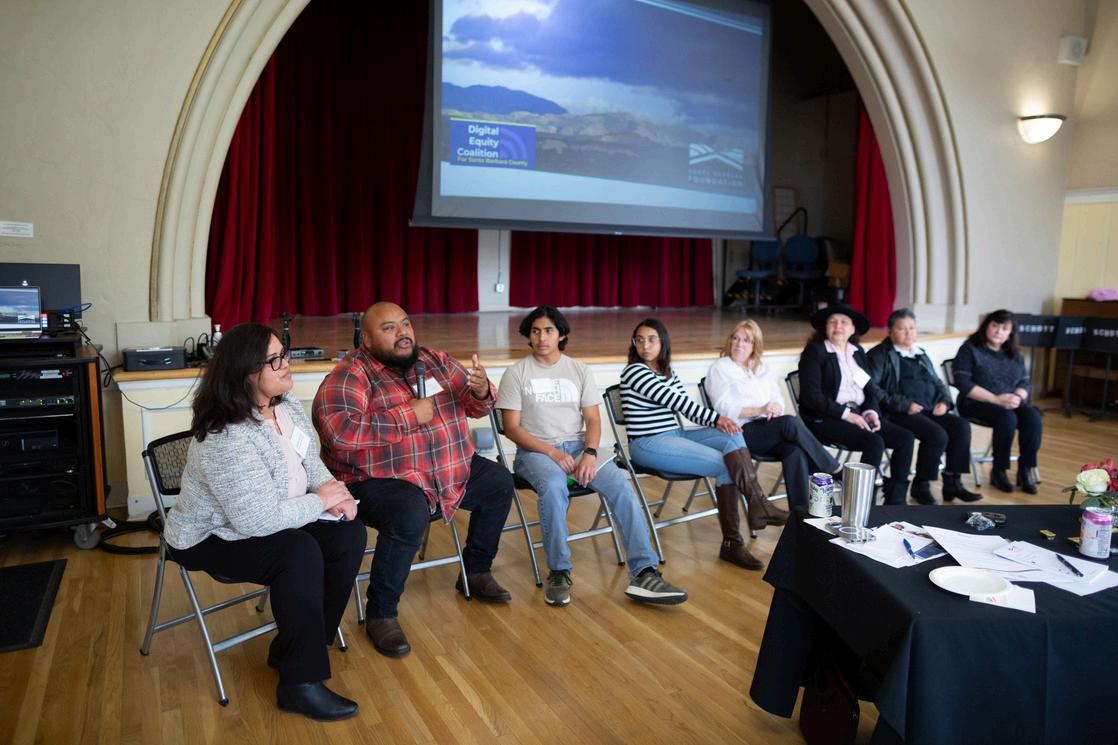
The Santa Barbara County Digital Equity Coalition (DEC) hosted its 2025 Summit on March 12 at SBCC’s Schott Auditorium. The event:
Brought together community partners, local leaders, and statewide advocates to share updates and shape priorities for the year ahead.
Included updates on funding opportunities, a keynote presentation by CETF’s Kerstyn Olson discussing resources for digital inclusion practitioners, and a panel of community experts sharing the impact of local digital inclusion efforts.
Facilitated roundtable discussions on affordability, access, sustainability, and barriers to digital support, helping align future strategies with community needs.
Since formation, the Digital Equity Coalition for Santa Barbara County has been working toward a regional application for CalDEP funding from the CA State Digital Equity Plan originating from the federal Digital Equity Act, to fund a comprehensive digital equity plan and implementation of the plan elements by partner organizations. In February 2025, the federal administration sought to cancel this program, and thus the CalDEP grant was suspended.
While the primary funding stream has been put on hold, the experience of households on the wrong side of the digital divide persists and Santa Barbara County organizations continue the work of connecting low-income households to low-cost internet plans, distributing digital devices, and offering a variety of Digital Literacy Trainings to households to support their access to digital resources.
Over the summer 2025, DEC Co-Facilitators completed an ecosystem audit of organizations that have participated in any past DEC-aligned events, meetings, and conversations. Through this analysis several organizations emerged as on across our county, and Steering Committee.
Using an equity framework, Steering Committee Members affirmed DEC Charter updates for 2025-26, developed a structure to improve efficiency while maintaining community-centered advocacy and created subcommittees informing collective DEC activities:
Track federal, state, and local legislation to advocate for regional resources and commitments to closing the digital divide in Santa Barbara County, and uplift local proposals improving access, affordability, and digital literacy in our local communities.
Align digital inclusion projects to mitigate duplication and identify gaps in outreach and service, and recommend partnership opportunities for furthering DEC goals to improve access, affordability, and digital literacy in our local communities.
Identify data needs and track digital inclusion metrics to provide ground truth, data backed information for DEC organizations to improve efforts to close the digital divide.
Audit and improve centralized information on sources for community members and organizations to access low-cost internet plans, digital devices that are affordable and meet accessibility standards, and locations of needs-based digital literacy trainings.
The DEC Steering Committee meets quarterly, and each subcommittee meets at regular intervals throughout the year. All DEC Partners are welcome to join subcommittee meetings to discuss pertinent topics, provide insight into the communities they serve, and share growing needs in the digital space.
The coalition’s success is built upon the collaborative efforts of partner organizations across Santa Barbara County. In 2025, these organizations demonstrated a strong commitment to closing the digital divide through a variety of initiatives, including:
Public Libraries Countywide:
Expanded free computer labs, increased access to Wi-Fi hotspots, designated Mobile Library Vans for tech support, and provided one-onone digital skills tutoring and tech support, increasing tech support to seven days a week in some locations.
Local Schools:
Integrated digital citizenship into curricula and provided training for parents to support students’ online learning.
Partners in Education distributed 617 digital devices to families, trained 168 adults in computer basics holding 55 classes in target cities across the County

Nonprofits and Community Centers:
Delivered bilingual digital literacy programs, distributed refurbished devices to families in need, and hosted technology fairs to connect residents with resources.
AGIF: 400 participants from across Santa Barbara County served by digital literacy training sessions in English, Spanish and Mixteco, each receiving Chromebooks upon training completion.
Government Agencies:
Provided letters of support for California Emerging Technologies Fund (CETF) to gain access to resources for facilitating broadband sign-up events, distributing nocost devices, providing technical support to households, and working with internet service providers to offer discounted plans for qualifying households.
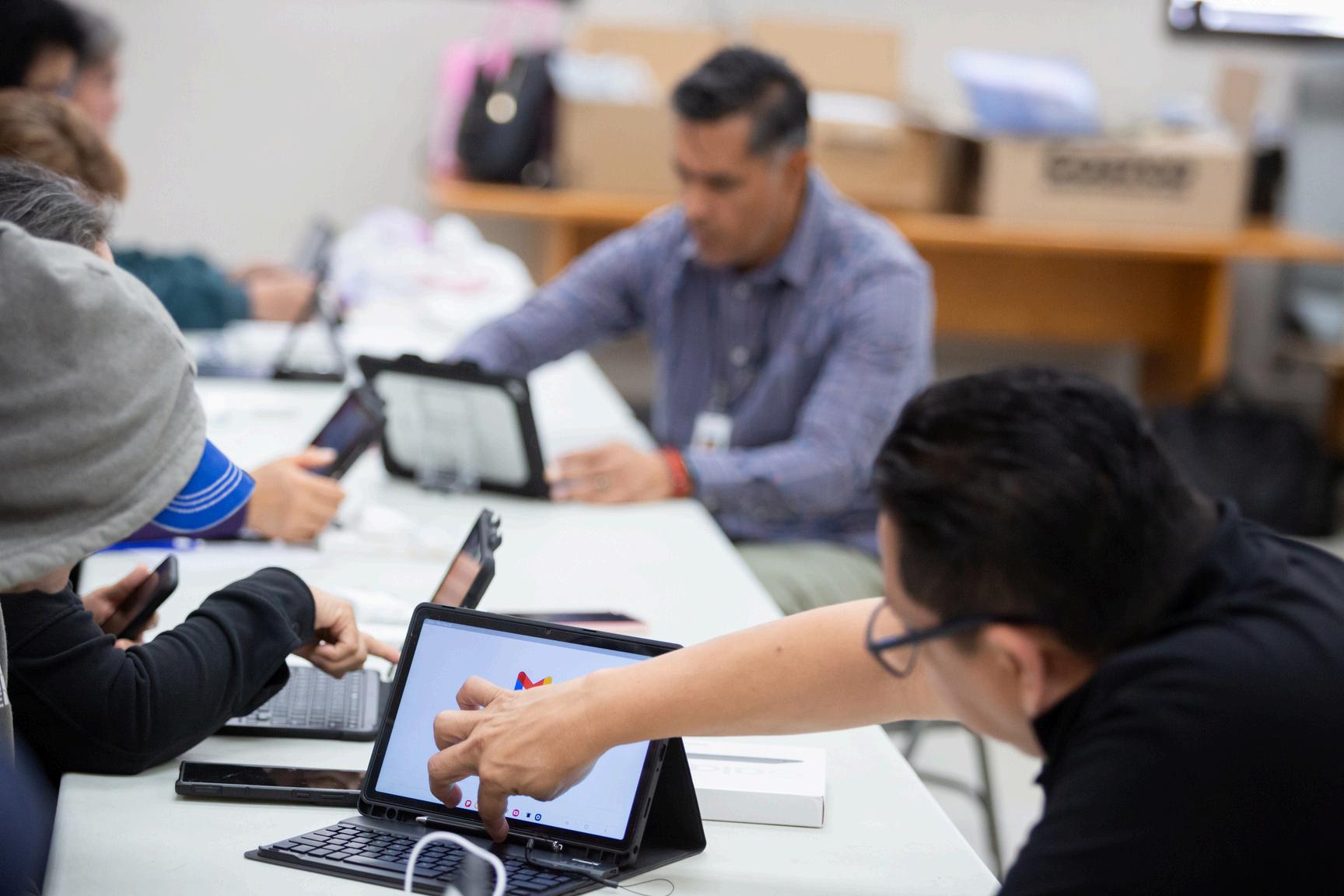
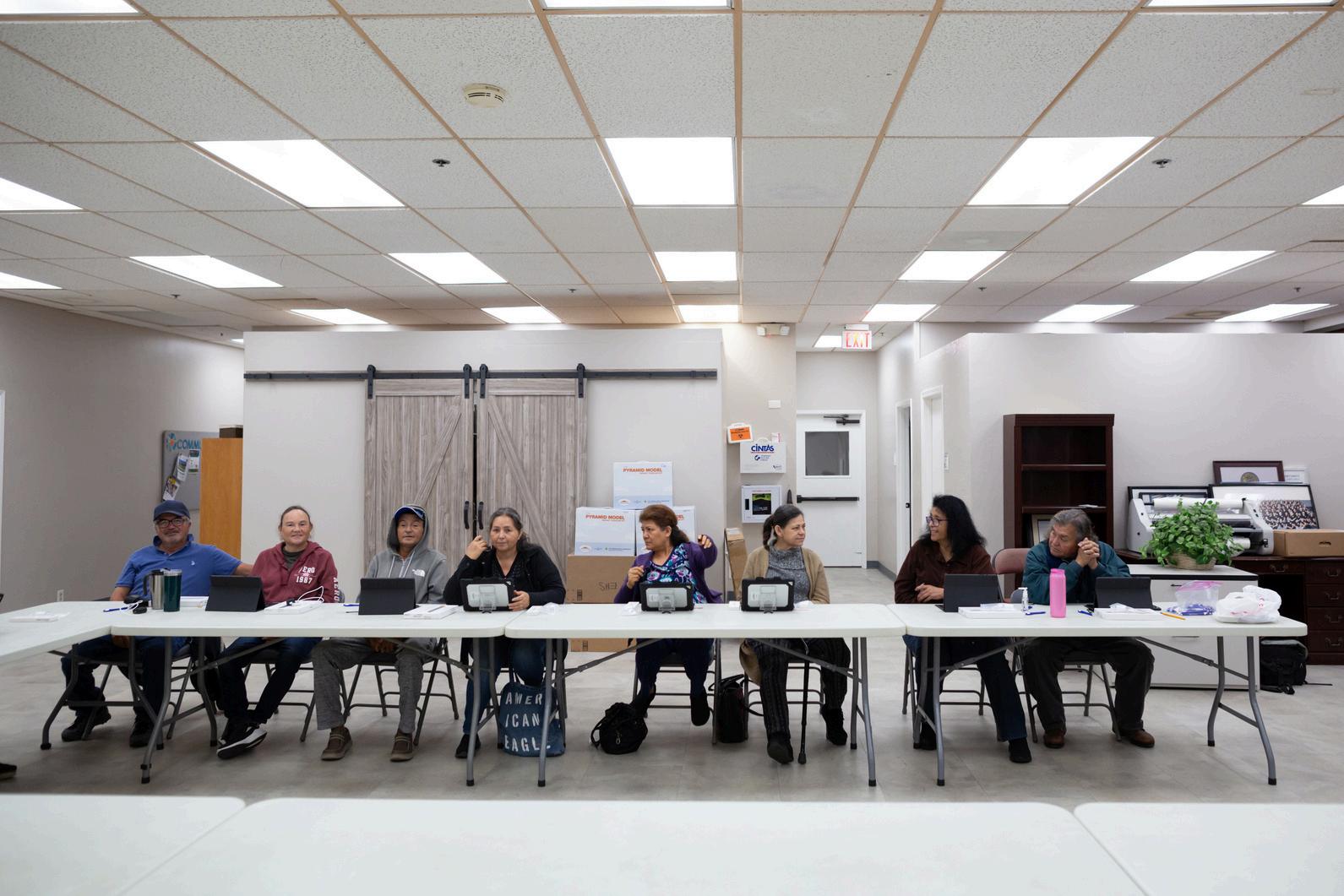
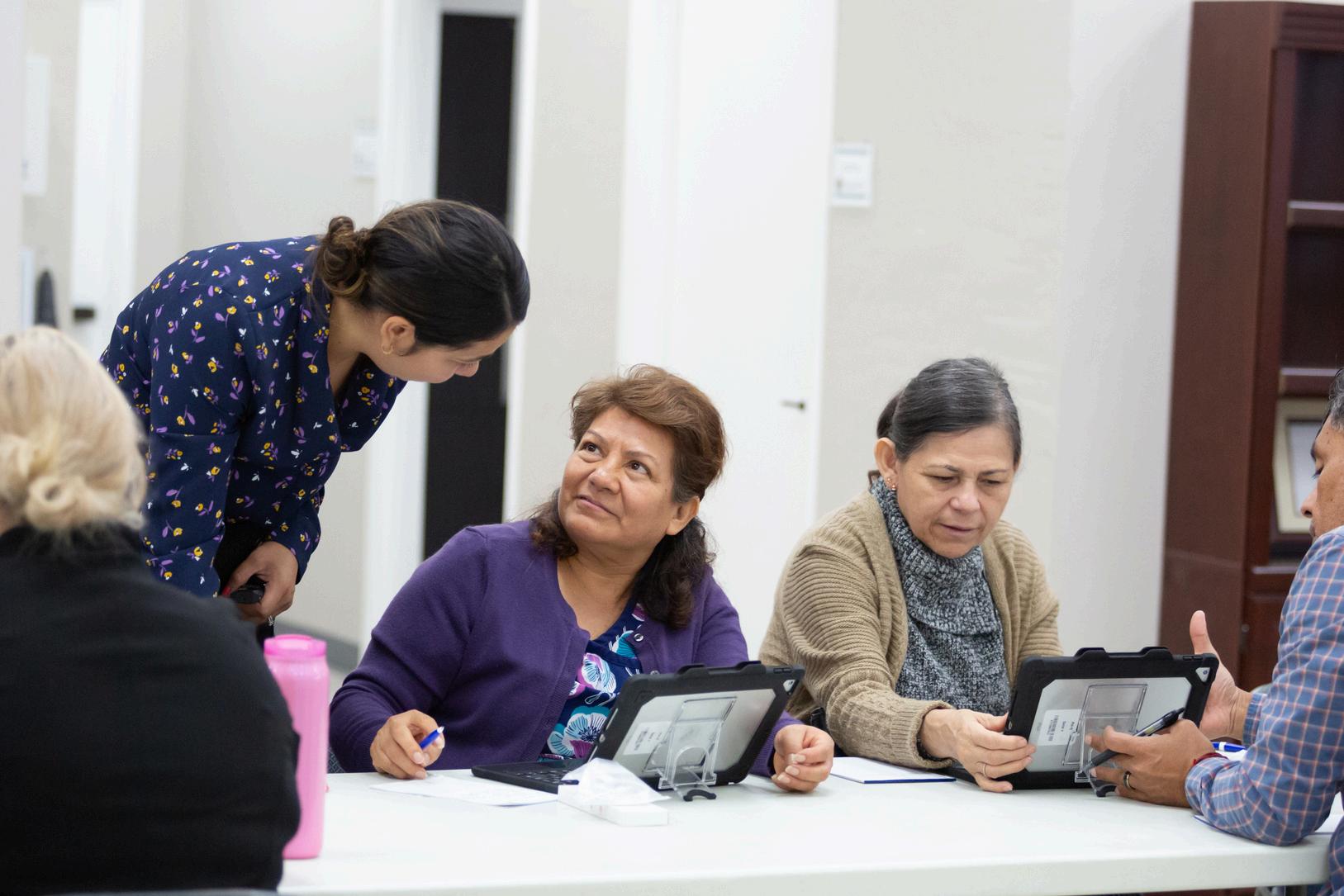
Throughout 2025, DEC Partners coordinated and facilitated digital literacy trainings across Santa Barbara County. These trainings were designed to empower individuals with the fundamental skills needed to navigate online environments, access essential services, and participate in educational and economic opportunities. Over the course of the year:
DEC Partners organized and hosted more than 60 digital literacy trainings, reaching residents in underserved neighborhoods in Carpinteria, Cuyama, Goleta, Guadalupe, Lompoc, and Santa Maria.
1,500+ Participants
More than 1,500 county residents attended trainings, with special outreach to seniors, low-income families, and non-Englishspeaking communities.
Basic computer skills
Internet safety
Online job searching
Using telehealth services
Navigating educational platforms.
These collaborative efforts have strengthened the county’s digital infrastructure and fostered a supportive environment for residents seeking to improve their technology skills. By leveraging the expertise and resources of diverse partners, the coalition has been able to reach a wide range of communities and adress specific barriers to digital inclusion.
One of the coalition’s key goals is to increase broadband adoption throughout Santa Barbara County. In 2025, partners across the county continued efforts to reduce cost through advocacy and promotion of low-cost internet offers, improvements to broadband infrastructure, and offers of multilingual digital support. ACS 2024 Data was released using 150,509 Households as a basis for analysis, enabling DEC Partners to update their adoption goals for closing the digital divide:
Type of Digital Device Owned
*DSL is not considered adequate for meeting minimum requirements according to the FCC definition of 100Mbps download speed and 20 Mbps upload speed. Unfortunately, this number is not disaggregated on ACS.
Underserved Areas: Access to infrastructure and affordability continue to be primary contributors to the digital divide in Santa Barbara County.
Infrastructure Needs are being tracked by the Broadband Consortium Pacific Coast in partnership with Santa Barbara County Association of Governments (SBCAG). Four areas were identified through the 2022 Broadband Strategic Plan: Casmalia, Cuyama Valley, Guadalupe, and Los Alamos. Nine additional areas in unincorporated Santa Barbara County were added in 2024.
Affordability appears to be a primary barrier for most communities in Santa Barbara County.
2026DECSummit
April 30
Details to Follow
In 2025, the Santa Barbara County Digital Equity Coalition reorganized around substantive strategies for improving digital inclusion in our region. Through widespread digital literacy trainings, the dedicated work of partner organizations, and focused initiatives to boost broadband adoption, the coalition has helped residents gain the skills and access needed for full participation in today’s digital society. As the year closes, the coalition remains committed to furthering its mission and building a more connected, equitable future for all.
In 2026, the DEC Steering Committee has committed to the following objectives:
Advocacy: Review state and federal legislative proposals to advocate for Santa Barbara County priorities, provide DEC partner organizations with recommendations for advocacy activities, support DEC partner organizations with letters for digital inclusion grant applications or project proposals if aligned with DEC priorities.
Projects: Align digital literacy training programs receiving CASF Adoption funds to reduce duplication and improve focus on key communities and populations needing increased support.
Partnerships: Examine the role private industry may take in the Digital Equity Coalition.
Data Collection and Analysis: Update the Digital Divide report from 2022 with current data, analyze gaps in data needs, and recommend opportunities for research proposals to relevant stakeholders and agencies. Support DEC partners in developing data collection processes to inform decision-making.
Community Facing Resources: Recommend updates to the DEC website at sbcdec.org to improve accessibility and understanding of the available resources across our county; highlight gaps in service for DEC Partner consideration.
DEC Summit: Host the 2026 DEC Summit on April 30 to present a current snapshot of the digital divide in Santa Barbara County and highlight partner activities to increase digital navigators and improve participation in the digital economy.

Co-chairs:
Beatriz Garcia – Santa Barbara Foundation
Rigo Hernandez – Nube Educational Foundation
UC Santa Barbara – Dr. Amy Gonzales
Santa Barbara Public Library Foundation – Lauren Trujillo
Partners in Education – Chelsea Pacino Duffy
Lompoc Adult School and Career Center – Elaine Webber
Santa Barbara County Association of Governments (SBCAG) – Marjie Kirn
County of Santa Barbara – Clare Tobin
Access Central Coast – Kelly Kivlahan
CommUnify – Pat Keelean
Santa Barbara County Department of Social Services – Maria Gardner
Workforce Development Board – Luis Servin and Alma Janabajab
United Way – North, Lyiam Galo
Family Services Agency of Santa Barbara County – Denise Cicourel
EconAlliance – Alejandra Mahoney
Housing Authority of Santa Barbara County – Stacy Murphy
DEC Strategic Direction and Facilitation – Shelby Arthur