FanDuel on its next big adventure

Transatlantic
FanDuel on its next big adventure
Transatlantic
15–16 July 2026
Grand
29 September–1 October 2026
Feira Internacional de Lisboa, Lisbon
2–4 March 2027
Riocentro, Rio de Janeiro
20–22 April 2027
RAI Amsterdam
Things have felt a little fraught across the gambling markets of the Americas over the past year. Courtroom battles around prediction markets rage across the US and the initial euphoria of Brazil’s regulated market has worn off as the moral minority try to clamp down on the market they so recently launched. Meanwhile, Colombia’s tax rise was declared unconstitutional but the whole farrago truly took the shine off one of LatAm’s more attractive markets.
It’s exhausting trying to keep up with the twists and turns – but that’s our job. The teams at SBC Americas and SBC Noticias have been reinforced in recent months and are doing a sterling job collating the stories that matter, so you don’t have to trawl the web for the latest twists and turns.
Despite the charged and litigious nature of public debate, the industry is in rude health. The arguments around a series of new products ultimately boil down to the nature and legality of progress and we stoke the debate on numerous pages in this issue.
The progress of the US market is revealed by the stories of two of the market’s success stories. Bet365 (p.38) and Fanatics (p.12) are flourishing in a market where others quickly surrendered to the dominance of the big two. Both have shown the value of smart recruitment and a tailored product – and yes, deep pockets. That does not sound like rocket science but it helps to have a few rocket scientists on board too (yes, I’m thinking of you Mark Hughes).
Of course, we feature DraftKings and FanDuel in this issue too. DraftKings’ CMO Steph Sherman joins former BetMGM CMO Casey Hurbis to preview the World Cup on p.78, while FanDuel’s James Cooper (p.46) talks about its prediction markets charge. Hard Rock Digital chair Rafi Ashkenazi also stops by for a chat (p.6).
After mixing in the latest from Latin America, this turned into one of the most complete issues of SBC Leaders we have yet published. Dive in!
Steve Hoare, Editor, SBC Leaders

The SBC Leaders Magazine is brought to you by SBC - Sports Betting Community: Editorial Team: Andrew McCarron, Craig Davies, Ted Menmuir, Joe Streeter, Conor Porter, Charlie Horner, Jessie Sale, Fernando Noodt Molins, Callum Williams, Viktor Kayed, Martyn Elliott, Lucia Gando, Ted Orme-Claye, Steve Hoare, Justin Byers, Kieran O’Connor, Christian Lee, Tom Nightingale, Elisa Marcante, Ana Maria Menezes, Rachael Kennedy, Ricardo Assis
Sales Team: John Cook, Rasmus Sojmark, Alyona Gromova, Conall McCabe, Jan Kowalczyk, Camilla Scott, Bob McFarland, Craig Brown, Ed Young
Creative Lead | Design and Layout: Jessica Camilleri



© 2025 Sports Betting Community Limited. All rights reserved.
All content in this publication, including articles, photographs, and other materials, is protected by copyright under the Copyright, Designs and Patents Act 1988. The copyright in all materials in this publication is owned by Sports Betting Community Limited or its licensors. You may not reproduce, distribute, or otherwise use any of the content without the express written permission of Sports Betting Community Limited (SBC), except as permitted by law. For permissions or licensing inquiries, please contact sales@sbcgaming.com.
The views in the publication are not necessarily the views of SBC or those of the advertisers. Although every effort has been made to ensure the accuracy of the information contained in this publication, SBC cannot be held responsible for any errors it may contain. In no event shall SBC be liable for any direct, indirect, incidental, special, consequential, or exemplary damages, including but not limited to, damages for loss of profits, goodwill, use, data, or other intangible losses (even if we have been advised of the possibility of such damages), resulting from the use or the inability to use the material contained in this publication.
Produced and published by Sports Betting Community Limited
REGISTERED ADDRESS: SBC, 2nd Floor, 212 New Kings Road, London, SW6 4NZ
EMAIL: sales@sbcgaming.com | WEB: www.sbcgaming.com & www.sbcleaders.com
6 People
Hard Rock Digital Chairman
Rafi Ashkenazi, Allwyn Group
CFO Kenneth Morton and people moves
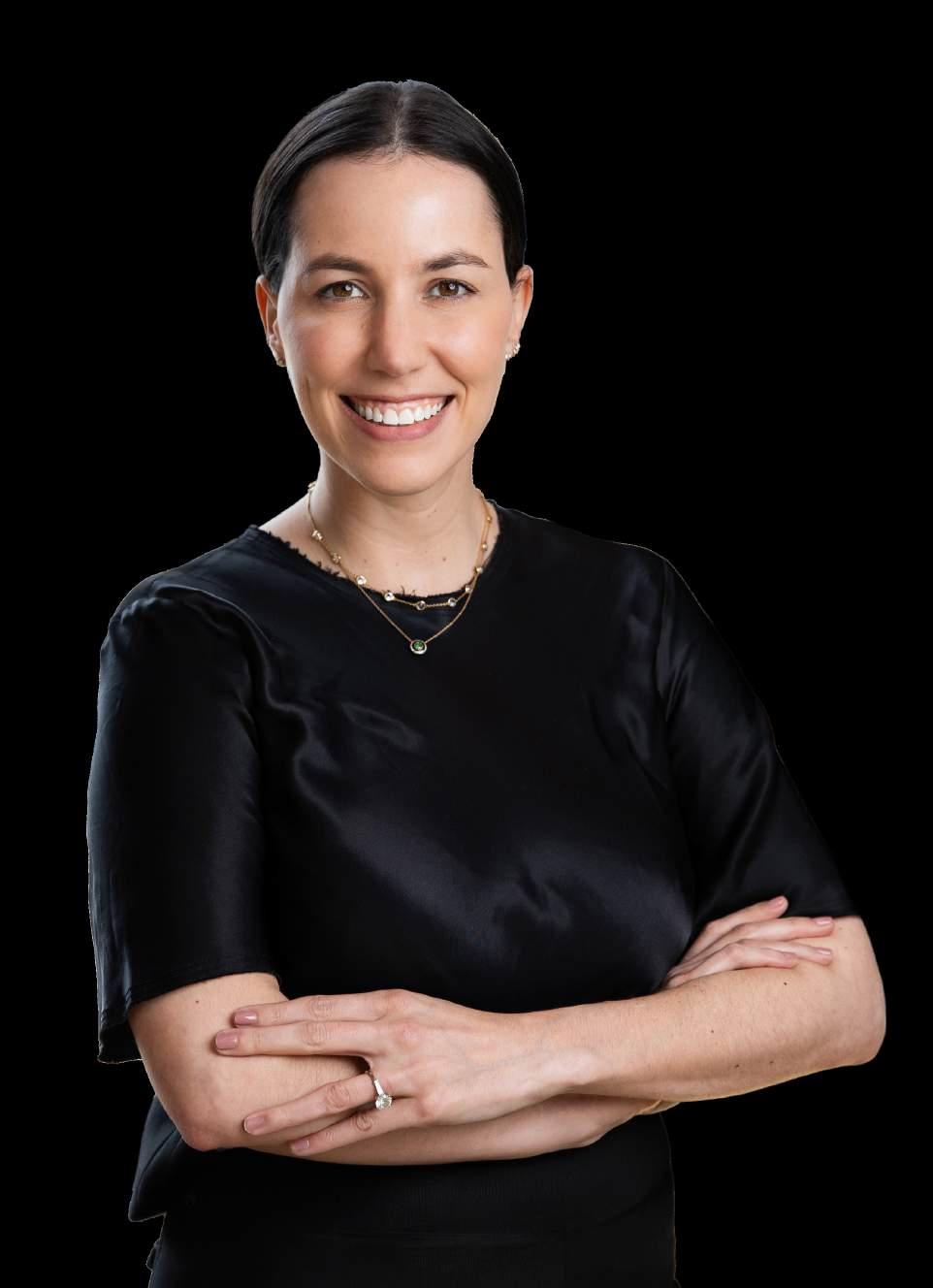
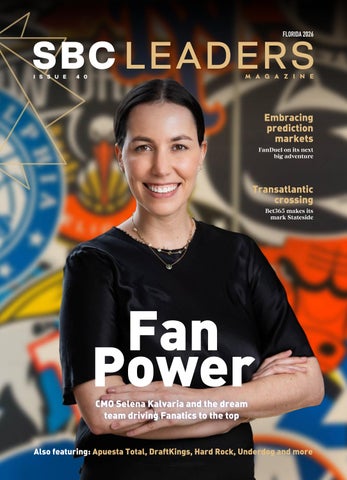
12 Spotlight: Fanatics
CMO Serena Kalvaria and Chief Trading Officer Mark Hughes on the operator’s twin-pronged attack on the US podium
18 IMGL Analysis: The US
Marc Dunbar of Jones Walker on the legal quagmire around prediction markets
22 The Hot Topic: What next for our lobby groups? Stifling regulations, rising taxes and unprecedented unregulated competition, who’d be a gambling industry lobbyist?
28 Special Report: Where next in Latin America?
A look at the prospects in Ecuador, Guatemala, Paraguay, Puerto Rico, and Venezuela
82 Comment: Ras Sojmark
The final word
SPORTS BETTING
37 Column: Casting a long shadow
Tom Nightingale on prediction markets’ impact on lawmakers
38 Interview: bet365 US chief Trip Stoddard
The sports betting powerhouse is making waves Stateside
42 Interview: Apuesta
Total CEO Gonzalo Perez Cirsa’s latest acquisition on life beyond Peru
46 Interview: FanDuel SVP New Ventures James Cooper On the launch of FanDuel Predicts
51 Column: The threat of taxes
Joe Streeter hopes Brazil does not take its lead from Colombia
52 Interview: Donald
Tabone of Betsson
Betsson’s security chief on the rising threat of AI
56 Interview: Greentube CEO
Thomas Graf
The leading iGaming supplier on market dynamics in North and South America
60 Interview:
mkodo and GeoLocs
MD David da Silva
New boss at mkodo reflects on founder’s legacy and looks forward
65 Column:
Changing the narrative
Steve Hoare on the tricky topic of media relations
66 Feature: Prediction markets and problem gambling
What happens when you financialize everything? Is responsible trading coming to prediction markets?
71 Column: AI agents and payments Rachael Kennedy on a future where more AI agents are making payments than humans
72 Feature: Payments throughout LatAm
Louis Thompsett on payments strategies to cover the continent
77 Column: Affiliates’ metamorphosis
Jyoti Rambhai on the transformation of affiliates into adtech companies
78 Feature: DraftKings World Cup strategy
Market leaders reveal the importance of first time bettors

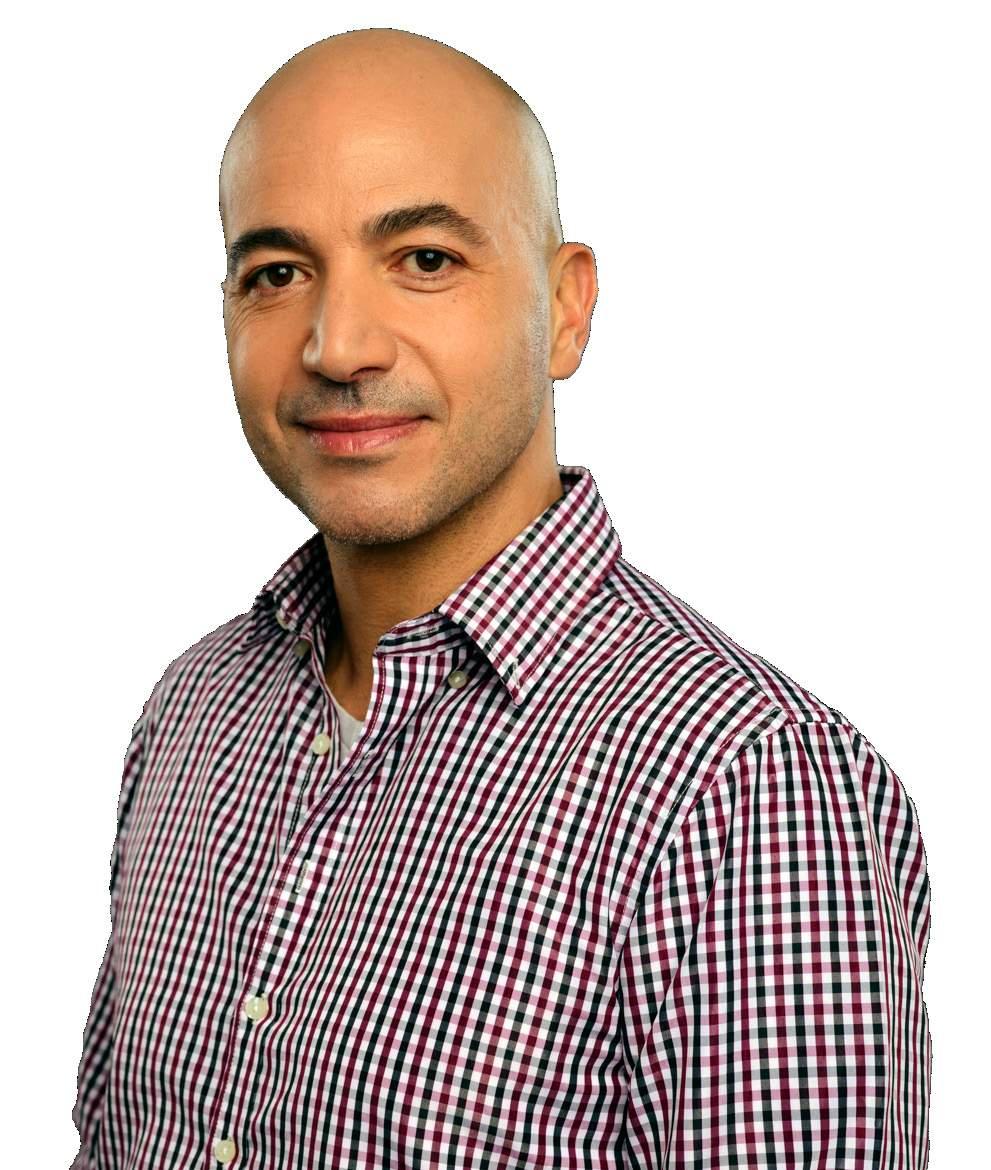
Hard Rock Digital Executive Chairman RAFI ASHKENAZI tells us about his career at some of the industry’s most storied companies
Pre-gambling industry: 2000-2005
I graduated with an Industrial Engineering degree, before working with the largest bank in Israel (HaPoalim), and IT companies Hi-Tech and SQLink, which is where I first encountered Playtech as a client. What’s more, (now) Playtech CEO Mor Weizer was working on the same project while at Oracle. He joined Playtech a few months before me.
Playtech was still a private company but was considering an IPO, which took place several months after I joined. I always told investors and shareholders that I couldn’t have asked for a better introduction to the gaming industry. Playtech was like a university and I was on the fast track to getting my degree in online gaming.
My job as COO was essentially to make sure the machine worked while the business was growing at an almost uncomfortable pace. When I started we had just 130 employees in Estonia and Israel. Seven years later, we had over 2,400 employees all over the world.
Rational Group/Stars Group/Flutter: 2013–2020
I joined Pokerstars reporting to Mark Scheinberg as COO. Mark and his father Isai were genuine poker enthusiasts. Their enthusiasm was shared by many people at the company – it was a core
part of the culture. Isai and Mark created one of the most impressive and beautiful assets in our industry. It was unique in so many ways.
I joined after we settled with the US DOJ in 2012 and acquired Full Tilt. So, in my early days I acted as Pokerstars’s COO and Full Tilt’s CEO in parallel, until I found someone to run Full Tilt day-to-day.
My seven years in Pokerstars were a rollercoaster experience, but in the positive sense, like a child enjoying the ride, but not without massive challenges along the way.
Pokerstars was acquired by David Baazov’s Amaya in 2014, and I worked closely with David as Pokerstars COO, briefly as Pokerstars CEO, and in between as SVP strategy at Amaya.
David was unique in a sense that he had a big vision, the courage to execute, and the creativity to design M&As that were far from straightforward.
About 18 months after succeeding David as Amaya CEO, I decided to rebrand and reposition Amaya as the Stars Group, reflecting the culture and internal sentiment better.
I can literally write a book about the sevenplus years at Stars. There are so many stories as it morphed from a private, family-owned business into the largest public, online gaming company in terms of revenues and EBITDA, before selling the company to Flutter.

Gambling.com Group CoFounder and long-serving CEO Charles Gillespie has stepped into the Chairman’s role, with fellow Co-Founder and COO Kevin McCrystle stepping up as CEO.
Bragg Gaming has appointed experienced former Golden Nugget CEO Thomas Winter to its Board of Directors.
Fanatics Betting and Gaming has promoted Alex Smith to Chief Legal Officer, and brought in former Indiana gambling regulator Sara Tait as Head of Legal and Regulated Industries. (For more on the Fanatics team, turn to our Cover Feature on p.12.)
Allwyn has brought in Mr Q Chief Product Officer Katie Harbron as Director of Games for the UK National Lottery.
Genius Sports has named a new Chief Marketing Officer, with Tony Marlow joining from LG Ad Solutions.
Novibet has promoted Elena Barba to the role of Chief Marketing Officer
GameLounge CEO Richard Dennys has stepped down with Founder Jonas Cederholm stepping into the breach as interim CEO.




Hard Rock Digital (HRD): 2021–present

After Flutter I took some time off, which didn’t last long. The idea of building a digital gaming business from scratch –with Hard Rock’s brand, customer base, and nearly 250 venues across more than 70 countries as your foundation – was impossible to walk away from.
We structured the company as a joint venture between six of us, who had left Stars Group after the Flutter acquisition (Original Interactive Partners or OIP), and Hard Rock International, whose CEO Jim Allen I first met back in 2016, when Amaya was under a strategic review process and Hard Rock contemplated acquiring us.
So far, in the five years we’ve been operating, we’ve launched a state-of-theart sportsbook and casino, built Hard Rock Bet into a real competitor in Florida and the US, acquired WGames to create Hard Rock Games in social gaming, attracted Playtech as a strategic investor, and launched Games Powered by Past Motor Racing in Florida. We’re also on the verge of Hard Rock Bet’s first launch into international markets.
All in all, this is a beautiful business that continues to grow and establish itself. We are grateful to Jim and the Seminole Tribe for their continued support and trust in this team.
Since leaving Stars I’ve quietly been investing in and advising early-stage companies – founders who are building genuinely interesting things at the edge of what’s possible in gaming and beyond. There’s an energy in these small startups that you wouldn’t be able to replicate in large companies.
After getting the blessing of Jim and the OIP team, I formalised that interest as Executive Chairman of HeySeven.ai. The company is building an autonomous AI casino host that delivers personalised VIP experiences to premium players, 24/7. The concept supports unlimited scale and attends to premium customers with a personalised, timely and high-quality service. There will be more initiatives to come.

I’m Israeli, my family is here, my sons are in military service, and what happened on October 7th, 2023 changed something in me – it changed something with many of us.
I’ve always cared about Israel deeply and I found myself compelled to speak more publicly, more directly, than I ever had before.
I decided to post on LinkedIn since I couldn’t hold back any longer on matters like leadership (or lack of, in Israel and elsewhere), imbalance in civic contributions among Israeli communities, the injustice or unfair judgement Israelis and Jews are experiencing worldwide among other matters.
To clarify, I have no aspirations or ambitions to enter politics, but yes, I am worried about the situation worldwide, and about the continued decay in moral standards and social values. Aside from the heavy stuff, I am also fascinated by physics, AI and history among other things. I am generally quite a curious person. In fact at Hard Rock, curiosity became a ‘core value’ this year.
Finally, I have a beautiful wife and four children, who I love with all my heart. My wife and I are doing our best to ensure that our children have developed values that are going to make them better human beings, contributing to society and supporting those who are not as privileged as us.

Allwyn International Group CFO KENNETH MORTON celebrates the company’s listing after the closure of its merger with Greece’s national lottery operator OPAP and its elevation to the top tier of listed gaming companies
Words by TED MENMUIR
The management team at Allwyn International believes that it has crafted the strongest investment case in the gambling industry, following its transformation into a publicly listed company through its integration with OPAP.
By market close on Tuesday 24 March, Allwyn was trading as the world’s second-largest lotteries and gaming company, cementing its position among the top tier of listed gambling operators.
The transaction will unite Allwyn International with OPAP, the longstanding steward of the Greek national lottery and retail betting franchise – marking the culmination of a six-month strategic effort to reshape the group’s financial and corporate identity.
At its core, the new Allwyn profile is defined by cash generation, scale and consistency, while reinforcing its status as one of the largest contributors to good causes across its markets.
However, for Group CFO, Kenneth Morton, who spoke exclusively to SBC News following closure of the merger, the story extends well beyond scale to one of trust, differentiation and sustainable value creation.
“We’re not new to this market,” Morton said, pointing to Allwyn’s historic partnership with Athenslisted OPAP. “OPAP investors already know what we’ve done. Total shareholder returns have exceeded 500% since 2013.”
He added that this performance has been driven by disciplined execution, including the doubling of OPAP’s EBITDA over the past five years.
Crucially, that track record has translated into strong investor confidence in the newly combined entity, with more than 93% of OPAP shareholders remaining invested.
“We’ve made them a lot of money – and that credibility matters as we tell the Allwyn story globally,” he noted.
Morton positions Allwyn as a distinct outlier among other listed gambling companies.
From its origins in the Czech Republic with SAZKA, the group has evolved into what he describes as a unique entity within the sector – one that has effectively created a new category of operator by scaling and modernising the lottery model across multiple jurisdictions.
“What we have is a pretty differentiated business,” he said. “We’ve built something that didn’t really exist before – a scaled, lottery-led platform.”
This differentiation is rooted in a combination of retail strength, digital capability, proprietary
technology and increasing content integration. All of this aims to extend the relevance of lotteries within a modern entertainment landscape.
A central pillar of Allwyn’s investment case is its ability to deliver both growth and shareholder returns – a balance that Morton argued is unmatched in the sector.
He continued: “Since 2019, we’ve pretty much tripled the size of the business across every metric. At the same time, we’ve generated a lot of cash and paid significant dividends.”
For Morton, this dual performance underpins Allwyn’s appeal in equity markets: “That’s a really compelling and attractive proposition.”
In his conversation with SBC, he described the company as a rare example of a gaming business that is capable of scaling, while also maintaining financial discipline and delivering consistent returns.
Diversification is another defining strength of Allwyn’s new PLC profile, particularly in the context of uncertain and cyclical market conditions.
“If you look at gaming stocks, we’re one of the most diversified,” Morton said. “That’s a big positive – both from a downside perspective and in terms of growth optionality.”
Unlike operators heavily exposed to single markets or product verticals, Allwyn’s multi-market, multi-channel structure provides a
more resilient earnings base while offering flexibility to pursue new growth opportunities.
Looking ahead, the company’s ambitions extend well beyond Europe. While OPAP and other continental assets provide a strong foundation, Morton identified North America as a key strategic frontier for the operator, alongside emerging opportunities in South America.
He explained: “There are increasingly returns to scale in gaming. You’re no longer just competing with other betting operators – you’re competing for consumers’ time and money against global entertainment.”
In this environment, success depends on scale, technology, content and brand – areas where Allwyn is confident that it has already established a meaningful competitive advantage.
Despite the scale of the merger, Morton was clear that the company’s leadership views the transaction not as an endpoint, but as the beginning of a new phase.
“This is probably the most exciting transaction we’ve done,” he said. “It puts us at a really exciting point in the development of the group.”
Allwyn’s focus shifts to executing its next stage of growth.
“We’ve built a strong base,” Morton concluded. “Now it’s about taking the business to the next level.”
A version of this article first appeared on SBCNews

Words by TOM NIGHTINGALE
Fanatics Betting and Gaming likes to do things a little differently. To do that, you need people who think a little differently. This is a company that has plenty of them.
Under CEO Matt King, the gaming arm of the global sports and apparel giant has parlayed its name and cachet into a lot of success in a short space of time. Three years ago, Fanatics Sportsbook wasn’t in the market; today, it competes strongly for third place behind FanDuel and DraftKings across the US, and has been joined by an increasingly competitive and innovative casino platform.
That success has been built on many pillars. One of those is getting the right people in the right places. Take as examples Chief Trading Officer Mark Hughes and Chief Marketing Officer Selena Kalvaria, who come from radically different professional backgrounds.
Hughes is a stats and product guy, the former head of quants at Irish bookie Paddy Power who later became C-suite at PointsBet USA when PointsBet bought his co-founded sports betting technology startup Banach. In contrast, Kalvaria is a Harvard grad who has shaped brands as varied as US brewing giant Anheuser-Busch, travel retailer Away, and iconic fashion house Gucci.
That kind of diversity is what King wanted, explains Kalvaria.
“It’s a brilliant team that Matt has assembled at the leadership level,”
says Kalvaria. “It really does permeate the entire company with a very high-performing, collaborative and entrepreneurial culture. It’s full of the types of people who actually have an idea of what could be done differently. And they’re innovative in the pursuit of that.”
When Fanatics bought PointsBet’s US assets in 2024, the deal included the foundational sports betting tech that Hughes and his Banach partners built from the ground up and sold to PointsBet in 2021.
“At Paddy Power, we’d seen the power of a centralised trading platform and what it can do for business,” Hughes recalls. “So we thought, why don’t we just go and build one?”
Fanatics inherited several leaders from PointsBet – including its then-Chief Product Officer Hughes – who have worked tirelessly to refine and iterate upon the PointsBet US platform to give Fanatics the kind of product that equates to a market advantage.
“I’ve been on a journey of learning different pieces of the puzzle that make a big difference,” Hughes adds. “Early in my career, I’d have said getting the pricing right is the most important thing. But I started to realise that what really matters is the breadth and depth of odds and markets that you offer to customers. At PointsBet, we weren’t really penetrating market share. There was obviously something missing.”
Looking back now, Hughes believes it’s become clear what that missing piece was: genuine product stickiness.
“You have to remember, your new bettors are already betting on FanDuel or DraftKings. So, if we don’t have what they want, they’ll leave us. A core constant in our strategy is to give customers zero reason to leave. When we got to that point, that was definitely a momentum shift.”
As it took over PointsBet’s American licences state by state, Fanatics went from zero to 95% addressable market penetration in just under two years. Having the name recognition of the most well-known sports merchandise retailer in the US certainly doesn’t hurt, but two things win above all others in this game: product quality and user experience.
Fanatics leaders say the company prides itself on treating bettors like fans. That means good pricing, sure, but it also means differentiators that make users’ experience demonstrably better.
Fanatics has a few, from the Fair Play injury refund feature that has been replicated by rival sportsbooks to the FanCash rewards points earned on almost every wager that are spendable on everything from gaming bonuses to sports team merch and inperson experiences.
Hughes and Kalvaria cite both features as key reasons that users stay.
“Now we’re at a phase where the product is very high-quality, the loyalty scheme runs throughout all channels, we have tenured customers who are really sticky,” assesses Hughes. “It’s all come together. We get a lot of feedback from customers now saying, ‘I joined because of FanCash but your product is as good as FanDuel or DraftKings’.”
For Kalvaria, an outsider coming into the gaming industry in her CMO role, the fruits of the work of Hughes and his team quickly became apparent.
“You have to build an incredible product and proposition that people care about and the team that pre-existed me here was exceptional in the pursuit of having the best product in the market,” she says. “With the integration of FanCash and what’s become core to our positioning in Fair Play and the connected ecosystem and loyalty program, we relentlessly
enhance the customer and fan experience. That’s what Fanatics exists to do.”
The work never stops, either.
“Some of our competitors have some really cool stuff,” acknowledges Hughes. “So, for us, it’s about what is the next Fair Play? What’s the next thing that we can do to give reasons for customers to switch and to stay?”
Once you have that user experience in place, you need to shout about it. That’s where Kalvaria and her wide range of marketing and brand development experiences come in.
Around one month after Hughes formally transitioned from PointsBet to Fanatics, the operator hired Kalvaria, ending her threeyear spell leading brand engagement for Gucci Americas. Brewing company to travel brand to high fashion to online gambling isn’t exactly the most-travelled career path, but Kalvaria sees a clear thread among the disparate experiences.
“I always wanted to work with businesses that really had something compelling from a storytelling standpoint and where the intersection with culture was truly valued. I loved my experience at Gucci, but there came a time when I found myself at a crossroads. I really wanted to challenge myself, and I’d always had my eye on Fanatics. It’s one of the most novel marketing organisations, and to work on a digital product in a category that is on fire in many ways is something I hadn’t done before. I knew that their team would challenge me to up my own game and raise the bar for them, too.”
As a sports apparel and merchandise company, Fanatics needs no explanation. Look in most North American sports fans’ closets and you’ll find something with its name on the label. Part of Kalvaria’s job is ensuring that the company continues to develop that level of recognition for gaming, too, and that the operator remains unmistakably Fanatics while doing so.
“Fanatics has incredible cultural equity in sports, unparalleled,” Kalvaria says. “How do we, as a betting and gaming business, capitalise on that and make that core to our brand strategy? How do we tell our story in the most compelling ways that show that we’re different and more rewarding than what you might see in the rest of the market?”


We’d seen the power of a centralised trading platform. So we thought, why don’t we just go and build one?
Mark Hughes, Chief Trading Officer


In addition to its sportsbook and casino operations, Fanatics was among the first sportsbooks to roll out a prediction markets product when Fanatics Markets went live in early December, a few weeks ahead of FanDuel Predicts and DraftKings Predictions.
Sports event contracts will inevitably continue to be compared to typical online sports betting. But what does sports betting product expert Hughes make of the two products side by side? Are they competitors or co-existers?
“Fundamentally, predictions compete on price, so your margin is tight and you don’t have a bucket of money for

a generosity loop for customers. It’s not like sportsbook where, if you feel like you’re having a bad run, generosity pumps you back up.
“I think the economics means that really sharp punters will love prediction markets, and there will be a place for it. But the product breadth will be hard to match. If it plays out in a way where there’s a parlay product and margins and generosity can be high, maybe it will compete. But without that, I don’t really see them as the same product, even if they look and feel very similar to a customer. I struggle to see it cannibalising too significantly in states where sports betting is allowed.”

One of the most striking ways is in the company’s choice of brand ambassadors. In an online sports betting world that has historically leaned into athletes and mostly male celebrities, Fanatics does things a bit differently, whether it’s socialite Kendall Jenner, influencer Livvy Dunne, and rapper Megan Thee Stallion for Fanatics Sportsbook or actor Patrick Schwarzenegger and actress and producer Taraji P. Henson for Fanatics Casino.
For a brand creationist like Kalvaria and a company like Fanatics, what makes a good ambassador?
“It’s a great question,” reflects Kalvaria. “It’s a balance between who can resonate with the audience and who can speak to the product. Fanatics is so much bigger than just gaming, so you’re not just speaking to that audience. So how do we be a bit unexpected, generate the ‘wow, that worked’?
“There are so many iconic women who can confidently speak to how we’re different, and who stand for actually being different in a category that has generally leveraged men
to deliver that message. The real magic piece is that these are people beyond the walls of betting that our users and the public care about and follow and are interested in talking about.”
In both Hughes’ talk about building the Fanatics Sportsbook product and Kalvaria’s outline of how she thinks about brand positioning at the highest level, that last point shines through. Word of mouth is key; features like Fair Play and FanCash get bettors spreading the word and coming back for more, and eye-catching commercials and marketing campaigns get the wider audience talking.
“We want to create a brand world in which our brand is a magnet, not a mirror of the customer,” concludes Kalvaria. “We want something that people want to look up at. How do we get people to talk about what we’re doing?”
Three years after Fanatics Sportsbook’s US debut, you would have to say it’s going pretty well so far.




Jones Walker partner MARC DUNBAR unpicks the noise around prediction markets in the latest of our columns from the International Masters of Gaming Law (IMGL)
When Mike Selig, chair of the Commodity Futures Trading Commission (CFTC), wrote an Op-Ed piece about prediction markets in the New York Times, it marked a 180-degree turnaround from the organisation’s stance of just a few months before. From public hostility to event contracts, the CFTC was now a staunch advocate and declared itself the only legitimate regulator of the products. In the process Selig placed himself and his organisation in direct opposition to the state regulators that had previously had exclusive oversight of gambling markets in their jurisdictions.
In the article, chairman Selig argued that, because the CFTC had for decades regulated event contracts in the form of commodity futures, and because prediction markets were event contracts, it followed that these should be allowed, under its oversight, across the US. He attacked regulators for “waging legal attacks” and declared that the CFTC was itself filing an Amicus Brief in the Ninth US Circuit Court of Appeals.
Of course, this was, at the time, just the latest legal action in a series of actions by states and platforms using the courts to try and settle the argument as to the legality of prediction markets. The claims and counterclaims have come so thick and fast that headline writers have struggled to keep pace. Indeed, the entire gaming industry has been put in a spin about exactly where the situation will land. What Selig did not mention in his piece was that prediction markets have been plagued by accusations of insider trading, some pointing at the current government administration, and morally questionable markets on war and regime change. Neither did he reference the fact that there are none of the guardrails in prediction markets that are an important feature of other gambling markets. So, no responsible gaming, no anti-money laundering, not even warnings about the dangers of gambling addiction and where help may be found.
If this situation seems unwise enough, the realisation that prediction markets can be readily tweaked to replicate all gaming
verticals makes it downright dangerous. Selig’s argument would see gambling of all types effectively legalised right across the US, overseen by the CFTC. Not only does it have no basis for its claim, it would undermine the long-settled position of state and tribal gambling and lay waste to an industry that employs many thousands and contributes billions of dollars in taxes.
This state of affairs has left me and my colleagues at the International Masters of Gaming Law (IMGL) scratching our heads at just how such an inappropriate and disruptive development could be allowed to continue. And yet, despite the filings, despite the market-moving wagers, Kalshi and others have been building market share with some arguing that their very existence proves they should be allowed to continue unhindered.
What no-one seems to disagree on is that prediction markets present the courts with a genuinely novel dilemma and one which will likely be settled only by the US Supreme Court. Meanwhile, rulings by the lower courts and the appellate courts,
Rulings by the lower courts and the appellate courts, injunctions, temporary stays and the like are simply noise “
injunctions, temporary stays and the like are simply noise. As chair of a governmentbacked agency Selig’s opinion may appear significant, but it carries no more weight than anyone else’s, including the judges ruling on current cases in influencing the Supreme Court’s decision.
Commentators often point to the allegiances of the Supreme Court judges with some apparently favouring one political party over another. This, they say, makes a decision in favour of the CFTC and its position more likely under this administration. But this fails to understand how the Supreme Court operates. When they look at prediction markets, the justices will make their assessment based on a body of law that predates the founding
of the US and the creation of the federal system. They well understand our federalist system, which has as its foundation the doctrine that the federal government has no authority but that which has been given and the states have all authority but that which is denied.
In this context, the CFTC’s argument that its founding document trumps the entire federalist system is absurd. If the federal government wanted gambling to be regulated at the federal level it would have to expressly legalise interstate gambling activity. I believe that the Supreme Court, whatever its makeup, is very unlikely to expand the regulatory scope of the CFTC in ways the prediction markets companies are hoping for.


As gaming lawyers, members of IMGL are, by definition, pro-gaming: it’s how we make our living. We, along with the rest of the industry are not anti-gambling campaigners and yet none of us would ever argue for unregulated gambling. Gambling, alongside the other sin industries, has existed since the dawn of humanity and no one has ever suggested they should be allowed to go unchecked.
So, I believe the Supreme Court could be unanimous in its decision to rule against the CFTC’s position. The question is when it will do so. It is now impossible for them to consider prediction markets in 2026 and with every new filing and appeal, the cases risk becoming stuck in our circuit courts making even 2027 an unlikely timeframe. I have confidence that our system will resolve the situation around prediction markets in a way that restores the rights of states to control the operation of gambling in their communities. Meanwhile, we should all keep calm and carry on and let justice take its course.






The International Masters of Gaming Law is a member association of the world’s leading gaming lawyers, regulators and advisors.
IMGL members are:
• The leading gaming lawyers in their jurisdictions
• Pre-qualified by invitation-only membership of IMGL
• Committed to growing your business successfully wherever you are
To find an expert IMGL legal advisor in your market, scan the QR code & filter by jurisdiction
For more information about IMGL, our conferences and the benefits of becoming a member, reach out to Brien@ IMGL.org or visit www.IMGL.org

All around the world the gambling industry is losing its political battles. Steve Hoare asks the UK’s Betting & Gaming Council, Sweden’s BOS and the American Gaming Association and iDEA how it can change the narrative
As gambling gets more and more accessible and faster and faster and more and more visible; the public, the media and many politicians are reacting against the growth of an industry they still regard as a sin industry.
The natural reaction to increased access and speed and advertising is to clamp down – because surely this is causing more harm. And if the industry is thriving then taxes can be increased, because nobody (outside the industry) is going to complain about that. And if there are more people gambling then there must be more people being harmed by gambling – cue horror stories in our newspapers and on our television screens. These trends can be seen across Europe, the US and Australia.
Meanwhile, our industry associations seem to be stuck in a loop complaining about the immediate threat to their revenue, without looking at the bigger picture.
At the American Gaming Association (AGA) every question is met by a reference to prediction markets. The AGA’s VP of Government Relations Tres York is self-aware enough to realise he keeps returning to the same topic: “Obviously I keep talking about prediction markets, it’s clearly our top priority.” But if York’s natural responses are indicative of the organisation’s laser focus on the issue, they also suggest something of a onetrack mind.
At the UK’s Betting & Gaming Council, CEO Grainne Hurst has a similar mindset but her priority is the black market. Although she is more sensitive to the wider issues
affecting the industry, she admits: “For the BGC, the black market is basically the only show in town for the next 12-18 months and probably beyond because it is the biggest threat to our members and not enough is being done about it.”
As York says, the association’s stance is just a reflection of its members’ interests but what if such a one-track mind is actually having a detrimental effect on lawmakers’ perception of the gambling industry?
“The industry has spent too much time over the last five years fighting with each other, rather than working together for the common good,” says John Pappas, State Advocacy Director at iDEA, the industry association for iGaming in the US.
With the AGA taking aim at prediction markets, DraftKings and FanDuel were forced to leave the organisation as they wanted to offer prediction markets in states that do not currently regulate sports betting. Meanwhile, the big two sportsbooks (who built their name as fantasy sports operators) took aim at the so-called DFS 2.0 operators such as Underdog and PrizePicks (who are also offering predictions products, by the way). Meanwhile, a splinter group from the land-based casino establishment, the National Association Against iGaming (NAAIG), does pretty much what it says on the tin and opposes all expansion of iGaming wherever it shows signs of life. Most of the above seem united in opposition to sweepstakes casino operators.
“For the BGC the black market is basically the only show in town for the next 1218 months and probably beyond
Grainne Hurst


“This dynamic of the industry spending so much time pointing fingers at each other ends up with lawmakers being unable to differentiate between ‘good’ and ‘bad’ and just seeing all of us as ‘bad’,” continues Pappas. “You end up with a scenario where lawmakers view us as little more than a piggy bank to turn to when they need to raise more tax revenue.”
York accepts it is a difficult landscape for legislators who may not be focused on gaming to understand the different interests – particularly when it comes to iGaming.
“Of course, in a perfect world, if everyone was on the page with all of these different issues and everyone agreed with them, then it would make things a lot easier. But, that’s just not really the world that we live in,” he concludes, adding that when it comes to his topic of choice, legislators get it – predictions markets are gambling and states are missing out on taxes, while players are missing the protections enforced by state regulatory agencies.
The situation in the UK is less nuanced. Nobody is arguing that unlicensed operators should be operating in the UK. However, the trouble with the extreme focus on the bad guys is that it leaves you with little time or resources to point out the positive aspects of the gambling industry. Thus, anti-gambling campaigners fill the gap with all sorts of misinformation, which fuels the narrative that the gambling industry is growing at an alarming rate, as is the harm it causes.
BGC CEO Hurst accepts that it is a challenging environment and turns to one of the BGC’s favourite tropes: “I do
think that the vast majority of people in the UK who like to have a bet think that it’s part of their British heritage. They like to go to the races or they like to go to bingo or they like to play blackjack on the commute home. And I think we just need to talk a bit more positively about the benefits that the industry can bring, the views of the consumers, what it is they like about it, why they like it, because it’s a legal regulated industry which tens of millions of people enjoy. I just think we probably need to do a bit more positively and proactively in telling that story a bit better, which is hard to do when you’re firefighting lots of other stuff on tax or regulation. You have to prioritise your workload.”
The BGC’s detractors point to this folksy narrative as lacking intellectual rigour. They want an organisation that is going to stand up to the flawed research and (sometimes bare-faced lies) peddled by think tanks such as the Social Market Foundation, which had such a huge influence on the tax debate, and the many organisations funded by Derek Webb, which have shaped much of the political debate in the UK.
Hurst says they are trying to do this but accepts there is always more that can be done. She calls the media environment “challenging”, before returning to the argument that the majority of people like to gamble. This has been the BGC’s angle for a long time but it has failed to cut through the antigambling noise.
What if there was another approach? An approach that rejects the narrative that more products and more advertising and more gambling equals more harm. And what if the evidence was out there to refute this narrative?
You end up with a scenario where lawmakers view us as little more than a piggy bank to turn to when they need to raise more tax revenue
John Pappas

“ Obviously I keep talking about prediction markets, it’s clearly our top priority
Tres York

The Swedish Association for Online Gambling (BOS) recently released a paper that rejected the dominant political narrative by simply collecting problem gambling statistics from the past 30 years.
Using publicly-available data from the Swedish Public Health Agency, a respected economist found that problem gambling tends to hover around 2% of the population and that it has dropped from 2.2% in 2008 to 1.3% by 2021.
BOS Board Member Jesper Kärrbrink explains: “We produced the Ola Nevander report because you can’t win any arguments if the basic assumption is wrong. It doesn’t matter if it’s the black market or taxes, more or less regulation… we need data to make our arguments in discussions with policy makers or regulators. The gambling industry is one of the most stigmatised industries in the world – and it will be because you can lose money and people get hurt and so on – it’s even more stigmatised than alcohol, for example.”


Kärrbrink says this stems from a basic misunderstanding of the level of the problem that gambling creates. BOS has conducted public opinion research that found most people believe the problem gambling rate is around 25% of the population.
He says that policy makers, regulators and even some board members share this view and whatever the industry does –raises taxes, lowers taxes, restricts games, introduces more games – the instinct will be that problem gambling increases.
“It’s like we are saying that the earth is round and the rest of the world thinks it’s flat. We will always lose these arguments as long as we say it’s round and they think it’s flat. So we have to prove that it’s a globe.”
And that is what they have done. The basic conclusion is that regulation works. It does not matter if advertising is exploding and everyone has a casino in their pocket, the problem gambling rate will always hover around 2% of the population (or likely, as in recent times, drop due to increased use of technology.) Kärrbrink says 98% of the population can control its gambling. They can have their fun, spend the amount of money they budget for, and quit when it’s spent.
Once you have established these facts and changed the narrative, you can then turn to the problem of the black market, says Kärrbrink. The black market problem is easily portrayed as a selfish argument but with zero tax generated and zero player protection (and the small matter of criminal organisations running these operations) , it can generally be agreed that channeling players to the regulated market is a good thing.

“ It’s like we are saying that the earth is round and the rest of the world thinks it’s flat
Jesper Karrbrink, BOS
“Studies in Sweden show the channelisation of online casinos, which is the most potent and fast product, is 72%. This means more than a quarter of players are playing somewhere else. They do that because it’s more attractive. The black market has bonuses we don’t have. They can afford higher and better RTP. They have products that the regulated market does not have etc etc. Players don’t play there because it’s cool or fun or simple – it’s actually a bit more problematic for them. They play there because it’s attractive,” says Kärrbrink.
If the narrative has been established that no matter what you do the problem gambling rate will remain at 2%, then you can begin to address the regulatory interventions that are having a detrimental effect on channelisation. Nobody says this is going to be easy but a new approach is needed. The industry is losing the PR battle and the result is rising taxes, restrictive regulations, a burgeoning black market and lower profits.





Anonymised SBC Media research of regulators and operators across Latin America gives a snapshot of which emerging markets are ripe for investment
Words by ANA MARIA MENEZES

For the past three to four years, the Latin American gaming landscape has been dominated by Brazil, Colombia, Mexico, Peru, and Argentina. These countries have absorbed the majority of investor attention, capital inflows, and strategic expansion efforts, becoming the focal points for operators seeking scale and regulatory clarity.
While stakeholders competed intensely to establish themselves in these headline markets, a quieter transformation has been taking place elsewhere in the region. A second layer of countries has been observing, adapting, and gradually positioning themselves as viable alternatives. These markets have been learning from the regulatory missteps and operational challenges faced by their larger neighbours, opening their doors to investment in more flexible – and often unconventional – ways.
Beyond the established jurisdictions, this emerging tier is gaining relevance. These are not markets defined by regulatory maturity or institutional strength, but rather by structural imbalances between demand, enforcement, and legal frameworks. This dynamic mirrors what was previously observed in countries like Brazil prior to its regulatory developments in 2024, where strong consumer demand ultimately forced formalisation.
Countries such as Guatemala, Paraguay, Puerto Rico, Ecuador, and Venezuela exemplify this shift. Each operates within distinct legal, political, and institutional realities, yet they share a common characteristic: market activity persists regardless of regulatory completeness. In these environments, the traditional binary of “regulated” versus “unregulated” becomes insufficient. Instead, opportunity lies in identifying where demand exists and where solutions can be introduced despite legal ambiguity.



Guatemala stands out as one of the clearest examples of a grey market. While gambling (outside of lottery operations) is technically banned under a law dating back to 1880, enforcement has historically been minimal.
As a result, a functional market has emerged in practice. Operators in Guatemala rely on a combination of offshore licences, lottery-linked structures, and, in some cases, entirely unlicensed models.
The broader economic context reinforces this informality. Approximately 2022% of Guatemala’s GDP is derived from foreign inflows, largely driven by remittances from citizens living abroad. These inflows account for more than half of the country’s export value, underscoring the importance of external financial channels and informal economic structures.
Population: 18.7m
This informality extends directly into the gaming sector. Consumer protection mechanisms are limited, enforcement actions are rare, and regulatory clarity is largely absent. Yet, paradoxically, this creates a window of opportunity for early movers. Operators are able to establish a presence, build brand recognition, and develop distribution channels ahead of any formal regulatory shift.
There are also early signs of internal evolution. Industry stakeholders and local authorities appear to be gradually moving toward more structured oversight, albeit informally. Licensing processes tied to lottery systems, due diligence requirements, and the development of responsible gambling guidelines suggest a form of selfregulation is beginning to take shape. While still incomplete, these efforts indicate a market that is not static, but slowly progressing toward formalisation.
GDP per capita: $6,150 (2024/2025)
Leading operators: Lotería del Niño, Lotería Santa Lucía, 1xBet, Doradobet, Ganaplay, Chapinbet
Venezuela presents an even more complex scenario. Political instability, economic uncertainty, and shifting geopolitical dynamics continue to influence investor sentiment. Events in early 2026 heightened these uncertainties, raising questions about the country’s future direction and its openness to external investment.
Yet, despite these challenges, Venezuela’s gaming sector has a long history. Regulation of land-based gambling dates back to 1997, even though informal betting activity
Population: 28.5m
GDP per capita: $4,217
existed well before that. After a prolonged period of prohibition, the industry was reintroduced in 2020, highlighting its importance as a source of government revenue during times of economic strain.
Today, the Venezuelan market exists in a state of cautious potential. While risks remain significant, historical patterns suggest that such conditions can precede regulatory reform. For operators willing to navigate volatility, the market represents a long-term opportunity rather than an immediate barrier.
Leading operators: Apuestas Royal, CamanBet, FacilitoBet, Grupo Banklot, Juega en Línea, SellaTuParley, TriunfoBet.
Paraguay represents a different type of opportunity – one rooted in transition rather than absence. Historically characterised by a tightly controlled system, the country is now moving toward a more structured regulatory framework.
The approval of new legislation in 2024 marked the beginning of this shift. Since then, efforts have focused on institutional restructuring, including transforming the national gaming authority into a more independent regulatory body. The launch of a public tender process in 2025 further signaled the government’s intention to formalise and expand the sector.
However, this transition remains incomplete. Regulatory progress has so far concentrated on lottery products, while comprehensive frameworks for online betting and casino
Population: 7m
GDP per capita: $6,416 (2024)
operations are still under development. During this interim period, market activity continues in a partially unregulated environment.
Grey market operators remain active, and gaps in enforcement have allowed alternative channels – particularly influencer-driven promotion – to flourish. Without consistent regulatory oversight, unlicensed platforms are able to reach consumers with relative ease, complicating efforts to establish a fully controlled market.
Unlike Guatemala, the key question in Paraguay is not whether regulation will arrive, but how it will be implemented and how long it will take. For operators, this creates a strategic dilemma: enter early and navigate uncertainty, or wait for clarity at the risk of losing first-mover advantage.
Leading operators: Apostala, Casino de Asunción, Casino Del Este, Jugamax, Slots del Sol
REGULATION AS INTEGRATION
The US territory Puerto Rico offers a contrasting narrative – one of deliberate regulatory expansion and gradual market consolidation. The introduction of sports betting in 2022 and the regulation of gaming machines in 2025 marked significant milestones in the territory’s efforts to formalise its gaming sector.
A defining feature of Puerto Rico’s approach has been collaboration. Regulators have worked closely with licensed operators to develop responsible gambling frameworks, public awareness campaigns, and consumer protection mechanisms. Tools such as self-exclusion systems and monitoring technologies have been implemented alongside broader educational initiatives.
Despite these advances, challenges remain. The illegal market continues to
Population: 3.3m
GPD per capita: $39,285
represent a substantial portion of overall activity. Prior to regulation, estimates suggested the existence of approximately 75,000 unlicensed gaming machines. Current efforts aim to bring around 25,000 of these units under formal supervision, illustrating the scale of the integration process.
What distinguishes Puerto Rico from earlier regulatory models in the region is its emphasis on inclusion rather than exclusion. Instead of attempting to eliminate informal activity outright, the framework seeks to absorb and formalise it over time. This approach has begun to shift perceptions among international operators, many of whom now view Puerto Rico as a credible and stable entry point into the Latin American market.
Leading operators: DraftKings, FanDuel, Loteria de Puerto Rico, Apuesta PR, C2S Puerto Rico, Casino Del Mar, Casino Metro
Ecuador and Venezuela remain at earlier stages of regulatory development, offering opportunities shaped by ambiguity rather than structure.
In Ecuador, the regulatory environment is still evolving, with
Population: 18.3m
GDP per capita: $6,874
limited oversight mechanisms beyond basic compliance requirements such as KYC processes and authorised operator lists. This lack of clarity creates room for interpretation, allowing operators to function within loosely defined boundaries.
Leading operators: Bet593, Ecuabet, Forbet, Lotería Nacional.

Across all these markets, a common theme emerges: opportunity is not defined solely by market size or regulatory maturity, but by the relationship between demand, regulation, and enforcement.
The most significant opportunities tend to arise where these three elements are misaligned. Strong consumer demand combined with weak enforcement and incomplete regulation creates space for innovation, adaptation, and early entry. In many cases, market activity develops independently of legislation, with regulation following consumer behaviour rather than guiding it.
This pattern is not unique to gaming. It reflects a broader trend across multiple industries in Latin America,
where economic realities often outpace institutional frameworks. As a result, success in the region depends less on identifying fully developed markets and more on understanding timing and positioning.
Knowing when to enter, when to scale, and when to withdraw becomes critical. Operators must balance risk with opportunity, adapting to rapidly changing environments while maintaining long-term strategic vision.
Ultimately, navigating Latin America requires more than regulatory analysis – it demands an appreciation of the region’s economic, political, and historical context. For those willing to look beyond the obvious and engage with these underlying dynamics, the so-called “overlooked” markets may prove to be the most valuable of all.


Prediction markets have become a bugbear for US legislators. What does it mean for sports betting’s chances? asks SBC Americas News Editor Tom Nightingale

Will any states legalize sports betting this year?”
That’s the question that typically dominates industry discussions in the US at the start of every annual cycle. After all, for gaming operators and suppliers, revenue-hungry governments, and all kinds of regulated gaming advocates and stakeholders, a new state opening its doors is a holy grail of sorts.
The rate has slowed in recent years. Missouri was the most recent state to launch new legal sports betting last December. Wisconsin’s governor legalized a tribal-aligned market in April 2026, but the actual launch may be some way off.
Part of the slowdown in expanding sports betting is natural. As more states have authorized it over the years, there are fewer remaining, after all. The post-PASPA-repeal flow long ago became a trickle. Another factor is what I’ll call
“sober second thought”. Listen to debates of gambling bills in most state legislatures and you’ll hear politicians suggesting that they didn’t know what they were letting themselves in for. There may be no putting online sports betting back in the box, but the number of bills suggesting an expansion of that sector is overwhelmingly dwarfed by the number looking to add new limitations, from credit card bans to advertising restrictions to parameters on how much can be wagered and by whom.
Every cycle, there is one topic that dominates US gambling legislative discussions. Last year, on the sports betting side, it was prop bets. In 2026, it has been prediction markets.
Kalshi, Polymarket, Crypto. com, FanDuel, DraftKings, Fanatics, PrizePicks, Underdog; all of these companies and more now offer a sports wagering equivalent that is available in states that have not legalized sports betting. Those without state-regulated gaming interests, most prominently the first three in that list, offer sports trading nationwide (pending ongoing court battles about its legitimacy).
Legislators have taken notice. Whether the primary focus is on concerns over insider trading on war and other crises or ire at newfound options for betting on major league sports, lawmakers have a new bogeyman to chase in state assemblies.
A raft of states, both with legal sports betting (New York, Iowa, Connecticut, etc.) and without legal (California, Hawaii, etc.) have fielded prediction marketsfocused legislation so far in 2026. Proposals have ranged from trying to ban them entirely to attempting to shut down certain markets like sports to proposing regulating and taxing them. In Congress, meanwhile, there are several variations of bills that would do a broadly similar thing: rein in the spread of event contracts trading.
Prediction markets’ expansion into sports betting’s realm has been a primary catalyst for this, as it has been in the dozen-plus court cases that are ongoing across the US. Some gaming executives have suggested (perhaps spuriously) that prediction market concerns could spark more sports betting legislative movement. In the meantime, there’s no arguing that they cast a long shadow..



We’re here to be number one “
Words
by CHARLIE HORNER

Bet365 took its time coming to America but US chief Trip Stoddard is not shy about the global giant’s US ambitions –he wants to be number one
It is just two days before bet365 goes live with both sports betting and online casino in Michigan when Trip Stoddard chats with SBC Leaders While undoubtedly a busy period, it is perhaps a uniquely opportune time to spend time with the operator’s Head of Business Development for North America – he’s in a buoyant mood.
“Everyone knows how big iGaming is in Michigan,” Stoddard explains. We are a second mover just because we weren’t one of those original operators that got a skin. But for our evolution in the US, it’s going to be incredible for us to launch there and to focus on our online casino product.”
That encompasses bet365’s story in the US since it first went stateside in 2019. It has, for the most part, been a second mover, waiting in the wings while most of Europe’s other top ranking operators flocked into the US following the repeal of PASPA.
It was a deliberate decision, Stoddard outlines, to watch how the market developed amid the goldrush of 2019-2022, before carefully developing its product for an American audience and rolling out in more states.
Comparing the results of bet365 to some of those other European operators showcases that sometimes a prudent approach works best. International operators such as 888, Kindred, Betway and Betfred have left, while bet365 is now live in 17 US markets. Another, Massachusetts, could be up next.
“Our US timeline is almost opposite of others who have recently pulled out. A lot of operators wanted to come and they said ‘we know betting, we’re going to do it our way and it’s going to be really easy for us’,” Stoddard remarks.
“We were not launching on day one in these states. We were looking, trying to figure out what customers wanted, and from a product experience, making sure that it didn’t just feel like someone was changing a logo and putting it up there for Americans.”
We’re tailoring our product and our marketing to a point where we don’t just think we can compete with them, we think we can beat them “
Localisation has been at the heart of bet365’s US operations, according to Stoddard, who joined the operator from BetMGM in 2023.
From its local sports team deals like its partnership with the Cleveland Guardians in Ohio, to the way it built out its product in the US, Stoddard notes that bet365 US has been built from the ground up with the US player in mind. Despite having what is regarded as one of the leading products in the UK and Europe, bet365 needed to adapt for the US.
“It has to feel local. I think some other European brands maybe didn’t grasp it early on that you’re not just localising to Americans. You have to localise in every state and every single city. They like different sports, they have different teams and they like different bet types.”
Since rolling out and expanding across the US more aggressively in the last two-and-a-half years, the operator’s strategy has yielded positive results in what is an increasingly competitive and difficult operating environment.
In February 2026, the most recent available monthly report before publication, in which states disclose operator data, bet365 ranked in the top five for sports betting revenue in Arizona ($2.12m), Illinois ($43.19m in handle), Indiana ($3.26m), Kentucky ($1.39m), Maryland ($1.43m), Missouri, New Jersey ($7.34m), and Ohio ($6m). In some of those states, it holds podium positions.
While certainly laudable for a brand which in many states did not enjoy first-mover advantage, Stoddard has bigger ambitions.
Asked whether he was happy with bet365’s current US position, Stoddard responds, “yes, and no.” He elaborates: “We can see our
market share increasing in the states that we’re focused in. No one is ever going to be sad or upset about growth. However, I think if you look at bet365’s history, you look at everything we’ve done globally, we don’t go to markets where we’re happy with the top five. We don’t go to markets where we’re happy with the top three.”
The story of the US sports betting sector since the repeal of PASPA has been the dominance of the FanDuel and DraftKings duopoly. Comfortably taking at least 75% of the market in the US between them, the big two have faced competition from BetMGM, ESPN Bet and Fanatics in recent times.
But bet365 is intent on challenging – and usurping – the pair.
“We’re here to be number one,” Stoddard declares. “There’s clearly a top two. We’re watching them, but we’re tailoring our product and our marketing to (a point) where we don’t just think we can compete with them. I’m comfortable saying we think we can beat them.”
It is certainly a lofty ambition, but bet365 has a globally recognised brand and in-house technology that many would envy.
After spending lots of time monitoring markets, avoiding the expensive land-grab when the US was “a crazy place” with “insane acquisition offers”, bet365 now sees itself as a serious challenger and is investing accordingly.
The operator’s operating profit fell from £365.7m to £217.4m between 2023/24 and 2024/25, and total profit for the period was down from £506.5m to £338.5m. Within its most recent annual report, it referred to significant US investment, including the purchase of its office space in Denver, which will employ over 1,000 members of staff over the next three years.

“The best way to figure out what Americans want is to hire Americans,” Stoddard notes. “We Americans love sports and we watch them in a different way. The more Americans we put in this office, the more we think it’s going to help our US strategy and be able to move a little bit faster on everything that we have been doing.”
Bet365 wants 100% coverage across US sports betting markets as it aims to catch up with FanDuel and DraftKings, but it also wants to improve its position in the online casino market.
Only live in three markets out of seven for online casino, the company has invested to improve the product to be able to compete, despite the lack of new markets going live.
“If you look at app ratings, we’ve been really happy with
what we’ve done to our casino product,” Stoddard notes. “I’m willing to say it’s come a long way in the past 24 months, where I think you can see an improvement with the lobby, you can see an improvement with the speed, the game providers.”
Rising taxes and prediction markets have been the biggest threats to the rise of bet365. With FanDuel, DraftKings, Fanatics and others getting involved, will bet365 launch a prediction market?
Stoddard doesn’t rule it out entirely.
“We’re aware of some states that are trying to fight it and we’re aware of what’s happening federally. That doesn’t mean we’re going to do it, but it doesn’t mean we’re not going to do it, either.
“But it does mean that if we were ever going to look at prediction markets, we want to make sure that the same protections are equal to everything that we’re doing
in the legalised OSB space. We wouldn’t partake in any industry if we didn’t feel like those protections were also in place.”
So what does the future hold for bet365 in the US? There have been murmurs and reports that the Coates family are looking at a £9bn valuation, or that a US listing is in the pipeline.
Naturally, Stoddard shies away from commenting directly on those reports, but he doubles down on the operator’s ambitions in North America.
Equipped with the company’s “Winning is Everything” mantra, Stoddard concludes: “Our goal and everything that we’re doing internally is about how we are going to be number one.
“The one thing that is just deep in our company DNA is that we do not enter markets if we’re not ready to go all in and try to be number one.”
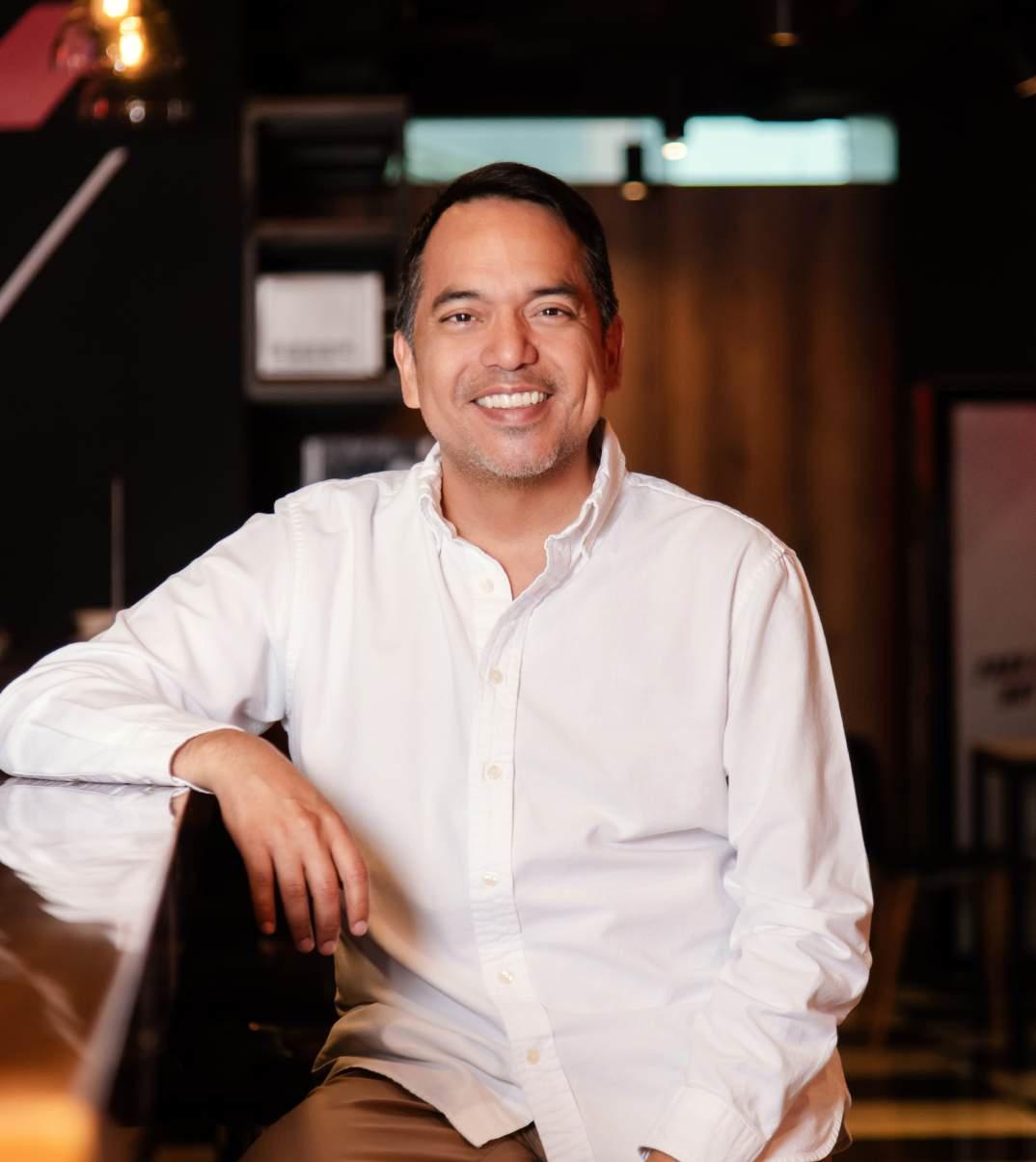

by LUCÍA GANDO
Apuesta Total CEO GONZALO PÉREZ says the ambition is to play in the big leagues without losing the company’s local DNA
For Gonzalo Pérez, CEO of Apuesta Total, there was a moment of clarity that marked the transition from being a “niche Peruvian company” to its current reality as a key part of the global Cirsa group. It was not a figure on the balance sheet nor a market expansion, but rather the moment when the team stopped focusing solely on growth and realised they were building a company with a genuine impact on sport and on the regulatory conversation in Peru.
“Leading at scale requires letting go of absolute control,” Pérez admits, reflecting on his shift from operational intuition to institutional management. Today, his focus is no longer on being involved in every detail, but on protecting what he considers a non-negotiable asset: the startup mindset. Maintaining speed, agility in decision-making and that customer-first obsession – even within an international corporate structure – remains the guiding thread of his leadership.
The integration with Cirsa, which now holds a 70% stake in the company, has naturally driven a move towards governance and planning standards that, according to the executive, have only raised the bar. “The integration has forced us to measure better and to operate with a more structured, longterm perspective,” Pérez explains.
For the CEO, rather than seeing a cultural clash, this merger is a competitive advantage. While global groups bring method, control and scale, local companies offer a nuanced understanding of the market, cultural sensitivity, and speed of response. “Being part of a group like Cirsa doesn’t make us less local; it allows us to be local with better tools,” he says. The global backing, he adds, is already translating into high-impact initiatives, such as Liverpool’s global sponsorship, which enhances brand perception across all group units – although the winning formula remains essentially the same: international muscle combined with deep knowledge of the Peruvian bettor.
In this integration process, Pérez highlights the importance of shared learning. “We recently held an event with other group operations, and it was enriching to see how we adapt global best practices to our own reality,” he notes. For him, it is crucial that this exchange does not dilute Apuesta Total’s identity, but instead strengthens its ability to remain agile in a market that waits for no one.
Regulation in Peru is not viewed by Pérez as an obstacle, but as a turning point. The market is shifting towards formality, forcing operators to raise their standards if they want to survive.
The future will increasingly belong to formal operators with strong brands and the capacity to invest
“The future will increasingly belong to formal operators with strong brands and the capacity to invest,” he argues. While he acknowledges the unstoppable rise of the online channel – where immediacy and personalisation reign – Pérez does not write off the land-based sector. In his view, retail betting still has a vital place in the industry, provided it evolves into a more experiential, value-added form of entertainment. “The market will no longer be about quantity, but quality,” he concludes, envisioning a sector that is finally becoming more structured for the benefit of the industry, the state, and the user.
Analysing the evolution of the Peruvian bettor over the past five years, Pérez highlights a fundamental shift: today’s user is far more digital, informed and demanding. “We are now competing for time and attention against any other form of digital entertainment,” he notes. Users are no longer driven solely by odds or aggressive promotions; they now seek ease of use, trust, affinity with sport, and above all, entertainment.
This principle guided the company’s recent internal hackathon, where the use of artificial intelligence applied to the business confirmed that technology will move from being a support function to becoming the core layer of differentiation. Watching the team work with data and AI models to solve efficiency and user experience challenges reinforced Pérez’s conviction.
He believes that over the next three years, sports betting technology will move towards much deeper personalisation and more optimised risk management. “The difference won’t lie in the number of features, but in how intelligent and relevant they are for the customer,” he adds.
In a sector where responsible gambling is often confined to a section in the annual report, Pérez
draws a firm red line: “Growth cannot be built at the expense of customer wellbeing.” For the CEO, legitimacy is now an essential part of the business. His vision of lifetime value is “not purely financial, but human”. Understanding that users seek entertainment – much like going to the cinema or a stadium – is key to building a sustainable industry.
“We are in the entertainment industry,” he insists. For Pérez, investing in prevention, identifying risky behaviours, and intervening when necessary are not only legal obligations, but an ethical commitment. “At the end of the day, behind every account there is a person. In the long term, a company that does not take that boundary seriously may grow for a while, but it will not build legitimacy,” he reflects.
Regarding concerns about “cannibalisation” by major international operators, Pérez offers a pragmatic perspective. Consolidation is a natural trend in markets that are becoming more professionalised, but that does not mean the disappearance of local operators. “Those who will survive are the ones with a clear proposition, competitive technology, and above all, deep local insight,” he states.
The challenge, according to Pérez, is to prevent consolidation from destroying local value. He therefore advocates for a level playing field where regulation makes formal competition viable. “If barriers become disproportionate, we all lose –especially the user,” he warns.
With the 2026 World Cup on the horizon and projections placing the regulated online market in Latin America at $12bn by 2028, Pérez knows the tournament represents a major acquisition opportunity but not an end in itself.
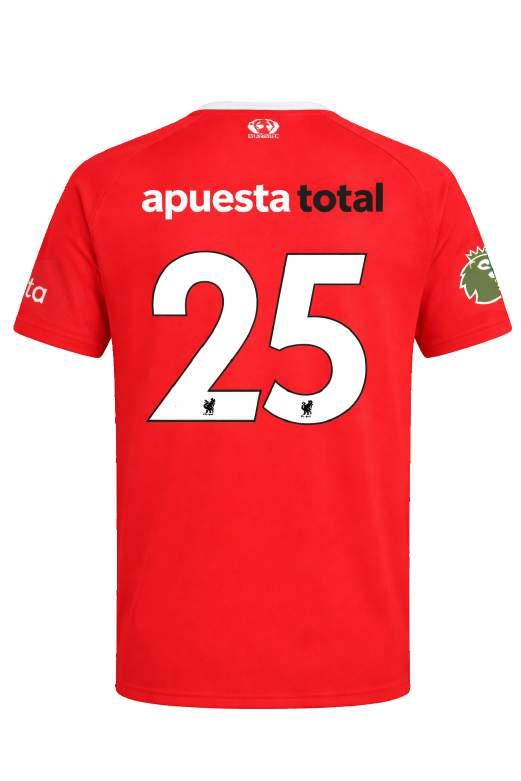
“ The global backing of Cirsa is already translating into high-impact initiatives such as the sponsorship of Liverpool FC
“The real test is what you do with those users six months after the final,” he reflects. With a business plan mapped out through to 2027 and EBITDA targets that will guide the path towards full acquisition by Cirsa, the approach is disciplined.
“Having demanding targets forces us to prioritise and to further professionalise the company,” he admits.
For the CEO of Apuesta Total, the goal is not just to be present at the World
Cup, but to demonstrate that even within a global structure its ability to turn fan enthusiasm into longterm relationships remains its greatest strength. “My long-term vision remains the same: to build a leading, sustainable company with its own identity and the ability to compete at the highest level. EBITDA matters, of course, but as a consequence of doing things properly,” he concludes, making it clear that for Apuesta Total, the match has only just begun.
FanDuel Predicts is growing fast, says SVP JAMES COOPER, but sports betting remains the priority
Words by VIKTOR KAYED
Flutter-owned FanDuel launched its FanDuel Predicts product at the end of 2025 in collaboration with derivatives marketplace CME Group. The latter, incidentally, is also helping DraftKings launch its DraftKings Predictions – at least until it gets its $250m Railbird acquisition shipshape.
It would be fair to say that prediction markets have shaken up the industry Stateside. With the likes of Kalshi and Polymarket generating billions of dollars, it was never going to be long before domestic gambling operators started to pivot towards the vertical en masse. While it is locally classed as a financial instrument rather than traditional gambling – although that is undergoing multiple legal
tests – prediction markets are clearly gambling-adjacent, even if they are yet to be formally classified as gambling products.
With prediction markets being regulated by the federal Commodity Futures Trading Commission (CFTC), rather than the state gambling regulators, who oversee the rest of FanDuel’s operations, the company is launching Predicts primarily as a means to break new ground in previously inaccessible territories.
“I wouldn’t say prediction markets are sought after as much as they’ve created a new avenue for customers, especially in states without legal online sports betting, to engage with sports through event contracts,”
says James Cooper, Senior Vice President of FanDuel’s Flywheel & New Ventures division, which is focused on identifying and launching new high-growth products.
“At this stage, we see the value in a few key areas. Prediction markets expand our addressable market, particularly by giving customers in states without legal sports betting a regulated way to engage. It also broadens the range of content people can interact with,” continues Cooper. “While sports remain core, prediction markets allow engagement across entertainment and financial events, which opens new use cases while maintaining the same focus on trust, regulation and customer protection.”

“ They’ve created a new avenue for customers, especially in states without legal online sports betting

Prior to 2019, prediction markets were largely a niche product for those in academia, politics, and finance, with an estimated global volume of around $250m. Fast forward to 2026, and experts project that annual trading volume will reach $250bn, with others predicting $3-400bn.
Kalshi reported revenue of $263.5m for 2025, with Polymarket thought to be something similar. Flutter CFO Rob Coldrake predicted first-year investment for Predicts at the high end of $2-300m prior to launch and progress during the first three months of operation was swift.
Analysts at Jefferies highlighted that for the week ending 16 March 2026, the FanDuel Predicts app managed to beat Kalshi in terms of total downloads across all mobile store platforms – the first time for an online sports

“
There are going to be some states where we’ll be operating FanDuel Predicts where we know we’ll never have regulated online sports betting
CEO, Peter Jackson
betting operator to do so on a week-to-week basis. However, it had a lot of ground to make up: the cumulative total for FanDuel Predicts was just 5% of Kalshi’s total, while DraftKings Predictions stood at 4%.
Unlike DraftKings, which offered event contracts in 38 states at launch, FanDuel’s rollout was more conservative. It launched in just five states in December –Alabama, Alaska, South Carolina, North Dakota and South Dakota – before adding the 45 other states by mid-January. However, it only offers sports contracts in 18 states to avoid clashing with state regulators of sports betting.
The new states included the likes of California and Texas, the two most populous US states, which are still refusing to regulate online sports betting. Prediction markets has also given FanDuel a route into Florida, where
Hard Rock holds the local monopoly on sports betting.
Flutter Entertainment, FanDuel’s parent company, has more than once highlighted these US regulatory intricacies and how prediction markets play into them, with Cooper’s comments about new avenues recently echoed by Flutter CEO Peter Jackson at the Morgan Stanley TMT Conference.
“When I look at the opportunities around prediction markets for us, there’s a lot of incremental business working after, whether it’s in California or Texas or Florida, the state we couldn’t have previously addressed,” Jackson told investors in San Francisco back in March.
“And I think that’s super exciting. There are going to be some states where we’ll be operating FanDuel Predicts where we know we’ll never have regulated online sports betting. So that gives us a different
perspective in terms of the ability to acquire customers and better cross-sell them in the future.”
The cross-selling aspect is vital, as FanDuel operates on a strict business model when it comes to balancing customers’ lifetime value with the cost to acquire them. Operating multiple verticals creates the know-how that makes it possible.
“For us, there’s a consistent thread across everything we’ve built, from daily fantasy to sportsbook to prediction markets, which is understanding how fans want to engage and then building products around that,” Cooper continues.
“Prediction markets offer a different format, but it’s rooted in the same core behaviour. What connects each one is a highly engaged customer base and our industry-leading
experience building innovative and trusted products.”
And while FanDuel Predicts and prediction markets in general are building up momentum fast, sports betting still takes priority at FanDuel’s HQ.
“No, we don’t see the sportsbook ecosystem as outdated at all, and it continues to be our north star,” the SVP concludes, using exactly the same language as his boss Jackson. “Sports betting remains the most direct and established way for fans to engage with sports outcomes, particularly in regulated markets with strong consumer protections and meaningful benefits to states.”
One key takeaway from the current environment can be that prediction markets offer US-facing betting operators something that regulated sports betting in some cases does not –accessibility. This benefits both operators and consumers. This
summer’s World Cup will be a key testing ground for the new product.
The current regulatory landscape, however, has given sports betting one crucial advantage over prediction markets, that being legal stability. With prediction market providers and even the CFTC currently fighting prohibition orders spanning multiple states, it is very likely that the Supreme Court will have to intervene (for a full legal analysis, see p.18) — and that could swing either way.
Diversifying into prediction markets therefore has been a carefully calculated risk for FanDuel and its peers. It has not come without cost, as the company’s exit from the American Gaming Association made clear. However, that will be seen as minimal collateral damage if the company can continue to operate in 50 states for many years to come.

CFO, Rob Coldrake
ON THE FOLLOWING PAGES
52 Interview: Betsson security chief Donald Tabone
56 Interview: Greentube CEO Thomas Graf
60 Interview: mkodo and GeoLocs MD David da Silva
Colombia President Gustavo Petro’s pursuit of an additional gambling industry tax may ultimately have dampened investor appetite for what was once one of Latin America’s most promising regulated markets, writes iGaming Expert Editor Joe Streeter

The introduction of a 19% VAT on online gambling, implemented via emergency decree, proved deeply polarising. While intended to generate vital public revenue, the policy led to significant backlash from the industry. With the measure now ruled unconstitutional, Petro’s government has been ordered to repay taxes collected under the decree, marking a significant political and fiscal setback.
There was a strong appetite for Colombia among international operators, underpinned by the regulatory stability provided by Coljuegos and the market’s potential.
That perception has now been undermined. Repaying the ‘emergency taxes’ is a major setback for the government, but the whole process has tarnished the appetite for a market that was previously thriving.
Predictable and stable tax structures are crucial for continuing to engage the market and ensure
operator allure remains strong. The sudden rule changes that Petra failed to implement will have led to extra caution from those eyeing the market’s potential.
It is reported that the Humana government will face a COP 25bn (€5.5m–€6m) liability, primarily linked to the 19% VAT applied to online gambling and alcohol purchases during the period in which the decree was in force. Imposed since March 2025, the 19% VAT charge led to major backlash from the industry, which felt inevitable, as key players described it as a far too aggressive approach from Petro.
The VAT charge significantly disrupted Colombia’s online gambling market. Foreign operators stepped away from investment, with Codere emphasising that it would not commit further capital to Colombia until regulatory conditions stabilised. Furthermore, the trade bodies Asojuegos and Fecoljuegos rallied against the Humana government’s controversial efforts and DIAN tax receipts from gambling reportedly declined by around 30% following the VAT’s introduction. At the same time, regulator Coljuegos signalled its first shortfall in funding allocations for public health and education derived from gambling licence revenues.
The decision of the court in Colombia comes at a time
when the Brazilian election is threatening to cause major disruption in the market.
President Lula da Silva is readying for a significant legislative battle against the Brazilian framework. Although he was reluctant, in 2024 President Lula signed off on the creation of the legal betting market, under the Bets Law (PL 2626/2023), yet since then his enthusiasm has continued to wane. Now he is threatening significant political disruption in the market – and a major shift so soon after the market opened with a wave of excitement.
When it comes to Brazil and Colombia, we are examining two markets that are at very different stages in their development, yet lessons could be learnt from both. Brazil and Lula should look at the Colombian market and the disruption caused by major disruption. The appetite for the Brazilian market, which at one stage looked insatiable, is at risk of dwindling if Lula takes the market through as much turbulence as Petro did in Colombia.

Scan here for more from SlotBeats
Betsson Chief Information Security Officer DONALD TABONE says AI must be part of operators’ arsenals to counter the massive boost it has given to hackers and fraudsters
Words
by JOE STREETER
The accelerated adoption of AI has dramatically evolved the threat to cybersecurity for a myriad of industries, but for high-risk sectors like gambling, getting ahead of the issue is nothing short of urgent.
Donald Tabone, Chief Information Security Officer at Betsson, emphasises that the growth of AI is elevating the ceiling for threats to iGaming cybersecurity and adding a whole new element of menace.
The timing of this is crucial. As margins are squeezed, the cost of cybersecurity is significant but one that operators cannot afford to cut as flaws in the system will significantly impact performance and growth ambitions.
Tabone warns that if player safety wanes the consequences would be significant for operators, with trust being a prevalent factor in a successful operation.
“Security has always been important for gambling operators as it protects what creates value, as well as players’ interests,” says the security chief. “Trust is a fundamental component of player retention and if a player feels safe, then they continue gaming.”
“Regardless of margins, protecting what creates value allows businesses to achieve their strategic objectives without unwanted human behaviour or disruption. So, yes, indirectly, the absence of security issues allows the business to thrive, creating a silent but increasingly important competitive edge.”
Tabone goes on to reveal: “AI has brought a completely new dimension to threats. Whilst we always knew that some of the weakest links in security are people and technical systems, AI has accelerated the exploitation of technical weaknesses and perfected social engineering attacks.”
This has had a major impact on the level of attacks, according to Tabone. He warns: “The result is a significantly increased wave of attacks that are harder for any system or human to catch, forcing security teams to adapt fast with AI-powered countermeasures. So AI has changed the landscape of security defence so much that the importance of flexibility has become astronomical.”
The absence of security issues allows the business to thrive, creating a silent but increasingly important competitive edge
AI has accelerated the exploitation of technical weaknesses and perfected social engineering
But questions remain around the most effective methods of combating the new evolved threat of AI. One element that could be vital according to Tabone is the continued relevance of the human touch.
He states: “Humans need to remain in control of the adoption of AI and automation controls. That means establishing guardrails. If we depend and trust AI too much, we could unintentionally expose ourselves to more vulnerabilities rather than resolving issues. Human verification is still very important, as we know AI systems are far from perfect and are not yet fully trustworthy.”
But, there is a balance and utilising AI to detect fraud is a real opportunity for the sector to strengthen safeguards – if it is done in the right way.
Tabone emphasises that it is incredibly effective in terms of threat-detection and importantly it continues to grow in how it is utilised and its effectiveness as a tool.
“AI is very good at detecting potential threat patterns, paths and incidents. In complex environments, it can often outperform humans”, states Tabone as he seeks to explain the vital nature of balance.
While AI continues to evolve at a rapid rate, Tabone warns that it can sometimes fall short in terms of context. But, as it does grow the maximisation of its impact will depend on the breaking down of barriers within a company –supporting humans in prioritising the remediation of threats.
Tabone states: “Just as AI tools are being used en masse for offensive reasons, the increased adoption of AI tools to help with detection and mitigation becomes essential.”
Of the key attacks that have evolved as a result of AI, phishing, DDoS, and data breaches have dominated wider
headlines. Tabone says that within the gambling industry, “they have always existed, but they have evolved as AI has enabled perpetrators to conduct impersonation attacks by cloning voices and signatures with the intention of targeting employees through spear-phishing attacks”.
He continues: “We know that these attacks are much more complex than before, using emotion and timing to get the maximum benefit. When coupled with AI, the opportunities to con people in a fast-moving environment like the gaming sector become particularly attractive to attackers.”
While things are tough to predict in the gambling and fraud space – change is undoubtedly on the horizon and operators have to adapt.
There are a myriad of factors that could fuel the change, including geopolitical tensions and disruption as global politics continues to be volatile.
Furthermore, he highlights weak governance structures around the adoption of AI and automation tools, which may leave some lagging behind as the adoption of AI systems for malicious purposes grows.
He also warns that gaps in safeguarding efforts could grow as a result of increasingly fragmented cybersecurity legislation and fragmented jurisdictional requirements.
In a final rallying call to the industry, he concludes: “The time to take security for granted is over. Unless security becomes a priority and a quality characteristic of any product or service, weaknesses will be exploited faster than ever. This makes it essential that organisations remain firmly in control of how AI is adopted and governed.”



Greentube CEO THOMAS GRAF compares player preferences across the US, Canada and Latin America
ou entered the US in 2021, tell us about Greentube’s growth story in the market since then?
Entering the US in 2021, starting with New Jersey, was a strategically important milestone for Greentube. From the outset, we approached the market with a long-term mindset, fully aware that success in the US requires patience, regulatory excellence, and strong operator partnerships.
We made a conscious decision to scale state by state. Since launch, we have expanded into key jurisdictions, including the key states of New Jersey, Michigan and Pennsylvania, followed by Connecticut and Delaware; securing licences and going live with multiple leading operators in each market.
From a content perspective, we introduced a mix of proven land-based performers and titles specifically adapted for US players. The Thunder Cash series has been a standout performer, alongside the Piggy Prizes series and regionally tailored releases such as the Silver Lux game family, which was developed explicitly with US player preferences in mind.
Overall, we have moved from initial market entry to establishing a meaningful footprint across some of the most important iGaming states, with a strong pipeline for further expansion.
There have been no new iGaming jurisdictions in the US, although Virginia is on its way, and two operators dominate in most jurisdictions. How do you manage expectations internally?
Expectation management is critical in a market as complex as the US. Internally, we are very transparent about the regulatory realities and the high level of operator concentration that exists today.
From the beginning, we positioned the US as a long-term strategic market rather than a short-term growth story. Instead of focusing solely on new state launches, we prioritise deepening our presence in existing jurisdictions – expanding operator partnerships, optimising game performance, and enhancing localisation.
At the same time, we continue to invest in infrastructure, compliance, and product development so we are ready to move quickly when new markets open. Importantly, this is balanced by growth in regions on the continent such as Canada and countries in Latin America, ensuring consistent business momentum.
What do you think other jurisdictions could learn from the experience of New Jersey?
New Jersey remains the benchmark for regulated iGaming in the US. Its success is rooted in regulatory clarity, consistency, and collaboration between regulators, operators, and suppliers.
The framework has enabled innovation while maintaining strong consumer protections and, crucially, has delivered long-term stability. That stability gives businesses the confidence to invest, innovate, and plan sustainably. Other jurisdictions can learn from New Jersey’s measured approach.
“ New Jersey remains the benchmark for regulated iGaming in the US… Other jurisdictions can learn from its measured approach


What are your views on the development of the market in Canada? Are you hopeful that it will develop more quickly than the US?
Canada, and Ontario in particular, represents one of the most significant recent developments in regulated iGaming in North America. It has become an important growth market for Greentube, and we are firmly established as a leading supplier within the regulated ecosystem.
What makes Canada especially interesting is that it combines elements of both European and US markets, allowing a broader range of content to perform well. With Alberta set to open its regulated market in July, the region’s growth potential is accelerating further, reinforcing Canada’s position as one of the most attractive regulated iGaming markets worldwide.
How does Canada differ from the US states in which you are present?
In general, every jurisdiction needs to be approached individually –there’s no universal playbook for market entry. That’s particularly true in North America, where both US states and Canadian provinces each come with their own regulatory frameworks and market dynamics.
From a player perspective, Canada stands out slightly in that it blends European and North American gaming preferences. We see both styles of content performing strongly, which aligns very well with Greentube’s diverse portfolio.
Turning to Latin America. Please give us a summary of your presence across Latam.
Latin America has been a strategic focus for Greentube for several years. We initially entered the region through Colombia and have since expanded across key markets including Mexico, Peru, Chile, and Brazil.
“Canada stands out slightly in that it blends European and North American gaming preferences
By concentrating on regulated markets and leveraging the wider NOVOMATIC footprint in the region, we have established strong operator partnerships, localised our content effectively, and built a solid foundation for longterm growth. At the same time, we continue to closely monitor emerging regulatory opportunities.
Do you have specific games that cater to specific regions? What have been your most successful games?
We continually monitor player preferences and adapt our games accordingly to meet the needs of these markets. What we continue to see is a healthy balance between classic titles and new series.
In the US, for example, titles such as Piggy Prizes, Thunder Cash, and Silver Lux consistently delivered strong results in 2025. We have also seen extremely promising performance from one of our newer game series, Starlight Jackpots.
In Canada, the Starlight Jackpots series is now one of our standout performers, alongside Piggy Prizes and Firecracker Frenzy, indicating a clear player preference for game families in this region. In addition, we achieved strong results with exclusive branded games created with some of our top partners, such as Starlight Jackpots BetMGM and Silver Lux Caesars Spinner.
In Latin America, classic NOVOMATIC IP combined with localised features has performed particularly well. Across North America, the Diamond Cash series remains one of our strongest performers. In Latin America, iconic titles such as Sizzling Hot deluxe and Lucky Lady’s Charm deluxe, along
with series like Cash Connection and Diamond Mystery, continue to resonate strongly with players. Our video bingo games complement our localized content portfolio and in this case we developed it particularly with Brazilian and Mexican players in mind.
Broadly, what are the company’s aims in North and South America over the next three to five years?
Our ambition is clear: to be a toptier content supplier across North and South America and to bring games to these markets which have global and local appeal and most importantly are premium performers in our target jurisdictions.
In North America, this means deepening existing partnerships, expanding our footprint as new states or provinces regulate, and continuing to tailor premium content for local audiences. In Latin America, our goal is to establish Greentube as a trusted long-term partner in newly regulated markets, supporting sustainable growth through our experience and expertise.
Across both regions, we will continue to invest heavily in content localisation, data-driven product development, and regulatory excellence, ensuring Greentube remains synonymous with quality, reliability, and innovation.
Over the next few months, we have some exciting game releases designed specifically with the US market in mind, including Rumble Riches Haulin’ Gold, Piggy Prizes Railroad Rumble, and Starlight Jackpots Bison Rush. We expect each of these games to resonate strongly with North American players, and we’re looking forward to seeing how they perform.
Over the past 25 years, mkodo’s departing Managing Director Stuart Godfree and his team have supported regulated lotteries through a major shift from retailled to digital-first. Now that digital is the foundation rather than the future, and with you stepping in as MD, where do you see things heading next? Where are the biggest opportunities?
Firstly, I would like to pay tribute to Stuart Godfree. Everyone I’ve met since joining mkodo and the wider Pollard Banknote family tells me how much they admire and respect Stuart. He has consistently driven innovation and progress, playing a key role in shaping today’s modern lottery user experience.
It’s a pleasure and a privilege to take over from Stuart. I see the next phase of mkodo building on his great work. mkodo will continue to innovate the lottery player experience as lotteries evolve to remain relevant to Gen-Z audiences and fend off competition from growing regulated commercial iGaming.
We also have big plans to expand the use and scope of GeoLocs in the coming months and years. More and more jurisdictions around the world embracing regulated gaming are creating a dynamic and expanding market for regulation-grade geolocation. Brazil is an example where we did very well. Other geographies will provide similar opportunities for us to expand.
mkodo and GeoLocs sit at the intersection of user experience, compliance and technology. How do you balance seamless player experiences with the regulatory and security demands operators face?
You are right to link the mkodo proposition with GeoLocs, our market-leading product. Together, they are critical to delivering seamless player experiences while maintaining full regulatory compliance for iGaming operators.
The reality is that compliance and user experience are often seen as competing priorities, but they shouldn’t be. The best operators understand that compliance, when implemented correctly, should be almost invisible to the player.
mkodo and GeoLocs Managing Director DAVID DA SILVA explains why experience and compliance must converge
That’s where we come in. mkodo focuses on creating intuitive, engaging front-end experiences, while GeoLocs works in the background to ensure that every interaction meets strict regulatory and security requirements.
Our approach is to embed compliance into the user journey in a way that minimises friction. Whether that’s precise geolocation, real-time verification, or seamless integration across devices, the goal is to protect both the operator and the player without disrupting the experience.
Ultimately, operators that get this balance right will build more trust, retain more players, and operate more efficiently. That’s the intersection where mkodo and
GeoLocs add the most value. How do mkodo and GeoLocs work together to support operators, and why is the combination of front-end experience and geolocation compliance so critical in today’s regulated iGaming landscape?
Our heritage stems from building integrated iGaming and iLottery apps that elevate the user experience beyond basic ‘out-ofthe-box’ solutions. It is no secret that sophisticated operators are prioritising player engagement and entertainment to deliver retention and lifetime value KPIs. Higher player acquisition costs and taxation mean that keeping hold of players and maximising their value has to be a key plank of the regulated market.
mkodo is focused on the playerfacing experience – designing and delivering intuitive, engaging, and differentiated apps that keep players coming back. At the same time, GeoLocs provides the critical compliance infrastructure, ensuring that every interaction is secure, location-verified, and fully aligned with regulatory requirements.
These two capabilities are available separately or connected. A great user experience that fails on compliance simply isn’t viable in regulated markets. Equally, compliance solutions that introduce friction or disrupt the player journey can directly impact conversion and retention. Operators need both, working seamlessly together.
As the market matures, what do operators need to understand to stay competitive? From product and engagement to experience, where should they focus?
This is an interesting question. A maturing market can suggest multiple factors such as abundant consumer choice, greater regulatory scrutiny and/ or operator margin erosion. There is no simple answer – operators have to juggle these and many more competing priorities to stay competitive in a maturing market. We recognise this challenge at mkodo, which is why we’re trusted by many operators to help them navigate the future.
There are plenty of predictions about the future of regulated iGaming, but which trends do you think actually matter and which ones are being overhyped?
Ah… the crystal ball part of the interview. Well, you have more or less captured the ones I think are the most important. In regulated iGaming markets, addressing rising player acquisition costs with improved player lifetime value and strong automated compliance tools is essential for protecting operating margins and avoiding fines.
More countries, states and provinces around the world are embracing remote sports betting, iLottery and iGaming regulation. The economics and social contract arguments are too compelling for governments to ignore. Ultimately, the need to raise tax revenues while protecting citizens from offshore operators becomes too compelling to resist. The trend towards regulation will therefore continue.
This means that more operators will have to build brands based on trust and quality to survive in an increasingly competitive market. They need to find ways to remain compliant, engaging, and convenient to use. They have to reward loyalty and provide personalisation. Most importantly, operators must differentiate themselves from each other.
Platform provider consolidation in the iGaming sector means operators face fewer, more generic choices for end-user mobile apps. White-label or modular apps make sense for platform suppliers, but they offer little room for operators to differentiate their most important player touchpoint.
Enter mkodo. We give operators the option to create their own differentiated app experiences without the complexity and overhead of building a dedicated in-house technology department. We’re excited about the future. We believe we are uniquely placed to serve the global iGaming industry as markets evolve and mature.
With new markets opening up, operators outside the regulated market continue to compete for players, affecting trust. How can the regulated sector respond and what role do mkodo and GeoLocs play?
Regulatory compliance is a twoway street. We often discuss operators’ obligation to follow the rules set by regulators. We dive into the details of increasingly onerous regulatory requirements and the consequences of noncompliance. What gets less attention in the press, however, is the regulator’s obligation to keep offshore operators out of regulated markets.
The playing field is not level, otherwise. Off-shore operators do not pay tax, do not have to fund expensive compliance departments, nor are they particularly focused on responsible gaming. They side-step marketing restrictions designed to safeguard vulnerable players, and they can act with impunity when things go wrong.
We created GeoLocs specifically to give regulated operators a secure, accurate way to verify that their players are where they say they are. We are already providing a cornerstone of regulated gaming compliance. The industry needs regulators to more aggressively block and punish unregulated
“ Platform provider consolidation in the iGaming sector means operators face fewer, more generic choices for end-user mobile apps
operations to defend the integrity of their jurisdictions. Governments need to weigh the temptation to raise yet more tax on regulated operators against the need to allow them to compete with offshore raiders.
Looking ahead, what will separate the operators that succeed from those that fall behind over the next few years?
iGaming is, at its core, an entertainment product. To understand what drives success, we can look to the wider entertainment industry. Take your favourite streaming service, what sets it apart? Most likely, it delivers highly personalised content and offers exclusives that keep you coming back. Just as importantly, the experience is seamless across channels, intuitive to navigate, and free from unnecessary friction. I see no reason why iGaming will be any different!

ON THE FOLLOWING PAGES
65 Column: Steve Hoare on problem gambling’s political fallout
66 Feature: The problem with prediction markets
The narrative around problem gambling in the US might serve a purpose but will more likely lead to political repercussions, argues Player Protection Hub Editor Steve Hoare

Iwas struck by a recent article in a publication called Fierce Healthcare with the headline: “The next opioid epidemic: gambling legalization outpaces public health response to addiction.”
The article quoted a good few people that I know and respect but the journalist ended up with a headline that seemed to demonize the gambling industry and exaggerate the scale of problem gambling.
So I spoke to Jody Bechtold, the CEO of the Better Institute and president of the International Problem Gambling and Gaming Certification Organization (IPGGC), who provided the journalist with the headline when she said: “We call it the next opioid epidemic.”
Bechtold is a healthcare professional and gambling counselor, who has been working in addiction for many years, including throughout the opioid epidemic in the US. She acknowledges the difference between opioids and gambling.
While gambling is understood to trigger similar brain
pathways as drug and alcohol use, gambling addiction is predominantly psychological, while opioid addiction is predominantly physiological.
For an addiction to be considered physiological, one must experience withdrawal symptoms if one stops using the substance, making the body ill. Gambling withdrawal lacks such symptoms.
The scale of the opioid epidemic is also far more pervasive than gambling addiction but Bechtold is unapologetic about highlighting the similarities. Her point, which the journalist lost when using it in the headline, was that both were hidden epidemics until they started to affect the white middle classes. Once the middle class parents start seeing their children raiding the medicine cabinet or stealing to fund their addiction – or even being declared bankrupt, in one case she recalls – then they raise the issue with their journalist or politician friends.
She highlights another difference: “People view drug and alcohol addiction as a treatable illness and gambling addiction as a moral failure and a personal choice.”
This makes the stigma of gambling addiction worse than drug or alcohol addiction, making it harder to discover and to treat.
Such subtleties are somewhat lost in an article that seeks to highlight the horror of gambling addiction. Bechtold says you can never know
how a journalist will use your words – especially in an article featuring numerous interviewees – but will always accept the opportunity to highlight gambling addiction’s issues and, hence – one would hope – make a small impact on reducing the stigma of gambling addiction.
The trouble here, of course, is that these sorts of articles go some way to fuelling the stigmatisation of the gambling industry. This publication is aimed at public health professionals, who often need no second invitation to reinforce tired stereotypes, but is freely available for anyone to read. It talks the language of serious research but is prone to exaggeration.
As Bechtold points out, perhaps that’s necessary in a US where there is very little public funding for problem gambling research, prevention or treatment. The problem is time and time again, the solution comes not in the form of funding but in political backlash and regulatory clampdown.

Scan here for more from Player Protection Hub

Kalshi and Polymarket argue that they’re not gambling products but Underdog Responsible Gambling VP ADAM WARRINGTON and other RG professionals argue that responsible trading needs to be implemented for a sustainable prediction markets ecosystem
Words by STEVE HOARE
The rise of prediction markets has been as sudden as it has been controversial. Platforms like Kalshi and Polymarket have driven a surge in “event trading,” turning everything from elections to entertainment to war into tradable contracts.
Kalshi CEO Tarek Mansour has said: “The long-term vision is to financialise everything and create a tradable asset out of any difference in opinion.”
While Kalshi and Polymarket continue to argue over the difference between “trading” and “gambling” and the regulation thereof, gambling on everything creates some very real concerns around player protection and addiction.
If you can gamble on anything then how are you protecting those who are prone
to gambling addiction? For Kalshi and Polymarket, the answer is – more or less – they’re not.
One of Kalshi’s many litigation lawyers, Josh Sterling, a partner at New York’s prestigious white shoe law firm Milbank said on a panel last year: “People are adults, and they’re allowed to spend their money however they want. And if they lose their shirt, that’s on them.”
The divergence from highly-regulated gambling industry norms is vast. The Director of Responsible Gaming at an online sportsbook that has embraced prediction markets comments: “Many prediction platforms don’t have the frameworks that the other operators tend to have in online sports betting.”
“ When you’re talking about people’s lives… whether they’re going to live or die… I am personally vehemently against that. I find it disgusting

The result is an uneven landscape where users may have access to sophisticated trading tools but few of the safeguards now considered standard in regulated online sports betting, where deposit limits, self-exclusion, and affordability checks are increasingly standard.
The second issue is more existential: insider information and market integrity.
Prediction markets, by design, reward knowledge. But what happens when that knowledge is privileged? Markets tied to real-world events – particularly politics or public policy but also awards or game shows – can be vulnerable to those with early or exclusive information.
In some cases, the concerns go further. Our anonymous executive goes further when the conversation turns to markets tied to human suffering or conflict: “When you’re talking about people’s lives… whether they’re going to live or die… I am personally vehemently against that. I find it disgusting.”
These are not fringe concerns. They strike at the legitimacy of the entire sector. The executive warns, inconsistent protections and questionable market design “could be one of the biggest threats to the industry.”
Another executive, who wanted to stay anonymous, says: “Integrity, access to information, and what people can do with that information. There are, I think, more solutions that need to come in that area.”
“
A lot of these companies want to boil the ocean… offer everything under the sun

While more lawsuits are launched everyday, the gambling operators have moved in. DraftKings, Fanatics, FanDuel, PrizePicks, Underdog and more are bringing prediction markets into environments already shaped by years of regulatory compliance and responsible gambling practices.
Their approach diverges from incumbents like Kalshi and Polymarket in two crucial ways: what they offer, and how they protect users.
At Underdog, the strategy is deliberately conservative. VP of Responsible Gambling Adam Warrington explains: “Our thesis for the company is around sports. That has been pulled through to prediction markets as well. We are not into political markets or other cultural markets.”
This focus is not just about expertise, it is also about risk management. Sports outcomes, while not immune to integrity concerns, are at least familiar and athletes and coaches are educated about sporting integrity and those values are enforced. By contrast, openended markets on politics or global events introduce layers of uncertainty and ethical complexity.
Others are diving into non-sports markets with less conservatism. The DraftKings, Fanatics and FanDuel products have embraced finance, entertainment and other cultural products. PrizePicks partnered with Kalshi as its technology provider for the company’s prediction markets product, so it will have most of the same markets. However, it does tailor the markets to its own audience, mixing sports with limited cultural markets but avoiding more controversial categories.
Some would say the industry’s longterm viability depends on restraint as much as innovation.
More significant, however, is how these operators are approaching consumer protection.
Unlike many prediction-first platforms, Underdog chose to port its existing responsible gambling framework directly into prediction markets despite no regulatory requirement to do so. As did PrizePicks, but Fanatics and FanDuel seemingly needed a Sportico exposé before following suit. More charitably, perhaps in the rush to market, it took a while to figure out how to integrate their RG tools.
“There is no rulemaking around that,” Warrington notes. “We made the proactive decision to do it. Put simply, we believe it’s the right thing to do.”
At Underdog, this means full cross-product consistency. “If you had self-excluded, that gets pulled through to every jurisdiction and every product,” Warrington explains. The same applies to deposit limits, spending caps, and cooling-off periods.
The rationale is both ethical and practical. “It seems a bit strange that you could have one set of rules for daily fantasy and another for prediction markets,” he says. “We wanted consistency across the board.”
There are nuances to financialstyle trading. Self-excluded users, for example, can still log in to view their account – CFTC regulations state that users need to be able to view their past play – but they cannot place trades. It’s essentially the same, but not quite as all-encompassing as the OSB self-exclusion norm.
Underdog and PrizePicks are also pushing beyond traditional tools into proactive risk monitoring.
Underdog, for instance, is using Sportradar’s Better Sense product to apply risk scoring across all users and products. “The more proactive we can engage and interact, the more you might protect yourself,” Warrington explains. Instead of waiting for users to hit crisis points, the aim is early intervention – flagging
risky behaviour and initiating conversations. PrizePicks is exploring a similar direction with Mindway AI.
Despite these advances, the broader ecosystem remains deeply uneven.
Traditional gambling operators argue they are playing by stricter rules – licensing, compliance and consumer protection – while the pure prediction markets companies operate with fewer constraints. At the same time, the prediction market platforms often reject the gambling label altogether, positioning themselves as financial exchanges.
The result is a fragmented market with competing standards.
Protections seem to ebb and flow at Kalshi and Polymarket. “It’s certainly not consistent,” says one RG professional. “And that inconsistency threatens the industry’s credibility.”
Warrington, meanwhile, sees a different but related danger: a short-term mindset among some companies. There is a temptation, he suggests, “to boil the ocean… offer everything under the sun,” but that approach may ultimately burn out users and invite backlash.
Which raises the inevitable question: will regulators step in?
Warrington believes they will – or at least, that they should –as do others.
Our anonymous source says: “It’s our hope that the CFTC actually bakes this into regulation. Even if prediction markets are not formally classified as gambling, the underlying principles of consumer protection still apply. We have a really good framework that we know works online.”
Warrington echoes the need for consistency, particularly as the
industry evolves. The challenge, he notes, is not just implementing tools, but educating users on what they mean. “Responsible trading ideally prevents problematic play,” he says, but only if people understand and use it.
There is also a broader political dimension, argues another executive: “If bad actors continue to act poorly, public opinion and political opinion is going to continue to build against the industry.”
In that scenario, regulation becomes less a question of if and more of how severe.
For now, prediction markets remain in a formative phase: innovative, fast-growing, lightly regulated, and hugely litigious against anyone who suggests the situation should be otherwise.
But the direction of travel is becoming clearer.
On one side are platforms like Kalshi and Polymarket, pushing the boundaries of what can be traded. On the other are operators like Underdog and the other OSB and DFS operators, importing structure, restraint, and safeguards from the gambling world.
The tension between those models will shape the future of the industry.
“The behaviour of the industry is going to determine whether we’re here in four years,” says the RG chief.
That may ultimately be the defining question for prediction markets. Not whether they can grow but whether they can grow up.
And in a market built on predicting the future, the most important bet of all may be on its own sustainability.
POWERED BY
ON THE FOLLOWING PAGES
71 Column: Rachael Kennedy on AI agents usurping humans
72 Feature: Four experts unpack LatAm payments divide
Brian Armstrong, the founder of Coinbase, recently offered a thought that should give anyone working in payments pause, writes Payment Expert Editor Rachael Kennedy

Very soon there are going to be more AI agents than humans making transactions,” said the Coinbase founder. “They can’t open a bank account, but they can own a crypto wallet. Think about it.”
At first glance it reads like the kind of provocation Silicon Valley founders enjoy making. But the more you sit with the idea, the more it exposes a structural tension in the financial system.
Payments infrastructure is built around human identity. AI agents are not human.
Banks, card networks and payment institutions rely on frameworks designed for individuals and legal entities. Accounts require identity verification, contractual relationships and regulatory oversight. Know your customer (KYC) processes are built on the assumption there is a person, or at least a company, standing behind every transaction.
Autonomous software agents do not fit neatly into that model.
They cannot complete onboarding forms or provide identity documents. They cannot sign contracts or accept legal liability.
From the perspective of traditional financial infrastructure, they simply do not exist, yet economically, they increasingly do.
Across the internet, software agents are already performing tasks which once required human intervention. They search for prices, execute trades, manage digital assets and interact with online platforms at scale. As AI capabilities expand, it is not difficult to imagine these agents initiating transactions as part of their activity.
If an AI agent needs to pay for something, what financial rails can it use?
This is where Armstrong’s comment about crypto wallets becomes interesting. Unlike bank accounts, wallets do not require formal onboarding with a regulated institution. They are programmable, automated and designed to interact with software systems. In other words, they are infrastructure which machines can use as easily as people.
Whether crypto becomes the dominant mechanism for this type of activity remains uncertain. But the idea highlights an emerging gap between how financial systems operate and how digital activity is evolving.
Online betting markets already operate in a highly automated environment. Operators process millions of digital transactions daily across multiple jurisdictions and payment rails. Algorithmic strategies, automated tools, and data-driven wagering models are already part of the ecosystem, even if largely controlled by human users.
If autonomous agents become more sophisticated, it is not difficult to imagine them participating in these environments. AI-driven systems could analyse odds movements, manage bankroll strategies or execute wagers programmatically across different platforms.
That raises difficult questions for payment teams and for regulators.
Who is responsible for the activity of an autonomous agent? How should operators verify the identity of a customer that is effectively a piece of software? And how would antimoney laundering controls apply if the economic actor initiating a transaction is not a human at all?
These questions do not have clear answers yet, and the industry is not on the verge of being dominated by machine customers. But Armstrong’s observation points to a broader shift that payments professionals should not ignore.
The financial system still assumes that every transaction begins with a person. The digital economy increasingly suggests otherwise.

Scan here for more from Payment Expert

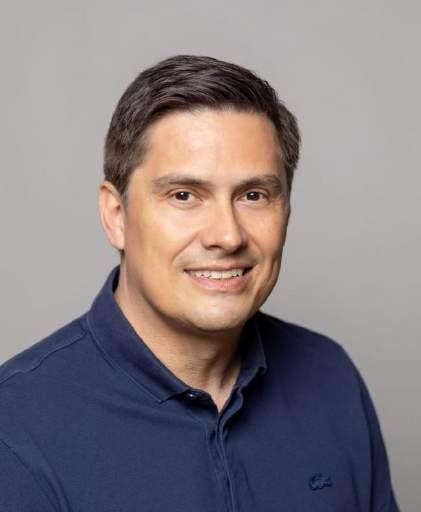

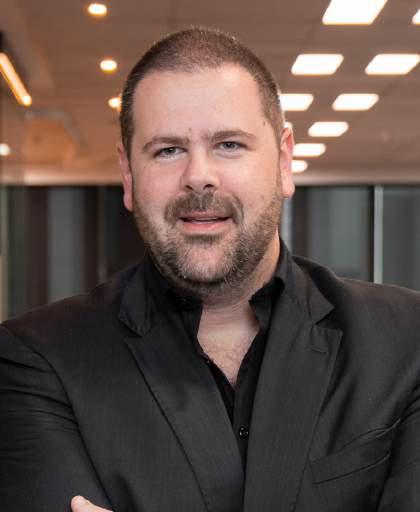
Four of Latin America’s most active gambling markets share a continent and little else when it comes to payments. Operators who treat the region as a single strategic problem will find the reality on the ground tells a different story
Words by LOUIS THOMPSETT
Latin America’s gambling markets are at different stages of payment maturity, and those differences are complex. For operators building across the region, getting it wrong is expensive.
While the gambling industry is growing in the region – projected by Grand View Research to reach $10.4bn by 2030 at an 11.9% CAGR – these figures don’t explain the fragmented payment landscape. Nor do they reflect that these differences are not gaps to close, but the product of decades of economic, regulatory and consumer dynamics operators must navigate.
Leonardo Baptista, CEO and CoFounder of Pay4Fun Payment Services, has spent 21 years in the sector, first as an operator and then as a provider. “Regulatory frameworks, banking infrastructure and local consumer behaviour still vary considerably between markets,” he says.
“While similar technologies may be emerging, their operational implementation and adoption can differ significantly.”
André Boesing, General Manager for South LatAm at OKTO Payments, adds Latin America is not closer to a single payments paradigm, “it’s dividing into distinct behavioural and infrastructure clusters that require operators to start playing differently.”
For operators, the task is not to build one regional payment
proposition but to understand why each market accepts the one it has.
To understand why LatAm markets are solving different problems, consider one that solved its own. Pix, launched by the Central Bank of Brazil in 2020, is an instant, free, QR-enabled payment system backed by mandated banking participation. Its success stems from strong central coordination and conditions which enabled rapid adoption, reaching 16.5% of Brazilians in its first week, according to Jaroslav Glisnik, Business Development Lead for LatAm at RTGS.global.
“With the introduction of Pix by the Central Bank, Brazil developed what is arguably the most efficient and scalable instant payment infrastructure in the region,” says Baptista. “In many ways, Brazil is currently setting a benchmark in Latin America for how instant payments, regulatory clarity and industry scale can coexist.”
For gambling operators, this has produced a market with clear expectations. Carolina Franchini, Product Manager for Open Finance at Celcoin, goes as far as saying there is no real alternative.
“You only need to pay with Pix –there is nothing else you need,” says Franchini. “If you want to be a player in Brazil, you need to adapt to Pix, or you are not a player.”
“ You only need to pay with Pix – there is nothing else you need. If you want to be a player in Brazil, you need to adapt to Pix, or you are not a player
Peru and Colombia are the markets most frequently described as following a Pix-adjacent trajectory, and the data lends some support to that. Research from the Bank for International Settlements (BIS) published in early 2026 shows Yape and Plin together accounting for more than 50% of all cashless transactions in Peru, with Yape dominant in transaction volume. NORBr data from 2023 shows Colombia processing 40% of e-commerce through bank transfers, against a credit card penetration of just 16% among adults.
However, Franchini says there is a gap in the direction of travel and operational reality. “The market in Peru is still dominated by a closed ecosystem,” she says. “The banks can talk to one another, but the users cannot.”
Yape was launched by Banco de Crédito del Perú, one of the country’s main commercial banks, and its penetration was enabled largely by the concentration of the national banking industry within four or five main players. Colombia is more fragmented still – digital wallets, QR code payments and PSE already existed before Bre-B (the Central Bank’s instant payment initiative), arrived.
“Without legislative backing it will be much harder to achieve similar results to Pix,” says Glisnik.
Esteban Sarubbi, Head of Latin America at Paysafe, takes the positives from early momentum in both markets – strong early adoption of Bre-B in Colombia, and comparable momentum in the usage and popularity of major mobilecentric wallets in Peru – but the broader point stands.
“Each Latin American market is unique, with distinct consumer behaviour and, by extension, payment needs, as well as regulation. There’s no single payment model that can be
seamlessly replicated across all countries in the region,” he says.
Mexico is where the regional narrative breaks down most clearly. Despite relatively developed banking infrastructure by regional standards, around half of Mexico’s adult population remains unbanked as of 2024, and Astute Analytica’s 2024 data shows 41% of gambling deposits flowing through OXXO, the convenience store chain with around 20,000 locations across the country.
Cash vouchers generated at OXXO checkouts function as a de facto payment rail, and this arrangement did not emerge from regulatory design. It emerged because retail infrastructure was accessible in ways that formal financial services were not, and behaviour followed.
“We may have the most technologically advanced solution, but it can still be outperformed by a local brand that has been doing the same thing for decades,” says Glisnik. Nubank, one of the largest neobanks in the world, recently chose to expand in Mexico by partnering with OXXO rather than competing against it – a decision, as Glisnik says, that speaks for itself.
While Mexico’s payment landscape is a product of its retail infrastructure, Argentina’s is more so a product of its monetary conditions. PCMI’s 2024 payments data shows Mercado Pago used by 74% of the market as a regularly used digital wallet, but the more defining characteristic is the role crypto has come to play.
Chainalysis data covering July 2023 to June 2024 shows stablecoins accounting for 61.8% of Argentina’s crypto transaction volume – well above the global average of 44.7% for the same period – with the country receiving an estimated $91bn in total crypto inflows, the highest in LatAm.
“ There’s no single payment model that can be seamlessly replicated across all countries in the region
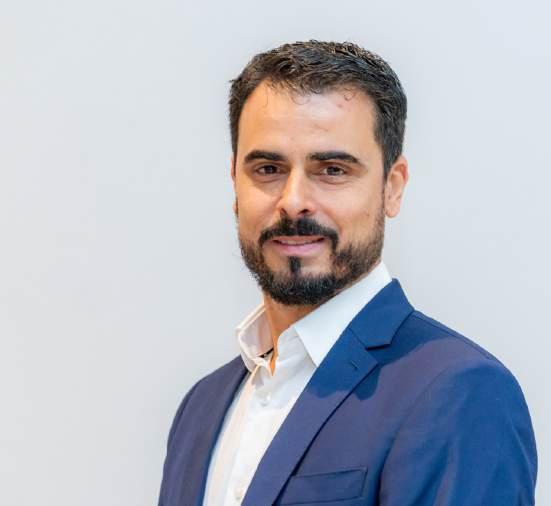
Esteban Sarubbi, Paysafe
“The strong adoption of crypto and stablecoins is not simply a technological preference but rather a macro-economic response to long-standing monetary instability,” says Baptista. “Because of this, the crypto-adjacent behaviour seen in Argentine wallets increasingly looks like a structural characteristic of the market rather than a transitional phase.”
Franchini adds: “If you want to keep your money stable and be assured that it will be safe, and that you will not lose the power of consumption, you vote for crypto. Nowadays, if we took crypto from operating in Argentina, especially for acquiring services, it would be like removing a credit card from Europe.”
Rankingslatam research shows 19.8% of Argentinians own cryptocurrency – more than any other Latin American country, including Brazil. “Consumer adoption is far more mainstream and way beyond a niche,” says Sarubbi.
More than in any other market, digital wallet usage and crypto preferences are converging, with wallets increasingly embracing stablecoins as a means of
preserving value. The shift comes after years of hyperinflation and multiple exchange rate regimes that nearly exhausted the country’s currency reserves. So choosing stablecoins pegged to the US dollar has become a rational response for many in the country.
“Until the country stabilises economically and people regain trust in institutions, this behaviour can be seen as permanent rather than transitional,” says Glisnik. The current government’s broadly supportive stance on crypto only reinforces that trajectory.
For operators, the practical implication is that LatAm does not require four entirely separate market strategies, but it does require at least two.
Peru and Colombia are converging around A2A and bank-transfer infrastructure. Operators are increasingly partnering with multi-market payment service providers that offer singleintegration platforms connecting cashiers to local payment methods – a pragmatic response to fragmentation that avoids
rebuilding the stack from scratch in each market.
Mexico and Argentina sit outside that pattern for entirely different reasons, each anchored in conditions that predate modern fintech and show no sign of resolving quickly.
“The question is no longer whether to standardise or localise – it’s how to orchestrate across markets with very different payment behaviours, regulatory frameworks and user expectations,” says Boesing. Payments, he argues, have moved from a back-end function to a front-line competitive lever.
“Competition won’t be defined by odds or product alone, but by who can deliver seamless experiences in critical moments. Those who remove friction at the point of intent will build stronger trust, brand recognition, and long-term loyalty.”
Baptista concludes: “Successful operators tend to design flexible architectures that allow them to adapt quickly to each market’s particular dynamics.” So, for operators active or looking to scale in the region, adaptability will be crucial to their success.
POWERED BY
ON THE FOLLOWING PAGES
77 Column: Jyoti Rambhai on affiliates going adtech
78 Feature: BetMGM and DraftKings on the World Cup
There has been a fundamental shift in the affiliate marketing landscape, says Affiliate Leaders Editor Jyoti Rambhai, with big players buying up smaller sites, data firms and diversifying their offerings

through revshare (a percentage of net revenue gained through the new player), or clicks per acquisition (CPA) – a fixed fee for every first-time deposit.
This model used cookies to track and attribute player activity – it was primarily an SEO-driven strategy.
Although Google abandoned plans to remove third-party cookies from its Chrome browser in July 2024, the move towards cookieless solutions was already underway. And in a privacy-first world, with tighter regulations, this accelerated the shift towards consolidation.
Affiliates can no longer rely on the ‘spray-and-pray’ tactics of browser-based tracking. This has forced them to adopt other marketing capabilities and reposition themselves. The evolution into adtech entities and full service marketing agencies has
been led by the so-called ‘super affiliates’ – Catena Media, Better Collective, Gambling.com Group, Raketch, Gentoo Media, among others, over the past few years.
Gambling.com Group is a good example of an affiliate buying data infrastructure to drive recurring revenue. Its acquisition of Odds Holdings in early 2025 gave them a tech platform that could process more than a million sports data per second, which shifted its revenue mix to include a subscriptions model from both the operators and consumers.
Whereas Catena Media divested its non-core businesses outside of North America, including AskGamblers and JohnSlots. It raised around $81.5m from selling these assets, part of which was used to invest in first-party data, SaaS and AI tools that could optimise and personalise campaigns.
This investment is now the backbone of MRKTPLAYS – a subaffiliation platform that functions more like an ad exchange than an affiliate site – which Catena Media launched in early 2025, cementing its position as an adtech.
Meanwhile Gentoo Media’s journey to become a fully-fledged agency began when it separated from Gaming Innovation Group (GiG). The company, known as GiG Media back then, said the move was to allow it to focus on its ‘media and marketing’ business. But the pivotal moment came when it acquired Titan in 2024 for €3.2m and now it’s a specialist B2B agency offering services across performance marketing.
Then you have the likes of Better Collective and Genius Sports, which are positioning themselves as digital sports media groups, bridging the gap between adtech and agency.
In February, Genius acquired Legend in a $1.2bn deal. While critics in iGaming dubbed Legend as a traditional affiliate company, Genius Sports rejected the label.
Its CEO and co-founder Mark Locke addressed this in a statement: “The term has been applied as shorthand, without distinguishing between low-quality traffic brokers and technology platforms built on owned audiences and behavioral intelligence.”
It raises the question of at what point does an affiliate become an adtech or agency. It is centred on who owns the data or is it the services provided. Whatever the answer, this is a transition that’s been happening for sometime now.
Affiliates are no longer just affiliates. They are digital marketing powerhouses.

Scan here for more from Affiliate Leaders
DraftKings CMO Steph Sherman and others tell SBC Leaders how to recruit and retain the World Cup’s many first time bettors
Words by CALLUM WILLIAMS
The 2026 FIFA World Cup is not only the largest edition of the competition in its history, but it will also likely be the largest betting event of all time.
As the competition grows from 64 to 104 games, naturally, so too will the amount of bets placed. But it is first-time bettors that operators will prioritise above all others this summer.
In December 2025, a Spotlight Sports Group report revealed 66% of those surveyed will bet on the World Cup for the first time. Furthermore, 90% of US people surveyed stated they will bet on the competition for the first time, with 19% saying it will be the first time they have placed a bet on soccer.
With the total number of competing teams also increasing from 32 to 48, new football bettors will be exposed to new players and coaches, which might require US betting operators to educate and guide first-time players in a bid to secure a piece of this customer segment.
Mark Langdon, Group Sports Director of Spotlight Sports Group, believes operators should be “nudging” these bettors while simultaneously, not generalising match details to the extent it may alienate existing bettors.
“It is a tricky situation because what you don’t want to do is make it so easy and simple that it puts off the people that usually come to your sportsbook with that knowledge already,” says Langdon.
“I’m speaking to one operator and what they said to me makes real sense in terms of trying to find that sweet spot. It’s about giving people a nudge in the right direction. This would be pre-packaged bet builders, accumulators, etc. That’s easy to understand. I think that is probably the way to try to engage new bettors.”
Before an operator can deploy product strategies to engage first time bettors ahead of the World Cup, they first need to capture the bettors’ imaginations and intrigue them with their offering.
Football fanfare is on the rise in the US. The arrival of Lionel Messi at Inter Miami in 2023 has galvanised Americans and provided a foundation as they are set to host sport’s mostwatched global competition.
Despite this, soccer still remains a secondary sport in the eyes of Americans, as the NFL and NBA take precedence over the MLS. However, former BetMGM CMO Casey Hurbis, who left the operator shortly after this interview was conducted, says the operator is bringing on board recognisable faces to help market its World Cup offerings to first-time bettors.
“We’re tapping into the authenticity and credibility of retired US soccer star and BetMGM ambassador Tim Howard, whose connection to American soccer fans gives BetMGM a unique advantage as we introduce new players to the category,” says Hurbis.


The arrival of Lionel Messi at Inter Miami has galvanised Americans and provided a foundation for the World Cup “
“ This is a oncein-a-generation opportunity to reach new bettors with precision, not just scale
He labelled the 2026 World Cup as a “once-in-a-generation opportunity” in order to reach new bettors with “precision, not just scale”.
As BetMGM is a subsidiary of Europeanbased Entain, the US betting operator is aiming to leverage its joint-parent company’s expertise in football betting and player props to deliver marketing content that delivers “messages that feel relevant and premium” to first-time bettors.
“We’re activating with targeted, datadriven campaigns across broadcast, streaming, and social – where secondscreen engagement will be at an alltime high – to meet fans in the exact moments they’re exploring the sport,” continues Hurbis.
“We’re focusing on smart segmentation, creator-led content, and differentiated storytelling that introduces BetMGM to first-time bettors with messages that feel relevant and premium.”
Once a first time bettor is onboarded, they will naturally gravitate towards placing
bets on their home nation. Spotlight Sports Group’s report revealed 21% of respondents bet on their country purely out of loyalty.
This is why, Spotlight argues, the single most important factor operators should take into consideration when seeking to engage bettors this summer is personalisation. The report also revealed a staggering 96% of players find personalised betting content appealing.
For DraftKings, personalisation has become paramount in keeping the bettor engaged. It has rolled out a series of tailored in-play betting and micromarket offerings, live bet tracking capabilities, and a customisable home screen that uses machine learning to prioritise the leagues and sports customer cares the most about.
“As a customer-centric brand, our focus is on responsibly delivering a best-inclass experience and continuing to elevate how fans engage with DraftKings, leveraging marketing insights and a data-driven approach to deliver more relevant, personalised touchpoints for our customers,” says Steph Sherman, Chief Marketing Officer at DraftKings
“Within our sportsbook app, we highlight live sports and major events in real time, making it easy for fans to move from World Cup matches into other compelling moments across the sports calendar.”
Engaging the bettor in a personalised way for their first betting experience can ensure a level of customer satisfaction and fulfilment, but when the dust settles on 19 July in the US after the World Cup is over, will those customers feel the need to stay?
The beauty of soccer, which new US fans may soon come to discover, is that the European calendar is in motion almost throughout the entire year – particularly when there is a big summer tournament.
Operators would do well to translate World Cup bettors into consistent customers for the European football calendar, with first-time bettors able to continue following players they
Casey Hurbis
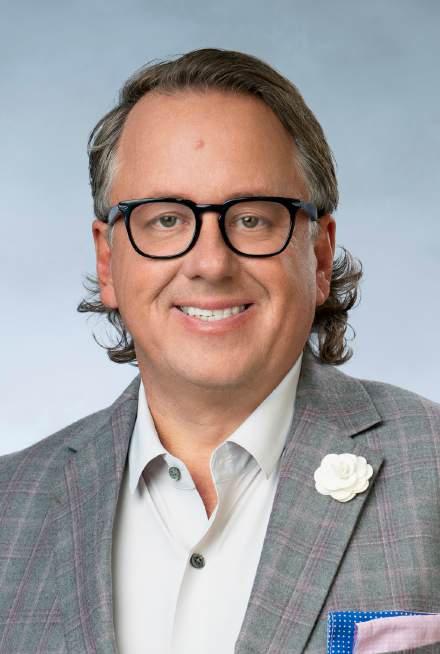
adopted during the tournament, whether that is Kylian Mbappé at Real Madrid or Erling Haaland at Manchester City.
This can translate into Same Game Parlays placed on those favourite players – a tool to retain new customers while deepening their engagement with the sport, which is a strategy being undertaken by BetMGM.
“Whether a fan wants to bet on the Premier League, La Liga, MLS, or any other major global league, we’ve got them covered,” says Hurbis.
“Most matches feature more than 100 unique markets on BetMGM, along with ample opportunities to build
Steph Sherman, DraftKings

Same Game Parlays (SGPs) around their favorite props and outcomes.”
To encapsulate the first time bettor journey across the World Cup cycle, marketing, engagement and retention are the three core principles operators must get right.
Why is this important before the World Cup? Langdon concludes that capturing the first-time bettor segment is crucial before the tournament begins, because the World Cup represents a scale of opportunity rarely seen in sports betting.
“This will be the biggest betting event of all time. It’s a huge opportunity,” says Langdon.

n our industry, speed can mean the difference between becoming a market leader and disappearing in the crowd of similar looking sportsbooks and casinos looking to battle it out for players’ attention.
But on a macro level, the true test of speed isn’t always found in the technology powering the betting sites that we all know and love. It’s found in the intricate changes that we’re seeing in gambling regulations around the world.
If there’s one thing that defines the current state of play in the US and Latin America, it’s that the lines on the regulatory map are still being redrawn while the ink on the previous map is still drying. We’re in an industry that is constantly in a state of flux, and sometimes, that pace of change can be difficult to keep up with.
For those looking to establish themselves as leaders in the gambling industry, the biggest obstacle to growth is no longer limited to creating the newest technologies, or being first to market with a new product.
The challenge now extends to future strategy, making sure that you have the vision and industry awareness to avoid being tripped up by the next regulatory curveball.
In the US, the industry is no longer in the ‘gold rush’ phase of establishing market share. Rather, we find ourselves in a period of market refinement and consolidation – the big players have found their footing, smaller operators are either being acquired or withdrawing from the market, regulations around advertising and safer gambling are coming into play, and taxes are being scrutinised.
At least, that was the case about six months ago. Now the whole sector has been tilted on its axis by the prediction market boom which has shredded regulatory norms and has many major players wondering what their next move should be.
And in Latin America, the region has undergone an enormous transformation, particularly over the last two years. Brazil’s move toward a fully regulated framework marked a tectonic shift in the gambling industry, turning what was once a grey market into one of the most significant regulated markets on the planet.
Then we have Chile, Colombia and Peru, all of which are embarking on their own, unique legislative journeys that will change regional dynamics for years to come.
With all of these regulatory changes taking place simultaneously, it’s now more important than ever to stay attuned to what’s going on across the industry. Up to date information is now our most valuable currency – but only if it’s accurate and contextualised.
In 2026, no brand can afford to be reactive to the news; we need to be proactive and anticipate what the ‘next big thing’ is going to be. Whether it’s mastering the nuances of Brazilian compliance or navigating the evolving US tax landscape, the goal remains the same: staying informed enough to stay ahead.
The door is opening on a new era of global gaming. Are you ready? Because SBC is.
Stay cool, Rasmus Sojmark, Founder & CEO, SBC
REACH KEY DECISION MAKERS, SHARE BEST PRACTICES AND RAISE INDUSTRY STANDARDS WORLDWIDE
SCAN HERE TO APPLY FOR MEMBERSHIP


















































































Delegates













































Speakers












800 Exhibitors