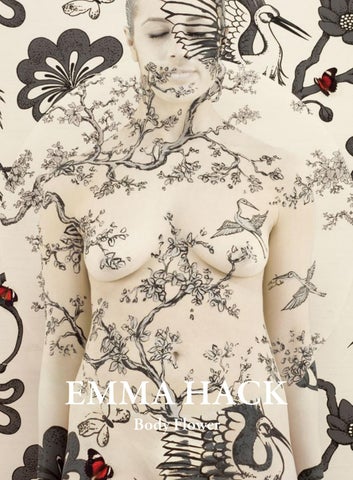
EMMA HACK
Body Flower
2016. 07. 23 – 10. 30
사비나미술관
Contents
엠마 핵(Emma Hack) 전시를 열며
4
이명옥, 사비나미술관장
Hosting Emma Hack’s solo exhibition
5
Savina Lee, Director at the Savina Museum of Contemporary Art
엠마 핵의 카무플라주 아트
6
강재현, 사비나미술관 전시팀장
Camouflage Art of Emma Hack
9
Jaehyun Kang, Chief Curator at the Savina Museum of Contemporary Art
엠마 핵 - Wallpaper Collection
13
패트릭 맥도날드, The Advertiser 예술편집장, 미술비평가
Emma Hack – Wallpaper Collection
16
Patrick McDonald, Arts Editor of The Advertiser, Art Critic
도판
20
Plates 약력 Biography
89
엠마 핵(Emma Hack) 전시를 열며
사비나미술관은 개관 20주년 기념 전시로 호주출신의 여성예술가 엠마 핵의 개인전을 개최합니다. 엠마 핵은 인체를 캔버스 삼아 주변 환경과 일치시키는 ‘위장술(카무플라주 ·Camouflage)아트로 국제적 명성을 얻은 예술가입니다. 자연 생태계 안에서 동식물은 살아남기 위해 본능적으로 여러 가지 전략과 전술을 개발하는데 그 중 한 가지는 위장(僞裝) 입니다. 몸의 모양을 주변 환경과 비슷하게 바꾸는 의태(擬態), 주변 환경과 비슷한 색으로 보이게 하는 보호색이 위장에 해당되지요. 동식물의 생존전략인 위장은 1896년 미국화가 애벗 핸더슨 세이어가 자연사잡지<오크 The Auk>에 <보호색의 기본 법칙 The law which underlies protective coloration>이라는 제목의 글을 통해 ‘모든 생물이 완벽하게 위장되어 있다’고 주장한 이후 입체주의, 옵아트를 비롯한 예술계의 관심을 끄는 주제가 되었습니다. 엠마 핵은 작품의 핵심을 이루는 위장술의 아이디어를 자연생태계 및 이를 응용한 패션, 직물디자인에서 가져왔고 자신만의 방식으로 재창조했습니다. 10시간 이상의 작업시간을 거쳐 작가가 모델의 몸에 손수 그려낸 카무플라주 아트는 최종적으로 사진매체로 완성됩니다. 인간과 자연, 회화와 조각, 퍼포먼스와 사진이 하나가 되는 엠마 핵의 전시회에 많은 분들의 발길이 이어지길 바랍니다.
2016년 7월 이 명 옥, 사비나미술관장
6
Hosting Emma Hack’s solo exhibition
Savina Museum of Contemporary Art holds a solo exhibition of an Australian female artist, Emma Hack in celebration of museum’s 20th anniversary. Emma Hack earned international fame for Camouflage art that harmonizes a human body with surroundings using the body as a canvas. In a natural ecosystem, wild life instinctively develop diverse strategies and tactics to survive, and camouflage is one of them. Protective mimicry, the organisms resemble their surrounding and protective coloration, the organisms change their colors to resemble backgrounds are typical examples of camouflage. Camouflage, the survival strategy of wild life became an interesting subject matter in the art world as well as Cubism and Op art, after an American painter, Abbott Handerson Thayer insisted ‘All animals are perfectly camouflaged’ in his article "The law which underlies protective coloration" published in a scientific journal ‘The Auk.’ Emma Hack took the idea of camouflage that is at the root of her work from nature, fashion, and textile design and recreated it on her own way. Emma’s 10 hours long hand-painted camouflage art becomes finally completed as a photograph. I hope many people visit Emma Hack's exhibition and experience first hand how her paintings, photography, and performance shows harmony between humans and nature.
2016. July
Savina Lee, Director at the Savina Museum of Contemporary Art
7
엠마 핵의 카무플라주 아트 강재현 (사비나미술관 전시팀장)
사비나미술관은 호주 전역에서뿐만 아니라 뉴욕과 영국, 홍콩, 싱가폴, 대만 등에서 활발한 활동을 펼치는 엠마 핵의 전시를 국내에 처음으로 소개한다. 이번 전시에는 그녀의 초기 작품 부터 근작에 이르는 주요작품 49점이 전시된다. 엠마 핵 작품의 핵심적인 주제는 ‘위장(僞裝, camouflage)’이다. 작가는 인간의 몸을 꽃으로 위장시킨다. 위장은 일반적으로 생태계에서 경쟁과 위기에서 살아남기 위한 생존수단으로 사용된다. 위장을 통해 나를 감추고자 하는 인간의 속성은 본래의 모습을 타인의 눈에 들키지 않고 자유롭고 싶은 욕망을 나타내기도 한다. 많은 예술가들에게 위장술은 이러한 심리적, 사회적, 정치적 상징성을 가지고 다양한 예술적 실험을 가능하게 했다. 필자는 벨기에 가수 고티에(Gotye)의 뮤직비디오 ‘Somebody That I Used to Know’(2011, 빌보드 차트 9주 연속 1위)를 통해 엠마 핵의 바디 페인팅 작업을 처음 마주했던 때를 떠올려 본다. 그림이 되어가는 남자의 강렬한 목소리와 독특한 영상미는 시청각 을 사로잡을 만큼 매력적이었다. 이후 엠마의 또 다른 몇몇의 작품들을 접하면서 배경에 인체를 완벽하게 숨기는 기발한 발상에 시각적인 흥미로움을 느꼈다. 예술적 재능이 뛰어나 18세부터 바디페인팅 아티스트로 활동해 온 엠마 핵은 본격적으로 2005년부터 자연과 인간을 하나로 만드는 자신만의 카무플라주 아트를 실현 시켜왔다. 작가의 카무플라주 기법은 1950-60년대 뉴욕에서 활동했던 독일 출신의 모델이자 아티스트 인 베루슈카(Veruschka von Lehndorff)의 영향으로 시작되었다. 베루슈카는 암울한 가족사 를 바탕으로 한 트라우마의 표현방식으로 바디페인팅을 통해 자신의 몸을 나무나 조약돌, 혹은 문 등 자연이나 사물의 일부가 되게 하는 강렬한 이미지를 보여준 작가로 알려져 있다. 현대미 술에서 ‘몸’은 수많은 예술가에게 창작의 도구로 다루어져 왔다. 이렇게 몸을 도구로 하는 바디아트는 관객에게 신체의 존재와 중요성을 각인시키며 성과 인종, 계급 등의 사회적 메세지 를 전달해 왔다. 몸을 위장시키는 카무플라주 기법은 패턴디자이너인 플로란스 브로드허스트의 디자인과 결합되면서 엠마 핵은 본격적으로 예술가로서의 활동 영역을 확장시켜 나간다. 브로 드허스트가 디자인한 자연적이거나 기하학적인 패턴은 모델의 몸과 하나가 되면서 엠마 핵만의 예술적 스토리를 만들어 내었다. 이렇게 등장한 <Florence’s Achives> 콜렉션은 카무플라주 작업방식을 차용해 우리에게 한층 시각적인 경쾌함과 관능적인 아름다움을 선사한다. 특히 사진 속 화려하고 장식적인 문양과 색감은 보는 이의 감각을 일깨우며 시선을 사로잡는다. 베루 슈카가 죽음에 대한 공포와 두려움으로 자신을 지키고자 보호색을 이용해 자연과 사물이 되려 고 했다면, 엠마는 초기의 작품에서 마치 모델이 투명망토를 두르고 화려한 문양의 벽지 앞에 서 있는 것 같은 시각적 착시를 유도함과 동시에 현실 도피적 심리상태를 위트 있게 표현한다. 엠마 핵의 작품에 나타난 두드러진 특성은 동양적인 정신이 짙게 반영되었다는 것이다. 동양은 인간을 자연의 일부로 여기며 자연과 조화됨을 추구한다. 인간 중심적인 자연관을 가지고 있어 자연을 정복하고 다스리려 한 서양에 비해, 동양은 자연의 순리대로 살고 본성을 회복하고자 하는 정신을 중요하게 생각한다. 엠마 핵의 <Wallpaper Mandala>, <Native Mandala>등 주요 콜렉션에 등장하는 여인은 온 몸이 꽃과 나뭇잎에 휘감긴 채 정면을 향해 있다. 할머니의 정원에 대한 기억과 여성의 섬세함이 강조된 작품 <Mirrored Whispers>는 거울에 반영된
8
자신을 보듯 두 여인이 마주한 채 눈을 감고 기도하는 자세를 하고 있다. 이는 노자(老子)의 도교적 사상인 무위자연(無爲自然)을 상기 시킨다. 무위란, 아무 일도 하지 않는다는 뜻이 아니 라 인간의 욕심으로 무엇인가를 하려 하지 않고 자연에 있는 그대로를 맡겨두라는 뜻이다. 즉, 자연에 일부러 인간의 흔적을 남기지 않는 자세를 말한다. 또한 그녀의 작품에 반복적으로 등장하는 ‘만다라’라고 명명된 원의 형태는 생명의 원동력이 되는 궁극적인 완전성, 자연과 인 간이 하나됨의 표상이다. 우리는 지금 전쟁과 테러, 기아로 그 어느 때 보다 혼란스러운 시대를 살고 있다. 작가의 작품은 이러한 시대일수록 내면의 소리에 귀 기울이는 자기성찰의 시간이 필요하다고 말하는 듯 하다. 결국 자연으로 돌아갈 수 밖에 없는 자연으로서의 인간임을 일깨우 며, 인간의 편리에 의해 심각하게 훼손되고 오염된 지구의 환경문제를 되돌아 보게 한다. 엠마 핵은 자연과 인물을 의도적으로 그림으로 재결합해 육체와 정신, 영혼과 대상물과의 새로운 결합을 시도한다. 이를 통해 외부세계와 내부세계, 물리적 세계와 관념의 세계를 인식하게 한다. 2005년 이후 10여 년 간 작가의 작품을 살펴보면 평면과 입체를 보여주는 방식에 대한 끊임없는 탐구를 엿볼 수 있다. 배경과 인물을 일치시켰던 초기의 작업 방식에서 나비와 새, 동물의 등장은 시각적 층위를 만든다. 작가는 그림으로 배경과 인물이 일치되게 하 고, 그 앞에 동물을 배치시키는데, 결국 사진으로 완성되는 이러한 평면과 입체의 결합은 보는 이의 시각을 더욱 혼돈스럽게 한다. 특히 작품 속 등장하는 나비를 비롯한 새와 캥거루, 도마뱀과 같은 동물은 보는 이를 더욱 몽환적이고 비현실적인 세계로 인도한다. 이후 제작된 <Utopia> 콜렉션은 마치 핀홀을 통해 들여다보듯 피사체에 초점을 맞춘 것 같은 연출을 시도하 여 원근법을 느끼게 한다. 최근 작가는 렌티큘러 기법을 도입해 12장의 이미지를 하나의 작품 으로 만들어 더욱 생생한 입체감을 경험하게 한다. 이처럼 작가는 지속적으로 자기만의 독창적 인 방식으로의 ‘보는 것’과 ‘보이는 것’의 관계에 대한 탐구와 진화된 방식으로의 기법적 연구에 도전한다. 그녀는 계속해서 변화를 시도하고 새로운 상상력을 실현 시키기 위한 실험을 멈추지 않는다. 이것이 우리가 몸을 이용한 카무플라주 기법을 사용하는 많은 아티스트 가운데 엠마 핵 을 주목하는 이유다. 오로지 그림과 몸이 하나 되게 하기 위해 작가의 손으로 10시간에서 길게는 20시간 이상 그려진 작품들, 이러한 작가의 열정과 에너지가 담긴 노동집약적인 그리기 과정은 작가 스스로를 성찰하는 과정이자 고행의 시간이기도 할 것이다. 그렇게 탄생된 그녀의 작품은 우리에게 자연과 나 자신을 사유하고 성찰하게 한다. 사진과 그림의 경계를 허물고, 인체와 그림의 구분을 모호하게 하는 엠마 핵의 작품은 아주 매혹적인 시각 언어로 우리에게 말을 건넨다. 잠시나마 현시대의 복잡한 삶의 무게를 내려 놓고 나 자신을 되돌아 보라고. 자연에 동화된 삶을 상상하라고 말이다.
9
10
Camouflage Art of Emma Hack Jaehyun Kang (Chief Curator at the Savina Museum of Contemporary Art)
Savina Museum of Contemporary Art presents a solo exhibition of Emma Hack, who has widely exhibited in New York, the United Kingdom, Hong Kong, Singapore, and Taiwan, for the first time in South Korea. In this exhibition, Hack shows forty-nine major works covering the earlier works to the most recent works. Hack’s core motive is camouflage. She covers up human bodies with flowers. Camouflage is often used as a technique to survive in the ecosystem filled with competitions and emergencies. The unspoken nature of human tended to hide oneself through camouflage is often translated to the desire to be free from others’ judgmental eyes. I remember when I saw Hack’s body painting works for the first time in Gotye’s music video, Somebody That I Used to Know (2011), the Billboard chart number one song for nine consecutive weeks. The impressive voice of the male vocal and unique visual effect was attractive enough to capture viewers immediately. After learning about more works of Hack, I found her brilliant idea hiding human bodies in the background visually intriguing. Emma Hack realized her talent at an early age and has been working as a body-paining artist. She started working in earnest on the camouflage art from 2005, making nature and humans into one being. Hack’s camouflage method was influenced by a New York based artist and model, Veruschka von Lehndorff, who was originally from Germany, active in 1950s and 60s. Veruschka was known for her body paintings to express her trauma caused from her depressing family history. She transformed her body to trees, pebbles, or doors and tried to be a part of nature or objects and the results were striking imageries. In the contemporary art, body has been a tool for numerous artists. The body art has been reminding audiences the importance of the existence of body and delivering the social messages on the gender, race, and class. Hack’s camouflage art, which covers the human body, has been combined with Florence Broadhurst’s design. This collaboration significantly expanded Hack’s artistic realm. The natural and geometric patterns of Broadhurst’s design was applied to model’s body and was reborn as the artistic and genuine story of Emma Hack. The collection, Florence’s Archives, provides the visually delightful and erotic beauty to the viewers through camouflage. The splendid and decorative patterns and colors in the photography grab viewers’ attention and stimulate the senses. Veruschka tended to be nature and object to save her from the death by using protective coloring because she was scared and hor-
11
rified. On the other hand, Hack ingeniously expresses the state of mind that tries to be free from the reality and creates optical illusions as if the model is wearing an invisibility cloak standing in front of colorful wallpaper in the earlier works. The characteristics of Emma Hack’s works seem to reflect Oriental spirit. In Eastern philosophy, it is based on the harmony between human and nature believing that human is a part of nature. Despite the fact that the Western belief system is human-centered and they try to conquer and control nature, the Eastern belief system emphasizes the spirit of living harmoniously in nature and recovering the human nature. The female figures in Hack’s major collections such as Wallpaper Mandala and Native Mandala are facing the front covered by flowers and leaves. The work, Mirrored Whispers, based on the memory of grandmother’s garden and female sensibility, shows two women facing each other while closing their eyes and posing as if they are praying. It is reminiscent of the practice of Taoism, leaving nature as it is. ‘Letting nature be’ in Taoism doesn’t mean that we shouldn’t do anything in nature. It means we shouldn’t try to control nature with human greed so let nature be wholesomely as it should be. It is the attitude on life trying not to leave marks of human in nature. The shape of a circle called ‘mandala’ which is repeatedly appearing in Hack’s works indicates the ultimate completeness, which is the source of life, and symbolizes the oneness of nature and human. We are living in very confusing time because of the war, terror, and hunger around the world. Hack’s works seem to tell us that we need the time of reflection to listen our inner sense in this time. Hack’s works tell us that we are humans, who have to return to nature, therefore, we have to think of the environmental issues caused by human greed. Emma Hack intentionally brings nature and human together in the picture and tries to unite the body and soul as well as spirit and object in a new way. Through works, she makes viewers recognize the different worlds, outer and inner, physical and mental. If we examine her works since 2005, we can see the endless study on finding new ways to present two-dimensional and three-dimensional object together. In comparison to the earlier works, which Hack tried to merge the human figure with the background, recent works started including butterflies, birds, and other animals to create many visual
12
layers. Hack created an illusion by dissolving background and human figures into one pattern and juxtaposed animals in front of it. Then, she took a photograph and this final result made viewers confused because of this unique combination of two-dimensional and three-dimensional imageries. Especially, the mysterious animals such as butterflies, birds, kangaroos, and lizards in the photographs lead the viewers to the dreamy and unrealistic world. Utopia Series created a feeling of looking through a pinhole focusing on the object. Recently, Hack borrowed the lenticular technique and arranged twelve images to create an optical illusion to make viewers to feel as if they are looking at the three-dimensional work, leaving them with vivid experiences. Hack consistently searches to develop the technique to show the genuine relationship between ‘to see’ and ‘to be seen’. She is consistently changing and experimenting to actualize the imagination. This is why we pay attention to Emma Hack among many other artists who use human body camouflage techniques in their works. In order to make the body disappear within the background, Hack painted ten to twenty hours by hands. This labor-intensive painting was made by her passion and energy. It could be also the time of contemplation and meditation for the artist. As a result, her works make us to think and reflect about the human being and nature. She breaks the boundary between photography and painting and erases the separation between body and painting. She talks to us with her fascinating visual language, as if she is suggesting us to go back to focus on ourselves while freeing from the heavy burden of reality, just to think about the harmonious life with nature.
13
14
엠마 핵 - Wallpaper Collection 1) 패트릭 맥도날드 (The Advertiser 예술편집장, 미술비평가)
벽 외에 월페이퍼(Wallpaper)가 사용될만한 공간이 또 있을까? 만약 월페이퍼가 예술품이 된다면 그것은 단순한 벽지나 인테리어 용품 그 이상의 것이 될 것이다. 월페이퍼의 일반적인 방식에서 벗어나 대담하고 독창적인 방식의 사진촬영 작업을 거쳐 새롭게 벽에 걸릴 준비가 된 엠마의 바디아트는 플로렌스 브로드허스트(Florence Broadhurst)의 고전적 월페이퍼 디자인 을 철저히 다른 차원의 것으로 승화시켰다. 엠마의 작품 속 모델은 예상치도 못하게 드러나 우리의 상상력을 자극시키고 애태운다. 벽에 숨겨져 언뜻 보여 지는 모델의 살결과 몸은 어느 순간 눈앞에 드러난다. 오직 패턴만이 반복되던 브로드허스트의 월페이퍼에는 이제 인물의 에너지와 유머, 그리고 기발함이 존재한다. 엠마는 인체를 살아 있는 캔버스로 인식하여, 몸이 가진 잠재성을 탐구하려는 열정으로 회화와 메이크업을 접목한 작업을 21년간 지속해왔다. 월페이퍼 시리즈는 그 작업의 정점이라 할 수 있다. 메이크업 경연 대회에서 처음 바디 페인팅을 경험한 엠마는 그 해 학교를 떠났다. 이 예술 형식과 그녀의 상상력이 결합된 결과, 엠마는 2001년 홍콩에서 열린 스위스의 CIDESCO(Comité International d'Esthétique et de Cosmétologie) 세계 전문 바디 페인 팅 챔피언쉽에서 우승을 할 수 있었다. 이후 엠마는 유명 연예인을 주제로 한 바디아트 달력 시리즈를 작업 했는데, 2002년, 녹이 슨 벽을 배경으로 자신의 몸 위에 직접 페인팅 했던 1960년대 독일 모델 베루슈카(Veruschka von Lehndorff, 1939~)의 획기적인 작업을 알게 된 후 엠마의 예술적 비전은 바뀌게 되었다. 하지만 엠마의 새로운 예술 스타일은 베루슈카의 것보다 더 화려하고 다채로우며 디자인적인 것이었다. 배경을 이용한 융합적 바디아트에 대한 아이디어는 2005년까지 엠마의 무의식 속에 자리 잡고 있었고, 2005년 그 해, 엠마는 애들레이드(Adelaide, South Australia)에 위치한 인테리어 샵 플러리쉬(Flourish)에서 처음으로 브로드허스트의 빈티지 월페이퍼 디자인을 이용한 작업을 하게 되었다. 그녀는 그 당시를 “머릿속에 형광등 스위치를 켜는 것과 같았다.” 라고 회상한다. 그 샵의 주인은 잘라 내고 남은 월페이퍼의 자투리를 엠마에게 주었는데, 이것이 엠마의 첫 월페이퍼 작업의 시초가 되었다. 브로드허스트의 카탈로그에도 계속해서 등 장하는 동양적인 모티브는 엠마가 어렸을 적부터 관심을 가졌던 요소로 엠마의 작업에서도 반복적으로 나타난다. 인체의 자연스러운 형태를 이용한 작업은 자신의 예술이 단순히 바디페 인팅에 머물지 않고 좀 더 새로운 방향으로 나아가는 것을 추구하게 했다. 엠마의 첫 월페이퍼 작업(아델레이드의 대표적인 사진작가 데이비드 솜 David Solm이 촬영)은 현재와 같은 정교 한 카모플라주 기법 대신, 얼룩문양 또는 소용돌이 문양을 이용하여 모델 신체의 일부분을 남겨 놓은 채 작업되었다. 월페이퍼 패턴에 영감을 받은 엠마는 검은 획의 굵고 선명한 붓 작업 을 이용하여 브로드허스트 디자인의 빨갛고 하얀 일본 꽃문양이 그려진 기모노를 입은 게이샤 와, 파란색과 은색이 섞인 꽃무늬 드레스를 입은 1950년대 헐리웃 신인 여배우 캐릭터를
1) 이 글은 엠마 핵의 Wallpaper 2005-2010 Artist Book 을 위해 2010년에 쓰여졌다.
15
만들어 냈다. “플로렌스(Florence)는 내 작업 초기부터 나의 자양분이 되어 준 대단한 인물이라 고 생각한다.” 라고 엠마는 말한다. 첫 컬렉션의 작업들은 완성되기까지 각각 19시간이 걸렸는데, 이것은 작가뿐 아니라 모델에게 도 마라톤에 버금가는 작업과정이었다. 하나하나의 붓터치는 배경의 월페이퍼와 잘 매치되는지 카메라 렌즈를 통해 끊임없는 확인 과정을 거쳐 이뤄졌다. 엠마는 브로드허스트 패턴을 재현하 는 작업에 있어서 프로젝터나 패턴을 카피하는데 필요한 도구를 쓰지 않고 오로지 수작업으로 원본 디자인을 조합하여 제작한다. 첫 작품들을 전시한 후, 엠마는 브로드허스트의 월페이퍼 디자인을 세상에 다시 알렸던 시그니처 프린트(Signature Prints)의 오너 데비비드(David Leanie)와 헬렌 레니(Helen Lennie)에게 연락을 취했다. 레니가 보기에 엠마의 작업은 브로드 허스트만의 예술적 비전을 더 보완하고 확장시키는 것처럼 보였다. 시그니처 프린트는 엠마에 게 브로드허스트의 아카이브 500개 중 일부 월페이퍼의 사용을 허락해 주었을 뿐만 아니라, 그녀의 작업을 위해 일찍이 삭제됐던 디자인뿐 아니라 단 하나밖에 없는 브로드허스트의 디자 인을 프린트해 줄 정도로 이들의 관계는 돈독해졌다. 엠마의 <Oriental Delights> 콜렉션의 일부인 두 번째 월페이퍼 시리즈는 원작의 첫 번째 월페이퍼 시리즈가 중단 된 곳에서부터 시작되었다. <Egrets>(2007), <Exotic Bird>(2007) 그리고 흑백의 굵은 선으로 작업한 <Cockatoos>(2008)와 같은 작품에서는 브로드허스트 패턴 속의 새와 나비를 차용하여, 모델의 상반신에 둥지를 틀고 있거나, 나뭇가지 위에 앉은 채 모델과 새가 서로 교감하고 있는 장면을 나타냈다. 한편 <Sunseeker>(2007) 와 <Japanese Bamboo>(2007) 작품 속 모델은 열대 지방의 잎들에 둘러싸인 채 햇볕을 쬐고 있는데, 그을린 모델의 몸 위에 월페이퍼의 황금빛 색감이 가득 퍼져 있다. 모델과 월페이퍼 디자인을 하나로 묘사한 작품 속의 디테일과 복잡한 문양은 모두 ‘순간’에 창조된 것이며, 그러한 자연스 러움 속에서 생명력을 가지게 된다. 엠마는 작업 전에 작품을 미리 계획하거나 구상하지 않고, 월페이퍼가 벽에 걸리고 모델이 그 앞에서 포즈를 취할 때 비로소 작품에 대한 이미지를 떠올릴 수 있다고 한다. 작품 <Circles and Squares>(2008)와 <Fingers>(2008) 속 모델의 관능적인 몸의 곡선은 뻣뻣하고 기하학적인 패턴들과 대조를 이루며 마치 모델이 벽을 뚫고 나오는 듯한 3D효과의 착시를 일으킨다. 엠마의 작품 속에 남성 모델이 등장하는 경우는 드문데, 눈에 강렬하게 들어 오는 <Solar>(2008)와 말이 뛰노는 장면을 정교하게 담아 낸 <Stampede>(2008)에서는 남성적인 주제를 보여 주기도 한다. <Red Bird>(2008)는 엠마가 직접 촬영한 첫 작품일 뿐만 아니라(사진작가 앤드류 던바Andrew Dunbar의 지도로 진행) 그녀의 작업에 중요한 터닝 포인트가 된 작품이다. 작품 속에서 엠마는 브로드허스트의 강렬한 흑백 카네이션 디자인을 등 지고 선 모델의 손에 크리스마스 소품 대신 작고 빨간 새를 쥐게 했다. 이러한 작업은 브로드 허스트의 예전 카탈로그 중 인쇄제작 되지 않았던 크로커다일 월페이퍼의 발견과 함께 엠마의 <Evolution> 콜렉션 작업의 원동력이 되었다.
16
<Tropical Butterflies>(2008) 와 같은 초기작업 에서는 착시 효과를 나타내기 위해 새 모형 장식품 또는 노란색 하드보드지를 오려 만든 나비를 가지고 작업했다. 엠마는 이런 작업에 만족하는 대신 <Evolution> 콜렉션 작업을 위해 악어를 포함한 실제 살아 있는 동물들을 사용 하기 시작했다. 2008년 작품인 <Owl>, <Kabuki Feline>, <Tawny Frogmouth> 와 같이 부드럽고 옅은 색을 바탕으로 하는 작품 속 모델들은 마치 브로드허스트의 선명한 ‘꽃무늬 (Spotted Floral)’와 ‘가부키(Kabuki)’ 월페이퍼 속으로 사라지는 것처럼 보인다. 반대로 작업의 메인이 되는 동물들은 명확하게 눈에 띄는데, 이는 눈 또는 입술의 윤곽만이 희미하게 드러나는 모델들의 모습과 대조를 이룬다. 엠마의 최근 시리즈들은 브로드허스트 콜렉션의 리미티드 에디션 프린팅을 포함하면서 더욱 확장되었다. 예를 들어 <Exotic Bird>는 <Bird of Paradise>를 모티브로 해 더 화려하고 밝은 색의 깃털로 장식하여 표현하는 식이다. 엠마의 작품은 첫 인상과는 다르게 브로드허스트의 디자인을 단순히 재현 하는 것에 그치지 않는다. 이는 엠마의 붓 터치와 월페이퍼의 문양이 모델의 윤곽과 얼마나 정확히 일치하는지를 보면 알 수 있다. 이미 존재하는 디자인을 이용하는 그녀의 작업방식에 대해 엠마는 자신만이 할 수 있는 특별한 예술적 특징을 브로드허스트의 월페이퍼 디자인과 어떻게 결합하고 어디까지 발전시킬 수 있을지 끊임없이 고민하고 실험한다. 5년이 지난 지금도 여전히 월 페이퍼 하나의 작품을 완성하기까지 여전히 10시간에서 18시간이 걸린다. 최근 컬렉션 <Wallpaper Mandala>(2010)을 보면 엠마는 그녀의 초기 작업에서부터 나타난 동양으로 부터의 영향을 융합하는 새로운 방법을 찾은 것으로 보인다. 엠마는 각 작품 속에 만다라의 원을 만들기 위해 브로드허스트의 각기 다른 디자인(혹은 같은 패턴이지만 대조되는 색을 사용 한 디자인)을 나란히 병치시키는데, 이렇게 만들어진 만다라는 여성적 영혼, 고요함, 사색에 대해 이야기 하는 명상적 특징을 가지고 있다. 이러한 만다라 작품은 시그니쳐 프린트와 엠마의 관계가 어떻게 진전될 것인지 생각해볼 수 있는 유일한 작품이다. 현재 엠마 핵은 일반적 의미 의 월페이퍼를 벽에서 떼 내어 완전히 새로운 의미의 월페이퍼를 벽에 붙이는 작업을 이어가고 있다.
17
Emma Hack - Wallpaper Collection 1) Patrick McDonald (Arts Editor of The Advertiser, Art Critic)
Where better to hang wallpaper than on a wall? But when that wallpaper is a work of art in itself, it begs to become something more than a backdrop - something other than a simple furnishing. Removed from its traditional setting, reworked into something even more bold and original, photographed and then framed, ready to be rehung, Emma Hack’s body art interpretations elevate the late Florence Broadhurst’s classic wallpaper designs to an entirely different plane. Figures unexpectedly emerge to tantalise and tease the imagination. Walls of perception suddenly dissolve in whirling glimpses of forbidden flesh and hidden form. Where once there were only patterns repeating, there is now human energy and humour and whimsy. Emma Hack’s Wallpaper series is the culmination of a 21-year journey of painting, combining makeup artistry with a desire to explore the potential of the human body as a living canvas. Having painted her first body for a fantasy makeup competition the year she left school, Emma quickly took the artform to unprecedented heights of imagination, winning the Swiss-based CIDESCO World Congress Professional Body Painting Championship in Hong Kong in 2001. A series of celebrity body art calendars followed, but her artistic vision changed in 2002 after becoming aware of the groundbreaking work of 1960s German model Veruschka, who depicted herself body-painted into a series of rustic wall settings. Emma’s own emerging artistic style, however, demanded something more much more glamorous, colourful and design-based. That idea of fusing body art with backdrops kept percolating in her mind until 2005, when Emma first encountered a recreation of one of Broadhurst’s vintage wallpaper designs in Adelaide interiors shop Flourish, a moment she describes as being ``like a lightbulb’’ switching on. The owners of the store were able to furnish Emma with offcuts which became the basis for her first Wallpaper works. Recurring exotic Oriental motifs in much of Broadhurst’s catalogue echoed elements of Emma’s own upbringing and fascination with Asian cultures. Having worked extensively with the natural form of the body, she sought to take her art in a new direction which was no longer limited by the boundaries of the skin. In fact, in her initial Wallpaper works (captured by leading Adelaide photographer David Solm) she leaves segments of her models
1) This article was specifically written for Emma Hack’s Wallpaper 2005-2010 Artist Book in 2010.
18
unpainted, their naked flesh emerging in exhilarating splashes and swirls from the otherwise elaborate camouflage of Emma’s paintwork. Using bold, black brushstrokes she also created characters inspired by the wallpaper patterns: a geisha wrapped in a kimono of Florence’s red-and-white Japanese Floral design, and a 1950s Hollywood starlet shining in a Shadow Floral print frock of blue and silver. ``Florence was such a character and I think that fed into me from the beginning,’’ Emma says. Those first works took 19 hours each to complete - a marathon not only for the artist but for her models, as each brushstroke is checked and rechecked through the camera lens to match up with the wallpaper backdrop. Emma has never used projections or any other form of tracing to recreate Broadhurst’s patterns but, rather, creates her own freehand works of art which magically appear to blend with the original designs. After exhibiting these first pieces, she contacted the new owners of Signature Prints, David and Helen Lennie, who have been responsible for reintroducing Florence Broadhurst’s wallpaper designs to the world. In the Lennies’ eyes, Emma’s work both complemented and expanded on Florence’s own artistic vision. The relationship has grown to the point where Signature Prints gives Emma exclusive access to its archive of some 500 Broadhurst wallpapers and has specially printed long-deleted and one-off designs for her works. Emma’s second Wallpaper series, which was part of her wider Oriental Delights collection, picked up where the original works left off. In pieces like Egrets (2007), Exotic Bird (2007), and the bold black-and-white of Cockatoos (2008), the birdlife and butterflies in Broadhurst’s patterns seemingly interact with the models, nesting on their torsos and perching on their outstretched arms. Alternately, in Sunseeker (2007) and Japanese Bamboo (2007), the golden hues of the wallpaper are echoed in the tanned forms of the models, who appear to be sunning themselves amid the tropical leaves. For all their apparent detail and the intricate way in which the figures sit within the wallpaper designs, Emma’s works are created in the moment and very much alive with that sense of spontaneity. She does not plan or map out her works in advance: the images come to her only when the wallpaper backdrop is hung and the model takes position in front of it.
19
In Circles and Squares (2008) and Fingers (2008), the luscious curves of the model’s body contrast with the rigid geometric patterns to make it appear as if a figure is pushing through and emerging from the wall itself, creating an almost three-dimensional effect. The rare use of male models in the striking Solar (2008) and elaborate horseplay of Stampede (2008) reflects the more masculine subject matter in the wallpapers themselves. Red Bird (2008) represents another major turning point in Emma’s work, not only because it was the first piece which she photographed herself (under the tutelage of another acclaimed Adelaide photographer, Andrew Dunbar). Having grabbed a handful of Christmas ornaments for props, she decided to place one - a tiny red bird - in the cupped hands of the model against Broadhurst’s striking black-and-white Carnation design. This, along with discovery of a previously unprinted Crocodile wallpaper in the back of one of Broadhurst’s catalogues, became the impetus for Emma’s subsequent Evolution Collection. Not content with ornamental birds or the cardboard cutouts used to create the illusion of flight in Tropical Butterflies (2008), Emma sourced real, live animals - including a crocodile - for the Evolution works. In pieces like Owl, Kabuki Feline and Tawny Frogmouth (all 2008), light, creamy base colours see the models almost disappear into Broadhurst’s vivid Spotted Floral and Kabuki wallpapers, with only the dark outlines of their eyes and lips betraying their presence, while the title creatures stand out in stark contrast. More recent series have branched out to include Limited Edition Art prints from the Broadhurst collection, such as Exotic Birds with its more intricately detailed, lavishly plumed and brightly coloured Bird of Paradise motif. Despite initial appearances, Emma’s works are not simply recreations of Florence’s designs. Her own hand is evident in the brushmarks and how the lines are adjusted to suit the contours of her models’ bodies. For her part, Emma continues to wrestle with the concept of working from the starting point of someone else’s pre-existing designs, to see how far she can push the Broadhurst wallpapers in new directions and add artistic flourishes with her own unique signature. Five years on, the Wallpaper works still take between 10 and 18 hours each to complete. In her latest collection, Wallpaper Mandala (2010), Emma has found new ways to incorporate the Eastern influences which have inhabited her works since the outset.
20
Juxtaposing different Broadhurst designs (or the same pattern in contrasting colours) to create an inner circle in each work, the Mandala pieces have a meditative quality which talks about femine spirituality and evokes a deep sense of serenity and contemplation. One can only contemplate where this ongoing relationship with Signature Prints will lead next. For now, Emma Hack has stripped wallpaper off the wall - and put it back up there in a completely new and invigorating context.
21
Wallpaper 엠마는 베루슈카(Veruschka)*로부터 영감을 받아 처음으로 카무플라주(camouflage)라는 개념에 대해 탐구하기 시작했다. 몇 년 후에 엠마는 플로란스 브로드허스트의 월페이퍼 디자인을 이용한 카무플라주 아트를 실험하면서 <Wallpaper> 콜렉션이 탄생한다. 엠마는 당시 시그니처 프린트(브로드허스트의 디자 인을 소유하고 있는 회사)가 엠마에게 플로란스 브로드허스트의 아카이브와 디자인 이용에 대한 독점권을 준 것은 그녀가 작품을 시작하게 된 가장 큰 동기이자 굉장한 행운이었다고 말한다. * 베루슈카 본 렌도르프 (Veruschka von Lendorff, 1939~). 1960-70년대 자신의 몸에 직접 녹이 슨 벽의 형태를 자연스러운 형식 으로 페인팅 했던 독일출신의 모델이자 아티스트
The artist was firstly inspired by Veruschka about the concept of camouflage. A few years after, she created Wallpaper Collection that introduces Florence Broadhurst’s wallpaper design along with camouflage effect. The artist says that one of the most significant motivation and luckiest moments of her artistic career was when Signature Prints gave exclusive rights of using Florence Broadhurst’s archive and design to her (The collection of Wallpaper 2005 and Wallpaper 2007 is photographed by David Solm, South Australia Photographer).
Fingers – Wallpaper Pigment Print, 110×110cm 2008
22
23
Wallpaper Stampede – Wallpaper Pigment Print, 110×110cm 2008
24
Wallpaper Circles and Squares – Wallpaper Pigment Print, 120×120cm 2008
25
26
Peacock Feathers – Wallpaper Pigment Print, 110×110cm 2008
27
Wallpaper Circles and Squares – Wallpaper 2008 2008, Pigment Print 120×120cm
28
Wallpaper Egrets – Wallpaper Pigment Print, 110×110cm 2007 Photo by David Solm 29
Wallpaper 1 – Wallpaper Pigment Print, 110×100cm 2005 Photo by David Solm
30
Wallpaper Geisha – Wallpaper Pigment Print, 110×110cm 2005 Photo by David Solm
31
Wallpaper 2 – Wallpaper Pigment Print, 110×100cm 2005 Photo by David Solm
32
Wallpaper 50s – Wallpaper Pigment Print, 110×110cm 2005 Photo by David Solm
33
Wallpaper Cranes – Wallpaper Pigment Print, 110×100cm 2007 Photo by David Solm
34
Wallpaper Ballerina – Wallpaper Pigment Print, 110×100cm 2007 Photo by David Solm
35
Florence’s Archives <Florence’s Archives> 콜렉션은 각기 다른 크기를 가진 총 10점의 작품으로 구성되어 있다. 엠마는 플로란스 브로드 허스트의 가장 상징적이고 대표적인 이미지인 Wallflowers (꽃무)를 표현하기 위해 그녀의 아카이브 중 ‘Fans(부채)’, ‘Phoenix(불사조)’, ‘Papyrus(파피루스)’, 그리고 ‘Parakeets (잉꼬)’를 선택해 이 작업을 완성했다. Florence’s Archives Collection involves 10 works in varying sizes per work. To create her iconic image of wall flowers of Florence Broadhurst, the artist chose ‘Fans’, ‘Pheonix’, ‘Papyrus’ and ‘Parakeets’ from the archive of Broadhurst.
PHOENIXⅡ - Florence's Archives Pigment Print, 110×110cm 2013
36
37
FANSⅡ- Florence's Archives Pigment Print, 110×110cm 2013
38
PAPYRUSⅡ- Florence's Archives Pigment Print, 110×110cm 2013
39
Blue and White <Blue and White> 콜렉션은 청화백자를 소재로 블루와 화이트 의 배색이 인상적이다. 작가는 중국과 네델란드, 영국, 프랑스, 포르투갈의 특징이 담긴 전통적인 도자기 문양의 특징을 작품 속 에 담았다. 이번 전시에는 중국, 프랑스, 포르투갈의 특징을 담은 작품이 전시된다. 각 나라의 독특하고 정교한 도자기 문양을 표현하기 위해 작품마다 총 12시간 이상의 시간이 걸려 작품이 완성되었다. Blue and White Collection features the fascinating evolution of blue and white porcelains depicted by blue and white colour palette. This collection captures peculiarities of patterns on traditional porcelains of five different countries: China, Holland, England, France and Portugal. In this exhibition, works featuring the peculiarities of China, France, Portugal will be presented. To illustrate unique and elaborate patterns of each country’s traditional ceramics, the artist spent 12 hours at least in total per work.
Portugal – Blue and White Pigment Print, 120×90cm 2012
40
France - Blue and White Pigment Print, 120×90cm 2012
42
China - Blue and White Pigment Print, 120×90cm 2012
43
Native Mandala <Native Mandala> 콜렉션은 캥거루, 큰도마뱀, 큰유황앵무새와 같은 호주의 대표적인 동물을 등장시킴으로써 호주의 유토피아적 시각을 보여준다. 작품 속 포유류, 새, 파충류 등의 동물들은 꽃이 되어버린 여인의 품에 안겨 있으면서 그림 밖으로 생생하게 노출되어 있는데 이는 인간과 자연이 하나로 조화롭게 어우러지는 모습으로 보인다. 또한 작가의 동물에 대한 따뜻하고 애틋한 시선이 담겨 있다. Native Mandala Collection represents Australianutopian view of the artist through Australia’s bestknown animals, such as Kangaroo, Monitor lizard and Sulphur-crested cockatoo. The female figure in the work embraces these mammals, fowls and reptiles. This lively expression implies the delicate balance of human and surrounding nature, and the artist’s cordial fondness towards the nature.
Goanna in Sturt Desert Rose - Native Mandala Pigment Print, 120×120cm 2009
44
45
Sulfur Crested Cockatoo in Wattle Spiral - Native Mandala Pigment Print, 120Ă—120cm 2009
46
Kookaburra In Feather Wheel - Native Mandala Pigment Print, 120Ă—120cm 2009
47
Squirrel Glider in Native Bouquet - Native Mandala Pigment Print, 120Ă—120cm 2009
48
Black Cockatoo in Grevillea - Native Mandala Pigment Print, 120Ă—120cm 2009
49
50
Joey in Kangaroo Paw - Native Mandala Pigment Print, 120×120cm 2009
51
Birds of Prey
Owl on Bouquet – Birds of Prey Pigment Print, 90×120cm 2011
52
53
Peregrine Falcon in Spotted Sun – Birds of Prey Pigment Print, 90×120cm 2011
54
55
Wallpaper Mandala <Wallpaper Mandala> 콜렉션은 다양한 문양의 월페이퍼 디자인과 마치 렌즈를 통해 들여다보는 것 같은 원형을 결합하고 색과 문양을 변형시킨 작품이다. 만다라를 차용해 서정적이고 명상적인 느낌을 받게 하는 이 작품은 엠마의 월페이퍼 콜렉션을 더욱 발전시켰다. 만다라는 고대 산스크리트어로 ‘원형’을 뜻하 는데 이는 ‘본질의 소유’을 의미하며, 완전한 원형은 깨달음의 경지를 도형화한 것을 일컫는다. Wallpaper Mandala Collection is featured with the harmony of quasi-lenticular composition, colour mixing and pattern combinations in wallpaper design. This particular collection with lyrical and meditative mood generated by Mandala has developed the artist’s wallpaper collection has been even further. Mandala indicates ‘circular form’ and ‘essence in hand’ in ancient Sanskrit. Also, the ultimate state of higher enlightenment is geometricised in circles in perfect radial balance.
Cranes Mandala III – Wallpaper Mandala Pigment Print, 70×70cm 2010
56
57
58
Tapestry Mandala – Wallpaper Mandala Pigment Print, 120×120cm 2010
59
Floral 100 Mandala II – Wallpaper Mandala Pigment Print, 70×70cm 2010
60
Egrets Mandala – Wallpaper Mandala Pigment Print, 120×120cm 2010
61
Birds of a Feather 엠마는 새의 깃털에 담긴 다양한 문양과 형태에 지속적인 관심을 가져왔다. 엠마의 모든 작품은 우리 주변의 아름다운 자연환경을 지키고자 하는 바램으로부터 출발한다. 작품 <Birds of a Feather> 콜렉션 또한 자연의 모습을 담고 있다. 이 작품의 특징은 사진 속에 서 사람의 모습은 한눈에 인식되지 않는 반면, 새는 작품 전체에서 그 고유의 모습을 생생하게 드러내고 있다는 것이다. 강렬하고 경쾌한 배경과 새의 대비되는 색과 형태가 인상적이다. Emma continues her love of all feathered forms with her Birds of a Feather Collection, featuring strong, bright backdrops to her muse, holding birds of various species. There exists the environmental statement of nurturing the beautiful creatures surrounding us in all of her other works. Similarly, Birds of a Feather Collection encompasses all aspects of nature. Unlike unclear contour of a human being, bird’s own lively characteristics are depicted in the collection. Contrasting colour and form of vigorous, cheerful background and bird is remarkable.
Camelia and Peacock - Birds of a Feather Pigment print, 104×140cm 2014
62
63
Vreeland's Cockatoo - Birds of a Feather Pigment Print, 104×140cm 2014
64
Wallpaper Circles and Squares – Wallpaper 2008 2008, Pigment Print 120×120cm
65
Blackberries and Crow - Birds of a Feather Pigment Print, 104×140cm 2014
66
Wallpaper Circles and Squares – Wallpaper 2008 2008, Pigment Print 120×120cm
67
Utopia <Utopia> 콜렉션은 카무플라주 아트와 사진촬영을 위한 연출이 동반된 작품이다. 엠마는 각각의 작품 전경에 나뭇잎 이미지를 넣고 촬영해 작품의 사방은 흐릿하게 보이고 중앙에 둥그런 형태 의 뷰포인트를 형성했다. 이는 카모플라쥬 기법을 통한 착시현상 에 깊이감을 더하기 위한 장치로, 보는 이로 하여금 인물과 새의 친밀한 순간을 들여다 볼 수 있게 한다. Utopia Collection is a combination of camouflage art and photographic planning. The artist creates a peephole viewpoint in the middle of each work and a soft ‘foreground’ of foliage by placing the image of leaves when taking photographs. This adds the depth to the two dimensional illusion of camouflage and invites a viewer to an intimate moment between her muse and bird featured.
Oriental Bouquet Cradled Finch – Utopia Pigment Print, 110×110cm 2014
68
69
Wallpaper Circles and Squares – Wallpaper 2008 2008, Pigment Print 120×120cm
70
Peony Butterfly – Utopia Pigment Print, 110×110cm 2015
71
Mirrored Whispers <Mirrored Whispers> 콜렉션은 엠마의 할머니가 가꾼 특별한 정원에 대해 아름다운 기억을 담는다. 어린시절 엠마는 그 당시 목련나무, 붓꽃, 스위트피, 수국, 그리고 치자나무에 둘러쌓여 보냈던 즐겁고 더 없이 행복한 시간을 회상한다. 이 콜렉션은 파스텔톤의 색감과 부드럽고 회화적인 붓터치가 특징이며, 반사된 여인의 옆모습을 통해 섬세하고 부드러운 여성적 감성을 부각 시킨다. 작가는 작품을 통해 자기 자신의 내면의 소리에 귀 기울이는 조용한 묵상의 시간을 제안하며 작가만의 ‘내적인 뮤즈(inner muse)'를 상징한다. Mirrored Whispers Collection recalls Emma’s fond memories of her grandmother’s extraordinary garden. Heirloom irises, sweet peas, hydrangeas and gardenias all encircled by what seemed to Emma at the time, a monumental Magnolia tree, meant for joyful, blissful times. This collection, with its subdued palette and gentle figurative reflections, highlights subtle and gentle femininity. Also, the artist introduces the quiet contemplation through a personal narrative and a gentle rendering of her ‘inner muse’.
Sweet Pea Whispers– Mirrored Whispers Pigment Print, 110×110cm 2012
72
73
Iris Whispers– Mirrored Whispers Pigment Print, 110×110cm 2012
74
Wisteria Whispers – Mirrored Whispers Pigment Print, 123×140cm 2012
75
Violet Whispers – Mirrored Whispers Pigment Print, 85×150cm 2012
76
77
Bird of Paradise Whispers – Mirrored Whispers Pigment Print, 85×150cm 2012
78
79
Beautiful Women <Beautiful Women> 콜렉션은 이전의 작품들과는 달리, 인물을 배경과 일치시키지 않고 작품 전경에 위치시킴으로써 인물의 아름다움을 강조한다. 이 작품은 나라마다 가지는 고유한 여성의 상징적인 이미지를 주제로 한다. 강렬하고 개성 있는 이미지 뒤에 숨겨진 여성의 미(美)의 본질에 대한 의미를 생각하 게 한다. 이 작품은 여성의 아름다움과 더불어 20세기 중반의 여성에 대한 억업된 사회적인 인식을 담고 있으며, 작품 속에 등 장하는 새를 통해 자유로움을 상징한다. Unlike those of previous collections, subjects of Beautiful Women Collection do not blend into the background. Instead, they are drawn forward and into the polished focus of their beauty. The theme of the collection is iconic characteristics of women in different countries. The beauty behind some of the world's most gorgeous images of woman makes a viewer to consider the real meaning of beauty. The collection not only implies the beauty of woman, but also the oppression which women have been endured throughout the mid-20th century. Birds in the collection symbolises freedom.
The House Wife 2 – Beautiful Women Pigment Print, 110×110cm 2013
80
81
The American Indian – Beautiful Women Pigment Print, 110×110cm 2013
82
The Geisha 5 – Beautiful Women Pigment Print, 110×110cm 2013
83
The Oriental 3 – Beautiful Women Pigment Print, 110×110cm 2013
84
The African 4 – Beautiful Women Pigment Print, 110×110cm 2013
85
Bloom <Bloom> 콜렉션은 최근 작가가 가장 관심을 가지고 있는 작업 이다. 착시현상을 더욱 적극적으로 보여주고자 제작한 렌티큘러 페인팅은 렌티큘러 렌즈를 이용해 여러 장의 이미지를 겹쳐 깊이감을 주거나 이미지의 형태를 다른 각도로 움직이게 보이게 한다. 이러한 렌티큘러 작업은 한 작품 당 총 12개의 조금씩 다른 이미지가 사용된다. 이는 엠마가 추구하는 2차원과 3차원에 대한 끊임없는 작업에 대한 탐구이자 진화된 실험이다. Bloom Collection is one of the works that interests the artist the most. Lenticular technique adds the depth to her design by reflecting multiple layers of images through lenticular lens and shows a moving image in different angle.Such technique uses 12 slightly different images in total per a work. This collection is the product of the artist’s endless research and advanced study on two and three dimensional artwork.
86
Lush Emerald Garden – Bloom Lenticular Pigment Print, 50×50cm 2015
87
Royal Hanging Garden – Bloom Lenticular Pigment Print, 50×50cm 2015
88
Midnight Secret Garden – Bloom Lenticular Pigment Print, 50×50cm 2015
89
Biography
엠마 핵
(b.1972, 호주 아델레이드)
엠마 핵은 바디페인팅 분야에서 독창적인 영역을 구축한 호주의 대표적인 아티스트이다. 위장술(카모플라쥬 camouflage) 아트로 잘 알려진 엠마 핵의 사진 작품은 1999년 이후 호주 전역에 걸쳐 전시되면서 세계의 미술애호가들에게 주목받기 시작했다. 10시간 이상의 수작업으로 진행되는 엠마 핵의 작품은 배경과 몸을 일치시키는 회화 작업 과정을 통해 최종적 으로 사진 작품으로 완성된다. 2005년 이후부터 본격적인 활동을 펼친 엠마의 이러한 작품은 배경과 인체가 절묘하게 하나가 되어 보는 이에게 시각적 아름다움을 선사할 뿐만 아니라 디자인이자 그림으로, 혹은 사진으로 평면과 입체를 넘나드는 착시효과를 선사 한다. 엠마 핵은 호주 전역을 포함한 뉴욕과 영국의 Rebecca Hossack Art Gallery, 홍콩의 The Cat Street Gallery, 대만의 Bluerider Art, 그리고 싱가폴, 브뤼셀, 아스펜, 햄튼, 홍콩, 밀라노에서 다수의 개인전 및 기획전을 개최해 왔다. 특히 2011년 엠마와 벨기에 가수 고티에(Gotye)와의 콜라보레이션으로 제작된 뮤직비디오 'Somebody That I Used to Know'는 그래미상을 수상(2013)과 더불어 유튜브 77억뷰를 달성했으며, 미국, 영국, 유럽에 그녀의 이름을 본격적으로 알리는 계기가 되었다. 2012년 17 명의 모델로 조각 작품을 만들고 바디페인팅 하여 부숴 진 자동차를 형상화한 'Motor Accident Commission' 프로젝트는 세계적인 이슈가 되었다. 그밖에 2014년 웨스트 호주 발레단(WA Ballet) 21명의 무용수와의 프로젝트 등 다양한 문화예술분야와 기업과의 광고, 패션을 아우르는 타 분야와의 콜라보레이션 프로젝트를 활발히 진행하고 있다. 2014년 엠마 핵은 모든 분야의 남호주 지역 아티스트 후원을 위해, 매년 다른 주제로 진행되는 ‘엠마 핵 아트 프라이즈(Emma Hack Art Prize)’를 설립했다.
92
Emma Hack (b.1972, Adelaide, SA, Australia)
Emma Hack is one of Australia’s leading artists who specialises in the field of body painting. Exhibiting extensively throughout Australia since 1999, Emma’s astounding artworks have captured the attention of collectors and art lovers worldwide. Her work created by 10 hours long painting by hand which is a process of harmonizing a body with a background finally becomes completed as a photograph. Also, her work evokes visual narrative and magical realism through a combination of painting on canvas, body painting and studio-based photography since 2005. Emma Hack is represented by galleries throughout Australia. Additionally, she has held successful solo shows at Rebecca Hossack Art Gallery, NYC and London, The Cat Street Gallery, Hong Kong, Bluerider Art in Taiwan, as well as hugely successful art fairs in Singapore, Brussels, Aspen, The Hamptons, Hong Kong and Milan. Especially, Emma Hack’s collaboration with Belgian musician Gotye resulted in the music video for ‘Somebody That I Used to Know’, which has won Grammy Award and been viewed by over 770 million people worldwide, raising her profile in the US, UK and Europe. Furthermore, her major artistic commissions for ‘Motor Accident Commission’, where she built a sculpture of 17 bodies, painted as a crashed car, drew worldwide attention. She actively introduces the collaboration of cultural art, corporate adverts and fashion, the recent commission for WA Ballet utilised the form of 21 ballet dancers for instance. In 2014, Emma Hack launched ‘Emma Hack Art Prize’ for all South Australian based artists from any discipline, with a yearly theme.
93
이 책은 아래 전시에 맞추어 출판되었습니다.
This book was published on the occasion of the exhibition:
EMMA HACK
Body Flower
2016. 07. 23 – 10. 30
총괄
이명옥
Director
기획
사비나미술관 학예연구실
Produced by
Savina Lee
책임진행
강재현
Chief Curator
Jaehyun Kang
교육 / 홍보
박민영
Educator / PR
Minyoung Park
진행
최재혁
Curator
Jaehyeok Choi
보조진행
김명희, 한선
Curatorial Assistant
Myunghee Kim, Sun Han
테크니션
박노춘
Technician
Nochoon Park
디자인
그루아트 (이수현, 이지혜)
Catalogue Design
g-ru art (Suhyun Lee, Jihye Lee)
번역감수
정지연, 김지원
Translator
Jiyeon Jung, Jiwon Kim
Savina Museum of Contemporary Art Curatorial Team
발행처
사비나미술관
Published by
Savina Museum of Contemporary Art
발행인
이명옥
Publisher
Savina Lee
Supported by
Art Council Korea Australia-Korea Foundation Australia Embassy Seoul
Print and Bound
YURIM
후원 한국문화예술위원회 호한재단 주한호주대사관 인쇄·제본
(주)유림문화
초판인쇄일
2016년 7월
First Published on July 2016
이 책에 실린 글과 도판은 작가와 사비나미술관
All rights Reserved.
동의 없이 무단 전재할 수 없습니다.
No part of this publication may not be reproduced or transmitted in any forms by any manners without prior permission from the Artist and Savina Museum of Contemporary Art.
서울시 종로구 율곡로 49-4 49-4, Yulgok-ro, Jongno-gu, Seoul, Korea tel. 02-736-4371 www.savinamuseum.com