BOARD OF DIRECTORS
Robert Phelps, President
Maga Kisriev, Treasurer
Giselle Jurkanin, Vice President & Secretary
Keith Alley
Steve Balling
Katie Connolly
Jim Felton
John Gallagher
Claudia Hein
Scott Hein
Jerome Holland
ADVISORY COUNCIL
Stewart Beatty
Joseph Belli
Tom Dowd
Robert E. Doyle
Peter Frazier
Shirley Langlois
Dawn Lezak
Bob Marx
Doug Matthew
Amara Morrison
Phil O’Loane
Malcolm Sproul Achilleus Tiu
Stephen Joseph John Kiefer
Beverly Lane
Jeff Stone
Jeanne Thomas
Ted Clement, Executive Director
Sean Burke, Land Programs Director
Monica Oei, Finance & Administration Director
Shauna Whidden, Development Director
Steven dePaschalis, Land Use Advocate
Juan Pablo Galván Martínez, Senior Land Use Manager
Tabitha Gonzalez, Assistant Development Director
Shannon Grover, Sr. Development Associate & Event Manager
Dana Halpin, Senior Administrative Assistant
Frenchy Hendryx, Caretaker
Brit Hutchinson, Event & Communications Coordinator
Roxana Lucero Keshmiry, Land Stewardship Manager
Morvarid Keymanesh, Staff Accountant
Laura Kindsvater, Senior Communications Manager
Queenie Li, Database Coordinator
Katie Lopez, Accounting Executive Assistant
Linda Muders, Accounting & Administrative Associate
Mary Nagle, Communications Associate
Kendra Smith, Education & Outreach Coordinator
Haley Sutton , Land Stewardship Associate
Cecilia Zefeldt, Executive Assistant
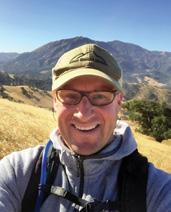
Edward Sortwell Clement, Jr. Executive Director, Save Mount Diablo
Thanks to your generosity and love of Mount Diablo and its Diablo Range, Save Mount Diablo successfully advanced its land conservation mission in 2025; we come into 2026 with great momentum. Your support is making a big difference, and we are so grateful for you!
Here are just a few examples of some of the many conservation accomplishments you helped us achieve recently:
• Acquired the 98-acre Ginochio Schwendel Ranch next to other land we own and Marsh Creek;
• Paid off the mortgage on the 10-acre Balcerzak inholding property within Mount Diablo State Park;
• Acquired the 5-acre Nunn-Paulsen inholding within Mount Diablo State Park;
• Formed a working group of leading conservation organizations; together we helped get a new law passed that will improve California State Parks’ ability to acquire land;
• Made our next-to-last payment to protect the 88.5-acre North Peak Ranch contiguous with Mount Diablo State Park and other lands we have conserved;
• Won an important CEQA lawsuit against the City of Dublin in the defense of open space and an essential Urban Limit Line;
• Held the first annual Diablo Range Convening in San
Benito County, with 150 people registered representing over 60 organizations, agencies, and tribes;
• Got the California Assembly to approve our Diablo Range Resolution that recognizes the range as an official California conservation priority and critical to the success of the state’s 30x30 initiative;
• Helped stop a misguided proposal from the current administration to sell off millions of acres of public lands, including over 200,000 acres in the Diablo Range;
• Opened 1.7 miles of new public trails at our Curry Canyon Ranch, which brings our total to over seven miles of new public trails created in the last few years; and
• Provided 52 educational events to well over 1,000 participants through our programs (Discover Diablo, Diablo Conservation Experience, Young Diablo Explorers, etc.).
With your ongoing support in 2026, we look forward to delivering more important accomplishments, including California Senate approval of our Diablo Range Resolution, California State Parks acquiring the first new property for Mount Diablo State Park in almost 20 years, the second annual Diablo Range Convening, opening more public trails, acquiring new lands, and more.
With Gratitude,


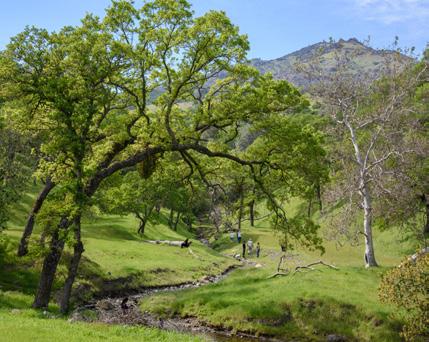

Expanding California’s State Parks Save Mount Diablo helps pass new law, clearing roadblocks for state park land acquisition
Field Trips Inspire and Rejuvenate Local Youth
fall camp steeps kids in nature
First Steps to a Flourishing Community
Charla Gabert and David Frane
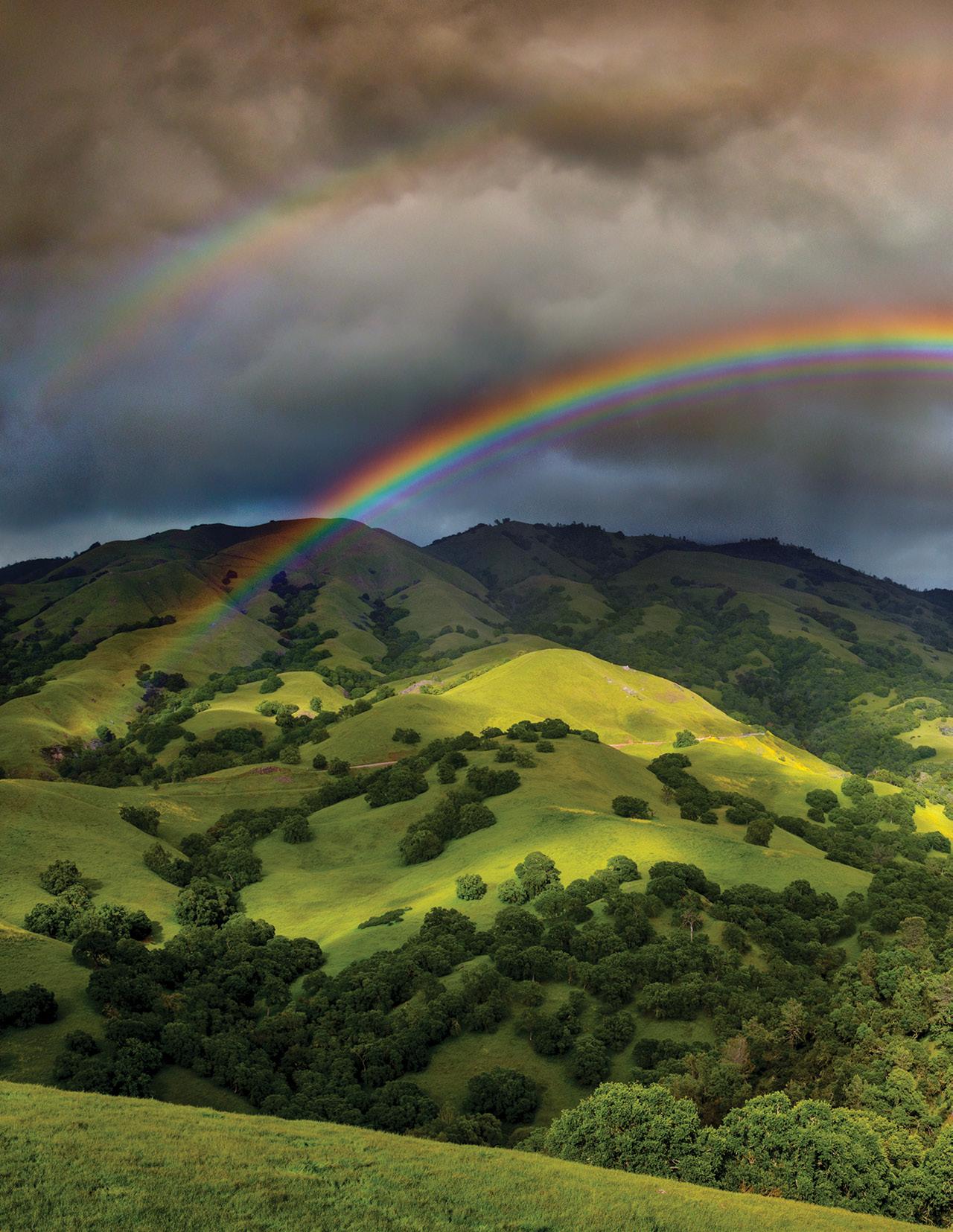
Tributes ON THE COVER : A rainbow stretches over Mount Diablo State Park. As a result of our work and the work of our partners, California State Parks is now able to acquire qualifying lands more efficiently. COVER PHOTO: STEPHEN JOSEPH
Save Mount Diablo helps pass new law, clearing roadblocks for state park land acquisition
By Mary Nagle
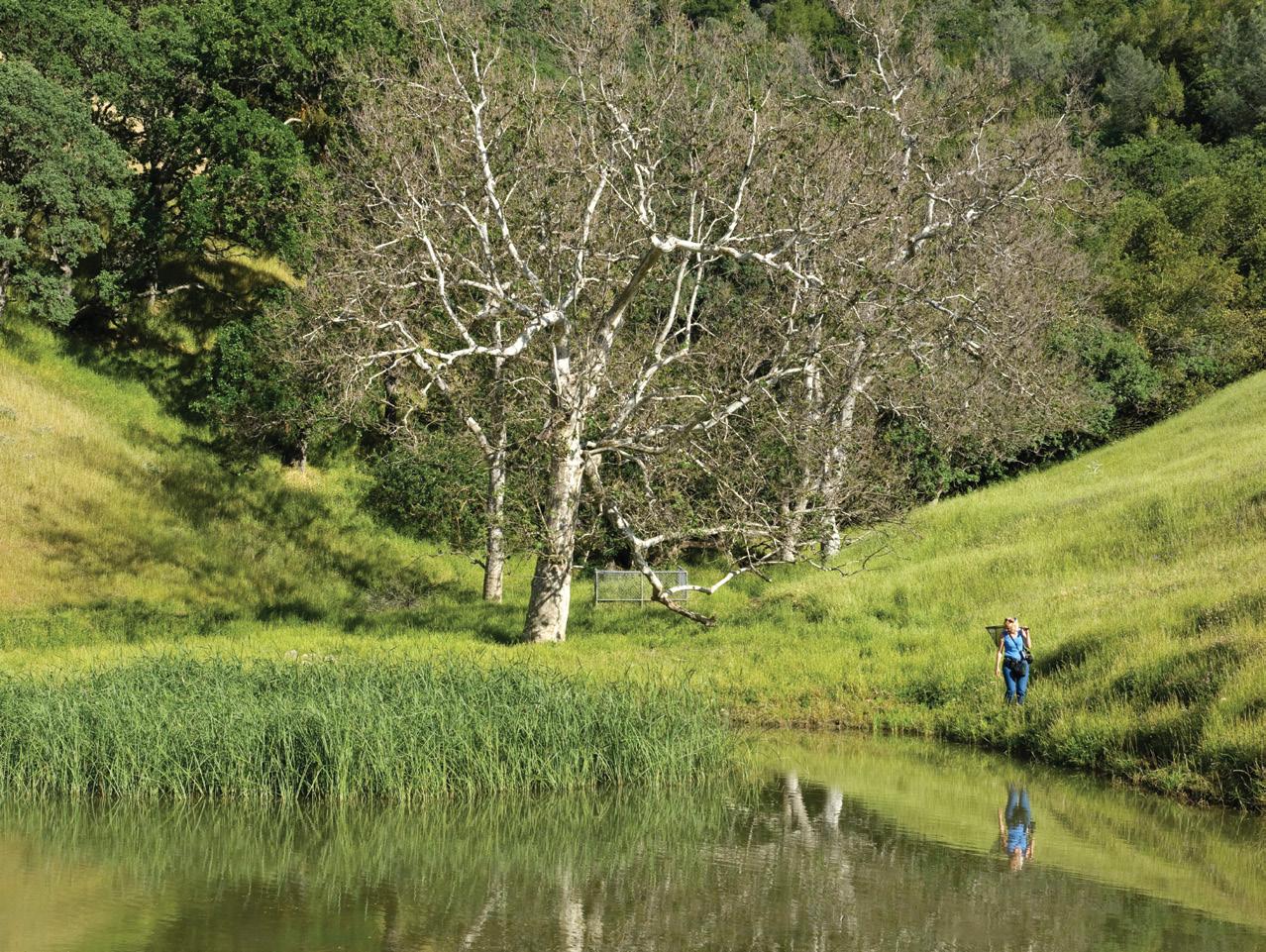
On February 26, the California Wildlife Conservation Board approved grant funding that enables the East Contra Costa County Habitat Conservancy to accept parts of Save Mount Diablo’s Curry Canyon Ranch. Parts of Curry Canyon Ranch could be transferred to Mount Diablo State Park soon.
Mount Diablo State Park hasn’t added a new property in nearly 20 years, since 2007. This year, that could change thanks to the passage of Senate Bill (SB) 630, which was signed into law on October 13, 2025.
AS OF JANUARY 1, California State Parks no longer needs the approval of other agencies to acquire land for existing state parks when the payment does not exceed $1 million.
This is a huge game changer for the California State Parks system. California will be getting more state park land very soon!
Save Mount Diablo has multiple properties that could be added to Mount Diablo State Park, all of which share a border with the state park and two of which are inholdings within the park.
The new streamlined process, made possible by SB 630 being signed into law, will cover most, if not all, of the protected properties that we’re hoping to see added to Mount Diablo State Park.
In the near term, we are focused on the following projects: the CEMEX property, Viera–North Peak, parts of Curry Canyon Ranch, and the Balcerzak inholding property. With time, there are many other properties we will also work to add to Mount Diablo State Park with the assistance of the new law (Krane Pond, Lot 25, North Peak Ranch, Nunn-Paulsen inholding, Young Canyon, etc.).
Reducing management burdens by securing strategic inholdings Additional progress we’ve made to help California State Parks’ land acquisition efforts involves two strategic inholdings within Mount Diablo State Park.
Inholdings are usually acquisition priorities for California State Parks
because the land is surrounded by state park land.
If a private landowner was a poor steward of their inholding (for example, by allowing it to be overdeveloped, overgrown with invasives, or littered with trash), that could negatively impact the state park land all around it.
Back on August 8, 2023, despite competition on the open market from people who wanted to buy this beautiful inholding, Save Mount Diablo was able to successfully acquire the 10-acre Balcerzak inholding property.
We purchased the land for $1.075 million via a two-year, interest-only loan to cover half the purchase price.
On September 2, 2025, we completed payments on the Balcerzak inholding, a long-time acquisition priority for California State Parks, by paying off the $537,500 mortgage early. Our organization now owns the property free and clear.
And on December 2, Bob Nunn generously donated the NunnPaulsen inholding, another strategic parcel, to us in honor of his father (see article on the following pages).
A couple years ago, Save Mount Diablo started a working group to help support California State Parks’ land acquisition program.
The working group included Save Mount Diablo, Save the Redwoods League, Peninsula Open Space Trust, Sempervirens Fund, Sonoma Land Trust, California State Parks Foundation, and other
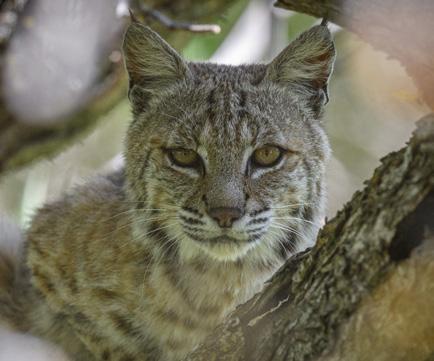
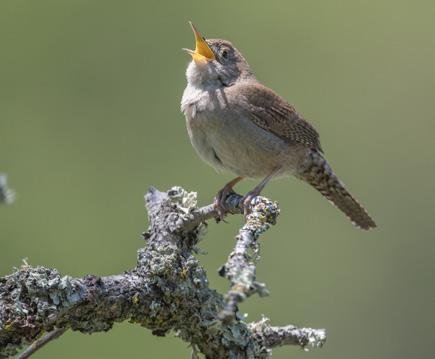
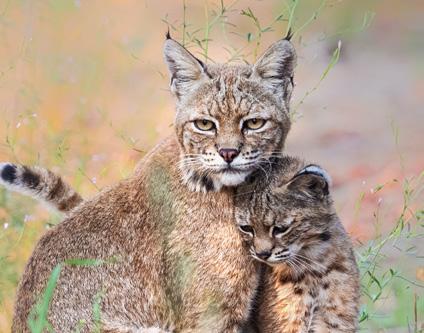
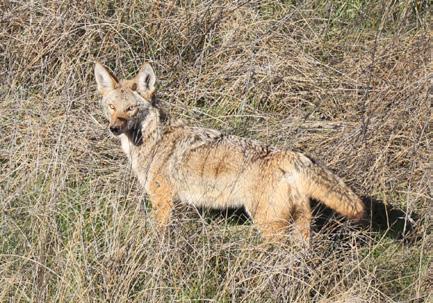
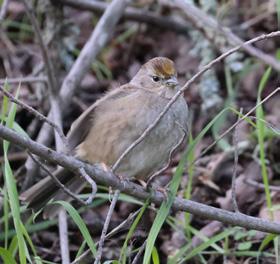
Bobcat at our Curry Canyon Ranch. Below: House wren at our Smith Canyon property. The new state law we helped pass will make it easier to add our lands to Mount Diablo State Park in the near future.
conservation organizations.
This working group provided testimony, wrote letters of support, traveled to Sacramento to speak with key elected officials and lobbyists, and held numerous coordination meetings with the new head of California State Parks’ land acquisition program.
Ted Clement, Save Mount Diablo Executive Director, stated, “Save Mount Diablo started a working group of wonderful land trusts and conservation organizations to help our partner, California State Parks, advance its land acquisition program. Together, we helped get Senate Bill 630 (SB 630) signed into law in October 2025. This new law will do much to expedite qualifying land acquisitions for state parks and thus help the state better meet its 30x30 goals and efforts to connect people to nature.”
He went on to share, “It has been almost 20 years since state parks acquired a new property for Mount Diablo State Park. However, with this new law, we have growing optimism that we will be able to help California State Parks acquire a new and strategic property for Mount Diablo State Park before year-end.”
Now, we’re working in partnership to transfer land to Mount Diablo State Park. We may see the first new piece of land added to Mount Diablo State Park very soon!
The incredible impact of SB 630 will spread far beyond Mount Diablo
State Park. It will help conservation organizations throughout the state expedite the addition of protected land to existing state parks.
This year, we were invited to speak on a panel at the California Council of Land Trusts annual conference in Sacramento to inform other land trusts about the ways SB 630 will help them get land they own added to existing state parks.
We are honored to continue our work supporting California State Parks by conserving land that will be added to Mount Diablo State Park, and by advocating for processes that will help strengthen and expand all of California’s state parks.
The new law that Save Mount Diablo championed means that land can be added to Mount Diablo State Park much more easily. In the near term, we will focus on adding 1. CEMEX
2. Parts of Curry Canyon Ranch
3. The Balcerzak inholding
4. Viera–North Peak
In the longer term, some of the properties we plan to transfer include
5. The Nunn-Paulsen inholding
6. Young Canyon
7. North Peak Ranch
8. Krane Pond
9. Lot 25
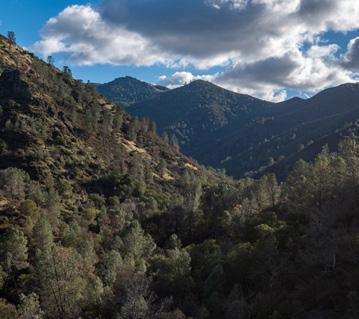
10-mile stretch of parks and preserves, and key 2.5-mile wildlife corridor, strengthened
By Emily Sherwood
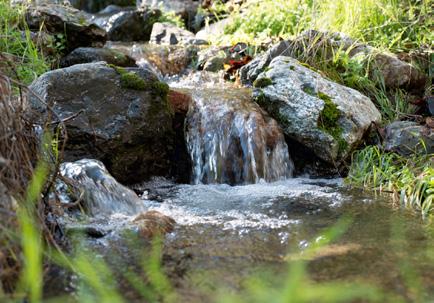
Until recently, Mount Diablo State Park had a concerning vulnerability: five acres of the mountain, within the state park, were privately owned and at risk of development. Known as the Nunn-Paulsen inholding, this property, a rugged, biodiverse gem laced with seasonal waterfalls, was one of the last remaining inholdings in the state park.
THE OWNER, BOB NUNN, had removed the property’s existing house and was considering a new structure. Then his father, Ron, passed away.
Ron Nunn was a Brentwood icon, and the Nunn family name has often been associated with land, from farming in the 1800s in Brentwood, to supporting Brentwood’s agricultural community, to conservation-development projects, oil and gas exploration, and support of the East Contra Costa Historical Society.
Bob Nunn decided to honor his late father by donating the entirety of the property to Save Mount Diablo. This incredible donation protects not just the inholding itself but also offers safety to the surrounding park land that could have been affected by potential mismanagement of the property by a new owner.
Bob’s generous gift is even more important considering the property’s location at the foot of Mount Olympia
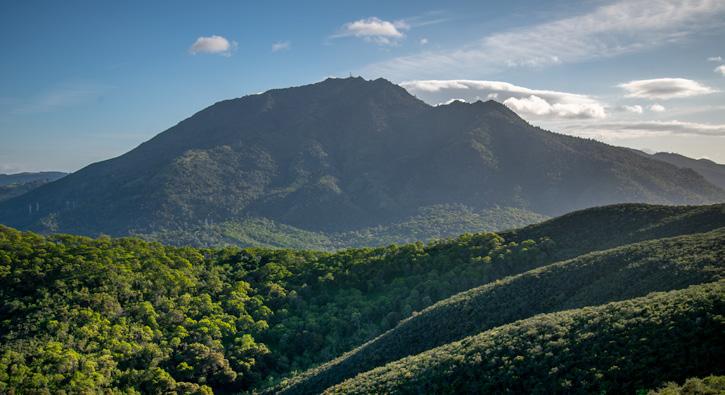
and North Peak. This area, near Three Springs and facing Chaparral Spring across Marsh Creek, leads into an important wildlife corridor between Mount Diablo State Park and Black Diamond Mines Regional Preserve. This wildlife corridor stretches across 2.5 miles and five individual ridges. It contributes to a 10-mile expanse of protected land, from the southern end of Mount Diablo State Park to the northern end of Black Diamond Mines.
That protected corridor, created by a series of protected properties strung together, preserves wildlife’s ability to safely move between essential territories for food, water, and breeding grounds.
The individual properties have been purchased over many decades to create a protected corridor through a partnership among Mount Diablo State Park, the East Bay Regional Park District, and Save Mount Diablo. Some lands
Save Mount Diablo and our partners have worked for many years to protect the wildlife corridor between Mount Diablo State Park and Black Diamond Mines Regional Preserve, and beyond to Thurgood Marshall Regional Park. Some of the lands were purchased by Save Mount Diablo, and others were acquisitions made by the East Bay Regional Park District that we supported. The corridor was protected piece by piece. Some of its projects include
1. Chaparral Spring (purchase)
2. Clayton Ranch (part 1)
3. Clayton Ranch (part 2)
4. Clayton Ranch (part 3)
5. Rummel Brown
6. Lentzner
7. Irish Canyon (purchase)
8. Chaparral Spring (transfer to East Bay Regional Park District)
9. Ang (also known as Eastern)
10. Irish Canyon (transfer to East Bay Regional Park District)
11. Barron
12. Corrie
13. Thomas South and Thomas Central
14. Thomas Home Ranch
15. Young Canyon
16. Concord Mt. Diablo Trail Ride Association (conservation easement)
17. Krane Pond
18. North Peak Ranch (in progress)
The Nunn-Paulsen inholding represents one more step to conserving Mount Diablo State Park and the wildlife corridor between the park and Black Diamond Mines Regional Preserve.
The Nunn-Paulsen inholding is rugged, crossed by many seasonal waterfalls, and harbors very high biodiversity.
“Bob Nunn was an early partner in land conservation, selling 78 acres of his 83-acre property to Save Mount Diablo back in 1992.”
were directly acquired by California State Parks, some by the regional park district, and some by us.
Bob Nunn was an early partner in land conservation, selling 78 acres of his 83-acre property to Save Mount Diablo back in 1992. This land became Three Springs, part of Mount Diablo State Park. It was closely followed by Chaparral Spring, the first corridor land acquisition, which has bloomed into a wildlife oasis since being protected by Save Mount Diablo in 1994.
Later, Young Canyon (2006) and all its dazzling biodiversity was added to the corridor, followed by the breakthrough purchase of Irish Canyon (2007), 320 acres containing oak woodland, hundreds of species, and a permanent pond.
A conservation easement protecting 154 acres of land owned by the Concord Mt. Diablo Trail Ride Association was
finalized in 2022, followed by purchase of the Krane Pond property, a crucial water source for wildlife, in 2023.
Save Mount Diablo also signed an option agreement in 2015 to protect the 88.5-acre North Peak Ranch, and we’ll close escrow and complete the purchase of the land in late 2026 or early 2027.
The Nunn-Paulsen inholding represents one more step along the path to protecting and improving Mount Diablo State Park and the vibrant wildlife corridor that stretches from it to Black Diamond Mines Regional Preserve for future generations.
Wildlife that lives on and around Mount Diablo is supported by the ecosystems that surround the mountain, so the Nunn-Paulsen property is an important part of the whole.
Additionally, many lands in or adjacent to Mount Diablo State Park are now eligible for quicker integra-
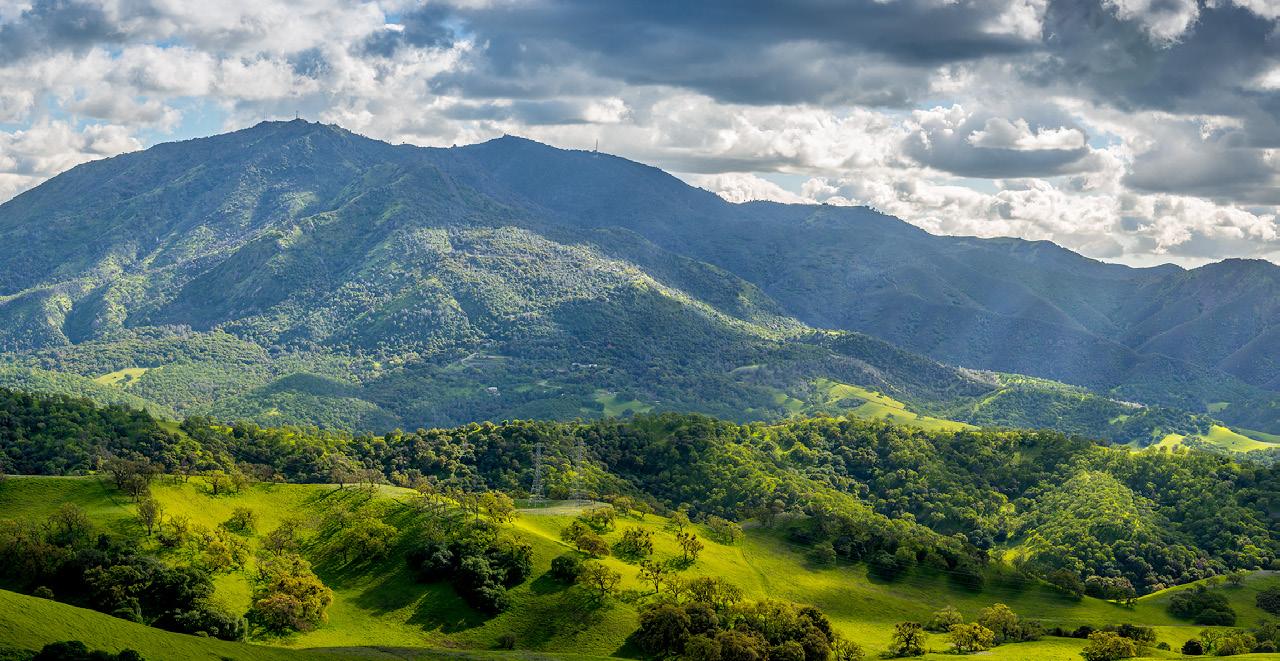
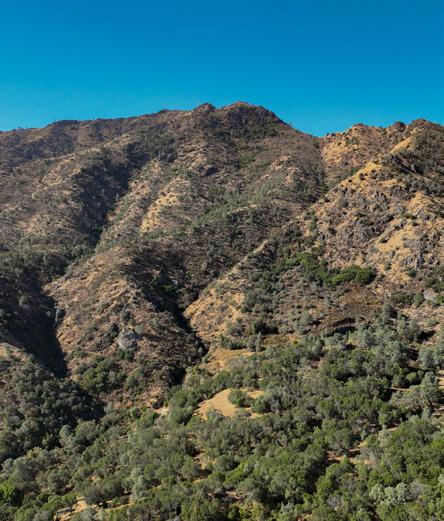
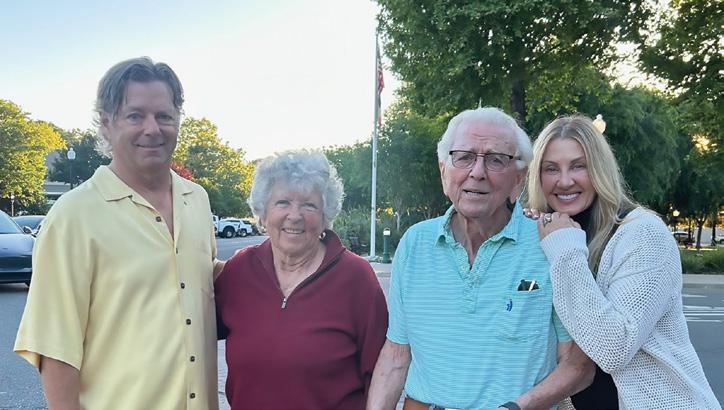
Above: The Nunn family, including Bob and Ron Nunn. Below: View of the slopes of North Peak, where the Nunn-Paulsen inholding is found, from Clayton Ranch— part of the wildlife corridor that connects Mount Diablo State Park and Black Diamond Mines Regional Preserve.
tion into Mount Diablo State Park. Save Mount Diablo helped pass a new law, Senate Bill (SB) 630, which now allows California State Parks to skip the multi-agency approval process for adding lands with acquisition costs of $1 million or less to existing state parks (see article beginning on page 4).
Passage of the law frees up numerous possibilities for California State Parks, including Mount Diablo State Park.
Mount Diablo, although not completely protected yet, is well on its way. Land conservation takes years, often decades, but is well worth the effort. Save Mount Diablo is extremely grateful to Bob Nunn and all the generous individuals who help make this dream a reality, one step at a time. •

watch our video about protecting the NunnPaulsen inholding and the wildlife corridor between Mount Diablo State Park and Black Diamond Mines Regional Preserve at bit.ly/mdspcorridor.
Corps members donate more than 1,000 hours to restore Knobcone Point
By Sean Burke
TEAMWORK IS EVERYTHING. For many years, Save Mount Diablo has been working with California State Parks, the East Bay Regional Park District, the East Contra Costa County Habitat Conservancy, California Department of Fish and Wildlife, Cal Fire, and others to create a lasting benefit for life as it exists on the land.
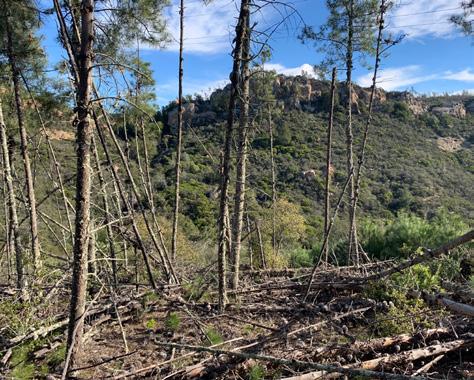
During the winter of 2021, we all noticed a need to focus our collective efforts on the Knobcone Point area of Mount Diablo, because it
showed intense impacts of climate change–related stresses on numerous species like knobcone pine, Mount Diablo manzanita, and Contra Costa manzanita. Tens of thousands of plants were injured or had died because of these impacts.
Quickly, as a team, we mobilized to further understand the causes and began taking next steps to help the land.
In January and February of 2026, the California Conservation Corps
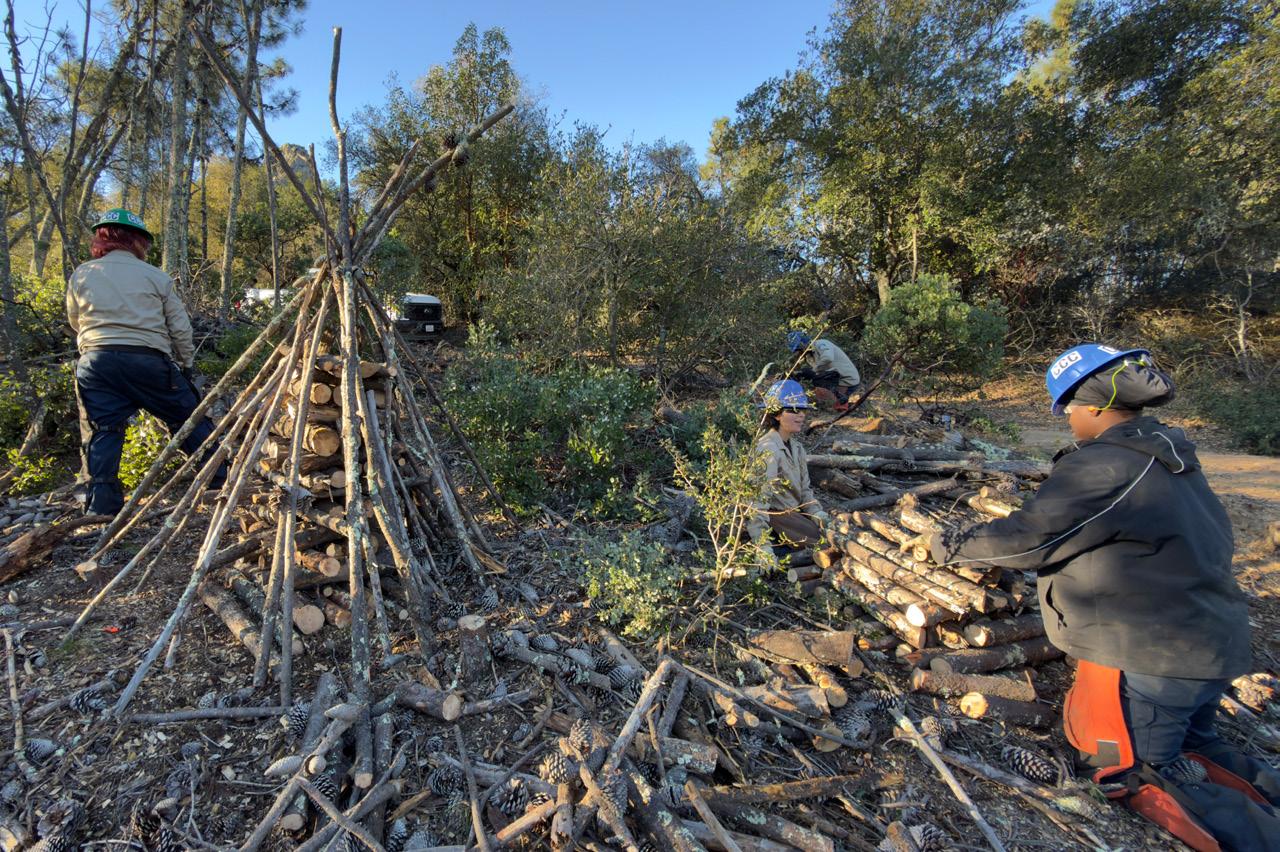
came to the rescue. Powered by Greenhouse Gas Reduction Fund monies, the corps donated two eightday work weeks (spikes) to Save Mount Diablo. They brought 10 workers to help with thinning dead material in the Knobcone Point area, creating burn piles for future pile burns.
Every morning before sunrise, the crew would rise and get to it. Our stewardship team had the opportunity to work with them for a few days; this was one of the strongest and most positive groups of people I have ever been around while working in a very technical and physically difficult environment.
Building burn piles is no easy task. The material needed to be cut to size, but first, it needed to be untangled from the other downed trees that all fell together. It’s as if a giant game of pickup sticks happened simultaneously, and we were there to untangle them.
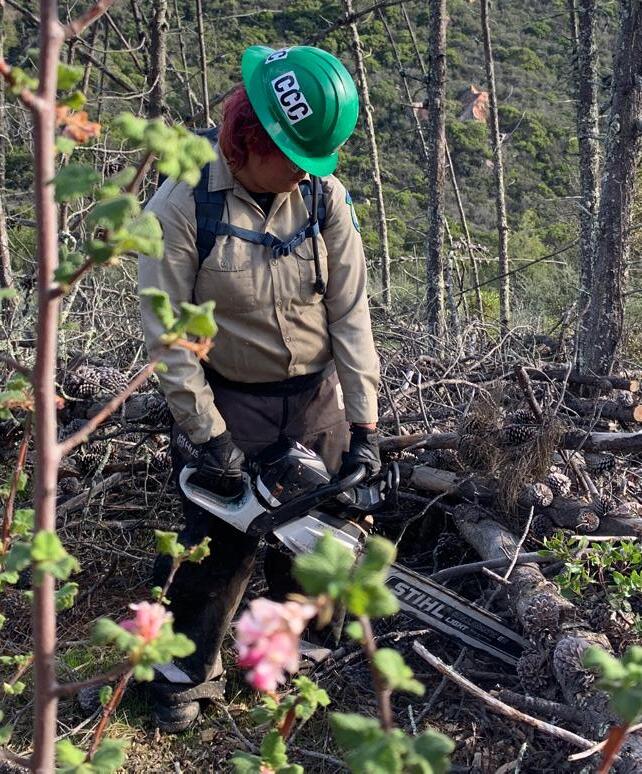
The tangled trees became 4-foot-tall teepees of neatly stacked and cleaned timber. Each piece had to be cleaned of all the pinecones that were festooned to the trunks and branches of the trees and then laid together according to size to create a solid foundation to support the teepee or burn pile. Together, an entire team of welltrained, connected, and supportive individuals achieved the goal of applying this prescription to the focus area.
The California Conservation Corps members are future leaders. Working with them in the hills one morning, I was able to see how closely these partners work with one another, sharing time on the saw, cleaning debris from branches, moving material based on size, and building and stacking piles. The positive attitude that everyone shared while building for the next step in the burn process ignited my understanding of what teamwork and leadership in the
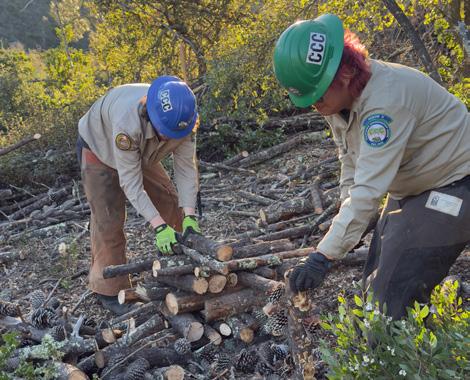
conservation field really could look like. For the California Conservation Corps members, their leadership song seems to be truly enjoying the process of facilitation, so that big dreams can be realized, like bringing sacred fire back to the landscape.
In the two weeks that the corps members worked with us and California State Parks in the Knobcone Point area, teams worked to stack material north of the PG&E utility road, and on the upper reaches of Knobcone Point Road. The team built about a hundred piles to add to the piles that California State Parks and Civicorps have also built in the area.
All this work is directed by a joint plan that Save Mount Diablo shares with Mount Diablo State Park to thin material in the area for a vegetation treatment program that guides management.
With more than 1,000 hours logged by the California Conserva-
tion Corps during the project (equivalent to one employee working for six months), a tremendous amount of preparation and good work has been achieved for the mountain, moving all of us much closer to the goal of helping our local environment in a lasting and impactful way.
It has been an absolute honor to work with the California Conservation Corps for us at Save Mount Diablo, because they embody teamwork at the highest level—not only because they helped us complete some great work, but because they are a powerful and humbling reminder that we all have a place as a caretaker for our lands. Through teamwork across boundaries, we can begin to remember the definitions of human being, stewardship, and reciprocity. Teamwork makes the dream work, and together we need to be the team for our mountain and our planet. •
We’re confident that we’ll win again in the next round
Judge affirms our victory against Measure II, defending open space between Dublin and Livermore, but developer appeals
By Juan Pablo Galván Martínez
SAVE MOUNT DIABLO and our allies achieved another victory against developers’ Measure II! On November 19, 2025, the court confirmed that Dublin violated the C alifornia Environmental Quality Act (CEQA) by not putting Measure II through environmental review before putting it on the November 2024 ballot.
Measure II would have broken Dublin’s Urban Limit Line that we helped create in 2014.
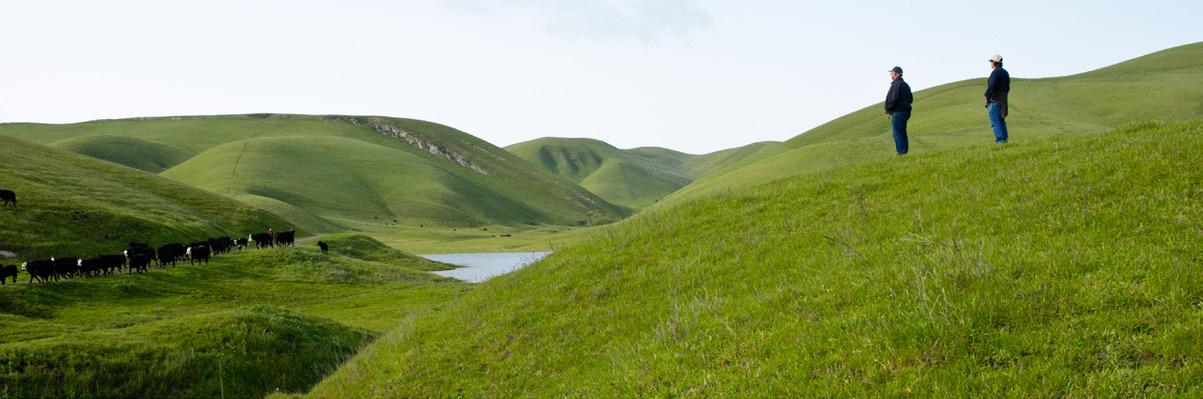
It would have granted the city authority to approve up to 80 acres of commercial development on the Crosby property, outside the Urban Limit Line. Opponents, including Save Mount Diablo, Friends of Livermore, and the Tri-Valley Conservancy, launched a strong campaign against Measure II. We argued the measure was misleading and would increase traffic, worsen pollution, and destroy the greenbelt between Dublin and Livermore.
For Livermore, the commercial development was of particular concern, as it would encroach on the buffer zone both cities had long
recognized. Despite the opposition, Measure II passed in November 2024 with 53 percent of the vote.
But we always had a backup plan and promptly filed a strong lawsuit.
Under CEQA, major land use changes, like ones that could result in warehouses and truck traffic, require a study of potential environmental impacts.
The court rejected the City of Dublin’s argument that there was no causal connection between Measure II and future environmental impacts of commercial development, pointing to the evidence we provided to show that Dublin and the owners of the Crosby property demonstrated their intent to develop commercial uses.
We proved that putting Measure II on the ballot without environmental review violated CEQA and, as a result, the election was invalid. The Crosby property can’t be developed commercially, spectacular lower Doolan Canyon remains protected, and the Dublin Urban Limit Line, which the
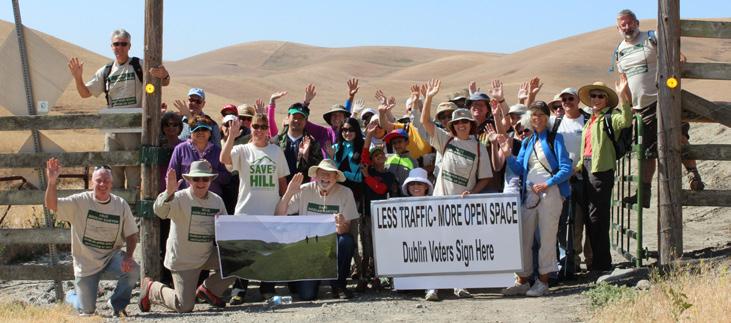
City of Dublin was trying to break, is intact again and defending the greenbelt between Dublin and Livermore.
Unfortunately, the company that wants to develop the Crosby property has appealed our victory, prompting another round of litigation. However, we’re confident that we’ll win again. It just delays things and raises the cost.
After beating the appeal, the best outcome will be renewed discussions by Dublin and Livermore about completing a smaller Dublin Boulevard connection to improve circulation, without commercial development on the Crosby property.
If Dublin wants to put Measure II back on the ballot, they will need to comply with CEQA.
In August 2025, a big conservation win was achieved when the Tri-Valley Conservancy, in partnership with the Natural Resources Group, completed a landmark 1,168-acre conservation easement in Doolan Canyon. That protected land is in addition to a square-mile Doolan Canyon Regional Park and several other conservation easements, solidifying a wildlife corridor and preserving the greenbelt buffer between Dublin and Livermore.
These fantastic conservation gains would not have happened without our big land use victory in 2014. The path has been contentious, but the ongoing commitment to conservation ensures that a significant portion of this valuable natural landscape will remain for future generations. •
PHOTOGRAPHY: SCOTT
New fall camp steeps kids in nature
By Kendra Smith
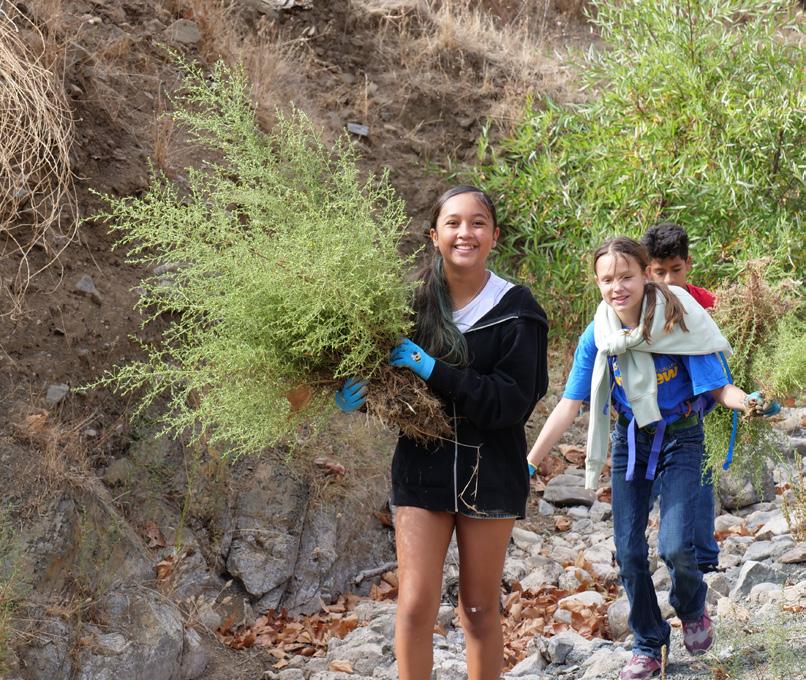
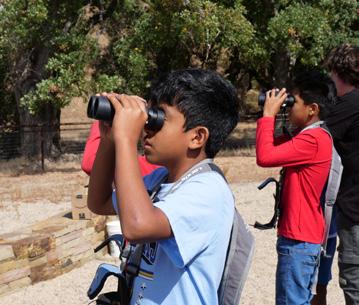
IN OCTOBER, Save Mount Diablo welcomed Mount Diablo School District students for a full week of exciting nature discoveries at two of our protected properties: Mangini Ranch Educational Preserve and Curry Canyon Ranch.
During these new fall field trips, young people immersed themselves in local landscapes, observed intriguing wildlife, and refreshed their spirits by building meaningful connections with the land.
At Mangini Ranch, students from Westwood Elementary School and Holbrook Language Academy explored the hillsides while learning to identify native plants and trees
such as valley oak, blue oak, coast live oak, California buckeye, California sagebrush, and poison oak.
After lunch at our pavilion, students spread out across the landscape to observe and draw something that caught their attention. This quiet time for reflection encouraged close observation, and several students later shared their insights with the group. As they hiked back along the Desert Olive Trail, students examined animal tracks and scat, uncovering evidence of coyotes and wild pigs and reinforcing discoveries about wildlife that inhabits the preserve. Field leaders checked in along the way, asking students to recall the plants they had learned about earlier in the day—many did so with confidence.
The learning continued at Curry Canyon Ranch, where students from El Dorado Middle School, Riverview Middle School, and Oak Grove Middle School experienced a different side of Mount Diablo’s landscape. Following the mostly dry bed of Curry Creek, students examined the creek’s geology and observed aquatic life surviving in the few remaining pools of water.
This exploration led naturally into a hands-on stewardship project, as
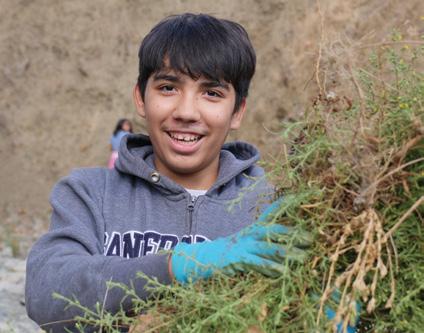
In recent months, Save Mount Diablo brought more than 500 kids outside. Our new week-long fall camp, where kids assisted in restoration projects and learned about local wildlife, was a big success!
students worked together to remove invasive stinkwort from the creek bed. By filling numerous contractor-sized trash bags with the fragrant plant, students gained a tangible understanding of how invasive species can disrupt local ecosystems.
In the afternoons, staff guided them up to the pond area, where they used binoculars to examine various birds, hiked the surrounding hillsides for sweeping views of Mount Diablo, and interpreted the scenery in plein air painting. These activities encouraged students to slow down, look closely, and express their understanding of the landscape through art and observation.
Spring field trips empower nature study and creative expression
Pittsburg High School and Campolindo High School students are returning this spring to Mangini Ranch for interpretive hikes, contemplative solo experiences, and stewardship projects that encourage critical thinking and environmental responsibility through our Diablo Conservation Experience program.
Save Mount Diablo is also hosting San Ramon Valley Christian Academy for a Young Diablo Explorers field trip featuring a guided hike and the Interconnected Web Story curriculum, developed by staff and volunteers to share the plants, animals, and cultural history of the Mount Diablo region with younger kids.
Through these field trips, students experience nature through scientific inquiry, creative expression, and personal reflection. With the support of our community and partners, Save Mount Diablo continues to provide educational outdoor experiences that inspire stewardship and foster lasting connections to the natural world. •
Its incredibly unique beauty is irreplaceable
By Steven dePaschalis
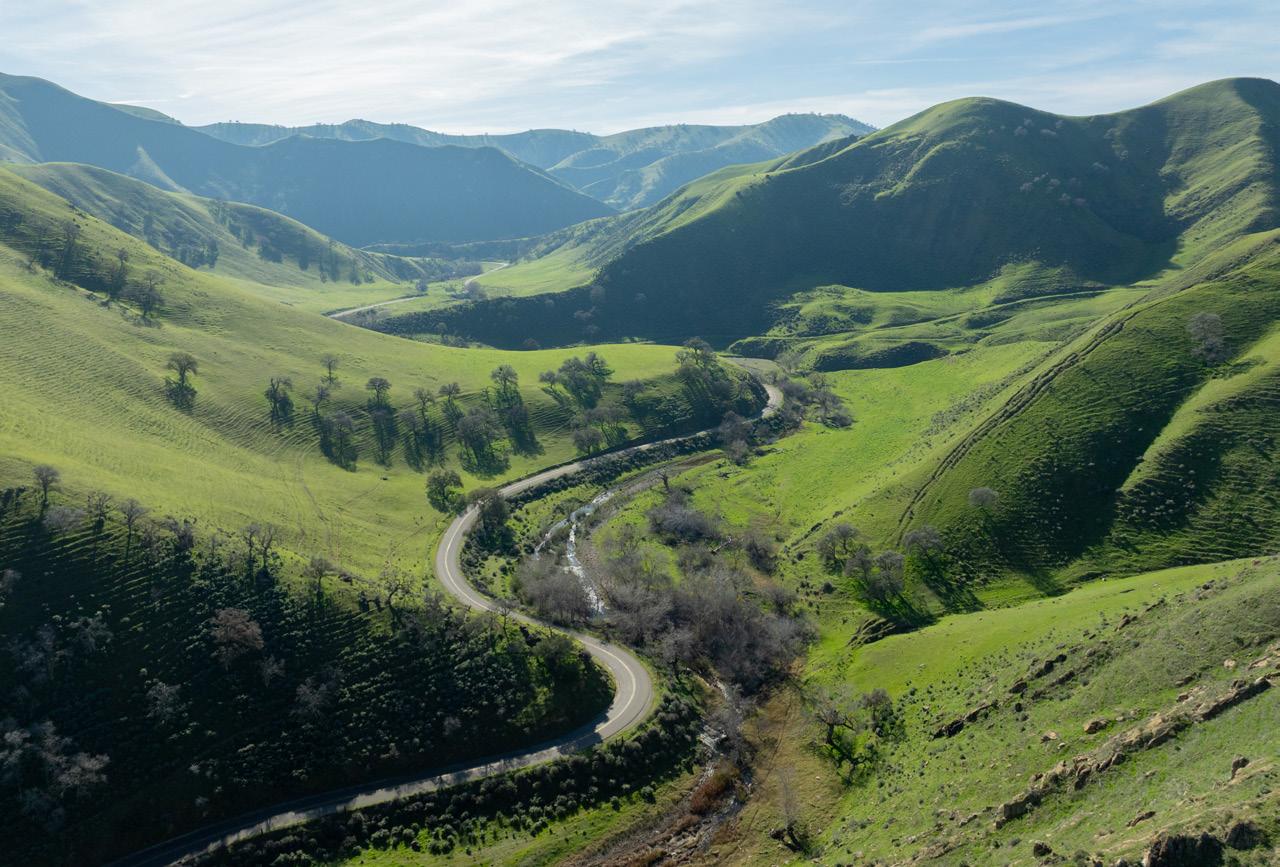
Del Puerto Canyon is beloved and frequently visited by local residents for picnics, scenic drives, and hiking. The City of Patterson has approved plans for a nature park near the canyon’s entrance. But the canyon is threatened by a ridiculous, over-priced proposal to build a dam and reservoir.
"Leave it as it is. . . . The ages have been at work on it, and man can only mar it."
—Theodore Roosevelt
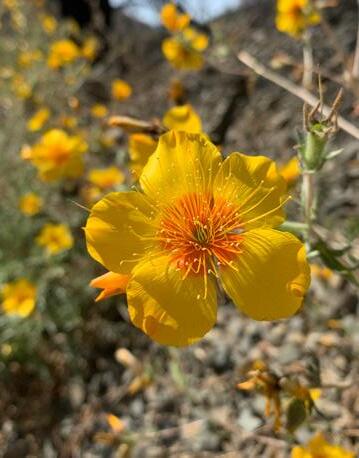
DRIVING INTO DEL PUERTO CANYON is like entering into a time machine. Besides being one of the most remote, rugged, and out-of-this-world landscapes you can find west of Interstate 5, the 22-mile canyon connecting the Central Valley to the Bay Area is historic. Ancient Yokuts pathways are carved into the canyon walls along with caves that once served as tombs for their tribal ancestors. Prehistoric rocks make up the canyon’s geology, from old oceanic sediment at the lower elevations to mantle-derived rock, metamorphosed into serpentine— California’s state rock—at the higher elevations. For plant enthusiasts, areas of the canyon with serpentine provide
jaw-dropping opportunities to see rare California native wildflowers.
This is just a glimpse of what could be lost if the Del Puerto Reservoir project, an insanely expensive, environmentally destructive, and unnecessary $1.2 billion reservoir proposed by the Del Puerto Water District, is approved. The reservoir, still in the planning process, would entirely inundate the first five miles of the canyon.
Del Puerto is one of the top 10 biodiversity hotspots in the Diablo Range. Its vicinity to protected lands like San Antonio Valley Ecological Preserve to the south and Frank Raines Regional Park, a county park right within the canyon, makes it a
PHOTOGRAPHY: COOPER OGDEN, HALEY SUTTON



nonnegotiable landscape to preserve.
The canyon feels like an alien planet. Its volcanic rock outcroppings give the impression of a Martian surface, contrasted beautifully by Del Puerto Creek, the nearly year-round water source that flows through the canyon. With temperatures in Del Puerto often reaching triple digits in the summer months, the creek doubles as an oasis for dozens of mammals, reptiles, and nearly 200 documented bird species—a paradise for birders.
Del Puerto is for everyone, including its animals. The world’s largest population of nesting golden eagles forage in the grassland and woodland. Beavers build dams in Del Puerto Creek. Tule elk, mountain lions, and so many other creatures call this place home, including recently sighted California condors. Save Mount Diablo confirmed the incredible biodiversity of the canyon during our BioBlitzes from 2021 through 2023.
Local officials of the nearby City of Patterson recognized the canyon’s beauty and importance years ago, hoping to establish a world-class regional park near its entrance. As part of the city’s recreation master plan, a nature park with trails and recreation opportunities was approved by city officials. As a location already so loved and frequently visited by local residents for picnics, scenic drives, and hiking, the increased access to open space seems like a no-brainer.
However, the incredibly unique beauty of the canyon and plans for a park are under serious threat from the proposed reservoir.
Del Puerto Water District is spearheading the project, an agency that serves an agricultural customer base and does not provide drinkable water to its service area in the San Joaquin Valley.
Eight hundred acres of essential wildlife and plant habitat would be lost within the canyon, while the storage
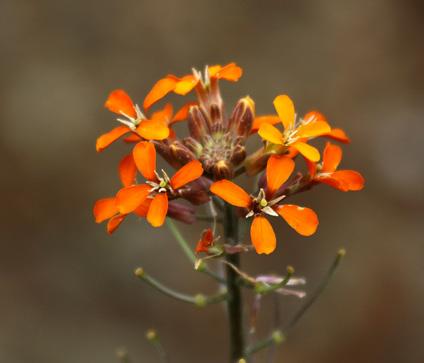
Del Puerto Canyon is one of the top 10 biodiversity hotspots in the Diablo Range, home to nearly 200 species of birds and many species of native plants and animals that reach their northern limit there. Clockwise from top: golden eagle, sanddune wallflower, and burrowing owl.
capacity of the reservoir, 82,000 acrefeet, could flood an area 25 times the size of nearby Patterson under a foot of water. Meanwhile, the earthen dam that would be constructed is located directly next to the seismically active San Joaquin fault line.
The project cost is already skyrocketing, increasing 300 percent since 2019, from $400–500 million to $1.2 billion, driven not only by the reservoir itself but also by the need to relocate and build new portions of Del Puerto Canyon Road that threads through the canyon—State Highway 130 to San Jose. The steep and rugged terrain of the landscape will make the road relocation especially challenging, with costs likely largely underestimated.
We’ve been working hard with our partners to respond to each environmental report analyzing the project, opposing its construction at every step while conducting outreach to residents of Patterson and greater Stanislaus County to create grassroots opposition to the reservoir.
Expert biological analysis supported by Save Mount Diablo revealed significant environmental impacts that were not previously listed by the water district involving special-status species, altered creek flows, and widespread impacts to the riparian environment in Del Puerto Creek.
Our remaining wild landscapes are finite and precious. If Del Puerto is flooded, a new canyon cannot be constructed. What was crafted over millions of years would be forever lost in the blink of an eye.
To quote Theodore Roosevelt, “Leave it as it is. . . . The ages have been at work on it, and man can only mar it.” The canyon should be preserved; Del Puerto should be a park and ranchlands! •
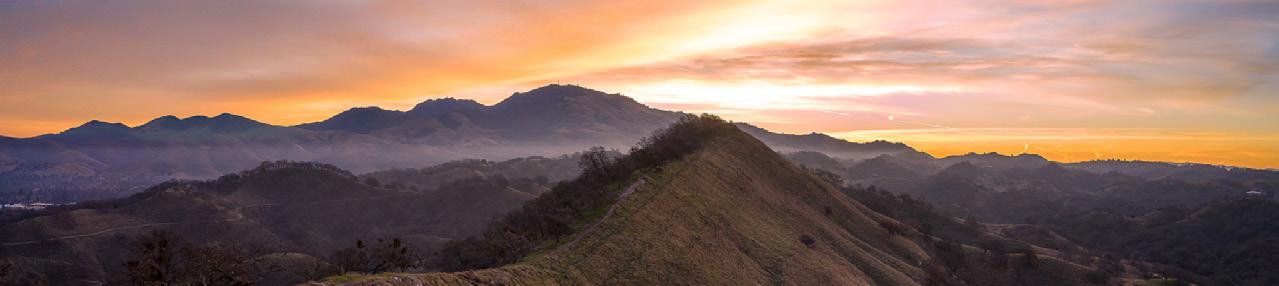

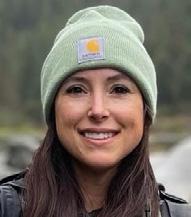
Our new Development Director, Shauna Whidden, comes to us with over 30 years’ experience working in the nonprofit sector. Passionate about doing good in the world, she has served as an attorney, specializing in natural resource conservation policy, and as a fundraiser and philanthropic advisor. Most recently, she worked for the Self-Realization Fellowship as founding director of their Department of Philanthropic Planning. Prior to that, she held leadership positions in fundraising at the University of Oregon, the National Audubon Society California, and Saint Mary’s College of California. Shauna received her juris doctorate from Lewis & Clark Law School, and her bachelor’s degree in international environmental studies from Evergreen State College. A native of the San Francisco Bay Area, Shauna’s lifelong love of nature was nurtured in her childhood during family adventures in the Bay Area’s wild lands, including Mount Diablo. She is delighted and honored to bring her skills and experience to Save Mount Diablo.
Our new Assistant Development Director, Tabitha Gonzalez, is a California native with a lifelong love of the outdoors; she grew up raising animals, exploring local landscapes, and camping with her family. These early experiences sparked her passion for wildlife and conservation. Her professional background includes work in animal care, marketing, and fundraising, giving her a versatile skill set and creative perspective. With more than eight years of experience in nonprofit work, Tabitha is passionate about connecting supporters with meaningful conservation efforts. She lives on a small ranch in Clayton, where she enjoys hiking, mountain biking, photography, creating art, and caring for her animals. Her work reflects a deep commitment to protecting the landscapes and wildlife that have shaped her life.
By Mary Nagle

HOW CAN NORTH AMERICA’S smallest elk, the tule elk, help us in the fight against California’s catastrophic wildfires? How did conservationists give the blunt-nosed leopard lizard a second chance after it vanished from most of its habitat? And why have the squirrels of Briones Regional Park taken such a liking to meat lately?
Last December, more than 100 attendees joined us at our Mary Bowerman Science and Research colloquium to learn about the ecological research we’ve supported up and down the 200-mile Diablo Range.
Eight researchers presented their findings, which will be used to inform conservation, advocacy, restoration, and education work by helping everyone better understand the wildlife and plants of the Diablo Range, and what they need to thrive. •
To make these eight incredible presentations accessible to the public, we’ve uploaded them to our YouTube channel. Use bit.ly/mbsr2025 or scan the QR code to watch them!
By Emily Sherwood
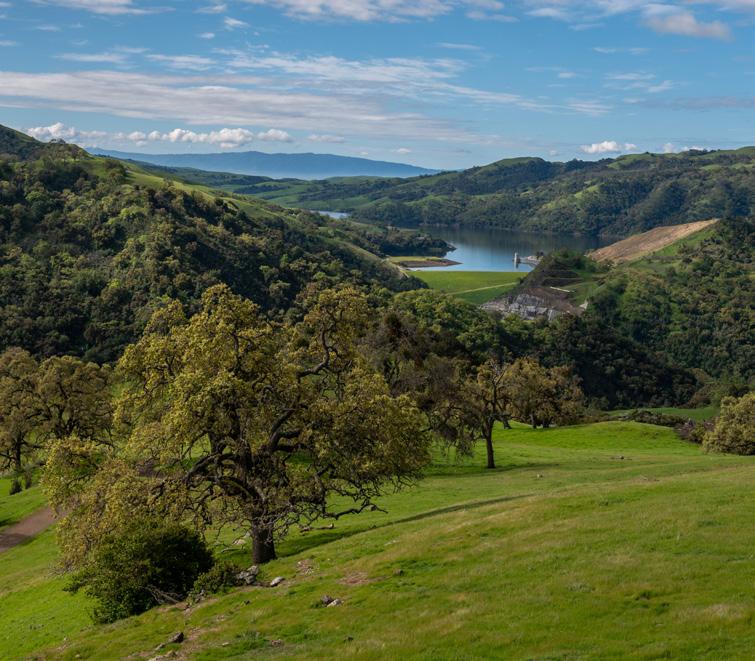
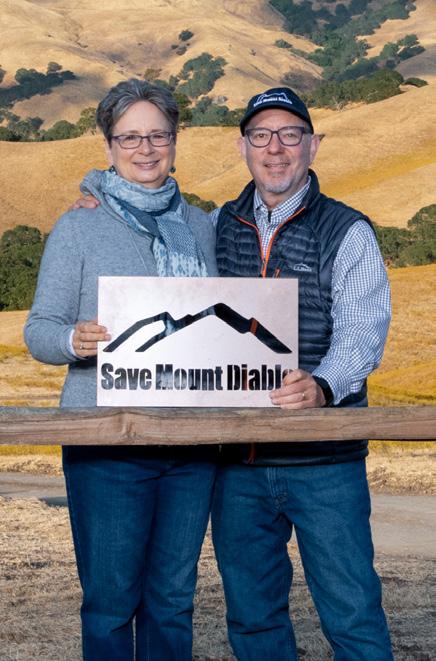
CHARLA GABERT AND DAVID FRANE first moved to California from Boston in 1997 and were delighted to discover the wealth of outdoor opportunities here. “We were both just shocked and amazed by all the local open space for hiking,” Charla recalls.
“When we discovered that Save Mount Diablo had a big hand in preserving it, that just really made an impact and made us want to support it,” she explains.
Thus began an amazing partnership that is as strong today as it was over 20 years ago. Beginning in 2002, David and Charla were first introduced to Save Mount Diablo through a group hike, where they were fortunate to meet Save Mount Diablo co-founder and avid hiker Art Bonwell. “He just left us in the dust,” David chuckles.
From there, David and Charla started to explore ways they could help the small but rapidly growing organization.
They became regular volunteers at Moonlight on the Mountain. You could find David building and repairing many of the displays each year and Charla serving on the Moonlight on the Mountain Committee. One year, Charla says, “All the silent auction items ended up in our living room.”
They have continued to meet everything with enthusiasm—there is no task too small or large.
For example, Charla contributed her considerable marketing expertise as a member of the Development Committee, where she helped to enhance the professionalism and polish of Save Mount Diablo communications.
Charla and David also provided critical financial support at key junctures, such as the acquisition of the Krane Pond and North Peak properties, plus the Forever Wild and Diablo Range capital campaigns.
Their ongoing support has helped the organization grow from a handful of core supporters to the thriving community that it is today. Looking toward the future, they highlight the exciting opportunity for Save Mount Diablo to extend its reach from Mount Diablo to its sustaining 205-mile-long range.
“In the same way that the mountain was sort of neglected,” Charla points out, “so too is the Diablo Range.”
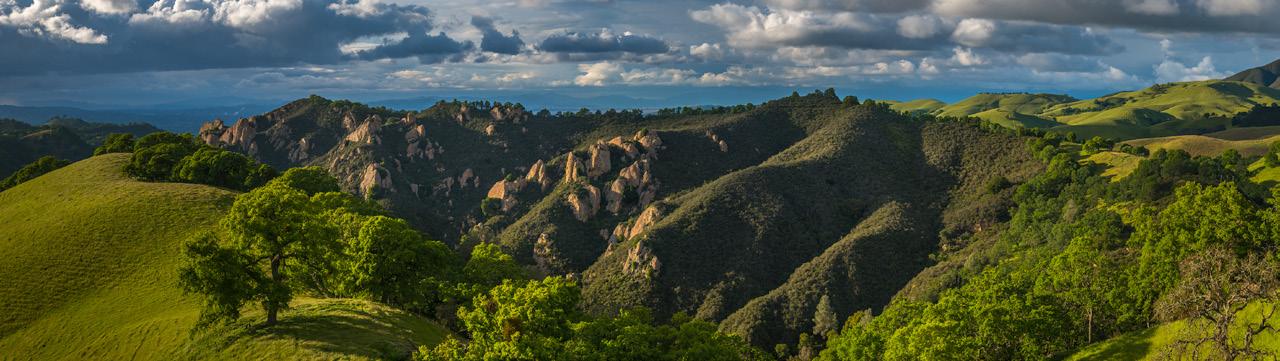
Though many know California’s iconic mountain ranges like the Sierra Nevada, few recognize the largely untouched—and unprotected— wildlife wonderland that is the Diablo Range. It is truly California’s
next great conservation story.
“I’m just grateful that I was able to work with this organization all this time,” Charla reflects.
With the mountain being such a prominent part of East Bay life, she often tells people, “Everyone here should be a member of Save Mount Diablo!”
Save Mount Diablo is deeply grateful for Charla and David’s years of continuing support. Such heartfelt dedication has the power to save this breathtaking landscape; not just Mount Diablo, but the entire Diablo Range. •
FIND
about the ways that you can support Save Mount Diablo’s work to protect and defend Mount Diablo and the mountain range that sustains it, please contact Shauna Whidden, Save Mount Diablo’s new Development Director, at swhidden@ savemountdiablo.org or call 925-949-4518.
TRIBUTE GIFTS and donations made in honor of or in memory of loved ones between July 1 and December 31, 2025, are listed below. Thank you to all of our supporters. Your generosity preserves, defends, and restores the mountain for all of us to enjoy!
Tribute names are indicated in bold. An asterisk (*) denotes donors who make monthly tribute gifts.

Carolyn & Steve Balling
Kerstin Hagstrom Bromander
Carol Baxter
Vernon Koehler & Laura Ellison
Bedell Frazier Investment
Counselling, LLC Clients
Bedell Frazier Investment
Counselling, LLC
Leon Borowski
Erek Borowski
Oliver Dear
Devon Dear
Tom DeJonghe
Rashmi & Rajiv Dixit
Joyce Hawkins
James & Lacey Marchetti
George & Mari Tischenko
Anthony DiBianca
Lucy DiBianca
Marcia & Greg Eiler
Carol Gegner
Jim & Bette Felton
Diana Felton & Mike Wallerstein
David Gibson & Betty Hood-Gibson
Alisa & Ian Schofield
John & Kathy Fuller
Kandy Bernskoetter
Garrett & Cathy Girvan
Sue & Mike James
Ally Guggenheim
Patricia Lynn Miller
The Hallissy Family
Alexandra Riley-Sorem
Claudia & Scott Hein
Anonymous
Darlene Hecomovich
Lisa Howard
Brooks Boyd
Robert Joe
Shirley & Bill McGrath
Fay Johnson
Laurie Black
Giselle Jurkanin
Denise Boucher
Kaiser Imaging Dept –Walnut Creek
Leslie Servin
Roxana Lucero Keshmiry
Rosemary Lee
Chuck Kohler
Tina Giebel
Walter Krane
Joseph Helmer
The Kunnes Family
Mia Monroe
Sidne Long
TWANDA Foundation
Bruce MacLean
Sandra MacLean
Ron Mathias
Carolyn Mathias
Brian & Joanne McAndrews
Jennifer McGee
Carol and Ronald Muecke
Donald Lapacek
James & Sheila Mueller
Theresa Mueller
Dan Navarro
Meghan Navarro
Larry O'Loane
Phil & Rachele O'Loane
Richard A. Olsen
Janelle Olsen
Kathleen Olson
Michael & Jeanne Chiodo
Peregrine Team, MDIA.org
Anastasia & Randall Hobbet
Jan Richardson
Lauren Mitchell & Mike Dulin
Elliott S. Sasser
David Ogden & Sandy Biagi
Alan C. Shelton
Rebecca Shelton
Wilmetta Silva
Lisa & Paul Serventi
Barbara Slyker
Robert & Peggy Slyker
Brian C. Stumpp
Frederick Stumpp*
Haley Sutton
Rosemary Lee
Jeanne Thomas
Geoffrey Bellenger
Robert & Polly Gould
Douglas & Barbara Jones
Rosemary Thompson
Josie & John Fike
Susan D. Tullis
John Tullis
Ken-ichi Ueda
Akemi Ueda
Carole Woods
Steve Pate
Patricia Yamshon
Paul Yamshon
Allison Mae Anderson
Joel Huerta
Linda M. Andersson
Bruce Fogel
Brendon Armstrong
Carol & Brad Hoy
Robert Balcerzak
Laurie Balcerzak
Betty L. Bates
Cynthia Bates
Paul Baxter
Carol Baxter
Jon Boas
Jennie Phillips
Harry M. Byrne
Helen Boertje
Beth Byrne
Dorothy Holloway
Vera Refnes
Eugene Callahan
Marianne Callahan*
Robert Canning
Janet Canning
Valeria Sandusky
John Cleary
Brett Stewart & Meagen Leary
Drs. Frances & Gene Coburn
Marje & Stephan Schuetze-Coburn
Billy "Bud" Coleman
Anonymous
Frank Colombo
Michael Colombo
Samuel Critz
Carolyn Critz*
Sheryl Cummins
Sharon Cummins
Anthony deGrassi
Tom & Cora Wright
Jack L. Ditzel
Anonymous
Mardi Duffield
Kristine Caratan
Jim Duncan
Bob Corman
Roger Epperson
Richard Davis & Sandra Jones
Anna Louise Ferri
Larry Ferri*
Steve Fielding
Sue Fielding
Helen S. Fink
David Fink
Mary Furlong
John Henry
Bruce Garland
Donald & Shirley Dal Porto
Tim & Lucy Smallsreed
Joseph and Betty Goldstein
Janine Alden
Norwel Gordon
Brad & Diana Sage
Deborah Grimes
Glenda Dugan
James “Doc” Hale
Olivia Hale
Jean Hamilton
Rachel Shelton
Bill Hartney
Karen Weichert
Jean P. Hauser
Barbara Hauser
William Marlow Hicks
Mary Hicks
Carl Hughes
Don & Ann Hughes
Jeannine Hummel
Vera Buchman
Mike Hummel
Sherri & Jac Kirkpatrick
Jill Mancuso
Jessica Smith
Kathryn Toese
Toby T. Johnson
Donald & Carole Johnson
Dick Karns
Patricia Brown
Nancy K. Kerr
Eric Ozenne*
Joan Kunz
Aaron Kunz
Byron Lambie
Jill Lambie
Maureen Lawrence
Anonymous
Don Rico Lenzi
Marty Lenzi
Josephine Leung
Mark Nakano
Vladan Lunacek
David Brackett
Patrice Faraclas
Kimberly Kalkbrenner
James & Cynthia Karidis
Richard McDowell
Linda Stalcup
The Stefko Family
Mary Ogden
Polly & Robert Gould
Jane H. Peterson
Ron Arnold
Roland Brandel
Tom & Liz Piatt
Sherry Piatt
Danna J. Pierce
Carla Rogers
Dennis Powell
Tom & Terri Coleman
Queenie
Alise & John Bamforth
Alicia M. Ramirez
Robert Ramirez
Jim Rease
Richard Davis & Sandra Jones
Sheila Rogstad
John & Kim Rogstad
Bill and Gen Sattler
Anonymous
Fred Seely
Anonymous
Mark & Lori Beecher
Ken & Ginger Calvert
Lee Culver
Lucy DiBianca
John Donatoni
Joan Foudy
Charles Gardner & Patti Eylar
Linn & Elaine Green
Mary Holden
Barbara & Stuart Hulke
Natalie Inouye
Maurine Jones
Edward Kennedy
Nicholas Knueppel
Sandi & Don Lemings
Dick Litton
Paul Lombardi
Susan Moe
Gail & Jim Murray
Martin & Diane Myers
Barbara & Mike Neale
William Ogden
Patti Raines
Christine Seely
Sue & David Stewart
James & Janace Trolan
Scott Willoughby
Bonnie Slater
George & Ellen Slater
Marvin G. Smith
Anonymous
Harry (Chip) Stewart
Kathy & Ed Hartman
Christopher Klapheke
Jim Stewart
Brett Stewart & Meagen Leary
Tuxedo
Ann Holzhueter
Carlene Visperas
Peter & Gabriela Bishop
Vicki & Tom Flickinger
David Hofmann
Judith Sherwood
Susan Sherwood
Dirk Sikkema & Linda Young
Sue & David Stewart
Martin & Maria Tice
Frances Tomsovic & Guido Turretta
Elizabeth Travis
Dave & Shirley Wood
Dick Waldo
Robert Waldo
Harvey R. Wall
Leslie Oakes
Ronald L. Webb
Kathy & Randy Erickson
Francesca Whitcher
Amara Morrison
Martin Whitcomb
Nina Choy
Geoff Wieczynski
Marcie Arata
Paul Brown
Steven & Carrie Chavez
Kaylee Cherry
Emily Fettig
Deb Gruen
Rich Lee
Jamie Louis
Lisa Macalka
Laura Njaa
Paulo Nunes
Michael & Charlene Robinson
Richard Rowe
Susan Rubio
Patricia Sandvig
Elizabeth Smalley
Mark & Desiraa Smith
Dina Wieczynski
Robin Wilby
Nick Wilby*
Sonja Wilkin
David & Joyce Atkinson
Diane Berger
Kathleen Geddes
Nancy Hoffman
Susan Manning
Kathy O'Toole & Herb Yonge
Leo Wotkiewicz
Wayne & Helen Reznick
We have made every effort to accurately spell names. If your name or donation has not been recorded correctly or was mistakenly omitted, we offer our apologies. Please contact us so that we can amend our records by sending an email to Queenie Li, Database Coordinator, at qli@savemountdiablo.org.