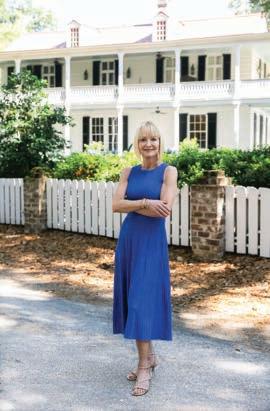
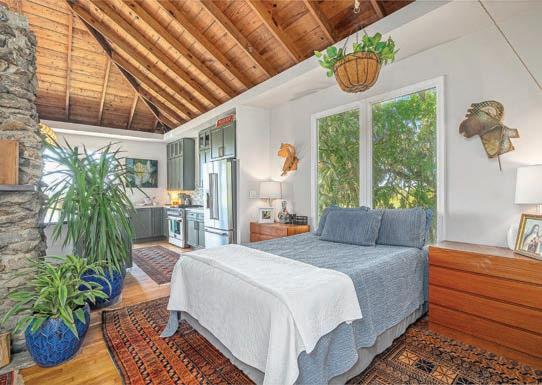
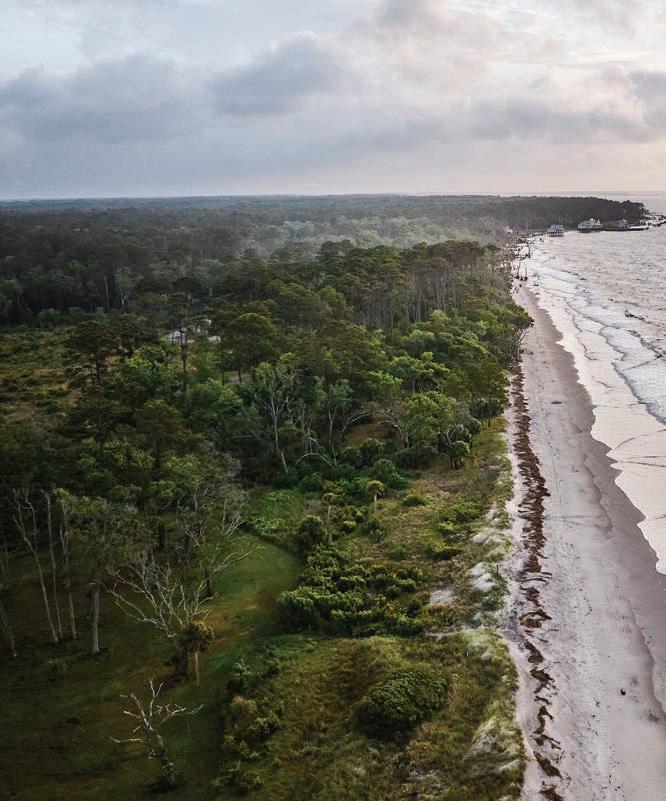
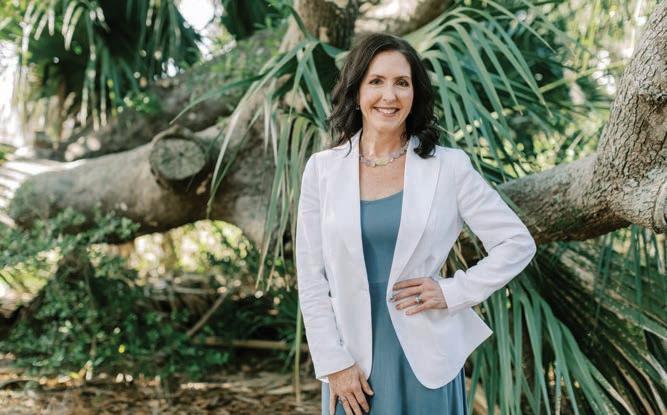
JOURNALISM ISN’T A HIGHLY PAID profession, but I always feel rich doing what I do. I get to meet fascinating people and often get priceless, behind-the-scenes access. Take, for example, the home tour “A Natural Beauty” on page 80. I live near an intriguing old house on U.S. 80, and each time I’d drive by, I’d wonder about it. When was it built? Why is it so close to the marsh? Does anyone even still live there?
Imagine my joy, then, when the property’s latest owner, Paul Miller, invited me to come by for a tour and interview to learn more about the “Shrimp Camp” and its history. Miller has lovingly restored and reimagined a onceneglected place, elevating it into a coastal retreat. They don’t build ’em like this anymore, and this property is lucky to have Miller as its steward.
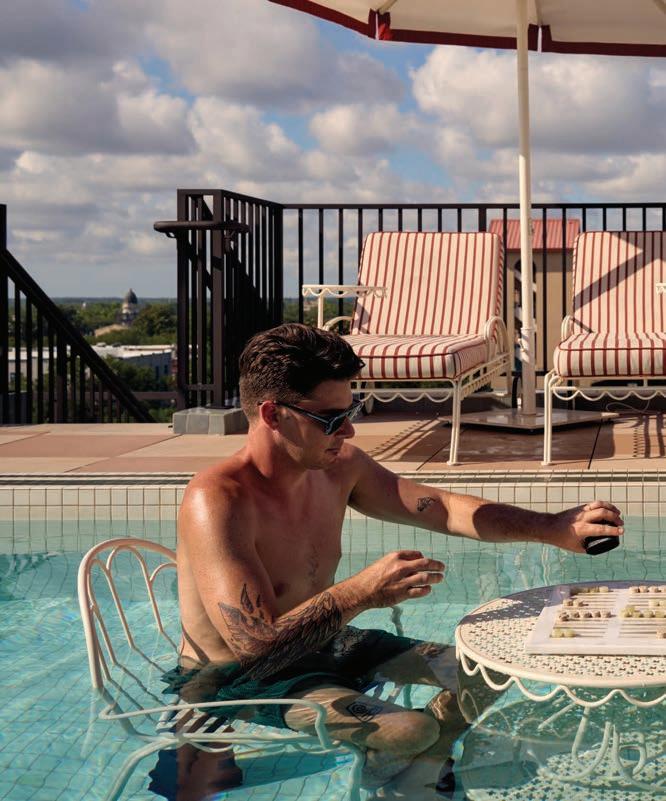
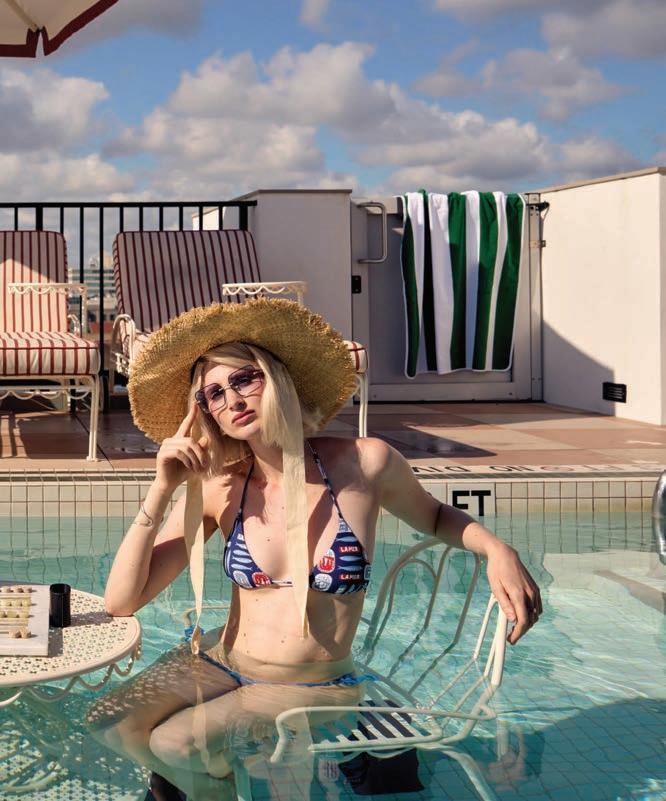
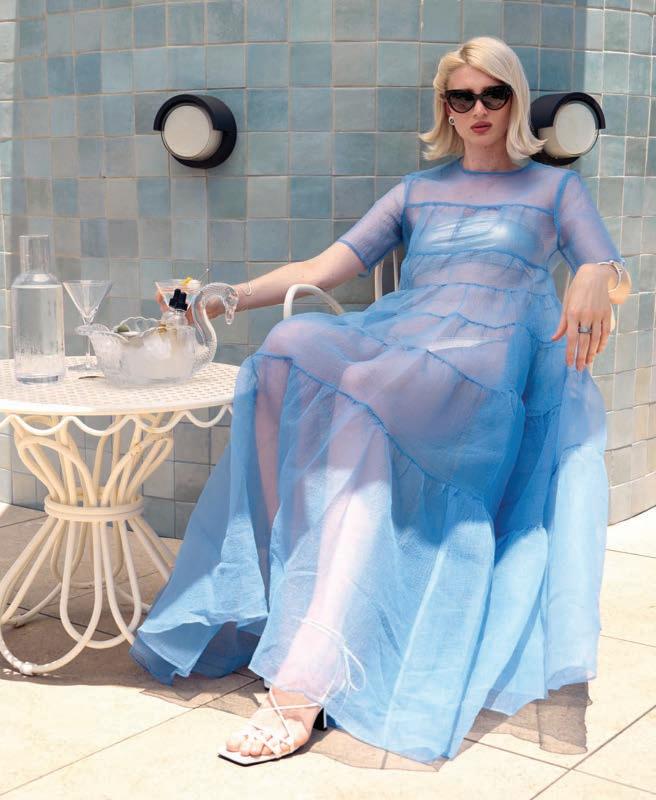
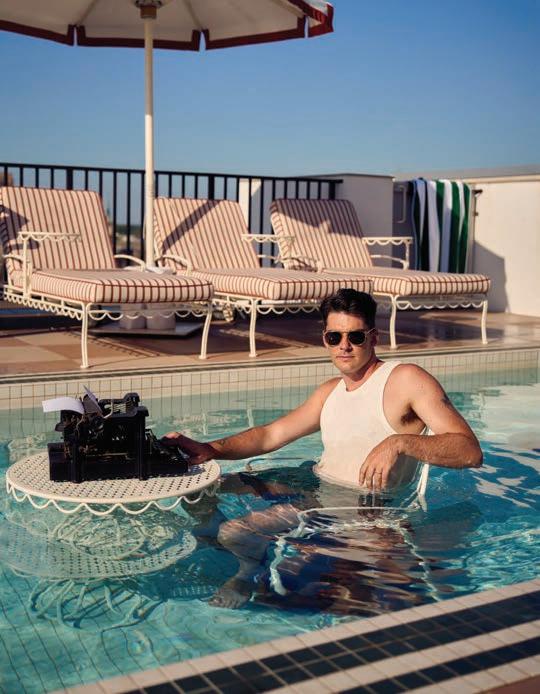
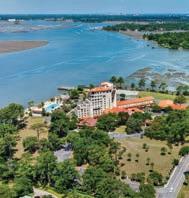
The Municipal Grand Hotel is another example of a building reborn. A former bank turned dull government office is now home to a swanky hotel and one of Savannah’s most popular bars. We were fortunate to be allowed to photograph this issue’s fashion story, focused on swimwear and inspired by the work of Slim Aarons, at the Sun Club atop the hotel. For now, it’s only open for use by guests, so we doubly appreciated the opportunity to work there. See the resulting glamorous images beginning on page 57.
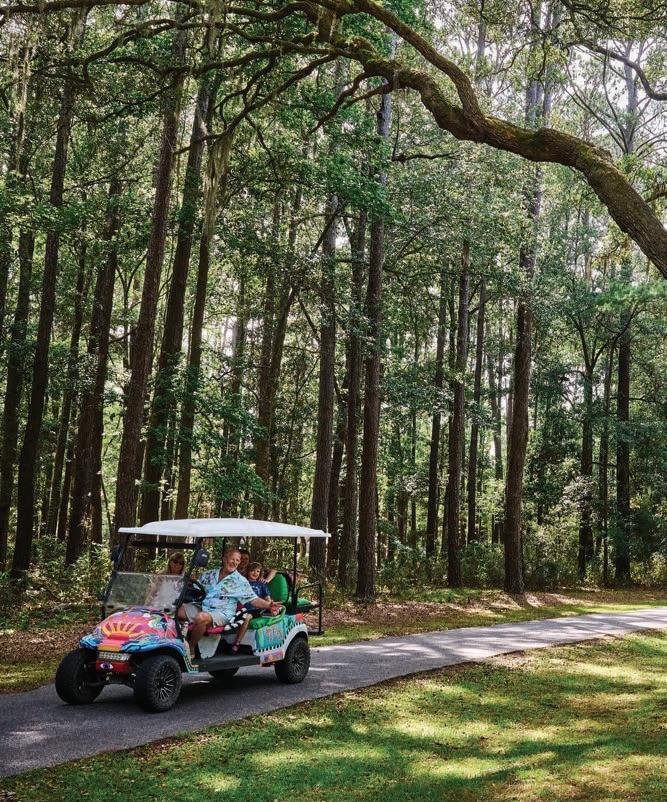
On page 106, we invite you to slow down and discover — or rediscover — some of the reasons Daufuskie Island is so special. As a casual visitor, I’ve found it to be quirky, spiritual, close-knit, and practically in its own time zone. I look forward to getting to know Daufuskie and its history better in the future, and I hope you feel the same.
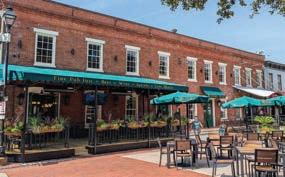
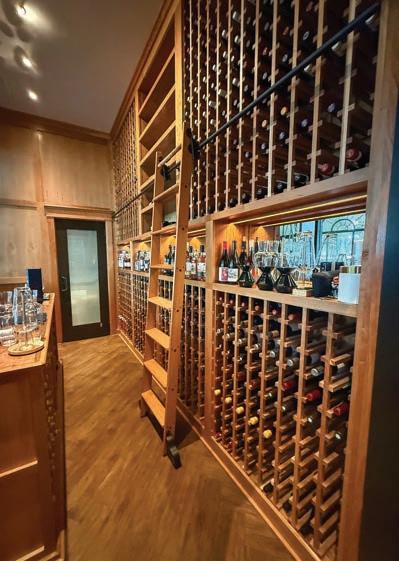
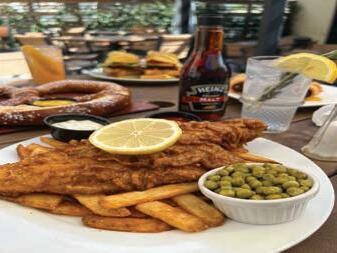
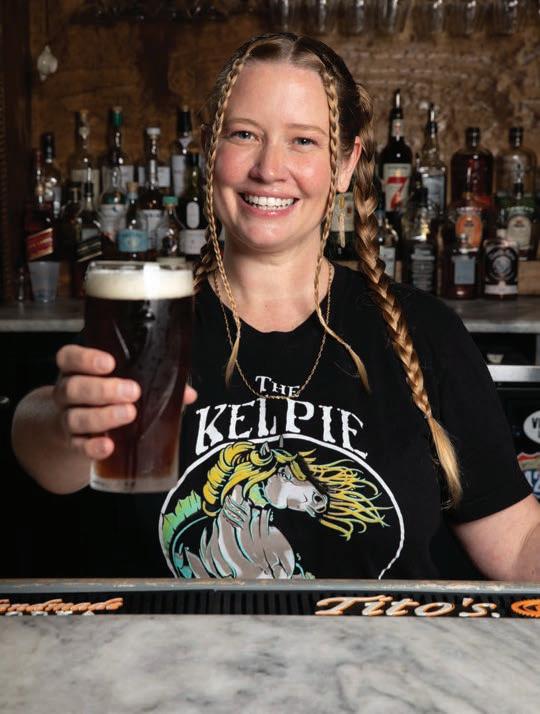
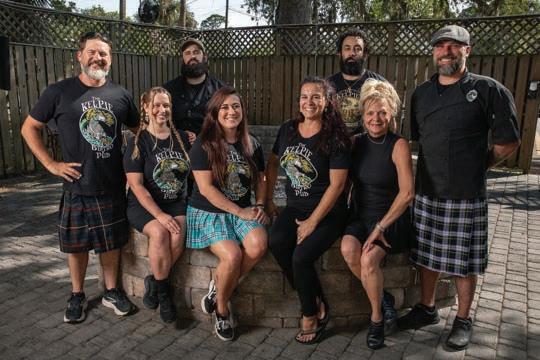
For coastal vibes closer to home, try the hidden gem we found on Tybee Island. The Kelpie Bistro & Pub offers relaxed ScottishSouthern hospitality that’s ideal after a day at the beach. Read more on page 131. Or go upscale at Marbled & Fin on page 123. Associate editor Mary Cornetta discovered how the restaurant balances its extensive wine list to keep both steak connoisseurs and seafood lovers happy — even when they are dining at the same table.
Switching gears a bit, this past January, the first wave of Baby Boomers started turning 80. Those of us in Gen X, much to our surprise, are also apparently aging, though I like to think we’re doing it with a bit of an attitude. Regardless of what era you hail from, check out our special health supplement beginning on page 143. It’s filled with tips on how to age with power and grace, with strong bones and a sharp mind.
Lastly, in his story on the nonprofit Shell to Shore (page 33), freelance writer George Vedder IV shares how the group recycles oyster shells from restaurants to help replenish the shoreline. Oysters serve as valuable filters in our coastal waters, like the ocean’s “gills,” Vedder writes. Oysters start out as larvae and have a “foot,” he explains, “a pseudo-limb that extends onto the ocean floor to search for an ideal surface to cling to, which is almost always another oyster shell. Without a healthy stock of shells in the water, oysters have nowhere to grow, and their benefits to the sea life around them disappear.” His story stuck with me. I keep thinking about how human communities are like oyster beds. We need each other to grow. We build on the efforts of our ancestors; we latch onto the help of mentors; we thrive with a firm foundation of family and friends. This summer, may you benefit from both a firm foundation and the joy of providing a launching pad for the next “baby oyster” coming up strong.
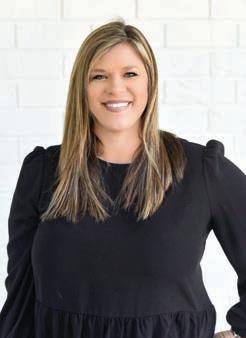
Kathryn Drury Wagner Editor-in-Chief
ESTABLISHED MAY 1, 1990
Savannah magazine’s mission is to celebrate the new and enduring voices of our city’s culture, commerce, and creative community. Elegant and relevant. Authentic and fun. That’s your Savannah, and this is your magazine.
To subscribe and save 70% off the newsstand price, go to savannahmagazine.com or call 800.453.1049.
For address changes and other concerns, contact savannahmag @emailcustomerservice.com. Send pitches, ideas and feedback to editor@savannahmagazine. com.
To advertise, download our media kit at savannahmagazine.com, email jane.townsend@savannah magazine.com or call 912.652.0294.
6602 Abercorn St., Suite 202 Savannah, Georgia 31405; savannahmagazine.com
Scan to sign up and receive our weekly e-newsletters featuring the best of Savannah magazine content and event information, plus exclusive sponsored editions.
KATHERINE
Are Digestive Symptoms Disrupting Your Daily Life?
Don’t wait to feel your best.
Symptoms like abdominal pain, diarrhea, or bloating that keep coming back or aren’t improving should be checked. Our GI experts work to find the cause and help you feel better.
Relief starts with the right care.
Schedule your visit today
Serving Savannah, Pooler, Richmond Hill, and surrounding communities.
Luxury
& Wellness
TRANSFORMATIVE EXPERIENCES FOR THE BODY AND MIND
Woodhouse Spa Savannah is a refined escape designed for deep relaxation and visible results. Enjoy therapeutic, relaxation-focused massages, advanced skincare services like HydraFacial®, and sculpting body treatments, along with wellness experiences such as infrared sauna sessions, wave tables, anti-gravity relaxation chairs, and fireside quiet rooms.
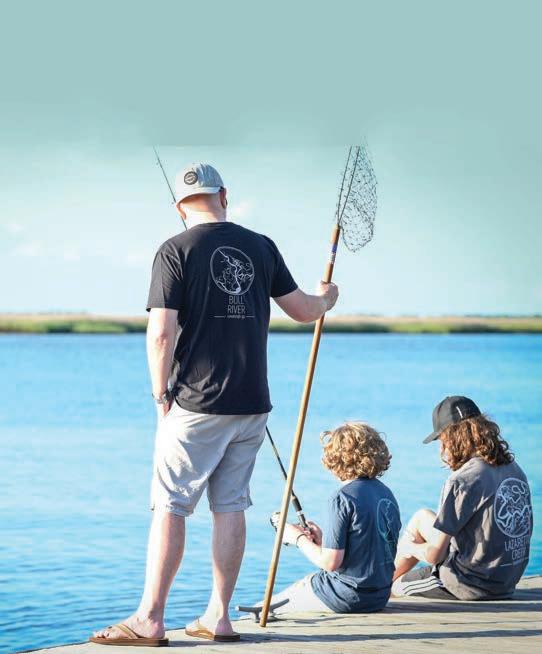
Local design studio VEGA has a new line of shirts inspired by our local waterways, featuring minimalist illustrations that reflect the natural lines of creeks, rivers, and marshes. Designs include the Wilmington River, Turner’s Creek, Bull River, and Lazaretto Creek. Find the shirts at shopvegastudios.com, Marsh & Co. (444 Johnny Mercer Blvd., Suite R), or Islands Ace Hardware (318 Johnny Mercer Blvd., Suite 5).
The space where Savannah Children’s Theatre used to be on East Victory Drive is getting a much-needed glow-up. Sprouts Farmers Market , a supermarket chain that specializes in natural and organic foods and household goods, has signed a lease within Crossroads Shopping Center (2160 E. Victory Drive). The revitalization of the shopping center, also home to Planet Fitness, is the vision of Atlanta-based real estate firm Ardent. In addition to refreshing the retail mix, Ardent will complete exterior renovations to the center. Sprouts Farmers Market is expected to open in 2027, marking the grocer’s first-ever Savannah location.
Bar Nine has opened up in the space that was formerly the speakeasy Mata Hari, at 306 W. Lower Factors Walk. It’s been getting great buzz for its urban yet elevated vibe, events like a weekly EDM night, and creative cocktails.
In other nightlife news, July 3 is the opening date for Nickel and Oak Lounge (111 W. Congress St.), unveiling a sophisticated new entertainment venue. Larger concerts are ticketed, while regular nights will be a mix of regional touring acts, local musicians, comedians, live-band karaoke, screenings, performances, and more. The space has both a main bar and a rooftop bar. We look forward to sampling some of the spirit and drink options that have intriguingly undergone “sonic maturation” via sound waves.
Envious of those photo-perfect charcuterie boards and grazing tables? Hey Hunny Blooms and Boards (125 W. Duffy St.) offers hands-on charcuterie workshops where guests learn styling techniques while also gaining insight into the origins and flavor profiles of the ingredients. Owner Michelle Hagan offers preordered boards for events like baby showers and parties, catering, and studio rentals, too.
The National Museum of the Mighty Eighth Air Force has begun restoration efforts on the museum’s future B-24 Liberator, preserving one of World War II’s most important aircraft. Once completed, the B-24 will become a centerpiece of the museum’s newly redesigned gallery floor.
Want to dine alfresco? B. Matthew’s Eatery (325 E. Bay St.) has added a lovely little oudoor seating area.
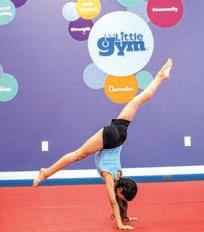
The Little Gym (7400 Abercorn St., Suite 812) offers gymnastics classes as a way to promote functional and social development for children as young as 4 months and up to age 12. The company was founded in 1976 in Washington state by an educator, musician, and kinesiologist. Fifty years later, The Little Gym is continuing his mission, one cartwheel at a time.
The word “fiduciary” goes to the heart of what we do and how we do it. We are a team of highly skilled professionals with deep expertise in the fields of finance, business, accounting, and law. We have passion for what we do and discipline in how we do it. Our allegiance flows in one direction: to the needs and best interests of each client. It’s in our name and it’s what we do.
Savannahians Mark Lofton and Bill Hussey, along with longtime friend Mark Degnan, have teamed up to launch Coastal EcoCoatings (912.659.8817) with the aim to bring the latest technology in boat care to Coastal Georgia and the Lowcountry. Coastal EcoCoatings offers a proprietary marine coating product, Aquaphobix, a thermally applied polymer hull coating that the company says is both environmentally responsible and reduces water resistance, improving a boat’s efficiency.
Built in 1902, the stately Savannah Union Station features both Spanish Renaissance and Elizabethan styles of architecture. It served as a major railroad hub, and now, it’s been reborn as an event space. The Union at Savannah Station (601 Cohen St.) has 8,100 square feet of total event space, with two event rooms designed for hosting weddings, corporate events, galas, and other gatherings.
Pop into Pine House Home Decor and Gifts (405 U.S. 80, Suite 102, Pooler) for pillows, candles, bar cart essentials, gift ideas, jewelry, lamps, frames, mirrors, and more. It’s the kind of shop where you go in to buy something for a friend and wind up finding something irresistible for yourself as well.
The Starland District is soon expecting a sweet new offering: Linen and Leaf Design Co. (2519 Bull St., Suite A). It will offer a hand-curated blend of new and vintage items, including home decor, dishes, plants, and flowers. You’ll also find a tea bar and interior design services.
Fresh Mediterranean flavors are the focus at Estia Kitchen (8 E. Broughton St.). Think shareable appetizers like crispy falafel and kash bademjoon (a creamy eggplant spread). Entrees include heartier fare such as lamb and salmon dishes, as well as salads and build-yourown bowl and wrap options.
Hop Atomica held a groundbreaking ceremony in Richmond Hill’s Heartwood community for its newest location across from Del Webb, the 55-and-up residential community. Hop Atomica’s new brewery, distillery, and restaurant (110 Heartwood Ave.) is slated to open in the spring of 2027.
SUMMER READS
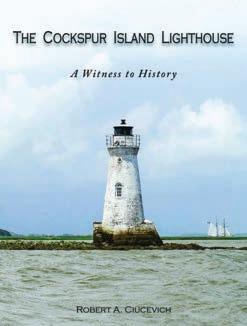
Robert Ciucevich, working with the nonprofit Friends of Cockspur Island Lighthouse, recently published “The Cockspur Island Lighthouse: A Witness to History.” The goal of the book is to raise awareness and support among the community for preserving this small but resilient beacon. Of the dozen or so channel beacons that once lined the banks of the Savannah River, only the Cockspur Island Lighthouse remains. It has stood the test of time despite countless storms, battles, vandalism, erosion, rising tides, and deferred maintenance. All proceeds from the book go to the much-needed preservation of the lighthouse.
Congratulations to Roberts Essex, who has penned his memoir “Chance: Beginnings.” It is the story of a simple Georgia man shaped by faith, family, and the unrelenting tides of time. From a boyhood spent in Savannah to the lessons he later discovered through love, loss, and redemption, he paints his intimate portrait of Southern life.
In her upcoming memoir, “Back to Me: Reclaiming the Woman I Lost,” Elonda Evans writes about healing, boundaries, growth, and rediscovering yourself after difficult seasons. She has also been at work on her “I Feel Seen” children’s book series, a collection of four books focused on helping children understand their emotions.
In Mark Di Vincenzo’s new biography, “Button Gwinnett: America’s Accidental Founding Father,” he tells the story of the man he calls America’s most apathetic and selfish Founding Father. Gwinnett, Di Vincenzo writes, didn’t care about public service, and yet he was given the opportunity to represent the Georgia colony and sign the Declaration of Independence. This made him a hero in Georgia, and he used that fame to grab political power, rising to acting governor.
To Do in 912
AMERICA’S 250TH FOURTH OF JULY
Savannah’s Waterfront Independence Day is a free, public extravaganza kicking off at 6 p.m. Plans include live music on three waterfront stages: Plant Riverside District, Rousakis Riverfront Plaza, and The Park at Eastern Wharf. Waterfront restaurants will be offering food and drink specials, and at 9:30 p.m., there will be a fireworks show set to patriotic music.
More ways to celebrate
• Tybee Island’s annual beachfront fireworks display lights up the shoreline after sunset (starting around 9:15–9:30 p.m.). The fireworks are staged at the Tybee Island Pier and Pavilion and can be viewed along the beach.
• Beginning at 11 a.m. at Fort Pulaski National Monument, there will be cannon firings and tours by park guides bringing American history to life.
• The annual Button Gwinnett Wreath Laying Ceremony takes place at 10 a.m. in Colonial Park Cemetery. It honors Button Gwinnett, one of the signers of the United States Declaration of Independence, with a patriotic historical tribute.
JULY 9 & 10
“American Elton — A Tribute to Elton John” plays at 7 p.m. at the Tybee Post Theater. It’s an immersive tribute experience celebrating the music and showmanship of Elton John. Performer William Connors is known for his resemblance, vocals, and stage presence that closely mirror the icon himself. VIP tables are available.
JULY 11
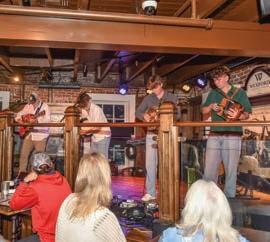
Homegrown Summer Jam returns to Victory North for an evening celebrating Savannah’s local music scene. This year’s lineup features Jack Bible, Eric Britt and Family, The Accomplices, and The Train Wrecks, bringing together a mix of Americana, folk rock, bluegrass, and roots music. Courtyard performances begin at 6:30 p.m. before the indoor concert kicks off at 7:30 p.m.
Homegrown Summer Jam returns to Victory North on July 11.
JULY 11
Music, local flavor, and summer vibes come together at the Bread, Butter & Jam Music Festival, hosted by Auspicious Baking Co. The celebration will feature a full lineup of regional musicians from 3–10 p.m., along with concessions from Bread & Butter and sweet treats from the bakery. Festivalgoers can enjoy performances by Velvet Caravan, VooDoo Soup, Xuluprophet, Will Davis, CC Witt, and Oceanman & Matka. General admission and VIP tickets are available online.
JULY 16
Join the UGA Marine Education Center and Aquarium for Shark Trackers, a program for ages 10 and older on the importance of sharks along coastal Georgia. Cost is $15. Register at gacoast.uga.edu/event/shark-trackers.
JULY 18
Enmarket Arena goes country with “Bulls, Bands, and Barrels,” a touring event that combines live rodeo action with country music performances from rising stars Dylan Marlowe and Avery Anna. Featuring bull riding, barrel racing, and arena spectacles, the event is the perfect summer recipe: one part rodeo, one part music festival.
JULY 19
Tybee Post Theater presents “Aliens Alive!,” an interactive performance from The Story Ship. Blending science, music, movement, and audience participation, the production follows a rescue mission across the solar system after a crew member is mysteriously abducted by aliens. Younger audience members become part of the action, helping solve puzzles, decode musical messages, and navigate the journey through hands-on games that combine entertainment with STEAM learning.
AUG. 1
The 2026 Savannah Black Business Expo takes place at the Savannah Convention Center for a day of celebrating entrepreneurship, innovation, and community impact. The expo will feature more than 150 vendors, live demonstrations, business resources, and opportunities to network with local entrepreneurs, creatives, and community leaders.
AUG. 8
Georgia’s First Fourth Celebration commemorates the news of the Declaration of Independence reaching Georgia in August 1776. The event will take place at Wormsloe State Historic Site and includes historical reenactments. Programs begin at 10 a.m. and 2 p.m. The event requires a 1/2-mile hike to the Colonial Life Area, so wear comfy shoes.
OUT & ABOUT
WITH SAVANNAH MAGAZINE
We are proud to have partnerships with these organizations and events. Come join us!
AUG. 7–16: The highly anticipated Savannah VOICE Festival returns to the Hostess City. This season is themed “Sunny Days and Starry Nights” and will celebrate Broadway’s Golden Age, highlight the beauty of classical voices, and honor America’s 250th anniversary with a gala concert of American opera. Visit the organization’s website for a full lineup of all Savannah VOICE Festival events and to purchase tickets.
The Cockspur Island Lighthouse, A Witness to History, is the story of the “little lighthouse that could” – a diminutive but resilient beacon that has stood the test of time despite countless storms and hurricanes, epic battles, vandalism, erosion, rising tides, and deferred maintenance.
Written in association with the Friends of the Cockspur Island Lighthouse (FOCIL), this book also chronicles their e orts to help save this important lighthouse for future generations.
at www.maudlinpond.com
For more information about FOCIL and its mission, check our website at www.cockspurislandlighthouse.com
Replenishing Our Shores
Meet Shell to Shore, the crew responsible for restoring Georgia’s coastlines and marshes.
Written by GEORGE VEDDER IV
Photography by RINNE ALLEN // Courtesy SHELL TO SHORE
IT’S A WINDY DAY ON SKIDAWAY ISLAND, home to the University of Georgia’s Marine Education Center and Aquarium, and Maxine Hauser is hard at work. Hauser is the coastal recycling coordinator for Georgia’s primary oyster recycling nonprofit, Shell to Shore. She dumps barrels of oyster shells out of the bed of her truck, named, of course, “Shell-by,” adding them to a heap of shells from this season’s collection efforts.
As she summits the pile to observe the yield she and her partners have helped gather this past year, it shifts underneath her with a sound like
shattering glass. Soon, this 100,000-pound mass of shells will be carefully strewn onto oyster reefs in an effort to keep the marine population and cultural communities abundant on the Georgia coastline.
Some elements, like cocktail sauce, lemons, and soft tissue, will decompose over time as these bivalve shells bake in the sun, which rids them of any invasive microorganisms, explains Hauser, who studied biology at Georgia Southern University. “The bacteria on any shell from outside this coast have the potential to wipe out an entire marine population, so we take our precautions very seriously,” she says.
The shells stay in their piles for at least six months, some of them taking on a blue, purple, or alabastrine color as the sunlight kills off the unwanted life forms. After this curing period, they’ll join the front lines of Shell to Shore’s restoration project on Georgia’s historic coastline.
The initiative began with coworkers Hunt Revell and Tyler Leslie during their time at Seabear Oyster Bar in Athens, Georgia, where Hunt was the bar manager, and Leslie was a bartender and oyster shucker. The pair began pondering the hundreds of barrels of oyster shells that were heading from the restaurant’s kitchen to the landfill. (There was no large-scale shell-recycling initiative in the state at the time.)
To remove thousands of oysters per day from the water in coastal Georgia and the Carolinas — and never return the shells — is to deprive the ocean’s shores of what serves as gills, a necessary barrier for weeding out harmful minerals and pathogens as the tides “breathe” in and out. Revell and Leslie knew that they would be naive to continue treating their
waste as they had been. So, the pair set out to make a change. Their idea had humble beginnings, but the mission was quick to gain recognition. Shell to Shore was born, now the state’s largest dedicated shell recycling nonprofit. Shell to Shore’s first grant support came from The Nature Conservancy via a SOAR (Supporting Oyster Aquaculture and Restoration) grant in 2021. Through that award, they were able to grow their infrastructure and buy their first truck. Since 2021, the organization has recycled more than 450,000 pounds of oyster shells.
Additionally, We Recycle Shell is an initiative that was funded by a Coastal Incentive Grant from 2024 through March 2026. Along with Shell to Shore, that initiative was co-led by partner agencies Georgia DNR and UGA Marine Extension and Georgia Sea Grant.
Students of the marine sciences were eager to contribute to Shell to Shore and research in sustainability, and local oyster farmers wasted no time sharing notable data with the group. Now, while the nonprofit’s board of directors and ambassadors are made up of oyster farmers, marine biologists, and chefs, much of the restaurant-to-restaurant collection across the state is done by interns and volunteers
who get the benefit of hands-on experience in the realm of reefs and shorelines. Since its inception, through the Birkley Heynen Internship Program, Shell to Shore has enlisted over 30 interns from the University of Georgia and Georgia State University to help fulfill its mission.
Since 2021, Shell to Shore has added 38 restaurant partnerships to their network, all of which carry the simple weight of saving their shells for a larger cause. “Every good chef is aware of what nature gives and takes,” says Hauser, “so we’re all on the same page here. It hasn’t taken much convincing to grow our connections in a state so closely tied to its shellfish.” Coastal favorites such as Sea Wolf and restaurants at The Landings appear on the list, as well as legacy restaurants including The Grey in Savannah and Kimball House in Decatur, Georgia.
Convincing the public to aid in Shell to Shore’s mission, though, hasn’t been as easy.
“People in the Lowcountry have always enjoyed [oysters], especially with the huge frying culture in the South,” explains Hauser as she walks down a hallway of algae tanks in UGA’s research facility. But a feeling of exclusivity has grown around these shellfish as they become more associated with the high-class chains that have monopolized some oyster farming
“Every good chef is aware of what nature gives and takes, so we’re all on the same page here. It hasn’t taken much convincing to grow our connections in a state so closely tied to its shellfish.”
— Maxine Hauser
industries. “The simple solution,” says Hauser, “is to eat more oysters.” In fact, Shell to Shore’s motto is “eat more oysters, save your shells, and protect our coast.”
To fully understand why Shell to Shore’s mission is such a necessary one, it’s important to note the life cycle of the oyster itself. Oysters are birthed out of a seasonal spawning in which sperm and eggs are secreted by adult oysters and larvae embryos are cultivated in the water column. As the larva grows, so does its “foot,” a pseudo-limb that extends onto the ocean floor to search for an ideal surface to cling to, which is almost always another oyster shell.
Oysters require the reefs of shell beneath them to continue their bountiful population on the shoreline and sustain habitable environments for wild marine life in their area. After all, a single oyster can filter up to 50 gallons of water per day. But without a healthy stock of shell in the water, oysters have nowhere to grow, and their benefits to the sea life around them disappear.
After hauling hundreds of barrels of shucked shells across the state, it became clear to the leadership at Shell to Shore that their work was of benefit to more than coastline sea life. With sea levels rising faster in Georgia and Florida than in any other U.S. state (and waters warming at an accelerating rate), many communities in the bottomlands, especially those with historic roots, have been in fear of losing their land as it becomes inundated with water.
Perhaps the most impacted of these communities is the Gullah Geechee, descendants of West African slaves in the American South who reside mostly on the marshy coasts of a cluster of islands between Georgia and South Carolina. They have made oysters a foundational part of their heritage for hundreds of years, turning the abundance of shellfish on the coast into a means for great cultural prosperity. Many Gullah Geechee families worked in the oyster canning and farming industries in the late 19th and early 20th centuries. Now, the very source of their culture’s fruitfulness throughout Southern history will become its rescuer.
Last year, Shell to Shore shifted much of their focus toward the Hogg Hummock community, a Gullah Geechee region of Sapelo Island that has faced the peril of accelerating sea-level rise due to climate change. Shell
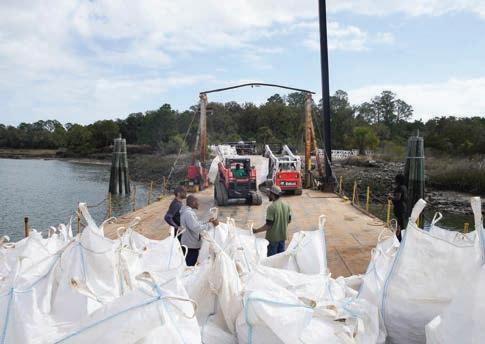
to Shore (alongside UGA and Save Our Legacy Ourself, a cultural preservation project by a Sapelo Island native) was granted $2.8 million to build 1,000 feet of new oyster reef around this community in order to fend off rising sea levels and storm surge. This should help keep water from inundating the community’s land, which is critical to preserving their livelihood, culture, and ancestry. Approximately 200,000 pounds of shells have been barged over to Sapelo already for this project.
As Hauser dumps her final barrel of oysters for the day into the shell yard, she reflects on her work in natural marine life and the impact that the organization has had. “Shell to Shore’s primary focus has always been on threatened communities: oyster and human settlements on the coastline, both of which are built on the foundation of their ancestors,” she says. “With the return of those ancestors to their hereditary land, the communities of the Lowcountry are soon to be back on the rise.”
It’s not a country thing or a city thing. It’s a Georgia Thing.
Want to feel more connected to the place you call home? GPB has stories from across our state that keep Georgians everywhere tuning in. Explore trusted news, high school sports, homegrown music and much more at gpb.org.
Dredging Up the Past
British Naval cannons dating back to the American Revolution are to be permanently displayed at the Savannah History Museum.
Written by CHRISTOPHER BERINATO
Photography courtesy U.S. ARMY CORPS OF ENGINEERS SAVANNAH DISTRICT
IN 1779, DURING THE BUILDUP to the bloody Siege of Savannah, occupying British forces anticipated an attack from the mouth of the Savannah River by the French Navy, who were allied with American militia. In order to prevent an invasion from the river, the British Royal Navy scuttled several of their ships at Five Fathom Hole, a deep spot in the river near what is now Old Fort Jackson, using a common strategy to block the passage of ships.
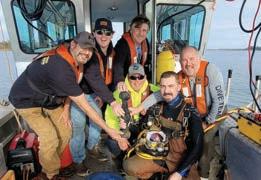
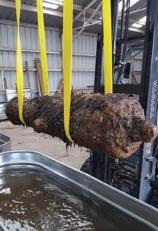
Now, nearly 250 years later, 17 British naval cannons and dozens of other artifacts have been dredged up from the muddy depths of the Savannah River and painstakingly restored to be displayed at the Savannah History Museum — just in
time to celebrate the 250th anniversary of our nation’s founding.
This remarkable discovery happened almost entirely by accident. In February 2021, the U.S. Army Corps of Engineers (USACE) pulled up the first three cannons while dredging the Savannah River as part of its harbor expansion project to accommodate larger tankers entering the port. When dredging the area near Old Fort Jackson, workers considered the possibility of running into live ordnance left behind by the CSS Georgia, a Civil War-era ironclad ship that had been previously recovered from the river. So, a clamshell dredge was used instead of the usual cutter dredge because it could safely pull up
debris from the river floor to be sifted through on a metal grate. It was meant to be a routine operation. Then early one morning, Andrea Farmer, an archeologist at the U.S. Army Corps of Engineers’ Savannah District, received a text: The workers had found a cannon.
“It wasn’t a big deal at that point because we just thought it was the CSS Georgia,” says Farmer. “Then the next clamshell that went down pulled up two more cannons and an anchor fragment, and we’re like, ‘OK, something’s unusual here.’”
Dredging operations were moved to a different part of the river while cannon measurements were sent to experts at Texas A&M University (who had worked
USACE
on the CSS Georgia conservation). It was quickly determined that the cannons were manufactured in the mid-1700s and were definitely not from the CSS Georgia.
The USACE carried out a series of underwater archeological investigations, including remote sensing and diver investigations. Eventually, there were a total of 19 cannons recovered, but only 17 underwent conservation. Fragments of ship anchors were also found. It was determined by process of elimination that the cannons were most likely from the remains of the HMS Savannah, the HMS Venus, and a few other British transport ships.
Recovering the cannons and related artifacts was a bigger challenge. The
USACE spent more than two years carefully pulling the rust- and barnaclecovered cannons from the clay bed of the river. Divers had to move or halt operations whenever ships came into the harbor, and they could only go down twice a day, during high and low tide, because the currents can get as strong as hurricane force gales. Visibility was low, too, with divers only able to see 6 inches in front of their faces, which meant they had to feel around with their hands to find artifacts. At one point, a diver found that an object identified by sonar as a cannon was actually a concrete piling.
Despite the rough outward appearance of the recovered cannons, they were unusually well preserved
internally thanks to wooden plugs called tampions. The way the cannons fell and were lodged into the clay bottom of the Savannah River, then covered gradually with more clay, created a perfect environment to preserve the wood plugs and protect everything inside the cannon, says Farmer.
Many of the cannons were loaded with cannonballs, bar shots, junk wads, and, most amazingly, intact gunpowder cartridges. “The gunpowder cartridge, which is the paper, a lot of times people don’t know to look for it because they can’t believe that paper would last 250 years,” says Farmer. “Fourteen of the 17 cannons were still loaded, and we have most of the gunpowder cartridges.”
MICHAEL ARIOLA
MEL ORR
USACE
USACE
Survey Area for Remote Sensing Investigations
The next challenge was preserving the cannons after they were extracted from the river. Artifacts, especially metal ones, often degrade quickly once exposed to oxygen.
The cannons were sent to Texas A&M University’s Nautical Archeology Program and Conservation Research Laboratory, which specializes in artifacts recovered from water.
“These were not objects that could simply be rinsed off and put on display,” says Chris Dostal, director of the Conservation Research Laboratory and an assistant professor in the Department of Anthropology at Texas A&M University. “After centuries in the river, the cannons required careful treatment to remove corrosive salts, stabilize the iron, and preserve the evidence still contained on and within them. Our involvement was part conservation, part scientific study, and part public stewardship: making sure the cannons could survive for future generations while also helping tell a more complete story about their history.”
Cannons are rather common for Dostal and his team, but the Savannah cannons were exceptional. “It is one thing to conserve a single cannon, but it is extremely rare to come across a collection of cannons from the same historical context, especially with most of them still fully loaded and their internal elements so well preserved.”
The most challenging material was the rare paper cartridge bags, says Dostal. “Their treatment falls well outside the kind of material that our lab normally handles. The Conservation Research Laboratory is very experienced with waterlogged archaeological materials, including iron, wood, and other organics from submerged sites, but fragile historic paper required a different level of specialized expertise.”
Jeanne Goodman, a worldrenowned book and paper conservator, was brought in to consult and ultimately help reinforce the
“The Savannah assemblage preserves patterns and details that are almost never available at this scale.
I suspect this assemblage will be a launching point for academic research for decades to come.”
— CHRIS DOSTAL
paper cartridge bags. Now, after three years of meticulous restoration, the cannons are ready for their new home in Savannah, but research on the cannons will continue. “The Savannah assemblage preserves patterns and details that are almost never available at this scale,” explains Dostal. “I suspect this assemblage will be a launching point for academic research for decades to come.”
The Coastal Heritage Society (CHS) has partnered with the USACE and the Georgia Department of Natural Resources to display the 17 restored cannons and related artifacts at the Savannah History Museum, which happens to sit at the actual site of the Siege of Savannah. The museum’s new landmark exhibition, “Loyalists
& Liberty: Savannah in the American Revolution,” unveils on July 2.
“It’s incredible that this discovery was made a few years before our nation was rolling into the 250th commemoration,” says Nora Fleming Lee, CEO of the Coastal Heritage Society. “The timing of all of this really felt very serendipitous.”
The CHS supported the cannon project with fundraising and also constructed custom mounts to display the cannons. The mounts were fabricated at the Georgia State Railroad Museum by the CHS historic preservation team.
The “Loyalists & Liberty” exhibition will tell the story of Georgia’s part in the Revolutionary War through the diverse voices of people who really lived through it. The exhibit draws from the firsthand accounts of a loyalist woman, a free slave, two Georgia patriots, and a French soldier. And, of course, the addition of the cannons will help expand the naval aspect of Savannah’s history.
“We try to focus, in all of our storytelling and all of our historic interpretation at our multiple museums, on humanizing stories,” explains Lee. “We want guests to understand that the people who lived 100 years ago, 200 years ago, or 250 years ago aren’t really that different than you and I today.”
MICHAEL ARIOLA
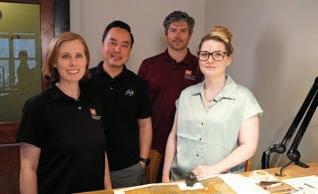
Andrea Farmer, Jimmy Lou, Brian Seymour, and Jeanne Goodman
OLDER THAN America
DISCOVER CENTURIES OF SAVANNAH’S LIVING HISTORY.
As the U.S. celebrates its 250th birthday this year, Savannah stands as a living reminder that America’s story didn’t start in 1776. Founded in 1733 — more than four decades before the Declaration of Independence — Savannah has played a role in nearly every chapter of American history, from the Revolutionary War to the Civil Rights Movement. Here, history isn’t locked behind glass. It’s right outside your home and around every square. See, stand amid, and stroll through the events that connect Savannah’s past to the city you see today.
1733
Gen. James Edward Oglethorpe and 120 colonists land on Yamacraw Bluff along the Savannah River. Oglethorpe befriends the local Yamacraw Indian chief, Tomochichi, and the two pledge mutual goodwill. The unique grid layout and public squares of Georgia’s first city are established.
Visit Oglethorpe’s statue in Chippewa Square Twenty-three of the city’s original 24 squares are still in existence today.
1751
Georgia becomes a royal colony, and the ban on slavery is lifted. This change reshapes Savannah’s economy as enslaved labor is used to expand plantation agriculture, particularly in rice and cotton production.
Walk along Bay Street and Factor’s Walk, past The Cotton Exchange and former cotton warehouses, to see how Savannah’s port and economy expanded, largely built on enslaved labor and cotton.
1776
THE DECLARATION OF INDEPENDENCE IS SIGNED.
177
The Siege of Savannah, a bloody attempt by American and French forces to retake British-occupied Savannah during the Revolutionary War, fails. The city remains in British hands until 1782.
Visit Battlefield Memorial Park or Monterey Square to learn about the bloody battle.
1
2
1 6
17 1
During a post-Revolutionary War visit, President George Washington presents Savannah's Chatham Artillery militia company with two cannons that were captured from the British in the Battle of Yorktown.
See Washington’s Guns on display east of City Hall near the intersection of Bay and Bull streets.
1 1
e city osts its first public St. Patrick’s Day parade. Originating from a walk organized by the Hibernian Society of Savannah, the annual parade — which happens every March 17, or March 16 if the 17th falls on a Sunday — is now one of the largest and most recognized in the world.
The SS Savannah, built right here, becomes the first stea s ip to cross t e Atlantic, a landmark moment in maritime history.
Discover more at the Ships of the Sea Maritime Museum, located in the historic home of ship owner William Scarbrough.
1 5
Union Gen. William T. Sherman captures Savannah during his infamous March to the Sea, spares the city from destruction, and presents it to President Abraham Lincoln as a Christmas gift.
Tour Green–Meldrim House, where Sherman stayed and penned his famous letter to Lincoln.
The Forsyth Park Fountain is installed.
1865
The 13th Amendment abolishes slavery.
Visit First African Baptist Church, one of the oldest Black congregations in the U.S. Founded by enslaved people, it served as a stop on the Underground Railroad. Or visit the Owens-Thomas House & Slave Quarters, which includes one of the most well-preserved urban slave quarters in the South.
1867
1886
e elfair useu opens as t e Telfair Academy of Arts and Sciences through the bequest of ary elfair beco ing t e first public art useu in t e out and t e first useu in erica founded by a woman.
1955
group of se en o en halts the demolition of The Davenport House (c. 1820), purc ases t e structure and starts the Historic Savannah Foundation. This event launches a citywide preser ation o e ent
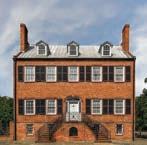
Explore The Davenport House, now a museum and the founding jewel of HSF's preservation efforts.
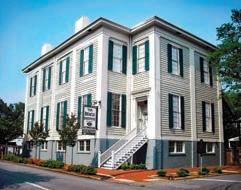
The Beach Institute is founded by the Colored Education o ittee as t e first sc ool built for e ancipated African Americans in Savannah.
Learn more at The Beach Institute African American Cultural Center, now a flagship museum for African American and Gullah-Geechee heritage.
1912
Juliette Gordon Low launches the Girl Scouts
Explore the collection of letters and artifacts at the Juliette Gordon Low Birthplace Museum
1 60s
Following the arrest of three students at a local lunch counter sit-in on March 16, 1960, local Civil Rights leader W. W. Law and other NAACP leaders conduct boycotts of Savannah’s businesses that eventually lead to the desegregation of city facilities and businesses.
Walk through three stories of Civil Rights history at the Ralph Mark Gilbert Civil Rights Museum, named after Law’s mentor, a local pastor and NAACP leader.
1978
Savannah College of Art and Design is founded. The school, which prepares students for creative careers, spurs urban revitalization throughout the city through the restoration of historic properties.
1994
John Berendt’s “Midnight in the Garden of Good and Evil” is published. The New York Times bestselling book (and later 1997 movie) spark global interest in Savannah’s mystery, charm, and eccentricity, contributing to a major tourism boom.
Visit Mercer Williams House Museum, stroll through Bonaventure Cemetery, and take a themed walking tour to see the city through “Midnight” eyes.
2003
Savannah Music Festival debuts. The annual weekslong festival is Georgia’s largest musical arts event. The sounds are varied, the classes abundant, and the performances plenty, with nearly 500 artists coming from all over the globe.
1997
SCAD’s Savannah Film Festival, the largest university-run fil festi al in t e world, is born.
2006
The strikingly modern Jepson Center for the Arts opens.
Rooted in Savannah’s coastal landscape, Peppermango is a ceramics brand defined by its balance of form, function, and quiet elegance. Founder Kim Escobar began her journey creating intentional pieces for the home — objects that feel as beautiful as they are useful — and has since developed a collection inspired by the textures and tones of life near the water. Soft neutrals, organic silhouettes, and subtle shell-like details shape a line that includes dishes, bowls, and refined home accents. The line offers what Escobar describes as functional art, bringing a sense of coastal ease through pieces that feel both collected and natural. Her work can be found and purchased on her website and at local retailers.
Compiled by GENEVIEVE NAVARE
“3 Scallops” by Kim Escobar
“Welcome to the Dollhouse” is a new, large-scale installation by Savannah artist Joanna Paige Silver that can be seen in the Barnard Street windows of the Jepson Center (207 W. York St.). This exhibition is the 11th annual installment of Telfair Museums’ Boxed In/Break Out series, part of the nonprofit organization’s #art912 initiative, which promotes and raises the visibility of artists living and working in Savannah. It will be on view until May 9, 2027.
The SCAD Museum of Art presents featured artist Othiana Roffiel with “The Sky I Keep.” Based in Mexico City, Roffiel is a Savannah College of Art and Design alum (BFA, painting, 2012). Her luminous paintings explore the interconnectedness of the human body and the cosmos. The exhibit is on view until Oct. 4.
Air-conditioned. Free. Perfect for visiting family. Check, check, and check! Visit the Lucas Theatre for the Arts (32 Abercorn St.) on “Wurlitzer Wednesdays.” Weekly through Aug. 26, the historic theater opens its doors for guided tours and demonstrations of its restored 1925 Mighty Wurlitzer organ — an instrument whose booming pipes and realistic sound effects once accompanied silent films in grand movie palaces across America. These instruments are now rare, so it’s truly an opportunity to see something unique. Guests can explore the ornate Spanish Baroque interior of the theater, learn about its preservation story, and experience the magic of silent cinema accompanied live by the Wurlitzer. The free program blends music, architecture, and nostalgia into a uniquely Savannah experience that feels both timeless and theatrical.
ARTS Southeast presents a new summer group exhibit, “Figure/Ground.” It focuses on the human figure, with artists invited to submit figurative work in any medium. The resulting exhibit features work by 25 artists, contemplating the human form in a variety of ways, whether traditional or alternative media, realistic, or abstract. “Figure/Ground” will be on display in The Supporter Gallery at ARTS Southeast (2301 Bull St.) until Oct. 17.
Painting by Talia Sullivan
Catch and Record
Every fisherman remembers when the line goes heavy.
On Tybee Island, Kaylee Hettenbaugh makes sure it doesn’t fade.
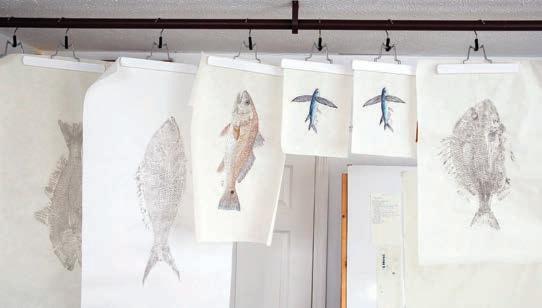
IN HER TYBEE STUDIO, next to The Chapel by the Sea, Kaylee Hettenbaugh contemplates a flounder. The catch lies flat on the table, dark-backed, its body still holding a trace of sheen. Not alive, not quite gone — that luminous liminal is what Hettenbaugh is after. She coats the flatfish in ink and places rice paper on top, running her practiced, pink-manicured hands against the thinly veiled scales.
I ask where she made the catch.
“I can’t reveal all my secrets,” she says, smiling.
Then she goes back to work.
Her fingers move like she’s reading for meaning — almost like braille — assessing
Written by KIKI DY // Photography by JOHN ALEXANDER
each scale as part of a larger story, not just of species but of an event. The way the flounder moved. The hand above it. The moment it chose the hook. The big reveal when the fish broke through the waterline.
This isn’t catch and release. This is catch and record.
Inside Mirror Image Fish Printing, the tools are not fishing rods but white walls, salt-soft light, and a roll of paper towels within reach. A handwritten note taped nearby divides a Bermuda blue angelfish into parts — dorsal spines, anal rays, yellow margins — like a field guide mid-thought.
On another surface, watercolor
swatches bloom across paper: iridescent jade, lunar black, interference gold, all waiting to stand in for the real thing.
“The color goes fast,” she says of her fish subjects. You have to catch the hues quickly, she notes, “right when it comes out of the water.”
Hettenbaugh practices gyotaku, a Japanese method of fish printing dating back to the 19th century, when fishermen used ink and rice paper to record their catches before the advent of photography.
Nontoxic ink is used, which means the fish can be eaten or used as bait after the gyotaku process. The ink is brushed directly onto the fish, worked into seams and scales,
then pressed onto rice paper for posterity.
“Every fish has a different slime, a different scale pattern,” Hettenbaugh says. “They all absorb the ink differently.”
Some species take cleanly; others resist. Some hold detail; others excrete it.
“You figure out pretty quickly what needs to be secured so it doesn’t … leak into the print,” she says. Then, without softening it: “Yeah, sometimes you have to glue the asshole shut.”
Her goal is “to make it the mirror image of what the fish was when it came out of the water.” Fishermen have an acute appreciation for this exactness.
“[Her business] was word of mouth,” says Eric Culberson, a local charter captain and blues musician who had popped into the shop. “Soon everyone started talking about her work.” He nods toward a framed piece in her shop. “It’s hard to find a trout that doesn’t look a little wonky,” he adds. “She really captured that one.”
Born in Western New York, Hettenbaugh came to the Savannah College of Art and Design in 2015, but she didn’t learn gyotaku in a classroom. She is largely self-taught via online research and refining her techniques in the field: working on charter boats (including Tybee Islandbased Big Fish Charters), talking to anglers, studying species scale by scale. Five years since starting, she is reaping the rewards of that rigor.
At The Kelpie, one of her favorite spots [see Dy’s story on the restaurant on page 131], her work was exhibited on the walls. According to Erica Sprague, a server, they didn’t hang there very long before selling out.
Hettenbaugh’s prints swim away from the studio in other ways — carried off as souvenirs, commissions, proof of a day on the water, your kid’s first big catch, or your 50th.
Because that’s what gyotaku represents: not just the fish, but the conditions around it. The water, the season, the variances of gills and girth that flatten in photographs and disappear in memory.
Outside, the tide moves, resets, takes things with it. Inside, Hettenbaugh presses the body to paper, just long enough to prove it was here.
Hettenbaugh practices gyotaku, a Japanese method of fi sh printing dating back to the 19th century, when fi shermen used ink and rice paper to record their catches before the advent of
photography.
Kaylee Hettenbaugh in her studio
FFASHION
IN MOTION
SCAD designer merges utility, movement, and modern craftsmanship.
OR NOAH DREW, FASHION HAS ALWAYS EXISTED BETWEEN TWO WORLDS: MOVEMENT AND FUNCTION.
The Savannah College of Art and Design senior grew up surrounded by the constant motion of Brooklyn, New York, but some of his earliest memories were formed far from city streets: hiking Bull Hill and Breakneck Ridge with his family, studying the way performance gear
weathered time, terrain, and use. That balance between urban life and the outdoors became the foundation of his senior collection, “Cyclosomatic,” which debuted during SCAD FASHION 2026.
The collection highlights technical precision and distinctive style, blending utilitarian outerwear in uences with ne tailoring and thoughtful construction. Drew’s
approach — balancing movement and functionality with re ned craftsmanship — proved compelling enough that internationally renowned dancer Lil Buck and graduating SCAD Atlanta lm and television student and dancer Jeremiah Elias both wore pieces from the collection during the runway show’s opening performance. Their live performance transformed the runway into a celebration of
Seeing my collection on the runway was incredible. But the best part was being there with my friends who I had worked with the whole year.”
— Noah Drew, SCAD Class of 2026 graduate and fashion designer
movement and fashion.
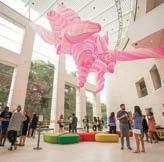
As Lil Buck and Jeremiah moved beneath Janet Echelman’s sweeping aerial installation at the SCAD Museum of Art, Drew’s garments moved with them, engineered not only for visual impact, but also for durability, movement, and function.
For Drew, who graduated from SCAD’s Savannah campus with a Bachelor of Fine Arts in fashion as part of the Class of 2026, that functionality has always been personal.
“I grew up with one foot in the city and one foot on the trail,” he writes in his senior process book. “The best garments don’t just perform; they last long enough to become part of a life.”
His commitment to sustainability is rooted less in trend than lived experience. Drew still wears his father’s vintage Helly Hansen ski suit, resoles his Danner boots instead of replacing them, and has held onto a favorite sweater since he was 15 years old. Those personal artifacts informed
a collection centered on longevity, craftsmanship, and emotional attachment.
Although deeply in uenced by city life, Savannah and the Lowcountry also became essential to how Drew visually brought “Cyclosomatic” to life. He photographed the collection’s editorial imagery at Oatland Island Wildlife Center, using coastal trails and marsh landscapes as an extension of his themes of movement, utility, and function.
The SCAD FASHION debut marked a major milestone for the emerging designer. This year’s showcase featured collections from more than 60 student designers from SCAD’s largest graduating fashion class to date, presenting nearly 200 looks before an audience of industry leaders, editors, stylists, and creative directors.
For Drew, the momentum of SCAD FASHION 2026 has already extended beyond the runway. Select pieces from his collection are now available
at BAZAAR by shopSCAD, located at 318 E. Liberty St., the university’s retail concept featuring limited-run work by standout SCAD students and alumni designers.
Among the available pieces are hand-pulled, screen-printed T-shirts inspired by pivotal moments in Drew’s life, exploring themes ranging from the overlap of childhood and adulthood to photographs captured during solo travels through Berlin and Prague.
“Seeing my collection on the runway was incredible,” Drew says, “but the best part was being there with my friends who I had worked with the whole year.”
SCAD played a de ning role in shaping Drew as a designer. Through mentorship from professors and industry professionals, along with the university’s School of Fashion, he transformed the instincts and in uences he carried from Brooklyn into a distinct creative voice rooted in utility, function, and movement.
Pool Games
When the mercury rises, the fashionable set heads for the pool.
Red and blue striped maxi dress on Danielle from Morgan Rae Boutique Andrew’s swim trunks by Old Navy
Creative director/producer: MORRIGAN MAZA
Location: THE SUN CLUB AT MUNICIPAL GRAND HOTEL
Stylist: ANNA JARA
Hair: CAROLINE OATES
Makeup: LAUREN NORTON
Models: DANIELLE CAFARO, CHARLEY REDRICK, AND ANDREW YOAST
Photography: KATHRYN AN N WALLER
Andrew’s swim trunks by Old Navy ... Charley’s bikini by Morgan Rae Boutique. ... Hat by Housewife Hats; the brand is carried at Britt’s Funky Stitch. ... Jewelry by Marmalade Fresh
Clothing. ... Sunglasses by ForSight
Unique Eye Care & Eye Wear
Vintage pitcher and glass set from Picker Joe’s Antique Mall & Vintage Market
Andrew’s outfit by Faherty Savannah Charley’s top and shorts from Marmalade Fresh Clothing. ... Danielle’s coverup by Marmalade Fresh Clothing and starfish earrings from Morgan Rae Boutique. ... Sunglasses from ForSight Unique Eye Care & Eye Wear
House of Strut swimsuit, hat from Madison & 5th, and earrings from Morgan Rae Boutique. ... Vintage radio from Picker Joe’s Antique Mall & Vintage Market
La Vie Style House X Weezie long caftan in Papaya, with glasses by ForSight Unique Eye Care & Eye Wear and model’s own bikini.
Dress from Madison & 5th, bracelet and earrings from Marmalade Fresh Clothing, sunglasses by ForSight Unique Eye Care & Eye Wear
“Proper Martini Service” is a cocktail experience by Municipal Grand Hotel. The tableside service for two features icy cold gin or vodka and do-it-yourself accoutrements in an iconic crystal swan.
Danielle’s dress, necklace, and earrings from Marmalade Fresh Clothing, which also provided Andrew’s shirt and shorts.
... Charley’s coverup by Emily McCarthy, earrings and shoes from Morgan Rae Boutique, and bag from Madison & 5th. ... Sunglasses from ForSight Unique Eye Care & Eye Wear
The typewriter from Picker Joe’s Antique Mall & Vintage Market. ... Attire by Old Navy with sunglasses by ForSight Unique Eye Care & Eye Wear
Emily McCarthy Tini tank in Rossa and matching wrap skort, both made from a lightweight terry fabric. ... Bracelet and earrings from Marmalade Fresh
Clothing. ... Sunglasses by ForSight
Unique Eye Care & Eye Wear
Vintage camera from Picker Joe’s
Antique Mall & Vintage Market
RHONDA ROWELL PHOTOGRAPHY
Coastal Guardian
After falling in love with Savannah’s coastal ecosystems as a child, Je Beauvais is working today to safeguard those very same places.
Written by KATHRYN DRURY WAGNER // Photography by TIFFANY BRADLEY
GROWING UP FIRST ON TALAHI ISLAND and then in the Long Point neighborhood on Whitemarsh Island, Jeff Beauvais spent much of his childhood in the marsh.
“I would spend hours out there watching the fiddler crabs scurry out of their homes once the tide receded, climbing along the muddy banks of tidal creeks, and watching the periwinkles start their climb up the spartina once the tide started to come in,” says Beauvais. “The marsh offered us endless opportunities to explore without any barriers, and I believe everybody along the coast deserves that degree of access. That is why I care deeply about ensuring public accesses, like boat landings and fishing piers, are prevalent throughout the coast and welcoming to everybody.”
Beauvais holds the job title of North Coast Advocate for the nonprofit One Hundred Miles. The organization strives to protect Georgia’s coast, focusing on core issues of water and wetlands,
land use, climate change, community resilience and equity, and wildlife. He graduated from Georgia Institute of Technology with a bachelor’s degree in biology before earning a doctorate in integrative conservation and ecology at the University of Georgia. He was later selected for NOAA’s Knauss Fellowship, where he worked as a legislative fellow in the office of Congressman John Garamendi. Before his role at One Hundred Miles, Beauvais worked for NOAA in the National Centers for Coastal Ocean Science.
Now that he’s back home in Savannah, he’s tackling the issues facing the Coastal Empire and Lowcountry. When he’s not working, he enjoys kayaking, playing piano, and exploring the marshes and maritime forests. He and his wife have a dog named Bjørn who loves to swim, and the couple is expecting their first child in November. “I cannot wait to share the marsh with them the same way my dad shared it with me,” says Beauvais.
CONGRATS ON THE UPCOMING PARENTHOOD! WHAT ARE SOME OF YOUR FAVORITE CHILDHOOD MEMORIES?
My summers growing up were idyllic, particularly from sixth to ninth grade. My friends and I built a paintball course on one of the hammocks [small islands in the marsh] behind my home, so a typical summer day consisted of paintball in the morning, swimming off the community dock at midday, console link Halo matches in the late afternoon, and then riding bikes around the neighborhood at night. It is hard to describe how perfect those days were. I also have fond memories of fishing with my dad out of our jon boat all throughout the Wilmington River system and going hunting and fishing with him and close family friends up in Beaufort County.
WHAT PART OF TOWN DO YOU LIVE IN NOW?
I currently live in the Nicholsonboro/Old Mill neighborhood, close to where White Bluff Road becomes Coffee Bluff Road. We have lots of older neighbors who have lived there for decades and have been very welcoming to us. The neighborhood backs right up to Windsor Forest, so we have good spaces to walk our dog and a few great parks nearby, like Joseph Tribble Park . We are also only a little over a mile down the road from Coffee Bluff Marina , so we have easy water access without the exposure of being right on the river.
WHAT ARE SOME OF YOUR FAVORITE PLACES TO KAYAK?
The marsh behind my childhood home. It is filled with great hammocks that allow you to pull off and jump in, and fun shortcuts through labyrinths of tall spartina. It is not named on the NOAA nautical charts, but you can enter that area from the small creek that runs along the eastern side of the Savannah Yacht Club I also enjoy setting out from Rodney J. Hall Boat Ramp and going up the narrows towards Burnt Pot Island or south towards Pigeon Island. All those islands are great for pulling up your boat for lunch and a swim. I am also falling in love with paddling from Coffee Bluff Marina. The current in that stretch of the Little Ogeechee can get strong, and it is a great spot for fitness paddling.
IS THERE A MARITIME FOREST TRAIL OR AREA YOU’D RECOMMEND?
My favorite trail is the one that runs along the perimeter of Skidaway Island. You can access one of the entrances at the end of OSCA Road that runs out to Priest Landing. About three-quarters of a mile from that entry, you will find this large eroding bank with trees still clinging on via their exposed roots. The nature trail out at the Skidaway Institute of Oceanography is also very relaxing and has beautiful, massive live oaks along it.
I also recommend Oatland Island Wildlife Center to everyone. I volunteered at Oatland throughout high school and love those trails. Outside of Savannah, I think Beaufort County did a phenomenal job with their Spanish Moss Trail. I am excited to see the completion of the Tide to Town Trail here in Savannah and future plans for connecting it to other regional trail networks.
“The marsh o ered us endless opportunities to explore without any barriers, and I believe everybody along the coast deserves that degree of access.”
– Je Beauvais
WHEN VISITORS COME TO SAVANNAH, HOW DO YOU LIKE TO SHOW OFF THE TOWN?
I am interested in environmental history, so I have developed my own walking tour of Savannah. I have only given the tour to friends, but it draws heavily from Mart Stewart’s exemplary work “What Nature Suffers to Groe.” The tour winds through downtown Savannah, using the squares as places to stop and talk about different eras in the development of Georgia and how people shaped (and were shaped by) our land and waters.
I start my tour at Wright Square, discussing the history of indigenous peoples like the Guale, then we walk to Reynolds Square to cover the arrival of Oglethorpe, and then we conclude at the Green-Meldrim House to discuss the end of the Civil War and the beginning of Reconstruction.
Walking the squares is always a hit for visitors. It is also amazing to live in a city that played a key role in the second
birth of our nation, Reconstruction. To witness a house where people grappled with what it would mean for the United States to become a multiracial democracy and live up to its lofty ideals is incredibly moving. I always work in the Telfair Museums’ Jepson Center as well; I love a good art museum.
FAVORITE SATURDAY NIGHT BAR?
Lone Wolf
IS THERE A LOCAL STORE YOU’D RECOMMEND?
I am not the best source for local outdoor clothing shops. I wear my PFGs [Columbia brand’s Performance Fishing Gear] and convertible shorts/long pants set until there are holes in them, much to my wife’s embarrassment. For kayaking or general water equipment, I highly recommend Savannah Canoe and Kayak I have bought three boats, two high-quality life jackets, and other equipment from them.
WHAT DO YOU SEE AS THE BIGGEST CHALLENGES (AND HOPEFULLY ALSO OPPORTUNITIES) FOR THE ENVIRONMENT IN THE COASTAL EMPIRE AND LOWCOUNTRY?
The biggest emerging issue facing our coast is data centers. Large data centers consume massive amounts of natural resources
like water and electricity, and we simply do not have the water to spare in the Savannah region. They also generate noise and air pollution that harm their neighbors.
Data centers are no longer an abstract possibility. Earlier in May, Kingsland was the first local government that received a formal application for a data center on the Georgia coast. Luckily, the developer withdrew their consideration after widespread community pushback, but it is evidence that these corporations are eyeing our home.
Other industrial developments, particularly the unchecked growth of warehouses, are also a major concern. Warehouse development has outpaced demand, and we currently have approximately 15.7 million square feet of unleased space in the Savannah region, with even more speculative development in the pipeline. Although the Port of Savannah is growing, it will not grow forever, and we need to have smart, managed development that does not pave over the paradise we have here. Widespread construction of warehouses has covered considerable amounts of wetlands in our region, which are vitally important in managing stormwater.
People in the western part of Chatham and Effingham counties are fed up with seeing their green spaces converted into charmless acres of concrete. Local government officials need to act on this frustration and take steps to protect our wetlands from development.
BOUTIQUE & HAT BAR
MOBILE HAT BAR
PRIVATE EVENTS & WEDDINGS
CUSTOM FITTING & SHAPING
ACCESSORIES & MORE
HELLO@BRIMSONTHEBLUFF.COM
843-949-8126
BRIMSONTHEBLUFF.COM
STOREFRONT LOCATED IN BLUFTON, SC
TRAVELS THROUGHOUT THE SOUTHEAST
Made in the Shade
This summer, keep skin looking more youthful by reducing — and preventing — sun damage.
Written by KATHRYN DRURY
WAGNER
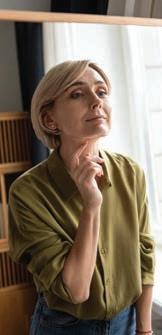
SPOTS, WRINKLES, AND LEATHERY SKIN.
So much for “fun in the sun.” But there are plenty of ways to treat and prevent sun-damaged skin to reduce excess pigmentation and smooth out lines. We spoke with some local skincare professionals to get their expertise on skin renewal.
Going Deep
“Sun damage is kind of like an iceberg,” says Brooke Turlington, clinic director at Park Aesthetics. “What you see on the surface is often only a fraction of what’s already developing underneath.”
While chemical peels and skincare products can help with mild sun damage, “lasers are usually going to create faster and more dramatic correction because they can reach deeper than most topical or superficial treatments can,” says Turlington.
“BBL (BroadBand Light) is by far the most common treatment that we use to treat sun-damaged skin,” says Michelle Turley, a licensed esthetician and cosmetic laser specialist at Chatham Plastic Surgery. It can penetrate to reach the layers of sun damage while leaving the skin intact during the healing process. “That means our patients can continue their busy lives without having to deal with wound care from heavier laser and peel treatments,” says Turley. “It is highly effective and also tends to hold its results for longer periods of time than other treatment modalities.”
For patients with severe photodamage, Turley refers them to a dermatologist for blue light or photodynamic therapy. These treatments combine light therapy with prescription medications such as Levulan, she explains, “to address more stubborn areas such as actinic keratosis that we cannot remove with regular chemicals, microneedling, or lasers.” While this type of treatment is highly effective, it will involve more downtime, with redness and peeling.
At-Home Treatments
Turley recommends a good at-home skincare regimen involving Retin-A, vitamin C, and sunscreen.
Red light therapy devices are also popular. The masks do have research behind them, but there are a few caveats. One is to look for a mask that uses a wavelength of 820 nanometers or higher. And, says Turlington, “consistency matters to an almost unrealistic degree. You basically have to use it constantly for a long period of time to see meaningful results. So yes, there’s some evidence for skin stimulation and support, but it’s not comparable to in-office laser technology for true pigment correction.”
Other skin gadgets, like gua sha tools and ice rollers, “can absolutely help with inflammation, puffiness, circulation, and overall skin health,” says Turlington. “But not sun damage itself.”
Prevention
“Living in Savannah, telling people ‘just avoid the sun’ is unrealistic, but it really is significantly easier to prevent sun damage than to reverse it later,” says Turlington. That means you need to apply sunscreen constantly. “Even when you don’t think you need it,” she says.
She adds, “One of the biggest misconceptions is that skincare can somehow outwork chronic UV exposure. We see so many ‘glass skin’ trends and Korean skincare trends online, but one thing many Americans don’t realize is that sun avoidance in many Asian cultures is taken incredibly seriously. Umbrellas, visors, gloves, constant sunscreen reapplication — it’s extremely normalized.”
“There are companies that develop full SPF wardrobes that are not only effective but also attractive to wear,” says Turley. “There’s really no excuse left to be unable to protect your skin when there are so many things available in today’s market.”
Once you’ve undergone something like a BBL, it’s important to double down on sun damage prevention. “If you spend money on lasers and then immediately go sit in the sun without sunscreen or corrective skincare,” says Turlington, “you’re basically undoing your investment.”
Consistency and patience add up to amazing skin.
“There is no quick fix to a long-lasting result,” says Turley. “Spots can be quickly removed but your body will be quick to replace them as a method of self protection unless you make life changes, from the way you protect yourself to what you are applying to correct and maintain your skin. It’s a commitment but one that is very rewarding when you look in the mirror and see healthy, glowing skin reflected back.”
SCARY RISK TAKING
MANY OF US GEN XERS grew up slathered in baby oil, attempting to look like Malibu Barbie. We’ve since repented, with our Sun Precautions shirts and daily sunscreen. Surprisingly, Gen Z has learned nothing from us. They aren’t smoking, drinking, or making out like it’s 1987, but they have embraced tanning — and with it, they are seriously raising their risk of skin cancer.
A 2026 study on sun safety by the American Academy of Dermatology found that Gen Z more likely to rely on Instagram or TikTok, where they may find misinformation, for skincare advice. Gen Z is less aware of the risks associated with getting a sunburn, are more likely to think that tanning beds are safer than the sun, and believe in myths such as “the base tan.” Overall, 20% of Gen Z respondents said that getting a tan is more important to them than preventing skin cancer. This attitude is especially bizarre coming from a generation that is interested in 12-step Korean skincare routines. So, how can we nudge our young people toward safer sun habits?
“As both a mom and someone who has spent years in the beauty industry, I think education is everything,” says Michelle Peth, founder of sunless tanning company Beettan. “A lot of younger people still associate tanning with ‘looking healthy,’ but we now know the long-term effects of excessive UV exposure and that tanning beds can be incredibly damaging. Skin health and skin appearance go hand in hand.”
Her advice is not to shame young people for wanting a tan, “because realistically they probably still will. Instead, help them understand there are safer alternatives available now that didn’t exist years ago,” says Peth. “Sunless tanning has come a long way and can give people the confidence and glow they want without baking their skin in harmful UV rays.”
Peth notes that parents can lead by example. “Wearing SPF, prioritizing skincare, and normalizing sunless tanning over tanning beds helps shift the conversation from ‘being tan at all costs’ to taking care of your skin in the long term,” she says.
— KATHRYN DRURY WAGNER
A Natural Beauty
Abandoned for decades, this rustic property has been turned into a welcoming retreat with sweeping saltmarsh views.
Written by KATHRYN DRURY WAGNER
by ANDREW FRAZIER
Photography
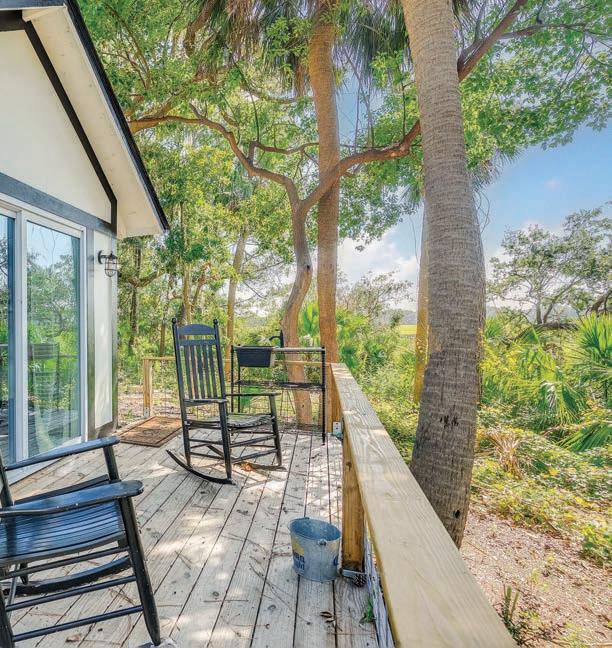
Paul Miller calls the back deck “off the chain wonderful” for enjoying a morning cup of coffee.
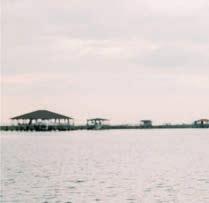
THE REMNANTS OF THE WOODEN DOCK , he says, is called “a ghost.” Paul Miller surveys the panoramic view before us: cordgrass, Grays Creek, sky. Pale fragments of weathered wood — dotted through the marsh like a path to nowhere — are the only clues that a dock was once here. But Miller is good at seeing the potential in things that are almost invisible.
Miller is the owner, contractor, and salvation for this property, which he calls the Shrimp Camp.
I’ve driven by this home on U.S. 80 at least twice a day for nearly a decade, but it wasn’t until about three years ago, when Miller began his work, that it started to reveal itself to us passersby.
Originally from International Falls, Minnesota, Miller has a degree in civil engineering and has worked in the construction industry for decades. He is the
founder of The Savard Co. in Savannah. “Concrete paid the bills,” he says, “but we’ve renovated powder rooms, we did Sixby, we did Lori Judge’s office on Abercorn. I’ve been fortunate to have had really interesting projects walk through the door.”
The property came to his attention in November 2023 via his friend, real estate pro Lori Judge of Judge Realty. “Once in a while she’ll call and say, ‘I have a Paul Miller special,’” he jokes. “You know, kind of an shithole.”
When he arrived to tour the property, it was densely covered with vegetation. “You couldn’t even see the house,” Miller says. “You could barely make it up the driveway. It had been left alone for so long.” In fact, no one had lived in the home since 1979. There was no running water, no plumbing, and the floor
The living room coffee table is a large slice of an olive tree.
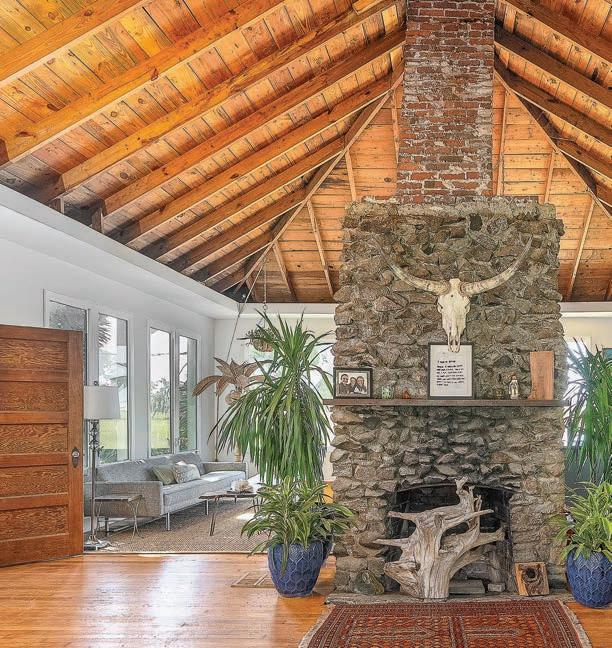
The chimney features a “witch’s crook,” where it changes direction near the top. The artwork beneath the skull is “I Came to America” by Miami-based artist Gonzalo Hernández.
was rotted out. “It was an absolute mess,” he says. Naturally, he was in.
“I enjoy the projects no one else wants to touch,” he says. “Seeing hidden beauty and then revealing it seems to be my talent.” It is also, he adds, his curse.
Miller says the home was originally built in 1925 for a dentist who wanted a rustic retreat. A subsequent owner envisioned a retirement spent on the water; he bought a shrimp boat for fun, despite having no experience in the field. The boat was at the end of that wooden dock on Grays Creek when it was sunk by a hurricane a mere three months later. So much for shrimping.
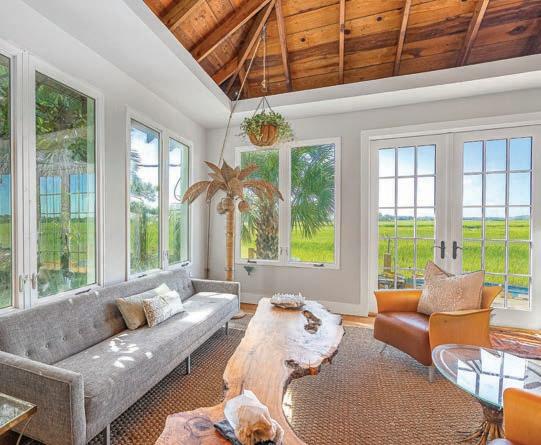
While it feels airy and spacious today, the home’s layout was originally cramped, with a living room, three bedrooms, a tiny hallway, and a small bathroom all packed in. A drop ceiling didn’t help; it was so low, you could reach up and touch it, Miller says. Once he removed that, the high angles of the pine ceiling were revealed, now aged to a golden color.
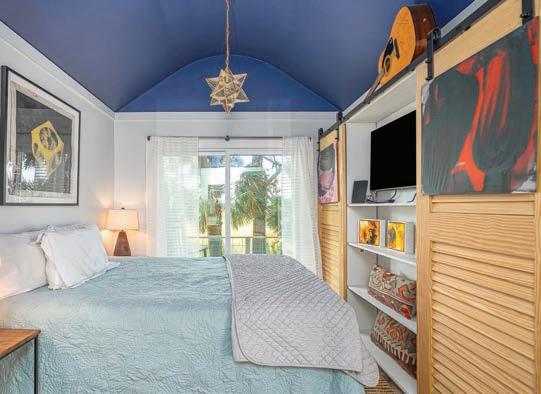
Miller converted one bedroom into a proper bathroom and removed walls from the rest of the home to create an open space. It now includes a spot for a large bed and two nightstands, along with an ample kitchen and a living room area. He moved the front door and added a welcoming front vestibule.
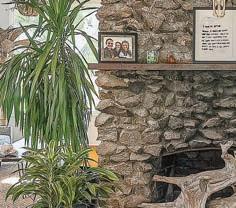
When you set foot in the house, the first thing you see is a ballast-stone chimney. It’s Miller’s favorite feature, with a “witch’s crook,” where the chimney changes direction abruptly toward the top. Back when the home was built (and for centuries before that), masons sometimes constructed chimneys this way to align them with the peak of the roof. But folklore, which is far more fun, tells us that a witch can’t fly down a crooked chimney, making the unusual architectural detail a protection from evil.
Much of the furniture is midcentury modern, with many pieces sourced from Picker Joe’s Antique Mall and Vintage Market. Despite hailing from a different era than the home, the warm wood tones and simple lines of the midcentury designs fit in seamlessly here, keeping the focus on the panoramic views of the marsh. The desk is by famed Danish designer Nanna Ditzel. “It’s practically a museum piece,” Miller explains. “She was one of the first female midcentury designers to make it big.”
Much of his art was sourced from Susan Laney at
133 Reserve Circle, Savannah, GA An extraordinary deep-water custom home opportunity awaits at The Isling at Savannah Harbor, just five minutes from Savannah’s Historic District by ferry or bridge. This 4BD/5BA coastal-urban masterpiece will be built to
3551 Julienton Drive NE, Townsend, GA Luxurious new construction 4BD/4BA home on .78 acres with expansive marsh-front views of the Julienton River. Offered at $1,150,000
Melody Rodriguez & Liezel Fourie (912) 704-7721
your specifications, with wrap-around porch, private pool and dock. Enjoy paddle sports, resident clubhouse, nearby golf, and Freedom Boat Club at IGY Marina. Offered at $4,500,000
The Isling Sales Team (912) 509-0074
27 Shore Road, Savannah, GA Custom 5BD/5BA spanish-style villa on 2.5 private acres with access to deepwater community dock on Little Ogeechee River. Offered at $2,500,000
Fran Belloir (912) 663-4444
ENGEL & VÖLKERS SAVANNAH
1650 East Victory Drive | Savannah | GA 31404 (912) 238-0874 | savannah@evrealestate.com Learn more at savannah.evrealestate.com
700 Wilmington Island Road #701, Savannah, GA Resort style waterfront living in this 2BD/3BA seventh floor residence overlooking the Wilmington River. Offered at $519,900
Jessica Kelly (912) 441-9101
204 Lovell Avenue, Tybee Island, GA Just one block from the beach. Renovated 4BD/2BA coastal retreat blends relaxed elegance with effortless entertaining. Offered at $920,000
Amber Parker & Caitlin Carter (478) 636-3588
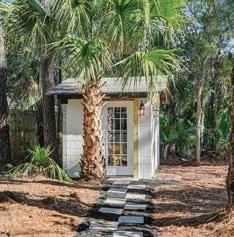
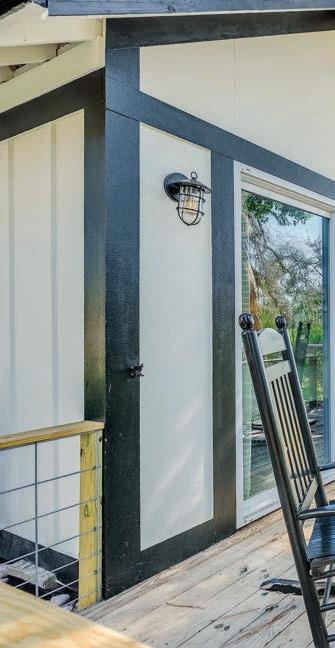
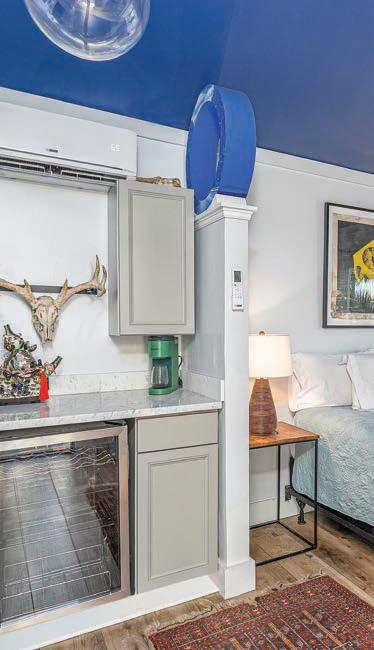
The Shrimp Camp, as Miller calls it, consisted of a cramped main cabin, a bait shack, and a lawnmower shed, now all renovated into three fully functional and modernized living spaces ready to be enjoyed.
Laney Contemporary, such as the Katherine Sandoz paintings. The sculptures flanking the bed include “September,” as well as a study for the final work, by Curtis Patterson. “He’s done civil rights monuments in most of the major cities in this country,” says Miller. “He has some really important things to say.” Over time, he’s forged a friendship with Patterson, who is based in Atlanta. “I pick up barbecue and banana pudding and visit him in his studio,” says Miller.
Another good friend, Elizabeth Seeger, owner and founder of local handbag company Satchel, was responsible for the kitchen design. “She hit it spot on,” says Miller. It features semi-custom cabinets from Lowe’s and high-end appliances.
“I’ve used a version of this refrigerator in five or six houses,” he says of the Frigidaire Professional Series. He proudly opens it up to show the walnut trim on the inside.
The renovation has taken time. “My work takes me all over, and because of that, the process has been sporadic at best,” he says. “I do not work with a plan, formal design, or drawings. Because I build primarily for myself, the design tends to be organic. For instance, very early on, I was wandering about the architectural scratch and dent section at Guerry Lumber. There were six huge windows that had been rejected on
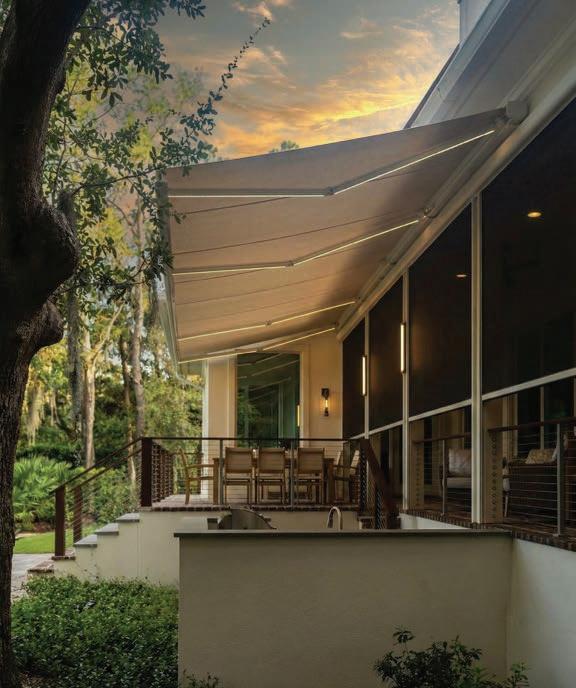
Elevate your outdoor living with motorized screens and awnings that deliver shade, privacy, and year-round comfort.
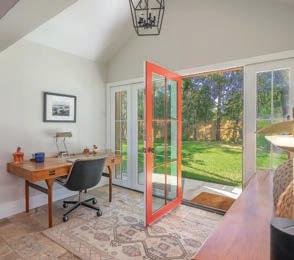
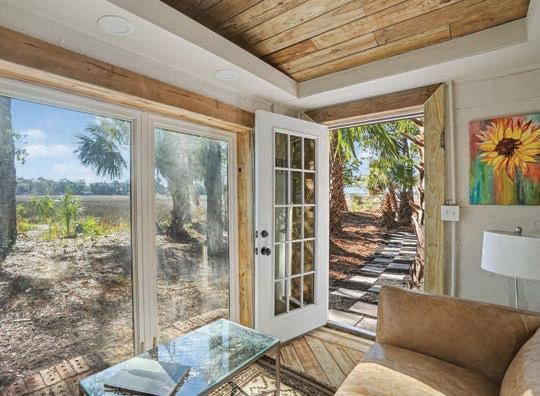
Miller transformed this concrete-block bait shack into a cozy reading room that can double as an additional bedroom.
another home build. Needing windows for the camp, I purchased all six. As soon as you walk into my home, it is obvious I was the benefactor of the turn of a friendly card.”
Next to the main house, a smaller structure was a lawnmower shed when Miller bought the property. He transformed it into a suite, with a bedroom, bathroom, and private deck.
The parcel of land also has a third building, a concrete-block shed. It originally had been a bait shack, says Miller, selling wares to people coming along Route 80, and remnants of tanks for the bait remained behind it. The structure was so completely grown over, Miller didn’t even know it was there for several months after buying the property.
Clearing the vegetation from around the bait shack involved filling two dumpsters, but it was worth it. It’s now a cozy reading room or additional bedroom with a huge window facing the marsh and modern comforts such as power and HVAC.
It’s the perfect encapsulation of the Shrimp Camp — a place once abandoned and now uncovered and transformed to be enjoyed once again.
Miller converted a former lawnmower shed into a suite with a deck (shown here), and a bedroom, bathroom, and kitchenette (shown on pages 102 and 104).
“You couldn’t even see the house. You could barely make it up the driveway. It had been left alone for so long. It was an absolute mess. ... I enjoy the projects no one else wants to touch. Seeing hidden beauty and then revealing it seems to be my talent.”
— Paul Miller
DETAILS
Neighborhood: Thunderbolt
Year built: 1925
Year purchased: 2023
Timeline of renovation/ construction: 3 years
Number of bedrooms: 2
Number of bathrooms: 2
Square footage: 1,208
Builder/contractor: Paul Miller working with The Savard Co. Tree removal and landscape
grooming: Herrington Tree Service
Hardscape design: Paul Miller
Septic tank: Olde Savannah Septic Services
Kitchen design: Elizabeth Seeger
Kitchen appliances: The stove is a dual-fuel Kucht with a griddle; refrigerator is a Frigidaire Professional Series; dishwasher is Bosch. Sourced from Livingood’s Appliances and Bedding.
Kitchen cabinets: Semi-custom from Lowe’s
Kitchen island: Walsh Custom Surfaces is creating a black marble topper
Furniture: Mostly vintage midcentury modern, much of it from Picker Joe’s Antique Mall and Vintage Market
Rugs: Vintage, sourced from Jacksonville
Lighting: Serena & Lily in Bluffton
Accessories: Handmade oysterthemed soup tureen and bowls from juried show at the New Orleans Jazz and Heritage Festival
Windows/doors: Guerry Lumber
Art: Most sourced from Laney Contemporary Gallery. Highlighted artists include painter Katherine Sandoz, photographer Jack Leigh, and sculptor Curtis Patterson
Daufuskie Island.
Written by
MARY CORNETTA
KIKI DY
KATHRYN DRURY WAGNER
Photography by BLAKE CROSBY/CROSBY CREATIVE
Daufuskie Island
MARINE ECOSYSTEMS CAN VARY DRAMATICALLY within mere meters of depth. A section of satin sea at sunset or waves of choreographed chaos in a storm, though seemingly synchronized, hold different rituals, worlds, and unknowns beneath the froth. Daufuskie Island, for visitors, works much the same way. The South Carolina sea island is often depicted with images from travel mags — a styrofoam cup held by a man with a sunburned chest in a golf cart, a festive group photo taken at Old Daufuskie Crab Co., a peaceful moment showing an egret-abundant bird rookery. But it’s also been recently lauded by travel writers as “a throwback to a slower coastal South,” “an unspoiled barrier island,” and “an untouched oasis,” which are also apt descriptors. As Daufuskie increasingly lands on tourist radars, there’s an opportunity for understanding the island in a deeper way.
Part of Daufuskie’s contemporary appeal is that it’s Uber-proof.
Most visitors arrive via private boat or passenger ferry from Hilton Head Island or Bull River Marina on Wilmington Island, crossing waterways that have connected Savannah, Hilton Head, and Daufuskie for generations. Depending on the route, the trip typically takes between 30 and 45 minutes.
For island residents, however, the ferry is not a novelty; it’s a necessity. With no bridge to the mainland, Daufuskie residents rely on regular ferry service for work, medical appointments, shopping, and everyday errands. Middle and high school students still commute to Hilton Head by boat each day before continuing on to school by bus, a journey that takes more than an hour each way.
Ferry schedules vary by operator and season, but multiple daily crossings help keep the island connected while preserving the sense of remove that draws many visitors in the first place.
Once ashore, visitors will find that golf carts have become the island’s default mode of transportation, and today, several companies offer both traditional and electric rentals. Bicycles remain another popular option, particularly for visitors interested in absorbing and meandering.
Daytrippers: Pay close attention to return ferry times, lest you miss the last boat back for the day.
— KIKI
Daufuskie residents Alan and Beth Picard, Danielle Hicks Crosby and her daughter Revel Crosby cruise around in the Picards’ “Art Cart.” Beth, an artist, painted the golf cart and designed Alan’s shirt.
Daufuskie Island
Written by MARY CORNETTA
SET ALONG A QUIET STRETCH
of Old Haig Point Road, the Daufuskie Island History Museum continues to preserve the island’s legacy through personal mementos, restored structures, and the stories of the people who shaped it throughout generations.
Operated by the Daufuskie Island Historical Foundation, led by president Geoff Brunning, the museum complex consists of three historic buildings: a carriage house, the former Jane Hamilton School, and the former Mount Carmel Baptist Church No. 2, where exhibits reside. “The selection of the church building to house the museum was an easy one,” says Sam Waters, historian and vice president of the foundation. “It provided an opportunity to restore and preserve an important part of Daufuskie history while creating an ideal space for exhibiting the artifacts and treasures that document the island’s history over time.”
The main museum building — a wooden church originally constructed by residents of Daufuskie’s north end — dates back to the years following a devastating 1940 hurricane. The island’s original Mount Carmel Baptist Church, built in 1901, was destroyed in that storm, prompting residents to rebuild shortly afterward on a nearby site (hence, church No. 2).
As the island’s population declined over time, the church eventually closed. In 2001, the Historical Foundation purchased and restored the property, transforming it into the place both locals and visitors
can witness today. Inside, exhibits trace Daufuskie’s history from its earliest Native American inhabitants through Spanish exploration, English settlement, the plantation era, the Civil War, and beyond. Yet some of the museum’s most compelling displays focus not on significant historical events, but on the everyday people whose lives shaped the community.
“Several displays feature some of the notable Gullah residents of the island in more recent times,” explains Waters. Among them are the prominent home builder Samuel Holmes and longtime resident Cleveland Bryan, who recently celebrated his 101st birthday. Visitors can also view a Gullah Bible, illustrating the church’s enduring spiritual and cultural significance. The original pulpit and organ also remain well-preserved, with the restored organ still fully functional.
Just outside the museum sits one of the foundation’s most treasured relics: the carriage once used by Sarah Grant, Daufuskie
Island’s last midwife. Built in 1893 by the Chatham Carriage Co. in Savannah, the spindle-back carriage helped Grant deliver 130 babies between 1932 and 1969. The fact that she didn’t lose a single child was a remarkable accomplishment made even more extraordinary by the island’s isolation and lack of medical facilities during much of the 20th century. “When Sarah was notified that a woman was in labor, she gathered up her supplies, hitched her horse, Tillman, to this carriage, and headed off to provide her services,” Waters says. “After her retirement, women had to go to maternity facilities across the water.”
Inside the museum, some of Grant’s original midwifery supplies remain on display, helping visitors imagine the realities of island life before bridges, ambulances, and nearby hospitals. But her influence extended well beyond childbirth. According to Waters, Grant also worked as an oyster shucker; served as a deaconess, Sunday school teacher, and choir member at the
First Union African Baptist Church; led the PTA; managed local election boxes; and finally took over her husband’s job as an undertaker after his passing. She was known as Daufuskie’s unofficial mayor. She died in 1977, “leaving behind an enduring legacy and a generation of island residents whose lives literally began with her care,” Waters says.
Preserving the carriage itself became a major undertaking for the foundation. After an extensive search for qualified restorers, it was eventually sent to Pennsylvania in 2015, where Amish carriage builder Paul Stoltzfus completed the restoration work. A dedicated carriage house was later constructed in 2016 by Mike Vaccaro of Ludtke & Vaccaro Architects in Bluffton. It helps safely preserve what Waters believes is the oldest vehicle on Daufuskie Island.
Another significant stop on the museum campus is the former Jane Hamilton School. Named for Gullah resident Jane Hamilton, who donated the land for the school in 1938, the building reflects an important chapter
in educating young Black residents during the era of segregation. The school has large windows to provide natural light and a better learning environment, according to Waters.
After the oyster industry declined and enrollment dropped, the school (nicknamed “the Janie” by locals) closed in 1950.
Hamilton later made the building her home until her death in 1961 at the age of 94. Today, after restoration efforts by the Historical Foundation, it serves multiple roles for the community, including as a public library, polling place, and cultural center dedicated to preserving Gullah history and traditions.
For museum guests, it offers something increasingly hard to find in the modern world: a chance to experience history in a setting that still feels fiercely rooted to its past. “We would hope that visitors leave with a sense that Daufuskie is a small island with a large history,” Waters says. “Due to the isolation that the island has always enjoyed, Daufuskie remains just a bit closer
to its history than most places.”
The foundation is also committed to looking toward the future. Waters says ongoing efforts include expanding the museum’s digital presence through social media and online educational resources that enable people both on and off the island to dive deeper into Daufuskie’s history. The organization also hopes to make more of its archival materials — including land grants, surveys, and historical correspondence — accessible to the public, while developing an audio tour that will allow visitors to experience the museum in a more immersive way.
Despite embracing today’s technology, the Daufuskie Island History Museum remains one of the most captivating ways to revisit the past. “We have no traffic jams, no overcrowded beaches or tourist attractions, no late-night lights or noise, and no condensed retail shopping areas,” Waters says. “It is far easier to get a sense of what once was here.”
The former Mount Carmel Baptist Church No. 2 now serves as the main history museum building.
Former Jane Hamilton School
Daufuskie Island
SALLIE ANN ROBINSON
Few names surface more frequently during reporting on Daufuskie Island than Sallie Ann Robinson. The sixth-generation Daufuskie native is a cookbook author, television personality, and cultural keeper. On her tours, she relishes introducing visitors to the foodways, stories, and traditions that continue to shape Daufuskie Island.
A day spent navigating Daufuskie under Robinson’s edification on a Sallie Ann Authentic Gullah Tour is a day spent recalibrating your lens on land and life.
Her tours stay true to the island’s Gullah roots, sharing her practical knowledge of living off the surrounding land and water and her healthy dose of humor. For travelers hoping to understand more than where they are — to understand who came before and how the island became what it is today — no one is better equipped to set the record straight.
Robinson is also the author of several cookbooks, including “Sallie Ann Robinson’s Kitchen,” “Gullah Home Cooking the Daufuskie Way,” and “Cooking the Gullah Way, Morning, Noon & Night,” as well as a contributing author to multiple other titles on Daufuskie traditions and cuisine.
ISLAND ALLURE
Daufuskie’s distance from mainland areas once underpinned the island’s society rather than inviting sojourn. The same waterways that now lure adventurous outsiders created the conditions for one of the region’s most enduring Gullah Geechee communities to evolve language, traditions, and terms of existence.
Less than a mile of water separates Daufuskie from Hilton Head, yet the island remains accessible only by boat. That’s part of the allure: Daufuskie’s inimitable sense of arrival is worthwhile on its own.
Arriving at Freeport Marina, Old Daufuskie Crab Co. comes into focus as one pulls into the dock. Live music and boater bacchanalia against an unblemished biome make for a distinct interplay that’s unforgettable.
“One of our key takeaways was abundance — or even excess compared to our relatively barren European landscapes,” says one visitor we interviewed, Jonathan Lasham. He is a biophysicist visiting from Finland, and he and his partner, Adam Smith, found the lush environment “almost too much to process.”
While this might be true for a Scandinavian, we suspect most Coastal Empire folks can handle it.
— KIKI DY
SETWAKE TOURS
For visitors interested in understanding the island beyond its beaches and backroads, few guides are better positioned than Captain Chez “Fuskie” Simmons. A seventhgeneration member of the Daufuskie Island Gullah Geechee community, Simmons observes his family’s roots through the same waterways many visitors now cross for recreation.
The name of his company, SetWake Savannah, references routes traveled by his forefathers between Daufuskie, Hilton Head, and Savannah — a reminder that the water separating these places has also long connected them.
Today, visitors can join Simmons for excursions that blend ecology, history, and personal narrative, offering a perspective difficult to glean from a golf cart map alone. Through family stories and lived experience, he helps plunge the deeper currents that buoy a changing life on Daufuskie. “Once people come once, they come again,” Simmons says.
— KIKI DY
Daufuskie Island is the kind of place where directions might be, “Turn left at the John Deere tractor.” That laid-back, peaceful feeling extends to Daufuskie Soap Co., tucked around the back of the home of the company’s owner, Jan Crosby. She also makes her products there onsite.
Crosby first moved to Daufuskie in 2005 with her young family. “It was an amazing place to raise our daughters,” Crosby says. “The natural beauty and close community on the island have made it such a special place to live.”
In 2014, she started crafting soaps with organic shea butter. It soon grew into a business selling bath and body products, including the soaps as well as scrubs, lotions, body butters, lip balms, and more.
The OG soaps are still her favorite, she says. “They are the cornerstone of my business,” she notes, despite being the most challenging product she makes. While her product line includes a large variety of scents — everything from Sea Island Cotton to Georgia Peach — the most popular is Ocean Spa. “It sells exceptionally well across all product lines,” Crosby says. It combines florals with sea salt to create a crisp, spa-inspired scent.
There’s good news and bad news about these creamy, addictive body products: The bad news is they are sold exclusively on Daufuskie Island. The good news is Crosby has an online store, so if you need an Ocean Spa moment in your life, she can ship a little bit of Daufuskie Island over to you.
— KATHRYN DRURY WAGNER
Rhonda Davis, left, and Leanne McJunkin Coulter in their studio
Daufuskie Island
After moving to Daufuskie Island 13 and 14 years ago, respectively, Rhonda Davis and Leanne McJunkin Coulter became fast friends. Sharing a love for Daufuskie’s nature and history, they began exploring the use of indigo, which still grows wild on the island.
Today, they are the owners of Daufuskie Blues, a studio housed inside the historic Mary Fields School that offers one-of-a-kind, hand-dyed textiles made with organic indigo.
“Indigo is a slow and complex process, unlike all other natural dyes,” says Davis. It has an ancient and fascinating history, not only in colonial South Carolina, but throughout the world,” says Davis. “The blue hue truly reaches through time and across cultures of the world.”
People are often surprised, she notes, that natural indigo provides such a distinct and captivating color compared to the flat pigments of synthetic dyes. Moreover, they can’t believe the dye comes from a green leaf.
Stepping into their studio and shop, visitors find a variety of textiles. The natural fiber scarves are especially popular, says Davis. “We really love the meticulous work of advanced Japanese shibori techniques.” The hand-dyed pieces can take weeks to make and are dip-dyed 15 times or more for the most beautiful color.
Davis and Coulter have hands that betray how much time they work with indigo. “It is a question we hear many, many times every day: ‘Are your hands always blue?’ People are amazed, awed, enchanted, or curious about our ‘ever-blue hands,’” says Davis. The two conduct workshops, so hopefully “blue hands” are spreading as more people rediscover the magic of working with indigo.
— KATHRYN DRURY WAGNER
A seventh-generation member of the Daufuskie Island Gullah Geechee community, Captain Chez Simmons grew up hearing stories of an island where oyster houses sustained families, midwives delivered generations of children, and news traveled through the woods from neighbor to neighbor. His grandmother often told him, “True Daufuskie will never exist again.” Yet traces remain. Some survive in stories; others in places you can stay.
THE OYSTER COTTAGE
From Daufuskie to Pin Point, for the Gullah Geechee community along Savannah’s Moon River, oyster shucking created vital food security, economic independence after emancipation, and a heritage of sustainable harvesting.
As Pin Point Heritage Museum site manager David Jones notes, the work was communal and often female-fortified. “In oyster houses and seafood houses,” he says, “women did the majority of work and were partners in breadwinning while raising children.”
On Daufuskie, the blue-trimmed Oyster Cottage is among the last oyster houses to stand on the island and the only one where you can book a stay for the night.
Tucked beneath a sprawling live oak estimated to be more than 500 years old, the home dates to the early 1900s. The respectful restoration retains heart pine floors, beadboard walls, and one of the island’s earliest staircases. Overnight guests have a great ground zero (and included golf cart) to explore nearby landmarks including First Union African Baptist Church and Mary Fields School.
THE SARAH HUDSON GRANT HOME
If you’ve spent any time in the Daufuskie Island History Museum, the name Sarah Grant should already hold admiration.
Although not originally from Daufuskie, she married island undertaker Joseph Grant and later began her midwifery practice in 1932. Long before childbirth became institutionalized, Black “granny midwives” combined herbal knowledge, spiritual practice, and hard-earned practical expertise to guide mothers through labor and delivery.
Indigo still grows wild on Daufuskie Island. Its deep blue dye surprisingly comes from green leaves.
FEELING NAUTI
Exploring the waterways around Savannah? Here are some marina options for docking a private boat or for joining a membership-based boat club:
Savannah Boathouse Marina (Freedom Boat Club)
8020 U.S. 80, Wilmington Island
Built along the Bull River and opening in 2021, Savannah Boathouse Marina is one of the newer marina developments in our area. The property was designed with modern, low-maintenance materials like aluminum docks and recycled decking, giving it a clean and updated feel compared to many older coastal marinas. It also serves as the largest singlelocation Freedom Boat Club operation in the country, with hundreds of dry storage slips and quick access to Tybee Island, Wassaw Island, and Savannah’s coastal waterways.
Safe Harbor Bahia Bleu (Freedom Boat Club)
2812 River Drive, Thunderbolt
Safe Harbor Bahia Bleu sits along the Wilmington River in Thunderbolt and has long been one of the area’s most active boating hubs. The marina combines transient dockage, dry storage, and social spaces with direct Intracoastal Waterway access, making it popular for both local members and visiting boaters. The marina has upgraded facilities, a friendly dock staff, and a strong boating community atmosphere.
MarineMax
Savannah Bend Marina 3518 Old Tybee Road, Thunderbolt
Located on the Intracoastal Waterway, MarineMax Savannah Bend Marina is convenient for both local boaters and transient traffic heading through coastal Georgia. The marina offers fuel, wet slips, dry storage, floating docks, and easy access to downtown Savannah and Tybee Island.
At only 5 miles long and 2.5 miles wide, Daufuskie Island is small in size but steeped in history. While we can’t fit all the destinations into this article, a few other places to put on your list include the Oyster Union Society Hall, Cooper River Cemetery, the restored 19th century First Union African Baptist Church (it still has an active congregation), and Bloody Point Light House & Museum. You can also swing by Daufuskie Island Distillery for lunch and to sample the handcrafted small-batch rum, vodka, tequila, and bourbon made on-site.
First Union African Baptist Church
A replica of a traditional praise house, found on the grounds of First Union African Baptist Church
A visit to the Bloody Point Lighthouse & Museum can include a stop at nearby Silver Dew Winery.
For generations, many Gullah children were told that their language was something to overcome. As Gullah Kinfolk Traveling Theater deputy and musical director Scott Gibbs recalls, “We were taught that we weren’t supposed to speak Gullah because it wasn’t ‘correct.’”
The books below are reminders that language, stories, recipes, folklore, and memory are worth carrying forward. Some are about Daufuskie Island. Others are not. Together, they offer a wider lens into the communities, traditions, and histories that continue to shape the Gullah Geechee world.
FOR THE KIDS
“The Gathering Table” by Antwan Eady
Celebrated Savannah-based author Antwan Eady’s book “The Gathering Table” introduces young readers to Gullah Geechee traditions through the eyes of a child anticipating a family gathering.
The vibrantly illustrated, joyous tale narrates how the culture builds and binds community.
“Visiting Gullah communities, in so many ways, offers a window into the living legacy of a distinct African-rooted culture,” Eady says. “We tell the stories of cultural survival in America through our food, art, craft, music, spiritual expressions, and language.”
For Eady, children’s literature is part of that preservation work. “The fight isn’t over,” he says, “and it’s all of our responsibility to preserve such a rich history.”
FOR THE FOLKLORIST
“Gullah Animal Tales from Daufuskie Island, South Carolina” by Albert Henry Stoddard Long before cultural preservation became a formal undertaking, stories carried knowledge between generations. This collection gathers animal tales rooted in Gullah oral tradition — stories that entertain, certainly, but also preserve language, humor, values, and worldviews.
That distinction matters to Gibbs, who cautions against reducing Gullah Geechee culture to a single narrative or representative voice.
“No one person can tell the one story because everyone’s experience was different,” Gibbs says. “Many of us are out there.”
FOR THE LITERARIAN
“The Water is Wide” by Pat Conroy Pat Conroy’s 1972 memoir “The Water Is Wide” is based on his experience teaching for a year on Daufuskie Island. (In the book, it’s called Yamacraw Island).
Well-known Daufuskie resident Sallie Ann Robinson was a student of Conroy’s and appears in the book’s pages as the character named Ethel. Decades later, Conroy would write the foreword to Robinson’s cookbook “Gullah Home Cooking the Daufuskie Way,” creating a full-circle moment. The book was also turned into a movie, “Conrack,” starring Jon Voight.
— KIKI DY
Daufuskie Island
The story most often told about Sarah Grant is also one of the island’s most revealing. Residents recall that when a woman’s water broke, the news would be whispered through the woods until it reached Grant, passed from neighbor to neighbor with kindred care.
Today, indications of Grant’s effect on the community abound in the 1890s-built four-bedroom home, which is available for short-term rental. Guests can view artwork and artifacts depicting her life, walk through the yard to the shoreline, and contemplate a bygone South as the sun slips behind the marsh.
“Sarah Grant’s legacy extends beyond the house itself and reminded me about the urgency of preserving a way of life rooted in presence and care for one another,” shares a prior visitor to the home, Kelsey Wohleben.
THE FRANCES JONES HOUSE
Born in 1903, Frances Jones served as Daufuskie’s elementary school teacher for 39 years before becoming principal of Mary Fields School and devoting herself to a range of civic and social programs supporting island residents.
“The Frances Jones House is a modest 950-square-foot vernacular dwelling dating to approximately 1865,” says Joanna Rothell of Preservation South Carolina. Built by Jones’ great-grandmother shortly after emancipation, the home remained in the family for generations before becoming the residence of one of Daufuskie’s most beloved educators and community advocates.
After Jones’ passing in 2001, the cottage fell into disrepair. It later became the first Daufuskie property restored by Palmetto Trust for Historic Preservation, helping establish a preservation model that allowed descendants to retain ownership while safeguarding historically significant Gullah homes.
Today, guests can spend the night in a home whose story stretches from Reconstruction to the present day. Original architectural details remain, while modern comforts make it possible to rest your head and read a book without a bug to bother you.
— KIKI DY
FEELING NAUTI
(continued)
Isle of Hope Marina
Carefree Boat Club
50 W. Bluff Drive, Savannah
Set beneath the oak trees of Isle of Hope, this marina serves as a launch point for boating toward Ossabaw Island, Wassaw Island, and the Intracoastal Waterway. Its walkable village setting, large pavilion for events, and quieter atmosphere give it a very different feel from some of the larger commercial marinas nearby.
Wilmington Island Marina
36 Wilmington Island Road, Wilmington Island
Formerly known as Hogan’s Marina, then SunLife Marina, this property was recently purchased by Bowline Marinas.
The marina is also home to a Nautical Boat Club. The marina’s location provides quick access toward Turners Creek and the Wilmington River, making it appealing for recreational boaters looking to avoid heavier downtown marina traffic.
IGY Savannah Harbor Marina
101 Cay Plaza, Suite A, Hutchinson Island
Located directly across the river from historic downtown Savannah, IGY Savannah Harbor Marina has quickly become one of the most high-profile marina developments in the region. The superyacht-focused marina offers premium dockage and resort-style amenities while giving boaters views of the Savannah skyline. Hutchinson Island is also becoming a growing boating hub, with additional club operations and waterfront investment continuing nearby. Freedom Boat Club and Nautical Boat Club are also expanding their operations onto Hutchinson Island at Cay Plaza.
— GENEVIEVE NAVARE
Tucked into the back of the historic Mary Fields School, School Grounds Coffee serves more than caffeine. Inside the former schoolhouse, visitors will find local history information displayed on the walls, friendly conversation across the counter, and a beloved community gathering spot with an unexpected beginning.
Owners Pam and Brian Cobb arrived on Daufuskie Island in 2016 after relocating from Raleigh, North Carolina. Both are Georgia natives and graduates of the University of Georgia, and they spent their first year on the island cleaning houses while searching for a long-term opportunity.
The Mary Fields School property, owned by the First Union African Baptist Church, already housed an indigo dye studio (Daufuskie Blues) and an art gallery (Studio D’awfoskee) when the Cobbs were offered the chance to open a coffee shop in the back of the building. There was just one small catch: neither of them drank coffee.
“We did not even own a coffee pot,” Pam says. Undeterred, the couple spent nearly two months learning everything they could about beans, brewing, and operating a cafe before opening their doors in 2017.
The name School Grounds Coffee was chosen as a tribute to the generations of students and teachers who passed through Mary Fields School. Historic photographs fill
the shop, including reminders of one of the school’s most well-known educators, author Pat Conroy, who taught there in 1969.
The Cobbs’ creativity extends to their rotating menu. This summer’s offerings include the Summer Breeze latte, featuring white chocolate and cherry flavors; Lovely Day, flavored with lavender and vanilla; and Sugar Magnolia, a blend of coconut and caramel pecan.
Visitors with a sweet tooth should save room for one of Pam’s homemade baked goods. Baking under the auspices of South Carolina’s cottage food law, she regularly prepares customer favorites like lemon pound cake, lemon sugar cookies, and a decadent triple-chocolate cake.
The Cobbs also make sustainability a priority. The shop uses compostable cups and corn-based straws to help protect Daufuskie’s environment and wildlife, including the island’s sea turtles.
In many ways, School Grounds Coffee reflects the resourceful, welcoming, and often surprising spirit of Daufuskie Island. And in a place where life tends to already move a little slower, Pam and Brian have created a space where locals and visitors alike can sit and savor coffee and conversation before getting on with the rest of their day.
— MARY CORNETTA
Pam and Brian Cobb
Daufuskie Island
It’s easy to find Tricia and Haywood Frye’s popular “chicken shack,” Frye’s Corner, on School Road. Just look for the gaggle of parked golf carts, where hungry customers have thronged the place for delicious fried chicken, oysters, and shrimp, plus fixins like coleslaw and fresh-cut Vidalia onion rings. The cold beer and friendly, family-run service don’t hurt either.
The couple opened Frye’s Corner in 2022. They’d had a second home on Daufuskie Island since 2014, and after retiring in 2021, they wanted to try something different.
“We came up with the idea of Frye’s Corner because the island needed more food options, and we have the right last name,” jokes Tricia. “Haywood and I were inspired because of our love for Daufuskie and its people.”
When they bought the corner lot for the restaurant, it was wooded. “Haywood brought over his own equipment and cleared the lot and built the structure that is there now,” says Tricia. “It took him almost two years to get all the permits from Beaufort County to make it a legal commercial food establishment.”
Tricia says the Daufuskie locals have become like family to them. It can be challenging, though, doing business in a place where everything has to come in via a 30-minute boat ride. Still, the food they serve is fresh, never frozen. “We don’t even have a freezer,” she says. “You can taste the freshness in our food. Haywood says that’s the reason we run out of food!” It’s true, and word to the wise: Arrive early for lunch.
What to order? Tricia’s favorite item is the chicken strips with their homemade Frye’s Daufuskie hot sauce and fresh-cut Vidalia onion rings, while Haywood’s favorites are the fried oysters and his homemade hush puppies.
— KATHRYN DRURY WAGNER
Frye’s Corner is open seasonally, from mid-March through mid-October, from 11 a.m. to 2 p.m. Thursday to Saturday.
Haywood and Tricia Frye
CRAFTED ANEW
Whether you desire storage, storm protection, maintenance or a complete custom refit of your boat, Hinckley is poised to elevate your life on the water.
WHEN MATTHEW
PALERMO, FOUNDER OF LUXE MARINE GROUP,
rst laid eyes on Aragosta — a 62-foot Vicem with an overall length of 68 feet, 10 inches — he immediately recognized her potential. Transforming the yacht into the vessel he envisioned, however, required the right partner.
“Because we are a small company and this re t was a huge undertaking, I wanted a yard that would be as emotionally invested in the project as
we were,” Palermo says. “And we found that in Savannah.”
He was drawn to Hinckley Savannah’s reputation for craftsmanship and expertise caring for premium yachts of all makes and models. “It was a natural t,” he says.
Working alongside the Savannah team and Luxe Marine Group co-founder Aileen Kokell, Palermo focused on enhancing performance, re ning functionality and creating a cleaner, more contemporary aesthetic throughout the vessel.
At the heart of the transformation was a signi cant repower, including the installation of twin MAN 1,300-horsepower V8 engines and a custom lift system engineered by the Savannah team to position them precisely within the yacht. The result dramatically elevated Aragosta’s performance.
“Now the boat will do over 37 knots at the top end,” Palermo says. “That’s incredibly fast for something that weighs 90,000 pounds.”
Nearly every department at Hinckley Savannah contributed to the two-year re t, which also included updated electronics, lighting, varnish work, interior nishes and meticulously executed faux-teak detailing.
Stay where the Historic District meets the Eastern Wharf. Ease into our signature happy hour, linger over seasonal dinner at fleeting, then make your way to Bar Julian rooftop, home to sweeping river views and handcrafted cocktails. 201 Port Street Savannah, GA thompsonsavannah.com | (912).521.6150
TASTE
Dual Natures
The wine program at Marbled & Fin is designed to complement both seafood and steaks while encouraging diners to expand their palates.
Written
CORNETTA
by MARY
Photography by CAMERON WILDER
AT A RESTAURANT WHERE oysters and halibut share menu space alongside ribeyes and prime cuts, designing a wine list is less about choosing red or white and more about creating room for all. That philosophy drives the wine program at Marbled & Fin, which opened in Savannah in April. The president of Neighborhood Dining Group, Kenny Lyons, helped curate a wine list that pairs just as well with a seafood tower as with a porterhouse.
“The overall approach for the Marbled & Fin wine list is balance, to match the identity of the food,” Lyons says. The balancing act Lyons describes began with acknowledging what diners traditionally expect from a steakhouse wine program. Bold reds still have a place on the list, including Napa cabernets, Bordeaux, Tuscan wines, and Rhône varietals. But Lyons wanted the program to go further than the standard steakhouse formula.
“While we have great representation of those wines, we also have depth in Burgundy, Beaujolais, Jura, and new world offerings of the varietals seen in these French regions,” he says. The result is a list that moves comfortably between fuller-bodied and lighter choices. Guests can find crisp, mineraldriven whites intended specifically for seafood pairings alongside grand cru white Burgundies, pinot noirs, gamays, and sparkling wines. “We have lots of bubbles,” says Lyons. “We love bubbles, and the great thing about [them] is that they’re right for all occasions.”
Building the type of wine list that Marbled & Fin has, however, takes far more work than most diners realize.
“Selecting wines sounds like it’s not a grueling job, but when we are putting programs together, you taste … a lot,” Lyons says. Before opening, he spent hours tasting wines, evaluating which would ultimately make it off the chopping block.
“There were several days over several weeks where I was tasting wine at 8 a.m. and didn’t stop until 5 p.m.,”
“We are trying to o er unique experiences at our restaurant and, hopefully, wines you don’t see at every other restaurant around town.”
— Kenny Lyons
he says. “Everyone wants to get their wines in front of you.”
Part of organizing the list came down to structure. Lyons uses a template system that maps out categories, price points, and placements before the first bottle is ever ordered. “For example, to open, I want 20 SKUs of white Burgundy,” he explains. (A SKU is an inventory code, as opposed to a wine label.) That framework allows the team to balance village-level wines with premier cru and grand cru offerings while keeping pricing approachable across multiple tiers. It also helps guide staff training as the wine program evolves. “The opening list is always the starting point,” Lyons says. “Once you start having business coming in, you see what’s moving, and you grow from there.”
Currently, the Savannah location offers about 250 unique wine options, though Lyons describes the list as “living and breathing.” The selections continue to evolve as the restaurant learns more about guest preferences and expands its cellar. “We put a lot of focus into those wines we believe in, in terms of quality, sustainable/regenerative farming practices, and those making wine responsibly,” Lyons says.
He also wanted the list to feel distinct from what patrons might already recognize on grocery store shelves or in different dining establishments. “We are trying to offer unique experiences at our restaurant and, hopefully, wines you don’t see at every other restaurant around town,” he says.
Of course, wine at Marbled & Fin is ultimately designed with food in mind.
Throughout recipe development and staff training, Lyons and his team spent extensive time tasting dishes alongside different wines to see what combinations work naturally.
“Through this process, you naturally see what tastes proper together,” he says. “Often it can be unexpected.”
Rather than focusing only on matching red wine with beef or white wine with fish, Lyons pays close attention to acidity, tannins, texture, and minerality.
“If you have a piece of fish, like our halibut, and everyone at the table is ordering a ribeye, well then you order a bottle of chenin blanc,” he says. “The last thing you want is tannins from a big red overpowering and making your fish seem dry.” He adds that a high-acid chenin blanc (such as one from Thibaud Boudignon) complements the citrus and
tomato notes in the dish’s sauce while enriching the delicacy of the seafood itself. “Enhancing the experience is what our business is all about,” he says.
So far, guest preferences have offered a few revelations.
“Surprising but not surprising for us has been sangiovese sales,” Lyons admits. “I think Tuscan reds typically strike such a nice balance with beef.” He prefers their structure over heavily oaked domestic cabernets, which can sometimes overpower a meal rather than complement it.
On the white wine side, Lyons says sauvignon blanc, particularly Sancerre, remains a consistent customer favorite, though he hopes guests become more adventurous over time. “There is more to white wine than Sancerre,” he says. “Spread your wings; live a little.” He recommends trying a kindred white from the Loire Valley region, such as PouillyFumé, Quincy, Menetou-Salon, Reuilly, or Touraine.
The wine program at the Savannah Marbled & Fin shares some similarities with the Charleston location, but the two lists are far from identical.
Lyons says all by-the-glass offerings differ from restaurant to restaurant, and more than half of the bottle selections vary as well.
One thing the restaurants have in common is a dramatic wine cellar designed as a focal point. “At both locations, it is our pièce de résistance,” Lyons says. Custom-built by craftsman Stephen Powers of Charleston-based The Carpenter’s Hands, the cellar is made of cherry wood and was designed specifically for the space. Slightly wider than the Charleston cellar, this one includes an island that allows employees to decant wine into glasses or bring diners in for tours or tastings.
“The entire staff is really proud of what we have here,” says general manager Donald “Don” Krell. “And if their table or their bar guest expresses interest in seeing the cellar, they’ll have a manager bring them in to check it out.”
The storage area currently holds around 2,500 bottles, with room for an expanding inventory. “We plan to fill it up in the coming year as we continue to grow the program,” Lyons says.
For Lyons personally, some of the most exciting wines aren’t necessarily the rarest or most expensive. “Sometimes you drink a $40 bottle of wine and have a more revelatory moment than drinking what many consider the best wine in the world at $4,000,” he says. Still, if he had to choose one current favorite from the list, he knows exactly where he’d start: Champagne.
“I’m a bubbles guy,” Lyons says. “I’ll take that and some oysters, please. Order up!”
PHOTOS BY MARY
CORNETTA
Free Samples of Fudge and Ice Cream
STEPHANIE & REGGIE, OWNERS
What’s Crackin’ at The Kelpie?
At this hidden gem, Scottish hospitality has crossed the undulating Atlantic and made its way to Tybee Island.
Written by KIKI DY // Photography by JOHN ALEXANDER
“CRACK/CRAIC” HAS MYRIAD colloquial meanings. To the Scots, it’s affectionate banter — high-velocity barbs pingponged between neighbors and friends. To frequent patron Kaylee Hettenbaugh (owner of Mirror Image Fish Printing, p. 52), it’s shorthand for the addictive quality of Chef Gordon Card’s food. In my family, it’s code for an uncouth meltdown — a verbal crack of the whip, so brief, unbidden, and bizarre that it sears its way into family lore for generations.
The first time I visited The Kelpie Bistro and Pub, Card’s Scottish restaurant adjacent to Chu’s on First Street on Tybee, I experienced all three. I had happily enjoyed a fish pie. But then, like the malevolent, shape-shifting water beast the restaurant is named for, I shifted in mood. I spotted the specials board, saw “deconstructed beef Wellington” listed, and — fortified by two gin and sodas — looked down at the sign, back to the bar, and back again before indignantly pointing and saying, “Deconstructed beef Wellington? Is that just a roast? Call me when it’s constructed.” Then I walked out the door.
Card — who co-owns The Kelpie with his wife, Whitney — takes the story with good humor when I later crash his kitchen to ask why he hasn’t answered my correspondence. On this visit, the specials menu offers Scotch collops (a thinly sliced meat dish that traces to the 18th century), a Wagyu Highland burger, and rarebit.
“I try to take the everyday and give it just a little bit of an extra,” says Card.
Unlike many restaurants, Card actually keeps his specials … special. “He doesn’t like to repeat them,” says bartender Erika Sprague, who’s been with The Kelpie since its August 2025 opening.
“On Tybee, everything is fried, fried, fried,” Sprague shares. “To me, this is just a nice change.”
Some things, however, remain sacred. The come-as-you-are bistro has a one-page menu of staples including fisherman’s pie, fish and chips, Guinness stew, and braised short rib mac. Tipples on the compact specialty cocktail list include a refreshing, classic Mamie Taylor and an elderflower gimlet.
When Sprague interviewed for the job, she had one question: “Will y’all have Scotch eggs?” she asked Card.
The answer was yes.
“That’s all I needed to know,” she tells me.
Skye High Hospitality
Before Southern hospitality, there was Scottish hospitality. Taverns, alehouses, and inns, dating as far back as the 14th century, welcomed locals and transients alike. They were more than just venues to wash down innards with a glass of Scotch. They were indispensable mustering points: spaces for townspeople to discuss civic matters, gossip, spread news, settle tensions, and celebrate each other and where travelers got a front row seat — and a warm introduction — to those dynamics.
During the Scottish diaspora, starting around 1745, many Highlanders settled along the Georgia coast, bringing with them a standard of hospitality that Card embodies today: caring, creative, dynamic. Perhaps long ago, some distant relations from Card’s ancestral Edinburgh or Isle of Skye (where he opened his first restaurant) once bellied up to our Pirates’ House bar.
No Reservations Required
To get this interview done, I interloped in The Kelpie’s kitchen at the start of dinner service — taking the “no reservations required” verbiage perhaps too literally.
“Did my wife set this up?” Card asks a little incredulously.
It’s only 4 p.m., and tickets are already spewing out of the kitchen printer.
Amy Griffith, who has also been with the restaurant since opening, walks in and announces that the gentleman who just ordered the salmon BLT doesn’t want salmon. The two share a knowing glance, then Card calmly pivots without hesitation.
The secret to his equanimity? Being in the restaurant business for 20 years, yes, but also being by the water. “I’ve always lived by the water,” says Card, who was born in Ottawa. “It doesn’t matter where — Canada, Virginia, Scotland, or Savannah.”
Best bar snack ever? Scotch eggs.
The Ultimate Fish Sandwich is topped with caviar.
As is the case with many Savannahian origin stories, Card didn’t plan to move here when he arrived 13 years ago. “This was supposed to be a vacation,” he says. “Then I just stayed.” Before The Kelpie, he helmed Savannah favorites like Bubba Gumbo’s and Green Truck Pub.
Like his ancestors, Card knows how to gather a clan to a tavern. “We try to be very community-involved,” he says.
“[The Cards] have something for the whole family,” says Sprague. “Mom and Dad can sit in here and have a cocktail while the kids run around outside.” Community is the crux of everything. Every month, the Cards support a different charity. There are wine tastings, spirits nights, pup crawls that end with the last dog of a litter getting adopted midservice, and kids’ movie nights projected out on the patio throughout the summer.
A regular, who has clearly been listening for a while, cuts in.
“The whole vibe of a place starts with the owner,” he says. “It’s not just opening the doors and trying to sell food and booze.” He pauses, and then, with a glance from his glass up to Sprague, adds, “But can I get another when you have a chance?”
New and Old Tales
As far as owners go, Card is omnipresent. He’s there with a big grin the following weekend when I stop by after Cockspur Productions’
second annual Eric Clapton tribute at the Tybee Post Theater. That Sunday, The Kelpie is abuzz like the Scottish taverns of yore. Very few phones out, very many drinks flowing. “Oh, there’s the dance police,” someone shouts.
The Kelpie’s giant curved granite bar maximizes its panoptic effect, making it perfect real estate for brandishing mischievous smiles or friendly expletives at other barflies. Patrons can choose to sit inside or out on the restaurant’s sizable patio, where a second bar makes a great centerpiece for music, movie nights, and private parties.
But whether you’re seated at the bar or on the patio, this is the kind of place where decades-old stories are repeated with preposterous but amusing specificities and new tales are swapped, too. Looking at the coffee table toward the back of the bar, it’s easy to imagine it a year from now, spilling with artifacts of auld lang syne, photobooks of annual Burns Night suppers, blurry Polaroid group selfies, business cards, and inside jokes.
“I wanted to bring a little bit of my culture here and have fun while I was doing it,” Card says.
That’s Scottish-Southern hospitality. “Craic” food. Tales told. An occasional middle finger lifted in jest. In such a convivial atmosphere, even a kelpie would be okay with a deconstructed beef Wellington.
Mad about plaid: the team behind The Kelpie's success
At Calvary Day School, relationships shape every part of the student experience. We believe children thrive when they are truly known - when teachers invest in their potential, mentors encourage their character, and families feel connected to a community that walks alongside them. Our commitment is to cultivate a Christ-centered environment where students feel seen, supported, and inspired to become who God created them to be.
COLLEGE COUNSELING WHY CALVARY? With personalized guidance from our College Counseling team, every high school student is paired with a dedicated counselor who walks them through each step of the college application processresulting in 100% of our seniors applying to four-year colleges and receiving acceptance o ers.
Calvary families stay because students thrive. 96% of parents say Calvary meets or exceeds expectations for academic challenge, spiritual growth, and community connection, and consistently cite our strong teacher relationships as the reason they choose our school.
www.calvarydayschool.com
admissions@calvarydayschool.com
Calvary Day School o ers a Christ-centered educational experience through the development of the total student - spiritually, academically, socially, and physically.
The Quiet After the Ping
What do Georgia’s cellphone bans mean for Savannah-area students?
Written by WALINDA P. WEST
WITH GOV. BRIAN KEMP signing new legislation expanding restrictions on personal electronic devices in public schools, students across Georgia, including those in Savannah, are preparing for a different classroom experience. House Bill 1009, which Kemp signed into law in May 2026, extends the state’s existing “bell-to-bell” cellphone restrictions to public high schools beginning in the 2027–28 school year, building on earlier statewide limits for elementary and middle schools.
In 2025, Kemp had signed House Bill 340, creating a law that would prohibit K–8 students in public schools from using
electronic devices such as cellphones, tablets, and smartwatches during the school day by July 2026. Public schools were required to come up with a plan for implementation by January 2026.
As HB 340, also known as the Distraction-Free Education Act, goes into effect across the state this month, Kemp framed the new policies as part of a broader effort to improve academic outcomes.
“Our classrooms must be safe learning environments that serve as launching pads for success in the workforce,” Kemp said in remarks during the signing ceremony for HB 1009, adding that the legislation aims to reduce distractions while supporting
educators and families. For our local schools, the laws represent more than a statewide mandate. They signal a cultural shift in classrooms where educators, parents, and students are grappling with questions about attention, mental wellness, communication, and safety.
A New Reality for Coastal Georgia Schools
The Savannah-Chatham County Public School System (SCCPSS) has already begun adjusting to stricter expectations around student device use ahead of the state’s mandate. Recent district policy updates emphasize reduced access to phones and other personal electronic devices during the school day as part of an effort to create what Samantha King, director of instructional technology and media services for SCCPSS, describes as a “safer, more focused learning environment.” This fall, all SCCPSS students are generally expected to store devices during the full school day. “It’s important because we want students to be fully immersed in the education, engaged with their peers, and fully present,” says King.
Private Schools Also Respond
At Savannah Country Day School, phones and tablets have long been restricted in the lower and middle schools. During the 2024–25 academic year, the upper school adopted a policy requiring students to secure phones in pouches after morning advisory. “Smartphones can interrupt focus and shape social dynamics in ways that aren’t always healthy,” said Kef Wilson, head of school. “This policy helps students be more present with themselves, with each other, and with their learning.”
St. Andrew’s School requires lower and middle school students to keep phones powered off during the school day, while upper school students place devices in designated locations.
“This allows students to focus on the skills and learning central to their academics and personal development without the constant interruptions of personal communications and social media,” says Maria Dixon, the school’s director of marketing.
Across coastal Georgia, schools are experimenting with classroom storage systems, schoolwide limits, and full bell-to-bell restrictions, all aimed at curbing digital distractions.
The Push for Fewer Distractions
Supporters of cellphone restrictions point to a familiar challenge in modern classrooms: divided attention.
Smartphones place social media, streaming platforms, messaging apps, and games within arm’s reach. Educators across Georgia report classroom-management challenges tied to device use, from interruptions during instruction to conflicts that begin online and spill into hallways and cafeterias. State lawmakers argue that limiting access may improve concentration, reduce disruptions, and encourage more face-to-face interaction.
The policy changes in Georgia are part of a broader national shift. Districts across the country are rethinking the role of smartphones amid concerns about attention spans, cyberbullying, and student mental health.
A recent study from the National Bureau of Economic Research found that schools using lockable phone pouches often experienced a difficult first year, including declines in student wellbeing and increases in disciplinary incidents. Over time, however, student well-being improved and disciplinary effects faded, while academic gains remained modest and uneven.
A Generation That Grew Up With Smartphones
Today’s students have never known school without smartphones. For teenagers, phones function as planners, entertainment hubs, cameras, social spaces, and sometimes emotional lifelines. That reality complicates the debate.
Supporters of restrictions argue that constant connectivity comes at a cost during instructional hours. Critics worry about emergency communication, after-school coordination, and
“Smartphones can interrupt focus and shape social dynamics in ways that aren’t always healthy. This policy helps students be more present with themselves, with each other, and with their learning.”
— KEF WILSON
whether older students, particularly those involved in athletics, work-study programs, or dual enrollment, may require more flexibility. HB 1009 allows districts to establish policies for exceptions and off-campus instructional needs.
Parents accustomed to texting their children throughout the day may also need to adjust to delayed communication, while schools could face pressure to clearly explain emergency notification systems and dismissal procedures.
More Conversation or More Frustration?
The long-term effects of Georgia’s cellphone restrictions remain difficult to measure, particularly in high schools where the policy has yet to take effect.
Still, schools that have piloted tighter controls often report subtle shifts: more student interaction, fewer classroom interruptions, and increased teacher engagement.
Whether those changes translate into meaningful academic gains remains unclear.
In Savannah, where schools can reflect a blend of urban, suburban, and rural experiences, implementation will likely vary. A large public high school may face challenges very different from those of a smaller charter or specialty school, and what works in one setting may require adaptation in another.
Still, one thing is increasingly clear: The era of unrestricted classroom scrolling appears to be fading.
And in coastal Georgia, a new question is emerging: not simply whether students can succeed without their phones for seven hours a day, but what school life may feel like without their devices.
A SCHOOL WITHIN REACH
Written by WALINDA P. WEST
THE TRADITIONAL HIGH SCHOOL experience does not work for every student.
A teenager working to help support family income. A student caring for younger siblings. Frequent moves, transportation challenges, or life circumstances that make a conventional school day difficult to navigate. These students may struggle to stay on track or to graduate at all.
A new Savannah charter school hopes to change that.
REACH Public Schools, located at 325 W. Montgomery Cross Road, Suite A, at the former Saint Leo University campus, is a tuition-free public charter high school designed to provide students with a more flexible approach to earning a diploma. Serving grades 9 through 12 within the Savannah-Chatham County Public School System attendance area, REACH combines independent study with in-person instruction tailored to individual student needs.
“There are a portion of students that the traditional model doesn’t fit,” says Kelly Bishop, director of enrollment and engagement strategy for Propel Education Group, the nonprofit organization supporting the school. So at REACH, Bishop explains, “Every student will have a different mix of courses at a different time.”
Unlike a GED program, students will earn a standard Georgia high school diploma. The school offers rolling enrollment until capacity is reached and hopes to enroll 100 students in its first year.
TYBEE ISLAND MARITIME ACADEMY (TIMA) is a public K through 8th grade charter school located on Savannah’s beach town Tybee Island and the only K-8 STEAM (Science, Technology, Engineering, Art, Math) certified school in Southeast Georgia. Its innovative approach to learning guides students through a rigorous, hands-on, STEAM curriculum linking maritime careers and community connections through projects. TIMA provides a supportive and immersive learning environment, promoting the highest academic achievement and character enrichment focused on the economical, natural, and historical context of Tybee Island and the surrounding Savannah area. TIMA is the only school in the state of Georgia with an educational program focused on career choices emphasizing maritime education integrated with the Georgia Performance Standards (GPS) and Georgia Standards of Excellence (GSE).
On the Cover
Dr. Natalie Britt, who owns the practice Cornerstone Health, is an advocate for comprehensive healthcare.
Photography courtesy Cornerstone Health
CONTRIBUTORS
EDITOR-IN-CHIEF
Kathryn Drury Wagner
HEALTH EDITOR
Ethan Mathews
ART DIRECTOR
Britt Scott
COPY EDITOR
Zachary Livingston
WRITERS
Riley Heath
Zachary Livingston
Ethan Mathews
Amanda Streetman
CONTENTS
149 Trending: The latest news in healthcare in our area.
152
Ear Today, Gone Tomorrow: Age-related hearing loss can wreak havoc on your brain, but prompt treatment may help you stave off the risk of dementia.
157 Solid Futures: It’s never too early — or late — to see an orthopedic specialist to talk about boosting and maintaining bone health.
163 The Long Passage: The science behind your digestive system after age 40.
166 A Cheat Sheet for Aesthetic Lasers: A comprehensive look at how these lasers work, what they treat, and where they fit in a modern approach to aging well.
171 Looking Sharp: Balancing toptier medical treatments with tasteful aesthetics, modern eye care gives our aging eyes something to look forward to.
174 Tender Loving Hair: Thanks to advances in treatment, medication, and attitude, there’s never been a better time to address hair loss.
176 Join the Club: Concierge medicine and direct primary care are among the fastest-growing models in healthcare.
Special Advertising Sections
184 Meet the Doctors
199 Meet the Medical Professionals
202 Meet the Dentists
Dr. Pam Gaudry is a direct primary care physician at Coastal Care Primary Care.
BREATHE EASIER IN SAVANNAH
A Modern Approach to Chronic Sinus Problems
FOR MANY PEOPLE IN THE SAVANNAH AREA, CHRONIC SINUS PROBLEMS ARE MORE than just a seasonal annoyance. Persistent congestion, facial pressure, headaches, postnasal drainage, and recurring sinus infections can signi cantly affect sleep, energy, work performance, and overall
quality of life.
Traditionally, patients suffering from chronic sinusitis were often told they might eventually require hospitalbased sinus surgery under general anesthesia. While surgery remains appropriate in some cases, advances in ENT technology have created a
less invasive option for many patients: in-of ce balloon sinuplasty.
At Coastal Ear, Nose & Throat, Dr. David Oliver is helping Savannaharea patients nd relief through this modern, minimally invasive procedure that allows many individuals to avoid hospital surgery altogether.
What Is Balloon Sinuplasty?
Balloon sinuplasty is a minimally invasive procedure designed to open blocked sinus pathways and restore natural drainage. During the procedure, a small balloon catheter is gently inserted into the sinus opening and brie y in ated to widen the blocked passageway.
Unlike traditional sinus surgery, balloon sinuplasty does not involve cutting or removing tissue. The procedure is performed comfortably in the of ce using local numbing medication, allowing patients to avoid general anesthesia and hospital stays.
For many patients, that difference is signi cant.
“Patients are often surprised to learn there may be a simpler option available,” Dr. Oliver said. “One of the biggest advantages is being able to treat chronic sinus issues without putting patients through hospital surgery and a prolonged recovery.
Why Choose an In-Office Treatment?
One of the most common concerns patients have when discussing sinus procedures is fear of surgery and anesthesia. In-of ce balloon sinuplasty helps address many of those concerns by offering a more convenient and comfortable alternative for appropriate candidates.
Bene ts may include:
• No general anesthesia
• No hospital stay
• Minimal downtime
• Faster recovery
• Reduced overall cost compared to hospital-based surgery
• Return to normal activities within a day or two for many patients
Most patients describe the procedure as pressure rather than pain, and many appreciate being able to return home shortly afterward.
Who May Be a Candidate?
Balloon sinuplasty may be an option for patients who experience:
• Chronic sinus infections
• Facial pressure or sinus headaches
• Persistent congestion
• Dif culty breathing through the nose
• Poor response to medications
• Recurring sinus symptoms despite antibiotics or allergy treatment
Patients experiencing chronic sinus
congestion, facial pressure, recurrent sinus infections, or dif culty breathing through the nose are encouraged to schedule a consultation with Dr. David Oliver. A comprehensive evaluation and in-of ce CT Scan can help determine the most appropriate treatment options.
Living Better Starts with Breathing Better
Chronic sinus issues can quietly affect daily life in ways many people don’t realize until symptoms improve. Better breathing, improved sleep, fewer infections, and reduced facial pressure can have a meaningful impact on overall wellness.
For patients searching for relief, in-of ce balloon sinuplasty offers a modern approach focused on comfort, convenience, and recovery.
COASTAL EAR, NOSE & THROAT
SAVANNAH, GEORGIA 912.355.2335
COASTAL-ENT.COM
@COASTALEARNOSE_THROAT
Nina Paletta Schwartz, MD, associate program director of St. Joseph’s/Candler Internal Medicine Residency Program
Savannah
Health
TRENDING
Women with heart disease — or those at risk — now have a local community to lean on. The Chatham County Health Department is hosting WomenHeart Savannah, a free monthly heart health support group that meets from 5:30–6:45 p.m. on the third Thursday of each month at the midtown clinic at 1602 Drayton St. Topics range from understanding personal risk factors to managing blood pressure and navigating heart health through pregnancy and menopause. Learn more at facebook.com/womenheartsavannah.
In April, St. Joseph’s/Candler received internal medicine accreditation approval, clearing the way for its first-ever residency program, a major step toward addressing Georgia’s growing
physician shortage. Recruitment is underway for the inaugural class, which is set to begin July 2027. Family medicine, general surgery, and cardiology residencies will be added in the coming years, with the program expected to support 103 residents by 2031.
Hospice Savannah has earned a landmark distinction, becoming the first organization in Georgia to be awarded a PACE (Program of All-Inclusive Care for the Elderly) designation, a major win for seniors and families across the region. PACE is a nationally recognized, comprehensive model of care that integrates medical, social, and supportive services for older adults who qualify for nursing-home-level care but wish to remain in their homes.
Memorial Health University Medical Center welcomes Joel Leone as its new chief operating officer. Leone joins the executive leadership team with the responsibility of overseeing hospital operations at the medical center.
Also at Memorial Health, a newly approved transitional year residency program launches in July with 13 residents, creating a pathway for those interested in competitive specialties including neurology, dermatology, anesthesiology, radiology, and more.
Memorial Health is also participating in a multicenter clinical study evaluating a next-generation smart feeding tube system for neonatal and infant patients. The study, led by medical technology company Gravitas Medical, focuses on real-time placement guidance and continuous monitoring to improve safety and nutrition in the NICU.
The Aging Life Care Association (ALCA) has a new local presence in the Lowcountry thanks to the efforts of Amy Pierce, a registered nurse and co-founder of Coastal Care Partners. The newly launched Savannah, Bluffton, and Hilton Head Island unit brings together professionals focused on improving quality of life for older adults through expert care management and familycentered support.
Congratulations to SouthCoast Health, which is celebrating 30 years of serving the Coastal Georgia community with compassionate, patient-centered care.
American Red Cross has reimagined its regional footprint with a newly remodeled operations center for the Southeast Georgia Chapter (2500 E. President St.). The upgraded Savannah facility unites disaster services, blood services, and the Southeast Georgia Chapter office under one roof for a more efficient, accessible hub serving the greater region.
Atlantic Radiology has opened its new Eisenhower Imaging Center (341 Eisenhower Drive), bringing a full suite of advanced diagnostic services — including a 3T MRI, a 128-slice CT scanner, comprehensive ultrasound, and a complete women’s imaging program — to one convenient outpatient location in the Savannah area.
Chatham Orthopaedic Associates has opened its new Bone Health Clinic (4425 Paulsen St.), offering patients a comprehensive starting point for managing bone health, from an initial DEXA scan to a personalized plan built around their history, risk factors, and goals.
For nearly 60 years, the Dental College of Georgia at Augusta University has been the state’s only dental college. But now, groundbreaking has taken place for a new Dental College of Georgia campus in Savannah, which will be located on the Armstrong Campus of Georgia Southern University. Once construction is finished in the summer of 2028, 50 dental students and 20 dental hygiene students will be enrolled each year at the Savannah location.
Amy Pierce, registered nurse and co-founder of Coastal Care Partners, helped spearhead a local connection to a national nonprofit, the Aging Life Care Association.
Chatham Orthopaedic Associates’ new Bone Health Clinic
Ear Today, Gone Tomorrow
Age-related hearing loss can wreak havoc on your brain, but prompt treatment may help you stave o the risk of dementia.
Written by ZACHARY LIVINGSTON // Photography by JOHN ALEXANDER
AS ONE OF THE FIVE BASIC SENSES, hearing is instrumental to our experience of the world around us. When it comes to age-related hearing loss, many people tend to think first of the sounds they’d miss: the lilt of a favorite song that brings back memories, the whir of a passing car that keeps us alert, or the voice of a cherished friend that signals good times to come. Losing out on the sounds of life is reason enough to warrant a check-in with an audiologist, but according to local hearing experts, the loss of sound itself can be the opening note to a bitter symphony of changes.
As we age and our hearing naturally deteriorates, this loss is often accompanied by a slew of other harmful effects and risk factors including balance issues, depression, and cognitive decline. Perhaps most notably, the 2024 report from the Lancet Commission on dementia suggests that hearing loss is one of the most significant modifiable risk factors for dementia, accounting for roughly 7% of cases worldwide.
Fortunately, recent advances in the testing and treatment of age-related hearing loss have equipped physicians with the tools to reduce — and, in some cases, nullify — these threats. Experts say the sooner patients start taking their hearing health seriously, the more likely they are to thrive well into their later years.
The Brain on Hearing Loss
Age-related hearing loss, known as presbycusis, is primarily caused by the natural degradation of tiny hair cells in the inner ear. Although there are many risk factors involved — genetics, noise exposure, diabetes — some degree of hearing loss is inevitable for most people. According to the American Academy of Audiology, one in three people over the age of 60 will experience hearing loss, and those numbers increase exponentially as the years tick by. In recent years, however, many audiologists have started looking to another key component of the auditory system to build a better understanding of
“The greater the hearing loss, the greater the dementia risk. Even a mild hearing loss needs to be treated, because the long-term e ects of untreated hearing loss are going to lead to earlier cognitive problems.”
—DR. SUSAN TIMNA
the broader impacts of hearing loss.
“When you hear, the ear is honestly just a conduit of the sound to your brain,” says Dr. Susan Timna, an audiologist and co-owner at Expert Hearing. As she explains, the auditory portion of the brain is responsible for processing those signals from your ears into the sounds you hear, but when those signals begin to falter, the brain must work harder to compensate, often at the expense of other thinking and memory systems. Recent studies have even shown that hearing loss causes the aging brain to shrink faster as its hearing centers fall into disuse.
These factors, combined with the social isolation that often accompanies hearing loss, can lead to some devastating impacts on quality of life. One 2025 study published in JAMA Network Open suggested that mild or greater hearing loss was associated with a 70% or more increase in the risk of dementia. “The greater the hearing loss, the greater the dementia risk,” Timna says. “Even a mild hearing loss needs to be treated, because the long-term effects of untreated hearing loss are going to lead to earlier cognitive problems.”
Hearing loss can also lead to severe balance issues, as the ear provides critical auditory cues in addition to its built-in balance systems. According to the CDC, falls are the leading cause of injury for adults ages 65 and older, making this a potent threat to the independence and active lifestyle that aging adults desire.
Dr. Casey Boaen of Audiology and Hearing Aid Services works with a patient for a hearing test.
“I get a lot of, ‘I can hear the birds again.’ Little things like that are always nice to hear because we take hearing the birds for granted.”
—DR. CASEY BOAEN
Not Your Grandpa’s Hearing Aids
Thankfully, many of these studies provide evidence that hearing aids are often capable of holding these concerns at bay. That same 2025 study suggested that hearing aid use may mitigate the increased risk of dementia, and in the 2023 Johns Hopkins ACHIEVE study, cognitive decline in participants wearing hearing aids slowed by nearly half over three years. Listening devices can also restore those vital environmental cues, helping the brain orient itself while reducing fall risk.
According to Dr. Casey Boaen, an audiologist at Audiology and Hearing Aid Services, these devices have come a long way, and many people may be unaware of the options available. “Some of my patients in their 50s or 60s think of what their grandparents had years before — these huge, bulky hearing aids that whistled,” she says. “It’s come leaps and bounds just in the last 13 years.”
Modern hearing aids are smaller and smarter than ever, and they often come with rechargeable batteries and helpful add-ons like Bluetooth connectivity to stream audio from a phone or TV. A major upgrade has been the increasing focus on separating speech from noise, a key limitation of older models that focused on amplification alone. For severe cases,
Boaen says that cochlear implants may be a viable solution when hearing aids are no longer an option.
Early Signs, Big Impacts
For practitioners, the biggest concern is getting patients into the clinic as early as possible. Hearing loss progresses slowly, and studies show that many people with mild hearing loss are unaware of their changing faculties. Initial red flags — like turning the TV up a little louder or feeling like others are always mumbling — can be subtle, and it’s often a loved one who initially suggests something may be wrong.
Timna adds that cognitive testing has become a key component of her practice, fostering a more comprehensive approach to hearing care that she believes will become the standard in the coming years. “Eventually, all audiology facilities are going to have to do cognitive testing,” she says. “If
you don’t, you’re not treating the patient, because you don’t have all the information.” This testing provides a baseline on memory, visuospatial ability, and executive function that can be checked yearly, allowing the physicians to track nuanced cognitive changes that might have otherwise flown under the radar.
And yet, despite all the talk of brain hearing and cognitive decline, it’s often the tiny, overlooked details that aging patients point to when they talk of how treating their hearing loss has helped them savor their later years.
“There are so many environmental sounds that a lot of patients don’t realize they’re missing, so they don’t notice that they’re not hearing the paper rustling or their ceiling fan humming,” says Boaen. “I get a lot of, ‘I can hear the birds again.’ Little things like that are always nice to hear because we take hearing the birds for granted.”
During the hearing test, Dr. Boaen’s patient is inside a soundproof booth.
SOLID FUTURES
It’s never too early — or late — to see an orthopedic specialist to talk about boosting and maintaining bone health.
Written by RILEY HEATH
IT WAS LONG BELIEVED THAT PEAK BONE MASS — reached in the early 20s in both men and women — would hold well into one’s 50s. But new research is suggesting that plateau may be far shorter, with bone mass declining as early as the midto-late 20s. “The human body is constantly losing a little bit of bone mass every year we age,” says Dr. Michael Wolverton, an orthopedic surgeon at Chatham Orthopaedic Associates. While many don’t actively consider bone breakdown, Wolverton suggests it’s possible to avoid or postpone arthritis, fractures, osteoporosis, and joint replacements by shifting habits and seeing a provider as early as possible. “There are ways we can combat that, and though in some cases it can’t completely eliminate the need for surgery, implementing these techniques early can really reduce the amount of people that do,” he says.
Joint Venture
In May, the Bone Health Clinic at Chatham Orthopaedic
Associates opened. It’s where patients can have their current bone density assessed and be connected with resources to improve or maintain their results.
DEXA scans, also referred to as a bone-density test, visualize bone structure to help providers determine a comprehensive care plan, which may include supplements, exercise, and other lifestyle changes. While this scan is typically not covered by insurance for patients younger than 65, experts argue bone health should be assessed far earlier.
“The whole philosophy is to set patients up with less risk in their futures — especially the older folks,” says Dr. Mark Jenkins, an orthopedic surgeon at Chatham Orthopaedic Associates. “We’ve got it all there for them.” The clinic uses the full spectrum of orthopedic medicine to make bone preservation an achievable lifestyle.
“I hope people show up,” Jenkins says. “If taken seriously, the clinic can make it so we never have to see these people in our surgical rooms down the line.”
Kneed Another Way
In some cases, pain develops beyond what general maintenance and preventative strategies can reverse. Fortunately, there are several minimally invasive options available before considering surgery. “There are injections, whether it be the plateletrich plasma (PRP), injectables or gels (hyaluronic acid), or corticosteroids,” says Dr. M. Gage “Trey” Ochsner III, an orthopedic surgeon at Chatham Orthopaedic Associates.
Here, each route serves a unique function. Where PRP uses a patient’s own stem cells and peptides to stimulate tissue repair and long-term healing, the less organic corticosteroids are lab-made and provide rapid, short-term relief to pain and swelling. “There are also cleanups, but you have to be very selective with those,” Ochsner says, referring to the surgical trimming of damaged tissue, which easily can be overdone.
“Minimally invasive options haven’t eliminated surgeries but severely reduced the amount coming my way,” says Wolverton. Recently, these alternative therapies have proven to be nearly as
effective as joint replacement procedures.
“Orthopedic injuries are a spectrum, and in some cases, these alternate options can be a solution,” says Dr. Amir Shahien, an orthopedic surgeon and sports medicine specialist at Optim Orthopedics. “Less-invasive options are absolutely advancing, but prevention is always the best pursuit.”
Bone to Pick
Orthopedics has come a long way, but like many areas of medicine, women’s health remains an area where the field is still finding its footing. “Just look up ‘50-year-old frozen shoulder,’” Jenkins says. “We’re learning more, but the truth is women’s health has simply been ignored.” The links to frozen shoulder and hormonal changes in perimenopause and menopause are strong.
Physically active women may experience what’s known as the “female athlete triad.” The first pillar centers on energy: For many active women, caloric intake simply doesn’t match what they’re burning. This deficit then cascades into the other two pillars: menstrual health and bone health. The body rations what little it has, and as a result, bones begin to deteriorate. “Too much cortisol from physical stress will prevent estrogen production,” Wolverton says. Elevated cortisol also disrupts estrogen receptor beta — a key regulator of energy metabolism, muscle mass, and mitochondrial function. When those receptors are compromised, the structural integrity of bones is lost, and the consequences can be catastrophic.
“These threats are just not talked about enough in our increasingly active society,” Wolverton says. “I want all women to know — and not just those experiencing menopause — that estrogen issues can lead to early onset osteoporosis. Orthopedists can help with that.”
The Marrow of Life
Being proactive about our bones is ultimately about preserving long-term, overall health. It’s far easier for orthopedists to treat a patient seeking prevention than to continue treating what’s long been broken. “The more fragility fractures we can prevent through maintaining pliability, training exercises, and good nutrition, the better,” Shahien says. “We orthopedists are trying to stop you from getting to that compromised spot in the first place.”
“We see a lot of people who’ve been working hard and having full lives and, upon retiring, now have the freedom to be more active,” Ochsner says. “They typically dive in too fast, end up in pain, or end up broken without our oversight. We can help prevent that from ever happening.”
Even if the result is a simple recommendation to supplement your vitamin D with K3, it’s worth seeing an orthopedist to assess your current situation. With good bones, you possess the key to unlocking your strongest, most active self — not just now, but for a lifetime.
REVOLUTIONARY IMPACT OF EGYM
Personalized fitness system increasing strength, energy across region
THE YMCA OF COASTAL GEORGIA has been a cornerstone of community wellness, but the introduction of EGYM across its branches has marked a leap in fitness innovation, particularly for senior members and those who may not be comfortable with a traditional gym atmosphere. With 10 of 11 branches offering EGYM — Habersham, Islands, West Chatham, Tybee, Effingham, Guyton, Statesboro, Richmond Hill, Liberty County, and Golden Isles — this state-ofthe-art fitness program is transforming lives and making a profound impact on the community’s health and well-being.
EGYM is a smart, personalized fitness system designed to accommodate all fitness levels. The equipment automatically adjusts to each user’s specifications, providing a customized workout plan that adapts as they progress. This means that no matter where someone starts on their fitness journey, EGYM meets them where they are and helps them achieve their goals efficiently and safely.
Many seniors have found that staying active is crucial for maintaining health, and EGYM makes it easy and enjoyable. By using EGYM, they have regained strength and significantly reduced their biological age. This innovative fitness system has provided them with the opportunity to maintain their independence and improve their quality of life.
“EGYM has strengthened my muscles, and it’s like working with my own physical therapist,” says senior member Carmen Young. “My bio-age is 56 years old, but I’m actually 84. I work out with EGYM four or five times per week.”
Similarly, members who were initially reluctant to go to the gym have found EGYM to be highly intuitive and userfriendly. The personalized nature of the workouts makes each session feel tailormade, leading to noticeable improvements in strength and energy levels while making the gym experience more enjoyable and less intimidating.
Being the first to premiere EGYM in Georgia and the region, the YMCA’s expansion of the circuit to 10 branches is a strategic move that underscores its commitment to inclusive and progressive fitness solutions.
“This technology is revolutionizing fitness in the community by offering an easy-to-use, adaptable system that is changing lives,” says Mary Arocha, Chief Operating Officer for the YMCA of Coastal Georgia. EGYM empowers members to take control of their fitness journeys in a way that has never been possible before, resulting in increased confidence and vitality.
Whether aiming to maintain independence and strength or just starting a fitness journey, EGYM has proven to be a beacon of health and wellness in the area. This revolutionary approach to fitness is not only a technological advancement, but it’s also a commitment to enhancing lives and building a stronger, healthier community for all.
The Long Passage
The science behind your digestive system after age 40.
Written by ETHAN MAT HEWS
HEARTBURN. BLOAT. IRREGULAR
MOVEMENTS. You know, the real sexy parts of aging.
Natural changes that occur in the maturing gut can turn us into amateur pharmacists. An antacid after dinner, a ginger chew for bloat, a probiotic because someone on the internet says so. The unfortunate truth is: most of us are guessing.
And while many spend years managing symptoms they never fully understand, knowing the basics of what’s actually changing can make the difference between chasing relief and building resilience. According to Dr. Elizabeth Craig, a gastroenterologist at The Center for Digestive and Liver Health, the aging gut isn’t broken; it’s just asking for a closer look.
A Lot to Absorb
“As people enter midlife and beyond, the most important shift in the digestive system is not a dramatic loss of function but a loss of physiologic reserve,” Craig says. “Digestion is generally preserved at baseline but becomes more vulnerable to stressors like disease, inflammation, and medications.”
Unlike the immediate signal of a familiar food that doesn’t sit right anymore, these changes are gradual, largely invisible, and far more consequential. Atrophic gastritis (a condition that gradually thins and scars the stomach lining) is one of the clearest illustrations of this. “The prevalence of atrophic gastritis increases dramatically with age,” Craig explains. “When acid is reduced, it can impair vitamin B12 release from food and iron absorption.”
Other conditions like hypochlorhydria (low stomach acid), medications such as proton pump inhibitors, and bacterial infections like Helicobacter pylori — which affects more than half the world’s population — can trigger similar disruptions to nutrient absorption. According to recent national surveys, B12 and iron deficiencies are among the most prevalent nutritional shortfalls in U.S. adults, and both are critically underdiagnosed and consistently tied to declining acid production.
Although the mechanism differs, the aging body processes calcium differently as well. “As we age, calcium absorption declines — not because the gut fails, but because the body makes and responds to less active vitamin D,” says Craig. “Less calcium is absorbed, even with the same diet. Over time, this can lead to bone loss, making vitamin D intake more important than ever.”
If the food we eat is an investment, it’s worth knowing how our money’s being spent. “We spend a lot of time thinking about what we eat, but as we age, how our body handles those nutrients becomes just as important,” says Craig.
Breakdown, Broken Down
When a meal doesn’t sit right, it’s easy to assume the food was too rich or the portion too large, or if you’re gassy, you can always blame the dog. But the actual culprit is rarely any of those things. Except maybe the dog.
Digestive enzymes are the gut’s unsung workhorses. These proteins produced by the pancreas and small intestine that dismantle food at the molecular level allow the body to absorb what it needs. With age, production slows. “The pancreas produces fewer digestive enzymes, potentially making it harder to break down fats and proteins completely,” Craig explains. “Foods that never caused problems before may suddenly trigger discomfort — not because the food changed, but because the digestive machinery processing it has.”
Crucially, Craig explains that pepsin, the enzyme your stomach depends on to break proteins into usable form, declines by roughly 40% in adults older than 65, regardless of underlying conditions. When those undigested proteins pass through the digestive tract largely intact, they ferment in the colon and produce gas, bloating, and enough discomfort to make eating your favorite foods feel like a gamble.
The same can occur for enzymes that break down certain sugars, like lactose in dairy or fructose in fruit, leading to a suite of similarly distressing symptoms.
Moving Parts
“Many people assume that heartburn means too much stomach acid, but the opposite is often true in midlife,” Craig explains. “As we age, acid production actually declines yet reflux gets worse because the valve between the stomach and esophagus weakens and the muscular waves that clear acid slow down.
Meanwhile, that same drop in stomach acid allows bacteria to overgrow in the small intestine, fermenting food and causing bloating.”
This is not the only mechanical change we experience in the gut as we age.
After that last bite, chew, and swallow, the enteric nervous system takes the reins. This network of hundreds of millions of neurons lining the gut wall, known affectionately as the “second brain,” loses neurons with age, and the precision it once managed quietly begins to slip. “Age-related changes in the nervous system can weaken peristalsis, the muscular waves that push food along, and increase transit time of food in the gut,” Craig says. “This can alter how nutrients contact the gut wall.”
Charting the Course
Perhaps the most underrated part of aging well is also the most accessible: knowing what’s actually changing. You can’t respond accurately to something you don’t understand, and learning these changes exist is itself a meaningful first step. But beyond awareness, what can be done?
“This is the million-dollar question,” Craig says. “True digestive optimization in midlife isn’t about finding the perfect supplement or eliminating the right foods. It’s about rebuilding the ecosystem.”
“True digestive optimization in midlife isn’t about finding the perfect supplement or eliminating the right foods. It’s about rebuilding the ecosystem.”
—DR. ELIZABETH CRAIG
She notes that other changes compound the slowdown. Gastric emptying becomes mildly delayed, the colon squeezes less forcefully and less often, and the rectum loses the sensitivity to signal when it’s time to go. “We believe there is also a reduction in natural mucus production that lines the intestinal walls, and stool becomes harder to pass,” Craig says. “Constipation becomes increasingly common, and the chronic straining can contribute to conditions like diverticulosis.”
This distinction matters. Not every intervention is created equal, with some addressing the root cause and some simply managing the surface. So when our gut instinct tells us to reach for an antacid or cut out certain foods, Craig points elsewhere — treating documented deficiencies at their source, addressing underlying infections when present, and supporting the system through regular meals, consistent movement, and adequate fiber.
“Your gut is home to trillions of bacteria, and as you age, that community naturally becomes less diverse,” she says. To combat this and the downstream effects on your system, she recommends foods that feed your gut bacteria, particularly fermented foods that add good bacteria directly. Many of those foods, such as onions and sauerkraut, may also lead to excessive gas production, part of the reason Craig emphasizes a strategy built around the system, not the symptom. That means addressing nutritional deficiencies while also making lifestyle modifications that support the aging digestive system’s natural function.
The throughline across all of it is the same: less reaction, more intention. For changes that feel harder to navigate alone, a gastroenterologist can help you determine what warrants intervention and what simply warrants attention. “These aren’t quick fixes,” Craig says. “They are ways to rebuild resilience in a system that naturally becomes more vulnerable with time.”
A Cheat Sheet for AESTHETIC LASERS
A comprehensive look at how these lasers work, what they treat, and where they fit in a modern approach to aging well.
Written by AMANDA STREETMAN
IN THE SOFT LIGHT OF A BATHROOM MIRROR , the changes are easy to miss — until they aren’t. Rougher skin. A few more fine lines. A softness where there used to be definition.
“Clients often say they look tired or dull, but underneath that is something more personal,” says Keyana Westmoreland, RN, a laser practitioner at Park Aesthetics. “They want to see themselves again.”
For years, the solutions have been topical: serums and creams of retinol, vitamin C, hyaluronic acid. Each promising smoother, brighter, more even skin over
time. And while these products can make a visible difference, their reach is limited to the surface, often leaving deeper concerns unresolved. That’s why the conversation has been shifting to treatments that reach below the surface — trading guesswork for targeted wavelengths.
Laser Focus
Between the surface-level reach of traditional skincare and the cost and recovery of surgery, aesthetic laser treatments offer a noninvasive middle ground that can still deliver visible,
ABLATIVE VS. NON-ABLATIVE LASERS
ABLATIVE
Removes the outer layers of skin, triggering a more intensive renewal process that can deliver dramatic improvements in texture, tone, and scarring but comes with increased downtime, redness, and a longer recovery period.
Common Brands:
• Fraxel Repair (fractional CO2)
• ActiveFX/DeepFX (CO2 resurfacing systems)
• UltraPulse (CO2 laser platform)
• Sciton ProFractional (Erbium:YAG fractional)
• Pearl Laser (Erbium-based resurfacing)
Typically used to treat:
• Deep lines and wrinkles
• Acne scars and textured skin
• Sun damage and discoloration
• Surgical scars and stretch marks
• Full skin resurfacing
NON-ABLATIVE
Leaves the surface of the skin intact while delivering heat below, stimulating collagen production gradually with minimal downtime but typically requiring multiple sessions for noticeable results.
Common Brands:
• Fraxel Dual (non-ablative fractional)
• Clear + Brilliant (lighter fractional, often called “baby Fraxel”)
• Moxi (gentle resurfacing/ preventative)
• Laser Genesis (Nd:YAG for tone and collagen)
• Vbeam (pulsed dye laser for redness)
Typically used to treat:
• Unwanted hair
• Sun damage and hyperpigmentation
• Redness and rosacea
• Broken capillaries
• Fine lines
• Mild skin laxity
• Uneven skin tone
• Dull or rough skin texture
targeted results. Aesthetic lasers operate on a deceptively simple principle: controlled wavelengths of light are delivered into the skin, where they are absorbed by specific targets — like pigment, blood vessels, or water — triggering a response, from breaking down discoloration to stimulating collagen.
While the results feel modern, the technology is far from new. Medical lasers have been used in dermatology since the 1960s, though they’ve been refined into the precise treatments used today. As the technology has evolved, more patients have started treatments earlier to maintain skin quality. “Preventative care is now mainstream, with patients in their 20s and 30s investing in lighter, more frequent treatments,” says Dr. Carl Pearl, a plastic surgeon and owner of Chatham Plastic Surgery.
Because laser treatments rely on controlled heat and the skin’s natural healing process, results are built gradually over a series of sessions rather than achieved all at once. That’s why providers approach them as part of a broader longterm strategy, not a quick fix.
“The truth sits in the middle,” Pearl explains. “When used well, lasers are one of the most effective tools for long-term skin quality, but they work best as part of a consistent, realistic plan.”
Going Deeper
“Different lasers target specific skin concerns,” explains Dr. Corinne Howington, a dermatologist at Low Country Dermatology and Aesthetics. “They use focused light energy to precisely address issues such as pigmentation, redness, texture, and hair. We choose the laser based on the patient’s concern, their skin type, and how deep the issue is.”
Lasers can get complicated — the options vast, the variables many. But knowing every detail isn’t the point. A knowledgeable provider will help determine the right fit for your skin. What helps is understanding the basics, starting with the most fundamental distinction.
Skin in the Game
Laser treatments aren’t limited to one age group or skin type. While many patients are turning to them at an earlier age as part of a preventative approach, others select lasers down the road to address concerns like sun damage, redness, or texture.
The best candidates are those with a specific goal — and realistic expectations. Because treatments are tailored to each person, a consultation is essential to determine both safety and effectiveness.
Just as important as the treatment itself is the commitment that comes with it. “Good laser outcomes depend on aftercare, consistent sun protection, and follow-through,” notes Erin Hutcheson,
FNP-C, at Park Aesthetics. “It’s not only about what the skin needs — it’s also about whether the patient is prepared to support the result.”
The Investment
Laser treatments are rarely a one-time appointment. “A common misconception is that laser treatments are a one-and-done solution,” Howington says. “Most skin and hair concerns require a series of treatments to achieve optimal results.”
Where you go matters, too. Pricing and experience can vary depending on the provider, with options ranging from med spas to board-certified
dermatologists and plastic surgeons. It’s important to do your research: Read reviews, verify credentials, and choose a provider with experience in the specific treatment you’re considering.
Non-ablative treatments, like IPL or fractional lasers, typically range from $300 to $1,000 per session and often require a series of three to six treatments. More intensive ablative lasers, like CO2 resurfacing, can range from $1,500 to $3,500 per session but are usually performed less frequently, often requiring fewer sessions overall. Many providers offer package pricing, bundling three to five sessions at a reduced rate for concerns like pigmentation, redness, or maintenance.
KNOWING WHAT THE TREATMENT PROCESS LOOKS LIKE HELPS SET EXPECTATIONS AND GUIDE RESULTS. HERE’S WHAT TO EXPECT:
BEFORE:
In a consultation, the provider will assess your skin, talk through your goals, and recommend a treatment plan. In the days leading up, you may be asked to avoid sun exposure and retinoids.
DURING:
Most treatments take place in a clinical treatment room, where you’ll recline in a chair while your provider guides a handheld device across the skin, working in small, controlled sections. The machine may emit soft clicks or flashes of light with each pass. Sessions typically last anywhere from 15 minutes to an hour. Sensation varies but is often described as brief pulses of heat or a warm, prickling feeling. Many treatments include a topical numbing cream beforehand, and for more intensive ablative procedures, local anesthesia may be used to ensure comfort.
AFTER:
Downtime depends on the intensity of the treatment. Lighter options, like IPL or gentle fractional lasers, may leave you with mild redness that fades within a few hours, making them easy to fit into a lunch break. More intensive treatments, however, can involve several days of redness, swelling, and peeling, often requiring a few days of social downtime. In the days that follow, skin may feel dry or sensitive, and sun protection becomes especially important as the skin heals.
Choosing laser treatment doesn’t mean you’re unhappy with what you see in the mirror. It means you’re paying attention — to the small shifts, the early signs, the changes that come with time. And there’s nothing wrong with wanting to look in the mirror and feel like you recognize yourself there.
LOW COUNTRY DERMATOLOGY & AESTHETICS
MY FAVORITE SERVICE FOR SUN DAMAGE: Many people think sun damage only causes brown spots and pigmentation, but it can also lead to redness, broken capillaries, and poikiloderma. At Low Country Dermatology, we offer Laser Genesis to target both redness and pigmentation while improving overall tone and texture — all with no downtime. (McCarty)
DON’T BELIEVE IT: A base tan does not protect your skin from burning or sun damage. In fact, tanning itself is a sign of UV damage to the skin. (McCarty)
I ALWAYS TELL MY PATIENTS:
The more coverage you use during peak sun exposure, the better. SPF, hats and long sleeves are key to helping prevent further sun damage. Shade and umbrellas can help, too. (Smith)
WE ARE MOST EXCITED ABOUT:
Offering in-of ce photodynamic therapy to treat precancerous sun spots and repair deeper sun damage with treatments customized to each patient’s unique skin needs. (Mouchet)
CUSTOMIZED TREATMENTS:
Whether your main concern is fading brown spots, reducing redness, smoothing ne lines, or improving texture, we customize a plan just for you. We love using combination treatments — like pairing SkinPen microneedling with a chemical peel — to maximize your results and give your skin a radiant glow. (Smith)
FROM LEFT: SARAH MCCARTY, LME, CLP; LAUREN MOUCHET, BSN, RN, CLP; AND KAITLYN SMITH, LME
From left: Dana Tomko, FNP-C; Marianne Mainer, AGPCNP-BC; Not photographed: Tasha Schultz, FNP-BC
Looking Sharp
Balancing top-tier medical treatments with tasteful aesthetics, modern eye care gives our aging eyes something to look forward to.
Written by ZACHARY LIVINGSTO N
WE ARE, AS A WHOLE , an undeniably visual species. By some estimates, roughly 80% of all the information our brain uses to learn, process, and perceive the world around us stems from our eyes. Studies consistently show that people tend to value vision far more than their other senses, and often even more than their general health. So for aging adults, the value of protecting and treating their eyes in a timely manner is crystal clear. Thankfully, it’s easier than ever to care for a wide range of age-related vision changes — and to look good while doing it.
“A lot of people are afraid of getting their eyes operated on. They put it o forever. And then most of the time, when you do it, it’s like, ‘Oh my God, why did I wait so long?’”
When it comes to aging eyes, the most common concern is cataracts. “If you collect enough birthdays, you’re going to get cataracts,” says Dr. Christopher Richmond, an ophthalmologist at Georgia Eye Institute. The lens of the eye becomes dense and cloudy with
time, causing blurry, hazy, and even less colorful vision. “That is super impactful, because as we age, we want to age gracefully but still maintain a certain degree of independence as long as possible,” Richmond says.
With modern surgical techniques and artificial lenses, however, cataract surgery — the most common surgical procedure in the U.S. — is quick, easy, and painless. “A lot of people are afraid of getting their eyes operated on,” says Dr. William Degenhart, one of the founding partners of Georgia Eye Institute.
—DR. WILLIAM DEGENHART
“They put it off forever. And then most of the time, when you do it, it’s like, ‘Oh my God, why did I wait so long?’” He also emphasizes that many other age-related eye conditions, like glaucoma and macular degeneration, can be treated or managed effectively if
they’re caught early enough, making preventative screenings a vital resource for patients older than 40. For diabetics, who face an increased risk of irreparable eye damage, annual eye exams are particularly important.
But taking care of your vision is not just a medical concern; it’s often a matter of identity. Dr. Erika Morrow, an optometrist and founder of ForSight Unique Eye Care & Eye Wear, says that helping aging patients overcome the stigma surrounding glasses is a core part of her work. “We try to encourage patients to think of them like an accessory,” she notes, pointing to ForSight’s specialized styling experience, where an optician will help you find the perfect frames to complement your face shape and features. “Patients will say, ‘I put the glasses on, and I just feel like I look younger.’”
multifocal options to moisture-rich materials, patients have options to keep them successfully wearing contacts at any age.”
The latest lenses can alleviate many of the dry eye concerns that aging patients often endure, though she adds that screen time remains a notable risk factor.
“Studies show that our blink rate drops up to 75% when focusing on a screen. It sounds silly, but taking screen breaks can make a huge di erence.”
Alternatively, contacts remain a viable and convenient option well into the golden years. “As the contact-wearing population ages, contact lens technology is evolving alongside them,” says Dr. Caroline Freeman, an optometrist and owner of Savannah Family Eye Care. “From sophisticated
—DR. CAROLINE FREEMAN
“Studies show that our blink rate drops up to 75% when focusing on a screen,” she says. “It sounds silly, but taking screen breaks can make a huge difference.” She recommends a 20-20-20 rule: every 20 minutes, look at least 20 feet away for 20 seconds. This allows the eye muscles to relax, reducing fatigue. Plus, getting in a few extra blinks never hurts.
Whether you’re concerned about age-related vision changes or looking for a better — and more flattering — pair of spectacles, the key to effective care lies in early and consistent check-ins with an eye care professional. “Do not hesitate to do your annual screenings,” says Richmond.
“Ideally, we find nothing, and you just came in for a 30-minute appointment, but we may save your vision.”
WE’RE MAKING HEALTHCARE EASY, CONVENIENT & CLOSE
PRIMARY CARE
ABERCORN SOUTHSIDE 11133 Abercorn Street Suite 10 Savannah, GA 31419 912-925-3382
EISENHOWER 527 Eisenhower Drive Savannah, GA 31406 912-819-9100
HINESVILLE
229 General Screven Way Suite H1A Hinesville, Georgia 31313 912-391-1313
ISLANDS
102 Bryan Woods Road Savannah, GA 31410 912-898-1122
PEMBROKE
159 W. Railroad Street Pembroke, GA 31321 912-653-2897
POOLER
101 St. Joseph’s/Candler Dr. Suite 200 Pooler, GA 31322 912-748-1999
STATESBORO 16741 Hwy 67, Suite A Statesboro, GA 30458 912-623-2391
BLUFFTON 10 Oak Forest Road Suite C Bluffton, SC 29910 843-815-3006
RIDGELAND
109 S. Green Street Ridgeland, SC 29936 843-726-6773
JOSE RENDON, MD
11909-D McAuley Drive Savannah, GA 31419 912-927-0785
RICHMOND HILL
10055 Ford Avenue Suite 3A Richmond Hill, GA 31324 912-819-9601
RICHMOND HILL CAMPUS AT HEARTWOOD 3866 Belfast Keller Road Richmond Hill, GA 31324 912-819-9620
RINCON
423 S. Columbia Avenue Rincon, GA 31326 912-826-8860
RINCON
5621 Highway 21 S. Rincon, GA 31326
912-295-5860
STATESBORO
1096 Bermuda Run Road Statesboro, GA 30458
912-871-5150
BLACK CREEK CAMPUS 64 Oracal Parkway Building 1 Ellabell, GA 31308
912-214-7920
URGENT CARE
SAVANNAH MIDTOWN 361 Commercial Drive Savannah, GA 31406 912-355-6221
POOLER CAMPUS
101 St. Joseph’s/Candler Dr. Suite 100 Pooler, GA 31322 912-737-2250
POOLER 107 Canal Street Pooler, GA 31322 912-450-1945
BLUFFTON 3 Progressive Street Bluffton, SC 29910 843-548-0533
HINESVILLE 780 East Oglethorpe Highway Hinesville, GA 31313 912-385-0801
RICHMOND HILL 12800 Hwy. 144 Richmond Hill, GA 31324 912-910-2010
RICHMOND HILL CAMPUS AT HEARTWOOD 3866 Belfast Keller Road Suite 104 Richmond Hill, GA 31324 912-910-2720
SPECIALTY CARE
ADVANCED THORACIC ONCOLOGY CENTER 225 Candler Drive Suite 201 Savannah, GA 31405
300 New River Parkway Building #26 Hardeeville, SC 29927
912-819-5757
BONE, JOINT & MUSCLE CARE
101 St. Joseph’s/Candler Dr. Suite 330 Pooler, GA 31322
5354 Reynolds Street Suite 102 Savannah, GA 31405
912-737-2450
CARDIOLOGY ASSOCIATES 11700 Mercy Boulevard Plaza D, Building 6 Savannah, GA 31419
SOUTHCOAST CARDIOLOGY 1326 Eisenhower Drive Building 2 Savannah, GA 31406
912-527-5300
CARDIOTHORACIC SURGERY
1700 Mercy Boulevard
Plaza D, Building 1, Suite A Savannah, GA 31419
225 Candler Drive Suite 201 Savannah, GA 31405
912-819-0500
ENDOCRINOLOGY
4849 Paulsen Street Suite 105 Savannah, GA 31405
912-819-3944
GEORGIA EAR, NOSE & THROAT SPECIALISTS
5356 Reynolds Street Suite 505 Savannah, GA 31405
101 St. Joseph’s/Candler Dr. Suite 350 Pooler, GA 31322 912-356-1515
GYNECOLOGIC ONCOLOGY & SURGICAL SPECIALISTS
5353 Reynolds Street Suite 200 Savannah, GA 31405
912-819-5771
NEUROLOGY
OB / GYN
5353 Reynolds Street Suite 422 Savannah, GA 31405
101 St. Joseph’s/Candler Dr. Suite 220 Pooler, GA 31322
912-354-2635
OB / GYN 5353 Reynolds Street Suite 518 Savannah, GA 31405 912-819-9650
11706 Mercy Boulevard Plaza A, Building 10 Savannah, GA 31419
10 Oak Forest Rd., Suite B Bluffton, SC 29910
101 St. Joseph’s/Candler Dr. Suite 350 Pooler, GA 31322
3866 Belfast Keller Road Suite 102 Richmond Hill, GA 31324 912-819-4949
OB / GYN
5353 Reynolds Street Suite 315 Savannah, GA 31405
PROGRESSIVE OB / GYN 5353 Reynolds Street Suite 201 Savannah, GA 31405 912-355-5755
PODIATRY
310 Eisenhower Drive Building 7A Savannah, GA 31406
3866 Belfast Keller Road Suite 102 Richmond Hill, GA 31324
101 St. Joseph’s/Candler Dr. Suite 320 Pooler, GA 31322 912-355-6503
SURGICAL ONCOLOGY
3866 Belfast Keller Road Suite 102 Richmond Hill, GA 31324 912-819-4491
Nancy N. and J.C. Lewis Cancer & Research Pavilion 225 Candler Drive Savannah, GA 31405 912-819-5758
TELFAIR BREAST SURGERY 5353 Reynolds Street Suite 107 Savannah, GA 31405 912-819-7630
VASCULAR SPECIALISTS
11909 McAuley Drive Building 100, Suite A-2 Savannah, GA 31419
101 St. Joseph’s/Candler Dr. Suite 350 Pooler, GA 31322 912-354-8331
For more information on our services, physicians and locations, please visit us online at sjchs.org.
“The biggest misconception people have about hair loss as they age is that they just have to live with it. You do not have to lose all of your hair.”
—AMY MILLSAP, PA-C, GAUGHF DERMATOLOGY
“One common misconception is that hair loss is purely cosmetic. In reality, it can sometimes signal an underlying medical issue. That’s why it’s important to see a medical provider — so we can evaluate the cause and create a treatment plan tailored to each patient’s s ecific needs
—DR. CORINNE HOWINGTON, LOW COUNTRY
DERMATOLOGY
Own It
Thinning hair or a receding hairline can trigger a complex process of figuring out what to do next — or whether to do anything at all. For a growing number of men, that answer is a shaved head. Leaning in rather than fighting the change can build confidence, cut out treatment costs, and alleviate the emotional weight of watching it happen gradually. Sometimes, the most powerful move is making it yours.
Style It
A good haircut can accomplish more than you’d think. Finding the right style can reduce contrast, add perceived density, and reframe thinning as an aesthetic choice. Keratin fiber concealers offer an instant, non-permanent boost for days when you need a little more coverage. And for men and women alike, hairpieces have quietly become a legitimate and increasingly undetectable option. Modern toupees for men and hair toppers for women have shed their stigma, with both using ultra-thin bases and hand-tied strands that are genuinely difficult to distinguish from the real thing.
“If one goes through a terrible trauma, they can go through hair loss just as a stress reaction.”
—DR. PAM GAUDRY
TENDER LOVING HAIR
Thanks to advances in treatment, medication, and attitude, there’s never been a better time to address hair loss.
Written by ETHAN MATHEWS
CHANCES ARE YOU KNOW SOMEONE dealing with hair loss, or maybe you’re closer to it yourself than you’d like to admit. You aren’t alone. More than 50 million men and 30 million women in the U.S. live with androgenetic alopecia — commonly known as pattern hair loss — with more than half of men and nearly half of women showing signs by age 50. While genetics and hormones are the most common culprits, stress, nutritional deficiencies, medications, and other health conditions can all accelerate or trigger loss of their own. The causes are many, and fortunately, so are the solutions.
Treat It
The right medication can work with your biology, not against it. Topical 5% minoxidil, available over the counter, can stimulate real hair growth when started early. Results take six months to a year, so patience is part of the process. For those ready to go further, prescription options like oral minoxidil, DHT blockers like finasteride, and spironolactone for women with hormone-driven loss go after the source, not just the symptoms.
Restore It
For those who want to invest more seriously, in-office procedures can move the needle on correcting hair loss in ways that medicine alone cannot. Increasingly popular, PRP therapy concentrates growth factors from your own blood and injects them directly into the scalp. Best suited for early- to moderate-stage loss, microneedling triggers the skin’s repair response while improving absorption of topical treatments. Low-level laser therapy supports follicle metabolism with minimal commitment. Then there’s the permanent solution: Hair transplants relocate DHT-resistant follicles from the back of the scalp to thinning areas, with natural-looking results that last.
“One treatment commonly used for hair loss that has little effectiveness are biotin supplements. These OTC vitamins have little effect on hair growth and at higher doses can alter common labwork. One overlooked treatment that can make a difference is topical 5% minoxidil. Topical minoxidil can absolutely stimulate hair growth when started early. Consistency and patience are key to its effectiveness, often needing six months to a year of treatment to see results.”
—AMY MILLSAP
“Many people rely on overthe-counter supplements like biotin or specialized shampoos itho t first identi ing the underlying cause of their hair loss. These can be helpful in certain cases, but they’re often overestimated.”
—DR. CORINNE HOWINGTON
“There are some antiandrogens, such as spironolactone and bicalutamide, that can help prevent hair loss.”
—DR. PAM GAUDRY
Whichever path you choose, experts agree on one thing: don’t wait. The sooner you address hair loss — whether that means seeing a dermatologist or simply choosing to embrace this change — the better the results will be.
“If I could give one piece of advice to someone starting to notice hair loss is to start treatment immediately. Treating early alopecia is much easier to do than once it has progressed. If you have been treating your hair loss and it is not improving within six months, please seek medical advice from a dermatology provider.”
—AMY MILLSAP
“Seeing a dermatologist sooner rather than later allows us to intervene early and develop a personalized treatment plan, which can a e a significant di erence in long-term results.”
—DR. CORINNE HOWINGTON
“If there are different patterns of the hair loss, then we can even do a scalp biopsy and make sure there’s nothing going on with the scalp.”
—DR. PAM GAUDRY
Track It
Researchers at UCLA identified a molecule (PP405) that “awakens” dormant follicles that are still intact but have gone quiet. Human trials showed statistically significant results when applied as a topical treatment, producing full, terminal hair. Larger trials are underway, with the research team working toward FDA approval.
Dr. Natalie Britt
Join the Club
Concierge medicine and direct primary care are among the fastest-growing models in healthcare.
Written by ET HAN
MATHEWS
MEDICINE HAS NEVER BEEN MORE CAPABLE of keeping us healthy as we age, but for many Americans trying to thrive in midlife and beyond, it can be challenging to access primary care. It’s gotten harder than ever to even get an appointment, much less find a doctor who has time to actually get to know you.
For years, most patients and providers just learned to live with these gaps. Then the pandemic hit, pushing many to a breaking point. Among them was Dr. Natalie Britt, whose background in emergency and hospital medicine showed her exactly what systemic failure looks like. “Many of the patients I cared for were not there because their conditions were unavoidable but because the system failed to create space for timely, comprehensive care upstream,” Britt says.
For many providers like Britt, concierge medicine and direct primary care offered an alternative — membership-based models that operate outside the traditional insurance billing cycle, prioritizing access and relationships over volume. Between 2018 and 2023, the number of clinicians working in these practices surged by 78%, with an 83% increase in practices nationwide, according to a 2025 study published in Health Affairs. In 2024, Britt opened Cornerstone Health, a practice offering both models. “Patients are seeking access, time, and a more cohesive care experience,” she says. “Physicians are
“Many of the patients I cared for were not there because their conditions were unavoidable but because the system failed to create space for timely, comprehensive care upstream.” —DR. NATALIE BRITT
At Georgia United Credit Union, there’s a difference. Members get excellent rates, lower fees and a financial partner that works for them, not the other way around.
Member-owned since 1958. BECOME A MEMBER.
“What I call my practice is my medical family. I tell them on their first visit, ‘You are part of my medical family, and I’m going to treat you like my own.”
— DR. PAM GAUDRY
looking for a way to practice with greater focus and less fragmentation. That alignment is driving the movement.”
For many patients, the appeal of these models boils down to something simpler: the fantasy of having a doctor in the family, a close friend or relative who knows their history and will answer all anxiety-fueled texts about strange rashes at 9 p.m. Dr. Pam Gaudry, a direct primary care physician at Coastal Care Primary Care, takes this seriously. “What I call my practice is my medical family,” says Gaudry. “I tell them on their first visit, ‘You are part of my medical family, and I’m going to treat you like my own.’”
Gaudry is available around the clock, 365 days a year — but by design, that commitment caps at 500 patients. “The key is taking excellent care of a small number of people,” she says. Her small team answers texts within five minutes, and in the practice, Gaudry spends an hour with each patient. From routine care to genuine emergencies, the model holds. “My goal is to keep you out of urgent cares and ERs,” she says. “If you call and think you have a kidney stone, I can get stat labs to the hospital, stat imaging at an imaging center — I can have all of that done before you even get called back to register at the ER.”
That timing matters most for those in midlife and beyond, where staying ahead of health changes can make all the difference. For now, these models are not yet accessible to everyone, which is a tension the industry is still reckoning with. “Physician-entrepreneurs are developing more flexible payment models, making membership-based care accessible to a broader population,” Britt explains. “Regardless of where this ultimately lands, it clearly addresses existing limitations and flaws within the traditional system.”
Among those who have found their way into these models, something fundamental has shifted. “It’s changed my life, and I think it’s changed the life of my patients,” Gaudry says. “I have never taken such good care of people in my life, because I have the time.”
Dr. Pam Gaudry
MEET THE MEDICAL EXPERTS:
Doctors
Audiology and Hearing Aid Services .....................................195
Chatham Plastic Surgery ........................................................189
Children’s Eye Institute ..........................................................197
Coastal Care Partners.............................................................194
Tide and Branch Psychiatry.....................................................197
Optim Pain Management
322 Stephenson Ave., Suite A 912.721.2262 optimhealthsystem.com/service/ pain-management optimhealthsystem
HOSPITAL AFFILIATIONS: Optim Medical Center — Tattnall and Optim Surgery Center
WE ARE EXPERTS IN: Interventional pain management.
OUR APPROACH TO MEDICINE: Listen first, then ild a ersonali ed treat ent lan around the patient, not just the diagnosis.
WE ARE MOST EXCITED ABOUT: The Intracept procedure. For patients who have tried e er thing to relie e chronic lo ac pain without success, this minimally invasive, same-day procedure targets the nerve at the so rce o the ain rather than si l as ing symptoms. There are no implants and no major surgery, and clinical trials have shown res lts lasting ore than fi e ears a ter a single treatment.
OUR MOST REWARDING MOMENTS AS DOCTORS: Seeing patients leave with ho e the did not ha e hen the al ed in. Chronic pain affects every aspect of a
erson s li e, and eing art o t rning that around is one of the greatest privileges of this or
WE ARE MOST PROUD WHEN: Patients who came to us frustrated and in pain regain their quality of life — whether that means ret rning to the gol co rse, ee ing ith grandchildren, or simply sleeping through the night.
OUR PATIENTS WOULD DESCRIBE OUR PRACTICE AS: A lace here the finall eel heard, ta en serio sl , and g ided toward real solutions.
OUR PATIENTS OFTEN ASK: Whether they are good candidates or a s ecific roced re A thorough evaluation, the right imaging, and an honest conversation can go a long way.
From left: Joseph Hegarty, MD; Markus Niederwanger, MD; Scott Schnaible, PA; and Ruben Diaz, MD
Schulze Eye & Surgery Center
MEDICAL DEGREE: University of Virginia (Schulze), Michigan College of Optometry (Scheurer)
RESIDENCY: Ochsner Medical Center, New Orleans, Louisiana (Schulze)
INTERNSHIP: Roanoke Memorial Hospital, Virginia (Schulze)
EXTERNSHIPS: Riemer Eye Center (Cadillac, Michigan), Special Needs Vision Clinic and Aleda Lutz VA Medical Center (Saginaw, Michigan) (Scheurer)
FELLOWSHIP: Kentucky Eye Institute (Schulze)
AFFILIATIONS: American Medical Association, American Academy of Ophthalmology, American Society of Cataract and Refractive Surgery, International Society of Refractive Surgery, Medical Advisory Board of the Georgia Eye Bank (Schulze)
WE ARE EXPERTS IN: Eyecare and cataract and refractive surgery.
OUR PHILOSOPHY IN MEDICINE: Treat patients the way you would want your own family to be treated — the rest falls into place.
I AM MOST EXCITED ABOUT: SMILE for nearsightedness. SMILE represents the newest advancement in refractive surgery. If RK was refractive surgery 1.0 and LASIK was refractive surgery 2.0, then SMILE is refractive surgery 3.0. (Schulze)
A new treatment for dry macular degeneration called hoto io od lation his is the first treatment of its kind to help reverse
the aging changes of the retina from macular degeneration that helps patients see better for longer. Both Dr. Schulze and myself offer the procedure to atients e ere the first o fice in Georgia and South Carolina to offer this procedure. (Scheurer)
MY MOST REWARDING MOMENTS AS A DOCTOR: Participating in mission surgery trips and helping people who otherwise would not have access to care. (Schulze) When patients come to see me looking for answers, and I’m able to identify the problem and get them to the appropriate doctor to help with their current issues. (Scheurer)
Dr. Richard Schulze Jr.
I AM MOST PROUD OF: My three daughters. (Schulze) Our patient-centered care. We want our patients to feel like family and not a number. (Scheurer)
OUR PATIENTS WOULD DESCRIBE OUR PRACTICE AS: A combination of family atmosphere, traditional values and cutting-edge technology. After all, Dr. Schulze is a fourth-generation physician.
MY FAVORITE WAYS TO STAY FIT: Working out at Transform Savannah with its excellent trainers and inds rfing on the ernon i er (Schulze)
Running and playing volleyball. Staying active is how I stay sharp! (Scheurer)
YOU’D NEVER GUESS THAT I: Earned a master’s degree in English from University of Oxford before attending medical school. (Schulze) Have been to all 50 states and 15 countries — and counting! (Scheurer)
ONE THING I WOULD TELL AN ASPIRING FUTURE DOCTOR: Don’t go into medicine for the money; you will be disappointed if you do. (Schulze)
Make sure that you are motivated to help every patient the same way you
would your own family. Making sure patients are comfortable in your care is the first ste to a alit doctor (Scheurer)
DON’T BELIEVE THE HYPE: Blueblocking glasses don’t help.
OUR PATIENTS OFTEN ASK: Where I am from. I moved here from Michigan, and I don’t sound like I belong in Savannah. (Scheurer)
THREE FOODS THAT CAN IMPROVE YOUR HEALTH ARE: Dark leafy green egeta les, r its, and fish s ch as salmon.
Taylor Scheurer, OD
Internal Medicine of Savannah
SAVANNAH: 6413 Waters Ave., Suite 102
POOLER: 114 Canal St., Suite 102 912.349.6624 internalmedicineofsavannah.com
EDUCATION: Universitas Trisakti, Fakultas Kedokteran Medical School (Kusuma); Universidad Iberoamericana and Hospital San Cristóbal (Romero); University of Georgia (Stack and Anik); Lincoln Memorial University (Stack); South University (Anik)
RESIDENCY: Memorial Health University Medical Center (Kusuma); Hospital Episcopal San Lucas in Ponce, Puerto Rico (Romero)
SPECIALTY: Adult medicine, diagnosing and treating acute and chronic diseases, and preventive care. We work closely with patients to improve their quality of life and achieve wellness goals.
WHY WE PURSUED MEDICINE: We have always been passionate about helping people and making a meaningful difference in their lives. Medicine allows all of our providers to combine science, compassion, and problemsolving every day.
WHAT SETS OUR PRACTICE APART: We believe in personalized patient care. Every patient is unique, and we take the time to listen, educate, and develop treatment plans tailored to their individual needs.
OUR ADVICE ON MAINTAINING GOOD HEALTH: Prevention is key. Regular checkups, healthy lifestyle choices, stress management, and early intervention can a e a significant di erence in long ter wellness.
ABOUT OUR PRACTICE: With 14 years of experience serving patients in Savannah and the surrounding areas, Internal Medicine of Savannah is known for compassionate care and clinical excellence. Dr. Yulianty Kusuma and Dr. Roberto Romero are dedicated to helping patients achieve optimal health through advanced, patient-centered medicine.
OUR CLINIC IS: Convenient for patients. We offer care at two convenient locations to make appointments and follow-up visits easier for those we serve.
WE ALSO PROVIDE: Language assistance or atients r s a is ent in English and ndonesian r o ero is ent in English and Spanish; and Sule Anik, PA-C, is ent in English and r ish ranslator services are also available for Korean- and Chinese-speaking patients to ensure clear communication and comfortable care.
From left: Roberto Romero, MD; Sule Anik, PA-C; Yulianty Kusuma, MD, FACP; and Hailey Stack, PA-C
RESIDENCY: Medical College of Georgia (General Surgery)
FELLOWSHIP: University of Tennessee Memphis (Plastic Surgery)
AFFILIATIONS: AOA, ASPS
I’M A LEADING EXPERT IN: Breast augmentation, facelifts, and mommy makeovers. These procedures allow me to combine precision and artistry to help patients look and feel their best.
I’M MOST EXCITED ABOUT: Reduced recovery time for breast augmentations and drain-free tummy tucks.
MY MOST REWARDING MOMENTS AS A DOCTOR: When patients feel better than they ever did before surgery.
OUR PATIENTS WOULD DESCRIBE OUR PRACTICE AS: A caring place that they come to feel beautiful.
MY FAVORITE WAYS TO STAY FIT: Yoga and swimming.
MY FAVORITE WAY TO RELAX: Yoga.
A DAY DOESN’T GO BY THAT I DON’T: Hug my vizsla.
MY FAVORITE HAPPY HOUR: Club Bardo.
YOU’D NEVER GUESS THAT I: Loved professional wrestling as a child.
MY PATIENTS OFTEN ASK: How do I choose implant sizes.
I KNEW I WANTED TO BE A DOCTOR WHEN: My mother survived breast cancer. I always felt that her surgeon gave me more time with her.
ONE THING I WOULD TELL AN ASPIRING FUTURE MEDICAL PROFESSIONAL: Learn all you can by listening to every patient.
Erika Morrow, OD, MS
FORSIGHT UNIQUE EYE CARE & EYE WEAR
350 Martin Luther King Jr. Blvd. 912.483.6600 forsighteye.net forsighteye @forsighteye
MEDICAL DEGREE: Doctor of Optometry, Master of Vision Science
AFFILIATIONS: American Optometric Association and Georgia Optometric Association
I’M A LEADING EXPERT IN: Specialty contact lenses including medically necessary and myopia control.
I WAS ATTRACTED TO THIS FIELD OF MEDICINE BECAUSE: I get to help people see their very best every single day.
I’M MOST EXCITED ABOUT: The technology that I’ve invested in that allo s e to fit ad anced s ecialt contact lenses. Patients who have corneal conditions such as keratoconus, astigmatism, or scarring can have 20/20 vision again with specialty contact lenses. I am the only provider in this region who has an Eaglet Surface rofilo eter his technolog scans the surface of the eye, taking more than 350,000 measurements in one image, allowing me to customize a specialty lens to fit o r e e e actl
MY MOST REWARDING MOMENT AS A DOCTOR WAS: Fitting an electrician who suffered from severe keratoconus with a custom scleral lens. He saw 20/20 or the first ti e in his li e rior to eing referred to me, he was wearing a soft contact lens that provided his good eye with 20/50 vision and his bad eye was onl correcta le to co nt fingers
IF I WASN’T A DOCTOR, I WOULD BE: A professional organizer.
I WISH MORE OF MY PATIENTS WOULD: Value their eyes more. Saving money is important, but clear, comfortable vision should be a priority when choosing contact lenses or glasses. Plus, glasses and contacts are the only accessory that you wear every single day (for one to two years) that are fashionable and nctional hoose isel
Expert Hearing
SAVANNAH: 6602 Waters Ave., Building B, Suite 102
SKIDAWAY ISLAND: 15 Lake St., Suite 160 912.777.8580 | experthearingsavannah.com ExpertHearingSavannah @experthearing_sav
EDUCATION: Master’s in Audiology, University of Georgia; Doctorate in Audiology, Arizona School of Health Sciences (Timna); Bachelor’s in Communication Sciences and Disorders, University of Georgia; Doctorate in Audiology, University of Louisville (Palmer)
SPECIALTY: Tinnitus Management (Timna)
CERTIFICATION: Dementia Care (Timna) and Audiology, American Speech-LanguageHearing Association (Timna and Palmer)
ACCREDITATION: Georgia State Board of Audiology and American Speech and Hearing Association.
AFFILIATIONS: American Academy of Audiology
WE ARE EXPERTS IN: Hearing and balance healthcare.
OUR GOAL: To provide the best hearing healthcare possible by personalizing our approach for each patient. We look at all aspects of their health. By looking at the entire hearing system including speech processing, hearing in noise, balance issues, and their current medical history, we can get an entire picture of the person and their needs.
WE ARE MOST EXCITED ABOUT: The new Bluetooth technology called Auracast. It is a way for each person with hearing devices, air pods, or any other BT-enabled device to be accessed in public places such as churches, theatres, lectures, or any public event venue that has the capability.
OUR MOST REWARDING MOMENTS AS DOCTORS: When we know we have helped
change a patient’s life by getting them engaged with their family, friends, and world again! We also know that we are helping their long-term cognitive health by adding sound back for the brain to work less.
OUR PATIENTS WOULD DESCRIBE OUR PRACTICE AS: Providing over-the-top service, personalized care, and having well trained, amazing staff who are accessible every day and provide prompt resolutions to their hearing needs.
OUR FAVORITE WAYS TO STAY FIT: Being a marathon runner (Dr. Palmer) and doing pilates (Dr. Timna).
YOU’D NEVER GUESS THAT WE: Went to Washington, D.C., to meet with our Congressional leaders to push for Medicare to cover hearing devices and offer better hearing healthcare coverage.
Doctors of Audiology Susan Timna and Cori Palmer
Shrink Savannah
SAVANNAH: 1601 Abercorn St.
TESTING CENTER: 1515 Abercorn St.
POOLER: 412 U.S. 80 W. 912.712.2550 | shrinksavannah.com @shrinksavannah
MEDICAL DEGREES:
Brock, MD, Psychiatry
Medical School: University of Oklahoma
Residency: Medical University of South Carolina
Valle Blas, MD, Child and Adolescent Psychiatry
Medical School: University of Medicine and Health Sciences, St. Kitts
Residency and Fellowship: Gateway Community Service Board
Nurse Practitioner Program: Georgia Southern University
WE ARE EXPERTS IN: Psychiatric and behavioral healthcare for children, adolescents, and adults.
I AM MOST PROUD OF: Bringing together an accomplished team dedicated to thoughtful, elevated behavioral healthcare. (Brock)
ONE OF THE MOST REWARDING PARTS OF OUR WORK: Hearing a patient say the ha e restored ho e or finall eel li e the sel es again n s chiatr , finding the right treatment plan can sometimes be a long and frustrating journey. Many patients come to us feeling discouraged, hopeless, or believing that something is inherently wrong with them because previous treatments have not worked. (Triplett)
THROUGH KETAMINE THERAPY, WE HAVE SEEN: Patients experience profound improvements in both quality of life and overall functioning. Individuals who once struggled just to get through the day have gone on to truly thrive. Having a front-row seat to that kind of transformation and renewed sense of hope is incredibly meaningful and one of the greatest privileges of the work we do. (Mell)
MEDICINE IS NOT: ne si e fits all Understanding and implementing this philosophy sets great providers apart from good providers — and I believe this is what sets Shrink Savannah apart from others. (Mell)
A HEALTH FAD TO AVOID: “TikTok Therapy” and treating mental health advice from social media as a substitute for professional care. (Gillett)
From left: Zuleimye Valle Blas, MD; Heather Mell, NP-C; Tiffany Nutter, PMHNP; Annalise Apt, PA-C; Chad Brock, MD; Kristy Triplett, PA-C; Andrea Yates, PA-C; and Anna Gillett, PA-C
Caroline Freeman, OD & Emma Ferrell, OD
ISLAND EYE CARE
315A Johnny Mercer Blvd. 912.897.4243 islandeyecaresav.com
SAVANNAH FAMILY EYE CARE
513 E. Oglethorpe Ave., Suite F 912.235.2798 savannahfamilyeyecare.com @SavannahFamilyEyeCare
EDUCATION: University of Georgia and University of Houston College of Optometry (Freeman); Georgia Institute of Technology and University of Alabama at Birmingham School of Optometry (Ferrell)
OUR MISSION: To bring personalized eye care to patients of every age. Our practice is a one-stop shop for every member of the family. We perform eye exams and offer glasses to patients from infants on up.
YOU’D NEVER GUESS THAT: Many of our atients ha e een co ing to o r o fices or decades, and now we get to see the next generation of their families. There’s something so special about caring for the grandchildren of families who have been part of the practice for years — and we don’t take that for granted. It allows us to truly know the people we care for beyond a single visit. As new owners, it’s meaningful to step into that history and build on it while continuing to deliver a high level of attention and consistency.
ONE MISCONCEPTION ABOUT EYE CARE THAT WE’D LOVE TO CHANGE: That an eye exam is only a quick glasses
prescription check. Optometry is much more comprehensive. We provide full-scope medical eye care and offer a wide range of services, including diagnosing and managing conditions li e gla co a and dr e e, fitting s ecialt contact lenses, and treating binocular vision disorders like amblyopia (“lazy eye”), among many others. Our exams are thorough, and we take the time to explain what we’re seeing and why it matters. Patients consistently notice and value that level of care.
WHAT MOTIVATES US: Our own children and families, who are at the center of everything we do. Being mothers to young children has shaped how we approach our work and the standard of care we provide. We care for our patients the way we would want our own families to be cared for. Balancing home life and practice ownership keeps us focused on what matters and pushes us to do things the right way, every time.
Caroline Freeman, OD, and Emma Ferrell, OD
Shonna McGee, MD
COASTAL CARE PARTNERS
4B Skidaway Village Walk 912.598.6312 coastalcareparnters.com Coastal Care Partners @coastalcarepartners
MEDICAL DEGREE: American University of the Caribbean School of Medicine (AUC) School of Medicine (2007)
RESIDENCY: Mercer University (2010)
FELLOWSHIP: Memorial University Medical Center
AFFILIATIONS: oard ertified in nternal Medicine (2010), American College of Physicians, Society of Hospital Medicine
I AM AN EXPERT IN: nternal edicine, ith a focus on the diagnosis and preventive care of acute and chronic illnesses, including coronary artery disease, hypertension, diabetes, pulmonary conditions, gastrointestinal disorders, and neurologic illnesses.
MY APPROACH TO MEDICINE: Listening carefully to patients and their concerns while providing evidence-based treatment recommendations. By taking time with each atient, can acc ratel diagnose co le conditions and work with them to develop personalized treatment plans.
I AM MOST EXCITED ABOUT: The growing research surrounding cardiometabolic medications and how they are changing the practice of medicine. GLP-1 medications are now FDA-approved for cardiovascular risk reduction and noncirrhotic fatty liver disease the first edications a ro ed or that
condition. They are also approved for obesity, moderate to severe obstructive sleep apnea, symptomatic heart failure, and protection of heart and kidney health. Ongoing research also suggests these medications may help reduce the risk of dementia through their antiin a ator and ne ro rotecti e e ects
MY FAVORITE WAYS TO RELAX: Spending quality time with family and friends, doing karaoke with my daughters, traveling, and spending time outdoors. Nature is one of the best ways to recharge.
I WOULD TELL AN ASPIRING PHYSICIAN: Listen carefully to your patients. When you tr l hear the , the ill o ten tell o e actl hat is rong t is also i ortant to choose a field o edicine o gen inel lo e rather than a ing decisions ased solel on financial considerations hen h sicians are lfilled in their work, patients feel that energy, too.
Audiology and Hearing Aid Services
5203 Frederick St. 912.351.3038 ahassavannah.com
Audiology and Hearing Aid Services Savannah @AHASSAV
CREDENTIALS: All of our audiologists are accredited with the Georgia State Board of Audiology, the American Speech-Language Hearing Association and are members of the American Academy of Audiology.
WE’RE EXPERTS IN: Audiology and hearing health care.
WE ARE MOST EXCITED ABOUT: Auracast, a next-generation Bluetooth technology based on LE Audio that allows a single device to broadcast audio to an unlimited number of nearby compatible devices, including earbuds, headphones, and hearing aids. As it becomes more widely adopted locally, it has the potential to greatly improve the listening experience for individuals with hearing loss in venues such as concert halls and churches.
OUR MOST REWARDING MOMENTS AS DOCTORS: When patients return for their first ollo a oint ent ith hearing devices and tell us about all the sounds they did not realize they were missing. Our favorite moments are when patients tell s the can finall hear their grandchildren again.
WE ARE MOST PROUD OF: Our honesty and transparency. We never pressure someone into something they do not need, and e ant e er atient to eel confident in their decision to improve their hearing at a budget that works best for them. We tell every patient, “Our job is to help you hear better.”
WE WISH MORE PEOPLE WOULD:
Schedule a hearing evaluation. Most people readily get an eye exam when they notice changes in their vision, but there is still significant hesitation s rro nding ro tine or baseline hearing exams. Early intervention is the best intervention when it comes to hearing loss, so do not put it off. In many cases, insurance will cover a hearing exam once a year.
From left: Casey Allen Boaen AuD, CCC-A; Sara King Rossiter AuD, CCC-A; Katy Laws AuD, CCC-A; and Sieon Kim AuD, CCC-A
Claudia Gaughf, MD
GAUGHF DERMATOLOGY
SAVANNAH: 639 Stephenson Ave.
POOLER: 1000 Town Center Blvd, Suite 900 RICHMOND HILL: 200 Interchange Drive 912.354.7124 | gaughfdermatology.com
MEDICAL DEGREE: Medical College of Georgia
RESIDENCY: Medical Doctor, Internal Medicine at Medical Center of Central Georgia (two years); Dermatology, Medical College of Georgia
CERTIFICATION: American Board of Dermatology
AFFILIATION: Georgia Society of Dermatology and Dermatologic Surgery
I AM EXCITED TO OFFER: Theraclear for acne patients. This procedure uses vacuum suction and broadband light to deep clean pores to remove excess sebum, treat bacteria in the skin, improve clogged ollicles, and red ce in a ation o r to si sessions are recommended and is safe for all skin types.
I’M MOST PROUD OF: My mother who turned 101 this year. She is in great health, has perfect memory, works out with a personal trainer, and is sweet, caring, and sel ess
MY FAVORITE WAY TO STAY FIT: Playing pickleball a few times a week, working out with weights and doing cardio, and walking my dogs every day.
I ENJOY: Watching my daughter sing regularly for the homeless at Old Savannah City Mission and seeing the smiles on everyone’s faces while they clap and sing along.
THE LAST BOOK I READ WAS: “Let Them,” which encourages letting go of unnecessary emotional e ha stion, creating a cal er ore confident perspective, and focusing on your own peace instead of trying to control others.
FOUR ANTIAGING FOODS: att fish, erries, lea vegetables, and nuts.
SOME SKIN FADS TO AVOID: Animal fat products, over-exfoliation, and avoiding sunscreen. Trendy animal fat products are heavily occlusive and clog pores. Overusing exfoliating products can cause chronic irritation and can damage your skin’s protective barrier. Sunscreen is not toxic, and evidence still s orts its se has long ter s in health enefits
Paige Marnell, MD
TIDE AND BRANCH PSYCHIATRY
912.216.2499 | 37 W. Fairmont Ave, Ste. 317 tideandbranchpsychiatry.com Tide and Branch Psychiatry | @tideandbranchpsychiatry
CREDENTIALS: Medical Director, FAPA (DFAPA pending), FASAM
RESIDENCY: Psychiatric Residency, University of Chicago
FELLOWSHIP: Addiction Fellowship, University of Texas Southwestern
I AM AN EXPERT IN: Addiction psychiatry and general psychiatry.
MY PHILOSOPHY ON MEDICINE: To provide compassionate psychiatric care to adolescents and adults. We honor each individual's unique journey, using evidence-based treatment and meaningful therapeutic relationships to promote mental well-being and balance.
I AM MOST PROUD THAT: We take time to truly listen. One of the driving factors to open this practice was to have the freedom to spend more time with clients and provide the best care possible.
A DAY DOESN’T GO BY THAT I DON’T: Frequent our Nespresso machine. It gets a lot of attention!
Children’s Eye Institute of Savannah
912.353.1001 | 340 Eisenhower Ave., Suite 1400A | ceisav.com
EDUCATION: University of Pennsylvania School of Medicine (DeVaro); Arizona College of Optometry (Bennett)
RESIDENCY: Ophthalmology, University of Pittsburgh (DeVaro); Pediatric Optometry, Indiana University School of Optometry (Bennett)
FELLOWSHIP: Pediatric Ophthalmology Fellowship, Duke University Eye Center (DeVaro)
WE’RE EXPERTS IN: The most current therapies for myopia control and amblyopia with options including Stellest lenses, MiSight contact lenses, Luminopia, and CureSight. Our doctors treat all aspects of pediatric eye care, from failed vision screenings and strabismus to pediatric cataract, glaucoma, and retinopathy of prematurity.
WE WISH MORE OF OUR PARENTS KNEW: Children around the world are becoming more nearsighted with each generation. Our doctors are also using newer techniques including nightly low-dose atropine eyedrops, Stellest lens glasses, and MiSight contact lenses to combat progressive myopia. Meanwhile, the World Health Organization recommends that we limit screen time in the first decade, enco rage t o ho rs o o tdoor ti e each da ith sunscreen) and enforce full-time glasses wear when prescribed.
RESIDENCY: Memorial Health University Medical Center
FELLOWSHIP: University of Rochester School of Medicine & Dentistry
I’M AN EXPERT IN: Endocrinology, diabetes and metabolism. I as attracted to this field o edicine hen learning a o t h an physiology. Endocrinology is a vast and thriving specialty with emerging therapies and progress year after year. Our endocrine system controls our hormones, which regulate our metabolism, reproduction, growth, movement and sexual development.
I’M MOST EXCITED ABOUT: Novel treatment options that improve quality of life and patient outcomes, and incorporating diabetes technology to support patients’ day-to-day work-life balance.
MY FAVORITE WAY TO STAY FIT IS: With routine exercise, planning my meals and a good night’s sleep.
MY PATIENTS ALWAYS ASK ME: “Is there something I can do on my own to improve my condition?" Absolutely. I generally begin by evaluating each patient’s lifestyle and include individualized dietary and physical activity recommendations for them.
Ryan Moody, MD, FCCP
SOUTHEAST LUNG ASSOCIATES
912.629.2290 | 340 Hodgson Court | selung.com
MEDICAL DEGREE: Mercer School of Medicine
RESIDENCY: University of Virginia
FELLOWSHIP: Medical College of Georgia
CERTIFICATION: Sleep, Pulmonary and Critical Care
AFFILIATIONS: St. Joseph’s/Candler
I'M A LEADING EXPERT IN: Pulmonary hypertension.
I'M MOST EXCITED ABOUT: Advancements in lung cancer diagnoses and treatments.
MY PATIENTS WOULD DESCRIBE MY BEDSIDE MANNER AS: Relaxed, informative, and pragmatic.
MY FAVORITE WAY TO STAY FIT: F3.
MY FAVORITE WAY TO RELAX: Riding my motorcycle.
MY GO-TO SPOT: The Forest City Gun Club.
I ENJOY VOLUNTEERING FOR: St. Mary's Community Center.
WE ARE EXPERTS IN: Medical grade s in rotocols, cos etic laser roced res, weightloss treatments, hormone-replacement thera , e tides, and in ecta les
WE DO NOT BELIEVE IN: ne si e fits all ea t r a roach is ersonal, not roced ral e tailor e er treat ent lan to the ni e needs, goals, and edical histor o the indi id al in o r care r goal is to create a thoughtful, high-touch experience, one that lea es atients not onl loo ing their est t also eeling seen, heard, and e cited to return.
WE ARE MOST PROUD OF: he tea e ha e ilt and the lasting relationshi s e ha e de elo ed ith o r atients e ha e or ed hard to create a c lt re centered aro nd tr st, co assion, ro essionalis , and tea or Man o o r atients ha e een ith s or ears and eel li e art o o r
e tended a il eeing the confidence and ha iness o r atients gain, hile no ing the eel gen inel cared or o r tea , is hat a es o r or so re arding at Chatham Plastic Surgery.
OUR PATIENTS WOULD DESCRIBE OUR PRACTICE AS: elco ing, ro essional, and gen inel caring e stri e to create an en iron ent here atients eel co orta le, res ected, and confident thro gho t their entire e erience ro the first hone call to ost roced re ollo , o r goal is to ro ide ersonali ed care ith nat ral res lts, attention to detail, and a tea ho treats e er atient li e a il Man atients tell s they appreciate the warmth of our staff, the honest o o r ro iders, and the alance o l r , sa et , and indi id ali ed care the receive at Chatham Plastic Surgery.
From left: Allyson Ingram, PA-C , Skylar Marcinko, LE, Mary Gay, LPN Practice Administrator, Kayman Griffi n , LE MUA, Marianne Smith, RN , and Michelle Turley LE LACLP
Sonshine Pediatric Therapy
SPEECH, OCCUPATIONAL AND PHYSICAL
SAVANNAH: 5105 Paulsen St., Suite 100 POOLER: 200 Governor Truetlen Rd. Suite 2 912.356.4200 | sonshinetherapy.net sonshinetherapy @sonshinetherapy31405
THE TEAM:
Bethany Manning, MS, CCC-SLP, Owner; Matthew Manning, Patient Care Coordinator; Sophia Vargas, MS, CCC-SLP; Reed Cetti, OTR/L, Occupational Therapy Director; i i Andre s, M M, fice Manager Monique Grier, Human Resources; Sara Claire Fennell, MS, CCC-SLP; Lindsey Knussmann, MS, CF-SLP; Jolie Jones, MS, CF-SLP, Megan Heebner,MS, CF-SLP, Chloe O’ Toole, MS, CCC-SLP; Jenny Cho, MS, CCC-SLP; Anna Cardoza Fejed, MA, CF-SLP; Madyson Piche, OTR/L Assist. OT Director Savannah; Ashtin Johnson, OTR/L, Assist OT Director, Pooler; Leah Bell, MOT, OTR/L; icole reenfield,
WE’RE EXPERTS IN: Helping children reach their fullest potential in all developmental milestones.
OUR MOTTO: To be the “Sonshine” for all our families and children by lifting them up and celebrating every milestone, big or small.
WE ARE MOST EXCITED ABOUT: The many new additions to our staff, our growth, and our Pooler location is now open.
OUR MOST REWARDING MOMENTS AS THERAPISTS: Seeing our patients meet new milestones and hearing exciting stories from families about how therapy has improved the lives of their families and children.
OUR PATIENTS OFTEN ASK: How long will it take for my child to graduate from therapy.
WE WISH MORE OF OUR PATIENTS WOULD: Clearly understand that consistent weekly therapy is a must for their children to make the most progress.
WE ARE MOST PROUD OF: The more than 300 children who have graduated therapy in the last three years and the relationships we have built with other health care providers in Savannah.
OUR PRACTICE: Is full of “Sonshine.” Our goal is to brighten days and provide our patients and their families with a warm and nurturing environment. Our therapists are caring and compassionate, and they excel at creating a supportive environment where children feel comfortable and safe. We believe in the power of play and incorporate fun activities into each individual session.
6600 Abercorn St., Suite 204 912.349.3259 CoastalDentalSurgery.com
EDUCATION: Medical University of South Carolina; College of Dental Medicine, Charleston, South Carolina; Postgraduate Residency in Periodontics
MEDICAL DEGREE: Doctor of Dental Medicine (Summa Cum Laude) and Master of Health Sciences (Summa Cum Laude)
BOARD CERTIFICATION: Diplomate of the American Academy of Periodontology
ORGANIZATIONS: American Dental Association, American Academy of Periodontics, Georgia Society of Periodontists, Georgia Dental Association, American Dental Society of Anesthesiology, Academy of Osseointegration
I’M A LEADING EXPERT IN: Implant dentistry, surgical extractions, ridge/sinus augmentation, soft tissue (gum) grafting, dental surgery, periodontal disease treatment and IV sedation. My team and I provide the highest level of innovation and surgical experience while utilizing technological ad ances s ch as in o fice i aging to ensure absolute diagnostic accuracy and patient safety.
MY APPROACH IS DIFFERENT BECAUSE: I spend quality time listening to each patient to fully understand their concerns and needs. After performing a comprehensive clinical and radiographic examination, we then discuss best treatment options to achieve a successful outcome. I am passionate about providing minimally invasive procedures to reduce post-surgical issues so patients can enjoy their lives.
PROCEDURES I PERFORM THAT ENHANCE MY PATIENTS’ LIVES INCLUDE: Immediate tooth removal with prompt implant placement and temporization. A patient may arrive with a fractured tooth and literally walk out with a beautifully restored implant that looks as natural as a perfect tooth. No sutures and no pain — immediate full arch of teeth in one day. Diseased teeth are removed, implants placed and a same-day beautiful restoration is delivered. Minimally invasive g gra ting ea tifies the s ile and improves oral health.
Savannah Dental
815 E. 68th St. 912.355.8821 savannah.dental @mysavannahdental
MEDICAL DEGREES: DMD, Medical College of Georgia (Sweeney); University of Nevada, Las Vegas (Campbell)
RESIDENCY: Craniofacial Pain and Dental Sleep Medicine, Tufts University (Sweeney); Advanced General Dentistry, Idaho State University (Campbell)
SPECIALTIES & CERTIFICATIONS: Invisalign (both); Hybridge full-mouth restoration, Invisalign, airway therapy (including Miniscrew-Assisted Rapid Palatal Expansion and airway-focused expansion), oral development in children, Botox, and der al fillers, oral slee a liances, i os appliances (Sweeney); Implant dentistry and IV conscious sedation (Campbell)
YOU’D NEVER GUESS THAT: Outside of the o fice, e re oth artists at heart entistr — especially cosmetic dentistry — is a blend of science and art, and we love being able to express that creativity through the work we do e er da n o r ree ti e, o can find us painting, drawing, making jewelry, working on interior design projects, or even planning landscaping designs. We truly believe having an artistic eye helps us create more natural, beautiful results for our patients.
WE WISH MORE OF OUR PATIENTS UNDERSTOOD: That snoring is not just anno ing it s o ten a sign that the od isn t breathing the way it should. Snoring usually means someone is breathing through their mouth at night instead of their nose, and that has real effects on both oral and overall health. Mouth-breathing dries out the oral cavity, which reduces saliva and creates the perfect environment for harmful bacteria,
ca ities, ad reath, and in a ation in the gums that can show up as gingivitis or periodontal disease. Poor sleep and restricted breathing can also contribute to elevated cortisol levels, anxiety, fatigue, and other long-term health concerns that an eo le don t i ediatel connect back to snoring. The good news is there are noninvasive options that can help.
ONE TREATMENT WE’RE EXCITED ABOUT: NightLase, a gentle laser therapy designed to tighten airway tissues and help reduce snoring, improving both sleep quality, oral health, and overall health without surgery or downtime.
BE CAUTIOUS ABOUT: Nano-hydroxyapatite n A) tooth aste, hich isn t reg lated or ost ad lts, oride tooth aste is still the most studied, regulated, and proven option for preventing cavities and protecting oral health.
Rylie June Campbell, DMD, and Stephanie Joy Sweeney, DMD
Mark N. Dye, DMD
MARK N. DYE, DMD LLC
310 Eisenhower Drive, Building 14 912.355.2424 thesavannahdentist.com
Mark N. Dye, DMD LLC
MEDICAL DEGREE: Tufts University School of Dental Medicine
RESIDENCY: Tufts University School of Dental Medicine
ORGANIZATIONS: American Dental Association, Georgia Dental Association, Dental Organization for Conscious Sedation, American Academy of Cosmetic Dentistry
MY APPROACH TO DENTISTRY: A conservative approach. My patients know that they will not have to deal with highpressure sales and excessive treatment plans.
MY PATIENTS WOULD DESCRIBE MY CHAIRSIDE MANNER AS: Professional, knowledgeable and caring with a sense of humor.
I LOVE SINKING MY TEETH INTO: Tableside guacamole, shrimp tacos and a spicy margarita at Tequila’s Town.
ADD YEARS TO YOUR LIFE BY: Brushing and ossing twice a day!
AFTER A STRESSFUL DAY, I UNWIND BY: Hopping on my bicycle for a leisurely ride around the many bike trails at The Landings on Skidaway Island.
WE ARE PROUD TO BE: Truly state-ofthe art! e are constantly redefining exceptional dentistry with the latest dental technology. e are one o our regional dentists to use an iTero Scanner for digital impressions. This means no more mouthfuls of goo.
MY DENTISTRY PHILOSOPHY: If it isn’t roken, then don t fi it. e take ride in offering quality cosmetic and general dentistry to our patients, but one of the things our patients seem to appreciate most is that we do not push unwanted procedures on them.
Scott Cohen, DDS
COHEN DENTAL
310 Eisenhower Drive, Building 2 912.353.9533 savannahdentalcentre.com
MEDICAL DEGREE: University of Tennessee, Memphis
ORGANIZATIONS: Southeast District Dental Society, Georgia Dental Association, American Dental Association, Georgia Academy of Cosmetic Dentistry
AREAS OF CONCENTRATION: Cosmetic Dentistry, Invisalign and Implant Restoration
MY APPROACH TO PATIENT CARE: My family was in the retail business in Alma for over 100 years. Growing up and working in the store — starting at age 6 — I learned the value of stellar customer service from my grandfather and father. They said, being fair, selling quality products and treating customers as if they were family will keep them coming back. Being a dentist isn’t much different. I’m selling myself and my skills to gain atients tr st and confidence hat s how I have built my practice for more than 30 years, and the fact that I am now treating four generations of some families proves what I learned was true. I’m proud to display the original s ohen s sign in o fice hallway, a continual reminder to me of the lessons I learned — treat people right, and they’ll keep coming back!
MY TEAM AND I FREQUENTLY: Attend continuing education courses to keep our
o fice to date on the ne est changes in dental technology and techniques in dental medicine.
I KNEW I WANTED TO BE A DENTIST WHEN: My godmother gave me a junior dentist kit at age 8. I loved the tools and the al in oil sha ings or filling the ca ities
I SUPPORT MY COMMUNITY BY: Donating and raising funds for local, national and international charities. We have challenged our Facebook following to collect Christmas gifts for the Frank Callen Boys & Girls Club, and we also raise money for Ronald McDonald House Charities at its Wine, Women and Shoes annual event.
I WISH MORE OF MY PATIENTS WOULD: Understand how important oral health is to their overall well-being.
MEDICAL DEGREE: University of Kentucky College of Dentistry
I AM MOST PROUD OF: Our team. I work with a wonderful group of patient-focused administrators and clinicians who genuinely care about the comfort of our patients. Try to walk thro gh o r o fice itho t ha ing a riendl con ersation it can’t be done.
MY FAVORITE WAY TO STAY FIT: Going to the gym in the mornings before work. It’s not always easy, but it’s a great way to start the day!
MY FAVORITE WAY TO RELAX: Visiting Jekyll Island and dabbling in wildlife photography at the many National Wildlife Refuges around the Savannah area.
I WISH MORE OF OUR PATIENTS WOULD STOP: Feeling guilty or embarrassed by the state of their oral health. We are here to help; there's no judgment.
MEDICAL DEGREE: University of Kentucky College of Dentistry
MY PHILOSOPHY ON DENTISTRY: Teeth are attached to a person. We consider every aspect of the patient’s situation to make a plan that not only addresses their most immediate concerns, but also their long-term wellness.
MY FAVORITE WAYS TO STAY FIT: Doing Pure Barre and taking my two German Shepherds on long walks in the evenings.
MY FAVORITE WAY TO RELAX: Spending time at home and watching whatever game is on with my husband and pets.
A DAY DOESN’T GO BY THAT I DON’T: Needlepoint or crochet. I always have a project out, working on it between patients.
A HEALTH FAD TO AVOID on o ridated tooth aste Fluoride is the only substance proven to strengthen your enamel and prevent cavities.
Photography by JOHN ALEXANDER
A Night on the River
Photography by JOHN ALEXANDER
Photography by CHRIS MCSHANE
APRIL 30
RONALD MCDONALD HOUSE
CHARITIES OF THE COASTAL EMPIRE
Wine, Women & Shoes
Photography by
CHRIS MCSHANE and BUNNY WARE
APRIL 18
SAVANNAH
Photography by JAY D. MORALES
Photography by JOHN ALEXANDER
JAZZ
Photography by JOHN ALEXANDER
Let’s Dive In
Written by ANDREA GOTO
I HAVE A COMPLICATED RELATIONSHIP with swimming pools. It began in my Pacific Northwest backyard with a yellow plastic bin about 18 inches in diameter. There’s a picture of me sitting there at 2 years old, wearing a gingham bikini and matching bonnet, gleefully slapping my hands against the water’s surface. But after that happy start, things started to go downhill.
My next step was an “indoor pool,” AKA the bathtub. My sister and I — a mere 13 months between us — would lie on our bellies in 8 inches of tepid water, shoulder to shoulder, simulating freestyle strokes with our bony elbows knocking against each other’s skull. Eventually one of us would take on too much water and rear up in a panic, coming into full contact with the metal faucet. (This was the early ’80s, when parents relied solely on Darwinism.)
Then there were the group swim lessons with Miss Pearl, the oldest woman I’d ever bear witness to in a swimsuit. She also seemed to take distinct pleasure in terrifying children. One by one, in the shallow end, she’d hold our heads underwater to see how long it would take before panic set in. I made it three seconds and was relegated to the steps of shame. Despite her perceived frailty, she’d toss us into the deep end to see how we’d respond.
I’m pretty sure there was a timed treading-water test that was cut short when a student required resuscitation, but maybe that’s just the trauma talking. The smells of a latex swim cap and oversaturated chlorine are still triggering.
At age 10, I flipped into a campground pool and split my chin on the concrete edge. Exposed bone be damned, Dad treated it with superglue and a butterfly bandage.
A couple years after that, in a Las Vegas pool, Dad was emboldened by an affinity for day drinking and attempted to recreate a Greg Louganis-esque dive off the board. He ended up scraping his bulbous nose against the bottom of the pool and resurfaced with blood rolling down his face like an overheated Christmas candle. Screams ensued. The pool closed. Our family was collectively shunned.
The swimming pool, I had come to learn, was a dangerous place. Luckily, the swim season in the Pacific Northwest runs for four weeks — otherwise known as July — so I mostly managed without it. Years later, though, I wanted more for my daughter, who was born in Savannah, where summer is at least six months long.
I enrolled her in swim lessons at the local YMCA, prescreening for any Miss Pearl pedagogy, and my daughter emerged with a healthy love and respect for the water.
When she was 10, my husband and I were looking to move from downtown, and we toured a house on Wilmington Island that happened to have a pool.
My daughter’s reaction was to jump in, fully dressed in her school uniform. I, on the other hand, saw the pool as dollar signs
Sure, the pool has been a financial burden. ... but the reward of seeing my husband, our daughter, and friends enjoy this space has always helped me o set the cost.
flapping away, and was thinking, “Nope.” While she splashed and squealed, I could see my husband imagining a pool full of kids, with handstand and diving contests. I feared relentless “Marco Polo” chants and side-eyed the rotted window frames.
Turns out, two things can be true at once. The subsequent decade of homeownership has been filled with laughter, inflatables, water balloon fights, and friends. Marco Polo was categorically banned early on, and we’ve replaced the windows.
Sure, the pool has been a financial burden. It’s beyond me how there manages to be a perpetual and rotating “crack” in the pipes, lining, motor, chlorinator, filter, or pump, but the reward of seeing my husband, our daughter, and friends enjoy this space has always helped me offset the cost.
I’m decades removed from that kid in the plastic bin, but I get nostalgic and joyful glimpses of her when I’m lounging on an inflatable duck, safe and secure, hands splashing against the surface. Despite Miss Pearl, here I am, at home in the water.
Illustration by AVA GOTO
LIFE-CHANGING LIFE-SAVING EDUCATION
GEORGIA NEEDS DENTISTS. SAVANNAH IS THE ANSWER
For over 50 years, Augusta University’s Dental College of Georgia (DCG) has been the state’s only dental school, training around 100 new dentists annually. But with Georgia among the top 10 states in population and growth, that number simply isn’t enough.
To help meet that need, DCG broke ground in April 2026 on its newest four-year campus in Savannah, Georgia. Far more than a regional extension, the Savannah campus represents a major expansion of the ability to educate the oral health professionals Georgia needs, and strengthens Savannah’s role as a leader in health care and innovation. The new campus is slated to welcome its first class in 2028.