Foreword
Use of the Corporate Design Manual
Successful brand management requires co-operation within internal teams and with external agencies. Centrally accessible guidelines and distinct brand elements help everyone involved to understand the brand identity and to communicate it consistently to the outside world.
Because the entire company is responsible for shaping our brand, a common understanding of the corporate design is essential for brand consistency at every point of contact. With this corporate design manual, we aim to ensure a consistent brand experience – for all stakeholders.
Successful brand management is not just about consistency, but also the flexibility to respond to different requirements. This manual therefore provides you with a design corridor that combines the necessary consistency of brand elements with the required flexibility for use.
If you have any questions, contact us at media@ch.sauter-bc.com
Brand identity
Our brand identity is based on traditional strengths and a vision of the future.
Our mission, vision and brand message
Our mission
We use our solutions to increase energy efficiency and provide an assured long-term future for tomorrow’s living spaces.
What we do
We make buildings energy efficient and therefore sustainable. And we do this from the planning stage to the implementation and use of the building.
Our four divisions Systems, Components, Services and Facility Management meet the requirements of our customers with sophisticated products and comprehensive services.
We are distinguished by our short decision-making paths and direct dialogue from the developers to the service technicians.
Our vision
SAUTER is the leading specialist worldwide for energy-efficient solutions that provide assured long-term future for tomorrow’s living spaces.
Where we want to be
Because we are the world’s leading specialists, we feel we must take responsibility for the living environments of future generations.
Our future technology should not be an alien element in the natural environment, but should harmoniously and respectfully coexist with it. And we want this to be something that attracts people to us, whether as employees or as business partners.
Our message
SAUTER. Creating Sustainable Environments.
A compelling promise
If we use innovative technology and reliable service to promote well-being and substantially reduce energy consumption, it’s good news for everyone: for people and their living spaces, for buildings, but also for the natural environment, which must be protected for future generations.
We state our message in the same breath as our brand name: “SAUTER. Creating Sustainable Environments.”
Our six brand advantages
The heart of our communication
Excellent performance is what makes us stand out, and we have good reason to be proud of ourselves. Our six brand advantages summarise our competitive advantage and corporate orientation.
Maximum energy efficiency
We combine the ability to provide solutions for every aspect of building management with expertise in improving efficiency and integrating renewable energies.
Security of investment
Backwards and forwards compatibility as well as long-term system and product availability secure our customers’ investments for many years to come.
Customer orientation
We have a global presence, yet we are a medium-sized company that can respond quickly to customer requirements with short decision-making paths combined with flexible thinking and action.
Reliability is a top priority for us. Our technology and services are characterised by high precision, durability and environmental compatibility.
Specialisation with a competitive edge
Buildings are our passion and we have specialised in them. This allows us to adapt our knowledge to the specific requirements of a wide range of industries and give our customers a head start.
Long-term visions
We are an established, privately owned company with over a hundred years of experience. Our financial independence enables us to build and maintain stable business relationships over the long term. We are strengthening our market presence by acquiring regionally specialised companies in the field of building automation and building services..
One brand, one image, one message
SAUTER is SAUTER. In every country at every level of the company. Every employee is an ambassador for the overall brand. This applies both to communication and to the conduct of all our employees towards customers, business partners and the public.
The four divisions
Four divisions have been defined under the overall brand to reflect our areas of expertise. These make no distinction with regard to origin and responsibility. SAUTER is a overall solution provider under whose umbrella the divisions, the individual competencies and regional characteristics are united to provide combined strength. The four divisions must therefore not be changed, should always appear as all four together and in the defined order. They go together with the brand wherever there are used.
Because they are part of the brand identity, the English names are always used for the divisions. The names of the divisions may not be translated into local languages.
Systems Components Services
Facility management
Product brands in communication
When we talk about the brand, there is only one answer: SAUTER. Our solutions, our products and our services do not come independently. Their success energises and strengthens the overall brand. This not only increases awareness of SAUTER and enhances our reputation, but also creates an excellent basis for new products, which then benefit from a powerful overall brand. The product names are used together with the company name in body text and headlines.
Other names and logos detract from the brand and diminish its meaning and strength.
SAUTER modulo 6
SAUTER ecos
SAUTER eValveco etc.
Important note
If you are unsure about the spelling of the products, please refer to our website.
Brand architecture
The SAUTER Group pursues a consistent umbrella brand strategy to create a clear and uniform brand identity for all of our company’s products and services.
Umbrella brand
Divisions
Umbrella brand
Subsidiaries with trade name agreement
Umbrella brand
Certified partner companies with trade name agreement
Umbrella brand
Joint ventures with trade name agreement
Shareholding





The divisions represent solutions, products and services offered by the SAUTER Group. They appear under the SAUTER brand, but have no brand identity of their own.
The subsidiaries appear under the SAUTER brand and have no brand identity of their own.
The certified partner companies appear under the SAUTER brand and have no brand identity of their own.
The joint ventures appear under the SAUTER brand and have no brand identity of their own.
The shareholding brands have their own branding and are supported by the SAUTER brand.
Joint
Joint ventures have their own branding and are supported by the SAUTER brand.
Endorsement suffix
The purpose of endorsement is to increase the credibility, visibility and value of a brand. The target group’s trust in the brand is strengthened and brand awareness is increased. The importance for SAUTER shareholding brands lies in the ability to connect with the group.

Our endorsement is indicated by means of a suffix. The endorsement suffix is an integral part of the company’s logo, in other words it becomes a fixed addition to the subsidiary brand’s logo with equal design value.
The target group attributes to the subsidiary the valuable characteristics associated with SAUTER. A good endorsement can help increase interest in the shareholding brand and enhance its relevance. It can help a subsidiary brand to stand out from the competition by showing it is part of a strong group.
Placement options
For different uses, there are two options for placing the endorsement suffix, depending on the space available:
Vertical:
Right-aligned, vertical arrangement (e.g. for mobile applications). The word mark of the company logo and the endorsement suffix are the same width, the distance corresponds to the minimum clear space (letter A in the SAUTER word mark).
Horizontal:
Narrow horizontal arrangement behind the vertical line (e.g. for narrow advertising materials such as pens). The size of the endorsement suffix corresponds to a maximum of 50% of the height of the word mark of the company logo.
Brand elements
The brand elements are strong visual signals that recur and are consistent with the brand identity. With just a few elements that can be used in a versatile way, an impressive effect can be achieved even when the requirements are very different.
ABCDEFGHIJKLM NOPQRSTUVWXYZ abcdefghijklmnopqrstuvwxyz 1234567890
ABCDEFGHIJKLM NOPQRSTUVWXYZ abcdefghijklmnopqrstuvwxyz 1234567890
Logo and claim Colours Typography
Brand logo
Our company logo combines traditional values with those of the future, symbolising dependability as well as dynamism.
Three elements united
The three elements of the SAUTER brand logo are known as the picture mark, the word mark and the claim. They form a single unit, and it is not permissible to manually combine these elements.
The SAUTER picture mark
The SAUTER picture mark is a fixed, unchangeable element consisting of three rising crescents of different colours.
The SAUTER word mark
This is the SAUTER lettering in the SAUTER brand logo. It was created especially for the brand name and cannot be copied. No other elements or company additions may be appended to the word mark.
The SAUTER claim
As the carrier of the brand message, the SAUTER claim is an integral part of the brand logo. If necessary, the claim can be omitted.
Language variants
For international use, the brand logo is provided with different language variants of the claim. Use these designed versions of the brand logo as required.
You can find all variants of the company logo in the SAUTER mediaLib
i Legal notice on trademark protection
The SAUTER brand, logo and various product names are registered with the Swiss Federal Institute of Intellectual Property (SIS) (with validity both for Switzerland and for various other countries where SAUTER is active).
Colour scheme of the logo
The colour scheme of the brand logo is precisely defined. Colour variants listed here ensure good legibility.
Coloured version
The coloured SAUTER brand logo is the original and always takes precedence. It is used on a white background or a light, calm background.
Use on coloured surfaces
When placing the brand logo on a coloured background, use the black or negative (white) variant. The decisive factor here is sufficient colour contrast to the background.


Use on images
When using the logo on an busy background, make sure that it is easy to read and has sufficient contrast.
For example, the coloured brand logo is easier to read on very light areas of the image. Check whether the negative (white) brand logo is more legible on darker backgrounds. Make sure that SAUTER is always clearly recognisable as the sender.
Size of the brand logo
The sender should be instantly identifiable via the brand logo. This is why guidelines values have been defined for sizes of the logo to use.
The basic version of the brand logo
For easy scalability, the basic version of the SAUTER brand logo has been defined as 100 mm wide.
100 mm wide = 100% of the basic version
Commonly used sizes
Logo on DIN A4 advertising material: 68.5 mm wide = 68.5% of the basic version
> 15 mm
> 35 mm
< 15 mm
Logo on business stationery: 50 mm wide = 50% of the basic version
Logo with claim
The claim is included up to a size of 35% of the basic version. Below this, the claim may be hard to read, so a smaller version is not advisable. 35 mm wide = 35% of the basic version
Logo without claim
Below 35 mm, the brand logo without the claim is used. This version should not be less than 15% of the basic version; any exceptions must be approved.
15 mm wide = 15% of the basic version
Sizes below 15 mm
To ensure that SAUTER is also recognisable below the minimum sizes, the picture mark can be used alone.
Clear space for the brand logo
A logo does not have to be big to be effective – it needs white space or a calm background. The space defined is considered an integral part of the brand logo. It ensures that the logo is visible and prominent, so that the value of the brand is perceived more strongly.
The minimum clear space
The clear space is the minimum distance from other design elements. This prevents graphic elements from overlapping with the logo.
The clear space around the logo is based on the height of the letter A in the word mark. It defines the minimum distance to text and other design elements. As a basic rule: the bigger the distance, the better.
Combination with divisions
If the logo is used in combination with SAUTER’s four divisions, they must be displayed with the size and the minimum distance from the logo shown here.
Placement of the logo
The SAUTER logo is placed on the right-hand side of the layout whenever possible.
The clear space also defines the distance from the edge of the page or the edge of the background area on which the logo is placed.


Examples of logo placement:
Top right on letterheads
Bottom right on advertisements
Using the picture mark
As an alternative to the brand logo, in some cases the picture mark can be used alone, typically where space is very limited, such as on small promotional gifts and on websites.
If the picture mark is used instead of the complete brand logo, it also has a minimum clear space and is aligned to the right.
The options are more variable when it is used as a decorative element.
Colour code
Colour is an important component in forming an identity. It creates an emotional bond with the brand and thus strengthens our positioning with regard to our competitors. Our corporate colours shape our brand identity – from the brand logo to the design of our communication media and the colour scheme of our products.
SAUTER blue
SAUTER blue
This shade of blue is the main component of the logo, as well as the entire corporate design. It can be described as the corporate colour.
Pantone 300/Pantone 3005 U
CMYK: 100/30/0/0
RAL 5005 (signal blue)
Web: 0082c8
RGB: 0/130/200
SAUTER light blue
SAUTER light blue
SAUTER light blue complements the corporate colour and is used in combination with the other SAUTER colours.
Pantone 2915/Pantone 291 U
CMYK: 50/5/0/0
RAL 5012 (light blue)
Web: 99c7ed
RGB: 153/199/237
SAUTER yellow
SAUTER yellow
SAUTER yellow is used, for example, in the design of the products. Among the SAUTER colours, it therefore symbolises the products.
Pantone 109/Pantone 108 U
CMYK: 0/9/94/0
RAL 1021 (colza yellow)
Web: f8de22
RGB: 248/222/34
Extended colour palette
The following colours increase our versatility in brand communication and allow us to address groups in a targeted manner and pick up on trends. Using them consistently gives our customers orientation and underlines our reputation as a reliable and trustworthy partner.
SAUTER colours with tonal gradations
SAUTER blue
Pantone 300/3005 U
100/30/0/0 RAL 5005 (Signal blue)
0082c8
0/130/200
yellow
109/108 U
0/9/94/0
1021 (Cadmium yellow)
f8de22
248/222/34
Pantone 7545 C/4505 U
58/32/18/54
SAUTER light blue
Pantone 2915/291 U
CMYK: 50/5/0/0
RAL 5012 (Light blue)
99c7ed
153/199/237
360 C/U
63/0/84/0
108/194/74
SAUTER blue shades
The blue shades are derived from SAUTER blue and light blue and are mainly used for surface design.
SAUTER yellow shades
The yellow shades are derived from SAUTER yellow and are used as a highlight colour.
SAUTER grey shades
SAUTER grey itself is primarily used for typography and lines. The light shades of grey are mainly for surface design.
Accent colours
These colours expand the colour palette, for example for designing information graphics and diagrams. They harmonise with the SAUTER colour code while the subtle tonal values prevent them from competing with the SAUTER corporate colours.
9/18/100/30
178/157/0
Typeface
Traditional strengths and clarity of vision are hallmarks of our brand which are reflected in our choice of typeface. The use of these fonts shapes our written communication.
Futura Light
abcdefghijklmnopqrstuvwxyz
ABCDEFGHIJKLMNOPQRSTUVWXYZ 1234567890*!Ҥ%&/()?`
Futura Book
abcdefghijklmnopqrstuvwxyz
ABCDEFGHIJKLMNOPQRSTUVWXYZ 1234567890*!Ҥ%&/()?`
Calvert Regular
abcdefghijklmnopqrstuvwxyz
ABCDEFGHIJKLMNOPQRSTUVWXYZ 1234567890*!Ҥ%&/()?`
Calvert Bold
abcdefghijklmnopqrstuvwxyz
ABCDEFGHIJKLMNOPQRSTUVWXYZ 1234567890*!Ҥ%&/()?`
The main SAUTER font: Futura Clear and consistent brand communication requires an equally clear font. The Futura typeface is associated with modernity, clarity and functionality. This matches SAUTER's image.
The SAUTER emphasis font: Calvert
The emphasis or accent font is an important part of our typeface. As the name suggests, it is a means of emphasising certain statements.
Aptos Regular
abcdefghijklmnopqrstuvwxyz
ABCDEFGHIJKLMNOPQRSTUVWXYZ 1234567890*!Ҥ%&/()?`
Aptos Bold
abcdefghijklmnopqrstuvwxyz
ABCDEFGHIJKLMNOPQRSTUVWXYZ 1234567890*!Ҥ%&/()?`
The SAUTER Everyday Font: Aptos
To ensure consistent communication and avoid compatibility issues in everyday use (SharePoint, emails), electronic media (such as PowerPoint presentations), and technical documentation, the everyday font Aptos has been defined.
It aligns seamlessly with the SAUTER corporate font system, is accessible to all employees, and is mandatory for the above-mentioned applications.
Other fonts are not permitted in this context.
Typography
The SAUTER typography offers a wide range of options for designing our texts to suit content, media and target group – from technical and factual to emotional.
Headlines and emphasis
SAUTER for climate comfort and safe building operation
Combining the styles of our standard fonts (Futura Light and Book, Calvert Regular and Bold) offers a variety of options for emphasis in headlines or within a copy text. Differences in size, for example between the headline and subline, as well as the copy text, can enhance these contrasts.
Calvert as an emphasis font
The Calvert font is used in particular for headlines.
A clean future.
SAUTER for climate comfort and safe building operation A clean future.
SAUTER for climate comfort and safe building operation
Lorem ipsum dolor sit amet, consetetur sadipscing elitr, sed diam nonumy eirmod tempor invidunt ut labore et dolore magna aliquyam erat, sed diam voluptua. At vero eos et accusam et justo duo dolores et ea rebum. Stet clita kasd gubergren, no sea takimata sanctus est Lorem ipsum dolor sit amet. Lorem ipsum dolor sit amet, consetetur sadipscing elitr, sed diam nonumy eirmod tempor invidunt ut labore et dolore magna aliquyam erat, sed diam voluptua. At vero eos et accusam et justo duo dolores et ea rebum. Stet clita kasd gubergren, no sea takimata sanctus est Lorem ipsum dolor sit amet.
www.sauter-controls.com
Colour
Our SAUTER colour palette offers further design options. SAUTER blue, SAUTER grey and black create differentiation in a typical SAUTER look.
Futura Light as a copy font
Futura Light is the preferred typeface for body text. Futura Book is recommended for small type sizes, such as in footnotes.
The Calvert font is not used for body text. Exceptions are individual emphasis, such as the URL at the end of an advertising text.
Alignment and justification
Body text should preferably be left-aligned and non-justified.
App Icons
An app icon system defines how our icons are designed and used. For SAUTER, this ensures that all apps share the same visual language and are instantly recognizable. Clear, consistent icons make navigation easier and the user experience more enjoyable. This strengthens our brand presence and conveys professionalism and reliability across all digital products.

















“Waves” as a symbol for control App Overview
Brand imagery
Our brand imagery is the result of all visual elements that represent SAUTER's brand identity. These can be photographs, illustrations, infographics and renderings. The overall image of all these formats helps to ensure that the brand is consistent and recognisable, regardless of the format in which it is presented. Our imagery conveys emotions, knowledge and messages and helps to reinforce the value proposition of the SAUTER brand.





Product pictures
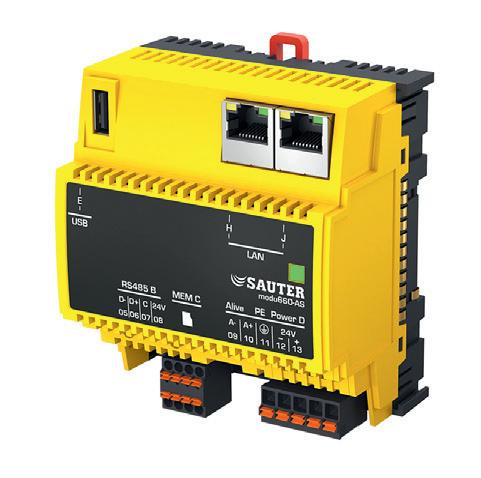

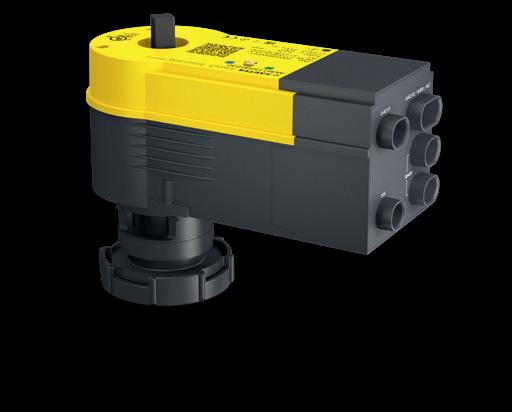
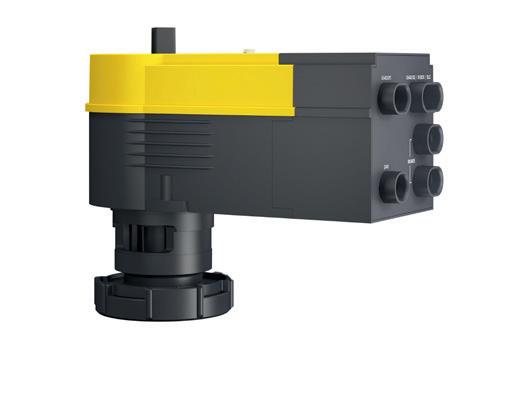
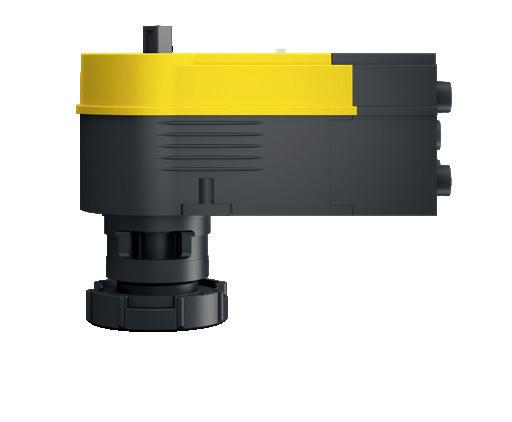
Confident presentation of our products
SAUTER products are presented in a calm and confident manner in our communication media. They are a sign of superior brand quality and do not need shadows, backgrounds or reflections.
Product renderings
The images of our products are created as isolated renderings. The renderings are characterised by the following features:
• Sharpness. The rendering has no blurring, in order to allow a clear and distinct representation of the product.
• Brightness and contrast. High contrast and sufficient brightness help ensure that the product is easily recognisable and its details are visible.
• Avoiding shadows. Shadows can cause the product to not be visible in all its details.
• Clarity. The rendering should not show any distracting elements or distortions.
• Perspective. The best way to show the product dimensions is to render it from the following three perspectives:
Isometric perspective with a slight top view
Frontal perspective
Lateral perspective
Product Management is responsible for creating the renderings.
Products in use
A photo of a product in use strengthens the value proposition. It illustrates the functionality, user-friendliness and benefits for customers and at the same time shows that we are proud of our products.


Confidence in product photography
Linking our product with a real situation hightens the viewer's interest and helps them to understand the products advantages.
The quality of the photo and the editing is crucial. It has to be good enough to reflect the high quality of SAUTER products.
Tips:
• Demonstration. A photo showing our product in use illustrates how it is used and the advantages it offers.
• Relevance. A photo showing our product in a relevant situation helps make it interesting and appealing to customers.
• Authenticity. A photo that shows our product in an authentic situation helps to make customers feel that our product and the SAUTER brand are credible and trustworthy.
Architecture and people
Using contemporary and aesthetically pleasing reference images builds a bond with our target groups. These pictures show what SAUTER stands for and what we can do for our customers. With photos of people, we create an additional, emotional touch point. The SAUTER brand is represented by real people who put the brand’s promise into action with passion and commitment.
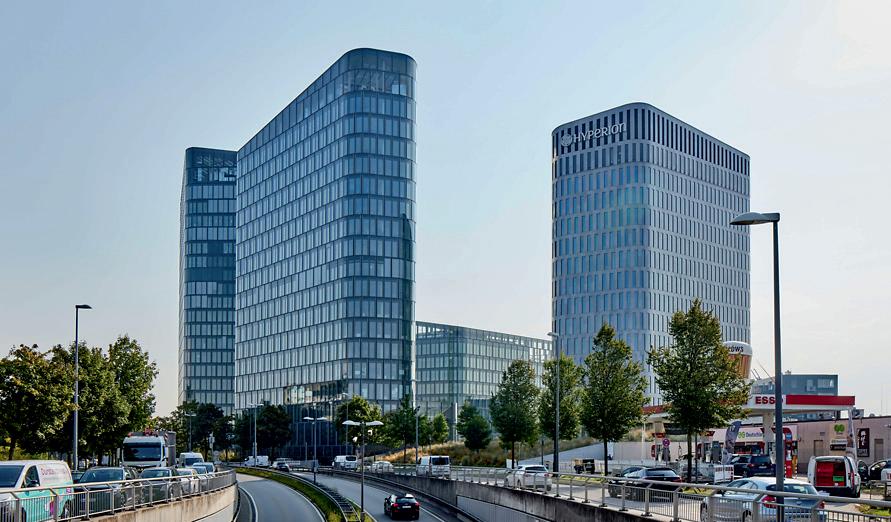

The photography should suit the style of the brand and convey a coherent brand message. To do this, the images must reflect the brand values and promise, as well as the target group.
Good photography should be adaptable to different media in order to reinforce brand identity across all platforms.
Tips:
Photographic style
• Reportage style in natural colours
• Clear statements
• Conveying the essence
• Natural light situations
Protagonists
• Authentic and competent, possibly employees or convincing models
• Approachable and likeable
Context
• Accompanying protagonists at work
• No excessive staging
• Observe safety rules: SAUTER work and safety clothing, if prescribed in reality
References
• Real references wherever possible
• Conveying the range of expertise
• Architecturally appealing (indoors and outdoors)
Get permission!
When using pictures, always respect the rights of photographers, protagonists and building owners. References in the SAUTER mediaLib can be used in accordance with the information on rights of use.
>
Qestions? media@ch.sauter-bc.com
Stock images
Stock photos can help whenever none of SAUTER’s own imagery is available. It is important to choose and edit the photos in line with our visual language. Harmonised imagery is one of the key factors for a consistent brand image. We demonstrate precision and reliability and generate trust in the SAUTER brand.
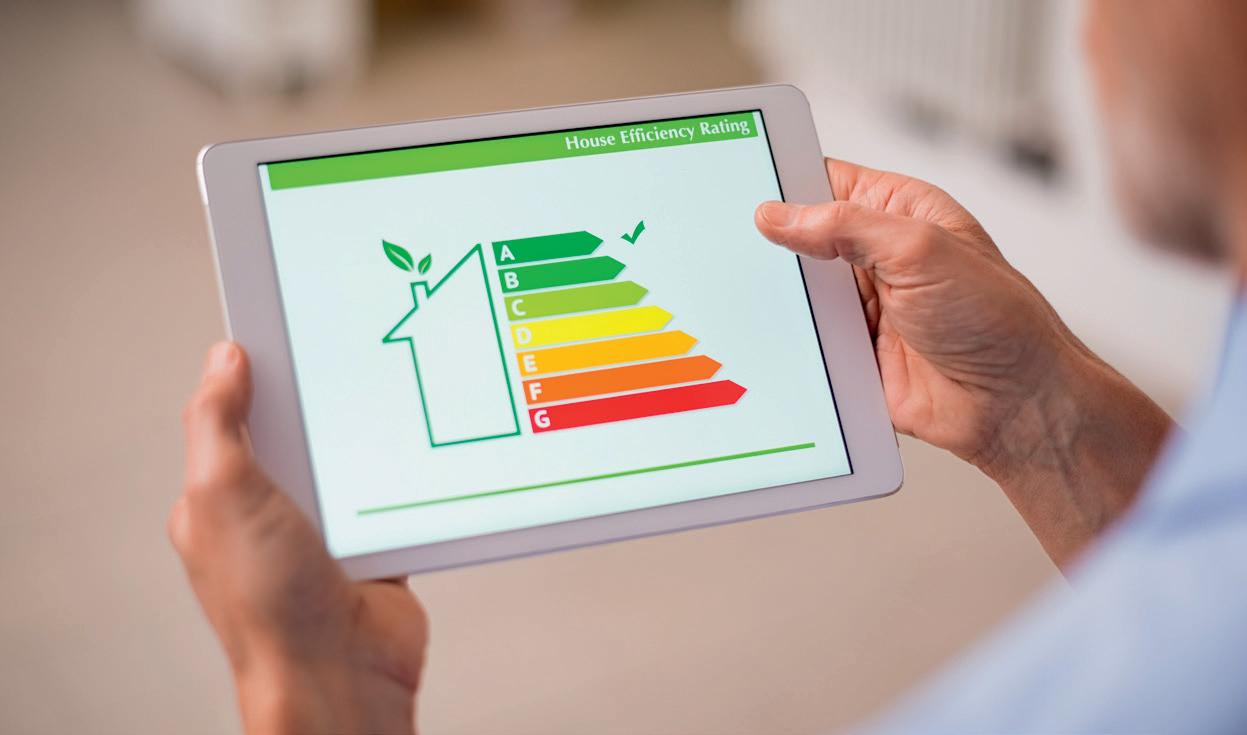

Choose stock material that is appropriate for the brand
• Again: Think about your target group when choosing images.
• Use high quality images, i.e. with high resolution and strong contrast.
• Use licensed images. Only use images that you are legally allowed to use. Make sure you obtain images from trusted sources and purchase the rights to use them.
• If you need to edit the image, the colour mood of photos can be matched to the brand colours.
Tips: see p. 22
Important note
Check license agreements and make sure SAUTER has the necessary copyrights to use the photo before editing and using it.
Technical illustrations
Technical building drawings can be used as a stylistic device to increase recognition of the SAUTER brand in communications. They provide a platform for representations of SAUTER products and what they do in the building. This makes them a valuable tool in communicating our brand promise.

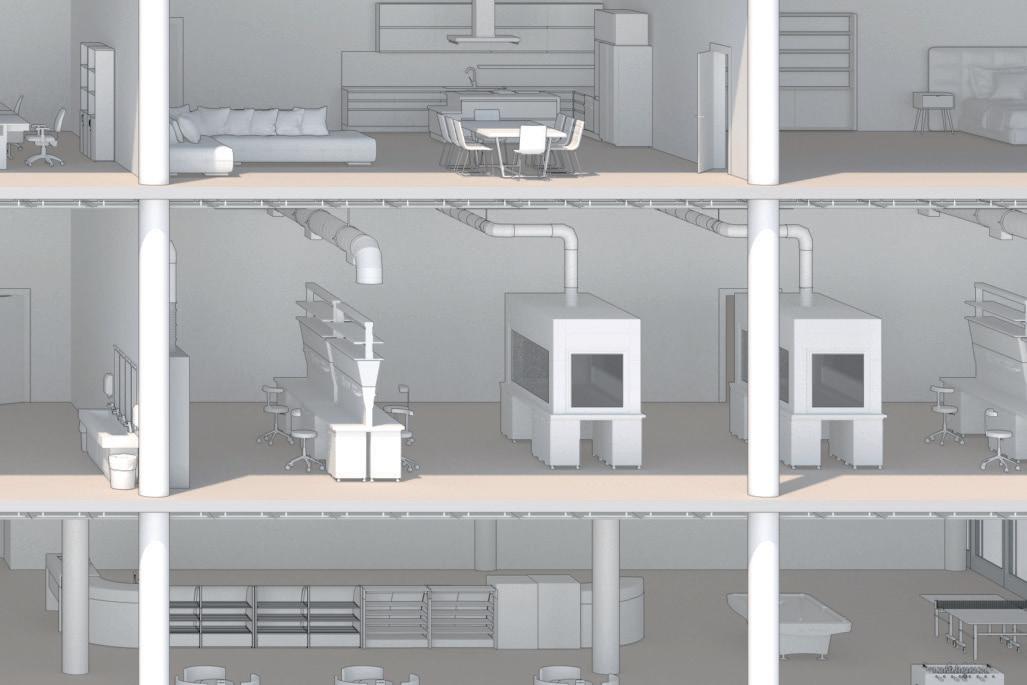
A good illustration is characterised by:
• Clear and comprehensible presentation
• Convincing aesthetics
• Relevance to the topic and consistency in the context
Image style
The images that are used are created by a designer in a 3D program. These buildings are usually fictitious. The images should adhere to the following style rules:
• Clear and modern
• Bright and calm
• No people in the picture
• Neutral environment and furnishings, only as many details as necessary to indicate the surroundings
• Presentation style allows product renderings to be added
• SAUTER colours are used to accentuate the image
SAUTER mediaLib
Important note
Illustrations of existing buildings are only to be used in the case of a specific reference. Please respect the rights of the designer when using references. References on the SAUTER image database can be used in accordance with the note on the right of use.
Infographs – illustrating abstract processes
Particularly when there is little time to grasp concepts, infographs help to present complex data and interrelationships in a simple and clear way. This means the advantages of the products can be clearly emphasised and the information can be understood and remembered by the readers.
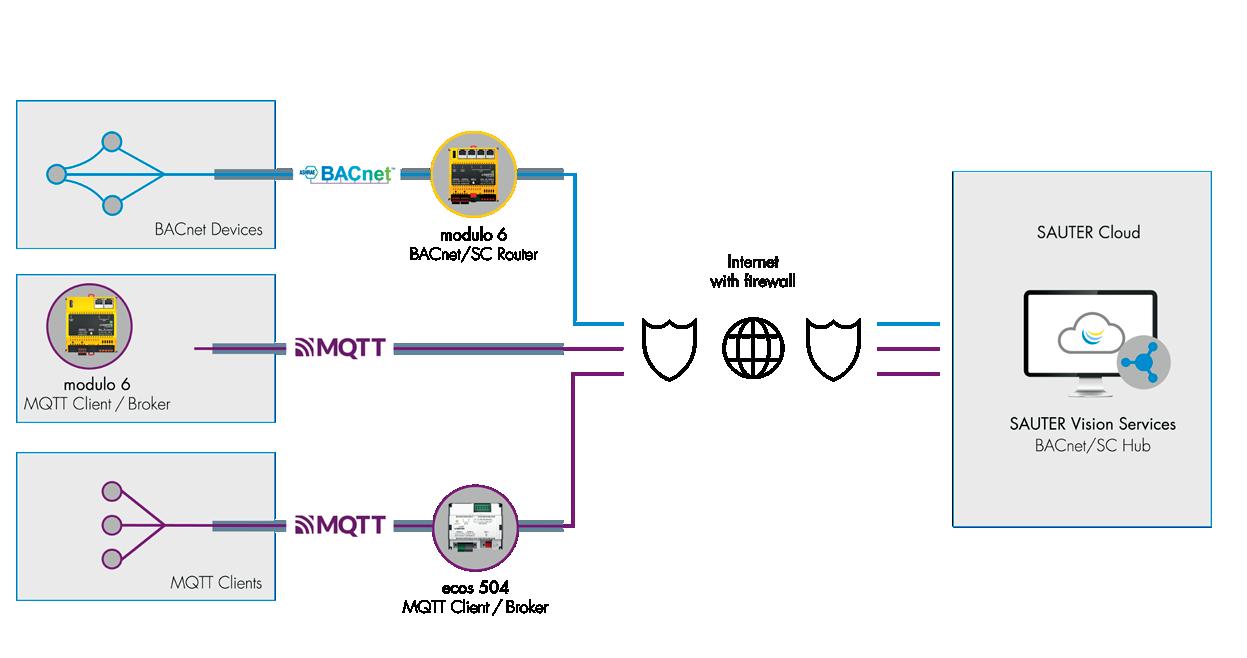
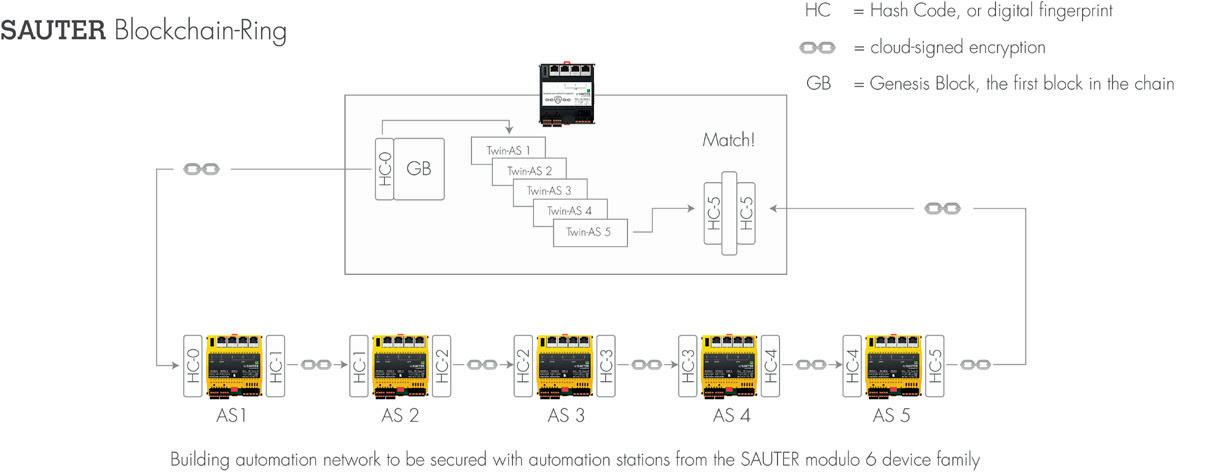
Tips:
Define the objective based on these key questions:
• Which customer benefit should be the focus?
• What challenges are there? Which environmental factors have an influence?
• What solution expertise does SAUTER offer for this?
• On which device is the infographic displayed?
Structuring content
An infograph is only as good as the information it is based on, so check:
• Is the data up-to-date, correct and are there sources to prove it?
• Is the selection and layout of the data logical?
• Is the presentation comprehensible without further context?
Graphical design
Aim for maximum simplicity and clarity:
• Highlight only the most important information in size or colour. Use the SAUTER colour palette or a colour that matches the context.
• Only use official logos.
• If possible, depict SAUTER products photographically using the product renderings.
• Keep the background neutral, without coloured backgrounds, boxes or photos.
• Standardise elements such as connecting lines. Do not make arrowheads too dominant.
Icon system
Use SAUTER’s pictograms for further visualisations.
Icons that are not related to our portfolio should be generally understood. Use very simple, flat icons.
Examples of use
Successful brand management is not just about consistency, but also flexibility. An adaptable corporate design enables SAUTER to respond to today’s rapid changes, the diverse needs of different regions, cross-media implementations and decentralised organisational structures. The strong brand identity with a clear and consistent message is maintained across all channels and points of contact.
Business stationery
In everyday business, properly designed stationery is very important. It creates a positive first impression, signalling professionalism and reliability. The brand elements that we use convey our brand values in all our communications, anchoring the SAUTER brand with our customers, employees and partners on a daily basis.
Digital templates
Various templates are available for different uses. All the sender information, bank details etc. are printed from these templates together with the text of the correspondence.
Letterhead and envelope
The letterhead uses the SAUTER brand logo prominently but tastefully. All the sender information, bank details etc. are printed with the letter itself.
On envelopes, the SAUTER brand logo is placed at the top left due to postal standards. It is aligned with the left edge of the window. Versions with additional information are possible as long as they comply with these rules.
Important note
Make sure that all reference data and the footer in your templates are always up-to-date.
Business cards
The SAUTER brand logo is a mandatory design element on the front. It is supplemented with the details of the contact person. Optionally, a QR code can also be added here for quick data entry.
The back of the SAUTER business card is reserved for general contact data.
Templates: SAUTER Extranet
Presentation templates
PowerPoint presentations are an excellent means of communicating with customers. They provide information about what we offer in a clear and effective way. They facilitate the sales process and firmly anchor our brand promise in the customer’s mind.
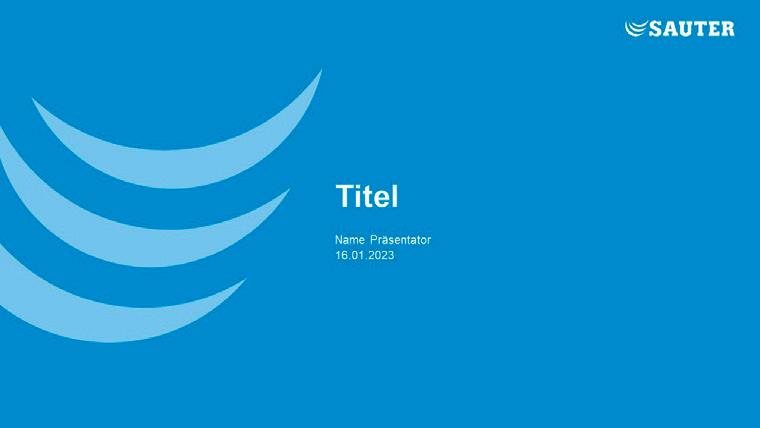
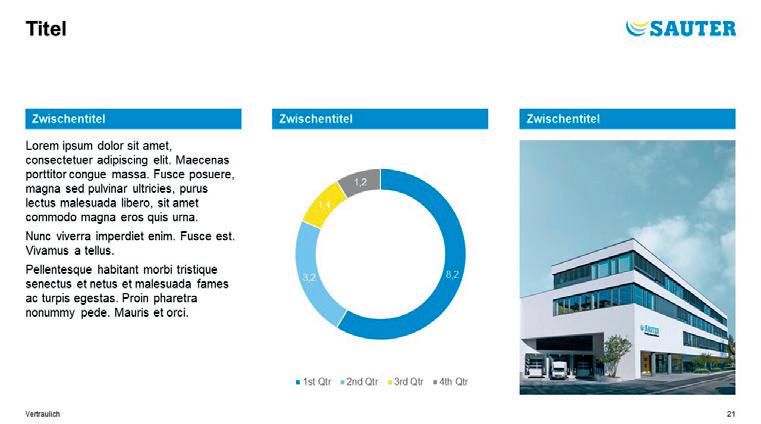
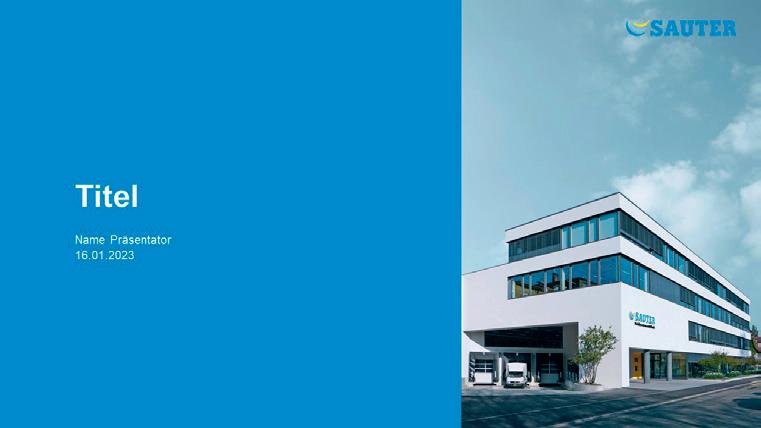
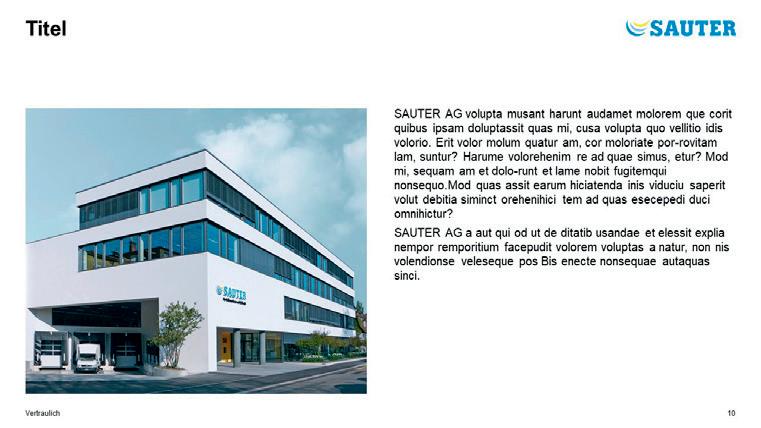
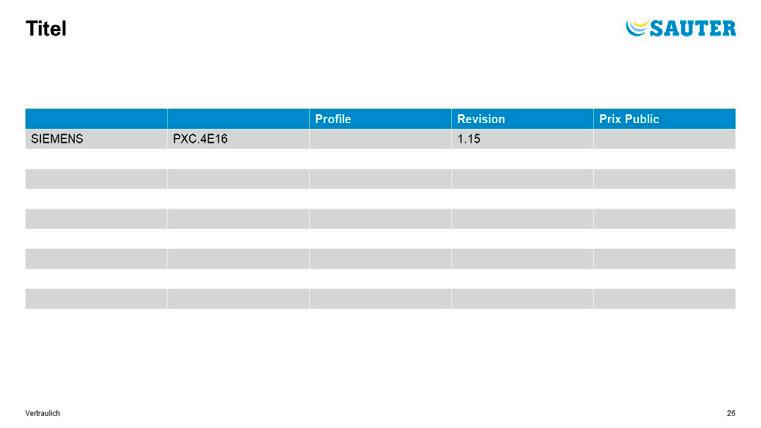
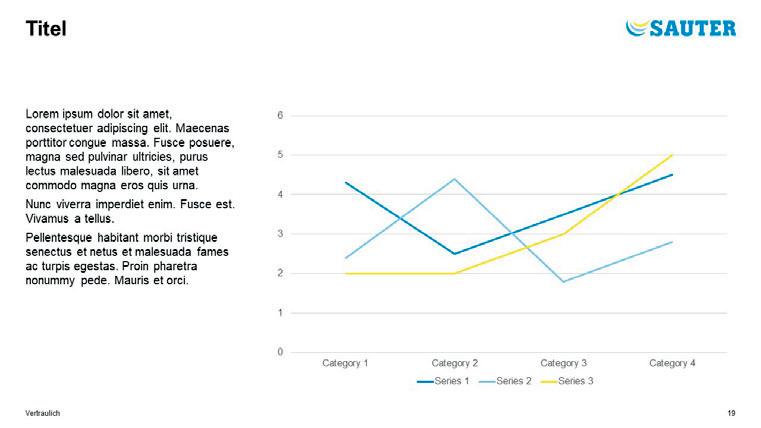

Every presentation reflects on SAUTER A well-designed presentation reinforces our brand message, and the standardised appearance signals professionalism, quality and precision.
The SAUTER brand elements are an integral part of the presentation templates. This ensures the presence of our brand message and minimises the time to design presentations. The various layouts of the PowerPoint templates help you to create clear and appealing presentations. You can create a presentation with the SAUTER brand image and focus entirely on your content.
Backgrounds for virtual meetings or presentations
Virtual backgrounds offer many advantages: neutral images instead of your office or home, fewer distractions and brand connection. Simple backgrounds also offer the advantage that you can put your name, job or simply a QR code with your contact details on them.
Use the SAUTER backgrounds to create another consistent touchpoint with the brand.
Tips:
Templates: SAUTER Extranet ! >
• Avoid clothing or accessories that distract.
• Use a camera that produces a high-quality image.
• Make sure that the lighting is even, use a microphone or ensure silence.
Marketing and communications
Communication activities are essential touch points with the brand. Because the media usage of our target groups is not only different, but also constantly changing, the corporate design should make it possible to pick up trends in communication without breaking its own rules. Instead of inflexible templates, the design corridor allows us to respond to any market, target group or community.
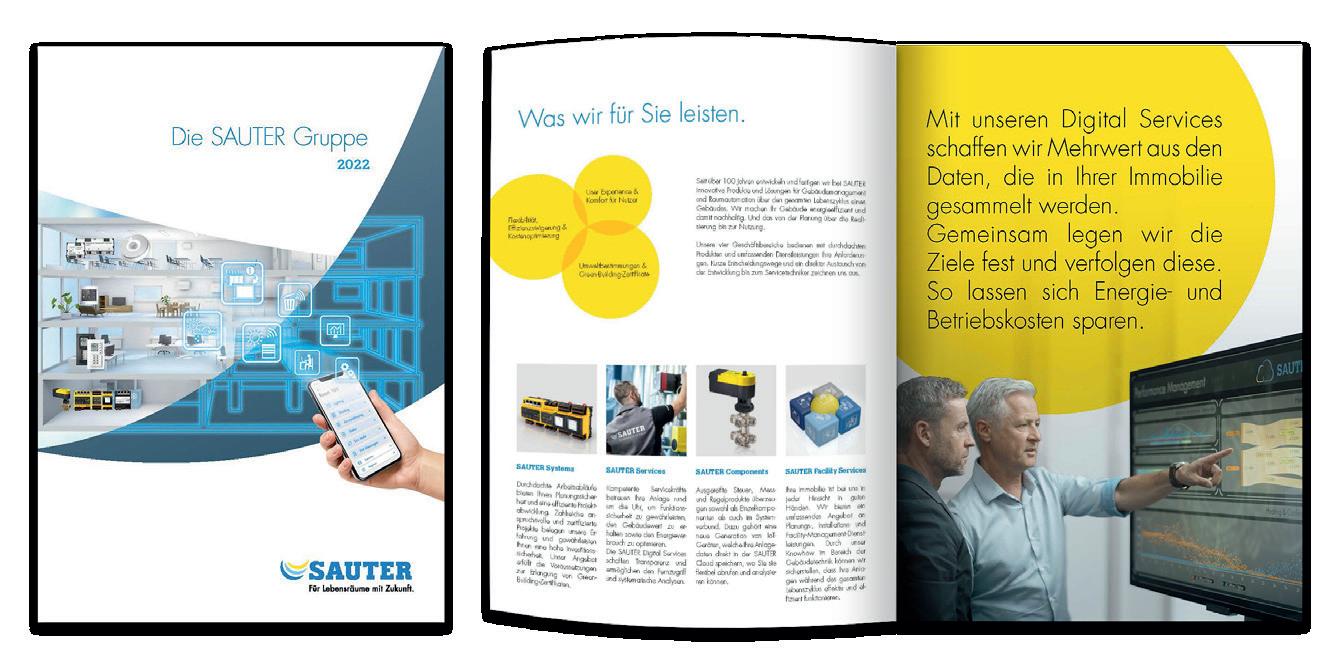
Changing yet unmistakable!
Our brand is on a journey towards fewer binding elements and allowing more freedom. The brand elements are used in a targeted manner, allow variety and direct the focus onto important content.
Use of colour
Colours are an important aspect of branding and can strengthen brand awareness. The consistent use of the SAUTER colour palette gives our target groups orientation and underlines our reputation as a reliable and trustworthy partner
Colour code >
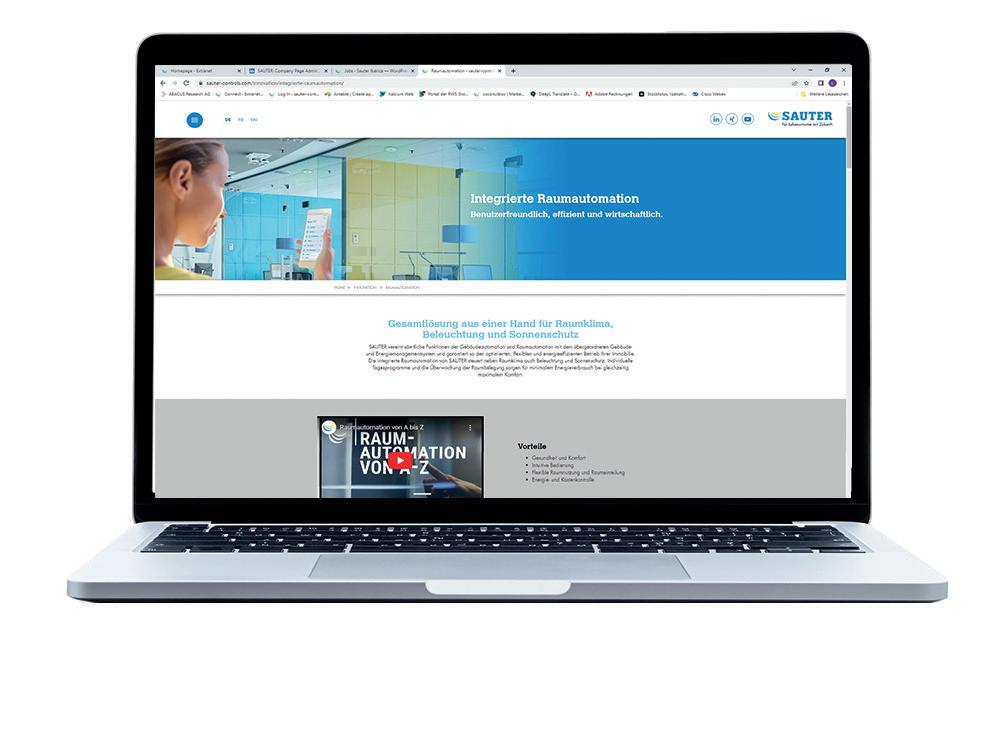

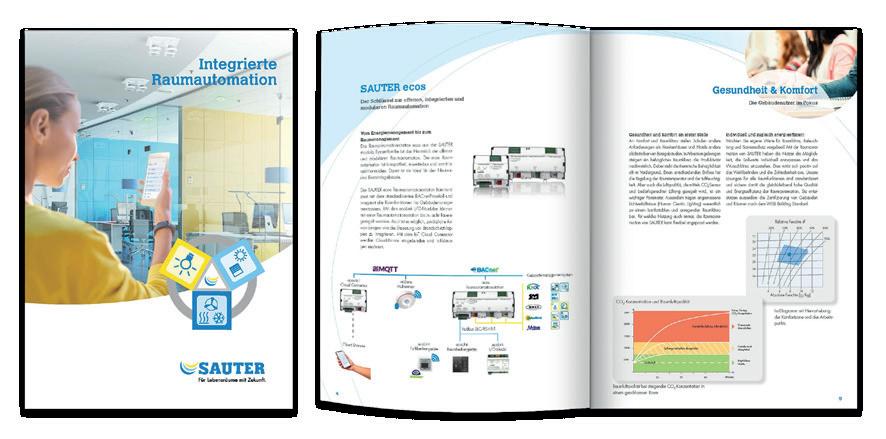
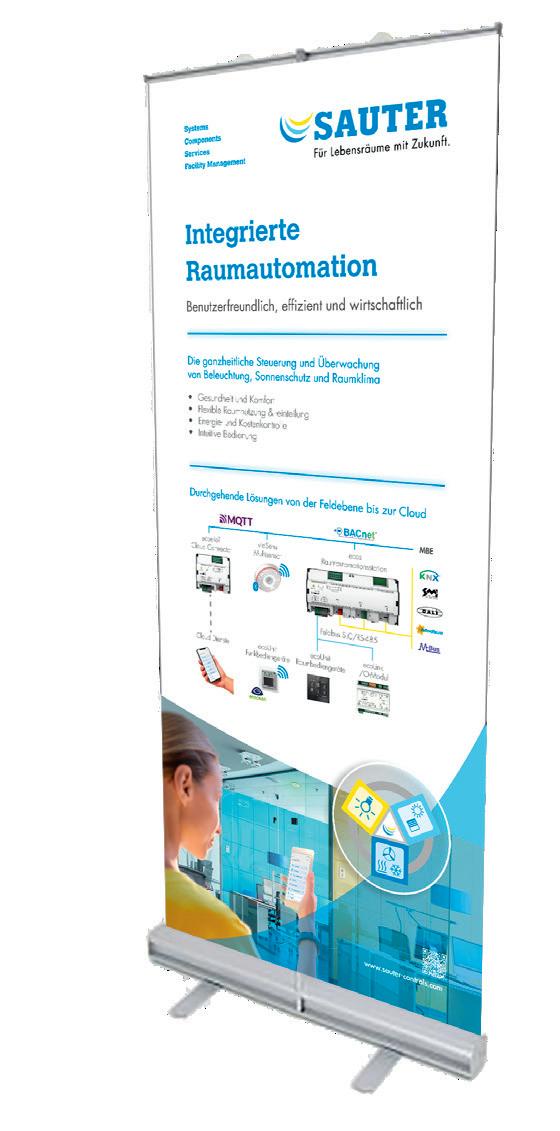
The brand signal reinterpreted
The three curves in the main colours are no longer a binding element. The symbolism and visual traction provided by the upward sweep from left to right now unleashes its power even without lines.
Cross-media marketing
Advertising, or marketing, is an instrument of communication for promotion. The marketing department at Head Office creates advertising materials for use via various touch points and channels to promote products and services. These can and should be reused and interpreted for regional markets.
SAUTER Extranet
Do you have special requirements or questions? media@ch.sauter-bc.com
Assets and giveaways
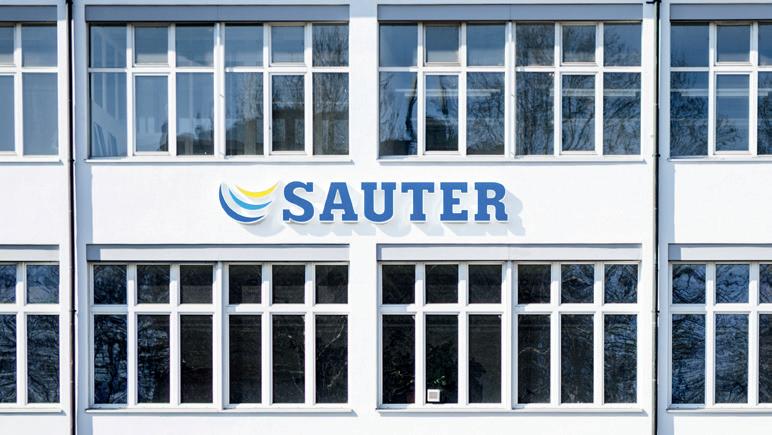
The brand logo can be used everywhere. Assets such as our service staff’s workwear and vehicles communicate the SAUTER brand, as do promotional gifts.
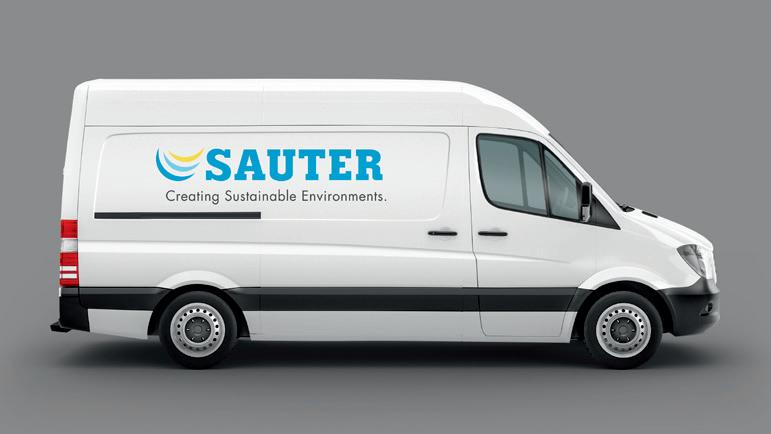
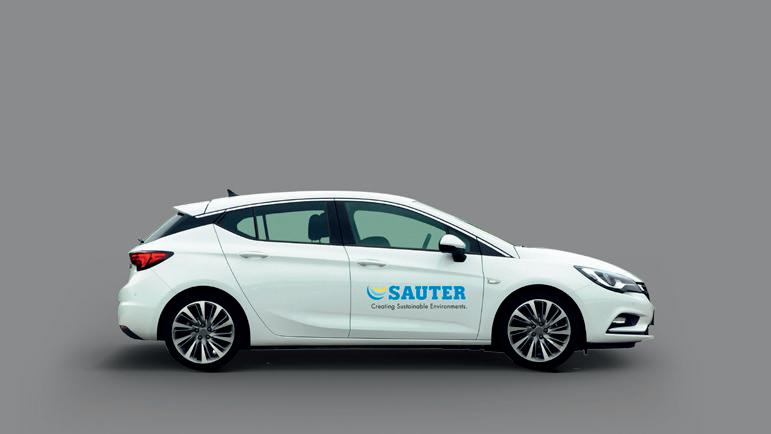
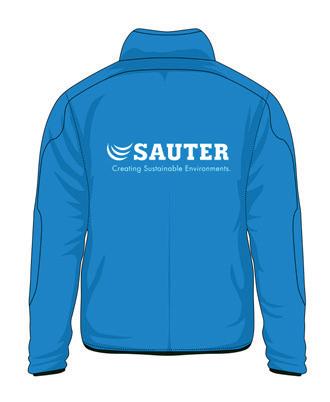
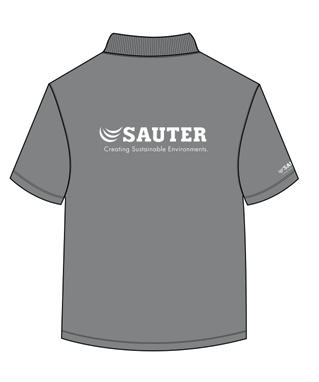
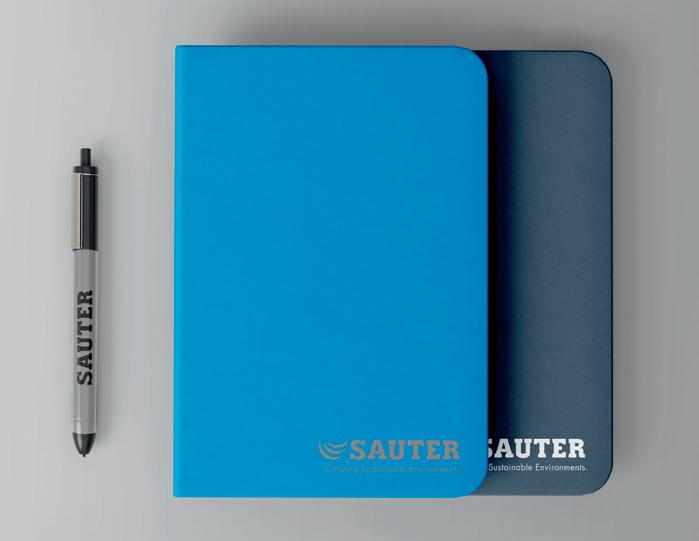
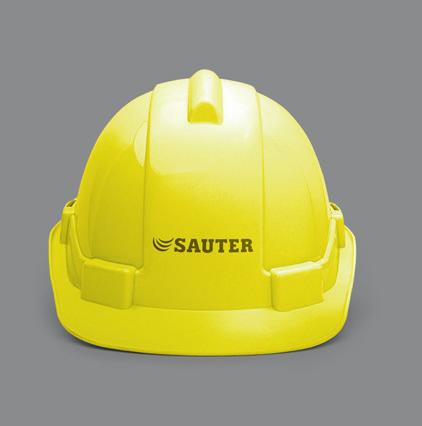

Staging the brand effectively
The logo needs space to maximise impact. Make sure that the brand logo is always clearly recognisable and the claim is easy to read. Ensure contrast with the background, distance from other elements and the necessary reproduction size.
Colour and shape
Colour is a key distinguishing feature of the SAUTER brand. Therefore, preserve the colour scheme of the brand logo. Also take care not to distort, rotate or flip the logo. Guidelines for the use of the logo
Product labelling
With our products, we are present in our customers’ surroundings every day. We use this proximity to enter the customer’s consciousness with our brand promise and to emphasise the value of the SAUTER product.
At the same time, successful product branding strengthens the user’s trust in the SAUTER brand, builds an emotional bond and thus reinforces customer loyalty.
Logo on products
The brand should be clearly visible and easily recognisable on the products so that it can be easily identified. Careful placement of the logo shows the customer our commitment to quality: this is a high-quality and reliable product from SAUTER.
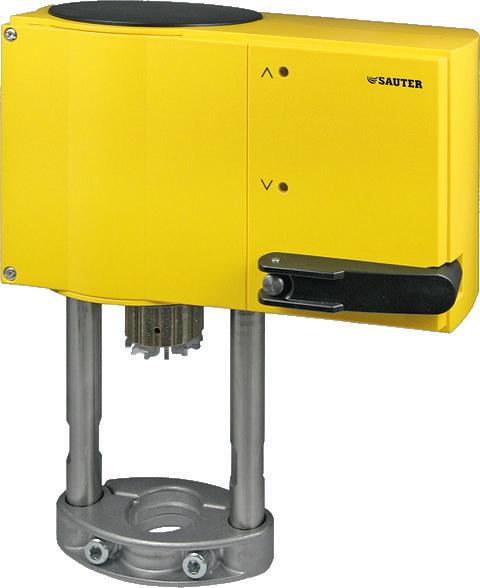
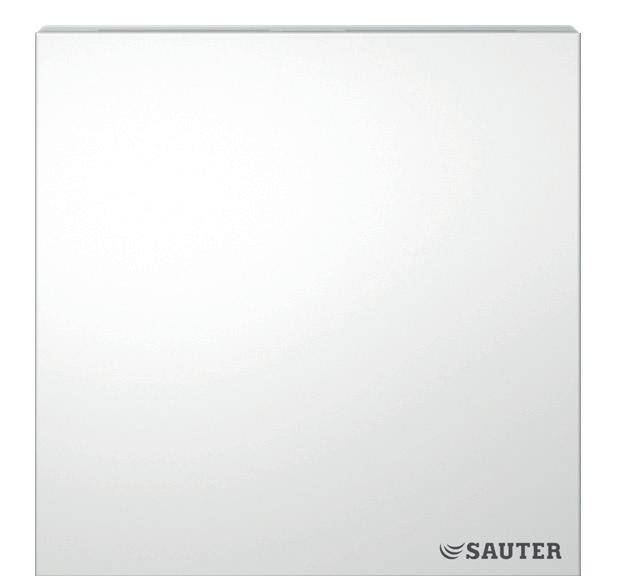
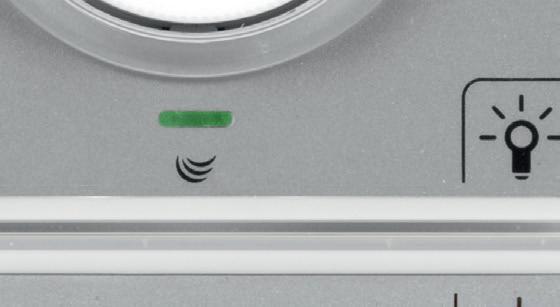
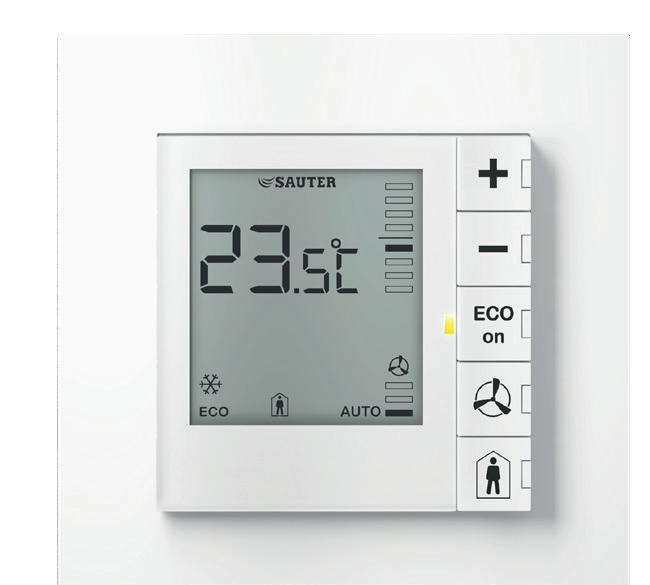
Labelling must be considered at an early stage of the product design. The Head of Product Management must be involved and also give approval for the labelling.
The examples here show different conditions for the branding. Due to the small size of the logo, the claim is omitted. However, the unit consisting of the picture mark and the word mark is generally the correct labelling on these products. The clear space of the size of an “A” from the SAUTER lettering is also binding.
The logo must always be printed straight, ideally horizontally, and never curved.
Placement on “non-visible” products
Products that are placed in installations and are therefore not visible to the people using the building usually have a yellow and black housing.
Placement on “visible” products
Visible products, which often have an effect on the interior design, should have a colour-neutral version of the logo on a white housing or the display.
If in exceptional cases (special requests from architects) only the picture mark is to be used, Product Management should be contacted.
Important note
Third-party products are subject to the same labelling rules as SAUTER products.
Product name on products
The brand logo and product name should always be on the product.
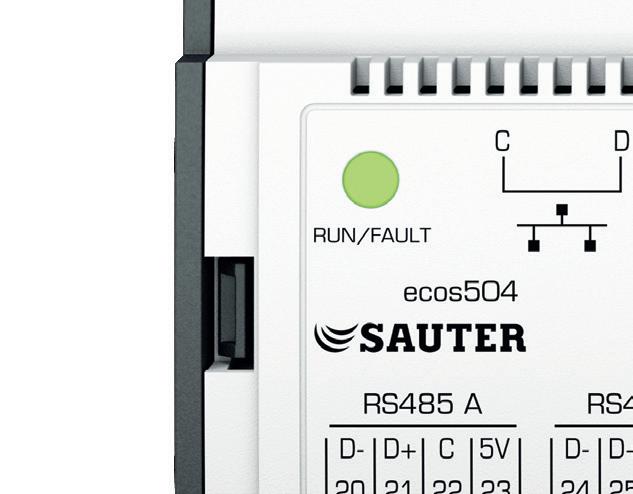
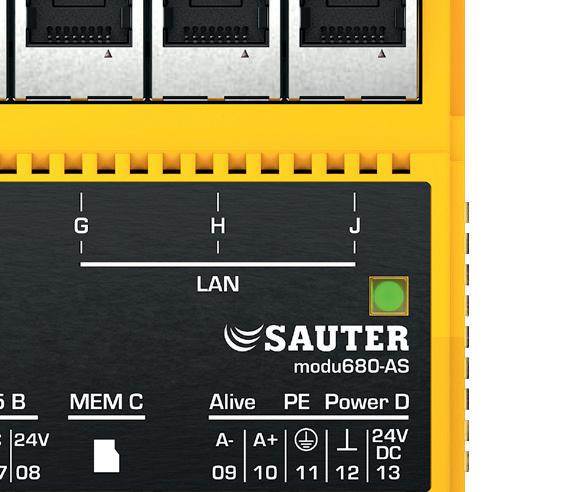
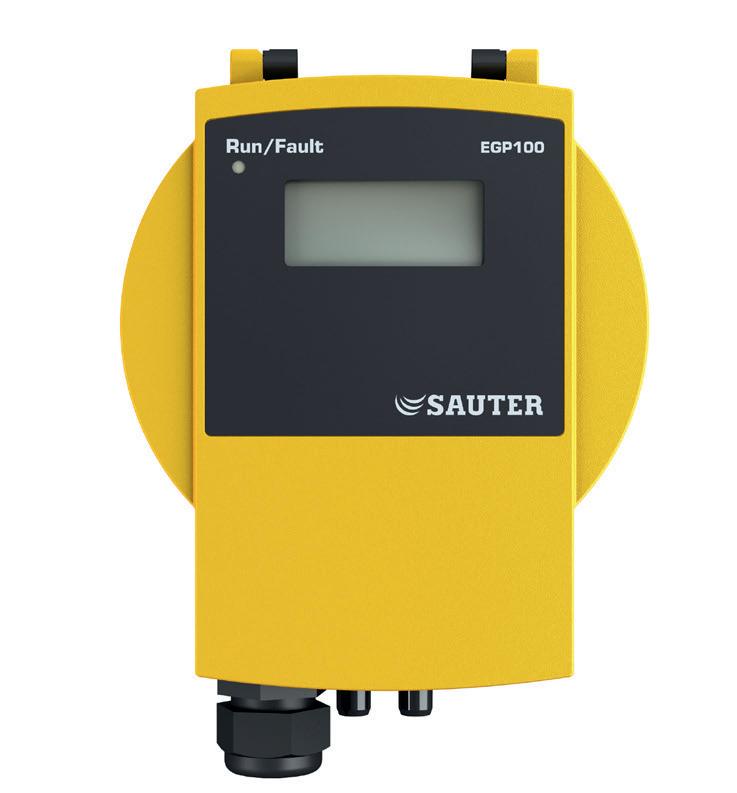
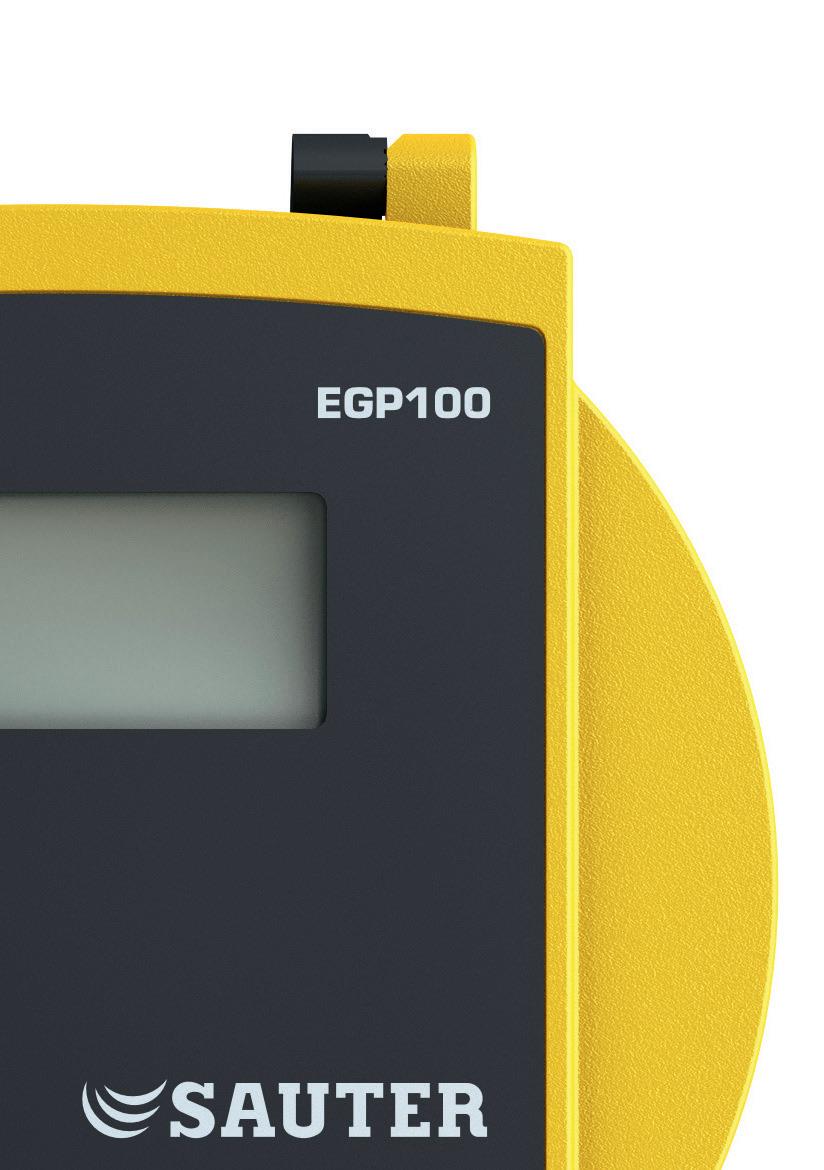

The product name retains its own identity within the product labelling. If the product name is not to be labelled, this is subject to a strategic decision.
Labelling area
The front of the housing is the visible frontal surface of the product. The SAUTER logo without claim and with the product name must be marked on the front of the housing. To define this printable area, criteria such as the shape of the product, the application and aesthetics are taken into account. There is no predefined grid for defining this area. It is important that the background colour of the area can ensure enough contrast with white or black lettering. Alternatively, the logo and product name can be printed on a label.
Position and size
The product name and the SAUTER logo should generally be positioned together. If printed by laser, the brand name and product name should be placed close to the edge with an appropriate distance between them.
The logo should be at least 15 mm wide. If possible, the sizes of the product name and brand logo should be in the ratio shown here.
Font
The defined font for the product name or product type is Eurostile Extended Regular.
Print colour
If the front of the housing is white or yellow, the lettering is printed in 100% black. For products with a black housing front, the lettering is printed in negative (white). Depending on the printing method and the material of the housing front, the colour intensity may differ. With the laser process, the pigments may change when the surface is burned. This means the logo appears more grey on white and beige on black.
If you have any questions, contact us at media@ch.sauter-bc.com