IMPACT November 2025 Issue 21
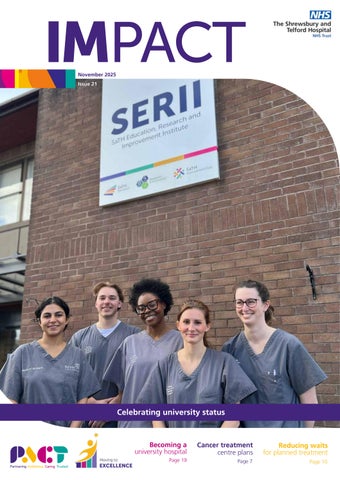
Celebrating university status
Partnering Ambitious Caring Trusted
Becoming a university hospital
Cancer treatment centre plans
Reducing waits for planned treatment
Page 19
Page 7
Page 10
Dear colleague, It has been a busy and exciting few months which has included the Trust being awarded university status and moving forward with plans to create a group with our partners at Shropshire Community Health NHS Trust. Both will help us towards our ambition of delivering excellent care and you can read more about what this means for our patients in this edition. It has also been exciting for me personally having commenced as Group Chief Executive at both SaTH and ShropCom. It is a role that I love, and I work alongside some incredible teams who are dedicated to enhancing our services and delivering compassionate care for our patients. My goal, since I initially joined as interim Chief Executive over a year ago, has been to accelerate progress happening in the Trust so everyone is receiving excellent care. Through the commitment and hard work of our teams, we are making significant, measurable and sustained progress. This was evident in our most recent ranking as part of the new NHS Oversight Framework. These rankings, which are released on a quarterly basis, aim to give staff, patients and communities a greater understanding of how their local hospital is performing. In Q2 (July-September), we were ranked 113 out of 134. Whilst being 113 is not where we want to be, this was an improvement. We were amongst the most improved trusts for planned care waiting times and diagnostics. We are also making steady progress across cancer waiting times and urgent and emergency care, and on our journey to financial sustainability. I hope that it will help to build confidence that SaTH is moving forward on our journey to excellence. We have an ambitious transformation plan underway and we are determined to be amongst the best hospitals, where everyone feels proud to receive care and work. Although numbers and rankings are helpful, we are also clear that the NHS is more than numbers. Behind every number is a person and their loved ones and this is what drives us. We want to reduce 2
Impact Magazine - Issue 21
waiting times to ensure that everyone has the best care and the greatest opportunity for a healthy life. You can read about the work we are doing in planned care on page 10 and diagnostics (scans and tests) on page 7. We also know that ensuring every patient has access to timely urgent and emergency care is more challenging. We are seeing steady improvement but know we have more to do. We have just invested in creating additional inpatient beds and assessment spaces on our hospital sites which will be ready this winter. You can read more about this on page 8. This also includes the development of two modular wards on the RSH site - pictured. If you drive past or visit Royal Shrewsbury Hospital, you can see the scale of the transformation happening as construction work continues on our new healthcare facilities which will be realised in 2028. At Princess Royal Hospital (PRH), we are planning a dedicated cancer treatment centre which will deliver care closer to home for patients living in Telford and Wrekin. We are really grateful to our partners at Lingen Davies who are supporting fundraising for this new facility – you can read more about our exciting plans for PRH on page 8. There is lots of exciting work under way across the Trust, and in conjunction with our health and care partners, which will help us to deliver our ambition of excellent care. We will keep our communities and staff regularly updated on the progress we are making. Thank you. Jo Williams, Group Chief Executive
Impact Magazine - Issue 21
3
BETTER TOGETHER Our ambition is to deliver excellent care for our patients and offer greater value for our communities. We believe that we can achieve better care for patients and a better experience for staff through joint working. A Group model will be our vehicle for transforming care and patient pathways with our partners at Shropshire Community Health NHS Trust. The Group model will build on the strong foundations that already exist to continue to strengthen local services, improve resilience and performance and deliver value for taxpayers.
We have developed a Case for Change to form the Group, informed by staff, patient representatives and partners, which has just been submitted to NHS England for oversight and assurance. Under the plans, the two trusts would remain as separate statutory organisations, whilst seeking to appoint a shared leadership team across both organisations to oversee strategy and service delivery. The two trusts already share a joint chair, Andrew Morgan, and chief executive, Jo Williams.
“We have outstanding relationships with our partners, working together to deliver best practice integrated care for our communities. This next step will allow us to build an NHS that is focused on wellness and not illness and help us to meet the objectives of the NHS 10 Year Plan.”
Paula Gardner, Interim Chief Nursing Officer, SaTH
WHAT ARE THE BENEFITS?
More care in the community
Value for taxpayers
Better career and development opportunities for staff
Releasing time and money for investment i.e. digital improvements
“Some of the more obvious benefits are for those patients at the interface between community and hospital care. Working more closely together could mean a more flexible approach to assessment of needs and rapid seamless transition of care so that we make the best use of the skills of our healthcare professionals.”
Dr John Jones, Executive Medical Director, SaTH 4
Impact Magazine - Issue 21
FAST FORWARD TO 2028… Better care for patients
Better working environment for staff
Patients treated closer to home
More resilience in small teams – supporting staff to stay healthy and reduce burnout
Joined up pathways for patients
Joined up decisions – shared priorities and leadership
Reduced waiting times
Better management of areas under pressure
Improved quality of care
Better career opportunities
Greater focus on neighbourhood priorities
Shared training and development
Shared knowledge and best practice
Reduced reliance on agency
Patients able to self-care with access to more digital tools
More digital transformation
Shared estates opportunities will better support neighbourhood services
More opportunities for innovation and research
The two trusts already work together in partnership and have already delivered new and integrated ways of working. A recent development has been the virtual ward which allows patients to get care safely and conveniently in more familiar surroundings, rather than in hospital. Research shows that being cared for at home, where patients can be with friends and family, is much better for physical health, mental wellbeing and overall recovery rate. In a virtual ward, innovative technologies like wearable devices, oxygen and blood pressure monitors, and apps deliver real-time data on individuals’ vital signs to a dedicated remote team of health and care professionals. • • • • •
Number of virtual beds: 167 Referrals: average step down 48% Average step up 52% Average occupancy: 78% Average length of stay: 12-14 days
“The combined clinical expertise of our teams has wonderful potential to improve care for patients and the professional fulfilment of colleagues. There are great operational opportunities to make the best use of our combined estate too, to deliver thriving local community hospitals and make the most of all our combined facilities.”
Ned Hobbs, Chief Operating Officer, SaTH Impact Magazine - Issue 21
5
FOCUS ON BREAST SCREENING Breast screening plays a vital role in detecting cancer early and improving outcomes for our patients. Dedicated teams support thousands of women across Shropshire, Telford and Wrekin and Mid Wales every year, providing reassurance, expert care, and potentially life-saving diagnoses.
Our mobile screening units travel across the county including Ludlow, Oswestry, Bridgnorth, Newport, Whitchurch, Bishops Castle and Market Drayton, so women can access appointments closer to home.
The NHS Breast Screening Programme invites women aged 50 to 70 for screening every three years, with those 71 and over able to self-refer at any time. Screening is designed to detect breast cancer before symptoms appear, when treatment is more likely to be effective.
Behind each breast screening appointment is a team of skilled professionals - radiographers, assistant practitioners, breast care nurses, advanced practitioners, consultant radiographers, consultant radiologists, healthcare assistants and administrative staff, working together to deliver high-quality care.
The breast screening team is committed to providing appointments that meet the individual needs of every person. This includes offering extra time during appointments, changing locations when needed, providing translated or easy-read materials, scheduling appointments at quieter times and arranging support from teams where necessary.
Cat Rowlands, Lead Superintendent and Programme Manager for Breast Imaging, said: “We are incredibly proud of the work our teams do and the exceptional compassion and professionalism they show every day. Every appointment is an opportunity to make a difference, whether that’s detecting cancer early or simply offering reassurance.”
There are several projects and events planned over the next year aimed at further reducing barriers to accessing the breast screening service.
The Trust continues to improve breast cancer services through initiatives such as the Breast Cancer Now Service Pledge. Patients now benefit from tailored support at diagnosis, clearer This reflects the team’s commitment to ensuring information about surgery and side effects, and that everyone feels informed and comfortable when access to emotional and practical help through attending their appointments. Holistic Needs Assessments.
Did you know? •
•
•
6
The Shropshire Breast Screening Programme invites approximately 23,000 eligible individuals for breast screening across Shropshire, Telford and Wrekin and Mid Wales every year. Around 40% of breast cancers detected through screening are found at an early stage, when treatment is most successful. Regular screening is estimated to reduce deaths from breast cancer by around 20% among women who attend appointments. Impact Magazine - Issue 21
PROGRESS ON ACCESS TO DIAGNOSTICS We are making significant progress on improving access to diagnostic tests and scans so our patients have the care and treatment they need as quickly as possible. We are amongst the top performing half of the country for the proportion of patients waiting less than six weeks for their diagnostic test, and are the third most improved Trust in the country over the last year. Figures showed that in July 2025, we achieved our best diagnostic performance for five years. The overall waiting list was also cut by a third in the last year and as a result of the progress made, we have exited the highest Tier for NHS England oversight and interventions (Tier 1), moving to Tier 2. Latest figures show: • 83% of patients have been seen within six weeks for a diagnostic test • There has also been a reduction of 87% in the number of patients waiting over 13 weeks for their test • There has been a 33% reduction in overall waiting lists This is down to the introduction of additional scanning and reporting capacity and the hard work of our teams. Our overall waiting times for cancer imaging diagnostics have also improved.
Diagnosis Standard (FDS) was the best in 18 months. The FDS is a national target that a patient with suspected cancer should not wait more than 28 days from referral to finding out their results. We also saw an improved performance in cancer 62-day referral to treatment with the July performance the best for more than three years. A significant investment supporting our improvements is the new linear accelerator machine (also known as a LINAC) which is now operational at Royal Shrewsbury hospital. Housed in a new bunker, the state of the art LINAC is vital in the treatment of cancer, delivering highenergy X-rays or electrons precisely to the tumour, whilst minimising the radiation dose to normal, healthy tissue. Helen Soanes was the first patient to be treated and said: “The new machine is a fantastic piece of equipment for the hospital and is going to help support many patients like me going through treatment. “At every stage of my journey the staff and teams have been amazing – from having my mammogram to now nearly completing my treatment.”
In July, our performance against the Faster
Ned Hobbs, Chief Operating Officer, SaTH “Whilst we are making progress, we are humble and know we have more to do. Behind every number is a person and their loved ones and that is what drives our improvement work. We want to reduce waiting times to ensure everyone has the best care and experience whilst using our services. “A big thank you to our fantastic teams whose commitment and dedication to our patients has been key in driving our improvements.” Impact Magazine - Issue 21
7
CARE CLOSER TO HOME We are planning to develop a dedicated cancer treatment centre in Telford and Wrekin to deliver care closer to home for our patients. As part of the Hospitals Transformation Programme (HTP) to create two thriving hospitals and improve care for everyone, we are investing in services at Princess Royal Hospital. Our patients have already benefited from a £24million investment in a Planned Care Hub which opened just over a year ago and has delivered more than 6,785 day case operations. Partnering with Lingen Davies, we now have plans to open a dedicated new facility with outpatients’ clinics, up to 30 chemotherapy bays, a Lung Diagnostic Centre, and Urology Investigations Unit.
able to access care closer to home. Fundraising for this fantastic development has now begun through the Sunflower Appeal. Currently 37% of patients accessing care in the Lingen Davies Cancer Centre at Royal Shrewsbury Hospital have a TF postcode. Oncology and Haematology Matron, Angie Cooper, said: “Being able to offer high-quality care closer to home will make a huge difference to our patients. “It will mean less travel, less stress and more time focused on what truly matters – their treatment, recovery and wellbeing.”
Intended to open in 2029, the new Lingen Davies Cancer Centre will double the provision of chemotherapy across our region. This means the majority of people living in or around Telford will be
Want to find out more?
Scan to donate
Our transforming PRH charity hub is now open in the main entrance of the hospital. The hub provides a place for the Trust and charities to come together to promote the fantastic developments already happening and highlight our future ambitions for PRH.
“The development of a new cancer centre at Princess Royal Hospital will support us to deliver modern and high-quality care for our patients closer to home. We are extremely grateful to Lingen Davies Cancer Support for working with us to fundraise for this appeal.”
8
Impact Magazine - Issue 21
DrNed Steve McKew, Deputy Medical Director Hobbs, Chief Operating Officer
EXPANDING EMERGENCY CARE Eight additional modern patient assessment bays have now been opened in the Emergency Department at Royal Shrewsbury Hospital as part of ongoing redevelopment work.
The refurbishment of the whole department is a key part of HTP which includes a four-storey expansion currently underway at the RSH site that is expected to open in 2028.
Mr Subramanian Kumaran, Emergency Care Consultant and Clinical Lead for Emergency Care for HTP, said: “Once complete, our new Emergency Department will provide the clinical space our What will the new ED provide? teams need to continue to make improvements • More modern patient spaces – designed to meet and provide a positive urgent and emergency care experience for every patient.” health care needs now and in the future This follows the first phase when new, larger purpose-built resuscitation and patient bays were opened earlier this year.
• • •
Separate children’s emergency footprint, including separate waiting area Protected ambulance canopy to improve patient transfer experience Clinical ability to make quicker decisions about patient care, with all the specialist teams on one site within the Emergency Department
The HTP plans will also bring modern maternity facilities and a new critical care unit at RSH.
Impact Magazine - Issue 21
9
PROGRESS IN PLANNED CARE Fewer patients are waiting for planned procedures and appointments at our hospitals. In the last 12 months, we have reduced the overall number of patients on the planned care waiting list by 30%. We have also: •
•
•
Reduced the number of patients waiting 52 weeks by over 95% in the last year, and we are now in top performing half of the country. Reduced overall elective waiting list for children and young people by over 40%, and almost eradicated waits of over 40 weeks. Achieved the highest RTT performance in four years and lifted the Trust out of the bottom quartile nationally.
This is down to the improvements our teams are making to enable more operations and outpatient appointments to take place, reducing the length of time patients are waiting for their treatment. These include: • •
•
•
To support the high flow list, all patients received their pre-op assessment prior to being listed and all team members were given designated roles to ensure the efficient flow of patients. More high flow lists are now being planned. Andrena Weston, Acting Divisional Director of Operations for Surgery, Anaesthetics, Cancer and Critical Care, said: “Thanks to the hard work and innovation of our fantastic teams we have been able to increase the number of operations in our theatres and outpatient appointments. This has included scheduling patients further in advance, increasing theatre capacity for some specialities including paediatrics, and carrying out our first high flow theatre list at Princess Royal.”
The introduction of a new elective theatres timetable, increasing the number of operations An increase in the number of outpatient appointments, which are also scheduled further in advance The Planned Care Hub, which focuses on high volume, low complexity day case surgery at Princess Royal Hospital in Telford Investment in new digital tools such as the Dr Doctor patient engagement portal
It also included the first, successful high flow list for gynaecology patients. The high flow team, which included bookings, pre-op and clinical staff, worked together to carry out their first list in the Planned Care Hub and increased the number of operations carried out in a single day from the usual 6 to 12.
“This is positive news for our patients as we know that earlier access to routine treatment can lead to a better recovery and improved health outcomes enabling them to get back to their daily lives as quickly as possible.”
Joe McCloud, Consultant Surgeon and Divisional Medical Director for Surgery, Anaesthetics, Critical Care and Cancer 10
Impact Magazine - Issue 21
NEW PATIENT WARDS Two new wards will open this winter to provide additional capacity for patients who need to be admitted to hospital for their care. The wards will consist of 56 additional beds within the new modular building at Royal Shrewsbury Hospital set to open by the end of this calendar year.
more vulnerable, older patients. These areas will support rapid assessment and short-term treatment of patients who do not need to be admitted to hospital but who need urgent care.
The two modern, purpose-built wards will be located at the back of the RSH site, adjacent to the current surgical ward. They will enable more joined up working and improved access between our surgical and rehabilitation teams, as well as providing a much-improved healthcare environment for patients.
These investments are part of our plans to improve the care and experience of our patients, particularly during the winter months. These are expected to open in December.
The new facilities will become home to gastroenterology and colorectal services (currently on ward 25) and, once open, will facilitate additional general medical ward capacity in the centre of the RSH site on the vacated ward 25. Plans are also in train to significantly increase the medical assessment and same day emergency care areas at Princess Royal Hospital, which will include a new frailty same day emergency care area for our
Michelle Cole, Divisional Director of Nursing for Surgery, Anaesthetics, Critical Care and Cancer, said: “It is fantastic to see the progress being made on our two new wards and knowing that they will soon provide a much-improved environment for both patients and staff is really exciting. These spaces will make such a difference to the care and experience of our patients.” Take a tour To experience this facility in augmented reality, click here.
“This investment represents a significant step in our efforts to make sure our urgent and emergency care patients receive the right care, in the right place, at the right time. We know that one of our biggest challenges is ensuring that every patient has access to timely urgent and emergency care, whether they walk in or arrive by ambulance – we recognise that too many of our patients currently wait too long. We expect our patients to begin to see the positive impact of these changes this winter and beyond.”
Ned Hobbs, Chief Operating Officer, SaTH
Ned Hobbs, Chief Operating Officer
Impact Magazine - Issue 21
11
PATIENT-CENTRED MATERNITY CARE Addressing inequalities in maternity care is an NHS priority and is fundamental to the care we provide. Education, advocacy, and guidance are required to improve outcomes and experiences for women from all backgrounds and circumstances. Our Equality, Diversity, Inclusion and Inequality (EDII) midwife has an important role to identify and remove barriers that prevent vulnerable groups from accessing safe, quality care, as well as to support the trust’s commitment to fostering an inclusive workplace for all staff.
and postnatal care. She collected relevant literature, as well as personal reflections from staff members and service users from various cultural backgrounds to develop a comprehensive, userfriendly resource - a ‘one stop shop’ - to support colleagues in providing inclusive and culturally respectful maternity care. These shared perspectives are already helping in our journey towards culturally inclusive maternity services. Sherilyn has also:
Sherilyn Ndhlovu joined the Trust as EDII Midwife in January 2025 and has already made great progress. In recognition of her contribution, Sherilyn won in the BAME Midwife of the Year category at the B.A.M.E Health & Care Awards 2025.
•
Sherilyn said: “When I began this role, my initial focus was to understand the local demographics of Shrewsbury, Telford & Wrekin, and then compare that data with our birthing population to identify gaps and disparities.
•
“The next step was to engage with staff to assess their needs, both in terms of knowledge and the support required to deliver equitable and inclusive maternity care. There is still much work to be done, but foundations have now been laid for meaningful change.”
•
•
•
• •
•
Led targeted outreach to underrepresented groups: GRT communities, Eastern European families, Black and Afro-Caribbean communities, asylum seekers, and individuals with learning disabilities Launched culturally tailored mum and baby groups, including the Muslim mum and baby group Developed multilingual resources, including visual materials and translated information Created digital platforms offering real-time EDII guidance for staff Mandated Equality Impact Assessments (EIAs) for all new policies and guideline updates Designed and launched a bespoke EDII training package Introduced an anonymous feedback series for staff to identify recurring themes, particularly around inclusion, psychological safety, and equitable access to training Integrated EDII themes into policy development and workforce education
Sherilyn highlighted accessible insights into different cultural perspectives on birth, pregnancy,
“We are committed to ensuring that everyone using our maternity services has the best possible experience and we are already receiving feedback that local communities, and our teams, are feeling more supported and included.”
Paula Gardner, Interim Chief Nursing Officer, SaTH 12
Impact Magazine - Issue 21
Trust staff are also involved in national research which will pave the way to addressing maternal inequalities related to postpartum haemorrhage (PPH).
of research examining PPH risk across a diverse range of groups and wanted to address this gap, as well as to look at any other factors that might increase PPH risk.
Dr Amy Elsmore, Obstetrics and Gynaecology resident doctor, has led a national study for Keele University which has confirmed that women from ethnic minority backgrounds or areas of high social deprivation are at higher risk of PPH.
Dr Elsmore said: “This study has taken the crucial first step in identifying the problem. Now we will look towards further research to identify why the disparities exist and develop strategies to address the problems, not just through clinical care, but also through inclusive research, better data, and maternity pathways that are responsive to the needs of all women.”
Dr Elsmore, alongside fellow researchers including Professor Will Parry-Smith, found there was a lack
Impact Magazine - Issue 21
13
MORE MODERN CARE Digital transformation is reshaping the way care is delivered to patients and is key to delivering excellent care. The Trust has implemented a Patient Engagement Portal (PEP), and rolled-out Secretaries Workstation 2 (SEW2) to provide significant time and cost savings and improve the experience for our valued medical secretaries. Next steps include an implementation of a new test results system across Shropshire, Telford and Wrekin and digitisation of more patient notes to transform how care is delivered in both hospitals. This new technology represents a commitment to safer, more efficient, and more personalised care. It will enable staff to focus on delivering excellent care by equipping them with the right information, tools and skills.
DID YOU KNOW? •
14
Over 99.6% of devices have been updated to Windows 11 enhancing performance, security, and user experience across the organisation.
•
For more than two years, end-of-life Trust devices have been responsibly recycled, refurbished, and resold through our official recycling partner, SCC, supporting sustainability and reducing electronic waste.
•
Medilogik, our specialised endoscopy digital system, has been live since June 2025, tracking patient activity from referral through to reporting, streamlining workflows and improving clinical visibility. Impact Magazine - Issue 21
Rebecca Duffy, Director of Digital Transformation, said: “We’re entering a new era of care, where technology empowers both patients and staff. Every digital step forward brings us closer to a safer, smarter and more connected organisation. “It’s not just about new systems, it’s about making life easier for our teams and better for our patients. When systems operate efficiently behind the scenes, it enhances patient experience and the work life experience of our staff.”
Patient Engagement Portal: putting patients in control The Patient Engagement Portal, provided by DrDoctor, is now live across all clinics managed by our Patient Access Team.
feedback that they previously missed letters or forgot appointments, but the new text reminders have made a significant difference to their experience.
Further specialties are coming online later this year. With all their healthcare information now accessible The platform allows in one place via the NHS patients to access App, patients are gaining appointment letters greater control over their digitally and integrates with care.” the NHS App, enabling them to reschedule their The Trust is now exploring appointment with ease. additional features, including direct messaging Since its introduction, and Patient-Initiated over 78,000 letters have Follow-Up (PIFU), to further been uploaded and the enhance patient autonomy. specialties have seen a reduction in paper letters of over 65%. Rebecca Duffy said: “Patients have shared
ICE Order Comms: replacing paper with digital The ICE Order Comms system is replacing our current platforms for Radiology and Pathology requests and marks a major step towards eliminating paper-based processes and improving clinical safety. Radiology requests will be fully electronic during the first stage go-live in 2026, with Pathology to follow at a later date. It means that clinicians will be able to request tests directly via ICE from any Trust device and results will be readily accessible. The system also reduces duplication, speeding up turnaround times and minimising errors.
More modern digital tools The rollout of Secretaries Workstation 2 (SEW2) brings a modernised platform to our secretarial workforce with enhanced features such as audit trails, version control and improved letter templates. SEW2 enables faster and more secure delivery of documents to GPs and patients, while contributing to sustainability by reducing the volume of printed paper letters.
“These digital advancements are part of a broader cultural shift towards more responsive, efficient, and patient-centred care. “By investing in technology that supports both staff and patients, the Trust is building a stronger, safer future for healthcare delivery that will support our journey towards excellence.”
Adam Winstanley, Acting Director of Finance Impact Magazine - Issue 21
15
DELIVERING EXCELLENT CARE To deliver our vision of excellent patient care, we are committed to achieving long term financial sustainability. Through our Moving to Excellence programme, we have plans in place to eliminate our underlying deficit. Financial balance will give us greater freedom and will enable us to re-invest more in patient care. Our plans include a focus on reducing waste and increasing our productivity – for example more operations in our theatres – and living within our budget by spending only what we have been allocated. One of our key priorities for 2025/26 is delivering our agreed financial plan and with the support of our staff, we are on track having delivered financial
balance for the frst five months of the year. We have also made £18.3m worth of savings through our Cost Improvement Programme, which is more than this time last year. Adam Winstanley, Acting Director of Finance, said: “This is a significant achievement for the trust compared to previous years and demonstrates just how much progress is being made.” To support us to stay on budget - our plans include accelerating our digital projects, optimising our processes, increasing our productivity, and rethinking our workforce so we have the right staff, with the right skills, in the right places.
We are investing in transformation to modernise care, improve productivity and reduce long term costs. Our patients are set to benefit from a £1.2million investment in new theatre equipment. We have secured NHS England funding which will enable us to treat more patients, reduce waiting lists and offer more advanced surgical procedures. Having more equipment means we don’t have to wait as long for sterile instruments and can set up the theatre room quicker, avoiding delays in between surgeries.
“We will continue to look for opportunities for investment where additional funding can help to alleviate pressures and increase our capacity to provide excellent care. We are committed to making more improvements which will help us maintain financial balance, deliver effective services for our communities, and reinvest into patient care.”
Carol McInnes, Director of Planning and Transformation 16
Impact Magazine - Issue 21
SPOTLIGHT ON: ROBOTIC SURGERY Our surgeons and theatres teams are now performing even more operations assisted by our new state-ofthe-art surgical robot. The Trust was already using a robotic system to assist with colorectal, gynaecology and urology surgery, and this has now been extended to Upper GI operations. It means that more patients will benefit from high quality care and quicker recoveries, thanks to investment in cutting edge technology.
Impact Magazine - Issue 21
17
GREAT PLACE TO WORK Our ambition is to be a great place to work and to receive care. Through our transformation work, we are building an inclusive workplace where everyone feels they belong, has a voice and opportunities to grow. The annual NHS Staff Survey is designed to improve staff experiences and is aligned with the NHS People Promise – which is a commitment to working together to create a better workplace for everyone. The survey gives NHS staff the opportunity to have their say on what is done well and where improvements are needed. The Pre-Assessment team, led by Rachael Bollands, has taken the people promise to heart. Rachael has introduced one-to-one induction meetings for all new starters in her department, where she talks through the Trust’s Health Passport.
Ashley Goldstraw works as a Healthcare Assistant on the Surgical Assessment Unit at RSH. He has been raising awareness of the Patient Passport — a document designed for patients with learning disabilities. The passport helps them to be involved in decisions about their care and improves patient safety. The passport includes key details about a person’s healthcare needs, learning disability, and how best to communicate with them. It’s designed to support patients during both planned appointments and emergencies. When patients arrive in SAU, Ashley and his colleagues always check whether they have a Patient Passport in place. He has also created an information board for staff to raise awareness of patients who may have additional needs, with resources showing how best to support them.
The Health Passport is a personal document that records an individual’s needs at work. It helps staff to perform at their best in a supportive environment, free from prejudice or discrimination. It’s available to anyone who might need extra support - whether that’s due to a disability, longterm condition, caring responsibilities, religious observance, gender reassignment, or other personal circumstances. Rachael said: “I use the Health Passport to show colleagues they’re supported from day one. It demonstrates that we take their needs seriously and want to create the best possible workplace. A hospital can’t run without staff providing excellent care - and that only happens when staff are happy and healthy.”
“Health and Patient Passports will make our trust more inclusive. They help us to meet individual needs, break down barriers, and create a safe, respectful, and empowering environment for our staff and patients. Everyone matters and has a voice. Inclusion isn’t just a policy - it’s what we do every day to help us to create a great place to work and to receive care. It’s wonderful what Ashley and Rachael have done, taking the time to develop tools that truly care for others and make a real difference for both staff and patients.” 18
Impact Magazine - Issue 21
Jo Williams, Group Chief Executive
UNIVERSITY HOSPITAL Our ambition is to become a centre of excellence for education, improvement and research so we can deliver high quality, evidenced-based care for our patients. We have now been awarded university hospital status with our partner Keele University - which is fantastic news for our patients and our staff. This is a significant milestone on our journey to excellence and will support us to drive innovation and help our teams to develop new treatments and practices more quickly. It will also help us to support the development of the next generation of healthcare staff through improved education and training. Dr Jenni Rowlands, Deputy Medical Director, said: “Becoming a university hospital is a huge leap forward and will enable better care for patients through training and clinically-led research. “We strongly believe in homegrown research led by our doctors and nurses. Our multi million pound research projects offer our patients the best care and advanced treatment which can mean a better quality of life or a better chance of recovery. “Thousands of our patients take part in research trials every year – helping to shape the future of healthcare locally and nationally.” Jo Williams, Group Chief Executive, said: “We are so proud and excited to be recognised as a university trust. We will build on our ambition to be known for delivering modern and transformative, evidence-based care for our patients and communities, who are at the heart of all we do.” Professor Kevin Shakesheff, Vice-Chancellor of Keele University, said: “I’m thrilled that our colleagues at SaTH have been successful in their bid for university trust status. This will ultimately have huge benefits for the communities that the Trust serves, ensuring they have access to the best quality care informed by research.” Impact Magazine - Issue 21
19
Thank you for reading about the improvements we are making for our patients and our staff. We would really welcome your feedback on what you think of Impact and what would like to see in future editions. Please contact sath.commsteam@nhs.net.