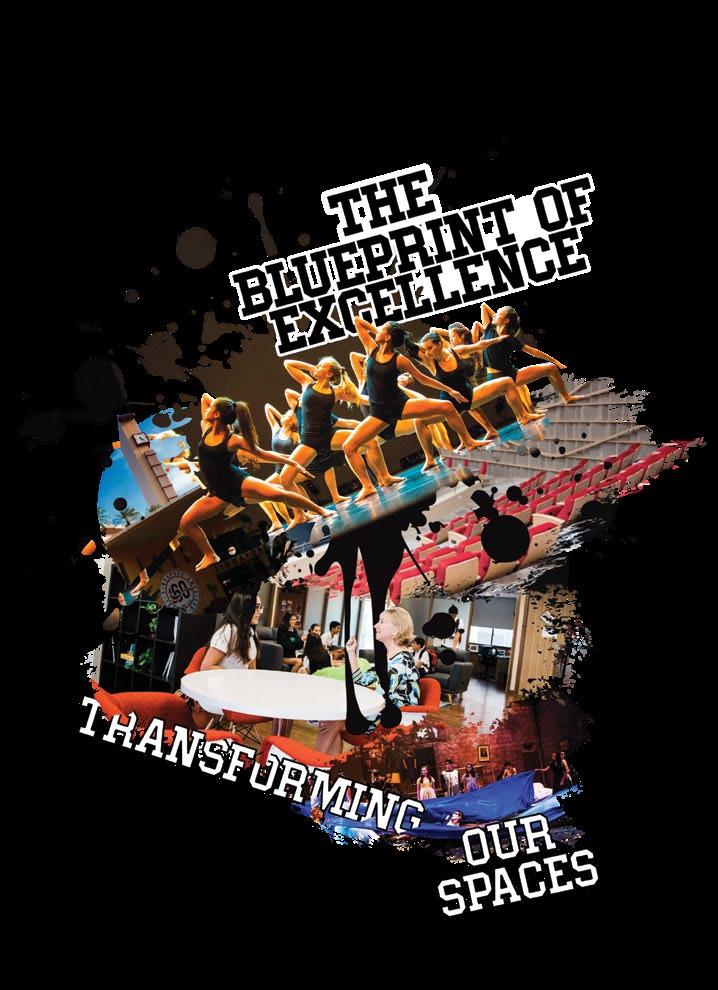
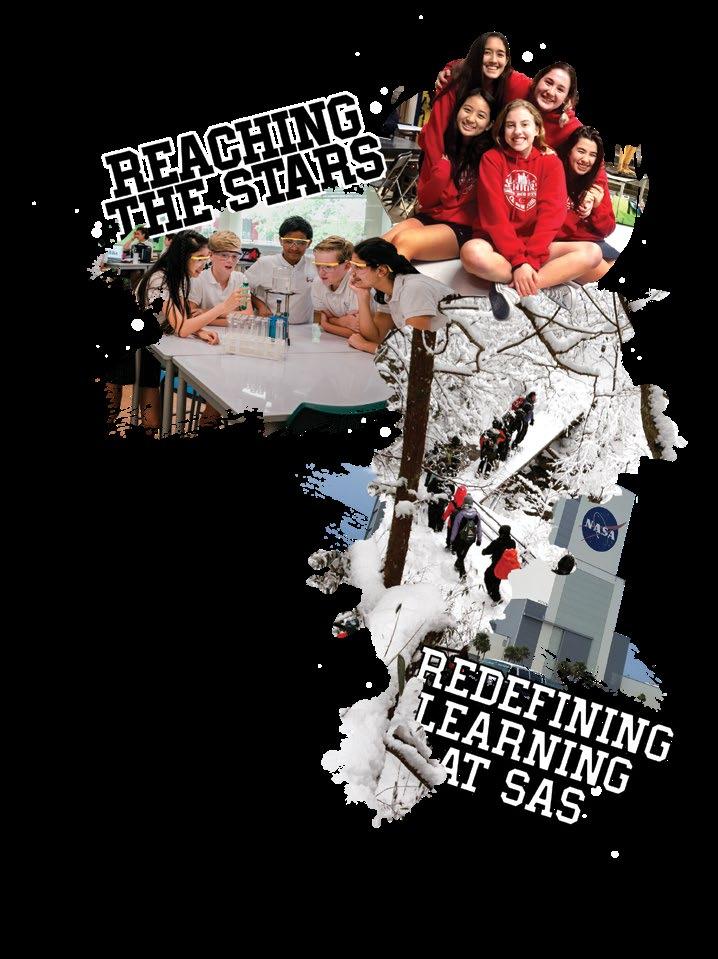
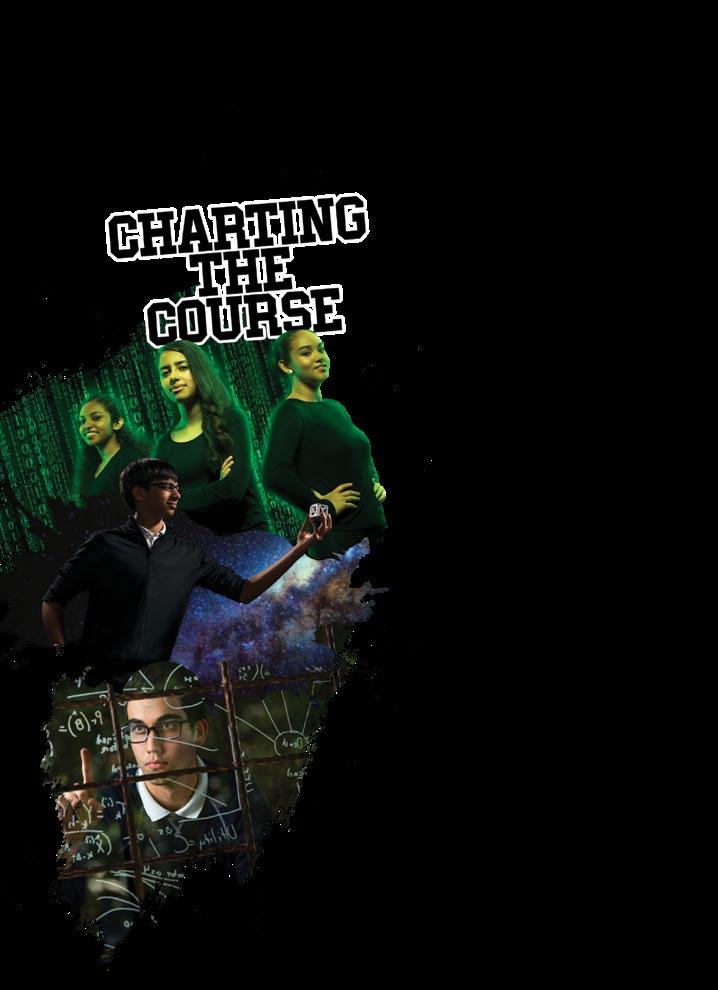
As we celebrate 70 years of Singapore American School, we reflect on a rich history shaped by generations of students, educators, and families. From evolving campuses to enduring traditions, SAS has grown through shared experiences and lasting connections. This milestone honors our past while looking ahead to the journey still unfolding.
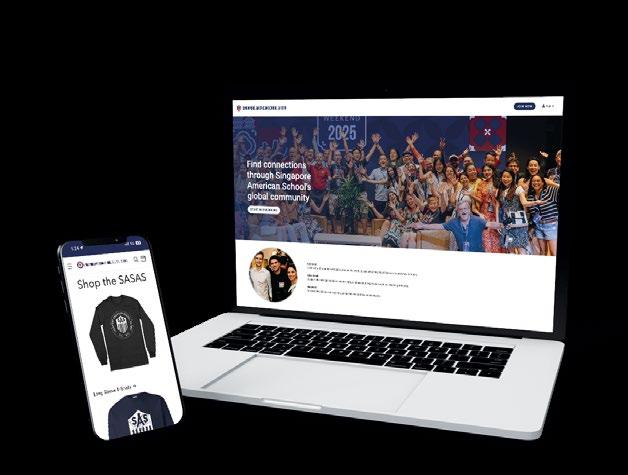
Journeys Online
https://www.sas.edu.sg/journeys
Editorial team
Kyle Aldous
Cara D'Avanzo
Rebecca Clark
Kinjal Shah
Joanne Son
Design team
Haziq Hairoman
Nur Afiqah Johan
Amos Ong
Contact communications@sas.edu.sg
Can you name all seven official Singapore American School campuses over the last 70 years?
In the 1960s, school leaders banned students from using what mode of transportation to school?
By TOM BOASBERG Superintendent
ANSWERs
What famous Olympic gold medalist visited SAS in 1974 and read poetry to the students?
What was the original name of Singapore American School?
Rochalie Drive, King's Road, Alexandra Junior School, Gillman Barracks, Baytree, Ulu Pandan, and Woodlands
American School, Singapore
Legendary boxer Muhammad Ali Motorcycles
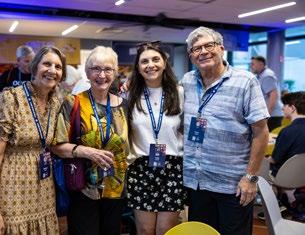
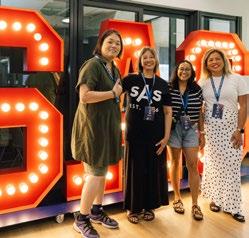
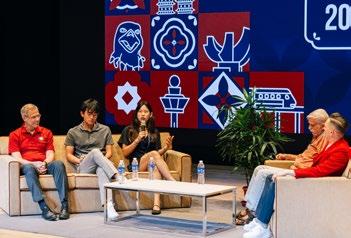
These questions and many others were part of our fun-filled alumni trivia nights earlier this year as we began celebrating our 70th anniversary. What followed was more than a quiz—it was a collection of stories. Alumni from across decades connected through their shared memories and brought SAS history to life. They enjoyed learning about how some aspects at SAS have changed dramatically in the last 70 years while many others have remained deeply familiar across decades.
They spoke about moments big and small: the first Interim Semester, a rugby team sidelined for refusing to cut their hair, a campus that once housed a Burger King, and even the one and only SAS biker gang. These stories are woven into the fabric of our school and the lives of our alumni.
Each time I connect with our alumni, I leave with the same feeling: a deeper sense of history and a shared sense of joy in the SAS experience.
For 70 years, SAS has been shaped by the people who have come before us. I hear it in stories of teachers who changed the course of a student’s life, of friendships that have spanned decades, and of shared traditions that continue to evolve. As a parent of two SAS alumni, I recognize many of these same threads in my own family’s experience.
What we enjoy today—the campus, the programs, the opportunities—did not happen by chance. They are the result of years of care, commitment, and a shared belief in what this school can be. Many of you reading this have helped build that legacy. Thank you.
As you turn the pages of this 70th anniversary issue, I hope you feel that same sense of connection—to those who came before, to one another, and to what lies ahead. Our story is still being written, and each of us has a role to play.
Once an Eagle, always an Eagle.
TRAIL MARKER
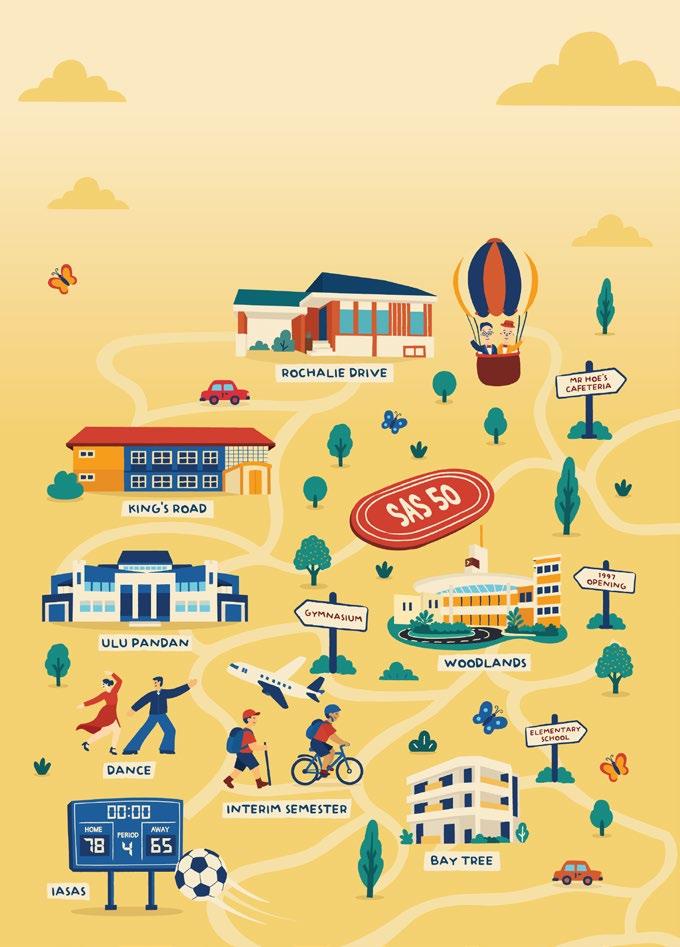
Spot this symbol on the map to discover the defining milestones of each decade.
As early as 1948, the American Association of Malaya considered establishing a school in Singapore. But it was not until 1952, when 130 children showed up at the American Club’s Christmas party, that the Association moved forward with the idea of starting a school. By 1955, the whole American community had embraced the idea, and the first goal of raising $100,000 was met by donations from individuals and almost forty companies.
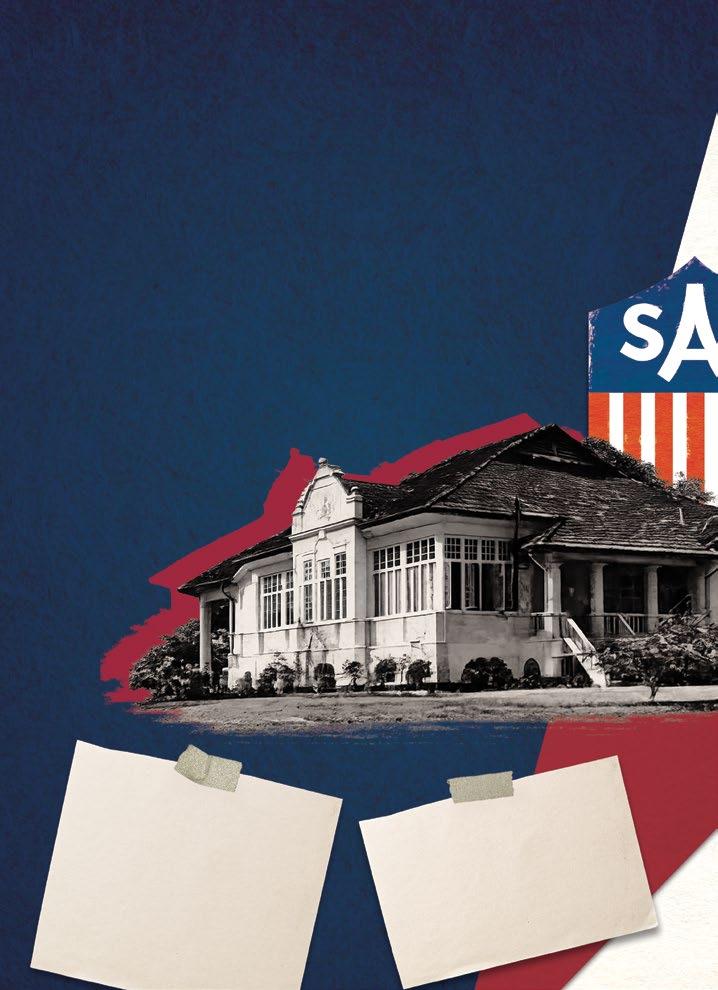
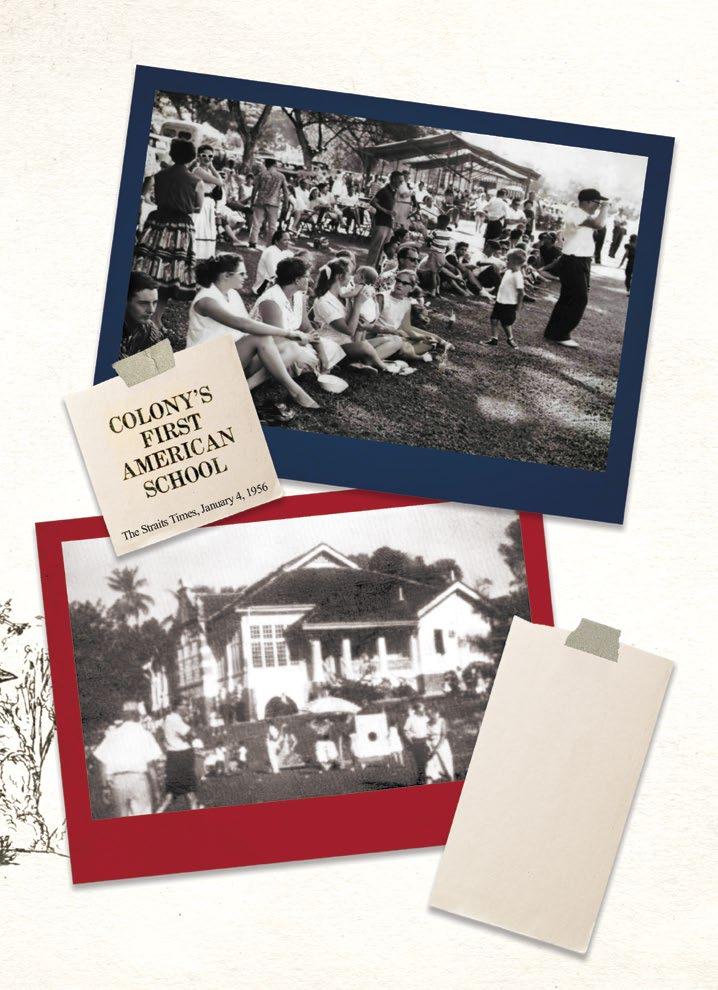
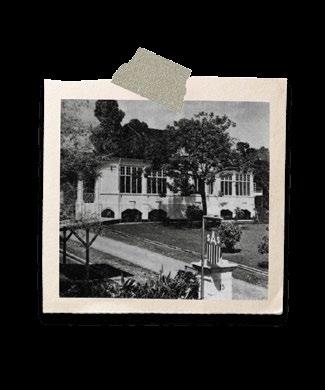
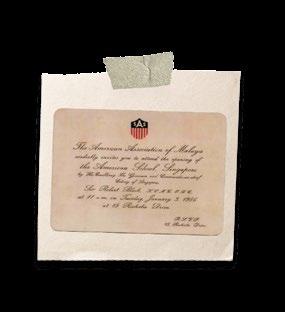
Singapore American School opened on January 3, 1956, in a large colonial house at 15 Rochalie Drive. It included only elementary and junior high students, as older students were settled in boarding schools outside of Singapore. From the beginning, SAS accepted students of all backgrounds; the original 98 students consisted of 57 Americans and 41 individuals from other nations.
Classes took place in the house’s former bedrooms, garage, and servants’ quarters, and the grounds included a softball field and basketball court. Under the lease conditions, a local family continued to live on the property, and their chickens ran underfoot. The school day started at 8:15 a.m. and included singing “God Save the Queen” in assembly, held in the former dining room. As there was no air conditioning, the cooler morning hours were reserved for academic classes. Students went home for lunch and a rest, and returned at 3:00 p.m. for art, drama, music, PE, and other enrichment activities.
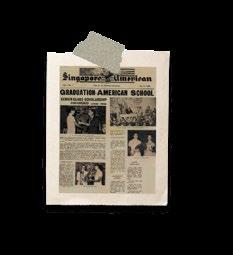
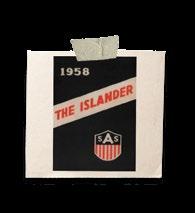
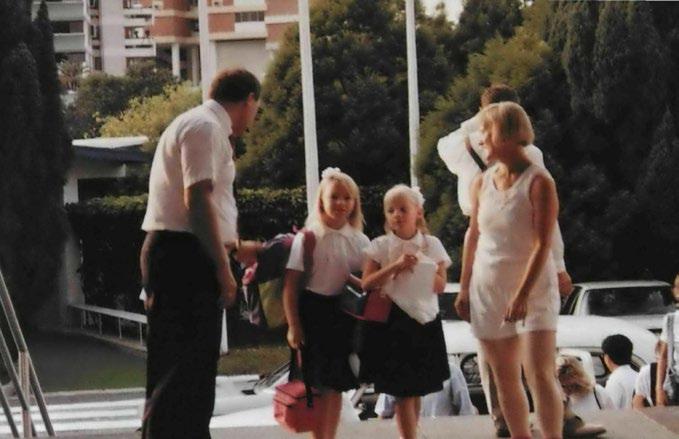
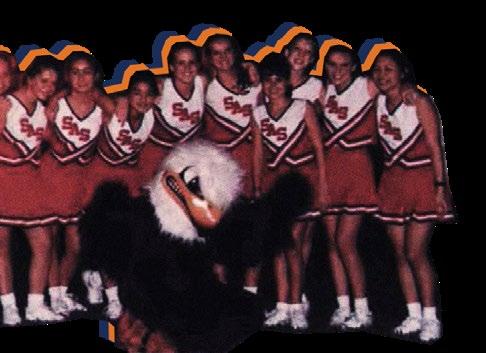
In its first few years, the school developed enduring traditions. High school classes began, and in July 1958, the first SAS commencement ceremony saw sole senior Louise Feng receiving her diploma at the American Club. Students voted on a team name, and the “Eagles” were born; soon there were Eagles playing basketball, fast-pitch softball, and volleyball. A cheerleading squad appeared at games, and local spectators were amazed. The first plays were performed. The Islander yearbook appeared in 1958, and the first junior-senior prom took place in 1959. The PTA organized a “fun fair,” the forerunner of today’s International Fair, to raise money for the basketball court. And from the beginning, students wore white uniform tops and navy blue bottoms.
Outside the school gates, Singapore was going through a turbulent time. Demands for self-government, anger over high prices and unemployment, strikes by labor unions, demonstrations by local student groups, and disagreements between and within different ethnic groups, among other factors, led to a sense of instability.
Through all of this, SAS served as a concrete symbol of the confidence with which most resident Americans viewed Singapore’s future. With elections in 1959, Singapore achieved full internal self-government. The People’s Action Party, led by Lee Kuan Yew, came to power, promising to address Singapore’s economic, social, and political problems. By the end of the decade, Singapore seemed to be on the road to stability, and the school was bursting at the seams with over 250 students. The outlook was bright.
PTA:Building Community Since1956 theFromfundraisingfor DriveoriginalRochalie basketball courtgrants,toorganizingfairs, scholarships, theandclassroomsupport, SASPTAhashelpedturn into more than aparentschool.For70years, createdvolunteershave traditions,theconnections, andsenseof belongingthatdefinethe SASexperience.
A Tale Twoof Firsts
When Singapore American School opened its doors in 1956, the school only served students up to ninth grade. It wasn’t until 1958 that SAS served students from K-12. This led to two unique student firsts: the first student to move on from SAS because they had reached the top range of what was offered and the first student to graduate as a traditional twelfth grader.
Stuart Lippe (class of 1959) can rightfully claim the title of the first student to complete the highest available level of education at SAS and move out into the world. In 1956, SAS packed a lot of learning into its first year, but ninth grade was as far as it went. Studying on the back porch in an environment reminiscent of an old one-room schoolhouse—with Principal Al Fisher and his wife taking turns teaching—Stuart passed his final exams and finished the ninth grade. He ultimately had to leave because SAS did not expand to include a tenth-grade curriculum the following year. A true pioneer, Stuart flipped a coin with his friend Elie to decide who would serve as the school's first Student Council President, served as a reporter for the very first issue of the school's mimeographed newspaper, The Reporter, and helped run the school's inaugural safety patrol.
While Stuart was the first to leave after exhausting the available classes, the distinction of being the first official SAS high school graduate goes to Louise Feng. The school expanded to include twelfth grade by 1958, and Louise was the sole senior to receive a diploma at the first commencement ceremony held at the American Club. Her education at the fledgling SAS was highly individualized; she and one other student were the only ones taking Algebra and Spanish, which were taught by Principal Fisher inside his own office. A highly driven student who consistently made the High Honor Roll, she served as President of the Student Council, Editor-in-Chief of The Reporter, Editor of The Islander yearbook, and was active in the Drama and Glee clubs.
The
"Napkin"
Logo
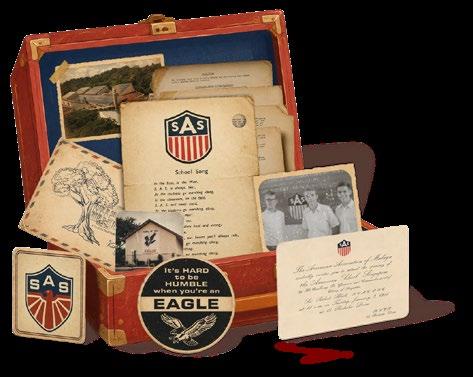
One of the most enduring symbols of SAS actually began as a casual sketch at a cocktail party. During the school's founding, an attendee sketched the original SAS shield logo on a paper napkin, intentionally mimicking the design of the Union Pacific Railway logo. This "napkin sketch" became the school's official invitation logo and its primary crest for the next 40 years.
"I do remember also almost a feeling of the school as a family because it was so small. That was quite wonderful... being away from my own family, that you have to rely on others."
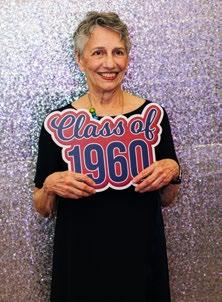
Carmen Onstad Matthews, Class of 1960
"Even as Margie and I met him at the old Kallang Airport in a driving tropical rainstorm, I wondered why anyone in his right mind would accept our offer."
The first school newspaper was founded on February 1, 1956, less than a month after the school opened.
The first yearbook was published in 1958 and captured early student life in black and white images. It was called The Islander (a name which has
Founding Board Member Lawrence R. Wales, on hiring the school's first principal, Al Fisher
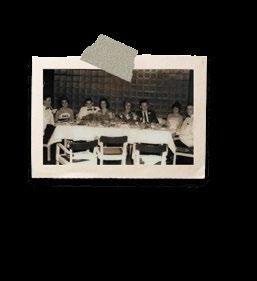
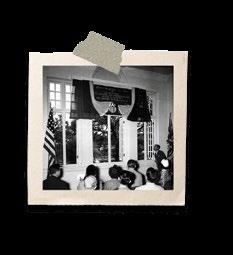
“My dad was the first board chair and put a lot of work into getting the school started. You can see the back of my dad’s head in this picture. I was there with him and actually had the chance to give flowers to Lady Black. I had a chance to visit the school again in 2025 and was in awe of what it now is. My dad passed away at an early age and never truly got to see how special the school and community became. He would be so proud.
Wendy Baynard, Class of 1966
The first prom took place in 1959 at the American Club and hosted 16 young couples.
The first logo was created before the school doors even opened as a symbol of the school’s name and
By KINJAL SHAH Associate Director of Communications
A defining time of rapid growth and nation-building, where SAS laid strong foundations, shaped traditions, and began to take flight.
The 1960s unfolded as a period of extraordinary change and momentum for both Singapore and Singapore American School—a time when uncertainty and ambition moved side by side, and the future was built one decisive step at a time.
At SAS, growth was relentless and impossible to ignore. A rapidly expanding student body, paired with a leadership team determined to build something enduring, began to reshape the school’s identity from the inside out.
Under Principal James Aven, new educators were brought in, the curriculum expanded beyond traditional boundaries, and a more intentional blend of academic rigor, practical skills, and global perspective began to take hold. The move to 60 King’s Road in 1962 became a defining turning point—an act of collective resolve that transformed not only
the school’s physical space, but also its sense of scale, purpose, and possibility.
With the new campus came the first unmistakable signs of a lasting school culture. The stage lights of the auditorium flickered on for the first time. Students stepped into early traditions of service and international sport, discovering new ways to connect, contribute, and represent their school beyond its gates. These moments were small in scale but powerful in effect—quiet beginnings of a shared identity that would deepen over time.
Across Singapore, the ground was shifting just as dramatically. Merger, separation, internal unrest, and the demands of independence tested the young nation’s resilience. Yet even in the midst of upheaval, systems were being built with urgency and intent—education expanded, housing transformed, National Service introduced,
and economic pathways opened to the world. Stability was not assumed; it was constructed.
By the close of the decade, SAS once again stood at a threshold. Enrollment surged, space tightened, and the question of what came next returned with urgency. But beneath the pressure was something unmistakable: a school no longer simply finding its way, but beginning to take shape.
The foundations were set. And from them, something larger was beginning to rise.
Some traditions are built on ceremony, others on everyday moments. At Singapore American School, belonging is often found in the smallest rituals— simple greetings, shared goals, and collective celebrations that grow stronger with time. These are the threads that quietly weave a large and diverse community into something familiar and deeply connected. They show up in passing interactions in hallways, in shared laughter before events begin, in the encouragement offered during challenges, and in the way people return. Year after year, generation after generation, alumni share that they come back to a place that still feels like home. Over time, these moments become more than routine; they become memory, identity, and the foundation of a community that continues to evolve while holding on to what matters most.
Maznee Ibrahim High School Deputy Principal Secretary
One small SAS tradition that makes me feel like I belong is the way people acknowledge one another every day. As someone at the front desk, a smile, a wave, a simple hello, or a brief conversation reminds me that I am seen and valued. These small moments have taught me that community is built through kindness and connection. When we take the time to acknowledge one another, we create a sense of belonging that makes SAS feel like home.
Astrid
Salim Class of 1996 and SAS Parent
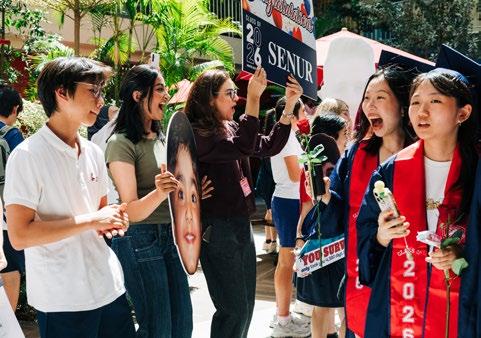
As a mom of a recently graduated senior, the Senior Walk has to be one of the most meaningful SAS traditions. Watching our seniors walk through the halls one last time, cheered on by younger students, teachers, family, and friends, beautifully reflects the strength of our community. It teaches us that every stage of the journey matters, and that we celebrate not only achievements, but also the relationships and support that carry us there.
Farouk Maricar Associate Director of Admissions
One SAS tradition that has always made me feel like I belong is the way our community comes together in so many events and situations, whether during celebrations, milestones, or times of challenge. No matter the circumstance, there is always a strong sense of support, care, and willingness to help one another. This tradition has taught me that community is built through small, consistent acts of kindness, collaboration, and service. It reminds me that belonging doesn't happen by chance; it is created intentionally by people who genuinely care about each other. After more than three decades at SAS, that spirit of welcoming, supporting, and standing by one another continues to be one of the reasons I am proud to be part of this community.
Anne Wenstrom Elementary School PE
The elementary school Marathon Club for students from third through fifth grade is a tradition that truly builds belonging. Watching kids unite around the shared goal of running 26 miles over a month shows that community isn't just about proximity...it's about mutual encouragement. Breaking a massive goal into daily steps makes perseverance bitesized. It teaches our young students to develop lifelong fitness habits and goalsetting, and to realize that we go further when we run together.
On June 20, 1966, seventeen-and-a-half-yearold Hoe Juan Jok climbed into a taxi with his father, sister, and two helpers and headed to Singapore American School.
Waiting for them was a tiny, sweltering kitchen at the King's Road campus. There were no industrial ovens or gleaming stainless-steel counters. The entire operation consisted of two wooden preparation tables, a small sink, a wooden serving counter, one refrigerator, one domestic gas oven, and a soda chiller cooled by a giant block of ice.
By the end of their first day running the cafeteria, they had earned $52.
What they didn't know was that they were beginning one of the longest and most beloved traditions in SAS history.
The story started a year earlier, when SAS built its first cafeteria and hired Ho Tee Jam and Ho Juan Sim to oversee dining services. Soon, more family members joined the operation, including young Mr. Hoe Juan Jok.
As the school community grew, so did the menu. SAS parents taught the cafeteria staff how to make American favorites such as hamburgers, grilled cheese sandwiches, donuts, and chocolate brownies. Combined with local recipes and family cooking traditions, the
Hoe family created dishes that generations of Eagles would come to love.
Among them were favorites that still spark memories decades later: curry, sweet and sour chicken, and the now-famous Sichuan chicken.
Food became more than a meal. It became part of the SAS experience.
As the school expanded across campuses at King's Road, Alexandra Road, Gillman Barracks, Ulu Pandan, and eventually Woodlands, members of the Hoe family expanded with it. Brothers, sisters, parents, children, and longtime staff helped serve a growing community while preserving the welcoming
atmosphere that students remembered long after graduation.
Today, more than half a century after that first day, Mr. Hoe Juan Jok continues to oversee cafeteria operations at SAS. He remains proud not only of the food but also of the people behind it.
Many staff members have worked at SAS for 20, 30, or even 40 years.
That commitment has become a family legacy. Mr. Hoe's son, He Xian Hao, followed in his father's footsteps, studying baking and pastry at Le Cordon Bleu Paris and gelatomaking in Italy.
The story of the Hoe family reflects the story of SAS itself. Traditions are rarely created overnight. They grow through dedication, consistency, and care, becoming part
of a community's shared memories.
More than fifty years after a young man stepped into a hot kitchen with little more than determination and a family recipe book, the tradition continues—one meal, and one generation of Eagles, at a time.
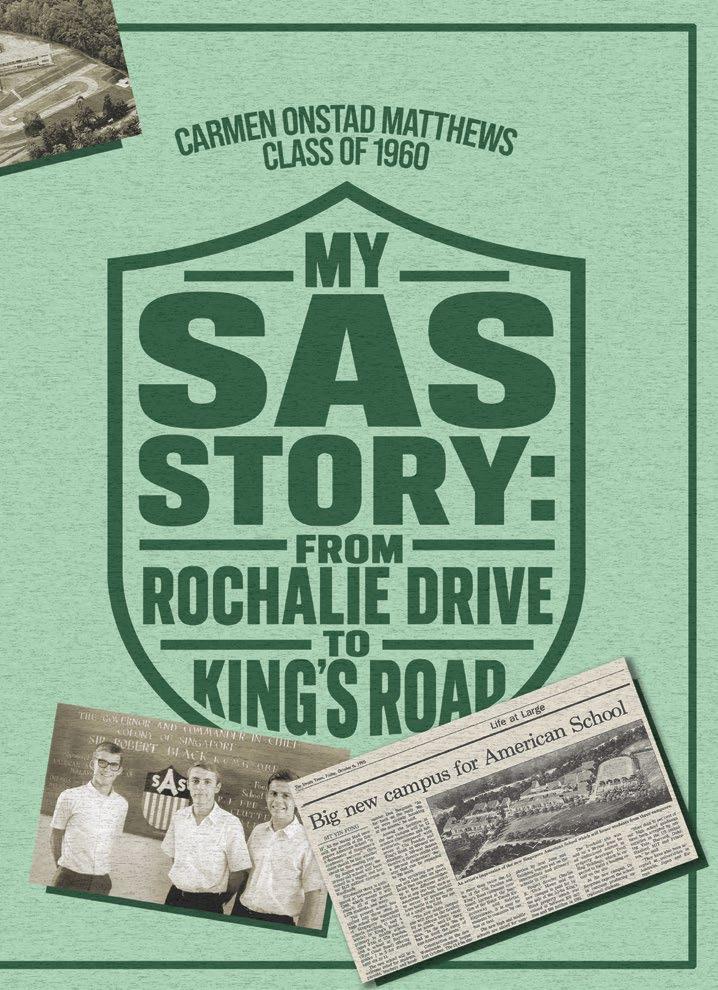
An early SAS graduate looks back on life at Rochalie Drive, the school’s remarkable journey to King's Road, and the traditions that continue to connect generations of Eagles through growth and change.
When I think back to my years at Singapore American School, it almost feels like a different world.
I joined in the late 1950s and graduated in 1960. Our entire school was small enough that everyone truly knew one another. My graduating class had just 11 students. We were only the third graduating class in SAS history.
We learned in the simplest of settings. I still remember our science lab being a converted garage at the Rochalie Drive campus. There was a stretch of trees on the grounds where we would gather between classes, especially the high school students. It felt informal, familiar, and very connected. In those early days, SAS was still finding its identity, and so were we.
Looking back now, what strikes me most is how uneven our experience was. We had limited staff and facilities, and the academics reflected that reality. And yet, there was something very special about being part of something so new. We were building a school together,
even if we didn’t fully realize it at the time.
To see SAS today is astonishing.
The move to King's Road marked a turning point I could never have imagined in those early years. The school I knew has grown into something far larger, far more complex, and far more accomplished than we ever thought possible. When I return or see updates, I feel two things very strongly at once: deep nostalgia for that small, simple beginning, and genuine admiration for what SAS has become.
What remains constant, however, is the sense of community.
That is what has always defined SAS for me.
Even as the school has expanded, that spirit shows up in traditions that connect students across ages and generations. I hear about things like younger students cheering on seniors as they take their final walk through the halls. I hear about younger children
working together toward shared goals, like running the distance of a marathon in small, steady steps. These may look like simple activities from the outside, but they carry something deeper: they teach belonging, encouragement, and persistence.
They remind me of something I recognize from my own time at SAS, even in its earliest form. We may have been small, but we were always connected.
That is why it is so meaningful to see how the school continues to grow while still holding on to those human connections. Buildings change. Campuses expand. But the essence of a school lives in its people and its traditions.
For me, returning to SAS brings a rush of memory. It is astonishing to see how far the school has come, and at the same time, it is grounding to recognize that the heart of it feels familiar. I carry a strong sense of pride knowing I was part of its earliest chapter.
Long before Singapore American School became the school it is today, it was an idea taking shape in borrowed classrooms, around dinner tables, and through the determination of a small group of educators who believed they could build something exceptional.
My connection to SAS began even before I entered a classroom. In 1956, my mother, Norma White, was among the school's first teachers, joining the pioneering cohort led by founding principal Al Fisher. By the time she left in 1960, she was the last remaining member of that original group and had become Primary Supervisor, helping establish one of the foundations upon which the school still stands today.
Our family arrived in Singapore in September 1955. My father, Gordon White, had accepted a position teaching history at Victoria School, and for us, the move felt like stepping into another world. We had left post-war Britain, still shaped by austerity, and arrived in tropical Singapore, living in a black-and-white house on Nassim Road.
Every tradition has an origin story. For SAS, many began in the late 1950s and early 1960s, when educators from around the world came together to build something remarkable.
For a young boy, everything felt larger, brighter, and more adventurous than anything I had known before.
Both of my parents were educators. They had trained through accelerated programs created for servicemen, servicewomen, and war workers after World War II. While my father taught secondary school history, my mother had already served as a primary school head teacher in Oxfordshire before seeking an opportunity abroad. That opportunity came through SAS.
One of the traditions that shaped the early school was a commitment to bringing together different perspectives. While SAS recruited American teachers to help establish a distinctly American curriculum and culture, many teachers came from other countries and educational traditions. Some were "trailing spouses" who had followed their partners to Singapore and accepted local teaching positions. They worked alongside parent volunteers and educators from the United States, the United Kingdom, Australia, and beyond.
There is sometimes an assumption that early SAS was simply finding its footing. My memories and family history tell a different story. The educators who built the school had high expectations, strong professional standards, and a shared ambition to create an outstanding learning environment.
My mother became head of the primary division in 1957. One of her greatest challenges was leading a faculty whose members had been trained in very different educational traditions. Rather than choosing one approach over another, the goal became to take the best from each.
A perfect example was the debate around reading instruction. Even in the 1950s, educators passionately disagreed about how children should learn to read. Traditionalists favored the "look-say" method and familiar reading schemes. Others championed phonics.
With Al Fisher's support, my mother advocated for a blended approach. Teachers experienced in both methods worked together to create materials that combined phonics with word recognition. The philosophy was simple: use what works and meet students where they are.
Looking back, this spirit of collaboration may have been one of SAS's most important traditions. Rather than defending educational theories, teachers focused on practical solutions that helped students succeed. Years later, educational systems in both the United States and the United Kingdom would move toward similar balanced approaches.
I joined SAS in kindergarten in 1957 and have vivid memories of hearing these discussions at our dinner table.
"Of course phonics matters," my mother would say. "Children need to decode unfamiliar words. But adults don't read phonetically. We recognize words within context, and our brains make sense of them."
In a school community where many students spoke languages other than English at home, this balanced approach helped children experience success quickly while also developing strong literacy skills. When I think back on my own SAS experience, one word comes to mind: exotic.
Everything about the school felt unmistakably American. My mother drove a Singer Roadster convertible with running boards. Teachers gathered for social events that felt glamorous to a child. The Fishers were family friends. School celebrations included parties where Fraser and Neave provided playground equipment in exchange for supplying cream soda. Looking back, I still wonder how that arrangement worked.
SAS celebrated Washington's birthday and taught American history alongside a globally diverse
student experience. In many ways, it represented something entirely new. It was not simply an extension of Britain's colonial past. Students from different countries learned together and developed perspectives that stretched far beyond national borders.
That influence stayed with me. Even after leaving Singapore and eventually returning to the United Kingdom, I found myself viewing the world through a broader lens. I knew the stories of Lexington, Bunker Hill, Yorktown, and Washington crossing the Delaware. I followed American politics and culture. I listened to American music long before it became commonplace in Britain.
One brave first step I took at SAS was embracing a culture that was not originally my own. As a British child in a distinctly American school, I could have remained an observer. Instead, I stepped into the community, learned its traditions, celebrated its history, and made it part of my own story. What made that possible was the welcoming environment created by teachers and classmates who viewed differences as strengths rather than barriers.
That spirit of openness may be the most enduring tradition of all.
After we left Singapore, our family moved to Hong Kong, where my mother continued teaching. She remained in education for decades before passing away in 2009. Across a career that spanned multiple countries and at least eight schools, there was never any doubt about which school held a special place in her heart. Without hesitation, she would have said Singapore American School.
And I suspect many of those early pioneers would feel the same.
1970s
The 1970s were a defining decade of disruption and reinvention for SAS—when rapid growth, cultural change, and a fast-evolving Singapore pushed the school to reconsider its identity and direction.
By KINJAL SHAH Associate Director of Communications
Under Dr. Jack McLeod, overcrowding reached a tipping point. In 1971, Singapore American School split across sites: Grades K–6 moved to Alexandra Junior School and nearby Gillman Barracks, both of which were opened up after the British withdrawal. For two years, students learned in contrasting worlds—lush jungle surroundings at one campus, and the cadence of military life at the other—where place itself became part of the education.
With the opening of Ulu Pandan, students were reunited in a new shared campus, while King’s Road took shape as the long-term high school home, anchoring SAS for decades.
Outside the school, Singapore was being reshaped by rapid economic growth and the rise of the regional oil economy. New global connections brought opportunity—but also tension, as authorities moved to manage shifting cultural influences and reinforce a distinctly Singaporean modern identity.
SAS felt these changes in its own community. Shifts in enrollment policy and the decline of missionary families changed the makeup of the student body, weakening one of its key bridges to the wider local context.
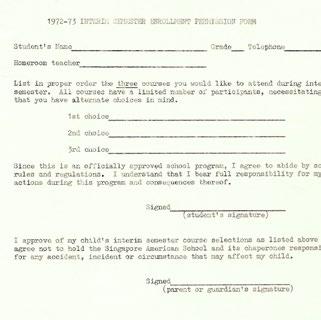
In response, the school looked outward. Week-long trips during the 1972–73 break evolved into Interim Semester, opening learning far beyond the classroom. At the same time, a parent-driven football program grew into a full-scale community event—complete with lights, rivalries, and packed sidelines that turned sport into a shared experience.
As Singapore tightened its stance on drugs and youth culture, SAS strengthened education, safeguarding, and support systems, including the creation of the Singapore American Community Action Council in 1973.
By decade’s end, SAS had been reshaped by movement—between campuses, across communities, and into broader perspectives. What began as disruption became direction.
And from that shift, a more global SAS began to take shape.
Interim Semester…
Interim Semester Trips in 1973
Asia
Indonesia
Malaysia
Thailand
Within Singapore
An Experience in Social Service
Bangles, Gems, and Pots
Chess for Beginners/Improve Your Chess Skills
Chinese Calligraphy and Brush Painting
Chinese Cooking
Choral Conducting
Decisions, Decisions, Decisions
Exploring Schools in Singapore
Exploring the Unknown in Automobiles
For Dog Lovers Only
Know Your Singapore Better
Life Time Games
Making a Movie
Making a Record
Modeling to Improve Ourselves
PE Skills and Techniques
Photography
SCUBA Diving
Silk Flowermaking
SIimnastics
Squash for Beginners
Synchronized Swimming
Teacher Interim Program
Tennis, Anyone?
Total Immersion French
Weight-Lifting and Gymnastics THEN
Interim Semester Trips in 2026
Asia
Bhutan
Cambodia
China
Hong Kong
India
Indonesia
Japan
Malaysia
Nepal
Philippines
South Korea
Sri Lanka
Taiwan
Vietnam
Within Singapore
Europe
France
Spain
Oceania
Australia
New Zealand
Africa
Ghana
Kenya
Morocco
Advanced Photography Workshop
Comics: Drawing and Storytelling
Flavors of Singapore: Culinary Bootcamp
Teacher Apprenticeship
Mountain Biking Singapore
Introduction to Sailing
Love for Singapore: Community Impact
Social Justice Singapore
Future NOW: Sustainable Living
Next Generation Career Exploration
Singapore Culture, Food and Heritage
Learn to Scuba Dive
Student Exchange and Social Entrepreneurship
Recollections
of
Interim Semester
Ginger McKenzie
Attended SAS 1972 – 1978
I arrived during the last year that the Alexandra and Gillman campuses were operating, and that’s when I met a good friend of mine, George Sewell, at Alexandra. My all-time favorite part of Singapore was the people I got to know and the lifelong friendships I made there. It’s truly amazing that people can remain such close friends for so many years while living so far apart.
A couple of other special memories stand out as well. I met my first love there in Singapore—who will go unnamed—but I’ll always be grateful for that experience.
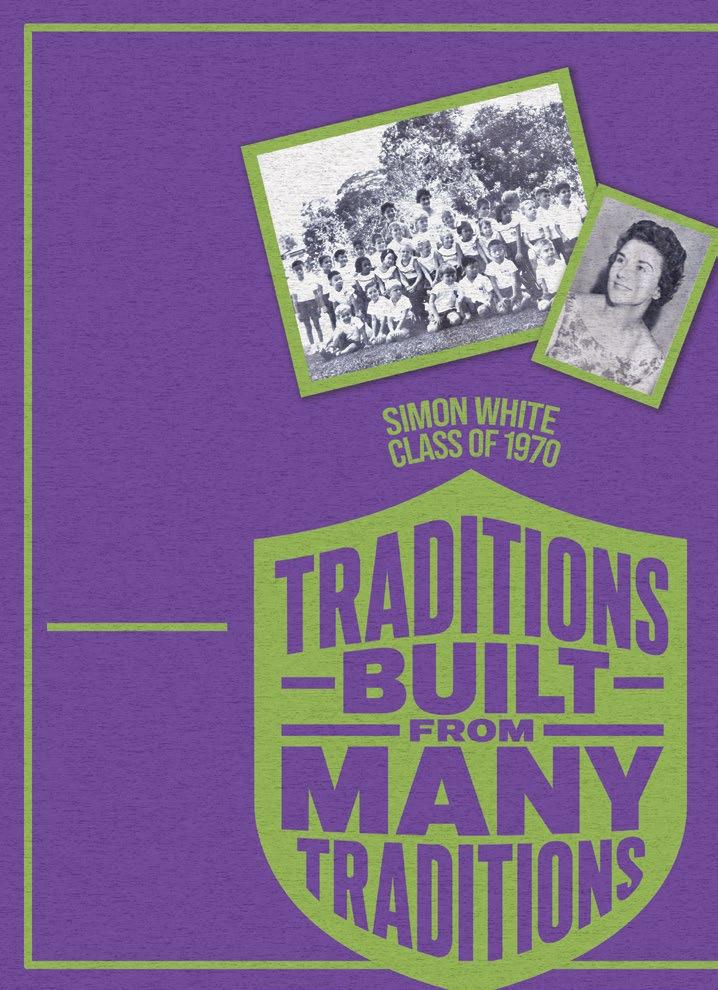
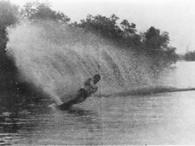
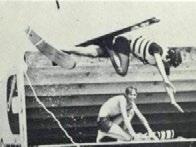
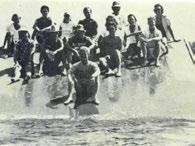
For Interim Semester, I only got to participate one year, and I chose water skiing because I absolutely loved to water ski and didn’t have many opportunities to do it otherwise. We went out to Pulau Salu, had a wonderful group of people, and just had so much fun together.
I also played sports while I was there. I played softball, my mom was a coach, and I was a cheerleader for the McDermott Bulldogs. Go Bulldogs!
And then there was everything else that made Singapore so special—being able to roam around the city without your parents worrying about you, taking taxis on your own, and simply enjoying the freedom and adventure of growing up there.
I would truly say those were the best six years of my life, and I know I’ll see many of my longtime friends again.
Recollections
of Interim Semester
George Sewell
Class of 1979
My fondest memories of my time at Ulu Pandan were the incredible teachers, the friendships, and the unique sense of community that made Singapore American School feel so special. Looking back, it was truly a remarkable experience growing up in such an international environment, surrounded by classmates and faculty from all over the world. Many of the friendships formed during those years have lasted a lifetime, and the memories we created together remain some of the most meaningful of my life.
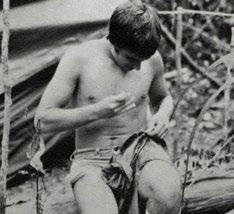
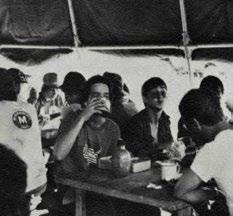
My Interim Semester trips at King's Road included Jungle Survival, Bali, and Taman Negara. Those adventures were unforgettable experiences for a young person and offered so much more than just travel. They taught independence, teamwork, resilience, and appreciation for different cultures and environments. Whether trekking through the jungle, exploring new places with friends, or simply sharing laughs and experiences along the way, those trips created bonds and memories that have stayed with me ever since.
SAS provided opportunities that were truly unique, and I will always be grateful for the experiences, friendships, and life lessons that came from my years there.
Recollections of Interim Semester
Oliver Byington
Class of 1981
I first attended Singapore American School at the Ulu Pandan campus in 1974. I was absolutely mesmerized by the campus and how extraordinary it was. I was in Beta and later Alpha, where I formed amazing lifelong friendships that remain meaningful to this day.
Along with the exceptional teachers and close-knit friendships, one of my most memorable experiences at Ulu Pandan was celebrating the United States Bicentennial and the Fourth of July festivities during the summer of 1976. It was a truly special time to be an American overseas and part of the SAS community.
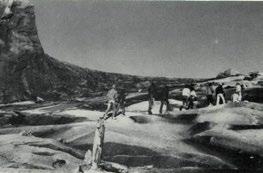
As for Interim Semester trips, my freshman year I participated in the Mount Kinabalu expedition in Sabah with band director Mr. Brian Leonard. It was an unforgettable adventure trekking through the lush mountainside, acclimating to the elevation, and even crossing icy runoff streams where we ended up covered in leeches. Ascending to the summit at dawn near Mule Ears Peak was absolutely magical. A photograph of me from the trip appeared in the 1978 Islander, with the mountains and clouds stretching endlessly behind us.
In 1979, I was fortunate enough to participate in the extended China Interim trip, an incredible cultural adventure beginning in Hong Kong and Canton before we made our way north to the Great Wall and back down south again through many regions. Being among some of the early foreign visitors allowed back into China after the country reopened to the world was a remarkable experience. Visiting the Forbidden City and witnessing places that so few outsiders had seen at that time left a lasting impression on all of us. It was truly an extraordinary journey.
I remain deeply grateful to SAS for the precious memories, friendships, adventures, and experiences that have stayed vivid in my mind to this very day.
Recollections of Interim Semester
Mike Moorehead
Class of 1984
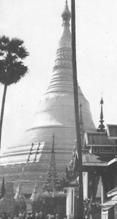
My best memories of Interim Semester? Going to Burma. On the very first night, when we went to the Shwedagon Pagoda, it was all lit up beautifully, all the little stupas all around it, gold all around. It was the prettiest thing I'd ever seen in my life.
I was just absolutely amazed and really happy I was there. Then later on that same trip, we went pagoda climbing in Pagan, which has several thousand pagodas. Later in Mandalay, we saw the ruins of the old palace, and I remember climbing trees around there.
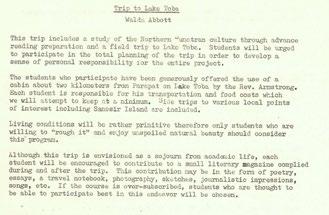
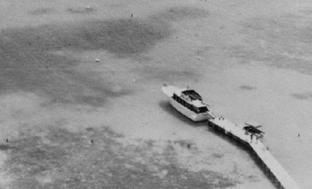
On another trip, on Lake Toba, I just remember how fun it was to tool around on a boat surrounded by the pretty jungle everywhere on this beautiful lake, a true Asian boat just puttering around. It was just a really nice afternoon. Sometimes our best Interim Semester memories are of those small, meaningful, simple moments with friends.
Yam Seng! CheerstoInterim
Semester Memories byOliverByington (Class of1981)
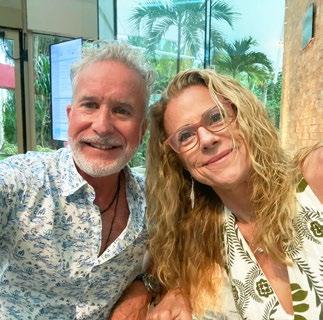
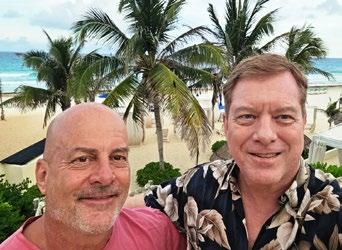
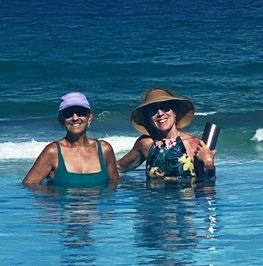
Approximately four and a half decades after graduating from Singapore American School, five lifelong friends from the classes of 1979 through 1984 reunited for an intimate alumni gathering in Cancun, Mexico.
While attendance was originally expected to be larger, global events and current economic realities prevented many alumni from making the international journey. Yet, in many ways, the smaller gathering became something unexpectedly meaningful. What was scheduled as a May 22–25, 2026 reunion naturally evolved into a six-day, five-night experience filled with laughter, reflection, storytelling, and reconnection.
As the turquoise waters of the Caribbean rolled onto the shore outside our resort, conversations effortlessly drifted back to another tropical chapter of our lives: Singapore in the 1970s and early 1980s. We reminisced about our years at the Alexandra, Ulu Pandan, and King's Road campuses and reflected on how extraordinary and magical it was to grow up during a period when Singapore itself was transforming into the dynamic, global city it has since become.
We shared memories of classmates, teachers, Interim Semester adventures, school experiences, and the lifelong friendships that somehow remained intact across decades, careers, marriages, families, and continents. We laughed about the things we did, the foods we have missed, and all the things we loved about Singapore. Before long, we found ourselves gathered around the table of an Asian restaurant at the resort, reconnecting through familiar flavors and shared memories from another time and place.
What stood out most throughout the reunion was more than just nostalgia. It was gratitude: for the unique international upbringing we shared, for the friendships that have endured, and for the realization that even after all these years, the connections forged during our SAS days remain remarkably strong.
Though small in number, the gathering reminded us that lifelong friendships are rare gifts and that sometimes the most memorable reunions are not necessarily the largest ones but the intimate ones that allow space to truly reflect, reconnect, and appreciate the journey across decades, continents, and life experiences. That alone made the reunion incredibly special and worthwhile.
Singapore American School gave many of us more than an exceptional education— it gave us a shared history, a global perspective, and friendships that continue to stand the test of time.
To that, we raised our glasses together and proudly cheered, “Yaaaaaaammmm seng!”
By JOANNE SON Communications Specialist
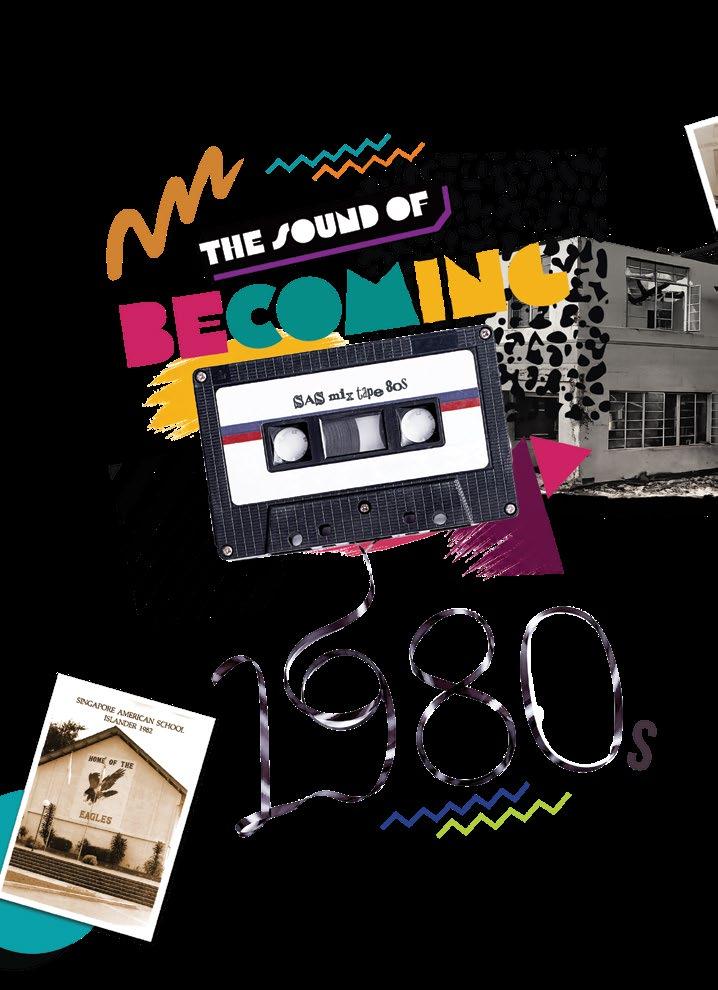
The 1980s began with a kind of noise— busy, scattered, unresolved. On fields and stages across Southeast Asia, Singapore American School students moved through a world of fragmented competitions and shifting expectations, where talent traveled, but structure lagged behind. And beneath it all, a larger question was forming, quietly but insistently: who decides what student life can become?
In 1982, that question started to take shape in something more ordered, more intentional. Interscholastic Association of Southeast Asia Schools (IASAS) emerged, drawing together what had been loose and unpredictable into a shared regional framework. What had once felt temporary suddenly had rhythm and permanence.
Competition became connection. Athletes found consistency, but so did musicians, actors, and artists who had long been waiting for a stage that matched their ambition.
By 1983, that stage arrived. The first Cultural Convention turned performance into dialogue—students no longer simply representing their schools, but meeting one another in music, movement, and visual expression. It was not just about winning. It was about being seen.
But even as voices grew louder within the school, the world outside pressed in. The early 1980s recession rippled through Singapore with sudden force, and SAS felt the shock in its own halls. Enrollment dropped sharply. Familiar faces disappeared. For the first time in years, stability felt fragile. Yet in that uncertainty, the school made a defining choice: to widen its doors again, to strengthen support systems, and to hold steady to its people and programs when retreat might have been easier.
Then, in 1987, the landscape changed again. A new gymnasium, fine arts center, and library rose where the principal’s house had stood, reshaping not just the campus but its possibilities. The effect was immediate. Music swelled into new ensembles. Drama found a new ambition. Visual arts expanded in scale and confidence. Traditions took hold, from Yulefest to the emergence of the SAS Singers, each one adding texture to a growing cultural identity.
By the end of the decade, SAS was a community learning, for the first time in clear and lasting ways, how to speak into the world it was part of.
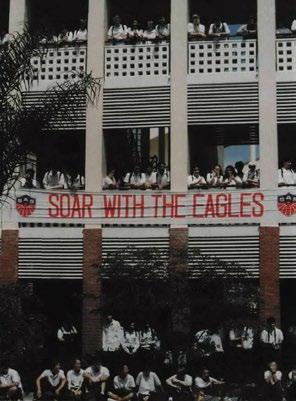
The 1980s at Singapore American School crackled with a new kind of electricity. It was a decade of expanding ambitions, where the school grew in both size and confidence. If the early years were about building a foundation, the 1980s saw the school stepping directly into the spotlight. Through the formation of the Interscholastic Association of Southeast Asia Schools (IASAS) in 1982, the introduction of the Cultural Convention, and the rapid expansion of the arts, this was the era where Eagles truly found their voices.
For music educator Rosemary Farmer, who arrived in 1981, that voice started with a single, battered instrument.
“The building of the music program was a challenge,” Farmer recalls. Initially, the program was in a state of disrepair, leaving the students to whom music mattered most feeling discouraged. Yet, the administration offered immediate, unwavering support. Farmer remembers the first time their only tuba made an appearance. “It looked like it had been hit by a truck. Dr. Kuhbander came to me immediately and ordered, ‘Buy a new tuba!’ I said, ‘I don’t have the budget for it.’ He replied, ‘You buy the tuba. I’ll get the money!’”
That palpable energy and decisive backing transformed the Kuhbander Arts Center on the King's Road campus into a thriving creative hub. Farmer, alongside art teachers Kathy Wasosky and Linda Harley, built a powerhouse program. Harley created fantastic backdrops and
Finding Voice our Voice our
programs for the newly introduced YuleFest, while stunning visual art shows demonstrated the depth of student talent nurtured by the department.
New instruments were only the beginning. The music program's true turning point required a completely new mindset. “When it became clear we were going to be a disciplined, hard-working department, dedicated to creating real music, kids began signing up,” Farmer notes. The introduction of IASAS and the Cultural Convention served as powerful new catalysts. Suddenly, students were striving with renewed focus to qualify and represent SAS on an international stage.
Students in the 1980s literally found their voices by tackling highly demanding material. Farmer intentionally included major classical works in the concert choir’s repertoire—Handel’s Messiah, Brahms’ Requiem, and Vivaldi’s Four Seasons—all of which the students memorized.
The legendary SAS Singers group began modestly with just six or seven girls and two boys, forcing Farmer to get creative with arrangements. As the students rose to the challenge, the dynamic shifted entirely. The class became highly coveted, transforming into a prestigious, audition-only ensemble recognized both within the school and the wider Singapore community. “The work the Singers had to do was challenging, but they always met the challenge,” Farmer shares. In addition to their rigorous classical training, they conceptualized, choreographed, and sang an annual pop concert, while also mastering
demanding, memorized a capella pieces for YuleFest. Bi-annual school musicals like Carousel, South Pacific and Li'l Abner brought together art, dance, drama, and music in spectacular fashion, proving what students could achieve when given the platform to shine.
In the choir room, on the theater stage, and at the first-ever Cultural Conventions, the 1980s asked our students to speak up, sing out, and step forward. These students did far more than put on shows. They built a legacy of excellence, agency, and creative resilience.
Looking back, Farmer's wish for today's Eagles is simple: "I hope that the current generation prizes the legacy of those older 'journeying' years and will continue to strive for excellence as they grow in their own knowledge and musical skills, representing SAS in Singapore and abroad."
Boosters: Fueling eaglespirit
Founded in 1984, SAS Booster Club began by raising funds for student uniforms and quickly became a cornerstone of school life. Supporting athletics, the arts, IASAS travel, and school spirit, generations of volunteers have helped thousands of Eagles soar both on and off the field.
perFor ming arts
at SAS
For generations of SAS students, finding a voice has meant more than speaking up—it has meant discovering a passion, a community, and a place to belong. Whether under the spotlight, behind the curtain, on a rehearsal stage, or exploring new cultural traditions, these Eagles found opportunities to express themselves in ways that shaped who they became. Their stories remind us that every performance, practice, and creative pursuit can spark a lifelong sense of purpose.
I learned numerous things about Chinese instruments, such as the history behind each one, their particular sound, and how you played each one.
Jiwon, Class of 2030
I WATCHED MISÉRABLESLESWHEN I WAS 13. I HAD NEVER SEEN A HUGE MUSICAL,BROADWAY-STYLE AND I WAS COMPLETELY AMAZED AT WHAT THEY COULD ACHIEVE ON STAGE WITH THE AUTOMATED SCENERY AND LIGHTING. THAT INSPIRED ME TO WORK BACKSTAGE WHILE IN HIGH SCHOOL AND WITH OTHER THEATER ORGANIZATIONS IN SINGAPORE.
Vanessa
Noon, Class of 1992
All I really remember from my day-to-day schooling was just getting through classes so I could get to rehearsal. That’s where my joy was, where my people were. From theater to choir, band, orchestra, and dance I threw Myself into every opportunity. I didn’t just perform—I taught middle school dance, did makeup for productions, and even assistantdirected the faculty musical. It was never just about being on stage. It was about learning how everything comes together in the creative arts. It takes a village— there are so many more essential roles behind the scenes that make the magic happen.
Aoife Haakenson,
Class of 2019
I WAS PART OF SINGAPORE AMERICAN SCHOOL'S THEATER PROGRAM AND THE ADVANCED TOPICS PERFORMING ARTS COURSE. ACTING HAS BEEN MY ONE TRUE LOVE SINCE I WAS A CHILD, AND SAS HAS PROVIDED ME WITH A MULTITUDE OF OPPORTUNITIES TO PURSUE MY PASSION FOR THEATER. MY MOST MEMORABLE PERFORMANCE WAS THE SCENE "GOOD LUCK IN FARSI", PART OF THIS YEAR'S FALL PRODUCTION (THE SHOW MUST GO ON). DESPITE THE CHALLENGE OF COVID-19, MR. TOM SCHULZ, THE VISUAL PERFORMING ARTS TEACHER, PUT AN IMMENSE AMOUNT OF EFFORT INTO PRODUCING THE SHOW THIS YEAR. PERFORMING IT WAS AN EXPERIENCE LIKE NO OTHER. I'M UNENDINGLY GRATEFUL THAT I'M PART OF SUCH A GREAT THEATER PROGRAM AND THAT I HAVE A TEACHER WHO CARES SO MUCH ABOUT HIS STUDENTS.
Cheryl Lim, Class of 2021
The 1980s ushered in a revolution for student life at Singapore American School with the establishment of the Interscholastic Association of Southeast Asia Schools (IASAS) in 1982. Before this milestone, athletics relied on a multisport format. The founding schools—SAS, International School Bangkok (ISB), Jakarta Intercultural School (JIS), and International School of Kuala Lumpur (ISKL)—decided to shift their focus to single-sport tournaments played in strictly defined seasons. It wasn't long before International School Manila (ISM) joined the league in 1985, followed by Taipei American School (TAS) in 1986. While TAS's entry sparked debate due to its longer travel distance and winter climate, the six schools eventually meshed to provide a unique athletic experience for expatriate students.
Setting up a conference across six different countries presented massive logistical challenges. Hosting an IASAS event meant finding housing for up to 250 visiting students with local host-school parents. To ensure safety and ease the burden on host families, the league eventually instituted curfews, mandatory telephone checks by coaches, and strict training rules prohibiting smoking and drinking. Then there were the unpredictable elements of weather and facilities. None of the schools possessed their own track, forcing teams to rely on public facilities—sometimes competing in the grueling mid-day heat of Bangkok just to secure stadium time. During the 1988 soccer tournament at SAS, the monsoon rains turned the field into such deep mud that it became nearly impossible to tell the opposing teams apart. Rules and refereeing also caused friction, as vocal American coaches used to US high school rules experienced severe culture shock when clashing with local officials accustomed to international adult regulations.
Yet, IASAS quickly evolved into much more than a sports conference. Arguably, its most important contribution was shining a spotlight on the arts. The first Cultural Convention launched in Bangkok in 1983, featuring music, drama, forensics, and dance, with art added in 1985. Until 1988, these disciplines were celebrated together in one massive, Oscar-night-style extravaganza that included one-act plays, music adjudication, and an IASAS choir and orchestra concert. SAS hosted the final grand combined show in its new theater in 1988, an event largely spearheaded by a dedicated student committee. Following this, the convention split into two separate venues to accommodate its massive growth. By the mid-1980s, IASAS also took over the sponsorship of the Asian Model United Nations (MUN), drawing close to 20 participating schools from across the region.
This highly structured conference instigated a total varsity sports revolution at SAS. While some non-IASAS sports like badminton and girls' field hockey faded away, the new format paved the way for remarkable achievements. During this first decade, SAS saw extraordinary success in girls' competitions. The girls' swimming team was the standout program of the 1980s, capturing eight out of ten IASAS championships. Meanwhile, the girls' soccer and softball teams hoisted five league banners each.
By the early 1990s, expanding campuses and booming enrollments smoothed out the early facility glitches, cementing IASAS as the undeniable core of the high school experience. The mud, the marathon coaches' meetings, and the growing pains had all been worth it.
1990s
Faced with limited space and an uncertain future, SAS chose optimism over caution, building a world-class campus and strengthening its place in Singapore’s story.
By KINJAL SHAH Associate Director of Communications
The new Prime Minister Goh Chok Tong continued Senior Minister Lee Kuan Yew’s policies with a more open, consultative leadership style. The Certificate of Entitlement system and the Jurong Island reclamation project were launched. The Gulf War resulted in Singapore’s heightened sensitivity to its geographic location. As US troops fought in the Middle East, American institutions in Singapore tightened security and kept a low profile. Singapore American School temporarily canceled Interim Semester and removed the school insignia from school buses. As the US military withdrew from bases in the Philippines, Singapore invited the US to establish a presence that would help ensure regional stability and safeguard shipping lanes. The arrival of US military families increased social and racial diversity at SAS.
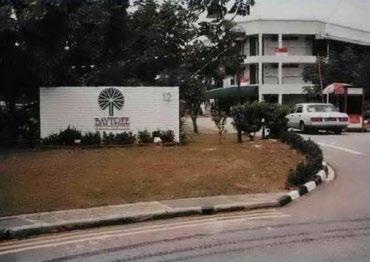
Continuing strong enrollment led to long waitlists, while the pending termination of the Ulu Pandan lease meant decisions had to be made about the school’s future. As a stopgap measure, the Baytree satellite campus was established in Clementi, which accommodated 125 elementary students.
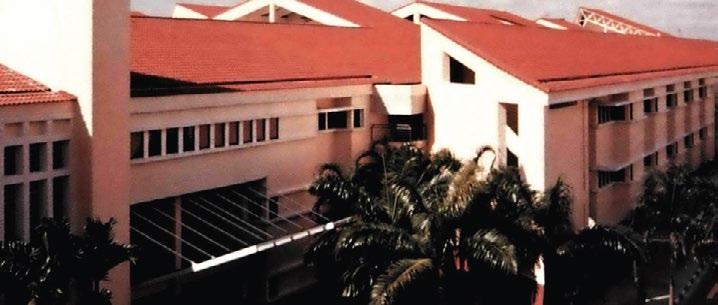
The SAS Board, like those before them, chose an ambitious and optimistic path, and began planning a completely new campus. The government was enthusiastic because the growing expatriate community was outstripping the capacity of existing international schools. A thirty-six acre plot was chosen in Woodlands and, as in the past, numerous individuals and companies donated money, services, and equipment. The King’s Road campus was leased to developers, and a purpose-built K-12 campus was constructed over the next two years.
In October 1996, the SAS campus in Woodlands opened with 2,500 students. Enrollment rose steadily as improved transportation and an enthusiastic community made SAS a focus for Singapore’s Americans, as well as an anchor institution in the Woodlands neighborhood.
Baytree Campus
The sparkling new campus, along with its strong reputation, allowed SAS to attract teachers with a wide range of expertise, interests, and talents. The Advanced Placement (AP) program expanded rapidly, and by the end of the decade the majority of SAS graduates had taken at least one AP exam, ensuring student preparation for university.
Technology was emphasized, athletic opportunities continued to grow, and Interim Semester expanded with trips now including a variety of European countries and more service as a component of many trips.
With dedicated performance spaces in the new campus, the performing arts program blossomed with two dance shows per year, musicals, plays, and concerts. The Parent-Teacher Association purchased a gamelan set from Java, and ever since, elementary students have enjoyed gamelan instruction as part of their music program.
SAS enrollment and staff recruitment did not suffer despite the 1997 Asian economic crisis. Singapore was seen as a haven of stability in a volatile but promising region, and SAS, with its strong reputation and impressive campus, drew expatriates with children. The school and its host country could look forward to future opportunities and challenges with confidence.
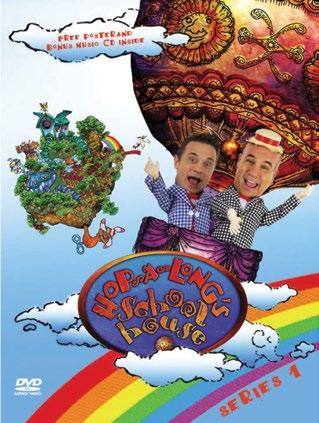
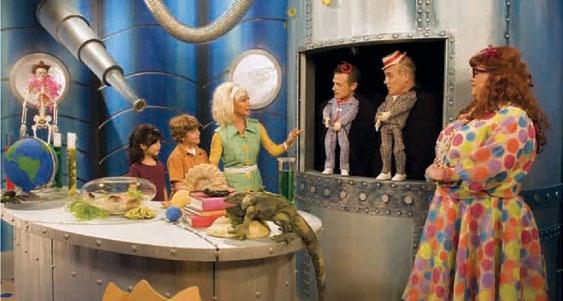
Nearly two decades ago, elementary school principal Mr. David Hoss returned from summer break and told elementary school deputy principal Mr. Ken Schunk that he had found two ventriloquist puppets, removed their heads, and wanted to create a show that imparted core values such as respect, responsibility, and compassion to their students.
“He told me that we’d be using our heads on top of the puppet,” said Mr. Schunk, describing the creation of two half-human, half-puppet characters. Thus, Hop-A-Long Hoss and Shoo-Fly Schunk, the principals’ alter-egos and the long- time faces of the elementary school, were born.
Since 1997, Hop-A-Long and his sidekick Shoo-Fly have entertained thousands of children at Singapore American School through song, dance, laughter, and play. “Our first attempts were rather amateurish. We used chairs and a black curtain,” said Mr. Schunk. “I think kids will make connections with certain things, and it doesn’t all have to be tricked out and gizmoed and kind of technologied up to the point where it resembles a video game.”
Their performances evolved, and they began to include other SAS staff members as characters, including science specialist and math enrichment teacher Wendy Liddell as “Miss Wendy”, who shared her expertise regarding animals and the environment. Elementary school librarian Mr. Kirk Palmer was “Mr. Bookman,” who opened his vast library to the children.
“The show introduced literacy and science, as well as included a character lesson,” said Mr. Hoss. “We wanted to engage kids in really being scientists and discovering the world. Miss Wendy would always be doing some kind of experiment, and the kids would be so engaged and involved with that."
“We were doing shows four times a year in the theater,” said Mr. Schunk, "’Edu-taining’ nearly 700 students per show. “We staged a Christmas show, where we'd interview Santa, and a Thanksgiving show, where we’d interview the turkey!”
First published in Journeys 60th anniversary magazine
As Hop-A-Long and Shoo-Fly became increasingly popular, Hoss and Schunk created Hop-A-Long Productions in 2008, and filmed several episodes over spring break that year. Hop-A-Long’s Schoolhouse, a CD/ DVD series, combines literature, vocabulary, science, music, and movement, and “takes children on a journey to explore the world around them, while teaching them to be good caretakers of the planet.” The series was nominated for a Carnegie Medal of Excellence in Children’s Video and was nominated for inclusion in the New York International Children’s Film Festival.
Creating and performing for their students has only reinforced Mr. Hoss and Mr. Schunk’s ideas about education. Mr. Schunk believes that rigor, challenge, and hard work should “not be at the expense of levity, of fun, of things that are truly exciting.”
“I always felt that schools needed to have that, and yet I knew we are in an environment where very often, play sounds to some parents like a waste of time,” Mr. Schunk adds. “I think we’re in some time and place where people think rigor, challenge, and serious work has to look like no play time, no down time, and no time when you’re just mindful or being reflective. I saw the benefit of supplying something that energized kids and that energy wasn’t just about that show. It was about energy going back to the class to apply to math and reading and whatnot, as opposed to just grinding away at something from 8:00 a.m. until 3:00 p.m.”
By KINJAL SHAH Associate Director of Communications
When the King’s Road campus was cordoned off for demolition in 1996, a few members of the Singapore American School community were so saddened by the loss of their historic home that they refused to let it just disappear. Virginia "Ginny" Rogers, a sixth grade teacher, led a small group of family members—including future SAS teacher Dr. Vicki Rogers (class of 1995)— onto the site to salvage a souvenir. Although they described themselves as "very law-abiding people," Ginny insisted they simply "needed a memory."
The group grabbed as many bricks as they could carry before being discovered by security guards, leading to a "wild dash" off campus. Today, one of those bricks sits on a mantle in California, adorned with a plaque that reads: "Singapore American School, 1962–1996." For the Rogers family, these small pieces of brick and mortar represent the final physical connection to a "cozy, familial, homey campus" that held decades of cherished memories.
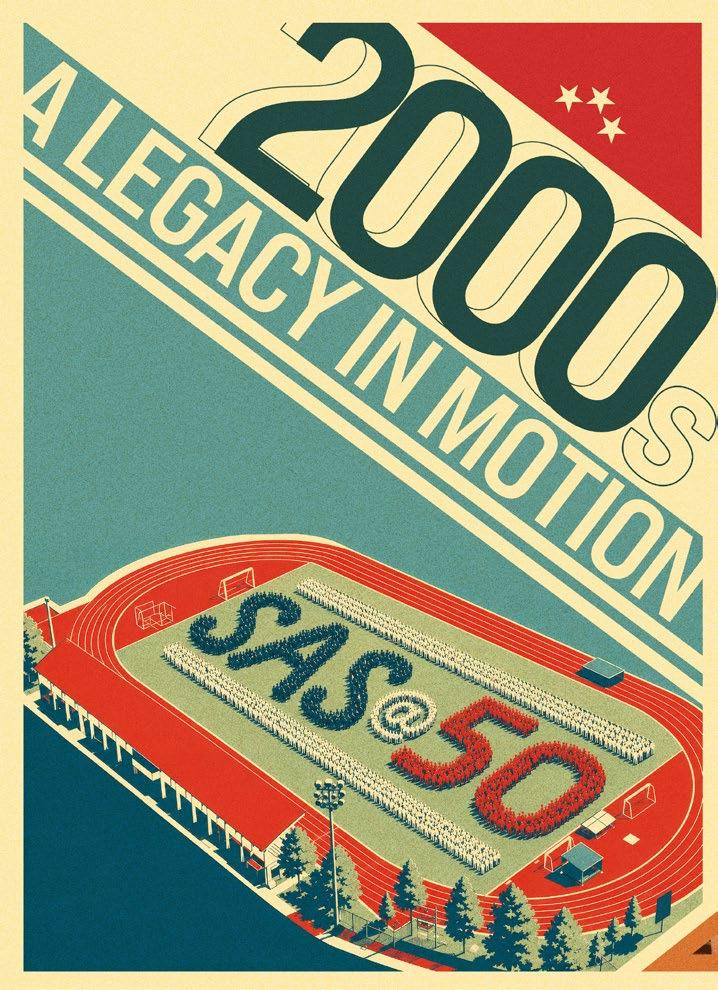
As Singapore American School celebrated its 50th anniversary in 2006, the school found itself at a defining moment—honoring five decades of history while boldly imagining what the next fifty years could become. The decade began amid global uncertainty, from heightened security concerns to the SARS outbreak, yet the community responded with resilience, care, and a commitment to one another.
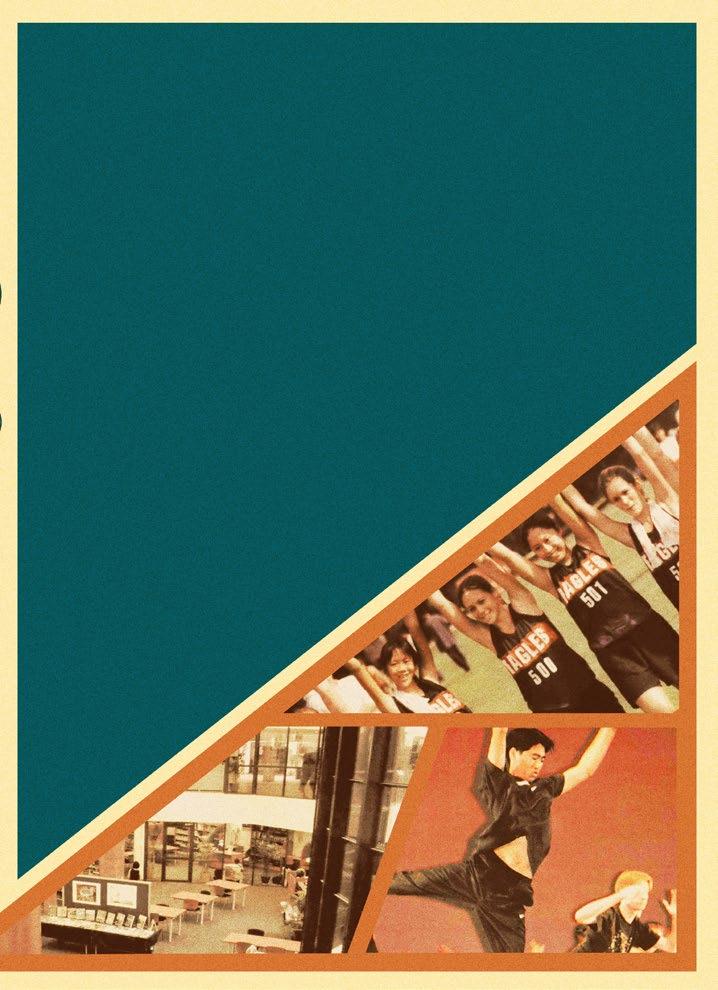
At the same time, SAS was growing in both size and ambition. A major campus expansion transformed the learning experience, creating inspiring new spaces for students to explore their interests, develop their talents, and pursue their passions. From a new high school and world-class library to expanded arts, athletics, and early childhood facilities, the campus reflected a belief that students deserved every opportunity to thrive.
Beyond the classroom, students increasingly looked outward. Service learning became a defining part of the SAS experience, with students raising funds for disaster relief, participating in house-building projects, and supporting communities both locally and across the region. These experiences helped shape a generation of globally minded Eagles who understood the importance of making a difference.
The spirit of the 50th anniversary—a belief in possibility, community, and meaningful impact—continues to live on today. It can be seen in the programs we offer, the connections we build, and the ways SAS students continue to learn, lead, and serve around the world.
Long before Cordelia Ross (class of 2005) became the Medical Director of the Pediatric Mood Disorders Clinic at Stanford, she was learning how to rally a community. As a high school student at SAS in the early 2000s, Cordelia’s leadership style was deeply shaped by an environment that trusted student voices, a foundation of her lifelong career in medicine and real-world advocacy.
A major highlight of her time on the Executive Service Council was partnering with faculty advisor Mr. Roy Tomlinson to redesign high school pep rallies. At the time, Paul Chmelik, then high school principal, challenged Roy and Cordelia as well as peers like Sera Yoshino to breathe new life into the assemblies, trusting them to make meaningful changes.
There was a bit of pressure. The team knew that to get the student body on board, they had to hit the right notes during the very first assembly.
“This group was extraordinary,” Roy recently remembered. “They fought for what they believed in, and by the time the first pep rally was over, I knew they could handle them for the rest of the year. We knew we had one shot to make this work, so Cordelia and the team worked incredibly hard to make it engaging.”
Drawing on her years in the school's dance program, Cordelia wondered if they could honor high school athletes in a more ceremonious, theatrical way. The team decided to move the celebrations out of the gym and into the auditorium. Recognizing the teams on stage under the theater lights— complete with photo slideshows celebrating each team's achievements— instantly uplifted school spirit.
As part of the reform, they also introduced the Courage, Civility, and Respect (CCR) award. The initiative ensured that the spotlight didn't just shine on athletes, but also recognized unsung contributors from each student class and one faculty member at every rally.
The new format brought an undeniable energy to campus. “It was incredible,” Roy recalled. “We brought all the banners from the gym, used a smoke machine, and blasted the theme from 2001: A Space Odyssey. Hearing Jim Baker get up to sing the school song in front of the entire high school was great. The students really did it all: they owned the script, the timing, and the execution.”
Though Roy brought in treasured educators Paul Koebnick and Paula Silverman to support the logistics and advise students, he kept the students firmly in the driver’s seat.
That early taste of systemic change and advocacy grounded Cordelia’s academic life. Whether coaching youth cheerleading or volunteering at a local leprosy home, a consistent theme of service began to guide her professional ambitions. This path eventually led her to a pivotal medical rotation at the Kennedy Krieger Institute in Baltimore, where she specialized in pediatric care, carrying the same spirit of advocacy she discovered in her high school auditorium into her medical director role at Stanford today.
In 2006, Singapore American School celebrated a milestone: its 50th anniversary.
The school marked half a century of growth with celebrations, reflections, and a renewed sense of possibility. Yet the spirit of that moment was never really about looking backward. It was about imagining what might come next.
Twenty years later, that spirit can be seen in alumni like Derek Dieu (class of 2001).
From management consulting in the United States and Australia to pharmaceutical and medical device leadership in Asia, Derek's career has carried him across continents, industries, and disciplines. He most recently served as Vice President/General Manager for a business unit at Becton Dickinson, a leading medical device manufacturer with 70,000 employees globally.
The scale of the work is significant. The purpose behind it is even greater.
At its heart, Derek's role is about advancing the world of health by bringing innovative solutions to patients. In an era increasingly shaped by artificial intelligence, big data, and personalized medicine, he works at the
intersection of strategy, technology, and human impact.
But his path was anything but predictable.
"My career journey has been an unintended but enjoyable process of taking on new challenges," he says.
As a student at SAS, Derek was not preparing for a future in business. At Tufts University, he studied Psychology and International Relations. Later, he earned a master's degree in data analytics after recognizing the growing importance of data in nearly every field.
Rather than following a straight line, he embraced opportunities that expanded his perspective. A decade in management consulting exposed him to different companies, markets, and leadership challenges. Along the way, he built a diverse toolkit that would eventually allow him to bridge people, processes, technology, and strategy.
That willingness to explore, adapt, and learn has become one of the defining characteristics of his success.
It is also a reflection of the increasingly global ambitions that defined SAS in the 2000s.
As the school grew in size, reputation, and reach, students were encouraged to think beyond traditional boundaries— to see themselves not only as learners but as future problemsolvers capable of making an impact far beyond Singapore.
For Derek, that impact has become deeply personal.
KINJALSHAH AssociateDirectorof Communications
By
One of the aspects he values most about working in the healthcare industry, be it at Becton Dickinson or previously Johnson & Johnson, is the industry’s shared commitment to patients. He recalls moments when business decisions were shaped not simply by financial outcomes, but by their effect on the patients, providers, and caregivers they serve.
"Two key tenets for me have been purpose and impact," he says.
Those opportunities have allowed him to build programs from the ground up, launch new products and solutions, and create whole departments capable of tackling previously
unexplored challenges.
In some ways, he says, the experience feels like being an entrepreneur—with the resources and support of global organizations behind him.
The result is a career that reaches far beyond titles or promotions. Instead, it reflects a broader idea: that meaningful impact often comes from combining curiosity with courage.
Derek traces part of that mindset back to two classes \ he took at SAS—AP Psychology and Journalism. Neither was a conventional preparation for a business career. Yet both taught him something that has remained essential throughout his professional life: how to think critically.
As industries evolve and information becomes more abundant, Derek believes one of the greatest challenges people face is resisting "group-think"—
the tendency to simply follow prevailing opinions.
The ability to question assumptions, evaluate evidence, and consider different perspectives has become one of his greatest professional assets.
Those skills are increasingly important in a world being transformed by data, digital technologies, and artificial intelligence.
They are also exactly the kinds of skills that continue to define an SAS education today.
The 50th anniversary celebrations of the 2000s were visible reminders of how far the school had come. But perhaps their most enduring legacy is found in stories like Derek's—stories of graduates who continue to carry the school's values into boardrooms, laboratories, classrooms, communities, and countries around the world.
Their impact is measured in the lives they influence, the challenges they tackle, and the possibilities they imagine.
And in that sense, the spirit of SAS's 50th anniversary is still very much alive.
By JOANNE SON Communications Specialist
Designing the Future
A decade of deliberate reinvention and bold innovation that redefined traditional excellence, empowering a new generation of students to design their own pathways.
The 2010s arrived with a sense of sudden acceleration. Across the globe, technology and connectivity were completely rewriting the rules of daily life and work. The central question in education shifted entirely toward cultivating adaptive, resilient thinkers. At Singapore American School, this changing landscape sparked a profound period of introspection and deliberate reinvention. The school had spent over five decades mastering traditional models of excellence. The new challenge was designing what came next.
In 2012, under the leadership of newly appointed superintendent Dr. Chip Kimball, SAS launched an unprecedented research and development initiative. The goal was ambitious: maintain the school's historic legacy while fundamentally rewiring its approach for a complex, rapidly changing world. Teams of educators fanned out globally. They visited the most innovative educational institutions in the world, pored over academic research, interviewed university admissions officers, and engaged in deep debates concerning the future of learning.
The result was a unifying new vision: A world leader in education cultivating exceptional thinkers prepared for the future. Sweeping, tangible changes followed quickly. The primary and intermediate divisions merged in 2014, forming a single, cohesive elementary
school to ensure smoother transitions for younger students. Classrooms transformed to embrace maker culture, project-based learning, and personalized pathways. High school students received unprecedented agency through new advanced topics courses and the Catalyst project requirement. They took the reins of their own education, acting as independent designers and innovators.
The physical campus mirrored this forward-looking ethos. In 2013, SAS unveiled one of the largest operational solar panel installations in Singapore, earning the nation's Solar Pioneer Award. Simultaneously, the school partnered with the Singapore Botanic Gardens to preserve an on-campus rainforest and propagate endangered plant species. The auditorium gained a world-class Constellation Sound System to optimize acoustics, and students launched TEDxYouth@SAS, pulling global ideas directly into the school's orbit.
Outside the campus walls, Singapore experienced its own moments of reflection and transition. The city-state continued its ambitious growth, authorizing new international schools that heightened the competitive landscape. In 2015, the nation paused to mourn the passing of its founding father, Lee Kuan Yew. This moment underscored the profound journey the republic had taken since its independence—a journey SAS had witnessed and grown alongside since 1956.
Transforming the physical foundation of excellence through
reimagined
creativity,
spaces that actively inspired
fostered meaningful connections, and set the stage for a new era of learning.
A walk across the Singapore American School campus during the 2010s revealed a profound physical transformation. As the curriculum evolved to meet the demands of a rapidly changing world, the physical environment adapted to actively inspire collaboration, creativity, and excellence. The school built the spaces that defined students' experiences for years to come.
This momentum was highly visible in the athletics facilities. The middle school gym, later known as Gym 2, underwent a $3.9-million renovation completed in a mere 56 days. Architects Koon Yong and Susana Lim reimagined the 17-year-old facility, replacing its condensation-prone floors with a sleek design featuring pristine white walls, shock-absorbent maple flooring, and a 1,400-seat retractable bleacher system. A nearly invisible fan improved cooling and reduced the building's carbon footprint. The high school gym experienced a similar upgrade, gaining automated retractable bleachers, a fresh wooden floor, and advanced livestreaming technology. The striking Eagle logo at center court stood as a point of pride, designed completely by a student as a Catalyst project.
In the realm of the arts, the Woodlands campus auditorium emerged from a spectacular 12-week overhaul. A new soundproof metal roof and double doors
finally eliminated the disruptive noise of passing helicopters and highway traffic. The interior was visually reinvented with bright red plush seats and sweeping decorative lines inspired by the wooden box of a violin.
The true crown jewel of the auditorium was its acoustic upgrade. Thanks to a generous S$2.16 million gift from an alumni family honoring theater coordinator Mrs. Paula Silverman, the school installed Meyer Sound's Constellation system. Utilizing 38 microphones and over 200 speakers, the technology actively sampled and optimized stage sounds. The venue achieved cathedral-like lushness for a choir or crisp distinctness for a jazz ensemble at the simple touch of a screen.
Daily student life found a new epicenter. The Student Life Center served as the ultimate high school living room, designed specifically to foster relationships. Outfitted with foosball tables, comfortable couches, and personal academic counselor offices, it provided a dedicated space for students to recharge and connect. Concurrently, libraries across the school evolved into dynamic maker spaces equipped with 3D printers, virtual reality gear, and production studios.
These renovations built a physical foundation of excellence. This reimagined campus actively shaped the daily adventures, deep learning, and enduring legacy of our students.
By putting students in the driver's seat, the 2010s transformed learning at SAS into a journey of innovation, agency, and realworld problem solving.
The 2010s at Singapore American School challenged the traditional boundaries of a classroom. Education shifted heavily toward cultivating adaptive, resilient thinkers ready for an unknown future. As the world grew increasingly complex, SAS introduced innovative structures designed to give students agency and ownership over their learning journey. Students stepped confidently into the roles of active creators, researchers, and problem solvers.
A defining milestone of this era launched on June 4, 2017. At 5:00 a.m., SpaceX’s Falcon 9 lifted off from the Kennedy Space Center, carrying a Dragon spacecraft into orbit. Aboard that spacecraft was the first-ever experiment sent to space by high schoolers in Singapore. Guided by coaches Meredith White and Bart Millar, a team of six SAS students spent over a year meticulously planning and researching an experiment to study the effects of microgravity on bacterial mutations.
The true success of the SpaceLab endeavor lay deeply within the rigorous learning process. Senior Keshav Jagannath noted that every setback, every failure, and every hiccup taught the team how to solve complex problems. The project challenged them to become better learners, equipping them with skills applicable to any future career. Senior Annie Kim shared that the group ventured deep into the realms of science, exploring concepts rarely encountered in standard coursework, ultimately building their resilience and problem-solving abilities.
In a remarkable twist of serendipity, the payload integration for this historic launch was coordinated by an SAS Eagle. Brittany Balcom (class of 2007) worked as the Internal Payloads Coordinator at NanoRacks, acting as the liaison between customers, engineers, and NASA officials. Balcom discovered the SAS connection while organizing paperwork for the module, bringing her own journey of space exploration full circle with her alma mater. Projects like SpaceLab thrived because the 2010s introduced academic pathways
specifically designed to empower student interests. The high school Catalyst program challenged students to dive deep into their passions and utilize school hours for self-directed projects. Students learned to employ professional networks and seek out industry mentors.
Similarly, the Quest program offered an immersive setting where juniors and seniors took charge of their own learning. Students in this full-day, year-long program spent over 550 hours off-campus meeting industry professionals, working with mentors, and exploring local workplace cultures. SAS equipped students to tackle complex, real-world issues by placing the steering wheel firmly in their hands, allowing them to design their own educational adventures.
BY PLACING STUDENTS AT THE CENTER OF THEIR LEARNING, THE 2010s FOSTERED INDEPENDENCE, CREATIVITY, AND THE CONFIDENCE TO SHAPE THEIR OWN FUTURES.
2020s A Campus Reimagined
By KINJAL SHAH Associate Director of Communications
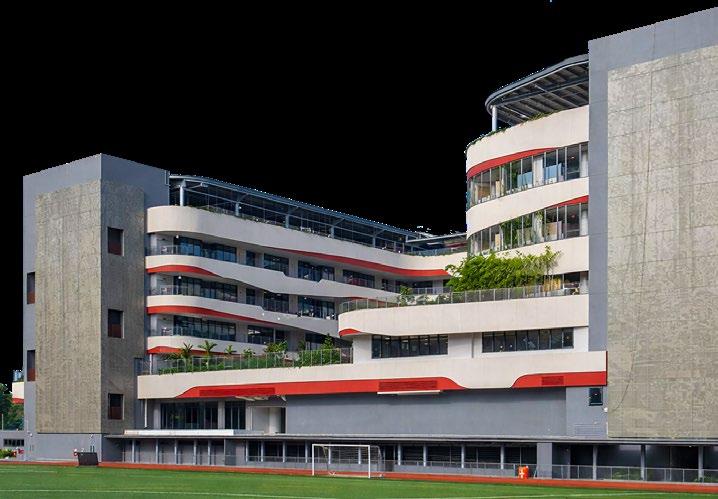
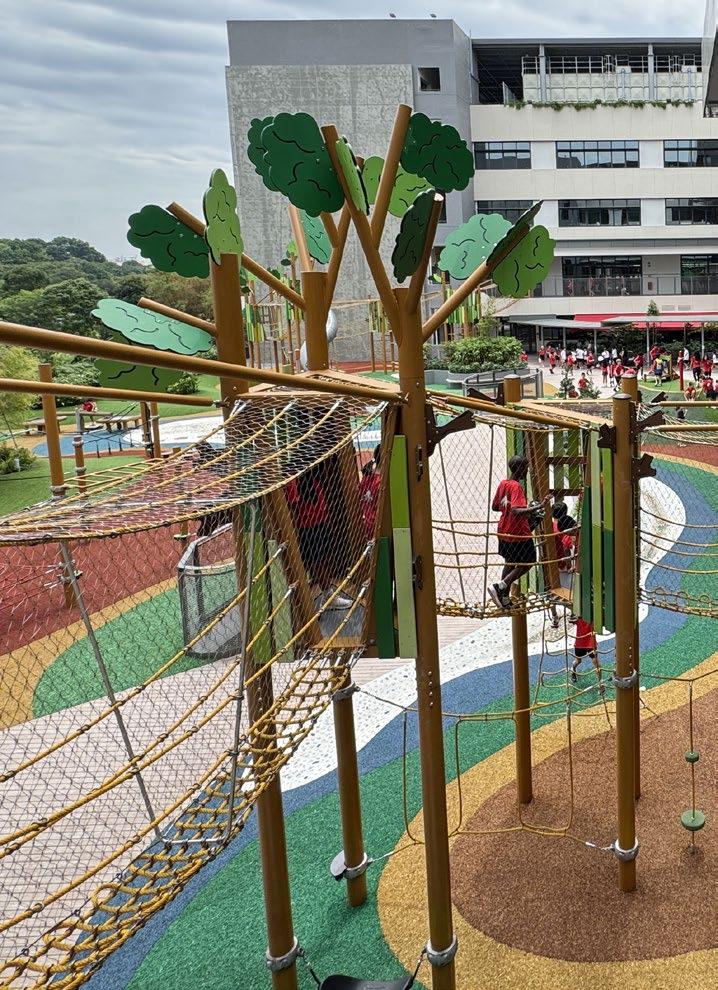
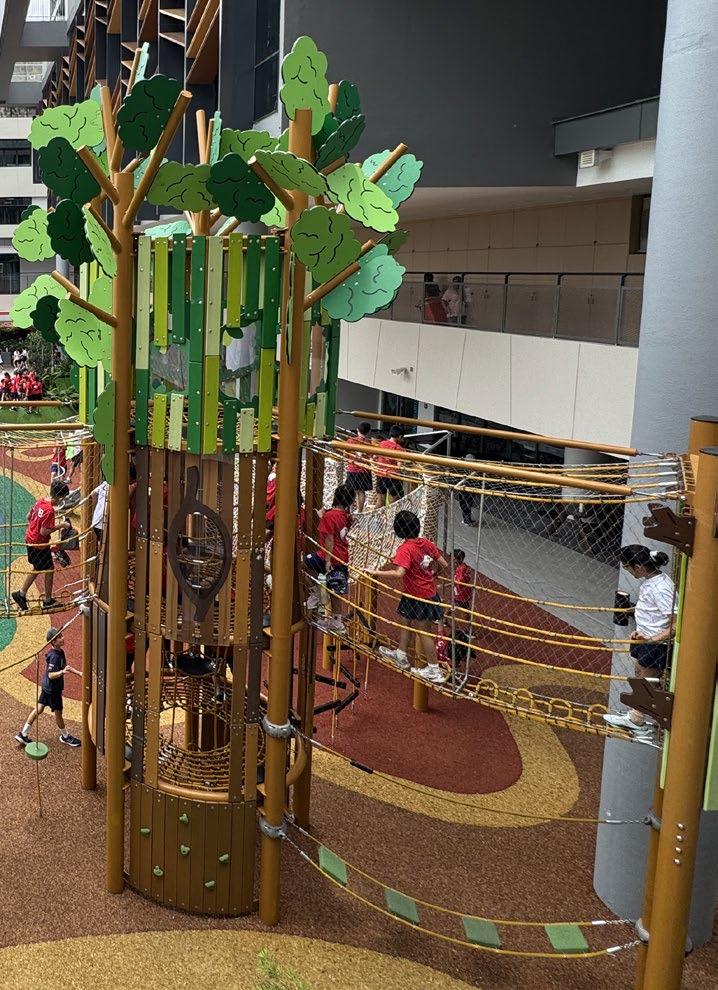
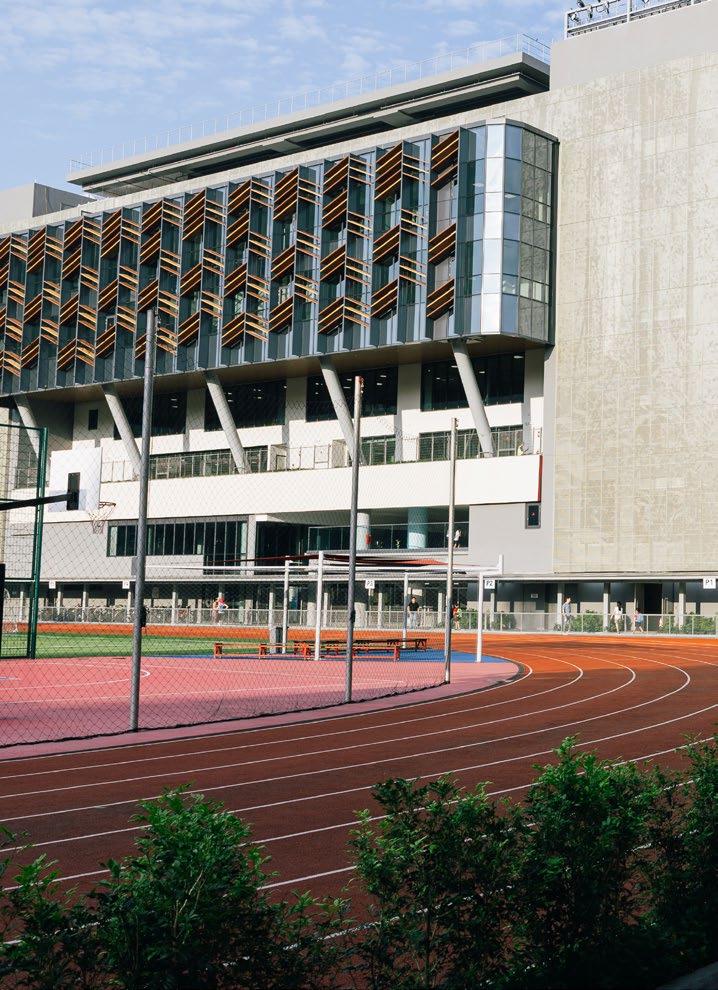
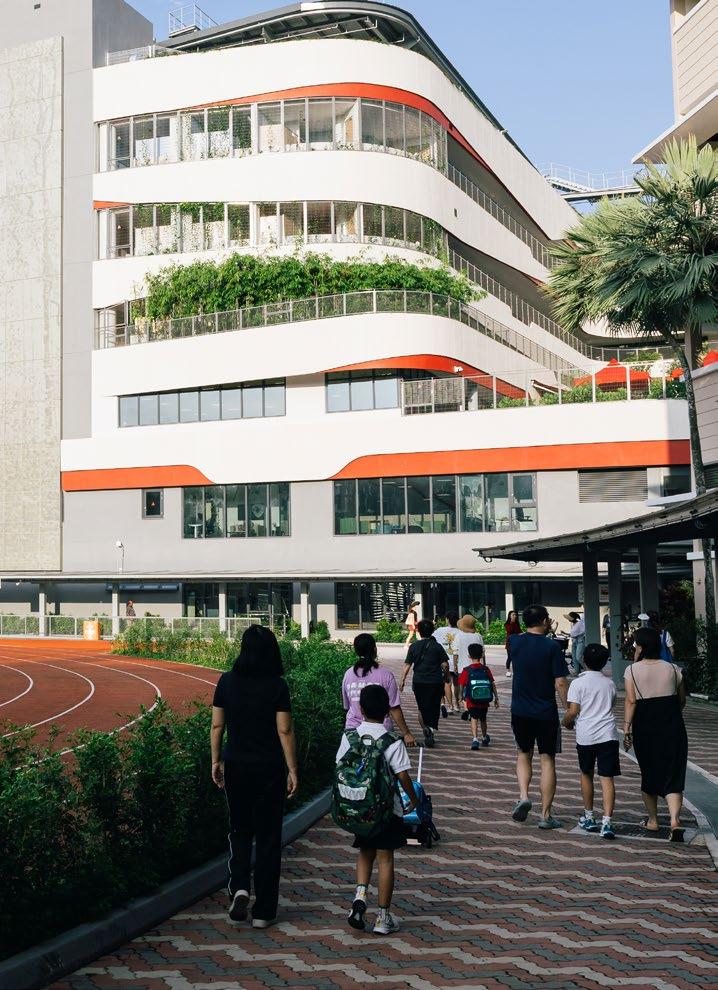
The 2020s are a decade of possibility. As Singapore American School celebrates seven decades of learning and growth, the community also embarks on one of the most ambitious transformations in the school’s history—a reimagining of the campus and the educational experience for generations to come.
More than new buildings, flexible learning spaces, and innovative programs, this moment represents a collective commitment to the future. Families, alumni, educators, students, and supporters came together around a shared belief: that SAS should continue evolving to meet the needs of a changing world while holding fast to the values that have defined the school since 1956.
From its earliest classrooms on Rochalie Drive to the vibrant campus at Woodlands, each generation has left its mark, building upon the vision and dedication of those who came before. The 2020s continue that tradition, challenging the community to imagine what excellence, belonging, and purpose might look like for the decades ahead.
At the same time, the decade invites reflection. On April 11, 2025, we moved into the newly reimagined elementary school building. As plans for the future continue to take shape, community members are also asking what should remain unchanged. What traditions, values, and experiences make SAS feel like home? What should future Eagles inherit? And what bold new ideas are worth pursuing as the school prepares students for a world we can only begin to imagine?
The voices in this section come from across generations of Eagles. Their stories celebrate the opportunities SAS has created, the relationships that have endured, and the dreams that continue to inspire the community.
The campuses may have changed, but the spirit of community has remained at the heart of SAS for 70 years.
REIMAGINING A SCHOOL. REIMAGINING A COMMUNITY.
By KINJAL SHAH Associate Director of Communications
For 70 years, Singapore American School has never stood still.
Before there was a sprawling campus in Woodlands. Before there were theaters, swimming pools, innovation spaces, and learning communities. Before thousands of Eagles filled hallways with energy and ambition, there was a simple question being asked around dining tables, birthday parties, and gatherings of American families living in Singapore:
Could we build a school of our own?
In the early 1950s, that question sparked a movement. Parents, business leaders, diplomats, and community members rallied behind a shared vision of creating an American school in Singapore. It took three years of fundraising, advocacy, and determination before that vision became reality.
On January 3, 1956, Singapore American School opened its doors in a colonial bungalow at 15 Rochalie Drive.
It was a school built on ingenuity. Bedrooms became classrooms. A garage served as a science laboratory. Servants' quarters housed music and preschool classes. Students shared their softball field and outdoor basketball court with chickens raised by a family living on the property.
There were just 98 students.
Yet from the beginning, SAS was defined not by its buildings, but by the people who imagined what could be.
That spirit of reimagining would become a hallmark of the school's story.
When enrollment outgrew Rochalie Drive, the community came together once again. Parents, companies, and supporters helped fund a purpose-built campus at King's Road. Students and custodians packed boxes, carried furniture, and helped move the school themselves.
As Singapore transformed, so did SAS.
The 1970s brought explosive growth. Enrollment doubled in just three years. Students attended classes across multiple campuses. Flooded walkways, shifting demographics, and growing pains challenged the community to adapt quickly.
Yet those years also created memories that endure today.
Former educator Dr. Vicki Rogers (class of 1995), who experienced all three campuses as both student and teacher, recalls, “It’s impossible to pick just one favorite memory! Some forever memories include the ‘learning communities’ in the Ulu Pandan and the King's Road campuses—each community was an intimate space that created a culture of connection for faculty, students, and parents.”
By the time SAS settled into Ulu Pandan, the school had evolved far beyond what its founders could have imagined. New facilities supported expanding academic programs, athletics flourished, and traditions such as Interim Semester and the faculty musical became part of the SAS experience.
But once again, growth demanded another bold decision.
By the early 1990s, enrollment pressures and long waitlists forced the community to ask a familiar question: What should the next chapter look like?
The answer was ambitious.
REIMAGINING SCHOOL IS NOT SOMETHING SAS STARTED IN 2021.
School leaders, board members, and community stakeholders embraced a vision to unite all divisions on a single campus. The result was the Woodlands campus, which opened in 1996 and represented one of the most significant transformations in school history.
Former Elementary Deputy School Principal Ken Schunk reflects on that decision: “Having worked at SAS for 33 years before retiring in June 2023, I was part of the transition of the Ulu Pandan and King's Road campuses to the current location in Woodlands. It was a monumental decision that united all school divisions on a single campus. For me, it captured perfectly the essence of the SAS I had come to know…bold, forward thinking, always willing to consider possibilities for improvement and committed to providing the very best to students and families in the present and well into the future.”
That same spirit continues to shape SAS today.
Over the last decade, educators have once again challenged assumptions about what learning can look like. Thousands of hours of research, visits to more than 100 schools worldwide, community engagement, and countless conversations with students, parents, and educators laid the foundation for SAS Reimagined.
The result is more than a campus upgrade.
It is the latest chapter in a 70-year story of continuous reinvention.
From a bungalow at Rochalie Drive to a world-class campus in Woodlands, every generation of Eagles has inherited something remarkable: a community willing to imagine what comes next and courageous enough to build it.
As SAS celebrates its 70th anniversary, it honors not only the milestones that shaped its past but also the spirit that will guide its future.
After all, reimagining school is not something SAS started in 2021.
It's something SAS has been doing since 1956.
Former High School PE Teacher
URSULA PONG
34 years at SAS
My first experience at the Ulu Pandan campus was in 1988 as an after-school dance club teacher. Teaching dance became my full-time job before moving into the high school PE department at the Woodlands campus. I have the fondest memories of Ulu Pandan, its tropical cafeteria setting, and the Hoe family, who offers the best food.
High School Teacher ALICE EARLY
24 years at SAS
When it was time to move to the first Woodlands campus, I was teaching part-time in preschool, balancing my duties with the arrival of our first child. Our preschool had its own charming little playground on the far east side of the campus, but as the school expanded, it eventually moved to the high school.
RYAN MANTEUFFEL
I started kindergarten at the King’s Road campus and moved to Ulu Pandan in my freshman year. When the Woodlands campus opened in 1996, we transitioned to Woodlands. I remember it being an adventure. It was bittersweet to leave the King’s Road and Ulu Pandan campuses because they had been around for so long and held many special memories for many of us. There was a lot of excitement mixed with reminiscing about the history of the original schools. Today, as I stepped on campus, I felt a lot of nostalgia, but seeing how the school has grown, with all the new facilities and those still being constructed, is incredible. The progression of the campus and the school itself is remarkable. Everyone I know who went to SAS is very proud and fond of their memories and the time they spent here. Watching the new generations come through is really exciting, knowing that many more kids will be able to share that experience. Class of 1999
Fifth Grade Teacher
PAUL ESSLINGER
2 years at SAS
This building is more than just a space. It’s a living thing. It breathes with us. It moves with us. We expected fresh colors and new furniture. But what we didn’t expect was the emotional warmth. It feels like home—immediately.
50 years at SAS
Change? I have witnessed it firsthand at SAS for half a century. The school has evolved remarkably, expanding in physical size, growing its staff, diversifying its programs, and continuously transforming every single day. This relentless pursuit of progress makes SAS an inspiring place to be.
Former Executive Assistant to the Chief Academic Officer
"Ella Yoyo Zhang’s oil painting is the second of many pieces that will help to build a more permanent collection of student artwork that tells the story of Singapore and who we are at Singapore American School."
Brittany Morgan
Kirkwood,
High School Visual Arts Teacher
KEEPING SINGAPORE'S HISTORY ALIVE THROUGH ART
By REBECCA CLARK Communications Assistant Manager
When Ella Yoyo Zhang (class of 2026) transferred to Singapore American School as a junior in 2024, she couldn’t have predicted that two years later, she’d be headed to the Rhode Island School of Design. Nor that an oil painting she created her senior year—a nod to Singapore’s history— would remain in our new Creativity and Innovation Suite for future students to enjoy.
A few months ago, while walking, camera in hand, by Chun Mee Lee Rattan Furniture on Bukit Merah, the shop owner, craftsman Chen Foon Kee, tugged at her curiosity. “I was drawn to the patience and love for the craft it takes,” Ella shared. “You really have to love something to continue on for so long.” Mr. Chen and his wife have been creating and restoring rattan furniture for decades, keeping a vanishing tradition alive.
As Ella researched the rich history of the trade to visually incorporate it into her art, she reflected, “I was thinking about how it must be really lonely to be one of the few people who still do this craft and appreciate it…all those stacks of chairs with so few people going in to see his artwork.” Ella continued, “Most furniture now is mass-produced. Learning more about this made me appreciate the history behind it. I think we need to look back on the progress we’ve made but also remember a craft like this so that we don’t lose our culture or heritage and the stories they contain.”
This history won’t be lost next year. When students head to Ms. Kirkwood’s ceramics class, Ella humbly hopes her artwork will inspire them. “Singapore has opened me up to a lot of different stories, people, and cultures,” she said. “I’m honored that I can leave a little piece of me and this history of Singapore on campus.”
ONCE AN EAGLE, ALWAYS AN EAGLE
By KINJAL SHAH Associate Director of Communications
For 70 years, Singapore American School has evolved alongside the people who call it home. Buildings have changed, programs have expanded, and new opportunities have emerged with every generation. Yet some things remain worth protecting, while others invite bold reimagining.
We asked members of our community a simple question: What is one thing SAS should never lose, and what is one bold step it should take next? Their answers reflect both a deep appreciation for our past and an exciting vision for the future.
If I had to name what I hope endures for the next generations of SAS students, it would be simple: excellence in education, and a community that continues to feel like a place where everyone belongs. From a small school on Rochalie Drive to a thriving campus at King's Road and beyond, SAS has grown in ways I could never have predicted. And yet, in many ways, it still feels like the same place I once called home.
CARMEN ONSTAD MATTHEWS CLASS OF 1960
One brave first step I took at SAS was embracing a culture that was not originally my own. As a British child in a distinctly American school, I could have remained an observer. Instead, I stepped into the community, learned its traditions, celebrated its history, and made it part of my own story. What made that possible was the welcoming environment created by teachers and classmates who viewed differences as strengths rather than barriers. That spirit of openness may be the most enduring tradition of all.
SIMON WHITE CLASS OF 1970
For my Catalyst project, I wanted to learn how nanotechnology could impact the future of cancer research and treatment, but I was clueless as to how a focused project could be born from this figment of my imagination. Frequent communication and collaboration with my peers, teachers, doctors, professors, and research fellows enabled me to acquire the resources needed to deepen my knowledge of nanotechnology and produce tangible results. Never would I have thought that my broad idea would turn into mentoring by luminaries and revolutionaries who were writing and conducting the very research that was catching my eye.
AUSTIN NAPIERSKI
CLASS OF 2018
My prior school district undertook a similar research and development initiative to SAS. While the findings were similar, the resources at SAS have enabled us to implement the recommendations with fidelity. The combination of an amazing faculty and staff and resources from our generous community has enabled us to embrace the possibilities!
CHRIS BEINGESSNER
MIDDLE SCHOOL PRINCIPAL
In my old school, I never told anyone about my interest in dancing, but here in SAS, when my teacher mentioned dancing to me, it felt really nice, and it made me feel that I'm good at something. At the same time, it made me realize how long I have been dancing. When I'm dancing with my friends in after-school activities, I feel very happy. What SAS has made possible for me is to realize my passion for dancing.
ELIZABETH H. ELEVENTH GRADE
SAS has made so many things possible, and I am endlessly grateful! I completed a second master's and a doctorate. I've been able to grow professionally in new roles and across grade levels. I feel a sense of purpose and belonging. I've traveled the world and made friendships that have carried me through all of the highs and each of the lows. I've been given a community and a home. Thank you, SAS!
SARAH FARRIS
ELEMENTARY SCHOOL
DEAN OF STUDENT LIFE
1,180 messages shared on the Alumni Reunion Weekend app
202 Eagles returned home
4.75/5 average alumni satisfaction rating
By the Numbers
64 YEARS of Eagles reunited: Classes of 1960 to 2024 FIRST at the Woodlands campus
DID YOU KNOW?
Our high school librarian, Bob Helmer, curated a special archive station featuring memorabilia carefully preserved in the school’s archive collection.
DID YOU KNOW?
Former educators were among the attendees and featured prominently in programming.
Most common theme in participant feedback?
100% NOSTALGIA
DID YOU KNOW?
Alumni traveled from around the world to return to campus: 6% North America
Asia (excluding Singapore)
Australia
Europe
Africa
DID YOU KNOW?
Hoe Brothers Catering, our beloved school caterer since 1965, was the primary caterer for all on-campus events.
DID YOU KNOW?
The Alumni Reunion Weekend will be a biennial tradition!
DID YOU KNOW?
The Saturday night gala was held at CHIJMES, a venue featured in Crazy Rich Asians
DID YOU KNOW?
An alumni band (The Jalan Broadway Band) was formed specifically for the 2025 Alumni Reunion Weekend.
Join us throughout the year for a series of alumni events happening around the world. Whether you’re reconnecting with your classmates or meeting fellow Eagles in your city, these gatherings are a wonderful way to celebrate the long-lasting SAS connections! MARK YOUR
CALENDARS
Dates may be subject to change. Scan to keep an eye out for more information about our