
Where Water, Wellness & Communities Meet

IN THIS ISSUE:

Three new eco-buffer shelterbelts are delivering environmental benefits across the North Saskatchewan River Watershed.
Discover how portable electric fencing can simplify rotational grazing and improve pasture management.

CITY OF REGINA: FLOATING TREATMENT WETLAND
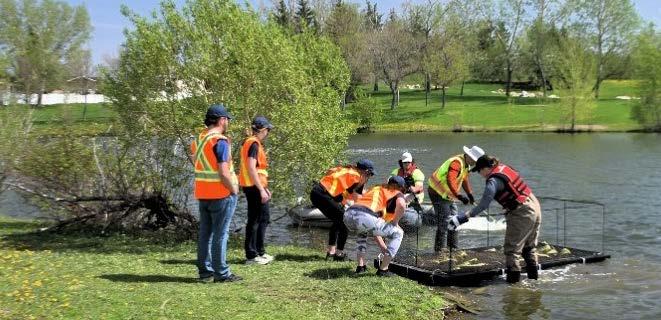
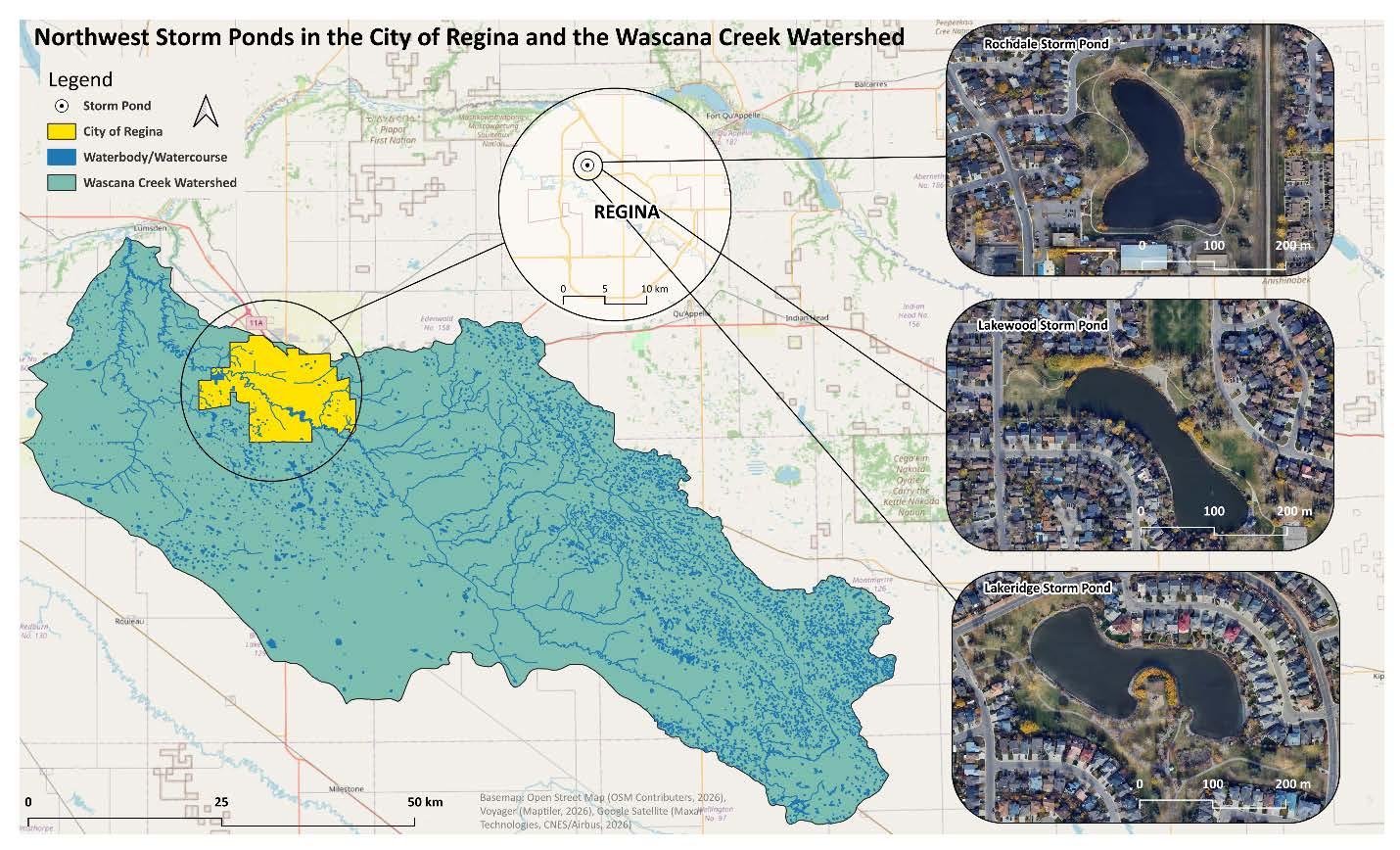
On Wednesday, May 27, 2026 SAW, in partnership with the City of Regina and Wascana Upper Qu’Appelle Watersheds Association Taking Responsibility (WUQWATR) installed six Floating Treatment Wetlands (FTWs) on the Rochdale Storm Pond. This project will see the implementation of FTWs on three storm water retention ponds in northwest Regina – Rochdale, Lakewood and Lakeridge. Senior environmental students from Campbell Collegiate participated in the project.
What is a Floating Treatment Wetland (FTW)?
FTWs are artificial platforms that float on waterbodies and allow for increased vegetative growth in bodies of water that are too deep for aquatic emergent plants to grow naturally. These platforms provide a stable surface for riparian plants to grow above water while allowing their roots to grow in the water and capture nutrients. As the roots extend into the water, the nutrients that they absorb allow the plants to develop growth above the water surface.
How do Floating Treatment Wetlands improve water quality?
FTWs improve water quality by providing extra surface area for plants to grow in and around the waterbody. The plants use excess nutrients and contaminants that are present in the waterbody as fertilizer, removing them from the water and converting it to organic matter above the water surface. The extensive root network below the platform also provides a large surface area for microbial activity. The increased number of microbes present in the water promotes more efficient nutrient removal from the water
and promotes the microbial breakdown of contaminants into other bioavailable forms that can be further utilized by plants to develop growth above the water surface. The platforms also provide a physical barrier between the air and water above and below the water surface, which reduces turbulence and the effects of wind blowing across the water surface and allows sediments in the water to settle.
Why install Floating Treatment Wetlands in a stormwater pond?
Storm ponds are catchment areas which receive excess runoff from surrounding neighbourhoods within an urban area. During times of intense rainfall or snowmelt, that excess water flows above ground until it reaches a storm drain, which directs the flow of that water into a designated area and prevents flooding. As water flows above ground and makes its way to the storm drain system, sediments and nutrients are picked up and deposited in storm ponds. These excess materials can upset the balance of nutrients in the pond, which may result in harmful conditions for the flora and fauna that call that pond home. Installing FTWs within the pond helps mitigate the effects of nutrient loading in the pond by doing two things: removing nutrients from the water and transforming them into above-water biomass and providing surface area for beneficial bacteria and microbes to colonize.

For more information, please visit: https://www.regina. ca/news/Floating-WetlandsComing-to-StormwaterRetention-Ponds-in-Regina/


BUILDING RESILIENCE: PLANTING ECO-BUFFER
SHELTERBELTS IN THE NORTH SASK RIVER WATERSHED
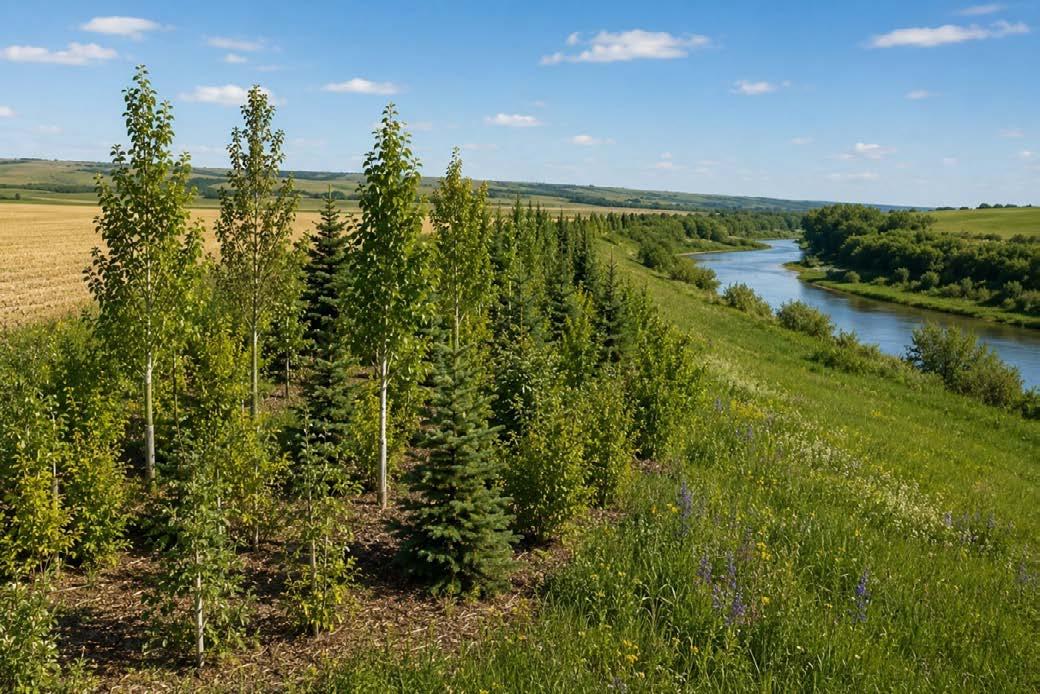
This spring, three eco-buffer shelterbelt sites were planted throughout the North Saskatchewan River Watershed near Murray Lake, Prince Albert, and Perdue to help strengthen the health and resilience of our landscapes. These strategically planted rows of trees and shrubs provide long-term environmental benefits for agricultural producers, landowners, wildlife, and local communities.
Eco-buffer shelterbelts serve as natural barriers that reduce soil erosion caused by wind and water, helping to keep valuable topsoil in place. They also improve water quality by filtering runoff before it reaches nearby streams, wetlands, and rivers. In addition, shelterbelts capture and store carbon, contributing to climate change mitigation efforts while enhancing the overall resilience of the watershed.
Beyond their environmental benefits, eco-buffer shelterbelts create important habitat and travel corridors for birds, pollinators, and other wildlife. Planting a diverse mix of native tree and shrub species helps support biodiversity and strengthens the shelterbelt’s ability to withstand pests, diseases, and changing climate conditions.
To learn more about the Applying a Landscape Approach to Improve Biodiversity project, please visit: A Landscape Approach to Improve Biodiversity - Saskatchewan Association of Watersheds, email info@saskwatersheds.ca or call: 306541-9902.


GROWING OUR AQUATIC WEALTH WITH THE NEW ANGLING HABITAT CERTIFICATE
Summer is officially here, and for over 230,000 anglers across Saskatchewan, that means heading out to explore our incredible network of lakes and rivers. If you have already picked up your 2026 angling license, you likely noticed the fee increase for the new Angling Habitat Certificate. While higher fees are never popular, this change turns a routine purchase into a direct investment in our fisheries. This collective pool of capital is expected to generate an additional 2.1 million dollars annually, with every dollar channeled directly into the Fish and Wildlife Development Fund to back critical conservation work.
A significant portion of this investment addresses the single greatest threat to the longevity of our waters: the introduction and spread of aquatic invasive species. Zebra and quagga mussels pose an immediate danger to Saskatchewan watersheds, capable of permanently altering aquatic food webs, devastating native sportfish populations, and fouling water infrastructure. Preventing these microscopic invaders from gaining a foothold requires an aggressive, well-funded defense strategy. By expanding mobile watercraft inspection stations, increasing highway monitoring, and boosting regional sampling efforts led by organizations like SAW, this investment serves as our shield. Catching a biological threat before it enters our waterways is the highest-yielding return possible, ensuring our lakes remain ecologically intact, clean, and entirely open for recreation without the looming threat of severe boating restrictions.
Alongside this heavy focus on biosecurity, the fund simultaneously drives critical infrastructure upgrades and habitat stewardship across the province. This includes modernizing the Saskatchewan Fish Hatchery to support sustainable stocking programs, alongside restoring the vital wetlands and shorelines that serve as natural nurseries for fish. When you cast a line this season, you are doing far more than enjoying a summer tradition. Through this certificate, you hold a tangible stake in the future of our wilderness, directly supporting the resilience of our lakes and rivers so that the thrill of a fish taking drag on a fishing reel remains a reality for generations to come. Good luck on the water and happy fishing this summer!

ROTATIONAL GRAZING: USING AN ALL-IN-ONE POWER GRAZING SYSTEM TO AID
IN TARGETED GRAZING
Written by Jeremy Brown, PAg Rancher/Grazing Consultant
Rotational Grazing is a broad term that describes the movement of livestock herds between paddocks or pastures in order to control grazing intensity and timing. Containing the stock is almost always accomplished with the use of some type of wire fence. Depending on your preferences and budget, this may be permanent or portable fence.
The advantages of portable fence include flexibility and fullness of use. Temporary fence can be reinstalled and used many times throughout the grazing season. The location and shape can be adapted to changes in herd size, stock water availability, etc. This amount of adaptability can be attractive if your operation changes often or is growing. It is always good to have more options.
When you have portable electric fence and livestock that respect it, it is amazing how many ways that it can be used to optimize grazing behavior and to take advantage of new opportunities, such as a neighbor offering a parcel of land for grazing. Another common opportunity is unexpected crop damage or regrowth after harvest.
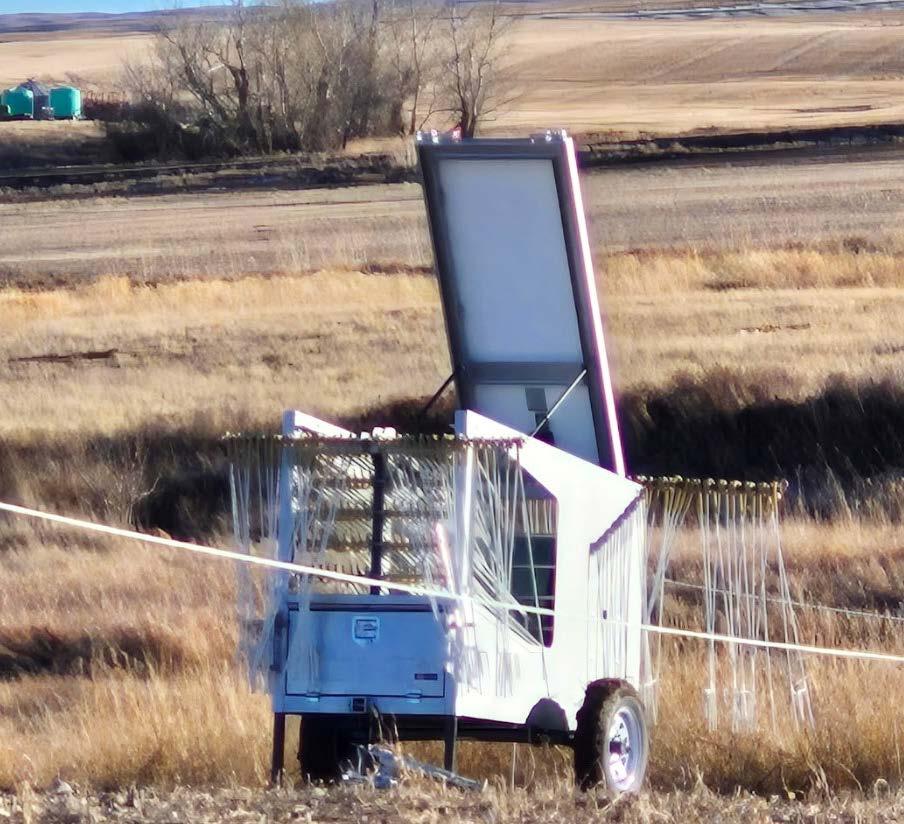
If you are moving electric fence regularly, it is important to make the process as time efficient as possible. A couple of prairie suppliers have created self-contained electric fence units to assist in this manner. The units are trailer mounted and include wire/rope, step-in posts, electric energizers, solar charging, and automatic re-winding of the rope/wire. Having a turn-key system like this can save you time – whether you are new or experienced with electric fence. Just tow the unit to your location and you have everything you need to quickly build or take down a length of fence.
One advantage to portable fence is that you can create different sizes depending on growing conditions and your life schedule. Make paddocks smaller when you have time or see a greater benefit; make them larger when you are busy or going away.
There is a unique way that temporary fence can be used to manage grazing without needing additional water sources. If the herd has favorite areas that they overgraze while avoiding other patches, you can put up the fence to keep them away from their favorite areas until they have grazed the parts that you want them to, then simply remove the fence and let them eat their preferred spots at the end of the graze period for that particular pasture. This can help a lot in diverse pastures.
All-in-one electric fence units can save significant labor, especially for longer fence lines. It may be just what you need to get the most out of your various forage supplies.
Electric fence units may be eligible for support through SAW’s SWEAP (Saskatchewan Watersheds Environmental Agriculture Program) Rotational Grazing Beneficial Management Practice program. Funding for SWEAP is provided by Agriculture and Agri-Food Canada through the Agriculture Climate Solutions – On-Farm Climate Action Fund (OFCAF).
Watershed Wonder Kits are SAW’s core educational awareness program for youth and public across Saskatchewan. The kits are an educational resource for teachers to incorporate into their lesson planning, for families that are homeschooling, for club activities, nature-based school programs, and outdoor camps. Each kit has been designed to include a variety of activities that are engaging, educational, fun, completely unique, and connect to Saskatchewan’s Education Curriculum!
There are 4 different kits to choose from: My Watershed and Me, Adventure Awaits Backpacks, Getting Our Feet Wet, and Beaver Trails and Cattails.
Click the link below for more information or email education@saskwatersheds.ca to borrow a kit.




Our office locations are open Monday to Friday from 9 AM to 4 PM (closed 12 PM - 1 PM).