Belmont Stakes Festival Brings Racing, Entertainment And Economic Boost Back To Saratoga
BY PAUL POST
World-class racing and top-flight entertainment are on tap, providing a significant economic boost when the Belmont Stakes Racing Festival returns to Saratoga for the third and final time.
The 158th edition of the historic Grade 1, $2 million Belmont Stakes highlights five days of racing from Wednesday, June 3, to Sunday, June 7.
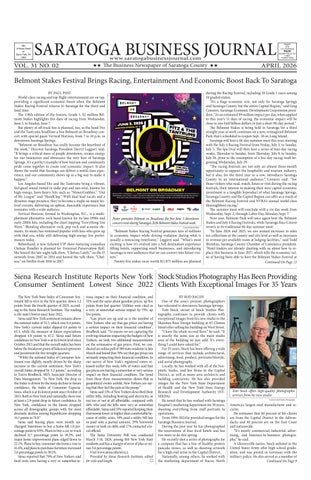
But plenty of off-track fun is planned, too, as the band Fitz and the Tantrums headlines a free Belmont on Broadway concert with special guest Vertical Horizon, from 7 to 10 p.m. in downtown Saratoga Springs.
“Belmont on Broadway has really become the heartbeat of the week,” Discover Saratoga President Darryl Leggieri said. “It brings a critical mass of people downtown, creates energy for our businesses and showcases the very best of Saratoga Springs. It’s a perfect example of how tourism and community pride come together to create real economic impact. It also shows the world that Saratoga can deliver a world-class experience, and our community shows up in a big way to make it happen.”
Los Angeles-based Fitz and the Tantrums bring a vibrant, feel-good sound rooted in indie pop and neo-soul, known for high-energy, horn-heavy hits such as “MoneyGrabber,” “Out of My League” and “HandClap.” With dual lead vocals and a dynamic stage presence, they’ve become a staple on major festival circuits, delivering an upbeat, danceable experience that resonates with a wide audience.
Vertical Horizon, formed in Washington, D.C., is a multiplatinum alternative rock band known for its late-1990s and early-2000s hits, including the chart-topping “Everything You Want.” Blending alternative rock, pop rock and acoustic elements, its music has remained popular with fans who grew up with that era, while still delivering high-energy live performances today.
Beforehand, a new ticketed VIP show featuring comedian Chelsea Handler is planned for Universal Preservation Hall. She hosted the late-night talk show, “Chelsea Lately,” on the E! network from 2007 to 2014 and hosted the talk show, “Chelsea,” on Netflix from 2016 to 2017.

“Belmont Stakes Racing Festival generates tens of millions in economic impact while driving visitation during what is usually a nonracing timeframe,” Leggieri said. “What’s most exciting is how it’s evolved into a full destination experience filling hotels, supporting small businesses, and introducing Saratoga to new audiences that we can convert into future visitors.”
Twenty-five stakes races worth $11.075 million are planned
Siena Research Institute Reports New York Consumer Sentiment Lowest Since 2022
The New York State Index of Consumer Sentiment fell to 65.6 in the first quarter, down 3.2 points from the fourth quarter of 2025, according to the Siena Research Institute. The reading is the state’s lowest since June 2022.
Siena said New York sentiment remains above the national index of 53.3, which rose 0.4 points. New York’s current index slipped 0.4 points to 63.3, while the measure of future expectations dropped 4.8 points to 67.2. Siena said future confidence in New York is at its lowest level since October 2013 and that the overall index has been below the breakeven point of balanced optimism and pessimism for five straight quarters.
“While the national Index of Consumer Sentiment rose slightly, mostly driven by the sharp increase in the current sentiment, New York’s overall Index dropped by 3.2 points,” according to Travis Brodbeck, SRI’s Associate Director of Data Management. “In New York, the drop in the Index is driven by the steep decline in future confidence, the Index of Consumer Expectations, which is at its lowest point since October of 2013. Both in New York and nationally, there was at least a 2.9-point drop in future confidence. In New York, confidence in the future dropped across all demographic groups with the most dramatic decline among Republicans dropping 14.1 points to 74.9.”
Siena said buying plans were mostly unchanged. Intentions to buy a home fell 1.0 percentage point to 9.9%. Plans to buy a car or truck declined 0.7 percentage point to 18.3%, and major home improvement plans edged down to 22.1%. Plans to buy consumer electronics rose to 41.6%, and plans to purchase furniture increased 5.6 percentage points to 30.1%.
Siena reported that 79% of New Yorkers said food costs were having a very or somewhat se-
rious impact on their financial condition, and 51% said the same about gasoline prices, up five points from last quarter. Utilities were cited as a very or somewhat serious impact by 75%, up five points.
“Gas prices are up and so is the number of New Yorkers who say that gas prices are having a serious impact on their financial condition”, Brodbeck said. “To ensure we are capturing the evolving situation impacting the budgets of New Yorkers, we took two additional measurements on the seriousness of gas prices. First, we conducted an online poll of 389 state residents in late March and found that 70% say that gas prices are seriously impacting their financial condition. In our survey of New York’s registered voters released earlier this week, 64% of voters said that gas prices are having a somewhat or very serious impact on their financial condition. The trend from these three measurements shows that as geopolitical events unfold, New Yorkers are saying that they feel the pain at the pump.”
Siena said 51% of New Yorkers described their utility bills, including heating and electricity, as not too or not at all affordable, compared with 46% who said the bills were very or somewhat affordable. Siena said 55% reported keeping their thermostat lower or higher than comfortable because of utility costs, 34% paid a utility bill late or paid only a partial amount, 29% borrowed money or took on debt, and 17% contacted a local official.
The Siena University Poll was conducted March 3-14, 2026, among 810 New York State residents and has a margin of error of plus or minus 3.6 percentage points.
Visit www.siena.edu/sri/cci.
Provided by Siena Research Institute; edited for style and length.
during the Racing Festival, including 10 Grade 1 races among 18 graded stakes.
“It’s a huge economic win, not only for Saratoga Springs and Saratoga County, but the entire Capital Region,” said Greg Connors, Saratoga Economic Development Corporation president. “At an estimated $9 million impact per day, when applied to this year’s 51 days of racing, the economic impact will be close to one-half billion dollars in just a short 90-day period.”
The Belmont Stakes is being held in Saratoga for a third straight year as work continues on a new, reimagined Belmont Park that’s scheduled to reopen Sept. 18 on Long Island.
Saratoga will host a 46-day summer meet this year, starting with the July 4 Racing Festival from Friday, July 3, to Sunday, July 5. The Spa Oval will then host a series of four-day racing weeks, Thursday to Sunday, from Thursday, July 9, to Sunday, July 26, prior to the resumption of a five-day racing week beginning Wednesday, July 29.
“The racing festivals are not only an almost three-month opportunity to support the hospitality and tourism industry, but it also, for the third year in a row, introduces Saratoga County to an international audience,” Connors said. “For those visitors who read, watch, listen or visit during the racing festivals, their interest in making their next capital economic investment is a tangible byproduct of what Saratoga Springs, Saratoga County and the Capital Region can offer as a result of the Belmont Racing Festival and NYRA’s annual world-class thoroughbred racing.”
The summer meet will conclude with a six-day week from Wednesday, Sept. 2, through Labor Day, Monday, Sept. 7. Next year, Belmont Park will once again host the Belmont Stakes and July 4 Racing Festivals, while Saratoga Race Course reverts to its traditional 40-day summer meet.
“In June 2024 and 2025, we saw annual increases in sales tax collections at the county and city level as well as increases in revenue per available room at lodging facilities,” said Todd Shimkus, Saratoga County Chamber of Commerce president. “Hotel leaders are already chatting with us about how to replace this business in June 2027, which tells the economic value of having been able to host the Belmont Stakes Festival at
Continued On Page 12
Stock Studios Photography Has Been Providing Clients With Exceptional Images For 35 Years
BY ROD BACON
One of the area’s premier photographers has relocated to downtown Saratoga Springs.
Tom Stock, owner of Stock Studios Photography, continues to provide clients with exceptional images from his new studio in the Shannon-Rose Design building at 65 Clinton Street after selling his building on West Street.
“I have the whole second floor,” he said. “It is exactly the same size as the main studio area of the building we just sold. It’s everything I could have asked for.”
For 35 years, Stock has been offering a wide range of services that include architectural, advertising, food, product, portraits/lifestyle, and aerial photography.
Locally, he has worked with all of the hospitals, banks, and law firms in the Capital District, as well as many area architects and building contractors. He has also provided images for the New York State Department of Health and the New York State Energy Research and Development Authority (NYSERDA).
He noted that he has worked with Saratoga Hospital’s marketing department for 30 years, shooting everything from staff portraits to operations.
From 1994-2024 he provided images for the Saratoga Business Journal.
During the past year he has photographed the renovations of four local hotels and has two more to do this spring.
He recently shot a series of photographs for a company that has a line of healthy protein pancake mixes, as well as shooting artwork for a high-end artist in the Capital District.
Nationally, among others, he worked with the marketing department of Nucor, North

America’s largest steel manufacturer and recycler.
He estimates that 60 percent of his clients are from the Capital District to the Adirondacks and 40 percent are on the East Coast and nationwide.
“It’s mostly commercial, industrial, advertising, and business-to-business photography,” he said.
A Gloversville native, Stock enlisted in the United States Army after high school graduation, and was posted in Germany with the military police. He also served as a member of
Poster promotes Belmont on Broadway, the free June 3 downtown concert event during Saratoga’s 2026 Belmont Stakes Festival week.
Courtesy Belmont Stakes
Tom Stock offers high-quality photographic services from his new studio.
Courtesy Stock Studios Photography
Business / Personnel Briefs

NBT Bank announced that Tesha Mihaly has joined the company as Vice President and Mortgage Loan Originator, serving customers throughout the North Country region.
Mihaly will guide borrowers through the home financing process, reviewing financial profiles, explaining mortgage options and supporting customers from application through closing.
A lifelong member of the Bolton Landing community, Mihaly brings more than 16 years of mortgage experience in the North Country. Prior to joining NBT Bank, she served as a Residential Mortgage Officer at Arrow Financial Corporation.
NBT Bank and its parent company, NBT Bancorp Inc., are headquartered in Norwich, NY. NBT Bancorp had assets of $16 billion as of Dec. 31, 2025, and trades under the symbol NBTB. Member FDIC.
Provided by NBT Bank; edited for style and length.
Alliance180, Inc. will present its inaugural Field of Honor, a display of 250 U.S. flags at Galway Town Hall, 5910 Sacandaga Road, from June 14 through June 21. The display is free and open to the public.
A Flag Day opening ceremony is scheduled for 1 p.m. June 14.
Individuals may dedicate a flag with a personalized tribute tag; after the event, the flag and tag will be given to the purchaser.
Donations, dedications and sponsorships support the event. Proceeds benefit Alliance180, Inc., which describes its mission as: “A peer-to-peer, action-based program preventing suicide and healing trauma for Veterans and First Respond-



ers through a transformative equine experience.”
An educational exhibit adjacent to the display will include a life-sized Declaration of Independence banner and historic American flags representing the 26 flags flown over the past 250 years, in recognition of America 250.
Provided by Alliance180, Inc.; edited for style and length.

The Saratoga County Citizens Committee for Mental Health will honor Sybil Newell, chief executive officer of RISE Housing and Support Services, as its 2026 Citizen of the Year at the Annual Mental Health Matters Benefit on Saturday, April 18, 2026, at the Saratoga-Wilton Elks Lodge.
Newell is being recognized for her work to strengthen mental health services and expand access to supportive housing across Saratoga County for people facing homelessness, mental illness and substance use challenges.
Since becoming executive leader at RISE in 2016, Newell has overseen program growth, community partnerships and housing efforts that serve hundreds of people each year. She previously provided direct mental health support and held roles in frontline services and state government before returning to lead RISE.
The Annual Mental Health Matters Benefit brings together community members, advocates and service providers to raise awareness and support for local mental health initiatives. More information and event registration are available at https://www.scccmh-saratoga.org/ general-news/2026-mental-health-mattersbenefit. Information about RISE is available at https://www.riseservices.org/.
Provided by RISE Housing & Support Services; edited for style and length.









Alliance180 Brings Amy Amoroso Onto Board, Boosting Veteran Entrepreneurship Work
Alliance180, a nonprofit supporting veterans, first responders and frontline health care workers in their journey toward post-traumatic growth, has appointed Amy Amoroso to its board of directors.
Amoroso is program director for the McNulty Veterans Business Outreach Center, supporting the Small Business Association Region II across New York and New Jersey. She leads Boots to Business and Boots to Business: Reboot training programs for veterans, provides client counseling and oversees program operations, compliance and performance reporting.
A business consultant with more than 25 years of experience, Amoroso specializes in business planning, financial analysis, startup and growth strategy, and small business lending. She is a small business owner, a military spouse and a volunteer with the American Red Cross, the Veterans Administration and AMVETS Post 35. Amoroso was appointed by Gov. Kathy Hochul to the New York State Veterans Task Force.
“We are pleased to welcome Amy to the Alliance180 Board of Directors,” said Denise Romeo, Executive Director, Alliance180. “Her experience and thoughtful approach to business development and community engagement will be a valuable asset as our board continues to navigate toward our goals. We look forward to the perspective she will bring as we build on our work and continue moving the organization forward.”
Alliance180 thanked outgoing board member Linda G. Gibeault for her service and leadership. “We are incredibly grateful to Linda for her time, leadership, and unwavering support of Alliance180,” Romeo added. “Her contributions have helped shape where we are today, and we

Amy Amoroso, a veteran entrepreneurship leader, joins Alliance180’s board of directors.
wish her all the best in her future endeavors.” Alliance180 was founded by Bob Nevins, a decorated Army helicopter pilot who served during the Vietnam War. The program was developed and written by co-founder Melody Squier, an Equine Specialist and first responder, and is based on trust through the universal language of the horse. The organization says its program uses science-based research of the Polyvagal Theory developed by Stephen Porges, Ph.D. Provided by Alliance180; edited for style and length.
Saha Yoga Studio Expands Offerings, Updates Space With Leanne Applin As New Owner
Saha Yoga, a boutique yoga studio in Ballston Spa, is under new ownership following its Jan. 1, 2026 transition to Leanne Applin. Applin has taught at Saha Yoga for five years and has served as studio manager. Applin has practiced yoga for nearly 30 years and began teaching six years ago. She built Inspired Yoga with Leanne, a private yoga business offering group events and online classes, and leads a weekly class at the Saratoga Senior Center. She recently expanded her offerings to include reiki sessions. Applin previously worked as an addictions counselor and has a background in children’s health and development and management.
The studio has refreshed its space with new paint, window treatments and décor, along with a reorganization. Saha Yoga also has a new website and logo and added a restoration room. New classes, workshops and instructors have been added, and specialty events such as Zumba and ecstatic dance are planned.
The studio said a grand opening celebration is being planned, with details to be announced on its website and social channels. More information is available at 518-353-2121 or at www.sahayogabspa.com.
Provided by Saha Yoga; edited for style and length.


Business For Good Foundation Is Expanding Its Philanthropic Mission Beyond Capital District

BY ROD BACON
When some entrepreneurs achieve success, they give back to the communities that have supported them.
For Ed and Lisa Mitzen, that took the form of launching Business for Good, a philanthropic initiative committed to bridging the wealth gap in America.
The Mitzens started with the 2020 purchase of Bread Basket Bakery in Saratoga Springs, creating an entity that not only pays its employees competitive wages and provides free health insurance benefits but also donates all of its profits to local organizations that address food insecurity. In 2021, they duplicated this model with the purchase of Hattie’s Restaurant. That year, they also donated $5.4 million in grants and resources to 25 local nonprofits. In 2022, they registered the organization as a public foundation and purchased the historic University Club in downtown Albany, later donating its use to the newly formed Albany Black Chamber of Commerce and Social Club.
In May 2025, the organization was rebranded as Business for Good Foundation (BFGF), a 501(c)(3) public foundation. As such, it secures external donations and funding.
Its mission is focused on four key pillars: workforce development, housing attainability, economic mobility and small-business growth.
In conjunction with the rebranding, a national rollout was announced that takes the foundation’s charitable work beyond the Capital Region.
“I am committed to using my privilege for good and with today’s announcement we will be expanding our focus on a national level,” said co-founder Ed Mitzen when making the announcement. “I realized that to have the impact that we want we will need to partner with other leaders to make a difference - one person, one neighborhood and one community at a time.”
Maire Masterson was named executive director of the foundation, charged with moving it forward on the local level.
“I was drawn to this role because of the foundation’s unique mission to tackle some of our country’s largest challenges through a different way of giving back. Strengthening our inclusive partnerships while helping the organization expand its reach is a large part of what gets me up in the morning,” she said.
A resident of Saratoga Springs, she was deputy commissioner for the city’s accounts department for seven years before joining Business for Good. Her fi rst position was director of people and culture before being named executive director.
“Naming Maire Masterson as our new executive director will strengthen our local efforts and we are confident that Maire’s passion and experience will help us build on what Ed and I started,” said Lisa Mitzen.
Recent collaborations include the Social Enterprise and Training (SEAT) Center in Schenectady, where funding helps expand its trade skills programs, such as Build Up and the Culinary Lab.
“The old stigma surrounding trade-based careers is dead, and we have to stop pretending a four-year degree is the only viable path to success,” said Masterson. “The reality is that while AI is rapidly disrupting office-based roles, it cannot replace the essential hands-on work of a skilled HVAC technician. By investing in the Build Up program we are providing young people the opportunity and tools to secure high paying, high demand careers right here in the Capital Region.”
The foundation also contributes to Vanderheyden, a private, nonprofit social services agency in North Greenbush. Funding supports special-needs workforce training at the Vandy Th rift Shoppe to equip people with the skills needed for the modern workforce. Th is is done in partnership with Pioneer Bank, Stewart’s Shops, M&T Bank and Broadview.
Support is also provided to You Inc.’s financial literacy initiative for small businesses through implementation of a customer relationship management (CRM) program.
Grant recipients submit applications via the organization’s online portal at bfg.org. The Business for Good Foundation’s board of directors reviews them twice annually and makes decisions based on need, impact and correlation to the foundation’s four pillars and overall mission.
A Voorheesville native, Ed Mitzen earned a bachelor’s degree in biology from Syracuse University and a Master of Business Administration from the University of Rochester’s Simon Business School.
He worked as a pharmaceutical representative and was vice president of product management at Cardinal Health before founding the consulting fi rm Creative Healthcare Solutions in 1997. In 1999, he founded the advertising agency Palio in Saratoga Springs, later selling it to inVentiv Health. He then launched Fingerpaint, an advertising and marketing fi rm, in 2008, serving as CEO until this year when he became a member of the board of directors.
A graduate of Hudson Falls High School, Lisa Mitzen earned an associate degree from Adirondack Community College and went on to earn a Bachelor of Science in business administration with a concentration in fi nance from the SUNY Institute of Technology in Utica/Rome.
She worked as a teller at the First National Bank of Glens Falls during college vacations, later accepting a management position with Countrywide Home Loans. She managed sales and operations for upstate New York and Vermont.
“Our future is focused on scale and resilience,” said Masterson. “We are moving forward with a national rollout to partner with like-minded leaders across the country looking to take on the big issues alongside of us. Amidst the disruption of AI we’re actively exploring new and creative ways to build job opportunities with resilience and staying power.”
For more information about Business for Good Foundation, go to bfg.org.
NYS Bans Employment Credit Checks • • Business Report
BY AMANDA SMITH, ESQ.
With “little to no evidence” indicating a correlation between credit history and job performance, a new law will ban employers, labor organizations or employment agencies from conducting consumer credit checks on employees or potential new hires.
Employment Consumer Credit Checks
In today’s job market, the majority of large employers use credit checks as part of their hiring process and in how they treat their existing employees, the bill’s text states, adding that in addition to lacking any such meaningful correlation, a Federal Trade Commission study indicates that as many as one in four consumers may have a “material error” in their credit report.
Signed into law by Gov. Kathy Hochul, the text of the bill states that because millions of Americans have errors in their credit reports, it puts them in a lower credit risk tier, whether they are aware of any errors or not. Many New Yorkers, through no fault of their own, have less than ideal credit histories that may stem from issues completely unrelated to their job performance or capabilities, making them disadvantaged because employers are using credit reports to determine if they are worthy of a job or a promotion, according to the bill.
Further, the bill states that there is “little to no evidence that shows a correlation between credit history and job performance.”
No More Consumer Credit Checks for Employees, Prospective New Hires in New York State
Effective April 18, 2026, New York state will not allow employers, labor organizations or employment agencies to conduct consumer credit checks on most employees or potential new hires.
The new law will prohibit an employer or potential employer from using a job applicant or employee’s consumer credit report in his or her decision to:
• hire;
• terminate;
• promote;
• demote;
• discipline;
• compensate; or
• set the terms, conditions, or privileges of employment.
What Employers Need to Know
Once seen as a litmus test for an employee’s potential responsibility or trustworthiness, credit history may now be identified as a potential source of bias. The law, however, creates a new avenue for employment discrimination claims if credit history is requested or used improperly.
Therefore, employers should be aware that the new law bans credit checks for employees and potential employees, amending New York’s General Business Law to substantially restrict the use of an applicant’s or employee’s credit history in employment decisions, unless they fall within

a handful of narrowly defined exceptions.
Except for specific exemptions, employers may not request or use credit history when making hiring, compensation or employmentcondition decisions for most employees or job applicants. According to the bill, exceptions may include:
• police officers or peace officers;
• positions requiring bonding or security clearance;
• high-trust financial roles;
• roles involving regular access to trade secrets;
• persons in a position having signatory authority over third-party funds or assets valued at 10,000 or more or that involve a fiduciary responsibility to the employer with the authority to enter financial agreements valued at $10,000 or more on behalf of the employer;
• persons in a position with regular duties that allow the employee to modify digital security systems established to prevent the unauthorized use of the employer’s or client’s networks or databases.
Employers should not underestimate the scope of this change, and be aware of the new law limiting credit checks on employees and applicants, and also have an understanding about which positions may qualify for exemption from the new law. What was once a routine part of background checks is now largely off-limits, and missteps could carry legal consequences.
A knowledgeable employment attorney can help you gain an understanding of the unique difficulties each workplace conflict presents and work toward a solution that benefits you.



Students work on a building project at the Social Enterprise and Training Center in Schenectady, where Business for Good Foundation funding helps expand local hands-on skilled trades programs.
Amanda Smith, a Tully Rinckey partner, wrote about New York’s consumer credit check ban.
Courtesy Tully Rinckey, PLLC
9 Broad St. Glens Falls, NY 12803 (518) 581-0600 • Fax: (518) 430-3020 • www.saratogabusinessjournal.com
HarryW@saratogabusinessjournal.com pressreleases@saratogabusinessjournal.com
Publisher & Editor Harry Weinhagen
Editor Emeritus Rod Bacon
Sales and Customer Service Harry Weinhagen Mary Longley
Production Manager Graphic Precision
Contributing Writers
Susan Campbell Lee Coleman Carol Ann Conover Ann Donnelly Paul Post
Saratoga Business Journal is published monthly, the second week of each month, by Weinhagen Associates, LLC and mailed to business and professional people in Saratoga County.
Saratoga Business Journal is independently owned and is a registered tradename of Weinhagen Associates, LLC, 9 Broad St. #7, Glens Falls, NY 12801 (518) 581-0600. Saratoga Business Journal is a registered tradename in New York.
Saratoga Business Journal has been founded to promote business in Saratoga County and to provide a forum that will increase the awareness of issues and activities that are of interest to the business community. Subscription price is $25.00 per year. Third class postage paid at Glens Falls, New York.
Rights to editorial content and layouts

Saratoga Hospital has been named to Newsweek’s World’s Best Hospitals 2026 list, a global ranking that recognizes hospitals for clinical care, patient experience and quality outcomes.
Among thousands of hospitals evaluated worldwide, Saratoga Hospital ranked among the top hospitals in the United States. It is one of 18 hospitals in New York state to make the list and the only hospital in the Capital Region to be included.
“Th is recognition reflects our extraordinary commitment of our entire team to delivering high-quality, compassionate care every day,” said Saratoga Hospital President and CEO Jill VanKuren. “To be recognized on a global stage, and as the only hospital in our region, is a testament to the culture we’ve built and the trust our community places in us.”

Newsweek said it evaluates hospitals using surveys of medical experts, patient experience data, hospital quality metrics and patientreported outcomes. More than 2,500 hospitals across 32 countries were assessed.
“Th is honor highlights what our patients already know, that they can access nationally recognized, high-quality care close to home,” said Chief Medical Officer Robert Donnarumma, MD. “It speaks to the strength of our clinical teams and our ongoing focus on safety and the patient experience.”
Saratoga Hospital is the only acute care facility in Saratoga County and has maintained Magnet designation for nursing excellence since 2004. The hospital is a member of the Albany Med Health System.
Provided by Saratoga Hospital; edited for style and length.



Saratoga Hospital’s main entrance is shown in Saratoga Springs, where the hospital was named to Newsweek’s World’s Best Hospitals 2026 list and ranked among the nation’s top facilities overall.
North East Fire Protection Systems Plans Succession To Next Generation Leadership
BY SUSAN ELISE CAMPBELL
Over the next year, the leadership of North East Fire Protection Systems Inc. will transition to Stacey J. Fantauzzi, whose parents started the company in 1978.
Jimmy Fantauzzi has been building the company he founded for nearly 50 years and is ready to hand over the presidency to his eldest daughter. The Ballston Spa-based company designs, fabricates, installs, inspects and maintains sprinkler systems for commercial and light industrial buildings and residential developments.
“I’m in no rush to get him out of the company. He’s a great asset,” said Fantauzzi.
In the upcoming year, the elder Fantauzzi will extend his expertise to the next generation of estimators, training them the way he did estimating: drawing by hand. His sketches are then input into a CAD system, she said.
“To understand the whole process at that rudimentary level is a gift to the young folks we have in our office,” she said.
“Jimmy is also helping us with those areas of the business that determine where we are moving forward,” she said. “But at the end of the day, the decisions are mine as to what projects we will take.”
Fantauzzi said her father “never clipped my wings or said I couldn’t do something.” There was no expectation that she or her siblings would join the family business.
“I don’t remember him telling me ‘No’ very often. It was, how are you going to do that?”
Fantauzzi said. “He thought it was fabulous that I took my 10-speed bicycle apart and wrote an entire school paper about how it worked. He still likes to learn new things.”
Around fourth grade, Fantauzzi thought she might become an interpreter for the U.N. In college, she intended to study geography or become an attorney but earned a degree in business.
As a young person, she enjoyed going to construction sites and learning about fitting pipes and the business. Over the decades, as the economy fluctuated, she also learned from her parents how to weather the storms of small-business ownership.
Her career took her to a Fortune 500 company, the construction industry and another fire protection company. Then, 14 years ago, she joined the NEFPSI team and advanced to vice president. As president overseeing 23 employees, she is making several enhancements.
One is changing the way the company hires.
“Instead of people who have experience in the fire protection trade, I’m looking for problem solvers,” said Fantauzzi. “Find me good, earnest people and we will train them.”
The American Fire Sprinkler Association has an apprenticeship program that NEFPSI runs out of its office for employees, with Fantauzzi as instructor. The company also has AFSA’s support for those pursuing different tracks such as sprinkler system design or inspection, testing and maintenance through the National Institute for Certification in Engineering Technologies.
Fantauzzi’s relationship with AFSA gives her a network of expertise to share ideas and experiences, she said. She sits on its board and continues a 40-year association with the trade organization.

J. Fantauzzi will take over leadership of North East Fire Protection Systems Inc.
Another enhancement is a new financial relationship with Pioneer Bank.
“Usually a business has to approach the bank, but in this case they sought me out,” said Fantauzzi.
Both enterprises have interest in local mixeduse development and light industrial manufacturing, a construction boom Fantauzzi believes is good for the community and will help her company stay competitive.
“Jen and Kathy said, ‘we like construction, we like you, and we want to see what our team can do for you,’” Fantuzzi said.
“The people at Pioneer have a great pulse on the local economy and they have tools to make us a better business,” said Fantauzzi. “They helped us buy two new vehicles in one day and even found a program that helped reduce the interest rate on our loan.”
Not every fire protection company fabricates its own systems, often outsourcing that responsibility to reduce overhead. NEFPSI makes all systems in-house, which, according to Fantauzzi, benefits the company and clients.
“We have nobody to blame but ourselves if there is poor quality, but you don’t get the next job unless you perform well on this one,” she said. “When we test our installations, we don’t get leaks because we know what we’ve made from the raw material.”
“The people in the fabrication shop are part of our team,” said Fantauzzi. “I don’t have to wait in line to get my job done. If there is a schedule change, I can slow down one job and pull in another.”
“The most valuable business experience I’ve gotten is sitting in with our controller and our banker and approaching cash flow and management in a far easier way,” she said.
North East Fire Protection Systems Inc. “passionately supports” Ronald McDonald House in Albany, BOCES and the Malta Veterans Association, which Jimmy Fantauzzi helped found to provide housing for veterans in the Malta area, she said.
Visit NEFPSI.com for more information.

TechFirst Insurance Agency Focuses On Service While Leveraging Technology
BY ANN DONNELLY
After decades in the insurance industry, navigating family business dynamics, corporate consolidation and shifting market trends, Kevin O’Brien could have easily coasted into retire ment. Instead, he co-founded a new venture to blend modern technological efficiency with oldfashioned, face-to-face service.
O’Brien, co-owner of TechFirst Insurance Agency, launched the business in 2023 alongside local entrepreneur Mark Shaw. The agency is lo cated at 543 Queensbury Ave., Queensbury, NY 12801, and can be found online at techfirstInsur ance.com. For O’Brien, the move represents the culmination of his extensive career and a delib erate response to an industry increasingly domi nated by private equity firms.
A veteran of the industry, O’Brien spent nearly a decade at Travelers before joining his father’s agency, founded in 1957. He was later recruited to Glens Falls National Bank, now Arrow Bank, to consolidate several local acquisitions into what is now Upstate Agency.

Kevin O’Brien, co-owner of TechFirst Insurance Agency, co-founded the business in 2023.
pays ransoms in Bitcoin, but also provides a marketing team to manage reputational risk and public relations following a breach.
Now back to carving his own path as an independent agent, O’Brien said TechFirst Insurance Agency aims to combine strong service with the benefits of technology to offer a “gold seal” client experience by removing the paperwork of the 1980s and 1990s while remaining deeply tied to the community. “We simply want to be more consumer-friendly, because there are more tools out there to make it easier for the customer,” O’Brien said.
However, he emphasized that technology will not replace the personal touch required when disaster strikes. With access to 12 to 15 carriers, O’Brien works to match clients with the right coverage and pricing — a stark contrast to private equity-owned firms, which he said often prioritize investor returns over personalized care.
“With private equity, those investors want to make sure they get a return on their money,” O’Brien said. “We like to come to your house. We like to help you with your claim. Do you want an ‘AI check’ or do you want a check coming from a person?”
In an era of automated claims, O’Brien said he urges clients to call him first before reaching out to the carrier after a minor incident, such as a fender bender or hitting a deer. He prefers to evaluate whether paying out of pocket is more cost-effective than risking a long-term premium hike, noting that a driver with multiple incidents in seven years can raise red flags for underwriters.
One of the most pressing modern risks O’Brien helps businesses navigate is cybersecurity. O’Brien warned that hackers target vulnerabilities regardless of a company’s size. “They’re just knocking on your digital door,” he said. Modern cyber insurance now covers everything from system recovery and ransoms to public relations and reputational risk management.
He said modern cyber insurance not only helps recover hijacked computer systems and
O’Brien also pointed to external factors driving up property insurance costs, particularly a shortage of skilled tradespeople and supply chain disruptions. He noted that house fire repairs can sometimes take up to a year and a half, driving up replacement costs. He praised local educational institutions, such as SUNY Adirondack and BOCES, for reviving trade programs to build the next generation of workers.
Despite his reliance on modern tools, O’Brien maintains a classic, professional presence. He still wears a tie several times a week, a rarity that occasionally leads to mistaken identity at local convenience stores. “I’m often mistaken for a cop,” O’Brien said.
Beyond insurance, O’Brien is a passionate advocate for local businesses and community organizations. He mentors new business owners through the Startup ADK program at SUNY Adirondack, advising them that success requires time management, passion and a solid support team.
O’Brien is equally dedicated to the region’s nonprofit sector. A recipient of the Adirondack Regional Chamber of Commerce’s J. Walter Juckett Community Service Award — an honor he shared with his brother John — he has served on numerous boards, including the local United Way, and volunteers with the Volunteer Income Tax Assistance program. He stressed that nonprofits are not just charities, but vital economic engines for the region that generate revenue, payroll and taxes.
Ultimately, O’Brien anchors his life and career in three core principles: building strong business relationships, giving back through nonprofit work and trusting a higher plan beyond his control.
For new entrepreneurs, O’Brien advised building a solid support team and bracing for a two- to four-year growth period before a startup stabilizes. “And make sure you return phone calls.”

Stacey
Entrepreneurship
Saratoga Retailer Launches Sale Room Concept To Turn Over Inventory Faster
BY SUSAN ELISE CAMPBELL
At Heidi Owen West’s newest clothing shop, everything is on sale.
Owen West is the entrepreneur whose LLC owns three clothing shops on Broadway: Lifestyles of Saratoga, Caroline + Main and Union Hall Supply Company, the latter a men’s store with two other locations in the Albany area. Her latest concept is The Sale Room, which retails discounted merchandise from her other stores.
Eliminating sale racks from retail shops frees space, turns over merchandise more quickly and allows staff to focus on what’s current, said Owen West, a Fashion Institute of Technology graduate.
Today’s shoppers have changed greatly over the 35 years she has shaped her clientele. She said what used to be about selling product is now about selling an environment and “creating those moments that people want to be a part of.”
“They want to be wowed, they want an experience,” she said. “My philosophy is to create places where customers can come in and feel something.”
Whether at a crowded retail store or online, people today can easily become overwhelmed,
Owen West said. But shoppers trust that the brick-and-mortar stores at 436, 438 and 437 Broadway will provide “edited, quality” clothing presented in “a warm, historic environment.”
“People want to know who made the clothes, where they came from, and why they were made,” she said. “They trust that I’m bringing them meaningful products, such as small makers and story driven brands.”
The clothing at Lifestyles of Saratoga is curated to be “well made, sustainable, and more serious,” whereas customers at Caroline + Main seek “more fun and colorful, contemporary, and lower priced” items, she said.
Building in-store client relationships is a goal for Owen West and a driver of her success as a small business.
“Customers feel seen with us and products are a part of that, but we differentiate and compete on the experience and the connection we make,” she said.
Owen West searches clothing and accessories markets and makes selections with her customers’ styles and needs in mind.
“I buy for the client because I see what sells
Continued On Page 7



Mannix Marketing Marks 30 Years Of Digital Growth And Regional Impact
BY STAFF WRITER
In 1996, as most businesses were only starting to consider websites, Sara Mannix was already asking how to get found online. The uncertainty of the digital world gave Mannix a unique chance.
Now in its 30th year, Mannix Marketing is known as one of the Capital Region’s top digital marketing firms. The company stands out by offering full-service digital marketing and owning popular regional media sites. This approach gives Mannix Marketing an edge and helps it stay relevant serving 1,500 clients and a staff of about 30 employees.
Sara Mannix built her foundation for entrepreneurship before the internet became widespread. She graduated summa cum laude from the University at Albany with a double major and spent two years studying in Spain and Italy.
After graduating, she moved to New York City and had to choose between two very different career paths.
“I had two job offers: to work in the stock market or at a fashion house as their marketing and PR person,” Mannix said. “Knowing I couldn’t work in the stock exchange upstate, I took the marketing job and fell in love with marketing.”
When she returned to the area, Mannix worked at West Mountain Ski Area and later at Fort William Henry Corp. in Lake George. It was during this time in the mid-1990s that she first discovered the internet.
“In 1995, the internet was just becoming a thing, and I worked with an agency to build my first website,” she said. “I asked them, ‘How do you get us found in the search engines AltaVista, Excite, and WebCrawler?’ They said, ‘Nobody knows how to do that; that’s up to you.’”
Mannix took the challenge seriously. Soon, Fort William Henry was showing up at or near the top of search results for terms like “Lake George hotels,” “Lake George motels,” and “Lake George lodging.”
“And people from other businesses started calling me and asking if I could help them get found as well,” she said. “That is how Mannix Marketing started.”
Starting an internet business in the mid-1990s was a big risk.
“When I told people I was leaving my job to start my own business on the internet, they told me it was a fad,” Mannix said. “They said I shouldn’t throw away a good career for something that may not exist in a few years.”
Even though people doubted her, she moved forward. That choice ended up shaping the company’s future.
Once the company was established, it grew beyond just serving clients and started building its own regional websites. These sites were first made to promote local destinations and share information, but they have since become popular platforms for both residents and visitors.
Mannix Marketing runs two main businesses. The agency side helps clients with search engine optimization, website development, and digital strategy. The company also owns a group of re-

gional websites, including Saratoga.com, Albany. com, GlensFalls.com, CliftonPark.com, LakeGeorge.com, and Adirondack.net, that attract millions of visitors each year.
This model helps local businesses get better search visibility and appear on regional sites that reach targeted audiences. It also supports tourism in places like Saratoga Springs and Lake George, where finding information online is important for destination travel planning.
As technology changed, Mannix went from being hands-on to leading the company through different stages, including early search engines, mobile technology, social media, and now artificial intelligence.
Throughout all these changes, the company’s main focus has stayed the same.
“At the end of the day, it’s still about helping businesses get found,” Mannix said.
That idea, along with Mannix’s readiness to make bold moves in a new field, has shaped the company’s path. What started as an uncertain opportunity has become a business focused on both service and ownership, letting Mannix Marketing help clients and build its channels to reach people.
This approach offers lessons for more than just one company. Getting into a market early can give lasting advantages. Building assets, not just offering services, brings stability. Solving real customer problems helps businesses adjust as industries change.
Looking back, decisions made when the internet was still in its infancy continue to define Mannix Marketing’s position today. In an industry shaped by constant disruption, the company’s combination of early insight, adaptability, and ownership has enabled it to endure, shaping how the region is discovered online.
Reporting includes information provided by Mannix Marketing and interview responses from Sara Mannix.


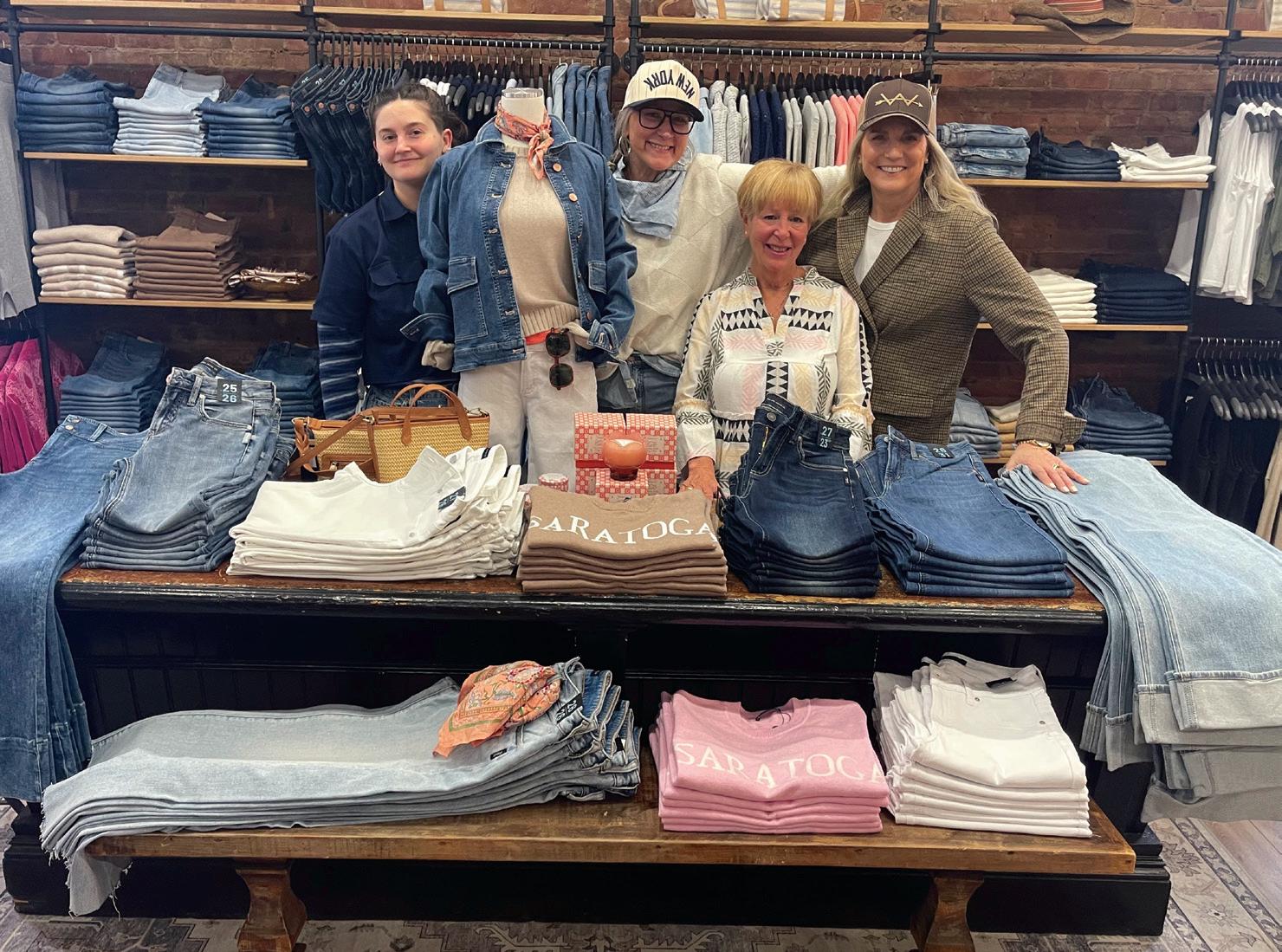
Manager Stacey D’Andrea Goodman, center, is pictured with staff at Lifestyles of Saratoga, one of Heidi Owen West’s group of Broadway shops, including Caroline+Main and Union Hall. Saratoga Business Journal
Sara Mannix, founder and CEO of Mannix Marketing, leads the award-winning digital agency.
Couresy Mannix Marketing
Capital Region SBDC Provides Free Support For Small Businesses At Every Stage
BY CAROL ANN CONOVER
Whether drafting a first business plan, breaking into a new market or handing off a company built over decades, business owners can get help from the Capital Region Small Business Development Center. The service is free, with no time limit and no agenda.
“We have no agenda, we have nothing to push, we have nothing to sell,” said Greg Chanese, assistant director of the Capital Region SBDC. “So, at the end of the day, we’re just here to support you as a small business.”
The SBDC is a national program funded by the U.S. Small Business Administration. It distributes money to every state. In New York, that funding goes through the State University of New York system. The Capital Region center is housed at the University at Albany under the Massry School of Business. There are 20 SBDC centers in New York, and the program has operated for more than 40 years.
Chanese, who has been with the center for six years, said the Capital Region office serves between 1,000 and 1,300 businesses annually. The center currently has four full-time advisers; Chanese also carries an advisory caseload as part of his role as assistant director and said he hopes to bring on a fifth full-time adviser in the near future.
Services are available at every stage of a business’s life. The center’s support reaches well beyond startups. Aspiring entrepreneurs can get help with business plans, financial projections or testing an idea’s merit. Established businesses can work with advisers on expansion, refining operations or pivoting to a new model. When it’s time to step away, the center helps owners prepare for a sale or buyers structure an acquisition.
“There’s really no stage of a small business where we can’t assist,” Chanese said.
One long-standing client has worked with the center for 20 years. Chanese said continuity is common, and the center does not limit the number of meetings or set timelines for client relationships.
“We’re here to help you for as long as you need our help,” he said.
Confidentiality is a cornerstone of the service. Chanese said client information, business ideas and financials do not leave the office, which he described as important for entrepreneurs who may be protective of a new concept.



“One of the things that we like to do is not usually be out in front,” he said. “It’s the business that should be out in front.”
The center uses an honest assessment approach, even for business ideas that may not be viable. Because the SBDC does not charge for its services, advisers can give candid feedback. This includes steering someone away from a potentially costly path.
“Being able to talk to somebody openly and honestly about that to save them the time, energy, effort, and sometimes funds of making a poor decision... is better than saying, ‘ No, let’s go, let’s make this happen,” Chanese said. “The worst thing that we think could happen is to have somebody get a loan but not be able to pay that back because the business wasn’t viable.”
Beyond one-on-one advising, the center offers educational workshops and training sessions on topics ranging from business accounting and marketing to artificial intelligence and startup basics. Sessions are available both in person and online. Training offered by all 20 statewide centers is available at nysbdc.org.
The SBDC is also an approved resource for New York state’s Self-Employment Assistance Program, or SEAP, which supports unemployed residents looking to start a business. SEAP participants must complete sessions with a qualified business counselor, which the SBDC provides.
The center’s service area covers approximately 8,000 square miles, stretching from Warren and Washington counties in the north to Columbia and Greene counties in the south, east to the Vermont and Massachusetts borders, and west through Fulton, Montgomery and parts of Schoharie County. Meetings are available in person at satellite locations throughout the territory and virtually via Zoom.
Research support is another resource available to SBDC clients. Chanese, a University at Albany employee, can access the university’s research library and digital databases. The center’s research librarians can also pull market data, industry benchmarks and other information, then explain the findings to clients.
“Rather than just sending it over without explanation, we like to go over it because again, this is something that you might not be familiar with,” Chanese said.
The center draws clients largely through referrals — from lenders who send prospective borrowers in need of a business plan,
Continued On Page 11
Continued From Page 6
and I listen to them, so I know right when I see it which shops will carry the merchandise,” she said.
“We are part of the fabric and the rhythm of Saratoga, and we know the people,” she said. “And we’re human. You can’t algorithm your way into doing what we do in the store.”
She has a well-trained team, including people who can personally style a customer if needed. There can be 30 to 40 staff members among four stores depending on the time of year, she said.
Like many employers, Owen West said she finds it challenging to “make sure we have the right person in the right seat at the right time.”
“It took me many years to realize that is something that needs to be done constantly,” she said.
Another challenge is staying fresh, relevant and forward-thinking, but she said “sifting over merchandise and narrowing it down is my secret super power.”
Owen West said Saratoga shoppers understand how thriving small businesses factor into the quality of life for the community and that starting a new business in a changing environment “can be a learning process.”
“But then, entrepreneurs thrive on challenge,” she said.
The Sale Room is in a separate leased space behind Union Hall Supply Company at 437 Broadway and is accessible from the adjoining alleyway. Opening is slated for late spring 2026.
“This new concept is a way to stay fluid in business by turning over merchandise on the





main floors as often as we possibly can to focus on new arrivals,” she said.
As goods from her Saratoga stores are relocated to The Sale Room, it will be easier for people to save, Owen West said.
“We have customers who only shop our deals, and we are okay with that,” she said. “Think of The Sale Room like an outlet location, which most of the major clothing stores have, but in a small business way.”
Once the new venture is running on Broadway, Owen West will ensure all her stores live up to the messaging she has put out and the value she has promised the community, she said.
Owen West is a longtime business owner, vice president of Saratoga’s downtown business association and “a proponent of small businesses in the community and in the world.” But she said she is “worried because it is now so much harder to do” what shop owners did in prior decades, for many reasons.
“It’s the competition, it’s financial, finding staff, and the work and energy, that it’s harder to break through the noise,” she said. “Especially as a new business, one big hit can pull it down.”
“Tariffs, shipping costs, rents, and other expenses are skyrocketing, and we can’t absorb them like big businesses can,” she said. “But I like to say that if we got through COVID, there is nothing we can’t get through as a small business community.”
As Owen West cuts the ribbon at her newest store, she will reflect on her first and only business partner, her mother, Kay Owen. Together they opened Lifestyles of Saratoga in 1991.
“Our philosophy always was, when our community thrives, we thrive,” she said. “It is never just about us, but giving our talents to the community any way we can.”





































*DatasourcedfromMorningstar
**Stockinvestingincludesrisks,includingfluctuatingpricesandlossofprincipal.Thisisforinformationalpurposesonlyandnotintendedto providespecificadviceorrecommendationforanyindividual.

Adirondack Thunder Faces Lions In Crucial Fan Appreciation Weekend Series

BY PAUL POST
Playoff-bound Adirondack Thunder had a franchise-record 18 sellout crowds this year, with one home game left heading into the regular season’s final weekend, April 17-19.
A three-game attendance mark of 15,375 was set during the Friday-to-Sunday, March 27-29, weekend, surpassing the previous record of 14,869.
That was followed by back-to-back crowds of 5,231 and 4,851 on Saturday and Sunday, April 11-12, for five straight sellouts at the 4,800-seat Harding Mazzotti Arena.
“It’s amazing, how great the fan support is for such a small community,” Thunder President Jeff Mead said. “It’s pretty unbelievable when half your home games are sell-outs.”
The Thunder drew 156,316 fans, averaging 4,466 per game, or 93 percent of the arena’s capacity, with one home game left on Friday, April 17.
opponent, Games 1 and 2 will be on the road Saturday and Sunday, April 25 and 26.
Games 3, 4 and 5, if necessary, will be at home on Wednesday, April 29, and Friday and Saturday, May 1 and 2. Games 6 and 7 would be on the road again, if needed.
The Thunder entered the final weekend in fourth place with three games left, one point behind Reading, which had two games remaining.
If Adirondack passes Reading and finishes third, it will face the second-place Maine Mariners in the first round. Otherwise, it will play North Division champion Wheeling.
The Thunder fared much better against Maine, going 10-2-2-1, than against Wheeling, where they went 1-3, this year.
“The Mariners play a heavy, physical style game, similar to ours,” Cloutier said. “Wheeling plays a more wide-open game, relying a great deal on their goalie.”
















“These fans are passionate,” Coach Sylvain Cloutier said. “They love the game. There’s no place like it in minor hockey. They come out and support us every weekend. They’re the best.”
Forward Matt Salhany said Kalamazoo’s Matt Knuble couldn’t believe the crowd that showed up for the game on Sunday, March 29, because attendance for Sunday afternoon games is usually much lighter at most arenas, especially when a big crowd turned out the night before.
“When he lined up opposite me, he looked around and said, ‘This is incredible’,” Salhany said.
The Thunder will play either Wheeling or Maine in the first round of the playoffs, depending on where they finish in the standings. Every series is best-of-seven. Regardless of the
“Whoever we play it’s going to be tough,” he said. “But anything can happen in the playoffs. Wherever we start, I like our chances.”
Since Feb. 27, when it was in first place, the Thunder went 5-12-4 and 2-7 on home ice during that span before the final weekend.
Adirondack is the ECHL affiliate of the AHL’s Utica Comets. If Utica doesn’t make the playoffs, several players who spent considerable time with the Thunder this year could return to bolster Adirondack’s playoff roster.
Cloutier said there’s a good chance the first playoff round will go seven games, considering how strong Wheeling and Maine are. But he’d like nothing better than to clinch the series before Adirondack’s faithful fans in Glens Falls.
“We owe our fans some wins at home,” he said.










An Adirondack Thunder skater pressures a player in front of the net during late-season action as the team heads into Fan Appreciation Weekend and its final home game of the regular season.
Courtesy Adirondack Thunder
Marine Technology Program Launches Workforce Pipeline For Boating Industry

Thousands of boat owners use waterways from Schroon Lake to the Mohawk River each summer, driving demand for skilled marine technicians.
A new Marine Technology Program for adults is addressing that need, graduating its first five students at the Great Upstate Boat Show in Queensbury.
“Completing this program is a milestone, and we’re excited to recognize the growth, accomplishment, and potential each of you has demonstrated,” said Michelle Stockwell, administrator of Employment Training for Adults. “This achievement reflects not only your hard work and dedication, but also your commitment to learning valuable skills that will hopefully open doors in the marine industry.”
The 145-hour evening course at the BOCES Southern Adirondack Education Center trains entry-level marine service technicians in electrical work, engine theory, seasonal preparation, shrink-wrapping, safety and trailer repair.
Instructor Brian Foster taught graduates Jon Valastro, Nathan Winslow, Steve Mittler, Tannery Kennedy and Svitozar Zakhariia, from Ukraine.
“The marine business is a cornerstone of our local economy,” said Joel Holden, executive director of the Eastern New York Marine Trades Association. “We have tens of thousands of boats in our backyard. They all need to be maintained properly, for safe -
ty and enjoyment. This is a gateway to getting that done.”
Holden said the program could mirror a successful UA Local 773 apprenticeship.
A second course is planned for October.
Employment Training for Adults, a BOCES division, offers career programs across multiple industries.
Stockwell credited the Marine Trades Association, Saratoga Economic Development Corp., and the Saratoga, Warren, Washington Workforce Development Board with helping launch the program.
“Starting a program from scratch is never easy,” she said. “But with the guidance of industry experts and the commitment of our partners, it became a shared effort that is both achievable and meaningful.”
Stockwell said instructor Brian Foster played a key role in the program’s success.
Glenn Kelsey, co-owner of Dax Powersports, said the program provides a needed workforce pipeline.
“We don’t care how old a person is if they want to work and learn,” he said. “Sometimes maturity is a good thing because they’re a little more centered on what they want to do.”
The program offers employers a new source of entry-level workers.
“We’re looking into that avenue for sure,” Kelsey said.
For more information, visit www.etaprogram.org.

Tom Stock
Continued From Page 1
the Armed Forces Recreation Center (AFRC) ski patrol in Bertchesgarden, Germany.
Upon his return he took advantage of a veterans administration scholarship to attend Syracuse University, graduating cum laude in 1986 with a Bachelor of Fine Arts in Photography.
He then went to Key Largo, Florida, where he had hoped to do underwater photography, and worked as a scuba diving instructor.
“Underwater photography was going to be my thing,” he said. “However, there wasn’t a lot of need for it where I was and the scuba company I worked for had me working twelve-hour days so there wasn’t time for it anyway.’
He next moved to Delaware where he worked for a company called the Church Directory Service. He traveled up and down the East Coast with a mobile studio photographing family groups in churches. Within a year he had accepted a position as staff photographer at a commercial studio and lab in Wilmington, Delaware, where he made images for corporate clients such as DuPont, MBT Bank, and GoreTex. After three years he decided it was time to open his own shop.
He wanted to return to the area in which he grew up and chose Saratoga Springs because he felt it gave him the best opportunities for economic success.
At first, of course, he shot with film, developing the images in his studio’s darkroom. In the mid-1990s, one of his clients was Delmar Publishing, a representative of which suggested it would be more economically feasible to

shoot in digital format because all film images had to go through a multi-stage process to become suitable for print and digital photographs would streamline that process. The next week he purchased a digital camera and Photoshop program suitable to meet the client’s needs and he has never looked back.
“It was cutting edge and it saved them hundreds of thousands of dollars, and I became their go-to guy so it was a good business decision,” he said.
While Stock uses high-end equipment for his professional shoots, he says that advances in cell phone cameras allow users to produce only “good” images.
“Cell phones and Artificial Intelligence (AI) are the biggest disrupters of the photography business these days,” he said. “To produce great marketing images you have to learn about lighting, color and composition. Those things take time, commitment and expertise to achieve professional results.”
Stock is also a skilled craftsman who built his own house on 80 wooded acres in Greenfield Center. It is off-grid, powered by solar, wood heat, and wind power. Each year he hosts a party called Woodstock where participants help replenish his wood supply from trees on his land in exchange for good food and drink (after the work is done) and camaraderie. He has been married since 2005 to Roberta (Fuerst) Stock. She owns and operates Roberta Stock Bookkeeping in Saratoga Springs.
Stock has no plans to retire.
“I will continue to provide my clients with high-quality digital photography, on time and on budget,” he said. For further information about the services he offers visit saratogaphotographer.com.
Graduates of a new adult Marine Technology course pose with instructor Brian Foster. From left are Svitozar Zakhariia, Jon Valastro, Nathan Winslow, Foster, Steve Mittler and Tannery Kennedy. Paul Post Photo
Log Jam Restaurant Celebrates 50 Years Of Consistency And Economic Impact
BY STAFF WRITER
For 50 years, consistent management and operations have made The Log Jam Restaurant a landmark destination restaurant and steady economic contributor in one of New York’s most seasonal tourism markets.
“My biggest thing is consistency,” said Tony Grecco, who has spent nearly four decades with the business and more than 30 years in a management role. “I want people to know when they come, what they’re going to get, and it’s going to be the same every time.”
That consistency has translated into scale. The restaurant seats approximately 250 guests and, during peak August demand, turns tables three times per night while averaging about 600 din-
ners. Lunch service adds another 300 to 400 customers daily, bringing total volume to between 800 and 1,000 patrons on a typical summer day.
The menu remains rooted in steakhouse tradition, with custom-cut steaks prepared inhouse alongside seafood and fish offerings. That consistent approach to quality, combined with the restaurant’s signature salad bar, has helped define its identity for generations of customers.
In a tourism-driven market like Lake George, where seasonal fluctuations can challenge staffing, pricing and operations, that level of sustained volume carries broader economic implications.
The Log Jam supports a workforce of roughly 100 to 130 employees during peak periods, with


PRIVATE BARREL SELECTION.

a core group of about 50 to 60 returning year after year. Many have been with the restaurant for 15, 20 or even 25 years, including kitchen staff, dishwashers and front-of-house employees. The business has also maintained a 401(k) retirement plan with employer matching for more than 30 years, along with health and other benefits, helping reinforce its ability to retain employees in a high-turnover industry.
“We have employees who have been here 15, 20, 25 years — not just servers and bartenders, but cooks and dishwashers,” Grecco said. “It’s really building a team. The people are what make it.”
That long-term workforce stability provides continuity in a sector often defined by turnover, while also supporting local employment across a mix of full-time, part-time and seasonal roles. In many cases, those roles span generations, with family members working at the restaurant over time.
“I have whole families that have worked here,” Grecco said. “We have generational employees and generational customers.”
The restaurant’s customer base reflects its position within the region’s tourism economy. In addition to local patrons, it draws visitors tied to summer travel, the Saratoga racing season and the nearby outlet shopping corridor, which expanded the area’s visitor mix over time.
Grecco credits much of the operation’s longevity to a management philosophy centered on consistency, respect and internal development.
“I can teach people the job,” he said. “I can’t teach people to respect each other and be friendly. That’s what you have to find.”
All of the restaurant’s managers began in entry-level roles and advanced over time, reinforcing operational knowledge and maintaining a consistent approach to service.
“It doesn’t happen overnight,” Grecco said. “It’s a building process of finding the right people and creating that culture.”
A defining feature of that experience is the restaurant’s salad bar, which includes roughly 40 items prepared largely in-house. While many restaurants have eliminated similar offerings, the Log Jam has maintained and refined its approach over decades.

“That salad bar is one of the main reasons people come here,” Grecco said. “You can’t really get that anywhere.”
The kitchen has also benefited from longterm leadership. Chef Rod Russo, who has been with the Log Jam for more than 30 years, has helped maintain consistency in food preparation and quality while mentoring the next generation of kitchen leadership.
The COVID-19 pandemic tested the business’s ability to adapt quickly. The statewide shutdown in March 2020 came just before St. Patrick’s Day and ahead of the Easter holiday, leaving the restaurant with significant inventory already in-house.
“We had all this food, and we had to do something,” Grecco said.
The operation pivoted to takeout service almost immediately, launching a new system the next day despite having little prior experience with off-premise dining. What began as a way to utilize existing inventory evolved into a substantial short-term revenue stream, including hundreds of takeout meals for major holidays such as Easter and Mother’s Day.
The experience also led to lasting operational changes, including expanded service hours and continuous kitchen operations throughout the day.
While the business has adapted to changing consumer habits, including lighter menu options and modified service models, Grecco said the core approach remains unchanged.
“You’ve got to keep up with the times,” he said. “But you also have to stay true to what you are.”
That balance between adaptation and consistency has helped sustain the restaurant’s role within the local economy, supporting suppliers, attracting repeat visitors and contributing to the broader hospitality ecosystem.
At its core, Grecco said, the formula is built on people.
“It’s the culture, the camaraderie — that’s why we’re successful,” he said. “You can’t build this overnight. It takes years.”
Reporting includes information provided by the Log Jam and interview responses from Tony Grecco.
Equine Therapy Grant Aids Program For Teens
CAPTAIN Community Human Services has received a $4,000 grant from the GlobalFoundries/Town of Malta Foundation to continue its partnership with Therapeutic Horses of Saratoga, providing equine-assisted psychotherapy for youth served through CAPTAIN’s Runaway and Homeless Youth Shelter.
Launched in 2024, the program addresses the mental health needs of youth experiencing housing instability and crisis. The Malta shelter provides 24/7 care and support for children and teens ages 13 to 17 facing homelessness, family conflict or unsafe living conditions.
Through the partnership, youth take part in structured group sessions at Therapeutic Horses of Saratoga, where licensed mental health professionals and certified equine specialists work together. The program focuses on building self-awareness, improving communication, developing coping skills and encouraging healthy self-care practices.
In 2025, 36 youth participated in the program.
“While our shelter provides critical housing and support services, this program fills an important gap by offering therapeutic experiences that help youth process what they’ve been through,” said Scott DeMarco, CAPTAIN CHS executive director.



Therapeutic Horses of Saratoga is a nonprofit horse sanctuary dedicated to supporting mental wellness through equine-assisted programs. With the addition of a new indoor facility, the program will now be offered year-round. In 2026, CAPTAIN CHS anticipates serving 30 to 40 youth through this initiative.
“The connection between horse and human can be incredibly grounding, especially for individuals experiencing crisis,” said Dr. Erin Christopher-Sisk, founder and executive director of Therapeutic Horses of Saratoga.
The grant sustains care.
Provided by CAPTAIN Community Human Services; edited for style and length.
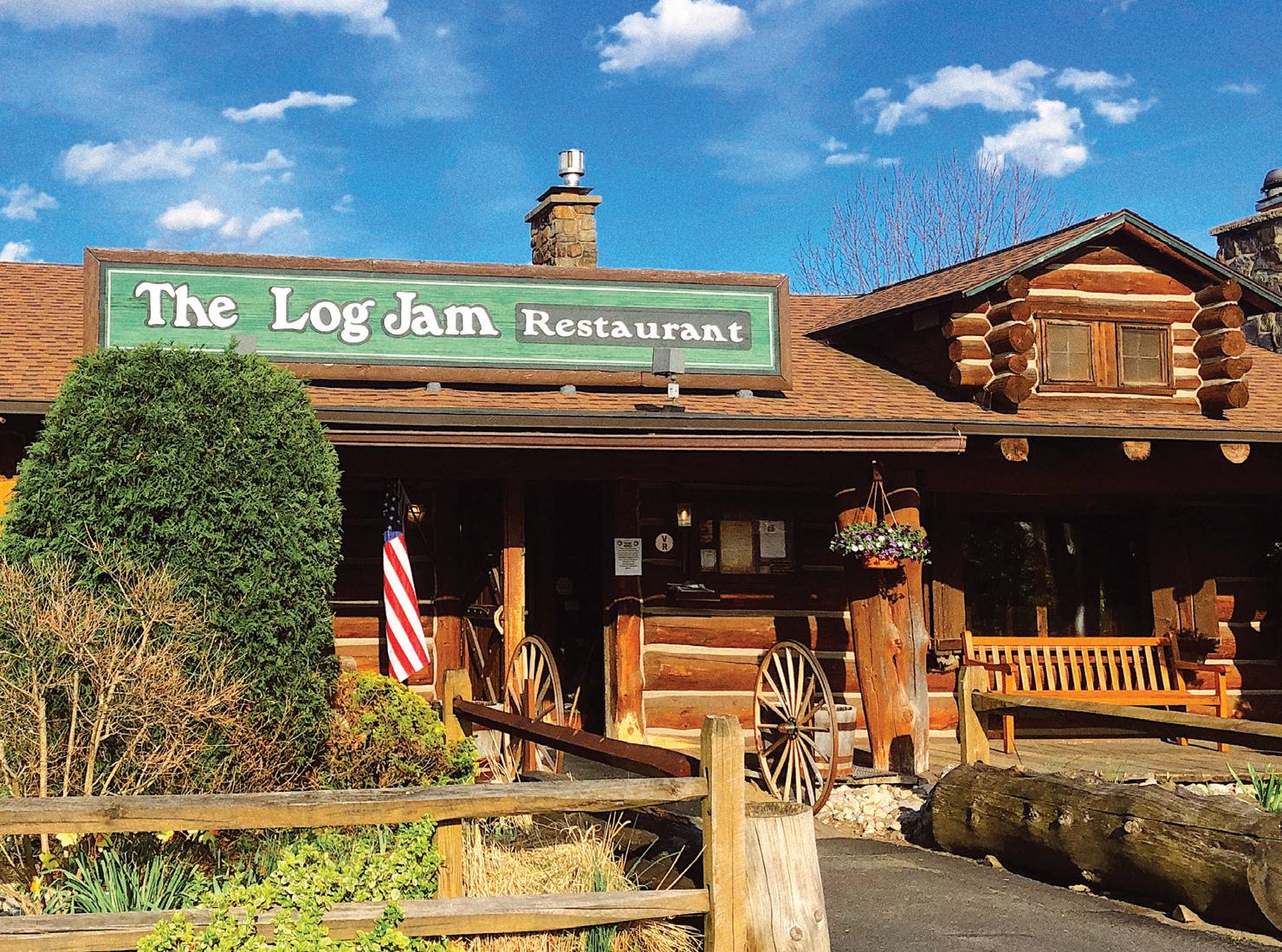
The Log Jam Restaurant in Lake George is marking its 50th year as a landmark dining destination, with steady operations and a long-running role in the region’s seasonal hospitality economy. Courtesy Log Jam
Continued From Page 7
from economic development organizations and workforce development centers, and from business owners who have worked with the center and passed the center’s name along to colleagues.
“We do say that we are one of the best kept secrets for the small business community,” Chanese said, “but at the same time, we’re not slow — there is a steady stream of clients.”
The center recently participated in a legislative day at the state Capitol, meeting with elected officials to underscore the program’s reach and value. Chanese said the reception was positive across party lines and that the center’s bipartisan standing has helped it preserve stable funding through successive budget cycles.
“When you’ve been around for over 40
years, and you’re something that makes people relatively happy... and it’s a support system rather than anything else, we seem to be OK,” he said.
For Chanese, the work is personal. He grew up in the region, lives there now and wants to see the area remain a place where small businesses can thrive — and where his own children might one day choose to stay.
“I want to make sure that the Capital Region stays a great place for people to live, work, and play,” he said. “And how you do that is having a great small business community.”
The Capital Region SBDC is located at the University at Albany. To get started, visit capitalregionsbdc.org for more information and to complete the client intake forms.











































Belmont Stakes Festival
Continued From Page 1
Saratoga for these three years.”
“Beyond this, our community has seen extraordinary coverage not just of Saratoga Race Course, but of the many amenities that make Saratoga a great place to visit,” he said. “Our community has been promoted around the world as a place that all fans of horse racing must visit, and my expectation is that this will help us expand visitation for years to come.”
The New York Racing Association is raising purse levels nearly 14% blended across all categories during the Belmont Festival and throughout the summer meet.
Belmont Festival’s opening day is dedicated to New York-breds. The special New York Showcase Day program will offer six $200,000 events exclusively for horses foaled in the Empire State, including the Mike Lee, the Bouwerie, the Commentator, the Critical Eye, the Kingston and the Mount Vernon.
NYRA’s commitment to elevating the statebred program is reflected in major purse increases for races restricted to New York-breds. These new purse levels will take effect beginning with the Belmont Festival and continuing through the summer meet, when maiden special weights will be run for $100,000, fi rstlevel allowance races for $105,000 and secondlevel allowance races for $110,000.
In addition, New York-bred, 2-year-old maiden special weight races will be run for $115,000.
The Belmont Stakes is one of six Grade 1 races planned for Saturday, June 6. It will be contested again at 1 1/4 miles rather than the traditional 1 1/2 miles due to the configuration of Saratoga’s main track.
The day’s program also includes the Grade 1, $1 million Hill ‘n’ Dale Metropolitan Handicap; the Grade 1, $1 million Resorts World Casino Manhattan; the Grade 1, $500,000 Jaipur; the Grade 1, $500,000 Woody Stephens presented by Mohegan Sun; the Grade 1, $500,000 Just a Game presented by Reso-
lute Racing; and the Grade 3, $400,000 True North.
Tickets for the Belmont Festival may be purchased online at BelmontStakes.com.
The festival not only features a full lineup of exciting racing action, but also fun events at the track in addition to the Belmont on Broadway concert downtown.
“Belmont Toast the Turn,” for fans 21 and older, is an immersive, up-close racing experience with a capacity of up to 200 guests per day. The tented hospitality area along the clubhouse provides fans with a premium vantage point of horses rounding the fi rst turn.
Each ticket will include general admission to the track, admission to “Belmont Toast the Turn” and two alcoholic beverages (must be 21 and older), with additional drinks available for purchase throughout the day. Food trucks offering a variety of menu items will also be available.
Limited tickets for “Belmont Toast the Turn” are available for $150 on Friday, June 5, and for $250 on Belmont Stakes Day, Saturday, June 6. Tickets may be purchased at gofevo.com/group/BSRFtoastturnG.
The 46-day summer meet will offer 20 Grade 1 races among 73 stakes worth more than $23.575 million in total purses. Highlights are the 157th renewal of the Grade 1, $1.25 million Draft Kings Travers on Aug. 29 and the 99th edition of the Grade 1, $1 million Whitney on Aug. 8.
The fi rst 2026 Saratoga condition book will be released in June.
“Each summer, Saratoga Race Course stands at the center of the racing world,” said David O’Rourke, New York Racing Association president and CEO. “The 2026 season will be particularly special as we celebrate the fi nal Saratoga edition of the Belmont Stakes Racing Festival and honor America’s 250th anniversary at one of the country’s most historic sporting venues.”