
Libretto

PRODUCTION SPOTLIGHT
Hansel and Gretel: A Fairy Tale on a Grand Operatic Scale
BY RICHARD RUSSELL
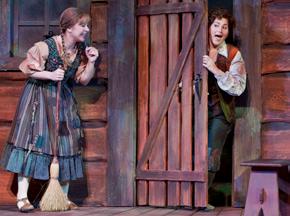
hen Engelbert Humperdinck’s Hansel and Gretel appears on an opera season, it is sometimes assumed to be a work intended primarily for children. The association with the Grimm Brothers fairy tale can obscure the fact that this opera is one of the most musically sophisticated and richly orchestrated works regularly performed in the repertoire. While the story is certainly family friendly, the score is anything but childlike.
From its first measures, Hansel and Gretel reveals a lush, expansive musical world. The orchestra is large and opulent, and Humperdinck makes full use of its expressive power. Extended orchestral interludes are so fully developed that they function almost as an additional
character, deepening the emotional and dramatic landscape of the opera. This is music written on a symphonic scale, demanding both technical precision and interpretive depth.
The opera’s stature was recognized immediately at its premiere in Berlin, which was conducted by Richard Strauss, a close friend and admirer of Humperdinck.
Gustav Mahler led the Vienna premiere, and Arturo Toscanini later conducted performances during his tenure at La Scala. Such champions are not incidental footnotes; they signal the seriousness with which the work was regarded by the leading musical minds of its time.
Humperdinck’s own musical pedigree further explains the opera’s richness. Although his parents hoped he would pursue architecture, he studied composition with Ferdinand Hiller and Franz Lachner before encountering Richard Wagner in Italy. Wagner was so impressed by the young composer that he invited Humperdinck to assist with the first production of Parsifal at Bayreuth and to tutor his son Siegfried. Immersion in Wagner’s musical language left a clear imprint on Humperdinck’s style.
In Hansel and Gretel, Humperdinck blends this Wagnerian influence with melodies
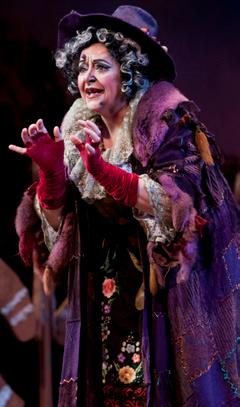
From its first measures, Hansel and Gretel reveals a lush, expansive musical world.
~ RICHARD RUSSELL
inspired by folk song, creating a sound world that is both immediately accessible and harmonically complex. The orchestration is often contrapuntal, with melodic lines weaving in and out of one another, producing a dense and glowing texture. Wagner’s presence is especially evident in the orchestral interludes, most notably The Witch’s Ride between Acts I and II, whose surging energy and vivid orchestral color unmistakably recall The Ride of the Valkyries. Here, the orchestra
Beyond Celebrity: Why Opera Still Matters
BY RICHARD RUSSELL
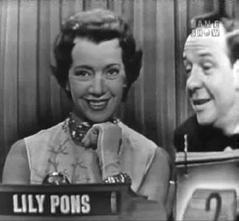
t the end of a day—unwinding after a performance or a long stretch of work—I sometimes fall down the familiar rabbit hole of watching YouTube videos. One of my regular “feel good before bed” destinations is old episodes of What’s My Line? from the 1950s and ’60s. For those who may not remember the program, four celebrity panelists—often including actress Arlene Francis, columnist Dorothy Kilgallen, and publisher Bennett Cerf— interrogated guests to determine their unique occupation.
Each episode also featured a mystery guest, usually a film or stage star, whom the masked panelists had to identify. After the host, news commentator John Charles Daly, invited the mystery guest to “sign in, please,” they would write their name on a chalkboard. Before that could happen, however, the studio audience often erupted in cheers and applause, having instantly recognized the celebrity.
A few nights ago, I was struck by the immediate recognition afforded to opera singer Lily Pons when she appeared on the program in March 1955. The audience applauded, whistled, and screamed—and even though she tried to disguise her voice while answering questions, the panelists identified her in just a few moments. Robert Merrill and Roberta Peters also appeared on the show, and although I haven’t been able to locate those clips, I imagine the response was similar. That kind of instant
recognition is difficult to imagine today, and the contrast lingered with me.
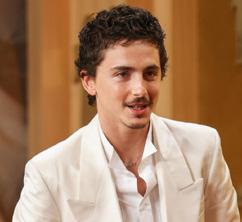
That contrast came into sharper focus when I thought about remarks made by actor Timothée Chalamet during a town hall, when he said, “I don’t want to be working in ballet or opera, or things where it’s like, ‘Hey, keep this thing alive,’ even though no one cares about this anymore.” While we might set aside the fact that Chalamet’s mother is a former dancer, his comment struck a nerve within the ballet and opera communities. Many reacted strongly, rushing to defend these art forms with statistics, testimonials, and evidence of their ongoing impact.
My own reaction was initially to ignore the comment. But after watching Lily Pons on What’s My Line?, I found myself reflecting more honestly on what has changed. Opera does not occupy the same place in popular culture that it once did. I grew up at a time when Beverly Sills, Luciano Pavarotti, Plácido Domingo, Robert Merrill, and Anna Moffo were regulars on talk shows and familiar faces well beyond the opera house.
The fact that there are few opera singers today—perhaps Renée Fleming being a notable exception—who make regular television appearances is not, however, evidence that “no one cares anymore.” I know this to be untrue. I have devoted my life to this art form, as have many others. Our audiences demonstrate their care
consistently. People travel from across the country—and often from abroad— to attend our performances. They tell us how much the work means to them, encourage us to continue, and respond with laughter, tears, and sustained applause night after night.
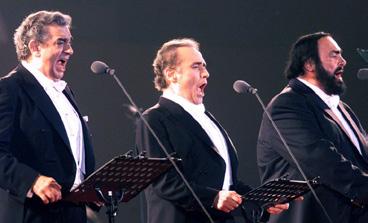
What has changed is not the depth of that connection, but the machinery that once helped translate it into widespread cultural visibility. From the 1950s through the 1990s, opera singers were often as active in recording studios as they were in opera houses. Major record labels—RCA, Columbia, Decca/London, EMI/Angel, Deutsche Grammophon, and Philips— had substantial promotional budgets and significant influence. It is worth noting that the original Three Tenors in Concert album sold roughly the same number of copies as Bruce Springsteen’s Born in the U.S.A. and Fleetwood Mac’s Rumours. As a result, Carreras, Pavarotti, and Domingo achieved levels of public recognition that extended far beyond the opera world.
Those conditions are largely gone. With the rise of streaming, the recording industry has contracted, and promotional budgets have shrunk accordingly. Record labels no longer wield the same leverage in promoting artists on television—an increasingly fragmented medium itself. Comparisons between opera and other forms of popular entertainment are therefore less useful than they once were.
LEAVING A LEGACY
PROFILE: Tom & Libbie Glembocki
BY JANET STERN SOLOMON
love of opera can grow out of taking an easy “A” class in college. A native New Yorker, Tom was enamored with space and chose Florida Tech, in Melbourne, to study electrical engineering. As part of his studies he decided to take a music appreciation course for an easy “A”. That course introduced Tom to classical music, but it was his professor’s offer of a free ticket to La bohème that began his love of opera that continues today. After graduation he immediately joined IBM’s space program and stayed with that company for his entire career. Early in that career he was relocated to Owego, NY where he met Libbie.
Do plants like classical music? Libbie thought so. Libbie grew up in Bucks County, PA with a dad who was an avid sports fan and a mom who loved classical music, especially opera. Libbie loved to listen to this music, especially the cancan which she danced at a very early age.
HANSEL AND GRETEL CONTINUED FROM PAGE 1
vividly depicts the witch’s wild flight through the forest, rising to an exhilarating, almost overwhelming intensity.
At the same time, the opera remains a masterful piece of storytelling. Folk-like melodies lend directness and warmth to the interactions between characters, grounding the drama emotionally. The overture, which introduces many of the opera’s principal themes, sets the tone from the outset. Though Hansel and Gretel face poverty, hunger, loneliness, and danger, the music assures us that this is a fairy tale in the deepest sense—one that ultimately leads to safety, joy, and wonder. When Hansel and Gretel was first performed at the Metropolitan Opera in 1905, New York Times critic Richard Aldrich wondered how audiences would respond
She went to Mansfield University (also the alma mater of Jessé Martins) studying Elementary Education and taught kindergarten after graduation. Mansfield University is only a short distance from Owego, NY so one evening after skiing, Tom and Libbie met in a bar and have been together ever since. After seven years of teaching and having their son, she established Bluebird Greenhouse which grew flowers and plants for wholesale, retail and international markets. She kept her plants thriving by playing classical music for them! As an expert, it seems plants do like music!
Libbie’s parents started coming to Sarasota in the 1980’s, and Tom and Libbie visited them every spring. When the Sarasota Opera opened in downtown in 1984, they bought tickets right away. They have now been attending for over 40 years! They are active in the Sarasota Opera Guild where Tom is Vice President of Membership, and they attend as many events as they can.
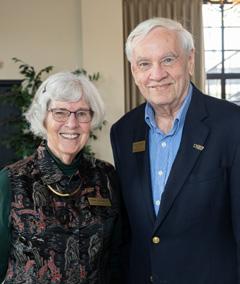
Tom and Libbie call the Sarasota Opera their “favorite place”. They love the music, people and events. They especially appreciate that the performances are staged true to their original script without political overtones or modernization. They hope to sustain the opera for future generations and the Sarasota cultural community through their planned gift and membership in the Kretzmer Legacy Society
BEYOND CELEBRITY
CONTINUED FROM PAGE 2
to “this gay little children’s tale elaborated musically with all the resources of the Wagnerian method and orchestra.” He quickly answered his own question, concluding that the opera revealed “an achievement of the highest talent and skill,” and that there seemed to be no one in the house untouched by its beauty and delight.
More than a century later, Aldrich’s observation still rings true. Hansel and Gretel is an opera of remarkable craft, emotional depth, and orchestral brilliance—one that speaks to audiences of all ages and rewards serious listening. We hope that Sarasota Opera’s production will allow listeners to rediscover this beloved work not merely as a fairy tale, but as the profound and enchanting operatic experience it truly is.
What matters now is not whether opera produces household names, but whether it continues to produce meaningful experiences. Night after night, our audiences show us that it does. They recognize our artists, respond viscerally to the work onstage, and reward it with attention, emotion, and applause. Opera may no longer occupy the same space in popular culture that it once did, but it remains very much alive—sustained not by nostalgia, but by the deep and ongoing connection between performers and the people who come to hear them.
Remembering the Sarasota Opera 2025-26 Events
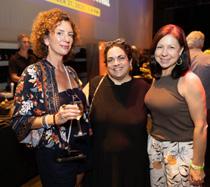
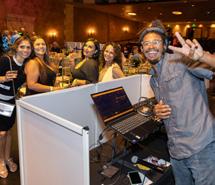
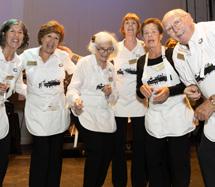
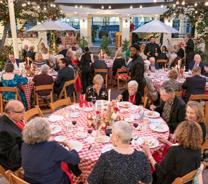
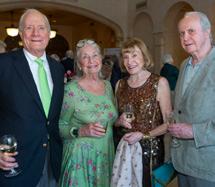
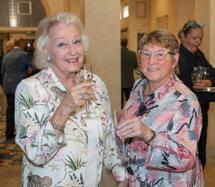
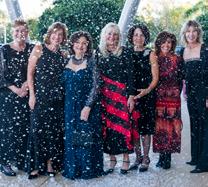
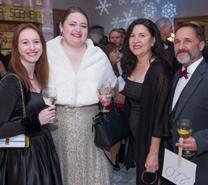
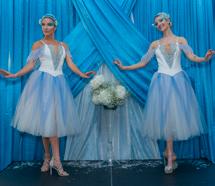
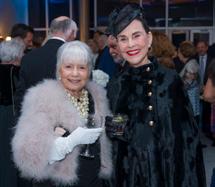
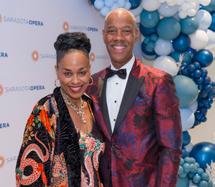
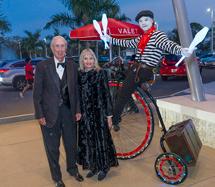
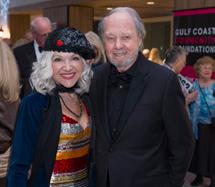
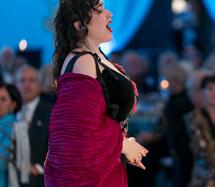
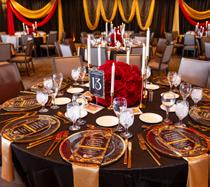
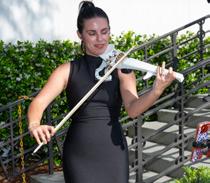
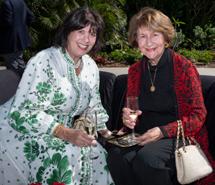
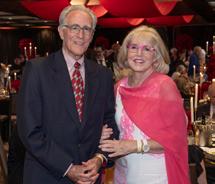
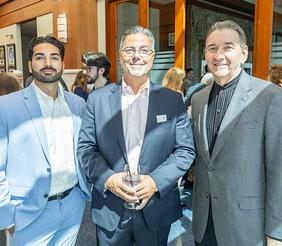
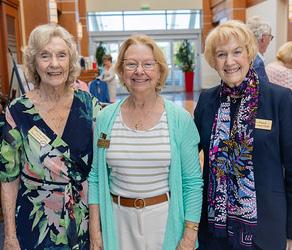
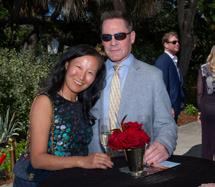
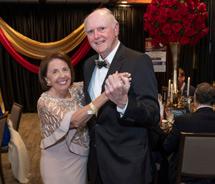
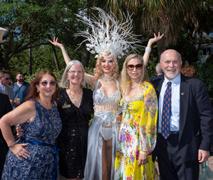
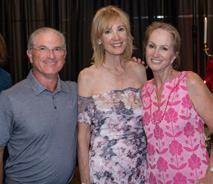
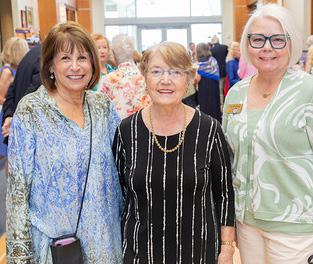
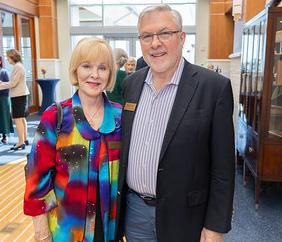
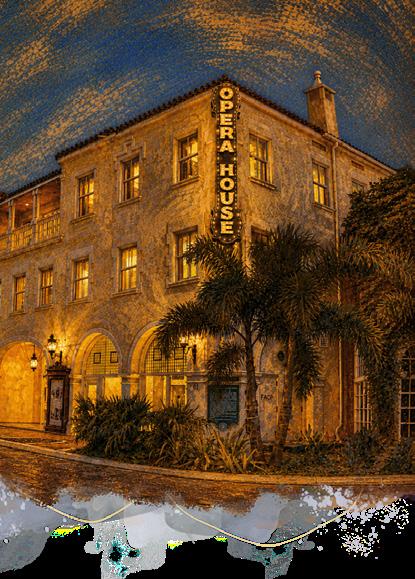
rom elegant evenings to festive community gatherings, Sarasota Opera’s 2025–26 signature events brought friends, patrons, and artists together in celebration of music, creativity, and shared purpose. The season was made even more memorable by the Opera House Centennial Celebration, honoring the historic home at the heart of Sarasota Opera’s artistic life. These special moments captured the spirit of the season and the vibrant community that makes Sarasota Opera so extraordinary. Enjoy this look back at some of the unforgettable events that helped define the year.
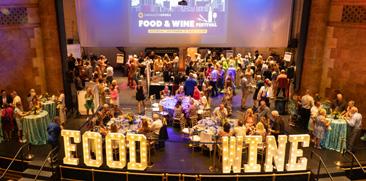
SARASOTA OPERA FOOD & WINE FESTIVAL, SEPTEMBER 27, 2025

MOONLIGHT & MELODIES, NOVEMBER 7, 2025 AND MARCH 10, 2026
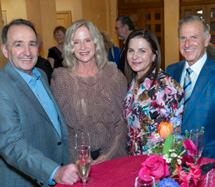
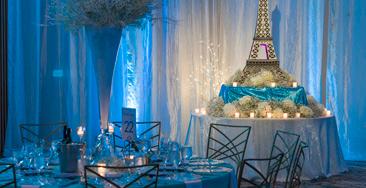
THE SARASOTA OPERA GALA: WINTER IN PARIS, JANUARY 30, 2026
SATURDAY SEPTEMBER 26, 2026 | 1-4


2026-2027
Signature Events
Sarasota Opera House | Saturday, September 26, 2026
VIP: Early Access 12:30 PM, $150 per person
General Access: 1:00 PM, $75 per person | $85 at the door
Sarasota Opera’s Food & Wine Festival is a festive community event featuring a variety of eateries with tasty food samples and wine tastings! What better way to support our nationally recognized Sarasota Youth Opera.
CURTAIN RAISER DINNER
Michael’s On East | Sunday, October 25, 2026, 6:00 PM
$250 per person | Limited Seating
Kick off the season in grand style at Curtain Raiser, an elegant evening celebrating the opening of the Sarasota Opera season. Enjoy live performances, festive fare, and the excitement of a new year of extraordinary music and artistry.
MOONLIGHT & MELODIES
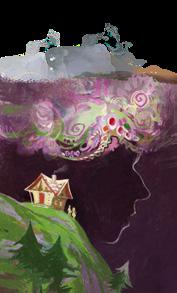
Into the Enchanted Forest with Hansel and Gretel
Sarasota Opera House Courtyard
Friday, November 13, 2026, 6:30 PM
$250 per person | Limited Seating
A magical evening beneath the open sky, where enchanting live performances bring to life the whimsical world of Hänsel und Gretel. Step into a fairytale forest filled with wonder, as music and storytelling weave a spell of childhood adventure and imagination.
THE SARASOTA OPERA GALA
A Night of Camellias & Champagne
The Ora Grand Ballroom
Saturday, January 30, 2027, 6:00 PM
Table Sponsors: $12,500, $7,500, $5,000
Reservations $1,250, $750, $500 per person
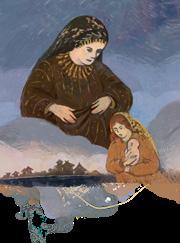
Step into the world of Violetta’s Parisian salon, where love, sacrifice, and indulgence intertwine. This Gala evokes the glamour and fragility of high society in Paris, wrapped in the symbolism of camellias and the sparkle of champagne.
MOONLIGHT & MELODIES
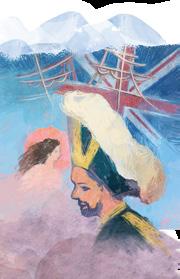
A Night Aboard Her Majesty’s Ship with Gilbert and Sullivan
Sarasota Opera House Courtyard
Wednesday, February 17, 2027, at 6:30 PM
$250 per person | Limited Seating
Step into a world of wit, whimsy, and Victorian charm inspired by the delightful operettas of W. S. Gilbert and Arthur Sullivan. This enchanting evening blends playful satire with elegant refinement, inviting guests to revel in a dinner experience filled with clever wordplay, lively melodies, and theatrical flair. From topsy-turvy tales to patter songs, expect a night where humor and sophistication meet in perfect harmony.
SALUTE TO THE STARS AWARD LUNCHEON
Sarasota Yacht Club | Tuesday, March 9, 2027, 11:30 AM
Per person levels $100 and $175 (preferred seating)
Celebrate the artistry and achievement of Sarasota Opera’s most outstanding Apprentice and Studio Artists at our annual Salute to the Stars luncheon. Enjoy a gourmet meal in the company of fellow opera enthusiasts while experiencing live performances from this season’s award-winning singers. These honors are made possible through the generosity of visionary donors and the Sarasota and Manatee Opera Guilds.
TRIBUTES
A gift to the Sarasota Opera Tribute Fund is a beautiful way to memorialize a loved one, honor a friend, or celebrate a special occasion. A tribute card is sent to a family member or the honoree and is published in this newsletter.
IN MEMORY OF SCOTT BUSHEY
Dee Stottlemyer
IN MEMORY OF FRANK CLARK
Karen J. Putt
IN HONOR OF DR. LOUIS COHEN’S BIRTHDAY
Ruth Fleegler
IN HONOR OF ELLEN JABBUR’S 90th BIRTHDAY
Kenneth and Kathy Lang
IN HONOR OF DRS. ROSANNE AND LOUIS MARTORELLA
Rosemary Iverson
IN HONOR OF MARK OSHIDA
Peter and Ellen Zane
IN HONOR OF DAVID SORRELLS
Victor and Joyce Renado
IN HONOR OF ARNOLD AND CAROLYN TILLMAN
Ron and Barb Archbold
IN HONOR OF JO ANN WHITEHEAD
Iris and Larry Miller
BEHIND THE
Blue Curtain
Recorded on March 17, 2026
Gifts listed were received from February 28 – May 15, 2026
To have a tribute listed, please send a contribution of $25 or more to: Sarasota Opera, Attn: Tribute Fund 61 N. Pineapple Ave., Sarasota, FL 34236, or online at: SarasotaOpera.org/tribute-gifts.
WATCH THIS SPECIAL RECORDING: A Talk with Sarasota Opera Music Staff
The 2025-26 Season has concluded but there is still much to share with you, our dedicated supporters, about Sarasota Opera's behind-the-scenes activities.
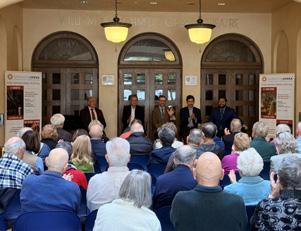
On March 17th, Richard Russell, General Director, led an enlightening conversation with members of Sarasota Opera music staff, who shared their backgrounds, roles within the company, and insights into our creative process. Behind the Blue Curtain was held in the Sarasota Opera House atrium lobby, with donors of $350 or more invited to attend in person.
MUSIC STAFF PANEL INCLUDES:
MAESTRO JESSÉ MARTINS: Youth Opera Music Director, Studio Artist Program Director, and Conductor for Susannah
PIERRE-NÏCOLAS COLOMBAT: Assistant Conductor for The Merry Widow and Susannah
ARTHUR BOSARGE: Artistic Administrator/Director of Apprentice Program
LARRY HERMAN: Sarasota Opera Orchestra member

TO WATCH SCAN THE CODE OR VISIT: bit.ly/BlueCurtainMar17

Opera Guilds
The Guilds of Sarasota Opera offer many opportunities to learn more about opera and to meet like-minded opera lovers. The Manatee Opera Guild and Sarasota Opera Guild both provide social activities paired with educational opportunities where Sarasota Opera staff and volunteers discuss the operas featured each season.
Becoming a Guild member is a great way to support Sarasota Opera! Both Guilds provide significant support to general operating costs and the nationally acclaimed Sarasota Youth Opera. In addition, both Guilds provide financial awards to select artists and Sarasota Youth Opera.
Visit “SarasotaOpera.org/opera-guilds” to learn how you can join these vibrant communities!