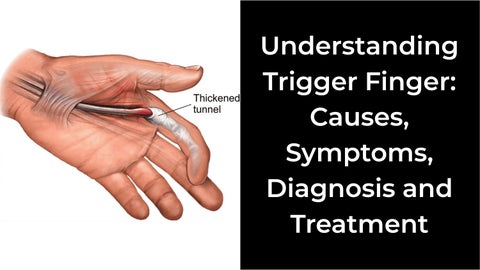
Understanding Trigger Finger: Causes, Symptoms, Diagnosis and Treatment
Introduction Trigger finger, also known as stenosing tenosynovitis, is a condition that affects the tendons in your fingers, causing one or more fingers to become stuck in a bent position and then snap straight like a trigger being pulled. This condition can be painful and limit your ability to perform everyday tasks. Let's delve into the causes, symptoms, diagnosis, and treatment options for trigger fingers.
Trigger Finger Causes The exact cause of trigger finger is not always clear, but several factors may contribute to its development. One common cause is repetitive gripping or grasping activities, such as using tools, typing on a keyboard, or playing musical instruments. Over time, these repetitive movements can irritate the tendons in the fingers, leading to inflammation and swelling.
Trigger Finger Symptoms 1) Sensation of popping or clicking when moving the finger 2) Stiffness in the finger, especially in the morning 3) Tenderness or swelling at the base of the affected finger 4) Pain or discomfort when moving the finger or applying pressure to the affected area
Trigger Finger Diagnosis Methods Diagnosing trigger finger typically involves a thorough physical examination by a healthcare professional. During the examination, your doctor will assess the range of motion of your finger, observe for any signs of swelling or tenderness, and evaluate the presence of clicking sensations. They may also inquire about your medical history
Trigger Finger Treatment Options Non-Surgical Treatments: 1) Resting the affected finger and avoiding activities that exacerbate symptoms. 2) Using a splint to stabilize the finger and reduce tension on the tendon. 3) Applying ice packs to the affected area to reduce swelling. 4) Anti-inflammatory medications like ibuprofen to reduce pain and swelling.
Surgical Treatments: During this procedure, known as trigger finger release or trigger finger release surgery, the surgeon will make a small incision in the affected finger and carefully cut the constricted portion of the tendon sheath to allow for more freedom of movement of the tendon.
Conclusion Trigger finger is a common condition that can cause pain and discomfort, but relief is possible with proper diagnosis and treatment.
BOOK AN APPOINTMENT FOR
Trigger Finger Treatment Call Us On +91 9100621717
Visit our site www.saqshamortho.com
Dr Reetadyuti Mukhopadhyay Arthroscopy & Sports Injury Specialist