
INSIDE
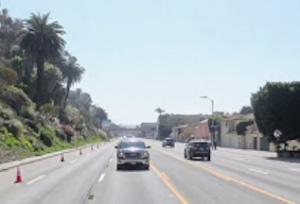
PCH Rehabilitation Projects Planned in Santa Monica and Malibu
See Page 4
Kidnapping and rape suspect jailed after Santa Monica police chase, shooting
Los Angeles resident faces multiple felony counts after tracking an ex-partner to a Westside grocery store lot.
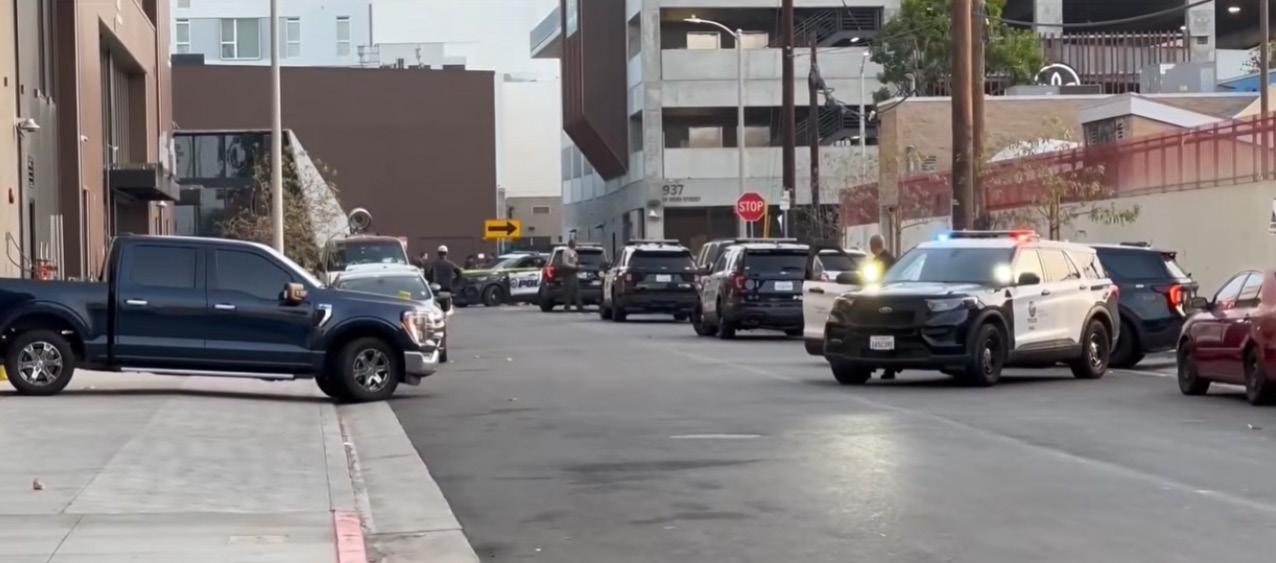
Gunfire erupted in a South Los Angeles neighborhood early Monday morning following a cross-county police pursuit of a kidnapping and rape suspect, according to law enforcement officials.
Personnel from the Santa Monica Police Department arrested Jorge Luis Vega, 32, of Los Angeles, following the vehicle pursuit and subsequent officer-involved shooting in the 900 block of West 85th Street at approximately 3:15 a.m. No officers or suspects sustained gunshot wounds during the confrontation, authorities said.
The tactical operation concluded a multiagency search that began Sunday, May 17, at 12:14 a.m., when officers responded to an abduction report at the Vons supermarket parking lot at 1311 Wilshire Boulevard.
Preliminary findings indicate that Vega allegedly confronted an adult woman with
whom he had a prior dating relationship, forced her into a vehicle, and threatened a witness who attempted to intervene.
Detectives emphasized that the abduction was a targeted domestic violence incident rather than a random attack.
The victim was located safely later Sunday in the city of Beaumont—more than 80 miles east of the initial crime scene— and was secured by local law enforcement. She was not inside the vehicle or present at
the site of Monday's shooting. Vega was booked on multiple felony charges, including:
● Kidnapping
● Rape
● Criminal threats
● Brandishing a firearm
● Being a convicted felon in possession of a firearm
The Santa Monica Police Department is withholding the victim's identity due to the
sexual assault allegations connected to the case.
The investigation remains active as local detectives coordinate with outside municipal agencies. Authorities urge anyone with pertinent information to contact Detective Hilda Lucero at 310458-8939, Detective Esteban Hernandez at 310-458-8946, or the SMPD Watch Commander at 310-458-8427.
Santa Monica Police respond to an unprovoked attack on a student near the SMC media and design campus
Police are searching for an unidentified suspect following a Tuesday morning attack
The Santa Monica Police Department is investigating an unprovoked attack on a Santa Monica College student that occurred Tuesday morning near the school’s Center for Media and Design (CMD) campus, according to a Santa Monica College Police Department alert.
The incident took place at approximately 8:25 a.m. at the intersection of Olympic Boulevard and 26th Street. According to
a crime alert issued by SMC Police Chief Johnnie Adams, the student was targeted while using a crosswalk.
Santa Monica police and fire personnel responded to the scene and transported the victim to a local hospital for precautionary treatment. The student reported only minor injuries. The suspect, described by witnesses as a person experiencing homelessness, fled the scene and remains unidentified. No further physical description was available at the time of the alert.
The Santa Monica Police Department has taken the lead on the investigation. Officials are urging anyone with information regarding the assault to contact SMPD at 310-458-8495.
In response to the off-campus assault, the Santa Monica College Police Department reminded the campus community to

remain vigilant. Safety recommendations include utilizing the "Walk with SMCPD" escort feature on the Corsair Alert safety
app, avoiding deserted areas at night, and immediately reporting suspicious activity to dispatchers at 310-434-4300.
Surveillance video exposes bizarre chain of events in fatal Metro LA bus crash in Santa Monica
Police confirm grim details from the Main Street transit tragedy.
The Santa Monica Police Department has released more information regarding the tragic loss of life when the Metro LA 33 Line bus collided with a pedestrian on March 15 at the corner of Main Street and Ocean Park Boulevard.
Investigators reviewed surveillance video and a woman who was standing near the bus stop crawled under the bus after it stopped at the bus stop. When the bus pulled away from the curb, she was struck and fatally injured by the bus, according to a press release from the SMPD.
After SMPD officers and Santa Monica Fire Department personnel arrived, the woman was pronounced dead at the scene.
A Santa Monica Blue Bus that arrived at the bus stop shortly after the incident was briefly held by police to document the

incident and released as soon as possible.
The Metro LA bus driver remained at the scene and cooperated with the investigation.
SMPD Lieutenant Lewis Gilmour stated that there was no evidence of impairment

or distraction that was observed by investigators during questioning.
This remains an active investigation.
Anyone with information related to this incident is asked to contact the Santa

Monica Police Department Sergeant Jason Olson at 310-458-8367, Jason.Olson@ santamonica.gov or the Watch Commander at 310-458-8427.









































































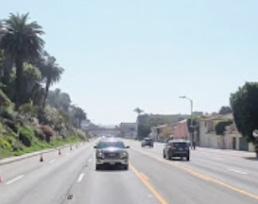
PCH Rehabilitation Projects Planned in Santa Monica and Malibu
The projects will rehabilitate roughly 120 lane miles of PCH between the McClure Tunnel in Santa Monica and the Los AngelesVentura county line
Caltrans is moving forward with two major pavement rehabilitation projects on Pacific Coast Highway through Santa Monica and Malibu that will include new sidewalks, upgraded pedestrian crossings and improved lighting.
The projects will rehabilitate roughly 120 lane miles of PCH between the McClure Tunnel in Santa Monica and the Los Angeles-Ventura county line. They are part of Caltrans’ Capital Preventive
Maintenance program designed to extend the life of the roadway and improve ride quality.
The southern segment runs from the McClure Tunnel in Santa Monica to just south of Cross Creek Road in Malibu. The northern segment covers the stretch from Cross Creek Road to the county line in Malibu.
Both projects include:
- Pavement rehabilitation
- Upgraded ADA-compliant curb ramps
- New sidewalks at multiple bus stops
- Improved lighting
- Updated signage
- Class II bike lanes and striping at various locations
- Pedestrian warning signs
The southern project (Santa Monica to Malibu) has an estimated cost of $85 million, with construction expected to begin in late 2027 and wrap up in 2030.
The northern project (Malibu) is budgeted at $69 million and is scheduled for construction from fall 2026 through spring 2030.
Tishman Speyer redesigns downtown
Santa Monica residential developments

The developer is swapping singleoccupancy microunits for a 110-unit market-rate building and a separate 100 percent affordable housing complex on 5th Street.
Tishman Speyer is shifting strategies for its Downtown Santa Monica development pipeline, ditching previously approved single-occupancy micro-units in favor of a mix of market-rate and off-site affordable housing complexes, as reported by Urbanize Los Angeles.
The company’s project websites reveal revised proposals for neighboring parcels at 1323 and 1338 5th Street. Tishman Speyer originally acquired both sites in 2021 as part of a larger, multi-property portfolio acquisition from developer WS Communities.
Under the restructured blueprint, the developer has abandoned WS

Communities' approved plans for 1338 5th Street, which called for a 120-unit building primarily composed of singleoccupancy micro-apartments. Instead, Tishman Speyer is proposing an eightstory complex featuring 110 market-rate apartments, ranging from studios to twobedroom layouts, positioned over a threelevel, 95-car underground parking garage.
To meet municipal inclusionary housing mandates for the 1338 5th Street property, as well as two of the developer's other local pipelines at 1318 Lincoln Boulevard and 1325 6th Street, Tishman Speyer will consolidate its low-income requirements into a single, standalone development
down the block.
Located at 1323 5th Street, the secondary project will rise as a five-story, 100 percent affordable housing building containing 35 residential units.
Ottinger Architects has been tapped to design both of the new 5th Street structures.
The four upcoming projects are designed to complete Tishman Speyer’s overarching residential footprint in Downtown Santa Monica. The New York-based firm has already completed, or is in the final stages of construction on, four separate apartment complexes clustered along Colorado Avenue and Lincoln Boulevard.

BEHIND THE SCREEN
By Kathryn Whitney Boole
I believe that the filmmakers of The Sheep Detectives knew deep in their innermost instincts that they had a potential gem on their hands, and all they needed to do was to meld the artistry of the story and its dialogue with the creative genius of their actors, CGI visual effects animators, and camera work using a perfect blend of pacing and joy. And that tremendous challenge was met resoundingly by the filmmakers and brilliant cast.
In the first few minutes of the movie, you will begin to think it’s cute, and you will marvel at the skills employed in endowing a motley flock of sheep with endearing personalities. You will soon suspend the judgment you normally use to distance your sense of self from animation or claymation figures. Within minutes, the sheep and their conversations amongst themselves become real to you, and you become one of them. You are never asked to cross the line into a realm where sheep communications would be understood by humans. The sheep don’t do anything that sheep can’t do, and they only talk with each other.
Taken from a German fairy tale and based on the 2005 novel “Three Bags Full,” the story has many lessons about life, personality, good and bad, wrong and right, and there is sadness as well as

visually striking.
The story begins with a shepherd, “George,” played with quiet sensitivity by Hugh Jackman, who raises his flock only for wool and reads them murder mystery stories in the evening to relax them before going to sleep. The sheep listen intently to George’s readings, which establishes that they understand human communication, an important story point. As the narrative flows on, the sheep actually become part of such a murder mystery.
Writer Mazin learned about the novel and was “enchanted by how smart, moving, and philosophical it was.” He wrote his first draft of the script, and then it took him almost 10 years to secure the rights. Mazin and director Kyle Balda summoned up extraordinary courage and dedication to the dream of making it work. Balda has worked in feature animation for 30 years,

celebration. The dialogue is beautifully written by Craig Mazin. The audience is able to understand both the sheep and the human dialogue, and Malin has given each character their own voice, their own pattern of thought, and their own ability to draw conclusions. You think you may know where the story is going, but you don’t. It’s both a fairy tale and a murder mystery, and the twists and turns will surprise you. Shot in the English countryside, the landscapes that grace the background of the story are
for movies as varied in style as Toy Story, Madagascar, The Matrix Revolutions, and Despicable Me, so he had the skills and understanding to make the interplay between humans and CGI sheep work perfectly.
It also took a certain bravery for Hugh Jackman to take on the role of George the shepherd, with not a lot of screen time but monumental importance in the story. His presence is felt throughout the movie by the sheep, so he had to immediately make
a huge impression. This is a perfect role for Jackman, who can choose to do any role he wants at this point in his career, and he’s such a versatile performer that it could be just about anything. He has a knack for playing strong guys with huge emotion hiding underneath a quiet, composed countenance.

“feeling of delight and love” above all to this movie, and Jackman notes that the film is about “connection and love.” This is a mystery populated by some highly unusual characters. There’s a story within the story that touches on how mystery stories are constructed.
Sheep are intelligent animals, just below pigs. They have strong memories, recognize other sheep and humans for years, and have a complex emotional makeup. They can solve problems, form bonds, experience emotions, and adapt

The cast of this movie, both the humans and the sheep who are voiced by actors, makes it work. Emma Thompson, Nicholas Galitzine, Molly Gordon, Tosin Cole, and Nicholas Braun are colorful characters who are key to the mystery. The sheep steal the screen, especially with their eyes. They are created by the CGI animators of Framestore, and voiced by some of the top actors working today, including Brett Goldstein of Ted Lasso fame as twin Norfolk Horned sheep “Ronnie” and “Reggie,” Patrick Stewart as “Sir Richfield,” a Boreray sheep, Regina Hall as “Clouds,” a North Country Cheviot sheep, Chris O’Dowd as “Mopple,” a Merino sheep, Bryan Cranston as Icelandic Leadersheep “Sebastian,” and Julia LouisDreyfus as “Lily,” a Shetland Sheep. The baby sheep are voiced by real children who had a wonderful time working on the film. Each of the sheep has a distinctive personality, which is also happens to be the case with real sheep.
Director Balda wanted to impart a
to changes. They readily recognize their owners and their shepherds.
The sheep in this movie contemplate deep thoughts about the nature of existence. They eventually question the belief handed down through their flock that they turn into a cloud when they die. The movie seems like a children’s story, but for adults, it’s a deep philosophy, with a “spoonful of sugar” to make it easy to digest.
All I can say is, “See this movie even if you think you couldn’t possibly like a movie about a flock of sheep solving a mystery.” You will find yourself pleasantly surprised. It’s not what you think. You may be watching some 2027 Academy Award nominees.
Kathryn Whitney Boole has spent most of her life in the entertainment industry, which has been the backdrop for remarkable adventures with extraordinary people. She is a Talent Manager with Studio Talent Group in Santa Monica. kboole@gmail.com
Santa Monica's Coast Is About to Change Forever. Most Residents Don't Know It's Happening. Part 1.
SM a.r.t.
Santa Monica Architects for a Responsible Tomorrow
If you live in Santa Monica and have ever wondered why the city seems to have so little control over what gets built near the beach, the answer traces back to a bureaucratic failure that occurred before many current residents arrived. It has never been fixed. That failure is now being used to justify legislation that would permanently reshape the coastal zone.
The 1992 problem that never went away
Every California coastal city is required to have a Local Coastal Program, essentially a rulebook governing what can be built near the water. The rulebook has two parts: a Land Use Plan that sets overall policy and an Implementation Plan that translates those policies into actual zoning law.
In 1992, Santa Monica submitted both to the California Coastal Commission for approval. The Commission certified the Land Use Plan. It rejected the Implementation Plan.
That left the city in bureaucratic limbo that has persisted ever since. Without a certified Implementation Plan, Santa Monica has no independent permitting authority over coastal development. Every project near the water requires approval from both City Hall and the state, a dual process that adds time, cost, and uncertainty few other California coastal cities face. For thirty-three years, the problem went unresolved.
The second attempt
In 2016, the city tried again. Planners drafted an updated Land Use Plan over several years, held community meetings, modeled sea level rise, and mapped view corridors. The City Council unanimously adopted it in 2018. It went to the Coastal Commission for certification.
The sticking point, as in 1992, was the Implementation Plan. Santa Monica's proposed zoning would allow far more density and height than the Commission would sanction.
California's density bonus laws let developers stack affordability incentives on top of one another, unlocking significant height increases for housing projects. Applied in the coastal zone, those bonuses can produce buildings far taller than the Commission would accept, particularly on corridors like Ocean, Wilshire, Colorado, San Vicente Boulevard, and Santa Monica Boulevard, where multifamily zoning already exists, and land values are high.
The Coastal Commission requires height limits along mapped sight lines to the ocean, helping residents living further inland

to see the coast and the ocean and enjoy ocean breezes. Those limits directly reduce project value in a city where added height near the water translates into real money. Local elected officials, facing pressure from developers and housing advocates alike, have never written those restrictions into law in a form the Commission would accept. Today’s Council majority favors intense densification of the areas within the city’s Coastal Zone.
A senior city planner said it plainly during the 2016 Planning Commission hearings: if the city and the Commission couldn't reach an agreement, Santa Monica would end up right back where it was in 1992. That is exactly what happened.
The legislative end run
AB 1740, introduced by Assemblymember Rick Zbur and cosponsored by the city of Santa Monica, takes a different approach to the thirtythree-year deadlock. Instead of drafting zoning rules, the Commission will certify; it simply removes the Commission from most of the process.
Under the bill, local government (and only Santa Monica’s government) could approve mixed-income multifamily housing, building renovations, parking restructuring, and sweeping transportation changes without independent Commission oversight. The city co-sponsored the legislation without a formal City Council vote, attaching Santa Monica's name and its Sacramento lobbying resources to the
bill with no agenda item, no public hearing, and no notification to the residents, business owners, or conservation organizations that have spent decades protecting this stretch of coastline.
At the legislative hearing, Councilmember Dan Hall testified that developers told him projects frequently stall in coastal review, discouraging investment. Opponents, including the Surfrider Foundation and the Coastal Commission itself, argued the bill creates overly broad exemptions, weakens oversight, and could undermine public access and environmental protections. They also noted that Santa Monica should instead complete its Local Coastal Program. No other California coastal city would lose Commission oversight under the bill.
The multifamily exemption and what it actually means for renters
The bill's housing provisions warrant more scrutiny than they have received. California's density bonus laws were designed to produce affordable housing. Stacked bonuses produce something else. A project can double in size while adding a handful of income-restricted units. The rest are market-rate. Under AB 1740, that math moves into the coastal zone.
That calculus falls hardest on neighborhoods like Wilmont, the area bounded roughly by Wilshire and Montana, Ocean, and 4th Street. The coastal zone within those boundaries contains a substantial concentration of rent-controlled
units. Many of those tenants are elderly, disabled, or have lived in their apartments for decades. Under the Ellis Act, landlords who choose to exit the rental market are legally permitted to displace those tenants, with mandated payments but no right of return. A redeveloped building that replaces a rent-controlled apartment with a market-rate unit has done nothing the law prohibits. The Council majority, in co-sponsoring this legislation with no public notification or input from residents, appears to have accepted that outcome.
Next week, Part 2: What the bill actually does, what recent amendments change, the public backlash against the measure, and the city’s fallback plan in case the measure fails in Sacramento.
Daniel Jansenson, Architect, for S.M.a.r.t.: Santa Monica Architects for a Responsible Tomorrow
Dan Jansenson, Architect, (former Building & Fire-Life Safety Commissioner); Robert H. Taylor, Architect AIA; Mario Fonda-Bonardi, Architect AIA (former Planning Commissioner); Sam Tolkin, Architect, (former Planning Commissioner); Michael Jolly ARE-CRE; Jack Hillbrand AIA, Landmarks Commission Architect; Phil Brock (SM Mayor, ret.); Matt Hoefler, Architect NCARB; Heather Thomason, community organizer, Charles Andrews columnist. journalist.