
INSIDE
ESPN to Transform
Santa Monica Beach Into Broadcast Hub for Super Bowl LXI
See Page 4
Nanny charged with felony child endangerment following Santa Monica Police investigation
Nanny faces prosecution after an infant in her care was hospitalized for suspected physical abuse.
Prosecutors have filed a felony child endangerment charge against a Simi Valley woman following a Santa Monica Police Department investigation into the alleged physical abuse of an infant.
Carolina Cobian, 65, was arrested on April 15 after detectives linked her to injuries sustained by a child in her care. The investigation began on April 7, when hospital staff notified authorities of a suspected abuse case involving an infant. Investigators allege the abuse occurred while Cobian was employed as the child’s nanny.
Medical personnel evaluated the infant and found no life-threatening injuries. Officials confirmed the child is no longer in Cobian’s care.
The Los Angeles County District Attorney’s Office filed one felony count of child endangerment on April 24. Cobian, who is currently out on bail, is scheduled
for arraignment on May 28 at the Airport Courthouse.
Santa Monica police are continuing to investigate the matter to determine if there are other potential victims or witnesses.
To protect the minor’s privacy and the integrity of the ongoing case, police have declined to release further specifics.
Authorities are asking anyone with information, or families who previously employed Cobian and have concerns regarding their children's care, to contact Detective Lizette Hardgrave at Lizette. Hardgrave@santamonica.gov or Detective Sergeant George Burciaga at George. Burciaga@santamonica.gov.

Santa Monica to Vote on Re-Ratifying Homeless Emergency Declaration
The emergency declaration allows Santa Monica to accelerate programs and
services aimed at addressing homelessness and preventing residents from becoming unhoused
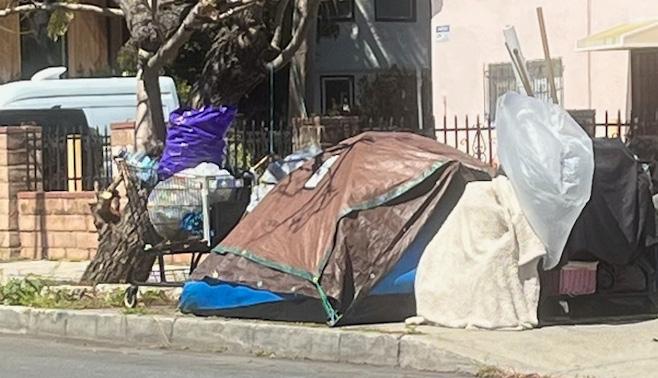
The Santa Monica City Council is scheduled to consider re-ratifying the city’s local emergency declaration on homelessness during its regular meeting Tuesday night, continuing a policy city officials say is necessary to expand services and secure outside funding amid an ongoing regional homelessness crisis.
The council meeting is set for 5:30 p.m. Tuesday at City Hall Council Chambers, 1685 Main St.
According to a staff report prepared by City Attorney Heidi Von Tongeln, the proposed resolution would renew the city’s 2025 proclamation declaring a local emergency on homelessness, first adopted in March 2025.
California Government Code requires
local governments to renew emergency declarations every 60 days until they are terminated.
City officials said the emergency declaration allows Santa Monica to accelerate programs and services aimed at addressing homelessness and preventing residents from becoming unhoused. The declaration also enables the city to pursue additional county, state and federal funding,
streamline certain municipal processes, prevent rental price gouging and authorize emergency actions by the city manager.
The city first declared a local emergency on homelessness in February 2023, citing worsening conditions for unhoused residents, including illness and deaths among unsheltered people in the region. A subsequent proclamation adopted in May 2024 was used to advance homelessness-
related initiatives, according to the report.
Officials said conditions that prompted the earlier declarations still persist, leading the council to extend the emergency through Dec. 31.
The council has approved multiple renewals over the past year, including votes in April, June, July, September, October and December 2025, as well as February and March 2026.
Santa Monica Seeks Input on $10M Human Services Grants Program
Input from an upcoming public meeting will help shape program expectations, funding priorities, eligibility criteria, and goals before the formal Request for Proposals is released in fall
The city of Santa Monica is inviting residents to weigh in on the next fiveyear cycle of its Human Services Grants Program, which distributes roughly $10 million annually to nonprofits serving vulnerable residents.
The Housing and Human Services Department, in partnership with the Human Services Commission, will hold a special meeting Tuesday, May 19, from 6
to 7:30 p.m. to gather feedback on the draft Request for Proposals for the FY20272031 funding cycle. The meeting will take place at the Civic Center Parking Structure SMI Training Room, 330 Olympic Drive, on the second-floor plaza level.
The Human Services Grants Program provides funding to public and nonprofit organizations for services addressing community needs, including support for youth and families, seniors, people with disabilities, victims of domestic violence, low-income households, and people experiencing homelessness.
Input from the public meeting will help shape program expectations, funding priorities, eligibility criteria, and goals before the formal Request for Proposals is released in fall.
Additional community engagement opportunities are planned, including a meeting at Virginia Avenue Park (date TBD) and a Cradle to Career meeting on June 1 at the Main Library.
The full timeline for the grants process includes:
- August 2026: City staff presentation to City Council on proposed funding guidelines.
- September 2026: Release of the


Request for Proposals.
- December 2026: Proposal submission deadline.
- Spring 2027: Awards announced and City Council approval of funding recommendations.

- July 1, 2027: Start of the new five-year funding cycle.
The agenda packet for the May 19 meeting will be available on the Human Services Commission website at least 72 hours in advance.































ESPN to Transform Santa Monica Beach Into Broadcast Hub for Super Bowl LXI
ESPN plans a large free fan activation on the Santa Monica Pier featuring interactive games, immersive experiences and family-friendly activities
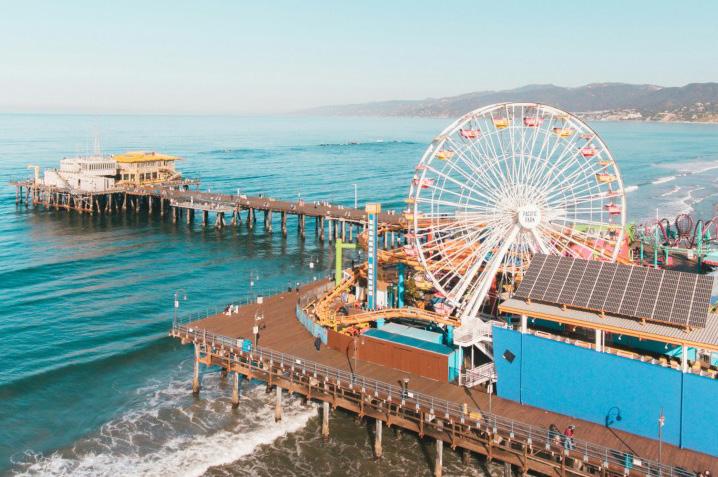
ESPN will take over Santa Monica Beach and the historic Santa Monica Pier for a week-long broadcast and fan activation ahead of Super Bowl LXI in February 2027, the network announced.
The centerpiece of ESPN’s coverage will be “ESPN Beach,” a large-scale broadcast compound on the Southern California coastline. Starting Feb. 8, the beachfront facility will serve as the network’s primary hub for daily studio programming, digital content and fan experiences throughout Super Bowl week.
Super Bowl LXI is scheduled for Feb. 14, 2027, at SoFi Stadium. It will mark

ESPN’s first time producing the Super Bowl, with the game airing on both ESPN and ABC.
The beach setup will host ESPN’s major studio shows and personalities, along with dedicated ABC programming. In addition to the broadcast operation, ESPN plans a large free fan activation on the Santa
Monica Pier featuring interactive games, immersive experiences and family-friendly activities tied to ESPN, ABC and Disney brands.
ESPN said it also intends to turn parts of Santa Monica Beach into a broader Super Bowl week destination with openair events, viewing areas, food and
merchandise. Additional details on beachwide programming will be released closer to the event.
The Santa Monica presence is part of a larger Southern California footprint that will include activity at SoFi Stadium and Disneyland Resort.

Chef Sandra Cordero debuts Bar Xuntos: A new destination for Spanish natural wine and pintxos
The Santa Monica favorite evolves into a Barcelona-inspired bodega featuring a massive 200-bottle wine list, femaleled vintners, and authentic Basquestyle snacks.
By Dolores Quintana
Bar Xuntos — Vinos Naturales & Pintxos, is the newest phase of the Spanish tapas and wine bar from Chef Sandra Cordero, an evolution from the restaurant Xuntos at 516 Santa Monica Boulevard in Santa Monica.
Tapas are the Spanish appetizers and pintxos are the Basque region’s version of the pre-dinner snacks or an accompaniment to glasses of wine and cocktails, sometimes served on skewers. While the Basque region is in Spain and France, they have a separate and proud culture and their own culinary traditions.
At the revived Bar Xuntos, you will find
Barcelona-style bikini sandwiches, seasonal croquetas and the aforementioned snackable pintxos alongside Spanish delicacies like Jamón Ibérico and conservas.
Wine director Scott Baker has harnessed his “20 year obsession” with natural wines to transform Bar Xuntos into a haven of Spanish natural wine, minimal-intervention producers, and the new wave of Spain’s most compelling winemakers.
Additionally, the wine program features a list of over 30 wines by the glass, an extensive list of over 200 bottles of artisanal wines, and a selection of vermouths, sherries, and artisanal Spanish imports. Many of the vintners are women and are part of a wave of “wild, honest” Spanish winemakers, which include “Pepe Raventós & Envínate, disrupters like Antonella Gerosa of Partida Creus, mentors such as Sara Pérez, local legends Joan and Angels Rubió, and emerging talents including Alicia Serres, Oscar Navas and Jorge Olivera.”
Bar Xuntos will be open Tuesday through Thursday from 3 p.m. to 10 p.m. and Friday through Saturday from 3 p.m. to 11 p.m. No reservations are needed for lunch service or the Pintxos & Tapas Tasing menus for dinner. The curious can follow @barxuntos for special pours, monthly winemaker takeovers and wine dinners to come.
Keep our beaches clean. Don’t put used oil and oil filters in the trash.






Santa Monica Isn’t Rebounding Yet. It’s Replacing
SM
a.r.t.
Santa Monica Architects for a Responsible Tomorrow
Santa Monica officially reports numerous new business openings, often highlighted by the media as signs of economic recovery. However, a walk through the streets tells a different story; it appears less like a revival and more like a replacement. While the influx of new businesses is positive, the key concern is understanding and identifying who can afford to relocate, maintain, or start a business here, and who cannot, for various reasons.
In recent years, Santa Monica’s commercial real estate market has experienced sustained low absorption, indicating limited filling of the growing number of vacant spaces. Although there have been occasional positive upticks in leasing after the pandemic, vacancy levels in key areas such as Downtown, the Promenade, and other major corridors persistently stay high, hovering around 30%, well above historical averages.
That matters more than headlines or political spin because absorption is a direct measure of commercial health. Right now, Santa Monica’s numbers show a market that is still fragile, uneven, and unambiguously tilted toward those with the deepest pockets.
When retail and business-space absorption is weak, storefronts and buildings can sit empty for months, sometimes years, creating a cycle that reinforces negative perceptions, weakens surrounding business activity, and drags down confidence in commercial districts. Rents may eventually be lowered or heavily discounted through short-term deals, but that alone is rarely enough to offset the real and perceived risks facing independent operators in a high-cost environment with inconsistent foot traffic, visible homelessness, untreated mental illness, open drug use, public safety concerns, and rising fears about crime and disorder.
So who is moving into Santa Monica now?
More often, it’s the tenants who can afford to; corporations, chains, franchises, regional groups, LLC investment-backed concepts, and, increasingly, pop-ups or short-term retail tenants with little longterm investment in Santa Monica’s future. That may help temporarily fill storefronts and improve vacancy statistics, but it does little to rebuild the kind of stable, locally rooted business community that once gave Santa Monica much of its identity and character.
You don’t have to look far to see how it plays out on the ground. Take The Brit Pub & Eatery, a longtime local fixture that gave way to a Taco Bell Cantina, a national brand built for scale, not neighborhood
character. Or consider The Misfit Restaurant + Bar, which closed in 2026 after 15 years in the Clock Tower building, reportedly because it chose not to renew its lease. This wasn’t a struggling newcomer; it was a popular, established destination. Its closure underscores a deeper reality: even successful independent operators are finding it harder to justify the economics of staying here. And when Blue Plate Oysterette announced its closure after 16 years on Ocean Avenue, ownership cited a difficult mix of declining foot traffic, rising costs, safety concerns, and the broader challenges facing Santa Monica’s restaurant environment. And when Fresh Corn Grill closed in 2025, the space didn’t remain a one-off independent; it was taken over by HomeState, a growing regional brand. It’s not a global chain, but it’s not a single-location neighborhood shop either.
The trend extends beyond smaller operators. Larger national retailers like REI and Anthropologie (moving in June) have also relocated from Santa Monica to nearby Marina del Rey to access more reliable foot traffic and better operating conditions, such as lower crime rates and improved environmental factors. Doc Martens just left its Promenade location. These moves underscore a broader trend: even well-established brands are carefully assessing whether Santa Monica remains a strategic part of their long-term plans. Nordstrom left and will be relocating to a new Nordstrom Rack in Marina Del Rey, and more businesses followed suit in the exodus, including True Food Kitchen after 14 years, and others drowning in the financial titanic of Santa Monica Place and Downtown. Other Business Districts and corridors are experiencing similar problems, but you get the point.
So, what is really considered “Local” now?
Some newer businesses present themselves as localized neighborhood or family-run operations, and in some cases, they are. But in many cases, they are not. That distinction matters as there is this broader shift happening beneath the surface, one that should concern anyone who values local character and economic independence. Increasingly, businesses that appear local or community-oriented are backed by private equity firms, investment groups, or large multi-unit ownership structures whose primary obligation is to maximize returns.
That doesn’t automatically make them bad businesses, but it does change the incentives.
When investment performance takes precedence, management decisions typically focus on scalability, cost efficiency, and revenue growth, often at the expense of community impact. This approach can lead to higher prices, decreased quality and customer satisfaction, standardized experiences, and

business models that favor financial gains over sustainable and unique neighborhood investments.
If Santa Monica wants to preserve the character that makes its commercial districts distinctive, it has to acknowledge a simple reality: Small, family-owned businesses are more than economic units. They are among the most democratic features of American life, giving ordinary people a chance to build something of their own without corporate backing, private equity, or a boardroom full of investors.
Nationally, this trend has played out across restaurants, retail, pharmacies, veterinary clinics, and even housing, where consolidation has often reduced competition and weakened local ownership. Santa Monica is not immune to these pressures, which present a difficult and complex challenge.
Yes, the city is taking well-needed steps to begin addressing this (fee cuts, incentives, activations, including a $3 million economic development fund). This will positively impact the Downtown and Promenade, but much more work remains to be done, and these incentives should be phased into other commercial corridors as well. For example;
Reduce and simplify all small-business zoning requirements, red tape, processing time, and review fees for all commercial and mixed-use corridors. Large operators can pay attorneys, consultants, architects, and permit expediters; small independents and many property owners often can’t. In this case, the definition of a local small business should be narrowly defined and clearly stated.
SM City staff need to provide clear, timely, and consistent service. Businesses planning to relocate to Santa Monica, as well as current local enterprises, including
architects and contractors, often face conflicting guidance on building codes, zoning, and parking requirements. Staff also need to take a more proactive approach to help the public navigate these challenges smoothly.
Property owners are also impacted and often lack extensive financial resources. Many commercial buildings are owned by small businesses, individual investors, or families who depend on rental income for support or retirement savings. Current economic and environmental challenges can be overwhelming, leading many property owners and businesses to sell their assets.
Current efforts and incentives by the city are a good start, but more wide-ranging and substantive changes are needed, or future opportunities will become reserved primarily for those who can already afford the price of admission, and Santa Monica will lose more of the unique personality that drew people here in the first place.
Michael Jolly for SMa.r.t.
Santa Monica Architects for a Responsible Tomorrow:
Dan Jansenson, Architect, (ex-Building & Fire-Life Safety Commissioner); Robert H.Taylor, Architect, AIA; Thane Roberts, Architect; Mario FondaBonardi, Architect, AIA (ex-Planning Commissioner); Sam Tolkin, Architect, (ex-Planning Commissioner); Michael Jolly, AIR-CRE; Jack Hillbrand, AIA, Landmarks Commissioner, Architect; Phil Brock (ex-mayor, retired); Matt Hoefler, Architect NCARB; Heather Thomason, Community Organizer; Charles Andrews, Journalist/Columnist; Bruce Leddy, Human Services Commissioner/ NOMA Co-Chair

BEHIND THE SCREEN
By Kathryn Whitney Boole
In The Devil Wears Prada 2, director David Frankel and Screenwriter Aline Brosh McKenna continue their story from the original movie released 20 years ago, The Devil Wears Prada. The world of these movies is high fashion publishing, and the hard copy magazine publishing business has undergone severe constrictions within those 20 years.
Frankel and McKenna don’t try to hide that hard copy magazines are struggling today under a completely upended communications environment. Frankel, who has had a solid career as a director with films such as Marley & Me (2008) and TV’s Band of Brothers (2 episodes in 2001) is uniquely qualified to bring a personal vision to this story, as he grew up in a household of journalists, which included his father, Max Frankel, longtime Executive Editor of the New York Times.
Even if you have no interest in fashion or journalism, the movie is worth seeing for the visuals of New York City, the dizzying aerial shots of buildings from awesome heights, and the often flamboyant and artistic décor in their apartments, offices, and hotel rooms. The drone-captured landscapes of Milan and Lake Como are breathtaking pictures worth the proverbial “thousand words.” One passage in the story includes a garden party at a mansion in The Hamptons that is attended by a Who’s Who of current high society and name-droppable entertainment notables, who are seen only at this party and not again in the film.
The cast inhabit this lush collection of backdrops as they struggle for survival in a cutthroat and rapidly changing industry. The illustrious Meryl Streep reprises her role as haughty “Miranda Priestly,” Editorin-Chief of the fashion magazine, Runway. Anne Hathaway is “Andy Sachs,” who worked for Priestly in the original film, left to become a successful journalist, and has now come back to write editorials at Runway.
Stanley Tucci as “Nigel” is still, after all these years, the secret glue that holds the office together. He notes that Andy’s wardrobe may have fit in at her previous position at the newspaper, but it is completely lacking in a high-fashion environment. He sets her up with gorgeous outfits left behind after high-fashion photo shoots, and she spends the rest of the movie strutting in striking ensembles, dresses, and gowns. Emily Blunt rejoins the cast as well. Formerly another one of Miranda’s

assistants, she now holds a high rank at Dior, and she seems to have adopted her ex-boss Miranda’s aura of superiority.
Some of the secondary characters are as interesting as the leads. Among the very large cast are Simone Ashley, whom you may remember as “Kate” from Bridgerton, or “Olivia” in Sex Education. She is Miranda’s new assistant, “Amari,” a quite different personality from assistants Andy and Emily in the original “Prada.” She’s grounded, quiet, confident, and poised, and commands more authority than the executives around her.

Many of the characters seem to be painfully reaching out to one another and never quite embracing each other’s feelings, except for Tucci’s Nigel, who is the heart of the movie. Streep gives the notoriously cold Miranda some well-hidden compassion and a touch of vulnerability in this movie. Hathaway’s Andy is still awkward and sensitive, even in maturity and success, which is endearing. Blunt’s Emily makes a delicious and mysterious villain – or not - as you’re never sure which side she’s on.
Helen Chen, as “Jin Chao,” Andy’s assistant, stands out as genuine. Lucy Liu has a great cameo, but I would have liked to have seen more of her character. Lady Gaga is seen in a superb performance, although she is not given a strong point in the storyline. Gaga is such a fascinating artist; she could have had more impact visually and narratively. Patrick Brammal

as Real Estate Developer “Peter” is Andy’s love interest, but it’s hard to conceive what she sees in him, as he has too little time in the narrative to develop a personality. Many of the characters are given very little screen time, so it’s hard to identify with them.
Those who will appreciate this movie most are women who were just getting a
Rated PG-13
119 Minutes
Released May 1st
foot in the door of their careers when the original film was released in 2006. This is about women who have careers they love and choose to keep them, the same as many of those who perhaps were just graduating when they saw the original movie.
It was smart of Disney Studios to release the film just before the May 4th Met Gala, which is now a worldwide fashion bellwether. Anne Hathaway and Emily Blunt were both featured on the Gala Red Carpet in gorgeously creative gowns, though Meryl Streep did not attend, as she never does the Met Gala – “it’s not her thing,” reportedly. High Fashion, and our never-ending fascination with it, is a star of this movie. After all, what celebrities are wearing often IS the conversation.
Kathryn Whitney Boole has spent most of her life in the entertainment industry, which has been the backdrop for remarkable adventures with extraordinary people. She is a Talent Manager with Studio Talent Group in Santa Monica. kboole@gmail.com