
INSIDE
Santa Monica College Launches Affordable Housing Property Management Certificate
See Page 4
Santa Monica Coastal Permitting Bill Revised After Agreement With Coastal Commission
The agreement marks a major shift from the bill's original proposal, which drew criticism from environmental organizations.
A state bill that initially sought to exempt some Santa Monica projects from California Coastal Commission review has been significantly revised following an agreement between state officials, the commission and the city.
Assemblymember Rick Chavez Zbur announced this week that Assembly Bill 1740 has been amended after negotiations between his office, the California Coastal Commission, the City of Santa Monica and advocacy groups. The revised legislation would no longer create the broad permitting exemptions proposed earlier this year. Instead, it establishes a framework intended to help Santa Monica complete and implement a certified Local
LA

Coastal Program, or LCP.
Under California law, cities with certified Local Coastal Programs can approve most coastal development permits locally rather than requiring separate approval from the Coastal Commission, while remaining subject to state oversight and appeals procedures.
The agreement marks a major shift from the bill's original proposal, which drew criticism from environmental organizations and beach access advocates who argued it would reduce Coastal Commission oversight within Santa Monica's coastal zone.
When introduced, AB 1740 would have allowed qualifying "urban multimodal communities" to approve certain projects
without individual coastal development permits from the commission. The exemptions included some transportation projects, outdoor dining expansions, temporary events and certain housing developments.
Supporters argued the measure would reduce permitting delays that have affected projects in Santa Monica, including transportation improvements and business investments. Critics, including the Surfrider Foundation, warned the bill could weaken environmental review and public oversight of coastal development.
Under the revised bill, Santa Monica would instead be placed on a timeline toward completing a certified Local Coastal Program. The legislation includes
reporting requirements and accountability measures intended to track the city's progress.
The measure also creates a statewide expedited approval process for bicycle, pedestrian and transit projects designed to improve public access to coastal areas. The Coastal Commission would be required to collect and report data on approvals, denials and pending applications under the new process.
As part of the agreement, the California Coastal Commission has withdrawn its opposition to AB 1740 and is expected to consider a support position at its July meeting.
County DA Nathan Hochman Urges Passage of Tougher DUI Penalties Under Braun’s Law
Sponsored by prosecutors and MADD, Senate Bill 907 closes legal loopholes for repeat DUI offenders.
Los Angeles County District Attorney Nathan J. Hochman called on state lawmakers to pass a bipartisan reform package aimed at dramatically increasing penalties for repeat drunk drivers and vehicular manslaughter.
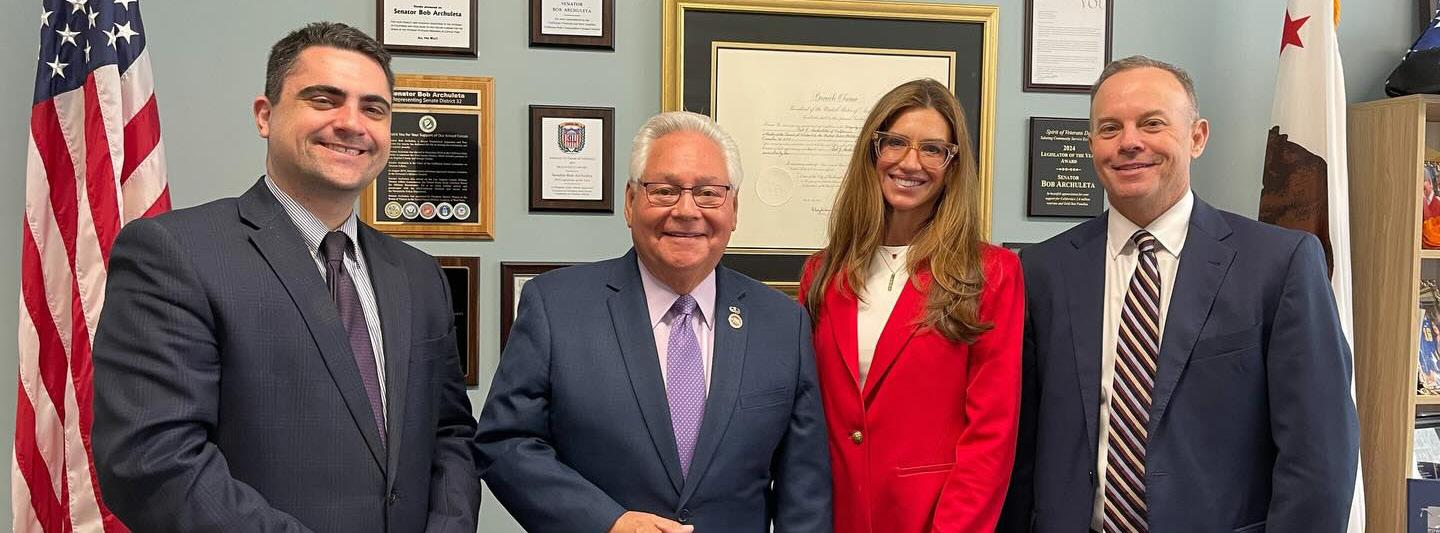
The legislation, known as Senate Bill 907, advanced to the State Assembly Public Safety Committee after securing a unanimous 36-0 vote in the State Senate on May 26, 2026. Authored by Senator Bob Archuleta, D-Los Angeles, and co-

sponsored by Mothers Against Drunk Driving alongside the Orange County District Attorney's Office and the CA Safe Roads Coalition, the bill introduces severe sentencing enhancements for chronic offenders.
A central component of the package is designated as "Braun’s Law" to honor Braun Levi, an 18-year-old Loyola High School student killed by a repeat drunk driver, Jenia Belt, in Manhattan Beach last year.
The provision mandates that any
motorist whose driving-under-theinfluence charges are dismissed or reduced to a lesser offense must still receive a formal "Watson Warning." This advisory formally notifies drivers that operating a vehicle while intoxicated is inherently dangerous to human life, establishing the legal groundwork to file second-degree murder charges if they subsequently cause a fatal crash.
Beyond closing the advisory loophole, SB 907 targets repeat offenders by implementing automatic sentencing
enhancements for any individual convicted of a new felony driving-under-the-influence offense or gross vehicular manslaughter while intoxicated who holds a prior felony conviction on their record.
The bill also boosts prison sentences for drivers who commit a hit-and-run causing injury or property damage if they have been convicted of an impaired driving violation, a wet reckless charge, or vehicular manslaughter within the preceding 10 years.
Santa Monica’s Police Chief addresses the lack of hate crime charges in Promenade assault case.
Chief Darrick Jacob has issued an open letter to Westside residents.
Santa Monica Police Chief Darrick Jacob has written an open letter to the residents of the Westside after concerns about the assault on a Jewish man near the 3rd Street Promenade on May 24.
Concern regarding the suspect’s actions and use of certain words against the people who were attacked has grown on social media and other public forums after the charges against the suspect did not include a hate crime enhancement. Santa Monica’s Police Chief wanted to address the issues with the following letter:
I want to personally follow up regarding the May 24 assault and dog bite incident near 3rd Street and Broadway. I understand the concern this incident has caused, particularly among members of Santa Monica’s Jewish community and others
who have viewed portions of the incident online.
The Santa Monica Police Department unequivocally condemns antisemitism, hate, and violence in all forms. We understand that reported language associated with antisemitism can cause real fear and harm, especially given the rise in antisemitic incidents nationally and internationally.
SMPD reviewed the incident for potential hate-motivated conduct. To support a hate crime allegation or enhancement, the evidence must show that the crime was motivated, in whole or in part, by bias against a protected class, or that the victim was targeted because of actual or perceived membership in a protected class.
Based on the evidence developed during the investigation, including the victim’s own statements, the facts did not meet the legal standard for a hate crime allegation or enhancement. While the language used during the incident was disturbing and harmful, the evidence did not show that the victim was targeted because of actual or perceived Jewish identity, Israeli identity, or any other protected class.
The investigation also found that the


suspect made similar statements toward others who were not Jewish or perceived to be Jewish.
That does not make the suspect’s conduct acceptable. It does not minimize the fear caused by the incident or the impact it had on the victim, witnesses, or the broader community. Criminal threats are a serious felony charge, and the Los Angeles County District Attorney’s Office filed one count of criminal threats and one count of battery based on the evidence submitted.
I recognize that this explanation may not satisfy everyone who saw the video or heard reports about the language used. I also understand why many in the community viewed the incident through the lens of

rising antisemitism and felt strongly that it should be treated as a hate crime. SMPD takes those concerns seriously.
Please know that SMPD remains committed to the safety of Santa Monica’s Jewish community. We will continue to maintain close communication with community leaders, religious institutions, and partner organizations, and we welcome continued dialogue about safety concerns, hate-motivated conduct, and how we can continue supporting the community.
Respectfully,
Chief Darrick Jacob Santa Monica Police Department









































Santa Monica College Launches Affordable Housing Property Management Certificate
First for-credit affordable housing property management program at a California community college to begin in fall
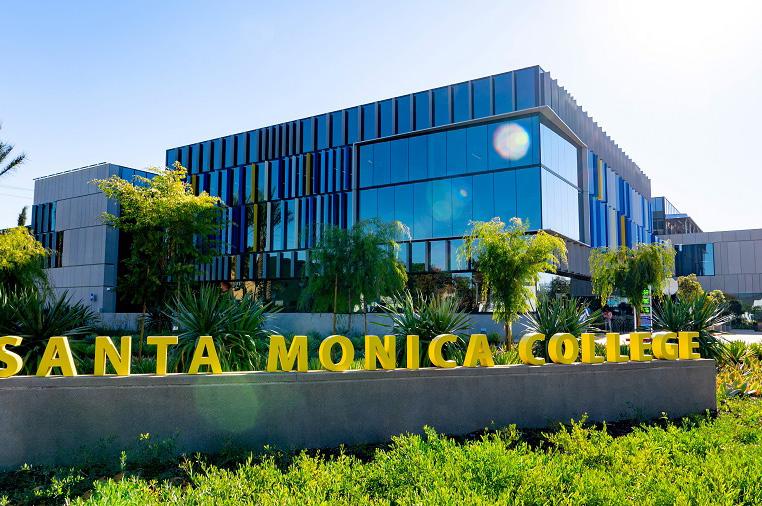
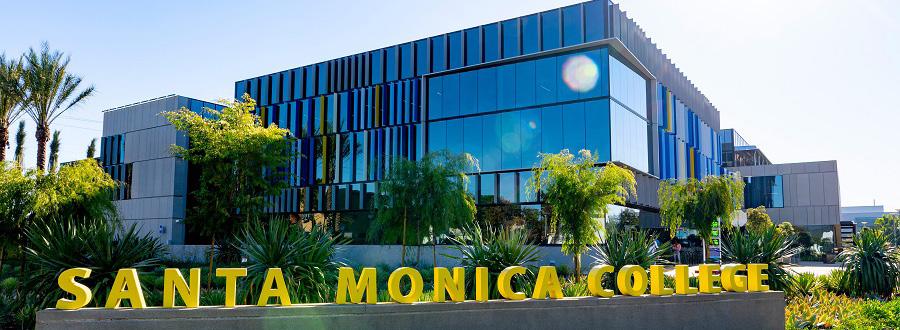
Merritt Community Capital Corporation, a nonprofit affordable housing investor and lender, and Santa Monica College have launched a new workforce development program aimed at preparing students for careers in affordable housing property management.
The Affordable Housing Property Management Certificate of Achievement, a short-term, for-credit certificate program, will begin in the fall 2026 semester at Santa Monica College. According to the partners, it is the first affordable housing property management certificate program offered through a California community college.
Courses that count toward the certificate will also be available during the college’s summer 2026 intersession.
The certificate program was developed through Merritt’s Rising Affordable Housing Management Professionals, or RAMP, initiative, which is part of the organization’s broader Commitment to Community workforce development effort. The initiative is designed to create pathways into affordable housing management careers while addressing workforce shortages in a sector that plays a key role in housing stability.
Santa Monica College first introduced a three-unit Affordable Housing Property Management course during the spring 2026 semester. Following state approval, the college will begin offering the full Certificate of Achievement in fall 2026, with credits earned through the introductory course applying toward the credential.
The program will provide students with practical training in affordable housing operations, a specialized certificate credential and preparation for careers supporting affordable housing communities. Program leaders said the curriculum is intended to equip students with skills needed to manage affordable housing properties while helping residents maintain access to safe and stable housing.
Property managers serve a critical function in affordable housing communities by overseeing operations, supporting residents and helping ensure the long-term sustainability of housing developments. As demand for qualified professionals in the field continues to grow, the RAMP initiative seeks to expand access to career opportunities and leadership development within the industry.
“As the affordable housing industry grows, so does the need for skilled property managers to support residents and preserve communities long-term,” said Ari Beliak, president and chief executive officer of Merritt Community Capital Corporation.
“RAMP is a direct response to that demand and reflects our commitment to building a stronger workforce. Merritt is proud to partner with SMC on RAMP’s curriculum and long-term growth.”
Jason Beardsley, vice president of academic affairs at Santa Monica College, said the partnership aligns with the college’s mission to prepare students for careers that address regional workforce needs.
“Santa Monica College’s priorities to train a workforce that is responsive to regional labor market needs — especially in order to advance outcomes both for our students and to help our local communities, particularly those who live in affordable housing — align closely with RAMP and Merritt’s objectives,” Beardsley said. “We look forward to this continued partnership.”
The new certificate joins several workforce-focused programs introduced by Santa Monica College in recent years, including a Homeless Services Work Certificate and an expanded real estate program.


BEHIND THE SCREEN
By Kathryn Whitney Boole
When you hear a great song on the radio, on someone’s playlist, or at a concert, you may be struck by the poetry of it. Maybe it awakens emotions, changes the way your day is going, or it may even change the trajectory of your life. But you don’t think of the song as a catalyst for transformation in the lives of its creators. Power Ballad is a compelling movie about the creation of a simple and touching song, how it affects the artists who wrote it, and what happens when you add to its recipe marketing, showmanship, publicity, and money.
Power Ballad is a sincere and honest study of how the music business works, told in story form. It’s a deep dive into the music business, a profession that can devour those who seek to make a living from it. As in-not every musician grows up with the guidance of parents like Taylor Swift’s. Music is a career often glued together by the polar opposites of artistry and highly developed business acumen.
In the film, Paul Rudd plays “Rick Power,” a singer-songwriter who has “settled” for family life, with a career as a wedding singer to make ends meet. At one of his gigs, he meets “Danny Wilson,” played by popular music star and actor Nick Jonas. Later that evening, post-wedding party, the two get together, have more than a few beers, bond over their music on an artistic level, and a song is born. This song propels the action of the film. Gary Clark, who co-wrote that song with director John Carney, was once in a band called “Danny Wilson,” hence the meaning underlying the name of Jonas’s character.
You may have seen the work of director Carney. He wrote and directed Sing Street, released in 2016, a film that has gained a cult following over the years. It’s also about musicians. His first film, Once, is a highly acclaimed love story about two street musicians, filmed on two camcorders in 3 weeks for a budget of $150,000. Carney himself was bassist and vocalist for an Irish band called The Frames from 19901993, so he has lived experience to offer to his characters. The star of his movie Once was The Frames front man, Glen Hansard. Carney is truly an artist whose medium is film.
Paul Rudd is an actor you may first remember seeing on TV’s Friends in the early 2000’s, or on Friends reruns, depending on your age. He played “Phoebe’s” love interest and eventual husband, a fan-favorite character. At that


point, he had already been working on film and TV since 1992. You might muse that Rudd is perhaps an early form of AI, because his look has aged very little in the almost 35 years he’s been acting. Rudd is always working, and that is probably due not only to the fact that he’s a superb actor and fun to watch, but that he’s known as one of the nicest people in the business.
In Power Ballad, he plays a singersongwriter-guitarist so convincingly that I thought he must have played in bands earlier in his life. Nope! Rudd notes, “I play guitar like actors play guitar, which is annoying.” Rudd did, however, put in his time learning the art of acting. He moved around a lot as a child due to his parents’ work, so he was constantly absorbing new places and personalities, always trying to fit in. He attended the University of Kansas, then the Academy of Dramatic Arts in West LA and a 3-month intensive at the British Academy in Oxford, UK. Rudd is completely convincing as frustrated singer-songwriter Rick in Power Ballad.
Nick Jonas, on the other hand, is a wildly popular musician who is honing his skills

as an actor. He gained fame as a founding member of the boy band the Jonas Brothers alongside his brothers Joe and Kevin. He’s a multi-platinum Grammy-nominated artist, and he’s made albums both solo and with his brothers. Nick began performing children’s roles at the age of 7 on Broadway. He has appeared in the Jumanji franchise and other films, including Scream Queens. He was cast in Les Misérables in London’s West End and has hosted Saturday Night Live.
Being homeschooled allowed him to begin a successful career as a child, but his life was not always easy, as he was diagnosed with Type 1 diabetes at the age of 13. Nick married actress Priyanka Chopra in 2018; they have a 3-year-old daughter, and the couple devote time to the Children for Change Foundation and raise
money for diabetes awareness among other causes.
Power Ballad is the story of a song and its surprising power to change the lives of those who created it and those who hear it. Carney was inspired to write and direct the story when he saw a man in the street one day carrying a guitar in one hand and his daughter on his other arm, taking her to school. He said that this image of a rocker hanging on to his dreams while dealing with the responsibilities of family became the inspiration for the story.
Kathryn Whitney Boole has spent most of her life in the entertainment industry, which has been the backdrop for remarkable adventures with extraordinary people. She is a Talent Manager with Studio Talent Group in Santa Monica. kboole@gmail.com
AB 1740’s Real Target Isn’t Santa Monica
SM a.r.t.
Santa Monica Architects for a Responsible Tomorrow
Part Two. A bill narrowed to one city and wired to a deadline in 2029 is a foothold — and what comes after is a coast that belongs to all of us.
The first half of this story showed that Santa Monica’s permitting delay was selfinflicted: the city never finished the coastal plan that would have ended it, and has now, under public pressure, promised to finish it by 2027. That promise should make AB 1740 unnecessary. And yet the bill is still moving through Sacramento — cut down, but alive, and built around a deadline in 2029.
To understand why, you have to look at what the bill became, and who that deadline is pointed at.
What the amendments took away AB 1740 did not begin as a Santa Monica bill. As first written, it would have let more than a dozen dense, transit-rich coastal cities skip Coastal Commission permits for a wide range of projects, with the arrangement running all the way to 2037. In plain terms, it was a statewide loosening of coastal oversight.
That version is gone. One committee at a time, the bill shrank: from a dozen cities to a single one, Santa Monica; from a broad reach of coast to one narrow band between Wilshire and Pico Boulevards; from 2037 to 2029. The sponsors lost most of what they came for. What they kept is smaller, and more telling: a foothold. The author, Assemblymember Rick Chavez Zbur, has been candid about it — he has said the single-city limit was meant to let other cities be added “in another year,” that the bill’s “basic architecture remains intact,” and that he views it as a first step toward reforming the Commission. That is not the language of a retreat. It is the language of a plan.
An onerous deadline
Look closely at what the 2029 date actually does, because it is more cunning than a plain expiration. The housing exemptions in the Wilshire–Pico band are tied to the coastal plan: if the Commission has not approved Santa Monica’s new plan by the middle of 2029, the exemptions switch on. If it does approve the plan, they switch off.
Read that twice, and notice who pays for failure. The city spent thirty years not finishing its plan — yet the penalty for an unfinished plan in 2029 does not fall on the city. It falls on the guardian, which loses its authority over the corridor. And the design quietly rewards delay: because the exemptions appear only if the plan is not done, anyone who wants those exemptions now has a reason to want the plan to fail. A city that struggled for three decades to finish this plan has just handed its most powerful allies a fresh reason to hope it struggles a little longer. That is what makes
the deadline an onerous thing rather than a neutral one. It is less a clock than a loaded one, pointed at the only independent referee still on the field.
The dangling carrot
Which brings us to the puzzle at the heart of the whole affair. The city has promised, in writing, to finish the plan by 2027. The deadline does not arrive until 2029. If the city keeps its own word, the exemptions never take effect at all. So why fight so hard to keep them?
Because the exemptions were never really the prize. The prize is the precedent.
A law that carves even one city, even briefly, out of Coastal Commission review settles a larger question: that the Legislature is willing to do this at all — which is exactly what the original statewide bill could not get done. And the 2029 deadline earns its keep twice over. It keeps the fight alive on the calendar, and it manufactures, in advance, the grievance that will sell the next bill. If the plan is not certified by 2029, supporters will say the exemptions prove the model works and should spread. If it is certified, they will say the bill was the pressure that finally forced Santa Monica to act, and that other cities need the same push. Either way, the conclusion is “more.”
A measure built so that success and failure both argue for expansion is not an ending. It is a furrowed seed.
A fair hearing
It is worth being fair to the people on the other side, because many of them are entirely sincere. They believe the Coastal Act, written in the 1970s for a wild and undeveloped coast, fits a dense, transitrich, built-out city poorly, and that routine projects should not have to wait years on a distant state agency. Real environmentalists and housing advocates hold this view, not only developers, and you can agree with a good deal of it. But a precedent is not judged only by the intentions of the people who set it. It is judged by what it lets the next person do.
What it looks like when the guardian is gone
And this is where the story reaches past Santa Monica, to anyone who has ever driven down to the ocean. Picture an ordinary afternoon a few years from now — first in some coastal town that is not yours, and then, eventually, in one that is. You go down to the beach the way you always have, and the lot where you used to park is gone, replaced by housing that needed no one’s blessing but the city’s. Or you walk the street that always opened onto a bright wedge of water, and the water has disappeared behind a row of towers built right up against the inland edge of the sand. None of it was done in secret. All of it was permitted, in broad daylight, by a city that had quietly been freed from having to ask anyone else first.
The line the bill would set aside: coastal jurisdiction is measured 300 feet inland from the bluff edge — across Ocean Avenue and into the first blufftop lots — while the shoreline migrates back toward
it. (14 CCR §13577(h).)
Here is the cruel part. By the time you can see what is missing, it has already been built. The view does not come back. The parking, and the easy access it gave, does not return. That is precisely the harm the Coastal Commission was created to prevent — not because state officials are fond of paperwork, but because the public’s share in the coast is easy to give away one project at a time, and very nearly impossible to win back. California’s voters understood that in the 1970s. They posted a guardian so the coast could not be quietly handed off, city by city, decision by decision.
AB 1740 is the first city. Whether it remains the only one is the real question on the table — and it will not be Santa Monica alone that answers it.
The city always had a clean path: finish the plan, keep the guardian, end the delay it made for itself. It has now promised to take that path by 2027. If it means the promise, the bill is unnecessary. If the bill outlives the promise, then every Californian who has ever stood with their feet in the sand is entitled to ask what it is being kept alive to do — and to make sure the answer is not

written without them.
Next: Part Three — the bluff, the beach, and the coast the sea is moving toward.
Jack Hillbrand, Architect
For S.M.a.r.t.: Santa Monica Architects for a Responsible Tomorrow.
Jack Hillbrand AIA, Landmarks Commission Architect; Dan Jansenson, Architect (former Building & FireLife Safety Commissioner); Robert H. Taylor, Architect AIA; Mario FondaBonardi, Architect AIA (former Planning Commissioner); Sam Tolkin, Architect (former Planning Commissioner); Michael Jolly ARE-CRE; Phil Brock (SM Mayor, ret.); Matt Hoefler, Architect NCARB; Heather Thomason, community organizer; Charles Andrews, columnist/ journalist; Bruce Leddy, Human Services Commissioner and NOMA Co-Chair.
NOTICE OF PETITION TO ADMINISTER ESTATE OF Carollois Sturman aka Cris Sturman aka Carollois Edrich
To all heirs, beneficiaries, creditors, contingent creditors, and persons who may otherwise be interested in the will or estate, or both, of: Carollois Sturman aka Cris Sturman aka Carollois Edrich
A Petition for Probate has been filed by Joan Gilbert in the Superior Court of California, County of Los Angeles, Los Angeles County Superior Court Case No. 24STPB02344
The Petition for Probate requests that LEE STURMAN appointed as personal representative to administer the estate of the decedent.
The petition requests the decedent’s will and codicils, if any, be admitted to probate. The will and any codicils are available for examination in the file kept by the court.
The petition requests authority to administer the estate under the Independent Administration of Estates Act. The independent administration authority will be granted unless an interested person files an objection to the petition and shows good cause why the court should not grant the authority.
A hearing on the petition will be held in Los Angeles County Superior Court as follows: Date: June 25 2026, Time: 8:30 am. Dept.: 610 The address of the court: 111 North Hill Street, Los Angeles, CA 90012.
If you object to the granting of the petition, you should appear at the hearing and state your objections or file written objections with the court before the hearing. Your appearance may be in person or by your attorney.
If you are a creditor or a contingent creditor of the deceased, you must file your claim with the court and mail a copy to the personal representative appointed by the court within the later of either (1) four months from the date of first issuance of letters to a general personal representative, as defined in section 58(b) of the California Probate Code, or (2) 60 days from the date of mailing or personal delivery to you of a notice under section 9052 of the California Probate Code.
Other California statues and legal authority may affect your rights as a creditor. You may want to consult with an attorney knowledgeable in California law. You may examine the file kept by the court. If you are a person interested in the estate, you may file with the court a Request for Special Notice (form DE-154) of the filing of an inventory and appraisal of estate assets or of any petition or account as provided in Probate Code section 1250. A Request for Special Notice form is available from the court clerk.
Petitioner LEE STRUMAN C/O Debby M Ehrlich DME & Assoc., 4305 Third Ave., Ste 3405 San Diego, Ca. 92103
Published in the Santa Monica Mirror 6/5/2026, 6/12/2026, 6/19/2026