

INSIDE
Caltrans finishes rebuilding $17 million PCH’s protective walls after Palisades fire
See Page 4
Police Search for Suspects in Deadly Santa Monica Shooting
One person is dead after an overnight shooting in a Santa Monica beach parking lot.
Detectives are searching for suspects after a shooting that took place overnight in a beachside parking lot left one person dead early Monday morning.
Santa Monica Police Department officers discovered an adult victim with multiple gunshot wounds after responding to reports of gunfire at 1550 Pacific Coast Highway, in Parking Lot One North, around 12:30 a.m. First responders attempted life-saving measures, but the victim died at the scene. Investigators believe a fight broke out between two groups just before the shots were fired. Authorities have not released

the identity of the deceased, pending family notification. No suspect descriptions are currently available, and no arrests have been made.
The Santa Monica Police spokesman said, “This remains an active and ongoing investigation. Anyone who witnessed the incident or has information is encouraged
to contact the Santa Monica Police Department at 310-458-8491. Additional information will be released as it becomes available.”
Wild 100+-mph pursuit of Santa Monica road rage suspect ends in arrest
CHP stops Range Rover after dangerous countywide chase
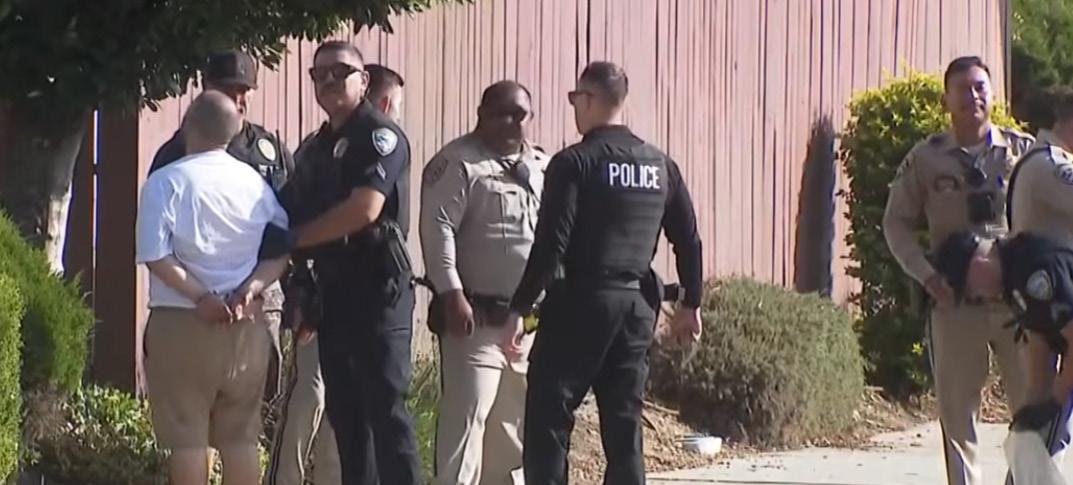
Police tackled and arrested the driver of a black Range Rover on Tuesday morning after a wild multi-freeway pursuit reaching speeds over 100 mph came to an end in the San Gabriel Valley. Initially, it was reported that the man was a suspect in the July 20 shooting, but he was suspected of a different crime on July 3.
The high-speed chase was related to a July 3 road rage incident involving a firearm near Cloverfield Boulevard and Broadway. Santa Monica Police Department investigators tracked the suspect to Pacoima around 7:15 a.m., but the driver fled when officers attempted to make an arrest, prompting local authorities to call in the California Highway Patrol. CHP officers took over the pursuit on the southbound 405 Freeway near the 118 Freeway. Television news helicopters tracked the luxury SUV as it wove through heavy morning commuter traffic along the 101 Freeway before exiting
into Koreatown, where the suspect drove recklessly into oncoming traffic lanes along Vermont Avenue.
The driver then merged onto the eastbound 10 Freeway, racing past 100 mph toward Montebello while narrowly missing other vehicles.
Just before 8 a.m., a CHP officer executed a PIT maneuver near San Gabriel
Boulevard and Hill Drive, striking the Range Rover's driver's side and spinning the vehicle to a halt in the middle of the street. Three officers quickly surrounded the SUV, yanked the driver out through the front passenger door, brought him to the pavement, and handcuffed him.
A press release from the Santa Monica Police Department said, “This suspect
and incident are unrelated to the July 20, 2026 homicide investigation at Santa Monica Pier Parking Lot 1 North,” and added, “This remains an active and ongoing investigation. Additional information, including any arrest or charging information, will be released when appropriate.
Santa Monica Planetarium August Shows to Feature Mars Rover, Great Observatories and Eclipses
Friday night shows and a family matinee will highlight current space missions, night sky viewing and solar system wonders
The Santa Monica College Planetarium will present a series of live-hosted shows in August exploring Mars exploration, space telescopes, eclipses and the sun, along with regular updates on what’s visible in the night sky.
The planetarium’s Friday evening programs begin at 6 p.m. with “The Night Sky Show,” followed at 7 p.m. by a featured topic. A Sunday Family Matinée is scheduled for Aug. 16, with the same format starting at 1 p.m. and 2 p.m. Each show runs about 40 minutes and ends with a short audience question-and-answer session with Planetarium Lecturer Sarah
Vincent. No children under age 3 are permitted at Friday shows.
“The Night Sky Show” uses the planetarium’s 4K Digistar projection system to cover the latest astronomy and space exploration news while offering a virtual tour of constellations and other celestial highlights for the coming evenings. It is scheduled for Aug. 7, 14, 21 and 28 at 6 p.m., and Aug. 16 at 1 p.m.
The featured programs include:
“Mission Close-up: Curiosity” on Friday, Aug. 7, at 7 p.m., which examines the Mars rover’s more than decade-long exploration of the Red Planet, its current location and future plans.
“The Great Observatories” on Friday, Aug. 14, at 7 p.m., and Sunday, Aug. 16, at 2 p.m., which looks at the four major spacebased telescopes, including the Hubble Space Telescope, that have provided a broad-spectrum view of the universe.
“Physics of Eclipses and Moon Phases” on Friday, Aug. 21, at 7 p.m., which prepares audiences for the partial lunar eclipse on Aug. 27 and discusses the unique geometry that allows Earth’s moon to perfectly eclipse the sun, a phenomenon


not seen elsewhere in the solar system.
“Solar System Survey: Sun” on Friday, Aug. 28, at 7 p.m., launching a new series with an exploration of Earth’s star and what makes it special as the center of the only known planetary system supporting life.
All shows take place in the SMC Planetarium, Room MSB 126 of the Mathematics + Science Building on the main campus at 1900 Pico Blvd.

Free parking is available on campus for attendees.
Tickets are available at smc.edu/tickets, with a small service fee. Pricing is $10 for adults and $7 for children ages 3-12 for individual shows. A combo ticket for both
“The Night Sky Show” and the feature program costs $16 for adults and $10 for children.
More information is available at smc. edu/planetarium
















































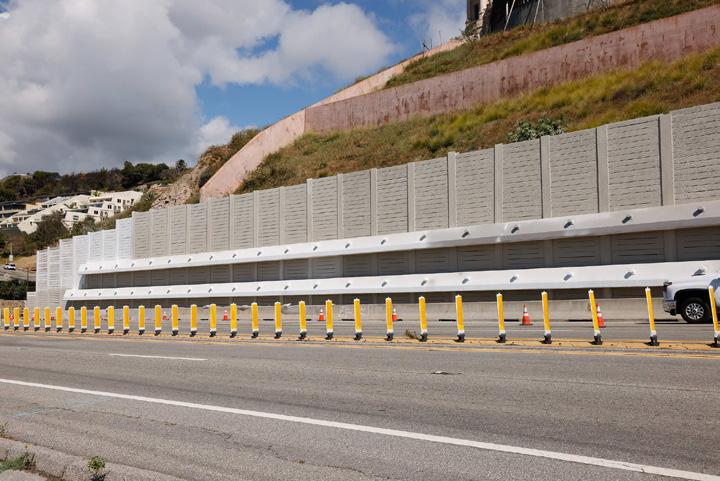
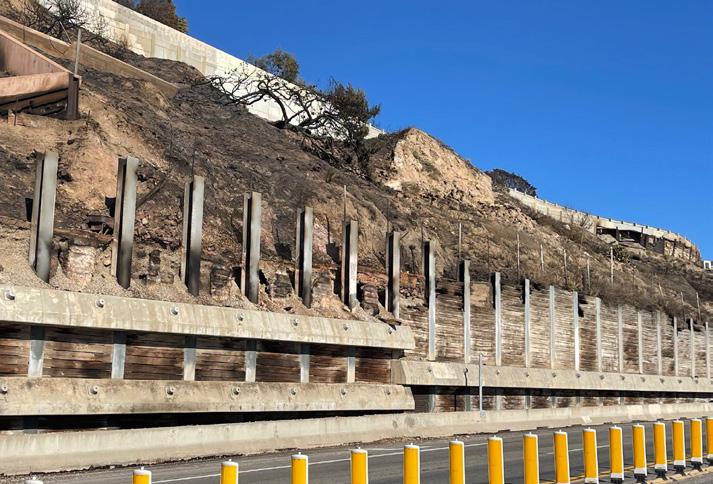
Caltrans finishes rebuilding $17 million PCH’s protective walls after Palisades fire

Crews upgraded damaged barriers near the Getty Villa and Big Rock Drive with steel and fireproof coatings to prevent future landslides.
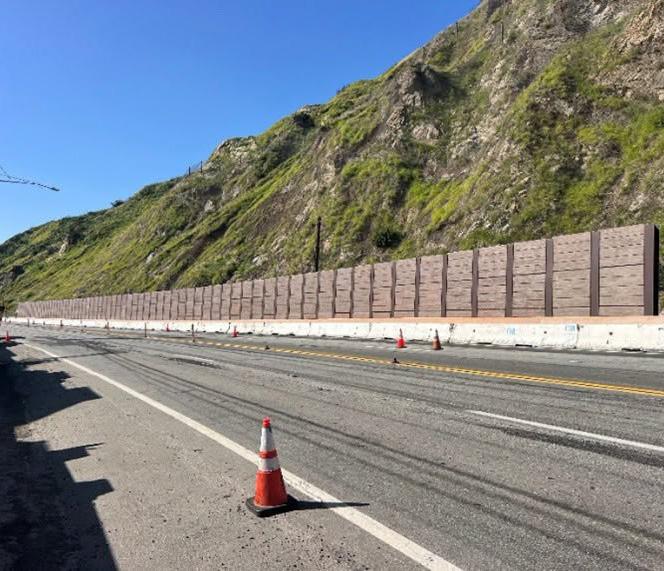
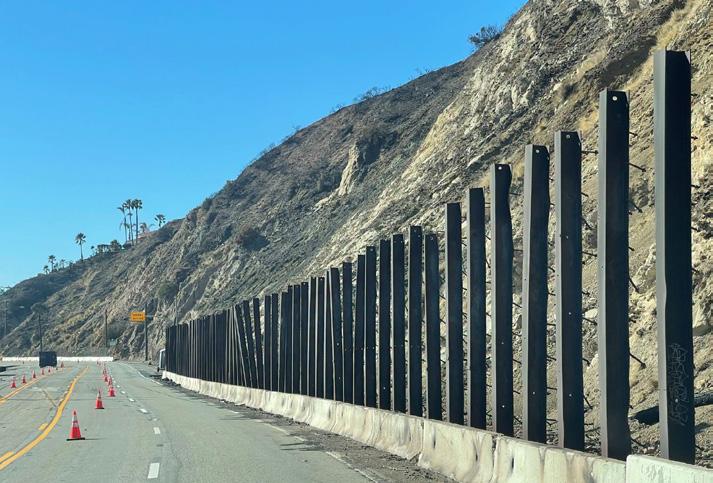
Caltrans has finished rebuilding two protective walls along Pacific Coast Highway that were damaged during the Palisades Fire, hitting a major checkpoint in the state's rush to secure the highway before winter storms.
Crews replaced a 460-foot catchment
wall south of Big Rock Drive and repaired a 710-foot retaining wall right below the Getty Villa. Both barriers are designed to keep rocks and debris from sliding onto the highway.
Rebuilding the Big Rock Drive wall cost about $17 million. Workers ripped out the damaged frame and replaced it with steel beams and concrete lagging to withstand future fires better. The project also added a new drainage system, protective wire mesh on the hillside to catch falling rocks, a security fence, and fresh pavement along the shoulder.
Just down the road, crews fixed the 710-foot "Getty Villa wall," swapping out damaged panels and spraying the wooden sections with a fire-resistant coating to keep them from burning in future wildfires.
While both walls are now fully functional, Caltrans warned that fire recovery work along PCH is not over and will continue through the end of the year.
Goldenvoice to Bring Two-Day Ocean Way Festival to Santa Monica Beach
The
Killers and Olivia Dean headline the September concert lineup on the sand.
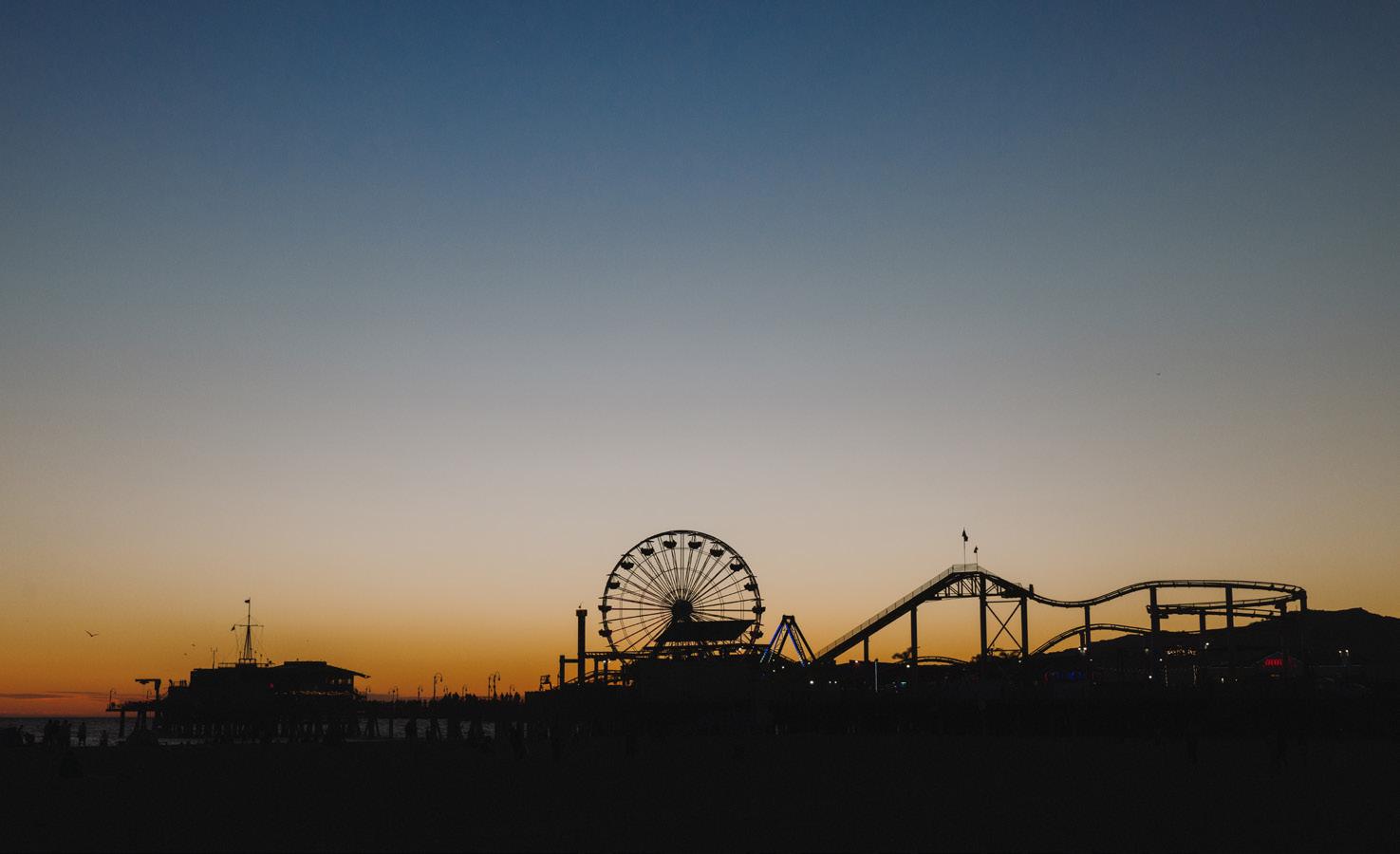
Concert promoter Goldenvoice and City of Santa Monica leaders announced a new two-day beachfront music festival scheduled for late September, marking the first major multi-day concert event directly on the local sand.
Dubbed the Ocean Way Festival, the inaugural event will run from Sept. 26 to Sept. 27, 2026, stretching across the beach between the Santa Monica Pier and Bay Street. Rock band The Killers and soul singer Olivia Dean are slated to headline the two-stage festival, performing alongside a bill that features Jack White, Khruangbin, and Sublime.

festival's
The
name pays direct tribute to Santa Monica's rich musical history, specifically drawing from Ocean Way, the local street where audio engineer Allen
Sides founded the legendary Ocean Way Recording studios more than forty years ago. For Goldenvoice, the event represents a homecoming; the promoter built its early
punk and alternative rock reputation in the 1980s by booking landmark concerts at the Santa Monica Civic Auditorium, located just blocks from the new festival site.
Temescal Gateway Park to Reopen After 1.5 Years of Fire Recovery Work
Visitors will be able to hike the rebuilt Rivas Trail to two scenic overlooks or continue onward to Will Rogers State Historic Park. The Sunset Trail is also open
Temescal Gateway Park in the Santa Monica Mountains will reopen to the public at 8 a.m. Friday after more than 18 months of fire recovery work, officials announced.
The Santa Monica Mountains Conservancy and the Mountains Recreation and Conservation Authority said the park was closed following damage from the Palisades Fire. While many areas have been restored, the popular Temescal Canyon Trail leading to the waterfall will remain closed indefinitely due to unsafe conditions caused by the fire.
Visitors will be able to hike the rebuilt Rivas Trail to two scenic overlooks or continue onward to Will Rogers State Historic Park. The Sunset Trail is also open, providing access to the Temescal Ridge Trail and Topanga State Park. The Sycamore Grove and Rubell Picnic Areas are available for public use.
Restoration involved removing
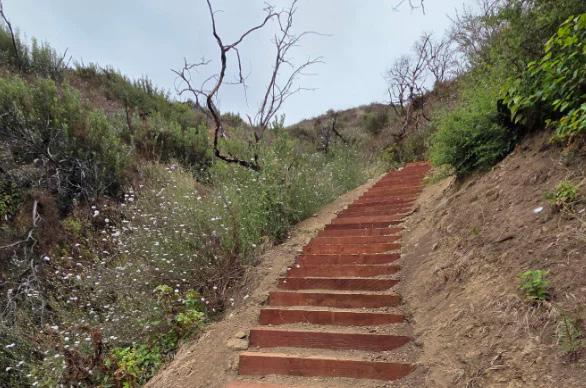
numerous fire-damaged trees, including mature oaks, to protect public safety. Trails and visitor facilities were repaired with help from the California Conservation Corps, Los Angeles Conservation Corps, Sierra Club, Los Angeles Fire Department and other agencies.
In a separate development, a gravel overflow parking lot in the park — previously used during debris removal — will serve as a temporary staging site for the Los Angeles Department of Water and Power’s power-line undergrounding project. The agreement between the
Conservancy and LADWP has not yet been finalized, according to Conservancy representative Dash Stolarz. A Conservancy statement noted that historical photographs show the site has long been used as an unplanted dirt lot for overflow parking.
Santa Monica 12U Softball Team Qualifies for Nationals, Launches Fundraiser for Travel Expenses
The fundraiser seeks to offset costs including tournament fees, transportation, lodging, meals and equipment
The Santa Monica 12U Girls Fastpitch Softball Team has earned a berth in the National Championships after a season marked by strong play and dedication, organizers said.
A GoFundMe campaign was launched to help cover travel expenses so all players
can participate in the tournament. The fundraiser seeks to offset costs including tournament fees, transportation, lodging, meals and equipment.
As of Friday, the campaign had raised $3,625 of its $4,500 goal.
The team has spent countless hours in practices and tournaments, showcasing teamwork and sportsmanship, according to the fundraising page. Qualification offers the young athletes a chance to compete against top teams nationwide.
“We want every player to have the chance to experience this once-in-alifetime opportunity, regardless of financial circumstances,” the campaign organizers wrote.
The GoFundMe page is available at: https://www.gofundme.com/f/help-santamonica-12u-girls-fastpitch-nationals


BEHIND THE SCREEN
By Kathryn Whitney Boole
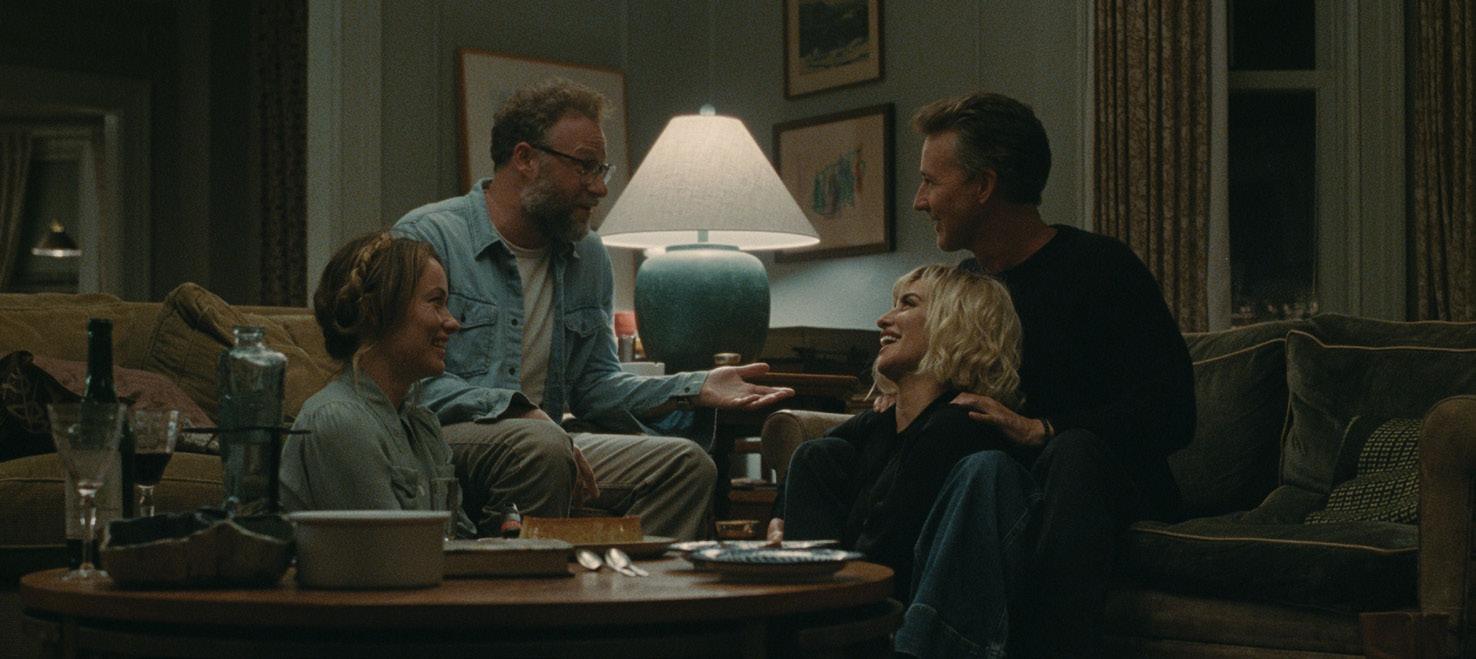
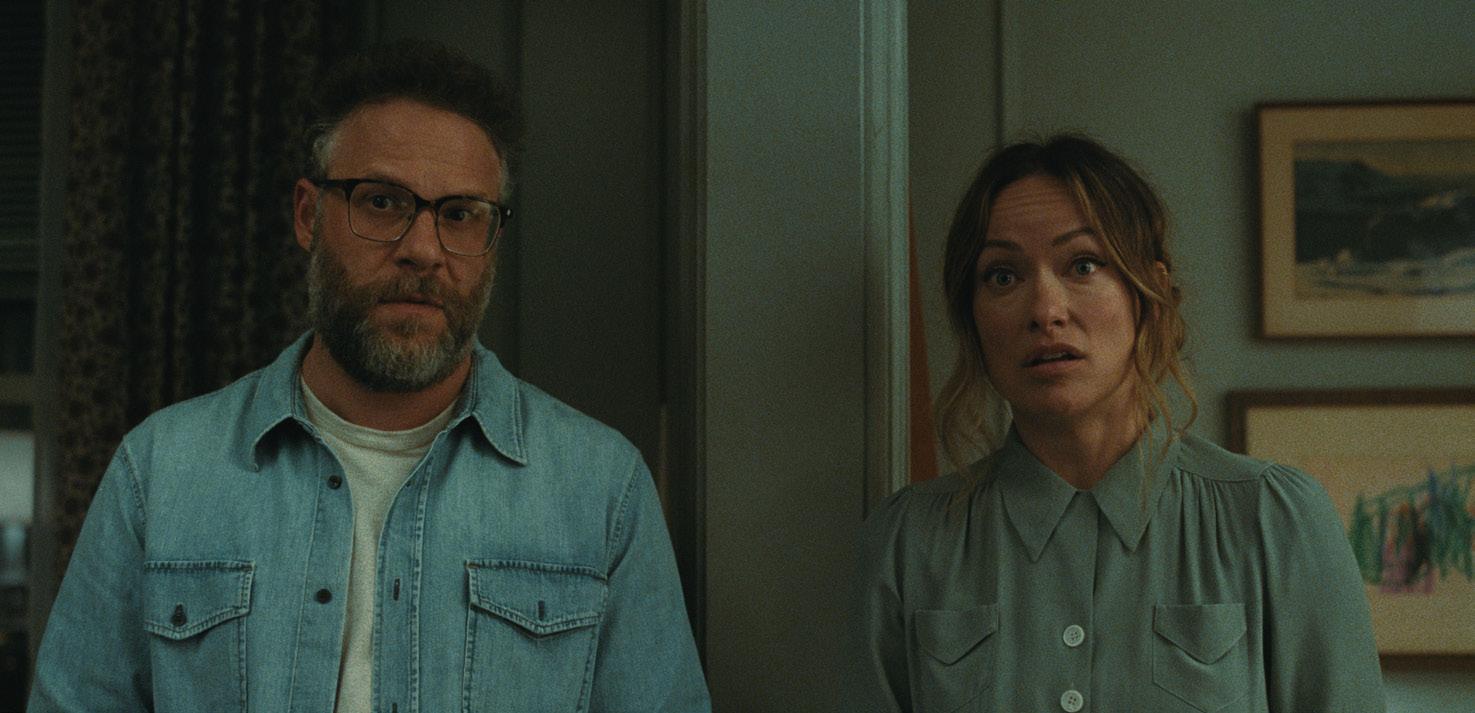
At first, Olivia Wilde did not intend to star in The Invite as the repressed “Angela.” She was only going to direct the film. The other three members of the fourcharacter ensemble, Seth Rogen, Penelope Cruz, and Edward Norton, talked her into starring in it. Wilde had been drawn to the project after reading the script by actress/ writer/producer Rashida Jones and her longtime writing partner Will McCormack. Wilde and her ensemble got together on a soundstage, creatively fleshed out their characters, and gave them voices. Wilde later brought in a psychotherapist to work with Cruz on her character, who is a psychotherapist. The film was shot in 21 days on a single set. Wilde says the story draws on a lot of her own experiences and that it was “a relief to rip my heart out and plonk it on the table.” The Invite is a skillfully told story of two couples who have a profound effect on one another during the span of one evening inside a San Francisco apartment. Normally, I find movies that are set in one room and presented in conversation to be boring, better as a play, but not The Invite. Well written and beautifully acted, this movie is riveting.
The apartment furnishings and Angela’s attire take on meaning as extensions of her personality. Angela’s apartment is as aesthetically balanced as her calming moss green blouse with matching decorative chest pockets, perhaps her attempt to find control while surrounded by emotional turbulence.
Wilde is the daughter of two investigative journalists who covered international war zones and other risky assignments. Her birth name is Olivia Jane Cockburn, and her stage name is a salute to the great Irish playwright Oscar Wilde. She grew up in Washington DC and had a typical New England boarding school education, culminating in acceptance to Bard College, but put off enrollment to take acting jobs. She spent her summers with her grandparents in County Ardmore in Ireland, which she feels is her second home.
Her parents wrote a screenplay for The Peacemaker, a George Clooney film, and as a teen, Wilde had lunch with the star and a set visit. She then knew this was the career she wanted. She was cast as “Alex Kelly” in the long-running series The O.C. in 2004 and played “Dr. Remy” in House from 2007 to 2012. She is a board member of Artists for Peace and Justice, which provides humanitarian support to Haiti. She says her parents always told her, “Don’t be boring.” I don’t think she has to worry about that.
The film opens with “Joe,” played by Seth Rogen, biking home from his job as a music teacher at a San Francisco school, riding up one of the city’s ridiculously steep hills to the point of utter exhaustion. This is the only outdoor scene in the film and serves the crucial purpose of setting the location and of leading us from the outside world into the apartment where the rest of the story takes place.
When Joe arrives home, his wife Angela is making final preparations for an intimate dinner with invited guests, a couple in their building they have never met but hear their noises at night from upstairs. The guests, “Pina” and “Hawk,” are played by Penelope Cruz and Edward Norton. The four people are similar in lifestyle but a world apart in personality.
This movie probably would not have worked without this cast. Wilde, Rogen, Cruz, and Norton created a painting come to life here. Rogen gives a more fine-tuned performance than usual as Joe. Cruz, who plays “Pina,” in the couple from upstairs, has been working in film and TV since 1989, when she started acting in her native Spain as a teen. Prior to that, she trained for years as a classical ballerina, and that is responsible, no doubt, for her graceful command of movement. Norton, a highly accomplished actor, has been working in film and TV since 1994. He knew he would be an actor since the age of 5, attended theatre schools, and began his career on the New York stage.
He is one of those rare actors who can and will transform himself completely for a role. Interesting side note - Norton’s

grandfather was real estate developer James Rouse, who founded Columbia, Maryland, and created the concept of the indoor mall.
Olivia Wilde has truly come into her own as a director. This is a beautifully done drama with comedy lurking underneath every look, every comment, every reaction. The dialogue is genuine for each character, coming from their heart, with their own style of speech and word choices, rhythm, and pace. Each character becomes more fascinating as the story unfolds.
In spite of having no car chases, bombs, knock-down-drag-out fights, or precarious stunts, this film is gripping. The tension, mostly positive, is set between the
characters. You can feel the magnetism pulling each towards and away from the others emotionally, as the balance shifts like an ocean current between them. Just to watch this ensemble of some of the finest actors working today bring to life these four people who gradually drop their inhibitions and begin to say what they’re really thinking is a gift of artistry to the audience.
Kathryn Whitney Boole has spent most of her life in the entertainment industry, which has been the backdrop for remarkable adventures with extraordinary people. She is a Talent Manager with Studio Talent Group in Santa Monica. kboole@gmail.com.

Santa Monica's Homeless Crisis: A City at Its Limit SM a.r.t.
Santa Monica has lurched from crisis to crisis over recent decades, yet one constant has endured: our homelessness epidemic. Approximately 6,000 unhoused individuals cycle through our city annually, with the majority staying less than a month. A RAND Corporation study confirms that most did not become homeless within Los Angeles County, and very few lost their footing in Santa Monica itself. Yet our community — composed of genuinely compassionate residents — has consistently shouldered far more than our fair share of the regional burden.
The nature of homelessness in Santa Monica has changed dramatically over the years. My mother, a Santa Monica lifer, recalled "hobos" congregating near the Pier in the late 1940s, their primary vice alcohol, their presence largely unthreatening. That world is gone. Today's crisis is driven by drugs of terrifying potency — Tranq, Super Meth, Fentanyl, Nitazenes — and now Cychlorphine, a synthetic opioid reportedly up to twenty times more powerful than Fentanyl, is making its way toward Los Angeles. These substances affect up to 50% of people experiencing homelessness and have produced extreme, often violent behavioral episodes that have left residents feeling unsafe in their own city.
The arrival of the light rail and the COVID-19 pandemic made an already dire situation impossible to ignore. Tongva Park, Reed Park, the southern reaches of Palisades Park, and the boardwalk south of the Pier became encampments housing people in serious, visible distress. The unhoused population — many in urgent need of shelter, mental health care, medical attention, and basic necessities — spread through our streets and alleys, overwhelming city services. On any given night, between 800 and 1,100 unhoused individuals are present in Santa Monica, and our Police and Fire departments have been forced to dedicate enormous resources to managing medical emergencies, aberrant behavior, and crime directly tied to the crisis.
Santa Monica has tried nearly everything. Compassionate meal programs on the City Hall lawn and in Palisades Park. A congregate emergency shelter called Samoshell. Approximately $10 million annually in grants to nonprofit service providers. Los Angeles County has contributed some funding, though it has simultaneously worsened conditions by mandating harm-reduction programs — distributing syringes and pipes in our city parks. At the turn of the century, SMPD attempted to arrest its way out of the problem by targeting drug activity in Palisades Park. It worked — but only
displaced the problem to Reed Park. Innovative programs have followed: SaMo Bridge, STEP Court, the Community Engagement Team, and the Homeless Liaison Program all operate with varying degrees of success. Yet despite increased arrests, constant medical triage, and a growing array of interventions, residents still do not feel safe.
The clearest measure of failure is the decimation of our downtown. For years, city officials looked the other way as homelessness hollowed out our fabled business district. Trust with residents and the retail community has been deeply eroded — and the financial and emotional toll has been enormous. The current City Manager has taken meaningful steps to reverse the damage, persuading the City Council to take urgent action to restore the Promenade and surrounding areas. Encouragingly, the City Manager has proposed closing Samoshell, located at 5th and Olympic, by the end of 2026, with the Downtown Homeless Service Center potentially closing simultaneously. For downtown, this could mean dramatically less visible homelessness and significantly less incentive for unhoused people to travel to Santa Monica specifically seeking services.
Los Angeles City and Los Angeles County are now spending billions on housing, mental health care, and services for the unhoused across the region. It is time for Santa Monica to lean on those county resources rather than continuing to fund parallel systems that strain our budget, deplete our services, and exhaust our residents' patience.
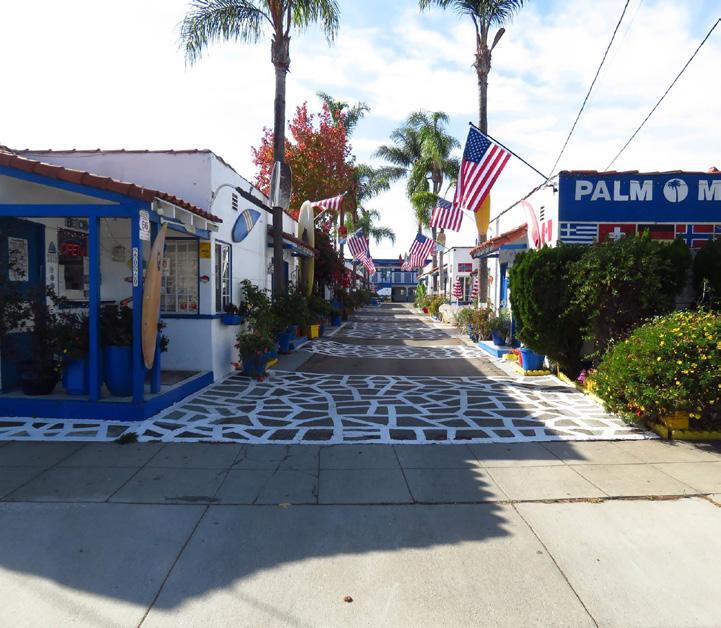
Yet the city's transition plan raises serious concerns. Rather than simply closing Samoshell, the city proposes relocating its sixty beds into residential neighborhoods — with the Pico and Sunset Park communities bearing the burden. The first target is the Palm Motel at 2020 14th Street, which has operated as transitional housing for the past two years. The original vision was promising: a carefully screened population of longtime Santa Monica residents experiencing homelessness — people not struggling with active addiction — who would stay up to six months while the County secured permanent supportive housing for them. Meals, mental health services, medical care, security at the entrance, and strict neighborhood protocols were all part of the plan. I personally presented keys to the residents selected for its 36 rooms and listened to their stories. It was a moving experience — but I left worried about the long-term effects on the surrounding neighborhood. Those worries have proven warranted.
The County gradually abandoned its rigorous screening process. Residents were no longer checked for alcohol, drugs, or weapons, and were permitted to come and go freely — an open-access policy that undermined any incentive for residents to
pursue sobriety and reintegration. Now the County program is ending, and the City of Santa Monica has decided to operate the facility itself, despite the well-documented struggles of both the City and County to deliver promised results at far greater scale.
Troubling reports have emerged about conditions at the Palm Motel — staff failing to respond to a resident in distress just outside the property line, inadequate neighborhood security, and a general erosion of the promises made to the surrounding community. Elementary and middle schools sit within blocks of the site, and parents are frightened. This fear is not irrational — it is the accumulated product of years of broken promises and deteriorating conditions.
The Pico Neighborhood has carried this burden longest and hardest. For decades, it has absorbed industrial waste, train repair yards, shelters, and supportive housing facilities while watching its concerns go unaddressed. The community's patience is not inexhaustible, and its grievances are legitimate.
So what should we do?
The Palm Motel presents Santa Monica with a genuine opportunity — if we have the wisdom and political will to seize it. The city should lease the facility and dedicate it to one of three purposeful uses, each far more constructive than simply relocating Samoshell's population into a residential neighborhood.
The first option is a high-barrier supportive housing facility, modeled on the rigorous, proven standards of the Salvation Army, Midnight Mission, or Union Rescue Mission. No drugs, alcohol, or weapons would be permitted. Residents would observe a no-exit policy for the first thirty days, during which intensive medical and mental health counseling would be provided. A guaranteed permanent housing placement outside of Santa Monica within six months, zero tolerance for misconduct, and cooperative job training would form the backbone of the program. This is compassion with accountability — the only kind that produces lasting results.
The second option is reduced-cost housing for Santa Monica College students living on the financial edge. These are young people who desperately want to build a future but lack the stability to do so. Providing affordable housing and free textbooks at the Palm would be a direct, tangible investment in our city's next generation.
The third option — and in my view the most compelling — is to revive the foster youth program that once operated on Bay Street through the YMCA. That program gave young women aging out of the foster care system two years of housing at no cost, free tuition and books, mental health counseling, job training, and the space to begin healing from years of trauma. The statistics surrounding foster youth who age out of the system at 18 are devastating:
nearly 20% become homeless almost immediately. Fewer than 3% will ever earn a college degree. An estimated 7 out of 10 foster girls will become pregnant before the age of 21. Roughly 25% are diagnosed with PTSD. These are not abstractions — they are young people in our community, failed by a system that simply stops caring when they turn 18. Reviving this program at the Palm Motel would address a profound and largely invisible need, both in Santa Monica and throughout Southern California.
It is time to listen.
On July 16, the Pico Neighborhood Association and Friends of Sunset Park held a spirited open forum to discuss the proposed placement of supportive housing in their communities. By one count, 176 residents showed up — and they were emphatic in their opposition to more disruption in their neighborhoods. Many left feeling that city staff heard their words but not their message.
That has to change.
Santa Monica's compassion is real, and it is earned. But compassion without accountability, and generosity without boundaries, has brought us to this breaking point. Our residents have been patient, engaged, and persistent. They deserve a city government that listens — not selectively, not performatively, but genuinely and with the intention to act.
Our stakeholders deserve a city that hears them and stands behind them. It is long past time to deliver exactly that.
Phil Brock, Santa Monica Mayor (ret.) for Santa Monica Architects for a Responsible Tomorrow
Dan Jansenson, Architect (former Building & Fire-Life Safety Commissioner); Robert H. Taylor, Architect AIA; Mario Fonda-Bonardi, Architect AIA (former Planning Commissioner); Sam Tolkin, Architect (former Planning Commissioner); Michael Jolly ARECRE; Jack Hillbrand AIA, Landmarks Commission Architect; Phil Brock (SM Mayor, ret.); Matt Hoefler, Architect NCARB; Charles Andrews, columnist. journalist; Bruce Leddy, Human Services Commissioner & NOMA Co-Chair.
Santa Monica Architects for a Responsible Tomorrow
A Class for Every Dream

SANTA MONICA COMMUNITY COLLEGE DISTRICT BOARD OF TRUSTEES
Dr. Sion Roy, Chair; Dr. Tom Peters, Vice Chair; Dr. Luis Barrera Castañón; Anastasia Foster; Dr. Nancy Greenstein; Dr. Margaret Quiñones-Perez; Rob Rader; Audrey Liljegren, Student Trustee; Kathryn E. Jeffery, Ph.D., Superintendent/President Santa Monica