
Revised 24-unit apartment project proposed for Montana Avenue corner in Santa Monica
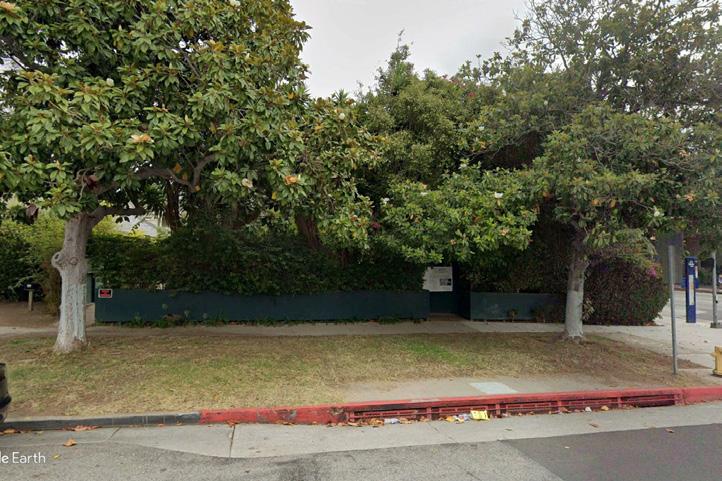

Revised 24-unit apartment project proposed for Montana Avenue corner in Santa Monica
Jurors deadlocked heavily in favor of acquittal, forcing a federal judge to declare a mistrial Friday in the case against a former Uber driver accused of setting the Lachman Fire, which is believed to be the precursor to the destructive 2025 Palisades Fire.
U.S. District Judge Anne Hwang dismissed the panel after they confirmed that further deliberations would not break an impasse on any of the three federal charges against Jonathan Rinderknecht, 30. The jury revealed it was split 10-2 in favor of a not-guilty verdict, prompting the judge to reject the prosecution's request to
order continued deliberations due to a "risk of coercion."
Rinderknecht, who pleaded not guilty in October, remains in federal custody facing up to 45 years in prison. Hwang denied a defense motion for release, stating no combination of conditions could guarantee his future court appearances. A status conference has been scheduled for July 15, with a tentative retrial date set for Oct. 19.
The absolute standstill followed a dramatic sequence of legal maneuvers. On Thursday, jurors sent a note indicating they were at a complete standstill, prompting defense attorney Steve Haney to request an Allen charge to force a consensus. By Friday, Haney shifted strategy and moved for a mistrial. Federal prosecutor Mark Williams initially resisted the motion but conceded after Hwang individually polled the jurors, and each affirmed that a unanimous decision was impossible.
U.S. Attorney Bill Essayli posted a statement about the mistrial on social media, which said, “The evidence is strong that Jonathan Rinderknecht is responsible
for igniting the fire on January 1, 2025, which eventually became the Palisades fire. We fully intend to retry this case before a new jury and obtain guilty verdicts on all charged counts.”
The government’s case hinges on the theory that Rinderknecht intentionally ignited a small blaze on Jan. 1 near the Skull Rock hiking trail, dubbed the Lachman Fire, which smoldered for nearly a week before exploding into the massive Palisades Fire on Jan. 7.
Records showed Rinderknecht had been driving for Uber in the area on the night of the initial fire and remained in the neighborhood after his final drop-off. Data from his cellphone, security camera video, and internet usage also placed him near the scene.
Haney argued for a dismissal on Monday, pointing to testimony from multiple witnesses who stated that the Lachman and Palisades blazes were entirely separate incidents rather than a single continuous fire.
Mayor Torosis will deliver the address, outlining accomplishments from the past year and discussing priorities
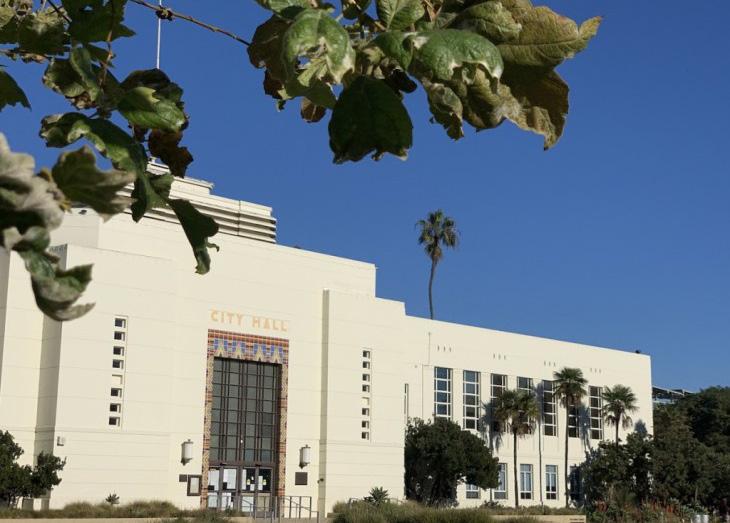
Santa Monica will hold its annual State of the City event on July 23 with an open-street gathering on Main Street that will include a mayoral address, live entertainment and information booths highlighting city programs and community organizations.
The free event is scheduled from 4 to 7 p.m. on Main Street between Hollister Avenue and Ocean Park Boulevard.
Mayor Caroline Torosis will deliver the State of the City address at 4:45 p.m., outlining accomplishments from the past
year and discussing priorities for 2027.
City officials said this year's presentation will include updates on expanded fullservice hours at the Santa Monica Public Library and the city's Realignment Plan.
The city has adopted the theme "Realignment to Renaissance," which officials say reflects efforts to activate public spaces, support local businesses and capitalize on increased tourism associated with major international sporting events, including the 2026 FIFA World Cup and the 2028 Olympic and Paralympic Games in Los Angeles.
"Building on last year's reimagined event, this year's State of the City is designed to showcase the very best of Santa Monica," Torosis said in a statement. "By bringing together city departments, local businesses and community partners, we're creating an opportunity for residents and stakeholders to connect with resources while celebrating the progress we've made."
The event will feature booths staffed by city departments and community partners, family activities, guided tours of the historic Shotgun House led by Santa
Facing up to five years in federal prison, a Malibu woman entered a guilty plea Monday for orchestrating a cross-border escape to help her convicted tech-fraudster boyfriend evade justice.
Lucinda Jane Weist Manera, 63, who also uses the alias “Lucy Weist,” pleaded guilty in federal court to one felony count of being an accessory after the fact. According to the U.S. Attorney Central District, Manera systematically funded and coordinated the international flight of 64-year-old Bernhard Eugen Fritsch after he was convicted of multi-million dollar wire fraud.
Fritsch, a tech entrepreneur, was found guilty by a federal jury in April 2025 of defrauding investors out of more than $20 million. Evidence from his nine-day trial revealed that between 2014 and 2017, Fritsch routinely fabricated the financial
performance of a software application marketed to help celebrities and influencers monetize brand endorsements. Manera was present in the courtroom when the guilty verdict was read. Fritsch, who was free on bond at the time, skipped his June 2, 2025, remand hearing and drove across the border into Mexico to avoid being taken into custody.
Federal prosecutors outlined a multimonth concealment campaign led by Manera following the escape. She lied directly to FBI special agents by claiming she had not been in communication with Fritsch around the time of his disappearance. Furthermore, she executed at least 10 payments totaling $7,475 to a third party to house the fugitive, authorized a bank charge for his hotel stay in Mexico, and conducted online research on Fritsch's behalf to coordinate his travel from Mexico to Germany, a nation that historically bars the extradition of its own citizens.
U.S. District Judge Dale S. Fischer scheduled Manera's sentencing for October 5. Fritsch was sentenced in absentia in October 2025 to 15 years in federal prison, fined $35,000, and ordered to pay $26.8 million in restitution. While the Ninth Circuit Court of Appeals dismissed


Fritsch’s appeal in April 2026 due to his fugitive status, the court noted it may reinstate the case if he surrenders to federal authorities by August 21, 2026. The

ongoing investigation is being conducted by the FBI, with Assistant U.S. Attorney Monica E. Tait of the Major Frauds Section leading the prosecution.






























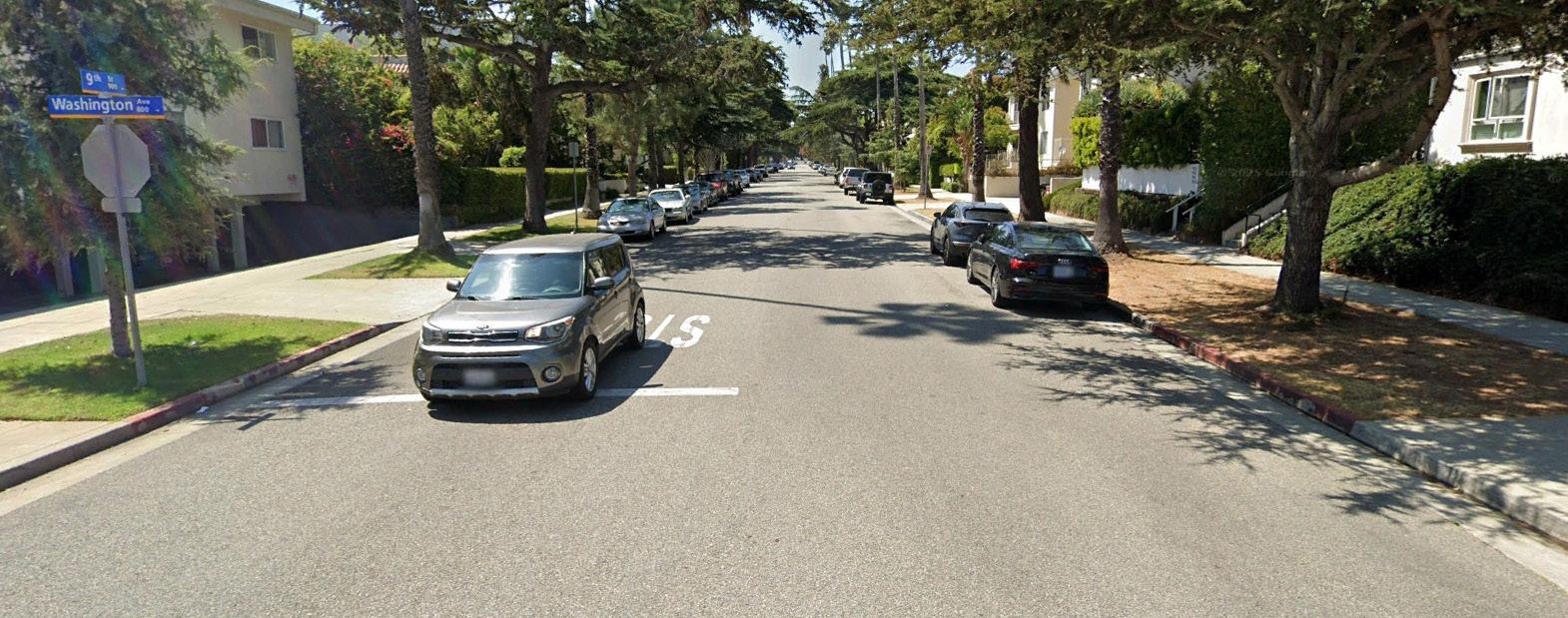
I have rented a rent-controlled apartment at 1015 9th Street since 2014. In spring 2025, our owner told us in writing that our ceilings contain asbestos and warned us not to disturb them.
About a year later, that same owner began demolishing the roof and ceilings directly above us. The only advance notice, dated April 24, 2026, called the project “noise and vibrations.”
We paid for independent testing. A statecertified consultant and an accredited lab
confirmed the material released into our homes is friable asbestos (3% chrysotile).
The owner’s own consultant, within days of the demolition, called it “undisturbed” and recommended no cleanup.
Since then, the City’s Building & Safety division confirmed the work required a permit and a Construction Means and Methods Plan, which the owner lacked; no asbestos notification was filed with regional air regulators for our floor; and a Code Enforcement case (26COM-0788) is
open.
The roof-access door has been removed against fire code, and skylights left open, exposing our top floor to weather and to intruders. Also, exposing the entire building’s occupants to severe harm. The code inspector and fire and police departments have all said they “don’t want to get involved.”
The owner agreed in writing to cover our relocation costs, then verbally rejected every moving quote we submitted. We’ve
been told we can’t see our replacement units unless we first sign to move sight unseen — and warned in writing that if we don’t move immediately, we’ll be blamed for “harming the building.”
Seven households on our floor are affected, several with young children. We are only asking that existing law be enforced. I have the documentation and will share it with anyone willing to look.
Megan Bernard Santa Monica
The Holland Group took over the development, tweaking the parking footprint and expanding income-restricted housing units.
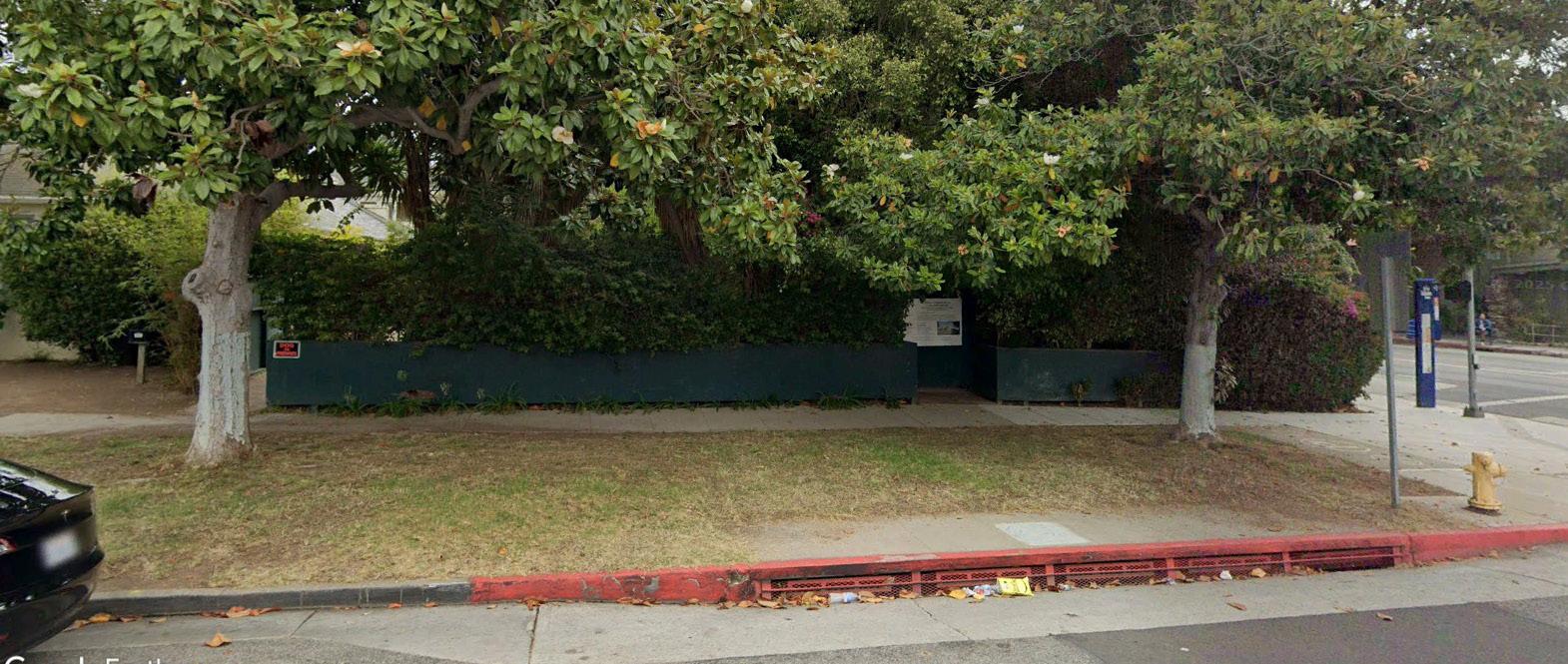
Under a new developer and a fresh design team, a revised housing proposal has been submitted to the City of Santa Monica for a four-story apartment building at a prominent Montana Avenue corner lot.
The updated application, filed last month by The Holland Group, modifies
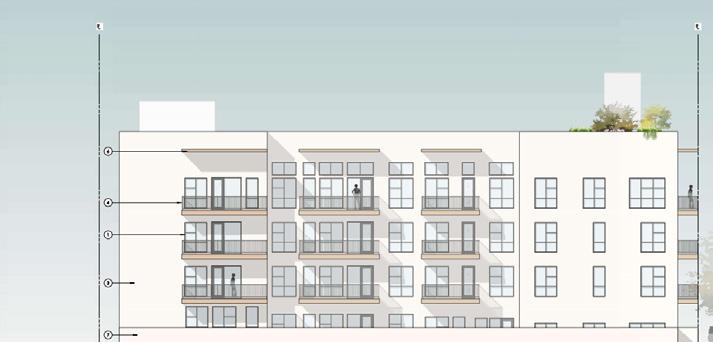
a preliminary plan submitted last year by Empire Associates for the site at 745749 17th Street. While the new blueprints maintain the original scale of 24 apartments across four stories, they introduce a diversified unit mix of one-, two-, and three-bedroom homes and slightly reduce the planned underground garage from 47 to 43 parking spaces.
To bypass baseline local zoning restrictions and achieve the building's fourstory size, the Holland Group is leveraging state density bonus incentives. In doing so, the developer has reshaped the project's
affordable housing commitments:
The current proposal consists of five apartments which will be reserved for a spectrum of moderate-, low-, very low-, and extremely low-income households. In the previous proposal, four units were earmarked exclusively for very low- and moderate-income renters.
Ottinger Architects has taken over design duties for the development. Preliminary architectural renderings depict a contemporary low-rise structure designed to integrate into the existing multi-family and commercial aesthetic of the Montana Avenue corridor.
The Main Street tasting menu destination secures a major culinary honor less than two years after opening.
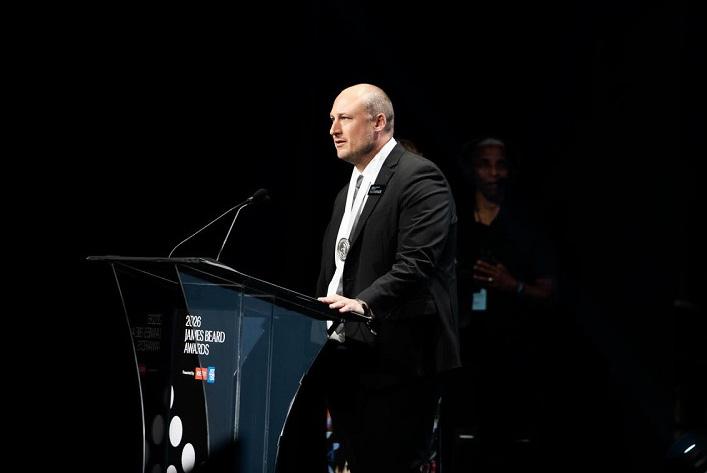
This year’s James Beard Awards have singled out Chef Dave “DC” Beran, who has won the Best Chef California Award for his Santa Monica restaurant, Seline, which opened in December 2024 and is located at 3110 Main Street.
Chef Beran said, in a social media post, “I’m not really sure where to start. A little over a year ago, I wasn’t sure if we’d have two restaurants to celebrate today. The last handful of years have been by far the most challenging of my life, and at points in the last year, I woke up some mornings wondering if our fight was really worth continuing.
But then you look around, you see the people that support you, the people that believe in you; those are the people that remind you why you do what you do. I’m
so fortunate to have those people in my life.”
Beran has previously won the James Beard Best Chef Great Lakes Award for NEXT in Chicago after being nominated three times, as Best New Chef and Rising Star Chef, before being awarded Best Chef Great Lakes in 2014. He left the restaurant in 2016 to open his own restaurant in Santa Monica.
Next also won the James Beard Award for Best New Restaurant, while Beran was executive chef at the restaurant owned by Grant Achatz and Nick Kokonas (Alinea).
Seline is described as “A tasting menu experience…Where seasonality meets surrealism,” and as “Our seasonal tasting menu ranges from 14 to 18 courses and will take you on a culinary journey that feels both familiar and unique.”
Beran also owns Pasjoli, a “fun neighborhood French bistro” experience, at 2732 Main Street in Santa Monica.
Other Los Angeles-area James Beard Award winners include Providence, a three-MICHELIN-starred restaurant, for Outstanding Hospitality, and Kato, in Downtown Los Angeles, for Outstanding Wine and Other Beverages Program.
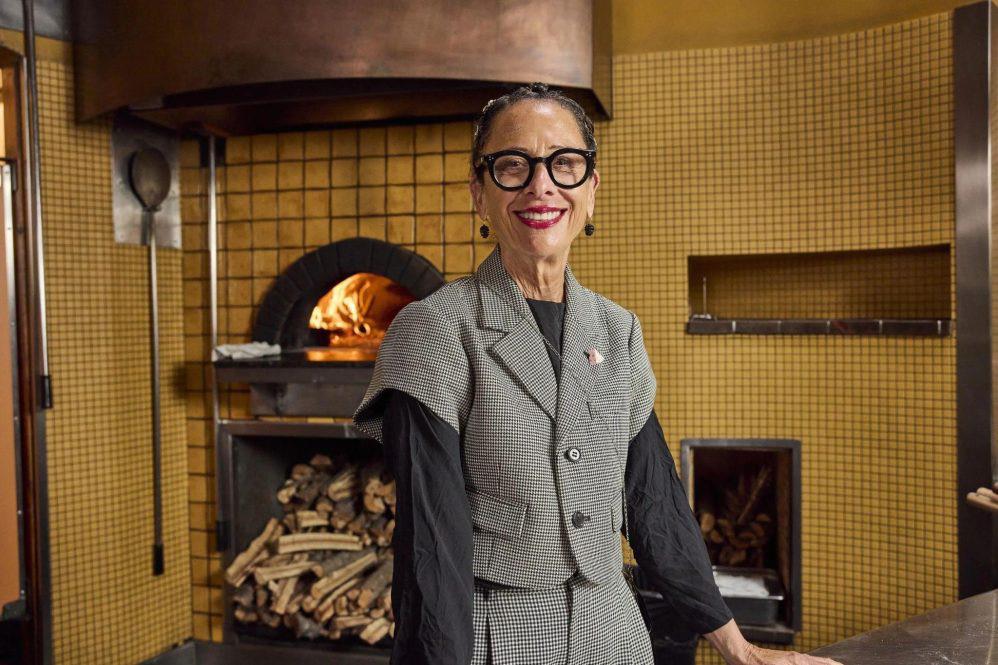
restaurateur Nancy Silverton (Mozzaplex) was the James Beard Foundation’s Lifetime Achievement honoree for 2026.
Finally, the Coalition for Humane Immigrant Rights (CHIRLA) was an Impact Award Honoree, and Humanitarian of the Year is No Us Without You - Othón Nolasko and Damián Diaz.
“Case
Adapt”
Study:
exhibition at Bergamot Station features architectural models and plans for 16 families displaced by the 2025 Palisades and Altadena fires
An exhibition showcasing resilient postwildfire home designs by leading Los Angeles architects opened at the Santa Monica City Gallery at Bergamot Station.
"Case Study: Adapt," on view through Sept. 19, features architectural models, floor plans and renderings created by 10 firms for 16 families displaced by the 2025 wildfires in Pacific Palisades and Altadena. The initiative reimagines the spirit of the historic Case Study House Program, which launched in 1945 and helped define California modernism. This new project challenges architects to design homes that are both beautiful and resilient in the face
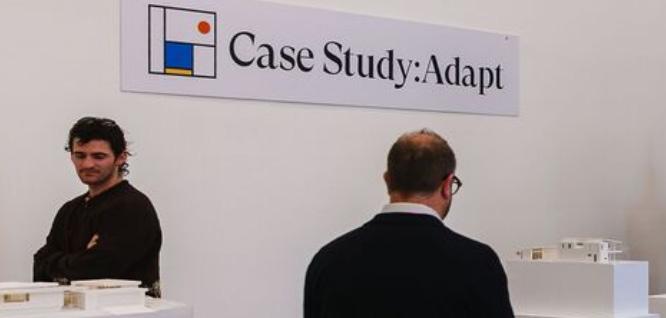
of climate change and wildfire threats. Student-built models from the USC School of Architecture, created in collaboration with the firms, are a central part of the exhibition. Each design is identified by house
number and the surname of the client. Participating architecture firms include Assembledge+, Bestor Architecture, EYRC Architects, Johnston Marklee, Marmol Radziner, Montalba Architects, Standard Architecture, Walker Workshop, Woods +
Dangaran and von Oeyen Architects.
The Santa Monica City Gallery, the city’s first municipal art gallery, is located at 2525 Michigan Ave., Suite F2, inside Bergamot Station Arts Center.
Released June 19th

By Kathryn Whitney Boole
The Toy Story films look at life from a child’s eyes, and Toy Story 5 is no exception. We make a grave mistake if we think that a child’s world is any less emotional, frightening, complicated, or full of urgency than that of an adult. A child’s life has the same dynamics, perhaps with a bit more honesty thrown in. The dolls and toys who populate Toy Story are the anchors that hold down this world, and though they seem to be adults, they still have that innocent sense of discovery, and that is what drives the Toy Story series of animated films by Disney.

In the case of Toy Story 5, the children are “Bonnie” and “Blaze,” 8-year-olds who have adults who care about them and guide them, but to the film’s credit, the kids must figure out solutions to problems themselves. In this fifth movie in the series, the toys we know and love are all back, and since time has not stood still, they have all matured. They confront challenges we all deal with as we get older. “Buzz Lightyear” realizes he needs backup and has recruited an army of “Buzz’s” to campaign with him in his crusade for good. “Woody” is stressed out about his bald spot. The music is exceptional. In addition to Jack Antonoff’s score, there are songs by Randy Newman and Taylor Swift. Andrew Stanton wrote the story and screenplay for Toy Story 5. He’s a native of Rockport, Massachusetts, a breezy small village at the tip of Cape Ann. I know this town well, used to spend my summers in the neighboring city of Gloucester, riding my bike the 4 miles to Rockport as a frequent day trip. It’s a quaint village with an overabundance of tiny painters’ studios, and it is one of the most often memorialized locations in the world in oil paintings. The predominance of visual arts and the fact that the town has been the location of many film shoots make it less improbable that a boy from Rockport would grow up to write some of the most-loved and visually poignant animated stories in modern cinema. Stanton has written some of the greatest Disney animated films, including Finding Nemo, WALL-E, and the first Toy Story.

The director, CalArts grad McKenna Harris, began her career as a character designer on the Cartoon Network series We Care Bears in 2015, and then was hired by Walt Disney Animation Studios as a storyboard artist, followed by a storyboard artist again and associate executive producer at Pixar Animation Studios. Toy Story 5 is Harris’s debut as a feature director.
Most people who watch a cartoon feature don’t realize how difficult and exacting a skill voice acting is. The actor has only their voice as a tool to record emotion or provide color and shading to their character - no facial expression, no body movementthat’s all done by the animator before they arrive to give vocal power to the player and match the visual with precision in dialogue, words, and cadence.
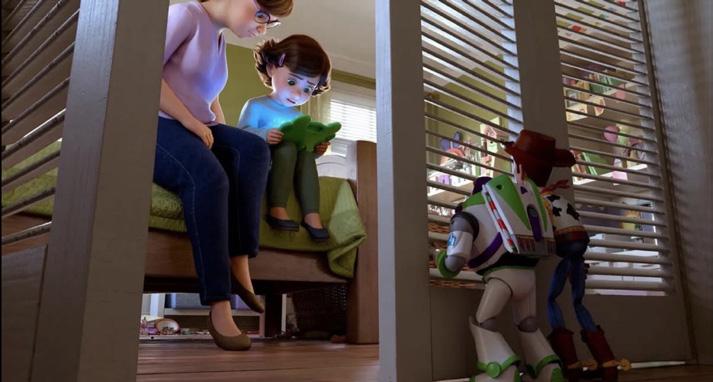
In the case of Toy Story 5, two of the lead voice actors are children. Scarlett Spears, who plays shy “Bonnie,” is an accomplished eight-year-old actress, singer, and dancer who has done film, TV, and commercials. She played “Young Glinda” in the live action film Wicked for Good, and is now a huge fan of Arianna Grande. Spears also plays a young character on General Hospital and “Young Dora” on Dora and the Search for Sol Dorado.
Mykal-Michelle Harris (no relation to the director) is “Blaze,” who befriends the lonely Bonnie. Harris started acting at the age of four and has experience in both live action and animation on film and TV. She guest-starred on four episodes of Big Little Lies in 2019 and played “Santamonica Johnson” on 36 episodes of Mixed-Ish in 2021.
Tom Hanks voices “Woody” as always,
Tim Allen returns as “Buzz Lightyear,” and Joan Cusack as “Jessie the Cowgirl.”
Conan O’Brien has a hilarious cameo as a toy named “Smarty Pants.” Keanu Reeves is the voice of “Duke Kaboom,” Alan Cumming is “Evil Bullseye,” and John Ratzenberger is “Hamm,” a lovable pig. Another notable cameo is “Pizza with Sunglasses,” voiced by the hugely talented international idol Bad Bunny. He’s not the only music superstar involved in this film - Taylor Swift sings a song she wrote for the movie, “I Knew It, I Knew You,” as the credits roll at the end.
The toys in the Toy Story movies are not just figments of the extraordinary imaginations of the animators. They have roots in real toy history. Woody was inspired by a pull-string cowboy doll and other popular cowboy dolls from the 1950’s and ‘60’s, and also by “Howdy Doody,” a marionette from one of the first children’s shows on television in the ‘50’s ( which I used to watch with glee as a toddler).
Pixar CEO John Lasseter had a “Casper the Friendly Ghost” doll with a pull string as a child, and during that time, astronaut toys became popular, hence the idea for “Buzz Lightyear” with a pull string, named after real astronaut Buzz Aldrin.
The Slinky’s featured in the movie have been around since the 1940’s, and the Slinky Dog since 1952. Mr & Mrs Potato Head were tiny 1950’s toy pieces that were sold to plug into an actual potato.
“Etch-a-Sketch” made its debut in 1960, and toy soldiers (like Buzz’s army) have been mass-produced since the 1930’s and handmade way before that.
The main theme of Toy Story 5 is how “hi-tech” toys have caused kids to become detached from the world around them. Last Sunday, that point was illustrated for me as I was having dinner in a restaurant by a family at a nearby table. Mom and Dad were busy eating and conversing. Their two cute daughters, about 3 and 5 years old, had bright-colored tablets, and the younger girl had a set of plastic headphones
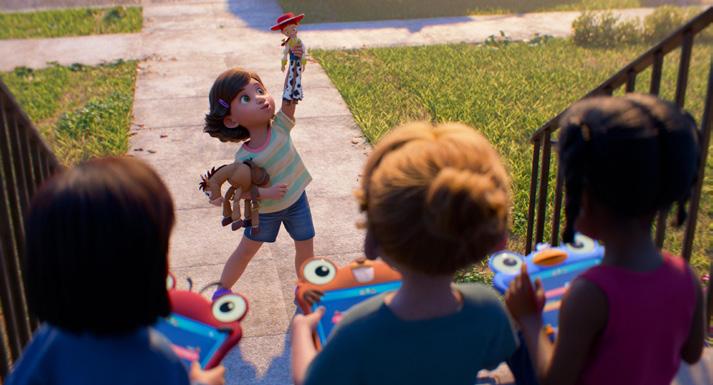


to match. The girls were riveted on their screens through the whole dinner, with no connection to their surroundings or their parents.
This story could just as well be about adults with their phones, laptops, and iPads. How many of you have read a book in the past 6 months? How many of you pick up the phone every day to call a friend? I’m as guilty as anyone. We need to take a good look at our lives and relationships.

In Toy Story 5, the gang, Woody, Buzz, and Jessie, are reunited 31 years after the original Toy Story movie, and they are as relevant as ever - Timeless! In this movie, you will find characters you can identify with, whether you’re 3 or 103. This is a good exercise for us to reconnect with our eightyear-old selves. We often don’t realize that we tend to lose a bit of innate intelligence as we grow out of our childhood. It might be worth taking a good, hard look around for it and work on retrieving it.
Kathryn Whitney Boole has spent most of her life in the entertainment industry, which has been the backdrop for remarkable adventures with extraordinary people. She is a Talent Manager with Studio Talent Group in Santa Monica. kboole@gmail.com
Santa Monica Architects for a Responsible Tomorrow
Three months ago, this column asked a simple question about the Santa Monica Airport Conversion Project: Where, exactly, would the money come from? The City's own Airport Conversion Project identifies "Balance Economics" as one of its Guiding Principles, stating that project capital costs should be linked to a reliable funding source. At the time, none had been identified.
State Senator Ben Allen and Santa Monica officials recently celebrated what was described as a $10 million Proposition 4 investment for the Airport Conversion Project. The City's website proclaimed that the project had "won state investment." Mayor Torosis called it "a meaningful step toward realizing what Santa Monica has long envisioned for this land," while Senator Allen described the funding as "transformative."
Residents could reasonably conclude that California had committed substantial funding toward construction of Santa Monica's airport park concept. But the public record does not yet support that conclusion.
The legislation tells a more nuanced story.
The relevant language appears in the 2025 Budget Act, Section 112, Item 3790102-6093, as amended by AB 107 earlier this year. It appropriates funding through the California Department of Parks and Recreation to the Santa Monica Mountains Conservancy (SMMC). Within that, appropriation appears a single sentence: "$10,000,000 is available for the restoration, rehabilitation, protection, and capital improvement of former airport lands to create parks and open space."
The statute does not identify Santa Monica as the recipient. It does not mention Santa Monica Airport, reference the Airport Conversion Project, or establish that the City has received a grant award.
I asked Senator Allen's office how Santa Monica obtained the funding. Their response was straightforward: "It was lineitemed in one of last year's budget bills... There was no application process."
This was not a grant Santa Monica competed for and won. It was a legislative appropriation establishing an eligible funding category. Elsewhere in the same budget, projects such as Sepulveda Basin, Eaton Canyon, Charles White Park, and Rosemead Park are identified by name. Here, however, the Legislature chose broader language: former airport lands. That distinction matters. It goes to the heart of whether these funds are available to Santa Monica for SMO, and on the timetable specified.
Santa Monica Airport remains an operating, FAA-certificated airport and, under the City's Consent Decree with the
FAA, cannot legally close before January 1, 2029, and even then, closure is optional, not mandatory. Yet this appropriation applies only to former airport lands, while the funds must be encumbered or spent by June 30, 2028. As of this writing, no subsequent budget amendment appears to have extended that deadline.
Those are not minor details. They define what qualifies for the grant, what the money may be used for, and the timeline in which it must be used.
The City's announcement explains that part of the funding will support feasibility studies and environmental review. Those activities can certainly occur while the airport remains open. Environmental analysis, engineering studies, and conceptual design are all legitimate planning functions.
But planning a park is not building a park, and the appropriation authorizes restoration, rehabilitation, protection, and capital improvement—language ordinarily associated with physical improvements rather than preliminary studies. If the Legislature intended the money primarily for planning activities before an airport closed, it could easily have said so.
Santa Monica residents have seen this distinction before. More than eleven years ago, the City retained RIOS to prepare plans for the 12-acre Airport Park Expansion. Extensive public outreach was conducted. Attractive renderings were produced. Conceptual designs were approved.
Eleven years later, virtually none of those proposed improvements have been built, and the 12 acres sit as empty fenced asphalt, devoid of any promised improvements. The reason is painfully familiar. No funds available. Planning documents are not construction projects.
Attractive renderings are not capital improvements. Calling land a future park is not the same as funding one.
This current appropriation also reflects a broader legislative pattern that SMa.r.t. has examined in recent columns.
AB 1740 and the City's Local Coastal Program update were presented primarily as measures to improve coastal access, bicycle circulation, and pedestrian connectivity. Yet the statutory language revisions and subsequent ‘trailer’ bill language links housing and arguably reaches well beyond those objectives to influence future use of airport property via bicycle access, pedestrian connectivity, transit linkages, and multimodal circulation paths. While the $10mil appropriation is written for former airport lands, the public announcements understandably leave many residents believing Santa Monica has already secured construction funding for an Airport Conversion Project. In both instances, the governing documents are more nuanced than the accompanying political narrative surrounding them and suggest a lack of clarity.
That observation is not an accusation. Legislatures occasionally write broad statutes that establish categories rather

than naming individual projects. Press releases naturally emphasize their hopedfor outcomes. But the legal documents establish what government is actually authorized to do. Citizens deserve to understand the difference.
And there is another unresolved issue that remains as part of the funding question.
As previous SMa.r.t. columns have explained, closure of the airport raises separate questions under California's Surplus Land Act. If portions of the property are later leased for qualifying non-agency purposes—including certain long-term educational uses permitted under Measure LC— it may trigger statutory procedures requiring priority negotiations for affordable housing. Whether those provisions ultimately apply depends on future decisions, but they remain part of the larger legal and financial picture surrounding airport conversion.
This is not an argument against parks. It is an argument for precision and transparency.
The Legislature appropriated money for the restoration and capital improvement of former airport lands. Santa Monica Airport cannot legally become former airport land before that appropriation expires. Those appear to be matters of public record.
If Santa Monica has received a formal $10mil grant award from the SMMC, the public should be able to review the application, award documents, funding conditions, eligible expenditures, deadlines, and implementation requirements. If additional approvals remain necessary before funds become available, residents deserve to know that as well. Public confidence is strengthened when governments explain not only what they state or claim will happen, but what the governing documents actually provide for and require.
That has been the common thread running through recent debates over AB
1740, the Local Coastal Program, and now this Proposition 4 appropriation. In each case, the legislation deserves to be read as carefully as the headlines announcing it.
Santa Monica residents should expect nothing less than complete transparency. The City should release the documents, explain the conditions, and show exactly how this appropriation is qualified for, and how it can be used, before telling residents that it is money in the bank. This isn’t Washington, is it?
Bob Taylor, AlA for SMa.r.t. Santa Monica Architects for a Responsible Tomorrow
Dan Jansenson, Architect, (ex-Building & Fire-Life Safety Commissioner); Robert H.Taylor, Architect AlA; Mario Fonda-Bonardi, Architect AlA (exPlanning Commissioner); Sam Tolkin, Architect, (ex-Planning Commissioner); MichaelJolly ARE-CRE; Jack Hillbrand AIA, Landmarks Commissioner Architect; Matt Hoefler, Architect NCARB; Charles Andrews, Journalist/columnist; Bruce Leddy, Human Services Commissioner and NOMA Co-Chair.
For previous articles, see www. santamonicaarcn.wordoress.com/wruno
ZipRecruiter, Inc. seeks Decision Scientist II in Santa Monica, CA to apply or dvlp causal inference & machine learning models to measure & optimize online & offline mrkt’ng efforts. Reqs. Master’s degree or foreign equiv in Bus. Analytics or rel. field & 1 yr of post-bacc. exp. as Analytical Consultant, Data Sci’nt or rel. role. Exp. must incl. Causal Inference, NLP, Scikit-Learn, Regression & Classification Clustering, Hypothesis Testing, R Programming, and Tableau. Pos’n will be HQ’d in Santa Monica, CA but is a telecommuting pos’n, allowing for remote empl’mnt f/ var unanticipated worksites throughout U.S. Salary fr. $130K to $150K/yr. Email resume: apply@ziprecruiter.com