

Displacement rates have fallen faster in Pacific Palisades than in other areas like Altadena, dropping 8 percentage points since December
The numbers indicate a surge in permitting activity, particularly in recent months
New data from Pali Builds, a community platform tracking recovery from the January wildfires, shows significant rebuilding momentum in Pacific Palisades, with 179 new home permits approved since the fires and 160 lots sold generating nearly $478 million in sales, highlighting a robust but uneven housing market.
The numbers indicate a surge in permitting activity, particularly in recent months.
More than a year after the Palisades Fire devastated neighborhoods in this affluent coastal enclave, two-thirds of residents who lived there at the time remain displaced, according to a new survey that highlights ongoing struggles and uneven recovery.
From January to August 2025, Los Angeles approved 179 new homes in the 90272 zip code, with approvals accelerating over time: only two in March but jumping to 76 in August, according
The fifth quarterly “Community Voices” report by the Department of Angels, based on responses from more than 2,000 fire survivors across impacted areas including Pacific Palisades, shows progress for some but deepening financial and emotional strain for many, particularly those who lost homes entirely.
most activity with 48 sales averaging $2.1 million. Buyer composition from January to July included 85 individuals (53%), 64 entities (40%), and 11 unknown (7%), pointing to substantial institutional investment in the recovery.
an overall decline. Still, the report states that about two in three survivors from Altadena or Pacific Palisades remain displaced. Those with damaged but standing homes are returning in greater numbers, while fewer than 1% of totalloss survivors have moved back to their original properties. Many total-loss survivors have instead purchased homes outside the burn zones.
remaining. Lower- and middle-income families face acute risks: among those earning under $100,000, few believe they could afford housing long-term without it.
insurance delays and environmental concerns.
Some
Displacement rates have fallen faster in Pacific Palisades than in other areas like Altadena, dropping 8 percentage points since December to contribute to
decried the bill, now on Gov. Gavin Newsom’s desk, for ignoring traffic, infrastructure, environmental, and public safety concerns
Temporary housing insurance is running out for many. Some 38% of survivors have already exhausted their coverage or will soon, with 22% already out and just 16% having more than a year
along with city leaders and officials, rallied against the bill. “SB 79 is 100 times worse than existing laws,” Pacific Palisades Residents Association President Jessica Rogers said, warning of risks in wildfire-prone areas like the Palisades, citing inadequate evacuation routes and infrastructure strain.
Financial gaps loom large. Homeowners estimate needing an average of more than $600,000 out-of-pocket beyond expected insurance payouts to rebuild, with the figure higher in Pacific Palisades and Malibu. Renters report needing around $250,000 on average to replace belongings and cover temporary costs. Out-of-pocket expenses top the list of rebuilding barriers, followed by
Nearly half of survivors have depleted significant savings, and more than 4 in 10 have taken on debt, with a median exceeding $100,000. Total-loss survivors and homeowners carry heavier burdens. People of color, including Latino and Black survivors, report disproportionate impacts such as cutting back on food or facing housing instability.
Mental health remains a pressing issue, with 74% of survivors saying theirs has worsened since the fires —
By Zach Armstrong
California lawmakers approved Senate Bill 79, a controversial housing mandate some have decried for ignoring infrastructure and public safety concerns, in mid-September, prompting fierce opposition from Los Angeles leaders.
The legislation, authored by Sen. Scott Wiener (D–San Francisco), allows for more multi-family housing development near transit stops, permitting taller and denser buildings closer to major transit hubs and allowing transit agencies to build on their own land. The bill also requires a share of affordable housing units in new projects.
The authority is intended to streamline rebuilding efforts, coordinate across agencies and accelerate infrastructure restoration as thousands of residents continue recovering more
In late August, a crowd of Palisadians,
In August, the Los Angeles City Council voted 8–5 in opposition to SB 79, led by Councilwoman Traci Park and Councilmember John Lee. Park, whose district includes the Palisades, called it a “Sacramento attempt to hijack local planning,” silencing residents. The Pacific Palisades Community Council also urged Newsom to veto the bill, referencing his emergency order limiting dense housing in fire zones.
The Los Angeles County Board of Supervisors voted unanimously Tuesday to establish a Disaster Recovery Rebuild Authority aimed at coordinating longterm recovery efforts following the devastating Eaton and Palisades fires that struck the region.
“This bill opens the floodgates for developers, displacement, and gentrification, with no regard for our neighborhoods,” Park said in a Sept. 13 statement, noting that Los Angeles has thousands of housing units under construction. SB 79, she argued, would undermine years of planning to place housing along transit corridors.
The new authority, housed within the Los Angeles County Department of Public Works, will oversee rebuilding efforts in fire-impacted unincorporated communities, including Altadena and areas of the Santa Monica Mountains. The measure was co-authored by Supervisors Kathryn Barger and Lindsey P. Horvath.
County officials said the authority is
Days after its passage, Park introduced a motion directing city departments to conduct a comprehensive 90-day
In a unanimous vote, the council approved a motion directing the LAFD to cancel the non-compliance notices, refund any fees already collected, and halt any process for escalating penalties
YouTube: @Los Angeles City Council
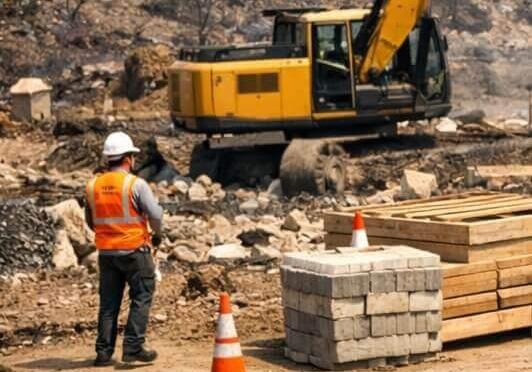
The Los Angeles City Council has voted to rescind brush clearance violation notices and associated $31 fees issued to Pacific Palisades property owners whose homes were damaged or destroyed in the wildfires.
In a unanimous vote, the council approved a motion introduced by Councilmember Traci Park directing the Los Angeles Fire Department to cancel the non-compliance notices, refund any fees already collected, and halt any process for
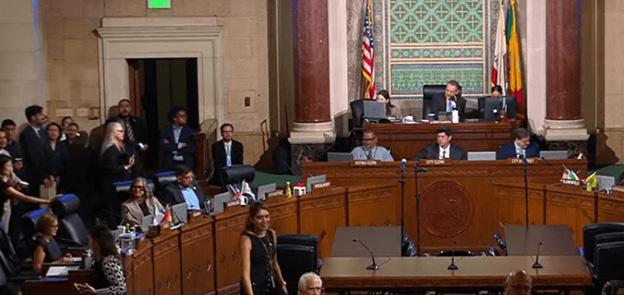
escalating penalties on affected properties.
“While these notices are issued by an automated system, it is unacceptable to send these notices to Palisades fire victims,” the motion states. “The majority of these lots are vacant, and have no structures or vegetation of concern. These property owners should not be fined for
brush clearance issues while they are in the rebuilding process.”
The council further directed the LAFD to report back within 30 days on the feasibility of developing a customized brush clearance and maintenance program for the Palisades disaster zone, including private properties, along with improved outreach and collaboration with the community.
The action comes after fire survivors received automated citations for failing to comply with brush clearance requirements, even though many properties were reduced to vacant lots with little or no vegetation. A KCAL News investigation last year found more than 300 such citations were issued to fire victims.

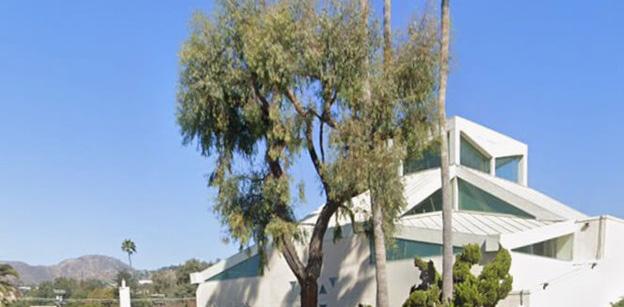
The reopening marks one of the first returns by a faith institution to Pacific Palisades following the disaster
A Pacific Palisades synagogue will reopen May 15, marking its first return since a devastating fire forced hundreds of member families from their homes and scattered the congregation across Los
Angeles.
Kehillat Israel will hold a Shabbat dinner and sanctuary rededication ceremony Friday evening, bringing congregants back together in their home neighborhood for the first time in 16 months. The synagogue building survived the January 2025 Palisades fire but sustained significant smoke damage and has since been renovated.
Of the congregation’s roughly 900 families, 250 lost their homes and another 250 were temporarily displaced, synagogue leaders said.
Since the fire, members have continued to gather for worship and community events at temporary locations throughout Los Angeles. The reopening marks one of the first returns by a faith institution to

Pacific Palisades following the disaster.
The event will also honor Cantor Chayim Frenkel, who is celebrating 40 years of
service to the congregation.
“Returning home as a community is deeply emotional and personal for me,” Frenkel said. “Music and prayer have carried us through these past 16 months.”
The synagogue’s 4,700-squarefoot sanctuary was redesigned by Herman Coliver Locus Architecture to accommodate more than 400 congregants. Renovations include a new ark, updated memorial walls, improved acoustics and enhanced audiovisual capabilities for both in-person and virtual events.
Senior Rabbi Amy Bernstein described the reopening as more than a physical milestone.
“It is a moment to gather again in a familiar space that has been transformed to meet our community members where they are now,” Bernstein said.
Board of Trustees President Matthew Ross said the congregation relied on one another for support in the aftermath of the fire and throughout the rebuilding process.
“It’s been a long road to our reopening, but now that we’re back in our reimagined building, we’re excited once again to have a central gathering place,” Ross said.

The venue will feature a separate entrance and private dining area and will offer multicourse tasting menus several nights a week
Blue Ribbon Sushi is set to reopen at Palisades Village in August following a redesign that includes an expanded outdoor dining area and a new omakase restaurant led by chef Hongki Lee.
The new concept, called Ueki at Blue Ribbon Sushi, will operate as a 14seat omakase restaurant housed within the existing Blue Ribbon Sushi space.
According to the restaurant, the venue will feature a separate entrance and private dining area and will offer multicourse tasting menus several nights a week.
Lee, a Los Angeles-based sushi chef with ties to Pacific Palisades, will lead the omakase operation. Restaurant officials said the menu will incorporate traditional Japanese techniques alongside influences from Lee’s Korean background.
The broader Blue Ribbon Sushi restaurant will also reopen with an expanded outdoor patio. Plans include a pergola with heating and lighting, additional seating and landscaping inspired by Japanese garden design.
The reopening reflects the continued importance of outdoor dining in Los Angeles following the city’s COVID-19era Al Fresco dining policies, many of which have since evolved into permanent or extended programs.

Students from several Los Angeles schools will plant the region’s second TREEAMS tree nursery on May 19 at the Aldersgate Retreat Center as part of a growing effort to restore landscapes damaged by the 2025 Palisades Fire.
The event at 925 Haverford Avenue is set to involve transplanting about 30 young oak, sycamore and blue elderberry trees into larger containers. Participants will also complete bioremediation and planting work on a slope at the nearby Pacific Palisades Woman’s Club.
TREEAMS (Trees + Dreams) is a student-led initiative inspired by Dr. Jane Goodall that aims to plant 5,000 trees across Altadena, Pacific Palisades, Malibu and surrounding areas. Because many firedamaged properties are not yet ready for replanting due to ongoing construction and soil remediation, the program uses school and community sites as temporary nurseries. Students grow and care for young trees for one to two years before they are planted permanently.
The Pacific Palisades nursery is the second site in the program, following the first at EF Academy Pasadena in May. Organizers say more schools are expected to adopt the model this fall.


Supervisors had renewed the emergency rules on a month-to-month basis since last summer. A proposed 30-day extension failed to gain majority support during Tuesday’s board meeting
The Los Angeles County Board of Supervisors on Tuesday declined to extend emergency rent price-gouging protections enacted after the wildfires, allowing the measures to expire May 28 after months of renewals.
The protections prohibited rent increases of 10% or more following the Jan. 7, 2025, windstorm and fires in Pacific Palisades and Altadena that destroyed thousands of homes and businesses and displaced
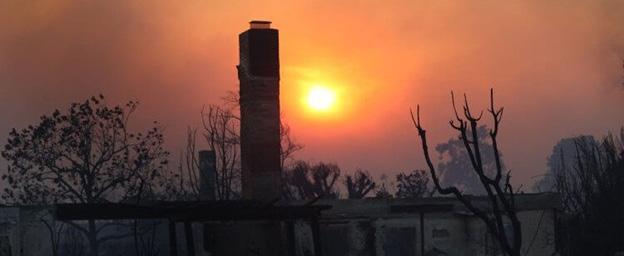
County supervisors had renewed the emergency rules on a month-to-month basis since last summer. A proposed 30-day extension failed to gain majority support during Tuesday’s board meeting.
Following the vote, Supervisor Lindsey Horvath criticized the board’s decision, saying wildfire survivors remain vulnerable more than a year after the fires.
“I’m deeply disappointed a majority of

for
County renters and survivors,” Horvath said in a statement. “We continue hearing from residents who are struggling to recover financially and stay housed as they rebuild.”
Under the emergency protections, landlords and businesses were barred from imposing excessive increases on rents, building materials and other essential

goods tied to the declared emergency period.
With the protections set to lapse, county officials warned some renters — including tenants in single-family homes not covered by certain local stabilization ordinances — could face unrestricted rent increases.
State tenant protections under California’s AB 1482 and local rent stabilization laws will remain in effect.
Continue from page 1
intended to streamline rebuilding efforts, coordinate across agencies and accelerate infrastructure restoration as thousands of residents continue recovering more than a year after the fires.
“Today’s action sends a clear message: we are fully committed to bringing dedicated resources to rebuild this community,” Barger said in a statement. She said the authority would focus on “cutting through red tape” and ensuring federal, state and local recovery funds are fully utilized.
Horvath said the county needed a centralized recovery structure capable of handling the scale of rebuilding still ahead.
“Families are still waiting to rebuild and communities are still working to recover,” Horvath said. “This effort is focused not just on restoring what was lost, but on building stronger, safer, and more climate-resilient communities for the future.”
Since the fires, Los Angeles County has opened One-Stop Permitting Centers and created a Unified Permitting Authority to speed rebuilding approvals. Officials said the county has received more than 3,300 permit applications and issued more than 2,300 residential permits. More than 1,400 homes are currently under construction in Altadena, with 49 completed homes.
The county also said it has provided more than $17 million in fee deferrals
and refunds to residents rebuilding their homes.
Under the motion approved Tuesday, the county will immediately launch an initial operational phase staffed by 13 full-time employees tasked with finalizing recovery plans, coordinating with permitting centers and advancing a broader infrastructure master plan.
The Board of Supervisors also directed the county’s Chief Executive Office to establish a disaster recovery oversight team to coordinate efforts among county departments and provide long-term strategic guidance.
Officials said the challenges ahead remain significant. In Altadena alone, the county estimates public infrastructure restoration costs could exceed $2 billion. Planned projects include helping more than 600 homes transition from septic systems to municipal sewer connections, addressing damage to private and mutual water systems, and undergrounding utilities in some areas.
County leaders are also seeking additional state and federal funding. Barger recently traveled to Washington alongside Los Angeles Mayor Karen Bass to advocate for nearly $8 billion in recovery funding, including direct discussions with President Donald Trump, according to the county.







Now is the time for lounging poolside and dining outside, while enjoying pierside fun and entertainment. Santa Monica is home to upscale accommodations, world-class restaurants and boutique shopping - all near laid-back surf culture. Come explore for yourself by booking a staycation right here in Santa Monica! Plan your stay at santamonicastaycation.com
Among the bills that passed the fiscal hurdle are measures that would give homeowners more time to find new insurance or make repairs before being dropped by their insurer.
Eight bills authored by Sen. Ben Allen, D-Santa Monica, cleared the Senate Appropriations Committee on Wednesday and now head to the Senate floor.
The measures focus on insurance reform, mobile home protections, disaster recovery and utility affordability. They must receive a full Senate vote by May 29.
Among the bills that passed the fiscal hurdle are measures that would give homeowners more time to find new insurance or make repairs before being dropped by their insurer, strengthen the Department of Insurance’s enforcement powers against harmful insurer practices, and create low-interest loans for fire-hardening and defensible space improvements.
Other bills would give residents of mobile home parks the first opportunity to purchase their community if it is put up for sale, expand transparency and resident
Continue from page 1
though that figure has stabilized after a December spike. Therapy, family support, community ties and returning home have helped some. Environmental testing has increased: 47% of totalloss survivors have had soil tested (up sharply), with 30% finding contaminants above acceptable levels.
Insurance frustrations persist. Fewer than 1 in 10 policyholders report improvements in key areas, citing delays, shortfalls, disputes and denials. Challenges like itemized lists and adjuster communication are widespread and often worsening.
Despite the hurdles, 72% of those with damaged homes plan to rebuild, repair or remediate, though 20% remain undecided. Confidence in personal recovery is low overall and strongly tied to income; Pacific Palisades survivors were more likely to feel hopeful but uncertain.
Satisfaction with government responses is minimal: only 17% approve

rights after disasters, and close loopholes in the state’s anti-price gouging law that were exploited after the 2025 Los Angeles wildfires.
Additional measures would establish spending guidelines for the Plastic Pollution Mitigation Fund and increase scrutiny of investor-owned utilities’ approved profit rates in an effort to limit costs passed on to ratepayers.
of federal efforts, with even fewer receiving recent FEMA or SBA aid. Local and state responses drew similarly low marks. Community organizations and nonprofits received far higher praise, with half of survivors receiving aid from them.
Survivors have stayed engaged, with 78% taking actions like attending meetings or volunteering. Many turn to neighbors, friends and block captains for information rather than officials.
The report, prepared by Embold Research from surveys conducted March 30 to May 10, underscores a “fragile moment” for recovery. Department of Angels co-founders Evan Spiegel and Miguel Santana called for targeted financing, streamlined permitting and sustained support to help families rebuild.
Pacific Palisades survivors expressed mixed views on the community’s future, with some optimistic about rebuilding and others worried about transformation or loss of character.
If your plumbing isn’t designed now, it likely never will be. If your plumbing isn’t designed correctly now, you can never reuse your water.”
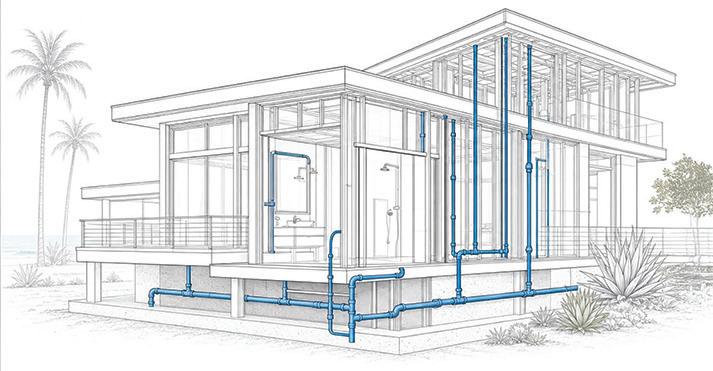
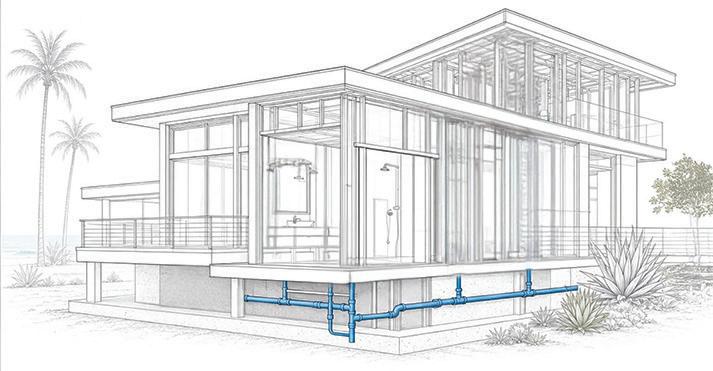
systems reuse over 58,000 gallons per year in a typical home—reducing water costs while delivering precise, e cient irrigation. Fully permitted. Proven over 36 years. Designed to run automatically without ongoing complexity. Plan ahead before your plans are finalized.
The A-Lister’s choice—because it’s simply the best system.

The Topanga Lagoon Restoration Project seeks to restore the ecosystem, improve coastal access, enhance emergency response capabilities and address sea level rise.
A multiagency effort to restore and significantly expand Topanga Lagoon — one of Southern California’s last remaining coastal wetlands — is advancing, with new designs that would enlarge the lagoon from about 1 acre to 8 acres and better protect it from sea level rise.
The Topanga Lagoon Restoration Project involves California State Parks, Caltrans, the Los Angeles County Department of Beaches and Harbors, and the Resource Conservation District of the Santa Monica
Mountains. The initiative seeks to restore biological and cultural resources, improve coastal access and emergency response capabilities, and create better interpretive and recreational amenities at the site where Topanga Creek meets the Pacific Ocean.
The project area includes Topanga State Park, Topanga Beach, and adjacent sections of Pacific Coast Highway and Topanga Canyon Boulevard. Plans call for lengthening the existing Pacific Coast Highway bridge from 79 feet to 440 feet, which would allow for a much larger lagoon ecosystem. Officials say the expansion would improve habitat for endangered species, including Southern California steelhead trout and tidewater goby, while providing more room for the wetland to adapt to climate change and rising seas.
At the 30% design stage for Topanga Beach, proposals include expanded parking and trails, improved bus stops, a new helipad, an updated lifeguard building, interpretive features and a living shoreline element. Beach development would be moved farther inland for better protection against sea level rise.
A public meeting to update the community on the post-fire restoration progress and gather input is scheduled for Sunday, May 31, from 1:30 p.m. to 3:30 p.m. at Pierce College in Woodland Hills.
The main home includes dual primary suites, soaring ceilings, skylights and wraparound windows.
A Malibu beachfront estate in the ultra-exclusive Paradise Cove enclave has hit the market for nearly $60 million, offering direct oceanfront access and approximately 90 feet of beach frontage in one of Southern California’s most coveted coastal communities.
The property, located at 28026 Sea Lane Drive in Malibu, is listed for $59,999,950 by Compass agents Carl Gambino and John Bercsi.
The compound includes a 3,795-squarefoot main residence with four bedrooms and five bathrooms, along with a separate self-contained beachfront cabana positioned directly on the sand. The estate is located inside a gated enclave set back
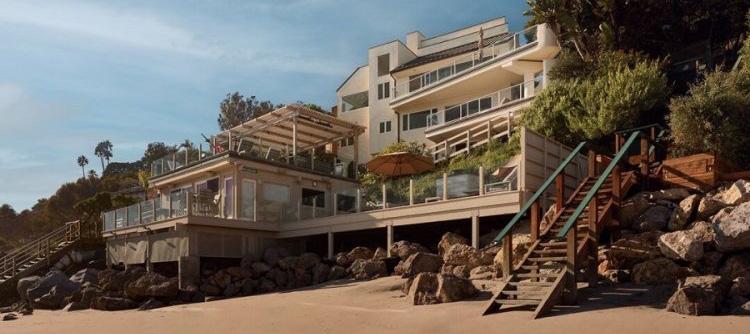
from Pacific Coast Highway and occupies a cul-de-sac lot designed for privacy and security.
According to the listing, the property features expansive views of the Pacific Ocean and coastline, as well as indooroutdoor entertaining spaces that open directly onto the beach. A large oceanfront
patio and rooftop deck atop the cabana are designed for gatherings and waterfront events.
The main home includes dual primary suites, soaring ceilings, skylights and wraparound windows. The larger primary suite features a fireplace, sitting area, walkin closet and private ocean-view deck.
Shared living spaces include a kitchen, dining and family great room centered around panoramic ocean views.
The lower level contains a screening and game room with direct beach access, a full bathroom and a concealed bunk room intended for children.
of the state Senate Appropriations Committee and Los Angeles officials, the council’s executive committee expressed support for
The Pacific Palisades Community Council is urging state and local leaders to support two California Senate bills designed to protect mobilehome park residents in the aftermath of disasters, citing recent losses from the Palisades Fire. In a May 2 letter addressed to Gavin
Newsom, members of the state Senate Appropriations Committee and Los Angeles officials, the council’s executive committee expressed support for Senate Bills 1092 and 1093, authored by Ben Allen.
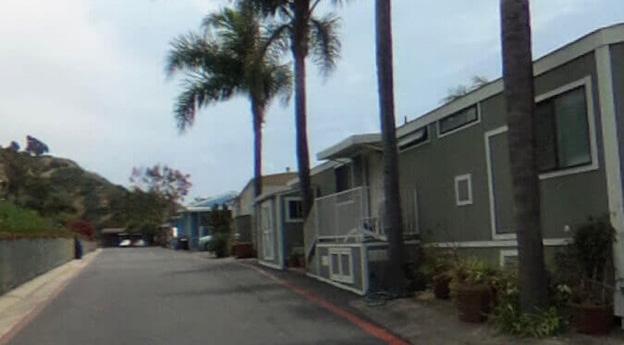
The measures aim to preserve mobilehome parks as a source of affordable housing and provide additional protections for residents displaced by disasters. The council said the legislation is particularly relevant in Pacific Palisades, where two mobilehome communities — Palisades Bowl and Tahitian Terrace — were destroyed in a recent fire.
“These residents are an integral part of our community,” the council wrote, adding that the bills would help safeguard affordable housing and prevent displacement in the wake of disasters.
According to the letter, SB 1092 would give mobilehome park residents a stronger opportunity to purchase their communities, while SB 1093 would establish a
framework to improve rights, transparency and stability for residents after disasters.
The council framed the legislation as consistent with its mission to protect quality of life in Pacific Palisades and preserve affordable housing options.
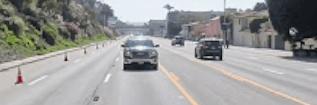
The projects will rehabilitate roughly 120 lane miles of PCH between the McClure Tunnel in Santa Monica and the Los AngelesVentura county line
Caltrans is moving forward with two major pavement rehabilitation projects on Pacific Coast Highway through Santa Monica and Malibu that will include new sidewalks, upgraded pedestrian crossings and improved lighting.
The projects will rehabilitate roughly 120 lane miles of PCH between the McClure Tunnel in Santa Monica and the Los Angeles-Ventura county line. They are part
of Caltrans’ Capital Preventive Maintenance program designed to extend the life of the roadway and improve ride quality.
The southern segment runs from the McClure Tunnel in Santa Monica to just south of Cross Creek Road in Malibu. The northern segment covers the stretch from Cross Creek Road to the county line in Malibu.
Both projects include:
– Pavement rehabilitation
– Upgraded ADA-compliant curb ramps
– New sidewalks at multiple bus stops
– Improved lighting
– Updated signage
– Class II bike lanes and striping at various locations
– Pedestrian warning signs
The southern project (Santa Monica to Malibu) has an estimated cost of $85 million, with construction expected to begin in late 2027 and wrap up in 2030. The northern project (Malibu) is budgeted at $69 million and is scheduled for construction from fall 2026 through spring 2030.


Khatri International Inc. has been working with property owners for 42 years experience providing Structural Engineering, Civil Design, Drainage/Water Damage, CM-PM, and Architectural Design/Repair/Renovation.
Watch the video here: https://youtu.be/Kq_j-V3Re8c
3579 E Foothill Blvd #736 Pasadena CA 91107; LinkedIn: https://www.linkedin.com/company/khatri-international/Principal/Owner: Dilip Khatri, PhD, SE: 626-351-4830; dkhatri2006@gmail.com