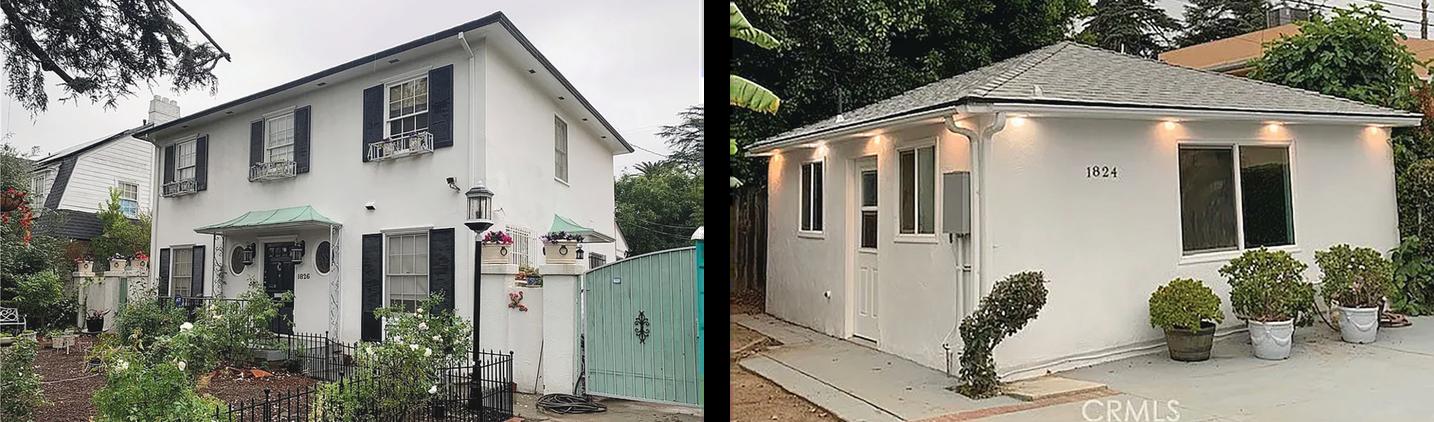


The numbers indicate a surge in permitting activity, particularly in recent months
New data from Pali Builds, a community platform tracking recovery from the January wildfires, shows significant rebuilding momentum in Pacific Palisades, with 179 new home permits approved since the fires and 160 lots sold generating nearly $478 million in sales, highlighting a robust but uneven housing market.
The numbers indicate a surge in permitting activity, particularly in recent months.
Board unanimously approves recommendations from multiple committees and task forces, urging AECOM to incorporate feedback and release a revised draft following the 2025 Fire
From January to August 2025, Los Angeles approved 179 new homes in the 90272 zip code, with approvals accelerating over time: only two in March but jumping to 76 in August, according
Community advisory groups have submitted detailed critiques of the draft Long Term Recovery Plan for Pacific Palisades, urging major revisions to better address contamination in homes that survived the 2025 Palisades Fire, infrastructure vulnerabilities and evacuation challenges.
to Pali Builds’ September 1 analysis.
contamination, insurance disputes and remediation hurdles.
Processing times for new building permits averaged around 63-77 days in summer months, up from 31 days in March, suggesting growing administrative demands as applications increase. Pali Builds, founded by locals to fill gaps in official data, continues tracking until the LA Mayor’s Office provides comprehensive figures.
In a June 3 memorandum to the Pacific Palisades Community Council, the task force said the draft Long Term Recovery Plan, prepared by AECOM, virtually ignores “standing homes” as a category despite survey data acknowledging their existence. The phrase appears only in an appendix and is absent from the plan’s main body, the group said.
Home sales data through August 1 reveals 160 lots sold since the January 7 fires, totaling $477.7 million.
“Time and emerging evidence are demonstrating what standing home residents have known since January 2025: the issues facing homes that survived the fire are not minor inconveniences,” the task force wrote. “They are complex, urgent, and in many cases unresolved.”
The market shows stark disparities by area: Area 8 led with 11 sales at an average $10.6 million and median $10.2 million, contributing $116.4 million in volume, while Area 2 had 16 sales averaging $1.7 million. Area 5 saw the most activity with 48 sales averaging $2.1 million. Buyer composition from January to July included 85 individuals (53%), 64 entities (40%), and 11 unknown (7%), pointing to substantial institutional investment in the recovery.
The Standing Homes Task Force detailed extensive contamination risks from heavy metals, asbestos, dioxins, volatile organic compounds and lithium compounds from burned electric vehicles and batteries. It criticized the plan for relying on CAL FIRE’s DINS classifications, which focus on visible external damage and do not account for internal smoke infiltration or pyrolysis effects.
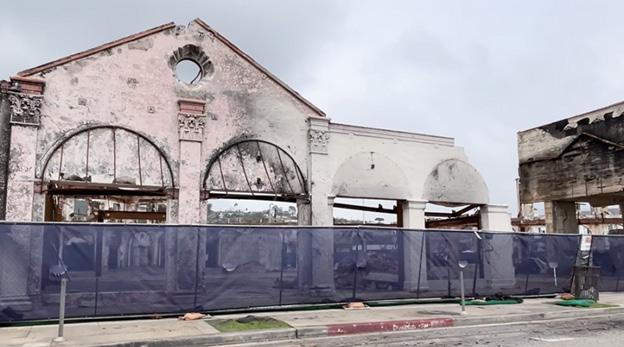
It also urged protections for renters and condominium owners, insurance advocacy, and health monitoring programs.
The task force noted that even developer Rick Caruso opted for full demolition to the studs at Palisades Village, calling it a “gold standard” that contrasts with lighter approaches often pushed on homeowners.
with fire-resistant species.
The Economic and Business Recovery Task Force recommended sharpening the plan’s project list to focus on “musthaves,” creating small agile teams for immediate needs such as population tracking and unmet needs surveys, and advancing unfunded priorities through targeted actions.
The Standing Homes Advisory Task Force highlighted what it called the plan’s near-total failure to recognize the distinct and urgent needs of residents whose homes remained standing but face toxic
Some decried the bill, now
on Gov. Gavin Newsom’s desk, for ignoring traffic, infrastructure, environmental, and public safety concerns
The group called for individualized indoor air quality testing, clear remediation and clearance standards, funded structural assessments for hidden damage, and dedicated grant programs — particularly for seniors and low-income residents — rather than rebates requiring upfront costs.
along with city leaders and officials, rallied against the bill. “SB 79 is 100 times worse than existing laws,” Pacific Palisades Residents Association President Jessica Rogers said, warning of risks in wildfire-prone areas like the Palisades, citing inadequate evacuation routes and infrastructure strain.
The PPCC Infrastructure Committee stressed water security, urging faster restoration of local reservoirs for firefighting and improvements to hydrants and water pressure. It called for accelerated undergrounding of power and telecom lines, better coordination on street resurfacing to avoid repeated digging, and a comprehensive urban forest master plan
The Evacuation Capabilities Task Force described current routes as “extremely limited” and pushed for better modeling, communication systems, additional water storage, new escape routes, and restrictions during Red Flag warnings. It also called for community drills and improved coordination with public safety agencies.
By Zach Armstrong
Lion had reportedly been harassing his Jewish neighbors for weeks, including allegedly telling the rabbi’s wife, “I hate you, Jews.”
Lion had reportedly been harassing his Jewish neighbors for weeks, including allegedly telling the rabbi’s wife, “I hate you, Jews. You killed my lord and savior.”
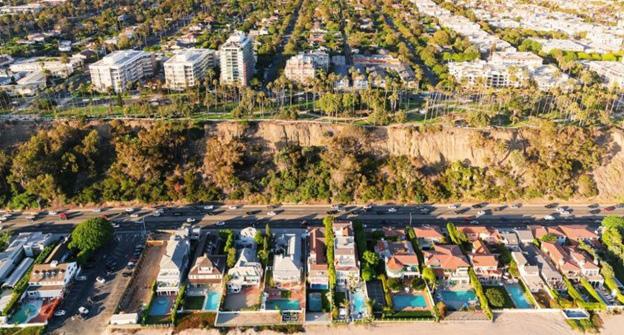
California lawmakers approved Senate Bill 79, a controversial housing mandate some have decried for ignoring infrastructure and public safety concerns, in mid-September, prompting fierce opposition from Los Angeles leaders. The legislation, authored by Sen. Scott Wiener (D–San Francisco), allows for more multi-family housing development near transit stops, permitting taller and denser buildings closer to major transit hubs and allowing transit agencies to build on their own land. The bill also requires a share of affordable housing units in new projects.
In late August, a crowd of Palisadians,
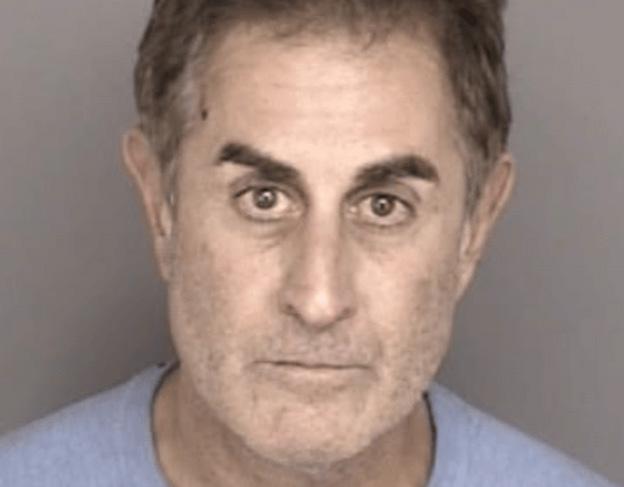
Bruce Alfred Lion, 64, an heir to one of
In August, the Los Angeles City Council voted 8–5 in opposition to SB 79, led by Councilwoman Traci Park and Councilmember John Lee. Park, whose district includes the Palisades, called it a “Sacramento attempt to hijack local planning,” silencing residents. The Pacific Palisades Community Council also urged Newsom to veto the bill, referencing his emergency order limiting dense housing in fire zones.
California’s largest raisin companies, faces three felony counts — including a hate crime enhancement — after authorities say he directed antisemitic threats at his Jewish neighbors in Pacific Palisades for months.
“This bill opens the floodgates for developers, displacement, and gentrification, with no regard for our neighborhoods,” Park said in a Sept. 13 statement, noting that Los Angeles has thousands of housing units under construction. SB 79, she argued, would undermine years of planning to place housing along transit corridors.
According to the Los Angeles County District Attorney’s Office and court records reported by the Los Angeles Times and ABC7, Lion was charged with one count of using threats or force because of someone’s beliefs and two counts of making criminal threats with intent to terrorize. All three charges include hate crime enhancements. If convicted on all counts, he could face up to nine years and four months in state prison.
a Shabbat evening prayer service at the home of Rabbi Zushe Cunin, director of the Chabad Jewish Community Center, who lives next door to Lion. Prosecutors say Lion stood on his balcony and shouted antisemitic vitriol and death threats at the gathering, the DA’s office and ABC7 reported.
Days after its passage, Park introduced a motion directing city departments to conduct a comprehensive 90-day
The most serious alleged incident occurred around 8 p.m. on June 5 during
Cunin told the Los Angeles Times that Lion had been harassing his Jewish neighbors for weeks, including allegedly telling the rabbi’s wife, “I hate you, Jews. You killed my lord and savior. Your husband killed my lord and savior,” and hosing down a congregant’s car. The rabbi said neighbors called police almost daily and described the behavior as the most intense antisemitism he had encountered in
assessment of SB 79. The motion instructs the Departments of City Planning, Transportation, and Housing, along with the City Attorney, to analyze the bill’s effects. The report will include
If approved by voters, the measure would provide a onetime exemption from the Measure ULA tax for qualifying transactions
The Los Angeles City Council voted unanimously Tuesday to move forward
Continue from page 1
Additional video circulating online appears to show him making further antisemitic remarks outside a Chabad center.
Court Proceedings Delayed Lion’s arraignment was postponed multiple times after he refused to leave his jail cell. A Fresno-based ABC affiliate and ABC7 reported that on Wednesday he would not come out for the hearing, leading a judge to order that he be forcibly removed from his cell. A not guilty plea was entered
with a ballot measure that would exempt certain homeowners affected by the January 2025 Palisades Fire from paying the city’s Measure ULA real estate transfer tax when selling their properties.
The council directed the City Attorney’s Office to prepare language for a proposed November 2026 ballot measure that would create a temporary exemption for residential property owners whose homes were damaged or destroyed in the wildfire.
If approved by voters, the measure would provide a one-time exemption from the Measure ULA tax for qualifying transactions occurring on or after Jan. 7, 2025, the date the fire began. The
on his behalf. A hearing to determine whether he is mentally competent to stand trial is scheduled for next month, according to court records cited by the Los Angeles Times.
He remains in custody on $225,000 bail.
Company responds Lion Raisins, the Selma-based company founded by his family, issued a statement condemning the alleged conduct.
“Recent reports about the conduct of Bruce Lion are deeply troubling and do
exemption would remain in effect for five years.
Supporters argue that homeowners forced to sell because of financial pressures tied to rebuilding should not face an additional transfer tax. Opponents of previous efforts to modify Measure ULA have warned that exemptions could reduce revenue dedicated to affordable housing and homelessness programs.
The proposal was introduced by Councilmember Traci Park, whose district includes Pacific Palisades, and co-presented by Councilmember Imelda Padilla.
“This measure is about recovery,
not reflect the values of Lion Raisins,” the company said, according to the Los Angeles Times and ABC7. “We unequivocally condemn antisemitism, racism, and all forms of hate, discrimination, and intolerance.” The company added that Lion “does not actively participate” in its day-to-day operations.
Los Angeles County District Attorney Nathan J. Hochman said in a statement reported by ABC7: “Hate has no place in Los Angeles County. My office is
fairness, and common sense. Measure ULA was never intended to make disaster recovery more difficult or more expensive. Our responsibility is to remove barriers, not create them.” Park said in a statement. “At this point, victims aren’t selling because they want to or because they’re trying to profit. They’re selling because, sadly, they have to.”
Measure ULA, approved by Los Angeles voters in 2022 and commonly known as the “mansion tax,” imposes an additional transfer tax on high-value real estate transactions to fund affordable housing and homelessness prevention programs.
aggressively prosecuting these disturbing acts that tear at the fabric of our society.”
Rabbi Cunin has said the incidents, which he believes lasted about four months, forced some community members to consider relocating religious services, but he has refused to be driven out.
“This is just unearthing. It’s just incredible,” Cunin told ABC7. He added that he did not know if the behavior stemmed from drugs or mental health issues but called it “unacceptable.”

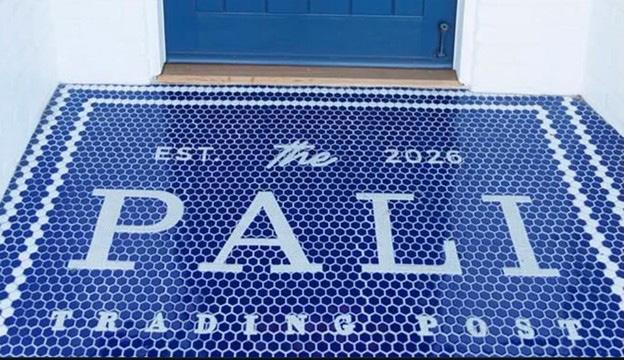
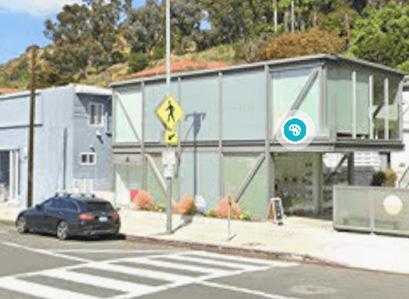
The shop is designed as a modern general store and gift shop that draws inspiration from the neighborhood’s history
A new general store created by a Pacific Palisades resident who lost her home in the wildfire is set to open July 1, becoming what organizers describe as the first new
retail business to launch in the community since the disaster.
Pali Trading Post, located at 15248 W. Sunset Blvd., will celebrate its grand opening with a ribbon-cutting ceremony from 11 a.m. to 5 p.m. on July 1. Remarks by owner Michelle Murphy and PalisadesMalibu Chamber of Commerce CEO Maryam Zar are scheduled for 11:15 a.m., followed by the official ribbon cutting at 11:25 a.m.
Murphy, a Los Angeles native who has lived in Pacific Palisades since 2012, said she created the store after losing her home in the fire. The shop is designed as a modern general store and gift shop that draws inspiration from the neighborhood’s history while serving as a gathering place
for residents rebuilding after the disaster.
According to the business, the concept blends locally inspired merchandise, home goods, gifts and apparel with an emphasis on community connection.
Among the brands featured in the store are several founded by Pacific Palisades residents, including SoulByrd, a trucker hat company; This Girl Walks Into a Bar, a mixer brand; Tessa James Collection, a clothing company; and Coast and Canyon, a home décor line.
The shop will also carry products from wellness brands that donated to wildfire victims, including Kai, Roz and Osea.
In addition, Pali Trading Post will sell merchandise from the Live Like Braun collection, with proceeds benefiting
the Live Like Braun Foundation. The organization honors Braun Levi, a local high school senior who was killed by a suspected drunk driver in 2025.
The July 1 opening will include food, refreshments and live music from 11 a.m. to 1 p.m. The store plans to operate daily from 10 a.m. to 6 p.m.

Fire destroyed or damaged thousands of structures and prompted a wave of litigation against government agencies and utility providers
More than a year after the Palisades Fire destroyed homes across portions of Malibu and Pacific Palisades, thousands of fire victims have joined lawsuits against the City of Los Angeles, including Kenneth Bass, the brother of Los Angeles Mayor Karen Bass, according to reports.
Kenneth Bass, a longtime Malibu resident, alleges that his home was destroyed in the fire and that he suffered emotional distress and injuries related to smoke exposure, Los Angeles Magazine reported. The lawsuit is part of a broader legal action involving thousands of property owners and residents affected by the wildfire.
In a statement, the mayor’s office said Kenneth Bass and his wife are among many plaintiffs pursuing legal claims stemming from the fire. “Thousands of people are plaintiffs in this action, which names 18 public and private sector defendants,” the statement said, as reported by LA Magazine. “The City Attorney’s Office is responsible for defending the City and DWP in this lawsuit.”
The statement added that Kenneth Bass and his wife “are entitled to respectful privacy as they pursue their legal rights.”

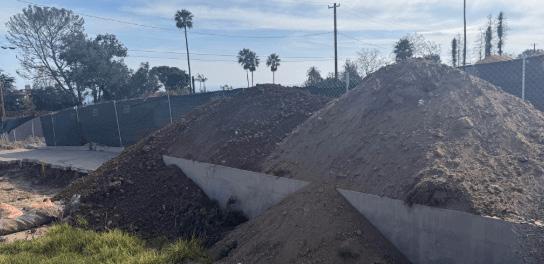
Team Palisades said police responded to an illegal dumping incident on the El Medio bluffs after officers were alerted while the activity was allegedly occurring
Community organizations in Pacific Palisades are urging homeowners and contractors to strengthen security measures at construction sites following a reported illegal dumping incident and ongoing concerns about theft during the area’s rebuilding effort.
In a security update distributed Saturday, Team Palisades said police responded to an illegal dumping incident on the El Medio bluffs after officers were alerted while the activity was allegedly occurring. According to the organization, a police report was filed and the contractor involved is expected to be reported to the state licensing board. The organization is encouraging property owners and contractors to adopt a range of security measures, including locking construction sites after hours, installing cameras and motion-sensitive lighting, securing tools and equipment, and maintaining detailed inventories of valuable
items.
The recommendations also advise owners of vacant lots to install fencing and place physical barriers at entrances to discourage unauthorized dumping. Residents are encouraged to document suspicious activity and report incidents to law enforcement and city agencies.
Concerns about illegal dumping have circulated in the community in recent months.
In April, Team Palisades warned residents about reports that some vendors were allegedly dumping dirt on private lots instead of transporting it to authorized disposal facilities. According to the community advisory, contractors were then allegedly billed for hauling and disposal services that were never completed, with those costs ultimately passed on to homeowners.
Property owners who discover illegally dumped material are generally responsible for arranging and paying for its removal.
The issue gained additional attention this week after a local real estate brokerage posted a video on social media warning residents about unauthorized dumping on cleared lots. In the video, a representative said some homeowners have faced cleanup costs ranging from $10,000 to $15,000 after dirt was allegedly dumped on their properties.
Community leaders are also encouraging residents to formally report all crimes, including minor thefts, arguing that crime statistics help determine the allocation of police resources


In a letter sent, Traci Park asked the governor to direct unspent funds from ABX14 and SBX1-3 toward critical local recovery needs
Los Angeles City Councilwoman Traci Park has urged Gov. Gavin Newsom to extend a June 30 deadline for remaining state disaster funding to help accelerate recovery efforts in Pacific Palisades following the 2025 Palisades Fire.
In a letter sent, Park asked the governor to direct unspent funds from ABX1-4 and SBX1-3 toward critical local recovery needs, including street and infrastructure repairs that are currently pending federal reimbursement from FEMA.
“Since the fire, our City’s Administrative Officer’s team has worked hand in hand with your Office of Emergency Services to submit dozens of requests for funding and reimbursement,” Park wrote. “We are in urgent need of front funding if we are to continue to move this recovery forward.”
The letter highlights hundreds of millions of dollars in unfunded or pending projects, including:
– More than $11 million for street, curb and sidewalk repairs.
– $10 million for Army Corps debris removal.
– Millions more for solar-powered traffic signals, slope stabilization projects, storm drain repairs and firedamaged streetlights.
Park also called attention to the needs of local institutions such as the Village School, St. Matthew’s Parish School, and the Academy of Technology Art and Music, along with businesses and property owners who remain underinsured or face significant rebuilding costs.


The independent bookstore became an informal gathering place for residents seeking connection
When wildfires, an earthquake, a mudslide and a monthslong road closure battered Malibu in late 2024 and early 2025, many local businesses faced an uncertain future. For Michelle Pierce, owner of Malibu Village Books, closing the doors was never an option.
The independent bookstore became an informal gathering place for residents seeking connection and normalcy as the coastal community struggled through a string of disasters that disrupted daily life and strained the local economy.
Now, Pierce’s perseverance has earned national recognition. She was recently named one of ADP’s 2026 Grit
& Wisdom Award winners, a program honoring small business owners who have transformed hardship into lessons for other entrepreneurs.
“It became clear that the bookstore was more than a bookstore,” Pierce said. “The employees and our community needed the bookstore.”
The challenges facing Malibu were relentless. Two fires, a major earthquake, a mudslide and a six-month road closure created obstacles for residents and businesses alike. Pierce said requests for financial assistance were denied, and she was told that “bookstores don’t matter.”
Despite those setbacks, Malibu Village Books remained open.
Pierce credits the store’s survival to two principles she now advocates for other small business owners: financial resilience and creativity.
“Creativity is a survival skill,” Pierce said. “Getting creative in thought, systems and practice is the only way to push past present challenges and change for the future. Financial resilience is not optional. You cannot complete your mission if your doors close.”


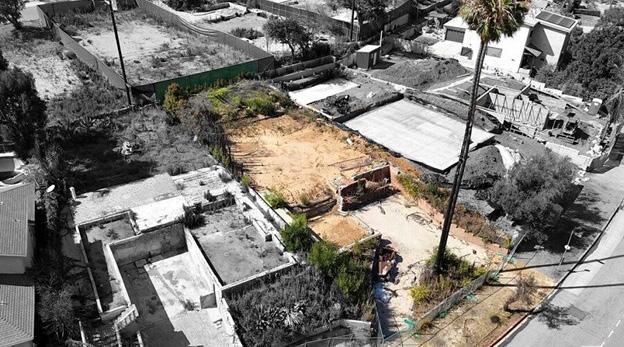
The property, located on a 7,026-squarefoot lot, is being marketed as a redevelopment opportunity with potential for a highend residence
A vacant residential parcel along Sunset
Boulevard in Pacific Palisades has been listed for $1.599 million.
The property, located on a 7,026-squarefoot lot, is being marketed as a redevelopment opportunity with potential for a high-end residence designed to take advantage of the area’s coastal setting and surrounding views.
According to the listing, the site could accommodate a luxury estate featuring indoor-outdoor living spaces and amenities tailored to the buyer’s specifications. The parcel is situated near Pacific Palisades landmarks including the Pacific Ocean, local hiking trails and the Palisades Village shopping and dining district.
The property is listed by Danielle Ariola of Compass.
The exhibition centers on photographs Darrin took at Will Rogers State Beach after moving to Santa Monica Canyon as a teenager
Gallery 169 in Santa Monica Canyon will open a new photography exhibition this week featuring images of Southern California beach life from the 1960s, captured by longtime filmmaker and photographer Pat Darrin.
“The Beach in My Backyard (State Beach in the Sixties)” opens with an artist reception from 5 p.m. to 8 p.m. Saturday,
June 20, at Gallery 169, 169 W. Channel Road. The free event will include food and drinks, with complimentary valet parking available.
The exhibition centers on photographs Darrin took at Will Rogers State Beach after moving to Santa Monica Canyon as a teenager. According to the artist, what began as casual photographs of friends and local surfers evolved into a broader visual record of California beach culture during the 1960s.
The collection documents a mix of surfers, tourists, local residents, artists, writers and actors who frequented the beach during the era.
“When I moved to Santa Monica Canyon, Will Rogers State Beach was simply the backdrop of my adolescence, a place to hang out and photograph my friends,” Darrin said in an artist statement.
“But as I watched the shoreline through my lens, that personal backyard transformed into a remarkable microcosm of California
culture.”
Darrin has worked as a filmmaker, cinematographer and photographer for more than five decades. He entered the film industry in 1970 and has worked on documentaries, narrative films and music projects. His photography has appeared in publications including The Surfer’s
Journal, Zero Break and Taschen’s Surfing.
In addition to his work behind the camera, Darrin has taught filmmaking internationally on behalf of the U.S. State Department and led photography workshops, including programs at the Palm Springs Photo Festival.

The study found average concentrations of 13.7 nanograms per cubic meter in March 2025, with most of the toxic metal in particles smaller than 56 nanometers
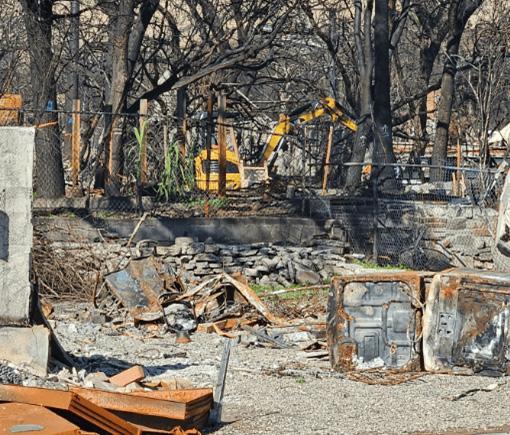
Airborne nanoparticles of hexavalent chromium, a known carcinogen, were detected at concerning levels around debris cleanup zones following the Eaton and Palisades wildfires in Los Angeles, according to a new study by University of California researchers.
The peer-reviewed study, published in Communications Earth & Environment,
found average concentrations of 13.7 nanograms per cubic meter in March 2025 — two months after the fires — with most of the toxic metal in particles smaller than 56 nanometers. While below federal workplace exposure limits, the levels exceeded U.S. Environmental Protection Agency screening thresholds for indoor air.
Lead author Michael J. Kleeman of UC Davis said the findings were shared early to inform affected communities.
“Discovering these airborne, chromiumbearing nanoparticles in the wildfire debris cleanup zones is a unique finding that implicates the fires as a source of toxic nanoparticle metals,” Kleeman said.
Co-author Michael Jerrett of UCLA warned that the nanoparticles, which can easily cross cell membranes and circulate throughout the body, may have traveled 10 to 15 kilometers (6 to 9 miles) downwind, potentially exposing around 3.3 million people.
“These probably traveled far enough to give 3.3 million people doses that were hundreds of times the levels that are normally seen in the air in Los Angeles,” Jerrett said.
The exhibition features a StoryCorps oral history station where community members can record their stories for the Library of Congress
A collection of more than 50 intricately crafted miniature replicas of Pacific Palisades homes, schools, landmarks and beloved restaurants destroyed or damaged in the Palisades Fire has gone on display at EMECO House in Venice.
The exhibition, called the Palisades Collective, was created by Luca Dal Bello, a junior at Loyola High School. After his family’s home was damaged and they lost belongings to toxicity following the fire, Dal Bello traveled to Japan and commissioned professional miniature
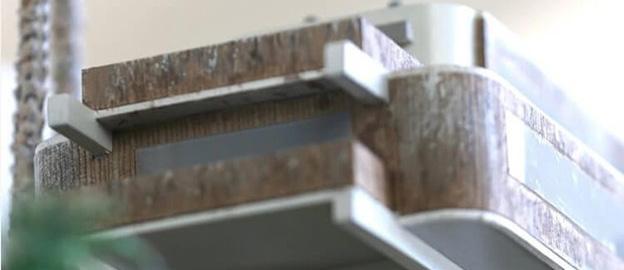
makers to recreate cherished community sites under his direction.
The works include replicas of Palisades Elementary School, the United Methodist Church, Will Rogers Ranch House, Topanga Ranch Motel, Moonshadows restaurant and dozens of other local landmarks.
The public exhibition opened on May 30 and runs through June 21.
In addition to the miniatures, the exhibition features a StoryCorps oral history station where community members can record their stories for the Library of
Congress. Fashion Girls for Humanity, led by Dal Bello’s mother Kikka Hanazawa, will present grant checks ranging from $5,000 to $10,000 to affected elementary and middle schools. A temporary shelter built by Dal Bello’s brother Kai in collaboration with ETH Zurich will also be donated to a family that lost their home.
The project aims to help the community process grief while preserving the memory of places that defined the neighborhood.
The Palisades Collective will later travel, with discussions underway for a showing at the Los Angeles Central Library.
YOU ONLY HAVE ONE CHANCE TO REUSE YOUR WATER IN IRRIGATION FOREVER
Water reuse irrigation systems – since 1990.

ReWater’s proven systems save 58,000+ gallons/ yr, worth tens of thousands of dollars over your home’s life.
The A-Lister’s choice –because it’s simply the best system.
Call ReWater at (805) 716-0104 before you plumb.
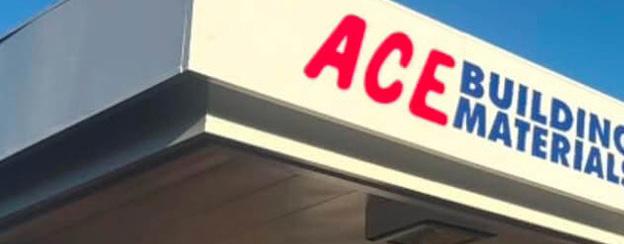
The facility is intended to serve homeowners, contractors and others involved in rebuilding projects throughout the Palisades
Ace Building Materials officially opened a new rebuild support yard in Pacific Palisades with a public ribbon-cutting ceremony June 18, as reconstruction efforts continue following the devastating Palisades Fire.
The family-owned building supply company hosted the grand opening from 11 a.m. to 1 p.m. at 15401 Sunset Blvd., the site of a former Shell gas station at the corner of Sunset Boulevard and Via de la Paz.
The facility is intended to serve homeowners, contractors and others involved in rebuilding projects throughout the Palisades area.

City
Park attended, along with representatives from Los Angeles Fire Department Station 69, the Pacific Palisades Community Council and the Malibu Pacific Palisades
Chamber of Commerce.
According to organizers, the event included remarks from local leaders and community representatives, as well as coffee and light refreshments.





The study found that California ranks first nationally for the average price of an 11- to 12-inch pizza
Californians pay some of the highest fast-food prices in the nation, including the country’s most expensive pizza, according to a new analysis examining the cost of fast food relative to household income.
The study, released by personal finance website WalletHub, found that California ranks first nationally for the average price of an 11- to 12-inch pizza, fourth for burgers and third for fried chicken sandwiches.
Combined, the average cost of purchasing one burger, one pizza and one fried chicken sandwich in California is $30.26, according to the report. WalletHub’s analysis used pricing data collected in May from the U.S. Census Bureau and the Council for Community and Economic Research.
Despite those high menu prices, California ranked 28th overall when the costs were measured against household

income. WalletHub calculated that the three-item fast-food purchase represents about 0.37% of the state’s median monthly household income, placing California near the middle of the pack nationally.
The findings illustrate how California’s relatively high incomes help offset some of the impact of the state’s elevated food
prices.
Nationally, WalletHub reported that fastfood menu prices have risen by roughly 60% over the past decade, outpacing overall inflation. The study compared prices for burgers, pizza and fried chicken sandwiches in all 50 states and adjusted those costs based on median household
income.
Mississippi ranked as the least affordable state for fast food, with the same threeitem purchase accounting for 0.48% of the median monthly household income. New Jersey ranked as the most affordable at 0.27%.