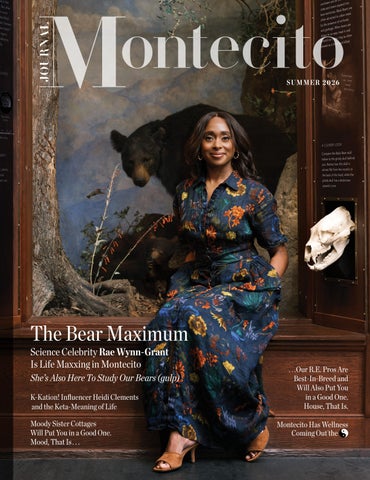
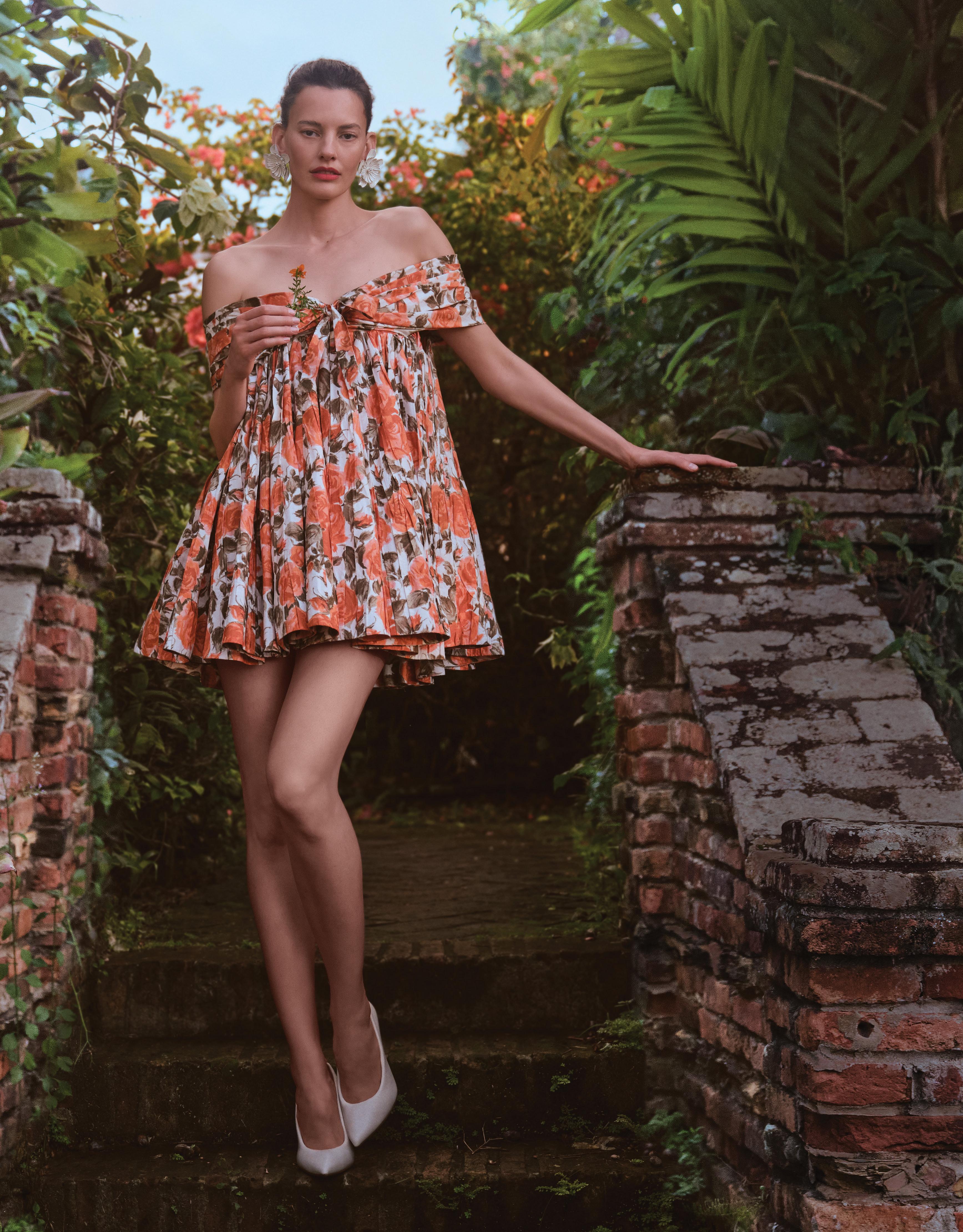
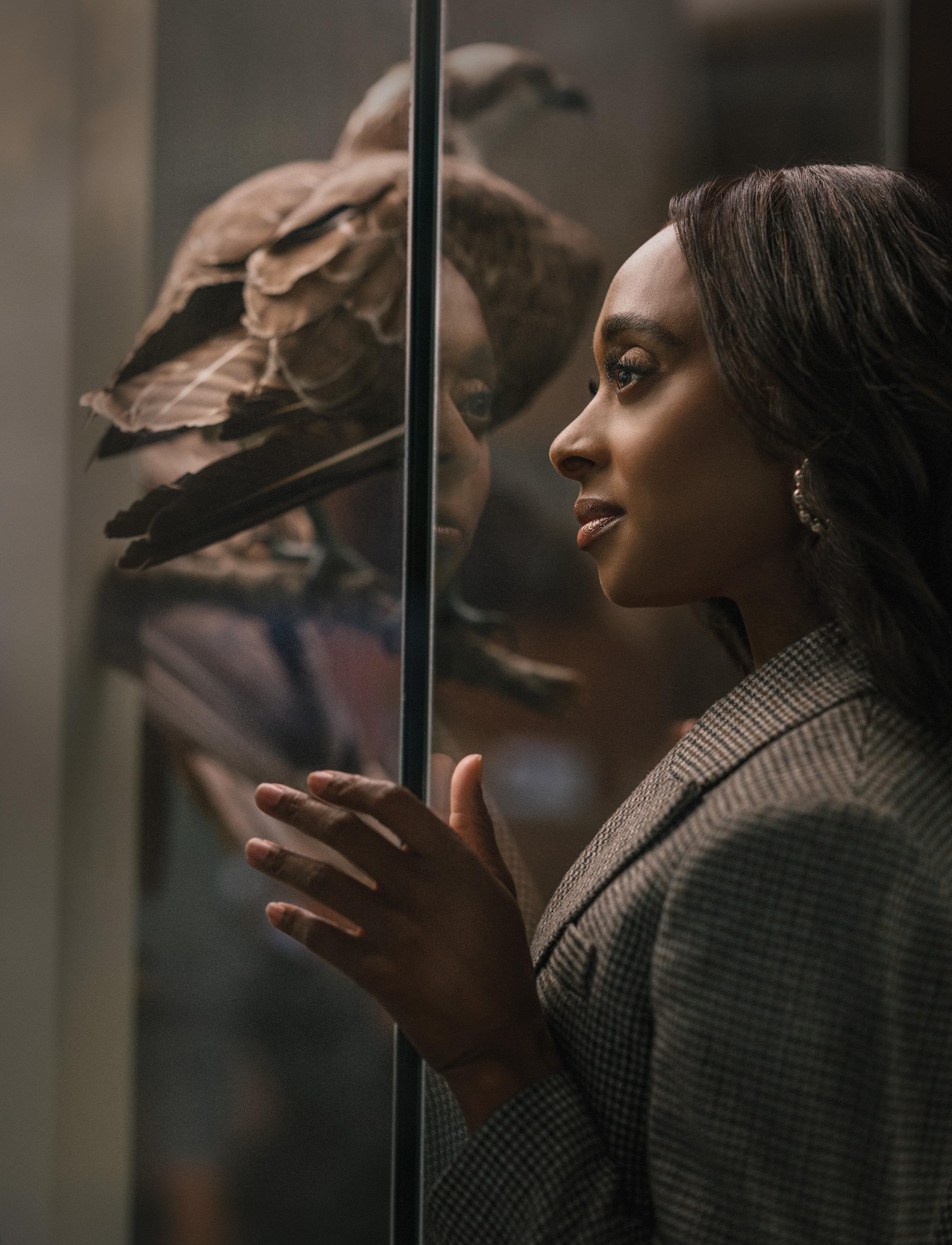
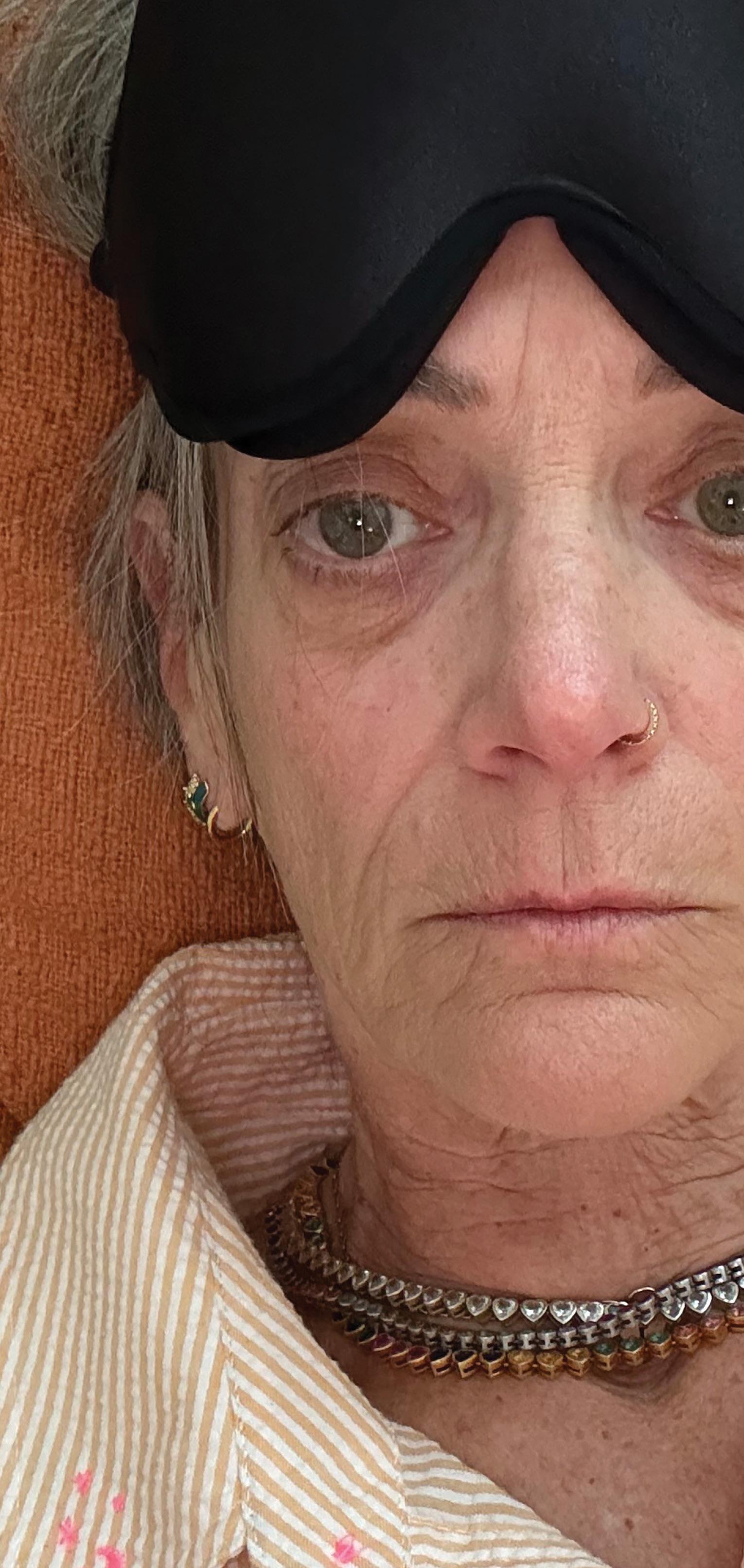
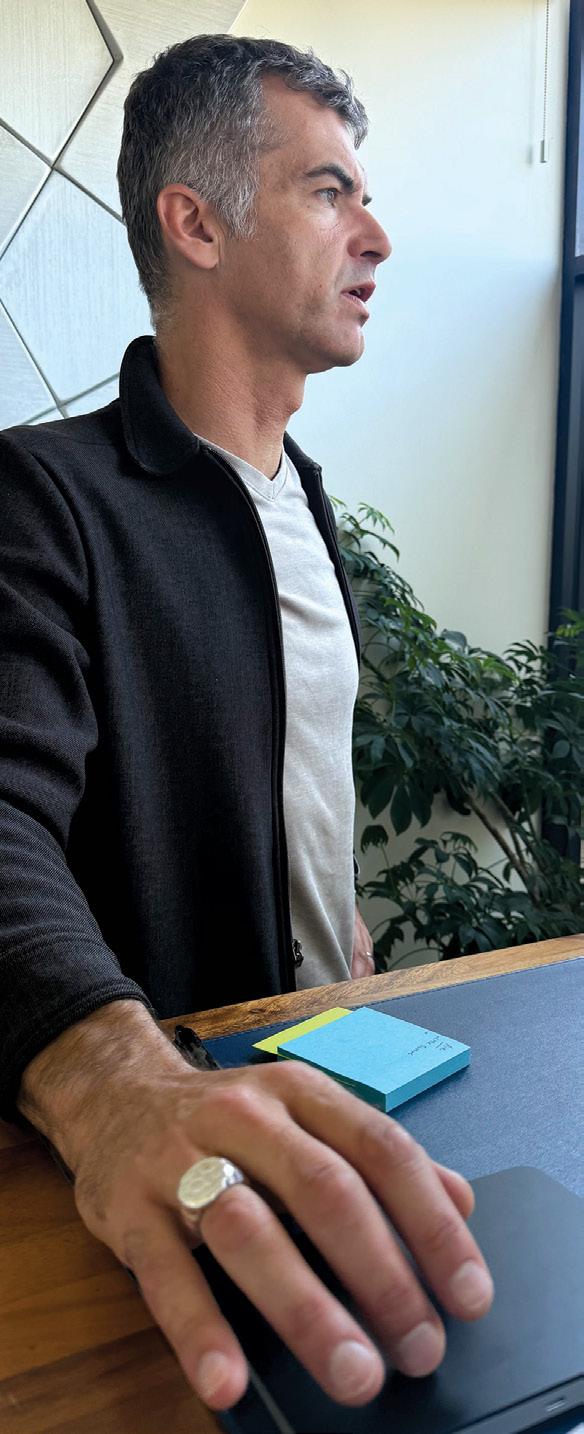
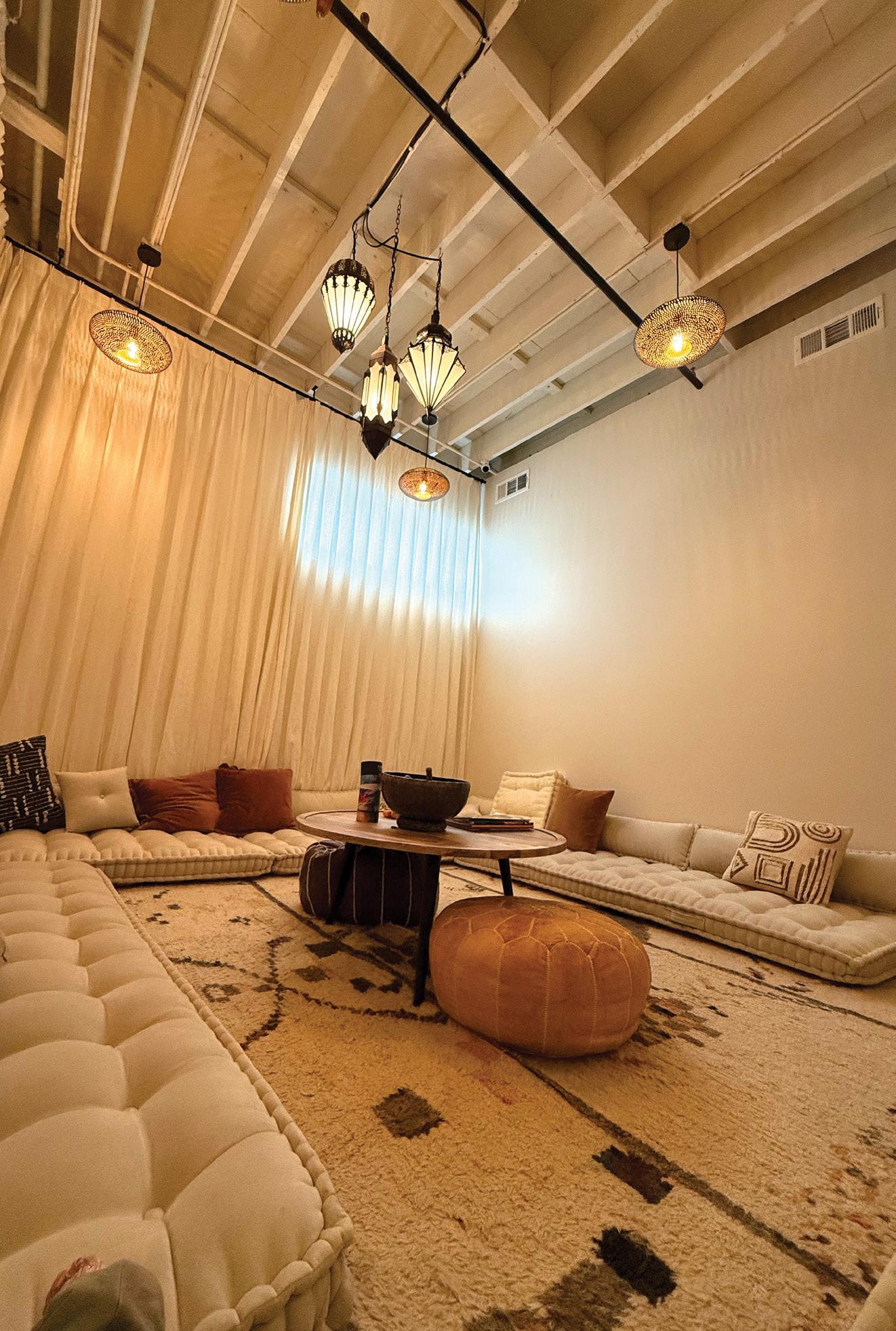
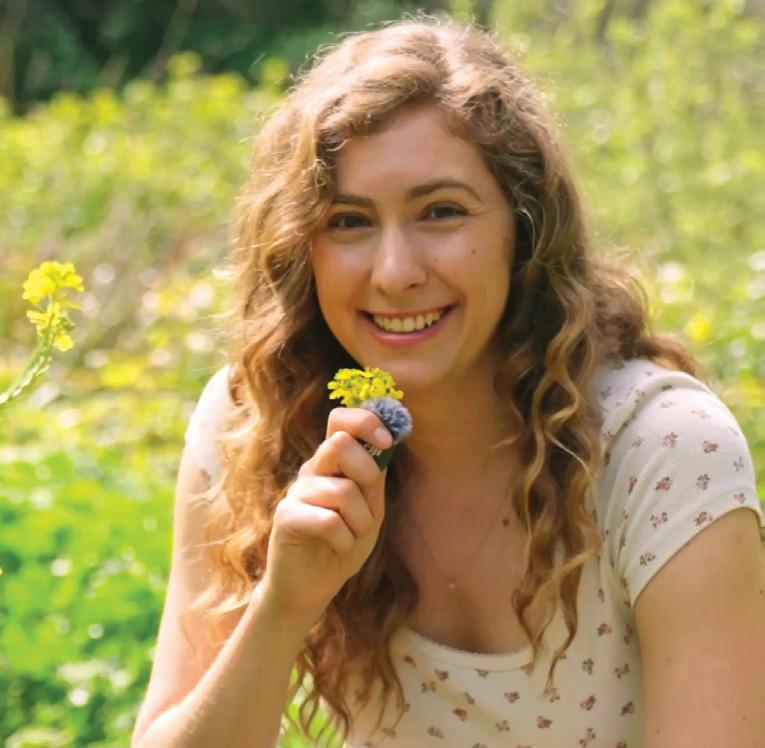
Science Celebrity Rae Wynn-Grant Is Life Maxxing in Montecito
She’s Also Here To Study Our Bears (gulp)
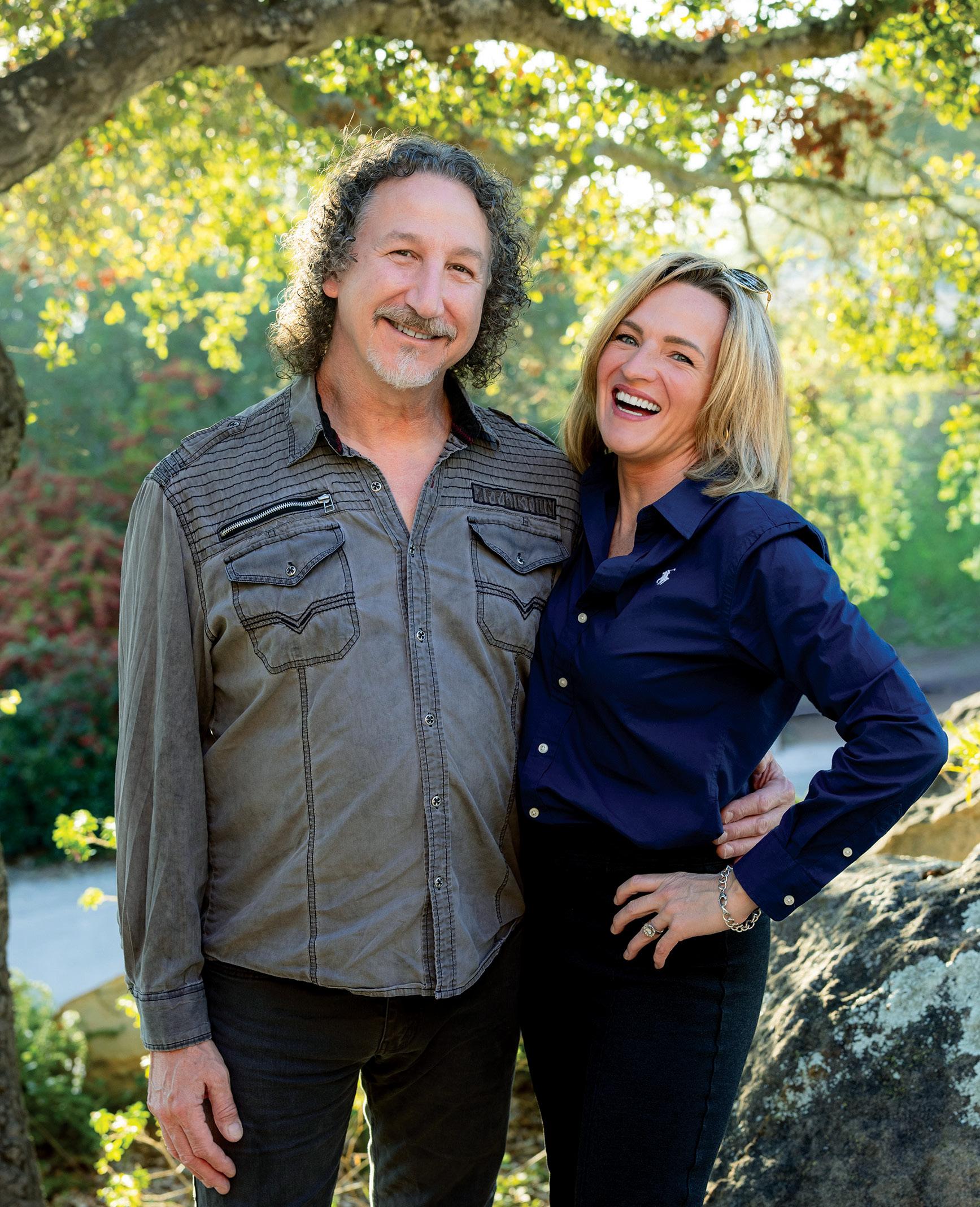
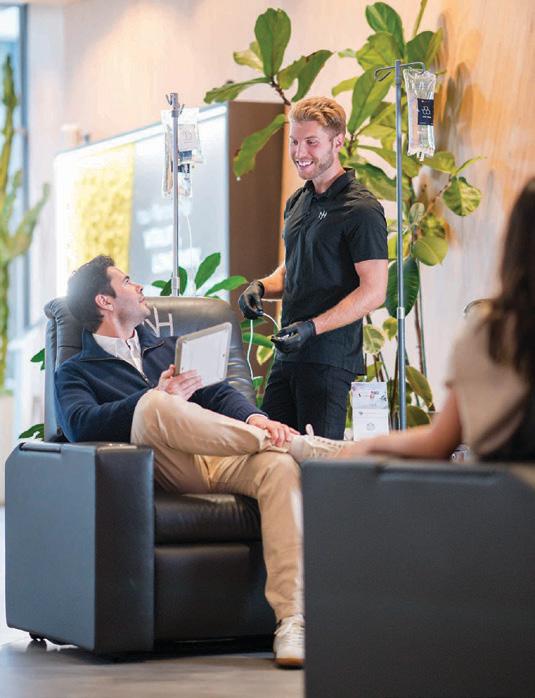
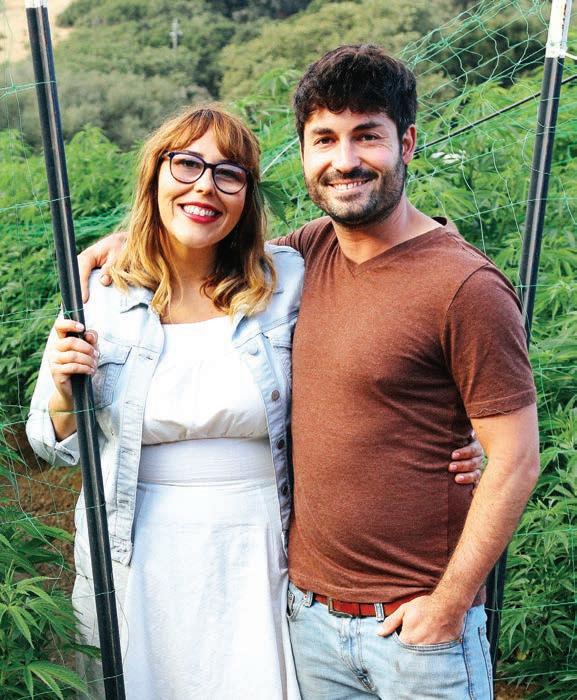
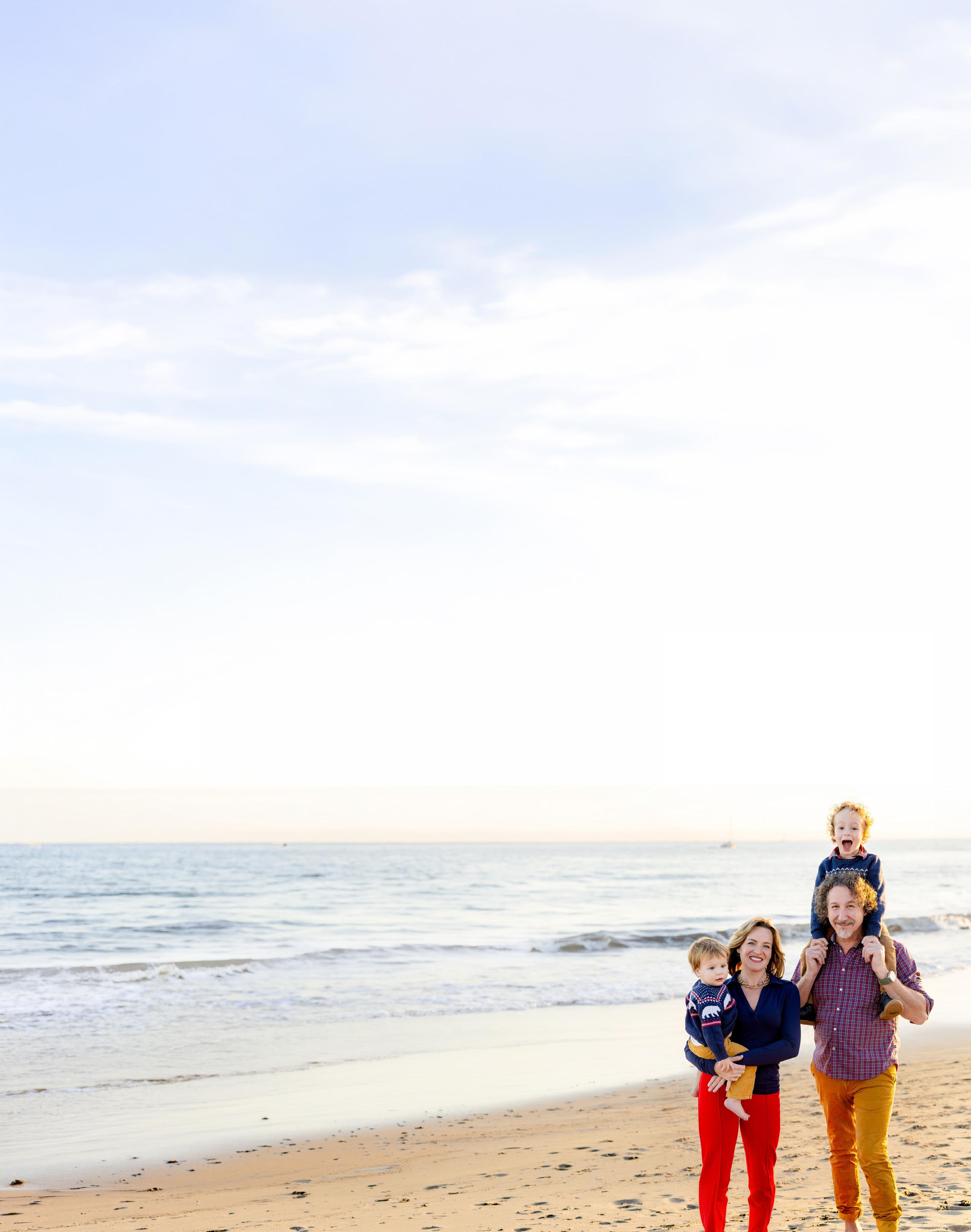
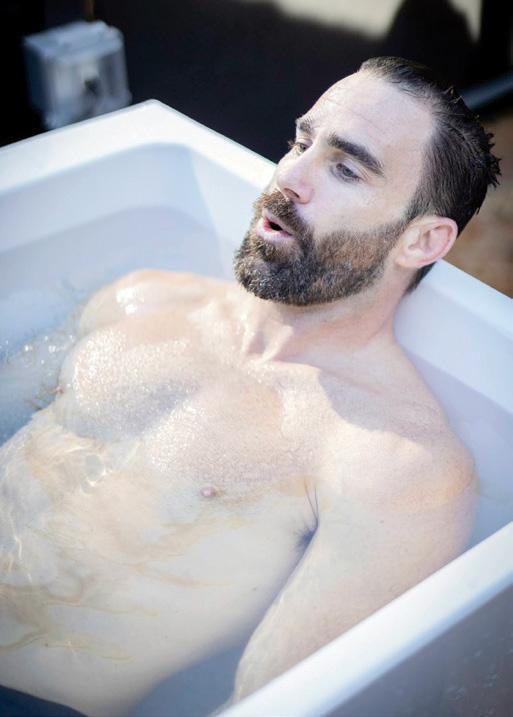
K-Kation! Influencer Heidi Clements and the Keta-Meaning of Life
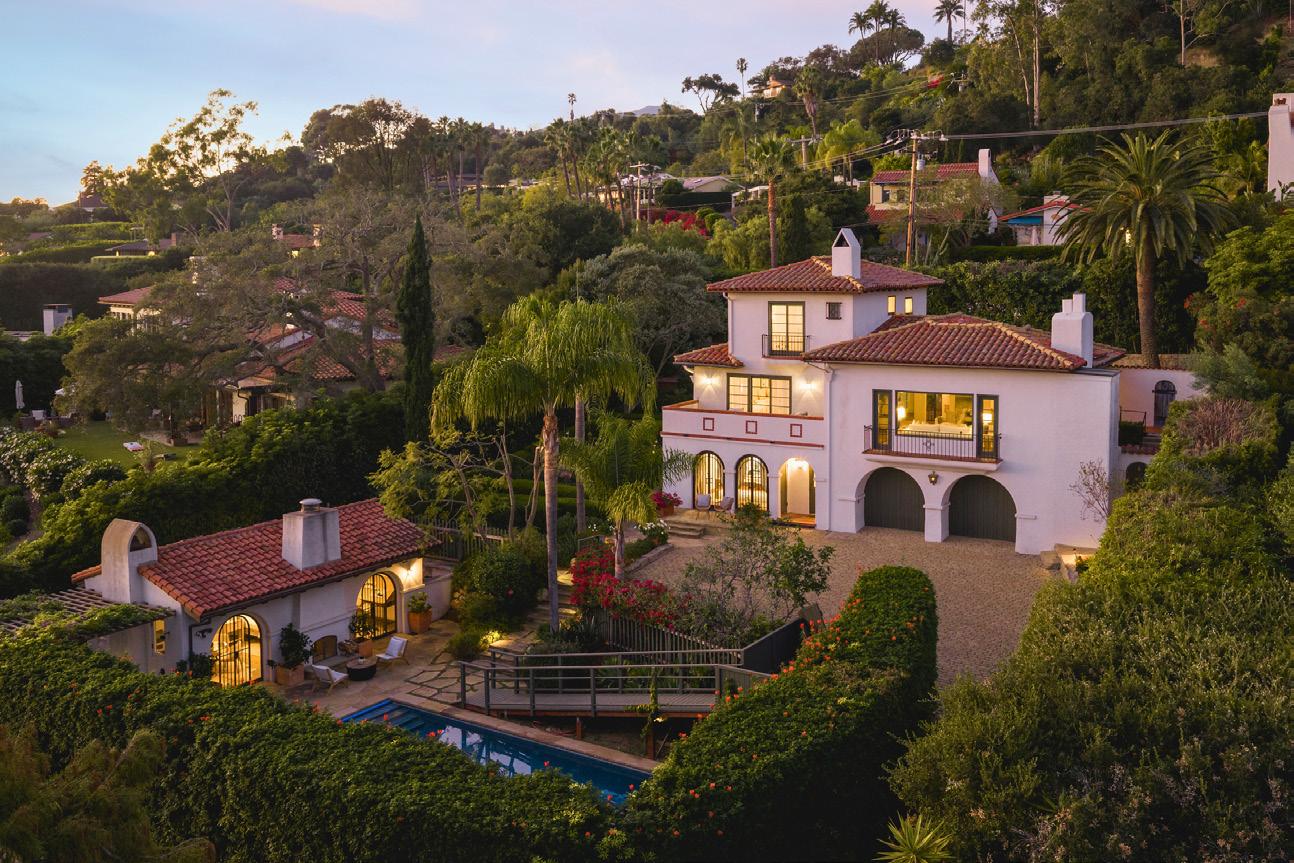
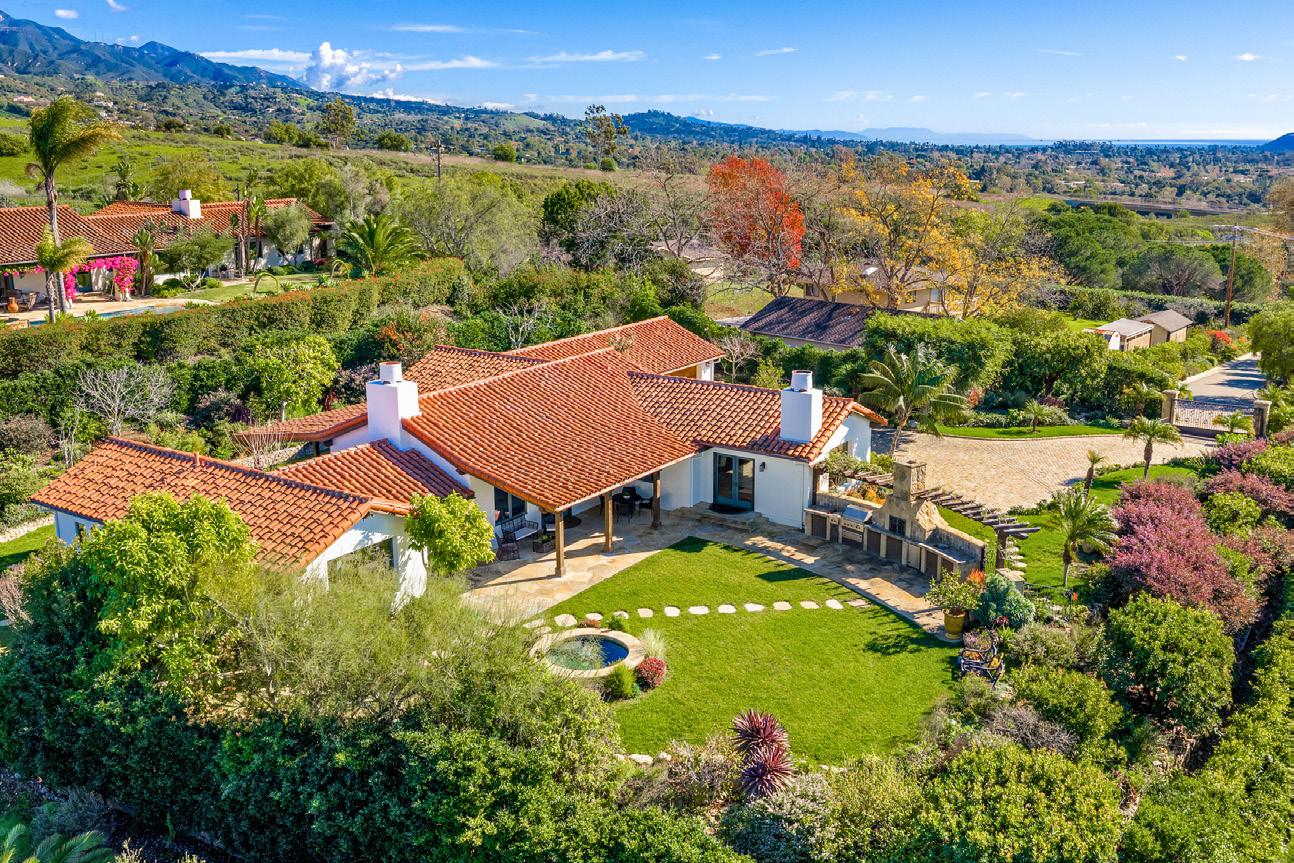
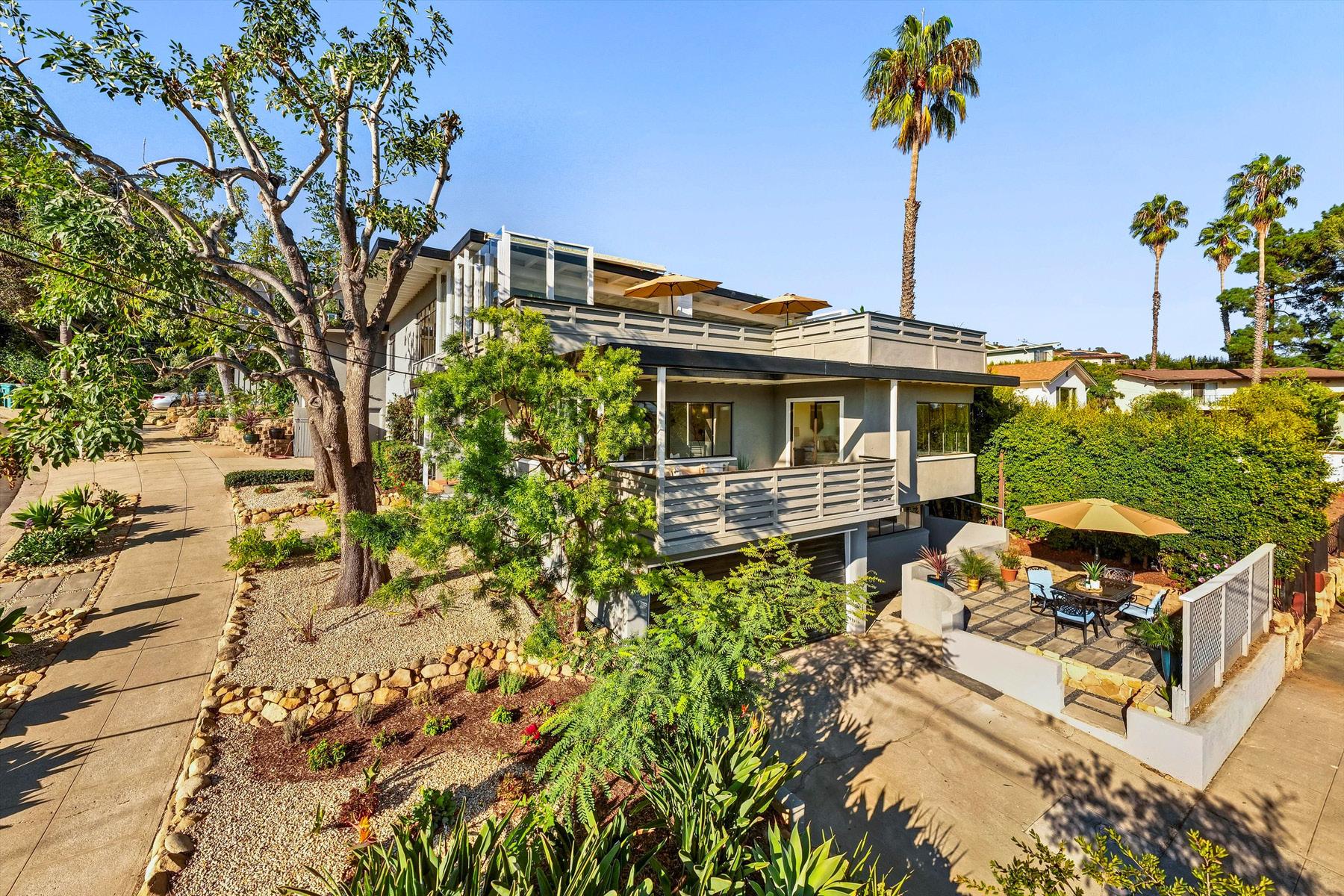
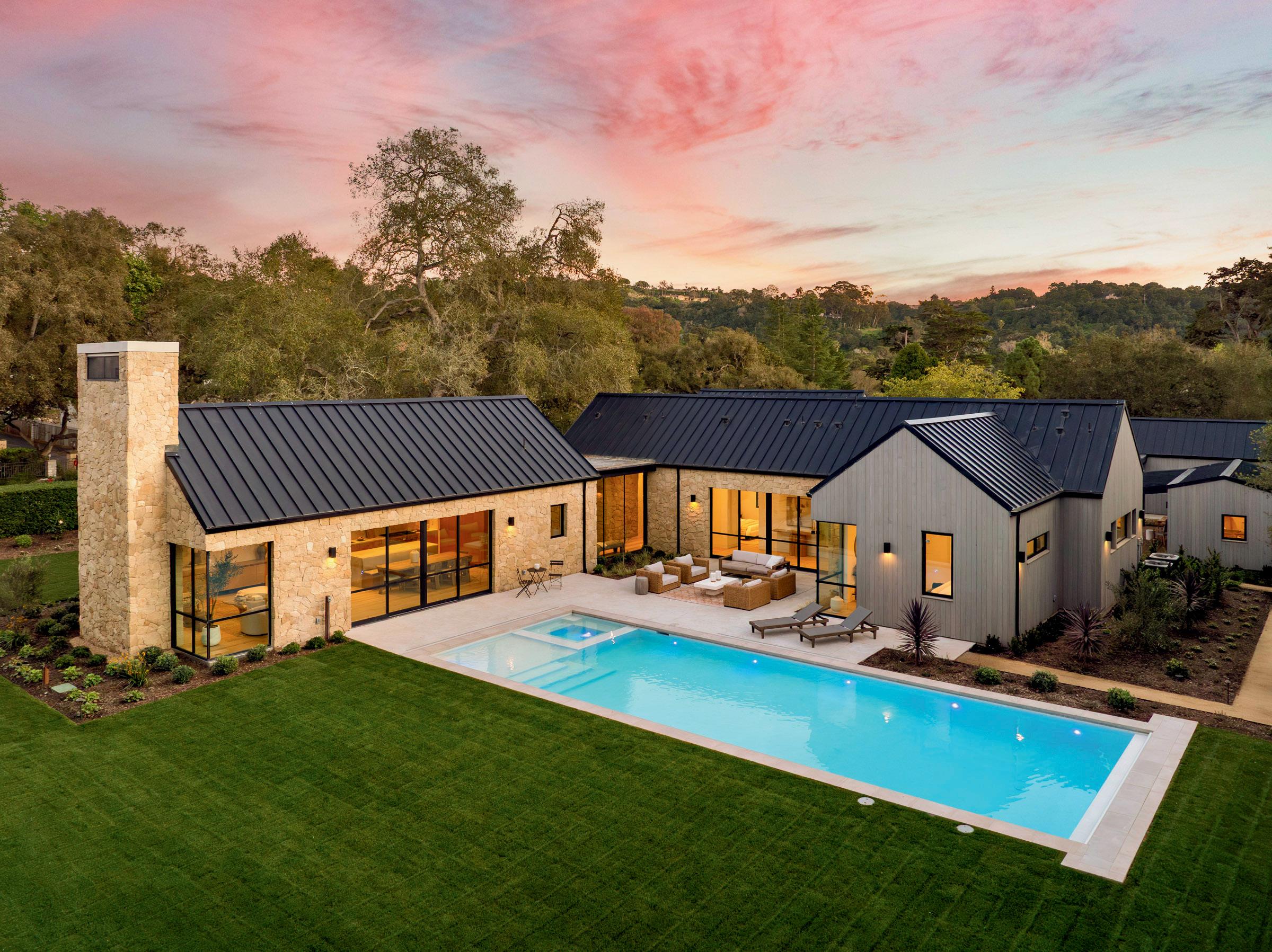
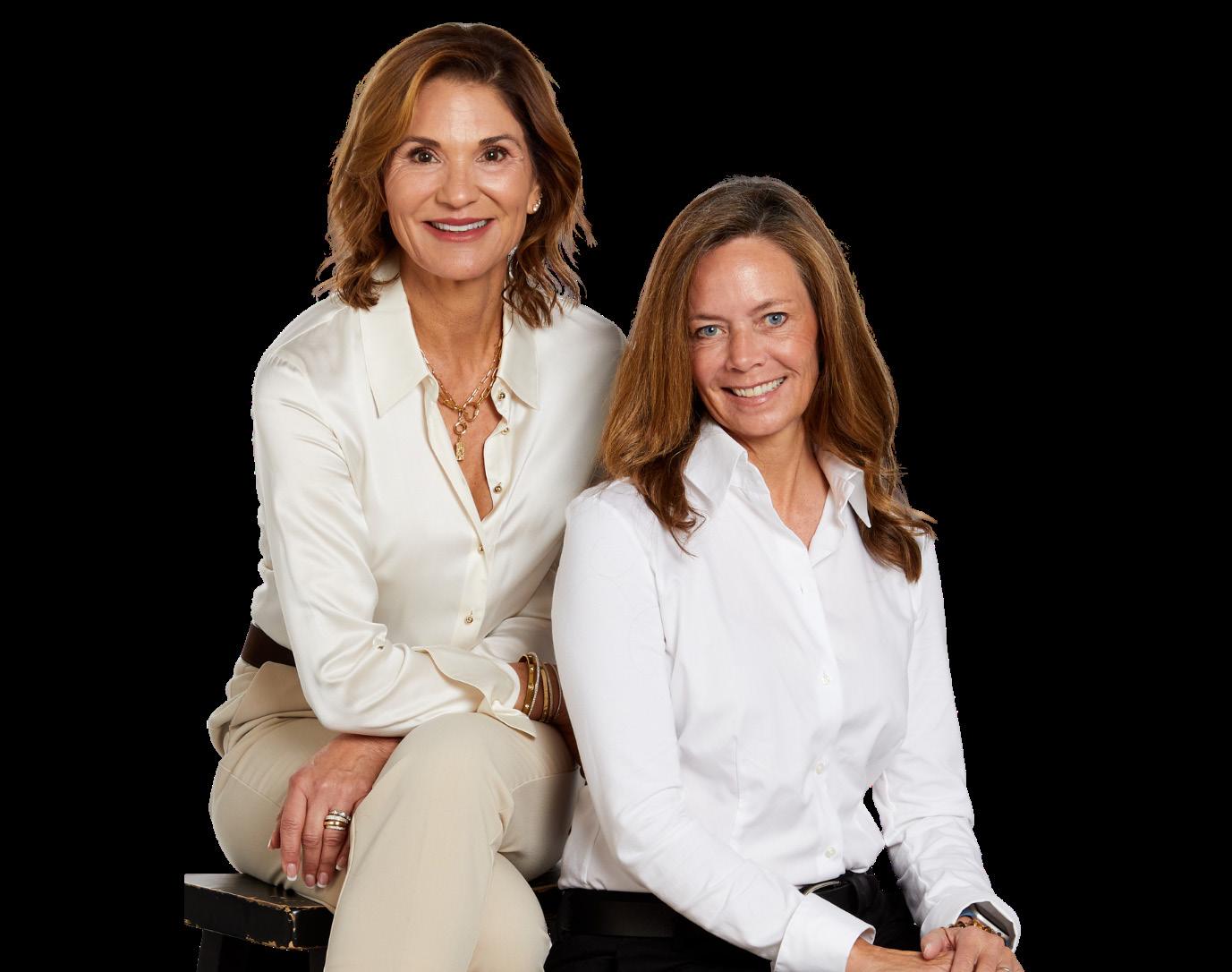
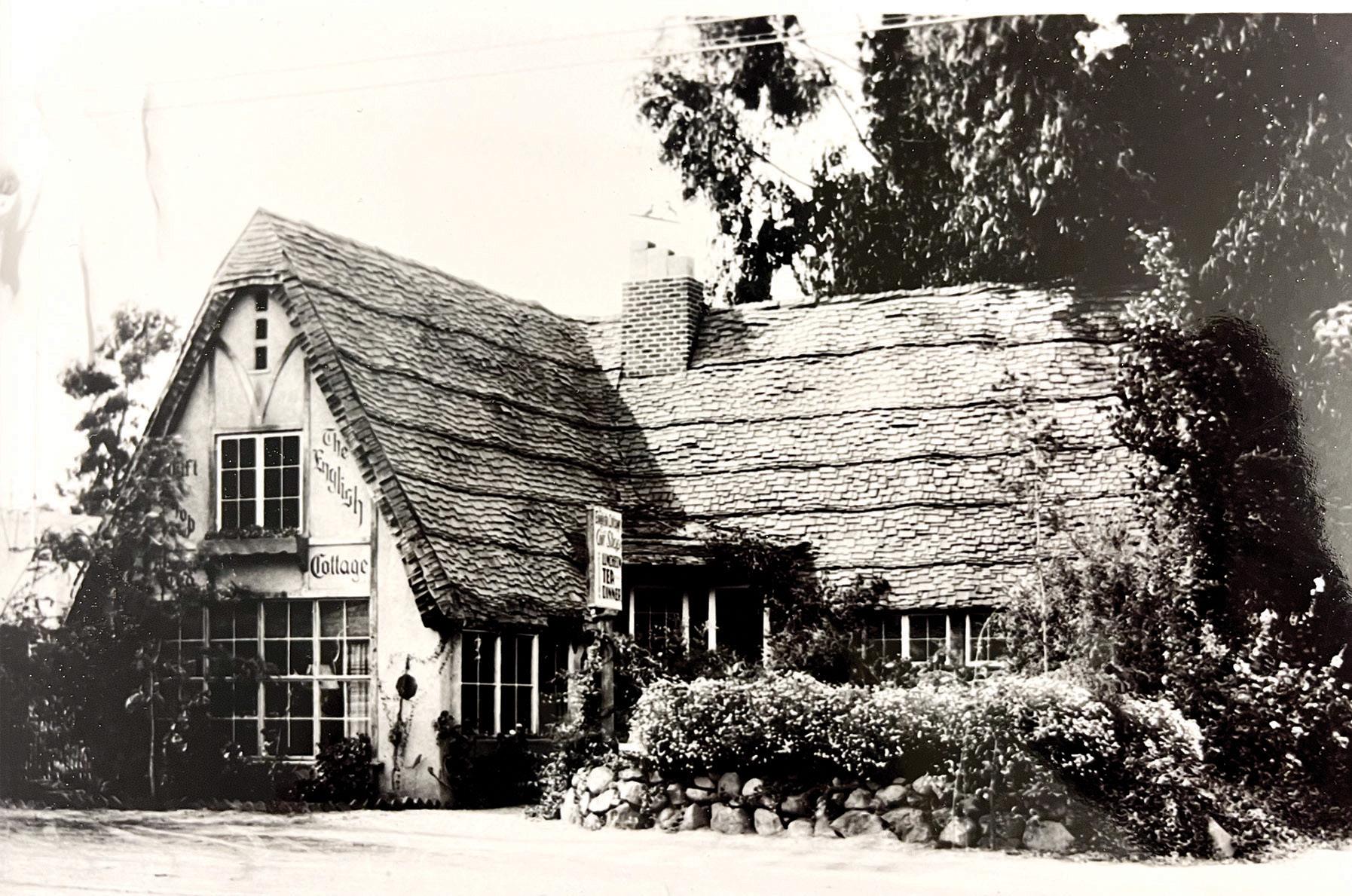
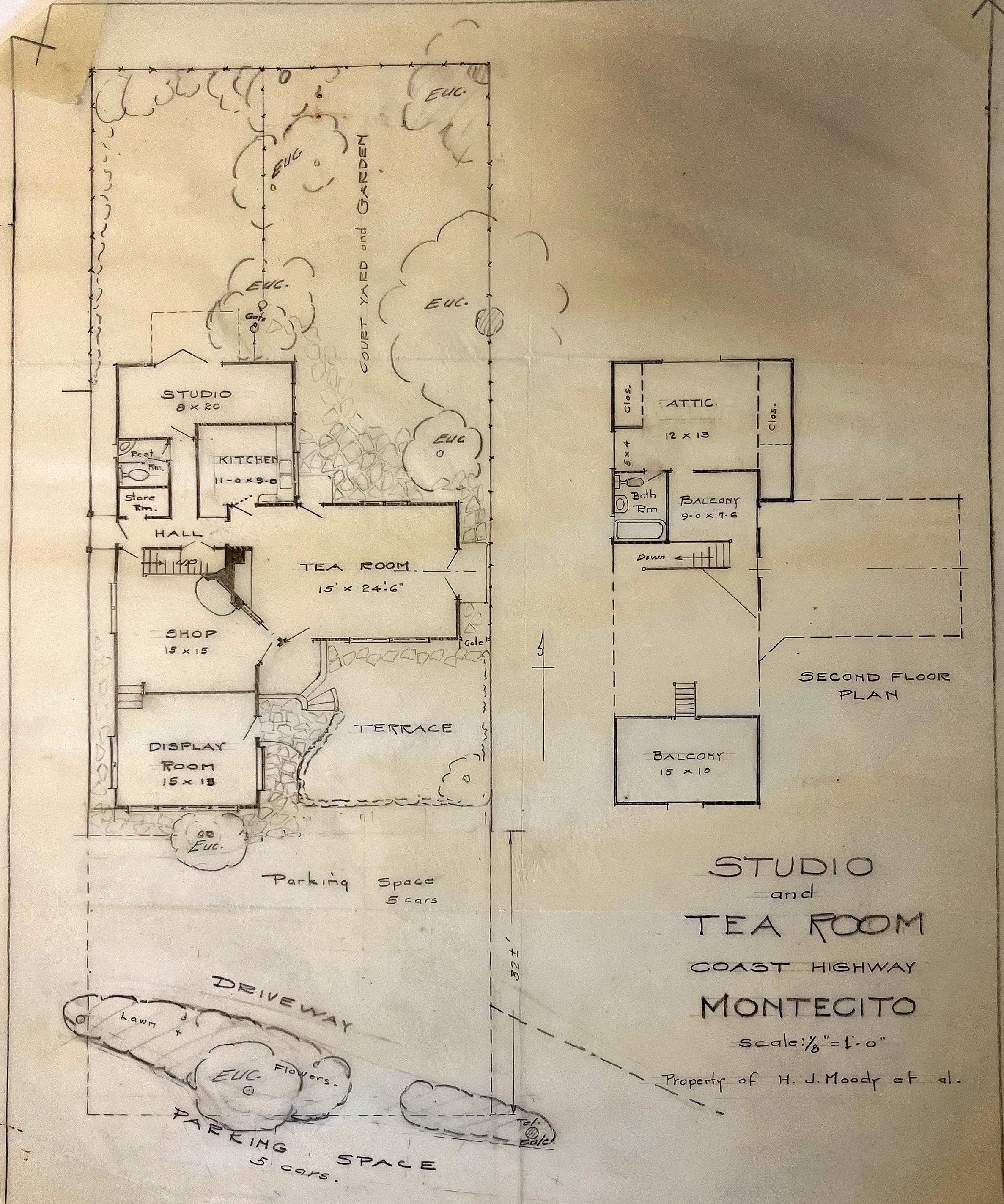
Moody Sister Cottages Will Put You in a Good One. Mood, That Is . . . . . . Our R.E. Pros Are Best-In-Breed and Will Also Put You in a Good One. House, That Is.
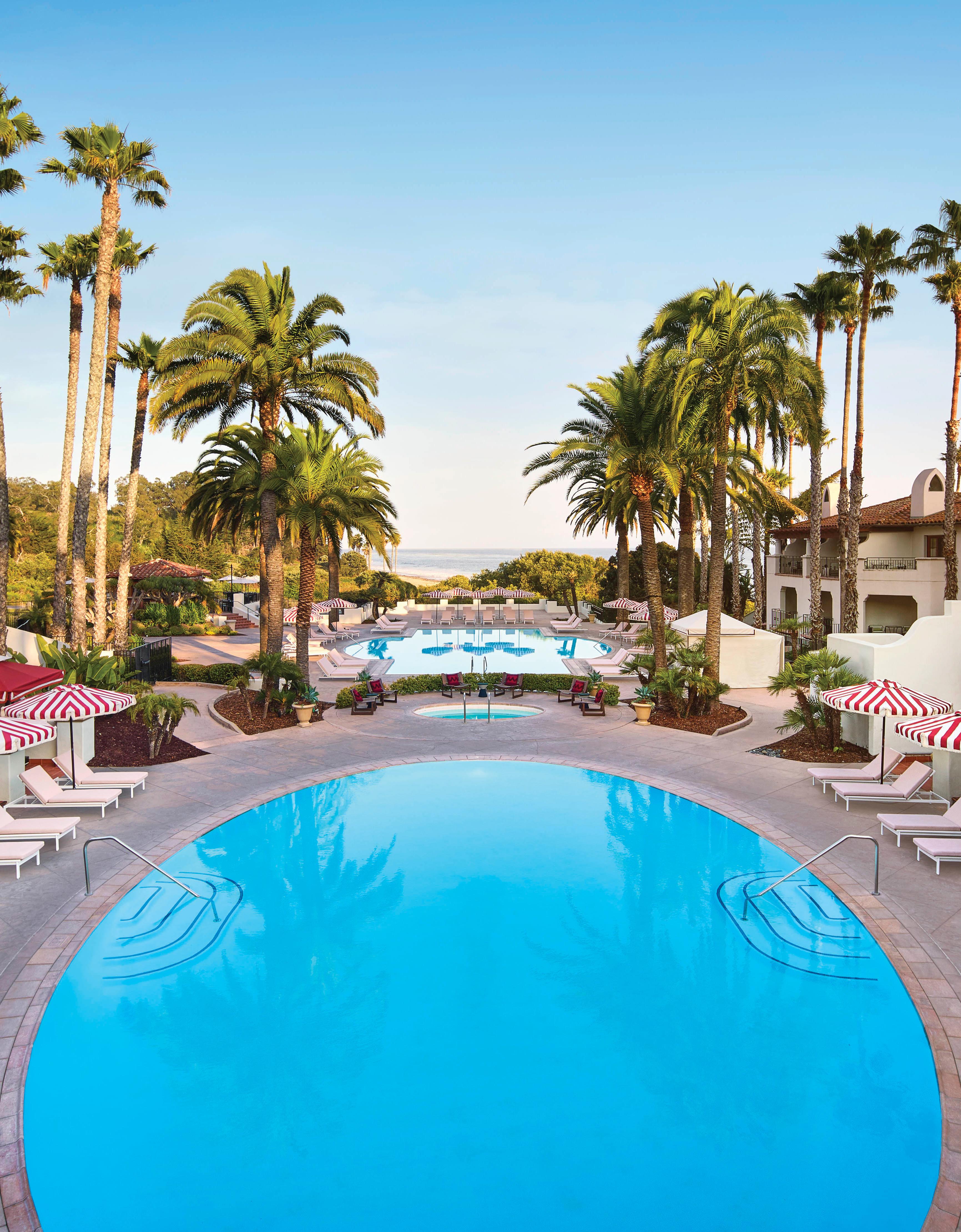
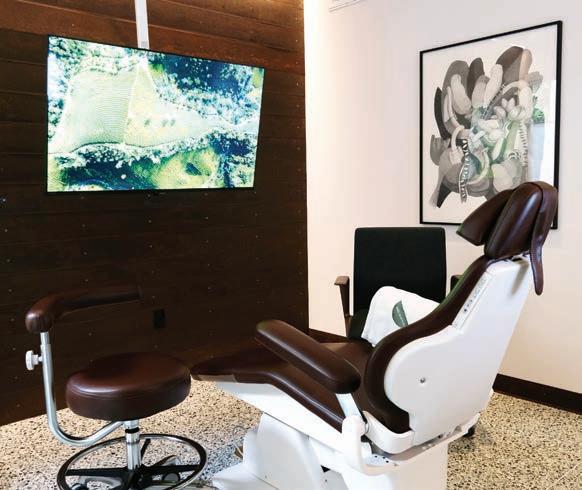
Montecito Has Wellness Coming Out the
at SAN YSIDRO RANCH
Mary smiled — it was a personal victory, one of many recently.
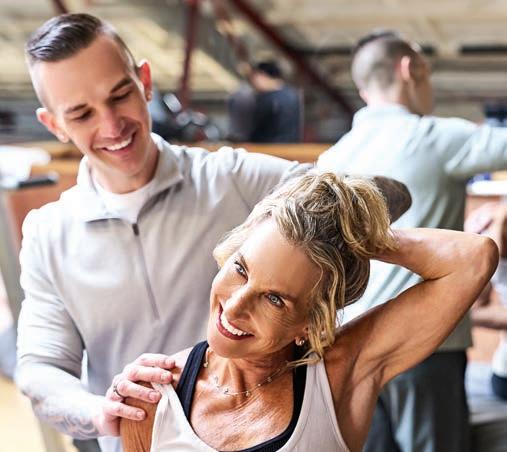
She’s 67. And this morning she carried two full bags of groceries up the front steps without stopping to rest. A small thing, perhaps. But she remembers six months ago, when she had to set the bags down halfway, clutch the handrail, and catch her breath. This morning, she walked straight up, set them on the counter, and felt something she had not felt in a long time: pride in her own body. A joy that her strength was back. Later that day, she lifted her two-year-old grandson onto her hip without a second thought. I can still do this. In fact, I can do this better than I have in years.
way to bring your body back to life
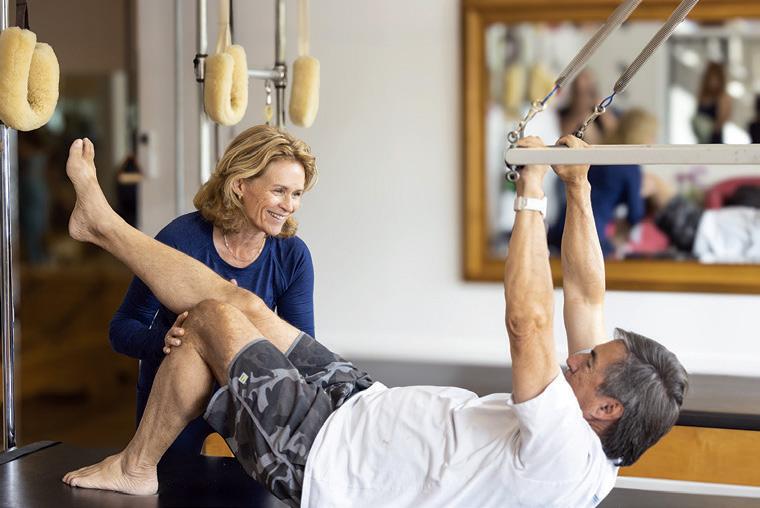
marvel. A Western Colorado University study found it melts visceral fat — the “bad” fat — 2.5 times faster, builds muscle 2 times faster, and boosts cardio fitness 3.5 times faster than traditional weight training — without breaking a sweat. One session takes just 20 minutes.
For most people, that feeling of strength has been slipping away for years — so slowly they barely noticed it going. That’s because after age 30, we lose about half a pound of muscle every year. By 40, it’s a pound. By 80, nearly 40% of our muscle is gone. And with it goes our balance, our energy, and the ease of doing the everyday things we used to take for granted.
The decline is so gradual that most of us mistake it for “just getting older.” We shrug and carry on — not knowing that low muscle mass is scientifically linked to a higher risk of heart disease, diabetes, cancer, stroke, falls, and frac-
tures. The loss of muscle is, in fact, one of the most reliable predictors of how well — and how long — we will live.
But the good news is remarkable: this process can be stopped. And reversed. At any age. That is what Healthspan+ was built to do.
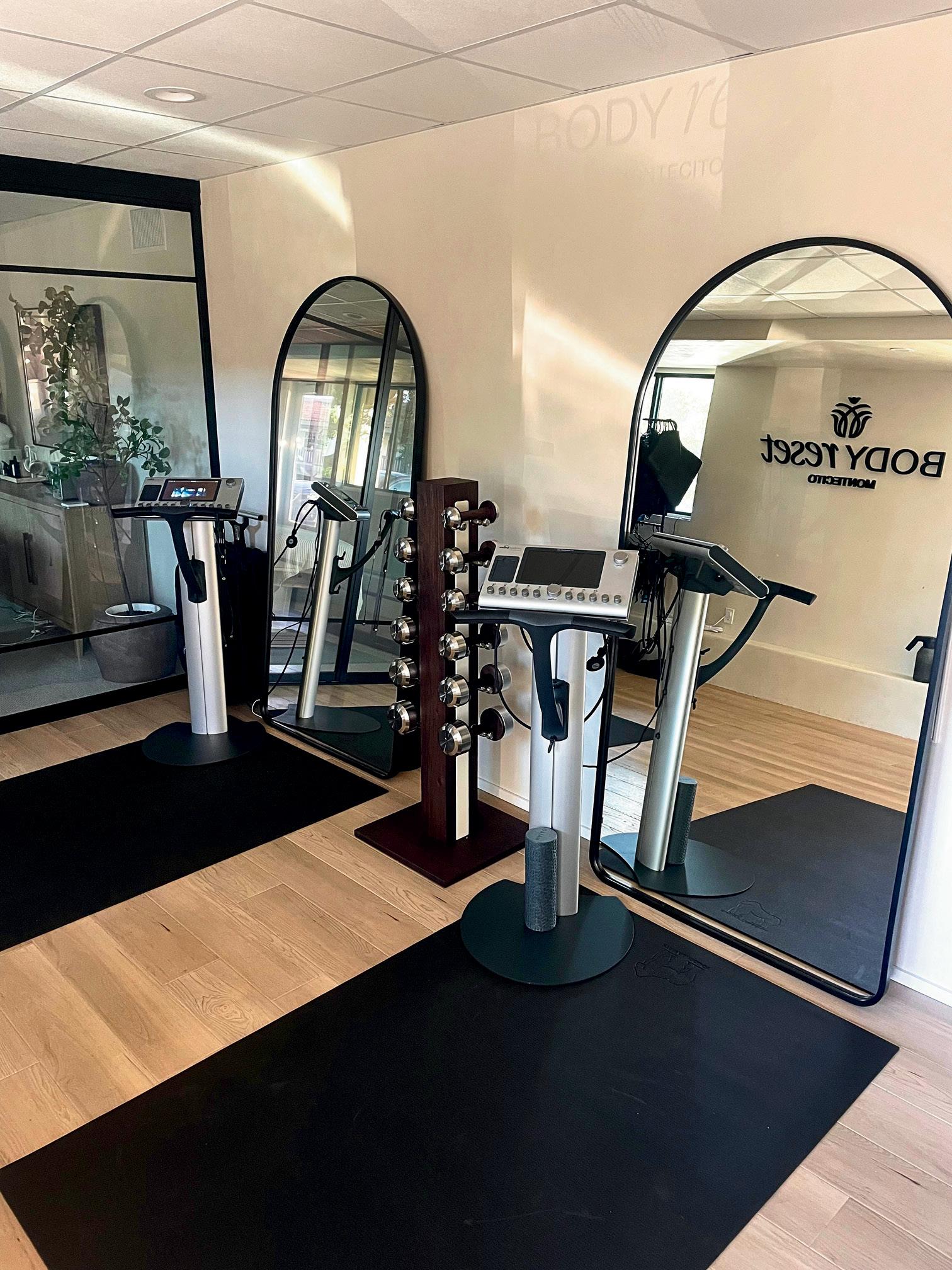
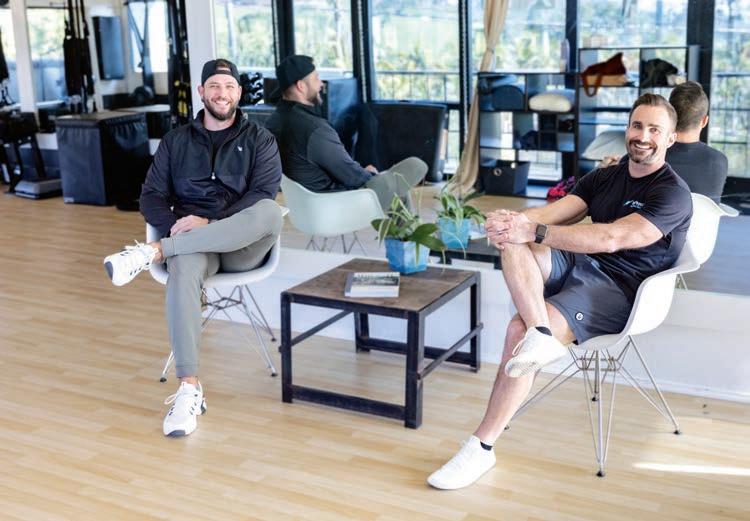
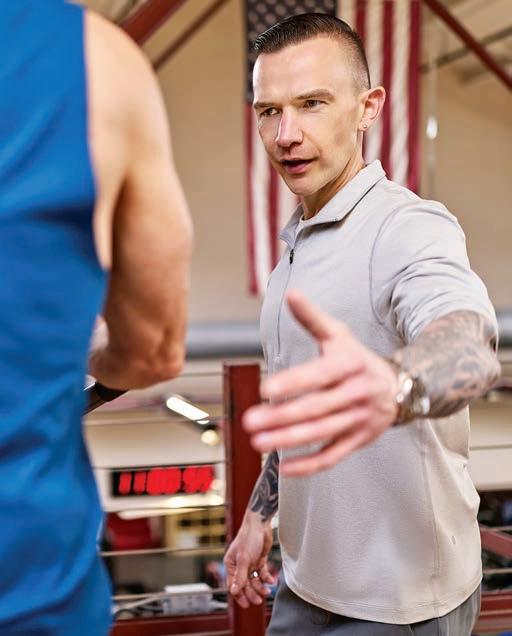
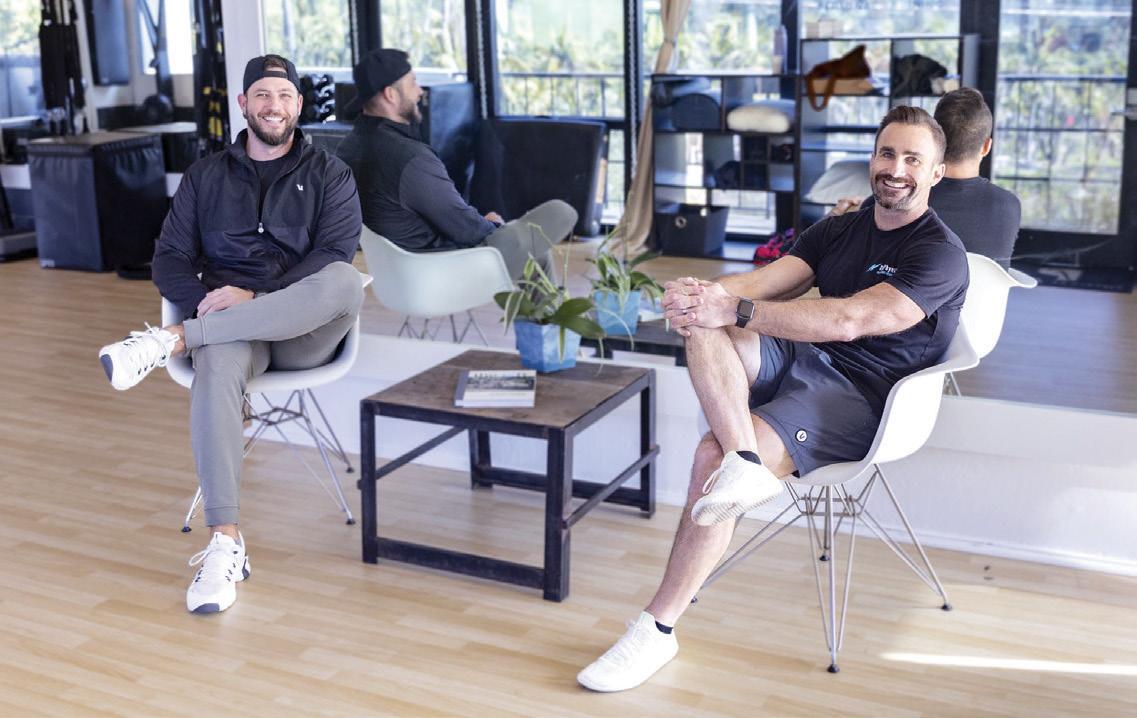
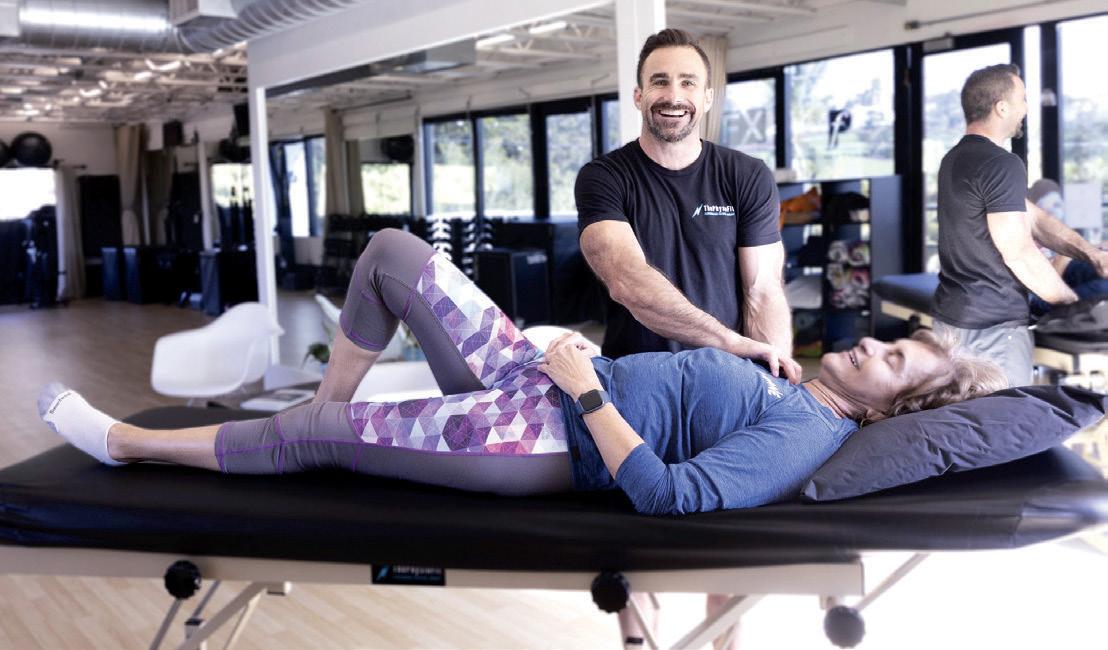
We are not a gym. We are a private, concierge-level facility in the heart of Montecito, designed for people serious about reclaiming the strength, vitality, and independence of a younger body. From the moment you arrive, a dedicated specialist is at your side — custom-fitting every session to your body, your goals, and your progress.
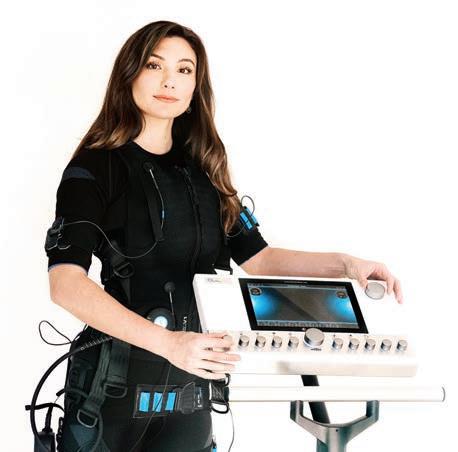
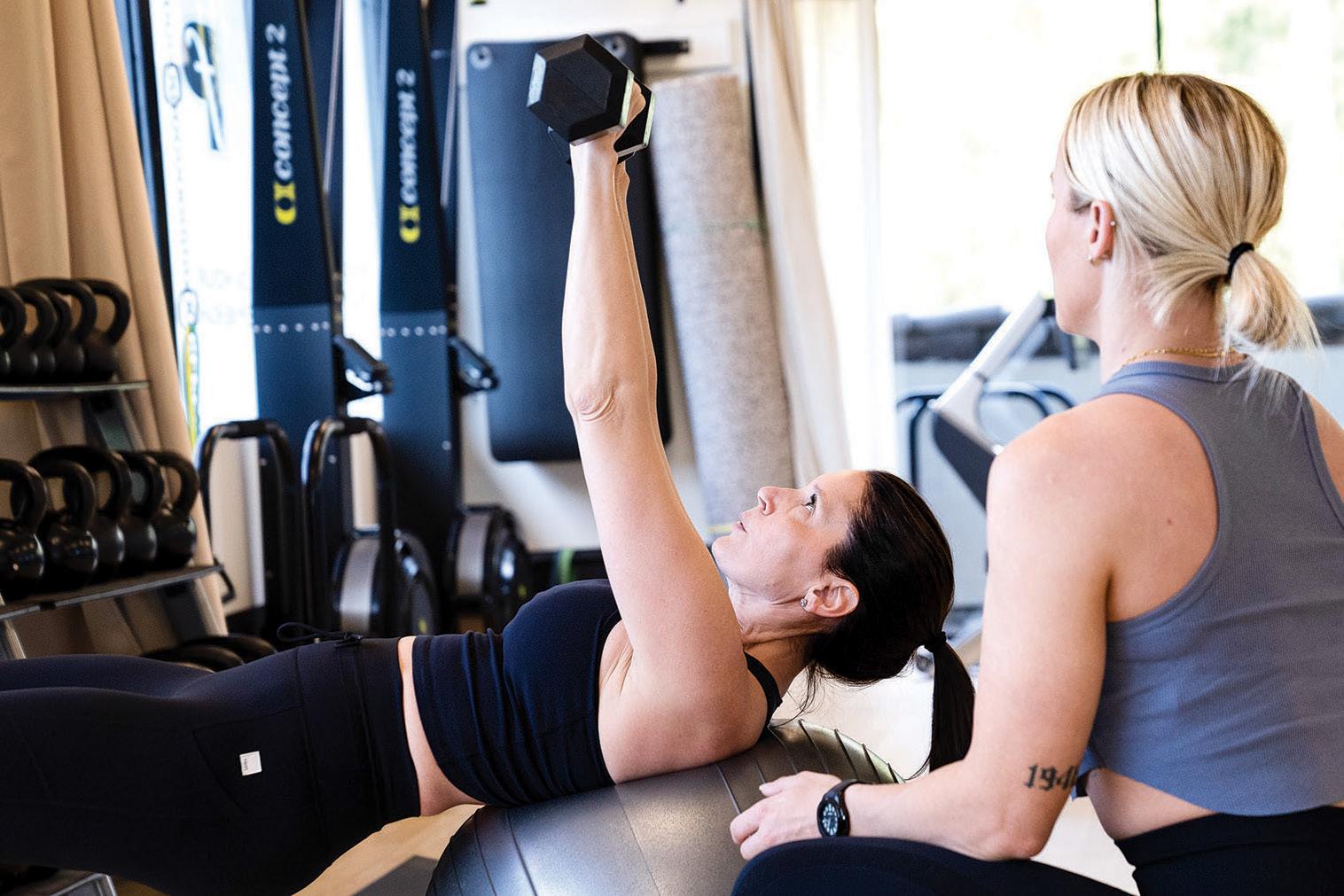
At the heart of our system is the Adaptive Resistance Exercise (ARX) machine — a computer-controlled
Start with a Free Private
Alongside ARX, we use isometric equipment that engages more than 50 deep core muscles to strengthen your spine, improve your posture, and protect you from falls. And we finish each visit with medical-grade red-light therapy — the same technology trusted by the Miami Dolphins, Golden State Warriors, and Olympic athletes — to rebuild tissue and reduce inflammation. All in just one, two, or three hours a week. Your choice.
David is 72. A year ago he was beginning to dread the things he once loved. Eighteen holes felt like too many. The garden was getting away from him. Today, he walks the full course without a cart, prunes his roses without his back going out, and gets up off the floor as easily as he did at 50. I feel like I got my life back, he says. In some ways, I’m in better shape now than I was twenty years ago.
Your body can regain the strength you’d thought you’d lost. It is never too early — or too late — to start.
Tour
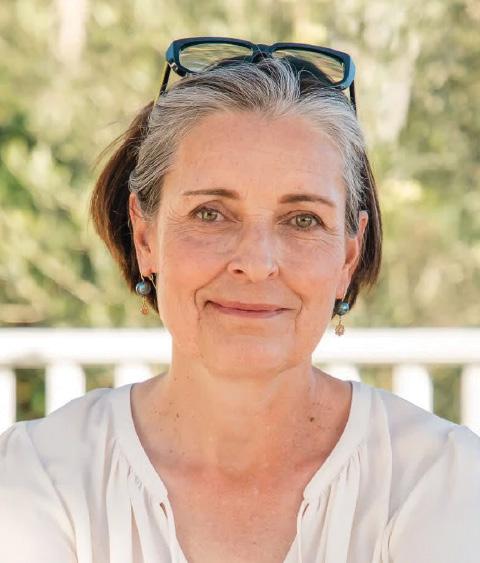
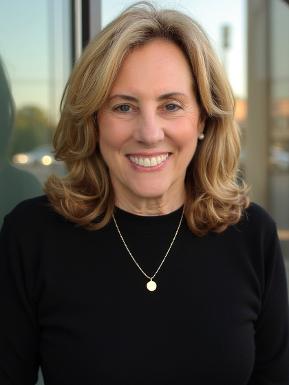
Cristal Clarke
MOSAÏQUE
EXCLUSIVELY AT
CONEJO HARDWOODS
WESTLAKE VILLAGE • SANTA BARBARA
Safeguard Your Summer
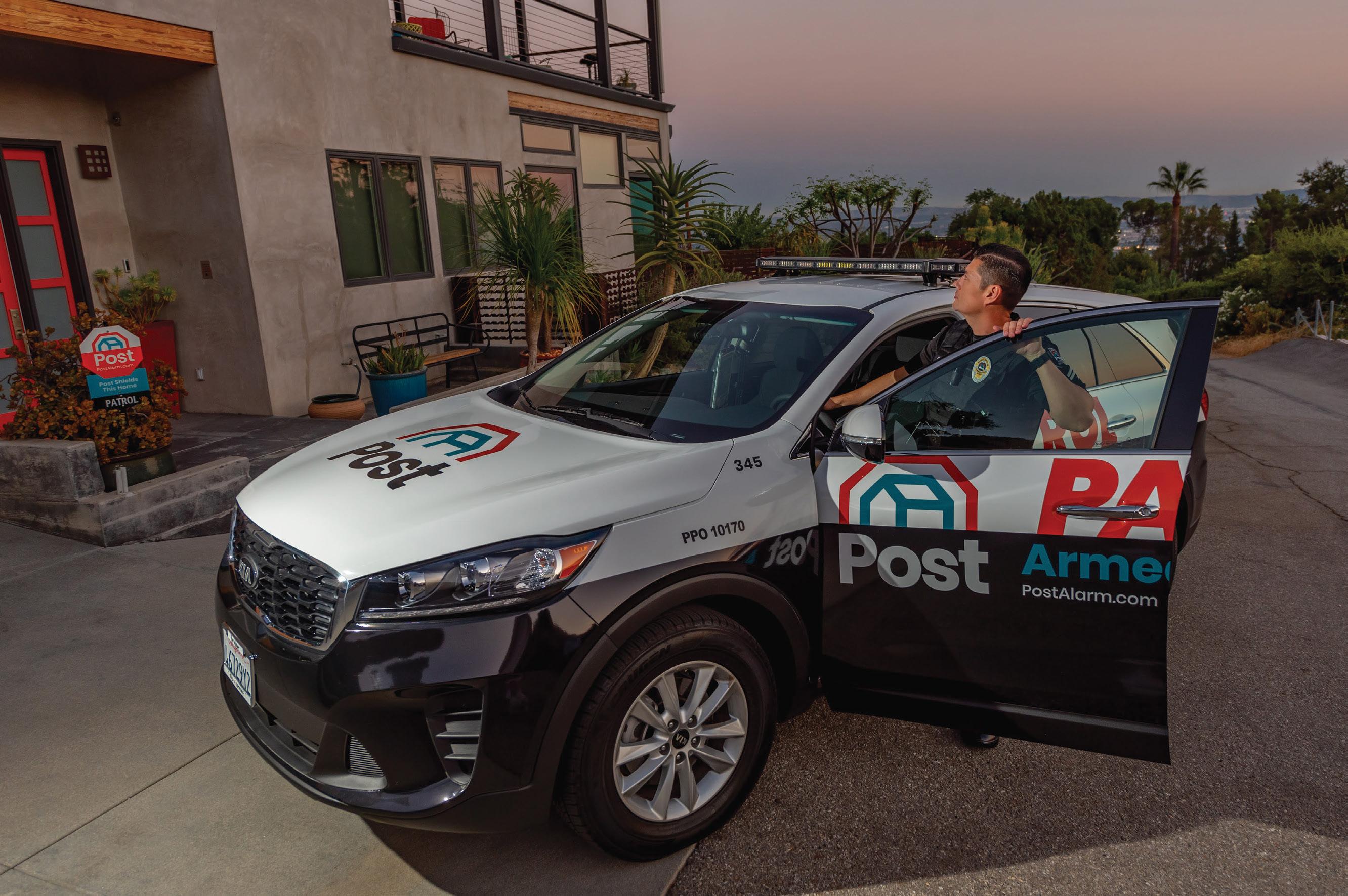
With the rise in visitors and traffic throughout Montecito this Summer, not everyone entering the community has good intentions. Recent high-profile burglaries—and a growing demand for Patrol services—have highlighted the need for more proactive protection.
More homeowners are turning to Post Alarm Patrol to actively protect their streets. With increased participation across the community, our Patrol presence continues to expand—creating greater visibility, faster response times, and stronger coverage where it matters most.
With your participation, we can put Patrol to work on your street— watching for threats and acting fast when it matters most. The result is a safer, more secure environment not just for your property, but for the Montecito community as a whole.
Post Alarm has protected Southern California’s most exclusive neighborhoods for nearly 70 years. For three generations, we have been privately owned, locally operated, and deeply committed to the safety of communities like Montecito.
Post Alarm Patrol Services are designed to protect the entire community—not just individual homes. As demand continues to grow in Montecito, increased participation allows Patrol to operate with greater visibility, reach, and impact.
• Marked Patrol Vehicles maintain a visible presence throughout the neighborhood, deterring suspicious activity.
• Armed Patrol Officers respond quickly to suspicious persons, vehicles, or alarm activations.
• Expanded Patrol Coverage means more frequent presence and faster response as participation grows.
• Community Participation strengthens protection across Montecito—helping safeguard more homes, more effectively.
CEO Gwyn Lurie gwyn@montecitojournal.net
President & COO Tim Buckley tim@montecitojournal.net
Hattie Beresford, Zachary Bernstein, Troy Blendell, Heidi Clements, Joe Donnelly, Zack Harris, Steven Libowitz, Jonas Oppenheim, Beatrice Tolan
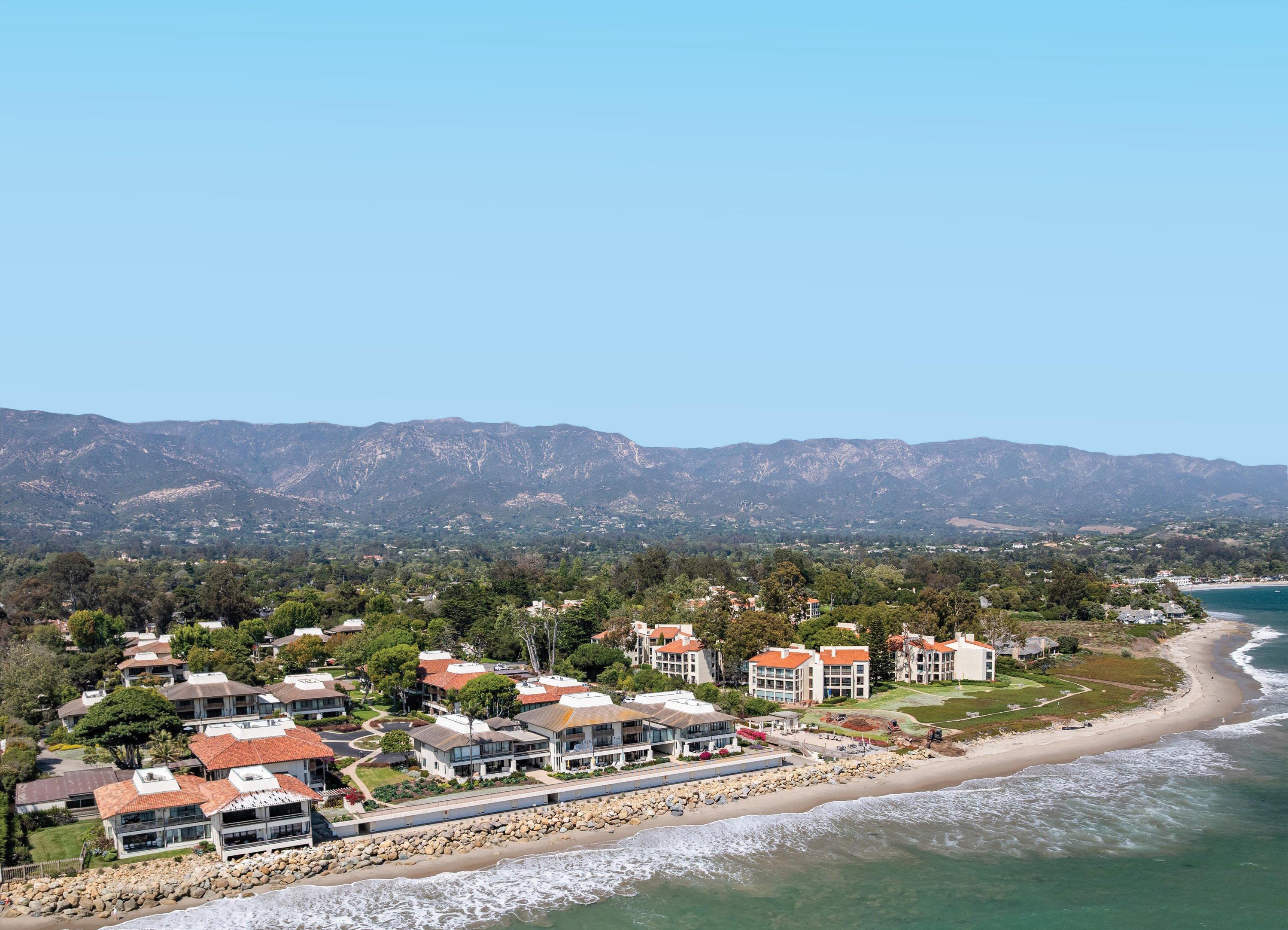
BONNYMEDE
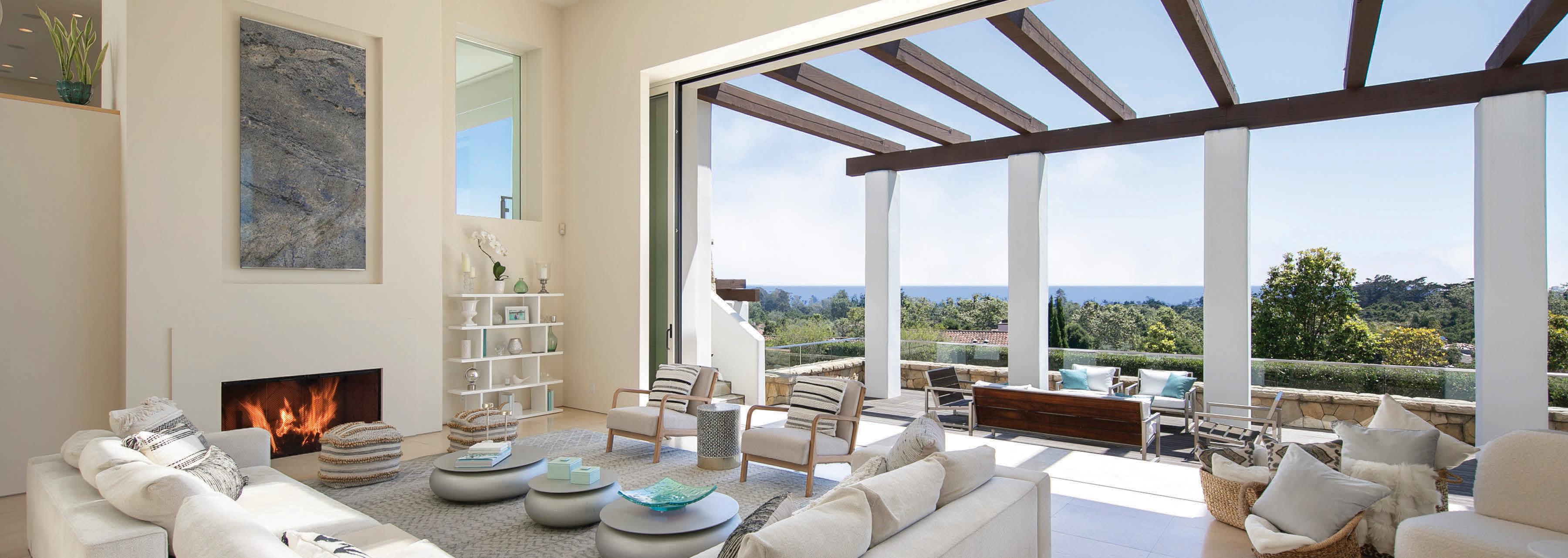
Recent record-setting sales have reset values along this private coastal stretch. Where limited inventory and rare turnover mean Bonnymede sales don’t just reflect the market—they help define it.
MONTECITO SHORES
Next door, Montecito Shores offers a relaxed residential pace. Where spacious residences command premiums and quietly affirm its coastal prestige.
Along
Santa Barbara | Los Angeles
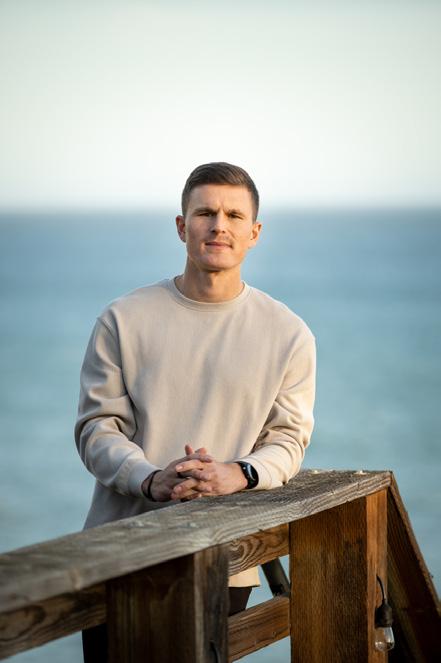
52.Atoms & Axes – Meet Gabe Dalporto, the Montecito nuclear engineer who’s the CEO of Guitar Center and thinks atomic energy deserves a better PR team.
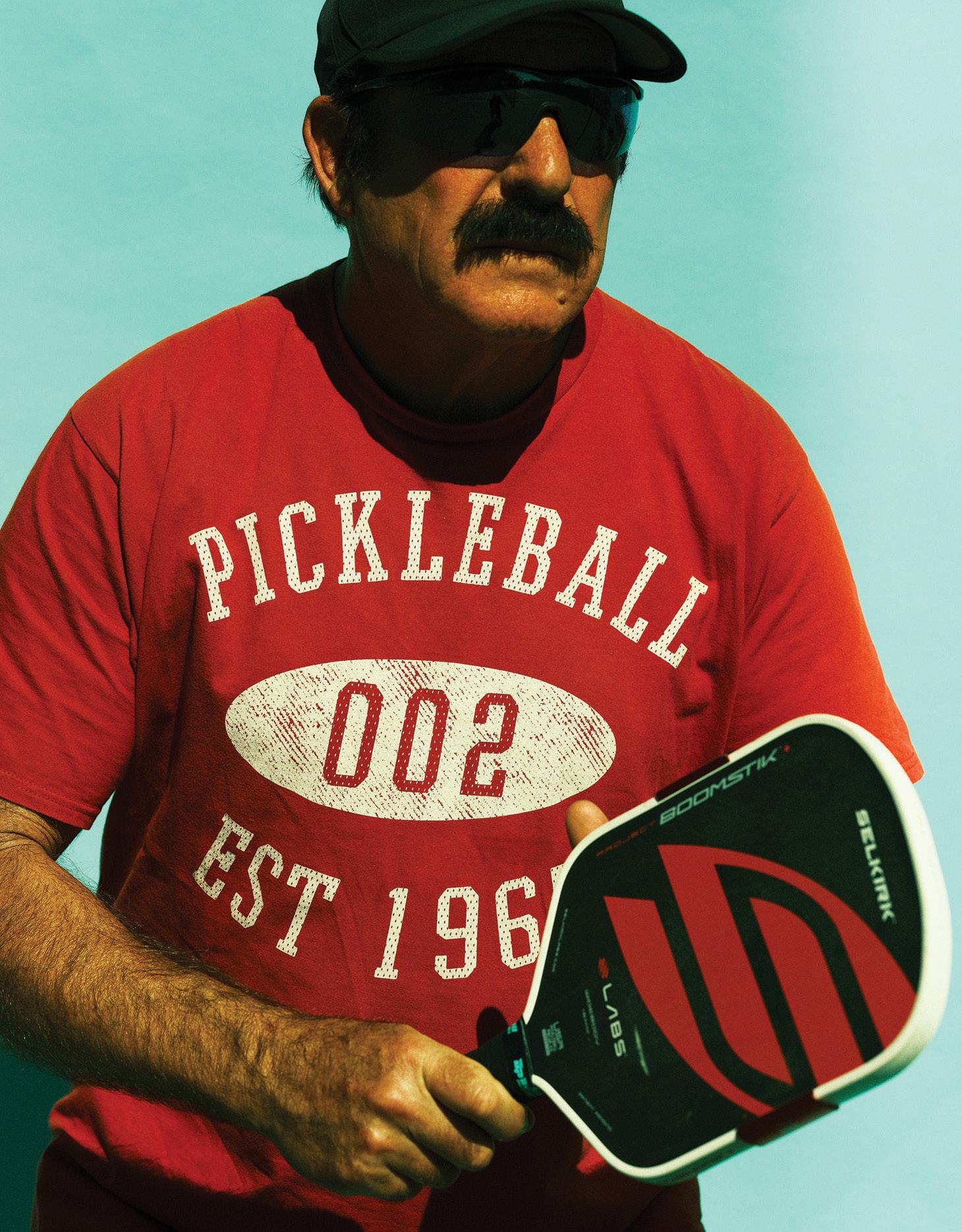
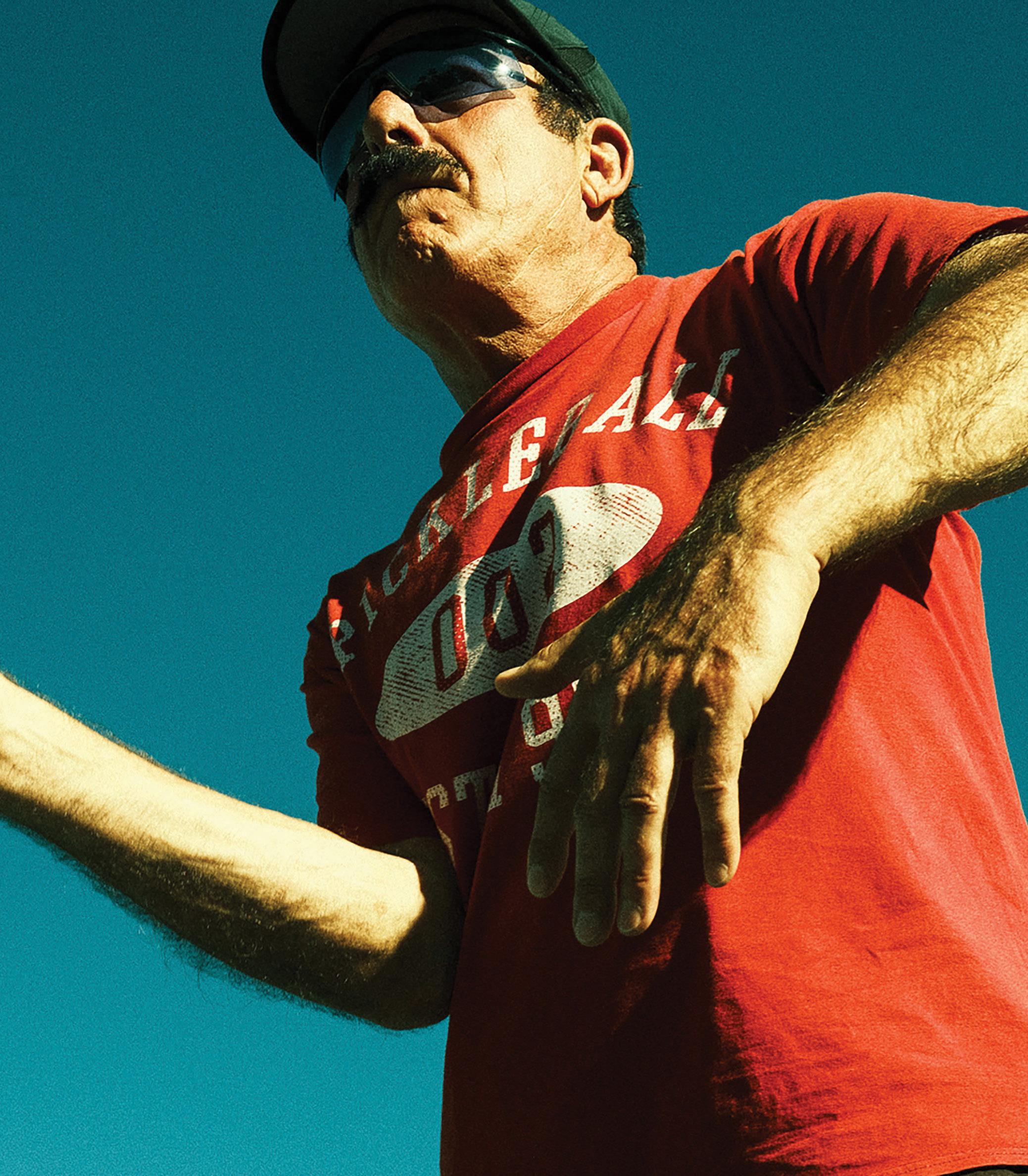
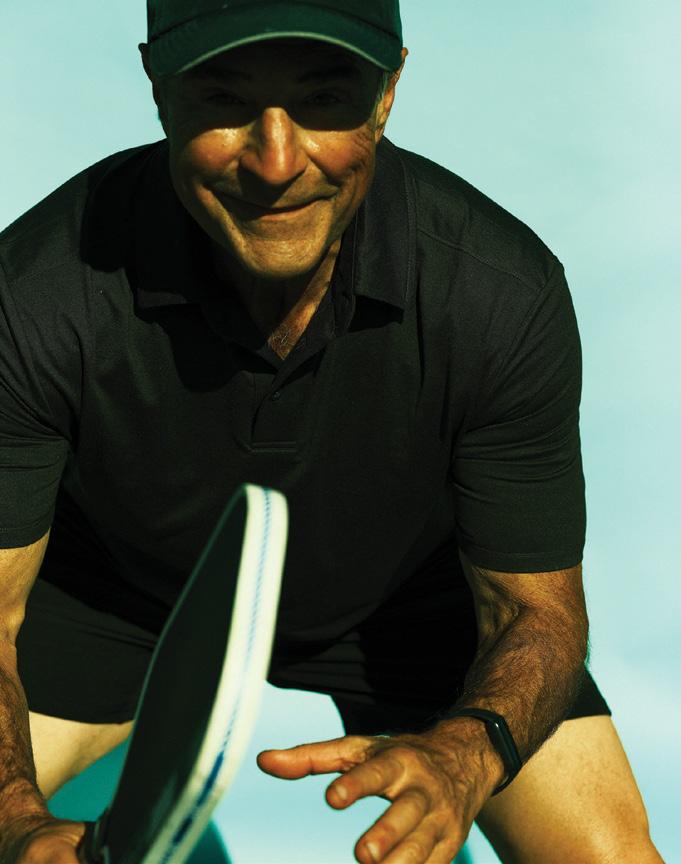
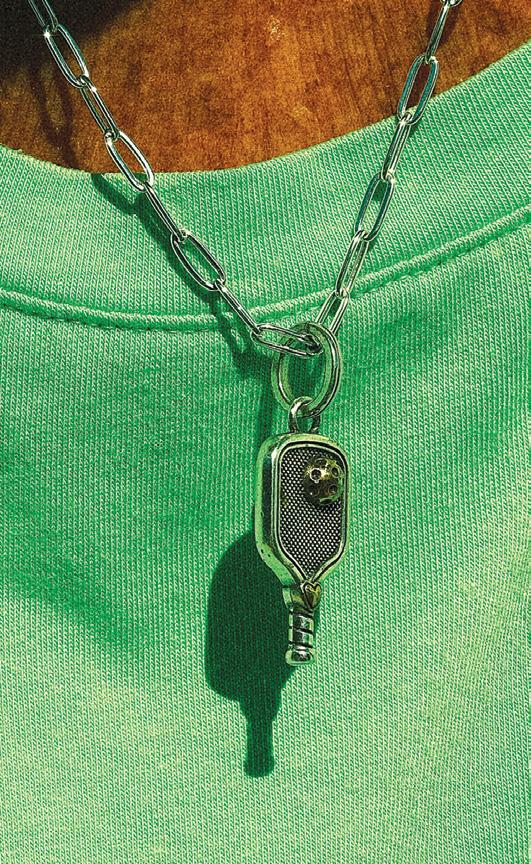
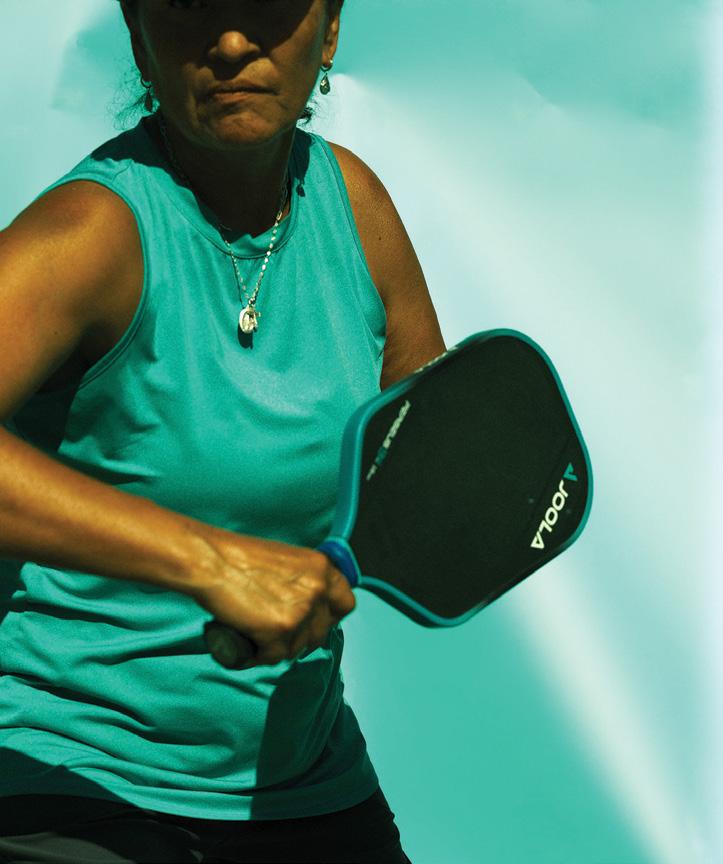
64.Pickleball Planet – The world’s fastestgrowing sport has reached Montecito, Nepal, and possibly the point of no return. Yet one player is trying to bring it back down to its basics: Newtonian physics.
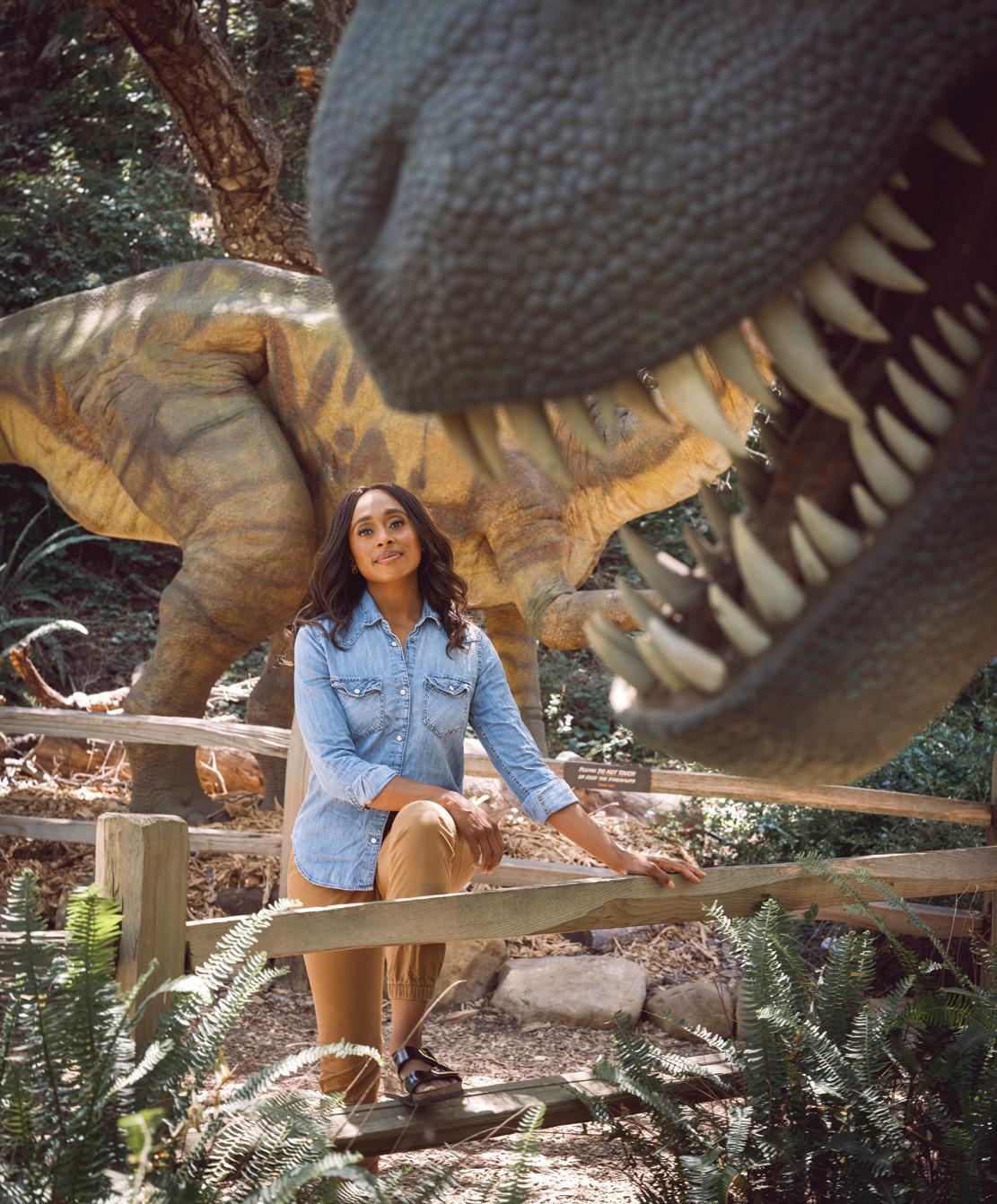
76.The Nature of Rae – Dr. Rae WynnGrant’s resume includes black bears, National Geographic, advanced degrees from Columbia and Yale, John Legend, and now: Montecito. Meet the scientist who discovered a rainforest, hosts Wild Kingdom, but still sometimes feels like an outsider.
96.
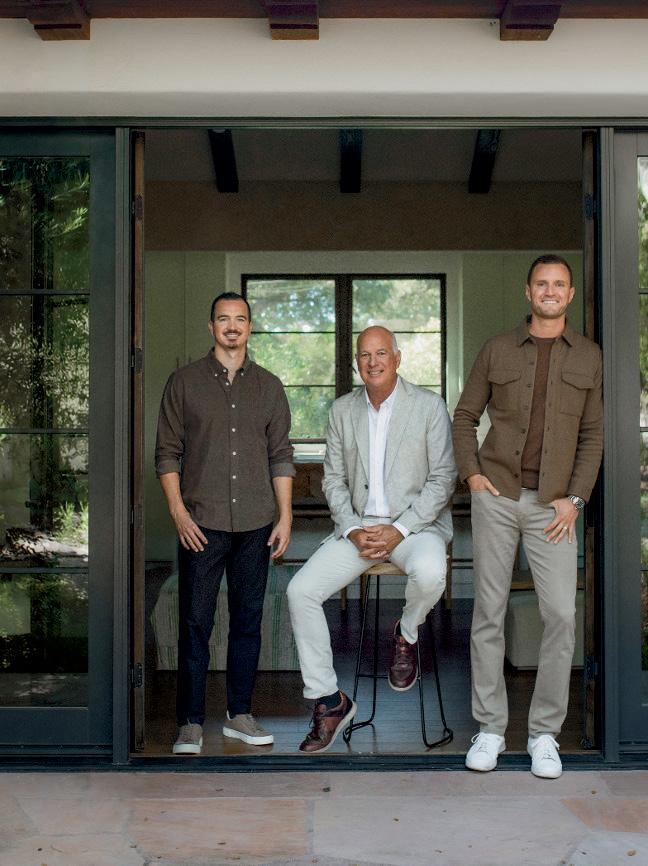
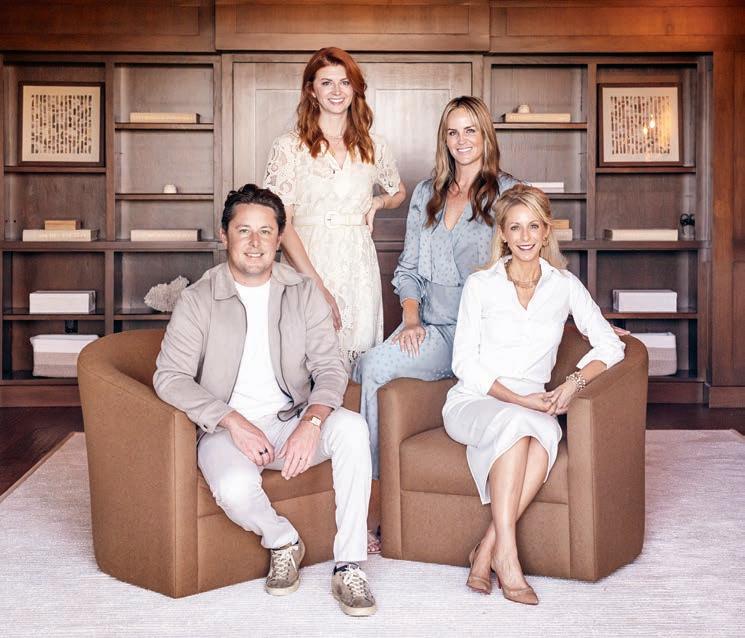
Top Real Estate Professionals – Meet the top agents and teams helping buyers and sellers navigate the South Coast’s most competitive market: Montecito.
76. 124. 64.
92.The Econ Oracle – UCSB economist Peter Rupert explains Montecito real estate, market myths, and why economics doesn’t have to be boring.
124.
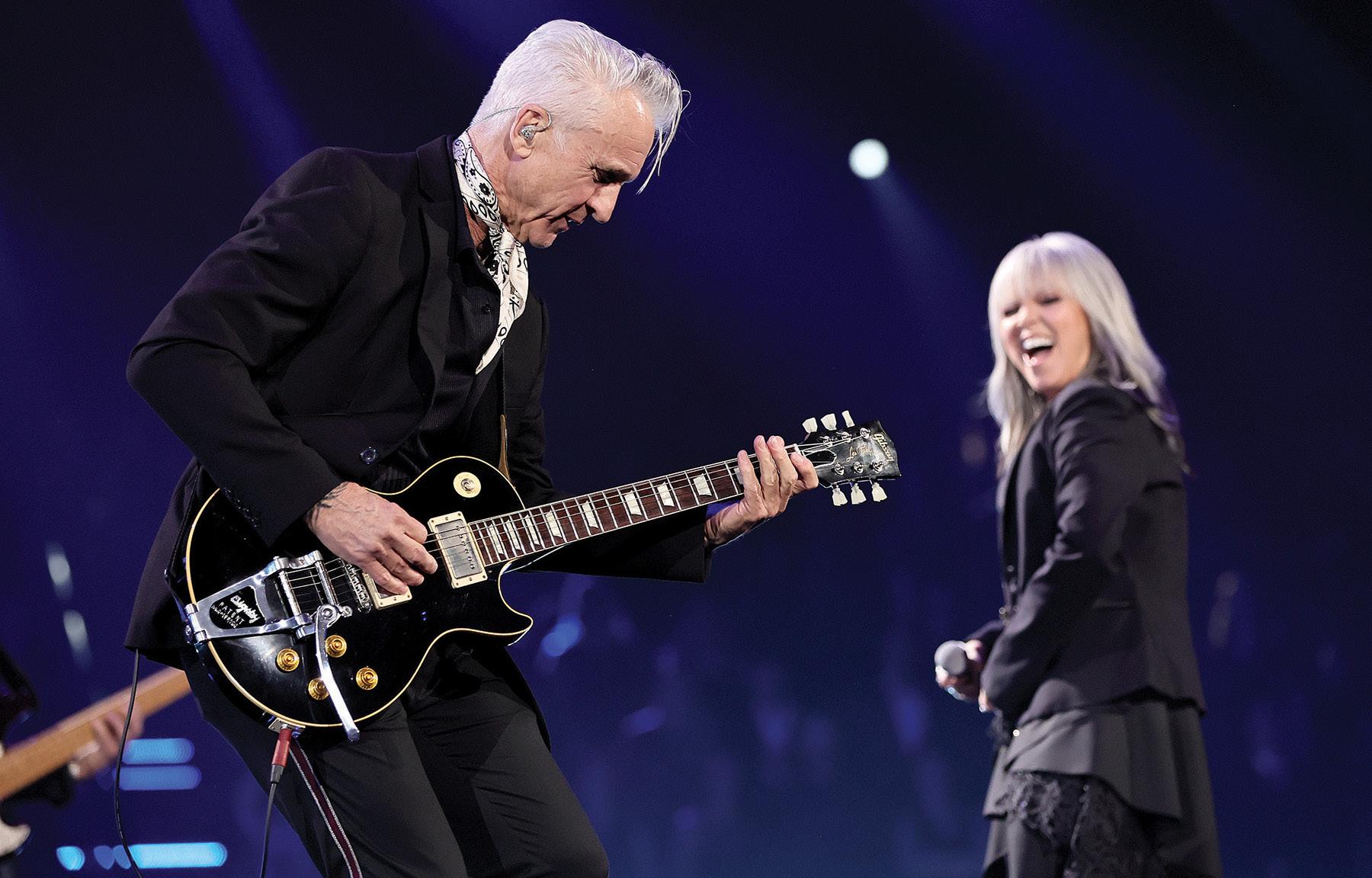
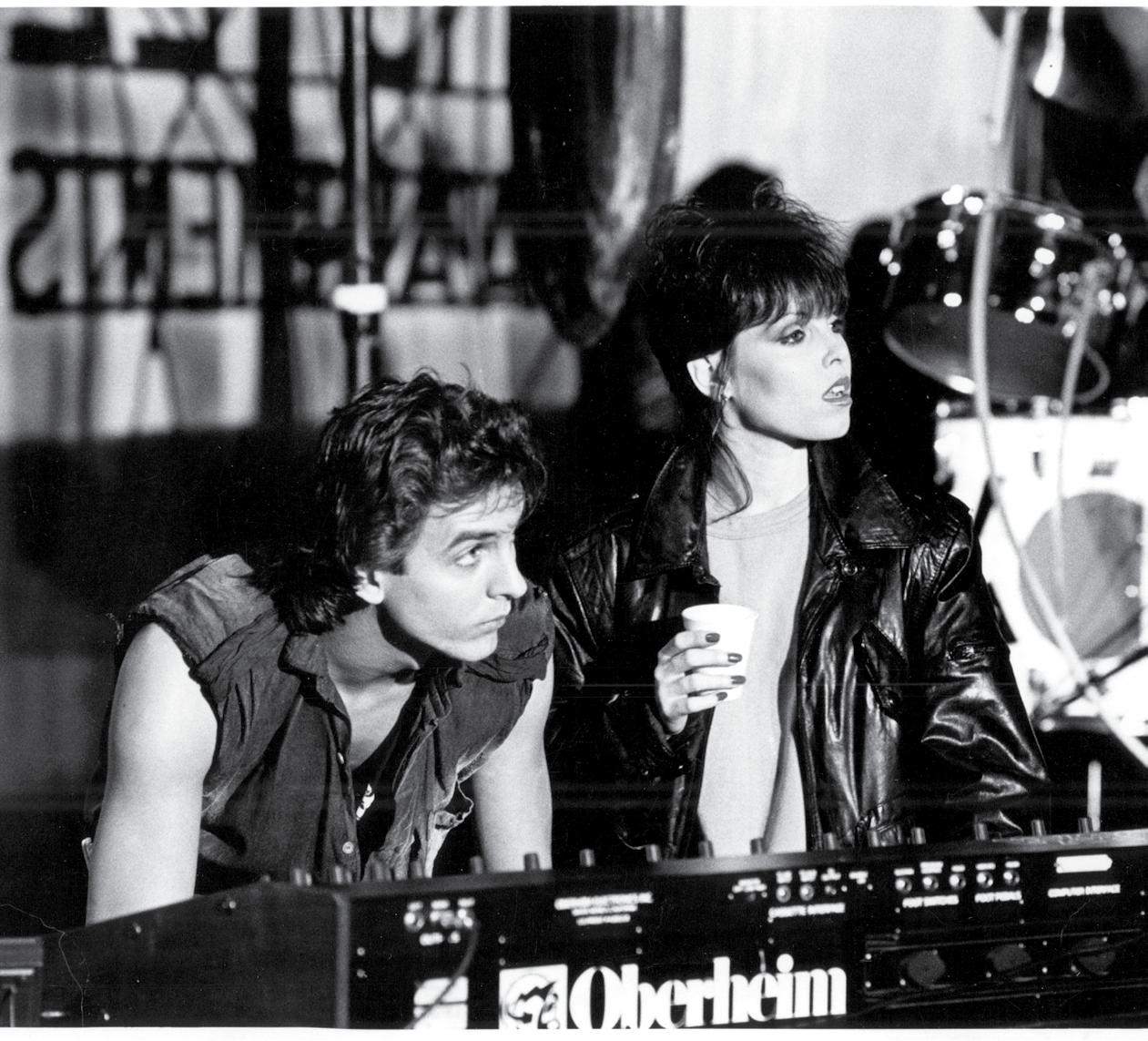
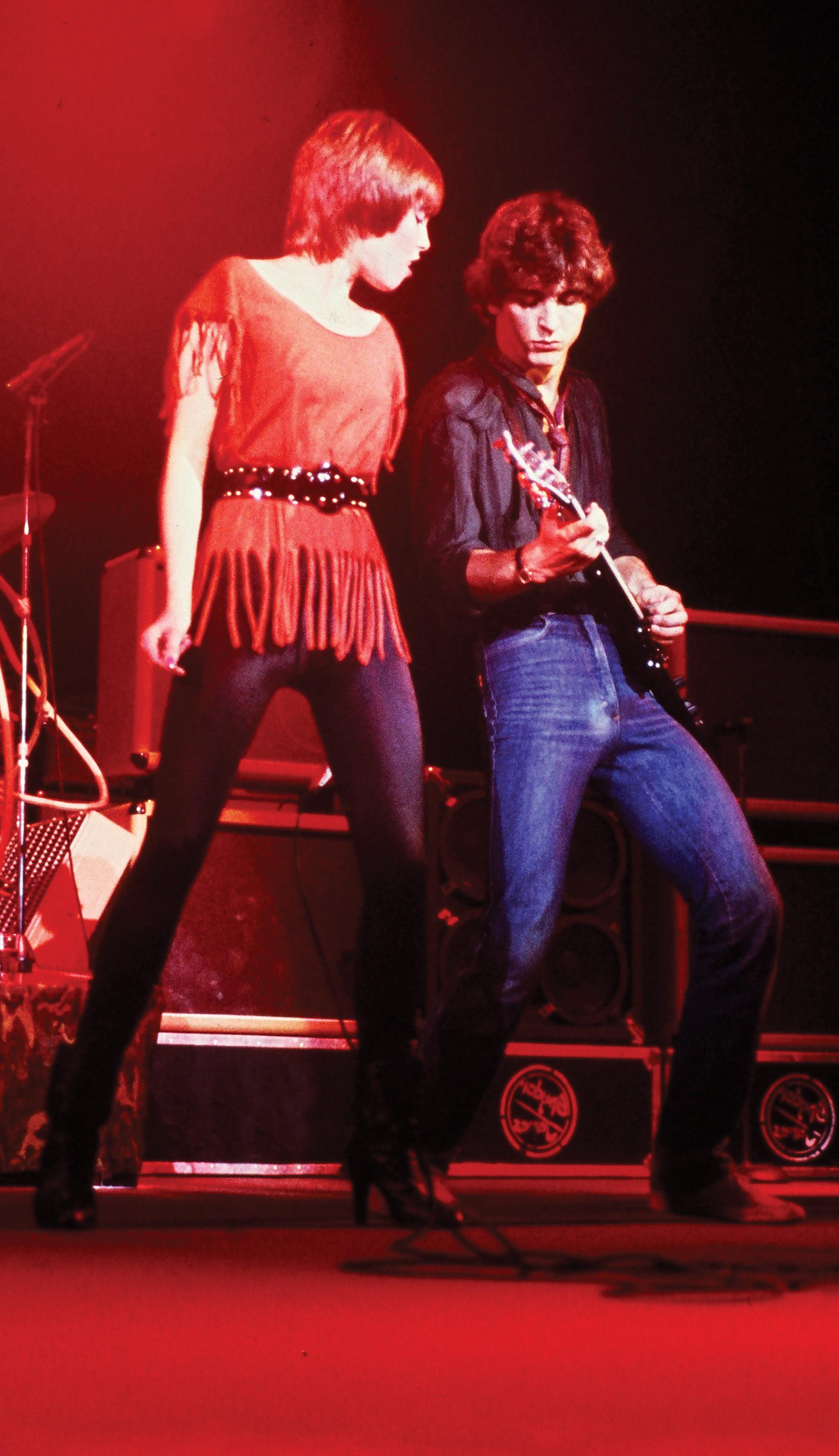
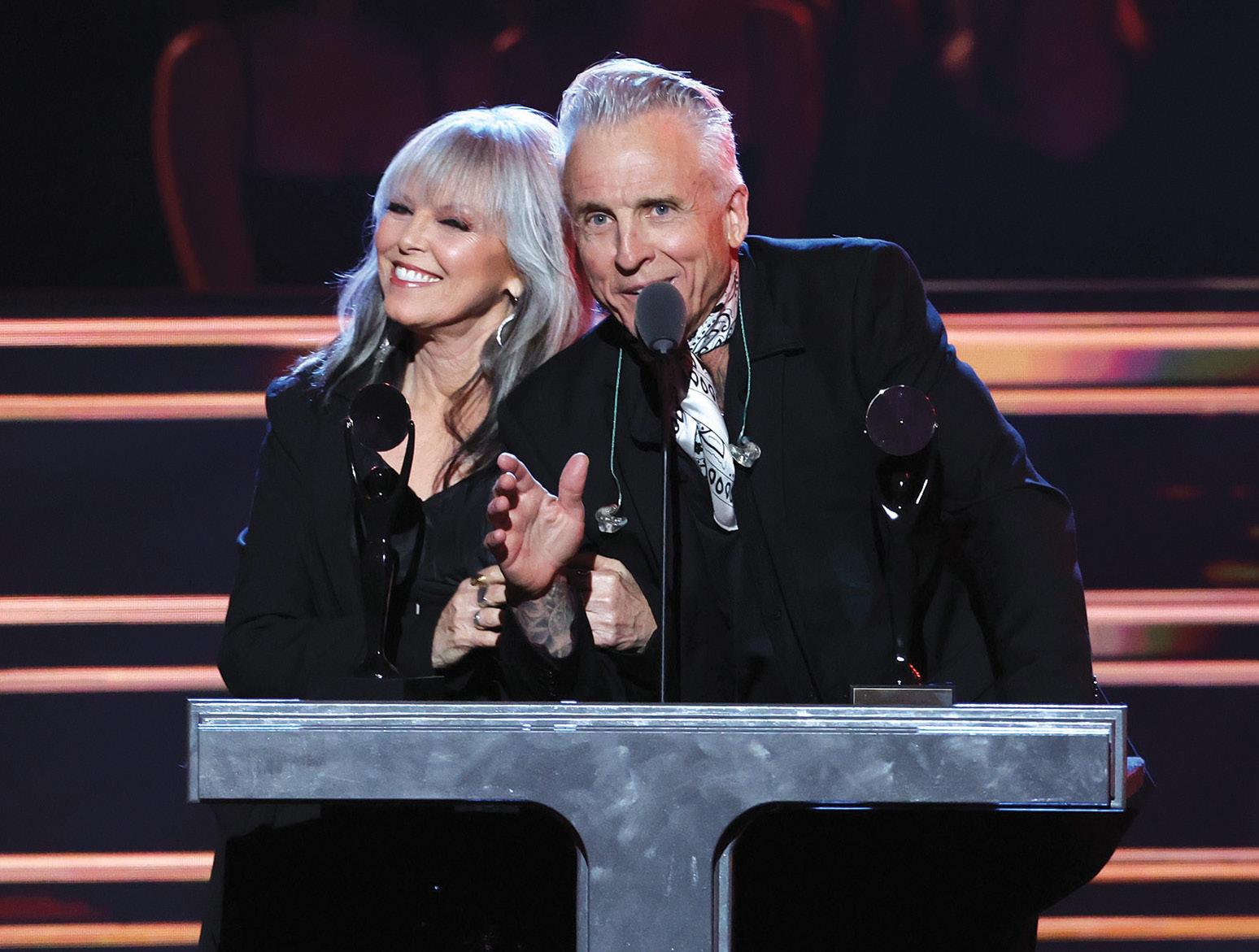
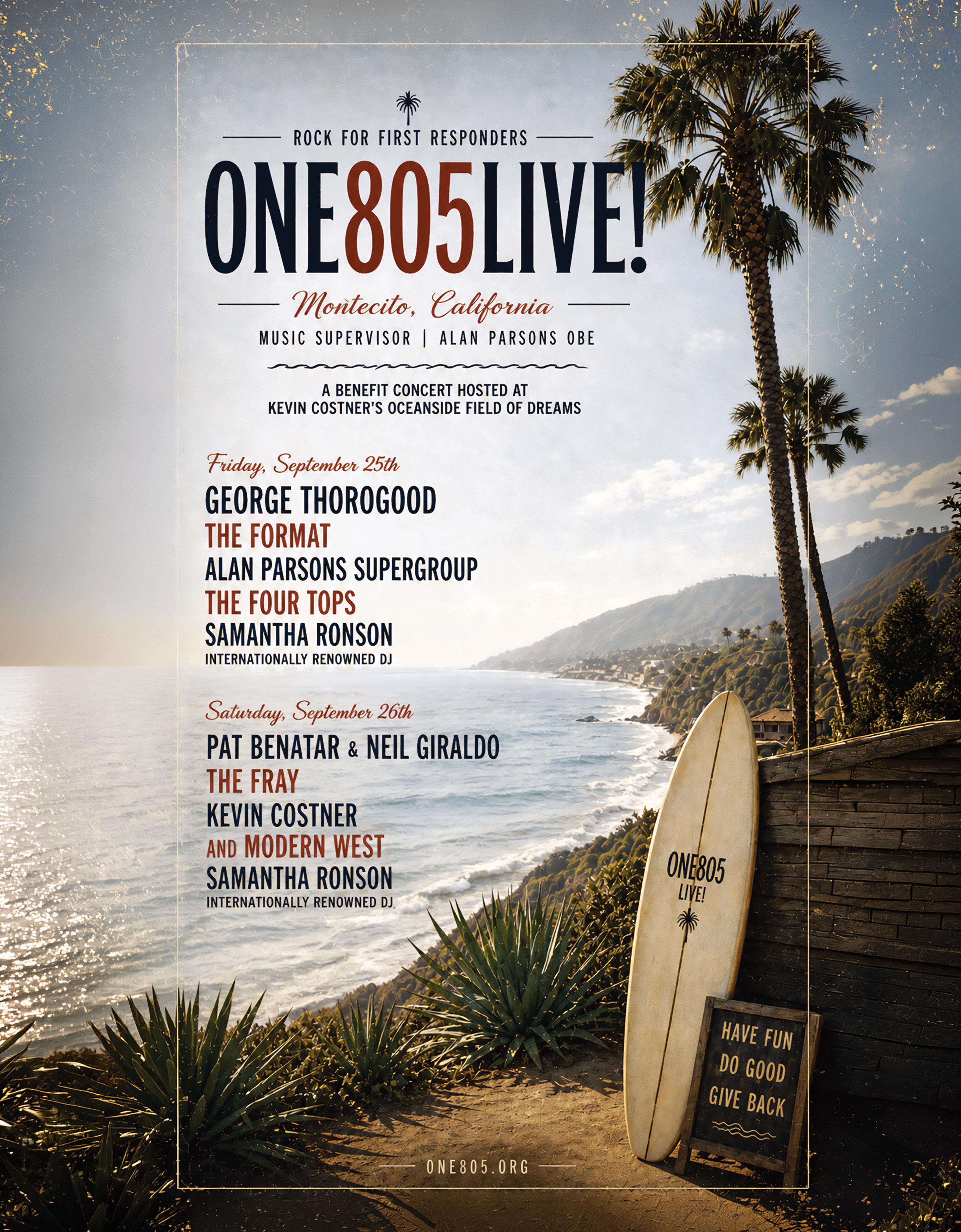
Rock Solid – Pat Benatar and Neil Giraldo still finish each other’s sentences—and occasionally each other’s guitar riffs. The rock legends, devoted grandparents, and longtime first responder supporters bring their talents to One805Live!
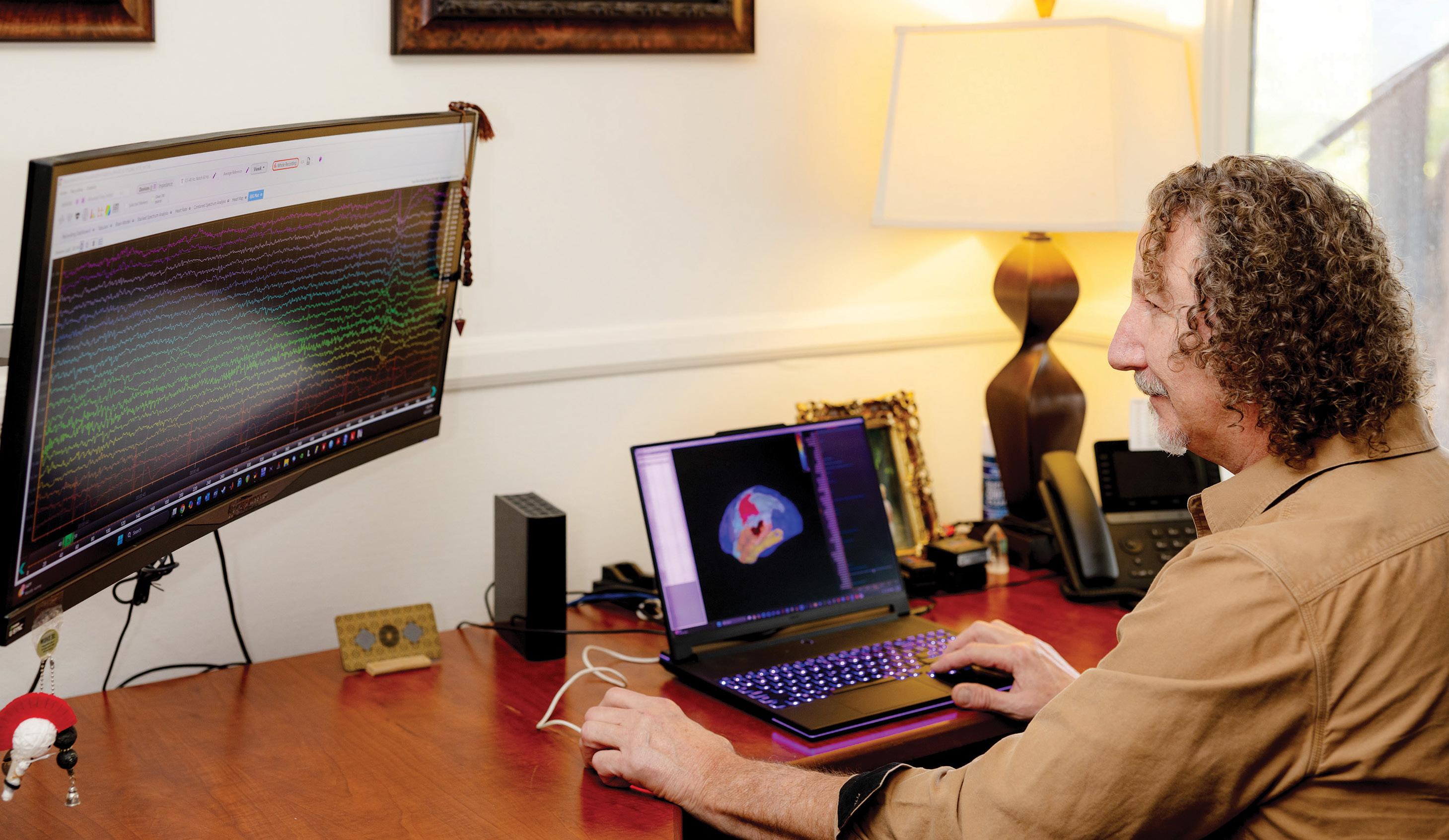
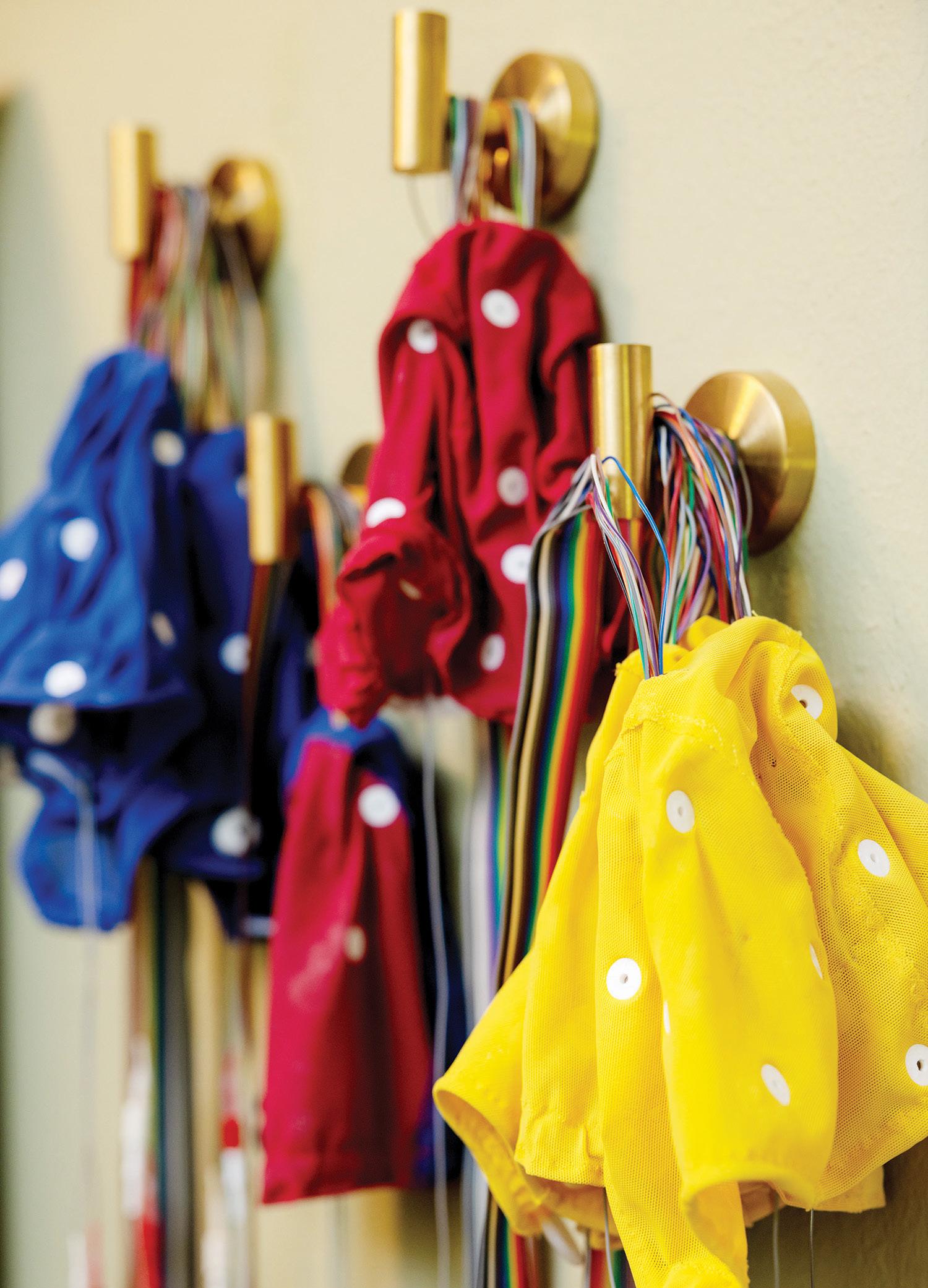
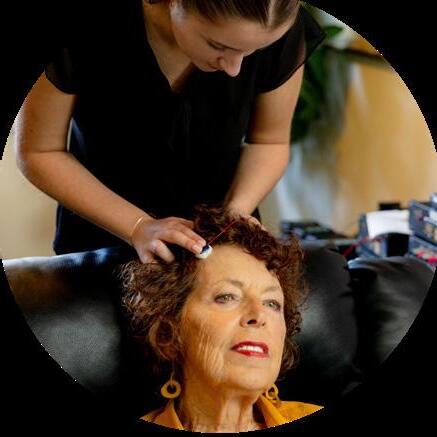
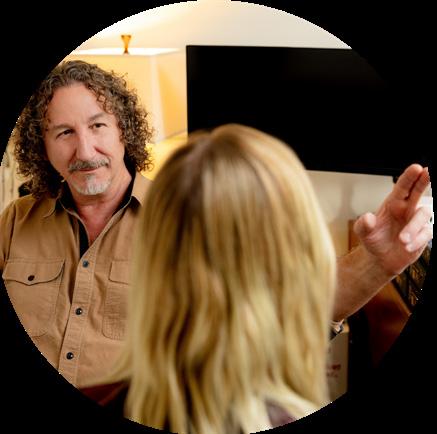
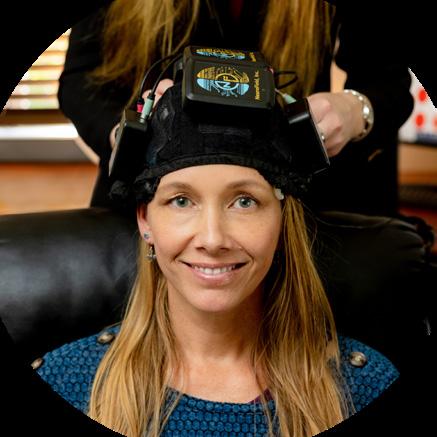
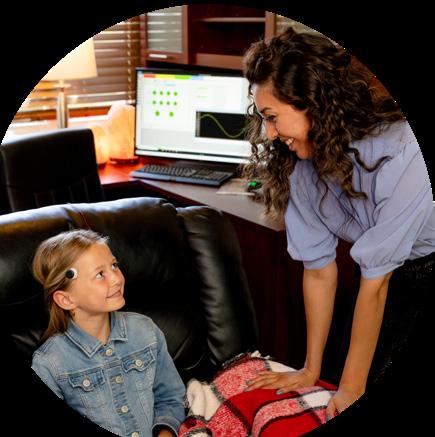
148.The Neural Narrative – Inside NeuroField, where EEGs, brain maps, and a little electrical encouragement aim to unlock the mind. The future of mental health may involve fewer couches and more colorful maps of your brain.
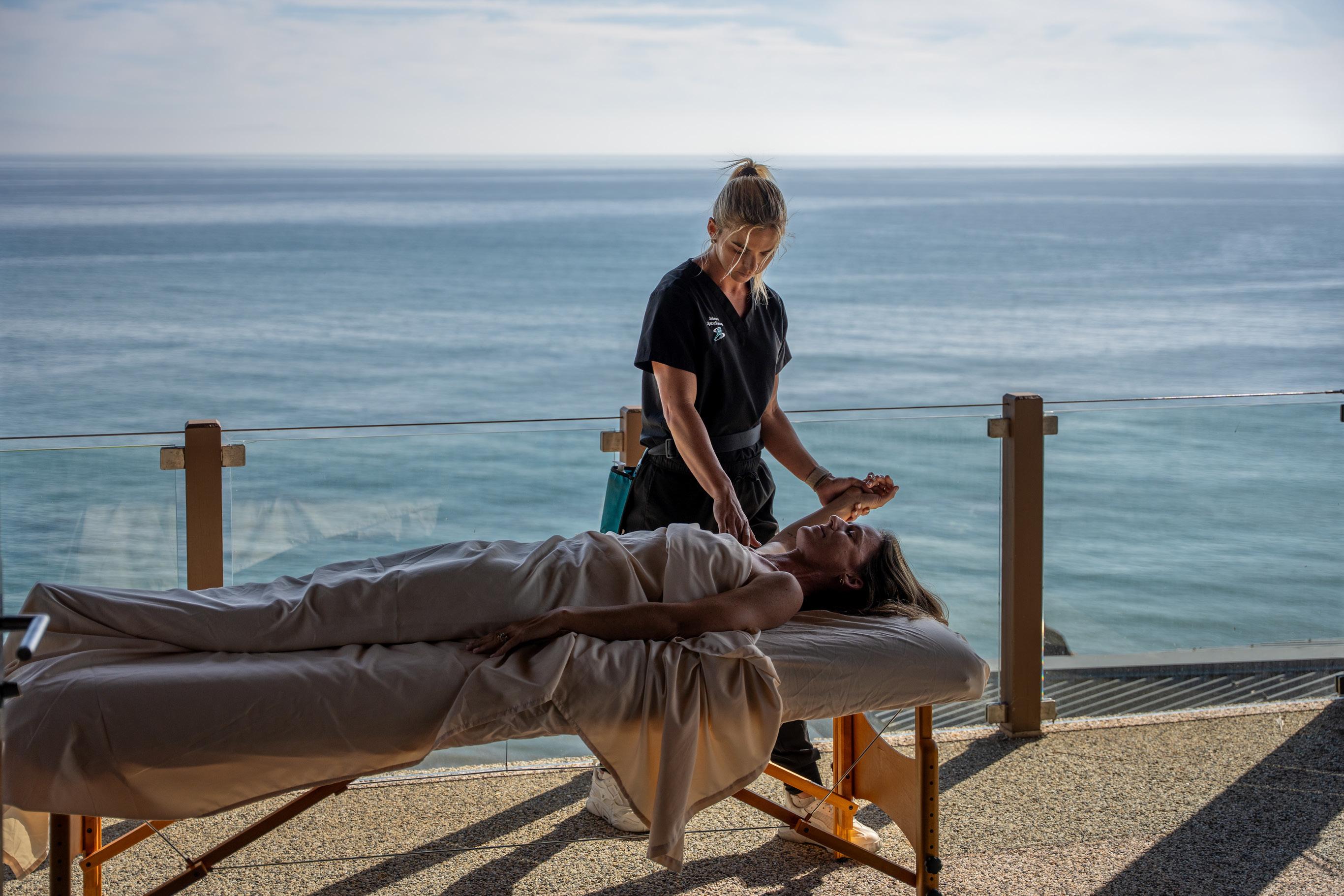
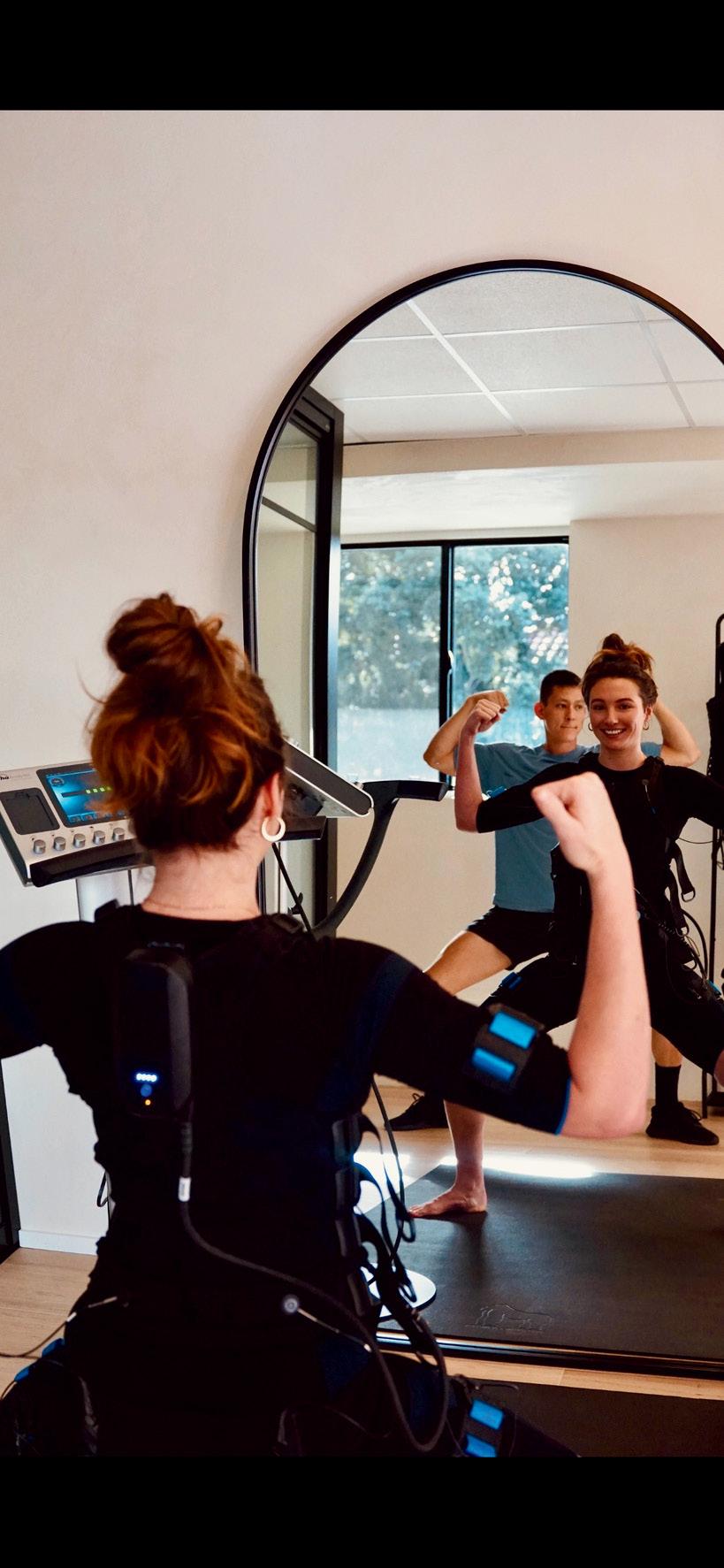
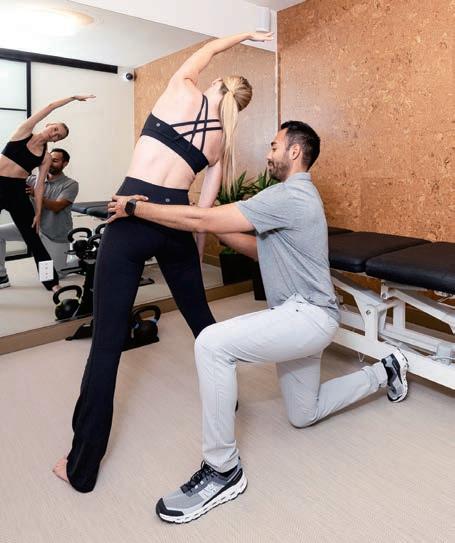
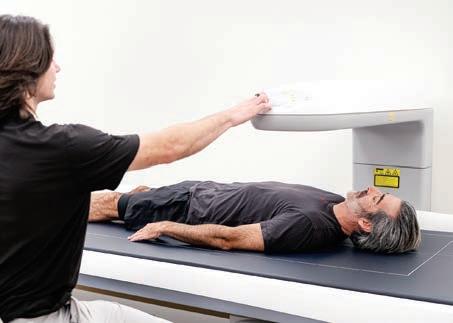
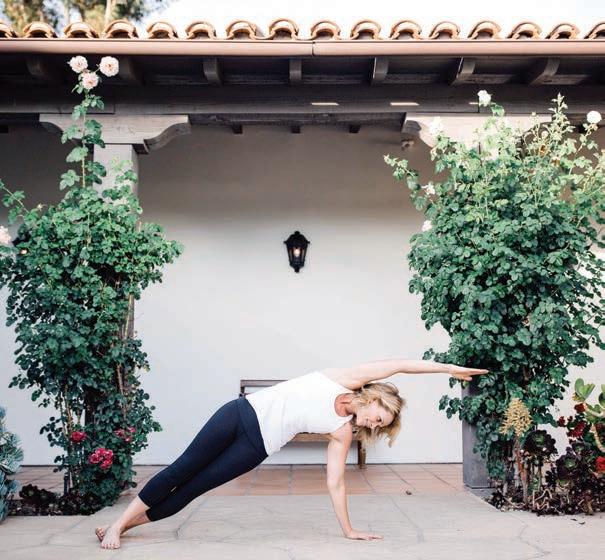
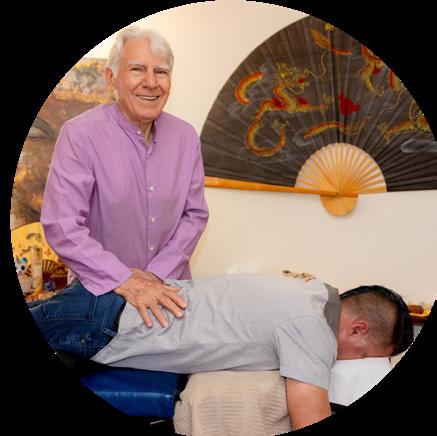
158.World of Wellness – An exploration of personalized wellness through movement, recovery, aesthetics, precision medicine, and immersive retreat experiences. Discover the local experts and wellness destinations redefining how we care for body, mind, and longevity.
Photo Courtesy of The Rock & Roll Hall of Fame
Photo by Zack Harris
Courtesy of Mutual of Omaha’s Wild Kingdom
188.The Keta-Meaning of Life –
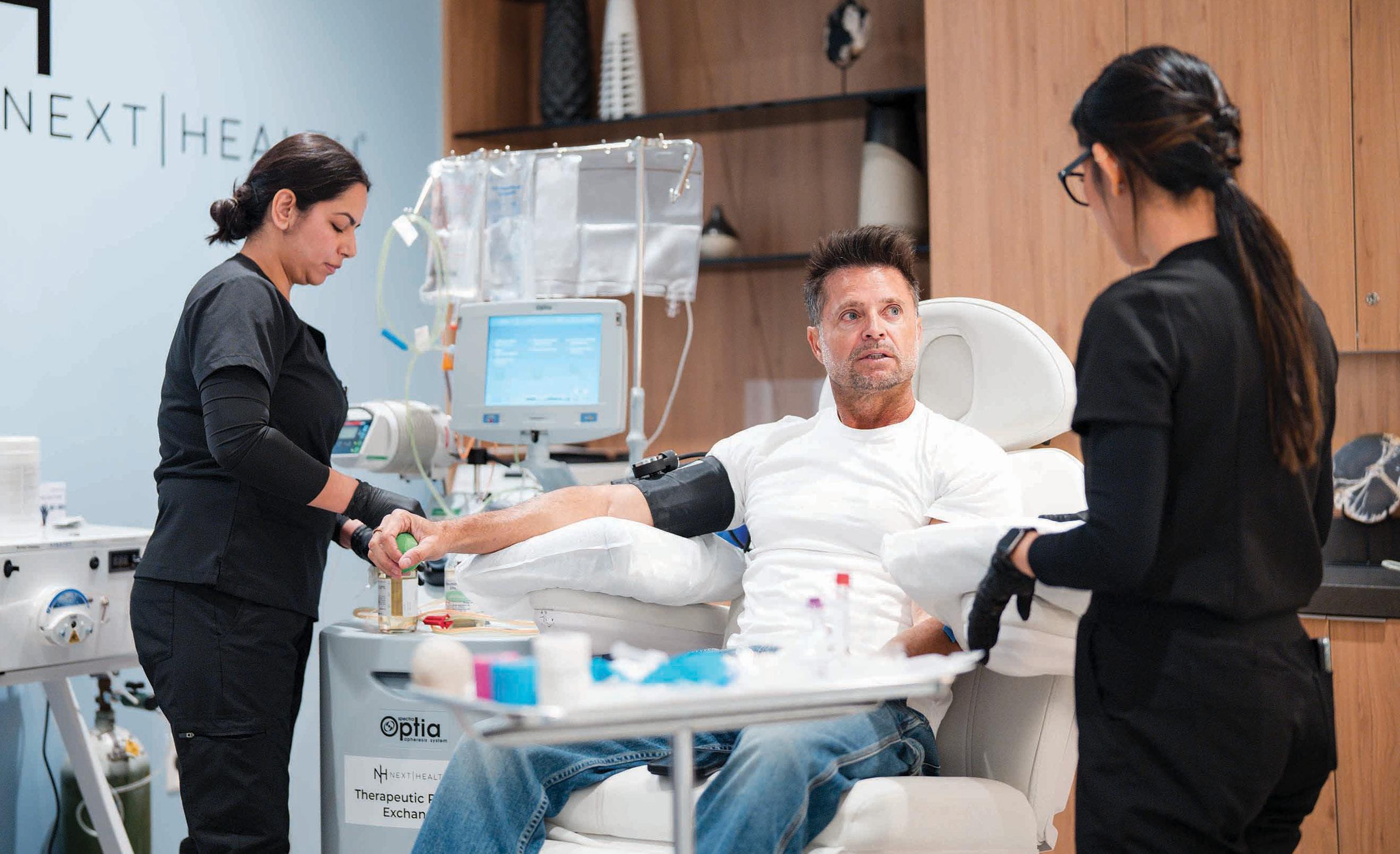
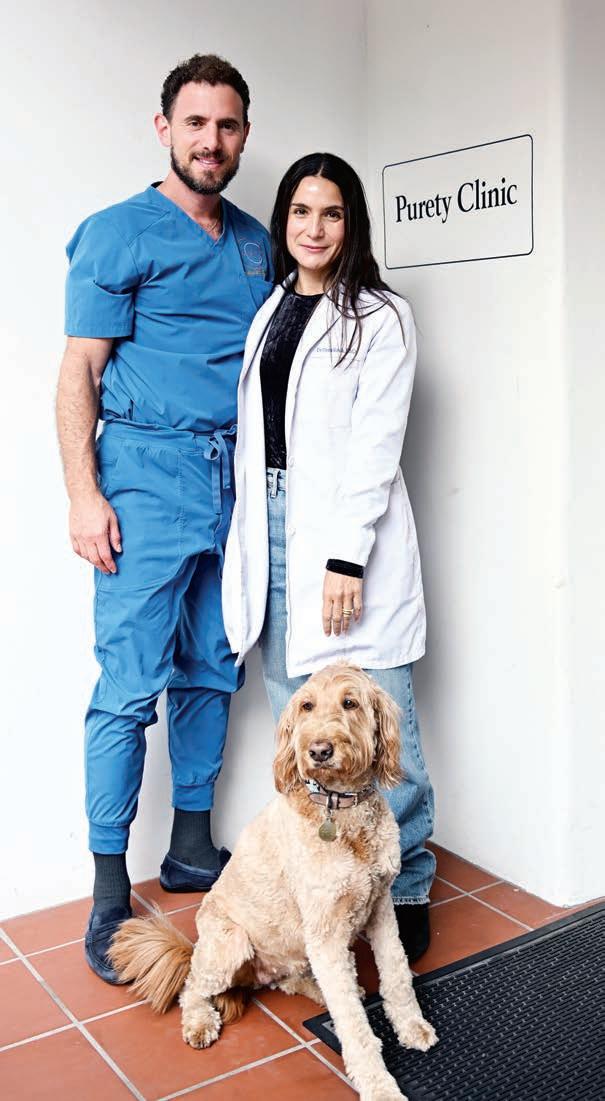
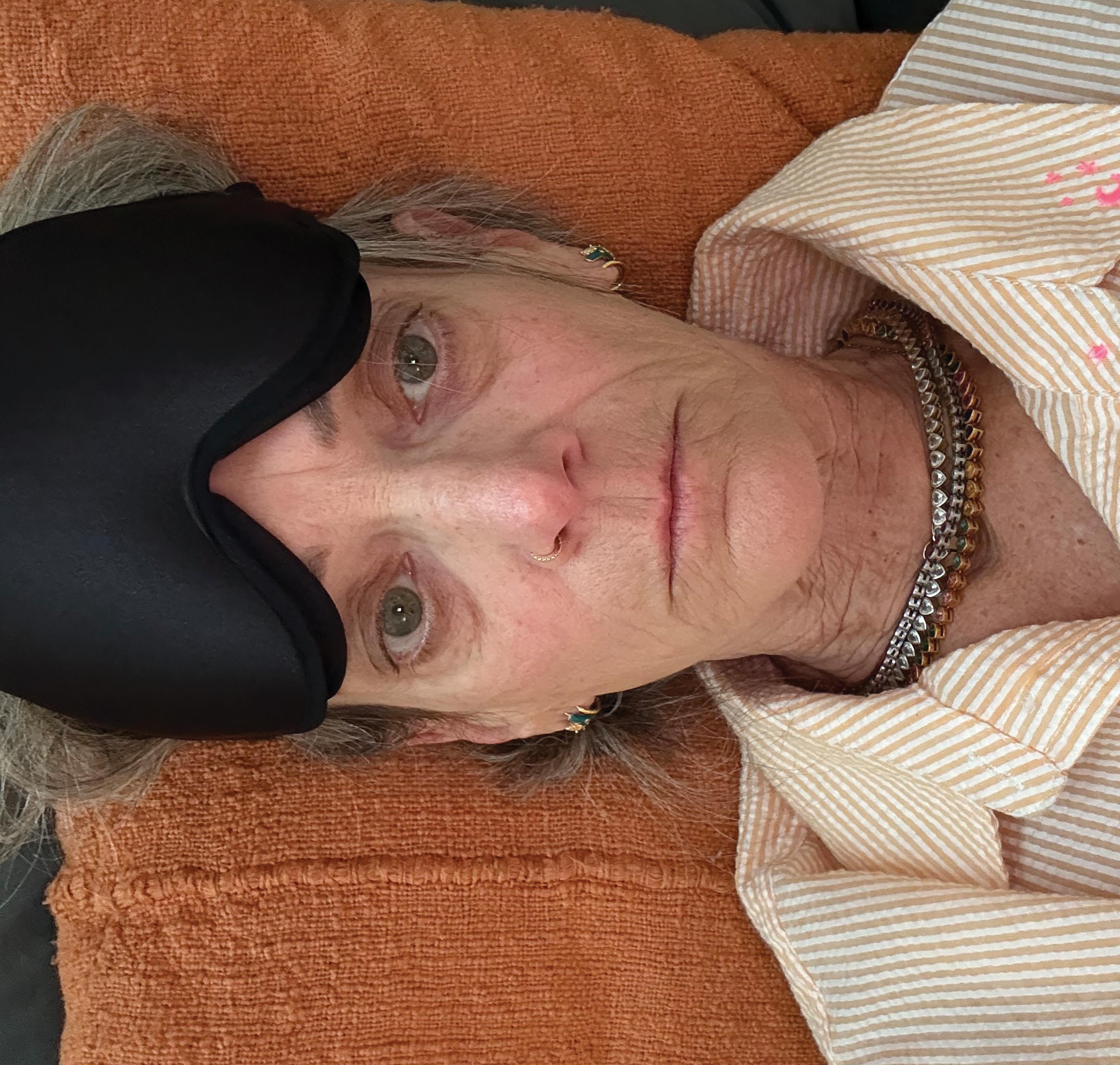
One writer, one Santa Barbara ketamine clinic, and several decades’ worth of emotional baggage walk into a treatment room.
198.
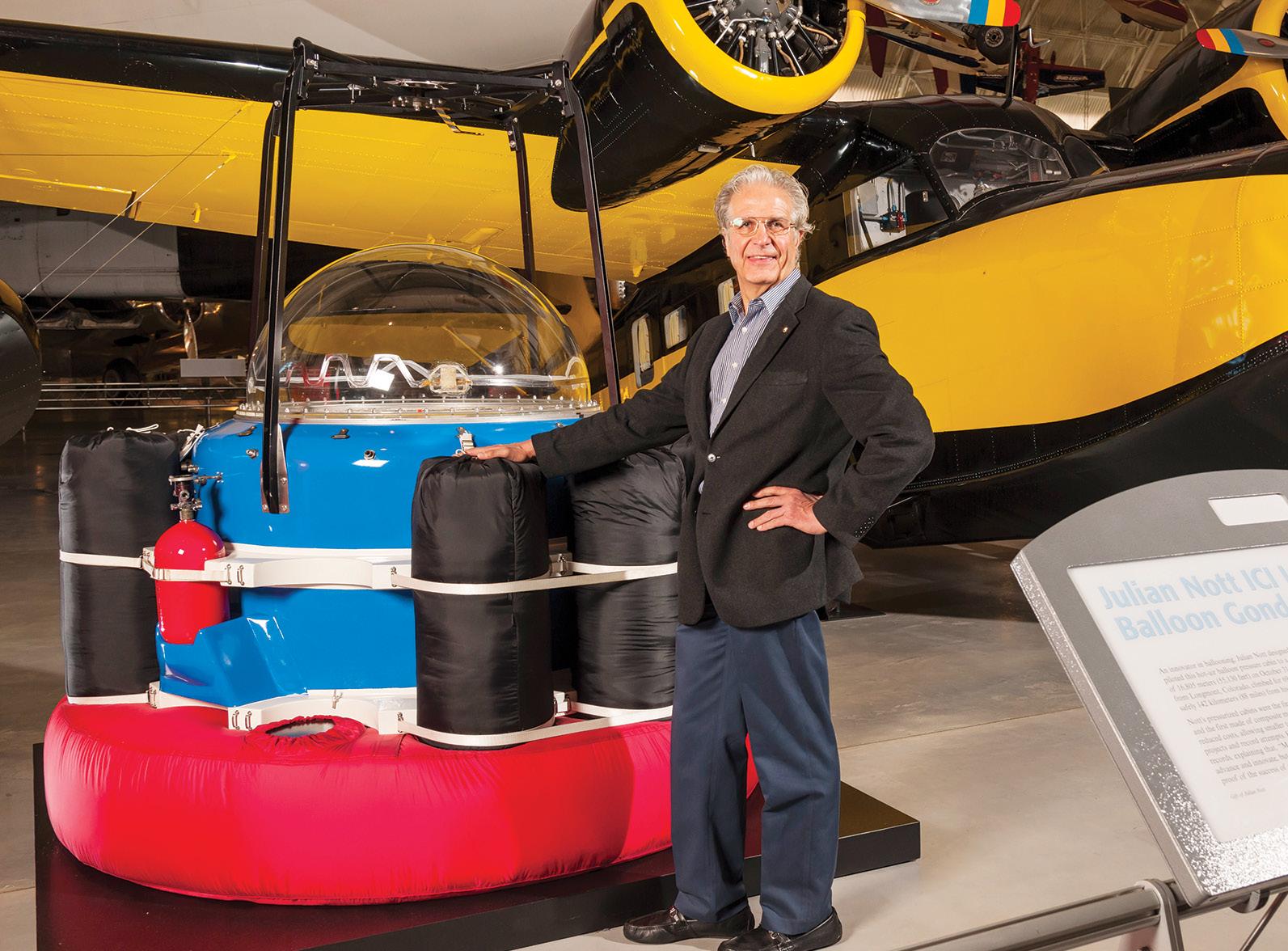
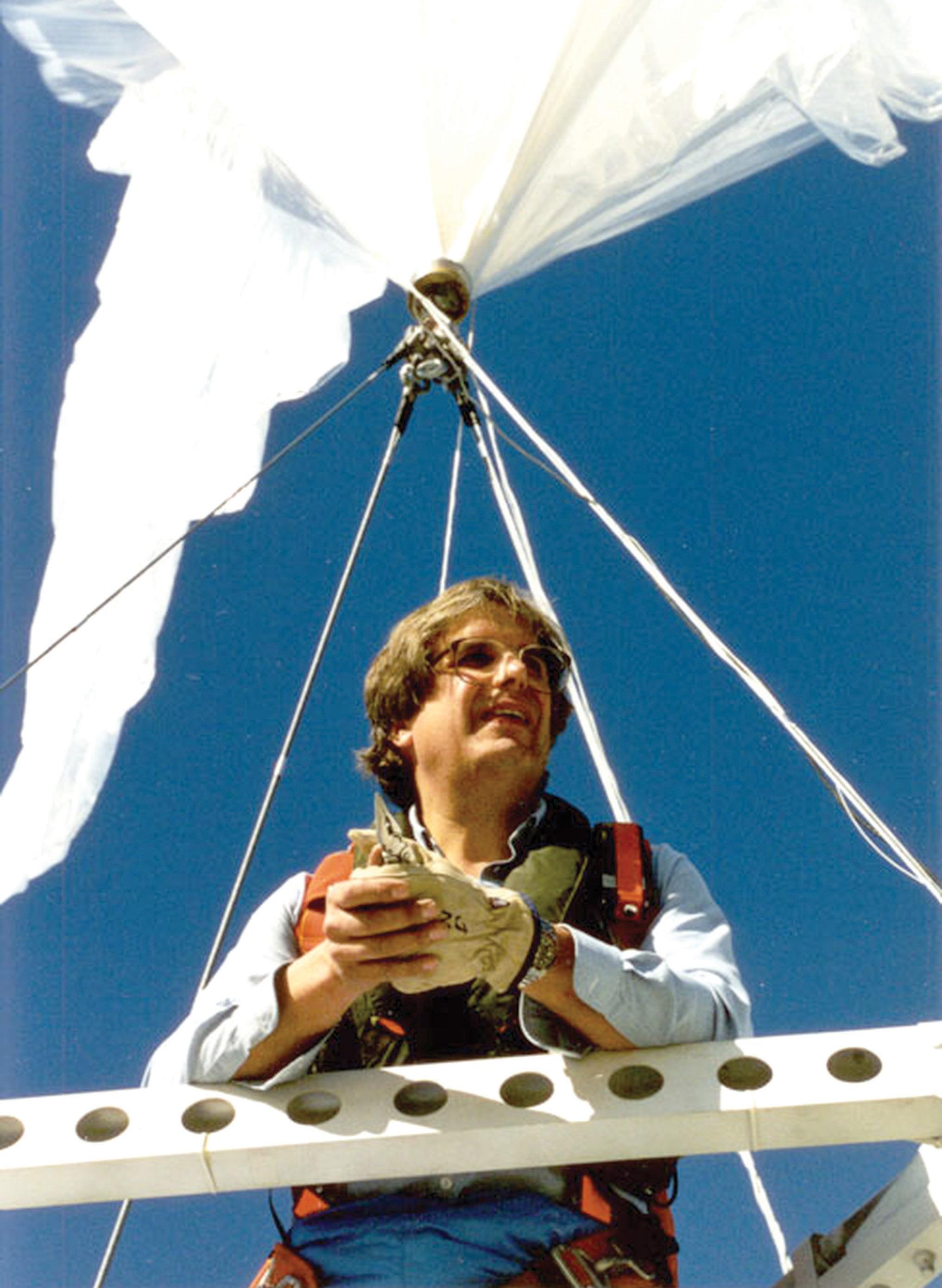
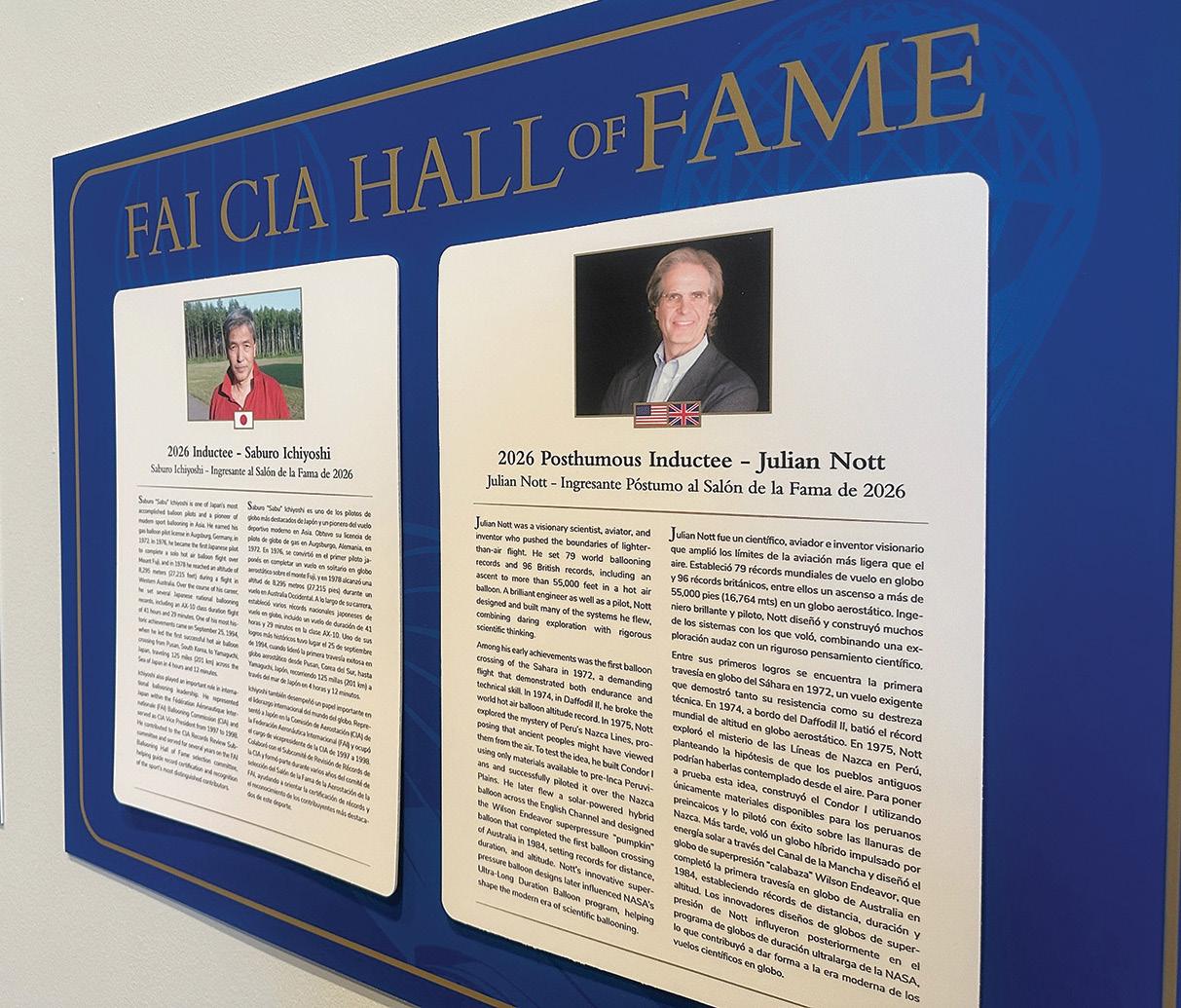
198.Riding High Again – Montecito’s Julian Nott chased science, adventure, and the edge of space—and usually managed to catch them. Ballooning’s greatest innovator is getting one final lift as he enters the International Ballooning Hall of Fame. (And no we’re not talking about the guy who makes inflatable animals at your kid’s birthday.)
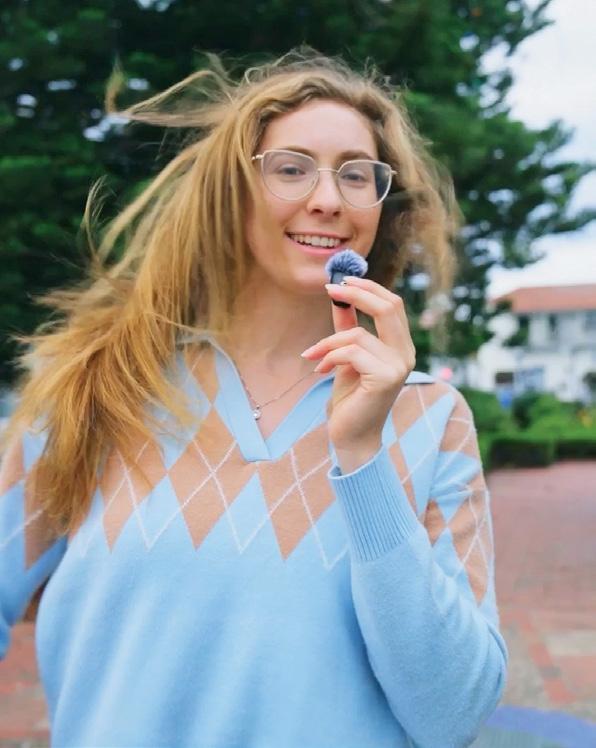
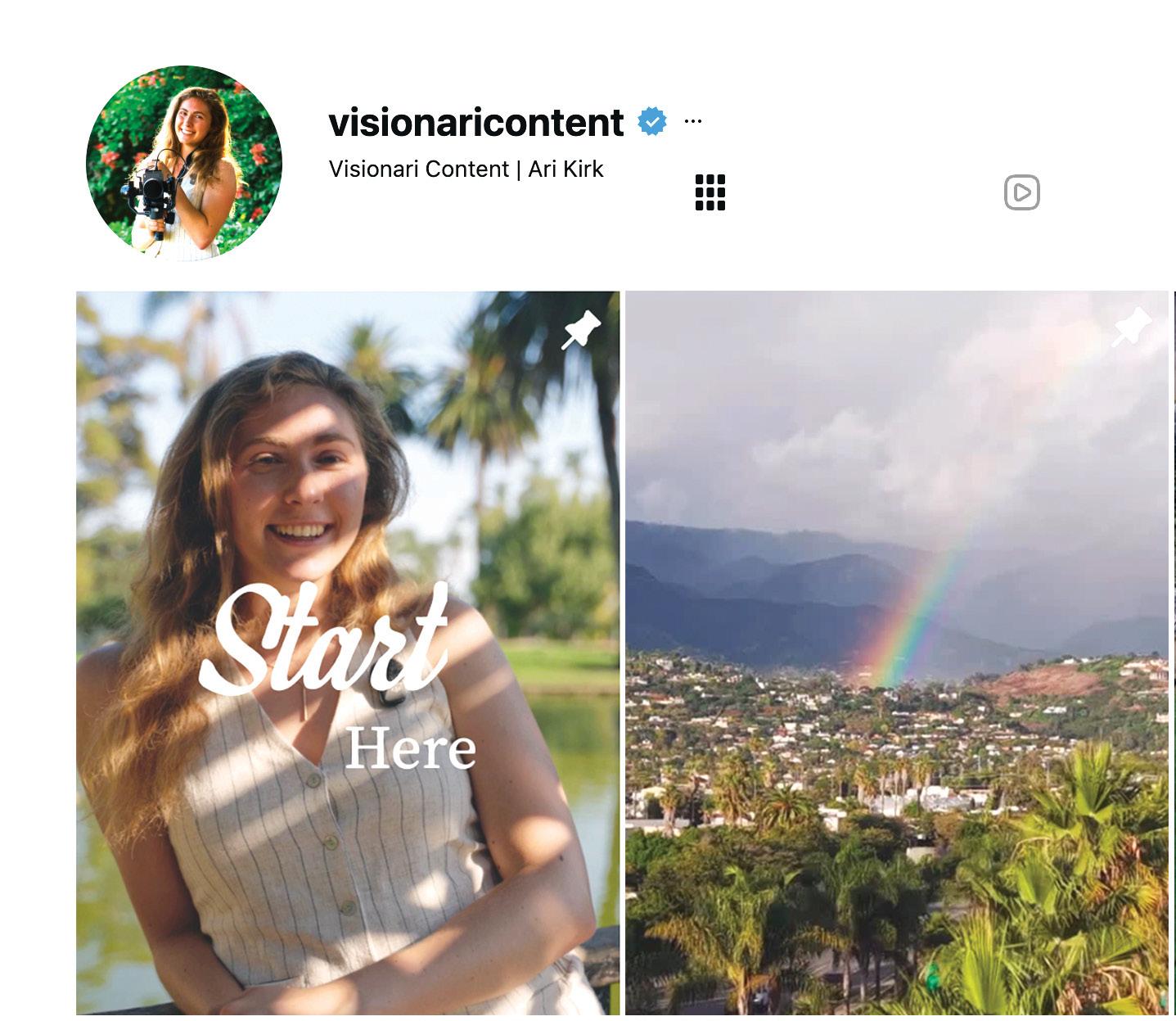
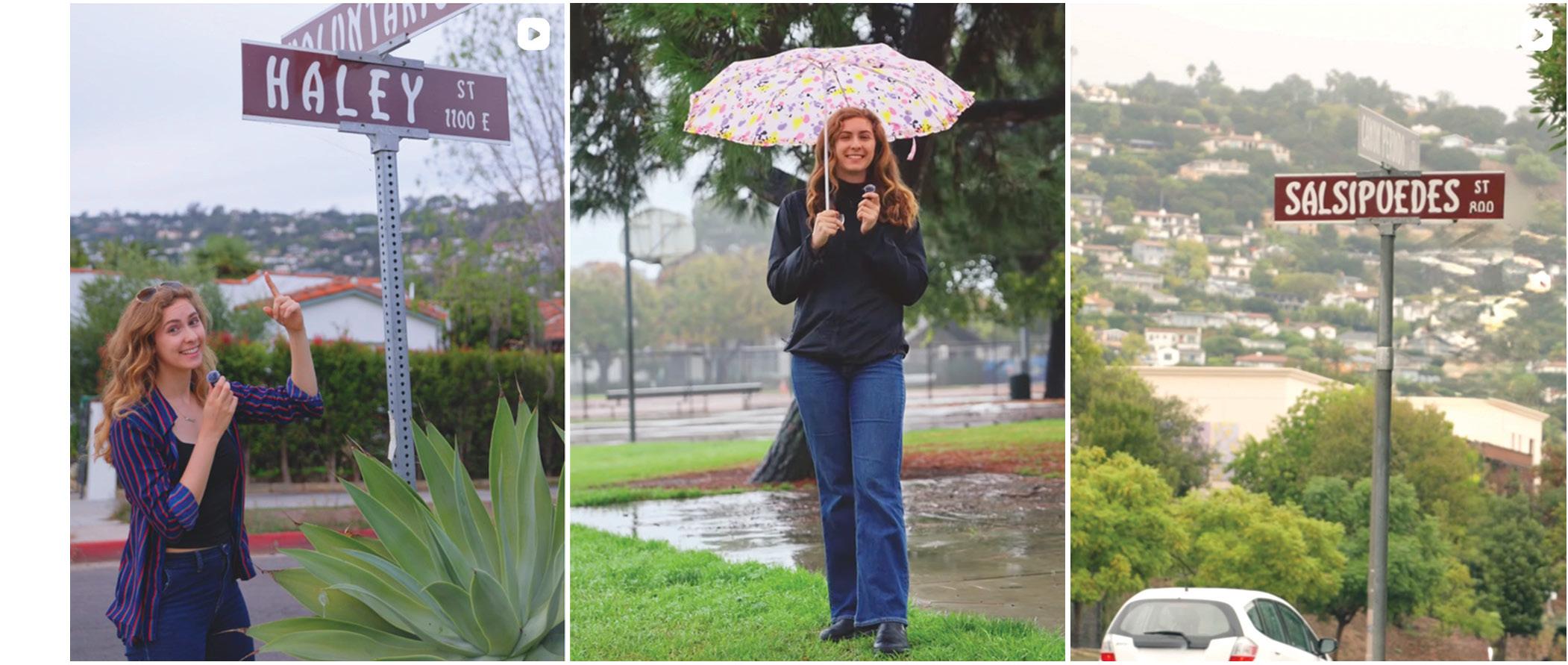
214.Ari’s Visionari – Arianna Kirk is turning Santa Barbara history into binge-worthy Instagram videos, one local mystery at a time.
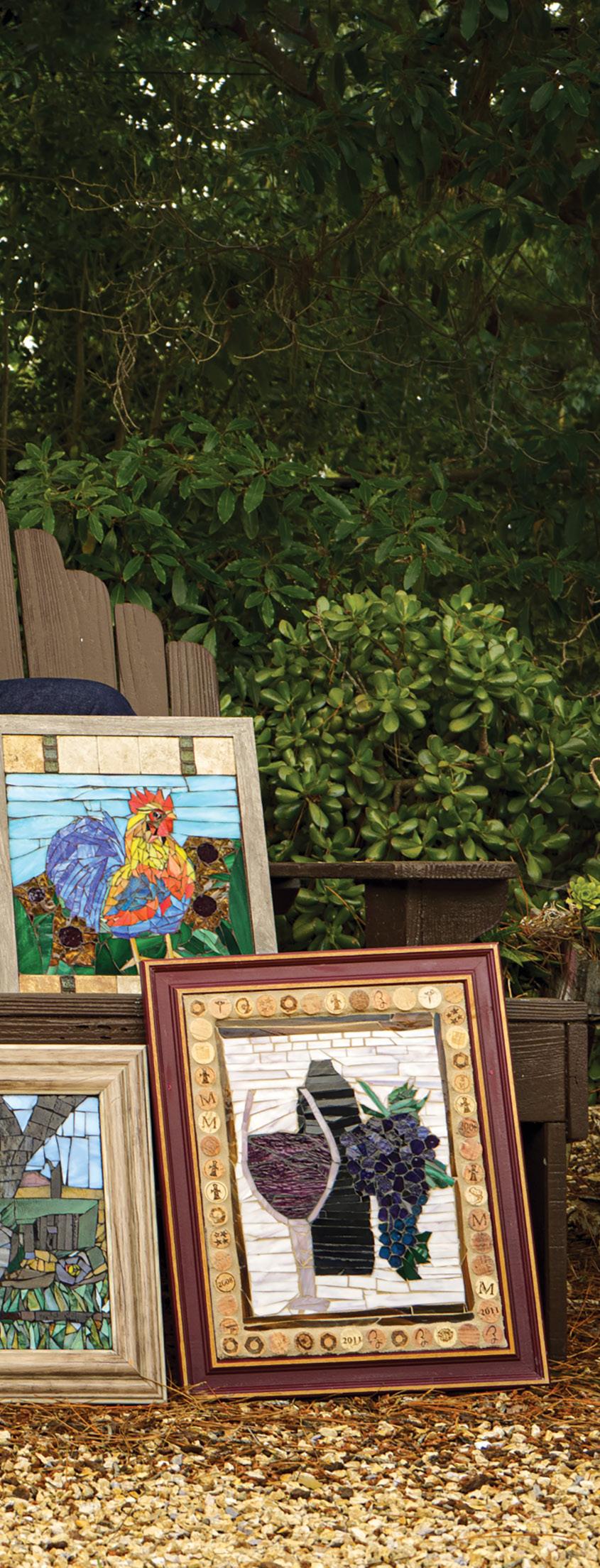
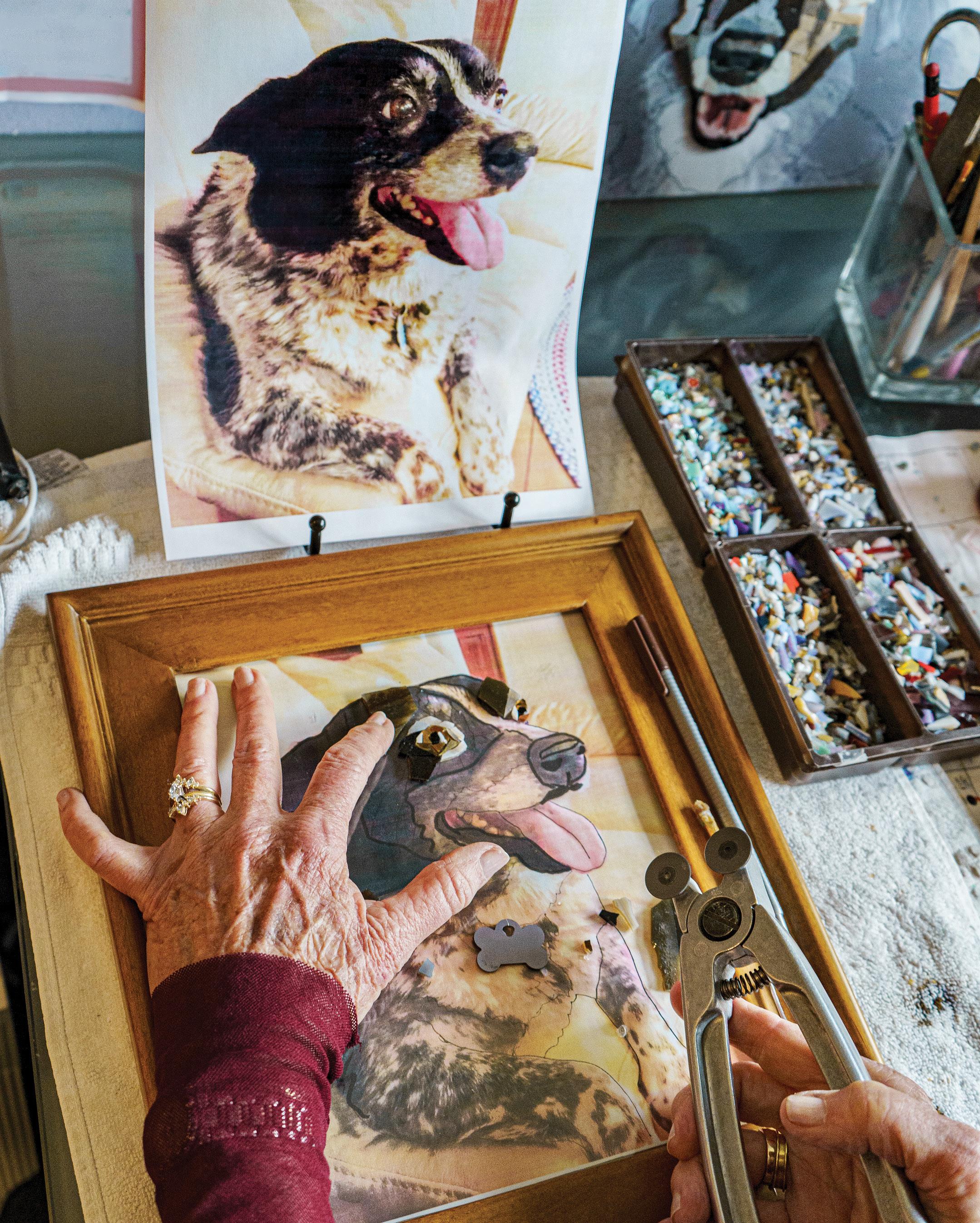
220.Glass Menagerie – Who says stained glass is only for saints? Dogs, cats, rabbits, and the occasional human receive the full stained-glass treatment from local artisan Patricia Alpert.
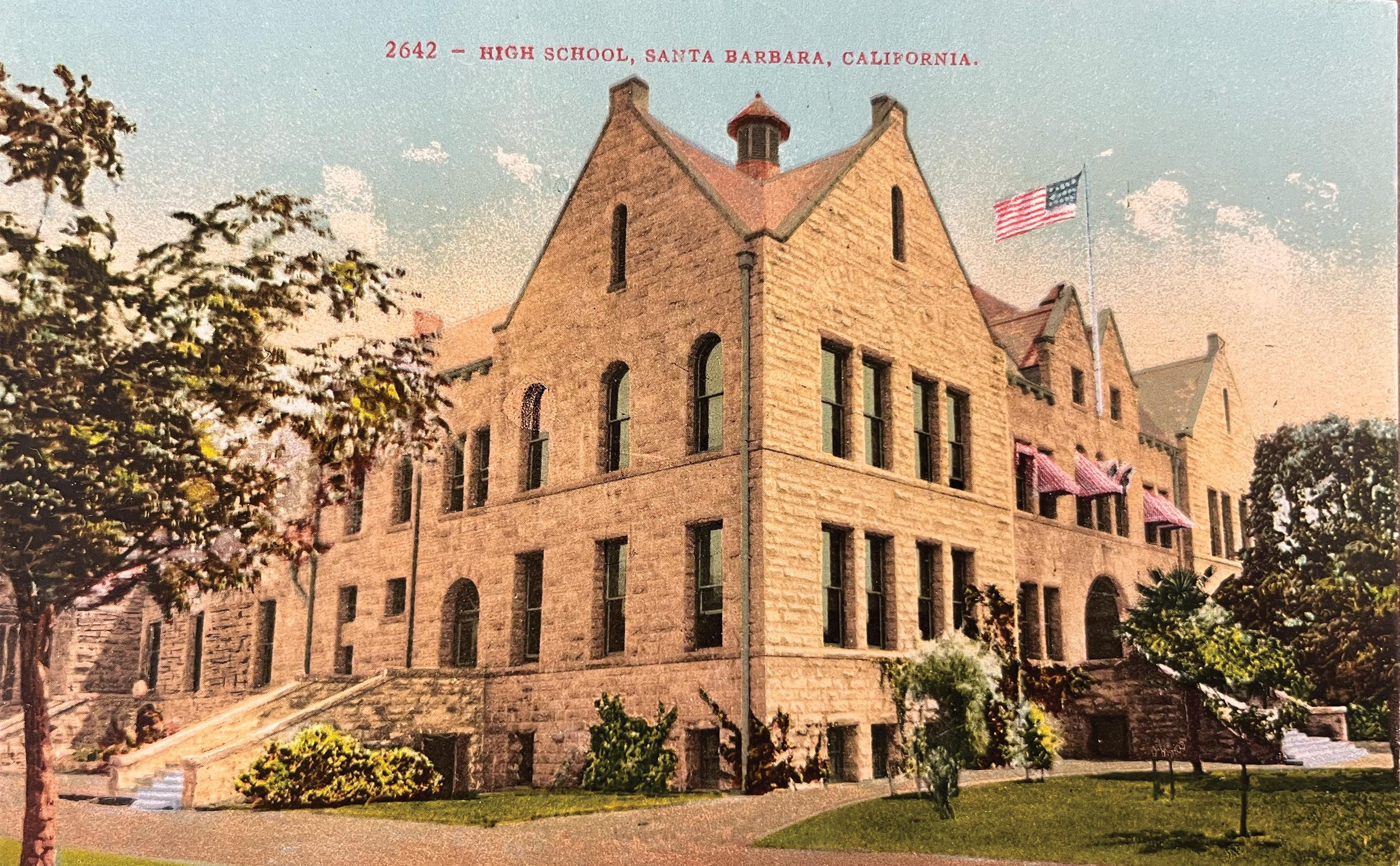
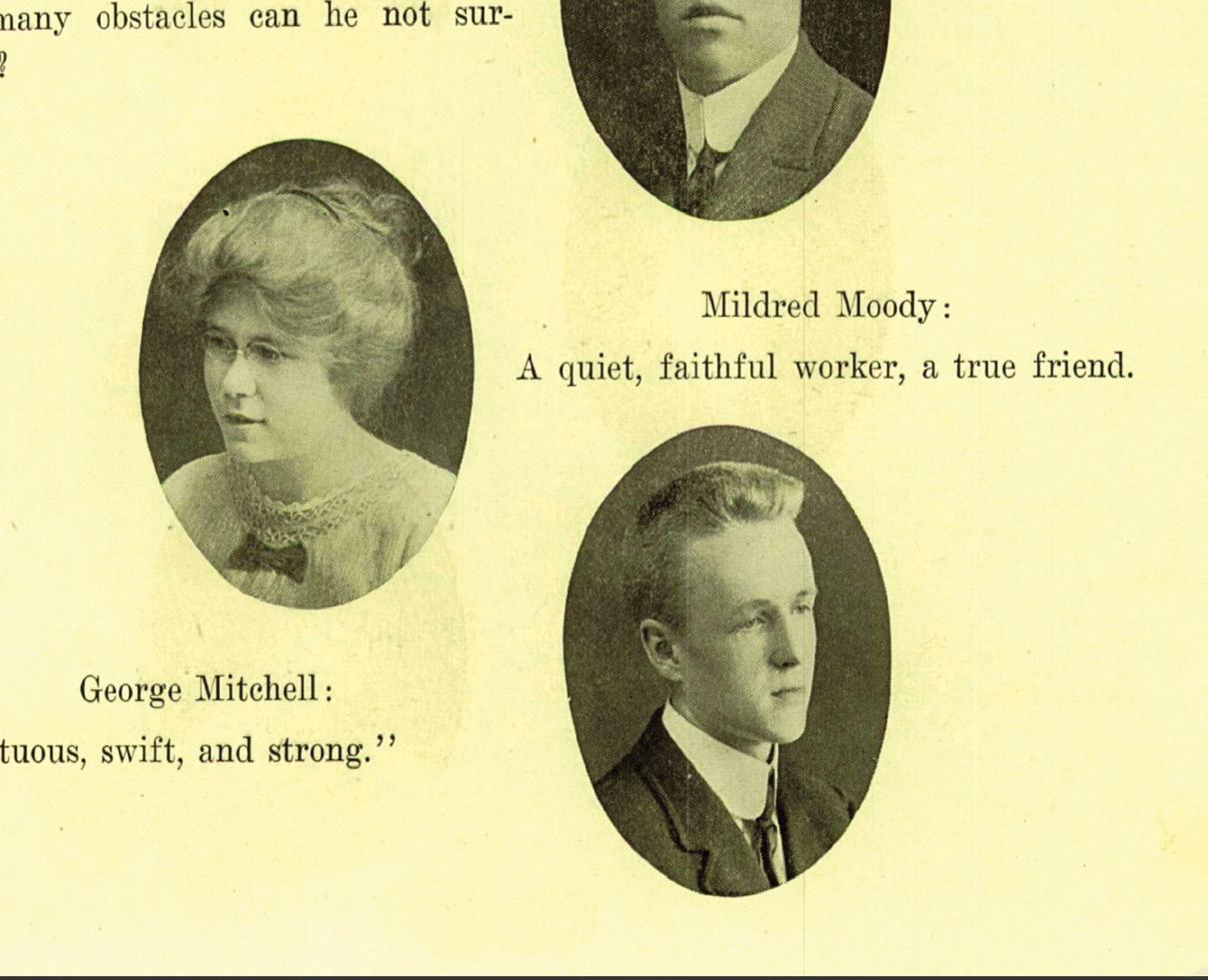
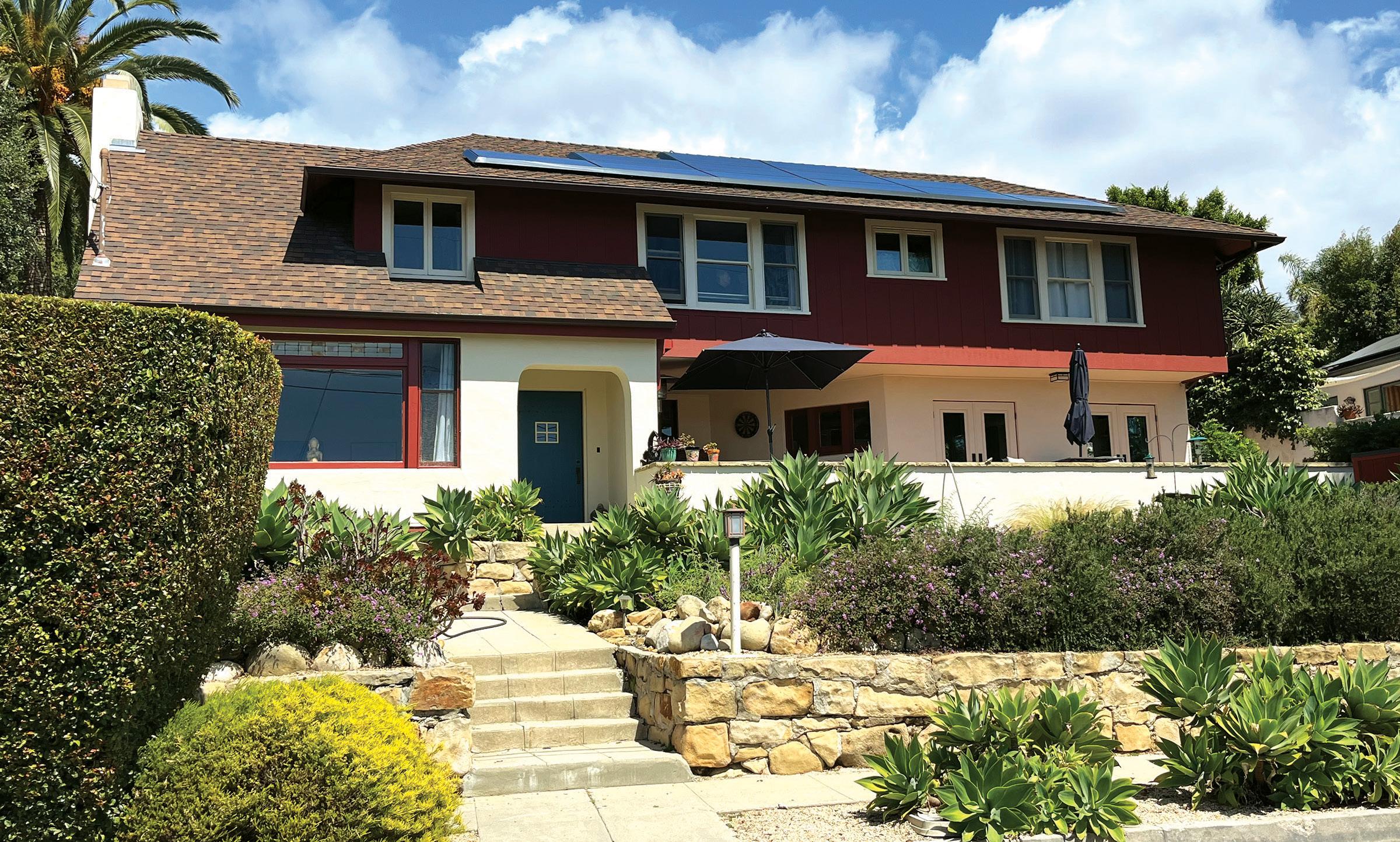
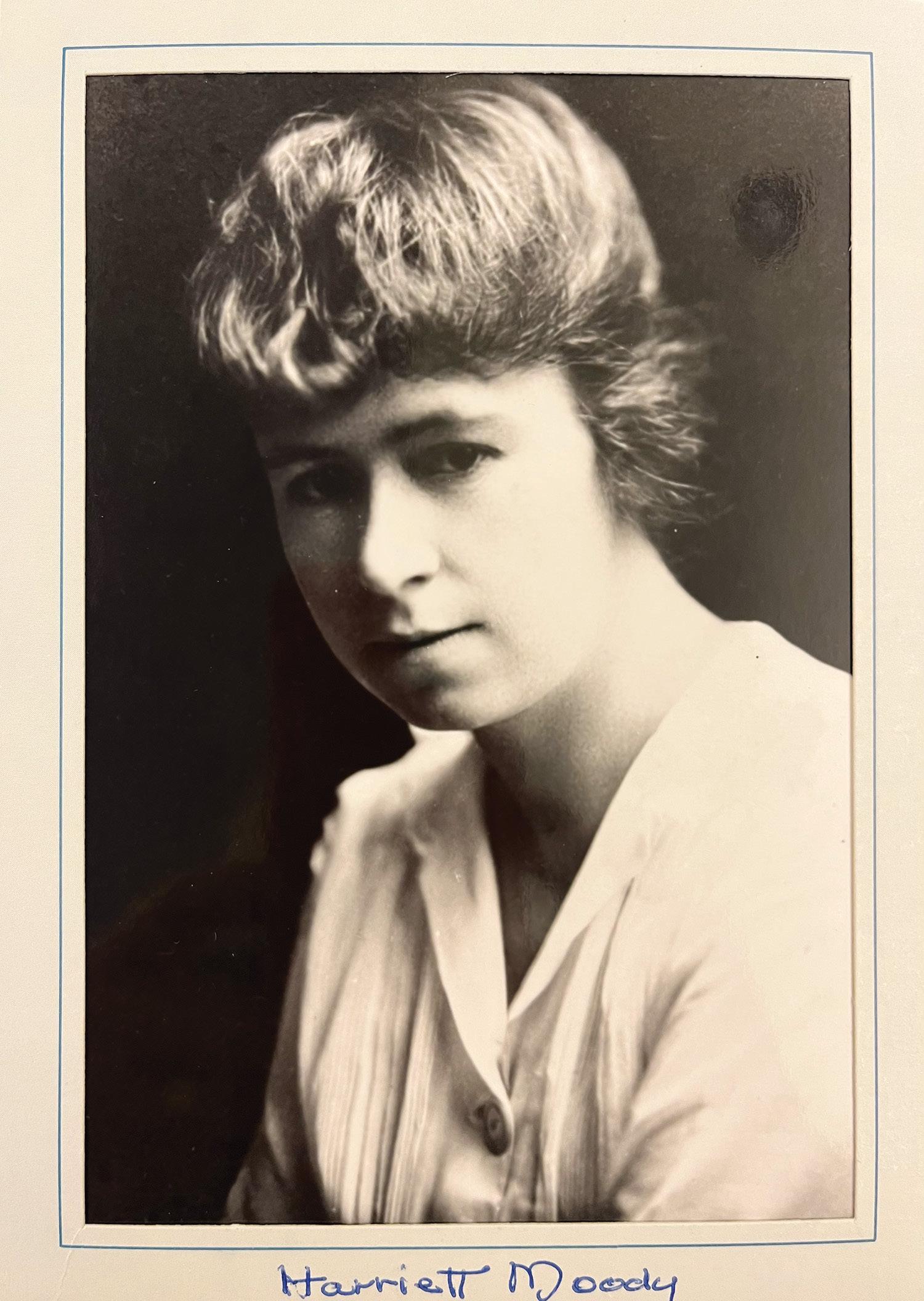
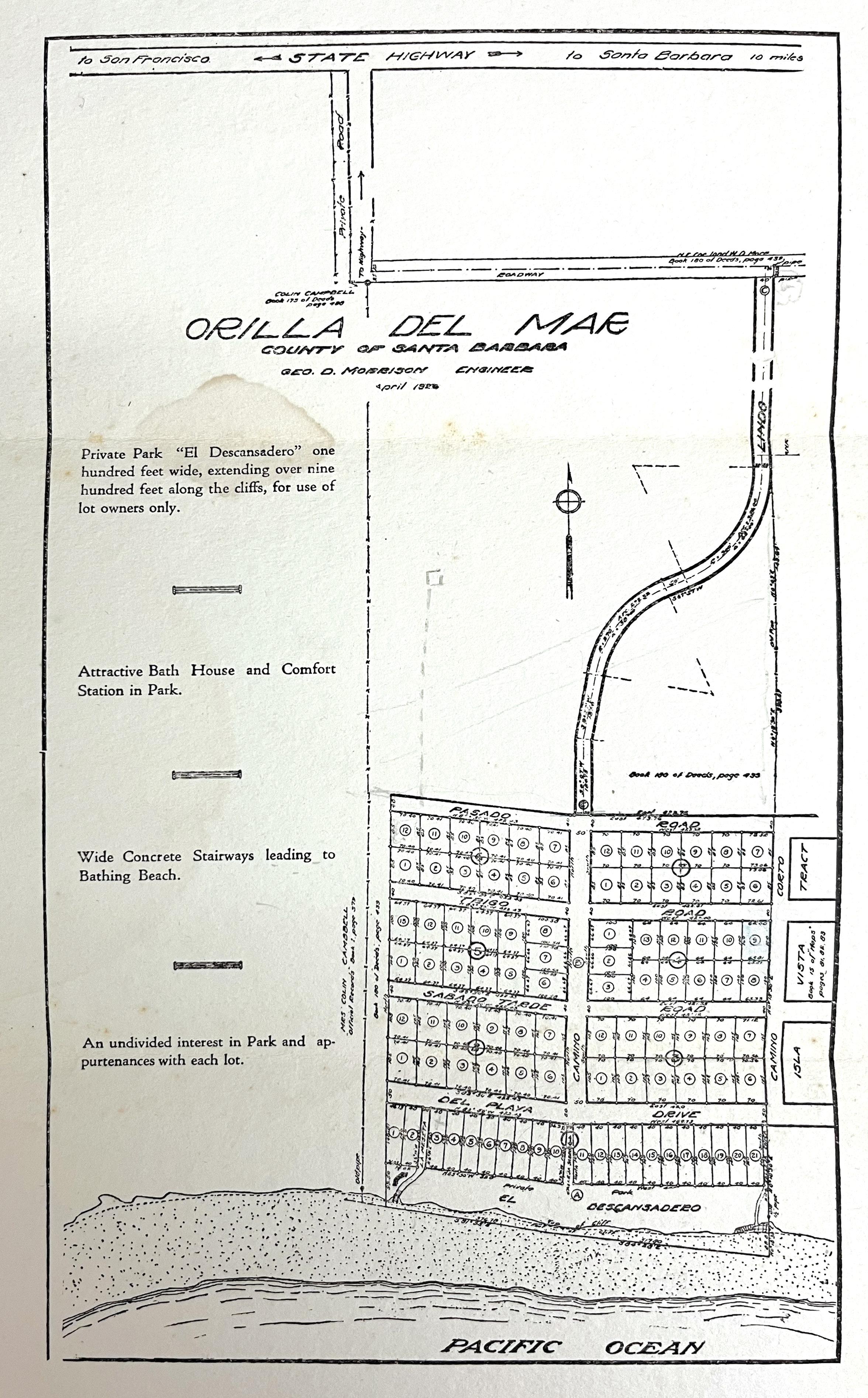
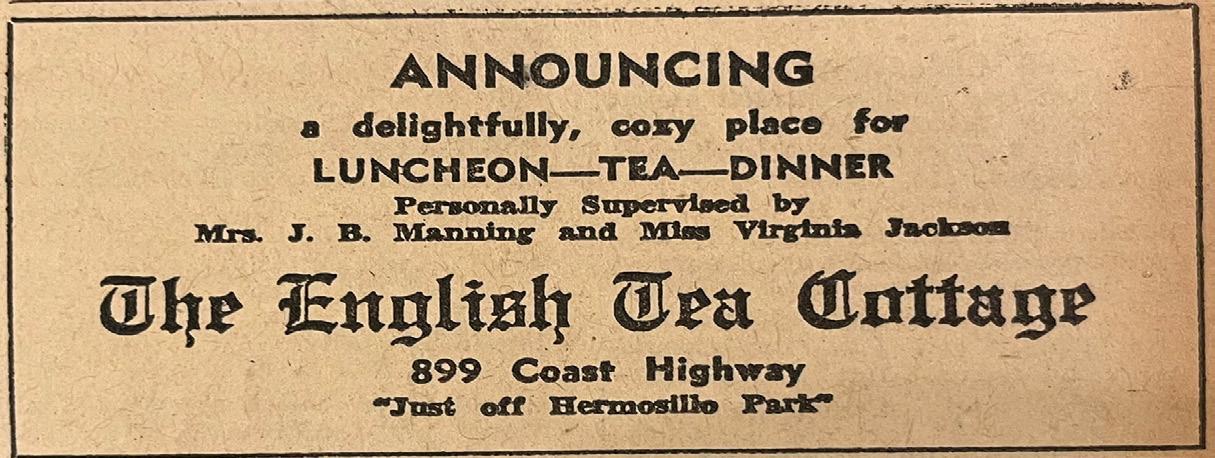
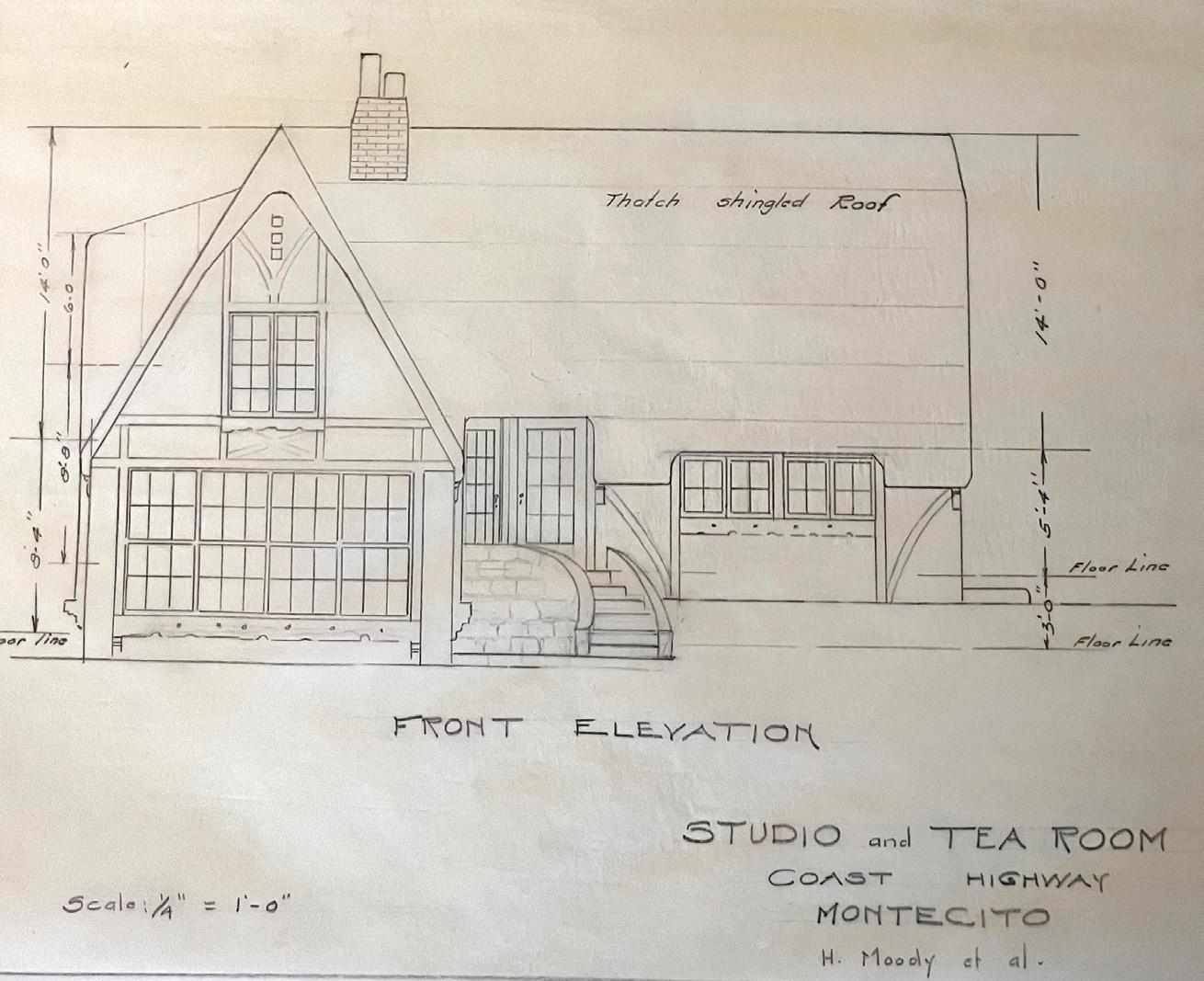
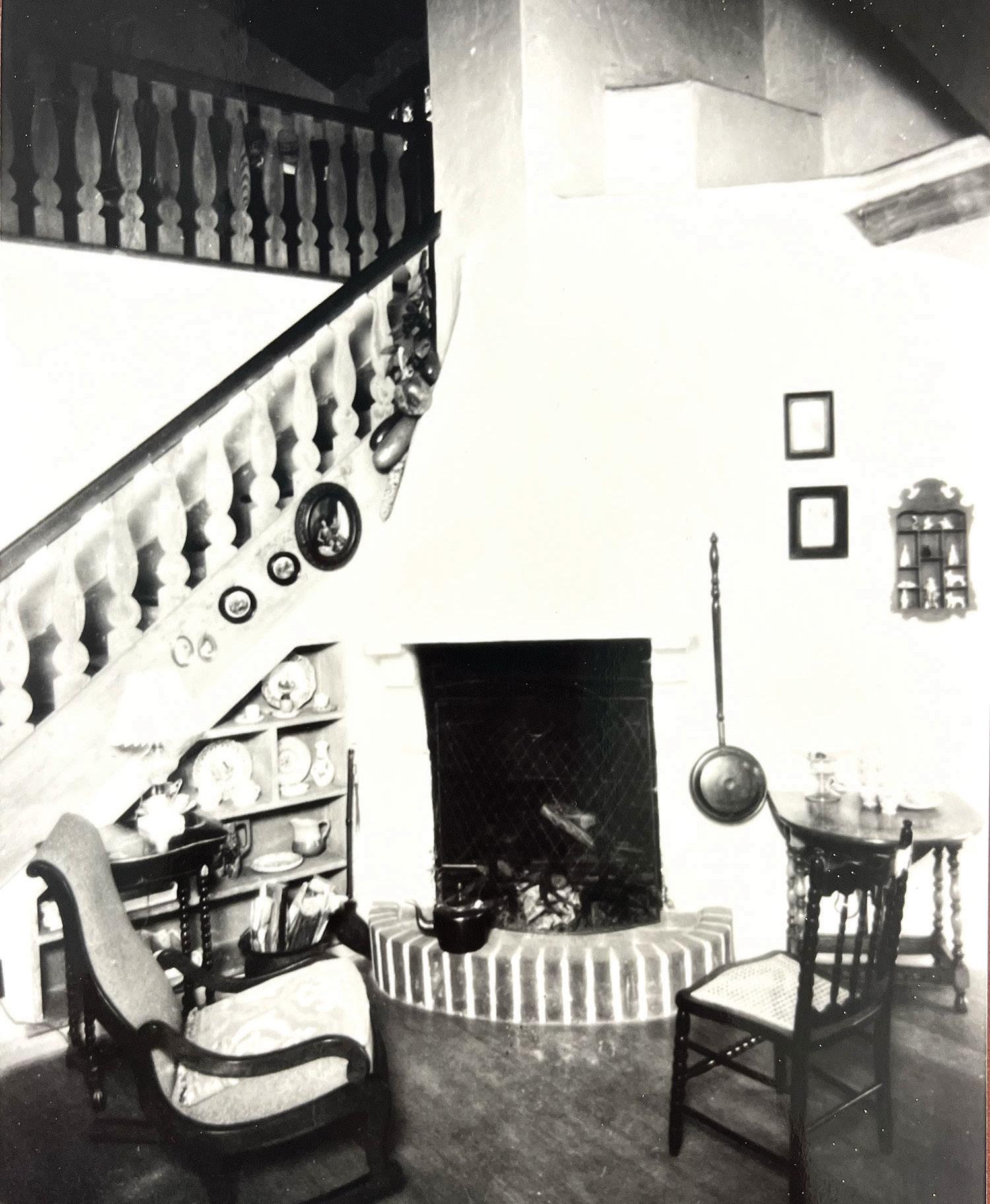
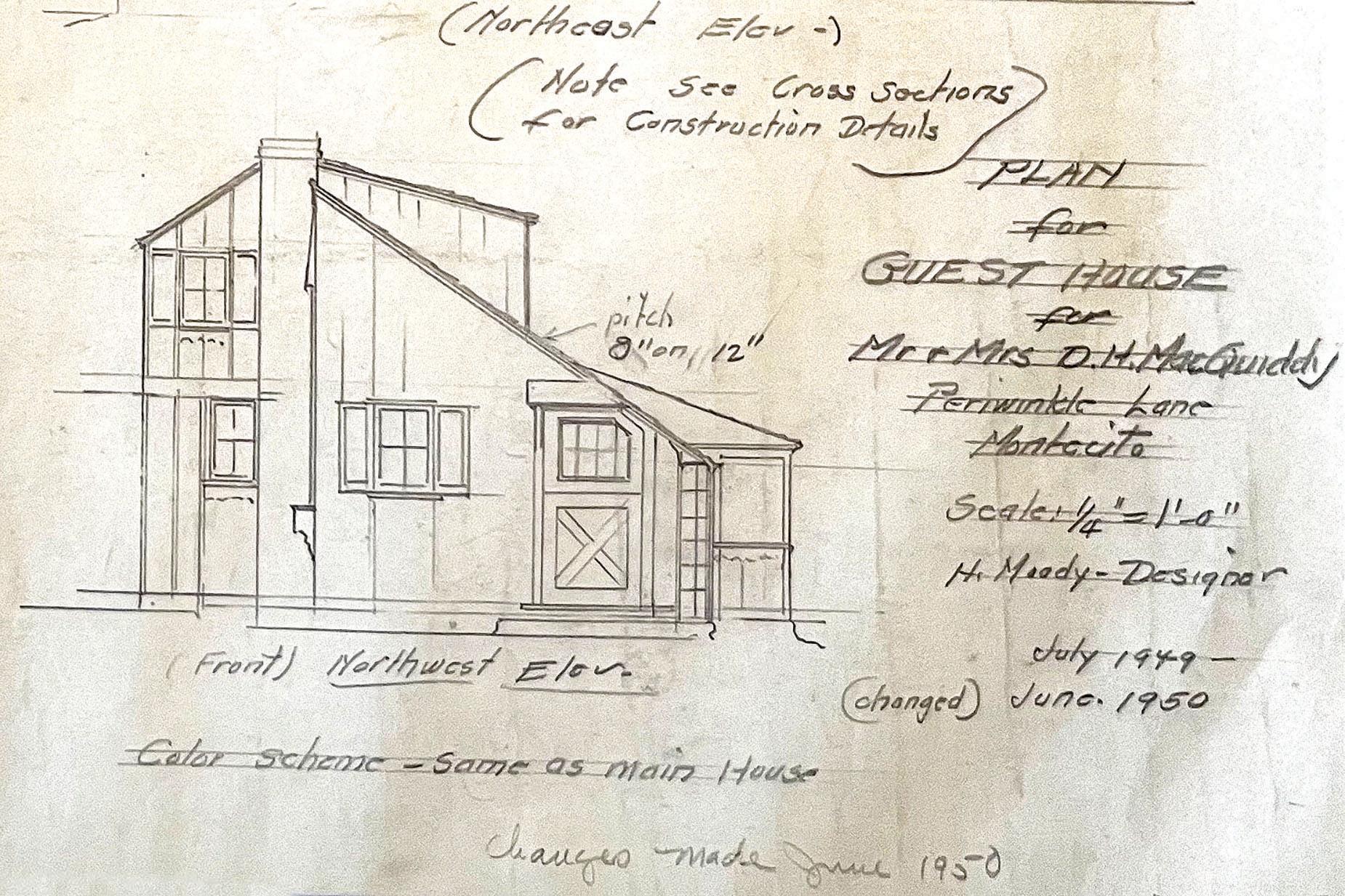
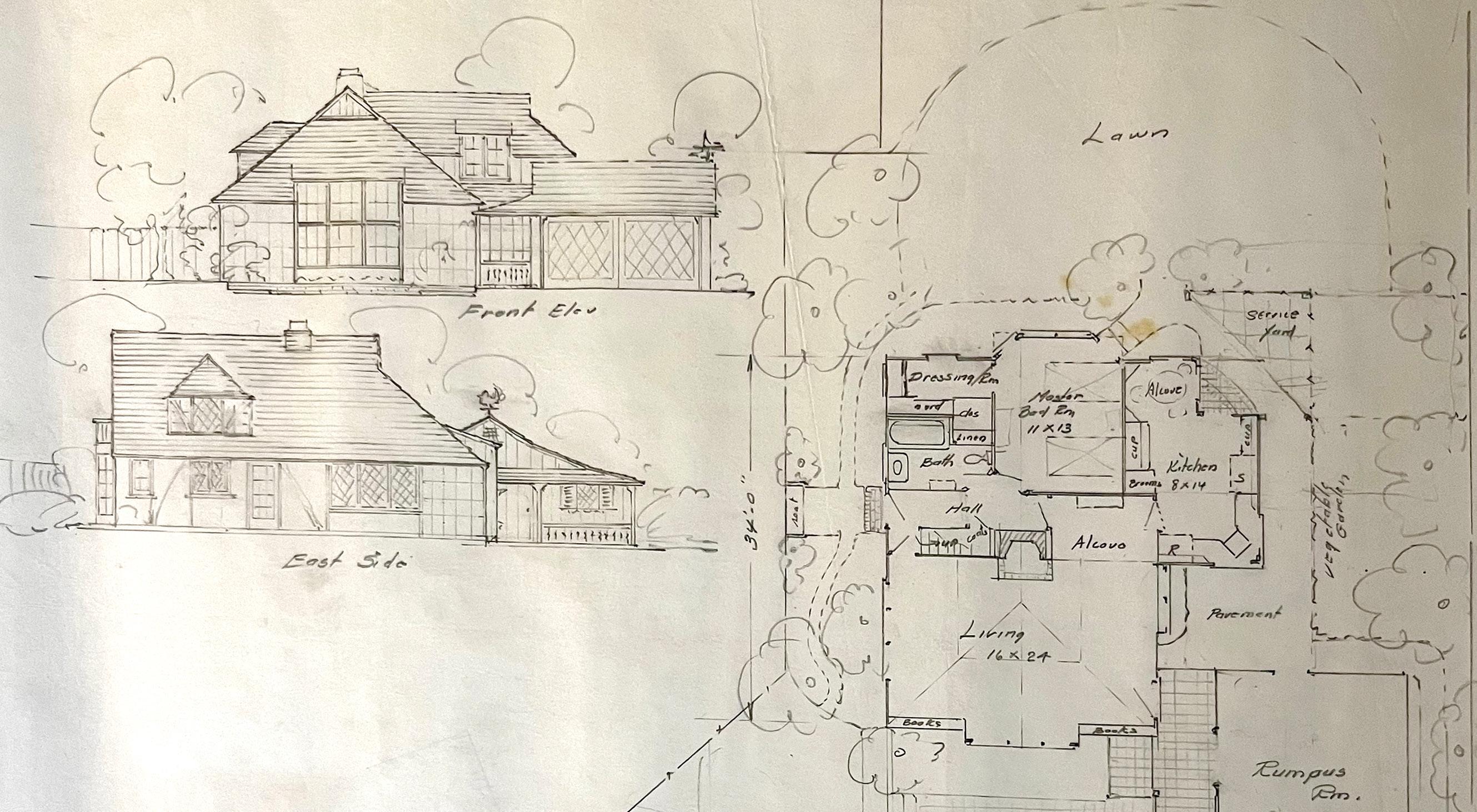
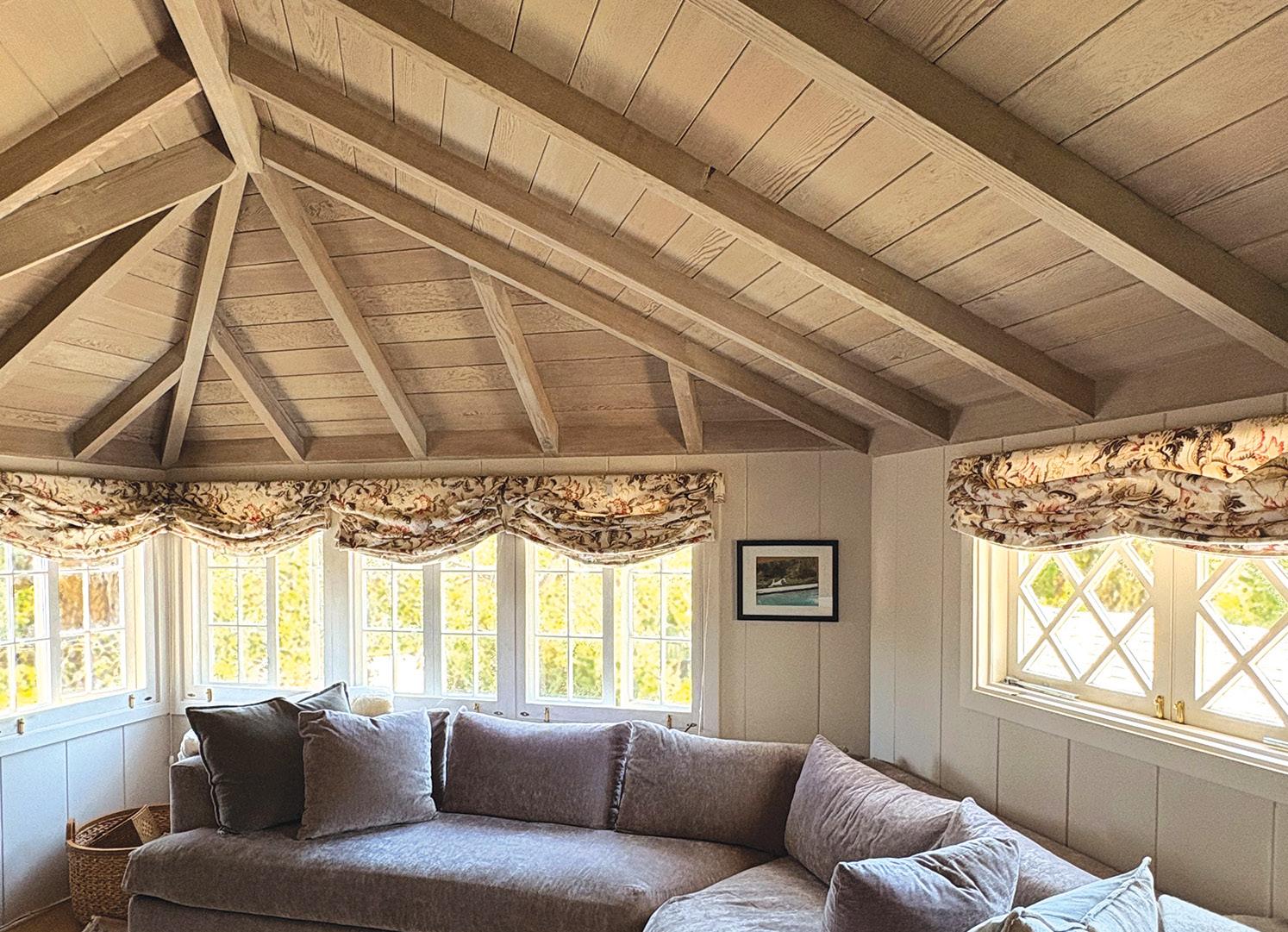
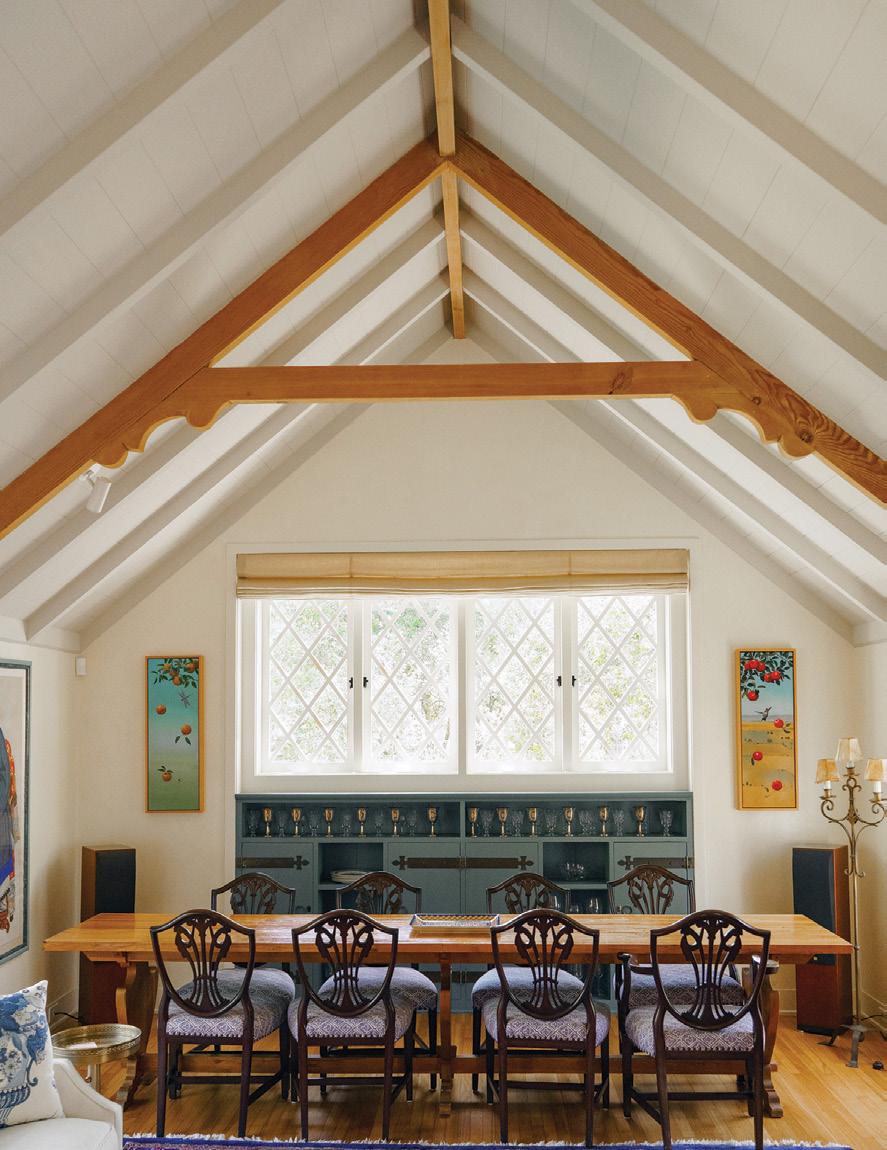
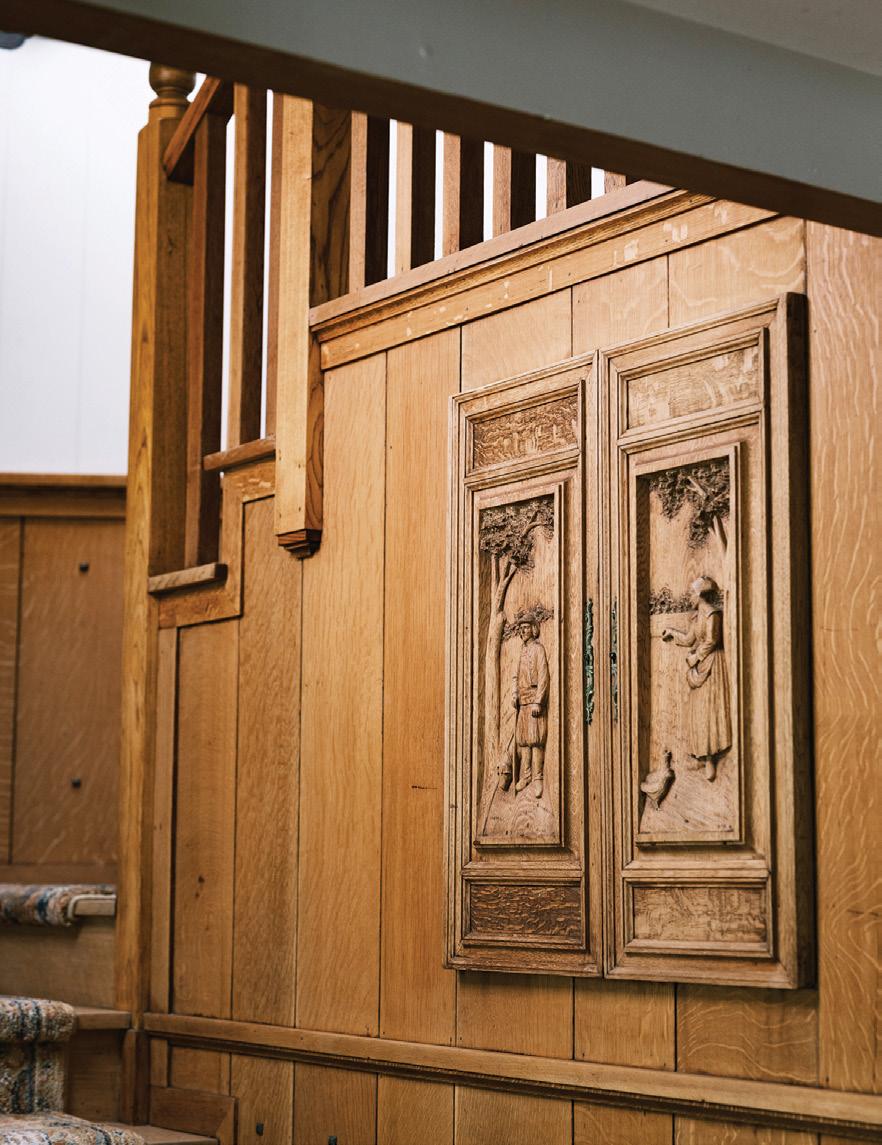
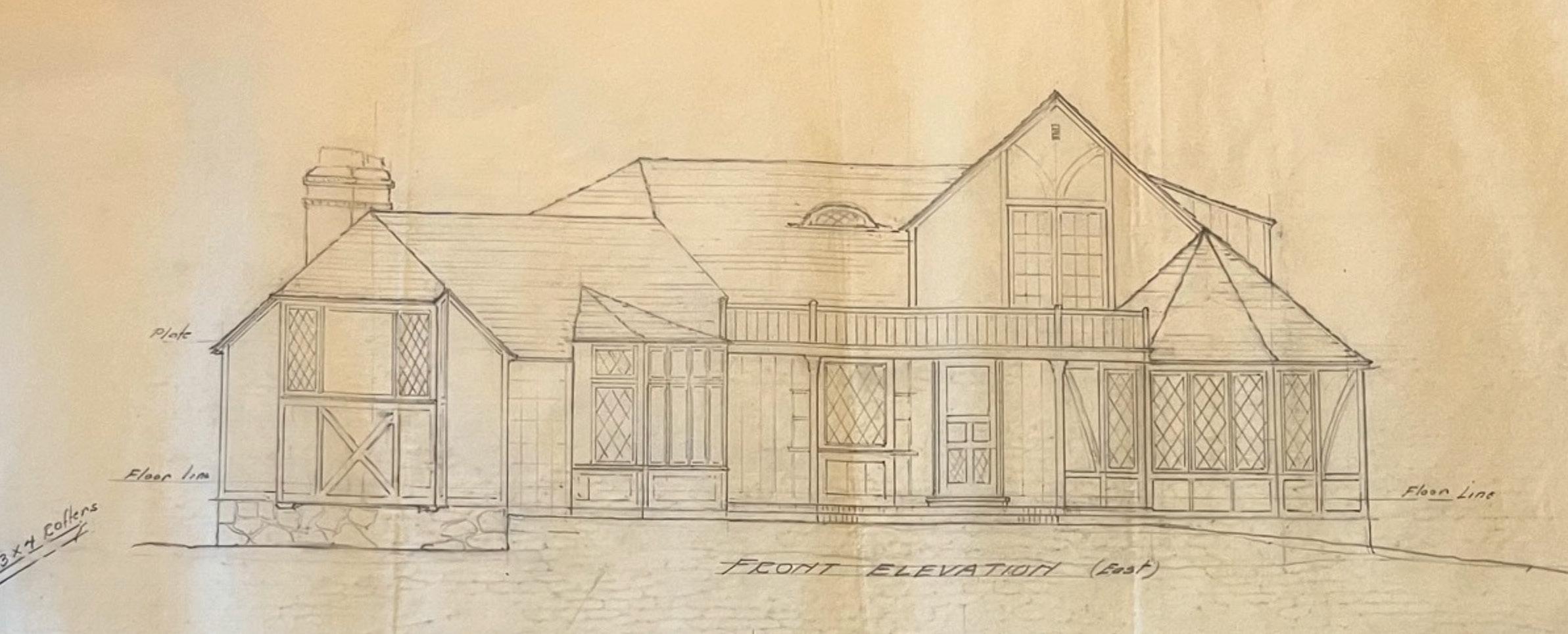
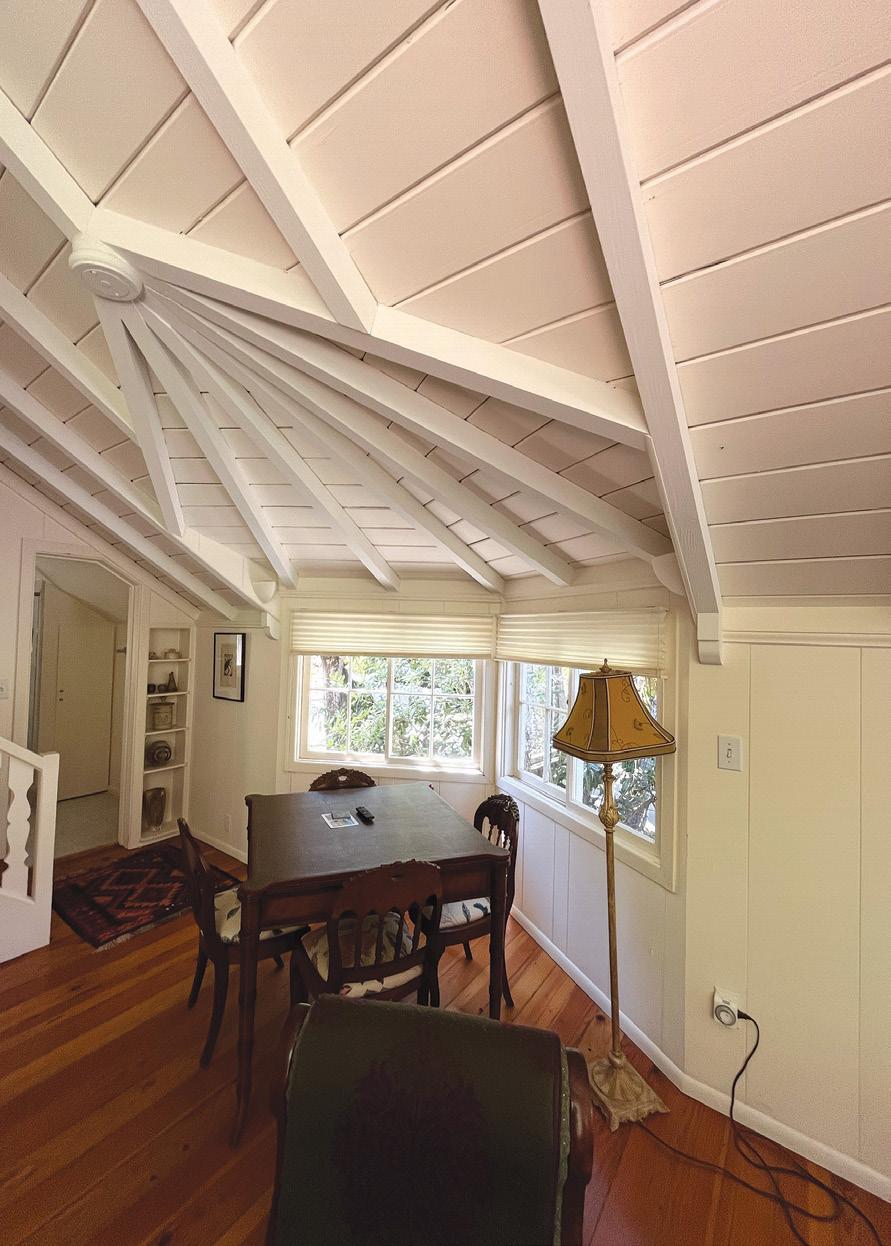
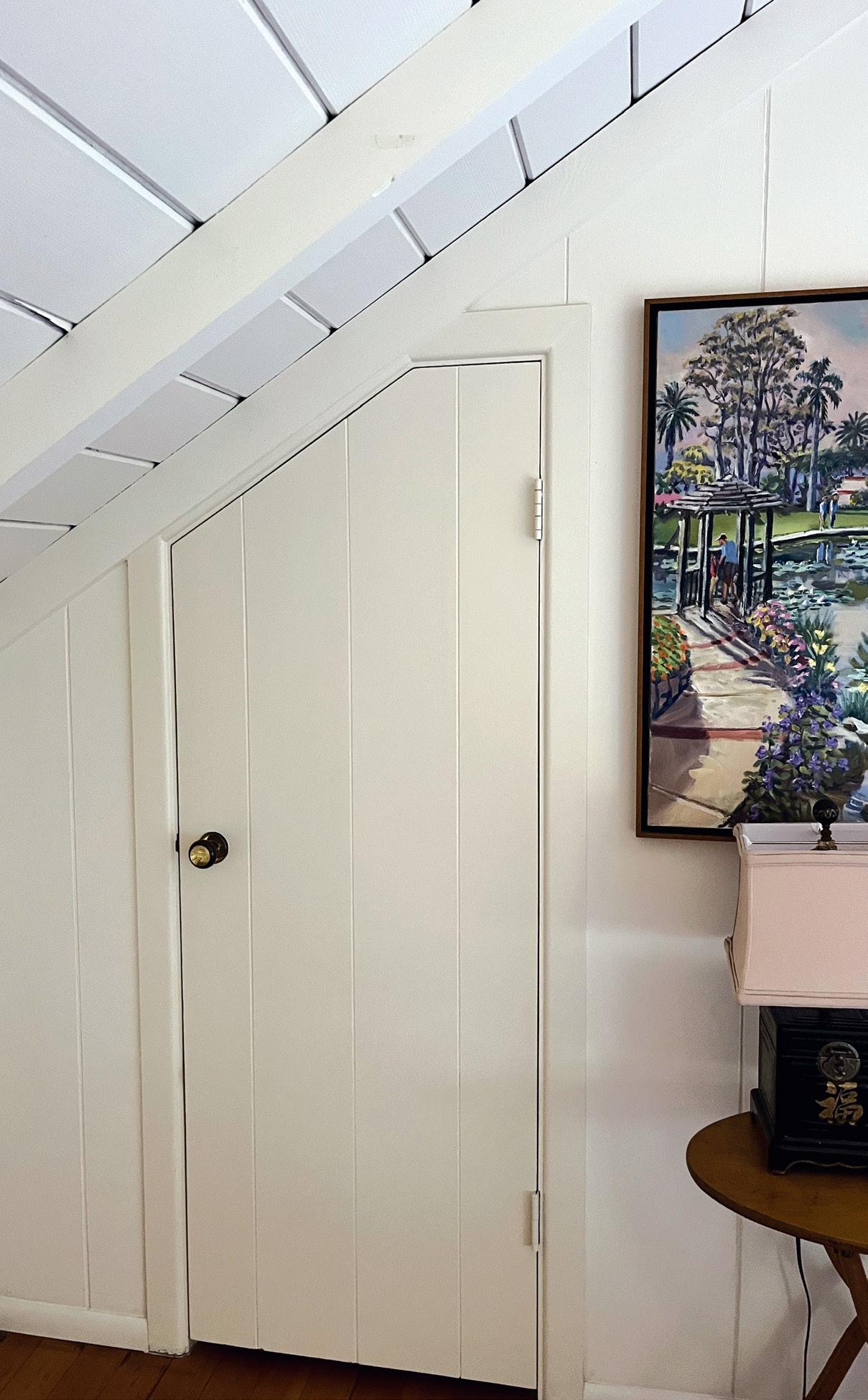
228.Moody Magic – The Moody Sisters home design team transformed Montecito with storybook cottages, salvaged treasures, and a healthy respect for fairies—all a century before cottage-core was “trending.”
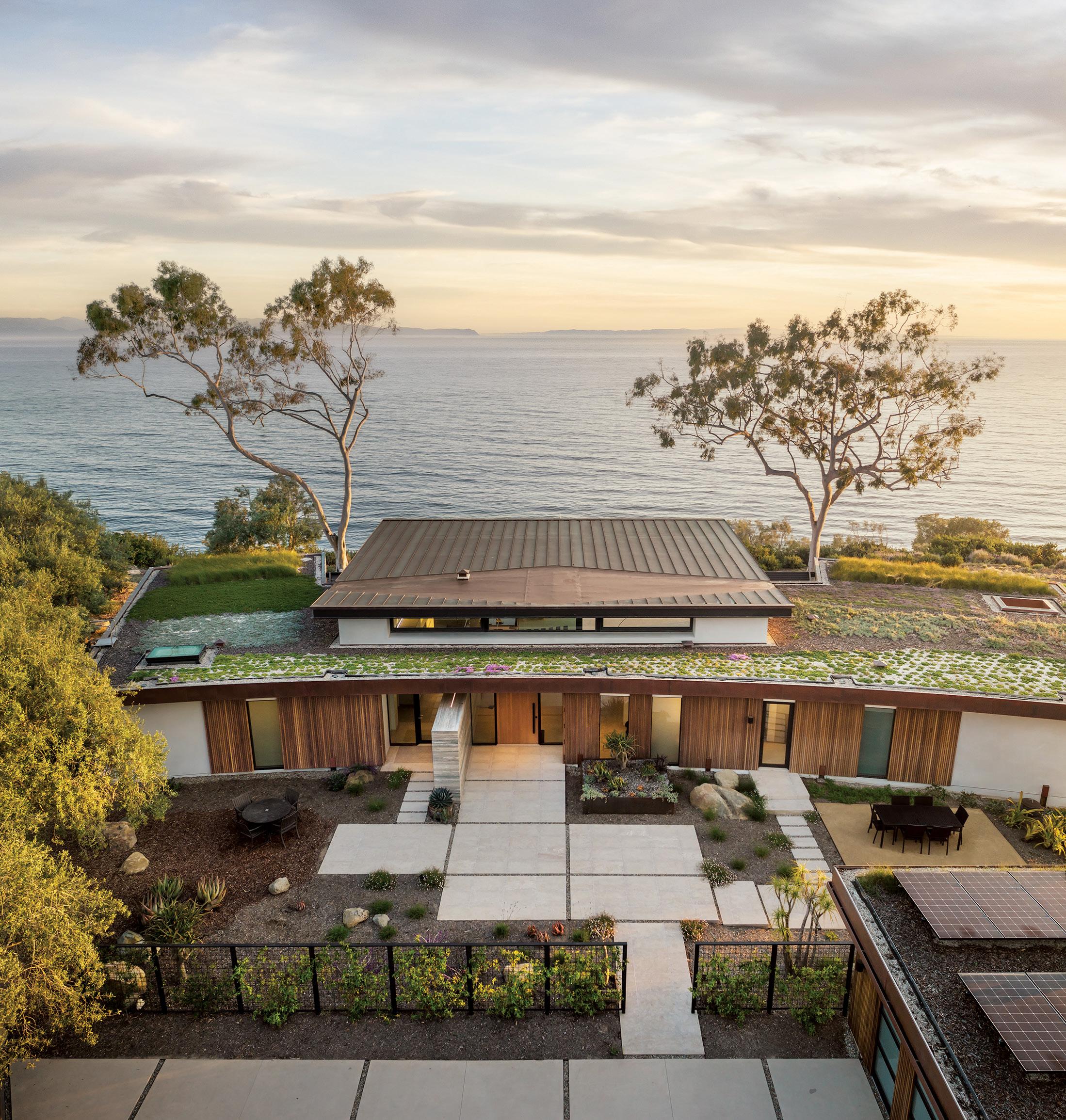
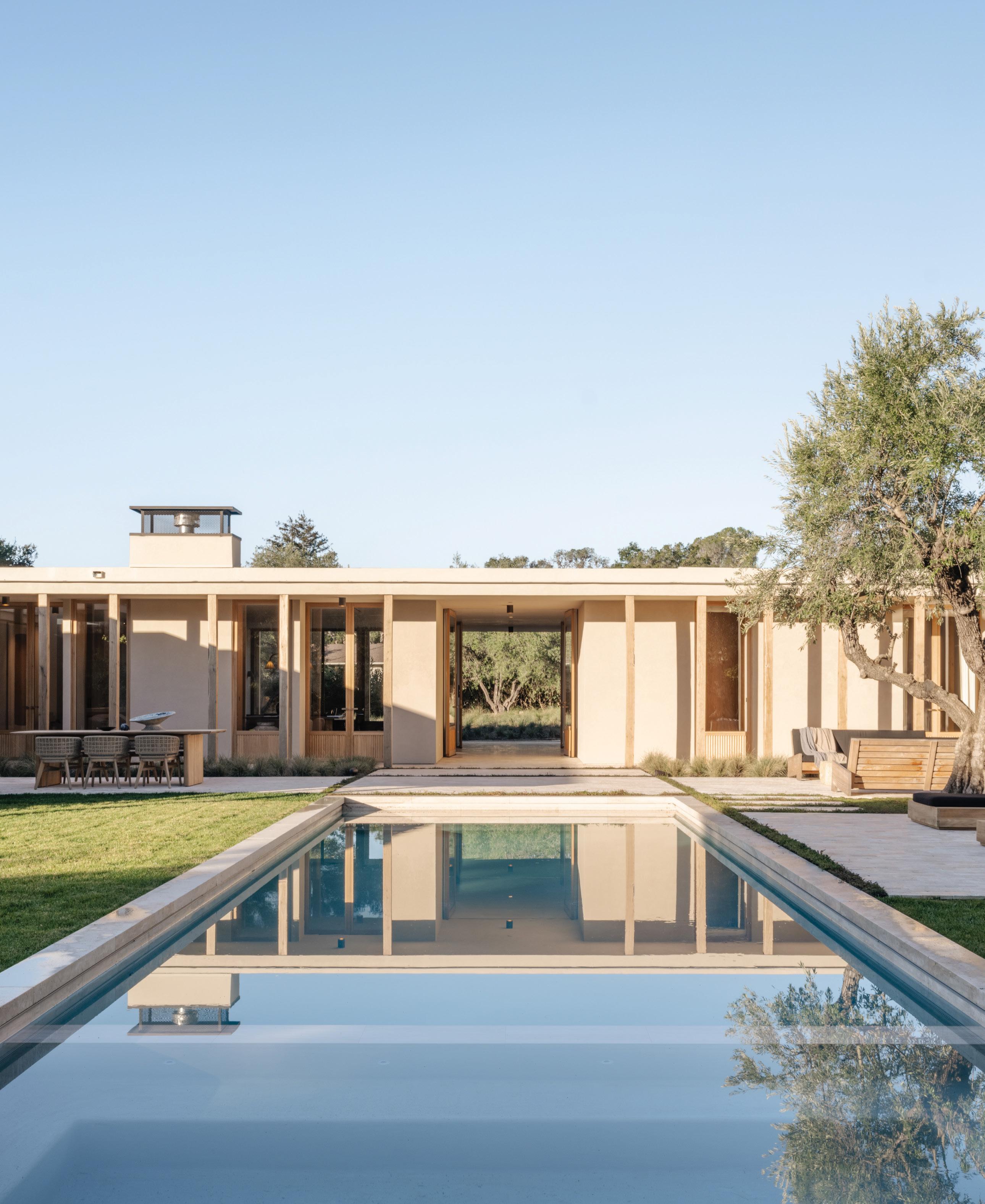
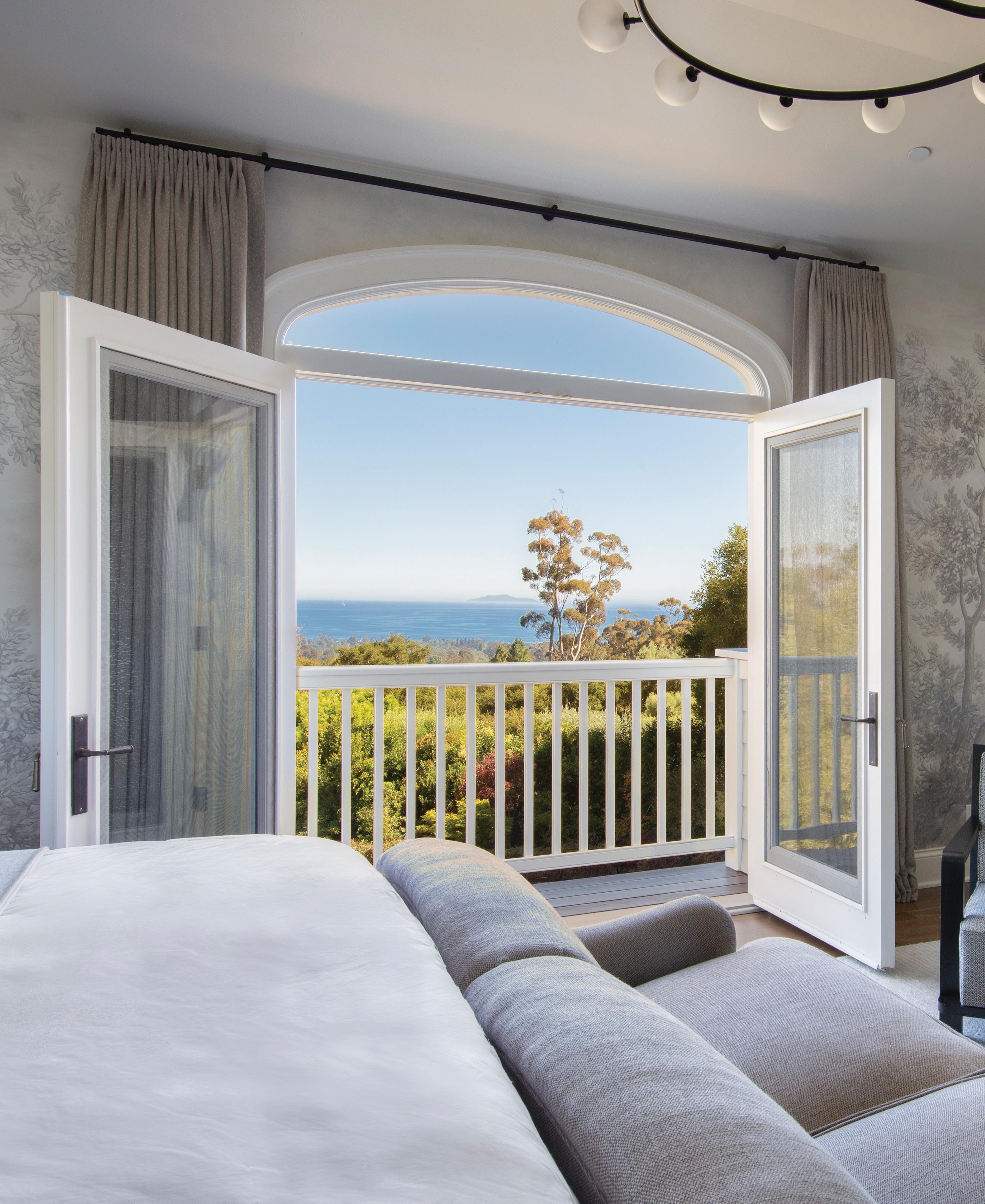
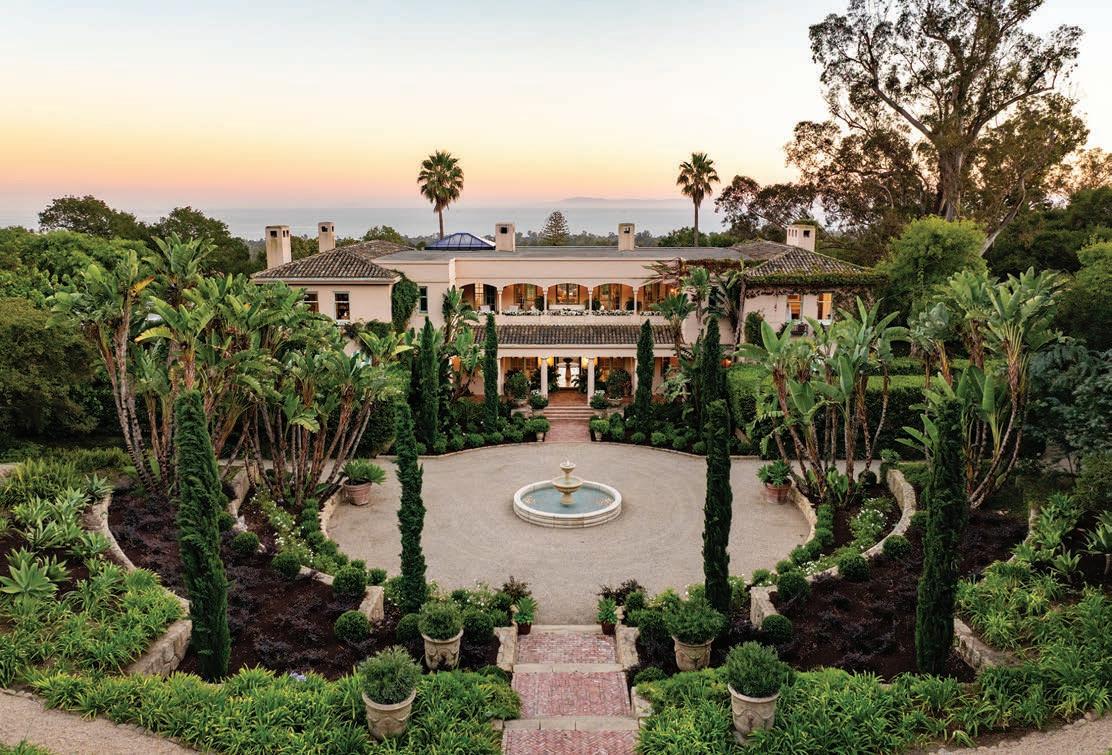
250.Real Estates – Oceanfront compounds, wine country estates, and dream homes that make Zillow scrolling feel wildly inadequate.
From Van Nuys to Opa-Locka: Aero’s new route to Miami
For those who savor the finest things in life, travel isn’t just a means to reach a destination; it’s an experience in itself. At Aero, travel is treated as an art form, customer service is a passion, private terminals replace crowded airports, and the amenities are endless–Starlink Wi-Fi, elevated dining, and much more. The whole family is encouraged to join too—dogs of all sizes are among Aero’s most frequent travelers.
Guests enter a world where hospitality, design, and travel are effortlessly merged, receiving the private jet experience for a fraction of the cost.
The latest news from the private jet airline is two-fold. Aero has welcomed the Gulfstream IV-SP to its fleet, now available to book by the seat. The iconic aircraft is Aero’s solution to closing the gap between Southern California and South Florida. With flights between Van Nuys to Miami-Opa Locka debuting this winter, Aero will become the definitive way to reach Miami just in time for Art Basel. Book your seat at
OUR EXPERTISE
Big. Medium. Small. We bring the same conviction to every project we take. Sure the larger jobs are more complex and time consuming, but for those who have smaller jobs their dreams are just as important. Our experience on a big job may help on the next small job and vice a versa, you never know. So whether you need us to design systems and coordinate multiple subcontractors or to install a simple home entertainment system, put our 35 year experience to work for you.
Editor’s Letter
Our Overachievers Issue
For those who are nouveau Monteciteau, there are bears here. I’ll give you a moment to take that in. Not people who are bearish on the market—actual bears.
When my kids were at MUS, I remember at least one evacuation caused by a wandering bear. Not the kind of alert my folks got when I was growing up. When I went to school in NYC we’d get bomb threats. In Montecito we get the occasional bear threat. I prefer Montecito.
On the plus side of the ledger, one of the great benefits of Santa Barbara’s bear population is it has attracted an epic human whose specialty is, lucky for us, studying bear populations. This expert on large carnivores is the new Montecitan Dr. Rae Wynn-Grant. Dr. Grant is one of the most fascinating Montecitans I’ve ever had the privilege of interviewing—and that’s saying a lot. That’s because Montecito’s human capital is second to none.
What may not come across in our interview is the epic modesty of Wynn-Grant (is epic modesty an oxymoron?)—this person who was on track to be
a musician and yet somehow willed herself into the hosting gig of Mutual of Omaha’s recently rebooted Wild Kingdom . Wynn-Grant also received an offer to run the Fish & Wildlife Service from our former president, not to mention she has more degrees than a thermometer. And yet, all these years, achievements, and accolades later, Rae still puts on her 50-pocket ripstop flame resistant thermally lined cargo pants one leg at a time.
Oddly and poignantly, this issue of our mag has multiple tales of music and science— often both intersecting within the same story. This is no coincidence. It has been said that music is where art, science, and math all converge because music really IS pure physics and mathematics. This goes back to Pythagoras and helps explain why Dr. Rae Wynn-Grant happens to also be an excellent pianist (and step dancer, btw). Einstein was an excellent violinist who once said, “If I were not a physicist, I’d probably be a musician. I often think in music. I live my daydreams in music. I see my life in terms of music.”
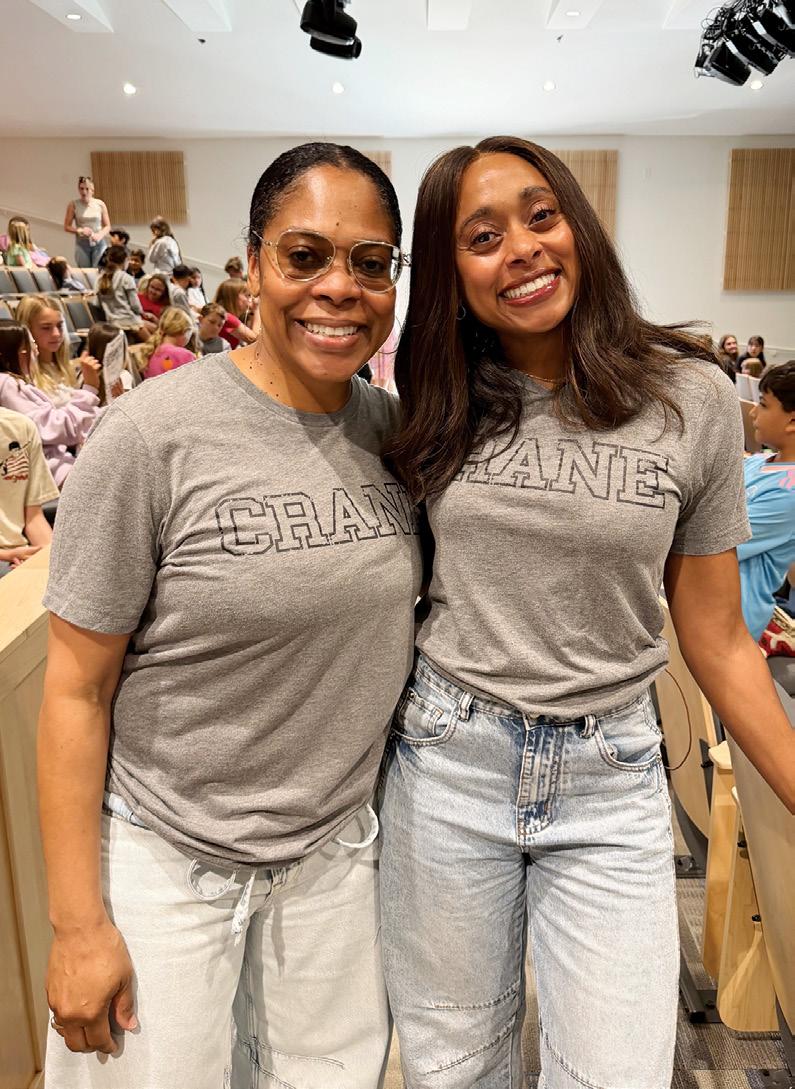
Rae with Tamar Adegbile (left) at Crane School.
Einstein with his backup plan.
Another excellent example where music meets science is the Montecitan CEO of Guitar Center Gabe Dalporto—whose side hustle is being an MIT-trained nuclear engineer. This is unfair. This would be like having your day job as Superman, then by night you’re… Spiderman. Montecito, as you know, is filled with these sorts of absurdities.
It’s interesting timing because here we are almost 50 years out from Bruce Springsteen’s 1979 No Nukes Concert, while Dalporto, who makes a lot of sense, has become a fierce advocate for nuclear power. He sees nukes as a lynchpin in the fight against global warming. Ah, how times have changed—from “No Nukes” to “‘Mo Nukes” in less than half a century.
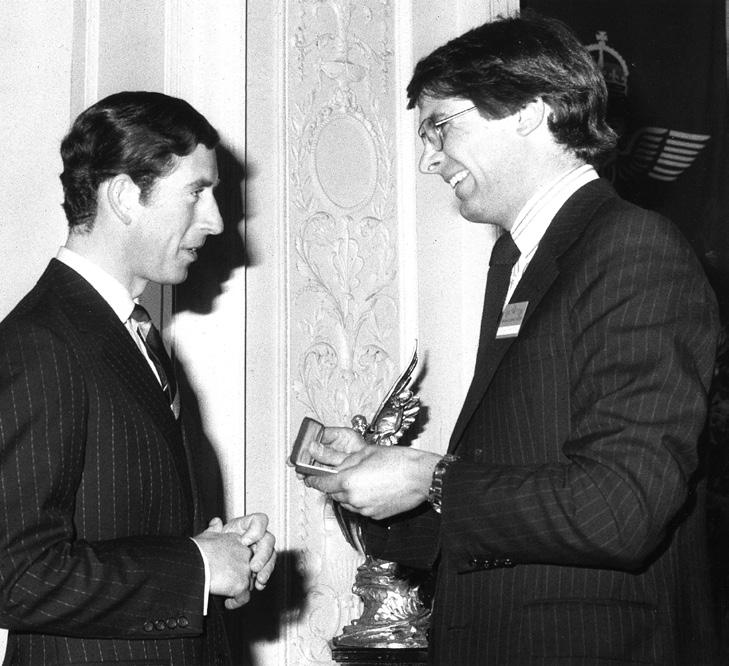
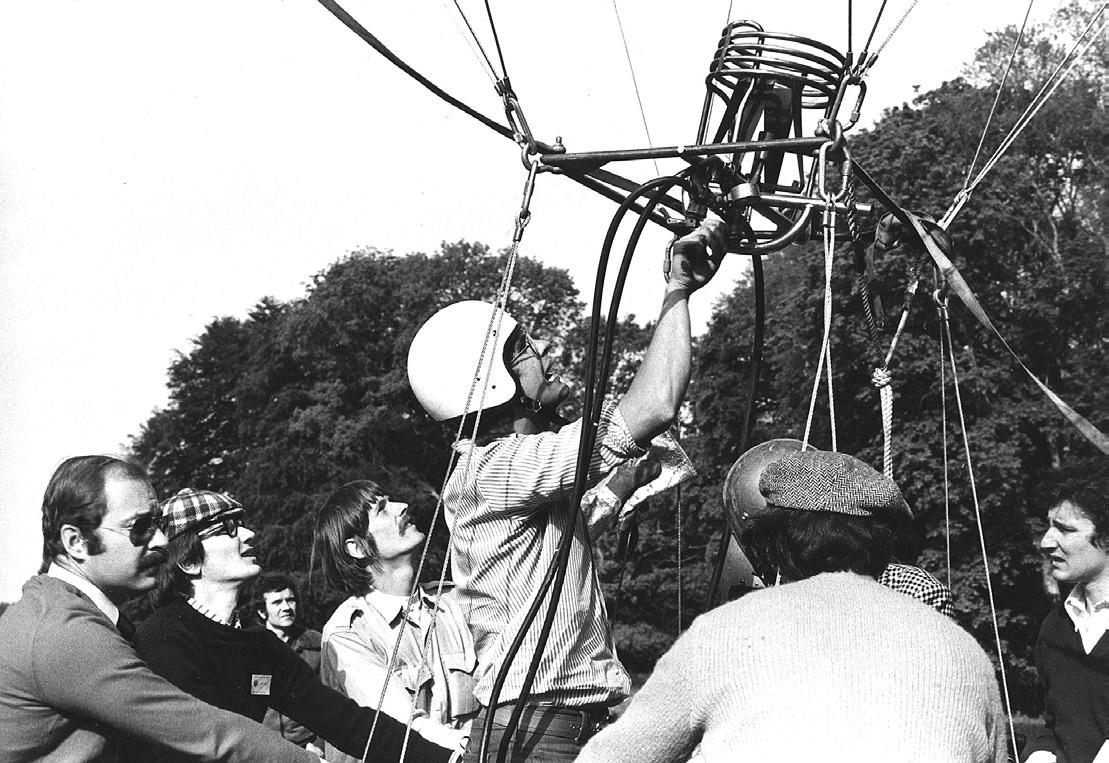
If you still aren’t sated on science, check out Joe Donnelly’s look back at the life of Brit-bred but Santa Barbara living world-class balloonist Julian Nott. Nott held 79 ballooning world records including being the first to cross the Sahara and Australia in a balloon. He also held an altitude record for rising more than 55,000 feet—Julian also did a lot of work here with UCSB’s Kavli Institute for Theoretical Physics. Santa Barbara is no slouch.
If You See K
Oh, and let’s not forget our influencer/scribe Heidi Clements’ wild piece on ketamine, otherwise known as “better living through science.” Hopefully you’ll find “K” as revelatory as Heidi did. And thanks, Heidi, for taking one for the team. She may have been higher than Julian Nott’s balloon, I’m not sure.
Time To Get Real… Estate
With all the great human capital here, you should be feeling pretty great about your decision to live in Montecito. In fact, maybe you’d like to double down, sell your old place, and buy something bigger? In which case please take a gander at our Portfolio of Montecito’s Top Real Estate Professionals. They’ll make sure your next transaction is not at all grizzly.
Words To Live By
And speaking of grizzlies, all this talk of large carnivores reminds us of that old adage: Q. If you’re in a large group and a bear starts chasing after you, how fast do you need to run? A. You don’t need to outrun the bear. Just outrun the slowest person. Literally words to live by.
Enjoy the issue!
Gabe in his post-nuclear phase.
Julian flying high next to his pod at the Air & Space Museum.
Photo by Troy Blendell
Summer 2026 at SBMA
Remixed: Entwined Histories and New Forms
Through August 30, 2026
Von Romberg and Emmons Galleries
Perceptual Shifts: Photographs from the Collection
June 28 – September 20, 2026
Photography Gallery
A Few of Our Favorite Things: Staff Selections from the Permanent Collection
Through September 6, 2026
Loeb Family Gallery For Your Reference: Mungo Thomson
Through October 25, 2026
Colefax Gallery
T HE 20 YEAR COLLECTION
CE LEBR ATING 20 YEARS OF CONN ECT IO N , INSPIR ATION AND CRAF T, THE HERI TAGE COLLE C TION HONORS OUR HISTORY W ITH INSPIRED WRAP DESIGNS AN D UNIQUE COLORW AYS.
H ANDCRAFTED IN JA P AN FROM THE W ORLD’S FINEST M ATERIALS AND OPTICS.
SANTA BARBARA SLEEP & TMD SOLUTIONS
WALTER C. DUKES, DDS, FAAOP
WHAT OUR PATIENTS ARE SAYING
WHAT WE TREAT
Obstructive Sleep Apnea (OSA) and its symptoms
Symptoms of obstructive sleep apnea include loud or frequent snoring, silent pauses in breathing, and choking or gasping sounds. Other common symptoms include:
• Waking in the morning feeling unrefreshed
• Being tired during the day
• Morning headaches
• Waking up frequently at night to go to the bathroom
Unable To Use Your CPAP? We Have Simple, Easy Solutions To Solve Your Sleep Problems.
“I have struggled with sleep issues for years, but since discovering Santa Barbara Sleep & TMD Solutions, my quality of rest has significantly improved. The personalized approach and cutting-edge techniques have made a remarkable difference. Their team is highly knowledgeable and dedicated.”
– Mark H.
SANTA BARBARA SLEEP & TMD SOLUTIONS
WALTER C. DUKES, DDS, FAAOP
1809 Cliff Dr STE B, Santa Barbara, CA 93109 | 805-869-1729 | office@sleeptmdsb.com
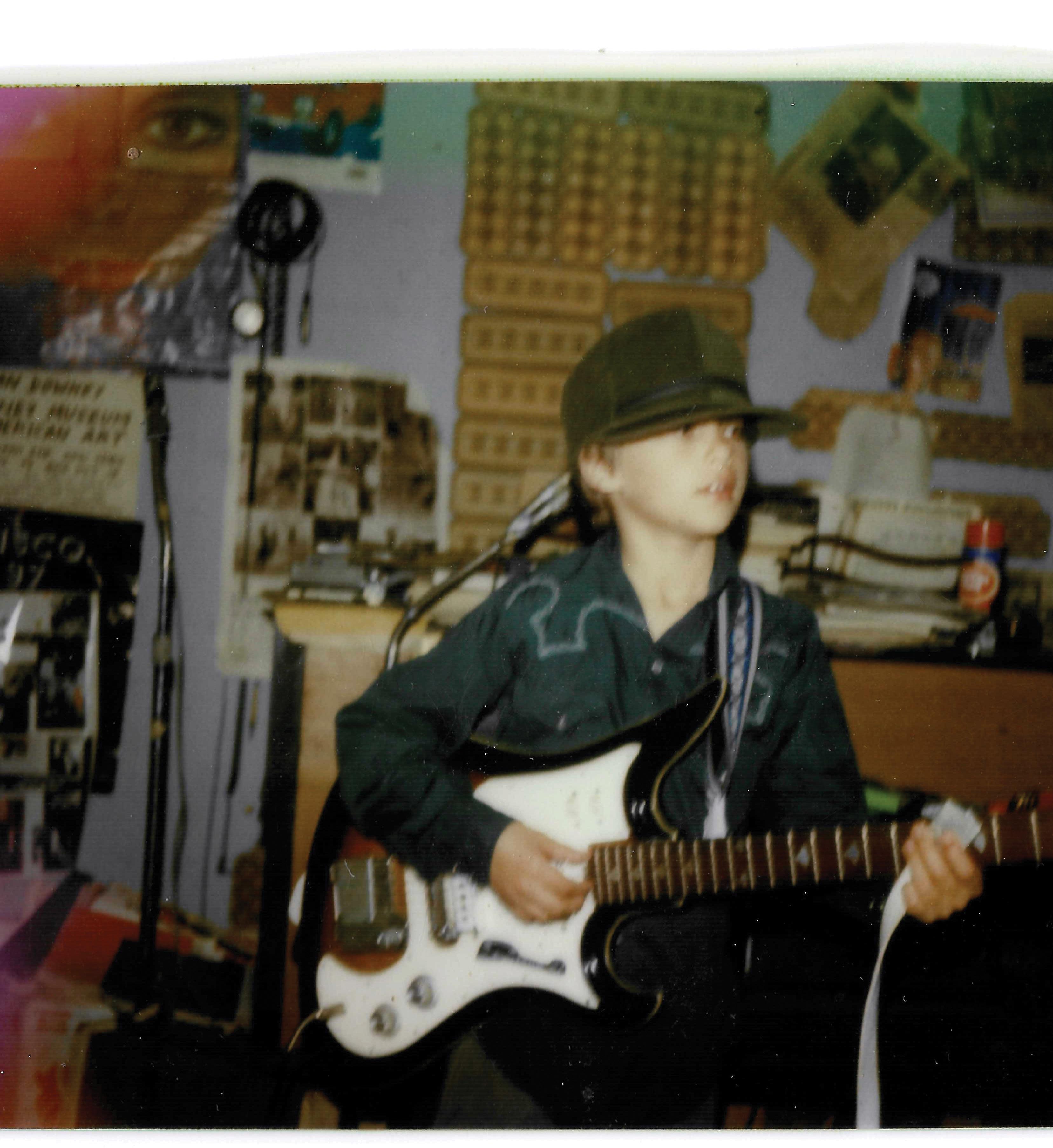
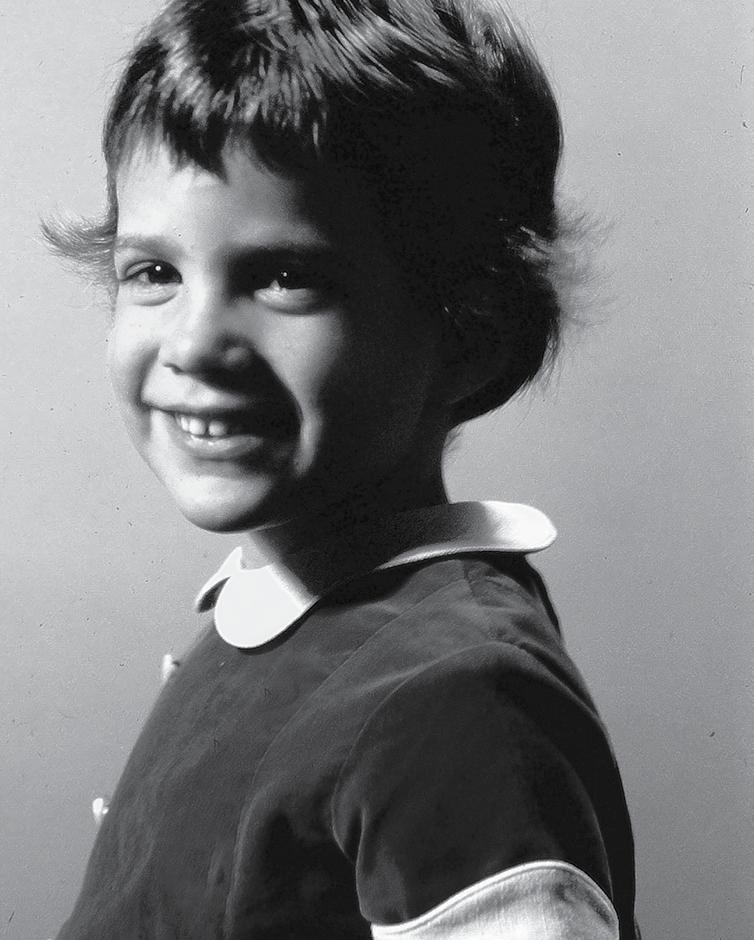
A YOUNG GABE CHANNELING HIS INNER DAVID CROSBY
BY ZACHARY BERNSTEIN
There was a time when Gabe Dalporto had some trepidation demonstrating his educational background in nuclear engineering during social occasions. “The first time my wife, Deva, introduced me to her friends,” says Dalporto, “we went to one of those classic Los Angeles historical bars. We’re all sitting in a booth and we get into this big, deep debate on nuclear power. Later, I’m like, ‘I guess that scared all your friends off.’” To his relief, it turned out Deva’s friends actually loved it.
Dalporto is many things: MIT-educated nuclear engineer, small-town West Virginian, business genius, guitar fiend. But if you met him in person, you’d never be able to tell just by looking at him that he was any of these things. He has neither the haircut of a mad scientist, nor the formal master-of-the-universe aura of a CEO, nor the stylistic Varvatos-inspired flair of a seasoned rocker. In fact, his sense of style appears to mimic Gilda Radner’s famous line: “I base most of my fashion taste on what doesn’t itch.”
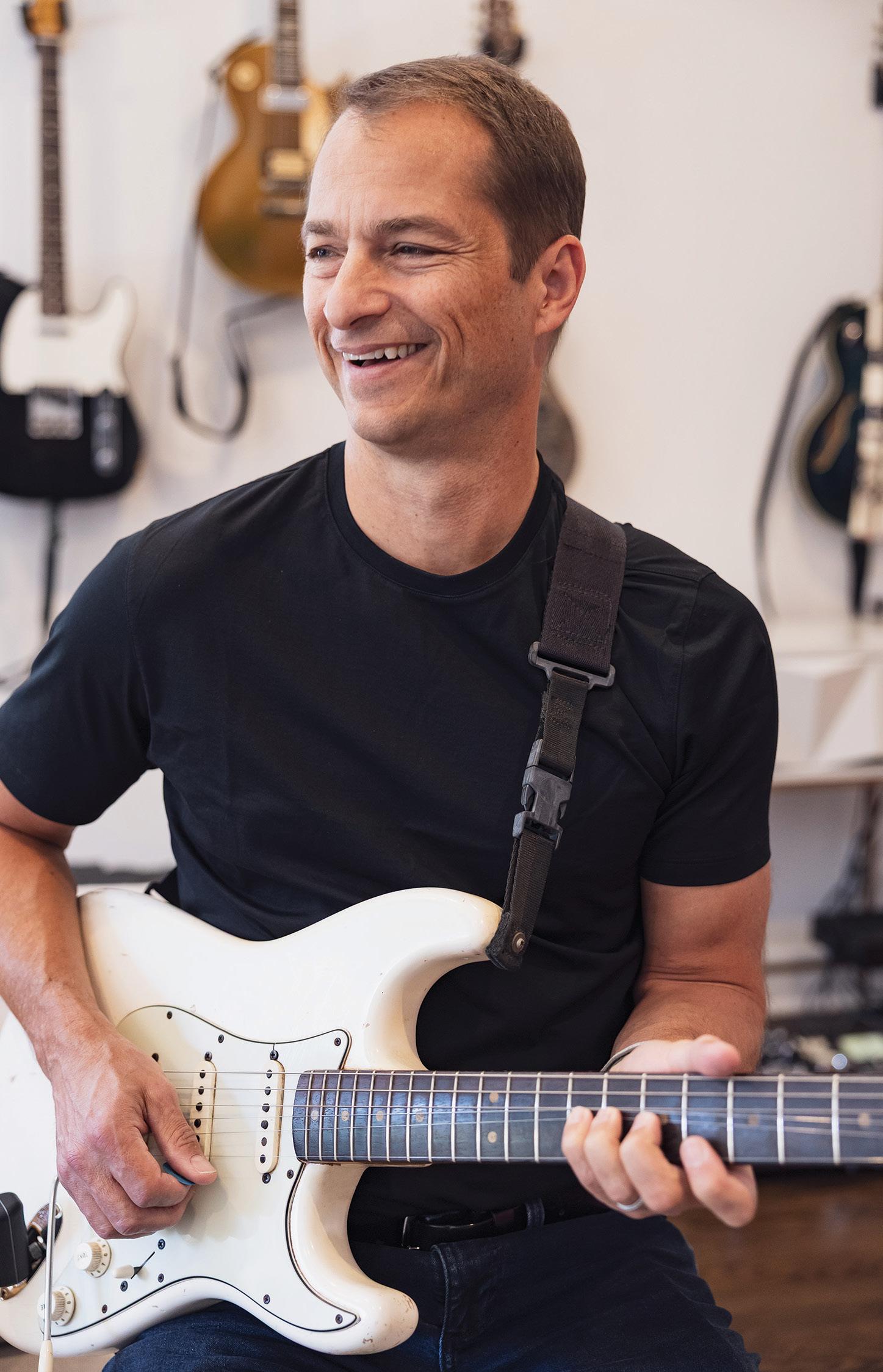
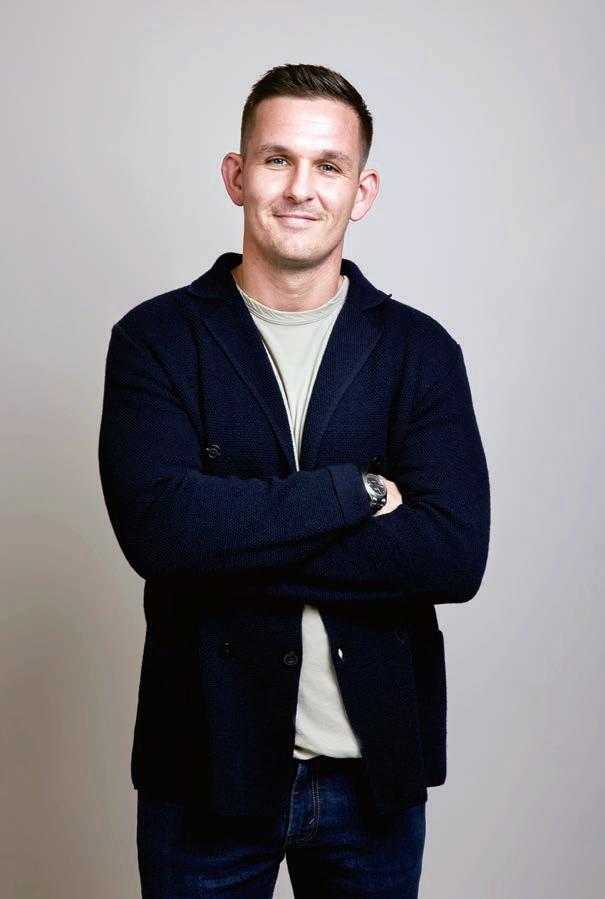
Lately, this nuclear advocate and Montecito resident is in the middle of his third year as the CEO of Guitar Center, the nationwide music retailer. It’s the latest in a long line of positions that feature Dalporto swooping in to help lead a company to greater success. For that reason, I don’t dub Dalporto a “business genius” just to be nice, but to signify someone with a genuinely impressive track record in a long and, to this observer, strangely evolving career.
“A SIGNIFICANT HIPPIE VIBE IN THE MOUNTAINS.”
Dalporto grew up in a tiny unincorporated area in the belly of West Virginia called Poe. “You can’t even call it a town,” Dalporto says. “It’s probably 60 people. It’s tiny. There were no stop signs. There was a gas station, but it closed down. That was it. Nothing there but some people living out in the mountains.”
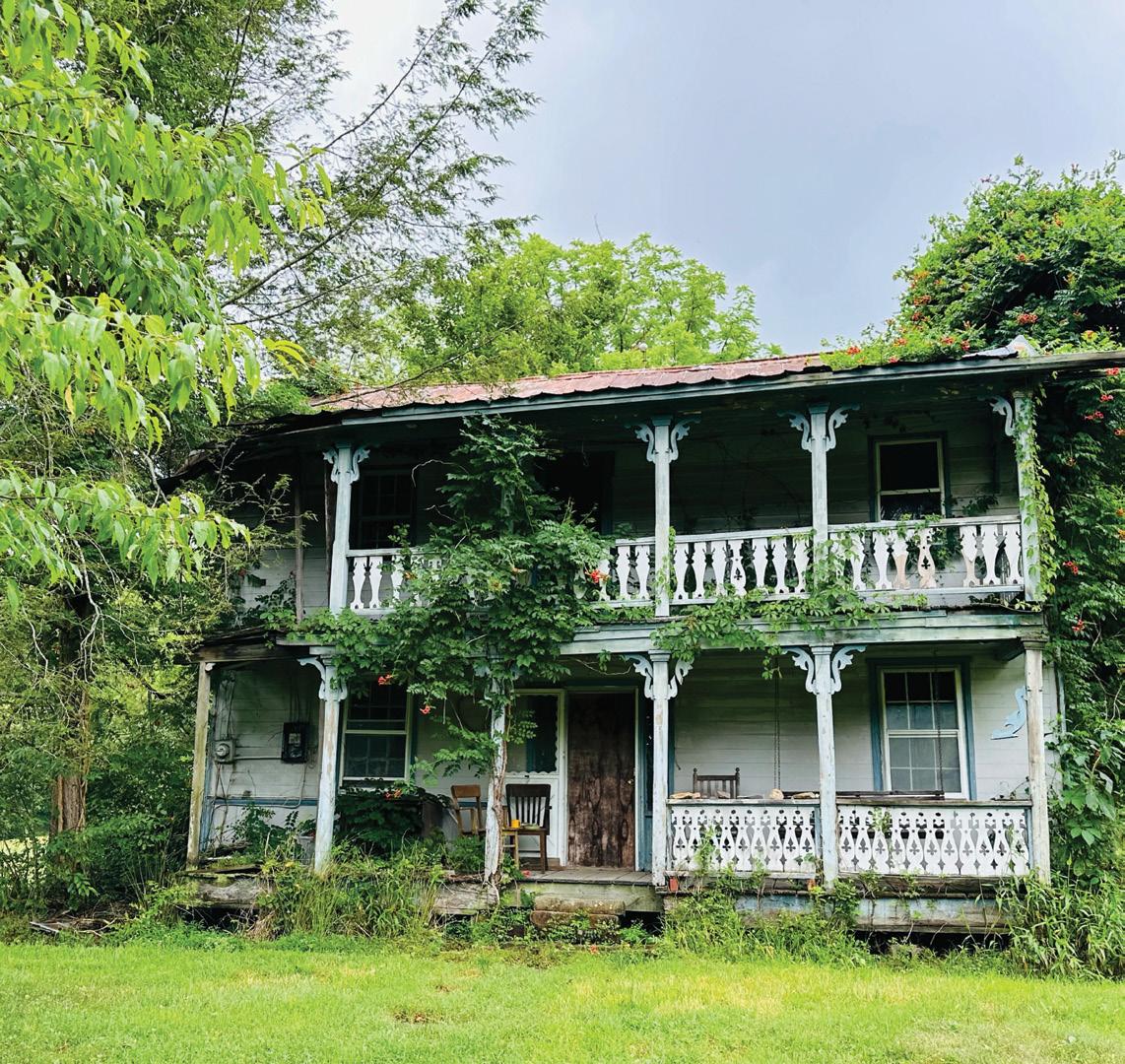
One of those people was his father, John, who bought a Civil War-era farmhouse there in the late 1960s. It became an unlikely hub for hippies and musicians. His family liked to call it “the farm,” even though they didn’t grow anything.
“West Virginia’s a pretty conservative place now, but it wasn’t always like that,” says Dalporto, a fourth-generation West Virginian, who saw his home state change during the hippie movement. “There was a significant hippie vibe in the mountains; a pilgrimage of people moving from New York into some of the more rural areas following the back-to-farming movement then. People would come from all over and stay on the farm for weeks. They would play and record music through all hours of the night. I’d be sleeping on the couch while people were playing music, smoking pot, and recording. That was my upbringing.” Naturally, his father taught him to play guitar too, and he’s been a devoted player ever since.
But after a fight with John while he was still a teenager, Dalporto moved out and got a job at a Pizza Inn near his high school, renting a room in a trailer from one of his co-workers. For a while there, his life was an unending cycle of school, pizza, riding the bus, and sleeping. What could’ve been a step backwards for many people turned out to be just what Dalporto needed.
“It was the best thing that ever happened to me in my life,” he says, “because up to that point I wasn’t that motivated. I didn’t work hard in school and it became very apparent to me that, shit, I don’t want to work at Pizza Inn my entire life.”
We should all be so lucky to realize we need to turn our lives around while we’re still teenagers. Dalporto became a better and more disciplined student. Like, much better and much more disciplined. He eventually landed at the University of Florida where he first developed an interest in nuclear engineering. “It touched on everything from hardcore math to nuclear core physics to quantum mechanics to thermal hydraulics and all this really interesting stuff. I became a real believer in the field of nuclear power for peaceful civilian electricity purposes.”
He would continue his studies at MIT, intimidated at first because most of his classmates were the valedictorians of their high schools. “And then there’s me, this kid who barely got his shit together in high school and was living in a trailer,” says Dalporto. “It was actually kind of amazing because I realized that everybody has their strengths and weaknesses and these geniuses in one area could be complete morons in other areas. I realized I can do a lot of things that they can’t.”
“I REALIZED I CAN DO A LOT OF THINGS THAT THEY CAN’T.”
When Dalporto became CEO of Guitar Center, he was ready to acknowledge that the company had issues connecting with customers. “Guitar Center is an iconic brand. On its good days, it has a deep connection to the music community, and over the years we just kind of lost our way. I’ve been very transparent about this. I don’t believe companies should lie about where they are. I think if they suck they should say, ‘We suck and we’re working on it.’”
Work on it he did, transforming Guitar Center’s whole vibe by putting more emphasis on the joy of music making. Coveted guitars previously hidden in glass cases are now more accessible to anyone who wants to try them. Pedal boards are out in the open for creative mixing and matching. Strum the opening notes to “Stairway to Heaven” and no one will bat an eye. More Disneyland and less Bergdorf Goodman.
With this model, Dalporto turned six consecutive quarters of negative growth into nine consecutive quarters of positive growth.
Call this the “Dalporto turnaround,” if you want. He’s done it several times before he arrived at Guitar Center, most notably at LendingTree, which was weeks away from bankruptcy when the CEO asked Dalporto to get them out of their slump. His tenure there as CMO, then CFO and board member, lasted from 2011 until 2018 and if you look at LendingTree’s stock ticker from those years, you can see the wildly successful results of Dalporto’s input.
What did his career-spanning razor-sharp business acumen have to do with the nuclear engineering he studied at MIT? Absolutely nothing. “Back in 1995, the industry hadn’t started any nuclear power plants since 1979 and there was no pathway to building new ones. It was a stagnant industry and the philosophy was, ‘Whatever you do, don’t innovate because the plant didn’t melt down last year; so don’t do anything different.’ That’s not very exciting for a young ambitious person. I just realized that if I wanted to be ambitious and make a big impact, that was not going to be the place.”
A fellow MIT grad connected Dalporto to the world of strategy consulting and in a flash, nuclear power’s loss became corporate industry’s gain.
“MY WIFE’S MOM IS A FORMER HIPPIE AND SHE JOKES THAT SHE USED TO BE ‘NO NUKES!’ AND NOW SHE’S ‘GO NUKES!’”
by
Photo
Troy Blendell
Dalporto’s track record of making incredibly good decisions extends into his family’s move to Montecito. Before moving here from San Francisco, Gabe and Deva—a filmmaker and viral video creator with nearly one billion total views—celebrated their wedding at not one, but two Montecito institutions, with a ceremony at San Ysidro Ranch and a reception at The Biltmore. “The whole thing was a magical experience,” says Dalporto. “I mean, getting married under that trellis underneath the mountains at San Ysidro, then going down and taking our photographs on the beach, then having this incredible party at the Biltmore. It’s just such a lovely environment.”
Then came kids, and for the Dalportos, Montecito became an annual vacation destination away from home. “We really like the Bay Area,” says Dalporto, “but we knew we would never retire there. If you’re young and in the middle of your career, there’s no better place. There’s
“IF YOU WANT TO SOLVE GLOBAL WARMING, THAT’S YOUR ANSWER RIGHT THERE.”
In April of 1986, an explosion at the Chernobyl Nuclear Power Plant caused so much environmental damage and global panic that some historians point to it as the beginning of the end for the Soviet Union. Nuclear power remains to this day the most stigmatized source of energy.
Knowing that, Dalporto stands firmly behind the benefits of going nuclear. “The first thing to understand is that Chernobyl was not designed to be safe. It was designed to produce weapons-grade plutonium. It wasn’t a stable reactor with appropriate safety systems. They were trying to win a war.”
Agree or disagree, but Dalporto has an impassioned response for anything you’ve ever feared or wondered about nuclear power. It’s worth it to lean back and let him cook.
On the environment: “If you want to solve global warming, that’s your answer right there,” says Dalporto. “Nuclear power is the only thing that’s clean and doesn’t damage the environment, or create greenhouse gases. That’s the answer that’s staring you right in the eyes that everybody’s not seeing.”
GABE DALPORTO’S TOP THREE FAVORITE GUITARS:
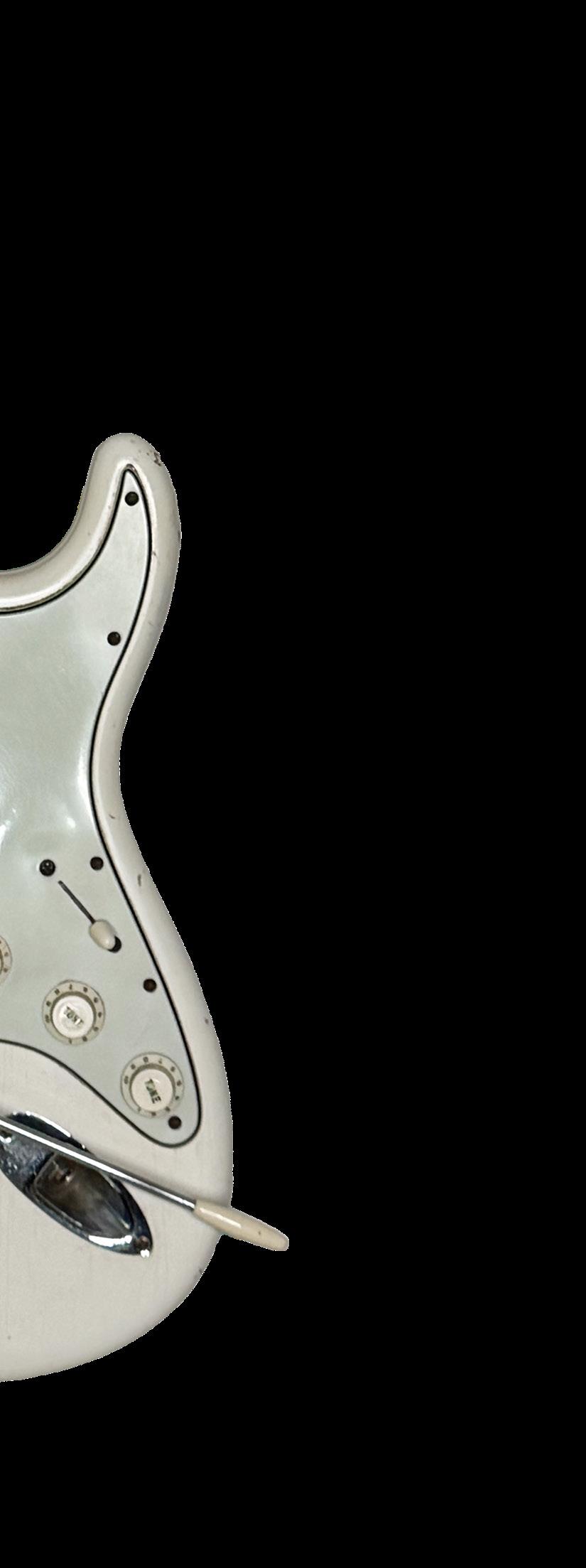
1964 FENDER STRATOCASTER WITH ROSEWOOD FRETBOARD
“The Stratocaster was kind of my first real guitar. My dad gave this one to me in the early ‘80s, back when it wasn’t like an antique. I’ve just played it my entire life. I talked to Andy Mooney, the CEO of Fender—I actually brought the guitar to him and he’s like, ‘A 1964? That was one of the best years ever.’ It’s just the epitome of what a Stratocaster is. And a Stratocaster is one of the most perfect guitars ever made.”
1956 GIBSON LES PAUL GOLDTOP
“My dad played this Les Paul his entire life and after he passed away it came to me. What I love about that is he was never precious about guitars. He gigged his whole life and he beat the crap out of that thing. He played it, modified it, and did all the things you wouldn’t do as a collector. It’s one of the most beautiful things to see and to play. It has so much. You can just feel all the people who have played it and the music that’s been played on it. It just plays like butter.”
PRS CUSTOM 24
“There is no one in the world who is a bigger guitar nerd than Paul Reed Smith. I visited him in his factory and I spent a whole day with him. He was showing me magnets he had found in Indonesia and talking about how their properties were identical to a ‘59 Les Paul. He was just so deeply into the sound and the science of guitars and, even at his age, he’s still pushing the science forward. I want to own a PRS guitar because it’s built by a person who is basically the Leo Fender of his age.”
GABE DALPORTO’S TOP THREE NUCLEAR CONCEPTS:
THE NEUTRON DIFFUSION EQUATION
“It’s the most fundamental equation that is used to model the physics inside a nuclear reactor. But what’s cool about it is that the math and concepts can also be used to model real-world behaviors like the spread of multi-level marketing.”
THERMAL HYDRAULIC TRANSIENT ANALYSIS
“Coming out of college I worked for a nuclear utility and my job was to build models of nuclear power plants, then simulate accidents. Every part of the reactor system was modeled from the nuclear core to the pipes to the pumps to the heat exchanger and all the water flowing through it to keep it from melting down. Then you’d simulate a rupture of a pipe or something, and you’d see how the whole system went through a complex and interrelated dance until the safety systems stabilized everything. In the real world, this taught me how to understand and anticipate consequences and feedback two or three steps removed from any action.”
THE MULTIPLICATION FACTOR
“It’s the ratio of neutrons produced to neutrons lost in a nuclear reaction. In a nuclear reactor if this is exactly one, then the reactor maintains steady power. If it’s greater than one, it’s called ‘super critical’ and power starts increasing. If it’s less than one, it shuts itself down. This math can explain population growth, the spread of infectious disease, and other natural phenomena.”
On Fukushima: “That was an old design reactor that was put on a major fault line and it got hit by a magnitude nine earthquake and a tsunami. It never should have been built there.”
Old designs versus new design: “You have a legacy of really old reactors that were just never designed to be safe. Modern nuclear reactors, which is the vast majority of reactors that are out there, are already extremely safe.”
On risks and rewards: “Think about trading imagined risk for the real risk of global warming. Millions of people in marginal climates are going to have to move. What happens when that many people have to move? Like Syria, you have societal unrest and governments are overthrown, massive wars, all kinds of problems. People dying of drought. Global warming is a real thing. And you’re going to trade that for some irrational fear that maybe an extremely unlikely thing happens? It’s just silly.”
On solar and wind energy: “You can’t store electricity. So when the wind doesn’t blow and the sun doesn’t shine, you don’t have electricity. Do you want to live in a world where we only get electricity on sunny days? Now, people are working on the energy storage problem, but there’s no really great solution for that, at least not yet, so you need what’s called base load power, which is nuclear power that runs 24 hours.”
On defensive structuring: “Generally these things have containment vessels. So, you’ll have a nuclear reactor and you have this giant concrete dome around it. Those things are designed to withstand a direct hit from an airplane. That’s why they’re there.”
Run into Dalporto at Caffe Luxxe and you could easily coax him into elaborating further. Maybe you’re still not convinced, but Dalporto’s got at least one convert on the books. “My wife’s mom is a former hippie and she jokes that she used to be ‘No nukes!’ and now she’s ‘Go nukes!’”
“GLOBAL WARMING IS
A REAL THING.”
By the end of our interview, I have the impression that I’m talking with someone in possession of the intelligence, demeanor, and capacity to overcome the most daunting of challenges. I decide to swing big and ask him if, after he’s done righting the ship at Guitar Center, he could focus his energy on solving the global warming crisis. I tell him I think he could do it and to my delight, he doesn’t modestly wave off the idea.
“That would be an incredible full circle moment for me,” he says. “I’ve always had that in the back of my mind. I wonder if I could ever go back to science because I do believe in that and it’s a really critical moment in our history.”
I just wanted to put that bug in his ear. Maybe some gears are spinning, then he shrugs.
“Guitars first,” he says. “Then the world.”
I can’t think of anything more rock and roll than that.
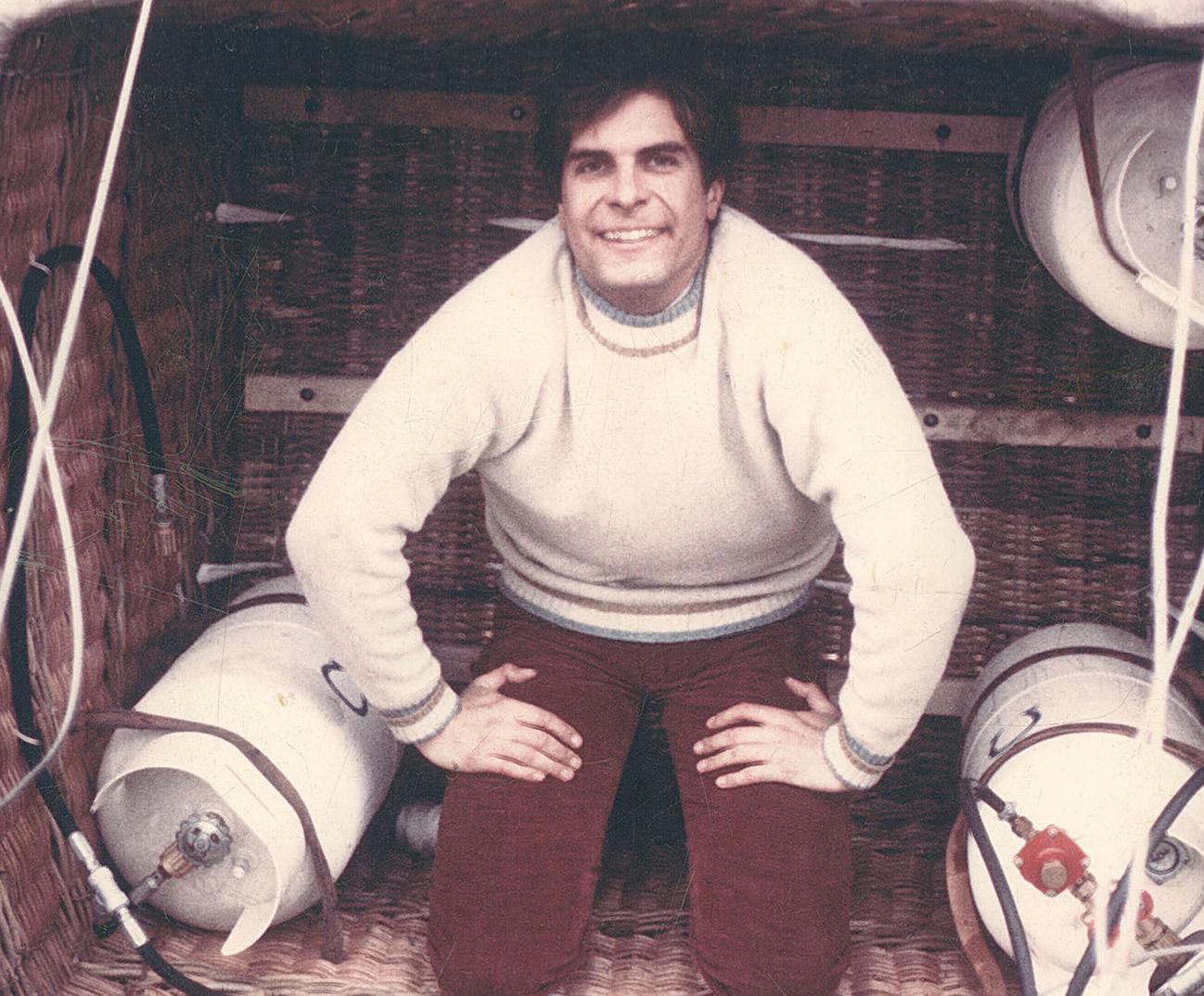
GABE’S WEST VIRGINIAN CHILDHOOD HOME... COMPLETE WITH DAD’S DIY RECORDING STUDIO AND DREAMS OF BUSTING ATOMS.
Photo by Troy Blendell
My grandfather, Reno Becchio, began serving Santa Barbara through his fish market in 1914. More than a century later, I’m proud to carry on that spirit of hospitality at Arnoldi’s Cafe.
–
Sara Skrinski, Owner
ESCAPE IN A MOMENT
Slip away to our iconic mountain valley Inn for a relaxing retreat close to home. Share meaningful moments with loved ones, soak in the serenity and views of Ojai, and unwind amid 220 acres of natural beauty. Come rejuvenate at Spa Ojai and savor Olivella’s valleyto-table cuisine—both honored with Forbes Five-Star prestige. Then settle into luxurious guestrooms and private villas inspired by the warmth of the Mediterranean. Ojai’s rare spirit invites you to escape in a moment—all just a short drive away.
(844) 597-8955 OjaiValleyInn.com
There is a lot to say about pickleball, and much of it’s been said. Still. The sport’s wildly explosive growth is exciting epidemiologists in ways even they can’t explain. From Martinique to Estonia, the speed with which pickleball is swarming the globe would be terrifying were it a zombie-producing virus (hold your pithy comment, reader). The pickleball phenomenon is even recasting wanderlust, turning up in places not cartographically familiar.
Where once you could gauzily imagine far-flung Nepal as an enigmatic wonderland of spiritual profundity and cloud-flocked Himalayan peaks, today it’s a website with the banner Pickleball Courts in Bagmati Province. In a corner of the page a little cartoon robot clutches a clipboard. “Need Pickleball Help?” it asks. This may take the saffron-tinted sheen off the Nepal of the West’s collective imagination, but a sense of the familiar in a once-alien landscape lifts us all. Does pickleball’s dowdy name front a consequential global change agent?
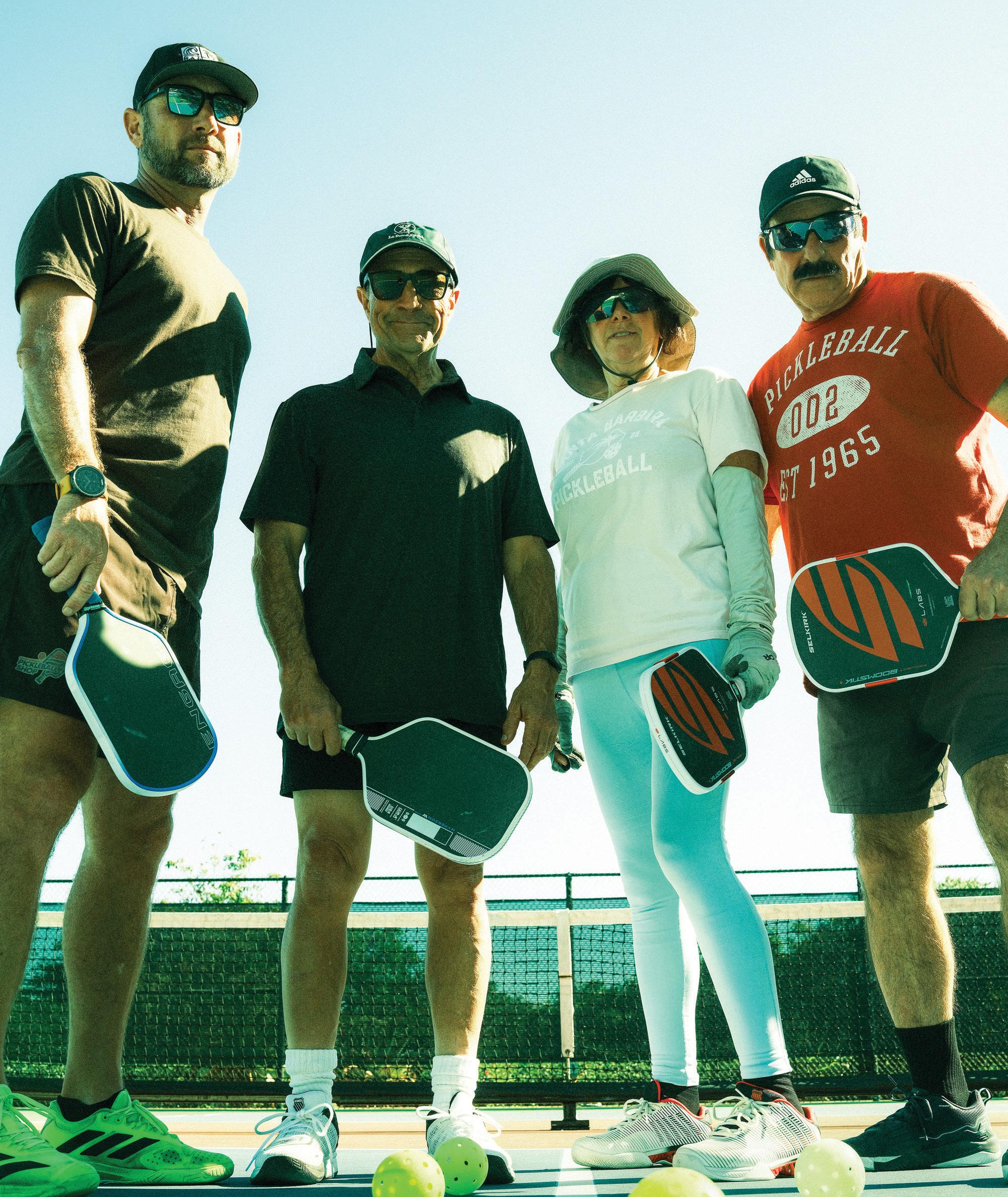
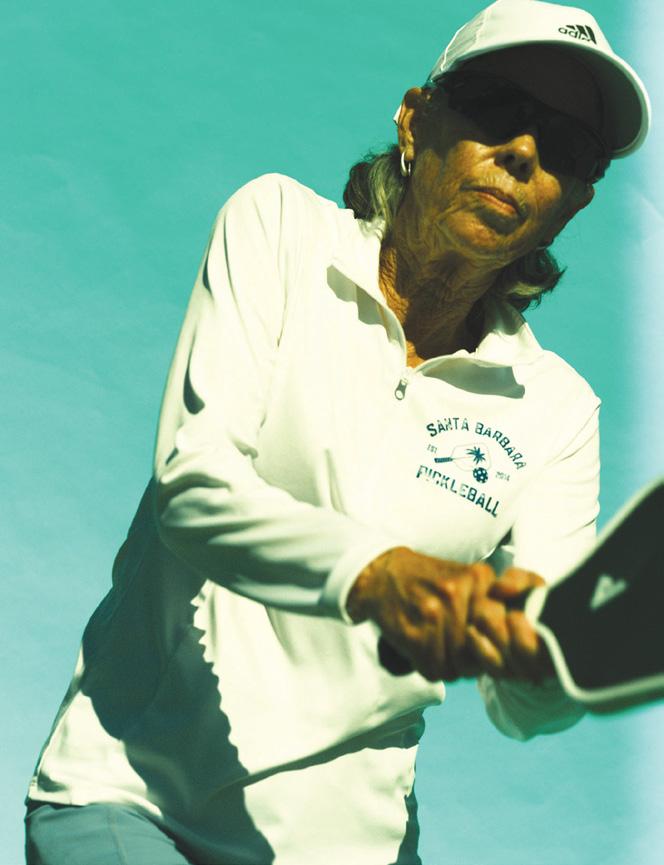
“At this point, I wonder whether pickleball is even a ‘trend’ anymore!” Richard Salzberg says through laughter. His remark acknowledges a brute fact: Pickleball is trending right alongside air and water. “In the beginning I couldn’t have imagined in my wildest dreams that this little game would eventually take over the town, and, by extension, much of the world the way it has.” Salzberg is our region’s official Pickleball Ambassador, as designated by the U.S. Pickleball Association (USPA). “I’ve been involved in this exponentially growing sport since 2014,” he says. “I started playing when I was young… in my 50s. Most of the early adopters back in 2014 were actually my seniors, so I was considered ‘The Kid.’ That’s changed dramatically. Pickleball can no longer be classified as an ‘old person’s sport.’”
“AT THIS POINT, I WONDER WHETHER PICKLEBALL IS EVEN A ‘TREND’ ANYMORE!” RICHARD SALZBERG SAYS THROUGH LAUGHTER. HIS REMARK ACKNOWLEDGES A BRUTE FACT: PICKLEBALL IS TRENDING RIGHT ALONGSIDE AIR AND WATER.
PICKLEBALL:
VINCE KOSEK, JOHN LA PUMA, LESLIE THOMAS, AND RICHARD SALZBERG
He’s right. The numbers are skewing younger with counterintuitive alacrity (you heard me). According to a stats site with the startling name PickleRage!, 70% of pickleball players today are aged 18-44 years old. What this suggests is an 18-year-old flying through the park on her hoverboard. She spies a quartet of 60-somethings crouching crablike on either side of a net and clutching
laminated flyswatters. “That could be me!” the teen thinks thrillingly.
In fact, teens and tweens commingled with what we’ll call the “nimble adult” cohort on May 15 at the American Riviera Classic, which turned the muni courts at Montecito’s Old Coast Highway that day into Pickleball Excellence Central. Tournament Director Barb Kloos breaks it down.
DEAR RACQUETEERS: WE CAN WORK IT OUT.
“This year’s tournament rallied 347 players—the most we’ve had, and very good for a small community. Players participated from 10 states outside California, and ranged from 9 years old to 78. The 9-year-old was Weston Ruiz, son of local Pickleball Shop owner Carlos Ruiz. Archie Barcelona, 15 years old, competed in the Junior PPA last year. He played in our tournament with his dad, Dave Barcelona. Gold medal winners were Andy Silverstein and Michael Challen. They played against the challengers with 50 spectators watching. Quite a highlight to finish off the weekend!” Whew! Possibly the wrong interval for asking this, but what is driving pickleball fever?
A welcomingly low barrier to entry draws one into a fitness-forward, mutually supportive community whose shared athleticism lifts all members. If it sounds too good to be true, lower your guard. They’re playing pickleball in the Cayman Islands, in Tonga. They are thwacking in Tanzania. The Iran Pickleball Association Facebook page features folk posing with dayglo wiffle balls. Pickleball stands to be the most organic uniter we’ve seen in a generation.
Here on the Central Coast, Richard Salz-
berg’s indefatigable pickleball boosterism has almost certainly helped the game explode. A better, more genuinely energetic ambassador for the sport is tough to imagine. That he has a side gig as a beloved Music Maniac is the icing. He’s been on the front lines since the opening volley.
“What began as four humble courts at the Municipal Tennis & Pickleball Center adjacent to Montecito has now expanded to 16 courts,” Salzberg says. “The journey hasn’t always been a bed of roses, though. It took countless meetings with the City and the involvement of two mayors to help get us from there to here. There was initial skepticism from Parks & Rec officials and early resistance from some tennis patrons.”
Salzberg’s muted reference to “tennis patrons” is an overstuffed Samsonite we open at our peril, but here goes.
The tension between the pickleball and tennis cohorts is not philosophical but territorial, a side effect of the zero-sum nature of court availability—particularly in this area, where the built environment is proscribed by a thicket of ordinances, a pricey construction ecosystem, and occasionally a staring, ungrateful fish. But these pickleball/tennis
tensions are, to varying degrees, rife from sea to shining sea.
The commentary can get ugly and even classist. In civic shout fests, pickleball is often subtly positioned as the great egalitarian pastime and tennis tagged as a preening diversion of the haut monde—a characterization taken genteelly to task by a group in Brooklyn called Club Leftist Tennis, who tweeted, “Reminder: pickleball is an astro-turfed, venture capital-backed parasite on public space.”
Dear Racqueteers: we can work it out.
Trig Newton
P“ I STARTED PLAYING ABOUT SIX OR SEVEN YEARS AGO AND WAS LOOKING FOR A PADDLE, AND PEOPLE WERE TALKING ABOUT A ‘SWEET SPOT.’ I WENT TO THE COURTS AND ASKED PEOPLE, ‘WELL, WHAT EXACTLY IS A SWEET SPOT?’ NOBODY REALLY KNEW, AND I THOUGHT ‘THAT’S GOT TO BE DEFINABLE.’”
ickleball’s fealty to Newtonian physics adds yet another perspective to the game, one that Phil Hipol’s website, Pickleball Science [pickleballscience.org], explores with dazzling rigor. “Pickleball is easier than tennis because the paddle is small and lightweight. It takes more strength to manipulate a tennis racket since the so-called moment arm is a lot longer,” Phil says, his vocal timbre minutely betraying a professionally layered appreciation of the Moment Arm. “So something longer requires more torque to rotate.”
Spectating a pickleball tourney on a sun-soaked afternoon, who among us hasn’t worn a trembling half-grin while daydreaming of aerodynamic drag, equations of motion, the driving point transfer function, the paddle/ball coefficient of restitution (PBCoR), and so on. Phil understands us. His Pickleball Science lavishly hands over the Newtonian goods.
“My technical specialties have always been in the fields of structural dynamics, acoustics, and composite materials,” he avers. In the course of a truly varied career, Phil (for instance) developed vibroacoustic testing models for the Space Shuttle cargo bay to simulate payload noise. Naturally he has turned some of this niche expertise to the increasingly meddlesome question of pickleball acoustics.
PICKLEBALL:
“IN THE BEGINNING I COULDN’T HAVE IMAGINED IN MY WILDEST DREAMS THAT THIS LITTLE GAME WOULD EVENTUALLY TAKE OVER THE TOWN, AND, BY EXTENSION, MUCH OF THE WORLD THE WAY IT HAS.”
An avid pickleball athlete (and tennis refugee), Phil has a Bachelor of Science in Mechanical Engineering from Kettering University, a Master’s in Theoretical and Applied Mechanics from University of Illinois, and a Master’s in Engineering Management from Tufts University. How and why did he turn his engineering mojo to pickleball?
“I started playing about six or seven years ago and was looking for a paddle, and people were talking about a ‘sweet spot.’ I went to the courts and asked people, ‘Well, what exactly is a sweet spot?’ Nobody really knew, and I thought ‘that’s got to be definable.’”
As any weekend athlete will when shopping for a paddle, Phil hunkered down with his slide rule and crunched the numbers. “I came up with a scientific definition,” he says evenly. “It is the point on the paddle face where contact with the ball feels good, it has a solid pop, and it seems to magically fly off with little effort, but with lots of speed and high degree of accuracy.” He took the news to his pickleball homies. They were understandably excited, as Phil relates. “‘Oh wow, we never knew that.’ And I go, ‘...yeah, try it.’ And they were saying, ‘This is amazing stuff. Why don’t you write a blog on this? I’m sure people would be interested.’” Phil took that ball and ran with it. Or more relevantly, thwacked it. “I started looking at equations of motion of projectiles and stuff like that,” he says.
Phil’s Pickleball Science articles include such rabbit-hole arcana as Pickleball Kinematics, Paddle Reactivity Rankings, The 2-D Power vs Control Spectrum. It’s a Newtonian grab bag. Those who are wowed by the mathematical minutiae that underwrite quotidian reality (a category that ringingly includes pickleball) may consider Phil an avatar of sorts. Where’d all this come from, Phil? (hint: Engineering as emergent feature of a creative wellspring…)
“When I was younger,” Phil says, “saxophone was my instrument, and I wondered ‘why does one saxophone sound better than the other?’ It has to do with how the whole instrument vibrates. It’s not just the reed or the mouthpiece. You’re putting the whole instrument into a resonance, and the vibration modes of the instrument dictate how sweet it sounds.”
He pauses. The man has made a life around boundless curiosity, around lifting the veil on the Wonder; in this particular case the wonder of pickleball—a fractal of the nutty, expansive, gorgeous reality we swim in and rarely see. We owe guys like Phil a lot.
“You can explain things in terms of the physics, the mathematics behind everything.” He pauses a second time. When he speaks, Phil’s tone is ruminative. “Things can become so routine, but I hope to never become that way. There’s always got to be a fascination.”
u nlock t H e t rue p otential of Your s anta Bar B ara l uxurY Home.
Your home deserves more than ordinary property management—it deserves Paradise Retreats. As Santa Barbara’s premier luxury vacation rental company, we offer unmatched expertise, personalized care, and proven results.
Villa Pacifica
“Just like plumbing and electricity, solar and battery backup should be built into every home.”
- Marine Schumann, Co-Founder of Brighten Solar Co.
Home is where we expect to feel secure. But in Santa Barbara County, at the edge of an aging grid and increasingly exposed to wildfire-related shutoffs and extreme weather, that sense of security is no longer something we can take for granted.
At the same time, the systems that power our homes are becoming more complex. From global energy volatility to rising demand driven by electrification and data infrastructure, reliability is no longer a given Energy, once invisible and predictable, has become a variable
This shift is changing the way homes are designed. Solar and storage have become a core element of high-performance residential design. They also deliver long-term savings, giving homeowners predictability over their energy costs. Resilient homes are premium assets where energy independence, backup power, and uninterrupted comfort are no longer upgrades, but expectations.
More homeowners are making the transition, not simply to reduce their electricity bills, but to take control over how their homes function. When the grid goes down, the lights stay on. Systems run seamlessly Daily life continues, quietly and without interruption
That last point matters more than ever. Unlike traditional generators, battery systems operate silently no engine, no fumes, no disruption In communities like Santa Barbara, where peace, air quality, and safety are essential and where wildfire risk is a reality it isn’t just about comfort, it’s about responsibility Battery storage offers a fundamentally safer and more refined approach to backup power
In practice, this means replacing uncertainty with control, over your power, your comfort, and the performance of your home It means knowing that, regardless of what is happening on the grid, your home remains fully functional, stable, and predictable, with energy costs you can plan for
Because today, a well-designed home is not just beautiful It is resilient It is autonomous And it is built to perform day and night, in any condition .
Taking the Pith Out of Wildlife Conservation: A Conversation with Montecito’s
Newest One-of-One, Dr. Rae Wynn-Grant
By Les Firestein
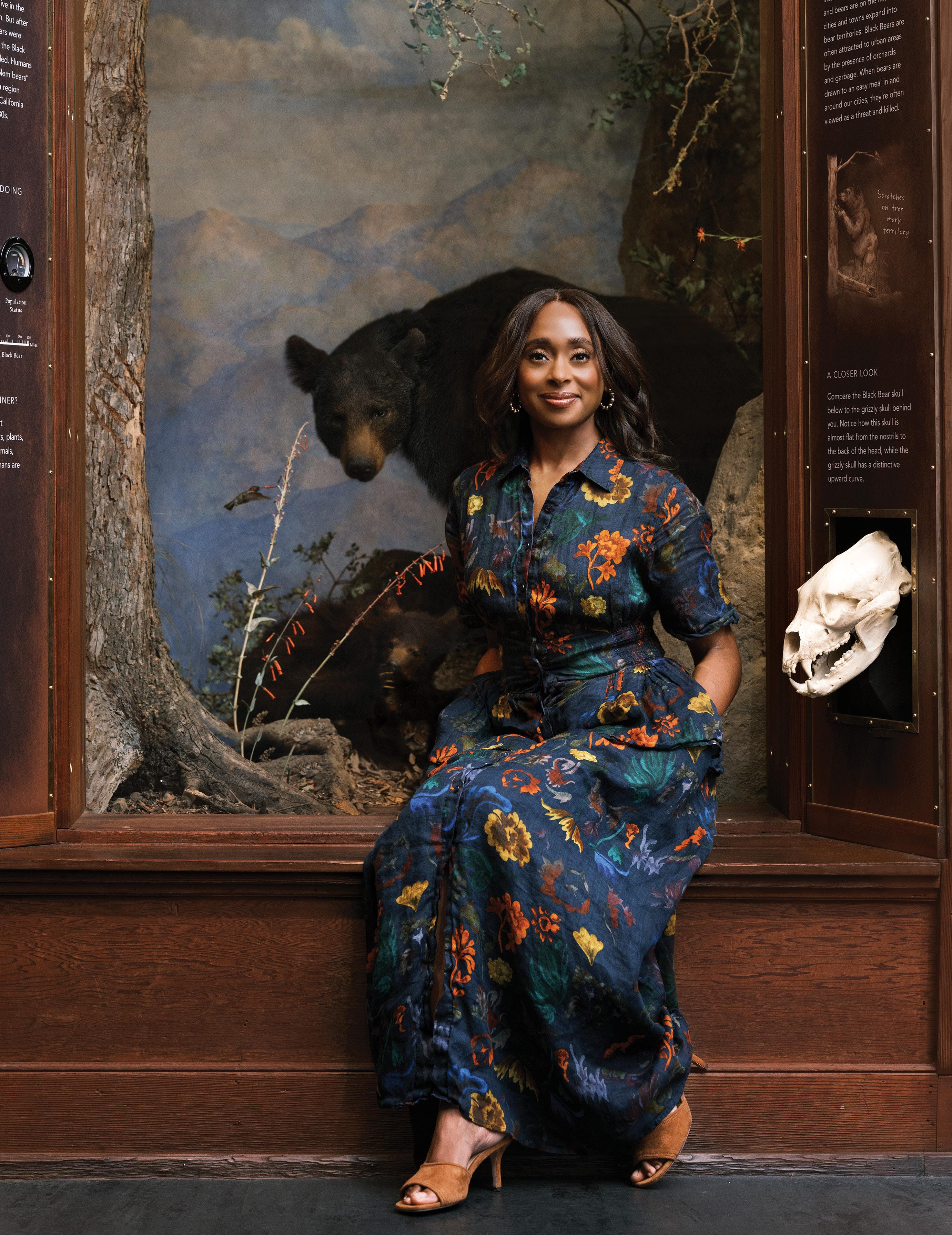
Montecito, as we all know, is a bounteous Eden overly abunded (my word) with blessing. Our little burg is a veritable cornucopia of copiousness. But we also know it’s Montecitans themselves who truly make this jewel what it is. A vivid case in point: our newish neighbor Dr. Rae Wynn-Grant. You’ll recognize her from Mutual of Omaha’s acclaimed reboot, Wild Kingdom Protecting the Wild. And while that hosting gig is a massive achievement in and unto itself, Dr. Rae Wynn-Grant is in fact a diamond of many facets and actually began life as a prodigy behind the piano.
A world-renowned large-carnivore ecologist (PhD from Columbia, master’s from Yale), Dr. Wynn-Grant came perilously close to the indoor rigors of Capitol Hill where, in late 2020, a freshly elected Joe Biden asked her to lead the Department of Fish & Wildlife. She demurred.
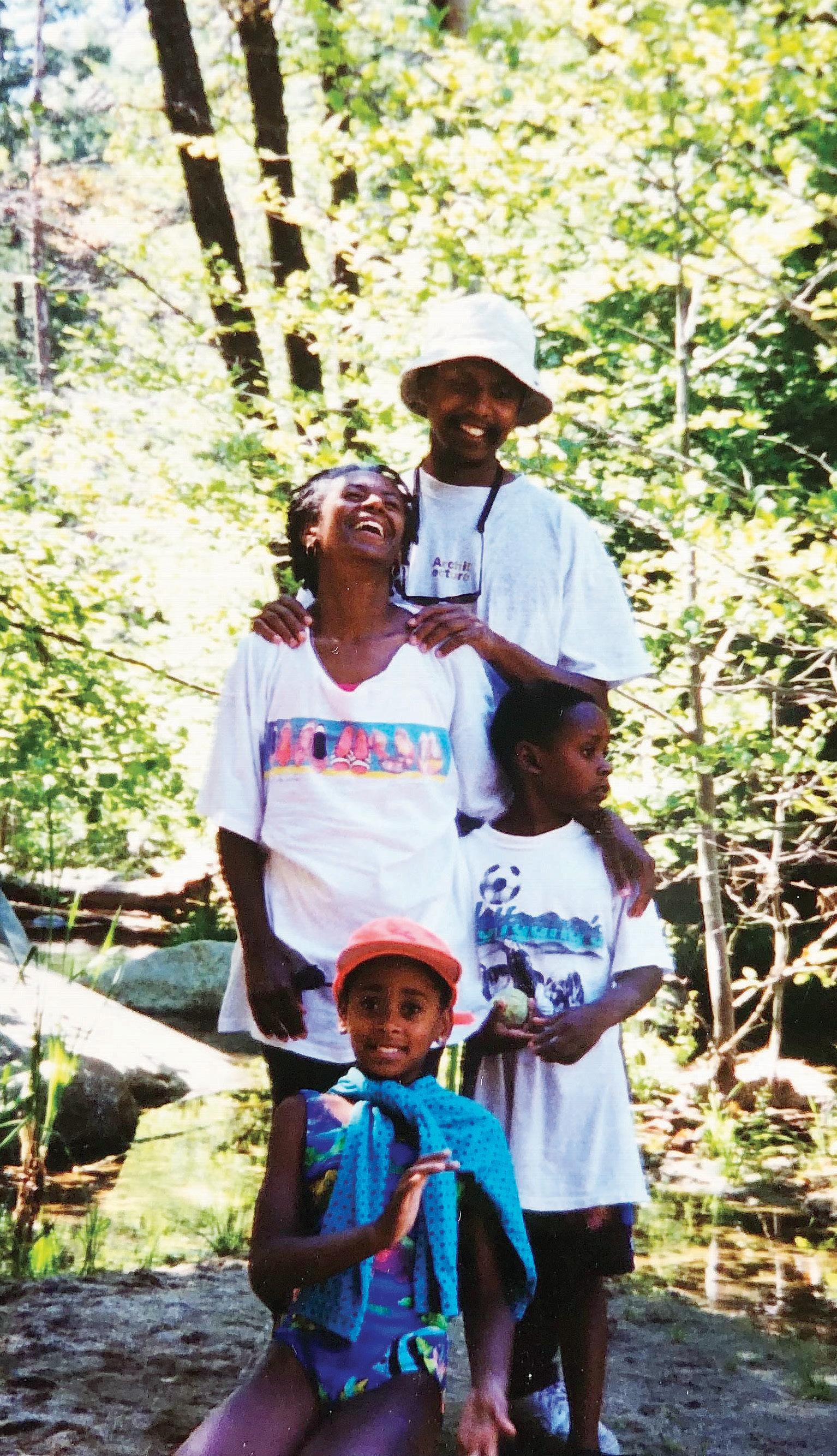
Dr. Wynn-Grant’s confident conquering suggests a figure from the Marvel Universe, but this flesh and blood dreamer was raised in the earthbound arms of San Francisco; Norfolk, Virginia; and a loving family—her architect father and poet mother arguably the perfect parenting admixture, given the heart-driven scientist they raised. Today Wynn-Grant’s young family is being raised steps from Butterfly Beach in a small-town idyll neither parent enjoyed as a child.
Conservatory vs. Conservation
When it came time for college, a childhood spent glued to nature television decided Wynn-Grant against auditioning for conservatory in favor of pursuing science at a traditional college (Emory).
Fledgling self-doubt about her science and math aptitude were augmented (and possibly exacerbated) by the quietly jarring fact of her being “an urban Black millennial woman” in a science program not packed with that cohort. In fact, Wynn-Grant’s environmental science flame had begun to waver when an 11th-hour study abroad leap took her to Kenya’s equatorial savanna, where her first experience of unbound, roaming wildlife turned all the lights on. Today, Rae WynnGrant’s increasingly public life in science occasionally surprises even her. She’s done time at the American Museum of Natural History in New York City (Neil deGrasse Tyson was a colleague), helped discover a theretofore unknown rainforest in Madagascar, and has become precisely the kind of televised science communicator she revered as a kid. To any harried young person in despair of finding his/her or their true north, we offer Rae Wynn-Grant.
”I try to let students and parents know that I believe the way we evaluate kids in terms of their aptitude by testing is just such a poor way to evaluate how someone might eventually contribute to society. And I’m an example of that.“
Photo by Kim Reierson
RAE
“My first day in Kenya was the first time I’d seen wild animals, and my first time pitching a tent. I was 20 years old.” When we connect by phone Dr. WynnGrant is in Montana awaiting her flight home to Santa Barbara. Deep in the throes of what we can fairly call “a busy period,” Wynn-Grant has just wrapped shooting for a National Geographic project, and has recently had her memoir published by John Legend (yes, that one). She’s also an adjunct professor at UCSB’s Bren School of Environmental Science, and has taken to studying those black bears that occasionally wander the well-manicured lawns of her adopted hometown. Yet as our conversation unfolds, it becomes clear to me that the most singular mammal Rae has yet encountered may be the one she sees daily in the mirror—the unicorn.
Les: Your life is really fascinating to me and obviously to a lot of other people. But I just want to say—because we’ve never met—welcome to Montecito and Santa Barbara.
Rae Wynn-Grant: Thank you. Oh my gosh. I love where we live. I’m so happy we moved to Montecito! I left California as a kid but still visited the Bay Area four or five times a year for family most of my life and always assumed that when I moved back to California, it would be to the
Bay Area. The fact that we landed in Montecito has just been so cool, and such a great place for our family. We can walk to Butterfly Beach in nine minutes!
Les: You’re on a path that is so unique, I have to wonder if there’s an occasional element of loneliness to that. I know you have a great husband and lovely family life and professional contentment. Is this a weird question to start out with? Am I going right at it too fast?
RWG: Oh, well, I feel very seen. That is really astute. Just to tie it back to Montecito a little bit; there are a lot of high-profile names here, but even for the people who aren’t standout celebrities, there are so many folks in this community who are one-of-one. Their path or what they’re known for can’t be replicated. I imagine you could probably identify with that too, Les. You launched some shows that have never been duplicated and won’t ever be. I do think I fit into that category too, in that I’m one-of-one. And it IS weird sometimes. I’ve worked really hard to get to where I am... And yes, I spend a lot of time in gratitude, but it can also be stressful.
Les: Would you mind unpacking that a bit?
RWG: At this moment I’ve been traveling extensively
”The fact that we tripped and fell and landed in Montecito has just been so cool and such a great place for our family.“
by Kim Reierson
Photo
NICOLE STRASBURG
THE WHOLE IS GREATER
JUNE 26–AUGUST 24, 2026
THE EXHIBITION WILL BE ACCOMPANIED BY A NEW CATALOG.
for a couple of months, but then haven’t been home at all for about two and a half weeks. That isn’t necessarily a long stretch, but it’s long for a mom. Meanwhile I’m in the field, in nature, having these amazing experiences. In the downtime I sometimes feel like it’s important for me to constantly be productive so that I’m not in solitude with the deafening silence. In the last three years, I’m almost always with a team of filmmakers and so I’m not actually alone. I do feel so appreciative that these days I travel in teams and spend time with people that I trust and there’s so many good people in wildlife conservation, whether it’s the outward-facing media part or the science part. So I get to have a good time with people, but it’s also transient.
Les: You have so much scientific credibility it’s ridiculous. And yet you have this whole other life as an on-screen personality. Do you ever pinch yourself?
RWG: It’s actually double-sided. I turned 40 at the end of last year and every so often I think, this is cool and every year I’m getting more and more exposure on these different shows . But I’m also acutely aware that I’m middle-aged and this is television. Thankfully, Wild Kingdom does feels different. Traditionally shows tend to keep hosts “young and energetic,” however, Wild Kingdom knows their viewers come back every week to see the familiar faces they trust to be experts in wildlife conservation. They’re very proud to have Peter Gros as one of the hosts since he is such a seasoned conservationist and veteran wildlife educator.
Both a Force of Nature and a Force for Nature
Les: Of course, the other side of being one-ofone is you’re not competing against a hundred other people for this gig. Your job is just to be Rae Wynn-Grant.
RWG: And I should be pretty good at it. I’ve been doing it longer than anyone. But it’s really not my end game. What I want is for there always to be environmental protection and wildlife heroes—and for that to be mainstream. Because right now is a hard time for the planet and a hard time for science and for just… facts. It truly is the best of times and the worst of times.
Les: One of the things that fascinated me about your story was that I started out at a public school in Harlem that was almost 100% Black, and there was not a great love for the wilderness there, a predisposition that may have even had its roots in slavery. In fact I read something recently that, still today, less than 2% of visitors to our national parks are Black.
RWG: I can totally see that. It’s so interesting because the film group that I’m here with for this National Geographic project, they’re all from England. As I spent a week and a half with them in Yellowstone, I told them, “I’m willing to bet that I’m the only Black person you’re going to see on this entire trip. There are going to be hundreds of thousands of tourists and it’s just going to be me.” And that ended up being the case. Of course, coming from the U.K. they’re curious as to why that is. I explained to them that national parks in the U.S. were segregated spaces for a long time. When they finally desegregated them in 1945, it wasn’t like there was this mass apology, like, “Oh my God, that was so wrong for us
Taking the Pith Out of Wildlife Cosplay
Wynn-Grant is a More Natural Kind of Naturalist
By Les Firestein
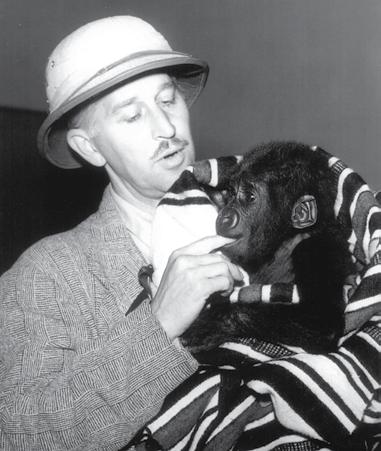
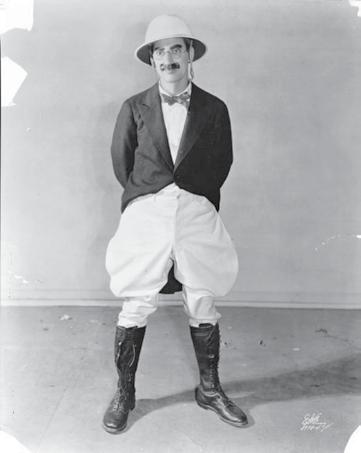
Right from the jump you can tell Rae Wynn-Grant is different from her naturalist predecessors. There are two obvious giveaways (gender, color) but there’s also a third: unlike the previous host of Wild Kingdom, Marlin Perkins, Rae Wynn-Grant does not wear a pith helmet, which has since become reclassified as the uniform of various imperialist armies.
The Millinery of the Military
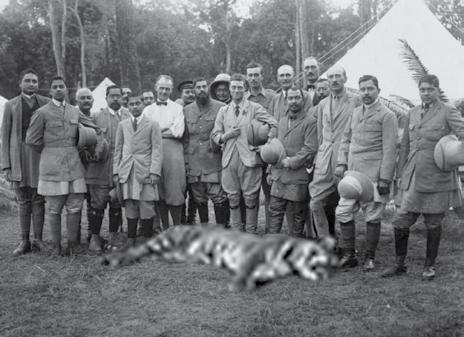
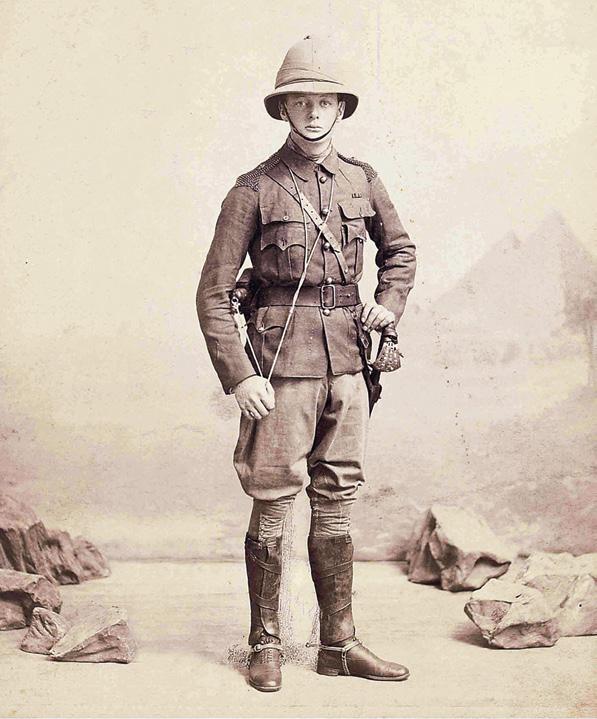
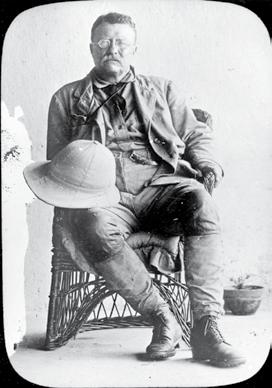
Whatthe heck is a pith helmet anyway, and how did the safari hat get so dang controversial? On the one hand the pith helmet was considered de rigueur couture for… shall we call them explorers? Actually we shan’t. Because today “explorers” are called colonialists. One of the subtle ways Rae Wynn-Grant bucks tradition is by instead rocking a simple beanie. But if you’d like an excellent exegesis on the pith hat, allow us to recommend “How the British Turned Hunting into a Tool of Colonial Rule” by Agnij Purushothaman. Wherein you will learn why Melania took so much heat (ironically, the pith is supposed to protect against heat) when she wore said helmet on a 2018 safari.
In the meantime, please enjoy this not-so-pithy gallery of pitherie:
Marlin Perkins, the original host of Wild Kingdom.
The Prince of Wales (center) and his pith helmet in 1921.
Teddy Roosevelt Groucho was always pithy.
Young Winston Churchill
Rae’s ‘Wild Life’
By Jeff Wing
The
double-entendre of Dr. Rae WynnGrant’s memoir is apt. Wild Life: Finding My Purpose in an Untamed World chronicles a young Black woman’s journey as she bushwhacks her way into the interior of a domain—academic and scientific—not previously known as a bastion for young Black women. Finding her footing in both worlds is key to Wynn-Grant’s extraordinary story. Once she finally attains her destination, her research focus becomes the human-animal conflict that typifies our species’ interface with the natural realm. The kid whose urban daydreams revolved around presenting nature to TV viewers would surmount her own self-doubts about STEM, face off with some of the world’s toothiest, most terrifying carnivores, and help resuscitate one of the classic TV properties that gave her the early fire to pursue all this in the first place. As full circles go, this one is at once surprising and nutty and completely magnetic.
to do that. Please, people of color, come on in, you’re welcome here.” No, the parks were just quietly desegregated with no fanfare whatsoever. So the national parks or the outdoors have not been these welcoming spaces in recent generations. As you touched on historically, Les—the outdoors could be a good place to hide. But it could also be a place of horrible violence. Just in the last generation or two, there are these invisible social barriers to being out of doors that are about belonging and being welcome in a space. And I think there’s also this kind of inherent knowledge of the outdoors we don’t necessarily have. When you naturally spend time in the outdoors, there’s gear to have and there’s just stuff people know. I know it now. I know how to be, what to wear, what it means when the wind picks up in this direction, what rain in the distance looks like, and how I need to dress. But if you didn’t grow up with that, it’s not a super beginner-friendly space. And so that’s also an obstacle for folks. But I will say, Les—although I’m incredibly outdoorsy at this point, I did not have my first experience in nature until I was a full 20 years old.
Photo by Kim Reierson
Green cleaning, handcrafted in Santa Barbara—because wellness starts at home.
We specialize in mindful, non-toxic home cleaning that’s safe, effective, and rooted in care. Every product we use is made by hand with essential oils and natural ingredients— designed to purify your space while supporting your well-being.
Santa Barbara Green Clean
Contact Owner: Tami Chambers
Web: santabarbaragreenclean.com
Phone: (805) 637-6683
Email: tami@sbgreenclean.com
Insta: @santabarbaragreenclean
Living Clean, Cleaning Green
“ I’ve been going into bear
dens for 15 years.”
by Zachary Bernstein
In addition to zebras in Kenya and lions in Tanzania, Wynn-Grant has studied black bears all across the American West, which includes the dangerous-sounding task of sneaking into the dens of hibernating bears. But that’s only dangerous if you don’t sedate the mama bear first; a best practice probably learned the hard way, but since employed by those wise biologists intent on surviving the intrusion. It’s all in the name of acquiring bear population data.
“We’re counting how many bear cubs were born and what condition they were in, then comparing that number to how many cubs are still with their mom near the end of the summer,” says Wynn-Grant. “Ideally, the number of cubs will be the same and the survivorship rate is at 100%. But every so often there’s one less cub, or sometimes no cubs with that same mom. That usually signals something is wrong in the ecosystem and we need to figure out what that is. Either there’s not enough food resources in this ecosystem, or human impacts are too high.”
Les: That’s amazing.
RWG:The way I identify is like urban Black millennial woman, born in San Francisco, always grew up in urban spaces. Being urban was so great for me, I didn’t feel like I was missing anything by being unfamiliar with the outdoors. But eventually I would watch nature shows and be like, “Man, I want to do that.” So when I became even more serious about that as a teenager I wondered, how do I do that? Though I was a kid from a family that relied on public transportation, the idea of visiting the most distant places in the world didn’t seem impossible. It was just a matter of, how am I going to do this?
Les: So how did you do that?
RWG: When I was an environmental science major, I looked for an affordable study abroad program that would take me into the wilderness for the first time. I found one in Southern Kenya, a wildlife ecology program that had me living in a mud hut for a semester. I remember going to the thrift store with my mom and getting a JanSport backpack, some hiking boots. I got a Nalgene water bottle and remember thinking, “Oh, now I’m going to be like all those white kids in my environmental science class with their Nalgene.”
Les: You often talk about initially having had such bad grades when you were younger, particularly in science, which I find so strangely inspirational. The list of gifted thinkers who originally made a poor fit with public education is long: Einstein, Newton, Edison, Beethoven… so, you know, you’re in good company.
RWG: Good company, but I definitely struggled. I didn’t struggle to enjoy the subject matter in math and science. I always thought it was cool, but sometimes my self-esteem would just take these big hits [because I felt like such an unnatural in STEM]. Ultimately, I did way better in college. But before that, being in the schools I was in, I was just getting bad grades and felt shitty about myself. I didn’t think I was smart. I try to let students and parents know that I believe the way we evaluate kids in terms of their aptitude by testing is just such a poor way to evaluate how someone might eventually contribute to society. And I’m certainly an example of that.
Photo by Peter Houlihan
Les: It trips me out you stayed strong and persevered through that.
RWG: It totally trips me out too! People ask me how I did it, how I persevered. And I think the answer is I was delusional. But it was a helpful delusion. All the data said, “Rae, you’re going to be a great musician and piano player, but not anything academic and certainly not in the sciences.” And I was shy, so it wasn’t obvious that I would be presenting in front of audiences, either. But I never felt interested in any other career. It was just “nature show host” or bust. When I learned that nature show hosts were also doing wildlife conservation, I was like, great, wildlife-conservation-slash-nature-show-host. Let’s do that.
Les: You’re so actualized.
RWG: I hope so. I’m still trying to find the language to describe how I feel about having had a dream as a kid and then actually achieving it, and at a young enough age that I can still build on it to do more. But I also have to give a lot of credit to the various programs that allowed me to do media work: Wild Kingdom, National Geographic, PBS Nature. It took these corporations and teams of people in media to notice me, feed my potential, and decide to invest in me.
Les: It sounds like gratitude is a big part of your life. Among the things I’m sure you’re grateful for, I read you’ve had some notable fans and benefactors like John Legend—he seems to have been a big booster, no?
RWG: That’s probably a shocker to people because John’s an incredible musician and composer and artist, but if you get to know that side of John, he’s really invested in a lot of social causes as well. His company decided to publish my book because they’re dedicated to telling stories of Black excellence, particularly unicorns and people on non-traditional paths. John has overcome a lot and really built himself into a success story without a lot of support. When his team got my book proposal, they just thought, “Oh my gosh, we want to be part of telling Rae’s story.” It has been really cool to partner with John. And my memoir is already being adapted into a screenplay, which is really exciting. We’ll see where that goes.
Les: Tell me a little about your folks. Your dad is an architect, and your mom is a writer… and poet? How do you think all of that played into things?
RWG: So very much. My dad, funnily enough, is also one of those people who knew what he wanted to do when he was a kid and then just did it. He always loved to draw and was good at it, and around the 7th grade an attentive teacher said, “You should be an architect.” My dad was like, “I can spend my life drawing?!” So he went to Cal Poly in San Luis Obispo and graduated with an architecture degree and became an architect. He eventually got his master’s degree at Cal and has been an architect since he was in his 20s. He’s 72 now, and a professor of architecture at Howard University.
And then my mom is a writer, truly a poet. When I was a kid she wrote poetry and books of poetry and she’s this free-spirited, wonderful, creative writer-poet. For a career she has this very nuanced specialty which is museum exhibit writing, particularly at African American history museums. [She basically writes the context. Because as you know museums didn’t necessarily provide so much context in the past and today context is everything.]
Les: Can we also talk about the Bren School? I’m curious about the path that brought you out here specifically, because I know you said that we have a good bear population here to study.
RWG: I was living on the East Coast and studying grizzly bears in Montana when I learned that National Geographic was drawing down its funding for that fellowship. I actually saw the loss of funding as maybe an opportunity for me to get back into academia, and on that search I learned through The Nature Conservancy they’d acquired the Jack and Laura Dangermond Preserve. [Editor’s Note: the Dangermond Preserve was the largest donation ever made to The Nature Conservancy. A gift of eight miles of coastline plus 24,000 inland acres teeming with a massive variety of life and valued at $165 million.] Anyway at the time the Conservancy was trying to come up with a carnivore plan. I knew people in that world and folks were saying, “We’re so excited about this new property. There’s a very special population of bears on it.”
Les: My wife and I had a black bear run in front of our car on the 154. That thing was hauling ass and it was BIG.
RWG: Well, I excitedly threw my hat in that ring and The Nature Conservancy liked what they saw. Then Covid hit and TNC had a sudden hiring freeze, but their plan had always been to partner with an academic institution, and they said, “We would love for it to be the Bren School of Environmental Science at UCSB. Maybe you can get hired through Bren to be the carnivore researcher for the Dangermond Preserve.” So I got an office at Bren, started teaching, meeting with students, doing research on the Dangermond Preserve, and it’s just been wonderful. My whole family is just so grateful not just to be here on
Dr. Rae Wynn-Grant
premieres September 2026, the same month her first children’s picture book, You Belong in the Wild, will be published. Nat Geo’s Secrets of the Bears, featuring Rae, will premiere in April 2027 on Disney+
the Central Coast, but we tripped and fell somehow into Montecito. And that there’s bears running around here? That’s the icing on the cake.
”Oh my gosh. I love where we live. I’m so happy we moved to Montecito.“
A local resident spotted in a Montecito backyard.
Want more of Rae? Mutual of Omaha’s Wild Kingdom airs on NBC Saturday mornings and streams on Peacock. Season 5 of her podcast Going Wild with
on PBS Nature
Photo by Kim Reierson
SANTA BARBARA MUSEUM OF NATURAL HISTORY Thank You!
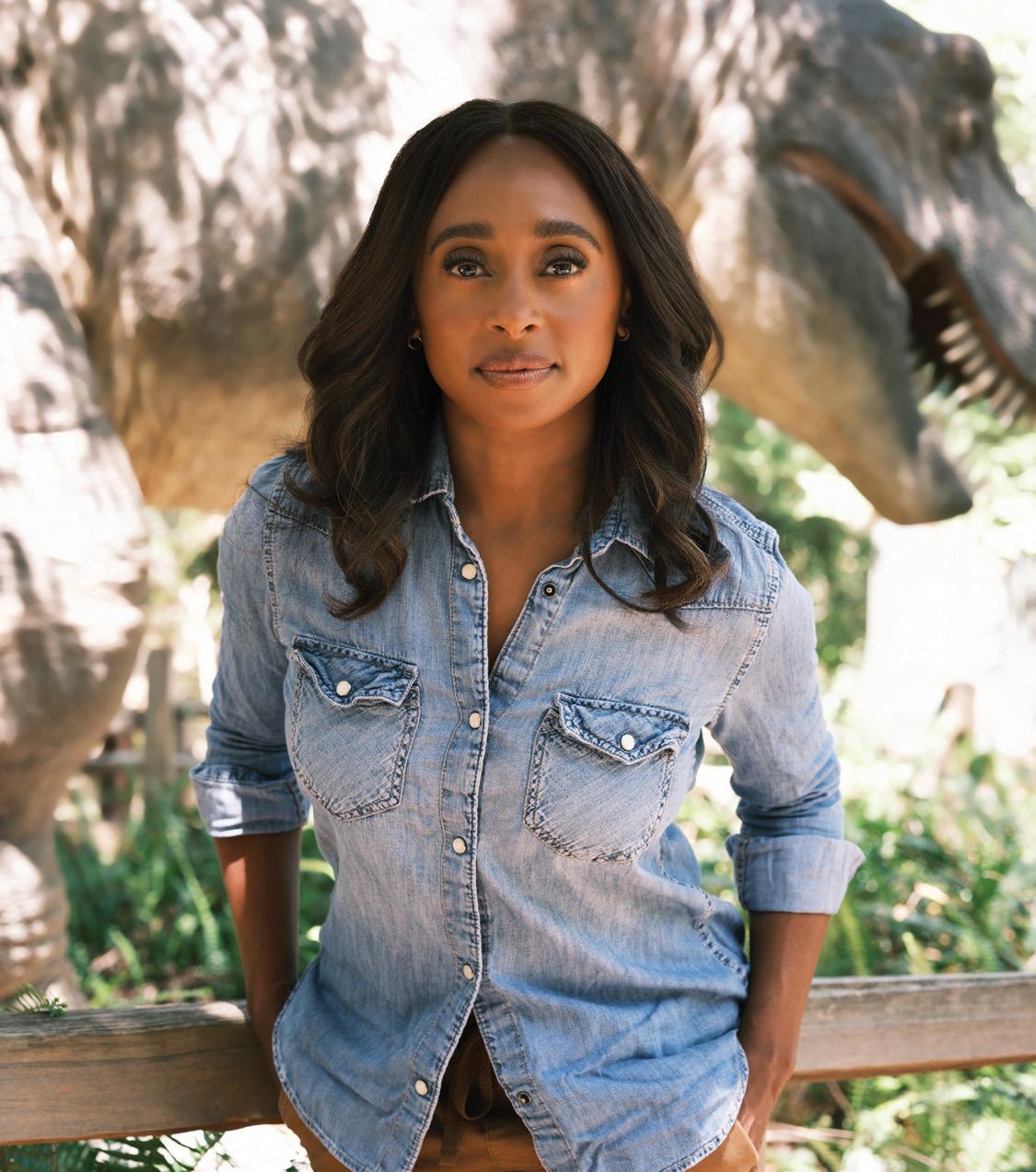
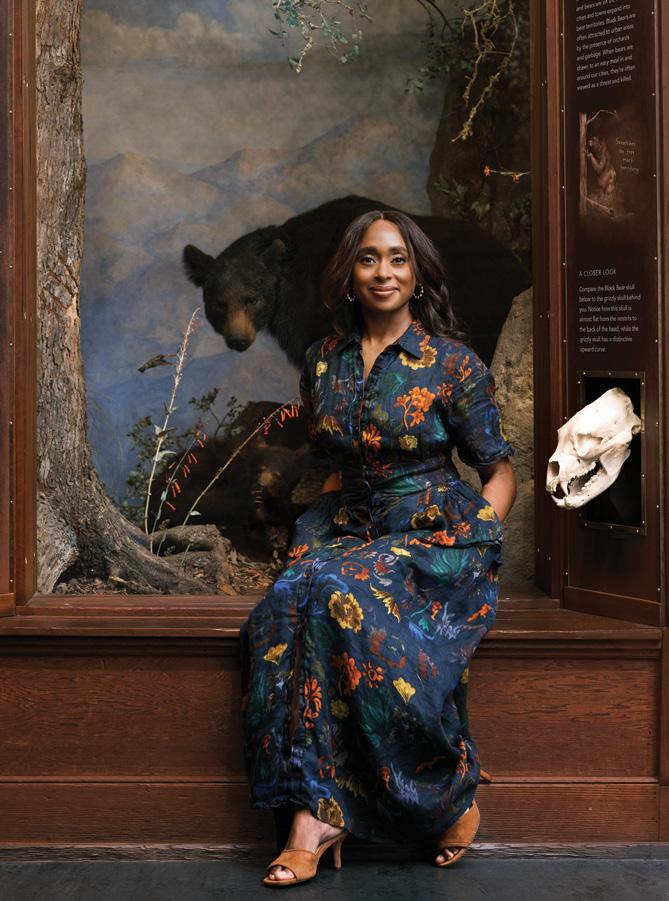
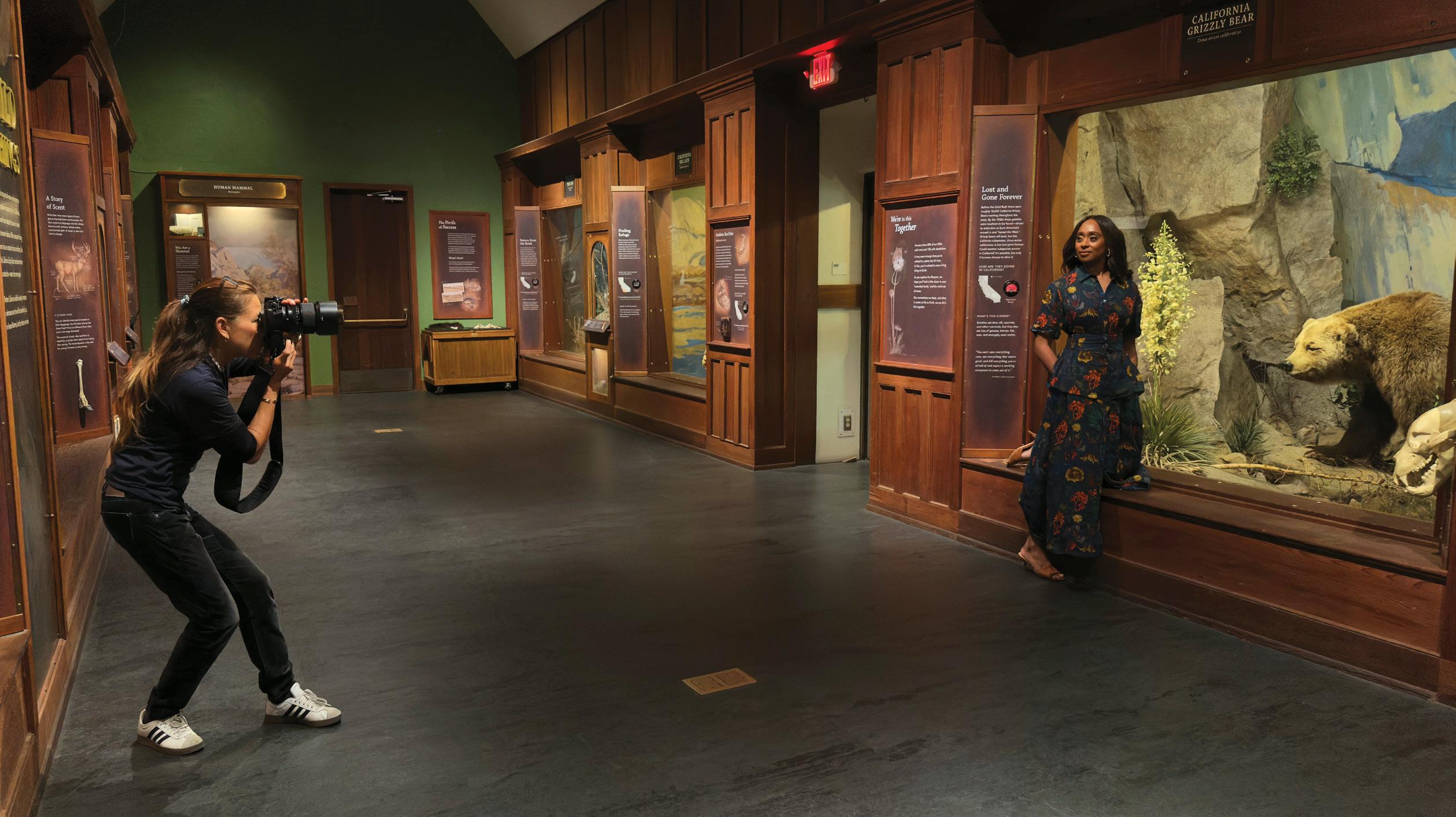
Inside the Den: The Montecito Journal glossy would like to give a beary big thank you to the Santa Barbara Museum of Natural History for hosting this special Rae Wynn-Grant photoshoot. Our go-to image architect, Kim Reierson marshaled the crew to create this issue’s epic cover photo. RWG was assisted by Raimy Williams, with hair by Jazzmin Hawkins and makeup by Lacey Maxwell. And lastly, our Art Director Trent Watanabe was on hand to capture the inception-style behind-the-scenes magic that you will not see anywhere else. Not exactly a pithy caption, but bear with us.
– Sincerely
The Montecito Journal Media Group
Real estate at this level requires more than a transaction; it requires a dedicated advocate. For 23 years, I have stayed true to a boutique approach with Santa Barbara and Montecito real estate: I don't aim to do the most business- I aim to do the best business, giving every client the full weight of my experience, discretion, and support.
-Marcy Bazzani
Rupert’s much anticipated report makes him roughly analogous to the Oracle of Delphi, without whose soothsaying counsel the classical Greeks wouldn’t make a move.
HOW REAL IS REAL ESTATE AROUND HERE? DR. PETER RUPERT WEIGHS IN
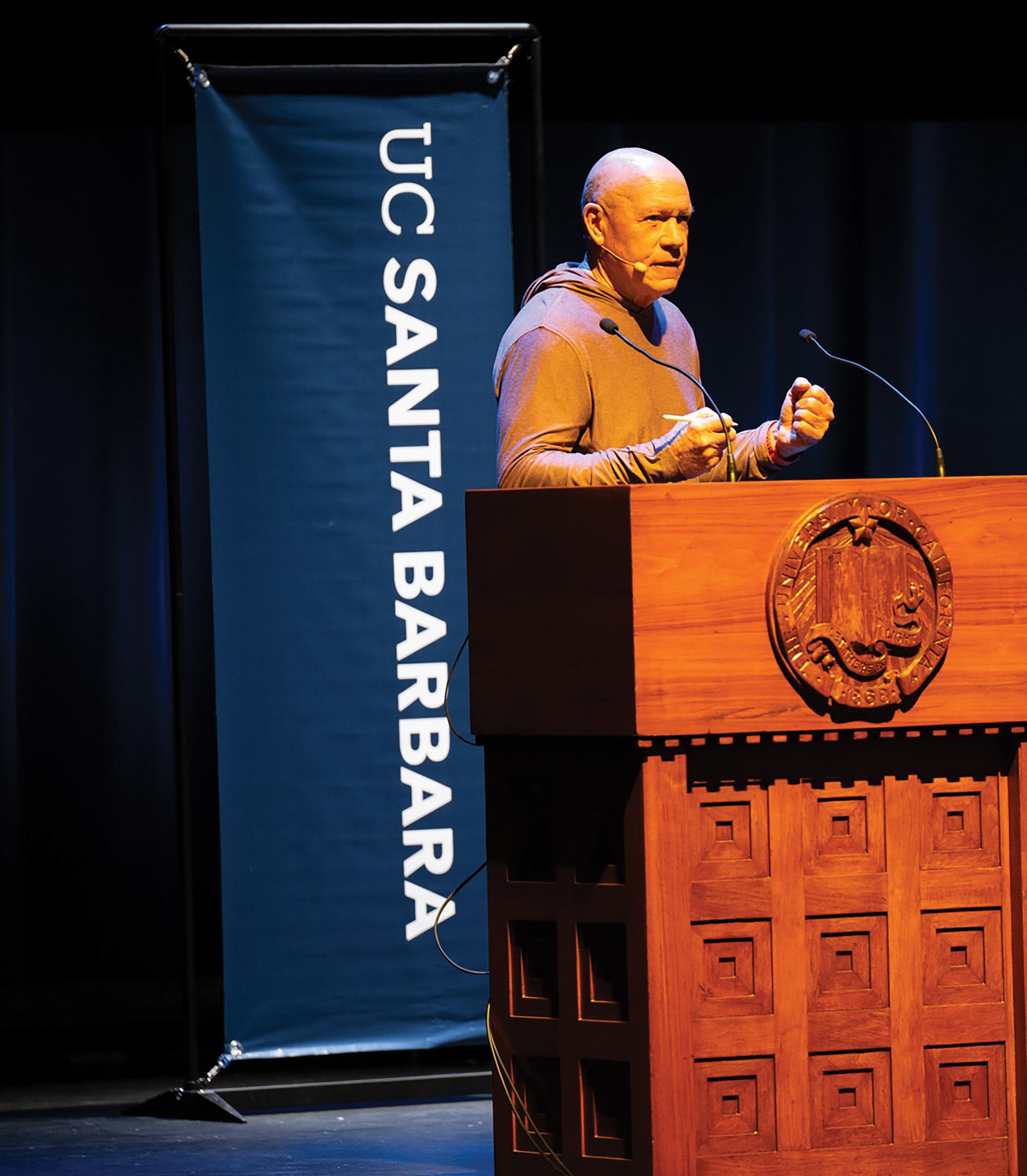
Once upon a time, the phrase “economic forecast” was so terrifyingly dull it was commonly wielded as a threat. “Don’t make me go all economic forecast on you, man!” Nobody wanted to hear that in a dark alley; or in a sun-drenched field of daisies, for that matter. Whew! Then came a guy named Peter Rupert to work a little alchemy. Rupert joined UCSB in 2007 as professor of economics (following 13 years as a senior economic adviser at the Federal Reserve Bank of Cleveland), and by 2010 had been made director of the UCSB Economic Forecast Project (EFP).
BY JEFF WING
Rupert’s EFP is today an annually presented Cirque d’Analyse road show whose tickets are clamored for by an adoring public. An economist’s wet dream? Almost certainly. But it’s the yearly truth. The Economic Forecast Project (efp.ucsb.edu) has long since been retooled in Rupert’s image: actionable scientific rigor in a warmly amused—and amusing—human package. This is not at the expense of a data rollout that business and civic leaders parse for granular guidance.
Rupert’s much anticipated report makes him roughly analogous to the Oracle of Delphi, without whose soothsaying counsel the classical Greeks wouldn’t make a move. The Oracle of Delphi was a shrieking woman in a cave, so the analogy has its limits. At this writing the Economic Forecast is coming right up at the Granada Theatre in downtown Santa Barbara. We had Dr. Rupert down to the MJM offices to talk Real Estate and… economics.
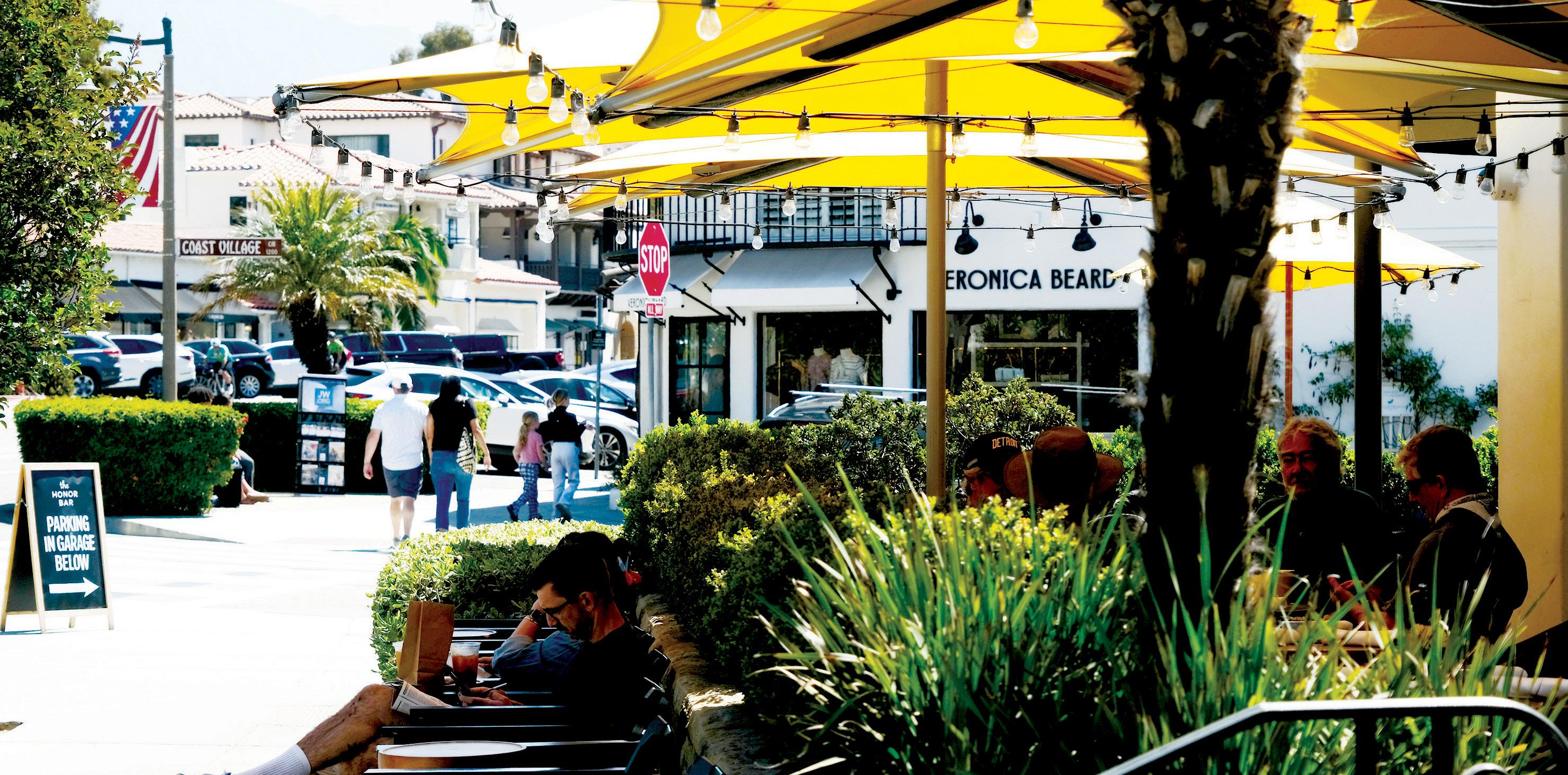
“People keep saying, ‘I don’t want this to be a tourist town.’ Well, it’s kind of always been a tourist town,” Rupert says. “But I like to believe—and I think Coast Village Road is a good example of this—if you build it for locals so we want to live here, tourists will love it. If you build it for tourists, locals won’t love it.”
Rupert was coming from a meeting where the State Street Master Plan had been discussed (for the umpteenth time). This time
there was some consensus and pen was put to paper. Look for deets in coming weeks. But of course the subject goes to the perception of a place and the effect that can (broadly) have on home valuations. Rupert had fleetingly referenced the committee-free Funk Zone in SB (“…you look at the Funk Zone, there was no plan. It evolved organically. Someone had a good idea to buy these old buildings…”) and went on to praise Montecito’s CVR.
“You want to make it nice for people to be there. And Coast Village Road has done that, right? They have nice shops, good restaurants. It’s walkable. It’s only three blocks long or four blocks long or something. Going back to Montecito home prices, it’s basic economics, supply and demand. And we’re not building.” Montecito real estate may be comparatively resistant to market fluctuations, but Rupert throws cold water on the idea that the area lends itself to wild value accelerations.
“The demand is high, but I really don’t want to give the impression that when these numbers get thrown around… you know, what a lot of people do is they look over a 20-year period or something and ‘It’s grown 95%!’ Oh my God, that’s nuts.” He sits back.
“So during the pandemic, and then for the next six years, do you know what the average growth rate in house prices was over those six years? Between 2020 and 2026?”
Nuh.
“6.9%.”
Despite decade-spanning valuations that, at a glance, can look like Montecito/SB rocket rides, the Market (by and large) has the stubborn character of Natural Law.
“Look, most people in Montecito,” Rupert says with a grin, “…are not buying houses for appreciation. But other
“I like to believe—and I think Coast Village Road is a good example of this—if you build it for locals so we want to live here, tourists will love it. If you build it for tourists, locals won’t love it.”
people who do buy for appreciation—and I’ve done some work on this—the real rate of return on investment in our economy is, after tax, around 5 to 6%. It’s been that way for a hundred years. It’s rock steady. And why is that?”
Thankfully the question is rhetorical and I wait it out.
“Well, if all of a sudden house prices start growing at 20%, people are like, wow! They go into that market, they buy those houses, and then the house prices start really climbing. But that’s not sustainable. And then what happens is, if you see an investment opportunity, more money goes into that opportunity such that the real return on investment goes down. That’s what happens.”
There is a sense the conversation is nearing its end. One more question. Peter Rupert—beloved professor of economics, associate director of the UCSB Laboratory for Aggregate Economics and Finance, and director of the venerated Economic Forecast Project—how’d he get into the econ racket in the first place?
“I originally started as an astrophysicist.”
…sorry?
“I really liked astronomy and astrophysics,” he says, a little wistfully. “And then my second year of college I’m like, ‘how does this really help people?’ I looked at the problems in the world and there’s hunger, there’s localized problems and issues. How do I understand that stuff?”
At Santa Clara University, Rupert was hired as a research assistant for an economics professor, working on food production and food equipment. Econ’s number crunching can edify and activate the curious. It certainly went that way for Peter Rupert.
“I learned a lot about hunger and food distribution. And I said, ‘That’s cool. This is for me.’”
DR. PETER RUPERT
Montecito Journal's
Top Real Estate Professionals
Montecito has long inspired a certain idea of California living: coastal beauty, architectural character, and a pace that still values community. In a market defined by scarcity and demand, the professionals featured in this edition have helped shape the way buyers and sellers navigate one of the country’s most competitive real estate landscapes.
Montecito Journal ’s Top Real Estate Professionals is a curated collection of agents and teams selected for both performance and presence within the community. But numbers alone do not define “top.” In a market as relationship-driven as Santa Barbara and Montecito, reputation, longevity, local knowledge, and trust remain essential currency. The professionals featured here represent a range of backgrounds and perspectives, yet share a common understanding that real estate is ultimately about people and place as much as property.
The profiles that follow were developed through conversations with each featured agent or team, offering a closer look at the people behind the business. Together, they reflect the experience, perspective, and relationships that continue to shape the South Coast real estate market.
Riskin Partners
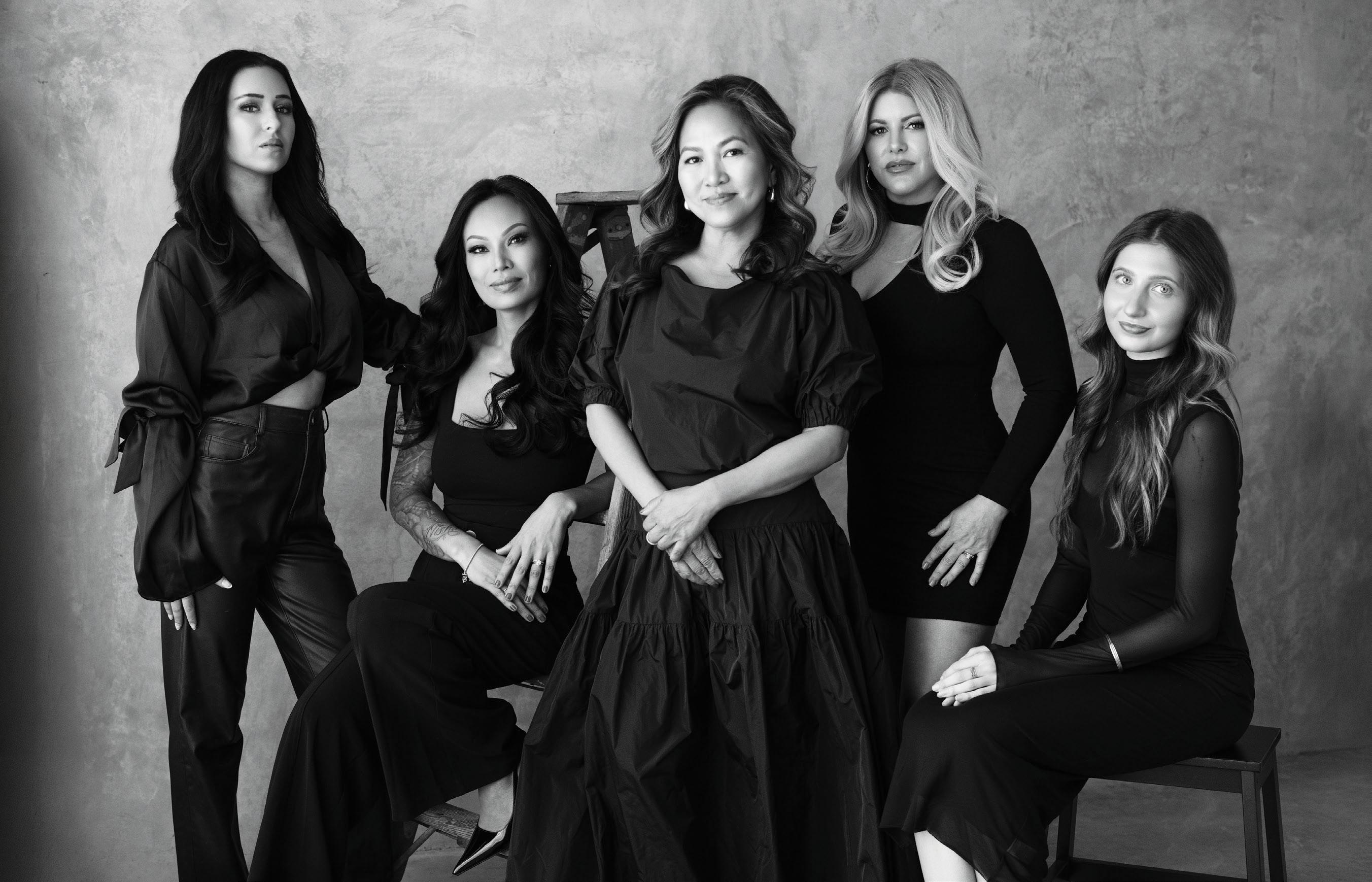
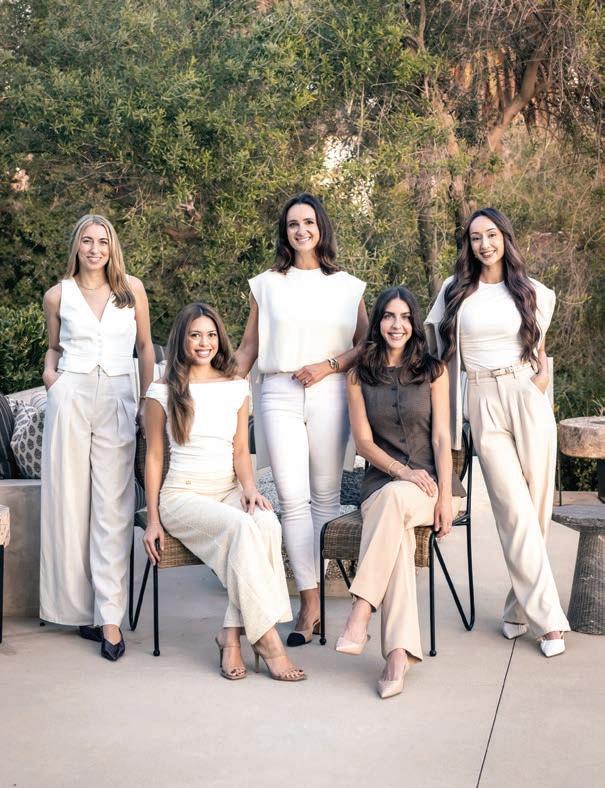
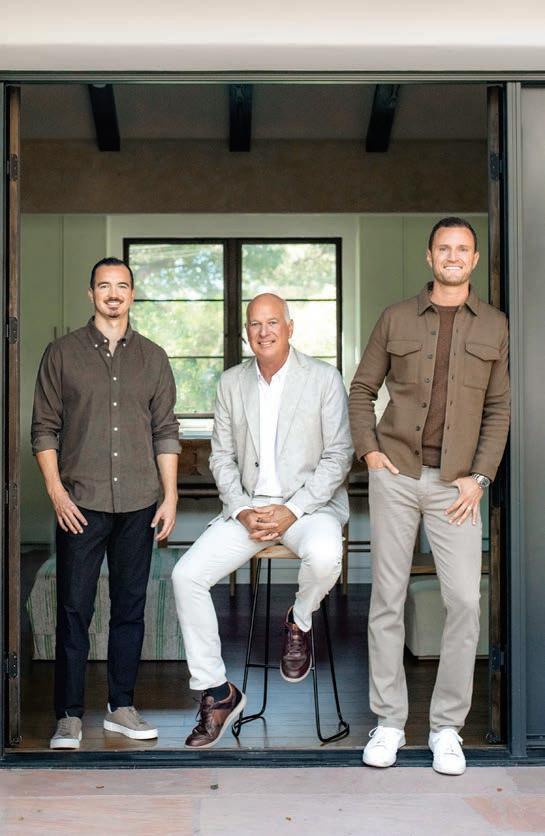
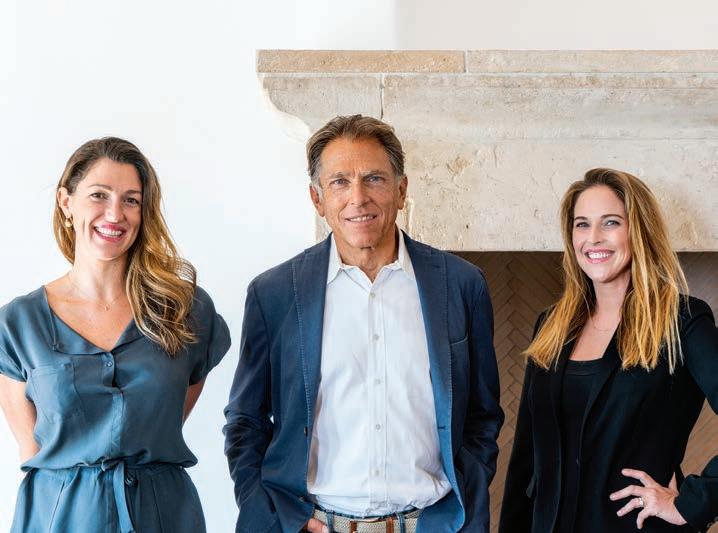
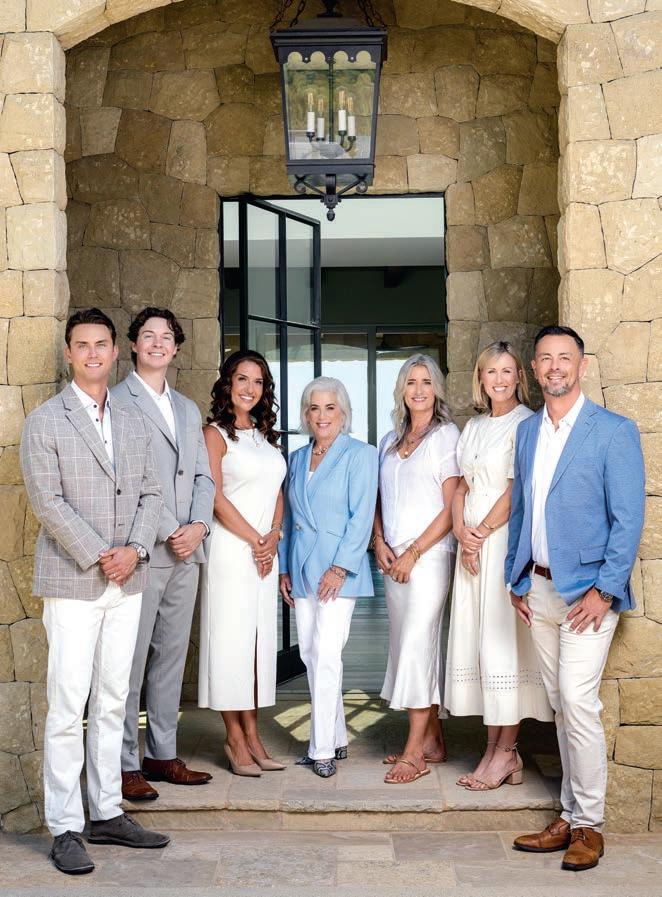
The firm bears Rebecca Riskin’s name because Rebecca Riskin built it. By the time Montecito emerged as one of the country’s most closely watched luxury markets, she had already spent decades shaping its upper tier, personally participating in more than $2.17 billion in sales and cultivating the kind of relationships that defined the community as much as the business. A former ballerina raised in a prominent Hollywood family, she moved to Montecito in 1990 and built a practice grounded less in transactions than in trust. When she died in the 2018 Debris Flow at age 61, the four partners she had mentored—her son Robert Riskin, Sarah Hanacek, Dina Landi, and Jasmine Tennis—carried the firm forward, preserving not only the company she created but the sensibility behind it.
Riskin Partners has held the number-one position in Montecito for 17 of the last 18 years and has
collectively closed more than $5 billion in sales, including $714 million in 2025 alone. Yet the team speaks less about scale than about trust, continuity, and family. “I always felt like Rebecca was our family,” Hanacek says.
That closeness was built over time. Hanacek arrived in 2004 from UCSB. Landi joined that same year as Rebecca’s marketing director and later became a partner. Robert returned in 2014, having grown up watching his mother work in Montecito before coming back to raise a family of his own. Tennis joined after a long effort to break into the firm’s orbit, beginning simply with a request to attend a broker’s open. “We are an ensemble, and we do everything together, the four of us,” Hanacek says. None has left.
Their collaboration is constant. Pricing strategy, marketing, staging, even the color of a home’s exterior may be discussed by all four partners. Each brings distinct strengths, but the work is not divided into rigid lanes. “Four brains are better than one; sometimes it’s four brains hashing things out, but we always ultimately agree in the end.” Tennis says. That internal rigor is especially important in complex transactions, including those in which the firm represents both sides. In those cases, one partner works exclusively with the buyer and another with the seller, preserving clarity and trust.
The philosophy remains relationship-based rather than transaction-driven. “We’re actually not good salespeople, but we are excellent advisors,” Landi says. “We talk people out of buying or selling houses quite frequently if it’s not what’s right for their needs.” Their focus stays deliberately narrow, rooted in Montecito’s neighborhoods, rhythms, and subtleties. The work continues much as Rebecca left it: collaborative, deeply personal, and shaped by the people she trusted most.
photo by Rebecca Farmer
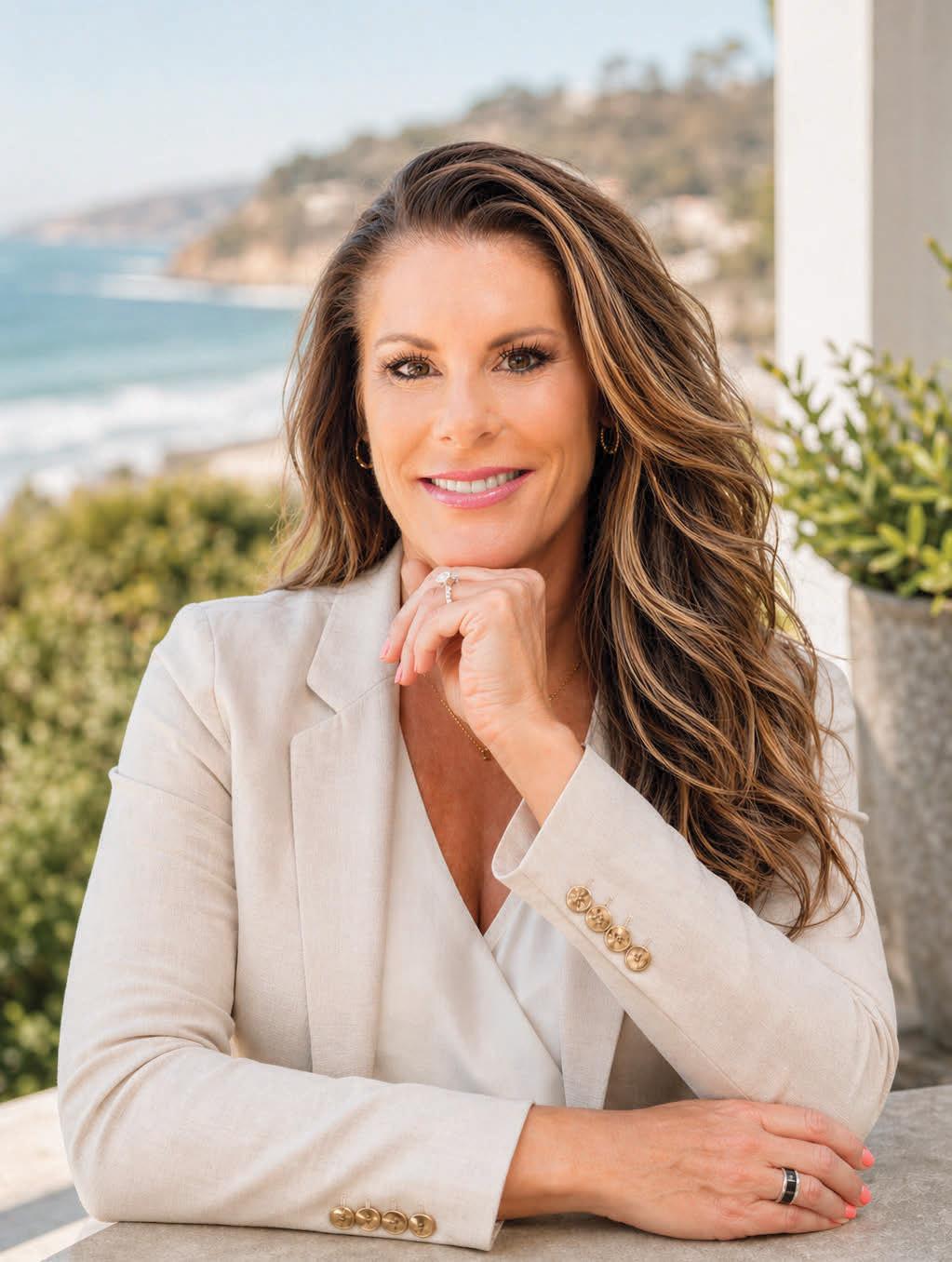
Cristal Clarke
Cristal Clarke arrived in Santa Barbara with a degree in art history and a clear point of view: architecture is not decoration, but a language. Over three decades, she has become fluent in it, reading homes the way others read text, from Spanish Colonial Revival to mid-century modern, from roofline to garden edge. That perspective has shaped a career defined not simply by sales, but by interpretation.
“I’ve built several homes,” Clarke says, “so when I walk into a property, I can point out the details and explain why it’s beautiful.” Her hands-on experience brings a deeper dimension to her work. Beyond aesthetics, she understands structure, proportion, and the relationship between indoor and outdoor space that defines coastal California living.
That knowledge becomes most valuable in how she listens. Clients often arrive with a general idea of what they want. Clarke translates those instincts into something more precise, guiding them toward homes that reflect both their practical needs and something less tangible. “If you’re a good listener,” she says, “what they want stays at the forefront of your mind.” From there, the right property often reveals itself.
In Santa Barbara, where the ocean and mountains create natural boundaries, that process unfolds within a distinct architectural context. Early zoning laws preserved a cohesive visual identity, and the result is a landscape Clarke describes simply: “You feel like you’re home.” For her clients, many of whom return across generations, the appeal goes beyond design. It is about how a home lives.
Clarke emphasizes the importance of spaces that extend beyond walls. Gardens, terraces, and outdoor rooms are not afterthoughts but essential living areas. They shape how people gather, unwind, and connect to their surroundings. In a place where wellness and environment are deeply intertwined, that connection matters. “It’s tranquil and spectacular,” she says, describing moments spent outdoors, whether in quiet reflection or shared experience.
Over the years, she has seen Santa Barbara evolve, particularly with an influx of younger fami-
lies bringing new energy to the community. Still, its essential character remains intact. For Clarke, that continuity is part of what makes the work meaningful. “Every morning I’m amazed at the beauty we have,” she says.
That sense of appreciation still shapes her work today, informing a career rooted as much in intuition as in experience, and in a deep, enduring connection to Montecito itself.
Marsha Kotlyar Estate Group
Marsha Kotlyar’s path to real estate began long before her first transaction.
As a child, she immigrated from Saint Petersburg with her family, arriving in Santa Barbara after fleeing the Soviet Union. Within a few years, they purchased their first home—a milestone that left a lasting impression. Weekends were spent improving the property together, shaping her understanding of what a home represents: stability, possibility, and shared effort.
That perspective now informs her work leading the Marsha Kotlyar Estate Group in Montecito.
With a background in city planning and real estate development from Cal Poly, Kotlyar initially envisioned a career designing and building homes. Instead, she found her calling in guiding people toward them. “It’s about matching people with homes,” she says, “and understanding how they actually live.”
Kotlyar approaches each client relationship with curiosity rather than assumption. Early conversations focus less on checklists and more on lifestyle—whether someone values walkability, privacy, proximity to the beach, or a connection to nature. “We ask a lot of questions,” she explains. “That’s how we get to the right fit.” Often, what clients think they want evolves once they experience the nuances of different neighborhoods and settings.
Function plays a central role in her process. From the layout of a home to the ease of its approach, Kotlyar considers how a space will feel and function over time. Her development background also allows her to guide clients through the complexities of building in Santa Barbara, a process she knows firsthand to be slow and highly regulated. While some pursue custom builds, she often helps clients weigh whether an existing home might better serve their goals.
Her team—entirely women, though formed organically—operates with a shared ethos: check ego at the door and focus on service. “This is a service business,” Kotlyar says. “It’s about delivering for the client.” That mindset extends to every aspect of the experience, from responsiveness to collaboration within the brokerage community. Roughly a quarter of the team’s transactions occur off market, a reflection of long-standing relationships and trust.
Her team ranks in the top 1/2 percent of Berkshire Hathaway agents nationwide and represents $249 million in 2025 transactions. Although, for Kotlyar, success is measured through consistency and care, rather than volume or accolades. Clients often return, deepening their roots in the community she knows so well. In a place where lifestyle is paramount, she sees her role as both guide and advocate—helping people find not just a house, but a sense of belonging.
MARSHA KOTLYAR ESTATE GROUP MONTECITOFINEESTATES.COM
$249,858,000
Tyrone McKillen
For Tyrone McKillen, the focus begins with the client portfolio and extends far beyond any single transaction. Co-founder of Plus Real Estate, McKillen has helped shape a firm that reflects the way ultra-high-net-worth clients actually live—across multiple markets, with complex holdings that require coordination rather than fragmentation.
Born in Dublin and influenced early by leading architects including Tadao Ando, Richard Rogers, Renzo Piano, and Frank Gehry, McKillen developed a lasting sensitivity to design. That perspective, paired with a background rooted in hospitality, guided him toward the uppermost tier of the market. Today, the firm operates with a family-office mindset, advising clients across Aspen, Montecito, Beverly Hills, Miami, New York, and beyond. A sister company, Plus Development, supports that work by managing new construction and redevelopment projects alongside the brokerage.
Discretion remains central to the firm’s identity. In an industry often driven by visibility, McKillen has built his reputation through restraint. “Our marketing is the fact that you’ve never even heard our name mentioned alongside those deals,” he says. That philosophy has drawn a clientele that values privacy, while positioning the firm behind some of the highest residential sales in Montecito in recent years.
Many of those transactions exist at the intersection of real estate and art. A defining example is the sale of a 4,000-square-foot Ando-designed beachfront home for $57 million, a figure that surpassed regional comparables. The price reflected not only the property itself, but the significance of its authorship. In moments like these, buyers are responding to scarcity, design, and the time required to recreate something similar.
That understanding informs how McKillen advises clients. Even when building a “forever home,” he encourages careful consideration. Offering direct guidance—especially when it challenges a client’s instincts—is part of the role. “You may not get these dollars back if you go this direction,” he sometimes warns a customer, underscoring the balance between personal vision and long-term value.
Pricing at this level blends analysis with experience. Location, privacy, and topography establish a baseline, while design and rarity introduce variables that resist easy comparison. Over decades in the business, McKillen has developed a clear sense of when a property stands apart.
His approach remains grounded in relationships. The objective is not a single deal, but an ongoing advisory role built on trust, discretion, and a deep understanding of how clients live.
Calcagno & Hamilton
After nearly two decades among Montecito’s most coveted addresses, Michael Calcagno and Nancy Hamilton have come to recognize what their clients are really searching for—and it is rarely a property. Their partnership has closed more than $1 billion in sales and ranks among the top 1/2 percent of agents worldwide. “Houses are just boxes where you explore and create your own experiences,” Calcagno says. “What people are really trying to do is experience something from within that they either think is missing or that’s adding.”
Calcagno grew up summering in Santa Barbara, attended UCSB, and spent several years in Los Angeles managing actors before returning to the coast for a more honest profession. Hamilton arrived from Mississippi by way of law school and a compliance role at Morgan Stanley. Adopted as a child, she has long understood the search for a home as something deeper than square footage. That sensibility shapes how they listen—for the longing beneath the wish list, for the life a buyer is trying to build or shed.
The team’s signature is access without theatrics. Their reputation moves them into the small currency of private listings; their discipline keeps them there. “Reputation with our clients and the other agents has gone a long way for us,” Calcagno notes. “We work well with them, which gets you into exclusive listings.” They have assembled a deep network of architects, contractors, and craftsmen for the work that follows a closing. “No house is going to come in perfect just because no one’s created your exact vision before,” Hamilton says. “We help people create that vision.”
Hamilton has personally bought 32 houses in Santa Barbara over her career. The first 16 were within reach of the middle class; the next 16 mark the market’s transformation. With ocean to the south and mountains to the north, the city cannot expand, and scarcity has rewritten the rules. Calcagno & Hamilton have moved through that change with their bearings intact—refusing the Los Angeles habit of treating houses as commodities, holding to the older idea that a home is a place where a life takes its shape. CALCAGNO & HAMILTON HOMESINSANTABARBARA.COM
’25 SALES VOLUME: $209,000,000
Alemann & Associates
In Santa Barbara, the spread between a fixer and a turnkey home can run two to one. The same view, the same lot, the same school district, double the price. Most buyers see the higher number and reach for it. Terence Alemann sees the lower number and starts asking what could be moved, opened up, or rebuilt. He has spent two decades building, remodeling, and reconfiguring houses in Montecito and Hope Ranch, and he runs his brokerage on a belief: the cheaper house, in the right hands, often becomes the better house. “You can pay a lot less,” he says, “and then you get exactly what you want once you’ve done the remodel.”
That confidence comes from rare experience. The founder of Alemann & Associates juggles eight to 10 active development projects at any given time alongside his brokerage business, an unusual combination that he says shapes how he sees every listing. “I’d say that’s really what separates me from almost every other agent,” he says. “I have an intimate knowledge of how houses should be built and designed.”
Alemann grew up on the beaches of Malibu, came north to attend UC Santa Barbara, and never really left. After founding several businesses, including ventures in web marketing and e-commerce, he began acquiring rental properties of his own. “I started buying properties here and rentals and so forth, and learned the market myself with my own properties,” he recalls.
In a market where well-priced homes move quickly, he leans on data and speed without ever pressuring his clients. “When there’s a property that’s very well priced, that’s a very good opportunity. You just want to make sure the client is aware of how much under market the property is.” The decision, he insists, belongs to the buyer. “I try not to ever push anyone. I just try to express very clearly, and with enough information that the client can make the decision.” When competition heats up, that same experience pays off in the offer itself: “It’s definitely from experience you learn how to write a better offer and get it accepted more often.”
His online-marketing background also gives him an edge in reaching the right audience. “It just gives
me the ability to know how to do the online marketing, how to better market properties and get in front of customers.”
Calm, logical, and always data-driven, Alemann pairs a builder’s vision with a broker’s instinct, an uncommon combination in Santa Barbara real estate.
Dusty Baker Group
Born and raised in Santa Barbara, Dusty Baker understands Montecito not simply as a market, but as a community shaped by constant evolution. After attending Westmont College, Baker entered real estate through an internship at Coldwell Banker, where he observed agents building meaningful businesses through expertise, discipline, and long-term relationships. “I realized it could be a profession where you could build something special,” he says.
That mindset continues to define Baker’s approach today. Now leading the Dusty Baker Group at Sotheby’s International Realty alongside partner Greg Moss, he has built a reputation rooted in strategy, education, and client partnership. At the center of every conversation is a question Baker returns to often: What does success look like to you?
For Baker, the answer changes everything. A buyer searching for a temporary foothold in Montecito requires a different strategy than someone planting roots for decades. Some sellers prioritize maximizing value, while others care more about certainty, timing, or minimizing risk. “Everything is curated around what success looks like to our clients,” Baker explains. “There isn’t a one-size-fits-all approach.”
Over the past decade, Baker has watched Montecito transform alongside broader demographic and technological shifts. Remote work and the growth of wealth in tech and finance have expanded the buyer pool well beyond Southern California, while advances in technology have dramatically changed how business is conducted. “When I started, most agents didn’t even have websites,” he says with a laugh. “Now information is immediate and clients are incredibly sophisticated.”
Yet Baker believes the core of the business remains unchanged. In an era of AI, digital contracts, and endless market data, he sees the role of a real estate advisor as more essential than
ever. “The market decides the price,” he says. “What we can control is strategy.”
That philosophy has shaped a culture within the Dusty Baker Group centered on ongoing education, ethics, and continual improvement. Baker speaks often about competence as a form of trust, believing clients deserve advisors who stay current as markets evolve. “We want to be better tomorrow than we are today,” he says.
For Baker, real estate is ultimately about helping people navigate major life decisions with clarity and confidence. Results matter, but so does the relationship built along the way.
Randy Solakian Estates Group
Randy Solakian has spent more than four decades in real estate refining an approach that runs counter to industry instinct. Where others chase maximum exposure, he practices restraint. His strategy is deliberate: reveal just enough to draw a serious buyer in, while preserving the sense of discovery that happens in person. For Solakian, the decision is rarely made online. It happens when a buyer steps through the door.
That discipline is rooted in a lifetime around the business. Raised on construction sites and in brokerages through his father, Solakian absorbed the nuances of real estate early. He later honed his skills at the Montecito office of the Jon Douglas Company, once the dominant force in high-end residential markets. There, he built what he considers his greatest asset—enduring relationships with agents and clients at the very top of the market.
Today, with partners Deanna Solakian Williams and Jessica McLernon, his group covers
the highest-end coastal markets of Santa Barbara, Montecito, Hope Ranch, and Santa Ynez Valley. Their structure is intentional. In a business that never pauses, it ensures continuity. “There’s never a time where the lights go out,” he says. Clients receive constant attention, even as deals evolve quickly and unpredictably.
Solakian also maintains relationships across the International Luxury Alliance, a consortium of elite agents from the United States, Americas, Europe, and Asia. Along with professional relationships across the globe, this vast network allows him to assist clients both locally and afar.
Experience remains his defining advantage. “There is no substitute,” he says plainly. Decades of negotiations, unexpected hurdles, and hard-earned successes have shaped an instinct that cannot be taught. That experience is paired with a global network cultivated over years of showing up—traveling, meeting, and maintaining close ties with top agents across the country and abroad. Through his international network, Solakian connects his clients to a rarefied pool of qualified buyers, many unconstrained by price.
Yet for all the scale and sophistication, Solakian never loses sight of the personal stakes. A home, regardless of value, carries emotion. His role is not simply to close a deal but to guide both sides to an outcome where each feels satisfied. That balance requires patience, precision, and a deep understanding of people.
He brings the same care to marketing. Every image, every detail must meet his standard. If it does not, it is left out. The goal is not volume, but quality.
“I love this business and the exceptional friends, clients and colleagues I work with.”
The Ebbin Group
The Ebbin Group stands apart in Montecito by treating real estate as an extension of architecture rather than a separate discipline. For Founder Luke Ebbin, that perspective is instinctive. Before entering real estate, he built a career as a five-time Grammy-nominated record producer, an experience that sharpened his understanding of how presentation and substance work together. Today, that sensibility informs every aspect of his firm.
Ebbin’s path into the business was gradual and organic. After moving to Montecito more than two decades ago, he began renovating and selling homes, eventually obtaining his license to support those
projects. What started as a side pursuit evolved into a full-time practice by 2015, driven largely by referrals. Clients responded to a style that felt markedly different. “I’m not this sort of typical realtor,” he says. “I’m not salesy. My practice is based on very high ethics and always has been.”
That philosophy shapes how he advises buyers as much as how he represents sellers. Ebbin is known for urging restraint, often counseling clients against purchases that don’t align with their long-term goals. The approach has earned trust and loyalty, forming the foundation of a business built almost entirely on repeat and referral clients.
Design is central to the firm’s identity. Ebbin brings in Los Angeles-based architectural photographers and stagers, favoring an editorial lens over conventional real estate imagery. Marketing materials are carefully composed, from typography to layout, resulting in a cohesive visual language that feels more akin to a design publication than a sales package. Each listing is approached as a complete presentation, with vetted contractors and collaborators ensuring the property is shown at its highest level. That discipline extends to pricing. Ebbin relies on data but tempers it with a nuanced understanding of Montecito’s micro-markets, condition, and design quality. He resists the common strategy of inflating list prices to win business, choosing instead to position properties accurately from the outset. It is a method that prioritizes outcomes over optics.
Operating as a boutique firm, The Ebbin Group has quietly built a reputation for thoughtful curation rather than volume. For Ebbin, the work is less about transactions and more about interpretation. At its best, he sees real estate not as commerce, but as a careful alignment between a property and the life it is meant to hold.
Ryan Malmsten
Ryan Malmsten built his Santa Barbara real estate practice the same way he approaches a transaction: steadily, thoughtfully, and through long-term relationships. Since relocating from Colorado in 2009, he has grown a business grounded in relationships, local knowledge, and a calm approach to an often fast-moving market.
Originally from Denver, Malmsten first came to Santa Barbara in 1985 to play soccer at Westmont College. After graduation, his path took a few unexpected turns. He spent a year working in Tokyo in the fashion industry, later worked for Polo Ralph Lauren in Vail, and opened a coffee house in Breckenridge before earning his real estate license in 1996. “My wife and I had four kids, and we got really tired of the snow,” he says with a laugh. Drawn back by his familiarity with Santa Barbara and its lifestyle, the family made the move west.
Starting over in a new market required creativity. “When I first got to Santa Barbara, I was heavily weighted in internet and online presence. I invested in internet buyer and seller leads, and that got me started.” What began primarily as a buyer-focused business has since evolved into an even balance of buyers and sellers, fueled largely by referrals and long-term relationships.
That emphasis on relationships extends well beyond Santa Barbara. Just last year, Malmsten referred more than $30 million in business to trusted agents in Aspen, Vail, Breckenridge, and Malibu, maintaining connections in the places that shaped his own life and career. “I get referrals and I give referrals,” he says.
Clients value Malmsten’s measured demeanor, especially during the inevitable surprises that arise in escrow. “You just have to keep a cool head and get over the hurdles one step at a time,” he adds. He approaches negotiations with fairness and practicality, encouraging clients to act confidently when the right opportunity appears while never pushing beyond their comfort zone.
For Malmsten, the right home tends to reveal itself in ways clients immediately recognize. “Generally,
there’s just a feeling people get,” he says. “They kind of know it’s right.” He sees that same instinct shaping the future of the market, particularly in Summerland and the lower Montecito beach neighborhoods, areas he believes still hold untapped potential.
Bartron Real Estate Group
For nearly 35 years, Lorie F. Bartron has been a defining presence in Santa Barbara real estate, building her reputation through persistence, local knowledge, and a deeply service-oriented approach. But by 2015, after leading the sales of 101 homes at The Hideaway near Bacara, the demands of the business had outgrown the traditional solo-agent model. Rather than compromise the level of
care clients had come to expect, Bartron made a different decision. She built a team.
Chris Smith was among the first to join. A UCSB graduate originally from the Santa Cruz area, Smith arrived in Santa Barbara as a student and quickly fell for the city’s balance of coastal beauty, outdoor culture, and understated sophistication. “It felt like this perfect blend of Northern California and Southern California influence,” he says. “I just fell in love with the lifestyle here.”
Today, Smith oversees much of the team’s day-to-day operations while Bartron continues in a mentorship role. Together, they have shaped Bartron Real Estate Group into a collaborative seven-person team that prizes chemistry and shared values over rapid expansion. “We’re very intentional with who’s on the team,” Smith says. “We don’t add members for numbers’ sake. Our team has grown organically with personality and service commitment.”
That philosophy extends into how the group works with clients. While each agent maintains individual relationships and areas of expertise, the team functions as a connected unit, sharing market knowledge, vendor relationships, and resources. Behind the scenes, Bartron and Smith focus heavily on systems, technology, and infrastructure so agents can remain focused on what matters most: client experience.
For the team, success is measured less by volume than by trust and long-term relationships. They guide clients through transactions ranging from first homes to legacy estates, often helping families navigate multiple stages of life over many years. Their work goes well beyond finding a property that checks the right boxes. Conversations center around lifestyle, intention, and how a home should feel once the front door closes.
“We strive to be the most knowledgeable and provide the best service possible,” Smith says. “If that brings success and rankings, that’s a bonus. But the focus has always been on doing right by the client.”
Zia Group
As Founder and Lead Broker-Associate of Zia Group at eXp Realty, Daniel Zia has spent the last couple of decades quietly building the most active and most reviewed real estate team in Santa Barbara, Montecito, and Hope Ranch—over $1.5 billion in closed real estate, validated by 655 five-star reviews. “Over the last 18 years, we’ve helped more clients buy and sell real estate than any team or any agent in any brokerage in our area, and we’re really proud of that,” Zia says.
Zia did not build a traditional brokerage. He built a bespoke operation: ten realtor partners—each a seasoned advisor in their own right—supported by eight all-star specialists across marketing, operations, and client care. It is the reverse of industry standard, and it unlocks a level of marketing reach and white-glove, high-touch service that competing agents and teams simply do not have the capacity to deliver. More than 1,000 negotiations have also made Zia one of the most creative dealmakers in the market. He does not approach the table with a playbook—he approaches it with a problem-solving mindset shaped by years of creative real estate investing and an investor’s understanding of what makes a deal work for everyone in the room.
The philosophy is simple: neutral advisory. Zia and his realtor partners are not in the business of pressure or persuasion. They are in the business of giving clients the most honest, complete picture possible, then supporting whatever decision is right for them. That philosophy is why Montecito and Hope Ranch family offices, along with clients from the worlds of sports and entertainment, quietly entrust Zia Group with their most sensitive transactions—fiduciary matters, estate transactions, complex investment plays—knowing the loyalty is entirely to them.
But the deeper why runs beneath all of it. Zia Group commits 25% of its profits to organizations serving vulnerable women and children in Santa Barbara and across the world. Real estate is the vehicle. The people are the point.
Knight Real Estate Group
Most real estate agents rely on market knowledge as leverage. Kelly Knight believes it works best when shared openly. A former attorney and now founder of Knight Real Estate Group at Berkshire Hathaway HomeServices, Knight has built her reputation on helping clients understand every angle of a transaction before they make a decision. “The work is really about anticipating where potential issues could arise and taking care of them upfront,” she says.
Knight grew up in Maine before heading west for college and eventually law school in California. After a 15-year legal career in Santa Barbara, she found herself wanting work that engaged more than analytical thinking alone. “I wanted to transition into a profession that used my heart as much as it used my head,” she says. Real estate proved to be the right fit, blending strategy, creativity, and close personal relationships.
Her legal background continues to shape the way she approaches the business. Knight is known for being exceptionally detail-oriented, identifying concerns early and guiding clients through them with clarity. Whether navigating insurance challenges in the foothills, uncovering potential property concerns early, or helping clients evaluate the longterm value of a location, she believes preparation is what creates smoother escrows and stronger outcomes. “We do all the homework upfront,” she says. “That’s what allows the process to move as seamlessly as possible.”
For Knight, however, buying a home is never only about numbers. Working with buyers requires what she describes as “hyper-listening” and emotional intelligence. She watches how clients react as they move through properties, paying attention to the details they may not even realize they are revealing. The goal is to understand what matters most, whether that is privacy, schools, views, or simply the feeling of being at home.
That balance of analytical rigor and emotional insight has earned Knight deep trust within the community. Alongside her business partner Gabe Grandcolas, she has built a largely referral-based practice shaped by long-standing relationships and repeat clients. Last year, nearly a third of the team’s transactions came from returning clients, something Knight considers one of her proudest accomplishments.
After more than 35 years in Santa Barbara, Knight still approaches each transaction with the same mindset: guide carefully, communicate honestly, and help clients make decisions they feel confident carrying long after the deal closes.
Patrice Serrani
Patrice Serrani did not set out to build a career in real estate. After years leading magazine editorial teams in New York and Los Angeles, she arrived in Montecito seeking a different pace of life for her family. The shift came gradually. A friend launching a mortgage company asked for help with branding and marketing. That work led to financing homes, which required a license, which in turn led to selling them. What began as a favor became a profession grounded in a familiar skill set: understanding people, managing complex processes, and shaping a vision from start to finish.
Nearly two decades later, Serrani ranks among the top 1.5 percent of agents nationwide. Her business, however, is deliberately personal. Ninety-five percent comes from repeat clients and referrals, many of them Montecito families she has worked with for years and now serves across generations. “Referrals only come when you do a great job for people,” she says. “I feel really fortunate to have that trust.”
That trust is reinforced by her deep involvement in the community. Serrani serves as a director for both the Santa Barbara Association of Realtors and the Montecito Association, roles that keep her closely attuned to local dynamics. Just as important is her day-to-day approach. She remains fully engaged in every transaction, guiding clients through a market that shifts quickly and often unpredictably. “I’m all in with every transaction,” she says. “It is my career and it is what I love to do.”
Her editorial background continues to shape how she works. Years spent producing stories taught her how to listen carefully and read between the lines. Buyers may arrive with a checklist, but Serrani focuses on what they are truly seeking, often helping them see possibilities they had not considered. That same discipline informs her advice in a competitive market: act with clarity, not urgency. Rather than pushing clients to move out of fear, she encourages them to wait until the right opportunity is clear.
In a region defined by limited inventory and enduring demand, Serrani’s steady, relationship-driven approach stands apart. She is less interested in volume than in continuity, building a practice that grows through trust, attention, and long-term connection.
Lisa Foley
Long before real estate entered the picture, Lisa Foley came to Santa Barbara for academic pursuits. She arrived to pursue a doctorate in psychology at Pacifica, expecting to stay briefly. More than two decades later, she has built a practice defined by a rare combination: a nuanced understanding of human transition and a hands-on expertise in design, renovation, and architectural preservation. That dual perspective grew from experience. Before representing clients, Foley spent years on
the East Coast completing high-end renovation and historic preservation projects, some earning formal recognition. She continued that work in California, taking on what she describes as “slow flips” while living in Bonnymede, where she bought and sold multiple properties over time. Her familiarity with the community became the foundation of her real estate practice, beginning organically when neighbors asked her to represent them.
Today, Foley is closely associated with Bonnymede and Montecito Shores, bringing a level of insight shaped by lived experience. She understands not only the properties, but the nuances of each location— homeowners associations, management structures, and the subtle differences that influence long-term value. Just as important, she knows the lifestyle these oceanfront communities offer: privacy paired with a sense of ease, proximity to the coast, and a rhythm that draws people back again and again.
Foley’s approach is notably measured in a market often shaped by a scarcity mindset. Rather than leaning into the pressure of “act now or lose it,” she encourages clients to stay grounded. In competitive situations, she advises against overextending and reminds them to trust that the right opportunity will come. Her background in psychology informs this philosophy. Buying or selling a home, she observes, often coincides with a larger life shift—whether moving closer to family, downsizing, or beginning something new. The work, in her view, is not simply transactional but deeply personal.
That perspective shapes how she works. Foley emphasizes attentiveness, consistent communication, and respect for each client’s timing. She has deliberately chosen not to pursue a high-volume model, allowing her to remain fully engaged with those she represents. The result is a practice grounded in steadiness and care.
In a business that often rewards speed, Foley offers something more enduring: clear-eyed guidance, informed by experience, and a belief that the right decision reveals itself without pressure.
Maureen McDermut
Maureen McDermut brings a distinctly disciplined perspective to residential real estate, shaped by more than two decades in private banking. Before entering the field, she spent 25 years as a loan officer in Los Angeles and New York, working closely with high-net-worth clients and guiding them through complex financial decisions. That experience continues to inform her approach today, grounding her work in fiduciary responsibility, careful analysis, and a level of service rooted in attentiveness and discretion.
When McDermut transitioned into real estate, she made a deliberate choice to focus on the residential side of the business. It offered a natural extension of the client relationships she had cultivated in banking, where understanding an individual’s needs often mattered more than simply executing a deal. Her practice reflects that same philosophy. Each client, regardless of price point, receives the same attention and care, a standard grounded in her belief that trust outweighs volume.
McDermut arrived in Santa Barbara 26 years ago when her husband’s work brought their family north. Having grown up in Beverly Hills and spent time in New York, she immediately recognized that the coastal market operated differently. In Santa Barbara, she says, homes are not simply assets but sanctuaries—places where people build their lives. That distinction shapes how she guides buyers.
Rather than focusing first on finishes or square footage, McDermut encourages clients to pay attention to how a property feels. Location, in her view, extends beyond geography to include orientation, light, and the relationship of the home to its surroundings. A south-facing property, for example, may offer a sense of openness and energy that cannot be replicated through renovation. “We can change the real estate,” she says, “but we can never change the location.”
This emphasis helps clients separate what can be altered from what cannot. Cosmetic details, layouts, and materials can evolve over time. The land itself—its position, its light, its sense of place—remains constant. By anchoring decisions in those fundamentals, McDermut ensures that her clients make choices aligned with both their practical needs and their emotional well-being.
Her work reflects a balance between financial acumen and human understanding. Real estate, she notes, is often one of the largest transactions a person will undertake, but it is also deeply tied to how and where people live. Navigating that intersection with clarity and care defines her approach.
Marcy Bazzani
Marcy Bazzani’s approach to real estate begins with a simple promise: when clients hire her, they work directly with her. In an industry increasingly built around teams and volume, Bazzani has intentionally structured her business differently. While she is supported by a trusted behind-the-scenes team handling marketing and transaction coordination, every client interaction, negotiation, showing, and strategy conversation remains personal.
Bazzani grew up immersed in the Santa Barbara community she now serves. After attending USC for her undergraduate studies and earning a master’s degree in education and psychology from Pepperdine University, she returned home to teach at Laguna Blanca School. Her transition into real estate came naturally, shaped both by her background in psychology and a desire to advocate for people in meaningful moments of transition.
“I went into real estate to help people,” she says. That mindset still defines her business today. Rather than measuring success by sales volume alone, Bazzani focuses on the client experience and the relationships that come from it. She intentionally limits the number of clients she takes on at one time ensuring that each receives her full attention and care.
With her background in psychology, Bazzani uniquely tailors her approach to meet the distinct needs of every buyer and seller. Recognizing that no two clients or transactions are alike, she seamlessly adapts her style. Whether providing meticulous, line-by-line detail for analytical minds or high-level, strategic overviews for those who prefer the big picture, she ensures each client feels informed and protected.
Bazzani’s personal approach has earned her a loyal client base and lasting relationships throughout the community. Drawn to the trust and consistency she brings to every transaction, clients return over the years and frequently refer family and friends. Deeply connected to Santa Barbara and Montecito, Bazzani believes understanding a community goes beyond knowing inventory or market trends. It comes from living here, raising a family here, and understanding the nuances that make each neighborhood distinct.
For Bazzani, real estate has never simply been about closing deals. It is about helping people feel confident in one of life’s biggest decisions—and making sure they have someone they can trust who is genuinely looking out for them.
“I don’t aim to do the most business, I aim to do the best business!”
Don Johnston
Don Johnston is no newcomer to Montecito— he has lived and worked in the community for 15 years, with a perspective shaped by decades in high-end markets. A Beverly Hills agent for roughly 20 years, he previously spent a decade in luxury hotel development with InterContinental Hotels Group and Hilton, helping build major properties in Manhattan. That dual background continues to define how he approaches real estate today.
For years, Johnston and his husband moved between Los Angeles, New York, and Montecito, maintaining homes in each. When they ultimately chose to center their lives on the Central Coast, the transition brought both clarity and opportunity. Johnston shifted his license north and began focusing exclusively on Montecito, drawing on long-standing relationships in Los Angeles and an expanding network of clients from the Bay Area and New York. As more buyers from entertainment and tech seek a slower pace without sacrificing access, his business has steadily deepened.
Hospitality remains central to his philosophy. “You’re not only selling a house,” he says, “you’re representing the destination.” In Montecito, that means introducing clients to a lifestyle as much as a property— whether through neighborhood context, community connections, or simply helping them understand how daily life unfolds. Many of his clients are purchasing second or third homes, and their priorities are often less defined than they initially appear.
Johnston has learned to listen beyond the checklist. A client may arrive convinced they need 10,000 square feet, only to feel more at ease in a smaller home with thoughtful indoor-outdoor living. Others surprise him in the opposite direction, prioritizing space for family gatherings or guest houses over simplicity. Particularly when working with couples, he pays close attention to unspoken cues, recognizing that the real decision often lies beneath what is said outright.
That intuition is essential in a market like Montecito, where timing is rarely urgent. Properties can take years to sell, and many owners are content to wait.
Johnston embraces that longer horizon. “Everything eventually sells for the right price,” he notes, understanding that success here depends as much on patience as on precision.
Equally important is his connection to the community itself. After years of moving between cities, Johnston has fully rooted himself in Montecito, drawn to its sense of ease and familiarity. It’s a place where relationships matter, where neighbors know one another, and where clients are often seeking not just a home, but a more intentional way of living.
DON JOHNSTON MONTECITOLUXURYGROUP.COM
Gary Goldberg
Gary Goldberg is one of a small handful of independent brokers in Santa Barbara to surpass $1 billion in career sales—a milestone built over more than three decades of steady, self-directed work.
His path to real estate was anything but direct. Raised in Los Angeles, Goldberg first encountered Santa Barbara as a UCSB student, drawn to a place that felt far removed from his upbringing. After
earning his law degree from UC Hastings, he joined a major Los Angeles firm but quickly realized the work—and the environment—weren’t for him. In 1994, he returned to Santa Barbara, opened his own brokerage, and committed to building something from the ground up.
The early years required patience. That changed in 1999, when Goldberg closed a near $9 million sale—an extraordinary number at the time, roughly equivalent to $30 million today. The deal helped establish his footing, but the career that followed has been defined less by singular moments than by consistency over time.
What sets Goldberg apart is the way his legal training informs his work. It shapes how he approaches negotiations, parses contracts, and manages the inevitable complications that arise in high-stakes transactions. When deals become complex, he leans into that background. “I hit every situation with that skill set in the back of my mind,” he says.
He brings the same clarity to advising clients. Buyers, he notes, often stall in pursuit of perfection. “If you look for the perfect home and try to check all your boxes, you will never find it,” he says. Instead, he encourages aiming for 80 to 90 percent of what matters most. Once a client moves in, the remaining gaps tend to recede, replaced by a sense of ownership, familiarity, and pride.
Goldberg is also known for steering clients toward areas that offer stronger value, particularly for those willing to look beyond the most sought-after neighborhoods. San Antonio Creek, for instance, can offer significantly more space for the price than the Mesa, while Carpinteria Foothills, Toro Canyon, and Shepard Mesa reward buyers open to a longer drive.
After more than three decades, his approach remains consistent: direct, measured, and rooted in experience. In a market where independence is increasingly rare, Goldberg has shown it can still endure.
GARY GOLDBERG
$ 41,399,930
Rachael Douglas & Associates
For Rachael Douglas, real estate has always been about more than property. “I love it when I can connect people to their perfect property and then get them connected to a local philanthro py,” she says. “That then gets them connected to the community.” After 21 years in Santa Barbara, that philosophy has shaped both her business and her place within the city’s philanthropic circles.
Douglas began her career at 23 in Telluride, Col orado, where a mentor introduced her to the Telluride AIDS Benefit and the idea that professional success and community involvement could go hand in hand. More than a decade later, sensing an approaching market correction, she relocated to Santa Barbara in late 2005. “Nobody believed me,” she recalls with a laugh. “Then it crashed in ’08.”
She immersed herself in the community almost immediately. Douglas served six years on the board of Lotusland and remains deeply involved with the organization, where she has also been a docent for the past decade. She cur rently sits on the board of Birnam Wood Golf Club, is co-chairing this year’s Music Academy of the West gala, and has sponsored the Santa Barbara Museum of Art Gala for the past two years. Through Berkshire Hathaway’s charitable foundation, where she served as vice president, she also helped raise significant support for the Organic Soup Kitchen.
That commitment naturally shapes the clientele she attracts. Douglas estimates that roughly 95 percent of her clients are themselves philanthropic, and nearly all of her business comes through referrals. After helping buyers find a home, she often introduces them to the broader community through a private tour of Lotusland or by connecting them with organizations aligned with their interests.
Her approach to real estate is equally personal. Douglas prides herself on listening closely and understanding not just what clients want in a house, but how they want to live. In one recent search, she
spent four years showing homes before walking into an off-market property and immediately calling the buyer. “I’m standing in your next house,” she told her. They bought it.
Whether guiding a trust sale, a 1031 exchange, or a multigenerational purchase, Douglas sees the work through the same lens. “I love this community,” she says. “If I’m fortunate enough to make a living here, then I should also be giving back to what I love.”
Turpin Muller Group
Born and raised in Montecito, Teddy Muller brings a lifelong connection to Santa Barbara’s coastal communities, while Casey Turpin and Nell Grokenberger each married into longtime local families deeply rooted in the area. Today, all three are raising young families along the same coastline where they advise clients on some of life’s most meaningful decisions, giving the Turpin Muller Group a distinctly personal understanding of the market, lifestyle, and long-term value of the communities they represent.
The team was formed after each agent built their career along different paths within the industry. Turpin began at Village Properties under the mentorship of
some of the firm’s most respected agents, developing a thoughtful, relationship-driven approach grounded in trust, preparation, and discretion. Muller and Grokenberger came from high-volume teams, where they gained extensive experience in negotiations, transaction management, and the pace of Santa Barbara’s competitive market. Together, they built a partnership rooted in integrity, collaboration, and complementary strengths.
That collaborative structure is central to how the team operates. Rather than functioning around a single lead agent, all three remain closely involved in every transaction, creating a level of attentiveness, continuity, and accessibility that has become increasingly rare in today’s real estate landscape. Clients benefit from the team’s collective perspective at every stage—from pricing strategy and market positioning to negotiations, design guidance, and long-term investment considerations.
The group’s business is evenly balanced between buyers and sellers, focusing on exceptional residential properties and select commercial opportunities throughout Santa Barbara, Montecito and Carpinteria. Their approach is defined by thoughtful preparation, refined presentation, and strategic execution tailored to each client and property. Longstanding relationships within the brokerage community, combined with an intimate understanding of the local market, allow them to navigate complex transactions with nuance, clarity, and sophistication.
What ultimately distinguishes the Turpin Muller Group is not simply market knowledge, but the way they guide clients through the process itself—with discretion, responsiveness, and a deeply personal level of care. Their business continues to grow through repeat clients and referrals, built on trust, thoughtful counsel, and a shared commitment to representing both clients and properties at the highest level.
Kevin Goodwin & John Thyne
For more than 22 years, Goodwin & Thyne Properties has built a brokerage defined by an uncommon blend of legal and technical expertise. Goodwin, who began his career as a software engineer and built an impressive real estate portfolio, brings a precise, systems-oriented approach.
Meanwhile, Thyne, a practicing attorney and community service stalwart whose offices operate locally and support the company, adds strategic legal insight. Together, they have tackled a wide range of transactions, consistently treating clients like family while solving the kinds of real estate problems many firms avoid altogether.
Their partnership began informally. After purchasing his first home in 1998 and watching it quickly double in value, Goodwin was unimpressed by the level of representation available to him. He teamed up with Thyne, a practicing attorney, and the two launched their brokerage from Goodwin’s condo in Santa Barbara. Their first deal closed within days, and the business has remained steadily active ever since.
Because they started by representing friends and loved ones, Goodwin notes, “Our company culture is that we treat our clients like family. That really goes beyond real estate.” Since many of their clients have also been family over the years, the sentiment rings especially true.
From the outset, their work has centered on high-level problem-solving. They have guided transactions through unusual and sometimes sensitive circumstances, including sales that closed after a client’s death and complex generational property transfers in areas like Hope Ranch and throughout Montecito.
Their combined backgrounds allow them to move fluidly between legal nuance and practical execution, supported by a team that includes agents with PhDs and master’s degrees in marketing, psychology, music, and law. Their approach reflects an understanding that real estate often requires managing people and emotions as much as contracts and financing.
Outside the office, the brokers and their agents provide significant support to the local community
through founding One805, volunteering with dozens of nonprofits, serving on boards of Santa Barbara organizations, coaching youth teams, and opening and operating multiple small businesses that support their clients. These ties to the community inform how Goodwin & Thyne Properties guides clients, connecting them not just to properties, but also to the broader fabric of life in Santa Barbara.
At a time of large brokerage consolidation and a constantly evolving real estate market, the firm remains stable and deeply personal. From large estates to more modest sales, each transaction receives the same high level of care. For Goodwin and Thyne, that continuity is reflected most clearly in the number of clients who continue returning to the brokerage year after year, now bringing children and grandchildren with them.
With more than two decades behind them, Goodwin and Thyne remain optimistic about the future and their ability to continue providing the highest level of real estate representation possible for their clients, families, and community.
KEVIN GOODWIN & JOHN THYNE GTPROP.COM
Doré Gamberdella Real Estate Associates
Tiffany Doré’s roots in Santa Barbara run deep. A fifth-generation local, with three daughters who represent the next, her connection to the community is both personal and enduring. Born at Cottage Hospital and educated locally before attending Cal State Northridge, Doré grew up immersed in real estate through her mother, Pam Geremia, whose four-decade career in title and escrow shaped her early understanding of the industry. Still, her own path into the business was earned, not inherited. After roles in high-tech recruiting and banking, she built a thriving practice over more than 20 years, fueled by referrals and long-standing client trust. Her real estate partner, MarLa Gamberdella, brings a complementary perspective. Originally from Alaska, Gamberdella moved to California to
attend college, where she earned a B.S. in Nursing and worked in intensive care and emergency medicine at Stanford and Cottage Hospital. After stepping back to raise her five children, Gamberdella transitioned into real estate following years of exposure to the industry through her husband, Paul, a principal at Radius Commercial Real Estate.
Through trust, communication, firsthand knowledge of the market, and raising local families here, skilled negotiation, professionalism, and a proven ability to deliver results, they have mastered the qualities that inspire clients to return, refer friends and family, and achieve successful closings, while earning the respect of top agents who trust them as valued partners in every transaction.
Together, they approach real estate with what Doré calls “emotional archaeology.” When preparing a home for sale, they go beyond staging and market data, asking sellers to reflect on the spaces and moments that mattered most. Those stories become part of how they present a property, inviting buyers to connect not just with the structure, but with its lived experience. The result is often immediate. Buyers respond to something intangible yet unmistakable, a sense of life layered into the home.
Their process is equally hands-on. From rearranging furniture to coordinating repairs and improvements, they are closely involved in preparing each listing. Years in the business have also allowed Doré to cultivate a trusted network of contractors, architects, and service providers, resources that clients continue to rely on long after a transaction closes.
For Doré and Gamberdella, real estate is grounded in guidance and care. Whether helping a seller navigate the emotional process of letting go or encouraging a buyer to see potential they might have overlooked, their work centers on attentiveness, experience, and a steady presence. In a market often defined by speed and competition, they remain focused on helping people move forward with clarity and confidence.
TIFFANY DORÉ AND MARLA GAMBERDELLA DG@VILLAGESITE.COM
When rock stars Pat Benatar and Neil Giraldo meet Santa Barbara area firefighters and other first responders backstage at the One805Live! benefit concert in Summerland on September 26, it will be like reconnecting with old friends, or rather different faces in similar uniforms. Living high in the hills of Malibu for decades, the couple is intimately familiar with the fears over approaching fires and facing the need to flee on a moment’s notice. They share an abiding appreciation of first responders.
“We have seen so many fires in the 44 years that we’ve lived here,” Benatar says. “We watched the Thomas Fire from our house. Then the 2025 fires in Altadena and Pacific Palisades. It’s a nightmare. So we love our firefighters. Those guys have a special place in our hearts.”
And on top of their heads, or at least Giraldo’s, who is sitting next to Benatar on the couch in their home studio.
“Looky here,” he says, reaching over and grabbing a jet-black baseball cap emblazoned with “Ventura County Fire Dept. 56” on the front, and Giraldo’s nickname, Spyder, on the back.
Over the years, first responders have used the driveway of the Benatar-Giraldo home as a command staging point.
“They’d be sleeping on our porches,” Benatar says. “You see how exhausted they are. They work so hard. They’re like earth angels.”
While Benatar and Giraldo don’t rush into burning buildings or battle brush fires, they do know a thing or two about being bold and fiery in the recording studio and on stages. From an early age Benatar had the mission to become a rock and roll star as opposed to the pop princess her record company preferred.
“I grew up in the ‘50s and ‘60s, daughters of the first wave feminists,”
Courtesy of Pat Benatar & Neil Giraldo
on the couch in their home studio. “I knew it the moment he played one chord. From that moment on, we were a partnership.”
That attitude came in handy in the late 1970s when she rejected the band of studio musicians assigned to work with her. Fortunately, her producer knew someone who might fit the bill, introducing the then-23-year-old Benatar to guitarist Neil Giraldo, three years her junior.
“I knew right away that what I was looking for was him,” Benatar says, nudging Giraldo sitting next to her
The pairing, at first professional, but soon also personal—the couple got married in 1982—produced one of the biggest stars of the 1980s. Benatar was the first female and rock artist to appear on MTV when the cable channel premiered “You Better Run” as its second video in 1981, while Giraldo’s slashing guitar chords and solo made him the first guitarist. says. “So I was fierce and crazy even when I was little. I was a nice girl from a small town, but I would kick your ass if I had to.”
Photo courtesy of Travis Shinn
really liked each other from the beginning and it turned into a perfect storm of both wanting to accomplish and make something from scratch,” Giraldo explains. “The synergy in her singing and the rock guitar and arrangements was incredibly powerful.”
Tens of millions in album sales followed, while dozens of hits including “Heartbreaker,” “Treat Me Right,” “Love Is a Battlefield,” “Promises in the Dark,” and “We Live for Love” propelled Benatar to the top of the charts and produced four consecutive Grammy Awards for Best Female Rock performance.
While the focal point might have always been on Benatar—a fireball in spandex full of both ferociousness and femininity—the credit for their success belongs to the shared vision of their partnership.
“We’ve always been equals in a band that just happened to have this front person who was a girl,” Benatar says. “This entire relationship was built on mutual respect. I trusted him. He trusted me. We liked what each other was doing.”
They still do, even if they can’t explain how they’re still together in every way 47 years down the road, through raising a family—both their daughters are in their 40s: Hana also in the music business, and Haley a designer—and making music together, both in the studio and on the road.
“We don’t know what else to do,” Benatar says, laughing and bumping into Giraldo, who’s shaking his head and smiling.
“If we had an answer, we would share so everyone can stop asking,” he says. “But we don’t.”
Courtesy of Pat Benatar & Neil Giraldo
Goodwin & Thyne Properties is a locally owned, homegrown, independent firm with deep roots in the community. We move faster, market smarter, and provide hands- on, full-service representation that big-box companies simply can’t match. GTprop.com | DRE: 01477382
Courtesy of Sourcebooks Kids
Courtesy of The Rock & Roll Hall of Fame
M O U N T A I N V I E W S I N B I R N A M W O O D
on stage, the spandex is long gone and so is one of Benatar’s most enduring hits: the 1980 smash “Hit Me with Your Best Shot,” which has been deep-sixed in deference to the victims and families of mass shootings, even though guns aren’t even mentioned.
“Lyrics are everything to me, and I just can’t say those words out loud anymore,” she explains. “What if there’s a mother [of a shooting victim] in the audience and I’m gleefully singing those words? I can’t do it.”
Which ties back into why Benatar and Giraldo are eager to perform at the upcoming One805 benefit concert. A large part of the funds raised at the concerts go toward providing mental health services for the first responders, whose stress levels can be sky high during and after an emergency.
Giraldo has been active in supporting mental health causes for both kids and adults for decades, dating back to writing “Hell Is for Children” in 1980 after Benatar read a series of articles on child abuse in The New York Times
“There are so many phases of isolation and depression ev-
EXPANDS TO TWO ROCKING DAYS
Montecito
may never see a benefit concert event that tops the 2018 Kick Ash Bash, the benefit created to thank local first responders—the firefighters, law enforcement, and emergency medical teams who risked their lives in a massive, coordinated effort to save others during the twin disasters of the Thomas Fire and subsequent debris flow. Appearances by a who’s who of local luminaries, including Katy Perry, Kenny Loggins, Alan Parsons, Katharine McPhee, Richard Marx, David Foster, David Crosby, Dennis Miller, Ellen DeGeneres, Jimmy Connors, and Jane Seymour, among others, thrilled the attendees, and raised much needed dollars to replenish depleted emergency services funds.
But the nonprofit One805 that grew out of the Bash in order to address ongoing, year-round needs of first responders continues to produce a big outdoor show every September at multiple Academy Award-winner Kevin Costner’s seaside Field of Dreams estate in Summerland. One805Live! has brought some big names to the stage, from John Fogerty, Al Stewart, Joe Bonamassa, Trisha Yearwood, and P!NK to Santa Barbara residents Maroon 5, Alan Parsons Project, Good Charlotte, and Steppenwolf’s John Kay.
One805Live! expands into a two-day affair for 2026, aiming to amp up its reach and produce even more help for the first responders with concerts on September 25 and 26.
Friday’s headliners include George Thorogood (“Bad to the Bone,” “One Bourbon, One Scotch, One Beer”), the Four Tops, and music supervisor Alan Parsons’ Supergroup, while Saturday lineup features Pat Benatar & Neil Giraldo, The Fray (“How to Save a Life,” “Over My Head”), and host Costner’s longstanding Americana and country-rock band Modern West. Many more artists will be added to the rosters closer to the shows.
As always, proceeds from the concert event contribute to One805’s coffers, with the funds being allocated by a consortium of the chiefs of the county’s 11 first responder organizations in a unique format designed to equitably acquire equipment and specialized gear that agencies cannot easily get through standard government
erywhere,” Giraldo says. “It’s particularly tough on firefighters and police officers, who go through a lot, and whose sacrifice is underappreciated. So we want to do what we can to help.”
budget channels and funding counseling, therapy, and peer support programs for first responders and their families. The new efforts toward endowments aim to ensure long-lasting support and secure lifelong mental health and emergency services so first responders don’t have to rely on crisis-dependent fundraising.
Higher priced ticket tiers, especially the VIP cabanas along the edges of the field, allow first responders to make up more than 30 percent of the audience with complimentary admission.
“They’re the ones who wanted us to continue putting on the festival,” says Kirsten Cavendish Weston Smith, CEO of One805. “It gives them joy. Every person who shows up on our stage cares about supporting them. Everybody’s been affected by a fire or a mental health crisis, or has a relative or close friend who has. We’re all in this together.”
Courtesy of The Rock & Roll Hall of Fame
Dr. Tiffany Thompson fitting a kid with the EEG.
THE STORIES OUR BRAINS TELL
“Ithink I might actually dance with it a bit.” I’m on a Zoom with Dr. Tiff Thompson and we are looking at my brain. We’re nearing the end of the meeting and she’s talking about my “protocol.”
“For placements, I want to go F7, T3, C3, T5. My objective with these electrodes here is to intersect the entire left hemisphere using the structural connectivity of the white fiber highways.”
This is NeuroField. One arm is a hardware/software company run by Dr. Nicholas Dogris, and another is a clinic, run by Dr. Thompson, that not just measures what your mind is doing, but how to stimulate it and course correct brain patterns using groundbreaking tools the company invented.
A few weeks earlier, I had sat down in NeuroField’s State Street office to take an array of cognitive tests. The technicians put on what they call an electroencephalogram (EEG), but to me it was essentially a bathing cap with a network of metal nipples, conductive goo oozing through as they connected me to the spaghetti dish of wires. I sat there just staring at a wall wondering what to think as the cap measured my mind. The results were in.
INSIDE NEUROFIELD’S CUTTING-EDGE APPROACH TO BRAIN MAPPING, NEUROSTIMULATION, AND THE TALES WRITTEN IN OUR MINDS.
BY ZACH ROSEN PHOTOS BY MICHELLE LAUREN
“This is why EEG is so awesome. It’s measuring how your brain responds in time. As opposed to an MRI that will show its structure or an fMRI that will show us how it consumes blood oxygen, we get to watch how it verbs [acts].”
Over the years, doctors, teachers, my therapist, even friends recognized there was something going on in my brain. (I mean, isn’t that true for all of us?) Growing up, I was in both honor classes and the Special Ed program, going through 10 years of speech therapy and My Fair Lady impressions. Did you know the rain in Spain stays mainly in the plain? Considering I spent most of my childhood having to practice words, the irony of becoming a writer is not lost on me.
“I’m more interested in these dark reds,” the doctor circles a burgundy chasm on the rainbow-colored chart that is my brain. “Your system will do beautifully. This is neat because this is all that left temporal and this red basically means there’s a lock, right?” Right.
As for my brain, nothing was ever diagnosed, just noticed. We experience life as we go and those experiences become stories written in the annals of memory.
Sure, there was that time I took a skateboard to the face in a fight. I rub my forehead where it left a permanent dent in my skull. No, that’s more on my right side. Maybe it was that weird stroke I had in college? (Ask me over a beer sometime.)
Dr. Nicholas Dogris looking at the waves of a patient’s mind.
But it seemed to begin before that.
“This is all sort of neurological jargon, but your profile is a mild low voltage phenotype,” she mentioned earlier. “This is a genetic profile. It’s passed down from family members.”
I wasn’t there for my birth. I mean, I guess I was… but really it’s just a story my parents tell me. The midwife was stuck in traffic. I came out with my umbilical cord around my neck. My little head the color of a ripe plum. The midwife came through the door and gently unwrapped the umbilical cord, giving it a snip, air rushing into my fresh lungs. Sure, in a hospital there’s treatment options for birth asphyxia but when you’re home birthed with artsy hippie parents, you just hope for the best.
Nature versus nurture. Genetics are complicated. Brains are complicated. Parents are complicated. We owe 50% of the body and mind we inherit to each of them, plus 100% and more to what they give us throughout our lives.
THE BIRTH OF NEUROFIELD
I
n 2002, Dr. Nicholas Dogris’s son was born prematurely with a hypoxic brain injury caused by oxygen deprivation at birth. At the time, Dr. Dogris had already spent years working in neurofeedback and psychology, but there was one major problem: none of the tools he knew how to use were designed for infants. Traditional neurofeedback required patients to actively participate, meaning treatment usually couldn’t begin until a child was old enough to sit still, focus, and engage. Dr. Dogris didn’t want to wait years and hope for the best.
So he started looking for another way in.
He explored existing brain stimulation technologies, but most felt far too intense for a newborn. Transcranial magnetic stimulation, for example, worked with powerful magnetic pulses—effective, but hardly something you’d want to use on a baby. What Dr. Dogris wanted was something gentler, something that could encourage the brain to adapt and reorganize without overpowering it.
“
You will
remember this novel–its hero and characters and scenes–for a long time.
A big-hearted story
of desperation and courage, crime and redemption, love and loss–it is as entertaining as it is moving.”
– Fannie
Flagg Author of Fried Green Tomatoes
Now available at Chaucer’s Books, Tecolote Book Shop and Godmothers
Evaluation includes cognitive tests while wearing an EEG.
WE
EXPERIENCE
LIFE AS WE GO AND THOSE EXPERIENCES BECOME STORIES WRITTEN IN THE ANNALS OF MEMORY.
EEG caps waiting to read your mind’s movement.
in with anxiety, but the recipes their brains use to concoct that anxiety can look completely different.
Treatment usually includes a customized blend of stimulation modalities: cranial electric, pulsed electromagnetic field therapy, and photobiomodulation, a targeted light therapy designed to stimulate brain tissue and improve blood flow. Sessions—usually about 20-30—are surprisingly low-key. Patients typically sit comfortably while clinicians guide the treatment in real time.
Dr. Dogris compares it to physical therapy for the brain. The goal isn’t to overpower the nervous system, but to gently nudge it into healthier patterns over repeated sessions. Over time, clinicians say the brain begins to build new pathways, improving mood, focus, and cognitive function. Sleep, in fact, is the condition for which the company just received its third FDA clearance, this time for a cranial electric device called the Genesis.
While many patients come looking for alternatives to medication, others arrive for a different reason entirely: optimization, better focus, sharper memory, less brain fog, more mental clarity. In Montecito terms, it’s part neuroscience clinic, part brain gym.
THE POTENTIAL DIFFERENCE
Back on Zoom, Dr. Thompson is telling me more about my brain. “The low voltage profile has a predisposition towards addictive behaviors due to excess GABA A receptor sites, right? And so I’m going to do a little drawing for you.” She draws a little neuron and synapse, describing to me action potentials and neurotransmitters. As she tells me that low-voltage profiles can lean towards addiction, in particular alcohol, I take a sip from my cup… probably not a good time to mention to her that it’s filled with beer.
“I’m not saying you have addictions, it’s just a finding this phenotype has. Individuals who are alcoholic are four times more likely to have this profile, and individuals with alcoholism and anxiety are 10 times more likely to have this profile.” I’ve always called myself a “professional” drinker, having spent over 15 years writing on the subject of beer and working with it. While I’ve drunk plenty of the suds, I always kept myself in check with it and have never felt overly addicted, or anxious. More grounded, and even more comfortable with a beer in hand.
“But what really draws my eye here is your theta content. I like this element because it adds a ‘chill pill’ to the low voltage profile. It really balances you out. It’s a boon to what can otherwise be a stressful profile. Does that make sense?” It actually does.
I spent 10 years as an event producer (naturally, it was for beer events). Anyone who’s ever run events knows it is a highstress role and one you have to remain calm and collected in—something I found I had an inherent knack for.
“So low-voltage profile and just a smattering of theta and a little bit of beta, in terms of what you make a touch more of. That’s what the relative power here shows us: how balanced this system is in terms of what it makes… But I think if we can kind of clean up that left front temporal, you might feel like we open up a whole new realm of peak performance for you.”
We think, therefore we am (or something like that). The satirical fantasy writer Terry Pratchett wrote, “First Thoughts are the everyday thoughts. Everyone has those. Second Thoughts are the thoughts you think about the way you think.” One could also say, “The unexamined life is not worth living.” Or maybe existing is as simple as the “Live. Laugh. Love.” sign that inevitably hangs on the Airbnb walls of where our memories temporarily stay. Somewhere between the wisdom of Descartes, Socrates, and superhosts lies the meaning of life, yet whether it’s written in stone or discovered on an Airbnb wall, these vague albeit dense statements fail to explain the individuality of the brain and simply why it acts the way it does.
The conversation with Dr. Thompson I just had did. The stories of my life fitting neatly between the pages of the brain she just described. I will soon be going in for my protocols. We’ll see what’s written next. Whatever comes of it and its impact on my mind and life, one thing is for sure: I’m ready to dance with it.
Dr. Nicholas Dogris and Dr. Tiffany Thompson.
THE AESTHETIC (P.160)
Hlavaty Dental Arts
L&P Aesthetics and The iO Clinic
Montecito Med Spa
Smile Montecito
Weiser & Grant Dentistry
TARGETED THERAPIES
& SPECIALTY CARE (P.165)
Hyperbaric Medical Center
Megan’s Organic Market
Hearing Concierge of Montecito Moonlit IV
Ozone Therapies Group
Santa Barbara Sleep & TMD Solutions
STRENGTH, MOVEMENT & MIND-BODY (P.171)
Healthspan+ Montecito
La Playa Pilates
Longevity Training Club
Body Reset Montecito
Santa Barbara Dojo
Santa Barbara Fitness Coaching
SANCTUARY
& RETREAT (P.177)
The Ritz-Carlton Bacara Spa
Cal-a-Vie Health Spa
HotSpring Spa and Patio
Spa Ojai at Ojai Valley Inn
The Lavender Barn at Mattei’s Tavern Chosen
LONGEVITY
& PRECISION MEDICINE (P.183)
Eternity Health Partners
Metriq Health
Next Health Montecito
Purety Family Medical Clinic
ellness today extends far beyond the occasional spa day or fitness trend. It has evolved into a thoughtful, highly personalized world of practices designed to support how we move, recover, age, restore, and reconnect with ourselves. Increasingly, wellness is approached not as indulgence, but as an intentional investment in long-term quality of life.
In this special feature, World of Wellness, we explore the many ways that care for the body and mind is being reimagined through innovation, expertise, and deeply individualized experiences. Across these pages, readers will encounter disciplines that span restorative therapies, precision medicine, movement training, recovery technologies, aesthetic treatments, and immersive retreat experiences. Some focus on performance and longevity, helping people optimize strength, mobility, energy, and cognitive health. Others
emphasize restoration through stillness, touch, sleep, sensory immersion, or therapeutic environments designed to slow the pace of modern life. Many of the practitioners and wellness leaders featured here share a common philosophy: true wellness is not onesize-fits-all. It is built through careful attention to the individual, combining science, intuition, and human connection to create care that feels both effective and sustainable. Whether through advanced diagnostics, bodywork, mindfulness practices, customized fitness, or regenerative therapies, the goal remains the same—helping people feel grounded, capable, resilient, and fully engaged in their lives.
A World of Wellness offers a glimpse into this evolving landscape, where wellness is no longer defined by a single treatment or routine, but by a broader pursuit of balance, vitality, and meaningful well-being.
HLAVATY DENTAL ARTS
Walk into Hlavaty Dental Arts and the first thing you notice is what isn’t there—no clinical smell, no sterile waiting room, no sense of dread. Calming scents, artwork, and an environment free of visible equipment replace what most expect. In its place: warmth, ease, and a setting closer to a wellness retreat than a dental office. That’s by design. Dr. Shawn Hlavaty, DDS, and his wife Sherry built their Santa Barbara practice around one conviction: that dentistry should feel like care, in every sense.
Rather than a conventional office, the practice was designed around a hospitality-driven philosophy. “We wanted the experience to feel more like wellness than healthcare,” Shawn says. “Everything—the environment, the technology, the way we communicate—is designed to help people feel calm, informed, and cared for.”
Shawn’s path to dentistry was unconventional: more than a decade as a landscape architect, followed by a biology degree at the University of Utah, dental school at New York University, and advanced implant training through NYU. That background shapes a practice valuing artistry and precision—combining cosmetic and restorative dentistry with sedation, digital imaging, TMJ treatment, and sleep apnea care, all aimed at improving how patients feel day to day.
Advanced technology—including digital 3D imaging and intraoral scanning—serves not only diagnostics, but helps patients understand their health and feel at ease. “When patients can actually see what’s happening, the experience becomes collaborative rather than intimidating,” Shawn says. “That changes everything.”
The philosophy at Hlavaty Dental Arts is simple: Every patient should leave feeling better than when they walked in— not just about their teeth, but about themselves. At Hlavaty Dental Arts, oral health is central to healthy aging, confidence, and quality of life.
For many patients, the impact is as emotional as it is physical. People who spent years avoiding care—hiding their smiles, turning down invitations, holding back—often describe their experience here as a turning point. “When someone feels confident smiling again,” Shawn says, “it touches everything.”
Hlavaty Dental Arts was built on the belief that dentistry can be calming and transformative—supporting not just oral health, but the confidence and wellbeing that make life fuller.
L&P AESTHETICS + THE IO CLINIC
L&P Aesthetics, with locations in Palo Alto and Los Gatos, was founded by Dr. David Lieberman and Dr. Sachin Parikh, two double board-certified facial plastic surgeons who met during residency at Stanford University. Known for their work in the deep plane facelift and neck lift, their approach often combines procedures such as brow lifts and upper and lower blepharoplasty. Both also serve as AAFPRS fellowship directors, training the next generation of facial plastic surgeons. In 2022, they expanded their vision with the opening of The iO Clinic, a sister space dedicated to recovery and ongoing wellness, intentionally separating surgical care from post-operative support.
A defining element of the practice is its leadership. At its core, the practice is led by two double board-certified facial plastic surgeons, an uncommon foundation that informs both its surgical work and its approach to recovery. This medical leadership extends into a treatment model that goes well beyond the operating room.
At The iO Clinic, care is structured around a comprehensive recovery protocol that includes hyperbaric oxygen therapy to increase oxygen delivery and support tissue repair, IV therapy and vitamin infusions to replenish and stabilize the body, and red light therapy to reduce inflammation and accelerate healing. For patients undergoing more intensive laser treatments, targeted skin therapies are integrated to further support recovery and optimize results.
The iO Clinic serves both post-surgical and maintenance patients, with an even split between the two. Many continue with therapies such as hyperbaric sessions, IV infusions, and NAD injections as part of an ongoing approach to energy, cellular repair, and overall well-being. Each offering is backed by physician oversight, with both doctors standing behind every treatment offered and directly involved in shaping and supporting the treatments provided.
Patients often travel from Los Angeles and beyond, staying for several days to follow a structured, physician-guided recovery plan that begins before surgery and continues through the critical early healing period. “As a patient at L&P Aesthetics, you have access to The iO Clinic so your aesthetic and wellness treatments work in concert, never in isolation,” the clinic shares. With The iO Clinic, your care extends not only into how you look, but how you feel, and how you hold onto those results over time.
MONTECITO MED SPA
Montecito Med Spa was created to bring together medical expertise and aesthetic care in a setting designed to feel personal, thoughtful, and deeply client-centered.
Founded by longtime nurse Karen Neary after nearly three decades in ambulatory healthcare, the medical spa reflects a philosophy rooted in balance, restraint, and individualized care.
Located in Montecito, the practice offers injectables, advanced laser and skin treatments, IV therapy, and hormone replacement under one roof, blending clinical precision with a refined, wellness-oriented approach to aesthetics. The goal is not transformation for its own sake, but helping clients feel restored, confident, and supported in their overall well-being.
That philosophy shapes every aspect of the experience. Clients are welcomed into an environment intentionally designed to feel approachable and restorative, where treatments are guided by both aesthetic expertise
and thoughtful care. The team, which comprises highly trained nurse practitioners, nurses, and aestheticians, and is supported by a medical director, approaches aesthetics conservatively, prioritizing natural-looking results and recommending only services they would feel comfortable offering to their own loved ones.
Montecito Med Spa reflects a broader view of wellness—one that recognizes the connection between how we feel, how we care for ourselves, and the confidence that follows. Whether clients come in for skin rejuvenation, injectables, or wellness therapies, the emphasis remains the same: personalized guidance, meaningful results, and helping people feel refreshed, restored, and more fully themselves.
For the Montecito Med Spa team, the greatest reward is seeing clients feeling renewed, empowered, and genuinely cared for.
SMILE MONTECITO
Dr. Andrew Farkas, DDS, DABOI (Diplomate of the American Board of Oral Implantology/Implant Dentistry), founded Smile Montecito after a distinguished 25-year career leading comprehensive dental practices in Houston. In 2022, he and his wife, Karen Lantz, AIA, relocated to Montecito, selling his practices to pursue a more focused, patient-centered model. Just two months after opening earlier this year, the boutique practice already reflects his core priority: exceptional patient experience.
“Our goal is to treat patients really well,” he says.
The practice specializes in implants and sedation dentistry, with comfort elevated as a clinical priority. “I specialize in implants and sedation, with a focus on making the experience as comfortable as possible for each patient,” Farkas says. He holds advanced licensing to offer a full range of sedation options tailored to individual needs. The office provides comprehensive dentistry services, referring routine cleanings to trusted local providers.
Dr. Farkas’s approach is grounded in patient autonomy and thoughtful material selection. By expanding inhouse treatment capabilities, he delivers more streamlined care with fewer referrals. “This allows me to offer a broader range of services in one location, which is more convenient for patients,” he says. That philosophy extends to materials and methods.
“We strive to practice as holistically as possible,” he explains. “We use natural, biocompatible materials. I place ceramic or zirconia implants, which don’t have metal in them.”
Treatment planning is a critical step in the process. “It’s a collaboration with options presented,” he says. “You have the ability to make an informed decision about what you put in your body.” Even sedation follows this mindset: “The sedation is not for me, it’s for you.”
Patients can choose from multiple comfort options, including a patient entertainment system with noise-canceling headphones, nitrous oxide, oral sedatives, and IV sedation. This high-tech office features same-day crowns, 3D imaging for surgical precision, as well as ozone and PRF therapies for advanced natural healing.
For Dr. Farkas, this patient-first philosophy is best captured in his own words: “Often, there are multiple options in dental treatment, and the best one is reached through collaboration between patient and doctor.” The serene office environment, thoughtfully executed through the design-build expertise of his wife, architect Karen Lantz, AIA, reflects that ethos— calm, considered, and centered on patient experience.
WEISER & GRANT DENTISTRY
The first thing that happens at Weiser & Grant Dentistry is often a CBCT scan. The machine, which captures a three-dimensional image of the jaw and surrounding bone, has a way of turning up problems the patient didn’t know to look for: hidden infections inside a years-old root canal, bone loss along the bite line, the infrastructure of a chronic headache the patient never realized was tied to their teeth. Dr. Lance Grant, who runs the Santa Barbara biological dentistry practice with Dr. Mark Weiser, has been using the technology long enough that patients now travel from across the region for the evaluation alone.
What follows that scan depends on what it reveals, but the philosophy guiding the next steps is the same regardless. “The mouth is the gateway into your body,” Grant says. “It’s what you’ve got to take care of first.” That conviction has a personal origin. At 18, fresh out of high school in Solvang, Grant was diagnosed with cancer. The chemotherapy he went through, and the close relationship he developed with his oncologist, redirected the rest of his life. “That kind of experience really made me health conscious.” He considered medicine before settling on dentistry, a field that paired his hands-on, artistic instinct with the wellness-driven mindset cancer had given him. At the practice he and Weiser have built, that mindset shows up in the materials as much as the methods. Ceramic implants, the non-metal alternative to titanium, have become a signature offering for patients concerned about metal in the body. “It’s no metal at all,” Grant says, “and that’s really appealing to a lot of our patients.” So has the safe removal of old mercury amalgam fillings, performed under what Grant describes as a strict protocol designed to keep mercury vapor from re-entering the patient. “It’s something people travel here for.”
The practice also fits oral appliances for sleep apnea and runs full bite evaluations for patients dealing with TMJ pain, chronic headaches, and clenching. Demand for night guards, Grant notes, surged during the pandemic and never fully receded. “Everyone was stressed and unsure about the future,” he says, “and people took the stress out on their teeth.”
For Grant and Weiser, all of it is held together by something simpler than the equipment list. “It’s a family here,” Grant says. “When our patients come, they don’t ever want to leave.”
photo by Doug Ellis
HYPERBARIC MEDICAL CENTER
Dr. Olga Aguilera has been practicing hyperbaric medicine since 1999, which makes her one of the longest-tenured hyperbaric physicians on the West Coast. At Hyperbaric Medical Center, the Santa Barbara clinic she founded and still runs next to Cottage Hospital, she has spent 26 years building one of the country’s deepest specialty practices around a therapy most patients have only recently begun to hear about.
Her entry into the field came through a research project at UCLA in early 1999, working under Dr. Gunnar Heuser MD, PhD, FACP , whom she still credits as her most important mentor. The team studied brain spectrography in patients with brain injuries before and after a 10-day course of hyperbaric oxygen. “Ninety-eight percent of the patients improved,” she recalls. The results changed her trajectory. After her advanced training in neuro-immuno-toxicology, she began studying hyperbaric medicine in 1999, becoming a Certified Functional Medicine Hyperbaric Clinician through the International Board of Undersea Medicine.
Today, the clinic houses three FDA-approved, American-made hard-shell chambers. The therapy’s effects, on inflammation, neurological recovery, surgical healing, and recently on cellular markers like DNA repair and telomere length, depend on real atmospheric pressure delivered safely.
Her patients reflect that range. People recovering from a concussion. Patients in chronic pain. Surgical patients trying
to accelerate healing. Increasingly, healthy adults pursuing longevity. “I have all different kinds of patients,” Aguilera says. The local hospital’s hyperbaric program, by contrast, treats only wound care; her private practice operates with the freedom to take anyone who might benefit. Aguilera is quick to distinguish them from the soft inflatable chambers now appearing across the wellness market. Soft, or “mild” chambers operate at a lower pressure of 1.3 ATA as compared to the hard-shell medical chambers that deliver 100% pure oxygen at significantly higher pressures, generally ranging from 2.0 to 3.0 ATA. The distinction matters.
A second therapy, photobiomodulation, is delivered alongside the chamber sessions. “Hyperbaric stimulates mitochondrial multiplication, which is called mitogenesis,” Aguilera explains. “Once you have more mitochondria, you really need to stimulate them.” After so many years dedicated to the research and practice of toxicology, she also founded OJARI from her passion for longevity and anti-aging. This professional organic skincare line created for health-conscious individuals seeking to preserve youthful, radiant skin without compromising their well-being. Across the practice, she says, the standard is the same. “I’ve been 26 years treating my patients with science and compassion. Every patient who walks into my office is welcome.”
MEGAN’S ORGANIC MARKET
Opened in 2024, the Goleta storefront is the second retail location for Founder Megan Souza, who began organic cultivation with her husband, Eric Powers, in San Luis Obispo County in 2010 before launching their first dispensary in 2020. Today, Megan’s Organic Market reflects that evolution from cultivation to a more expansive, wellness-oriented retail experience.
Inside, the layout feels intentionally familiar. Rather than a traditional counter-service model, products are displayed openly on shelves, inviting customers to browse at their own pace.
“What’s different about our dispensary is that everything is just out on the shelves in an open product display layout,” Souza says. “We’re trying to normalize the cannabis shopping experience.”
That sense of accessibility extends to the product mix. While flower remains available, the emphasis leans toward alternatives that do not require smoking. Edibles, tinctures, topicals, transdermal patches, and more specialized offerings, including CBD-infused vaginal suppositories designed to support endometriosis pain, reflect a broader view of how cannabis can be used.
Budtenders are trained through an extensive education process and guide customers based on symptoms, desired effects, and delivery methods, helping tailor each recommendation with care and precision.
For Souza, this work is personal. She began using cannabis to manage idiopathic angioedema, a swelling disorder that, at times, can be debilitating.
“The only thing that ever worked for me was cannabis,” she says, noting a preference for infused bath products that offer full-body relief.
That perspective extends beyond her own experience. Her mother, a hospice nurse, has seen similar benefits among patients, reinforcing Souza’s belief in cannabis as a meaningful tool for comfort and quality of life.
While the company no longer operates its original farm, it sources nearly all products from Santa Barbara County. Delivery across the region, including Montecito, is expected to expand this summer, extending access to a wider community.
HEARING CONCIERGE OF MONTECITO
Now open on Coast Village Road, Dr. Amber Fletcher’s solo audiology practice reflects a path she discovered unexpectedly. Originally on track for speech-language pathology, she shifted course after a single audiology class captured her interest, ultimately earning her Doctor of Audiology degree. That early pivot shaped a focus on hearing not simply as a clinical concern, but as a central part of how people engage with daily life.
Dr. Fletcher’s practice model is distinctly patient-centered, designed to move beyond the limitations of traditional insurance-driven care.
“It’s a concierge-based practice, where insurance doesn’t have to limit the patients. It’s tailored to them, based on what their needs are and how much assistance they need throughout the year.”
Diagnostic testing and customized hearing aid fittings anchor her services, alongside ongoing, personalized care that follows patients through each stage of treatment. She invites those who are ready to begin their hearing health journey as well as individuals currently wearing hearing aids to experience personalized and professional care.
For Dr. Fletcher, the work extends well beyond restoring sound. She points to the broader effects of untreated hearing loss, from social withdrawal to cognitive strain, and the way it can gradually shape a person’s day-to-day experience. Hearing health, in her view, is closely tied to connection, emotional well-being, and long-term cognitive function.
"There's growing research suggesting that early intervention and treatment of hearing loss can play an important role in supporting cognitive health through engagement in communication and auditory stimulation,” she notes.
That perspective informs her approach to care, framing hearing health as an essential part of well-being rather than an isolated issue.
“It really showed me just how much hearing loss can influence overall well-being,” she says.
MOONLIT IV
Annamarie Gonzales started her nursing career, earning her Bachelor’s and Master’s in Nursing Education. She spent 16 years in teaching and clinical work, including years as an ICU registered nurse. She then launched Moonlit IV, the mobile concierge IV therapy service she now runs across Santa Barbara County, delivering that clinical background to your door. A nurse who pulls up at the curb is licensed, the equipment in the kit is hospital-grade, and the protocols behind the drip are designed by someone who has spent years in an intensive care unit.
That clinical depth is paired with a deliberately different tone. “We built Moonlit IV to feel like concierge care, not a clinic,” Gonzales says. “There’s no waiting, no fluorescent lights, no rushing through. Just a licensed nurse who takes time to understand what you actually need.” Coverage runs from Buellton south to Thousand Oaks, with Santa Barbara as the hub. Whether at home, at a hotel, or at the office, a nurse arrives within roughly an hour of a sameday request when one is available. Most clients book ahead so a nurse can be confirmed in their area.
The most-requested drip on the menu remains the Myers Cocktail, a long-standing blend of vitamins, minerals, and glutathione. “It’s that perfect blend that just makes people feel alive again,” Gonzales says. The Hangover IV peaks during wedding season, which in Santa Barbara is long. “People can actually enjoy their events instead of dreading the morning after.” The Flu Hydration drip, she adds, has saved many clients from spending hours in urgent care waiting rooms.
The catalog goes well beyond hydration. NAD+ infusions have become a significant share of the practice, drawing clients chasing energy and mental clarity. Moonlit IV also handles private nursing for post-surgical recovery and chronic condition management, inhome aesthetic treatments, at-home blood draws that spare clients a lab visit, and group wellness events for weddings and corporate gatherings, which Gonzales notes are particularly active in Santa Barbara.
That breadth, Gonzales says, is the point. “It’s not just about hydration drips. It’s about being a real health partner for people in this community.”
OZONE THERAPIES GROUP
Ozone Therapies Group is a family-run company rooted in both innovation and continuity. Founded over two decades ago by Dr. Mark T. Weiser, DDS, the business is now led in part by his daughter, Macy Weiser, who serves as director of operations. She oversees product development, marketing, and the company’s signature biennial medical conferences held in Santa Barbara, which draw more than 350 practitioners from around the world.
At the center of the company’s work is ozone, a modality Macy describes as uniquely adaptive. “One of the most compelling aspects of ozone is its versatility and broad range of applications,” she says. The company’s offerings span dermal, oral, and therapeutic applications, including night cream, face and neck cream, eye paste, tooth spray, nasal spray, and ozonated water formulations. Each product is manufactured in Italy using specialized sunflower oil, a choice that allows for high ozone retention without the strong scent often associated with ozonated products.
Texture and usability are central to the formulations. “The ozonated glycerin is the highest concentration, but it’s glycerin, so it has a smooth, silky texture,” Macy explains. The collection blends advanced
ozone technology with refined, everyday usability. Experiences with ozone vary widely. Macy recalls feedback from both practitioners and personal use. “The OzonAgeNight cream is one of my favorites. Every time I apply it and go to sleep, I wake up and my skin feels noticeably more hydrated, refreshed, and radiant.”
Beyond products, the company has become a gathering point for education and exchange. Its biennial conferences bring together a global network of practitioners exploring ozone and adjacent therapies. “It’s incredibly rewarding to bring together holistic and biologically minded practitioners to network, collaborate, and learn from one another,” Macy says. “We keep a finger on the pulse and see the current research and the state of the market.”
SANTA BARBARA SLEEP & TMD SOLUTIONS
If you snore, you have probably been told it is benign. If you wake up tired despite a full night’s sleep, you have probably been told to drink less coffee. If your partner has elbowed you awake because you stopped breathing, you have probably been handed a CPAP and sent on your way. According to Dr. Walter Dukes, the dentist who runs Santa Barbara Sleep & TMD Solutions, all three responses miss the point.
Three years ago, Dr. Dukes retired from general dentistry to focus exclusively on two interconnected conditions: obstructive sleep apnea and TMD, or temporomandibular disorder. He is one of 12 dentists in California, out of roughly 15,000 in the state, who is a diplomate of both the boards of dental sleep medicine and oral facial pain, and the only one practicing in the tri-county area. “With those two boards,” he says, “I am eminently qualified to treat sleep apnea.”
Sleep apnea, studies have found, has reached “an epidemic of proportions.” Roughly 20% of American adults, or about 40 million people, have it. Untreated, it has been linked to high blood pressure, stroke, atrial fibrillation, diabetes, cancer, dementia, and premature death. Many of the everyday symptoms patients dismiss as routine, including snoring, morning headaches, waking unrefreshed, and getting up repeatedly at night to
use the bathroom, are often telltale signs. “You’ve probably heard the term,” Dukes says. “The three pillars of health are diet, exercise, and sleep.”
His central message is direct: for many patients, the CPAP isn’t the only option. “The American Academy of Sleep Medicine came out 20-plus years ago and said that oral appliance therapy is as effective as CPAP for mild to moderate sleep apnea,” he says. “And it is effective for people with severe sleep apnea who fail CPAP therapy or are intolerant to it. I’ve seen patients we have literally saved their lives by getting them an alternative to CPAP.” The custom-fitted oral appliance is covered by insurance and Medicare.
The link to TMD, the other half of his practice, is equally direct. “Every time you have a sleep apnea event, sleep studies have shown that you grind your teeth after it,” Dukes explains, enough to trigger the muscle spasms behind chronic daily headaches. “When we make appliances for patients with sleep apnea, typically their morning headaches go away.” Two conditions, one practice, one custom-made device. For patients who finally find their way to him, it is a different answer to all three of those opening questions, and often the first correct treatment for a condition they had been living with for years.
SANTA BARBARA SLEEP & TMD SOLUTIONS SANTABARBARASLEEP.COM
HEALTHSPAN+ MONTECITO
In her 80s, a client put on seven pounds of lean muscle. In the same 90 days, she lost seven pounds of fat. By any conventional reading of how a body that age is supposed to behave, none of it should have been possible. Stories like hers are not unusual at Healthspan+ Montecito, the boutique longevity studio where a careful blend of strength, recovery, and data is producing results most clinicians wouldn’t predict, in patients most gyms overlook.
Nothing at Healthspan+ begins on a machine. Every new member starts with a full movement assessment—a clinical screen that decides whether the body is ready to be loaded at all. “Nobody else in this area is evaluating movement the way we are before they ever touch a piece of equipment,” says Dr. Jeremy Alvarez, who runs the studio’s movement and performance program. “Adding load to a poor movement pattern leads down a bad road. The road we’re traveling leads to improved health span.”
The strength work itself is built around an idea drawn from Philip Shepherd’s Deep Fitness—a slim book on mindful strength training that became the founding philosophy that inspired lifelong entrepreneurs Wally and Kathy Arnold to open Healthspan+. Its centerpiece is the ARX adaptive resistance machine, an AI-driven device that meets each member at their precise capability and tracks every rep. “You literally see in real time that you’re stronger than you were last week,” says CMO John Balint.
What separates Healthspan+ from a traditional clinic is what happens around the workout. Members receive DEXA body composition scans, VO2 max testing, and trabecular bone score readings—an emerging measure of bone architecture few facilities track. “Insurance recommends a bone density scan every three years,” says Dr. Ryan Arnold, the longevity physician on staff. “We can do them every six months. That’s how you turn aging from something that happens to you into something you can act on.”
Recovery gets the same emphasis. Members rotate through the Vasper machine—21 minutes of cold compression that triggers a hormonal response—and one of the area’s only FDA-approved redlight therapy beds. The space housing it all is quiet, light-filled, and concierge-led, closer in feel to a Four Seasons spa than a fitness floor.
For all the technology, the team insists the most powerful variable is the one no machine measures. “The number one thing that can improve your health span isn’t nutrition, it’s not even exercise—it’s community,” Alvarez says. Members describe the studio as a second home. Which may be the simplest explanation of why an 80-yearold can put on seven pounds of muscle in three months: she had somewhere to go where they knew that she could.
LA PLAYA PILATES
For three decades, La Playa Pilates has offered a boutique approach to wellness, where individualized instruction and meaningful connection remain at the center of the practice. Tucked into Montecito, the studio has built a loyal community around the belief that Pilates is not simply exercise, but a long-term investment in how the body moves and feels.
Owner Mandy Wright came to Pilates through her own search for balance. After years working as a spin instructor, personal trainer, and wellness entrepreneur, she discovered Pilates while addressing chronic tightness caused by weightlifting and postural strain. “Pilates really helped me correct my posture alignment and just have better body awareness,” she says. The practice soon evolved into a calling.
Today, Wright leads La Playa Pilates with a focus that feels intentionally different from larger, high-volume reformer studios. While the recent boom in Pilates has introduced athletic, fast-paced formats, La Playa has maintained an inviting space centered on thoughtful instruction and community. Alongside private sessions, duets, and trios, the studio offers a growing schedule of small
group classes designed to make Pilates approachable, supportive, and highly personalized. Whether clients are recovering from surgery, improving mobility, refining athletic performance, or simply looking for consistent movement, classes are kept intimate so instructors can give close attention to form and alignment.
“Our quality of instruction is higher because most of our instructors have gone through comprehensive training,” Wright explains. “We’re really good at creating programs that fit the person’s body.”
That approach attracts a broad range of clients, particularly adults seeking longevity, strength, and greater body awareness. La Playa also offers golf-focused Pilates and training for pickleball players, helping clients improve rotation, alignment, and stability through targeted cross-training.
Equally important to Wright is the atmosphere inside the studio itself. She speaks thoughtfully about protecting the energy of the space and creating an environment where clients can leave stress at the door for an hour. “People need that safe place,” she says.
With seven reformers, experienced instructors, and a reputation built over 30 years in Montecito, La Playa Pilates continues to offer a warm approach to wellness, one rooted not in trends, but in lasting care for the body and mind.
LONGEVITY TRAINING CLUB
After 12 years in a physical therapy clinic in Solvang, Dr. Evan Howe saw a gap between rehabilitation and long-term fitness. Patients would recover from injury, yet often lacked the structure to stay strong and avoid setbacks. Longevity Training Club, which he opened three years ago in Montecito, is designed to close that gap.
The facility operates as a co-ed training space with a team of nine coaches, each bringing a decade or more of experience. Co-owner Matthew Anderson, a certified strength and conditioning specialist, helps lead performance programming. The offering extends well beyond standard gym equipment. Clients have access to VALD performance testing, measuring strength, mobility, balance, cardiovascular fitness, and body composition against age-based benchmarks, along with recovery tools such as infrared sauna, cold plunge, and compression therapy. A broader network of practitioners, including functional medicine providers, massage therapists, and sound healers, rounds out the approach.
At its core, the model is built around strength as one of the most reliable predictors of how well people age.
“Longevity isn’t luck. It’s a daily practice. Strong people age better,” Howe says.
That philosophy shapes how clients enter and move through the program. Many arrive with long-standing injuries or chronic pain, often caught in a cycle where exercise aggravates the very issues they are trying to fix. Howe has seen how quickly that discourages consistency.
“If somebody has chronic pain and they try to lift weights and they flare themselves up every time, it makes them not want to go back to the gym,” he explains.
Rather than pushing through that resistance, the focus shifts to building a sustainable baseline. Programs are structured around maintenance routines that stabilize past injuries while gradually reintroducing strength training. The goal is not only to reduce pain, but to make progress feel accessible again.
“We bridge the gap between injury prevention and performance,” Howe says, describing an approach that meets clients where they are and removes friction from the process.
From there, outcomes follow a clear progression: reducing pain, building lean muscle, and improving bone density. Each program is tailored to the individual, using both diagnostic data and hands-on assessment to guide decisions and eliminate guesswork.
The client base reflects a practical focus on longevity. Many are highly motivated individuals looking to return to activities they value, whether golf, tennis, hiking, or simply moving through daily life with ease. Strength training becomes less about aesthetics and more about maintaining independence over time.
“If we can get you to a point where you’re on a consistent strength training routine, that’s the biggest component of your longevity plan,” Howe says.
BODY RESET MONTECITO
Paige Duncan and Jillian Muller built Body Reset Montecito around a simple idea: most people want to feel better, yet they often lack the time or physical bandwidth for traditional fitness routines. Her solution is a streamlined system that combines electrical muscle stimulation (EMS), red light therapy, and Brazilian lymphatic drainage into a single, efficient workflow designed to support recovery as much as performance.
The studio attracts a broad mix of clients, including athletes, active adults, postpartum women, and post-surgical patients seeking a lower-impact alternative to conventional workouts. Memberships range from once-weekly sessions to a twice-weekly protocol, along with à la carte options. Each includes access to the red light bed and discounted massage, reinforcing that the treatments are designed to work in concert rather than in isolation.
Body Reset's model centers on the nervous system, which she sees as a limiting factor in many wellness routines. When the body remains in a constant state of stress, progress becomes difficult regardless of discipline. That perspective shapes not only the services offered, but also the environment itself, which is intentionally calm and restorative.
EMS serves as the anchor of the practice, accounting for the majority of sessions and forming the foundation of most client routines. From there, the experience follows a natural sequence, with clients often moving directly into red light therapy, layering treatments to enhance results while minimizing strain. The goal is to deliver the benefits of an intense workout without placing undue stress on the joints, making it accessible across a wide range of fitness levels and recovery stages.
While the client base is diverse, many have embraced the studio as a supportive space to rebuild strength at a sustainable pace. At any fitness level, you will find value in reduced impact while maintaining consistency in your routine.
That consistency, head trainer Will Schweizer emphasizes, ultimately determines results. Occasional visits are unlikely to create meaningful change. Instead, she encourages clients to commit to a regular schedule, with twice-weekly sessions offering an effective balance between muscle activation and recovery. For those with tighter schedules, a single weekly session can serve as a practical complement to other forms of activity.
The lymphatic drainage component completes the system, supporting circulation and helping the body process inflammation and fluid buildup. Together, the three modalities create a cycle of activation, recovery, and repair that reflects Duncan’s broader approach: efficient, structured, and designed to meet people where they are.
SANTA BARBARA DOJO
At a recent black belt test at Santa Barbara Dojo, four women tested for 4th-degree black belt. Three of them had walked through the door years earlier with no intention of ever earning a belt at all. They had come for the kickboxing workout and, like many adult students who eventually find themselves in a gi, hadn’t seen the rest of it coming. The path from fitness kickboxing into martial arts, Founder and Grandmaster Melodee Meyer says, is one she knows intimately because it mirrors her own journey.
That arc is now 30 years long. “I was against martial arts at the beginning,” Meyer says. “I thought martial arts was about fighting. I was only interested in the fitness kickboxing part of it.” A personal trainer and single mom at the time, she eventually agreed to take a few martial arts classes to sharpen her kicking technique. "Then I learned martial arts wasn't about fighting. It was about stopping the fight—especially the one inside."
The discipline taught at Santa Barbara Dojo is Hapkido, a Korean martial art. It blends self-defense strikes with technique and energy, joining with the force of another. "It's not just a hard striking art," Meyer explains. "It's a 1+1=3 idea—working with your partner's energy to become stronger." That makes it particularly effective for smaller students, children, and families training together.
What the dojo has built around Hapkido is, in many ways, an unusually welcoming entry point. Most students don’t walk in looking for a martial art. They walk in looking for a workout. “They come in going, I want to get fit,” Meyer says. “And then as you build up your confidence, it evolves.” That progression has helped shape a community where parents train alongside their children and grandparents share the floor with younger students. A grandmother of five herself, Meyer regularly trains with her own grandchildren.
That family-centered model has fueled an unusual stretch of growth. While many fitness studios have closed in recent years, Santa Barbara Dojo has expanded, with new locations in Goleta and Granada Hills run alongside Meyer’s sons, Austin Curtis and Garret Curtis. Students range from preschool age to well past seventy, often training together in the same classes.
For Meyer, the deepest part of the work isn’t the technique. It’s what gets transferred off the floor. “What you’re coming in to train for is your life,” she says. “We’re training the brain, training habits, training that indomitable spirit.” Which, in a way, brings the story back to the test mat: four women earning a 4th-degree belt for the life they had built in between.
SANTA BARBARA DOJO SANTABARBARADOJO.COM
photos by Dara Curtis
SANTA BARBARA FITNESS COACHING
Shadoe Fox approaches personal training not as a series of workouts, but as a long-term system for how the body functions. Owner of Santa Barbara Fitness Coaching and NASM-certified since 2011, Shadoe Fox has spent more than 15 years logging roughly 40,000 oneon-one sessions across seven countries. He now operates out of Key 2 Fitness, a semi-private downtown studio, where his schedule reflects the depth of that commitment, often working 60 to 80 hours per week with clients.
That volume of experience has shaped a methodology rooted in performance and durability rather than shortterm transformation. Drawing on international exposure, Fox has seen how fitness priorities shift across cultures, particularly outside the United States, where training is often measured by output and function rather than appearance.
“The primary objective for people outside the States is performance-based. They think in terms of how their body operates,” he says. “When you focus on performance, the aesthetics come along with it.”
That philosophy carries through his programming, which blends barbell strength training with a strong emphasis on injury prevention. Instead of chasing rapid results, Fox builds plans designed to hold up over time, minimizing setbacks and avoiding the cycle of progress and regression that can derail consistency.
“It’s practical optimization,” he explains, describing an approach centered on keeping the body operating well, free of joint pain and burnout.
Every client begins with a detailed movement assessment, establishing a baseline before training begins. From there, sessions are tailored to how each individual moves, progresses, and recovers. The process is deliberate, with close attention to how exercises evolve and how the body responds.
Training with Fox often involves a higher level of commitment than standard personal training, typically three to four sessions per week for those focused on strength development and injury prevention. He also offers an online coaching option for clients who need flexibility while maintaining structured guidance.
Underlying it all is a focus on precision. Fox’s interest in the science of training informs everything from movement selection to long-term planning, with success defined not only by improved performance, but by the ability to sustain it.
Everything has to be specific, he notes—from how movements are executed to how they progress—with the goal of building strength without creating new limitations along the way.
SANTA BARBARA FITNESS COACHING SANTABARBARAFITNESSCOACHING.COM
THE RITZ-CARLTON BACARA SPA
The Ritz-Carlton Bacara entered a new chapter in 2024 with the appointment of Alexis Haley as Director of Spa and Recreation. Under her leadership, the 42,000-square-foot facility brings together advanced recovery technology and rituals grounded in place and culture. Services span 50 to 100 minutes, reflecting a deliberate shift toward deeper, more results-driven experiences.
“We pride ourselves on innovation here,” Haley says, pointing to a focus on skin longevity, recovery, and evolving wellness technologies. “Healing happens when innovation meets ritual.”
Among the most distinctive offerings is the Aescape AI massage robot, a fully clothed, personalized system that performs a 3D body scan and adjusts pressure in real time. Designed as a back-body treatment, it works from neck through calves while guests remain face down, with onscreen controls allowing for immediate customization. Sessions range from 15 to 60 minutes, with longer bookings granting full access to the spa’s amenities. The ELEMIS Expert Tech Sculpt and Firm Facial, introduced in November 2024, is a six-in-one biotech treatment combining oxygen and microcurrent in a 100-minute, results-oriented session.
Yet the Bacara experience extends beyond technology. Haley emphasizes sensory memory, particularly scent, as a lasting connector to place. “Our goal is to let guests fully immerse. Not every sense resonates the same way, yet scent
has the ability to create a memory that lasts a lifetime.”
This philosophy comes to life in the Bacara Herbal Ritual, where guests craft custom shower steam bundles from fresh herbs and curated tea blends, designed to be taken home and revisited. The Palmistry and Purification Ritual pairs a 90-minute palm reading with a Chumash-inspired sage mist ceremony on the beach, honoring local tradition through thoughtful adaptation.
Additional offerings include the zero-gravity KNESKO Meditation Suite, featuring gemstone-infused collagen masks paired with guided meditations and binaural sound, and a Sleep Ritual that combines massage, chimes, and hot stones to encourage deep rest. The spa’s amenities—redwood sauna, eucalyptus steam room, adult-only pool, and newly installed cold plunges—complete an environment designed for both restoration and immersion.
For Haley, the vision is clear: to create experiences that reflect the richness of the surrounding landscape while delivering tangible benefits. “It’s about that balance,” she says. “Innovation and creativity, working together to shape something meaningful.”
CAL-A-VIE HEALTH SPA
Tucked into the rolling hills of northern San Diego County, roughly seven miles inland from the Pacific, Cal-a-Vie Health Spa has spent decades quietly setting the standard for what an American destination spa can be. Voted one of the “Top 10 Best Spas in the World” by Condé Nast Traveler’s and Travel + Leisure Readers’ Choice Awards, the family-owned retreat sits along Spa Havens Way in Vista, surrounded by grapevines, sycamores, and lavender, and operates with the deliberate intimacy of a French country estate rather than a resort.
The Havens family, who own and operate the spa, have kept the property deliberately small. Thirty-two accommodations in total: 25 spa villas, seven suites, and three private homes called The Maisons. Stays come in three-, four-, or seven-night packages, and every guest receives a custom-built schedule on arrival. The aesthetic throughout is unmistakably French; the philosophy is California through and through, anchored in fitness, nutrition, and mindful outdoor movement.
A typical day begins at sunrise with a guided hike from the Pavilion Lobby, followed by breakfast in the Dining Room: steel-cut maple oatmeal with seasonal fruit, perhaps, or a poached egg with spinach and tomato jam. Mornings move through the Pavilion Fitness Studio for TRX suspension work or a Tabata-style boxing class, then into the Upper Pool for cardio or strength aquatics. Lunch on the Dining Room Patio might bring kabobs with sweet potato purée or honey-sesame salmon. Afternoons unfold through the Bathhouse for facials, the Chapel for private yoga, and the Spa for hot stone massage. On Tuesday nights, astronomer Tim Lewis hosts stargazing at the Observatory.
The kitchen drives much of the personality of the place. Menus rotate daily, designed by the in-house chef around seasonal ingredients and the nutritional targets each guest’s program calls for. A typical evening might pair a pear and goat cheese salad against beef tenderloin in red wine demi-glace, with chocolate mousse, raspberries and mint to finish. Cooking demonstrations run through the week so guests can take the recipes home, and the spa’s functionally trained Registered Dietitians lead nutrition lectures in the Garden Room and private consultations on request.
What truly distinguishes Cal-a-Vie isn’t any single treatment or class, but the cumulative effect of being cared for at every hour of the day, on a property designed at the scale of a private estate, by a staff the Havens family has spent decades training to its standard. Repeat visitors and first-timers tend to leave reaching for the same handful of words: incredible, exquisite, divine, transformative.
HOTSPRING
SPA AND PATIO
Backyard wellness, once a niche of the spa-magazine set, has become one of the fastest-growing categories in home design. Contrast therapy, the practice of pairing a hot soak with a cold plunge or a sauna with a swim, is no longer reserved for resort spas and pro athletes. Santa Barbara’s HotSpring Spa and Patio, owned by Barry Jones since 2002, has positioned itself squarely at the front of that wave, with hot tubs, cold plunges, infrared and traditional saunas, and a swim spa lineup that competes, in his telling, with the entire home gym.
That position didn’t come overnight. “Half the store was patio furniture,” Jones recalls of the showroom he first set foot in as a UCSB student moonlighting as the delivery guy. He bought into the business years later and has run it solo since 2002. “Now I’m going for the whole wellness package.” The shift accelerated through the pandemic and momentum hasn’t slowed since.
What he sees on his floor today is rarely a single product purchase. “We’re starting to see a grouping now,” Jones says. “The cold plunge with the hot tub with the sauna, the whole backyard experience.” Customers, in other words, are recreating the resort spa at home. “Instead of going to the gym and doing water aerobics at the Y,” he adds, “they can do their own stuff in the swim spa.”
The swim spa, in fact, has emerged as the showroom’s quiet centerpiece. “My swim spa has an underwater treadmill,”
Jones says. “It’s more than just swimming against the current. It’s the walking, the running, the rehab, the everything.” For homeowners weighing a traditional pool against the alternative, the math is difficult to ignore.
The price tag on a pool can be daunting—especially after factoring in heightened material and labor costs— plus the time that permits and construction add make this home addition taxing. Swim spas with all the extras can be bought and installed at a fraction of the price and time.
HotSpring Spa and Patio is the area’s authorized dealer for HotSpring and Bullfrog, and, as of this year, for Endless Pools, a partnership Jones had been chasing for nearly a decade. He highlights features unique to the HotSpring line, including the moto-massage jets that travel up and down the spine and a saltwater system that keeps maintenance light. “The moto-massage gives you better therapy than just straight jets,” he says. “It sets it apart from the competition.”
After hoisting thousand-pound spas off flatbed trucks, Jones is also his store’s most credible advertisement. “I use my hot tub every day,” he says. “It’s what saves my back.”
SPA OJAI AT OJAI VALLEY INN
Long before luxury resorts embraced wellness as a centerpiece, Spa Ojai devoted an entire village to it.
Opened on the grounds of Ojai Valley Inn in 1997, the spa was designed as a self-contained wellness destination rather than a hotel amenity, a model countless resorts have since followed. Three stories, 24 treatment rooms, two pools, a gym, an outdoor fitness veranda, a spa café, and two penthouse suites sit on a single piece of land devoted entirely to restoration and retreat.
The detail that distinguishes that village from most luxury spa setups is the third floor. Two penthouse suites sit directly above the treatment rooms, accessible by a private elevator down to the spa itself. A newly opened spa penthouse studio offers exclusive services for guests staying in those suites, with a menu of expert skin care, scalp treatments, and other emerging modalities being built around it.
The soul of the spa is a tiled room called the Kuyam, designed by spa-industry legend Sylvia Sepielli. “Kuyam is a word that means in Chumash, a place to rest together,” Spa Director Kate Morrison says. Guests gather inside, breathe in steamed lemongrass, self-apply two healing clays, and follow a guided meditation recorded by a Chumash elder. The treatment has run, almost unchanged, for more than 25 years. “It still is so resonant with what we’re doing in wellness today.”
That sense of place runs throughout the menu. Lavender grown on the property anchors a signature body scrub and the spa’s lavender lemonade. Local neroli, orange blossom, and avocado appear in body treatments.
A staff-designed Sound Energy Experience blends reiki and craniosacral work with vibrational tools. The interiors were recently updated to honor the original architecture's restraint, highlighting the stunning views of the Topatopa Mountains visible from nearly every window.
The offering extends beyond the spa walls. Guests can join guided hikes through the Los Padres National Forest, slow forest-bathing sessions along the river, and spiritual wellness services ranging from reiki and sound bath healing to life coaching. The combination, Morrison says, is what makes Spa Ojai a full-day experience rather than a single treatment.
What truly distinguishes the experience, Morrison says, is the team. “We have associates that have been working here for decades. The pride and passion they have for the spa, for wellness, for Ojai, really comes through. It’s the heart and soul of it.”
photos by Sara Prince Photography
THE LAVENDER BARN AT MATTEI’S TAVERN
Lavender has grown along the back roads of the Santa Ynez Valley for generations, drifting through the air at certain stretches of road in late spring. The Lavender Barn at Mattei’s Tavern, the spa at Auberge’s Los Olivos property, was designed to feel like the inevitable indoor consequence of that geography. Dried lavender bundles drape the lobby and lounge. The signature body ritual uses oils pressed from plants grown at lavender farms in the area.. The valley, in other words, is the spa’s first and most important ingredient.
That principle came from Wellbeing Director Meagan Johnson, who approached the design the way a regional chef approaches a menu: build everything around what the surrounding land already does well. “Lavender naturally became part of the spa’s identity,” Johnson says, “and we source our lavender locally whenever possible.” The same logic shapes the body products used in the treatment rooms and the partnerships behind nearly every item on the shelf.
Beyond the entry, the spa’s most distinctive design choice reveals itself. The eucalyptus steam room, dry sauna, cold plunge, and 102-degree vitality pool are arranged inside a single coed communal lounge, rather than split into separate men’s and women’s facilities. “We wanted
the experience to feel more communal and connected, rather than separating guests throughout the journey.”
The restraint extends to the menu, which is deliberately capped at 10 treatments. There are no electrical modalities and no glowing screens. “Our philosophy is a little different than many spas right now who are kind of guided by body optimization and trend-driven wellness,” Johnson says. “Being a legacy property, it was really important to us to create something that was a little bit more timeless.” In their place: reflexology, herbal teas crafted in the Valley, and a frontdesk team Johnson describes as the most experienced she has worked with, each member carrying a minimum of five years of luxury spa experience. This level of expertise means the team guides guests through wellness in a way that feels approachable and personalized versus transactional.
That same philosophy shapes the signature lavender body ritual: a magnesium scrub infused with lavender essential oils, sourced again from down the road, followed by a massage with a house-made lavender lotion.
The approach has clearly resonated. “We see nearly 50 percent locals,” Johnson notes. “For a resort destination spa in a relatively rural area, that’s a really strong mix.” Coming soon is an outdoor area called The Porch, designed in partnership with Jenni Kayne. “We partnered closely on the concept and wanted it to feel like stepping into a Jenni Kayne living room in wine country,” Johnson says. A fitting next step for a spa that has built its identity around the place surrounding it.
THE LAVENDER BARN AT MATTEI’S TAVERN AUBERGE.COM/MATTEIS-TAVERN/WELLNESS/SPA
CHOSEN
Wellness travel is up. By some estimates more than 500 percent in search clicks this year alone and hotels around the world have spent the better part of a decade chasing the trend. Vacation rentals, oddly, have not. Aidan Williams, the Santa Barbara founder behind Chosen (formerly Driftwood Properties), saw the gap and walked through it. With 30-plus homes across Santa Barbara and Ventura counties, his company is, by his count, “the country’s first vacation rental brand built entirely around wellness.”
“It all starts when a guest walks through the front door,” Williams explains. Each rental greets visitors with a Chosen tote that includes a bottle of Fess Parker wine, twofor-one wine tasting vouchers, a jade face roller, a $25 gift card to local juice shop Fuel Bar, and Voli hydration sticks from another homegrown brand.
From there, guests have access to a deep bench of local partnerships. They can ride free at Tidal Cycle House, the indoor cycling studio founded by Williams’ wife, Hunter, whose classes blend high-energy riding, strength training, and an inclusive, community-driven approach to fitness. Beyond the studio, Hunter also works as a certified health coach, helping clients build sustainable nutrition habits
centered around whole foods.
Guests can also sweat and cold-plunge at Acorn & Oak, or add on portable saunas, in-home massages, facials, private chefs, personal trainers, yoga teachers, and cooking classes. A new partnership with Godmothers delivers a curated book bundle to the home before arrival.
Every property has also been retrofitted with wellness amenities woven into daily life: yoga mats, massage guns, air purifiers, Canopy showerhead filters, red-light lamps in every bedroom, and plush robes. “We’re creating these wellness retreats all throughout Santa Barbara County,” Williams says.
The philosophy grew out of personal experience. “I’ve always been passionate about health and wellness. My wife owns a spin studio. We’re both instructors,” he says. “We love to travel, and we love the added benefits that hotels or villas can offer—which I feel are very few and far between.” With wellness travel surging, Chosen is positioned to meet a market hotels have been chasing for years. “We’re bringing those five-star amenities from hotels into vacation rentals,” he adds, “but really centered on wellness.”
ETERNITY HEALTH PARTNERS
Eternity Health Partners, led by Founder Michael Brookins, operates within the Age Management Institute in Santa Barbara as a practice grounded in root-cause diagnosis rather than symptom management. The practice operates with a deliberately restrained patient panel, creating space for thorough consultations and thoughtful, personalized plans.
Brookins is board certified in Anti-Aging and Regenerative Medicine through ABAAHP. His transition from nuclear medicine to functional medicine continues to shape the clinic’s philosophy. Reflecting on that shift, he recalls treating thyroid conditions with radioactive isotopes and realizing there was a better path forward. That perspective now informs a model built around what he defines as the four pillars of health: sleep, stress, movement, and nutrition. These are addressed first, before turning to pharmaceuticals or supplements.
Diagnostics play a central role. The clinic employs an extensive testing process that extends well beyond standard primary care. As Brookins notes, “We run over 200 lab panels because normal is not optimal.” From there, providers map out a long-term plan, often projecting care 15 months ahead. Early momentum is a priority, with a focus on achieving three meaningful goals within the first 90 days to establish a strong foundation.
Treatment offerings include bioidentical hormone therapy, peptide therapy, and regenerative approaches such as PRP and prolotherapy, alongside advanced diagnostics. Brookins emphasizes alignment with the body’s natural biology, describing peptides as amino acid chains and noting that interventions are designed to support, not override, the body’s systems. The clinic also incorporates multiple aging clocks to assess biological age, offering another lens through which to track progress.
Education remains central to the patient experience. Providers spend time connecting lab results to lived symptoms, helping patients understand how markers relate to sleep, energy, and stress. “When patients understand how their labs connect to how they feel,” Brookins says, “it starts to click.”
METRIQ HEALTH
Metriq Health launched in 2026 as a physician-led precision medicine practice focused on hormone and metabolic optimization through a data-forward biomarker approach. CEO Dr. Eileen Higham (Princeton, MIT) and Co-founder Dr. Tom Anderson (Georgetown, Stanford) opened their first location in Thousand Oaks, with a Santa Barbara expansion underway.
The practice was built around a recurring clinical disconnect. “We’ve seen repeatedly that patients were being told their labs were normal, yet they didn’t feel well,” Higham explains. “There’s a gap between what’s considered clinically normal and what’s truly optimal for an individual.” Metriq Health aims to close that gap through a rigorous, personalized model grounded in data.
Each patient begins with a comprehensive clinical intake and lifestyle assessment, followed by advanced lab testing across cardiovascular, metabolic, neurocognitive, and bone health, including DEXA scans for body composition and bone density. Care plans often incorporate bioidentical hormones—compounds structurally identical to those produced by the body—alongside broader metabolic optimization. “We lean heavily into the data,” Higham says. “We interpret those results in a meaningful way and build a highly personalized plan for hormones and overall metabolic health.” Follow-ups typically occur at two to three months, then six months, and continue on a tailored cadence.
The clinic serves patients from their mid-30s to early 70s, many navigating midlife shifts such as fatigue, brain fog, or changes in body composition, alongside those taking a proactive approach to long-term health. Underlying this is a growing awareness that hormone levels decline steadily beginning in our 30s, and that “normal” ranges may not reflect optimal function.
Higham’s perspective is shaped in part by personal experience. “I’ve gone through my own hormone optimization, and it dramatically changed my energy and quality of life,” she says.
The philosophy is simple and deliberate: move beyond reactive care toward proactive optimization. “Our goal is to help people feel like themselves again,” Higham says, “and then go beyond that to feel even better than they thought they could.”
NEXT HEALTH MONTECITO
Next Health Montecito opened in July 2025. Zahra Salisbury, who holds a master’s degree in health policy and management from Harvard University, partners with her husband, Nick, to run the clinic. Located at 559 San Ysidro Road in Montecito’s Upper Village, the practice emphasizes accessibility across price tiers while offering some of the region’s most advanced longevity services.
“People in Montecito are ready to embrace advanced wellness,” says Salisbury. “It’s what everybody wants these days. If you don’t have your health, you don’t have anything.”
The clinic’s most popular offering is the Premier 4.0 membership, which includes two IVs monthly, ten technology access points, quarterly biomarker testing, and two vitamin shots. A range of membership options allows patients to tailor care to their needs, from foundational support to more comprehensive, ongoing protocols designed to integrate wellness into a regular routine.
Signature services include therapeutic plasma exchange, often described as the gold standard of detoxification, along with EBOO therapy, a blood oxygenation treatment used for detox support. Advanced IVs like Methylene Blue, PlaqueX, high dose vitamin C and stem cell infusions extend the clinic's advanced offerings. “Stem cells are undifferentiated cells that go where your body needs them,”
Salisbury explains, “supporting processes like inflammation management and tissue repair.” Additional technologies include hyperbaric oxygen, red light therapy, cryotherapy, and Sofwave ultrasound for skin tightening without downtime.
Biomarker analysis is central to the clinic’s approach. An on-site naturopathic doctor works closely with patients to identify deficiencies and areas for optimization through detailed testing. Another signature experience at Next Health is the Executive Physical which includes comprehensive bloodwork (500+ biomarkers), a full-body MRI, chest imaging, cancer screening, a biological age test and more.
Design plays a defining role in the experience. “The Apple Store of wellness—that’s our look and feel,” Salisbury says. The space is clean and modern, intended to support a shift in how care is approached. Rather than a once-ayear response to illness, Next Health positions wellness as an ongoing practice, integrated into daily life.
PURETY FAMILY MEDICAL CLINIC
Dr. Jonathan and Dr. Dena Birch met on their first day of naturopathic medical school in Arizona. He had been on a surgical track in Los Angeles before discovering the field; she had been a trained oil painter at the School of the Art Institute of Chicago before pivoting through a postdoctoral science program. Within a year, they were best friends. Within a few more, they were married, graduated, and on the road to Santa Barbara. Twelve years later, Purety Family Medical Clinic is what the two of them have built together.
In practice, the clinic divides cleanly between them. Dr. Dena focuses on holistic care for women and children, bioidentical hormone management, and holistic psychology. Dr. Jonathan runs the treatment side, which spans orthopedic work using ultrasound to apply PRP and regenerative medicine, intravenous nutrient and ozone therapy, and therapeutic plasma exchange for longevity, neurological support and detoxification. The numbers add up quickly. Dr. Jonathan has performed over six thousand IVs, including over two thousand IV ozone treatments. He is one of the most experienced in the country with these procedures.
The clinic’s most distinctive offering is fecal microbiota transplant, also known as FMT. Purety Clinic has been performing this treatment for 12 years, and the clinic has produced the treatment in-house for the past three years. “There’s no treatment that comes close to the amount of miracles I’ve witnessed with FMT,” Dr. Jonathan says.
Therapeutic plasma exchange has become another anchor of the practice, particularly for patients struggling with mold illness, a condition Drs. Birch have seen often along the moisture-prone Central Coast. “We didn’t really talk too much about it in school,” Dr. Jonathan says of his Arizona training. “We’ve had so many patients here that have been severely affected by it. Mold secretes mycotoxins, and can lead to chronic inflammatory response syndrome. It is a difficult illness.” TPE is also heralded as an anti-aging treatment since it relieves the plasma of old proteins and toxins we accumulate over time, leaving the patient with a rejuvenated bloodstream. In the same light, there are recent encouraging studies in dementia and Alzheimer’s.
The clinic also runs a 120-product retail line, Purety Clinic Shop, covering supplements, herbal formulas, skin care, and their favorite test kits.
What anchors all of it is the same idea that drew both Birches into the field on that first day in Arizona. “We believe in the healing power of nature – proper sleep, exercise, nutrition, taking care of the body, mind, and spirit, holistically.”
The Keta-Meaning of Life
The Drop In Tune Out Face Your Demons Therapy
by Heidi Clements
ME: “Am I still breathing?” NURSE: “Yes.” ME: “Are you sure?” NURSE: “Yes, I’m sure.”
This was about minute 15 of my two-hour ketamine journey. I had just survived what felt like a mild near death experience and Soraida, the nurse practitioner gently holding my hand, added, “I think we need to up your dose.” It was at this precise moment, in the middle of what felt like my face and brain melting into the couch be-
neath me, I wondered something I often wonder… how the hell did I end up here doing this?
“This” was ketamine therapy. “Here” was Lucid Therapeutics, smack in the middle of Milpas between the CVS and the piñata store in Santa Barbara’s bustling Eastside neighborhood. But first, a little context.
While retail sales of cannabis only
became legal in 2018, ketamine itself has been legal since the 1970s. Thanks to a landmark study in 2000 from Yale University that demonstrated a single low dose of ketamine could rapidly reduce depressive symptoms—ketamine therapy in clinics really took off 20 years ago. So why am I only just now getting around to it?
“Letting cute little me run the Heidi show at 65 years old was a terrible decision and had to end.”
Like half of America, I have demons.
Ibelieve my demons are your standard-issue mind goblins that come with the package of being a human person who was once a child. According to the Centers for Disease Control and Prevention, childhood trauma—the root of most of my issues—is shockingly common, affecting roughly one in five kids under the age of eight. Most people are just quietly dragging their hurt child around with them their whole lives, unwilling or unable to unpack what ails them. But I am not most people. Most people sweep things under the rug until it has a giant mound beneath it in the shape of us—that eventually we trip over. Me, on the other hand, I want all the trauma exorcised and I’ll try just about anything to do it—anything other than traditional talk therapy because that one lady doctor that one time asked me how often I pleasure myself and that didn’t seem relevant to anything so that was the extent of my talk therapy.
Ayawhatsca?
’ve done ayahuasca twice. They call it a dark and dirty path to enlightenment, and I can personally vouch for the dark and dirty part. The first time, with a shaman in an old church in Ojai, who unearthed something in me that I couldn’t quite put my finger on. I left feeling a bit lost in my emotions and not at all healed, although I did get to keep my barf bucket. The second time was with a therapist on a private nature preserve in San Diego. This was actually life changing. It felt like 20 years of therapy in one very painful night. Painful as in I still remember writhing around on a floor screaming “please make it stop.” I also don’t know if the rainbow bunny I spoke to was real, and even though the overall experience did heal something in me, I knew there was still something more left behind. Something deeper within me. Some vestige of something I still needed to set free.
I’d been hearing about ketamine therapy for years and even knew a few people who had tried it and gained a lot of peace from the experience. It had certainly come a long way from its ‘80s and ‘90s club drug status—Special K—abused for its dissociative effects. Today ketamine primarily helps adults with treatment-resistant depression (TRD), major depressive disorder, and suicidal ideation, particularly when traditional medications or therapies have failed. It is also used to manage PTSD, severe anxiety, bipolar disorder, and chronic pain. And here’s the best news: it’s FDA approved and some forms of delivery are even covered by insurance.
Ketamine—a dissociative anesthetic—was first synthesized in the late ‘60s at the same lab where Jonas Salk invented the polio vaccine. At therapeutic doses, ketamine binds to glutamate receptors in the brain and quiets what’s called the default mode network—the part of your brain that’s always running its background chatter. K allows you to separate from your ordinary thoughts and triggers the formation of new neural connections and basically rewires the areas of the brain responsible for mood. Ketamine quiets the ego-driven, trauma-burdened part of your mind enough for you to access something beneath it.
“The body keeps score.” According to Dr. Remi Drozd, a board-certified ER physician and founder of Lucid Therapeutics Santa Barbara, “With ketamine you are in a better place to address your demons, and it might look really dark, but it can be incredibly cathartic.”
ME: “Is it shutting your ego off so you can get to the real you?”
DR. DROZD: “Yes, that’s really well summarized. It mutes your bias, your trauma, the learned experience. The part
Heidi Clements
that holds your boundaries. For a moment, you can just feel your true self.”
The minute you enter Lucid Therapeutics you are immediately immersed in its spa-like calmness. The therapy rooms themselves are fully equipped with comfortable daybeds, blankets, and pillows to make your ‘trip’ or K-cation as cozy as possible. But with my ayahuasca PTSD, it was a trip I certainly wasn’t planning on taking. Dr. Drozd had other ideas.
DR. DROZD: “There are three types of people who come here seeking ketamine therapy. A third are here because they are treatment resistant. They tried everything and they identify with depression and they’re in a dark place and they are looking for a different approach. A third of the people are abundant and looking to self-actualize and try to make sense of this turbulent world that we live in and what to do next. And then the last third are people like me—people who say, ‘What else can I squeeze out of life?’ I’m not depressed. I’m not lost. But I would love to have more confidence and clarity.”
I would put myself somewhere in the middle of all of those.
According to Dr. Drozd, ketamine helps you access that part of your subconscious you can’t normally access because your ego is protecting you, as in keeping your darkest thoughts private, even from you.
DR. DROZD: “You have unresolved grief and trauma, and this mutes your body with all of its bias and lets your mind go into this space where it all came from—reminding you that you are a human being having a human experience and that can be hard. Psychedelic work, when done correctly, is a catalyst of disciplined self-improvement. Because the number one disease in the country right now is mental health.”
At Lucid, the ketamine comes in three modes of delivery: a nasal spray, intravenous, or intramuscular. The most effective antidepressant is intranasal. Every session starts and ends with a coach who helps you drop in, tune out, and face your demons—in the best setting possible and to help download and give meaning to what you envisioned while you were under the influence of the ketamine.
DR. DROZD: “We sit for an hour consultation to see what someone is looking for and make sure there is alignment.”
Business at Lucid is booming. Thanks to our nation’s mental health epidemic, at Lucid they see 25-35 people a day who come for a variety of sessions. Each appointment
I am not most people. Most people sweep things under the rug until the rug has a giant mound beneath it in the shape of us— that eventually we trip over.
Heidi Clements
is two hours, although your time with the medicine is about 45 minutes. You come in, they check your insurance, and give you the options. You have a one-hour session with Dr. Drozd and talk about your intentions and expectations. Then they give you a workbook, pair you with a coach and therapist, and give you daily tools because according to Drozd, the patient has a radical responsibility for how this goes. You are asked to start a mindfulness practice, examine your sleep and alcohol habits, and think seriously about what you’re actually trying to build.
DR. DROZD: “It would be a lot easier for you to understand if we just had you drop in.”
Instant panic. You want me to try it? Now? My body immediately said no, but my brain was thinking “that does sound kind of cool.”
The next morning at 8:30 am, I Uber’d to Lucid. I told no one. I knew all of my friends would talk me out of it. After a consultation with Dr. Drozd where I discussed my sheer and utter terror at what I was about to undertake, he explained how he was going to dose me to put me at ease and slowly drop me into a place of hopeful healing. [Kind of like the topical numb-
DR. DROZD IN HIS OWN WORDS:
For me, this work became deeply personal over time. I was an ER physician for 12 years, and I genuinely enjoyed the work. I wouldn’t say I burned out—I loved many aspects of emergency medicine and the privilege of caring for people during critical moments in their lives. But over time, I began to recognize some of the deeper limitations within the traditional medical system. So much of it is focused on crisis intervention and symptom management rather than helping people truly heal, grow, and flourish. Eventually, I felt called toward something that felt more regenerative, meaningful, and renewable.
I became fascinated by the intersection of regenerative medicine, neuroscience, longevity, and human potential. Around the time of the pandemic, I became deeply curious about these modalities and began exploring them more seriously. I completed training through Johns Hopkins, where they were studying psilocybin-assisted therapy for end-of-life care. I was fortunate enough to have my own profound experience in that setting, and it completely shifted my understanding of healing, consciousness, and what’s possible for human transformation.
After that, I took a sabbatical for about a year. While in California, I completed training in ketamine-assisted therapy and had one of the most powerful cognitive and self-actualizing experiences of my life during my own intramuscular ketamine session. That experience made me realize I no longer fully aligned with the conventional Western medical model, which often focuses on managing disease and helping people navigate symptoms rather than helping them awaken, heal deeply, and experience a more elevated state of being.
I realized my calling was to help guide people from a model that may no longer be serving them into one aligned with self-actualization, meaning, purpose, connection, and joy. That realization ultimately became the foundation for Lucid Therapeutics and the work we do today.
ing they give you at the dentist to get you ready for the real shot?] I didn’t really set an intention although my intention in these situations is almost always the same—show me where it all happened. You can assume what the “it” is and I’m quite sure you’d be correct.
On went the eye mask and headphones gently playing some cool, calming psychedelic music. With Dr. Drozd on one side of me and Soraida the nurse practitioner holding my other hand. Soraida—who goes by Sodi— made me believe I was exactly where I needed to be. She was calm, kind, and from where I was laying and spinning, an oasis of help. Forty milligrams went into my left arm and I started to float somewhere. Drozd lifted my headset and whispered, “We’re six minutes in—can I give you more?”
The recovery room at Lucid
Therapeutics
ME: “I’m scared.”
DR. DROZD: “We won’t leave you.”
ME: “Okay.”
Twenty more milligrams went in and now I was flying. But even in my psychedelic haze I could tell I was fighting the medicine. I was desperately trying to overanalyze what it was showing me. I could not and would not let go. And then I started panicking. I had to keep reminding myself I was safe.
SORAIDA: “I think we need a little more medicine.”
Twenty-five more milligrams went in and I went somewhere I can’t quite explain. At times I felt warm and wonderful and other times it was terrifying and I thought I had stopped breathing completely. Through it all the music was so perfectly coordinated it felt like it had been scored to ebb and flow with each revelation of my traumas. I so desperately wanted to sink deeper, to let go, to watch the movie that was unfolding in my head but my mind was locked in and only showing me snippets. Soraida never left my side.
For those wondering if it’s safe—according to Drozd, “Ketamine is actually one of the most widely used anesthetic agents in emergency medicine because it has such a wide safety margin.”
I ask about Matthew Perry and his death that has widely been called a ketamine overdose. “You can’t overdose on ketamine. You can become unconscious and in the wrong surroundings—like Matthew did—and have deadly results. But ketamine did not kill Matthew Perry.” This is why you really want your ketamine supervised by a medical professional rather than, say, your buddies.
Two hours later, still high as a kite, I came back to Earth and tried to make sense of my journey. Soraida told me she watched how hard I fought the medicine but that I finally let go in the end. The most revelatory vision I had while under the ketamine influence was me screaming while objects were flying out of my head. It felt like an overall reminder that I needed to set free a lot of the clutter in my brain. That maybe it was time to simply let go of some of the things I have experienced in life that no longer serve me. Perhaps they are just taking up space that could be used for good instead of evil. I immediately knew that I wanted to climb deeper into ketamine.
If you are ready to unpack the demons in the suitcase that live under your bed, I believe there is healing inside a K-Hole, and if you’re lucky, a cozy blanket and an amazing soundtrack.
Heidi Clements
Drug-Free Treatments with Lasting Change
NeuroField Neurotherapy provides personalized, non-invasive brain-based care through advanced brain mapping, multimodal neurostimulation, and neurofeedback, targeting the neurological patterns behind symptoms.
Mood, Anxiety & Stress
Trauma, PTSD & Brain Injury
ADHD, Attention & Learning Differences
Sleep & Insomnia
Addiction & Withdrawal
Obsessive Compulsive Disorder
Memory & Cognitive Decline
Peak Performance
Dr. Tiff Thompson, Dr. Nicholas Dogris, with their boys, Neo & Boomer
Vita Bella Photography
RIDING HIGH AGAIN JULIAN NOTT SOARS INTO THE BALLOONING HALL OF FAME
Story by JOE DONNELLY
During his lifetime, Julian Nott’s love of science, adventure, and the far reaches of the possible, launched him and his beautiful balloons over deserts, seas, continents, and all the way up to the edge of space. This fall, the record-breaking aeronaut will soar once again when the Fédération Aéronautique Internationale’s (FAI) Ballooning Commission posthumously inducts Santa Barbara’s famed highflyer into its Hall of Fame.
Nott passed on March 26, 2019, at the age of 74 in an unfortunate accident after soft landing a test flight of one of his experimental balloon designs. In October, he will be honored at a private ceremony during the 54th Albuquerque International Balloon Fiesta. The honor recognizes the indelible mark Nott left on aviation in general and ballooning in particular, a legacy that put the reach of manned balloon flight into the stratosphere… literally.
Announcing the pending induction, the FAI described
the British-born Nott as, “…a visionary scientist, aviator, and inventor who redefined the boundaries of lighter-thanair flight. A maverick in the truest sense, Nott combined brilliant engineering with intellectual courage, daring to challenge established norms and conventional wisdom in aviation and science. Over the course of a dazzling career, he set 79 World Ballooning Records and 96 British Records including exceeding 55,000 feet in a hot-air balloon.”
Nott’s fancy flights are the stuff of legend. Less remarked upon is how a journey that would lead him to become, arguably, the most consequential balloonist in history started as a flight of fancy. The year was 1968, the man was 25, the setting was a London nightclub, and the object of Nott’s affection was a young lady of considerable means who was about to turn 21. Nott was thinking of ways to impress her when Jimmy Webb’s Grammy-winning, damnably catchy pop piffle “Up, Up and Away” came over the sound system. On the spot, Nott proposed a balloon ride to celebrate her birthday.
Remarkably down-to-earth for a guy whose head was often literally in the clouds, Nott told me this story just over a decade ago during breakfast at Jeannine’s in Montecito. The occasion was a profile for this publication. “I was just trying to impress a pretty girl with a rich father,” Nott confessed, grinning widely.
A thousand ships have been launched for much the same reason, but the girl didn’t go along for the ride. Nott did, though, and it turned out to be lifechanging. It wasn’t just the thrill of defying gravity and the beauty of the bird’s-eye view—though there was that: “I think the beauty is kind of self-apparent,” Nott told me during that breakfast. “One of the most beautiful things I’ve ever done, and I’ve done it four or five times over the years, is to watch the sun come up while flying in an open basket above the clouds. That is just an experience known to few.”
For the lifelong science enthusiast, mathematician, and garage tinkerer (who earned a master’s degree in physical chemistry at St. John’s College, Oxford University), there was something else in that first balloon ride as well—the glimpse of a pursuit pregnant with possibilities, and ripe for graceful solutions.
Nott came of age during the future-positive, American midcentury and dreamed of working for NASA since he was a boy. And while the recent Artemis mission has offered a reminder of those days, in recent years space travel has become something of a rich-boys-with-toys affair. When Nott started pushing the boundaries of ballooning back in the ‘70s, soon after he purchased his first balloon, it wasn’t just for ego gratification (though, of course, there was some of that). It was also to explore and promote the untapped capacity of balloons to put everyman (or woman) in touch with the heavens—at a fraction of the cost in dollars and resources of rocket-based flights.
He spent a lifetime in proof of concept.
In fact, soon after buying his first balloon, Nott took it to 36,000 feet, the altitude at which passenger jets fly, setting a record. A few years later, in 1974, Nott and an adventurous real-estate developer named Felix Pole, soared to nearly 46,000 feet in a breakthrough balloon of Nott’s design called Daffodil II. The gondola employed a honeycomb construction that was reinforced with carbon fiber, making it light and sturdy. The balloon was made of nylon material and was the largest of its kind.
The biggest innovation, though, was the pressurized cabin Nott designed and built for the flight. “We showed that small computers and especially lightweight cloth materials and elegant design, clever design, let a small group of people do things that had previously been impossible,” Nott told me. Elegant, clever design would be Nott’s calling card.
Nott came of age during the future-positive, American midcentury and dreamed of working for NASA since he was a boy.
“I
In 1980, Nott ascended to 55,134 feet in just an hour using a pressurized suit inside the pressurized cabin he designed. The Smithsonian Institution has that cabin on permanent display in its National Air and Space Museum. Nott’s work has also been displayed by the Museum of Natural History and the Royal Air Force Museum in London.
Almost everything Nott had done to this point had been a first in ballooning. His career would amount to a legacy of firsts: first to cross the Sahara in a balloon, first solar-balloon crossing of the English Channel, the first to traverse a continent in a balloon, and so on. His accomplishments became hard to ignore and brought new attention to ballooning. In 2016, Nott was awarded the Gold Medal of The Royal Aero Club of the United Kingdom, just the 35th honoree since the club’s 1908 founding. Others include the Wright brothers, Neil Armstrong, and Charles Stewart Rolls, the founder of Rolls-Royce Motors.
Nott believed in “creative failure” and what was arguably his greatest achievement was just that. In 1984, hoping to prove a balloon could maintain the durability and endurance to circumnavigate the globe, Nott developed the first “pumpkin” balloon, so-called because it, well, looked like a… you guessed it. Its design included the structural advantage of employing seatbelt-like tape along its seams, which allowed the balloon to be filled at higher pressure than the surrounding air. This helped inoculate the balloon from quickly losing pressure following initial inflation and from the daily warming and cooling cycles that cause balloons to rise and fall with temperature and pressure fluctuations.
The Wilson Endeavor didn’t make it around the world—the sheer size of it made it vulnerable to kinking—but it did sail over Australia, becoming the first balloon to cross a continent. NASA adopted the technology and now super-pressure balloons, as they’re called, can stay aloft for months and achieve altitudes well over 100,000 feet.
It wasn’t until he was able to introduce his father to Prince Charles that his dad finally agreed that perhaps there was a future in his son’s unnatural predilection for balloons and ballooning. (shown above) Nott receives the gold medal of the Royal Aero Club.
It was this technology that in 2014 placed Google exec Alan Eustace 26 miles above the Earth in a balloon from which he jumped, setting the still-standing skydiving record. Eustace’s 135,890-foot leap of faith broke the world record set just a couple years earlier by the renowned Red Bull-sponsored, Australian base-jumper and daredevil Felix Baumgartner, who jumped from a mere 128,100 feet.
As a teenager, Julian Nott became fascinated with flight, building model rockets and balloons in his backyard. By his early twenties, Julian went beyond just building models and took up flying seriously in balloons and fixed wing craft around the world, becoming the first person to fly a balloon above five continents.
As Senior Balloon Consultant, Nott was an integral part of the record-breaking team, but he didn’t do it to show off. He called it an exercise in “technology for art’s sake.” But also, for science’s sake. Balloons that can stay at high altitudes for long periods of time have significant scientific utility. For one thing, they cost a fraction of the hundreds of millions of dollars satellites do, but they can collect myriad useful data about climate, the cosmos, and outfitted with telescopes; they can even see radiation from the Big Bang. Balloons also have the potential to take people to the edge of the atmosphere for longer periods of time and for way less money than the million-dollar+ tickets Blue Origin or Space X charge for their quick escapes.
Julian Nott may be the only balloonist ever elected to the elite Society of Experimental Test Pilots, but to his partner of nearly three decades, Anne Luther, he was a pain in the butt. At first, anyway.
When we spoke recently, Luther told me that she and Nott met in 1988 when Nott was in New York overseeing a contract that underdog Airship Industries had won with
the U.S. Navy over the more established Goodyear. Nott was a principal in the company that specialized in blimps, but his acclaim as an aeronaut and engineer in his own right was such that high-profile speaking engagements and consulting gigs (NASA, Google) were coming his way. So were sponsorships from the likes of Rolex and Moët & Chandon.
A Lust for Life
Agood balloonist is always in need of some champagne. It’s used both to celebrate a successful landing and to pay tribute to the person who owns the land—often a farmer whose livestock had been spooked by the giant, descending orb.
It seems Nott had been insistently calling Moët’s public relations department asking it to donate a case to his cause. It was so insistent, in fact, that the VP of Marketing decided that she would see to it personally and made an appointment to meet the irritant for a power breakfast at the Carlyle Hotel. “I was cursing under my breath that I had to have breakfast with this stupid balloonist,” Luther recalls.
Balloons also have the potential to take people to the edge of the atmosphere for longer periods of time and for way less moolah than the million-dollar+ tickets Blue Origin or Space X charge for their quick escapes.
“I wouldn’t have been interested in him if he were just a balloonist,” she explains. “But he was so much more, personally and professionally.”
When he arrived, though, it was not what she expected. “There was this tall, dark, and handsome man,” she laughs, relating their origin story. “And three months later, we were living together.”
Not surprisingly, Luther describes a vivacious and passionate man with a lust for life. “He was always the smartest man in the room,” Luther tells me, even when the room was filled with gearheads from NASA and JPL. “Never mind he was gorgeous and social. He could speak to anyone on any subject. He was funny, too.
“He also loved poetry,” Luther says. “Early on in our relationship he would read me poetry, on a train or something. He would just recite it by heart.”
Their romance took off faster than one of Nott’s cutting-edge balloons and soared just as high. It would be easy to say Luther hitched her gondola to Nott’s balloon, and she did to some extent. “If I ever said, ‘It’s ballooning or me,’ he’d think about it for a few days and he’d choose ballooning,” Luther admits with a chuckle. But that wasn’t all of it. “I wouldn’t have been interested in him if he were just a balloonist,” she explains. “But he was so much more, personally and professionally.”
Nott didn’t always take the lead, though. A committed New Yorker by the time the couple had met, he agreed to move to Santa Barbara, a place Luther had fallen in love with, if she managed to get a “real job” there.
“She said, ‘If I get a real job in Santa Barbara, will you move?’” Nott had told me. “I thought, ‘You’ll never get a real job in Santa Barbara. There’s no such thing.’”
Photo by Andrea Russell
“‘Science, freedom, beauty, adventure: what more could you ask of life?’ That absolutely resonated with me from day one.”
–Nott
quoting Charles Lindbergh from the Spirit of St. Louis
When the Bacara Resort opened in 2000, though, a real job came calling for Luther and Nott went with her. Like his first balloon ride, it was another revelation. “My wife understands me better than I understand myself,” he said. “In hindsight—we all want heaven and everything besides—I wish I’d had the experiences I’d had but had also come to California when I was 20.”
The couple became a fixture in the community, familiar faces at charitable events and on the hiking trails. In fact, Luther tells me, an impromptu gesture that symbolized Nott’s love of Santa Barbara, hiking, and his friends has become something of a hiking destination.
After Nott’s passing, his hiking friends embarked on a memorial hike of one of Julian’s favorite trails. When they got to the top, they arranged the stones that Nott collected from previous hikes into a shape of a heart that spanned 11 feet at its widest. Not long ago, Luther says she was talking to a friend who mentioned that she and some others had “hiked up to the heart.” Luther has since learned the heart is a bit of an Instagram star.
Science, Freedom, Beauty, Adventure
Luther tells me this story and it resounds with if not quite closure, then maybe of coming to terms with Nott’s sudden passing seven years ago. There is still some wrestling with the what ifs. What if they’d listened to the unusual anxiousness they both felt before what became his final flight.
The plan was to test a new cryogenic-helium ballast system Nott was developing. The idea behind it was that instead of dropping sand or ballast in order to maintain altitude when temperatures fell, the liquid helium could be warmed to add lift.
They knew it was a dangerous flight, but Nott was not a daredevil and he calculated every risk. Before he broke the tandem skydiving record by jumping from 31,916 feet—at age 73 and a spur of the moment idea!—Nott
The art and science of looking like yourself, only refreshed.
Drs David Lieberman & Sachin Parikh, among the world's most sought-after facial plastic surgeons, consistently provide results so natural, so refined, they speak for themselves Patients travel from across the globe to experience what only L&P Aesthetics can offer.
had trained with the Navy SEALs to prepare himself for the possibility of a balloon landing at sea, training for the flight that ultimately took his life. Even the tandem dive had a precautionary purpose: parachute training in case something ever goes wrong up in an experimental balloon.
And anyway, Nott was going to keep doing what he did—fly balloons higher, further, and better. When we spoke all those years ago, he quoted Charles Lindbergh from the Spirit of St. Louis: “‘Science, freedom, beauty, adventure: what more could you ask of life?’ That absolutely resonated with me from day one,” Nott told me. “Those were all the things I love.”
Before Nott took off from Tustin—where they had inflated the experiment balloon in a vintage hangar—Luther tells me the last thing she said to her husband in person, before he walked out the door and left their home for the last time was, “Don’t worry. I’ll be okay.”
Not long into the flight, Nott was forced to land the balloon before he wanted to in the foothills of Palomar Mountain. When he called after the soft landing, Luther says he was aggravated. “Everything went wrong. I’m so pissed off,” she recalls him saying. “I have a lot to do; I’ll call you back.”
Nott was in the cabin retrieving valuable equipment, computers, and other data collection devices, when the gondola dislodged from its perch and tumbled down the hillside.
Luther says that if Nott was still with us, the couple would be doing the things they loved to do—traveling, entertaining, and supporting their favorite charities. He would no doubt also still be working on the cryogenic
Note from Anne Luther:
A scholarship fund in Julian’s name has been established to honor his memory. If you would like to make a donation of any amount to this fund supporting local students achieve their higher education goals in science or engineering, you may send a check payable to Scholarship Foundation of Santa Barbara, P.O. Box 3620, Santa Barbara, CA 93130, and write “Julian Nott” in the memo line. To make a donation at the Scholarship Foundation’s secure website, please visit: www.sbscholarship.org, and click on donate. Please include “Julian Nott” in the Scholarship Fund field.
project—a way of enabling long duration, high-altitude flights by using cryogenic helium instead of conventional ballast—for science, freedom, beauty, and adventure. “Julian was committed to it for five years and I know he would have stuck with it.”
His goal was to extend the duration of balloon flights for months or even years. And not just for flight on this planet but also on others. At the time of his death in 2019, Nott had already received a patent for his cryogenic balloon innovations and had taken two 24-hour test flights proving the feasibility of his helium technology.
This past December, NASA dedicated the 50th Anniversary Edition of its Scientific Ballooning Handbook to the kid who dreamed of working there, stating that “Nott’s vision, expertise, and leadership helped define the modern era of scientific ballooning.”
In Albuquerque, when Nott is inducted into the ballooning Hall of Fame, he will soar to a height even he probably never dreamed he’d reach: immortality.
Photo courtesy of the Anderson Abruzzo Albuquerque International Balloon Museum.
Unlock your full potential with our specialized physical therapy combined with our customized personal training
• High-Level Training: Tailored fitness for peak performance.
• Holistic Wellness: 24/7 access, sauna, and more at: longevitytrainingclub.com
THE STORY TELLER SHARING SANTA BARBARA’S SECRETS
WBY BEATRICE TOLAN
hat took place in Elings Park decades ago that makes the water in nearby creeks hazardous to this day? And whose fault is it that the underpass on Castillo is always flooded? Cinematographer and storyteller Ari (pronounced air-e/airy) Kirk has taken to Instagram to answer these mysteries through her short video series, Santa Barbara Secrets. Her pivot to short-form content uncovering our city’s hidden lore has reached local virality in recent months. I spoke with Ari about how one decision overhauled how she approached Instagram, and ultimately, her growing social media and video agency.
Before the series, Ari’s Instagram @visionaricontent was home to a diverse video and photo portfolio. She also posted tips geared at helping other small businesses grow on Instagram. The photo carousels Ari pieced together from online archives highlighting historical figures and events like Martin Luther King Jr. and Earth Day evoked a strong response from the few followers she had. “There’s something there,” she thought. To reach virality, it just needed to be reformatted: she needed to show her face.
Photo by Kim Reierson
ARI’S PLAN WAS TO STUDY FILM AT SANTA BARBARA CITY COLLEGE WITH THE INTENTION, LIKE MANY OTHERS, TO MOVE ON TO HOLLYWOOD. SANTA BARBARA HAD OTHER PLANS.
For those who don’t know, the Instagram algorithm rewards users that show their face in videos, as other users are more likely to stop and engage with content featuring a human face. Research backs this. A study done by Georgia Institute of Technology and Yahoo Labs looked at one million Instagram images, and the results revealed that photos with faces are 38% more likely to receive likes and 32% more likely to receive comments. The paper suggests that it is “widely accepted in neuroscience that face perception is perhaps the most highly developed human visual skill. Faces are also powerful channels of nonverbal communication.”
At this point, Ari had only posted one video featuring herself speaking in front of the camera, a video her friend had to encourage her to upload. Going into 2025, she made it a resolution to overcome her camera shyness, for herself and for her business. “I’m the one telling business owners it has to be them, so it has to be me.”
Deciding what history to cover was easy. “I’m obsessed with Santa Barbara. Like a human being, it has a lot of quirks, and learning about a place makes you feel more connected to it.” With her beloved Sony FX3, tiny microphone, and umbrella equipped, Ari set out into the city. Alone, she shot all the footage that would become the first three videos of the Santa Barbara Secrets series. She uploaded her Elings Park video unaware that the next morning, she’d wake up to an unprecedented 40,000 views on her video.
The online reception was resoundingly positive, reaching even beyond the screen. “I think one day, I had eight people come up to me saying they like the videos, encouraging me to keep going. I was like, ‘This is insane.’” Outside of Ari’s apparent talents as a cinematographer and editor,
“I’M OBSESSED WITH SANTA BARBARA. LIKE A HUMAN BEING, IT HAS A LOT OF QUIRKS, AND LEARNING ABOUT A PLACE MAKES YOU FEEL MORE CONNECTED TO IT.”
commenters appreciated her humorous, approachable way of relaying information, proving her initial hesitation to get in front of the camera wrong. “I feel loved and accepted by Santa Barbara even though I wasn’t born here.”
Originally from Minnesota, Ari’s plan was to study film at Santa Barbara City College with the intention, like many others, to move on to Hollywood. Santa Barbara had other plans. A camera nerd since age four—she would play with her family’s VHS camcorder—she was a regular at the school’s film equipment kiosk, inevitably building a roster of local clientele. “I’m still figuring it all out,” she says candidly.
The Santa Barbara Secrets series is broadening her focus to community-based storytelling and including a wider spectrum of voices and stories. “I think you can grow your business, build community, and educate—and you can do all those things at once.”
While Ari’s experience with social media has been transformative for her business and her relationship to the community, like any apt storyteller, she recognizes its dual nature. “A lot of people see marketing and social media as a toxic place, while I think it can be a tool used for good; I think both can be true. That’s what I’m trying to show. You can go on Instagram and learn something, get inspired, and take it back into your community.”
C alcagno & Hamilton Real Estate Group
DOG IS IN THE DETAILS
by Jonas Oppenheim
photos by Kim Reierson
Stained Glass
Artist Patricia Alpert Gives Our Pets the Deity Status They So Richly Deserve
My cat, Sasha Kitty, is the most beautiful, perfect creature ever. Happiness is her snuggling on my chest, purring softly (even if this makes it hard for me to type) (and breathe). In a thousand years, when archaeologists dig up our home, they might assume that its inhabitants worshipped a silver-maned, whiskered deity. Just as the ancient Egyptians revered cats and memed them everywhere, future archaeologists will find Sasha’s likeness on coffee mugs, socks, pajamas, Christmas ornaments, and a throw pillow inscribed with the word “MEOW.”
This is why the heartfelt work of mosaic artist Patricia Alpert resonates with me. She uses the same colorful stained glass usually used to depict, say, Christ, to instead create cubist-flavored portraits of dogs, cats, rabbits, turtles, horses, and the occasional human.
A gallery on Alpert’s website pairs her completed pieces with photos of her subjects; even better is when the models pose with their own likenesses. You’ve got to find the one of Ella the Bernese Mountain Dog, grinning broadly next to the mosaic of her grinning broadly. I suspect that Ella spends a lot of time grinning broadly. Between the lifelike eyes (“Sometimes,” Alpert writes on her website, “it takes four hours to just do one eye. UGH!”) and tongues so realistic that you want to offer them your palm, Alpert shows that dog is in the details.
Patricia Alpert is a retired executive director of the Carpinteria Education Foundation. She and her husband were married at the Santa Barbara Polo & Racquet Club, are longtime members of the Montecito Club, and have hiked every trail in the region. So what set her on the path to becoming one of Santa Barbara County’s preeminent pet-portraitists?
“Long story short,” she says from her home in Carpinteria, “Pinterest.” That’s where she discovered the work of Donna Van Hooser, who taught a class in pet-portrait mosaic. “You were supposed to be experienced [to get in],” Alpert recalls. “I lied.”
Alpert honed her technique in class, but mosaic was in her blood. Her mother, Marie, was a stained-glass hobbyist and teacher, crafting hummingbird-themed doors, windows, and Tiffany lamps. After Marie passed, Alpert inherited “endless glass.” Endless glass, mosaic class—it was the perfect storm. When inspiration struck, it came on four legs.
On a hike, Alpert encountered her friend David and his German Shepherd, Blitz. “I said to my hiking buddy, ‘Distract David! I’m going to start taking pictures of Blitz.’” A few months after going full paparazzi on Blitz, Alpert surprised David with the finished mosaic of his beloved pet.
Surprise and subterfuge are central to Alpert’s M.O. So is giving some of her work away, gratis. You never know when
“I HAVE UNLIMITED GLASS, I HAVE UNLIMITED TIME. WHY DO I WANT TO HOLD ON TO MY ARTWORK? I WANT IT OUT THERE!”
– PATRICIA ALPERT
she’ll gift-bomb you. When Alpert went to her favorite winery, she stole snapshots of Rocket the Border Collie, which yielded a rendering garnished with bottle tops from that very winery. As she was watching a friend’s podcast, Wally the Dachshund entered the frame; Alpert’s wheels started turning and boom, the friend received a Wally mosaic for her next birthday. During our conversation, Alpert casually informs me that “I already know you have a gray cat. Looks like a Himalayan.” Chills run down my spine before I remember that I’m on Instagram. Patricia is always watching.
Alpert’s generosity comes from a sense of artistic integrity: “It really bums me out how with all these amazing artists, there is so much art that isn’t out there because they want 10, 15, or 20 thousand dollars for it. No one can appreciate (or even see) this art because it’s priced so high.” Hence, between commissions, she turns out freebies whenever she’s inspired. “I have unlimited glass, and I have unlimited time. Why do I want to hold on to my artwork? I want it out there!” That’s also why she’s meh about the gallery world (although she does have a piece in the Classic Rincon show at the Carpinteria Arts Center). “To do a bunch of stuff and have it hanging somewhere and hope someone buys it just doesn’t light my fire,” she shrugs. “I know I’m not normal.”
I get it. We who love our pets, love deeply, whether we’re Andy Warhol and his 35 cats named Sam; Cosimo de’ Medici and his pet hippo; or Michael Jackson and his chimp Bubbles. When we see our precious companions immortalized in art, it strikes a powerful chord. Who said stained glass was only for deities?
“This work has connected me to people’s hearts,” says Alpert. Speaking of one recipient, she continues, “My 80-year-old dear friend’s Border Collie, Zoe, died last year. My friend said, ‘Patricia, I talk to that picture every day.’ I want that.”
I do too. Sasha Kitty is now asleep on my chest. I’ve typed most of this article with one hand. When my perfect cat is gone, all I’ll have will be the socks, the mugs, the pajamas, the ornaments, and the throw pillow. It would be comforting to think that somewhere in Carpinteria, Patricia Alpert is stealthily chipping away at a mosaic commemorating my fluffy friend. Times are hard, but Patricia is looking out for us. “The world’s F’d up right now,” she sighs. “Giving something that makes people go ‘yeah, this is cool,’ gives me peace.”
AND SUBTERFUGE ARE CENTRAL TO ALPERT’S M.O.
SURPRISE
WAY IT WAS
BY HATTIE BERESFORD
Brenda and (bottom) Harriett; Wilma; Bert; Grace (Bert’s wife); and Mildred. (Courtesy Moody Family)
A Moody Sisters Tale
Once upon a time, there were four sisters born in a tiny town of 7,000 souls called Santa Barbara. Some would say the sisters led ordinary, respectable lives; and they did, yet they accomplished extraordinary things. One became an architect, one an artist, one became a realtor, and one dealt in finance. They made quite a team and have left us a legacy of unique and whimsical houses that have enriched the architectural landscape of Santa Barbara and invested it with captivating, winsome charm and nostalgic comfort.
The four sisters, of course, had a father and a mother. Elmer J. Moody was raised on an apple farm in Pennsylvania but as a young man moved to Ohio to work as a teacher of industrial arts. Despite his success as an instructor, he sold the family farm and became the regional manager for a life insurance company in East Liverpool, Ohio. He also had an interest in a real estate company. In 1888 he married Mary (Mame) Curry, whom the newspaper called “an accomplished young lady.” She, too, was a teacher. The following year, their son Robert C. Moody (Bert) was born, and in 1891, E.J. and Mame made the decision to move to Santa Barbara.
Hattie was born three months after their arrival at 520 East Victoria Street. Three more girls followed: Brenda (1893), Mildred (1896), and Wilma (1898). The family joined the Presbyterian Church, became active supporters of the YMCA, and the children became members of the Young People’s Society of Christian Endeavor.
The C.E. had been founded in Maine in 1881 to give young people a significant role in the social, philanthropic, and religious activities of the church. It grew to be a great success worldwide and taught young people how to organize and work for the projects they had instigated. Looking back, these principles became an important part of who the sisters became as adults. Harriett, who was referred to as “Hattie” as a young girl, was elected treasurer of the local Christian Endeavor group.
The Moody Family circa 1930 poses in front of their home on Micheltorena Street. From left to right are Mary Agnes (Mame); Elmer James; (top)
The Moody sisters gathered on the lawn of 520 E. Victoria Street in 1910, the year that Harriett graduated from high school. (Courtesy Moody Family)
As the century turned, the population of Santa Barbara had grown to a whopping 11,659 people, all of whom needed housing. At this time, E.J. Moody experienced a sea change. In 1902 he said goodbye to the customers of his successful life insurance business and became a carpenter. By 1906, he had become a contractor as well and built, as the Morning Press reported, an “artistic bungalow” on Pedregosa Street, probably in the Craftsman Style, which was all the rage at the time.
Meanwhile, the girls were getting older, Hattie was active at Santa Barbara High School serving on various committees such as the Cake Committee for the reception of visiting Ventura High School students.
In 1908, Bert went to YMCA Camp at Camp Paradise along the Santa Ynez River. It was for boys only, of course, so Mame and several other mothers established a two-week camp in Franklin Canyon in Carpinteria for the girls. It quickly acquired the name “Camp Giggle.” In this “Adamless Eden” the girls camped out, hiked up the canyon and through the countryside, played games and traipsed down to the beach for aquatic sports. Laughter, of course, prevailed. The camp operated from 1908-1914, and the Moody girls attended each year, even after high school.
Brenda (seen lower right), like all of the Moody sisters, graduated from Santa Barbara High School when it was still on the block bordered by Anapamu, Chapala, Victoria, and De La Vina streets. (Montecito Association History Committee)
It’s Off to Work We Go
Hattie graduated from Santa Barbara High in 1910. Brenda graduated in 1911 and almost immediately went to work as a stenographer at the Santa Barbara Abstract company. (She would later become an escrow officer and real estate agent.)
Bert graduated from Santa Barbara State Normal School in 1912 and headed north to become part of the manual arts department at Palo Alto High School. (Normal Schools were instituted throughout the United States to train teachers of industrial and domestic arts.)
In 1914, what would become WWI broke out in Europe, and Mildred graduated from high school and enrolled in the Normal School in Los Angeles to study art and the teaching thereof. In 1917, the United States officially entered the war and troop trains flowed through Santa Barbara, taking the young men away to military training centers and then overseas. At this time, Mildred returned to Santa Barbara to complete her education by attending the local Normal School.
In 1918, Mildred entered the national recruitment poster contest and won second place ($25). The national
committee wrote her saying that her idea, “Even a dog enlists, why not you?” was one of the most original visualized and was sure to create a sensation. Later, 600 people attended a fête at the Montecito estate of Mrs. James Nelson Burnes. The purpose was to raise money for American canteen centers in Europe, and Mildred’s poster was auctioned off at a “fancy” figure.
By 1917, Wilma had graduated from high school and enrolled in the Junior College on the top floor of the building. She had been a member of a literary organization for debate, public speaking, and entertainment called the Quorum. She then became secretary for the Loan and Building Association of Santa Barbara.
In August 1918, both Wilma and Mildred signed up to be student nurse recruits to take up volunteer work at the embarkation camp hospital at Camp Merritt in New Jersey. With the armistice being formalized on November 11, 1918, however, it is doubtful they served. Instead, Mildred took a job teaching art in Marysville, California.
When Mildred came home for the holidays in December 1918, she contracted the misnamed Spanish Flu, which
The sisters attended Santa Barbara High School, and Wilma also attended the junior college located upstairs. Today, this block includes the Santa Barbara Lawn Bowls Club and Santa Barbara Police Activities League. (Santa Barbara Historical Museum)
had been ravaging the town where curfews, school, and theater closures were instituted. Despite the rising death toll, rules about masks were despised and reviled by many. Mildred never returned to Marysville but spent the rest of the year teaching in Santa Barbara. Years later she revealed she had hated teaching, so she had headed for Los Angeles where she took a job painting furniture for Barker Brothers for the next several years.
Mildred’s prize-winning WWI recruitment poster for a national contest in 1918. (Imperial War Museums)
Mildred graduated from Santa Barbara High School in 1914 and went on to study at the Normal School in Los Angeles. (The Olive and Gold Yearbook)
Families and friends gather to send their loved ones off to war at the Santa Barbara Train Station in 1917. (Santa Barbara Historical Museum)
Hattie Becomes Harriett
So that leaves Harriett. Where was Hattie during these years? It’s a bit unclear. Her father, E.J. Moody, had been busy reinventing himself as a real estate speculator, carpenter, contractor, and subdivider. By 1913, Hattie was working as an architectural draftswoman. It is believed she had worked for and apprenticed with Eugene Seiferle, an architectural engineer. Seiferle was doing work for Francis Townsend Underhill, a noted architectural designer, and Seiferle eventually managed Underhill’s business, which included a stable of architectural draftsmen.
In April 1916, the newspaper reported that E.J. Moody was constructing a house for the noted American playwright, poet, and suffragist Marion Craig Wentworth. The plans for Wentworth’s secluded Mission Canyon home were designed by “Miss H. Moody.” In February 1917, Contractor E.J. Moody completed two bungalows on West Valerio Street and an English-style cottage on East Islay Street. All three structures were “planned and designed by Miss Harriett Moody.” In 1919, E.J. Moody built a new residence for the family at 719 Micheltorena. According to the paper, “Harry Moody was the architect for the house.”
In 1920, Harriett took a job in the city engineer’s office and began drawing the layout for the offices of the new city hall as a guide for the many architects who were submitting designs for the building.
Harriett designed and her father constructed the family home on Micheltorena Street in 1919. (Photo by Hattie Beresford)
Harriett’s graduation photo from high school, 1910. (Montecito Association History Committee)
Harriett also worked on the paving of the Fair Acres tract on La Mesa and the stairway leading down to the beach from the bluffs. It was to be built of concrete and have indirect lighting and a rest platform halfway down.
It has been suggested that the Moody sisters were able to work in traditionally male occupations because there was a shortage of men due to WWI. By 1925, however, the backlash against women in careers of responsibility had arisen. One writer to the Morning Press talked about female executives of business and mentioned Harriett, who was assistant city engineer; Brenda, who worked then at the Commercial Bank; and Wilma, who worked for the Loan and Building Association of Santa Barbara. The writer was leery of women’s reliability because they could get pregnant and leave their jobs, so the time and effort it took to train and teach them would be wasted.
In August 1925, City Manager Herbert Nunn wanted City Engineer George D. Morrison to resign over a disagreement about a city project. When the staff threatened to quit if Morrison was pushed out, Nunn became vindictive. He fired them all. Harriett went into private business with Morrison for several years, and E.J. Moody used him as the engineer for his 1926 Orilla del Mar subdivision adjoining Isla Vista in Goleta. This project offered bluff-side lots, a private park on the cliff side with a bathhouse and bathroom, and wide concrete stairs leading down to the beach. Harriett later drew plans for a few of the Orilla del Mar houses. (The Marine Base and UCSB had yet to be born.)
In 1926, E.J. Moody purchased and subdivided land in Goleta that is today part of Isla Vista. George D. Morrison was the engineer, and Harriett designed at least three houses in the tract which featured residential lots for sale and a bluff-top park complete with a bathhouse and comfort station and stairway to the beach. (Montecito Association History Committee)
Root-Cause Medicine. Personalized Longevity Care
A concierge functional medicine practice focused on optimizing health, performance, and longevity through advanced diagnostics and individualized care.
Mildred and the English Cottage
In 1929, Mildred, who had been in Los Angeles rosemaling furniture, quit. (Rosemaling is a decorative folk art that originated in Norway.) Mildred had asked for time off to go on an educational trip exploring Japanese and Chinese art. Barker Brothers declined; Mildred set sail. In September, Brenda, Harriett, Wilma, and a friend motored up to Seattle for a twoweek vacation to meet Mildred, who was returning from two and a half months of art studies in the Orient. A month later, the stock market crashed, throwing the nation into a spiraling Depression. Nevertheless, Mildred opened a studio for decorative furniture painting at 18 La Arcada off State Street.
In 1931, Harriett drew plans for an art studio on today’s Coast Village Road (then Coast Highway) for Mildred. Before the plans were completed, a woman running a tearoom nearby suggested she move her tea shop into the new structure, which would so delightfully suit the concept of a true British tea. Dixon H. MacQuiddy, Sr. was the builder for the unique and charming English Cottage, which was inspired by the fairytales of the sisters’ youth. It was completed by August 1931.
In 1932, Harriett and Mildred bought a residence property in El Sol de Acquesta Tract. In 1933, all the sisters bought a lot in Hawley Heights, and Wilma and Mildred took title to several lots in Hermosillo Park. Prices on residential lots had fallen tremendously, and the Moody sisters, working together, were able to capitalize on the deals being offered.
(Top) In December 1932, Mrs. J.B. Manning and her niece ran the tearoom but gave it up at the end of the month. (Santa Barbara Historical Museum)
(Middle) Front elevation drawing of Harriett’s 1931 design for the studio and tearoom on the sisters’ Hermosillo Tract property. (Courtesy Moody Family)
(Bottom)This early photo of the English Cottage Studio and Tea Lounge shows how Harriett simulated a thatched roof by using layers, undulations, and an irregular pattern of wood shingles. (Montecito Association History Committee)
As it turned out, the Moodys ended up operating the tearoom as well as the studio for Mildred. The popular tearoom offered homemade crumpets, muffins, cinnamon toast, stuffed rolls or sandwiches, all served with jam and Devonshire cream, fresh cake, and, of course, tea. Over the years, they added an antiques business, interior decorating business, and a real estate office. Harriett even wrote a book called Moody’s Cookbook. The tearoom became a favorite with locals but proved cumbersome to run and they eventually gave it up.
By 1936, Franklin D. Roosevelt was president, and relief programs like the WPA (Works Progress Administration) were underway. Harriett, whose name had not appeared in the newspaper as an architect of any structure since 1931, became the architect for a home on Fer-
Floor plan for the English Cottage which birthed a new motif for Harriett’s architectural style. Dixon H. MacQuiddy, Sr. was the gifted contractor, and he, Harriett, and Mildred would go on to design many more houses after the Depression eased, dozens of which were in this unique style. (Courtesy Moody Family)
One of the fireplaces of the English Cottage and Tea Room stood in the shop and shows the typical Moody rounded hearth. The chimney connected to the fireplace in the tearoom. The balustrade design is typical of many of the later Moody Cottages. (Montecito Association History Committee)
relo Road in the French Provincial style. It was constructed by Craig and Dirks under the provisions of the Federal Housing Act. That same year the Moodys sold two of their Hermosillo Park lots, and Harriett’s architectural commissions increased.
As the Depression lingered like a stubborn illness, homes were foreclosed upon, and many structures were torn down to reduce the property tax assessments. The Moody sisters began to salvage windows and doors and other features and use them in the construction of new housing. They also attended estate sales and picked up furnishings and decorative items at very low prices for their antique business. In 1937, Harriett reconnected with D.H. MacQuiddy and designed several homes for which Mildred painted the interiors.
This plan for a guest house for the house that MacQuiddy lived in with his second wife shows why it was dubbed “Halfhaven.” From 1954-1958, it was used as a studio residence for the Western artist, Nicholas Firfires, who was a friend of the sisters and had previously lived in a tiny studio on the property of The Peppers estate (Courtesy Moody Family)
The Peppers and New Commissions
On April 13, 1937, Elmer J. Moody died. On April 22, the four Moody sisters, who had been living together at the Micheltorena house all this time, purchased The Peppers, a five-and-a-half-acre estate off Hot Springs Road in Montecito. The property sold for $15,000 though at an earlier time an offer of $65,000 had been refused by the owner. By this time, the sisters considered themselves a partnership. Though Brenda and Wilma were not involved in the architectural and artistic side of their enterprise, they did provide escrow, loan, and real estate services and were involved with the business aspects of the land and properties they owned.
Marcia Hadley is an architect and grandniece of the Moody sisters. As a child, she often spent vacations with her aunties at The Peppers. The sisters doted on her, and she loved coming to Montecito. Each day of her visit, Marcia would go out to the garden to pick oranges to squeeze for their breakfast. The sisters told her the reason the tree did so well was that Elmer was buried beneath it. The story was a teasing bit of humor on their part, because Elmer’s ashes are in an urn in a niche at the Santa Barbara Cemetery. (Or are they?)
The New Deal brought a feeling of hope and confidence to the nation and to the Moodys. Commissions proliferated. In May 1939, the original house that Harriett had designed for Dixon H. MacQuiddy, Sr. on Periwinkle Lane was part of that year’s Better Homes Week tour.
Harriett’s mother Mame in her garden. (Courtesy Moody Family)
The newspaper said the Periwinkle Glen house was an experiment in small home design and had created much interest. Over the next several years, Harriett would win several honorable mentions in both the Small Home and Better Homes contests sponsored by the Community Arts Association.
With MacQuiddy’s cottage on Periwinkle Lane being a success, he began building two more such houses on the property. The problem was he hadn’t obtained a permit and was violating the onehouse-per-acre rule for that district. He was told to remove all the homes, including his own. MacQuiddy refused; he gathered supporters and petitioned for a rezoning order. After much argument, it was granted. So, Periwinkle Glen, whose name symbolizes calmness, trust, and quiet strength, as well as everlasting love and friendship, came into being.
On September 1, 1939, Germany invaded Poland and WWII began. Santa Barbara and the nation started to prepare. In two years, the men of Santa Barbara would once again board the trains headed for the training camps.
Blossoming Cottages and the Language of
Flowers
Harriett and Mildred’s fascination with English Cottage design was born of their childhood love of fairytales and all things bucolic and English. The names of many of the cottages also came from Mame’s love of the language of flowers. From 1916 to 1948, she never missed preparing a “tussy mussy” or nosegay of herbs and flowers mentioned in Shakespeare’s plays. She donated it to the annual celebration of Shakespeare’s birthday at the public library.
With the zoning issue out of the way, Harriett continued designing cottages for Periwinkle Glen. She also drew the plans for the remodels of five homes on Lemon Grove Lane in Montecito. MacQuiddy, who was a master at making Harriett’s unique designs work, was also involved here. The newspaper reported, “Charming, tree-shaded Lemon
Grove Lane in Montecito, with its neat homes attractively ensconced behind rustic fences, provides a striking illustration of what can be done to rehabilitate and to make attractive a neighborhood which previously had been unsightly.”
In 1940, Dion Kennedy, organist for George Owen Knapp of the Arcady estate, purchased several acres of Union Realty (Knapp’s) property off Barker Pass Road. He commissioned Harriett to design and MacQuiddy to build an English cottage for him and his wife. In December 1941, the United States entered the war, and rationing, blackouts, and victory gardens were once again a way of life. For the next few years, however, Kennedy continued to build until there were six Moody Cottages on the lane, which they had named Rosemary for remembrance and fidelity.
In 1937, Harriett designed a New England style farmhouse on William J. Hamilton’s Patera Lane ranch in Goleta. (Santa Barbara Historical Museum)
(Above left) The allure of the Moody Cottages continues to this day as this photo from the 2016 Pearl Chase Society Home Tour on Rosemary Lane shows. (Courtesy Pearl Chase Society)
(Above right) Dion Kennedy’s cottage in 1941 was dubbed “Hillhaven.” His first garden after the bombing of Pearl Harbor was a Victory Garden. (Photo courtesy of Jo Powe and Tom McGuire)
In 1941 George Owen Knapp gave “Mulberry Cottage” on Rosemary Lane to his dietician, Mildred Wright. The tiered shakes on the roof and the rooflines, the fence made from salvaged wood, and the variety of salvaged windows reveal the Moody touch in the photo taken circa 1948. This cottage has been much altered in the intervening years. (Courtesy Kaye Wright)
and floor plan for a cottage on
Elevations
Rosemary Lane. (Courtesy Moody Family)
Rosemary Lane
Jo Powe and husband, Tom McGuire, had always planned to retire in Santa Barbara. When retirement came in 2021, they began the real estate rounds of Santa Barbara and were shown “Meadow Hill” on Rosemary Lane. It was love at first sight. The unique craftsmanship, the charm and cozy feel, and the artistry felt immediately “right.”
They looked no further and began planning a sensitive and considered remodel of certain rooms and set about preserving the unique elements. Seamless additions to the wood paneling and duplication of existing elements like drawer pulls and scalloped cabinet ledges helped blend the new with the old.
This cottage shows evidence of the Moody sisters’ salvage operations. The wall panel and cabinets and stairway all came from the Depression Era demolition of one of the houses of the Bartlett Estate off Middle Road. Tom jokes that the stair landing which overlooks the living room is a great place from which to pontificate.
In keeping with the salvage theme, Tom and Jo have scoured the salvage stores for items like lamps and fixtures that fit the Moody style. So in tune are they to authenticity, that they replaced section of diamond-paned windows, on which the wood had rotted, with new framing specially constructed to replicate the old.
The hearth is embedded with the signature Moody bottle of nine pins, nine nails, and nine needles. That element resonates with Jo. She tells of childhood visits with her grandmother who was a kind, and loving, person. One time while visiting, however, Jo noticed a jar with pins in it sitting on the mantel. Thinking her grandmother had forgotten to put a piece of her sewing kit away, she took it to her grandmother who became very upset. She insisted Jo put them back on the mantel and explained they were there to keep the fairies out of the house. The fairies, her grandmother said, could play in the garden and she could play with them there, but they would do terrible things if they were to come into the house.
Jo Powe and Tom McGuire purchased the Dion Kennedy home “Meadow Hill”, which utilized not only salvaged diamond-pane windows but also many of the features of the Bartlett estate off Middle Road like the beautiful built-in cabinet below the windows.
(Photo by Kim Reierson)
Other salvaged features are the staircase and decorative paneling. (Photo by Kim Reierson)
Complicated and disparate roof lines lead to complicated rafters. (Photo by Kim Reierson)
HYPERBARIC OXYGEN THERAPY
Experience the pinnacle of regenerative wellness with Hyperbaric Oxygen erapy (HBOT). By delivering pure oxygen at elevated atmospheric pressures, HBOT saturates your body’s systems - from plasma to cerebrospinal uid - to unlock peak physiological performance. More than just recovery, HBOT serves as a cellular renovation. is sophisticated treatment mobilizes your body’s own stem cells, accelerating tissue regeneration and optimizing toxic elimination at the deepest level.
Targeted Bene ts
• Aesthetic & Anti-Aging: Rapid healing postcosmetic procedures and natural collagen i nduction for radiant, youthful skin.
• Cognitive Excellence: Enhanced recovery for concussions and strokes; sharpened memory and mental clarity.
Rede ne your biological potential. Step into the chamber and emerge renewed.
• Peak Performance: Accelerated repair for sports injuries, fractures, and chronic fatigue.
• Holistic Resilience: Advanced support for neurological health, sleep disorders, and systemic in ammation.
In 1944, one of the cottages on Rosemary Lane was featured in Better Homes and Gardens magazine with the headline “Salvage Cottage Puts Its Inches to Work.” Harriett and Mildred had continued using salvaged material as that made the houses more affordable but also created interesting challenges to the design. The article featured one of Rosemary Lane’s cottages, and begins, “‘Don’t buy it new if salvage will do’ was the war slogan when this little cottage went up in Santa Barbara, California.” The living room windows were created from four separate windows retrieved from an old garage, the short picket fence came from reclaimed lumber, and the flagstone path was created from hunks of concrete from a defunct driveway.
Most of the cottages on Rosemary Lane were named for Shakespearian flowers and had symbolic meaning. For example, Hollyhock symbolizes ambition and fertility and the cycle of life, and Oak signifies universal strength, endurance, and ancient wisdom. Mulberry is associated with forbidden love and sacrifice.
Magical and Whimsical Touches
The English Cottage style had become popular throughout the nation as an outgrowth of the Craftsman movement. It featured steep roofs with front-facing gables, simulated thatched roofs, exposed beams, small cozy rooms, and fireplaces. The cottages also had multiple-colored facades and paned windows. Harriett’s cottages imitated the thatched look through her method of laying roofing shingles, and implied leaded glass windows through her salvaged diamond paned windows. Mildred decorated the woodwork inside with her rosemaled painting.
In keeping with English folklore, certain whimsical touches were added to the homes. A glass jar containing nine needles, nine pins, and nine nails was imbedded in the fireplace hearth to ward off evil fairies or, according to English tradition, witches and witchcraft. Whenever the sisters sold a house, they would place a plaster gnome somewhere high on a shelf to bring good luck and ward off evil spirits.
Every space was made useful. Upstairs the asymmetrically beamed ceilings created interesting challenges. Harriett, however, had no problem cutting off corners to both drawers and doors to accommodate the rafters.
In 1991, Mildred was honored for her work by the Montecito Association Events Committee on Beautification Day. In the photo, she is holding a gift, a rosemaled album with photos of the houses she and Harriett created. (Montecito Association History Committee)
Rendering of “Meadow Hill” aka “Hillhaven” ca 1940. (Courtesy Moody Family)
Periwinkle Glen
Mildred once said that the Moody’s English cottages appealed to artists, poets, writers, and thinkers. There is a special, almost ineffable appeal to the cottages that those who live in them and love them struggle to express. On Periwinkle Lane, Holly and Lanny Sherwin, who had lived in various places up and down the Eastern Seaboard for many years, decided to move west and give Santa Barbara a try. When a rental became available on Rosemary Lane, they moved into “Mulberry Cottage” and quickly succumbed to the unique and quirky style. They decided they wanted to remain in Santa Barbara and that they needed to live in a Moody Cottage.
When “Annhaven” became available, they were thrilled and set about imbuing the cottage with their growing sense of the whimsical Moody style. A gnome or two to ward off evil spirits was de rigueur, and Holly quickly found a home for an antique milk bottle from her father’s dairy in the East. Next to the back door, there is a metal box imbedded in the wall with a door on the outside and one on the inside for that long ago milkman who delivered the daily emulsion.
Holly, an artist, grew up with the Brothers Grimm, and has always been entranced by fairytale cottages. Her new home has provided her with opportunities to indulge those passions. She loves the quiet of Periwinkle Lane and funkiness of the enclave, which feels like an old-time neighborhood. She loves that this is a woman’s creation and expression of artful architecture that is, as she says, “eclectic, unusual, and very cool.” And she loves the history behind the cottages and has emulated Harriett and Mildred by salvaging castoffs like Art Deco light fixtures. Holly and Lanny’s spirit and sensitive remodel has kept the essence of the Moody spirit alive.
(Above) The antique milk door at “Annhaven” is a favored hangout for K.C. the cat. (Photo by Emily Hart-Roberts)
(Top right) Holly and Lanny Sherwin look down from a tiny deck onto the courtyard where the corner fireplace chimney ascends to join the main chimney inside. Note the steepness of the cottage roof. (Photo by Emily Hart-Roberts)
(Right) Multiple complex roof lines lead to a maze of rafters. (Photo by Hattie Beresford)
Holly and Lanny Sherwin’s troll in their Periwinkle Glen Moody Cottage. Mildred and Harriett always gifted the new cottages with a plaster troll placed on a high shelf to help ward off evil spirits. (Photo by Hattie Beresford)
(Photo by Bill Babbitt)
In some areas, cubby holes were created between the outer and inner walls. The salvaged diamond paned windows were hung low on the walls, bringing in views of the gardens and an illusion of space.
Brenda died in 1965, and Harriett followed in ’66. Wilma and Mildred sold The Peppers and moved to Pimiento Lane. Wilma passed in 1981, and Mildred lived on to tell the story of the Moody sisters, who had created a living legacy of unique and magical houses for Santa Barbara. Mildred, who was a strong proponent of Montecito Beautification Day, passed in 1992.
(Many thanks to Bill Babbitt, whose enthusiastic aid with this article has been invaluable. This article could not have been written without him. Bill, a relatively new Moody Cottage owner, has become an ardent champion for the preservation of these unique dwellings. The architectural drawings were photographed by him. Thanks also to Holly and Lanny Sherwin, and Jo Powe and Tom McGuire for sharing stories of their homes, and to Marcia Hadley for sharing Moody photos, architectural drawings, and family tales. Thanks to architectural historian Rose Thomas for sharing her information. Additional sources: ancestry.com, contemporary newspapers, previous retrospective articles on the Moody sisters, the files of the Santa Barbara Historical Museum and Montecito Association History Committee, historic city directories, census information, Valerie Smith’s graduate thesis on the small house movement from Columbia University, and obituaries.)
A waggish mechanical dog frolics above the fireplace in the English Cottage on Coast Village Road and is just one of many whimsical touches.
Rafters were no problem for Harriett who simply sloped the closet doors. (Photo by Hattie Beresford)
REAL ESTATES
FAR AFIELD
FarAfield is one of Montecito’s most significant estates, spanning 10.5± acres in the heart of town. Restored Francis T. Underhill architecture, a newly reimagined kitchen, storied gardens, and sweeping views place it in a class of its own.
One of California’s most prestigious wine country estates, Westerly spans 200± acres with a grand Michael S. Smith villa, private lake, vineyards, equestrian facilities, and unmatched privacy in the heart of Happy Canyon.
1620 Westerly Road, Happy Canyon
$52,500,000
Riskin Partners Estate Group (805) 565-8600
Village Properties DRE#: 01954177
Anunparalleled oceanfront oasis on 4.3± flat acres, this blufftop estate offers 350 feet of Pacific frontage, bright beachy interiors, sprawling lawns, specimen trees, and iconic privacy along one of California’s most exclusive coastlines.
3055 Padaro Lane, Carpinteria
$44,999,000
Riskin Partners Estate Group (805) 565-8600
Village Properties DRE#: 01954177
670 Hot Springs Road, Montecito
$65,000,000
Riskin Partners Estate Group (805) 565-8600
Village Properties DRE#: 01954177
Miramar Meadows offers newly built refinement moments from the beach. Chic interiors, a designer kitchen, luxe primary suite, pool, and detached guest houses create an effortless coastal retreat in an unbeatable Montecito location.
1437 S Jameson Lane, Montecito
$39,500,000
Riskin Partners Estate Group (805) 565-8600
Village Properties DRE#: 01954177
MIRAMAR MEADOWS
PADARO OCEANFRONT OASIS
WINE COUNTRY ESTATE
EDGECLIFF OCEANFRONT COMPOUND
Rare oceanfront compound near Miramar Beach with panoramic views and beach access. The estate includes a grand four-bedroom main residence, multiple guest structures, soaring ceilings, and extraordinary potential in one of Montecito’s most sought-after coastal settings.
1465 Edgecliff Lane, Montecito
$29,995,000
Riskin Partners Estate Group (805) 565-8600
Village Properties DRE#: 01954177
Epic ocean views define this newly refreshed Montecito estate. Spanish Colonial-inspired architecture features arched passageways, Venetian plaster, and expansive verandas. Four bedroom suites, guest apartment, gym, pool, tennis court, and 1.88 acres in the Upper Village.
1475 East Mountain Drive, Montecito
$28,500,000
Marsha Kotlyar Estate Group (805) 565-4014
Berkshire Hathaway HomeServices
DRE#: 01426886
GATED MONTECITO ESTATE
Newly renovated and set behind gates, this grand Montecito estate commands panoramic ocean, island, and mountain views. Soaring interiors, a showstopping kitchen, luxe primary suite, two guest houses, and resort-like outdoor living create an unmatched retreat.
1196 E Mountain Drive, Montecito
$29,995,000
Riskin Partners Estate Group (805) 565-8600
Village Properties DRE#: 01954177
Perched on prestigious Picacho Lane, this newly renovated estate offers sweeping ocean views and timeless elegance. Refined interiors, a flexible layout with elevator, and a main residence complemented by a guest house and creative cabin.
857 Picacho Lane, Montecito
$19,900,000
Tyrone McKillen (949) 212-8721
Plus Real Estate DRE#: 01915539
Tucked on a private cul-de-sac off Picacho Lane in the Golden Quadrangle, this architectural masterpiece by Manuel Cervantes is walking distance to the upper village. Interiors by Corinne Mathern. Project by Plus Development. Completed in 2026.
620 Stone Meadow Lane, Montecito
$17,950,000
Tyrone McKillen (949) 212-8721
Plus Real Estate DRE#: 01915539
GOLDEN QUADRANGLE RESIDENCE
PICACHO LANE ESTATE
PREMIER MONTECITO ESTATE
REAL ESTATES
MEDITERRANEAN ESTATE
Set against a dramatic Montecito mountain backdrop, this light-filled Mediterranean estate, originally designed by Don Nulty and re-envisioned in 2018 by Steve Hermann - offers 5 bedrooms, 6.5 baths, olive orchards, pool, multiple patios, chevron oak floors, marble foyer, chef’s kitchen, and high-end finishes.
Turnkey modern elegance defines this newly remodeled Montecito retreat. Luxe interiors, walls of glass, a chic primary suite, ADU, and resort-like grounds with pool and spa create a private escape in the sought-after Riven Rock neighborhood.
790 Rockbridge Road, Montecito
$17,950,000
Riskin Partners Estate Group (805) 565-8600
Village Properties
DRE#: 01954177
The original Hedgerow farmhouse, this incredible ±9,000 sq. ft. estate rests on 1.89 acres in the heart of Montecito. The property offers dual gated entry, pool, bocce courts, private well, and meticulous landscaping.
240 Miramar Avenue, Montecito
$16,500,000
Calcagno & Hamilton Real Estate Group and Tricia Pennestri (805) 565-4000
Berkshire Hathaway HomeServices
DRE#: 01499736 & 02160635
620 Stonehouse Lane, Montecito
$18,450,000
Gary Goldberg (805) 455-8910
Coastal Properties
DRE#: 01172139
The
Erving House is a 1950 midcentury modern residence in Montecito designed by Lutah Maria Riggs. Set on 2.7 private acres, this architecturally significant home offers privacy, serenity, and seamless indoor-outdoor living reflecting nature and design.
650 San Ysidro Road, Montecito
$14,995,000
Luke Ebbin, The Ebbin Group (805) 400-3424
Compass DRE#: 01488213
THE ERVING HOUSE
HEDGEROW FARMHOUSE
RIVEN ROCK RETREAT
HOPE RANCH MODERN MASTERPIECE
Amodern masterpiece in Hope Ranch, this newly constructed home offers sleek design, single-level living, a second-level studio, lush landscaping, a pool, spa, chef’s kitchen, and smart home tech—plus a private access beach for the ultimate Santa Barbara lifestyle.
691 Via Trepadora, Hope Ranch
$12,500,000
Riskin Partners Estate Group (805) 565-8600
Village Properties DRE#: 01954177
Commanding mountain views and remarkable privacy define this beautifully reimagined Birnam Wood residence. Once home to architect
A. Eugene Kohn, it offers vaulted ceilings, lightfilled interiors, manicured grounds, and a seamless connection to terraces, gardens, and the pool.
2076 China Flat Road, Montecito
$11,850,000
Cristal Clarke (805) 886-9378
Berkshire Hathaway HomeServices DRE#: 00968247
CALIFORNIA MODERN FARMHOUSE
Completed in 2026, this brand new, single-level, California modern 5BD/6BA farmhouse offers absolute privacy on 1.1 flat acres, featuring a detached studio, separate ADU, and pool, providing 4,203 square feet of refined living space in the heart of Santa Barbara.
915 Camino Medio, Santa Barbara
$11,995,000
Terence Alemann & Ivor Miskulin, Alemann and Associates (805) 637-3378
Alemann & Associates
DRE#: 01925020 / 01934503
Commanding one of Hope Ranch’s most dramatic vistas, this private Mediterranean retreat offers extraordinary panoramic views spanning mountains to ocean. Rarely does a property so magnificently capture Santa Barbara’s natural grandeur—offered with a pool, guest house, and exceptional refinement.
4020 Cuervo Avenue, Santa Barbara
$9,995,000
Dusty Baker Group (805) 570-0102
Sotheby’s International Realty DRE#: 01908615 / 02004391
Behind
gates in Montecito’s Riven Rock, this thoughtfully rebuilt residence blends historic character with modern living. Light-filled interiors, beamed ceilings, seamless great room, private primary suite with ocean peeks, and expansive grounds with outdoor kitchen and detached studio.
850 Rockbridge Road, Montecito
$9,750,000
Marsha Kotlyar Estate Group (805) 565-4014
Berkshire Hathaway HomeServices DRE#: 01426886
RIVEN ROCK REIMAGINED
HOPE RANCH MEDITERRANEAN
RENOVATED JEWEL IN BIRNAM WOOD
Turnkey Mid-Century Modern residence designed by Robert Garland, featuring vaulted ceilings and expansive walls of glass. A private courtyard and pool offer effortless indoor-outdoor living on a quiet cul-de-sac between the 14th and 15th fairways of Birnam Wood Golf Club.
1988 Inverness Lane, Montecito
$8,995,000.00 or Lease at 30K a month
Don Johnston – Montecito Luxury Group (805) 951-7331
Sotheby’s International Realty DRE#: 01868263
Stunning Montecito Union School District
Hacienda with soaring cathedral ceilings, authentic Spanish tile floors, and an expansive second-floor primary suite featuring dual closets and a lavish oversized bath. Beautifully renovated and move-in ready.
195 Sheffield Drive, Montecito
$7,950,000
Don Johnston, Montecito Luxury Group (805) 951-7331
Sotheby’s International Realty DRE#: 01868263
BIRNAM WOOD MID-CENTURY
Mid-century style and golf course views define this Birnam Wood retreat. Walls of glass, expansive entertaining spaces, citrus-lined grounds, and a poolside setting offer timeless design and exceptional potential in Montecito’s premier gated community.
526 Crocker Sperry Drive, Montecito
$8,500,000
Riskin Partners Estate Group (805) 565-8600
Village Properties DRE#: 01954177
Views! Views! Views! Location! Location! Location! This beachfront dream offers 3 bedrooms, 2 1/2 bathrooms, unobstructed ocean views, resort-style amenities, private beach access, and seamless proximity to the upscale restaurants and boutiques of Coast Village Rd. and Rosewood Miramar Beach.
36 Seaview Drive, Montecito
$6,395,000
Marcy Dolle Bazzani (805) 717-0450
Village Properties DRE#: 01402612
This21± acre Montecito estate offers panoramic ocean views and 1970s charm. Warm wood accents, expansive windows, and an open layout provide timeless appeal and endless potential to create your dream retreat in a truly rare and peaceful setting.
2200 Bella Vista Drive, Montecito
$6,295,000
Riskin Partners Estate Group (805) 565-8600
Village Properties DRE#: 01954177
BELLA VISTA ESTATE
MONTECITO BEACHFRONT
MONTECITO HACIENDA
REAL ESTATES
COASTAL VIEW ESTATE
Commanding panoramic views from Point Mugu to Point Conception, this masterfully crafted coastal estate blends timeless architecture, walls of glass, open-concept living, and extraordinary outdoor spaces with a frontrow seat to the Pacific and Channel Islands.
Mountain views, glimpses of the Pacific, and easy beach-town living define Casa de los Arcos. Light-filled interiors, seamless indoor-outdoor flow, a pool, sport court, and inviting terraces create a relaxed Carpinteria retreat.
1214 Lomita Lane, Carpinteria
$5,095,000
Riskin Partners Estate Group (805) 565-8600
Village Properties
DRE#: 01954177
Mid-Century
charm meets effortless sophistication in this beautifully situated 3-bedroom, 2.5-bathroom coastal bungalow. Located two blocks from iconic Butterfly Beach, Biltmore Hotel, and the exclusive Coral Casino—an exceptional lifestyle in one of California’s most coveted seaside enclaves.
175 Hermosillo Road, Montecito
$4,295,000
Rachael Douglas (805) 318-0900
Berkshire Hathaway HomeServices
DRE#: 02024147
2840 Holly Road, Santa Barbara
$5,295,000
Knight Real Estate Group (805) 895-4406
Berkshire Hathaway HomeServices
DRE#: 01463617
Set in a gated Summerland enclave, this coastal retreat offers ocean views, vaulted interiors, an ocean-view spa, and effortless indoor-outdoor living. A warm modern aesthetic and ideal proximity to town and beaches complete the lifestyle.
2631 Freesia Drive, Summerland
$3,995,000
Riskin Partners Estate Group (805) 565-8600
Village Properties DRE#: 01954177
SUMMERLAND COASTAL RETREAT
MID-CENTURY BUNGALOW
CASA DE LOS ARCOS
REAL ESTATES
Welcome to Oak Terrace, Santa Barbara’s first modern-contemporary single-family home community. Set on a new cul-de-sac in the coveted San Roque neighborhood, this limited collection of six distinct homes offers contemporary design and refined finishes near Monte Vista School.
691 N Hope Avenue, Santa Barbara
$3,950,000
Zia Group (805) 364-9009
eXp Realty DRE#: 01710544
Perched on Santa Barbara’s coveted Lower Riviera, this classic 1941 Alex d’Alfonso-designed home offers sweeping ocean, island, and downtown views, updated interiors, a private lower unit, plus over 1,000 sq. ft. of terraces and lush gardens. Price improved.
1322 E. Cota Street, Santa Barbara
$2,780,000
Lisa Foley (805) 252-2271
Berkshire Hathaway HomeServices California Properties DRE#: 01995513 OAK TERRACE MULTI-PARCEL COMPOUND
Rare3-acre multi-parcel offering minutes from the Turnpike exit. Includes a ±2,850 SF home on 1 acre plus two vacant parcels. Ocean views, privacy, and flexibility for a compound, estate, or development—all close to Santa Barbara amenities.
Perched on Santa Barbara’s coveted Riviera, this exceptional coastal retreat showcases breathtaking ocean, harbor, Channel Island, and coastline views. Designed for effortless indoor-outdoor living with expansive entertaining spaces, dual street access, abundant parking, and beautifully landscaped grounds.
624 Las Alturas Road, Santa Barbara
$3,150,000
Tiffany Doré and MarLa Gamberdella (805) 689-1052
Village Properties DRE#: 01806890
Arare opportunity to own two fully detached, private residences—ideal for long-term investment, multi-generational living, or owner occupancy while generating meaningful rental income from the second unit.
1204 San Andres Street, Santa Barbara
$2,190,000
Patrice Serrani (805) 637-5112
Compass DRE#: 01764713
Privately situated on a cul-de-sac within Birnam Wood Golf Club, this single-level residence offers mountain views, exceptional natural light, 3 bedrooms, 3.5 baths, expansive flex spaces, reimagined landscaping, and a covered pergola designed for seamless indoor-outdoor entertaining.
Newly remodeled beach house and ADU one block from Butterfly Beach and Lower Village. Four-bedroom main residence plus detached two-story guest suite, both updated with stylish new finishes and furniture. Pool, spa, multiple patios, gym, gardens, and outdoor fireplaces.
Wake to the sound of waves at this breathtaking oceanfront escape. This refined 4-bedroom, 3.5-bath villa blends coastal elegance with effortless luxury—expansive living spaces, designer finishes, seamless indoor-outdoor flow, and unforgettable Pacific views just moments from the shoreline.
Oceanfront Villa, Santa Barbara $35,000/month (805) 450-4648
Chosen Vacation Rentals DRE#: 02244348
Hill Road, Montecito
$50,000/month (seasonal) Ryan Malmsten (805) 444-7926
Santa Barbara Brokers, Inc. DRE#: 01937743
COASTAL DRIFT
Coastal Drift offers 4 bedrooms and 2.5 baths, blending refined Santa Barbara living with laid-back coastal charm. Enjoy the gourmet kitchen and magical garden oasis with outdoor dining, hot tub, and firepit, creating a serene retreat for coastal relaxation.
The Mesa, Santa Barbara (address upon reservation) Please inquire for rates Paradise Retreats (805) 716-6059
Paradise Retreats Real Estate, Inc. DRE#: 02090892
OCEANFRONT VILLA
We’re here, at the intersection of sophisticated solutions and local partnerships. When you need the financial tools of a national bank and the local knowledge of a community bank, your choice is easy. Come to American Riviera Bank where your bank is about you.