


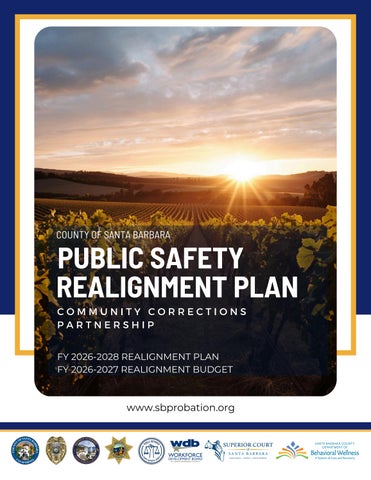
Welcome to the County of Santa Barbara Public Safety Realignment Plan. Since 2011, the Santa Barbara County Probation Department has coordinated the development and distribution of the County’s comprehensive Realignment Plan following extensive collaboration with the Community Corrections Partnership (CCP) members, stakeholders, and the community. The Plan is reviewed and approved by both the CCP Executive Committee and General Membership prior to submission to the Santa Barbara County Board of Supervisors. As required by the Public Safety Realignment Act (Assembly Bill 109), the following Plan and recommended programs are aligned with local needs and available resources to effectively serve the Realigned population.
The Realignment Act was designed and implemented in October of 2011, to address overcrowding in California’s state prison system and help mitigate the State’s fiscal challenges. Every year, the County of Santa Barbara receives a designated fiscal allocation to serve the population of clients who prior to the Act went to a California Department of Corrections and Rehabilitation (CDCR) Facility. Additionally, this Act expanded the role of the CCP, originally established under the California Community Corrections Performance Incentives Act of 2009 (Senate Bill 678), and created a sevenmember Executive Committee. This shift increased local responsibility and underscored the need for clear goals, coordinated strategies, and effective oversight to serve the Realigned population.
The five CCP goals outlined in this Realignment Plan serve as a guide for the CCP, ensuring efforts and funding allocations are targeted to make a direct impact on clients, while maintaining efficiencies and addressing disparities within the criminal justice system. The CCP has remained committed to implementing evidence-based programs, promising practices, and programs, services, and staffing that are balanced across the five goals. To monitor accomplishments of the goals and objectives in the plan, County departments receiving CCP funding are required to demonstrate effective service delivery by providing data and analysis through annual presentations. These presentations foster transparency and provide an opportunity for collaboration and input from partner agencies, community members, and other stakeholders. The

CCP meets in person on a bi-monthly basis and maintains a virtual participation option to support broader public engagement.
Over the past year, the CCP has continued to review new and ongoing program proposals, recidivism and performance data, legislative changes, grant opportunities, pilot initiatives, and emerging trends within the justice system. The CCP remains committed to the principles of justice reinvestment and values the collaborative partnerships between County departments and community-based organizations. To ensure a wholistic approach to service delivery, during the past year, County Health was invited to participate in the CCP meetings to provide additional expertise and guidance on relevant topics. As the legislature and community corrections landscape continues to evolve, the CCP remains poised and ready to take on additional challenges and allocate funding to areas that will have the greatest impact while meeting any new mandates, policy or law.
The CCP respectfully submits this Realignment Plan to demonstrate its ongoing commitment to delivering effective, data-informed services that address the needs of justice-involved individuals, reduce recidivism, and promote positive outcomes for individuals, families, and the community in both the short and long term.

Each year, the CCP develops a plan for the Public Safety Realignment Act (Assembly Bill 109) and the Executive Committee of the Community Corrections Partnership (ECCCP) votes to approve the annual spending plan submission to the Board of Supervisors. As required by statute, the annual plan and recommended programs are to be consistent with local needs and resources as applied to the Realigned population.
ExecutiveCommitteeoftheCommunityCorrectionsPartnership
▪ Holly Benton (Chair), Chief Probation Officer Probation Department
▪ Angela Braun, Court Executive Officer
Superior Court (incoming)
▪ Bill Brown, Sheriff/Coroner
Santa Barbara Sheriff’s Office
▪ Kelly Gordon, Santa Barbara Police Chief Santa Barbara Police Department
▪ Tracy Macuga, Public Defender Office of the Public Defender
▪ Toni Navarro, Director Department of Behavioral Wellness
▪ Darrel Parker, Court Executive Officer Superior Court (outgoing)
▪ John Savrnoch, District Attorney Office of the District Attorney
CommunityCorrectionsPartnershipatlargemembers
▪ Sylvia Barnard, Executive Director
Good Samaritan Shelter
▪ Laura Capps, 2nd District Supervisor County Board of Supervisors
▪ Michael Heck, Chief Executive Officer & President Hamic-Recampus
▪ Daniel Nielson, Director Department of Social Services
▪ Susan Salcido, Ed.D., Superintendent County Education Office
▪ Luis Servin, Executive Director Workforce Development Board
CommunityCorrectionsPartnership(CCP)workgroup
▪ Angela Braun, Court Executive Officer
Superior Court (incoming)
▪ Michael Cash, Guadalupe Police Chief
Guadalupe Police Department
▪ Spencer Cross (Chair), Deputy Chief Probation Officer
Probation Department
▪ Eleanor Gartner, 2nd District Representative County Board of Supervisors
Tanja Heitman, Asst. County Executive Officer
County Executive Office
Jennifer Karapetian, Assistant District Attorney Office of District Attorney
Tracy Macuga, Public Defender Office of the Public Defender
▪ Toni Navarro, Director Department of Behavioral Wellness
▪ Darrel Parker, Court Executive Officer Superior Court (outgoing)
▪ Luis Servin, Executive Director Workforce Development Board
▪ Ryan Sullivan, Chief Custody Deputy Santa Barbara Sheriff’s Office
The implementation of Public Safety Realignment created two (2) additional populations supervised by the Probation Department:
Post Release Community Supervision (PRCS) are individuals released from prison to local supervision after serving a felony commitment for a non-violent, nonserious, and non-high-risk sex offense.
Mandatory Supervision, also referred to locally as Post Sentence Supervision (PSS). These are individuals sentenced pursuant to §1170(h)(5)(B) PC who qualify to serve their prison sentences locally in the County jail after being convicted of a non-serious, non-violent offense. Additionally, these individuals are not registered sex offenders and do not have a prior “strike” (serious and/or violent felony). The law allows for two types of sentences; a straight commitment to County jail pursuant to §1170(h)(5)(A) PC or a split sentence §1170(h)(5)(B) PC which includes a period of time in jail followed by a period on mandatory supervision by Probation.
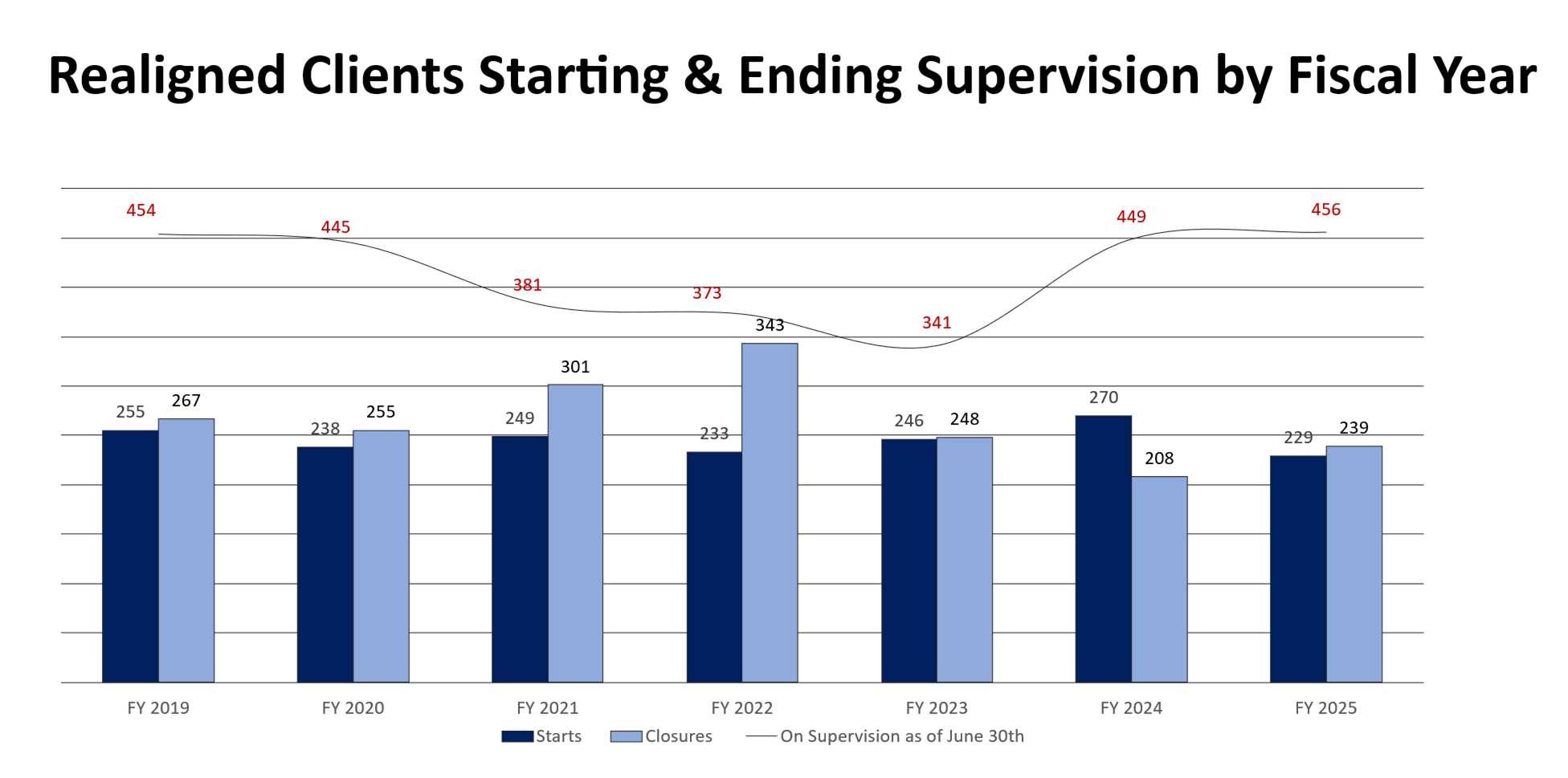
In FY 2024-2025, the County of Santa Barbara Probation Department supervised an average of 429 Realigned individuals each month. The number of individuals beginning supervision, either under Post Release Community Supervision (PRCS) or Post Sentence Supervision (PSS), declined from 270 in FY 2023-2024 to 229 in FY 2024-2025. During the same period, the number of individuals completing supervision increased. As of the June 30th snapshot, the total number of individuals on realigned supervision rose slightly from the year prior to 456, bringing the population back to pre-pandemic levels (Figure 1).
Although Realigned clients comprise a smaller proportion of the total population supervised by the Probation Department, approximately 16%, they represent a higher risk group overall. Among Realigned clients, 85% of those on PRCS and 71% of those on PSS were assessed as high risk to reoffend or reoffend violently, compared to 26% for standard probationers (Figure 2).
2
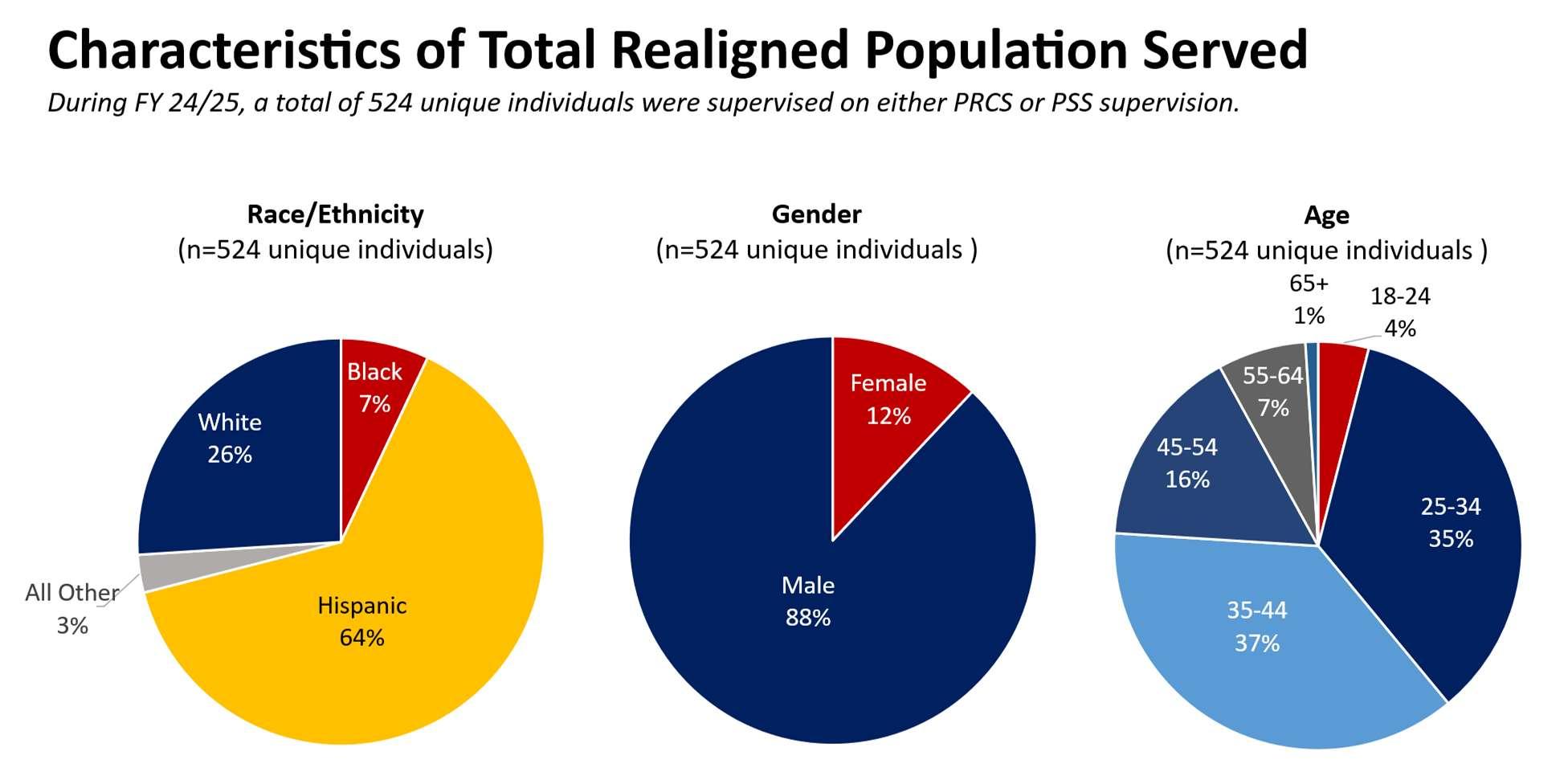
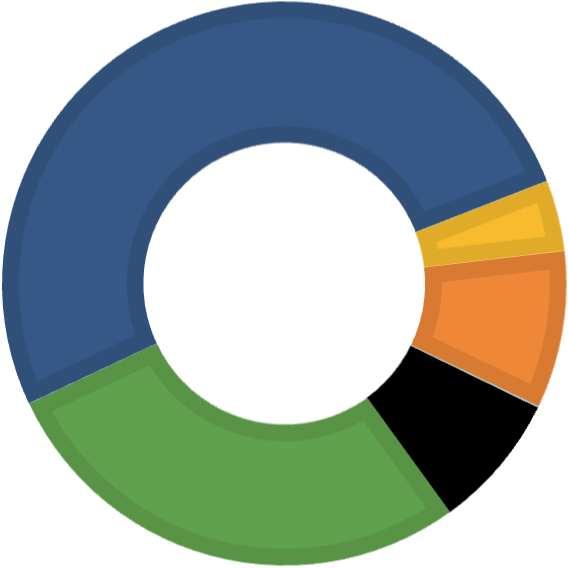
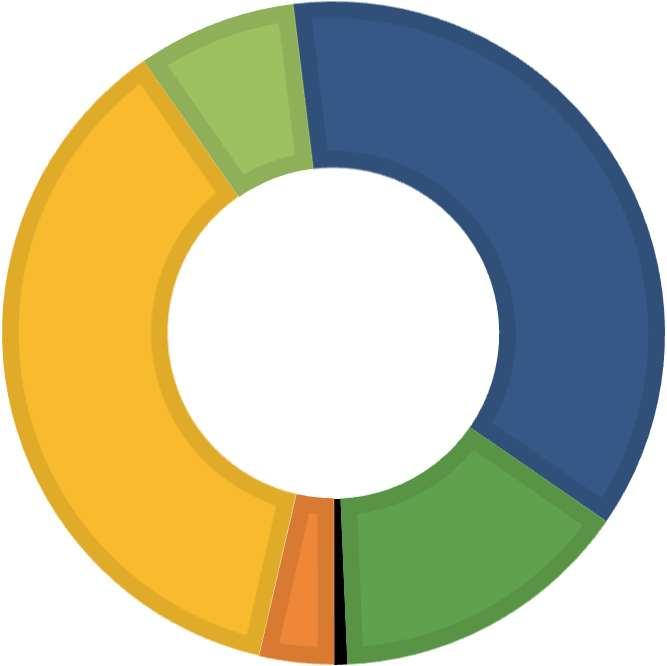
During FY 2024-2025, a total of 524 unique individuals were supervised on either PRCS or PSS supervision. Characteristics of the total population served in FY 2024-2025 are displayed in Figure 3.
Figure 3
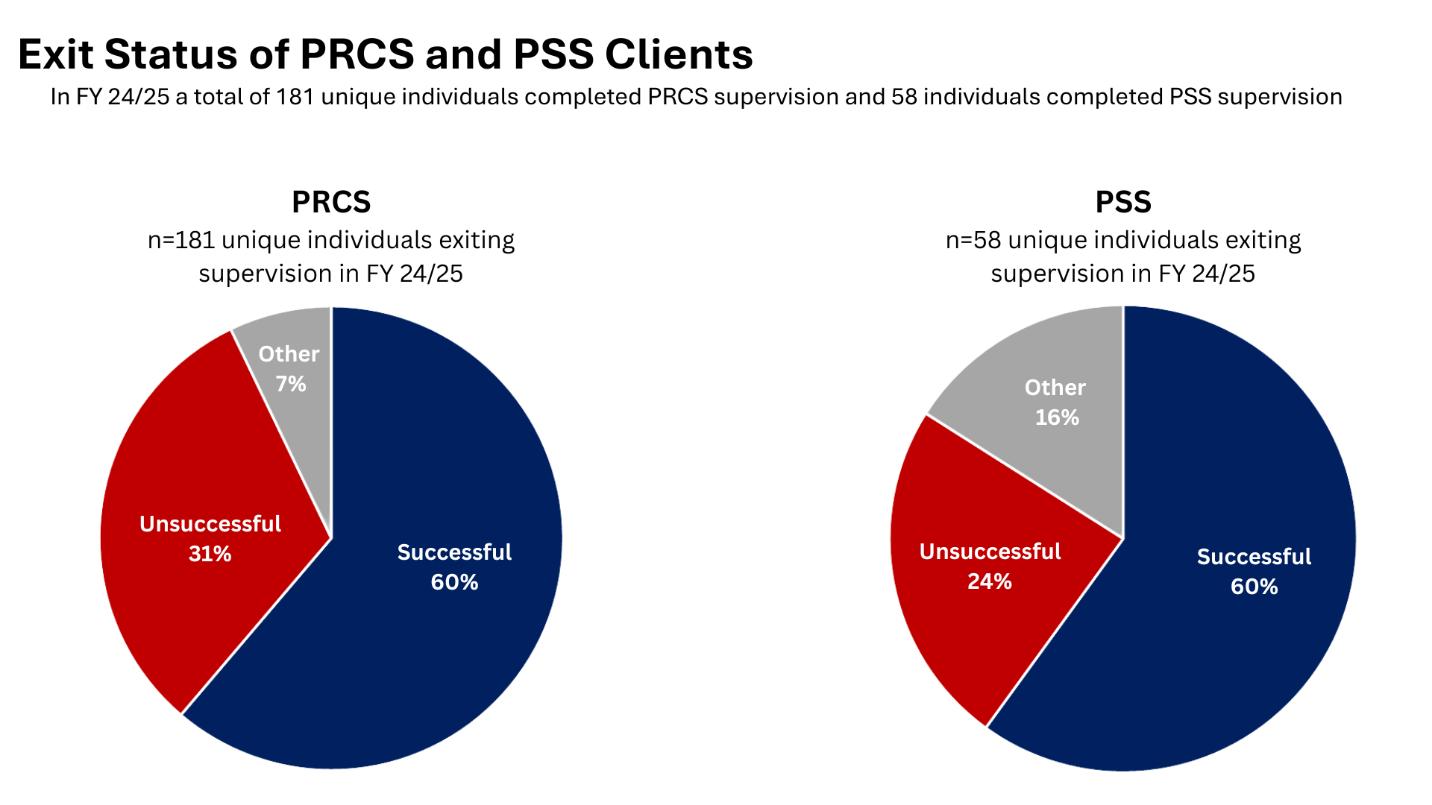
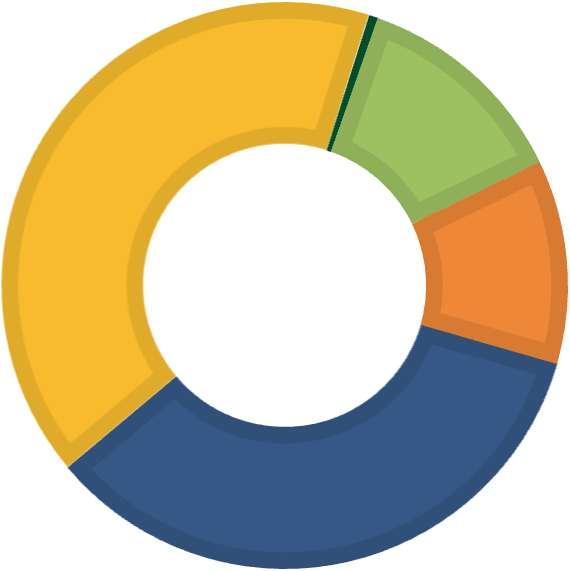
In FY 2024-2025 a total of 181 unique individuals completed PRCS supervision, and 58 unique individuals completed PSS supervision (Figure 4). The majority of individuals (60%62%) who completed supervision in FY 2024-2025 were successful, as determined by departmental criteria at the conclusion of the client’s supervision term.
Figure 4
While the success of individuals completing supervision offers valuable insight into client progress during their term of supervision, recidivism is a key outcome measure for practitioners to evaluate the extent to which programs and services are changing behavior over time.
AB 1050 required the Board of State and Community Corrections (BSCC) to adopt a standardized statewide definition of recidivism. Under this definition, recidivism is defined as a new felony or misdemeanor conviction occurring within three years of a client’s start of supervision or release from custody. This consistent measure allows jurisdictions to assess reoffending within a uniform time frame, supporting meaningful, “apples-to-apples” comparisons across all Realigned populations, including those not under supervision.
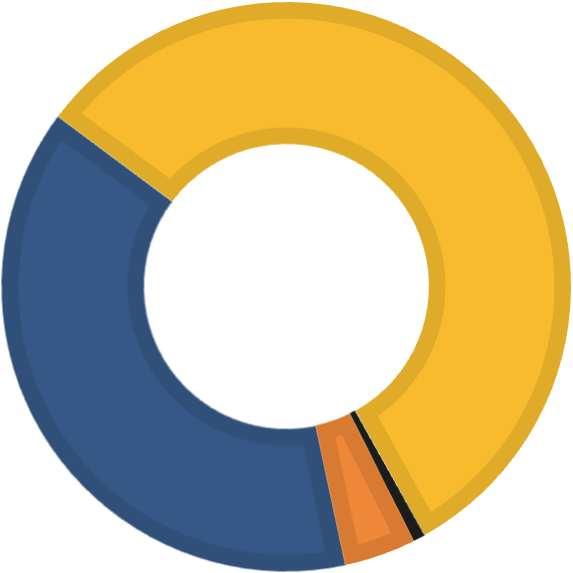
Figures 5 and 6 illustrate recidivism outcomes for PRCS and PSS clients who entered supervision between 2011 and 2021. For example, 49.2% of PRCS clients who started supervision in 2021 recidivated within three years (through 2024). Each figure also identifies the most serious recidivating event misdemeanor or felony recorded during the three-year follow-up period.
Beginning with this Realignment Plan, a combined recidivism metric will be reported for the realigned population, inclusive of Post-Release Community Supervision (PRCS) and Mandatory Supervision (PSS) (Figure 7). While PRCS and PSS were distinct populations at the outset of realignment, they have become increasingly similar over time, with individuals receiving similar services and treatment during their period of supervision.
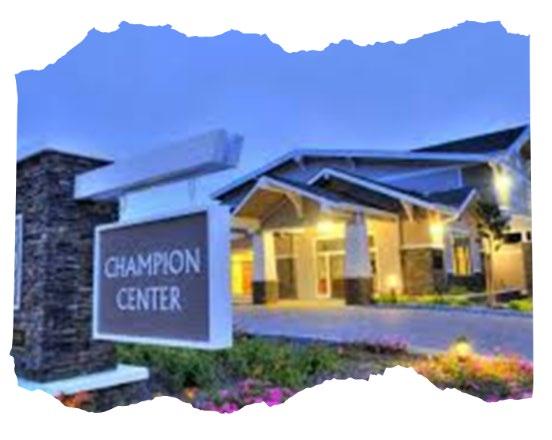
The CCP previously approved one-time funding for the period of January 1, 2024, through June 30, 2026, to be used for a pilot program to provide four secure treatment beds at the Champion Center in Lompoc, for justice-involved behavioral health clients who are conserved under the Lanterman Petris Short (LPS) Act or qualify for temporary conservatorship. These beds are reserved for clients in County Jail and other local forensic facilities, wherein the Behavioral Health Medical Director assesses and determines those who would benefit from placement at a mental health rehabilitation facility. While at the Champion Center, the justice involved conservatees receive intensive mental health treatment services aimed at stabilization, with a goal of transitioning them to a lower level of care. Champion Center is currently operated by Crestwood Behavioral Health through a contract with Behavioral Wellness
$1,181,800

Champion Center
$1,181,800
Since the program’s inception, seven individuals have been placed in the CCP funded beds from Santa Barbara County forensic facilities. Of the seven, three have stepped down to BWell funded beds at Champion Center, one stepped down to an augmented board and care home, another to a relative's home while two remain in CCPfunded beds. The average length of stay is 230 days. For FY 2026-2027, the CCP approved ongoing funding to maintain the four beds for continued service to appropriate justice-involved individuals.
During FY 2024-2025, the Community Corrections Partnership (CCP) approved one-time funding for a period of two years for two full-time Legal Office Professional Seniors to serve as Mental Health Diversion Paralegals. For FY 2026-2027, the CCP approved ongoing funding to support these positions in the amount of $285,400 annually.
Mental Health Diversion (MHD) paralegals work to ensure the success of clients with serious mental illness, developmental disabilities, and co-occurring disorders who are eligible for diversion. MHD paralegals are assigned as soon as a client is identified as a potential candidate for MHD. This assignment occurs while the case is still in the trial department. The MHD paralegals provide litigation support to the assigned trial attorneys by securing medical and behavioral health records, coordinating with families and service providers, and drafting Mental Health Diversion (PC 1001.36) motions. This work is critical to overcoming the barriers to the prompt filing of MHD motions.
Once MHD is granted, the paralegals remain assigned to the case, maintaining contact with clients and service providers to ensure continuity in representation as the case is transitioned to the MHD review calendar. There, the MHD paralegals take on a more forward-facing role providing incourt support to our attorneys and clients to ensure maximum client engagement. Their efforts have transformed the Public Defender’s capacity to handle diversion
MENTAL HEALTH/DIVERSION PARALEGALS

Mental Health/Diversion Paralegals - Public Defender (2.0 FTE) $285,400
court support to our attorneys and clients to ensure maximum client engagement. Their efforts have transformed the Public Defender’s capacity to handle diversion cases effectively, consistently, and holistically, contributing to increased likelihood of success for participating clients.
During the first 14 months of the program, the MHD paralegals filed 346 MHD motions for 224 clients. Of these, 270 motions were granted (78%), 23 were denied and the remainder (7%) were withdrawn or pending.
For FY 2024-2025 through FY 2025-2026, the CCP approved one-time funding for a Holistic Defense Manager (HDM) to lead the Community Defender Division (CDD) to be more efficient, reach more clients and document those efforts even more granularly, allowing the CDD to better track data. For FY 2026-2027, the CCP approved ongoing funding for this position. The HDM works with the Public Defender leadership team to develop new programs, policies and procedures, and ensure their implementation throughout the division. The HDM helps organize, lead, and coach social workers and advocates to deliver innovative approaches to holistic defense. The HDM also develops organizational and programmatic systems to enhance efficiency, efficacy, and effective data collection while adapting to serve more complex clients.

During FY 2024-2025, the HDM successfully coordinated comprehensive oversight of all 18 Community Defender Division staff across all teams, conducting more than 390 individual supervision meetings and facilitated more than 116 meetings annually which include team, divisional, data coordination meetings. The HDM also provides oversight for Re-entry, Early Access, and Diversion for You (READY), Rapid Diversion, Prop 36 and CARE programs.

Realignment funds are allocated to strengthen jail resources, ensuring that individuals requiring a custodial setting have access to a jail bed, supporting the use of short-term flash incarcerations when necessary as well as terms of 1170(h). Flash incarceration provides a swift, certain, and proportionate response to non-compliance without resorting to lengthy jail sentences. This approach promotes accountability and behavioral change while minimizing disruption to employment, family, and community ties compared with traditional incarceration. Classification requirements mandate the housing of realigned incarcerated people throughout jail facilities rather than in one or two specified units. Funded jail positions ensure adequate staffing to meet inmate needs, including supervision during housing, booking, and release processes, meals, medical and mental health services, movement for programming opportunities, and emergency response.
Prior to Realignment, the Santa Barbara Sheriff’s Office (SBSO) received approximately $375,000 annually from the State (California Department of Corrections and Rehabilitation) to help offset a portion of the cost of incarcerating State parolees held solely on parole revocation. Upon implementation of Realignment, the State was no longer required to provide funding to house State parolee justice-involved individuals in local jails. The Realignment funds provided to SBSO for jail custody replace the lost State revenue and provide increased funding to house justice-involved individuals that would have previously been confined in State facilities and are now held in the County Jail as a result of Public Safety Realignment.
Fiscal year 2024-2025 continued to be challenging for the Custody Branch of the SBSO due to continued staffing challenges, continued work on the Disability Rights California (DRC) remedial plan requirements specifically related to medical and mental health care, and an increase in the average daily population (ADP). The ADP for calendar year 2025 was 777 individuals, representing a 4% increase from 2024 (746).
The Santa Barbara County Sheriff’s Treatment Program (STP) enhances long-term public safety and lowers participants’ risk of recidivism by providing evidence-based training in interpersonal skills that foster a pro-social lifestyle and address behaviors linked to criminality and poor decision-making. Operating independently of the jail’s educational and vocational programs, STP is a stand-alone initiative offering classes and services to individuals in custody at both facilities who have limited exposure to pro-social opportunities. The curriculum includes Building Healthy Life Skills, Cognitive Behavioral Training, Moral Reconation Therapy, Criminal and Addictive Thinking, Alcohol and Other Drug Education, Relapse Prevention, Mindfulness, Parenting Skills, Anger Management, and a variety of interactive journals.
SHERIFF'STREATMENTPROGRAM (STP)
Curriculum
$5,000
ProgramDeputy Sheriff(2.0FTE)
$379,400
Correctional Counselors(3.0)
$319,500
AOPII(1.0FTE)
$116,000
In order to effectively operate the STP program and support the Correctional Counselors, two Sheriff’s Deputies and two Administrative Office Professionals (AOP) are funded within the STP budget. The Deputies are assigned to the Behavioral Health Units (BHU) and assist the STP counselors working within the BHUs by supervising participants. The AOPs assigned to the jail assist with the STP program by managing program sign-ups, assisting with coordination of the jail’s daily events, and scheduling programs within the Northern and Southern Branch jails as assigned. The AOPs track attendance, compile statistics such as program attendance rate, completions of programs and verify programming requirements are met for participants that are eligible for milestone credits (up to 21 days off of their sentence release date). This data is entered into the jail management system and supports monitoring of eligibility for early jail releases. In addition, the AOPs order supplies and curriculum materials and monitor inventories for the programs. For FY 2026-2027, the Sheriff’s office reduced the number of correctional
AOPI(1.0FTE)
$107,600
Counselors from five to three FTE and re-allocated the funding to enhance re-entry services.
Re-entryCoordinator
The Re-entry Coordinator position was designed to enhance collaboration between partner agencies on re-entry planning efforts. Successful re-entry begins at the earliest stage of incarceration as possible, based on the individual’s needs. This includes ensuring a robust re-entry, plan is available prior to exiting incarceration.
Re-entry planning interfaces with work performed by multiple agencies, including Probation, the Sheriff’s Office, County Health, Wellpath, the Public Defender’s Office and the Jail Re-entry Team. During FY 2024-2025, the Re-Entry Coordinator position was elevated from a Team Project Leader to a Program Business Leader. In FY 2025-2026, the position was transferred to County Health as the coordinating agency and modified to a Health Services Manager II. This was completed in order to recruit a highly qualified, non-sworn licensed health professional to assume this dynamic and instrumental position. The recruitment to fill this position is ongoing.
In FY 2025-2026, the CCP no longer funds any staff related to the Alternative Sentencing Program. However, the Global Positioning System (GPS) units used to monitor realigned clients on alternative sentencing remains funded, in addition to client supports that can be used to assist in the successful monitoring of the individual.
Re-entry planning and addressing the needs of justice-involved individuals leaving custody and reentering the community is crucial to ensure a successful transition. By implementing effective re-entry planning strategies, the potential for successful reintegration and connection to services is enhanced, which can have a significant positive impact in reducing recidivism.
For FY 2024-2025, the Jail Re-entry Team received 1,534 referrals for assistance to connect with treatment programs, sober living residences, residential treatment programs, and housing. These referrals also address many areas of need for clients, including assisting with obtaining valid government-issued identification, securing supplemental and disability social security income, applying for benefit entitlements such as Medi-Cal and enrolling in veterans benefit programs.
A major component of re-entry planning focuses on coordinated service delivery, addressing housing, medication(s), residential treatment beds and facilitating assessment for treatment referrals.
The Jail Re-entry Team consists of one Community Release Specialist, one Care Manager (previously known as Discharge Planner) contracted through the Sheriff’s Department, one contract Care Manager through Community Services, Inc. (CSI) and two Rehabilitation Services Coordinators employed through the Public Defender’s (PD) Office. For FY 2026-2027, additional Re-entry Care Managers were funded and will be
assigned to the Department of Social Services. This multidisciplinary approach allows the team to utilize their skills and knowledge as they collaborate in the assessment of client needs and re-entry planning.
In addition to the efforts of the Jail Re-entry Team, multiple county departments and agencies collaborate in these efforts which include the Probation Department, SBSO, County Health, Behavioral Wellness, Department of Social Services, and the Public Defender’s Office. Behavioral Wellness staff assist with scheduling Access Line appointments within the jail for connection to appropriate services. Wellpath confirms any medications for clients to assist in the release of clients with prescriptions or Medication Assisted Treatment (MAT). Social Services assists with confirmation of, and assistance with, applications for Medi-Cal and Holistic Defense staff serve as advocates to assist clients with mental health needs and transportation.
Over the past year, the Jail Re-entry Team aimed to enhance the re-entry planning process for individuals released from the South County BHU to ensure access to healthcare for ongoing recovery and support. From July 1, 2025, through December 31, 2025, all individuals released from the BHU received a completed re-entry care plan. Additionally, efforts in integrating healthcare supports were successful as 82% of those discharged were released with active medical coverage. Notably within the same timeline, all individuals receiving MAT at the time of discharge were provided a re-entry care plan. The combination of a completed re-entry plan and access to Medi-Cal for those in the BHU has created a solid foundation to enhance the re-entry planning process for the rest of the population in the jail.
The Santa Barbara County Sheriff’s Office (SBSO) continues to collaborate with County Health, contractors and other County partners to implement a more refined process to provide re-entry services in the coming fiscal year. The Sheriff’s Office continues to focus on enhancing re-entry initiatives to better support individuals as they leave custody. During the upcoming year, the County Health Department, in support of partner agencies, will be evaluating the structure of the re-entry team to align with Cal-Aim requirements and Medi-Cal standards.
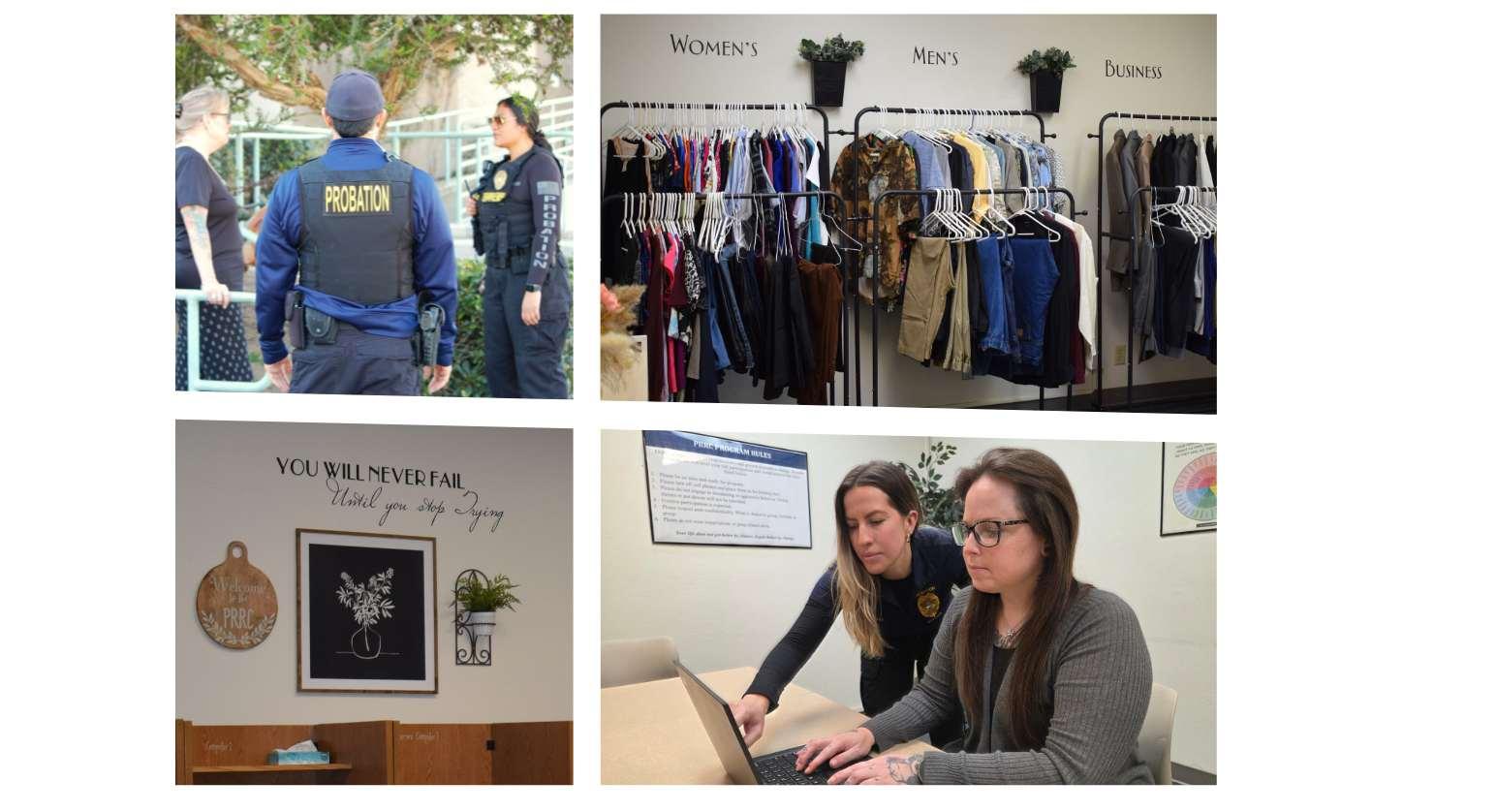
The Probation Report and Resource Centers (PRRC), located in Santa Barbara and Santa Maria, serve as comprehensive hubs where individuals involved in the justice system can access a wide range of services to support their successful reintegration into the community. Those individuals residing in Lompoc may access services from Santa Maria, either virtually or in-person, and have other options available through local community-based organizations. The PRRCs are designed to provide a structured yet welcoming environment. The PRRCs are staffed by a dedicated team of professionals, including Senior Deputy Probation Officers (Sr. DPO), Deputy Probation Officers (DPO), Administrative Office Professionals (AOP), Behavioral Wellness staff, and contracted Community-Based Organizations (CBOs), all of whom are committed to addressing the client’s unique needs. The PRRC’s comprehensive, compassionate, and evidence-based approach is designed to transform lives, strengthen communities, and promote positive behavioral change, leading individuals to succeed as they reintegrate into their communities.
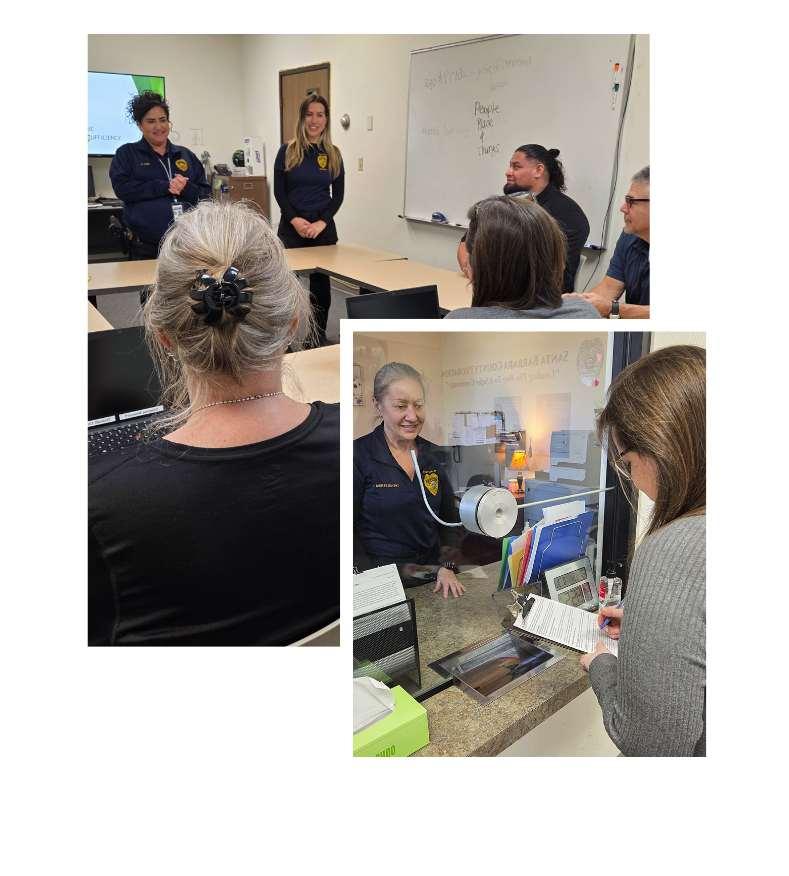
Recognizing that effective reentry relies on evidencebased practices, clients begin their journey at the PRRC by meeting with a DPO who uses the results of an evidence-based assessment to determine the most appropriate response to the client's needs. The results of this assessment allow the DPO to prioritize the client’s specific needs to provide suitable programming options.
Clients can be referred to the PRRC by their assigned supervision officer at any time
while they are under probation supervision. The PRRC offers clients an environment conducive to positivity and success, where they can gain the skills, confidence, and direction needed to overcome the barriers they may face. There are individual offices as well as multiple classrooms used to offer a variety of evidence-based programming consisting of Reasoning and Rehabilitation (R&R), Courage to Change, Moral Reconation Therapy (MRT), WAGE$$, and Coping with Anger. By having a variety of programming offered at varying schedules, individuals can receive assistance in addressing issues or barriers that may contribute to their criminal behavior, such as addiction or unemployment.
Throughout the client’s participation at the PRRC, staff support and monitor their progress and behavior to ensure they are complying with the program, addressing their criminogenic needs, and meeting the requirements set by the Court and Probation. PRRC staff offer assistance with basic needs, such as food through donations from the Food Bank, clothing, and transportation through 2-1-1 and public transportation. Individuals are also recognized for their positive efforts, such as regular program attendance. Beyond immediate program participation, individuals who successfully complete their tailored programs become eligible to participate in a graduation ceremony, an important milestone that fosters pride, motivation, and community connection.
The Rapid Diversion Program, led by the Public Defender’s Office, seeks to prevent the criminalization of mental illness and protect public safety by offering an expedited assessment and diversion option for specified offenses. The Rapid Diversion Program focuses on quick assessment and linkage of incarcerated individuals to mental health services whose needs and recidivism factors are best addressed by diversion out of the criminal justice system and into medically appropriate health care, and to expedite the assessment and linkage of qualifying candidates.
Eligible clients may be referred to the program by an Attorney or any partner agency. Once referred, the clinical team will assess the candidate’s eligibility and suitability for the program by reviewing relevant records and interviewing the candidates. A BWell clinician will determine whether each candidate has the qualifying mental disorder and meets the other statutory requirements of Penal Code section 1001.36. For candidates who qualify, the clinical team will work to link individuals to appropriate services in or out of custody. For those in custody, they should, with the agreement of the prosecution and defense, and the court, be conditionally released to the clinical team. The role of the Rapid Diversion Case Worker is to serve as the primary point of contact for the incarcerated person while in custody and to coordinate linkage to appropriate community services upon release. The Rapid Diversion Case Worker will meet with the incarcerated person in-custody to assess their needs and help develop a treatment plan. Upon release, they will continue to work with the individual to ensure warm hand-offs to services in the community and report progress to the treatment team and the Court. Since the inception of the program, 36 clients have been referred to the Rapid Diversion program in the northern region of the county, two of which have successfully completed. On January 20, 2026, the Rapid Diversion Program was expanded to the southern region of the county.

The District Attorney’s Victim-Witness Assistance Program provides early intervention to victims of crime at the arraignment stage and pre-filing. Delayed intervention creates additional collateral stress for victims who are unfamiliar with the criminal justice system, their rights, or the critical services that are available in the aftermath of a crime. To expedite services and mitigate victims’ crises, the District Attorney’s Office works diligently to serve victims at the earliest moments following a crime.
The Victim-Witness Assistance Program has dedicated a full-time Victim Advocate to be on-call and available for walk-in victims to the Arraignment Courts and the District Attorney’s Office. The additional advocate resource is available to victims in crisis seeking services or case information, including:
Restitution Determination: The Advocate proactively contacts and responds to victims to determine restitution before arraignment. The Advocate determines the victim’s losses and obtains supporting documentation to establish the courtordered restitution amount. The Advocate prepares the restitution documents required to establish a restitution collection account for the victim. Early restitution determination mitigates unnecessary continuances and expedites the process for deputy district attorneys, the courts, and the Probation Department.
Safety Concerns: The Advocate’s presence in court and on-call also expedites victims’ access to services, which include crime prevention assistance and criminal protective orders provision.
California Victims’ Bill of Rights (Marsy’s Law): The allocation of resources has enhanced the Victim-Witness Assistance Program’s ability to meet the constitutional requirements of Marsy’s Law, which include providing timely notice of case status and custody status, assessing safety, and determining restitution.
The District Attorney’s ability to make early contact with victims of crime leads to better outcomes for both the defendant and the victim. Early intervention reduces the likelihood that victims will be revictimized or decompensate emotionally due to a lack of information and services. Early interventions can also reduce defendants’ court appearances, minimize criminal justice partners’ staff time related to protracted court appearances, and expedite case dispositions.

Recognizing the importance of early victim engagement, the Arraignment Court has increased the volume of requests made to Victim-Witness staff to engage with victims and obtain input at the time of arraignment. In FY 2024-2025, the Advocate was funded full-time to meet victims’ needs.
During the period of July 1, 2024, through June 30, 2025, a total of 3,351 victims were contacted at or before arraignment and received safety planning guidance, case status, orientation to the criminal justice system, restitution assistance, and victim’s rights notification per Marsy’s Law. Of these 3,351 victims, 558 were provided services with the support of funding approved by the CCP.
VehicleCosts&Travel
DPO(12.0FTE)
$2,121,900
The County of Santa Barbara Probation Department supports the successful and equitable re-entry of justice-involved individuals into the community by providing the highest level of case management and supervision to reduce recidivism and ensure community safety. To achieve successful and equitable re-entry for justice-involved individuals, a significant focus is placed on case management, in which realigned clients are assigned to field supervision Deputy Probation Officers (DPO) to engage in frequent interactions, either in the office or in the community. When providing case management, DPOs follow the risk-needs Risk and Responsivity (RNR) model. RNR is an evidence-based framework that guides recommendations on supervision intensity and treatment services based on the client’s likelihood of reoffending.
$3,184,400
DPOSr.(1.0FTE)
$190,700
Expenses
$46,100
Services&Supplies
$33,000
Urinalysis
$5,000
Probation Manager(0.5FTE)
$133,600
SPO(2.0FTE)
$455,300
AOP(2.0FTE)
$198,800
Utilizing RNR DPOs, individualized case plans are developed based on thorough assessments of each person’s criminogenic needs. These plans are regularly reviewed and updated based on the client’s progress, guiding referrals and connecting individuals to appropriate services that address their specific risk factors and promote successful outcomes. DPOs use evidence-based interventions and supervision practices to foster positive behavioral change among those they supervise. DPOs conduct home visits to engage clients, assess their home environments, and identify any concerns or support systems that may influence their success within the community. DPOs also facilitate office visits to meet with clients, discuss case plan goals, evaluate progress, and build rapport to support their journey toward success and equitable re-entry into the community.
The DPOs are trained to promote positive behavioral change by prioritizing Motivational Interviewing (MI) and strategic case
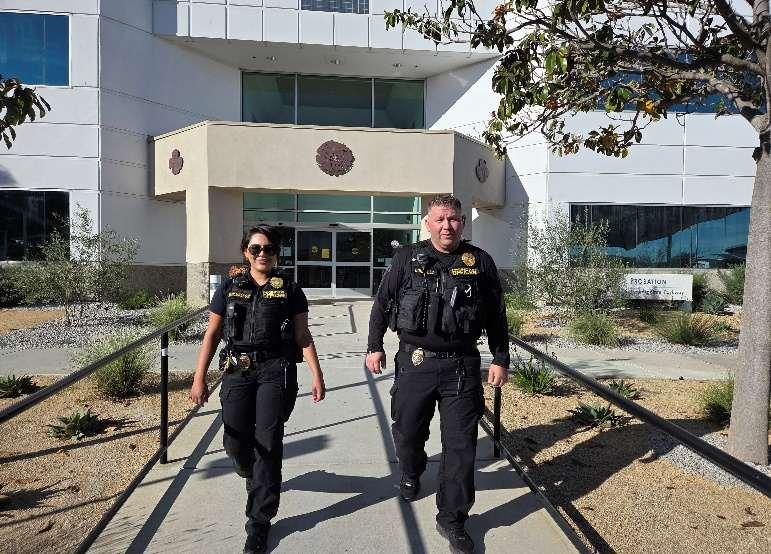
management. Structured conversations related to specific need areas empowers officers to conduct meaningful discussion about change, long and short-term goals, removing barriers, and guiding clients through changes to nurture more prosocial behaviors, ultimately fostering positive outcomes for clients reintegrating into the community.
DPOs play a crucial role in supporting clients' success by connecting clients with services at the Probation Report and Resource Center (PRRC), as well as communitybased organizations. DPOs provide or coordinate transportation to recovery residences or supportive housing, ensuring clients have safe and healthy environments for their recovery. Through targeted interventions, such as increased reporting or testing for controlled substances, DPOs effectively promote compliance while minimizing unnecessary detention, thereby creating a respectful, encouraging, and supportive environment that fosters meaningful dialogue and reflection on clients' progress. These supervision practices demonstrate that investing in strong probation support benefits individuals and communities alike.
In December 2012, the Santa Barbara Probation Department and the Santa Barbara Sheriff's Office partnered to create the Compliance Response Teams (CRT). For FY 20252026, a CCP approved budget reduction resulted in the elimination of one of the two Senior Deputy Probation Officer positions. SBSO shifted funding from within its existing Realignment allocations to maintain their staffing levels, consisting of two Special Duty Deputies (Detectives) and a Sergeant.
The SBSO Sergeant oversees field operations, designed to improve team safety and provide training and evaluation for the team. The CRT teams serve all areas of Santa Barbara County.
SheriffDeputyS/D (2.0FTE)
$502,400
DPOSr(1.0FTE)-
$197,100
SheriffSergeant (1.0FTE) $297,900
Due to their high mobility and rapid response abilities, the CRT teams focus their efforts on the community, engaging with clients and addressing the needs of both the clients and their assigned supervision officers. The CRT teams conduct compliance checks on realigned clients, provide support, and apprehend wanted individuals. CRT offers additional supportive services such as transportation to local probation offices, sobering centers, and residential treatment programs, as well as extradition services for clients arrested in other states. The CRT teams actively work towards averting clients from custody who have minor violations and do not pose a threat to the community or specific victims.
22 | Page
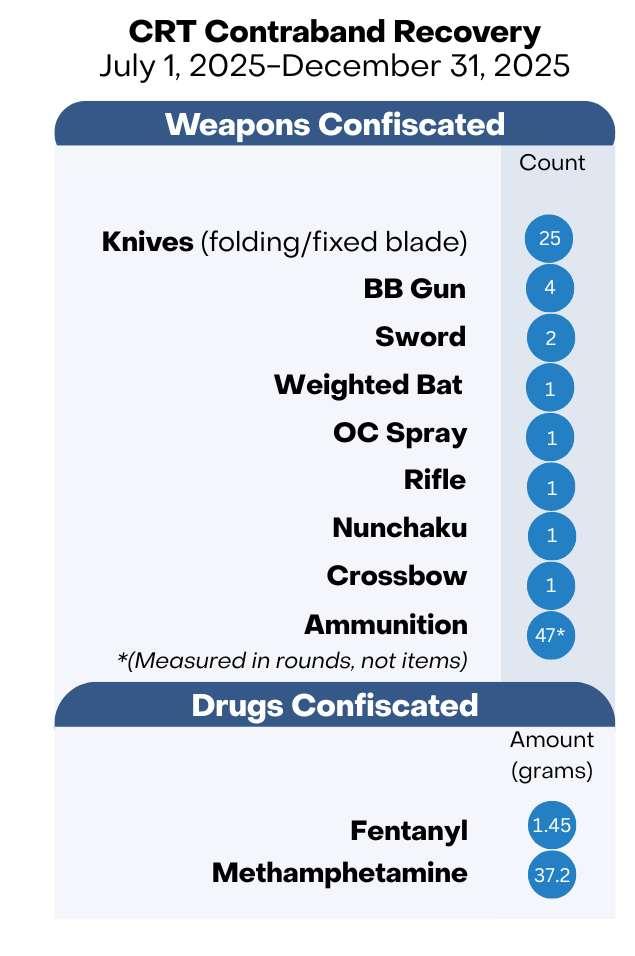
In addition, the CRT teams support local law enforcement in incidents or operations involving the realigned population, serve active warrants, and are deployed as needed on a countywide basis. The CRT teams have successfully removed narcotics, firearms, and other weapons from the community, as noted in Figure 8.
The CRT program is a key component that supports the effective supervision of the realigned population, while remaining committed to upholding the expectations, goals, and core values of the CCP.
To support operations in the city of Guadalupe, $5,000 is budgeted for the Guadalupe Police Department to cover overtime costs related to responding to incidents involving the realigned population of justice-involved individuals and participating in multi-agency operations to conduct warrant apprehensions or other operations as coordinated by the CRT. As this is the smallest police department in the County of Santa Barbara, it was determined by the CCP that this funding should remain available to support potential realignment activities in Guadalupe, despite not being used for multiple consecutive years.
In 2018, the Sheriff’s Office and BWell began a Co-Response pilot with one team funded through an outside source. In 2019, the County secured additional funding through several grants that would support three full-time teams. In FY 2023-2024 a fourth team was added using CCP funding. Of the four full-time Co-Response teams, two of the teams operate in South County, and two operate in North County, which includes Lompoc and Santa Maria. All 4 teams share responsibility for responding to the Santa Ynez Valley region.
The Co-Response team funded by the CCP provides coordinated interventions for individuals in the community who are struggling with a behavioral health crisis.
With the shared expertise of a clinician and a deputy riding in the same vehicle, the team can arrive on scene quickly and deescalate situations and get individuals the help they need. Co-Response focuses on deescalation and addressing the immediate needs of the individual, ultimately preventing arrests and significantly lowering the number of individuals with behavioral health needs who are booked into jail. In addition to responding to active calls, the team responds to "check the welfare" calls, conducts follow-up visits with individuals recently engaged, and responds to individuals who exhibit the intent to commit targeted acts of violence.
LicensedMental HealthPractionerBwell(1.0FTE)
$444,700
$171,300 SheriffDeputy
S/D(1.0FTE)
$252,400 Training,Services, Supplies
$3,000 MotorPoolCharges $18,000
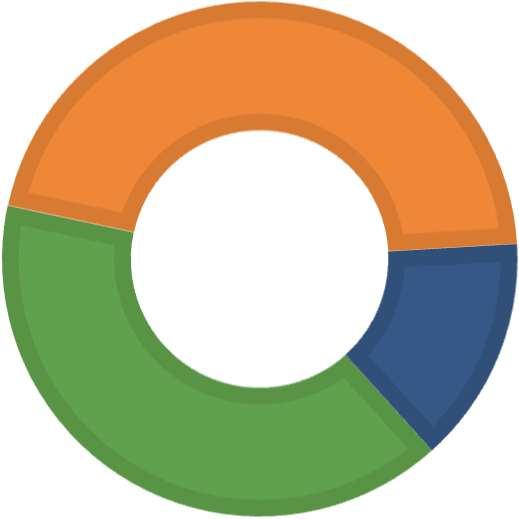
These additional services enhance the team’s capacity for community engagement, with the objective of encouraging individuals to participate in treatment. During FY 2025–2026, the teams initiated a process to receive notifications of opioid overdose reversals in which Narcan was administered by a deputy. Following these events, the team conducts targeted follow-up with affected individuals to facilitate linkage to evidence-based substance use disorder treatment and recovery resources. For FY 2024-2025, 318 crisis calls were referred to the CoResponse team with 44 calls during the period of July and August 2026. In FY 2024-2025, of the 228 individuals served, 219 individuals with a successful1 disposition status (96%) and six individuals with an unsuccessful2 disposition status (3%). In FY 2025-2026 (July & August), of the 34 individuals served, there were 32 individuals with a successful disposition status (94%) and two individuals with an unsuccessful disposition status (6%). Based on the lower overall activity and calls for service over the current fiscal year for the CCP funded team, SBSO and BWell assessed the team’s utilization and established additional responsibilities for the team to complete while on-duty.

1 A successful disposition is defined as an individual that remains in home/community, transted to services (voluntary), and 5150/5585
2 An unsuccessful disposition is defined as an individual arrested.
Collaborative Courts are specifically authorized under Penal Code 1230(d) as a justiceinvolved strategy, which defines evidence-based programs, including, but not limited to, drug and alcohol treatment, mental health treatment, anger management, cognitive-behavioral programs, and employment services. Collaborative Courts offer rehabilitative treatment tailored to justice-involved individuals, focusing on high-risk, high-need clients. The clients often face complex issues, including mental illness, substance use disorders, homelessness, and trauma. The County of Santa Barbara utilizes a variety of Collaborative Courts within the Superior Court system as interventions in specialized environments, with dedicated teams to address the multifaceted needs of those involved in the criminal justice system. The collaborative justice courts include Mental Health treatment, Substance Abuse treatment, Veterans Treatment Court, and Proposition 36 court. Investing in these courts is a justice-involved strategy noted to “maximize the effectiveness of criminal justice resources.” This unique opportunity allows collaboration among the Courts, the Public Defender’s Office, the District Attorney’s Office, the Department of Behavior Wellness, the Santa Barbara County Probation Department, and local treatment providers.
Realignment funds enable the DA’s and Public Defender’s offices to staff the Collaborative courts, each with a designated attorney to provide representation countywide.
CollaborativeCourts -DistrictAttorney (1.0FTE)
$309,400

$ $640,200
SpecialtyCourt/ MentalHealthDeputy PublicDefenderSr(1.0FTE)
$330,800
During FY 2025-2026, the Public Defender's Office launched the Behavioral Health Litigation Unit (BHLU), a specialized division that provides countywide representation across Collaborative Courts as well as Incompetent to Stand Trial (IST) proceedings and specialized civil matters. The BHLU provides full coverage of all Collaborative Courts through six dedicated attorneys, three of whom are funded by the Community Corrections Partnership with realignment funding. The three attorneys funded by the CCP are one North County Collaborative Courts Attorney and two Prop 36 Attorneys, with the latter being funded with one-time funding.
The Public Defender’s Office Collaborative Court attorney represents clients in court settings where alternatives to incarceration, such as drug rehabilitation, mental health diversion, and intensive case management, are provided, which can help to increase the use of diversion options. Investment in this area is supported by the marked increase in the Collaborative Court’s caseload, primarily driven by clients participating in mental health diversion. In the final two quarters of FY 2024-2025, a total of 114 MHD cases were referred to the Collaborative Courts for case management and review. In just the first
25 | Page
quarter of FY 2025-2026, 79 MHD matters have already been referred. This is a significant increase that, if sustained, projects to approximately 316 MHD cases by year’s end.
The Collaborative Courts Attorney works with individuals in the criminal justice system experiencing substance abuse challenges, mental illness, homelessness, and other social welfare concerns, using evidence-based advocacy with a focus on recovery and connection to community-based services. In addition, this staff coordinates with other justice partners, community-based organizations, and social workers to optimize treatment and success.
The Public Defender’s Prop 36 attorneys represent clients assigned to Prop 36 review calendars, as well as in Pre-Plea and Post-Plea Drug Courts, Post-Plea Dual Diagnosis Treatment Court (DDX), and various review courts including Domestic Violence (DV) and Clean & Sober (C&S) in South County. The Prop 36 attorneys also undertake direct representation on Prop 36 cases in the trial court consisting of negotiation and litigation.
During the third and fourth quarters of FY 2024–2025 (January 1, 2025, through June 30, 2025), the courts received 15 Prop 36 referrals. By contrast, in the first and second quarters of FY 2025–2026, referrals increased dramatically, with 56 matters involving 48 clients were referred to Prop 36.

For FY 2025–2026, Realignment funding continued to fund a Deputy District Attorney to staff the Collaborative Courts as part of a dedicated team of four Deputy District Attorneys. These prosecutors provide consistent coverage across Collaborative Courts and serve as backup for the arraignment department, ensuring early identification and rapid referral of appropriate cases into treatment courts. This role is particularly critical with the operation of the Rapid Diversion programs in North County and the expansion of Rapid Diversion to the South County arraignment court and allows for timely case flagging which directly impacts participant access to treatment and program success.
26 | Page
The Deputy District Attorney assigned to Collaborative Courts plays a central role in advancing rehabilitation while maintaining public safety. As a core member of the multidisciplinary Collaborative Court team, the Deputy District Attorney provides prosecutorial oversight to ensure appropriate case selection, accountability, and program integrity. Collaborative Courts function as problem-solving courtrooms that require coordinated decision-making among the Court, Probation, Behavioral Wellness, treatment providers, and counsel.
Collaborative Court caseloads span a wide range of offense types and risk levels. While some matters involve lower-level offenses that are appropriate and eligible for diversion, these courts also supervise individuals charged with serious and violent offenses, including violent assaults, robberies, sexual assaults, attempted murder, and second-strike cases. The presence of high-risk, high-need participants underscores the necessity of consistent District Attorney involvement to ensure structured supervision, graduated sanctions, and timely responses to noncompliance.
The Deputy District Attorney evaluates cases for suitability and advocates for structured, evidence-based treatment plans that address criminogenic needs while protecting community safety. The Deputy District Attorney participates in pre-court staffing meetings to review participant progress, address violations, and modify conditions as necessary, with victim and public safety considerations integrated into all court decisions.
In addition to courtroom responsibilities, Deputy District Attorneys participate in countywide Collaborative Court meetings, stakeholder meetings, and interdisciplinary trainings. This involvement promotes best practices, ensures consistency across courtrooms and regions, and supports continuous program improvement.
The District Attorney’s Office receives Community Corrections Partnership (CCP) Realignment funding to support one Collaborative Court Deputy District Attorney to serve North County. A second Collaborative Court Deputy District Attorney serves South County and is currently funded by General Fund Contribution, thereby ensuring countywide coverage. The District Attorney’s Office also received one-time funding for two years to support two Deputy District Attorneys in response to expanded caseloads and increased complexity resulting from changes to Proposition 36 and Health and Safety Code §11395. Through this dedicated staffing model, the District Attorney’s Office advances Penal Code §1230(d) objectives by maximizing the effectiveness of criminal justice resources, reducing recidivism, and maintaining public safety.

Recognizing the critical role of housing stability and the challenges individuals released from incarceration face, the CCP employs a multi-dimensional approach that includes shelter beds, sober living environments referred to as Recovery Residences, transitional housing, and a permanent housing project. Stable housing is essential for successful reintegration, providing the foundation for maintaining sobriety, securing employment, and engaging in re-entry services. CCP funding offers a diverse range of housing options to meet the various needs of individuals lacking a safe and stable place to reside.
Through realignment funding, Good Samaritan Shelter provides 20 transitional housing beds for justice-involved individuals under community supervision who are exiting jail or prison without natural supports and are assessed as medium to high risk for recidivism. Many participants also face vulnerabilities such as mild to moderate mental health or substance use challenges.
Supportive housing promotes a sober living environment with services designed to help participants stabilize in housing and employment, ultimately achieving self-sufficiency upon re-entry. The program offers a structured setting that includes drug testing, intensive case management, referrals, and access to treatment, employment assistance, and rapid rehousing support. Each participant is assigned a case manager who works to identify and address barriers to housing stability while connecting them to community resources.
A standardized assessment determines the type, duration, and level of assistance provided, as well as the availability of other resources to resolve housing challenges. The overarching goal is to foster independence and long-term housing stability.
To increase access to transitional supportive housing, the Good Samaritan Shelter proposed a Supportive Housing program expansion which received approval from the CCP on September 7, 2023, to add three accessory dwelling units (ADUs)utilizing onetime funding at their existing three supportive housing locations in Santa Maria. A fourth site is located in Lompoc and originally involved the construction of a new residence. Due to rising building costs, the project was modified to include the purchase of an existing single-family residence and was approved by the CCP on April 2, 2026. The project expansion will provide supportive housing beds for 18 additional justice-involved individuals.

For FY 2026–2027, CCP approved an ongoing allocation of $400,000 for transitional supportive housing beds.
Recovery Residences are designed to foster an environment that actively supports clients throughout their recovery journey. Residents benefit from personalized Individualized Service Plans (ISPs), tailored to empower and guide them towards achieving self-sufficiency as they successfully re-integrate into the community.
From July 1, 2024, through June 30, 2025, 25 referrals resulted in placements to sober living housing. Of the housing options, nine placements were made at Good Samaritan Homes, five were made at Salvation Army / Hospitality House, four were made at Stalwart, and seven were made at Willbridge.
ShelterBeds
Shelter beds provide temporary housing for unhoused or low-income individuals under community supervision. Participants receive intensive case management, substance abuse monitoring, and supportive services to promote self-sufficiency and facilitate their transition to permanent housing.
From July 1, 2024, through June 30, 2025, 18 referrals resulted in placements to shelters. Of the housing options, five placements were made at Bridgehouse, and 13 were made at People Assisting the Homeless (PATH).
The community Corrections Partnership previously allocated $1.65 million in one-time reserve funds to Sanctuary Centers for the development or rehabilitation of “Brick and Mortar” supportive housing for medium to high-risk justice-involved individuals subject to community supervision by the Probation Department. The housing development will provide studio and one-bedroom permanent supportive housing units for the target population. Sanctuary Centers was provided $1.65 million to augment the $33 million housing project to be constructed at 115 W. Anapamu in Santa Barbara. It is anticipated that the project will be completed in the fall of 2026.
HousingSpecialist
To assist with the administration of the supportive transitional housing program, support the Sanctuary Centers' permanent housing project, help manage contract invoicing, and monitor program compliance and outcome measures, the Probation Department partners with Community Services Housing and the Community Development Division to fund a housing Program Specialist.

While the Pretrial Assessment Units are not funded by the CCP, these staff play a significant role in the assessment and release of clients who may be placed on pretrial monitoring or screened for pre-arraignment release. There is a seamless transition of records and assessment information that is used by the pretrial supervised release program. The funding for the Pretrial Assessment Units comes from a blended source of General Fund, AB 199, and SB 129.
In January of 2020, the Santa Barbara County Probation Department assumed responsibility for the Pretrial Assessment Unit from the Santa Barbara Superior Court. The units consist of two Supervisors, two Senior Deputy Probation Officers (DPOs), two Senior Pretrial Supervision Specialists (PTSS) and 11 Pretrial Supervision Specialists (PTSS), dedicated to serving both the northern and southern regions of the county. The PTSS utilizes the Virginia Pretrial Risk Assessment Instrument-Revised (VPRAI-R) to aid in the investigation and evaluation of a defendant’s risk level of failing to appear in court and potential reoffending while on pretrial release, while maintaining the presumption of innocence, and prioritizing public safety. Assessments are conducted seven days a week resulting in reports prepared ahead of the defendant’s first scheduled arraignment hearing. These reports provide the Courts with information to assist with release decisions based on evaluated risks.
Two PTSS senior positions were added in September 2024 with their primary function to assess defendants for both eligibility and suitability for pre-arraignment release. For FY 2025-2026 to date of those referred to the Court for pre-arraignment release, 100% have been granted release.
The workload in these units has seen a notable increase with total number of reports written rising from 263 in FY 2020-2021, to 5,061 in FY 2024-2025, reflecting a very significant increase, surpassing prior totals each fiscal year.
The PTSS may refer defendants to the Pretrial Service Navigator (PSN) if Pretrial Supervision is recommended.
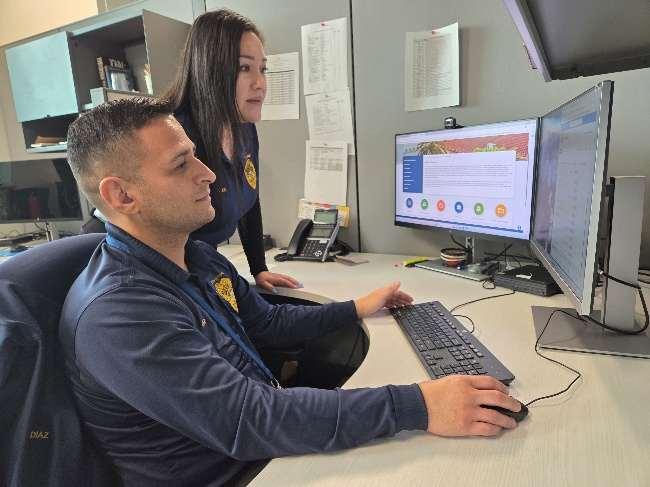
The Santa Barbara County Pretrial justice system is dedicated to effectively supervising individuals released on pretrial supervision, reasonably assuring attendance at court hearings while maintaining the presumption of innocence and providing protection to the public. The Santa Barbara Pretrial Supervision program began in July of 2017 with funding approved by the CCP and has expanded over the years commensurate with the increase in individuals ordered to be monitored by the Court.
DPO(6.0FTE)
$1,013,500
DPOSr(2.0FTE)
$414,300
$
$2,336,341
DPOIntake (2.0FTE)
$345,100
Pretrial Services Navigator (4Positions)
$470,000
Software Licenses/Maintenance
$40,000
ServicesandSupplies
$53,441
Deputy Probation Officers (DPOs) serve as Pretrial Compliance Officers (PTCOs) to monitor clients and their adherence to conditions of supervised release. The PTCOs communicate the progress of clients via memorandum reports to the judicial officer and attorneys. PTCOs supervise defendants according to their assessed risk level and may be responsible for the installation of Global Positioning System (GPS) monitors, responding to violations related to Secure Continuous Remote Alcohol Monitoring (SCRAM), and completing violation reports or warrant requests.
Since the start of the supervised pretrial release program, the number of individuals monitored by PTCOs has risen steadily increasing from 401 in FY 2018- 2019 to 1,876 in FY 2024-2025. In FY 2024-2025, the number of individuals beginning pretrial supervision outpaced closures, resulting in a higher total population on supervision as of the end of FY 2024-2025. At the same time the median length of supervision decreased for the fourth consecutive year, dropping from 71 to 69 days.
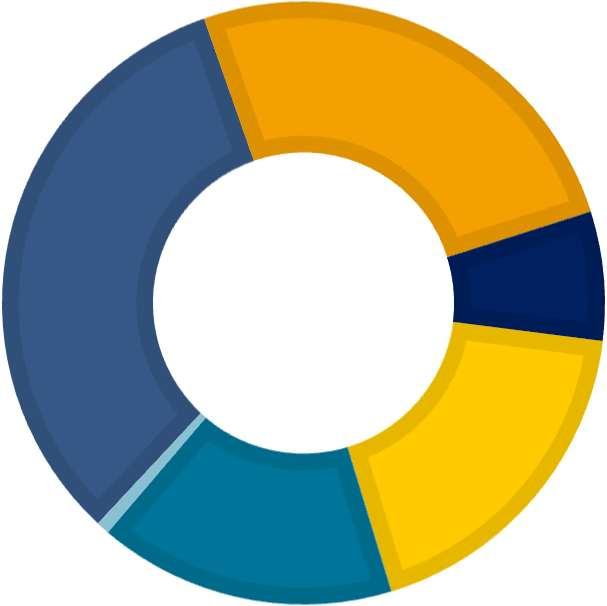
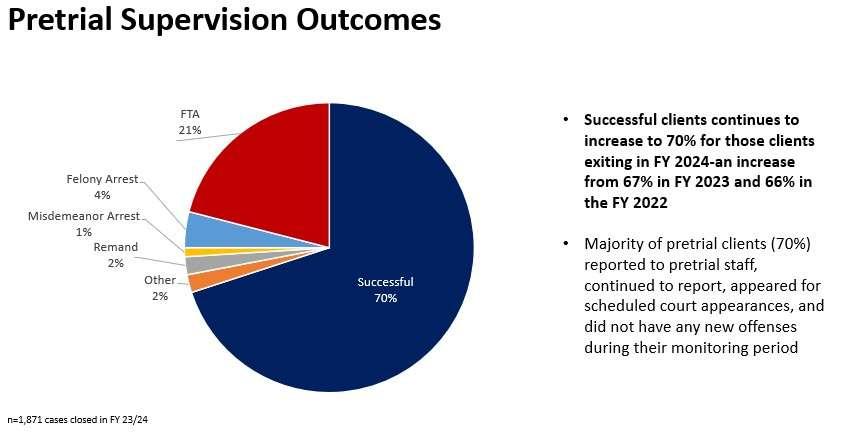
The majority (70%) of individuals on pretrial supervision were successful. These are individuals who reported to pretrial staff, continued to report, appeared for scheduled court appearances, and did not have any new offenses during their monitoring period. In FY 2024-2025, 27% of people either failed to appear at their court hearing or received a new arrest (misdemeanor or felony) during their pretrial period (Figure 9). For FY 20262027, ten full-time Probation staff are funded by the CCP, which is a portion of the total supervision program.
9
In July of 2019, the Judicial Council of California awarded the Santa Barbara County Superior Court a grant to expand the Santa Barbara County Pretrial Program for the period of August 1, 2019, through December 31, 2021. To increase the safe and efficient release of arrested individuals with mental health challenges on Pretrial Supervision, two Mental Health Navigator (MHN) positions, later renamed Pretrial Service Navigator (PSN) positions, were funded.
Initially, the focus of these positions was on those clients with mental health challenges. However, a review of the overall completion rates revealed that other vulnerabilities and acute needs were contributing to defendant’s inability to attend their scheduled court hearings. This included being unhoused and suffering from substance abuse issues and/or, mental health issues or a combination thereof. Recognizing this broader need, the positions were renamed Pretrial Services Navigators (PSNs) and their scope was expanded beyond just supporting clients with mental health challenges. PSNs attend court hearings on designated clients to provide information to the Court on progress during the program or to advise of discharge planning details. A key component of the PSN position is the “warm hand off” of clients granted supervised pretrial release to services providers. This service is further supported enhanced by the ability of the PSN to provide transportation to appointments and/or facilitate access to essential psychotropic medications when necessary. The PSN positions follow up with mental health services providers, provide updates at subsequent court hearings, as needed, and accompany individuals to subsequent court dates. By linking relevant resources and services, the PSNs play a critical role in promoting the success of the individual during the pretrial process, aiding in their successful completion of pretrial supervision. For FY 2024-2025, four PSNs are funded through Realignment funding.
Of the 1,836 individuals exiting pretrial supervision in FY 2024–2025, 101 received navigator services. Individuals scoring lowest on the VPRAI-R are predicted to succeed on pretrial release; however, the support of a navigator appears to increase successful outcomes by 16% and reduce failure to appear (FTA) by 65%. Among clients identified as higher risk of failing to appear or pretrial failure (Levels 3–6), the impact is less clear. For those receiving navigator services, FTA decreased by 11%, but overall successful exits from pretrial supervision declined by 4%.
The Santa Barbara County Public Defender's holistic defense model recognizes clients are faced with legal challenges often intertwined with social, economic, and systemic barriers. The holistic approach goes beyond traditional legal representation by addressing the full range of factors that contribute to justice system involvement, while developing powerful mitigation that advocates for fair sentencing and alternatives to incarceration.
ClientServices
Specialist(1.0FTE)
$154,000
LOP(1.0FTE)PublicDefender
$102,900
ADMHSTeam SupervisorPractitioner (1.0FTE)
$198,700
The Holistic Defense Program utilizes multidisciplinary teams including attorneys, advocates, treatment coordinators, social workers, and housing specialists who provide comprehensive assessments, individualized service plans, clientcentered advocacy, and service coordination. Through early intervention, the team addresses underlying causes of justice system involvement while advocating across multiple systems. Strong partnerships with community providers and county agencies facilitate access to mental health treatment, substance use services, housing assistance, employment support, healthcare, and family services. This integrated approach focuses on client stabilization, reducing barriers to success, and promoting long-term positive outcomes.
$90,000 Travel ExpensesPublic Defender $88,900 HOLISTICDEFENSE $ $1,575,700
ADMHsRecoveryAssistant (3.0FTE)-PublicDefender
$346,400 HousingSpecialist(4) PublicDefender
Advocate/SocialWorkersMSW (4.0FTE)-PublicDefender
$594,800
The Community Corrections Partnership funds 10 full-time Holistic Defense staff in addition to the HDM and four AmeriCorps service members who provide comprehensive, client-centered advocacy across Santa Barbara County. These positions include graduate-level Holistic Defense Advocates (including one LCSW), Rehabilitation Service Coordinators, Advocacy Assistants, a Senior Case and Housing Specialist, and AmeriCorps members strategically deployed across all three branch offices.
The Community Corrections Partnership (CCP) funds four Holistic Defense Advocate (HDA) positions. HDAs are strategically assigned to Santa Barbara, Lompoc, and Santa Maria and specialize in social work, biopsychosocial assessments, complex records review, mitigation, oral and written advocacy, in-custody services, mental health diversion, substance use disorders, and treatment/re-entry planning. Additionally, CCP funds one Licensed Clinical Social Worker (LCSW) who primarily serves individuals with serious felony charges and the Incompetent to Stand Trial (IST) population, while also providing training and clinical supervision to graduate level holistic defense advocates pursuing social work licensure. In FY 2024-2025, HDAs served 387 unique individuals, with an average annual caseload of 97 clients per advocate.
The Rehabilitation Services Team is an integral part of the Community Defender Division, specializing in mitigation support and comprehensive case disposition planning. Rehabilitation Services Coordinators develop alternative sentencing options by connecting clients to substance use treatment, securing shelter and transitional
housing, and coordinating outpatient services that demonstrate client commitment to rehabilitation.
The CCP funds two Rehabilitation Service Coordinators (RSC) to develop mitigation plans and two Advocacy Assistants to secure medication and transportation directly from custody. These transportation and coordination services are essential mitigation tools, demonstrating to courts that clients have immediate, concrete support systems in place—strengthening arguments for reduced custody time, alternative sentencing, and community-based supervision. In FY 2024-2025, the team served 377 clients with 1,355 services. Average interventions per client rose from 3.1 to 3.6, reflecting more comprehensive mitigation support that strengthens case disposition strategies.
As members of the County Discharge Planning Team, RSCs participate in crucial collaboration between the Public Defender, Sheriff, and Probation departments to ensure comprehensive re-entry planning with appropriate clinical and medical services. By establishing robust treatment and housing plans prior to disposition, the RSC Team strengthens the defense's ability to advocate for reduced sentences, diversion programs, and community-based alternatives to incarceration—directly supporting favorable legal outcomes while addressing the underlying factors driving justice involvement.
The CCP strengthens holistic defense services by funding four Housing Specialists through AmeriCorps and United Way and one Lead Housing Specialist position. The Lead Housing Specialist provides specialized training and supervision to AmeriCorps members in holistic defense advocacy, housing navigation, document readiness, and service coordination. These positions are integral to the holistic defense model, providing the critical housing stability that strengthens mitigation arguments and enables clients to successfully reintegrate into the community.

AmeriCorps members are strategically deployed across the county: one in Lompoc, one in Santa Maria, and two in Santa Barbara—providing comprehensive geographic coverage for all three branches of the Public Defender's Office. Members serve all Public Defender clients and collaborate with other Community Defender Division advocates based on referrals and individualized needs. Services encompass emergency shelter placement, transitional housing, housing navigation, community advocacy, document readiness, case management, and permanent housing assistance—all essential components of comprehensive mitigation plans that demonstrate to courts that clients have concrete pathways to stability. The housing team achieved significant outcomes in FY 2024-2025 facilitating 268 total housing placements and referrals. (Figure 10)
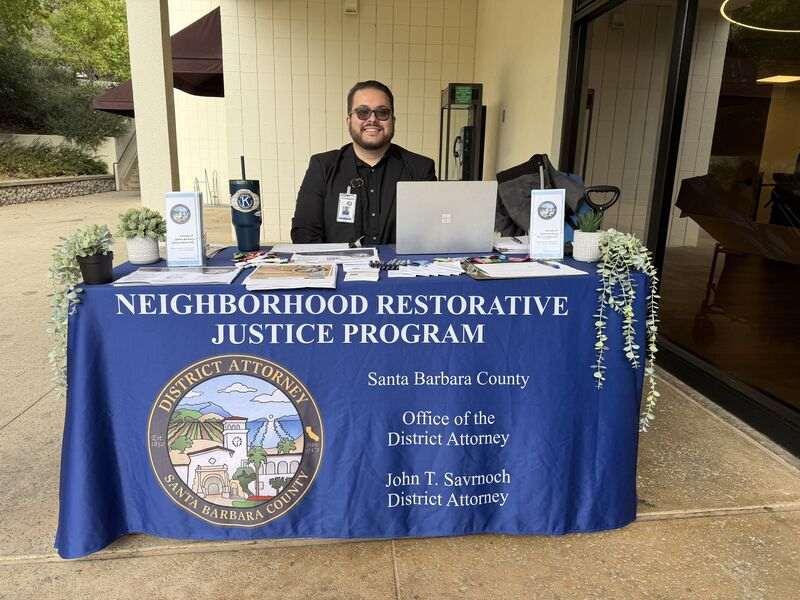
The Santa Barbara County District Attorney’s Office (DA), in partnership with the Second District Supervisor’s Office, launched the Neighborhood Restorative Justice Program (NRJP) in South County in 2021, formerly known as Neighborhood Court. The program expanded to North County in July 2023, allowing for countywide participation. NRJP is a pre-filing diversion program for certain misdemeanor offenses that provides an alternative to traditional prosecution. The program emphasizes accountability, community involvement, and repairing harm to victims, while reducing the time, consequences, and resources associated with court proceedings.
From July 1, 2024, through June 30, 2025, the DA’s Office made direct contact with 334 individuals who were referred to NRJP by Deputy District Attorneys. During this period, 212 participants successfully completed the program, fulfilling all accountability requirements, and had no criminal charges filed. Seven participants remained active with cases still pending or in progress, 44 participants were considered unsuccessful due to failure to complete contracts, not paying restitution, missing restorative conferences,
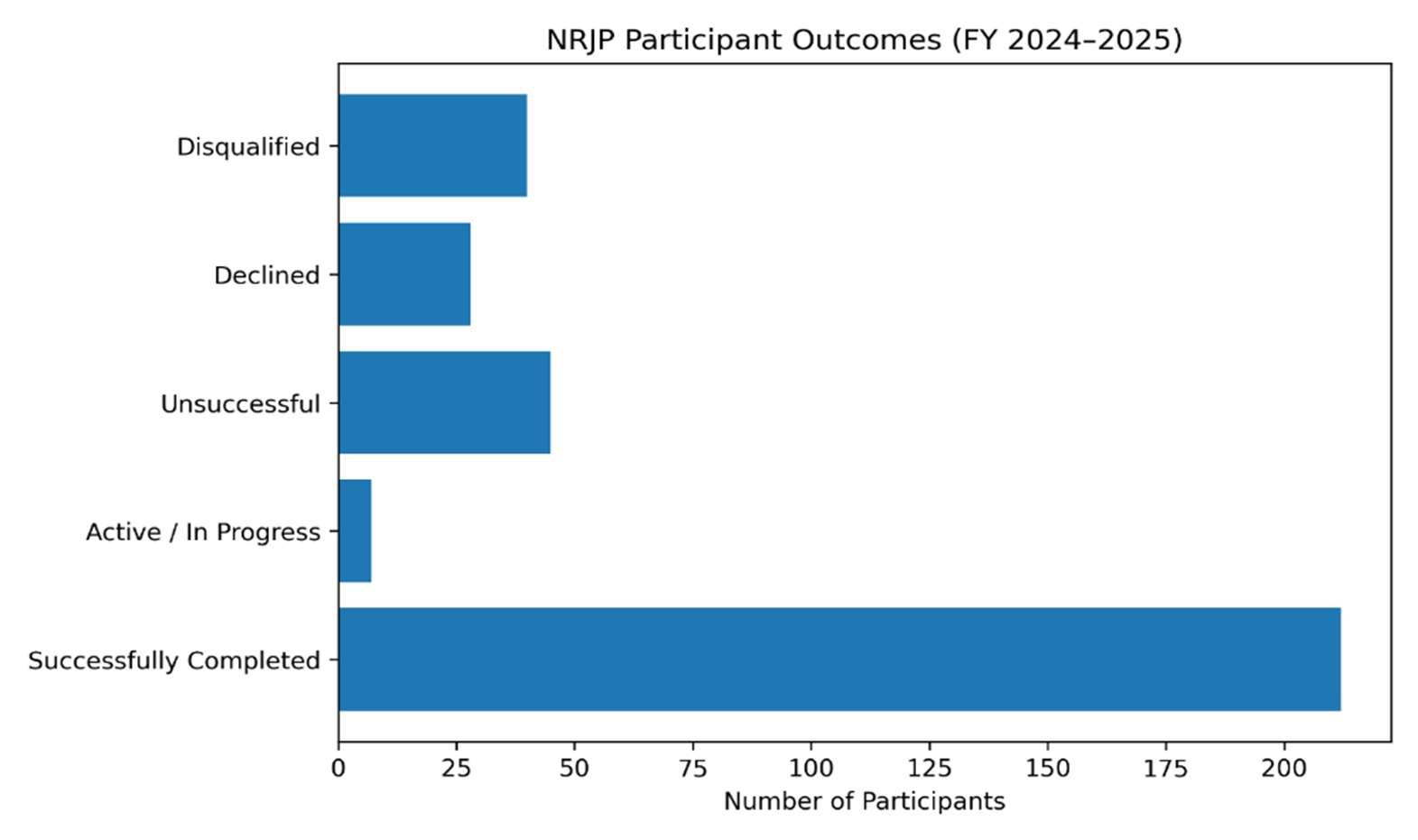
or stopping communication, and 28 eligible participants declined to participate, often citing a desire to proceed through the court system or avoid restitution. An additional 39 participants were disqualified because preconference screening revealed other open cases, probation status, or new pending cases. (Figure 11)
NRJP-DISTRICTATTORNEY
FBSMVFacilitator Training&OutreachDistrictAttorney
$
$318,500
ProgramCoordinators

(2.0FTE)-DistrictAttorney
$300,500
$18,000
Participants in NRJP meet with trained community volunteers to discuss the offense, its impact on victims and the community, and steps they can take to make amends and prevent future offenses. Accountability actions may include restitution, community service, letters of apology, educational programs, counseling, or restorative conferences with victims. Successful completion allows participants to avoid criminal convictions and the long-term consequences that can affect employment, housing, driving privileges, and financial stability.
During FY 2024–2025, the DA’s Office continued to receive support from the Community Corrections Partnership (CCP), including one-time funding that supported countywide expansion of NRJP. This funding enabled the DA’s Office to contract with Fighting Back Santa Maria Valley for facilitator training and outreach and with the University of California, Santa Barbara to serve as an independent evaluator. Program evaluation focuses on participant engagement, victim involvement, restitution outcomes, completion rates, and overall program effectiveness to guide ongoing improvements and ensure responsible use of resources.
Victim engagement is a central component of NRJP. To increase victim participation and engagement in the NRJP for FY 2025-2026, the CCP allocated additional one-time funding for the DA’s Office to hire a full-time Extra-Help Victim Witness Advocate. The addition of a dedicated victim advocate has significantly strengthened this focus. The NRJP Victim Advocate provides a consistent point of contact for victims, explains the restorative justice process, assists with restitution documentation and insurance claims, and supports victims at whatever level of participation they choose. This role ensures victims’
needs remain central while also supporting program staff with outreach and follow-up.
With the support of the NRJP Victim Advocate, program staff conduct ongoing outreach to victims to provide information, encourage participation, and facilitate restitution. During this reporting period, more than 44 victims received restitution, either through direct payment by the offender or through insurance reimbursement. An additional 52 cases involved large retail stores where stolen property was recovered, thereby reducing financial loss.
Restorative justice conferences are a key part of NRJP. These structured, victim-sensitive meetings provide a safe space for victims, offenders, and their support systems to come together. Victims can share the impact of the offense, regain a sense of control, and feel empowered, while offenders gain a direct understanding of the harm caused. The process encourages offenders to take responsibility, make amends, and reintegrate into the community, while supporting public safety and reducing the likelihood of reoffending.
An example of this involves a restorative justice conference for a vehicular manslaughter case during which the victim’s family and the offender participated in a deeply emotional dialogue. The offender agreed to the family’s requested conditions, including one year of community service, five hours per week assisting senior citizens, monthly presentations on distracted driving, and a written letter to the family recounting the day of the accident. In another case, an in-person restorative justice conference successfully addressed an altercation involving battery and vandalism between two attorneys in a family law matter. The session facilitated healing for the victim, accountability for defendant, and full restitution. These cases illustrate how NRJP conferences can promote offender accountability, address victims’ needs, and repair harm in a meaningful and restorative way.
The Familiar Faces Team is a multidisciplinary team dedicated to reducing recidivism and improving outcomes for individuals with complex needs in Santa Barbara and surrounding areas. Through daily outreach and engagement, the team rapidly identifies, assesses, and connects highneed clients to supportive services. These clients often include individuals with high utilization of the county jail, individuals generating frequent law enforcement or crisis calls, and those with repeated psychiatric hospital admissions.

Training, Equipment& ClientSupportsProbation
$85,265
$1,103,665
ProbationStaff (2.0FTE)
$405,400
ProbationManager (0.15FTE)
$40,100
Training& Equipment-Public Defender
$6,700
$403,600
In FY 2024-2025, FFT engaged 18 individuals. Given the small sample size, early findings should be interpreted with caution. A symmetrical pre/post analysis, comparing the total number of jail bookings and incarceration days for the same group before and after their signed release, found notable reductions: cumulative bookings dropped from 59 to 47 (a 20% decrease), and total incarceration days declined from 1,967 to 1,801 (an 8% decrease). Psychiatric health facility (PHF) admissions also decreased, from 4 to 1 (a 75% decrease), and crisis interventions dropped from 12 to 8 (a 33% decrease). Admissions to Crisis Stabilization Units (CSUs), however, increased from 1 to 3, which is a positive result as CSUs provide a safer, less restrictive short-term environment for individuals in a mental health crisis aimed at stabilizing them or a quick return to the community and providing a vital alternative to hospitalization or jail. Additionally, the CSU is voluntary, and clients can stay up to 23 hours and are connected to additional resources upon release, such as Crisis Residential Treatment.
$162,600
Advocate/Social Workers-Public Defender(1.0) FTE
The Familiar Faces Team consists of a Supervising Probation Officer, a Deputy Probation Officer, a Public Defender Holistic Advocate, a Behavioral Wellness Recovery Assistant, a Behavioral Wellness Practitioner, and a Behavioral Wellness Case Worker. The team works collaboratively to build trust-based relationships and implement coordinated intervention plans. By providing intensive engagement, warm handoffs, and continuous tracking, the Familiar Faces Team ensures seamless access to community resources and continuity of care, fostering long-term stability and well-being.
To ensure the proper administration of Realignment funding, the CCP provides funding to cover administrative expenses relative to each County department’s direct program expenditures. Each County department receives 3% of the direct program expenditures they administer apart from BWell, which receives 13%, County Health, which receives 22.73% and Social Services, which receives 37.37%. Realignment also requires AuditorController resources resulting in the allocation of 0.5% of countywide direct Realignment expenditures to fund such requirements.
The County of Santa Barbara is committed to advancing data-informed strategies to strengthen local criminal justice practices and reduce recidivism among Realigned clients. To support this effort, the CCP has funded 12 evaluations to date, including a BwellStaff (3.0FTE)
38 | Page
process and implementation evaluation in FY 2024–2025 of eight diversion programs and two post-conviction specialty court programs. This evaluation reviewed program design and fidelity, participant experiences, eligibility criteria, and target populations, and identified strengths, gaps, and opportunities for improvement. Building on these findings, the CCP launched a strategic planning initiative in FY 2025–2026 to establish a coordinated, datadriven, and community-responsive diversion framework.
EDP Systems & Programming Analyst (1.0 FTE)
$183,300

Evaluation
$68,796

$ $503,996


$177,300 Accountant I (0.5 FTE)
$74,600
(1.0 FTE)
Community engagement has been a central component of this work. Six community input sessions were held across Santa Barbara County including in Santa Maria, Lompoc, and Santa Barbara offered both in person and virtually, and facilitated in English and Spanish. These sessions were designed to gather community feedback on the priorities and strategies of the strategic plan, as well as input on the draft action plan. In addition, multiple presentations were provided to both the CCP and the CCP Workgroup throughout FY 2025–2026 to share progress updates and report on community feedback. The final strategic plan will be published by June 2026.
To further strengthen community-informed decision-making, the CCP is also supporting the Valuing Voices initiative. Valuing Voices is a research project designed to gather feedback from justice-involved clients and/or victims, their families, and those who work with them to better understand their experiences and identify opportunities to improve the delivery of services for individuals returning to their communities following incarceration. The project prioritizes culturally sensitive engagement and seeks participation reflective of the County’s diversity, including representation across geographic areas, gender, race, ethnicity, and language spoken. Feedback is being collected through one-on-one interviews, focus groups, and surveys and will be analyzed to identify system strengths, service gaps, racial and ethnic disparities, and opportunities for improvement. The final report will be published in both English and Spanish by June 2026.
To enhance systemwide data coordination, the CCP funds an EDP Systems & Programming Analyst to support the technical work required to link data across agencies and maintain the County Integrated Information System (CIIS). This analyst

provides direct technical and analytic support to the Santa Barbara County Data Sharing Committee (SBCDSC), a collaborative comprising of the Sheriff’s Office, District Attorney, Public Defender, Superior Court, BWell, and the Probation Department.
SBCDSC has developed a countywide data-exchange infrastructure, governance structure, and standardized processes that enable more comprehensive analysis of shared clients. A central component of this effort is CIIS, an innovative system that creates a virtual “handshake,” allowing disparate information systems to identify and connect client records regardless of where the data originates. This capability allows partner agencies to confidently link data, improve workflow efficiency, enhance service delivery, and produce integrated reports and visualizations.
In FY 2025–2026, CIIS participation is expected to expand to include the Public Health Department, Department of Social Services, and Community Services Department, further strengthening the County’s capacity for coordinated, data-driven decisionmaking.
The Board of State and Community Corrections (BSCC) through the Edward Byrne Memorial Justice Assistance Grant Program (JAG) awarded the Public Defender’s Office $715,000, over the period of three years (FYs 2023-2024, 2024-2025, 2025-2026), to fund the READY program. The CCP funded an additional $1,266,857 over the same period to supplement services to the most vulnerable clients, including those who are unhoused or diagnosed with behavioral and/or mental health disorders. The READY project combines resources from the Public Defender’s Office, Probation Department, Good Samaritan Shelter, and local community-based organizations that specialize in areas such as life skills, job readiness, medical care, and other skills. The goal of READY is to provide an assessment of needs, connection to services, and representation at the earliest stage of criminal proceedings to reduce the harm of pretrial incarceration. Specifically, the READY program was implemented to swiftly meet the needs of individuals booked in jail on misdemeanor and low-level felony charges.

The READY team assesses the individual’s needs, community ties, employment, and family situation within the first 48 hours of incarceration. This stage is critical as information gathered at this time has the potential to
40 | Page
positively impact the outcomes at the arraignment hearing.
Preliminary data, as analyzed by UCSB, demonstrates that since READY’s inception, nearly 98% of clients were interviewed within 48 hours of arrest, accounting for weekends and holidays. From July 1, 2024, through December 31, 2025, the READY team interviewed 529 people booked into the Northern Branch jail.
The READY team currently consists of an attorney to identify and navigate potential legal issues, an investigator to gather records conduct time-sensitive investigation, and verify community ties, and a legal office professional to ensure that information gathered is properly recorded and transmitted. In addition, READY relies on navigators to assist clients with successful re-entry. This structure allows for robust and meaningful advocacy early in the criminal proceedings, often before charges have been filed.
A February 2025, analysis by Michael Wilson of MW Consulting estimated that READY has already reduced the average daily jail population by approximately 14 individuals by lowering the average length of stay for individuals receiving an interview. In December 2025, the Jail Data Analysis and Diversion Ad Hoc Subcommittee, convened to analyze the County jail population and review jail reduction strategies, reported that expanding early representation to South County is estimated to reduce the number of people is custody by an additional 10 people on an average day. The CCP approved 1,659,800 for FY 2026-2027 through FY 2028-2029 to continue the same level of service. In addition, the Public Defender’s Office is looking to expand the READY program to the South Branch Jail to replicate the program and provide the same level of service.
The District Attorney’s Office received one-time funding over three years for a Victim Witness Program Assistant to support DV caseloads in North County, to address the significant increase in the volume of domestic violence cases in North County. The DV Advocate facilitates transportation from Santa Maria to Lompoc on numerous occasions, ensuring that victims have reliable access to court hearings. This commitment to logistical support reflects the District Attorney’s commitment to removing barriers that could hinder victims’ pursuit of justice, including when court hearings are held in a different city than where the victim lives. The DV Advocate is proactive in their caseload. Examples of this include collaborating with the District Attorney’s Investigative Assistant/Subpoena Server to locate transient victims, thereby offering victims a personal introduction to their Victim Advocate and

providing critical resources tailored to their needs. This underscores the importance of building trust and rapport with victims early on in the criminal justice process in a manner that is conducive to where they are in their journey toward justice. The DV Advocate also accompanies victims to hospitals and police stations, providing essential support during their interviews with law enforcement. The Advocate’s presence during these critical moments helps to alleviate anxiety and fosters a sense of safety for victims. Additionally, the DV Advocate plays a pivotal role in assisting victims with accessing local domestic violence shelters, ensuring that they have a secure environment when they need it most. The DV Advocate also collaborates with local agencies to develop comprehensive strategic plans for victims who require emergency overnight accommodations before court hearings. These partnerships demonstrate the Office’s commitment to coordinated care and thoughtful planning to meet victims’ unique needs.
Domestic violence (DV) affects individuals of all ages, genders, and backgrounds. According to the Public Policy Institute of California, law enforcement throughout the State responded to over 160,000 domestic violence-related calls in 2023 (18 calls per hour. Incidents involving aggravated domestic assault have surged; over 50% of domestic violence calls in 2023 involved violent assaults, an increase of 15% since 2019.
This trend has also been true for Santa Barbara County. Domestic violence is among the most significant and persistent threats to public safety and family stability in Santa Barbara County. There has been an evident increase in the aggravated nature of domestic violence referrals referred to the Santa Barbara County District Attorney’s Office for review. Domestic violence presents a danger not just to the immediate victim, but also a persistent threat to children who suffer from exposure to acts of violence, coercion, and intimidation in the home. The problem is particularly acute in Northern Santa Barbara County (Santa Maria, Lompoc, and surrounding communities), where the Santa Barbara County District Attorney’s Victim-Witness Assistance Program (VWAP) has documented a 31% increase in violent domestic violence case referrals since 2018. According to the Department of Justice, the total number of domestic violence-related calls for assistance in Santa Maria increased from 317 in 2019 to 553 in 2024. During this same period, cases involving strangulation increased from 31 to 56 and cases involving suffocation increased from two to nine.
Victim Advocates in Santa Maria report receiving as many as five new DV case referrals per day, with two to three high-lethality cases per week. From 2018 to 2024, the number of new DV case referrals in Santa Maria increased from 733 to 998, or 36%.
High lethality is characterized by acts of strangulation, the presence of firearms or other weapons, and threats of homicide or suicide. The majority of cases involve situations in which there are children in the home who witness the violence. The increase in such cases strains existing advocacy service capacity, making it challenging to meet the imminent safety concerns expressed by victims.
The increase in violent DV case referrals in North County has long-term, negative effects on families and the community at large. Early intervention is critical to curbing the intergenerational cycle of violence that can plague a family for years to come. Of particular concern are the cases involving high lethality with children in the home who
are witnessing the violence. Not only does exposure to early childhood trauma have immediate emotional consequences, but it can also have long-term emotional and physical implications which can alter the trajectory of healthy child and adolescent development.
Victims in North County frequently face significant barriers to seeking help. Survivors often remain with abusive partners due to financial dependence, concerns for children’s welfare, or lack of safe, alternative housing. These factors can make victims reluctant to cooperate with prosecution, even in high-risk cases. According to the National Crime Victimization Survey, fewer than half of violent victimizations are reported to law enforcement, and only 8% of crime victims receive assistance from a victim service agency. This disparity underscores the need for proactive, traumainformed, and responsive outreach and services to DV survivors in Santa Barbara County. It is imperative to have a trauma-informed, trained DV Advocate to help victims navigate the barriers that may limit how likely they are to seek assistance and engage with the criminal justice system. With additional advocacy resources, the Office will be better able to address the gaps and needs of victims of domestic violence.
The DA’s Victim-Witness Assistance Program currently employs advocates who serve all categories of crime victims. Prior to the District Attorney’s expansion request for the DV Advocate position, the surge in DV referrals had overwhelmed existing staff capacity, leading to delays in initial victim contact, safety planning, and submission of timesensitive victim impact information to the courts. Without timely intervention, some victims faced gaps in service at the most critical junctures of the criminal justice process, such as arraignment when the court is reviewing the need for a criminal protective order, placing their safety at further risk.
The Freedom to Choose (FTC) project is a non-profit program focused on transforming the lives of incarcerated individuals through compassionate, experiential education, designed to reduce violence and disciplinary conduct within the jail. FTC is culturally responsive, featuring a bilingual curriculum in Spanish and English. The curriculum, Pathways to Freedom, is structured around modules that promote "Change from the Inside." It utilizes cognitive-behavioral approaches, emotional intelligence development, resilience building, and techniques aimed at trauma and violence reduction, among other effective psychological strategies. Participants acquire practical skills in empathetic communication, emotional competency, and selfresponsibility. The focus is on teaching skills necessary for healing trauma, enhancing emotional intelligence, and fostering empathy and resilience, applicable in any setting.

The program provides an in-depth experience for clients in the jail environment, offering an immersive and engaging experience that aligns with the needs of individuals in jail, improving participation and graduation rates.
The daily application of learning through these modules helps build competencies such as problem-solving, self-regulation, communication, inner peace cultivation, and self-reflection. The goal of the program is to equip participants, both men and women with the insight and awareness needed for sustainable, prosocial change, supporting their successful re-entry into the community.

In line with the goals of the CCP, this program seeks to foster positive behavioral change in justice-involved individuals, equipping them for successful reintegration into the community. In FY 2025-2026, twenty individuals signed up for the first cohorts and seven individuals completed the entire six-week course and graduated from the program. In FY 2026-2027 the SBSO plans to establish a baseline percentage of program graduates with no new bookings within six months of release from incarceration. In addition to successful completions, the program is using pre and post program surveys to measure participant learning objectives and behavior change.
The CCP approved one-time funding in the amount of $44,000 for an additional year.
Passed in 2024, Proposition 36 established the Treatment Mandated Felony Act, codified in Health and Safety Code Section 11395, for individuals who are charged with being in possession of a controlled substance and who have prior convictions for drugrelated offenses. Proposition 36 affords treatment options for the specified population, supports recovery and is intended to reduce recidivism, while improving long-term outcomes through comprehensive evaluations and personalized care plans. In Santa Barbara County, eligible defendants receive substance abuse and mental health assessments, as well as a Medi-Cal eligibility assessment, through Behavioral Wellness, with a recommended treatment plan being provided to the Court thereafter. Although not defined by statute, Deputy Probation Officers (DPOs) concurrently assess criminal history information to determine whether the individual would benefit from Probation supervision during the course and scope of
PROPOSITION36-

their treatment. Based on their assessment, the DPOs submit recommendations as to the supervision level of the individual to the treatment team. The Court may then order the individual to participate in appropriate treatment, to include but not be limited to, drug treatment, mental health treatment, and job training, among others. Upon the successful completion of the Court ordered treatment program, an individual may receive a felony dismissal.
The funded Prop 36 DPOs have served as Court Hearing Officers, evaluated individuals, provided the Court guidance on which defendants would most benefit from Probation monitoring, assisted in the preparation of §11395 H&S Deferred Entry of Judgment (DEJ) orders and have monitored the progress of individuals who have been ordered to be monitored by the Court. While the legislation is relatively new, the DPOs may also notify the Court when clients’ cases were eligible for dismissal, or conversely, when it may be appropriate to resume the entry of judgment and sentencing. From July 1 through August 31, 2025, a total of fifty-four (54) potential H&S §11395 DEJ cases were referred to Santa Barbara County Probation for screening and during this same time period a total of twenty (20) unique defendants were granted H&S §11395 H&S in a total of twentyfive (25) cases (as some defendants incurred more than one case). This number continues to increase, as does the number of individuals requested by the Court to be monitored.
For FY 2025-2026, the Probation Department, District Attorney’s Office (DA), Public Defender’s Office (PD), and Behavioral Wellness (BWell) each requested and received one-time funding to support their roles in Proposition 36. The DA and PD specifically requested one-time funding over the course of two years (FY 2025-2026 and 2026-2027) whereas Probation and BWell asked for onetime funds for one year (FY 2025-2026).
Probation and BWell’s requests were predicated on the belief that additional funding would be secured to avoid having to request multiple years of one-time funding and not increase the ongoing budget in the future. Probation did not receive any funding from the state to support Prop 36 operations and the funding for the two DPOs sunsets in June of 2026. While the Probation Departments across the state did not receive Prop 36 operational funding, Behavioral Health departments did. BWell received an allocation of funding to cover expenditures for treatment and implementation.
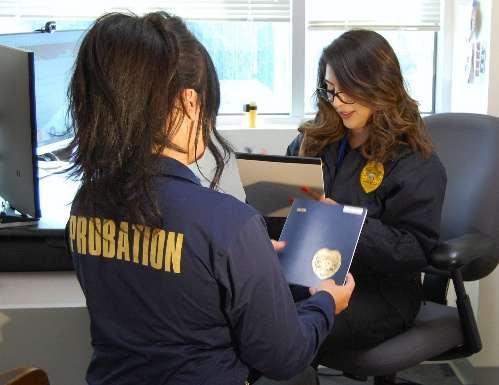
In order to maintain the same level of service to the Court and subsequent monitoring of the individuals as ordered by the Court, the CCP approved one-time funding for Probation in the amount of $361,300 for two (2) FTE Prop 36 Collaborative Court DPOs. The DPOs will continue to provide case management, case plan support, assistance with acute and criminogenic needs, and other support to improve client success, recovery and connection to community-based services.
Public Safety Realignment places significant responsibility on the local jurisdiction and presents numerous challenges; however, by offering considerable flexibility, it also presents opportunities. The local Community Corrections Partnership (CCP) is committed to mitigating challenges and seizing opportunities to improve the local criminal justice system. To guide the local efforts and provide focus to the designated resources, the following goals, objectives, and outcomes have been developed. The CCP continues to refine its objectives to ensure services, programs, and strategies are aligned with the overarching goals, and that these goals continue to guide the Realignment work of partner agencies and community-based organizations working with the Realigned and pretrial populations. While this Realignment Plan is for fiscal years 2026 through 2028, the goals, objectives and outcomes will be reviewed annually.
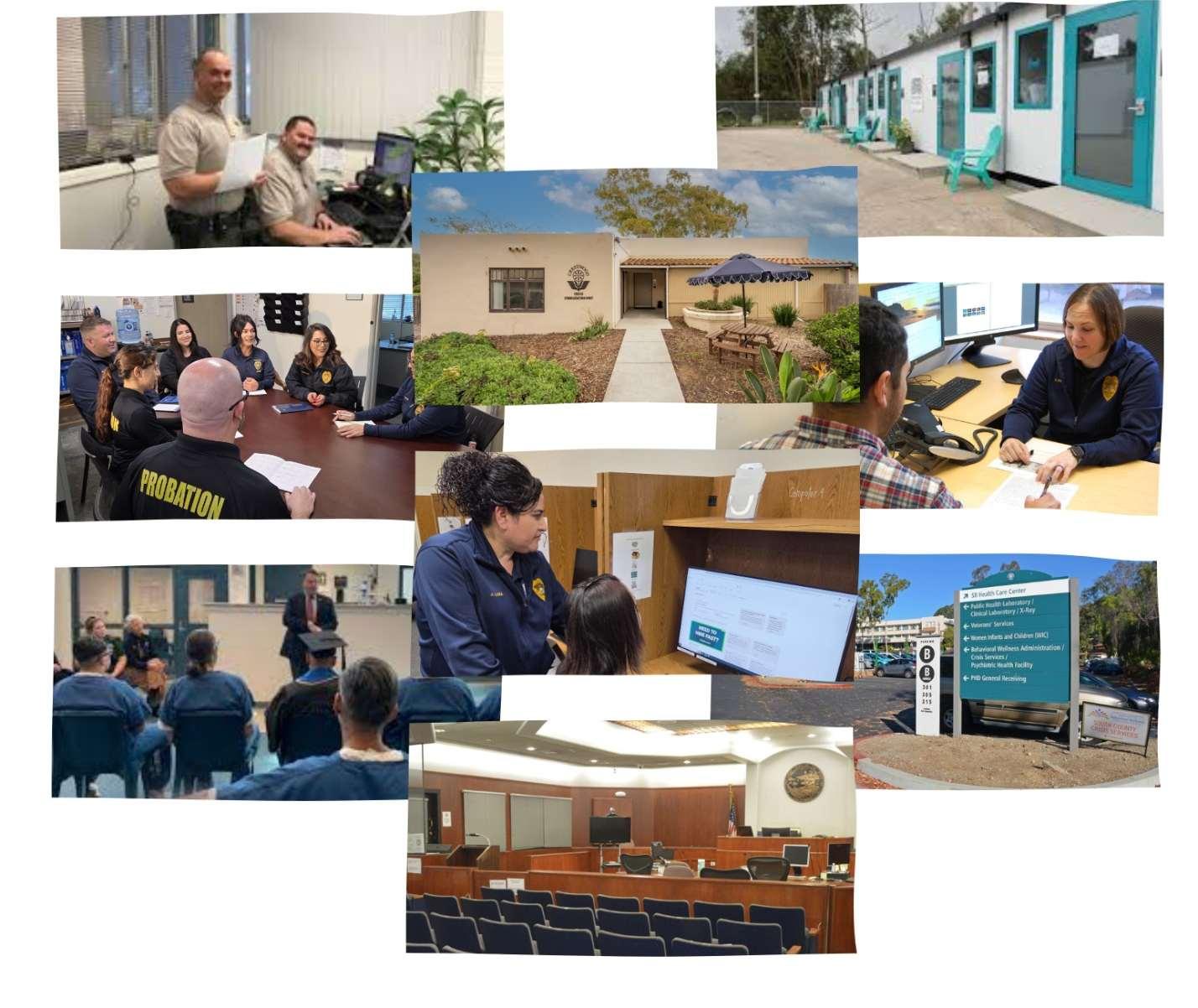
Reducing recidivism is the primary focus of County of Santa Barbara’s Realignment efforts. Strategies for affecting the drivers of criminal behavior require the use of evidence-based programs delivered to model fidelity. Not only has the CCP endorsed the utilization of programs proven to reduce recidivism, but it has also leveraged its work with “Results First” to guide resource allocation decisions.
Deliver evidencebased programming that is data-driven and matched to Realigned clients’ risks and needs.
No less than 50% of clients discharged successfully after completing “Coping with Anger”3,will show improvement between the pre/post on the Texas Christian University (TCU) Criminal Thinking Scales (CTS) measuring client empathy and management of anger.
As of December 31, 2025, 27 adults had completed the program, 10 of whom exited successfully (37%). Of these 10, 4 completed a pre/post survey, and 2 of the 4 showed improvement between the preand post-tests. Due to the small sample size, the goal of assessing the extent to which discharged participants showed improvement was not met. Additional time is needed to increase the sample size and fully evaluate the data.
3 “Coping with Anger” is a cognitive behavioral treatment (CBT) for anger management
4 Ibid.
No less than 50% of Probation clients discharged successfully after completing “Coping with Anger”4,will show improvement between the pre/post on the Texas Christian University (TCU) Criminal Thinking Scales (CTS) measuring client empathy and management of anger.
Demonstrate improved empathy among Freedom to Choose participants, as measured by SBSO pre- and post-program surveys, maintaining or exceeding the 66% increase observed in the first two cohorts.
SBSO will establish a baseline percentage of program graduates with no new bookings within six months of release from incarceration.
Expand the use of best practices for evidence-based sentencing and adjudication that utilizes Realigned clients’ specific risk, needs, and responsivity measures.
Percentage of clients with a new felony or misdemeanor conviction 3 years from the start of supervision or release from custody will not exceed 40% for PRCS clients and 50% for PSS clients.
County of Santa Barbara Superior Court and Probation records indicate the percentage of Realigned clients with a new felony or misdemeanor conviction three (3) years from the start of supervision or release from custody as:
49.2% for Post Release Community Supervision (PRCS) clients. This represents an increase from the previous year’s rate of 39.4% and does not meet the goal of 40%.
41.2% for Post Sentence Supervision (PSS) clients5 . This is a decrease from the previous year’s rate of 52.7%, meeting the goal of ≤50%.
(Refer to pages 9&10 for recidivism trend)
Probation Officers trained in the use of Carey Guides will facilitate a structured office visit within 30 days of case plan development for at least 75% of Realigned clients who begin supervision during the fiscal year.
The combined PRCS/PSS recidivism rate, defined as the percentage of clients with a new felony or misdemeanor conviction within three years of supervision start or release from custody, will not exceed 50%.
5 Due to the small sample size of individuals starting PSS supervision in any reporting year compared to individuals starting PRCS, the recidivism percentage may appear more pronounced. The larger swing from year-to-year in PSS recidivism rates are likely a reflection of the smaller group being tracked. For example, in 2020, there were 36 individuals that started PSS compared to 211 PRCS clients.
Support professional training to advance system-wide knowledge of evidence-based practices in the criminal justice field.
By January 1, 2026, Collaborative Court staff will receive training on treatment court best practices, aligning with the requirements of SB910 and the guidelines developed by All Rise6 to ensure local programs are designed and operated in accordance with state and nationally recognized standards.
In May 2025, six staff members from the Superior Court, Office of the Public Defender, District Attorney’s Office, and Probation attended the All Rise Conference in Kissimmee, Florida, receiving training on treatment court best practices.
On February 2, 2026, additional training aligned with SB910 requirements and All Rise guidelines was provided to 16 Collaborative Court staff. Together, these sessions ensured local programs are designed and operated in accordance with state and nationally recognized standards, thereby meeting the goal.
The Probation Department will partner with an organization specializing in evidencebased programs to train Probation Officers on the criminogenic needs addressed and client profiles suited to each program, enhancing officers’ knowledge of available services and improving referral decisions and participant outcomes.
The District Attorney’s Office will develop a reference guide for bench and court staff that clearly presents diversion program eligibility, suitability criteria, available services, and program duration to support timely, informed, and equitable diversion decisions.
6 All Rise was founded in 1994 as the National Association of Drug Court Professionals and is a 501(c)3 non-profit.
The CCP is focused on reducing the reliance on incarceration through the utilization of alternative sentencing options for appropriate justice-involved individuals. Research-based assessment instruments are used to assure the safety of the community and reduce unnecessary detention for eligible individuals including those who are awaiting the trial and those already sentenced.
Utilize evidencebased assessment tools for pretrial and post-sentence jail release decisions.
No less than 70% of individuals on pretrial supervision will be discharged successfully7 , maintaining the success rate achieved in FY 20232024 and continuing the upward trend from 67% in FY 20222023 and 66% in FY 2021-2022.
In FY 2024-2025, 70% of individuals on pretrial supervision were discharged successfully8, maintaining the success rate achieved in FY 2023-2024 and continuing the upward trend from 67% in FY 2022-2023 and 66% in FY 2021-2022.
At least 70% of individuals on pretrial supervision will be discharged successfully9
7 Defined as individuals who reported to pretrial staff, appeared for scheduled court appearances, and did not have any new offenses during their pretrial monitoring period.
8 Ibid.
9 Ibid.
Strive to maximize jail capacity for highest-risk clients and identify those who can be safely released.
Increase total enrollment in the Alternative Sentencing Program by 10% from 374 total individuals in FY 20242025 (JulyDecember), to 411 individuals in FY 20252026 (JulyDecember), to expand access to alternatives to incarceration.
Reduce the average application response time for individuals applying to the Alternative Sentencing Program from 14 days in FY 2024-25 to less than 12 days, improving access to alternative sentencing.
As determined by the VPRAI-R risk assessment instrument, 80% of individuals recommended to the Court for prearraignment release are granted release.
As of December 31, 2025, 247 individuals had enrolled in the Alternative Sentencing Program during the first two quarters of FY 2025–2026. Based on current enrollment trends, total participation is projected to reach or exceed the goal of 411 individuals by June 30, 2026, supporting expanded access to alternatives to incarceration.
SBSO will report annually to the CCP in Q3 of each fiscal year on jail population reduction efforts, including strategies to expand alternative sentencing and collaborative efforts to reduce the average length of stay (ALOS) of inmates and individuals awaiting release on bed availability (RBA) orders.
As of December 31, 2025, the average application response time in FY 2025–2026 was 7.7 days, meeting the goal for this objective.
The Public Defender will expand the Re-entry, Early Access, and Diversion for You (READY) program to the South County to provide assessment of needs, connection to services, and representation at the earliest stage of a criminal case to individuals booked into county jail.
As of December 31, 2025, 100% of individuals (29 of 29) recommended to the Court for pre-arraignment release were granted release (PTS or OR), meeting the goal for this objective.
With the objective achieved and the process now operational, it will be absorbed into ongoing practice and not carried forward as a separate objective in the next fiscal year.
Expand the diversion of individuals from the justice system.
Maintain a successful NRJP completion rate of at least 80% of all enrolled individuals.
In FY 2024-2025, 63% (212 of 334 individuals) successfully completed NRJP. As of December 31, 2025, FY 2025-2026 data is preliminary: of the 123 individuals contacted, 39 (32%) successfully completed the program, 76 remain active, and 8 declined participation or were disqualified.
Maintain a successful NRJP completion rate of at least 80% of all enrolled individuals.
Explore findings from the FY 2024-2025 process evaluation to establish priorities and enhance diversion in the County including the development of data collection frameworks to support a future outcome evaluation.
Building on FY 2024–2025 findings, the CCP funded a countywide diversion strategic planning effort to establish clear goals, action plans, and support future outcome evaluations. As of December 31, 2025, a County Goals workshop, four community input sessions, and two refinement sessions had been completed to inform the final strategic plan, scheduled for publication by June 30, 2026. In addition, a data survey was distributed to assess current departmental data collected on diversion programs and to gauge readiness for a future outcome evaluation.
The CCP will review the Diversion Data Needs Assessment to evaluate data collected, identify gaps and assess the feasibility of conducting a diversion outcome evaluation including identifying which program(s) are positioned to support evaluation.
The CCP is committed to coordinating and providing services to prepare justice-involved individuals for the successful return to their community after a period of incarceration. Strategies include providing needed rehabilitative services, removing barriers to housing as well as capturing community input on program development and other justice system reform efforts.
Provide services and treatment in partnership with existing community providers.
By June 30, 2026, all individuals released from the behavioral health unit (BHU) and/or those receiving Medicated Assisted Treatment (MAT) at the time of discharge to the community will have a discharge plan completed and Medi-Cal activated.
Facilitate access to sober living and transitional housing, as well as long-term supportive housing. No less than 70% of clients exiting supportive housing will secure a positive housing destination.10
Between July 1 and December 31, 2025, 100% of individuals released from the Behavioral Health Unit (BHU) (n=11) had a completed discharge plan, and 82% were released with Medi-Cal active. During the same period, 100% of individuals receiving Medicated Assisted Treatment (MAT) at the time of discharge (n=17) also had a completed discharge plan, with 82% released with active Medi-Cal status.
From July 1, 2025, through December 31, 2025, 56% or 10 of 18 clients exiting supportive housing secured a positive housing11 destination, not yet meeting the annual goal of 70%.
75% of individuals released from jail after 7 or more days will have Medi-Cal activated and a completed re-entry care plan.
Achieve a rate of clients exiting supportive housing who secure a positive housing12 destination that meets or exceeds the FY 25–26 outcome of 56%.
10 Positive housing is defined as a regular nighttime residence that is not a temporary shelter or other place not designed for sleeping.
11 Ibid.
12 Ibid.
Promote a shared safety approach in conjunction with community partnerships and engagement.
The CCP workgroup will review draft findings of the Valuing Voices study including major themes, key insights, and actionable implications for practice, along with proposed strategies for implementation.
As of December 31, 2025, the CCP and Workgroup received a presentation on early findings and emerging themes, including barriers such as transportation, limited trust, and service availability, as well as the challenges of providing support to justice-involved individuals, with families often serving as the unseen backbone of these efforts. The final report is scheduled for submission to the CCP in June 2026.
Advance a minimum of one recommendation from the Valuing Voices report to address identified community needs.
Number of clients evaluated for referral through the Community Defender Division (CDD) to services including shelter, housing, drug treatment, mental health treatment, and vocational services.
No less than 70% of clients referred for community services will enroll in at least one evidence-based program or essential services with a community organization (shelter, housing, medical services, drug treatment, mental health treatment, primary care, vocational services).
During the first half of FY 25-26 (July 1 - December 31, 2025), 78% of clients referred for community services successfully enrolled in at least one evidence-based program or essential service with a community organization, including shelter, housing, medical services, substance use treatment, mental health treatment, primary care, or vocational services, exceeding the 70% goal for this objective.
No less than 75% of clients referred for community services, will enroll in at least one evidence-based program or essential services with a community organization (shelter, housing, medical services, drug treatment, mental health treatment, primary care, vocational services).
Working collaboratively, the CCP is able to address emerging issues to support the Realigned population and promote community safety. These efforts have included data integration across systems, the evaluation of Public Safety Realignment practices and programs, and fidelity reviews of delivered evidence-based programs.
Ensure fidelity to the researchbased models for funded programs.
To assess quality and monitor program fidelity-how closely a program adheres to its research-based designensure no less than 90% of funded evidencebased programs have completed curriculum specific fidelity reviews.
It is projected that by June 30, 2026, no less than 90% of funded evidencebased programs will have completed curriculum specific fidelity reviews, meeting the outcome for this objective.
To assess quality and monitor program fidelity-how closely a program adheres to its researchbased design-Probation will ensure no less than 90% of funded evidencebased programs have completed curriculum specific fidelity reviews.
Evaluate adherence to evidence-based strategies.
No less than 80% of clients with filed charges who engage with the Holistic Reentry, Early Access, and Diversion (READY) program will enroll in at least one evidencebased program with a community-based organization.
During the first half of FY 25-26 (July 1 - December 31, 2025), 83% of clients who engaged with the Holistic Reentry, Early Access, and Diversion (READY) program pending a filed criminal complaint successfully enrolled in at least one evidencebased program with a communitybased organization, exceeding the 80% goal for this objective.
No less than 80% of clients with filed charges who engage with the Holistic Re-entry, Early Access, and Diversion (READY) program will enroll in at least one evidence-based program with a community-based organization.
Collaborate with justice partners for information sharing and coordination of efforts around best practices.
Coordinate re-entry plans with partner agencies for 100% of individuals released from the County jail after 7 or more days of incarceration by June 30, 2026.
As of December 31, 2025, this objective has not yet been met. County Health has initiated hiring of a Re-entry Coordinator (anticipated by April 2026) and launched a pilot discharge planning effort for a subset of BHU releases in South County, with expansion to North County planned for Spring 2026. Discharge planning capacity and workflows continue to be developed in preparation for broader implementation, including CalAIM re-entry services in October 2026.
Coordinate re-entry plans with partner agencies for 90% of individuals released from the jails' behavioral health units and restrictive housing, and for any incarcerated persons receiving medicationassisted treatment within the jails who have served 7 or more custody days.
Capture and integrate data necessary to measure outcomes.
Transition FFT from utilizing SmartSheet to a database system, enhancing data collection, reporting capabilities, and the tracking of client outcomes to support more effective program evaluation and decision-making.
As of December 31, 2025, meetings with programmers to specify design and user needs had begun, with a projected production date of summer 2026.
The CCP will review and update performance measures for all funded initiatives to assess progress, outcomes, and achievement of programmatic goals.
The CCP is committed to understanding the extent to which racial and ethnic disparities exist within the criminal justice system. The partnership maintains its commitment to ensuring all justice-involved individuals are treated with dignity, respect, and humanity. In FY 2023-2024, the partnership will focus on expanding its understanding and impact of racial and ethnic disparities in the justice system and addressing and implementing processes to assist in reducing disproportionality.
Partner with local justice partners to educate staff and stakeholders and strategize approaches to address any racial and ethnic disparities in the local justice system.
Use countyspecific findings on racial and ethnic disparities to inform decisionmaking.
Complete a new relative rate index decision point analysis by June 30, 2026, and compare findings to the 2021 analysis to strategize approaches to address racial and ethnic disparity in the local justice system.
As of December 31, 2025, data for the updated Relative Rate Index analysis had been compiled, and analytic work was in progress, with a final report anticipated by June 30, 2026.
The Probation Department will explore partnerships with an indigenous-serving organization to educate stakeholders about the Mixteco population, including effective engagement strategies, and to provide the Mixteco community with information on available County services.
Solicit input from justice involved clients and/or victims on the challenges faced and receive feedback on treatment within the criminal justice system to ensure all are treated with dignity, respect and humanity.
Enhance data collection on NRJP victim participation by capturing reasons for non-participation to identify and address barriers.
In FY 25–26, enhanced data collection efforts identified the primary reasons for victim nonparticipation in NRJP as: preference for restitution-only resolution; emotional readiness or trauma-related concerns; desire to avoid direct contact with the responsible party; scheduling or logistical constraints; and satisfaction with resolution through indirect engagement.
The District Attorney’s Office will implement equitable, data-informed outreach to all victims with available contact information and provide requested restitution assistance, victim impact statement support, and trauma-informed restorative justice services, with performance measured by outreach attempts, contact rates, service offers, requests, and fulfillment.
The County of Santa Barbara takes pride in the continued collaboration of agencies, departments, community-based organizations, and representatives of the public to inform and enhance the allocation of state realignment funds to serve clients within the various regional communities. The Community Corrections Partnership (CCP) and its Executive Committee and General Membership continued to examine the needs of those served by supporting the Valuing Voices project, and invested in further evaluation of county diversion efforts that will provide a strategic plan on how to move forward in the coming years. Ongoing discussions honed in on the need for particular budget expenditures, data to illustrate program outcomes, operational efficiencies, and program expansions designed to address the needs of clients across the County.
The FY 2026–2028 Realignment Plan reflects the CCP’s continued investment in established strategies and programs, including enhancements to in-custody programming, support for data collection and evaluation, continuation of the READY program to help reduce the jail population, expanded services for victims of domestic violence in the northern region of the County, and implementation of new requirements under Proposition 36. Consistent with the prior year, many of these initiatives are supported through one-time allocations from the CCP’s restricted fund balance. The CCP also approved the expansions for the Public Defender’s Office by investing in the Holistic Defense Manager and the addition of Mental Health Diversion Paralegals in addition to securing four beds at the Champion Center for clients who need a higher level of care in lieu of being incarcerated in the County Jail.
Overall, the expansions and one-time funded programs and positions included in this Plan support broader goals of reducing incarceration, lowering the jail population, providing timely access to defense services for incarcerated individuals, improving reentry coordination, and assisting victims.
The CCP remains dedicated to collaboration across the justice system throughout Santa Barbara County. The Partnership seeks to implement effective programs, deliver critical services, and collect data to monitor performance and ensure data-driven decision making. The CCP remains committed to ongoing performance analysis to ensure resources are directed toward strategies that demonstrate the greatest impact. The CCP values innovation, client-centered approaches, and the continuous improvement of public safety through evidence-based practices.
The FY 2026-2027 budget of more than $21 million demonstrates alignment with the CCP efforts which focus on jail population management, pretrial services, alternative sentencing, case management, supervision, treatment services and support for Realigned clients.
The charts included in the following pages detail:
FY2026-2027PublicSafetyRealignmentActBudget
PublicSafetyRealignmentAct(AB109)RestrictedFundBalance
AB109RestrictedFundBalanceandFY2026-2027One-TimeAllocations
AFive-YearUse/SourceofFundsTrendSummary
AFive-YearUse/SourceofFundsTrend(Detail)

FY 2026-2027 Public Safety Realignment Act Budget
FY 2026-2027 Adopted Budget FY 2026-2027 ADMINISTRATION AND DATA ANALYSIS
FY 2026-2027 AB109 Allocation (Estimate based on CPOC November '25 Update)
FY 2024-2025 Growth Funds (Estimate Based on CPOC November '25 Update)
of Restricted Fund Balance (Reserves)
Financing:
Financing (Under) / Over Budget: -
Public Safety Realignment Act (AB109) Restricted Fund Balance
Fiscal
Beginning Fund Balance
Ending Fund Balance
Planning Restricted Fund Balance
Beginning Fund Balance Ending Fund Balance
Implementation Restricted Fund Balance
Fiscal
Beginning Fund Balance Ending Fund Balance
Attachment#1:ProbationReport&ResourceCenterProgrammingMenu
Attachment#2:Sheriff’sTreatmentProgram



Moral Reconation Therapy (MRT) is an evidence-based, cognitive behavioral treatment program focused on substance abuse that targets recidivism reduction and is designed to facilitate the development of higher stages of moral reasoning. Classes are available for realigned and medium – high risk felony clients. When there are three or more female clients, there will be one female- only group. Consists of twice weekly 90-minute sessions for three groups of up to 12 realigned clients, and twice weekly 90-minute sessions for two groups of up to 12 medium –high risk felony clients.
Recovery Oriented System of Care (ROSC) is a secular, peer-driven support group for clients with substance abuse issues, and similar to a 12 Step program. Support groups are available for medium and high-risk offenders and consist of twiceweekly sessions of 60-90 minutes.
Sanctuary Centers of Santa Barbara provides enhanced outpatient treatment services and related recovery and re-entry services for a dual diagnosis population of Realigned offenders, specifically Post-Release Community Supervision (PRCS), Post-Sentence Supervision (PSS) and/or clients under standard supervision at the Santa Barbara PRRC. Services include a risk and need assessment, individual counseling and/or group counseling, and a continuum of care for those located in South County upon re-entry to the community from incarceration. The risk assessment tools used include the Mental Health Screening Form (MHSF) and the Drug Abuse Screening Test (DAST).
Work and Gain Economic $elf $ufficiency (WAGE$$) is designed to assist unemployed or under-employed clients. Participants will learn job-seeking skills and interview techniques with a focus on how to answer questions regarding criminal conviction(s) in both the application and interview process. Clients will have an opportunity to improve their interviewing skills, learn what to wear for job interviews, and where to look for employment. Each participant is required to complete a resume. Classes are available for both realigned and medium – high risk offenders.
Drop-in Employment: Clients can utilize computers for online job searches, check posted classifieds and get assistance completing and sending job applications and resumes. Assistance with completing application forms such as SSI, CDL/CA ID forms is also available.
Seeking Safety is a gender specific, evidence-based recovery support service for clients with a history of trauma and/or substance abuse. Classes are available for realigned clients only. Consists of one weekly 60-90-minute session for a group of 12-15 clients.
Courage to Change Interactive Journaling® System is an evidenced-based case management model developed in collaboration with several US Probation offices. Through the use of this cognitive-behavioral Interactive Journaling® System and interaction with their support team, clients address their individual problem areas based on a criminogenic risk and needs assessment.
Cognitive-behavioral program focused on addressing criminogenic risk factors that directly relate to the client’s likelihood to reoffend and providing skills to enable offenders to react appropriately to situations that trigger behavior. Program facilitated by CSI. Classes are once a week for 10 weeks.
Reasoning and Rehabilitation (R&R) is an evidence-based cognitive behavioral program designed to teach impulse control, problem solving techniques and systematic thinking with a move towards more empathetic behavior in a social environment. Classes are available for realigned and medium – high risk felony clients, and consist of 1.5 to 2-hoursessions, twice per week for a period of 7 weeks, closed groups of 10-15 clients each.
Designed to address drug or alcohol relapse for clients who are currently enrolled or have successfully completed MRT. Program facilitated by Good Sam. Classes are once a week for 4-6 weeks depending on the clients needs.
Drop-in Education: Clients are given information regarding how to obtain their GED and on Santa Barbara City College (SBCC) enrollment. Participants can utilize computers for SBCC online enrollment and to view class schedules. Clients are encouraged to utilize computers for completing homework and online assignments requiring internet connection.
Sessions are targeted to increase responsibility for the domestic violence act by the client, gain awareness on how the client’s behavior impacts the entire family, and increase empathy for the victim(s) of the violence. Sessions are once a week for two hours, for 26 weeks. English & Spanish available


Moral Reconation Therapy (MRT) is an evidence-based, cognitive behavioral treatment program focused on substance abuse that targets recidivism reduction and is designed to facilitate the development of higher stages of moral reasoning. Classes are available for realigned and medium – high risk felony clients. When there are three or more female clients, there will be one female- only group. Consists of twice weekly 90-minute sessions for three groups of up to 12 realigned clients, and twice weekly 90-minute sessions for two groups of up to 12 medium – high risk felony clients.
Recovery Oriented System of Care (ROSC) is a secular, peer-driven support group for clients with substance abuse issues, and similar to a 12 Step program. Support groups are available for medium and high-risk offenders and consist of twice-weekly sessions of 60-90 minutes.
Reset is designed to address a drug or alcohol relapse for clients who are currently enrolled in or have successfully completed MRT and uses Living in Balance, an evidencebased curriculum. Using a multi-disciplinary team approach, each track is developed by the PRRC Senior Deputy Probation Officer (SrDPO), PRRC DPO, treatment provider manager, and treatment provider counselor based on the client’s specific needs and situation.
Work and Gain Economic $elf $ufficiency (WAGE$$) is designed to assist unemployed or under-employed clients. Participants will learn job-seeking skills and interview techniques with a focus on how to answer questions regarding criminal conviction(s) in both the application and interview process. Clients will have an opportunity to improve their interviewing skills, learn what to wear for job interviews, and where to look for employment. Each participant is required to complete a resume. Classes are available for both realigned and medium – high risk offenders.
Drop-in Employment: Clients can utilize computers for online job searches, check posted classifieds and get assistance completing and sending job applications and resumes. Assistance with completing application forms such as SSI, CDL/CA ID forms is also available.
Seeking Safety is a gender specific, evidence-based recovery support service for clients with a history of trauma and/or substance abuse. Classes are available for realigned clients only. Consists of one weekly 60-90-minute session for a group of 12-15 clients.
Courage to Change Interactive Journaling® System is an evidenced-based case management model developed in collaboration with several US Probation offices. Through the use of this cognitive-behavioral Interactive Journaling® System and interaction with their support team, clients address their individual problem areas based on a criminogenic risk and needs assessment.
Reasoning and Rehabilitation (R&R) is an evidence-based cognitive behavioral program designed to teach impulse control, problem solving techniques and systematic thinking with a move towards more empathetic behavior in a social environment. Classes are available for realigned and medium – high risk felony clients, and consist of 1.5 to 2-hour sessions, twice per week for a period of 7 weeks, closed groups of 10-15 clients each.
Cognitive-behavioral program focused on addressing criminogenic risk factors that directly relate to the client’s likelihood to reoffend and providing skills to enable offenders to react appropriately to situations that trigger behavior. Program facilitated by CSI. Classes are once a week for 10 weeks.
Drop-in Education: Clients get information on obtaining their GED and Allan Hancock College enrollment. Participants can utilize computers for Hancock College online enrollment and to view class schedules. One-on-one tutoring is also available to clients who desire additional assistance with course work, reading and writing skills, English, computer skills, etc. Clients are assessed by certified teaching staff and a tutor assigned based on the client’s needs. Available Monday thru Friday during program hours
Batterer’s Intervention Program
Sessions are targeted to increase responsibility for the domestic violence act by the client, gain awareness on how the client’s behavior impacts the entire family, and increase empathy for the victim(s) of the violence. Sessions are once a week for two hours, for 26 weeks. English & Spanish available
124 W. Carmen Lane, Suite K, Santa Maria, CA 93458
Monday – Thursday 8:30am to 5:30pm, Friday 8:30am to 5:00 pm

The Courage to Change Interactive Journaling® System is an evidence-based supervision/case management model developed in collaboration with several United States Probation Offices. Using this cognitive behavioral Interactive Journaling® System and interaction with their support team, participants address their individual problem areas based on a criminogenic risk and needs assessment. Implementation is flexible and can be customized based on risk, responsivity, and programming needs. By personalizing the information presented in the Journals to their own circumstances, participants will develop a record of their commitments and progress throughout probation and a roadmap to success in their efforts to make positive behavior change. Journal topics include ‘Social Values’, ‘Self-Control’, ‘Peer Relationships’, ‘Family Ties’,’ Substance Use’, and ‘Seeking Employment’.
Importantly, given the emerging focus and mandate to provide robust re-entry planning for every individual in custody (IP) the Sheriff’s Treatment Program is also piloting the re-entry-focused THRIVE initiative (Therapeutic Re-entry Interventions for Vital Empowerment) at the Santa Maria North Branch Jail using the six (6) “Getting it Right” Interactive Journal curriculum through The Change Companies: ‘Personal Growth’, ‘Responsible Thinking’, ‘Managing My Life’, ‘Change Plan’, ‘Maintaining Positive Change’, and ‘Passport to Action’. In THRIVE, Programs’ Correctional Counselors work with IPs to create SMART Goals to develop a plan for change while identifying specific barriers to re-entry success and assigning Journals targeted to meet IPs along their continuum of change prior to release. The Change Companies has partnered with an online platform provider to provide access on the Tablets for many of these Journals as well, which Programs is exploring with SBSO leadership.
Additionally, STP continues to provide the following curriculum:
Another Way: Choosing to Change (developed by Nada J. Yorke)
A victim-centered addressing criminogenic risk and needs to achieve transformational learning and promote empathy building. The curriculum engaged a trauma-informed appr9oach and uses promising practices such as motivational interviewing (MI) and ACE’s Adverse Child Experiences) research designed to rehabilitate domestic violence offenders and, in doing so, increase safety and empathy for victims of violence.
Created in partnership with the Minnesota Department of Corrections, A New Direction Alcohol and Other Drug Education is a flexible, evidence-based, cognitivebehavioral therapy (CBT) curriculum that treats addiction in justice-involved clients and is proven to reduce recidivism. Justice-involved clients learn that substance use disorder is a chronic disease and recognize the negative effects addiction has on the body and all aspects of life. Clients learn they can choose to change and live freely in recovery. This workbook includes Quick Review exercises to reinforce lessons; reflection exercises that bridge content with real-life experience and Thinking Reports to ensure treatment methods are part of ongoing aftercare.
This curriculum introduces participants to the Adverse Childhood Experiences (ACE) Study conducted by the Centers for Disease Control and Kaiser Permanente to better understand the effects of childhood trauma and stress, and how ACEs also affect behavior and society at large. A core goal of the Building Healthy Life Skills curriculum is to begin to understand the connection between stress and physical and emotional illnesses, change emotional reactions into thoughtful responses, and develop selfawareness toward better command of the individual’s self-destructive patterns of thought and behavior.
Covington (Revised edition of the Woman’s Journal for use in the Criminal Justice System)
The Helping Women Recover Women’s Journal addresses issues that many women struggle with, especially if they are experiencing alcohol or other drug use disorders. Each woman’s path of healing is unique, but many find that it invariably involves connecting with others in healthy relationships. The course is organized into four modules which map the key ‘triggers’ toward relapse: Self, Relationships, Sexuality, and Spirituality. These are also the areas of greatest change in recovery, and the group focuses self-esteem, family of origin, interpersonal violence, and meditation/relaxation techniques.
A flexible, evidence-based program proven to significantly reduce recidivism for justiceinvolved clients. Developed in partnership with the Minnesota Department of Corrections, the curriculum utilizes cognitive-behavioral therapy to help clients change criminal and addictive behavior patterns by engaging in the following workbook modules:
o Criminal and Addictive Thinking
o Socialization
o Preparing for Release