Sanosil products for cooling water treatment



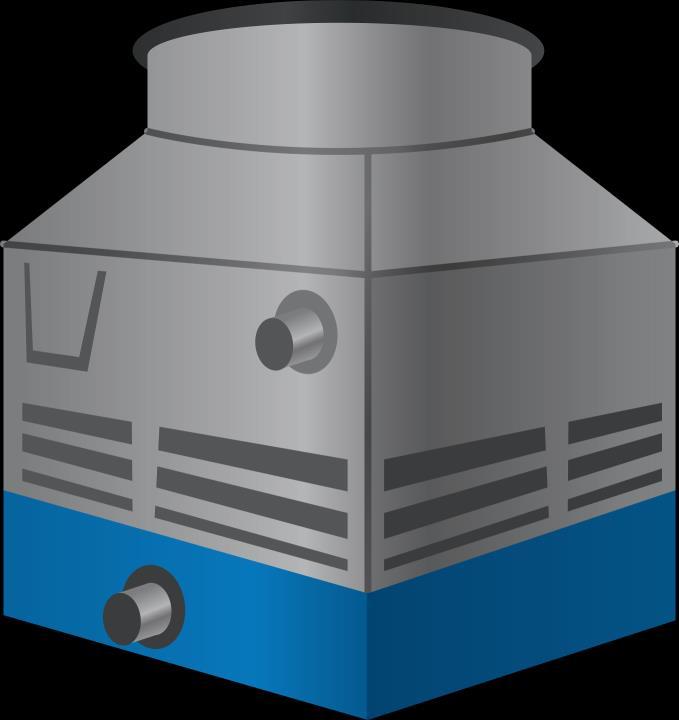


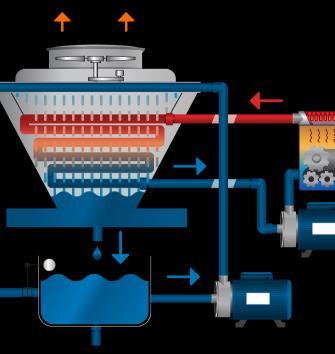
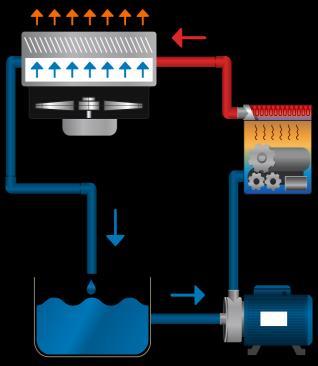
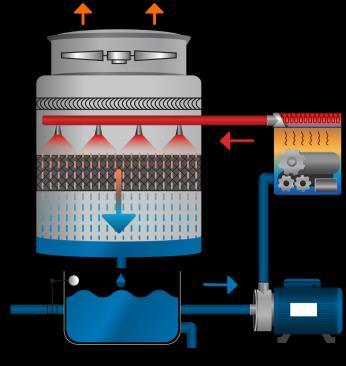
There are a wide variety of models, sizes and designs of water bearing cooling systems. However, they can generally be divided into three categories. The common feature of the three system categories is that without treatment of the water, problems develop relatively quickly. In addition to affecting the service life and performance of the equipment, these problems may also endanger both the health of employees and local residents.


These systems operate by spraying water in a cooling tower or passing it over an irrigated surface. The water evaporates to some extent and releases heat in the process.
The residual cold water accumulates dust and dirt from the air as well as minerals and lime (thickening). It must be removed from the system via a drain (desalination). Fresh water must be added to compensate for the water losses.
In order for open systems to operate at peak performance, they require biocides, hardness stabilisation measures, corrosion inhibitor and dispersing agents.
Such installations consist of a pool (mass cooling) from which the cooling water is extracted, pumped through the areas to be cooled and returned directly to the pool. A heat exchanger together with a fan is sometimes installed in between. The functional principle here is equivalent to a radiator grille in motor vehicles.
Softened water is typically used in closed systems. They rarely suffer losses except for leakage and slight evaporation. The water is less likely to become contaminated and therefore does not need to be continuously replenished.
To condition the water, closed systems require biocides, corrosion protection, dispersing agents and, where necessary, antifreeze.

These cooling systems feature a combination of an open and a closed circuit, which are separated from each other. In the open part of the system, water is evaporated and heat is released. This is used to cool the closed circuit via a heat exchanger. Hybrid systems can also be operated in a "dry" state in cool weather. In this case, the open circuit is drained and the closed circuit is cooled solely using air.
For the open part of the system, hybrid systems require biocides, hardness stabilisation measures, corrosion inhibitor and dispersing agents. Only corrosion inhibitor and dispersing agents are usually used for the closed part. Biocides are required to a lesser extent.
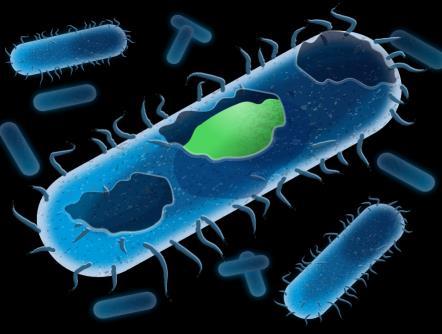
In untreated cooling water, microorganisms (primarily in the form of biofilms/slimy coatings) settle within a very short time. This causes problems for the following reasons:
• Biofilms reduce the efficiency of heat exchangers. A 1 mm thick layer of biofilms reduces the cooling capacity by 30%.

• Some types of bacteria cause corrosion through the formation of acid (similar to dental caries).

• Germs (such as mould spores, Pseudomonas or Legionella) may be released into the environment via aerosols and cause serious infections.
These problems can be prevented through proper treatment using biocides/disinfectants.


Hydrogen peroxide is used as the active ingredient. It is also stabilised and its disinfecting effect is catalytically enhanced several times over by adding a minimal amount of silver ions. The disinfection effect increases by up to 800%
After application, hydrogen peroxide also completely decomposes into water and oxygen. The minimal amount of silver remaining after the peroxide has broken down inhibits the multiplication of germs and has additional conservation effects in water systems.

The special properties of Sanosil disinfectants make them remarkably effective against biofilms and clearly superior to many other products used for this purpose.
The oxygen (1O2/ O2) released by the hydrogen peroxide attacks the cell walls of the microorganisms. Oxidation denatures and destroys them. (1) The effect is supported by silver ions, which enhance the effect of the peroxide in a catalytic process. They also block the germs' metabolism and ability to multiply. (2)


Effective water disinfection with a long lasting effect
Highly effective against biofilms, Legionella and biocorrosion
Odourless and tasteless in treated water
Very high yield effective from 0.02 ml/l
No chlorine/chlorine compounds or QAV, bromine or isothiazolinones
Does not develop AOX / trihalomethanes
With catalytically enhanced hydrogen peroxide
The hydrogen peroxide completely (100%)
Shelf life of over 2 years
High quality product made in Switzerland
into water and oxygen




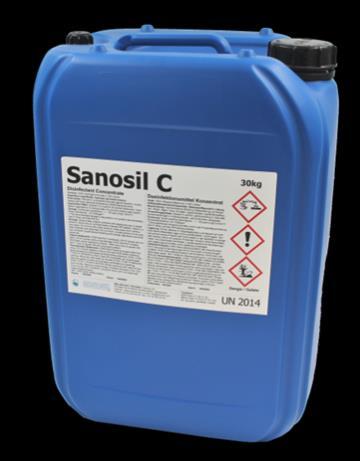
Product type: highly concentrated water disinfectant for use in large drinking, service and cooling water systems (open and closed).
Contains: 50% hydrogen peroxide, 0.05% silver
Highly effective against: biofilms, Legionella, Pseudomonas, MIC (microbiologically induced corrosion)
Ideal pH range: <8
Transport class: hazardous material, UN 2014
Container sizes: 30 kg, 1,100 kg IBC
Shelf life: 2 years
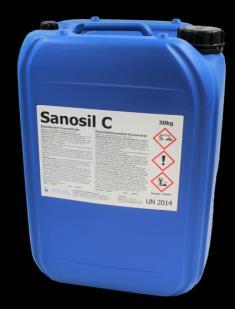
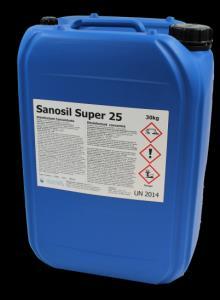
Product type: highly concentrated water disinfectant for use in large scale cooling water systems (open and closed)
Contains: 50% hydrogen peroxide, 0.05% silver
Highly effective against: biofilms, Legionella, Pseudomonas, MIC (microbiologically induced corrosion)
Ideal pH range: <8
Transport class: hazardous material, UN 2014
Container sizes: 30 kg, 1,100 kg IBC
Shelf life: 2 years
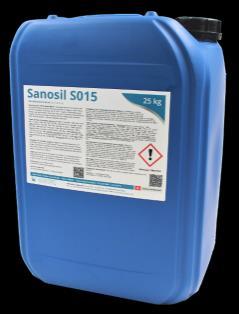
Product type: concentrated water disinfectant for use in smaller drinking, service and cooling water systems (open and closed)
Contains: 7.5% hydrogen peroxide, 0.0075% silver
Highly effective against: biofilms, Legionella, Pseudomonas, MIC (microbiologically induced corrosion)
Ideal pH range: <8
Transport class: non hazardous material
Container sizes: 5 kg, 10 kg, 25 kg, 1,000 kg
Shelf life: 2 years
The water used in open cooling systems evaporates. As a result, limescale, minerals and dirt remain in the circuit, where they become increasingly concentrated (thickening), unless they are flushed out of the system via a controlled water exchange (desalination)
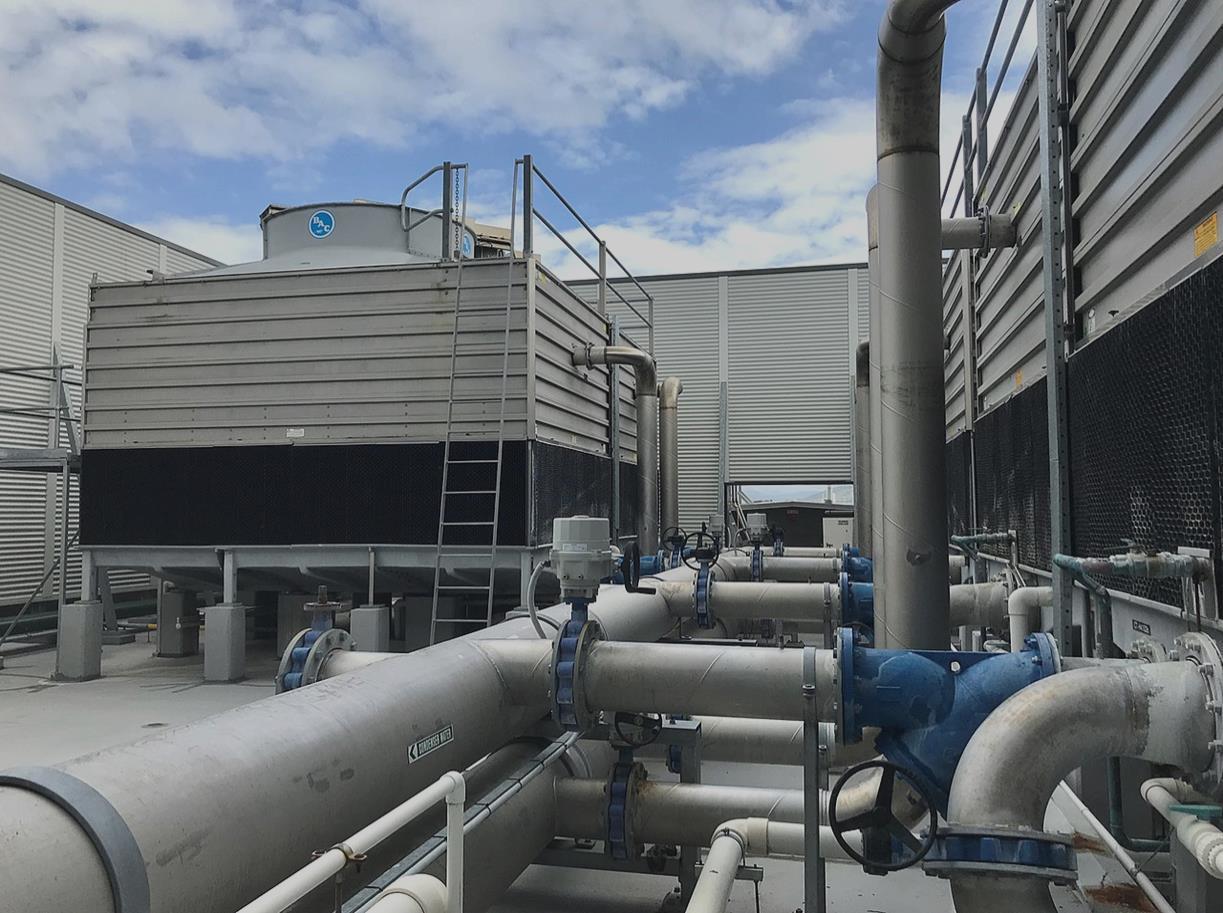
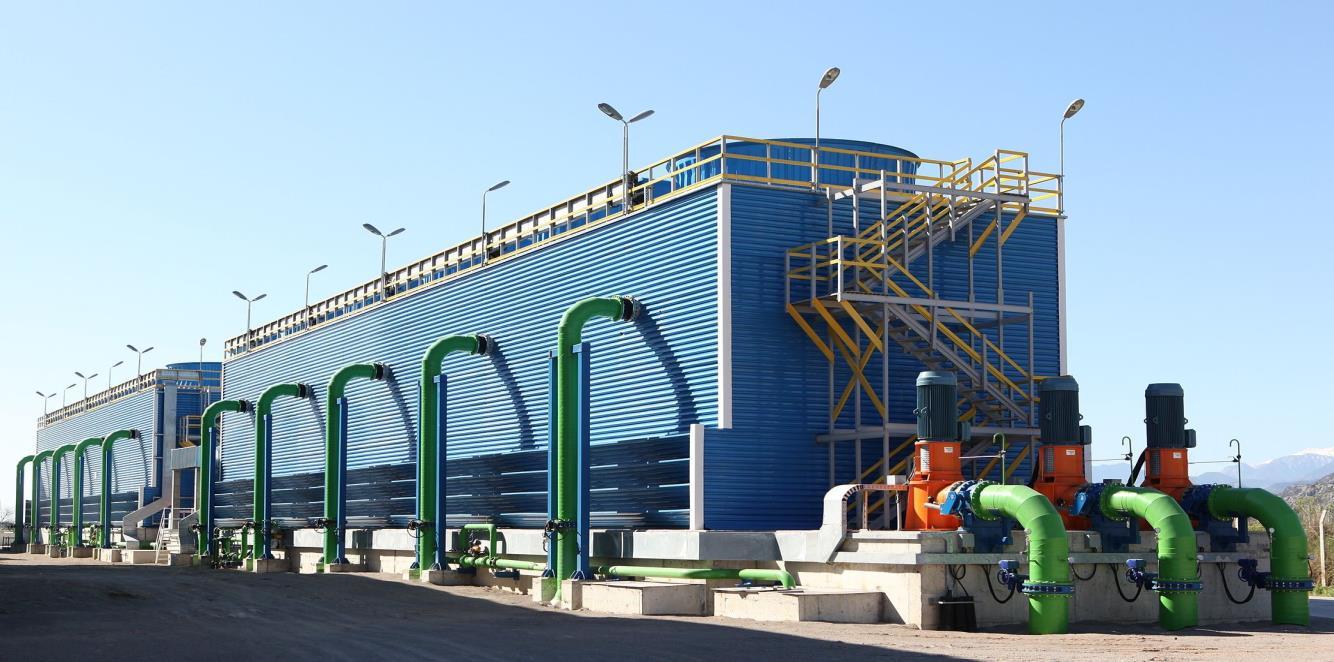
Hardness stabilisers ensure that lime and minerals remain dissolved in the water and that no deposits or crusts form in the water bearing system parts.
Cooling water is inherently corrosive to a greater or lesser extent. Corrosion slowly destroys the metal parts in the cooling system and eventually leads to their failure.
Corrosion inhibitors form a very thin protective layer surrounding metal materials and protect the surfaces.
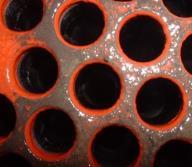
Without proper treatment, contaminants floating in the water settle at deeper points in the circulation system, where they form sludge deposits. These not only impair the water flow, but also protect bacteria from biocides. These bacteria form aggressive acids and hydrogen sulphide, which in turn lead to pitting.



Dispersants ensure that suspended solids do not settle to form sludge layers. Instead, they remain suspended in the cooling water and can be washed off.
The Sanosil CT Protect products for open evaporative coolers are largely based on environmentally compatible polyphosphonates and combine all three necessary efficiency classes.
In contrast to other "all in one" products, however, they do not contain biocides. These must be dosed separately according to the individual cooling circuit requirements.
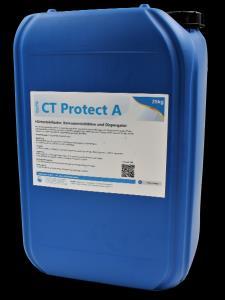
Product type: hardness stabiliser, corrosion inhibitor (for iron and steel materials) and dispersant
Contains: phosphonates, polyelectrolytes
Preferably used for: open circuits with no non ferrous metal elements. Also suitable for very hard water and an increased concentration of solids
Can be used in the pH range: 6 10
Dosage: 50 100 ml/m3 in circulation = approx. 12 25 ml/m3 fresh water with a thickening factor of 4
Transport class: non hazardous material, no transport restrictions
Container size: 25 kg
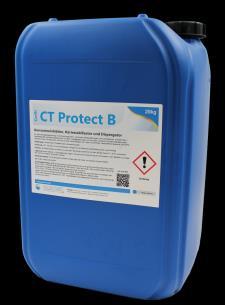
Product type: corrosion inhibitor (for iron and steel materials, copper materials), hardness stabiliser and dispersant
Contains: organic corrosion inhibitors, phosphonates, polyelectrolytes
Preferably used for: open cooling circuits with a mixture of materials and increased corrosion protection requirements. Also suitable for very hard water and an increased concentration of solids
Can be used in the pH range: 6 10 (ideally 7 8)

Dosage: 100 150 ml/m3 in circulation = 25 38 ml/m3 of fresh water with a thickening factor of 4
Transport class: non hazardous material, no transport restrictions
Container size: 20 kg
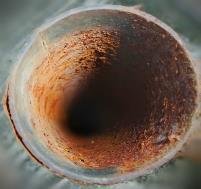
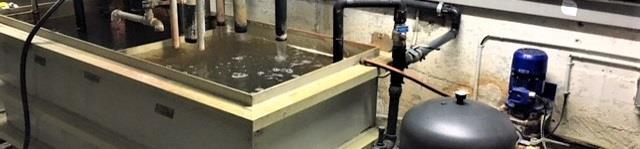
The cooling water inside closed systems is not dynamically evaporated. It only serves to transfer heat. Softened water is generally used for this purpose. It does not produce any limescale or mineral deposits, but it is very corrosive. Conditioning agents for closed cooling circuits consequently put special demands on corrosion inhibitors for protection against corrosion.

Without proper treatment, contaminants floating in the water settle at deeper points in the circulation system, where they form sludge deposits. These not only impair the water flow, but also protect bacteria from biocides. These bacteria form aggressive acids and hydrogen sulphide, which in turn lead to pitting. Dispersants ensure that suspended solids do not settle to form sludge layers. Instead, they remain suspended in the cooling water.
In contrast to open evaporative cooling systems, hardness stabilisation is typically not the most important requirement in closed systems. Filling systems with partially desalinated or untreated tap water (emergency cooling), for example, may however provide a valuable additional benefit.
The Sanosil CT Closed products for closed circuits are based on molybdate. This is widely regarded as one of the best corrosion inhibitors. In new systems or those that have just been pickled, they form a continuous protective layer on all iron and steel materials over a few days. Non ferrous metal inhibitors or aluminium protection agents are also added. Phosphonates also provide corrosion protection as well as any necessary hardness stabilisation measures in case of emergencies. Polyelectrolytes serve as effective dispersants and counteract the formation of sludge deposits.
Since CT Closed products do not evaporate, they remain in the system. You only need to add them in case of leaks or when the water is replaced.
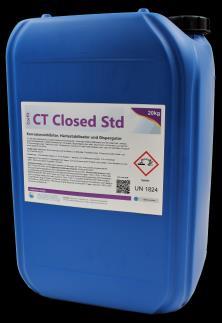
Product type: corrosion inhibitor (for iron and steel materials, copper / non ferrous metals), hardness stabiliser and dispersant
Contains: molybdate, polyelectrolytes, phosphonocarboxylates and non ferrous metal inhibitors
Preferably used for: closed circuits with a mixture of materials made of steel, copper and non ferrous metals (without any aluminium parts)
Can be used in the pH range: 6 10
Dosage: 4 6 ml/l with fully demineralised water
Transport class: hazardous material, UN 1824
Container size: 20 kg
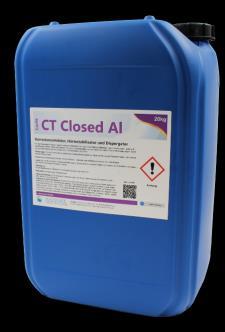
Product type: corrosion inhibitor (iron and steel materials, aluminium), hardness stabiliser and dispersant
Contains: molybdate, polyelectrolytes and neutralised phosphonates
Preferably used for: open cooling circuits with a mixture of steel and aluminium parts
Can be used in the pH range: 6 8.5


Dosage: 4 6 ml/l with fully demineralised water
Transport class: non hazardous material
Container size: 20 kg
Product type: dispersant, booster for shock disinfections
Contains: non ionic polymers
Preferably used for: for initial treatment and to support shock disinfection with Sanosil C / Sanosil S015 in case of severe biofilm growth
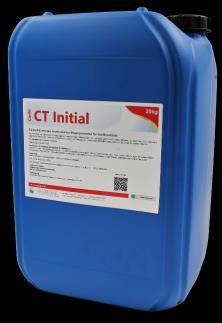
Dissolves and mobilises biological deposits / biofilms
Enhances the effect of biocides
Disperses oil, sludge and clay in cooling water systems

Dosage: 100 500 g/m3 Transport class: non hazardous material
Container size: 20 kg
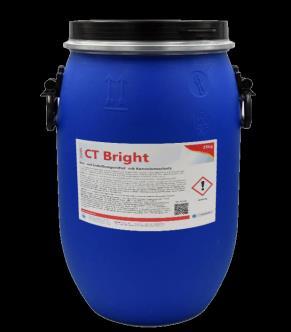
Product type: powdered pickling and descaling agent with indicator dye and corrosion inhibitor. Dissolves limescale and rust deposits. The colour changes automatically when the effectiveness limit is reached
Contains: amidosulphonic acid, corrosion inhibitor, indicator dye
Preferably used for: calcified and/or systems with rust formation in the water bearing parts

Dosage: 120 150 g/l (depending on the thickness of the lime deposits) 1 g of Corfit Bright dissolves 0.5 g of lime deposits
Transport class: hazardous material, UN 2967
Container size: 25 kg
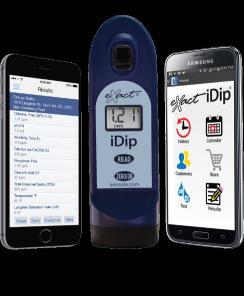

Product type: photometric measuring device for precisely determining the Sanosil biocide content in water
Preferably used for: for analysing the Sanosil content in water. (Additional analysis parameters, such as phosphate content, alkalinity and pH value, iron, etc. with separate reagents are available on request)
Measuring range: 2 4200 ppm
Product type: test strips for quickly determining the approximate Sanosil content in cooling water (colour change)
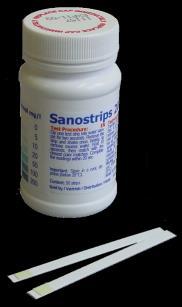
Preferably used for: quickly determining the Sanosil content in water systems
Measuring range: 0 200 ppm
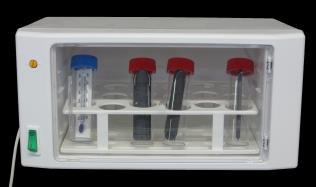
Hygicult Inkubator
Product type: compact incubator for incubating hygicult Culture media
Preferably used for: determining the bacterial count of aerobic mesophilic germs on surfaces and in water. (Together with suitable ready mixed media, such as Hygicult TPC or Rodac Plates
Product type: rapid test for Legionella (antibody test)
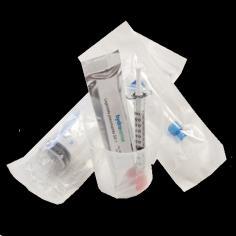
• No expensive laboratory tests required
• Untrained personnel can use the device
• The result is known within approx. 30 minutes
Preferably used for: checking for Legionella (Legionella Pneumophilia) in cooling water

Sensitivity >1000 CFU