WHERE
PARADISES MEET

SANI | Sani Marina

SANI | Sani Marina


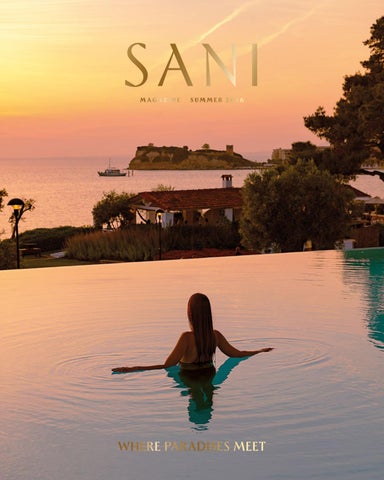
WHERE
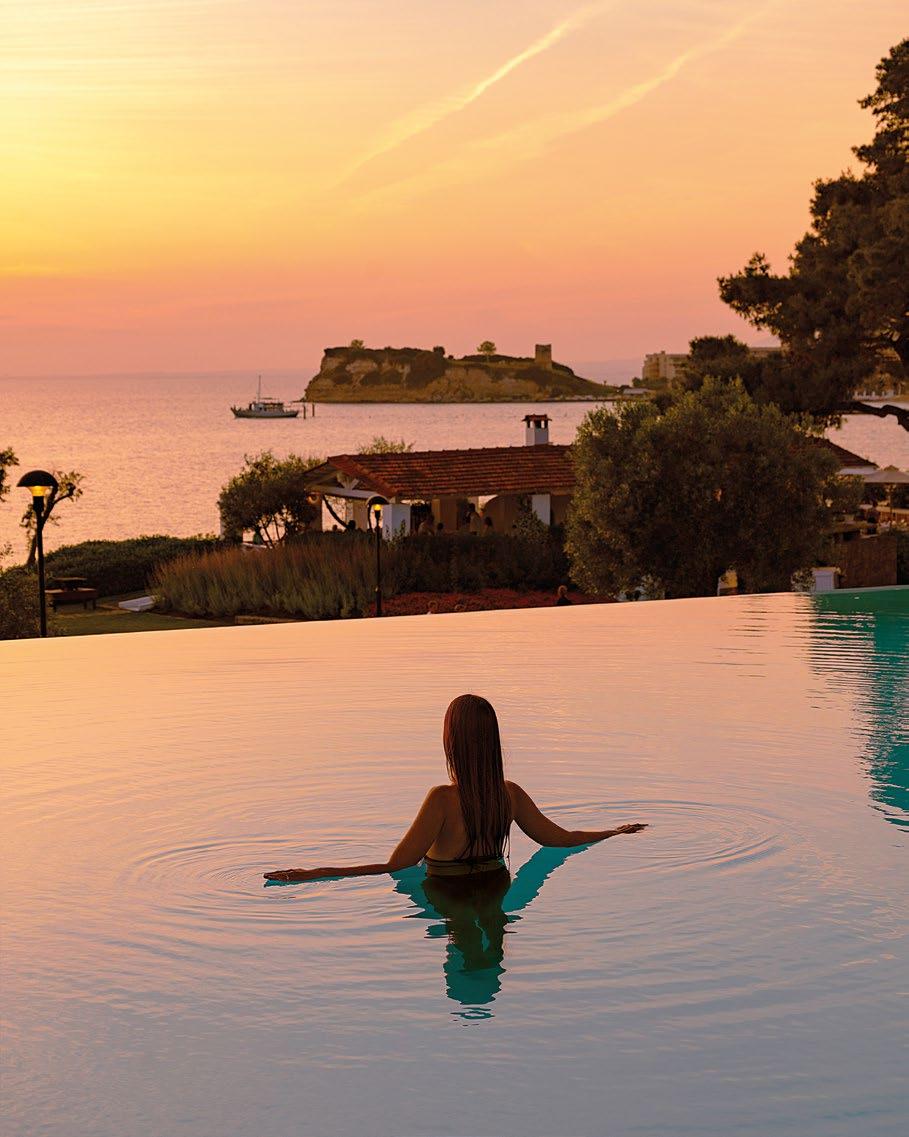
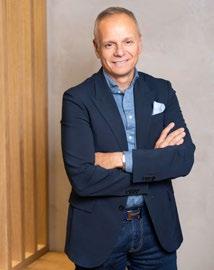
A very warm welcome to Sani, and to the 2026 edition of Sani Magazine.
More than 50 years ago, Sani was born from a family vision shaped by philoxenia - the Greek philosophy of genuine hospitality - and the belief that true luxury is how people are made to feel. This simple yet powerful ethos, paired with a pristine stretch of the Kassandra peninsula, evolved into a deeply cherished destination. Today, it’s still defined by its enduring natural beauty and a feeling that our guests fondly refer to as “Sani Magic.”
This magic remains at the heart of Sani through the legacy of our Co-Founders and Managing Partners, Andreas Andreadis and Mathieu Guillemin, whose insight and dedication continue to shape the Group’s future, ensuring that progress is always anchored in a clear and deep respect for what makes Sani so distinctive.
I am now honoured to follow in these esteemed footsteps and bring my own experience to Sani as it enters a new chapter. I look forward to building on these remarkable achievements, working closely with our exceptional team, whose commitment, professionalism, and welcoming spirit ensure the resort continues to thrive as a truly outstanding destination.
For 2026, we’re delighted to introduce a series of carefully considered enhancements, to further refine Sani’s luxury, culinary and family-focused offering. Returning guests will find Sani Asterias transformed with reimagined residences and stunning landscaping, together with a renewed Water Restaurant & Bar under the guidance of Michelin-starred Bruno Oger, thoughtfully designed with all-new family-friendly touches.
Throughout the resort, gastronomy continues to evolve, with renowned chef Andoni Aduriz shaping El Puerto’s concept, and food writer Donna Hay curating menus for our younger guests. And as the summer unfolds, Sani Festival and Sani Gourmet are once again the stars of the season, returning with exceptional line-ups of world-class chefs and artists to delight and entertain our guests.
It's these exceptional experiences, and the resort’s deep connection to nature, that make Sani such a one-of-a-kind destination. A sanctuary where time slows, inviting guests to explore, unwind, or simply sit still in nature; whatever your idea of paradise, you’ll find it here. Somewhere between the land, the sea and the pine forests, Sani offers a rare sense of ease, where space, time and experience come together, leaving an impression long after the moment has passed.
Whether you are one of our many returning guests or you are discovering Sani for the very first time, step inside, let time unfold and embrace one hundred acres of paradise, where indulgence blends with innocence, and where freedom and discovery are yours to enjoy.
Jean-Marc Bellaiche CEO Sani/Ikos Group

DISCOVER THE ISSUE YOU’RE HOLDING IN YOUR HANDS
24 CURATED PARADISE, A MANIFESTO
Seven universal values, rooted in Greek etymology, reside in Sani, where everyone discovers his own personal paradise
34 SANI, ORIGIN OF A LEGACY
The iconic journey of Sani, from its beginnings to the present day
40 POSTCARDS FROM GREECE Images, symbols and colours of Greece, captured on postcards that tell stories of the land and its people
46 TRADITION FORWARD
The people who carry Greek tradition into the future through a distinctly personal touch
58 MICHAEL MARMARINOS
The new Artistic Director of the Athens & Epidaurus Festival reveals the thinking behind this year’s programme
62 GLORIA GAYNOR
The legendary disco icon reflects on her last year’s magical appearance at the Sani Festival
66 PETRA VAN BREMEN
The 66-year-old modelling icon reveals how she overcame social barriers and successfully reinvented herself
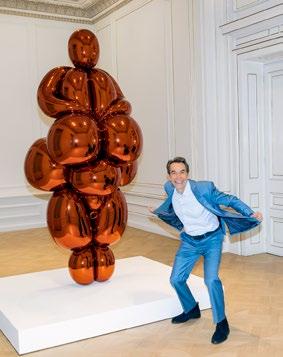
72 A NEW CULTURAL ERA Ioanna Dretta exlpores the expansion of the National Archaelogical Museum
78 MUSEUMS ALERT
A journey through some of the country’s most iconic museums and the exhibitions presented this summer
82 THESSALONIKI: A JOURNEY OF LIGHT
An artistic achievement filled with soul and emotion, created by photographer Katerina Katopis–Lykiardopoulo
88 SANI, A SANCTUARY OF INSPIRATION
Initiated by Athena Andreadis, six musicians gathered at Sani to create music inspired by its natural landscape
96 SUN SEA SERENITY
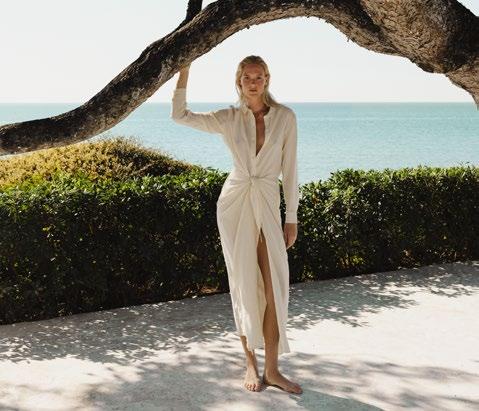
A sense of stillness defines this fashion editorial, where neutral tones and sunsoftened textures create harmony
110 THE LAND OF SENSES
Sani awakens all five senses allowing you to be fully present in the holiday experience
116 TAKE A DEEP BREATH
Sani proves to be a destination where wellbeing, and the care of body and spirit become a way of life
124 A JOURNEY SHAPED BY SUSTAINABILITY
Eleni Andreadis writes about Sani’s achievements in sustainability and environmental awareness
128 ADVENTURE REIMAGINED
At Sani’s BGSA families and teens discover their hidden abilities through adrenalinefuelled challenges
132 JIMMY DOHERTY
The British zoologist and farmer found in Sani a setting where his ideals quietly come to life
142 SPECIAL STORIES
German actress Anna Wolfers and content creator Topolindra, share their stories about Sani
148 DONNA HAY
The renowned food creator brings her signature simplicity and vibrant flavours to Sani, reimagining children’s dining
152 5 STAR HOSPITALITY
At Sani, each of the five luxury hotels reveals a different way to unwind, ensuring every guest finds their perfect match
162 THE COURT OF LEGENDS
The Rafa Nadal Tennis Center at Sani stands out as a unique hub for training and experience
164 TRAIN WITH THE CHAMPIONS
Sani partners with Chelsea International Soccer Centre to offer football coaching sessions to younger guests
168 A CHILDREN’S PARADISE
Sani is an ideal holiday destination for young travellers, offering activities and adventures immersed in nature
174 SANI THROUGH US
Four members of Sani’s extended family of employees share their personal career stories
186 SWEET EUPHORIA
Set against the endless blue, this fashion editorial unfolds as an ode to euphoria
194 VICKY LEANDROS
The Greek singer who forged an international career speaks ahead of her appearance at the Sani Festival
198 SANI FESTIVAL
Magical nights on Sani’s idyllic hill, once again come alive with the voices of internationally distinguished artists
202 MASTERY ON A PLATE
Sani Gourmet is a global gathering of renowned chefs and culinary innovators, set within a beautiful natural landscape
206 PÍA LEÓN & VIRGILIO MARTÍNEZ
Two internationally acclaimed chefs; he visited Sani Gourmet last summer, and this year it is her turn to take part
212 SANI UPDATES / NEW CULINARY CHAPTERS
Two significant culinary developments at Water Restaurant & Bar and at El Puerto shape this season
214 SANI’S DINING STARS
Here are the ten tables worth booking this season
220 SANI UPDATES / DUNES BEACH POP-UP
The summer experience at Sani is further enriched in 2026 with the return of this much-loved seasonal concept
222 A TRUE GEM IN THE HEART OF SANI At cosmopolitan Sani Marina, idyllic sunsets meet entertainment, gastronomy and shopping
226 TAKE A PIECE OF SANI PARADISE WITH YOU…


MAGAZINE
ANNUAL EDITION 2026
Sani, Kassandra Halkidiki, 63077 Greece, T. +30 23740 99400
Sani Magazine is published by Sani SA and is distributed free of charge. All rights reserved. www.saniresort.gr
George Hughes
Fanis Krommidas
Patricia Cerdá
Chara Tsioumperi
Anastasia Dimitriou
Sophia Georgakis
Alexandra Mousourouli
Candela Catalán
PRODUCTION
Nasta Publications Ltd., 81 Tsimiski Str, Thessaloniki, 54622 Greece, T. +30 2310 220897
Head of Publications Nano Kougioumtzoglou
Editor in Chief Aris Kavatzikis
Creative & Design Director Niki Tabaki
Production & Deputy Director Eleonora Kanaki
Art Directors Theodoros Kollias, Melina Maltsidou
Production Manager Katerina Xanthopoulou
Editorial Team Eleni Papaioannou, Aristotelis Spiliotopoulos, Dimitris Stathopoulos, Christianna Lakka
Fashion Editorial Photographer Mara Lazaridou
Styling Director Stefanos Malamas
Translator Amelia Zavacopoulos
PRINTING
Skordopoulos Prints
COVER
Travel Creator Voyage Fox
Seven universal values reside in a paradise that is a destination for renewal. At Sani, every unique dream becomes reality, and every desire is fulfilled, within a natural landscape that embraces the blue of the horizon and the sea along with the emerald green of nature.
words by Aris Kavatzikis
A long-standing story of hospitality, with countless chapters of memories, awards, achievements and milestones, but above all, human stories. At Sani, many beautiful postcards have been created, filled with unique moments and meaningful snapshots in the life of every visitor. After all, the philosophy of this destination remains the promise that nothing is impossible or unattainable.
The resort’s multifaceted profile ensures that each traveller is considered unique, seeking their own personal paradise. Through the pages of the magazine you are holding in your hands, the versatile character of Sani is revealed – a destination that, beyond delivering impeccable standards in hospitality, gastronomy, culture, wellbeing and relaxation, also demonstrates a highly active ecological profile, investing in sustainability and the protection of the environment and endangered species.
Flawless hospitality and the abundance of flexible services, along with the many distinct natural corners of the resort, are the reasons why each visitor’s personal paradise comes to life. Families, children, couples, and those seeking seclusion and tranquillity, all discover in this unique destination their own personal sanctuary of joy, revitalisation and renewal. Moreover, thanks to the resort’s wide-ranging services and the rich natural landscape that embraces it – sea, mountains and wetlands – families discover an ideal haven: moments and activities for every member, some designed exclusively for children, and, thanks to Sani’s absolute sense of safety, opportunities for parents to enjoy experiences as a couple. A paradise of gastronomy, a paradise of culture, a paradise of wellbeing, a paradise for nature lovers; every paradise exists in Sani.
In this context, Greece, the country that gave birth to hospitality and to Zeus Xenios, could not be absent from the pages of the magazine. Greek soundscapes, civilisation, culture, craftsmanship and art run throughout the issue, as the country that resembles a paradise harmoniously meets Sani, the place where the unique and ideal paradises of its visitors coexist. Not by chance, the common ground and connecting link between Greece and Sani are seven universal values with Greek roots, which are experienced and find their fullest expression at the resort, now a destination unlike any other. Genesis, Ethos, Aesthesis, Harmonia, Gaia, Hestia, Eudaimonia.
Through the prism of Greek terminology, therefore, we define the parameters that make Sani a jewel in hospitality and in the creation of memories, while at the same time readers embark on an intellectual journey into Greek culture.
Intertwined with roots, history, deep memories, and human stories. Sani has its own history, marked by milestones that have shaped the face of tourism and hospitality in Greece. The country, whose hallmark is the deep-blue horizon, has given birth to ideas, arts, and images of unparalleled and timeless aesthetic value, much like eternal postcards. Additionally, in Greece, crafts were born and continue to thrive, sustained by the unwavering persistence of Greeks to carry forward tradition and history.
Ethics, integrity, consistency, and faith. These are foundational values for Sani, as without them, this remarkable journey would not have been achieved. Moreover, we encounter a deep moral strength in individuals who have pursued lasting, consistent paths, or who have reinvented themselves, transcending time and social constraints.
The ability to perceive the world through our senses is also connected in philosophy to aesthetics and therefore to art and culture. What we feel when wandering through a museum, relates to beauty and aesthetic value. At Sani, the senses are not only awakened; the resort also serves as a sanctuary of inspiration for artists who transform the essence of nature and the landscape into creative expression. Feel the Greek light that bathes the country, its reflections captured in refined, high-aesthetic imagery that reveals the grandeur of both natural and urban landscapes.
The sense of perfect order and aesthetic harmony reaches us as an eternal vessel across time. A deep and enduring quality of life is the attainment of balance between body and mind. Take a deep breath amidst the supreme natural beauty of Sani’s 4,000 acres. Besides, the creation of five distinct and fully equipped spa units within a single resort reflects the ultimate goal of a holiday.

Mother Earth, nature, the connection to the environment and to the planet, our wider home. Sani is distinguished and awarded for embracing an ecological philosophy and social responsibility. The resort cares deeply about the environment, minimising its environmental impact, and contributing actively to the local community. The breathtaking location gives guests the opportunity to merge with nature. Its unspoilt beaches, soft sands, and safe azure waters invite exploration. In the immersive nature experience, the pine forests and wetlands play a central role.
The house, the home, the warmth, the embrace, the refuge. It is the place we retreat to rediscover ourselves, to find peace and shelter. Sani has extensive experience in creating “families beside families.” That’s why its people, who have built a second professional family there, have their own stories to tell. Its five distinct accommodation units and personalised service ensure the creation of a holiday hearth. Children, of course, hold a special place within this framework, as alongside the countless activities offered by the resort -not to mention the sports academiesthey build the memories of their future.

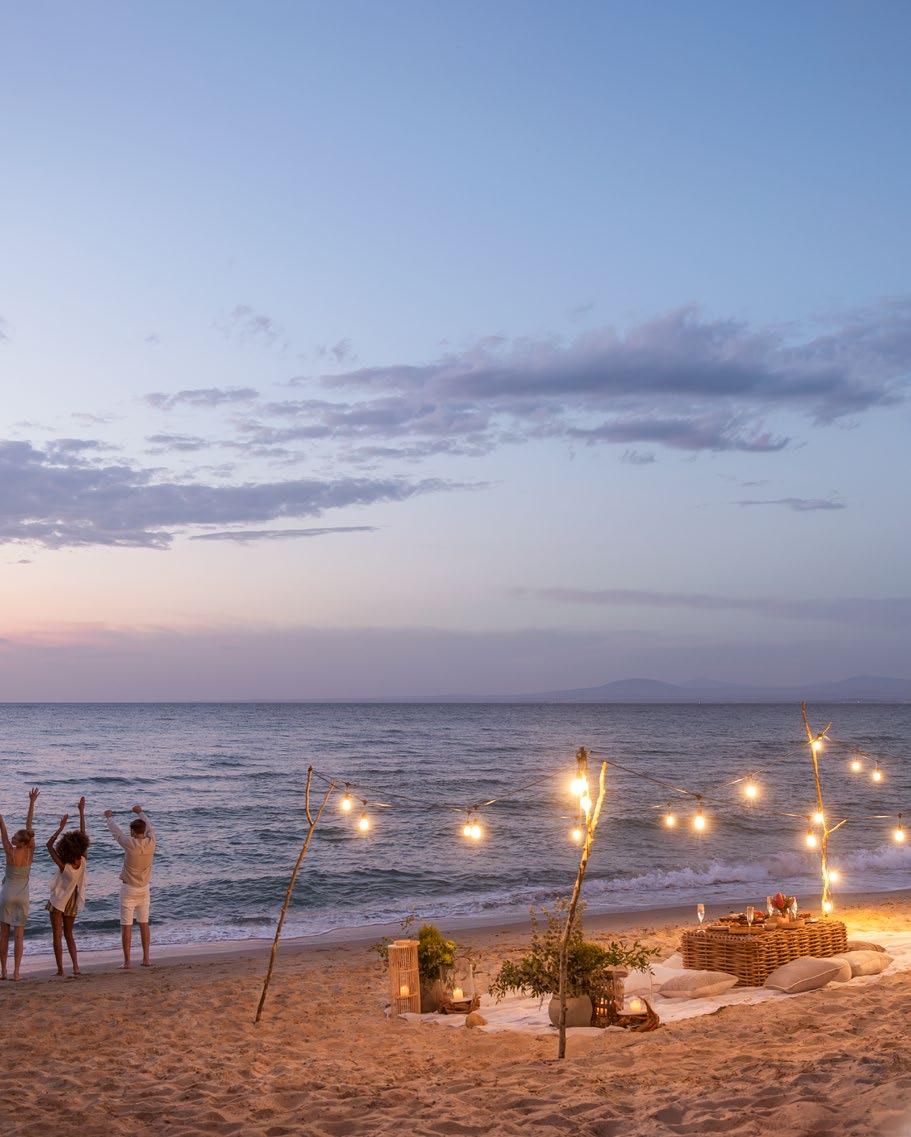
Not merely joy and happiness, but the fullness and completion of human life. Two pillars of eudaimonia are food and culture, areas in which Sani has invested for many years with remarkable results. Sani Festival, established for more than 30 years in Greece and abroad, and Sani Gourmet, the country’s leading gastronomic institution, attract visitors seeking high-quality life experiences. Internationally recognised figures in gastronomy and culture invite us on a journey of summer eudaimonia.
“From the unseen silence, Genesis awakens the world”
Genesis is the moment when potential becomes reality; the quiet yet powerful threshold where existence begins to unfold. It is not merely “a beginning”, but the creative emergence of form, life, and meaning from the unseen or the unformed. Genesis carries the sense that every creation holds within it the seed of transformation and continuation.
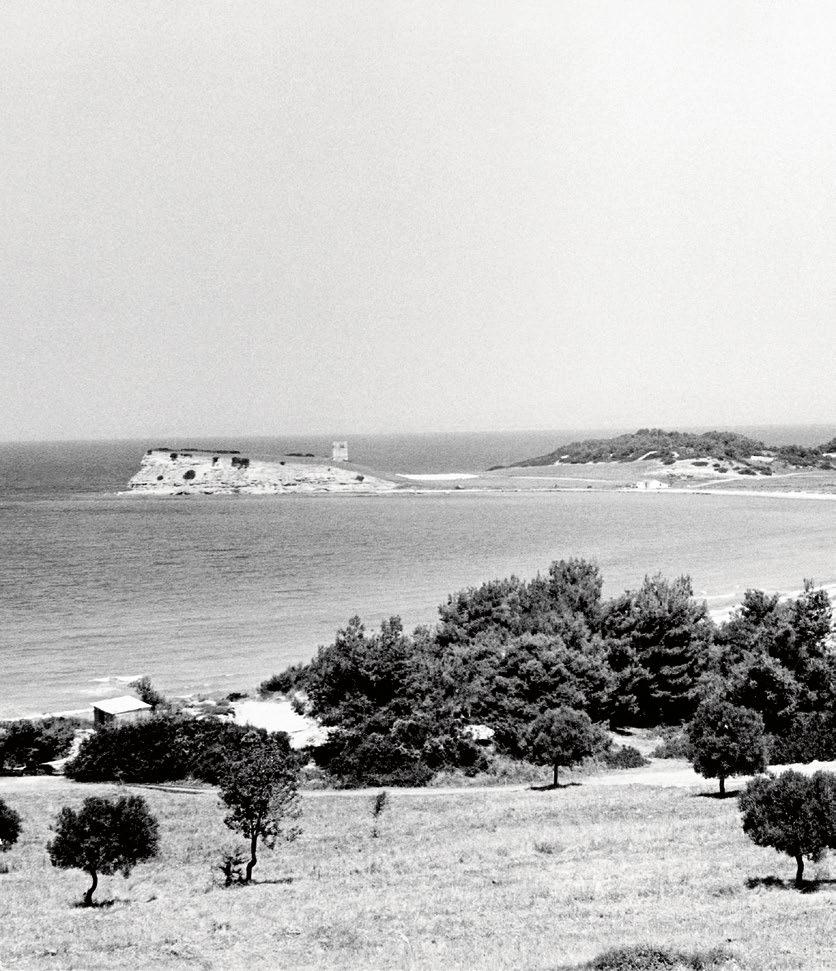
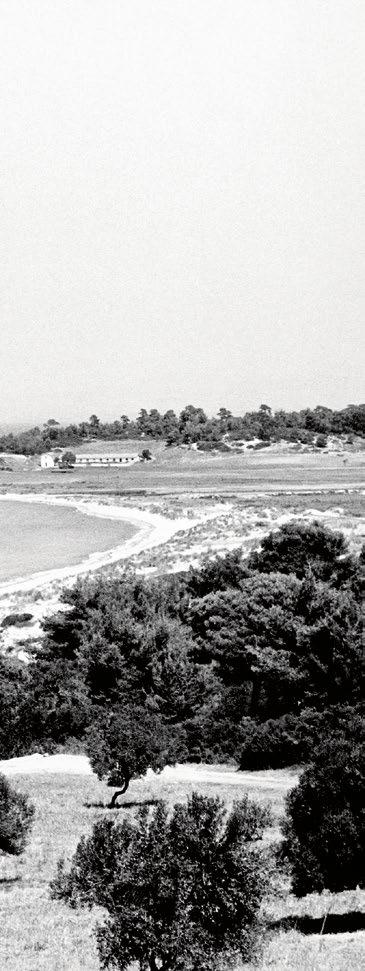
From its visionary beginnings to its evolution into a world-class destination, Sani’s journey is marked by defining chapters. This retrospective brings those moments to life through a curated selection of archival photography, unfolding across the pages alongside the key developments that shaped its story.
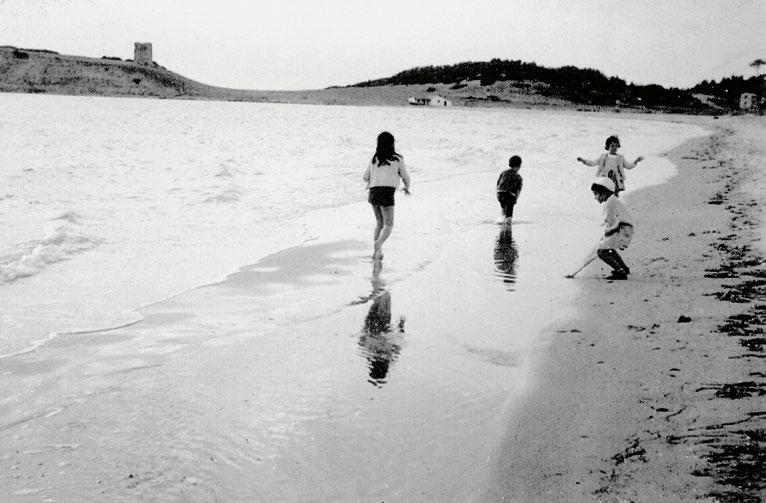
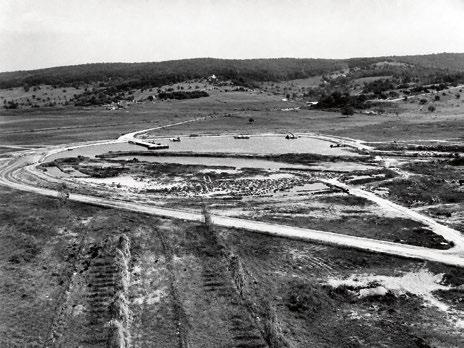
While many businesses claim to embrace a guiding philosophy, few truly weave it into the very fabric of their operations. Sani was founded from the outset as a living embodiment of philoxenia – a sacred duty to welcome and care for others dating back to Ancient Greece.
More than half a century ago, this philosophy of ‘service from the heart’, alongside extraordinary vision and courage, became the fertile soil in which a small resort would take root and grow into one of the Mediterranean’s most distinctive luxury tourism brands. Every stage of Sani's evolution has been shaped by this guest-centric approach to hospitality. Over the years, it enabled its leaders to scale an independent and innovative business model while remaining true to their values, attract guests who faithfully return year after year, build a deeply loyal workforce, and endure both a global financial crisis and a pandemic.
This journey began when Anastasios Andreadis, together with his two cousins, both named Leonidas Zissiadis, first came across land on the coast of Kassandra. With rich pine forests rolling down to the sea, he later told his sons: “I saw these beautiful beaches and pinewoods, and I thought, ‘how many places of this beauty can exist in the Mediterranean?’” Anastasios and his cousins were true visionaries; among the few able to recognise the potential of this beautiful yet secluded and rugged land. Even they, however, did not imagine it becoming a five-star resort. By the early 1970s, the family had transformed an area many believed lay beyond development into the seed of what would become Sani, the cornerstone of the Sani/Ikos Group. They had a vision that was set in motion,
and that would unfold and evolve over the coming decades. It began with the opening of Sani Club in 1971, it continued with Sani Beach in 1984, followed by the creation of Porto Sani and Sani Marina in 1997, alongside the refined elegance of Sani Asterias and the extension of Sani Marina in 2003. This journey was further defined with Sani Dunes opening in 2017. Each of these milestones shaped Sani to what it has come to be today, one of Mediterranean's most distinctive luxury destinations.
One of the earliest challenges was its location near Thessaloniki, then outside the orbit of mass-market tour operators. Anastasios’ sons, Stavros and Andreas, together with their cousin Fokion Zissiadis, joined the endeavour and sought to build their own bespoke route to market alongside a highly differentiated product. It was not easy. For more than a decade, Stavros and Andreas worked relentlessly to transform a modest, almost spartan hotel – serving basic needs and staffed by family members, friends and locals – into a destination capable of attracting high-end international guests. Niki Andreadis, Stavros’s wife, also played an important role as the project’s lead architect.
Because the area lay beyond Greece’s established tourist routes, Stavros and Andreas were compelled to think differently; to ask what might make their resort truly distinctive. Guided by an intuitive family attention to detail, they placed the guest at the
AT its CORE , PHILOXENIA endures as a SYSTEM , a CULTURE and a way of BUILDING lasting RELATIONSHIPS with GUESTS and EMPLOYEES alike
centre of every decision. Again and again, feedback focused less on the facilities or even the natural beauty of the setting, and more on the feeling of being welcomed as family. It was the staff’s guiding principle – how can we make this holiday unforgettable for you? – that ultimately came to define the guest experience.
This differentiated approach emerged across every part of the operation. For example, hiring trained hospitality professionals from established destinations proved difficult for a fledgling enterprise. Instead, the early resort was staffed by people from surrounding villages who may never have worked in a hotel but were raised in homes where philoxenia was a way of life.
Today, at Sani, this same authentic Greek service is known as the Sani Magic – a once intuitive advantage that has since been carefully institutionalised into the DNA of every resort in the Group. Andreas Andreadis said: “The Sani Magic is about ensuring you have people who are totally focused on the guest, completely absorbed in ensuring the guest is happy. It is their only job.” In practical terms, the Sani team is structured differently from those at other Mediterranean resorts. Functions such as maintenance, security, entertainment, sports and activities operate across the entire group organisation, freeing teams at each property to focus entirely on the guest experience. The impact of this system, when first introduced, was immediate and profound. Within a few years, Sani had become a fully booked phenomenon, with repeat visits forming a significant and growing share of reservations. However, Andreas Andreadis was determined to take the Sani Magic to a wider audience. The opportunity arose when a nearby site, distinct from the original Sani resort, was acquired and developed in 2005 under the name Oceania Club, aiming to transplant the same guest-focused philosophy into a new luxury all-inclusive format, later to become Ikos Oceania.
Meanwhile, in 2013, Mathieu Guillemin was overseeing European opportunities for a global investment firm and became interested in prospects in Greece. Mathieu brought a deep personal affinity for the country, its people and culture, and had identified Greece’s resort sector as a unique opportunity. However, he and his team needed the right local partner. As a private equity
Late 1960s
The vision for Sani is established, aiming to transform a pristine area of Halkidiki into a world-class resort destination.
1971
Opening of the first hotel, Sani Club, marking the beginning of Sani's development.
1984
Opening of Sani Beach, expanding the resort more than a decade after the first property.
1992
Launch of the Sani Festival, which grows into one of Greece’s most prestigious summer cultural events.
1997
Continued development of the destination with Porto Sani and Sani Marina.
investor with 20 years’ experience, Mathieu Guillemin had built an impressive track record of acquiring and transforming niche market players into successful international businesses supported by strong management teams. His drive to deliver ambitious goals, work alongside successful entrepreneurs and shape organisations for growth proved well suited to the Greek resort market, which was seeking new capital. Soon enough, Mathieu and Andreas’s paths crossed, and the two quickly developed a strong professional and personal connection – as well as a shared plan for the future. The creation of the Sani/Ikos Group, launched in the depths of the Greek crisis in late 2015 with the backing of international investors, marked the start of a growth journey that rapidly set the Group apart within the global resort industry. The partnership between Stavros, Andreas and Mathieu fused Greek heritage and a distinctive approach to luxury travel with deep market insight, entrepreneurial drive and financial discipline – a combination that remains at the heart of Sani/Ikos’ success today. The Group’s senior management team drew strength from a blend of internally developed leaders, experienced hospitality professionals and external talent bringing expertise rarely found in a traditionally structured industry. As it entered a new phase of expansion, Andreas and Mathieu further evolved the leadership team to support continued growth.
As a result, in January 2026 Jean-Marc Bellaiche became CEO, with a remit to strengthen operational capabilities. Andreas and Mathieu each assumed the role of Co-Founder and Managing Partner, focusing on their long-term vision: unlocking the full potential of Sani/Ikos by delivering outstanding service in unique locations through a combination of talents rarely found in hospitality. Today, the Sani/Ikos Group stands as a rare example of a business that has grown without losing its essence. From Anastasios’ original vision to its current international footprint, its success has been shaped by a consistent idea: that true luxury lies not only in place or product, but in how people are made to feel. At its core, philoxenia endures as a system, a culture and a way of building lasting relationships with guests and employees alike.
2003
Opening of Sani Asterias and extension of Sani Marina, establishing Sani as a multi-hotel luxury resort with a new shopping marina piazza.
2005
Introduction of the first luxury spa facilities at Sani with the opening of the Porto Sani “Spa Suite.”
2006
Introduction of Sani Gourmet, a gastronomy festival hosting
internationally acclaimed Michelinstarred chefs.
2008
The Sani Green environmental programme officially launches as a long-term sustainability initiative focusing on protecting local biodiversity and ecosystems around the Sani wetlands and forests, reducing carbon emissions and resource consumption, and promoting sustainable tourism practices. Over time, Sani Green expands
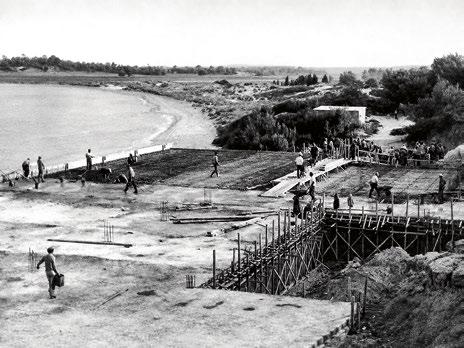
1 Sani Club construction in 1969
2
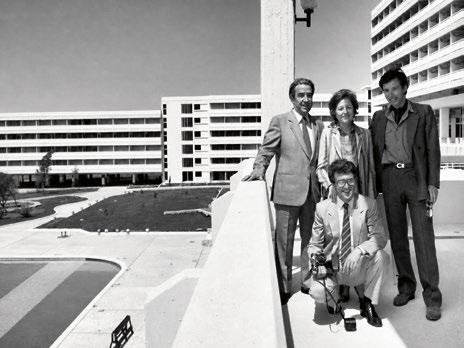
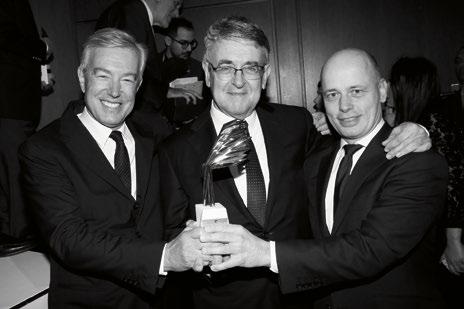
From left to right: Andreas Andreadis, Stavros Andreadis and Mathieu Guillemin, receiving the Growth Awards’ highest distinction, the “Business Excellence” Grand Award, recognising Sani/Ikos Group as Greece’s leading business, Athens, February 2020.
into a comprehensive ESG framework, including initiatives such as zero-plastic targets, renewable energy use and conservation of the Sani Wetlands (a Natura 2000 protected area).
2008
The Open-Air Garden Theatre opens to host musical theatre productions, family shows and live entertainment as part of the resort’s expanding cultural and lifestyle concept, complementing the concerts of the Sani Festival
“The Sani MAGIC is about ENSURING you have PEOPLE who ARE totally FOCUSED ON the guest, COMPLETELY ABSORBED in ensuring the guest IS HAPPY. IT IS their ONLY JOB”
ANDREAS ANDREADIS, CO-FOUNDER & MANAGING PARTNER SANI/IKOS GROUP
held on Sani Hill.
2017
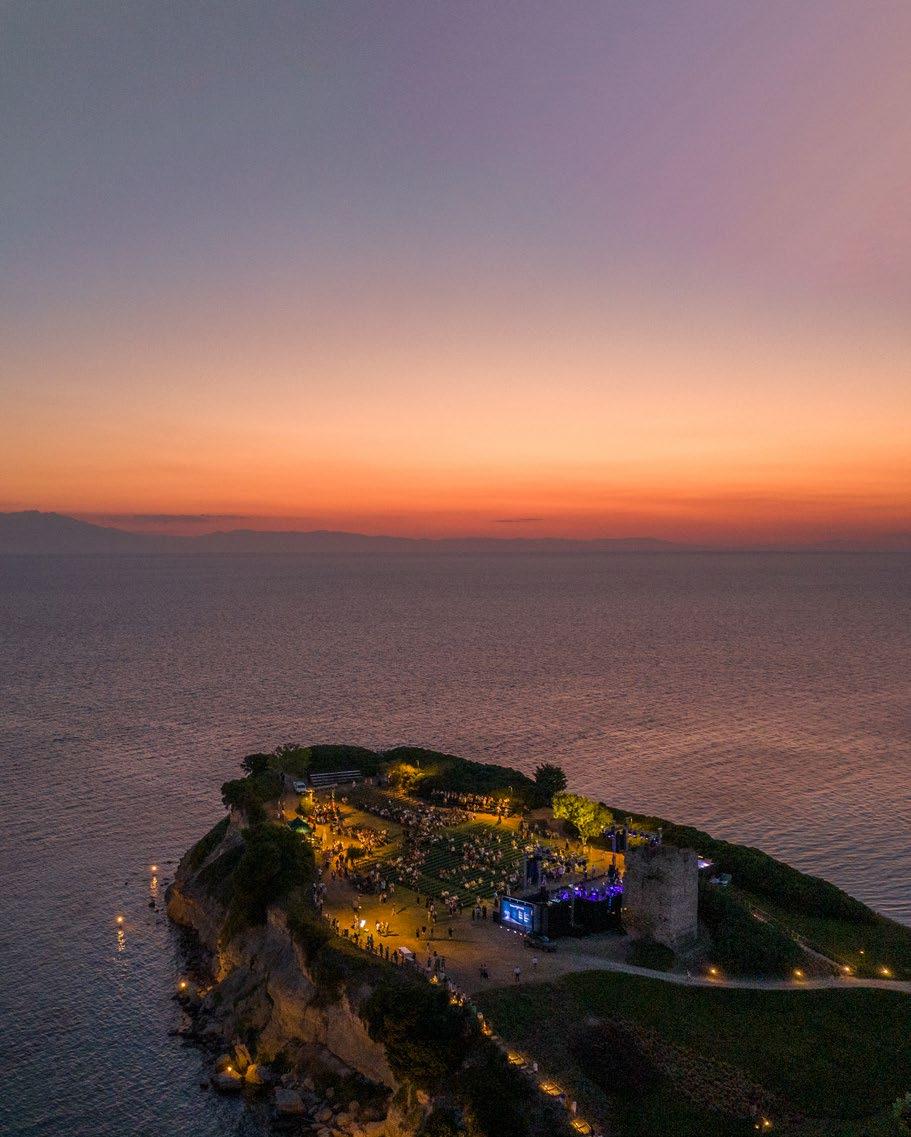
Opening of Sani Dunes, a contemporary lifestyle-oriented concept featuring the largest heated lagoon-style pools in Greece and a strong focus on modern design, wellness and gastronomy.
2018
Introduction of the Chelsea FC International Soccer Centre at Sani, offering football training
camps for children in collaboration with Chelsea FC Foundation coaches.
2019
Launch of the Rafa Nadal Tennis Centre at Sani, developed in partnership with the Rafa Nadal Academy in Mallorca, offering professional tennis coaching programmes for guests.
2022
Porto Sani expansion, doubling the size of the hotel and introducing
new suites, expanded pools, restaurants and upgraded facilities.
2025: Completion of the unified Sani Coastline and Promenade, connecting the resort’s hotels, marina, beaches, restaurants and leisure areas into a continuous seafront experience.
2025–26 : Major expansion and renovation of Sani Asterias, including new beachfront residences, upgraded facilities and a refreshed architectural concept.

The symbols, images, colours, flavours, and scents of the country are sealed within cards that tell stories of a place that loves summer and the sea; where the sun and the sky seem in love with its history and its many different corners, bathing them in abundant light and revealing their uniquely beautiful landscapes.
Black/grey ceramic set of Keros candleholders with woodscented beeswax, Zeus+Δione - zeusndione.com

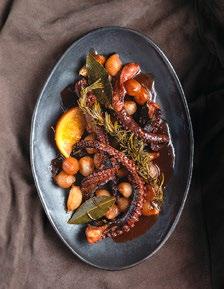
Summer in Greece tastes like sun and sea: stuffed tomatoes bursting with herbs, tender octopus kissed by charcoal, wild greens drizzled with oil. Each plate carries the season: simple, generous, and deeply rooted in land and memory.
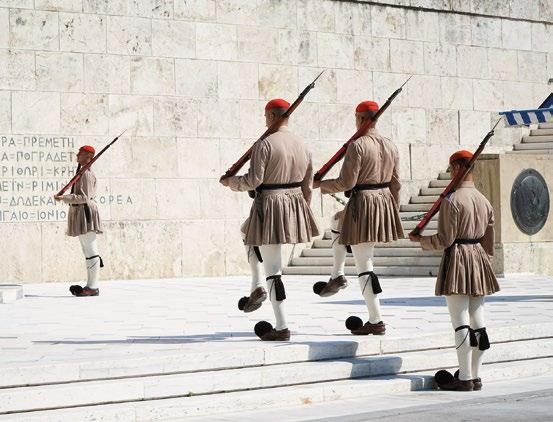
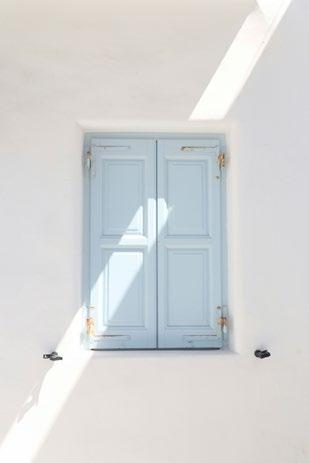
In Athens, the Evzones stand in silent ritual before the monument of the Unknown Soldier, their movement echoing centuries of honour. A lightblue island shutter catches the sun, vivid against whitewashed calm, while candlelight flickers inside ceramic holders, thin beeswax flames bending like whispered prayers. Greece lives in these contrasts: ceremony and simplicity, devotion and light, where every detail, from marble to wax, tells a story shaped by time and reverence.
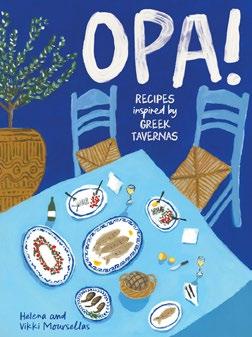
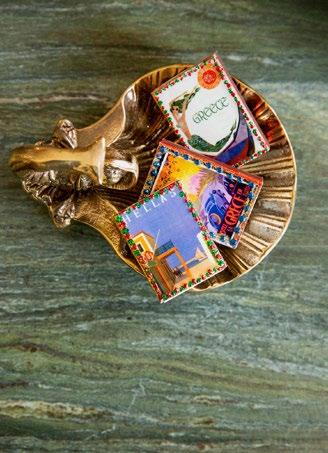
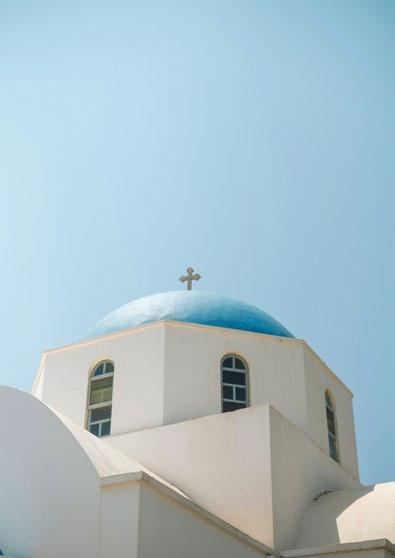
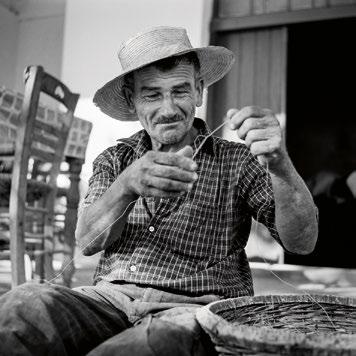
A fisherman’s weathered face, captured in black and white, speaks of tides and patience, while a blue-domed church rises into the endless sky. Vintage matchboxes, printed with Greek scenes, spark nostalgia beside a cookbook titled Opa, a word that resists translation, alive with joy, spontaneity, and shared celebration. It is the sound of plates, laughter, and dance, an exclamation of life itself, where flame, flavour, and memory meet in the spirit of Greece.

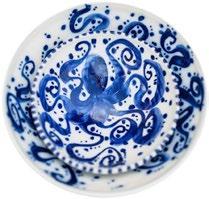
Ceramic plates adorned with Greek motifs always bring a new hue and mood to the table, set to the chorus of cicadas or bathed in the silver glow of moonlight.
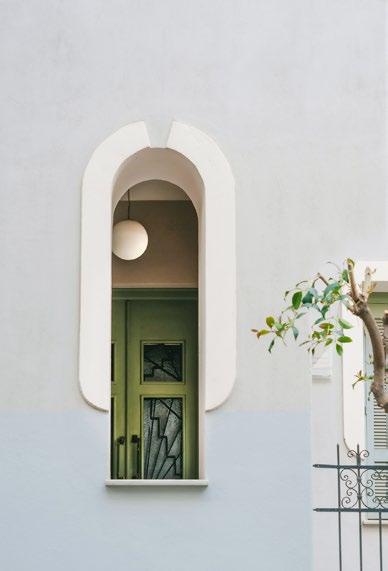
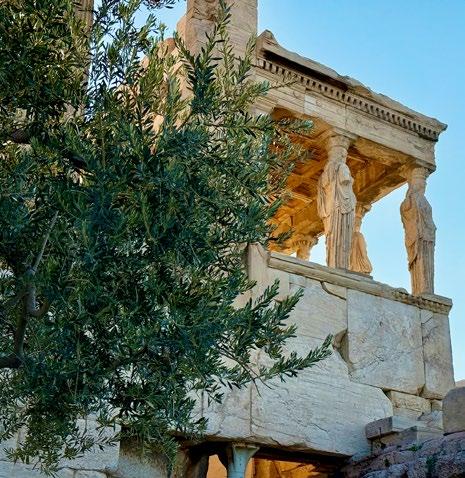
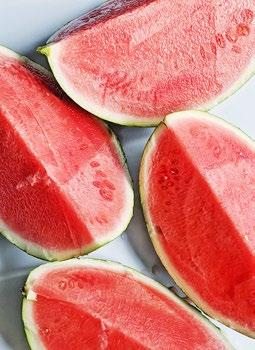
In the city, an art deco façade whispers elegance through geometric lines, while the Caryatids stand eternal, carrying history in silence. Nearby, slices of ripe watermelon evoke the pulse of summer. Greece unfolds between past and present: urban textures, ancient grace, and fleeting moments of sun-drenched beauty woven into everyday life.
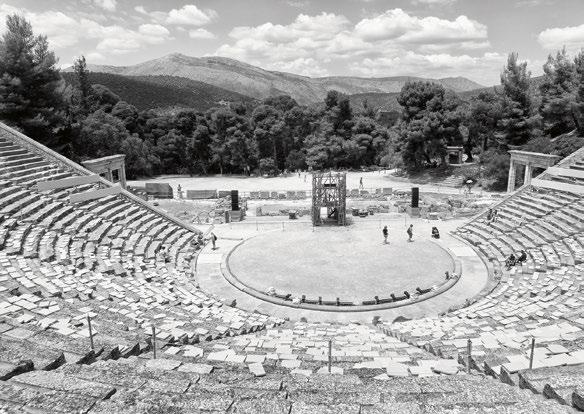
The ancient theatre of Epidaurus, carved into the Argolid hillside, remains a masterpiece of acoustic perfection and architectural harmony. Built in the 4th century BCE to honour Asclepius, god of healing, it once echoed with the chants and dramas of ancient ritual. Today, it still comes alive during the Athens and Epidaurus Festival, where classical tragedies resonate under the open sky. Even a whisper on stage travels effortlessly to the highest seat, bridging past and present.

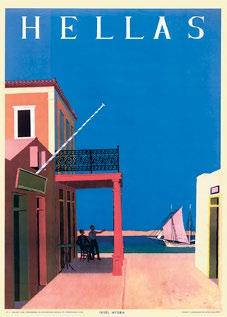
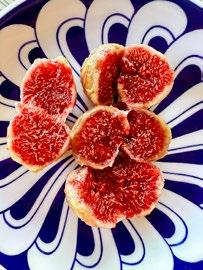
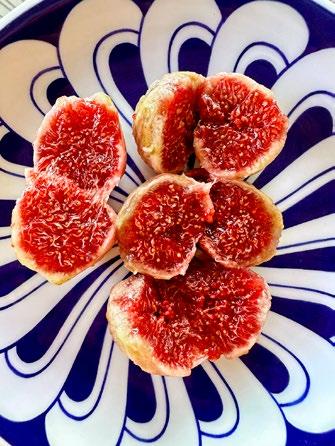
Split figs glisten with sweetness, their deep purple skins opening like summer itself. Nearby, a vintage tourism poster by Yiannis Moralis and a playful placemat inspired by Akrithakis capture Greece in colour: art, taste, and memory layered in everyday beauty.
Cookbook “Yiayia: Time-perfected Recipes from Greece’s Grandmothers” by Anastasia Miari (publ. Hardie Grant Books)
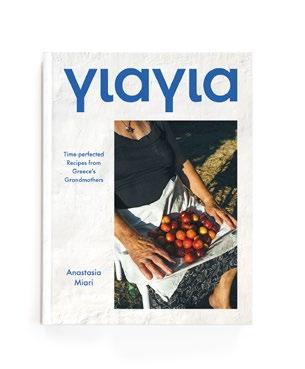
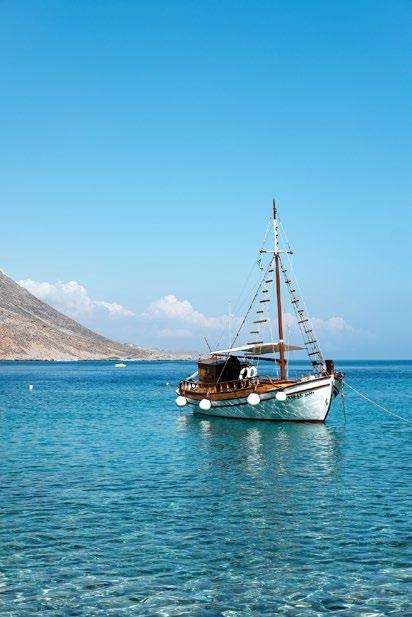
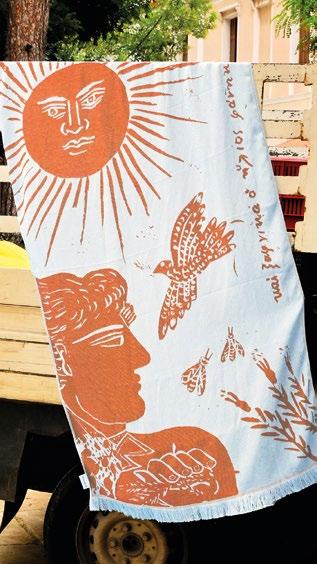
“Yiayia”–a word filled with warmth, memory, and quiet wisdom–graces the cover of a beloved recipe book. Nearby, a wooden caique drifts across sunlit waters, while a towel adorned with Fassianos’ flowing figures dries in the breeze. A marble vessel holds flowers, books resting gently above it, blending craft and story. In Greece, tradition lives through hands and heart; through food, art, and the enduring presence of those who came before.
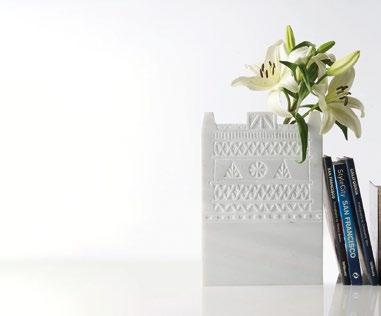
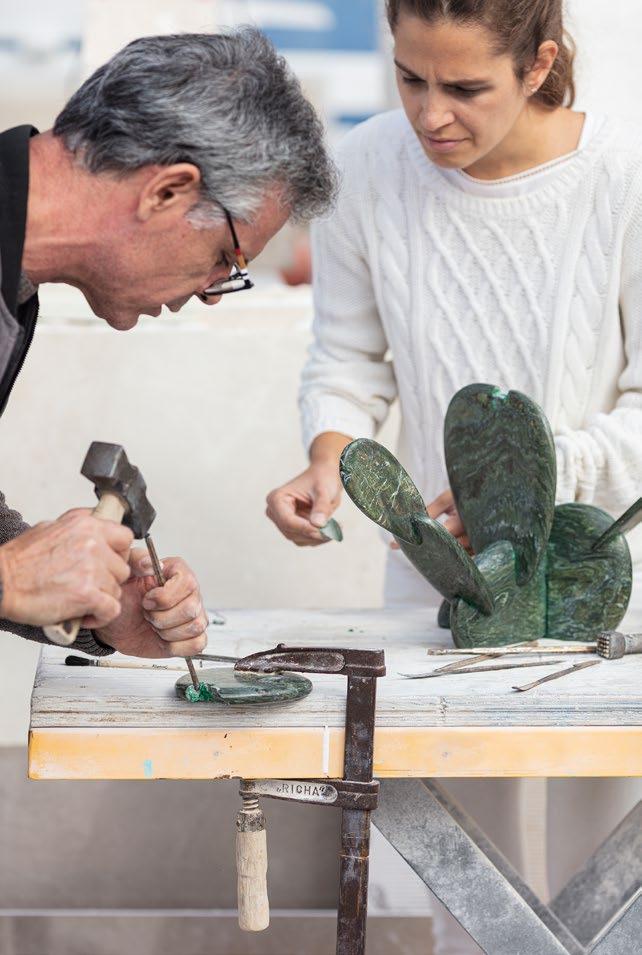
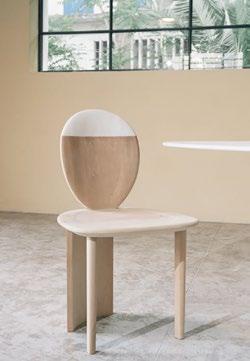
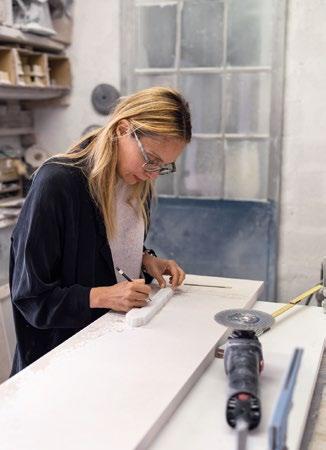
Founded by sisters Niki and Zoe Moskofoglou, On Entropy is a marble design studio with a focus on material, memory, and the art of transformation.
In thermodynamics, entropy describes a system’s potential to change: in a closed system, entropy remains constant when nothing happens and increases when transformation occurs. For the founders of On Entropy, this concept reflects the essence of their practice: guiding marble from one state into another, shaping raw matter into objects that carry new meaning. It is about transformation.
Their connection to marble began with their father, an engineer: “We remember the drives with him to the quarry in Naxos during our summer holidays: dirt roads, intense heat, and a cassette of Greek singer Vangelis Germanos playing in loop,” they recall. “When we arrived, blinding light and overwhelming heat. We would play in the shade of a metal building, drawing patterns in the marble dust with sticks as we waited for him to finish his work.” Marble was always accessible, so when they wanted to create the lighting fixtures they imagined for their own home, it became a natural choice. One lamp led to another, then to
When craftsmanship escapes the narrow forms of tradition in order to boldly introduce a whole new medium, artisans become artists. These are the people who carry Greek tradition into the future, through their groundbreaking, bold choices, and a uniquely personal touch.
words | interviews by Eleni Papaioannou
commissions from friends and family and gradually, the studio grew into a small, collaborative team.
Despite clearly defined roles, their process remains collective, built on trust and mutual support. Even ideas that once surprised or challenged traditional marble craftsmen have, over time, grown into relationships based on understanding and
shared trust. Working across projects of varying scales allows everyone in the studio to engage deeply with nearly every stage of creation.
“We begin by studying the marble’s natural veins and exploring how they can dialogue with the design,” they explain. “Colour and textural potential are equally important. Every piece is conceived in
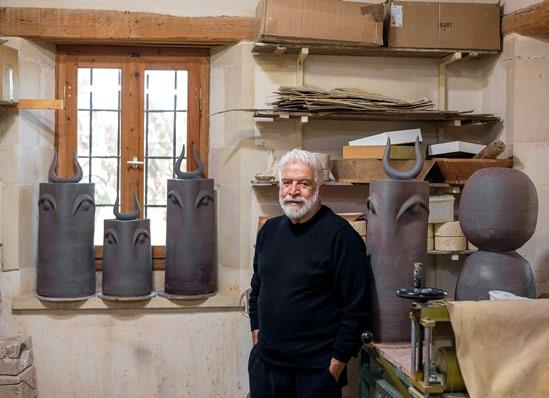
1 Manousos Chalkiadakis
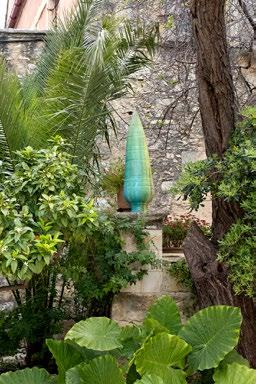
2 Ceramics in his garden
“
relation to the space it will inhabit–we imagine the environment, the ‘choreography’ of its use, and the experience it will create. This approach sets our work apart from conventional product design, emphasizing interaction, atmosphere, and sensory engagement over mere function.”
Marble, for the sisters, is not just a material but a repository of memory, shaping the emotional dimension of their work. “We remember our father returning from work with dust in his hair, mud on his shoes, and the unmistakable scent of marble. These sensory memories are inseparably tied to the material itself .”
One of the most striking aspects of On Entropy’s creations is how marble, typically perceived as rigid and heavy, can appear almost weightless. This effect results from continuous experimentation. A dialogue with the material, or even a kind of wager: how far can marble be pushed, and how can something so familiar be transformed into something unexpected? This exploration of limits is central to their work. In lighting, they investigate how thin marble can become without breaking. In furniture, they question how minimal a structure can be while remaining stable. On flat surfaces, they explore transitions from raw to sculptural. Each project negotiates strength and fragility, density and lightness.
Yet marble does not come without rules. “It guides you. It commands respect. If you don’t understand it deeply, failure is almost inevitable,” they emphasise.
Recently, On Entropy collaborated with Art Rug Project on a series of rugs inspired by the world of mushrooms, translating their ethos into a new medium. At the same time, they have been developing an ongoing
research and design project, A Future for the Past, which explores the relationship between marble craftsmanship, contemporary design, and social sustainability. Initiated in Milan in 2023, and later presented at the Benaki Museum in Athens, the project will continue with its next phase in Tinos. onentropy.co.uk
One of the most important Greek ceramicists, Manousos Chalkiadakis, merges earth with memory and movement in every detail of his work. Clay. Always at the backdrop of his childhood in Crete: the laínia, the cool ceramic vessels that kept water fresh, the large jars of oil at his grandmother’s village home, the ancient artifacts that took his breath away at the Museum of Chania, the humble pieces of a local folk potter. However, drawing came first. As a child, Manousos would repeatedly sketch the same motifs with a long stick on road dirt. “From a very young age, I was always drawing,” he remembers. “Later on, before I discovered my passion for ceramics, I also explored photography,

and jewellery-making.” Yet his professional path initially took a different turn. Working as an accountant in Athens, office life left him dry. Evenings became a refuge for this creative soul, spent painting portraits that he would hang on his walls, quiet companions in an otherwise solitary city.
“I believe that life, be it one way or another, leads you to where you truly belong,” Manousos says today. The turning point, for the master ceramicist, became the moment he decided to apply for a job at the studio of ceramic artist Christina Morali. What began as a misunderstanding - he arrived hoping to paint ceramics, only to be offered a position assisting in the studio - became a life-changing shift. Mesmerized by the process, he left his accounting job, accepting lower pay in exchange for purpose. This is where he belonged. For months, he observed, absorbed, mentally rehearsed, and even dreamed of every movement of the wheel.
“What truly captivated me was its power. The feeling that you can harness centrifugal force, lead the movement, and
at the same time surrender to the plasticity of the clay, in order to create. Still to this day, this feels almost magical to me.”
Then, one day, left alone in the studio, he sat down and worked the clay himself. The result was astonishing: a series of plates and bowls that felt instinctive, as if the knowledge had always been there. “When Christina came back she was stunned” he laughs, “she wanted to know if anyone had visited the studio while she was away.”
Trading the opportunities of the big city for the freedom of a more personal life and practice, Manousos soon decided to return to Crete where, surrounded by nature and history, his work flourished: “I instantly found myself in a creative paradise, in my own space, doing what I love.”
His home, a Venetian ruin that he restored in an exemplary way, has been described as one of the most beautiful country houses in the Mediterranean. His iconic, three-meter-tall ceramic trees blend with the actual cypress trees around his house, a true testament of art breathing life into the simple, everyday continuum which he fuels with beauty. Together with his large-scale ceramics, his distinctive
glazes, developed through years of experimentation, are his legacy to his art, the radical twist that gives his work a unique edge.
“I feel it my duty to take hold of this ancient thread that has been placed in my hands and carry it forward,” he says. “When I look at ancient ceramics in the museum, I bow to their grandeur and feel that, in a way, I am paying tribute to those early creators when elements and ideas from their work find their way into mine. Years ago, when the Museum of Cycladic Art asked me to create a series of ceramics inspired by Cycladic civilization, I was thrilled. The result was one of my most beloved bodies of work.” greekceramics.gr
There is something quietly architectural about the work of textile designer Maria Sigma. Her textiles do not simply decorate a space, they seem to inhabit it, built, layer by layer, with the patience and precision of construction. And yet, her path into weaving was anything but predetermined. Her first meaningful encounter with the craft happened
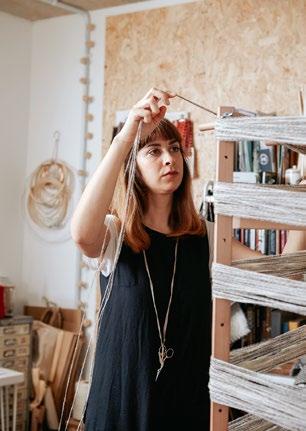
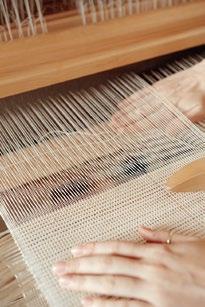
shortly before she left Athens for her studies in London, when she attended an introductory course at the Historic Weaving Workshop. It was there that she learned traditional techniques on a loom, including rug-making methods such as kilim. This experience sparked a strong interest that would later shape her entire career.
Originally trained in textile conservation, Maria developed an early curiosity about how fabrics are made before they are preserved. This curiosity eventually led her to pursue textile design studies in England, where weaving was offered as a formal academic discipline. Unlike in Greece, where creative paths felt limited to fine arts or architecture, the UK provided her with the opportunity to explore weaving as both a technical and artistic field. What began as an exploration soon became a defining creative direction.
Maria describes her work as non-traditional, though it incorporates elements and techniques rooted in tradition. As she explains, the loom itself has not significantly changed over time, but the possibilities it offers have evolved, allowing for increasingly complex designs: “Weaving
is not merely decorative; it is a process of construction,” she says. “Each piece is built from scratch, thread by thread, much like the construction of a wall, brick by brick.” It is this exact structural approach that offers her textiles a sculptural, almost architectural quality. It is apparent that texture plays a crucial role in her work, often more than colour. She tends to use natural materials and tones, focusing instead on how light interacts with the surface–how shadows form and patterns emerge through subtle variations. Her textiles invite not only visual engagement but also a tactile response, encouraging viewers to experience them physically.
Maria’s creative process balances precision and spontaneity. While commissioned works require careful planning and adherence to a pre-approved design, her personal projects allow for experimentation and unexpected outcomes. Often, new ideas emerge during the act of weaving itself, sometimes even from mistakes.
Today, Maria divides her time between Greece and London, teaching and contributing to a growing community of weavers, and is currently in the process of
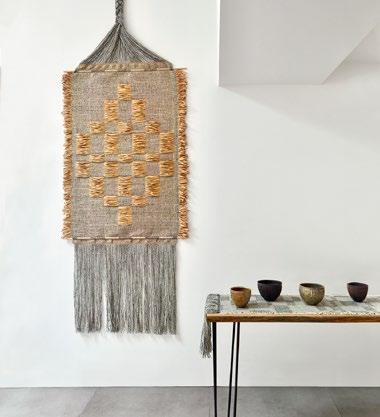
co-founding the Weavers of Greece Guild. Through her work and collaborations, she aims to support the visibility and sustainability of contemporary craftsmanship in Greece, advocating for greater recognition of weaving as both an art form and a profession. Next stop for the talented artist, the Edirne Biennale in Turkey. mariasigma.com
Christiana Vardakou is the founder of Greece’s first natural dyeing atelier, based in Athens. Her brand celebrates sustainability and timelessness, creating pieces that are individually designed, handcrafted, and fully customisable. On her quest to discover a link to textile design in Greece, Christiana Vardakou found that knowledge around natural dyes was fragmented: passed down orally, often undocumented, and difficult to access in a contemporary, free context. It was this gap that pushed her outward. So, after studying textile design in London, she travelled around Asia, encountering traditions still actively practiced, where the divide between past and present seemed to dissolve.
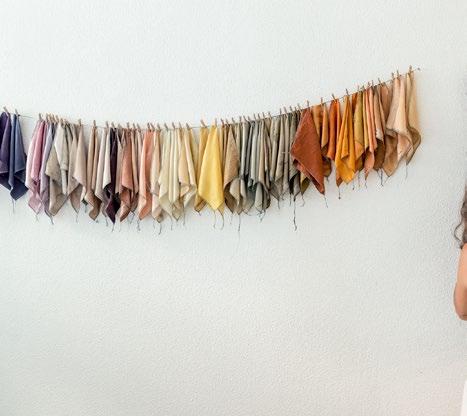

“Natural
knowledge THAT has EXISTED for CENTURIES, and that ALONE CARRIES a great WEIGHT”
CHRISTIANA VARDAKOU

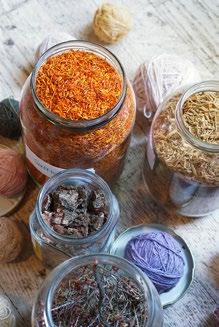
Textile design offered her the perfect way to merge art with function, bringing together painting, materiality, and everyday life. Her entry into the art of natural dyeing began with curiosity and intuition. “In my teenage years, I actually tried to do the opposite! I was really into hippie culture and started experimenting with tie-dye. By bleaching fabrics, I would create strange spirals and abstract patterns.” Early colour experiments while in London involved avocado pits for soft pinks, onion skins, pomegranate peels, even turmeric, and plants gathered on her daily routes. “I used leaves and flowers from my garden in Brixton, as well as anything I came across during my daily commute from home to the underground, and from there to university. I even experimented a lot with kitchen waste.”
Not everything worked–but that unpredictability became central to her process. “It’s not enough for a colour to appear,” she notes. “You have to understand whether it will last–through time, light, and use.”
Upon returning to Athens, she started visiting greengrocers and supermarkets, asking them to save onion skins for her. “At first, almost everyone asked if I was collecting them for Easter egg dyeing,” she says, smiling. “Now, they recognise me. They call me ‘the girl with the onions’ and always set them aside for me. It’s a bit funny, but also really beautiful how this process brought me in touch with my neighborhood.”
Memory plays a quiet but persistent role in her creative process, with childhood moments resurfacing in her work,
not as literal references but as sensibilities.
“I always had a very strong connection with flowers. As a child, I believed they were little fairy houses. I would look at them as tiny, secret worlds. My grandmother is amazing with plants. When I stayed with her, we always took care of her flowers together. I remember that whenever something began to wither, we’d cut it immediately, and I would press it into my books and use that instead of bookmarks. In a way, that was my own little herbarium; and it’s something I still do today.”
Vardakou works closely with local producers, from silk makers in Soufli to wool sources in Zagorochoria, maintaining a direct connection to her materials and a personal relationship with the people behind them.
In her hands, tradition is neither preserved nor replicated. It is reinterpreted, rooted in the past, but unmistakably of the present: “Yes, there is definitely that sense of connection with something very ancient. Natural dyes carry knowledge that has existed for centuries, and that alone carries a great weight.”
After an incredibly successful run with fabrics and clothes, her focus is gradually shifting toward larger-scale projects. This became particularly clear after her participation in Milan Design Week, where she presented a folding screen.
“Since then, I’ve been thinking more actively about how my textiles can function within a space – not just as objects, but as elements that shape it. I’m interested in creating works that are not merely decorative, but rather change the feel and experience of a space.” christianavardakou.com

BRUNELLO CUCINELLI
ZEGNA
KITON
TOM FORD
BERLUTI
MONCLER
BRIONI
ETRO
LORO PIANA
JACOB COHEN
SANTONI
CANALI
CORNELIANI
HERNO
MANDELLI
MOORER
ORLEBAR BROWN
PAUL AND SHARK
ISAIA
BOSS
VILEBREQUIN
POLO RALPH LAUREN
PT 01
MOOSE KNUCKLES
LARDINI
INCOTEX
BARBA NAPOLI
ELEVENTY
SERAPHIN
COLOMBO CASHMERE
PREMIATA
LUIGI BORELLI
CESARE ATTOLINI
FEDELI
“Ethos is the unseen law that shapes a life”
Ethos is a Greek word meaning "character" that is used to describe the guiding beliefs or ideals that characterize a community, nation, or ideology; and the balance between caution and passion. It is the invisible architecture of values - the principles that define how a person or a community lives, acts and earns trust.
“WE COMPOSE YOUR FUTURE MEMORIES”
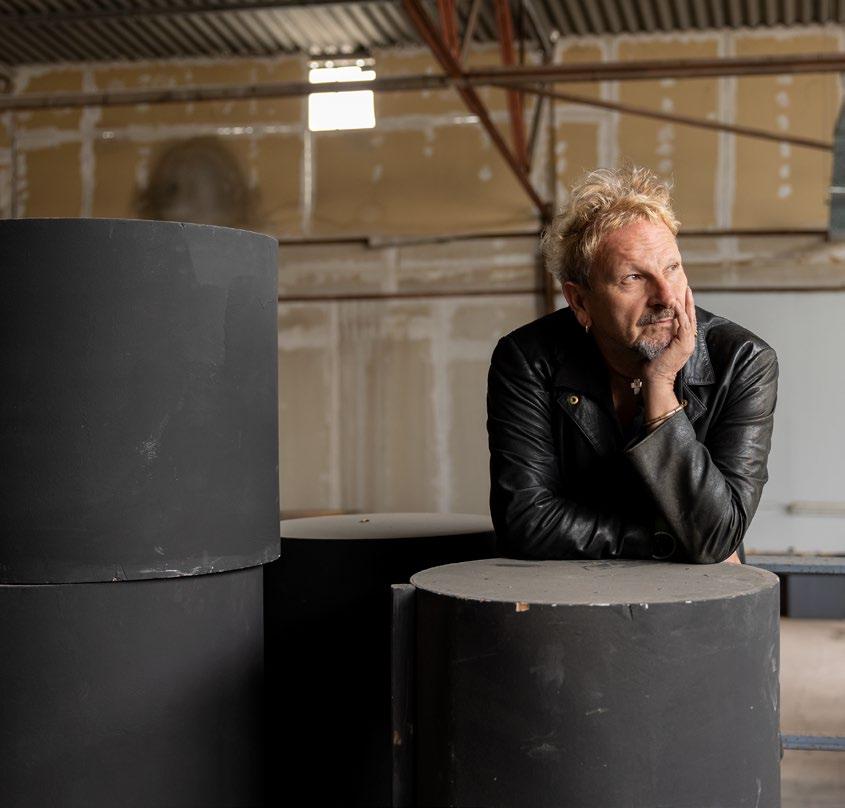
In the universe of the new Artistic Director of the Athens and Epidaurus Festival, the festival is not just management, but a living staging of collective feeling: matter and immateriality, body and memory intertwine in an incubator of potential surprises that shape communities of experience, aesthetics and freedom.
Your name is closely associated with theatrical creation, with the introduction of new theatrical vocabularies. How can a creative mind manage the logistics of a festival?
interview by Aris Kavatzikis
The structuring of the artistic programme of an international festival inherently carries a creative tone. If it did not involve a breadth of creative interest, I would not be here. On the one hand, you must discern what may be aesthetically useful for people in the near future. You can recognise new trends. The Festival, as a language, contains infinite modes of creative possibility. After all, the creator, to a large extent, is a manual worker who must understand how wood behaves, how a screw behaves, but also how another person’s soul behaves. All of these are, in a sense, creative gestures. They relate to both the material and the immaterial. In this sense, the Festival has a vast range of possibilities for creation, even for synthesis. Pireos 260 constitutes a vibrant incubator. Many things are tested here. With great restraint and care, things are also tested in the other venues, such as Epidaurus, but in moderation, as these are popular theatres – meaning large audiences – which implies a role and a degree of gentle, moving cultivation of taste for the public. Through the Festival, the Athenian audience, since the appointment of Giorgos Loukos as artistic director, has undergone a different kind of cultivation in terms of its aesthetic taste. It is what we see, the people and artists we encounter, their methods and ways. We are all in a crucible from which we expect surprise. That is the incubator of Pireos: to generate possible surprises that we will take with us, carry with us, that will pursue us and bind us together as a community and as a society of joy, disagreement, but above all vitality.
The Artistic Director’s term is three years, and you announced that the full programme at the Ancient Theatre of Epidaurus unfolds entirely through three successive editions (2026, 2027, 2028), which together form a unified whole. This year we will engage with the first edition.
Indeed, the programme is designed with a three-year horizon. There is a production already being developed now for 2028. We have a spectrum of three editions that are in dialogue with one another. In the end, we will have a broader synthesis of what we have seen over these three years, but this does not negate the intrinsic value of each edition, each individual chapter. This year, apart from the productions of the Greek National Opera, the National Theatre of Greece, and the State Theatre of Northern Greece, for which I do not have curatorial responsibility, for the rest I will say that “they are all my children.” Christos Theodoridis, a young director with promising work, makes his first appearance at Epidaurus with a hardcore piece, The Persians. Also, what are the Bulgarians doing with the Bacchae? It is the National Theatre of Bulgaria, with the important director Javor Gardev and the Tiger Lillies. I am curious to see what they will achieve. Another production I am looking forward to is Antigone, by Alan Lucien Øyen, with collaborators from Tanztheater Wuppertal. Øyen is an exceptional choreographer, the first to be invited after the death of Pina Bausch to choreograph at Wuppertal, a “temple” with a closed system, where no one was allowed to approach. Antigone is speechbased, it is not dance, but it is dance, but it is also theatre… An extremely interesting approach, a different language. The way the poetry of the body is involved in the stakes of Antigone is of great importance.
Finally, I am interested to see what Thomas Moschopoulos, a very important Greek artist, will do with Ion.
Are there other activities at Epidaurus, beyond the performances?
I will mention the gesture “One, One, One”, at the Ancient Stadium within the archaeological site, with a composer, a performer and a piece, at 12 midnight, after the performances. Essentially, it is the handling of an ancient drama by a musician. I will also add Narrative Archaeology, something we did with great success in Eleusis – European Capital of Culture, in collaboration with archaeologists. It is another way of experiencing a visit to an archaeological site, where, with the help of the performing arts, archaeological information becomes the character of a living experience.
What will we see at Little Epidaurus? It is being made autonomous from this year onwards; we now have the Little Epidaurus Festival. For me, it is like the festival of the town of Ancient Epidaurus itself, with an intention of independence from what takes place at the Great Theatre of Epidaurus. We will have a world premiere there this year.
A surprise was also the granting of the Odeon of Herodes Atticus to the Festival for the month of June, before it is closed for a three-year period for restoration and reinforcement works, in order for Farewell Celebrations to take place. Was this a “gift”?
We should ask the Minister of Culture and the universe. There is a complex redevelopment programme for the Herodeion, as the monument has been under strain and the moment had come for its restoration. At some point, speaking with the Minister last October, she told me: “There is the possibility of a short period at the Herodeion, would you be interested?” Who would say no? Each of the curated events is a farewell to the Herodeion. The beginning and the end are with piano works, from one sphere to another, from Vikingur Ólaffson to John Legend.
“The FESTIVAL is a FORM of large-scale DIRECTION.
In ESSENCE, you are DIRECTING, in a WAY, collective EMOTION”
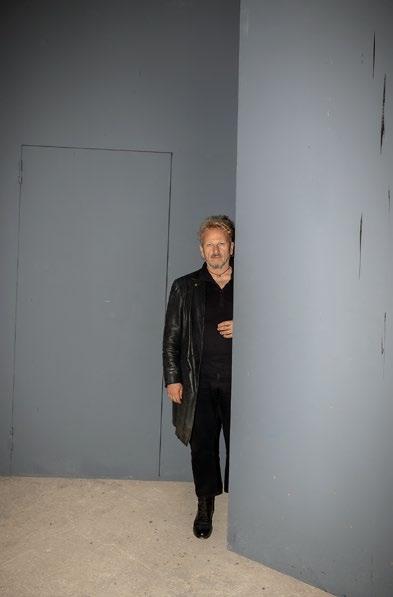
During your term, are you thinking about directing anything yourself?
The Festival is a form of large-scale direction in itself, from every perspective. In essence, you are directing, in a way, collective emotion, the movement of people, what they may encounter and what may surprise them. Nevertheless, for 2027 there is a plan – it already existed before I took on the Festival, immediately after Nekyia with the Noh theatre of Japan – and it may take place at Pireos, with a very important international artist.
This year, what can we expect at Pireos 260?
The aim is to give many new “gestures” that have never happened before. Even in its own image, in terms of what the spectator will encounter upon arrival on 29 May, at the opening of the Festival. This year, therefore, there is a “zone” called “Voices of
the Arab World”: with performances coming directly from Palestine and Iran. With artists arriving from Iran, and we are still examining how they will be able to come. This is the Festival’s strand where the aim is to give voice to voices that rarely manage to be heard beyond their context. At Pireos we will also see a great deal of dance, with rare and exceptional performances: from China, Ireland, performances you will not easily forget. In a way, at the Festival we are designing your future memories.
Another strand this year is the section “Starry Sky, Starry Nights.” In Space D, at midnight, the roof will open and filmed performances of theatre, music and dance will be projected on a large screen–works that have no possibility of ever being restaged or performed again. A gesture towards the ephemerality of the performing arts. Among them is also Insenso, which I had directed, the first part
of which was presented in a habitat right next to Pireos, while the second took place in Space D. There is also the “Tribute” section. This year’s honouree is Giorgos Loukos, who made remarkable contributions as Artistic Director of the Festival for a decade. Also, this year we are celebrating, as this year marks 20 years of operations for Pireos 260.
Since you studied Biology, can you tell us whether the biologist exists within theatre?
More than you can imagine! Biology is one of the so-called fundamental sciences, from which medicine, nuclear biology and neurobiology derive. What you learn are the physical principles of living nature, of living matter. The training of actors is based precisely on these principles, which have a completely scientific foundation. It is very important, when working with bodies and minds, to be careful and sensitive. I will also mention something else, from a scientific study we carried out with the University of Athens in the field of Cultural Ecology. It identifies factors that shape the flourishing, peak, or decline of public spaces: a square has rules and parameters that allow its flourishing, the increase of visitor flow and activity, or the exclusion of people. All of this has scientific methodology and parametrisation. I mention it as a simple analogy, as the orchestra of the ancient theatre is a square, the public space of ancient drama.
What have you not managed to do much of in your life?
I haven’t done as much cycling as I would have liked, even though I own seven bicycles because I have a bit of an obsession.
Have you managed to enjoy yourself a lot?
Yes! I feel privileged. One aspect of my character that helps with this is that I experience joy relatively easily, or I can easily appreciate what joy can offer me. I am also relatively easily surprised. This has less to do with the object of surprise itself and more with an internal process of openness, which I support and actively pursue. I also pursue it with my actors.
Could it be that this longed-for feeling arises because you haven’t “killed” the child within you?
Art is the institutionalised form of childlikeness within a society. Whatever society cannot contain as adulthood, it assigns to art. It would be a pity if art did not exist, because then there would be no outlet for the kind of childlikeness a society needs in order to remain in equilibrium. Art can achieve things that politics struggles with and often fails to achieve: alignments, condensations. There is a shared ground, which is collective emotion, collective sharing. Joy, fortunately, has a greater need to be shared than sorrow. Obviously, art helps me retain childlikeness, and I, in turn, help collective childlikeness through my work.
What do you think keeps you so young, in both spirit and appearance?
Art keeps you constantly alert, constantly in a state of surprise: everything is new, everything is fresh. Everything is possibility; there is nothing more beautiful than that. And also what I mentioned about neurobiology: the way you keep your sensory channels open. And to return to the humorous side of this line of thought, someone says, “look how he dresses,” and someone else replies, “it doesn’t matter, he’s an artist.” An artist is allowed to be more daring with their outward appearance, so why is it not allowed for everyone else? Even this personal freedom in clothing is a form of claim. By gaining it, you may also gain something else nearby. There was a proverb my father used to say, which I never quite understood: “I eat to please myself, and I dress to please others.” I find that completely wrong, in contrast to the wisdom of proverbs.
Were you trained in freedom from an early age? Was there freedom in your family?
I had the privilege of being the third child in the family, so I began to carve out a somewhat more solitary life, but at the same time a freer one. This gave me a space, a territory of self-initiative and freedom, which I preserved and moved forward on the basis of. My father was a military man,
my mother wanted to become a teacher because she was excellent with children, but she never did. Her composure acted as a stabilising condition. There was strictness in the house, but not the wrong kind. Strictness must exist for structures to exist. If everything is “all over the place”, you do not form a method, nor a gaze, nor an axis, nor strategies. Despite his military background, my father had one advantage: he was extremely sensitive. I came to appreciate and realise this around the age of twenty. Until then I was in conflict with him about everything. Later I understood that people spend a lot of money in psychoanalysis to achieve a sensitivity like my father’s. He was very spontaneous, almost like an animal. I observed him as if he were a phenomenon. After the first adolescent clashes, we had a very personal relationship. We communicated on levels no one could imagine. It had meaning and left a deep warmth in me. I remember when he passed away, at the beginning of summer, he was on holiday in Aegina. I was in Athens, teaching a seminar for actors. At the end of the seminar, I found a message from my sister: “Dad passed away.” The next morning I went to Aegina, greeted the people who had gathered, and asked them for a favour: to leave me alone with him for fifteen minutes. They didn’t want to, there was some grumbling, mostly from the women, but I insisted they must go out for a quarter of an hour. That is the personal freedom we were talking about. In another case I might not have claimed it. But it was crucial to stay for those fifteen minutes and speak with him. And we spoke in the way we always knew how to speak to each other. When you reach that level of communication, even death may not be the ultimate barrier. My wonderful brother-in-law had placed two cigarettes in his jacket for the “journey”, as my father was a smoker. So after we talked, I called everyone back in. That dialogue was vital, that moment we were able to share privately.
You refer to it as a dialogue. I insist on dialogue. It was not a monologue, it was a dialogue.
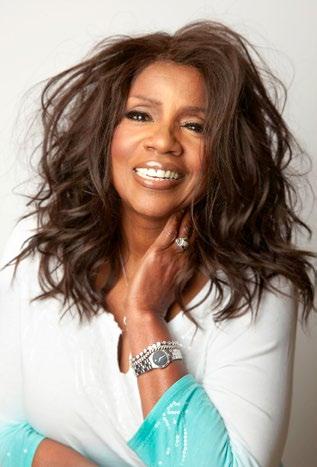
Gloria Gaynor
by Aris Kavatzikis
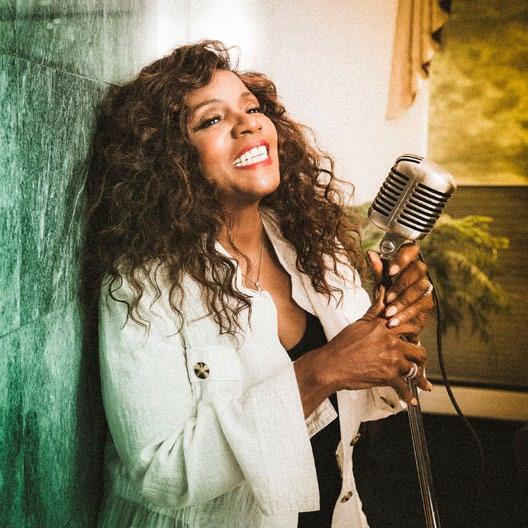
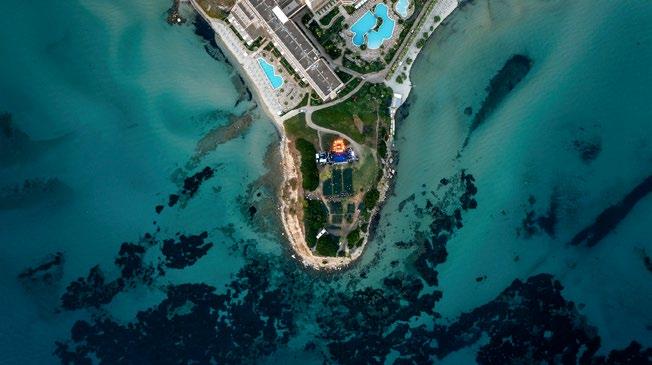
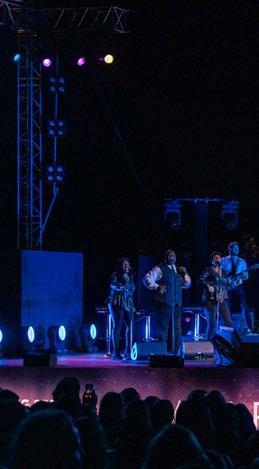
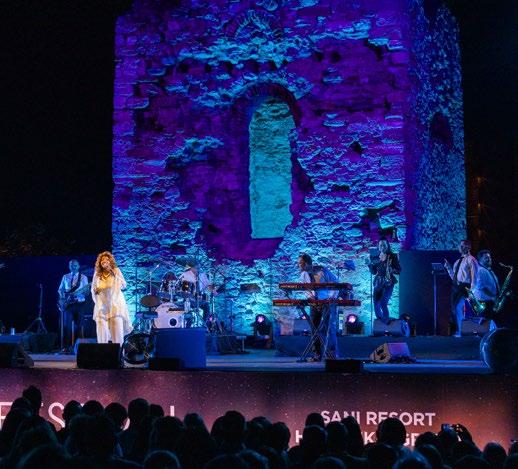
Last summer, the iconic disco performer harmonised her timeless dance sounds with the natural beauty of the Sani Hill and the dazzling stars above, in an evening filled with colour and rhythm, as part of the Sani Festival.
Those who attended her concert that night nostalgically revisited an era when disco music set the tempo for both days and nights – a time of carefree spirit and boundless energy. Her commanding presence on the stage at Sani Hill became a journey through life, music, and powerful emotion.
The high priestess of disco was born Gloria Fowles in Newark, New Jersey, and her name is forever associated with one of the best-selling singles of all time, “I Will Survive”, with sales exceeding 15 million copies worldwide. “There was always music in our house,” Gaynor wrote in her autobiography. She adored the records of Nat King Cole and Sarah Vaughan. And yet, while her brothers were allowed to sing gospel, she was not permitted to do so because of her gender.
Despite her family’s modest financial circumstances, she recalled that their home was filled with laughter and joyful moments, and their table was always open to friends from the neighborhood. “All through my
“
The SETTING at the SANI FESTIVAL MADE the PERFORMANCE
even MORE PLEASANT than USUAL. IT was SERENE and CREATED a VERY festive ATMOSPHERE”
young life I wanted to sing, although nobody in my family knew it,” Gaynor wrote in her autobiography. She began singing in a nightclub in Newark, where a neighbor recommended her to a local band. After several years performing in local clubs and along the East Coast, Gaynor signed with Columbia Records in 1971.
During disco’s golden era, she scored major hits such as “Let Me Know (I Have a Right),” “I Am What I Am,” and her celebrated version of “Never Can Say Goodbye,” while “I Will Survive” became a defining anthem of female empowerment. Her entire discography was rediscovered and reappraised in the mid-1990s during the global disco revival movement. In 2025, she received the Kennedy Center Honor, recognizing her enduring contribution to music and culture.
She spoke exclusively to Sani Magazine, reflecting, among other things, on her unforgettable experience at last year’s Sani Festival.
Last summer you performed at the Sani Festival, on the magical hill overlooking the Aegean Sea. How did that setting influence your performance and your emotional connection with the audience?
The setting at the Sani Festival made the performance even more pleasant than usual. It was serene and created a very festive atmosphere.
Many artists speak about certain venues having a “soul.” Did you feel something unique about singing in Greece, at Sani, compared to other international stages?
The Sani Festival seems to have an atmosphere of peace and tranquility that permeates the surroundings and makes it a wonderful place to perform.
You have performed all over the world. How does performing outside your home country – especially in places with such rich history as Greece – shape your energy and interpretation of your songs?
My energy and song interpretation are shaped by my audience. In Greece, I feel a sense of peace and tranquility that is unique to the area.
Looking back at that night at Sani, is there a particular moment on stage that stayed with you?
The audience’s response and participation during “I Will Survive” were especially exhilarating.
Your career spans decades, yet your presence remains powerful and contemporary. Do you consciously reinvent yourself, or does reinvention happen naturally as you grow?
Reinvention happens naturally as you grow and internalize the best of your experiences.
“I Will Survive” became more than a song –it became an anthem of resilience. How has your relationship with that song evolved over the years?
“I Will Survive” has become my anthem and mantra over the years because of my life
experiences and my need to draw strength from the words that have uplifted, encouraged, and empowered so many others, as I am told by my family, friends, and fans.
After so many years in the spotlight, what still excites you about stepping onto a stage?
What excites me about stepping onto the stage is knowing that I have the opportunity to uplift, inspire, encourage, and empower my audience with my choice of repertoire.
How important is the audience to you emotionally? Do you draw strength from them, even after all these years?
I still draw strength from seeing and feeling the audience’s response to the different songs, and knowing that I am giving them something that will last beyond the duration of the concert.
Over the course of your career, what has been the most transformative lesson the music industry has taught you?
The most transformative lesson the music industry has taught me is that you have to surround yourself with people you can trust, and who will tell you the truth about yourself in all situations, whether you like it or not.
When you reflect on your journey – the triumphs, the challenges, the reinventions –what makes you most proud?
What has made me most proud is that, according to my friends and family, I have not let fame or fortune change me or my values.
Do you experience your performances differently today than you did at the beginning of your career? Is there more freedom now?
I experience my performances differently today than at the beginning of my career because they are now an exchange of love and appreciation between me and my audience – something I didn’t know how to recognize or experience in the beginning.
When you stand on a stage like the hill of Sani, looking out at the sea and the crowd, who is Gloria Gaynor in that moment – the diva, the storyteller, the survivor, or simply the woman who loves to sing?
I am all of it, except the diva.
If you could speak today to the young woman who was just beginning her career, what would you tell her about fame, faith, and inner strength?
I would share with her what I believe is my most valuable lesson: at all times, surround yourself with people you can trust, and who will tell you the truth about yourself in all situations, whether you like it or not.
“Reinvention HAPPENS NATURALLY as YOU GROW and INTERNALIZE the BEST of your EXPERIENCES”
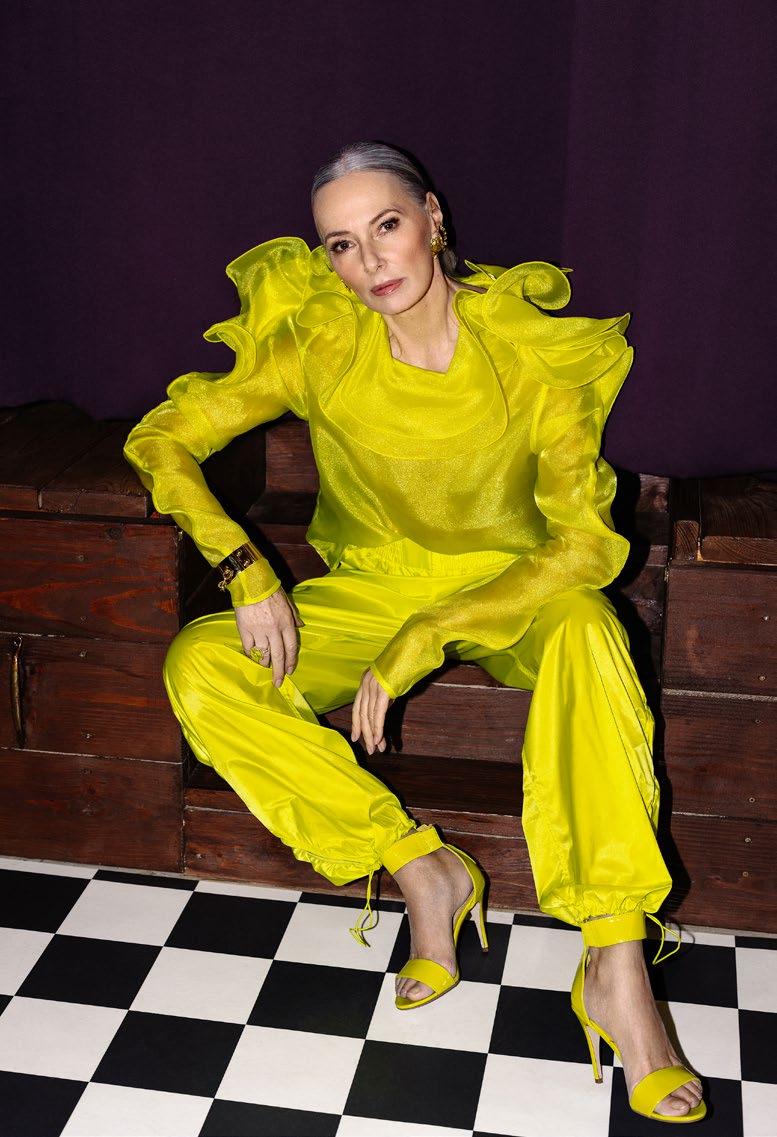
interview by Aris Kavatzikis
photographs by Oksana Osypova
You started your modelling career at the age of 17 and travelled across Europe. What were some key lessons you learned as a young model, and how do they shape the way you approach modelling today?
Starting my modelling career at 17 taught me independence and discipline very early on. Travelling across Europe at that age was exciting and glamorous on the one hand, but it also required a great deal of discipline, flexibility, and emotional strength. I experienced how closely confidence and insecurity can coexist. I learned quickly that in this industry, professionalism is just as important as appearance. Today, I approach modelling with much more inner calm and self-awareness. I no longer feel I have to prove myself. I know who I am, I trust my instincts, and I focus on authenticity instead of trying to please everyone.
After building a successful career as a Human Resources Manager, you chose to follow your husband to Hamburg and ultimately returned to modelling. What was going through your mind at that turning point, and how did your husband’s encouragement influence your decision?
That was an emotional turning point for me. I had left behind a solid career in Human Resources and stepped into a completely new life. For a while it felt right, but eventually I realised something was missing, something that was really mine. Modelling had never left my heart. My husband's belief in me and encouragement gave me the courage to return to a world I had left behind a long time ago. His encouragement meant a great deal to me. He didn´t push me, he just reminded me, and that reminder changed everything.
You relaunched your modelling career at age 48. What made you decide to dive back into the fashion world with such confidence?
At 66, she proves that style, confidence, and reinvention have no expiration date. From teenage model to a bold return decades later, her story is a celebration of fearless evolution and a reminder that the most powerful chapter of your life might just be now.
What brought me back was not only confidence, it was also a longing. I felt there was still something unfinished, something I wanted to reclaim for myself. I had always loved fashion, visual storytelling, and the creative energy of this world. At some point, I realized that this desire had not faded at all. I wanted to return. I felt that if I didn’t try, I would always wonder. I also sensed that the industry was slowly opening up to a broader idea of beauty. At 48, I made a conscious decision to return to the fashion world with the self-confidence that I had still something to offer. That creates a very different kind of confidence, a much stronger one.
Modelling at 66 is still relatively uncommon in the industry. For you personally, what does modelling represent at this stage of your life – art, self-expression, a lifestyle, or something else entirely?
For me, modelling today is all of those things but perhaps above all it is a form of visibility. It is self-expression, certainly. It is creativity, storytelling and also a celebration of fashion and beauty. But it is also something more meaningful; it is my way of taking
“I WANT women to UNDERSTAND that their BEST time IS not defined BY AGE , but by the COURAGE to LIVE fully and AUTHENTICALLY. YOUR best TIME IS not behind YOU UNLESS you DECIDE it IS”
space and saying that women do not lose relevance, beauty, or presence with age. At this stage of my life, modelling feels much less superficial than people may assume. It has become a language, one through which I can express personality, experience and a perspective on aging that I care deeply about. I am aware that my visibility may resonate with other women, that perhaps by seeing me, they feel a little more encouraged to show themselves too. My motivation for modelling is not rooted in a need for confirmation. I do not continue because I need to be told that I still matter. I continue because I know I do and because I genuinely love what I do. There is great joy about doing something you love with your whole heart at an age when society may expect you to become quieter. That is part of the beauty of it.
Older women in fashion are often underrepresented. As someone who defies that trend, how do you think the fashion industry is changing, and what needs to change even more? The industry is changing and that is encouraging. There is more openness towards diversity including age and more awareness that beauty is not limited to youth. At the same time, I believe we still have a long way to go. I would like to see real continuity; not just one mature woman in a campaign, but genuine representation. We should not be presented as rare exceptions. We should simply be part of the visual landscape of fashion, in campaigns, on runways, in beauty imagery, and in editorial storytelling. True progress will come when visibility at every age is no longer considered remarkable, but natural.
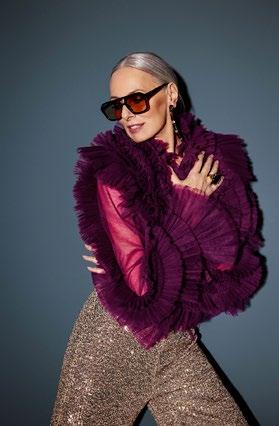
In your book Your Best Time Is Now (Into the Second Half of Life with Energy and Style), your message urges women to embrace this chapter of life boldly. What inspired you most to write this book, and what is the single most important lesson you want every reader to take away? I wrote this book because I felt that far too many women enter the second half of life burdened by limitations often inherited from society or sometimes even from earlier generations. Aging is still too often framed as decline, as something to resist, to hide, to fear or apologise for. I wanted to offer a different narrative. The most important message in the book is very simple: it is all about the right mindset. I felt there was still far too much fear surrounding the second half of your life. Life does not become smaller just because we become older. I want women to understand that their best time is not defined by age, but by the courage to live fully and authentically. Your best time is not behind you unless you decide it is.
You return to Sani with your husband, year after year. What is it about this destination that keeps drawing you back?
Sani has a very special energy. It combines natural beauty, understated elegance, and a feeling of warmth that is increasingly rare. Of course, the setting is stunning, but what truly stays with me is the atmosphere, the sense of calm, ease, and genuine hospitality. For my husband and me, Sani represents a beautiful way of spending time together in this chapter of life. It is a place where we can truly exhale, reconnect, and enjoy life in a more conscious way. That has become more and more valuable to us. It is not only a destination, it is a feeling.
Finally, for women reading this interview who may feel hesitant about aging, pursuing dreams, or reinventing themselves – what advice from your own life would you offer them?
I would advise them to not place limits on themself. So many women live with quiet inner rules about what is no longer possible for them once they reach a certain age. Stay curious, stay visible, do not compare yourself to others, or to younger women. Take care of yourself and surround yourself with people who support you. And do not wait for permission. If there is still a dream, a longing, or even just a small voice inside you saying “there is more,” then listen to it. Reinvention does not belong only to the young. In some ways, it belongs even more to us who have lived, learned, and grown. You do not have to become younger to become happier, you only have to become more fully yourself.
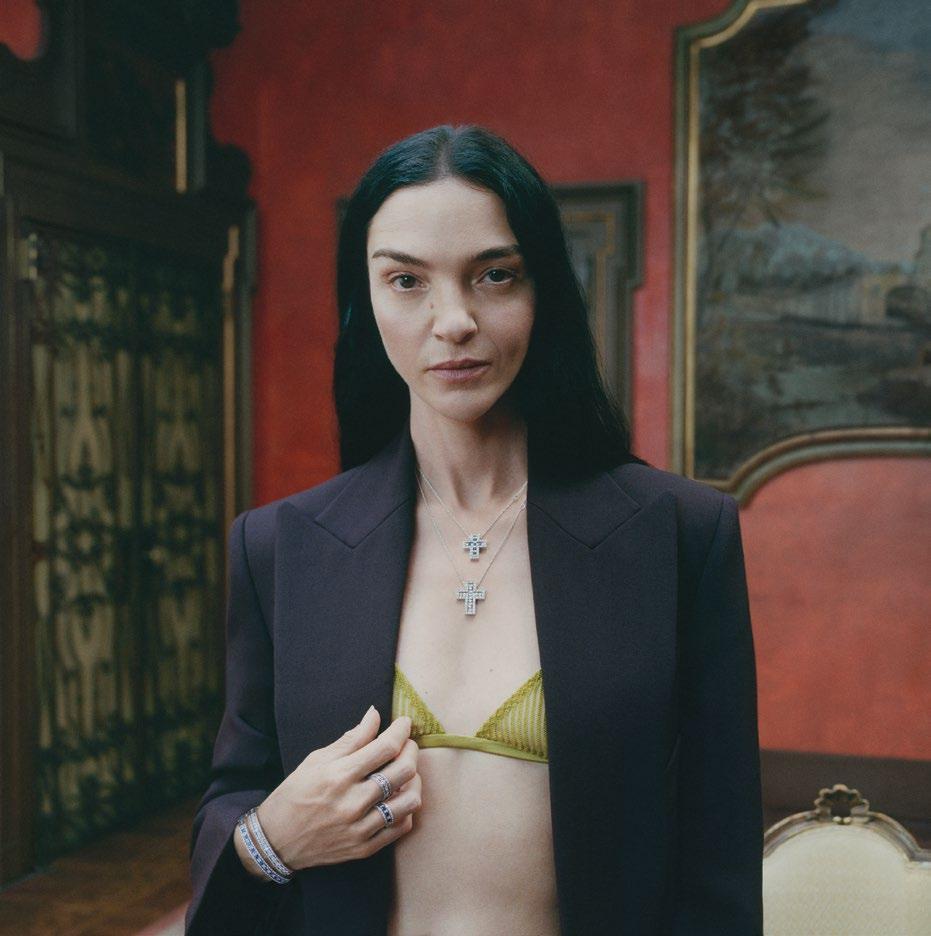

“Aesthesis is the awakening of the soul to beauty”
Aesthesis is the Greek-derived term for sensation, perception or feeling. It refers to the refined capacity to perceive beauty, nuance and emotional resonance in the world. It is the awakened sensitivity of the senses and the mind, allowing us to experience life not merely as function but as art.
interview by Aris Kavatzikis
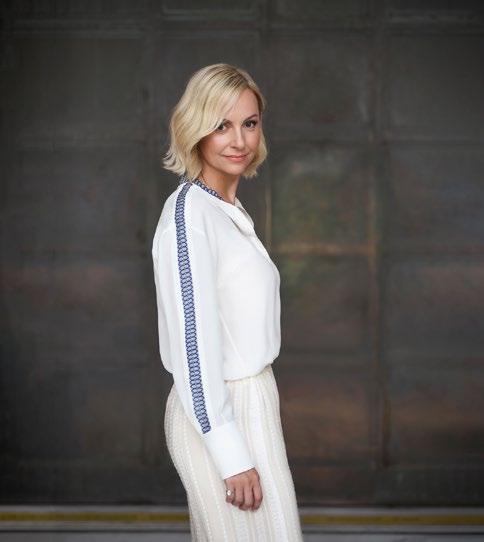
At a defining moment for the National Archaeological Museum, the new Chair of the Board of Directors, Ioanna Dretta, with an exceptionally rich CV, outlines the ambitious vision for its transformation into a modern, open, and international cultural hub. The historic institution is redefining its role in the 21st century.
The National Archaeological Museum is entering a new era with a major expansion and upgrade plan. What is your vision, and how do you envisage its role within the international cultural landscape?
The National Archaeological Museum, the largest museum in the country, was constructed in different phases, with
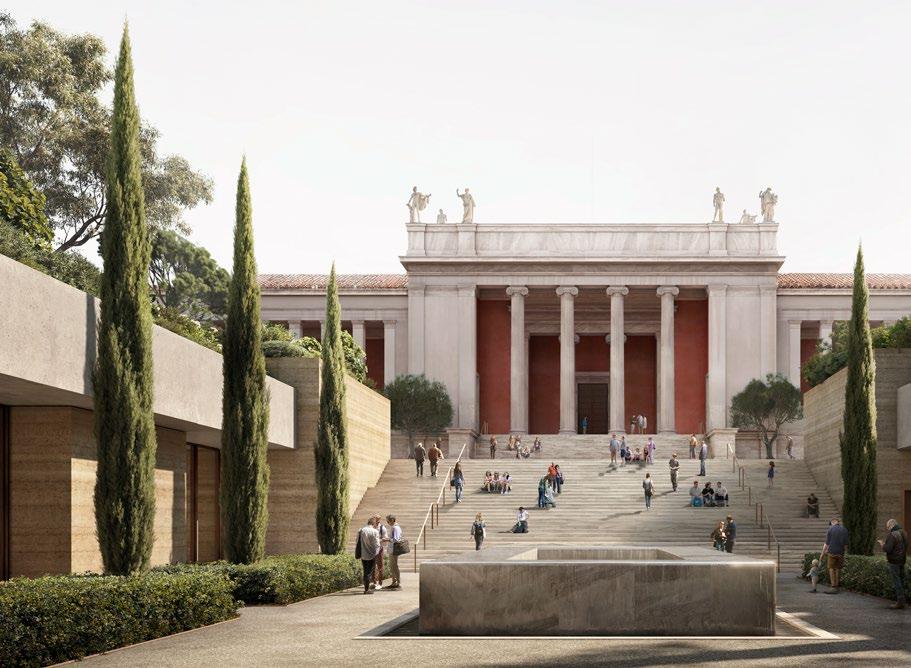
much of it completed in the 19th century. It faces issues of limited space and a lack of modern exhibition and supplementary facilities, while in recent years its visitor numbers have soared dramatically. The new building complex, in addition to offering the largest exhibition space, temporary exhibition areas, a restaurant and shop,
a multi-purpose auditorium, and a large research centre, also returns an important public park to the city. At the same time, in our view, it manages to maintain a difficult balance between a new building and a monument, with the new building possessing character and personality without overshadowing the monument. On the contrary, it highlights it–an outcome of the work by the internationally renowned architect, David Chipperfield, and the Greek Tombazis architectural firm Tombazis.
Beyond its architectural features and the resulting positive impact on the wider area, the expectation for the Museum, following its upgrade and expansion, is that it will become a cultural hub embraced first and foremost by the city’s own residents. They will incorporate it into their daily lives rather than visiting only when accompanying friends from out of town. We envisage its spaces not merely as exhibition areas, but as places where culture is actively created. After all, the National Archaeological Museum is intrinsically linked to our identity, having been founded in 1829, one year before the establishment of the modern Greek state. At the same time, it contributes exhibits to exhibitions held worldwide on the subject of ancient Greek civilisation.
The realisation of such an ambitious project, we hope, will experientially affirm for the wider public what already exists in the collective consciousness: that the National Archaeological Museum is the ark of ancient Greek civilisation.
The forthcoming expansion of the Museum has been described as a project of national importance. What is it that makes this undertaking so decisive for Greece, and what do you believe will be its greatest legacy for future generations?
The National Archaeological Museum was itself a national project when it was built in the 19th century. It formed part of the effort to shape a clear national identity
that would distinguish modern Greeks from the Ottoman past and reconnect them with the glory of ancient Greece, as well as with European Enlightenment and Romantic ideals. International architectural competitions were required, along with donations and successive revisions of the architectural plans, ultimately resulting in a museum that inspired universal admiration.
In 2019, the government formally announced its intention to expand the Museum. The more demanding path was followed: a feasibility study, an international architectural ideas competition, and the commissioning of major, internationally recognised architectural and museological practices. What would the easy path have been? To carry out a modest extension, create a shop, an auditorium, a ticket office and three exhibition halls, and leave everything else to chance. To hold an opening and feel proud of the outcome. Instead, it was decided that the Museum required a holistic plan for expansion and upgrade. This plan, among other elements, includes the creation of a modern and innovative research centre; provisions for the building’s sustainability; the safeguarding of the antiquities; the enhancement of the visitor experience; and, of course, the return to society of a new and significantly improved public garden and park. The building complex that is being created will substantially upgrade a museum of global standing, further highlighting both its remarkable collection and its role.
It is, indeed, a project of global scope, founded on interdisciplinary approach and collaboration.
Beyond the architectural expansion, what elements will fundamentally change the way the museum operates? We are talking about an open, outwardlooking and inclusive museum. Many things will change. The museological narrative is evolving. We approach all aspects

“The building COMPLEX that IS BEING created WILL substantially upgrade a MUSEUM of GLOBAL standing, FURTHER highlighting BOTH its REMARKABLE COLLECTION and its ROLE”
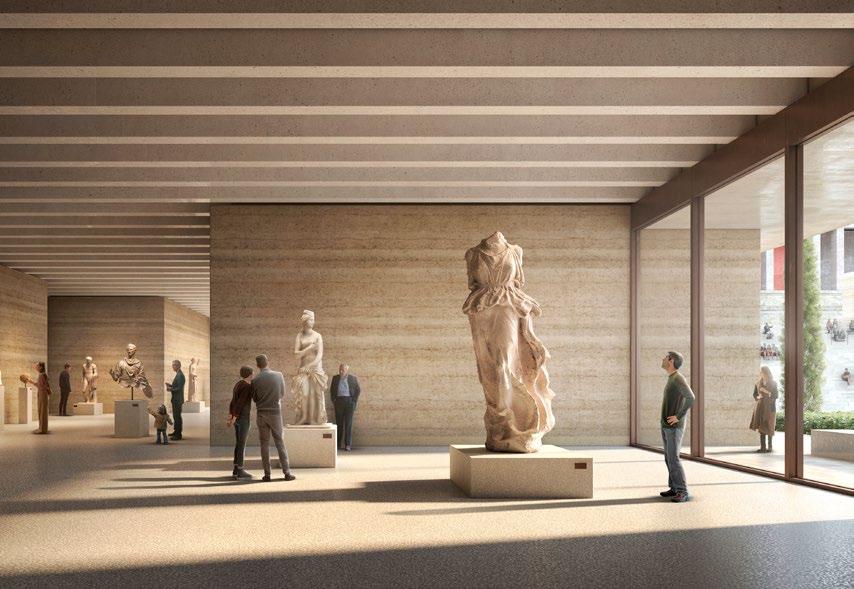
of our ancestors’ lives through the presentation of ensembles, rather than solely individual works of art, placing emphasis not only on the “masterpiece” but also on the artefact, while incorporating the latest scientific and archaeological data.
We are creating narratives that help audiences discover the human stories behind ancient objects, identify connections with contemporary life and explore ways in which past societies addressed issues that continue to concern modern communities.
We respond to the diverse profiles of our visitors by developing tailored routes: for families, for those with limited or extended time, and for visitors with specific interests.
With regard to our collections, these are being strengthened through the inclusion of regions that were previously underrepresented, while particular emphasis is also placed on the implementation of educational programmes.
We are therefore talking about an entirely different visitor experience, especially when one considers the technology that will be available by the time the museum prepares to reopen and install its new exhibitions.
You have followed a professional path that combines major infrastructure projects, strategic development and tourism. In what way can this experience
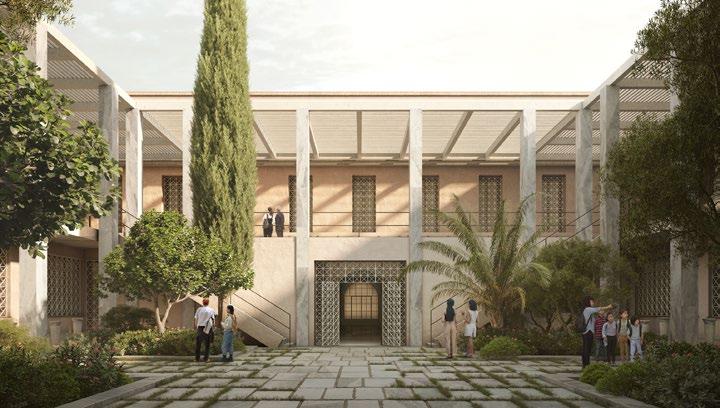
contribute to the new era of an emblematic cultural institution?
Studies and professional experience each contribute in their own way to this role, as they do to any position. However, in my view, the most important element for this particular role is a genuine love for museums.
Your studies at the National Technical University of Athens, Imperial College London and the Harvard Kennedy School have shaped a multifaceted background. How has each of these experiences influenced the way you approach management and strategy?
My studies have profoundly shaped both my way of thinking and my personality. The National Technical University instilled a particular mode of thinking; Imperial fostered problem simulation and analytical reasoning; and Harvard encouraged intellectual freedom. Together, these experiences form my professional imprint and the values that guide my approach to management, and, as you rightly point out, management and strategy are inseparable concepts.
You have served in important roles in both the private and public sectors, including at Marketing Greece and REDS S.A. What do you consider to have been the most important lesson or asset you gained from each stage of your professional journey?
After 25 years of professional experience, I am now convinced that the most valuable lessons and tools come from failures rather than successes. At the same time, I believe that the small successes and failures of everyday life, the unseen moments away from the spotlight, are what truly shape us, rather than the major moments of achievement that earn public praise.
Managing an organisation so closely connected to national identity requires a balance between vision for the future and a strong sense of responsibility. Which personal qualities do you believe are essential for serving such an institution?
I consider this a very important question, first and foremost as a citizen of this country – not only in relation to the position I
have the honour and pleasure to serve, but more broadly for many public roles, if not all of them. And once again, I agree with you that character ultimately plays the most decisive role. In order to serve such an institution, one must never forget, even for a moment, that the institution and its mission are always more important than the individual.
Looking ahead, how would you like future generations to remember this transitional period for the National Archaeological Museum? What, for you, would constitute the greatest success of this undertaking?
I believe the answer has two dimensions. The first concerns the project itself: we are working hard to deliver the new Museum with the quality it deserves, within the appropriate timeframe and budget. The second concerns the Museum’s wider impact. The aim is for the period during which the Museum will remain closed to mark the beginning of its new era, characterised by a strong and dynamic presence. We will say more about this very soon.
by
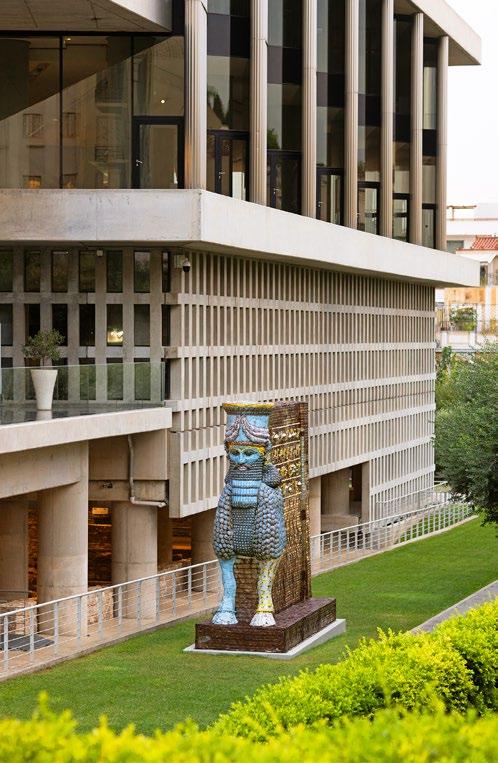
Rakowitz The Invisible Enemy Should Not Exist (Lamassu of Nineveh), 2018 10,500 Iraqi date syrup cans, metal frame 4.69 x 1.70 x 4.48 m Commissioned for the Mayor of London's Fourth Plinth Programme Courtesy Mayor of London and the Artist
view Lamassu of Nineveh (2018) | Michael Rakowitz & Ancient Cultures, 2025 | A collaboration between NEON + the Acropolis Museum |
© Natalia Tsoukala | Courtesy ΝΕΟΝ, the Acropolis Museum and the artist

Feeding your senses is the best way to recharge, get back in touch with your authentic self, and truly experience a place. Especially one like Greece that never ceases to amaze, always giving back more than you expect. During the summer months, not unlike the rest of the year, culture seems to bloom in the country, and exhibitions invite visitors to discover its many facets, in a captivating selection that touches the heart of any art lover.
The Acropolis Museum, together with NEON Organization, present the second part of the Michael Rakowitz & Ancient Cultures trilogy, a series that consists of the “reappearance” of artefacts looted from the National Museum of Iraq in Baghdad following the U.S. invasion in 2003, or destroyed at other sites in its aftermath.
The Lamassu of Nineveh (2018), on display in the surroundings of the Acropolis Museum, is constructed from empty cans of Iraqi date syrup, representing the once-renowned industry that was
decimated, as well as the human, economic, and ecological devastation wrought by the Iraq wars and their aftermath. The sculpture depicts the protective Assyrian deity, a colossal 4.3-metre winged bull with a human face that once stood at the entrance of the Nergal Gate in ancient Nineveh. The original monument, dating from around 700 BCE, was destroyed in 2015 by ISIS, along with many other artefacts in the Mosul Cultural Museum. Until 31.10.2026, Entrance is free
*While here, don’t miss out on the “Museum of the Excavation”, with objects (1.150 artefacts) left behind by the people who were born, lived and created in this particular corner of ancient Athens.
One of art history’s most intriguing unfinished projects, Aby Warburg’s magnum opus Mnemosyne Atlas featured “Irruption of Antiquity”, among its most intriguing chapters. Now, this title
Open your heart to the cultural richness of Greece and explore what’s in show during your visit!
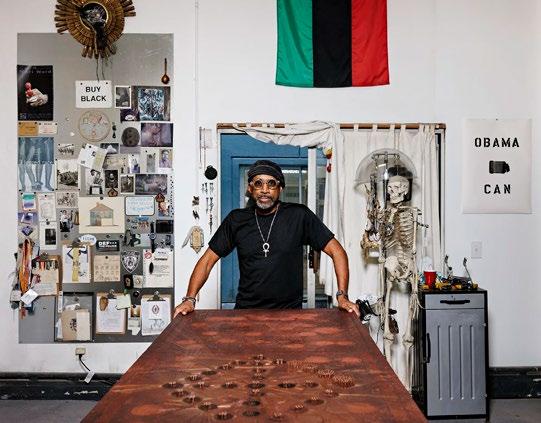
serves as the ideal name for a transhistorical exhibition that brings together the Benaki Museum’s rich, heterogeneous collections and the pictorial universe of the contemporary Polish artist Aleksandra Waliszewska.
Unfolding across two floors of the Benaki Museum, fifteen of Waliszewska’s paintings are placed in charged iconographic tension with objects spanning Neolithic Greece, Classical Antiquity, the Byzantine world, and the modern Greek era. Irruption of Antiquity proposes Antiquity not as heritage, but as pressure: a reservoir of images and affects that persist, re-emerge, and refuse to remain historically contained.
3.6.2026 – 27.9.2026
Benaki Museum of Greek Culture, 1 Koumbari St. & Vas. Sofias Ave., Athens
GENX: TALES FROM THE FORGOTTEN GENERATION
Drawing from the vast and exciting Dakis Joannou Collection, Gen X: Tales from the Forgotten Generation brings together works by artists born between 1960 and 1980, the decades traditionally chosen as bookends for the generation named after Douglas Coupland’s defining 1991 novel. These artists responded to the seismic shifts that took place as they were growing up, with varying degrees of sincerity, irony, and even cynicism. Often described as “slackers”, their generation forged a distinct language in response to an ever-accelerating culture that threatened to leave them behind. Their methods for navigating risk and transition continue to resonate and can perhaps serve as inspiration, now that millennials, Gen Z, and Generation Alpha prepare to confront their own unforeseen futures.
11.6.2026 – 26.11.2026
DESTE Foundation, Athens
Opening Hours: Tuesday, Wednesday, Thursday 12:00 – 20:00
The foundation’s Slaughterhouse Project on Hydra features Until That Day, an exhibition by Nari Ward (b. 1963, St. Andrew, Jamaica; lives and works in New York), renowned for his sculptural installations composed of discarded material found and collected in his neighborhood. By re-contextualizing these found objects, Ward creates thought-provoking juxtapositions that address social and political issues surrounding race, poverty, and consumer culture. The title of the exhibition takes its name from Haile Selassie’s address to the United Nations, and his refrain: “until that day, the dream of lasting peace and world citizenship and the rule of international morality will remain but a fleeting illusion, to be pursued but never attained.” Selassie’s warning–which Bob Marley adapted in the lyrics to his 1976 song “War”–was that humanity will never reach its full potential unless we recognize and uplift each other across national and racial boundaries. Rebetika music, as well as that by Afro-Greek musicians, will be performed at the exhibition as a response to the 1963 address by His Majesty Haile Selassie I.
23.6.2026 – 31.10.2026
DESTE Foundation Project Space, Slaughterhouse, Hydra
Opening Hours: Daily 11:00 – 13:00 & 19:00 – 22:00, Closed Tuesday (exception Tuesday, June 23) between Oct. 1 and Oct. 31: Daily 11:00 – 13:00 & 18:00 – 21:00 Closed Tuesday
Not just an actor but a performer, visual artist, and fashion icon, Tilda Swinton meets her longtime collaborators and friends in a deeply personal exhibition at the Onassis Foundation’s new space, Onassis Ready.
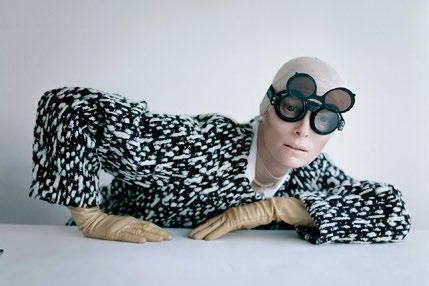
-Director Luca Guadagnino creates an intimate new portrait.
-Jim Jarmusch transforms scenes from his surreal zombie film, "The Dead Don’t Die" (2019), into an entirely new installation.
-Acclaimed fashion historian Olivier Saillard together with Swinton will present a multi-day presentation that brings to life a unique wardrobe.
-Photographer Tim Walker creates a portrait series exploring lineage and the continuity of the place.
-Director Apichatpong Weerasethakul produces a meditative, immersive installation.
-Pedro Almodóvar presents "The Human Voice" (2020) for the first time as an installation.
-Swinton’s childhood friend and filmmaker Joanna Hogg unveils "Flat 19", a multimedia reconstruction of Swinton’s London apartment in the 1980s.
-Finally, Swinton pays tribute to one of her greatest influences, director Derek Jarman (1942–1994), with whom she collaborated on seven feature films.
The exhibition is organized by Eye Filmmuseum in close collaboration with Tilda Swinton, developed in co-production with Onassis Stegi.
17.05.2026 – 28.06.2026
Onassis Ready, Strati Tsirka 2, Ag. Ioannis Rentis
JEFF KOONS: ‘VENUS’ LESPUGUE
Paleolithic art and contemporary creation in a fascinating creative dialogue. Exploring the significance of the Venus figure from the distant past until the present day, the Museum presents internationally acclaimed artist Jeff Koons’ Balloon Venus Lespugue (Orange) (2013-2019), loaned from the Homem Sonnabend Collection of Antonio Homem Sonnabend and Phokion Potamianos Homem. This, the first public display of the artwork, comes in dialogue with ten Paleolithic “Venus” figurines, through certified copies of the immovable originals housed in major European
museums. The exhibition explores the female form, proposing a dialogue that spans more than 40,000 years of human creativity. Until 31.08.2026
Μuseum of Cycladic Art, 1, Irodotou Str., Athens
Opening Hours: Monday, Wednesday, Friday, Saturday: 10:00 – 17:00, Thursday: 10:00 – 20:00, Sunday: 11:00 – 17:00, Tuesday: Closed
The Biennale of Contemporary Keramics (BCK) is back for its second edition, moving nomadically across Greek islands, this time taking place on the island of Rhodes (the first one took place in Santorini), under the title “Where the Day Starts.” Curators Anissa Touati, Stamatia Dimitrakopoulos and Loukia Thomopoulou see the Biennale and the Island of Rhodes as a meeting point where the Mediterranean’s diverse histories, traditions and futures come together. The BCK will host an exhibition showcasing contemporary artists from the region who either live in one of the countries of the basin, or have a meaningful connection to it. June – October 2026, Rhodes, in several points of the medieval town
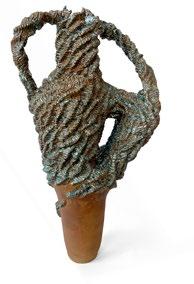
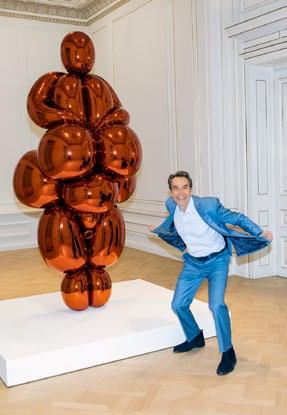
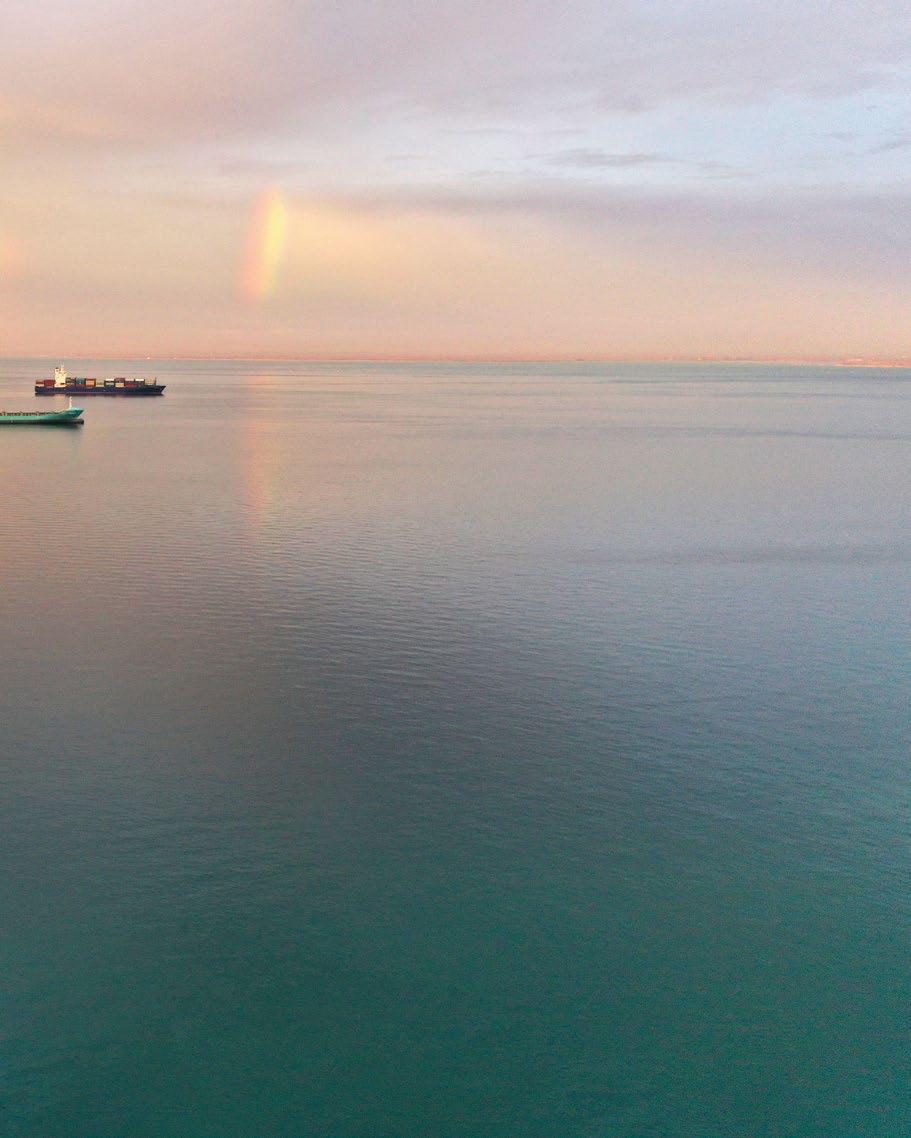
An artistic achievement filled with soul and emotion, created by photographer Katerina Katopis-Lykiardopulo using the photographic archive of her grandfather, Giorgos Lykides, and accompanied by texts by Georgios Mantzouranedes. The book is enriched with atmospheric imagery by renowned photographers and archival material drawn from GLOW magazine’s pool of photographic productions, to mark the 20th anniversary of the publication, which has intertwined its existence with the city, drawing inspiration from it and lovingly highlighting its every facet and noteworthy aspect.
A collector’s edition dedicated to Thessaloniki and the light that spreads across the city, a light that conspires with the photographic lens to capture the beauty and the unique, multifaceted character of the city. To celebrate its 20-year presence in the city of its origin, GLOW magazine has delivered an artistic achievement of memory and gratitude. Just as the magazine has never betrayed its love for Thessaloniki, offering it momentum and visibility, so does the city inspire GLOW’S creative team with a vision of its improved version and its continuous reinvention.
In this precious English-language volume, through hundreds of photographs and thousands of words, a narrative unfolds that takes us on a journey through space and time. Twenty-four chapters, organised alphabetically, present vivid images of Thessaloniki, many of which are published for the first time. Across the book’s 300 pages, Thessaloniki gradually reveals itself like a secret waiting to be discovered.
“IT is CERTAINLY the LIGHT that ‘BINDS’ the CITY to the SEA: the WAY it REFLECTS, transforming SHAPES and COLOURS”
KATERINA
previous
1 Τhe city as seen from the
2 Room With A View, Aristotelous Square
3
Koulouri,
4
Ismail
hosting
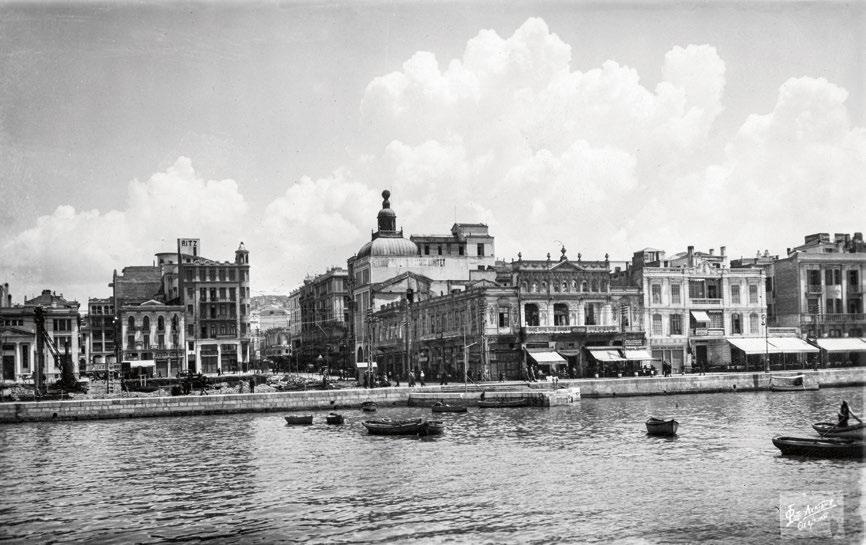
Photographer Katerina Katopis – Lykiardopulo confesses: “The twist of this album lies in the coexistence of my own photographs with a selection from my grandfather’s archive, who in his time was one of the most renowned photographers in Thessaloniki. His archive was vast, both in scale and in value, as he had documented many of the city’s historical events and personalities. At some point, unfortunately, the archive was lost. My uncle, Giannis Megas, then began an effort to recover it. He managed to rescue a large part of it – whatever he could find. At the same time, my own family also started searching for and purchasing his photographs and postcards. I have found material by my grandfather in England, in France, and even at an auction in the United States. Through tremendous passion and persistence, we have now recovered a very significant portion of the archive. I was delighted because this edition includes remarkable, previously unpublished material. Like him, I am passionate about documenting the city’s landmarks over time. I want to see how its history and evolution are reflected through them. Very often, I also photograph from the same vantage points as my grandfather. I’m not sure why. Beyond incorporating the city’s newer landmarks or deciding how to categorise them, I also had to consider when to photograph certain places that needed to be illuminated and were not present in the archive. I would visit them at different times of the day in order to capture the ideal light (fortunately, Thessaloniki is a city that is easy to walk around). Yet the result always felt deeply fulfilling.
This city unfolds along the axis of the sea. Wherever we begin, we always end up there. If you lose your
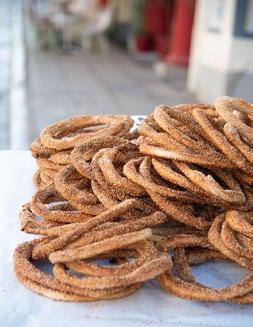
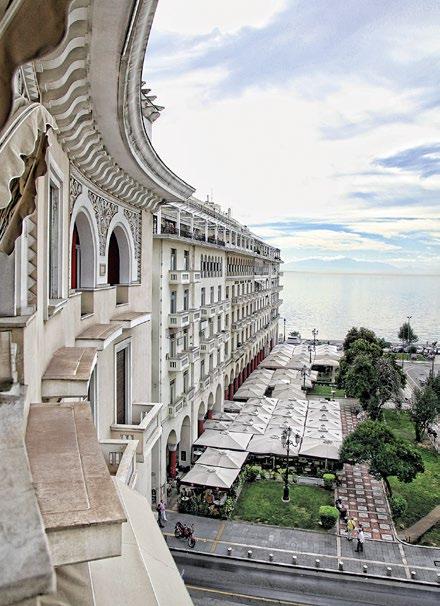
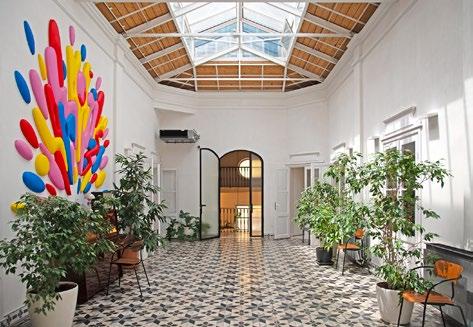
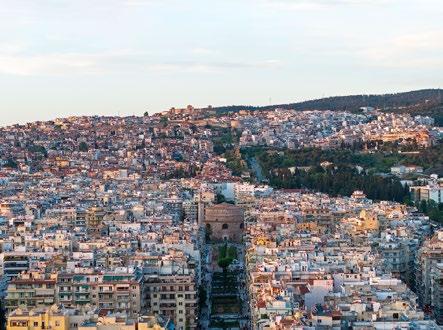
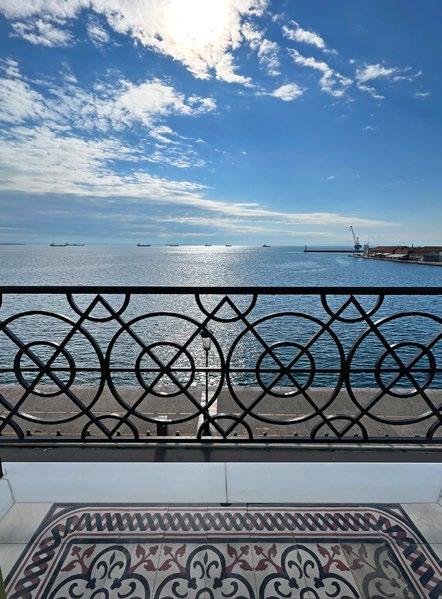
way in the centre, you simply emerge at the waterfront and find your bearings again. One place that moved me deeply when I saw it was the street artwork dedicated to the persecution of the Jews during the Second World War, next to the railway station. My family helped many Jews during the Occupation. We were very close to the community, which forms part of a city whose DNA also carries elements from many other communities: Ottoman, Armenian, French and more. As for the title of the album, it is certainly the light that ‘binds’ the city to the sea: the way it reflects, transforming shapes and colours. Especially in spring and autumn, the sunsets here are extraordinary; you simply don’t find them elsewhere – and I hope Santorini will forgive me for saying so. We are talking about a city with 15 UNESCO World Heritage monuments –Athens has one – and the greatest cultural legacy of Byzantine civilization in the world. Thessaloniki is many things, but above all, it is emotion.”
Georgios Mantzouranedes, who authored the texts of the album, notes from his perspective that “Thessaloniki has never ceased to make history, from its very first day until today. For more than 23 centuries it has been a city – and always a city that has never lost its urban character – without ‘dead’ periods in terms of events. And no matter how much you may think you know it, there are always surprises, corners filled with small stories. Take, for example, Zeuxidos Street. It takes its name from Zeuxis, an ancient painter who is said to have died from laughter after seeing one of his own paintings. A story hidden within another story.”
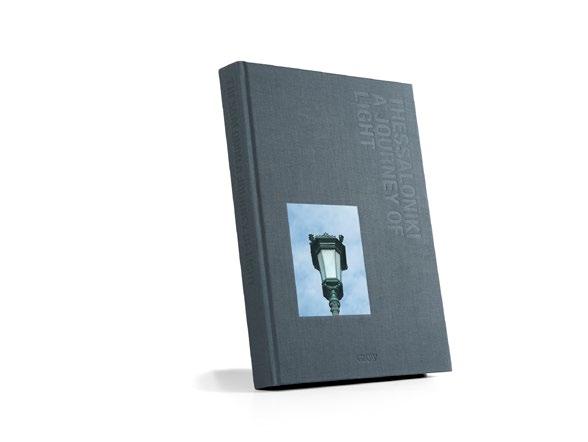
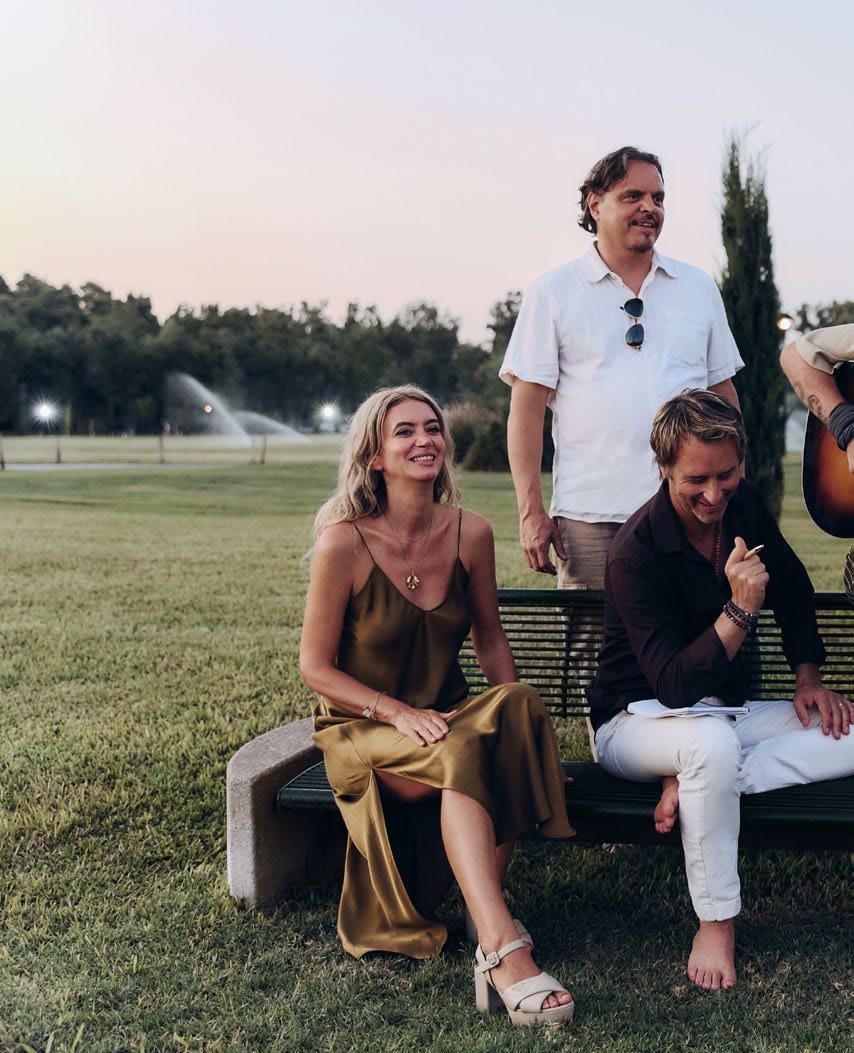
“The THING that INSPIRES me the MOST is NATURE itself. Writing SONGS as a GROUP is really SPECIAL and VERY different ” ATHENA ANDREADIS
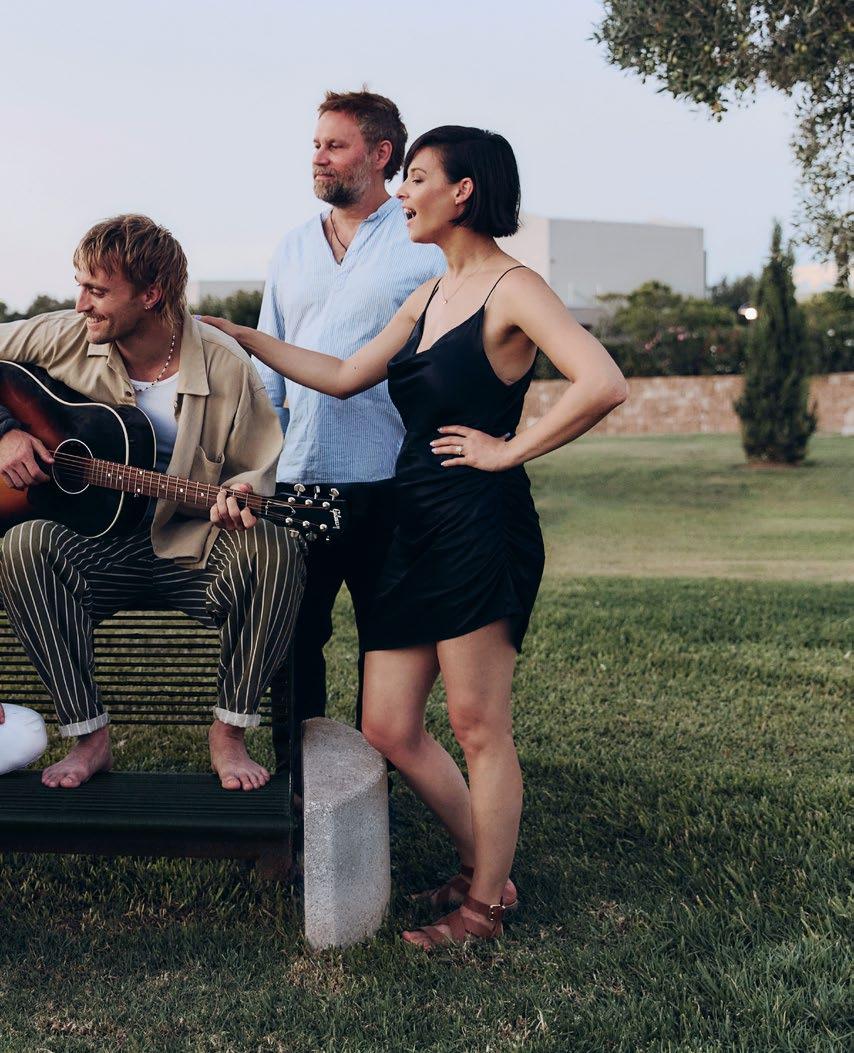
Sani is nature at its most inspiring. The rhythm of the waves, the whispers of the trees and the call of the wildlife in the wetlands. Six artists turn this energy into unforgettable melodies and lyrics.

The “Sani, A Sanctuary of Inspiration” project is a creative music initiative that brings together international songwriters and musicians to create original music inspired by the resort’s natural environment. Artists are invited to stay at the resort for a short creative residency, where they experience nature, the sea, the forests, and the atmosphere of the area, collaborate with other musicians, and ultimately write and record new songs inspired by the location. The goal is to showcase how nature and the environment can influence creativity and music. Athena Andreadis, Chesney Hawkes, Erin Bowman, Ethan Allen, Martin Luke Brown and Tobias Froberg gathered for an extraordinary creative retreat. With Sani’s sensory-arresting beauty as their muse, new ideas and melodies flowed as freely as the breeze across the Aegean Sea. In this unique setting, the artists unlocked the power of collaboration, where ideas met and insights intertwined in harmony. Drawing on their own perspectives, shaped by the natural beauty surrounding them, beautiful creations began to take shape.
Let’s take a look at what the artists shared during the creative process they so enthusiastically embraced.
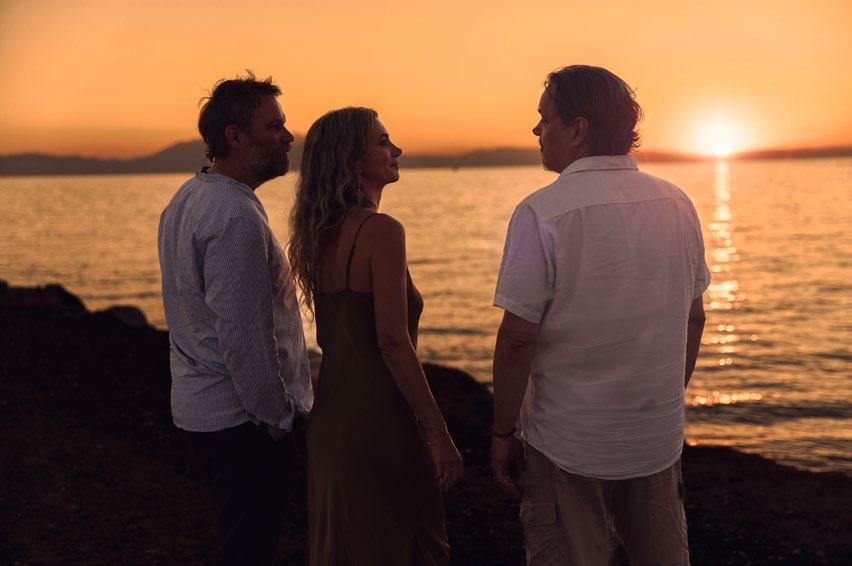
“YOU’RE really HERE, in GREECE, in SANI, and in A WAY, the PLACE ITSELF is CO-WRITING the MUSIC with us. IT’S just MAGICAL”
ATHENA ANDREADIS
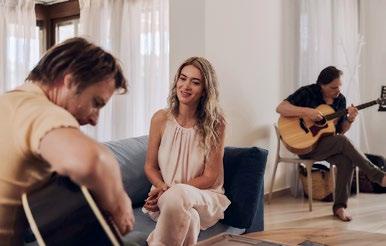
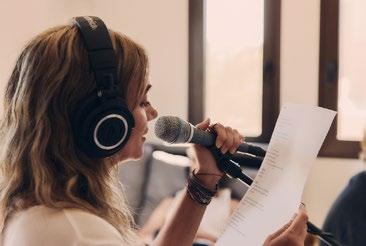
“I believe ART imitates NATURE, BUT nature is also ART. ANYTHING natural, anything INSTINCTIVE, anything THAT COMES STRAIGHT from the HEART IS, in a WAY, an ACT of nature”
ETHAN ALLEN
ATHENA ANDREADIS, Singer - Songwriter
“I grew up in Sani, so my childhood is deeply connected to the smell of pine trees and swimming in the beautiful Aegean Sea, with its turquoise colors. Even though I now live abroad, these memories keep coming back to me. There’s something almost sacred about this land. For me, it was an obvious choice to come here with these incredible writers, who all agreed to gather and write music here, inspired by Sani in particular–by the natural environment, but also by the experiences we share while we’re here. The thing that inspires me the most is nature itself. Writing songs as a group is really special and very different. It creates a bond in a unique way–you end up talking about things you would normally only share with people who are very close to you. It still catches me by surprise, because it feels like you’re giving birth to something completely new. And being inspired by this place and actually doing it here, rather than just imagining it, makes all the difference. You’re really here, in Greece, in Sani, and in a way, the place itself is co-writing the music with us. It’s just magical.”
ETHAN ALLEN , Producer - Songwriter
“Everyone brings something different to the table and has something unique to say – a different set of skills, talents, and emotional sensibilities. I believe art imitates nature, but nature is also art. Anything natural, anything instinctive, anything that comes straight from the heart is, in a way, an act of nature. And that’s where the best art always comes from. Location can completely
shape the way you think about things. And being in Greece, you’re surrounded by so many sensations – the experience itself, the food, the colours, the ocean.”
CHESNEY HAWKES, Singer - Songwriter
“Athena managed to bring together an incredible group. Each person contributes something entirely their own, making the collective truly unique. It’s a remarkably broad spectrum of people. Your surroundings matter when you’re writing music. I’ve noticed that the more beautiful the place you’re in, the more it opens your mind to different thoughts. Lately I’ve been writing a lot about the sun and about nature. It really changes the way you write.”
MARTIN LUKE BROWN , Singer - Songwriter
“You feel very grounded here; deeply grounded. It’s incredibly inspiring. Collaboration is such a powerful thing. When musicians come together in a place like this, something magical happens.”
ERIN BOWMAN , Singer - Songwriter
“Music is about connection. When you’re in a place like this, you connect with nature, with other people, and with your own emotions.”
TOBIAS FROBERG , Songwriter - Producer
“Sometimes when you’re in the city, everything is rushed. Here it’s different. You can slow down and really listen: to the environment, to the music, to yourself.”
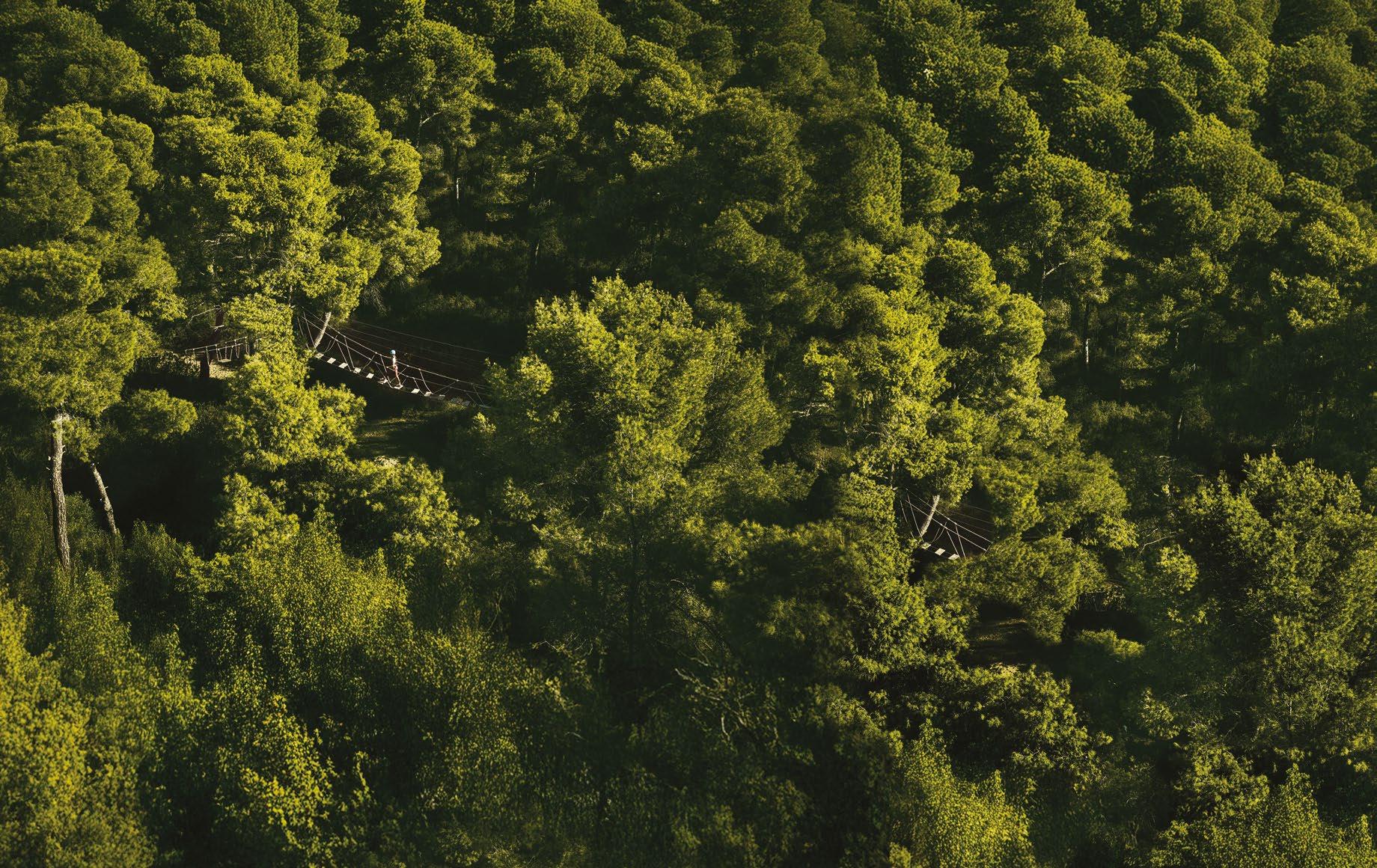
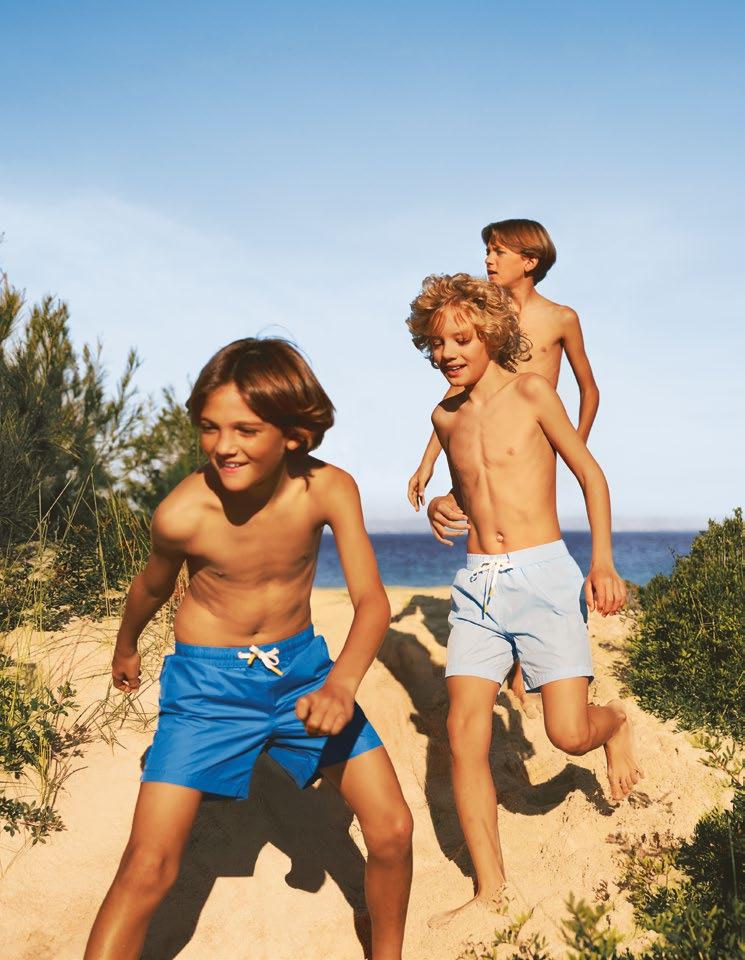
When it comes to holidays, everyone dreams of Paradise. For some it’s exploring, for others it’s getting lost in nature. Whatever your idea of Paradise is, you’ll find it here. Somewhere between the land, the sea and the mountain. A place vast enough for every kind of Paradise to coexist.
“Harmonia is the silent geometry of peace”
In Greek mythology, Harmonia is the goddess of harmony and concord. The theonym Harmonia derives from the Greek noun “harmoníā”, meaning “means of joining, frame, covenant, agreement.” It is the art of coexistence - where differences align into rhythm, proportion, and beauty. Harmonia reflects both cosmic order and human balance.
A sense of stillness defines this story, where neutral tones and sun-softened textures create effortless harmony. An invitation to slow down, breathe deeply, and escape into a world where calm is the ultimate luxury.
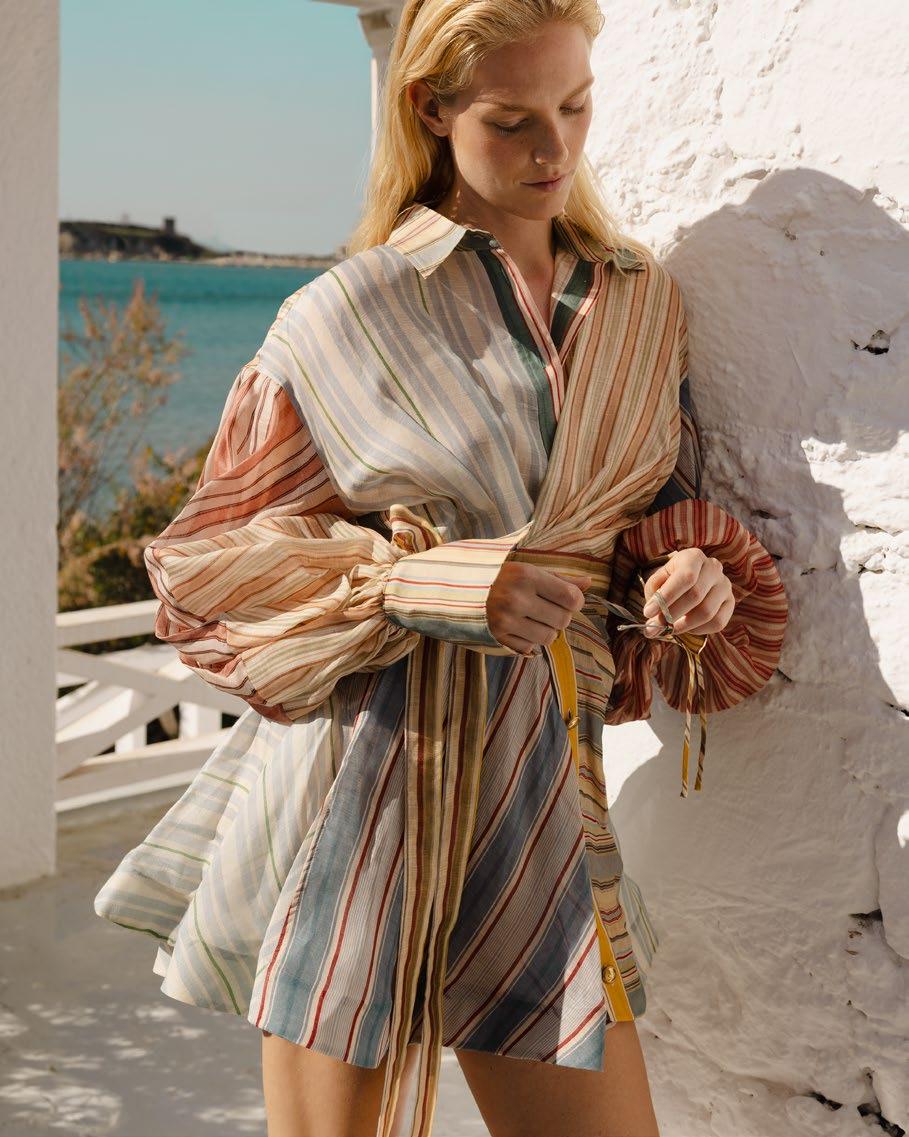
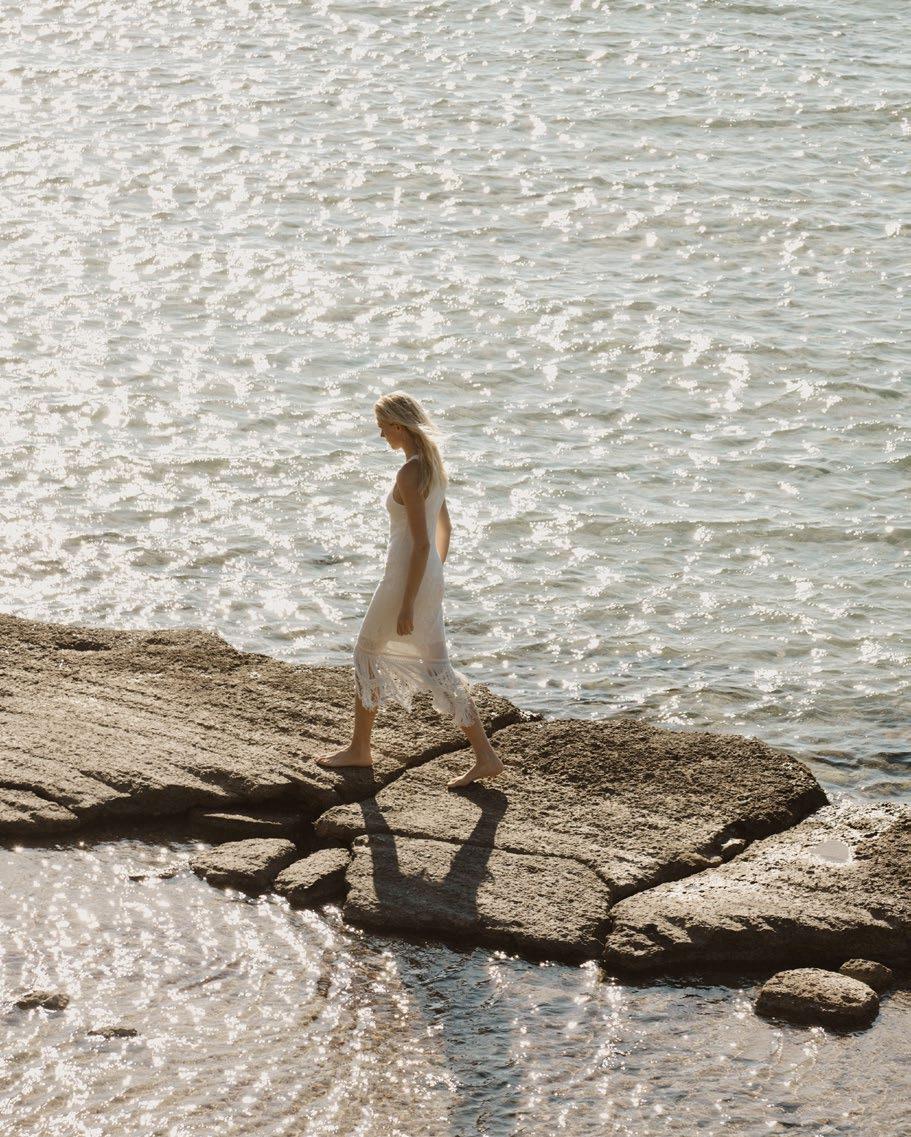
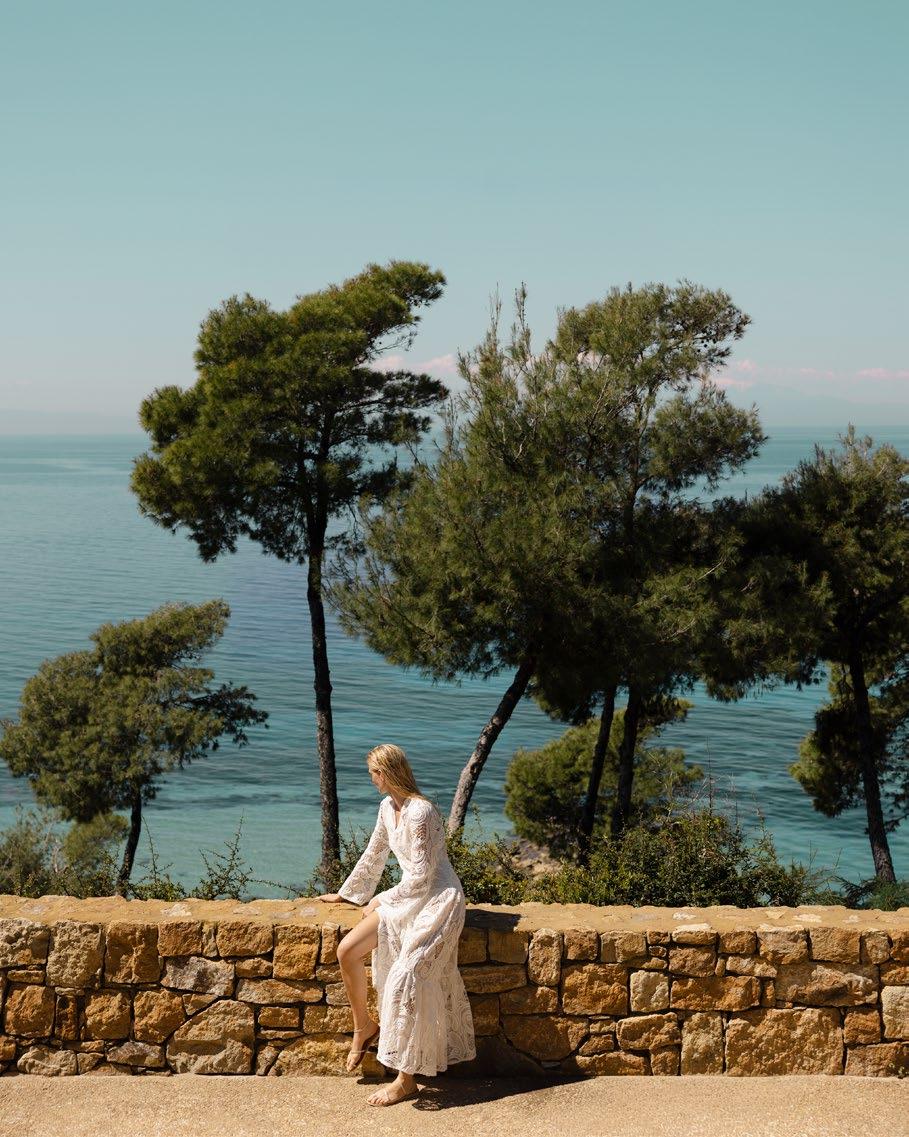

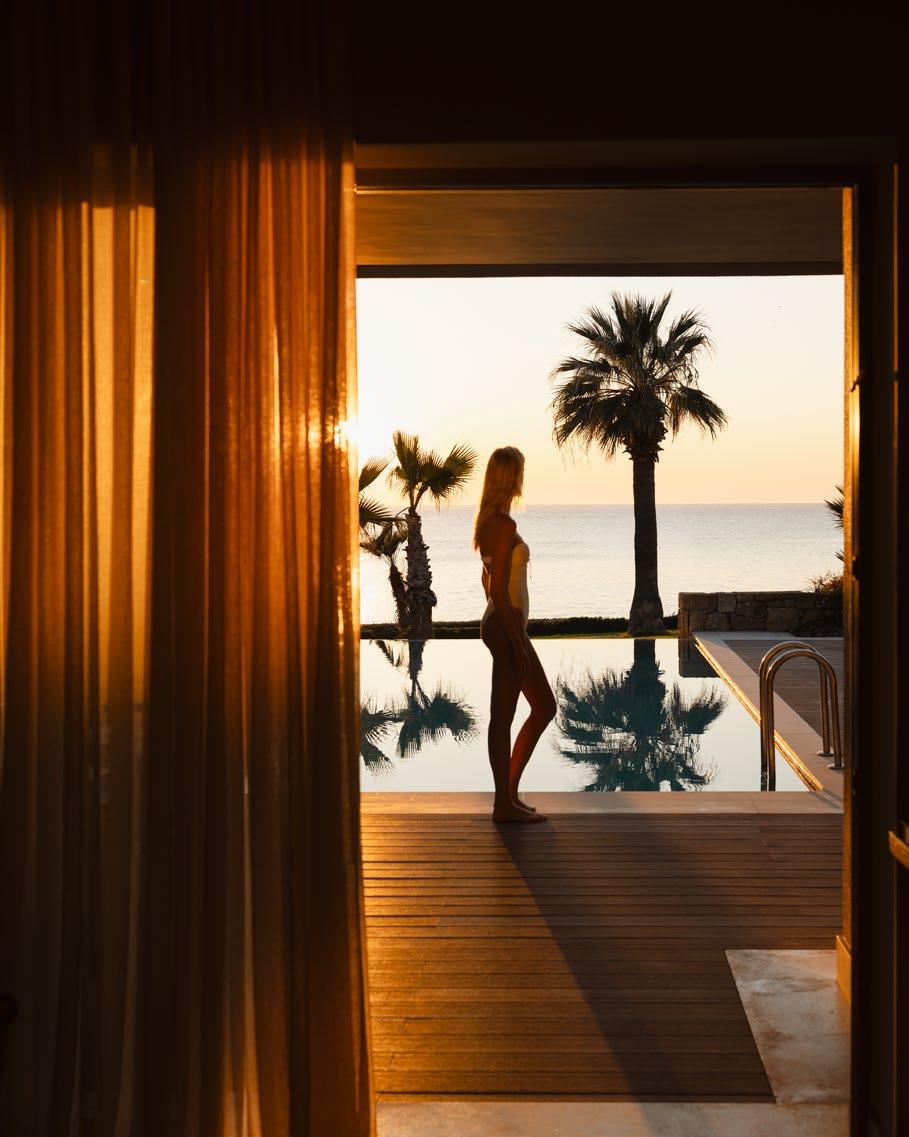
words by Eleni Papaioannou
A destination. A place you are destined to inhabit, catering to each and every one of your five senses. To touch, see, hear, taste, smell. To be fully present. To be, in a paradise on earth called Sani.
Walk along the beach, feeling the wet sand move ever so slightly under your toes. Listen to the sound of the waves, ease into the endless blue of the sea and the green of the pine forests, breathe in the fresh air, smell the salty sea breeze, dive into the crystal clear waters and feel the warmth of the sun... Your senses are seduced and you are reborn... What spa could be more therapeutic than nature itself?
SIGHT
You have just arrived. Your sight is heightened. The harmony you feel between refined design and the surrounding natural beauty takes your breath away. Subtle architecture strengthens the connection between indoor life and the landscape outside, allowing for the eye to wander. Crystal-clear beaches stretch toward an endless blue horizon, creating sweeping views that invite you to slow down and take everything in. Lush herbal gardens create a palette of Mediterranean colours in different hues you never knew existed. The
colours on your plate, as you experience an unforgettable dinner of refined ingredients, are just another work of art. As you walk through the forest, little birds dance around you. No matter where you look, nature creates an unforgettable tableau vivant, ever-changing, immersed in beauty.
A vibrant culinary experience that celebrates both local flavours and global creativity elevates your sense of taste, allowing it to be refined and reach the highest nuances of elegance. Fresh produce from trusted local suppliers forms the foundation of Sani’s kitchens, ensuring that every dish reflects the rich and authentic taste of the region. Besides the 40 restaurants, bars and lounges, each with its own flavour, an exceptional variety of dining experiences is here for
At SANI your SENSES are SEDUCED and YOU are REBORN...
your tastebuds to explore. The annual Sani Gourmet festival brings together some of the world’s finest chefs, including Michelin-starred talents, who create contemporary dishes of gastronomic divinity. Throughout the marina, pop-up events offer an authentic taste of local culture, adding the spontaneity of discovery to your mouth. Simple, joyful cooking inspires a series of creative, food-led activities exploring ingredients, through the gift of taste.
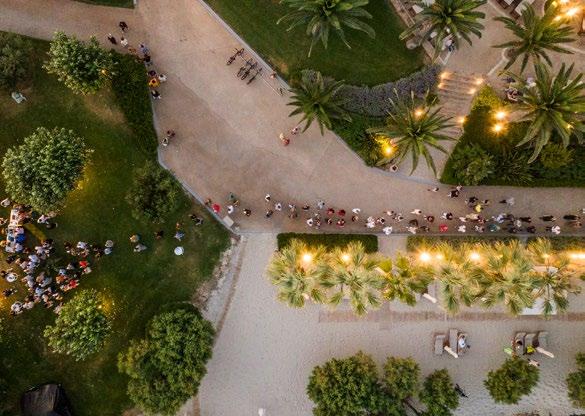
At Sani, the sense of sound unfolds through a harmonious blend of nature and culture. The natural surroundings invite guests to walk, run, swim and unwind while accompanied by the gentle rhythms of the landscape. The soft movement of the sea whispering the rhythm of nature, the breeze through the trees speaking ancient verses of love and freedom, and the calls of birds at the Sani Sanctuary across the wetlands, inviting each other as well as guests to a joyful celebration of life: Migrating mute swans, black-winged stilts and little egrets, create a Tower of Babel that soothes the soul with its diversity. As evening falls, sound transforms into a celebration under the stars. Sani Festival brings surprisingly big, memorable openair performances from acclaimed artists, while traditional Greek nights and the ever-popular White Night parties often fill the air with rhythm and joy.
No MATTER where YOU LOOK, NATURE
Awaken your sense of smell with the richness of the landscape. Breathe in the scents of forest and lush vegetation that define the area. Hundreds of acres of private forest have been carefully preserved for guests and the local community to enjoy, creating a fragrant setting where pine, herbs and Mediterranean greenery perfume the air. Managed by a dedicated Sani Forest team, kilometres of forest trails allow you to immerse yourself in this aromatic landscape, where every step reveals new layers of natural scent. From the earthy freshness of shaded woodland paths to the subtle sea breeze drifting across golden sands and crystal-clear waters, the thousandacre natural backdrop of Sani creates an atmosphere where the fragrances of nature become an essential part of the experience.

A sun so warm you can almost feel it touching your skin. The forest leaves make way for you to walk on, softly touching your feet. The golden sands allow your feet to sink in, before they feel the refreshing touch of crystal-clear waters. This deep connection to the elements of nature continues within the destination's serene wellness spaces, where you can rejuvenate through a range of treatments by Anne Semonin Paris. Pampering face and body therapies, massages and treatments that combine expert techniques with advanced technology, are designed to restore balance and comfort through the therapeutic power of touch, completing your sensory journey. It’s all about touch, the sense that becomes part of a harmonious balance between luxury, vitality and relaxation.
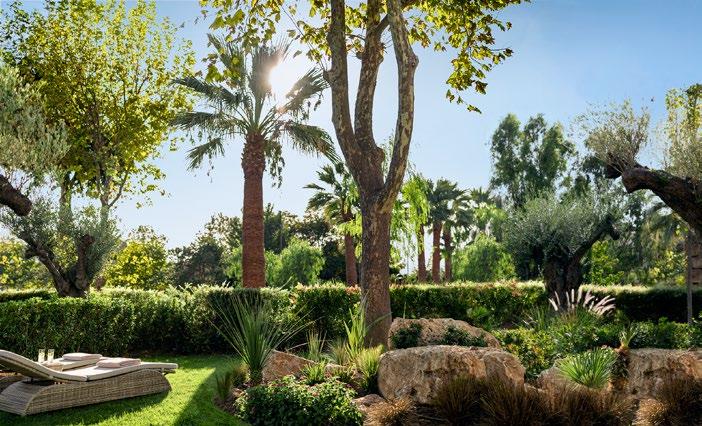
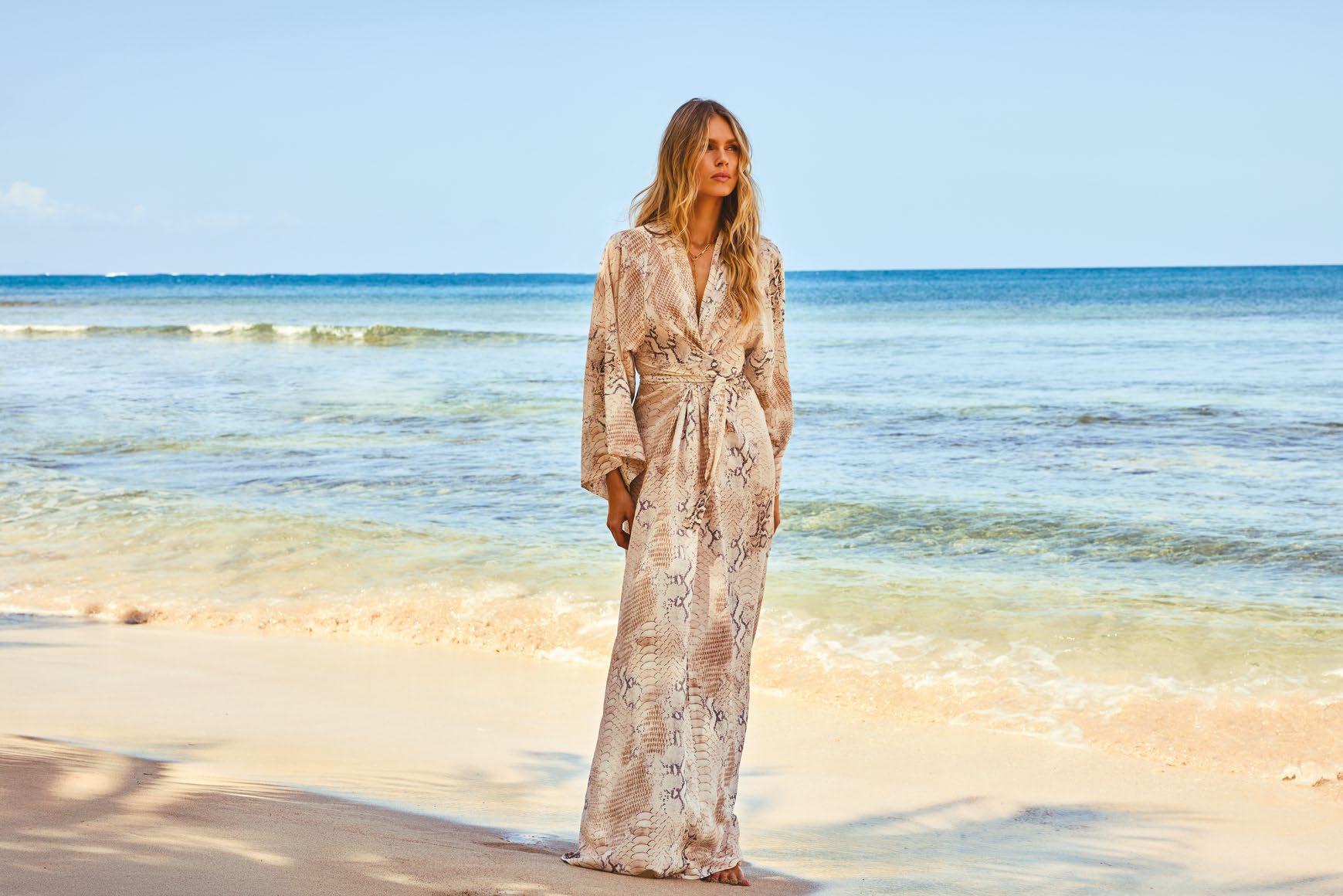
In a world that never stops moving, Sani proves to be a destination where wellbeing, relaxation, and the care of body and spirit become a way of life. Here, every breath gains meaning.
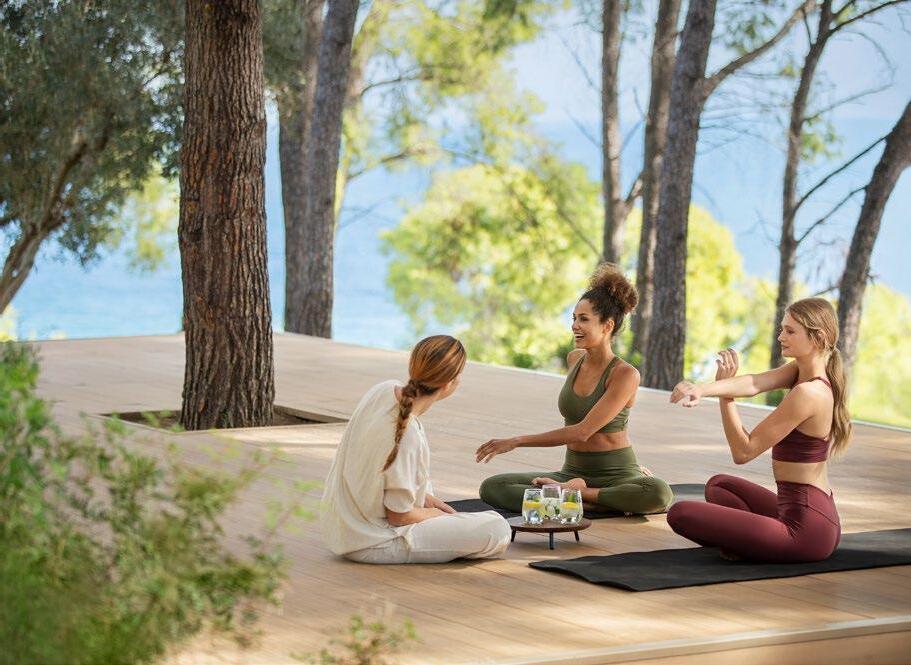
In a universe that changes at lightning speed, there are still places that invite you to pause, take a deep breath and reconnect with yourself. Sani is exactly that – a fully integrated destination for wellbeing, relaxation, meditation, and the care of body and spirit, set within a natural landscape of rare beauty. Here, wellbeing is not simply an experience; it is a way of life.
At Sani, each day begins with choices that bring you closer to nature and to your inner rhythm. From morning yoga sessions overlooking the Aegean Sea to breathing exercises and mindfulness practices under the Mediterranean sun, guests are given the opportunity to reconnect with both body and spirit.
The experience continues with activities that enhance physical balance, including strength and conditioning programmes, personal training sessions and state-ofthe-art fitness facilities, both indoors and outdoors. Whether you prefer an energising workout or a peaceful meditation session by the sea, Sani offers options suited to every pace of life.
At the heart of the rejuvenation experience lie the products of Anne Semonin, one of the most refined French skincare brands. With a heritage linked to personalities such as Grace Kelly, its philosophy is founded on a holistic approach to beauty.
The products harness natural ingredients such as herbs, plants and marine extracts, combined with essential oils and trace elements. Each treatment is personalised, designed according to the individual needs of every guest, creating a “journey” that goes beyond simple skincare and approaches the realm of ritual.
The philosophy of Anne Semonin is built around the concept of “tailor made.” Each product can be adapted to the skin’s
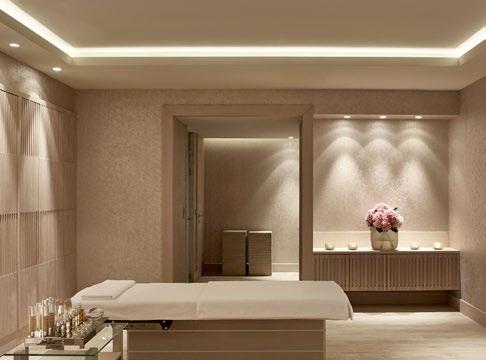
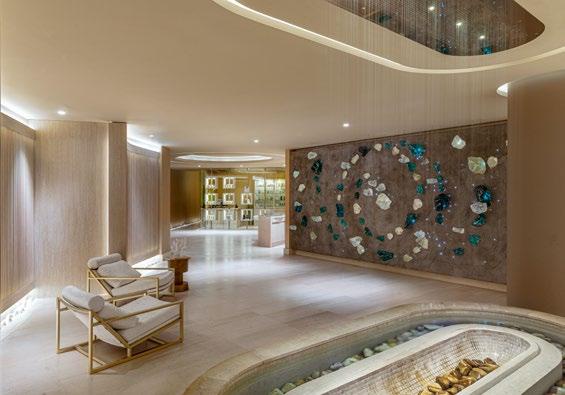
specific requirements, allowing for the creation of entirely personalised combinations. Highly concentrated serums, masks and creams work in synergy, delivering targeted action, whether for hydration, firming or radiance.
Innovation is a fundamental pillar of the brand. Products are developed in collaboration with dermatologists and aesthetic medicine specialists, employing advanced methods that preserve the efficacy of natural ingredients at the highest possible level. At the same time, the aromatic notes of essential oils, the texture and the sensation on the skin create a multisensory experience that nurtures both body and spirit.
At the heart of the luxury destination, rejuvenation takes on a new dimension through five unique spas, where the French elegance of Anne Semonin meets ultimate relaxation.
At Sani Dunes, the D Spa impresses with its contemporary aesthetic and cutting-edge technology. With six treatment rooms and specialised programmes designed to detoxify and revitalise, it is the ideal choice for those seeking immediate and visible results.
The Spa Retreat at Sani Asterias offers complete privacy. Hidden within a lush garden, it features a private hammam and the option of treatments in the comfort of your own space, creating an experience of truly unique luxury.
The Club Spa at Sani Club stands out for its exotic character. Overlooking a serene private garden and offering treatments from around the world, including Thai massage and Oriental reflexology, it delivers a journey of balance that blends traditions and techniques.
At My Spa, in Sani Beach , tranquillity prevails. Featuring a heated indoor pool, thermotherapy areas and private treatment rooms, it serves as a sanctuary
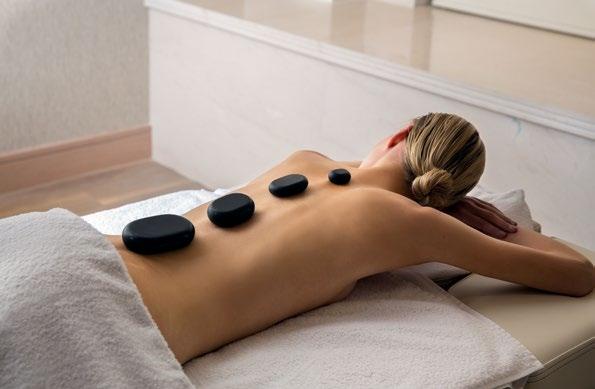
for those seeking revitalisation through nature-inspired therapies. Personalised treatments and a calming atmosphere create an environment that restores balance to both body and mind.
Finally, at Porto Sani, the Spa Suite offers a more refined expression of wellness. With five private rooms, a couples’ suite and hydrotherapy facilities, treatments focus on ultimate personal care. Every detail, from the essential oils to the ritualistic massage techniques, has been designed to awaken the senses.
Treatments at Sani are not merely services; they are experiences. From massages with essential oils to 24-carat gold facial therapies, every detail has been carefully designed to restore balance.
The rituals include hand massages, scented towels and herbal infusions, creating a truly multisensory journey. At the same time, specialised programmes for teenagers (Junior Spa) allow younger guests to discover the world of wellness.
The experience of renewal is completed in the water. With seven kilometres of white sandy coastline, Sani’s beaches offer privacy, comfort and exceptional services. From peaceful adults-only zones to safe areas designed for children, every guest can discover their own space.
In addition, the impressive swimming pools, designed with both aesthetics and functionality in mind, offer options for every mood: relaxation, play or seclusion. Heated indoor spa pools, outdoor infinity pools and private pools together create a setting of complete balance.
Perhaps the most important element of this
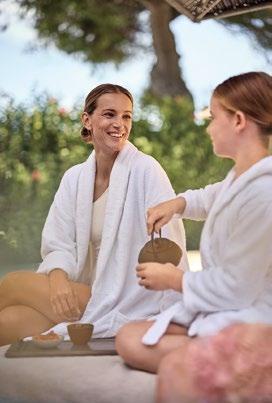
unique destination is the sense of freedom it offers. Whether reading a book by the sea, walking along forest paths, or simply allowing time to pass without a schedule, Sani serves as a reminder of the value of simplicity. As an antidote to a world filled with noise, tranquillity prevails here.
Sani is not just a holiday destination, but a journey towards wellness, self-care and inner harmony; a place where every breath takes on special meaning.
At the HEART of the LUXURY destination, REJUVENATION TAKES ON a new DIMENSION through FIVE UNIQUE SPAS
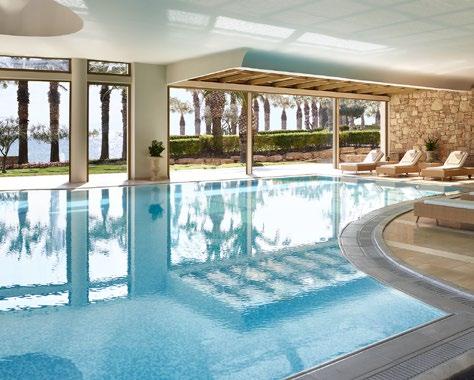
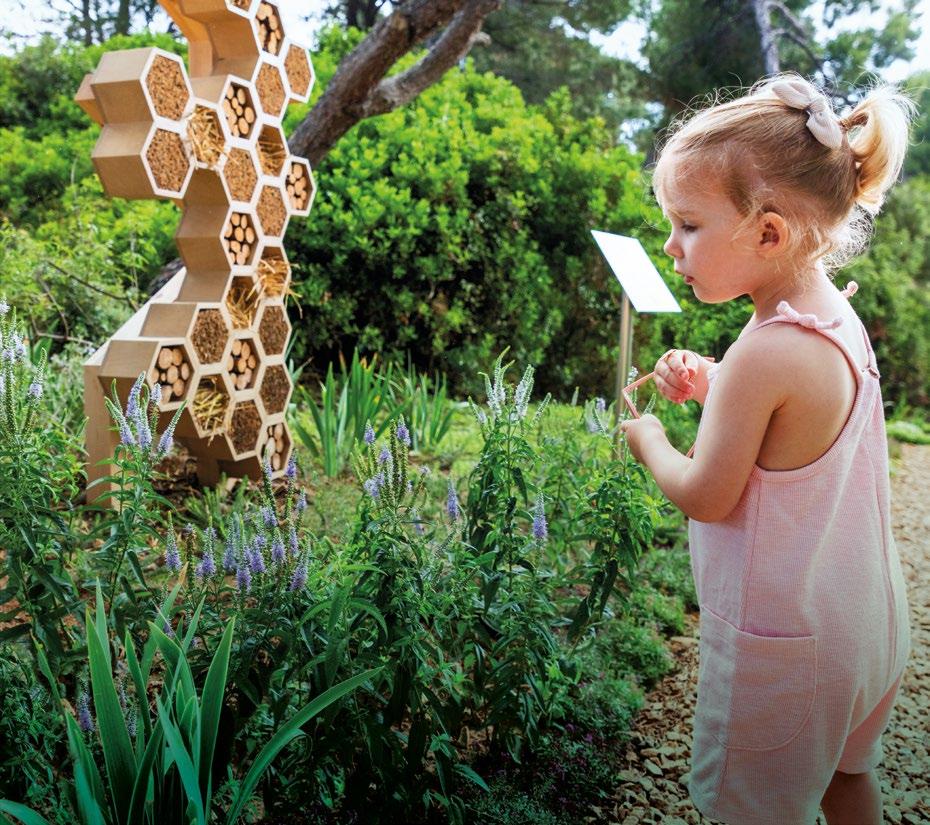
At Sani, luxury hospitality thrives in harmony with nature for over 50 years.
Set within a 1,000-acre ecological reserve in Halkidiki, Greece, Sani is dedicated to protecting its pristine coastlines, ancient pine forests, and protected wetlands teeming with wildlife.
Through Sani Green, our award-winning sustainability programme, we balance world class hospitality with responsible tourism - investing in decarbonization, zero-waste practices, biodiversity conservation, and community action alongside 60+ NGO partners annually. Guests can explore birdwatching trails, wetland tours, and rewilding projects, connecting with the nature we protect.
With six consecutive “World’s Leading Luxury Green Resort” awards, along with multiple ESG accolades and certifications, Sani sets the benchmark for sustainable tourism in the Mediterranean.
“Gaia remembers what humanity forgets”
In Greek mythology Gaia is the personification of Earth. Gaia embodies the living Earth; not simply land and nature, but the interconnected web of life that sustains and nurtures existence. It represents the idea that humanity is not separate from nature but a participant within its living system.
by Eleni Andreadis, ESG Senior Director, Sani/Ikos Group
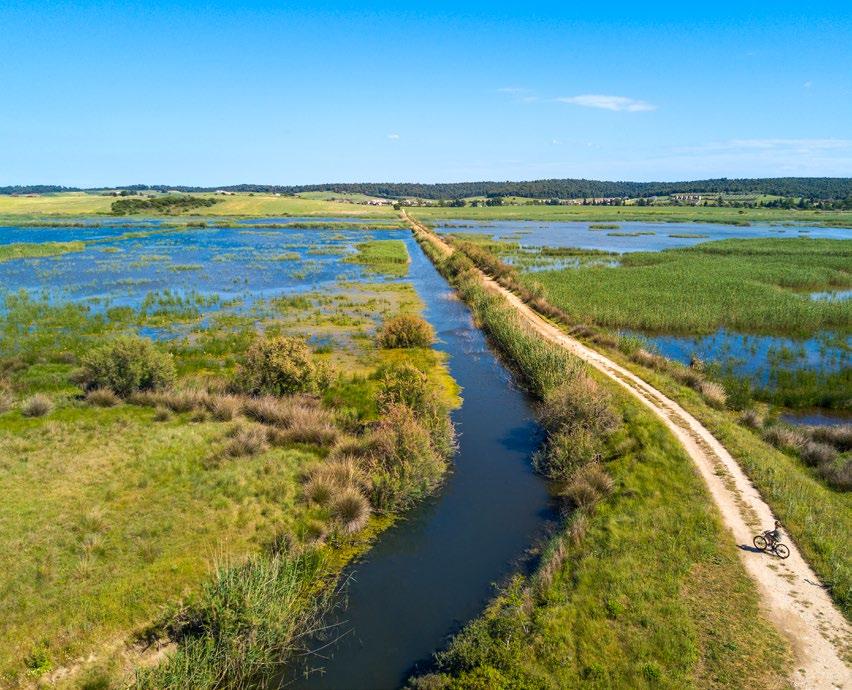
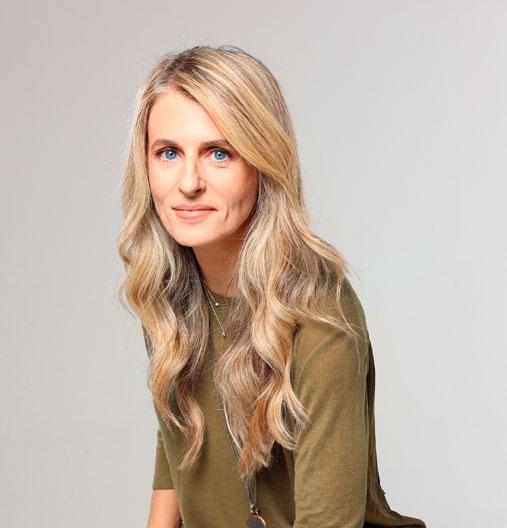
When people think about Sani, they often picture its beaches, forests and the quiet beauty of the landscape that surrounds it. For those of us who work here, however, this landscape is far more than scenery. It is the foundation of everything we do.
From the very beginning, the development of Sani has been closely connected to the protection of the natural environment that defines this part of Halkidiki. Over time, this commitment has evolved into a broader approach to responsible hospitality; one that seeks not only to protect natural ecosystems, but also to support local communities and create meaningful experiences for guests.
Today, sustainability is not a separate, standalone programme. It is part of how we think about hospitality, shaping how
we design our hotels, how we operate them every day, and how we work with the communities that host us. Through Sani Green, our long-term ESG programme, we have created a framework that allows us to measure progress across every aspect of the resort’s life, from energy and biodiversity to gastronomy, culture, and social responsibility.
Over the years, this holistic approach has delivered tangible results.
Sani became Greece’s first certified carbon-neutral resort and has been operating entirely on 100% renewable electricity, backed by Guarantees of Origin, since 2019. Today we continue to move steadily towards our “triple zero” ambition: net zero carbon emissions, zero single-use plastics and zero waste to landfill.
Our environmental management
“TODAY we continue to MOVE steadily TOWARDS our ‘TRIPLE ZERO’ ambition: NET ZERO carbon EMISSIONS, ZERO SINGLE-USE PLASTICS and ZERO WASTE to LANDFILL”
systems follow internationally recognised independently certified standards, including ISO 14001, ISO 14064 and ISO 50001, while new developments and renovations align with the principles of LEED and BREEAM certifications. We are also a signatory to the UN Global Compact and a participant in the Global Tourism Plastics Initiative, reflecting our commitment to their respective principles.
These standards guide our decisions at every stage of development. The ongoing renovations across Sani -from the transformation of Sani Asterias and Sani Club to the phased renewal of Sani Beach- are designed not only to enhance the guest experience but also to integrate high environmental performance standards into every building and infrastructure upgrade.
At the same time, our transition to cleaner energy continues to accelerate through efficiency technologies, the electrification of infrastructure and fleets, and the expansion of renewable energy production. A key milestone is the new photovoltaic park we developed and inaugurated last year. Our own solar production through this energy community now covers one third of each Sani hotel’s energy needs, while the remainder is secured through the procurement of certified green electricity.
The natural landscape surrounding Sani is one of its greatest treasures and also one of its greatest responsibilities.
The resort lies next to Sani Forest, one of Greece’s beautiful coastal pine forests, and the Natura-protected Sani Wetlands, an ecosystem of exceptional ecological value. Understanding and protecting this biodiversity has become a central part of
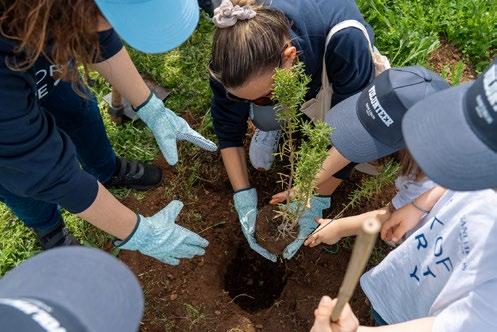
1 Sani supports the forest regeneration 2 Thermaikos Biodiversity Project is developed by Sani and the environmental organisation iSea
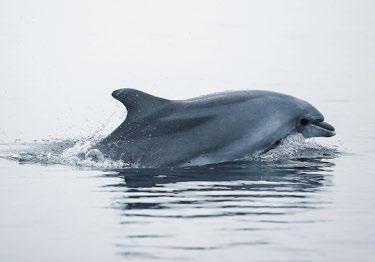
our environmental work.
Through the Sani Environmental Observatory, developed with the Forest Research Institute, we monitor the forest’s biodiversity, carbon storage and resilience to climate change, while offering insights for guests through guided walks, birdwatching and wetland explorations. Alongside research, practical multi-year conservation actions are underway. This year, more than 6,000 pine seedlings will be planted to support forest regeneration, while advanced AI-powered monitoring systems and a dedicated on-site protection team help safeguard and care for the area year-round.
Our work also extends to the marine ecosystems of the Thermaikos Gulf. What began in 2021 as a dolphin monitoring initiative has since evolved into
the Thermaikos Biodiversity Project, developed in partnership with the environmental organisation iSea, embracing a broader range of marine life and habitats. In 2025, the programme reached an important milestone with the first successful hatching and release of a vulnerable thornback ray in Greece. At the same time, initiatives like the Sani Bee Spot, Greece’s largest bee-friendly educational garden, help raise awareness about pollinators among visitors.
The way materials, food, water and waste are managed is critical to long-term resilience. At Sani, circularity helps shape everyday operations, encouraging a more mindful use of resources, reducing waste and supporting greater reuse and recycling
across the resort.
Water management is a key priority area that we are investing in. Through extensive metering systems, real-time monitoring, water reduction measures, wastewater treatment for irrigation and recycling almost 100% of treated water for irrigation, we carefully track withdrawals and consumption per guest night with the aim to reduce pressure on local water resources.
Waste is carefully separated and redirected through more than 24 recycling streams, while organic waste is composted or converted into biogas. Meanwhile, the resorts are undergoing the zero-waste-tolandfill certification process. Technology also plays an important role, with AI-powered systems tracking food waste in resort kitchens to support more efficient menu planning, procurement and operations. At the same time, single-use plastics have been phased out across our properties.
Circularity also extends to procurement. By working closely with suppliers, we prioritise reusable or recyclable packaging while introducing lower-impact materials, refillable containers, and biodegradable alternatives.
Gastronomy plays a central role in the Sani experience and offers a powerful way to connect people with the place they are visiting.
We strive to source the majority of our produce within a 100-mile radius, supporting local agriculture while reducing transport-related emissions.
Through the Land of Grace initiative, selected local food and wine products
“SUSTAINABILITY is a CONTINUOUS process of
and SHARED responsibility ”
are created exclusively for the resort by regional producers and vineyards. Guests can discover these products in restaurants and resort markets.
This philosophy also extends to Sani Gourmet, our award-winning gastronomy festival, where leading chefs from across the globe create exceptional culinary experiences while promoting responsible sourcing and sustainable kitchen practices.
Culture and sustainability also come together in Sani Festival, our historic music festival bringing internationally acclaimed artists to Sani Hill, while operating with electricity from renewable sources and following international sustainable event standards.
We want to make a positive difference in the places where we operate, by creating opportunities, supporting vulnerable groups and contributing to essential services. Each year, this takes shape through our partnerships with more than 60 nonprofit organisations across Greece and Spain, supporting work in healthcare, education, food security and crisis relief.
One programme particularly close to our hearts is “A Holiday Smile for Every Child”, developed with the NGO “The Smile of the Child.” Launched in 2025 and continuing this year, the initiative offers children growing up in the organisation’s care homes the opportunity to enjoy carefree summer holidays by the sea.
Through our partnership with Médecins du Monde Greece, we support access to healthcare and social inclusion. Since 2024, the Social Polyclinic in Thessaloniki has
provided care and support to hundreds of people, while in 2025 we supported the Open Children’s Centre for children with learning challenges. This year, we launched “Healthy Smiles”, a Mobile Social Dental Unit for children in special education schools across Northern Greece.
Food security is another area where partnerships can create tangible impact. Through the new “Sharing Food, Sharing Care” initiative, launched this year, we are strengthening our collaboration with the Food Bank of Greece, helping support families facing food insecurity.
For us, these are not standalone initiatives, but part of a broader commitment to being present, useful and responsible in the communities around us.
Looking ahead, our ambition is clear. We are working towards net-zero carbon emissions, while continuing to strengthen biodiversity protection, expand circular economy practices and deepen our collaboration with local partners and suppliers.
Sustainability is a continuous process of learning, improvement and shared responsibility. What makes this journey truly meaningful is the collective effort behind it: the dedication of our teams, the engagement of our guests and the partnerships that help us move forward together.
When sustainability becomes part of everyday decisions, it stops being an abstract concept. It becomes visible in the landscape around us, in the communities we support, and in the experiences we offer to every guest.
And that, ultimately, is the kind of hospitality we aspire to offer.
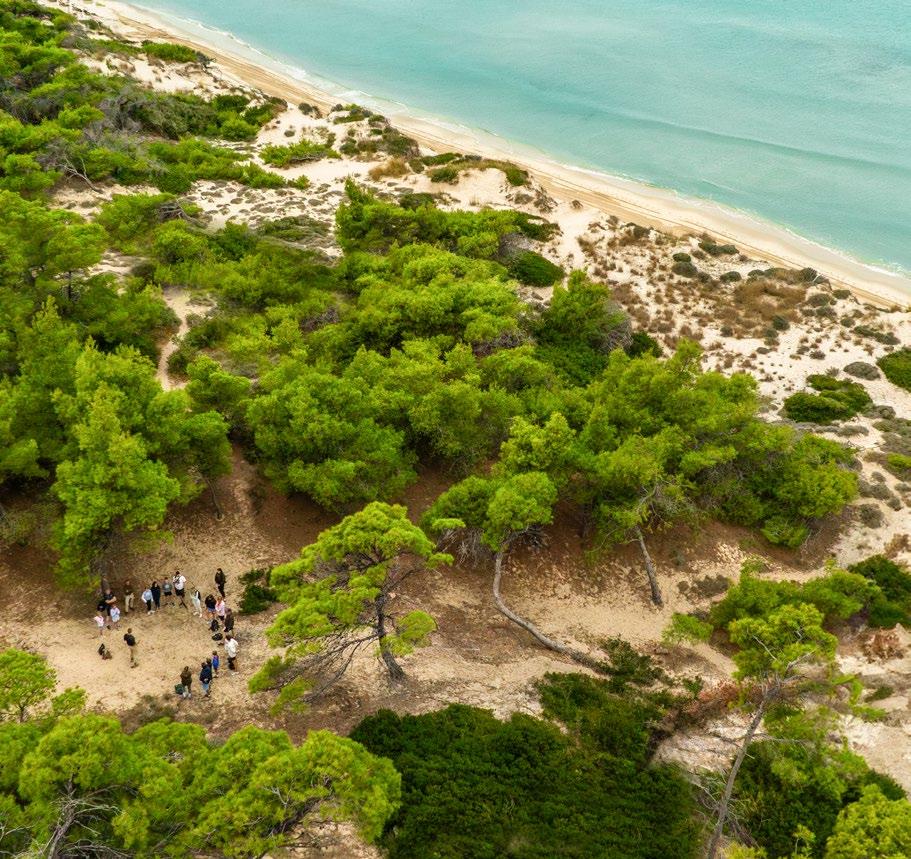
In the paradise-like natural surroundings of Sani, survival activities take on a whole new dimension. In a setting far removed from the screens of modern technology, families and teens discover their hidden abilities through adrenaline-fuelled and energetic challenges.
words by Aris Kavatzikis
Let’s start with the motto of BGSA: “Find out what you’re made of!” Why this? Because it’s a once-in-a-lifetime opportunity to learn expert survival skills within the unique natural surroundings of Sani. With the guidance of Bear Grylls’ handpicked team of instructors, families and teenage kids learn to navigate, build shelters and signal for help, all while training their inner naturalist. An unforgettable expedition.
The truth is that it would be difficult to think of another activity that offers such a unique family bonding experience, as together they build fires while a guided trail through the woods and undergrowth leads them to the Bear Grylls Survival Camp area.
There is no one more suitable to share this perspective than BGSA Lead Instructor, Nicholas Simmons, who visited Sani last year, to introduce us to the beneficial effects that these types of activities have within the natural environment and how
they help shape positive aspects of teenagers’ character.
“I really enjoy delivering training at Sani. We are able to teach authentic survival concepts and skills in just a few hours. Having free rein of the landscape means we can adapt and improvise each course as we go, responding to the guests’ interests and curiosity in an environment that feels wild and remote. The Bear Grylls Survival Academy boat is also a standout element, with the rescue scenario consistently proving to be a highlight for the guests. Every time I visit Sani, I’m struck by how quickly the transition occurs from five-star resort comfort to natural wilderness. Once the course has started, we move through ancient pine forests, across rolling sand dunes, then onto a pristine beach and azure waters, culminating in a dynamic rescue. It’s a perfect, self-contained adventure.”
We asked Nicholas what excited him most as he observed the reactions of the
“Every TIME I visit SANI, I’M STRUCK by how QUICKLY the TRANSITION
NICHOLAS SIMMONS
1 BGSA Lead Instructor, Nicholas Simmons
2 The natural environment at Sani is a key pillar in combining adventure, education and personal development
3 Reconnecting to nature
1
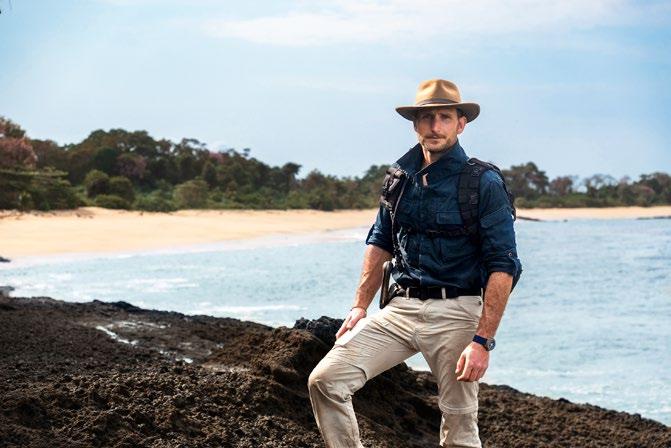
children who had participated in the programme, and why he considers the BGSA programme particularly beneficial for children today. He is very direct, replying: “Maximum enthusiasm, hyper-focus, and a genuine hunger for knowledge – all without a digital device in sight. It’s a real testament to the skill and experience of the instructors. I still remember the look on the faces of the first ever team to experience a BGSA course at Sani, when we tore in on the Bear Grylls Survival Academy boat to rescue them. The same expression was still there when we dropped them off at the marina, and even an hour later when I bumped into them again on the beach. From that day, I knew these courses were something special. A reconnection to nature is always valuable in and of itself. As far as practical skills go, in my experience it seems to be the concepts such as Bear’s Priorities of Survival that are most
valuable. Learning to assess a situation and determine what needs to be done can often be more important than lighting a fire or tying a knot. I think that many kids and adults today are overly dependent on technology and modern conveniences. Stepping out of our comfort zones every now and then reminds us of the world we are a part of. These brief excursions into nature, especially when led by the experienced instructor George Patkas, can set a spark in young people that grow to become a burning passion for the outdoors and outdoor adventure.”
He also considers the natural environment at Sani to be a key pillar in combining adventure, education and personal development. “I think the natural environment is a huge part of it as well as the teamwork element. Teams and families are encouraged to ask lots of questions, speak their mind and get involved! Throwing
a group into an unknown environment, with tasks that might be alien to them, really allows them to flourish and discover new skills as well find new applications for existing abilities,” he states in Sani Magazine.
We conclude our meeting with Nicholas on a more personal note, as we wonder how he first became involved with the Bear Grylls Survival Academy, and what attracted him to be part of it. “After many years of adventure I realised that I was having far too many close calls due to my own mistakes. I made the decision to fill my head with as much knowledge as I could to make my adventures as safe as possible. After a year or so of this I was fortunate enough to meet Bear Grylls and we spoke about the Survival Academy. It was a perfect fit for me and I have learned so much more from the team than I could have possibly hoped to on my own.”
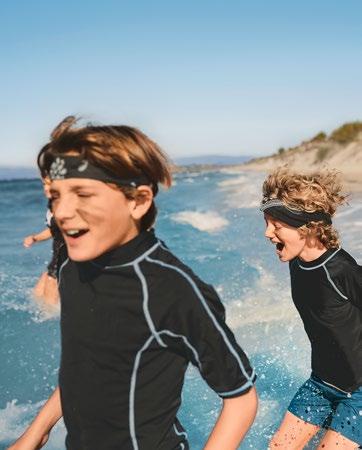
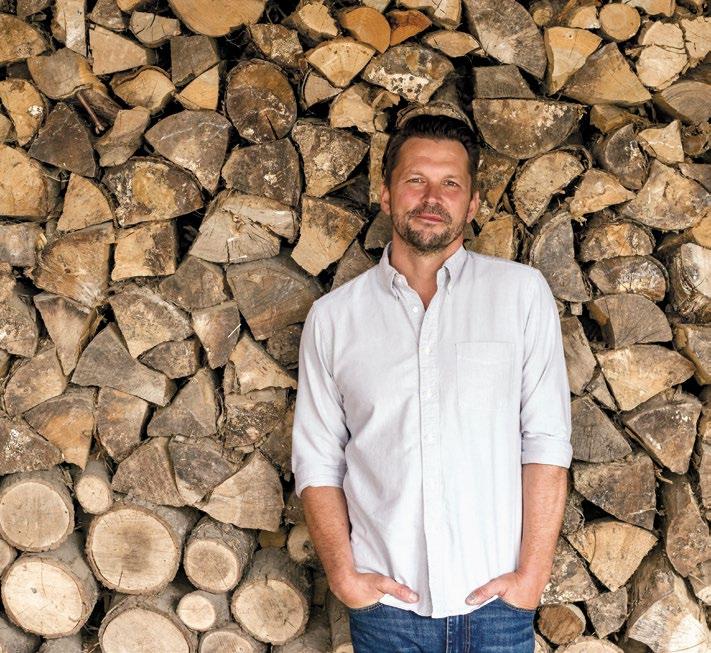

For him, the story of food begins long before it reaches the table. Rooted in rare breed conservation and sustainable farming, his work reflects a deeper mission: to safeguard agricultural heritage and rethink our relationship with the land at a time when the future of the planet depends on it.
interview by Aris Kavatzikis
“Work with nature, not against it”
When he arrived at Sani last summer, Doherty found a setting where these ideals quietly come to life. Amid sun-soaked landscapes and a cuisine shaped by local producers and seasonal rhythms, he encountered a philosophy of living: one where sustainability is not proclaimed, but practiced, and where nature, culture, and hospitality exist in thoughtful balance.
You trained as a zoologist before becoming a farmer. How did your scientific background shape the way you approach agriculture today?
Training as a zoologist fundamentally shaped everything I do. It taught me to look at farming as an ecosystem rather than a production unit. Soil health, microbial life, insect populations, native flora, livestock genetics: they’re all interconnected. Science gave me curiosity and evidencebased thinking. On the farm, that translates into asking: Why does this system work? What are we losing? How do we restore balance? My agricultural decisions are rooted in biodiversity, animal behaviour, and long-term ecological resilience rather than short-term yield alone.
When you founded Jimmy’s Farm & Wildlife Park, what was the core vision behind the project, and has that vision evolved over time?
When I founded Jimmy’s Farm & Wildlife Park, the core vision was simple: to reconnect people with where their food comes from and to protect rare British livestock breeds that were on the brink of disappearing. Over time, that vision has expanded. Today the park integrates rare breed conservation, exotic wildlife rescue, biodiversity habitat creation, regenerative farming principles, education programmes, and scientific collaboration. What started as a farm has become a living demonstration of how food production and wildlife conservation can coexist. The mission hasn’t changed – but the scale and ambition certainly have.
The farm-to-table movement has become almost a global philosophy. In your view,
what does it truly mean beyond being a culinary trend?
Farm-to-table is not a trend; it’s accountability. It means knowing the soil your food was grown in, the genetics of the livestock, the welfare standards, the carbon footprint, and the human hands involved. It is transparency, traceability, and respect. True farm-to-table reconnects gastronomy with ecology. It restores seasonality, reduces waste, and celebrates local biodiversity rather than homogenised global supply chains.homogenised global supply chains.
Consumers today are increasingly concerned about sustainability. What practical changes do you believe farmers must adopt to secure the future of food production?
Farmers must prioritise soil regeneration and carbon sequestration, increase biodiversity through habitat creation and hedgerow restoration, diversify genetics in both crops and livestock, reduce reliance on artificial inputs, embrace data and scientific monitoring, and open their farms to the public to rebuild trust. Sustainability cannot be marketing; it must be measurable.
You have long advocated for rare breed conservation. Why is protecting agricultural biodiversity so important for both the environment and gastronomy? Rare breeds are genetic libraries. They carry traits for disease resistance, climate adaptation, maternal behaviour, and forage efficiency that modern commercial breeds often lack. From a gastronomic perspective, they offer flavour diversity and texture variation that industrial agriculture has largely lost. From an ecological perspective, genetic diversity is insurance against an unpredictable climate future. Lose diversity, and you lose resilience.
Your work often connects farming with wildlife conservation. Could you tell us more about your environmental initiatives, including your involvement in campaigns supporting polar bear conservation, and
“LUXURY today must INCLUDE RESPONSIBILITY. At SANI, I saw MEANINGFUL engagement with LOCAL PRODUCERS and SEASONAL INGREDIENTS”
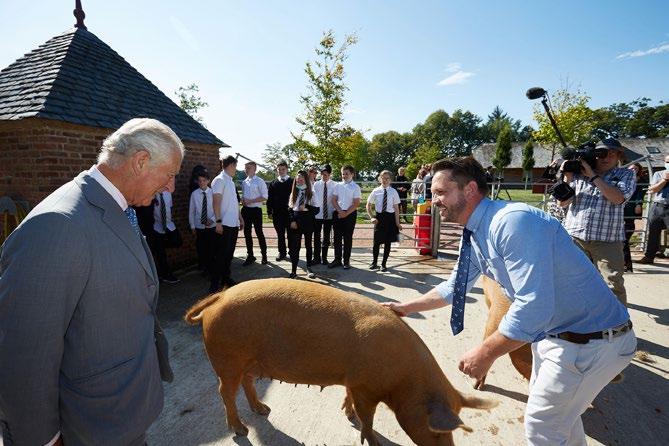
how climate change is impacting both wildlife and agriculture?
Through Jimmy’s Farm & Wildlife Park and my media work, I’ve supported polar bear conservation campaigns highlighting Arctic habitat loss and the consequences of rising global temperatures. Climate change is not theoretical. It affects farming directly through extreme weather, shifting growing seasons, water stress, and emerging livestock diseases. Simultaneously, it threatens wildlife habitats worldwide. Agriculture must become part of the climate solution through regenerative practices, biodiversity uplift, and carbon-conscious food systems. Farmers are land stewards, and with that comes responsibility.
Are you familiar with the work of Arcturos in Nymfaio, Greece, which focuses on bear conservation? Would you be open to actively supporting or collaborating with such initiatives in the future?
I am aware of the important work being done by Arcturos in Nymfaio, and I deeply admire initiatives that combine rescue,
habitat protection, and public education. Collaboration across borders is essential in conservation. I would absolutely be open to exploring future partnerships, shared awareness campaigns, or educational exchanges that strengthen European wildlife protection efforts.
Last year you were a summer visitor to Sani. How does the Mediterranean landscape, and the proximity to local producers and fresh ingredients, influence your gastronomic perspective?
Visiting Sani reminded me how powerful terroir is. The Mediterranean light, the olive groves, wild herbs, seafood, local cheeses; everything reflects the landscape. When produce is grown close to where it is consumed, flavour is more vibrant and waste is reduced. The Mediterranean diet isn’t just healthy, it’s deeply ecological.
When you experience the culinary scene at Sani, do you see meaningful examples of farm-to-table philosophy in action? How important is it for luxury destinations to
integrate sustainability into their food culture?
Luxury today must include responsibility. At Sani, I saw meaningful engagement with local producers and seasonal ingredients. For high-end destinations, sustainability isn’t optional – it’s integral. Guests increasingly expect environmental stewardship alongside quality. True luxury is transparency, locality, and ethical sourcing.
During your stay at Sani last year, you experienced its sustainability initiatives firsthand. Which aspects stood out to you most, and how did they resonate with your own philosophy on farming and conservation?
What stood out most was the integration of environmental initiatives into everyday operations, not as separate “green projects,” but as embedded practices. That aligns perfectly with my own philosophy: sustainability must be systemic, measurable, and long-term. Whether on a farm in Suffolk or a resort in Greece, the principle is the same – work with nature, not against it.









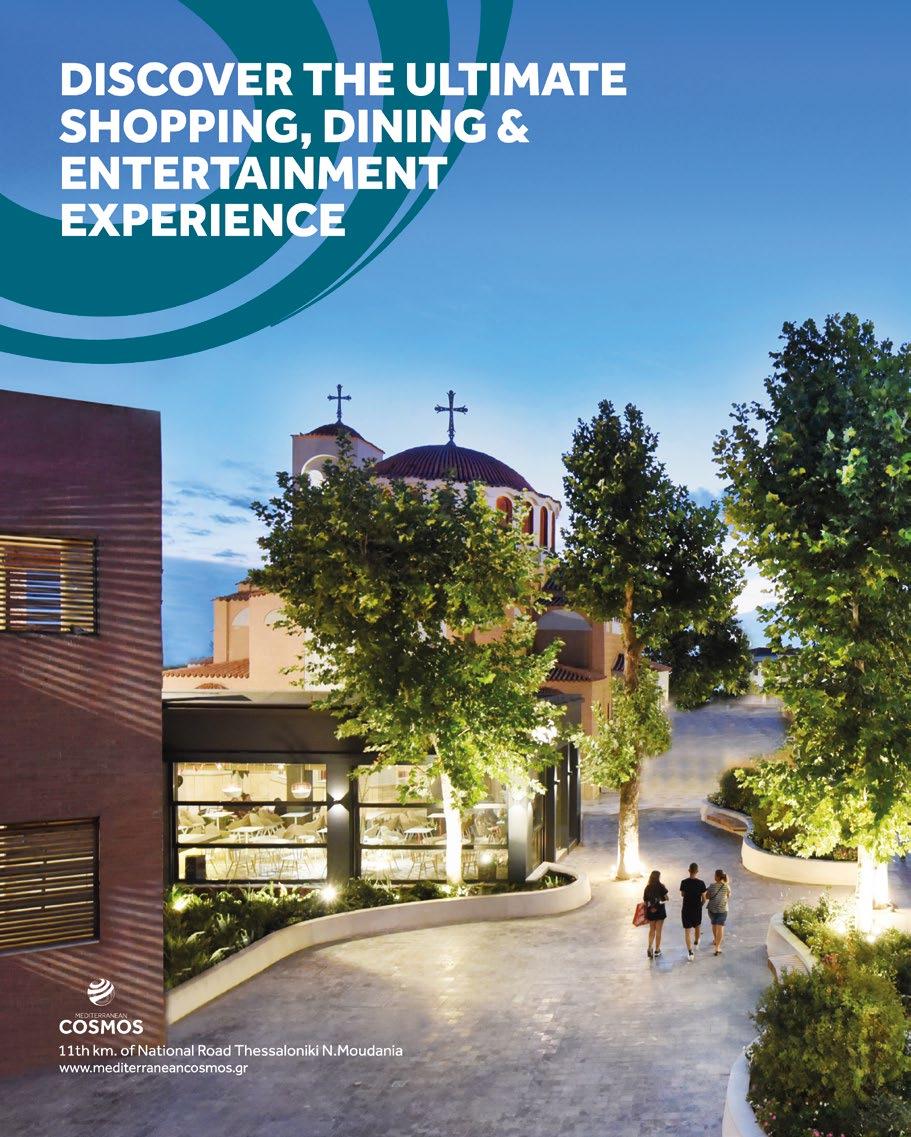
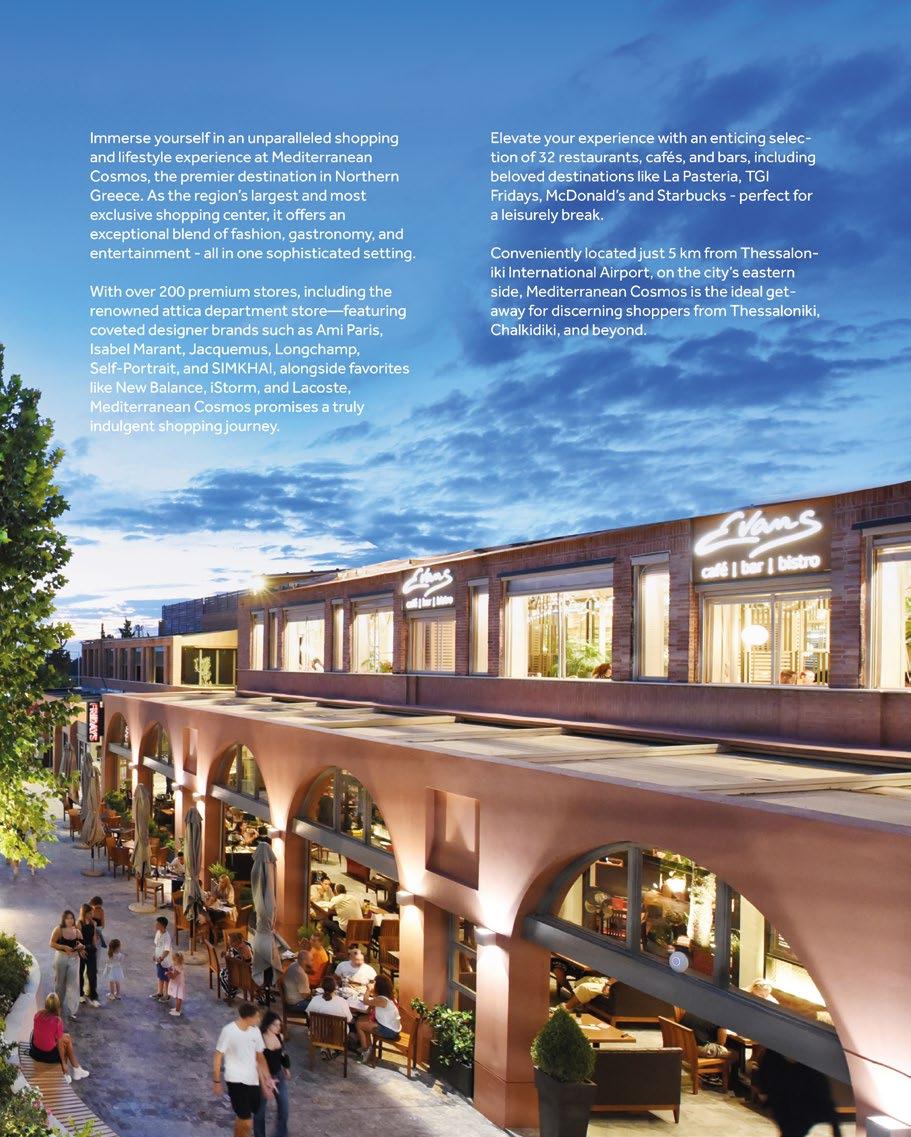
“Hestia is the quiet flame that keeps the soul from wandering”
In ancient Greek religion and mythology, Hestia is the virgin goddess of the hearth and the home. Hestia's name means "hearth, fireplace, altar". In deeper philosophical meaning, it represents the stable core around which life finds orientation, community, and emotional refuge. It is the quiet flame of home and inner harmony.
German actress and presenter, Anna Wolfers, together with content creator Topolindra, based in Austria, share deeply emotional personal stories about what Sani means to them, as they continue to return year after year, watching their children grow up in what they consider to be the ideal paradise.
curated by Aris Kavatzikis
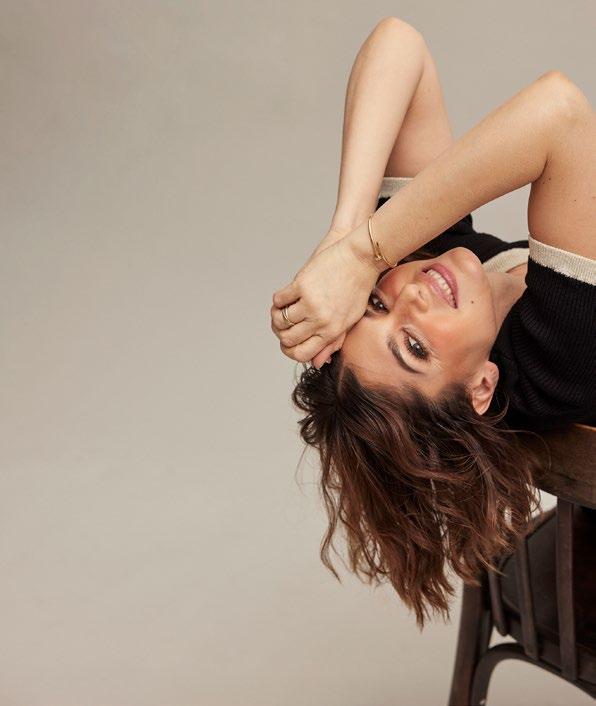
Anna Wolfers
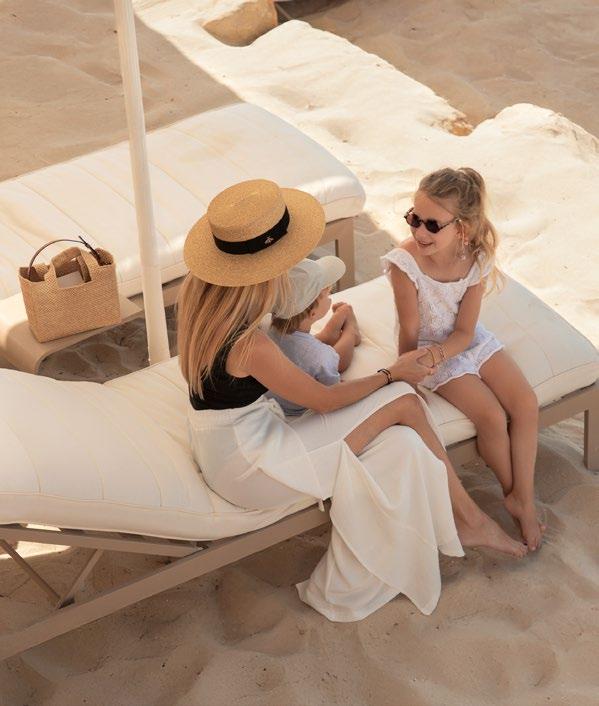
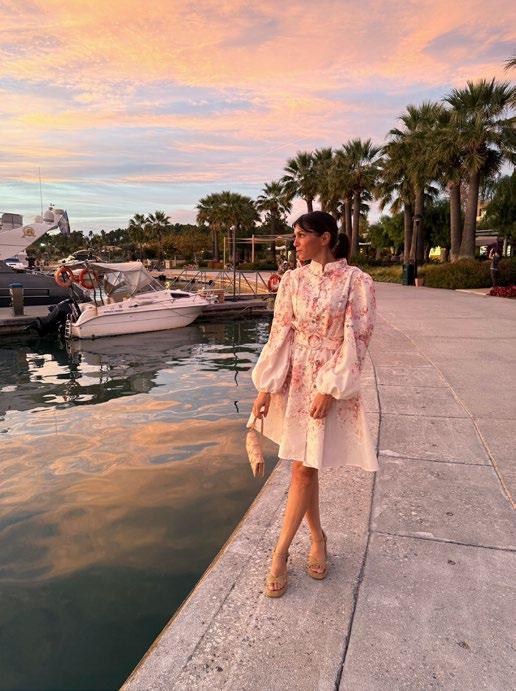
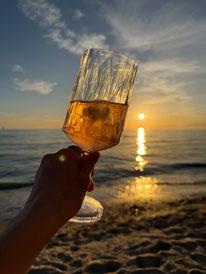
“What KEEPS BRINGING us BACK IS hard to REDUCE to ONE reason… it’s the FEELING”
*Anna Wolfers is a German actress, model, entrepreneur and blogger based in Cologne. Known for her roles in TV series such as “Sturm der Liebe” (Storm of Love), she is also the founder of the fashion label and boutique chain "Goldig" and an active blogger on her site www.annawolfers.de and shares fashion/beauty content through her Instagram "Buy now or cry later" format.
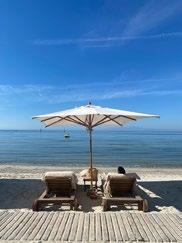
Sani feels like home by Anna Wolfers*
Some places become part of your calendar and some become part of your family story. For us, Sani is the second kind. We first came when our child was almost two. Back then, everything revolved around tiny routines: naps, snacks, sun hats, and the careful choreography of holiday days with a toddler.
What we didn’t expect was that the resort itself would feel like a constant, a place that made family life easier without ever losing its sense of beauty, calm, and quiet elegance. Now, our child is 13. And one of the most surreal and wonderful things is watching how Sani has grown with us. Every year, he meets friends from all over Europe again, many of them through the Chelsea International Soccer Centre Sani Greece. You arrive, and within hours it feels like a reunion: different languages, the same excitement, the same “We’re back!” energy. A little tradition that has become part of who he is.
Some days it’s as simple as sinking into what might genuinely be the most beautiful and comfortable sunbeds at Asterias Beach. Other days we play tennis, go to the gym, or take long walks that turn into slow strolls through the Marina, where you end up chatting, people-watching, and collecting little moments without even trying. And then there are the rituals that
always feel like the highlight, no matter how many times you’ve done them. For me, it’s the Sundowner Cruise. I’ve been out on that boat so many times, and still the magic never fades. Last year, we saw dolphins for the first time…OMG!
We also love the “Lima” experience, not just for the food, but for the whole feeling of it. And what truly makes Sani feel like home is the people. Over the years, you stop being “guests” and start feeling like you’re returning to familiar faces. The charming hotel manager at Asterias, Kevin Kains, has somehow become part of our extended holiday family – half adopted by us at this point ;-).
Sani doesn’t just host you. It’s the Greek spirit, the cuisine, the generosity, the ease, the way life feels a little more human and a little less rushed. Over time, we’ve built friendships there, and we’ve even brought friends along the way: people who first went because of our stories and now come back because they’ve fallen in love with it themselves.
What keeps bringing us back is hard to reduce to one reason… it’s the feeling. Sani is where our year resets, where our family reconnects, and where “holiday” means more than a break. It’s one of the true highlights of our year, every single time.
by Topolindra*
Some places are beautiful. Some places are luxurious. And then there are places that feel like they belong to your story. For us, Sani is that place – a place that feels like us. The first time we arrived at Sani, our daughter was one year old. I remember stepping onto the soft white sand, breathing in the salty air, and looking out at the sea shimmering in the most beautiful shades of turquoise and deep blue. From the very beginning, Sani felt like more than a holiday destination; it felt like a second home in Greece.
This summer will be our sixth visit to Sani. Our daughter is now six, and our son is two. Looking back at photos from the past five summers, it’s incredible to see how much they have grown: from tiny footprints in the sand to confident steps toward the sea. We recreate the same pictures in the same places each year, and it has become a beautiful family tradition to compare those moments. The scenery remains timeless, while our children grow a little taller with every visit. The entire
resort is beautifully green and harmoniously integrated into nature. Lush gardens and Mediterranean greenery frame the endless blue of the sea, creating a peaceful atmosphere that feels both elegant and relaxed.
The beaches at Sani, with their soft white sand and crystal-clear water, are simply stunning. Bousoulas Beach has become our favourite. It’s where our daughter first ran into the sea on her own, and where our son now toddles determinedly toward the water. It’s the place we return to again and again; for long afternoons in the sun, for laughter carried by the breeze, and for those simple, perfect family moments by the sea.
Sani seems to fulfill every wish effortlessly. Whether we’re looking for peaceful relaxation, exceptional cuisine, joyful activities for the children, or quiet moments as a couple, everything feels thoughtful and natural, supported by truly excellent service that makes every stay seamless and special. The variety of
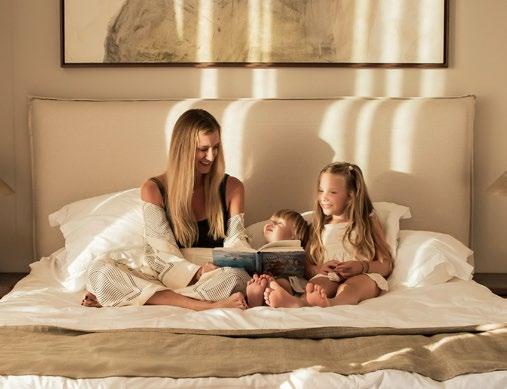
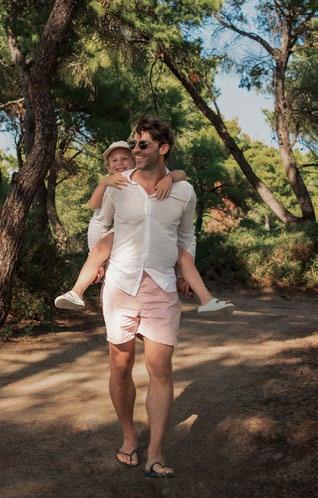
* Topolindra (often referred to as Verena Lang) is a prominent lifestyle, travel and home decor influencer, based in Austria, recognized for her content on Instagram. She operates a personal blog/website (topolindra. com) and shares curated imagery of daily life, travel, and festive, seasonal décor.
“IT FEELS like WE are COMING BACK to a PLACE that HOLDS our MEMORIES”
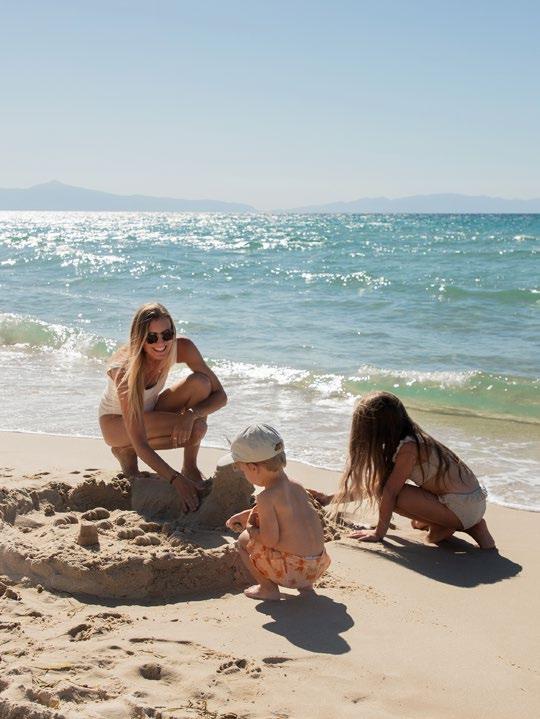
restaurants is impressive, offering something for every taste. And yet, despite the wonderful choice, “Cabana” and “Ouzerie” have become our favorite restaurants.
“Cabana” captivates us with its relaxed sophistication and refined cuisine, while “Ouzerie” celebrates authentic Greek flavours and traditional dishes, served with heartfelt hospitality.
Over the years, Sani has grown with us. It has seen first steps in the sand and countless sunsets that mark another beautiful day together. And as we return again this summer, it doesn’t feel like we are simply travelling to a resort. It feels like we are coming back to a place that holds our memories. A place that, in every way, feels like us.
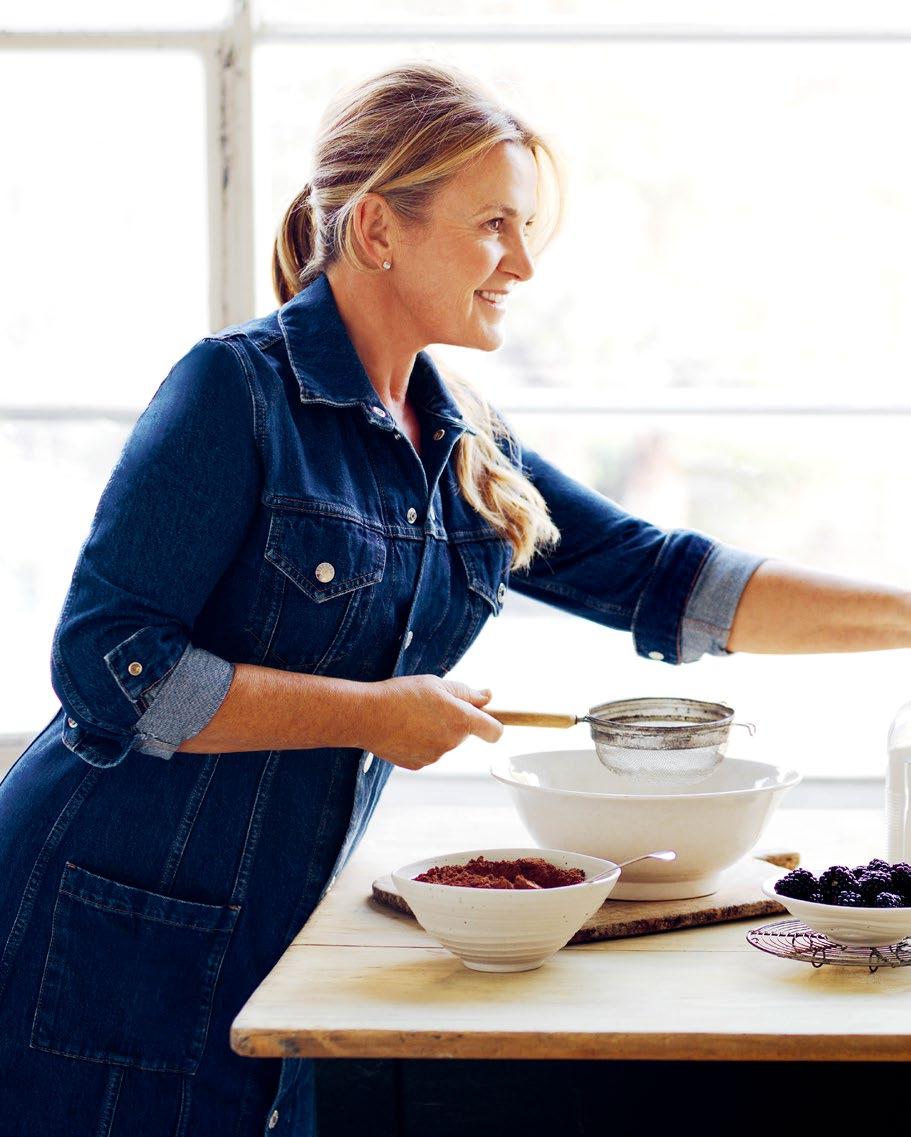

interview by Aris Kavatzikis
The renowned food creator brings her signature simplicity and vibrant flavours to Sani, reimagining children’s dining with creativity and care. In this collaboration, she crafts menus that balance fun, nutrition and discovery, turning every meal into part of the holiday adventure.
“Bright COLOURS from FRESH
FRUITS naturally make a DISH feel MORE EXCITING and INVITING. When a PLATE looks VIBRANT & joyful, CHILDREN are INSTANTLY more INTERESTED in TASTING it ”
What first attracted you to collaborate with Sani, and what made this project particularly exciting for you?
What attracted me most was Sani’s genuine commitment to creating an exceptional experience for families. Food is such an important part of holidays, and I loved the idea of creating dishes specifically designed to keep kids nourished, energised and excited about what they’re eating. Knowing that children would enjoy these meals between swimming, exploring and all the incredible activities at the resort made the project especially rewarding.
Before joining this collaboration, were you familiar with Sani and its family-focused philosophy? What aspects of the resort resonated with you most?
I was aware of Sani’s reputation as a beautifully considered family resort, but learning more about the philosophy behind it really resonated with me. The way the resort thoughtfully balances luxury with a truly welcoming environment for children is something quite special. It’s clear that everything, from the activities to the dining, is designed so families can relax and enjoy time together.
You’re known for making food both beautiful and approachable. How did you translate your signature style into menus designed specifically for children at Sani?
My approach has always been about simple food made with beautiful fresh ingredients, and that works just as well for children. For the menus at Sani, I focused on dishes that feel fun and familiar but with thoughtful twists, adding vibrant vegetables, wholesome ingredients and plenty of flavour while keeping everything approachable and easy to enjoy.
Designing menus for younger guests can be surprisingly complex. What are the biggest challenges when creating dishes that appeal to children?
The biggest challenge is finding that balance between what children already love and gently introducing new flavours and ingredients.
Kids appreciate familiarity, but they’re also surprisingly open to trying new things when the dish looks inviting and the flavours feel comforting. The key is keeping things simple, colourful and delicious.
How do you strike the right balance between flavour, fun and nutritional value when developing meals for kids?
For me, it starts with great ingredients. When you use fresh vegetables, whole grains, quality proteins and vibrant flavours, you naturally create dishes that are both nourishing and satisfying. Then it’s about presenting those ingredients in a way that feels playful and appealing, so kids enjoy the experience as much as the flavour.
Children are often more adventurous eaters than we think. How do you encourage curiosity and discovery through the dishes you create for the Sani Little Explorers menus?
I love the idea of children discovering new ingredients through food that still feels familiar. Small touches, like introducing a new herb, a colourful vegetable or an unexpected flavour can spark curiosity. When dishes feel fun and approachable, kids are often much more willing to explore something new.
What role do presentation and colour play in making healthy food more appealing to children?
Presentation plays a huge role. Bright colours from fresh vegetables and fruits naturally make a dish feel more exciting and inviting. When a plate looks vibrant and joyful, children are instantly more interested in tasting it.
Did the Mediterranean setting and the ingredients available in Greece influence the dishes you created for Sani in any way?
Absolutely. The Mediterranean is known for its incredible produce, vibrant flavours and relaxed approach to food, which made it a wonderful source of inspiration. Ingredients like ripe tomatoes,
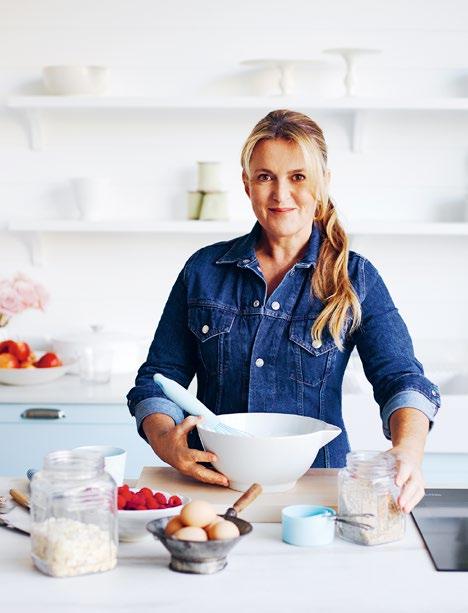
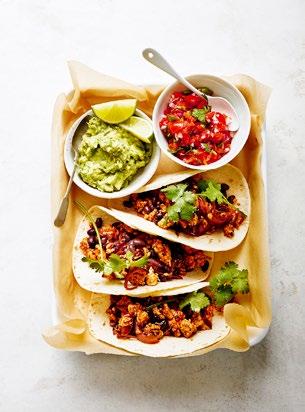
fresh herbs, olive oil and citrus bring such natural flavour and brightness to dishes, and they work beautifully in meals designed for children.
From your experience, are there any “secret ingredients” or key flavours that children almost always love? What small touches can transform a simple dish into something truly exciting for younger diners?
Children tend to love bright, comforting flavours like citrus, tomato and a little natural sweetness from vegetables, or a creamy element that brings everything together. Often it’s the small touches that make the difference: a delicious dressing, a squeeze of lemon. A better-for-you twist on a classic is always a great favourite with kids. A simple change up by adding a vegetable or a whole grain can transform a dish to something nutritious as well as deliciously memorable.
From your perspective, how important is it for hotels and resorts today to take a thoughtful approach to children’s dining and nutrition?
It’s incredibly important. Families travel together more than ever, and parents want to know that their children are being offered food that’s both delicious and nourishing. When resorts take the time to create thoughtful menus for younger guests, it elevates the whole family experience.
What do you hope young guests–and their parents–will take away from the Little Explorers dining experience at Sani?
I hope children feel excited about the food they’re eating and enjoy discovering new flavours along the way. And for parents, I hope it brings a sense of ease knowing their children are enjoying delicious, nourishing meals while making the most of their holiday adventures.
One glorious destination, five distinct experiences. At Sani, each hotel reveals a different way to unwind, ensuring every guest finds their perfect match. From serene escapes to vibrant stays, your ideal holiday takes shape exactly as you imagine it.
As you step into the world of Sani, always remember one thing. This is a destination. A cosmos in itself. A universe inhabiting the magnificent Kassandra peninsula, where the breathtaking Mount Olympus, together with a luxurious landscape of fragrant pine forests, golden sands and crystal clear waters, creates a thousand-acre natural backdrop. This is where Sani’s five multiple-awarded, 5-star destinations, each with its distinct personality and hospitality ethos, unfold their magic. Five gorgeous properties within walking distance of each other, yet so private and individual, they are truly a world apart. Where do you see yourself? In the vibrant Sani Beach, the relaxed Sani Club, the refined Porto Sani, the exclusive and intimate Sani Asterias, or the grown-up ambience of Sani Dunes?
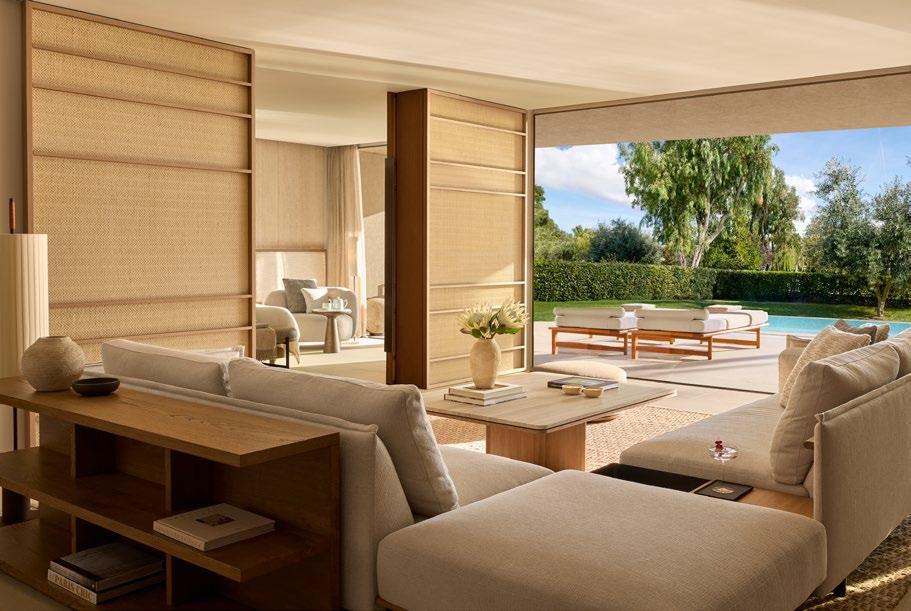

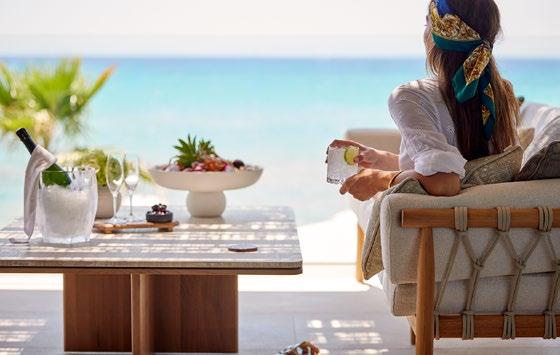
This is the heart of sophistication, the art of luxury, served in a discreet and private package. Sani Asterias is an intimate beachfront sanctuary where understated elegance meets refined Mediterranean living. Recently re-imagined, with 2026 seeing its final stages of completion, 59 beautifully redesigned residences and villas directly face the soft white sand of Sani Asterias’ exclusively serviced beach, while many feature private pools and sweeping views of Sani Marina, or the resort’s lush gardens. Designed in calming neutral tones with elegant furnishings and spacious layouts, each residence blends contemporary comfort with timeless sophistication. Spacious balconies and outdoor dining areas create an effortless blend of indoor and outdoor living, so that privacy and serenity are yours to enjoy. Defining the residential character of Asterias, the recent updates have created a “home at Sani” feel that is unique and personal. Just steps away lies the hotel’s exclusive stretch of soft white sand, reserved solely for Sani Asterias guests. Plush sunbeds with luxury mattresses and generous umbrellas create a scenic beach life straight out of a movie. A lagoon-style heated outdoor pool, along with additional wellness facilities, enhances the sense of indulgence for those who like to have everything at the palm of their hand, on their holiday.
Personalized service defines your stay in this, the most private and personalised corner of the resort, with Sani VIP Services arranging bespoke experiences such as wine tastings, yacht charters, private shopping excursions, and wellness sessions. From in-room dining and wine fridges to pillow menus, or even the option for in-room beauty treatments, Asterias delivers a discreet yet luxurious escape designed for those seeking tranquility and exclusivity, in an environment rich in authentic summer charm.
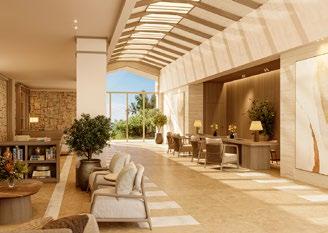
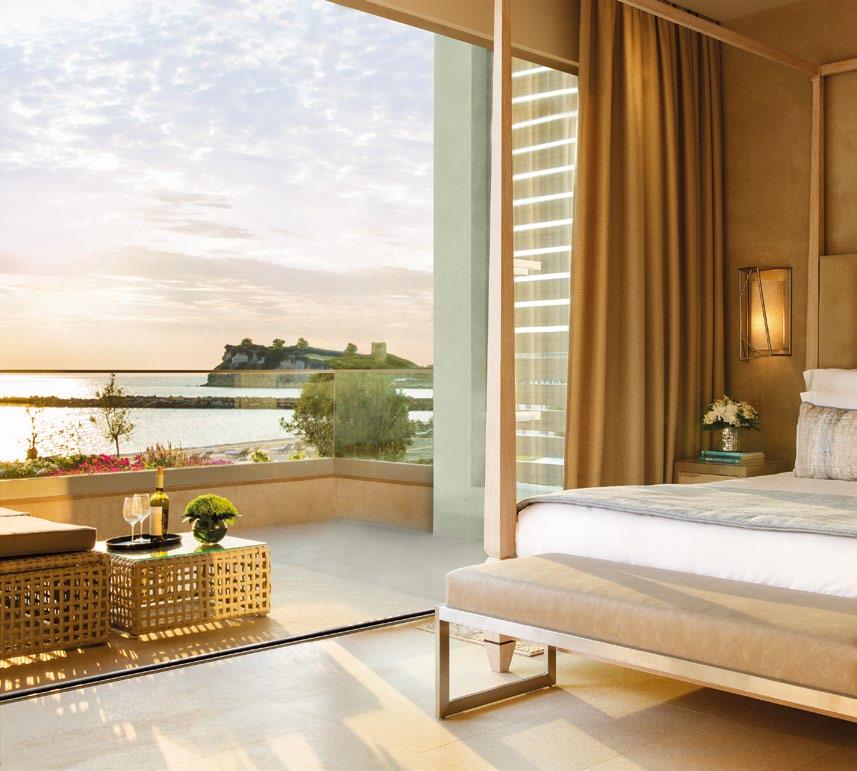
A chic destination which balances calm and sophistication, Sani Dunes stretches along the Aegean shoreline, with its refined Mediterranean elegance serving up the ultimate posh summer vibes. Designed for guests seeking a stylish, “grown-up” atmosphere, this is the epitome of sleek architecture: handcrafted furnishings, natural wood, and rich fabrics create a setting that feels both exclusive and effortlessly relaxed.
At the heart of the property lies the largest heated lagoon-style swimming pool in Greece, stretching across an impressive 3,500 square metres, making it the centerpiece of your holiday. Many of the rooms and suites offer direct views or waterside access, while accommodation ranges from elegant double rooms and junior suites to spacious one-bedroom and family suites. Large windows and private balconies invite natural light and sea breezes indoors, creating spaces where the calm coastal ambiance blends naturally with the safe indoors.
Guests can also enjoy a private beach just steps away, with soft white sands and crystal-clear waters. With exceptional dining, stylish bars, and a rejuvenating spa, Sani Dunes offers an escape that perfectly balances beachside tranquility with the cosmopolitan energy of the nearby Sani Marina.
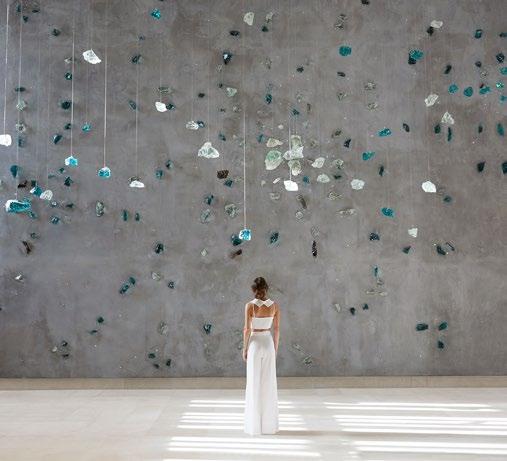
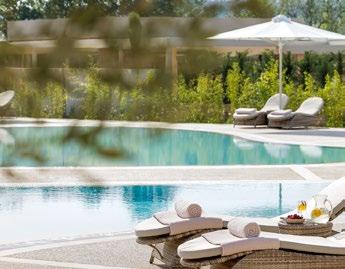
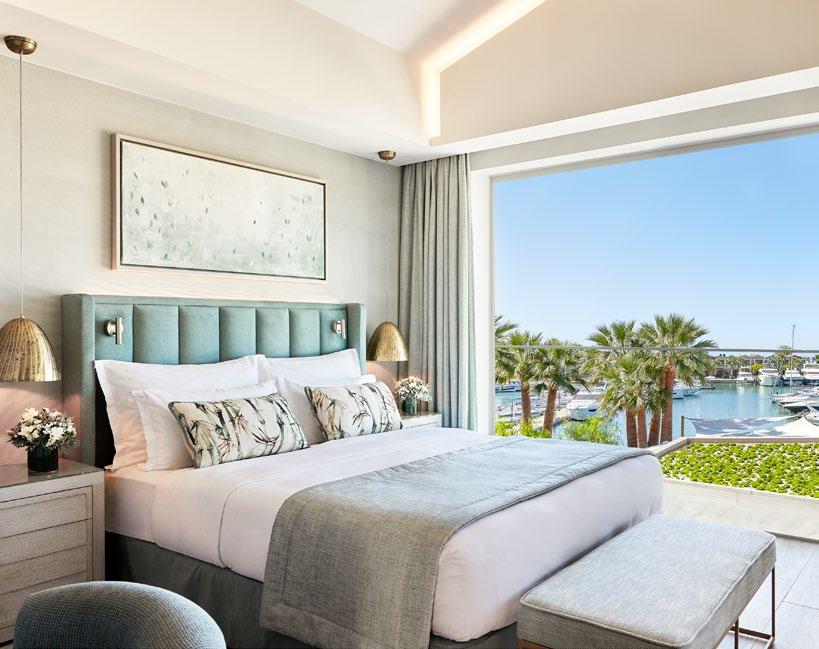
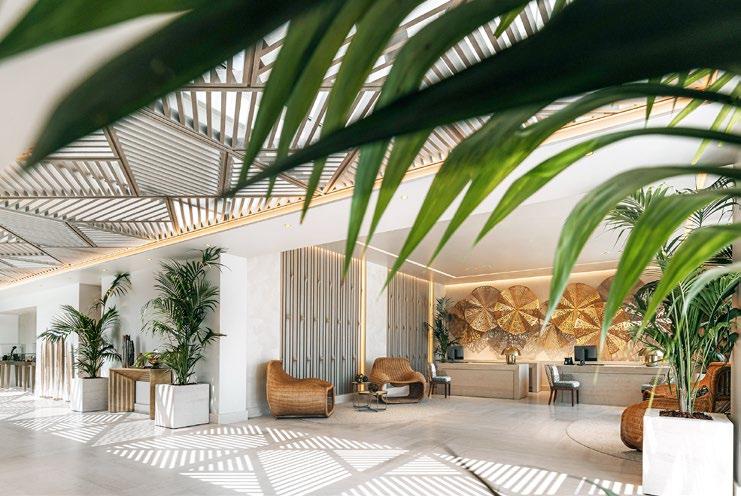
Ideally located in the vibrant heart of Sani Resort lies Porto Sani, offering guests a relaxed yet elegant escape designed especially for families seeking comfort, style, and personalized experiences. Award-winning restaurants, boutique shopping and sandy beaches are all just footsteps away from the 148 luxurious suites that make up this destination. Contemporary Mediterranean design with family-friendly touches, ensures a seamless stay for everyone in the gang.
The spacious accommodations, ranging from Junior and Family Suites to expansive one-, two-, and three-bedroom spots, are comfortable and flexible. Kind of like a home away from home. Each suite features either a private garden or a generous balcony, creating tranquil outdoor spaces where you can take in the warm Greek sun. Floor-to-ceiling windows are here to let the light wash every little corner, together with beautiful views of the resort’s lagoon-style pools, gardens, or the almighty Aegean.
A great highlight at Porto Sani are its culinary surprises. Guests can enjoy exceptional dining at several on-site restaurants, while younger guests are offered dedicated children’s menus and even baby-friendly dining options created by renowned food expert Donna Hay.
With heated pools, a serene spa, imaginative kids’ clubs, and the lively Sani Marina just steps away, Porto Sani perfectly captures Mediterranean living in the most relaxed, indulgent, fun-for-all style you all deserve!
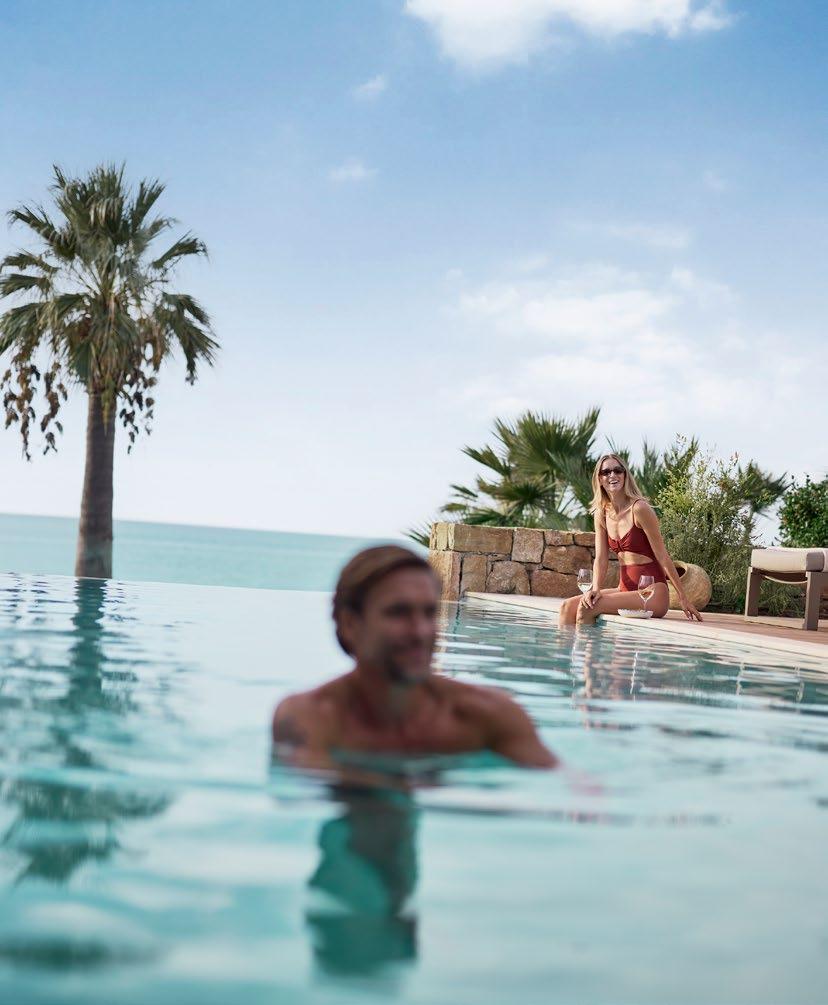
Close your eyes and imagine a tranquil escape offering shimmering waters and white sands, the wind dancing through ancient olive groves. On a lush hillside at the far end of Sani Resort, Sani Club offers a discreet retreat where nature and luxury come together in perfect harmony. Surrounded by fragrant Mediterranean gardens, overlooking the Aegean Sea, this is your chance to reconnect with nature.
Recently refurbished bungalows, spacious double rooms, and elegant suites are thoughtfully designed to blend with this impeccable natural landscape. Soft tones, rustic stone accents, and terraces framed by lavender and olive trees create a relaxed and sophisticated atmosphere, while many accommodations feature private gardens, panoramic sea views, or private pools for added privacy.
A picturesque promenade winds through the resort’s lush surroundings, connecting Sani Club with the wider Sani Resort, offering breathtaking coastal views along the way. Enjoy the four restaurants, stylish bars, the tranquil spa, and a modern fitness studio with floorto-ceiling windows overlooking the Aegean Sea and Mount Olympus, and make Sani Club your wellness retreat.
Directly in front of the hotel stretches a one-kilometre private beach, awarded the EU Blue Flag for its pristine waters. With luxurious sunbeds, attentive beach service, and crystal-clear waters, it is the perfect place to unwind on those endless lazy days. At Sani Club, you are invited to reconnect with nature while enjoying refined comfort and peaceful seclusion.
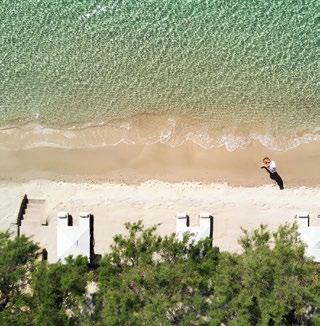
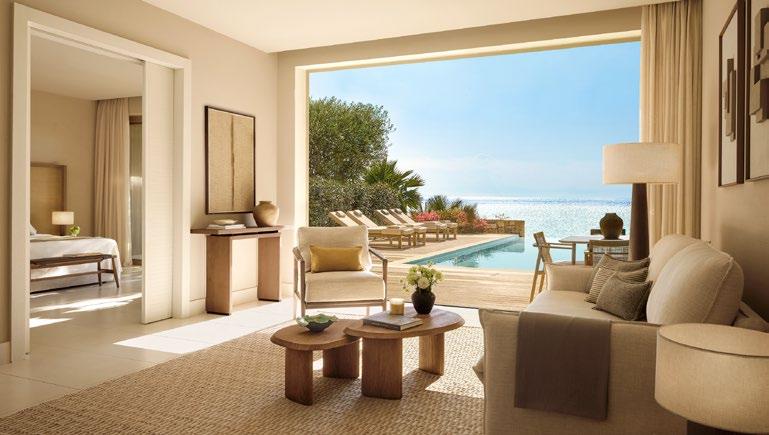
Imagine a large-scale hospitality experience, where even the tiny touches of each room remain luxurious and deeply personal, and you will know what Sani Beach feels like. Overlooking the crisp waters of Cape Sani, this is the largest resort within Sani, offering a vibrant five-star experience where luxury, nature, and family-friendly experiences come together effortlessly. But, in our view, what makes Sani Beach so magical is the way it exists in perfect harmony with the natural world around it. Nearby beaches such as Ammos Beach, Sani Hill Beach, and the pine-fringed Bousoulas Beach offer endless opportunities for exploration.
Surrounded by seven kilometres of pristine white-sand beaches and lush Mediterranean landscapes, this destination provides an idyllic summer setting.
Accommodation ranges from elegant double and family rooms to spacious junior suites and oneor two-bedroom family suites, many offering breathtaking views of the Aegean Sea or beautifully landscaped gardens. Each room also features a furnished balcony or terrace, allowing guests to fully embrace the beauty of the surrounding coastline.
Here you will discover an impressive selection of dining venues, from refined restaurants serving international and Greek cuisine to relaxed beach bars and stylish poolside settings. Families are particularly well catered for, with plenty of entertainment and facilities designed for children of all ages. Ideally located, Sani Beach offers exceptional proximity to all key amenities, including world-class academies, the pristine beach, and the surrounding forest. Guests can easily access a wide range of activities just moments away, from watersports and mountain biking to tennis and a serene yoga deck by the sea. Unwind at the spa or enjoy a refreshing dip in the infinity pool, as Sani Beach delivers an unforgettable Mediterranean holiday for everyone.
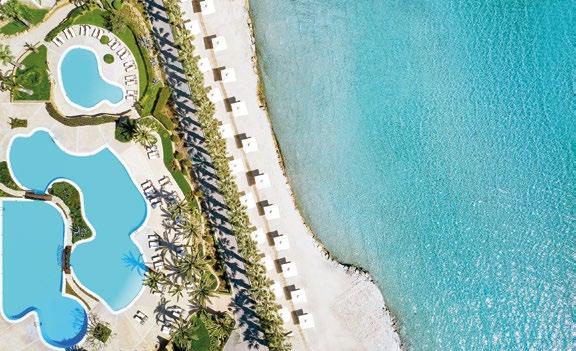

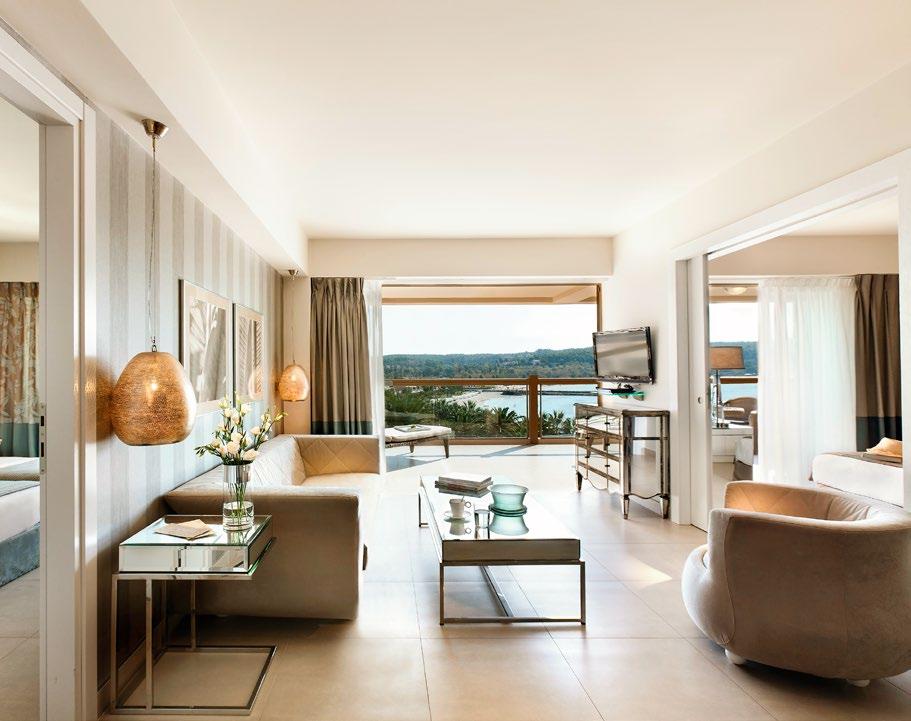
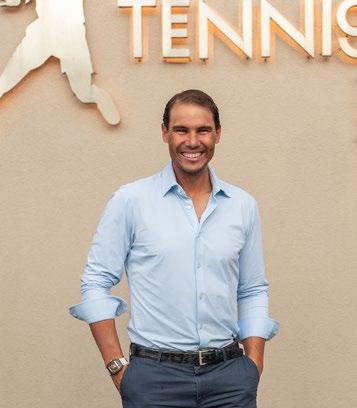
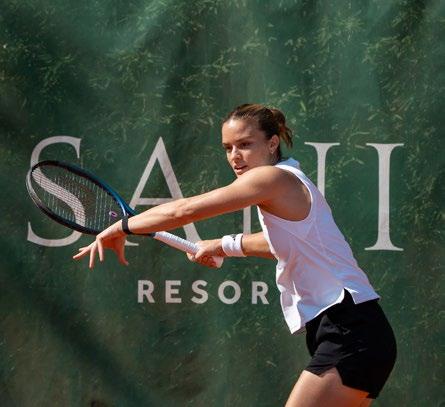
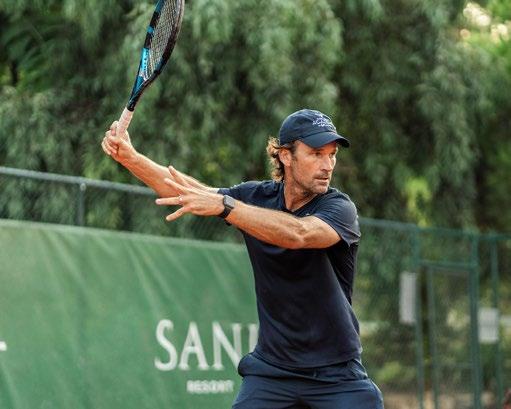
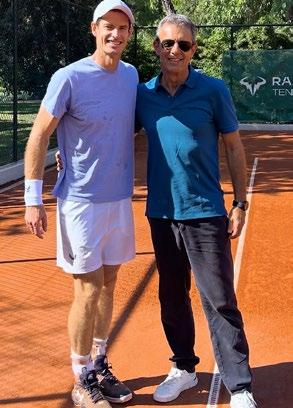
words by Aristotelis Spiliotopoulos
Among the destinations redefining the concept of sports tourism in Greece, the Rafa Nadal Tennis Center at Sani stands out as a unique hub for training and experience, as well as a meeting point for champions.
Since 2019, when it opened its doors as one of the first international centres of the Rafa Nadal Academy, it has evolved into a benchmark destination for tennis enthusiasts, bringing the philosophy and methodology of one of the greatest athletes of all time to Greece. Set within the luxurious surroundings of Sani, the centre combines state-of-the-art facilities with a fully integrated hospitality and sporting experience.
The Rafa Nadal Tennis Center is not solely for professionals or aspiring athletes. From beginners to experienced players, children and adults alike can experience training under the signature of the international tennis star. Personalised programmes, experienced coaches and a distinctive environment create the ideal conditions for development, exercise and enjoyment.
In a destination where luxury meets sport, the Rafa Nadal Tennis Center is not simply a tennis academy – it is a meeting point for legends, professionals and tennis fans who share the same passion for the game. What truly sets it apart, however, is the presence of leading figures from the international tennis world, who have not only visited the facilities but have also trained and interacted with guests and athletes, sharing their knowledge and inspiration.
In fact, Rafael Nadal himself first visited the centre in 2023 and returned again in 2024, confirming his close relationship with Sani. During his stay, he toured the facilities, spoke with coaches and fans, and actively participated in the academy experience.
The Spanish legend did not hide his enthusiasm, notably stating that “the quality of the facilities is impressive” and describing it as “an incredible place to play tennis and enjoy a holiday.” At the same time, he placed particular emphasis on the resort’s people, noting that “what truly makes the difference are the values of the people who are here every day.”
A central figure in the operation and the maintenance of the programme’s high standards is Toni Nadal, long-time coach of Rafa Nadal and director of the academy. Since the beginning of the partnership, he has regularly visited Sani, taking part in training camps, clinics and activities with guests.
His role is pivotal, ensuring that the coaching methodology remains faithful to the standards that propelled Nadal to the top of world tennis. As he has stated, “the facilities are outstanding and the environment ideal for player development,” while emphasising that the objective is to share the academy’s knowledge and values across the world.
The presence of Carlos Moyá, former
world No.1 and Nadal’s coach since 2016, is equally significant. With visits in 2022 and 2024, he took part in high-level training weeks, offering participants the opportunity to train under the guidance of a Grand Slam champion.
Carlos Moyá has described Sani as “a fantastic setting for tennis,” highlighting it as a destination where high-performance training blends seamlessly with the holiday experience.
The Rafa Nadal Tennis Center has also attracted other major tennis figures, including Maria Sakkari, Greece’s leading female tennis player, who visited the centre in 2024, participating in various activities and inspiring the new generation of athletes. At the same time, Andy Murray, one of the most important players of the modern era and a multiple Grand Slam title holder, visited Sani in 2024 and 2025. During his stay, he trained at the centre’s facilities, making use of its outstanding infrastructure in preparation for major tournaments, further enhancing the academy’s international prestige.
Sani partners with Chelsea FC International Soccer Centre Sani, the 2021 UEFA Champions League winners, to offer football coaching sessions. The programme features an impressive football development system, a UEFA-approved pitch, and a cutting-edge Club House, making it uniquely exceptional.
words by Aris Kavatzikis
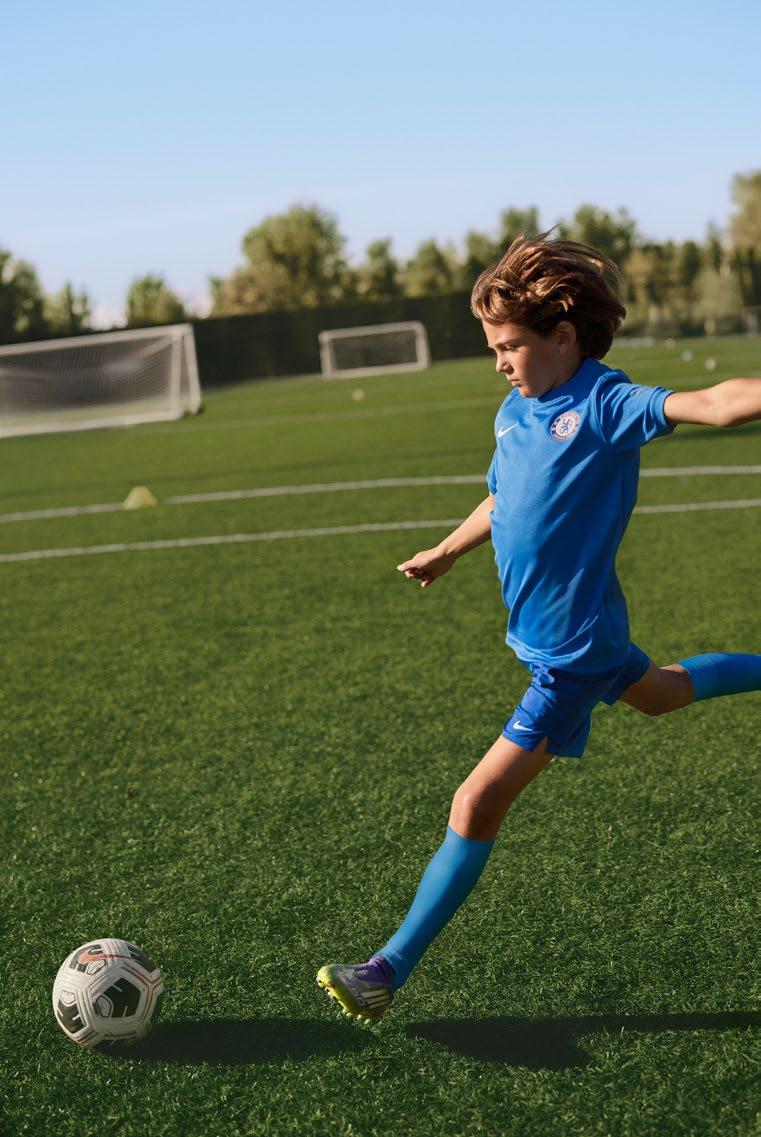
Sani once again takes charge with an impressive initiative that sets it apart from the competition. Younger guests will have the chance to train with coaches from the Chelsea FC International Soccer Centre, affiliated with one of the world's top football clubs. This is a wonderful opportunity for them to develop their soccer skills alongside professionals–a unique way Sani enhances the family holiday experience. We had the opportunity to talk with Ian Woodroffe, Chelsea FC’s head of international development, Harry Tryfillis and Christian Charles, both Senior Lead Coaches at Chelsea FC’s development programmes, who helped us understand why football teaches children ethics and values, as well as what strategies they learn to develop through this sport.
Football is often described as a “school of life.” In your experience, how does daily training help children build values that go beyond the game itself?
Football is the world's best game, breaking barriers and engaging people across the world. Our Chelsea programme at Sani demonstrates the power of sport and brings people together with one common interest. Our ethos is based on developing a
“FOOTBALL
and allows
PEOPLE
CONNECT and build FRIENDSHIPS on AND off the PITCH“

How do you encourage players to pursue excellence while still showing respect for teammates, opponents and the rules of the game?
love for the game but being respectful of teammates and opponents. We carefully manage sessions and training to encourage all celebrating success and learning from mistakes where possible. Learning with a smile, teamwork and building friendships and confidence is central to all our programme delivery, as we see many young people building friendships that go beyond the field as they play and engage on the beach or in the pool, after the training session has finished.
All training sessions are centred around individual development whilst having fun competition is a life skill, so we differentiate and challenge more able with advanced skills, whilst celebrating the successes of those who are just starting their football journey and skill development. Our staff are very aware of players' perception of situations and focus on what went well and what we can do better at the next training session. All team training games and matches involve bonuses for good sportsmanship and develop a respectful environment in all sessions. So, whether you are advanced or a beginner, we will support you through this training experience.
Teamwork is central to football. How do you help children understand that success comes from collective effort rather than individual performance?
We focus on teamwork throughout the whole training session, trying to create an environment that reflects how the game is played at Chelsea, with connection, communication and collective responsibility.
“Obviously, MEETING
and
is a HIGHLIGHT; but EVERYONE we COACH IS important to US”
In sessions and small-sided games, players quickly see that success comes from working together. A good assist, a recovery run or encouraging a teammate can be just as important as scoring. We add bonus points to players in team games, so sometimes teamwork or delivery of a skill in game can be worth more than just scoring a goal. Great saves, skill, tackles, goals and teamwork can also score bonuses as we try to encourage all to work hard as a team and to do their best.
What values do you believe children take away from their experience here, both on and off the pitch?
This is a unique environment for many young players. It is often the first time they have been on one of our Chelsea programmes and participants may be playing on teams with players from other countries, where they don’t always speak the same language. Football breaks barriers and allows young people to connect and build friendships on and off the pitch; we often see players connecting outside the programme and playing together in other areas of the resort. Aspirationally we aim for all

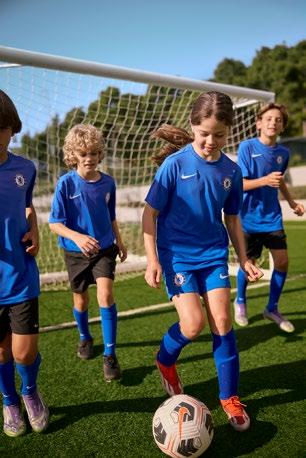
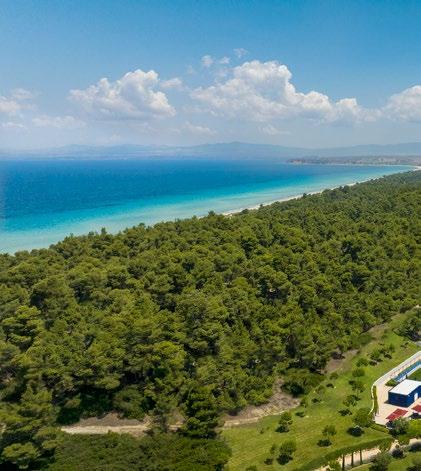
players to leave the pitch with confidence in themselves, learning from the experience and being inspired to work hard to become better. Over the years we have seen many players and families return to the programme, and we can confidently say that in partnership with Sani we have created a truly unique and special programme. Key attributes we aim to encourage are a safe space to learn and make mistakes, which leads to resilience and builds confidence.
What changes do you typically observe in children over the course of the programme in terms of confidence, discipline or emotional maturity?
It’s often the small changes that stand out. A child who is quiet on the first day might be chatting away with new friends by the end of the week. They become more confident in trying new skills, more open to feedback and more supportive
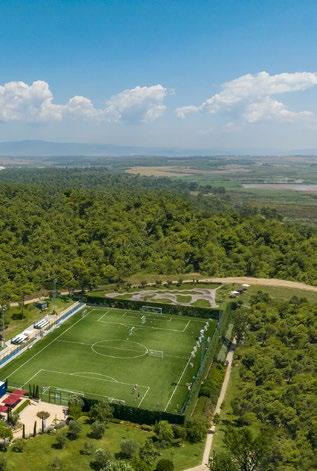
of one another. You also see them take more responsibility for their routines and approach to training. By the end, many carry themselves with a little more confidence and independence, which is lovely for parents to see as well.
What kind of feedback have you received from parents over the years? Have they noticed changes in their children’s behaviour, maturity or sense of responsibility?
Parents often tell us their children come away feeling inspired and more self-assured. They notice increased confidence, a stronger sense of responsibility and, importantly, a real enthusiasm for football. Many families return each year, which speaks volumes. They appreciate the child-centred experience and high-quality coaching syllabus developed at Chelsea, but in a warm and supportive setting. Hearing that the impact lasts beyond the week itself is always very rewarding.
How does the setting and atmosphere at Sani contribute to the overall experience for the children and their families?
Sani provides a fantastic environment to deliver a Chelsea programme. The facilities have been built specifically for this programme, in separate areas of the resort; they are safe and the overall atmosphere allows children to focus on their football while families enjoy a premium holiday experience. There’s a real sense of community around the sessions, with parents
often watching and sharing the journey. It creates a relaxed but professional setting, where children can learn, develop and enjoy representing Chelsea in a very special location.
Having returned for three consecutive seasons, what has been most rewarding for you personally when working with the young players here?
Chris & Harry: After an eight-year collaboration, we can see Sani and Chelsea have been integrally linked for holiday makers. As many come back to the resort each year or every other year, we aim to add new opportunities and adapt the programme we have been creating at Chelsea’s Training ground. Personally, at this point in the year, I always look forward to reconnecting with many friends at Sani, where we have developed fantastic relationships with the Sani staff, but also knowing we have great facilities and equipment to deliver a worldclass programme. Meeting parents, players new and old, is always exciting to me as a coach. But obviously, meeting repeat guests and players is a highlight; everyone we coach is important to us and I’m incredibly proud to lead this programme in such a wonderful resort as Sani - I honestly don’t know of a better programme with a destination resort globally. So, if you are a beginner or an advanced player, we will deliver a great experience. Please pop along and try out our free sessions on Saturday, or we are open every day of the week, Monday to Friday.
“Our ETHOS is BASED on developing A LOVE for the GAME BUT BEING RESPECTFUL of TEAMMATES and OPPONENTS”
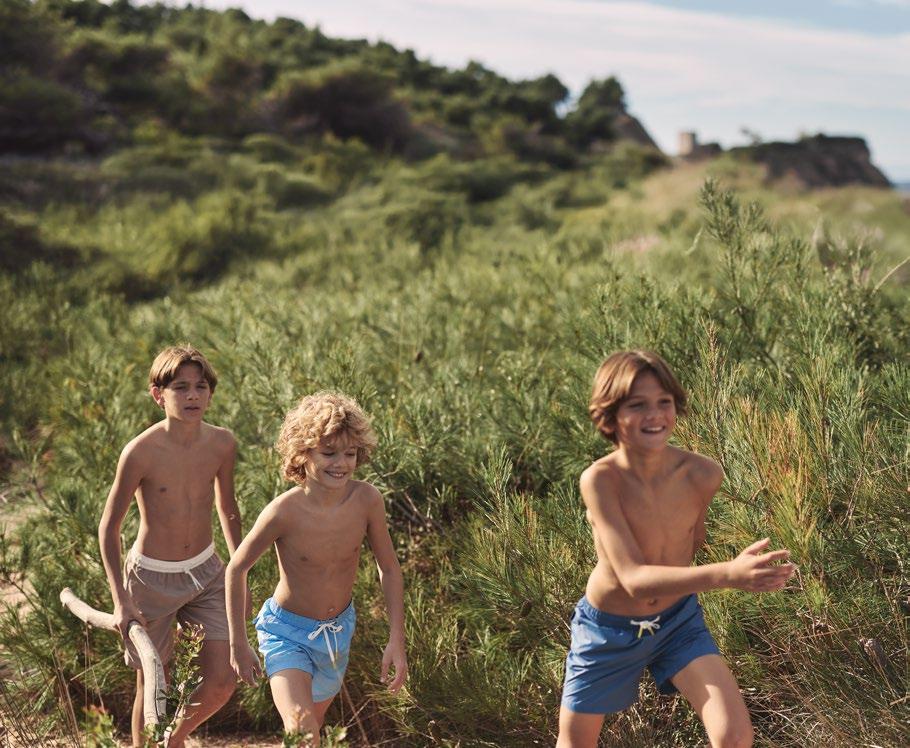
For families in search of the perfect holiday destination, few places capture the imagination of young travellers quite like Sani.
words
by Eleni Papaioannou
Nestled within breathtaking natural surroundings, this destination is a kids haven where your little ones are not simply entertained–they are inspired. From adventurous outdoor experiences to world-class sports academies and imaginative educational activities, Sani creates an environment where curiosity thrives and unforgettable memories are built for life.
No wonder Sani has repeatedly been acknowledged as the World’s Leading Family & Beach Resort. Here we are way past the “kids’ club” concept that uses old tricks, such as fixed menus and dull activities. Children, the toughest crowd to please, are encouraged to explore their interests, discover new passions and immerse themselves in a whole cosmos designed around creativity, movement and discovery.
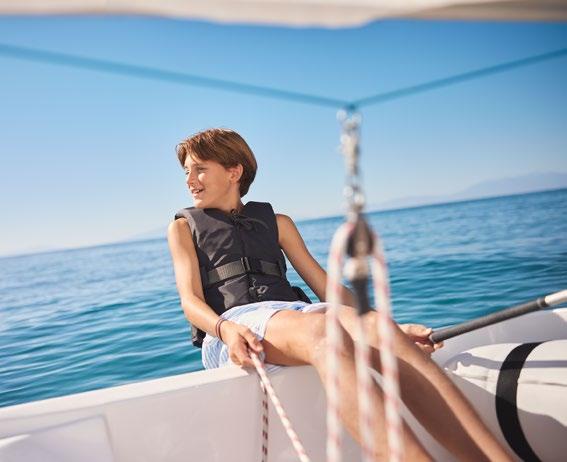
At SANI, CHILDREN create MEMORIES , and FRIENDSHIPS that LAST long AFTER the HOLIDAY ends
For your favourite active youngsters, Sani feels like an endless playground. Sport plays a major role in our children’s programme, offering professional coaching and facilities that rival those of top training centres.
Young football enthusiasts can train at the Chelsea FC International Soccer Centre, run in collaboration with the renowned Chelsea Foundation, where highly qualified coaches guide children through an engaging programme that builds both skills and confidence. Training takes place on a UEFA-approved pitch and is designed to motivate and inspire players of all levels, while ensuring plenty of fun and teamwork along the way.
Tennis lovers can explore a world-class opportunity: at the Rafa Nadal Tennis Center, children follow the same training philosophy that helped the legendary champion reach the top of the sport! With eight clay courts, expert coaches and tailored programmes, young players develop their technique while also enjoying the thrill of the game in a supportive and exciting environment.
For teens looking for something more adventurous, the Bear Grylls Survival Academy levels up the game pretty well. Guided by instructors trained by the famous adventurer Bear Grylls, participants learn essential survival skills including navigation, shelter-building, fire-making and tracking. Set within Sani’s unique natural landscape, the programme blends outdoor adventure with
teamwork and problem-solving, creating memories and friendships that last long after the holiday ends.
For the speed and dirt aficionados, the resort’s BMX and biking academy is where professional instructors lead thrilling rides through forest paths and coastal trails using high-performance bikes and specialised gear. Makes you want to be 15 again, doesn’t it?
Of course, no summer holiday is complete without the mighty water. Sani’s coastline provides the perfect setting for children to enjoy the sea safely, while learning new skills.
Young guests can try windsurfing, kayaking and sailing, or dive into more high energy activities such as water skiing, wakeboarding and parasailing. Whether they are beginners or already confident water explorers, expert instructors are here to make sure that every experience combines safety with excitement.
For younger children, lessons offered through the resort’s swimming club introduce the fundamentals of water confidence in a fun, supportive environment. With both private and group lessons available, many children discover a lifelong love of swimming during their stay here.
The resort sits within a remarkable ecosystem of forests, wetlands and sandy dunes, offering countless opportunities for exploration.
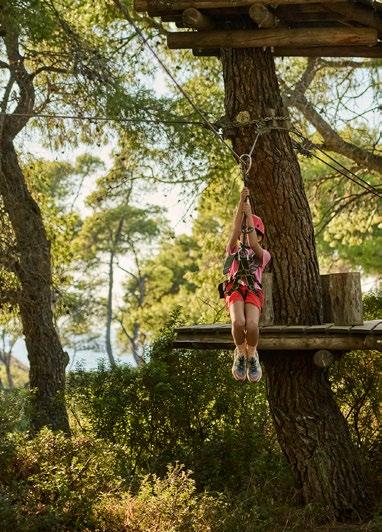
So, as you can see, beyond sports and water activities, one of Sani’s greatest gifts to children is its connection to nature.
Miles of forest trails wind through the landscape, inviting the whole family to walk, cycle or simply enjoy the scenery. Some routes follow cliffside paths between the resort and nearby villages, revealing spectacular views across the Aegean Sea, while others lead through valleys rich with rare plants and ancient trees, turning every stroll into a mini adventure.
Young explorers can also test their courage and stamina at the Sani Treetop Adventure Park, where rope courses and elevated pathways challenge visitors to climb, balance and swing high above the ground. With courses designed for different age groups, it’s a thrilling way to experience the forest from a completely new perspective.
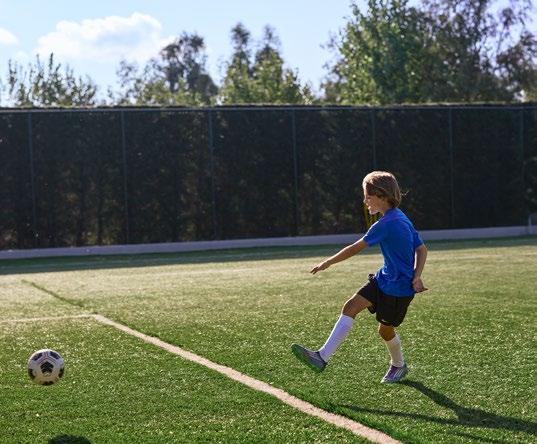
The surrounding wetlands offer another once-in-a-lifetime experience. Home to nearly half of Greece’s bird species, the Sani Wetlands provide a fascinating environment for guided birdwatching walks led by expert eco-guides. Children learn to observe wildlife while gaining a deeper appreciation for biodiversity, which stays with them forever.
Nature lovers will also enjoy the resort’s innovative Bee Spot–an interactive educational space dedicated to pollinators. Created in collaboration with environmental experts, the garden introduces children to the fascinating world of wild bees and highlights their essential role in ecosystems and agriculture.
Beyond adventure and nature, Sani ensures that every aspect of a family holiday is carefully considered. Through the Sani Explorers programme, children aged four to eleven can take part in a wide variety of creative indoor and outdoor activities inspired by the natural environment. Games, storytelling, crafts and nature observation create engaging experiences they won’t want to miss, combining learning with play.
Teenagers have their own dedicated space at Ozone, an exclusive teen venue located at Sani Marina. Here they can socialise, play games, participate in group competitions or simply relax
with friends in a space designed just for them.
And don’t think kids miss out on the nightlife, here at Sani! Evening entertainment provides high quality stage shows for the whole family.
The resort also offers thoughtful services for younger children and babies, including babysitting, baby swimming lessons and even a baby consulting service to help parents maintain sleep routines during their holiday.
Here, dining is treated with respect and imagination, as special children’s menus are not just simplified versions of classics, but rather designed to combine nutrition with flavour and creativity. For 2026, Sani introduces an exciting collaboration with renowned food expert Donna Hay, bringing a series of interactive culinary experiences to the resort.
Hands-on culinary activities encourage children to explore ingredients, experiment with flavours and develop confidence in the kitchen, urging young chefs to discover that food can be both delicious and inspiring.
Sani is so much more than a luxury destination. For children, it becomes their own personal paradise–and the place where their forever summer memories are made.
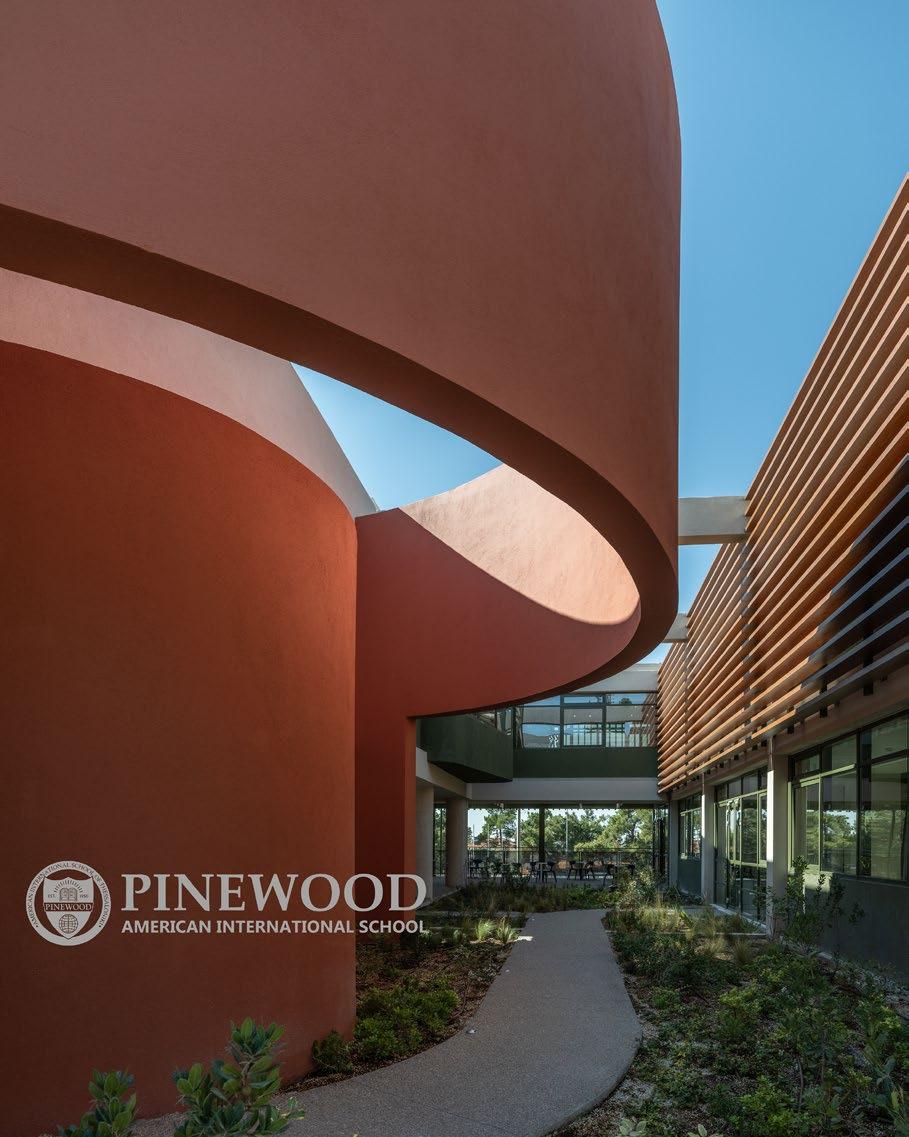
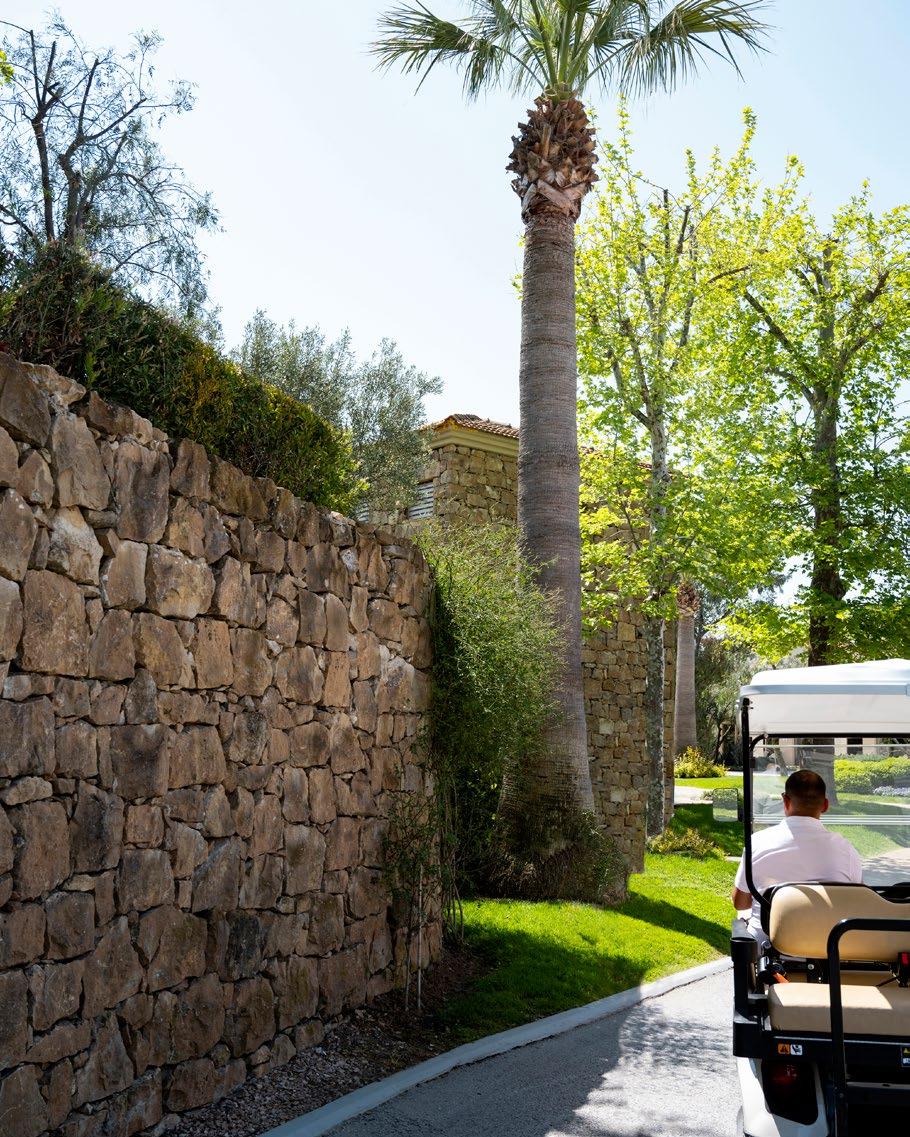
What is it that ultimately makes Sani the ideal environment, not only for dream holidays, but also for building and investing in one’s career? Four members of its remarkable team, which feels like one large professional family, share their thoughts.
|
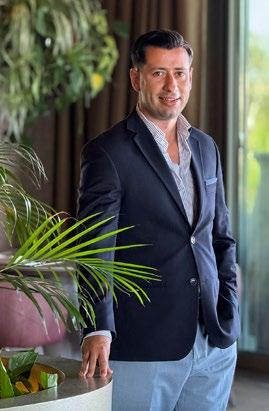
“
Outlet Senior Manager
Sani Asterias
“I joined Sani in 2019 as a waiter at Sani Club, and today I am based at Sani Asterias as Outlet Senior Manager, having also worked at Porto Sani. Looking back, the progress has been truly significant, both for me personally and for the resort itself.
Sani bears little resemblance to how it was when I
first arrived. The development has been impressive, both in terms of facilities and as a company overall. Major improvements have been made across all areas, even in aspects such as employee accommodation. The brand has grown considerably, not only in Greece but internationally as well, and it continues to evolve.
What stands out most for me is the environment. I genuinely enjoy being here, and that is one of the main reasons
I have stayed all these years. I have made friends, I feel at home, something I had not experienced in previous jobs. At the same time, the company offers real opportunities for advancement to people who go the extra mile, remain consistent and want to move forward. I am a living example of this: within seven years, I progressed from waiter to Outlet Senior Manager. I remember my early days very clearly. When I arrived, I believed I
2 Maikee Kupfer
already had experience, but I quickly realised there was still much to learn. Two months later, I was awarded Employee of the Month – something that truly motivated me. It was the first confirmation that if you work with dedication and commitment and consistently, your efforts will be recognised. It’s something I still share with new members today.
I believe everything starts with leadership. When a company genuinely cares about its people, they in turn give their very best. You do not feel like just a number, you feel that you belong somewhere. This is also reflected in the relationships with guests. Many return every year; we have built relationships, even friendships. There are guests I have met outside of work, abroad, and that means a great deal.”
Maikee Kupfer
Deputy Head of F&B Sani Club
“I began working at Sani in 2009 as a student, and today I hold the position of Deputy Head of F&B at Sani Club. Looking back, this journey reflects not only my own development but also the significant growth of the organisation 1 Leonidas Karapanagiotidis
itself. From 2009 until today, Sani has evolved remarkably. At that time, facilities such as Sani Dunes or the Garden Theatre did not yet exist, and the resort overall was considerably smaller. Growth is evident at every level; in infrastructure, in human resources, and in the Group’s international presence. At the same time, the people of Sani have grown alongside it. Many colleagues who started together continue to work here today, having progressed professionally through the opportunities we were offered.
The experiences gained are numerous and truly unique. Each season brings new people, different cultures and unique stories: from spectacular weddings on the beach to the personalised care provided for a child with allergies. For us, these moments may seem simple, but for guests they can mean everything.
Sani offers genuine opportunities for advancement, and recognition comes both from guests and from management. Career progression depends on personal effort and the willingness to make the most of the tools and opportunities provided. What truly makes the difference, however, is the people. In a ‘universe’ of impressive facilities, it is the human connection that stands out, as there is authentic care,
both for the guest and for colleagues. This philosophy creates a unique environment that is difficult to find elsewhere.
Ultimately, strong teamwork is directly reflected in the guest experience. Positive
1
2
energy, a warm smile and a genuine desire for providing exceptional service create a meaningful connection from the very first moment. This is what makes the difference and builds relationships of trust with guests, year after year.”
“In a ‘UNIVERSE’ of impressive FACILITIES, it IS the HUMAN CONNECTION that STANDS OUT, as there is AUTHENTIC care, BOTH for the GUEST and for COLLEAGUES”
MAIKEE KUPFER
Hayk Ohanjanyan
Head of Rooms Division
Sani Asterias
“I joined Sani in 2016 as a Personal Concierge at Sani Club, and today I serve as Head of Rooms Division. Looking back, I feel that these ten years have been defining, not only for me personally but also for the company itself. During this decade, I witnessed Sani transform. What began as a family business evolved into a major international organisation. The number of employees grew significantly, new hotels opened, and expansion continues to this day. It was a period of intense growth and change, and I feel truly


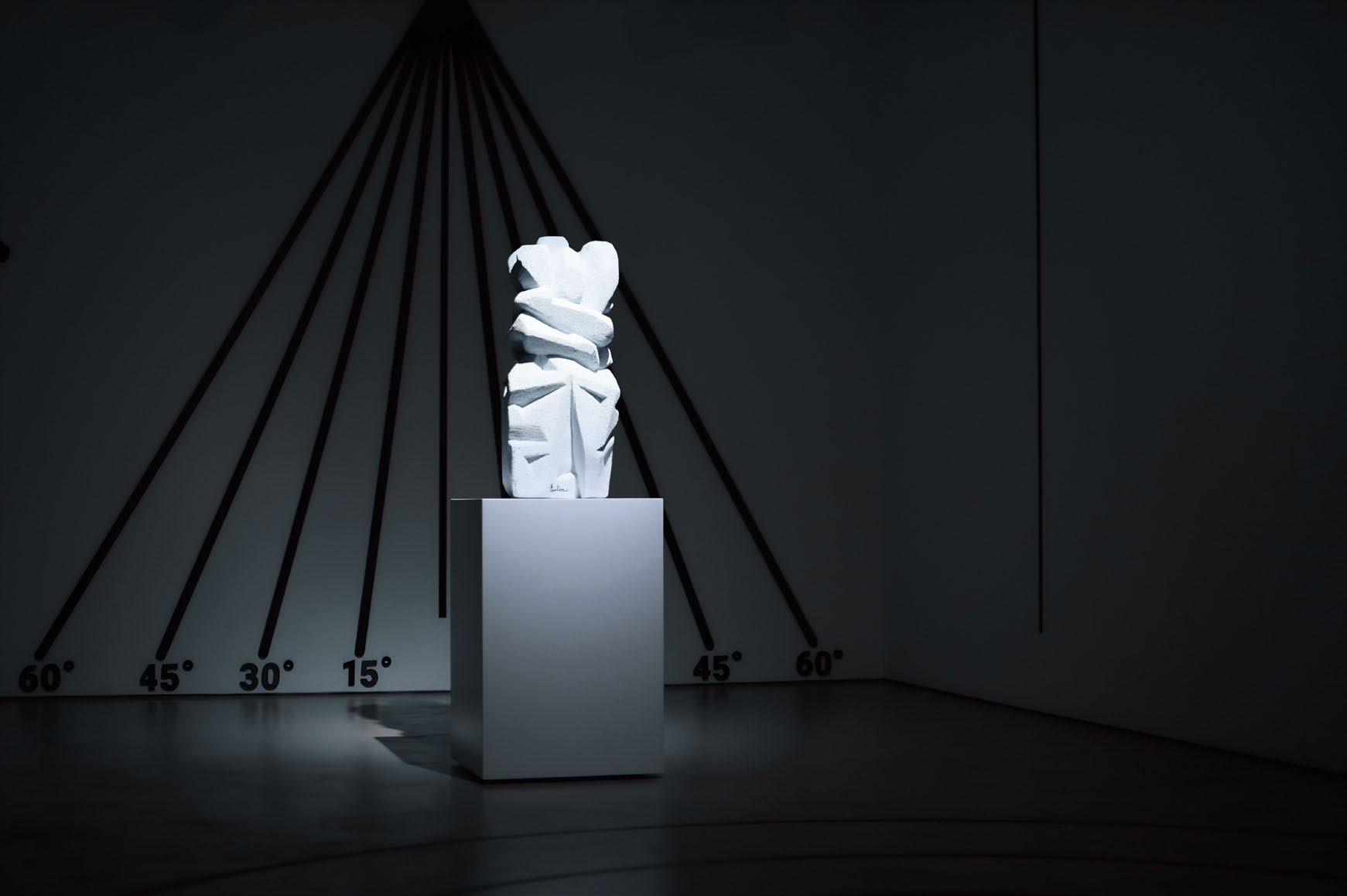
fortunate to have been there at exactly the moment when it all began.
This growth had a positive impact on my own journey as well. Many opportunities were created, allowing me to progress relatively quickly within the hospitality industry. What truly makes the difference, however, is the Group’s culture. At Sani, great emphasis is placed on training, learning and personal development. Opportunities exist for everyone, without distinction. There are training programmes, learning platforms and new roles – everything is there. The question is whether you choose to make the most of them. The environment is highly supportive. It is a team of people who genuinely care. Colleagues, managers, everyone is there to help you. You will receive support whether you ask for it or not, and that is incredibly meaningful.
If I had to highlight one ‘secret’ behind Sani’s success over all these years, I would say it is what we call the ‘Sani Magic’. It is a culture passed down from the more experienced team members to the younger ones. It is about attention to detail, care for the guest as well as for colleagues, and the philosophy of putting others before ourselves. Over the years, I have made this philosophy my own through experience, training and the
“Colleagues, MANAGERS, everyone IS there to HELP YOU; YOU will RECEIVE support WHETHER you ASK for it OR not, and THAT IS incredibly MEANINGFUL”
HAYK OHANJANYAN
“SANI is not simply a WORKPLACE; IT is an ENVIRONMENT where lifelong BONDS are FORMED, both PERSONALLY and PROFESSIONALLY”
IOANNA DASYLLA
people around me. And for me, that is one of the most important things Sani has given me.”
Front of House Manager
Porto Sani
“I began working at Sani in 2018 as a student in the Suite Collection department, without knowing at the time whether hospitality would become my future career. Today, eight years and one season later, I hold the position of Front of House Manager, having surpassed my initial expectations and grown within the organisation.
From the very beginning until today, Sani has proven itself to be one of the fastestgrowing groups in the industry. Even during demanding periods, such as the years of the pandemic, it managed to
maintain stability, something that is crucial for us as professionals. This sense of security allows you to remain focused and give one hundred per cent of yourself. Opportunities for development are undoubtedly one of the organisation’s greatest strengths. Many of today’s managers started in junior roles, as students or in positions such as service or bar personnel. This clearly demonstrates that the company invests in its people and actively encourages their growth. The greatest benefit, however, lies in the relationships that are created. Sani is not simply a workplace; it is an environment where lifelong bonds are formed, both personally and professionally. This culture is also reflected in the guest experience. Many guests return every year,
having known us since our first steps and following our professional journey, creating a unique relationship built on trust.
The moments we share with guests are equally unforgettable: from a wedding organised within the resort and the emotion of the newlyweds, to the joy of a guest receiving their very first professional job offer while on holiday. These are moments that remind us we play a meaningful role in some of the most important memories in people’s lives.
The secret behind this success is teamwork, strong guidance and continuous training. With shared values and a common goal, the team evolves constantly, creating an experience that truly stands out – both for us and for our guests.”












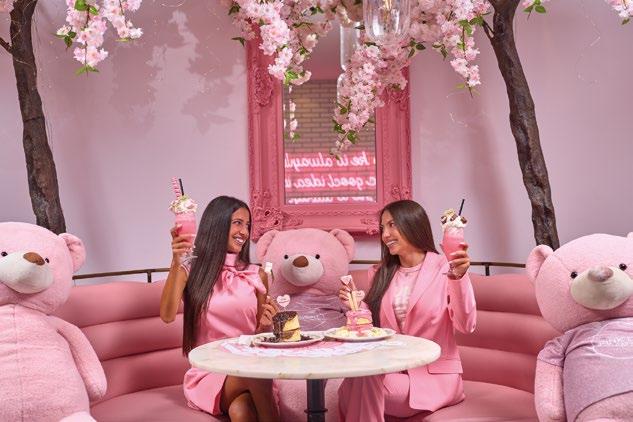





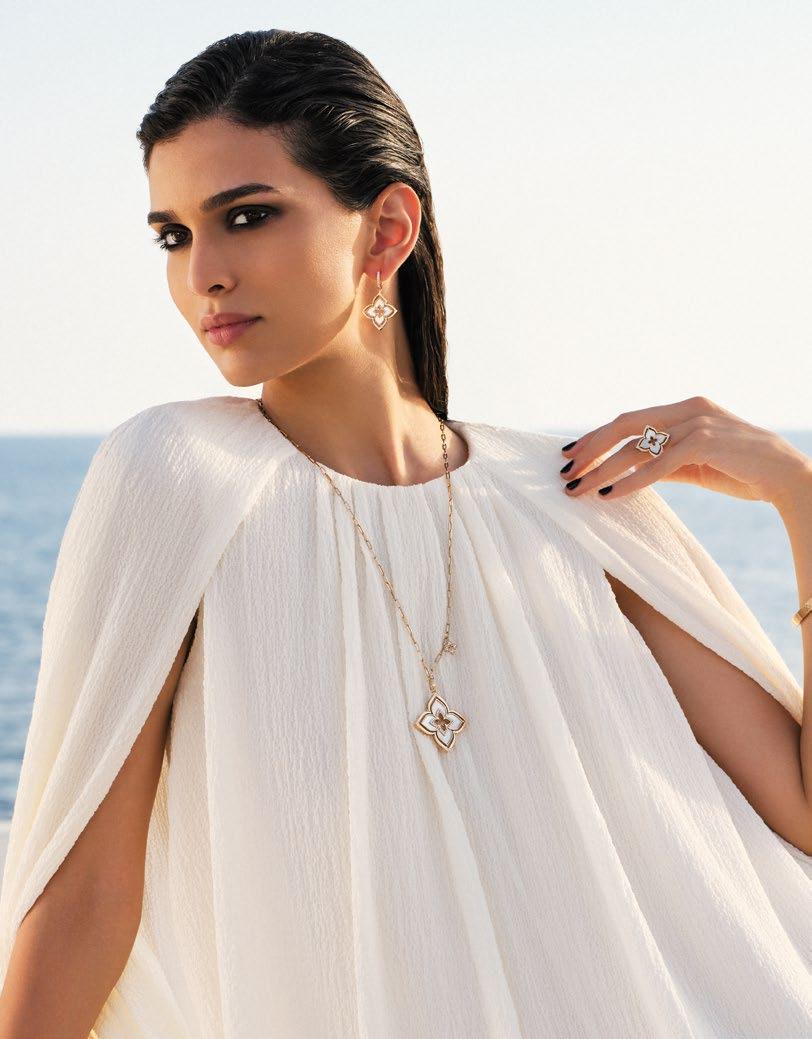

“A life aligned with its highest nature becomes Eudaimonia”
Eudaimonia is a Greek word literally translating to the state or condition of good spirit, happiness. In the works of Aristotle, eudaimonia was the term for the highest human good. It is the aim of practical philosophy-prudence, including ethics and political philosophy, to consider and experience what this state really is and how it can be achieved. Eudaimonia is the state of deep human flourishing - a life where virtue, purpose, and fulfillment align.
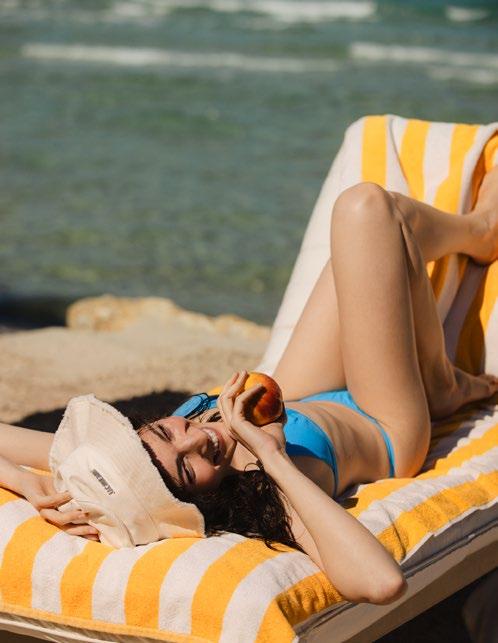
Paradise is a place where freedom and bliss blendwhere vibrant hues meet the rhythm of waves and every moment lingers in a state of eudaimonia. Set against the endless blue, this story unfolds as an ode to euphoria.
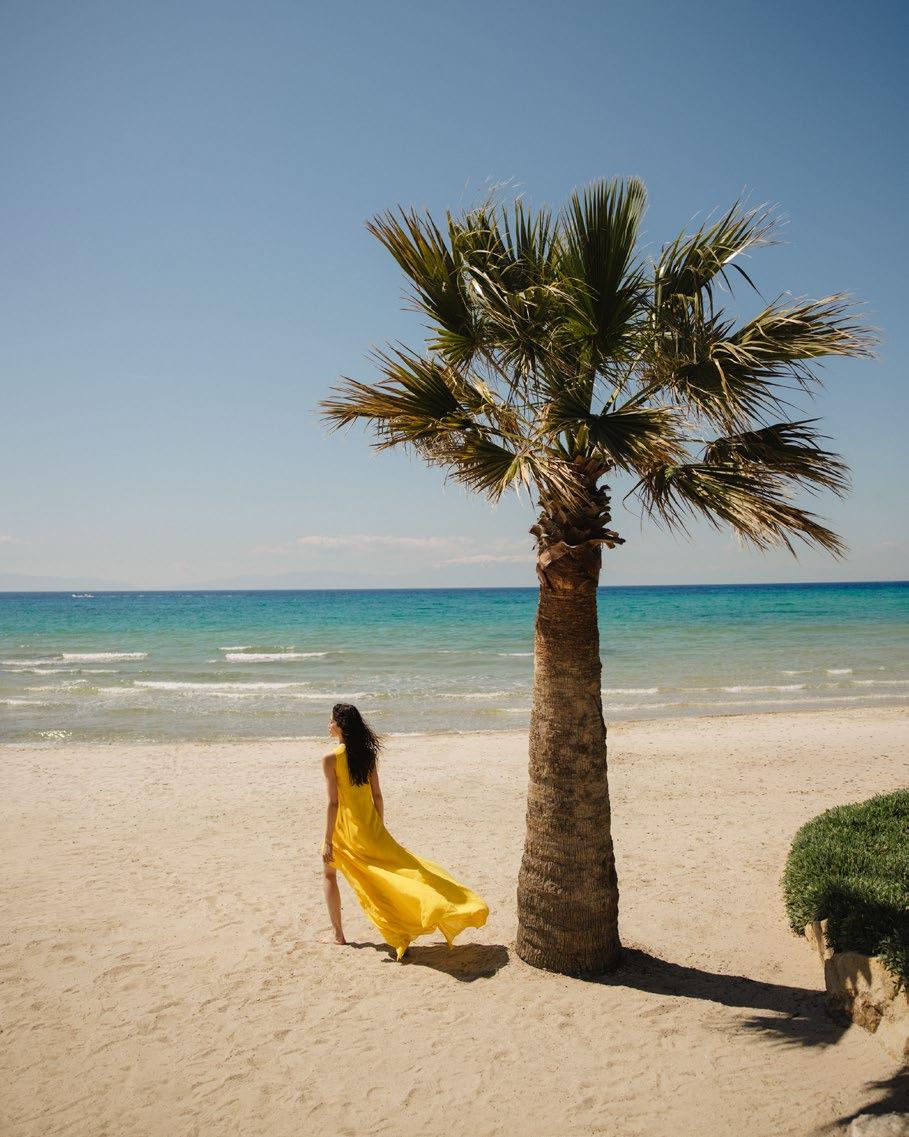
You were born in Greece but raised largely in Germany. How has this dual identity shaped who you are, both as a person and as an artist?
I have never understood this situation as a challenge, but as a great gift! Growing up between two cultures, two languages, two ways of seeing the world gave me something that I could never have found in one place alone. It opened me up, made me more curious and at the same time more sensitive to different people and different audiences. I am already very excited and very much looking forward to this year‘s concert back home in Greece, at the Sani Festival.
Do you feel more Greek, more German, or something beautifully in between? Has that answer changed over the years? I am Greek and feel like a Greek. Greece is my home, my roots, the place where everything began. Having said that, I was only five years old when my family moved to Germany. At the age of thirteen I started my career and at the age of
fifteen I participated in the Eurovision Song Contest for the first time, representing Luxembourg with “L’ amour est bleu”, a song in French, which later on became my first world hit. Greece never left me, not for a single day. I love the Greek people, the mentality: I feel at home in Greece. The sea, the light, the people: it recharges something in me that nothing else can!
Your victory at the Eurovision Song Contest in 1972 was a defining moment. When you look back today, what does that win truly mean to you beyond the fame? At that time, I was very young, and of course, the success changed my life overnight. But with the years, what remains is the feeling that I was able to touch people’s hearts across so many countries. Obviously, winning the Grand Prix opened many doors for me throughout the world. Later on, it gave me the opportunity to give concerts all over the world, which I love most about my profession: the personal relation between the audience and myself. “Après toi”, which was composed
Vicky Leandros
interview by Aris Kavatzikis
The iconic Greek singer reflects on a life shaped between cultures, global fame, and deeply personal choices. From Eurovision glory to stepping back for family, she speaks with grace about identity, love, loss, and the enduring connection to her country that continues to inspire her artistry.
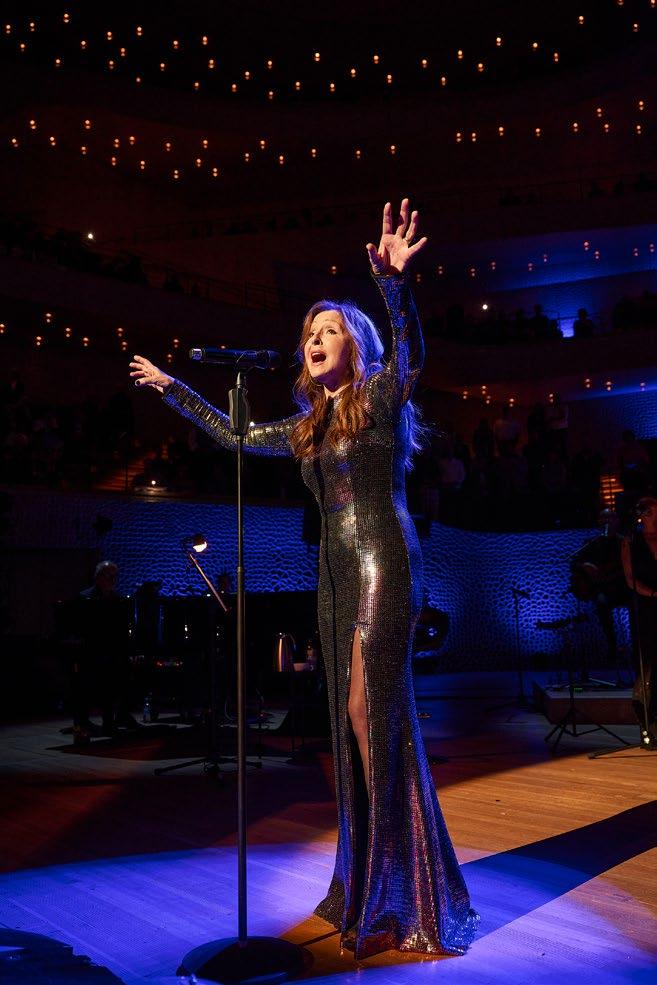
“I AM already VERY EXCITED and VERY MUCH looking FORWARD to this YEAR‘S CONCERT back HOME in GREECE, at the SANI FESTIVAL”
“The LOSS of a LOVED ONE can be profoundly PAINFUL, but I CARRY all those I HAVE loved and WHO are NO LONGER with us in my HEART, and I THINK of them OFTEN. ABOVE ALL, one should REMAIN TRUE To oneself. I HAVE learned that IT is always WORTH STANDING up for one’s BELIEFS and VALUES”
and produced by my father Leo Leandros together with Klaus Munro, carries a deep emotion and I believe many people recognized something of themselves in it. And even today, when people come to me and say that song accompanied them through a moment in their life, I feel gratitude.
You’ve experienced immense international success at a young age. Was there ever a moment when you felt you missed out on a “normal” life?
At the beginning of my career, when I was still very young, my life remained quite normal; I continued going to school even as I began singing. Later on, my international career gave me the opportunity to live abroad, including in Paris and London. Performing concerts in countries such as Japan and Canada was an incredible experience, allowing me to learn so much about the cultures and mindsets of these wonderful places. I am truly grateful for all the experiences I have gathered over the years.
You were close to Vangelis and Demis Roussos. What did those friendships mean to you on a personal level, beyond music?
Demis Roussos was a great friend and a frequent guest in our home, as well as in the studio. My father, together with Klaus Munro, composed some of his biggest hits,
including “Goodbye, My Love, Goodbye,” which sold over 25 million records worldwide. Also, Vangelis was a dear and longstanding friend. He wrote several remarkable songs for me, and I truly miss him, his music and his extraordinary talent. Both of them are deeply missed in the world of music.
How difficult is it to balance a demanding international career with being a mother of three? Did you ever feel torn between the two roles?
When my children were born and still very young, I made the conscious decision to step away from my singing career for about ten years, so that I could raise them and give them the time and attention they deserved. I never felt torn between my career and my role as a mother. I always knew that, at the right moment, I would return to the stage, which I did.
Was there ever a moment when you considered stepping away from music completely to focus on your personal life? No, not really.
Fame often comes with loneliness. Did you ever feel isolated despite being surrounded by success and admiration?
When I was young, I sometimes felt quite lonely, especially after concerts. Over
time, however, that changed when I had my children. I have always been deeply rooted in my family; they have given me stability, warmth, laughter, and honesty. My close friends, too, have always been a constant in my life.
Your connection to Greece has always been present. What does Greece represent to you today: home, roots, or something more symbolic?
Greece is a country with one of the greatest ancient cultures and civilizations, whose legacy continues to shape its culture and its people to this day. I deeply admire the warmth and hospitality of the people. To me, Greece is simply a truly wonderful and beautiful country.
Looking back, is there any personal decision, not professional, that you would change if you could?
“Non, je ne regrette rien.”
After such a long and rich life journey, what would you say is the most important lesson you’ve learned about love, loss, and staying true to yourself?
You cannot force love, and it is important to cherish the moments when it is present. What endures above all is the love within a family and for one’s family, for which I am deeply grateful. The loss of a loved one can be profoundly painful, but I carry all those I have loved and who are no longer with us in my heart, and I think of them often. Above all, one should remain true to oneself. I have learned that it is always worth standing up for one’s beliefs and values.

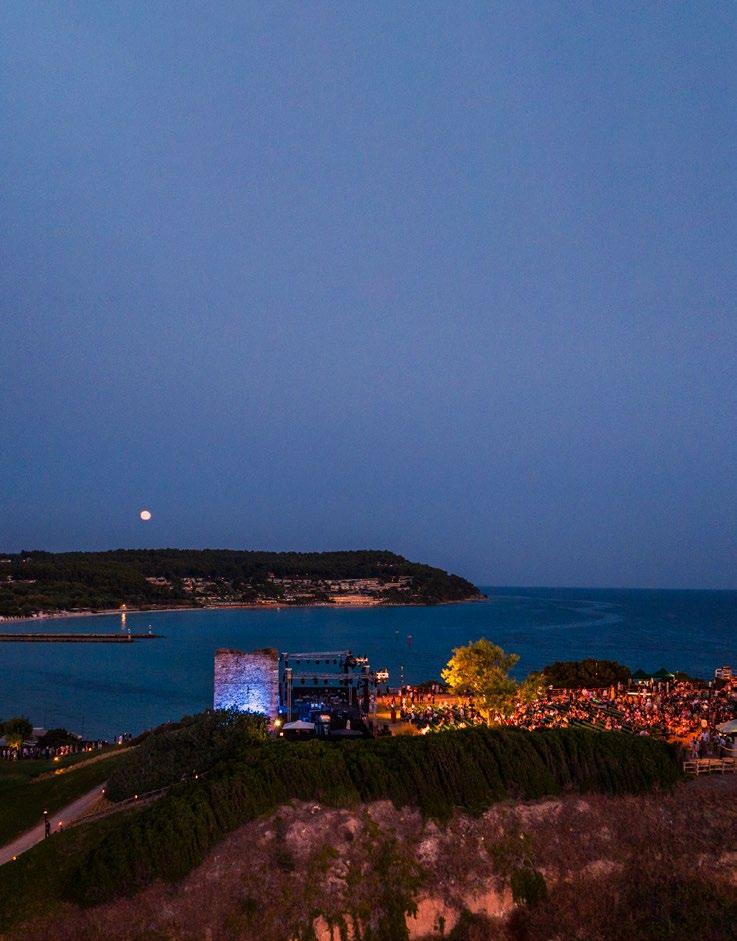
The iconic music festival that has helped reshape Greece’s cultural landscape returns this year with a lineup of charismatic performers whose voices and songs have offered moments of profound emotional uplift, moving reflection, and sheer joy. This year’s edition is a pre-celebratory one, as Sani Festival prepares to mark a true milestone next year, celebrating 35 years of continuous and highly successful presence in the cultural scene.

Robert Plant is one of the most iconic and influential voices in rock music, with a career spanning nearly six decades. Rising to global fame as the lead singer of Led Zeppelin, he helped define the sound and spirit of rock with his powerful, expressive, and unmistakable voice. Throughout his solo career, Plant has continually explored new musical directions, blending rock, folk, blues, and world music influences in a spirit of constant reinvention. His acclaimed collaboration with Alison Krauss, which won multiple Grammy Awards, revealed a more intimate and roots-driven side of his artistry. With Saving Grace and Suzi Dian, he continues this creative journey, bringing timeless songs and new interpretations to audiences worldwide.
James Arthur is a British singer-songwriter whose powerful voice and emotional honesty have made him one of the most compelling artists of his generation. Rising to fame after winning The X Factor in 2012, he achieved global success with hits such as “Say You Won’t Let Go”, one of the most streamed songs of all time. His upcoming sixth album, Pisces, reveals a deeply personal and reflective side of his artistry, shaped by themes of growth, fatherhood, and self-discovery. Blending pop, rock, and indie influences, Arthur explores vulnerability and resilience with
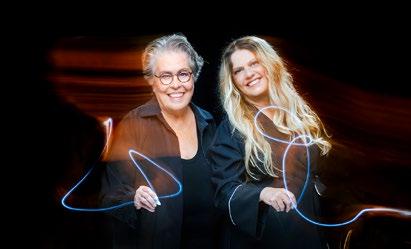
striking sincerity. His music continues to connect audiences through raw emotion and universal human experience.
Dimitra Galani is one of the most distinctive and influential voices in Greek music, with a career spanning more than five decades. From her early studies in guitar and theory, she emerged in 1968 with “Ena Chamogelo,” marking the beginning of a remarkable artistic journey. She has collaborated with legendary composers such as Mikis Theodorakis, Manos Hadjidakis, Stavros Xarchakos, Eleni Karaindrou, and Vangelis, while also interpreting the poetry of Elytis, Cavafy, Gatsos, and many others. Her international presence includes concerts across Europe, America, and Australia. A composer, performer, and innovator, Galani continuously bridges tradition and modernity, shaping the sound of contemporary Greek song.
Eleni Tsaligopoulou is one of the most renowned and beloved voices in contemporary Greek music. With a career spanning more than three decades, she has created a rich artistic path marked by dozens of widely cherished songs and a powerful connection with her audience. Her distinctive voice, expressive interpretations, and magnetic stage presence make every live performance a unique and memorable experience. Her repertoire
1 Robert Plant with Saving Grace and Suzie Dian
2
Dimitra Galani, Eleni Tsaligopoulou 3
James Arthur


moves effortlessly between traditional and folk music, art song, and pop, always delivered with emotional depth, elegance, and authenticity. She has performed extensively, released numerous albums, and collaborated with leading Greek composers and performers, remaining a vital voice in the country’s musical landscape.

The Estoudiantina Neas Ionias Orchestra, founded in Nea Ionia, Magnesia, by composer Andreas Katsigiannis, is a leading Greek musical ensemble dedicated to the research, preservation, and performance of the musical heritage of Asia Minor, Thrace, the Greek borderlands, and the wider Mediterranean. Over its 30-year journey, it has played a vital role in safeguarding and reviving important cultural traditions, while also bringing them to international audiences. With more than 2,500 performances and 25 albums released worldwide, Estoudiantina has achieved global recognition across five continents. The ensemble collaborates with distinguished Greek and international artists and participates in major cultural and cinematic productions, bridging tradition with contemporary artistic expression.
Soul II Soul are an iconic British collective that emerged from the vibrant UK sound system culture, redefining contemporary music and youth culture. Born in
the multicultural energy of London in the mid-1980s, they transformed underground warehouse parties into immersive musical experiences through their pioneering sound system, known for its distinctive bass, visuals, and the signature Funki Dred style. Their early underground hit “Fairplay” led to a landmark signing with Virgin Records and the release of the groundbreaking album Club Classics Vol. 1. With global anthems such as “Keep On Movin’” and “Back to Life,” Soul II Soul achieved international acclaim, selling millions of records worldwide. Their influence continues to inspire generations globally.
Vicky Leandros is one of Europe’s most emblematic voices, with a career spanning over six decades and more than 55 million records sold worldwide. Winner of the 1972 Eurovision Song Contest with “Après toi”, she has built an international legacy across chanson, pop, soul, and Mediterranean music. Her songs have been recorded in numerous languages, reflecting her global reach and artistic versatility. Known for her distinctive, instantly recognizable voice and charismatic stage presence, she continues to captivate audiences across generations. Vicky Leandros remains a timeless artist whose music bridges cultures, emotions, and eras, embodying authenticity, passion, and enduring artistic excellence.


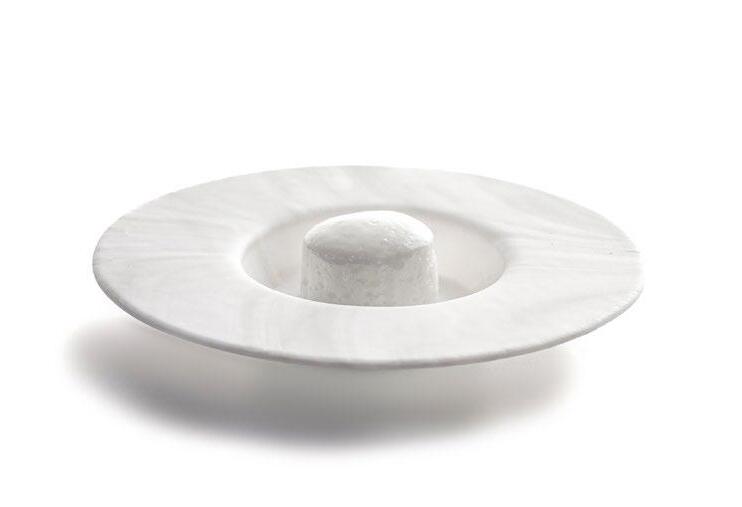
Every summer, Sani Gourmet returns with a lineup expected to live up to its reputation. This year, it does so effortlessly. The iconic Elia Restaurant is transformed into a global culinary epicentre, where haute technique meets the incomparable light of Halkidiki, offering a rare sensory experience that goes far beyond a typical dinner.
From July 10 to August 7, five evenings bring some of the most influential figures in contemporary gastronomy to Porto Sani: Pierre Gagnaire, Disfrutar, Pía León, Albert Adrià, and Daniel Humm. This single programme unites the 75-year-old patriarch
1
of the French avant-garde, the trio that claimed the world’s top spot in 2024, the only female chef in the global top 10, Barcelona’s disruptive visionary, and the Swiss maestro who redefined luxury through plant-based cuisine.
It is a gathering of stars and culinary philosophies that rarely come together in the same place. Each dinner serves as a self-contained creative manifesto, a living narrative exploring the frontiers of flavour and innovation. Anywhere else in the world, each of these appearances would be reason enough to book a flight; here, they compose the ultimate summer calendar of haute gastronomie.
A worldwide meeting of renowned chefs and culinary innovators takes place in a beautiful natural landspace.
words by Dimitrios Stathopoulos
Born in 1950 in Apinac, central France, Pierre Gagnaire cut his teeth in classical kitchens, spending a summer alongside Paul Bocuse and years as a commis at the Intercontinental and Lucas Carton before establishing himself as head chef in Saint-Étienne. He earned his first Michelin star in 1982, the second in 1986, and the third in 1993. Even then, the Michelin Guide struggled to classify his cuisine: imagination, technique, and poetry combined in proportions the guide had never encountered before. In 1996, the restaurant faced bankruptcy and the Michelin stars were surrendered. Gagnaire moved to Paris, rue Balzac, earning two stars in 1997 and three in 1998, which he has held ever since. Today, his restaurants span from Paris to Seoul and Shanghai, with the Lecture Room at Sketch in London holding three Michelin stars since 2019. There is no "signature dish" in his kitchen; he pointedly rejects the notion. Instead, there is a clear principle: "The secret lies in the right combination", he says simply. "I have a knack for layering ingredients, not just placing them side by side". At Porto Sani, this logic meets the Mediterranean.
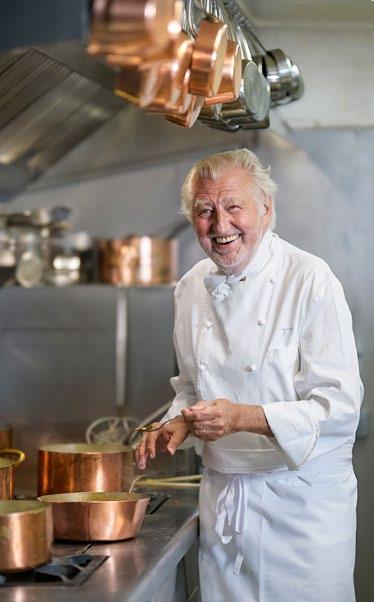
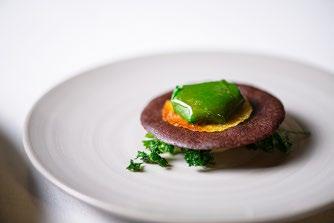
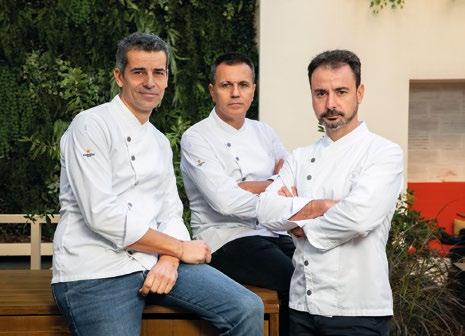
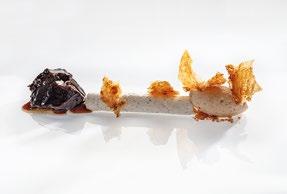
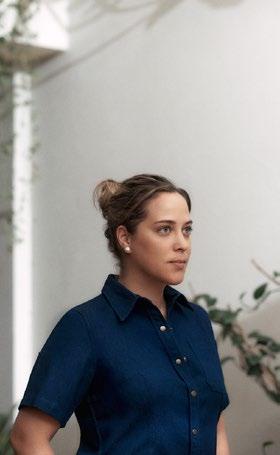
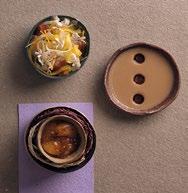
1 Disfrutar
2 Pía León
3
A dish by Disfrutar: black apple with noisette butter, ice cream & flourless puff
4
A dish by Pía León: scallops & Tarwi Limo, limon Rugoso, tucupi
Oriol Castro, Eduard Xatruch, and Mateu Casañas worked at elBulli and the elBulli Foundation for nearly two decades. In 2012, they partnered to form their own company, opening Compartir in Cadaqués. After completing their tenure at the Foundation in 2014, they inaugurated Disfrutar in Barcelona. In 2024, Disfrutar was voted the Best Restaurant in the World by The World's 50 Best Restaurants list. That same year, it earned three Michelin stars, a rating it has maintained for the past two years. Their cuisine extends the technical heritage of elBulli without being anchored by it: multi-spherical pesto, caviar-filled panchino, and dishes that systematically play with texture, temperature, and contrast. At the heart of the restaurant lies the "creativity kitchen," the space where these three elBulli alumni decide what comes next.
Alongside Virgilio Martínez, Pía León co-founded Central, the restaurant voted best in the world, in Lima in 2023. She also codirects Mater, a multidisciplinary research center that maps Peru’s biodiversity to provide the culinary fuel for the team’s projects. In 2018, she opened her own restaurant, Kjolle, in Lima. In 2019, she debuted on the Latin America’s 50 Best list, receiving the Highest New Entry award. Today, Kjolle ranks 2nd in Latin America and 9th globally. It is the only restaurant in the global top 10 under the sole leadership of a female chef. Named the World’s Best Female Chef in 2021, she was praised by organizers for her ability to reveal the cultural layering of her homeland through every plate.
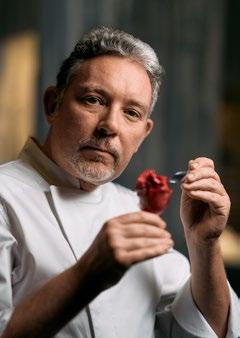
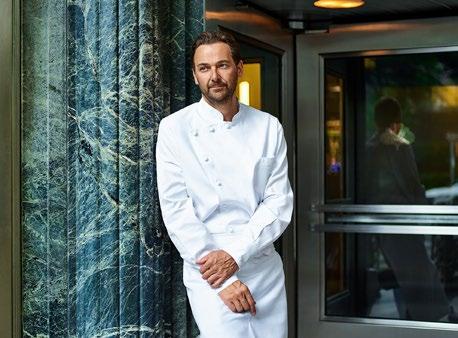
5 Albert Adria
dish by Albert Adria: frozen mezcalita
dish by Daniel Humm: laminated olive bread with sunflower butter & corn veloute
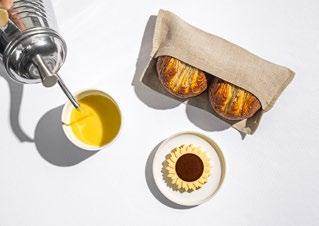
Albert Adrià joined elBulli in 1985. Following a legendary career in pastry and R&D, and after creating the renowned elBarri project in Barcelona, he focused on Enigma, which reopened in 2022 in its most mature and evolved form.
2025 marked a milestone year for the restaurant: Enigma now holds two Michelin stars, rose to 34th on The World's 50 Best Restaurants list, and received the Estrella Damm Chefs' Choice Award the only accolade voted for by fellow chefs worldwide. Set in a space designed by RCR Arquitectes (Pritzker Prize 2017), Adrià presents a 20-25 course menu that changes monthly, proving why he remains one of the most influential chefs of our era.
Daniel Humm took the helm of Eleven Madison Park in New York, leading it to the No. 1 spot on the World's 50 Best and maintaining three Michelin stars uninterrupted since 2012. In 2021, he made the historic decision to turn the menu entirely plant-based, earning three stars again in 2022, making it the first plant-based restaurant in the history of the Michelin Guide to achieve this feat.
As of October 2025, Eleven Madison Park introduced a new approach, incorporating selected animal proteins into specific dishes while continuing to lead the plant-forward movement in fine dining. Beyond the kitchen, Humm is the co-founder of Rethink Food and, since September 2024, has served as a UNESCO Goodwill Ambassador for Nutrition Education, advocating for a more equitable and sustainable global food system.
Two internationally acclaimed chefs, partners in life, who have built a family together while sharing experiences of gastronomy and coexistence. He visited Sani Gourmet last summer, and this year it is her turn to present her creations to the destination’s guests.
by Aris Kavatzikis
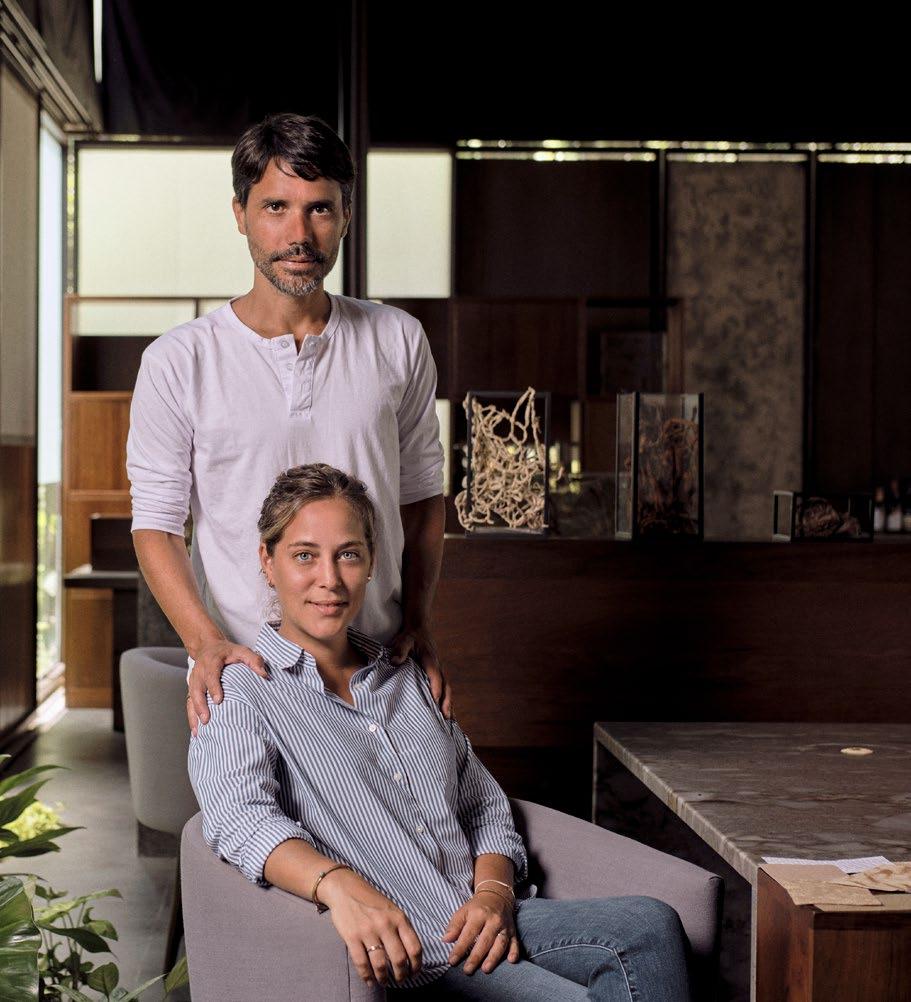
“TAKING part in SANI GOURMET was MOTIVATING in many WAYS. WORKING in a place SURROUNDED by LANDSCAPE and the SEA”
VIRGILIO
Virgilio Martínez is widely regarded as the leading figure of modern Peruvian haute cuisine. As the chef-owner of “Central” in Lima, he has earned global acclaim, most notably when it was named No1 in the world by The World's 50 Best Restaurants in 2023. Martínez is the founder of Mater, a research centre dedicated to exploring Peru’s biodiversity and native ingredients, which deeply informs his culinary philosophy. Pía León is one of the most prominent chefs of her generation and a central force behind Peru’s contemporary culinary movement. She was named World’s Best Female Chef in 2021 by The World's 50 Best Restaurants, recognising her creative leadership and global impact. León is the chef-owner of Kjolle, where she explores her vision of Peru’s megadiverse territory. Kjolle is No. 2 in Latin America and No. 9 in the world according to The World’s 50 Best Restaurants ranking.
You are not only two of the most influential chefs in the world, but also partners in life. How does sharing both your personal and professional worlds shape your creativity and daily life?
To be honest, we don’t really separate the personal from the professional aspects. When it comes to our relationship with gastronomy, with people, with our teams, with family, with the community - it all becomes one. At the end of the day, we live together: we sleep together, we move through life together, we wake up and spend our days surrounded by people connected to food, creativity, and innovation. We travel together in search of inspiration; we may split to work in different restaurants, but we’re still in the same building. So, we are continually finding balance. I wouldn’t say it’s perfect, because it also requires discipline and consistency. But by always aiming for higher motivations, we’re able to sustain a way of working where we constantly strive for excellence.
Virgilio, you participated in last year’s Sani Gourmet. What was your experience like cooking in Greece, and what moments stayed with you the most?
Taking part in Sani was motivating in many ways. Being in Greece itself was inspiring, being in such a beautiful setting, on a stunning coastline, working in a place surrounded by landscape and the sea. It was also very meaningful to see their relationship with food and the products of Greece, which are deeply inspiring. It’s a
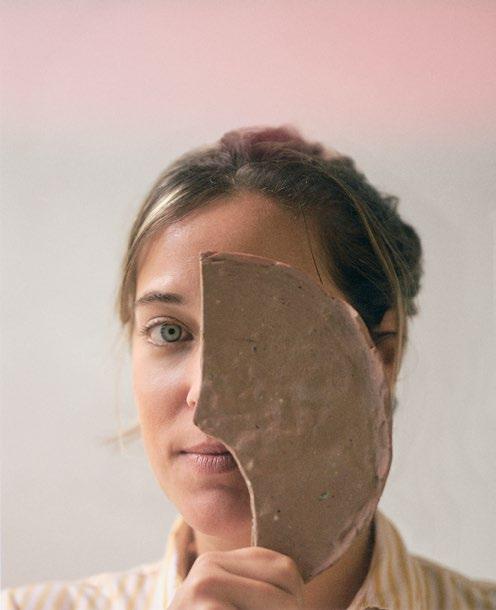
country with a rich gastronomic history, and going to a place with so much to share, with land that has so many stories to tell, is incredibly motivating. On the other hand, experiencing Sani as a resort, the level of hospitality and those spaces of luxury, is something you truly enjoy. It’s a place where beauty is present everywhere. And in terms of the working experience, I found a highly professional team. I had already met some of them at international gastronomic congresses; they had taken the time to get to know me beforehand, to invite me, to connect and have conversations. That gave me the confidence that I would be working with people of great quality - professionally strong, but also very human in the way they care for their teams. That’s exactly what I encountered: teams who are proud
of where they work and of what they do. They welcomed me warmly, and they said goodbye in an even more meaningful way.
What advice would you give Pía as she prepares to cook at this year’s Sani Gourmet? Is there something she should definitely expect – or be ready for?
Well, I would say that, now that I know the place, she should go with full confidence. There’s a lot that can be done with local products, you can create interpretations of local ingredients and preparations. She can really trust the local produce; there’s a lot of room for adaptation, which is something we truly enjoy doing. And she can approach it with confidence, because the kitchen team prepares very well for our arrival and makes sure she has access to fantastic ingredients.
“WORKING with GREEK PRODUCTS means APPLYING my STYLE, my WAY of WORKING, my AESTHETIC, and our ARTISANAL APPROACH to handling INGREDIENTS”
Pía, how do you feel about taking over this summer? Are you excited, nervous, inspired? What are you most looking forward to?
Virgilio has given me an idea of what it’s like. The kitchen is quite spacious, and the team follows the recipes and preparations very closely. I’ve also been told that the front-of-house team is very well equipped, so I’m really excited - not only to cook there, but also to experience the public. From what Virgilio has shared, the guests are very enthusiastic. And I think those are the moments when, as a cook, you truly feel that what you’re creating is being appreciated. So, of course, I feel very optimistic, but at the same time I also feel a lot of anticipation, and even a bit nervous, because I want to give my very best and fully express my cuisine using Greek products as much as possible.
Sani Gourmet has become a true culinary institution. How important are international collaborations and festivals like this in today’s gastronomic world?
Pía: Lately, I’ve been attending many gastronomic festivals and gatherings, some of which are truly inspiring. There’s a wide range, and you have to know how
to choose. I think what makes them important is that they genuinely allow us to encounter other cultures and build bridges between different gastronomies. From our side, when we travel, we bring something from Peru, we carry a lot of South America with us, and a lot of what we do in our own spaces. And within that duality, the idea of local and global, we always find something that connects us. That’s important when it comes to continuing to innovate while staying rooted in our traditions.
Your cuisine is deeply rooted in Peru’s biodiversity and cultural heritage. How do your origins continue to influence the way you create today?
Virgilio: The more I root myself, the more I focus on who we are, and who we have been as a community. By looking to the past, not only at traditions, but at ancestry and that deep connection, I find more answers and more content to express myself as a cook. Through this, you discover more products, recipes, ideas, approaches, and different paths. Diversity is incredibly inspiring, and I believe it gives you the sense that today there are infinite possibilities for expressing cuisine.
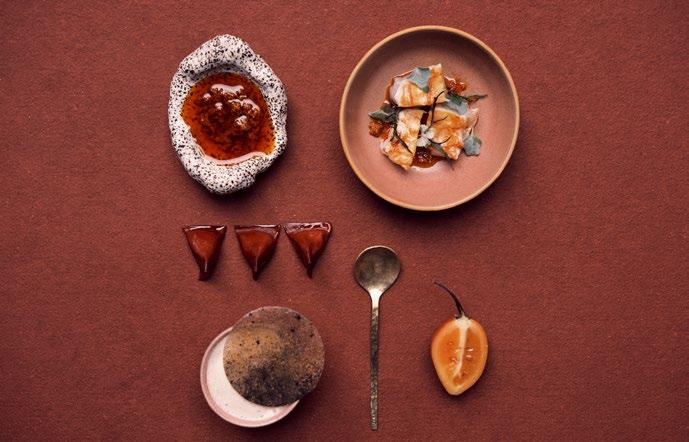
2
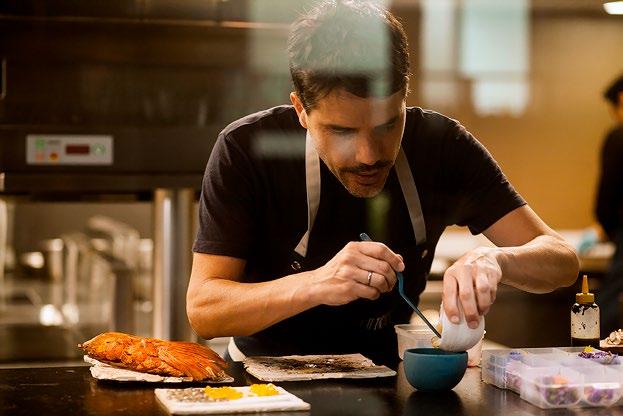
Your work often explores altitude, ecosystems, and native ingredients from Peru. When creating a menu for an international audience, such as at Sani Gourmet, how do you translate the depth and complexity of Peruvian terroir while staying authentic to your philosophy?
Pía: My philosophy when creating a menu is to work with the products and the richness that our territory offers. We often speak about altitudes, ecosystems, and seasonality. And of course, when we travel, we look for those same elements. Being by the sea for example, we will focus on marine ecosystems. There is so much that can be done when working with seafood and fish. When we speak about nature, it’s about what we find in the territory, what is grown around us. I’m not necessarily thinking of creating a menu based on altitudes, but I do want to maintain the style, the richness, and diversity of South
America and of Peru - where I work and where I generate ideas. For me, it’s about bringing those ideas together and putting them into practice with local products, a challenge and a discovery at the same time. Working with Greek products means applying my style, my way of working, my aesthetic, and our artisanal approach to handling ingredients. It’s also about the way I serve, bringing the hospitality of “Kjolle” into the dining room, so that it can be felt in the details of the service - as if you were somehow sitting in “Kjolle.”
Do you each have a favourite ingredient that you return to again and again? What makes it so special for you?
Pía: Citrus - the variety of lemons, limes, citrus fruits, oranges, and tangerines. There are so many ways to express them: with acidity, with sweetness, and with bitter nuances. The extraction of juices,
the essential oils from a lime or a lemon - everything about them makes citrus a very versatile product. And also ajíes: the variety of ajíes, their colors, shapes, flavors, and even their smokiness. The versatility and richness of both spicy and non-spicy peppers.
Virgilio: I’m particularly interested in how salts can be used to build flavour - especially as a way of finishing a dish at the table. A salt can bring very specific nuances, but also a sense of place. It can connect you to a herb, a root, an ecosystem - to somewhere very precise. I’m drawn to the diversity of salts: their different colours, textures, and the way they interact with a preparation. Texture is especially important: how it feels, how it dissolves, how it carries flavour. Alongside that, I think a lot about oils, whether essential oils or animal fats, and the role they play. Not only in terms of flavour, but also texture and depth.
Is there one dish – either from your childhood or your professional journey –that feels especially personal?
Virgilio: For me, it’s carapulcra, which is a stew made with dried potatoes, cacao, and pork. It’s a dish I’ve eaten since I was very young.
Pía: For me, it’s a slow-cooked stew called locro, made with squash, corn, cheese, and many native Peruvian herbs.
When two chefs live under the same roof, does the kitchen ever become a “no-work zone”? Who cooks at home, and do you ever disagree creatively?
Virgilio: When we’re trying to relax, there’s always a small possibility that we end up cooking, and not agreeing on the menu or the seasoning. So we start cooking like professionals, just like on weekdays, but on a Sunday. That’s why, when we cook on Sundays - which is normally our day off - and we cook for our son, or for the two of us, or sometimes for friends, we try to keep it easy. We plan it: let’s say I prepare vegetables and fish, and Pía does rice, potatoes, and meats. And then we combine everything. Or maybe I’ll look after the cheese tray and dessert, and Pía does the savouries. We try not to cross hands on the same preparations. We each do different things - we’re in the same kitchen, but I don’t touch Pía’s dishes, and she doesn’t touch mine. And that’s quite comfortable, because in a way we’re cooking on our own. During the week, in the restaurant, we have to cook together, of course, and that becomes part of the job. So the idea on Sundays is to avoid turning it into a continuation of a weekday.
You both lead ambitious projects while maintaining a family life. How do you balance intensity, travel, and creativity with intimacy and stability? We always try to make sure that the
“WHEN it COMES to OUR RELATIONSHIP with GASTRONOMY, with PEOPLE, WITH our TEAMS, with FAMILY, WITH the COMMUNITY - IT ALL becomes ONE”
because while we’re together, we work a lot. Only in recent years have we found a bit more calm, also because we now have a child who requires a lot of our time, which has allowed us to settle and feel that we have a much more family-oriented life. We’ve also found a different kind of maturity as a couple, much more interesting and probably more enjoyable than the beginning. Sometimes you think it might be the opposite, but we feel that today we are in a very exciting moment as a couple, after more than ten years together.
If you could describe each other in three words – as chefs and as partners – what would those words be?
Virgilio: Pía is intuitive, very intelligent, and tenacious.
amount of work, the pursuit of excellence, and what the projects demand - the profession, the audience, the teams, and what we demand of ourselves - do not take over what we understand to be our main project, which is the most important one we have: our family. We have a child, and we have a home to sustain, where we seek stability. It 's not easy. That’s why, from the beginning, we talked about discipline, about knowing that things need to be done well, and being very consistent with what we are looking for and what we want to do. We have big projects and ambitions, but we also know that our most important project is us. That means us as a couple, our child, and then everything else comes after. We place ourselves first.
How did you first meet, and how many years have you now shared together as a couple? Looking back, did you imagine the journey would unfold this way?
We met at the restaurant, from the very beginning of “Central”- we met working together. We didn’t become a couple until around the third year of “Central.” We feel that everything has happened very fast,
Pía: Virgilio is disciplined, almost perfectionist, and, at times, contrary to that, a bit disorganized.
Outside the kitchen and beyond the intensity of your restaurants, what does an ideal dayoff look like for the two of you? Is it still centered around food, or do you consciously seek distance from gastronomy?
On our days off, we don’t necessarily stay connected to gastronomy. If we are in Lima, of course we might go out to eat, spend time as a family with Cristóbal, our son, and go to an interesting restaurantmostly seafood, or something new that has opened. We enjoy having long lunches, and then we look for calm and rest. Our only day off is Sunday, so when we are in Lima, we try to make the most of it by being together and doing very normal things at home. Going out to a casual restaurantvery casual - is important for us to relax and also enjoy good food. In Lima there is a lot of that: very family-oriented, casual places where you can still find very good food. It’s also a space where our son can have fun.
Sani updates
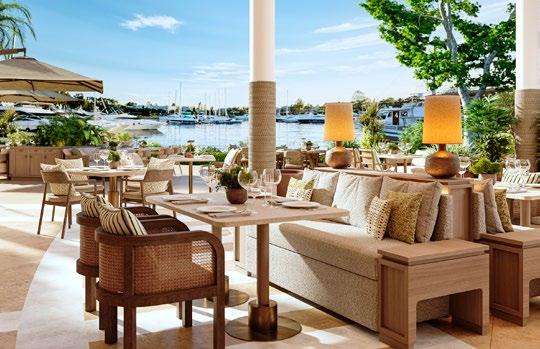
Two significant culinary developments shape the 2026 season and invite guests to discover new expressions of flavour, creativity and places across the resort.
words by Aristotelis Spiliotopoulos
For Sani, gastronomy is an essential part of its hospitality. This year, however, the luxury resort raises the bar even higher, introducing two new culinary developments that refresh its culinary profile and promise to impress guests. Through distinctive collaborations and creative ideas, Sani continues to invest in experiences that combine refined aesthetics, inventive cuisine and an atmosphere that highlights the unique beauty of its surroundings.
The Water Restaurant & Bar, the iconic restaurant of Sani Asterias, presents a renewed concept of French–Mediterranean cuisine, signed
by the two-Michelin-starred chef Bruno Oger. The new gastronomic concept places emphasis on refined yet unpretentious flavours, inspired both by French Brittany, the homeland of Bruno Oger, and the Mediterranean. At the same time, the restaurant space has been architecturally redesigned, creating a contemporary and light-filled environment that connects harmoniously with the natural landscape and the uninterrupted views of the marina.
Another important addition for the new season concerns El Puerto, which continues to evolve its culinary identity through a collaboration with the acclaimed Spanish chef Andoni Aduriz as Consultant Chef. One of the most influential figures in contemporary cuisine, he brings a more narrative approach to gastronomy, where each dish connects flavourfully with the culture of the place and the beauty of the surrounding region.
With these new collaborations, Sani reaffirms its position as one of the most exciting gastronomic destinations in
the Mediterranean. Here, food is not simply part of the stay, but an experience that continues to evolve, combining creativity, exceptional quality and the sense of discovery that defines every moment at the resort.
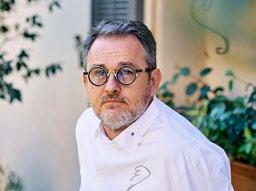
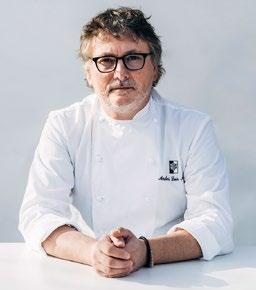
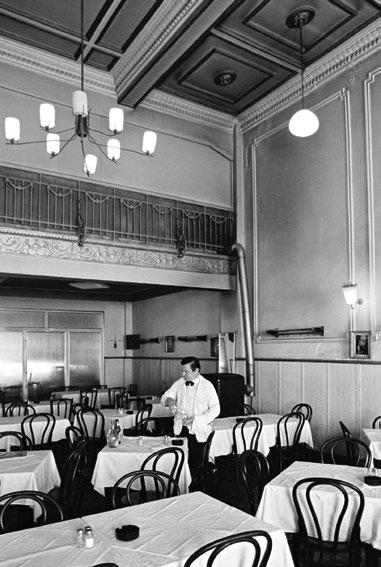
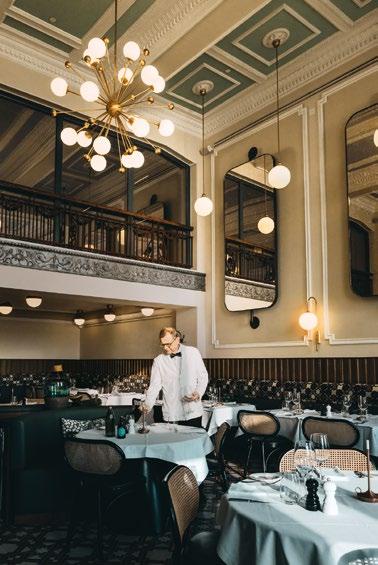
Nearly 100 years after its first opening, Olympos Naoussa has returned to Thessaloniki’s waterfront. True to the Greek urban cuisine values and the city’s gastronomic traditions, it awaits you to discover it.
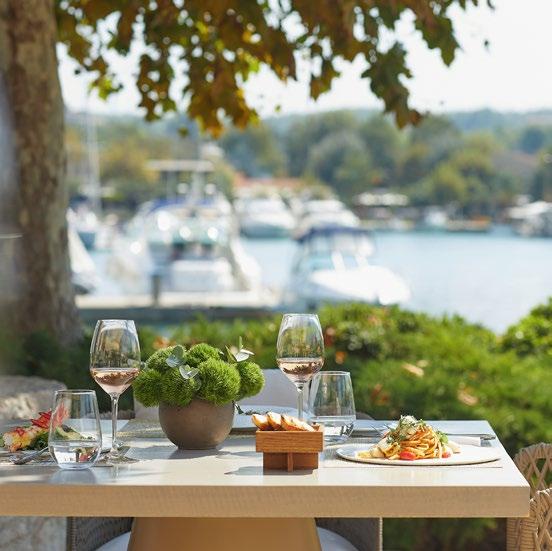
These are the restaurants that define the summer. Together, they form a culinary map that few Mediterranean destinations can claim. These are the ten tables worth booking at Sani this season.
What sets Sani apart is not the number of its restaurants, but their range. From the Peruvian-Nikkei cuisine of “Lima” to the precision of “Katsu”; from the Greek flavours at “Ouzerie” to the French classics at “Cabana”; from doubleMichelin-starred Bruno Oger at “Water” to the pioneering Andoni Luis Aduriz at “El Puerto.” Each restaurant has its own logic, its own atmosphere, its own reason to exist.
words by Dimitrios Stathopoulos
Following its complete renovation in 2026, Water at Sani Asterias has settled into an atmosphere that doesn't rush: an open terrace overlooking the marina, earthy tones, natural materials, sailing masts in the distance. A space that runs from morning to evening at a different pace each time. The kitchen is helmed by Bruno Oger, a two-starred chef who built his reputation on the Côte d'Azur and in Le Cannet, where his Villa Archange earned two Michelin stars just ten months after opening. His philosophy at Water is French-Mediterranean: premium ingredients, exceptional seafood, the precision you expect from someone who has been cooking at this level for thirty years. With yachts moored across the water and the light shifting throughout the day, Water is a restaurant that fits the space it was given.
Overlooking the marina at Porto Sani, with boats settling in for the night, El Puerto builds its own world: Spanish gastronomy, tapas at the bar, à la carte dining on the terrace, and above all an atmosphere that doesn't hurry. Andoni Luis Aduriz is known for a distinctly thoughtful and exploratory approach to cooking. At El Puerto, he presents a menu shaped by Basque culinary tradition, interpreted through a contemporary vision. Dishes draw on the flavours of northern Spain, combining technical precision with unexpected contrasts in texture and temperature. That spirit runs through the entire menu, from the simplest tapas to the main courses, while the terrace view does the rest without any particular effort.
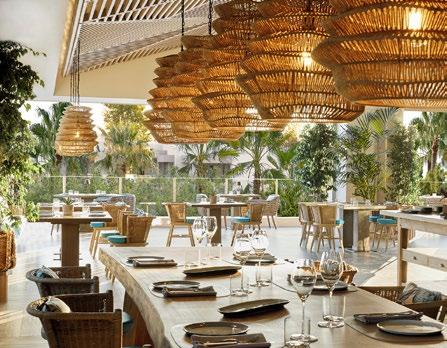
Among restaurants with Michelin stars and cuisines from four continents, Ouzerie is Sani's most Greek bet: a traditional set up, with no detours. The menu starts with white tarama and homemade tzatziki and builds steadily; bouyiourdi with feta, metsovone, tomato and chili; smoked eggplant with galotyri cheese, tahini and roasted pistachios; sun-dried grilled octopus with fava and caramelized onions. The mains follow the same wavelength: sea bass with grilled vegetables, lamb kebab with pita and smoked paprika cream. The grilled lobster with aromatic butter and the Ionian shrimp need no introduction. To finish, the galaktoboureko with lavender syrup for two is a detail that proves someone here has thought beyond the obvious.
SANI MARINA AVLI
Greek Seafood Cuisine
At Sani Marina, Avli builds its menu around an idea that sounds simple but isn't: Greek seafood with a modern perspective, without losing its connection to the Aegean. The spreads open the proceedings, smoked eggplant with feta, red pepper with pine nuts, and the open-fire grill sets the rhythm from there. Skewers of sea bass, octopous, and prawns come by the portion, designed to share, and that sharing logic runs through the entire menu. From the raw section, the sea bass slices with extra virgin olive oil and sea salt are the most minimal offering on the menu and the most disarming. For something more substantial, the catch-of-the-day fillet with zucchini and tomato jus, or the seafood pasta with bisque, clams, shrimp, and scallops, are great options. The grilled lobster and Aegean prawns are the dishes you order without even reading the description. Avli is one of those places you find yourself missing before you have even left.
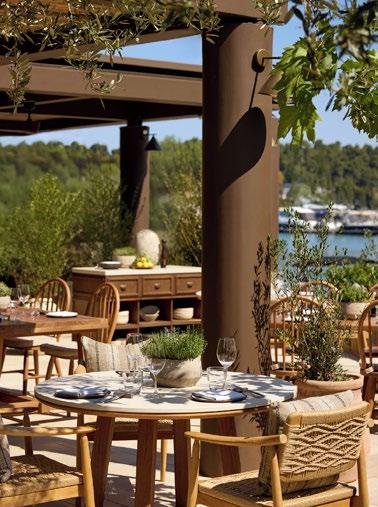
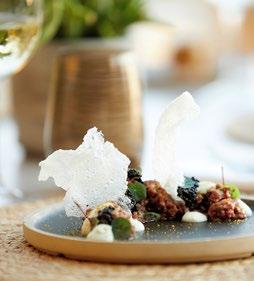
At eight o'clock, as the sun begins its descent behind the Sani hill, the tables at Ammos are already full. With a direct view of the hillside and tables set on the sand, the setting wins you over before you open the menu. The kitchen does not try to be anything it is not: Greek ingredients, Mediterranean logic, nothing superfluous. The four spreads – taramosalata, tzatziki, charred eggplant, and tirokafteri, arrive with warm pita and set the tone from the start. The grilled octopus comes with tarama and capers; the shrimp linguine with fresh cherry tomato sauce; and the butterflied, grilled sea bass is one of those dishes that needs no introduction. The Armenovil, caramelized hazelnuts, meringue, and vanilla ice cream is an old Thessaloniki recipe that has found its place here. In the evening, a DJ keeps the rhythm going without ever pushing it.
Share time with friends in a setting that’s imbibed with an unmistakeable touch of the Côte d'Azur.
French cuisine that doesn't weigh you down, dishes designed for sharing, ingredients that need no justification. The starters move confidently among the beef fillet carpaccio with truffle and smoked mayonnaise and the classic Nicoise salad with tuna and anchovies as though nothing has changed since the Mediterranean of the 1960s. Among the mains, the sole meunière, grilled on the bone with brown butter, capers, and lemon, is the most traditional test on the menu and perhaps the most demanding to execute properly. Here, it is executed properly. Lobster pasta for two, and foie gras with truffle pudding and apricot complete a menu that knows exactly what it is. With the sea in front of you and a glass of wine in hand, the French habit of eating slowly becomes entirely clear.
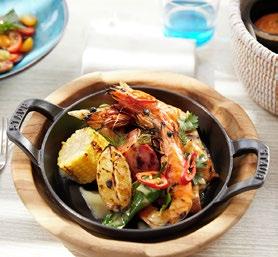
Beach House doesn't hide its influences. The concept takes its cue from the beach bars of Pampelonne in Saint-Tropez, and that shows in every menu choice: generous sharing portions, fire and charcoal as the primary technique, ingredients that don't need much to say something. At Sani Dunes, with your feet nearly in the sand, this logic makes complete sense. The steak tartare is prepared at the table with accompaniments of your choosing, the rib eye is grilled with noisette butter, and the Wagyu ribeye arrives with truffle salt, garlic chips, and wasabi sauce. The menu doesn't forget the sea either: sea bream ceviche with leche de tigre, Aegean swordfish with yuzu and pickled peppers, seafood orzo with lobster. Everything designed to be eaten slowly, with good company, without watching the clock.
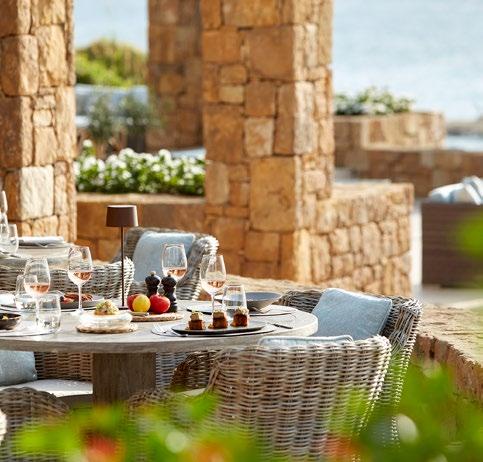
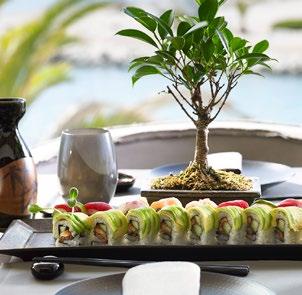
At Sani Marina, Katsu is the place for those who know what they are looking for. The name pays tribute to chef Katsuhiko Hanamure, who built his career at Matsuhisa and Nobu restaurants around the world, and that shows from the first glance at the menu. The Alaskan black cod marinated for four days in miso is the dish people come back for: buttery, sweet, with a depth that isn't easily explained. Alongside it, the yellowtail with yuzu soy and serrano chili and the fire-kissed beef sashimi show that the kitchen doesn't hold back. For a more complete experience, the five-course tasting menu comes with sake pairing from Nagano or wine pairing from Greek and European cellars. Those who ask servers will learn about the certified Wagyu A-5 from Kagoshima and Kobe, marbling score 8 and above, and a price that is fully justified.
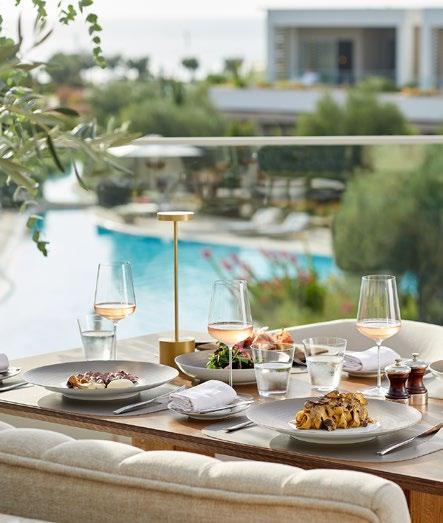
Fresco has an idea that sets it apart: each evening the menu travels to a different culinary region of Italy. Behind this approach is Michelin-starred chef Ettore Botrini, who treats Italian cuisine not as a single body but as an archipelago of distinct traditions, each with its own logic. The menu moves from the classics, carbonara with pecorino and smoked pancetta, vitello tonnato, buffalo mozzarella with Italian olives, to dishes that demand more attention: pappardelle with duck ragù and fresh truffle, saffron risotto Milanese, linguine with lobster, lemon, and fresh herbs. For something more substantial, the bistecca alla Fiorentina is served with wild mushrooms and roasted potatoes. At Sani Dunes, with an evening atmosphere that suits the tone of the kitchen, Fresco is the choice for those who know that Italian means more than just food.
There is a specific moment when the Lubina Clásica ceviche arrives – sea bass, red onion, sweet potato, and white corn – when you realize Lima achieves something rare: it makes you feel like you have travelled. On its terrace overlooking Porto Sani, Lima brings Nikkei cuisine to the table: that rare balance between Peruvian tradition and Japanese precision, born from the Japanese migration to Peru in the 19th century. The tiraditos, Peruvian-style sashimi, come in three versions: hamachi with jalapeño, tuna with ginger chimichurri, and red snapper with truffle and ponzu. The anticuchos, skewers grilled over charcoal, are the kind of dish that leaves no one indifferent. For the more demanding, the robata-grilled lobster with chili-miso glaze is the one you remember. The evening closes with Suspiro de Limeña: dulce de leche and passion fruit.
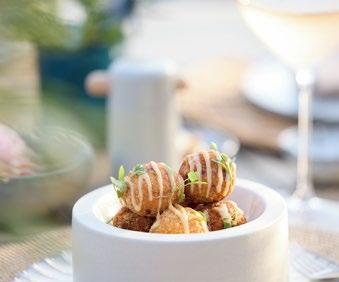
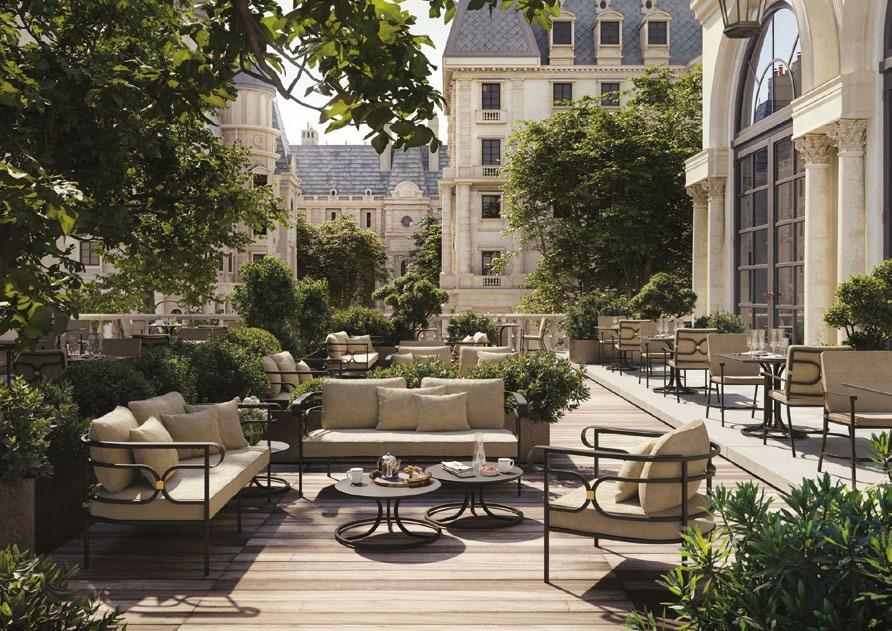
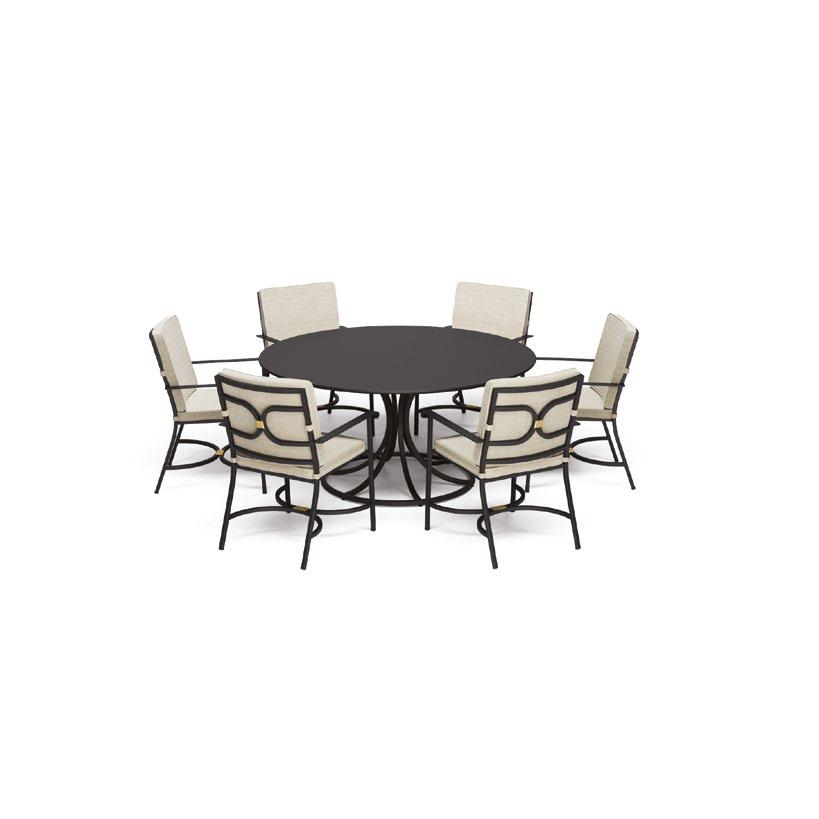
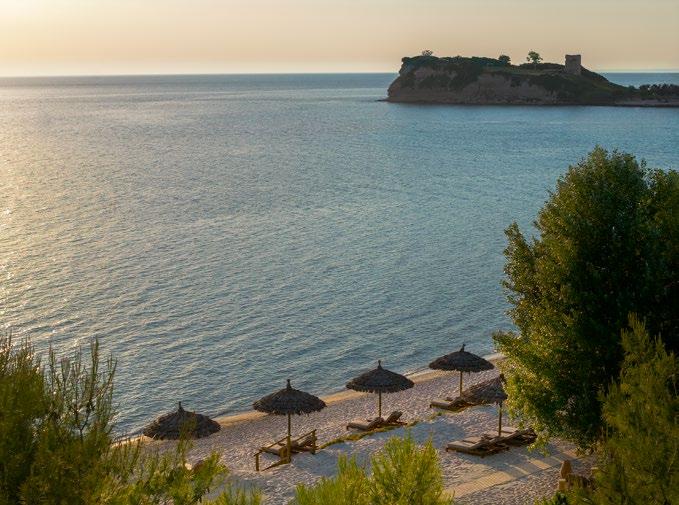
A sense of elegance and minimalism in a setting created for social moments by the sea and informal dining, where beach life is perfectly complemented.
words by Aristotelis Spiliotopoulos
The summer experience at Sani is further enriched in 2026 with the return of a much-loved seasonal concept: the Dunes Beach Pop-Up. This relaxed, seasonal beach spot blends effortless luxury with the beauty of the natural surroundings.
The pop-up beach bar is located along the picturesque seaside promenade that connects Sani Club with Sani Dunes, returning refreshed with a design that integrates even more harmoniously with its environment. With the sea and the deep-blue horizon as its backdrop, this sandy haven reflects Sani’s philosophy of a more easy-living, atmospheric expression of luxury – always connected to its setting.
The experience here is authentically summery. Shaded seating by the beach, impressive views towards Mount Olympus and a carefree ambience create the ideal setting for moments of relaxation throughout the day. Gourmet pop-up food trucks offer tempting bites and flavourful options that guests can enjoy by the sea, while refreshing drinks and cocktails complete the experience.
With the warm hospitality that defines Sani and a sense of understated elegance along the shore, the Dunes Beach Pop-Up becomes one of the resort’s most atmospheric summer destinations.
losing track of time
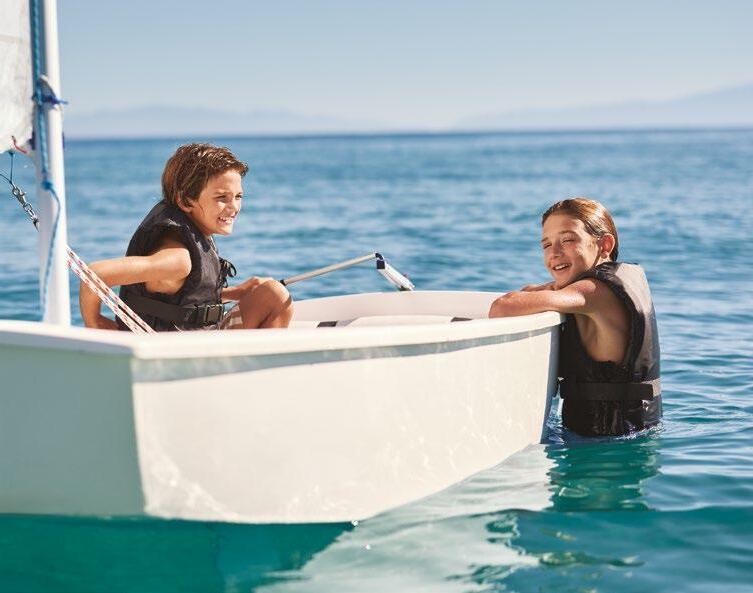
counting every splash
There are places that function as natural meeting points: of people, moods, cultures and rhythms. This is precisely what Sani Marina is; a five-star harbour at the very heart of the distinguished resort. Embraced by the endless blue of the Aegean, the Marina tells its own story, one of constant flow and understated elegance. Here, the morning light finds visitors strolling at an unhurried pace, while dusk transforms the setting into a scene of effortless cosmopolitan charm.
The architecture of Sani Marina faithfully follows the resort’s philosophy: harmony with the natural landscape, earthy tones and clean lines that create a sense of understated luxury. The waterfront promenade is an open invitation to explore, a place where a simple walk becomes an experience and time seems to expand.
CULINARY RITUALS BY THE SEA
Sani Marina is a true gastronomic crossroads, offering an impressive variety of restaurants that cater to every culinary desire. From authentic Greek flavours to high-end international cuisines, each choice creates a distinct dining experience.
Lovers of international flavours can indulge in the creations at Katsu, featuring sushi, sashimi and other delicacies of Asian gastronomy. Those who prefer classic Mediterranean options will discover authentic Italian specialities at Macaroni, ranging from pizzas and pasta to more elaborate dishes. The traditional taverna Psarogiannos places fresh fish and Greek temperament at centre stage, while Ergon Deli skilfully marries timeless meze with modern, inventive touches.
Here, dining becomes a ritual. Each creation unfolds stories of places and traditions, with ingredients carefully selected with respect to the Mediterranean diet as well as the philosophy of sustainability. The venues, open to the sea, transform every moment into a small summer
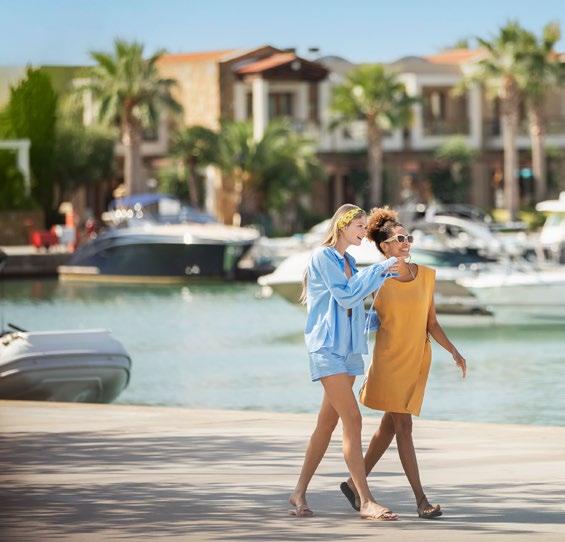
words by Christianna Lakka
This is where the heart of the resort beats, as every moment has its own light and colour, its own music. Both a starting point and a destination, the welcoming and cosmopolitan Marina is a magnet for gastronomy, shopping, sunsets and its vibrant nightlife.
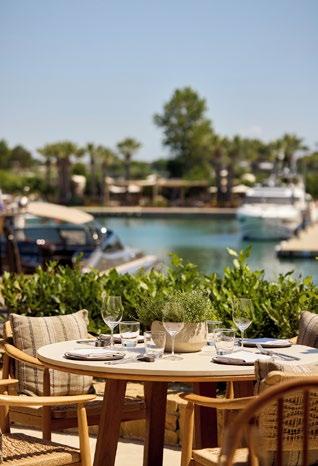
Avli Restaurant, Sani Marina
celebration, whether it is a relaxed lunch or an elegant dinner under the stars.
As night falls, Sani Marina reveals another aspect. The restaurants come alive and the atmosphere takes on a new rhythm. It becomes the meeting point after a day full of adventures. From the relaxed setting of Marina Crêperie for a light bite and drink, to the more secluded yet cosmopolitan Sea You Bar overlooking the sunset, it is the place where memories are shared over a glass of wine or a favourite cocktail. At the same time, it hosts events and musical evenings, adding a new dimension to the resort experience.
The Marina’s offerings are not limited to the shoreline. This is where the Yacht Cruises by Sani VIP Services set sail from, offering half-day, full-day or exclusive
sunset cruises that reveal the hidden corners and crystal-blue waters of the Aegean. For guests seeking a more private connection with the sea, the Yacht Charter service provides the opportunity to hire a vessel of their choice. The crew takes care of every detail to ensure an unforgettable, personalised experience, while more experienced guests may choose to take the helm themselves, enjoying complete freedom and a deeper connection with the open sea stretching out before them.
Beyond gastronomy, the Marina is home to a selection of boutiques that enhance its cosmopolitan character. Luxury brands, fine jewellery, resort wear and artisanal products come together to create a carefully curated shopping experience, where quality and refined aesthetics take centre stage.
At the marina, guests can explore a refined shopping experience that blends contemporary style with effortless summer elegance. Boutiques showcase flowing silhouettes, vibrant patterns, and lightweight fabrics, perfectly suited to a Mediterranean lifestyle. Those in search of elevated fashion will discover carefully
curated collections inspired by international trends, adding a touch of cosmopolitan glamour. Fine jewellery selections feature exquisite, handcrafted pieces that reflect artistry, craftsmanship, and timeless design. For active lifestyles, there are dedicated spaces offering premium sportswear and performance-driven apparel. Meanwhile, concept stores present thoughtfully curated home décor, accessories, and unique finds, ideal for meaningful gifts and keepsakes. Each boutique reveals its own distinct character, creating a sophisticated shopping destination defined by authenticity and style.
Sani Marina is not simply a harbour. It is the true expression of Mediterranean wellbeing – the perfect balance between movement and tranquillity, sociability and privacy, natural beauty and refined aesthetics. In a world that undoubtedly moves at an increasingly fast, and sometimes overwhelming, pace, its philosophy serves as a reminder of the importance of pausing to observe, to savour and to reconnect with the world around us. And perhaps that is the greatest luxury of all.
Allinblusive
Apoella
Attica Selections Women
Era Jewelry
Gofas
Grigio
Grigio Gallery
Attica Selections Men
Kiton
Land of Sun by Anemi
Marina Market
Melissa Odabash
Missoni
Monnalisa
Sport Club x Runner Store
Optomania
Summer Store
Thalia Exarhou
The Drugstore
Etoile Coral
Vilebrequin
SANI BEACH
Apoella
Mini Market
Rafa Nadal Tennis Center
Store
Yianni Hair Spa
SANI CLUB
Magali Raineri Jewellry Corner
Mini Market
Ulysses
SANI DUNES
Gofas Jewellry Corner
Chopard
PORTO SANI
Kultia Jewellry Corner
Magali Raineri Jewellry Corner
Yianni Hair Spa
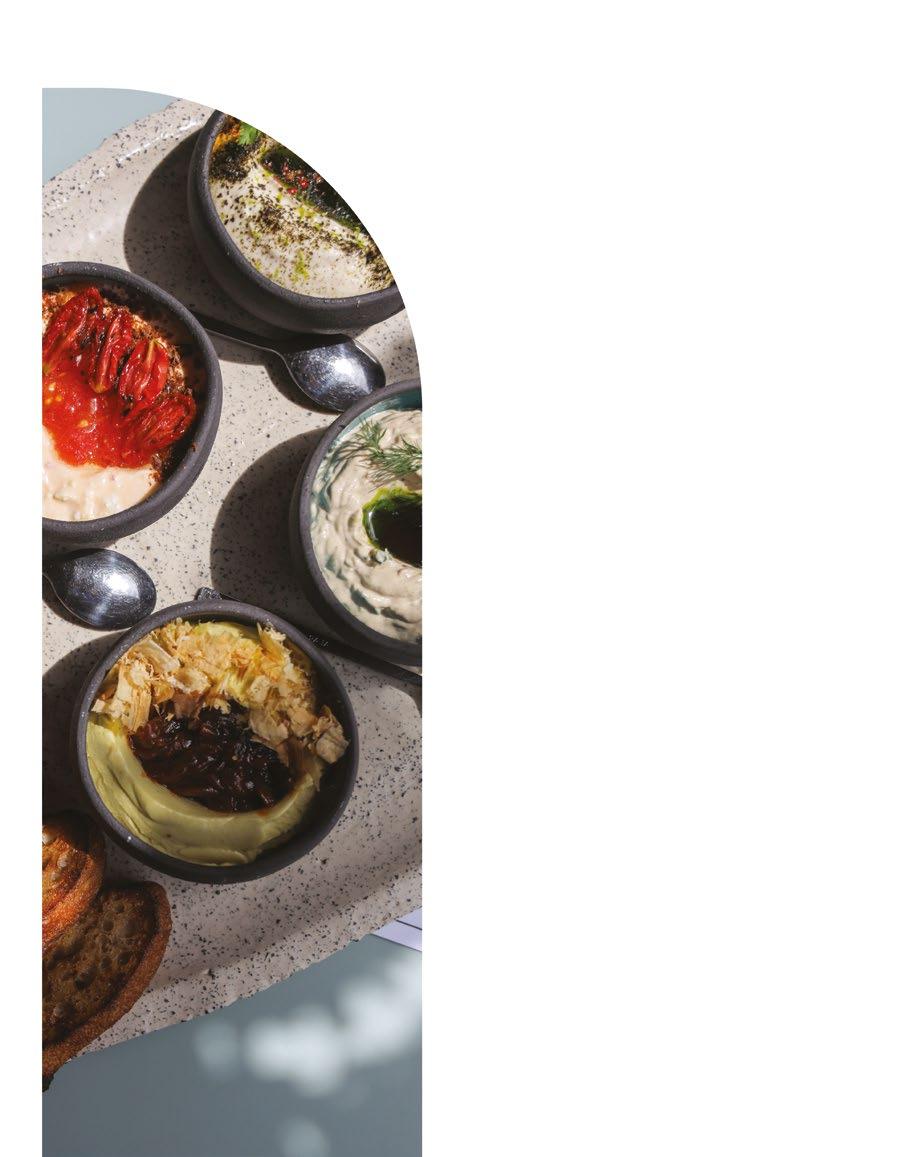

















Imagine having the keys to an £8m collection of supercars