Learning & Development Quarterly
January - March 2026
About this Newsletter... The L&D Quarterly showcases the vibrant learning and development community at Sanford Burnham Prebys by highlighting major events and Institute-wide professional development for all employees, student and postdoc accomplishments, and programs that support the next generation of biomedical scientists
In this Issue
SBP-EC Launches Trailblazer Speaker Series
SBP-SN Career Day 2026: Connecting Trainees with Career Pathways
Training the Next Generation of Biomedical Researchers - Dr Sanjeev Ranade
Women in Science Lecture Series Continues
NEW: Institute-Wide Certificate of Achievement Programs
Meet Annalisa Cracchiolo, Lead, Learning & Academic Support
Innovators and Entrepreneurship
Speaker Series
Thesis Defenses
Recent Graduate Student & Postdoc Accomplishments
Upcoming Events & Workshops
Graduate Student & Postdoc Counts
SBP-EC Launches Trailblazer Speaker Series
By Graduate Students: Erik Hultenius
(Tian lab), Alisha Kirkland (Spruck lab), & Anna Chechenina (Sinha lab)
On April 1, the Sanford Burnham Prebys Entrepreneurship Club (SBP-EC) welcomed Dr Carter Palmer, PhD, CEO and founder of Third Element Bio and a Jerold Chun Lab alumnus, as the inaugural speaker in the Trailblazer Speaker Series. The series highlights SBP alumni who have gone on to become founders and entrepreneurs and featured an engaging, audience-driven discussion on the process of translating an academic project into a startup. Trainees from multiple local institutions had the opportunity to ask
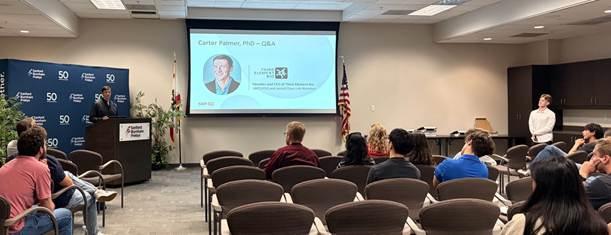
questions about venture creation and hear firsthand insights from an alumni who has successfully navigated this transition.
SBP-EC is a student-led organization focused on exposing trainees to careers at the intersection of science and business In partnership with the Office of Learning and Development (OLAD), the club will host speakers from the San Diego biotech community to discuss their career paths and experiences
SBP-SN Career Day 2026: Connecting Trainees with Career Pathways
By: Nicole Villa, MA
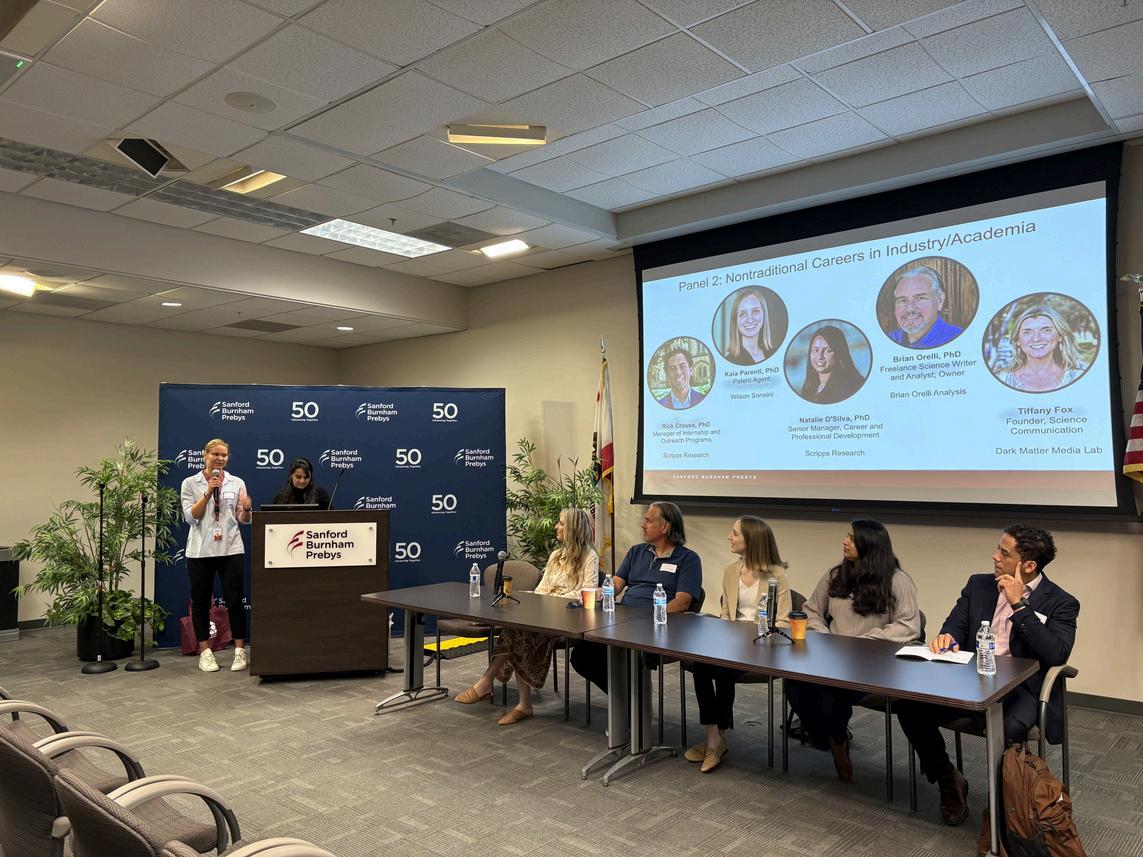
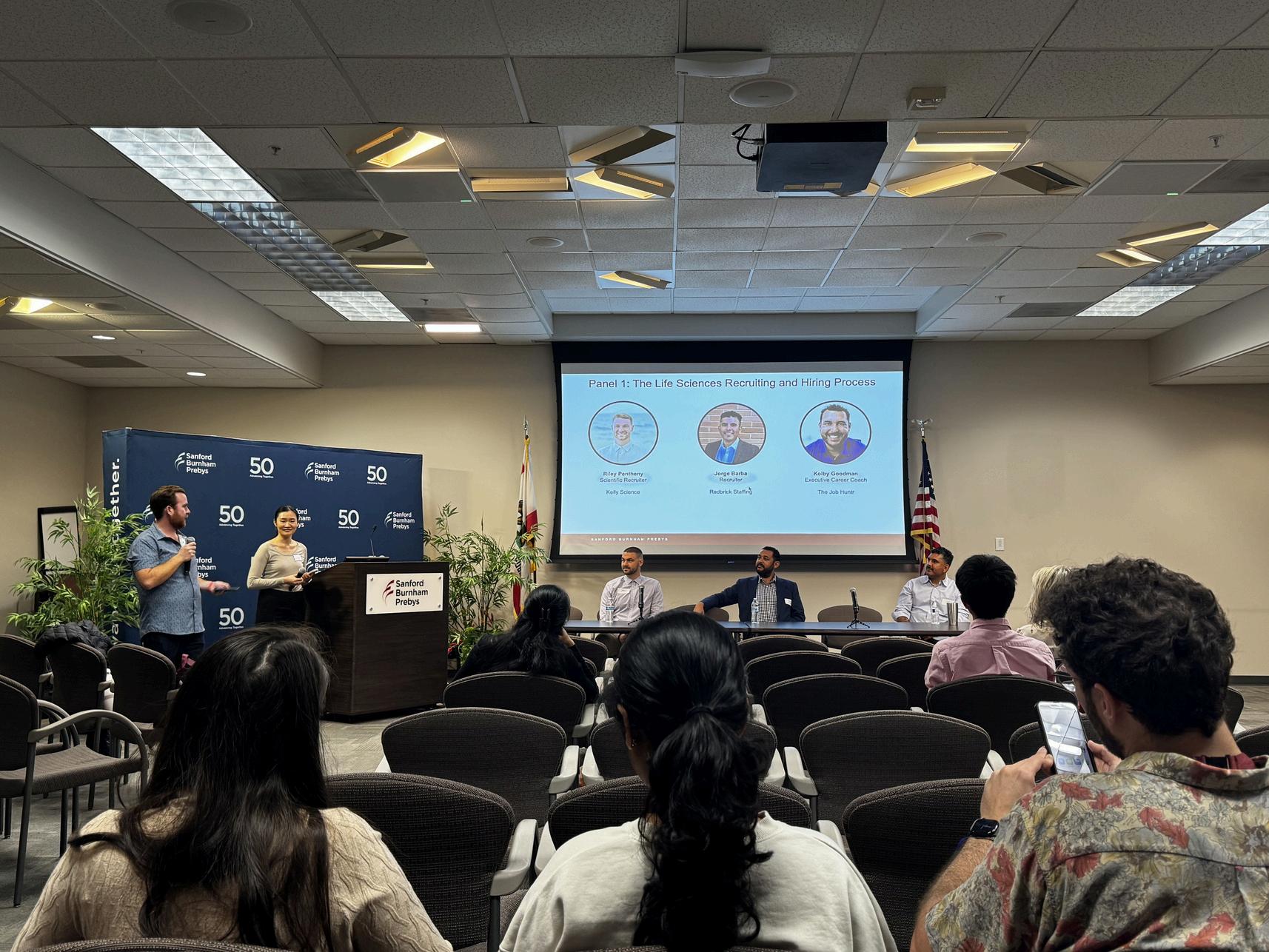
On March 27, SBP-Science Network (SBP-SN) hosted its annual Career Day, open to all trainees at the Institute. Career Day is designed to facilitate meaningful engagement
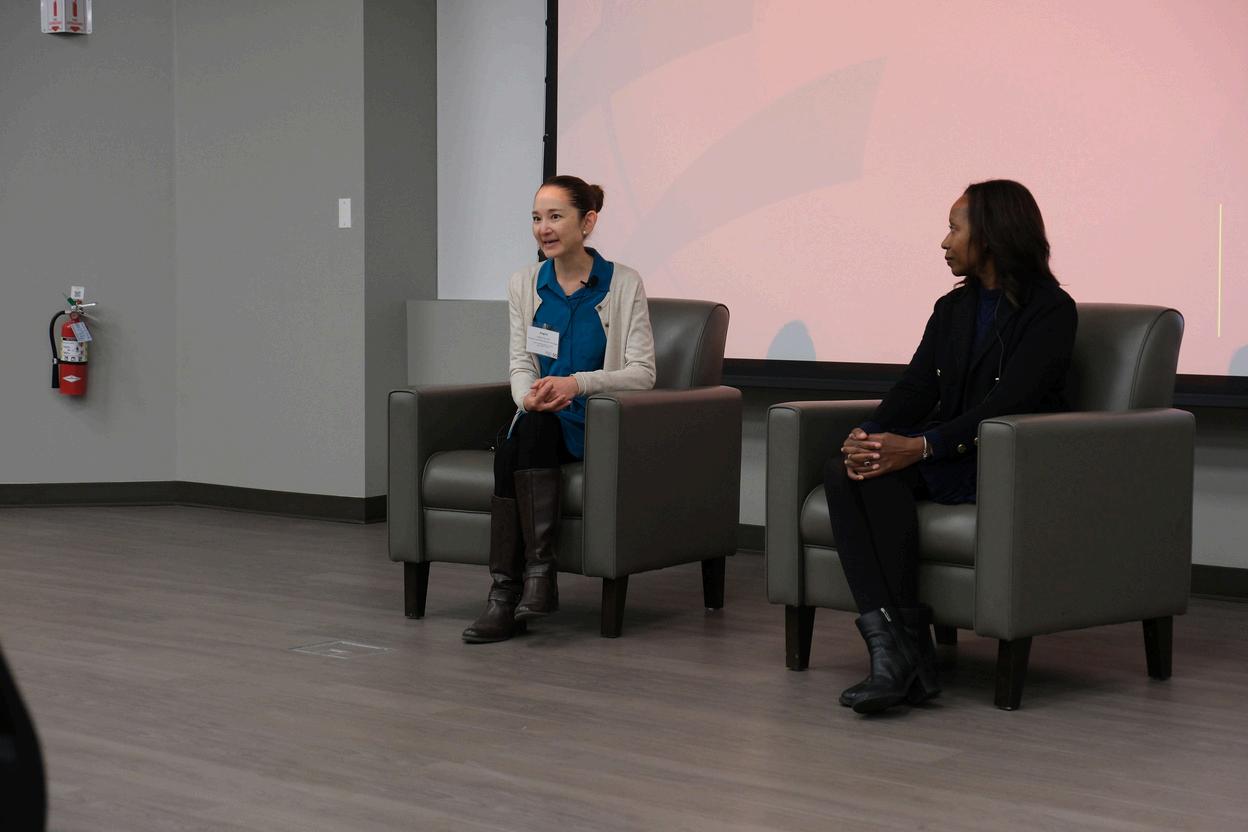
between trainees and professionals while highlighting the breadth of career path available to biomedical PhD scientists The event featured three panels focused on hiring and recruiting, non-traditional careers (panel pictured above), and research-intensive roles in industry and academia. Panelists shared valuable perspectives on navigating the job market, leveraging scientific training in diverse career paths, and building successful biomedical careers
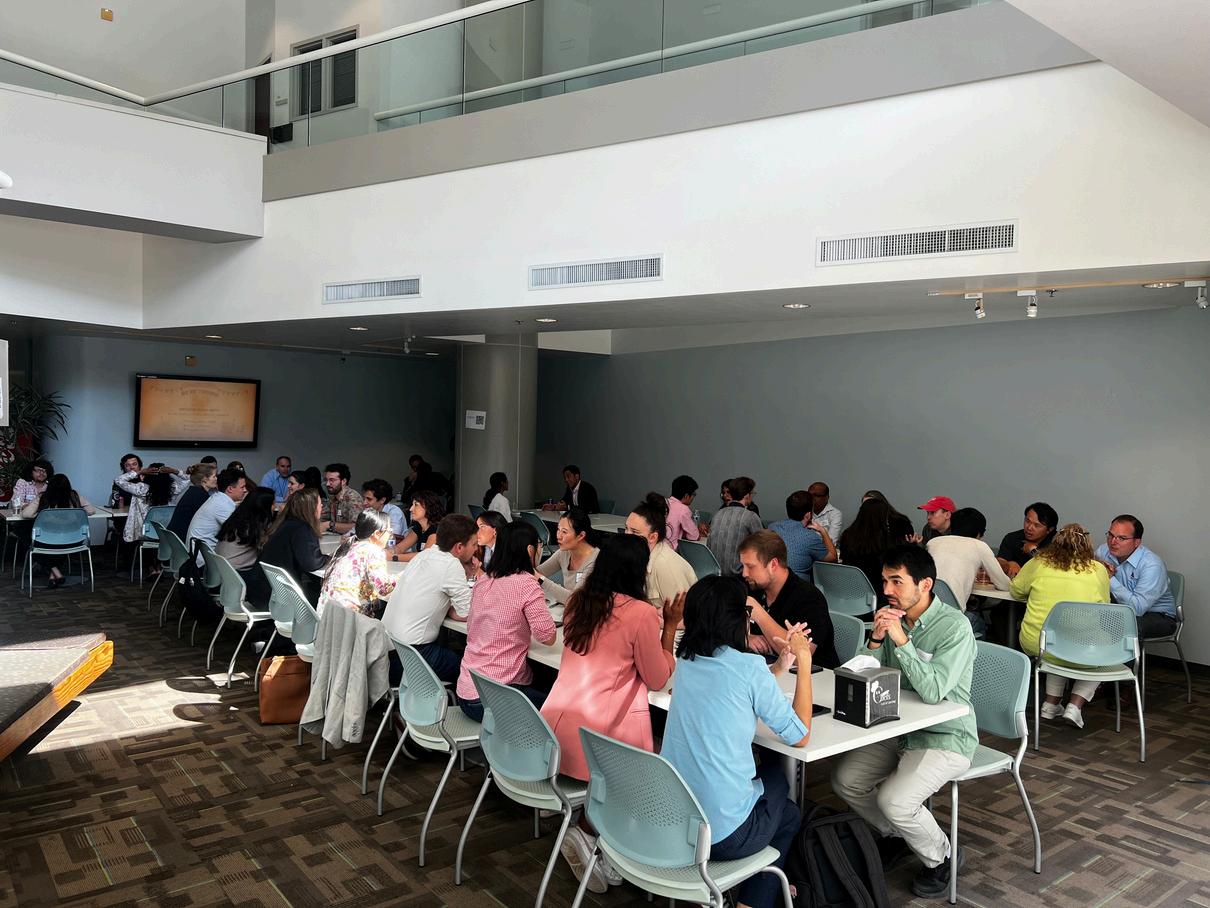
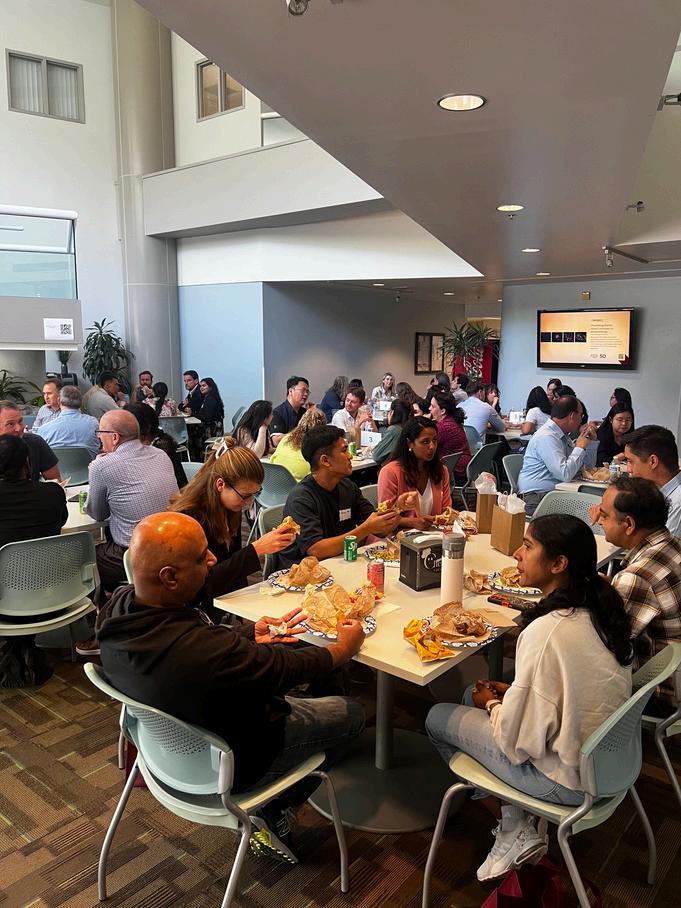
In addition to the panels, trainees participated in a lunchtime networking session with professionals across various sectors, allowing for small-group discussions and targeted questions about specific career paths (pictured middle right). The day concluded with a speed networking session, (pictured bottom right) facilitated by the Office of Learning and Development (OLAD), where trainees engaged in a series of one-on-one conversations with local professionals, followed by informal networking. This interactive format created a supportive environment to build connections, explore career options, and gain practical advice.
SBP-SN and OLAD are grateful could not have made this event possible without the many professionals who generously took time out of their day to connect with our trainees. Over 40 professionals participated across sessions, with some contributing to multiple parts of the day. We are grateful for the strong and supportive research community in San Diego and the opportunity to engage with so many dedicated professionals..
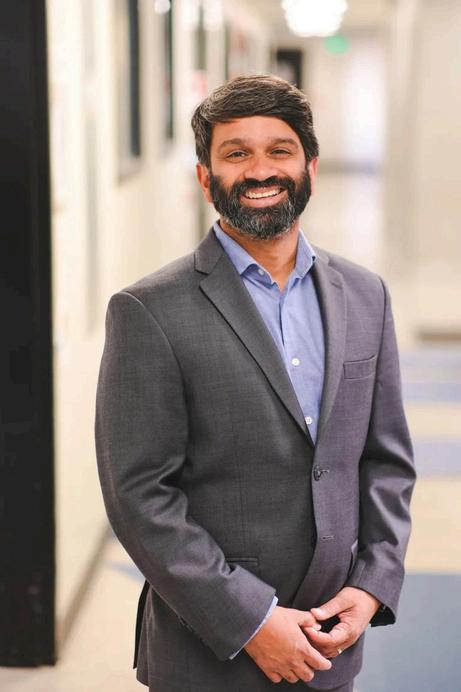
Training the Next Generation of Biomedical Researchers - Dr. Sanjeev Ranade
We are excited to highlight Sanjeev Ranade, PhD as the 2025 Mentor of the Year for Postdoctoral Training. Dr. Ranade is an Assistant Professor in the Center for Cardiovascular and Muscular Diseases
Get to know more about Dr Ranade, his research, and why he’s thrilled to be a part of the vibrant scientific community here at Sanford Burnham Prebys by reading the interview on the following pages.
Q: Where did you grow up?
A: I was born in Bangalore, India and my family moved to the US when I was about 6 I grew up in Culpeper, Virginia, a small, pastoral country town of 10,000 people. It was beautiful… but a bit too quiet for me!

Q: What led you to pursue a career in biomedical research?

A: I entered biomedical research purely by accident I had never done biology research and no one in my family was a scientist Like so many students, I started college as premed but let my grades slip too hard in the first two years. I found the classes so boring, favoring memorization not learning. I then switched to a more research-focused biology track and loved it. My grades improved and I was accepted at a Master of Science program in Boston, at Northeastern University. The courses were all in the evening so I decided to look for a day job Incredibly, I landed a position at The Broad Institute working with

...two fellows in Professor Stuart Schreiber’s legendary chemical biology department. This was the catalyst for my career – I was completely out of my depth and in awe of the quality of science around me. I learned something there that still sticks with me: what I love the most about this career is that it allows me to be creative and ambitious. I can try to solve really hard problems while doing something beneficial for society I thought (and still do think) that’s awesome

Q: What are the major goals of your research and lab?

A: My lab seeks to understand why children are born with heart defects, which is present in nearly 1 in 100 births. Despite all the technological improvements in genetics and genomics, we still do not know the cause for over half of these congenital heart disease cases. My lab’s primary goal is to make inroads towards our understanding of heart development and apply this knowledge to find new ways to treat congenital heart disease
Continued to next page

Q: What excites you about working at Sanford Burnham Prebys and within the Graduate School of Biomedical Sciences?

A: The biggest draw for me to work at SBP is the freedom to explore whatever questions and new avenues the research takes me. The graduate school at SBP is integral to this. I have two outstanding students in my lab who are smart, creative and fearless. The students here at SBP are all bright, eager to learn and really supportive of each other’s development
Q: Looking back at your career, who were some mentors who shaped your path, and what lessons from them influence how you mentor today?

A: My PhD advisor, Ardem Patapoutian, was certainly the biggest influence of my career. He instilled in me the discipline and level of rigor that’s needed to pursue challenging scientific problems He always talked about how we need to love the process of doing science, the mundane everyday tasks that form the craft of our work He was, and still is, so inspiring – he just always knew the best next question to ask

Q: How do you help postdocs prepare for different career paths, whether in academia, industry, or beyond?


career” could range from running a large research lab in an R1 university to being a lecturer in a small undergraduate only college. The preparation and qualifications for the former are completely different than the later! The key is to learn about these different options and then to build your network early. The single biggest factor in getting a job is who you know. One of my main goals is to guide the trainees in my lab to learn about these options and encourage them to build that professional network throughout their training

Q: What role do you believe postdocs play in mentoring within the lab or within our community at Sanford Burnham Prebys?

A: Postdocs play a huge part in mentoring and I’m lucky to have an amazing postdoc in my lab. Part of being a postdoc is learning how to transition from being a researcher to being a team leader. In the best case scenario, I can lean on the postdocs in my lab and in the other labs around me to help guide graduate students and research assistants by being a bridge to the PI

Q: What advice would you give to earlycareer scientists who hope to become effective mentors?
A: I think the most important advice for postdocs is to be informed of the range of options and to build a professional network. There are MANY different career paths and your qualifications to get these jobs all require subtle differences in what things to emphasize. For example, an “academic...

A: Remember to be patient and to put yourself in the shoes of the person you are mentoring. Things may seem easy or natural to you but your trainee needs the time to learn on their own. Take the effort to learn communication skills. Build a milestonedriven plan with your trainee. Provide feedback and encouragement Most importantly, enjoy it – it truly is the most fun and important part of this job!
Women in Science Lecture Series Continues
By: Lauren Mitchell, MS
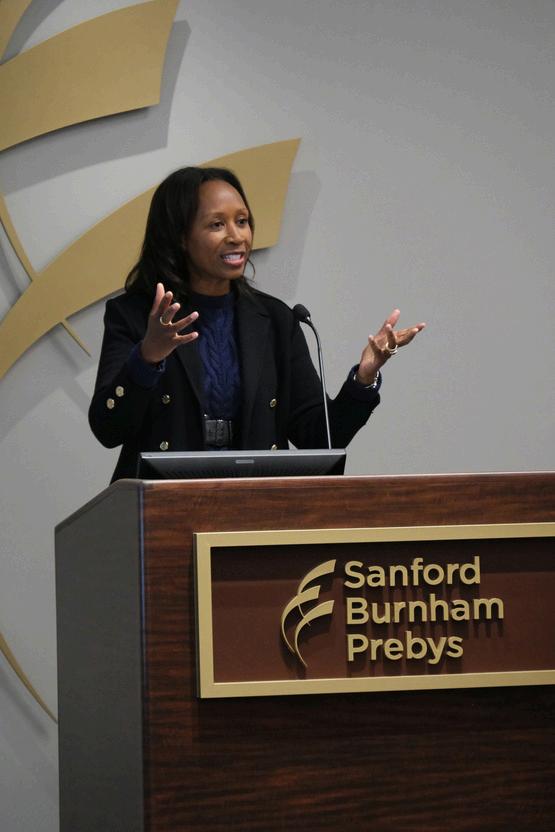
The Institute’s second event in our recently launched Women in Science Lecture Series was held on February 11 with this iteration shining a spotlight on the powerful connection between public health, nutrition, and policy. February’s event featured Cheryl A.M. Anderson, PhD, MPH, MS professor and dean of UC San Diego’s Herbert Wertheim School of Public Health and Human Longevity Science.
Dr. Anderson opened by sharing her early influences, including her mentors’ work on landmark nutrition studies like the DASH trial She explained how these formative experiences shaped her commitment to improving cardiovascular health and tackling nutrition challenges at the population level. What made her talk especially compelling was her focus on creating healthy, sustainable food systems she urged us to imagine a world where nutritious choices are built into the systems that feed entire communities.
She also took us behind the scenes of her work on the federal government’s Dietary Guidelines for Americans, offering a candid look at the balance between scientific rigor and the political realities of agriculture and food policy. Her stories highlighted just how complex and essential evidence-based nutrition policy can be, especially when it impacts programs like school lunches and Women, Infants & Children (WIC) that millions of families rely on daily.
After the presentation, Dr. Anderson joined physician scientist Angela Liou, MD, for an engaging fireside chat and audience Q&A
As a pediatric neuro‑oncologist with roles at both Rady Children’s Hospital and Sanford Burnham Prebys, she brought a clinician’s perspective to the discussion, encouraging attendees to think not only about population health, but also about how individual experiences especially among medically vulnerable groups fit into broader public health frameworks.
Together, Drs. Anderson and Liou created an engaging, multidimensional conversation that captured the spirit of the lecture series: spotlighting women leaders whose expertise shapes science, medicine, and community well being. The event left the audience energized, reflective, and eager for the next lecture in May
NEW: Institute-Wide Certificate of Achievement Programs
By: Diane Klotz, PhD
Toward the end of 2025, we announced two new certificate of achievement programs for all Institute members. These programs are not professional certifications — completing them does not confer a credential for proven mastery Instead, this certificate of achievement signals something different but equally meaningful: a commitment to professional growth and a shared intent to build a more effective, efficient, and collaborative environment at Sanford Burnham Prebys.
Inclusive Leadership Certificate of Achievement
While this series is designed with supervisors, managers, and mentors in mind, anyone interested in becoming a more inclusive leader now or in the future is welcome to attend. The four-workshop series equips those who lead teams, guide people, and shape workplace culture with the knowledge and practical tools to foster inclusivity and implement actionable strategies for more supportive work environments.
This series includes:
Best Practices for Recruiting Talent Strategies for Enhancing Your Team's Culture Leading Team Dialogues
Giving & Receiving Quality Feedback
Insight to Impact: Transforming Knowledge into Action Certificate of Achievement
This nine-workshop series was developed with a clear, combined purpose: to deepen your understanding of yourself and those around you, and to empower you to apply that knowledge toward building strong, collaborative, high-performing teams aligned with institute-wide goals. Participants gain insight through each workshop and then translate what they've learned into significant, positive impact for their teams, departments, and the Institute as a whole Anyone willing to do the hard work of introspection and committed to driving effective, positive change is welcome to join
Continued to next page
Creating Strong Teams: Understanding Self & Others
Communication & Conflict: Underlying Causes of Conflict
Developing a ProblemManagement Approach to Work
Applying for Your Certificate
This series includes:
Creating Strong Teams: How We Achieve Success
Creating Strong Teams: Team Dynamics and Culture
Communication & Conflict: Our Perception of and Response to Conflict
Navigating Change & Uncertainty
Strategic Thinking & Planning
Influence at Work
Once you've completed all workshops in a series, you'll be invited to apply for your certificate of achievement. While far less stressful than a final exam, the application does ask you to reflect: What were your key takeaways? How have you already put your new knowledge to use? What do you commit to going forward to positively impact your work and your colleagues?
This step is intentional The certificate is an artifact a tangible symbol of completing an educational program but it is only as meaningful as what you do with the knowledge gained. That's why receipt isn't automatic. Completing all the workshops is the beginning, not the end.
These workshops are offered annually with no time limit for completion, so we encourage you to approach them with genuine curiosity and a real commitment to growth not simply to earn a piece of paper (or, in this case, a PDF) The real work starts when you commit to applying what you've learned, passing that knowledge on to new members of the Sanford Burnham Prebys community, and helping to build a stronger, more collaborative Institute — one person at a time.
That is achievement
To learn more about these certificate of achievement programs and/or any of the individual workshops, contact Learning & Professional Development.
Meet Annalisa Cr Learning & Acad
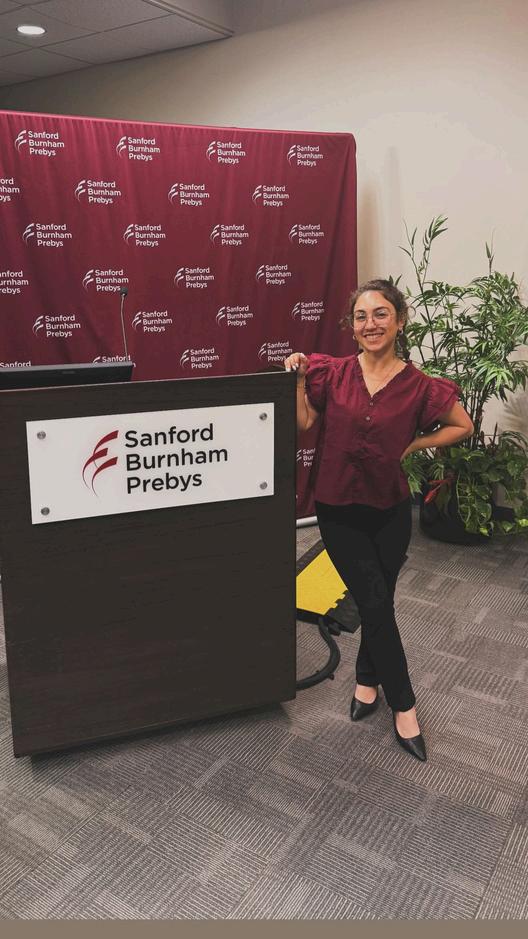
Annalisa Cracchiolo joined the Learning and Development team in February in a new role focused on supporting institute-wide learning and development initiatives. She also splits her time working with Elena Pasquale, PhD, Director of Academic Affairs, and Alessandra Sacco, PhD, Dean of the Graduate School of Biomedical Sciences.
Learn a little more about our newest team member below!
I grew up in San Pedro, California (Los Angeles County), surrounded by my big, loud Italian family In 2013, I moved to San Diego to attend CSUSM, where I earned both my bachelor’s and master’s degrees in marketing/international business After graduating, I chose to stay in the area and now live in San Marcos I also have a 3-yearold puppy, Stella, who keeps me on my toes with her endless energy
In my free time, I love being with family and friends, hanging by the beach, cooking my grandmother’s recipes, going for runs when I can, and lounging on the couch while reading a good book.
Tell us a little bit about yourself. What excites you about working at Sanford Burnham Prebys/Learning & Development Team?
What excites me most about working at SBP, and specifically within the Learning and Development team, is the opportunity to contribute to an environment that values both scientific innovation and people growth. I am especially drawn to how Learning and Development plays a direct role in supporting employees and students at all stages of their careers. Being part of a team that designs meaningful training, fosters professional development, and helps build a strong, connected workplace is really motivating to me Knowing that the programs and initiatives I help support can indirectly contribute to that larger impact makes the work feel purposeful
What led you to pursue a career in higher education/(science) administration?
I did not initially set out on this exact path, but through my experiences, I found that I really enjoy coordinating programs, supporting others, and helping things run efficiently behind the scenes. Working in higher education and science administration felt like a natural fit because it combines organization, collaboration, and purpose. I love knowing that even in a support role, I am contributing to something that helps people learn, grow, and succeed.
What is one thing about you that would surprise people?
One thing that often surprises people about me is that I have been playing the piano since I was four years old What started as a childhood activity quickly became something I truly enjoy and have stuck with over the years It has been a creative outlet for me My favorite songs to play are Elton John and Classic Jazz It has also taught me patience, discipline, and the value of consistency More recently, I have also gotten into bedazzling, which is a fun and unexpected creative hobby of mine. I love being able to take something simple and turn it into something unique and eye-catching.
What is the accomplishment you are most proud of?
During the holiday break last year, I was asked to create a charcuterie board for my cousin’s wedding What started as a simple favor quickly turned into something more when guests began asking about it and showing genuine interest Encouraged by their feedback, I decided to take a leap and turn that moment into an opportunity by creating my own charcuterie business, The Happy Hostess Co. I am especially proud of this because it pushed me outside of my comfort zone and allowed me to combine creativity with entrepreneurship. It taught me how to take initiative, trust my abilities, and turn a l idea into something tangible that brings ple together.
Innovators & Entrepreneurs Speaker Series: Dr. Ajay Nirula
By: Nisha Cavanaugh, PhD
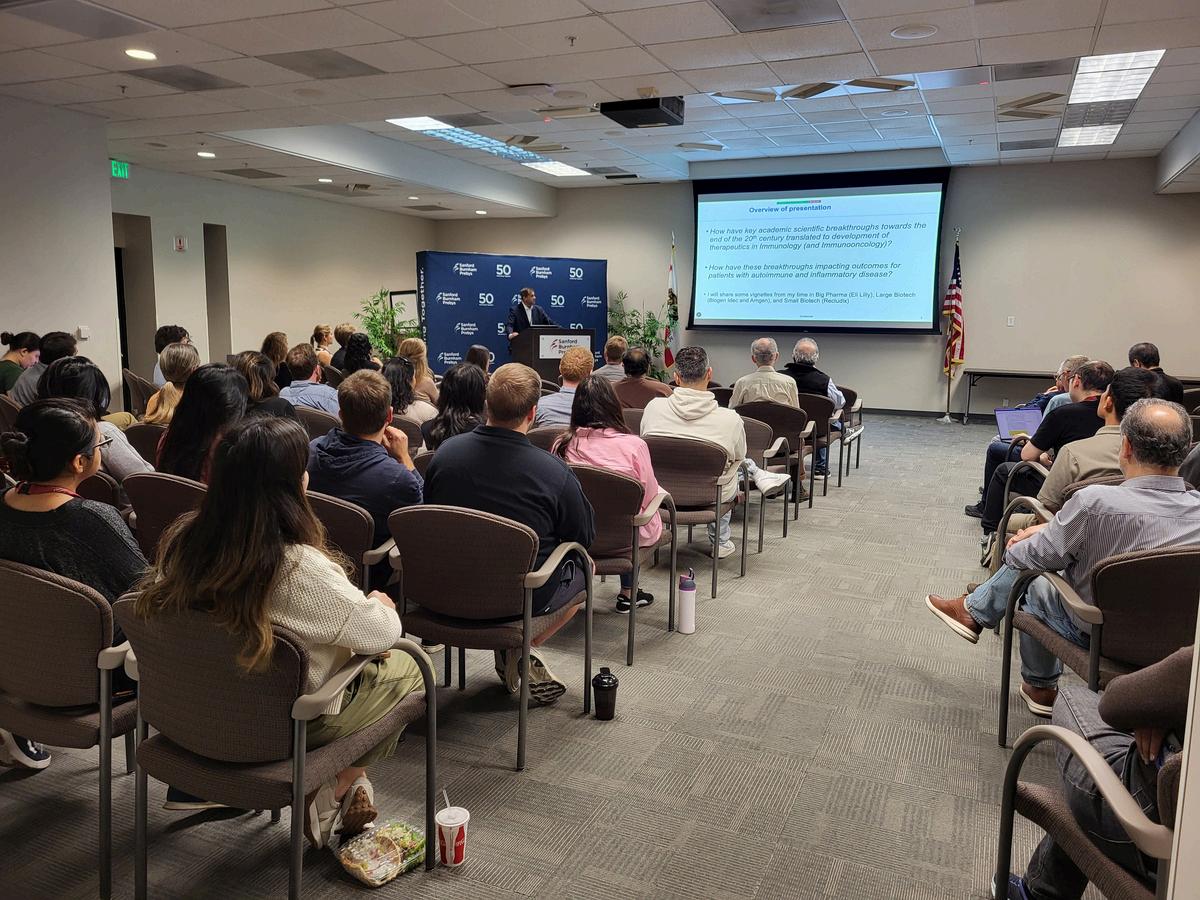
On March 11, Dr Ajay Nirula, President of Recludix Pharma, was the distinguished speaker of the second event in our recently launched “Innovators & Entrepreneurs Speaker
Series” , which features industry leaders who have successfully translated biomedical research into real-world impact
Dr. Nirula explored how key scientific breakthroughs from the late 20th century shaped the development of therapeutics in immunology and immuno-oncology, and how these advances have improved outcomes for patients with autoimmune and inflammatory diseases. What made the talk particularly memorable was Dr. Nirula’s perspective — he shared vignettes from his time in Big Pharma (Eli Lilly), Large Biotech (Biogen Idec and Amgen), and Small Biotech (Recludix), incorporating collaborations with Sanford Burnham Prebys and illustrating how industry-academic partnerships can accelerate the path from discovery to therapeutics.
We thank Dr. Nirula for an engaging and inspiring presentation!
Congratulations to Dr. Utkarsha Paithane!
Dr Utkarsha Paithane successfully defended her thesis on January 15, 2026
Dr. Paithane conducted her thesis research, “Honeybadger, a novel endogenous modulator of RAS/MAPK signaling in cancer,” under the mentorship of Dr Anindya Bagchi
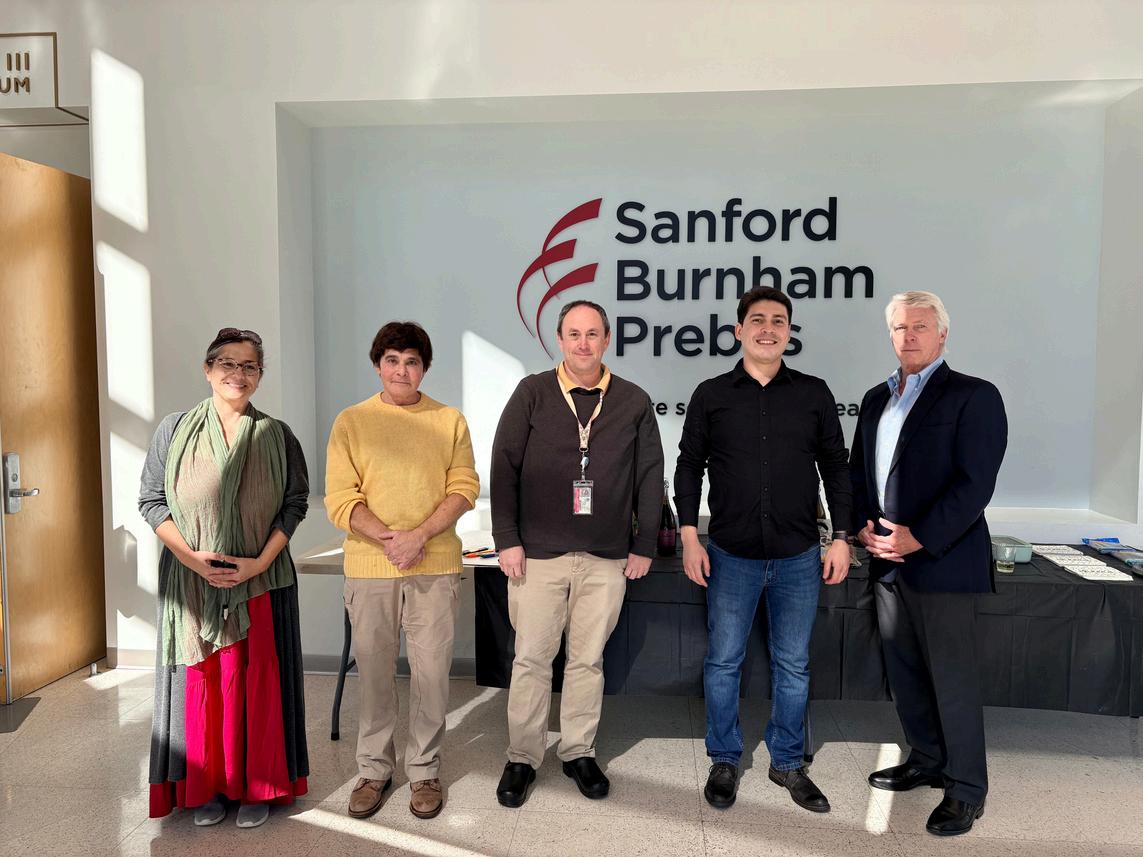
Congratulations to Dr. Ruslan Nuryyev!
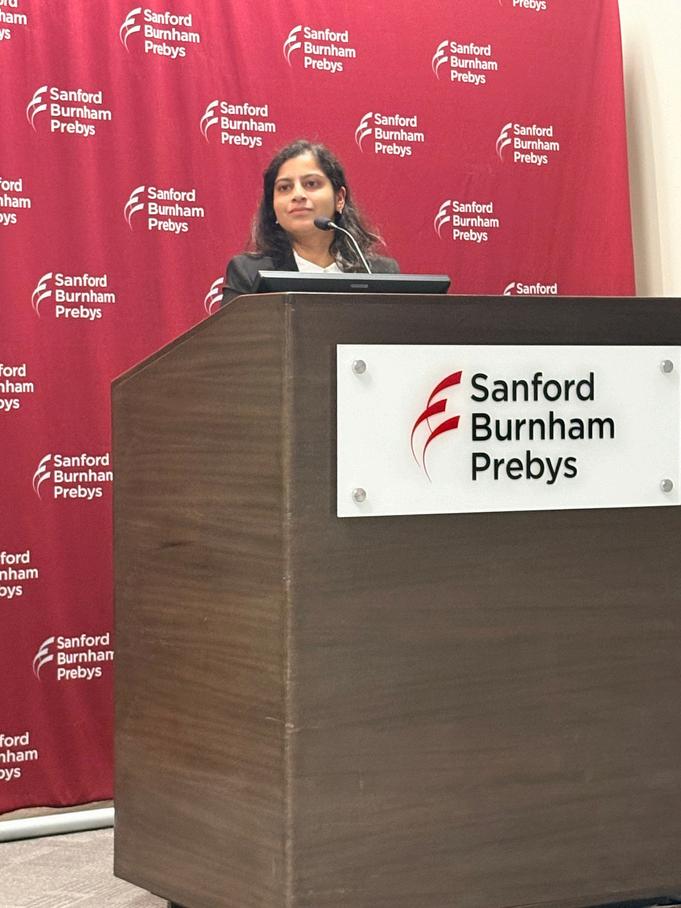
Dr. Ruslan Nuryyev successfully defended his thesis on February 9, 2026.
Dr Nuryyev conducted his thesis research, “Hypoxic-ischemic injury to the newborn brain reverts the penumbra transiently to a fetal, cerebrogenic state amenable to neuroprotection,” under the mentorship of Dr. Evan Snyder.
Recent Graduate Student & Postdoc Accomplishments
February Cancer Center Trainee Travel Awardees
These awards provide up to $1,000 to support trainees presenting r-related scientific conferences
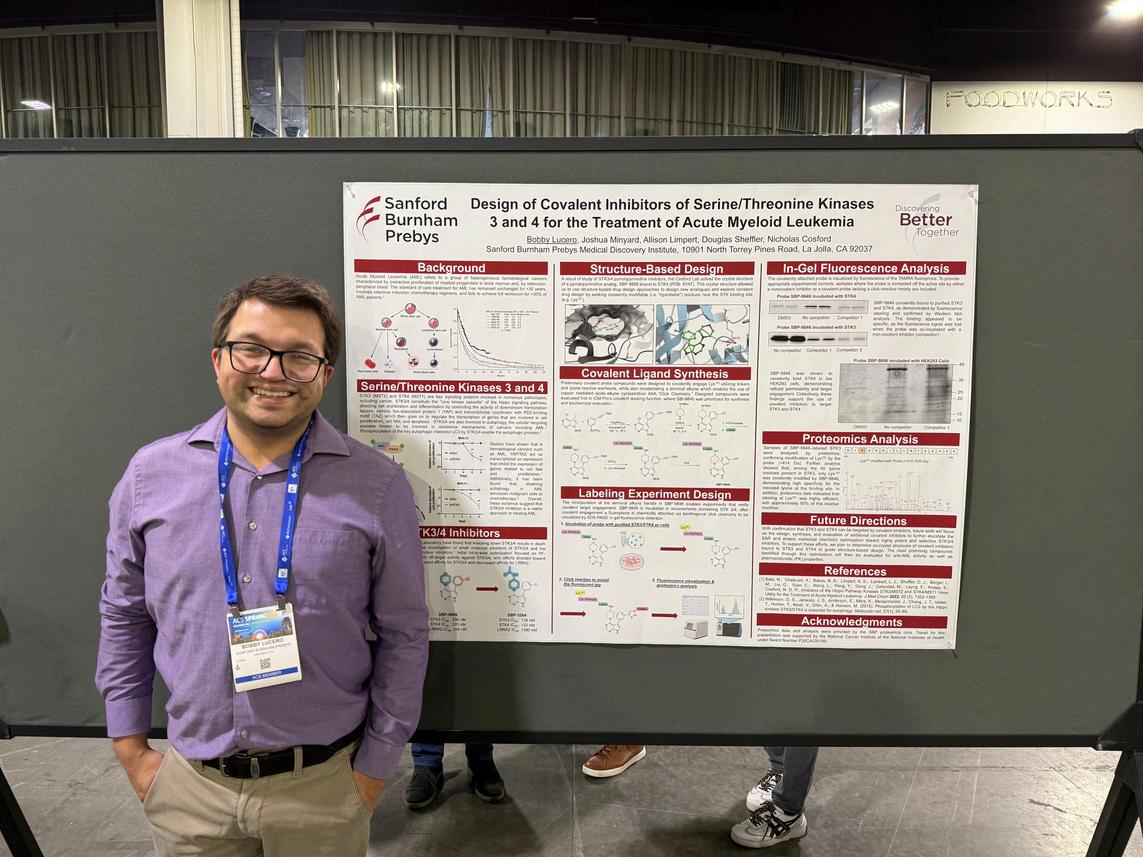
Bobby Lucero, PhD Postdoc; Cosford lab
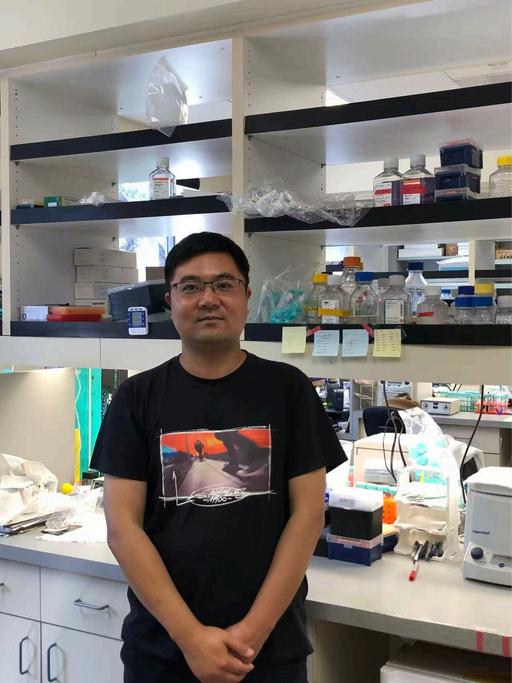
Conference: American Chemical Society Spring 2026 Meeting (Atlanta, GA)
Poster Title: “Design of Covalent Inhibitors of Serine/Threonine Kinases 3 and 4 for the Treatment of Acute Myeloid Leukemia ”
Hanxiao Zhang Graduate Student; Zhao lab
Conference: Gordon Research Conference: Antibody Biology and Engineering (Ventura, CA)
Poster Title: “Design of Binders to enhance antibody structure determination ”
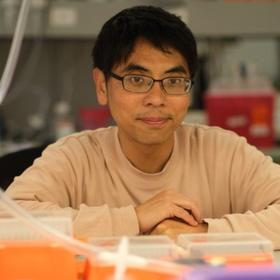
Libin Gao, PhD Postdoc; Spruck lab
Conference: American Association for Cancer Research (AACR) Annual Meeting; April 2026 (San Diego, CA)
Tsunghan Hsieh, PhD Postdoc; Tian lab
Conference: American Association for Cancer Research (AACR) Annual Meeting; April 2026 (San Diego, CA)
Recent Graduate Student & Postdoc Accomplishments
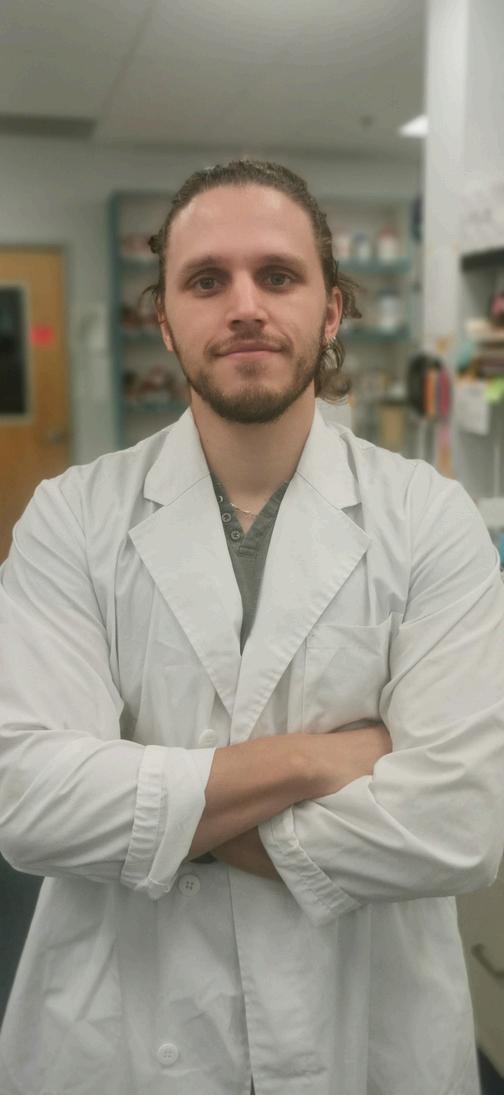
Jimmy Massenet, PhD, a Postdoc in the Puri lab, was the recipient of the Center for Cardiovascular and Muscular Diseases (CCMD) Science in Motion Travel Award which he will use to attend 2026 Muscle Stem Cells and Regeneration Meeting in Victoria, BC, Canada this July
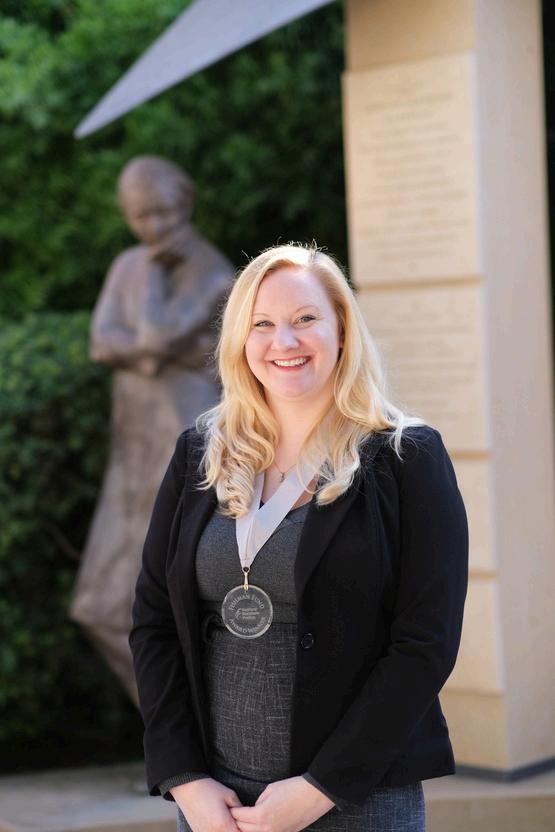
Jessica Proulx, PhD, a postdoc in the Adams lab, attended the Keystone Symposia on Epigenetics and Gene Regulation in Health and Disease in Geneva, Switzerland this March, where she presented her poster, “Age-associated Epigenetic Repression of HNF4⍺ Gene Programs is a Driver of MASLD.”
As a recipient of the Fishman Career Development Award, Jessica chose to use her funds to support her participation in this conference, enabling her to share her research and engage with the global scientific community
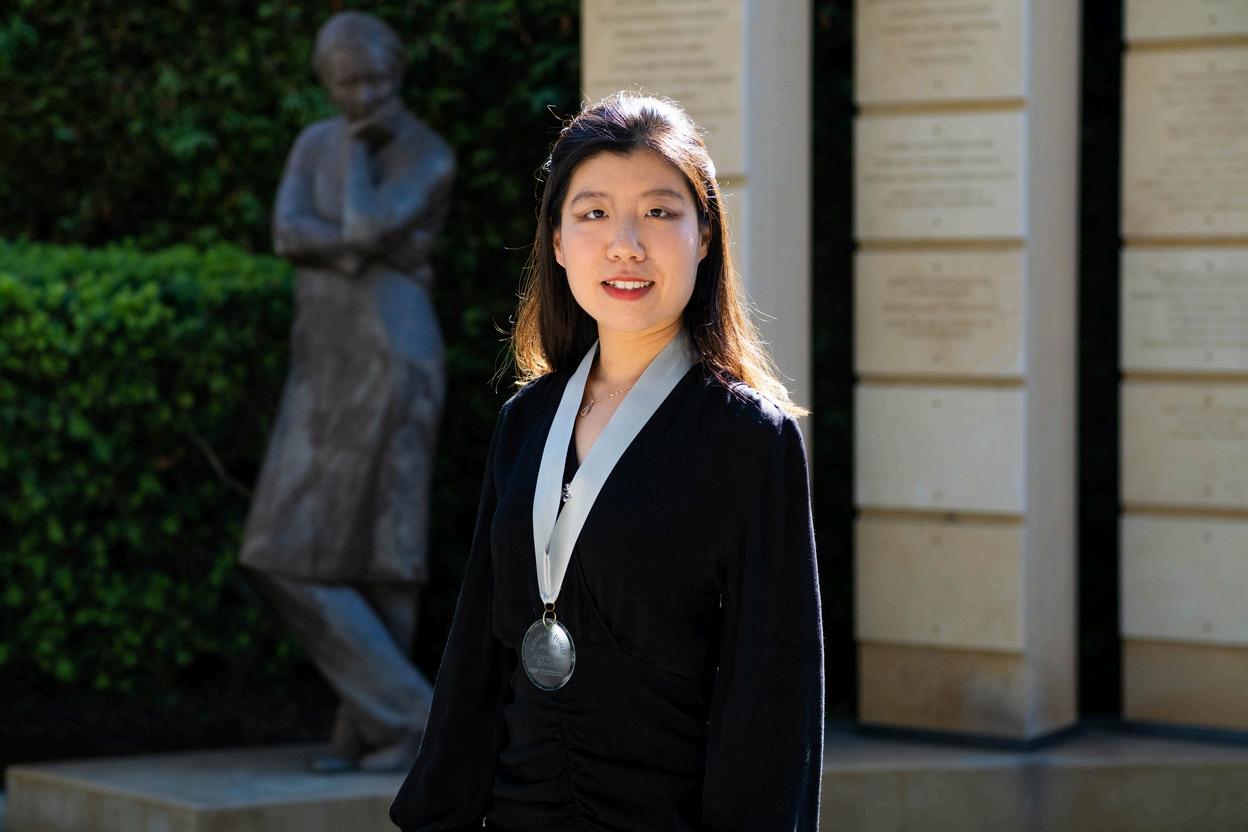
Shanshan Yin, PhD, a postdoc in the Adams lab, was named the 2025 recipient of The Eric Dudl Endowed Scholarship at Sanford Burnham Prebys Medical Discovery Institute The scholarship fund was established at the institute to remember Eric Dudl, a postdoctoral researcher whose life was tragicallycut short by cancer at the age of 33.
Learn more about the Eric Dudl Endowed Scholarship here.
Upcoming Workshops & Events
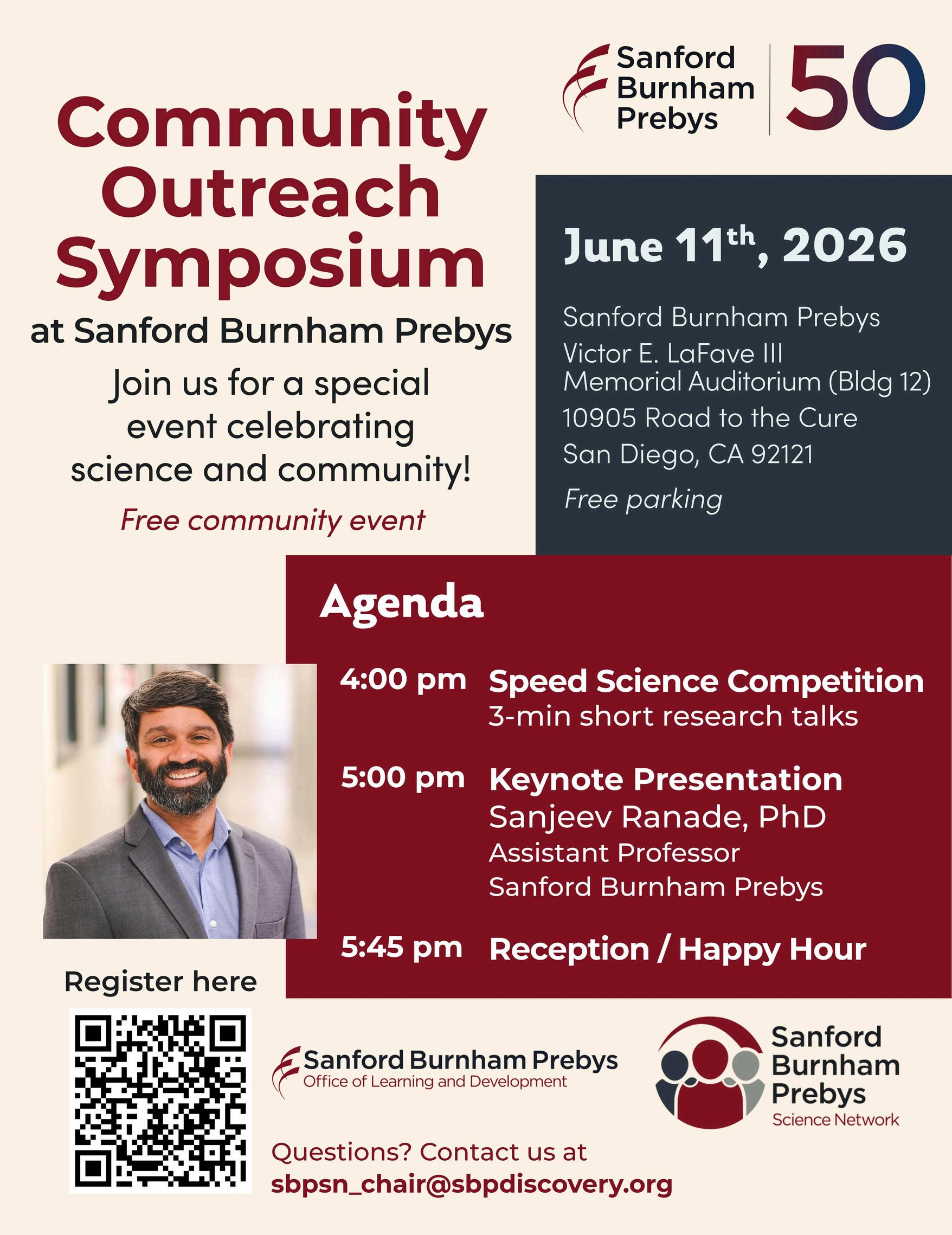
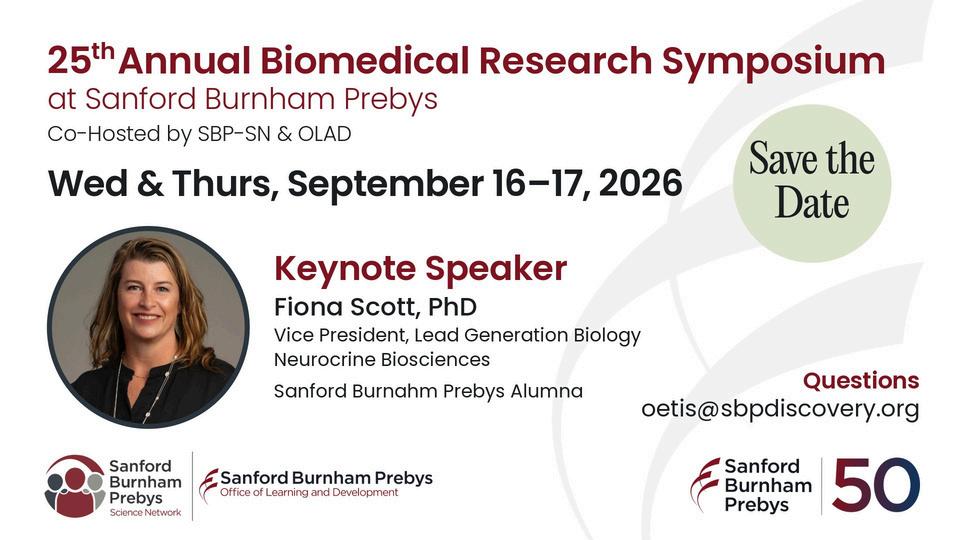
Graduate Student & Postdoc Counts
Learning & Development Team
Diane Klotz, PhD Chief Learning Officer Associate Dean, Administration & Professional Development
Annalisa Cracchiolo, MBA Lead, Learning & Academic Support
Graduate School of Biomedical Sciences (GSBS)
Angelica Rocha, PhD Director, Graduate School Administration & Institutional Research
Sara Sandoval, MS Recruitment, Admissions, and PhD Pathways Programs Manager
Nicole Villa, MA Program Coordinator, OLAD Office of Learning and Development (OLAD)
Nisha Cavanaugh, PhD Associate Director, Career Development & Postdoctoral Programs
Workforce Engagement & Belonging (WEB)
Lauren Mitchell, MS Director, WEB
Megan Elyamani Academic Programs Specialist & Registrar
Alessandra Sacco, PhD Dean, Graduate School of Biomedical Sciences
OfficeofLearningandDevelopment
Linda Bradley, PhD Faculty Advisor, Postdoctoral Training Leadership Support