

ur little corner of the world is the perfect place to age well. There are opportunities to get and stay active at almost every turn in Dana Point, San Clemente and San Juan Capistrano. In our temperate climate, the outdoors is always a suitable playground, but our various institutions also host numerous educational, recreational and social activities for seniors.
It’s a good thing, too—about half of all residents in the tri-cities are over the age of 45. The community seeking to age well is robust. While some choose to engage the social offerings from our city’s senior centers, others take to the open waves on a stand-up paddleboard. While some choose one of several 55+ communities to better their lives, other seniors find members of their community about town.
Our goal in Aging Well is to connect those looking to live a fruitful life with the people, programs and organizations hoping to help them do that. Everything in here is meant to inspire and enrich the lives of those willing to take it by storm.
You’ll get inspired by the snapshots of senior life in South Orange County, and hear firsthand about how senior folks are
maximizing the resources of this area. Read about a local pickleball league that has exploded in recent years, allowing seniors to stay active and social, in a competitive setting, without putting too much stress on the body.
For those looking to take up a new hobby, there’s a feature about how to use community resources to pick up art, education, recreation and volunteering. And for the animal-inclined, there’s a story about the benefits of companionship pets.
In our feature story on 55+ communities, you’ll learn about what really goes down at some of South Orange County’s finest senior living neighborhoods, and how your life can be enriched by living in a place with people your own age and amenities suited for aging well.
Lastly, you’ll find numerous stories about the practicalities of aging, and how to handle them in a stress-free manner. From medical concerns to staying in touch with technology, the stories in this issue will help seniors and others approaching that age begin the process of crossing all T’s and dotting all I’s.
There’s a lot to do in the area for seniors, and many of those things are spotlighted in this issue. So get reading, and start living.






Four quick activities to get you moving, thinking and creating
BY MATT CORTINA
They say nothing good comes of idle hands. But what they don’t say—those glass-halfempty idiom makers—is that good things are made by busy hands. With an active mindset and a willing attitude, your years after 50 can be the most productive of your life.
Luckily, there are numerous avenues to explore an active lifestyle in South Orange County. We’re privy to a natural playground in the Harbor, on the ocean and in our rolling hills. But we also have world-class senior exercise, art, education and volunteering opportunities right in our neighborhoods. Through programs and services offered by the cities of Dana Point, San Clemente and San Juan Capistrano, and the County of Orange, you’ll be able to get going on your road to activity in no time.
Whether your ambition is to create a homemade gift in time for the holidays, or to finally put together the masterwork you’ve always carried in your mind, there are numerous ways to start an art project in South County. The city of San Clemente offers a variety of beginner and intermediate art classes at the Dorothy Visser Senior Center. Whether you want to work with watercolors, sketching, acrylics and oils, or jewelry, there is a class waiting to teach you the basics to get you on your way and let your mind create. If inspiration is what you’re looking for, check out the plein air painting competition put on by the San Clemente Art Association, or walk around the tri-cities to find your own outdoor muses. If theater’s your bag, the Beach Cities Senior Club takes trips to performances on stage regularly throughout the year.
Keeping your mind fresh and taking on new educational challenges is a key component of aging well. Whether you’re committing to learning a new skill or taking a master’s class, as long as your brainwaves are flowing, you’re doing well. Luckily there are a lot of free, low-commitment opportunities to learn in the tri-cities. The Dana Point Nature Interpretive Center and Ocean Institute can be a wealth of
local marine knowledge. The San Onofre Foundation hosts a regular summer lecture series about a variety of topics. And the San Juan Capistrano Library hosts film nights, book talks and more.

Test Your Body
All three senior centers host physical education and workout classes for those over the age of 55. San Clemente offers a small gym with workout equipment, while Dana Pont is equipped with a basketball court. The San Juan facility hosts a number of classes taught by professionals. There are seated fitness classes, stretching and toning workouts, hula groups, chair yoga and much more. Of course our communities are also home to a number of watersport, cycling, walking and equestrian groups that can apply some of these exercise techniques to a specific task.
Help Your Community
Volunteering is a great way to try on a “second career” after retiring while also continuing to provide a service to the community. RSVP, formerly the Retired Senior Volunteer Program, is a free members-only program that matches willing senior volunteers to opportunities that match their interest, skills and desires. Established in 1971, RSVP is one of the largest senior volunteer organizations in the nation with more than 360,000 volunteers. Check out www.oneoc.org for more information on how you can sign up to making a difference in the tri-cities.
BY ERIC HEINZ
Studies on senior citizens and their relationship with comfort pets show that more often than not, animals and humans benefit each other in a mutual way. But before becoming the owner of a pet, people should always consult with professionals to see if their living situation will work for both them and the pet.
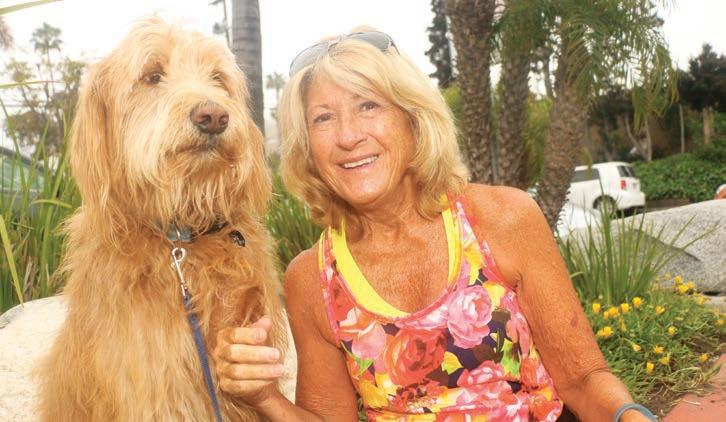
Sharron Johnson, who visits various assisted living facilities, works with her certified therapy dog, Linus, who had to go through two years of training through the National Therapy Dog Registry “K9 to 5” program and tests administered by the American Kennel Club.
“It’s gaining a lot of traction as more people figure out what kinds of satisfaction can come out of having a therapy dog,” Johnson said.
Johnson frequents San Clemente Villas by the Sea, an assisted living and memory care facility, as well as other nursing
homes so seniors can enjoy the company of Linus. She said bringing joy to the residents is her top priority.
“They just get so excited to see him,” Johnson said. “I know how much my animals have meant to me, having grown up with dogs. But it takes commitment and consistency. There are some residents at the Villas in assisted living who do have cats or dogs, and they’re a joy.”
Johnson said if people are interested in training a therapy dog, they should be diligent in their search to find a reputable and experienced organization.
Dr. John Agostini of San Clemente Veterinary Hospital is on the board of the nonprofit Pet Project Foundation, which raises funds for medical care for animals at the San Clemente-Dana Point Animal Shelter.
Agostini said by keeping the animals healthy and alive, people whose pets recently died may find comfort in another pet looking for a home.
“That allows a nice opportunity for people to adopt these animals,” Agostini

said. “A lot of the people who adopt are senior citizens. I’ve had clients who have been in town for years, and a happy bond is formed. A lot of older people benefit from having a pet in the house.”
Agostini said the pets also help people stay active to some degree, but people should be capable of taking care of the pet, he said.
Most seniors enjoy the company of a lap dog or a dog that isn’t quite as rambunctious as a puppy, Agostini said, but each relationship is different.
Pet Project Foundation also helps senior
citizensiving on a fixed income pay for their pets’ care.
“If someone doesn’t want the responsibility of taking care of the pet, but they benefit from being around them, they can become a volunteer at the shelter,”Agostini said, adding they have to go through training first. “There are many volunteers there who are in their 70s and 80s.”
For more information about Pet Project Foundation, visit www.petprojectfoundation.org. For more information about the National Therapy Dog Registry, visit www.nationaltherapydogregistry.com.



its elderly members, ages 55 and older. It is governed by a board of directors and is supported by subcommittees.
San Clemente Village representative Bob Coff, an operating manager who works with other volunteers, said members take turns with various duties as much as they can. They provide transportation, help with errands and other household chores. It’s also intended to be a social organization to encourage people to become engaged with others.
“Socialized isolation is very debilitating, so the Village keeps us very engaged in the community,” Coff said during the April 18 San Clemente City Council meeting.
“We have members who are 90 years old who have given up their cars because The Village provides transportation up to the grocery store or church. For people who are very independent to give up their cars is a very big accomplishment.”
Membership fees can be found on the Village website. Volunteer opportunities are also available to nonmembers. The Village will accept any age for volunteers, and Reams said they eventually want to start working with teens who want to volunteer. That program is still being developed.
BY MATT CORTINA AND ERIC HEINZ
As you get older, it’s common to want to live in a community with people of a similar age, who share the same experiences and values as you. With a sizable aging population in South Orange County, there are likewise a number of communities designated for folks over the age of 55.
These communities offer quality of life, more than anything else. With amenities and activities suited for people of a certain age, members are empowered to live without caution and enjoy what life has to offer.
We highlighted two communities in South Orange County: the residential and lifestyle community of Rancho Mission Viejo (and their subsequent senior community, Gavilan), and San Clemente Village, which is an organization that fosters community through events and programs.
Rancho Mission Viejo
The Ranch, as it’s known, refers to 23,000 acres of space behind San Juan Capistrano and San Clemente. About 25 percent of the land is in the process of being developed, which includes mixed-use villages, parks, clubhouses, retail centers, farms, trails, businesses and senior living centers—in short, it’s a small town.
In total, about 6,000 of these homes are reserved for people over 55 years old. The first village, Sendero, is already built and
sold, but includes Gavilan, a grouping of four neighborhoods of single-floor homes.
In Gavilan is The Hacienda, a 55-plus only clubhouse with a fitness center, lounge, outdoor patio with grills, garden, bocce courts, pool and meeting rooms.
And there’s more to come. In the Reserve’s newest village, Esencia, is more Gavilan neighborhoods abutting all-ages neighborhoods in order to foster mixedage activities. There are six Gavilan neighborhoods currently selling homes. They all have access to The Outlook, a resortstyle pool with an outdoor dining area, fire pit and much more. And of course, all 55-plus residents throughout Esencia can access The Hacienda in Sendero.
But the neighborhood amenities themselves are just one part of the appeal of Rancho Mission Viejo. There are breathtaking views available from the The Hilltop Center, and trails that jut through the region’s rugged terrain.
Homes in the community range from $600,000 to $900,000, and the other neighborhoods are scheduled to be built in phases over the coming years. For more information on the community, visit www. ranchomissionviejo.com.
Launched in October 2016, the San Clemente Village is a volunteer-run organization that provides mutual services among
Sherry Reams, president of San Clemente Village, said the organization has increased its membership since launching.
“We now have 77 members and 60 volunteers who have gone through background checks and training,” Reams said.
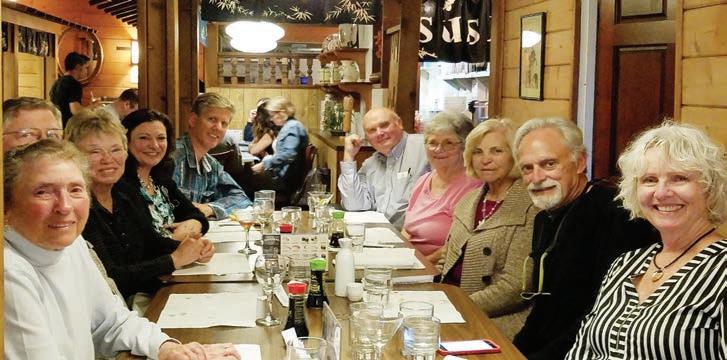
The Village has also increased its monthly and weekly activities, such as lawn bowling, bridge, bunco, cooking demonstrations, yoga and meditation, and more. The most popular is the dine-out nights, which are once a month.
Reams said about 15 to 20 people attend the night out at a local restaurant.
To help with technology education, the group helps seniors learn how to choose a password and shows people what certain things mean in a computer and how to avoid online fraud.
“One of the things we’re going to start doing is a safety series, such as how to identify Medicare fraud and how to hire a contractor, how to avoid insurance fraud,” Reams said. “We will work with the sheriff’s department for self-defense for seniors.”
An increase of sociability among members has been noticed, Reams said, which has helped them get out of their homes more frequently.
“We want to set up a program for teens who will teach technology for different products,” Reams said “We are always looking for new ideas.”
A monthly newsletter will be distributed in the near future, once the Village is able to get a new marketing professional. People do not need to be members to sign up for the newsletter, which can be done on the organization’s website.
For more information about the San Clemente Village, call 949.441.1438 or email info@scvillage.org and visit www.scvillage. org for updates and event calendar.


BY MATT CORTINA
We hope it never happens in South Orange County, but of course natural disasters are a part of life on Earth. And though the paths of earthquakes, storms, heat waves, tsunamis and more can seem arbitrary, there are several steps seniors can take to be aware of potential emergency situations, and to prepare for them.
Here are four basic tips to get you started with your emergency plan, but we recommend consulting your local city emergency planning department for more specific information.
1 Survey Your Risks


2 Devise a Plan
Making sure you’re prepared for an emergency first requires you to find out what types of emergencies are most likely. Regionally speaking, an earthquake, extreme heat and flooding could create an emergency situation. All of these risks lead to specific life-threatening reactions, such as loss of power, structural damage that blocks movement, fire, high temperatures, lack of access to clean water, and hypothermia.
Planning can save lives. This starts with installing adequate fire prevention items like a smoke alarm and fire extinguisher. It also extends to ensuring food, medicine and clean water are in a reasonably safe and accessible location in your home. You should keep emergency phone numbers and those of neighbors and loved ones saved both on your phone and in print, near a landline if possible. Planning suitable evacuation routes both out of your home and out of your neighborhood is a potentially life-saving endeavor. And, of course, it’s important to make sure that if you, or anyone you’re living with, has disabilities, that you consider all potential impediments that may create in an emergency.

3 Make an Emergency Kit
4
Connect with Your Community
An emergency kit located in a safe, accessible area could save your life. It should include medicine, water, food, a flashlight, batteries, a radio, important emergency and family contacts, backup glasses or hearing aids, and whatever else you deem a necessity. You should replace the perishable items—batteries and food—every six months to ensure they’ll work should they ever be needed. Additionally, you should consider keeping important documents like your insurance, passports and vital records nearby, or in a safe place that will be accessible in an emergency.
The tri-cities are home to several emergency preparedness organizations. In Dana Point, San Clemente and San Juan Capistrano, the Community Emergency Response Team holds a series of classes that educates members of the community on everything to do in the event of a disaster, from preparation to fire safety to medical concerns. You can also check with each city to see where the nearest shelter is to your community. Also, reach out to your community manager or HOA directors to see if they have localized emergency response plans and designated shelters. It also doesn’t hurt to have a “buddy system” approach, and exchange information with a neighbor or friend in the event of a disaster.

Telemedicine, housecalls and concierge services make receiving healthcare more comfortable and convenient
BY DEBRA HOLM
Last year’s closure of Saddleback Memorial Hospital in San Clemente left many South County residents without a nearby resource for emergency room care. However, many visits to the ER are not truly emergencies. The good news is there is now a convenient local service to assist with acute health care assessment.
MedHero, located in San Clemente, offers “Advanced Urgent Care.” What this means is that in addition to traditional urgent care services, MedHero offers telemedicine via a smartphone app, as well as house calls.
Dr. Gregory Moreno, founder of MedHero, wants to be clear that their services are not intended to replace a necessary emergency room visit, or a call to 9-1-1 in a life-threatening situation. Their goal is to bridge the gap between services provided
by a primary care physician and an unnecessary—as well as potentially lengthy and expensive—visit to a hospital emergency room.
Dr. Moreno states that, “Urgent care and house calls have become a big part of current healthcare insurance reform.” He also observed that, in many instances, the visits senior patients make to emergency rooms involve routine treatment for skin tears and minor bumps and bruises. Avoiding an emergency room visit is a “win-win” answer for all parties involved. An insurance company benefits from avoiding an expensive emergency room visit and possible hospital stay. A patient is allowed to receive treatment in the comfort and privacy of their own home. Hospital medical staff can administer to those who truly require immediate emergency care as opposed to those with conditions that can be treated just as effectively by other medical professionals.

is submitted. A diagnosis is made, and a treatment plan is recommended. Any prescriptions needed are faxed to a pharmacy chosen by the patient.



MedHero’s services include treating lacerations, burns, rashes, stomach flu, sunburn urinary issues, diarrhea and dehydration as well as sprains and broken bones. X-rays are taken onsite, and many prescriptions are available at the facility. So what is telemedicine? The sequence begins by downloading the MedHero app and inputting your medical history and health concern. An interview is then conducted via telephone. In instances where a laceration, rash or skin infection may be present, a photo taken with a smartphone
Making local residents aware of these services—particularly seniors—has been a challenge for Dr. Moreno and his staff. Current technology may not be readily available to those they hope to reach. If a patient is treated during a visit to the MedHero office, they are provided with information about the MedHero app and encouraged to take advantage of its many benefits. For potential patients who are unfamiliar with installing apps on a smartphone, the staff at MedHero will gladly assist with this process. For more information, visit www. medherosc.com or call 949.207.3603.
Doctor in My House is a membershipbased concierge medical practice providing services to the tri-city area. Three program options are available that can be tailored to a patient’s specific needs. Services offered include house calls, preventative care, advice regarding nutritional needs, and exercise plans. If a specialist is required, your physician reviews and coordinates all referrals. Doctors also monitor medications to ensure there are no potential conflicts or prescriptions they deem to be unnecessary.
For more information about Doctor in My House, visit www. doctorinmyhouse. com or call 949.491.1424.

BY STEVE BREAZEALE


BY MATT CORTINA
hough much of aging well requires seniors to get outside and unplug from an everincreasing flurry of advertisements, Facebook posts and “fake news,” technology serves a vital role in communicating with loved ones—particularly those in younger generations. Luckily, about 80 percent of seniors have a cell phone according to a Pew Research study, and 60 percent of adults access the internet. That means the tools of email, video chatting and social media are available to more seniors than ever. Speaking from experience, video chatting services like Skype, Google video, and Apple’s FaceTime are great ways to have face-to-face conversations with people who live far away or people who
are unable to leave the house. You can watch grandchildren grow from across the country, or just have a conversation with a friend across town without feeling disconnected. Using video recording programs on smart phones and computers is also as easy as opening the program, clicking record, then clicking send—a text or email of your video message will be in the inbox of your recipient in seconds.
Social media is also a convenient way to keep tabs on those important to you. Facebook, of course, allows you a look at the everyday thoughts and images from your network, but ask your friends and family if there are blogs, Instagram accounts (a photo sharing phone program), Twitter handles or more that you can access at your leisure.
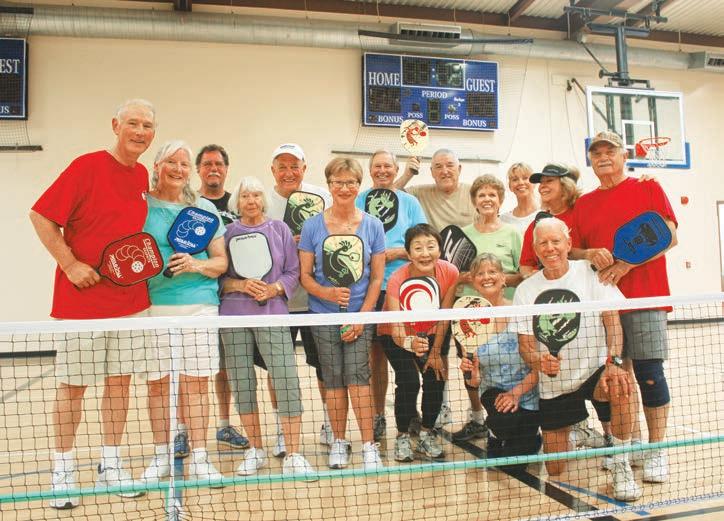
he sport of pickleball might have a peculiar name, but the action is very familiar. The court on which it is played is small but the boundaries and movements required are easily understood. It is considered by many to be the fastest-growing sport in the United States, and it is one of the more unique activities out there today.
“It’s like ping pong on steroids.” Dana Point Pickleball co-founder Gary Koupal said, perhaps more accurately, when describing the game.
Pickleball was created in 1965 and has since become extremely popular nationwide. According to the USA Pickleball Association, more than 2.5 million people across North America play the sport, and it has become a favorite amongst seniors. It is a mix between tennis and badminton that does not demand an excessive amount of movement when played at the recreational level.
Koupal and his wife and group co-founder Patti are the resident pickleball experts in the tri-city area. Gary and Patti can be found doling out game strategy and rules inside the Dana Point Community Center gym every Tuesday and Thursday morning as they lead the members of Dana Point Pickleball in organized games.
The Koupals started the club in 2016 and joined up with the Dana Point Community Center to provide free court usage for all interested players. They are certified ambassadors of the USAPA and teach beginners the fundamentals and rules so people can play the first time they show up for a gym session. Dana Point Pickleball also provides equipment free of charge.
Since the group started in 2016, their numbers have grown to include more than 50 weekly members. The group has players that range from ages 40 to 80.
A reason for the game’s widespread popularity, particularly amongst seniors, is that it accommodates all skill levels and is user-friendly.
Games usually last around 15 minutes, and a player can achieve anywhere from two to four miles worth of steps in a twohour window, Gary estimates.
A pickleball game features four players, two to a side, hitting a plastic ball back and forth into the other team’s area with paddles, much like the action of tennis. The scoring system is similar to ping pong, and there is a low net that divides the court.
Once the ball is served and in play, players creep closer to the net and most of the action takes place in close quarters. The action inside tight spaces provides a good low-impact exercise, but it also gets the players’ minds thinking strategically.
“A lot of people are not as agile. I can’t run up to it, but I was practicing all the strategy,” Patti Koupal said. “Some people are naturally just stronger and better but you can kind of balance it off as you play around.”
“People come and play (pickleball) and they have a smile. They come in and play and say ‘Oh, that was a good shot. I had a good time’. It’s just a natural instinct,” Gary Koupal added.
Dana Point Pickleball is open to everyone ages 18 and up, and meets every Tuesday and Thursday at the Dana Point Community Center from 8- to 10:30 a.m. For more information visit www.danapointpickleballblog.blogspot.com.
BY MATT CORTINA
t’s a part of the circle of life for many: parents take care of their children when they’re young, and children in turn take care of their parents when they’re old. There’s a beautiful symmetry in the way parentchild units help each other in times of need.
Nevertheless, it’s not always easy to see our parents get older, and the transition from child to caretaker can be difficult. Luckily, you’re not the first to go through the process, and there are tons of resources from state and federal aging authorities to nonprofit groups to help you through the process.
Here are a few key points aggregated from the Department of State and the AARP to keep in mind as you begin the process of caring for your aging parents.
Communicate
The first step to figuring out any elderly care plan is to communicate with your parent or parents. Let them know that change will only come slowly, and that their quality of life is paramount. They should feel like they are in control of the decisions that will affect the next chapter of their lives. Be sure you know what their concerns are as they age, and also what they hope to accomplish.
Know the Warning Signs
Oftentimes, parents will either hide issues from their children or think small details that they’ve lived with, and dealt with, for a while are things they are in control of. Older folks also may develop physical or mental illnesses that they are unable to control. So it’s helpful to know that in conjunction with communicating with your parents, you should educate

yourself on common signs that indicate they need help. Failure to take medication, sudden weight loss, burns or injury marks, extreme forgetfulness or suspicion and deterioration of personal habits can all be signs that something is happening with your loved one, and a medical professional should be consulted.
Whether your parents decide to continue living in their homes or move to a senior facility, it’s good to research the caretaking options available to your family. Senior living facilities range from hands-off 55-andolder living communities to round-the-clock assisted living. Check with your parents’ insurance provider, often Medicaid, to
determine what facilities are available. If your parent or parents choose to stay home, research caretaking companies that can provide companionship, basic housekeeping and food preparation when you’re not around. The County of Orange also provides services to senior citizens.
It can frankly be exhausting to care for your parents, especially if you have young children and work to manage. That’s why it’s important to delegate responsibility with family, friends and service organizations; communicate with your family and your parents about the toll it’s taking; and stick to the goals you set for yourself with regards to caring for your parents.



BY MATT CORTINA
echnology enables us to stay in touch with friends and family and conduct a lot of business from the comfort of our own homes. No doubt, it’s a vital piece of aging well. But scammers have long been using telephone and internet channels to bilk people—particularly seniors—out of money.
The Federal Bureau of Investigation (FBI) highlights several reasons why seniors are often the targets of phone and internet scams. Seniors tend to have nest egg financial resources, which make them targets for scammers. Folks who grew up before 1950 also tend to be more trusting, or at least more willing to hear what a scammer has to say, and thus more likely to be persuaded. Seniors also may feel ashamed that they’ve been had by a










scammer, and thus unwilling to report it— though who can blame someone for being taken, it’s important to let officials know what’s going around the community.
The nonprofit National Council on Aging as well as local law enforcement has
highlighted several common scams for which to look out.
In this scam, a person will call you or send you an email indicating that they have a large amount of money and is willing to give you some of it if only you divulge your bank account information or put up money of your own. This is the notorious “Nigerian prince” scam, wherein a member of the African country’s royalty, potentially a relative of yours, says it’s your lucky day. But, it’s not. And you should be wary of any offer like this, even if a lawyer or advocate calls to back up the claim.
Unfortunately, access to the names of your friends or relatives may be readily available on the internet to scammers. That’s why you may get a phone call or email saying that that person is in trouble and needs money wired to them immediately. But be aware of the person sending that message, even if they have an official-sounding title or email address. Always check with the relative in question, or feel free to contact the Orange County Sheriff’s Department to check out any potential scam.
Scammers will sometimes try to convince seniors that there’s a once-in-a-life-
time product guaranteed to extend life and vitality. With all the products advertised on TV and the internet nowadays, it’s easy to believe the phone is just another avenue through which to be sold a product. But often, these products never come after payment is received.
Who can forget the episode of Seinfeld where George gives out “donations” to the “Human Fund,” as an office holiday gift? Of course, he made up the Human Fund, thus having to not pay for gifts. Scammers will use the same tactic, although with less hilarious results. Be aware of anyone soliciting donations for any nonprofit, and do your research on the organization before committing to any payment.
There’s a lot we still don’t know about email scams—as technology and virus blockers change, so do scams. But there is a common tactic being employed. Often called phishing, scammers will send you an email asking to verify personal or financial information. This can result in everything from full robbery of your sensitive information to installation of a virus on your computer. Get a good virus scanner on your computer, be very skeptical of opening anything in your email’s junk box and if in doubt, check with a friend, family member or other authority.



BY TOM BLAKE
e who live in the tri-city area are blessed with a wonderful climate, a beautiful ocean and beaches, and a plethora of outdoor activity opportunities. The people aover 50 I encounter embrace life in so many positive ways. Here is how some of our local citizens are aging well.
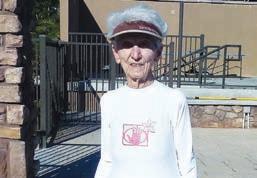

Ruth Levitan, a widow, is a spry 97 Ruth has lived in the same home in Dana Point for 42 years. Three times a week, she does water aerobics at the Niguel Shores pool with the Dippy Dolphins. Ruth says, “I also belong to the Garden Club, Women’s Club and a reading club (one book per month). I do bible study at my church (with homework), walk daily and eat fresh fruit and vegetables. I avoid starchy foods.”
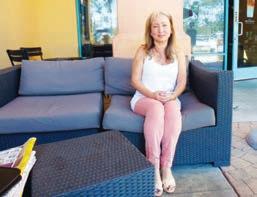

Yoko Smith, 62, San Juan Capistrano, says, “I have a positive attitude and will do anything fun, not dangerous and not skydiving.
“After retiring from a career in industrial engineering in 2010, I’ve had the time of my life: traveling, bike riding, hiking, snow skiing, and taking Zumba and Silver Sneaker classes. In 2016, I sold my home in San Diego and moved to San Juan Capistrano to be near my son and his wife. My grandson was born this January and what a blessing he is!
“I attend a wonderful church (Saddleback Church), play poker with an eclectic group of guys on Fridays, and have dates with my long-distance friend on weekends I traveled to Iceland in February and took a cruise to Vancouver last week. One of my goals in 2017 is to learn standup paddle boarding. Also, if anyone would like to be my bike riding or hiking buddy, let Tom know.”
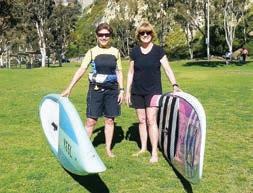
Marilyn Brown and Laura Schreibman are exercise and stand up paddle boarding friends
Brown, 72, says, “I’ve been widowed three years, a San Clemente resident for 37 years, retired Hospice Registered Nurse, mother of three sons, grandmother of four, and daughter to my 94-year-old mother. I am a blessed woman with a loving family, great friends and neighbors.
Marilyn says, “I do stand up paddle boarding (SUP) both inside and outside of Dana Harbor two to three times a week.
“I keep track of my daily steps and try to achieve 10,000 steps a day. My friend and I share a personal trainer twice a week and I belong to Fitness Elite Women’s Gym in Laguna Niguel where I participate in Reformer Pilates, Barre and Urban Rebound classes. I enjoy gardening, belonging to a book club, and recently became a member of Soroptimist of Capistrano Bay and travel as much as I can.
Schreibman, 70, San Clemente, says, “Aging well means continuing an active, involved, challenging lifestyle. Three years ago, I retired from my position as Professor of Psychology at University of California, San Diego, where I taught and conducted research for 30 years.
“I am involved in a lot of exercise activities, six days a week. I take Pilates and Barre classes, work with a personal trainer, and have taken up SUP with a vengeance!
“In college, I played guitar. I have resumed playing in retirement. Social isolation is a huge problem for retirees so I retain prior friendships and make new ones. Plus, my husband and I travel for leisure.”
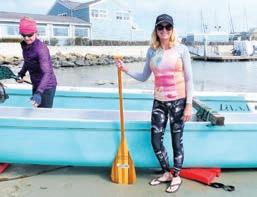
Linda Hakim, 62, a widow, says, “I have paddled with the Dana Point Outrigger Canoe Club for 20 years. We practice
for two to three hours, three times a week, either in the Harbor or in the ocean. This is an excellent sport to keep you in good overall shape. I love being on the ocean with fresh air, sunshine and a great group of women.
“I recently started strength training with a personal trainer who is also my outrigger coach. I try to stay slim by eating healthy.
“Spending time with my 10-year-old granddaughter is a priority. We like to travel and adventure out together. We go camping, hiking, and take lots of road trips.”
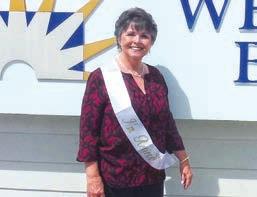
Karen Jensen got a great start to aging well—after working for 30 years--by retiring March 30 from Pacific Western Bank, where she was as an assistant vice president.
Karen said, “This chapter will bring a lovely new experience taking up forgotten joys like planting flowers on a beautiful spring day with my sweetheart of almost 50 years, traveling to see our loved ones and actually baking (instead of buying cookies for our six grandkids!).
“Having time to spend relaxing with my Bible instead of rushing through and missing the blessings will be precious.
“I see the golden commodity that has been missing is time. I plan to take advantage and use it or waste it well! Happy times looking back and happy times looking ahead.”
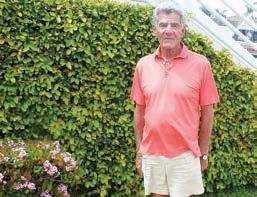
Ken Stetter is aging well. Retired for 14 years, in his 70s, he takes no medications or pills. Ken says, “Country and Western dancing is my passion; I dance three or four times each week. You can find me at the Swallows Inn in San Juan Capistrano on Thursday nights and Sun-
day afternoons, and at Stillwater in Dana Point most Wednesday nights.
“I walked every day in 2016. And I watch what I eat; it’s usually yogurt and fruit for lunch. Recently, a friend and I went to Texas and danced in Austin, San Antonio and Bandera.
“If senior single men want to meet nice women, take up country dancing. See you at the Swallows!”
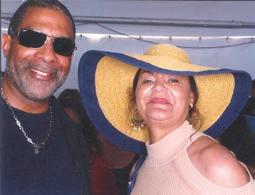
Mike and Jane Lockett, owners of The UPS Store on PCH in Dana Point, believe surrounding themselves with good people helps them stay young. They said, “We have a saying in our family, ‘If your house is not in order, everything else falls by the wayside.’ It’s important for us to put our family and each other first.
“We love walking our dog Zo in our beautiful neighborhood, eating at our local restaurants, and attending our church in Capistrano Beach. Our grandson, a senior at Dana Hills High School, helps to keep us current. Nurturing our personal relationships helps us to be better in all that we do.”
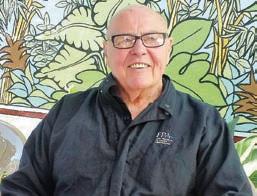
Terry Lee Ives, San Clemente, says, “To me, aging well means I take individual personal responsibility for my health, creating a quality of life as I age into my 70s, 80s, 90s, and over 100!
“As a former triathlete, I recognize the importance of the food I eat, the time spent on cardio exercise, mind and body, and my faith, attitude and positive thinking are important.
“I am active in selling and advising and servicing Medicare A, B, C, and D benefits. I plan to work until age 90, and be a ski instructor until age 101. I have had a second home at the base of Beaver Creek Mountain in Colorado since 1996 and have skied in Colorado for 32 years.”