19 minute read
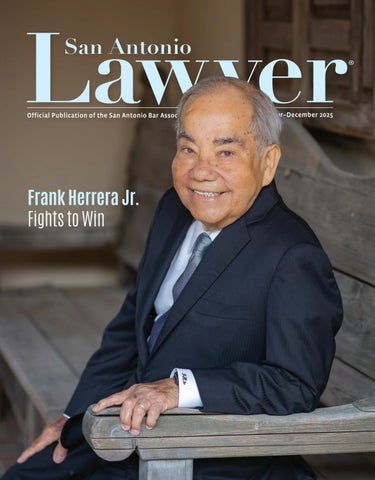
Frank Herrera Jr. Fights to Win

By Rachel Lynch
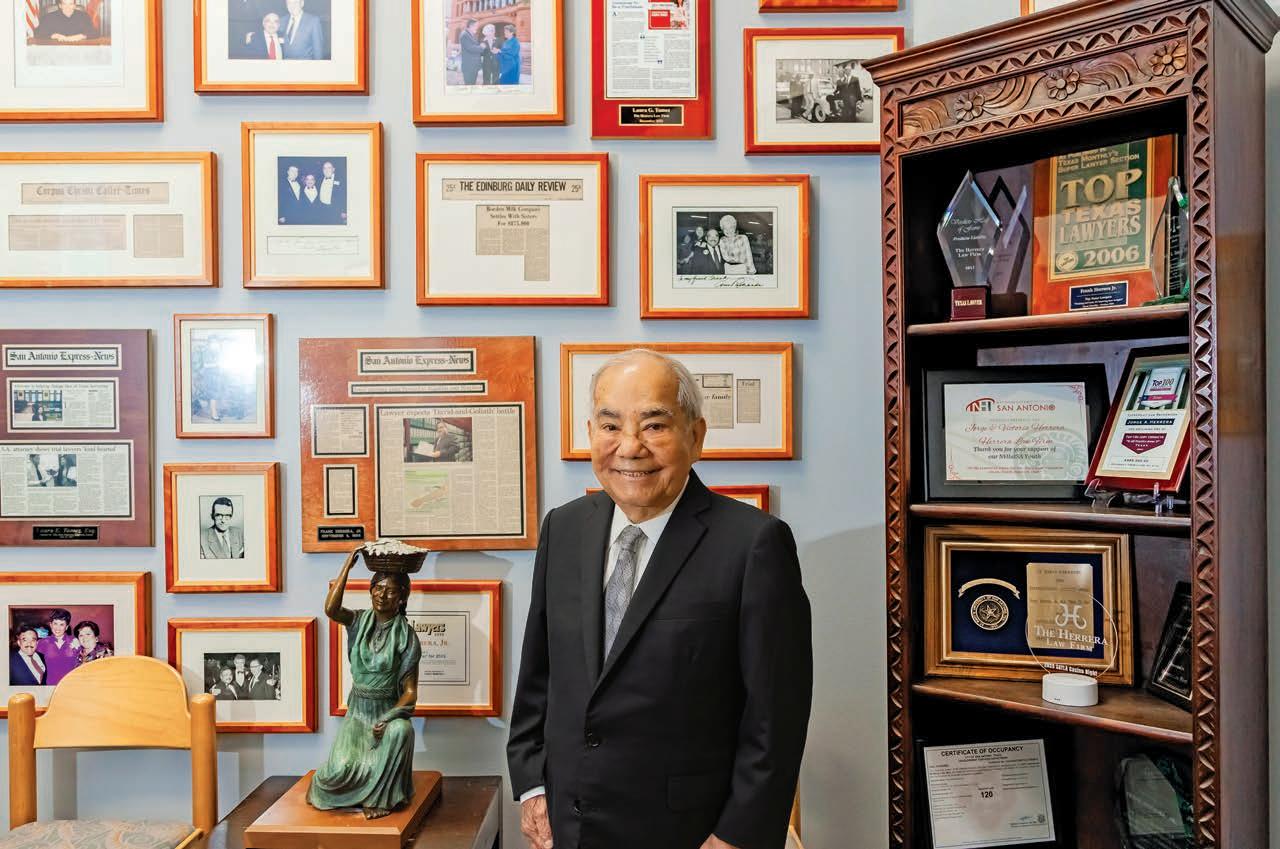
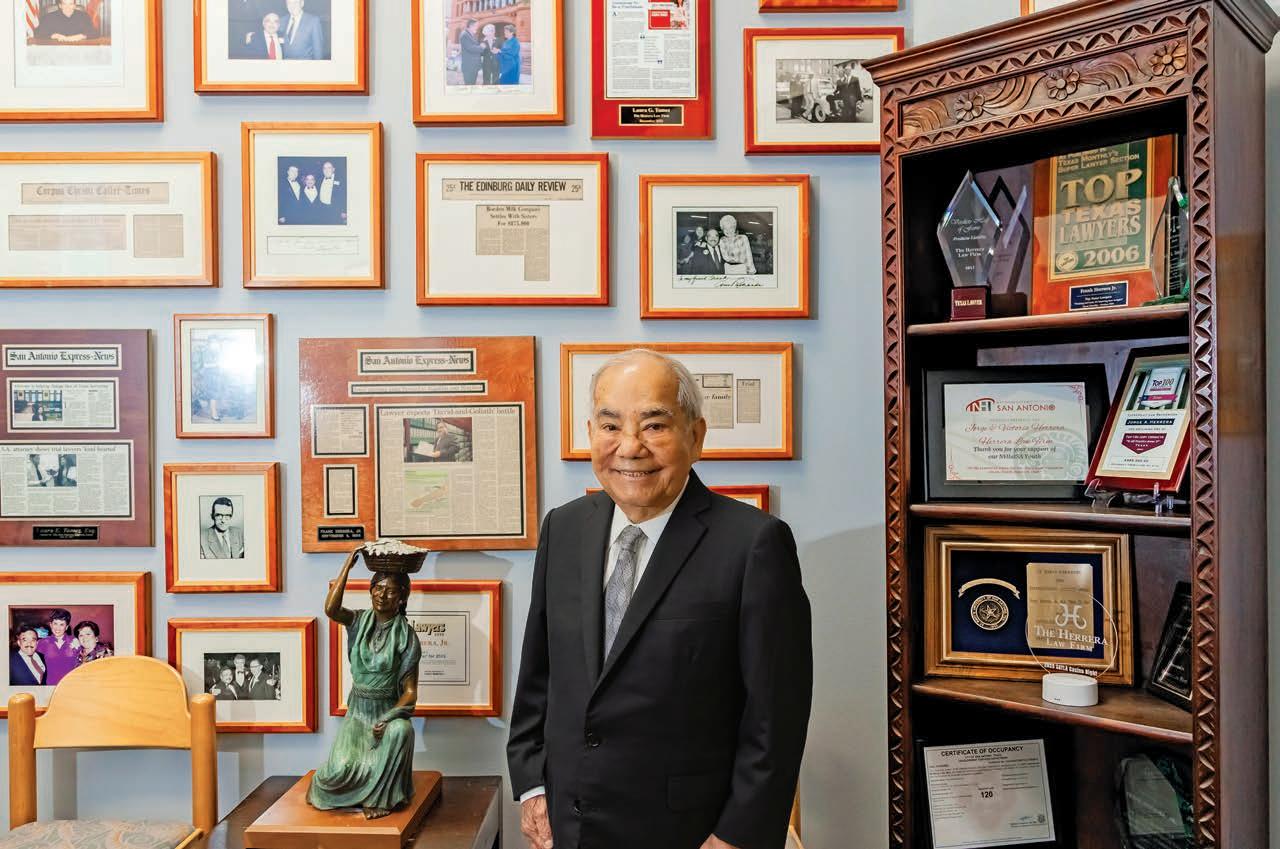
Cover and feature photos by Jessica Mewborne Photography on location at the Herrera Law Firm in San Antonio.
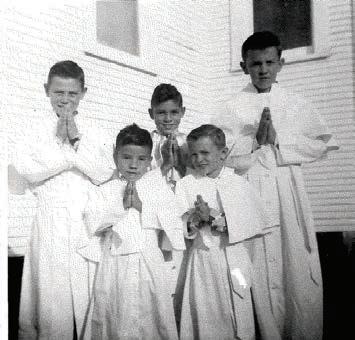
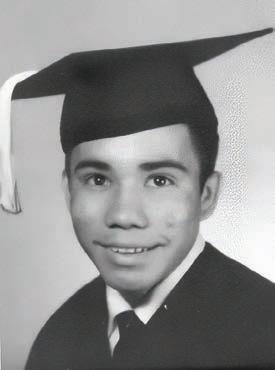
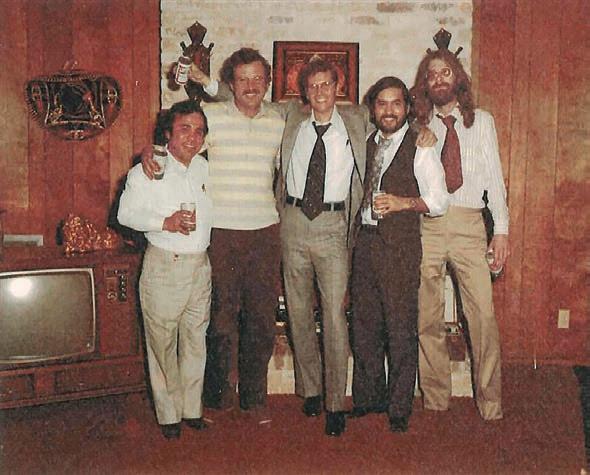
In April of 2024, I met Frank Herrera Jr. in the conference room at The Herrera Law Firm. Frank sat at the head of the table. His son, Jorge, and his wife, Cecilia, sat on his left. Spread out on the conference table in front of them were photos: Frank as a child wearing a church robe, Frank grinning in a graduation cap, Frank fishing, Frank with Phil Hardberger, Jim Branton, and others in the 80s. As Frank, Jorge, and Cecilia showed me photos and told stories, I came to understand the importance of Frank’s motto: “Winning isn’t luck, it’s knowing how to fight.” This motto applies to much more than Frank’s nearly-sixty-year law career. Frank has fought for everything he has.
Despite his small stature, Frank easily commands a room. His intellect shines as he speaks; his smile is infectious. His childhood priest once told him he has “the gift of gab.” You can’t help but lean in and listen closely when he talks.
And there is a lot to talk about. The tales of Frank Herrera Jr. could fill an epic—a sprawling, multi-book biography, packed with adventure, humor, hard work, love, loss, success, grit, and family. At the center of the story is a man with a huge heart, an unbeatable work ethic, and a deep desire to make a positive difference in people’s lives.
A Lawyer Is Born
The story starts in Edna, Texas, about two hours southwest of Houston. Frank was born in Edna in 1943, when the city had a population of about 3,000. Frank’s father, Frank Sr., was a mechanic and an Edna native. His mother, Elvira, was a Mexican migrant worker who cleaned motels. Frank was the second oldest of six children. The family lived in a modest house without interior doors. Curtains separated the rooms. The family used an outhouse until Frank Sr., a skilled builder, constructed an attached bathroom.
At age seven or eight, Frank accompanied his father to the Jackson County Courthouse to watch a local trial. “I didn’t know what was going on,” Frank said, “but that’s what sparked the idea [of becoming a lawyer].” When Frank returned home, he told his mother that he wanted to become a lawyer.
The trial was that of Pete Hernandez, a migrant worker accused of murder. Hernandez was indicted by an all-White jury. At that time, no Mexican Americans had served on a Jackson County jury in over 25 years. The indictment raised questions about the legal treatment of Mexican Americans. The trial evolved into Hernandez v. Texas, a Supreme Court case that established Mexican Americans as an equal class protected under the Fourteenth Amendment. Hernandez’s conviction was overturned because he was convicted by a jury selected from an all-White jury pool. Frank followed the Hernandez case as it developed. He observed civil rights attorney Gus Garcia become the first Mexican American to argue before the Supreme Court. In Garcia, Frank found a hero. Frank decided to become a lawyer and dedicated himself to making a difference.
Edna, a predominantly White city, offered little opportunity for a poor Hispanic man. Like many people in Edna, Frank worked in the cotton and oil fields. But Frank always planned to leave Edna, attend college, and then go to law school. As Frank’s contemporary and friend Judge Juan Vasquez explained, Frank grew up in the golden era of the American Dream; “it seemed like if you had the work ethic, it would eventually be rewarded.” Frank had the work ethic, but people doubted him. According to his son Jorge, people repeatedly told Frank that he shouldn’t bother applying to college, and that he should “stay here, follow the path that probably is specifically chosen for you.”
Winning isn’t luck, it’s knowing how to fight.
But Frank chose his own path, and his parents supported him. Neither Frank Sr. nor Elvira finished grade school, and they wanted to give their children the opportunities they could not access. They never told Frank that his dream of being a lawyer was out of reach. They fostered his intellect, drive, and dedication, and encouraged their children to work hard and aim high.
Frank’s mother was his number one cheerleader. When people told Frank not to apply to college, Elvira would say, “No. He wants to go to college, he’s going to go to college.” When people asked how the family would afford a college education, Elvira would say, “We’ll figure it out.” When Frank was admitted to St. Mary’s University in San Antonio, his high school principal joked about the cost, telling Elvira, “You must have an oil well in your backyard!” Elvira responded, “No oil well. Brains!”
Elvira was confident Frank would earn scholarships, and he did. To cover the rest of the cost, the family scraped together what they had and took out loans. In 1960, Frank graduated high school and left Edna for college in the big city.
Educating a Lawyer
Although the transition from tiny Edna to bustling San Antonio initially left Frank “overwhelmed,” he thrived at St. Mary’s University. There, he studied English and Political Science. Personable and passionate, Frank quickly made friends. One of his closest college friends is Robert Brischetto. Robert, who is from St. Louis, arrived for his freshman year at St. Mary’s University by train. Robert recalled stepping onto the railroad platform and being greeted by two things: the wild weather of Hurricane Carla, and Frank. Frank was the first Mexican American Robert had ever met.
That day “started a lifelong friendship” for Robert and Frank. They are godfathers of each other’s children and consider each other a brother. They are also fraternity brothers. To “set an example for integration,” the two and a few other students joined the historically Black fraternity, Alpha Pi Alpha.
Frank graduated with a bachelor’s degree in 1964. He then attended St. Mary’s University School of Law. One of his law professors was Carlos Cadena, who had worked with Gus Garcia on Hernandez and was involved with several other less high-profile civil rights cases. According to Robert, Cadena took Frank under his wing and Cadena’s mentorship “was important for Frank’s focus in his career.” Cadena was the type of lawyer Frank had admired in childhood: someone who fought tirelessly to improve people’s lives and their access to rights, as well as a fellow Mexican American. Cadena’s guidance allowed Frank to develop his own goals as a lawyer. Frank completed his law degree in just two and a half years.
The Beginning of a Prolific Legal Career
Frank was admitted to the Texas Bar in 1967. That year, he began working for the National Labor Relations Board. He worked there for two years, until Arthur Gochman offered him a job as a labor law attorney and, importantly, a raise. “Arthur said, ‘Frank, how much do you earn now, at the government?’ I said, ‘$9,000.’ He said, ‘I’ll pay you 10.’ I said, ‘I’m gone!’”
After working with Gochman, Frank started his own law firm. Frank’s parents refinanced their home so he could afford office supplies. A few years later, Frank met fellow attorney Phil Hardberger in a downtown Travelodge. Phil recalled the beginning of their relationship fondly: “Every time I’d go into the Travelodge, I’d see this little Hispanic guy with a whole lot of personality drinking coffee. So, we started drinking coffee together. And then sometimes we didn’t just drink coffee. . . . We’d go to the Raging Bull and have a beer or so together, but in any case, we became friends. . . .”
Over the next year, Frank and Phil bonded over drinks, their legal work, and their similar upbringings, and eventually found themselves in a position to go from friends to business partners. They started the Law Firm of Hardberger & Herrera.
According to Jorge, they got off to a rocky start, trying cases together and losing “several trials in a row.” Finally, a judge suggested they try cases separately. They did, and they started winning. From then on, Frank and Phil split everything—caseload, earnings, losses—50/50, made a promise to never say “I told you so,” and became a powerful team.
“Frank always brought in more clients than I did,” Phil admitted with appreciation. “People really inherently like him.” Phil admires Frank’s tenacity, and how “he would go to the last extreme to help a client.” He remembered how Frank, on more than one occasion, argued for up to eight hours over a half-cent-an-hour wage increase for laborers. Frank would “just sit there like a statue, hardly saying anything, but never give in. And in the end, he always got what he was arguing for.” Frank’s dedication to bettering the lives of working people any way he could, be it a half-cent-per-hour or a $900,000 settlement, helped Hardberger & Herrera grow.
Frank’s Spanish also helped the firm, as did Phil’s pilot’s license. They purchased a plane and flew to Mexico to represent Mexican laborers who had been injured on the job in the United States. Frank provided a friendly face and a familiar language to poor workers who otherwise might not have found representation. The plane provided these clients with attorneys who could come to them, rather than making them return to the U.S.
Amid all their hard work, Frank and Phil never lost their appreciation for spending time together. Sometimes they’d hop in the plane just for fun. If they’d had a good day, Frank would look at Phil and say, “We’ve made enough money for today, and the sky is blue! Let’s go flying.”
Hardberger & Herrera operated for twelve years. Over those years, other attorneys joined and left. Jim Branton, Judith Douglas, Andy Mireles, and Don Walheim all passed through, but Frank and Phil were always the major partners. Thanks to their 50/50 split model, they never had a fight. They remain friends, so close that they are “part of the family.”
Even the firm’s dissolution was peaceful. Frank had always wanted to own his own firm, so, in 1983, he and Phil went their separate ways. To divide their nearly 400 cases, they had a secretary put all the client names into a hat and took turns drawing slips of paper. “Some of them were million-dollar cases, and some of them were worth about five dollars,” Phil laughed. “It was kind of a hilarious deal, even though we were sad about parting.” Once the hat was empty, their twelve years of legal partnership officially ended, they went over to the Raging Bull and had a drink.
The Herreras and The Herrera Law Firm
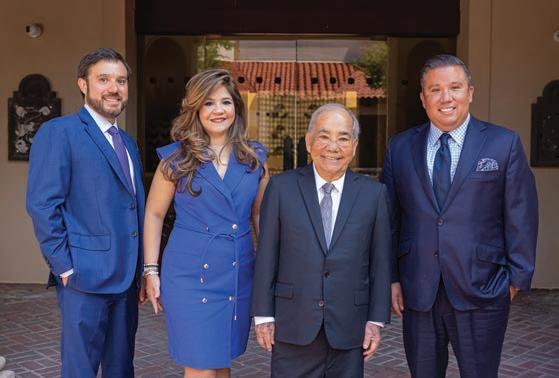
The opening of The Law Offices of Frank Herrera Jr. was a moment Frank had worked toward most of his life. The firm reflected his tireless work, passion, business acumen, and fighting spirit. More than forty years later, the firm still thrives as The Herrera Law Firm. Located in a beautiful and historic building in the heart of San Antonio’s West Side, the firm grew into a family affair, with Frank’s sons Jorge and Javier working with him, along with partner Laura Tamez who is like Frank’s daughter.
Jorge and Javier are Frank’s only children. Frank met their mother, Alia Kifuri, while at Hardberger & Herrera. At the time, Alia was a representative of Joe Bernal’s 1976 state senate campaign. She went to Frank’s office, hoping to leave with a campaign contribution. She left with Frank’s promise to contribute and an offer to take her out on a date. Although Alia declined, they saw each other through involvement in Bernal’s campaign. Frank persisted in his invitations. Alia finally agreed to go out with him. Within nine months, they were married.
With the births of sons Jorge and Javier, Alia became a full-time homemaker, involved in her church and local politics. Alia and Frank were active in their sons’ lives, taking part in school activities and sporting events.
In 1994, Alia was diagnosed with cancer. The doctors told her she had six months, but Alia was determined to live another two years, to see Jorge graduate high school and Javier graduate middle school. The boys graduated in May 1996, and Alia passed away in July of the same year. The alumni center at Central Catholic High School—the boys’ alma mater—is named in Alia’s honor.
After Alia passed, Jorge delayed college attendance to stay home with his family. At Frank’s urging, Jorge took part-time classes at St. Mary’s University to stay on track. Eventually, he and Javier both completed college and law school, following in their dad’s footsteps.
Jorge and Javier grew up seeing their dad in action, in court and in the community. Seeing “what he did, and the people he helped,” was “inspirational,” said Jorge. But even more than Frank’s legal work, Jorge was inspired by his dad’s work with nonprofits. He remembers meeting workers whose jobs Frank tried to save by preventing the closure of Kelly Air Force Base. Jorge also remembers Frank’s role as Chair of the Mexican American Legal Defense and Education Fund. Today, Jorge sits on that board—in “the Frank seat.”
Like his parents, Frank recognized his children’s intelligence and encouraged hard work and education. “He always pushed, and said, ‘whatever you’re gonna do, just be the best,’” Jorge remembered. Growing up, the boys “weren’t even to think about silver. The standard was always gold.” Frank’s high expectations served his sons well. Jorge and Javier attended rigorous colleges (Columbia University and Boston College) and law schools (The University of Texas and St. Mary’s University School of Law).
Frank also taught his sons the value of balancing work with fun. During college, Frank often spontaneously visited his sons, bringing a weekend of good meals and better experiences. Javier’s favorite memory is the time he, his friends, and Frank tailgated a Boston College football game. Fresh from neck surgery, and still confined in a brace, Frank leaned into the rowdy tradition, enjoying the beer, cocktails, and greasy food as much as the students. Whenever Boston College scored a touchdown, Javier and his friends tossed Frank high into the air in celebration. Frank called Jorge after the weekend was over to let him know he’d had a “fantastic time.”
Following law school, Jorge and Javier began working with their dad. Frank’s expectations remained high. When Jorge passed the bar, he and Frank went out drinking. The next day, Frank walked into Jorge’s office and tossed a folder on his desk. “You’ve got a deposition tomorrow,” he said. “Don’t screw it up.” Jorge spent the rest of the day preparing, drove alone to the Valley, where the deposition would take place, and continued preparing. At 9:00 p.m., Frank knocked on Jorge’s hotel room door. The next day in court, Jorge slipped Frank a sticky note with the client’s name on it, and the two of them tried the case together. “It was fun. We had a blast, remember?” Jorge asked, and Frank agreed. The pair got a great verdict for the client, all because Frank insisted on trying the case.
The Herrera men have worked together for over a decade. Jorge, Javier, and Laura split the firm’s responsibilities, while Frank is the chairman.
A New Love
In the meantime, Frank met his second wife, Cecilia, an employee of the Department of State. Cecilia was stationed in Mexico City and met Frank when he was in town settling a case. They connected easily and began to talk on the phone. The next time Frank was in Mexico City, he asked her out.
Frank took Cecilia to the Xochimilco Floating Gardens. Frank showered Cecilia with gestures and gifts. He had a worker take the name off one barge and hammer it onto their barge, so that they could ride on the Cecilia He bought her beads, orchids, and Mariachi serenades. Cecilia told him, “Frank, I am not at all impressed by what you are doing.”
On their barge, there was a bucket with three beers, which they drank. When their barge docked, the attendant informed them the beers cost $1.25. Frank had spent all the money he had, so “without missing a beat, he turns to the man and says, ‘Can you keep her while I go look for some money?’” Cecilia laughed.
Luckily, Frank found some money quickly. And luckily, Cecilia still wanted to see him again. They began to date long distance. Cecilia met Jorge and Javier, and two years later she and Frank set the date for their wedding.
While preparing for the wedding, Cecilia realized it was time for her annual mammogram. She planned to postpone it until after the wedding and honeymoon, but Frank insisted that she go. His insistence likely saved her life; at the appointment, Cecilia was diagnosed with advanced breast cancer.
“I knew that was a dealbreaker,” Cecilia explained. “I mean, the boys had lost their mother, and Frank . . . .” Frank’s mother had died of cancer a few years before. Cecilia tried to cancel the wedding, but Frank, Jorge, and Javier stuck by her. When she finished chemo and radiation treatment, she and Frank got married.
Cecilia has been cancer free for 25 years, and she and Frank will celebrate their 25th anniversary this November. Because of Cecilia’s job with the Department of State, much of their marriage has been long-distance, but it has been wonderful regardless. “We’ve had a fabulous, fabulous life,” Cecilia said. “He’s a very special man and I feel blessed to be a part of this family.”
The Mutual Herrera Enterprises Cell
Being a part of the Herrera family means being involved in what Henry Cisneros jokingly calls “the Mutual Herrera Enterprises Cell.” The Cell includes things like: The Herrera Law Firm, real estate development on the West Side, and engagement with the community through a variety of social, political, and economic causes. Frank, Jorge, Javier, and their wives, are instrumental in ensuring that Herrera endeavors run smoothly.
A large part of the Herreras’ responsibilities relate to their roles as Tier 1 suppliers for Toyota, a job which they took on when Jorge was in law school. Frank requested that Jorge come to San Antonio for a meeting. At the meeting, Henry Cisneros informed the Herreras, Max Navarro, Fernando Reyes, and Berto Guerra that a major corporation planned to set up in San Antonio, and they were looking for Tier 1 suppliers. Without even knowing which corporation, or what a Tier 1 supplier was, Frank told Jorge, “We’re gonna do it.”
Soon Frank, Jorge, and Cecilia were studying up on Japanese culture and flying across the globe to meet their new business partners. Toyota hugely impacted San Antonio’s economic development, creating steady, well-paying, blue-collar jobs. Years later, the Herreras remain an integral part of Toyota, handling inventory, storage, and shipping of parts at their warehouses in San Antonio, Dallas, Mississippi, West Virginia, Arizona, and Mexico. “We always joke around about it,” Jorge said, “from his [Frank’s] dad being a mechanic, to dad being the first to go to college, then law school, starting the firm. . . . now Toyota!”
Family and Community Matter
Frank has a special knack for making everyone feel like family. He puts people at ease and earns their trust because he has their best interests at heart. Judge Tina Torres described Frank as “the ultimate host,” whether with close friends like Robert and Phil, clients, young lawyers he mentors, seasoned attorneys, members of the San Antonio community, or Japanese businessmen. Frank makes everyone feel “like, my house is your house. Even if he doesn’t say it, he makes people feel it.”
Frank has successfully reached his childhood goal of making a positive difference in every aspect of his life: his law firm, his businesses, his community, and his family. Judge Vasquez explained, “Frank and I are from the same generation and share a similar, modest upbringing. We were focused on the American dream for our families. Work hard toward a goal, and we believed it would be rewarded. And Frank believes that if people work hard, they should enjoy their version of the American dream, too.” That belief has guided Frank in representing his clients and supporting his community.
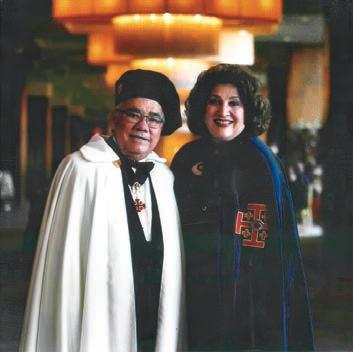
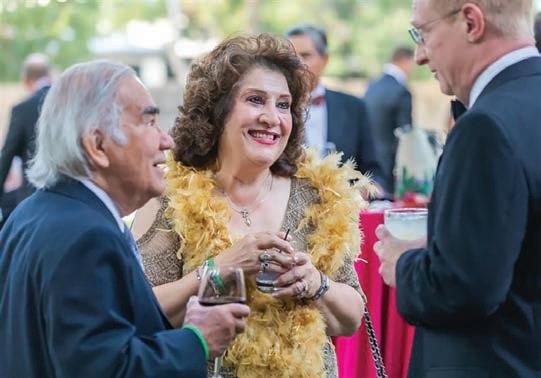
Throughout his career, Frank has been a member of organizations like the New America Alliance and the San Antonio Hispanic Chamber of Commerce. He and Cecilia chair the St. Nicholas Ball, a fundraising event for Catholic Charities. Frank has a long list of awards and accolades: everything from the Mexican government’s prestigious Ohtli award, presented to individuals who have positively affected the lives of Mexican nationals that live abroad, to serving as the Grand Marshal of the 9th annual Cesar Chavez Parade. Most recently, he received the 2024 Texas Trial Lawyers Association Lifetime Achievement Award. Frank shaped himself into the heroic lawyer of the people, the champion for justice, that Gus Garcia inspired him to be years ago.
In the conference room of the Herrera Law Firm, taking up nearly an entire wall, hangs a painting. It is a portrait of Frank’s parents, standing in front of their home in Edna. Frank commissioned the painting from artist Jesse Treviño as a reminder of where he came from, how hard he worked, and how his family helped get him to where he is today. As we talked, Frank looked at the painting often. His parents looked back and smiled. They raised a fighter.
Rachel Lynch graduated from Sarah Lawrence College. She was born and raised in San Antonio.