A Candid Conversation with a Retired Federal Judge and a Current Law Professor
Get paid faster, control your finances, and stay compliant with 8am LawPay, trusted by 115k+ legal professionals.
Next-business-day deposits that keep cash flowing
True IOLTA protection built for law firms
Endorsed by all 50 state bars, the ABA, and 60+ specialty bars
Discover why thousands of bar members trust LawPay
Learn more at lawpay.com/saba
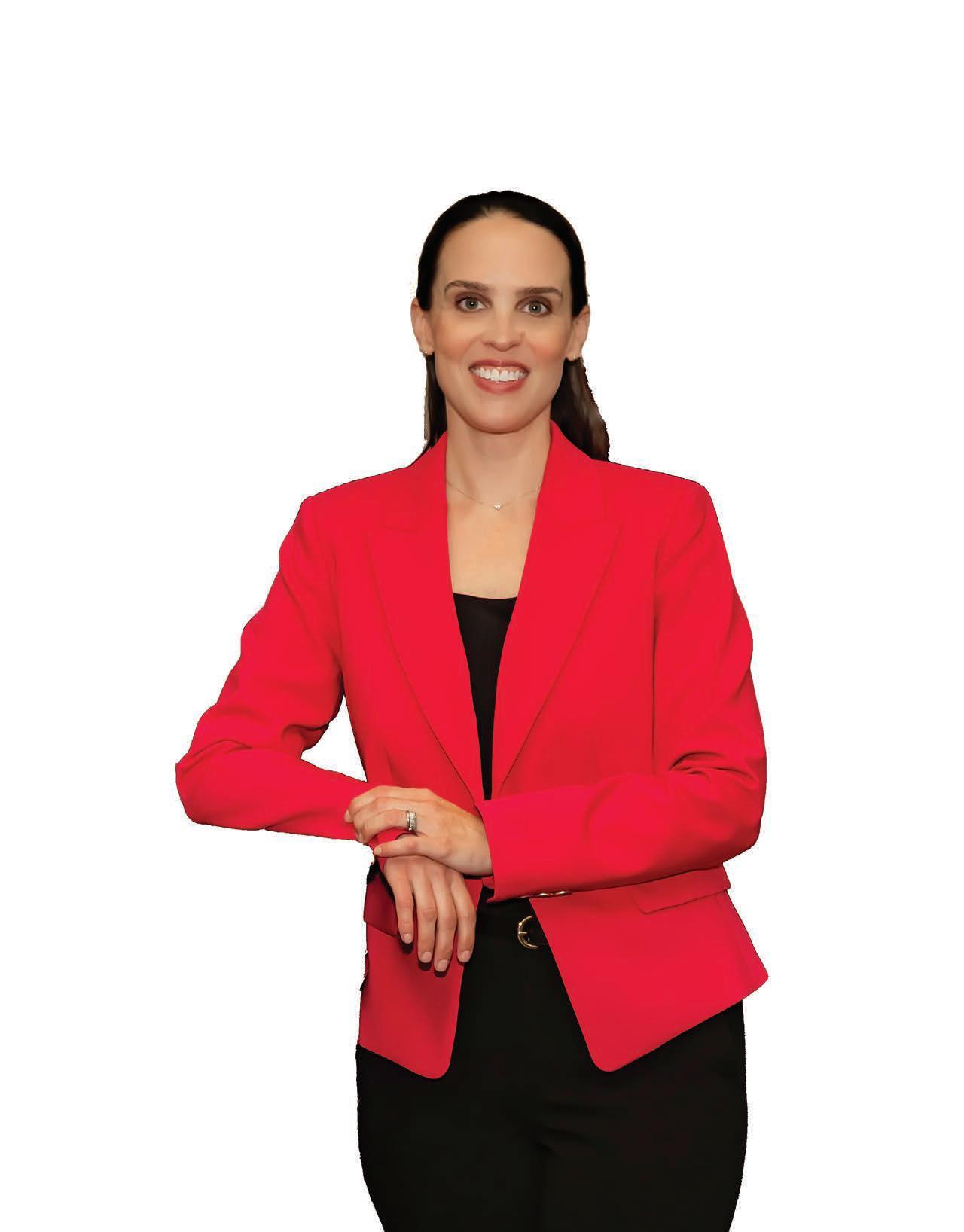
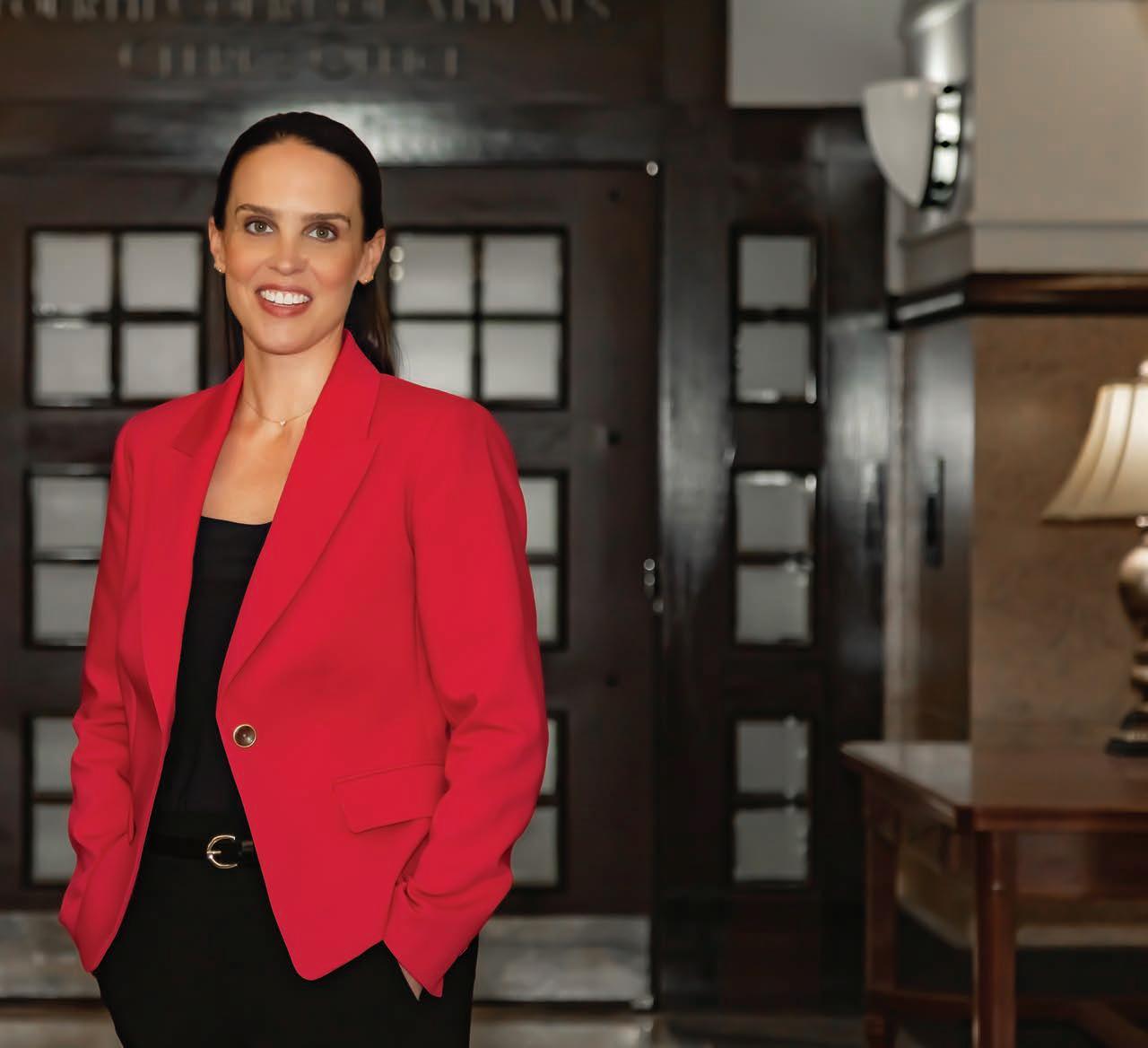
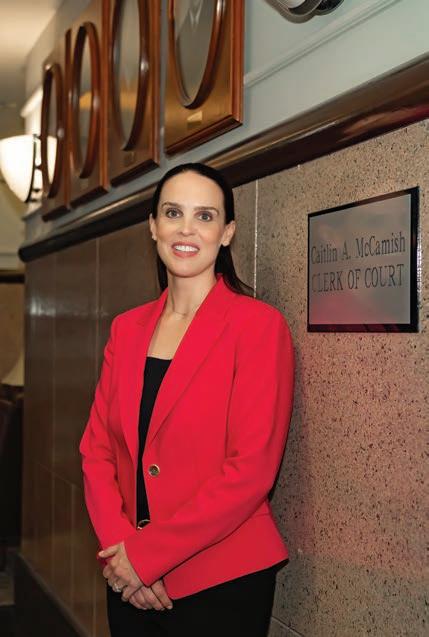
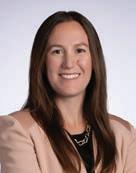
Clerk of Court Caitlin McCamish
Photo by Mewborne Photography on location at the Fourth Court of Appeals
“His grasp of the forces that drive a successful mediation is always spot on. There is not a mediator working today that I would trust more in bringing a case to resolution.”
(Who’s Who Legal 2017)
“Donald is a very quick study and understands complex financial cases very quickly. He is thorough, intelligent and hard-working.” (Chambers 2025)
“He’s very charming, very professional, very understanding and empathetic to what’s going on.” (Chambers 2023)
“An extremely effective mediator in a wide variety of situations.” (Best Lawyers 2021)
“An outstanding and innovative mediator.” (Super Lawyers)
Views expressed in San Antonio Lawyer are those of the authors and do not necessarily reflect the views of the San Antonio Bar Association. Publication of an advertisement does not imply endorsement of any product or service. San Antonio Lawyer, the San Antonio Bar Association, and the Publisher reserve the right to edit all materials and assume no responsibility for accuracy, errors, or omissions. San Antonio Lawyer and the Publisher do not knowingly accept false or misleading advertisements or editorials, and do not assume any responsibility should such advertising or editorials appear.
Contributions to San Antonio Lawyer are welcome, but the right is reserved to select materials to be published. Please send all correspondence to info@sabar.org
Archives of San Antonio Lawyer are available at sabar.org. Send address changes to the San Antonio Bar Association.
EDITORS
Editor in Chief
Leslie Sara Hyman
Articles Editor Natalie Wilson
Departments Editor
Cassidy Daniels
PUBLISHING PARTNER
Monarch Media & Consulting, Inc.
512.293.9277 | monarchmediainc.com
Design Direction Andrea Exter Design Sabrina Blackwell
Advertising Sales
Chellie Thompson
For advertising information, contact:
Chellie Thompson, Monarch Media & Consulting, Inc. chellie@monarchmediainc.com
BOARD OF EDITORS
Leslie Sara Hyman, Chair
Pat H. Autry, Vice-Chair
Mary Adair
Naveen Adusumilli
Barry Beer
Amy E. Bitter
Linda Brandmiller
Billy Calve
Paul T. Curl
Cassidy Daniels
Hayley Ellison
Stephen H. Gordon
Per Hardy
Casey Lee
Todd Marquardt
Lauren Miller
Curt Moy
Sara Murray
Chinoso Osonma
Ricardo Aponte Parsi
Steve Peirce
Kerry Simmons
Regina Stone-Harris
ileta! Sumner
Soledad Valenciano
Natalie Wilson
Ex Officio
Nick Guinn
126 E. Nueva, 3rd Floor, San Antonio, Texas 78204 210.227.8822 | sabar.org
OFFICERS
President Nick Guinn
President-Elect
Jaime Vasquez
Treasurer
Emma Cano
Secretary
Elizabeth Provencio
Immediate Past
President
Patricia “Patty”
Rouse Vargas
/
DIRECTORS
Directors (2024–2026)
Jorge Herrera
Abel Martinez
Cynthia Orr
Kristal Thomson
Directors (2025–2027)
Krishna Reddy
Michael Ritter
Elena Villaseñor Sullivan
Collanne West
Executive Director
June Moynihan
State Bar of Texas Directors
Patricia "Patty" Rouse Vargas
Steve Chiscano San Antonio Bar Foundation Chair
BAR ASSOCIATIONS STATE BAR / SA BAR FOUNDATION
Patricia "Patty" Rouse Vargas
Association of Corporate Counsel South/Central TX
Bexar County Women’s Bar Association
Christian Legal Society
Defense Counsel of San Antonio
Federal Bar Association—San Antonio
Mexican-American Bar Association—San Antonio
San Antonio Black Lawyers Association
San Antonio Criminal Defense Lawyers Association
San Antonio Trial Lawyers Association
San Antonio Young Lawyers Association
TEX-ABOTA, American Board of Trial Advocates—San Antonio
William S. Sessions Inn of Court
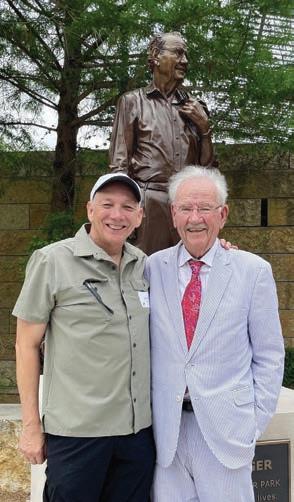
On April 28, 2026, a statue of former mayor Phil Hardberger at Phil Hardberger Park was unveiled. The statue is a life-sized bronze of the former mayor created by artist Armando Hinojosa and funded by the Harvey Najim Foundation. The base of the statue contains a QR code with a link to the July/Aug 2022 San Antonio Lawyer article The Cotton-Picking, Plane-Flying, Boat-Sailing, Mountain-Climbing, Trial-Lawyering, Case-Judging, City-Mayoring, Tree-Hugging Adventures of Phil Hardberger by Steve A. Peirce.
Mural of Judge Fred Biery that was recently painted at the corner of Bandera and Cincinnati in commemoration of his ruling on the Arias v. Noem case, releasing Adrian Conejo Arias and his minor child from ICE custody.
The Area Foundation has launched its Professional Advisor Council, a select group of attorneys alongside nancial and tax professionals working together to strengthen philanthropy across our region.
This inaugural council pairs deep experience in estate and legacy planning with a shared commitment to helping clients integrate charitable giving into their plans.
Learn More and Meet the PAC bit.ly/saafdn-pac
Hayley Almaraz, CPA Partner, ATKG Advisors, LLC
Ashley Brand, CPA Partner, ADKF, PC
Adam Carr Community Bank President, First United Bank
Katherine E. David, JD Attorney, Steptoe & Johnson PLLC
Erica Gay, JD, Vice President and Trust Of cer, Jefferson Bank
Alex Ireta, CFP® Chief Operating Of cer, SWBC
Angela C. Melchor, CFP® Financial Advisor, PNC Wealth Management
Catherine A. Morrison, CFP® Founding Partner and Senior VicePresident, Conservant Capital of Conservant Financial
Gregg Muenster, PhD Senior Philanthropic Advisor, Sendero Family Enterprise
Linde Murphy, CRCP™ President, M.E. Allison & Co., Inc.
Jake Nuno, MS, CFP®, CPWA®, EA Financial Planner, i• nancial
Kim Pruett, CPA Tax Director, the KFORDgroup
Whitney Solcher, CFA® Partner, Chief Investment Of cer, and Senior Advisor, Ulrich Investment Consultants
Charles Weisinger, JD, AEP® President and Managing Attorney, Weisinger Law Firm, PLLC
David White, JD, LL.M., CPA CPA & Attorney, Porter, Rodgers, Dahlman & Gordon, PC
THE OFFICE OF THE CLERK:
Making the Work of Justice Visible
By Natalie Wilson
Allyson Felix, the most decorated woman in the history of Olympic track competition, has famously said: “Everyone sees the glory moments, but they don’t see what happens behind the scenes.” That is true in elite sports and at the Texas Fourth Court of Appeals. The functions of the Fourth Court that are seen by the public and the bar are but the tip of the iceberg of what is required to keep the wheels of justice turning. Behind the scenes, Clerk of Court Caitlin McCamish and her “magnificent” staff ensure that the Fourth Court operates smoothly. Seamless court operations assure the public that the justice system is working, giving the citizenry confidence in the decisions that are rendered, even if they are not favorable. Ms. McCamish keeps a watchful eye on the processes in the Clerk’s Office, bringing to bear lessons she has learned throughout her career.
On April 1, 2026, Ms. McCamish celebrated her first anniversary as the Clerk of Court. She earned both her undergraduate and law degrees from Texas Tech University. Prior to taking her current role, she served approximately twelve years as a prosecutor in Bexar County, was the Director of Title IX at University of the Incarnate Word for three years, and spent a year working remotely as the Director of Training and Technical Assistance for the Clery Center, a non-profit organization in Pennsylvania dedicated to helping colleges and universities comply with requirements related to on-campus crime.
There is no singular path to becoming the Clerk of an appellate court, and Ms. McCamish’s varied experience reflects her deep commitment to public service and her talent for organization and administration. As a prosecutor, one of the first lessons Ms. McCamish learned was that you
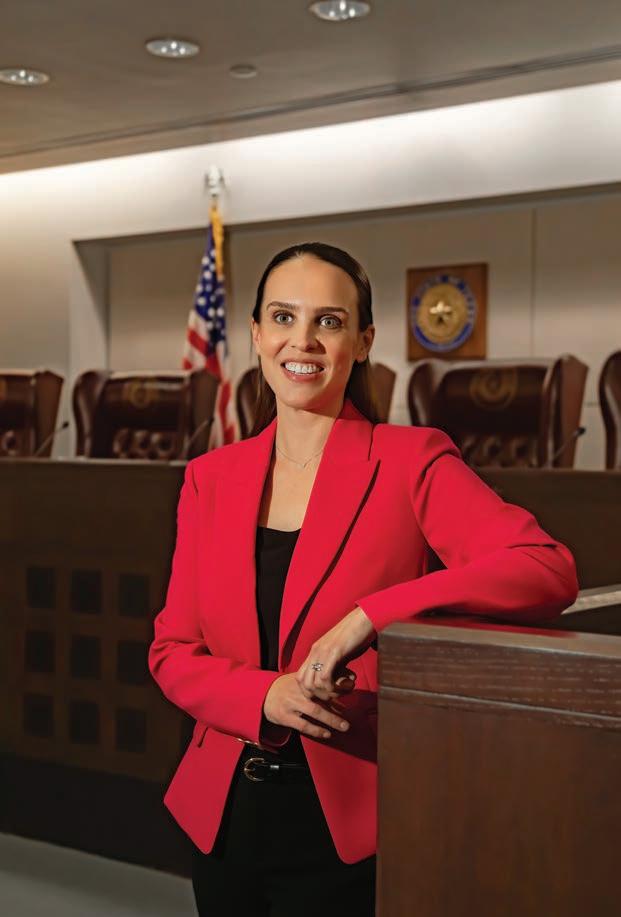
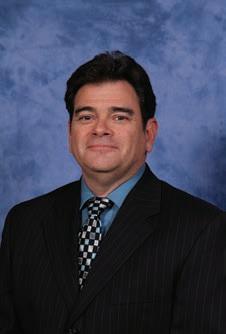
Clerk of Court Caitlin McCamish
Photo by Mewborne Photography on location at the Fourth Court of Appeals
Courts
can’t wait around for stuff to get done, you’ve got to do it yourself. As Clerk, that has translated to nonchalantly crawling under desks during construction to make sure there was adequate space and resources for the two new Staff Attorneys allocated by the Legislature. The myriad duties that fall under the Clerk give Ms. McCamish ample opportunity to roll up her sleeves and make things happen in service of executing the Justices’ vision for the Fourth Court.
It is certainly no small task. Like everything else in Texas, our judicial districts are bigger. The Fourth Court of Appeals was formed in 1893, and at the time, it had jurisdiction over civil appeals in forty-
seven counties. Today, its geographic reach has been reduced to thirtytwo counties, but its subject matter jurisdiction was increased in 1985 when it acquired jurisdiction over criminal appeals as well. The Fourth Court’s geographic jurisdiction is vast, and that naturally translates into a very busy docket.
According to the Annual Statistical Report for the Texas Judiciary report issued for Fiscal Year 2024 (the most recent full report available), the Fourth Court of Appeals had 648 cases added to its docket, disposed of 762 cases, and had 517 cases pending at the end of the fiscal year. In Fiscal Year 2024, the Fourth Court of Appeals’ clearance rate was the highest of all the courts of appeals, at an impressive 117.6%. The Fiscal Year 2025 supplement showed a similar trend, with 818 cases added to the docket and 834 cases disposed of. The Fourth Court once again led the state in total clearance rates.
The Fourth Court’s incredible efficiency is supported and facilitated by the Clerk’s Office, comprised of the Clerk, the Chief Deputy Clerk, five deputy clerks, two legal assistants, an accountant, and a Network Specialist (i.e., IT support). Parts of a clerk’s duties are readily apparent to the lawyers and parties who appear before the courts of appeals, including the requirements to:
(1) file and carefully preserve records certified to the court and papers relative to the record;
(2) docket causes in the order in which they are filed;
(3) record the proceedings of the court except opinions and orders on motions; and
(4) certify the judgments of the court to the proper courts.
Tex. Gov’t Code § 51.204(a). The clerk is also tasked with notifying attorneys about the disposition of exhibits after the mandate has been issued. Tex. Gov’t Code § 51.204(b).
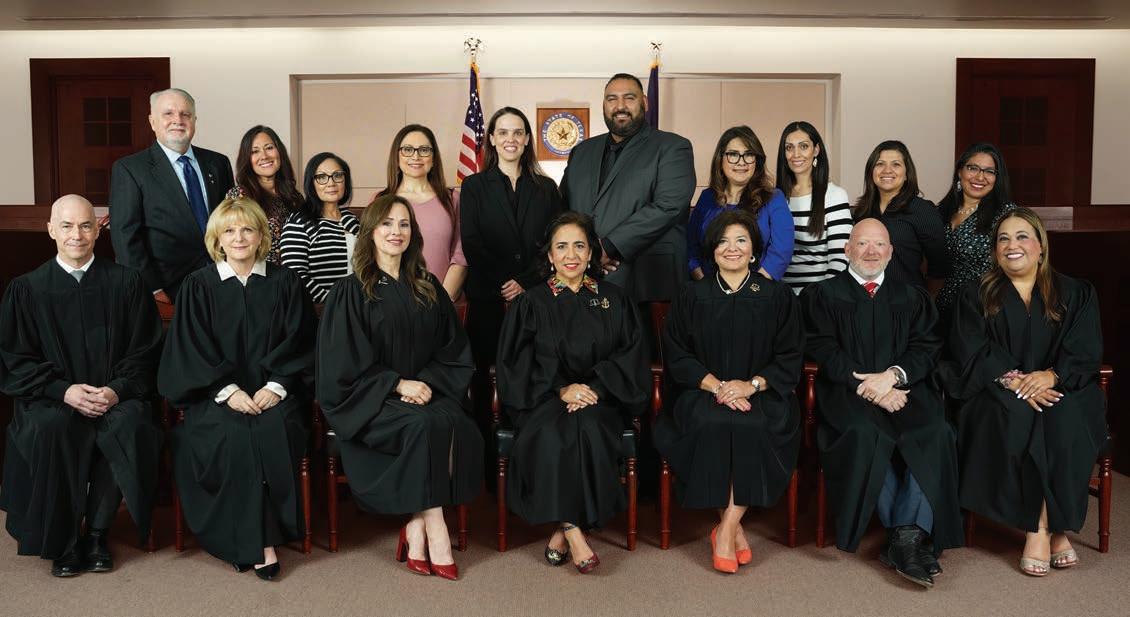
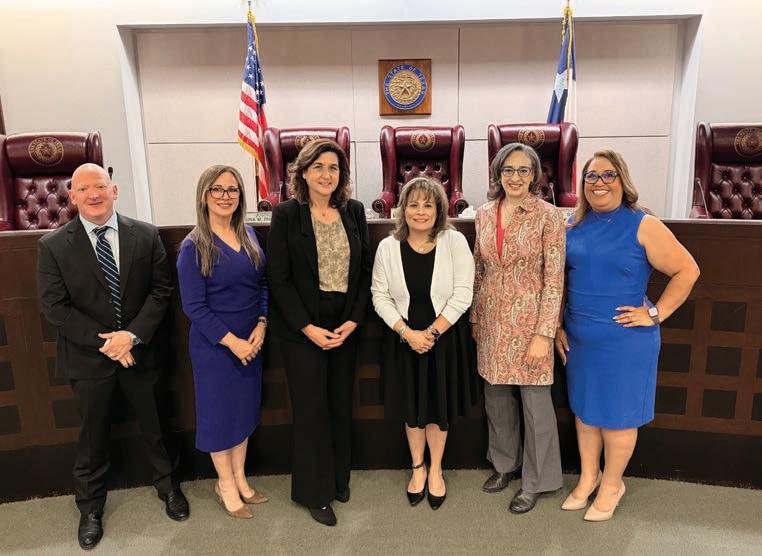
McCamish with the Justices and Staff of the
Court of Appeals
The Fifteenth Court of Appeals District is composed of all counties in this state.
Overlap of Districts 6 and 12
Overlap of Districts 5 and 6
A clerk’s work continues after the case is over, though. The clerk must also destroy case records on the schedule set by statute –six years after final disposition of a civil case and twenty-five years after final disposition of a criminal case. Tex. Gov’t Code § 51.204(d) & (e). Finally, the clerk is required to retain financial and administrative records of the court. Tex. Gov’t Code § 51.204(g).
The work of maintaining and destroying appellate records is a gargantuan task. The records generated in an appellate court are enormous. The catalog for the Texas State Archives lists the Fourth Court of Appeals case files from 1891–1981 as occupying 1,443 cubic feet. That would fill a little more than 70 standard refrigerators!
In 1985, the Legislature mandated that each appellate clerk also serve as that court’s librarian and the clerk is therefore required to “keep the books in the court’s library in good order and catalogue them.” Tex. Gov’t Code § 51.206. That section has not been updated or amended since it became effective on September 1, 1985, despite massive changes in the way legal authorities are stored and accessed. These days, the maintenance of the Fourth Court’s physical library is contracted out to a librarian who comes in once a week. Despite the availability of online databases, the Fourth Court still receives pocket parts to supplement the hard copies of the reporters. (For the youngins, a pocket part is a pamphlet printed on the flimsiest paper imaginable and inserted into the back of a physical case law reporter to provide updated information to keep the hardbound volume current without reprinting a complete new edition.)
Ms. McCamish does act as the “librarian” for the Fourth Court’s computerized library; contracting for electronic legal research tools falls under her purview.
Much of what Ms. McCamish accomplished in her first year as Clerk has been focused on executing the Justices’ commitment to make the Fourth Court more accessible and visible to the public. To that end, the Fourth Court recently held arguments in Kerr County and Uvalde County, and the justices are hoping to travel to other counties for arguments later in the year. The Clerk’s Office handles the logistics for those hearings. Ms. McCamish also built on the systems implemented during COVID to make the Fourth Court even more accessible. The Clerk’s Office spearheaded an “AV refresh” in the courtroom that included upgrading and repositioning microphones to make the audio clearer and more accessible to viewers on the Fourth Court’s YouTube channel.
Fourth Court of Appeals Justices Irene Rios, Adrian A. Spears II, and Velia J. Meza; and Eighth Court of Appeals Chief Justice Salas Mendoza and Justices Gina M. Palafox and Lisa Soto at the SABA Appellate Practice Section’s February 27, 2026 Coffee with the Courts.
Ms. McCamish and her fellow Clerks of Court are following the work of the State Bar’s Taskforce for Responsible AI in the Law and considering the impacts of AI on the judicial system. Most importantly, however, Ms. McCamish is focused on continuing the efforts to build a strong relationship between the Fourth Court, the bar, and the public so that justice is not just done, but is seen to be done.
Ms. McCamish has leveraged her involvement with SABA and the Bexar County Women’s Bar Association to build greater community between the Fourth Court and the bar. The Clerk’s Office and the SABA Appellate Section organized a coffee reception with the justices of the Eighth Court of Appeals and are planning to do the same in May when the Fifteenth Court of Appeals visits San Antonio. She also makes sure to inform the Justices and Staff Attorneys about programs and events hosted by SABA and Affinity Bars to increase the connection between court personnel and the bar. These types of collegial meetings are extremely beneficial since online filing and virtual hearings eliminated the opportunity for the Clerk’s Office to interact face to face with parties and lawyers.
When it comes to implementing the Fourth Court’s aim for greater inclusion, Ms. McCamish leaves no stone unturned. The decoration in the courtroom and the curation of the portraits of former Justices falls under her jurisdiction. Turning a critical eye to the arrangement of the portraits, the Fourth Court found an opportunity to subtly communicate its values to the public. At the time Ms. McCamish took office, there was no overarching organizational principle to the display of the Justices’ portraits. As a result, the portraits in the courtroom were older portraits that depicted a judiciary that
When it comes to implementing the Fourth Court’s aim for greater inclusion, Ms. McCamish leaves no stone unturned.
was overwhelmingly male. As part of a courtwide initiative, Ms. McCamish reorganized the collection of portraits, bringing portraits of all the Chief Justices and all Justices who have served more than two terms in the courtroom. That brought pictures of women generally and minority women in particular into the courtroom, including the portrait of former Chief Justice Alma Lopez. As a result, the courtroom better reflects the composition of the folks who occupy it, whether on the bench, at counsel’s table, or in the gallery. The Fourth Court’s history was not lost, however. The other portraits that had occupied the courtroom were relocated to the hallway and are displayed chronologically.
Looking to the future, like the rest of us, the Fourth Court is closely watching the development of increasingly sophisticated generative AI tools. As Justice McCray outlined in the March-April issue of this magazine, these tools present opportunities and challenges in litigation. Ms. McCamish and her fellow Clerks of Court are following the work of the State Bar’s Taskforce for Responsible AI in the Law and considering the impacts of AI on the judicial system. Most importantly, however, Ms. McCamish is focused on continuing the efforts to build a strong relationship between the Fourth Court, the bar, and the public so that justice is not just done, but is seen to be done. Rex v. Sussex Justices, [1924] 1 KB 256.
Natalie Wilson is a Shareholder at Langley & Banack, Inc., where she practices in the Bankruptcy, Litigation, and Appellate Groups. She served as a judicial law clerk at the Supreme Court of Hawaii many moons ago and remembers not only pocket parts, but also paper appellate records that were handnumbered and stored on giant sliding bookshelves in the Clerk’s Office.
• Experienced, having conducted more than 25,000 mediations since 1989 with more than 850 years’ experience practicing law
• Committed to the mediation process and devoted to the ethical practice of law
• Covered by the AAM Member
Areas of Practice
For more information, contact the local San
Patricia O. Alvarez
888.413.6630
patricia@alvarezdr.com
Michael Black
210.829.2020
mblack@burnsandblack.com
Paul Bowers
713.907.7680
paul@ptbfirm.com
John K. Boyce, III 210.736.2224
jkbiii@boyceadr.com
Leslie Byrd
210.229.3460
leslie.byrd@bracewell.com
Kevin Chaney 210.889.4479
kevin@kevinchaneylaw.com
Dori Contreras 956.655.9206
dori@justicedori.com
Debbie Cotton
210.338.1034
info@cottonlawfirm.net
Aric J. Garza
210.225.2961
aric@sabusinessattorney.com
Charles Hanor
210.829.2002
chanor@hanor.com
Gary Javore
210.733.6235 gary@jcjclaw.com
Alex Katzman 210.979.7300 alex@katzmanandkatzman.com
Diego J. Peña 817.575.9854 diego@thepenalawgroup.com
Don Philbin 210.212.7100 don.philbin@adrtoolbox.com
Edward Pina 210.614.6400 epina@arielhouse.com
Elizabeth “Sissy” Preston 713.412.1458
epreston@advmediation.com
Richard L. Reed, Sr. 210.953.0172
rick.reed@steptoe-johnson.com
Wade Shelton 210.219.6300
wadebshelton@gmail.com
Richard Sparr
210.828.6500
rsparr@sparrlaw.net
John Specia 210.734.7092
jspecia@macwlaw.com
Phylis Speedlin 210.405.4149
phylis@justicespeedlin.com
Mark Stein
210.385.4771
mstein@asdh.com
Lisa Tatum
210.249.2981
ltatum@tatum-law.com
James Upton 361.884.0616 jupton@umhlaw.com
Recommended by Judges and Attorneys
Reflecting on the Rule of Law A Candid Afternoon in a Texas Saloon with a Retired Federal Judge and a Current Law Professor
By Judge Edward C. Prado and Professor Josh Douglas
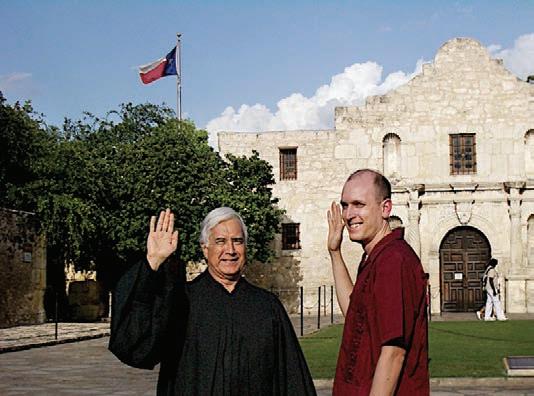
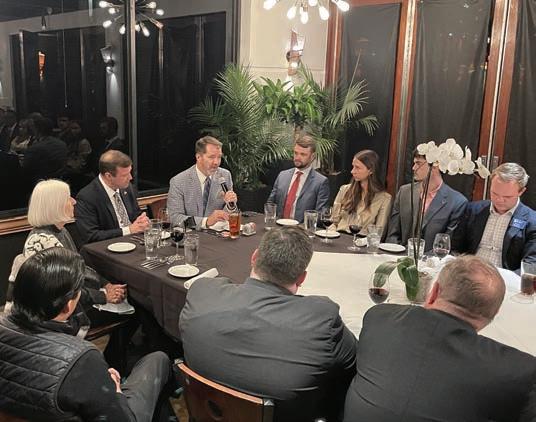
A former federal judge and a current law professor who used to live in San Antonio walk into a Texas saloon. Here is the conversation they would have: Prado swearing in Douglas
Judge Ed Prado, retired Fifth Circuit Judge and former U.S. Ambassador to Argentina: Josh— or should I say Professor Douglas—it’s good to see you. It’s been almost twenty years since you clerked for me on the Fifth Circuit. I even swore you in to the Texas bar in front of the Alamo (remember it…?) What have you been up to?
Professor Josh Douglas, University of Kentucky Rosenberg College of Law: Judge Prado! It’s always a pleasure to catch up with you. As you know, after my clerkship I worked at Akin Gump in San Antonio and then joined the faculty of the University of Kentucky, focusing on election law and voting rights. I’ve written two books on the topic.1 And wow, is there a lot to discuss in those areas!
Judge Prado: Tell me about it. Election law— that always seems to be a hot button issue. I guess it used to be a once-every-four-years inquiry for most people, but these days it seems like issues of election law and voting rights are in the public consciousness on an almost daily basis. Is that a good or bad thing?
Professor Douglas: My law students know that the answer to most questions when they are on call in class is “it depends,” and I think that applies here as well. On the one hand, it is great that people are more attuned to issues of democracy, as they impact so many aspects of
our society and our lives. On the other hand, we have seen a lot of attacks on democracy that are really concerning. It is up to lawyers, in particular, to speak out against those attacks and to uphold the rule of law. That is the only way democracy can be sustained.
Judge Prado: You know, I was thinking about that famous line from Shakespeare’s Henry VI: “The first thing we do, let’s kill all the lawyers.” People usually think that the statement is an attack on lawyers. But it’s actually the opposite. It is a statement of praise for lawyers in the ways they protect society. The line comes from a conversation between the rebel leader, Jack Cade, and his crony, Dick the Butcher. He’s saying that they needed to remove the lawyers as a barrier to their attempts to gain power. Judge Beryl Howell of the D.C. District Court invoked this phrase in a case a year ago, explaining that “Eliminating lawyers as the guardians of the rule of law removes a major impediment to the path to more power.”2
Professor Douglas: Exactly! Lawyers are the key to ensuring that “We the People” continue to be the backbone of our democracy. Lawyers, of course, must be zealous advocates for their clients, but they must do so in a way that does not undermine fidelity to democracy and the rule of law. Judges must rule without favor to their own preconceived notions or prior ideological predilections. Adherence to the
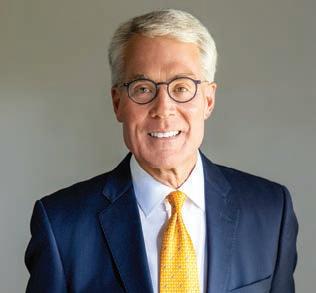
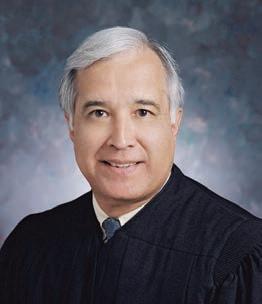
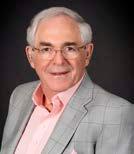
Judge Ed Prado, retired Fifth Circuit Judge
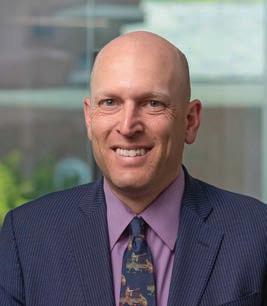
Professor Josh Douglas, University of Kentucky Rosenberg College of Law
rule of law and the protection of democracy must be paramount.
In your thirty-four years on the bench, did you ever have a case in which you ruled contrary to how you personally wanted it to come out?
Judge Prado: Absolutely. One of the more important cases I ruled on as a federal district judge involved the constitutionality of requiring students to pass a standardized test in Texas public schools before they could earn a high school diploma.3 Having gone to one of the poorest school districts in the state, I had experienced what it is like not having an equal education. I sympathized with the students from poorer schools who were being required to pass the same test that students from more affluent schools with more resources were also taking. I experienced firsthand that schools in Texas did not offer equal education. But in reviewing the Constitution, case law, and relevant statutes, I ruled that the requirement was not unconstitutional. I saw the situation as unfair, but not illegal. To this day I am bothered by the case. But I made my decision not because of who appointed me or how I personally wanted the case to come out, but because that was what the rule of law required.
Another example involved a case that you helped on while you were clerking for me on the Fifth Circuit, involving a person who was convicted of capital murder for beating someone over the head with a blunt object.4 Evidence came out that one of the jurors brought a Bible into the jury deliberation room with him and showed other jurors a passage that seemed to describe the very crime the defendant had committed. This was during the penalty phase, when the jury was deciding whether he should receive a sentence of death. The Bible passage the juror had pointed out to other jurors said, essentially, if a man strikes someone with an iron object so that he dies, then he is a murderer and himself should be put to death.
I was really concerned that referring to this passage might have influenced the jury in its deliberations. But the state court had found otherwise when considering a motion for a new trial. After interviewing several jurors, the court ruled that the jurors rendered their decision “in accord with the evidence they heard in this case uninfluenced by any outside influence of any kind shown to the Court in this hearing.”5 As an appellate court, we were required to defer to that factual finding. We wrote a strong opinion saying that jurors cannot use external influences, such as a Bible, in their deliberations, but that under these facts the defendant had not overcome the state
Personalized Private Banking from a trusted local partner.
Broadway Bank Private Banking offers tailored financial solutions guided by a dedicated private banker who understands your practice, your priorities, and your long-term vision. With local decision-making and a financially strong, independent foundation, we deliver premium service designed entirely around you.
STRENGTH & STABILITY SINCE 1941
court’s factual finding. That was a very hard case, but we did what the law required us to do. We upheld the rule of law.
Professor Douglas: I remember that case well. We spent a lot of time going through the record as carefully as possible. It was a good example to me of when judges need to remove any personal views they may have on an issue. Do you think the public realizes how much thought and deliberation go into these really tough cases? Judges hardly ever just issue kneejerk decisions without a lot of contemplation.
Judge Prado: I fear that some of the loudest voices are drowning out the 99 percent of judges, of whatever ideology, who are just trying to do the right thing. There’s another case I ruled on that shows how different judges, with the best of intentions, can come out differently on a really tough issue.6 This one also involved a death penalty case. John Thompson spent fourteen years on death row before the courts eventually overturned his verdict. The prosecutor in the case was dying of cancer and confessed that he had withheld blood evidence that showed someone else had committed the crime. Mr. Thompson filed a
civil suit against the D.A.’s office and received a $14 million judgment from the jury. On appeal to the Fifth Circuit en banc court, the court divided evenly 8 to 8 over whether prosecutorial immunity applied or whether there was “deliberate indifference” on the part of the D.A.’s office.7 The result when the court is evenly split is that the original judgment stands. On appeal to the U.S. Supreme Court, the justices ruled 5 to 4 that prosecutorial immunity applied and overturned the verdict.8 This is a perfect example of how educated, experienced judges can review the same law and set of facts yet reach different conclusions. Some of us come from more humble backgrounds and some come from an affluent upbringing. Some are the first to go to college in their families and some have college-educated fathers and mothers. Some went to private universities and some to public schools. There are race differences and gender differences. We each had different types of law practice experiences before taking the bench. All of these factors and more cause us to view things differently. The ensuing deliberations between us contribute to better decision making.
Professor Douglas: You mentioned the loudest voices skewing the public’s perception of judges. We have a president who attacks judges when they rule against him. He labels them as “partisan.” Last year a judge in Texas outright criticized his fellow panel members in a highly controversial case, essentially airing the court’s dirty laundry for all to see.9 I was really taken aback by that dissent. The language was shocking for a judicial opinion. It undermined what we would expect from a judicial temperament.
Numerous retired federal judges have spoken out against attacks on judges and lawyers, expressing concern for the rule of law.10 As you know, last year in this very magazine, former Judge and Congressmember Charlie Gonzalez and former Texas Supreme Court Justice Wallace Jefferson—a Democrat and a Republican—came together to write these vital words: “Honoring laws is the cornerstone of our constitutional form of government.”
We all have an obligation to speak truth to power and to call out abuses of the judicial system. We have a responsibility to accept rulings even if we disagree. There is a process of appealing to correct a judicial error, because
I agree with you that sometimes judges make wrong decisions, but that’s not for a lack of trying. To accuse judges of being overtly biased causes the public to lose confidence in our legal system. To say that Congress should impeach federal judges simply because politicians may not agree with their decisions—as some members of Congress have suggested11—is contrary to the rule of law and is antidemocratic, and we need to say so.
We also have an obligation not to bring frivolous lawsuits that have no merit but instead are trying to create a public narrative on an issue. That sometimes happens with post-election lawsuits to challenge the outcome: the results are clear but the fact of a lawsuit makes people question the legitimacy of the election. Yet democracy requires the losing side to accept defeat and then try to win the next election.
To be sure, courts have also been important protectors of democracy, including when they have rejected these frivolous lawsuits. They have also checked the executive and legislative branches. That’s the whole point of checksand-balances.
You spent several years as the U.S. Ambassador to Argentina, where sometimes the rule of law was not of paramount importance. What did you see during your time there regarding the rule of law?
Judge Prado: Both during my time in Argentina and throughout my judicial career I had the opportunity to visit judges throughout Mexico, Central America, and several South American countries. While many of these countries modeled their judicial system after ours and it looked good on paper, as a practical matter, they did not follow the same norms that sustain our legal system. Seeing how the court systems of various countries worked (or, really did not work so well) made me appreciate our judicial system even more. Politics plays a large role in many of these countries. Judges are under heavy pressure from the other branches of government to follow their demands. As a result, many judges come to the bench with political agendas. That traditionally has not happened in the U.S. Once on the bench, the judges here follow the law regardless of the consequences. I found that not to be the case in many Latin American countries. The politics of the day can greatly influence the judges there. Prosecutors are also very political. In many instances, politics determines which investigations and prosecutions move forward, which is directly contrary to how things should be in a system that values the rule of
law. As a result, the public in these countries has lost faith and trust in the judicial system. I think we as lawyers have an obligation to ensure that the U.S. keeps a strong, reputable, and independent court system and does not fall into the mess we see in many of these Latin American countries.
Before I was a judge, I was a prosecutor. I learned how powerful a prosecutor can be in deciding who should be investigated and who should be prosecuted. There is no room for bias, prejudice, or politics to interfere in these decisions. That is what the rule of law demands.
Josh, you’re an academic now. What have you learned from your scholarship on voting rights that has impacted your views on the rule of law?
Professor Douglas: I believe that everyday voters are the lifeblood of our democracy. I’m always a little discouraged when I see news headlines touting “strong” voter turnout and then learn that almost half of the eligible electorate did not show up—with even worse numbers for primaries and non-presidential election years. In 2024, turnout in Texas
From weddings and graduations to business growth and generational transitions, major life milestones often prompt important financial and estate planning decisions. Jefferson Bank Trust Advisors partner with attorneys and accountants to help clients navigate these moments with clarity, care, and long-term perspective.
Together, we help ensure today’s milestones support tomorrow’s legacy.
among the eligible electorate was just over 56 percent. That was the fifth lowest in the country!12 Yet we know, from other states, the kinds of policies that could improve voter turnout.13 We all need to commit to higher voter engagement, regardless of partisanship, which also includes a renewed commitment to civic education. These are all aspects of sustaining democracy and the rule of law.
Judge Prado: When I was in Argentina I was impressed that voting is mandatory there and that voter turnout often exceeds 75 percent.
The fine for not voting is low, equivalent to less than 50 U.S. dollars, yet most people still show up. In October 2025, turnout in the midterm elections there was 68 percent, which was the lowest since the return of democracy in 1983, yet still high by our standards.14 The U.S. did not even exceed 65 percent in the last presidential election and less than 50 percent showed up for our 2022 midterms.15 A local news story said that turnout in Bexar County in November 2025 “shattered” records for an offyear election—at about 20 percent!16 Why do you think people in the U. S. are so apathetic?
Professor Douglas: My research has revealed that apathy is a symptom, not a cause, of our poor voter turnout. I’m actually writing a new book about nonvoters—why they do not vote, how that impacts elections, and what we can do about it. I’ve interviewed over 30 nonvoters and dived into survey data on the issue. There are many factors that contribute to low turnout, including outright voter suppression, a lack of reliable information, a feeling that voting won’t make a difference, and election structures such as the Electoral College and extreme gerrymandering that contribute to an overall sense that democracy isn’t working. But we also have tangible solutions to fix the problem. We can improve the civic health of America through local organizations. We can reimagine meaningful civics education. There are a host of innovative ideas being implemented in local communities—but you’ll have to wait until 2028, when the book is published, to learn more!
Same company, new look!
Our logo has changed, who we are never will.
We protect Texas lawyers and judges with superior professional liability insurance and guidance that goes beyond the policy.
Judge Prado: That focus on localism makes so much sense. I guess one thing we can all do is not only ensure we each vote in every election but also explain to others, especially young people, why voting is so important. Citizens need to participate in electing their representatives who are responsible for passing the laws that we must all follow.
You’re also an optimist. You even have an NPR radio show and podcast called “Democracy Optimist.”17 What makes you so optimistic during a period in our country’s history where we are seeing sustained attacks on democracy and the rule of law?
Professor Douglas: Optimism, to me, does not mean that everything is great. It’s about hope for the future. It’s a statement of purpose. And I’m optimistic because of all of the people I have interviewed on my show—Democrats, Republicans, independents, politicians, judges, election officials, and advocates of all persuasions—who are trying to make our democracy work better for all of us. There’s an important aspect of localism here. We hear so much bluster from Washington, D.C. and our state capitols, yet there are so many great things happening at the local level to sustain democracy. The old adage “All politics is local” rings true, but I would amend that to say “All democratic engagement is local” as well. There’s a role for all of us to speak up and speak out in protecting the rule of law.
Judge, I think it’s almost time for last call. This has been a great conversation, and putting myself back “in” Texas, even through a magazine, has made me hungry
for breakfast tacos. We don’t have the same kind of breakfast tacos in Kentucky, and I miss them!
What is your biggest takeaway from our conversation regarding the importance of lawyers, judges, and all citizens in protecting democracy and the rule of law in this current moment?
Judge Prado: It’s been great catching up with you. I believe that we live in the greatest country in the world. We need to ensure that the rule of law continues to be followed as it has for the first 250 years of our existence. We as lawyers and judges have an obligation to see to it that the public appreciates how fortunate we are to have the legal system we have, and that it continues to flourish. The rule of law is what has made America great.
ENDNOTES
1Joshua A. Douglas, The Court v. The Voters: The Troubling Story of How the Supreme Court Has Undermined Voting Rights (Beacon Press 2024); Joshua A. Douglas, Vote for US: How to Take Back Our Elections and Change the Future of Voting (Prometheus Books 2019).
2Perkins Coie v. U.S. Dep’t of Justice, No. 25-716 (D.D.C. May 2, 2025).
3GI Forum Image De Tejas v. Texas Educ. Agency, 87 F. Supp. 2d 667 (W.D. Tex. 2000).
4Oliver v. Quarterman, 541 F.3d 329 (5th Cir. 2008).
5Oliver v. Quarterman, 541 F.3d 329 (5th Cir. 2008).
6Thompson v. Connick, 553 F.3d 836, 842 (5th Cir. 2008).
7Thompson v. Connick, 578 F.3d 293 (5th Cir. 2009).
8Connick v. Thompson, 563 U.S. 51 (2011).
9LULAC v. Abbott, No. 3:21-CV-259 (W.D. Tex. Nov. 19, 2025).
10Brianna Tucker, Retired judges warn that the rule of law is unraveling, Wash. Post, Nov. 28, 2025.
11See Ryan Tarinelli, Senate panel sets up hearing on impeachments of ‘rogue judges’, Roll Call, Dec. 2, 2025, https://rollcall.com/2025/12/02/senate-panel-setsup-hearing-on-impeachments-of-rogue-judges/.
122024 General Election Turnout, University of Florida Election Lab, https://election.lab.ufl. edu/2024-general-election-turnout/
13See, e.g., Joshua A. Douglas, Vote for US: How to Take Back Our Elections and Change the Future of Voting (Prometheus 2019).
14Emma Bubola, Argentina’s Voters Hand Javier Milei a Crucial Victory in Midterm Election, N.Y. Times, Oct. 26, 2025.
15Voter turnout, 2018-2022, Pew Research Center, July 12, 2023, https://www.pewresearch.org/politics/2023/07/12/voter-turnout-2018-2022/
16Bexar County voter turnout record ‘shattered’ in Nov. 4 election with more than 99,000 ballots cast, KSAT. com, Nov. 4, 2025, https://www.ksat.com/news/local/2025/11/04/bexar-county-elections-departmentto-provide-updates-in-multiple-press-conferenceson-election-day/ 17Democracy Optimist, WEKU, www.democracyoptimist.com
The Exponential Surge in Prisoner Civil Filings
IN THE WESTERN DISTRICT OF TEXAS
and its Impact on Court Operations
By John S. Gilmore, III
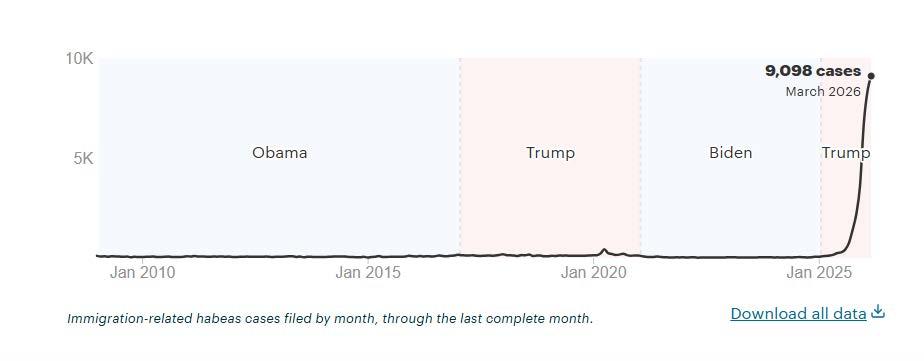
The Trump administration’s emphasis on mass deportations of alleged undocumented individuals has resulted in nearly 40,0001 habeas petitions being filed in federal courts throughout the United States since January 2025. These numbers are growing daily, and these figures exceed the total of immigration-related filings in federal court over the prior fifteen years combined. A visual of this exponential increase is shown in the graphic to the right.
However, the end of 2025 and beginning of 2026 is when the number of habeas cases began to skyrocket. The tremendous influx in civil filings challenging illegal detentions has overwhelmed dockets throughout the United States but is particularly impacting the Western District of Texas.2 When comparing filings in the Western District of Texas in Q1 2025 to filings in Q1 2026, there has been an unprecedented exponential increase. The notable increases are reflected in this table:3
In short, these Divisions within the Western District saw the following increases in prisoner filings:
1/01/2026 – 3/30/2026 Quarter 1, 2026
It goes without saying: these numbers are staggering. These filings have overwhelmed the then-existing resources of the United States District Clerk’s Office, necessitating the hiring of additional employees to keep up with processing these filings. Similarly, the United States Attorney’s Office has been working around the clock to appropriately address the petitions on an individual basis. Meanwhile, court dockets are being flooded with settings, potentially causing a cascading effect on other ongoing and unrelated criminal and civil matters. Each of these entities, and their staff, are working extended hours to meet operational requirements and to ensure that other matters, such as ongoing criminal cases with statutory timeliness requirements, remain as unaffected as possible. Civil cases will almost certainly be delayed by this influx of new filings.
What is the Cause?
These astonishing numbers coincide with a coordinated shift in immigration enforcement as prompted by the Trump administration. Without going into detail of each cause, the key drivers of the increase are the Laken Riley Act,4 the so-called “One Big Beautiful Bill”
SERVICES
Support of Litigation
Geo-Structural Forensics
Shallow Foundations
Deep Foundations
Retaining Walls
Excavations
Act,5 the changes in mandatory detention policies,6 and the widespread firing of immigration judges.7
Additionally, in September 2025, the Board of Immigration Appeals codified a memorandum8 that held that Immigration Judges lack jurisdiction to hold bond hearings for noncitizens present without admission, because they are now subject to mandatory detention pursuant to INA § 235(b)(2)(A). The result of this is that thousands of people that would previously be eligible for bond in immigration court, no longer have any recourse in immigration court.
In that same regard, the Fifth Circuit in Buenrostro-Mendez v. Bondi, 166 F.4th 494 (5th Cir. 2026), foreclosed any statutory basis for the release of immigration detainees. However, it left the constitutional limits of immigration detention untouched. As such, a habeas petition in federal court raising procedural due process challenges remains one of the only avenues to challenge illegal detention.
Fifth Circuit Judge Dana Douglas, in her dissent in Buenrostro, notes the obvious issue with this course of action:
The Congress that passed [the Illegal Immigration Reform and Immigration Responsibility Act of 1996] would be surprised to learn it had also required the detention without bond of two million people. For almost thirty years there was no sign anyone thought it had done so, and nothing in the congressional record or the history of the statute’s enforcement suggests that it did. Nonetheless, the government today asserts the authority and mandate to detain millions of noncitizens in the interior, some of them present here for decades, on the same terms as if they were apprehended at the border. . . .
Congress did not secretly require two million noncitizens to be detained without bond, when nothing like this had ever been done before, and the whole history of American immigration law suggested it would not be.
Buenrostro-Mendez, 166 F.4th at 508-09 (emphasis added).
RBM Industries, Inc.
18911 Hardy Oak Blvd. Suite 121 San Antonio, TX 78258
P: 210-469-4611
F: 210-404-2402
info@rbm-inc.com www.rbm-inc.com
Dr. Rozbeh B. Moghaddam (Roz), a licensed civil engineer with a doctoral degree and extensive expertise in foundations, Geo-Structural Engineering, and expansive soils, offers specialized litigation support to clients facing complex construction and soil-related disputes. With over 20 years of experience and a deep understanding of soil mechanics and foundation behavior, Roz provides expert evaluations, data analysis, and clear scientifically grounded testimony to support case proceedings.
However, the end of 2025 and beginning of 2026 is when the number of habeas cases began to skyrocket. The tremendous influx in civil filings challenging illegal detentions has overwhelmed dockets throughout the United States but is particularly impacting the Western District of Texas. When comparing filings in the Western District of Texas in Q1 2025 to filings in Q1 2026, there has been an unprecedented exponential increase.
Unfortunately, for now, habeas corpus remains the central mechanism for ensuring that immigration detention complies with the Constitution. This will undoubtedly lead to continued and increased habeas filings in federal court.
Expected Continued Rise in Immigration Detention and Related Federal Habeas Filings
With a $45 billion dollar Congress-approved budget, U.S. Immigration and Customs Enforcement is now purchasing empty commercial warehouses for purposes of mass immigration detention.9 It is expected to have a system of thirty-four massive, Department of Homeland Security-owned warehouses as part of what the Trump administration refers to as the Detention Reengineering Initiative.10 A brief glance at the Fiscal Year 2027 Budget also indicates an expectation that immigration detention is going to be well funded.11
The concerning measures taken to date by this administration are not temporary but rather help develop a more permanent infrastructure of mass immigration detention with no path to bond or due process. This is akin to the mass extrajudicial detention of specific classes of individuals as seen throughout history.
The current legal landscape has essentially closed off any administrative avenues of release of immigration detainees. Because the administration has stripped immigration judges of the ability to grant bond, United States District Courts are the only remaining venue for non-citizens to challenge the constitutionality of their detention. In addition, there is an expected increase in the scale of immigration detention. As a result, this unexpected and exponential surge in civil filings is likely to persist as individuals are forced to use the writ of habeas corpus as their only tool to contest detention.
John S. Gilmore, III is the Senior Associate at Goldstein & Orr. His practice focuses on state and federal criminal litigation, state and federal grand jury practice, criminal appeals, asset forfeiture, and post-conviction writs of habeas corpus. John is trusted by professionals, including fellow lawyers, medical doctors, federal agents, veterinarians, business owners, financial advisors, and other licensed professionals to provide guidance when facing serious criminal allegations.
ENDNOTES
1This figure is growing daily and is current only to the end of April 2026.
2The Western District of Texas geographically covers “over 93,000 square miles, spans 68 counties, . . .holds a population of over 7.6 million individuals . . . and is one of the largest federal districts” in the United States. Department of Justice, Offices of the Western District of Texas, https://www.justice.gov/usao-wdtx/offices-western-district-texas.
3Data was collected from the United States District Clerk’s Office for the Western District of Texas. 4Laken Riley Act, Pub. L. No. 119-1, S.5, 119th Cong. (2025).
5One Big Beautiful Bill Act, Pub. L. No. 119-21, H.R.1, 119th Cong. (2025).
6INA §§ 235(b) – (b)(2)(A).
7See Ximena Bustillo & Scott Simon, The Trump Administration Fired Nearly 100 Immigration Judges in 2025. What’s Next, NPR (Jan. 10, 2026), https:// www.npr.org/2026/01/10/nx-s1-5672386/the-trumpadministration-fired-nearly-100-immigration-judgesin-2025-whats-next.
8Matter of Yajure Hurtado, 29 I&N Dec. 216 (BIA 2025). 9One Big Beautiful Bill Act, Pub. L. No. 119-21, H.R.1, 119th Cong. (2025).
10Memorandum from U.S. Immigration Customs Enforcement to Government of New Hampshire, ICE Detention Reengineering Initiative, https://www. governor.nh.gov/sites/g/files/ehbemt971/files/media/ media_document/merrimack-nh-detention-reengineering-initiative-final.pdf.
11Office and Management and Budget, Budget of the U.S. Government, Fiscal Year 2027 (Apr. 3, 2026), https://www.whitehouse.gov/wp-content/uploads/2026/04/budget_fy2027.pdf.
AVOIDING MALPRACTICE IN TAXABLE DAMAGES
The 2025 Tax Law made permanent the loss of ‘personal exemptions’, which means an individual can no longer deduct Attorney Fees and Expenses from their ‘taxable’ litigation settlements; they must pay taxes on the GROSS recovery. Congress carved out “unlawful discrimination, ” and ’pure employment’ settlements, with few other exceptions.
Attorneys can no longer deal with Taxable damages of ‘non-physical injury’ and ‘punitive damages-Gross Negligence’ after an agreed settlement/mediation or before funds are distributed.
The remedy on ‘contingency fee’ cases is to create a Plaintiff Recovery Trust (PRT), but it must be created BEFORE the mediated settlement; the litigation must be transferred to the trust prior to an agreed settlement so the plaintiff can avoid taxation on the fee/expense portion of the recovery, receiving tax reporting (an IRS Form K-1) only on the net recovery.
Structured settlements also have a role to play: Tax savings occur when structuring client proceeds to lower tax brackets! (Use in conjunction with the PRT to maximize tax savings, for non-contingency fee cases, and as the only rememdy if it is too late for the PRT.)
Now wrongful death cases in Texas under the 408 statute are not only taxable, but paying taxes on the GROSS settlement has a devastating effect for widows and orphans, and serious implications for attorney malpractice.
WITHOUT USING ONE OF THESE REMEDIES, THE ATTORNEY’S FEES EXCEED THE NET DOLLARS TO CLIENT, and IGNORING TAX ISSUES CAN CREATE LIABILITY!
Plaintiff attorneys: Beware! Malpractice trap is waiting, and you will have a difficult time justifying your fees that exceed the net to clients!
These cases require extra-care, planning and action. Create a PRT before mediation! There are no up-front costs in doing so… but plenty of problems if you do not. Defer finalizing the mediated settlement until the PRT is in place (more time is allowed if any Court orders are required, or if case is Appealed)
Appellate attorneys: Interest accumulations on appeal should be considered for amounts of $100,000 or greater. Punitive damages is a must do.
Mediator/Arbitrators: Alert plaintiff attorneys to this issue; consider a means for parties to finalize the settlement agreement after a PRT is in place.
TRIAL VERDICT STRATEGIES: A PRT works as long as (1) there is no binding release, or binding agreement to enter into a release. Get busy creating a PRT before the verdict is final for any taxable damages (Non-physical injuries, Defamation, Contract disputes, Punitive damages, etc.)
Carola M. Davis, CFS
DAVIS SETTLEMENT PARTNERS
“So, you're at a dinner party and your friend asks...”
Can I Use AI to Keep My Litigation Costs Down?
By Natalie Wilson
With the dramatic increase in the functionality of free artificial intelligence tools, courts are grappling with the implications of their use by litigants. By now, you have probably heard horror stories about lawyers being sanctioned for copying AI hallucinations without checking the citations. You may have encountered parties utilizing AI either to replace lawyers completely or “help” you after they’ve engaged you. Each of these approaches presents significant risk to the litigants and has courts wrestling with difficult ethical and philosophical questions.
In the case of U.S. v. Heppner, 25-CR00503-JSD (S.D.N.Y.), the defendant hired competent defense counsel, but tried to assist or supplement his defense by turning to Claude, Anthropic’s publicly-available generative AI platform. The government seized the defendant’s computers when he was arrested, which gave them access to the defendant’s communications with Claude, including draft filings generated by Claude. Defense counsel asserted that the documents generated by Claude in response to those prompts were privileged attorney-client communications and/or protected attorney work product. The government disagreed, and the court ultimately sided with the government.
In a February 2026 order, the court rejected the claim of attorney-client privilege, finding that the documents were not communications between the defendant and his attorney. The court also referred to Claude’s privacy policy, which expressly states that Anthropic collects and stores data on inputs and outputs, which it can use to train Claude. Anthropic also reserves the right to disclose that data to a variety of third parties. Therefore, the defendant’s communications with Claude were not confidential. Additionally, the court determined that the defendant was not communicating with Claude for the purpose of receiving legal advice. The court was particularly persuaded by Claude’s disclaimer that it does not provide legal advice, noting that when the government asked Claude whether it could give legal advice, the
program replied that it was not a lawyer, could not give legal advice, and it recommended the user confer with “a qualified attorney.”
Relying on long-standing interpretation of attorney-client privilege, the court concluded that the defendant could not transform these non-privileged communications into privileged communications by later sending them to his attorneys. Finally, in response to defendant’s argument that the queries posed to Claude contained information that was communicated to the defendant from his attorneys and therefore privileged, the court ruled that the defendant waived the privilege by disclosing that content to Claude.
The court further ruled that the documents generated by Claude were not protected from disclosure under the work product doctrine because they were not “prepared by or at the behest of counsel” and they did not reflect the legal strategy of counsel.
Heppner illustrates potential pitfalls for parties utilizing free AI in litigation, but what consequences are there for the platforms themselves? When a party attempts to replace her lawyer with AI, the litigant is prone to filing baseless pleadings because she doesn’t have the education or experience to critically evaluate the responses or suggestions that the program is feeding her. As a result, litigation is prolonged and more expensive to defend. Nippon Life Insurance Company is trying to
hold OpenAI liable for damages in just such a scenario.
Nippon and its insured, Graciela Dela Torre, settled her long-term disability claim and dismissed her litigation with prejudice. Later, Dela Torre came to believe her attorney had misled her and she asked ChatGPT about her case. Based on its answers, she attempted to re-open her litigation and filed multifarious frivolous pleadings. In March 2026, Nippon filed suit against OpenAI for unauthorized practice of law, tortious interference with contract, and abuse of process, among other claims, seeking $10.3 million in damages.
As one commenter opined, OpenAI’s underlying architecture is not designed to prevent ChatGPT from crossing the line between legal information and legal conclusions or advice.1 Indeed, in March 2023, OpenAI bragged that ChatGPT4 could pass the Uniform Bar Examination with a score in the top 10% of test takers.2 In October 2024, OpenAI updated its terms of use to “prohibit” users from relying on ChatGPT for legal advice, but did nothing to prevent the AI from providing answers that walked, talked, and smelled like legal advice.3 Contrast that to Claude’s express disclaimer that it could not provide legal advice, relied on by the Heppner court.
Heppner and Nippon Life aptly illustrate the reasons why it is inadvisable to use free
versions of generative AI programs as a substitute for legal counsel. Not only can it produce hallucinations or just plain bad advice, but the communications are subject to discovery. If asked today whether someone should utilize free versions of AI to help them with a legal case, the answer should be a firm “no.” It’s more likely to hurt them in the long run.
ENDNOTES
Natalie Wilson is a shareholder at Langley & Banack, Inc. where her practice includes litigation in the state and federal courts.
AI Resources from the State Bar
WEBINARS In early March the State Bar of Texas sent out an email containing the Executive Director’s Report titled “Need Help With AI? Ask a Human.” Executive Director Trey Apffel explained in the report that the State Bar’s Law Practice Management Committee and staff from the Law Practice Management Department had developed its “Ask a Human” series to assist attorneys with AI questions. By the time you read this, the team will have hosted two webinars , during which they answered some of the more than 100 questions that had been submitted in advance. Mr. Apffel explained: “The group is committed to answering every question attorneys submit. To achieve this goal, monthly episodes of ‘Ask a Human: Answers to Unanswered Questions’ videos will be released until all questions are addressed.”
1See Eran Kahana, Designed to Cross: Why Nippon Life v. OpenAI Is a Product Liability Case, SLS Blogs (Standard Law School, March 7, 2026), https://law. stanford.edu/2026/03/07/designed-to-cross-why-nippon-life-v-openai-is-a-product-liability-case/. 2https://openai.com/index/gpt-4-research/.
3See Kahana.
NEWSLETTER Mr. Apffel invited everyone to sign up for the Law Practice Resources Division’s free email newsletter, Practice Makes Perfect, at texasbarpractice.com to ensure you will receive advance notice of future Ask a Human webinars.
TOOLKIT He also reminded everyone about the State Bar of Texas AI Toolkit, which is the first of its kind in the nation. The toolkit is available at texasbar.com/aitoolkit
Litigation Communications:
fromPerspectives a ConsultantFormer
By Stephanie Dodge Bigley
Lawsuits have rarely been more newsworthy than they are today. The news cycle tracks major cases like reality television.
I’m a trial lawyer who has spent part of my career as a communications consultant for large litigation teams. I’ve been fortunate to work on some cool cases, including Grayscale Investments’ lawsuit against the SEC seeking to convert the Grayscale Bitcoin Trust into a spot Bitcoin ETF; a mass tort case against Hertz alleging the company falsely accused customers of stealing vehicles; and Dominion Voting Systems’ defamation lawsuit against Fox News.
In each of these cases, the legal and communications teams worked in lockstep to ensure messaging to government, media, and the public aligned with the client’s legal strategy and arguments. This resulted in both legal and public affairs victories for our clients.
It’s important for both teams to work together because a legal victory can feel hollow if the client’s reputation was ruined along the way. But not every client has the resources to hire communications consultants. In those cases, their lawyers can help shape the public narrative surrounding their case.1
When doing so, a lawyer should first consider whether their client is in a proactive or reactive position. If using the media proactively, then the client may want to drum up public attention – and pressure – to achieve their legal goals. That can include briefing key reporters about your lawsuit, drafting op-eds or letters to the editor, and issuing statements about the lawsuit and what the client hopes to achieve through it.
Conversely, the client may be in a reactive position if another party wants public interest or there is organic media interest in your case. A client should not bury its head in the sand and hope a legal victory will undo any public affairs damage. Hope is not a strategy. Instead, embrace limited, careful media engagement to ensure your client’s message and positive facts remain at the forefront of the conversation. Practically, that can be achieved with a single, on-the-record interview with a carefully selected reporter, consistent “setting the record straight” communications with key stakeholders, and responding to media inquiries with short, polished statements that replace the “could not be reached for comment” placeholder. While engaging the media brings
risk and should always be done consistently with the lawyer’s ethical obligations, it’s typically better to ensure the client’s message is in the narrative rather than allowing the story to take on a life of its own.
Finally, no matter which position you’re in, it’s important to remember some basic rules of engagement with media. Whenever you are speaking with a reporter, always set the terms of the conversation at the beginning. Before any substantive conversation, agree with the reporter whether your statements are on-the-record (quotable and attributable), on background (information is usable but not attributable), or off-therecord (information is just for reporter’s personal knowledge and not usable). You also want to know the reporter’s background and timeline, including whether they have covered similar lawsuits and industries before and whether they plan to continue covering this issue regularly. This information will inform the level of detail you share.
Remember that you’re not limited to traditional media engagement. The most sophisticated lawyers I’ve worked with see communications as another tool in their arsenal and achieve their goals through multiple strategies. For example, a lawyer seeking additional claimants for a class or mass action suit can do everything from traditional bus tours to targeted online ads and local letters to the editor to inform the public. On the other end of the spectrum, a defense lawyer who secures a significant legal victory can draft a statement with on-the-record quotes from the client and legal team and blast it out on the newswires. This helps ensure that when the client Googles himself, he won’t just find “bad” articles with none of his team’s messaging. Of course, any such activity must comport with the rules governing attorney conduct.
Far too often great lawyers ignore communications while focusing on winning the legal battle. If you are in a lawsuit with the potential for high reward or high risk due to public attention, the best thing to do for your client is hire a communications consultant early. If that is not an option, consider these strategies to shape the narrative yourself.
Stephanie Dodge Bigley is a litigator and strategic communications consultant. She can be reached at sdodgebigley@dslawpc.com.
ENDNOTES
1A quick disclaimer: The professional rules of conduct address how and when attorneys may ethically engage with the media. Those rules and the key cases interpreting them are beyond the scope of this article. The purpose of this article is a high-level overview of litigation communications strategies for lawyers.
SAN AN TO NIO BAR ASSOCI ATION
Diego Levy, Raul Corrales and Mario Luera announced the launch of Levy, Luera & Corrales, PLLC, a litigationfocused personal injury law firm. The firm looks forward to serving clients and building partnerships across Texas.
Valkenaar PLLC announced a firm name change to Valkenaar O’Donnell PLLC with Mike O’Donnell joining as a named Partner. The San Antonio firm focuses on commercial litigation, including business disputes, real property, oil and gas, trusts and estates and public finance matters.
Briefly will now be included in San Antonio Lawyer! Briefly is a column that features SABA members and firm updates, new hires, awards and other professional news. Submit Briefly notices to comm@sabar.org
Norton Rose Fulbright appointed John Jennings as Partner in Charge of its San Antonio office, Aimeé Vidaurri Cervantes as Administrative Partner and Jay Dewald as Head of Litigation and Disputes for the office.
Chamberlain Hrdlicka expanded its Product Liability practice group with the addition of Shareholders Bardia Sergent and Brandon Cox, who will serve as CoChairs. The expansion strengthens the firm’s litigation capabilities and supports its continued strategic growth and nationwide client service.
Langley & Banack announced Mason Standley as a Shareholder in its New Braunfels office. With more than 30 years of experience, Standley is Board Certified in Tax Law and Estate Planning and Probate Law and will support the firm’s expanded tax law services.
Alyssa Leffall, Assistant Dean at St. Mary’s University School of Law, and Amanda Rivas, Director of Externships and Professor of Practice of Law at St. Mary’s University School of Law, were named 2026 Marianist Heritage Award Honorees, recognizing their embodiment of the Marianist charism and service to the University community.
Duncan, Bressler & Williamson, Inc. announced that Stett Matthew Jacoby has become a Partner and Shareholder in the firm. His practice focuses on litigation, estate planning, probate, and estate and trust administration. Jacoby earned his J.D. from Washington & Lee University School of Law.
San Antonio Legal Services Association (SALSA) announced Patti Oviatt as its new Managing Attorney. With more than 20 years of legal experience and a strong commitment to the San Antonio community, Oviatt will lead legal volunteers and continue advancing SALSA’s mission of serving local clients.
The Texas Bar Foundation named the Hon. John Specia Jr. as a recipient of its Outstanding 50 Year Lawyer Award, recognizing attorneys who have practiced law for more than 50 years and demonstrated the highest principles of professionalism and service to the public.
After serving at the Fourth Court of Appeals, Austin Reyna has returned to private practice and joined Santoyo Wehmeyer P.C. During his time at the court, he worked alongside the justices and staff attorneys, gaining significant appellate experience.
Duncan, Bressler & Williamson, Inc. announced that Megan Green has been named a Partner and Shareholder in the firm. Her practice focuses on probate, estate and trust administration, family wealth transfer, and business planning.
Thompson Coe named David Jewett as Partner-in-Charge of its San Antonio office. An insurance coverage attorney, Jewett has more than 16 years of experience defending automobile and trucking liability and premises liability cases across South and Central Texas.
Scan the QR Code for links to the full online Briefly posts, which often include additonal details.
The Hon. Charles Gonzalez has established a mediation practice in San Antonio. A former Bexar County Judge and U.S. Representative, Gonzalez brings more than four decades of experience in law and public service, focusing on dispute resolution for individuals, families, and organizations.
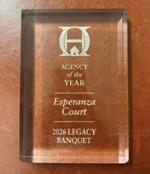
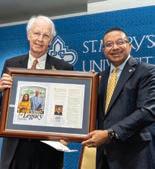
Esperanza Court was recognized as Agency of the Year at the St. Mary’s University Hispanic Law Alumni Association’s 2026 Legacy Banquet. The specialty court focuses on high-risk, high-need individuals, providing trauma-informed services and support for those impacted by exploitation and human trafficking.
Richard Orsinger was recognized as the recipient of the 2026 Pat Nester Innovation in Professional Development Award from the State Bar of Texas CLE Committee. The award honors individuals whose contributions have advanced continuing legal education in Texas.
St. Mary’s University President Winston Erevelles recognized James Drought with the President›s Momentum Award. Drought has more than 45 years of experience in civil litigation, with a practice focused on oil and gas, wills, estates, real estate and commercial litigation, and is Board Certified in Civil Trial Law.
Affinity Bars and SABA Sections/Committees
SABA Appellate Section
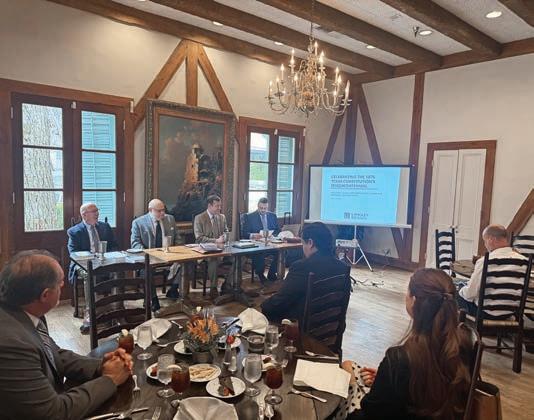
Court of Texas Justice Evan A. Young, St. Mary’s University School of Law Aloysius A. Leopold Professor of Law Michael S. Ariens, former State Bar of Texas Appellate Section Chair Dr. Bill Chriss, and SABA Appellate Practice Chair Dylan O. Drummond discuss the Texas Constitution’s sesquicentennial anniversary at the Section’s February 19, 2026 meeting. Photo courtesy of SABA Appellate Section
Supreme
Supreme Court of Texas Justice Kyle D. Hawkins, former Texas Supreme Court Justice Paul W. Green and four members of his Texas Supreme Court Practice class, at the SABA Appellate Practice Section’s March 2026 event. Photo courtesy of SABA Appellate Section
Supreme Court of Texas Justice Kyle D. Hawkins speaks on the court’s briefing and grant rules at the SABA Appellate Practice Section’s March 26, 2026 event. Photo courtesy of SABA Appellate Section
U.S. Court of Appeals for the Fifth Circuit Judge Don R. Willett and Supreme Court of Texas Justice Evan A. Young address the SABA Appellate Practice Section and the San Antonio Chapter of the Federalist Society on November 10, 2025. Photo courtesy of SABA Appellate Section
BCWBF’s LEAD Academy
See yourself in San Antonio Lawyer!
San Antonio Lawyer is proud to feature moments of the San Antonio legal community serving others, networking, educating, and celebrating.
Submit your affinity bar and section gathering photos and recaps to comm@sabar.org to be featured in our next issue.
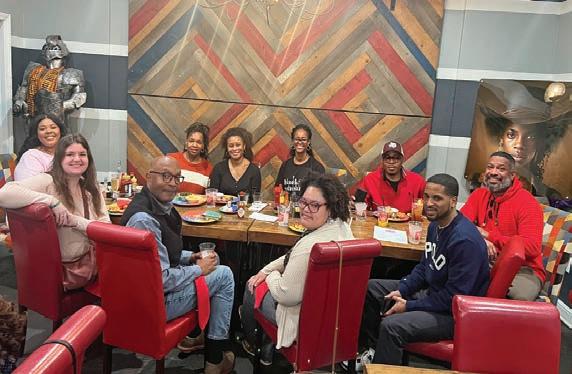
BLSA) for a Black History Month Brunch at Tony G’s soul food restaurant.
Photo courtesy of SABLA
SAYLA’s Wellness Committee hosts a reformer pilates event at Studio Sculpt SA!
Photo courtesy of SAYLA
St. Mary’s Women’s Law Association and SAYLA hosted a Galentine’s crafting night! Food, drinks, crafts, and fun filled the evening. Photo courtesy of SAYLA
SAYLA’s CLE Committee welcomed TYLA President-Elect Candidates, Dave Hagan and Claire Harbert, to speak and mingle with San Antonio-area young lawyers. We’re grateful they visited us on their campaign trails!
Photo courtesy of SAYLA
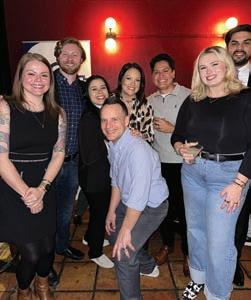
SAYLA Happy Hour at Bar Mon Ami Photo courtesy of SAYLA
SAYLA happy hour at the Bang Bang Bar Photo courtesy of SAYLA
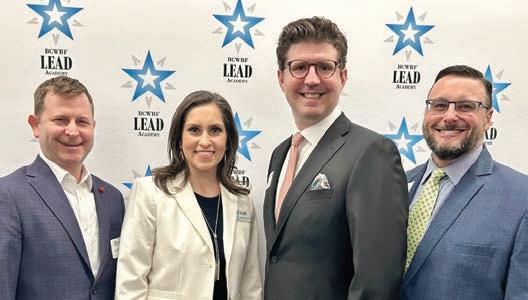
BCWB’s LEAD Academy’s spring seminar included a presentation from director Dannick Villaseñor-Hernandez followed by a fantastic Good Guys Panel on allyship in action with panelists Jeff Wurzburg, Dylan O. Drummond, and Nick Guinn. Photos courtesy of BCWB
SABLA
SAYLA
J. Michael Clay Family Law
A New “Ground” to Challenge a Trial Court’s Termination of Parental Rights?: Bringing into Focus a Little Known 2023 Amendment to Texas Family Code Section 161.001
By Justice Lori Massey Brissette and Dan Guzmán
The Texas Legislature has made recent changes to the Texas Family Code that will impact the burden of proof for involuntary parental termination cases at the trial and appellate levels. The revisions are consistent with the Legislature and the Texas Supreme Court’s legal pivot away from terminations based on technical non-compliance by a parent and toward a required showing that the State of Texas attempted to help the parent succeed in attaining reunification with their child.
Trial courts are generally empowered to terminate parent-child relationships based on a series of grounds set forth in Section 161.001 of the Texas Family Code. See Tex. Fam. Code § 161.001(b)(1) (independent grounds such as child endangerment)–(b)(2) (best interest of child).
But Section 161.001 has undergone a lot of change recently. Since 2020, the Legislature has amended it no fewer than ten times.1 The major amendment during this period was addressed in the November-December 2025 Fourth Court Update. As that article observed, the Texas Supreme Court began to target the use of subsection (O) of section 161.001(b) (1) by addressing its concerns regarding parental terminations resulting from an overly technical application of the provision.2 In response, the Texas Legislature repealed it as a ground for termination entirely.3
But before making that change, the Legislature made a separate, material change to the Family Code that has, thus far, received scant attention. It amended Section 161.001 to add new subsections (f) and (g). Tex. Fam. Code § 161.001(f)–(g). Those provisions provide a trial court may not terminate a parent-child relationship under Section 161.001(b)(1) unless the court finds by clear and convincing evidence, “and describes in writing with specificity in a separate section of the order,” that (1) the Texas Department of Family and Protective Services (DFPS) made
reasonable efforts to reunify a parent and child before trial and a “continuing danger” remains in the home precluding reunification, or (2) reasonable efforts were waived pursuant to Section 262.2015.4 To support a finding of reasonable efforts to return a child, courts may consider whether DFPS created a family service plan tailored to the issues that led to removal, whether DFPS made referrals for and provision of services to the parents, whether such services were supported with transportation assistance or virtual options upon request, whether DFPS first attempted to place the child with family or friends before resorting to foster care, and whether there were opportunities for visits to maintain the parent-child bond. See In re Y.K., 722 S.W.3d 273, 280 (Tex. App.—Fort Worth July 17, 2025, no pet.); see also In re R.C., No. 02-2500494-CV, 2025 WL 3683988, at *2–5 (Tex. App.—Fort Worth Dec. 18, 2025, no pet. h.) (mem. op.) (same).
Prior to the addition of subsections (f) and (g), appellate review of parental termination cases involved determining the sufficiency of evidence to support the ground for termination relied upon by the trial court under Section 161.001(b)(1) and the trial court’s determination that termination is in the best interest of the child under Section
161.001(b)(2). Now, as a result of the additional findings required by subsections (f) and (g), we must also determine whether the evidence is sufficient to show DFPS attempted to support reunification and whether, despite its efforts, a continuing danger remains in the home. See Y.K., 2025 WL 2006075; R.C., 2025 WL 3683988, at *2–5.5 In short, subsections (f) and (g) expand DFPS’s burden at trial. But because the provisions are relatively new, some trial courts have omitted them from their findings altogether, resulting in some of our sister courts abating cases and remanding them to the trial court to enter the required findings. See Tex. R. App. P. 44.4; D. F. v. Tex. Dep’t of Fam. & Protective Servs., No. 03-25-00738-CV, 2026 WL 59729, at *1 (Tex. App.—Austin Jan. 8, 2026, no pet. h.) (order and mem. op.); In re M.B., No. 14-2500418-CV, 2025 WL 3275376, at *6 (Tex. App.—Houston [14th Dist.] Nov. 25, 2025, no pet. h.) (mem. op.).
Although subsections (f) and (g) have garnered little attention in comparison to the repeal of subsection (O), they are consistent with the recent approach by the Texas Legislature and the Texas Supreme Court to subject involuntary parental termination cases—the “death penalty” of civil cases—to greater scrutiny.6
Western District of Texas Court Summaries
By Soledad Valenciano, Sabrina Salazar, and Clarissa Valenciano
If you are aware of a Western District of Texas order that you believe would be of interest to the local bar and should be summarized in this column, please contact Soledad Valenciano (svalenciano@svtxlaw.com, 210-787-4654) with the style and cause number of the case, and the entry date and docket number of the order.
Trademark Infringement and Cancellation
Carabin Shaw, P.C., et al. v. Carabin, et al., No. SA-25-CA-00099-XR (Rodriguez, X. –November 13, 2005)
While married, Jamie Shaw and Kirsten Carabin co-founded personal injury law firm Carabin Shaw P.C. (“Carabin Shaw”) in 1995. In 2003, several years after she divorced Shaw, Carabin sold her interest in the firm pursuant to a Stock Purchase Agreement (“SPA”) in which, in exchange for $375,000, she agreed “to engage in whatever action is necessary in order to allow [the firm] to maintain legal use of the name ‘Carabin & Shaw’”; to refrain from competing with Carabin Shaw for five years; and to make public statements announcing her retirement and distancing herself from Carabin Shaw. Over the next eight years, the parties twice litigated and settled issues related to the SPA. Both settlements contain merger clauses and affirmed that Carabin was entitled to practice law and use her own name for such practice. Carabin Shaw registered the name “Carabin Shaw” with the US Patent and Trademark Office in 2014 without obtaining Carabin’s consent. After five years of use, the trademark obtained “incontestable” status. In 2024, Carabin launched a website and registered the internet domain “carabin-shaw.com.” Carabin Shaw, which had owned “carabinshaw. com” for thirty years, sued Carabin and her new law firm for trademark infringement, trademark dilution, and cyberpiracy under the Texas Business & Commerce Code. Carabin counterclaimed for cancellation of the Carabin Shaw trademark; a declaratory judgment that she had the exclusive right to use “Carabin” in the practice of law; fraud; misappropriation; and tortious interference. As an initial matter, the court determined that Carabin Shaw has the right to use “Carabin Shaw” as a matter of law based on the SPA. And, because Carabin
sold all her interest in Carabin & Shaw, she also assigned the use of her own name in “Carabin Shaw.” It made no difference that the firm name included her own surname; “If a person has sold a business which is identified by his personal name, the name is an asset which he has sold, and he cannot keep commercial control of the name and keep the purchase price too.” The court rejected Carabin’s arguments that the use of “Carabin Shaw” was limited to the duration of her non-compete and that the merger clauses in the parties’ post-SPA settlement agreements nullified the SPA because these subsequent agreements concerned different subject matters. The court then dismissed Carabin’s counterclaims for false designation, misappropriation, and tortious interference. While Carabin adequately pled trademark cancellation under federal law, she did so only as to cancellation due to nonconsensual registration. Under 15 U.S.C. § 1052(c), a trademark application may be denied if it consists of a name identifying a particular individual and lacks the individual’s consent. Carabin sufficiently pled this claim by alleging that “Carabin Shaw” was registered for use in the field of law without her consent and that Carabin was publicly connected with law at the time of the trademark application. Carabin also sufficiently pled claims for declaratory judgment and false registration under 15 U.S.C. § 1120, which permits recovery where someone has procured trademark registration by a false or fraudulent declaration or representation.
Due Process; Probable Cause
Arias v. Noem, SA-26-CV-415-FB (Biery, F., January 31, 2026)
Making national headlines in the process, the court granted an Emergency Petition for a Writ of Habeas Corpus filed pursuant to 28 U.S.C. § 2241 and thereby ordered that a 5-year-old Ecuadorian boy and his father be released from
the detention center in which they were being held. In addition to citing the Declaration of Independence, the Fourth Amendment, and the Founding Fathers, the court added:
Civics lesson to the government: Administrative warrants issued by the executive branch to itself do not pass probable cause muster. That is called the fox guarding the henhouse. The Constitution requires an independent judicial officer. Accordingly, the Court finds that the Constitution of these United States trumps this administration’s detention of petitioner Adrian Conejo Arias and his minor son. ... Observing human behavior confirms that for some among us, the perfidious lust for unbridled power and the imposition of cruelty in its quest know no bounds and are bereft of human decency. And the rule of law be damned.
Habeas corpus; Zadvydas claim
Momin v. Noem, No. SA-25-CV-01017OLG (Garcia, O., Jan. 8, 2026)
The court granted the plaintiff’s habeas petition under Zadvydas v. Davis after finding that, following a cumulative 13 months of detention, the government failed to show a significant likelihood of removal in the reasonably foreseeable future. Under Zadvydas, post-removal detention is presumed reasonable for six months and may continue only as long as reasonably necessary to effect removal.
The plaintiff entered the United States in 1994 and was ordered excluded in absentia. ICE detained him in 2009 while attempting to verify his identity with Pakistan to obtain travel documents, then released him in 2010 under an Order of Release on Supervision (OSUP) after seven months without success. After 15 years of compliance, ICE re-detained
him in June 2025 under the final exclusion order, but his identity still could not be verified. The court rejected the government’s argument that the claim was premature because the most recent detention lasted less than six months, holding the six-month period is cumulative and that, because this case involved re-detention after revocation of an OSUP, the government bore the burden of proof. Evidence that other Pakistani nationals had been removed was insufficient where the government had failed for 15 years to verify the plaintiff’s identity. The court noted that the longer traveldocument requests go unanswered, the shorter the “reasonably foreseeable future” becomes.
A plaintiff medical liability insurer and a defendant insured medical provider filed cross motions for summary judgment regarding, among other things, whether the plaintiff had a duty to defend the defendant in an underlying lawsuit in which the defendant others were accused of running “a sex and labor trafficking venture…for financial gain.” The defendant was accused of knowingly prescribing controlled substances that facilitated sex trafficking. To address this question, the court applied the eight corners rule, which looks only to the four corners of the underlying complaint and the four corners of the policy at issue. The policy covered claims for damages arising out of “professional services” defined as “rendering of medical, surgical, dental, or nursing services to a patient” and included a business enterprise exclusion that excluded coverage for an insured’s activity “as a proprietor, shareholder, officer, administrator, committee member, director, or medical director[.]” The court found that the business enterprise exclusion did not apply and therefore did not negate the insurer’s duty to defend because the underlying complaint contained no allegations of the defendant participating in the alleged venture in any of the capacities specified in the exclusion. The court found, to the contrary, that the accusations against the defendant in the underlying suit concerned “professional services.” As such, the court granted the defendant’s motion and concluded the plaintiff had a duty to defend the defendant in the underlying lawsuit.
Chapter 13 Bankruptcy; Exemptions
In re Davis, Case No. 24-52489-cag (Gargotta, C., Jan. 2, 2026)
Despite evidence that a Chapter 13 debtor resided in Oregon for part of the 730day period prior to her bankruptcy filing and made contradictory statements about her residence in different court filings, the court found insufficient evidence that the debtor had the requisite intent to change her domicile from Texas to Oregon, and therefore, held that the debtor could choose to use Texas state exemption laws. The debtor failed to establish that a property in Bandera, Texas, was her homestead and therefore exempt from the bankruptcy estate, as she provided no corroborative evidence of homestead usage beyond her own testimony, which the court found not credible for various reasons including the debtor’s claim in a previous bankruptcy case that she lived exclusively in Oregon. Regarding funds in the debtor’s Oregon-based checking account, the court found the trustee failed to provide direct evidence that such funds came from nonexempt sources and therefore found those funds to be exempt from the bankruptcy estate under 42 U.S.C. § 407.
Premises Liability; Summary Judgment
Martinez v. Kirkland’s, Inc., No. SA-23-CV1366-JKP (Pulliam, J., February 5, 2026)
The plaintiff, while browsing in a store aisle, knelt to examine a lamp that was on the floor. While kneeling, several metal-framed mirrors that were leaning against a table behind her fell on her. Sitting in diversity, and therefore applying Texas procedural and substantive law, the court denied defendant Kirkland’s Inc.’s motion for summary judgment on the plaintiff’s premises liability claim. The court disagreed that the stack of mirrors here are the type of “commonplace innocuous hazards” the Texas Supreme Court has determined are not unreasonably dangerous conditions. The court could not definitively state, as a matter of law, that a stack of large and small mirrors, leaning against a table in an aisle used by browsing customers, is not an unreasonably dangerous condition. The evidence established a genuine dispute of material fact regarding the presence of an unreasonably dangerous condition. The court also concluded that there is a genuine dispute of material fact regarding the proximate cause of the plaintiff’s injuries.
Soledad Valenciano practices commercial and real estate litigation with Spivey Valenciano, PLLC. Sabrina Salazar practices commercial litigation with Dykema Gossett PLLC.
is
at Texas Tech University School of Law.
Clarissa Valenciano
a 3L
Endnotes
Juneteenth commemorates June 19, 1865, when enslaved people in Galveston learned of their freedom more than two years after the Emancipation Proclamation. In Texas, that date still asks hard questions about the distance between legal promise and lived reality. Lift Every Voice and Sing endures because it does not soften that truth. It holds grief, memory, hope, and resolve together. For lawyers, the message should not feel remote. Ours is a profession built on the language of justice, even as history shows how unevenly justice is delivered. May we honor that history with purpose by listening closely, speaking plainly, and widening access to justice where we can.
LIFT EVERY VOICE AND SING
By James Weldon Johnson
Lift every voice and sing, Till earth and heaven ring,
Ring with the harmonies of Liberty; Let our rejoicing rise
High as the list’ning skies, Let it resound loud as the rolling sea.
Sing a song full of the faith that the dark past has taught us, Sing a song full of the hope that the present has brought us; Facing the rising sun of our new day begun, Let us march on till victory is won.
Stony the road we trod,
Bitter the chast’ning rod, Felt in the days when hope unborn had died; Yet with a steady beat, Have not our weary feet
Come to the place for which our fathers sighed?
We have come over a way that with tears has been watered. We have come, treading our path through the blood of the slaughtered, Out from the gloomy past, Till now we stand at last
Where the white gleam of our bright star is cast.
God of our weary years, God of our silent tears, Thou who hast brought us thus far on the way; Thou who hast by Thy might, Led us into the light, Keep us forever in the path, we pray.
Lest our feet stray from the places, our God, where we met Thee, Lest our hearts, drunk with the wine of the world, we forget Thee; Shadowed beneath Thy hand, May we forever stand, True to our God, True to our native land.