New Practice & Procedure in the Supreme Court of Texas
Renew today! BECOME YOUR BEST IN THIS ISSUE
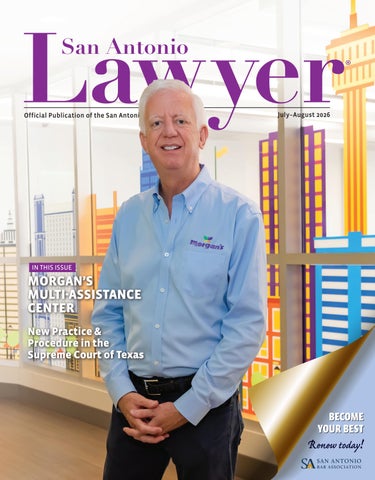
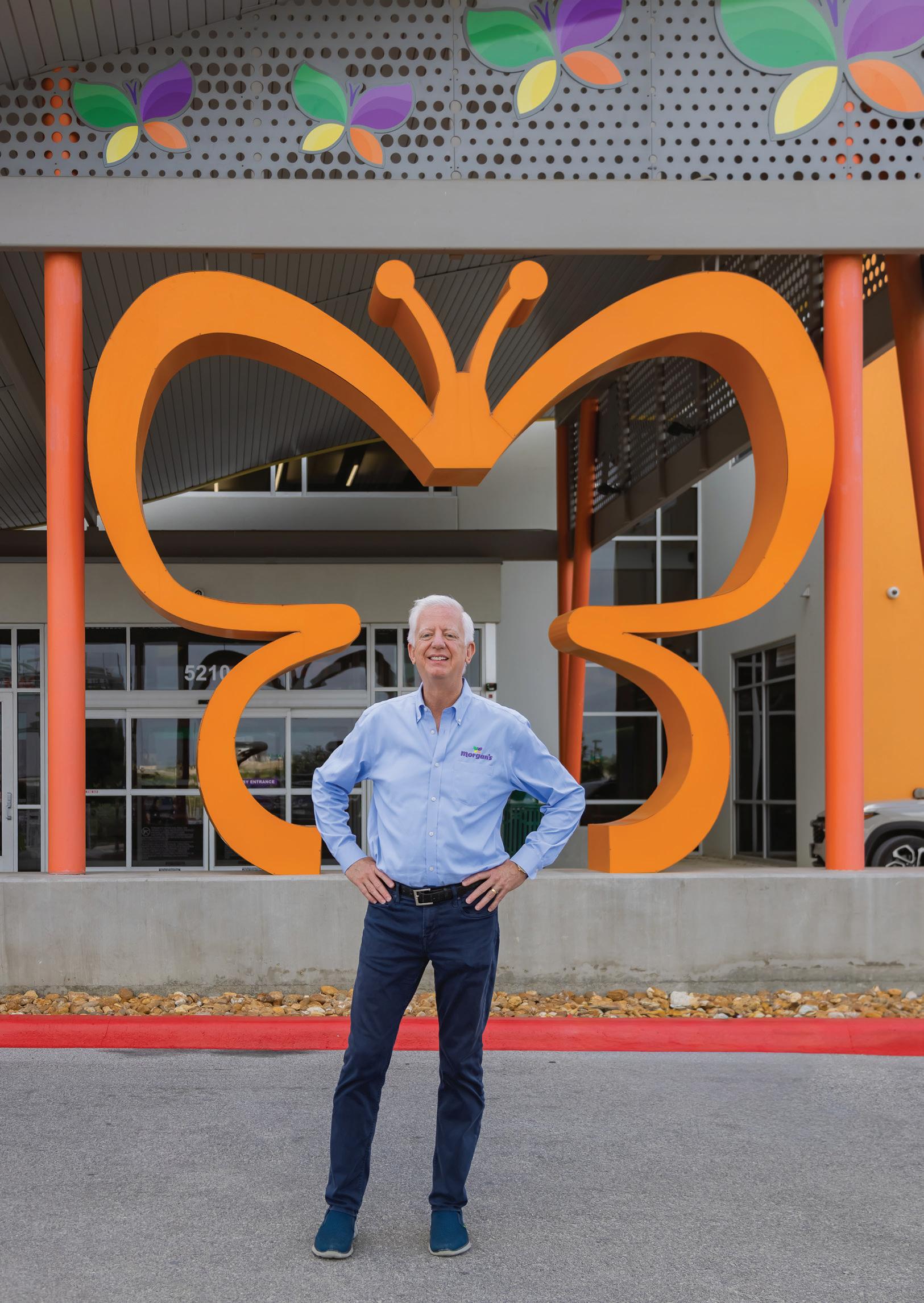
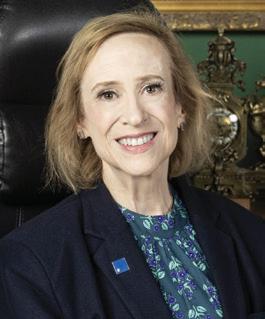
Gordon Hartman
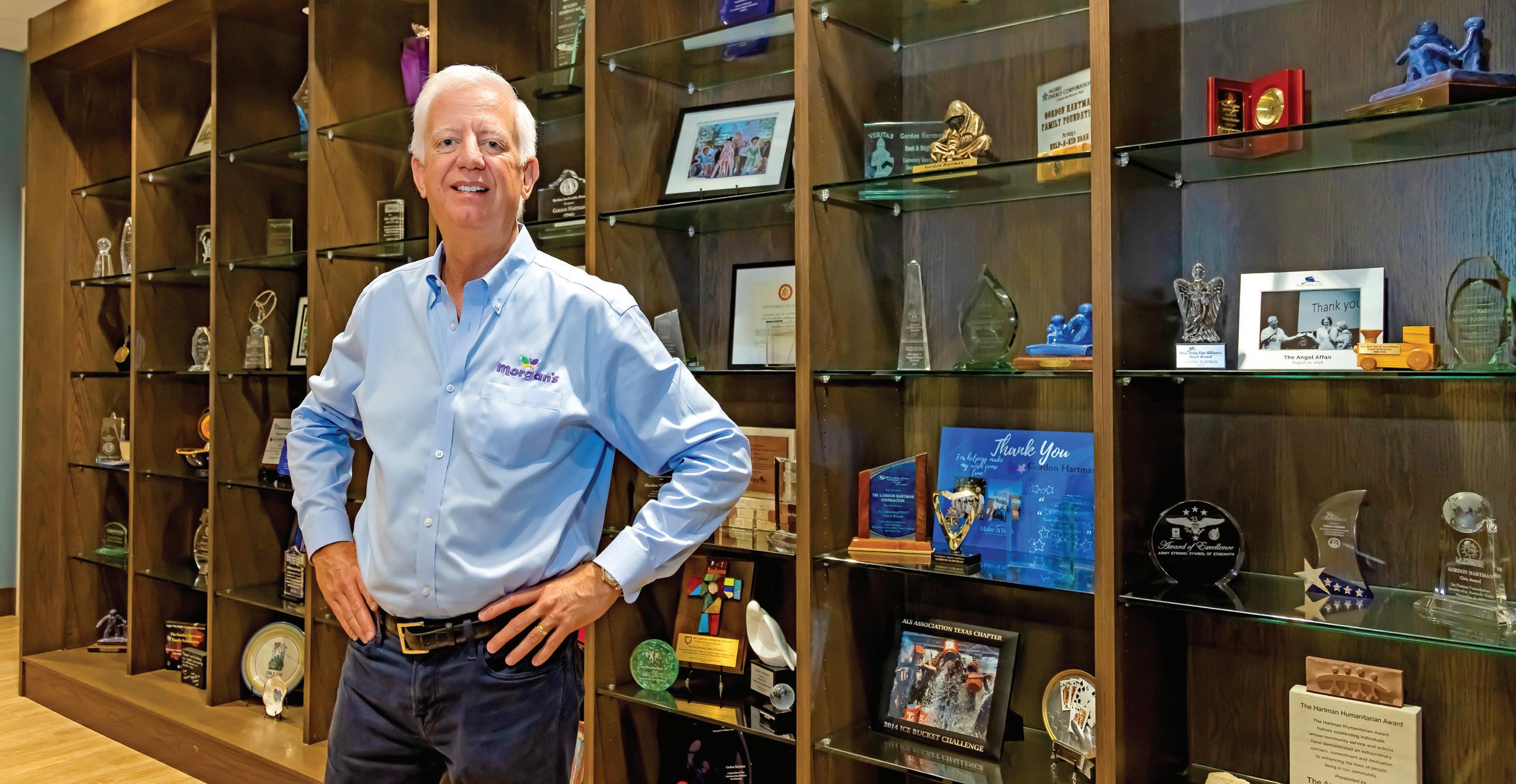
Photo by Mewborne Photography at Morgan’s Multi-Assistance Center
“His grasp of the forces that drive a successful mediation is always spot on. There is not a mediator working today that I would trust more in bringing a case to resolution.”
(Who’s Who Legal 2017)
“Donald is a very quick study and understands complex financial cases very quickly. He is thorough, intelligent and hard-working.” (Chambers 2025)
“He’s very charming, very professional, very understanding and empathetic to what’s going on.” (Chambers 2023)
“An extremely effective mediator in a wide variety of situations.” (Best Lawyers 2021)
“An outstanding and innovative mediator.” (Super Lawyers) Booking: www.donphilbin.com/book-a-mediation/
Views expressed in San Antonio Lawyer are those of the authors and do not necessarily reflect the views of the San Antonio Bar Association. Publication of an advertisement does not imply endorsement of any product or service. San Antonio Lawyer, the San Antonio Bar Association, and the Publisher reserve the right to edit all materials and assume no responsibility for accuracy, errors, or omissions. San Antonio Lawyer and the Publisher do not knowingly accept false or misleading advertisements or editorials, and do not assume any responsibility should such advertising or editorials appear.
Contributions to San Antonio Lawyer are welcome, but the right is reserved to select materials to be published. Please send all correspondence to info@sabar.org
Archives of San Antonio Lawyer are available at sabar.org.
Send address changes to the San Antonio Bar Association.
EDITORS
Editor in Chief
Leslie Sara Hyman
Articles Editor Natalie Wilson
Departments Editor
Cassidy Daniels
Managing Editor Brittni Schuster
PUBLISHING PARTNER
Monarch Media & Consulting, Inc.
512.293.9277 | monarchmediainc.com
Design Direction
Andrea Exter Design Sabrina Blackwell
Advertising Sales Chellie Thompson
For advertising information, contact:
Chellie Thompson, Monarch Media & Consulting, Inc. chellie@monarchmediainc.com
BOARD OF EDITORS
Leslie Sara Hyman, Chair
Pat H. Autry, Vice-Chair
Mary Adair
Naveen Adusumilli
Barry Beer
Amy E. Bitter
Linda Brandmiller
Billy Calve
Paul T. Curl
Cassidy Daniels
Hayley Ellison
Stephen H. Gordon
Per Hardy
Casey Lee
Todd Marquardt
Lauren Miller
Curt Moy
Sara Murray
Chinoso Osonma
Ricardo Aponte Parsi
Steve Peirce
Kerry Simmons
Regina Stone-Harris ileta! Sumner
Soledad Valenciano
Natalie Wilson
Ex Officio
Nick Guinn
126 E. Nueva, 3rd Floor, San Antonio, Texas 78204 210.227.8822 | sabar.org
OFFICERS / DIRECTORS
President
Jaime Vasquez
President-Elect
Emma Cano
Treasurer
Elizabeth “Liz” Provencio
Secretary
Jorge Herrera
Immediate Past
President Nick Guinn
Directors (2025–2027)
Krishna Reddy
Michael Ritter
Elena Villaseñor Sullivan
Collanne West
Directors (2026–2028)
Abel Martinez
Cynthia Orr
Kristal Thomson
Soledad Valenciana
Executive Director
June Moynihan
Patricia "Patty" Rouse Vargas Steve Chiscano
Association of Corporate Counsel South/Central TX
Bexar County Women’s Bar Association
Christian Legal Society
Defense Counsel of San Antonio
Federal Bar Association—San Antonio
Mexican-American Bar Association—San Antonio
San Antonio Black Lawyers Association
San Antonio Criminal Defense Lawyers Association
San Antonio Trial Lawyers Association
San Antonio Young Lawyers Association
TEX-ABOTA, American Board of Trial Advocates—San Antonio
William S. Sessions Inn of Court
SABA Unplugged: Plot Twist
It is a truth universally acknowledged that the only thing better than reading a good book is talking about it with other passionate readers. SABA’s latest membership perk—SABA Unplugged: Plot Twist—is a perfect excuse to read something other than dry legal documents and engage in spirited discussion outside of the adversarial process.
On June 17, 2026, Jade Heep hosted the first meeting of this book club, leading a rollicking discussion of The Parable of the Sower by Octavia Butler. The event brought together a diverse group of SABA members who share a love of literature and grazing boards. Jade expertly guided a discussion that explored themes of community and the role of law and lawyers in society, grounded in the text and exploring its broader application.
A book club is a perfect opportunity to find books that one normally wouldn’t pick on their own, and future picks will attempt to explore a full range of styles, genres, and perspectives. Maybe it will get you out of a reading rut or introduce you to a new favorite!
In August, to celebrate back-to-school, the group will delve into the classic novel The Portrait of Dorian Gray by Oscar Wilde.
In October, in recognition of Hispanic Heritage Month, the group will read Solito: A Memoir by Javier Zamora.
Please stay tuned to the SABA calendar and the SABA Weekly for details about the August and October meetings as well as registration links.
There is that lovely feeling of one reader telling another, ‘You must read this.’ I’ve always wanted to write a book like that, with the sense that you are contributing to the discourse in middle America, a discourse that begins at a book club in a living room, but then spreads. That is meaningful to me.
—Abraham Verghese
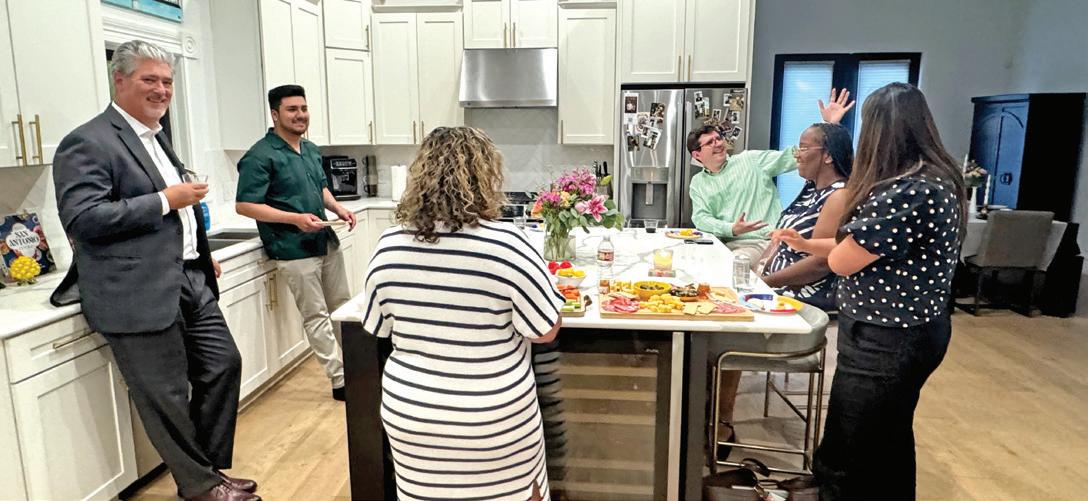
The first meeting of SABA Unplugged: Plot Twist met at Jade Heep’s home.
A Collaborative Care Community Center for Individuals with Disabilities and Special Needs
Those with disabilities and special needs are often faced with immense and varied needs, and the challenges they face every day can be difficult to imagine. Some may be distressed by certain sounds or speech patterns, which can lead to emotional outbursts. Others may engage in self-injurious behavior that requires constant supervision and intervention. Some also rely on very specialized equipment, medically or otherwise. Often language barriers prevent the ability to properly access care. These are just a few of the challenges families face as they try to advocate, coordinate care, and make difficult decisions for their loved ones. Families show amazing patience, resilience, and compassion in their commitment to secure care, but they cannot always do it alone.
Morgan’s Multi-Assistance Center
By Amy E. Bitter
Photo by Mewborne Photography at Morgan’s Multi-Assistance Center
What is Morgan’s?
Morgan’s, a nonprofit enterprise, is the brainchild of Gordon Hartman. He had a vision that he acted upon twenty-one years ago when he retired and founded the Gordon Hartman Family Foundation. Named for his daughter, Morgan, who has special needs, he first created Morgan’s Wonderland, a theme park in San Antonio. In doing so, he has provided an amazing, special place where “an atmosphere of inclusion” exists for those with and without disabilities, where smiles and laughter abound, creating memories for everyone involved. The park has had more than one million guests since it opened in 2010, from 123 countries and all 50 states, enabling those who wouldn’t otherwise have the opportunity to fully enjoy outdoor recreation.
But he didn’t stop there. He continues to follow his dream of expanding services of all types for individuals with disabilities and their families. What exists now is Morgan’s, a nonprofit enterprise built around seven distinct businesses – Morgan’s Wonderland & Inspiration Island, Morgan’s Sports, Morgan’s Camp, Morgan’s MAC, Morgan’s Inclusion Institute, Morgan’s Wonder Care (for those with acute special needs), and Morgan’s Hotel. All are dedicated to creating inclusive spaces and experiences for people of all abilities. Visit the Gordon Hartman Foundation website at https://www.gordonhartman.com for an extensive resource directory.
Gordon describes Morgan as “one of the lucky ones” because the Hartman family is blessed with resources and good contacts so that Morgan has the services that she needs. However, he says that he repeatedly hears from families and other caregivers that trying to obtain services is difficult. While wellintentioned, those providing information to families don’t provide a framework for making sure the dots are all connected.
Morgan’s Multi-Assistance Center
Gordon’s solution to the lack of framework is Morgan’s Multi-Assistance Center – otherwise known as the MAC. The MAC is located adjacent to Morgan’s Wonderland. The stated mission of the MAC is to “improve[] the lives of individuals with disabilities and special needs through comprehensive and coordinated services.”1 Even the facility itself is designed with its clients’ needs in mind. It was built “with special attention to UltraAccessibility™ and is sensory sensitive to eliminate physical barriers.”2 For example, the MAC has family restrooms with adult changing stations, which offers a space for caregivers to aid individuals with disabilities and special needs.
Anyone that needs assistance with Activities of Daily Living (ADLs) can benefit from the MAC programs. The MAC serves people of all ages who live anywhere in Texas who have a physical or mental impairment that substantially limits one or more major
life activities or with a history or claim of disability. There are no income requirements and once determined to be eligible, MAC Members remain members so long as they continue to receive services at the MAC.
The MAC’s services “use a family-centered approach with collaboration from the family, MAC Member, and community partners.”3 The collaborative care community center of the MAC is the model that helps individuals with disabilities and special needs of all ages, and their families navigate the difficult road. The individual clients are known as MAC Members and the community partners are known as MACers. MACers provide healthcare, social services, legal services, and other services – hence the name MultiAssistance Center. It is quite a remarkable disability resource center. Services are offered through the MACers and coordinated through staff members known as Navigators. The MAC is meant to both coordinate care and help bridge the gap between the myriad of systems that provide resources and available benefits. As Gordon Hartman describes it, the MAC is the “triage.” The MAC assists in identifying what the needs are and who can help, then makes sure the help happens, and monitors to ensure the help continues. The MAC takes some of the stress out of the process and offers families peace of mind.
Four anchors make up the care model of the MAC: Navigation, Community Support Services, Medical Home, and Therapy Home.
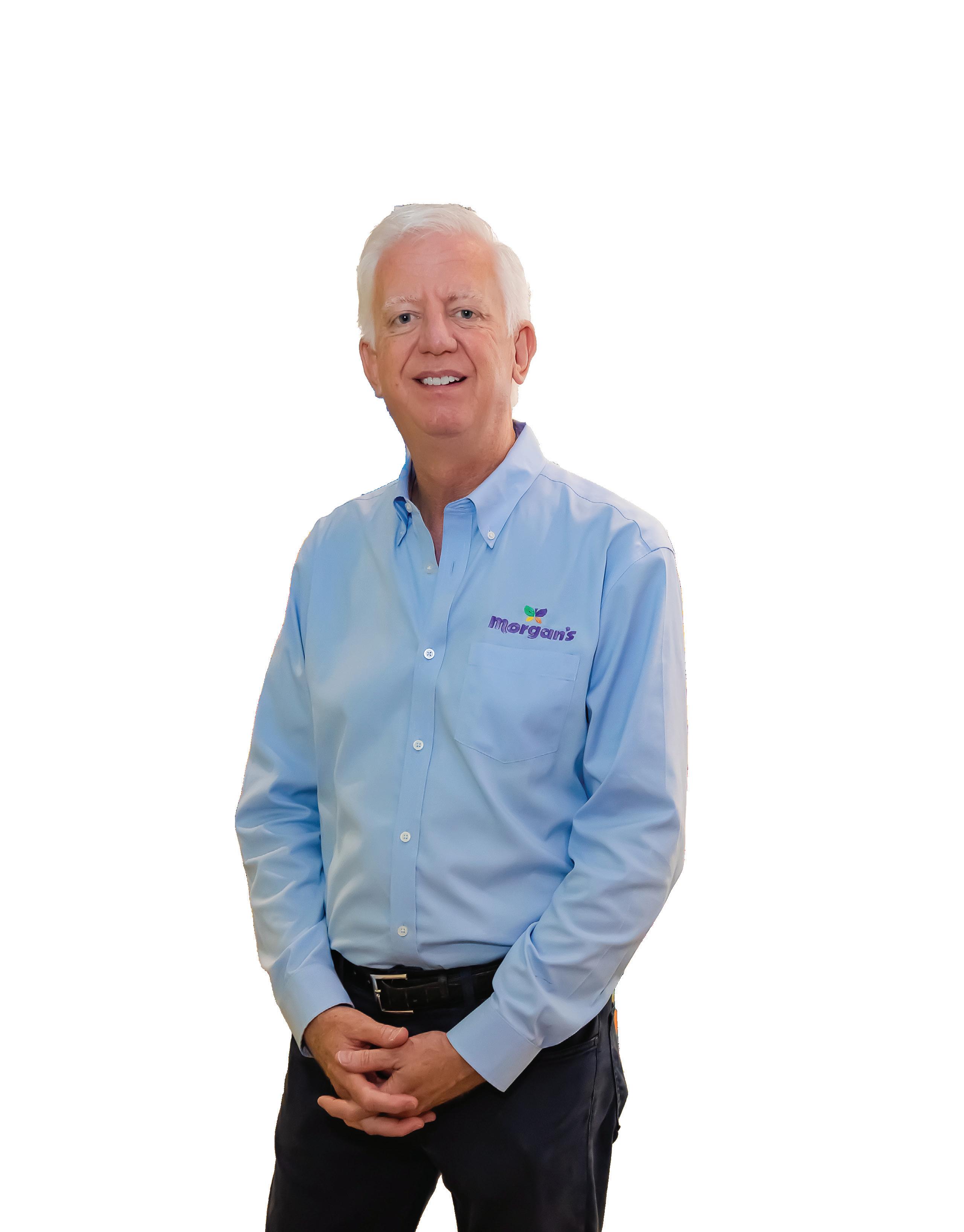
Morgan’s founder Gordon Hartman established the Multi-Assistance Center to bring medical, therapeutic and community resources together under one roof for individuals with disabilities and special needs.
This MAC Care ModelTM works to address the Non-Medical Drivers of Health (NMDOH), which are the conditions in the places where people live, learn, work, and play that affect a wide range of health risks and outcomes. The MAC Care ModelTM creates a framework based on each MAC Member’s specific needs, all coordinated with a customized navigation and tracking system called the MACNavTM The goal is to provide the framework through which the MAC Members can access services, create plans, and have healthy outcomes. Navigators guide them through the process, help identify the steps that best meet the needs of the family and the MAC Members, and serve as a single point of contact to facilitate communication and services between the MAC Members, MACers, caregivers, and families.
To determine eligibility, Morgan’s MAC has a pre-screening process. The Navigators cover vast amounts of information in their assessments. They identify medical, dental, and therapeutic needs. In addition, they assess housing needs, transportation needs, employment, job training, vocational services, social needs, and respite needs, to name but a few. However, that is just the beginning. Next are Intake, Care Plan Visit, Care Plan Referrals, Connections, and Follow-Up. If pre-screening determines that someone is not eligible for some reason, then an Intake Navigator will provide contacts for resources and referrals as needed. The MAC can still be a community and resource center for community services, peer support groups, etc., even if someone does not qualify for the MAC Navigation System.
Once someone becomes a MAC Member, many services making up the Community Support Services, Medical Home, and Therapy Home components of the MAC Care ModelTM are provided inhouse at the MAC, with 12 on-site partners, including psychology, pediatric pulmonology, obstectrics-gynecology, licensed professional counselors, ophthalmology, and child neurology. The MAC even has Morgan’s Salon, which provides hair and nail services while valuing sensory needs and removing the pressure of time constraints! Many more services are provided through the MACers, including various therapies, additional healthcare providers, behavioral services, dental services, counseling – the list is extensive. Examples of MACers are: Any Baby Can, Enable Dental, Christus Specialty, Epilepsy Foundation, CommuniCare, the San Antonio Food Bank, Project Angel Fares, and San Antonio Legal Services Association (SALSA). There are currently 60 partners.
The MAC was designed to remove physical barriers and create an accessible, welcoming environment for individuals with disabilities and special needs and their families.
According to Sandy Ethridge, the MAC President, the biggest transition time for individuals with disabilities is when they leave the school system. Sometimes parents are in denial, which leads to difficulty in accessing necessary services. If families are not prepared, then the individual can fail to benefit from all the services that are available to them. For many families, the transition can be overwhelming, especially when their loved ones have complex medical or daily care needs.
Because economic stability is a key component of the NMDOH, the MAC has partnered with UnitedHealthcare to give MAC Members access to the Workforce Inclusion Network (WIN), which is a partnership of the Texas Workforce Commission and local community groups that provides “education, guidance, and support to help individuals with disabilities find and keep meaningful jobs.”4 The services include one-on-one coaching to promote independence and financial security. The WIN also works to educate employers about hiring and supporting employees with disabilities. The WIN at the MAC and the Texas Workforce Commission’s Vocational Rehabilitation Services also partnered to establish a Business Advisory Committee, which includes representatives from different industries “who work together to identify and address workplace barriers for people with disabilities, demonstrating how communities can promote inclusive hiring across different job sectors.”5 The MAC’s WIN team is also collaborating with UTSA to launch the Employ 210 program, which seeks to align employee skills with employer needs before job placement. MACer Career Training and Development Services offers a series of summer camps at the MAC for students with disabilities aged 14–22. These camps focus on topics such as foundational workplace readiness (through such skills as communication, teamwork, task completion, time management, and self-advocacy), advanced career skills (through skills such as professional communication, workplace behavior, accountability, and problem-solving in work settings), and preparing for higher education, which is designed for students planning to pursue college, trade school, or transition programs after high school graduation and addresses the admissions processes, campus expectations, financial aid, and disability accommodations.
The MAC has served 9,700 Members since opening in 2022. It has approximately 200 new Members per month.
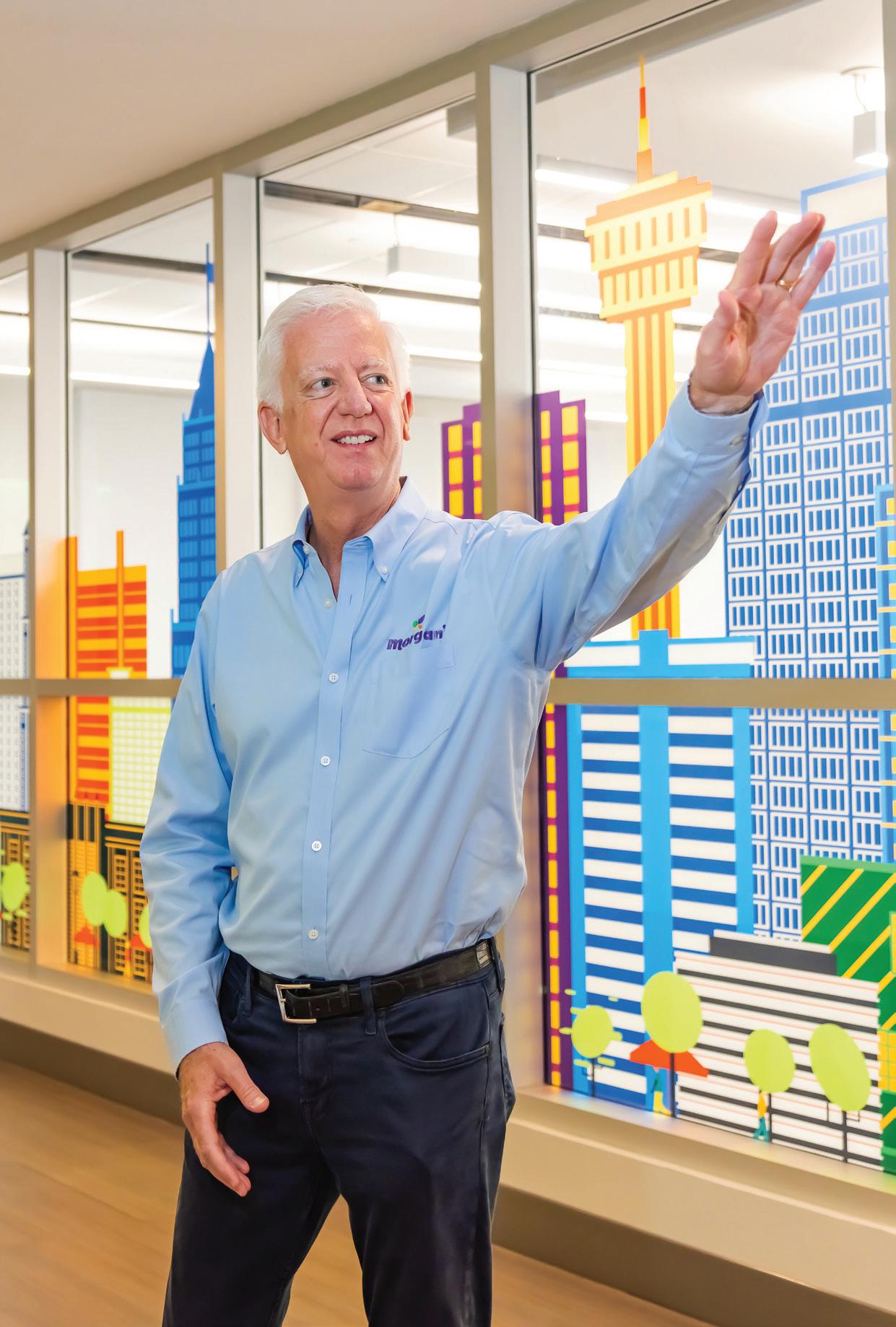
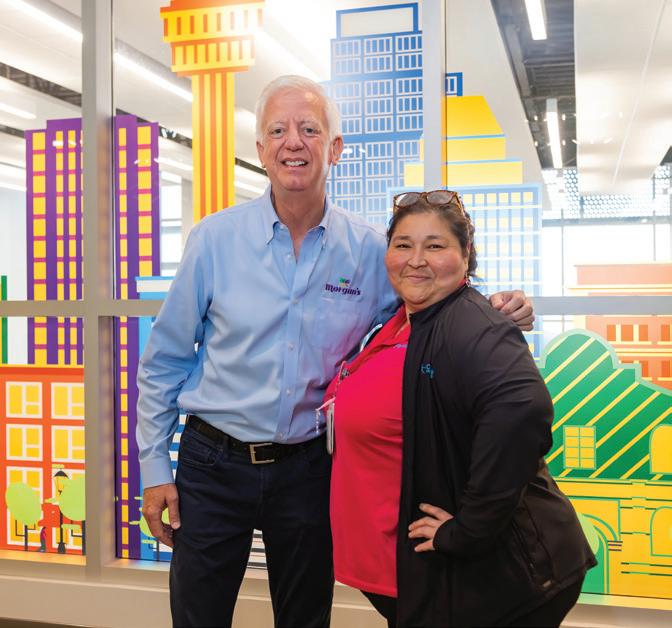
Morgan’s founder Gordon Hartman visits with medical assistant Monica Martinez at the MAC.
Gordon Hartman shares a moment with a young visitor at the MAC.
Gordon Hartman visits with a family at the MAC.
Morgan’s Salon is one of the on-site amenities at the MAC, offering hair and nail services in a sensory-conscious enviornment.
Legal Services at the MAC SALSA has been a MACer since 2022. SALSA provides the coordination for legal services that the families of MAC Members may need. SALSA holds a weekly Legal Advice Clinic where financially qualified MAC Members can get free legal advice from volunteer attorneys on a wide range of topics, including guardianships, alternatives to guardianships, supported decision-making, family law, and SSI/SSDI Benefits. SALSA hosts guardianship clinics so that families receive help in completing the initial guardianship application documents required by the Bexar County Probate Courts. SALSA also provides on-site office hours at the MAC where families can receive advice. There are over 150 volunteer attorneys and 125 law students who are assisting with legal issues. They also hold KNOW YOUR RIGHTS workshops. At SALSA’s Justice Luncheon in April 2026, the MAC received the Lee Cusenbary Impact Award for its service to the community. “We love the mission of Morgan’s MAC and we are very proud to partner with them in serving those with disabilities or special needs,” says Sam Davis, staff attorney at SALSA. More information is provided on the SALSA website: https://www.sa-lsa.org
Broadway Bank has graciously provided a grant to assist those who cannot qualify for the SALSA program through the MAC Health Bridge Funding Program. Two San Antonio attorneys, Aleida Villarreal and Ann Shevlin, are currently partnered with the MAC to provide those services. Their assistance is invaluable in helping families of individuals with disabilities or special needs obtain guardianship for their loved ones, whether that person is already an adult or is approaching adulthood at age 17 1/2. Once a child turns eighteen, a parent no longer has the legal authority to make decisions for that now-adult child with a disability or special needs. Guardianship can be essential to ensure that important medical, legal, and personal decisions can continue to be made without delay. The Health Bridge Funding Program assists when a family does not qualify for free services through SALSA but are still low-income families just above the threshold. Aleida Villarreal sees the MAC Navigators as the drivers of the car – constantly looking ahead, to the sides, and behind to make sure everyone arrives safely. For example, an adult MAC Member needed a battery replaced in a life sustaining surgically implanted medical device as the battery was set to expire. The doctor required a guardianship to be in place in order to perform the procedure. Urgent
Curated banking from a trusted local partner.
At Broadway Bank, our Private Banking and Wealth Management teams offer comprehensive, integrated financial solutions tailored to your unique goals. Rooted in the communities we serve, our entire in-house team of highly credentialed professionals brings specialized expertise to help you move forward with confidence.
The lobby of the MAC welcomes members and families into a facility designed to provide coordinated care, resources and support in one location.
Morgan’s
is supported by Ambassador volunteers and serves as a gathering place for MAC members, families and visitors.
I Am Me, created by the Las Palmas Leadership School for Girls 3rd and 4th Grade Class, is one of the original works commissioned for display at the MAC, reflecting the center’s mission of inclusion and empowerment.
Happy Eats Cafe
legal support can become necessary when time-sensitive medical care is involved.
Monica Palma, another local attorney with Excelsior Legal Services and MACer with a background in special education, also assists with legal services. Prior to being in private practice, Monica was SALSA’s first Equal Justice Works Fellow and led the legal team in a medical-legal partnership at the MAC. In its first two years, the program grew to serve over a thousand clients through legal advice, case assistance, and community education. She worked directly with CommuniCare to develop their ability to provide Certificates of Medical Examination (a requirement for guardianships) and built out the Texas Estates Code Section 1102 program at SALSA. (Chapter 1102 of the Estates Code governs Court-initiated procedures to appoint a guardian.) Launched in January of 2024, this program allows individuals to submit requests to the Bexar County Probate Courts for review and possible appointment of a Guardian Ad Litem to investigate needs and potentially file for a guardianship to be subsidized by Bexar County.
Texas Legal Services Center, another nonprofit organization and MACer that is based in Austin, has placed a kiosk at the MAC to help assist families in accessing legal representation.
How Can You Help?
There is a huge need for assistance and resources are hard to come by without outside help. The legal community can help in many ways. Knowing of the existence of the MAC and how it can help your clients is step one. If you have clients who have a family member that could benefit from the MAC, no matter your practice area, refer them to the MAC. But there are many other steps that the legal community can assist with! GET INVOLVED – become a volunteer. Or, even better, become a MACer. Or help provide funding! A multitude of options exist through which you can be involved. SALSA provides training and mentorship at its clinics, so all attorneys are welcome as volunteers regardless of practice area. These are limited engagement volunteer opportunities that are a fun, easy way to receive pro bono hours while providing a valuable service to the disabled community. (SALSA also provides many other pro bono opportunities for local attorneys, outside of those related to the MAC.)
MAC Members also need assistance in all areas of the law beyond those discussed in this article – landlord/tenant, criminal defense, personal injury, appeals, etc. Some families meet the financial qualifications
AVOIDING MALPRACTICE IN TAXABLE DAMAGES
The 2025 Tax Law made permanent the loss of ‘personal exemptions’, which means an individual can no longer deduct Attorney Fees and Expenses from their ‘taxable’ litigation settlements; they must pay taxes on the GROSS recovery. Congress carved out “unlawful discrimination, ” and ’pure employment’ settlements, with few other exceptions.
Attorneys can no longer deal with Taxable damages of ‘non-physical injury’ and ‘punitive damages-Gross Negligence’ after an agreed settlement/mediation or before funds are distributed.
The remedy on ‘contingency fee’ cases is to create a Plaintiff Recovery Trust (PRT), but it must be created BEFORE the mediated settlement; the litigation must be transferred to the trust prior to an agreed settlement so the plaintiff can avoid taxation on the fee/expense portion of the recovery, receiving tax reporting (an IRS Form K-1) only on the net recovery.
Structured settlements also have a role to play: Tax savings occur when structuring client proceeds to lower tax brackets! (Use in conjunction with the PRT to maximize tax savings, for non-contingency fee cases, and as the only rememdy if it is too late for the PRT.)
Now wrongful death cases in Texas under the 408 statute are not only taxable, but paying taxes on the GROSS settlement has a devastating effect for widows and orphans, and serious implications for attorney malpractice.
WITHOUT USING ONE OF THESE REMEDIES, THE ATTORNEY’S FEES EXCEED THE NET DOLLARS TO CLIENT, and IGNORING TAX ISSUES CAN CREATE LIABILITY!
Plaintiff attorneys: Beware! Malpractice trap is waiting, and you will have a difficult time justifying your fees that exceed the net to clients!
These cases require extra-care, planning and action. Create a PRT before mediation! There are no up-front costs in doing so… but plenty of problems if you do not. Defer finalizing the mediated settlement until the PRT is in place (more time is allowed if any Court orders are required, or if case is Appealed)
Appellate attorneys: Interest accumulations on appeal should be considered for amounts of $100,000 or greater. Punitive damages is a must do.
Mediator/Arbitrators: Alert plaintiff attorneys to this issue; consider a means for parties to finalize the settlement agreement after a PRT is in place.
TRIAL VERDICT STRATEGIES: A PRT works as long as (1) there is no binding release, or binding agreement to enter into a release. Get busy creating a PRT before the verdict is final for any taxable damages (Non-physical injuries, Defamation, Contract disputes, Punitive damages, etc.)
Carola M. Davis, CFS
Gallant Computer Investigative Services, LLC
David T. Gallant
Digital Forensics/Cell Tower Geolocation Mapping Cell Phone Records Analysis for MVAs
Elizabeth “Sissy” Preston 713.412.1458 epreston@advmediation.com
Richard L. Reed, Sr. 210.953.0172 rick.reed@steptoe-johnson.com
Wade Shelton 210.219.6300 wadebshelton@gmail.com
Richard Sparr 210.828.6500 rsparr@sparrlaw.net
John Specia 210.734.7092 jspecia@macwlaw.com
Phylis Speedlin 210.405.4149
phylis@justicespeedlin.com
Mark Stein 210.385.4771 mstein@asdh.com
Lisa Tatum 210.249.2981
ltatum@tatum-law.com
James Upton 361.884.0616 jupton@umhlaw.com
required by SALSA but some do not – and SALSA’s services are limited to certain areas. Another way attorneys can help is by placing their names on “the wheel” in each of the Bexar County Probate Courts to accept appointments as Guardian Ad Litem and/ or Attorney Ad Litem. Another option is assisting with community education by giving general talks at the MAC for your practice area and how it can help with families’ needs.
The Future of the MAC
The dream is to encourage other communities to adopt a collaborative, coordinated healthcare effort to assist their community members with special needs. As Gordon Hartman says, “we plan to take this on the road” to other cities and rural areas. There is already a project underway in Kansas City that was “inspired by a visit to Morgan’s Multi-Assistance Center in San Antonio, Texas.”6 The more we all do, the more hope we create. If we can close the loop by directing families to services, and then facilitating the benefits, we can provide for the families that need the appropriate services, creating both community and camaraderie. For more information, please visit https:// www.morgans.org.
Amy E. Bitter is a solo practitioner in the areas of Probate, Guardianships, Estate Planning and Elder Law.
Heather Hudson , Charla Davies* , Kristal Thomson* *Board Certified, Family Law Texas Board of Legal Specialization
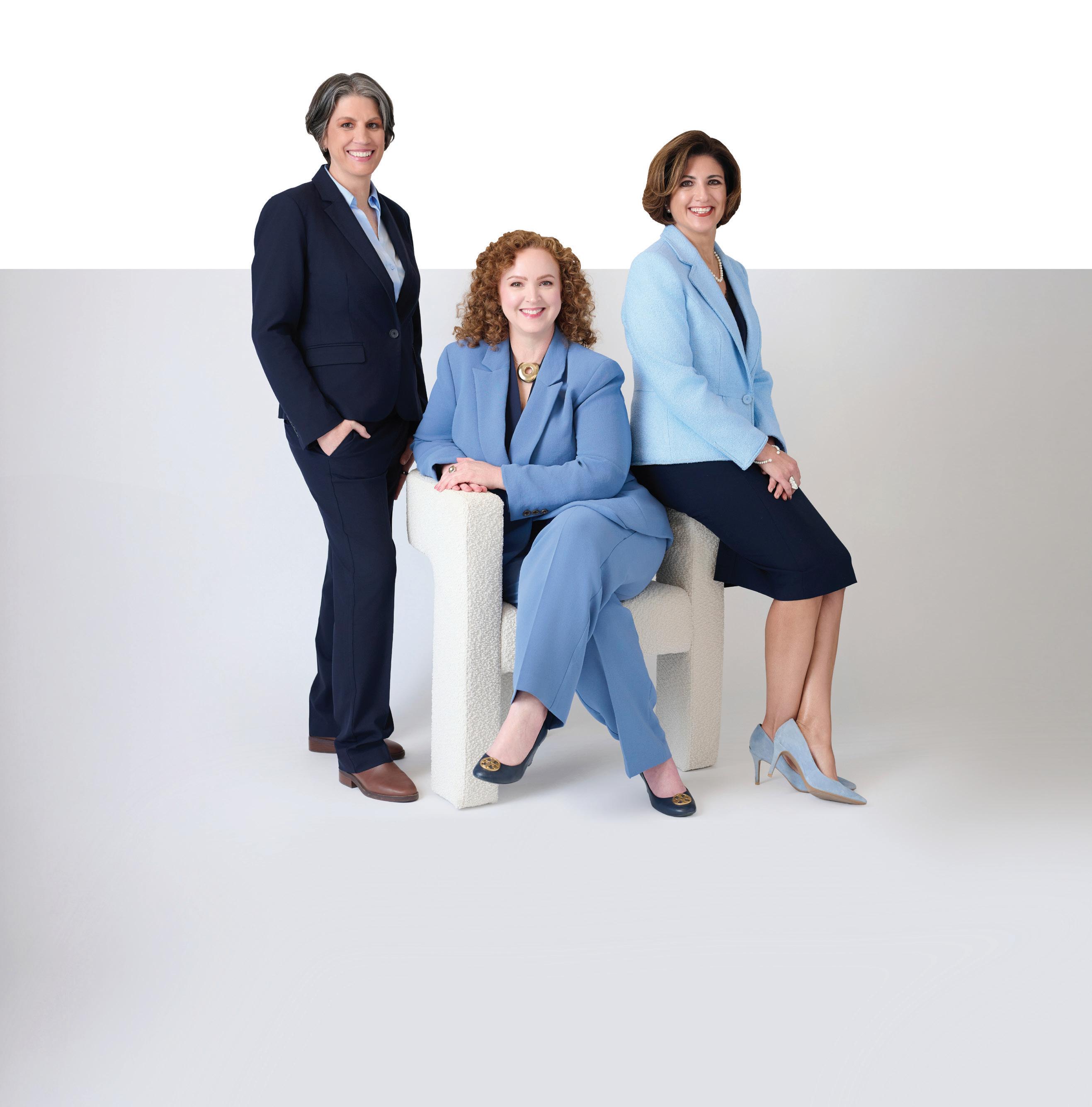
At our San Antonio office, you’re working with a team that includes Kristal Thomson, a Board Certified family law partner with more than 20 years of experience handling high-stakes divorce cases involving significant estates and complex custody issues; Charla Davies, a Board Certified family lawyer and partner known for guiding high-asset clients through complex divorce by negotiation, Collaborative Law, or litigation; and Heather Hudson, a former U.S. Air Force officer with more than eight years of exclusive family law experience and a strong track record in military and LGBTQ+ family law matters. Goranson Bain Ausley brings award-winning family law representation to San Antonio—when it matters most.
With the help of our French and Spanish allies and the assistance of some First American tribal people seeking to protect their territories and AfricanAmerican patriots hoping for their freedom, plus the luck of a fog in Brooklyn helping General Washington to early victories, the patriots prevailed against overwhelming odds.
Will Our Republic Celebrate Its 500th Anniversary?
By Fred Biery, United States District Judge
Our national birth story had its philosophical gestational roots with the enlightenment writings of John Locke, JeanJacques Rousseau, and others, which persuaded and led the founders to the radical idea of a democratic republic being the preferred form of government and that “all men are created equal” and to revolt against the concept of the divine right of kings, primogeniture, and taxes, tariffs and fees imposed without representation. Those rights fought for by the patriots did not provide the right to vote for white males without property until some years after their service in the Revolutionary War. One of them was my fourth great-grandfather, Walter Waller Brown, who as far as we know owned no property.
Paul Girardet, after Emmanuel Leutze, Washington Crossing the Delaware, (1898).
And, of course, it took 130 years for the female descendants of Martha Washington, Abigail Adams, Dolley Madison, and the women of the Revolution who sacrificed dearly to be allowed the same voting rights as their husbands. Texas women and human beings with names like Vargas and Rodriguez of either gender were not allowed to serve on juries until the 1950s. Hernandez v. Texas, 347 U.S. 475 (1954); see also Passage of Proposition 6, Texas Constitution (1954). Hence, truer words were never written, “to form a more perfect union,” because we are an imperfect species. But over the course of 250 years, we have evolved through the ups and downs of history to make those words on parchment be more inclusive. May we continue to aspire for more perfection and concur with historian David McCullough, “I am a short-term pessimist and a long-term optimist.”
Sir John Glubb grew up in an English military family and was a military officer, fought, was wounded and decorated in World War I, and served many years in administrative posts in the Middle East. One of his seventeen books, entitled The Fall of Empires and Search for Survival, is a cautionary tale in which he postulates that great nations and empires follow a predictable 250-year lifecycle through stages: The Age of Pioneers and then the Ages of Conquests, Commerce, Affluence, Intellect, and Decadence, ultimately collapsing due to the internal moral decay of selfishness, materialism, and loss of duty rather than just external forces, with the final “Decadence” marked by pessimism, frivolity, and societal apathy. He urges us to learn from history and not fall prey to the same devolution.
Great Britain, the Italy of Rome, France, Spain, and Portugal still exist but without the wealth, power, and influence they once had before their decline.
The difference between the withering of great nations and the United States is the power of the first word in the Constitution: “We.” The “We” who can recognize our shortcomings as opposed to the self-interest of a monarch or an authoritarian. The “We” who can use our collective power and will to search for that more perfect union. To do so, hear the prescient and now timely words of Washington, Jefferson, and Franklin, speaking to us from the 18th century, if only we will listen.
President Washington, in his farewell address, warned of partisanship as the primary problem for the American republic:
It serves always to distract the public councils and enfeeble the public
Mediation
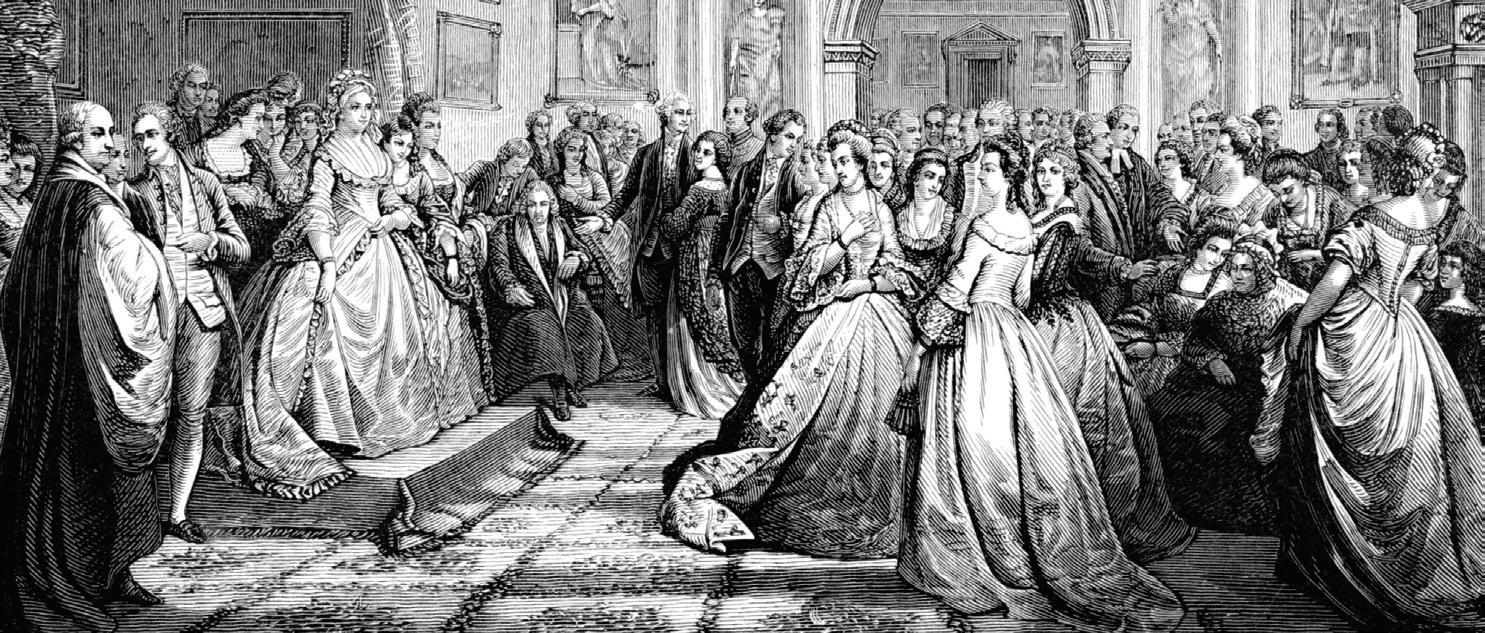
1st First Lady of the United States, Martha Washington, hosts a reception. Illustration published in 1882.
WHEN THE CASE GETS COMPLEX, CLARITY MATTERS.
Attorneys turn to theKFORDgroup for financial intelligence that stands up to scrutiny. With more than 50 years of trusted experience, we provide forensic accounting and litigation support that brings clarity to complex cases. From uncovering irregularities to calculating damages and delivering expert testimony, we turn complicated financial information into clear, credible insight for mediation, arbitration, and trial.
Schedule a consultation today.
administration. It agitates the community with ill-founded jealousies and false alarms, kindles the animosity of one part against another, foments occasionally riot and insurrection and can open the door to foreign influence and corruption. They can also become potent engines by which cunning, ambitious and unprincipled men will be enabled to subvert the power of the people and to usurp for themselves the reins of government, destroying afterwards the very engines which have lifted them to unjust dominion.
President Washington also warned against foreign entanglements bogging us down for years of lost blood and treasure. Vietnam and Afghanistan come to mind.
Article I, Section 8, of the Constitution says: The Congress has the power of the “We,” not the “I,” to declare war and invade other countries with military assets. It can be argued that the Constitution prevails over the Monroe Doctrine. To think otherwise gives aid and comfort to President Putin, President Xi, and others of their ilk to do likewise with obeisance of present day Neville Chamberlains. If it looks like a war, walks like a war, and quacks like a war, it probably is a war and not a duck.
Thomas Jefferson’s declaration of grievances against a would-be king over this continent include these:
A history of repeated injuries and usurpations, all having in direct object the establishment of an absolute tyranny over these states: He has obstructed the administration of justice by refusing his assent to laws for establishing judiciary powers. He has made judges dependent on his will alone for the tenure of their offices and the amount and payment of their salaries.
Today there are hundreds of Department of Justice Executive Branch immigration judges, United States Attorneys, FBI agents, scientists, and doctors who have lost, either by firing or resigning in dissent and as a matter of conscience, the tenure of their offices for trying to abide by their oath to the Constitution and not submitting to the will of their employers. And now a retired Navy Captain, combat pilot, and astronaut is being called a traitor and threatened with death by the President of the United States and reduction in rank by the Secretary of Defense because he exercised his First Amendment right as a citizen and as a United States Senator. Perhaps
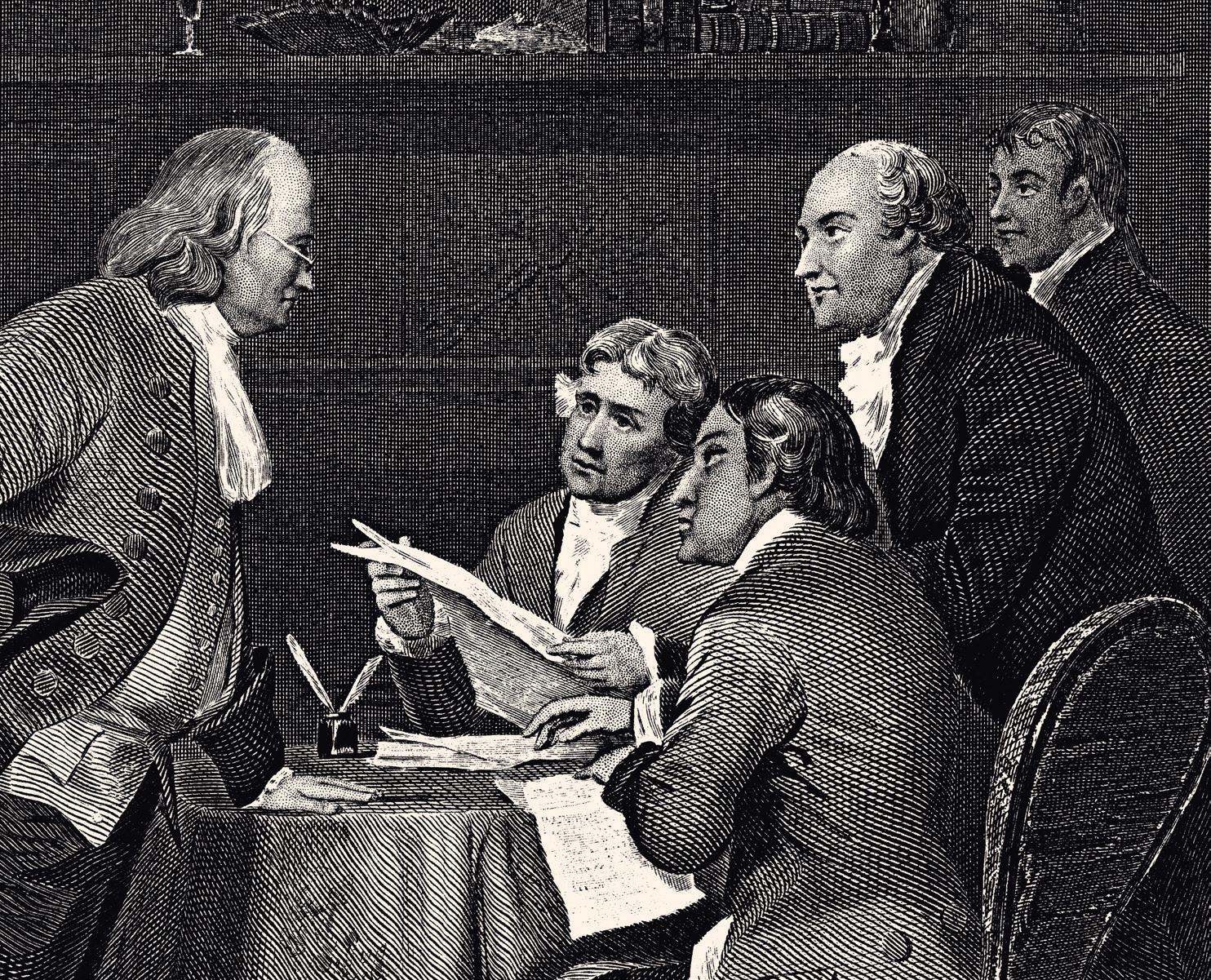
Alonzo Chappel, Drafting the Declaration of Independence (1857). This engraving depicts the famous meeting of the Committee of Five in June 1776. On the left, Benjamin Franklin (standing, with powdered wig, spectacles and cane) addresses the group. In the center, Thomas Jefferson holds the draft of the Declaration of Independence, surrounded by John Adams, Roger Sherman, and Robert R. Livingston.
the Constitution controls over the Uniform Code of Military Justice. See Kelly v. Hegseth, 26-cv-00081-RJL, in the United States District Court for the District of Columbia.
The signers of the Declaration had these objections to a king as well:
“Obstructing the laws for naturalization of foreigners.” (Apparently the Founders knew there was a need for immigrants.)
“He has kept among us, in times of peace, standing armies without the consent of our legislatures.” (Our Supreme Court recently allowed an order that precludes troops in Chicago to remain in place pending appeal. Trump v. Illinois, 607 U.S.___ (2025)).
“For quartering large bodies of armed troops among us.”
“For cutting off our trade with all parts of the world.”
“For imposing taxes on us without our consent.” (Farmers, ranchers, businesspeople, consumers, and economists might say tariffs imposed by executive order are taxes without representation. The Supreme Court addressed the issue in Learning Resources, Inc., v. Trump, 607 U.S.___ (2026) (International Emergency Economic Powers Act does not authorize the President to impose tariffs)).
“For transporting us beyond seas to be tried for offenses.”
“For depriving us of the benefits of trial by jury.”
And I would add, without due process and the rule of law. See Arias v. Noem, 26-cv-415-FB (W.D. Tex. Jan. 31, 2026).
To rebel against those injustices, the founders pledged their lives, their fortunes, and their sacred honor. Democracy is messy. It is inconvenient and burdensome to govern ourselves, but much better than allowing a king or authoritarian to do it for us. Those who sacrificed ask only that we do our part to preserve what they gave us. Those who gave their lives so we could would wonder why they did if we don’t.
In the last sixty years, examples come to mind of two men who tried to tear our constitutional fabric, but courageous Americans followed the examples of our patriot ancestors and exercised their rights under the
First Amendment. On March 9, 1954, our parents and grandparents heard Edward R. Murrow speak truth to demagogic power:
The Senator’s [Joseph McCarthy] primary achievement has been in confusing the public mind, as between internal and external threats. We must not confuse dissent with disloyalty. We must remember always that accusation is not proof and that conviction depends on evidence and due process of law. We will not walk in fear, one of another. We
will not be driven by fear into an age of unreason, if we dig deep in our history and our doctrine and remember that we are not descended from fearful men, not from men who feared to write, to speak, to associate and to defend causes that were, for the moment, unpopular. There is no way for a citizen of a republic to abdicate his responsibilities. The Senator did not create this situation of fear. He merely exploited it. Cassius was right, “The fault, dear Brutus, is not in our stars but in ourselves.”
With more than 130 years of combined experience in wills, trusts, and estate administration, our team brings depth, perspective, and precision to every relationship. As an independent, locally owned bank, we deliver the continuity and stability your clients and their families depend on.
“My faith in the Constitution is whole; it is complete; it is total. I am not going to sit here and be an idle spectator to the diminution, subversion, destruction of the Constitution.”
—Texas lawyer Barbara Jordan
Texans protect their own.
So do we.
We’ve spent decades delivering dependable malpractice coverage, risk management guidance, and real-world support that empowers our members to thrive.
We’re committed to helping you succeed, every step of the way.
Mr. Murrow quoted from Julius Caesar Mr. Shakespeare also wrote these prophetic words in Henry VI: Jack Cade said, “And when I am king, as king I will be, and the good people will worship me their lord.” Then his right hand sycophant, Dick the Butcher said, “The first thing we do, let’s kill all the lawyers,” who were the guardians and protectors of English rights and to do so for would-be king Cade to achieve his illegitimate seizure and usurpation of power.
Our Great Seal includes the motto “E pluribus unum,” out of many one, which in our current divisiveness is in short supply. A victim of the political violence of his day, Mr. Lincoln would implore us to seek another new birth of freedom with malice towards none and to invoke the better angels of our nature against the coarseness of our culture, instead of yielding to our basest instincts.
On July 24, 1974, Texas lawyer Barbara Jordan observed that the Constitution did not apply to her and her ancestors when it was written, but because of civil war, elections. and litigation, it finally enabled her as a member of Congress to say these words against a corrupt President who, among other things, was using the Internal Revenue System and other powers of government against his perceived political enemies. Her words echoed through the halls of the Capitol, “My faith in the Constitution is whole; it is complete; it is total. I am not going to sit here and be an idle spectator to the diminution, subversion, destruction of the Constitution.” May those ideas still resonate today.
Fifty-five years ago, at Fort Dix, New Jersey, I first took an oath to the Constitution written with a feather by flawed and hypocritical men, living in and with the realities of their time, as are we all. Before it was written, two men whose names are little remembered, John Pulling and Robert Newman, in their own small way helped to begin a new nation
“Auf der Pennsylvania-Avenue in Washington” (On Pennsylvania Avenue in Washington) by Rudolf Cronau (c. 1897).
by hanging lanterns, one if by land and two if by sea. That experiment in democracy can continue with us if we also do our small part. Since 1971, I’ve taken that oath seven more times, as a Texas and United States lawyer and for five judicial offices. I take it again:
I solemnly affirm that I will support and defend the Constitution of the United States against all enemies, foreign and domestic; that I will bear true faith and allegiance to the same. I take this obligation freely, without any mental reservation or purpose of evasion. I will seek justice without fear or favor. I will do justice for the poor as well as the rich, and that I will well and faithfully discharge the duties of the office on which I am about to enter.”
To those who disagree with our judicial rulings as we attempt to abide by that oath: We will not be intimidated. Threaten and assassinate us if you must, but please leave our loved ones alone.
On celebratory occasions in England a toast is given: “Huzzah! To the King, long live the King.”
May our toast be: “To the Constitution, long live the Constitution and the United States of America.”
On September 17, 1787, a lady asked, “Well, Dr. Franklin, what do we have?” “A republic, if you can keep it.”
Now it is our turn to do the keeping. Our children and grandchildren and those patriot ancestors are watching and waiting and wondering what we will do. Time will tell.
Fred Biery has served as a Texas and United States Judge for 47 years.
At the end of 2025, the Supreme Court of Texas made major updates to its petition for discretionary review (PDR) procedure. That procedure generally involves two stages: the petition stage and the merits stage.
In stage one, a party seeking supreme court review of a lower court’s decision files a petition for review. Under the old rules, a petition for review was capped at a scant 4,500 words. Given the small word limit, parties often identified “unbriefed issues” in the petition that, although not addressed in the petition itself, they intended to address later in merits briefing. Unless one or more justices vote to request a response to the petition, it will be automatically denied.
In stage two, the court requests that the parties submit full briefing on the merits. At this stage, the parties’ respective lead briefs may contain up to 15,000 words, and the petitioner’s reply brief may contain up to 7,500 words. Notably, under the old procedure, the court could—and frequently did—request full briefing on the merits only to later deny review.
New Practice & Procedure in the Supreme Court of Texas
By Hayley Ellison
If your case might be headed to the supreme court, study the new rules and the court’s internal operating procedures to ensure your client has the best chance of success.
The new procedure, which took effect on January 1, 2026, is intended to make the review process speedier and significantly less costly for litigants. Under the revised rules, petitions for review may be slightly longer (up to 6,500 words) to allow petitioners to “more robustly [address] the merits of the appeal and error preservation.”1 Petitions now must contain an introduction section identifying the most persuasive grounds for the court to grant review. The introduction may not exceed 1,000 words, which are included in the petition’s overall word count. Finally, the new rules also prohibit petitioners from identifying any “unbriefed issues” in the petition.
In conjunction with the new rules, the court also announced a change to its internal operating procedures. The court will no longer wait for the deadline to voluntarily file a response to a petition for review to elapse before the justices conduct their initial review of the petition. The explicit goal of this change is to reduce the time from filing a petition for review to final disposition. This also means that no “waiver of response” should be filed.
Under the court’s prior procedure, at least three justices could vote to request merits briefing before the full court voted to grant review. Under the new procedures, the court will grant review, set the case for oral argument,
and order merits briefing only upon the vote of at least four justices. Although Rule of Appellate Procedure 55.1 still allows the court to order merits briefing before granting review, the court has advised that it maintained that language to retain “flexibility in handling per curiam opinions,” which may be issued even without full briefing on the merits.2
The court clerks are rejecting petitions for review that do not comply with the new rules, including petitions that do not contain the newly required introduction section. And while the rules still allow litigants to request extensions of time to file petitions for review and merits briefs, the justices have indicated in public remarks that they may be less generous in granting extensions going forward. This is part of the court’s overarching goal of ensuring cases are decided more efficiently and expeditiously.
According to the Texas Office of Court Administration’s latest statistics, the supreme court grants only about 11 percent of petitions for review. Under the new rules, the petition for review stage is now litigants’ only opportunity to convince the court to accept or deny review. So, if you represent the petitioner, focus your petition on why the case warrants the court’s limited resources and make that argument clearly and persuasively up front. If you represent the respondent, use your response to alert the court to any error preservation issues that might warrant denying review.
Seeking (or avoiding) review in the Supreme Court of Texas requires familiarity with the Rules of Appellate Procedure and the court’s internal procedures, preferences, and quirks. If your case might be headed to the supreme court, study the new rules and the court’s internal operating procedures to ensure your client has the best chance of success.
Hayley Ellison is a partner with Davis & Santos. She is Board Certified in Civil Appellate Law, and her practice is focused on federal and state appeals and commercial litigation, including bankruptcy litigation and complex business disputes.
We help build legacies and nurture relationships along the way.
Getting to know our clients and taking a holistic view of their financial goals is how we lay the groundwork to help with their wealth management needs. We offer a range of services — from estate planning to trust administration to real estate and mineral asset management to financial planning and investment services. With Frost, we are here to help your clients from day one to guide them through their now and next.
“So, you're at a dinner party and your friend asks...”
What Do I Do if I Get Pulled Over for DWI?
By Zoe Russell
First, a warning I always give: Do not drive in the first place. Alcohol impairs judgment, leading people to reason more easily that they can safely get behind the wheel. Even if you are not legally intoxicated, no one needs the hassle of a DWI arrest.
DWI investigations follow a routine structure. Officers on DWI task forces generally patrol highways looking for drunk drivers at nighttime. They might notice drivers who are speeding or drifting in and out of lanes. Once they pull someone over, they are looking for the three things I see in almost every DWI police report: glossy, bloodshot eyes; slurred speech; and the odor of alcohol.
In the first interaction with a driver, police attempt to divide the driver’s attention to see how well the driver can respond to questions while performing a task. The officer may request the driver’s license and insurance while inquiring, “Where are you coming from tonight?”
If the driver responds, “From a bar,” that puts one piece of evidence on the scale in favor of an arrest and later conviction. In my experience, the police are not weighing the good and the bad facts equally. They are tallying up the “clues” of impairment that can justify a probable cause arrest.
Next, the police officer may ask, “How many drinks have you had?” The most common response is “A couple drinks.” If a driver says he has not been drinking, the officer may counter that she smells alcohol and ask the driver to explain why.
During any interaction with police, you have the right to remain silent. You may simply say, “I don’t want to answer any questions.” Then, importantly, stop talking. Police are trained to ask follow-up questions about the size of each drink, time of drinking, meals, and medical conditions, so answering one question will lead to more questions and more opportunities to say the wrong thing or wind up with a miscommunication.
There is a risk that police and courts will interpret pre-arrest/pre-Mirandized silence to mean the driver is hiding something (following an arrest or Miranda warnings, no
adverse inference can be drawn by exercising the right to silence). But the polite refusal to provide evidence against oneself may be better than giving an officer the opportunity to allege “slurred speech” or evidence of drinking alcohol through admission of having had “a couple drinks.”
If the officer observes bloodshot eyes, odor of alcohol, and slurred speech, he will likely ask the driver to step out of the vehicle for field sobriety tests because he “just wants to make sure you’re okay to drive.”
The officer typically administers three standardized tests: the horizontal gaze nystagmus (HGN) test, the walk-and-turn, and the one-leg stand. During the HGN test, the officer waves a penlight back and forth, looking for slight, involuntary eye movements. These movements can indicate a number of things, including alcohol consumption.
Through the walk-and-turn and one-leg stand tests, police are looking for “validated clues of impairment.” The walk-and-turn requires the driver to hold a heel-to-toe position during the police officer’s lengthy instructions; take nine steps heel-to-toe on an imaginary line; do a very specific turn; and take nine steps back. Police are watching the driver’s arms, making sure they are not raised too high. The driver is not permitted to stop in the middle of the test to ask questions.
These exercises test not only the driver’s balance, but also his ability to follow complicated instructions. If at any point during the test you take one step off the line, or one step not heel-to-toe, or don’t
turn correctly, or step out of the heel-to-toe position, or start before the officer tells you to, or lift your arms, or stop walking, that’s one clue of impairment. In other words, you could nearly ace the test while still demonstrating multiple clues indicating impairment that could justify a charge.
The one-leg-stand has similarly convoluted instructions: raise your foot six inches; keep your foot parallel to the ground; keep both legs straight; keep arms at your sides; count “one-thousand-one, one-thousand-two” until told to stop; watch your raised foot.
Some of us may not have a good enough balance to perform these tests regardless of intoxication, as the tests have not been validated on overweight populations or populations over 65 years of age. I also don’t recall taking a balancing test when I picked up my learner’s permit.
Just as with your right to silence, you have the right to refuse participation in these field sobriety tests. Police may still arrest you, but at least you have not handed over any evidence.
Zoe Russell is a criminal defense lawyer practicing in San Antonio and the surrounding counties and specializing in DWI defense. She has taken advanced courses in gas chromatography, breath testing, and field sobriety testing, and holds memberships in the leading national DWI defense organizations.
SAN AN TO N I O BAR ASSOCI A T I O N
Steve Chiscano, a Shareholder at Chiscano Hossa & Calve, has been selected Chair-elect of the State Bar of Texas Board of Directors. He will take office in June and serve as Chair until June 2027.
Elena Villaseñor Sullivan has been elected as Presidentelect of the Texas Court Appointed Special Advocates (CASA) Board. In her role, Villaseñor Sullivan will help lead the organization’s statewide efforts to support local CASA programs serving children in the foster care system.
Sam Davis has joined the San Antonio Legal Services Association (SALSA) as a Staff Attorney in its Disability Program. He brings extensive experience advocating for children, families and individuals across Bexar County.
Briefly will now be included in San Antonio Lawyer! Briefly is a column that features SABA members and firm updates, new hires, awards and other professional news. Submit Briefly notices to comm@sabar.org
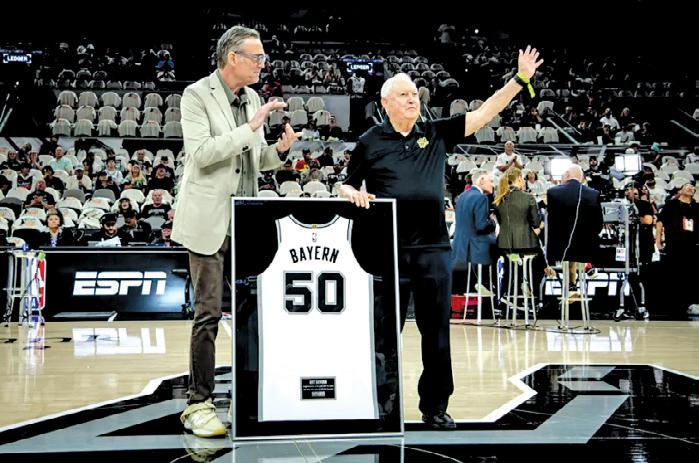
Art Bayern, an estate planning attorney at Langley & Banack, was honored by the San Antonio Spurs for his 50-year tenure on the team’s statistics crew. His courtside service spanned five NBA championship seasons.
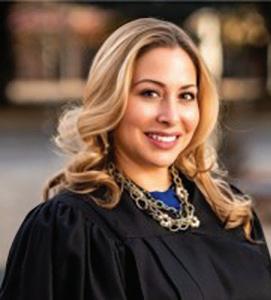
Judge Rosie Alvarado, 438th Civil District Court, was honored with the Impact Award from Texas Public Radio (TPR) at its Illuminate & Inspire Fundraising Gala. The award recognized her contributions to supporting youth and the San Antonio community.
Kristal Thomson, a Partner at Goranson Bain Ausley, has been named Diplomate of the American College of Family Trial Lawyers. The invitation-only organization recognizes exceptional family law trial attorneys who exemplify the highest standards of advocacy, ethics and professionalism. The membership is limited to 100 lawyers nationwide. Thomson also was appointed by the Supreme Court of Texas to serve on the Texas Board of Law Examiners in June.
Bobby Barrera has relocated Bobby Barrera Law to 408 Dwyer Ave, San Antonio, TX 78204. He brings more than 40 years of jury trial experience in state and federal court and maintains both criminal and civil practices.
Gunn, Lee & Cave P.C. welcomes Rayyan Maqbool to its IP practice. Maqbool earned her undergraduate degree from the University of Notre Dame and her J.D. from Tulane University Law School. She was admitted to practice law in Texas in April 2026. In her free time, she enjoys photography, drawing, and exploring new cities.
Bexar County Commissioners Court approved the appointment of Judge Alicia “Ali” Perez to County Court at Law No. 13 on March 26, 2026. Perez will serve in the position pending the November 2026 general election and, as the sole candidate on the ballot, is expected to assume the elected term beginning January 1, 2027.
Affinity Bars and SABA Sections/Committees
LEAD Empowered Women Leaders’ Luncheon - Honoree Sara Dysart Photo courtesy of LEAD
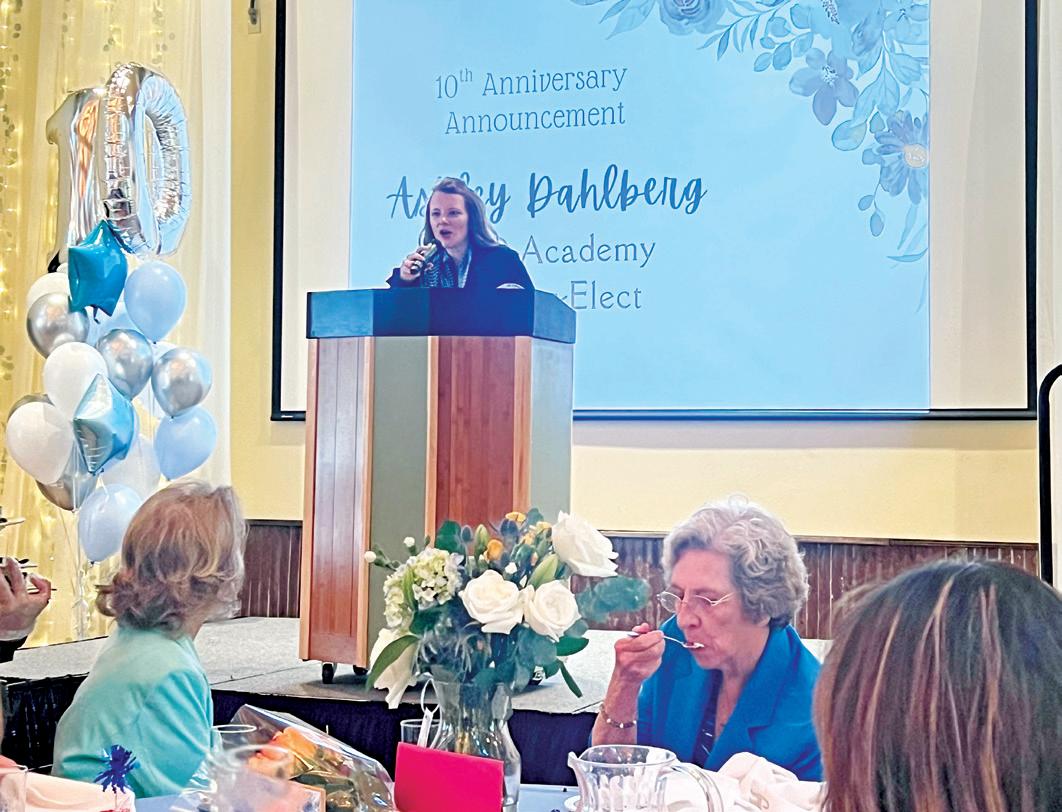
LEAD Empowered Women Leaders’ Luncheon - Director Elect Ashley Dahlberg Announced LEAD On Photo courtesy of LEAD
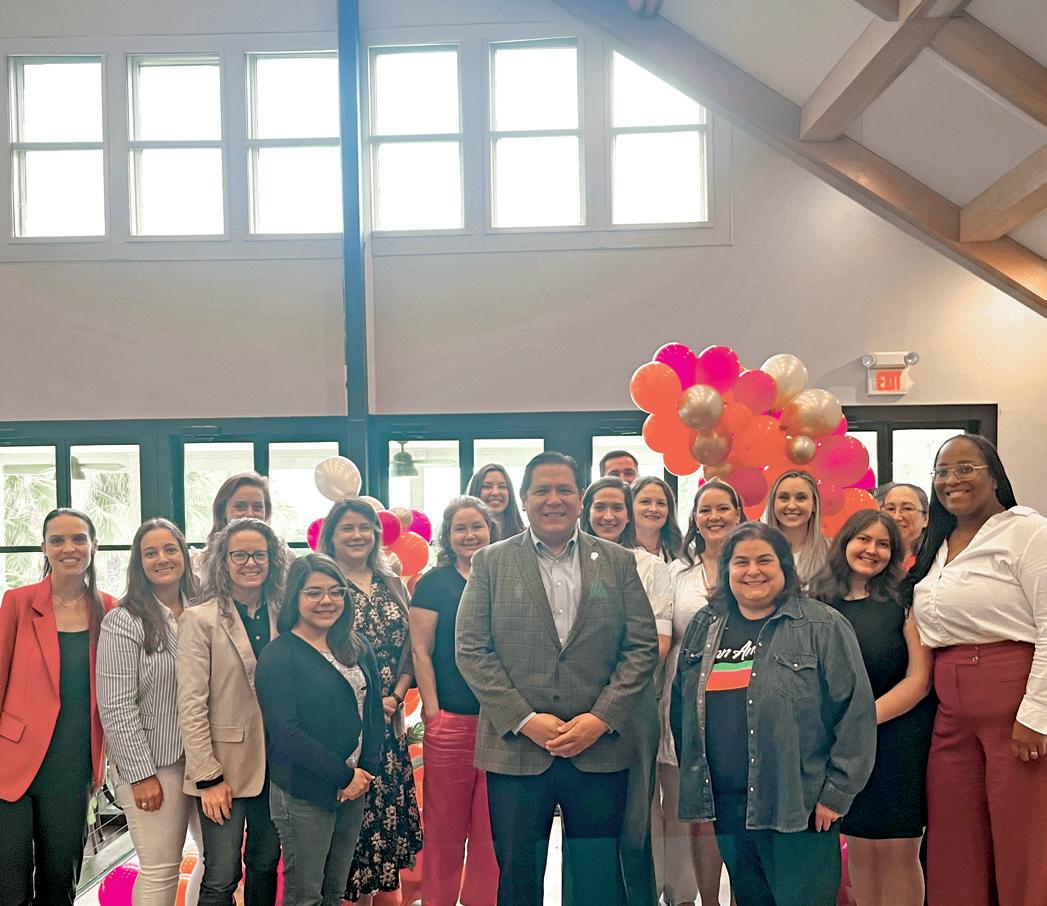
BCWB Annual Retreat Attendees with State Bar of Texas Past President Santos Vargas. Photo courtesy of BCWB
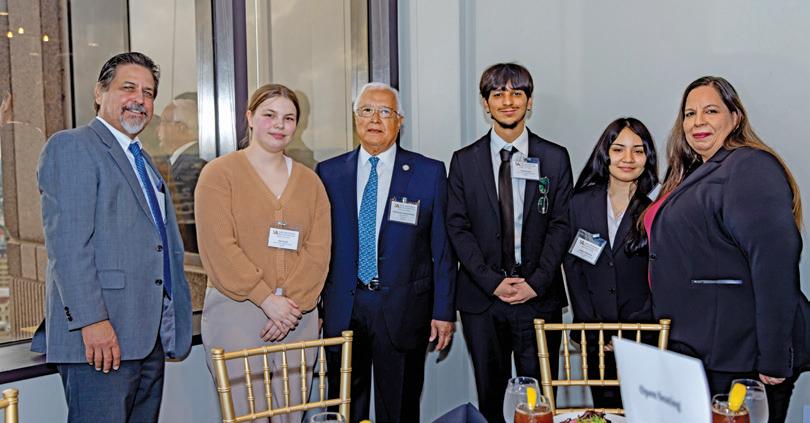
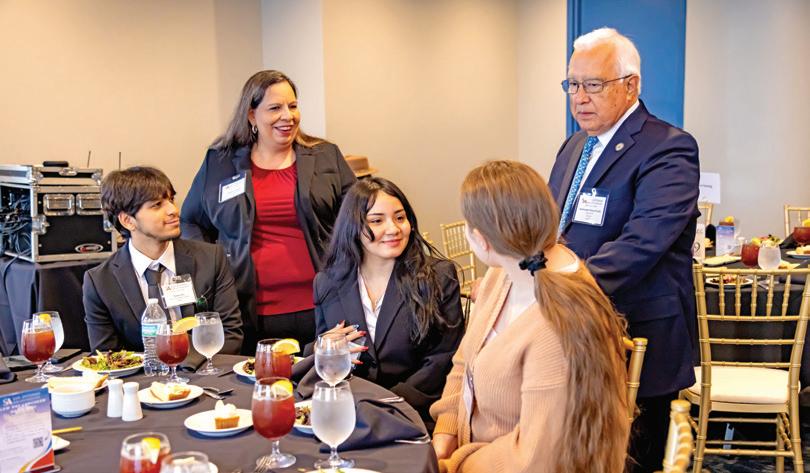
Judge Ed Prado with the Fox Tech Law Day Essay Contest Winners and their teacher. Photo courtesy of SABA Federal Courts Committee
Joe Hinojosa and Judge Ed Prado with the Fox Tech Law Day Essay Contest Winners and their teacher. Photo courtesy of SABA Federal Courts Committee
San Antonio Bar Foundation (SABF)
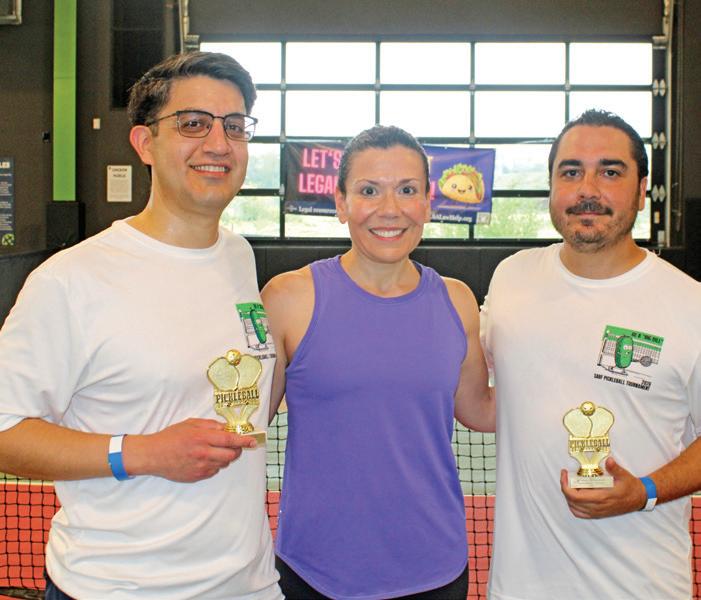
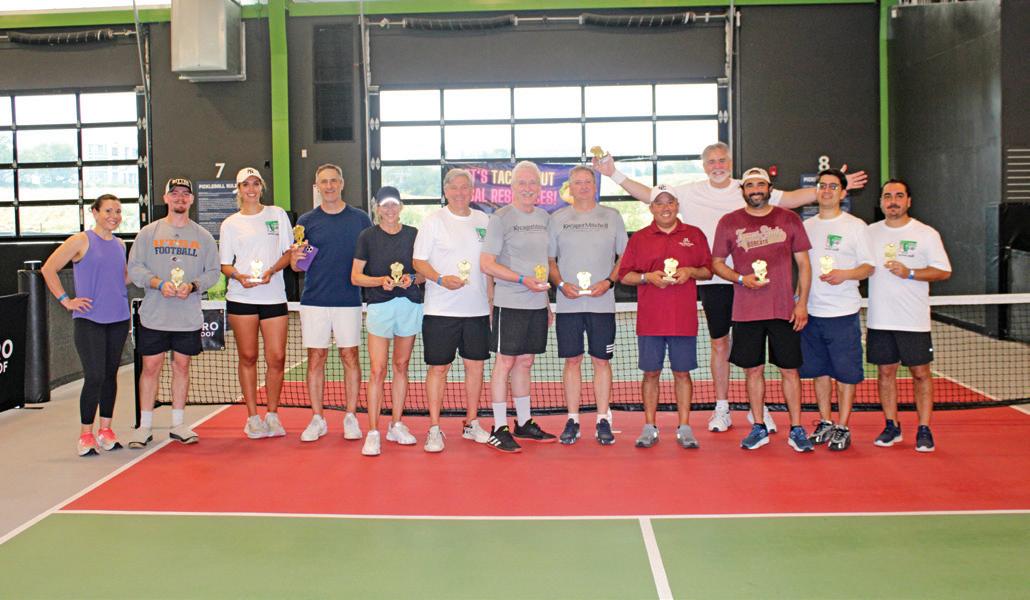
On June 7, the San Antonio Bar Foundation (SABF) hosted its fifth annual Pickleball Tournament, bringing together members for an afternoon of competition in support of the SABF’s mission. Every player, sponsor and spectator furthered the Foundation’s work to promote access to justice, support civic education and invest in the future of the legal profession. Thank you to everyone who came out, competed and helped make this year’s tournament another success!
Congratulations to this year’s tournament winners:
Social Division:
Competitive Division:
1st Place: Chamberlain Hrdlicka | Jaime Vasquez & Adrian Ochoa
1st Place: Kreager Mitchell, PLLC | Bruce Mitchell & Tres Bain
2nd Place: Herrera Law Firm | Jorge Herrera & Rick Ojeda
2nd Place: Sparr Mediation | Richard Sparr & Will Quirk
3rd Place: Thomas J. Henry Law | Lauren Arzuaga & Jerry Ritter
3rd Place: Valkenaar O’Donnell PLLC | Rick Rosenblum & Elizabeth Rosenblum
San Antonio Young Lawyers Association
See yourself in San Antonio Lawyer!
San Antonio Lawyer is proud to feature moments of the San Antonio legal community serving others, networking, educating, and celebrating.
Submit your affinity bar and section gathering photos and recaps to comm@sabar.org to be featured in our next issue.
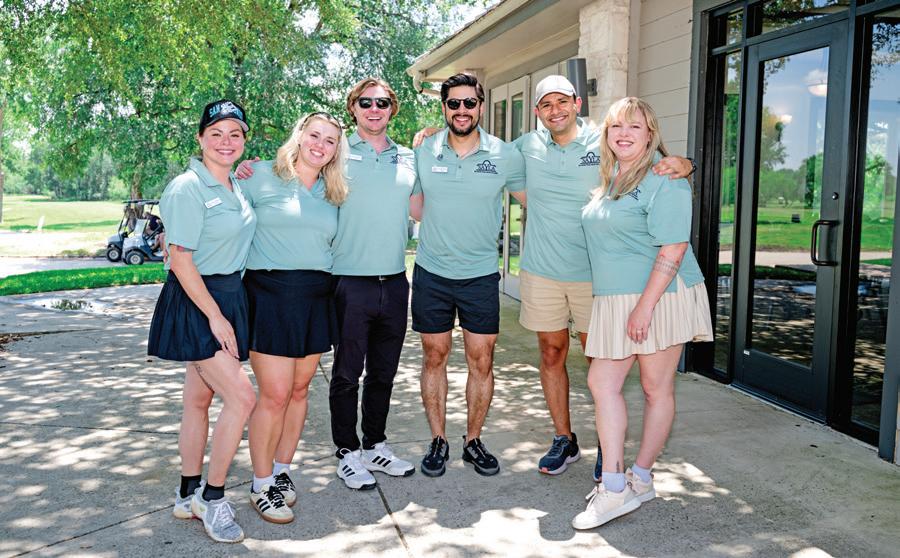
SAYLA hosted a Golf Scramble on May 29 at Silverhorn Golf Club.
All photos courtesy of SAYLA
The San Antonio Bar Association Welcomes 2026–2027 SABA Board of Directors
By SABA Staff
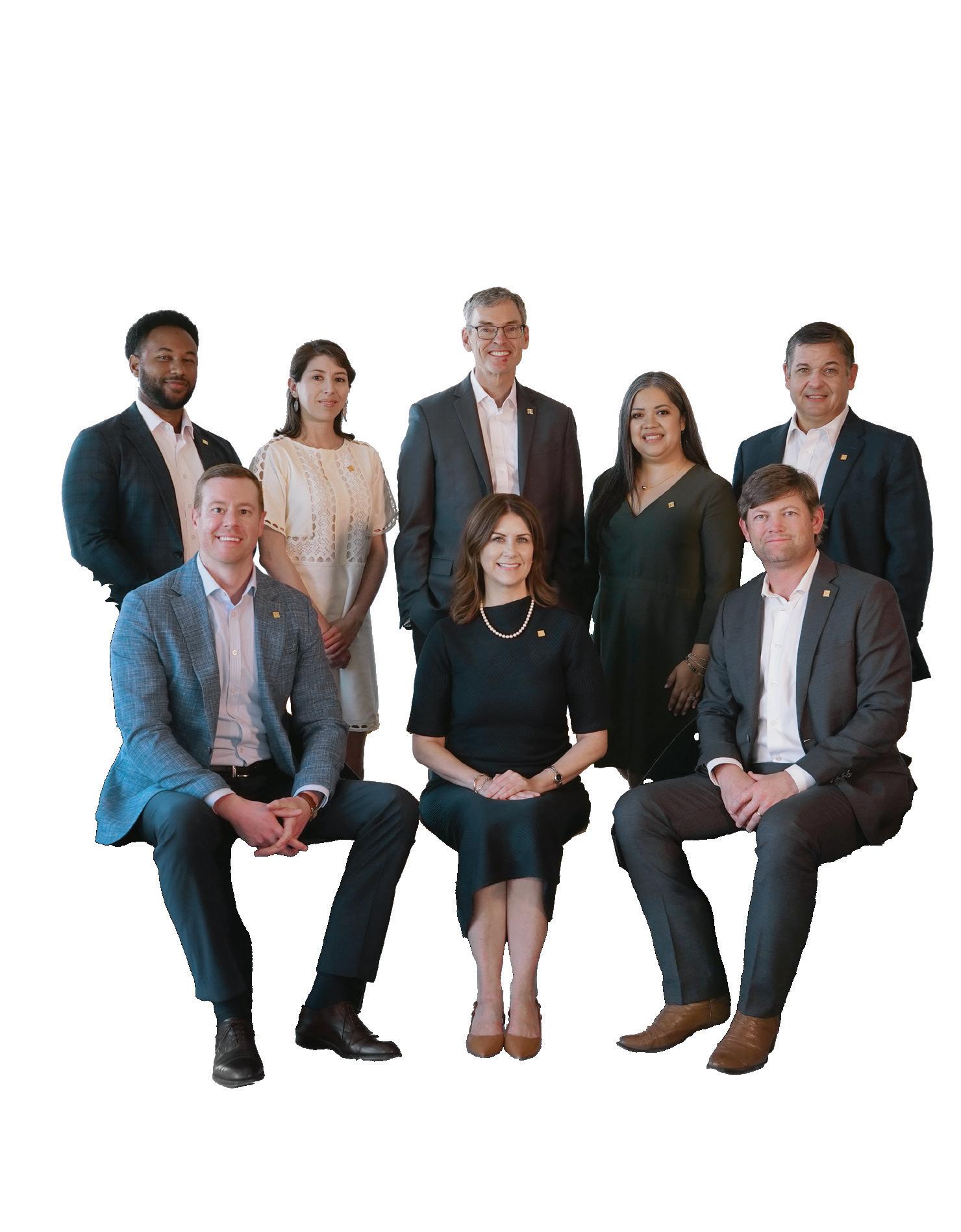
The San Antonio Bar Association (SABA) is pleased to present its 2026–2027 SABA Board of Directors and to welcome the newly-elected directors and officers. The new term begins August 1, 2026.
President-elect
Officers leading the Association this year are President Jaime Vasquez, Presidentelect Emma Cano, Treasurer Elizabeth “Liz” Provencio, and Secretary Jorge Herrera. Nick Guinn will serve as Immediate Past President and Chair of the San Antonio Bar Foundation (SABF) and Patricia “Patty” Vargas will serve as the SABF Immediate Past Chair.
Director
Director
Directors elected to two-year terms (2026–2028) are Cynthia Orr, Kristal Thomson, Abel Martinez, and Soledad Valenciano. Directors entering their second year of service are Krishna Reddy, Michael Ritter, Elena Villasenor Sullivan, and Collanne West.
Emma Cano Director
Cynthia Orr
Krishna Reddy
Secretary Jorge Herrera
Director
Abel Martinez
Elena Villaseñor Sullivan
President Jaime Vasquez
Treasurer Elizabeth “Liz” Provencio
Director
Kristal Thomson
Director
Michael Ritter
Past President & SABF Chair Nick Guinn
Director
Soledad Valenciana
Director
Collanne West
Past SABF Chair
Patricia “Patty” Vargas
Recent Cases: Judicial-Proceedings
Privilege
and Contract Construction
By Justice Adrian A. Spears II
As I mark my first anniversary as a justice on the Fourth Court of Appeals, I am honored to serve the people of Texas. This past year has been defined by serious, principled work, faithfully applying the law, upholding the Constitution, and resolving cases that carry real consequences for the individuals, businesses, and communities involved. The matters before the Court span a broad range of legal issues, each requiring careful analysis and thoughtful consideration, and each contributing to the development of Texas law. I have greatly valued the responsibility this role carries and the opportunity to engage in this important work. The cases that follow provide a representative sample of the Court’s docket and illustrate the scope and impact of the issues we address.
In McNamara v. Bartolomei, No. 04-2500008-CV, 2026 WL 686517 (Tex. App.— San Antonio Mar. 11, 2026, pet. filed), the appellant appealed the trial court’s summary judgment in favor of his former attorney. The appellant sued his former attorney for defamation per se, alleging that his former attorney had made a false statement in a courtordered response to the appellant’s application for post-conviction writ of habeas corpus. In response to the appellant’s lawsuit, his former attorney moved for a traditional summary judgment on the grounds of attorney immunity and the judicial-proceedings privilege. This Court explained that because the trial court’s order granting summary judgment did not specify the grounds upon which it relied, the appellant was required in his brief to challenge both grounds. Because the appellant in his brief failed to raise any issue with respect to the judicial-proceedings privilege, this Court affirmed the summary judgment on that ground.
Further, this Court explained that even if the appellant had challenged the judicialproceedings ground in his brief, the trial court
did not err in granting summary judgment on that ground. It was undisputed that the former attorney made the alleged defamatory statement in an affidavit that was part of a court-ordered response to the appellant’s application for post-conviction writ of habeas corpus. “The judicial-proceedings privilege is straightforward: Communications in the due course of a judicial proceeding will not serve as the basis of a civil action for libel or slander, regardless of the negligence or malice with which they are made.” Id. at *2 (quoting Landry’s, Inc. v. Animal Legal Defense Fund, 631 S.W.3d 40, 46 (Tex. 2021)) (emphasis added); see also Strickland v. iHeartMedia, 665 S.W.3d 739, 742 (Tex. App.—San Antonio 2023, pet. denied) (explaining that “statements made in a judicial proceeding are privileged against defamation claims,” including “statements made in written pleadings”). Thus, this Court held that the trial court did not err in granting summary judgment based on the judicialproceedings privilege.
In PDS Acquisition, Corp. n/k/a USIO Output Solutions, Inc. v. KDHM, LLC, No. 04-24-00358-CV, 2025 WL 984609 (Tex. App.—San Antonio Apr. 2, 2025, pet. denied), seller KDHM and buyer USIO entered into an asset purchase agreement, which provided that certain assets were to be excluded from the sale. After the sale, KDHM brought a money had and received claim against USIO, alleging that money had been mistakenly paid to USIO at closing and that USIO held money that belonged to KDHM. The parties filed crossmotions for summary judgment, and the trial court granted KDHM’s motion and rendered judgment in its favor. USIO appealed.
The appeal turned on the legal interpretation of Article 2.1(c)(i) of the parties’ asset purchase agreement, which excluded from the sale “Seller’s bank accounts and cash, except for the Customer Deposits to the extent they have not been earned and offset against Seller’s accounts receivable prior to the
Closing Date.” This Court construed the asset purchase agreement as a whole, harmonized all its provisions so that none were rendered meaningless, and afforded the agreement’s language its plain and grammatical meaning. We determined that customer deposits qualified as “Excluded Assets” only if they met both criteria, that is, they were both earned and offset against KDHM’s accounts receivable before the closing date. Because it was undisputed that the customer deposits in question were earned but not offset prior to the closing date, the customer deposits in question were not excluded from the sale and were properly transferred to USIO at closing. Accordingly, we held the trial court erred in granting KDHM’s summary judgment motion and in denying USIO’s summary judgment motion. Because USIO proved it was entitled to judgment as a matter of law, we rendered judgment that KDHM take nothing on its money had and received claim.
Justice Adrian A. Spears II has served on the Fourth Court of Appeals since January 1, 2025. He is a third generation Texan, raised in a family of attorneys and judges who instilled in him a deep respect for the law and a strong commitment to public service. Justice Spears earned his undergraduate degree in accounting from Texas Tech University and his law degree from St. Mary’s University School of Law. Prior to his election to the Fourth Court of Appeals, he maintained a distinguished career in private practice, representing individuals, businesses, and governmental entities in complex litigation across both state and federal courts throughout Texas. Justice Spears has been married to his wife for over twenty years. Together, they have three daughters and are active members of their church.
Western District of Texas Court Summaries
By Soledad Valenciano, Sabrina Salazar, and Clarissa Valenciano
If you are aware of a Western District of Texas order that you believe would be of interest to the local bar and should be summarized in this column, please contact Soledad Valenciano (svalenciano@svtxlaw.com, 210-787-4654) with the style and cause number of the case, and the entry date and docket number of the order.
Lanham Act; Ex Parte Relief
Ceremony of Roses Acquisition, LLC v. Doe, SA-26-CA-01704-XR (Rodriguez, X., March 20, 2026).
Plaintiff Ceremony of Roses Acquisition, LLC, holder of the exclusive right to sell Zach Bryan’s official tour merchandise with trademarked designs using his name, sued under Section 32 of the Lanham Act, which creates a cause of action for infringement of registered marks, and sought a temporary restraining order barring unknown bootleggers from selling counterfeit merchandise on the day of Zach Bryan’s concert at the Alamodome. The court granted the requested relief because Ceremony of Roses submitted evidence showing that without an ex parte TRO and seizure order, any relief afforded would be ineffective. Given that Ceremony of Roses is the exclusive licensee of the artist and the sole merchandiser, it demonstrated a strong likelihood of success on its trademarkinfringement claim. The court found irreparable harm likely because consumers would be misled by the knock-off goods and the bootleggers operate without identification of record-keeping and were likely to destroy infringing merchandise and related evidence if they received notice. The court found that a TRO was unlikely to result in substantial harm to anyone, and that any defendant subject to the seizure and restraining orders would necessarily be liable for trademark infringement. The court also found that a TRO served the public interest by preventing consumer confusion and combating deceptive behavior that undermines our nation’s system of intellectual property protections. The seizure order permitted federal, state, and local law enforcement officers to seize and impound any infringing merchandise being sold within three hours of the beginning or
end Zach Bryan’s March 21, 2026 concert in San Antonio, Texas, anywhere within three miles of the Alamodome.
Young v. O’Reilly Auto Enters., LLC, SA25-CA-00766-XR (Rodriguez, X., April 17, 2026).
The court granted defendant O’Reilly Auto Enterprises, LLC’s motion for summary judgment on plaintiff Young’s negligence claim. After slipping and falling on an oil spill outside of an O’Reilly Auto Parts store, Young filed suit for negligence on a theory of premises liability. O’Reilly asserted that it owed no duty to Young because the oil spill was open and obvious; there was no evidence of actual or constructive notice; and, regardless of any duty, Young proximately caused his own injuries. The court found that although the oil spill was plainly visible from a standing position at the front and rear parking space, that alone did not mean it was open and obvious from the driver’s seat of Young’s vehicle. Whether Young had a reasonable opportunity to observe and avoid the hazard given his position in the vehicle and the mechanics of exiting presented a genuine dispute of material fact, but because there was no evidence that O’Reilly spilled the oil in the parking space or knew it was there, Young had to establish that the oil had been in the parking space for a sufficient period of time such that O’Reilly had a reasonable opportunity to discover it. The court explained, “evidence that the premises owner’s employee was in close proximity to the dangerous condition immediately before the plaintiff fell, without more, is legally insufficient to charge the premises owner with constructive notice.” Without temporal evidence demonstrating
when the oil spill formed or how long it had existed before Young’s arrival, the mere possibility that store employees had worked in close proximity to the spill did not create a question of material fact as to constructive knowledge, so a factfinder could not reasonably infer that O’Reilly breached its duty of care.
Motion to Dismiss
Mason v. Amazon.com Servs., LLC, SA-25CA-01147-XR (Rodriguez, X., April 13, 2026).
Pro se plaintiff Mason alleged that defendant Amazon.com breached his employment contract by removing him from training for a new role after he disclosed a vision impairment and placing him on leave until he could produce a doctor’s note verifying his impairment. Amazon.com moved to dismiss Mason’s claim on the basis that Mason had not exhausted his administrative remedies and stated an ADA claim rather than a breachof-contract claim. Though the ADA did not preempt Mason’s claim, which he was free to plead as breach of contract without asserting an ADA violation, the court granted the motion to dismiss. Because Amazon.com’s employee handbook expressly stated that it was not a contract, and Mason identified no other contract, the court found Mason failed to state a claim and dismissed his claim without prejudice.
Premises Liability; Summary Judgment
Garcia v. Wal-Mart Stores East, LP, SA24-CA-01426-XR (Rodriguez, X., April 24, 2026).
Plaintiff Garcia sued several Wal-Mart entities in Texas state court, asserting claims for premises liability and negligence, and Wal-Mart removed the case. Garcia , who is
78 years old, tripped and fell over a tree root as she walked down an unimproved hillside to a Walmart Supercenter. The fall caused a broken elbow and a head injury. Wal-Mart sought summary judgment on the grounds that the negligence claim was subsumed by Garcia’s premises liability theory, there was no evidence that Wal-Mart controlled the premises, the exposed tree roots were open and obvious, and the alleged hazard was a naturally occurring outdoor condition. Rather than using the designated sidewalk and entrance, Garcia approached the Walmart Supercenter “through the back” as she had done “several times” before “to save a couple of minutes.” Garcia confirmed there was nothing blocking her from using the sidewalk and the designated entrance. Photographs of the area depicted the incline, exposed tree roots, gravel, and the adjacent sidewalk. The court granted summary judgment, finding that Garcia failed to identify any “activity” that purportedly caused the tree roots to become exposed or any evidence demonstrating when or how the tree roots became exposed. She also failed to produce any evidence that WalMart owned, leased, occupied, managed, or otherwise exercised the right to control the area where she fell. The court found that the tree roots were open and obvious and that the necessary-use exception did not apply. Under Texas law, a premises owner is not required to eliminate naturally occurring irregularities in outdoor ground conditions, including exposed tree roots on an unimproved gravel hillside.
Summary Judgment; Conspiracy; Breach of Contract
Nat’l Comm’n for the Certification of Crane Operators v. Chavez, SA-5:23-CV-0874JKP (Pulliam, J., March 4, 2026).
The National Commission for the Certification of Crane Operators, a nonprofit organization that administers crane certification programs, sued several defendants for fraud, breach of contract, and conspiracy based on an alleged scheme to sell its certifications without requiring applicants to pass the written or practical certification examinations. The Commission sought summary judgment against Hernandez, a contract Test Site Coordinator, and Coastal Bend Crane Certification, which was allegedly founded by Hernandez. Neither Hernandez nor Coastal Bend responded. The court denied summary
judgment on the fraud claim because in order to determine whether Hernandez knew or should have known that the applications he submitted were false, the court would have had to determine his credibility and weigh the evidence—neither of which the court may do when determining whether summary judgment is appropriate, as both fall outside the scope of assessing whether a genuine issue of material fact exists. The court granted summary judgment against Hernandez on the breach of contract claim. In his agreement with the Commission, he represented that he was acting on his own behalf and not to circumvent a prior suspension or revocation, but there was evidence that Hernandez worked with or for a different defendant— Chavez—to circumvent the Commission’s suspension of Chavez’s certification. The court also granted summary judgment against Hernandez on the Commission’s conspiracy claim because Hernandez was found to have worked with Chavez to conjure passing exam scores for applicants who had not taken the exam. The court declined to grant summary judgment against Coastal Bend because the record was devoid of evidence that Hernandez founded Coastal Bend or of Coastal Bend’s organizational status.
Soledad Valenciano practices commercial and real estate litigation with Spivey Valenciano, PLLC.
Bobby Barrera
Sabrina Salazar practices commercial litigation with Dykema Gossett PLLC.
Areas of
• Invoking the 5th Amendment in Civil Cases?
• Protective Orders in Family Law Cases?
• Parallel Civil/Criminal Fraud Allegations?
• DWI/Manslaughter Civil Personal Injury Defenses?
• CPS Child Abuse Investigations?
Clarissa Valenciano is a graduate of Texas Tech University School of Law. She is sitting for the July 2026 UBE Bar Exam for admission in Texas.
Endnotes
On a warm July day in 1944, 1.5 million people gathered in New York’s Central Park, including 150,000 newly naturalized citizens. As World War ll still raged and the meaning of democracy hung in the balance, Judge Learned Hand spoke to those who had chosen America in a time of uncertainty, reminding them and the nation that its strength depends on the renewal brought by those who come to it and claim it as their own. In this excerpt, his words endure as both welcome and charge, a vision of America sustained by those who choose to belong.
And what is this liberty which must lie in the hearts of men and women?
It is not the ruthless, the unbridled will. It is not freedom to do as one likes.
That is the denial of liberty, and leads straight to its overthrow.
A society in which men recognize no check upon their freedom soon becomes a society where freedom is the possession of only a savage few.
What then is the spirit of Liberty?
I cannot define it; I can only tell you my own faith.
The spirit of liberty is the spirit which is not too sure that it is right; the spirit of liberty is the spirit which seeks to understand the minds of other men and women; the spirit of liberty is the spirit which weighs their interests alongside its own without bias; the spirit of liberty remembers that not even a sparrow falls to earth unheeded; the spirit of liberty is the spirit of Him who, near two thousand years ago, taught mankind that lesson it has never wholly learned, but has never quite forgotten; that there may be a kingdom where the least shall be heard and considered side by side with the greatest.
In that spirit of liberty and of America, I ask you to rise and pledge our faith in the destiny of our beloved country.
From Judge Learned Hand’s 1944 address in Central Park