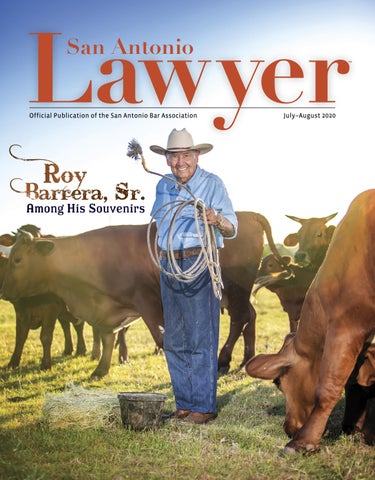

Among His Souvenirs
Among His Souvenirs: Part I
By Steve Peirce
Photo by Martha Istueta

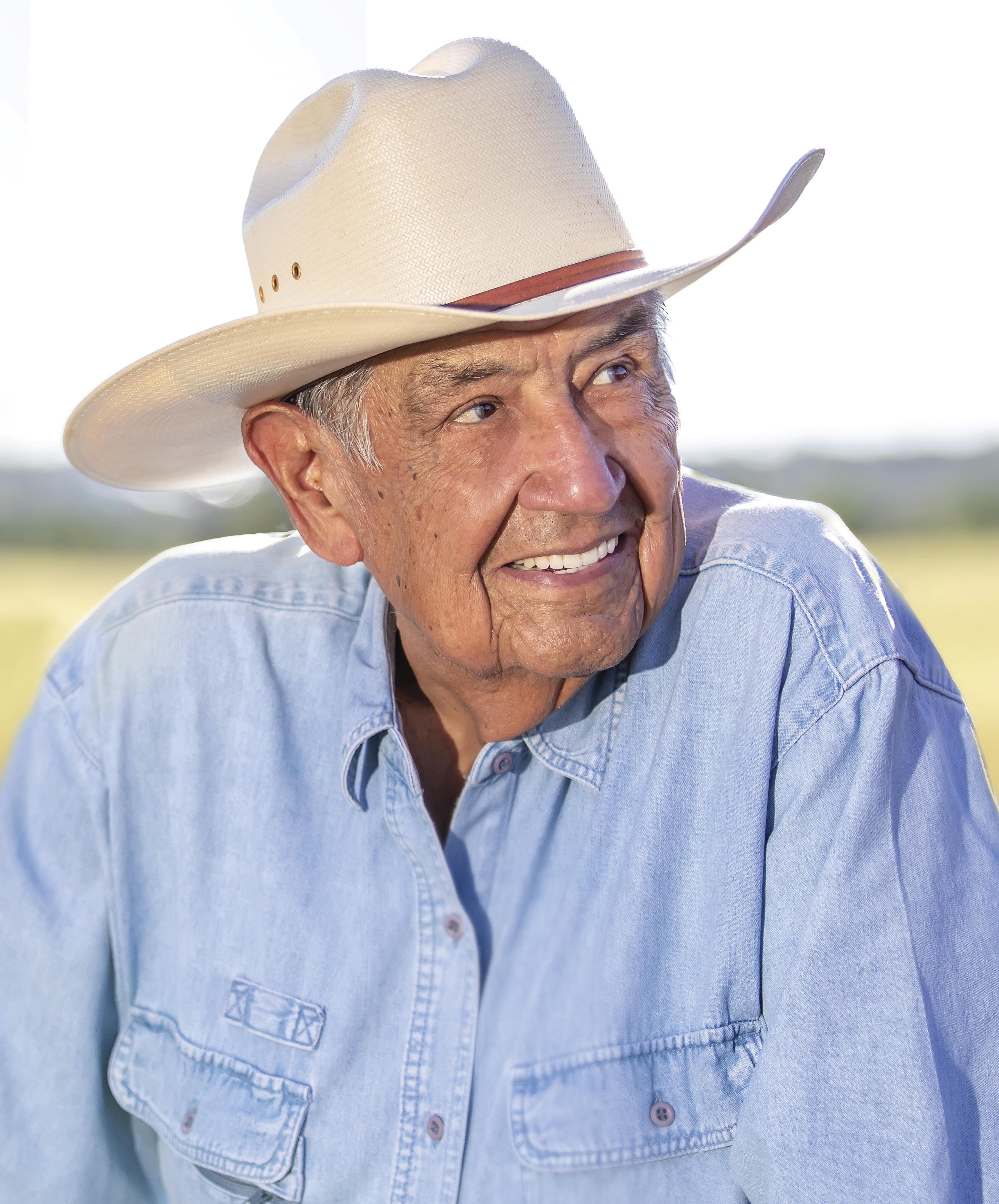
Roy Barrera, Sr. stands at the top of the stairs in front of his office door to greet me for the first time. He’s wearing a suit, having been in court earlier that morning. Now ninety-three, he’s been practicing law since 1951, and he’s kept thousands of items of meticulously organized memorabilia of his storied life, which he is prepared to present, as if this legendary trial lawyer is about to make the ultimate closing argument. There are several jumbo-sized scrapbooks filled with newspaper and magazine clippings in chronological order, dating back to his high school days. There are photographs of family, friends, and colleagues, many of which are of professional quality taken by Roy’s late brother Gilbert, an award-winning newspaper photographer. There are striking photographs of horrific crime scenes from his criminal trials, too. And there are thick three-ring binders of congratulatory and thank-you letters from clients, judges, co-counsel and opposing counsel, politicians, clergy, academics, and friends of all stripes. His office walls display plaques, honors, awards, and souvenirs, each one with a story behind it.
He has the the cadence of a skilled raconteur, and one can’t help but notice he’s missing his left-hand ring finger. As he slowly begins to leaf through his scrapbooks and photos, providing his voiceover, I feel like I’ve walked into a Ken Burns documentary, and I’m overwhelmed. There were so, so many tales told, and here are some of the best.
The Fateful Finger
“My paternal grandfather was a Chilean Indian who immigrated to the U.S. through Mexico after his marriage to my paternal grandmother in Monterrey,” Roy says. “He used to tell me that the mind has absolute control over the body, so that if it’s too hot or too cold, you can ignore it, or if you’re thirsty or hungry, you can just turn it off in your mind. He also said that the world isn’t going to give you anything; you have to go out and get it.
“My dad had a third-grade education. He worked hard, seven days a week. He worked in carpentry and mechanics, sold Singer sewing machines, and he later sold insurance. And years later, he worked as a grand jury bailiff and then an investigator for District Attorney Ted Butler. My mother was a great inspiration to me. She was the one who encouraged me to go to law school,” he says, his voice breaking.
Roy grew up in the middle West Side of San Antonio. His first job was at six years old, delivering pamphlets door to door. In junior high and high school, he worked for various shopkeepers, riding his bike from one shop to the other, often late into the night. The family took a stint in Seguin in 1935, where Roy’s dad took an insurance sales route. There, Roy attended Juan Seguin Elementary, which was a segregated all-Mexican school. Young Roy led the de-segregation of the local movie theater, politely refusing to sit in the Mexicans-only section several times, until the theater finally relented and left him and his friends alone. At the time, there were no Mexican Boy Scout troops in Seguin. So, Roy’s dad formed a Boy Scout troop for the group. Roy eventually made Eagle Scout in San Antonio Troop 52, led by attorney Scout Master James Tafolla, Jr.
The family later moved back to San Antonio, where Roy enrolled in what is now Fox Tech High School. “I was born Raul Ramiro Barrera, but my dad always called me Roy. I was sick on registration day, and I really wanted to sign up for the auto mechanics class before it filled up, so I asked my dad to register for me. He registered me as Roy, so I became Roy after that,” Roy explained.
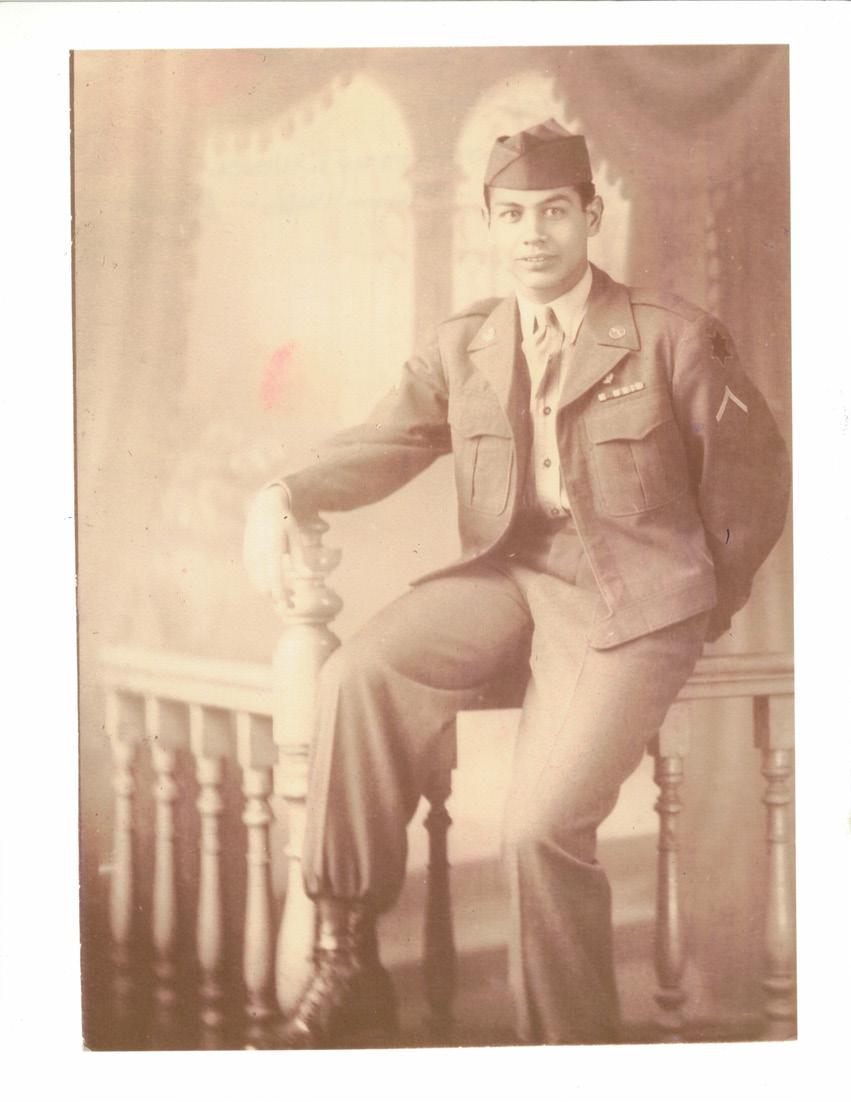
In high school, Roy played clarinet in the band, and he was captain of the ROTC and captain of the rifle team, which took second place in a national shooting competition. Upon graduation, he immediately enlisted in the Army to serve in World War II. The high school transferred his records to the Army, so he remained Roy in the Army.
He was shipped to the Philippines. He had not been there long when the bombs were dropped on Japan, ending the war. He then served in a unit that searched out Japanese soldiers hidden in Korea, as well as Japanese civilians, to tell them the war was over and protect them from irate Koreans.
While they were repatriating the Japanese back to Japan, the Army pulled Roy’s records and found that he played the clarinet. Despite Roy’s protestations that he didn’t remember how to play the clarinet, he was placed in the Army band. The band traveled around Korea playing parades and other events. One of the songs Roy learned in Korea was Arirang, which he is fond of singing.
Roy liked to ride on the top of the instrument truck because it rode in the front and was less dusty than the truck with the band members. One day, the truck hit a rut in the road and flipped into a rice paddy, sending Roy flying. His high school ring caught the edge of the truck, severely mangling his ring finger on his left hand. By the time they got him to the hospital in a bi-wing open Piper Cub airplane, the finger was so damaged that it had to be amputated, or else gangrene would spread. The missing finger made it impossible for him to play the clarinet, but the show must go on, so Roy learned the trumpet.
The missing finger kept Roy from re-upping for the Korean War, so he returned to San Antonio to pursue his dream of becoming an auto mechanic. He was twenty at the time. He put down a deposit on a garage and was ready to go into business. Before the deal closed, Roy’s mother, seeing something in her son that perhaps he didn’t, thought he would make a good lawyer, like Alonzo Perales, a local civil rights leader, and encouraged young Roy to use his G.I. Bill to go to law school instead. Roy took his mother’s advice and immediately handled his first case: getting out of the garage contract. Roy pointed out to the garage owner that he was a minor and not eligible to enter into the contract and negotiated a return of half his deposit. He enrolled at St. Mary’s University to begin his formal legal education. Mother Barrera’s piece of advice was the seed of what would become a family legal dynasty, with Roy’s sons Roy, Jr. and Bobby, and grandkids Roy Barrera, III, Mark Joseph Barrera, Marissa Barrera Morales, Robert Erasmo Arellano, and
Monica Ramirez Khirallah all becoming lawyers. Two of Roy’s nephews, Gilbert Barrera, Jr. and the late Steve Barrera, sons of Roy’s two brothers, also became lawyers.
At the time, a bachelor’s degree was not required to enter law school, but certain undergraduate pre-law courses were required. The pre-law courses were taught at the St. Mary’s University main campus “up on the hill” on the West Side, while the law school was downtown. Back then, St. Mary’s was too far out of town for bus service, but Roy had a 1930 Dodge Roadster. He offered classmates rides to St. Mary’s for ten cents each way His riding buddies included future federal Judge Hipolito “Hippo” Garcia, who graduated with him, and who baptized his daughter, Carmen Alice. They even made identical bar exam scores (yes, Roy’s kept those records). To this day, Roy refers to Hippo as “my compadre.”
Roy married Carmen Zendejas in 1948 while he was in law school, and they would remain married until her passing in 2015. Their first daughter, Yolanda, was born while Roy was on the fire escape outside Carmen’s hospital room window at Santa Rosa hospital (he was studying for finals). His grades slipped, and he was put on scholastic probation. To make matters worse, Roy’s G.I. Bill money was about to run out, and he didn’t have the funds to keep going to school. The Veterans’ Administration stepped in and pointed out that his missing finger made him a disabled vet. As such, Roy was eligible for additional funds to finish school, but only if he could pass a psychological test to see if he had an aptitude for the law. According to the tester, Roy scored the highest anyone had ever made on the test. “I supplied the answers I figured they wanted, rather than the usual and customary responses,” Roy said. So Roy graduated from St. Mary’s law school in 1951. (They couldn’t afford college for Carmen, but years later, in her fifties, Carmen enrolled as a St. Mary’s student along with her kids, Carmen Alice and Bobby )
Roy shows me a picture of the 1930 roadster, which he still has. In the Fifties, he would take the roadster to the West Side to make drug buys as part of his work for the District Attorney’s office. He and Carmen drove the roadster to Muzquiz, Coahuila, for a family medical emergency in 1949, and to San Fernando Cathedral in 1998 to renew their vows for their fiftieth wedding anniversary
The Young Prosecutor
Roy was hired by the District Attorney’s office out of law school, the same day that his future law partner, Anthony Nicholas, was also hired there. Roy was first an investigator, then he was put on the complaint desk. Restless, he wanted to see courtroom action, and he remembered his grandfather’s words to go get what you want. He approached Pat Maloney, who was the chief felony prosecutor, about getting trial work. Maloney told Roy that if he would go back to being an investigator, Maloney and Roy would try felony cases that Roy investigated. So Roy became a felony investigator and later became an assistant DA.
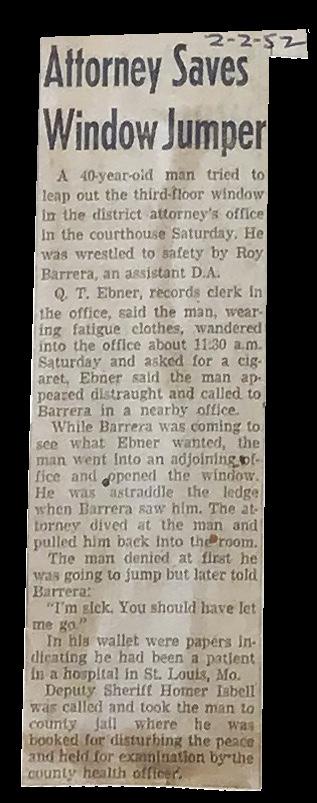
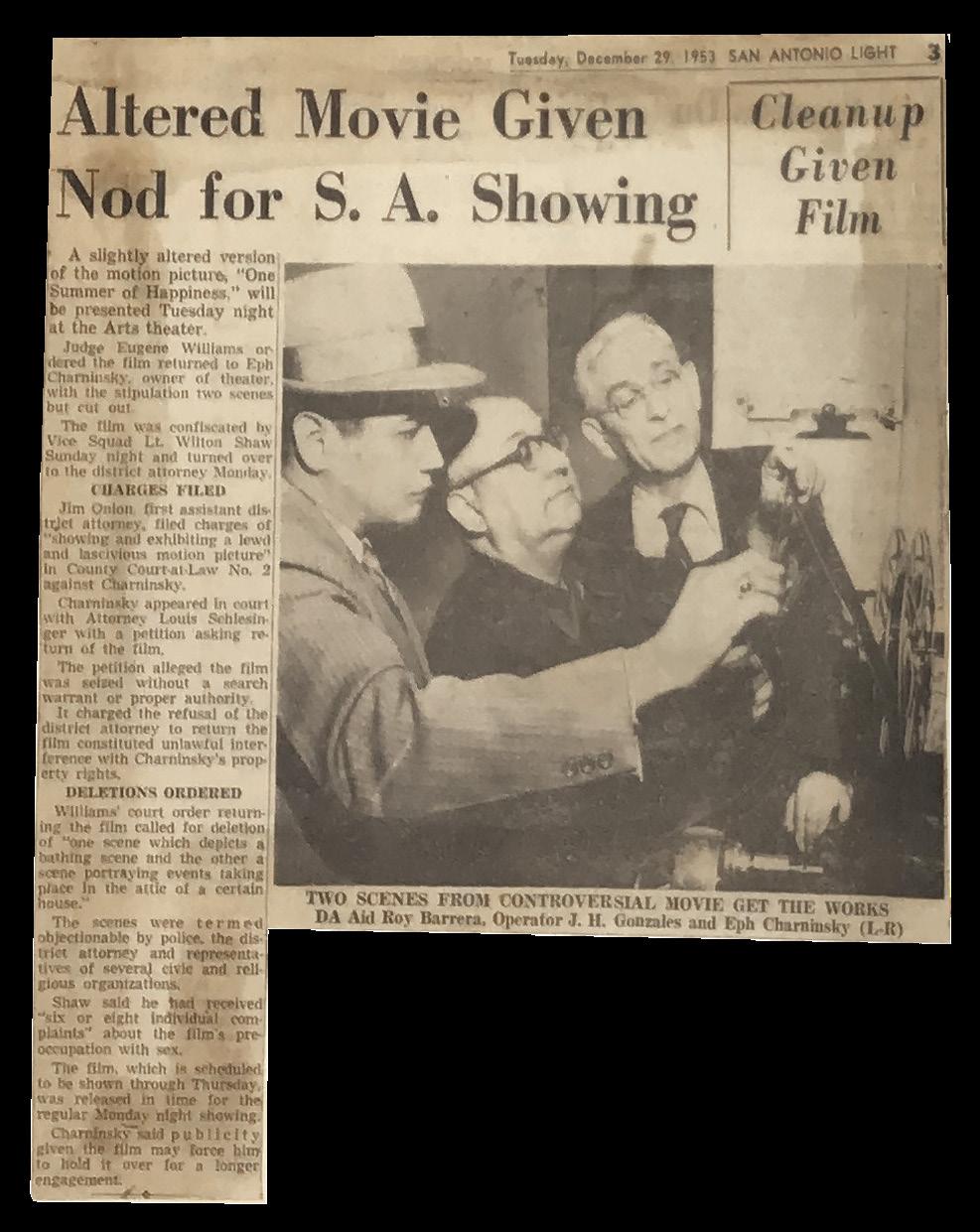
The early DA years were the days of un-air conditioned, smoke-filled courtrooms, and the advent of women being allowed to serve on Bexar County juries. Roy made minor headlines for helping wrestle a crazed criminal defendant out of the courtroom, saving a man from jumping out of the courthouse window, deleting lewd scenes from a locally shown Swedish movie, dealing with local “pachuco” gang wars, trying narcotics cases, busting one-ball gambling operations, and prosecuting back-alley abortionists. Roy also began a side gig as a boxing ring announcer, which he continued to do for decades. (He shows me his 1991 Regional Golden Gloves chairman jacket, which still fits nicely. He also announced at Kelly Air Force Base twice for the Preliminary Olympics.)
As an investigator, he would sometimes take Hippo Garcia, who then worked for the clerk’s office, on nightly patrol. On one patrol, Roy arrested a drug dealer on a street corner and put the dealer in the front
seat. Roy told Hippo, who was in the back seat, to use “the gun” if he tried anything. But (unbeknownst to the dealer) there was no gun, and Roy’s compadre thought he was crazy for suggesting it.
During a rape trial, a subpoenaed witness didn’t show up. As an investigator, Roy was told to go get the witness, a married woman. When he arrived at the woman’s home, her husband, brandishing a knife, informed Roy that she would not be going with him to court and to “get the hell out of his home.” Roy recalls, “I told him that I had a gun in the car, and that I was going to go out to the car and wait, and that if she wasn’t in the car in five minutes, I would come back in with my gun. She came out to the car. I shouldn’t have done that. I should have called for back-up. I didn’t use my brain because I had a gun. I never took a gun on an investigation again.”
But it’s the high-profile criminal trials, and a failed attempt at extortion on a young assistant DA named Barrera, that stand out during the DA years.
The “Honest” Cop
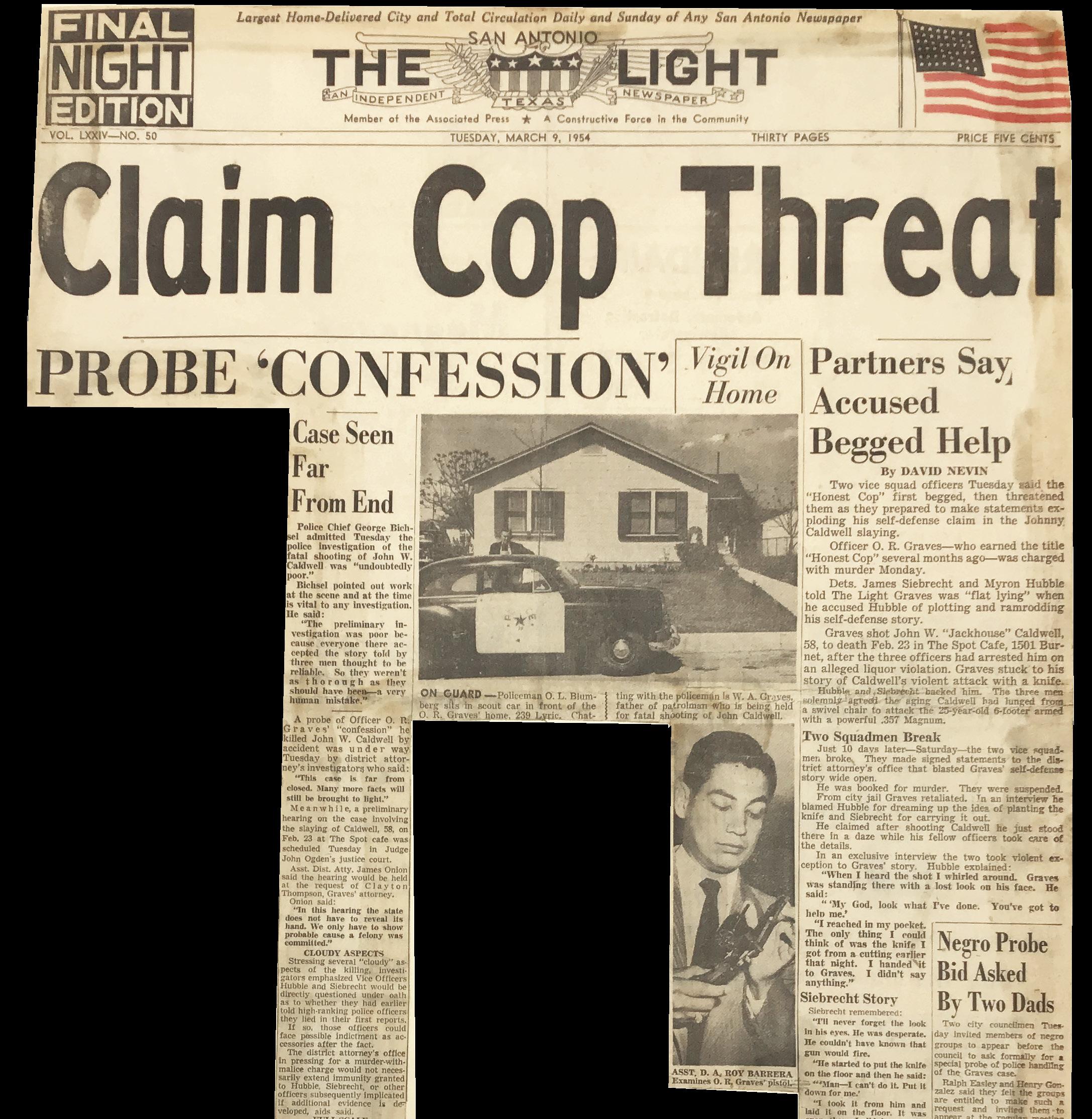
In 1953, Korean War veteran O.R. Graves was a burly San Antonio police officer in his mid-twenties. In October of 1952, he had been dubbed by the newspapers as the “honest cop” for his taping of a police lieutenant willing to accept a bribe from an East Side man named Leroy Armstrong. Graves took the tape to the Express-News, not to his police superiors, but the tape quality was so poor that the bribed officer was never indicted.
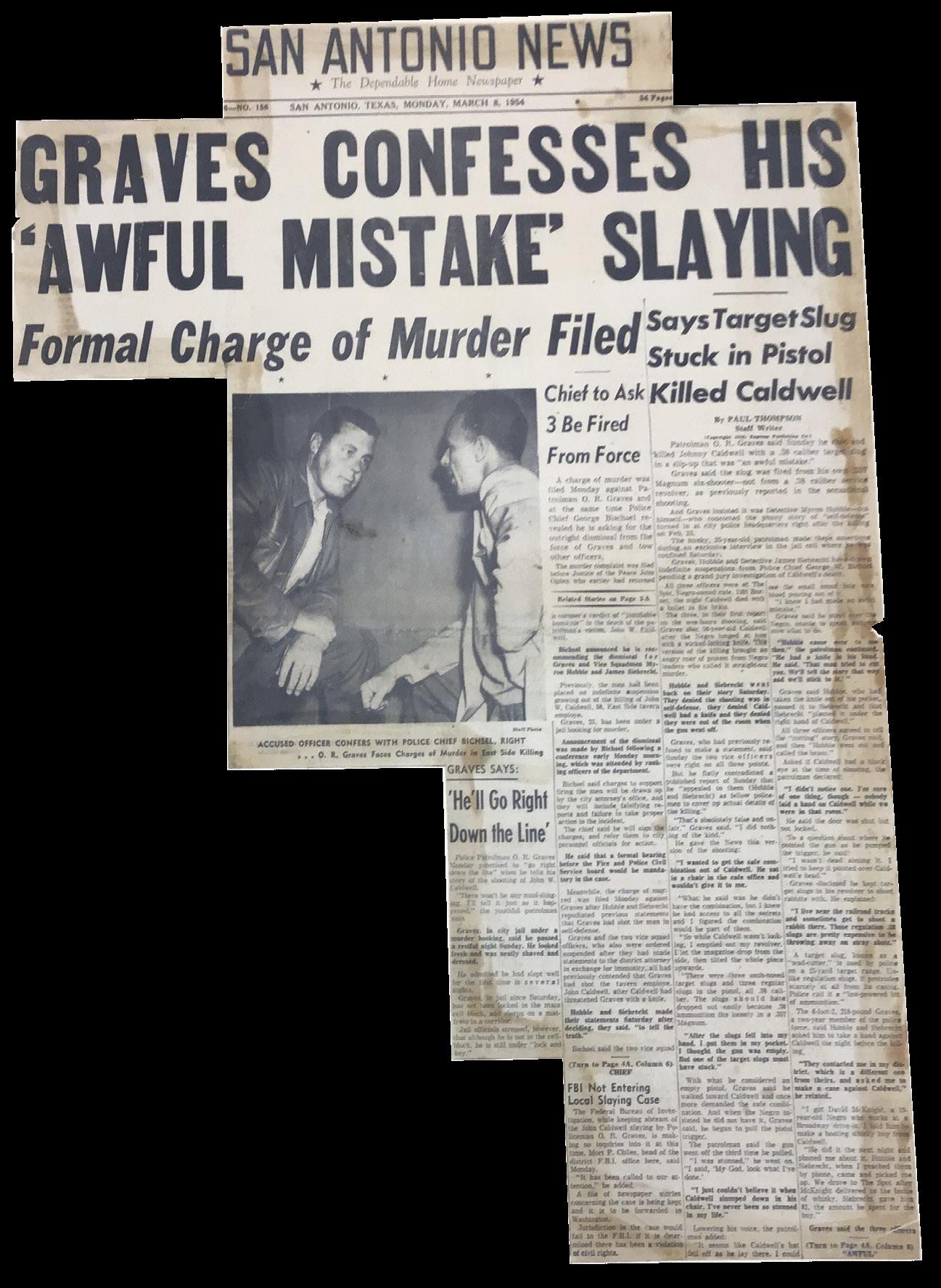
On the night of February 23, 1953, Graves arrived at the Spot, an East Side bar formerly owned by Armstrong. He was accompanied by two vice officers, Myron Hubble and James Seibrecht. Graves had a suspicion that the Spot was the center of illegal liquor sales. At the Spot, he took J.C. Caldwell, a Black man who worked for Armstrong, to the back office and ordered him to open the safe, thinking there was liquor inside. Caldwell, seated in a swivel chair, said it was Armstrong’s safe, and he didn’t know the combination. Graves turned his back to Caldwell and removed some bullets from his pistol. In the presence of the vice cops, Graves then placed the pistol next to Caldwell’s left temple, and began squeezing the trigger, to scare Caldwell into “remembering” the combination. After a couple of clicks, the gun fired. Caldwell died immediately, remaining slumped in the chair. Graves allegedly exclaimed, “My God, what have I done!” The three cops then concocted a story. One of the vice cops had a knife, called a Dallas Special, that he had seized on a job earlier in the evening. They placed the knife on the floor, under Caldwell’s hand, and agreed that Graves would say that Caldwell had tried to cut Graves with the knife, so Graves acted in selfdefense. The three issued routine reports consistent with this story (with the vice cops stating that they were out in the hall and not in the room), and the Justice of the Peace summarily issued a finding of justifiable homicide. The police department’s investigation was similarly weak, and the city council rejected the complaints from prominent Blacks and likewise found Graves acted in self-defense.
Enter Roy Barrera, Assistant DA, then twenty-six years old. On February 25, Roy prevailed upon DA Austin Anderson to open up an investigation immediately, so that the DA’s office would be ahead of the uproar in the Black community, which would surely come. Roy led the investigation. He first sought more detailed statements from the vice cops and Graves. They refused to talk. On March 1, he took the knife to the Department of Public Safety lab in Austin to look for remnants of any materials from Caldwell’s coat pocket on the knife. There were none. Searching the police records, he found the man who had a knife seized from him by the vice cop earlier that evening. He took the man to the DPS office in Austin and presented a lineup of Dallas Special knives.

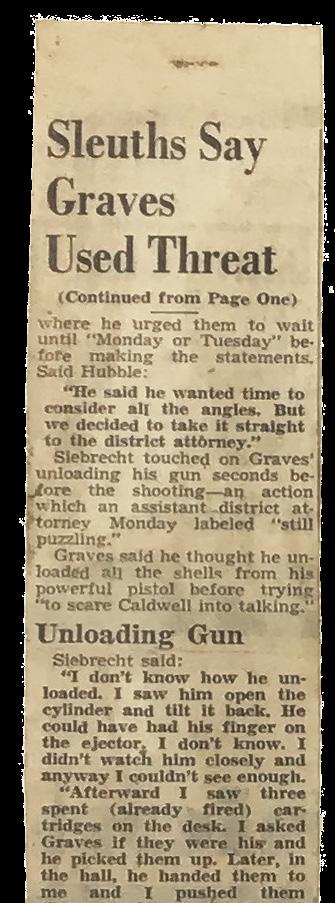
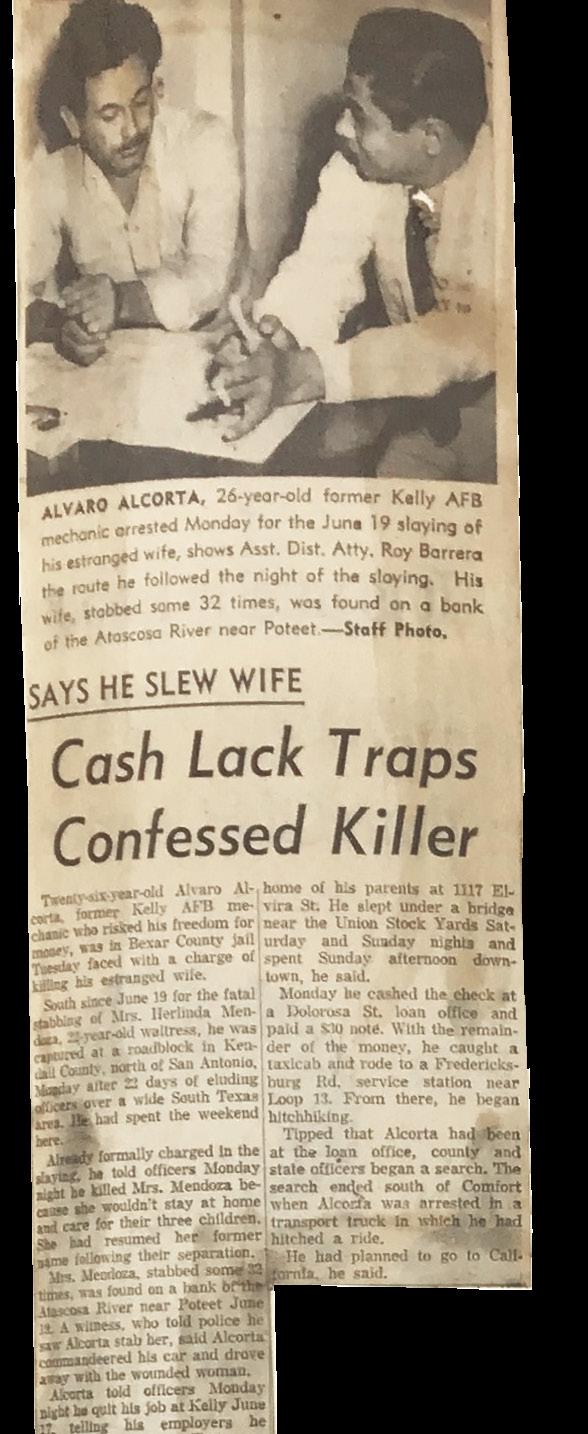
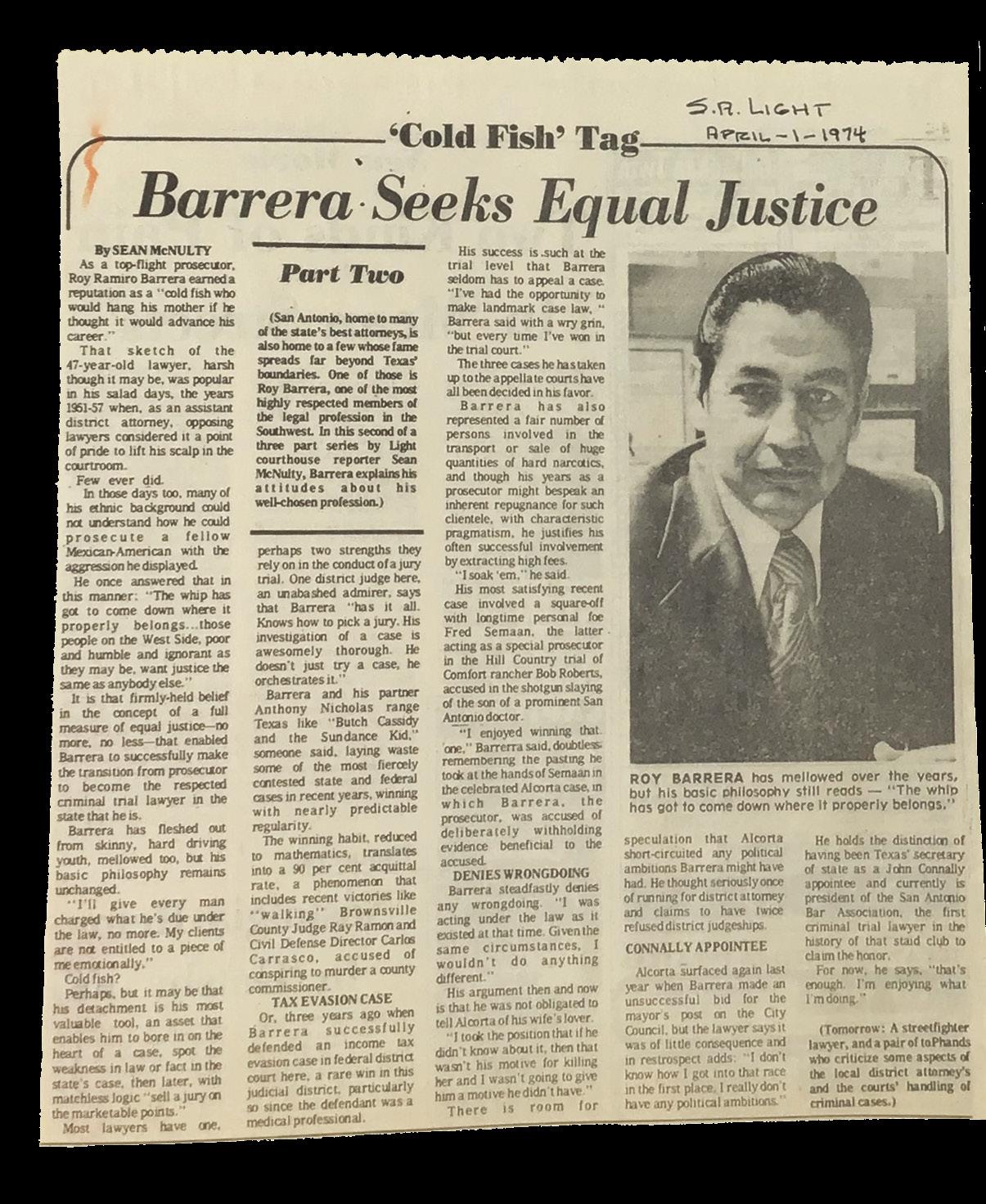
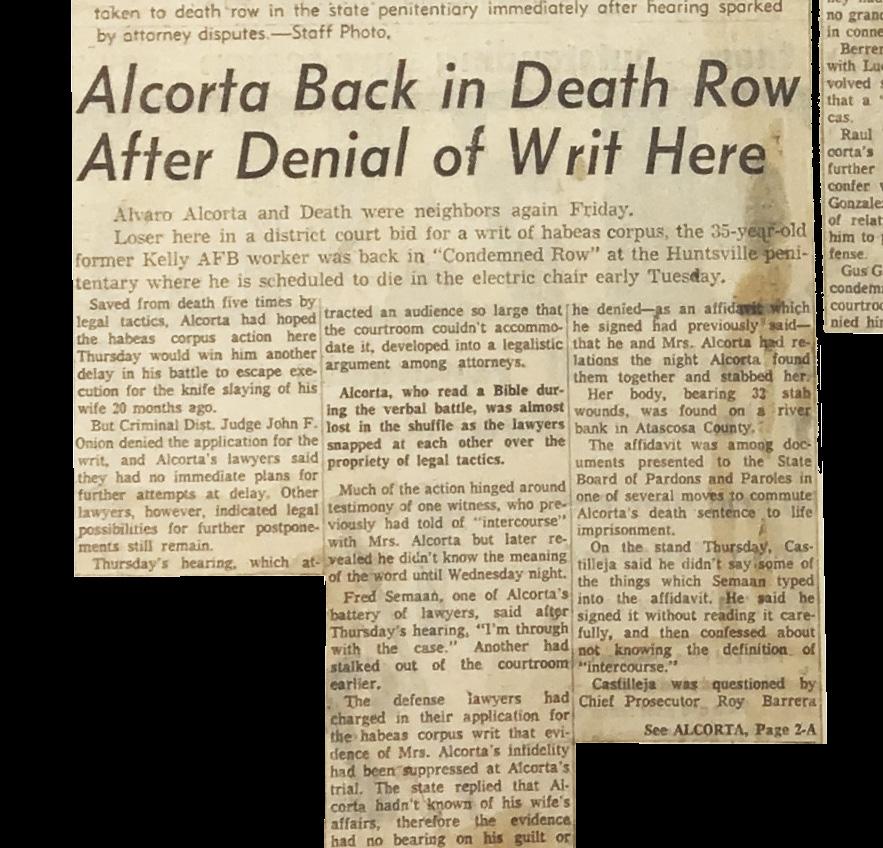
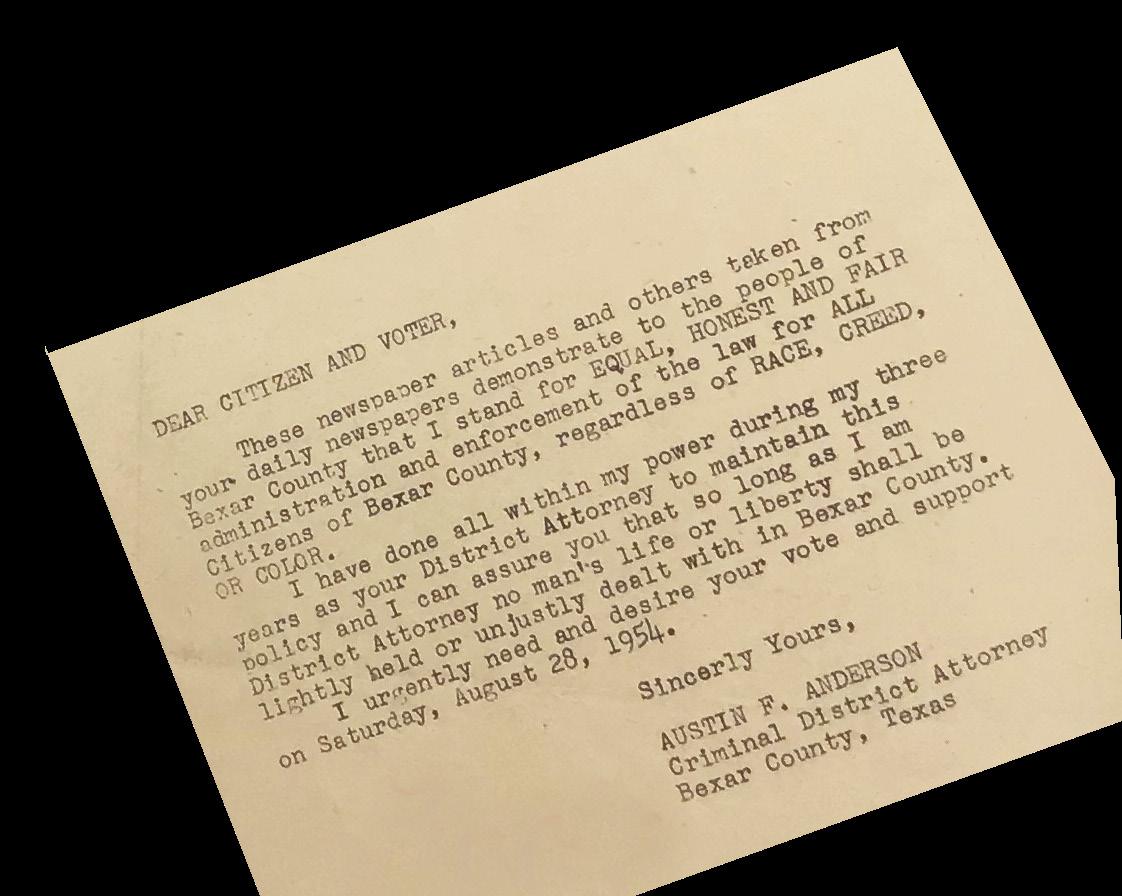
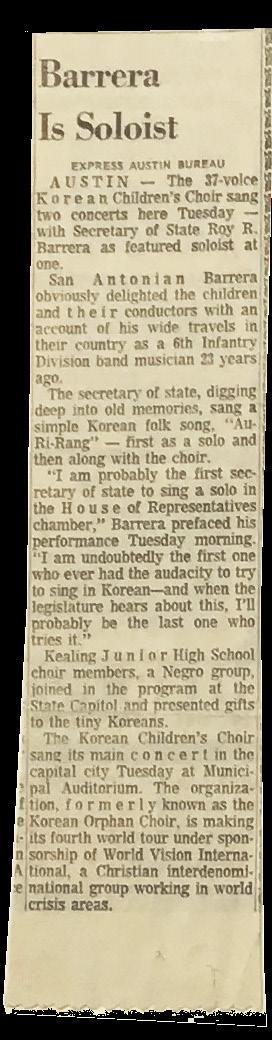
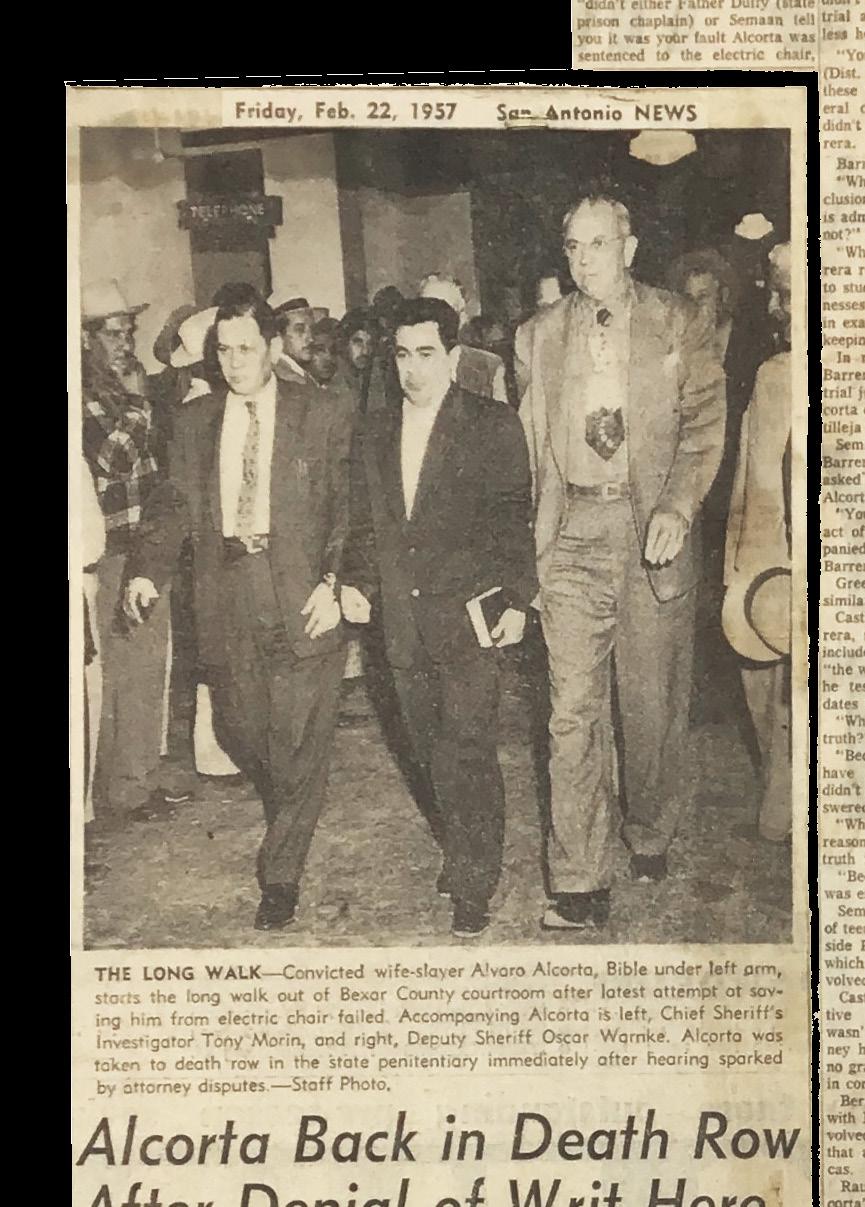
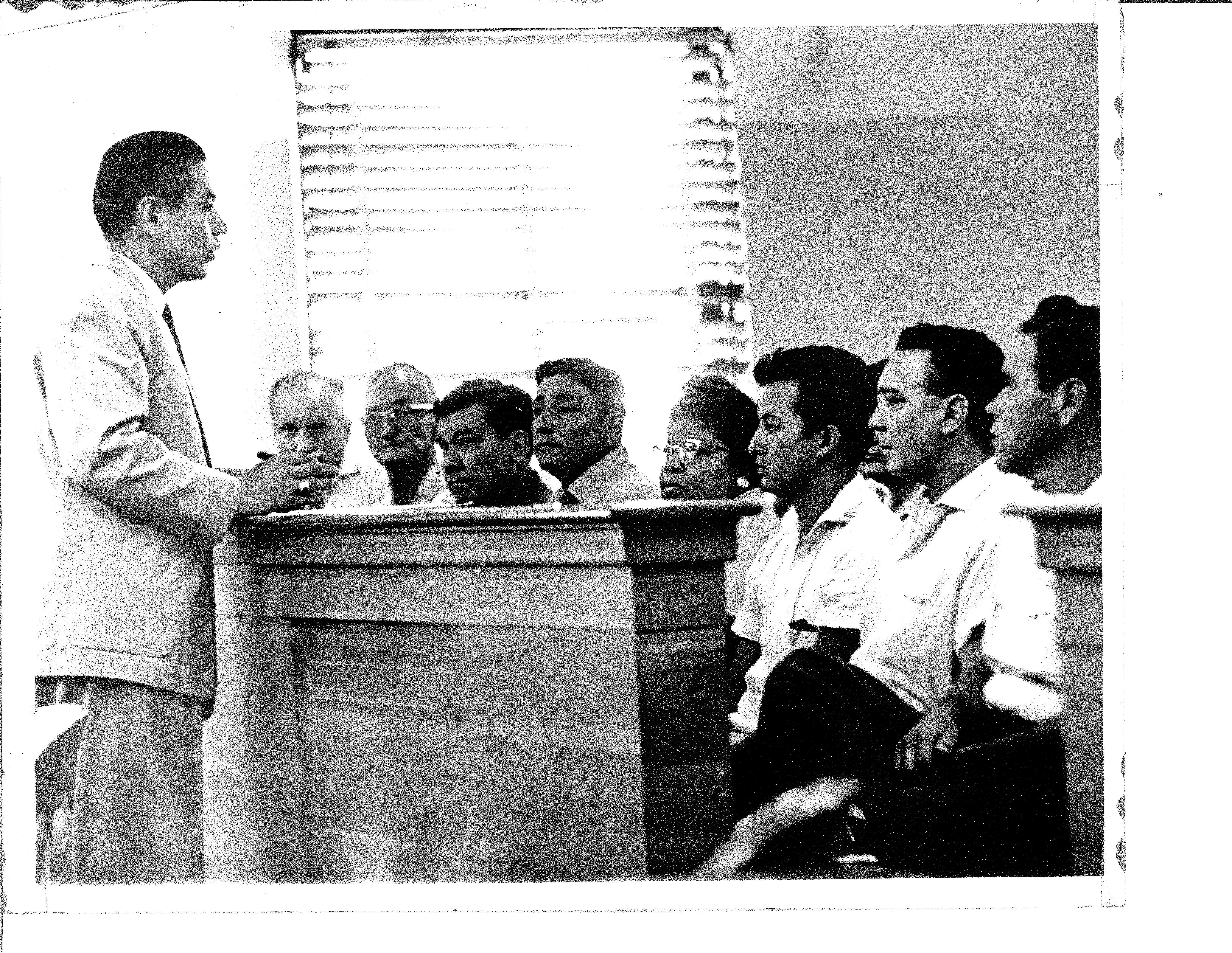
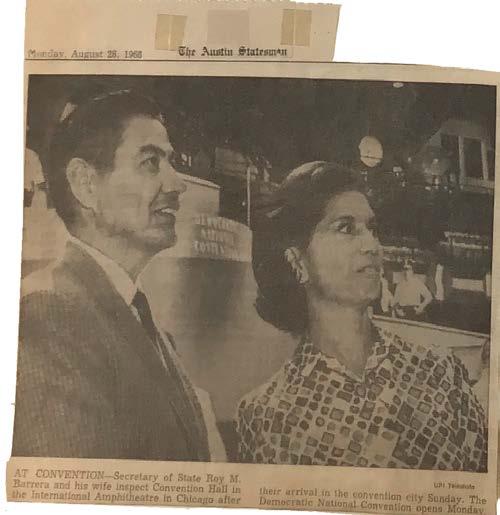
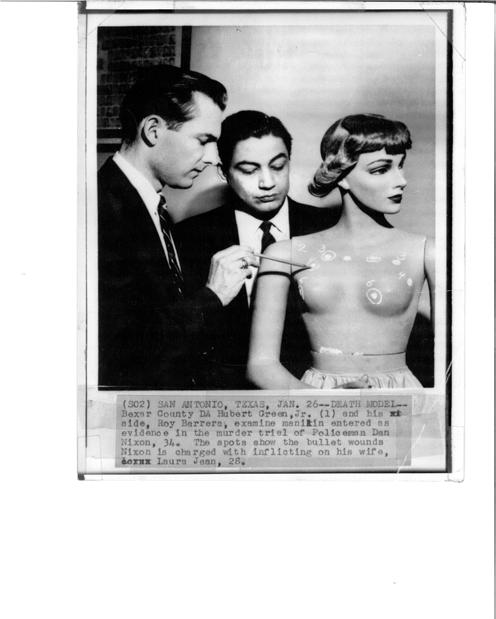
Barrera's collection of newspaper clippings, photos, and memorabilia from court cases document his storied life and his status as a San Antonio legal legend. Archive photos courtesy of Roy Barrera and family.
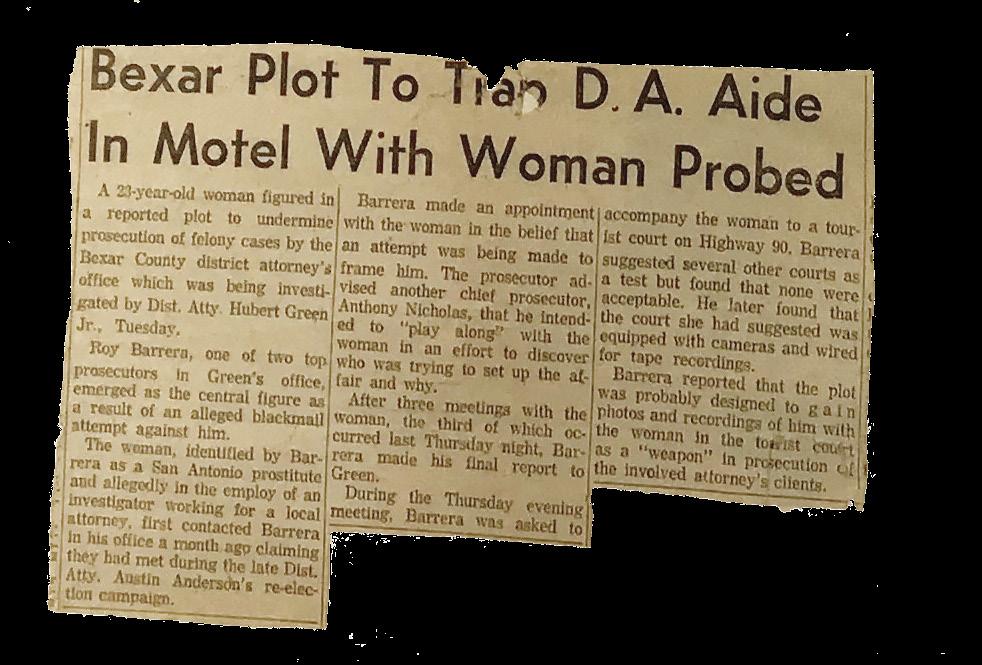
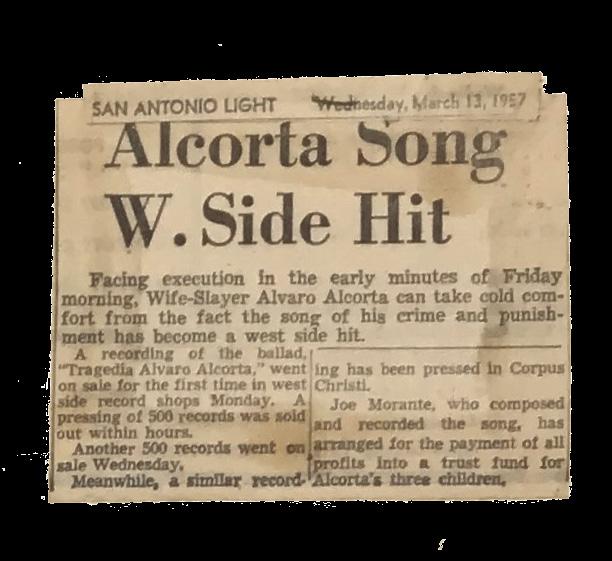

Antonio Lawyer
“I told him I had nothing against him, but that folks on the West Side weren’t too happy about this, so if some morning he woke up with a shiv in his back, I wanted him to know that I had nothing to do with it.”
The man identified his knife as the same one found at the Spot. Roy viewed Caldwell’s body at the morgue. Caldwell’s corpse had a bruised left eye, which somehow was previously unnoticed by the medical examiner. The medical examiner said that dead bodies don’t bruise, and that the eye was struck by blunt force while Caldwell was alive. Roy asked the medical examiner if the bruise could have been caused by the bullet's impact, but the medical examiner said, “No.” Witnesses from the Spot came forward to say that Caldwell did not have a black eye before the cops arrived, and that the vice cops were indeed in the room when the shooting occurred. Graves was arrested on March 6. By now, the vice cops were feeling the heat. Unknown to Roy, the vice cops were granted immunity by the judge at the request of the DA’s chief investigator to make a full sworn statement, which they did on March 8, this time telling the truth about their witnessing a bizarre game of Russian Roulette and the fact that they staged the crime scene to look like self-defense. With nowhere to turn, Graves fessed up, but claimed that the thing was just a terrible accident because he did not think there were any bullets in the gun.
The grand jury returned an indictment against Graves of murder with malice. Roy’s work was praised by local Black leaders, and the case was mentioned by Thurgood Marshall, then a civil rights attorney, in a speech he gave in San Antonio. But Graves alleged that all the Bexar County media attention justified a change of venue, and the Court ordered venue transferred to Jourdanton for the trial. The trial audience was full of members of the Black community, and the jury was all white, mostly local farmers and small businessmen. James Onion and Roy Barrera handled the prosecution. The prosecution was caught by surprise when the medical examiner who examined Caldwell’s corpse changed his testimony to say that Caldwell’s black eye might have been caused by the bullet rather than by blunt force. Given Graves’ position that the shooting was an accident, and that he had simply been negligent in what he did, the prosecution obtained an additional instruction of the lesserincluded offense of negligent homicide. In the end, after a mere thirtyminute deliberation, the Jourdanton jury found Graves not guilty.
The Tender Trap
In this story, we have withheld some names, since the other players involved are dead and the case never went to trial (Roy himself has no
problem naming names, though).
As an up-and-coming prosecutor in the Fifties, Roy angered some people in the criminal defense bar. In order to be the best, Roy thought, he needed to beat the best. Two of the best criminal defense lawyers that he severely tested and often beat weren’t happy about that. They hatched a plan to bring down the young Assistant DA. In 1956, Ann Miller (fraudulent identity), a shapely femme fatale, arrived at the DA’s office to see Roy. She told him that they had met at a campaign rally, and she needed help on a child support matter. Roy, not remembering ever meeting her, gave her a reference. Ann flirtatiously offered to take Roy out for a drink some time, then she left. Roy’s office confidant was Anthony Nicholas, his future law partner. “I told Nick, ‘I don’t know her, and this looks like a set-up.’ About two, three weeks later, she calls, saying, how about our drink?” Roy said. Nick cautioned Roy to leave it alone. But Roy had to find out what was going on and who was behind it. So they went on their first “date,” where Roy picked her up at an agreed location on the street, and they drove to an East Side bar of Roy’s choosing, so he could get a head start on who might be following him. He told the bartender and bar owner (whom he knew) to keep an eye on him and the girl so the bartender could testify later if necessary. “She brought a bottle of tequila, but I don’t drink,” Roy said. “After about fifteen minutes, she gets up to make a phone call and returns, saying she needs to leave to take care of her child. As it turns out, the original plan was to set me up for drunk driving, but that was called off because I wasn’t drinking.” She calls again for a second date. Again, Roy chose the location, this time Rex’s Drive-In on Loop 410, a dark café where Roy sat facing the door. Roy recalls, “I told the bartender to watch the door for me and my conduct with the girl, to serve as my witness. Ann gets up to make a phone call; same story, to check on her child. Actually, she was calling her accomplice, a pimp named Ed. As we walked into the parking lot, she put her arm around me. As it turned out, the pimp had been waiting for us in the parking lot to snap the picture of our embrace. But moments before, the parking lot attendant had seen the pimp with the camera and had chased him off.” The third date was to be in a motel room. When they arrived, she turned the TV on loud, then used the phone, and immediately said she had to leave. This time, it seems that her accomplices weren’t able to follow her to the room. The plot wasn’t working out so well for this bunch. And Roy was still trying to figure out who they were. The next and final date was to be at the Lackland Motel. Ann insisted on the Lackland Motel, which she said was suggested by Ed (the pimp), so it was the only place she would go. Roy researched the city records and found that the owner of the Lackland Motel was an ex-detective who left the department with a bad reputation. “I figured that the room was going to be wired. I still didn’t know who was behind the scheme, or if the motel owner had something against me,” Roy said. The day before the last date, a man who owned a men’s shop downtown approached his friend, DA Hubert Green, with this bombshell: Ed the pimp, who always dressed in fancy clothes, came into the shop wanting to buy some blue jeans and a work shirt. The pimp volunteered to one of the clerks that he needed the clothes because he had a job to do; they were going to hide in the grass and catch an Assistant DA in a trap with a woman. So an office meeting was called with the Assistant DAs, warning them about Ed the pimp and that someone’s “got a red-hot date and you’re gonna get yourself in trouble.” Whereupon Roy said in jest, “There goes my red-hot date for tonight!” Guffaws ensued. Roy suspected the two defense attorneys who disliked him were involved, because one of them associated with Ed. He also suspected that a certain DA investigator was involved because Roy had gotten crosswise with him over the investigator’s secret surveillance of one of Roy's colleagues. Uncertain whether to go through with it, Roy picked up Ann for the last
On the stand, Alcorta said that he did not intend to kill Herlinda. On cross, Roy asked him, "What did you intend to do when you stabbed her thirty-two times?"
date. It was a cold night. Roy told her he first wanted to stop at a café for some hot chocolate (and he also wanted his unseen enemies to suffer in the cold). At the café, Roy confronted Ann that he knew about Ed the pimp and the plot and who else was involved, and that she was in big trouble. She admitted she knew the pimp but denied the rest. And that was the end of the date, which lasted about two hours.
The next day Roy told DA Hubert Green what had happened and whom he suspected. The DA’s office ultimately tracked down Ann, and she gave a statement about the whole thing: a conspiracy involving the defense lawyers, Ed the pimp, the investigator, Ann, and her husband; how the earlier traps were botched, and that the group was set up with cameras and tape recorders at the Lackland Motel, lying in wait for Roy. Green wanted Roy to file a complaint with the grand jury, but he refused and wanted to handle it his own way. Roy went to Ed the pimp. “I told him I had nothing against him, but that folks on the West Side weren’t too happy about this, so if some morning he woke up with a shiv in his back, I wanted him to know that I had nothing to do with it.” Ed immediately moved to Houston, prevailing upon one of the defense attorneys to send him a monthly support check. Then Roy made it known around the courthouse who had tried to ruin him. In a bizarre turn, one of the defense attorneys (who denied being involved) tried to cover it up. He invited Roy to his house, and told Roy that he would tell him everything, but only if Roy (a Catholic) took an oath of silence in the presence of a priest. They even called the priest, but Roy changed his mind and called it off. He knew enough. Roy said, “I never filed a complaint, and Hubert Green accused me of going on a ‘Mexican Vendetta.’” Roy was satisfied that karma would one day come around. In Roy’s mind, it did. The defense attorneys ultimately suffered debilitating diseases and died friendless. And no, Carmen didn’t know about any of this until it was over.
Tragedia Alvaro Alcorta
In 1955, Alvaro Alcorta was a mechanic in his mid-thirties working at Kelly Field. He was separated from his young wife and the mother of his children, twenty-two-year-old Herlinda. Herlinda worked as a waitress and was staying with her mother. Alcorta had complained that Herlinda was not staying home and not taking care of the kids. He boldly went to the cafe where Herlinda worked with three bar maids and informed them that he intended to kill Herlinda and escape to Mexico. Alcorta quit his job and packed his bags. Then he waited for Herlinda outside of her mother’s house. After midnight, a car pulled up, driven by a young man, Natividad Castilleja (18), with Herlinda inside. Alcorta rushed the car with a knife and began stabbing Herlinda. Castilleja briefly tried to defend her but ran away. Alcorta took Castilleja’s car out to Atascosa County with Herlinda’s body inside, dumped her in a creek bed, then headed toward Mexico. She was found dead by two fishermen the next afternoon, with thirty-two stab wounds in her body. Alcorta returned to Texas to pick up his last Kelly Field paycheck and was arrested by the authorities and charged with murder with malice. Roy was given the case to prosecute, and he sought the death penalty for Alcorta. Somewhere during the process, Roy interviewed Castilleja, who gave a written statement that he had had intercourse with Herlinda three or
four times, although at first he had denied it. The statement was placed in the case file, and it did not surface during the trial. Alcorta’s defense was that he was in a heat of passion (he had seen them kissing), which would make the case for a lesser charge of murder without malice, which carried a five-year maximum sentence. Alcorta had never mentioned sexual activity by Herlinda while testifying at trial. On the stand, Alcorta said that he did not intend to kill Herlinda. On cross, Roy asked him, “What did you intend to do when you stabbed her thirty-two times?” Alcorta denied that he stabbed her that many times, which resulted in the photograph of Herlinda’s corpse being introduced into evidence. “I was a little concerned about the introduction of the photos, because that could have been viewed as too prejudicial and possibly grounds for reversal,” Roy said. But that wouldn’t be the biggest problem. Castilleja took the stand and testified that he and Herlinda were not in love, and that they had no dates. Castilleja was not asked, and did not volunteer, about the sexual intercourse. The jury found Alcorta guilty and gave him the death penalty. Alcorta appealed, based on the introduction of the gruesome photos, but the Court of Criminal Appeals upheld the conviction.
In1957,whileAlcortaawaitedhisexecution,aprisonpriestfoundthe Castilleja statement and contacted attorney Fred Semaan, who stepped in for Alcorta and sought a review from the Texas Board of Pardons and Paroles, arguing that the conviction should be overturned because of the new evidence of the Castilleja statement. The Board denied Alcorta’s appeal. Then the Texas Court of Criminal Appeals denied Alcorta’s writ of habeas corpus application based on the Castilleja statement and again sustained the conviction and denied relief. The case went to the U.S. Supreme Court. By this time, Roy was no longer with the DA’s office and was in private practice, but Roy handled the argument for the State before the Supreme Court, at the request of DA Hubert Green. The Supreme Court reversed Alcorta’s conviction, holding that the Castilleja statement should have been disclosed. Roy contended there (and still contends) that the Supreme Court got it wrong. “The issue was the state of mind of the defendant, whether he had reason to be in a heat of passion,” Roy says. “Whether Castilleja had previous sex with Herlinda was irrelevant because Alcorta didn’t know it. It could not give him a motive today that he didn’t have yesterday. He couldn’t be heard to say, ‘I killed her yesterday because I found out today that she had an affair.’” Alcorta, still aided by Fred Semaan, was charged again and ultimately given a thirty-year sentence in Corpus Christi on a guilty plea.
The case inspired two corridos: Tragedia Alvaro Alcorta, by Los Caminantes, and El Corrido de Alcorta, by famed accordionist Santiago Jimenez, Sr. Both are on YouTube. Not to be outdone, Roy himself wrote a poem about the case, from Herlinda’s point of view.
This is the first of a two-part series. Next Issue: Roy enters private practice with Nicholas & Barrera, serves as Texas Secretary of State, and becomes an iconic Texas criminal defense attorney.
Post-Script. The author would like to thank the whole Nicholas & Barrera office, the Barrera family, and especially Roy Barrera for the hospitality, the time, and the amazing stories.
Steve A. Peirce practices business bankruptcy law in the San Antonio office of Norton Rose Fulbright. He can be reached at 210.270-7179 or steve.peirce@ nortonrosefulbright.com
Among His Souvenirs: Part II
By Steve Peirce
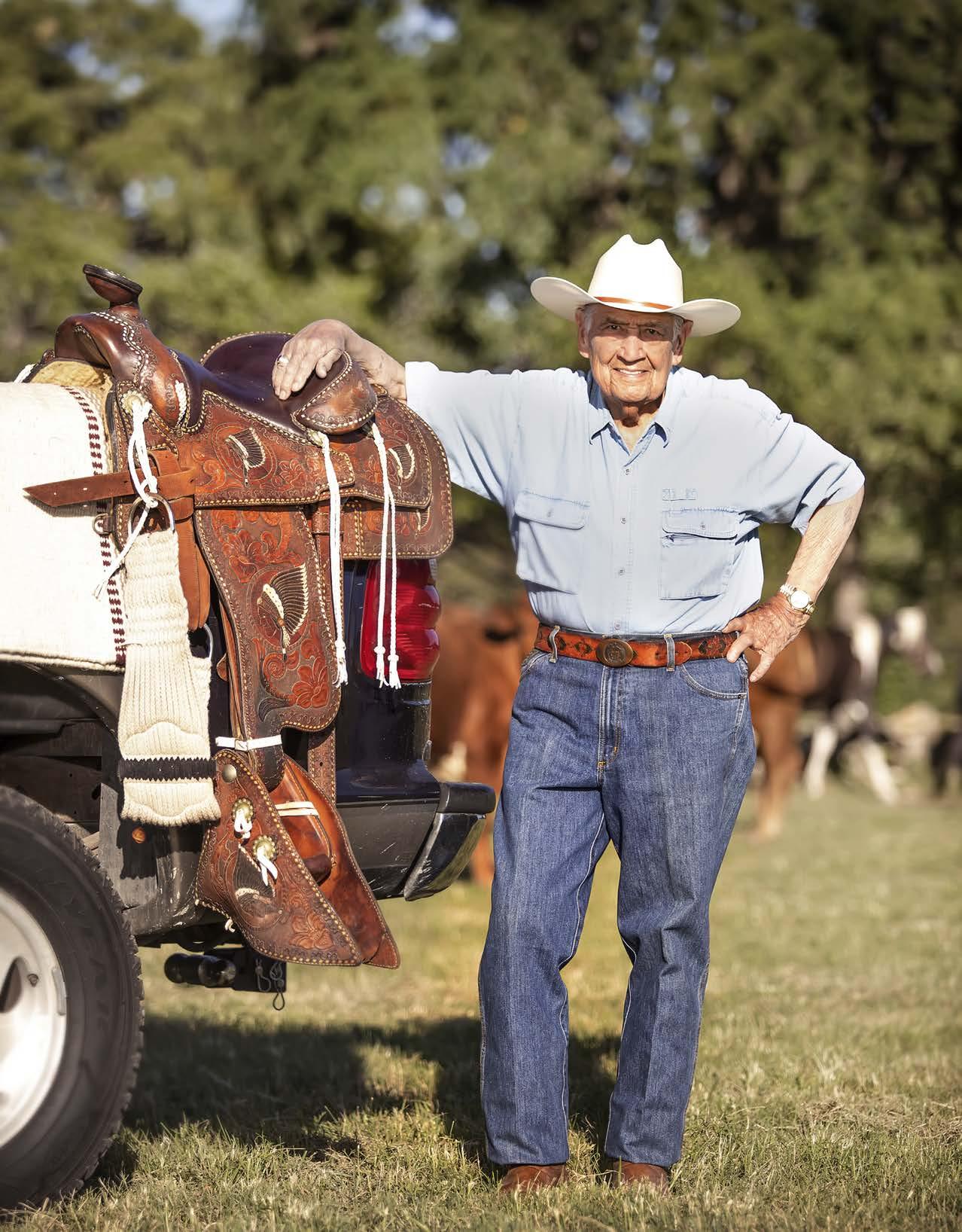
Thisis the second of a two-part series on legendary trial lawyer Roy Barrera, Sr. In Part I, which appeared in the July-August 2020 issue of San Antonio Lawyer, we followed Roy’s early life growing up in South Texas, his Army service, his law school experience, and his early years as a young prosecutor with the District Attorney’s officePart II, below, recounts more of Roy’s stories.
Nicholas & Barrera
In August 1957, Roy and Anthony Nicholas formed the Nicholas & Barrera law firm on a handshake, opening up shop in the Frost Bank Building. They remained partners until the death of Nicholas on May 7th of 2011.
Albert Wechsler made the newspapers in 1962 when he was hired as an investigator by the DA’s office despite having a criminal record. Later, Wechsler was accused of stealing files from the DA’s office and selling the information to criminal defense attorneys. Wechsler was given immunity by the DA’s office if he told the truth and later testified at the grievance proceedings against the defense attorneys, but the Texas Attorney General obtained an indictment and conviction against Wechsler, notwithstanding the granted immunity. “I thought Albert got a bad deal because they didn’t prosecute the attorneys, and he had testified based on the grant of immunity,” Roy said. So, he represented Wechsler and obtained a reversal on appeal.
Photo by Martha Istueta
In 1972, Nicholas & Barrera moved to their current location cattycorner to La Villita at the corner of East Nueva and South Presa. Upon purchasing the property, Roy found out that it had allegedly been the home of Texas Revolution spy Erastus “Deaf” Smith and couldn’t be altered. And Nick’s wife was the president of the Historical Survey Society. What to do? Unbeknownst to Nick, Roy hired Wechsler to bulldoze the structure at midnight on a Saturday night. The cops arrived, recognized Roy there, accepted his lame excuse that he was doing the bulldozing in the night to avoid traffic problems, and left. Well, Deaf Smith may have lost a house, but he got a whole county named after him.
The Page Junior High Stabbing
At Page Junior High in the Sixties, if you were walking down the hall or in the yard and you saw a rush of students running in the same direction, you knew a fight was happening. The students would form a circle around the combatants and watch until a spat-board-carrying vice principal would arrive and break it up. (I know. I’m a former Page student.)
In 1964, Refugio Gonzales (15) and Jesse Sanchez (14), a football hero, were in one of those fights, circled by twenty to thirty students. Some of the girls were yelling “chicken” at Gonzales for not wanting to fight Sanchez. In the scuffle, Gonzales pulled a fishing knife and stabbed Sanchez in the heart, killing him instantly. Roy was Gonzales’ courtappointed attorney. Roy recalls:
I insisted to the judge that that Gonzales be tried as an adult. Back then, juveniles had few rights. Juveniles could be held without bond. They couldn’t get a jury trial, and the prosecution could call juvenile defendants to the stand. The DA wanted to try him on a lesser charge, like possession of a knife, then try him for murder as soon as he became an adult. So, I got him tried as an adult for murder. We were making new law at the time because no juvenile had ever been tried as an adult. So we had a jury trial, and Gonzales took the stand. He was new at the school and had been bullied. He told his mother he didn’t want to go to that school anymore. They went to the principal to request a transfer, which was denied. Sanchez was a football star who was beating up on Gonzales when one of the students pulled Gonzales’ sweater over his head. Gonzales grabbed his knife and thrust upward, killing Sanchez. The jury found Gonzales not guilty, based on self-defense.
Friends in Low Places
In September 1966, Roy received an unexpected gift from two prisoners at the Texas Department of Corrections Eastham Farm: a beautiful, brightly colored, hand-tooled parade saddle. Roy is particularly tickled by this story:
In 1958, I defended Raymond Lee Flanagan, a Fort Hood soldier, who went to prison for murder and robbery. Flanagan had learned to work with leather while in prison, and he met a fellow prisoner, James David Green, whom I prosecuted in 1956, and who was sentenced as a habitual criminal. The two got together and made this saddle for me. I rode it in the Fiesta parade, and I still have it.
Mr. Secretary
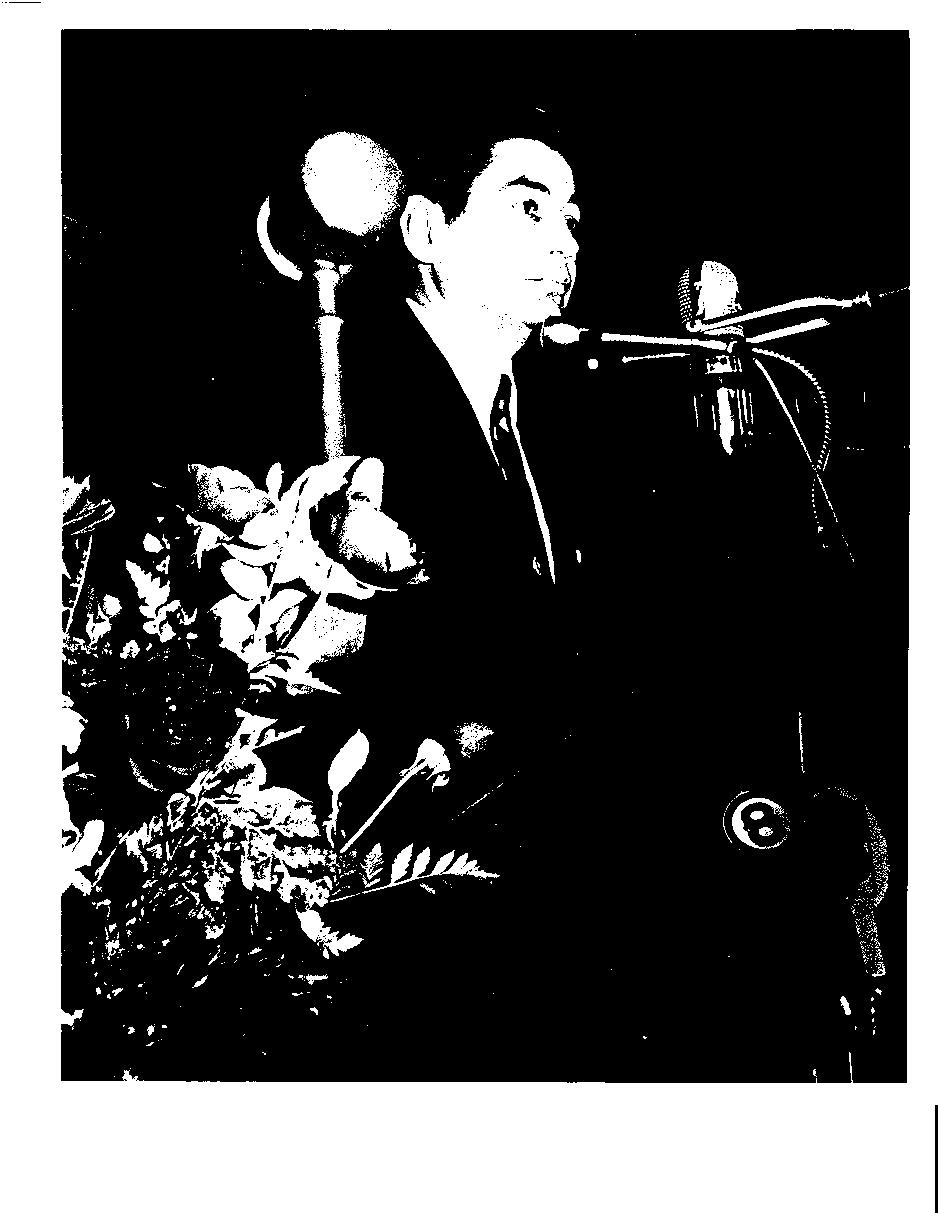
Roy’s collection of letters includes a December 1963 letter from him to Governor John Connally, thanking the Governor for a Christmas card and wishing him recovery after he was shot in President Kennedy’s motorcade in November 1963. In 1968, when an opening came up
for Texas Secretary of State, Governor Connally appointed Roy to the post. During his stint at the Secretary’s office, he commuted every day between San Antonio and Austin. Among his duties was approving the applications of candidates to be placed on Texas ballots. Over the opposition of Republicans and Democrats, he put George Wallace’s party on the Presidential ballot because it met the requisites. He also handled requests to extradite Texas residents to other states for prosecution. And he attended the 1968 Democratic Convention in Chicago as the Secretary of the Texas Delegation and had run-ins with hippie protestors.
There were the fun parts, too. A Korean children’s choir attended a session of the Texas Legislature. Roy surprised them all by singing Arirang, a folk song he learned during his Army service in post-World War II Korea. He later repeated the feat in federal court during a citizenship ceremony for Korean immigrants. Roy returned to Juan Seguin Elementary School to give a speech and honor his old principal. And more often than not, Roy was the state official who greeted foreign dignitaries arriving at the HemisFair ’68 World’s Fair. In April 1968, Hollywood actress Grace Kelly became Princess of Monaco when she married Prince Rainer, III. Roy recalls:
My wife Carmen and I received her and the Prince at HemisFair. Of course, I welcomed her in English, and she responded in English, and then at the close of her response, to my surprise, she broke off into perfect Spanish, and the crowd loved it. I couldn’t help but get up and say in Spanish, “In reality she may be a princess, but to us (meaning Hispanics), she will always be a queen.” I told the Governor that the greatest thing that you ever did for me was to be absent when Grace Kelly came to HemisFair. And, of course, there are great pictures of the Barreras with Princess Grace. Then there was the trip to Chad. As part of his HemisFair duties, Roy had met the First President of Chad, Francois Tombalbaye. The week before Roy’s last day as Secretary, the Chadian President invited Roy and Carmen to go to Chad at Chad’s expense for the country’s National Day ceremonies over the weekend. Roy and Carmen didn’t have passports, but the Chadian Embassy told them they did not need them. Roy needed to be back in Austin the following Tuesday to officiate and give a final address to the legislature. At the New York airport, a Chadian Embassy official met the Barreras, and he spoke little or no English (Chadians spoke French), but he communicated to them that they needed passports. Unfazed, Roy called the Governor and two Congressmen, but could not reach them. Then he called the White House and asked to speak to President Johnson. Instead, they put “Tom Johnson” on the phone. A few minutes later, they were cleared to go. But when they arrived at the Paris airport, they were again asked for passports. They got out of the airport and made it to the Chadian Embassy. Roy was called at the embassy by the American Consul, who offered to give him a temporary passport. Roy dug an old photograph of himself and Carmen from his wallet to use for the temporary passport (which of course, he still has). They caught a plane just in time and made it to Chad. After the ceremonies, they returned to their hotel room and found two unwrapped giant elephant tusks and a giant snakeskin, gifts from the Chadian President, which Roy hoisted on his back through the airports on their way home. President Tombalbaye would later be assassinated on April 13, 1975.
When Roy returned from Chad, for his final legislative address, he didn’t want to give an empty talk of meaningless platitudes and thankyous. Instead, he gave a civil rights speech to the legislature, stating, among other things: “For too long have theories and philosophies of the superiority of certain peoples over others been permitted to seed,
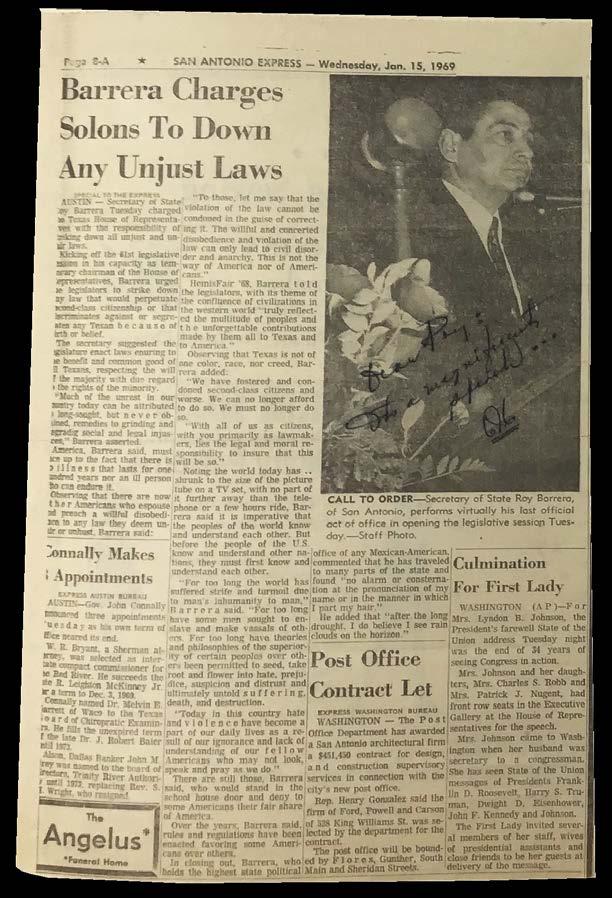
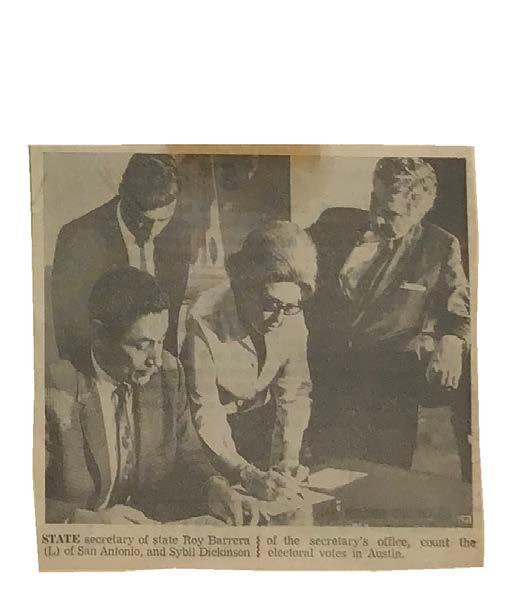
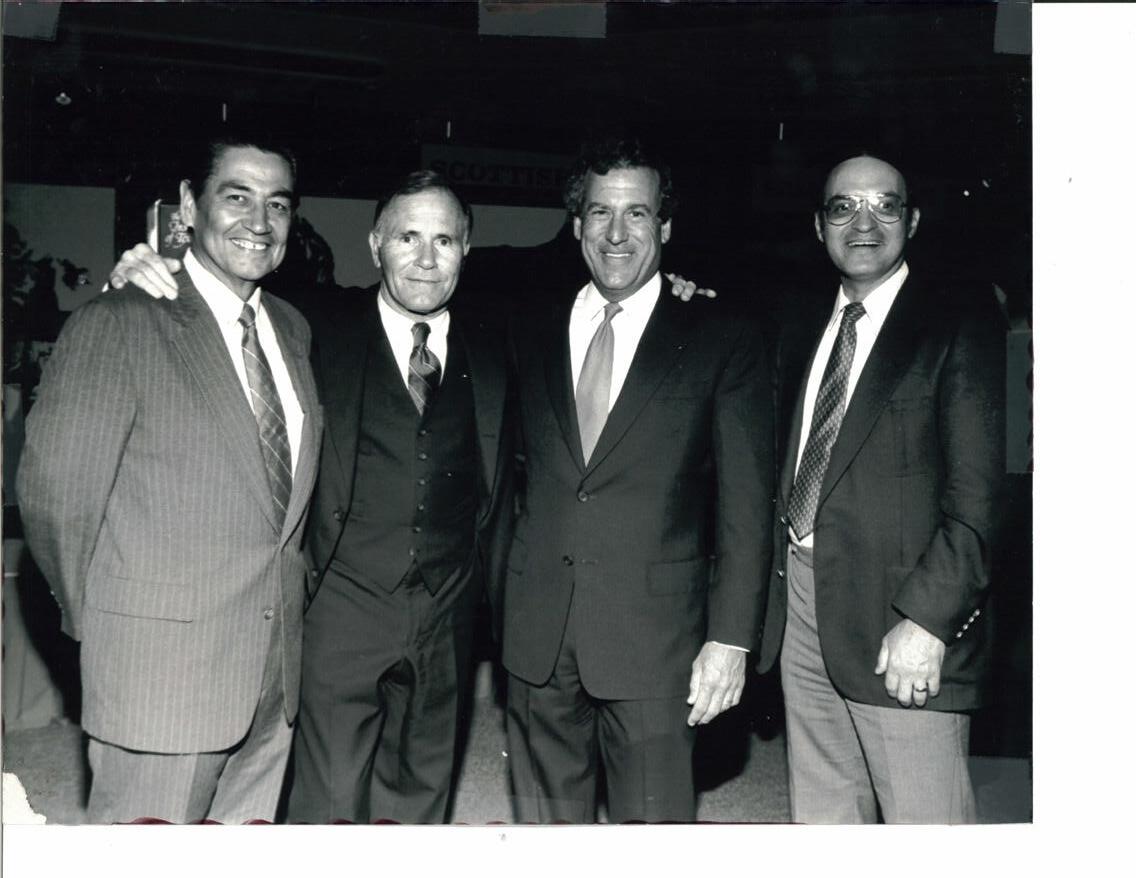
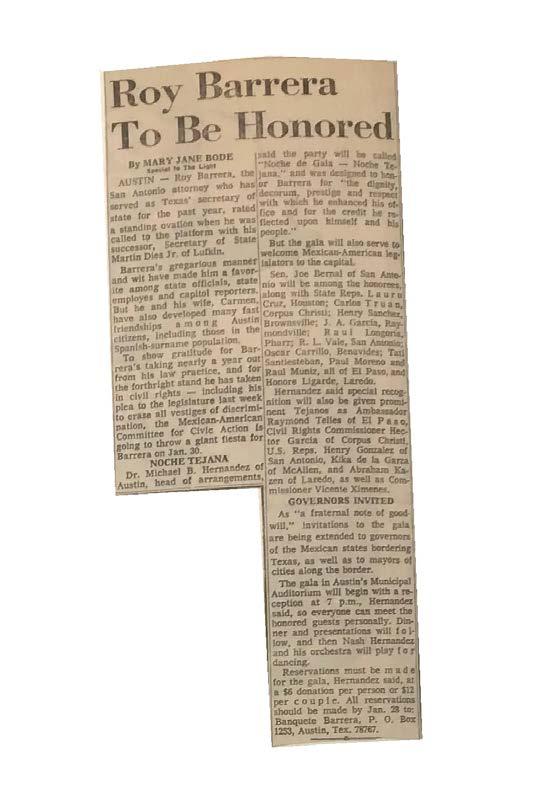
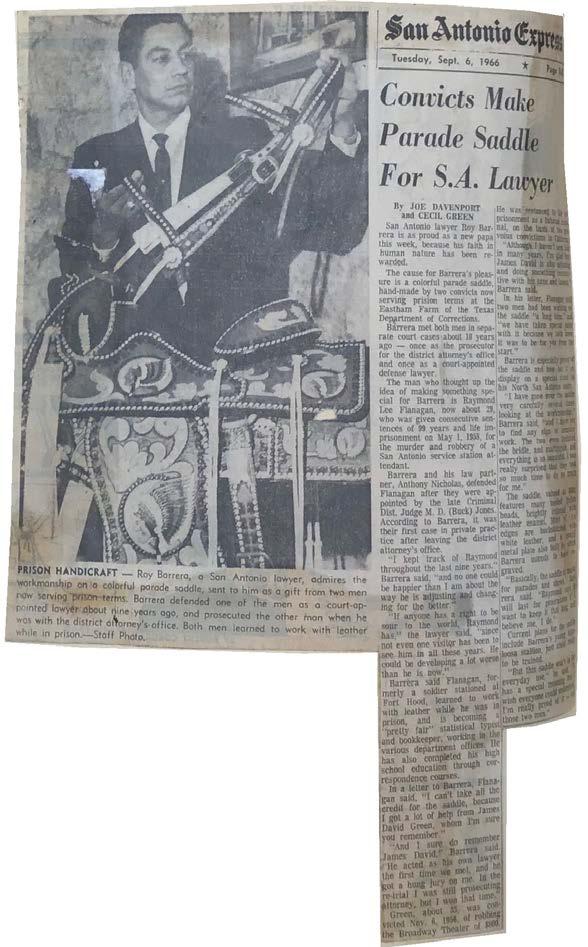
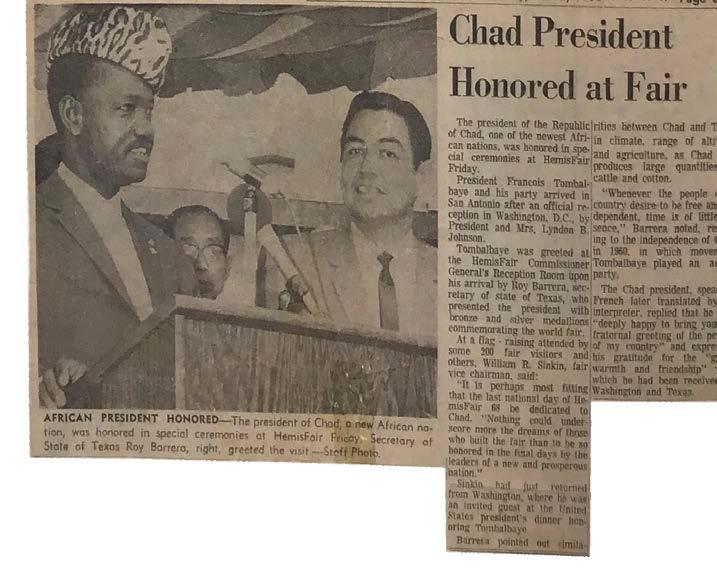
Barrera's collection of newspaper clippings, photos, and memorabilia from court cases document his storied life and his status as a San Antonio legal legend. Archive photos courtesy of Roy Barrera and family.
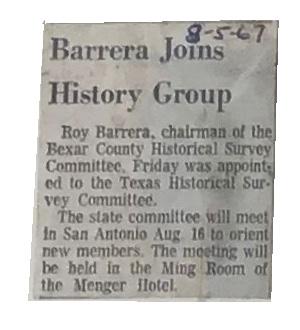
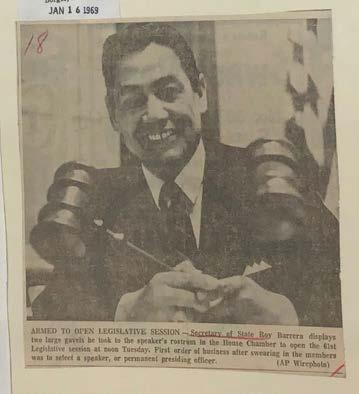

Abridged Speech by Roy Barrera to the Texas Legislature in 1969
From the House Journal, 65th Legislature, Regular Session, January 14, 1969: The Honorable Roy Barrera, Secretary of State of Texas, then addressed the House, speaking as follows:
I am not aware of any greater privilege that I have ever had as Secretary of State than that of functioning today as Temporary Chairman of the 61st Legislature of Texas and of the present opportunity afforded me, thereby, to address this assembly of the Representatives of the House and, through you, the people of Texas.
Today, we live in a world which has shrunk to the size of the picture tube on our TV sets and no part of which is any farther than our telephone or a few hours distant. Our exploding populations and our dependence upon the peace, prosperity, and stability of most other nations, for our own, makes it even smaller. As our world shrinks in size, our relations with other nations become more entwined and interdependent, thereby making necessary that we know and understand them and, conversely, that they know and understand us. This can only be brought about through communication and association.
In this melting pot of the world that we call America, we have been blessed as a nation with representative peoples from all over the world. With them they have brought their language, culture, skills and crafts, their customs, habits, and characteristics. This very diversity of these people has made our country the greatest in the world. We, as Americans, therefore, have the world within our borders. We have the colors of the rainbow, the religions of the world. Indeed, we have a melting pot.
Before we can know and understand these nations, we must know and understand each other. We must know that all of us—irrespective of our ancestry, of the pigment of our skin or of our manner of worship—were created in the image and in the likeness of God. We must believe, therefore, that as human beings we are possessed of reason and, accordingly, can love or hate, be friendly or hostile, and are subject further to all of the wonderful attributes of man as well as his frailties.
For too long the world has suffered strife and turmoil due to man’s inhumanity to man. For too long have men sought to enslave and make vassals of others. For too long have theories and philosophies of the superiority of certain peoples over others been permitted to seed, take root, and flower into hate, prejudice, suspicion, and distrust and ultimately untold suffering, death, and destruction. Today, in this country, hate and violence have become a part of our daily lives as a result of our ignorance and lack of understanding of our fellow Americans who may not look, speak, and pray as we do.
“Four score and seven years ago our fathers brought forth upon this continent a new nation, conceived in liberty and dedicated to the proposition that all men are created equal.” Today, in this “new nation”—long years after that conception and that dedication referred to by Abraham Lincoln so simply, yet eloquently, in his immortal Gettysburg Address—there are those who would have us believe that this is not so. There are those who would still stand in the schoolhouse door and deny to some Americans their fair share of America.
We are further blessed as a nation with all of the wealth and potential that any land could have in geography, climate, soil, and minerals. We are a conglomerate of races, nationalities, creeds, and colors that would shame a kaleidoscope in variety, composition, and beauty—a land where most of the languages of the world are spoken, where East meets West, and the customs, habits, and characteristics of the world’s nations are exhibited. This is a land of beauty. This is the promised land. To this day, there are some
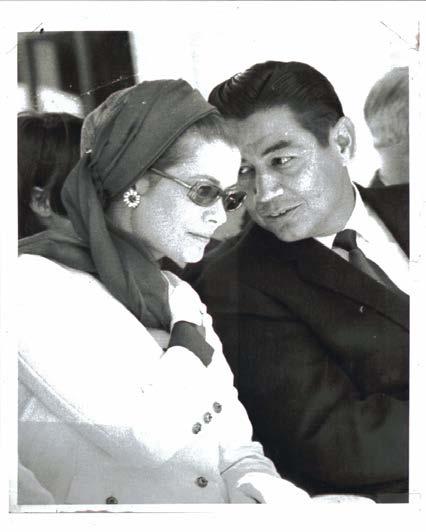
ABOVE: Secretary of State Roy Barrera visits with Princess Grace of Monaco at HemisFair ‘68.
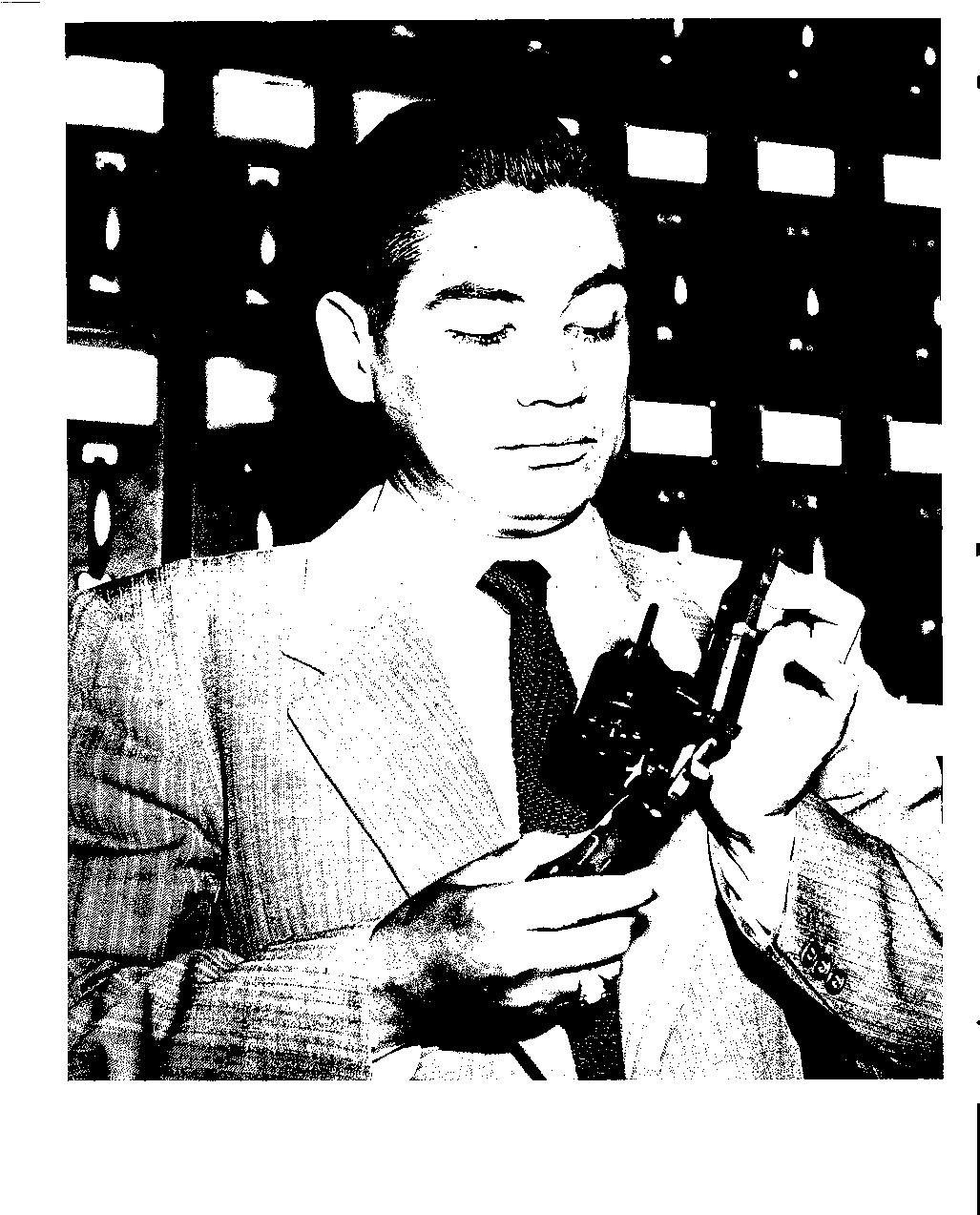
RIGHT: Inspecting a gun from the crime scene.
take root, and flower into hate, prejudice, suspicion, and distrust and ultimately untold suffering, death, and destruction.” On this, he was complimented by the press and by private citizens. Roy’s collection includes this eloquent and moving speech in its entirety.
Roy and John Connally remained close friends. In 1971, Connally, as recently appointed Secretary of the Treasury, sent Roy and Carmen an autographed uncirculated one-dollar bill that “conveys a million thanks for your kindness and friendship.” And Roy’s collection includes a March 1980 letter of thanks from Connally for helping with Connally’s presidential campaign.
The Barreras have dined at the White House with President Lyndon Johnson (Democrat) in 1968 and again in 1983 with President Ronald Reagan (Republican). In 1973, Roy ran an unsuccessful bid for mayor, and has not run for public office in San Antonio since.
The Orta Case
In 1970, the mother of Felipe Orta (19), arrived at Nicholas & Barrera seeking representation for her son, who had been charged with capital murder in the death of a highway patrolman near Waxahachie. Since she spoke little English, Nick sent her to talk to Roy so that he could tell her in Spanish that she needed to seek an attorney elsewhere, or by court appointment, since she couldn’t afford the fees. Roy remembers thinking:
If he gets the chair, I’m gonna look at myself every day in that damn mirror and say, “You didn’t even try because he didn’t have any money.” Orta’s mother, during her plea for help, prevailed upon my mother and all the Saints in the Catholic Church, so I said okay. We were able to get $3,500 for the case to use for expenses.
Orta and two other Hispanic teenagers (who were 14 and 16, respectively) were returning from a roofing job in Dallas. They quit early and didn’t get paid, so they stole a car, stole some beer from a grocery store, and headed south, picking up two Anglo GI hitchhikers. They were pulled over by patrolman Travis Locker for speeding. Locker had them get out of the car. The sixteen-year-old jumped Locker and grabbed his pistol, and the other two jumped into the fray. According
to Orta, he was trying to get the gun away from his friend, but it was too late. In the struggle, Locker was shot, but not fatally. The youths jumped into the car and took off, hiding for three days in the creek bed while the whole town and 300 peace officers searched for them. The two GIs stayed there and assisted the patrolman and the other officers. The youths ultimately made it back to their families in San Antonio, and they turned themselves in. While Locker was in the hospital, just when it looked like he would recover, he fell back and died with a rupture of a main artery. As Roy recalls:
I visited Orta in jail. Orta told me that a deputy called him a Mexican s-o-b and that they were going “to burn his ass.” In response. I said, “If they leave that gate open, get as far away from it as you can because they’ll say you tried to escape and shoot you in the back.” Then I went to the judge and told him what my defendant had told me and that “if anything happens to that boy of mine while he’s in your jail, you’re gonna have more FBI agents down here than a dog’s got fleas.” The judge assured me that nothing would happen.
Locker had been born and raised in Waxahachie, married there, and had kids there, so the next thing to do was seek a change of venue, which required evidence that the defendant could not get a fair trial in Ellis County. As Roy explained:
I went to several local defense lawyers and to the editor of the paper, and they agreed that Orta couldn’t get a fair trial, but they refused to sign an affidavit for fear of getting run out of town themselves. So, I filed my own affidavit, naming the people that I had talked to, the lawyers and the editor, what they had told me, and why they wouldn’t sign. The judge said the venue motion wasn’t proper, but I filed it anyhow, which he promptly denied, so we started empaneling a jury. In a capital case, you voir dire the panel one person at a time. The courtroom was on the sun side of the building, and the state was complaining about the heat in the courtroom. The judge offered to let everyone remove their coats. I thought of my Chilean Indian grandfather, who had told me that the mind controls the body, and if you don’t admit that it’s hot, it’s not hot. So I kept my coat on.
Americans who do not share in this beauty, who enjoy only the promise but not the reality of America.
Regretfully but true, for various and sundry reasons—some obvious, some quite subtle—over the course of time and history laws, rules, and regulations have been enacted and found their way into the statute books of this and other states, and of our nation, that have favored some Americans over others; that have relegated some Americans to second-class citizenship and worse; that have deprived some Americans of the fulfillment of their ambitions and their dreams—laws that have, in some instances. deprived some of life and liberty.
America and Americans have lived and suffered with some of these laws for generations after generations, but “their cup has now runneth over.” They have had their fill. Much of the unrest in our country today can be attributed to long sought, but never obtained, remedies to grinding and degrading social and legal injustices. Falling back on my ancestry and the language of my fathers, “No hay enfermedad que dure cien años, ni enfermo que los aguante”—”there is no illness that lasts for one hundred years nor an ill person that can endure them.” America and Americans must face up to this fact, for unless and until we do, we shall continue to experience strife and turmoil throughout our nation.
Due to this also, there are now other Americans who espouse and preach a willful disobedience to any law they deem unfair or unjust. To those, let me say, that the violation of the law cannot be condoned in the guise of correcting it. The willful and concerted disobedience and violation of the law can only lead to civil disorder and anarchy. This is not the way of America nor of Americans.
* * *
Texas is not of one color, nor of one race, nor one creed. Texans all, we must live and work here side by side. We all want what is best for Texas and the nation. We want to progress, to educate our children, and to afford them every opportunity available to other Americans—to not only dream and aspire in the promised land, but to share in her—restricted only by their personal ambitions, and not by their ancestry or the color of their skin.
We have fostered and condoned second-class citizens and worse. We can no longer afford to do so. We must no longer do so. With all of us as citizens, with you primarily as lawmakers, lies the legal and moral responsibility to ensure that this will be so. With you lies the responsibility not only to your respective communities, but to the State of Texas and to all Texans, to strike down any and all laws that are unjust and unfair—any law that would perpetuate second-class citizens in Texas—all laws that discriminate against or segregate any Texan because of his birth or belief. With you also rests the responsibility to enact such laws as will inure to the benefit and common good of all Texans generally, giving vent to the will of the majority with due regard to the rights of the minority.
As you take your oaths, gentlemen, pray God that He give you guidance, intellect, and moral fortitude that you may accordingly discharge your duties. Gentlemen, in closing may I say to you that it has been a great honor for me to serve the people of the State of Texas as Secretary of State of Texas. My tenure of office terminates in a few short days. I have tried to serve all Texans as a Texan. I have traveled to many different parts of our great State, finding no alarm or consternation at the pronunciation of my name or in the manner in which I part my hair. After the long drought, I do believe I see rain clouds on the horizon. For this I, and a great number of other Texans, shall always be grateful to and never forget Governor Connally.
I also wish to thank the people of Texas for their reception and understanding. It’s still the greatest State in the Union.
ABOVE: Roy Barrera serving as Texas Secretary of State.
The case gained national attention, and Roy was interviewed about it on 60 Minutes. A letter in Roy’s collection states: “Frankly, Mr. Barrera, I continue to be amazed at your abilities. I know of no other attorney who could have obtained the 10-year probated sentence you did.”
The prosecutor complained about the length of my questions and the heat. The judge asked me to hurry it up a little. I told the judge we could finish right now if the state would agree to a plea for life or 99 years. The state refused. We went through the whole week. We examined all the jurors and exhausted the panel. At that point, out of a hundred and some-odd people, we had selected six jurors. We still had six more to go, and the panel was gone. So, the judge relented and granted the change of venue to Dallas County.
For the Dallas trial, the two prosecutors from Waxahachie teamed up with two prosecutors from Dallas DA Henry Wade’s office against Roy. The prosecution sought the death penalty. Given the odds, Roy was offered help by the local defense bar, but he declined: “It looks bad, and that’s the way I want it to look,” he said. Picking the Dallas jury, if he liked the look of the juror and still liked them after the prosecution’s questions, he wouldn’t ask questions, prompting his opponents to think that he wouldn’t accept a juror without asking questions, so they didn’t challenge those jurors either, which is what Roy wanted. One woman on the panel, a mannish-looking cab driver, made long eye contact with Roy. The bailiff noticed and kidded Roy that she was his “girlfriend.” She ended up the foreman, and Roy liked his jury.
The GIs, having come to Dallas for questioning on Friday, showed up at the Monday morning trial obviously hung over, and Roy had the transcript of the earlier statements they had made in Waxahachie, which the prosecution forgot or ignored. They tried to change their story to put all the blame on Orta, but they withered under Roy’s cross. Although Locker’s widow had no relevant knowledge, the prosecution put her on the stand for jury sympathy, where she tearfully testified on direct. Roy recalls:
I said, “Mrs. Locker, I want you to know that my boy’s family and he himself, they’re all personally very disturbed and regret the situation that has brought you to this courtroom.” She turned on me like a tiger. I mean her tears were gone, she destroyed what she had built in nothing flat.
In the end, the jury returned a verdict of murder without malice, whichcarriedafive-yearmaximumsentence,butdeniedprobation.After the verdict, reporters flooded the hall. Roy noticed the young prosecutor from Waxahachie in tears and approached him. Roy explained. “He said that he was going to lose his job over this case. I told him, ‘I’ll fix it.’ I went to the reporters and told them that he had done a fine job, and that the prosecution would have won if it hadn’t been for those Dallas prosecutors.” The Waxahachie prosecutor’s job was saved, and he thanked Roy for the favor. Roy’s collection includes a June 10, 1970, letter from attorney Sam Coats (“In talking with judges and lawyers alike, the opinion is unanimous that you tried one of the best cases ever tried in Dallas County.”); a June 13, 1970, letter from the Dallas San Antonio Lawyer | sabar.org
County District Trial Judge John Vance (“All jurors seemed to be in agreement that Orta had an outstanding attorney. The Court agreed.”); a letter of June 17, 1970, quoting assistant DA David Pickett (“You’re the finest criminal lawyer that office has ever come up against.”); and a 1991 letter from Judge Stephen B. Ables to Roy Jr. (“My dad was on a jury in Waxahachie and was observing a lawyer in action named Roy Barrera, who was the best attorney he had ever seen.”).
In 1987, Orta, at age thirty-six, was shot to death at a bar room on the South Side by the same man who, in a June 2000 incident, held Archbishop Patrick Flores hostage for nine hours in the Archbishop’s chancery.
El Charro de Mexico
Antonio Aguilar was a renowned Mexican singer and film actor who recorded over 150 albums and appeared in 120 movies. Known as El Charro de Mexico, he was famous for singing songs while riding on a horse, which he was doing one night at the Alameda Theater downtown. A trap door on the stage floor gave way. Aguilar fell to the side, but the horse fell through to the basement, onto its back with its legs in the air. A patron at the show figured he would call the smartest person he knew, Roy Barrera, to help get the horse out of there. Whereupon, on Roy’s advice, they knocked out a wall, stuck a lift under the horse, and pulled it out. The horse survived. The Barreras and the Aguilars became fast friends, with Aguilar always recognizing them in the crowd when he performed.
The Mercy Killing
On November 16, 1981, Woodrow Collums (69) a retired rancher from Atascosa County, walked into a San Antonio nursing home and shot his brother, Jim Collums (72), three times in the head and twice in the stomach, killing him. Jim Collums was suffering from Alzheimer’s disease and was being kept alive with a feeding tube inserted into his stomach. Woodrow was arrested at the nursing home and charged with murder. He pled guilty. Released on bond, Woodrow wrote a letter that was published in the papers, saying that he could not stand to see his brother suffer any more. Roy represented Woodrow, and sought deferred adjudication, which was strongly opposed by the prosecution. A sentencing trial was held before Judge Tom Rickhoff, with family, nursing home attendants, and Jim’s widow all testifying. A letter from Jim (written after his diagnosis) that he wished to be put to sleep, if he would not recover, was introduced into evidence. Woodrow was given ten years of probation and community service. The case gained national attention, and Roy was interviewed about it on 60 Minutes. A letter in Roy’s collection states: “Frankly, Mr. Barrera, I continue to be amazed at your abilities. I know of no other attorney who could have obtained the 10-year probated sentence you did.”
Autumn Hills
After six years of investigation, in 1985, a Galveston nursing home, Autumn Hills, was the first nursing home corporation indicted for murder, based on the neglect of the residents. The case was presided over by Galveston Judge Don B. Morgan, but the venue was moved to San Antonio. Upon the venue transfer, Roy represented the corporation and became the San Antonio member of the Autumn Hills team of lawyers representing other individual defendants. Roy procured a courtroom at the Bexar County courthouse to use for the first few months, then they used Judge William Sessions’ courtroom at the federal courthouse, then back to the Bexar County courthouse. On a day off, the Galveston Judge asked Roy to take him to the Zoo, and Roy obliged. On another day, the Judge wanted Roy to bring him Mexican food, so Roy brought tamales (from Karam’s) to the federal courthouse to share. The janitor found the tamale shucks and told Judge Sessions, who wasn’t pleased. (On another
“My dad was on a jury in Waxahachie and was observing a lawyer in action named Roy Barrera, who was the best attorney he had ever seen.”
occasion, Roy had drawn the ire of Judge Sessions by sharing tamales with Judge Ed Prado and the attorneys in the courtroom.) The trial (which lasted six months, had fifty-six exhumations ordered, and the testimony of numerous witnesses and experts) was said to be the most complex criminal trial in the history of Texas. A book, Death Without Dignity by Steven Long, was written about the case. Roy opened the closing argument for the defense team. After six days of deliberation, the jury was still hung, seven for conviction and five for acquittal, which resulted in a mistrial.
The Tesoro Trial
In 1964, Robert V. West, a Ph.D. in Chemical Engineering, founded an oil company and gave it the Spanish name for “treasure,” Tesoro. In 1968, Tesoro Petroleum Corp. became the first San Antonio company to be traded on the New York Stock Exchange. By 1982, Dr. West, Tesoro, and ten other individual directors and officers found themselves on the defendant side of a $790-million class action and shareholder derivative federal lawsuit brought by Tesoro shareholders, alleging racketeering, securities law violations, and breach of fiduciary duty. It looked bad for the defendants: accusations of bribing foreign officials with money and prostitutes, use of company assets for personal use, cover-ups, failing to disclose a lucrative stock purchase offer while attempting to take the company private, false statements in SEC filings, and stock price manipulation, all described in the Wall Street Journal. The lawsuit had been preceded by lengthy IRS, SEC, and grand jury investigations and an internal investigation by law firm Fulbright & Jaworski, which resulted in no indictments.
Lead counsel for the Tesoro defendants was Houston attorney Richard Miller, who was known for being on the losing end of the $10 billion Pennzoil v. Texaco verdict. The case was going to be a jury trial in H.F. “Hippo” Garcia’s court. Who else would the Tesoro team hire but eminent defense counsel Roy Barrera, Judge Garcia’s long-time compadre? A six-month trial was held in 1987 before a six-person jury:
one man and five women. To lose the trial might have meant the end of Tesoro, a major employer. Roy opened the closing arguments for the Tesoro team. Roy charged the plaintiffs with “leading the jury up the yellow brick road to the land of Oz on a fantasy trip, mixing truth and fiction as a blender to combine apples and oranges in a concoction difficult to comprehend.” He argued that the absence of any indictments served as “proof that the presumption of innocence still prevails.”
For thirteen days, the jury poured over a sixty-four-page jury charge and six months’ worth of evidence before reaching a verdict, on July 22, 1987, of no liability on all thirteen charges. After the trial, the jury foreman, a thirty-year-old student and electronics technician, was quoted in the paper as wanting to “get together” with some of the other jurors, indicating that new friendships were made. But in September of 1987, two of the jurors charged the foreman and another juror with bringing up matters not in evidence, intimidation, and “browbeating” the other four jurors into the verdict. A United States deputy marshal took that information and tried to sell it to the plaintiff side for $1 million, but he was arrested by the FBI in a sting operation and ultimately pled guilty. The shareholder plaintiffs filed a motion for new trial, which was denied.
The Wall Street Journal ran a story about this trial’s being the vindication of Richard Miller from his Texaco defeat. Miller would write in a September 17, 1987 letter:
[Roy] confirmed again what most of us know: litigation skills in the hands of an intuitive and perceptive trial lawyer are readily transferable from one field of law to another and from one case to another. The Tesoro case was a civil securities fraud case (some said), and I assure you as far as anyone could tell, Roy performed like he had for years recited Rule 10b-5 every night before bedtime.
Among Roy’s Souvenirs
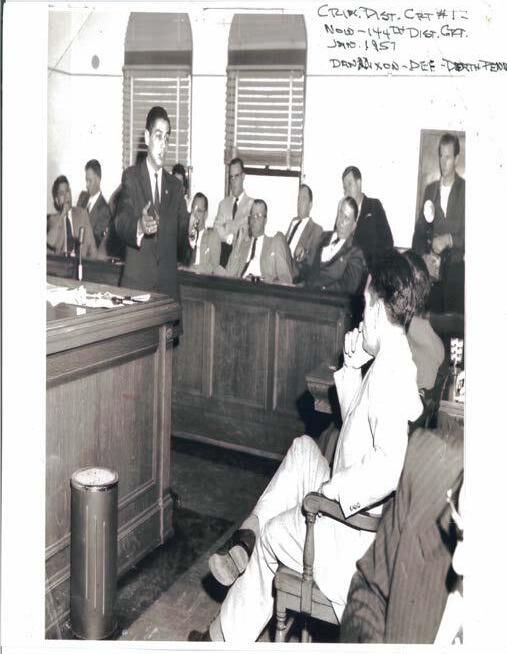
Among Roy’s souvenirs, my favorite picture is a black and white photo of him in a courtroom, circa 1960. It looks cinematic. The court is obviously in recess; maybe waiting on a verdict. Opposing counsel is standing on one side. There’s a newspaper reporter in the middle, and there’s Roy Barrera, leaning back in a chair in the jury box, his feet propped up on the railing, smoking a cigarette, looking like he owns the place. There’s a 1993 letter from attorney Larry Macon (who was also on the Tesoro team) that says in its entirety: “Thanks for being my friend as well as the best attorney in the state.” And a 1996 letter from County Clerk Gerry Rickoff, inspired by simply seeing Roy and son Bobby together: “Last evening through the lengthening shadows I was privileged to observe a most moving sight, that of yourself and your son, Bobby, leaving this grand old Courthouse together.” For many of us, at one time or another, we dreamed that someday we would become legendary trial lawyers. Roy Barrera’s lived that dream, and then some.
Post-Script In 1965, while watching the news of Nat “King” Cole’s death from lung cancer with his daughter, Roy had her flush his cigarettes down the toilet, and he never smoked another cigarette. Roy’s collection includes a plaque of a shellacked five-dollar bill he received from a friend: Roy’s winnings in a bet with him that Roy couldn’t quit smoking.
Steve A. Peirce practices business bankruptcy law in the San Antonio office of Norton Rose Fulbright. He can be reached at 210.270-7179 or steve.peirce@ nortonrosefulbright.com