SAMANTHA AYLIN GARCIA CANTU
M. Sc. Sustainable Architecture and Landscape Design
selected works
garcia

+393515620448
samanthaaylin.garcia@gmail.com Berlin, Germany
LANGUAGES PERSONAL SKILLS
SPANISH
ENGLISH
GERMAN
ITALIAN
creative problem-solver team collaboration adaptable & resilient proactive & energetic
SOCIAL ENGAGEMENT
SCHÖNSTATT 5K RUN
2016-2019
-Organization team
S.L.P. MISSION TRIP 2016-2017
-Group leader
,CAPULLOS’ group home for children 2011-2014
-Planning of activities
,UVITAS' Teacher 2013-2014 -Math tutoring for children
PROFESSIONAL EXPERIENCE
A24 Landschaft
Internship - Competition team
M&G Arquitectos
Architect
-Interior design of single family residences
-Construction supervisor
wulf architekten
Internship
-Interior design and visualizations
-Facade development
-Material and color concepts catalogue
ACADEMIC BACKGROUND
POLITECNICO DI MILANO - Italy
M. Sc. Sustainable Architecture and Landscape Design
-ENHANCE Sustainable Entrepreneurship & Innovation summer school - Chalmer’s University
-’Rooms without walls’: guiding principle for the civic & social dimension of the SDG’s practice
-Landscape Off Limits - workshop
TU BERLIN (erasmus) - Germany
Universidad Regiomontana - Mexico
Architecture
BTU Cottbus-Senftenberg - Germany
(DAAD-scholar) Architecture
prepa UDEM - Mexico
High school diploma
Notre Dame High School - USA
SOFTWARES


INDUSTRIAL
HAUSBURGPARK
Berlin, Germany 2022
BIBLIOTHEKSGARTEN
Berlin, Germany 2022
Napoli,
INDUSTRIAL ENCLAVE
Napoli, Italy 2022
PIACENZA TANGENZIALE
Piacenza, Italy 2021
Monterrey, Mexico 2018
A NEW CENTRALITY
Ouagadougou, Burkina Faso 2021
PRIVATE GARDEN
Monterrey, Mexico 2019
LOMA BONITA
SPACE FICTION
Berlin | Germany
MASTERSTUDIO LANDSCHAFTSARCHITEKTUR III WS 22/23
Fachgebiet Landschaftsarchitektur Entwerfen
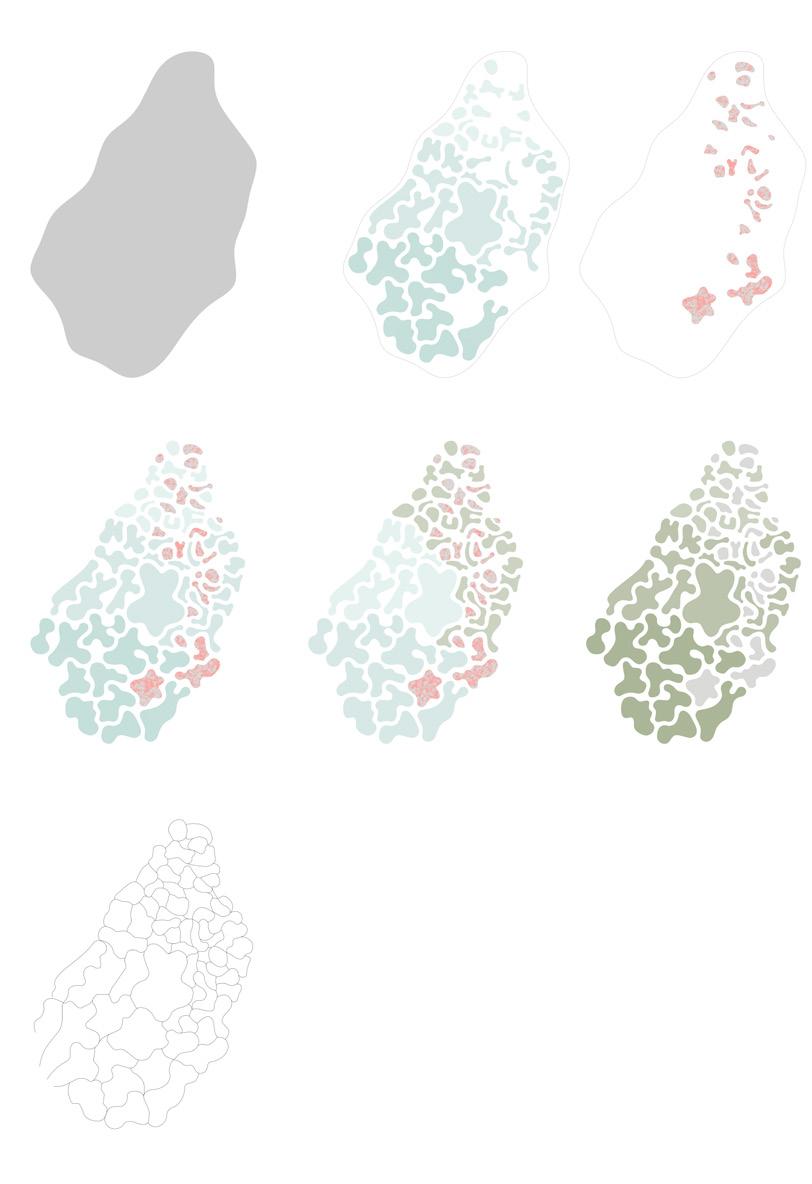
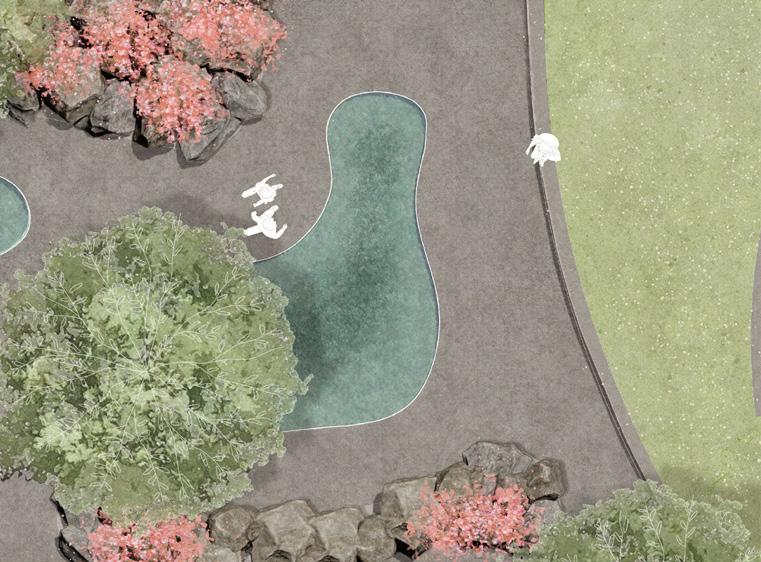
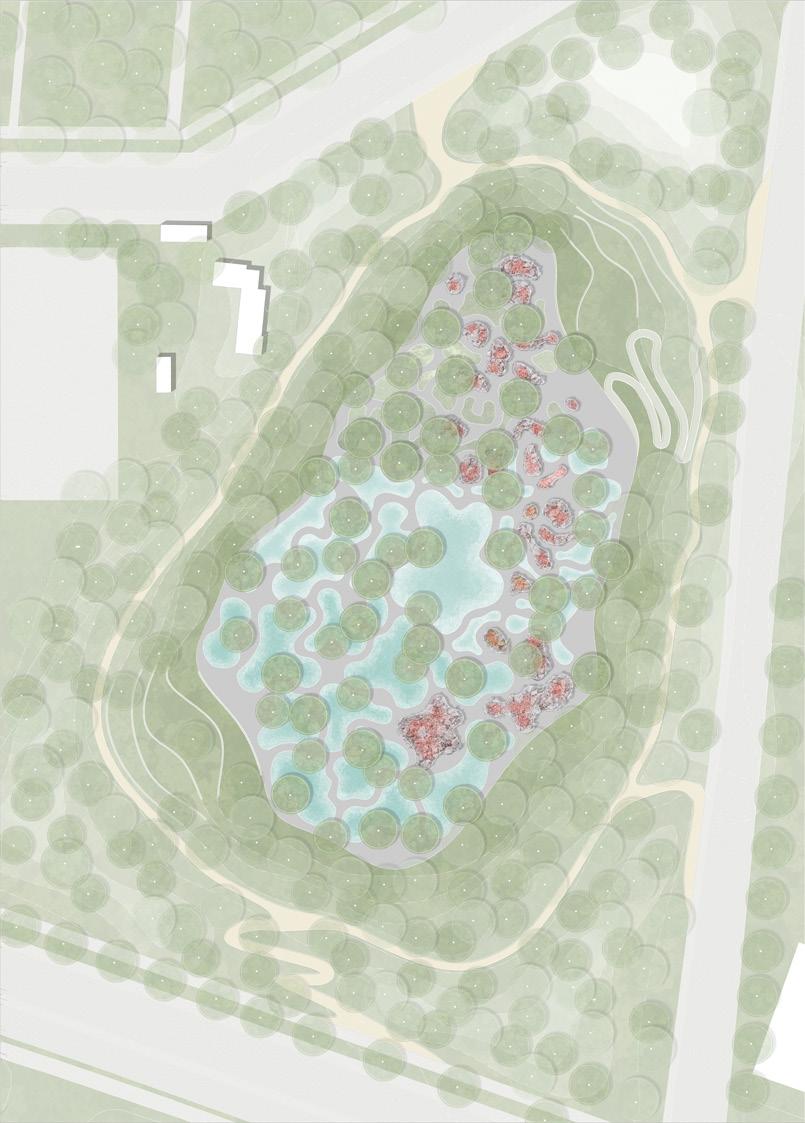
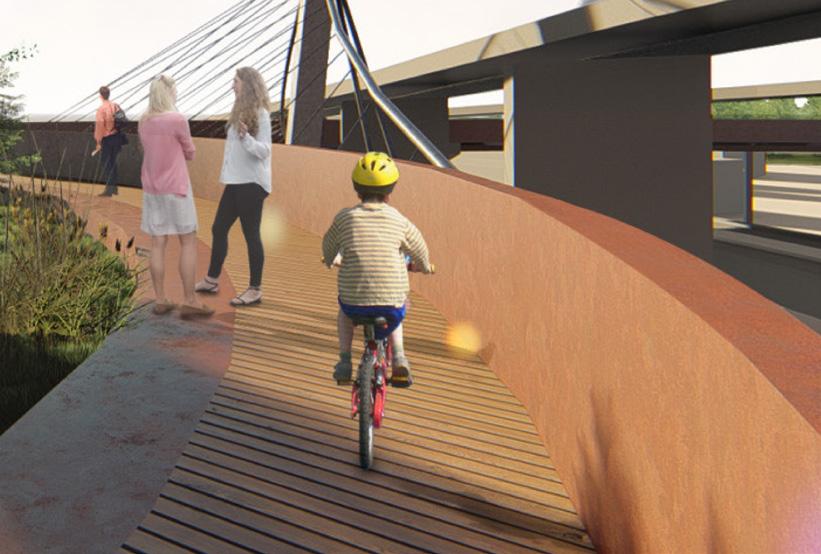
The weather in Berlin exhibits distinct seasonal patterns, with cold winters and warm the design of the area is tailored to accentuate the coldness, leveraging water elements biance. Conversely, in the summer and rainy seasons, the high humidity prevalent in days. This humidity also fosters the growth of diverse vegetation, which thrives in the
The incorporation of organic shapes carved into the concrete serves multiple purposes. crete structures, introducing a sense of fluidity and natural form. Additionally, these response to Berlin’s ever-changing weather conditions, enhancing the overall sensory
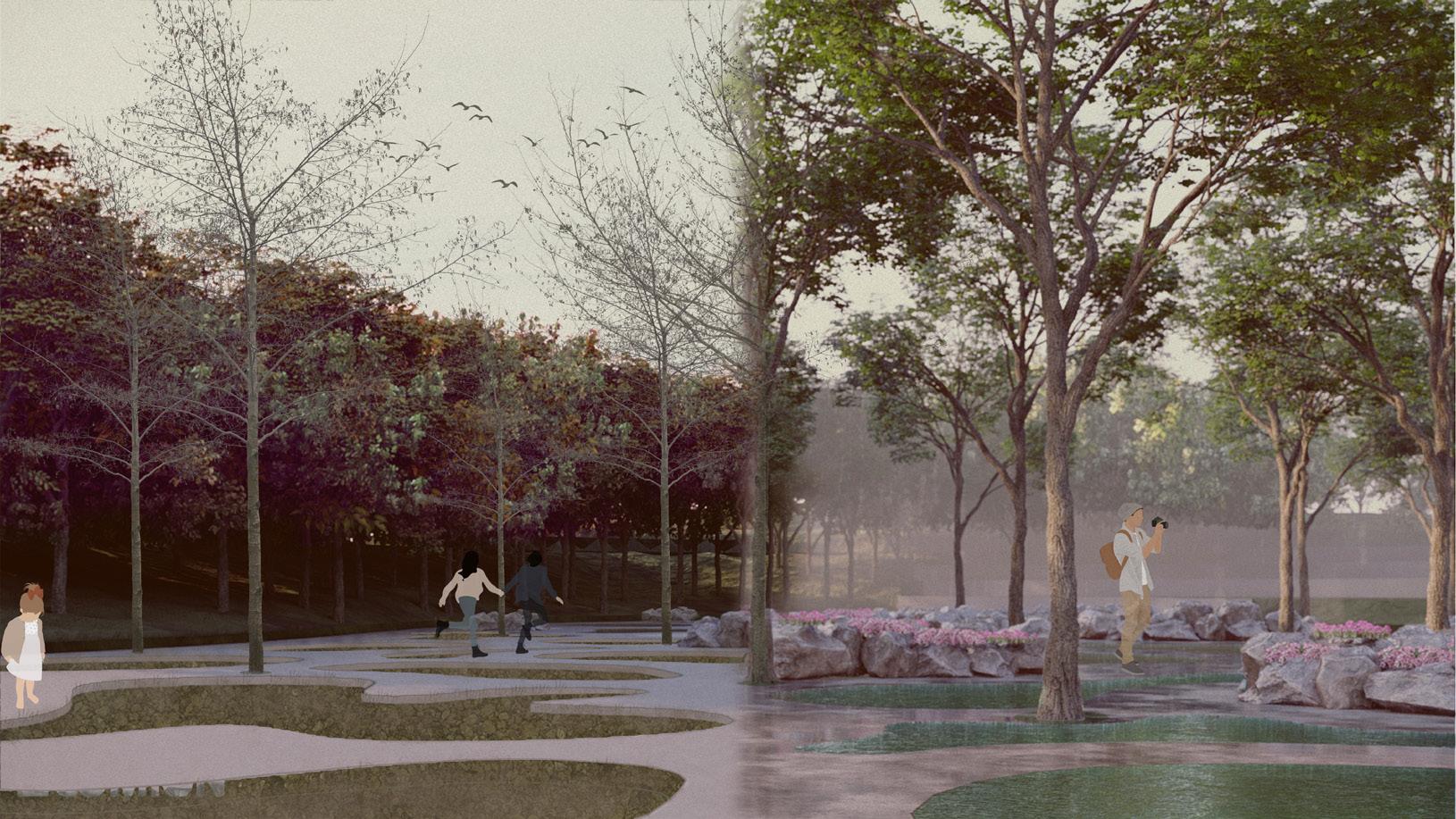

warm summers, each contributing to a unique atmosphere. During the winter months, elements and the inherent chilliness of concrete surfaces to evoke a sense of wintry amin the area imparts a refreshing coolness, offering respite from the warmth of sunny the concrete gardens scattered throughout the area.
purposes. Primarily, it serves to disrupt the rigid, man-made aesthetic of the existing conthese organic shapes create dynamic visual scenarios that evolve throughout the year in sensory experience of the urban environment.
HAUSBURGPARK
Berlin | Germany
ENTWERFEN MIT PFLANZEN II - Pflanzenverwendung
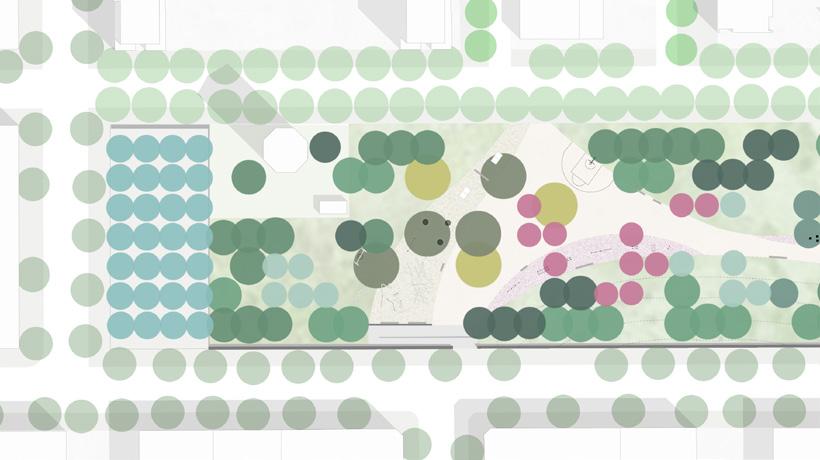
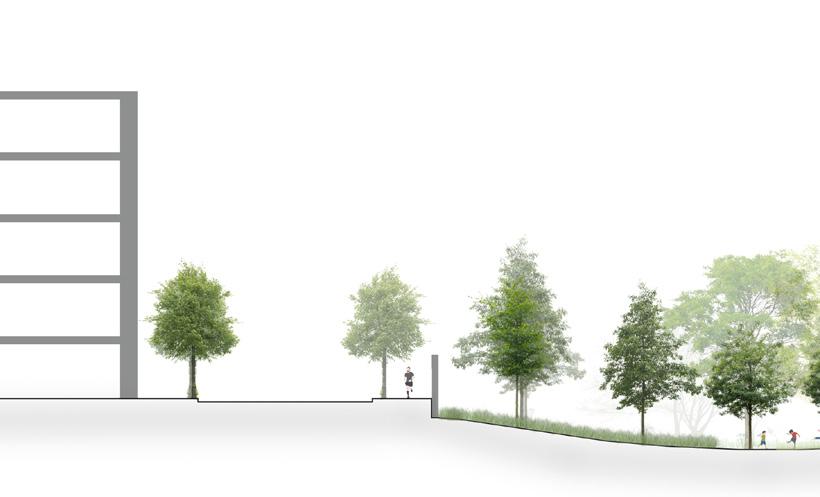
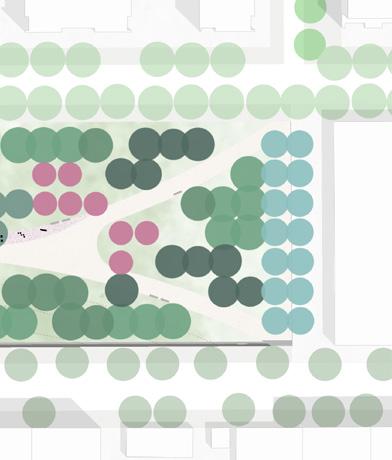
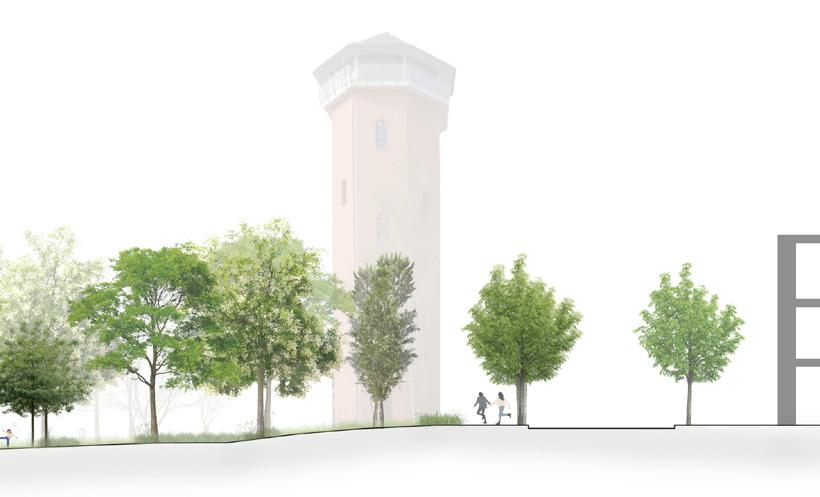
The redesign of the Hausburgpark not only serves a functional purpose but also aims the creation of a vibrant neighborhood park, envisioned as a central meeting point carefully designed, with curved pathways weaving through the space, connecting various abundant greenery. These pathways, with their organic shapes, stand in contrast to visual dynamic.
Furthermore, the planting strategy plays a pivotal role in defining the park’s character. pattern, effectively transforming the park area into a lush green space. Meanwhile, the integration of the new elements with the surrounding environment. In essence, the and inclusive space that enhances the quality of life for residents while seamlessly blending

aims to foster cohesion between the two districts it serves. This vision is realized through point for residents to connect and engage with one another. The design of the park is various amenities such as the neighborhood square, playful recreational areas, and to the orderly grid-like arrangement of the Prunus avium grid, creating an intriguing character. The tree plantings not only complement but also extend beyond the existing grid the design grid, anchored by the four sides of the parking area, ensures a harmonious the redesign of the park transcends mere functionality, striving to create a welcoming blending with the urban fabric of the two districts.
PLANTING PLAN
Gleditsia triacanthos ‘Skyline’
Tilia cordata ‘Greenspire’
Alnus spaethii
Populus berolinensis Prunus avium ‘Plena’
Styphnolobium japonicum
Koelreuteria paniculata
Amelanchier arborea ‘Robin Hill’
Pathways
City enclosure
Robinia ‘Casque rogue’
Ostrya carpinifolia
Aesculus carnea Acer platanoides
BIBLIOTHEKSGARTEN
Berlin | Germany
ENTWERFEN MIT PFLANZEN II - Pflanzenverwendung
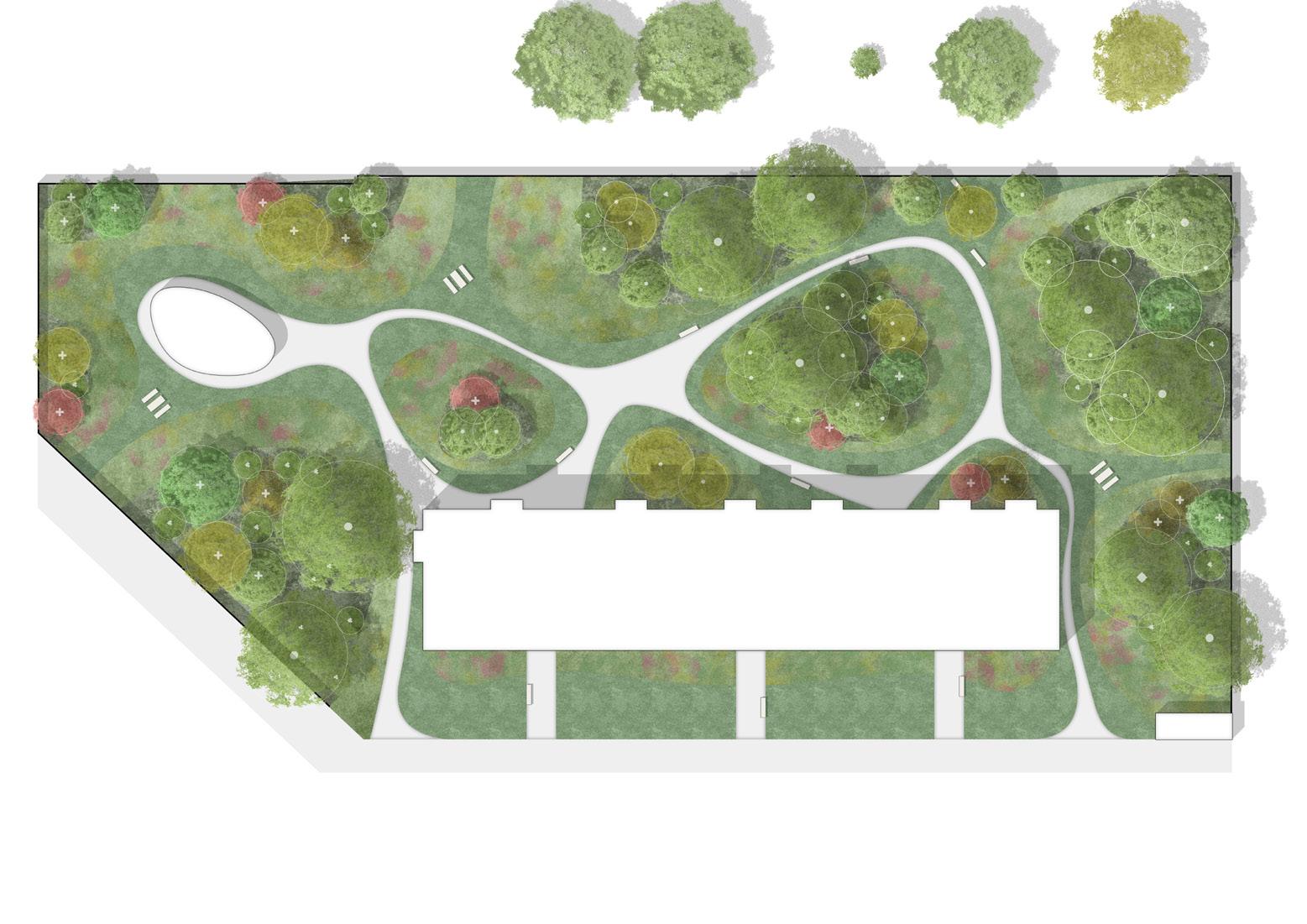
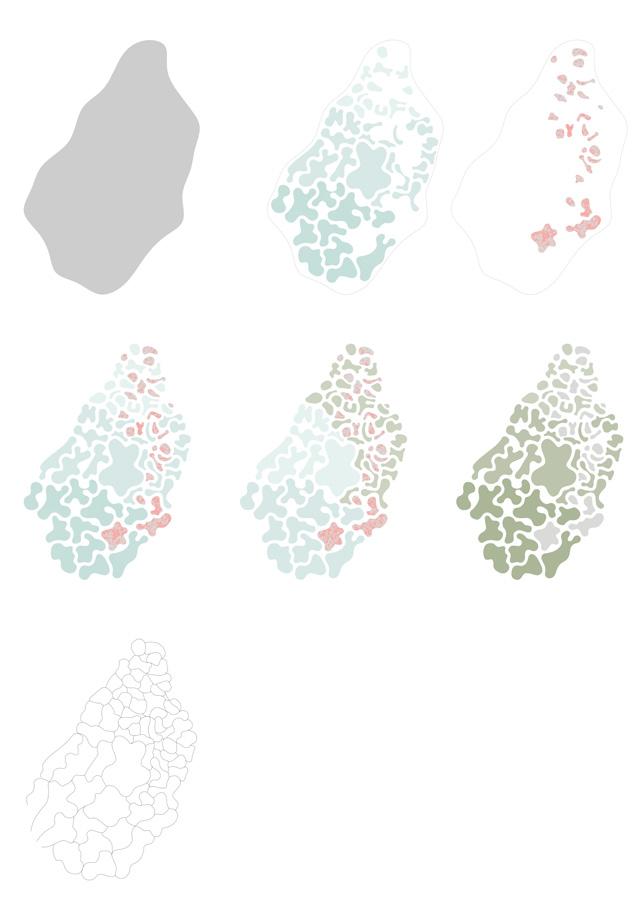
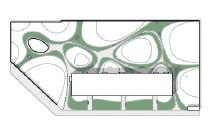
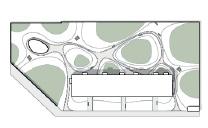
The current design concerns the outdoor spaces surrounding a library in Berlin, where sive garden landscape. Certain ruderal species are conserved to establish preserved through controlled mowing. Additionally, tree species are predominantly retained in cum, Davidia involucrata, and Liquidambar styraciflua, chosen for their vibrant autumn edges, tall herbaceous meadows, and forest islands, with the design approach driven
Wegeführung
Wiesensaum
Hochstaudenflur
Sukzessionsfläche
where existing plant species are strategically utilized and enhanced to create a coheareas, while existing grass and tall stand species are relocated to designated zones in the design, supplemented by climate-resilient varieties like Styphnolobium japoniautumn hues and blossoms. The area is segmented into three distinct sections: meadow driven by the imperative to integrate a significant portion of the existing tree population.
-WiesensaumMeadow edge
The meadow edge comprises a mixture of flower and herb turf, mown 3-4 times a year to prevent the dominance of competitive species, with a wooden edging to prevent species migration through rhizomes.
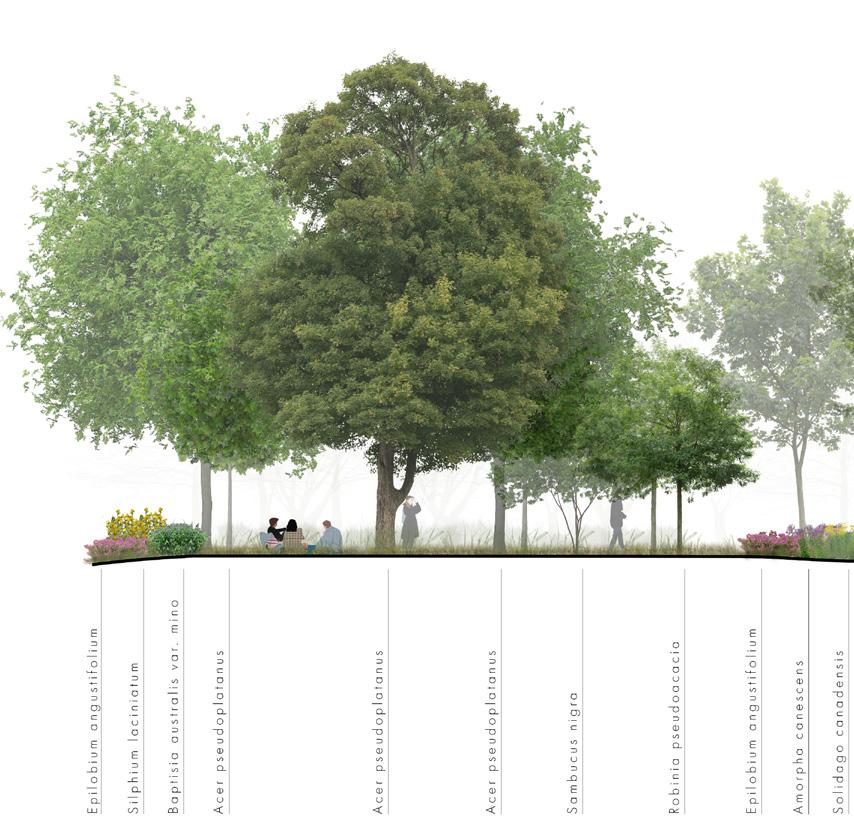
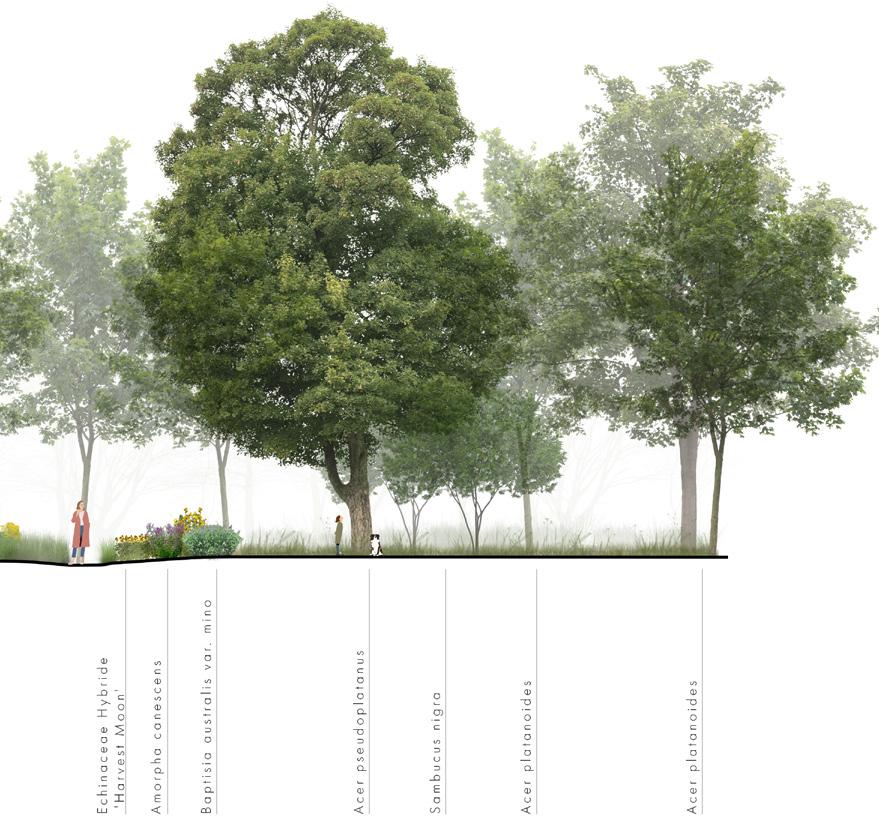
SECTION A-A

-HochstaudenflurTall perennials
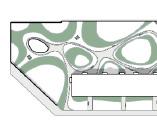
The existing tall herbaceous vegetation is preserved and occasionally mown to maintain its composition.
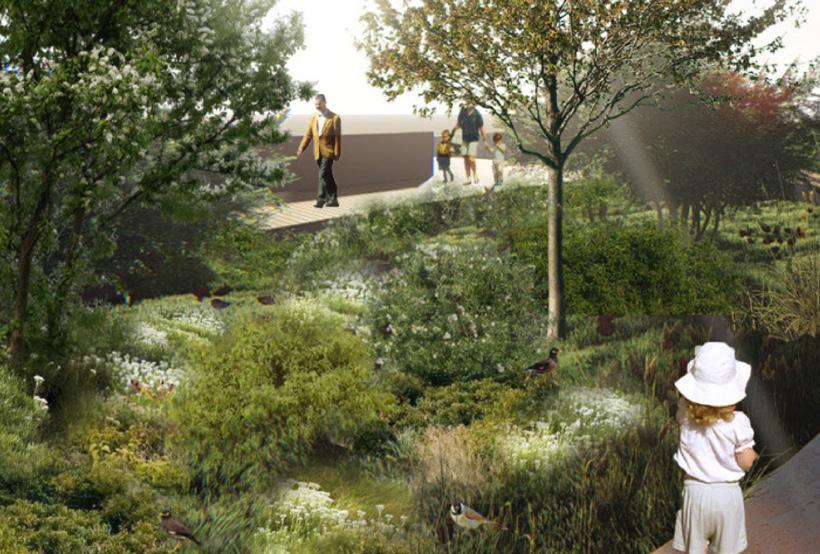
-SukzessionsflächeForest island
Successional areas beneath the woody plants are left to develop naturally, with annual removal of deadwood to ensure safety within the open space.
INDUSTRIAL ENCLAVE
Napoli | Italy
ARCHITECTURAL DESIGN STUDIO II
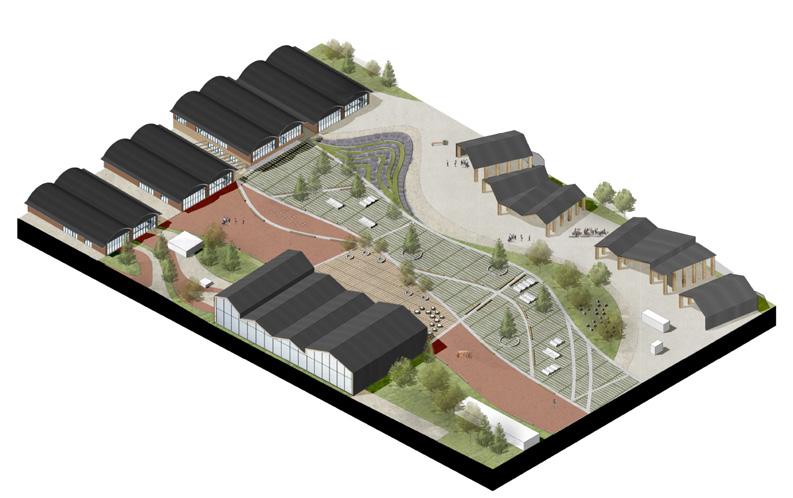
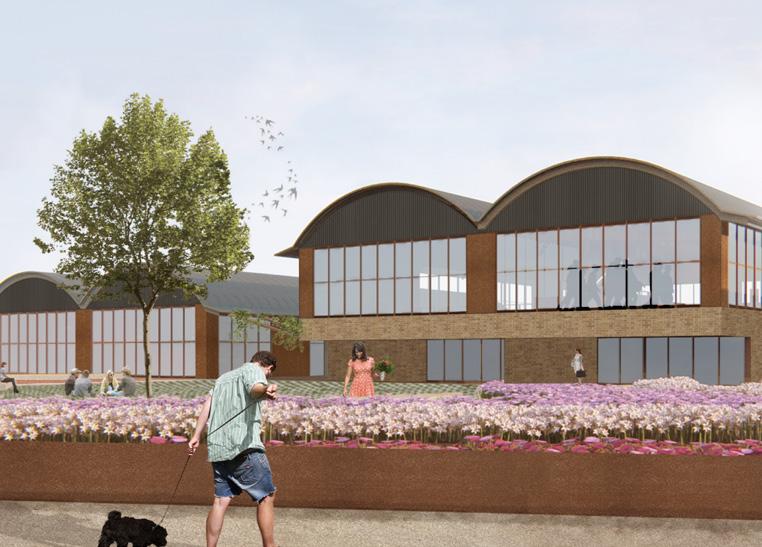
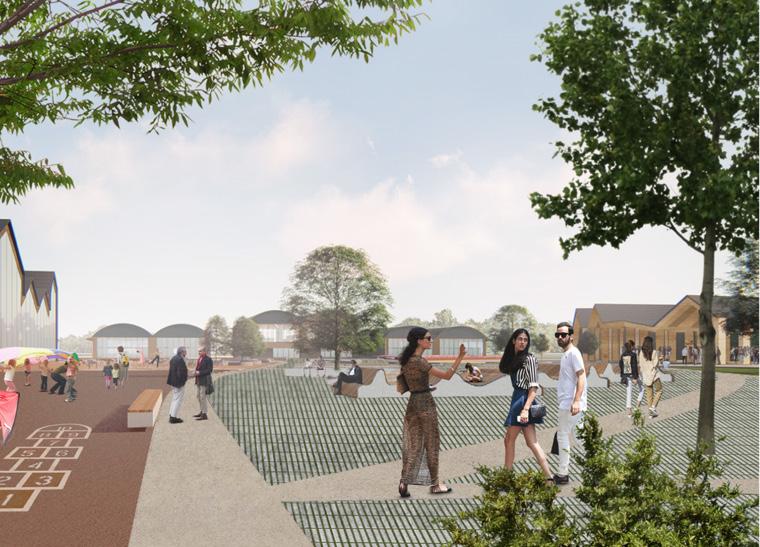
Transformation project for old Feltrinelli industrial area in the suburb of San
The area initially faced a scarcity of green spaces and biodiversity, compounded by intricate infrastructure posing obstacles to pedestrian movement. Primarily zoned for emptiness.
To address these challenges, key strategies were devised. Firstly, ecological links were diversity and connectivity. Additionally, efforts were made to integrate the Feltrinelli linear green spaces. Moreover, historical streams of the Foce del Sebeto river were unveiled systems, enriching the area’s cultural and natural heritage. Lastly, to improve accessibility bike-friendly paths were proposed, promoting sustainable modes of transportation
Naples.
the prevalence of unused and potentially contaminated green lands, alongside the for industrial purposes, many of these areas lay abandoned, contributing to the overall
were established between the site and scattered green patches, aiming to enhance bioFeltrinelli area into the network of green corridors, facilitating seamless movement between unveiled through the re-opening of canals and the implementation of new hydraulic accessibility and connectivity between different industrial zones, various pedestrian and and fostering a sense of community within the industrial landscape.
San Giovanni a Teduccio in
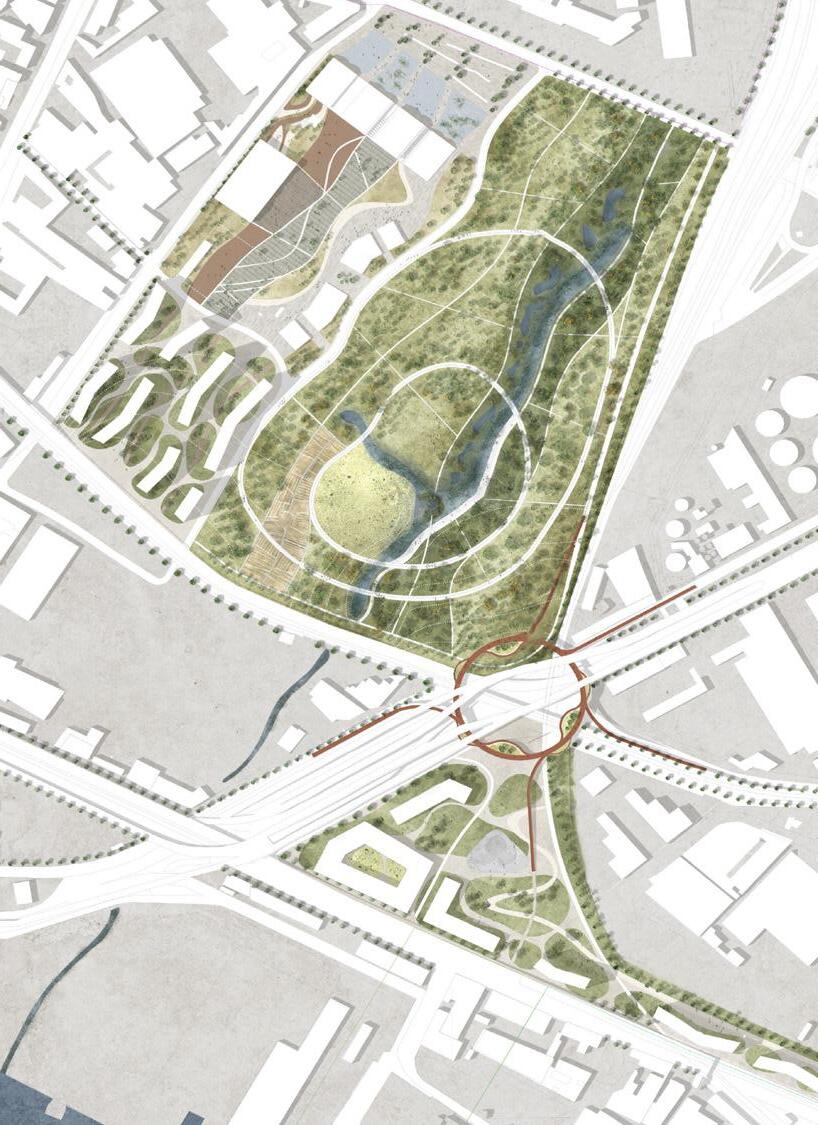
Entrance
Fountain
Cultural civic center
Playground
Food hall
Market
Dancing square
Park
Pedestrian cycling loop
Pedestrian cycling loop
Residential quarter
Community gardens
Wetlands
Canal
Amphitheater
Green lawn
Rain garden
Proposed pedestrian bridge 19. Technology museum
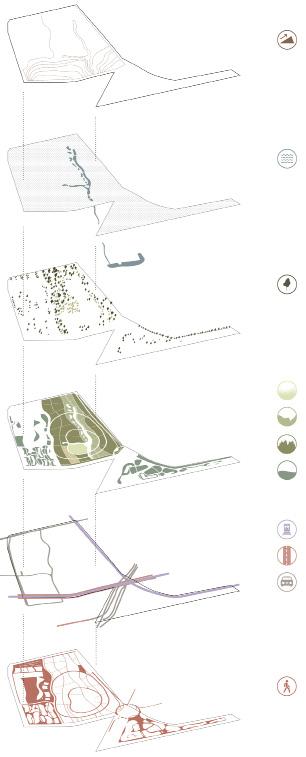
Proposed slope
Re-opened canal and wetlands
Woods and canopies
Meadows and lawns
High meadows and shrubs
Woodlands
Urban green and mounds
Railway
Highway
Local car roads
Pedestrian accessibility
LANDSCAPE SECTION
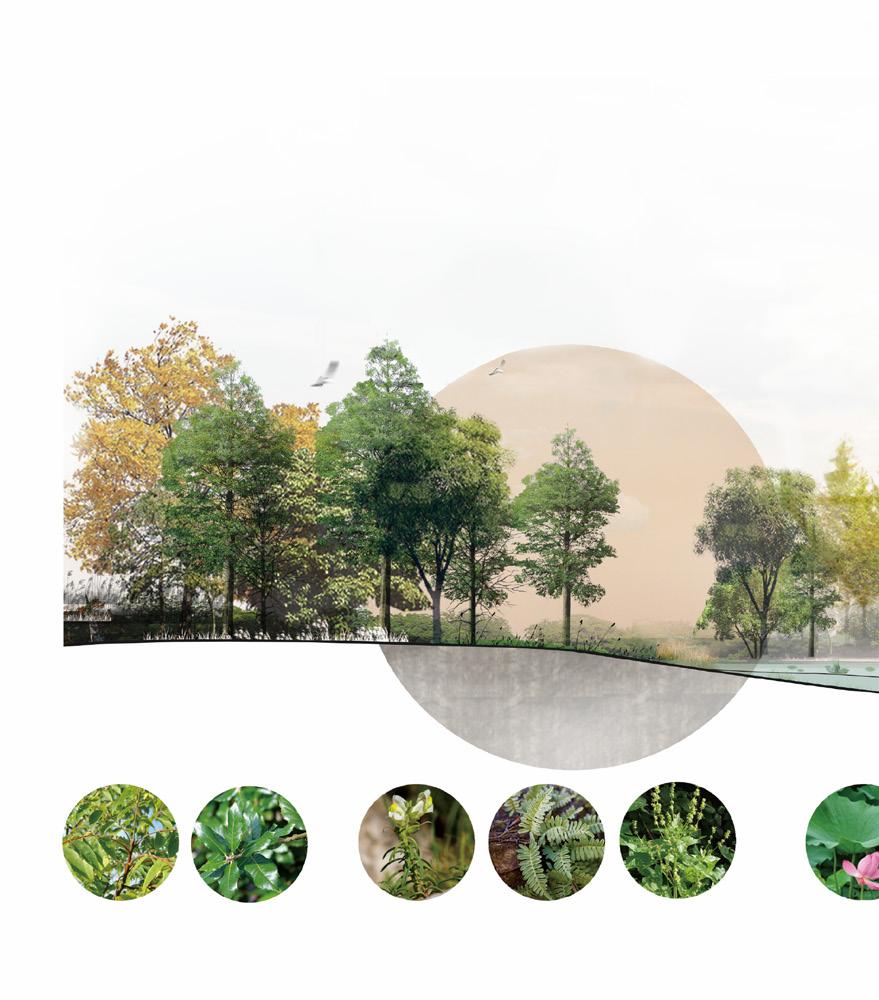
Ailanthus altissima Quercus ilex
Antirrhinum siculum
Polypodium vulgare
Mercurialis annua
Nelumbo nucifera
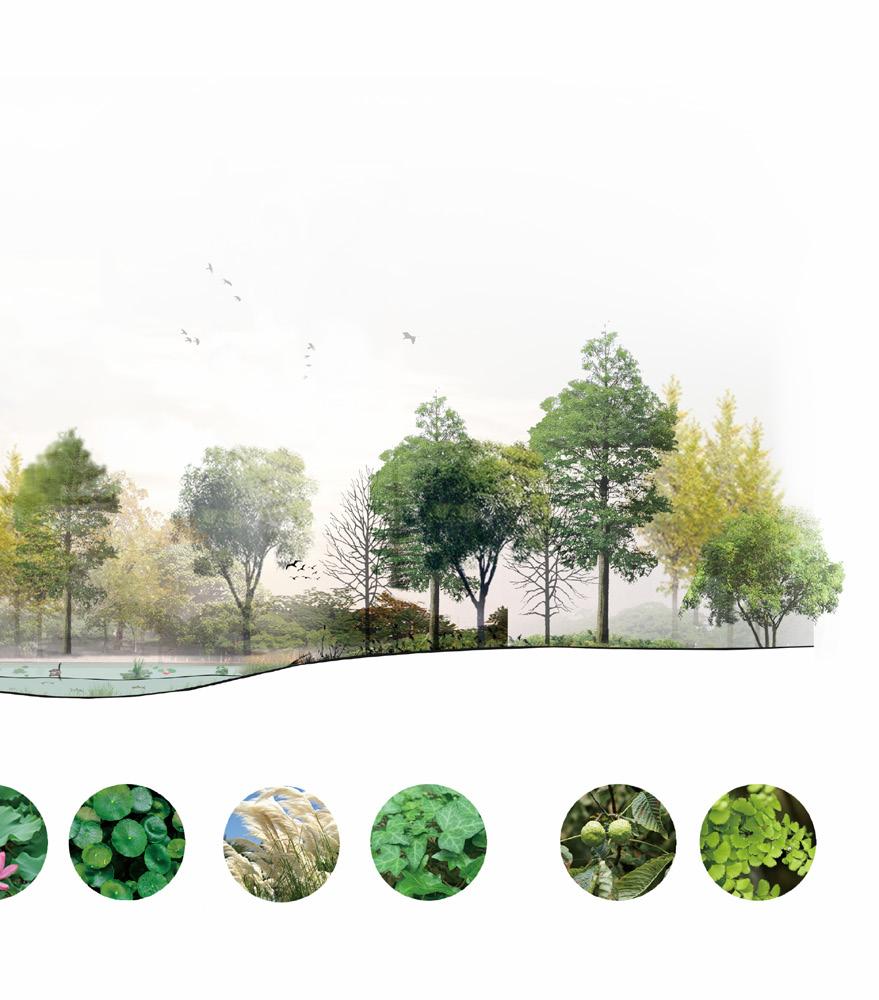
Hydrocotyle vulgaris
Nelumbo nucifera
Phragmites australis
Hedera helix
Castanea mollissima
Adiantum capillusveneris
INDUSTRIAL AREA
Cultural - civic center
Market spacemulti purpose areas
Food hall

A NEW CENTRALITY
| Burkina Faso
ARCHITECTURAL DESIGN STUDIO I
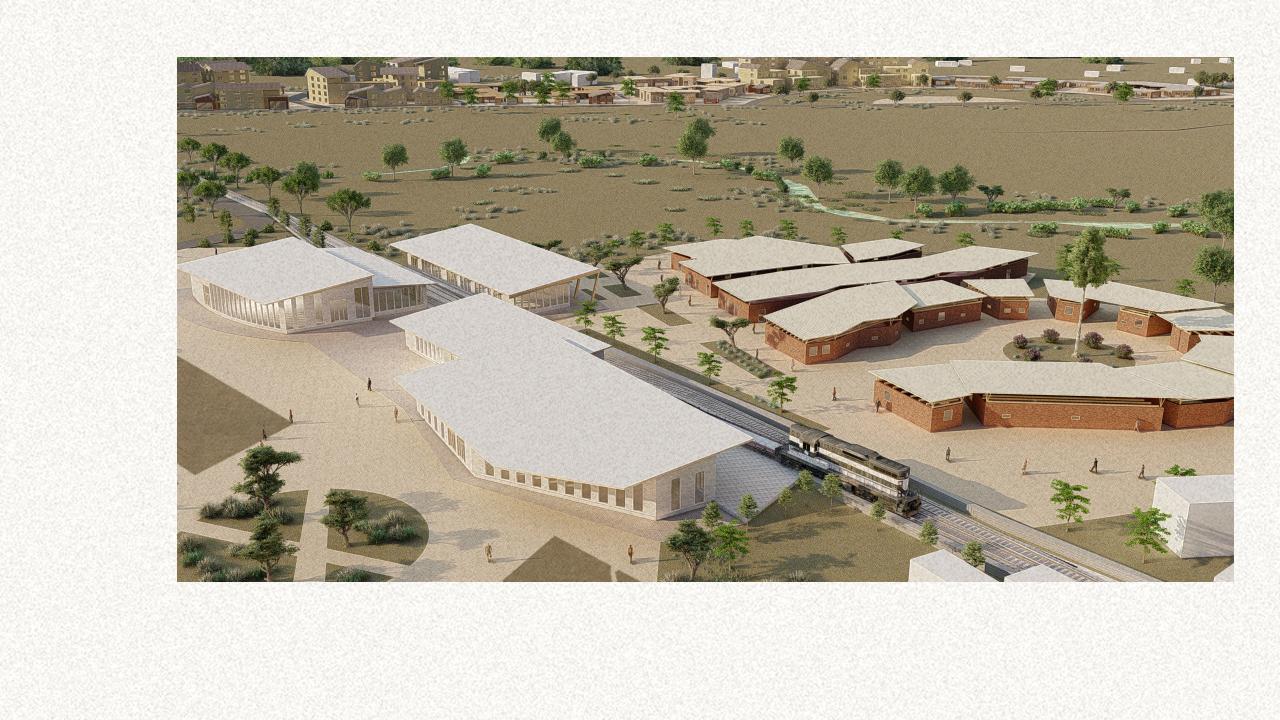
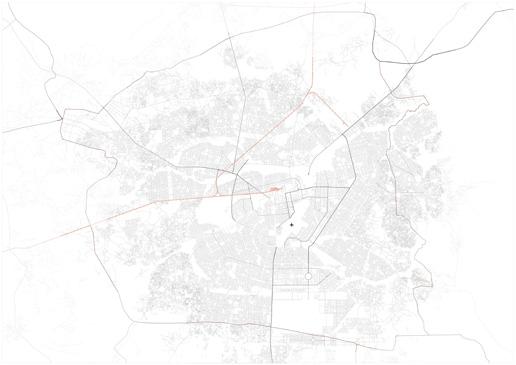
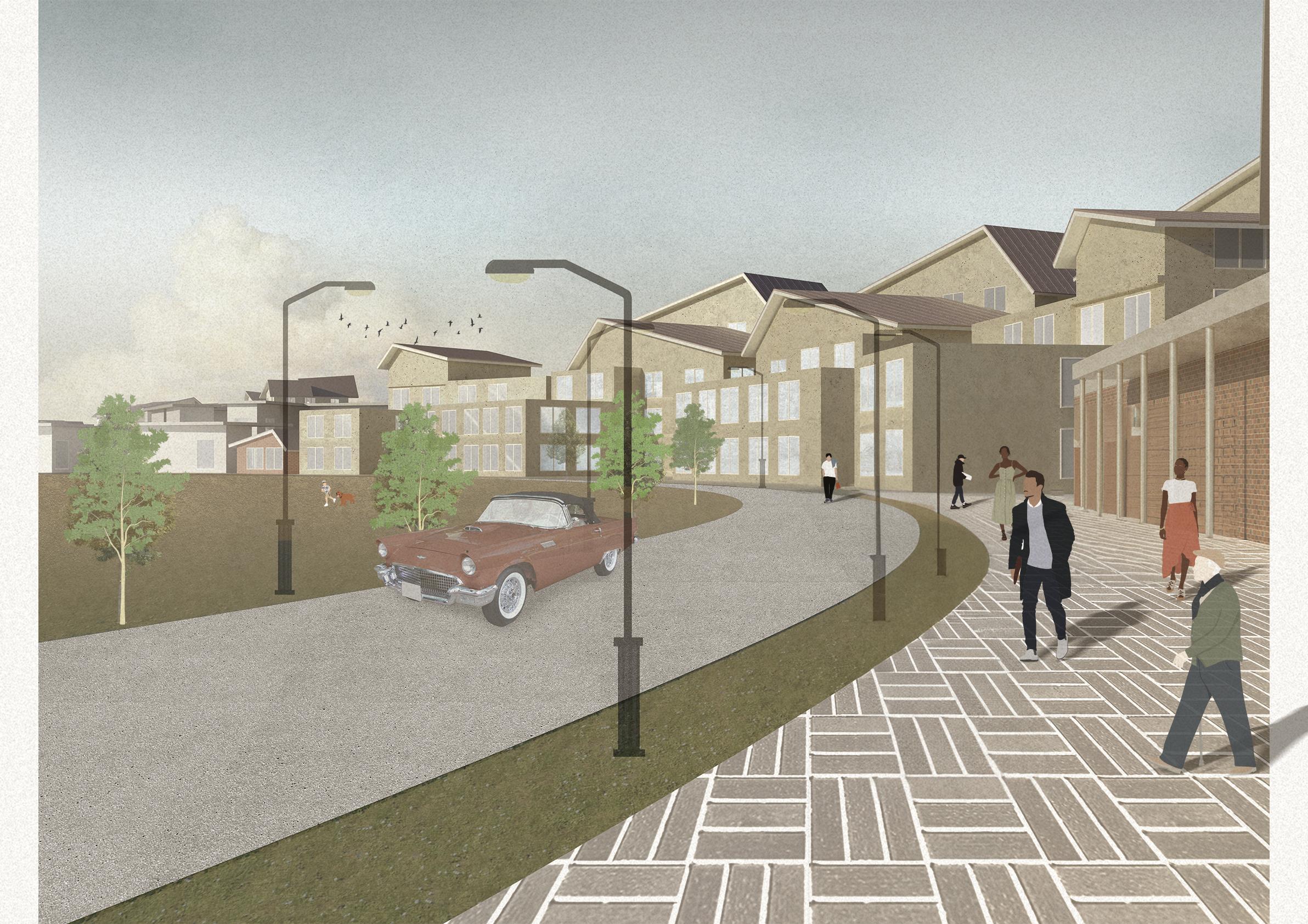
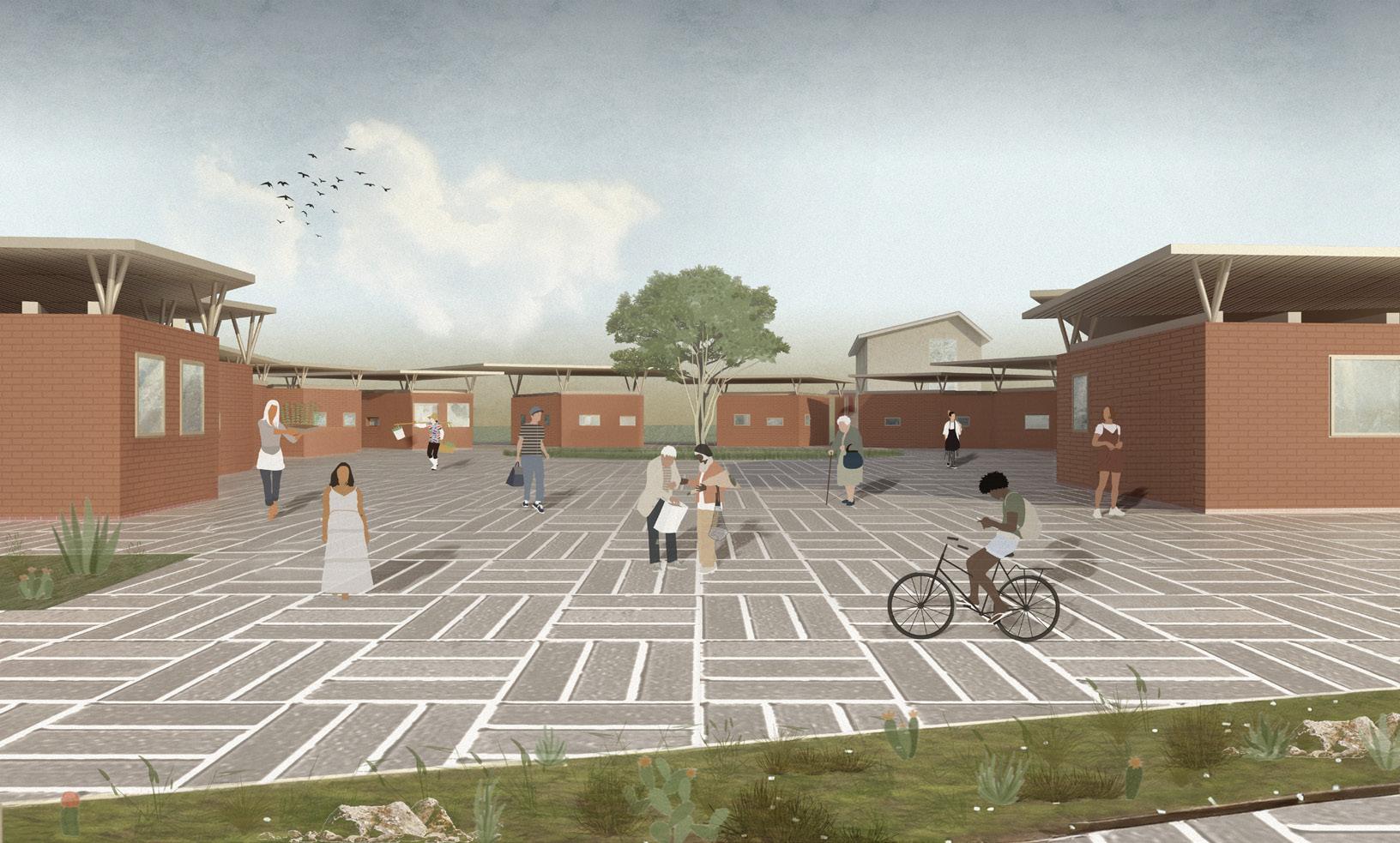
Metropolitan strategies for the continous growth of the city of Ouagadougou.
The urban expansion of Ouagadougou has followed a concentric pattern ties predominantly clustered in downtown areas while residential zones sprawl ped plots and limited financial resources for acquisition, coupled with land
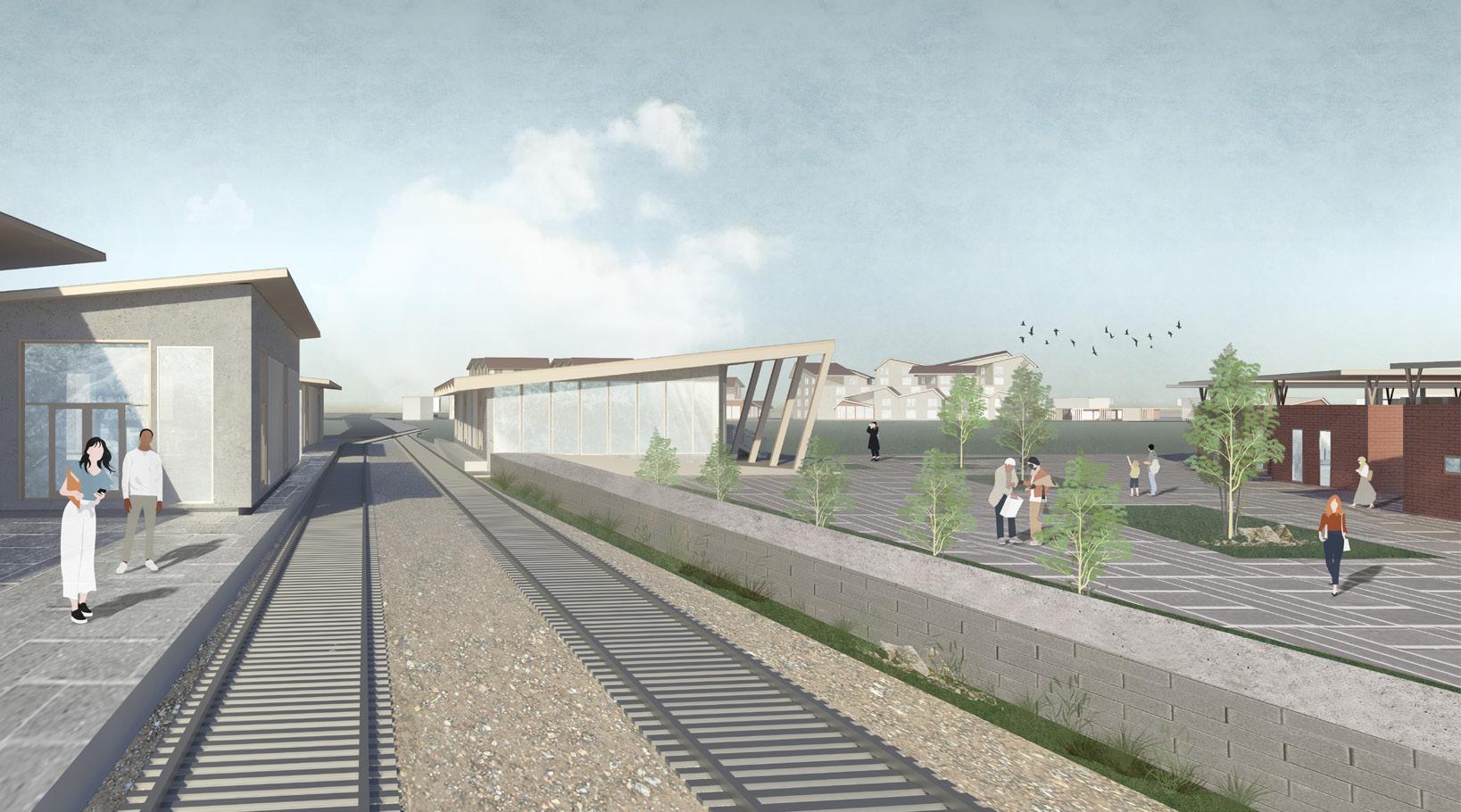
The introduction of a new railway traversing the city presents an opportunity to establish areas and the city center. Along this railway route, creating a green corridor is imperative infrastructure. This initiative not only addresses environmental concerns but also promotes
Ouagadougou
pattern with low population density, with economic and administrative activisprawl across the metropolitan region. However, due to a shortage of develoland speculation, informal settlements have proliferated on the city’s outskirts.
establish new focal points and public spaces, enhancing connectivity between peripheral imperative to mitigate noise pollution impacting residential neighborhoods adjacent to the new promotes a more sustainable and inclusive urban development model for Ouagadougou. Ouagadougou.
GREEN-GRAY-BLUE INFRASTRUCTURE

CENTRALITIES

MATRIX


PIACENZA TANGENZIALE
Piacenza | Italy
URBAN AND ENVIRONMENTAL DESIGN STUDIO
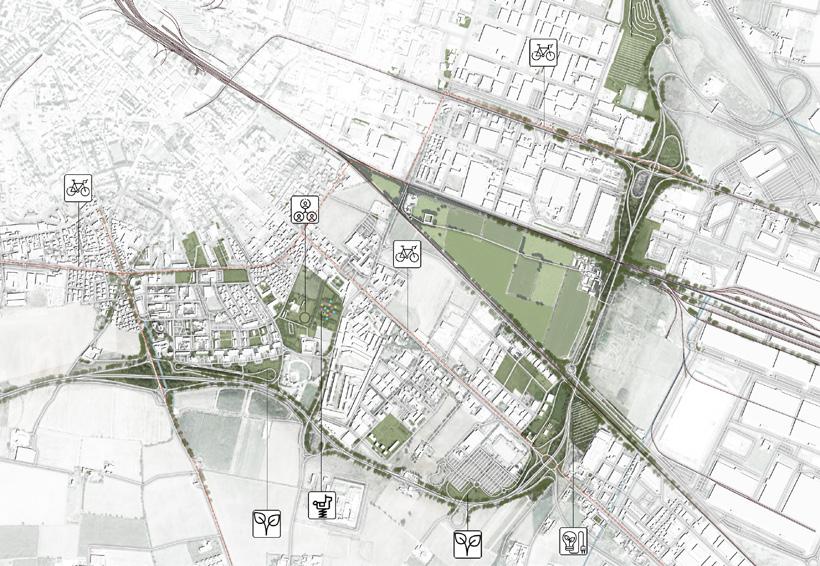
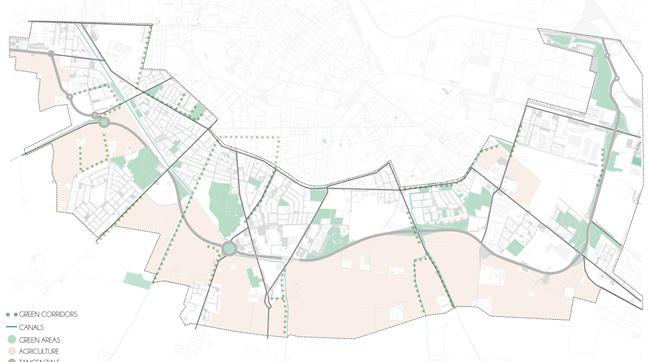
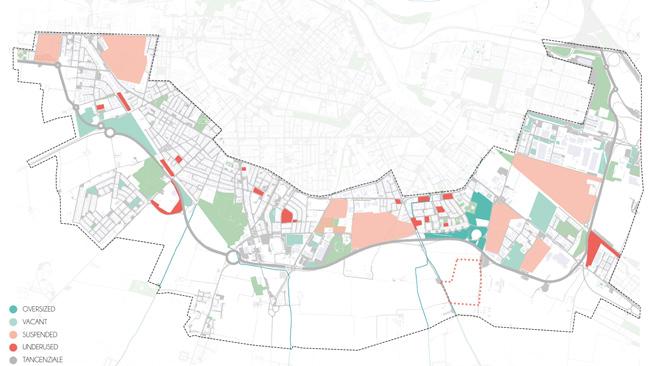
Design of a green belt connecting the urban tissue and the rural areas in the
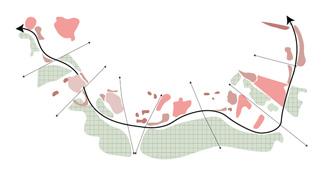
The project’s objective is to enhance connectivity between green spaces and potential ventions. This includes repurposing vacant spaces to create inviting public areas and existing parks. Additionally, the project proposes utilizing the city’s canals to create green lutions will be implemented to reduce pollution generated by the expressway, contributing aims to introduce new energy resources across different areas of the city, aligning with livability, promote social cohesion, and create vibrant and accessible public spaces
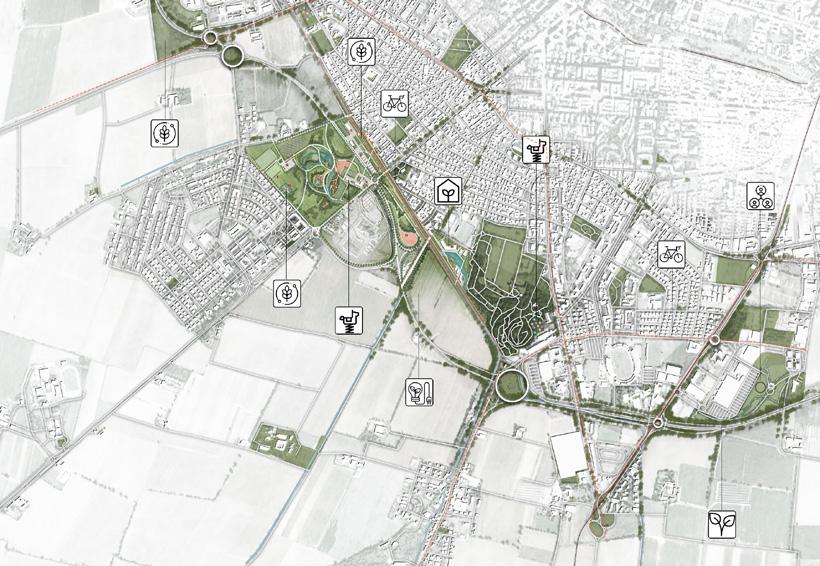
the periphery of the city of Piacenza.
potential public areas surrounding the tangenziale in Piacenza through various interand establishing pedestrian and bike-friendly pathways to connect these spaces with green and blue systems, enhancing biodiversity and visual appeal. Nature-based socontributing to improved air quality and environmental health. Furthermore, the project with sustainability objectives. These interventions collectively seek to enhance urban for residents of Piacenza.
INFRASTRUCTURE STRATEGY

VACANT SPACES GREEN STRATEGY
MASTERPLAN
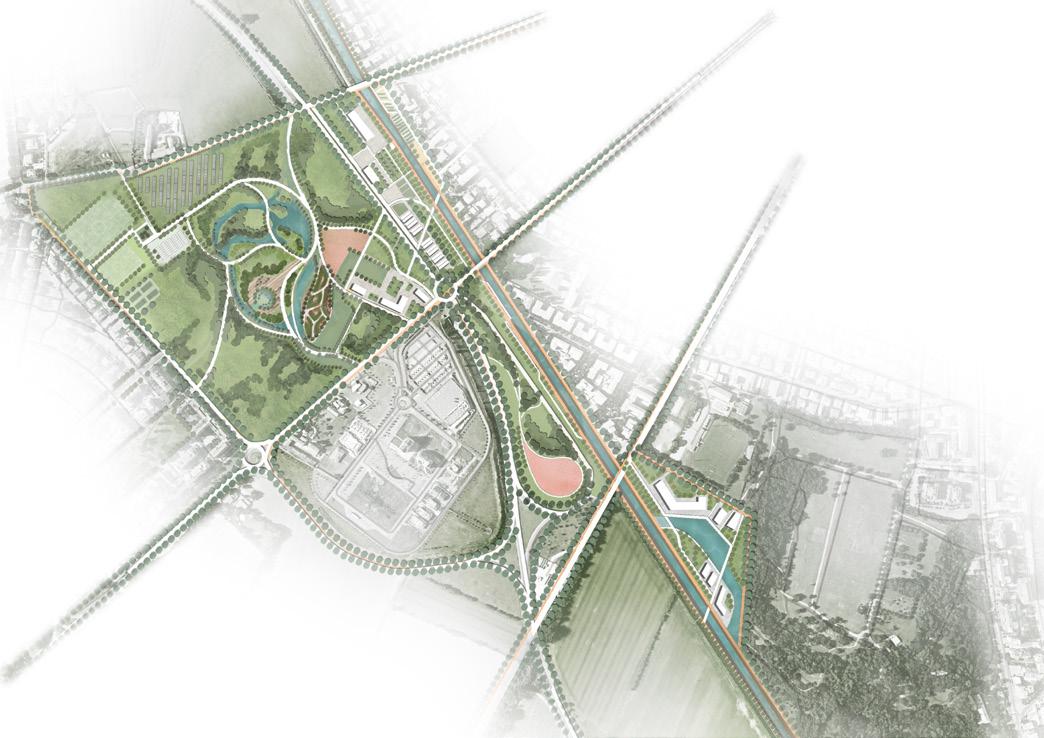

1. Gym
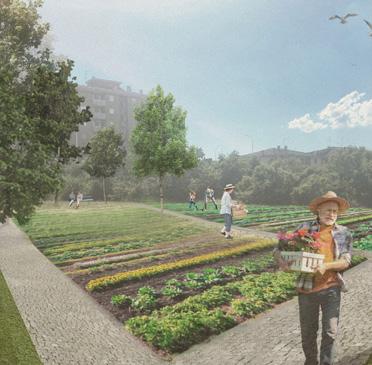
2. Urban farming Galleana
3. Linear park
4. Visitor center
5. Flower garden
6. Park
7. Open theater
8. Sports area
9. Greenhouses
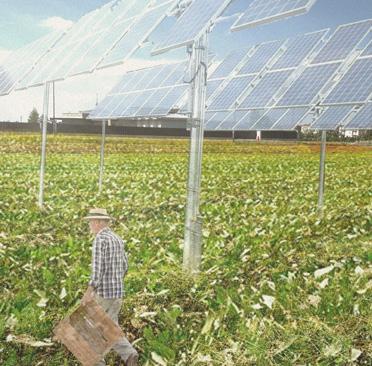
10. Agrivoltaic
11. Bike sharing spot
12. Botanical houses
13. Botanical garden
14. Urban farming Besurica
LOMA BONITA
Monterrey | Mexico
SUSTAINABLE RESIDENTIAL DESIGN STUDIO
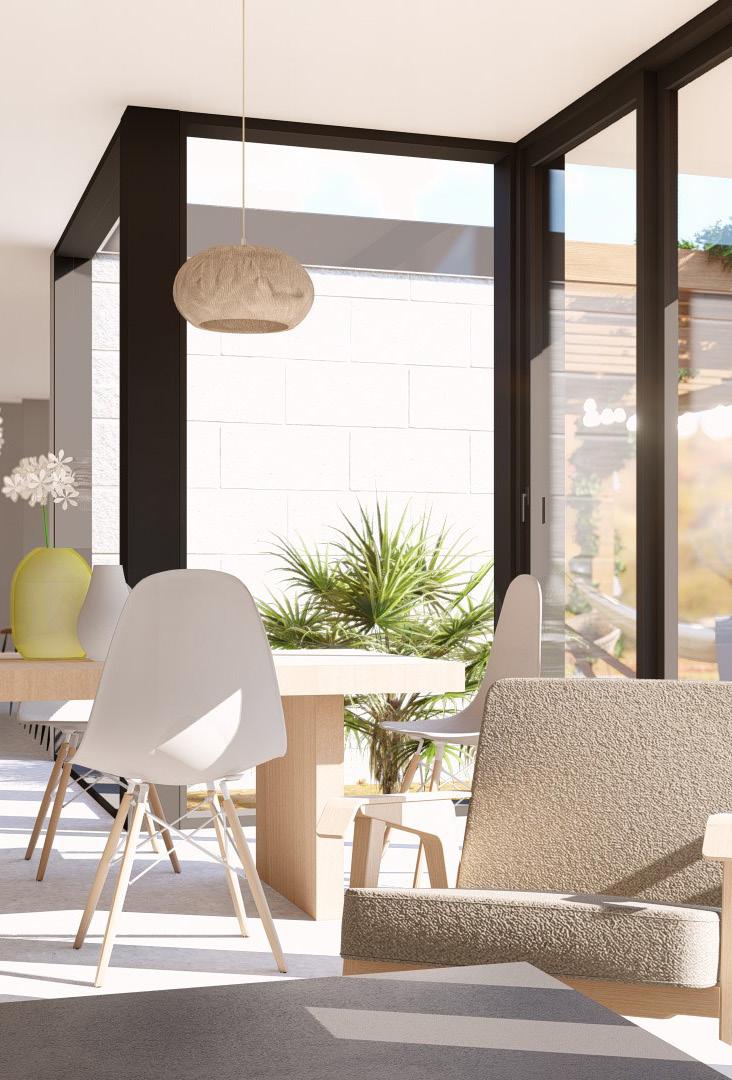
This project was meticulously crafted with the goal of establishing a sustainable residence. The chosen location offers advantageous conditions for utilizing specific materials, including rammed earth walls and blocks alongside concrete elements. Moreover, the design incorporates a roof structure that facilitates the integration of a photovoltaic (PV) system, thereby harnessing renewable energy sources. The orientation of the house was carefully selected to maximize the benefits of the rammed earth walls, ensuring they receive direct sunlight throughout the evening. These walls are renowned for their exceptional insulation properties, contributing to a comfortable and thermally efficient interior environment. As a result, the residence not only embodies sustainability principles but also prioritizes occupant comfort and well-being.
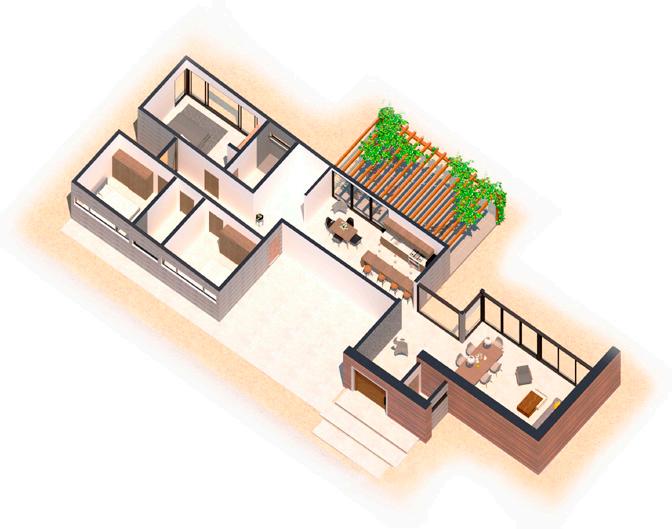
double-glazed windows for higher thermal resistance
rammed-earth blocks
PRIVATE GARDEN
Monterrey | Mexico
LANDSCAPE DESIGN STUDIO
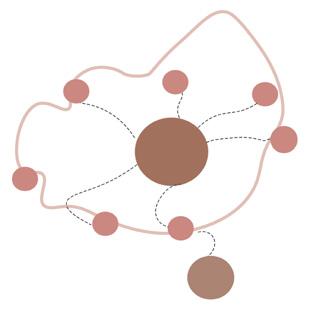
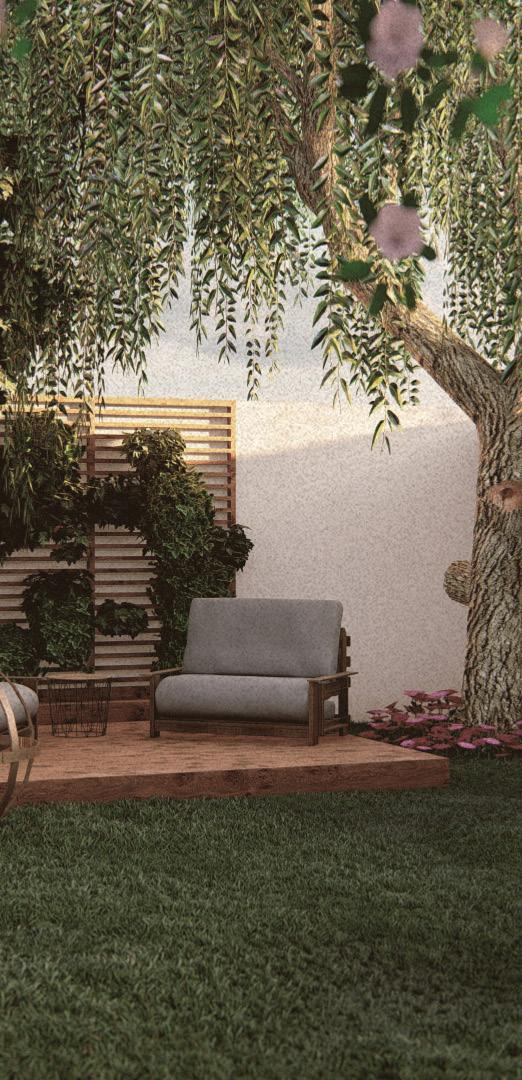
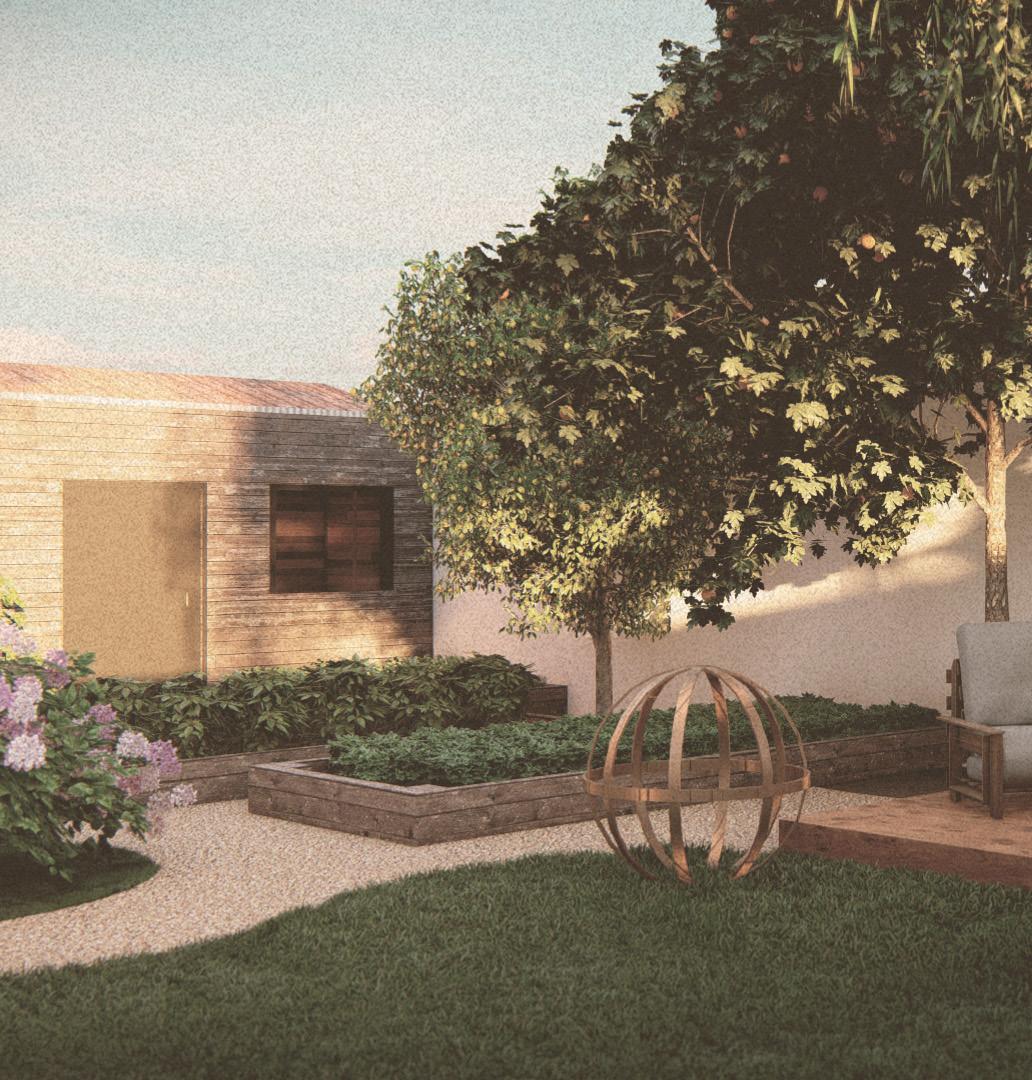
The garden installation was specifically tailored for a single-family house, aiming to is a versatile area that serves as a gathering space, equipped with cooking amenities design lies in the integration of five farming beds, strategically positioned alongside fruits and vegetables throughout the year, promoting self-sufficiency and sustainability. purposes as a storage facility for harvested produce and as a communal space for various garden but also fosters a sense of community and connection with nature within the
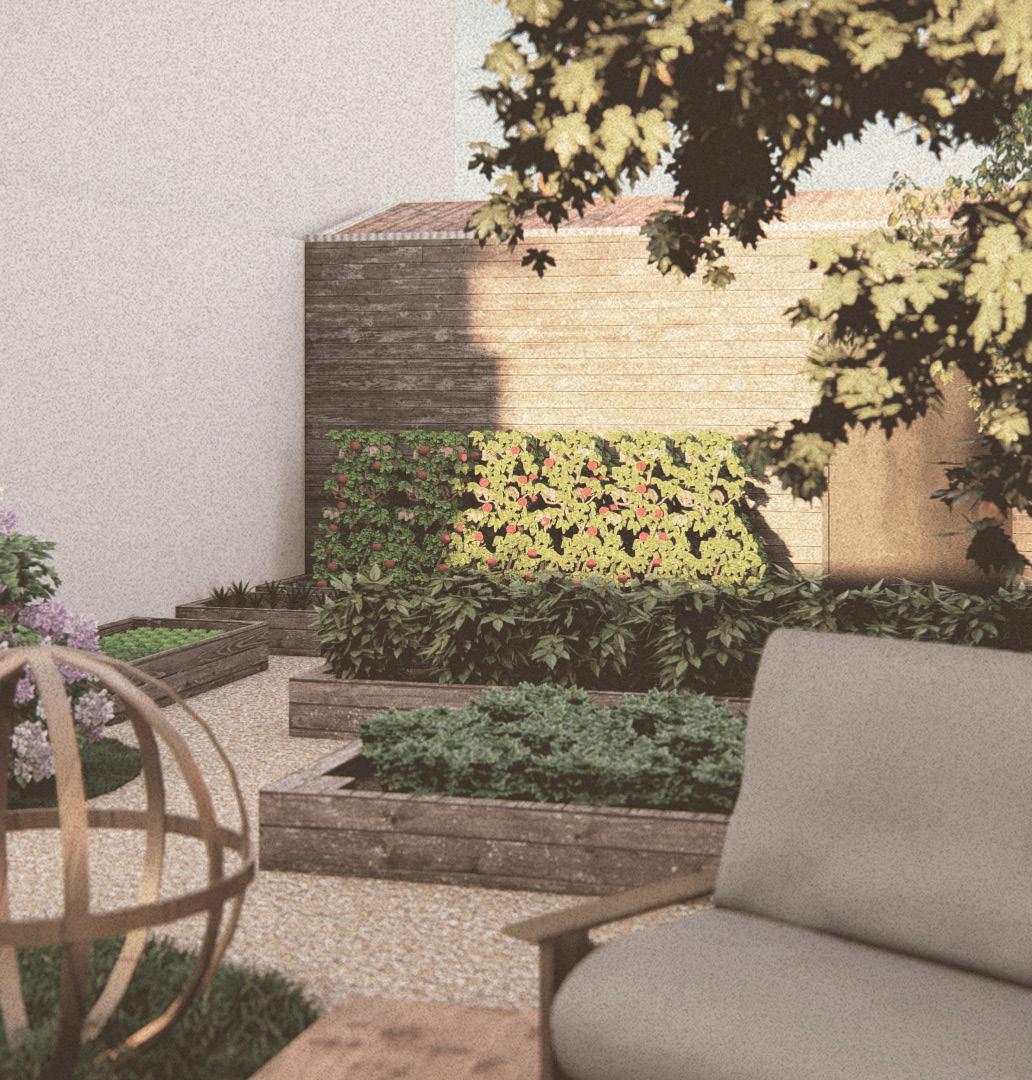
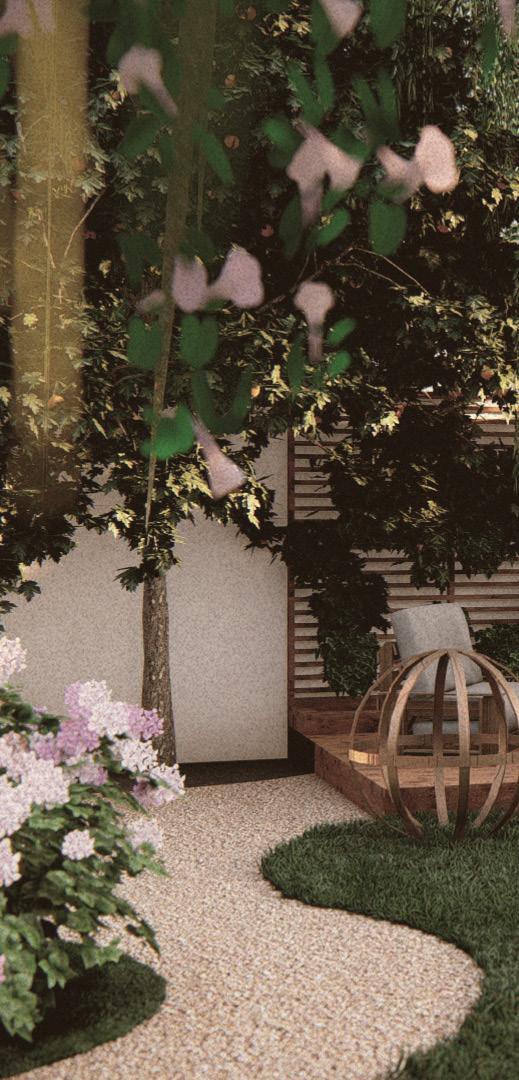
maximize both functionality and aesthetic appeal. A central feature of the design amenities to facilitate outdoor dining and socializing. However, the cornerstone of the alongside orchard trees. This symbiotic arrangement ensures a continuous supply of fresh sustainability. Additionally, the installation includes a post-production shed, serving dual various activities. This holistic approach not only enhances the practicality of the the household.
SAMANTHA AYLIN GARCIA CANTU
M. Sc. Sustainable Architecture and Landscape Design
samanthaaylin.garcia@gmail.com