Creative Communities Caring for Country Propose
Site analysis and project research 1.
SAMANTHA GOODSELL 2023
Acknowledgement of Country
I’d like to acknowledge and pay respect to the traditional custodians of the land on which we meet, the Bedegal people, the land on which the WBPS resides the Wangal people, and the land on which majority of this project was developed the Dharawal people.
1.0 HERITAGE
- A SYMBOL OF HUMAN ADVANCEMENT?
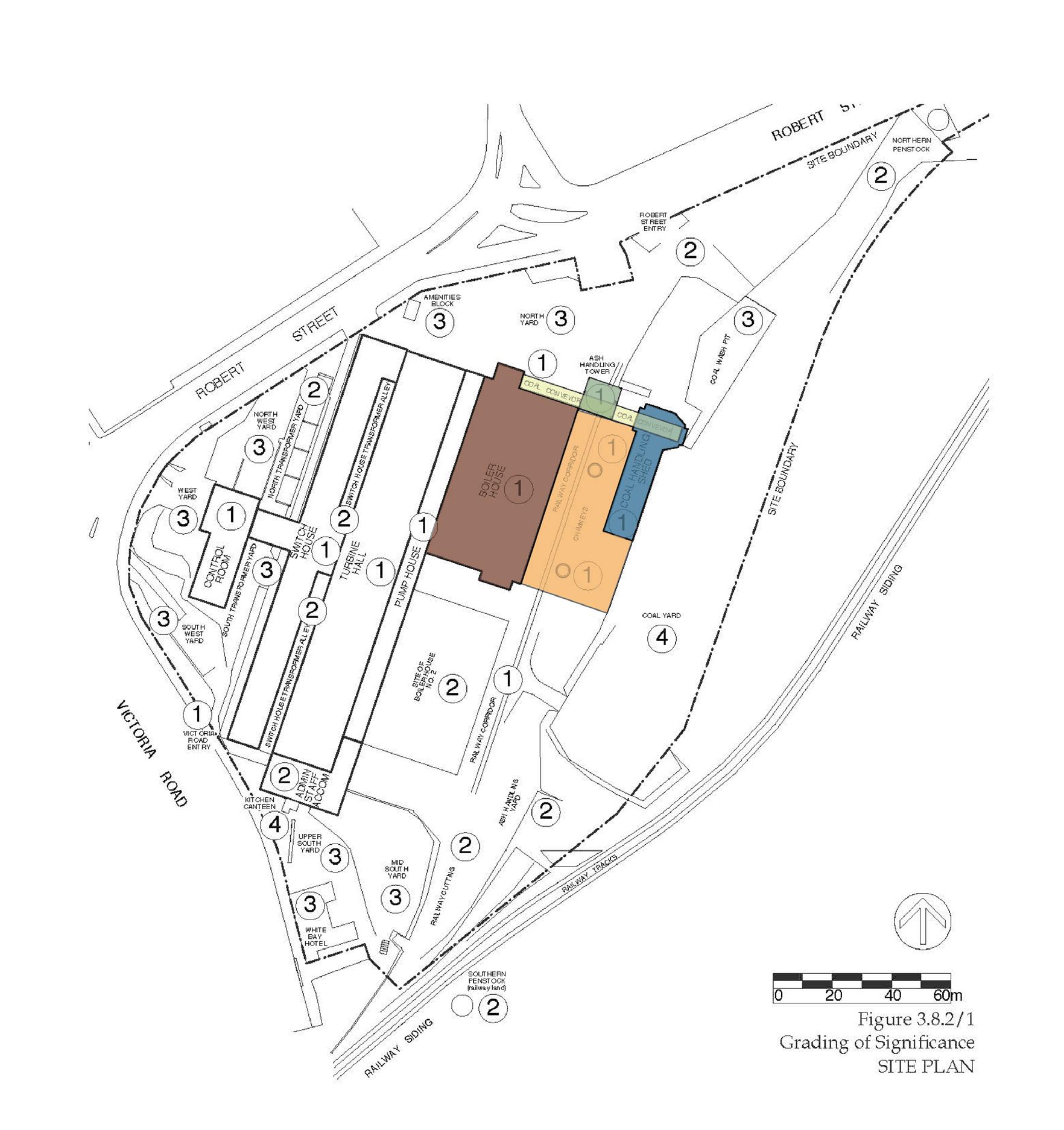
1.1 SITE ANALYSIS
- SITE VISIT
- SYDNEY VIEWS
- SENSORY
1.2 CREATIVE COMMUNITIES
- SYDNEY’S LACK OF INCLUSIVE PERFORMANCE VENUES
- CIVIC SPACES
1.3 CONNECTING TO COUNTRY
- THE SENSES AND NEURODIVERSITY
- STRENGTH AND VULNERABLITY
- AUSTRALIAN FLORA AND FAUNA
- CIRCUS - AN INDIGENOUS HISTORY
1.4 THE HUMAN POTENTIAL
- RESPONDING TO THE BRIEF
- AN INCLUSIVE DESIGN PROPOSAL
1.5 PROCESS
- INITIAL DESIGN FORMS AND PROGRAMMING
CONTENTS 01
WHITE BAY POWER STATION A Symbol of Human advancement?
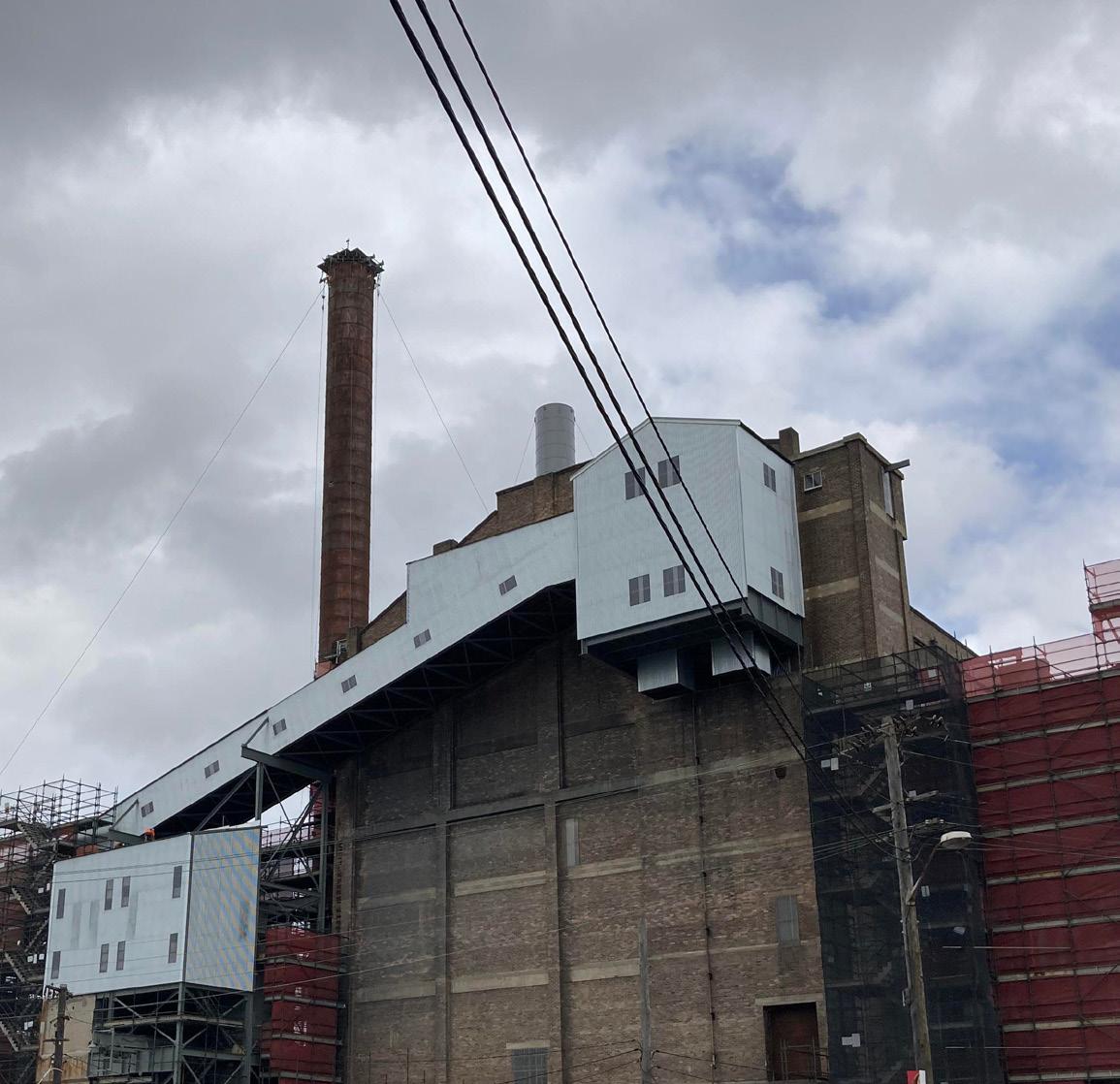
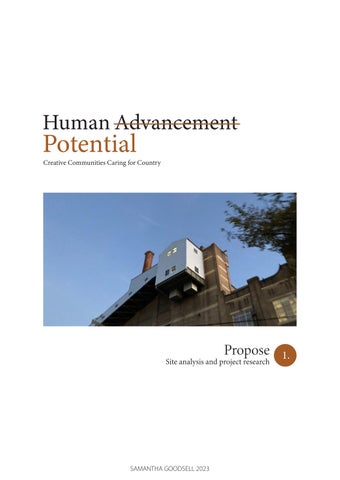
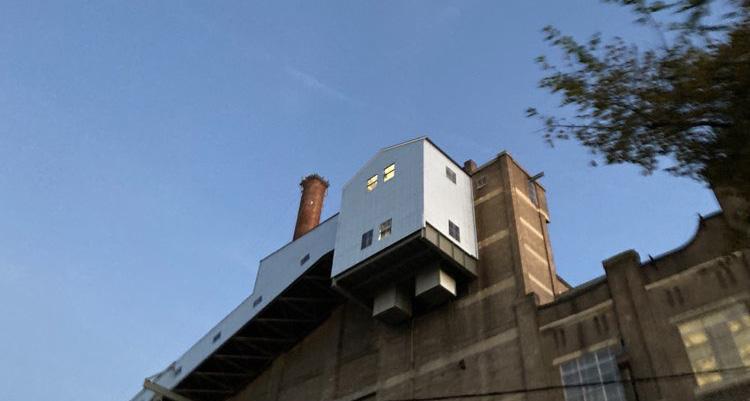
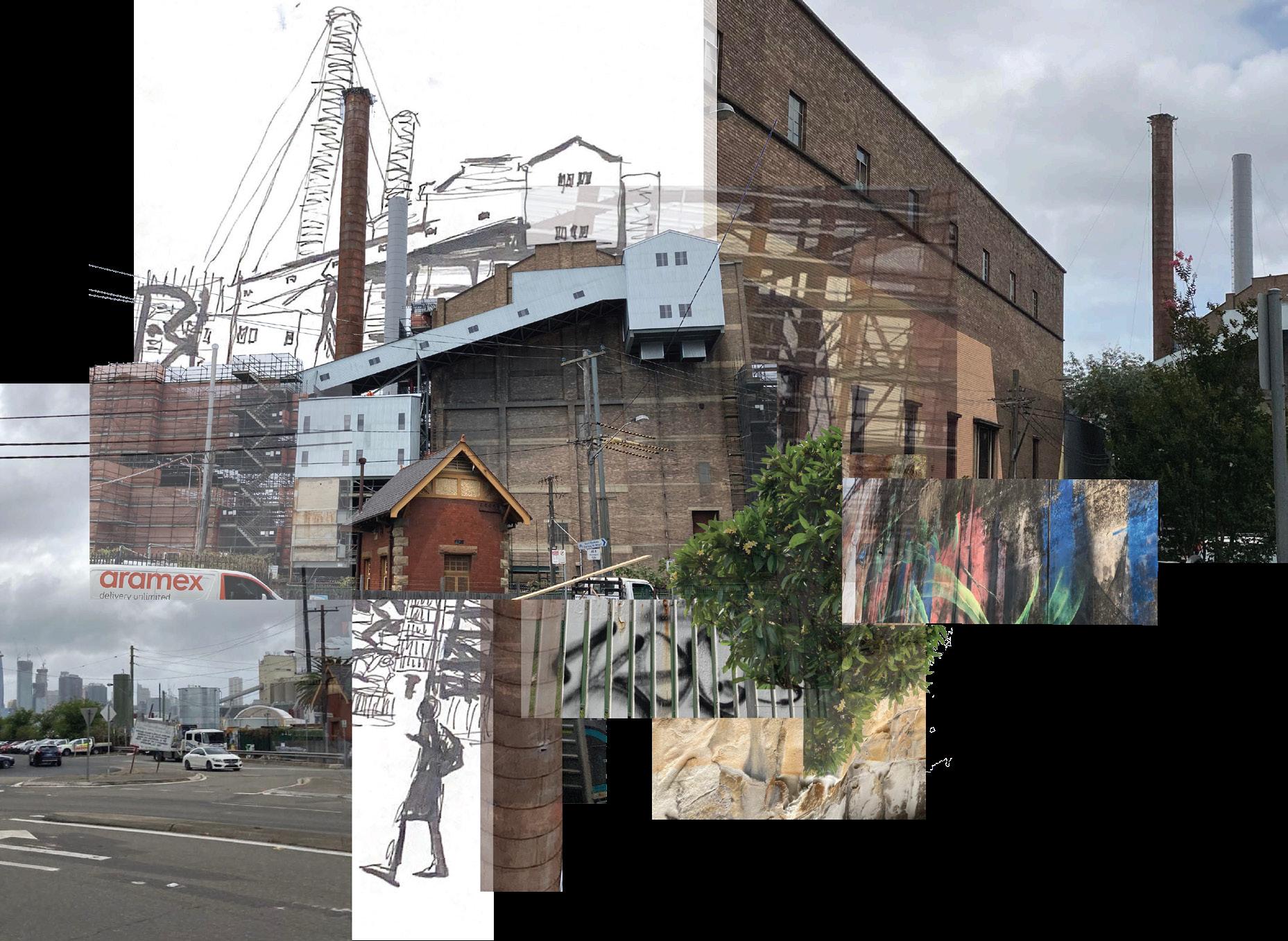
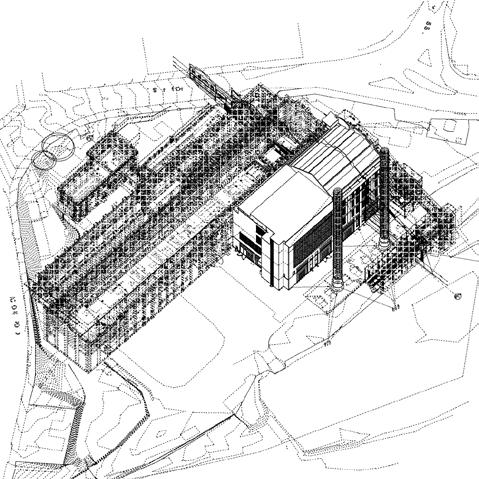
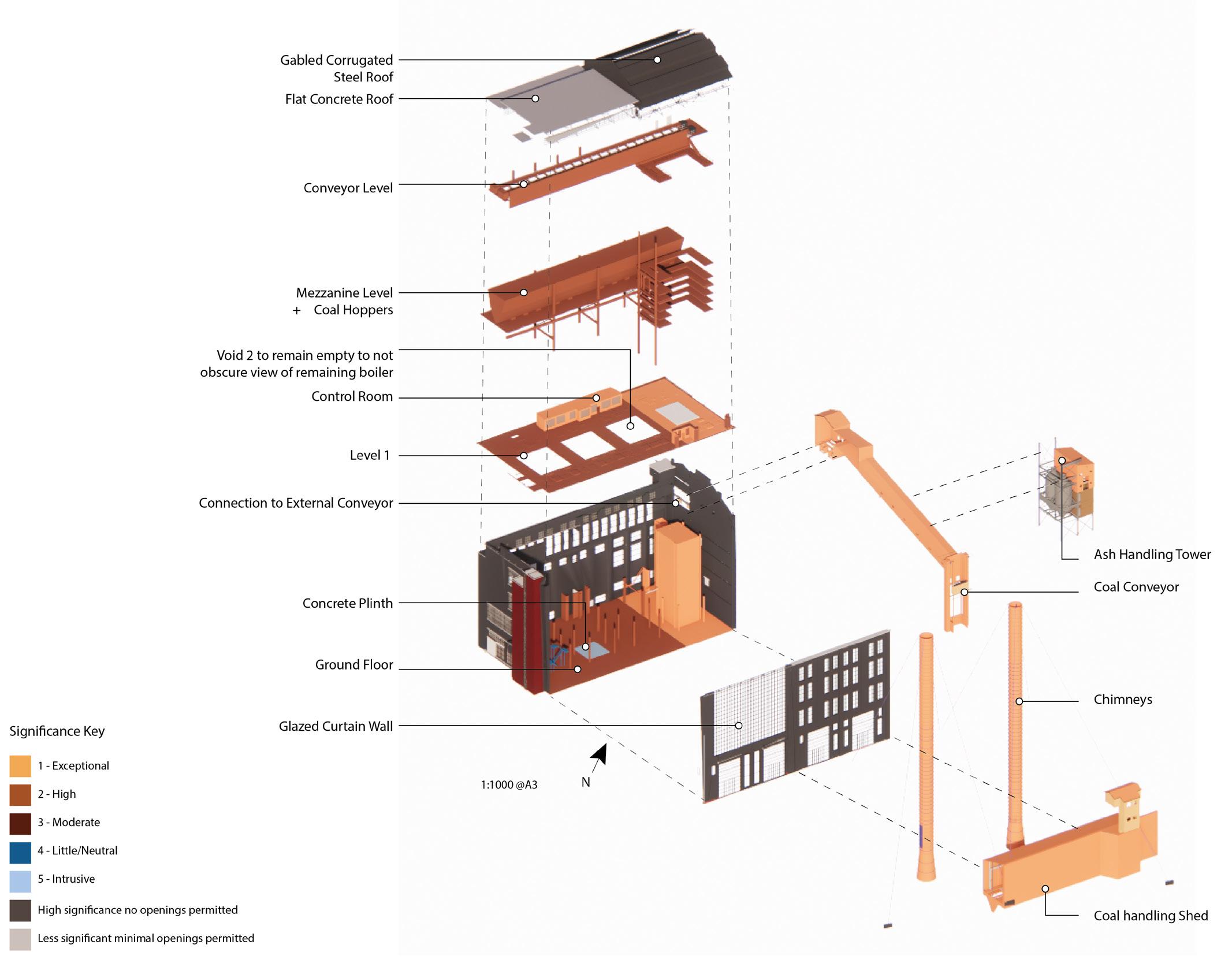
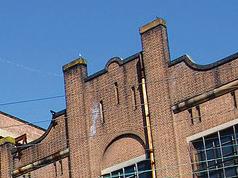
The White Bay Power Station has been viewed as a Symbol of human advancement and technological development due to its mass presence over the years and the way it changed the industrial landscape. The preservation of a space that has caused a significant amount of damage to Country, should be questioned. Should we be perceiving this building as a Symbol of human advancement? Should advancement be what we are striving for. Should our focus be on preservation? Instead, this project proposes a potential. What is the potential of a space so central to Sydney and its waters? How can we reground this space in Country? What is the potential of a space so grand in scale that it no longer feels human? How can we make it feel human?
“It is of exceptional social significance for those who worked in the power station for its ability to demonstrate technological systems and processes that were a feature of their working lives in this era of power stations and that create for them an important and highly valued connection between the past and the present.” CMP V11 P103
“...exhibit a high degree of creative and technical achievement in their design and configuration.” CMP V1 P9
“These spaces include raw industrial spaces of a scale, quality and configuration which is becoming increasingly rare and which inspire visitors and users alike.” CMP V1 P9
1.0 HERITAGE
Site Visit
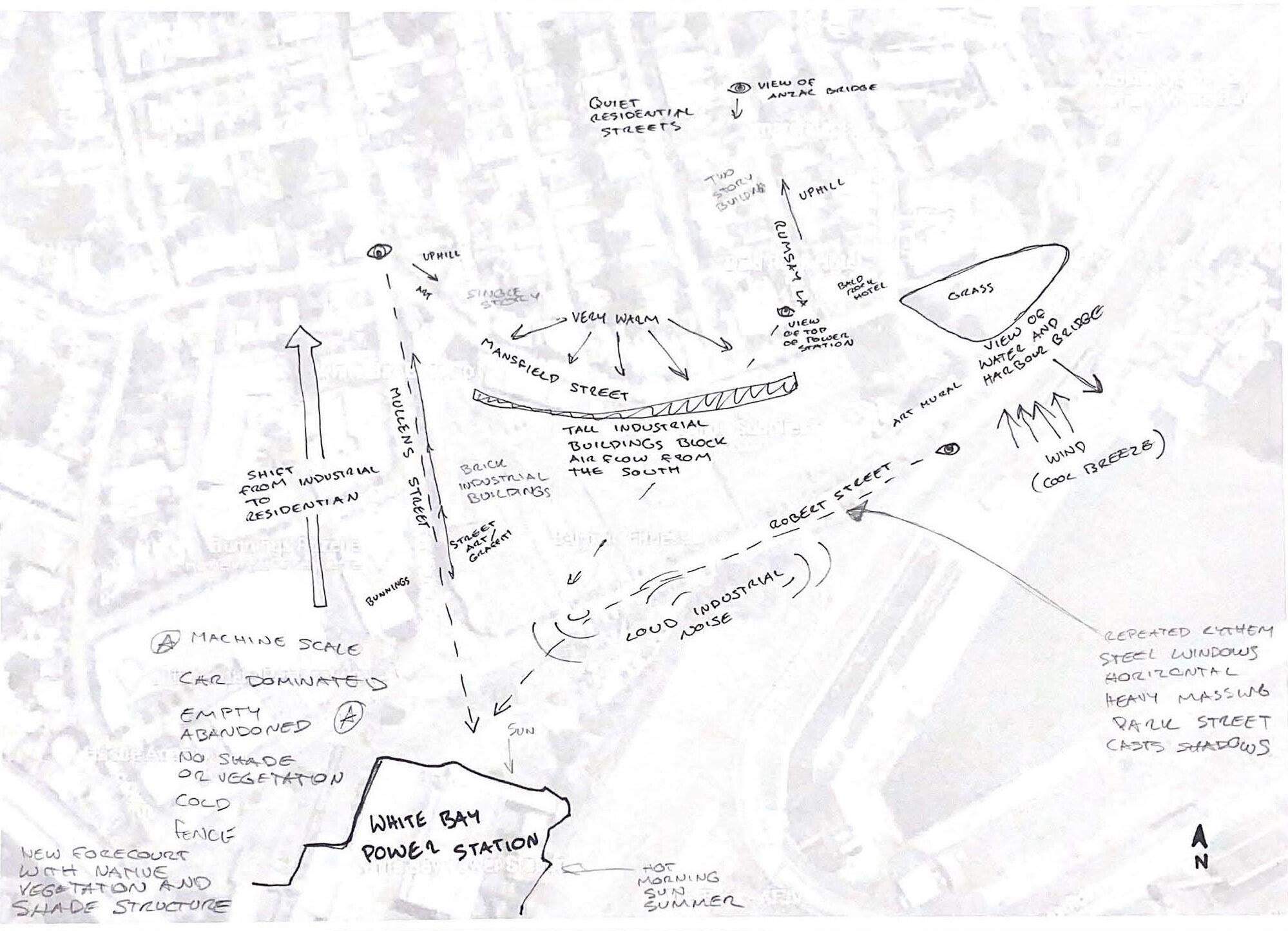
Views Of Sydney
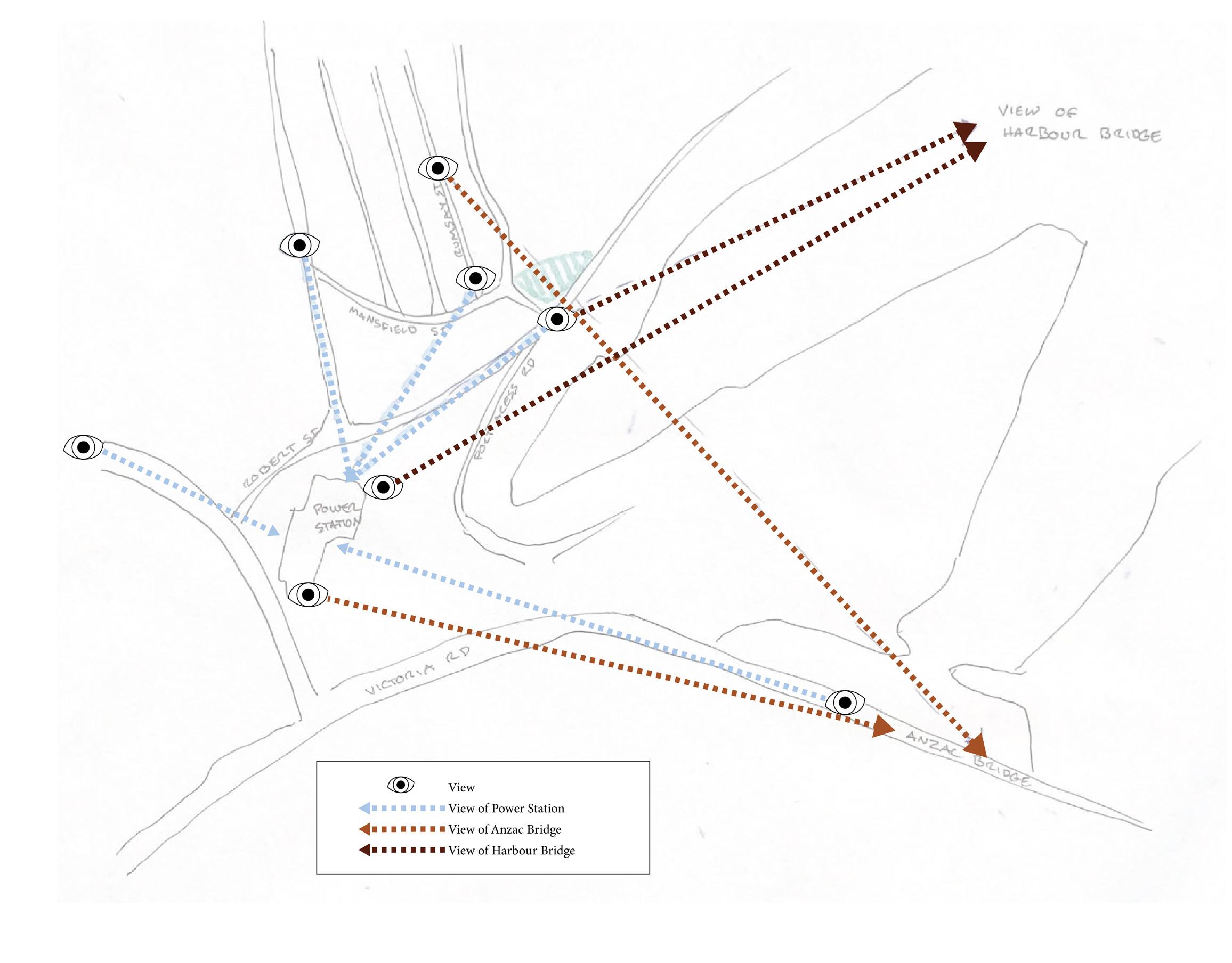
1.1 SITE ANALYSIS
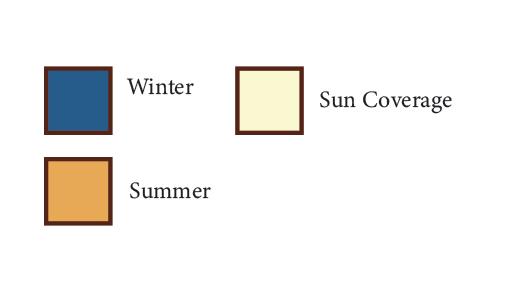
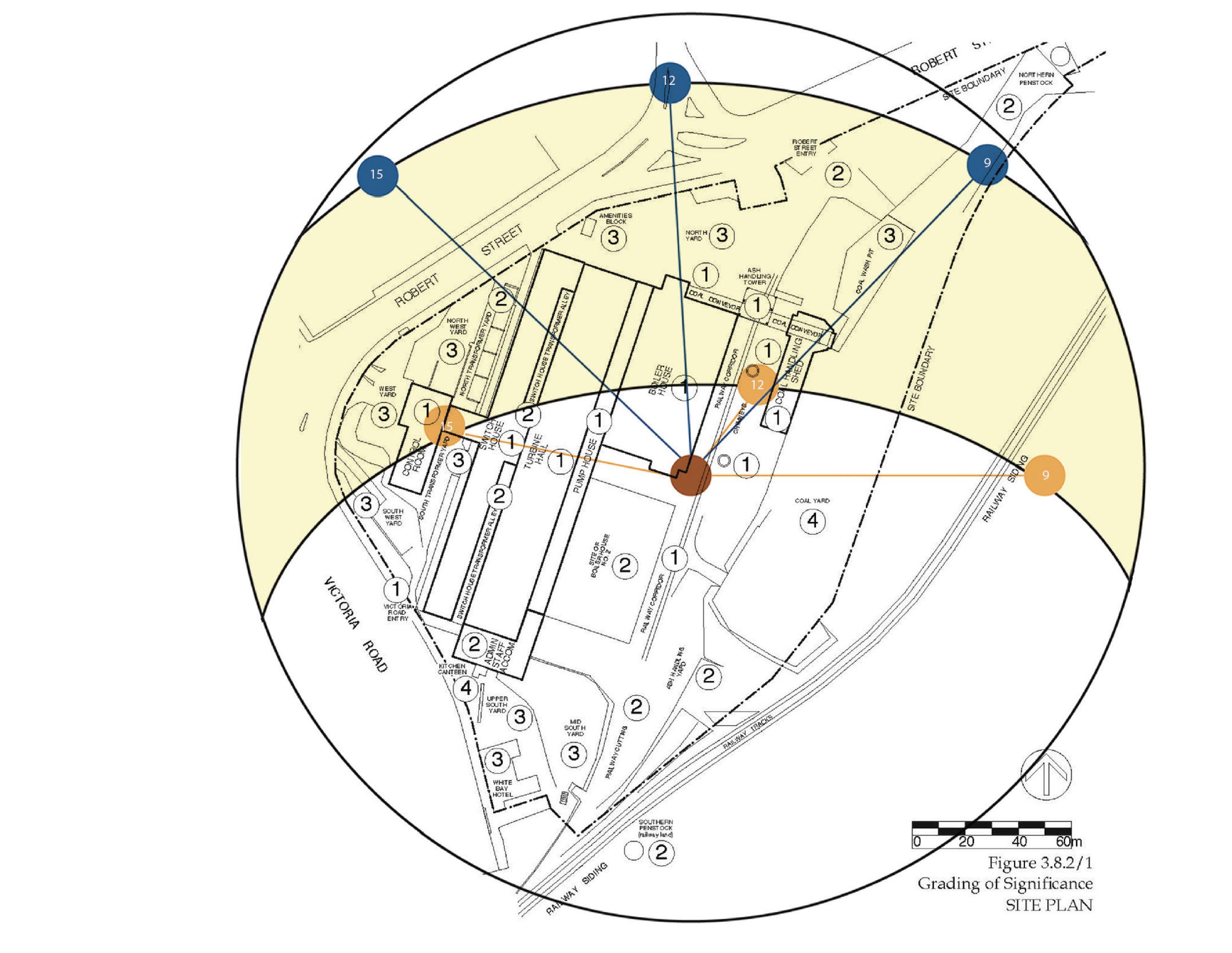
Sensory - Sun Analysis
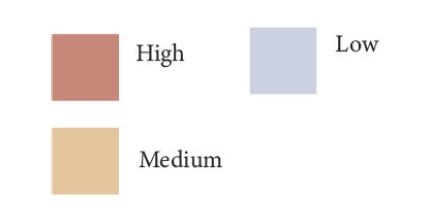
Sensory - Sound Analysis
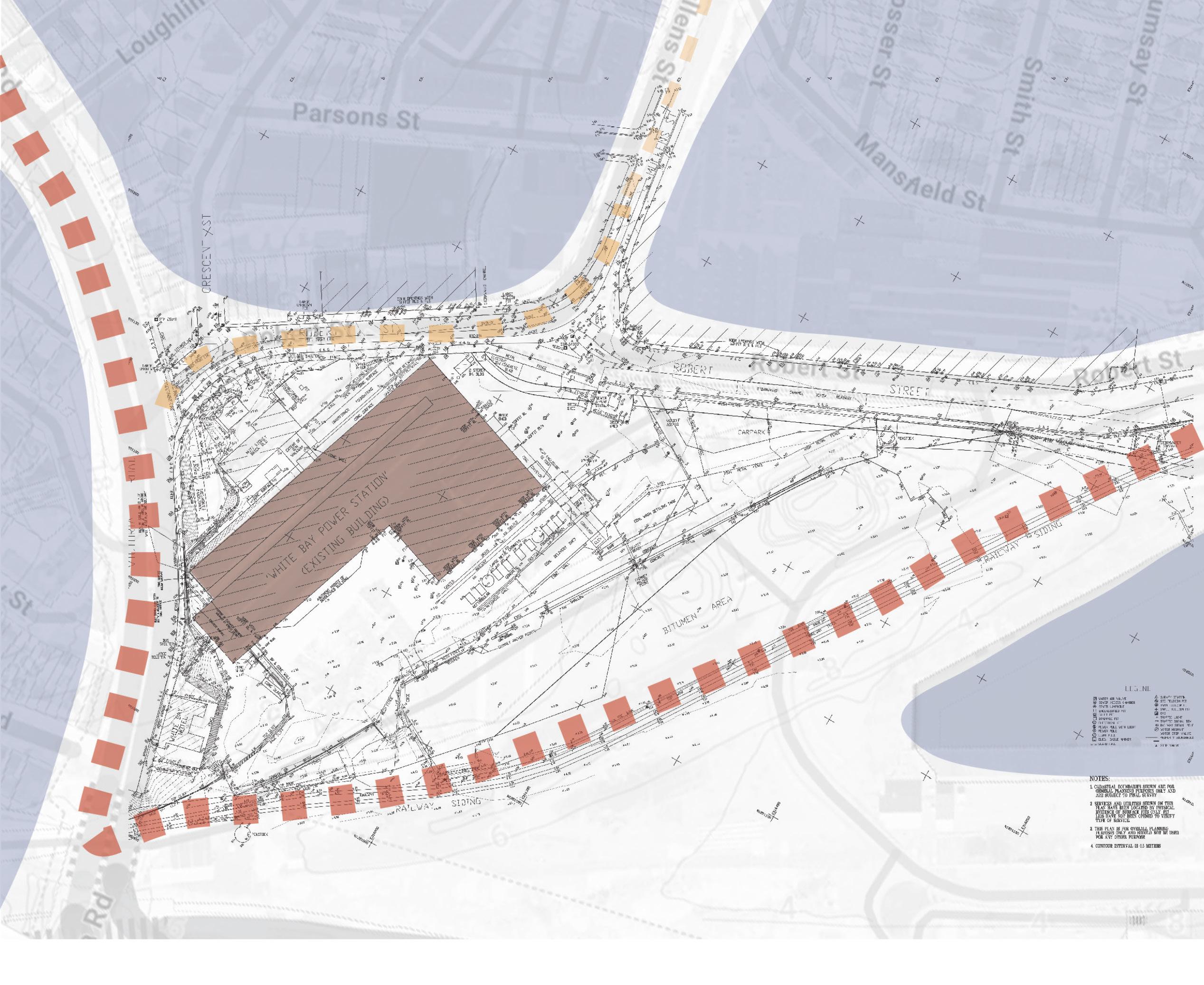
1.1 SITE ANALYSIS
ACCESSIBILITY - A FESTIVAL GOERS NIGHTMARE
Australia lacks performance venues that are accessible to all people. It is for this reason the WBPS proposal includes multiple performance spaces with adjacent sensory spaces. Laneway Festival in Sydney had issues of accessibility where they were turning festival goings away from accessibility areas. The issue stemmed from miscommunication and a lack of education among staff as well as facilities that could not accommodate the number of people at the event. Various festival goers with chronic fatigue syndrome, ADHD, autism, and sensory issues recount their interactions in quotes below. (Medhora, ABC News 2023)
"They kept saying to me, 'She's in a wheelchair she's in a wheelchair'. And I wasn't about to explain to a security guard how different disabilities manifest,"
"I was told I couldn't go up because there were already two people up there."
"It made me feel like I wasn't meant to be attending the festival, like chronically ill and disabled people weren't welcome there."
Similar issues arose at Marvel Stadium in Melbourne in February at a Harry Styles concert when fans were turned away from the sensory room. Chloe Hayden, who is autistic, was turned away and told that it was not available. Another guest with anxiety was turned away being told, “That is not a real panic attack.” Many mental, sensory, and physical needs are not visible and cannot be judged by staff at these events. These people should not be turned away. (Sum, WAtoday 2023)
From these two cases it is clear that we need sensory considerate and accessible spaces available for everyone.
1.2 CREATIVE COMMUNITIES
THE SENSES AND NEURODIVERSITY
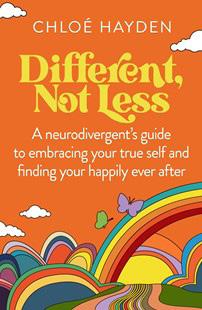
Chloe Hayden is a disability advocate, actress and author of the book ‘Different Not Less.’ Within this book she narrates her experience of growing up with Autism and ADHD. She discusses the senses, sensory input, overload and stimming to a great extent. Quotes from her have been included here to allow the reader to learn directly from someone with this experience. We have established that Sydney lacks accessible and welcoming performance venues, specifically those that are conscious of neurodivergence. The aim for this project would be to learn from the discomfort experienced by many and design a space to give the opportunity for equal experience within the space. By designing spaces that are sensitive a greater potential can be reached. An approach to doing so is by connecting to Country and our senses.
‘...it isn’t something limited to neurodivergence, it’s something that so many of us face from the moment we’re born. Different minds, bodies, identities... they’re picked apart, as we either learn to conform or grow numb to the feeling of being alienated.’ (p6)
Designing for diverse minds, bodies and souls is how to design for the human potential.
“The way we take in sensory input is different for everyone, and no two people will process or use the information in the same way. While one person my love the feeling of sand between their toes, another may want to gag at the mere thought of it. While one person may love festivals and loud concerts, for another they may be a living nightmare.” (p39)
“...a lot of people are able to filter out or ‘folder’ that stimuli in a way that is managable.” (p40)
Everyone experiences discomfort and negative sensory experiences. People who are neurodivergent process this input in a way that can prolong or enhance this discomfort. By being conscious of and designing for this all people will gain an improved sense of comfort within the space.
“When you’re in sensory overload your body is telling you that your senses have had too much and can’t handle anything that may up the intensity, so you owe it to yourself to ensure that your environment is helping rather than creating further hindrance” (p121)
When designing a performance space it will be important to consider circulation, how one enters and leaves the space, to provide easy escape or somewhere for someone who may experience sensory overload to reground themselves. Spaces with strong artificial lighting or loud noises need escapes and places that realign with more natural experiences. Water can be a great source of grounding and realignment, it can reset the nervous system and provide relief during overstimulation or during states of panic.
“Not one of them was hiding who they were for fear of not fitting into a false social ideology. They were simply themselves. And, for the first time in my life, I understood what it meant to feel safe, to feel a sense of comfort and belonging.” (p185)
The White Bay Power Station could act as a place for people to feel safe, comfortable and provide a sense of belonging.
1.3 CONNECTING TO COUNTRY
STRENGTH AND VULNERABILITY - AUSTRALIAN FLORA AND FAUNA
The human potential requires connection to Country. We can learn a lot about our potential by looking to Country. Through the following two studies on Australian flora and fauna the idea of strength and vulnerability stands out.
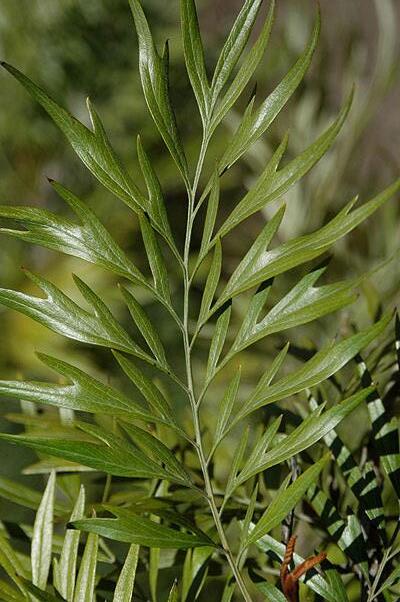
GREVILLEAS
Grevilleas are an Australian native plant. They grow informally and symmetrically. They are waterwise tough and vigorous. They are considered almost unkillable.
There is a strength to this adaptability. Symmetry can be carried into design decisions to aid in this feeling of strength.
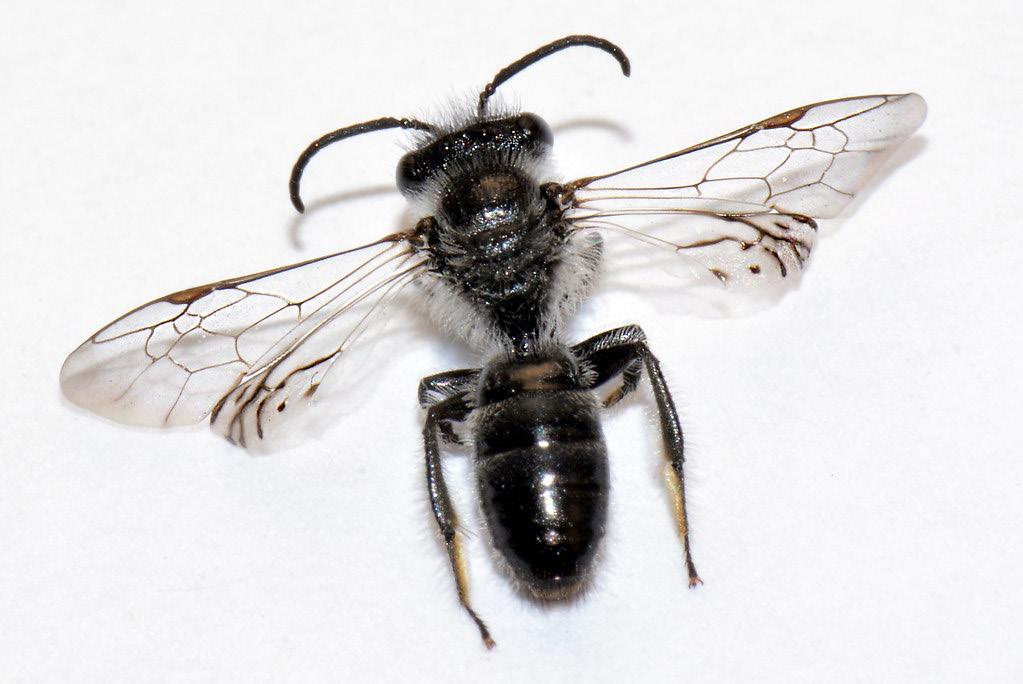
LEIOPROCTUS CARINATIFRONS
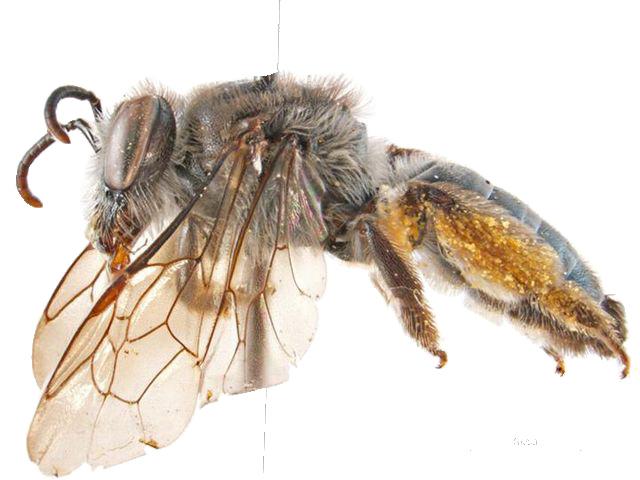
BEES
During the black summer bushfire in 2019-2020 leioproctus carinatifrons and leioproctus nigrofulvus were two bee species that became threatened. They met the criteria to be listed as endangered. They need climate action. Contrasting with the grevilleas these bees are considered vulnerable.
LEIOPROCTUS NIGROFULVUS
The human potential is to strike a balance. The bees wing pattern can be applied to elements of the design as a reminder and a memory. Like the grevilleas their pattern is symmetrical. There is symmetry in strength and vulnerability.
1.3 CONNECTING TO COUNTRY
CIRCUS - AN INDIGENOUS HISTORY
Acts seen at performances like the circus show great skill and physical human capabilities. The WBPS would be the perfect venue for a place to showcase such talent and hard work. However, it is important to be mindful and consider what the concept of ‘Circus’ has meant to this country and the Indigenous people within it. Circus has a diverse history throughout Australia. Whilst it is known by most as an ensemble of ‘misfits’ performing spectacular feats it also has a dark Indigenous history. Karla Dickens explores the role of Indigenous ‘entertainers’ , side shows and circus acts performed to predominantly white audiences, in her art exhibition ‘Embracing Shadows.’ Throughout Australia there were many cases of Indigenous People being viewed as ‘curiosities’ to come and witness perform life threating acts. These people were mistreated and, in some cases, held captive. Other stories have a positive twist like that of Con Colleano who became one of the highest earning circus performers in the world. (Worrall, Exposing the fallacy of Circus 'showmen') He changed his name to appear Spanish to avoid legislative constraint of being Aboriginal. He then used circus performing around Australia as an act of self-expression, escape and away to support himself and his family. The WBPS project will draw from these positive elements whilst also acknowledging negative history tied to circus and similar performance types.
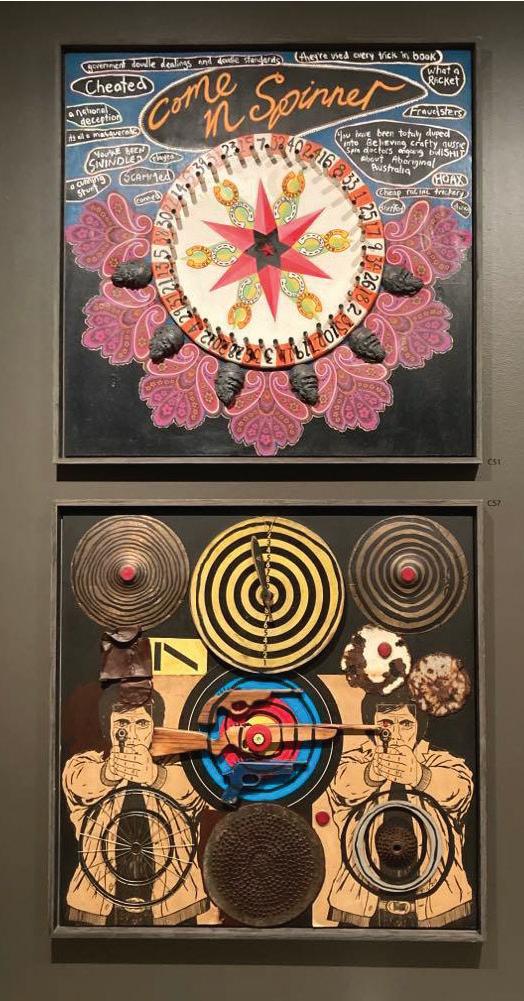 Karla Dickensian - Embracing Shadows Exhibition
“Star-spangled banners exert unease







Ms Ready emphatically reclaims this sacred space her legs mirroring the strength of its marble columns an exotic Koori knockout, she harnesses the spirits stolen from those caged in the rusty menagerie over which she towers”

Extract from Karla Dickens ‘A Dickensian Circus (2020)
“A tribe of misfits, outsiders, freaks and no-fits the throw-aways, the shunned, the rejected and the shamed gathering and nurturing each other with a sense of belonging entertaining and warming the hearts of those who abandoned them healing the cruel while enforcing their own existence”
Extract from Karla Dickens ‘A Dickensian Country Show’
1.3 CONNECTING TO COUNTRY
CREATIVE COMMUNITIES CARING FOR COUNTRY
From the research undertaken it can be understood that Sydney has a critical lack of spaces for gatherings, to relax, connect and provide meaning for members of the community. The Sydney community lacks a cultural landmark that is fully interwoven with the people and local community. Sydney has buildings like the Opera House that are significant grand spaces but seem to lack openness to the public. This proposal will engage with the community in a way that welcomes all people through mindful and creative spaces.
The city of Sydney strategy document states that “We want White Bay Power station to be the best example in Sydney of how living, working and learning can be woven together to create a prosperous and thriving economy.” Thus, in order for Sydney to be a vital and creative city more facilities that combine living, working and learning are needed.
The strategy is to transform the white bay power station into a cultural landmark that ignites a creative community. A place that cares for Country and allows for interpretation of the original typology. A space that inspires businesses and visitors through new cultural and adaptive facilities.
To inspire engagement and creativity from the local community. Provide space for diverse cultural voices and indigenous community. (Caring for country.)
“They include raw industrial spaces of a scale, quality and configuration which are increasingly rare and which inspire visitors and users alike” CMP VII P103
If design and planning processes considered natural systems that include people, animals, resources and plants equally – similar to an Aboriginal world view – this could make a significant contribution to a more sustainable futureworld.” Designing with Country
To attract international tourism and provide a space for commerce.
“A global and regional destination within the Asia-Pacific that locates research, business, education, science, academia, technology a nd start-up incubators to drive global competitiveness and innovation is part of our vision for The Ba ys Precinct.” The Bays Precinct Sydney 2015 Bays Precinct Transformation Plan
To preserve the cultural and historical character of the site while transforming it for generations to come.
“It is of exceptiona l social significance for those who worked in the power station for its abilit y to demonstrate technological systems and processes that were a feature of their working lives in this era of power stations and that create for them an important and highly valued connection between the past and the present.”
CMP VI I P103
To support local businesses and enable them to thrive.
“We want White Bay Power Station to be the best example in Sydney of how living, working and learning can be woven together to create a prosperous and thriving economy.” The Bays Precinct Sydney 2015 Bays Precinct Transformation Pla n
1.4 THE HUMAN POTENTIAL
THE PROPOSAL: HUMAN POTENTIAL
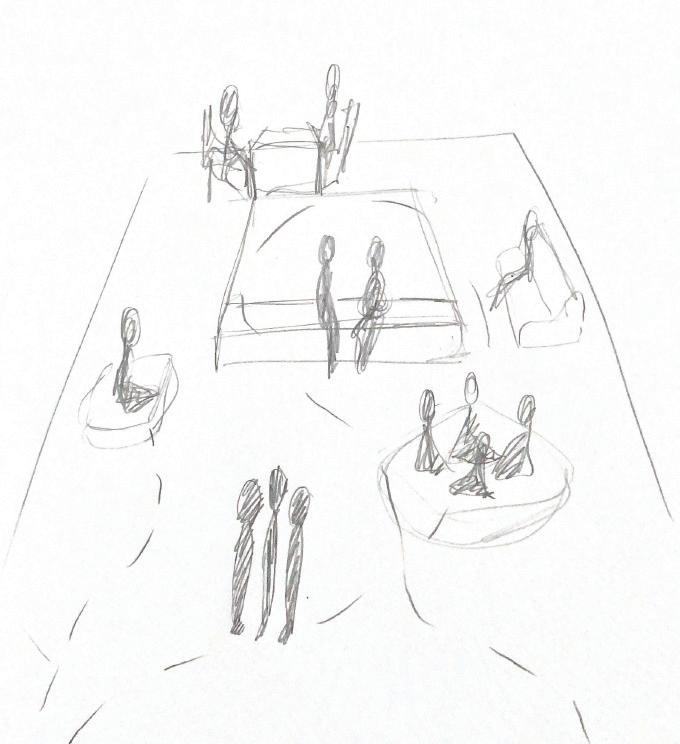
The White Bay Power Station is so large and overwhelming and devoid of Country that it is hard to believe that humans ever inhabited such a place. Can this be considered human? Through these ideas this project embraces human diversity and encourages the idea that variety and difference amongst us is our strength and unlocking and celebrating this is our human potential.
What are humans capable of? Is advancement something we should be striving for? Is our drive for success actually our downfall? This is a centre of potential; challenging our past and suggesting change through the celebration of physical, cultural and neurodiversity.
1.4 THE HUMAN POTENTIAL
1.5 PROCESS
1.5 PROCESS
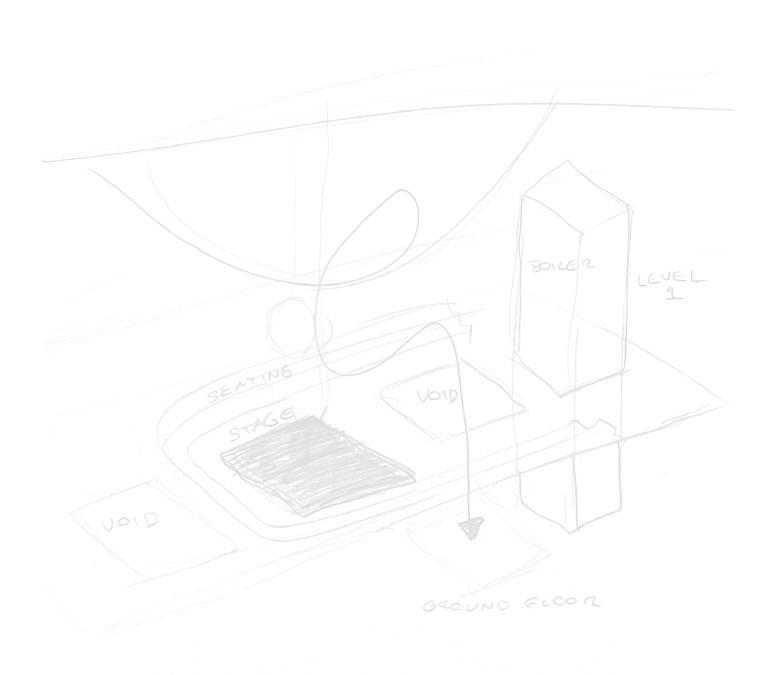
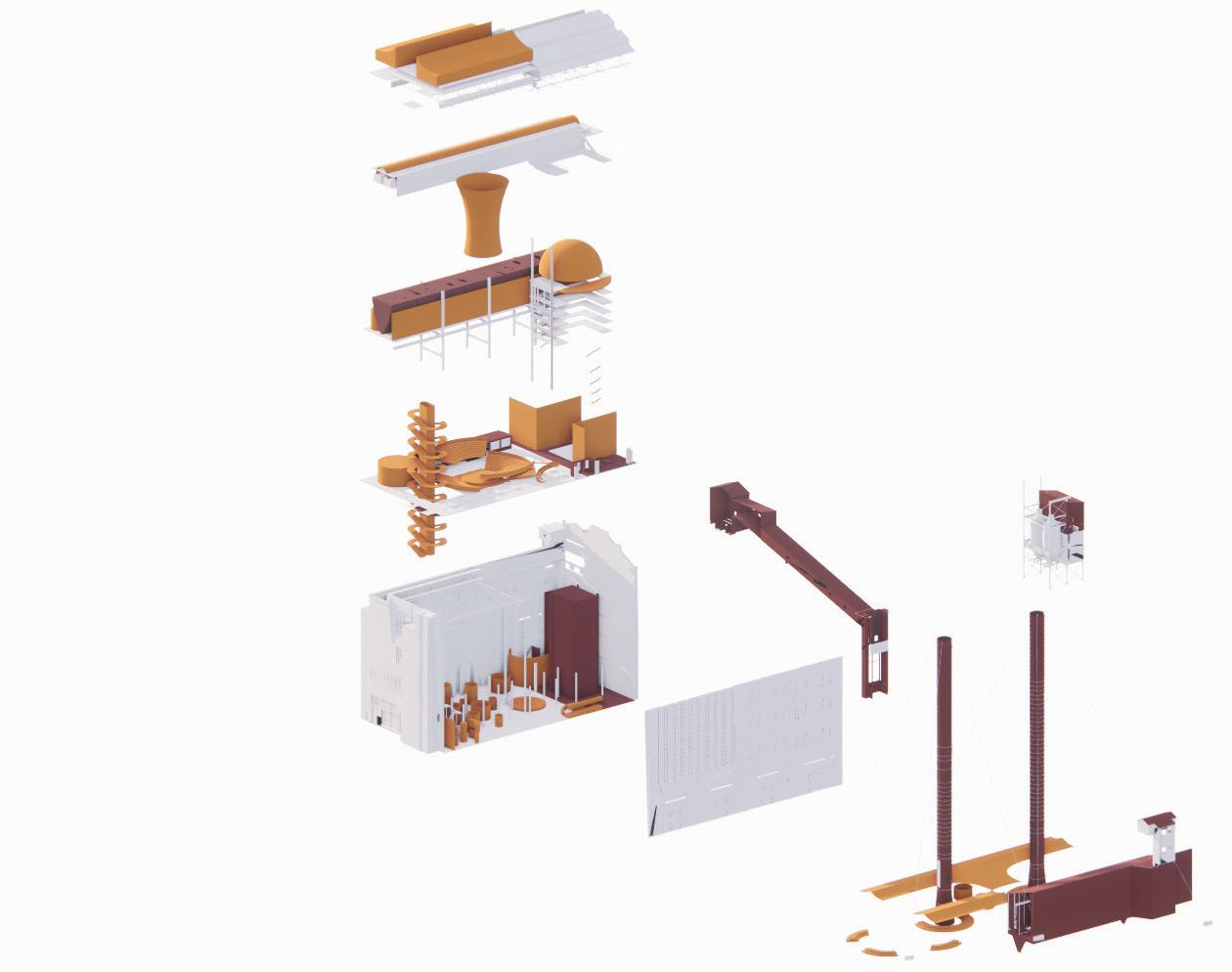
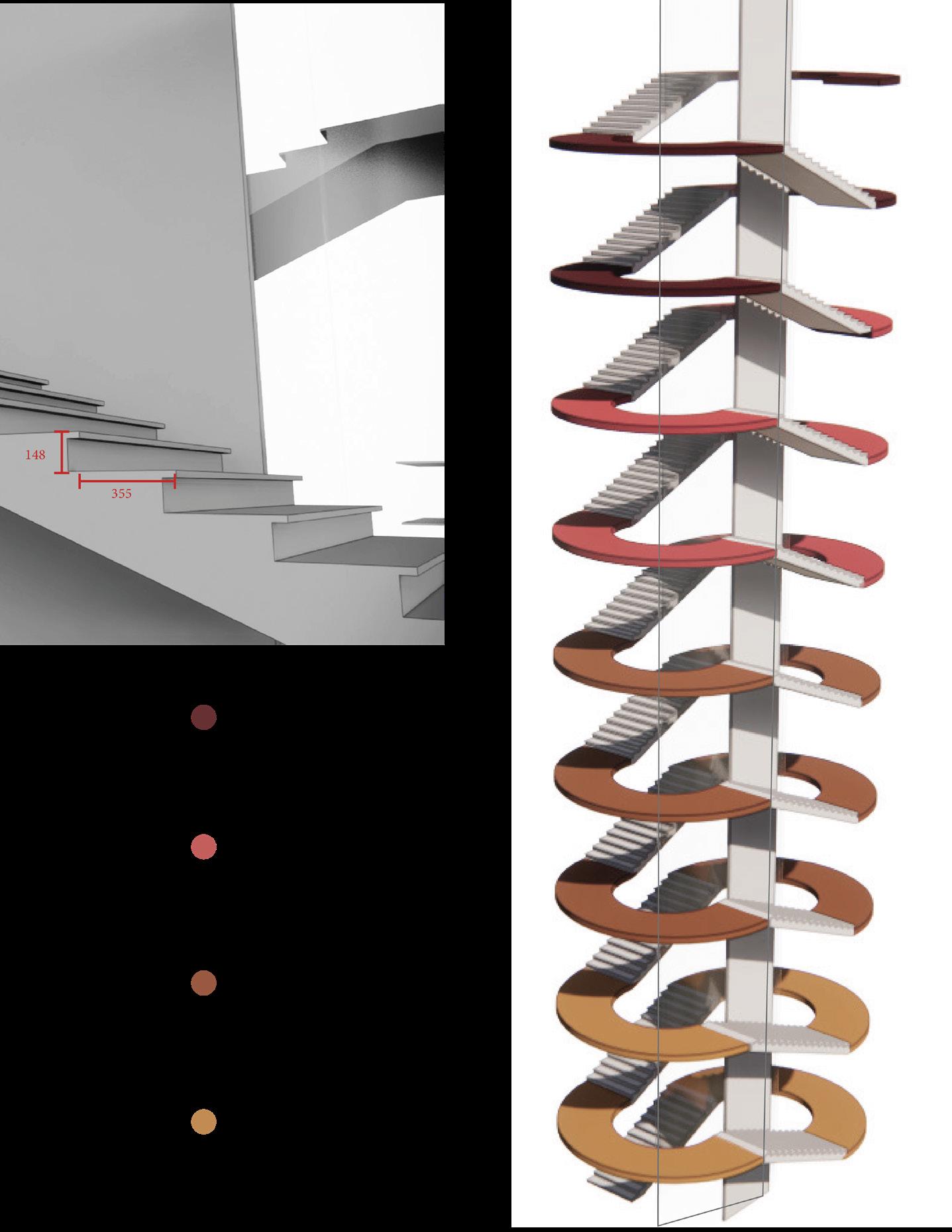
Circulation
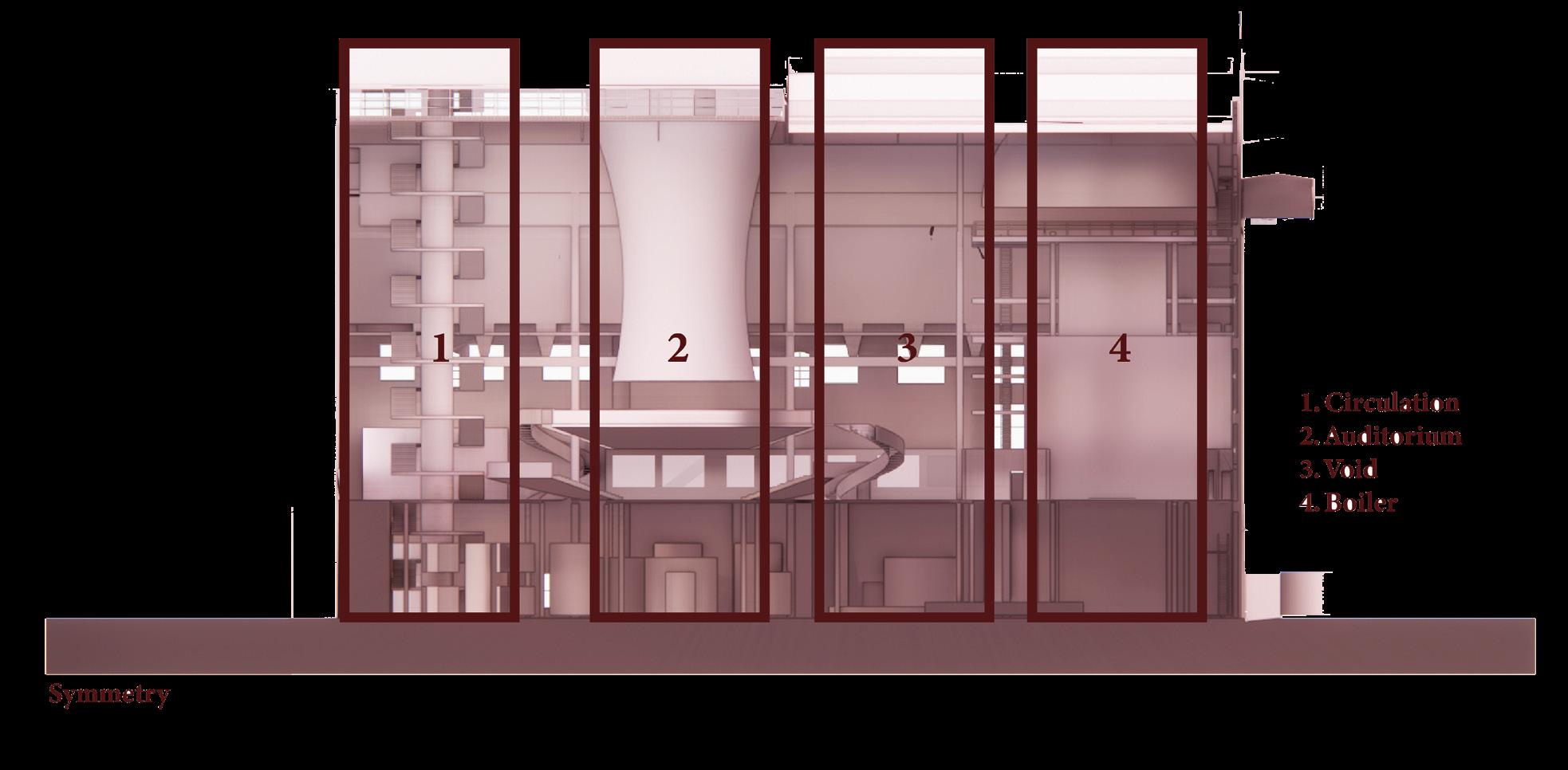
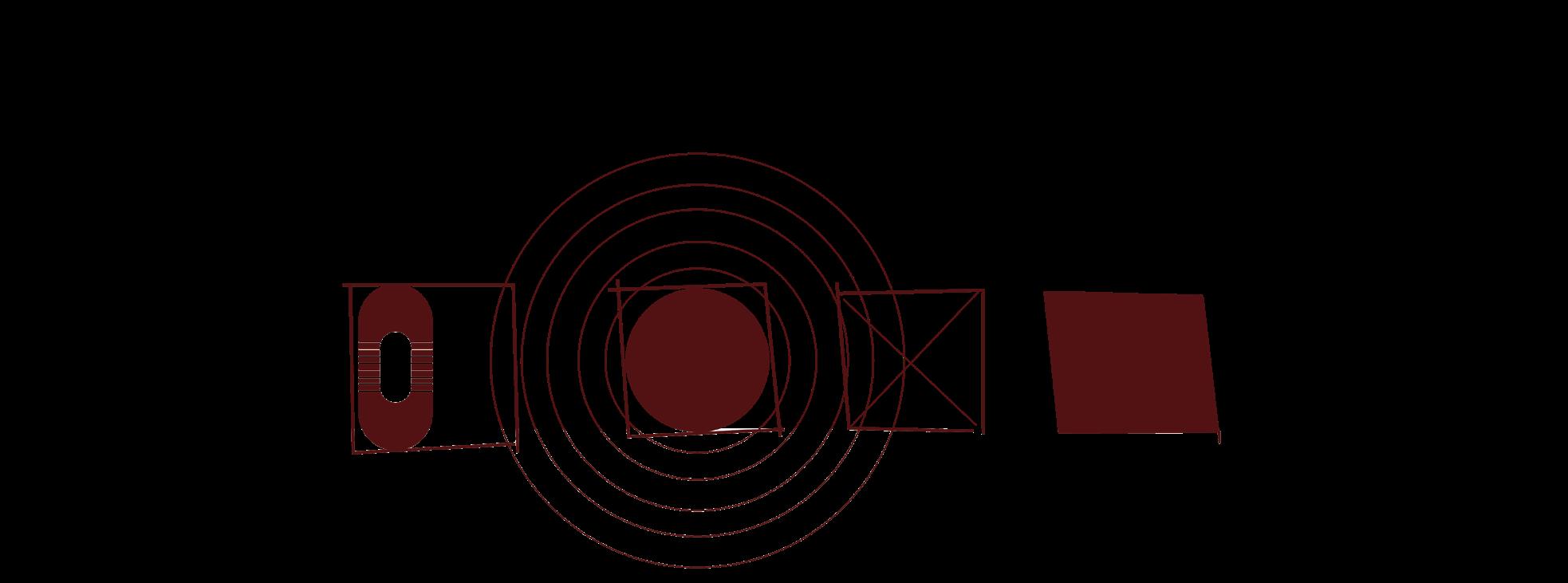
1.5 PROCESS
A morphology study
1.5 PROCESS
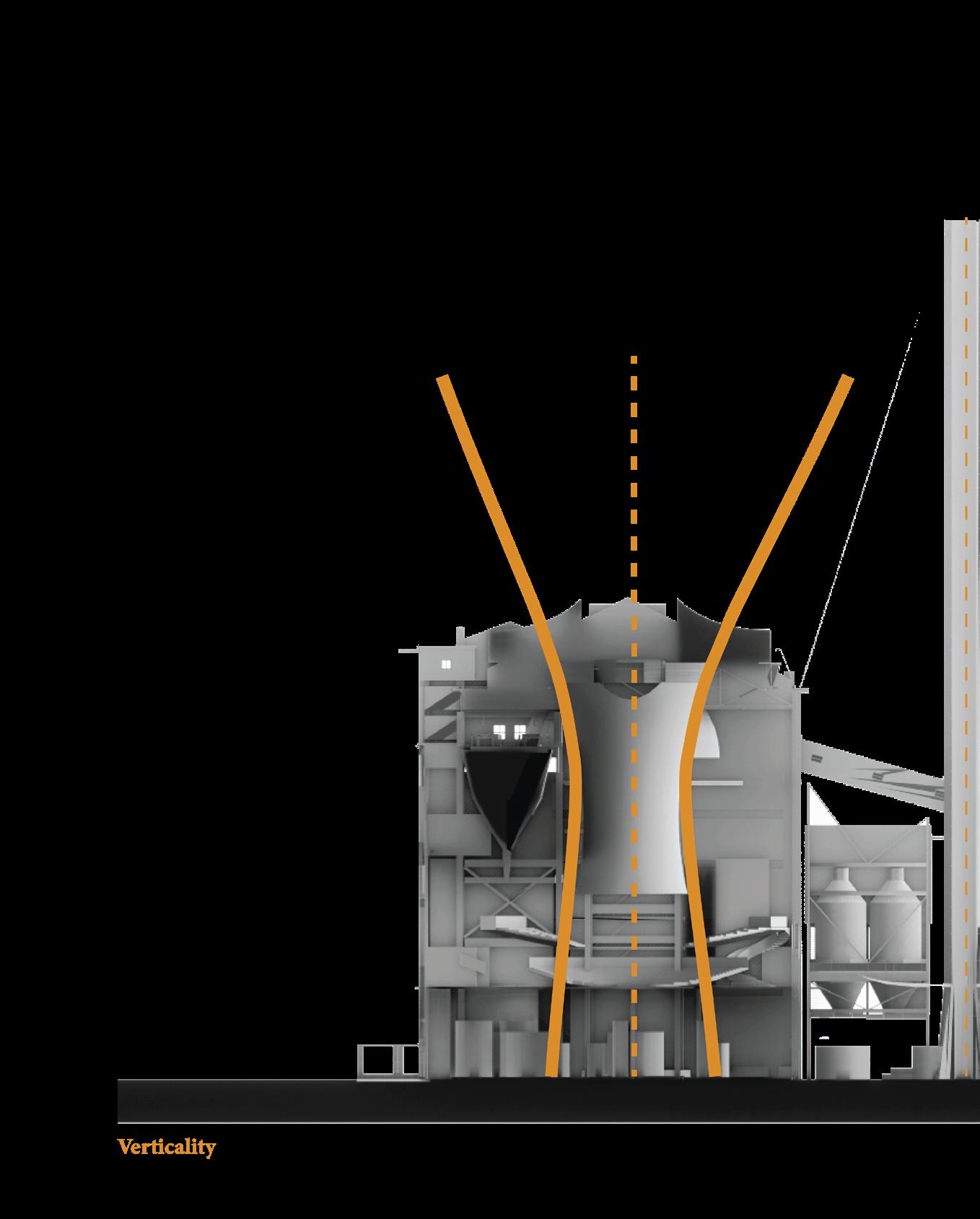
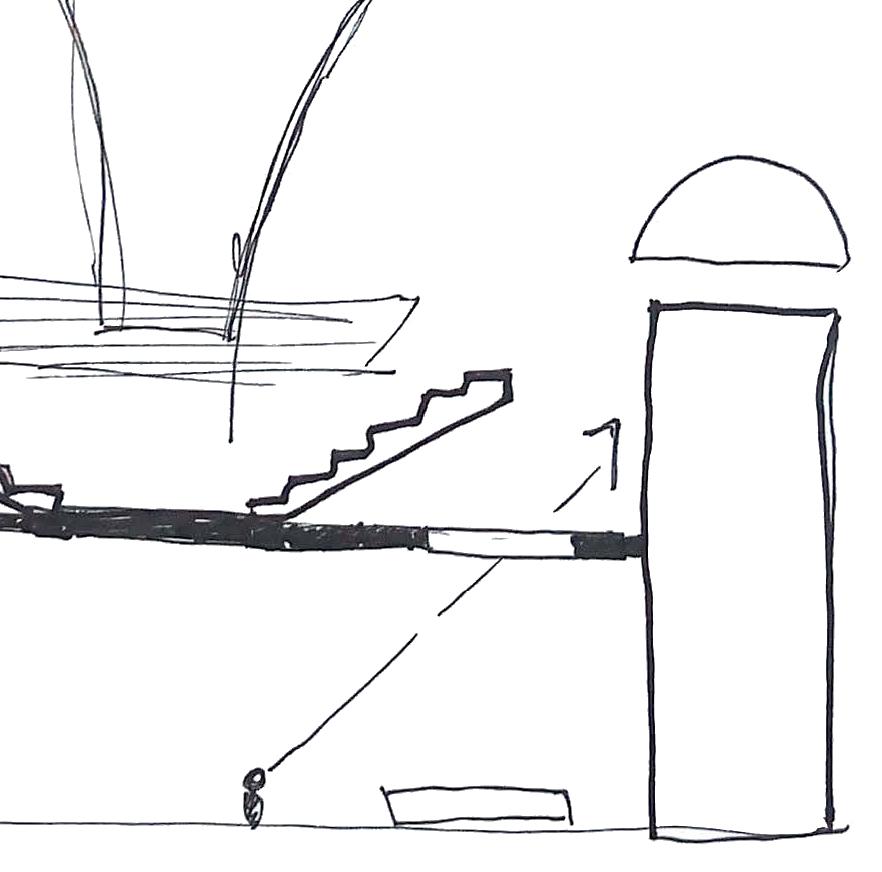
View of the extant boiler through the void is maintained
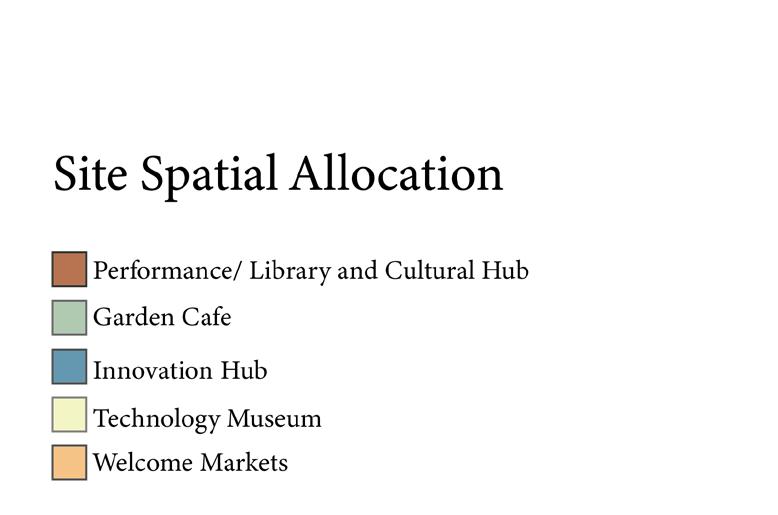
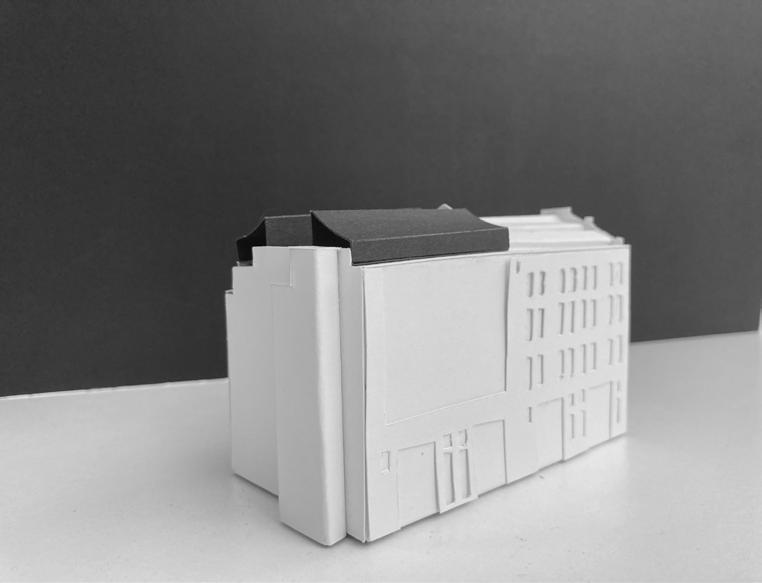
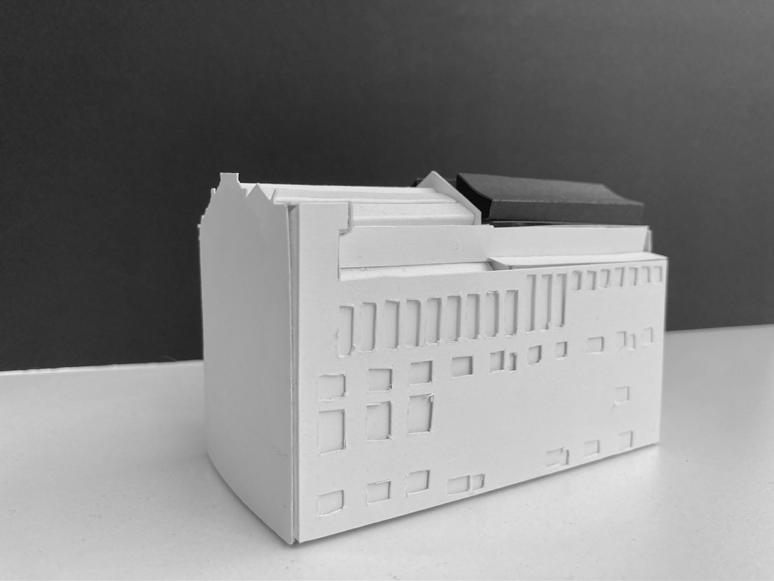
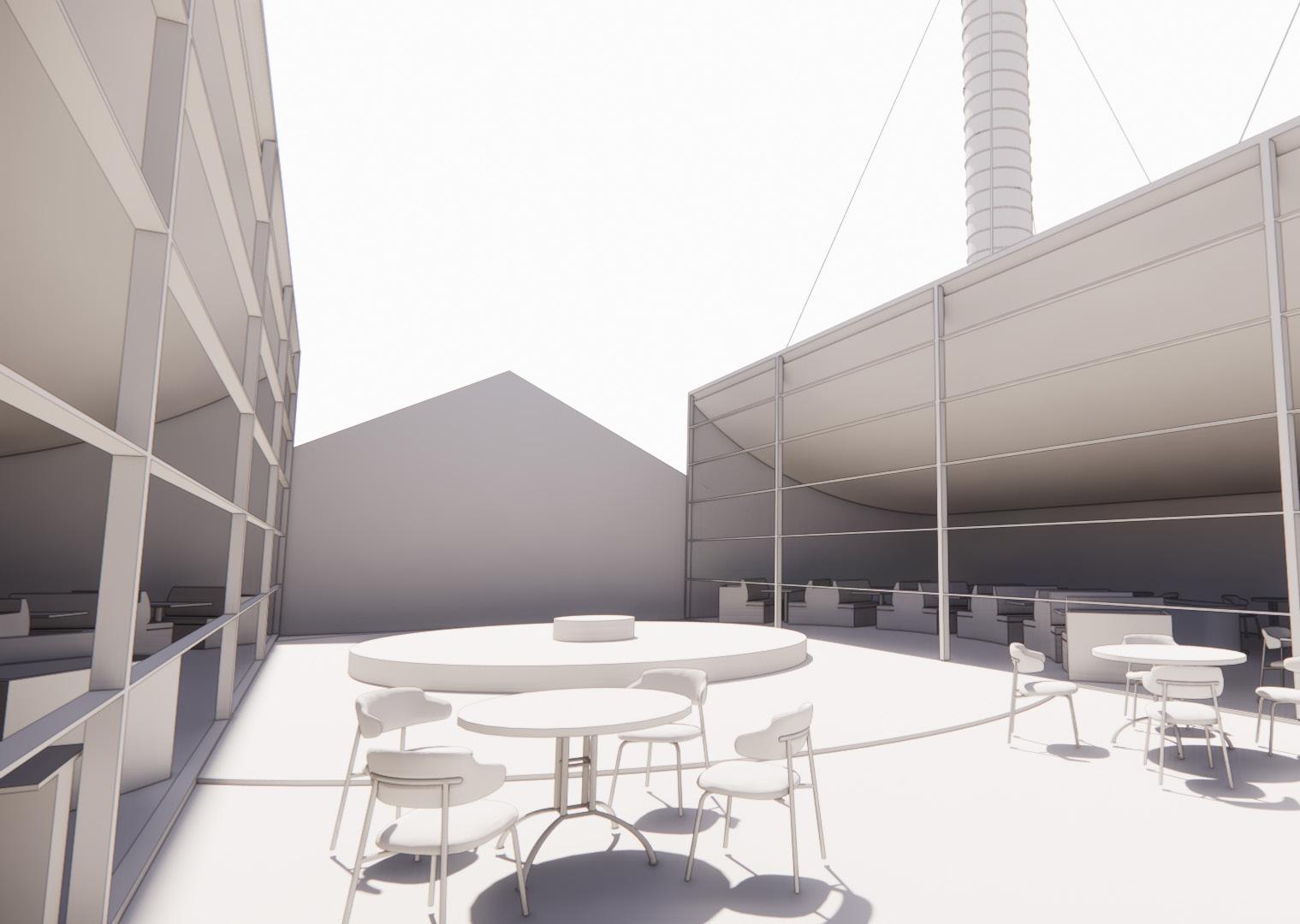
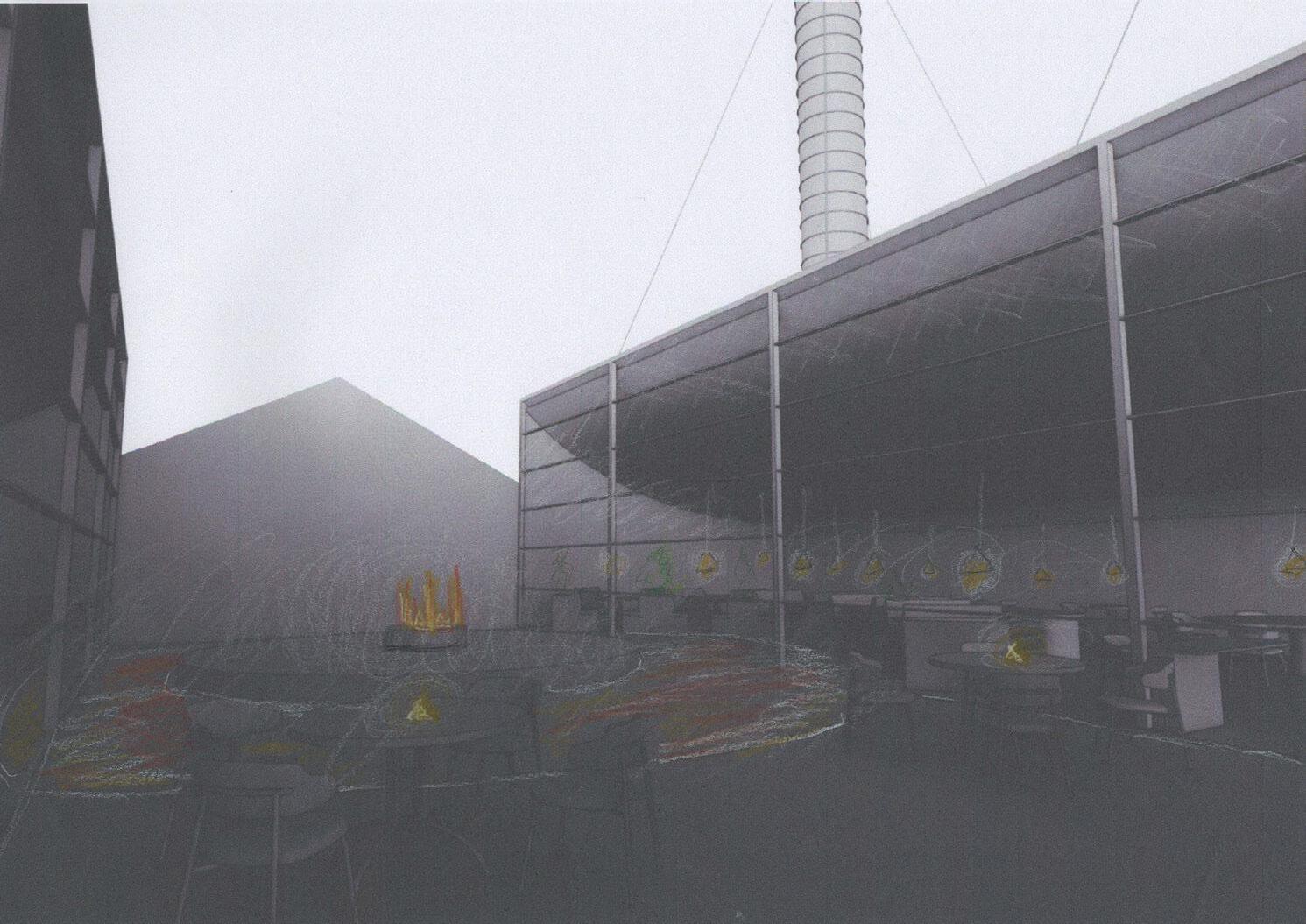
INITIAL PROGRAMMING AND FORM MODELS
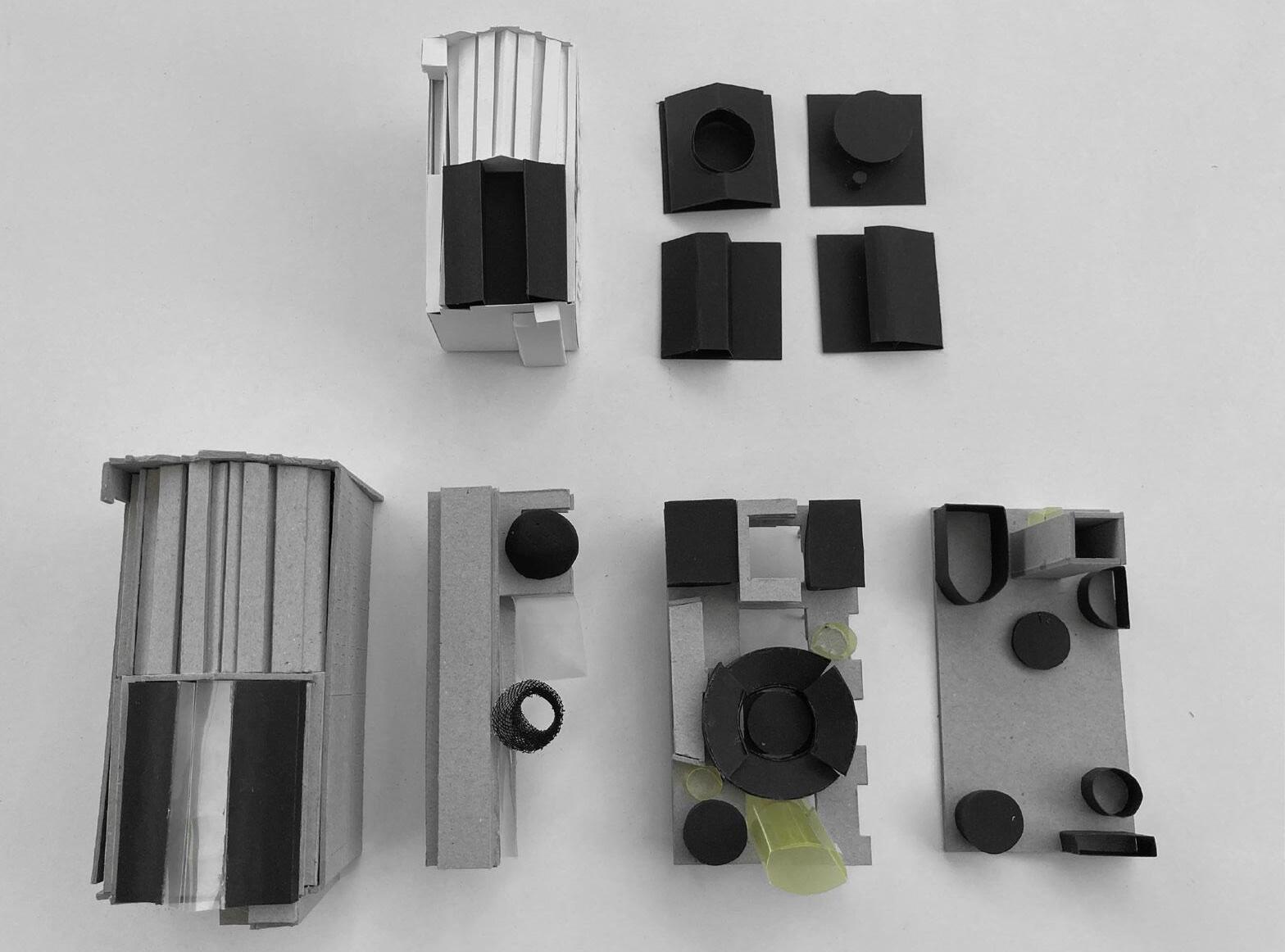
1:650
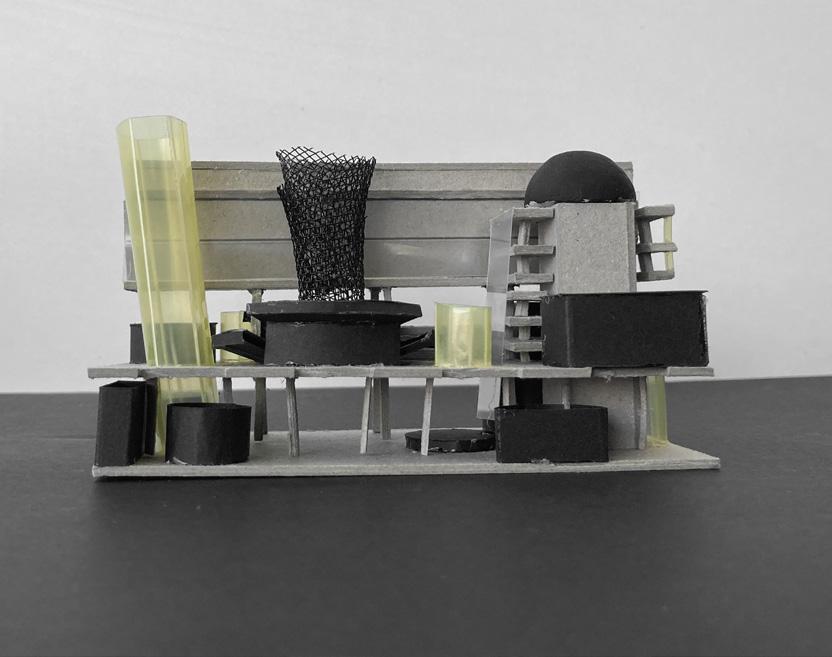
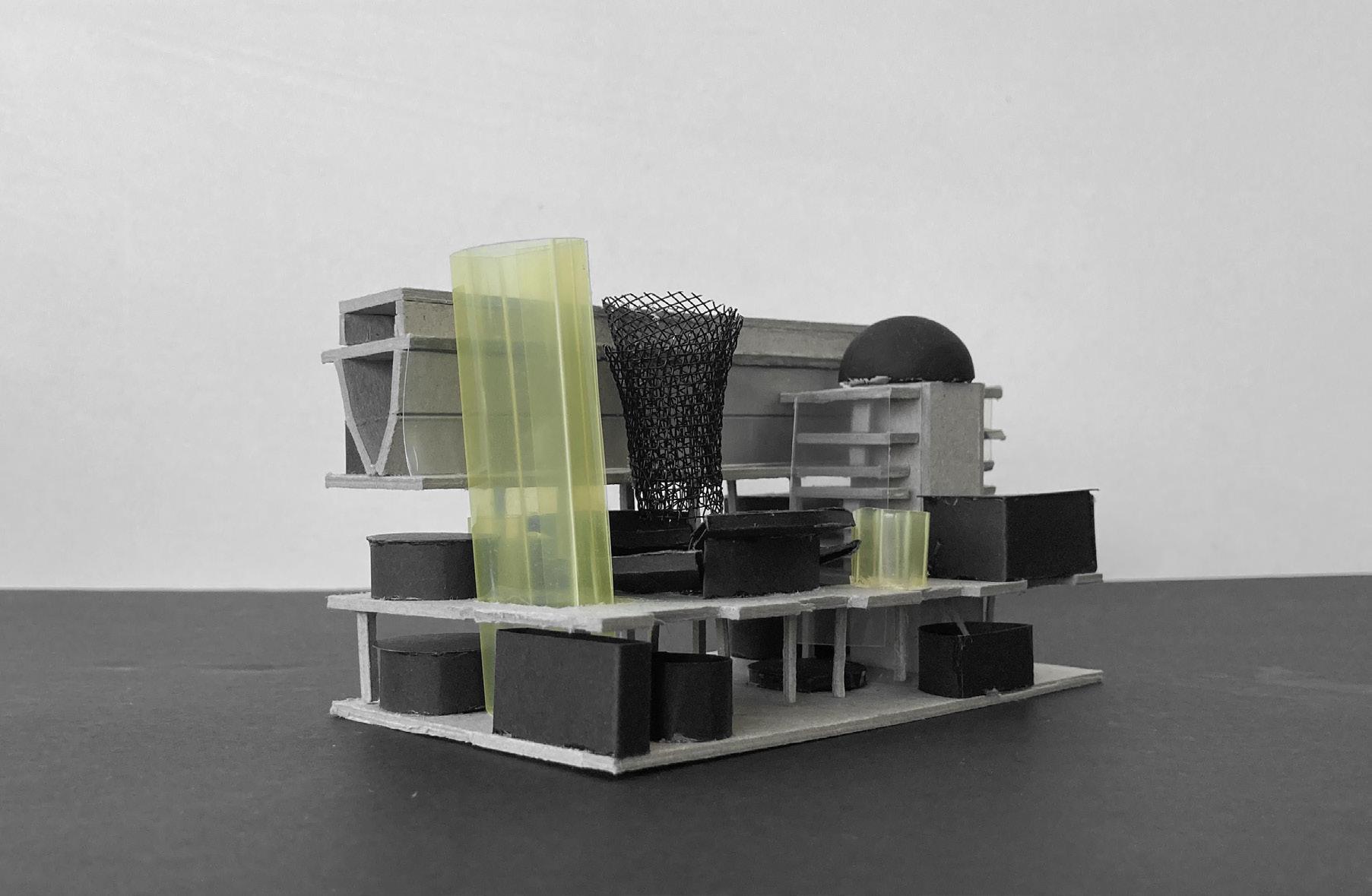
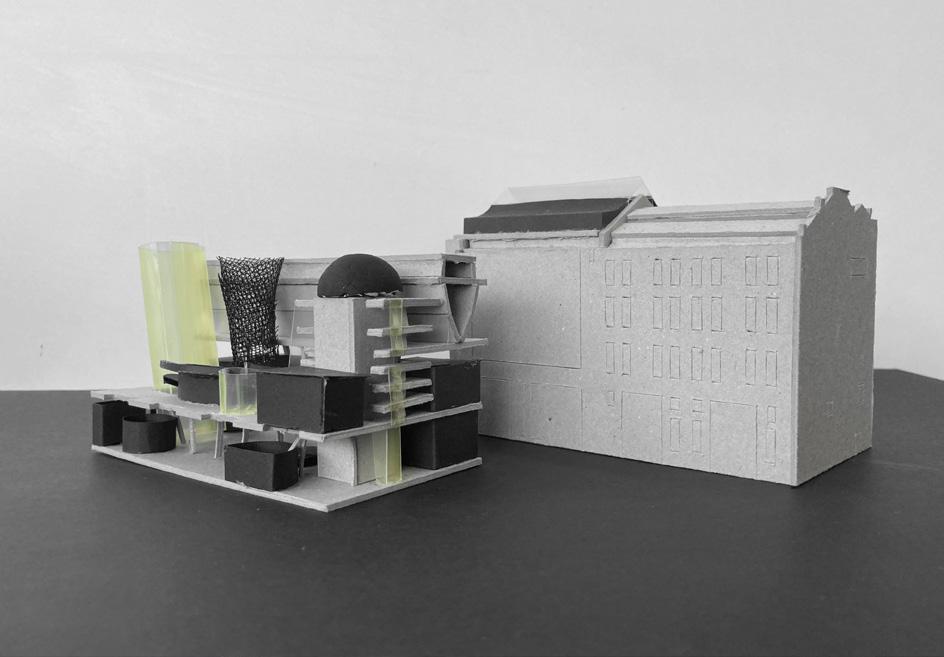
1.5 PROCESS
1:500
1.5 PROCESS
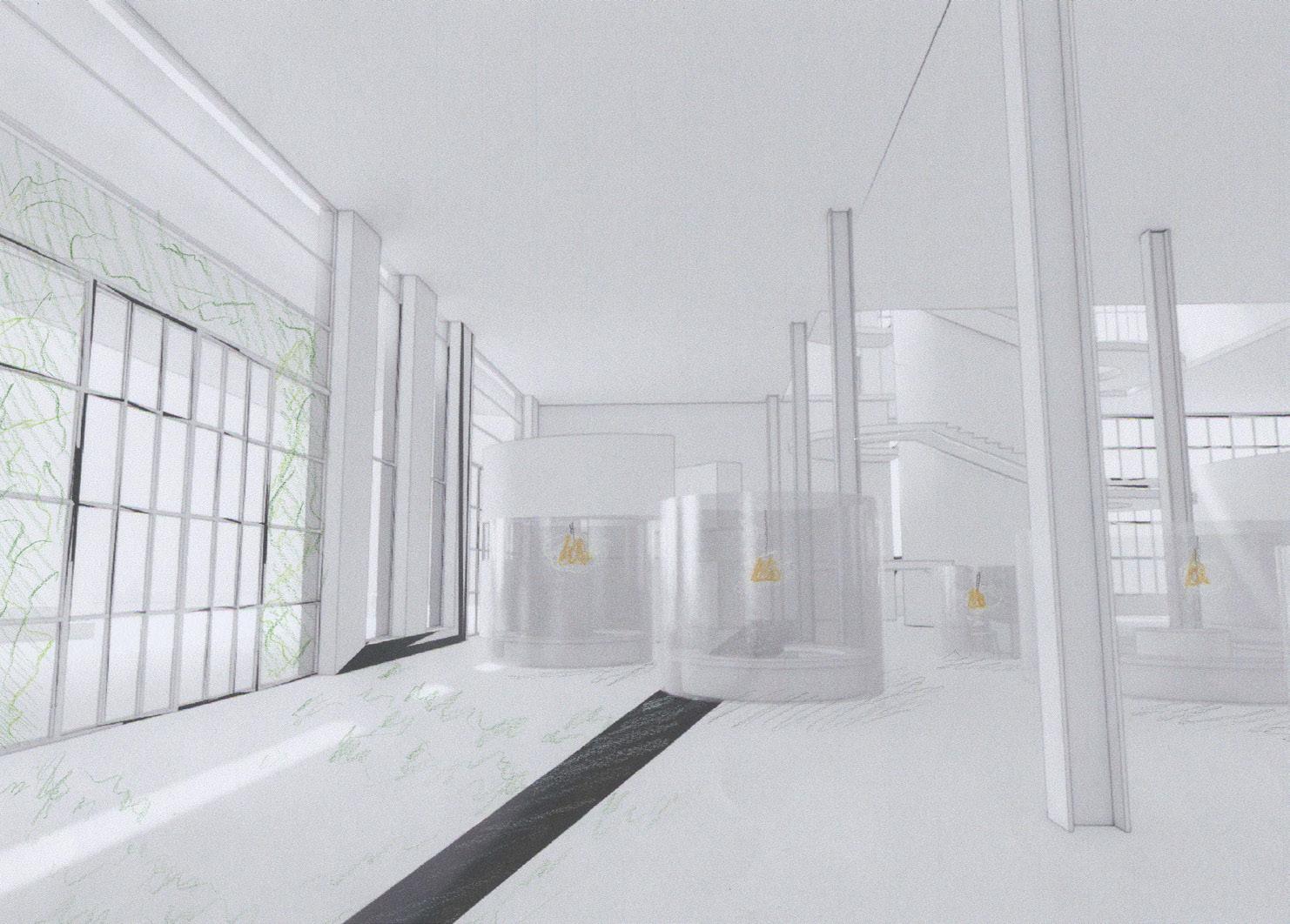
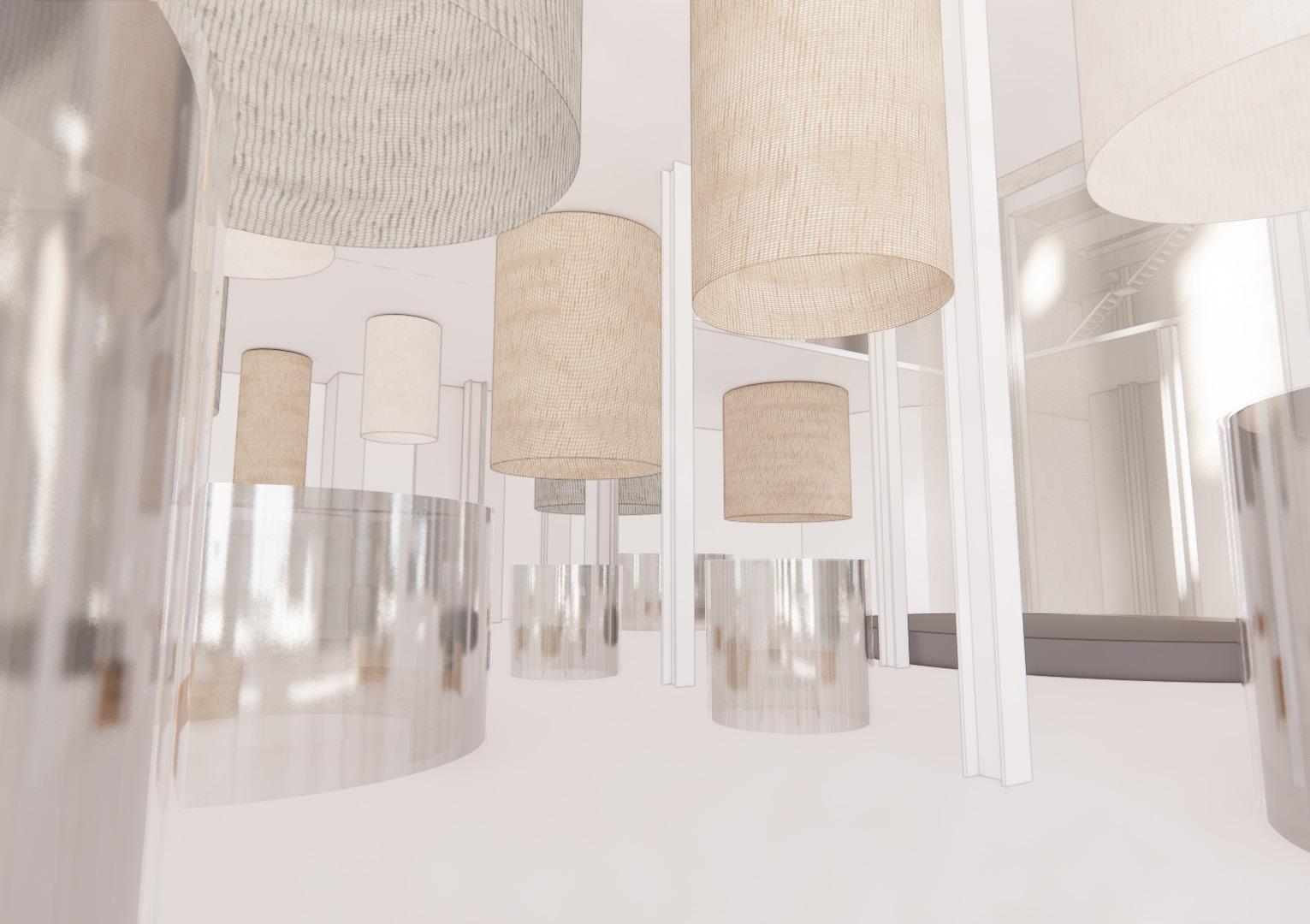
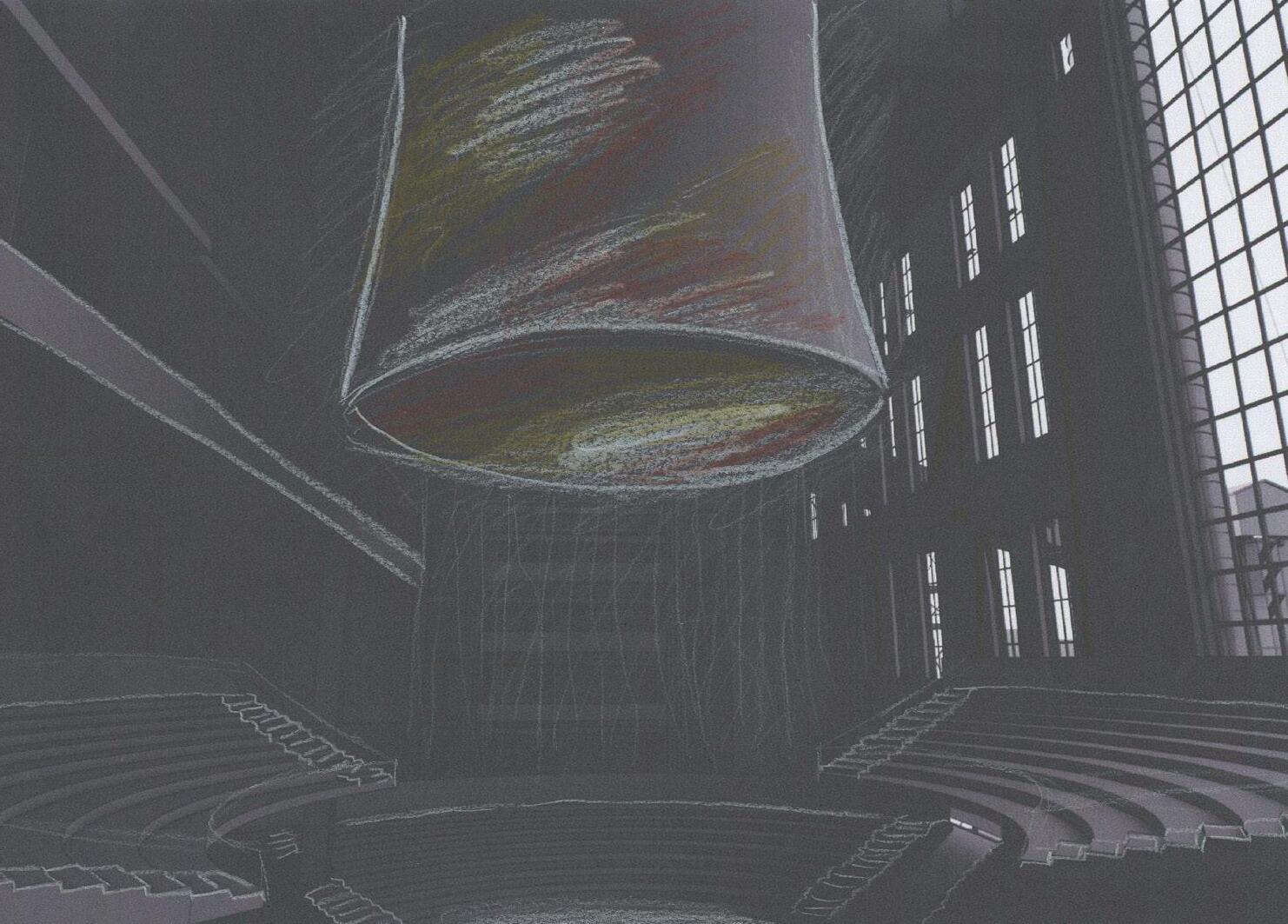
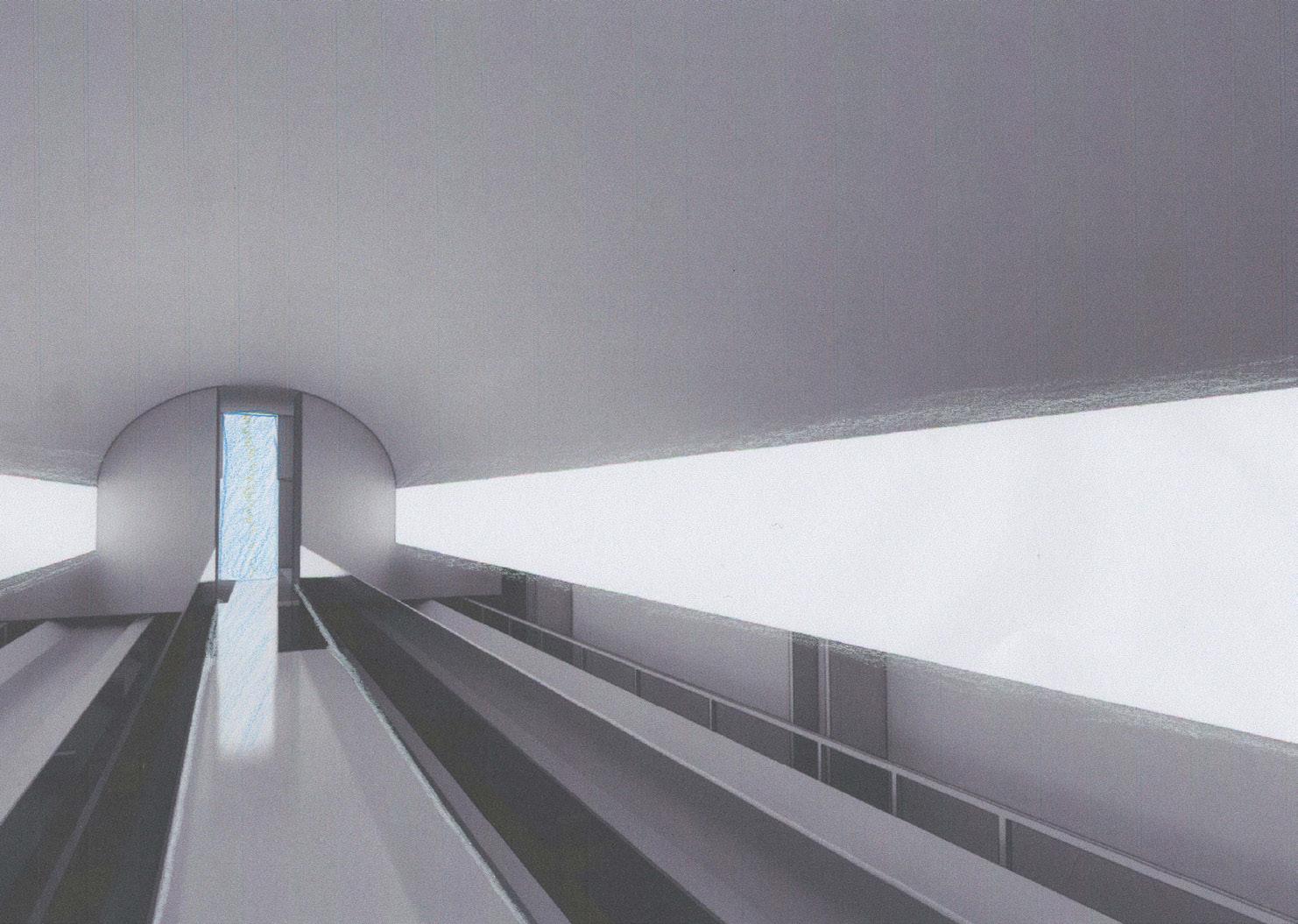
1.5 PROCESS
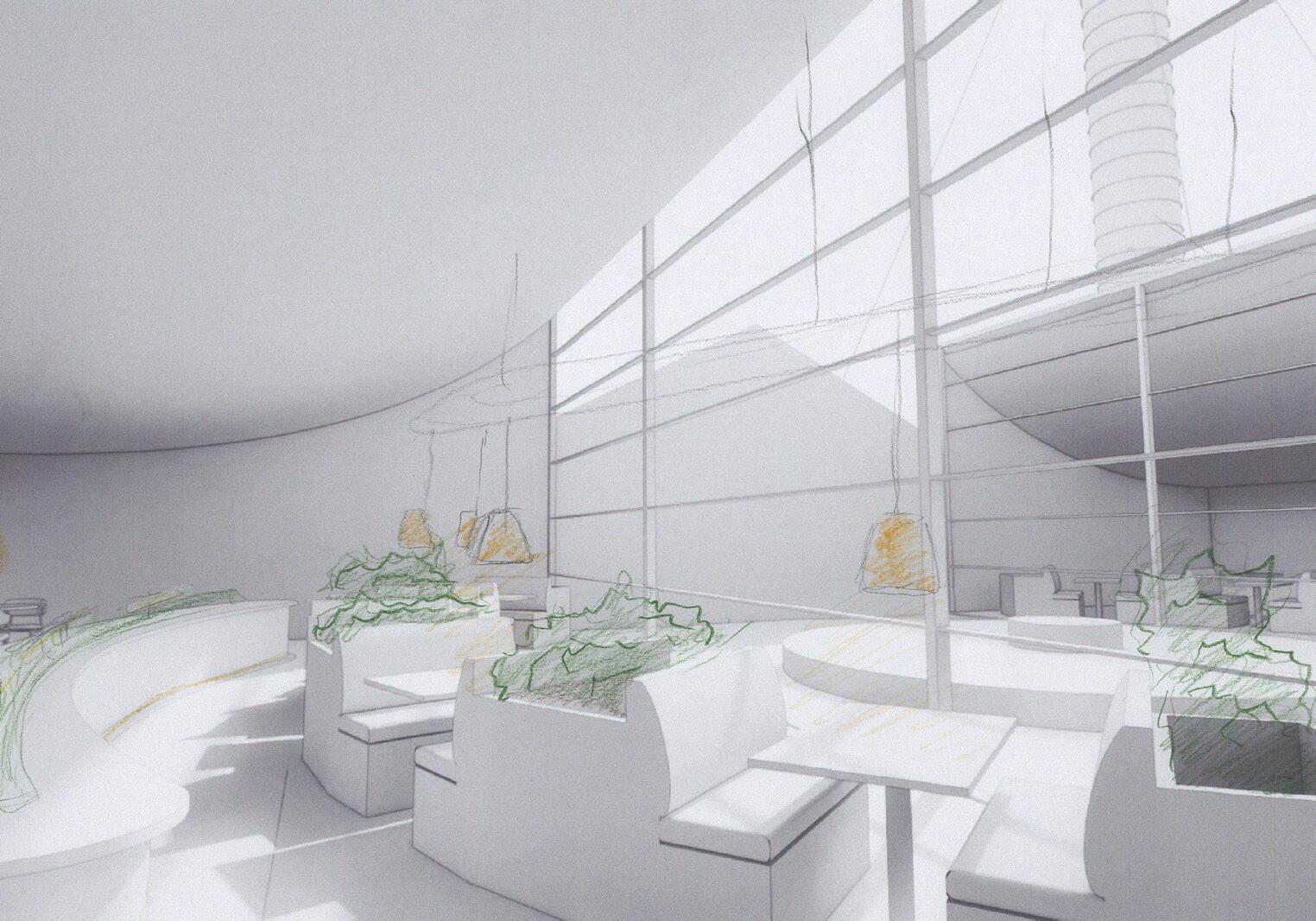
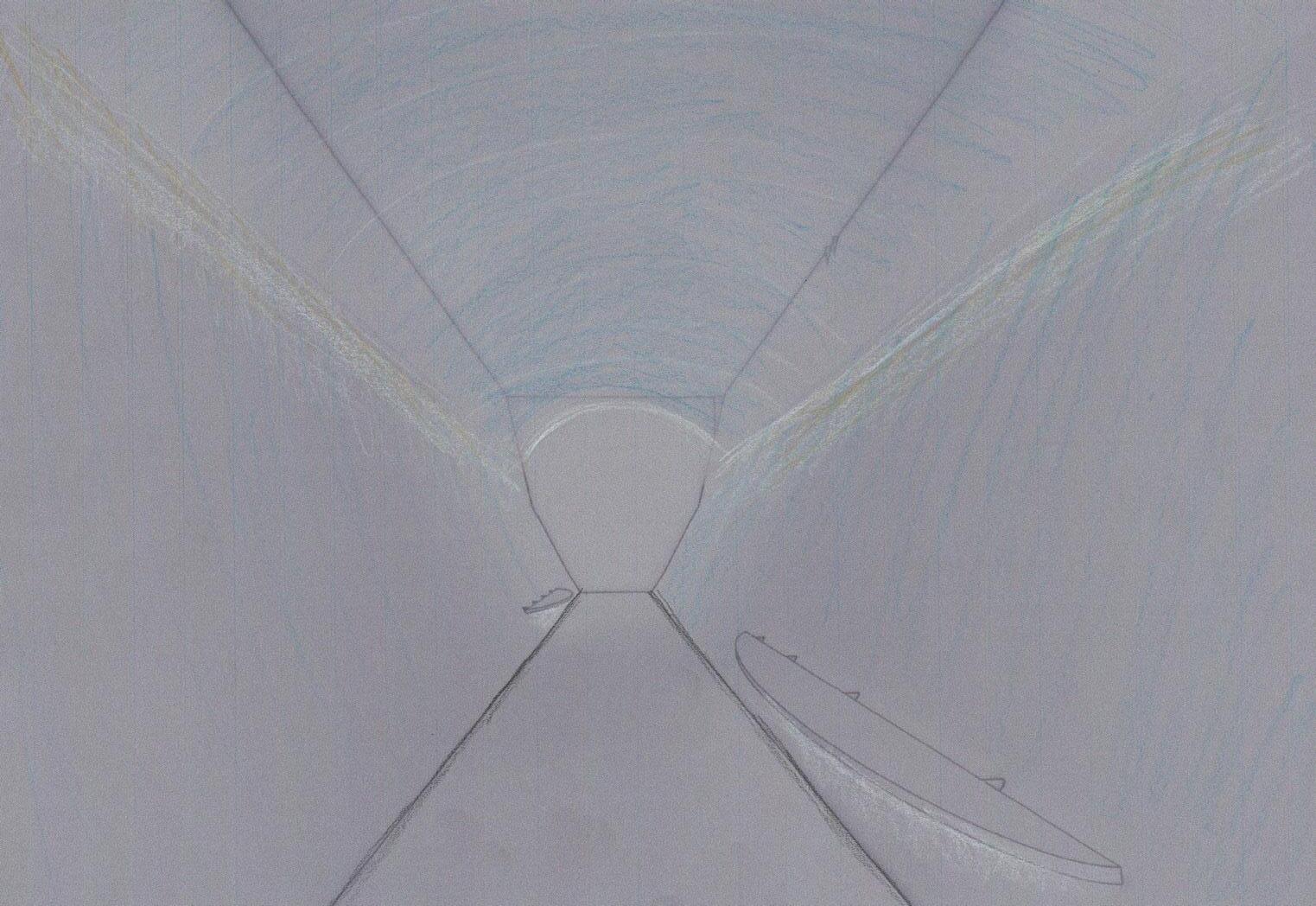
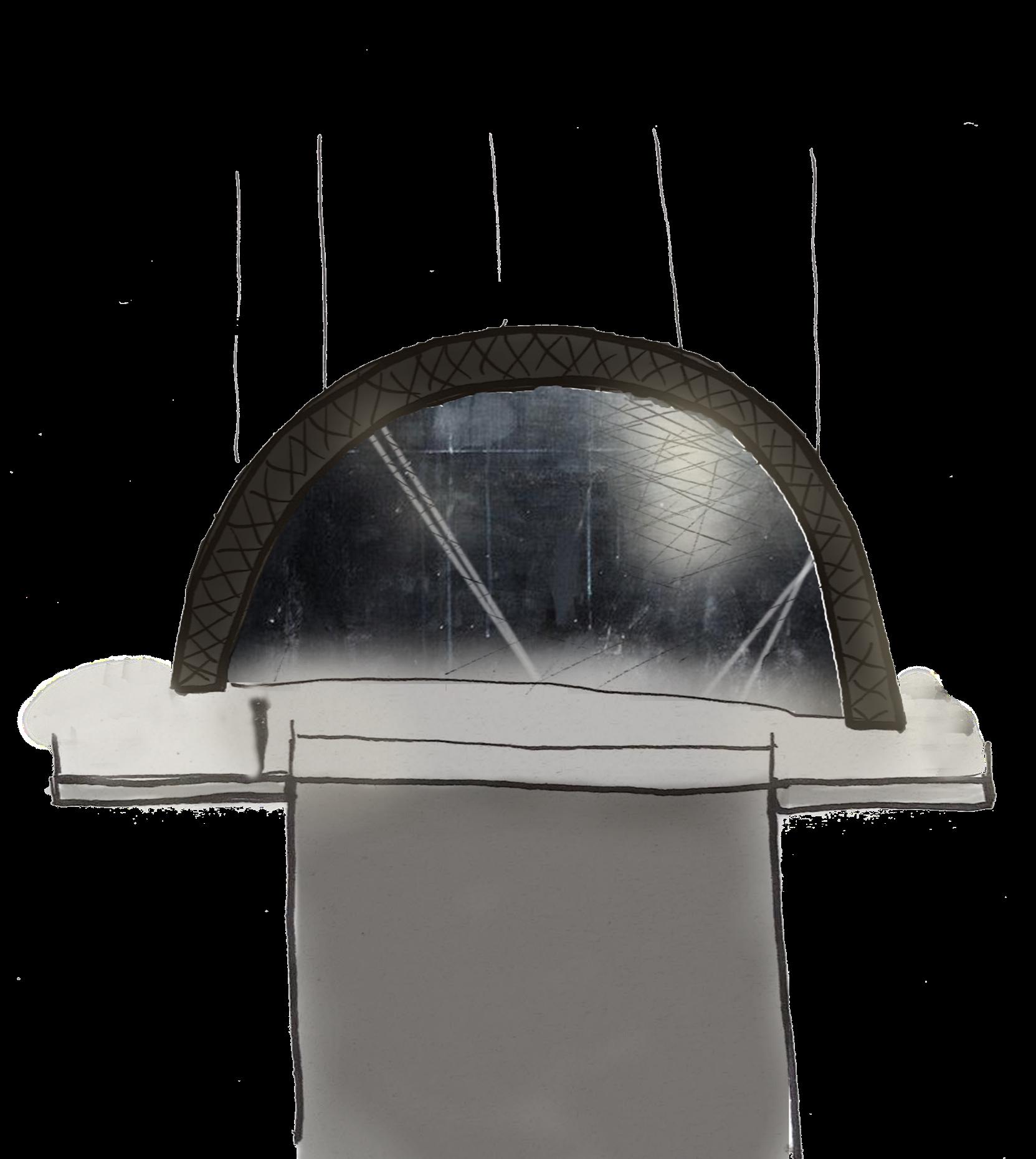 Sensory Dome - An extension of the sensory hall
Behrendt, L. (2019) Natives Go Wild Review – First Nations Circus is a potent mix of defiance and triumph, The Guardian. Guardian News and Media. Available at: https://www.theguardian.com/stage/2019/oct/23/natives-go-wild-review-first-nations-circus-is-a-potentmix-of-defiance-and-triumph (Accessed: March 12, 2023).
Dickens, K. (no date) Karla Dickens: Embracing shadows, Campbelltown Arts Centre. Available at: https://c-a-c.com.au/karla-dickensembracing-shadows/ (Accessed: March 12, 2023).
Dodd, M. (2013) The 'public living room' and its role in contemporary urban transformation, ArchitectureAU. Available at: https://architectureau.com/articles/the-public-living-room-and-its-role-in-contemporary-urban-transformation/ (Accessed: March 12, 2023).
Hayden, C 2022, Different, not less, Murdoch books, Uk
Hidaka, T. and Tanaka, M. (2001) “Japanese public space as defined by event,” The GeoJournal Library, pp. 107–118. Available at: https://doi.org/10.1007/978-94-017-2815-7_5.
Maheshwari, P. (2022) The emptiness of spaces and the mind - RTF: Rethinking the future, RTF | Rethinking The Future. Available at: https://www.re-thinkingthefuture.com/rtf-fresh-perspectives/a2298-the-emptiness-of-spaces-and-the-mind/ (Accessed: March 12, 2023).
Medhora, S. (2023) Maddy did all the right things before her first music festival, but still felt she did not belong, ABC News. ABC News. Available at: https://www.abc.net.au/news/2023-02-21/sydney-laneway-festival-accessibility-issues/102002808 (Accessed: March 12, 2023).
Psarra, S. (2005) “Spatial culture, way-finding and the educational message: The impact of layout on the spatial, social and educational experiences of visitors to museums and galleries,” Reshaping Museum Space, pp. 92–108. Available at: https://doi.org/10.4324/9780203483220-15.
Santos, S. (2017) Höweler + Yoon Architecture Unveils Circus Conservatory Design, ArchDaily. ArchDaily. Available at: https://www.archdaily.com/871045/howeler-plus-yoon-architecture-unveils-circus-conservatory-design (Accessed: March 12, 2023).
SHINER, L.A.R.R.Y.E. (1972) “Sacred space, profane space, human space,” Journal of the American Academy of Religion, XL(4), pp. 425–436. Available at: https://doi.org/10.1093/jaarel/xl.4.425.
Steele, J. (1970) Sydney aboriginal language insights, Sydney Aboriginal Language Insights. Available at: http://naabawinya.blogspot.com/2012/09/sydney-clan-boundaries-cadigal-and_27.html (Accessed: March 12, 2023).
Sum, E. (2023) Heartbreak high star accuses Marvel Stadium of ableism at styles show, WAtoday. WAtoday. Available at: https://www.watoday.com.au/national/victoria/heartbreak-high-star-accuses-marvel-stadium-of-ableism-at-styles-show-20230226p5cnnw.html?ref=rss&utm_medium=rss&utm_source=rss_feed (Accessed: March 12, 2023).
White Bay Power Station (2022) White Bay Power Station -. Available at: https://www.planning.nsw.gov.au/Plans-for-your-area/StateSignificant-Precincts/The-Bays/Bays-West/White-bay-power-station (Accessed: March 12, 2023).
Worrall, H. (no date) Exposing the fallacy of Circus 'showmen', Sydney Opera House. Available at: https://www.sydneyoperahouse.com/backstage/first-nations/exposing-the-fallacy-of-circus-showmen.html (Accessed: March 12, 2023).
BIBLIOGRAPHY

SAMANTHA GOODSELL UNSW GRADUATION PROJECT 2023 @stg.interiors LINKEDIN DIGITAL
COPY