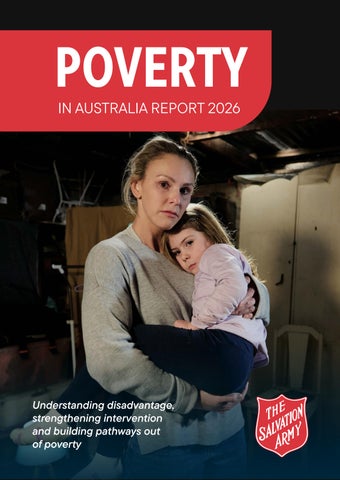
POVERTY IN AUSTRALIA REPORT 2026
Understanding disadvantage, strengthening intervention and building pathways out of poverty
CONTENTS Understanding poverty in Australia ������������������������������������������������������������������������������������������������������������������������������������������������������� 2 .........How poverty is measured in Australia ������������������������������������������������������������������������������������������������������������������������������������������������3 .........Poverty is multidimensional �������������������������������������������������������������������������������������������������������������������������������������������������������������������������3 .........When poverty becomes persistent �����������������������������������������������������������������������������������������������������������������������������������������������������4 .........Intergenerational poverty ����������������������������������������������������������������������������������������������������������������������������������������������������������������������������� 5 Poverty is experienced unevenly ������������������������������������������������������������������������������������������������������������������������������������������������������������� 6 .........Single people and single-parent families ������������������������������������������������������������������������������������������������������������������������������������� 6 .........First Nations Australians ����������������������������������������������������������������������������������������������������������������������������������������������������������������������������������7 .........Older Australians �����������������������������������������������������������������������������������������������������������������������������������������������������������������������������������������������������7 .........People living with disability ��������������������������������������������������������������������������������������������������������������������������������������������������������������������������7 .........Children ���������������������������������������������������������������������������������������������������������������������������������������������������������������������������������������������������������������������������7 The key systems shaping poverty ������������������������������������������������������������������������������������������������������������������������������������������������������������ 8 .........Employment and economic participation ����������������������������������������������������������������������������������������������������������������������������������� 8 .........Housing ����������������������������������������������������������������������������������������������������������������������������������������������������������������������������������������������������������������������������9 .........Education ��������������������������������������������������������������������������������������������������������������������������������������������������������������������������������������������������������������������10 .........Health ������������������������������������������������������������������������������������������������������������������������������������������������������������������������������������������������������������������������������10 Investing in poverty reduction �������������������������������������������������������������������������������������������������������������������������������������������������������������������11 .........Working together ���������������������������������������������������������������������������������������������������������������������������������������������������������������������������������������������������11 Doorways ������������������������������������������������������������������������������������������������������������������������������������������������������������������������������������������������������������������������������12 .........Early intervention in practice ������������������������������������������������������������������������������������������������������������������������������������������������������������������ 12 .........The scale of community need ���������������������������������������������������������������������������������������������������������������������������������������������������������������� 12
This report was developed by The Salvation Army’s Fundraising team to provide an overview of the state of poverty in Australia in 2026. Drawing on a wide range of expert research and sector insights, the report aims to deepen understanding of the complex drivers of poverty and to explore meaningful pathways toward ending it. In particular, the content is informed by The Salvation Army Doorways Model of Care.
1
UNDERSTANDING POVERTY IN AUSTRALIA Poverty affects about one in seven Australians. Between 2020-21 and 2022-23, the amount of people living in poverty increased by almost 600,000.1 Behind these figures are people who cannot afford stable housing, delay medical care, skip meals, or struggle to remain connected to work, education and their communities. Poverty is a multidimensional issue and rarely the result of a single event. It develops through multiple, interconnected disadvantages that reinforce one another over time. Australia is experiencing sustained cost-of-living pressures alongside longstanding inequalities in housing affordability, income security and access to essential services, placing many households under unprecedented strain. Some Australians are disproportionately affected by poverty due to structural factors beyond their control. Poverty also snowballs. Financial hardship can limit access to stable housing, healthcare, education and employment opportunities, creating cycles of disadvantage that become increasingly difficult to escape. Without timely support, short periods of hardship can develop into persistent or intergenerational poverty.
14.2%
Australians living below the poverty line (higher than pre-COVID levels)2
1 IN 12
Australians experience multiple material deprivation, meaning they can’t afford two or more essential items.3
Reducing poverty requires more than crisis assistance alone. Prevention, early intervention and coordinated structural responses all play essential roles in reducing disadvantage before it becomes entrenched. Evidence-informed approaches can help reduce poverty over time. Through coordinated investment across governments, communities and service providers, Australia can strengthen opportunity, reduce disadvantage and create pathways towards lasting social and economic participation.
37%
of Australians expect their family to be worse off financially this time next year.4
1. Davidson, P. & Bradbury, B., Poverty in Australia 2025: Overview, Australian Council of Social Service (ACOSS) and UNSW Sydney 2025 | 2. ibid | 3. Naidoo, Y., Wong, M., Smyth, C. and Davidson, P., Material deprivation in Australia: the essentials of life, Australian Council of Social Service (ACOSS) and UNSW Sydney 2024 | 4. Roy Morgan, ANZ-Roy Morgan Consumer Confidence, 25 August 2026.
2
How poverty is measured in Australia In Australia, poverty is most commonly measured using a ‘relative poverty’ approach that defines a person living in poverty as living in a household “with an equivalised income that is less than 50% of the national median equivalised household income”.5 Someone is considered to be in severe poverty when their income falls below a threshold of 30% of median equivalent per capita income.6
Poverty is multidimensional Poverty isn’t just about income, it affects:
Housing
Physical and mental health
Digital access
Family violence
Education
Transport
Employment
Community participation
Caring responsibilities
Geographic location
Essential services
Poverty affects every aspect of life. Access to secure housing, healthcare, education, employment, transport and digital services all influence a person’s ability to participate fully in society. These factors are interconnected and reinforce one another over time. Housing insecurity can reduce employment opportunities. Disability can increase living costs while limiting workforce participation. Geographic isolation can restrict access to education, healthcare and jobs simultaneously.
Poverty therefore reflects unequal access to opportunity rather than a single financial circumstance. 5. Australian Institute of Health and Welfare, Australia’s Welfare 2017 | 6. Duncan A., Behind the Line: Poverty and disadvantage in Australia 2022, Bankwest Curtin Economics Centre Focus on the States Series, #9, 2022
3
When poverty becomes persistent How disadvantage compounds Unexpected setback such as job loss, illness or family breakdown
Extended or recurring financial hardship Housing stress or instability
Reduced employment opportunities Debt
Poor health or disrupted education
Persistent poverty
The longer poverty lasts, the Parents expereince harder it becomes to escape.7 poverty One of the defining characteristics of poverty is that disadvantage accumulates over time. Financial hardship may begin with one event, Housingby insecurity but it is often sustained barriers that make recovery increasingly difficult. People who have previously Reduced educational experienced poverty are more than opportunities and twice as likely to experience it again attainment than those who have not.8 Reduced employment opportunities
Understanding povertyLower as both lifetime income a cause and consequence of disadvantage Greater risk of poverty helps explain in adulthood why some people recover quickly while others remain trapped in cycles of hardship.
7. Productivity Commission, Fairly Equal? Economic mobility in Australia 2024 | 8.ibid
4
Intergenerational poverty Children experiencing persistent poverty are more likely to experience poorer education, lower earnings and ongoing disadvantage throughout adulthood, increasing the likelihood that disadvantage will continue across generations.9 Understanding these interconnected barriers has important implications for policy and practice. Because poverty develops through multiple, overlapping challenges, lasting solutions require investment in prevention, early intervention, crisis assistance and coordinated support that strengthens people’s capacity to recover before disadvantage becomes entrenched.
GREATER RISK OF DISADVANTAGE FOR THE NEXT GENERATION
PARENTS EXPERIENCE POVERTY
GREATER RISK OF POVERTY IN ADULTHOOD
HOUSING INSECURITY
Poverty can be passed from one generation to the next LOWER LIFETIME INCOME REDUCED EDUCATIONAL OPPORTUNITIES AND ATTAINMENT REDUCED EMPLOYMENT OPPORTUNITIES
9. Compassion International, Generational Poverty: What It Is 2026
5
POVERTY IS EXPERIENCED UNEVENLY Poverty can affect anyone, but it is not experienced equally. Structural, economic and social factors mean some Australians face a much greater risk of financial hardship than others. Who is most affected?:
30%
of First Nations people live in poverty10
27%
of single parent households with at least one child below the age of 15 live in poverty11
24%
of older people live in poverty13
17%
of adults with disability live in poverty12
16%
of children under 15 live in poverty14
Other Australians at increased risk include single people, and people living in regional and remote communities.
Single people and single-parent families Single people, particularly single parents, face a heightened risk of persistent poverty due to caring responsibilities, lower workforce participation and rising housing costs. Single people: • 56% of single older person households live in poverty15 • 22% of younger single person households live in poverty16 • Around 330,000 single people experienced poverty for at least five or more years over the previous decade.17
Single-parent families: • 43% of single parents experience financial stress18 • Around 250,000 single parents have been in poverty for at least five of the previous 10 years19 Women comprise the majority of singleparent households. Caring responsibilities remain the biggest barrier preventing many women from increasing workforce participation and contribute to higher rates of persistent poverty. The burden from caring responsibilities also impacts equivalised household income and the ability for women to recuperate lost partner income following separation.20
10. Australian Human Rights Commission, Social Security and Poverty 2026 | 11. Bray, Rob., Relative income poverty: levels, trends, context and issues HILDA Wave 22, Australian National University 2024 | 12. Australian Human Rights Commission, Social Security and Poverty 2026 | 13. Ibid. | 14. Davidson, P & Bradbury, B., Poverty in Australia 2025: Overview Australian Council of Social Service (ACOSS) and UNSW Sydney 2025 | 15. Bray, Rob., Relative income poverty: levels, trends, context and issues HILDA Wave 22, Australian National University 2024 | 16. Ibid | 17. Duncan A., Behind the Line: Poverty and disadvantage in Australia 2022, Bankwest Curtin Economics Centre Focus on the States Series, #9, 2022 | 18. Australian Institute of Health and Welfare, Australia’s welfare 2025: Income and income inequality 2025 | 19. Duncan A., Behind the Line: Poverty and disadvantage in Australia 2022, Bankwest Curtin Economics Centre Focus on the States Series, #9, 2022 | 20. Productivity Commission, Fairly Equal? Economic mobility in Australia 2024
6
First Nations Australians First Nations Australians experience disproportionately high rates of poverty due to the ongoing impacts of dispossession, structural inequality and systemic disadvantage. First Nations Australians • In very remote areas, poverty rates among First Peoples are as high as 57%21 • 23% lower median weekly equivalised household income22 • 41% of households experienced food insecurity23
People living with disability People living with disability experience some of the highest rates of poverty in Australia, driven by higher living costs, barriers to employment and lower workforce participation. • 43% of people in households mainly reliant on the Disability Support Pension live in poverty24 • 67% of households with people who report disability or health issues experience food insecurity25
Older Australians Older Australians face rising poverty due to reduced incomes, increasing health costs and housing insecurity. • Older Australians are 68% more likely to experience relative income poverty than the OECD average.26 • Older women are especially affected due to lower lifetime earnings, interrupted workforce participation associated with caring responsibilities and reduced retirement savings.
Children Children experience poverty through the circumstances of the households in which they live, yet its impacts can last a lifetime. • 757,000 children under 15 live in poverty27 • More than 1 in 3 children in single-parent families live below the poverty line28 • Nearly 1 in 10 experience severe poverty29 Poverty in childhood increases the risk of: • Developmental vulnerability • Poor educational outcomes • Reduced employment opportunities • Poor health outcomes • Intergenerational disadvantage Disadvantage experienced early in life often compounds over time. Children living in Australia’s most disadvantaged communities are significantly more likely to begin school developmentally vulnerable than children in the least disadvantaged communities.30
21. Australian Human Rights Commission, Social Security and Poverty 2026 | 22. Australian Institute of Health and Welfare, Income and finance of First Nations people 2025 | 23. Ibid | 24. Davidson, P; Bradbury, B; and Wong, M, Poverty in Australia 2023: Who is affected Poverty and Inequality Partnership Report no. 20. Australian Council of Social Service and UNSW Sydney 2023 | 25. Foodbank, hunger report 2025 | 26. Australian Human Rights Commission, Social Security and Poverty 2026 | 27. Davidson, P & Bradbury, B., Poverty in Australia 2025: Overview, Australian Council of Social Service (ACOSS) and UNSW Sydney 2025 | 28. Bankwest Curtain Economics Centre and Valuing Children Initiative, Child Poverty in Australia 2025 | 29. Ibid. | 30. Australian Early Development Census, AEDC National Report 2024
7
THE KEY SYSTEMS SHAPING POVERTY Poverty is shaped by the systems that influence people’s ability to meet their basic needs and participate fully in economic and community life. Employment, housing, health and education each play a critical role in determining financial security and opportunity. When these systems are accessible and effective, they help prevent hardship. However, housing, food, and healthrelated costs are among the biggest drivers of increased living costs in 2026.31 When barriers exist, they can reinforce disadvantage and make poverty more difficult to escape.
Employment and economic participation
Housing
Health
Education
Employment and economic participation Secure employment remains one of the strongest protective factors against poverty. It provides income, financial stability, social connection and opportunities to build long-term economic security. Conversely, unemployment, insecure work and underemployment increase the risk of financial hardship. Recent cost-of-living pressures have also highlighted the growing challenge of in-work poverty, where employment alone is no longer sufficient to provide financial security. Rising housing, food, energy and healthcare costs have left many working households struggling to meet essential living expenses. Workforce participation is influenced by more than labour market conditions. Caring responsibilities, disability, health, access to childcare, education and transport all affect a person’s ability to enter, remain in and progress through employment.
43%
of couples with children, where both partners are unemployed, live in poverty.32
31. Australian Bureau of Statistics, Selected Living Cost Indexes, Australia 2026 | 32. Bankwest Curtain Economics Centre, Behind the line: Poverty and disadvantage in Australia 2022
8
70%
of surveyed Australian renters reported experiencing rental stress.33
29%
of owner-occupier mortgage holders were at risk of mortgage stress in June 2026, up from 25% in December 2025.34
44%
of income units receiving Commonwealth Rent Assistance still experience rental stress as of 2026.35
Housing Safe, secure and affordable housing provides the foundation for financial stability. However, rising housing costs have made housing one of the most significant drivers of poverty in Australia. Housing stress occurs when low-income households spend more than 30% of their income on housing, leaving less available for essentials such as food, healthcare, education and transport.36 As housing costs increase, households have less capacity to absorb unexpected expenses, making financial shocks more likely to develop into ongoing hardship. Housing insecurity can also disrupt employment, children’s education and community connections, reducing opportunities to improve long-term financial wellbeing. For many Australians housing remains out of reach. With an average wait time of 10+ years for social housing across Australia’s capital cities37 and rising private rents, housing insecurity continues to reinforce financial hardship rather than providing a pathway out of it.
Specialist Homelessness Services (SHS) in 2024-25 assisted 289,000 clients, with around 51% of clients at risk of experiencing homelessness when first presenting, while 49% were experiencing homelessness.38
33. InfoChoice, InfoChoice Rent Crisis Survey 2024 | 34. Extreme mortgage stress increases nationally, driven by people on lower incomes and in lower socio-economic quintiles | 35. Australian Institute of Health and Welfare, Commonwealth Rent Assistance in Australia: quarterly data 2026 | 36. Australian Institute of Health and Welfare, Housing affordability, 2025. | 37. Everybody’s Home, Housing in Crisis: A Snapshot of Australia 2025 | 38. Australian Institute of Health and Welfare, Homelessness and homelessness services 2025
9
Education Education expands opportunity throughout life. Early childhood education, quality schooling and vocational training improve employment prospects, earning potential and long-term financial security. Children experiencing poverty are more likely to face barriers to learning, lower educational attainment and poorer lifelong employment outcomes. These disadvantages can persist into adulthood, subsequently limiting education and employment opportunities later in life.39 Access to education is also shaped by broader factors including housing stability, digital access, transport and household financial circumstances, highlighting the importance of addressing disadvantage early.
Health Health and financial wellbeing are closely connected. People experiencing the most socioeconomic disadvantage are more likely to delay healthcare, miss specialist treatment and struggle to afford medications, dental care and mental health care when needed.40 These unmet health needs often become more serious over time, increasing both personal and financial costs. Poor physical and mental health can also reduce workforce participation, increase living expenses and make it more difficult to maintain stable housing and financial security.
50%
24%
Australians surveyed missed out on care they needed in the past year, with cost being the primary reason.41
SHS clients identified health-related reasons for seeking support.42
Of those surveyed, cost prevented
67%
of people from accessing dental care43
54%
from filling scripts44
49%
from treatments or tests45
39. Wong, C., Quinn, B., Rowland, B. & Mundy, L., Parents’ welfare receipt and their children’s employment and education outcomes, Australian Institute of Family Studies (AIFS) 2023 | 40. Australian Bureau of Statistics (ABS), Patient Experiences, 2025. | 41. Consumers Health Forum of Australia (CHF), National Consumer Sentiment Survey (NCSS) 2025 | 42. Australian Institute of Health and Welfare, Health of people experiencing homelessness 2026 43. Consumers Health Forum of Australia (CHF), National Consumer Sentiment Survey (NCSS) 2025 | 44. Ibid | 45. Ibid
10
INVESTING IN POVERTY REDUCTION Reducing poverty requires both immediate assistance for people experiencing crisis and longterm investment in the systems that promote financial security, participation and wellbeing. Together, these approaches help prevent temporary hardship from becoming entrenched disadvantage while strengthening communities, improving health outcomes and increasing economic participation. Many people experience financial hardship following significant life events. Whether these setbacks become long-term poverty often depends on whether people can access the right support at the right time. Timely assistance can help families maintain housing, stay connected to employment or education, avoid unmanageable debt and address health or wellbeing concerns before they escalate. Supporting people early reduces demand for emergency accommodation, acute healthcare, child protection, justice and other crisis services. In this way, investment in early intervention is not only socially beneficial but also economically responsible.
Australian governments spend at least $16 billion per year as a result of childhood poverty.46
Working together Reducing poverty requires coordinated action across governments, community organisations, businesses and local communities to provide support that is integrated, person-centred and responsive to individual circumstances. Governments play a central role through policy, investment and social protection systems. Businesses contribute by creating secure employment opportunities, supporting workforce participation and investing in local communities. Community organisations provide trusted, place-based support, delivering immediate assistance to people experiencing hardship while connecting them with practical support and specialist services. Lasting poverty reduction requires investment in people, communities and systems that expand opportunity, strengthen resilience and address the structural factors that contribute to disadvantage. People are more likely to thrive when they have secure housing, access to education and healthcare, meaningful employment, strong social connections and the support needed to navigate periods of change. Investment in these foundations strengthens resilience, improves wellbeing and reduces the likelihood that temporary hardship becomes long-term disadvantage. Importantly, these investments also benefit the broader community. Reducing poverty contributes to improved health outcomes, higher workforce participation, stronger educational achievement and lower long-term demand for health, justice and social services. The benefits extend well beyond individuals and families, strengthening communities and the broader economy. 46. Source: Centre for Policy Development’s 2025 report Avoidable Costs https://cpd.org.au/work/avoidable-costs/
11
THE SALVATION ARMY’S DOORWAYS PROGRAM Early intervention in practice While long-term investment is essential to reducing poverty, people experiencing immediate hardship also need practical support to stabilise their circumstances. Across Australia, community organisations play a critical role in responding to financial crisis by providing emergency assistance and connecting people with additional supports where appropriate. The Salvation Army’s Doorways program provides immediate relief and holistic case management for people experiencing financial hardship. Support may include food, financial assistance, referrals to specialist services, budgeting support, financial counselling and case management, These services help people combat poverty through wrap-around supports and address dimensions impacted by poverty such as community participation and physical and mental health. Doorways helps address immediate needs where appropriate through additional supports via The Salvation Army or external organisations.
The scale of community need In 2025, more than 97,000 Australians sought support through The Salvation Army’s Doorways emergency relief services as financial pressure continued to affect households across the country. This resulted in more than 180,000 sessions of care, which included emergency food and material aid. Nearly $15 million in financial assistance was provided to help people meet essential expenses such as groceries and household bills. Thousands also required longer-term support, with 6,300 people accessing ongoing case management and 9,700 people receiving financial counselling through Moneycare. Across 283 Doorways locations, these figures demonstrate that for many Australians, financial hardship is not a one-off event but an ongoing challenge requiring both immediate relief and sustained support.
Among people surveyed who received Doorways emergency relief in 2025:47
87%
were living below the poverty line
92%
found it difficult to afford basic living costs such as housing, groceries, medical care and utilities
36%
could not afford to make the minimum repayment on credit cards, loans or other debts
79%
were living week to week with no savings for emergency purposes
47. The Salvation Army, The Red Shield Appeal Report 2026
12
Doorways Model of Care EVIDENCE BASED AND ACCOUNTABLE
PERSON-CENTERED AND HOLISTIC
INNOVATION
The Salvation Army’s Doorways Model of Care is underpinned by these principles:
ACCESSIBLE AND INCLUSIVE
PARTNERSHIP
FLEXIBLE AND RESPONSIVE
LEADERSHIP
While a key role of Doorways is to provide immediate assistance during times of crisis, it also helps connect people with broader services that can support longer-term stability where appropriate. The model demonstrates how compassionate, person-centred support can help people navigate periods of hardship while reducing the risk that financial crisis becomes further entrenched.
POVERTY IS NOT INEVITABLE Poverty is a multidimensional issue affecting millions of Australians unevenly. It is shaped by the interaction of economic, social and structural factors that extend well beyond financial resources alone. Breaking cycles of disadvantage is possible. By working together across sectors and investing in practical support alongside long-term solutions, Australia can create a more inclusive and equitable future. 13
The Salvation Army is guided by our Vision Statement:
Wherever there is hardship or injustice, Salvos will live, love and fight, alongside others, to transform Australia one life at a time with the love of Jesus.
Poverty in Australia is a complex issue driven by a range of factors affecting people in different ways. Through coordinated action and investment in both immediate support and long-term solutions, a more inclusive and equitable future is within reach. To find out more, contact 13 SALVOS or your relationship manager.