“Family isn’t always blood. It’s the people in your life who want you in theirs; the ones who accept you for who you are, the ones who would do anything to see you smile and who love you no matter what.”
Maya Angelou
What is The Salvation Army?
The Salvation Army, an international movement, is an evangelical part of the universal Christian Church.
Vision Statement
Wherever there is hardship or injustice, Salvos will live, love and fight alongside others to transform Australia one life at a time with the love of Jesus.
Mission Statement
The Salvation Army is a Christian movement dedicated to sharing the love of Jesus by:
• Caring for people
• Creating faith pathways
• Building healthy communities
• Working for justice
The Salvation Army Australia acknowledges the Traditional Owners of the land on which we meet and work and pay our respect to Elders, past, present, and future. We value and include people of all cultures, languages, abilities, sexual orientations, gender identities, gender expressions, and intersex status. We are committed to providing programs that are fully inclusive. We are committed to the safety and wellbeing of people of all ages, particularly children.
Who’s in your family?
Maybe you have a partner, parents, children, siblings or grandparents. Perhaps your experience of family is more expansive, including lifelong friends, your church, sports club, even work colleagues.
Family can mean more than blood ties. Those who care for you, and for whom you care, are family. These are the people who enjoy the good times with you and stand by you when life is hard. These are the people you laugh with, cry with and live life with, bonded by deep friendship and connected by a sense of belonging.
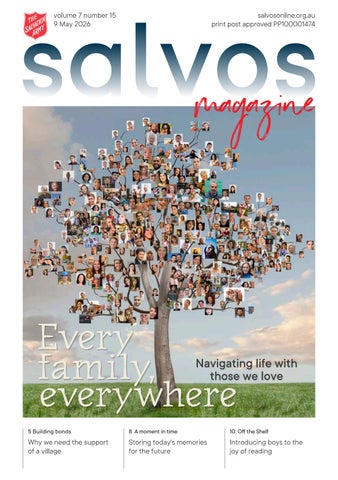
‘Every family, everywhere’ is the theme for National Families Week (11-17 May). It’s an opportunity to celebrate the joy and strengths of families, whether they are biological or chosen.
Scan here to connect with The Salvation Army services
Scan here to subscribe to Salvos Magazine
Founders: William and Catherine Booth
Salvation Army World Leaders: General Lyndon and Commissioner Bronwyn
Buckingham
Territorial Leader: Commissioner Miriam Gluyas
Secretary for Communications and Editor-In-Chief: Lieut-Colonel Paul Hateley
Publications Manager: Cheryl Tinker
Editor: Simone Worthing
Graphic Designers: Ryan Harrison/Cheryl Tinker
Enquiry email: publications@salvationarmy.org.au
All other Salvation Army enquiries 13 72 58
Press date: 17 April 2026
Printed and published for The Salvation Army by Commissioner Miriam Gluyas at Focus Print Group, Chester Hill, NSW, Darug Nation lands.
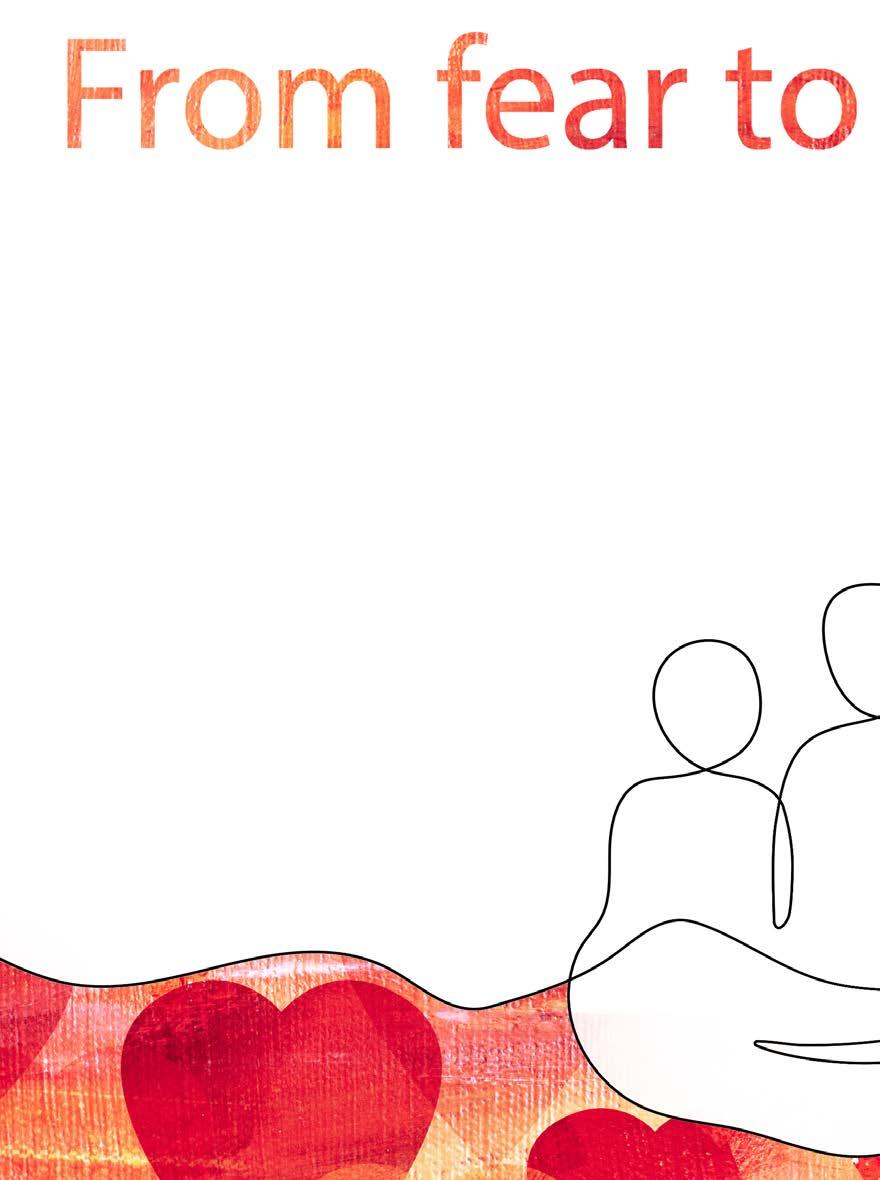
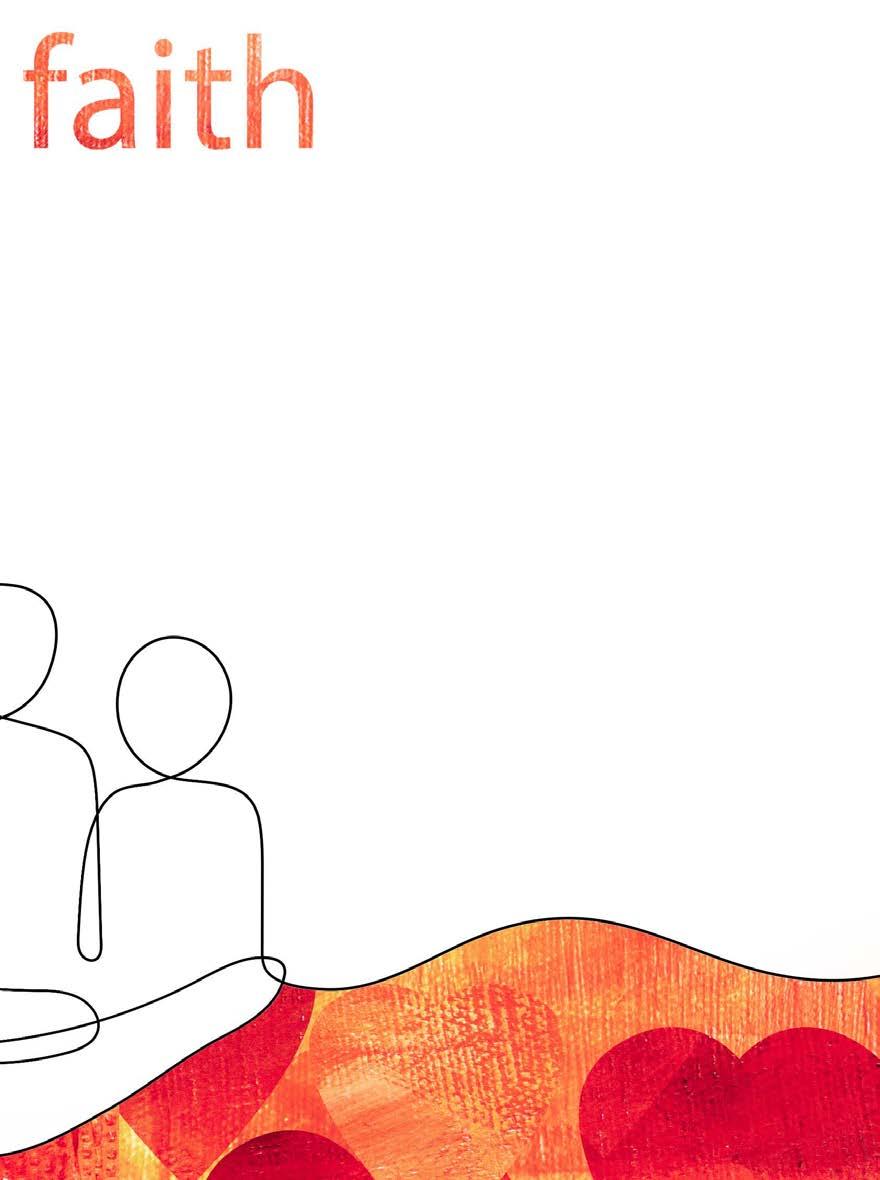
Remember, too, that you are welcome to join another family – a large, diverse family of faith, brought together by a God who loves us.
“See what great love the Father has lavished on us, that we should be called children of God” (1 John chapter three, verse one; New International Version).
Faye Michelson Acting Editor
Every family, everywhere
What is International Day of Families?
“Families come in many forms – single-parent households, extended families, blended families, multi-generational homes, and communities of care. What they all share is a need for recognition, protection, and policies that reflect the realities they face. International Day of Families helps bring these issues to the forefront through education, advocacy, and storytelling” (nfw.org.au).
Each year since 1993, International Day of Families has been observed
globally on 15 May. It’s a day to reflect on the role families play in building strong, connected communities. Whether chosen or biological, families are the foundation of care, belonging and resilience. This day is an occasion to celebrate those bonds, and also to highlight the social and economic pressures that many families face in a changing world.
The theme for National Families Week in Australia is “Every family, everywhere”.
The day encourages governments, workplaces, schools and individuals to think about how familyfriendly policies, inclusive systems and support networks can improve everyday life for people of all ages and backgrounds (awarenessdays.com).
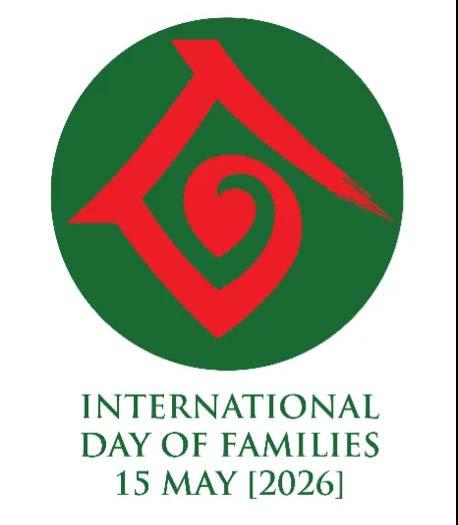
International Day of Families is represented by a specific symbol of a heart that stretches upwards and forms the roof of a house; the heart is then engraved in a green circle.
Families Week
Families Week, coordinated by Families Australia, runs in May each year to align with International Day of Families. In 2026, Families Week will be celebrated from 11-17 May.
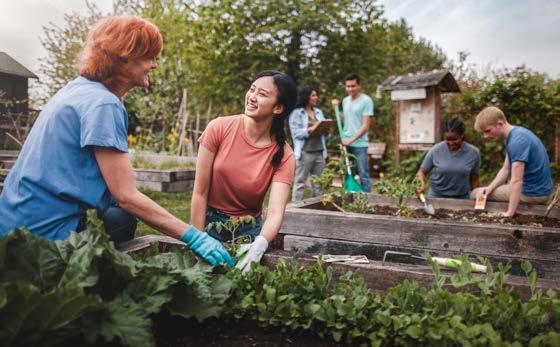
Families Week is all about events that bring people together – picnics, barbecues, school activities, art shows, morning teas and more. Let’s celebrate the vital role of families in Families Week, and all year round.
WE OUTSOURCED THE
Building bonds with each other to save our communities
by Justine Toh
When my two boys were small, we adored reading Richard Scarry’s Busytown series, but really, the books hit grown-ups in the gut. A Busytown meme explains why. It features a therapist saying, “You said you were disappointed with life and how the world operates. What were your expectations?” The answer is a screenshot from Busytown, a place abuzz with that village feeling many of us long for, and whose resident social animals ace being human together. But based on current projections, this isn’t the world my children can expect to live in as adults. It’s entirely our loss.
In Scarry’s vision, busy animals go about their day, from hapless Mr Frumble to local chaos merchant Bananas Gorilla, to Lowly Worm happily driving his apple car. From Postman Pig to Sargeant Murphy, the policeman-dog who wears
his helmet to bed, Scarry’s lovingly drawn and frequently nutty characters give the town’s local institutions a personal face. In Busytown, people are prior to the systems that make life go well. Outsourcing humanity
We could learn a thing or two from Scarry’s social animals, who are deep in each other’s lives. If media coverage of recent tragedies is any guide, our world is more a collection of atomised individuals living parallel lives of quiet despair, who increasingly rely on social services for a lifeline.
Not the most basic social system of all, second to the family: community.
We seem to have grown used to outsourcing to faceless systems, regulations and processes, the business of being human together.
But we’re kidding ourselves if we’re counting on social services alone to solve human problems. There’s
no substitute for the milk of human kindness.
You can see this systemcentric focus in the recent suspected double murder-suicide in Western Australia, and the findings of the inquest into the Bondi Westfield stabbings. Both terrible news stories have been painted as failures of underfunded, under-resourced systems. But system failure is downstream of social failure: the breakdown of our bonds with each other.
Jarrod Clune and Maiweena Goasdoue are suspected to have murdered their teenaged sons Leon, 16, and Otis, 14, out of despair, with reporting on the tragedy citing, as possible motives, recent cuts to their NDIS funding, and their utter exhaustion in caring for kids with complex needs. Commentary since has criticised ableist media coverage (“no choice: parents reached breaking point”) and proclaimed, loud and clear, that people with disability aren’t a “burden” and that “murder is never an option” for families in crisis. No argument here.
Community failure
Left unsaid, though, is the fact that increasingly, we conceive of the “support” that that family so desperately needed as met by a serviceprovider charging a fee. Not from a circle of concern that
radiates outwards, extending from immediate family to extended family, then to friends and other local connections, and only then to taxpayer-funded social welfare. You know, the way Busytown would probably do it.
Today, rather than freely “bearing each other’s burdens”, as old-fashioned biblical language would put it, we’ve become accustomed to paying for the privilege – an assumption that might be harder to shift than negative attitudes to disability. The private tragedy of that Western Australian family includes the fact we experience it as their private tragedy, not a failure of community. But we’re all implicated.
The recommendations of the inquest into the Bondi Westfield stabbings also lean heavily on a systemfirst response. Joel Cauchi’s psychotic rampage ultimately claimed six lives. Sickening crimes that might have been prevented, had Cauchi not fallen through multiple gaps in mental health services, as the coronial inquest found. A tragic detail of proceedings: Cauchi’s mother tried to alert his psychiatrist to his worsening psychosis seven times. She tried stepping into the gap. She tried.
But a mother’s love and fear can’t compensate for the lack of a village.
Instead, we settle for a village consisting of paid experts. Hence the inquest’s recommendations: the provision of government-run, short-term accommodation for mentally unwell people, access to onsite care, and increased funding for outreach services targeting homelessness.
Hope misplaced
Of course, governmentfunded services are always worth investing in, and a necessary fallback for people who lack other options.
Maybe it’s also daunting and deluded (who has the time or patience?) to conceive of us laypeople as personally responsible for some of the most vulnerable, and sometimes the most mentally unwell, among us. We defer to experts for good reason.
But looking to the government to fix everything is a misplaced hope.
Mind you, ‘small government’
doesn’t describe my politics. I just recognise the limits of what governments can achieve. Impersonal systems will tolerate you but not befriend you or compensate for crushing loneliness. They also have no jurisdiction over that mysterious terrain beyond the power of the state to regulate: our inner lives as well as our willingness to regard each other as members – even neighbours and friends – of the same community.
Maybe it’s foolish to take our cues for a better world from Busytown, Scarry’s mid-20th century fantasy of small-town America. But for a children’s picture book, it grasps a truth we seem to need reminding of more than ever: we’re social animals. The system won’t save us. Only other people will.
Justine Toh is Senior Research Fellow at the Centre for Public Christianity. This article was first published by Eureka Street.
The way we were
There’s no time like the present to make a time capsule
by Faye Michelson
There are times so precious you just want to bottle the moment.
It can be as simple as the family gathering around the dinner table, laughing and talking for hours. Or you might be lazing on a beach, the kids jumping over waves while you watch them under a big striped umbrella. Or maybe you’re walking along a bush track with those you love, listening to the birds call above you. You just want to hold on to that feeling of – what is it? It’s contentment, a quiet joy, like taking a deep breath and smiling from your heart.
Photos are the obvious way to capture these moments, but this International Family Week (11-17 May), try another way. Make a time capsule! It’s a fun, sweet and perhaps poignant way to remember the way we were.
This literally involves ‘bottling’ a moment in time by preserving a snapshot of your ‘capsulers’ and what they are thinking, liking, doing and dreaming of right now. The information is stored inside a secure container to be opened at some time in the future. It’s up to you how long you wait. You may want it to be opened by future generations, like the New York Times Capsule. This contains documentation of the 20th century, to be opened on 1 January, 3000. Or you could opt for a grand opening in a couple of years.
It’s a cliché, but every day is a gift, something the psalmist recognised when he wrote, “This is the day that the Lord has made; let us rejoice and be glad in it” (Psalm 118, verse 24 English Standard Version).
Let’s capture some of today’s joy to remember in the future.
Creating a time capsule
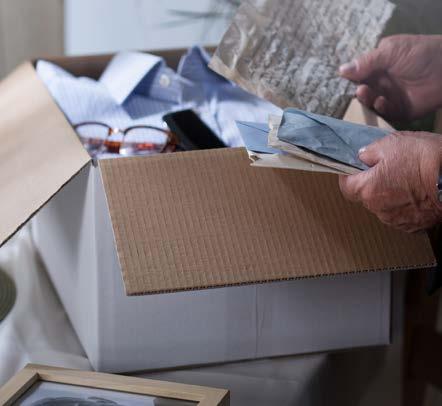
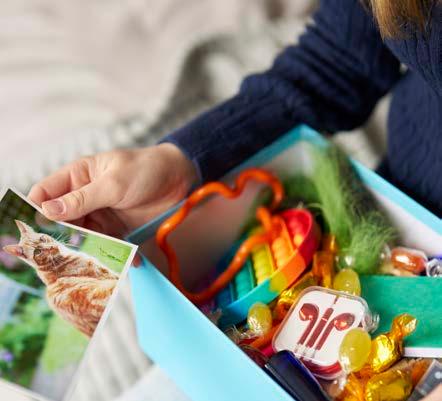
A time capsule can have a theme. If you’re gathering together for a celebration, the capsule could centre around that. You could add items such as a menu, invitation, place cards, who was there, what music was played, gifts, messages to each other and photos of the event.
You could do a ‘day in the life of us all’ time capsule. Everyone writes down what happened that day, such as five things they did or their school schedule, what they ate, what they wore, what TV or streaming show they watched, what they’re reading, what video game they’re playing, shoe size and height. The last two suggestions are particularly interesting
for children; you can record height by measuring how tall they are with a piece of string or wool to hold up against them when you open the capsule to see how much they’ve grown. Everyone could write what their goals are for the next year. Add a grocery receipt, the day’s news headlines and a photo of everyone.
To make gathering information easy for your ‘capsulers’, consider making a printout of the questions you want them to fill out.
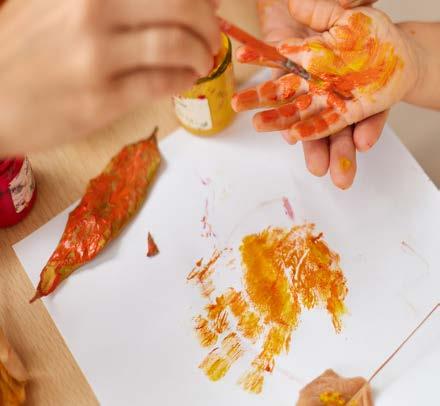
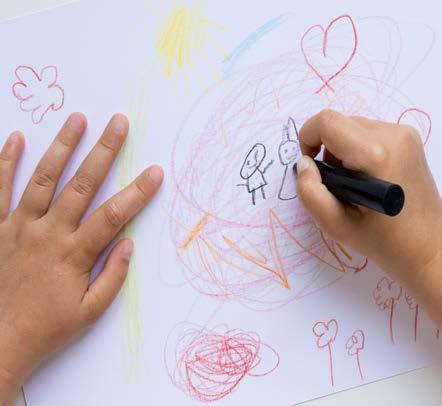
A children’s time capsule is guaranteed to bring sweet memories and smiles when it’s opened. Trace around their hands, measure their height, ask them to draw a picture of themselves, include a list of their favourite colour, movie, toy, ice-cream flavour, what they want to be when they grow up, etc.
Off the shelf
Boy, what a book!
by Mal Davies
I have a son who reads. A lot. This year he turns 30 and he continues to pore through books for work, for study he’s completing and just for fun. He’s inherited a very special ability from his father (and I inherited it from mine) to be able to shut out the world around him and just get lost in a book and the magic of words.
There could be people talking nearby, he could be on public transport, someone next to him might be watching television, yet he can just shut it out and read.
This isn’t a magic gift that arrived recently, it’s the result of years of reading that began when I read books to him as a toddler and a child; and then, when he learnt to read himself, he fell in love with books, and the passion survived the challenging teen years and blossomed as an adult.
Ah, the teen years. How do you keep a boy reading through his teens when there are distractions like sport, study, movies, music, parties, social media, online gaming and relationships to be pursued and formed?
In 2024, Deakin University did a study of teen reading habits in Australia, which began with a survey of more than 13,000 teen readers. It drew many conclusions, including details like 37 per cent of teen boys don’t read books in their free time and 67 per cent of them just don’t like reading.
The research also told us that boys read more non-fiction than girls, including biographies (like famous sports figures), books on technology and science, and books on video games and online activities.
Reading for boys
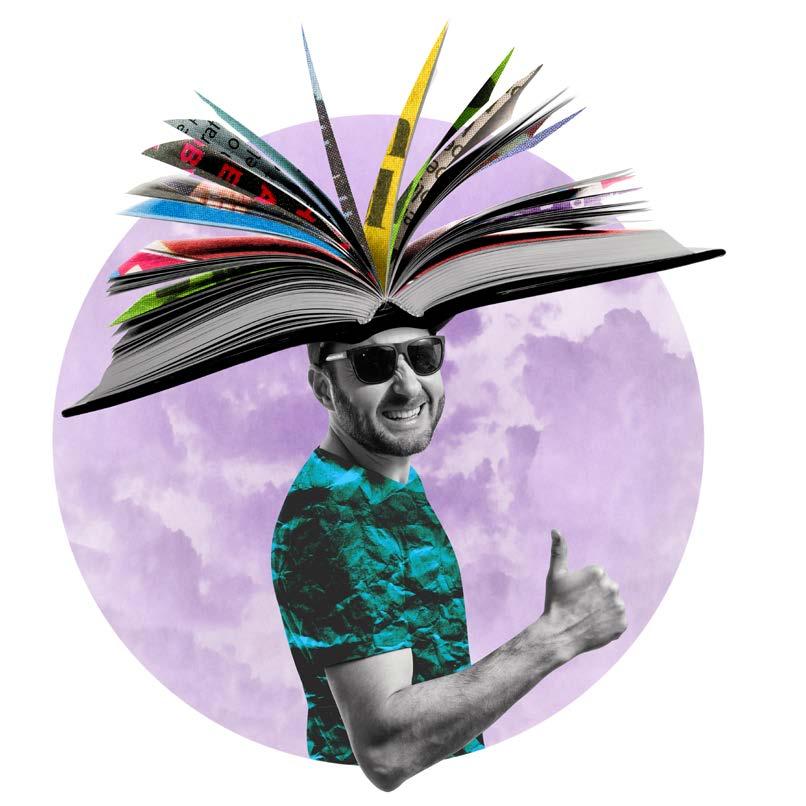
So how do you help the teenage boy in your life to read? First, and most importantly, most teen boys won’t take to reading if they don’t see it role-modelled, and especially by older males. Why would a teen boy bother to read if the men in their life never read? These rolemodels simply show that reading is not necessary to being a man.
If you want to help your teen boy buy a book – on the assumption they won’t just go and do it themselves – you must first find out what interests them and then google the word ‘book’ and that interest. You’ll be amazed by the results.
Everyone – even teenage boys – have things they’re interested in. Whether it’s a favourite Netflix show, a favourite motorbike, a favourite guitar or a favourite Harry Potter movie – there’s a book on it.
Note, too, that most bookstores now have a ‘Young Adults’ section with books often linked to latest movies and online gaming characters and teen themes. And don’t ignore the ‘Graphic Novels’ section, either. It’s not just Batman comics – most classic English novels can now be read in
comic form, often with great artwork. On my bookshelf at home, for example, are comic versions of To Kill a Mockingbird, Brave New World, 1984 and Hamlet
For adults who are readers, this also lends itself to one nice strategy. Read the same book as your teen son. For example, while you read The Great Gatsby, they read the abridged, young adult version of The Great Gatsby, then you can talk about it together. Interestingly, you can even buy a Manga
graphic novel version of the Bible or of the life of Jesus. Your 15-year-old son might not pick up a Bible, but he’ll read a comic book about a bloke called Jesus.
Which loops back to my previous suggestion – read the same thing in different formats, then discuss. What a great way to get your teen reading!
Major Mal Davies is a Salvation Army officer (pastor) who oversees The Salvation Army in Victoria
by Lerisse Smith
Ali* is thriving – raising her family, running a business and living a life grounded in faith. Her journey to this place was, at times, terrifying and dark, but through it all, she experienced a love that held firm and gave hope when life felt uncertain.
She shares:
I grew up with a single mum raising kids on her own. My dad had been very violent to my mum and to us. Mum had grown up with violence too, so she thought being hit was how you were shown love. When she finally left, she was very depressed and heavily medicated –the only way she knew how to cope.
We often went hungry. We often had nothing.
There was a lot of drug abuse, violence and trauma in our commission [public housing] neighbourhood.
Even after we left Dad, the street we lived on was full of families going through the same sort of things. Houses around us were refuge houses. People were always coming and going. Kids would
show up bruised or not fed properly; people struggling with addiction would turn up. It felt like a revolving door, and it wasn’t healthy.
Childhood
fear
Because of everything going on, we were in and out of foster care for years. Sometimes we were placed together, sometimes split up. That was very lonely and sometimes frightening.
Back then, clothes came from the Salvos or hand-me-downs. Mum would say, “Pick something for summer, pick something for winter”. The clothes were daggy back then – nothing like Salvos Stores now. It was embarrassing, but that was all we had [and it was something].
Hope and support
The Salvos were always there for us at that time.
They had this
little bus that used to drive around the neighbourhood and pick families up for church. We’d go to Sunday school, hear Bible stories, sing songs, and there’d be cakes or cookies. You’d get a good feed and a fun day, and we began to learn about God.
Christmas was another time the Salvos made a huge difference. I remember one year, just a couple of days before Christmas, they turned up with boxes of groceries – so much food – and presents for each of us kids. Mum was so grateful.
It happened a few years in a row.
Changed lives
As I got older, Mum began to change. She started praying and going to church.
Sometimes
Mum felt judged [by others], but she threw herself into a relationship with
God. She kept praying, kept reading her Bible, kept talking to God. I saw how faith gave her hope and slowly turned things around.
Later, she met my stepdad at church, and he’s been wonderful for her and for us. Life started to settle when I was about 11.
Now I’m a mum myself with three girls. Life looks very different now. But I saw how faith in Jesus transformed my mum’s life and I’ve built my life on the same rock. Jesus is my anchor.
Although we later went to a different church as a family, the Salvos first taught me about Jesus’ love.
The love of people who cared for us encouraged me. It made me want to be that kind of person. Now I try to live that way – to give, to help, to be generous. Because I know the difference it makes.
*Ali’s name and some details have been changed to protect and honour her family.
Chocolate
Mousse
Ingredients
125g cooking chocolate, chopped; 4 eggs, separated; 1/3 cup sugar; 1 tsp vanilla; ¼ cup walnuts
Method
Melt chocolate slowly in microwave until melted.
Beat together egg yolks, sugar and vanilla until mixture becomes light in colour.
Stir through melted chocolate and walnuts.
Beat egg white until soft peaks form and then mix lightly through chocolate mixture. Spoon into serving bowl or bowls and refrigerate to set.
Serve with cream or berries.
Believe in Good: Tips
“The bond that links your true family is not one of blood, but of respect and joy in each other’s life.”
– Richard Bach
This week, reach out and make contact with extended family members.
1. What are the three things plants need to grow?
2. Where did the tomato originate?
3. What type of plant is an Egyptian lotus?
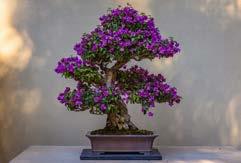
4. Where were the first bonsais grown?
5. What plant is known for its carnivorous nature?
Who am I?
I was the Australian Team Captain at the 2000 Sydney Olympics, having led the Boomers in five Olympic Games.
I was appointed a Member of the Order of Australia in 2002.
I was inducted into the Australian Basketball Hall of Fame in 2004.
Having played 22 seasons in the National Basketball League with the Melbourne Tigers, I am described as one of the greatest players Australia has produced.
PHOTO BY AMERICAN HERITAGE CHOCOLATE ON UNSPLASH
PHOTO BY DEVIN H ON UNSPLASH
Have a laugh
Why do plants hate maths?
Why do trees seem so suspicious?
Did you hear about the tree that won an award?
Because it gives them square roots. They always look a little shady. It was for being outstanding in its field.
What did one cactus say to another?
“Looking sharp!”
What’s the scariest plant?
What do you call a nervous tree?
Bam-boo! A sweaty palm.
Tum-Tum
On which page of this week’s Salvos Magazine is Tum-Tum hiding?
✏ Answers
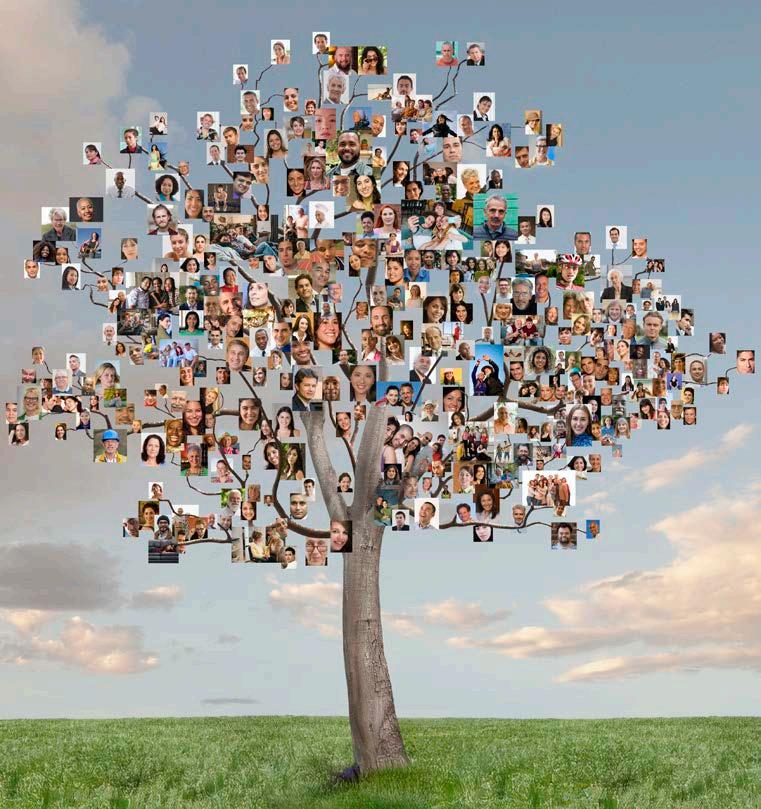
family tree on page 1.
Tum-Tum: is hiding in the
4. China 5. Venus flytrap I am: Andrew Gaze
Quiz: 1. Water, sunlight and the right temperature. 2. South America 3. Water lily
�� Word search
Words are hidden vertically, horizontally, diagonally, forwards and backwards. Enjoy!
Aunt
Baby
Brother
Cooking
Couple
Cousin
Daughter
Family
Father
Friends
Games
Grandmother
Holidays
Home
Housework
Laughter
Love
Mother
Parents
Sharing
Siblings
Sister
Son
Uncle
“Put your trust in the light while there is still time; then you will become children of the light.”