The Salvation Army, an international movement, is an evangelical part of the universal Christian Church.
Vision Statement
Wherever there is hardship or injustice, Salvos will live, love and fight alongside others to transform Australia one life at a time with the love of Jesus.
Mission Statement
The Salvation Army is a Christian movement dedicated to sharing the love of Jesus by:
• Caring for people
• Creating faith pathways
• Building healthy communities
• Working for justice
The Salvation Army Australia acknowledges the Traditional Owners of the land on which we meet and work and pay our respect to Elders, past, present, and future. We value and include people of all cultures, languages, abilities, sexual orientations, gender identities, gender expressions, and intersex status. We are committed to providing programs that are fully inclusive. We are committed to the safety and wellbeing of people of all ages, particularly children.
Scan here to connect with The Salvation Army services
Scan here to subscribe to Salvos Magazine
Founders: William and Catherine Booth
Salvation Army World Leaders: General Lyndon and Commissioner Bronwyn
Buckingham
Territorial Leader: Commissioner Miriam Gluyas
Secretary for Communications and Editor-In-Chief: Lieut-Colonel Paul Hateley
Printed and published for The Salvation Army by Commissioner Miriam Gluyas at Focus Print Group, Chester Hill, NSW, Darug Nation lands.
Faye Michelson Acting Editor Editorial
A work in progress
When I was a teenager, I used to think I’d know exactly where my life would be headed by the time I was in my mid-20s. By the time I was that age, I’d had a few unexpected detours, so I thought I’d have myself sorted out by the time I was 35. But, come 40 and beyond, I still didn’t have it all together as I navigated (as we all do) the many demands of life.
Of course, if we ever actually had it ‘all together’, it would mean that we had stopped growing, learning and changing. But life is not static, and as we travel through our lives, we’ll experience joy, contentment and fulfilment. We’ll also all find ourselves in places, physically and emotionally, that we don’t want to be.
In those times, I like to remember one of my favourite Bible verses: “Those who hope in the Lord will renew their strength, they will soar on wings like eagles, they will run and not become weary, they will walk and not be faint” (Isaiah chapter 40, verse 31. New International Version).
It’s reassuring to acknowledge that all of us are works in progress and, whatever that involves, God is with us if we invite him to be part of the process.
Getting down to
A day in the life of a Salvation Army Employment Plus consultant.
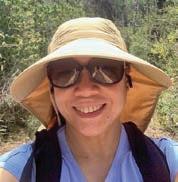
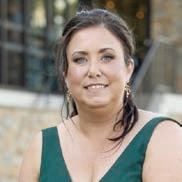
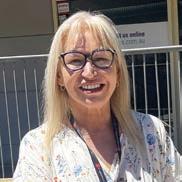
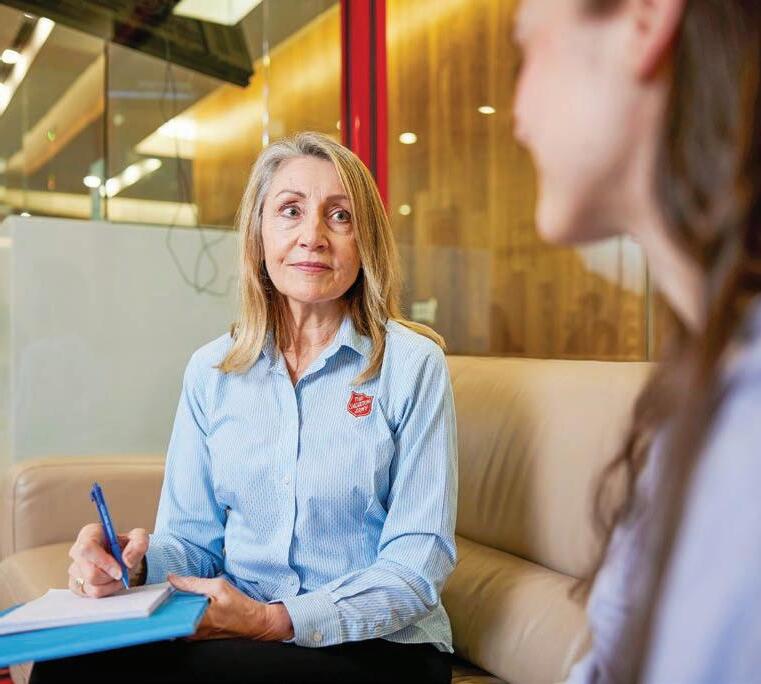
It’s 8.30am. For Employment Plus’s employment consultants across Australia, it’s all hands on deck and hearts full as they dive into the fast-paced mission of transforming lives through employment. Salvos Magazine journalist Lerisse Smith catches up with four Employment Plus consultants to uncover what a typical day looks like – and the wins that make it all worthwhile.
Tiffnny O’Connor (Victoria)
What led you to being an employment consultant – and what keeps you excited about your work?
I’ve always wanted to work with people who are disadvantaged. When this job came up, I thought, why not? What keeps me excited is helping people.
I love helping people, and to see some of my participants regain their independence and move away from their situation is really rewarding.
What’s a memorable or ‘wow’ moment you’ve had with a client?
I had a young man come in to see me. He had been jobless for about three years and was feeling very down. I very quickly got him into a job – and he’s been in that job ever since. I’ve just watched him grow from a person who was a bit introverted, a bit scared, to someone who is relatively confident and able to do his job.
His employer is so happy with him. He keeps in touch with me regularly. I think that’s amazing, and to hear him say that his parents are proud of him – that’s a real wow moment!
business
Rashidah Perrins (Victoria)
Walk us through a typical day –if such a thing even exists!
I work across two sites – Heidelberg and Preston. Mornings will start with reviewing my caseload, phone and face-to-face appointments. There’s also face-to-face contact, but I’m usually on the phone, working through daily checklists and reaching out to employers. We often walk through Heidelberg’s mall and centre as it’s a key community hub.
What’s a memorable or ‘wow’ moment you’ve had with a client?
I supported a 57-year-old unemployed [woman] who had language barriers and struggled with age discrimination. We completed her resume on a Friday, called employers on Monday, and by the following Friday, she was placed with a local employer. She’s still there two years on. That was a ‘wow’ moment. It doesn’t usually happen that fast!
At the end of the day, what makes you feel like saying, ‘That was a good day!’
When a client says, “Ah, that makes me feel better” or “I’m so glad I spoke to you.” It could also be anything, such as “Thank you for picking up my call”, “Thanks for helping me with my resume”, “Thanks for changing my appointment time.” It’s the feeling we helped someone.
Kirra Goodwin (NSW)
What led you to being an employment consultant – what keeps you excited about your work?
After 14 years as a bar manager, I developed skills in leadership, problem-solving, and interpersonal skills working with diverse people. Becoming a single mum necessitated [that I] seek more stable, secure employment to support my son. My passion for helping others led me to become an employment consultant, which I find incredibly rewarding, especially guiding people through their employment journey. The impact we make on their lives – big or small – is what keeps me excited.
How do The Salvation Army’s missions and values influence your everyday work?
Integrity shapes how I make decisions, handle confidential information, and remain accountable and transparent in my responsibilities. Compassion influences how I treat every person with patience and understanding, recognising that many may be facing big barriers. Respect reminds me to treat everyone with kindness, irrespective of their circumstances. Diversity encourages me to embrace differences in culture and lived experience, and to create a welcoming, safe environment.
At the end of the day, what makes you feel like saying, ‘That was a good day!’
A good day isn’t always about big outcomes. If I’ve helped someone move one step closer to their goal or helped remove a barrier that was holding them back, that’s when I think, yep, that was a good day.
Patricia Adorini (NSW)
Walk us through a typical day – if such a thing even exists!
No day is the same. I arrive early, print work calendars, read files, check notes and action plans, and follow up with clients. Remembering previous conversations and addressing ongoing issues earns clients’ respect because it shows I understand their situation. Delivering results is what makes me happy. What’s a memorable or ‘wow’ moment you’ve had with a client?
A young Indigenous woman, who had never worked and was couch-surfing, was initially rude and inappropriate. But she took a factory job, and the following week, hugged me tightly, thanked me, cried, and apologised for her behaviour, saying, “You’ve changed my life.” That moment touched my heart and taught me the meaning of what we do.
What’s the most rewarding and challenging part of your role?
The most challenging clients are those recently released from jail – they are extremely vulnerable. Gaining their trust and saying, “We’re going to get there, and around this barrier”, is crucial. The most rewarding part is achieving results. Helping someone others may have given up on and seeing them move forward means the world to me. Scan here for more information about Employment Plus.
Fresh stories for young readers
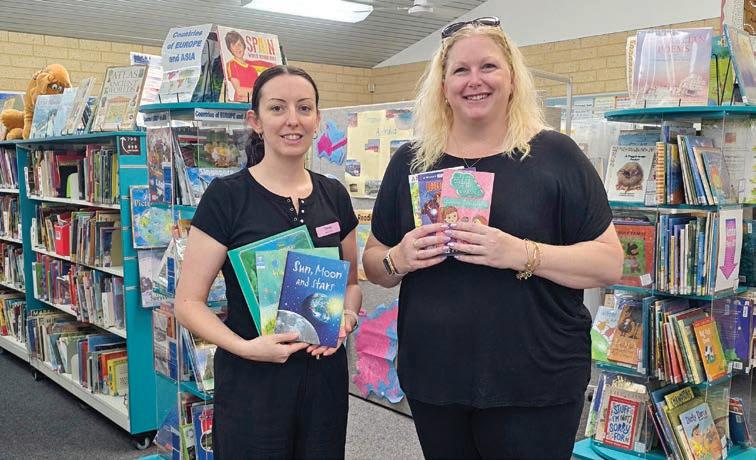
Late last year, Tracey Lewis, Salvos Stores Admin Assistant – WA State Office, noticed that the books her kids were borrowing from their school library were worn, damaged and often falling apart. Her kids were losing interest in reading simply because the books had become too difficult to enjoy.
Tracey reached out to the school and learned that limited funding meant they were struggling to replace old resources and were relying heavily on donations from families and the community.
Knowing there was an opportunity to help, Tracey connected with her Salvos Stores Area Manager to explore whether any stores could donate excess children’s books. The response was a resounding yes.
More than 100 books were donated to the school, and students have been thrilled to receive “awesome new books” to read and borrow.
“A huge thank you to Salvos Stores for their generous donation. These books are already bringing joy back into reading for young students,” says Tracey.
This story is a powerful reminder of how redistributing Salvos Stores’ excess stock can make a real difference in another part of our community. Something as simple as passing on books that are no longer needed can create joy, opportunity and connection for people who genuinely appreciate them. It’s a lovely reminder that giving items a second, or even a third, life not only reduces waste but supports people along the way.
Tracey Lewis, Salvos Stores Admin Assistant - WA State Office (left) with the Head of the primary school P&C.
Relieving financial pressure
No Interest Loans help cover the costs of everyday essentials.
Salvation Army No Interest Loans (Salvos Loans) offer a smart, affordable option for everyday situations. This includes up to $2000 for new appliances or furniture, school fees, or the cost of goods and services that support wellbeing, and up to $3000 for special purposes such as a bond to secure a new property or to recover from a natural disaster. These are the transactional ‘Good Shepherd’ funded microfinance loans that, if approved, are managed by The Salvation Army.
Salvos Loans works in collaboration with Salvation Army services Moneycare (financial counselling) and Doorways (emergency relief and casework) to provide assistance, including referrals, to clients when specialist casework or assistance is needed to enable clients to take out and manage a No Interest Loan.
Emergency situations are often referred to the National Debt Helpline or the Salvos phone assessment line.
Cross referrals from these services to Salvos Loans are also made. “It’s a complex but amazing service where all kinds of needs can be met,” says Sharyn Peterson, Microfinance Manager.
“The cost of living has dramatically impacted the people approaching our service, with requests for assistance moving from bigger products such as new white goods down to car servicing and repairs, vet bills and everyday living items.”
Sharyn said that the level of stress, urgency and desperation behind assistance being requested is growing.
“Things need to be happening faster because there are dire consequences when they don’t receive that support,” she says. “This is impacting people’s mental health.”
“Salvation Army loans begin with a loan term of 12 to 24 months. Case workers help clients prepare an affordable living budget for the year ahead, which includes the repayment plan. These plans can be adjusted, repayments reduced or paused, loan terms extended, and further support given if circumstances change.”
There are currently 2200 active loans involving $2.1 million.
Additional loans
Salvos Loans also offers a family and domestic violence (FDV) loan scheme, loans made in collaboration with Salvos Funerals, and generalist loans for those unique cases that fall through the cracks.
The unique FDV loan includes casework throughout the life of the loan. “We ensure that clients are engaged with domestic violence specialist services, social work supports, and, as part of our casework or through a referral, The Salvation Army Positive Lifestyle Program. The holistic program includes financial literacy education, guidance in crisis response
and emotional health,” says Sharyn. “It’s about deliberate referrals and deliberate engagement, including post-financial assistance where the real transformation in people’s lives takes place.
“This is a niche program but, due to lack of funding, we can only address a small part of the client cohort that needs that assistance.”
There are currently 150 active loans, to the value of approximately $380,000.
In certain circumstances, loans for unexpected funerals are also available. Salvos Funerals assists with pastoral
care, while the Salvos Loans team can also refer to Moneycare and financial counsellors if appropriate.
“For me, this is all about the personal impact on people’s lives; it’s about the value in engagement as opposed to the value in the items purchased,” says Sharyn.
“And, personally and in our program model, we go above and beyond at connecting people because we are The Salvation Army and that’s just what we do.”
For assistance call the National Intake Line on (02) 6241 0518 or email nils@ salvationarmy.org.au
Off the shelf
The joy of Little Golden Books
by Fay Foster
Did you know that the best-selling children’s book of the entire 20th century was a Little Golden Book?
The Poky Little Puppy – first printed in 1942 – sold nearly 15 million copies by the end of the year 2000. It is still the most loved Golden Book of all time.
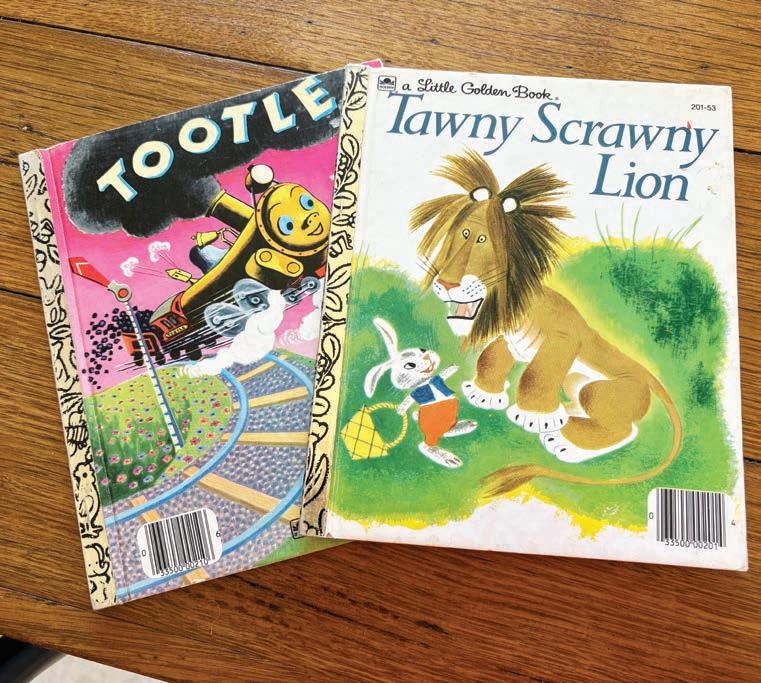
In the early lives of my children, now in their 40s and 30s, Little Golden Books were a much-loved part of everyday life. The Tawny Scrawny Lion, Saggy Baggy Elephant, Tootle (the train) and Scuffy the Tugboat were favourites – but we also loved that bunny looking for a home, the puppy who couldn’t stay out of trouble, and a large array of vehicles and animals who managed to make happy endings out of all kinds of situations.
The start of it all
Following the Great Depression, with a second world war raging, children’s books were both expensive and fragile (meaning that they were meant for adults to read to their children, rather than for children themselves to handle and read).
Then Head of the American Artists and Writers Guild, Georges Duplaix, saw how these factors limited children’s access to reading. In partnership with publishing house Simon & Schuster, he produced a new kind of children’s book – smaller, sturdier and much more affordable.
In September 1942, the first 12 titles in the Little Golden Book series were simultaneously released: Three Little Kittens, Bedtime Stories, The Alphabet A-Z, Mother Goose, Prayers for Children, The Little Red Hen, Nursery Songs, The Poky Little Puppy, The Golden Book of Fairy Tales, Baby’s Book, The Animals of Farmer Jones and This Little Piggy.
Each book had 42 pages, with 28 pages printed in two colours and 14 pages in four colours. The gold binding identified books in the series – and inside the front cover of every book was a bookplate that said, “This Little Golden Book belongs to …”. Books were no longer just for adults to own; they were for little readers to hold and to write their names inside.
Books for life
The value of Little Golden Books lies not just in their fun and appealing stories and characters, but also in the ways children identify with the characters and situations.
As Little Golden Books historian Leonard S. Marcus notes, “A new child in the family, a pet of one’s own, the first day of school – these are themes kids can relate to over generations.”
And there are lessons to be learned from these simple stories. The Taxi that Hurried is pulled up by a policeman for going too fast (the driver was singing a fast song!). The Poky Little Puppy’s
friends are allowed dessert only after they fill in the hole under the fence through which they’ve been escaping. Tootle lets distractions lead him into the meadow instead of staying on the track; but he eventually tells the young locomotives, “Work hard. Always Stop for a Red Flag Waving. But most of all, Stay on the Rails No Matter What.”
Over time, the themes in the series have been expanded to include classic fairytales, Disney stories, educational books and popular characters, both fictional and real. Barbie, the Ninja Turtles, SpongeBob SquarePants, Dora
the Explorer and even Bluey share library shelves with Kylie Minogue, Steve Irwin, Rosa Parks and Muhammad Ali.
I suspect that many faith journeys have begun with titles such as Bible Heroes, Miracles of Jesus, The Christmas Story, Prayers for Children and My Little Golden Book About God.
With an enviable array of authors, highquality structure and easy accessibility, Little Golden Books have brought the joy of reading to millions of children (and their parents). Let’s keep sharing them with the little people in our lives.
PHOTO COURTESY JENNIFER HARRISON
Hope, growth and new beginnings
Walking through the doors of an Employment Plus office is the first step towards changing lives.
Eisla’s story
Eisla struggled with addiction recovery and severe mental health barriers, all while trying to care for her five children as a single mother. She had been unemployed for 10 years before registering with Employment Plus and had little confidence that things would improve.
After a few months of working with Employment Plus, a housekeeping opportunity arose. Although this job was only temporary, it provided Eisla with the motivation and confidence she needed to look towards establishing a career. Eisla and her employment consultant discussed possible career paths, and they developed a plan for her to pursue a career in aged care. He recognised that Eisla’s lack of confidence needed to be addressed. He helped her arrange for dental work and assisted with the cost. They then arranged support with her reading and writing skills, helped her access counselling sessions and enrolled her in the Salvos’ Positive
Lifestyle Program. Once Eisla felt confident enough, her consultant referred her to a pre-employment program, which covered skills such as first aid, administering medication and compassionate care. Three months later, Eisla was accepted into an aged care traineeship and has set herself a new goal of becoming a registered nurse.
Shaun’s story
When Shaun* first walked through the doors of Employment Plus in Ipswich, he was unsure of where to begin. It had been seven years since he had last held paid employment, and the weight of long-term unemployment had taken its toll. With limited transport, childcare responsibilities and overwhelming financial stress, Shaun was facing some serious barriers that were holding him back from rejoining the workforce. He was also supporting his partner and young child (who was undergoing ongoing medical investigations), leaving him emotionally and physically drained.
In his first appointment, Shaun opened up about how lost he felt. While practical barriers were present, the biggest challenge he faced was a lack of motivation and confidence. Shaun didn’t have strong support networks around him, and for years had struggled to find the inspiration to move forward.
Shaun’s employment consultant connected him with the local Employment Plus Aboriginal and Torres Strait Islander Engagement Officer, for additional culturally sensitive and motivational support. From that point on, Shaun began slowly re-engaging. For the next year, he worked with his employment consultant, the engagement officer and the site recruiter, participating when he could in career counselling, wellbeing mentorship, hospitality training and White Card accreditation.
Just over a year after he first met with the team at Employment Plus, Shaun completed the four-week ‘Onwards and Upwards to a Job’ program, where he focused on building confidence, motivation and healthy routines, while also gaining practical employability skills. Shaun began to rediscover a sense of purpose and self-belief.
He then participated in a career counselling session, where he identified a longer-term goal: to one day pursue a career in the mental health sector. With another baby on the way, he wasn’t ready to commit to study just yet, but he now had direction and something to eventually work towards.
Eighteen months later, with help from his employment consultant and engagement officer, Shaun secured a hospitality traineeship. Within just two weeks, his employer reached out to the team at Employment Plus with glowing feedback about how Shaun was settling into the role: Shaun was a standout. He was thriving, not just professionally, but personally. For the first time in a long while, he felt proud, stable and financially able to support his growing family.
After a year of working in the job, and with all going well, Shaun officially graduated from the Workforce Australia employment services program.
What began as a story of doubt and hardship has become one of hope, growth and a new beginning.
*Name has been changed
Iced fruit bun
Ingredients
3 cups self-raising flour, ½ tsp salt, 1 tsp mixed spice, 60g butter, 1/3 cup sugar, 1 egg, ¾ cup milk, ¾ cup sultanas, 1 cup icing sugar, 1 tbsp water
Method
Pre-heat oven to 180 degrees. Prepare baking tray. Mix together flour, salt and spice in a bowl, rub through butter until it resembles breadcrumbs.
Add sugar, egg, milk and sultanas, mixing to make a soft dough.
Shape and place on baking tray, brush the top with milk. Cook for 50 mins. Cool.
Mix icing sugar with water and drizzle over bun.
☺ Believe in Good: Tips
“Your mind is a garden. Your thoughts are the seeds. The harvest can either be flowers or weeds.” – William Wordsworth. Always fill your mind with good things.
Quiz
1. What is the traditional Japanese art of paper folding called?
2. In pottery, what is the process of heating clay to harden it called?
3. What craft involves manipulating fibres to make fabric using two needles?
4. What is it called when pasting small pieces of coloured paper or fabric onto a surface to create a picture?
5. What is used to hold fabric taut while sewing by hand?
❓Did you know?
The Arts and Crafts movement began in Britain (1880-1920) in protest against industrialisation, promoting handmade quality over massproduced, factory-made goods.
Kirigami is the Japanese art of cutting and folding paper to create complex designs.
Humans have been weaving for at least 9000 years.
PHOTO COURTESY KAREN MASTERS
Have a laugh
What is the most common insect found on the beach?
Word search
What do you call seagulls that live near the bay?
What do you call very small waves crashing into the shore?
Micro-waves
How does the ocean floor keep up to date with the news?
By following current events
What do sea monsters eat? A beach buggy Bagels
Fish and ships
Tum-Tum
On which page of this week’s Salvos Magazine is Tum-Tum hiding?
Answers
Tum-Tum: is hiding behind some books in the on the shelf on page 10.
3. Knitting 4. Collage 5. An embroidery hoop
Quiz: 1. Origami 2. Firing
Words are hidden vertically, horizontally, diagonally, forwards and backwards. Enjoy!
Beading
byte
“Use whatever gift you’ve received for the good of one another.”
1 Peter chapter 4, verse 10 The Voice
BE THE HOPE FAMILIES NEED
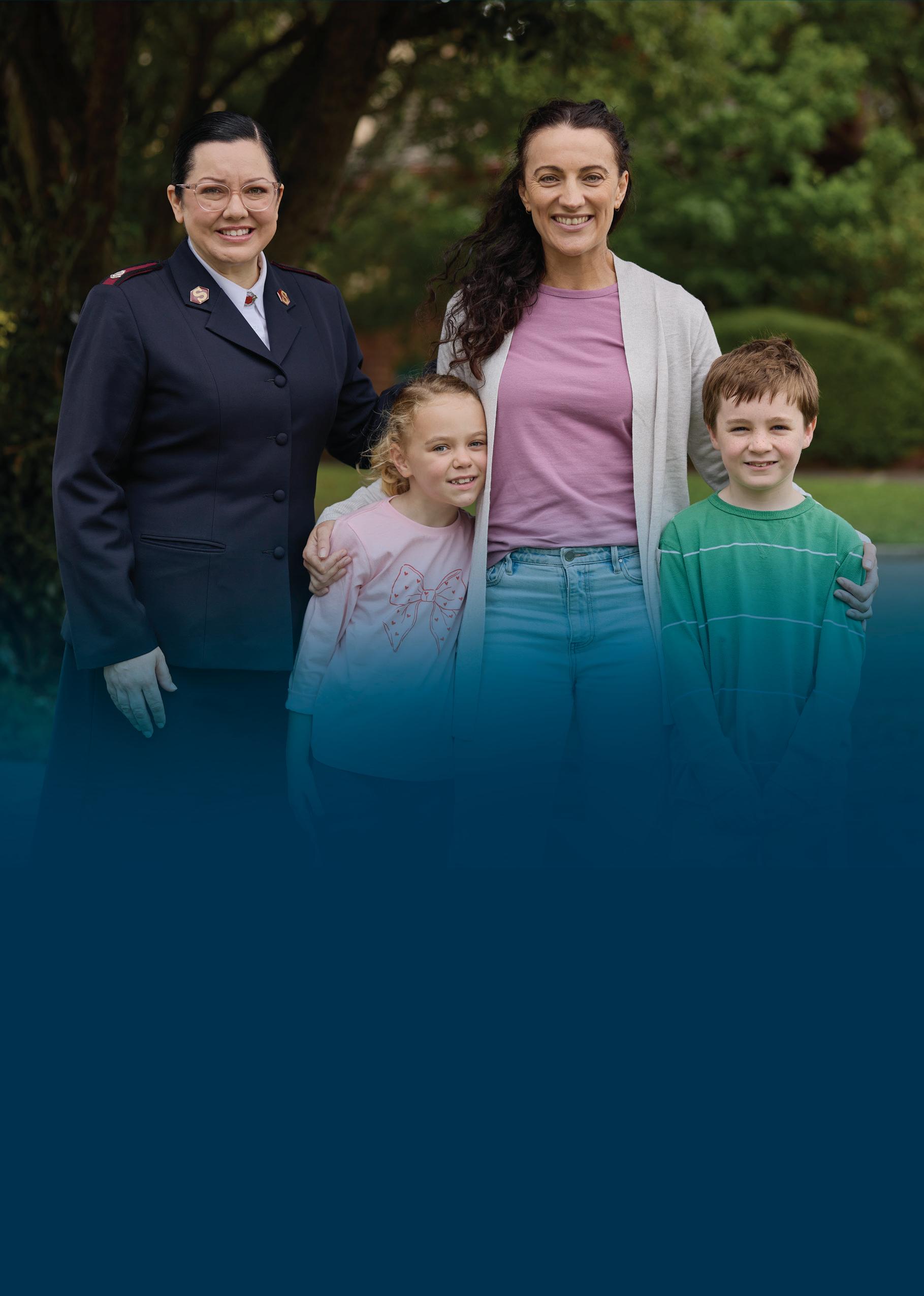
“I’m still in shock. I stand outside and just look at my home and think about how the Salvos saved us, they honestly did.”
- Suzi*
*Names changed to protect privacy.
Sometimes your whole life can be turned completely upside down in one crushing moment. For families like Suzi’s, that moment means being forced into homelessness. No child should ever have to call the backseat of a car home.
But sadly, more families than ever are being forced into homelessness and reaching out to the Salvos for help.
Your Red Shield Appeal gift can help a family like Suzi’s build a new life full of hope, and free from the harm of homelessness for good.