
The Salvation Army, an international movement, is an evangelical part of the universal Christian Church.
Vision Statement
Wherever there is hardship or injustice, Salvos will live, love and fight alongside others to transform Australia one life at a time with the love of Jesus.
Mission Statement
The Salvation Army is a Christian movement dedicated to sharing the love of Jesus by:
• Caring for people
• Creating faith pathways
• Building healthy communities
• Working for justice
The Salvation Army Australia acknowledges the Traditional Owners of the land on which we meet and work and pay our respect to Elders, past, present, and future. We value and include people of all cultures, languages, abilities, sexual orientations, gender identities, gender expressions, and intersex status. We are committed to providing programs that are fully inclusive. We are committed to the safety and wellbeing of people of all ages, particularly children.

It seems like there’s a ‘day’ for everything. All 365 days in the year are assigned to something. The United Nations has its list of them, mostly aiming to raise awareness of important issues. This month alone observes World Press Freedom Day (3 May), International Day of Living Together in Peace (16 May) and International Day to End Obstetric Fistula (23 May).
Then there are days assigned for fun. Do a search for ‘days of the year’ and you can select from a range of subjects, depending on what site you choose. I quite like Star Wars Day (4 May – may the fourth be with you), Do Lunch with Your Dog Day (15 May – are you serious?), and National Speak in Complete Sentences Day (28 May).
Scan here to connect with The Salvation Army services
Scan here to subscribe to Salvos Magazine
Founders: William and Catherine Booth
Salvation Army World Leaders: General Lyndon and Commissioner Bronwyn
Buckingham
Territorial Leader: Commissioner Miriam Gluyas
Secretary for Communications and Editor-In-Chief: Lieut-Colonel Paul Hateley
Publications Manager: Cheryl Tinker Editor: Simone Worthing
Graphic Designer: Ryan Harrison
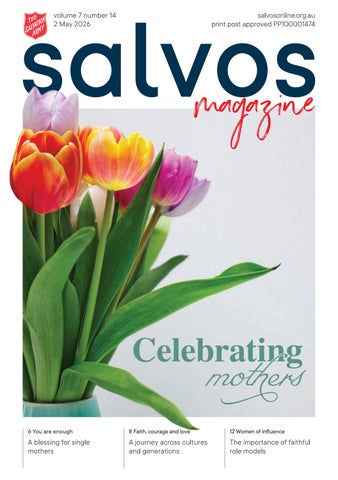
Cover: Photo by Timo C Dinger on Unsplash
Enquiry email: publications@salvationarmy.org.au
All other Salvation Army enquiries 13 72 58
Press date: 10 April 2026
Printed and published for The Salvation Army by Commissioner Miriam Gluyas at Focus Print Group, Chester Hill, NSW, Darug Nation lands.
The second Sunday in May, Mother’s Day, is a celebration in Australia. It honours mothers and the mother figures in our lives, but it is a complex day. It can be a day of love and gratitude, but it can also be a time of grief and loss. Whatever your Mother’s Day looks like this year, may you find love and peace.
Faye Michelson Acting Editor

If ever there was a group of people worth celebrating, it is surely mothers.
As the carriers, birth givers, carers, feeders, educators, listeners, counsellors, nurses, educators, transporters, entertainers – and above all, lovers – of their families, mothers play a hugely important role.
It’s no wonder then, that someone – in this case, a woman called Anna Jarvis, in the United States of America – came up with the idea of a special day to celebrate mothers. And, insisted Anna, the day must be called Mother’s Day (not Mothers’ Day), as it was for each person to celebrate their own mother, not mothers in general, “commemorating her for the matchless service she renders to humanity in every field of life”.
The first official Mother’s Day was held in 1908. Many countries around the world
now celebrate Mother’s Day, usually in March or May.
In Australia, it was not until 1924 that Mother’s Day became a well-accepted tradition.
A Mrs Heyden of Sydney is said to have first come up with the idea of giving gifts to mothers on Mother’s Day. She first gave them to mothers at the Home for Destitute Women and Children, then to lonely elderly mothers.
After seven years of having this gift-giving reported in the Sydney newspapers, Mother’s Day became an accepted date in the Australian calendar.
Today, we celebrate mothers and other women of influence in our lives and communities, while also supporting those for whom this day is challenging, sad and painful.
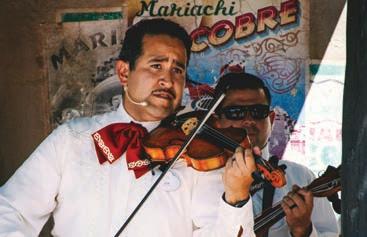
Have you ever been woken up at dawn by children – or possibly a whole band – singing to you from outside your bedroom window?
If not, you are probably not a mum who has experienced Mother’s Day in Mexico, where songs are sung at dawn to wake up the mother being celebrated.
Less appealing is the Serbian custom, in which mothers are woken by having their children sneak in and gently bind their mum’s feet with ribbon or string – and the mother must remain tied up until she gives small presents and treats to the children.
In a three-day ceremony with lots of local significance, the Antrosht Mother’s Day festival in Ethiopia begins whenever the rainy season ends. Celebrations include singing, dancing and the traditional meal of hash (a fried mixture of meat and vegetables). Girls provide spices and dairy, boys fetch the meat – and the mother is left to do the cooking!
In Japan, children draw portraits of

their mums, often displayed in public exhibitions. Mother’s Day gifts include flowers, a song, origami crafts and/or a shoulder massage. (That one might be worth being woken up for!)
In China and Italy, mothers get a break as the children (and possibly husbands) take over the family chores for the day. Mother’s Day gifts in China include health supplements or practical household items.
In some countries, such as Panama, Mother’s Day is recognised as a public holiday, often accompanied by street parades.
Families in the Philippines first attend morning mass together, then show love to their mum for the rest of the day with a family gathering, an afternoon of karaoke, or a trip to the shopping centre.
Around the world, Mother’s Day can be celebrated on any date from February to December. Might as well just celebrate our mums every day!

On this ‘day of dissonance’ Amanda Brummell shares her thoughts for Mother’s Day “for those of you who walk similar uneven paths”.
May you feel seen today – not for how well you hold it all together, but for the quiet ways you refuse to let it fall apart.
May you find release from the burden of performance –yours, and your children’s.
May no small hand feel pressured to craft surprise, and no weary heart feel the need to feign delight.
Let the tokens pass you by if they do not speak truth.
Let the flowers wilt, the cards go unopened, if they only bloom in the shadow of unmet support.
May you know that acts of nurture, fierce and unrelenting, deserve rest not ribbons, safety not sentiment.
And if this day aches –with absence, with exhaustion, with the sharp edge of being unseen –may you know it is not your children who have failed, but a society that honours with words what it denies in practice.
Still, may there be one soft moment –a deep breath, a warm drink, a glance of self-recognition –that reminds you:
You
are not invisible. You are not alone. You are enough.
Frontline workers supporting some of Melbourne’s most vulnerable community members are set to benefit from a groundbreaking partnership between The Salvation Army’s Melbourne Project 614 and the University of Canberra.
The pioneering alliance will transform community training and support for frontline workers and volunteers, launching a tailored educational pathway in May designed to strengthen and sustain the Project 614 workforce as it continues to recruit and train new staff and volunteers.
Through the partnership, Project 614 employees and volunteers – who work with people experiencing homelessness, isolation, poor health and complex social barriers – will now have the opportunity to upskill with a Professional Certificate in Foundations for Working and Volunteering in Community Organisations. It is designed to equip workers with the knowledge, skills and confidence required for effective frontline community work.
“We are very excited about the partnership,” said Project 614 Team Leader Major Brendan Nottle. “It has been an exciting journey during the past 12 months where the academics that we have been working with, Professor Rachel Gibson and Professor Tanya Lawlis, have been genuinely excited to learn about The Salvation Army’s history, culture and values.”
The University of Canberra’s ViceChancellor and President, Professor
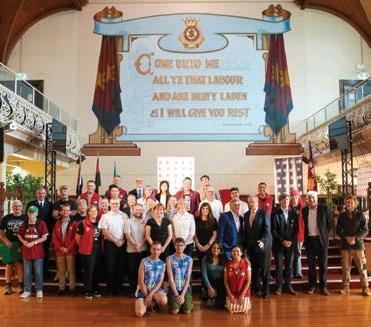
A large crowd gathered to celebrate an exciting new partnership between The Salvation Army's Project 614 and the University of Canberra.
the Honourable Bill Shorten, officially launched the innovative project on 10 March at The Salvation Army’s premises in Bourke St, Melbourne.
The University of Canberra’s Faculty of Health and Salvation Army employees co-designed the course to ensure the units blend academic expertise with lived practice directly drawn from the work undertaken at Project 614.
“This partnership is more than an educational initiative,” said Professor Shorten. “It is an investment in people, in community, and in the future of compassionate care.”
Brendan Nottle praised the University of Canberra leadership for turning “an idea into a living, breathing pathway for change”. – Lerisse Smith
by Naomi Singlehurst
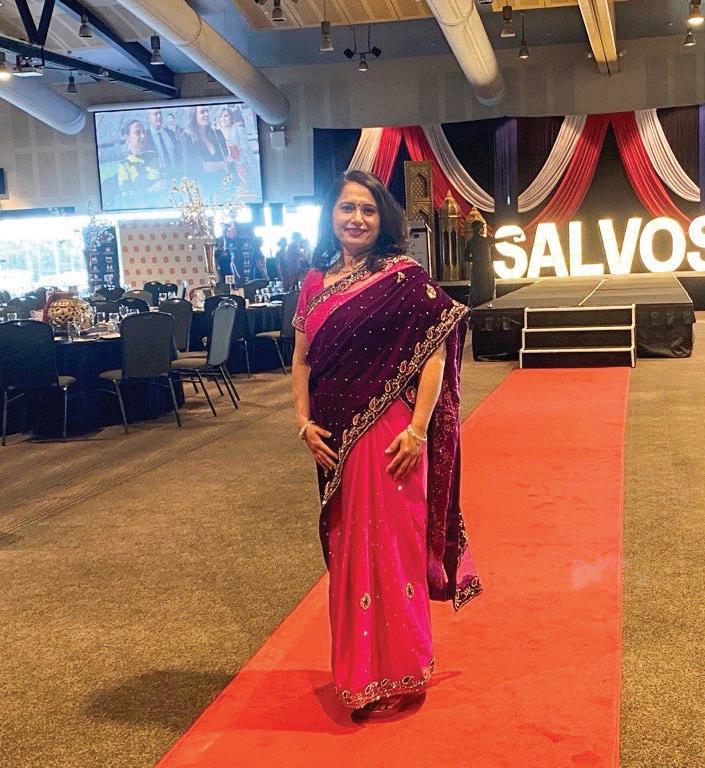
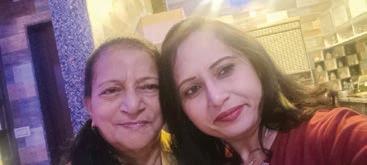
Nuria grew up in Vasai, a beautiful, peaceful Catholic village outside Mumbai, India. The village was small – home to around 200 families – where faith and community life were deeply intertwined. Church bells marked the rhythm of daily life, and the parish served as the centre of social and spiritual connection.
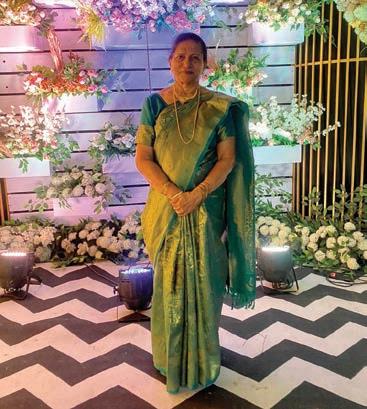
“Our lives intertwined with the church calendar,” Nuria recalls. “Mass, choir practice, youth groups and St Vincent de Paul meetings ... The congregation was like a larger family bound by faith.”
One night, when Nuria was eight years old, that sense of security was shattered.
In the early hours of the morning, robbers forced their way into the family’s home. Nuria’s parents acted quickly. Her mother hid the children under the bed and instructed Nuria, the eldest, to keep her younger siblings quiet while the intruders attacked her father with wooden sticks in the same room. Her aunt was attacked elsewhere in the house.
“It was terrifying,” she says. “But Mum was very strong and she had a strong faith.”
In a desperate attempt to seek help, her mother fled through the back door, praying “Christ help me, guide me,” and ran across nearby fields to alert neighbours. A local resident rushed to the
church and rang the bell in the middle of the night, waking the entire village. Within minutes, the community came running.
Nuria’s father required more than 20 stitches. Her aunt was injured. Her grandfather, who had been locked in another room, died two days later from the shock.
Despite the tragedy, Nuria says the experience deepened her family’s faith and resilience and showed the importance of forgiveness. She says her parents showed “the power of unwavering faith in the face of adversity”, and “became a pillar of strength”.
“No matter what challenges come our way, through our faith, we can overcome.”
After completing a Bachelor of Education and teaching for a year, Nuria entered an arranged marriage with Rodney, an engineer who had been offered work in Australia.
Within a month of their wedding, Nuria had moved across the world to start life in a new country. “It was total culture shock,” says Nuria. “No family. No relatives. Everything new.”
Even language felt unfamiliar. “People would say ‘no worries’ and I would think –I’m not worried. Colleagues would crack
jokes and I would laugh but have no understanding.”
During these lonely, uncertain times, Nuria’s faith and courage guided her. Each morning, she attended Mass at a nearby church, gradually forming friendships with women from many cultural backgrounds. These women welcomed Nuria with kindness and helped her understand life in Australia.
Motherhood, career and calling Nuria and Rodney were married in 2004 and have two beautiful daughters.
“I want Rionah and Rishona to carry the courage and resilience my mother showed me, to trust God even in the most uncertain times,” says Nuria. “I also hope they cherish our Indian roots – the culture, the language, the festivals, the food, the sense of community – while embracing the opportunities of life here in Australia.”
For Nuria, motherhood is found in both extraordinary and everyday moments. “These small moments are the ones that matter most,” she says.
Professionally, Nuria has found her calling with The Salvation Army, where she began working through Employment Plus before stepping into her national CaLD (Culturally and Linguistically Diverse) leadership role. Her work focuses on supporting Salvos teams across Australia to engage effectively and meaningfully with culturally and linguistically diverse communities.
“Mother’s Day, for me,” says Nuria, “is a celebration not just of my role, but of the circle of lessons passed down across generations; a reminder that faith, love, courage, laughter and generosity transcend borders, cultures and time.”
by Faye Michelson
Geranium cuttings in little pots, lollies in jars, soaps in organza bags, shiny plastic necklaces – these are the types of treasures often found on school and kindergarten Mother’s Day stalls. What would Mum like? It’s a weighty decision for many of the children lined up, clutching their gold coins in anticipation.
I’m delighted that I’m still receiving gifts, both handmade and bought off stalls, from my granddaughters and grandson on Mother’s Day (or, as they reframe it, Gaga’s Day).
Last year, I received one of my favourite gifts from my five-year-old granddaughter. After her three older sisters had presented me with the cards they’d made, she sidled up to me with a big smile and held out her hand. In it was a tiny, slightly grubby, little purse.
“Thank you,” I gave her a hug.
“There’s something inside.” She unzipped it to reveal a pink plastic shell.
“That’s beautiful!” I said, carefully holding my precious gift. “Thank you so much darling.”
She beamed and ran off. My daughter, her mother, raised her eyebrows.
“What a cute present,” I said.
“It is,” my daughter agreed. “Last time I saw that it was on my bedside table. She gave it to me this morning while I was having my Mother’s Day breakfast in bed.”
As far as I know, there’s no rule against sharing Mother’s Day presents. But, as it turned out, there was more sharing going on here than we’d originally thought. The little purse actually belonged to one of Miss Five’s sisters, who wanted it back.
None of this affected my granddaughter’s pleasure in giving her gift. She simply took the shell out of the purse and gave it to me, nodding happily when her mother and I agreed to share it.
“Don’t lose it,” my daughter advised me. “She’ll probably want to give it to someone else soon.”
Proudly chosen or carefully made, Mother’s Day gifts are from the heart. But the real gift for mothers – and grandmothers – is the delight on the face of their little person as they hand them their special present.
Children are precious to the generations above them. As a grandmother, I love verse six in Proverbs chapter 17, which describes a grandparent’s relationship with their grandchildren. Different Bible versions say it differently, but all beautifully. The Easy-to-Read version puts it this way: “Grandchildren are the pride and joy of old age,” but I like some of the other versions, which describe grandchildren as “the crowns” of their grandparents. Those crowns for me are decorated with their love, smiles, trust and, in one case, a little pink shell.

by Karen Masters
What sort of influence are you?
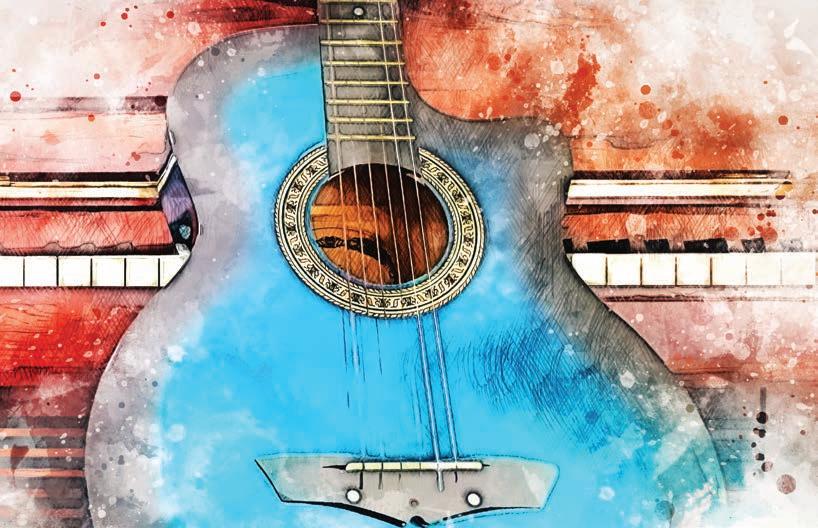
I had two women in my life who were great influences and mentors to me. One was a married woman, a mother, not related to me; the other was a single woman, not a mother: my great-aunt. What these women had in common was that they were my music teachers.
When you sit in a room with another person every week, while speaking about music, it becomes a special relationship. This type of relationship is not one that you can have with just anyone.
The first of these women, my church leader,
came into the life of a nine-year-old who was shy and didn’t have a voice, an opinion or a purpose, except that I wanted to play guitar. The acceptance and patience that Captain Ruth had for me was a grounding for my life; she showed me that I was noticed and worthwhile.
When Captain Ruth was moved on to another church, I needed to find a new mentor, a new outlet for my music. I turned to my Great-Aunt Jean for piano lessons. She then took over the weekly mentoring, accepted who I was and showed great patience as I navigated my teenage years.

While these two women were primarily my music teachers, they were also my life teachers . They were women who showed God’s love in everything they did. Did they ever preach at me or tell me how to live my life? No! They showed me what sort of person to be, by the way they lived their own life, by their acceptance, by their patience and by their love.
As I look at these childhood years and the patience that these two women
showed me, I wonder what would have become of me it they hadn’t been there, through a time that I needed to be seen as a worthwhile person. These two special women were, in their hearts, mothers to all those they came in contact with. I thank God for them and the influence that they had on my life and on the lives of many others.
Major Karen Masters is a Salvation Army officer (pastor) and Communications Care and Support Officer.
“When she speaks, her words are wise, and she gives instructions with kindness.”
Proverbs chapter 31, verse 26
New Living Translation
“The Spirit has given each of us a special way of serving others.”
1 Corinthians chapter 12, verse 7
Contemporary English Version

Ingredients
Cream cheese; 8 slices of bread, any type; seasoning of your choice; 1 cucumber, thinly sliced; 1 tbsp chopped dill; 1 pear; 1 tbsp chopped walnuts; honey.
Method
Spread cream cheese over one side of each slice of bread and sprinkle with seasoning. On four slices of bread, layer cucumber slices over the cream cheese and sprinkle with dill.
Chill until ready to serve.
On the remaining bread, layer sliced pear over the cream cheese, sprinkle chopped walnuts on top and drizzle with honey.
Then, because so many people were coming and going that they did not even have a chance to eat, he said to them, “Come with me by yourselves to a quiet place and get some rest.”
Mark chapter 6, verse 31 New International Version
Don’t forget to make time to rest, it is important to your health.
1. While not technically a mother, this woman was known as a ‘mother’ to thousands while working as a missionary in India.
2. This woman fell in love with her employer, becoming stepmother to his seven children in a famous family of singers.
3. Mary Wollstonecraft is widely considered to be the ‘Mother of Feminism’. Her daughter, Mary Wollstonecraft Shelley, is the author of which famous book?
4. Who is the mother of Kate Hudson?
5. Mrs Potts in Beauty and the Beast is the mother of which teacup?

On which page of this week’s Salvos Magazine is Tum-Tum hiding?
3 May 1958
Breakfast at Tiffany’s is published. This novella by Truman Capote is one of the author’s most popular works. The 1961 film, starring Audrey Hepburn, is considered a classic.
3 May 1913
The first Indian full-length feature film premiered. The release of Raja Harishchandra marked the birth of the Indian film industry, the world’s largest in terms of films produced and ticket sales.
8 May 1970
The Beatles release the album Let It Be. This recording was the last studio album released by the band.
Tum-Tum: is hiding behind the mug on page 4.
3. Frankenstein 4. Goldie Hawn 5. Chip
2. Maria Von Trapp
Fill in the grid so that every row, every column and every 3x3 box contains the digits 1 to 9.
A toddler can do more in one unsupervised minute than most people can do in a day.
Mum’s recipe for iced coffee: 1. Have kids. 2. Make coffee. 3. Forget you made coffee. 4. Drink it cold.
Silence is golden. Unless you have kids. Then silence is suspicious.
“You are the one who put me together inside my mother’s body.”
Psalm 139, verse 13
English Version
“What I experienced through donations to The Salvation Army changed my life in ways I could never have imagined. The programs they run work - and I’m an example of that.”
- Ava*
*Names changed to protect privacy.
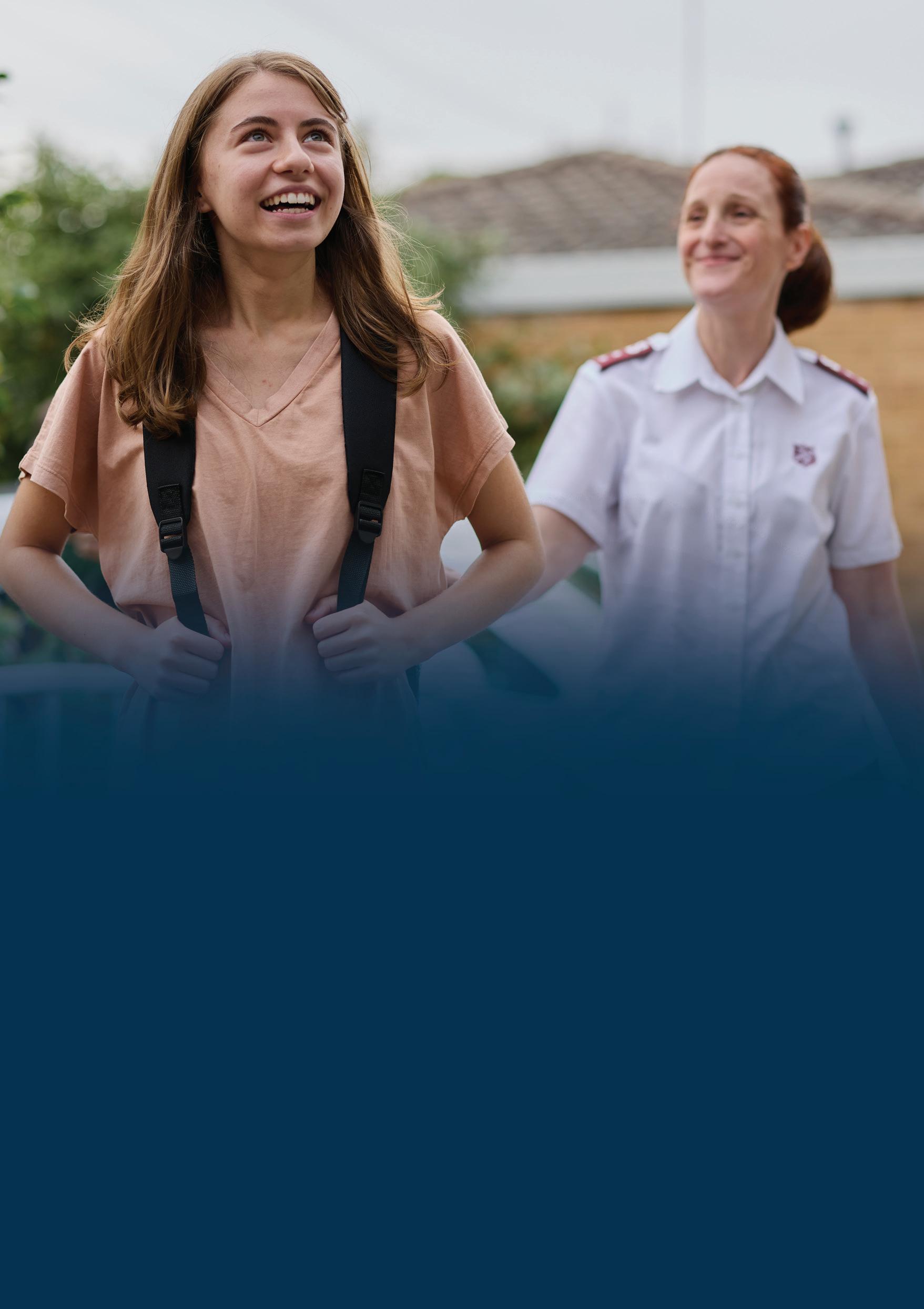
Right now, many young Australians are facing overwhelming pressures as they finish school, without the safety or support of a stable home. For some, home life becomes too difficult to stay, leaving them at risk of homelessness and unsure how to manage on their own. Your support for the Red Shield Appeal can help provide safe housing, essential life skills, and the guidance they need to build a more secure future.
Where there is fear, you can be the hope people need.