“Tomorrow when I awaken, the slate will be clean, and a new day will stretch before me. God’s mercies are new every morning.”
– Lori Hatcher
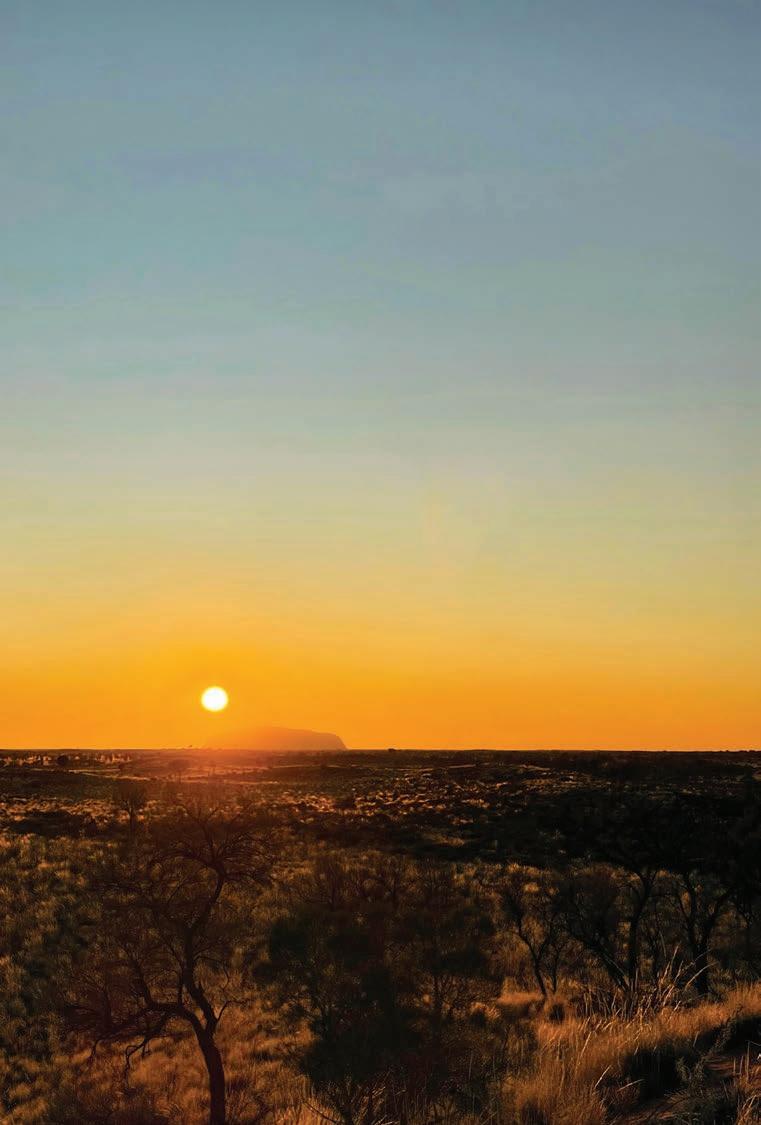
PHOTO BY JO JO ON UNSPLASH
What is The Salvation Army?
The Salvation Army, an international movement, is an evangelical part of the universal Christian Church.
Vision Statement
Wherever there is hardship or injustice, Salvos will live, love and fight alongside others to transform Australia one life at a time with the love of Jesus.
Mission Statement
The Salvation Army is a Christian movement dedicated to sharing the love of Jesus by:
• Caring for people
• Creating faith pathways
• Building healthy communities
• Working for justice
The Salvation Army Australia acknowledges the Traditional Owners of the land on which we meet and work and pay our respect to Elders, past, present, and future. We value and include people of all cultures, languages, abilities, sexual orientations, gender identities, gender expressions, and intersex status. We are committed to providing programs that are fully inclusive. We are committed to the safety and wellbeing of people of all ages, particularly children.
Help is out there
The Salvation Army’s Social Justice Stocktake Report 2025 (see page 4) showed that 43 per cent of Australians consider alcohol and drug misuse a serious issue for our nation, and for our local communities. And 9.7 per cent believe it’s an issue affecting their personal lives as well.
Substance misuse impacts people of all ages and backgrounds. It wreaks havoc on everyone involved. Its results can last a lifetime.
In this edition, we take a look at some of the facts and figures around substance abuse in Australia, as well as how the Salvos are responding through their Alcohol and Other Drug (AOD) services nationally.
Scan here to connect with The Salvation Army services
Scan here to subscribe to Salvos Magazine
Founders: William and Catherine Booth
Salvation Army World Leaders: General Lyndon and Commissioner Bronwyn
Buckingham
Territorial Leader: Commissioner Miriam Gluyas
Secretary for Communications and Editor-In-Chief: Lieut-Colonel Paul Hateley
Publications Manager: Cheryl Tinker
Editor: Simone Worthing
Graphic Designer: Ryan Harrison
Enquiry email: publications@salvationarmy.org.au
All other Salvation Army enquiries 13 72 58
Press date: 6 March 2026
Printed and published for The Salvation Army by Commissioner Miriam Gluyas at Focus Print Group, Chester Hill, NSW, Darug Nation lands.
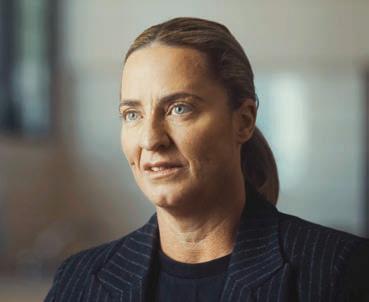
Paula’s story is particularly poignant. She grew up in a loving family, but a sexual assault sent her down a path of misusing alcohol to numb the shame she felt.
Paula entered The Salvation Army’s William Booth House, has rebuilt her life, and now works at an AOD centre in Melbourne, helping women in similar circumstances.
Help for those struggling is always there – please reach out if you or someone you know needs assistance.
Simone Worthing
Editor
Alcohol and drug misuse
Taking stock of our communities
Harmful alcohol and other drug use in Australia represents a significant public health concern, with wide-ranging social, economic and health implications. Despite extensive efforts to address this issue, it remains a persistent challenge affecting individuals, families and communities across the country.
Not all alcohol and drug use results in dependence or causes serious issues. In this context, we use the terminology ‘alcohol and drug misuse’ to refer to substance use which incurs harm.
Some of the harm that can be associated with alcohol and drug misuse for individuals includes impacts on health and wellbeing, relationships, employment and education. For the community, some of the harm from alcohol and drug misuse can include increased contact with the justice system, disease and injury, road accidents, and the
1742 ALCOHOLINDUCED DEATHS RECORDED IN 2022
There were 1742 alcohol-induced deaths recorded in 2022. This was a 9.1 per cent increase on 2021.
exacerbation of mental ill-health and family and domestic violence.
Alcohol and other drug-related harm is both a driver and result of other forms of disadvantage. Often a person experiencing alcohol or other drugrelated harm is also experiencing multiple disadvantages at once. Substance use itself can be disruptive to the brain, making it harder to change behaviour – even if a person wants to.
According to the National Drug Strategy Household Survey in 2022-23, around 47 per cent of Australians aged 14 and over had used a non-prescribed drug at some point in their life (including pharmaceuticals used for non-medical purposes) and 16.4 per cent had used one in the last 12 months.
It is also estimated that around one in 20 Australians have lived experience of alcohol or drug misuse.
1 IN 5
More than one in five Australians (21 per cent) aged 14 and over have been verbally or physically abused, or put in fear by another person who was under the influence of alcohol.
Almost one in two Australians have engaged in non-prescribed substance use in their lifetime.
Feature Salvos offer alcohol and other drugs services
Everyone deserves access to safe, respectful and supportive services. The Salvation Army is committed to creating environments where people feel valued, included, respected and heard.
As one of the country’s largest providers of Alcohol and other drugs (AOD) treatment services, the Salvos offer a range of programs across Australia.
If you’re looking for a place of hope, compassion and dignity to support you as you overcome your challenges, we are here for you. We hope that our treatment services can help you build your life in meaningful and purposeful ways.
The focus of our services is harm reduction. We want to prevent and reduce harm for both individuals and the wider community. We want people to have better relationships with their families, friends and communities.
Across Australia, we offer a range of programs, including:
• Withdrawal management
• Residential rehabilitation
• Non-residential rehabilitation
• Community programs and harm reduction interventions.
Our services are designed to respond to a range of needs and severity of alcohol and other drug use, and we aim
to engage people in the least invasive types of service.
That may mean suggesting a service type that you hadn’t thought of before, either run by the Salvos or another service provider in your area.
We value and include people of all cultures, languages, abilities, gender identities and expressions and sexual orientations. We are committed to providing fully inclusive programs. We will work with you to access the service safely, comfortably and with dignity. We work to develop strong partnerships between services and other health and community agencies so you can get the kind of care you want when you need it.
Recovery is not straightforward and we aim to support you during every step of this journey.
We are passionate advocates of the Australian community and are committed to The Salvation Army’s vision to live, love and fight wherever there is hardship or injustice, transforming Australia one life at a time with the love of Jesus. Scan here for more information and contact details
A new season of hope in Sydney
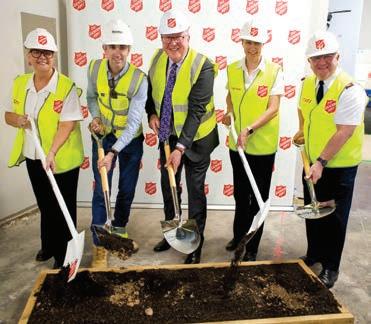
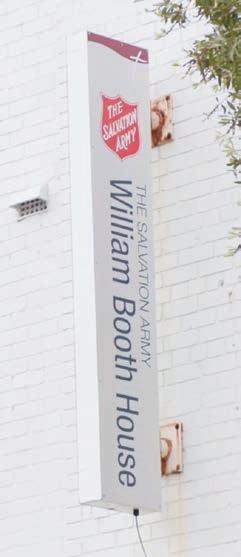
The first sod has been turned on a major redevelopment of The Salvation Army’s Alcohol and Other Drugs service, William Booth House, in inner Sydney.
The moment was marked at a ceremony attended by Salvation Army leaders, members of parliament and leaders of the construction company, Grindley Construction.
“[William Booth House] is a place where thousands of people have found hope, a second chance at life; they’ve found peace, joy,” said Major Robyn Black, who oversees the Salvos in NSW/ACT. “It sounds too good to be true, but I know so many people who are living with freedom from addiction and giving back to society and their families in so many ways.
“This renovation is so crucial to the ongoing work and ministry of The Salvation Army and we’re grateful for everyone who has supported us this far.”
History continues
The Salvation Army has been delivering services from the William Booth House site for 104 years. This redevelopment will upgrade facilities and increase the number of beds onsite. It also includes a new ground-floor space for day programs, which will allow the Salvos to support an additional 500 people per year in their recovery journey.
“This redevelopment represents much more than the upgrading of a physical space,” said Major Bruce Harmer, Head of External Communications, at the launch. “It represents renewed opportunity, expanded capacity, and an enhanced
Turning the first sod on the William Booth House redevelopment are key personnel from the Salvos, NSW Parliament and Grindley Construction.
ability to walk alongside people who are facing some of the most difficult moments in their lives.”
The New South Wales government has contributed $6 million towards the redevelopment.
The Salvos partnered with Grindley Construction for the project, with Asha Meller, General Manager and Director of Grindley Construction, speaking at the launch.
While the renovation is underway, Salvation Army Alcohol and Other Drugs services in the city of Sydney are being delivered at nearby Foster House, a Salvation Army homelessness accommodation service.
It’s expected the renovation will be completed in early 2027.
– Lauren Martin
Salvos expand AOD services in NSW
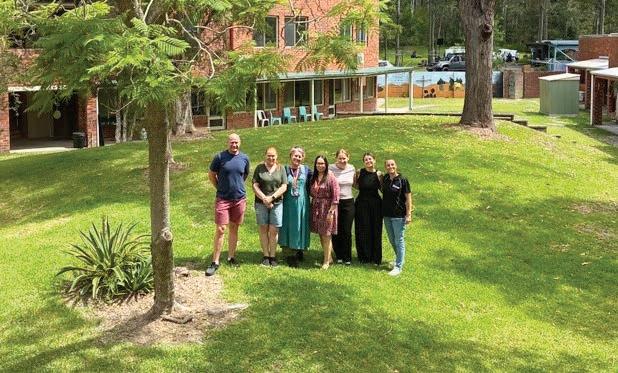
The Salvation Army has announced the opening of three new Alcohol and Other Drugs (AOD) treatment services on the NSW Central Coast, relocating operations from its former Dooralong Transformation Centre site.
AOD Services say the relocation to nearby Berkeley Vale and Morisset creates new opportunities to deliver the organisation’s highly successful, accredited and Deakin Universityevaluated rehabilitation program in more accessible, community-integrated settings.
It has also begun operating a new community-based service at The Salvation Army Gosford, providing additional flexible options for people seeking support to overcome drug and alcohol challenges.
“While we celebrate the incredible work and history of the Dooralong site, we are excited about what this relocation means for participants, families, the community and the extraordinary impact to people’s lives that’s to come,” said Andy Biddle, NSW/ACT State Manager – AOD.
“This expansion reinforces our long-term commitment to delivering the highest quality care and ensuring people in our community can access the help they need, when they need it.”
Local support
The new site at Berkeley Vale is near Long Jetty Corps (Salvo church branch), and the Morisset site is near Bonnells Bay Corps. Both services offer residential drug and alcohol treatment programs using The Salvation Army’s accredited program.
The team from AOD Services
“These new locations are closer to urban centres than our Dooralong site, which enables participants to engage in things that are happening in the local community, such as going to meetings, taking on volunteering work, looking for jobs or meeting with family on the weekend,” said Andy.
“The new locations also make it easier for our participants to engage with corpsbased activities.”
The relocation and expansion are part of a major investment by The Salvation Army in its AOD services in NSW/ACT, with redevelopment of its Sydney-based William Booth House also currently underway (see page 6.)
– Lauren Martin
The AOD Services Berkeley Vale team.
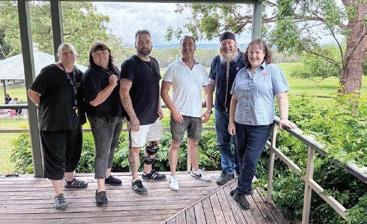
Morisset.
The garden growing hope in Perth
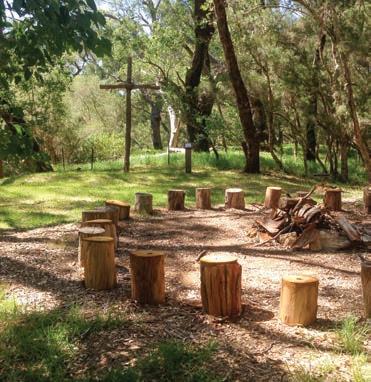
The Garden of Hope in south-west Perth is a place where people gather to connect, experience nature and find faith. Offering faith communities, cultural workshops, and Church in the Garden on Sundays, the Garden of Hope is a thriving place where lives are being transformed.
“There’s quite a lot going on with these garden plots,” said Auxiliary-Captain Mark Curtis, Salvos Mission Leader for the Garden of Hope. “People have their own vegetable garden plot, shade houses where they’re propagating plants, chooks and bird aviaries.
”I don’t know if there is any other space that has the aged care and an AOD (alcohol and other drugs rehabilitation) centre and garden and rehab centre [together].”
“We have Church in the Garden Sunday nights,” said Major Nikki Curtis, Mission Leader at the Armadale Salvos “and then we have Alta 1 (alternative education) … they come down here three times a week and they’re doing cafe simulation training. They’re doing barista training. They’re just using the space because [people] don’t get as stressed as being indoors.”
It was after Mark had gone through a rehab program in 2012, after 20 years in addiction, that God told him in a dream that he was to start the garden.
“So, I started as a volunteer,” said Mark. “I was working with the homeless in the city at The Beacon (Salvation Army homelessness facility) and coming here on my days off and trying to set it up.
Outdoor seating in the garden area is a peaceful and stress-free place.
“It was all about building community and just loving people into the Kingdom really. The dream has actually come to be; I love that.
“We just love to see a flourishing community,. People who need positive people around them. To me, that’s like heaven on earth, you know? That’s the Kingdom of God, together.
“We all have value, we all have worth, we all have something to bring to the community.”
For the full story, go to salvosonline.org. au/post/garden-of-hope-in-perth Scan here to watch the Garden of Hope video
Salvos to manage new WA housing
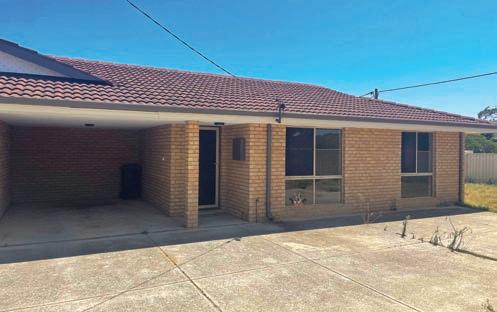
One of the recently-purchased properties to be handed over to The Salvation Army.
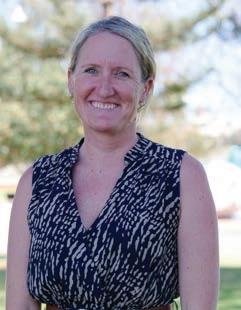
State Manager for Salvos Housing, Bethany Critchley.
The Salvation Army has been announced as the community housing provider for a West Australian Government housing and homelessness initiative.
The news comes as the Regional Supportive Landlord Model project gets underway in WA.
Under the plan, rolled out as a partnership between the Department of Housing and Works and the Department of Communities – Office of Homelessness, 100 new social houses are being built or purchased between the cities of Geraldton, Albany and Kalgoorlie.
The Salvation Army is undertaking the tenancy management of the planned 40 properties in Geraldton, which will allow for greater wraparound support for those facing unstable or inconsistent housing.
Salvos Housing State Manager Bethany Critchley said the team had already connected in with the Geraldton Corps Officers (Salvo pastors), Captains Tim
and Di Size, and were planning ways to collaborate.
“We are a supportive landlord anyway in that we do connect people [into] services,” she said. “This will just be a little bit more concentrated in linking them to services, creating community space for them, bringing in living skills in how to sustain a tenancy so that we can actually help them in maintaining longterm housing.
“We still want to make sure [tenancy managers] don’t cross the line into supports, because that’s very important to keep that separate. But they will be having more to do with connecting them than just doing a referral. There will be a lot more engagement with the tenant.”
The new and refurbished properties were officially handed over for management on 4 March. The Salvation Army is contracted to the role for a three-year period, with a review at the close of that time.
– Kirralee Nicolle
IMAGE: BETHANY CRITCHLEY
IMAGE: ABC NEWS
When we know better – but don’t
Trusting the experts and those who know us best
by Belinda Davis
For quite a few months now, I have been struggling with a recurring injury to my right ankle after running.
I have no problem with the pain when I am actually running, but almost immediately after I stop, I can only walk with a limp. This lasts for a number of days. Ice didn’t help, heat didn’t help, massage didn’t help; and so, eventually, I thought I would try my GP to seek his opinion.
His initial suggestion was that I needed to rest it, take some strong anti-inflammatory medication, and have an ultrasound and x-ray to try to see what was going on.
I reluctantly cut back my running to only Saturday parkrun (5km), took one tablet per day (instead of the prescribed three), and went for the scans.
The tests revealed that I had an inflamed toe joint. That made no sense to me as my pain was in my ankle. I persevered in my own recovery plan to no avail, and after another few months I sought a referral to a sports physiotherapist.
His verdict? The inflammation in the toe is only a part of the story. I also have a vertical tear in a tendon that is not healing because I re-injure it every time I run. He gave me a plan to try to gain back my stamina and physical capacity in a slow and measured way.
Initially, I was allowed to do a number of runs where I run 100m/km. After I could manage that without residual pain over a number of days, I could increase that to two x 100m/km, and so on.
I managed a week of 100m/km runs and then progressed to some two x 100m/km efforts. When they also went well, I decided that I knew exactly what I was doing. For my next 5km run, I walked 250m then ran 250m. Fifty per cent of my activity was running. Surely I was ready for that? Apparently not.
The pain felt as if I had returned to square one, with the addition of swelling in my ankle. Back to the physio I went, sheepishly admitting my enthusiastic attempts to short circuit the slower recovery plan.
Listen to experts
What is the lesson to learn here? Is it that I don’t like being told what to do? I am wondering how many times I dismiss advice or guidance because I believe I know myself better.
Then I wonder how many times I might do that with God’s direction for my life. I try to take a shorter route to understanding, or I believe I know what I need better than the one who created me. Countless times I have ended up
making a mess of the situation and return to the expert’s advice and grand plan.
One of the greatest biblical texts that hones in on just how well God knows us is Psalm 139. The first verse says, “You have searched me, LORD, and you know me.” It then goes on to highlight how well he knows our thoughts (v2), our speech (v4), our location (v2-3) and anxieties (v23) – and he even knew us while still in-utero (v13). This kind of expert knowledge is worth paying attention to.
So, as I try to be more disciplined on my journey of injury recovery, I will do my best to continue to listen to the experts – and I am grateful for the reminder to listen to the one who knows me best as well.
How good are you at listening to his plan for you?
Major Belinda Davis is a Salvation Army officer (pastor) in South Australia. She blogs at a-blessed-life.com
From rehab to renewal
Paula rebuilt her life and now brings hope to others
Paula had a wonderful childhood. Then things started to spiral out of control after enduring abuse in her teens. She came to the Salvos’ William Booth House in Sydney to begin her recovery journey and has since used her lived experience to help others. Here, Paula tells her story.
The biggest thing that I’ve learnt is that I believe in hope. I believe in change.
Without The Salvation Army, would I be sitting here today? Would I be sharing the same hope and belief that I was given that many years ago?
We talk about addiction, and you may have heard the saying, addiction doesn’t discriminate; and I’m sitting here today as truth and evidence that it doesn’t.
I grew up in a really loving family in the Sutherland Shire of Sydney. I had everything a little girl could ever wish for.
I was the victim of a sexual assault by more than one person. I didn’t know what to do. I didn’t know who to talk to. I had no idea how to process what had just happened to me.
I felt shame, and to numb that feeling, I started to use drugs more and more.
From this moment, I just kept spiralling out of control.
I didn’t know what to expect at William Booth House, but I can tell you one thing – once I got there, and once I had the assessment, I didn’t feel the urge to run. I felt like I was somewhere where I could pause, reflect, and give myself the opportunity to get well.
A life of purpose
I learnt so much about myself during my recovery.
I ended up completing my undergraduate [degree] in psychology, worked as a caseworker and then moved to a senior caseworker and team leader role.
And now I find myself in Melbourne as a senior alcohol and other drugs (AOD) practitioner at Bridgehaven, a Salvos AOD treatment centre for women.
It’s only through my experience and years in addiction, through my time and recovery journey at William Booth House, that I get to live the life that I’m living now – a life that’s full of purpose with true meaning and passion.
Scan here to watch Paula tell her story.
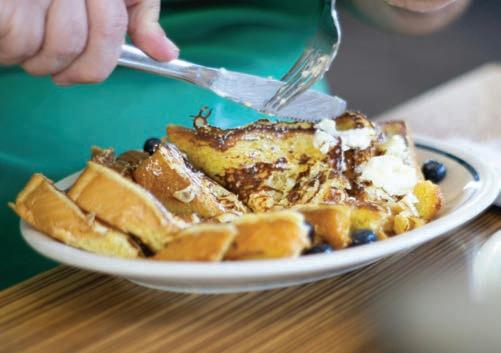
�� Overnight French toast
Ingredients
4 tbs butter; ¾ cup brown sugar; 1 French stick or loaf, cut into 2cm slices; 4 eggs, beaten; 2 cups milk; ½ tsp cinnamon.
Optional: icing sugar, maple syrup, berries, cream, ice cream.
Method
The night before serving, melt butter and brown sugar in a small pan, stirring.
Pour into a round, glass baking dish 25-30cm diameter. Slice bread and arrange on top of butter mixture. Combine eggs with milk and cinnamon and pour over bread.
Cover with wrap and place in fridge overnight. In the morning, pre-heat oven to 180°C. Uncover baking dish and bake for 30-40 minutes.
Add additional toppings as desired.
☺ Believe in Good: Tips
“Think of all the beauty still left around you and be happy.”
– Anne Frank
As hard as it might be, let’s try to find something good and positive in every day.
Quiz
1. How many keys does a standard piano have?
2. What are the black keys for?
3. What hits the strings to make the sound on a piano?
4. What were keys on the piano originally made from?
5. What is the full name of the piano and what does it mean?
Who am I?
Formed in 1986 with a merger of two bands, one named the Swamp Jockeys and the other an unnamed Aboriginal folk group, this group combined musical cultures from traditional Aboriginal to modern pop and rock.
In 1991, their most popular song Treaty hit No. 11 on the singles charts.
In 2000, they performed at the closing ceremony of the Sydney Olympic Games.
In 2023, they were inducted into the National Indigenous Music Awards Hall of Fame.
PHOTO BY BRIAN WANGENHEIM ON UNSPLASH
Have a laugh
What type of bow cannot be tied?
How do rainbows stay in shape?
Why did the rainbow go to the doctor?
Word search
Why are rainbows always so positive? A rainbow. They bend and stretch. It was feeling under the weather. It needed some time to reflect. They look on the bright side.
Why did the rainbow take a day off?
Tum-Tum
On which page of this week’s Salvos Magazine is Tum-Tum hiding?
Answers
Tum-Tum: is peeking out of the window on page 9.
I am: Yothu Yindi
Quiz: 1. 88 2. To play sharps and flats 3. Hammers 4. Ebony and ivory 5. Pianoforte –means soft-loud
Words are hidden vertically, horizontally, diagonally, forwards and backwards. Enjoy!