THE SALVATION ARMY ACKNOWLEDGES THE TRADITIONAL OWNERS OF THE LANDS AND WATERS THROUGHOUT AUSTRALIA.
WE PAY OUR RESPECT TO ELDERS AND ACKNOWLEDGE THEIR CONTINUING RELATIONSHIP TO THIS LAND AND THE ONGOING LIVING CULTURES OF ABORIGINAL AND TORRES STRAIT ISLANDER PEOPLES ACROSS AUSTRALIA.
WE ALSO ACKNOWLEDGE FUTURE ASPIRATIONS OF ALL FIRST NATIONS PEOPLES.
THROUGH RESPECTFUL RELATIONSHIPS WE WILL WORK FOR THE MUTUAL FLOURISHING OF ABORIGINAL AND TORRES STRAIT ISLANDER AUSTRALIANS AND NON-INDIGENOUS AUSTRALIANS.
WE COMMIT OURSELVES IN PRAYER AND PRACTICE TO THIS LAND OF AUSTRALIA AND ITS PEOPLE, SEEKING RECONCILIATION, UNITY AND EQUITY.
PHOTO
What is The Salvation Army?
The Salvation Army, an international movement, is an evangelical part of the universal Christian Church.
Vision Statement
Wherever there is hardship or injustice, Salvos will live, love and fight alongside others to transform Australia one life at a time with the love of Jesus.
Mission Statement
The Salvation Army is a Christian movement dedicated to sharing the love of Jesus by:
• Caring for people
• Creating faith pathways
• Building healthy communities
• Working for justice
The Salvation Army Australia acknowledges the Traditional Owners of the land on which we meet and work and pay our respect to Elders, past, present, and future. We value and include people of all cultures, languages, abilities, sexual orientations, gender identities, gender expressions, and intersex status. We are committed to providing programs that are fully inclusive. We are committed to the safety and wellbeing of people of all ages, particularly children.
From little things
They’re tiny, put into holes in the ground and, miraculously, they grow. Have you ever grown lettuce? It seems almost impossible that those dust-like seeds can produce something edible.
Sowing seeds is an exercise of trust in the future.
So many big, worthwhile and beautiful ideas come about because someone planted the ‘seed’ of a concept that went on to shape an attitude, a way of living or a vision for the future.
We all plant seeds in one way or another. Our attitudes, behaviour, words and interactions with others can plant seeds of imagination, curiosity, kindness, reconciliation and faith. On the other hand, we can also plant negativity, distrust or jealousy.
Scan here to connect with The Salvation Army services
Scan here to subscribe to Salvos Magazine
Founders: William and Catherine Booth
Salvation Army World Leaders: General Lyndon and Commissioner Bronwyn
Buckingham
Territorial Leader: Commissioner Miriam Gluyas
Secretary for Communications and Editor-In-Chief: Lieut-Colonel Paul Hateley
Printed and published for The Salvation Army by Commissioner Miriam Gluyas at Focus Print Group, Chester Hill, NSW, Darug Nation lands.
God, through his prophet Hosea, gave clear and simple advice to his people that is as true today as it was centuries ago. “Plant the good seeds of righteousness, and you will harvest a crop of love,” (Hosea, chapter 10, verse 12 New Living Translation.) Let’s take care with what we plant around us.
Faye Michelson Acting Editor
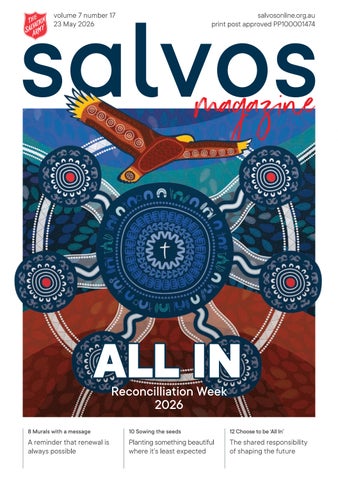
All In for National Reconciliation Week 2026
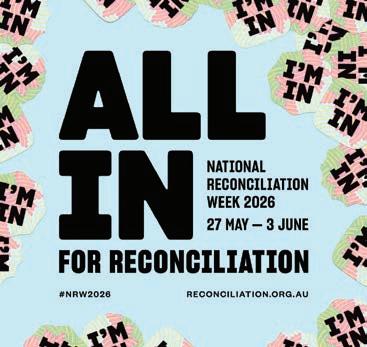
‘All In’, the theme for National Reconciliation Week (NRW) 2026, is a call for all Australians to commit wholeheartedly to reconciliation every single day.
National Reconciliation Week – held from 27 May to 3 June every year – is a time for all Australians to learn about our shared histories, cultures and achievements, and recommit to justice for First Nations people.
Reconciliation Australia CEO Karen Mundine reminded Australians that achieving reconciliation and advancing Aboriginal and Torres Strait Islander peoples’ rights is not a passive activity. (www.reconciliation.org.au).
“Reconciliation isn’t the responsibility of First Nations peoples alone,” said Karen.
“We have carried the weight of championing, explaining, and acting for far too long. The work that remains requires all of us to join the reconciliation team. This call is not about guilt or shame but about the responsibility and reciprocity of being Australian.
“We need to take actions that create a better society.”
National Reconciliation Week
The dates for NRW commemorate two significant milestones in the reconciliation journey – the successful 1967 referendum (27 May), and the High Court Mabo decision (3 June) respectively.
Each year, Mabo Day is celebrated across Australia on 3 June, as part of National Reconciliation Week, honouring Mer Island man Edward Koiki ‘Eddie’ Mabo, who led the people of the Murray Islands as they claimed ownership of the lands they had continuously occupied for centuries.
The judgment overturned the concept of terra nullius – that Australia was a ‘land belonging to no one’ at the time James Cook in 1770 declared possession in the name of the British Crown.
In recognising the rights of the Meriam people, the Court also found that Indigenous peoples around Australia continue to hold rights to their land and waters arising from their traditional laws and customs, unless these rights had been legally extinguished.
Joining in the NRW celebrations
We know that the theme for National Reconciliation Week (NRW) 2026 is All In.
So, let’s imagine how we can be all in for reconciliation this year.
Some of the work has been done for us. We can check out some of the Reconciliation Week websites (maybe start with reconciliation.org.au) for resources such as colouring sheets, T-shirt prints, social media tiles, stickers and logos. You can also find information about some of the planned events, or register your own event.
State and territory websites (find them by searching for Reconciliation Week plus the name of your state or territory) will tell you about events being held in your area.
Then – let’s get creative! All In. How can we celebrate all being part of this reconciliation journey together?
Aim for meaningful
There is no one way to participate in NRW, but it is important to take time to think sincerely about the context of your event. The most meaningful NRW events are ones that:
• grow your knowledge and understanding
• centre Aboriginal and Torres Strait Islander voices
• are tailored to your situation.
For example: a bookshop might organise a talk with a First Nations author; a
local sports team or league could hold an Indigenous Round; a law firm might screen a movie on racism in the criminal justice system; and a friendship group of musos might attend the gig of an Aboriginal and Torres Strait Islander artist.
Whatever starts a conversation is the way to go! (reconciliation.org.au)
Maybe we can get our family or friends together to watch a documentary, such as Mabo or We Are Still Here, or a movie, such as The Last Daughter or Kanyini. Or we could each read a book relating to Indigenous experiences, such as stories from the Stolen Generations, then get together to discuss what we’ve learned.
We can ask our Indigenous friends or workmates to tell us more about their family, their history and their cultural practices. (But don’t assume that an Aboriginal and/or Torres Strait Islander person wants to be involved in NRW –ask respectfully first.)
See if you can find out which organisations, schools or preschools in your area are run by or for Indigenous people and ask how you can best support them.
Enquiring, learning and supporting each other can help us to be truly All In for reconciliation.
– Fay Foster
Salvation Army leaders honour the Stolen Generation
Building bridges to healing and reconciliation
by Simone Worthing
“On this anniversary of the National Apology to the Stolen Generations, I want to say, Thank you, we love you, and I am, and we are, sorry,” said Commissioner Miriam Gluyas, leader of The Salvation Army in Australia, at the annual National Apology to the Stolen Generations breakfast at Parliament House earlier this year.
“Saying sorry is so important ... I am genuinely grateful for our Indigenous Ministries team in The Salvation Army, who we stand with absolutely.”
Salvation Army leaders joined more than 130 Stolen Generations survivors from around Australia, Prime Minister Anthony Albanese, Governor-General Sam Mostyn, and other guests at the breakfast in February.
This year was the 18th anniversary of the National Apology to the Stolen Generations.
On 13 February 2008, then Prime Minister Kevin Rudd offered a formal apology to Australia’s Indigenous peoples, particularly the Stolen Generations, on behalf of the nation at Australian Parliament House. The annual breakfast began in 2009.
Ongoing process
“It was confronting and challenging to hear the stories of mob who had endured the policies and practices that resulted in the Stolen Generation,” said Major Stuart Glover, Assistant Chief Secretary – Business, and a proud member of the Bundjalung Nation.
“It reminded me again of the need for us as a Salvation Army to join others in the Australian community in the beautiful but challenging process of reconciliation and truth-telling that must lead to real tangible change in our communities and outcomes for Aboriginal and Torres Strait Islander peoples. We need to do this both at the national, but also at the local level.”
Colonels John and Lani Chamness – The Salvation Army Australia’s new Chief Secretary and Secretary for Women’s Ministries and Leader Development, also attended the breakfast.
“Lani and I were seated at a table with four survivors,” said John. “As we listened to them and others, we were both grateful and deeply saddened. Grateful to see how they have overcome many very difficult circumstances and how, despite all that was done to them, these
people were overcomers. Somehow, they have found the will to move on.
“We were also deeply saddened that people experienced such deep trauma in their lives. While we could listen to them, it would be impossible for us to ever understand what has been taken from them and the depth of pain they held.
“Experiencing this apology breakfast helps to give us the resolve necessary to stand with all peoples that have experienced abuse. To stand with them, to acknowledge and recognise them and their stories, we hope brings healing and helps us all to strive towards building bridges of reconciliation.”
A personal reflection – Auntie Sue Hodges
(Auntie Sue Hodges is on secondment as Reconciliation Action Plan and Projects Manager for The Salvation Army Australia.)
The morning was full of anticipation and emotion as we gathered for the 18th Anniversary of the National Apology to the Stolen Generations.
Our Salvation Army delegation met at 6.30am, and I chose to wear my Salvation Army uniform so mob could see that Aboriginal and Torres Strait Islander people are part of the Salvos – working, volunteering, leading, worshipping ...
During the presentation, my uncle texted asking where I was. When I told him I was at Parliament House, he
said, “Did you tell them I was part of the Stolen Generation?” I said, “I tell everybody.” He replied, “Good.” That moment meant everything – his story deserves to be known.
It was deeply moving to see so many Salvation Army leaders present. Their presence mattered.
Watching the footage from 2008, seeing the faces of those who have since passed, I felt proud that they were honoured so beautifully. Today gave me hope. I truly feel The Salvation Army is becoming fair dinkum about reconciliation – listening, learning, and taking us seriously.
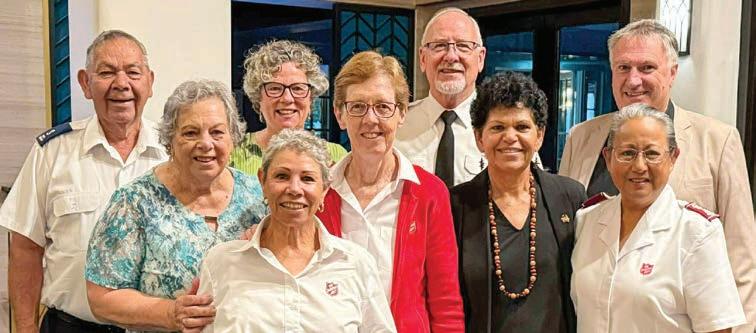
Salvation Army leaders gathered for the National Apology to the Stolen Generations breakfast.
Adelaide murals a reminder that ‘renewal is always possible’
The Salvation Army has unveiled a new series of Indigenous murals at several of its Alcohol and Other Drugs (AOD) support programs in Adelaide.
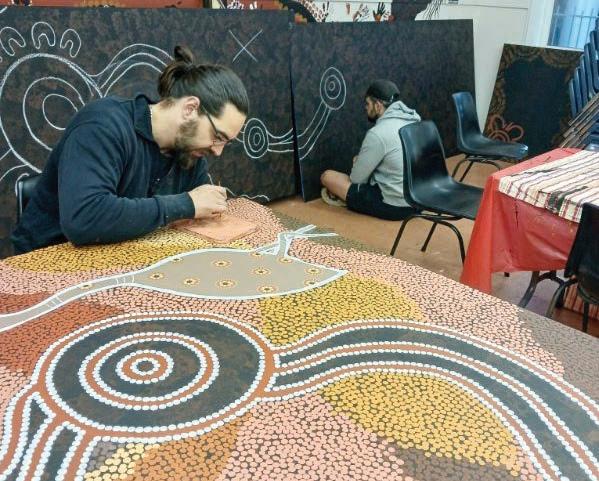
The murals are the work of a team from Marra Dreaming, an Aboriginal art collective based in Adelaide’s northern suburbs.
Social Mission State Manager Kim Herbert commissioned the murals for programs including Kurlana Padnipadninya (New Journey), Warrondi (The Way Out) Engage and Link (WEL) Day and the Sobering-Up Unit.
Kim said she wanted to freshen the area outside the entrance to the Kurlana Padnipadninya program where staff often park, and which is located next to the WEL Day program lawn.
She had also become aware that Sobering-Up Unit Team Leader Kirsten Pennington wanted to install another mural in the men’s courtyard area of the unit.
She said the artists at Marra Dreaming understood the vision she was seeking to convey.
Challenge to change
In the mural outside the Kurlana Padnipadninya program, the artists said the “long winding journey lines” represented the individual’s journey of moving through challenges toward change.
“Along the way, meeting places show moments of connection, where people are
The works in progress. Image: Supplied
supported, guided, and linked with services, culture and community,” the artists wrote.
The mural at the Sobering-Up Unit is also reflective of a journey, where the individual is supported through a difficult period.
“The flowing journey lines represent people arriving from many directions, carrying heavy experiences, and being gently guided toward calm and stability,” the artists shared.
“The meeting place with people around it symbolises moments of support, care and time to rest – where people are held and helped. The background with different coloured sections represents burnt country. Just as land recovers after fire, people too can recover after hardship.
“The mural reminds us that healing begins with safety, patience and connection, and that renewal is always possible.”
For the full story, go to salvosonline.org.au – Kirralee Nicolle
All work, no pay for these legends
Celebrating our priceless volunteers
All over the world, people with big hearts are putting those hearts into serving and helping others. Their work is unpaid but often brings great joy and satisfaction, both to them and to those they serve. Without them, our society would be unrecognisable.
These people are volunteers. They give their time and effort to coach little footballers, serve meals and coffee, listen to those who need a compassionate ear, help in times of grief and natural disaster, answer phone calls from desperate people, tend community gardens, sort second-hand goods for resale, teach English to migrants and refugees, barbecue sausages and knit warm beanies and blankets for those living on the streets. They provide essential care to land, plants, animals and people.
Many volunteers sign up to help with the work of an organisation such as Landcare,
the RSPCA, a school or sporting club, or the Salvos. Some serve overseas, building wells or schools, or performing life- or sight-saving operations. Others volunteer in more informal ways: checking in on their neighbours, shopping for someone who can’t get out, picking up rubbish in the local park or caring for their friend’s dog so their friend can go on holiday.
And there are many of these amazing people! According to The Snapshot of Volunteering in Australia Report 2023 (the most recent compilation of national volunteering data), 64.3% of the population over the age of 15 had volunteered, formally or informally or both, in the previous 12 months (volunteeringaustralia. org). And nearly 23,000 currently volunteer with The Salvation Army – thank you, legends! We need you and value you!
This National Volunteer Week, 18-24 May, we celebrate those who freely work for the benefit of others. We appreciate and admire their kind service. We give them our heartfelt thanks.
We recognise that their work is sometimes unnoticed, often in the background. We know that some days they are tired or sad or anxious, yet they continue to serve.
Sherry Anderson nailed it when she said, “Volunteers don’t get paid, not because they’re worthless, but because they’re priceless.”
Thank you, priceless people. We are so grateful to you!
– Fay Foster
From the Storyteller
StorieS acroSS the centurieS Still relevant today
Planting the seeds of something beautiful
The surprise and delight of random gardening.
by Faye Michelson
Jesus was a great storyteller. His short, succinct parables (another word for stories) have shown people how to live God’s way for centuries and still do today.
Got a difficult area in your garden? Maybe you’re on a steep block or there’s a hard-to-reach spot. Perhaps you’re an occasional gardener happy to give an easy planting idea a go or you’d like to try something different that may surprise and delight you. If that’s the case, seed balls are for you!
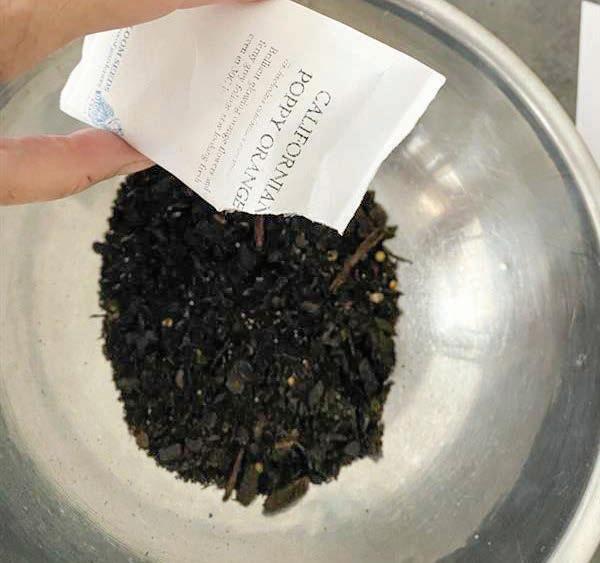
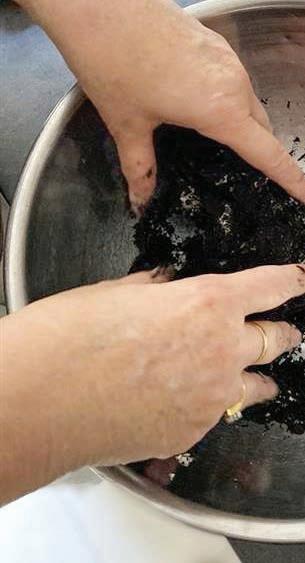
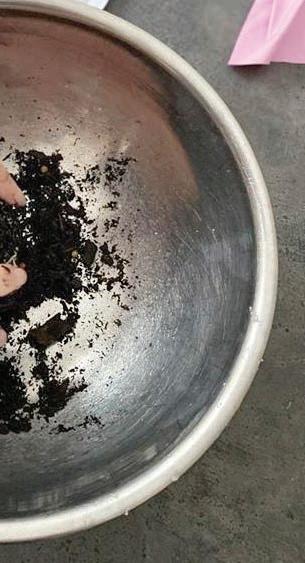
They’re easy to make. All you need are some flower or herb seeds, a couple of handfuls of compost, a cup of flour and water. Put about three cups of compost
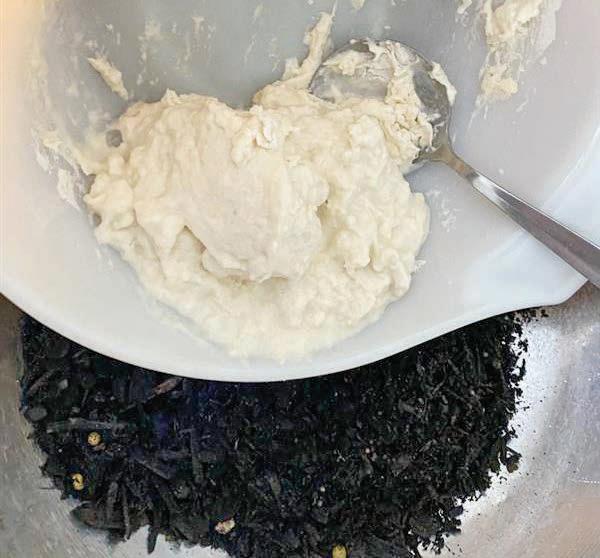
into a bucket and mix the seeds into it. Put the flour into a bowl and add water, a little at a time, and stir. (You can also use seaweed solution instead of water to give your seeds an extra boost.) Add water until your flour mixture is thick and sticky (but not wet), then pour this mixture into the bucket of compost and seed. If you’re worried about birds eating your precious seeds, add a little paprika to keep their little beaks away.
Mix all together to form a thick dough.
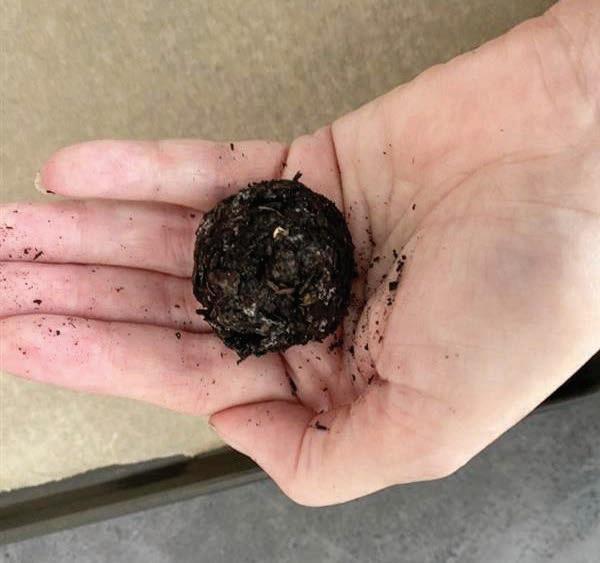
Think back to your kindergarten and playdough days and break off a piece, rolling it into a golf ball-sized ball – and your first one is made! Once you’ve used all your mixture, put your seed balls onto a tray to dry. The best time to throw your balls into your garden is when rain is forecast. Then, let nature take its course, sit back and see how many of your seeds grow.
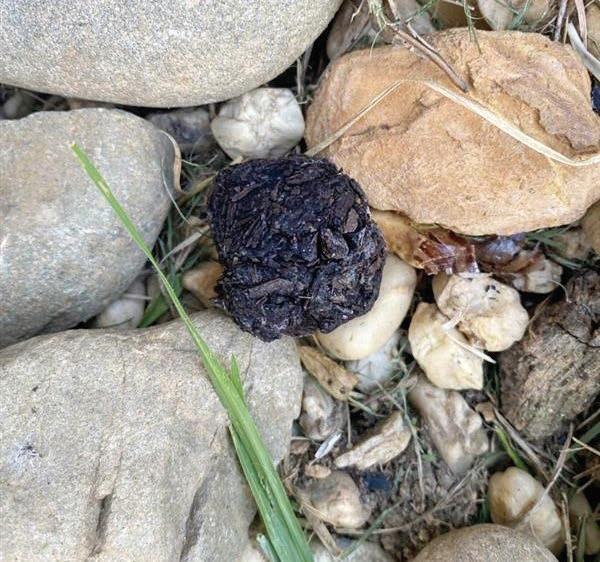
Probably not all will grow. If you don’t watch where you scatter your balls, some might end up on paths or garden edges and (if you didn’t add paprika) will become food for birds. Some balls may end up on rocky spots where there just isn’t enough soil for the seeds to take root. Others may end up among a whole lot of weeds, and we all know weeds will win any competition for growth.
But some balls will land where the soil is good and where the seeds will receive the rain and sunlight they need to thrive. It’s worth the wait for the joy of seeing their beauty and colour appear in random spots in your garden!
Jesus told a story about seeds in the Bible, known as the Parable of the Sower. In this parable, the farmer sows a crop in his field, where the same things happen to his grain that could happen to our seed balls – paths
and birds, rocks, weeds and good soil.
Jesus explained his story like this: “The farmer I talked about is anyone who brings God’s message to others, trying to plant good seed within their lives. The hard pathway, where some of the seed fell, represents the hard hearts of some of those who hear God’s message; Satan comes at once to try to make them forget it. The rocky soil represents the hearts of those who hear the message with joy, but, like young plants in such soil, their roots don’t go very deep, and though at first they get along fine, as soon as persecution begins, they wilt. The thorny ground represents the hearts of people who listen to the Good News and receive it, but all too quickly the attractions of this world and the delights of wealth, and the search for success and lure of nice things come in and crowd out God’s message from their hearts, so that no crop is produced.
“But the good soil represents the hearts of those who truly accept God’s message and produce a plentiful harvest for God – thirty, sixty, or even a hundred times as much as was planted in their hearts.” (The Living Bible version)
Read the whole parable in the Bible in Mark chapter four, verses one to 20.
‘All In’ for shaping the future
‘All In’ invites us all to consider reconciliation not as something that is a goal to be reached, but as a shared responsibility that we are called to live out.
Reconciliation becomes real when people genuinely feel they belong –when their identities, cultures and voices are respected, valued and welcomed. Belonging doesn’t just happen; it’s something we build together through action, courage and a willingness to accept one another, even when we are different.
This theme reminds us that the future is not something we wait for – it’s something we are shaping right now. The future of reconciliation is shaped by the choices we make together. Within
The Salvation Army and across our communities, each decision carries the potential to strengthen justice, deepen inclusion and build unity. The invitation is before us – to step forward with intention and help shape reconciliation in our time.
What does it really mean to be ‘All In’?
Not just in what we say – but in how we live, respond, and walk together.
The Bible offers us a powerful picture through the story of Nehemiah – a story that speaks to brokenness, courage and the long work of restoration.
When Nehemiah hears that Jerusalem’s walls have been torn down and its people left vulnerable, he doesn’t turn away. He allows the truth of what has happened to
reach his heart. He grieves. He prays. And then, he chooses to act.
Rebuilding begins by telling the truth – by acknowledging what has been broken. Broken relationships. Broken trust. Broken systems that were meant to protect and give life.
Being ‘All In’ means we don’t stay distant or comfortable. We allow ourselves to be moved, and we take responsibility for the work of restoration before us.
When the rebuilding begins, something remarkable happens. The work isn’t left to one person or one group. Families, leaders and workers all step forward –each taking responsibility for their part of the wall. Side by side, section by section, the city begins to rise again.
The wall is rebuilt because everyone participates.
Reconciliation works the same way. It is not the responsibility of a few, and it cannot be carried by Aboriginal and Torres Strait Islander peoples alone. Being ‘All In’ means shared ownership – recognising that healing, justice and restoration require all of us to step in together.
The work is not easy. As the walls rise, resistance comes – voices of discouragement, fear and opposition. Yet the people remain committed. Scripture tells us they worked with tools in one hand and weapons in the other – ready to build, and ready to stand firm.
True reconciliation also requires perseverance. It asks us to remain present when the work becomes uncomfortable, when we are challenged, corrected or called to grow. Being ‘All In’ means we don’t walk away when the work gets difficult – we stay.
And when the wall is finished, the story doesn’t end.
The people gather. They listen. They reflect. They repent and renew their covenant with God. What becomes clear is that the deepest work was never just about stones and structures – it was about restoring hearts, relationships, and community.
Reconciliation is more than policies or programs. It is about dignity. About truth. About restoring right relationships and learning how to live well together.
It requires humility – a willingness to
listen, to learn and to be changed.
To be ‘All In’ is to face what has been broken and refuse to look away. To rebuild together, knowing everyone has a role to play. To remain committed beyond moments and symbols. And to seek restoration that reaches not just structures, but people.
This is the work of reconciliation. This is the invitation.
This is what it looks like... to be All In.
From The Salvation Army Mission Resources Team
Scan here to watch the video.
�� Tuna Casserole
Ingredients
420g can cream of mushroom soup; 1 cup grated cheese; 3 cups cooked pasta; ½ cup milk; ½ cup chopped onions; ½ cup frozen peas; ½ cup frozen corn kernels; 425g can tuna; drained; breadcrumbs Method
Mix soup, cheese, pasta and milk in microwavable casserole dish.
Add onion, peas, corn and tuna and mix well.
Cook for 7 mins, top with breadcrumbs cook 7 mins until bubbling.
Let it sit before serving as it will be very hot.
Believe in Good: Tips
“If a man does not keep pace with his companions, perhaps it is because he hears a different drummer. Let him step to the music which he hears, however measured or far away.”
– Henry David Thoreau
1. What kind of animals are turtles?
2. How many species of turtles are there?
3. Where do turtles lay their eggs?
4. Do turtles have teeth?
5. Turtles are ectothermic. What does this mean?
On this day
24 May 1830
Sarah Josepha Hale’s poem Mary Had A Little Lamb is published. This is one of the best-known English language nursery rhymes.
24 May 1956
Representing Switzerland, Lys Assia is the winner of the first Eurovision song Contest.
25 May 1977
Star Wars is released. The epic space opera by George Lucas is one of the most popular works in movie history.
Have a laugh
�� Word search
What do you call a turtle chef?
What do you call a turtle who loves photography?
What do you get if you cross a turtle and a porcupine?
Why do turtles never forget? A slow cooker. A snapping turtle. A slowpoke. Because they have turtle recall.
Tum-Tum
On which page of this week’s Salvos Magazine is Tum-Tum hiding?
✏ Answers
5. They are cold blooded. Tum-Tum: is hiding behind the Salvos volunteer on page 9.
3. On land 4. No
Quiz: 1. Reptiles 2. 350
Words are hidden vertically, horizontally, diagonally, forwards and backwards. Enjoy!
“He has given us the same mission, the ministry of reconciliation, to bring others back to Him.”