“God’s eye is on the sparrow, and I know he watches me.”
Based
on Matthew chapter 10, verses 29-31
What is The Salvation Army?
The Salvation Army, an international movement, is an evangelical part of the universal Christian Church.
Vision Statement
Wherever there is hardship or injustice, Salvos will live, love and fight alongside others to transform Australia one life at a time with the love of Jesus.
Mission Statement
The Salvation Army is a Christian movement dedicated to sharing the love of Jesus by:
• Caring for people
• Creating faith pathways
• Building healthy communities
• Working for justice
The Salvation Army Australia acknowledges the Traditional Owners of the land on which we meet and work and pay our respect to Elders, past, present, and future. We value and include people of all cultures, languages, abilities, sexual orientations, gender identities, gender expressions, and intersex status. We are committed to providing programs that are fully inclusive. We are committed to the safety and wellbeing of people of all ages, particularly children.
Glimmers
Many of us want to make a difference in the world. We would love to see wars end, diseases eradicated, everyone’s basic needs met, and a safe and prosperous life for all.
Achieving these goals is out of reach for most of us, even though we can contribute to causes working towards them and play our part in our daily lives to bring them closer.
Scan here to connect with The Salvation Army services
Founders: William and Catherine Booth
Scan here to subscribe to Salvos Magazine
Salvation Army World Leaders: General Lyndon and Commissioner Bronwyn
Buckingham
Territorial Leader: Commissioner Miriam Gluyas
Secretary for Communications and Editor-In-Chief: Lieutenant-Colonel Paul Hateley
Printed and published for The Salvation Army by Commissioner Miriam Gluyas at Focus Print Group, Chester Hill, NSW, Darug Nation lands.
And it’s in our daily lives that most of us can make a difference and change our little corners of the world. Actions such as these may seem small and inconsequential, but treating people kindly, showing genuine interest in others, texting a grieving friend, caring for our local environment and just being caring and compassionate humans can bring moments – glimmers – of hope, joy and encouragement to others.
They may not (or they may!) change the trajectory of world events, but they change the world for that person at that time.
We can all be part of building kinder communities, and we can start today!
For these stories and more, go to salvosonline.org.au
Simone Worthing Editor
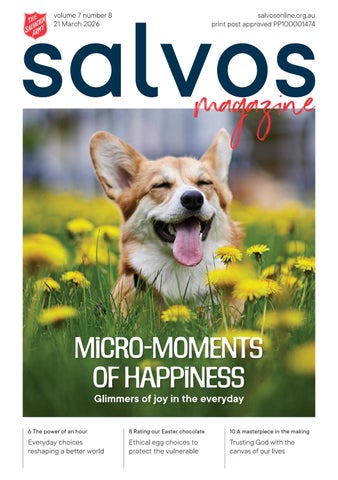
Micro-moments of happiness
Glimmers of joy in the everyday
by Faye Michelson
Happy World Happiness Day to you!
Yes, it’s an official day. The United Nations proclaimed 20 March as the World Day of Happiness in 2012. So … are you feeling happy?
On this 20 March, you might be grappling with anxiety, feeling overwhelmed or grief-stricken, or any number of emotions except happiness. On this 20 March, you might be despairing at the tragedy and suffering in the world. So, what’s the point of declaring today, or any day for that matter, the World Day of Happiness?
As with all ‘days’ observed throughout the year, the aim is to get us thinking. The United Nations General Assembly states the obvious when it says it recognises the “relevance of happiness and wellbeing as universal goals and aspirations in the lives of human beings around the world”. Then it goes on to say this involves recognising the
need for “a more inclusive, equitable and balanced approach to economic growth that promotes sustainable development, poverty eradication, happiness and the wellbeing of all peoples”.
That great aim – a ‘big picture’ approach to happiness – is largely outside the everyday scope of most of us. We probably can’t influence economic growth in the way needed to increase global happiness. But we have our own spheres of influence to use in the ‘small picture’ approach to happiness – our own and hopefully that of others.
Glimmers
Happiness is hard to manufacture. Life circumstances can be so all-consuming that there’s no space left for happiness. Or almost no space. Perhaps just enough space for a ‘glimmer’? Sometimes a ‘micro-picture’ approach to happiness is all we can manage.
PHOTO BY GAELLE MARCEL ON UNSPLASH
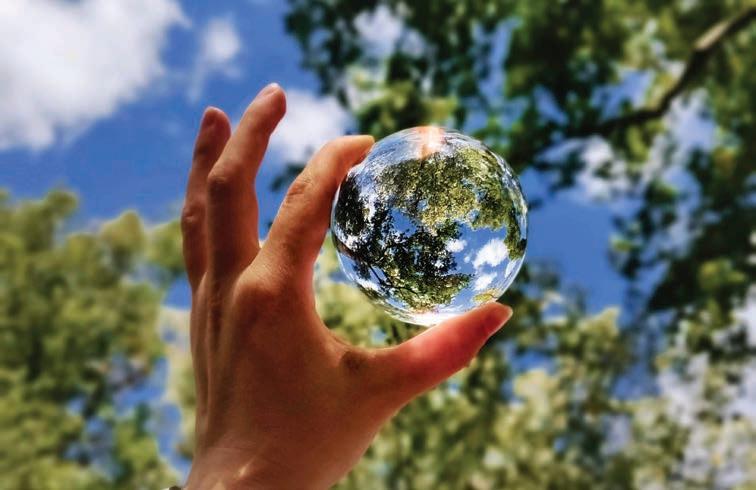
The Collins Dictionary defines a glimmer as “a faint, gentle, often unsteady light,” but a glimmer, in mental health terms, is a micro-moment of joy, peace, safety. These moments are not forced, they’re often just there to be noticed – a friendly smile from someone, a cat purring, the dappled light on your verandah, the sun warming your back.
Small steps
It’s an uplifting thought to think that we can contribute to other people’s happiness. Not in the United Nations ‘big picture’ equitable economic growth way, but by creating our own communities of small kindnesses.
We don’t have to be wealthy, clever, confident or have heaps of spare time.
We just need to be there, willing to offer little gestures of grace to the people around us, even if we don’t know them. If you check on a neighbour, cook for a community kitchen, help a friend or family member with housework, acknowledge a job well done, even just smile at someone – who knows? You may have been the glimmer in their difficult day.
Today, like every day, has its glimmers of hope, happiness and peace. Today, like every day, has its challenges. But we have today to live, and it is a gift.
“This is the day that the Lord has made; let us rejoice and be glad in it” (Psalm 118, verse 24; New King James version).
So, happy World Happiness Day to you!
PHOTO BY SARA KURFEẞ ON UNSPLASH
The power of an hour
Everyday choices reshaping a better world
by Melanie-Anne Wren
On the last Saturday of March, millions of people around the world will observe Earth Hour – turning off their lights and devices for an hour, as an act of conscious solidarity. In its 20th year, this movement initially had the goal of raising awareness around the need for climate action and sustainability. This simple action has been stunningly successful in engaging households, businesses, communities and governments in the discourse of how we might better care for our common home.
In the two decades since it began, and as the realities of climate change become more pressing, Earth Hour has evolved to challenge people to take meaningful action. Can we each give an hour to make the world a better, more sustainable place?
Giving our time
There is a sense in which the most precious thing you can give is your time, as it is finite and irreplaceable – a portion of your life that you will never get back. It is so easy to waste time on things that simply don’t matter, and yet it can feel like a big investment to give our attention to something significant for 60 minutes. In Psalm 90, verse 12, Moses prays, “Teach us to number our days, that we may gain a heart of wisdom.” This verse has also been translated, “Teach us to use wisely all the time we have” in the Contemporary English Version of the Bible. As a prayer and meditation, these
ancient words invite God’s leading as we seek to use the time we have effectively and meaningfully.
Small steps, lasting impact
Can I change the world in an hour? Actually, the answer is yes. I can make things better, and so can you. And collectively, our ‘better’ can be a significant improvement, moving our communities towards greater sustainability. One million (or 10 million) people giving an hour towards sustainability represents a huge impact.
In the spirit of Earth Hour, can I suggest some things that may take an hour that are worth the investment of our time?
• Planting trees or a garden: Spending an hour planting native trees or establishing a vegetable/ herb garden helps reduce carbon, improve air quality, and support local biodiversity.
• Participating in a local cleanup: Spending an hour cleaning up a local park, beach or riverfront directly reduces waste and prevents pollution from entering ecosystems.
• Conducting a home energy audit: Systematically going through your home to identify energy waste, switching to LED bulbs, and ensuring appliances are not on standby, can significantly reduce your energy usage.
• Meal planning and preparation: Organising your weekly meals to reduce food waste, and prepping plant-based meals, saves energy and resources used in food production and reduces methane emissions from landfills.
• Maintaining/repairing personal items: Spending an hour mending clothes, repairing broken items, or cleaning and maintaining your car (such as checking tyre pressure) reduces the demand for new, resource-intensive products.
• Switching to reusable alternatives: Spending an hour auditing your kitchen and pantry to remove singleuse plastics and replacing them with reusable bags, bottles or containers, reduces waste.
• Managing waste properly: Researching local recycling rules,
setting up a composting system, or taking used batteries to a specific drop-off point ensures materials are properly handled.
I am grateful to every person who will choose to give their time to making their lives and communities more sustainable. And I offer this prayer, that you may like to share with me, as we mark Earth Hour 2026 together.
“Thank you, God, for this beautiful world – complex and wonderful, both resilient and fragile – and our part in it. Teach us to use our time wisely and add our efforts to caring for your creation. Amen.”
Scan here for more information on Earth Hour.
PHOTO BY MARGOT RICHARD ON UNSPLASH
Rating our Easter chocolate
Ethical egg choices to protect the vulnerable
by Fay Foster
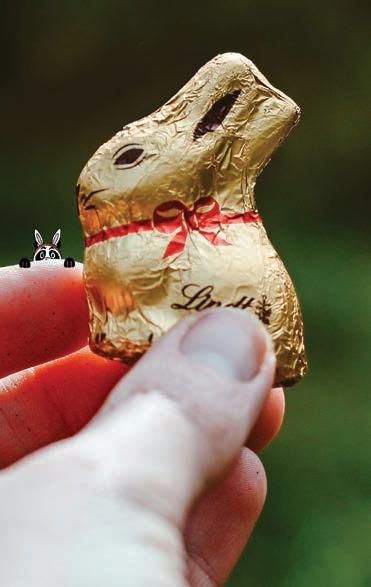
On average, each Australian consumes around 32 kilograms of chocolate each year. And at Easter, they spend around $62 on chocolate products (smartcompany.com.au).
But how do we know whether the chocolate we are buying is ‘good’ or ‘bad’? Which chocolates are made with the most ethical processes?
Seventy-five per cent of the world’s chocolate is made with cocoa produced in West Africa – especially Cote D’Ivoire
and Ghana – where wages are low and children are often used as free labour. Chocolate-producing companies have been strongly encouraged to ensure that their production processes protect women and children, do not disadvantage workers and do not damage the environment.
The scorecard
In April 2025, the organisation Be Slavery Free published its sixth annual Chocolate Scorecard. Put together by researchers at Macquarie University, University of Wollongong and Open University UK, the scorecard ranks chocolate manufacturers according to a range of criteria.
The questions asked of chocolate companies attempted to measure the traceability and transparency of acquisition processes (where the chocolate was made), levels of deforestation and climate impact, agroforestry (re-greening), use of harmful pesticides, disempowerment of women, the use of child labour, and ensuring a living income to those who work in the cocoa industry.
A living income has been defined as “the net annual income required for a household in a particular place to afford a decent standard of living for all members of that household. Elements of a decent standard of living include food, water, housing, education, healthcare, transport, clothing, and other essential needs including provision for unexpected events” (living-income.com).
Macquarie University’s Professor John Dumay has stated that “the fact that all the major cocoa companies are [now] working with advocacy groups like the Rainforest Alliance, Fairtrade and Be Slavery Free, shows that progress is being made.” He cites the example of Nestlé, which has increased its percentage of cocoa ethically sourced through its Nestlé Cocoa Plan, from 30 per cent when Professor Dumay started researching the company, to 85 per cent in 2025 (Quoted by Andy Kollmorgen, choice.com.au).
The ‘good eggs’
So – who are the winners in this current scorecard? The top 10 companies (worldwide) for ethical chocolate production are:
1. Tony’s Chocolonely
2. HALBA
3. Cemoi
4. Ritter Sport
5. Nestlé (includes KitKat, Milky Bar, Aero, Smarties, Milo, Crunch, Rolo, Peppermint Crisp and Chokito)
6. Whittakers
7. Mars Wrigley (includes Mars Bar, Bounty, Maltesers, Snickers and Twix)
8. Hersheys
9. Lindt & Sprüngli
10. Ferrero (includes Nutella, Kinder and Ferrero Rocher)
The first five of these companies are based in Europe (The Netherlands, Switzerland, France, Germany and Switzerland, respectively); Whittakers is based in New Zealand, Mars Wrigley and
Hersheys in the USA, Lindt in Switzerland and Ferrero in Italy.
Several of these companies also have factories in Australia. Some of the products might be hard to find, or available only online; but most can be easily found in our major and local supermarkets.
When you’re looking for Easter surprises this year, you can buy from these companies knowing that they are leading the way in ethical production, helping to keep workers safe and able to meet their needs, and safeguarding our Earth as well.
For more information on the Chocolate Scorecard, heck out the website chocolatescorecard.com/methodology
PHOTO BY BEN GRIFFITHS ON UNSPLASH
A masterpiece in the making
Trusting God with the canvas of our lives
by Jeff Goodwin
I love creating, either through watercolour painting or photography.
I dip the brush into the water, and then into the paints where I load the brush with either a strong intensity of colour or a thin wash, before applying it to the white paper.
Slowly, the creation begins to unfold as more colour is applied.
However, it is more than just putting colour down on paper with a brush. There has to be a feeling deep inside that makes
you feel the subject matter and paint it in such a way that you hopefully convey to others what you are trying to express. This applies in conventional art as well as abstract expressionism, sculpture, photography and more.
For photography, it is more than just pressing the shutter button; it is feeling the subject matter in front of you and waiting for the best light – in combination with how your subject matter fills the frame.
We can sometimes think what we are doing makes no difference. In fact, famous Dutch painter Vincent van Gogh thought he was a failure and his paintings were making no difference. Did you know he sold only one painting in his lifetime? That painting is La Vigne rouge, which was purchased for 400 francs by Belgian artist and collector Anna Boch in early 1890. Despite only one sale, Van Gogh kept painting because he had a drive; a feeling deep inside that he needed to transfer onto canvas in a way that would be an outlet for his tortured soul.
Van Gogh produced more than 2000 works of art in his roughly decadelong career (1881–1890), including approximately 900 paintings and over 1100 drawings and sketches. Most of his famous works were created during his final two years, averaging a new painting every 36 hours. Vincent had a passion and a drive within
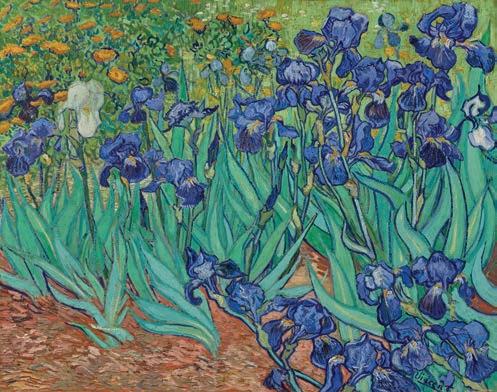
Van Gogh's famous oil painting, Irises.
“For I know the plans I have for you,” declares the LORD, “plans to prosper you and not to harm you, plans to give you hope and a future.”
Jeremiah chapter 29, verse 11
him to keep going, despite a lack of [outside] interest in his work.
Van Gogh kept painting, hoping he could connect with others through his art.
When we think of Jesus’ disciples, they had enormous obstacles and setbacks, but they kept going, hoping they could make a connection with others who did not know Christ, and offer them victory in and through
him, despite the hardships around them.
They could have easily given up, but they had the passion and drive within them, fuelled by the Holy Spirit, to keep going.
Van Gogh did not know that his paintings would be worth millions in today’s money, nor did he know that he would be known as one of the most famous and prolific artists of all time.
You may not know where
God will take your life, but God will never see you as a failure; in fact, you are very important to him. There are many Bible verses that speak of God’s absolute love for you; John chapter 3, verse 16, is one of many.
Consider letting God develop the picture in your life. Hand it over to him.
Major Jeff Goodwin is a Salvation Army officer (pastor), serving as an Aged Care Chaplain in QLD
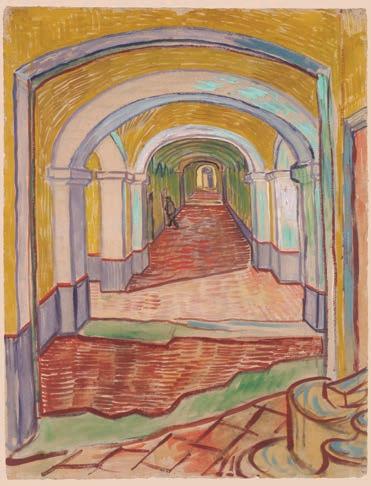
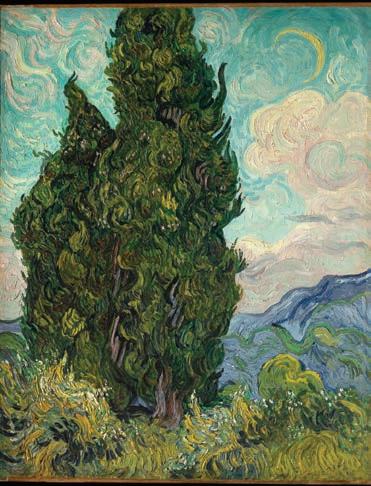
Van Gogh's works Corridor in the Asylum, and Cypresses.
Holy ground in everyday places
Honouring fellow humans in the messiness of life
In his role as café supervisor at Melbourne Project 614, Matthew Daniels sees many people from all walks of life come into The Salvation Army’s centre on Bourke St –mostly those doing it tough and struggling to make ends meet. Here, Matthew offers a word of encouragement for Salvo workers at the centre.
There are weeks in this work that feel heavier than others.
Not because something dramatic happened. Not because there was a crisis that made headlines. But because the accumulation of stories, needs and human complexity quietly pressed. This past week felt like one of those weeks.
There was a moment that stayed with me. Over the course of this week, three individuals came into the café seeking accommodation.
Each person carried a complex story. Each situation required patience, discernment, and presence. None of it fit neatly into a policy box.
And then there was a moment on Friday that stopped me.
All three individuals were in the café at the same time. Each was sitting with a different staff member. Three conversations, three vulnerable people, three workers fully present.
Nothing dramatic. No spotlight. No applause. Just people showing up.
Standing there, watching that unfold, I was struck by how rare and significant that moment actually was.
The woman at the well
There’s a story in the Christian tradition about a woman who meets Jesus at a well.
She was someone society had already written off. She carried a history that made her an outsider, and she avoided public spaces. Her story was known, judged and reduced. She came to the well at a time of day when she wouldn’t have to see anyone, because being unseen felt safer.
And yet Jesus met her there.
He didn’t fix her circumstances in an instant. He didn’t tidy her life into something respectable. What he did was see her. He spoke to her. He listened. He gave her dignity, purpose and voice.
In a world that had made her invisible, she was treated as somebody.
PHOTO BY NATHAN DUMLAO ON UNSPLASH
I see echoes of that story in the frontline space all the time.
People arrive carrying labels long before they carry hope. They’ve been defined by systems, failures, diagnoses and histories. And sometimes, the most powerful thing we offer isn’t a solution. It is recognition.
We see people, we listen, we honour messy and unresolved stories. That matters more than we probably realise.
Carrying the cost
This kind of work comes at a cost.
It is tiring, emotionally demanding, and requires restraint, empathy and presence, even on days when your own reserves are low.
Many ancient traditions, including the biblical ones, carry this idea that freedom and restoration often come with a cost; that someone, somewhere, carries weight so others can find safety.
That doesn’t mean suffering should be glorified, and it doesn’t mean boundaries don’t matter. It simply acknowledges that frontline care involves emotional labour
and that labour deserves to be seen, respected and supported.
So, I want to say this clearly and sincerely to all frontline workers across The Salvation Army: Thank you.
Thank you for staying present when it would have been easier to disengage.
Thank you for listening to stories that don’t resolve neatly.
Thank you for offering dignity where people may have expected dismissal.
Thank you for doing work that is often invisible but deeply meaningful.
My encouragement isn’t to do more, it’s not to give endlessly, it’s not to ignore your own limits.
It’s this: Keep noticing. Keep listening. Keep seeing what’s in front of you.
And just as importantly: Rest. Set boundaries. Let yourself be human.
Holy ground exists in ordinary places, not because they are perfect, but because people show up.
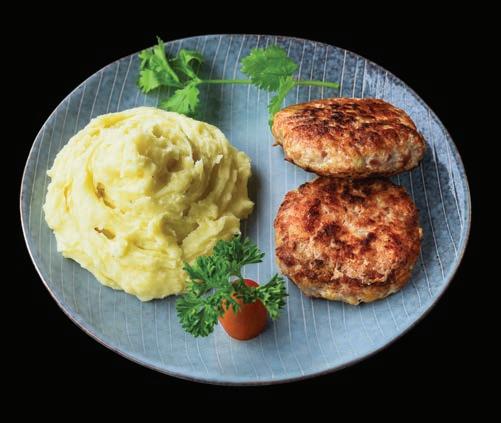
�� Turkey rissoles
Ingredients
260g turkey mince; 1 onion, finely chopped; 2 garlic cloves, crushed; 1 egg, beaten; 1 apple, peeled and grated; 1 tbsp oregano; 1 tbsp paprika; salt and pepper; vegetables for serving Method
Heat oven to 180°C.
In a bowl mix mince, onion, garlic, egg and apple.
Season to taste with oregano and paprika or salt and pepper.
Mix well and shape into two rissoles, 3cm thick.
Place on a lined baking tray and bake for 25 minutes, turning over halfway through.
Serve hot with vegetables such as steamed broccoli and mashed or baked sweet potato.
☺ Believe in Good: Tips
“I, not events, have the power to make me happy or unhappy today.”
– Groucho
Marx
1. What do we call a group of lines that give poems structure?
2. What is it called when two words sound the same at the end of each line?
3. What is the feeling that poetry creates for the reader?
4. What are two lines of poetry called?
5. Which term refers to the repeated rhythmic pattern found in a poem?
6. What is the attitude a writer takes toward the subject of a poem?
On which page of this week’s Salvos Magazine is Tum-Tum hiding?
�� On this day
21 March 1952
DJ Alan Freed held the world’s first rock and roll concert, in Cleveland, Ohio. It was shut down after one song because of over-crowding.
22 March 1963
The Beatles released their first album, Please Please Me, which included the single Love Me Do and is regarded as one of the greatest albums of all time.
25 March 1995 Ward Cunningham introduced the wiki, or user-editable website. Today, Wikipedia is the world’s most well-known and widely used wiki.
Fill in the grid so that every row, every column and every 3x3 box contains the digits 1 to 9.
Have a laugh
A funny young fellow named Perkins Was terribly fond of small gherkins.
One day after tea He ate ninety-three And pickled his internal workings. – Anonymous
“When anxiety was great within me, your consolation brought me joy.”
Psalm 94, verse 19 New International Version
taken care
Find out how you can start or continue your legacy of generosity. Contact The Salvation Army’s Wills and Bequests team and ask for a free Wills booklet. Together, we can give hope where it’s needed most long into the future.