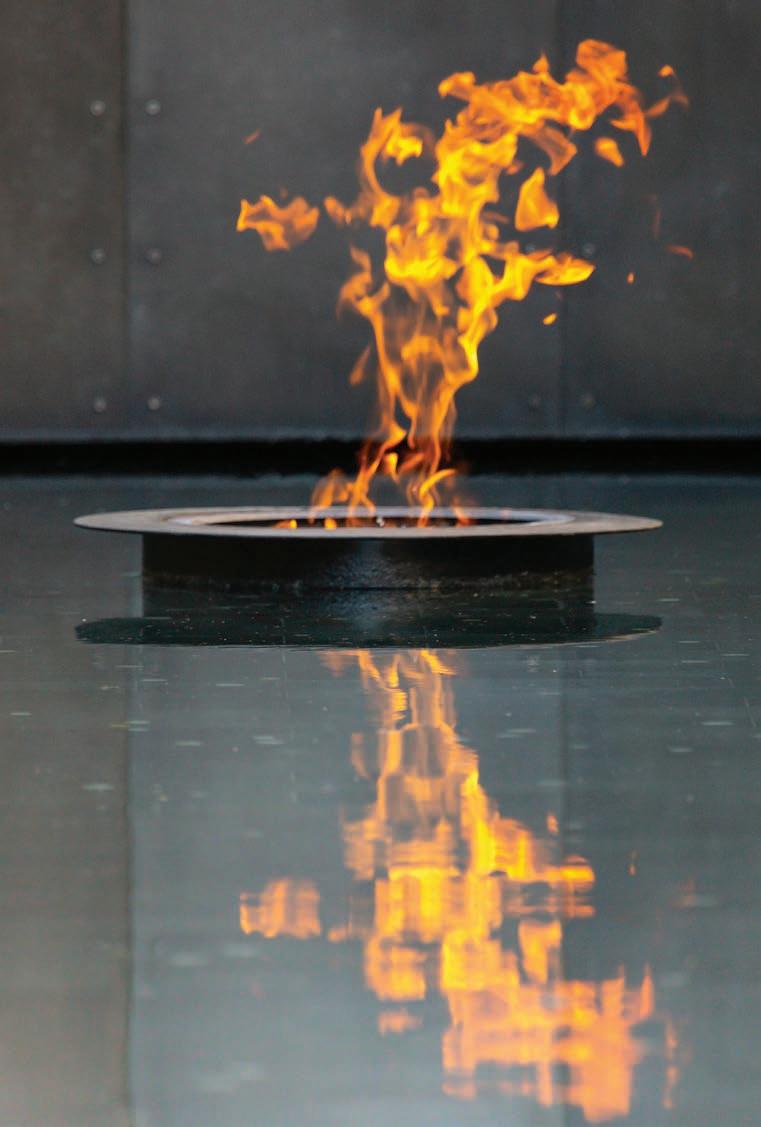
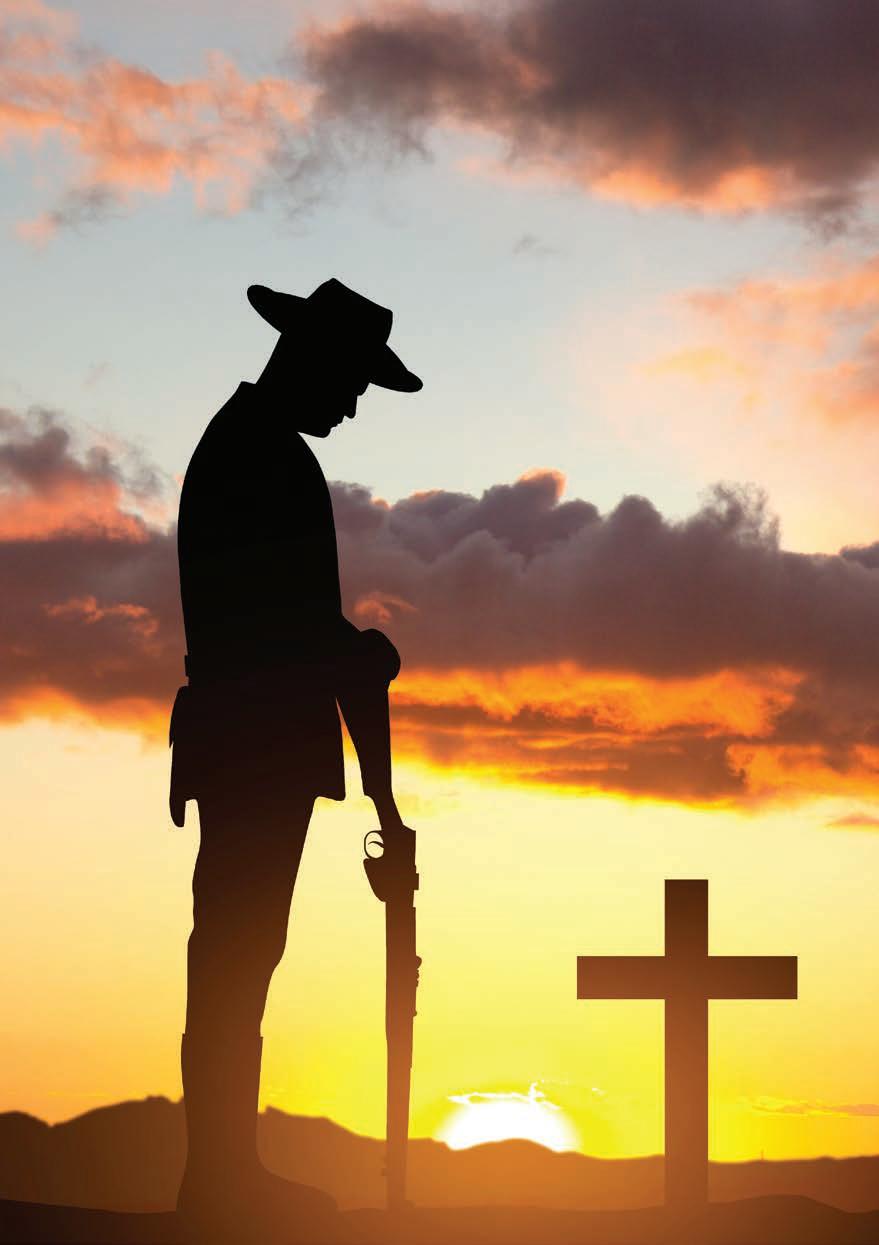
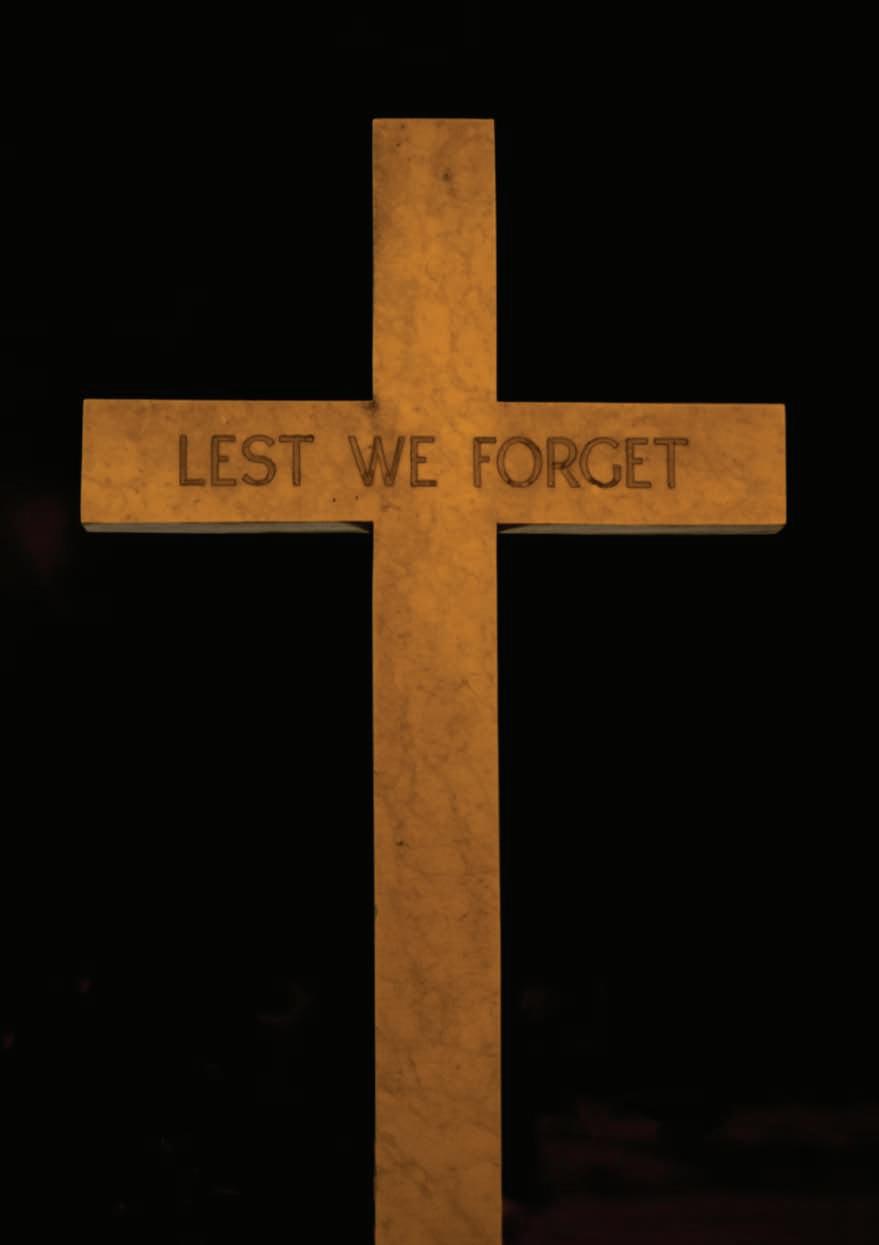
“At the going down of the sun, and in the morning, we will remember them.”
The Ode comes from For the Fallen, a poem by English poet and writer Robert Laurence Binyon (1869-1943).
PHOTO
What is The Salvation Army?
The Salvation Army, an international movement, is an evangelical part of the universal Christian Church.
Vision Statement
Wherever there is hardship or injustice, Salvos will live, love and fight alongside others to transform Australia one life at a time with the love of Jesus.
Mission Statement
The Salvation Army is a Christian movement dedicated to sharing the love of Jesus by:
• Caring for people
• Creating faith pathways
• Building healthy communities
• Working for justice
The Salvation Army Australia acknowledges the Traditional Owners of the land on which we meet and work and pay our respect to Elders, past, present, and future. We value and include people of all cultures, languages, abilities, sexual orientations, gender identities, gender expressions, and intersex status. We are committed to providing programs that are fully inclusive. We are committed to the safety and wellbeing of people of all ages, particularly children.
A better world
There is a statue at the Turkish 57th Infantry Battalion Cemetery at Gallipoli of war veteran Huseyin Kacmaz and his young granddaughter Eylül. Huseyin fought in the Balkan and Canakkale (Gallipoli) wars and in the Turkish War of Independence (1919). He was awarded the Istiklal Medal in 1922. He died on 10 September 1994, aged 110 years.
As the story goes, the statue portrays him telling Eylül about his wartime experiences, urging her – and future generations – to make sure wars never happen again.
We visited this statue many years ago, pausing to reflect upon his message of peace. My daughter, then aged 9, was the same height as Eylül. Following tradition, she placed a sprig of rosemary in Eylül’s hand – an experience that still impacts her today.
Scan here to connect with The Salvation Army services
Scan here to subscribe to Salvos Magazine
Founders: William and Catherine Booth
Salvation Army World Leaders: General Lyndon and Commissioner Bronwyn
Buckingham
Territorial Leader: Commissioner Miriam Gluyas
Secretary for Communications and Editor-In-Chief: Lieut-Colonel Paul Hateley
Printed and published for The Salvation Army by Commissioner Miriam Gluyas at Focus Print Group, Chester Hill, NSW, Darug Nation lands.
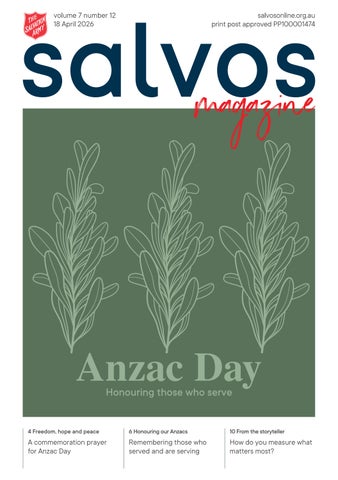
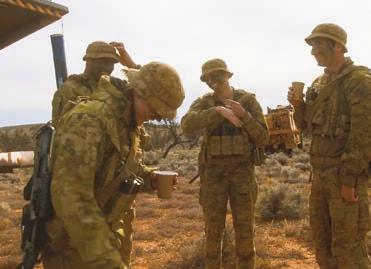
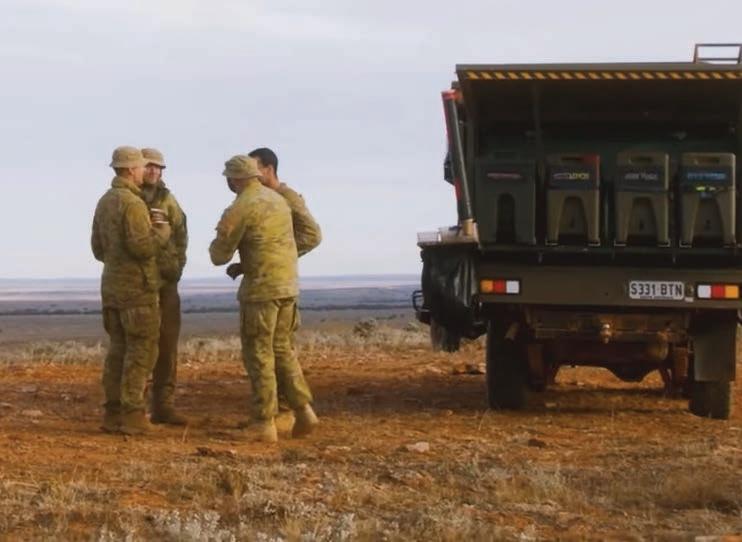
Anzac Day is a time to pause, to remember those who have fought and died, and those who are serving today. It is also a time to reflect and consider what we each can do to bring about justice, freedom, hope and peace and build a better world where finally, there are no more wars.
Lest we forget.
Simone Worthing Editor
Justice, freedom, hope and peace
A commemoration prayer for Anzac Day
by Brett Gallagher
Loving God,
We gather to remember the sacrifices made by the original Anzacs, and countless others in times of peace and conflict. We recognise the courage, determination and commitment of those who have fought for our country, seeking justice, freedom and peace for all.
We pray for those who have survived conflict, those who carry the scars of their service in their souls, minds and bodies. Be with them. Strengthen and encourage them. Let them know that there are people committed to standing alongside them to support them in their struggles.
We remember those, mainly women and children, who suffered and continue to suffer, just because they happened to be in a conflict zone. May they know you are with them and experience the peace of mind that comes with your presence.
Be with the broken Be with the heartbroken – the spouses, parents, families and friends – who endure the grief of knowing their loved ones will never return. Bring them comfort, hope and peace, we pray.
We grieve for those who, after their devastating experiences in service of their country, have ended their lives. We cannot understand the deep pain that they carried. Be with those who loved
them – those left behind – who continue to be impacted by their death. May they, through your Holy Spirit, know your grace, comfort and peace.
We also pray for those who struggle with their service – past or present. Help them to find the things that bring healing and peace. Strengthen us to walk with those who are struggling, offering words and actions of reassurance and hope.
A transformed world
May we strive to practise reconciliation, understanding and peace each day to bring about the transformation of our world. May we continue to build a nation where our differences are embraced as strengths, where our communities are free from harassment, discrimination and hostility, and where we resolve to seek the wellbeing of all peoples who call this land their home.
May your grace enable us this day to dedicate ourselves to the cause of justice, freedom, hope and peace; and give us the wisdom, strength and grace to build a better world.
We pray this in the name of the Father, Son and Holy Spirit. Amen.
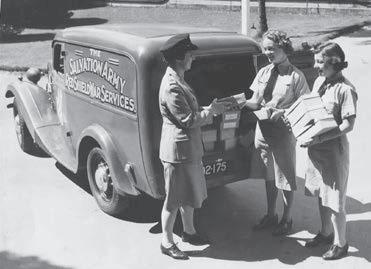
Major Brett Gallagher oversees The Salvation Army Red Shield Defence Services as Head of Integrated Mission and Resourcing
Honouring our Anzacs
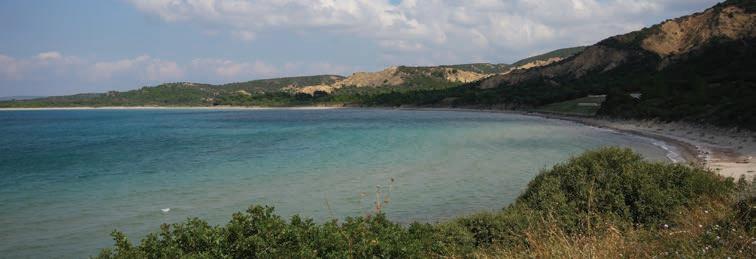
Anzac Cove – the small cove on the Gallipoli Peninsula where the Anzac troops landed.
On 25 April 1915, Australian and New Zealand troops (Anzacs) landed on the Gallipoli Peninsula of Türkiye (Turkey). Along with other Commonwealth forces, they held ground against almost impossible odds for eight months, against a Turkish force determined to defend their homeland. Both sides suffered horrendous casualties.
The Russian forces, heavily attacked by the Germans, had feared a second offensive by Turkish forces from the south. They appealed to their allies for assistance, and the British and French troops – with their allies, including the Anzacs – agreed to attack Türkiye. Their objective was to end the Ottoman Empire’s role in the war by taking control of the Dardanelles and re-establishing sea communications with Russia through the Black Sea.
However, the Turks fiercely defended their homeland, and the Anzacs were defeated.
First dawn service
One of the padres (military chaplains) of the earliest Anzacs to leave Australia in November 1914 was Reverend Arthur White. The convoy of ships
had assembled in the seas off Albany, Western Australia. Before embarkation, at four in the morning, White conducted a service for all the men of the battalion.
On his return to Australia in 1919, the Reverend said that “Albany was the last sight of land these Anzac troops saw after leaving Australian shores and some of them never returned. We should hold a service (here) at the first light of dawn each Anzac Day to commemorate them” (rslaustralia.org). That is how, on Anzac Day 1923, he came to hold the first Commemorative Dawn Service.
While Anzac Day originally commemorated those who served and those who sacrificed their lives in the Great War (WWI), we now recognise 25 April as a day to remember and honour all those who have served – including those currently serving – and those who have made the ultimate sacrifice, in all the conflicts in which Australia has participated. We will remember them.
For more information on Anzac history, see rslaustralia.org/anzac-day
Youth justice
MYTHS
“Young people who offend are bad kids.”
“Jailing young people who commit crimes will keep the community safer.”
“Restorative justice and diversion is too soft on crime.”
FACTS
Too often, young people commit crime as a consequence of experiences of disadvantage. Negative childhood experiences can disrupt brain development in critical early childhood years. They can act as risk factors for offending behaviours amongst children and young people.
Hardline, punitive responses such as incarceration, will not free communities from crime. When a young person is incarcerated, they lose important elements of their life which would otherwise promote stability. Incarceration does not address the root causes of offending. Rather, it exacerbates disadvantage and is a risk factor for future offending.
Restorative justice and diversion are not designed to be ‘hard’ or ‘soft’ on crime. Restorative justice allows for shared decision-making to meet the needs of victims, the young people themselves, and others impacted. Diversion explores the causes and consequences for a young person’s actions. Both are effective and flexible responses, addressing the causes and impacts of offending to promote positive behaviour change.
Mieke Waters – Salvation Army Policy and Advocacy Advisor
Opportunities for children and youth
Children and young people have the right to a full life where they can thrive, be supported, and be empowered. The early years of a child’s life are foundational for future health, development and wellbeing outcomes. Unfortunately, many children and young people in our country do not have a great start in life and face various challenges that are outside their control.
On average, one in six Australian children aged 0-14 years live in poverty. There is a strong correlation between experiencing poverty in the first thousand days of life and experiencing adverse health and wellbeing outcomes in later life. The effects of poverty also adversely impact educational attainment, with children experiencing disadvantage being on average two to three years behind in reading and maths by the time they reach 15 years. This can prevent children from reaching their full potential later in life, and perpetuates intergenerational disadvantage for those 1.2 million Australian children living in poverty.
Children and young people living in out-of-home care are even more acutely affected. The significant adverse life experiences and traumas they have suffered are linked with reduced social skills, developmental disruption, poorer educational attainment, increased likelihood of encountering the youth justice system, poorer physical and mental health outcomes, and impacts
to their attachment behaviours and connection to community.
For young people, limited employment prospects in Australia can substantially impact their wellbeing. Being unemployed restricts access to a wide range of services, opportunities and necessities, including housing, transportation and basic living needs.
These adverse experiences in childhood and at a young age can result in ongoing and chronic experiences of poverty across a person’s whole life. We need to ensure opportunities for children and young people so they can achieve their potential at any age.
PHOTO BY LUDO POIRÉ ON UNSPLASH
WE HAVE THE POWER TO MAKE A DIFFERENCE
URGE ACTION FROM GOVERNMENTS
At all levels of government, we can implement legislative and administrative processes that respect and uphold the United Nations Convention on the Rights of the Child.
We can commit to ensuring the programs and resources available for young people will provide equitable access to opportunities and support. We can provide funding for integrated, culturally safe, and non-discriminatory services and programs, with a focus on communities experiencing the greatest disadvantage.
WE
CAN IMPLEMENT
CHANGE IN OUR COMMUNITY AND WORKPLACES
When we are organising social and community groups and events, we can seek out the insights, experiences and skills of children and young people to make sure that our spaces are safe and welcoming.
We can actively create opportunities for young people to build skills and experiences that will be useful for their futures and align with their interests and desires.
We can work to raise awareness and support causes that promote the fair treatment and wellbeing of children and young people.
WE CAN HAVE INFLUENCE IN OUR PERSONAL LIVES
In our day-to-day interactions, we can acknowledge that young people are active agents of change and key players in society, and treat them as such. We can also listen to, and treat, children and young people with the dignity and respect they deserve.
We can open our eyes to the children around us and seek genuine connections with children in spaces that are safe, appealing and welcoming to them.
One in every six Australian children live below the national poverty line.
In 2021 nearly a quarter (23 per cent) of all people experiencing homelessness were aged from 12 to 24 years.
YOUTH UNEMPLOYMENT RATE IN 2024:
9.7% 30% OF YOUNG PEOPLE EXPERIENCE HOMELESSNESS
30 per cent of young people experience homelessness within the first year of leaving out-of-home care.
In 2024, the youth unemployment rate was at 9.7 per cent compared to 4 per cent for the adult population.
From the Storyteller
StorieS acroSS the centurieS Still relevant today
How do you measure what really matters?
by Mal Davies
Jesus was a great storyteller. His short, succinct parables (another word for stories) have shown people how to live God’s way for centuries, and still do today.
I have about 2000 books on my bookshelves. A friend of mine has about 70 pairs of runners and gym shoes. Another friend has about 50 handbags in her collection. A former work colleague had more than 1000 comic books. A neighbour I once lived next to curated a collection of more than 200 different Coca Cola cans.
Because of my preoccupation for collecting books, I can’t really complain about people who amass a lot of something (another friend used to collect snow globes) but for all of these people –me included – it raises the question: what happens to these things when we die?
I know that sounds a bit gloomy or even morose, but it’s a reality. Will the family just take 200 collectible Coke cans for recycling and make themselves a measly $20? Will another family deliver 40 boxes of comics to Salvos Stores?
While I have some books my children will like and I have other books I can sell for a decent dollar (especially some
collectibles and first editions), there’s probably still 1500 books that have to go somewhere else!
A well-known aphorism is: you can’t take it with you. No matter how rich you are or how many houses or fast cars or expensive watches you own, when you’re dead, you’re dead, and all your ‘stuff’ goes to someone else or somewhere else.
Jesus spoke about this in his story about a ‘rich fool’ (it’s in the Gospel of Luke, chapter 12). He spoke of a farmer who took in a huge harvest and decided he needed to build a bigger barn to keep all his grain.
He knew that he could sell it as he needed to and, therefore, didn’t have to keep working. He said to himself: “You have plenty of grain laid up for many years. Take life easy; eat, drink and be merry.”
However, the man died that night and enjoyed none of his wealth. Jesus said, “This is how it will be with whoever stores up things for themselves but is not rich toward God.” Note that Jesus
has introduced the story by saying: “Be on your guard against all kinds of greed; life does not consist in an abundance of possessions.”
The story, and the lesson, is about priorities and greed and what really counts in life.
I’m sometimes saddened when I read about a famous celebrity who is globally recognised and is incredibly talented or beautiful or wealthy or all three, and then it’s revealed they are also depressed or lonely or miserable or, terribly, suicidal.
They can move from fancy hotel to fancy hotel and appear on magazine covers for years, but they’re never truly satisfied.
I’m not rich or famous or globally recognised, but I can sit and watch my adult children play with my two-year-old granddaughter on the floor and I’m the happiest man on the planet.
So, how are you ‘rich’? It might not be in barns filled with grain or money in the bank, but it might be in the people you love and the people who love you. It might be in your depth of character and integrity. It might even be in your relationship with God.
Rich or otherwise, don’t be a fool. Life is not about how much stuff you have. There is so, so much more God has planned for you.
PHOTO BY MARIIA ZAKATIURA ON UNSPLASH
PHOTO BY WALDEMAR BRANDT ON UNSPLASH
PHOTO BY ASHKAN FOROUZANI ON UNSPLASH
Anzac Day: A tribute to courage, sacrifice and service
This Anzac Day, we reflect on the bravery and dedication of the Australian and New Zealand Army Corps, whose actions at Gallipoli in 1915 created a timeless legacy. We pay tribute to those who gave everything, and we remember the families who continue to bear their loss. Join us in honouring their memory and pledging to continue their fight for a better, safer world.
On 25 April 1915, the Australian and New Zealand Army Corps, at Gallipoli, made immortal the name of Anzac.
They established an imperishable tradition of selfless service, of devotion to duty, and of fighting for all that is best in human relationships.
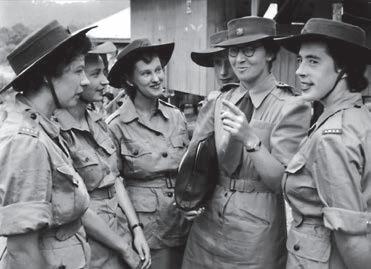
We remember with deep gratitude the efforts of the men and women in our armed and supporting services. We’re thankful for those who have givenand those who still give - so much of themselves to make a world a safer and more noble place.
And with them, we remember those who were left behind. We stand with those who bear the sorrow of their loss.
Let us therefore dedicate ourselves to taking up the burdens of the fallen with the same courage and steadfastness with which they went into conflict. May we set our hands to the tasks they left unfinished. Let us dedicate ourselves to the service of the ideals for which they died.
And let us, with God’s help, give our utmost to make the world the place they wished it to be. A better and happier place for all people, through whatever means are open to us.
Scan here to view the video Anzac Day: A tribute to courage, sacrifice and service
�� One-cup Anzac muffins
Ingredients
1 cup self-raising flour; 1 cup brown sugar; 1 cup rolled oats; 1 cup desiccated coconut; 1 cup milk; 1 egg, beaten; 2 tbsp golden syrup; 1 cup apple, grated Method
Sift flour in bowl, mix through sugar, adding in oats and coconut.
Make a well in the centre to pour in milk, egg, golden syrup and apple. Mix well.
Spoon into prepared muffin tins, filling to just below top.
Bake at 200°C for 20 minutes.
☺ Believe in Good: Tips
“Greater love has no one than this: to lay down one’s life for one’s friends.”
John chapter 15, verse 13
New International Version
This Anzac Day, let’s remember with love and thankfulness the brave soldiers who gave their lives, and all those who have served and continue to serve our country.
1. Who is credited with building the first permanent circus building and then the circus ‘ring’?
2. In 1859, what was Jules Leotard the first to do, at the Cirque Napoleon in Paris?
3. Which author built ‘Cirque Municipal’ in 1874?
4. What was the Australian children’s circus, formed in 1979, called?
5. What is the name given to the tent-like structure used by travelling circuses?
On which page of this week’s Salvos Magazine is Tum-Tum hiding?
PHOTO BY INGO ELLERBUSCH ON UNSPLASH
Who am I?
I was born in South Shields, England, in 1892 and died at Anzac Cove, Gallipoli, in 1915.
In my short life, I served in the British Navy and then travelled through Australia taking on various jobs, including cane-cutting and coal mining.
I then worked on Australian ships until enlisting in the Australian Imperial Force, using only part of my name.
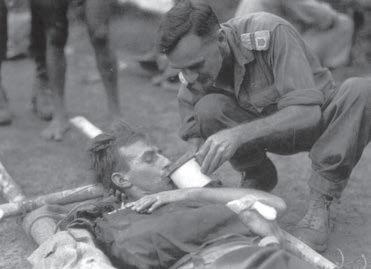
I became a field ambulance stretcher bearer and am known for my bravery and my donkey.
✏Answers
I am: John Simpson Kirkpatrick Tum-Tum: is hiding behind the ring on page 8.
Circus 5. The Big Top
Verne 4. The Flying Fruit Fly
2. A flying trapeze act 3. Jules
Quiz: 1. Philip Astley
Sudoku
Fill in the grid so that every row, every column and every 3x3 box contains the digits 1 to 9.
��Have a laugh
I have just been offered a job as a clown. My boss told me the other guy was good.
Seems to me I’ll have some big shoes to fill.
I was looking through the employment section of the paper today and saw a vacancy for an acrobat.
I thought, perfect, I could do that standing on my head.
When I was young my father worked in a circus as a stilt walker.
I used to look up to him.
“God is our refuge and strength, an ever-present help in times of trouble.”