“Refugees didn’t just escape a place. They had to escape a thousand memories until they’d put enough time and distance between them and their misery to wake to a better day.”
— Nadia Hashimi
What is The Salvation Army?
The Salvation Army, an international movement, is an evangelical part of the universal Christian Church.
Vision Statement
Wherever there is hardship or injustice, Salvos will live, love and fight alongside others to transform Australia one life at a time with the love of Jesus.
Mission Statement
The Salvation Army is a Christian movement dedicated to sharing the love of Jesus by:
• Caring for people
• Creating faith pathways
• Building healthy communities
• Working for justice
The Salvation Army Australia acknowledges the Traditional Owners of the land on which we meet and work and pay our respect to Elders, past, present, and future. We value and include people of all cultures, languages, abilities, sexual orientations, gender identities, gender expressions, and intersex status. We are committed to providing programs that are fully inclusive. We are committed to the safety and wellbeing of people of all ages, particularly children.
Feeling at home
I may be an adult, but I still make myself at home in my parents’ house. I’m happy to lounge on the couch, open their fridge to see what’s on offer and help myself to mum’s homemade biscuits. Many places can feel like home to us, and they don’t have to be where we live.
It could be the familiar surrounds of where we work and the fulfilment of working on projects with colleagues we trust and like. It could be our favourite café, where the friendly barista knows the type of coffee we like and which footy team we follow. Perhaps church is our safe place, where people know us and our story.
Scan here to connect with The Salvation Army services
Scan here to subscribe to Salvos Magazine
Founders: William and Catherine Booth
Salvation Army World Leaders: General Lyndon and Commissioner Bronwyn
Buckingham
Territorial Leader: Commissioner Miriam Gluyas
Secretary for Communications and Editor-In-Chief: Lieut-Colonel Paul Hateley
Printed and published for The Salvation Army by Commissioner Miriam Gluyas at Focus Print Group, Chester Hill, NSW, Darug Nation lands.
It’s usually the people in these places that make us feel relaxed – and we don’t always have to know someone well to feel comfortable around them. We, too, can create a welcoming culture around us, following the advice of Galatians chapter six, verse 10: “So then, as we have opportunity, let us do good to everyone” (English Standard Version). A warm smile and a friendly greeting go a long way to making someone feel at home.
Faye Michelson Acting Editor
Celebrating courage and resilience
World Refugee Week is the world’s largest arts and culture festival celebrating the contributions, creativity and resilience of refugees and people seeking sanctuary. The festival is a partnership project coordinated by the UK-based organisation, Counterpoints Arts.
Last year, the number of people forced to flee their homes exceeded 117 million due to conflict, violence, human rights violations and persecution. Over 36 million of these became refugees.
Conflict is one of the main drivers of displacement, and 67 per cent of all refugees originated from just five countries: Syria, Afghanistan, Ukraine, Sudan and Venezuela. (www.worldvision.org.uk)
Inspired by the lives and experiences of people seeking sanctuary, World Refugee Week 2026 invites us to explore the theme of Courage.
For refugees around the world, courage is often a daily necessity. It is the courage
to face unknown journeys, learn new languages, navigate unfamiliar systems, or simply to wake up each morning and step into an uncertain world.
At a time when some seek to divide and blame, Refugee Week 2026 calls us to come together and share the courage to welcome, to stand for what we believe in, and to celebrate culture and community – to be joyful, imagine new possibilities, dream, heal, and connect.
(refugeeweek.org)
Courage isn’t always loud or bold. It can be found in simple acts: opening your door to a neighbour, trying new food, reading a book, or watching a film that changes your view of the world. It can be speaking up, asking for help, sharing your story – or simply having the courage to be yourself.
Through art, stories and community, we celebrate the courage that lives within us all – and how connection helps it grow. – Fay Foster
A million stories: Refugee Week 2026
In 2026 we celebrate the arrival of the one millionth refugee through Australia’s Humanitarian Program. This milestone highlights Australia’s ongoing commitment to providing a safe haven for those fleeing persecution and conflict, and recognises the immense contributions refugees make to our society.
2026 also marks 40 years of Refugee Week: sharing stories, challenging stereotypes, and building a more compassionate society. Refugee Week events and activities continue to demonstrate the determination, openness and pride of our community in creating awareness of the contributions and journey of refugees and people seeking asylum in Australia.
It’s a unique opportunity for us all to experience and celebrate the rich diversity of refugee communities through theatre, music, dance, film, and other activities which take place all over Australia (www.refugeeweek.org.au).
The theme of Refugee Week 2026 (14 –20 June) is ‘A Million Stories’.
As Europe recovered from the devastation of World War II, Australia responded to an international call to offer a future to people with nowhere to call home. Since that initial agreement in 1947 to receive 4000 refugees from Central Europe, Australia has issued one million permanent humanitarian visas – welcoming people from all parts of the globe, people who have helped to build modern Australia.
Refugee Week 2026 is a time to reflect on that milestone and to celebrate the million stories behind it. Each story is unique. Each one is powerful. And together, they shape the Australia we all call home today.
In Refugee Week, we look back, but also to the future.
• How can we continue to welcome people in need of safety?
• What more can we do, as individuals and communities, to offer support and understanding?
• And how can each of us show kindness and help people feel they belong?
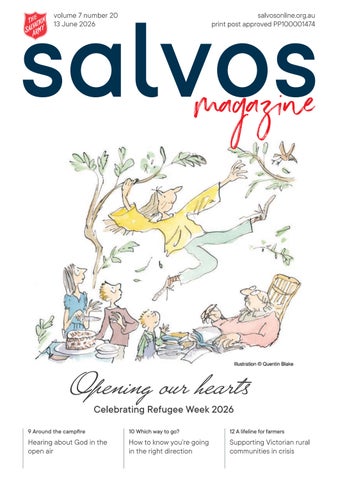
CHOOSING O E - P AN
NShowing hospitality and welcome to those seeking refuge in our community.
by Jo-anne Brown
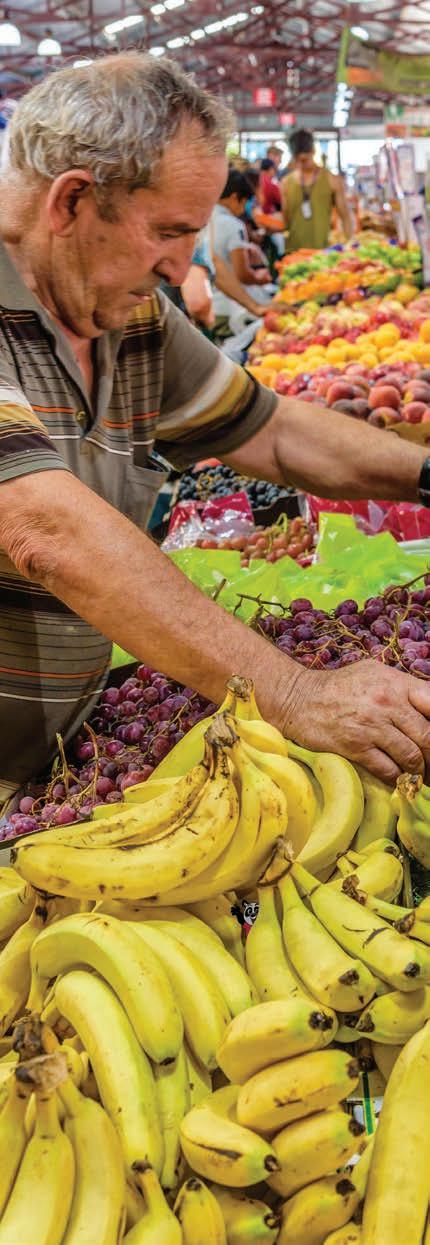
It’s Sunday morning and the air is filled with fragrant aromas, the musical sounds of multiple languages, vendors proclaiming their wares and colour everywhere the eye can see. I see fruit and vegetables I’ve never seen in a supermarket. I smell food I don’t know how to describe but am curious to try. And there are people of all nations – well, not all nations, of course, but many nations, who have come to this country and have worked hard to make a home for themselves and their families.
I pause to take it all in and I recognise there are stories here I will never know – and within those stories, pain and suffering I can never truly grasp.
I remember the words of a friend, a longterm supporter and advocate for refugees.
“People don’t flee their country for a better life, or to get away from poverty,” he said. “They flee, often in the middle of the night, leaving behind everything, including all official documentation, out of terror – terror for their lives, terror of being imprisoned and tortured, consumed with fear that their wives and children will be assaulted and tortured.”
Truly comprehending the extent of the
E-H A ERT D WAY OF LIFE
terror and violence that many people have faced is beyond me. And not necessarily what I am required to do.
As I look at the colours and textures surrounding me, and notice the unfamiliar aromas and languages, I see beneath what is heard and what is obvious – ordinary people with ordinary, everyday hopes and desires.
I see people connecting to community and contributing what they can.
I see people choosing life and working to create a good life for themselves and those they care about.
I see joyous diversity - and the universal need for safety and belonging.
Where do I fit in all this?
I know I too am an ordinary person, part of all humanity, with everyday hopes and desires. I recognise my own needs and longings for safety and belonging, for connection and community, and the capacity to contribute to creating a good life for myself and those around me.
I am drawn to the principles of welcome and hospitality, not as nebulous ideas or vague ideals, but as embodied practice. All around the world, traditional
communities have been embedded in timeless practices of welcome and hospitality. Hospitality has been for many simply a way of life. What does that mean for me right here and now?
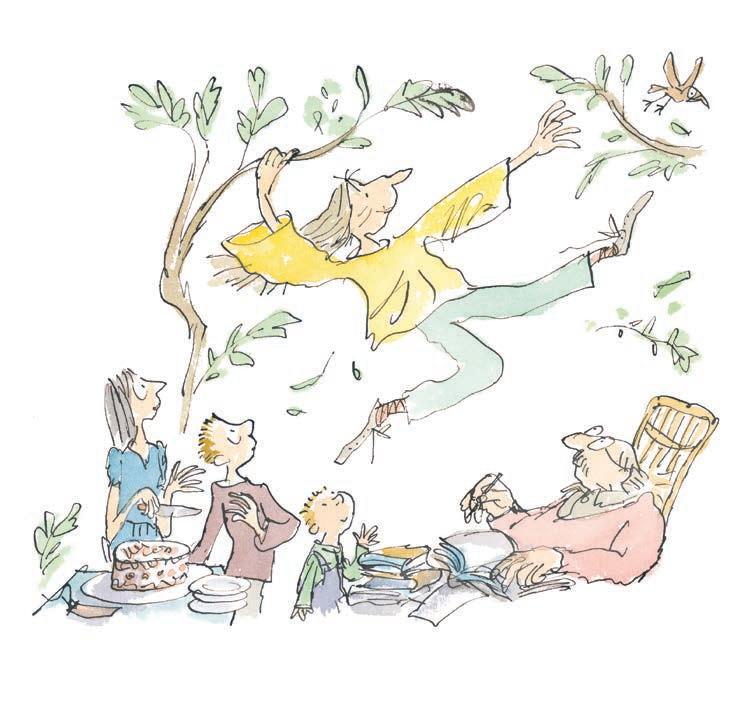
I love Jesus’ words, spoken over 2000 years ago to those who followed him then and to those who follow him now: “You’re here to be light, bringing out the God-colours in the world … Keep open house; be generous with your lives” (Matthew 5:14-16 The Message).
When I consider the people, the stories and the experiences that make up community, any community, the invitation to be light brings a beautiful radiance to how we can be in the world. Keeping “open house’ is a calling to open-heartedness and to generosity, not only with our resources but also with all that we are.
What does that look like?
I think of my own desire to belong, to feel safe, to be connected.
I see that same desire mirrored in all people, in all places.
I know how I want to be treated and so I know what open-hearted generosity means for me.
You’re here to be light, bringing out the God-colours in the world … Keep open house; be generous with your lives.
It looks and feels like kindness – kindness shown in a smile, in offering help, and in acts of courtesy. Kindness is experienced in the acknowledgment of another person, their needs and their gifts and qualities. Such kindness is unconditional. It doesn’t depend on getting something back or even being appreciated. It simply sees the other person as they are and offers welcome.
We can be kind to anyone – a stranger, a friend, someone we recognise but don’t really know. Open-heartedness, however, invites us to go even further. True welcome and hospitality invite us into relationship – to stand beside the newcomer in our community and to be genuinely interested in getting to know them.
Choosing to be hospitable and welcoming can be challenging. We often fear the unfamiliar and unknown. We may have hidden (or not-so-hidden) prejudices toward people who are different to us, we may have had hurtful or uncomfortable previous experiences, we might not like to step outside of what is known and familiar. If we were to be
truly honest with ourselves, we might acknowledge a fear of people who look and speak differently to us. All of this gets in the way of being kind and welcoming. It can be hard to see and name these attitudes in ourselves, yet doing so is the first step to greater connection with others and to a more open-hearted way of living. Recognising our fears helps us to see that fear restricts understanding, and, in turn, greater understanding reduces fear. Understanding comes through connection and relationship.
Many people seeking refuge in our country have experienced incomprehensible trauma. Suffering and trauma are not something to be glossed over and are always multi-faceted and more complicated than we know, impacting every part of a person’s life. There are no simple answers and no one-size-fits-all strategies.
Kindness, generosity, hospitality, however, are small offerings but their impact may be beyond our imagining. And they are offerings that any one of us, every one of us, can make.
Church around the campfire
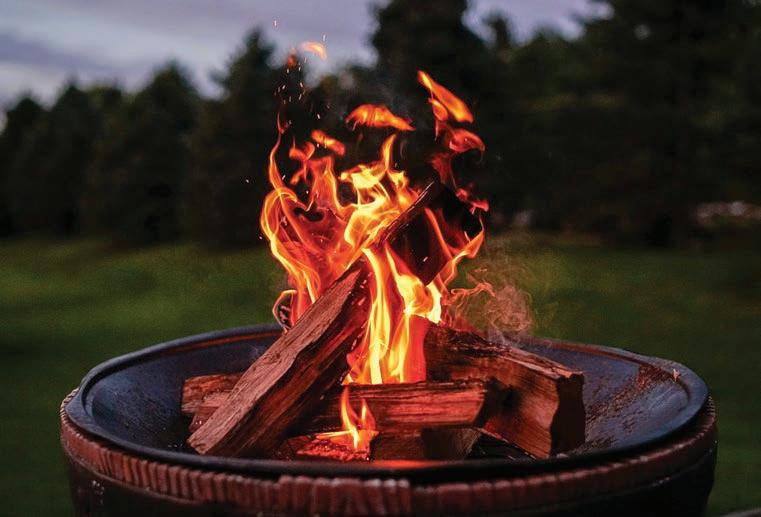
When Salvation Army officers (pastors) Captain Henry and Lieutenant Cindy Roehrig were appointed to Bega Valley Corps (church) a few years ago, they began a journey of seeking God and being open to the direction he wanted to take The Salvation Army’s mission in the area. In collaboration with their congregation, they felt called to replant a faith expression in Merimbula, about 25 minutes south. The ‘Campfire Sessions’ worshipping community and mid-week spiritual walks began in February. People bring along their camp chairs to the open area at the back of the Merimbula Scout Hall, which looks out onto bushland. The gathering starts with tea and coffee and a chat, then worship
begins with everyone sitting around the fire, singing praise to God.
“With Campfire Sessions,” said Henry, “people aren’t afraid of all the structure that comes with walking into a church building.”
The format also suits families, with kids who are not able to stay seated for long periods still able to experience the worship and teaching. The message is delivered as a ‘campfire’ story.
“People tend to slow down and just talk more than they ever would in church,” said Henry. “I think God is opening ideas of what church can really look like, what it can be.”
– Lauren Martin
PHOTO BY R.D. SMITH ON UNSPLASH
THE LOST ART OF
The freedom of knowing you’re going in the right direction
by Faye Michelson
Appliances are getting so clever! We now have a robot vacuum cleaner, given to us by our daughter. We’ve called it
Captain Cleaner; it rolls around, sucking up dirt and dust for 77 minutes each day, is barked at by the dog, and occasionally gets stuck under furniture. “It will change your life,” enthused our daughter.
Captain Cleaner, though useful and great canine entertainment, has not changed my life. But it made me think about an invention that definitely has. The GPS.
Every time I get into my car, I thank God for the genius who invented this. It is truly life-transforming for people like me who suffer the crippling disadvantage of being directionally challenged.
If you can read maps, remember routes and instinctively know which way to turn, it’s hard to understand the panic in pre-GPS days of having to drive somewhere unfamiliar. It didn’t even have to be somewhere unfamiliar. I had worked at my office for over two years when one morning I accidentally turned left a few streets before I should have. For what seemed like an eternity, I drove around a labyrinth of suburban back streets trying to find my way back to the main road. I didn’t tell my colleagues why I was late. How could I admit I got lost going to work?
Pre-Google Maps we used actual maps in a book. In Melbourne it was called the Melway and, quite frankly, it was impossible
GETTING LOST
to use. How were you supposed to follow a double-page spread of criss-crossing lines with tiny road names printed over the top of them and drive at the same time? And that’s even supposing you had the maps up the right way.
Other strategies to cope had to be found, such as the kind and non-judgemental receptionist in one of the places I worked. If I got lost, I phoned her. She would guide me back like a sort of human Siri using the office Melway and language I could understand. More often than I care to admit, I had the mobile phone on speaker on the front seat while she said things like, “you’ll be coming up to a railway crossing soon, go over it,” and “there’s a big intersection coming up. Turn right there.”
make a wrong turn. It’s empowering to know you’re going in the right direction.
The prophet Isaiah spoke to God’s people thousands of years ago about exactly that – going in the right direction. At the time, they were really struggling with their faith. They were wandering away from God and needed help to find their way back to him.
“Whether you turn to the right or to the left,” Isaiah told them, “Your ears will hear a voice behind you, saying, ‘This is the way; walk in it.’” (Isaiah chapter 30 verse 21, New International Version).
But oh, what freedom the GPS gives people like me! Now I can drive anywhere and not feel my shoulders tense or my hands clutch the steering wheel as I wait to inevitably get lost. No longer do I feel like weeping with the stress of being late yet again because I can’t find where I’m meant to go.
The voice Isaiah was speaking about belonged to God, who was promising his people that he would tell them the right way to go. It’s a promise God has kept through the generations, and we have the same assurance from him today. If we’re ready to hear him, we will. We may hear his ‘still, small’ voice, or we may hear him through reading the Bible, from praying, or from that certainty we feel deep in our souls. He will show us the way to go, no matter how lost we are.
No, these days it’s as simple as typing in an address and pressing ‘go.’ How delightful to have a calm voice (choose what accent you like) telling you where to turn in 350 metres, or to make a U-turn when it’s safe to do so. How lovely to have the route simply recalculated when you
From hill to hand
How the Salvos are helping Victorian farmers in crisis
by Lerisse Smith
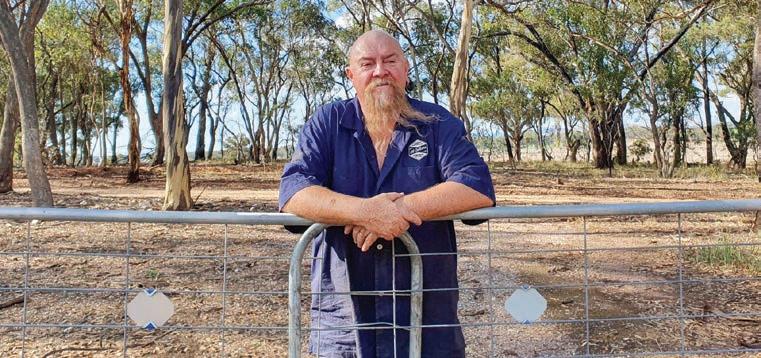
Every few weeks, Mark Thomas drives up to the one hill on his sheep farm in regional Victoria, switches off the engine, and has a bit of a chat with God.
There’s no script, no ritual, no polished prayer for this farmer, Community Engagement Worker and Ministry Assistant at Hamilton Salvos.
On the agenda?
“It can be anything,” he reflects. “I ask for rain, but I also ask for the ability to get through this dry period.”
The special prayer time isn’t a symbolic gesture. It’s survival.
Across his beloved South Grampians community and Western Victoria, many farmers are in crisis, caught in a perfect storm of drought, skyrocketing costs, critical water shortages, and an inability to pay their workers. Some are hanging on. Others are barely holding on by a thread.
And in the midst of it all, the Salvos have become a vital lifeline. Providing practical, emotional and spiritual support, Mark and his team work
tirelessly to help their community do more than just survive.
Meet Mark, and it’s immediately apparent he’s totally dedicated to helping and supporting his rural community. When they hurt, he hurts. Living out the Salvos’ core values, including compassion and respect, is a top priority.
Support for farmers comes in whatever form is needed – from food to furniture.
“We deliver food to workers on farms because the farmers can’t give them enough money,” he says.
“They will still work the hours, but the farms are not paying their workers because they just can’t afford to – and the workers want to work, they want to keep their jobs. But they’re not being paid because there’s just no money to do that. So, we support them with anything from furniture through to food – anything they need. We try and find it and give it to them.”
Farmers doing it tough who may not have workers because they’re smaller farms need support too. The Salvos
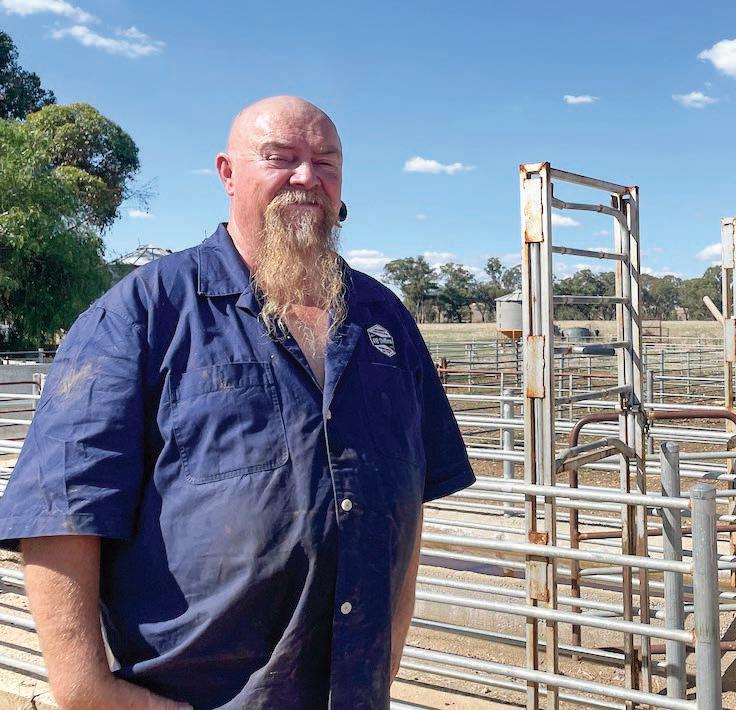
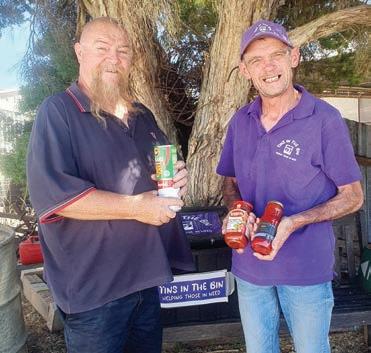
As a Community Engagement Worker and Ministry Assistant at Hamilton Salvos, Mark Thomas, also a sheep farmer, knows firsthand how tough it is to live through a drought.
help with food, clothing and bedding, whatever items are needed.
“When we find a need, we try to help them with that need,” says Mark. “They may even need advice because I’ve been a farmer for 40 years. I’ve got experience and if they’re unsure about something, I try to give them some assistance if I can.”
The stories he shares across the farming and local community are sobering.
Some rely on government support. Others refuse. Pride, independence, identity –these run deep in farming communities.
Then there’s what stays hidden.
“I have had farmers’ wives come in, who do the books for their farm, and have asked me not to tell their husbands (whom I don’t know) that they don’t have enough money to feed their family that week and asked if I could help,” Mark explains. “They are afraid their husbands would not handle it well.”
The pressures facing many farmers are being shaped by forces far beyond the farm gate. Global events such as fuel price
spikes and conflict overseas are being felt more sharply than in most places.
“It is leading to many sleepless nights and looking for other options that can lead to environmental degradation and long-term damage,” Mark says. “When it comes down to it, if primary producers are doing it tough, it means we will all do it tough because we all have to eat.”
It’s a hardship he understands firsthand. Mark is a fifth-generation farmer, running his sheep farm for four decades. Wool is their main income. His son is the sixth, carrying the load with four other jobs just to keep things afloat. Together, they keep the farm alive, running about 1200 sheep – less than half the property’s carrying capacity.
“Because of the drought, we’ve had to sell off a lot of our stock so we can keep the ones we can breed from,” he says. “It is very hard to see a future for the next generations.”
Yet farmers keep going, doing what they’ve always done: they hope.
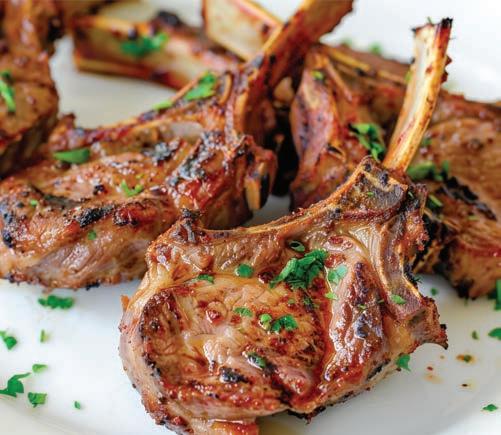
Mix together sauces, honey, jam and mustard, then cover lamb cutlets with the mixture and leave sit for 1 hour.
Grill or barbeque cutlets, basting with the sauce while cooking.
Serve with your favourite vegetables.
☺ Believe in Good: Tips
Nature Photography Day – June 15
Take a day to appreciate your environment. Photograph a sunrise or sunset, an interesting plant or insect, or friends or family surrounded by nature.
“The earth produced all kinds of vegetation. God looked at what he had done, and it was good.”
Genesis chapter 1, verse 12
Contemporary English Version
1. How fast can a saltwater crocodile move on land?
2. How many teeth does a crocodile have?
3. How long can a crocodile live?
4. What type of animal is a crocodile?
5. What is a baby crocodile called?
6. What is a group of crocodiles called?
On which page of this week’s Salvos Magazine is Tum-Tum hiding?
On this day
15 June 1844
The American inventor Charles Goodyear patents vulcanisation, a basic way of strengthening rubber by adding sulphur or similar materials.
Vulcanised rubber is used for products such as tyres and shoe soles.
16 June 1960
Alfred Hitchock’s horrorthriller film Psycho premiers.
19 June 2002
Steve Fossett flew the hot-air balloon ‘Spirit of Freedom’ from Northam, Western Australia, around the world, landing in Queensland on 3 July.
Answers
Tum-Tum: is hiding in the banans on page 6.
3. 35-75 years 4. A reptile 5. A hatchling 6. A bask on land, a float when in water
Quiz: 1. 30 km/h 2. 60-110
Puzzle #1
Sudoku
Fill in the grid so that every row, every column and every 3x3 box contains the digits 1 to 9.
Have a laugh
What do you call a crocodile in a vest?
What is a crocodile’s favourite game?
What is the difference between an alligator and crocodile? An investigator. One will see you later and the other in a while. Snap
“God is our refuge and strength, an ever-present help in trouble.”
Psalm 46, verse 1
New International Version
Semester
Deeper understanding. Fresher skills. A greater reserve of wisdom. Imagine the difference higher education can make to you, and the people you serve.
Deeper understanding. Fresher skills. A greater reserve of wisdom. Imagine the difference higher education can make to you, and the people you serve.
Deeper understanding Fresher skills A greater reserve of wisdom. Imagine the difference higher education can make to you, and the people you serve.
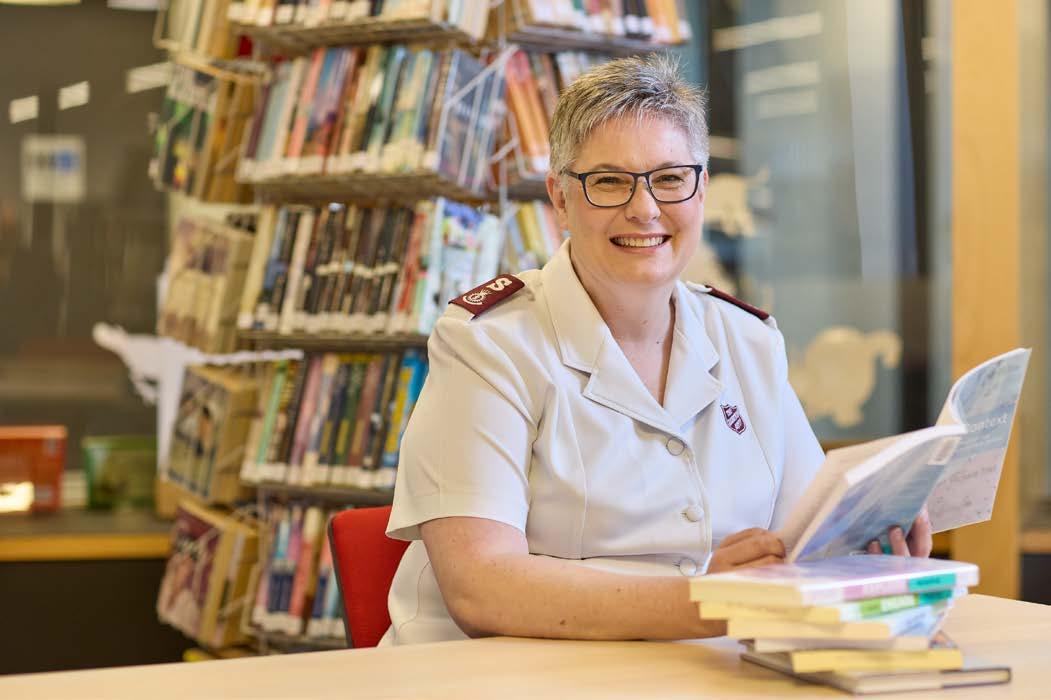
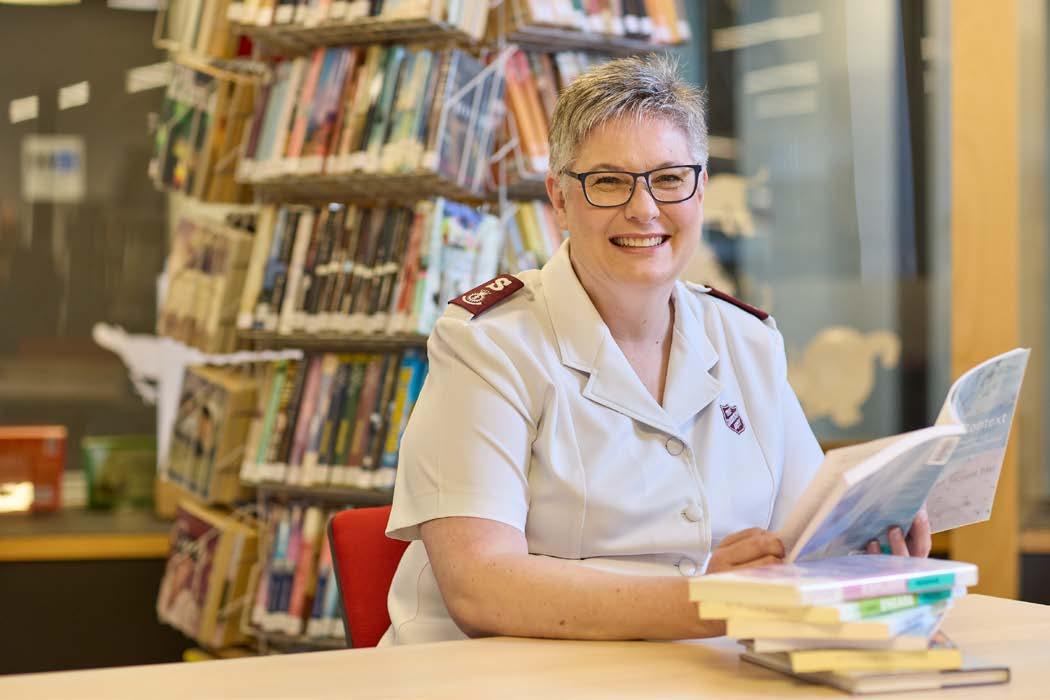
Upskill your life, faith, leadership and service through a Higher Education Award course at Eva Burrows College. Are you interested in a topic but not ready or needing to study for credit? Consider enrolling as an audit student you can fully participate in learning without the pressure of completing assessments.
e
Upskill your life, faith, leadership and service through a Higher Education Award course at Eva Burrows College. Are you interested in a topic but not ready or needing to study for credit? Consider enrolling as an audit student where you can fully participate in learning without the pressure of completing assessments.
Upskill your life, faith, leadership and service through a H Education Award course at Eva Burrows College. Are you interested in a topic but not ready or needing to study for credit? Consider enrolling as an audit student where you can fully participate in learning withou completing assessments.