”Hope sees the invisible, feels the intangible, and achieves the impossible.“
- Helen Keller
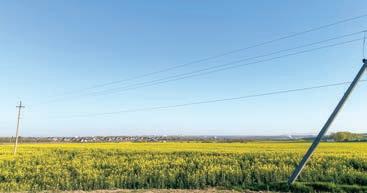
PHOTO BY BARNA KOVÁCS ON UNSPLASH
What is The Salvation Army?
The Salvation Army, an international movement, is an evangelical part of the universal Christian Church.
Vision Statement
Wherever there is hardship or injustice, Salvos will live, love and fight alongside others to transform Australia one life at a time with the love of Jesus.
Mission Statement
The Salvation Army is a Christian movement dedicated to sharing the love of Jesus by:
• Caring for people
• Creating faith pathways
• Building healthy communities
• Working for justice
The Salvation Army Australia acknowledges the Traditional Owners of the land on which we meet and work and pay our respect to Elders, past, present, and future. We value and include people of all cultures, languages, abilities, sexual orientations, gender identities, gender expressions, and intersex status. We are committed to providing programs that are fully inclusive. We are committed to the safety and wellbeing of people of all ages, particularly children.
The shape of hope
“Thank you, Salvation Army Australia, for praying for us in Ukraine, for our country, for coming to be with us and for not forgetting about what we are facing. This gives us such comfort, such strength, such hope. We are struggling, but we are not forgotten, and people around the world are joining us in prayer – even in faraway Australia. We value this more than words can say. We are not alone.”
We heard this and similar comments multiple times throughout our recent, almost four weeks in Ukraine. We couldn’t stop the war or change their circumstances, but just being there, and assisting where we could, brought some hope.
Scan here to connect with The Salvation Army services
Scan here to subscribe to Salvos Magazine
Founders: William and Catherine Booth
Salvation Army World Leaders: General Lyndon and Commissioner Bronwyn
Buckingham
Territorial Leader: Commissioner Miriam Gluyas
Secretary for Communications and Editor-In-Chief: Lieut-Colonel Paul Hateley
Publications Manager: Cheryl Tinker
Editor: Simone Worthing
Graphic Designer: Ryan Harrison
Enquiry email: publications@salvationarmy.org.au
All other Salvation Army enquiries 13 72 58
Press date: 19 June 2026
Printed and published for The Salvation Army by Commissioner Miriam Gluyas at Focus Print Group, Chester Hill, NSW, Darug Nation lands.
This was not about us. It was all about them – their strong faith, their deep commitment to serving others and their focus on hope – whatever that looked like for each one.
In the Bible, Proverbs chapter 13, verse 12 talks about how delayed hope and unrelenting disappointment makes the heart sick, but fulfilled longing can turn life around.
How can we bring hope and help change lives today?
Simone Worthing Editor
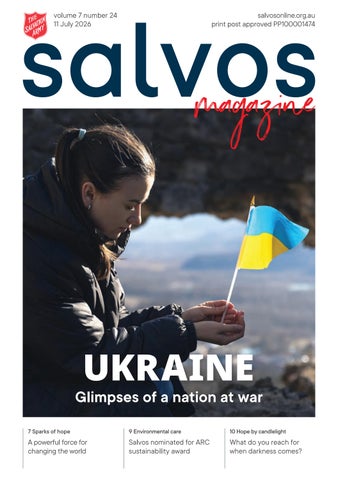
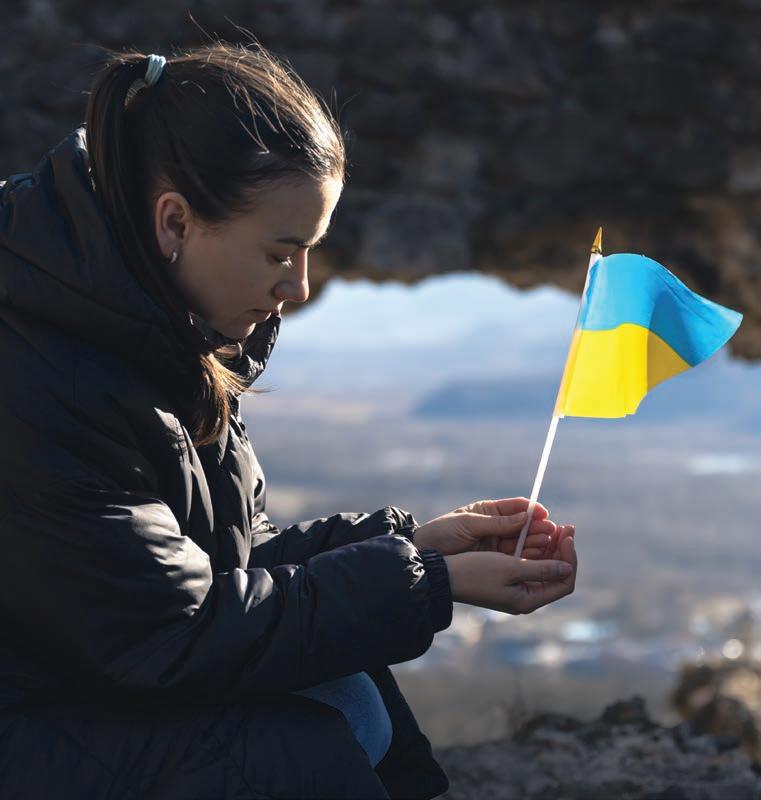
GLIMPSES OF A NATION AT WAR
Salvos Magazine editor SIMONE WORTHING and her husband Cliff have recently returned from a deployment with the Salvos’ International Headquarters Emergency Services, assisting at various corps (churches) in Ukraine. While there, Simone wrote this report, providing a snapshot of the work of The Salvation Army, the people impacted, and some personal reflections.
Content warning: This story contains descriptions of grief, loss and war.
As we travelled around Central and Western Ukraine, our hearts broke at the impact of more than 10 years of war in this beautiful country. And yet, as these brave, focused, faith-filled yet exhausted and grieving people show, there is hope – even if sometimes it struggles to find its place in the fear, destruction, death and trauma of war. Despite the deep sadness, we are humbled and inspired by this journey and the light that God is shining here through The Salvation Army.
Faces of Ukraine
“I like coming here to the corps,” said Ludmila*. “I have nowhere else to go, nobody else to spend my time with. Here I meet new people, make new friends. God is here. The officers (pastors) are kind and compassionate. People care. It lifts my soul and gives me hope, and I really thought I had run out of hope.”
Ludmila, a middle-aged woman, has been living in extremely basic student accommodation in Central Ukraine for four years. She fled her home, her neighbourhood and all she had known and worked for when Russian troops stormed into her village in the now temporarily occupied territories of
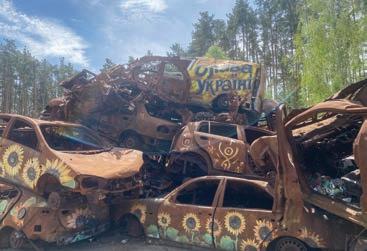
A collection of burned-out cars reflect both hope and resilience.
Eastern Ukraine. She left the constant shelling, bombing of buildings, death, destruction and danger, fearing for her life and not knowing if she could ever return.
Nadia is also from the temporarily occupied territories. “We had our own house, our own little garden that we had worked on and built for years. The Russians bombed and destroyed it, and now we have nothing. I don’t know if we will ever be able to return. I have run out of tears; I simply don’t know how to cry anymore.”
Nadia now works at a corps in Central Ukraine, assisting with programs as much
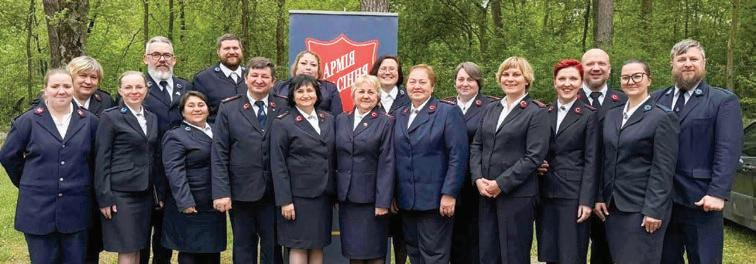
Salvation Army church pastors across Ukraine.
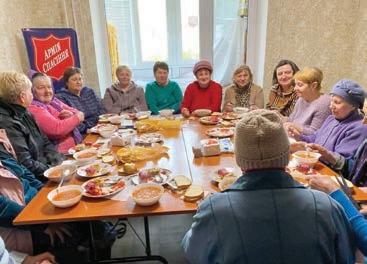
Women's (and men's) groups provide fun, fellowship and a sense of normal life.
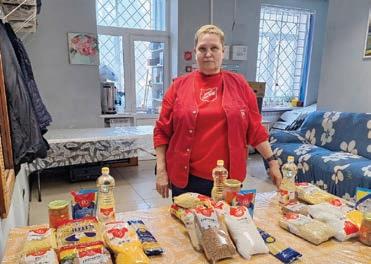
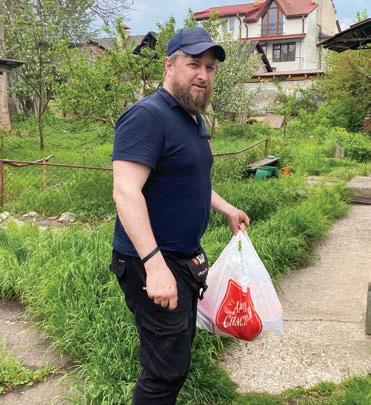
Distributing food aid and vouchers is a focus for the Salvos in Ukraine.
as she can. “Being here in this supportive environment, worshipping God, knowing I am cared for and loved, keeps me going and helps to heal my shattered heart. I am learning to laugh again.”
Marina also fled with her young family from the Eastern regions, fearing for their lives as shooting erupted all around them. They joined a queue to leave on the only road out of town. “We saw terrible things, images I will never forget, but we made it out alive. And now here, we have found The Salvation Army – a miracle. My children are blossoming in the after-school program, they are smiling again, and my husband and I can work to pay our bills, knowing our children are loved, looked after and safe.
I thank the God I never knew existed until now.”
Thousands of IDPs (Internally Displaced Persons) have fled the fighting in Eastern Ukraine to find safer locations within the country – although, as we are constantly reminded, nowhere is completely safe. The influx of people has driven up rental and food prices in many of these small towns and villages, leaving many to struggle to survive. Many have to work multiple jobs to cover basic living costs. This stress and exhaustion adds to their trauma and grief. The Salvation Army assists with vouchers for food and essentials, as well as social, pastoral and emotional support. The difference this help and support makes is life changing.
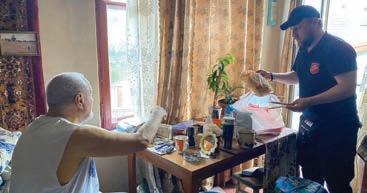
Church pastors help care for the sick and lonely, through food parcels and visits.
The peace and beauty of Ukraine is almost surreal in this war-torn country.
Working together
Helping each other, whether it’s church members, volunteers, local communities or those from all over Ukraine, is a focus of The Salvation Army. Corps programs include humanitarian aid through vouchers, Bible studies, women’s and men’s groups, the after-school program, youth groups, choirs, free secondhand clothing, art therapy, music groups and safe places for coffee and conversation.
were stork nests – belonging to the national bird of Ukraine. Over the past few years, these birds had not returned in spring, as was their usual custom. But this spring, they had returned to the northern region. To Ukrainians they represent hope, freedom and happy times, so seeing them coming back has brought moments of joy and hope for better times on the horizon.
“It’s very hard to run our children’s programs here, but we will not give up,” says a corps officer in a region of Eastern Ukraine that is subject to regular and devastating attacks. “Often we have no power, no light, no water, and days of shelling and drones. But we keep working.”
Hope
As we travelled with Salvos leaders through Ukraine, we noticed a couple of huge nests in the trees alongside the highway. The leaders explained, with obvious pride and delight, that these
One elderly lady, who has suffered so much and is constantly waiting for news of loved ones who she can no longer contact, summed up the attitude of so many:
“Hope dies last. We have to hold on to hope. We need to find hope every day, even in the smallest thing, like music, or spring flowers, or the laughter of children. This will get us through this evening, tomorrow, and beyond.”
*All names have been changed and specific locations generalised.
Creating sparks of hope
Hope is not just a feeling – it is a powerful force for transforming lives, communities and our world.
Recognising the harmful effects of hopelessness, mental health leaders proposed that a day be set aside each year as a call to action: to make hope a public health priority, and to recognise it as a protective factor against violence, addiction and suicide.
On 12 March 2025, representatives of 166 nations gathered at the United Nations to vote on the proposal for an annual day of hope. The idea was supported by 161 nations, and the first International Day of Hope was celebrated on 12 July that year.
The day focuses on teaching the value of hope. It encourages people to measure and increase their own hope, knowing that it builds resilience, wellbeing, and positive change.
Despite the many issues currently impacting our ability to hold on to hope, through meaningful action, it can be built. And every action we take can spark it.
Building hope
To create sparks of hope for yourself, you could:
• Make a nutritious meal
• Write down three things you’re hopeful for
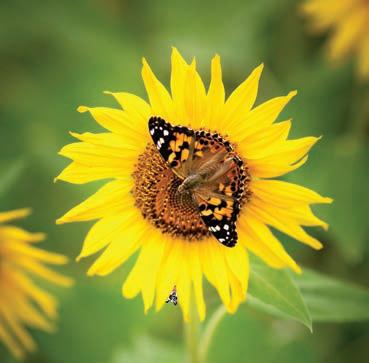
• Plant some sunflower seeds and look forward to seeing them grow!
• Light a candle and breathe deeply
• Work out how to eliminate some of the stress and other barriers from your life, and practise habits that build happiness.
• Volunteer or support a cause you care about.
To create sparks of hope for someone else, you could:
• Send a kind message
• Deliver a surprise or a small gift
• Talk with someone about how they can deal with stress and frustration and prioritise building great support networks.
– Fay Foster
Scan here for more resources, and to measure your own level of hope.
PHOTO BY DAVE HOEFLER ON UNSPLASH
New solar roof helps care for creation
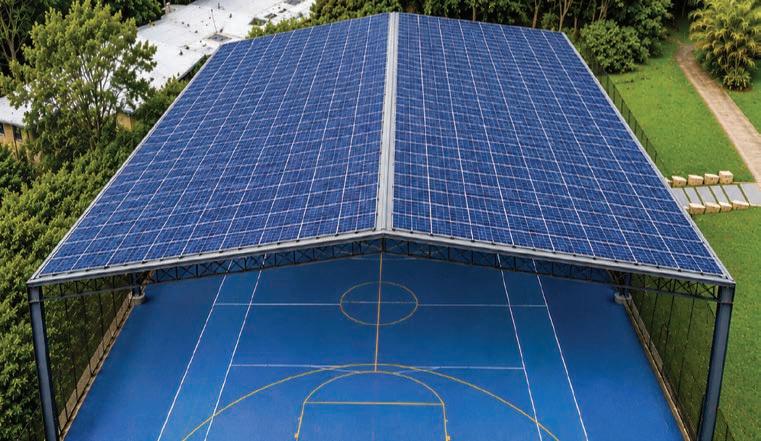
The Collaroy Centre is embarking on a project (depicted as an AI illustration here) to cover and weatherproof its tennis and basketball court, which will include solar panels to make the property more environmentally sustainable. Image: Supplied
A long-term plan is about to come to fruition at The Salvation Army’s Collaroy Centre on Sydney’s northern beaches, with a covered roof of solar panels to be installed over the tennis/basketball court.
The Collaroy Centre is one of The Salvation Army’s single biggest users of electricity, and the solar panels are expected to cut electricity use, and associated costs, by up to 50 per cent.
“Sustainability is important to us because we want to ensure The Collaroy Centre continues operating responsibly and effectively for future generations while supporting The Salvation Army’s broader commitment to creation care and community impact,” said Centre Manager Carlos Lopes.
The project will also include a 30,000litre water tank to support more responsible water use across the site.
Carlos said with 35,000 people a year enjoying The Collaroy Centre for experiences like school camps, conferences and retreats, the project would enhance the venue for years to come.
“Projects like this help ensure we can continue providing high-quality experiences, supporting community connection, and generating strong outcomes that ultimately contribute back into mission across The Salvation Army.”
The new solar panel roof is expected to be up and running by the end of the year.
– Lauren Martin
Salvos Stores nominated for sustainability award
Salvos Stores were recently nominated for an Australian Retail Council (ARC) Award.
The ARC Sustainability Excellence Award acknowledges the dedication of a retailer’s stewardship and innovation in embracing sustainable practices.
This award recognises a business that has implemented groundbreaking initiatives to transition to a low-carbon economy and actively collaborates with their team, stakeholders and customers to enhance positive environmental outcomes.
In a deeper commitment than just target-setting, the recipient uses their influence to champion positive policy changes that broaden the adoption of sustainable practices within the retail sector, according to the ARC website.
Other finalists in the category included Coles, IKEA Australia (the eventual winner), Vinnies and Woolworths Group.
Textile recovery
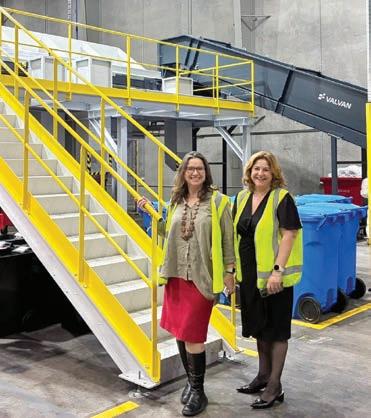
With the opening of The Salvation Army’s Textile Recovery Facility in Queensland, the first of its kind in the country, Salvos Stores are working towards greater circularity across its retail and reuse practices.
Textile Recovery Facility Business Development Manager Meriel Chamberlin said that as a retailer with more than 420 stores, the footprint of Salvos Stores was enormous, and gave them great credibility in the retail space. She said the plans to establish a centre like the Textile Recovery Facility had been five years in
the making, with Madeleine McGowan, Regional Manager for Salvos Stores and previous Chief Executive Matt Davis doing extensive work to make the project viable, securing $4.97m funding support from the Queensland Government to establish the facility.
Meriel said The Salvation Army (TSA) Australia was now trusted across the world for its focus on sustainable textile recovery, standing on the shoulders of TSA teams in the UK and the Netherlands, and that the fact it was a national and an international organisation meant there was enormous potential to expand the work of fabric reuse.
– Kirralee Nicolle
Meriel Chamberlin (left) with Madeleine McGowan at the Textile Recovery Facility.
Hope – the candlelight kind
What do you reach for when darkness comes?
by Amanda Brummell Lennestaal
I want to tell you something honest about hope. Not the version that arrives wrapped in a bow, trailing certainty behind it. Not the kind that says, “It will be okay.” That kind of hope, however well meant, has never once helped me. Mostly it has made me feel more alone in whatever I was carrying.
The hope I know is smaller than that. Quieter. Sometimes it is barely a breath.
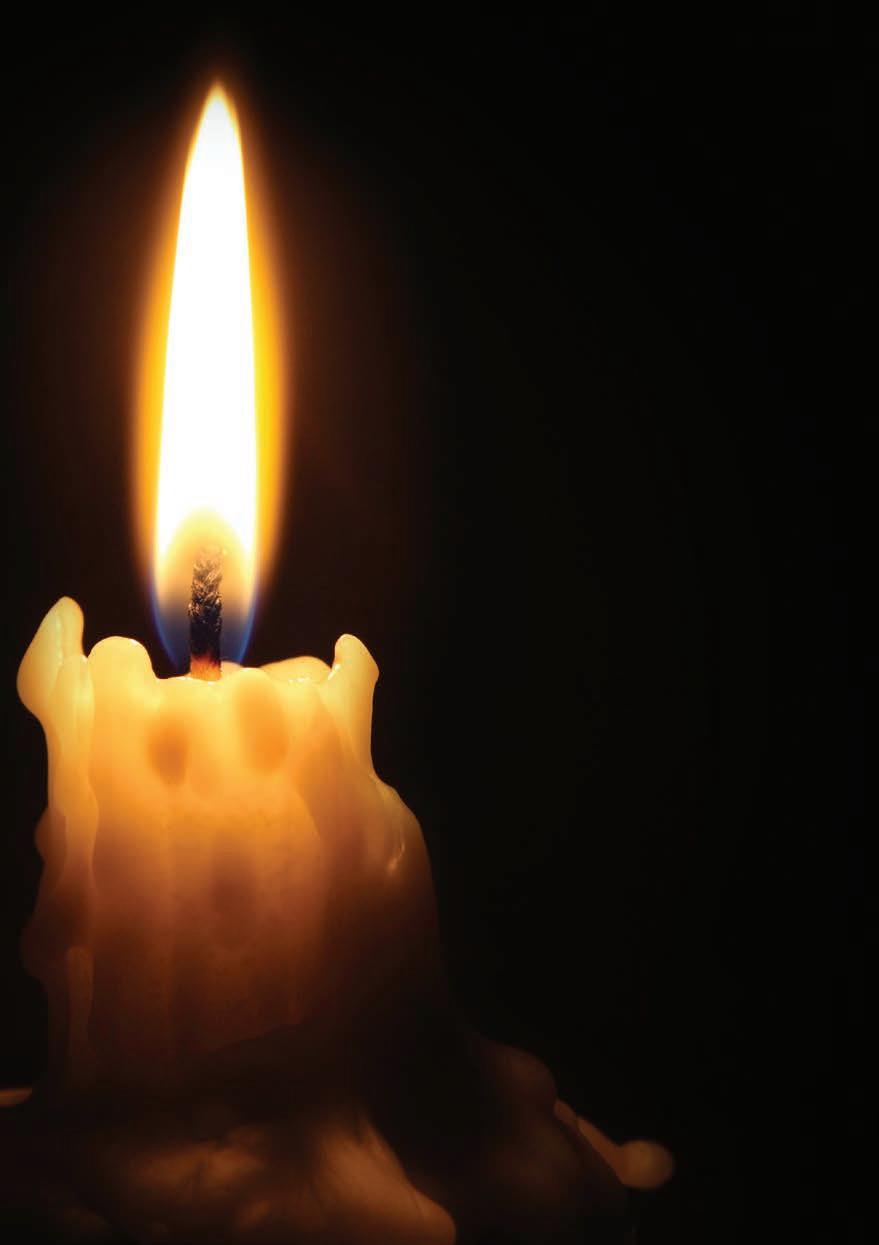
I think of a candle. Sometimes it burns robustly against real darkness, unflinching. Sometimes it sits atop a birthday cake, joyful, a little triumphant. Sometimes it marks a grave, steady and solemn, the only warmth in an unbearable room. And sometimes it is on the absolute verge of being snuffed out, trembling with each movement of air, so fragile you find yourself holding your own breath so as not to be the thing that extinguishes it. All of those are the same candle. All of those are hope.
Hard places
Part of my work is sitting with people in hard places. People carrying things that are heavy and complex and sometimes invisible to everyone around them. In that space, I have learned that hope is not something you perform. It is something you
practise, quietly, imperfectly, often without knowing if it is working.
That kind of hope is not optimism. It is not confidence. It is a decision made in the body before the mind catches up. It is showing up again. From the outside it can look like stubbornness. From the inside, it often just looks like Tuesday.
I am also a mother. Three daughters, each extraordinary, each navigating a world that asks more of them than it should. There are days when I watch them and something in me floods with a feeling I can only call hope, involuntary and overwhelming. There are other days when I walk with one of them through something painful and I cannot find hope at all. On those days, I have learned to look for it somewhere outside myself.
That is perhaps the truest thing I know about hope: you are not always the one who has to carry it.
Presence
There have been seasons when I could not locate hope anywhere in my own body. On those days I went outside. I walked. I let the sky be very large and my problems very small for just long enough to take the next breath. I wrote things down, not to resolve them but to make them visible, because named
things are somehow more survivable than the shapeless dark. I sat with my daughters and let their presence be enough. Sometimes that was all hope was: not a belief that things would improve, but a reason to stay in the room.
Hope looks different depending on who you are and what you have survived. It is shaped by culture, by faith, by the kind of losses you carry. My hope is not your hope. What sustains me may mean nothing to you. What you reach for when darkness comes may be entirely foreign to my experience.
I do not think that’s a problem. I think it’s the whole point.
The work of my life, in the office and outside it, is to create spaces where different kinds of hope can coexist. Where yours doesn’t have to look like mine to count. Where the tentative flame is as honoured as the robust one. Where we are allowed to say, “I can’t find it right now”, and have someone else say, “That’s alright, I’ll hold it for you.”
Someone has done that for me. More than once.
It is the most profound act I know.
*Amanda Brummell Lennestaal is General Manager for Diversity, Equity and Inclusion at The Salvation Army
Faces of hope and heartbreak
Navigating loss and life in war-torn Ukraine.
by Simone Worthing
The women who wait
Everywhere we went in Ukraine (see pages 4-6), we spoke to so many women, of all ages, waiting for their husbands, sons, grandsons, other relatives and friends to return from the front. Fear, worry, tension and hope were etched into their faces.
“My son is a medic in the Army, not far from the frontline,” said Antonina*. “We worry when we don’t hear from him, but he calls when he can. If it’s been a while, I feel such anxiety, such fear. The Russians took my home, lived in it for a while, and then destroyed all of it. Both floors of our little home, our garden. I feel such pain when I think of it, I simply can’t tell you …” She started to cry and walked away.
“My grandson is 16 and is stuck in the temporarily occupied territories,” a worried grandmother shared. “We are trying to get him out, but it’s very difficult and expensive. It’s hard to talk to him, too. The connection is very bad, and apps have been blocked. I feel so helpless, but we will never give up trying.”
Oxana’s husband is in the military and often travels into ‘hot spots’. She looks after their young family and works fulltime. “I worry about him all the time,” she says. “I worry that he will be sent to the front, that something terrible will happen to him, and we will never see him again.”
Another Salvos member shared that her son is fighting at the front. “He can’t tell me where he is when he calls,” she said.
“I am just glad to hear his voice and pray God will bring him home.”
Heartbreakingly, though, so many no longer wait. They know what has happened to their loved ones, and their intense grief is overwhelming.
Focus on children
The Salvation Army across Ukraine has a special focus on children. Each of the seven churches and one outpost (rural church) runs an after-school program for primary-aged children, providing help with homework, extra educational and fun activities, a hot meal, time with a psychologist, and a caring atmosphere. The children, most of whom are internally displaced or from poor and vulnerable families, thrive in this environment. The sound of their laughter and the buzz of their energy bring joy and hope in extremely challenging times.
“My son had stopped talking after we fled the fighting early in the war,” shared Tanya. “He saw such atrocities and simply shut down. After a few weeks in the afterschool program, he gradually started to show interest in activities. After a couple of months, he started to smile. Now he is talking again, playing and engaging with other kids. I am so grateful.”
A staff member from one of the churches spoke about the program’s wider impact. “The children are happy, which helps the families, which helps the community,” she said. “And our team, we support each other
in our personal lives too … It’s like a family, which we all need in these hard times.”
The churches also run youth groups and Scouts, which are popular with children and young people from both churches and surrounding communities.
War’s impact on children
Tragically, though, in times of war, these activities – and life in general – are often disrupted.
“We recently took the children out for a (northern) summer play in the park, drawing with chalk on the asphalt paths,” said one church leader in Eastern Ukraine. “Unfortunately, once again, the arrival of rockets and Shaheds [Russian kamikaze drones] did not allow their fun and creativity to continue. May the Lord keep us all under his holy protection.”
Life goes on
In many ways, life does continue – it has to – but for most people, it is anything but normal. Just under the surface of laughter, celebrations, and the everyday is a tension, an uncertainty, and a weariness borne of more than four years of war. There is strength, determination, hope and commitment, but there is also grief, sadness and a deep desire for the war to just be over.
As one church member said, “I know we have hope, and I trust in God, but I am so tired. I just want the war to be over and Jesus to return.”
Scan here to read the full story.
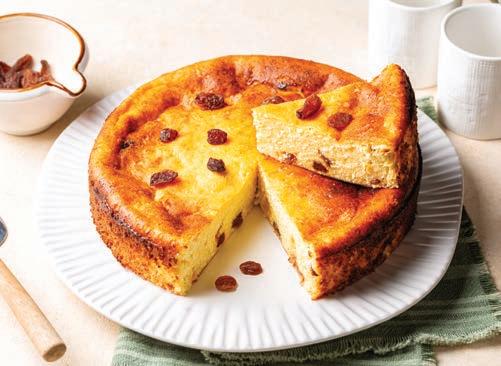
�� Ukrainian cheesecake (zapekanka)
Ingredients
4 eggs, 500g cottage cheese, 1 cup sour cream, ½ cup semolina, ½ cup sugar, 1 tbsp baking powder, 1 cup raisins, extra sour cream (optional)
Method
Preset oven at 180°C.
In a bowl mix together eggs, cottage cheese, sour cream, semolina, sugar and baking powder.
Blend or mix until smooth.
Mix through raisins.
Pour into greased 20cm round tin. Bake for 35 minutes until golden brown.
Decorate with additional raisins if desired.
Serve cold or warm for breakfast or dessert, with a dollop of sour cream.
Believe in Good: Tips
“The Lord has told you what is good, and this is what he requires of you; to do what is right, to love mercy, and to walk humbly with your God.”
Micah chapter 6, verse 8
New Living Translation
1. What country has the highest population of horses?
2. What is the gestation period for a mare?
3. Can horses sleep lying down and standing up?
4. What is the average life span of a domestic horse?
5. What horse breed is known for its distinctive spots?
6. What are Australia’s wild horses called?
7. What is the most popular breed of horse in Australia?
Tum-Tum
On which page of this week’s Salvos Magazine is Tum-Tum hiding?
Who am I?
I was born in 1972, in Sydney.
I have appeared in movies and television, but I am a surfer, winning the World Championship seven times.
I am currently the chair of Surfing Australia.
In 2006 I was inducted into the Surfers’ Hall of Fame and in 2011, the Sport Australia Hall of Fame.
In 2015 I received the Order of Australia for service to the community and as a mentor for women in sport.
Answers
25-30 years 5. Appaloosa 6. Brumbies. 7. The Australian stock horse I am: Layne Beachley Tum-Tum: is hiding behind the flower on page 7.
Quiz: 1. USA, with nine million horses 2. 11 months 3. Yes 4.
Sudoku
2026 Puzzle #3
Fill in the grid so that every row, every column and every 3x3 box contains the digits 1 to 9.
��
Have a laugh
What time do horses go to bed?
Why are horses terrible at staying up late?
What did the horse say about his new job?
Who is a horse’s favourite painter? At knight time It doesn’t pay much, but it’s stable income. When it’s pasture time, they are ready to hit the hay.
Mo-neigh
Bible byte
“This hope is like a firm and steady anchor for our souls.”
Hebrews chapter 6, verse 19 Contemporary English Version