“The very first Easter taught us this: that life never ends and love never dies.”
– Kate McGahan
PHOTO
What is The Salvation Army?
The Salvation Army, an international movement, is an evangelical part of the universal Christian Church.
Vision Statement
Wherever there is hardship or injustice, Salvos will live, love and fight alongside others to transform Australia one life at a time with the love of Jesus.
Mission Statement
The Salvation Army is a Christian movement dedicated to sharing the love of Jesus by:
• Caring for people
• Creating faith pathways
• Building healthy communities
• Working for justice
The Salvation Army Australia acknowledges the Traditional Owners of the land on which we meet and work and pay our respect to Elders, past, present, and future. We value and include people of all cultures, languages, abilities, sexual orientations, gender identities, gender expressions, and intersex status. We are committed to providing programs that are fully inclusive. We are committed to the safety and wellbeing of people of all ages, particularly children.
Gambling help
“Teens are now more likely to bet on sport, rather than play it,” according to a recent Australia Institute study.
600,000 Australian children – nearly one-third of all 12- to 17-year-olds – are gambling, spending more than $18 million a year.
These statistics are frightening and reflect the number of young lives impacted by gambling in a largely hidden, but growing crisis, that has profound implications for the future.
Gambling is a broad public health issue that extends beyond losing money as it impacts individuals, families and communities financially, emotionally, spiritually, socially and physically. Young people from all walks of life are caught up in its addictive grip.
Scan here to connect with The Salvation Army services
Scan here to subscribe to Salvos Magazine
Founders: William and Catherine Booth
Salvation Army World Leaders: General Lyndon and Commissioner Bronwyn
Buckingham
Territorial Leader: Commissioner Miriam Gluyas
Secretary for Communications and Editor-In-Chief: Lieut-Colonel Paul Hateley
Publications Manager: Cheryl Tinker
Editor: Simone Worthing
Graphic Designer: Ryan Harrison
Enquiry email: publications@salvationarmy.org.au
All other Salvation Army enquiries 13 72 58
Press date: 20 March 2026
Printed and published for The Salvation Army by Commissioner Miriam Gluyas at Focus Print Group, Chester Hill, NSW, Darug Nation lands.
In this edition, we explore the gambling addiction invading young lives, what is being done to help them avoid the lures and traps of this industry, and how parents and the community can have a positive influence.
We also look at a Salvos service that assists people of all ages struggling with gambling, assuring them that it’s never too late to ask for help.
For these stories and more, go to salvosonline.org.au
Simone Worthing Editor
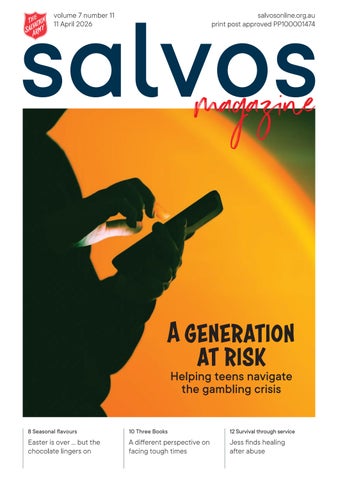
A generation at risk
Helping teens navigate the gambling crisis
by Lerisse Smith
A silent battle is raging amongst our teens – and we are losing ground.
That is the harsh reality Michael Kheirallah, Manager of The Salvation Army’s Alcohol and Other Drugs (AOD) Gambling Support Service, wants the public to know as his program shines the spotlight on the teen gambling crisis in Australia.
The new generation of gamblers is being targeted earlier than ever, with devastating effects on their studies, wellbeing, relationships and future lives.
“It’s going through the roof,” Michael said.
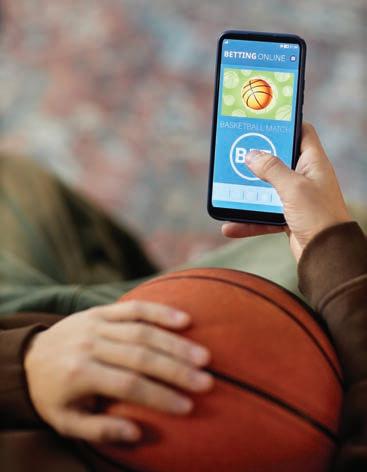
“The new trend now is online gambling, especially among youth. Sports betting is massive now. Unfortunately, when you watch sport, you see gambling ads popping up all the time. So, sports betting is becoming a huge issue for a lot of people. The gambling industry is very smart. They know how to draw in young people by developing free games that incorporate gambling elements.
“So, when they reach a certain age, especially 12, 13, 14, 15, 16, and have access to their parents’ credit card or money, they want to try gambling in real life. It’s incredibly easy to go on any online betting site and start gambling, and that’s why it’s so dangerous, especially for young kids. It can have a big impact on their personal lives, on their studies, school, uni, and will affect all their lives.”
Educating young people
Michael’s team has embarked on a life-changing mission: to educate youth groups, community, schools, universities and other places where young people congregate about the real and hidden dangers of gambling harm and how to minimise its impact.
And they have achieved great success.
Last year alone, the Gambling Support Service reached thousands of young people across schools, universities and community groups, including Aboriginal and Torres Strait Islander, LGBTQIA+ and multicultural communities. The team also visits schools and speaks to large student audiences.
“We give them the opportunity to ask questions and learn about gambling harm,” Michael said. “We play a proactive role. Instead of waiting for them to come to us, we go out and reach them – and we’ll keep doing that.”
Kirrily Mitchell, Community Engagement Practitioner, has led many students through the ‘Be Ahead of the Game’ workshop, a school program that helps young people understand the risks tied to gambling and gaming.
When asked what they found most helpful in the workshop, students recently pointed to many discoveries. These include finding out how harmful gambling is and the true extent of the damage caused by gambling, the staggering amount of money people
lose on gambling, how gambling companies rope in young people, and the different support services, including Gambler’s Help, Kids Helpline and Headspace. Parents can help Michael stressed that parents play a vital role in keeping their kids safe. And the top priority? Know what your kids are doing online.
It is essential for parents to monitor their kids’ online activities, he says, and to stay vigilant. Supervision and support are critical, particularly when it comes to screen time and games that feature gambling elements.
“They think it’s just fun, but it can lead to a much bigger gambling problem down the line,” Michael remarked. “So, it’s a big responsibility for parents to keep an eye on their kids, ensuring they’re accessing the right websites and not betting online. It’s illegal for young kids under 18 to gamble,
and it can cause a lot of stress and issues with their studies, school or uni.”
So, what can parents do?
Michael offers three simple steps:
• Firstly, monitor where their kids are spending money. Check if they have access to credit cards or online payment options. Consider using banking tools to block gambling transactions.
• Secondly, if they can’t stop, get help. Reach out to the Gambling Support Service or another support provider.
• Thirdly, encourage healthy alternatives to gambling – physical activities or new interests outside of technology.
“It’s good for parents to take their kids out, to engage in physical activities such as team sports,” he said. “Just get them away from their technology!”
Addiction
Michael warns that, while gambling can be harmless as entertainment, it turns toxic when it becomes an addiction. People often can’t stop, and continue to spend money they don’t have, which brings serious harm to themselves and their families. The financial strain of gambling losses leads to fights, arguments, and, in some cases, violence. Michael adds that, in extreme cases, it can even lead to homelessness.
The Gambling Support Service team provides support for families already struggling with gambling harm, offering therapeutic counselling, financial counselling, and, when people lose everything, small grants to cover bills, rent and other immediate needs.
“We try to help as much as we can,” Michael explained. “That’s why our program has been so successful in reaching people with urgent needs,
especially in offering therapeutic and financial support.”
Michael also has a final message for anyone affected by gambling harm: seek help now.
“If you know someone in your family who’s struggling with gambling, encourage them to seek help,” he emphasised. “It’s always better to intervene early before it becomes an addiction. And always stay vigilant with young people. They are our future – and they are worth fighting for.”
For more information on The Salvation Army’s Gambling Support Service, call 03 9653 3250.
Getting help
Kids Helpline – 1800 551 800
Headspace – 1800 650 890
Gambling Help – 1800 858 858
PHOTO BY EREN LI: PEXELS.COM
Salvos Stores reaches huge milestone
Salvos Stores is celebrating a special achievement, with its volunteer community now exceeding 10,000 people nationwide. This milestone reflects the strong sense of generosity, commitment and community spirit that defines Salvos Stores. It highlights the incredible scale of support received from volunteers across the country, who contribute their time to help stores deliver positive impact in local communities.
Volunteers play an essential role in every aspect of Salvos Stores operations, from assisting on the register and sorting donations to styling the shop floor, supporting back-of-house functions and creating a welcoming, friendly environment for customers. Their contributions shape the unique culture and experience that Salvos Stores is known for.
“We really wouldn’t be here [operational] without our volunteers,” said Tracey Walsh, The Salvation Army’s National Volunteer Business Partner. “Salvos Stores is the third largest financial contributor to The Salvation Army’s programs – if we don’t have volunteers, we can’t make that contribution.”
Egg artists turn to Salvos Stores
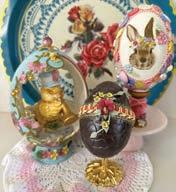
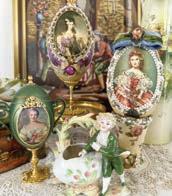
With the Easter season upon us, the Victorian Egg Decorators Guild has again cracked open their imaginations, turning real eggshells into egg-citing masterpieces - with Salvos Stores bringing their creations to life.
“Eggs symbolise new beginnings and rebirth,” says Helen Schweiger, Guild President.
“This is fitting as we use many items found in Salvos Stores in our egg creations including jewellery, haberdashery, fabric and candle holders as stands. We are great recyclers!”
Designing their intricate goose, duck,
emu, and ostrich eggs can take a few to hundreds of hours, with craft drills used to create lattice patterns, doors and drawers in their eggs. Many have rotating platforms, lights and moving parts.
The group crafts ships, jewel boxes, clocks, cake toppers and more!
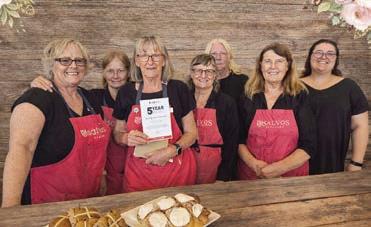
The Seaford Meadows team celebrate Nola’s five years as a volunteer.
Easter is over … but the chocolate lingers on
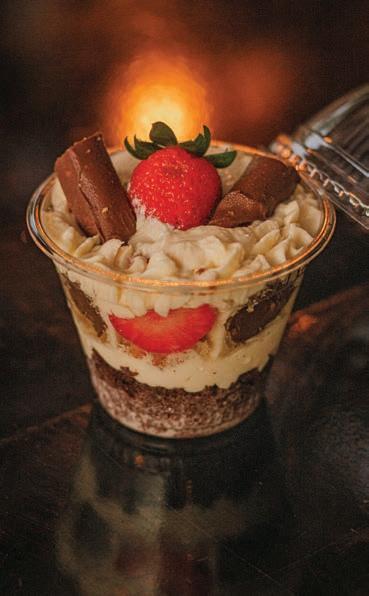
Is your pantry still chock-a-block with Easter chocolate? Then these ideas for after-Easter snacks and desserts could be just what you need!
Leftover solid eggs (milk, dark or white chocolate) can be chopped up and used instead of choc chips when baking. If using milk chocolate, adding a little cocoa will enhance the chocolatey taste.
To make a great chocolate dip, melt your plain solid or hollow eggs in a bowl in the microwave or using a double-boiler method
on a stovetop, stirring as you go. Then take your favourite fruit – bananas, strawberries, raspberries, slices of apple or plum – dip them in the chocolate and enjoy!
The melted chocolate can also be drizzled over ice cream or pancakes.
Hollow eggs can be crushed and mixed in with vanilla ice cream and mini marshmallows to make a tasty dessert. After mixing, freeze the mixture for a few hours before serving.
PHOTO BY FOOD PHOTOGRAPHER | JENNIFER PALLIAN ON UNSPLASH
PHOTO BY CHARANJEET DHIMAN ON UNSPLASH
PHOTO BY SANDIE CLARKE ON UNSPLASH
Drinking leftovers
To make a creamy hot chocolate, just melt your plain eggs as above, then add milk and enjoy your drink. A mixture of dark and milk chocolate works well for this.
For children – or those of us who still love the Easter bunny – a leftover chocolate rabbit can be the holder for a great bunny milkshake! Unwrap the chocolate bunny and use a sharp knife to carefully cut off the tips of the ears.
Place milk in a blender with one or two scoops of chocolate ice cream (depending on the size of your bunny) and a drop of vanilla essence, and mix until smooth. Pour the chocolate milkshake into the bunny, top with a strawberry and serve with a straw.
Leftover hot cross buns
If you’re a trifle lover, it’s great to know you don’t need to wait until Christmas to enjoy this colourful treat!
Prepare the jellies first, following the packet instructions. Once the jelly is set, spoon half of it into tall serving glasses. Top with a layer of custard, add chopped hot cross buns, then a layer of raspberries (fresh or frozen). Repeat these layers of the custard, hot cross buns and raspberries. Top with a dollop of custard, and finish with two thin cream wafer biscuits positioned like bunny ears. Add raspberry halves for eyes.
Hot cross buns (hot or cold) can also be cut in two, buttered, then filled with apple slices for a tasty, fruity sandwich.
PHOTO BY MADDI BAZZOCCO ON UNSPLASH
PHOTO BY WILLIAN FERREIRA ON UNSPLASH
Changing my perspective
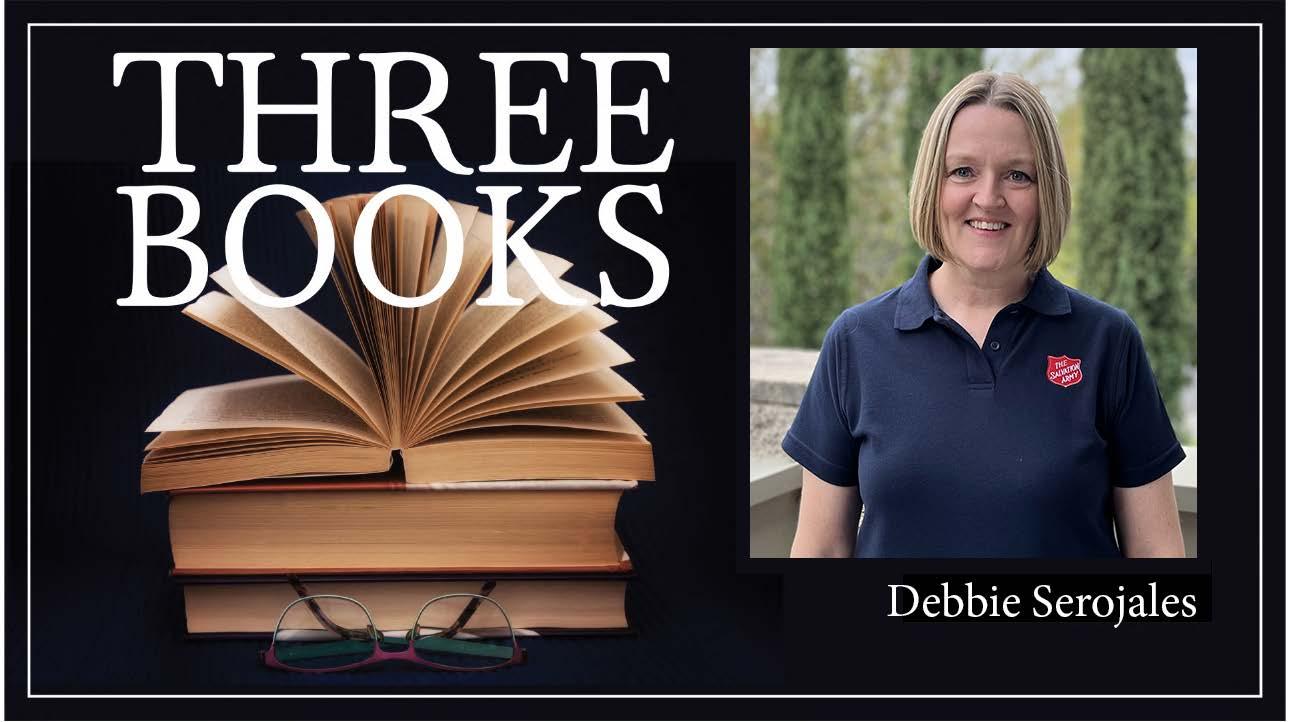
Salvos Magazine continues a new occasional column – Three Books. Today’s guest bookworm is Major Debbie Serojales, who is corps officer (Salvos pastor) and team leader at Merri-bek Salvos in Victoria.
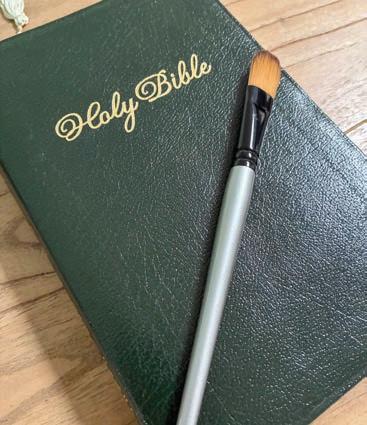
Which is your favourite book in the Bible and why?
When I was growing up, I would flit between various books of the Bible, yet I would always find myself drawn back to Philippians as it was a positive encouragement in my newfound faith. It was also like picking up a letter written years before and having a sneak peek at the thoughts and opinions of someone from that time. It is also known as a ‘letter of joy’.
I love that Paul not only wrote to offer support and give advice, but he was also vulnerable as he shared his own experiences. What an example that is for me, when we work in teams, to be open and
honest and share our own lives, especially if we expect people to be like that with us.
These words, filled with joy and wisdom, continue to offer insight to us even today.
Besides the Bible, what is a Christian book that has influenced your faith?
I love reading biographies.
A few years ago, I read the intimate story of Andrew Chan and Myuran Sukumaran, The Pastor and the Painter. What a powerful story of two young men who were charged with drug trafficking and spent years in Kerobokan Prison, Indonesia. The book follows their transformation from anger and defiance to rehabilitation and hope.
On the day they were executed, they were not “two drug smugglers, but a pastor and a painter” who not only changed their own lives, but also many of the prisoners who they led to faith.
This is the first time I have ever cried while reading a book. A challenging, heart-wrenching and life-changing story that showed me anyone can turn their lives around when they allow Jesus to guide their choices, even during their darkest moments.
What is a secular book that has revealed to you a Christian message or theme?
‘My friend’ Eddie Jaku OAM wrote a memoir of his experiences during World War Two, a story of survival and hope. In his book, Eddie says that those who took the time to read his story have now become his friends. I also had the privilege of attending an online book discussion where he shared his story with a small group of us and offered to sign our books. After posting a copy
of his book to him, it was returned to me signed, “to my friend Debbie”. He lived with a simple message: to always make time to show kindness, and he challenged everyone to look for ways to make others happy.
For years, he did not speak of his experiences in Buchenwald and Auschwitz; it was simply too hard. Yet in the end, he chose to share the story because there were millions of others who could not. Having faced unimaginable horror, Eddie chose to focus on kindness, friendship and hope.
This book. The Happiest Man on Earth, was published when Eddie was nearly 100 years old. As he shared his story of loss, heartache and immense pain, his main goal was for people to know that happiness can be found even in the darkest of experiences.
Stories of Holocaust survivors are always so hard to read, yet Eddie shares how he found gratitude and hope in such a traumatic time. At the end of a book filled with the horrors of his experiences, the last lines say, “after you put this book down, please remember to appreciate every moment of your life – the good, the bad”.
I think we all struggle through challenges in our lives, yet the simple message from Eddie, “make yourself a friend to the world”, showing kindness, is one we could all attain to.
“Life can be beautiful if you make it beautiful. It is up to you!” – Eddie Jaku
For the full version of this story, and others in this series, go to salvosonline. org.au/three-books
PHOTO COURTESY KAREN MASTERS
From surviving to serving
Jess finds healing through community meals
by Kirralee Nicolle
Content warning: The following story contains references to family and domestic violence (FDV), and its impacts.
The Salvation Army Noarlunga, a brick building in the coastal south-west of Adelaide, might not look like the typical scene for a supernatural event.
But recent events speak to a kind of transformation which sees brick, mortar and even the trauma of abuse as no barrier to hope.
When Noarlunga corps officer (Salvos pastor) Auxiliary-Lieutenant Deb Strapp describes the way Jess Priest came to volunteer at Noarlunga Salvos, her eyes light up, and she says it is nothing short of miraculous.
When Jess first walked into the centre, she was looking for referrals to services. She had been forced to leave her rental and move into a new house. Deb had been rearranging some rooms at the corps (church) and wasn’t sure what to do with a couch they no longer needed, until Jess arrived.
“I was starting from scratch, and I just came in to talk to Deb and ask if there was any organisation [or] anyone that could help,” Jess says. “And she actually gave me a leather lounge suite, which looks brand new and perfect. I was really thankful for that … It was such a big help and such a stress off [me] as well.”
Giving back
In return, Jess wanted to give back in some way. And it just so happened that Deb was needing some help, too. Two years ago, in 2023, the corps lost a much-beloved member of the volunteer team, Paul Norton. Paul was a key part of delivering Café Life, a community meal initiative served out of the corps. His sudden death was crushing to the team, and Deb had no one to fill his shoes.
Using a generous donation Paul had left to the corps, Deb had set about a kitchen redevelopment, Now, she just needed a cook. With experience in catering for functions and a job in food service at an aged care facility, Jess was the obvious answer to the corps’ need.
And the community meals, which happen twice a week, mean far more to her than just a way to give back.
“It actually makes me very emotional …. They [the community members] leave full and fed. It's good. It brings tears to my eyes, and goosebumps, and I love it.”
Recovering from abuse
Over the past few years, Jess has been recovering from the effects of a dangerous and controlling relationship with someone she describes as
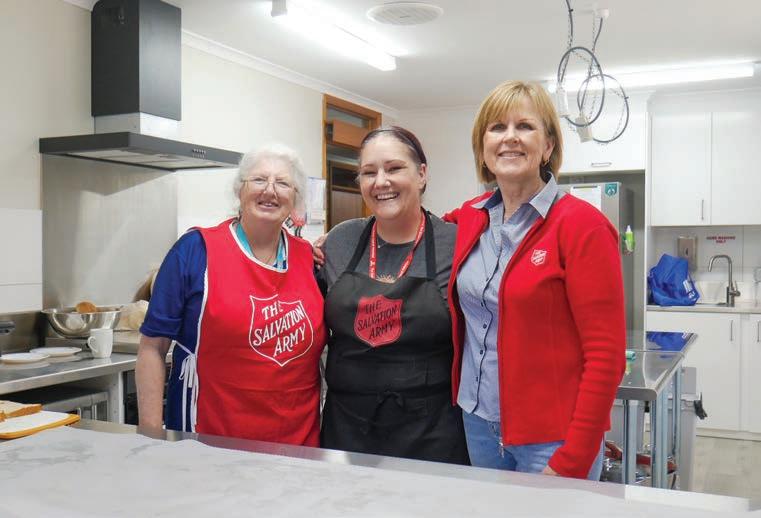
Jess (centre) with fellow volunteer Ann (left) and Auxiliary-Lieut Deb Strapp.
narcissistic. The relationship lasted two years and left her homeless, traumatised and unable to walk.
“I stopped cooking,” she says. “I pretty much was locked in a bedroom [for several hours of the day]. I wasn't allowed to use the toilet, I wasn't allowed to eat, wasn't allowed to drink. I … got out of that and had to start living again.”
Jess says in the course of the relationship, she lost her passion for life, and even once she left, her anxiety was so high that she couldn’t cook for a long time. But volunteering at the Salvos, she says, has “brought it all back”.
Joy and healing
She says she regularly encounters people from the community with a very similar story to hers, and being able to feed them is a healing experience.
“I love seeing them leave with smiles on their face and hands on their tummies. It brings joy knowing that they have got somewhere to come.”
Jess says her children have noticed the difference in her since she began volunteering. She says one son recently said it was like he had his “old mummy back”.
“That was really touching,” Jess says. “[He] says, ‘It's nice coming home and seeing you with a big smile on your face’.
“That means the world.”
If you or someone you know is struggling, help is available. You can reach out to 1800RESPECT on 1800 737 732, The Orange Door (Victoria), or Lifeline on 13 11 14
PHOTO COURTESY KIRRALEE NICOLLE
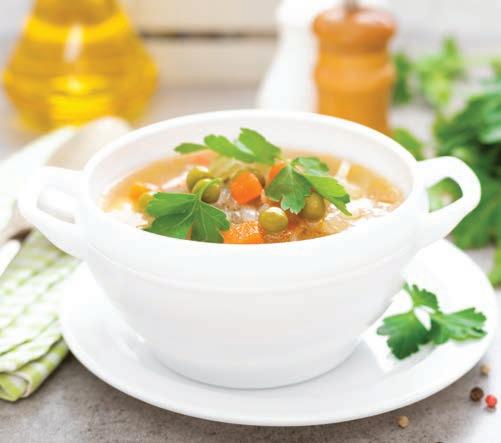
�� Leftovers soup
Ingredients
1 tbsp oil; 2 onions, chopped; 3 carrots, chopped; 1 tbsp thyme, chopped; 1.4 litres chicken stock; 300g leftover roast chicken, shredded (no skin); 200g frozen peas; salt and pepper to taste; 3 tbsp plain yogurt; 1 garlic clove, crushed; squeeze of lemon juice.
Method
Heat oil in a large saucepan. Add onions, carrots and thyme, stirring for 15 minutes.
Add chicken stock and bring to boil. Cover and simmer for 10 minutes.
Add chicken and peas, season to taste. Simmer for 5 minutes.
In a small bowl mix yogurt, garlic and lemon juice. Serve soup in individual bowls with a dollop of yogurt mix.
☺ Believe in Good: Tips
“No act of kindness is too small. The gift of kindness may start as a small ripple that over time can turn into a tidal wave affecting the lives of many.”
– Kevin Heath
Quiz
1. What kind of map shows highways and streets?
2. Which map best represents the elevation differences within a landscape?
3. What kind of map would you use to study the distribution of natural resources?
4. What is the directional indicator on a map called?
On this day
12 April 1961
Yuri Gagarin, the Soviet cosmonaut, was the first human in space. He orbited the Earth aboard the Vostok-3KA spacecraft; the flight took 108 minutes.
12 April 1988
Bernardo Bertolucci’s
The Last Emperor receives nine Academy Awards. It was the first film to be awarded all the Oscars it was nominated for.
13 April 1997
Tiger Woods becomes the youngest golfer to win the Masters Tournament.
Have a laugh
Why was the map popular at school?
Because it had all the best places.
Why don’t maps ever lie?
�� Word search
What did the map say to the compass?
Because they always tell you where you stand. You point me in the right direction.
I put a giant map of the world up on the wall and gave my wife a dart. I told her wherever it lands is where we go on holiday.
I guess we’re spending three weeks behind the fridge.
Tum-Tum
On which page of this week’s Salvos Magazine is Tum-Tum hiding?
✏ Answers
4. A compass rose Tum-Tum: is hiding behind a strawberry on page 8.
3. A thematic map
2. A topographic map
Quiz: 1. A road map
Words are hidden vertically, horizontally, diagonally, forwards and backwards. Enjoy!
Pronoun
Quotation
Semicolon Sentence Spacing
Syllable Typo Verb
Bible byte
“Three things will last forever – faith, hope and love –and the greatest of these is love.”
1 Corinthians chapter 13, verse 13 New Living Translation
BE HOPE FOR MUMS AND CHILDREN IN NEED
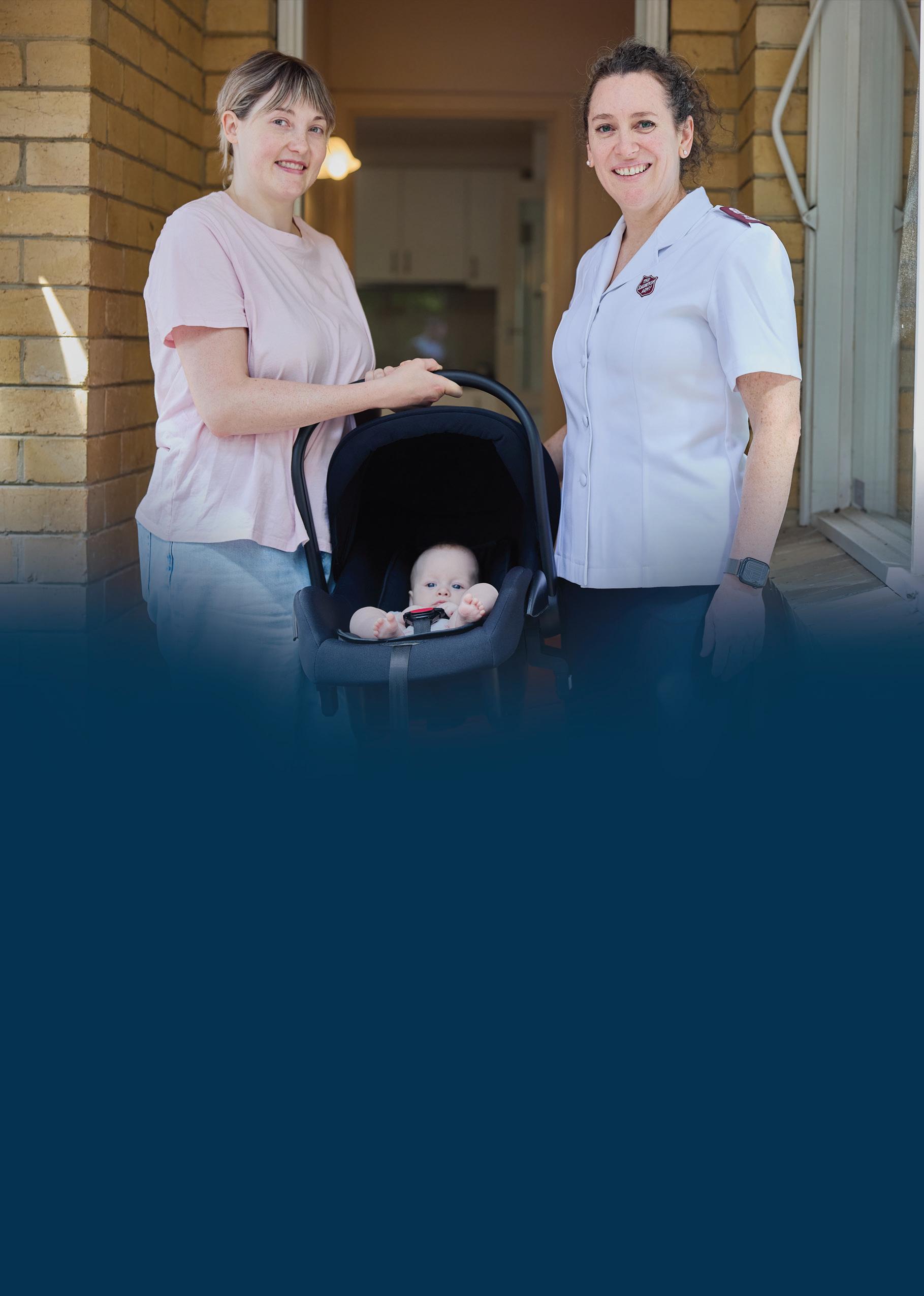
“I was in a place where I thought things wouldn’t get better. Now I have new strength in myself. I’m ready to start my life… a good life and a good future with Hannah. And that’s all thanks to the Salvos.” - Emily*
*Names changed to protect privacy.
The Salvation Army delivers a network of tailored support services and community programs that assist people experiencing homelessness, hardship or crisis when they need it most. Your Red Shield Appeal gift can be the hope people like Emily need to overcome crisis and move forward.