The art of the deal
Steph McGovern’s TV challenge to would-be art experts
Screenwriter Matthew Hall is keeping faith with stories
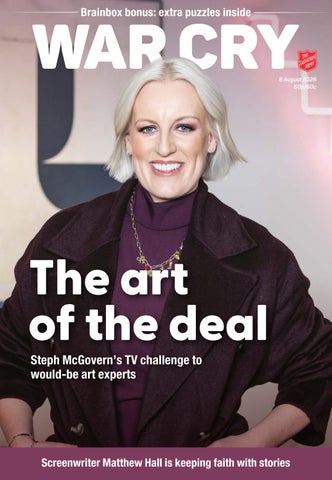
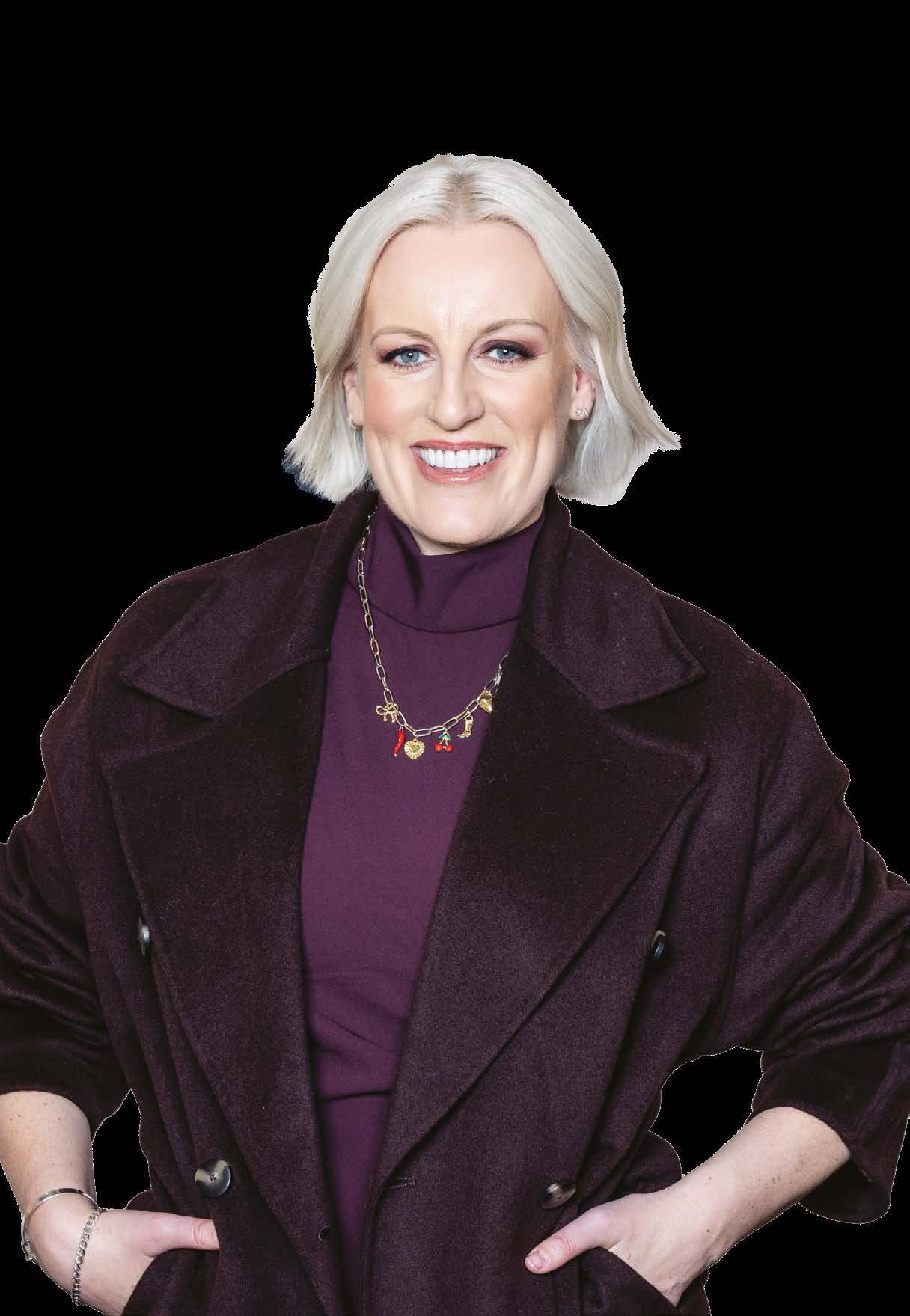
Steph McGovern’s TV challenge to would-be art experts
Screenwriter Matthew Hall is keeping faith with stories
The Salvation Army is a Christian church and registered charity seeking to share the good news of Jesus and nurture committed followers of him. We also serve people without discrimination, care for creation and seek justice and reconciliation. We offer practical support and services in more than 700 centres throughout the UK. Go to salvationarmy.org.uk/find-a-church to find your nearest centre.
The Salvation Army first published a newspaper called the War Cry in London in December 1879, and we have continued to appear every week since then. Our name refers to our battle for people’s hearts and souls as we promote the positive impact of the Christian faith and The Salvation Army’s fight for greater social justice.
Editor: Gareth Dickens, Major
Managing Editor: Philip Halcrow
Staff Writer: Emily Bright
Staff Writer: Claire Brine
Staff Writer: Ewan Hall
Editorial Assistant: Linda McTurk
Graphic Designer: Mark Knight
Graphic Designer: Matt Penberthy
Email: warcry@salvationarmy.org.uk
SE5 8FJ
Tel: 0845 634 0101
Subscriptions: 01933 445445 (option 1, option 1) or email: subscriptions@satcol.org
Founders: Catherine and William Booth
International leaders: General Lyndon Buckingham and Commissioner Bronwyn Buckingham
Territorial leaders: Commissioners Jenine and Paul Main
Editor-in-Chief: Major Andrew Stone
What’s the big deal in your life just now? Probably not buying works of art for exotic locations or seeking quality items to take to auction – which is what competitors in BBC2’s new show The Big Deal with Steph McGovern have the opportunity to do. But we may still have issues in our lives that are a big deal to us.
Often it’s possible to feel isolated when facing major life events – and even smaller problems can erode our day-to-day wellbeing if they’re not talked about. As author Patrick Regan says in an interview in this week’s War Cry: ‘Me and my mates could talk about football for hours, and yet never talk about anything meaningful.’
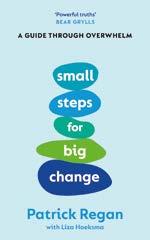
Patrick summarises his approach to tackling important life issues in his book Small Steps for Big Change and has developed it further by setting up the Big Community Read. He thinks the new initiative could be a ‘catalyst for connection’ and help people with their mental health.
As a Christian, Patrick finds great comfort in his belief that God is always present with him. However, he hopes that his work will help people to recognise that they are not alone, whether they have a religious faith or not.
Also this week, Matthew Hall, screenwriter of TV drama Keeping Faith, talks to us about life issues such as grief, God and keeping his faith. He says that a turning point in his life came when he connected with other people through a church home group. The group’s get-togethers offered people an opportunity to talk about faith, ask questions and, he says, ‘most importantly, pray for each other’. And they nurtured in Matthew a relationship with God that has assisted him not only in making career decisions but also in facing personal tragedy and grief.
Matthew reminds us that God is intimately aware of the big deals in our lives and that he will be with us in them if we ask him to be.



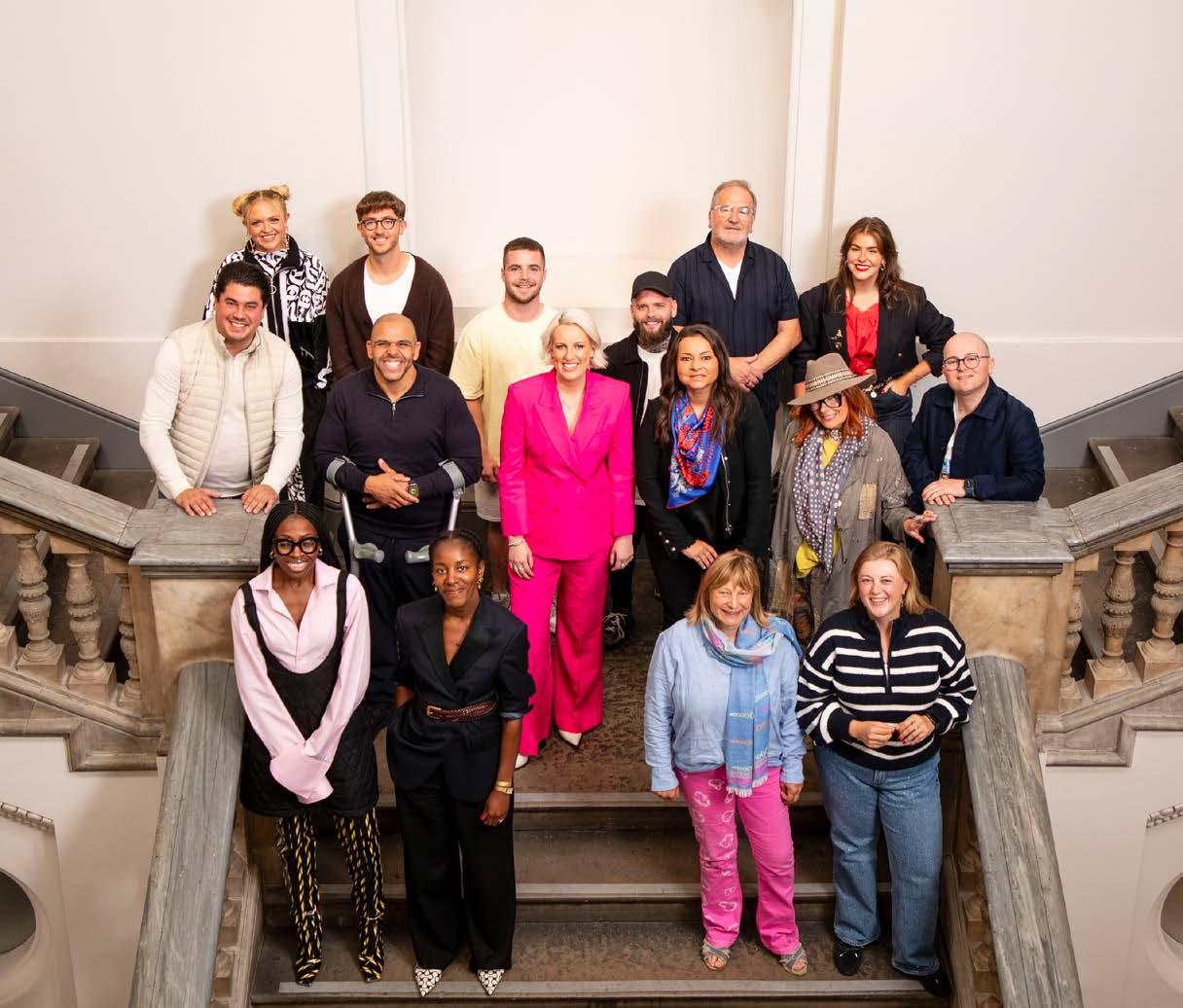
Steph and art mentor Cordelia de Freitas (centred) with the contestants on ‘The Big Deal’
TV preview: The Big Deal with Steph McGovern BBC2 and iPlayer
By Emily Bright
‘Ilove the thrill of a great deal,’ says Steph McGovern. ‘I’ve spent over 20 years as a business journalist.’ But the host of The Big Deal with Steph McGovern, which starts on Wednesday (12 August), also explains that she’s an art-lover and wants to prove that ‘buying and collecting art is something that we can all have a go at’.
To prove her point, seven pairs of novices are attempting to become art dealers. As the weeks progress, the contestants will buy art for multimillionpound homes, create a collection suitable for a luxury cruise ship, and pitch a sculpture worth hundreds of thousands of pounds at the UK’s biggest art event.
For every piece of artwork sold, the competitors collect a commission, which they can take home with them. Under the watchful eye of expert art dealer and mentor Cordelia de Freitas, each pair will seek to maximise their profits and improve their selling skills to stay in the competition. The overall winners of the series will go
home with £50,000 worth of British art.
The group’s first challenge starts at the Royal College of Art in London, whose alumni include David Hockney and Tracey Emin. The capital is a lucrative place for art dealing – Steph explains that it lies at the centre of the UK’s £8 billion art industry.
Each pair is tasked with deciding which piece of graduate artwork to sell, before wooing the artist so that they can take it to auction. The pairs must negotiate a reserve – the lowest price at which artists will allow their artwork to be sold – and collect enough revenue at auction to remain in contention for the final prize.
The contestants vary in levels of experience. Some are art gallery enthusiasts, others are fashionistas, and still others have never dabbled in art before. But they are all equally determined to find the ultimate deal – quality art that sells.
We may all be searching for the best deals in various areas of our life – whether that’s pursuing the supposedly ‘perfect’
partner, the ideal job or our dream holiday. But even the best decisions we make about such things don’t provide ultimate satisfaction.
A well-travelled artisan, Paul, knew what it was like to experience all kinds of highs (and lows) in life. But as he looked back over his experiences, he wrote: ‘Everything else is worthless when compared with the infinite value of knowing Christ Jesus my Lord’ (Philippians 3:8 New Living Translation).
Paul discovered that the love of God as shown by Jesus was a life-changing and restorative power for good in the world.
It’s why Paul was devoted to sharing the hope and joy offered to all people who put their trust in that love.
Since Paul’s day, millions more people have discovered that their relationship with Jesus is worth infinitely more than anything else the world can offer. And if we investigate the claims of Jesus for ourselves, we’ll discover that he is definitely the real deal.
They thought it was all over – but now fans are delighted that the feelgood football drama Ted Lasso is returning for an unexpected new season.
According to US entertainment magazine The Hollywood Reporter, the Apple TV series about an American football coach – who switches sports and moves to the UK to coach the fictional AFC Richmond, despite having no experience of the beautiful game – became an unlikely yet ‘emotional lifeline’ during the Covid pandemic, as anxious viewers craved ‘uplifting content’.
In preparation for the arrival of series four this week, I’ve been rewatching earlier episodes. Though I’m no football fanatic, the stories about optimistic coach Ted (played by Jason Sudeikis) warm my heart. Despite being surrounded by sceptics, he wins over a failing and fragmented football team, prompting each player to change not just the way they kick a ball, but the kind of people they are. He inspires them with the words ‘Doing the right thing is never the wrong thing’ and ‘Every day is a chance to be better than we were the day before’.
Ted focuses on the good things
Talking to The Hollywood Reporter, Jason reflected on the experience of playing a man who always looks on the bright side of life.
‘It is infectious to play a character who sees the best in people and isn’t mad at the world for all its foibles and bullies and shadows,’ he said. ‘It was good to live in that – to have that coursing through your brain and your body all day. It still is.’
As a pessimist, I admit that ‘to be more like Ted Lasso’ would be a suitable goal for me. His life isn’t perfect or without struggle – but his approach to focus on the good things around him is inspiring.
It’s a key strategy that features in the Bible too. The early Church leader Paul encouraged people: ‘Keep your minds on whatever is true, pure, right, holy, friendly, and proper. Don’t ever stop thinking about what is truly worthwhile... And God, who gives peace, will be with you’ (Philippians 4:8 and 9 Contemporary English Version).
Whatever comes my way, my outlook on life lies in no one’s hands but mine. And every time I choose hope, I’m on to a winner.
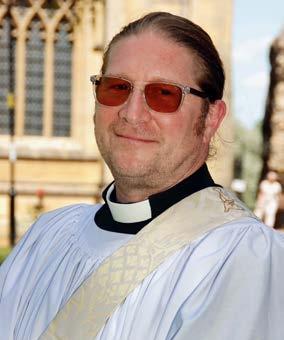
A man who set up stages for the Rolling Stones 30 years ago when they embarked on a tour through Germany has been ordained as a deacon in Suffolk, BBC News reported.
The online article summarised an interview that Jonathan Boast (pictured) gave to Radio Suffolk, in which he told presenter Sarah Lilley that he became ‘a lugger’ for the rock band in 1998 on their Bridges to Babylon tour. He described the work as ‘really tiring’ but ‘great’.
After his stint with the band, Jonathan went on to pursue a career in art and photography. Fifteen years ago, he ‘started to feel a call’ towards the Church.
‘It was a growing niggle that became a persistent poke and then a solid shove, and eventually I couldn’t argue with [God] any more,’ he said. ‘I accepted that this is what he had written for me.’
Jonathan was ordained at St Edmundsbury Cathedral in Bury St Edmunds, describing the moment as ‘a real blessing’.
Author PATRICK REGAN wants people to get together to talk about the small actions that can make a big difference to wellbeing
Interview by Philip Halcrow








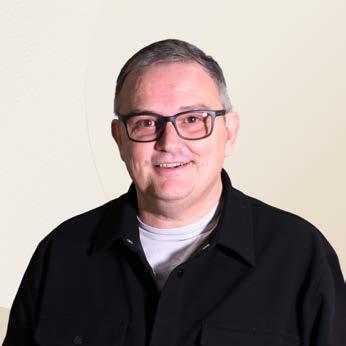
‘Me and my mates could talk about football for hours,’ says Patrick Regan, ‘and yet never talk about anything meaningful.’ So, the social entrepreneur, speaker and author has ‘a bit of a rule’ in his conversations with friends.
He explains: ‘When the time is right, I ask three questions. Number one: “What is going well for you?” – so we can celebrate whatever it is. Number two: “What are you struggling with?” And number three: “If you could change one thing, what would it be?”
‘Just being a little more intentional about each other’s wellbeing when we have conversations can be really helpful.’
Choosing to ask those questions is one of the ‘small ideas’ that Patrick believes has the potential to make ‘a significant change’ in society. He outlines these ideas in his new book, Small Steps for Big Change, which addresses a widespread problem he has sensed.












He tells me: ‘I work as a freelance speaker, and I have a small business called Brighter Days, which goes into all kinds of settings – schools, prisons, businesses, the NHS – to help them with wellbeing. When I started a talk, I would ask: “How do you feel about society at the moment?” And 99.9 per cent of the time, the response I got was negative. People would say that it’s broken, chaotic, divided – and the word “overwhelmed” kept coming up.
‘I guess that when you watch the news and you see what’s going on across the world, and then when you take into consideration what’s going on in our own lives – whether that’s bereavement or the kids we love not doing so well – it feels so big and we feel overwhelmed. It started me thinking: this is a real problem.
‘It can feel like we are in the computer
From page 5
game Tetris: all these blocks are falling out of the sky and you have to try to get them in a straight line, but then the line disappears and more blocks fall – and quicker.
‘In our lives, it feels like everything comes at once. Work life is difficult. Personal life is difficult. Society seems to be fractured, and it just feels overwhelming. And you’re left wondering: what can I do?’
What Patrick did was to write his book, which draws on his own experience of mental health struggles and which suggests some actions that people can take to improve their wellbeing, such as writing down things for which they are grateful; avoiding social media for one day a week; and being prepared, when struggling, to ask if a friend has ‘eight minutes’ (a key length of time) for a chat.
He hopes that people will find his advice useful, wherever and however they read it. But he is also encouraging readers to discuss the issues together. He has worked with St Andrews Bookshop in Buckinghamshire to launch the Big Community Read.
Steve Barnett, managing director of the Christian bookshop, explains: ‘A few years ago, we created an initiative called the Big Church Read, where we tried to get whole churches to read the same book at the same time.’
The venture provided groups with videos and discussion questions, guiding readers through books such as James Cary’s The Gospel According to a Sitcom Writer and Bear Grylls’s The Greatest Story Ever Told
‘One of the things we found from the Big Church Read was that people were more likely to finish the book, because they were doing it in a group,’ says Steve. ‘They knew they had to read the next chapter before the next group meeting. And people found the videos helpful. They liked to hear from the authors engaging with the subject further and maybe telling a story that was not included in the book.’
Patrick remembers: ‘My pitch to the bookshop was: why don’t we do the same as the Big Church Read but for the whole community?
‘So we recorded the videos that go with Small Steps for Big Change. And it’s such a simple idea. Just get three or four mates together in a coffee shop, in your home, in the pub – wherever you hang out – and talk over some questions.
‘It does two things. First, it helps with a sense of connection. Feeling you’re on your own is horrible, and the book deals with some massive issues, so by talking with others you realise we are all dealing with similar stuff.
‘Secondly, the discipline of reading is probably one of the few things we do where we’re truly mindful. I think we rarely concentrate on one thing: we’re checking our phone while watching a TV programme, and at the same time our laptop might be open. It’s crazy. We spend so much of our time thinking about the future or the past. Being present is so good for your mental health, and when you’re reading you’re just in the moment.
‘So I thought the Big Community Read

Patrick outlining ideas from his book in a video made for the Big Community Read
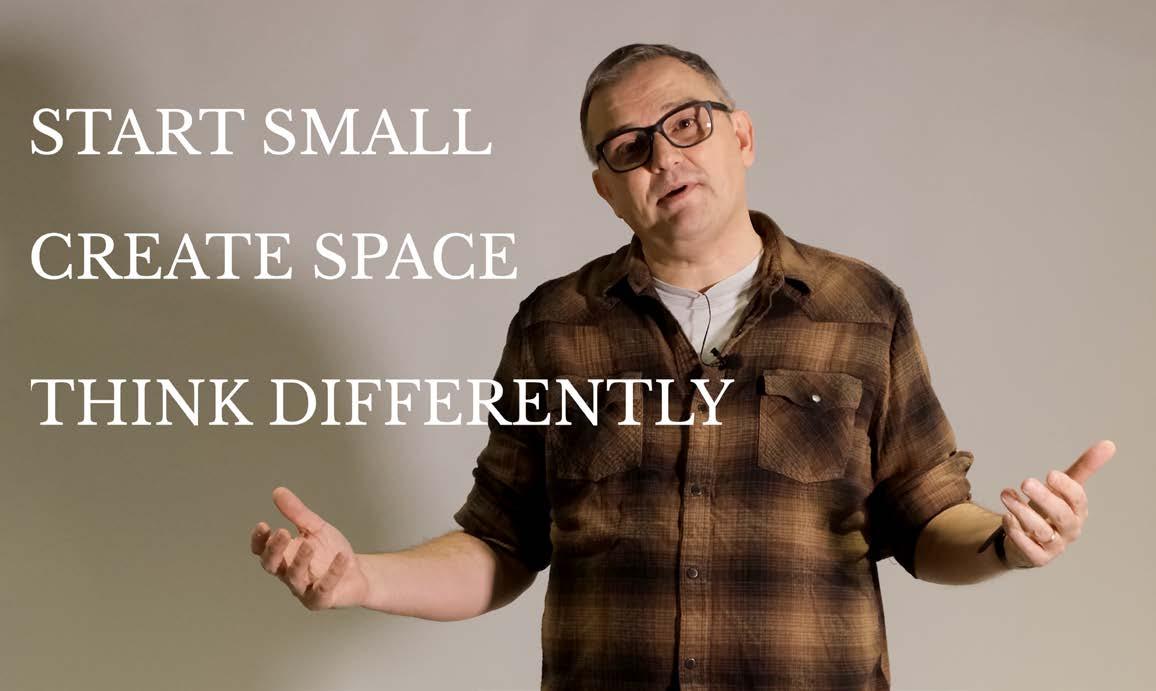

could be a catalyst for connection and supporting people in their mental health.’
Although the initiative – like the book which inspired it – is intended for everyone, whatever their world view, Patrick believes it is important to recognise the role that spirituality plays in many people’s lives.
‘Faith often gets left out of the wellbeing conversation,’ he says. ‘Yet for billions of people around the world, spirituality or faith – whether that’s prayer, mindfulness, meditation or going to church, synagogue or mosque – plays a huge part in their wellbeing. It makes them feel connected. It gives them a sense of purpose. So, to leave spirituality out would be to ignore a massive part of wellbeing.’
Patrick is happy to talk personally about his own experiences of religion and faith. Describing himself as a Christian who has many questions and doubts, he says that when he had a breakdown, he could not understand why he would pray to God and yet apparently not get any answer.
But he remembers a ‘pivotal moment’ that occurred when his wife, Diane, was in
King’s College Hospital in south London.
‘We’d been through a really difficult time with my health, the kids’ health and Diane’s health. When Diane had our fourth child, she had a caesarean and she was in hospital. She lost 2.8 litres of blood in the operation, and so she was in the high dependency unit.
‘It just felt like everything had gone wrong and that all my prayers were hitting a brick wall. It was five o’clock in the morning, and I remember looking outside. It was pitch-black – but opposite I could see the Salvation Army training headquarters, with its massive cross all lit up. At that point, it hit me again: God knows what suffering is like.
‘I thought about the Psalms, the Jewish songbook in the Bible – 40 per cent of them are people expressing their sorrow, anger and frustration to God at their most desperate times of need.
‘I didn’t get all the answers, but I realised that God’s silence doesn’t mean God’s absence. I saw that I could speak honestly to him, and he treated my pain with dignity.’
Patrick believes that God is always with him. But he hopes that his book and the Big Community Read will enable people –whether they have a religious faith or not – to know that they are not alone.
‘There is something beautiful about realising that you’re not on your own,’ he says. ‘Honesty helps us realise that truth –it connects us with other people. It’s what makes community so important.’

Screenwriter and author of crime fiction MATTHEW HALL opens up about grief, God and keeping faith in ‘an utterly outrageous story’
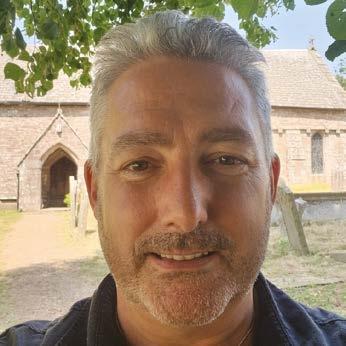
The Bafta-winning screenwriter and bestselling novelist Matthew Hall made a confession in The Guardian: ‘I’m a Christian writer,’ he said. ‘I’m not an evangelist, but rather an explorer of the human condition navigating with a Christian compass.’ Intrigued to hear more from the man who believes that ‘the creative industries desperately need God back’, I emailed him, asking if he’d kindly grant me an interview. He said yes.
When we meet over Zoom, Matthew tells me about his latest novel, Totem; the BBC1 drama Keeping Faith, for which he won a Bafta Cymru award; his fascination with the Christian faith (which began in childhood); and the personal trials that have shaped his relationship with God.
Minutes into our conversation, we’re discussing ‘the struggle between materialism and a more spiritual way of life’, which he explores in Totem
‘On one level, it’s a novel about a group of indigenous people in Canada, trying to rediscover their traditional life,’ Matthew explains. ‘But at the same time, they want to tap into modernity. They have to decide, fundamentally, on their value system. Do they want to live according to their traditions, in harmony with nature and, broadly speaking, closer to God? Or do they want to take the government’s offer and trade their land for a patch by the city?
As a child, I always had a sense of order
‘At the heart of the book there’s also a relationship – between Jessie, a materialistic city lawyer, and Todd, an uneducated man and former addict living in the indigenous community. Just as Jessie is about to become a partner in a law firm, she has a breakdown. And, as part of her rehab, she volunteers for a charity, where her job is to catalogue the heritage trees in British Columbia.’
It’s in the Three Valleys Reserve that Jessie meets Todd, and the pair form a connection that neither of them can explain.
‘I was interested in this idea of sweeping away all the barriers that we erect between people,’ says Matthew. ‘We’ve always categorised people into social classes, which I think is utterly degrading to human beings, because we are all made in the image of God.
‘I’m also fascinated by the fact that people from the most unexpected places can turn your life around. My own experience in church is of exactly that.
Church is the one place where people from different walks of life can find themselves on a level footing. We’re able to share our common humanity and suffering.’
Before he became a renowned writer of crime fiction – primarily for his Jenny Cooper novels, which have been adapted for the Coroner TV series in Canada –Matthew practised as a barrister. He tells me why a career in law appealed.
‘As a child, I always had a sense of order,’ he says. ‘But I was born into chaotic circumstances. My mother was into everything “alternative” and new age – crystals, joss sticks, seances. Although she was brought up in a Christian home, she questioned the orthodoxy of her past, which meant that I grew up with no solid foundations. And something in me said: “I want to understand how the world works.”
‘I couldn’t think of anything more solid than the law, so I studied to become a barrister and started working in criminal law.
‘I had no problem defending people – because everybody who ends up in court has a very human story to tell as to why they got there (and criminals were usually repeating patterns of horrible things that had happened to them first) – but the act of prosecuting was difficult for me. To be a prosecutor, you have to be cold and detached, cross-examining vulnerable people quite harshly. I was never comfortable doing that. And being in that confrontational state of mind ignited an anger in me which made me think: “This isn’t good.”’
Feeling disillusioned with his work, but inspired by the stories around him, Matthew started to write, hoping to carve out a new career path. He landed a job writing scripts for the ITV series Kavanagh QC
Other commissions followed. In 1998,
Turn to page 10 f
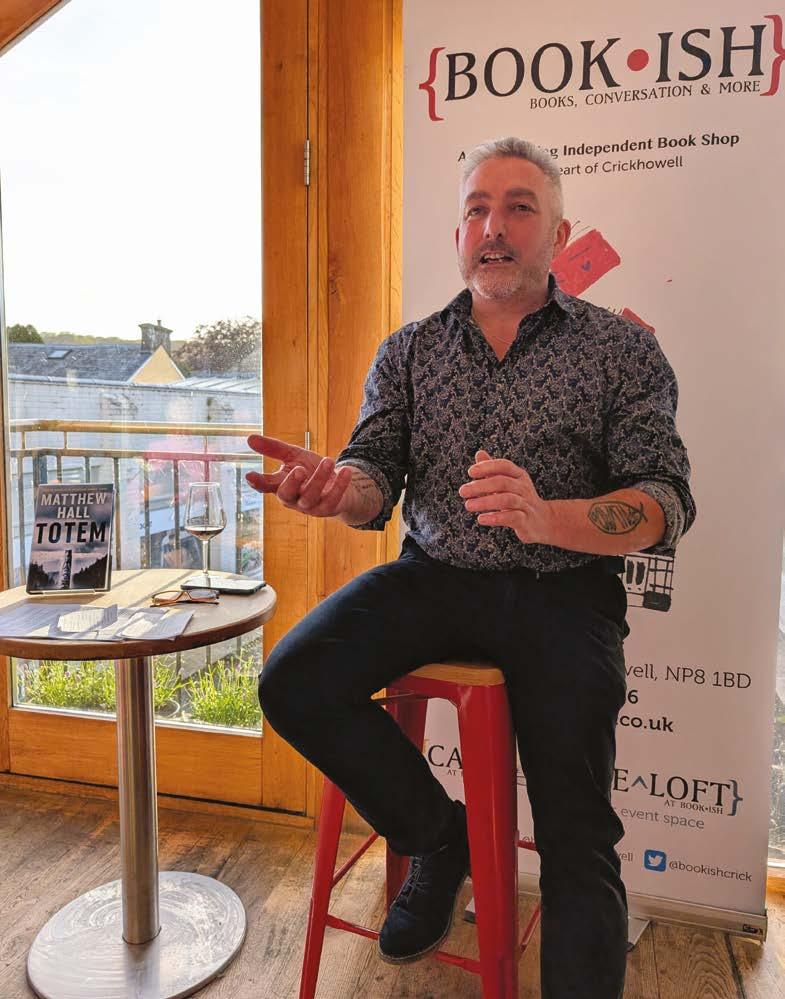
Matthew speaks about his novel ‘Totem’ at a book event
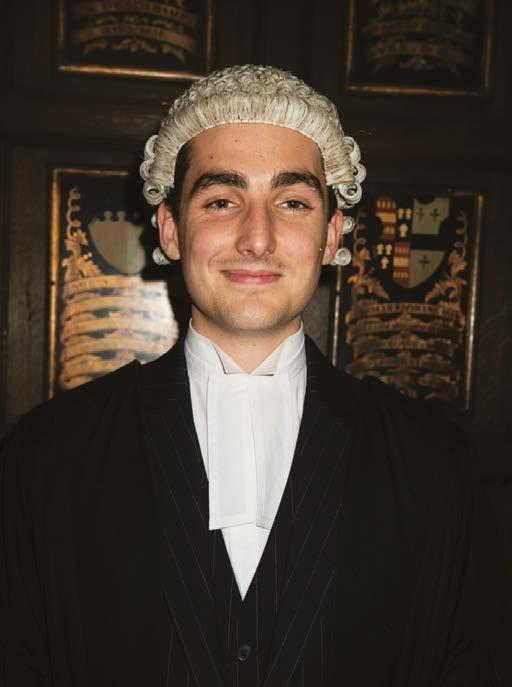
Before becoming a writer, Matthew worked in criminal law as a barrister
From page 9
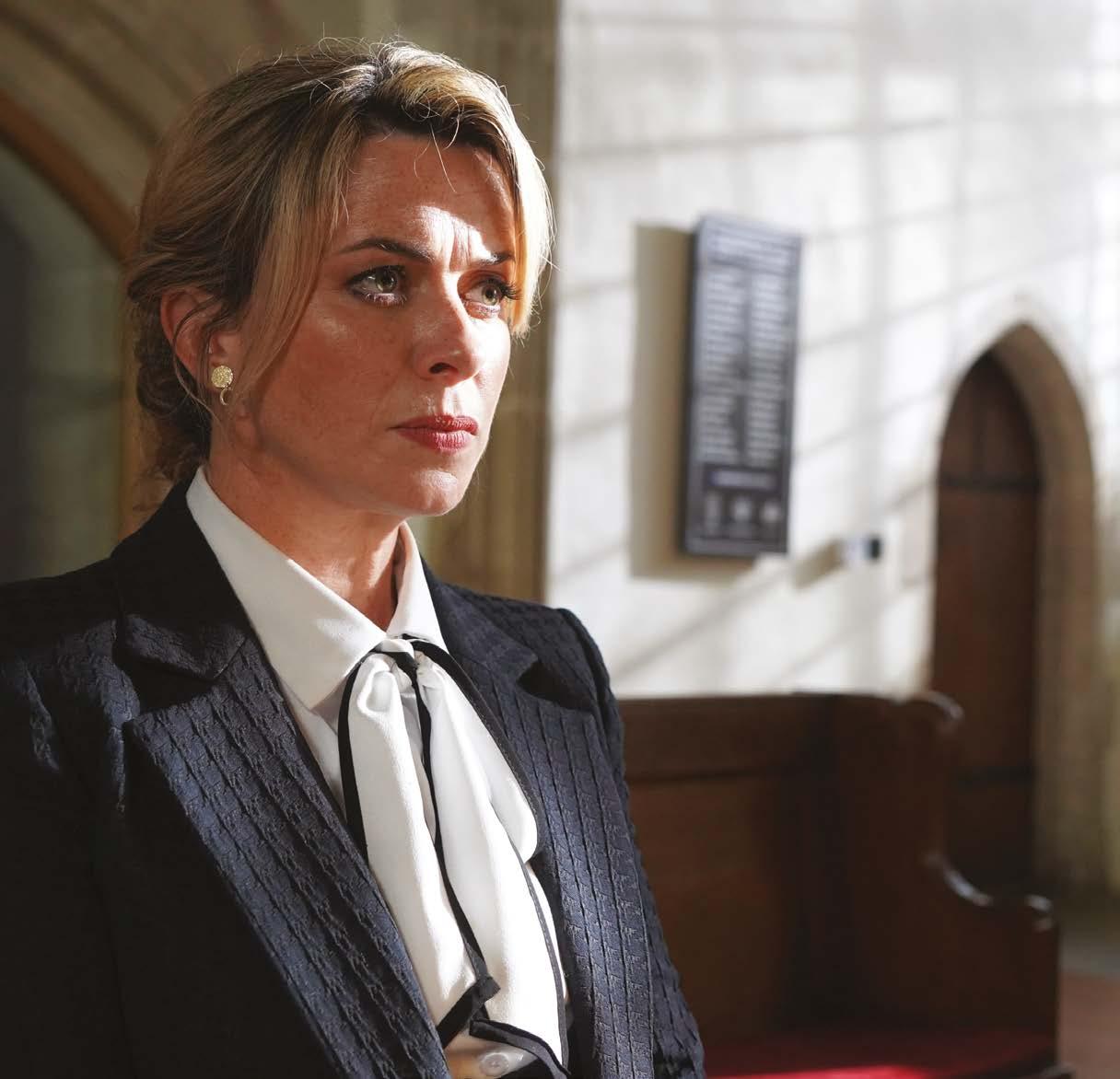
his Channel 5 legal drama Wing and a Prayer was nominated for a Bafta in the best TV series category. Two decades later, BBC1 broadcast his drama Keeping Faith, starring Eve Myles as a solicitor whose husband mysteriously disappears. The show won three Bafta Cymru awards in 2018.
‘I sat down one afternoon and Faith’s character just appeared in my mind,’ says Matthew, reflecting on how he created the show. ‘I’d always thought about people who run away to the country to try to escape the problems of life. And Faith had gone to west Wales, where she’d created a very comfortable existence for herself. But she was running away, and life eventually caught up with her.
Nothing is worse than watching your child suffer
‘Within the story, Faith had to face the past and prioritise her values, but as life was hurling tough things at her, she had to maintain her faith that she would come through the other side – hence the programme’s title. While I was writing the series, my son was facing a long-term illness, my wife was also seriously ill, and we had moved from London back to the Welsh borders, so the story was a true reflection that the storms of life are inescapable.’
would get rid of it. It didn’t.
‘After we had our first child, my wife started going to church. I decided to go with her. I didn’t particularly like it at first. But what turned things around was joining one of the church’s home groups. About 10 of us would meet at our house, where we’d talk about faith, ask questions and, most importantly, pray for each other.
‘Such intimate spiritual contact with people broke through my defences. My anxiety melted away. I surrendered to the fact that faith would never provide a complete set of answers, but I believe that the Bible poses questions and leaves us to meditate on them.’
Twenty-five years later, Matthew remains a committed churchgoer and is the warden of St Mary’s Church in the village of Welsh Newton, where he regularly leads Bible studies. He describes his church as a place where people can go and ask questions.
‘The congregation don’t come to receive teaching,’ he explains, ‘but to question, engage in discussion, study the Bible and pray together.’
In his Guardian article about faith, Matthew referred to the contents of the Bible as an ‘utterly outrageous story: placing us in the midst of a supernatural cosmic drama’. We discuss what he considers to be the pivotal scenes.
Before our conversation turns to how Matthew’s faith in God has been tested through harrowing times, he takes me back to his introduction to Christianity.
‘Whenever anyone talked about God at school, I was open to the idea,’ he says. ‘At my cathedral school in Hereford, we went to chapel every day. But traditional faith was in conflict with my life at home. And that created a lot of anxiety in me.
‘I started to explore other religions and philosophies, thinking that if I could find intellectual answers, my anxiety would fall away. But it rumbled on through the years. I thought that writing
‘The story of Adam and Eve is about humans being responsible for the fundamental disorder that follows Creation,’ he explains. ‘But then the wider story of Christianity unfolds with prophecies and Jesus’ arrival – and then comes the end of the world in Revelation, with its Heaven and new Earth. These are big supernatural events: cosmic clashes between the forces of God and the forces of evil.
‘We’re told constantly that forces of evil are in control in our world, but the Bible says that Jesus delivers us.
‘As with all dramas, we have obstacles to confront and overcome in life. It’s a bit like the story of a soldier being dropped behind enemy lines, who has to find his way back home. I believe that as humans we have to find our way back to God – back to safety –and Jesus is our guide.’
Matthew believes that this compelling narrative hangs on the life-changing truth of Jesus’ life, death and resurrection.
‘Jesus said to his disciples that in this world, they would face trials. But he added that they should be of good cheer, because he has overcome the world. Because of Jesus, the narrative for humanity
changes. He overcomes the Devil.
Jesus rescues us, giving us the ability to orientate ourselves towards God. He shows us the way.’
Christians everywhere would agree – but they may add that ‘the way’ is rarely clear. Four and a half years ago, Matthew faced his own terrible trial when his youngest son, Will, died from heart failure in his early 20s. He had suffered from anorexia in his teens, which became an exercise addiction.
‘There is nothing worse than watching your child suffer,’ says Matthew. ‘It was a battle – one full of deep troughs and false dawns. But Christianity doesn’t offer us freedom from physical or mental suffering. Life is full of it. My faith helps me to accept that.
‘I don’t think we can understand the mind of God, but what we can infer from the way in which the universe is ordered so perfectly is that there is a plan and rationality to it that makes sense on some level.
‘If faith is about surrendering to the will of God – which I think it is – then I have to accept that I’ve been put in this place of grief and unanswered questions, and there must be a reason for it. Maybe I’ll never find out that reason in this lifetime. But what I have to do is confront the dark times and remain faithful through them.
‘Having said all that, do I get angry at God? Of course I do. I’m human. But I go back to those first principles. Human suffering is of our making, and we have to find a way out of it – and the best way out is through a proper relationship with God.’
Matthew finds the nature of God endlessly fascinating.
‘I believe that God is utterly forgiving,’ he says. ‘He is the ultimate harmony. Deep down, we all crave harmony – we have a sense of it within ourselves. It’s written into us. That divine spark is why all humans respond to beauty. It’s also why we can sense injustice. God, to me, is the beautiful order and perfection of creation.’
He’s also the Deity whom Matthew addresses in prayer, as he seeks guidance for his future writing projects.
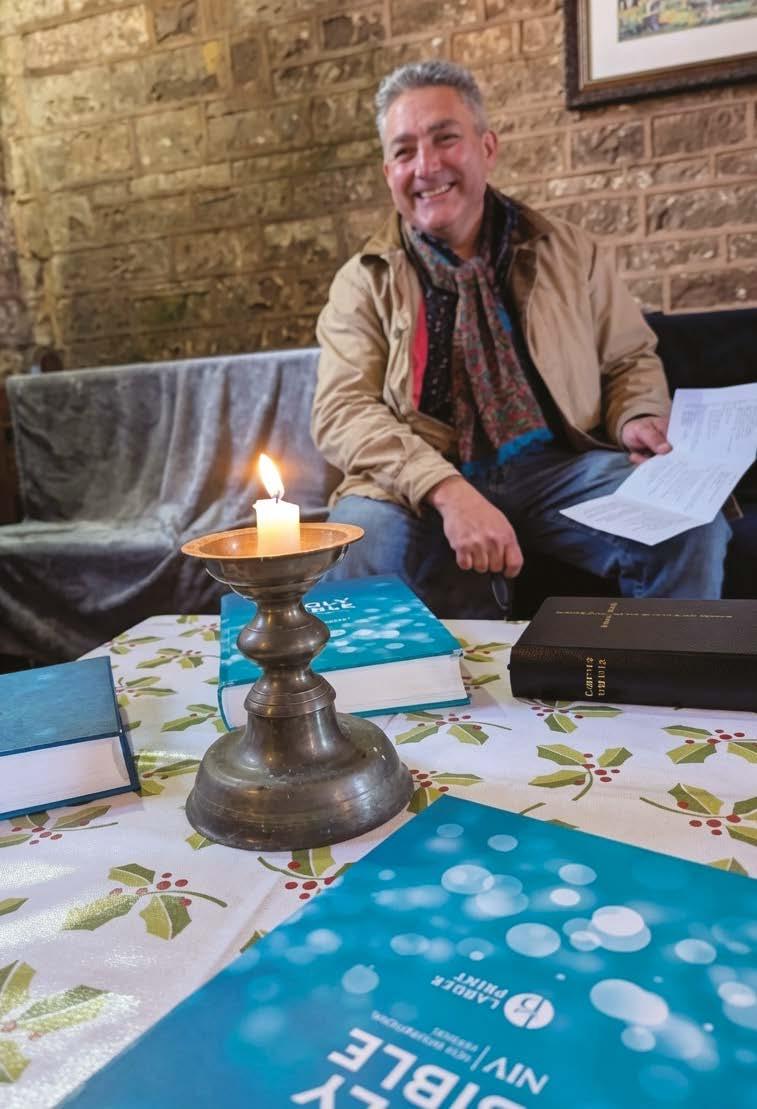
Matthew leads a Bible study at church
‘I just say: “God, I’ve got a certain set of skills. Please use them however you will.” I’m very open about my faith amongst colleagues these days. People are curious about religion. And I think that, through watching television programmes, we are all trying to understand aspects of our character or looking for a moral code.
‘At the moment I’m writing a series that’s very tender about two people in an unlikely partnership, who, by behaving in a self-sacrificial way, enact what a Christian would do. I think those subtle storylines are the best way to be writing with that Christian compass.’
Our conversation is drawing to a close,
but before Matthew signs off, he shares with me the advice he would give to anyone wanting to take their first step of faith into a supernatural cosmic drama – one that features the Son of God who comes to save the world.
‘The principal thing is to read the Bible with an open mind,’ he says. ‘There are so many wonderful resources available to help us study it. Number two is to say a prayer, inviting God to reveal himself. And number three is to accept that faith is an act of surrendering.
‘When we do that, we open the door to God’s influence on our lives – and that’s when all kinds of things can happen.’
The War Cry invites readers to send in requests for prayer, including the first names of individuals and details of their circumstances, for publication. Send your Prayerlink requests to warcry@salvationarmy.org.uk or to War Cry, 1 Champion Park, London SE5 8FJ. Mark your correspondence ‘Confidential’.
There is no set formula to becoming a Christian, but many people have found saying this prayer to be a helpful first step to a relationship with God Becoming a Christian
The two foundations – Luke 6:46–49
Modern methods of improving buildings’ flood resilience can include using waterresistant materials, raising the finished floor at least 2ft above ground level and even building on a buoyant foundation that rises safely with floodwater.
Back at the time when Jesus told his story of men constructing houses on two different foundations, he had in mind another approach to flood resistance: digging deep to find the bedrock and then building well from this foundation up. The alternative was simply to use the ground as a foundation – which was all well and good until something happened to disrupt the ground, such as a storm that resulted in a flood.
Jesus wasn’t really teaching about building practices, though. Rather, he was using common knowledge to make a point about how people choose to live.
Lord Jesus Christ,
I know that I have done things in my life that are wrong and I’m sorry. Thank you that I can ask you for forgiveness because of the sacrifice you made when you died on the cross.
Please forgive me and help me to live a better life in the future as I learn how to love you and follow your way of living.
Thank you, Lord Jesus.
If you’ve prayed this prayer, scan the QR code or contact us using the coupon on this page

Jesus challenged his listeners about why they called him ‘Lord’ and yet didn’t live in the way he’d taught them. He knew that his teachings were full of wisdom and that living life his way wasn’t best just for the individual but also for everyone else around them.
The person who hears Jesus’ words and chooses to act on them is like the one who digs deep, finds the bedrock, and then builds well from that firm foundation.
Applying that approach to our lives means reflecting on, and questioning, the things that previously seemed wise to us, in order to find the principles that stand the test of time. We can then build and grow from that firm foundation, making everything in our lives to be about love, forgiveness, generosity, kindness and all the other values of God.
In contrast, the people who hear Jesus’ words but don’t act upon them are setting themselves up for potential disaster. When the storms of life arrive, everything can fall apart.
Storms happen to everyone. They will threaten us, and may even cause some damage, but ultimately having a relationship with Jesus – and putting into practice his teaching – will enable us to be the best kind of neighbour, relative, friend and community member.
When we dig deep and build well, it won’t guarantee us a peaceful life, but it can give us a peaceful heart.

To receive basic reading about Christianity and information about The Salvation Army, complete this coupon and send it to
War Cry 1 Champion Park London SE5 8FJ
Or email your name and postal address to warcry@salvationarmy.org.uk

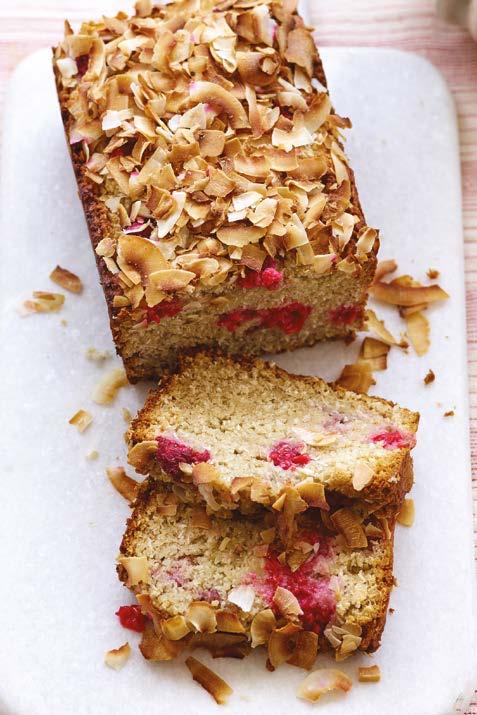
INGREDIENTS
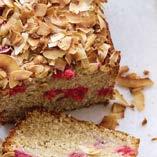
50g coconut oil
50ml vegetable oil
100ml maple syrup
175g plain flour
1½ tsp baking powder
75g ground almonds
125g desiccated coconut
3 medium ripe bananas
1 lime, finely grated zest
175g raspberries
30g coconut flakes

INGREDIENTS
200g pecans
50g sesame seeds
1tbsp maple syrup
Salt
75g Chilean blueberries, roughly chopped

Preheat the oven to 180C/Gas Mark 4. Line a 900g loaf tin with non-stick baking parchment. Melt the coconut oil in a small pan, then stir in the vegetable oil and maple syrup. Set aside. Sift the flour and baking powder into a bowl, then stir in the almonds and desiccated coconut.



Blend the bananas and lime zest in a food processor, or mash and mix by hand. Add the oil mixture and blend again, then stir in the bowl of dry ingredients. Gently fold in three quarters of the raspberries, then pour the mixture into the tin.
Top with the coconut flakes and remaining raspberries, pressing them gently into the mixture.
Bake for 1 hour 15 minutes. Check the top after an hour and, if necessary, cover lightly with foil to prevent overbrowning. Allow to cool in the tin. Serve immediately or store in an airtight container for 3-4 days.
METHOD
Preheat the oven to 200C/Gas Mark 6.
Put the pecans on a baking tray and the sesame seeds in a corner of the tray. Roast for 5 minutes, until fragrant. Leave to cool slightly. Reserve 1tbsp sesame seeds for later.
Add the pecans and sesame seeds from the baking tray to a food processor or blender and whizz thoroughly to form a soft spread. Add the maple syrup and a pinch of salt, whizz again, then transfer to a bowl and stir in the blueberries.
Shape the mixture into 16 walnut-sized balls. Spread the reserved sesame seeds on a plate and roll the balls in the seeds to coat.
Chill for at least 20 minutes, until firm. Store in an airtight container in the fridge for up to 3 days.
Fill the grid so that every column, every row and every 3x3 box contains the digits 1 to 9


Unscramble the letters to reveal some board games W
Look up, down, forwards, backwards and diagonally on the grid to find these hit singles of the 1990s
DON’T LEAVE ME FIELDS OF GOLD HIPPYCHICK
I’LL
OLD
PARKLIFE PICTURES OF YOU
ROLL WITH IT
SAVE OUR LOVE SIT DOWN
THERE SHE GOES TOP OF THE WORLD
YOU’RE STILL THE ONE
ACROSS
1. Caper (5)
4. Adroit (5)
8. Nothing (3)
9. Slogan (5)
10. Boredom (5)
11. Which person (3)
12. Gaiety (5)
13. City state (7)
16. Hasty writing (6)
19. Inverts (6)
23. Pacify (7)
26. Tend (5)
28. Mine (3)
29. Era (5)
30. Bay (5)
31. Idiot (3)
32. Whim (5)
33. Secured (5) DOWN
2. Following (5)
3. Expertise (4-3)
4. Recess (6)
5. Expel (5)
6. Something which invigorates (5)
7. Extraterrestrial (5)
9. Infectious disease (5)
14. Frozen water (3)
15. Also (3)
17. Headwear (3)
18. Tennis shot (3)
20. Pope (7)
21. Perspire (5)
22. Move strategically (6)
23. Ward off (5)
24. Confirmation (5)
25. Pale (5)
27. Ease tension (5)
Each solution starts on the coloured cell and reads clockwise round the number
1. Cut down on
Pool of water 3. Noon 4. Order not to do 5. Einstein’s forename
6. Relating to the lower back
The number in each circle is the sum of the two below. By adding up the figures, find the top number
God knows what you need; search instead for God’s Kingdom.