Many happy returns
Wimbledon is back as wheelchair tennis reaches 50-year milestone

The fête that the young John Lennon couldn’t wait to visit

Wimbledon is back as wheelchair tennis reaches 50-year milestone
The fête that the young John Lennon couldn’t wait to visit
The Salvation Army is a Christian church and registered charity seeking to share the good news of Jesus and nurture committed followers of him. We also serve people without discrimination, care for creation and seek justice and reconciliation. We offer practical support and services in more than 700 centres throughout the UK. Go to salvationarmy.org.uk/find-a-church to find your nearest centre.
The Salvation Army first published a newspaper called the War Cry in London in December 1879, and we have continued to appear every week since then. Our name refers to our battle for people’s hearts and souls as we promote the positive impact of the Christian faith and The Salvation Army’s fight for greater social justice.
There are some things that seem quintessentially part of the British summer: the feel of chilly feet while paddling in the sea, the sound of leather on willow as the cricket season continues and the sight of tennis players all in white on the grass courts of Wimbledon.
As we report in this issue of the War Cry, next week is the start of the Wimbledon fortnight, with players from around the world competing in a tournament that dates back to the 19th century.
Fêtes and garden parties are another tradition of the season. This week we highlight how The Salvation Army’s Strawberry Field – the place which inspired the Beatles’ classic ‘Strawberry Fields Forever’ – has reintroduced its summer fête, which was part of John Lennon’s childhood.
‘The fête at Strawberry Field was something that John would attend,’ Major Michelle Lovegrove-Huggins, mission director at Strawberry Field, tells us. ‘He was always keen to get here early… The local Salvation Army band would play and there would be stalls, and he didn’t want to miss any of it.’
Editor: Andrew Stone, Major
Managing Editor: Philip Halcrow
Staff Writer: Emily Bright
Staff Writer: Claire Brine
Staff Writer: Ewan Hall
Editorial Assistant: Linda McTurk
Graphic Designer: Mark Knight
Graphic Designer: Matt Penberthy
Email: warcry@salvationarmy.org.uk
Army
Park
SE5 8FJ
Tel: 0845 634 0101
Subscriptions: 01933 445445 (option 1, option 1) or email: subscriptions@satcol.org
Founders: Catherine and William Booth
International leaders: General Lyndon Buckingham and Commissioner Bronwyn Buckingham Territorial leaders: Commissioners Jenine and Paul Main
Editor-in-Chief: Major Andrew Stone

At that time, the site was a children’s home. Today, it’s a venue for Steps to Work training programmes that help young people find employment. It also hosts a Beatles exhibition and offers opportunities for spiritual reflection.
‘Strawberry Field is about enabling people to live life in all its fullness and trying to remove the barriers that would stop people from experiencing that,’ Michelle explains. ‘God is a God of hope and wholeness. And everything we do at Strawberry Field is about making it as inclusive as possible.’
While the sights, sounds and sensations of summer can be fleeting, the opportunity to experience God’s offer of hope and fullness is always present. Nobody is excluded from his love and concern, and many have found that, when they choose to accept him, a better life is quintessentially theirs to enjoy.


Feature by Ewan Hall
It is game, set, match – served with strawberries and cream – as the tennis world returns to Wimbledon. The only grand slam played on grass starts on Monday (29 June).
Fans will be hoping the action in SW19 serves up some ace matches as the best players in the world hit the courts. The championships open with singles matches on the first two days, the doubles competitions begin on Wednesday – and the following week includes the start of the wheelchair events.
This year, the LTA is recognising a milestone in the history of wheelchair tennis. The governing body for tennis in Britain has teamed up with Getty Images to put together a digital exhibition marking 50 years of wheelchair competition.
Established in 1976 by American Brad Parks as a form of recreational therapy after he became paraplegic, the
sport – which made its Wimbledon debut as an exhibition doubles event in 2001 – is now part of all four grand slams.
The 50th anniversary is a reminder of how Wimbledon has evolved since the All England Club staged its first lawn tennis tournament back in 1877 – but the determination of all the competitors to win their matches has never changed.
‘Wimbledon is a very special place. Within the amazing grounds is a desire to win like nowhere else,’ said Alfie Hewett, British wheelchair player and 33-time grand slam champion, at the launch of an advertising campaign for the tournament. He added that it was particularly wonderful to be promoting the championships ‘in this significant milestone year as wheelchair tennis marks its 50th anniversary’.
Whatever competition at Wimbledon they are participating in, all the players taking to the courts over the next 14 days will have been through various important points in life and faced
challenges – physical, psychological and emotional. Some challenges may have been widely reported; others hidden from sight.
While we might not be able to relate to the fierce competition of the professional tennis court, many of us can relate to facing challenges in our lives.
We all have times when we face battles. And when we are struggling, it can feel as if we are alone. However, Christians know that they have someone by their side, supporting them.
The Bible gives many examples of God standing with people during their troubles. It records how one person felt God say to his community: ‘Do not fear, for I am with you; do not be dismayed, for I am your God. I will strengthen you and help you’ (Isaiah 41:10 New International Version).
If we let God into our lives, we will find someone who sees the visible and hidden challenges we face – and who will give us the strength to meet them.
When we feel overwhelmed, he will be a steady source of support. When we partner up with him, we will find that it is a match made in heaven.

Emily Bright gives her take on a story that has caught the attention of War Cry reporters
Screenwriter and novelist Matthew Hall has revealed how he ‘came out as a Christian’ at work. In a comment piece for The Guardian, Matthew –whose credits include the thriller series Keeping Faith – wrote that, in the world of TV drama and publishing, he discerned ‘a definite queasiness’ and ‘suspicion’ around the Christian faith, so he ‘stayed silent’ about his beliefs.
But, after the death of his 23-year-old son Will, who had ‘an instinctive faith’ and ‘often spent all night arguing friends out of their atheism’, Matthew felt challenged to ‘be as brave and honest as he was’.
At Will’s funeral, Matthew spoke about a Bible passage that acknowledges the reality of suffering but offers hope. He began talking more openly about his faith in meetings with drama commissioners.
‘To my surprise, these conversations have invariably been filled with warmth and curiosity,’ said Matthew. ‘For my part, it’s a chance to explain that there are Christians like me who treat their faith not as a set of rules, but as a bottomless source of insight and inspiration. It also tells an utterly outrageous story: placing us in the midst of a supernatural cosmic drama. As a writer, I can’t get enough of it.’
I totally agree. It’s a privilege to write for a Christian magazine. In doing so I learn more about the ‘utterly outrageous story’ of the gospel: the God who created our universe loves us so completely that he sent his Son into our world to die for our mistakes, so that our broken relationship with him can be restored.
I speak to Christians from all walks of life, who testify to God’s goodness, faithfulness and love. They recall miraculous encounters and answers to prayer. I’ve heard too many accounts of lives transformed and have discovered too much wisdom in the Bible to keep quiet.
Even so, it’s tempting to stay silent about my faith outside of work, feeling fearful of uncomfortable conversations with the people that I meet in my leisure time. But maybe the power of this ‘cosmic drama’ would result in me finding – like Matthew – such conversations to be ‘filled with warmth and curiosity’. The only way to find out is to rewrite my internal narrative and speak more openly about the radical love of God.
‘One of the most compelling arguments for God,’ said host Steven Bartlett at the end of one of his Diary of a CEO podcasts, was the ‘peace and contentment’ of his Christian interviewee, John Lennox.
During the interview, Steven and the Oxford mathematician explored topics such as AI, how we can know if the Christian faith is true, why people suffer if God exists, the purpose of forgiveness and what can restore hope in the world.
As the episode drew to a close, Steven told John: ‘One of the most compelling arguments for God that you’ve presented and your way of seeing the world … is not … necessarily anything you’ve written in your books, or not necessarily anything you’ve said, it is actually you. And you have a certain peace and contentment that I rarely see in people that I interview, but I often see and I’ve almost always seen in the Christians that I’ve interviewed.’
John replied: ‘In life, that peace is very important to me… When I look at you, I see someone who’s of infinite value, made in the image of God.’

After losing his wife to cancer eight years ago, TV presenter Simon Thomas talked to BBC1’s Songs of Praise about the anger he had felt towards God but also about how he experienced his presence.
‘I felt I was never going to get an answer to the question why God allows some things to happen,’ said the Sky Sports broadcaster. ‘So I kind of let go of that anger I had towards God.’
When questioned about the ways in which he encountered God in his bereavement, Simon explained: ‘I used to write these snack notes for [my son] Ethan every day after his mum went, which was a little encouraging note that I’d put in his packed lunch box... I started taking pictures of them and putting them up on Instagram.
‘I got given this letter … and it was Dan from this lovely family in Ledbury. They ran this Christian retreat centre. And he just said: We’ve been so moved by your story, and we’d love for you to come and stay one day.’
When Simon visited the retreat centre, he received a surprise. Inspired by the notes Simon had put in his son’s lunch box, Dan had written daily notes of encouragement for Simon on Post-it notes –one for every day of the year.
Simon continued: ‘I look back and go: that’s where God was … God was working as he so often does through people, through people like Dan. And it was amazing.’
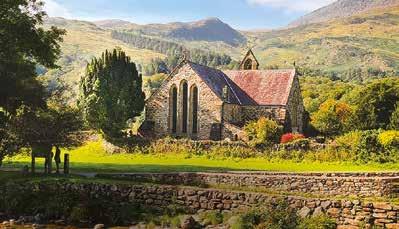
St Mary’s Church in Beddgelert, north Wales
A church in Beddgelert, north Wales, became an unexpected online champion after winning a month-long challenge by users of Reddit to find the best place on Earth, reported the Nation.Cymru website.
St Mary’s Church in Eryri National Park won the competition, run by the r/terriblemaps community, which involved repeatedly eliminating halves of a map – initially a map of the whole world – across 29 rounds until one location remained. Over time, continents, countries and towns were removed, leaving Beddgelert and its St Mary’s Church in the final stages.
As the competition drew to a close, Reddit users rallied in favour of the church, which ended up as the ‘last place standing’.
‘We were quite surprised to learn that St Mary’s Church had become the focus of an online competition but it’s nice to see so many people speaking positively about Beddgelert and Eryri,’ said the church’s minister, the Rev Kim Williams.
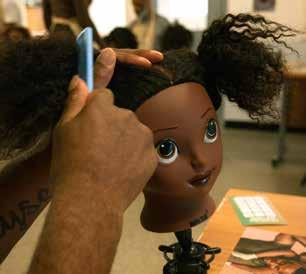
Incarcerated fathers in HMP Brixton are being taught how to braid, care for and style their children’s textured hair in a series of workshops run by TreasureTress.
Founded by Jamelia Donaldson, who is a Christian, TreasureTress provides natural hair products for textured hair and also operates the training programme For Dads Who Can’t Braid.
In HMP Brixton – where the course is being offered to prisoners for the first time – dads are using dolls’ heads to learn how to braid, tie and part hair so that they can build a stronger connection with their children. The conclusion of the course is marked with a family visit day, in which fathers are invited to practise their newly acquired skills on their children for the first time.
Company founder Jamelia told the War Cry why her Christian faith inspired her to offer the programme in prison, saying: ‘I believe we are called to serve, to show up for the most marginalised, and to love people.’
Strawberry Field held its first summer garden party in the 1930s, and the events would later become eagerly awaited days in the life of the young John Lennon. Having recently revived the tradition, the Salvation Army centre is preparing for another time of stalls, food and live music, showcasing what it offers all year round
Feature by Philip Halcrow
From the release of ‘Strawberry Fields Forever’ onwards, chroniclers of Beatles history have been fascinated by the background of the song. Over the years, interviews with John Lennon and those who knew him have built a picture of the location that lay behind the 1967 hit.
John spoke of hanging out with his friends in the grounds at Strawberry Field, which at the time was a Salvation Army children’s home, round the corner from where he lived with his aunt in suburban Liverpool. And in his early biography of the Beatles, Hunter Davies quoted John’s Aunt Mimi singling out a particular part of Strawberry Field life: the annual garden party.
Over the decades, some things have gone at Strawberry Field, but some remain. The site is still run by The Salvation Army, but, rather than being a children’s home, it now provides Steps to Work training programmes to help young people find employment, offers opportunities for spiritual reflection and hosts a Beatles exhibition.
‘Around the 1940s and 1950s, village fêtes were a big thing,’ says Major Michelle Lovegrove-Huggins, mission director at Strawberry Field. ‘We know that one of the first places the Beatles came together was when they – as the Quarrymen – played at a church fête.
‘The fête at Strawberry Field was something that John would attend with Auntie Mimi. He was always keen to get here early. He would say: “Come on,
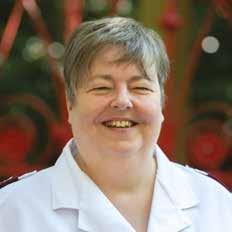
Major Michelle Lovegrove-Huggins, mission director at Strawberry Field
Auntie Mimi! We’re going to be late.” The local Salvation Army band would play and there would be stalls, and he didn’t want to miss any of it.’
Eventually, over the site’s changing history, the fêtes ended.
‘It was only last year when we were reflecting on our history that we thought it would be a good idea to bring them back,’ says Michelle. ‘It was a huge success.
‘The most significant thing about it was that it was a great day for community engagement – it gave us the opportunity to throw open the gates and say to people: “This is a free event. Come and find out what we’re all about.” It was a good opportunity for us to meet our neighbours.’
Next Saturday (4 July), Strawberry
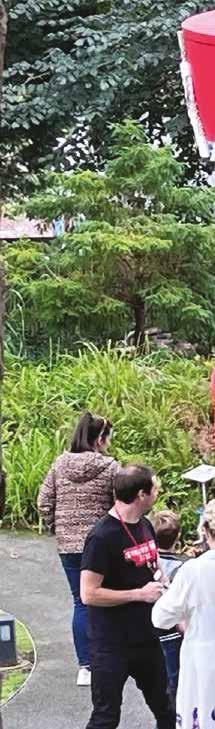
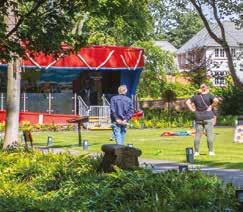
People can enjoy the grounds throughout the year
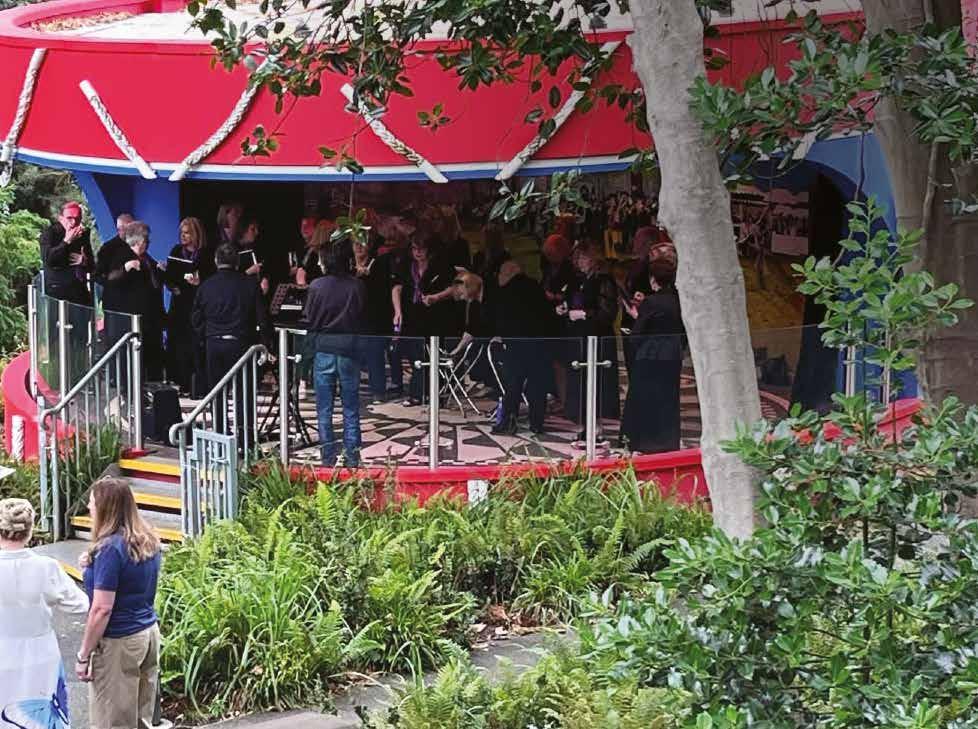
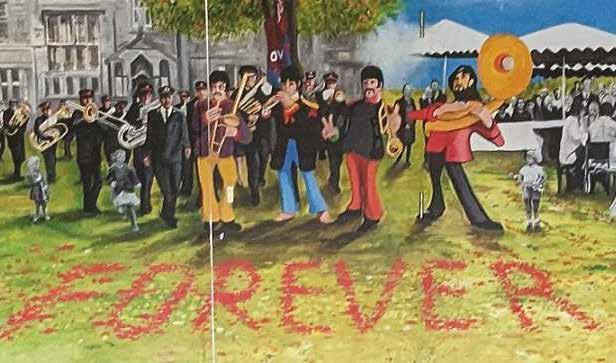
Field will carry on the revived tradition. There will be music on the bandstand, which was opened in the grounds in 2023 and features a mural by artist James Wilkinson that includes the Beatles, a Salvation Army brass band and a fête.
‘Normally we’d have music from a Salvation Army band,’ explains Michelle, ‘but they’re coming to us the week before for another event, so we’re giving them the year off. But Macclesfield Brass band will be here and Liverpool’s Rock Choir will be performing.
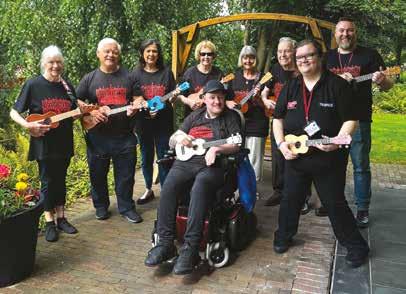
‘We’ll also have Strawberry Field’s own ukelele band, who play a lot of Beatles stuff as well as local folk music and some old classics. They meet every Friday. Anybody can join. They get taught basic chords, and then they pick it up as they go along. It’s great for people’s
mental health.’
The fête will also provide an early opportunity for the public to visit a memorial rose garden created in honour of Beatles producer Sir George Martin. Half the roses were donated by Sir George’s wife, Lady Judy Martin, who, before her death three years ago, was a patron of Strawberry Field.
Strawberry Field is about life in all its fullness
Michelle also promises stalls run by local craftspeople and places where visitors can pick up more information about the ministry offered by The Salvation Army at Strawberry Field all year round.
‘Strawberry Field is about enabling people to live life in all its fullness and trying to remove the barriers that would stop people from experiencing that,’ she says. ‘God is a God of hope and wholeness. And everything we do at Strawberry Field is about making it as inclusive as possible.
‘For instance, we work with younger people who face barriers to employment – but it’s not the young people that have the barriers; it’s society that places those limitations on them. Society sometimes says, “You can’t”, whereas our message is, “You can”.
‘We’re here for anybody who feels the need to be included or to have a sense of community. That’s why our café exists. That’s why our gardens are free – those places of reflection and sanctuary should
be available to whoever needs them. The only part of the site you pay to enter is the visitor exhibition.’
Strawberry Field held its first annual garden party in 1937, back when it was caring for children. Visitors who make the trip to this year’s fête will be able to tune into its history but also see what it offers today.
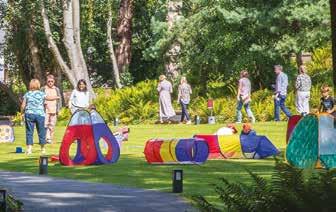
‘Throwing the gates open at our summer fête is inviting people to see what’s here,’ says Michelle. ‘On the day, you can bring your family and have a picnic on our lawn – but you can do that any time. You can come on our nature trail or you can just sit. If you come on your own, then somebody’s happy to come and talk to you if you want them to.
‘We’re trying to showcase in one day what happens all year round.’
Musician STEPHEN McWHIRTER tells how witnessing his father’s domestic abuse drove him into drug addiction, but how reading a book at three o’clock in the morning led him into a life-transforming relationship with Jesus
Interview by Emily Bright
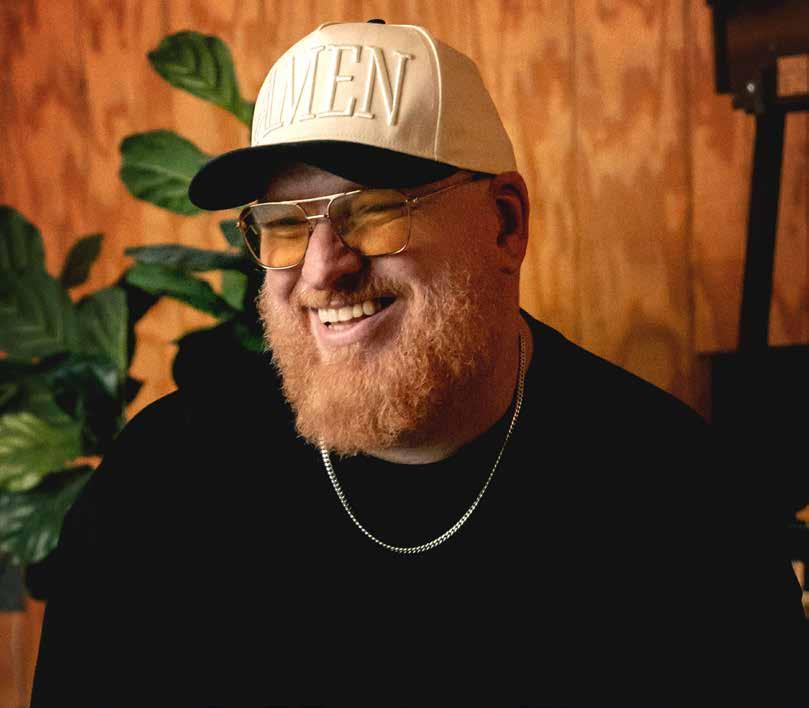
‘Iwas using drugs every day for many years,’ says musician Stephen McWhirter from Louisville, Kentucky.
‘And during this time in my life, I hated Jesus. I hated Christians too. If anyone I knew told me that they were going to church and believed in Jesus, I would actively try to talk them out of it.’
The reason for Stephen’s animosity towards Christianity was a sad secret from his childhood.
‘My dad was an evangelist,’ he explains. ‘But the man I saw in the pulpit and the man I saw at home were two different people.
‘I’d watch him get on a stage, preaching about Jesus, but at home I would watch him physically abuse my mom. It was traumatic. At a young age, I decided that if God was real, he was not good. I didn’t want anything to do with this Jesus guy.’
Stephen’s painful childhood led him
down a dark path. Before he was even a teenager, he was smoking marijuana and drinking. The domestic abuse ended before Stephen turned 13, but he was already scarred by what he’d witnessed. By 15, he was taking cocaine and pills, and he recalls that, by the age of 17, he was a ‘full-out crystal meth addict’.
One day in his 20s, everything changed.
‘There were people really praying for me,’ Stephen remembers. ‘Someone gave me this book called The Case for Christ by Lee Strobel. I was like: “This is a stupid book.” Fast-forward to three o’clock in the morning and I was in my bedroom, with drugs on the side table next to me. I began reading this book.
‘Lee was an investigative journalist for a Chicago newspaper and an atheist. His wife became a believer. Being an investigative journalist, he set out to disprove the resurrection of Jesus. But he
ended up finding out that it’s all real and gave his life to Christ. This book was about evidence for the Resurrection.’
That night, Stephen also realised that Jesus was real, but changing his life to follow him seemed overwhelming.
‘As I was reading Lee’s book,’ he explains, ‘I had this moment where I was like: “God, I think I believe all this, and I want to give you my life. I want to quit all this addiction, anger, darkness and depression, but there’s absolutely no way I can do it.”
‘In that moment I had this thought that I’m certain was from the Lord, and it was: “Stephen, you won’t do it, I’ll do it.”
‘I now know that this is what Paul says in Ephesians 2:8, that you’re saved by grace, and this isn’t something you can boast about. It’s a work of God. He does it.
‘I fell to my knees, and I gave my life to Jesus. I went from addiction to
Stephen McWhirter

redemption, from meth addict to worship leader. I literally quit everything right away. I can’t lie. It’s what happened.’
Stephen quickly discovered that his relationship with God would transform all areas of his life.
‘When you give your life to Jesus,’ he says, ‘it’s like a pebble in the ocean that starts to ripple out into a tsunami of grace and redemption. It starts hitting parts of your life that you weren’t even thinking about. I thought that if I could just be sober and not burn my life down, that would be great. But God said: “No, we’re going to do more than that.”’
Stephen found God challenging him to change in unexpected ways. As he read the Bible, he realised that he needed to address the broken relationships in his life. While not condoning his father’s previous actions, Stephen felt that he was being encouraged to forgive him.
‘When I get to “forgive your enemies”, I go: “God, let’s do that.” Then I think: “Wait, who is my enemy? Oh, it’s my dad.”
In that moment, I thought no, I couldn’t do it. I hated this man deeply.
I whispered: ‘Dad, I really do forgive you’
‘Anyway, I drive to my parents’ house to forgive my dad. I tell him that we need to talk about his abuse. One of the huge rules in our house was that you just didn’t talk about it. Yet here I am saying to my dad: “I forgive you.”
‘This isn’t a scene you’d put in a movie. It’s super awkward. As I tell him, “I forgive you”, he’s looking at me like a deer in headlights.
‘There was nothing magical about it.
But even on the ride home, I knew that God had done something beyond what I experienced and saw in that room.’
In the months and years that followed, God prompted Stephen to show acts of forgiveness to his dad, time and again.
‘When my fiancée gave her life to Jesus too, she wanted my dad to baptise her. I told her that it was the stupidest idea I’d ever heard. We got in the biggest screaming match of all time on our way to get baptised. In hindsight, it was hilarious.
‘We got there, my dad baptised us, and it was a beautiful baptism. My mom told me later that my dad wept all that night over the thought that it was possible for God to redeem or restore all that he had broken.
‘Fast-forward a bit more, and my
fiancée and I were getting married. My fiancée said: “I want your dad to perform our wedding ceremony.” I was like: “I don’t think this marriage is going to work out.” But we did it. Again, it was beautiful.’
Stephen was also able to provide words of forgiveness as his dad was dying of cancer in a hospice.
‘Patients at hospices go into a coma,’ he says. ‘They’re unresponsive. But the nurses and the doctors all say that patients can still hear you, and you can tell that person to let go because they hold on. There’s just something in the human body that can’t let go.
‘I’m in this hospital room with my dad one night, just me and him. I’m watching
this man who had been this figure in my life – good and bad – struggle to stay alive in a coma. I thought about what the disciple Peter asks Jesus: “How many times should I forgive my enemies?”
Jesus tells him: “Don’t even count. Just do it.” So, I go over to this man, I lean down, I whisper in his ear: “Dad, I love you and I really do forgive you.” He breathed his last breath in that moment.’
Stephen acknowledges that forgiveness is an ongoing process, and that ‘there may still be some days that I have to keep forgiving my dad. But if Jesus forgave me, it really seems pretty awful of me not to forgive someone else.
‘One of the most important Jesuslike things that you and I can do on this
side of eternity is to forgive someone. It’s a legitimate debt that you’re owed by somebody who has wronged you that you get to tear up. The alternative is to keep drinking poison, thinking that we’re hurting them.’
Stephen offers hope to people who may have hurt others and want to make amends.
‘If you’re the person that needs to ask forgiveness,’ he says, ‘you need to repent, which means to go in the other direction. In the Bible, every time repentance is mentioned, there’s a blessing that God is wanting to bring. There’s something good God is trying to do.
‘In the Bible, Peter says in Acts 3:19 and 20: “Repent so that the time of
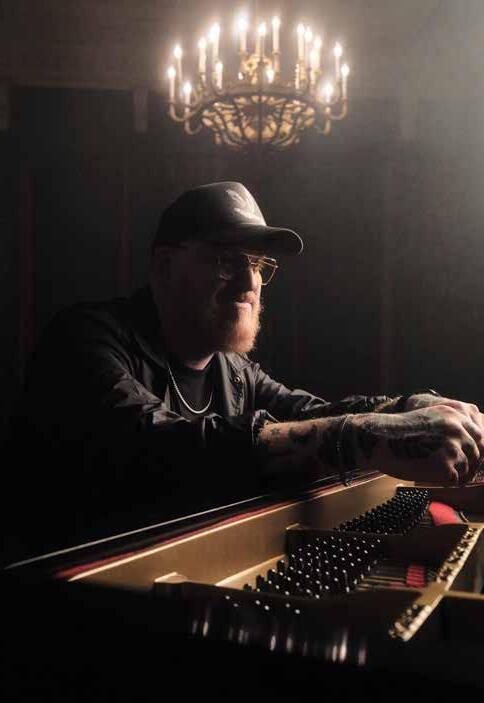
Stephen leads worship at churches and other venues
refreshment will come from the Lord.”’
Stephen believes strongly in the redemptive power of Jesus, and that ‘there’s absolutely nothing and no one on this side of eternity that Jesus cannot restore, renew, heal and mend’.
When you give your life to Jesus, it’ll make sense
He says: ‘Everybody has that person who has hurt them or that thing that they’ve gone through that they think is unforgivable, unredeemable. But that is pretty small next to what Jesus can do.’
However, forgiving a person doesn’t
mean condoning their actions.
‘If somebody’s done something really terrible,’ he says, ‘you don’t just invite them back into your life. That’s not wisdom. You may never be friends with that person again, but you can love, pray, care for them and forgive them from a distance.
‘Forgiveness also doesn’t mean that somebody should avoid jail, because we still live in a world with rules and laws. But you can still forgive. You can still love somebody without giving them access to you.’
Through his relationship with Jesus, Stephen has learnt what a good Father really looks like.
‘Even the best father on this side of eternity is a muddy lens compared to the
Father,’ he admits. ‘Our heavenly Father is perfect. If I let an earthly father define the way I look at God, I’m going backwards; but if I look at fathers through the Father, it gets a little easier.’
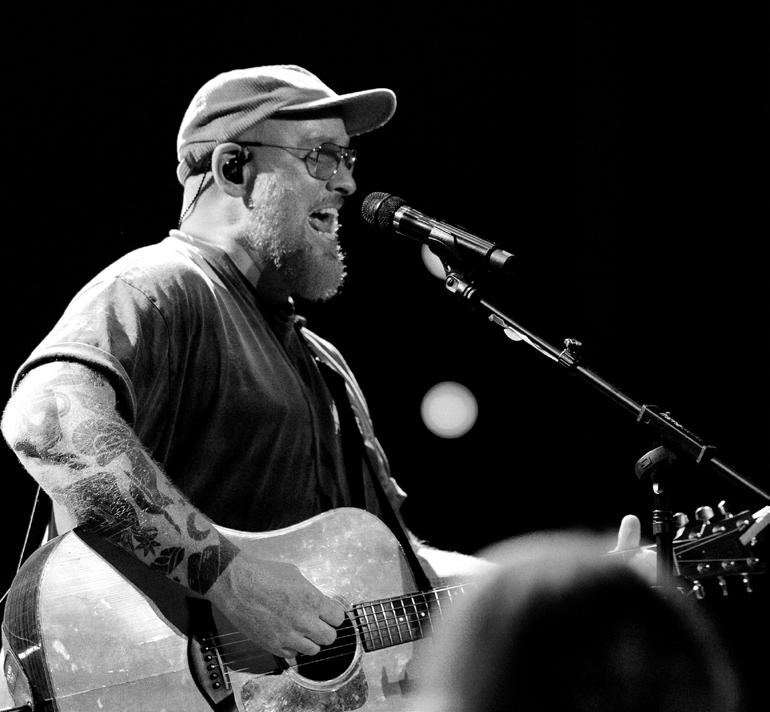
Stephen’s story has come full circle – having once renounced his dad’s Christian ministry, he now travels round, playing guitar and leading congregations in worship songs at churches and other venues. Looking back, he thinks that it was a job God always wanted him to do.
‘McWhirter means “son of the harpist”,’ he says. ‘I’m doing exactly what it is I’m supposed to be doing. I’m not saying I’m the best at it. But God has allowed me to do it for so long, and I see people come to Jesus in a tangible way, and that’s awesome.’
Stephen knows that not everyone who becomes a Christian receives the same instant miraculous healing from problems such as addiction that he did. People may need to make a commitment to long-term programmes. However, he is certain of the life-transforming power of Jesus and expresses a longing for people to explore a relationship with him.
‘When you give your life to Jesus, it’ll make sense,’ he says. ‘You’ll realise that this is who you were always meant to be – full of life, joy and hope. Free from addiction, despair and hopelessness.
‘John 10:10 says that Jesus has come so that you might have life and have it to the full. God takes what you thought would mark your life with shame and uses it to mark your life with his glory. It’s awesome. Be encouraged because the best is yet to come in Christ.’
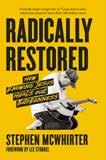
l Stephen tells his story in Radically Restored, published by Zondervan
Your prayers are requested for Ashton, who has a bad ear after playing football.
The War Cry invites readers to send in requests for prayer, including the first names of individuals and details of their circumstances, for publication. Send your Prayerlink requests to warcry@salvationarmy.org.uk or to War Cry, 1 Champion Park, London SE5 8FJ. Mark your correspondence ‘Confidential’.
Becoming a Christian
There is no set formula to becoming a Christian, but many people have found saying this prayer to be a helpful first step to a relationship with God
Lord Jesus Christ,
I know that I have done things in my life that are wrong and I’m sorry. Thank you that I can ask you for forgiveness because of the sacrifice you made when you died on the cross.
Please forgive me and help me to live a better life in the future as I learn how to love you and follow your way of living.
Thank you, Lord Jesus.
If you’ve prayed this prayer, scan the QR code or contact us using the coupon on this page

Nigel Bovey gives chapter and verse on each book of the Scriptures
For many people, the Bible is like an iceberg. From a distance, it is an object of majestic beauty. The poetry and prose of the 17th-century’s King James Bible mark it out as a timeless literary masterpiece – a heritage treasure of the English language. Many of the Bible’s phrases, such as ‘go the extra mile’ and ‘turn the other cheek’, have become everyday expressions. The craftsmanship of a Bible printed on India paper, edged in gold leaf, adorned with silk place-markers and bound in Moroccan leather testifies to a reverence shown to few other books.
Up close, though, the Bible can seem cold and uninviting. Consequently, like the iceberg, at least 95 per cent of it goes unexplored. Many people know the odd Bible story, such as David killing Goliath, or an occasional phrase, such as ‘The Lord is my shepherd; I shall not want’, but they have never been able to explore the whole of the wonderful landscape. When they have tried, they have got bogged down – or lost – and given up.
One reason for such struggles is that the Bible is not designed to be read as one continuous narrative. It is not a novel, where the reader starts at page one and follows a connected story until the last sentence. The Bible is a collection of 66 books, and that collection is arranged in a particular way.
Unless they know where to start and how the Bible is organised, many first-time readers – particularly those who want to learn about Jesus – give up after the first few chapters of Genesis.
This is one reason why I wrote the Browsing the Bible series that has been running in the War Cry for the past 18 months. I wanted to give readers a brief overview – a satellite image, if you will – of each of the 66 books, which focused on the essential message of that book and its place in the overall scheme of the collection.

Thanks to the interest of War Cry readers, the whole series has been published as a book (available from sps-shop.com/books).
Browsing the Bible not only contains all the War Cry articles, but each chapter also includes signposts for further discovery, a subject for reflection and a prayer that is related to the main topic of the biblical book.
My hope is that Browsing the Bible will unlock some unknowns, decode some mysteries, help the reader see how biblical books fit together and paint in their mind a picture of God’s redeeming love.
My prayer is that, as the reader opens their Bible afresh, the life-giving Spirit of God will write new chapters in their life.

Or email your name and postal address
To receive basic reading about Christianity and information about The Salvation Army, complete this coupon and send it to
Cry


1 Who played Arthur Dent in the 2005 comedy sci-fi film The Hitchhiker’s Guide to the Galaxy?
What is the name of the beagle in the Peanuts comic strips by Charles M Schulz? 3 4 5 6 2
What is the stage name of singer Rachel Agatha Keen?
Which sea creature has three hearts and eight arms?
What is the surname of the Agatha Christie detective whose first name is Hercule?
Which is the largest continent in the world?

Feature by Emily Bright
More than 2,000 musicians are playing Everywhere at Once, a festival supporting grassroots venues throughout the UK. This weekend, hundreds of live music events, featuring performers from a diverse range of genres, will take place across 400 venues.
Organisers the Music Venue Trust bill the event as ‘a festival on your doorstep’ and a ‘national moment to celebrate the grassroots music ecosystem’.
The festival has the backing of some high-profile artists. Rapper Tinie Tempah is performing in Newcastle upon Tyne, Norwich and Southampton; hip-hop duo Rizzle Kicks are playing in their home town of Brighton; and dance music singer Becky Hill is returning to the Marrs Bar in Worcester, where her teenage band put on gigs.
Reflecting on the significance of grassroots venues in her career, Becky says: ‘In these early days, it was venues like this that allowed a very young me to begin to learn how to perform, sing and play guitar on stage, gaining my confidence and broadening my experiences as a teenager.’
We can sometimes underestimate the power of small beginnings. Success can feel far off when we’re starting something new. But a book of ancient wisdom notes that humble beginnings matter.
Thousands of years ago, a group of people were seeking to build a new venue in which to play music to God. One of them, Zechariah, drew strength from his faith.
He felt God say: ‘Do not despise these small beginnings, for the Lord rejoices to see the work begin’ (Zechariah 4:10 New Living Translation).
The words were an encouragement that God celebrates small steps of faith. (And, with God’s help, the Temple was eventually completed.)
If we’re embarking on any venture – perhaps even considering the possibility of exploring faith itself – we too can encounter God’s guidance and encouragement. All we need to do is take the one small step of asking for his help, and he will give us the wisdom and strength we need to make our efforts count.

ACROSS
1. Bantered (5)
5. Fraudster (5)
8. Interior (5)
9. Provide food (5)
10. Upper air (5)
11. Ornamental headwear (5)
12. Cistern (4)
15. Coerces (6)
17. Lesser (5)
18. Uproar (6)
20. Pay (4)
25. Whinny (5)
26. Abrupt (5)
27. Normal (5)
28. Vapour (5)
29. Flowers (5)
30. Concise (5)
1. Coat (6)
2. Baby cat (6)
3. Filthy (5)
4. Relative by marriage (2-3)
5. Inventor (7)
6. Racial (6)

7. Pulsates (6)
14. Energy (3)
15. Proverbially cunning animal (3)
13. Consumed (3) 18. Acrimonious (6)
16. Laid by a bird (3) 17. Frenzy (7)




INGREDIENTS
1tbsp oil
1 butternut squash, peeled and cut into 2.5cm cubes
1 medium red onion, peeled and quartered
2tsp ras-el-hanout
2 x 400g cans chickpeas, drained
1tsp ground cumin
2tbsp orange juice
250g spinach
100g pomegranate seeds
Handful fresh coriander
Freshly ground black pepper, to taste
Preheat the oven to 200C/Gas Mark 6.
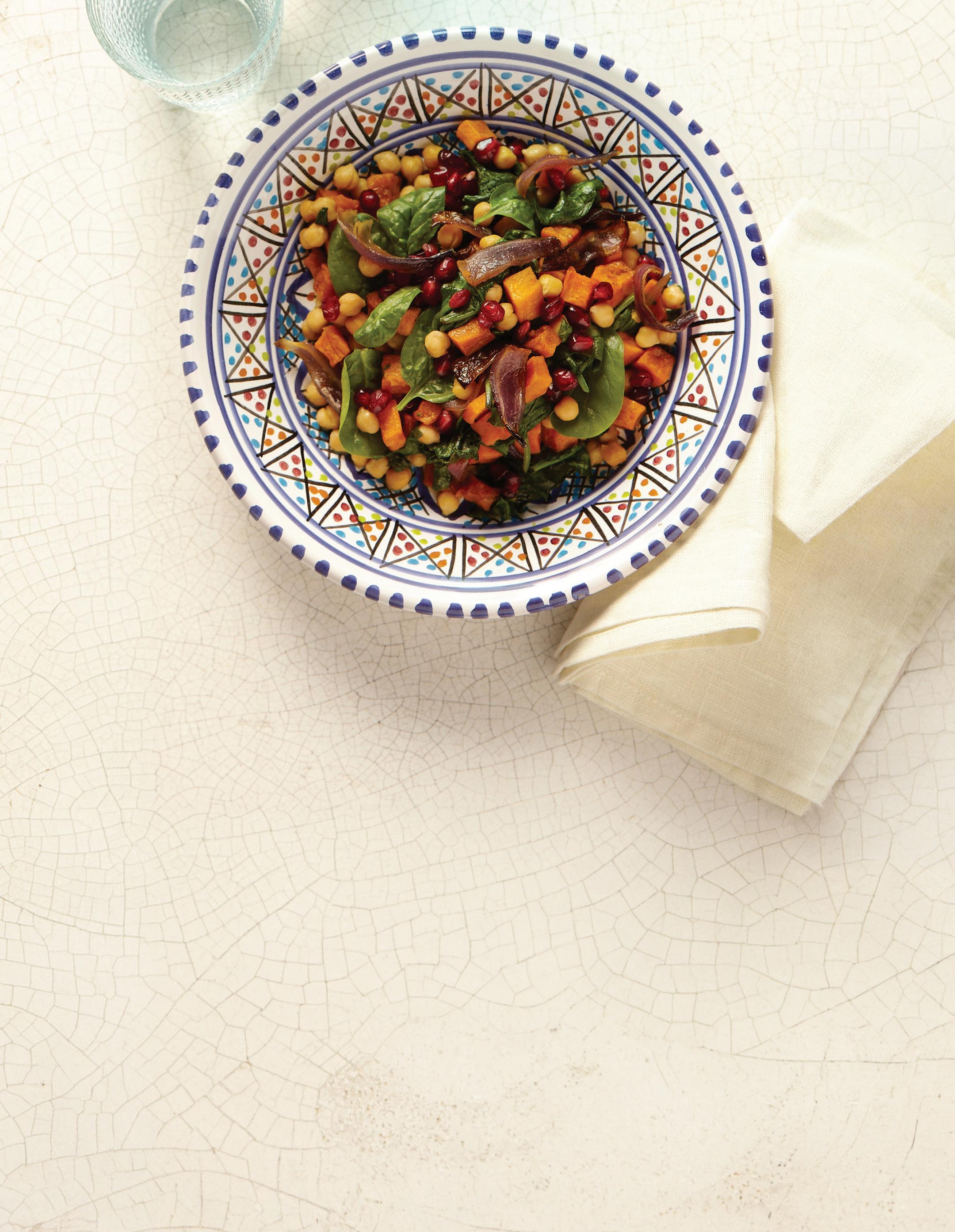
Pour the oil into a roasting tin and heat in the oven for 2 minutes. Carefully add the squash and onion, toss to coat with the oil, then sprinkle over the ras-el-hanout and toss again.
Roast for 40 minutes, until the squash is soft and golden.
Meanwhile, heat a non-stick pan over a medium heat and cook the chickpeas, cumin and orange juice for 5 minutes. Stir through the spinach and cook for another 1-2 minutes, until wilted.
Remove the roasting tin from the oven and add the chickpea and spinach mixture. Stir through the pomegranate seeds and coriander. Season with pepper, to serve.