In all reality
Will The Traitors win at the National Reality TV awards?
‘I believe we should forgive, not cancel’



Will The Traitors win at the National Reality TV awards?
‘I believe we should forgive, not cancel’
The Salvation Army is a Christian church and registered charity seeking to share the good news of Jesus and nurture committed followers of him. We also serve people without discrimination, care for creation and seek justice and reconciliation. We offer practical support and services in more than 700 centres throughout the UK. Go to salvationarmy.org.uk/find-a-church to find your nearest centre.
The Salvation Army first published a newspaper called the War Cry in London in December 1879, and we have continued to appear every week since then. Our name refers to our battle for people’s hearts and souls as we promote the positive impact of the Christian faith and The Salvation Army’s fight for greater social justice.
Editor: Andrew Stone, Major
Managing Editor: Philip Halcrow
Staff Writer: Emily Bright
Staff Writer: Claire Brine
Staff Writer: Ewan Hall
Editorial Assistant: Linda McTurk
Graphic Designer: Mark Knight
Graphic Designer: Matt Penberthy
Email: warcry@salvationarmy.org.uk
The Salvation Army
United Kingdom and Ireland Territory
1 Champion Park London SE5 8FJ
Tel: 0845 634 0101
Subscriptions: 01933 445445 (option 1, option 1) or email: subscriptions@satcol.org
Founders: Catherine and William Booth
International leaders: General Lyndon Buckingham and Commissioner Bronwyn Buckingham
Territorial leaders: Commissioners Jenine and Paul Main
Editor-in-Chief: Major Andrew Stone
Published weekly by The Salvation Army
© The Salvation Army United Kingdom and Ireland Territory ISSN 0043-0226
The Salvation Army Trust is a registered charity. The charity number in England, Wales and Northern Ireland is 214779, in Scotland SC009359 and in the Republic of Ireland CHY6399.
When it comes to viewing figures, reality TV programmes often attract the biggest audiences. Whether it’s The Traitors, First Dates or Britain’s Got Talent, the shows captivate, amuse and frustrate viewers in equal measure and become must-watch television.
As we report in this issue, next week the best of these programmes will be recognised at the National Reality TV awards in central London.
While the evening will doubtless prove to be a celebration of popular TV, the truth is that the events portrayed on these programmes often bear little resemblance to the real lives of viewers. The shows don’t usually cover the everyday chores of doing the washing, hoovering the lounge or putting the bins out.
Of course, such household tasks are only the realities of life for those who have somewhere to call home. For some people, reality is not having anywhere permanent to live – and, in some cases, having to sleep rough on the streets.
However, since the end of last month, rough sleeping is no longer a criminal offence in England and Wales. After being passed more than 200 years ago, the 1824 Vagrancy Act was repealed. This week, we hear from The Salvation’s Army Jez Bushnell about how the act made it harder for the church and charity to support people experiencing homelessness.
‘The Vagrancy Act simply saw someone sleeping rough as needing to be moved on,’ he says. ‘I would say that there’s evidence to suggest that as soon as someone was tarnished by being fined or moved on, they were less likely to seek support, because they felt that the world was against them.’
The Salvation Army believes that, when people are at their lowest ebb, they should be helped, not stigmatised. It’s a belief based on the Christian understanding that every person is valued and loved by God.
Whatever our circumstances, we can experience God’s love for ourselves. And the reality is, life will be much better if we do.
When you’ve read the War Cry, why not pass it on ➔ ➔ ➔

FEATURES
Printed by CKN Print, Northampton, on sustainably sourced paper


Life through a lens Awards celebrate reality TV


‘A lot of people we support have fallen foul of the Vagrancy Act’ Why a 200-year-old law needed to be repealed
‘Forgiveness means receiving a power from outside of yourself’ Author on the positives of forgiving others
Your local Salvation Army centre 13 8



In my humorous opinion Comedians rally behind off-the-wall ideas
Team Talk and Tell-tale Signs 14 Puzzles Kitchen









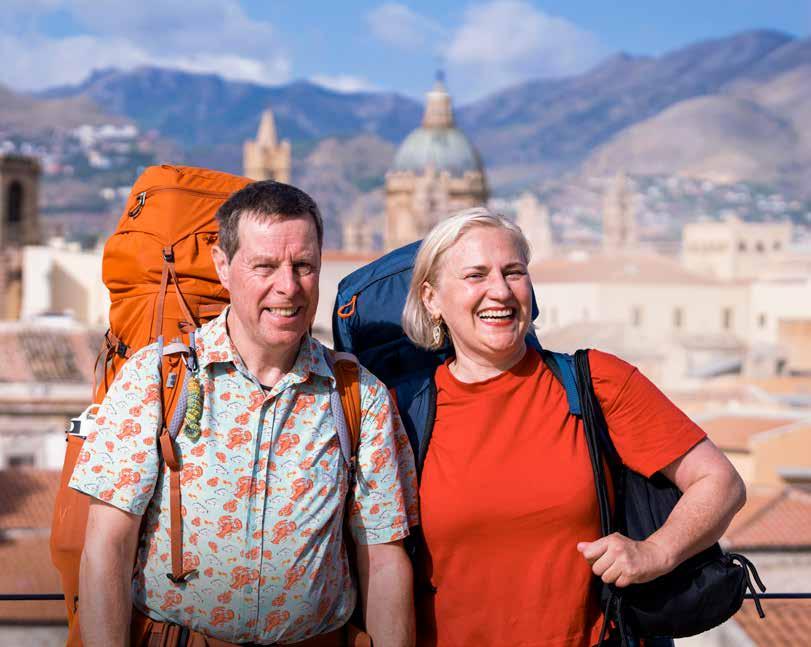
BBC1’s ‘Race across the World’ is nominated in the most inspiring TV show category
Feature by Ewan Hall
Whether it is a golden buzzer sending contestants wild, a shocking banishment at the round table, or a showstopping bake that earns a Hollywood handshake, reality TV can get the nation talking. And next Wednesday (29 July), the National Reality TV awards will be presented to the programmes and personalities that have gripped audiences

Katherine Ryan is in the running for the best TV presenter award
over the past year.
During the ceremony at Porchester Hall in London, a variety of prizes will be handed out.
In the best TV presenter category, Traitors host Claudia Winkleman is going up against contenders including Katherine Ryan for The Real Housewives of London, Reunion and Noel Fielding for The Great British Bake Off. Among the nominees for the most inspiring TV show category are slice of country life Clarkson’s Farm, globetrotting competition Race across the World and football documentary Welcome to Wrexham.
Much of reality TV’s popularity stems from its ability to show celebrities and members of the public overcoming obstacles. A contestant faces rejection on First Dates but can still be hopeful that love is around the corner. A baker makes a comeback after a terrible week in the Bake Off tent. A celebrity goes from being a novice to receiving 10s across the board for their jive in Strictly Come Dancing
Such ups and downs can mirror the hurdles that TV audiences themselves face.
The tough experiences we watch
remind us that, in life, there will be trials and tribulations. Rejection, bad weeks and the challenge of learning something new are all part of being human. But in most of our lives, those challenges are not watched by millions of people. In fact, when we struggle, we can feel totally isolated.
But the good news is, we don’t have to face our difficulties alone. Jesus offers to support us.
When Jesus spoke to his followers about the future, he assured them: ‘I will be with you, day after day, to the end of the age’ (Matthew 28:20 The Voice).
He can be with us always too. If we let Jesus into our lives, we find someone who remains faithful and reliable through every season. He will be alongside us in the most difficult challenges and moments of uncertainty as well as in the times when we achieve what once seemed impossible.
When the reality of life feels overwhelming, Jesus provides strength and comfort, and when we celebrate our accomplishments, he shares in our joy.
His love is with us throughout our life’s journey, making it a prize definitely worth having.
Survivors of modern slavery took part in a musical theatre day organised by The Salvation Army.
A 28-year-old with a degree in classics has spent the past three years cleaning homes that have fallen into ‘extreme dirt, decay and dilapidation’, making them habitable again, reported The Guardian
According to the article, Bea Elton has carved out an ‘unlikely career in mould, maggots and excrement’, prompting her to feel compassion for her struggling clients and develop a ‘deep understanding of why a home could become this way’.
In one house that Bea cleaned, the woman’s bath ‘was full of excrement because her toilet had stopped working’. But Bea pointed out that she wasn’t fazed by such a scene. When she meets new clients, she’s not there to judge. She’s there to help.
Reflecting on how some people’s homes end up in such a terrible state, Bea said: ‘A lot of it links back to shame, embarrassment and fear of judgement.’ She tries to assure her clients that ‘no matter how bad a situation gets, it is always fixable’.
What a powerful statement – and one that doesn’t apply just to homes in need of a good clean, but to all of us.
She’s not there to judge
There are all kinds of ways in which people might feel as though they have lost control of their life, but it’s encouraging to know that things don’t have to stay that way. As Bea says, they can be fixable. People and situations can change.
Perhaps we have a habit of losing our temper. Saying offensive things. Hurting others with our actions. Maybe we struggle with an addiction – to drugs, alcohol, pornography, gambling. It could be that we tell lies, or neglect the people we love.
When our behaviour gets stuck, but we don’t know how to stop or change it, we can find a way through the messes we’ve made by turning to Jesus. He invites everyone to follow him, no matter how ashamed or broken we are. He shows compassion, saying that he will never turn away anyone who seeks his help. And he’s willing to give us a fresh start by forgiving every mistake we’ve made.
The moment we start applying Jesus’ teachings to our lives, and allow his love to clean up the worst parts of our character, we can be transformed beyond recognition.
The event was held in a church hall, where participants learnt songs from musicals including The Lion King, Beauty and the Beast and Tangled, before performing together in the evening for a small, invited audience.
The concert was the first time many of the participants had sung or performed in front of others.
One person who took part said: ‘Today reminded me that I can still do new things and enjoy myself again. I was nervous at first, but everyone was so kind and supportive. I feel happier and more confident leaving than when I arrived.’ Others described the event as ‘good therapy’ and ‘a beautiful community day’.
Holding the government contract for the support of adult victims of modern slavery in England and Wales, The Salvation Army provides legal and financial advice as well as accommodation and other help.
Major Kathy Betteridge, director of anti-trafficking and modern slavery, said: ‘Recovery from modern slavery is about more than simply meeting practical needs. It’s about helping people rediscover confidence, connection and hope after trauma.
‘This theatre day showed what can happen when survivors are given the opportunity to try something new in a fun and caring environment, as so many left with an increased sense of self-worth and achievement.’


Giles Martin and Lucie Kitchener plant roses at the opening of a memorial garden at Strawberry Field dedicated to their parents, Beatles record producer Sir George Martin and his wife Lady Judy Martin.
The garden, created at the Salvation Army site in Liverpool that inspired John Lennon to write the Beatles’ 1967 hit ‘Strawberry Fields Forever’, features roses chosen by Lady Martin, who was a patron of Strawberry Field before her death in 2023.
Speaking at the opening, Giles – a record producer himself, who has remixed several Beatles albums – said: ‘This rose garden is such a fitting tribute to my parents in several ways. Just as you would care for a rose, my father nurtured and loved the artists he worked with.
‘My mother was a great supporter and patron of Strawberry Field – her passion is evident in the fantastic work the Steps to Work team do to help young people blossom and flourish.’
Donations made at the garden support Strawberry Field’s Steps to Work programme, which helps young people who face barriers to employment.

The ‘Aitken Bible’, the first English-language Bible published on American soil
The family Bibles of some of America’s Founding Fathers are on display in a Washington DC museum to commemorate the 250th anniversary of the US Declaration of Independence.
The collection at the Museum of the Bible also features an original letter on religious freedom written by Thomas Jefferson and the first Bible printed in English in America. The museum display explores how language from Scripture shaped influential conversations about liberty, education and public life during the nation’s founding era.
‘The Bible has been an integral part of this nation’s founding and history,’ Anthony Schmidt, the museum’s director of collections and curation, told the US media outlet Fox News Digital.
‘That’s not a theological claim; it’s what the documents show. The Founding Fathers referenced Scripture, argued from it, and built political frameworks on its language about human dignity and liberty. These objects show the Bible’s impact not only on religious life, but on early American art, education and politics.’
‘Rough

The Salvation Army is celebrating after the government repealed legislation that criminalised rough sleeping – but, explains JEZ BUSHNELL of the church and charity’s public affairs unit, it wants England to follow Scotland and Wales in making emergency accommodation more accessible
Interview by Philip Halcrow

For 200 years it had been a criminal offence to sleep rough in England and Wales. But last month, the UK government repealed a law that had been in effect since the end of the Napoleonic Wars – and The Salvation Army, which had joined other organisations in campaigning against the Vagrancy Act of 1824, celebrated.
‘When the law was introduced, it was essentially a way of coping with the fact that, after the Napoleonic Wars, there was an influx of sailors and soldiers who were suddenly back in the country and had no housing,’ says Jez Bushnell of The Salvation Army’s public affairs unit. ‘It gave police the powers to try to address the issue from a criminal justice point of view. Back then, vagrancy and poverty were viewed through a criminal justice lens rather than the lens of humanity.
‘Over the next 200 years, the Vagrancy Act was used to fine people and to give the police an option of moving them on when they wanted them out of the way. And, although it was being used less, we did some research and found that last summer alone it was used at least 50 times – even after the government had made a commitment to repeal it.
‘So, we were supporting a campaign, spearheaded by Crisis, to repeal the act. We were working with other organisations on briefings, and we raised the issue of the Vagrancy Act when we met with MPs to talk about homelessness.’
Parliament voted in 2024 to repeal the act. But, Jez explains, the police insisted that, before the act was fully repealed,
they needed new legislation in place that would include ‘measures to enable them to deal with issues like organised begging gangs and trespassing’. The government has now passed such legislation.
The Salvation Army knew from experience that the Vagrancy Act needed to be repealed, says Jez.
‘We do a lot of outreach work with rough sleepers, and I can guarantee you that a lot of people that we support every day will have fallen foul of the Vagrancy Act.
The Vagrancy Act was a hindrance to support
‘In all our work – in homelessness and beyond – we look at people with a non-judgemental lens. It’s about compassion and understanding what is behind someone’s experiences. But the Vagrancy Act simply saw someone sleeping rough as needing to be moved on. It did nothing to connect them with support. In fact, I would say that there’s evidence to suggest that as soon as someone was tarnished by being fined or moved on, they were less likely to seek support, because they felt that the world was against them.
‘The Vagrancy Act was a hindrance to them getting support. And, as a provider of that support, The Salvation Army was prevented from giving it.’
The act’s repeal was a cause for celebration. But, cautions Jez, it doesn’t mean that suddenly everyone


is going to get the help they need.
The Salvation Army wants another change to be made to the approach to homelessness in England.
‘Wales and Scotland have already done this or are in the process of doing this, but in England we’re campaigning for the abolition of “priority need” – a system which dictates that only certain vulnerable groups of people are entitled to emergency or temporary accommodation from the local authority.’
The Housing Act of 1996 requires authorities to secure accommodation for people who have a ‘priority need’ –such as pregnant women, people who are vulnerable because of old age and people with dependent children.
‘When approached by someone who is homeless, a local authority is duty-
bound to give advice and support,’ says Jez. ‘But a local authority is duty-bound to provide an emergency bed for the night only for certain priority groups.
‘It is understandable in a system where there are limited resources. But The Salvation Army believes that we need to move to a system where there’s a universal right to accommodation, regardless of who you are.’
The abolition of priority need would, Jez concedes, lead to increased demand on local authorities that may already be struggling.
‘That’s why we say that priority need should not be abolished tomorrow. What the government should do is make a commitment to abolish it and lay out the legislation, but put in a clause that says it will come into play in 10 years. During those 10 years, there
should be targets on how much housing it needs to build.
‘In the meantime, we believe that priority need should immediately be expanded to include rough sleepers.
‘I recently raised the issue with the homelessness civil service team. The government have made a commitment to halving long-term rough sleeping. We’ve relayed our concerns that they’re going to struggle to deliver that without reforming priority need.’
Jez sees such campaigning on policy as complementing the help that The Salvation Army provides in its supported accommodation Lifehouses. And he views both aspects of The Salvation Army’s mission as being driven by its Christian faith as a church.
‘We’re trying to change lives,’ he says. ‘I see what we do as belief in action.’
Author and theologian Dr AMY ORR-EWING explains what forgiveness means and how Jesus’ teachings on the subject
Interview


‘Cancel culture says that if you cross a line,’ says author Dr Amy Orr-Ewing, ‘you have to die a professional death, a social death, a psychological death, and you’re separated out from the rest of us.
‘With cultural perfectionism, if we make a mistake, we’re done for. When there’s the horror of living online and all the anxiety-inducing stuff that goes with that, forgiveness can meet us and our culture at the point where things have gone wrong and can give us a new start, freedom from the past and a way of making amends.’
Amy, an international speaker and
lecturer based in Oxford, is no stranger to tackling society’s big questions, having written books such as Why Trust the Bible? and Where is God in All the Suffering? In her latest book, Forgiveness, she explores themes such as Christianity’s relationship to cancel culture and national identity. She investigates how the justice and forgiveness that Jesus offers can be a tonic to our weary world.
But Amy is also aware that, because of churches’ mishandling of scandals over the years, secular society views the Christian faith suspiciously.
‘In the past five or six years,’ she tells me, ‘the general pervasive objection to Christianity – particularly from those who practise cancel culture – has been that Christians are required to let people off grave, egregious harm and injustice.
‘A generation have started all kinds of justice movements, and I noticed among them a sense that harm, moral wrongdoing and injustice matter at a profound level. To them, the idea of forgiveness or grace was basically moral weakness. It was letting people off or requiring people to say that harm and wrongdoing don’t matter. I began to think: how could Christians answer this heart cry of a generation?’
Amy realised that her faith held unique answers.
‘Only in the Christian faith do we have the possibility of forgiveness that doesn’t require us to minimise harm and moral wrongdoing,’ she says. ‘At the centre of
its story is this idea of a perfect sacrifice of the Son of God. The death of Jesus is saying that your pain and sin matters to such an extent that forgiving it would be costly at a cosmic level.
‘In Christianity, we’re given the opportunity to say that justice really matters, that people are made in the image of God, but also that grace and forgiveness are possible. When it comes down to it, none of us want to live in a society where no one gets a second chance, where there’s no possibility of grace or redemption.’
Amy believes that the opportunity for redemption can bring freedom.
‘A lot of people experience high levels of anxiety as an internal mental narrative. But if forgiveness means receiving a power from outside of yourself that is rooted in a sacrifice that actually happened in history, then people can be released not just to experience forgiveness, but even to forgive themselves. I think that’s powerful in an anxious world.’
Amy explains that an essential starting point for forgiveness is ‘acknowledging that wrongdoing and harm are real’.
Ultimate justice needs to be done
Shesays: ‘Whether we’ve experienced or perpetrated painful, harmful things, there is an ultimate justice that needs to be done when they happen. Forgiveness implies that if wrong has happened and justice is required, there is a debt that is owed to the party that has been harmed. When we forgive, we release that debt.
‘Within a Christian framework, we believe that the debt doesn’t disappear into the ether, but that Christ’s death on the cross ultimately covers the payment owed both to God, but also to each other. The lingering impact of harm is covered. Christ’s death happened as a sacrifice for the sins of the world.’
Society holds differing views of forgiveness. Some believe that a person needs to admit wrongdoing, express remorse and change their behaviour – that is, ‘to repent’ – in order to be forgiven.
But Amy cautions: ‘The problem with this view is that it requires us to decide whether someone has genuinely confessed and repented. We’re almost in the place of God. It also doesn’t seem to reflect the teaching of Jesus about how we are to forgive and love our enemies.’
Other people, she continues, think that ‘when you forgive, you do it regardless of whether the person confesses or
repents, and a restoration of blessing and relationship occurs either way. But more recently there has been a weaponisation of forgiveness that has enabled abuse to continue.’
Amy suggests a third option: that the person who forgives can then hand over their grievance to God and find freedom from vengeance. Meanwhile, the person who has hurt them only receives the full gift of forgiveness when they repent. Amy uses the analogy of a house purchase to convey her thinking.
‘When you buy a house,’ she says, ‘you might have saved a deposit, and the rest of the house price is covered by a mortgage – the grace from outside of ourselves. But when you buy the house, you don’t just give the money to the seller. It goes into the solicitor’s account, and it sits there until the deal goes through.
‘I envisage forgiveness as putting the funds into the solicitor’s account to cover the debt of what’s happened to us. As Christians, we make the decision that
we’re going to follow Jesus and pray for his help to forgive – our deposit. The mortgage payment from Christ’s sacrifice is in the account, but the transaction is only fully actualised into reconciliation and a restoration of relationship when there is genuine repentance and amends-making.’
She finds a helpful example of ‘amendsmaking’ in a Bible story about a crooked chief tax

Turn to page 10 f

Amy lectures on a wide variety of theological topics

over for what was stolen.” That’s really good evidence that there’s repentance.’
Amy explains that, while the Bible encourages forgiveness, it never diminishes the pain that someone may have gone through. She emphasises the importance of acknowledging the hurt that a person has experienced before encouraging them to forgive.
‘Forgiveness isn’t about rushing someone through into a pretend state of not feeling anger or hurt about what
occurred,’ she says. ‘It can mean fully sitting with how horrific abuse is and
Amy is comforted by the fact that Jesus, the Son of God, was no stranger to pain while he lived on Earth and so can relate to the human experience.
‘While researching for the book, I found this beautiful phrase in the psychological material – that what a person needs in order to recover from trauma is for someone to bear “empathetic witness” to what occurred.
‘It struck me that that’s an extraordinary description of what God does in Christ on the cross. In Jesus, there’s this incredible

empathetic bearing of witness to the sin, suffering and horror of the world. As Christians, we’re not required to say that something didn’t hurt, didn’t matter or wasn’t wrong.’
Sometimes, people may try to downplay another person’s hurt, or discourage them from confronting the perpetrator, by parroting Jesus’ sayings out of context such as ‘turn the other cheek’. But Amy still remembers a talk given by the theologian Walter Wink 30 years ago which revealed a radically different tone to Jesus’ teachings.
‘Walter talked about how in the GraecoRoman world, dirty tasks were undertaken with the left hand – there was no toilet paper – and everything else was done with the right hand. Eating, greeting and touching anyone was always with the right. Even though you’d washed your hands, culturally, the signifier is important.
‘When Jesus says that, if someone strikes you on the right cheek, turn to them the other cheek, he’s envisaging that you would’ve been struck with the back of someone’s right hand.
The Bible makes space for righteous anger
‘So he is saying that you should make the person who has hit you with the back of their hand – which was a sign of superiority and diminishing a person – strike you with the front of their hand on the other cheek. When they hit you with the front of the hand, they’re saying: “You’re my equal.” Jesus was totally subverting the power dynamics of what was going on.’
Jesus also taught his followers that, when someone forces you to walk one mile, you should go with them for an extra mile.
‘The extra mile is similar,’ adds Amy. ‘A senior Roman soldier was allowed to get a member of an occupied people to carry their pack for a mile, but no more than a mile. And if they forced someone to walk more than a mile, the soldier could be punished.
‘When he says to go an extra mile, Jesus is envisaging someone getting to the mile marker on the Roman roads then starting to run. What that requires is the Roman soldier to be shouting after you, pleading with you and running after you to get their stuff back because otherwise they’re going to be punished by their superior.
‘It’s a humorous image that is saying: defy the toxic power abuses of your day with a humble but clever defiance. This
‘Forgiveness has an impact on mood’

is not weakness. This is not subjugation. This is not an invitation to violence. This is defiance of injustice.’
Defiance of injustice is present in the Old Testament too.
‘The Bible makes space for what psychologists call effective justice,’ says Amy, ‘which is about having a righteous anger about what has occurred – and which is an important step in being able to forgive. That’s why we see the Psalms, which talk about the absolute devastation and even rage you feel when terrible things happen. It’s in the Bible because it’s important and it’s saying that effective justice really matters.’
Having advocated for survivors of sexual and domestic abuse, Amy is clear that criminal actions also have earthly consequences, that justice needs to be served, and that safe boundaries need to be put in place to protect victims from those who have hurt them.
‘There needs to be a prison sentence
paid for crime and support for the justice system to work. That does not mean that the survivor is not forgiving. You can forgive but also contend for human justice and consequence to happen for a crime that has been committed.’
Where forgiveness does take place, it has powerful effects, even on the body.
‘Psychological studies are clear,’ says Amy. ‘The mental health benefits of forgiveness are massive. It has an impact on mood and recovery from trauma and decreases anxiety.
‘Forgiveness also has an impact on the firing of the brain, heart disease, diabetes and the mitigation of chronic physical conditions. It’s absolutely extraordinary, almost as if God knew.’
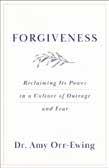
l Forgiveness is published by Brazos Press

Your prayers are requested for Laura, who is getting back to her faith in God.
The War Cry invites readers to send in requests for prayer, including the first names of individuals and details of their circumstances, for publication. Send your Prayerlink requests to warcry@salvationarmy.org.uk or to War Cry, 1 Champion Park, London SE5 8FJ. Mark your correspondence ‘Confidential’.
jBecoming a Christian
There is no set formula to becoming a Christian, but many people have found saying this prayer to be a helpful first step to a relationship with God
The parable of the father and his two sons (part one) – Luke 15:11–32
‘There was a man who had two sons,’ says Jesus as he starts his story. The younger one asked for his share of the family’s wealth – a rude request considering that the father was still alive. Jesus explains that the father’s answer was to divide all that he had between his sons. One son asks; both receive – but they have different responses.
The younger son gathered all his possessions, moved far away and lived wastefully until he had nothing left – which is why he is often referred to as ‘the prodigal’.
Finding himself in need, the son had a choice. He knew how well his father treated his servants, so he decided it would be better for him to live as a servant to his father than to go hungry.
The original language of this story suggests that it wasn’t just his father that the younger son had left. In a way, he’d also left himself. Now, coming to his senses, realising how foolish he’d been, he headed back to his father’s estate.
Imagine being the younger son, planning to return to your father, having lost everything through your own foolishness. Wouldn’t you wonder how your father would react?
Lord Jesus Christ,
I know that I have done things in my life that are wrong and I’m sorry.
Thank you that I can ask you for forgiveness because of the sacrifice you made when you died on the cross.

Please forgive me and help me to live a better life in the future as I learn how to love you and follow your way of living.
Thank you, Lord Jesus.
If you’ve prayed this prayer, scan the QR code or contact us using the coupon on this page

Spoiler alert – Jesus continues the story by saying that while the son ‘was still a long way off, his father saw him and was filled with compassion for him’ (Luke 15:20 New International Version).
At this point, we begin to see someone showing themselves to be ‘prodigal’ in another way – because, while the word can mean ‘wasteful’, it can also mean ‘extravagant’.

When the younger son delivered his rehearsed speech, recognising he was unworthy to be called a son, the father responded: ‘Quick! Bring the best robe and put it on him’ (15:22). Not just a robe – clean clothes – but the best robe! Next came a ring – which most likely signified restoration and authority – and sandals to protect his son’s feet.
The father wasn’t finished. He wanted to have a celebration and for everyone to know that his son was lost but was now found, seemed dead and was now alive.
The father’s compassion for his son resulted in an extravagant welcome home. And God welcomes us all with that same extravagant love when we turn to him.

To receive basic reading about Christianity and information about The Salvation Army, complete this coupon and send it to





1 Who starred as Hyacinth Bucket in the sitcom Keeping up Appearances?
Who had a No 1 hit in 2024 with her album Radical Optimism?
What was the first James Bond film, starring Sean Connery as 007?
By what name is the fictional character Kitty White, designed by Yuko Yamaguchi, more commonly known?
Which currency is represented by the code AUD?





TV feature: Unacceptable TLC and YouTube By
Ewan Hall
FromWhat paper-and-pencil game is known as tic-tac-toe in America? 3 4 5 6 2



eyebrow-raising claims to gobsmacking opinions, comedians’ most outrageous beliefs are being voiced on TLC’s Unacceptable Host Ed Gamble presides over proceedings as two teams – led by Joanne McNally and Richard Ayoade – debate deliberately ridiculous or unpopular opinions. Each topic is at the centre of a fight to win over the largest number of audience members.
By the end of the series, viewers will have seen Ivo Graham justifying why private school kids need state support, Richard Ayoade arguing that action movies are peak cinema and Maisie Adam insisting that we should let AI run the world.
‘It’s always been my dream to see some of the biggest comedy legends around expose and justify opinions that really should’ve stayed in the group chat,’ says Ed, who gets to watch the comedic carnage unfold while adding fuel to the flames with his own comments.
As the panel poke fun and criticise each other’s ideas, audiences may be able to relate to some of the outlandish notions put forward, whether they have heard them from a friend at the pub or read them in a group chat. We have all laughed at or perhaps even made comments that seem bizarre.
However, not every joke is harmless.
At one time or another, many of us may have said something unacceptable with the intent to hurt or bring someone down for a laugh. And, while we may later feel regret at saying those words, the damage is already done.
No wonder the Bible highlights the importance of showing kindness to everyone, even when it is hard to do so.
Jesus told his followers that they should show consideration and empathy at all times. He said: ‘In the same way I loved you, you love one another’ (John 13:34 The Message).
If we listen to Jesus, we will discover that he offers us forgiveness for the times when we have said or done something hurtful, and he will guide us to become better, kinder people.
Jesus knows that we will have let unwise comments slip at times, but he still offers us his love. It’s up to us to accept it.

1. Foretell (7)
5. Black (5)
7. Flat high area (7)
8. Entertain (5) 10. Vow (4)
11. Merry (8)
13. Din (6)
14. Length of pipe (6)
17. Distribution (8) 19. Level (4) 21. Silk fabric (5) 22. Anxiety (7) 23. Linger (5)
Gratify (7)
2. Stretchy (7)
3. Notion (4)
4. Tutored (6)
5. Causing disgrace (8)
6. Attempt to deceive (5)
7. Sticks out (9)
9. Clarify (9)

12. Divine (8)

15. Ailment (7) 16. Brawl (6) 18. Not now (5) 20. Weave (4)


Fibrous tissue in the body
Fill the grid so that every column, every row and every 3x3 box contains the digits 1 to 9
Look up, down, forwards, backwards and diagonally on the grid to find these international airports


For the marinade
100g blueberries, crushed
½ lime, zest and juice
1 fresh jalapeño, roughly chopped
1 garlic clove, crushed
1tbsp olive oil
4 tuna steaks
For the relish
100g blueberries, sliced
¼ red onion, diced
Handful coriander, roughly chopped
½ fresh jalapeño, diced
100g cherry tomatoes, quartered
½ lime, juice
1tbsp sesame oil
Salt and ground black pepper
For the noodle salad Noodles
Carrot, sliced into ribbons
Cucumber, sliced into ribbons
Spring onion, sliced
2tsp toasted sesame seeds





Make the marinade by stirring together all the ingredients except the tuna in a bowl. Spread the sauce over the tuna steaks in a non-metallic dish. Cover and set aside for 20 minutes.
To make the relish, combine all the ingredients except the seasoning in a dish and set aside for up to 30 minutes.
Heat a griddle pan over a high heat. Season the tuna steaks with salt and pepper, then cook for 4-6 minutes, depending on thickness. Turn once or twice until cooked to taste.
To make the salad, cook the noodles according to the packet instructions. Rinse and cool, then drain and combine in a bowl with the carrot, cucumber, spring onion and sesame seeds. Drizzle over the sesame oil.
Serve the tuna steaks with the noodle salad and relish.