Like father, like son
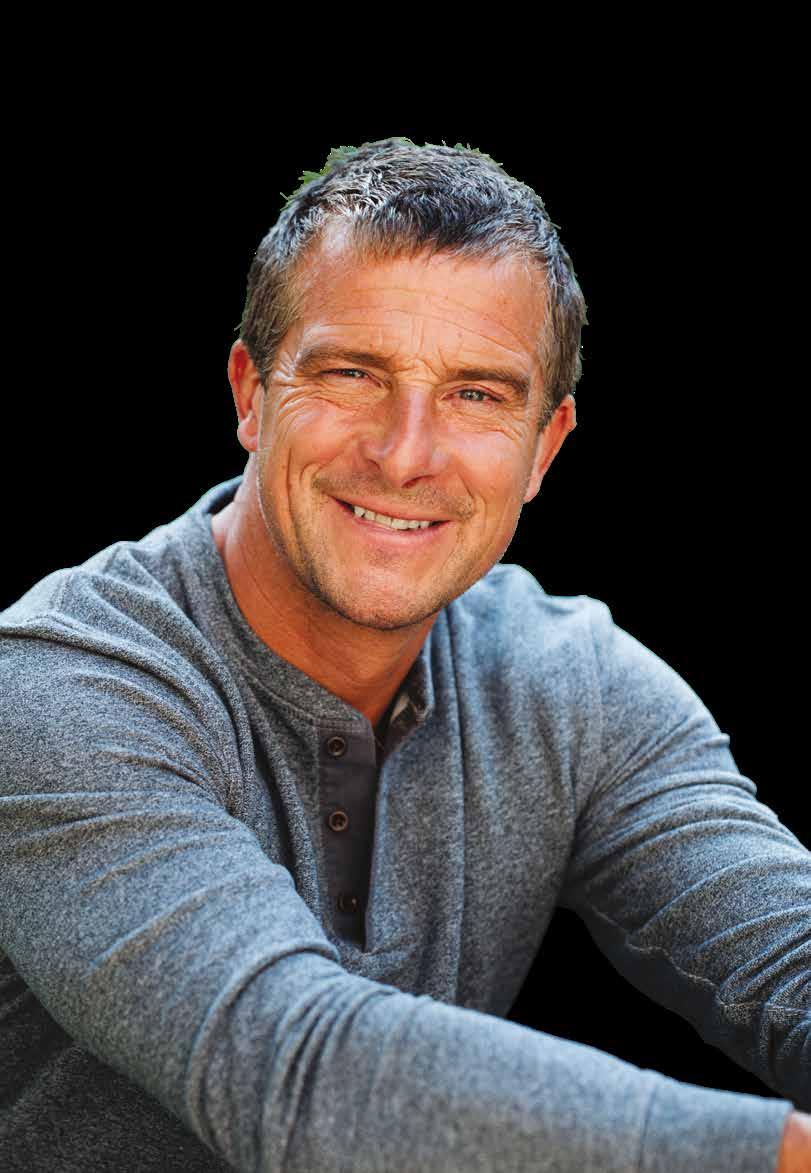
Bear Grylls on fatherhood and the influence of his own dad
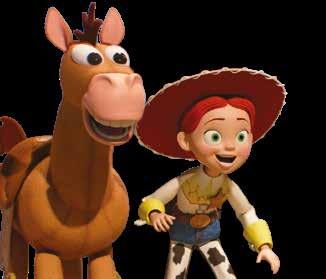
Toy Story 5 plays out in cinemas

Bear Grylls on fatherhood and the influence of his own dad
Toy Story 5 plays out in cinemas
The Salvation Army is a Christian church and registered charity seeking to share the good news of Jesus and nurture committed followers of him. We also serve people without discrimination, care for creation and seek justice and reconciliation. We offer practical support and services in more than 700 centres throughout the UK. Go to salvationarmy.org.uk/find-a-church to find your nearest centre.
The Salvation Army first published a newspaper called the War Cry in London in December 1879, and we have continued to appear every week since then. Our name refers to our battle for people’s hearts and souls as we promote the positive impact of the Christian faith and The Salvation Army’s fight for greater social justice.
On Father’s Day (Sunday 21 June), dads everywhere will be thanked for the difference they have made to their children’s lives. Not every father-child relationship is a good one, but a positive experience of growing up with the support of a dad can have a positive impact that lasts a lifetime.
In an exclusive Father’s Day reflection in this week’s War Cry, TV adventurer Bear Grylls writes about his dad.
‘He was unafraid to be vulnerable and would laugh at everything –especially himself,’ Bear says. ‘He endlessly encouraged a quiet, stubborn willingness to risk lots, to not be afraid to fail and to never give up. Those values have carried me through more dark moments than I can count.’
Bear also writes about how his dad’s values have influenced his own approach to fatherhood.
Performance poet Harry Baker has been reflecting on parenting recently too. In an interview this week, he tells us about Tender, a book of 100 poems which track the first 100 days of his son’s life.
Editor: Andrew Stone, Major
Managing Editor: Philip Halcrow
Staff Writer: Emily Bright
Staff Writer: Claire Brine
Staff Writer: Ewan Hall
Editorial Assistant: Linda McTurk
Graphic Designer: Mark Knight
Graphic Designer: Matt Penberthy
Email: warcry@salvationarmy.org.uk
The Salvation Army United Kingdom and Ireland Territory 1 Champion Park London SE5 8FJ
Tel: 0845 634 0101
Subscriptions: 01933 445445 (option 1, option 1) or email: subscriptions@satcol.org
Founders: Catherine and William Booth
International leaders: General Lyndon Buckingham and Commissioner Bronwyn Buckingham
Territorial leaders: Commissioners Jenine and Paul Main
Editor-in-Chief: Major Andrew Stone
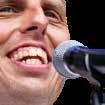
‘It was crucial for me to write as truthfully as possible,’ he says, ‘so I didn’t want to write only about the brilliant days or the hard days or the lovely bits of parenting. I wanted the mixture. So the poems express euphoria, doubt, fear and love – and they’re all mashed up together.’
Both Harry and Bear reveal that their Christian faith has shaped their idea of being a dad and the values they hold.
‘I’d always thought that the language people use to talk about God the Father was quite archaic and patriarchal,’ Harry tells us. ‘But now I think I’ve become much more generous with my understanding of a “Father God” –because I see God as a Father who nurtures us and who wants to protect us and make us feel loved.’
Whether or not we are celebrating Father’s Day this Sunday, God offers each of us the opportunity to experience his protective and nurturing love. All we have to do to receive it is ask.
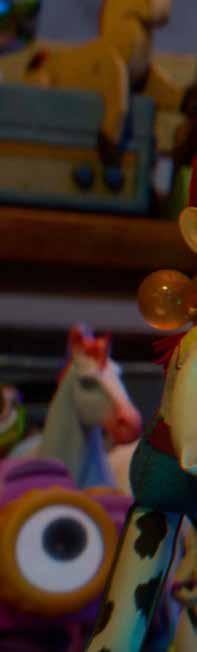



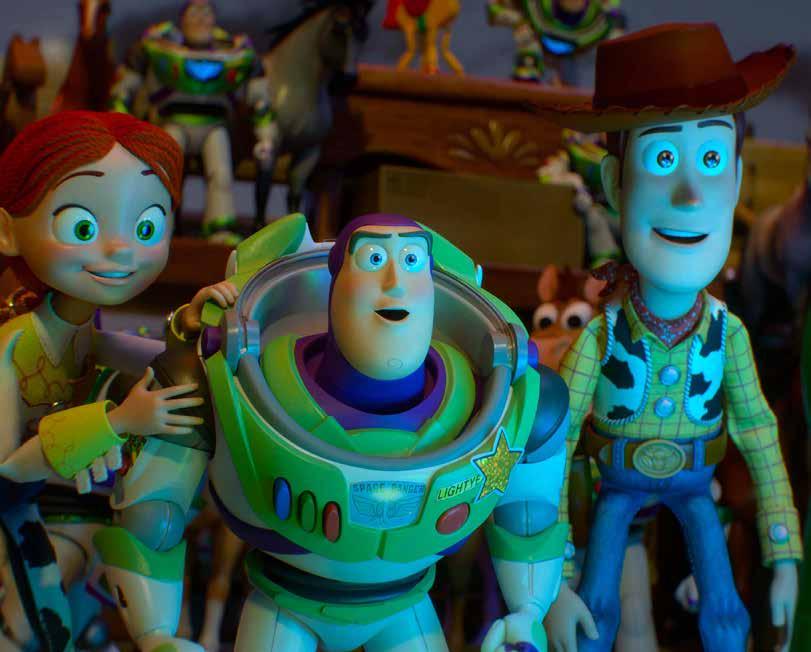
Jessie, Buzz and Woody reunite to save playtime in ‘Toy Story 5’
Film feature: Toy Story 5 in cinemas from 19 June
By Emily Bright
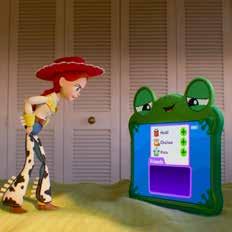
The toys are back in town. And in Toy Story 5, astronaut Buzz Lightyear, cowgirl Jessie and the gang face a new threat to playtime – a frog-themed tablet, called Lilypad.
The toys had been helping their owner, a little girl named Bonnie (voiced by Scarlett Spears), to make friends. But after the arrival of Lilypad (Greta Lee), Bonnie starts spending more and more time on screens.
Thankfully, Buzz (Tim Allen) is no stranger to new challenges. He and his pals have been meeting them since the original Toy Story was released in the UK in 1996.
Back in that first film, veteran cowboy Woody (Tom Hanks) viewed new arrival Buzz as a rival for his owner Andy’s attention, but then ended up saving him from bully Sid. In the second instalment, the gang came to Woody’s rescue after he was stolen by a toy collector.
Then, in Toy Story 3, the friends teamed up to take down the dictatorial teddy bear Lotso, when they found themselves at his mercy during a stay at Sunnyside Daycare. The group
also helped plastic cutlery Forky in Toy Story 4, as he adjusted from being a utensil to a support toy for Bonnie when she started kindergarten.
Now, in 2026, the group are determined to help Bonnie break free from screen time. Jessie (Joan Cusack) ropes in Woody to help. The cowboy had retired to spend time with the love of his life, Bo Peep – but the plastic couple have been rescuing abandoned toys as tablets increasingly dominate playtime.
Woody admits that it will be tricky to beat the tablets. He notes that ‘toys are for play, but tech is … for everything.’ And Lilypad won’t go quietly. It will take all the group’s experience and wisdom to save the day once again.
At the heart of the Toy Story films is the strong bond between the family of toys, who rescue and support each other. It’s a theme that is summed up by a recurring song on the films’ soundtracks, Randy Newman’s ‘You’ve Got a Friend in Me’.
In our lives, friendship can perhaps feel more complicated than in the films. We may unintentionally drift apart from friends, fall out or feel betrayed by them.
Even the most loyal and supportive friends can’t necessarily be there for us around the clock. But there is someone we can always turn to in our most challenging times.
Reflecting how God had continually helped and rescued people through the years, one song in the Bible joyfully urges people: ‘Give thanks to the Lord, for he is good! His faithful love endures for ever’ (Psalm 136:1 New Living Translation).
We can experience the faithful love of God for ourselves. While he is our allpowerful Creator, he also cares about every element of our lives and wants to have a relationship with us.
If we let him into our lives, as the years go by we will find that our friendship with God will never die. And we will have the reassurance of knowing that, without a doubt, we’ve got a friend in him.
Internet personality Joe Weller has revealed on social media that he has become a Christian, and that it has transformed his life.
‘I just want to say that I have been saved by the Lord Jesus Christ and it is the best thing that has ever happened to me,’ he announced in a video on Instagram, where he has amassed 2.2 million followers.
The YouTuber, whose videos often feature comedy sketches or physical feats (such as surviving in the Amazon rainforest for nine days), explained that he used to think faith was ‘a load of nonsense’. He never thought he’d become a Christian. But, he added, Jesus had ‘genuinely transformed’ him.
‘I have tried everything – everything – to try and feel genuinely fulfilled and at peace: spirituality, diet, travel ... work, fame, money,’ Joe said. ‘I have tried everything that seems like it could work for me and [Jesus] never, ever gave up.’
He used to think faith was ‘nonsense’
Joe explained that when he was ‘at rock bottom’, Jesus was ‘the only place left to turn’ and that his new-found faith has ‘renewed’ his mind.
‘He is the truth, the way, the life that we are all searching for,’ he concluded. ‘And I am just so thankful ... that he never gave up on me.’
Stumbling across Joe’s video, I was struck by the power of his words. His enthusiasm for faith. His conviction that he had found ‘the way’ and ‘the truth’ in following God’s Son, Jesus. But what interested me most was his belief that God, in his love, never gave up on him. So often, when I think about my own faith, I’m mindful of my mistakes and failures. The ways in which I’ve not been very Christ-like. The times I’ve given up praying or reading my Bible. Perhaps that’s why I found it so refreshing to hear Joe’s reminder that – despite my ebbing and flowing faith – God never gives up on me.
Whether I seek him or not, he is present. He is more patient with me than I can comprehend. And in the moments when I choose to turn to him, I can be filled with a love that’s life-changing.
The Bible has reached the milestone of being available in its entirety in 800 languages, Wycliffe Bible Translators has announced.
The organisation says that, while it is impossible to be certain about exactly which translation was the 800th, the Podoko Bible, published digitally via a smartphone app in the north of Cameroon, was one of the most recent.
Wycliffe says that an estimated 6.2 billion people across the world can now access the whole Bible in their own language.
It adds that the speed of Bible translation has increased dramatically over the past few decades. It took 1,900 years for the Bible to be translated into the first 400 languages –a figure reached in 1998 – but just 28 years to reach the next 400 languages.
James Poole, executive director of Wycliffe, says: ‘Communities are receiving the Bible far sooner than would have seemed possible only a generation ago. That matters because it means people are gaining access to God’s word in languages they understand deeply and naturally.’
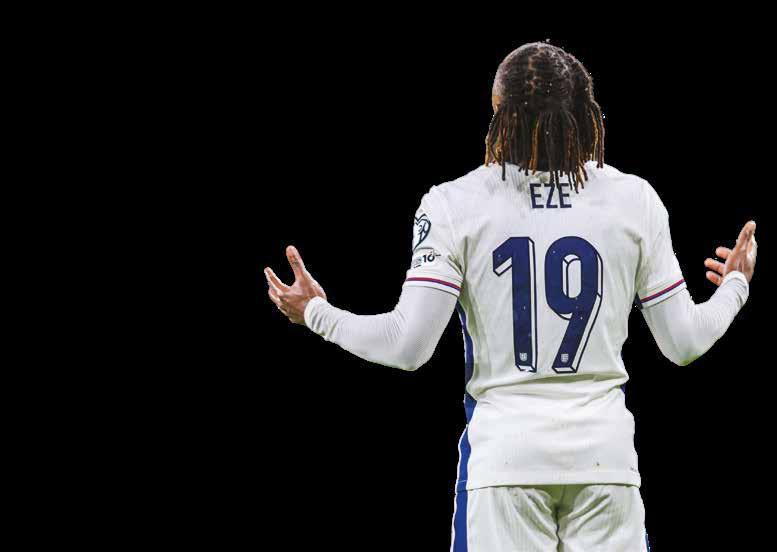
Loose Women panellist Kelle Bryan revealed on the ITV show that she chose to remain celibate for 10 years after becoming a Christian at the age of 21.
‘Pre-Christian … I was young, free, single, didn’t have any kids, no responsibilities, and I did whatever I wanted, whenever I wanted, and it didn’t bother me in the slightest, and I did have a great time,’ the singer and broadcaster said. ‘However, when I think about the consequences for those actions, sometimes maybe they weren’t quite the best decisions to be making.’
Kelle explained that deciding to stay celibate after becoming a Christian was what she wanted to do for herself and whoever her husband turned out to be.
‘Because of my past,’ she said, ‘I then valued myself differently. And I valued who I was and what I was giving to that person. And I wanted it to be special.’
A church in Whitemarsh, Pennsylvania, has opened the Animal Cabin, a respite space for shelter, rescue and foster-dogs as well as their carers, reported the
The project is part of a wider ministry, started in 2023, to support animal welfare by providing food and medical care and help for the people who look
Free to use, the cabin offers a quiet, comfortable setting with a fenced yard and basic amenities, helping dogs to recover from stressful shelter conditions.
The diocese says that it set up the refuge because ‘God calls us to care for all creation – including animals’.
As Father’s Day approaches this Sunday (21 June), TV adventurer BEAR GRYLLS writes about his personal experiences as a son and a dad
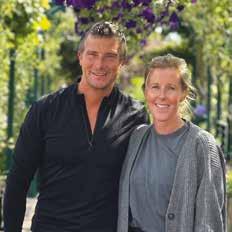
My late father was a really unsure but wonderful man. As I get older I realise it more and more. What I remember most is that he was unafraid to be vulnerable and would laugh at everything – especially himself. And he was unafraid to hug and kiss us and say, “I love you.” Not many men in those days did that much.
He also told me over and over to dream big. That mindset was planted early – he endlessly encouraged a quiet, stubborn willingness to risk lots, to not be afraid to fail and to never give up. Those values have carried me through more dark moments than I can count.
When our first son, Jesse, was born, everything shifted. I remember holding him and thinking: here is my reason to win. The summits, the records – those were small fry compared to this.
Fatherhood changes your centre of gravity. You’re no longer the main character and, honestly, that was a relief. I felt empowered. To start living to protect and to be there for our small growing family – they were the ones who deserved my every effort.
With three boys, Jesse, Marmaduke and Huckleberry, I’ve had to keep learning what good fathering actually looks like, because it changes constantly. When they were small, it was about presence. Getting on the floor with them. Messing around. Supporting Shara the best I can – although, to be honest, she was always the real hero when it came to cosy, beautiful parenting. She has been the greatest example.
As our boys have grown older, good fathering (or parenting) has shifted
towards listening more than talking. Teenage boys don’t need lectures. They need parents who are genuinely encouraging about who they’re becoming – not just where they maybe are right now. It takes strength and humility not to make everything about our own imperfect opinions.
I’m definitely not a perfect father. I get annoyed at times or I get the balance wrong between work and home. But I try to repair quickly when I do, to be straight with my boys, and to make sure they truly know they are loved beyond anything else.
The pressures on fathers today are real and worth taking seriously. The pull of screens and busyness has created a generation of men who might be

physically present but are mentally somewhere else. That’s a battle we all fight. We can be sitting at the dinner table yet be completely absent. Being a good dad doesn’t have to be complicated. Sometimes it’s as simple as going for a walk with our children and chatting.
Shara and I pray for our boys every day
The joys are hard to articulate but they hit hard too. Watching one of your sons do something he didn’t think he was capable of. The conversations that happen late at night when the guard is down. The fact that they still want you around, even when they’re old enough not to need you in the same way. Those
things don’t get old.
My faith runs through all of this. I believe in a God who fathers us beyond our comprehension – not without suffering but without absence. That presence of the Almighty has shaped how I think about my own role. It gives a quiet strength and assurance for our futures. It relieves the pressure to be perfect. Because we aren’t. And as parents, we are not called to be perfect. It’s not about performance or getting everything right. It’s about being present and consistent for them, even when they’re difficult, even when you’re tired. Shara and I pray for our boys every day. For their safety, but more than that, for their character. That they’d have the backbone to be kind and courageous when it’s tempting not to be. That they’d know their own worth without needing
everyone else to confirm it. That they’d find something to anchor themselves to when things get hard.
If there’s any practical wisdom I’d pass on to other fathers, it’s this: resist the pressure to be impressive and just be honest instead. Our children don’t need the highlight reel. They need someone real, someone who admits when he’s wrong and keeps showing up anyway.
The most important thing I learnt from my own dad wasn’t anything he said in a particular moment. It was simply the fact that he was there and so often full of light, laughter and fun, and always encouraging us. That is what stays with you – and, in the end, is what fatherhood comes down to. As they say: the best advice to fathers (and mothers) is example, example, example.
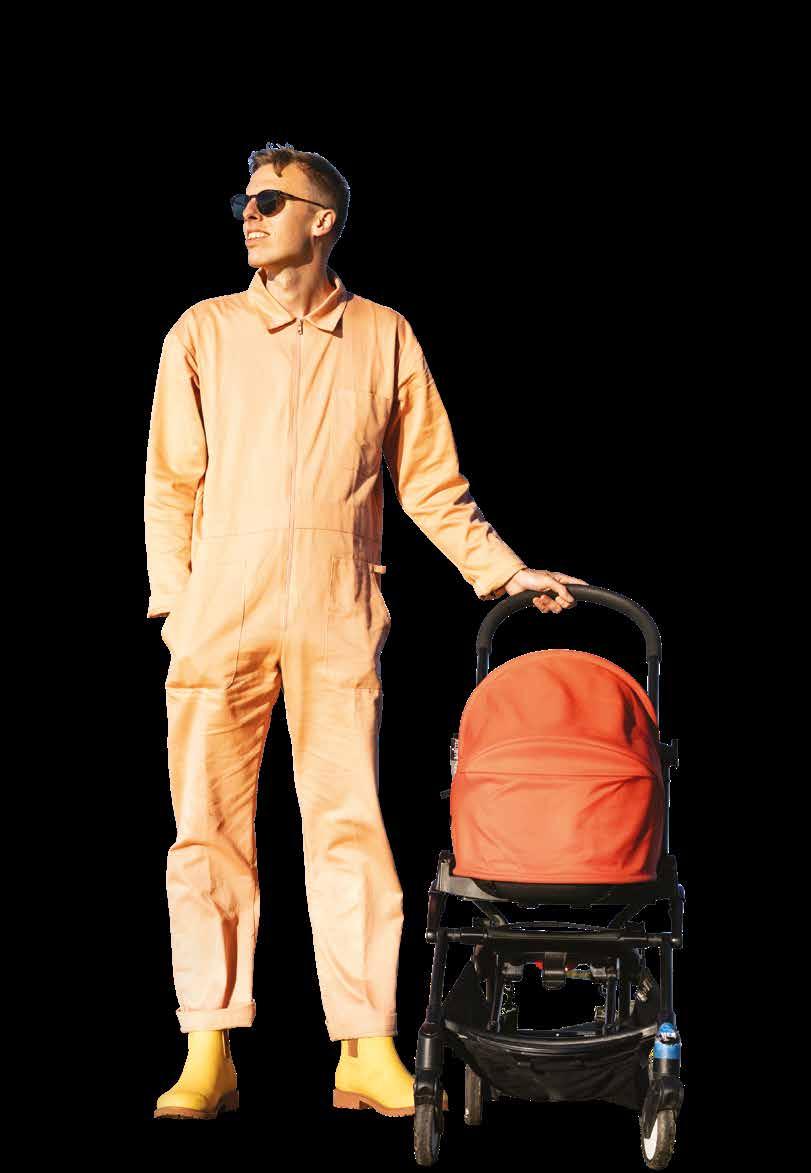
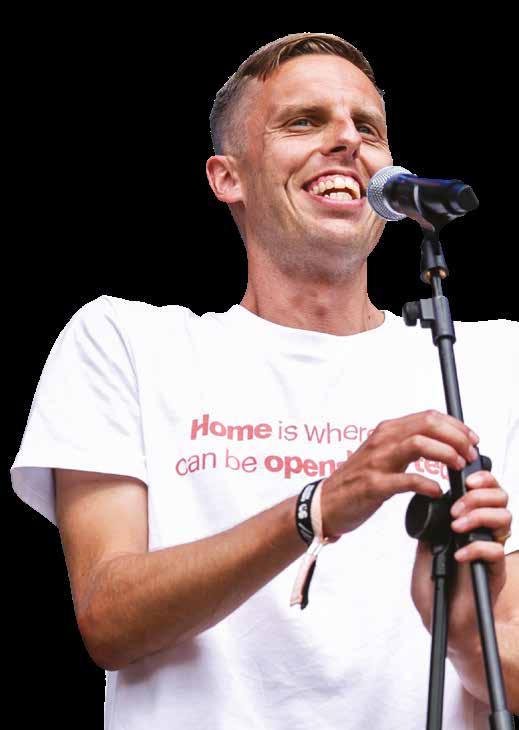
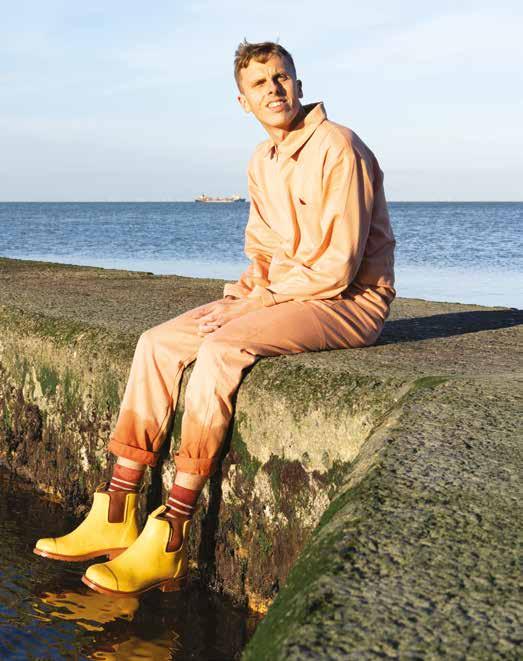
HARRY BAKER explains how becoming a dad gave him fresh insight into the Fatherlove of God and inspired a new collection of poems
Interview by Claire Brine
Before Harry Baker became a dad, he asked his friends who were already parents to share with him their memories and advice about life with a newborn. Most of them couldn’t remember much at all about their baby’s earliest days – and their honesty sparked an idea.
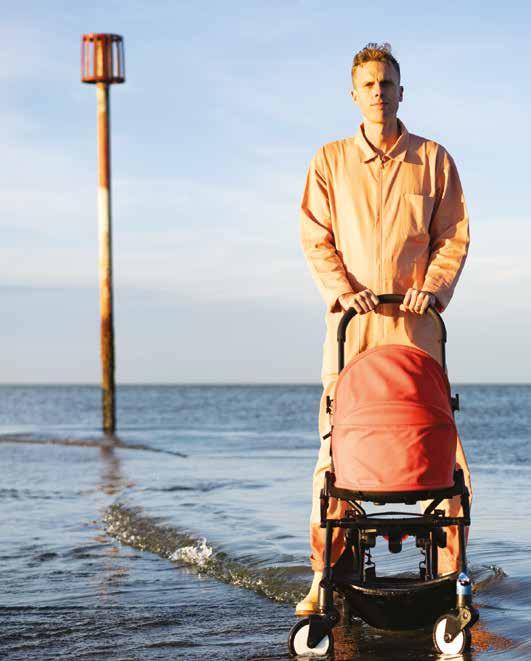
‘I decided when my son was born to write notes every day on my phone about the different things that were happening,’ says Harry, a spoken word poet whose latest book Tender features 100 poems which track the first 100 days of his son’s life. ‘Some of the notes that I wrote down in the very early days happened to come out as rhyming couplets. Others were just garbled thoughts. But it was an amazing practice to stop and think every day: what is it that I want to crystallise here?’
Though Harry never imagined that the hastily written notes of a sleep-deprived father gushing over his newborn son would appeal to anyone other than family, the initial response from audiences suggested otherwise – so he created a collection of poetry documenting his first days as a dad and pitched it to publishers at Canongate.
They liked it. Today Harry is in the middle of a nationwide performance poetry tour which is centred on the themes of the book and runs until October.
‘I didn’t know if audiences would find these poems particularly meaningful – because no one in the room is going to care about my son as much as I do,’ he explains. ‘But what I have found is that people recognise themselves in the poems. The specifics may be different, but the feeling is often the same. And a lot of what I talk about is cathartic to share.’
Written on early-morning walks, ‘2am wake-ups and post-bedtime collapses’, Harry’s poems capture the
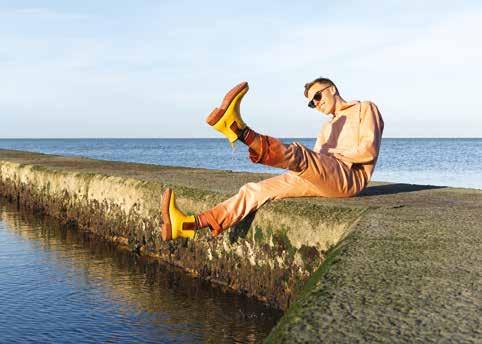
joy, vulnerability, exhaustion and love associated with parenthood.
‘I couldn’t write just one poem about being a dad, because it’s so multifaceted,’ he says. ‘The first four days of my son’s life were a dreamy bliss. But on day five, I was curled up in a ball, having a panic attack. Both experiences are a picture of parenthood.
‘It was crucial for me to write as truthfully as possible, so I didn’t want to write only about the brilliant days or the hard days or the lovely bits of parenting. I wanted the mixture. So the poems express euphoria, doubt, fear and love –and they’re all mashed up together.’
I try to have optimism in a difficult world
Inthe book, Harry touches on dozens of scenarios and feelings that parents of newborns will recognise. In the opening poems, he raises some questions he’d like to ask the midwife (‘Can you tell us/ that it’s going/ to be okay?’). Day nine’s poem focuses on the ‘mess and joy’ that babies bring, suitably titled ‘Does He Need Changing?’ By day 43, Harry celebrates success with ‘Nothing Went Wrong Today’.
One of the poems that stands out for Harry was written on day 29.
He explains that ‘Still to Come’ features ‘a list of things that my son could not do. So I say things like: “You cannot smile yet./ You cannot hold up your head.” But as my son is growing up, the things on that list are slowly getting checked off.
‘The poem also includes the lines: “Nobody has been horrible to you/ in your entire life, and I give thanks/ for every day that remains true.”
‘I’ve been thinking about that poem
a lot lately. My son is coming up to his second birthday, and when I took him to the park recently, some kids were laughing because they couldn’t understand what he was trying to say. It might seem unkind, but they were just being kids. So that poem has captured a moment that has already changed.’
Other poems that Harry has found increasingly meaningful with the passing of time include ‘Taking It All In’ and ‘The Horse’.
‘Taking It All In’ features Harry asking his son the question: ‘How can you be bored?’
‘It is about my son opening his eyes and looking around, “seeing so much/ for the first time” – and me doing the same alongside him,’ says Harry. ‘And the second poem is about my son staring at a horse for 10 minutes. There’s something powerful about introducing a baby to something which can be so easy to take for granted, but then beginning to see that thing afresh, through their eyes.’
Even before Harry started writing about the joys of fatherhood and the wonder of new life, his earlier poems highlighted the value of looking upon the world with awe. In ‘22’, written just over 10 years ago when he was in his 20s, he quotes the Bible words, ‘You are fearfully and wonderfully made’, prompting audiences to reflect on the beauty of what it is to be human.
He writes in ‘Dust’ that the deepest love is found in ‘not the spark when we first met’ but ‘the lifetime built around it’ – words that television presenter Davina McCall shared on Instagram to mark her marriage to Michael Douglas. (Side note:
Turn to page 10 f
From page 9
musician Ed Sheeran is also a Harry Baker fan, referring to him as ‘a champion’ for his witty wordplay in poems such as ‘Paper People’ and ‘59’.)
Harry’s personal favourite though, a poem entitled ‘Wonderful’ which he wrote earlier in his career, concludes with the line: ‘May one thing match the gravity of all you’ve ever done./ This wonderful reality: the best is yet to come.’ He wrote it when he found out that his wife was pregnant.
‘I try within my poetry to have hope and optimism in a difficult world,’ he says. ‘When I’ve gone through difficult stuff personally, writing with joy feels like an intentional act of defiance.
‘In my poem “Trying”, I talk about infertility and how my wife and I had to try for a long time to have a baby. It’s the most raw and vulnerable thing I’ve ever written. But it’s validating to perform it and see that it connects with people.’
In ‘Trying’, Harry talks about trying for
a baby, trying to talk openly about the pain of infertility and trying to live with grace through the now and what ‘might never come to be’. The years in which he longed for a child meant that the happy news of his wife’s pregnancy, at the end of 2023, brought mixed feelings.
‘There was so much excitement because I’d started to believe that it might not happen for us,’ he says. ‘There was also a sense of not wanting to mess it up. It felt like the complete unknown. But we also had reassurance – because we knew that we weren’t the first people to go through this.’
On the day his wife went into labour, Harry couldn’t help but hold his breath, hoping everything would be OK. When his son was finally placed in his arms, relief gave way to euphoria.
‘My wife gave birth at home,’ he says, ‘and when the midwife left, it
was astonishing to think: “This is it now.” It was amazing. We held our son on the sofa, and I remember feeling that nothing else mattered any more.’
As well as the delight he felt in meeting his son, Harry found that being a new dad presented a number of unexpected challenges. Some of his struggles appear in his poems.
‘As a parent, I wanted to be an equal partner with my wife – but I couldn’t be equal when my baby wanted milk and only his mum could give it to him,’ he says. ‘I can remember watching my son struggle to feed, knowing that I couldn’t help him. I’d also see my wife struggle, knowing that I couldn’t help her either. I’d heard other dads talking about feeling useless in this way.
I see God as a Father who nurtures

‘One of my favourite times in the earliest weeks was the moment when my son started taking milk from a bottle, because it meant I could get up with him in the morning and give my wife some extra hours in bed. Feeding him felt intimate and precious. I felt as though I
‘But it was then that an interesting shift happened. Feeding my son wasn’t about “doing it for my wife”. I realised that I was doing it for me. I discovered that I love nurturing. And rather than framing my efforts as “helping out” with the burdens of parenting, I saw myself sharing in the joy and wonder of it.’
Fatherhood also helped Harry to approach his lifelong Christian faith with a fresh perspective. Before the written notes about his son became poems, they were prayers of gratitude. The wonder that he felt when gazing upon his son aligned strongly with his beliefs in a divine Creator. His views about God as a heavenly Father were evolving too.
‘I’d always thought that the language people use to talk about God the Father was quite archaic and patriarchal,’ he says. ‘The church that I attend would often refer to “Mother God” as a way of subverting that. But now I think I’ve become much more generous with my understanding of a “Father God” – because I see God as a Father who nurtures us and who wants to protect us and make us
In the poem ‘First Vaccinations’, Harry describes holding his son’s hand as a nurse administers his first
batch of jabs. Being by his baby’s side in distress prompted Harry to consider the comfort he finds in being in God’s presence – and not just in times of pain.
‘Rather than seeing God as this omnipotent, benevolent figure who makes us and then leaves us to get on with life on our own, I believe that God is with us in the everyday,’ Harry says. ‘I think he’s excited for us in our moments of joy, and intimately present in the hardships.’
Being present, patient, playful and willing to listen are all qualities which Harry believes make ‘a good dad’. He considers some of the ways in which fatherhood has changed him.
‘It has made me softer,’ he says. ‘I think I was already pretty soft – but being a dad has reiterated for me the joys of being open and raw in that way. I also laugh more than ever.
‘And I’ve become less anxious. I used to overthink things a lot, but having a child
has forced me to let go a bit. You can’t be on top of everything. On the days I’m with my son, he’s the priority.’
In a poem called ‘The Greatest’, Harry expresses his hope that one day his son will call him ‘a great dad’. His own parents, he says, ‘loved me for who I was, not for what I did’ – and theirs is an example that he hopes to follow.
‘I used to be worried about losing myself in parenthood,’ he says, ‘thinking that there would be the side of me that performs poems, and the other side of me that’s at home being a dad. But I’m learning that one thing doesn’t have to come at the expense of the other. Both roles can feed each other, making it possible to do both – and do them better.’
l
The War Cry invites readers to send in requests for prayer, including the first names of individuals and details of their circumstances, for publication. Send your Prayerlink requests to warcry@salvationarmy.org.uk or to War Cry, 1 Champion Park, London SE5 8FJ. Mark your correspondence ‘Confidential’.
There is no set formula to becoming a Christian, but many people have found saying this prayer to be a helpful first step to a relationship with God
Nigel Bovey gives chapter and verse on each book of the Scriptures
Revelation is an account of the ultimate triumph of good over evil. Written at a time of persecution, it centres on a series of heavenly visions that God gave to the book’s writer, John, while he was in exile on the island of Patmos (1:9).
It contains apocalyptic imagery that relates to the end times, culminating with the return to Earth of Jesus Christ and the establishing of a new Heaven and Earth.
Revelation starts with messages to seven churches in what today is Turkey (chapters 1 to 3). Thereafter, the focus is Heaven.
Heaven is opened to reveal God on his throne and Jesus as the Lamb (chapters 4 and 5). From Heaven, God orders stages of judgement on sinful humanity, each with seven aspects.
Lord Jesus Christ,
I know that I have done things in my life that are wrong and I’m sorry.
Thank you that I can ask you for forgiveness because of the sacrifice you made when you died on the cross.
Please forgive me and help me to live a better life in the future as I learn how to love you and follow your way of living.
Thank you, Lord Jesus.
If you’ve prayed this prayer, scan the QR code or contact us using the coupon on this page

First, the Four Horsemen of the Apocalypse deliver divine wrath (chapters 6 to 9). Six trumpets announce forthcoming judgement on one third of the Earth (chapters 8 and 9). The seventh trumpet fanfares the coming of God’s Kingdom (11:15–19). Seven angels then appear with final plagues (15:1) and punishment for ‘the great prostitute’ (17:1 New International Version) sitting on a ‘scarlet beast’ (17:3). She is identified as ‘the great city that rules over the kings of the Earth’ (17:18).
Another woman has given birth to a child, who is protected by God from diabolical attack. (This is widely interpreted as referring to Jesus.) Upon the birth of the child, spiritual war breaks out between the angelic forces of God and the fallen angels of Satan (chapter 12).
John sees and hears an angel announcing the downfall of Babylon, a figurative representation of evil (chapter 18).
The angel then announces the ‘wedding supper of the Lamb’ (19:9). The ‘bride’ will be the new Jerusalem – in other words, faithful followers of Jesus (21:9 and 10).
God will bind Satan for 1,000 years, during which time Christian martyrs will reign on Earth with Christ (20:1–6). Satan will gather nations for battle, but will be defeated for ever (20:7–10).
God will then judge the dead (20:11–15) and establish a new Heaven and Earth, where people will live with God – Paradise regained (chapters 21 and 22).
Open to wide interpretation, speculation and misrepresentation, Revelation’s message is encapsulated in the words of Jesus: ‘Look, I am coming soon! My reward is with me’ (22:12).

To receive basic reading about Christianity and information about The Salvation Army, complete this coupon and send it to
War Cry 1 Champion Park London SE5 8FJ
Or email your name and postal address to warcry@salvationarmy.org.uk

1 Who played Ian Fletcher, director of integrity, in BBC2’s mockumentary Twenty Twenty Six?
Which car manufacturer produces the Juke? 3 4 5 6 2
Which language uses the informal ‘ciao’ to mean hello and goodbye?
Who had a No 1 hit in 1984 with the song ‘Careless Whisper’?
Which 19th-century Dutch artist made a series of paintings of a wheat field with cypresses?
Which financial journalist and broadcaster founded the website MoneySavingExpert.com?
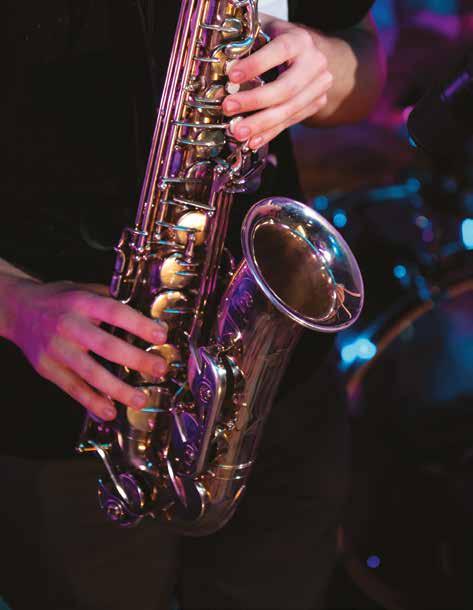
Calling out around the world, are you ready for a brand-new beat – or perhaps something more familiar? World Music Day on Sunday (21 June) aims to get people dancing in the streets and listening to a wide variety of sounds.
The event was launched in France on 21 June 1982 as the Fête de la Musique, with thousands of musicians performing on the streets, squares and anywhere passers-by could hear them.
Now in its 45th year, the celebration has spread to 125 countries, including the UK, where it is also known as Make Music Day.
Despite expanding far beyond France’s borders, its core aim remains unchanged – to bring people together through free music performances.
This year, the gardens of the Palais-Royal in Paris will host a concert to celebrate jazz in all its forms and pay tribute to two major figures: Miles Davis and John Coltrane. In Newcastle upon Tyne young people will put on a performance of music and movement at Dance City.
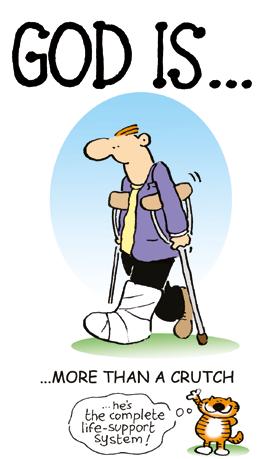
For many people, music is a form of escape when life feels overwhelming. Listening to a favourite artist or song can bring a sense of comfort, calm and reassurance. Melodies, rhythms and lyrics can help drown out the difficult issues we sometimes have to face. But when the music ends, the problems often remain, waiting to be dealt with.
Going through tough times can make us feel isolated. But Christians find the ability to deal with them through their faith in God.
One Bible song describes how God helps people in their difficult moments. It says: ‘God is our refuge and strength, an ever-present help in trouble’ (Psalm 46:1 New International Version).
Whatever challenges we may be facing, God will help us if we ask him. He will console us and reassure us that we are not alone, giving us the courage to keep going even when the music stops.

1. Envious (7)
Trivial (5)
Rebuke (7)
Twitch (5)
Spike (4)
Mishap (8) 13. Inquisitive (6)
Grip (6)
Journalist (8)
Docile (4)
Sag (5)
Sorrow (7)
Avarice (5)
Transmitted (7)
Yearly payment (7)
Burden (4)
Oration (6)
Capable of existing (8)
Make fun of (5)
Plotted (9)
Unrivalled (9)
Daring (8)
Calamity (7)


Detection device (6)
Verify (5)
Image of a god (4)
INGREDIENTS
METHOD
100ml balsamic vinegar
2tsp runny honey
2tsp thyme leaves, freshly chopped, or dried thyme
Salt and pepper
4 pork loin steaks, fat removed
15g unsalted butter
1tsp oil
2 small red onions, cut into 8 wedges
2 red eating apples, cored and cut into wedges

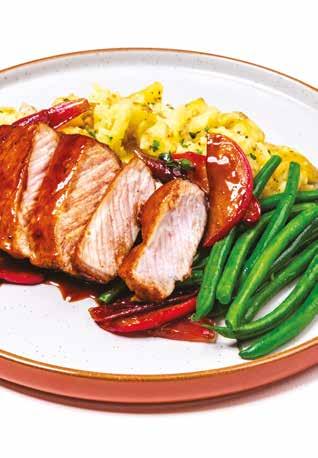
Make a marinade by stirring together the vinegar, honey and thyme in a shallow dish and season, to taste. Add the pork and turn to coat. Cover and set aside.
INGREDIENTS
100g natural low-fat yogurt
3tbsp tikka paste
1tsp garlic puree
Salt and pepper
4 lean pork loin steaks, fat removed

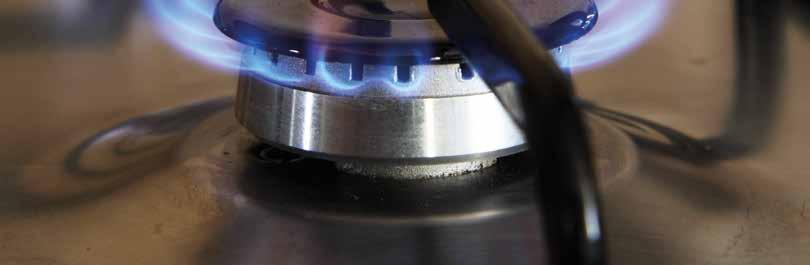

Heat the butter and oil in a large non-stick ovenproof frying pan and cook the onions for 2-3 minutes, stirring occasionally. Add the apples and cook for a further 2 minutes, until starting to caramelise. Remove from the pan.
Reserving the marinade, transfer the pork to the pan and cook for 4-5 minutes over a medium heat. Turn the steaks over and add the marinade, onions and apples. Continue cooking for 4-5 minutes, until the pork is cooked through and any juices run clear.
Serve with seasonal vegetables.
METHOD
Soak 4-6 short wooden skewers in cold water for 15 minutes.
Stir together the yogurt, tikka paste and garlic puree in a large bowl and season, to taste.
Dice the pork, add the cubes to the pan and stir gently to coat, then cover and set aside for 10-15 minutes.
Preheat the air fryer to 180C.
Thread the pork on to the skewers, discarding the marinade, and place at the base of the air fryer tray. Cook for 8-10 minutes, turning halfway, until cooked through and any juices run clear.

Serve with rice, flatbread and a crisp salad.