Branching out
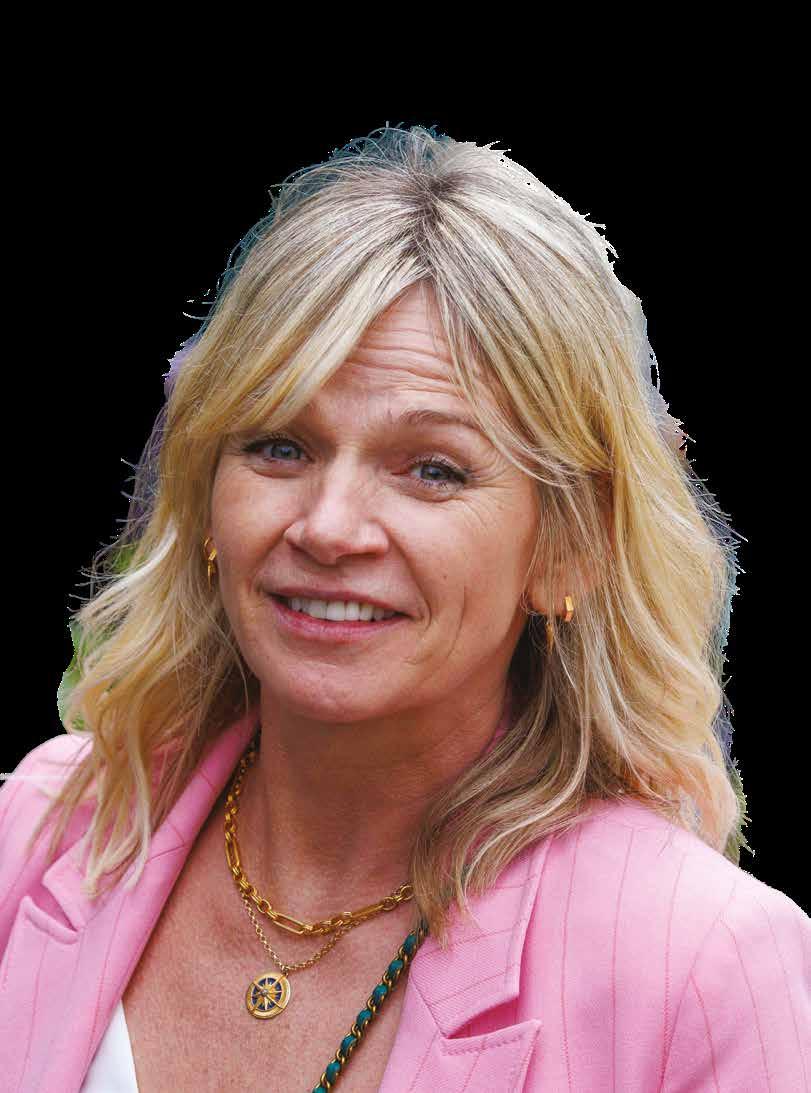
Zoe Ball explores her family tree on Who Do You Think You Are?
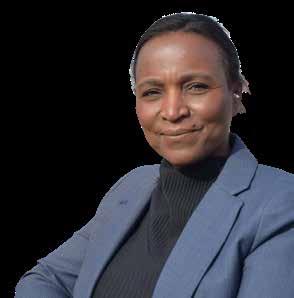
‘Victims and perpetrators lose with knife crime’

Zoe Ball explores her family tree on Who Do You Think You Are?
‘Victims and perpetrators lose with knife crime’
The Salvation Army is a Christian church and registered charity seeking to share the good news of Jesus and nurture committed followers of him. We also serve people without discrimination, care for creation and seek justice and reconciliation. We offer practical support and services in more than 700 centres throughout the UK. Go to salvationarmy.org.uk/find-a-church to find your nearest centre.
The Salvation Army first published a newspaper called the War Cry in London in December 1879, and we have continued to appear every week since then. Our name refers to our battle for people’s hearts and souls as we promote the positive impact of the Christian faith and The Salvation Army’s fight for greater social justice.
Last year, police recorded 49,151 serious offences involving a knife or sharp instrument in England and Wales. While that is down on the 2024 figure, 945 such crimes being committed every week still represents a 50 per cent increase over a 10-year period.
The good news is that action is being taken to reduce knife crime within the communities that are suffering its consequences. As we report in this week’s War Cry, Words 4 Weapons provides surrender bins which allow anyone who has a weapon to give it up anonymously.
One of those bins is located at the Salvation Army centre in Stratford, east London.
‘We thought it was an important initiative,’ community manager Rogerio Andrade tells us. ‘I had thought that maybe people would drop in some scissors or an old kitchen knife that they needed to get rid of – and the bin works in that way too – but the first time it was opened, we saw ninja swords and all kinds of things.’
The Salvation Army is one of many churches making a difference in their communities. Many people will know their local church because of the food parcels they receive from it.
Editor: Andrew Stone, Major
Managing Editor: Philip Halcrow
Staff Writer: Emily Bright
Staff Writer: Claire Brine
Staff Writer: Ewan Hall
Editorial Assistant: Linda McTurk
Graphic Designer: Mark Knight
Graphic Designer: Natalie Adkins
Email: warcry@salvationarmy.org.uk
The Salvation Army United Kingdom and Ireland Territory 1 Champion Park London SE5 8FJ
Tel: 0845 634 0101
Subscriptions: 01933 445445 (option 1, option 1) or email: subscriptions@satcol.org
Founders: Catherine and William Booth
International leaders:
General Lyndon Buckingham and Commissioner Bronwyn Buckingham
Territorial leaders: Commissioners Jenine and Paul Main
Editor-in-Chief: Major Julian Watchorn
The Salvation


Some 800 of the church-based food banks which provide those parcels are run by the charity Trussell. This week, we speak with the charity’s CEO, Emma Revie, who explains how her work is influenced by her Christian faith.
‘I get to visit our food bank centres,’ she says, ‘and when I walk through the door, I get bathed in a radical welcome. I feel an encounter with God, and the love of Christ playing out. When you look at the life of Christ, he chose to spend his time with people who were struggling the most. He was there for them.’
Wherever they are, Christians want to be there for their communities – by providing food when it’s needed; by opening up opportunities for people to take a step away from violence; and by offering a way to discover more about a God who can give everyone new meaning.




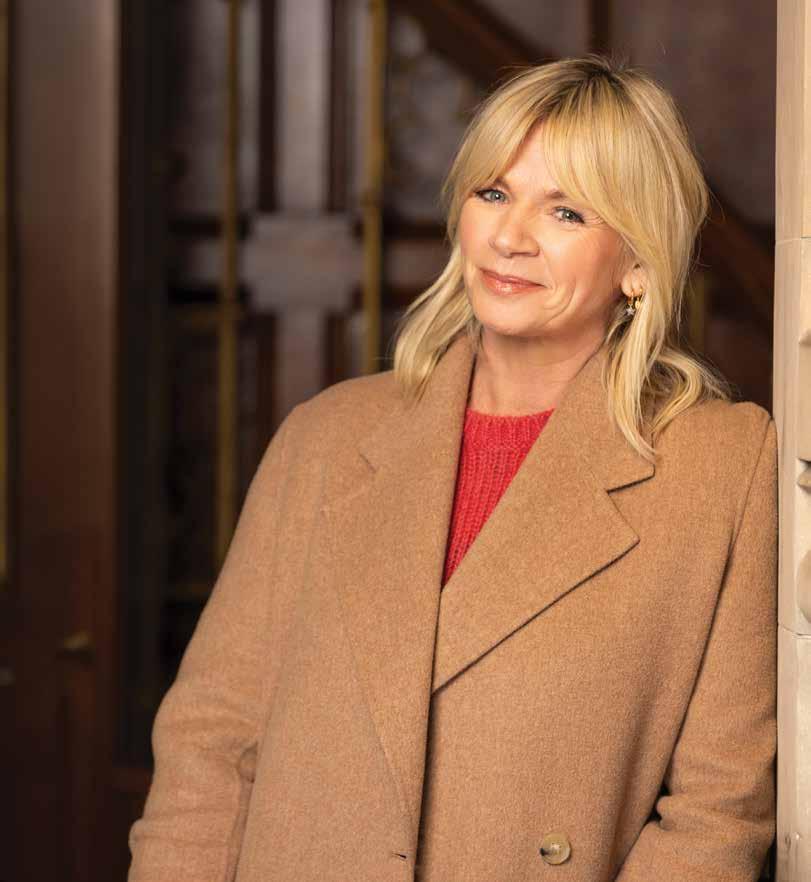
TV preview: Who Do You Think You Are? BBC1 and iPlayer
By Claire Brine
For decades, Zoe Ball has entertained the nation as a TV and radio presenter. Her dad, Johnny Ball, trod the same path before her. But what about the family members who go further back? What are their stories? Zoe is keen to find out in the returning BBC1 geneaology series Who Do You Think You Are?
The desire to learn more about her family tree came to Zoe after the death of her mother, Julia, last year. She is particularly interested in finding out more about Peg, Zoe’s maternal grandmother, who, in the 1960s, received a medical diagnosis of ‘acute mania’ and was admitted to a psychiatric hospital.
‘Families are fascinating because there are stories families tell and there are stories that get hushed up,’ says Zoe. She’s excited at the prospect of ‘having a good dig into the past’.
While looking through boxes of her mum’s belongings, Zoe finds an old photograph of a house in which Peg served as a nursemaid in 1928. She was just 15 years old.
To learn more about her grandmother’s later years, including her struggles with
poor mental health, Zoe meets historian Dr Vicky Long, who shows her Peg’s medical notes. They describe a woman ‘excessively extravagant with money’.
After being accused of shoplifting, for which she was sent to court, Peg became ‘disinterested in home and self’ and ‘behaved in a very abnormal way’.
Her handwritten letters to friends, also contained in the notes, indicate to Zoe the severity of her grandmother’s confusion. She discovers that part of her treatment included electroconvulsive therapy.
Though Zoe says she ‘dreaded the idea’ of her grandmother receiving ECT, she is encouraged to read a later letter written by Peg. Its contents reveal that her mental health had greatly improved.
‘I’m so happy to hear that she is doing well,’ says Zoe, wiping away tears. ‘I am so relieved that she was OK again.’
As well as diving into Peg’s past, Zoe spends time hearing stories about her dad’s side of the family. Her greatgrandma Catherine McMenemy, who grew up in the tenements of Glasgow, suffered much loss as a child and strove to overcome it.
As she reflects on the lives of the
Zoe looks into her family’s history
women who went before her, Zoe recognises that ‘family was really important’ to them. She is also full of admiration ‘for the strength and resilience’ that her relatives showed in tough times.
Perhaps it’s a strength we wish we had – something to propel us forwards when life is good and keep us going when things are bad.
History tells us that such a source of strength is available to everyone.
Nearly 2,000 years ago, the Bible writer Paul described the life-changing power he found in following Jesus, saying: ‘Christ gives me the strength to face anything’ (Philippians 4:13 Contemporary English Version).
That ‘anything’ included imprisonment, shipwreck and numerous beatings that brought him close to death. Through it all, Paul kept his faith in Jesus, a man who showed the world what God’s love looked like – and who proved through his death and resurrection that such love could never be defeated.
When we build a relationship with Jesus, we, too, can draw upon such unbeatable strength – whatever our own past may have been.
Claire Brine gives her take on a story that has caught the attention of War Cry reporters
A man who, at the age of nine, visited Wenlock Priory with his family and ‘pocketed three of its medieval floor tiles’ has ‘made amends’ by returning them to the historic site 59 years later, reported The Times
It was 1967 when Simon White took home his ‘pilfered pieces’ from the Shropshire ruins, but as he ‘rooted through the loft of his Hampshire home’ recently, ‘feelings of guilt rushed back’ when he opened a battered toffee tin and saw the tiles, which date from the 13th or 14th century.
‘It’s been very cathartic,’ Simon said, reflecting on the moment when he was able to hand the tiles over to English Heritage, which now manages Wenlock Priory. ‘We are custodians of these buildings... We shouldn’t be nicking stuff.’
Relieved to clear his conscience, Simon explained that he could vividly remember the day of the theft, because it had stuck in his mind for years. ‘I’ve had a certain amount of unease about it ever since,’ he admitted.
Though Simon’s story is likely to be different from our own, I imagine that we all have regrets about things in the past that we should or shouldn’t have done. I’m also struck by several aspects of Simon’s experience that I believe are worth remembering.
First, when we do something wrong (and know it), we shouldn’t be surprised if the guilt sits with us for decades. Secondly, it’s not too late to seek a way to make amends for our wrongdoing. And thirdly, when we do make the effort to put things right, the sense of relief can be liberating.
I’m reminded of a passage in the Bible, in which Jesus advises his followers, as a matter of urgency, to make peace with anybody who may bear ill feelings towards them (see Matthew 5:23 and 24). He says that, unless conflict is resolved, or unease settled, it’s impossible to approach God with an open and pure heart.
Whatever our story, when we seek to make amends for our past mistakes, and ask God to forgive our wrongdoing, we can step into a future free from guilt.
We won’t regret it.
Tim Vine shared some of his jokes that relate to Christianity when he appeared on the ‘fantasy funeral’ podcast Where There’s a Will There’s a Wake, hosted by fellow comedian Mel Giedroyc.
When asked to consider his last supper, his ideal death and the details regarding his funeral, Tim – who is a Christian – spoke about being raised in a churchgoing family and told Mel some of his best Christian jokes.
‘Do you know, the other day I got a text from Heaven. That was a God-send,’ he quipped.
Talking more seriously about death, Tim reflected on his Christian upbringing, explaining to Mel: ‘There’s only one way to Heaven, and it’s not by doing anything ourselves... I was brought up with Easter, Christmas, all that stuff. Trusting in the blood of Jesus. The only way, viewers!’
Tim also told Mel about possible ideas for his funeral, suggesting that he could play a pre-recorded video message for mourners, saying: ‘I want to just tell you this, I’m somewhere even better than where you are now. I am in the next place. And so don’t be sad.’
When Mel concluded that having Tim on the podcast had been ‘lifeaffirming’, he replied: ‘Well, death should be ... I think this is a very special podcast, because in facing death, in many ways, we face the possibility of living. And that is a special thing.’
Surrender bins are offering people the opportunity to give up knives and other weapons – and create a safer society
Feature by Philip Halcrow
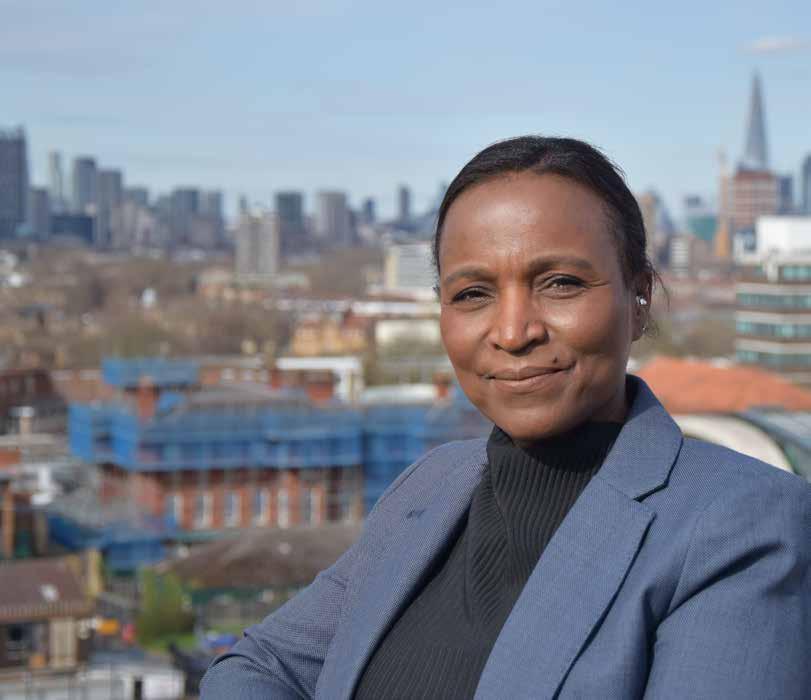
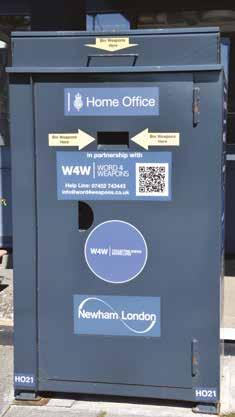
In the run-up to a ban on ninja swords last summer, thousands of such blades and other weapons were surrendered in a month-long government amnesty. Many of them were dropped into surrender bins run by Word 4 Weapons, an organisation which for almost 20 years has been providing places where people can give up knives.
Half a year on from the amnesty, Sandra Campbell, chief executive officer of Word 4 Weapons, says: ‘We had some really positive uptake on the scheme. For the Home Office project, we installed bespoke bins, which have an extra chute at the top, so they can take massive machetes and swords.
‘I was in the police for just under 20 years, and I’ve seen it all – I’ve been at those crime scenes.’
When we meet in south London, Sandra recalls how she first came across a Word 4 Weapons bin while working for a local authority and how she had asked
some police officers what it was. She also remembers taking a picture of it and that ‘it had a Salvation Army sticker on it, because our founder, Michael Smith, was very attached to the work that The Salvation Army did and was a deeply religious man’.
As Word 4 Weapons got under way,
The Salvation Army offered some of its recycling banks to be used as surrender bins – and it is still among the churches which host the bins.
Word 4 Weapons advises people on how to deposit a weapon safely and anonymously. By calling a number or scanning a QR code on the surrender bin,
Sandra Campbell of knife surrender charity Word 4 Weapons
Turn to page 6 f
From page 5
the person leaving the weapon can also get support.
‘We get parents and carers who use the bin rather than taking the weapon to a police station,’ says Sandra. ‘If you go to a police station, they may want to ask you lots of questions before they can take the weapon. So the bins are somewhere that anyone can go and anonymously drop a weapon off, 24-7, and it will be taken away and securely destroyed.
‘I get calls from members of the public saying that they have found such-andsuch in a family member’s bedroom and they want to know where our nearest bin is. So we try to keep that information up to date on our website. With my previous background as a family liaison officer, I
can tell them what they can do in taking a weapon to the bin, but I also advise them to talk to that family member and open up a conversation around, “Did someone give that to you? What are you involved in?
How can I help you?”
They don’t think about the consequences
‘Iamable to see our work from the side of having been a police officer – the consequences in court cases and prisons.
‘When somebody loses a child through knife crime, the perpetrator also loses. The family of the victim will never see them again; the family of the perpetrator
have to know that their child or sibling has murdered or seriously injured someone and is away from them in prison.
‘It’s not a movie. A lot of young people don’t think about the consequences. They don’t think beyond now. They don’t think about the fact that once something happens, you can’t undo it.’
It’s the sort of tragedy that Carolina and Rogerio Andrade are trying to prevent by hosting a surrender bin outside The Salvation Army’s hall in Stratford, east London.
‘Stratford is like two boroughs in one,’ says Carolina. ‘We have very rich people and very poor people. There is a big social difference. And I think that’s why crime is getting more intense.
‘There is antisocial behaviour. We can see drug dealers on the street and in the park.

‘We love our neighbours and our street is calm and safe – but even then, at 3am a few days ago, someone tried to steal our car.’
The couple arrived in Stratford ahead of the 2012 Olympics. Back then, they were not Salvation Army community workers.
Rogerio says: ‘We used to work for Brazilian TV, and we came here to make a documentary about the Olympic legacies, because the next Games after London was going to be in Rio. We were supposed to be here for 13 months, and we’ve been here more than 13 years.
‘So we have lived through all the changes from 2012. And I would say that Stratford is improving. We have conversations with people who have lived here for longer, and they say that it is way better now than it used to be.’
Rogerio reflects that, as Stratford is the only Salvation Army centre in the London Borough of Newham, many people come to it for support.
A notice inside the hall lists some of the community activities that it offers. Carolina talks of how it runs sessions to help people find employment, provides households with food support and runs a wellbeing café.
A Word 4 Weapons bin
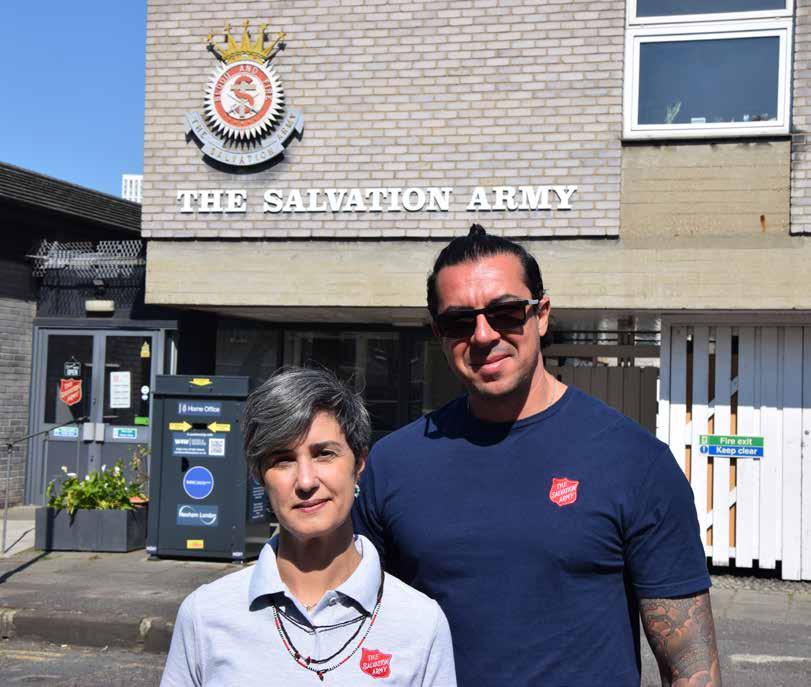
arrived in 2019.
‘We thought it was an important initiative,’ says Rogerio. ‘At first, we had some objections from the neighbours. Some thought it would look bad to have a weapons bin close by to where they lived. They didn’t understand the meaning of the bin being here.
‘So our job – as part of the community – was to explain the reasons for getting this safe place for people to dispose of weapons.
‘We talked one-to-one with our neighbours, until some who were 100 per cent against the weapons bin came to understand what it was and why it was here – and now they also support the other work we do.’
Even though he thought it was important to install the bin, Rogerio admits that he did not fully realise its value until he saw it being opened for the first time.
‘I had thought that maybe people would drop in some scissors or an old kitchen knife that they needed to get rid of – and the bin works in that way too –but the first time it was opened, we saw ninja swords and all kinds of things.
‘We sometimes hear weapons being dropped in the bin late in the evening or in the morning.
‘On one occasion a lady came to talk to me when she saw me outside. She said she had a teenager who was starting to be involved with crime, so she took the weapon from home at night to try to keep them away from criminality.’
Carolina sees the bin as ‘reducing immediate harm, creating a safer environment and giving someone a moment to make the right decision’. She also sees it as part of ‘the flow’ of The Salvation Army’s other community work.
‘Crime normally happens when you
are vulnerable,’ she says, ‘when you don’t see options and you feel lost. We are trying to help people in need.
‘We don’t necessarily have contact with the person who puts the weapon in the bin. But we hope that when we have contact with people, we can prevent them from being either the one committing the crime or the victim. We try to open the hall as much as we can during half-term to have a session for kids, so that they know we are here for them.
‘We want people to know that we’re a safe space, whatever their age. If they’re not under pressure, they’re not going to take the route of crime. We want people to know they have a space where they can open up, be heard and be helped.’
One garden at this year’s Chelsea Flower Show is demonstrating how togetherness can make a difference
Feature by Emily Bright

In full bloom until 23 May, the Chelsea Flower Show is displaying 37 gardens of the highest calibre to members of the royal family, celebrities and an estimated 168,000 visitors – as well as millions of BBC viewers at home.
One of the gardens is Trussell Together, sponsored by the grant-making scheme Project Giving Back and named in honour of a charity which runs more than 1,400 food banks across the UK.
Trussell CEO Emma Revie explains how the garden’s design reflects the theme of togetherness, inspired by the charity’s collaborations with communities and other organisations.
‘Intersecting paths weave through the garden and meet,’ says Emma. ‘There are timber frames that are mutually supporting, which speaks to the fact that we are dependent on one another within communities. Food banks demonstrate such support vividly in the lives of individuals in financial crisis.’
Emma adds that the design by Rob Hardy & Co conveys Trussell’s ‘warm welcome and the offer of a cup of tea’ as people walk through the door. ‘The garden is a welcoming space that offers connection,’ she says, ‘echoing those first few moments when somebody comes ito a food bank and feels listened to.’
There’s a seating area where people can relax
Emma points out that a quirk of the garden illustrates to visitors how simple actions can create significant change.
‘There’s a seating area for people to relax and have a conversation, but then you can pull a lever on our water feature that opens up to create a larger communal space. In the same way, we know that those moments of welcome and quiet reflection in one of our food

banks can have a ripple effect that is transformational in somebody’s life.’
There are no fruit and vegetables in the Trussell garden, which may seem surprising for a food bank charity, but Emma explains that including produce wouldn’t reflect the challenges that her charity is contending with.
‘At Trussell, we’re not facing a food problem, it’s an income problem. We’ve seen a significant increase in inflation, and the essential items that each of us needs every day are costing a lot more.
‘But working-age benefits and salaries have not kept pace with that increase. People are making impossible decisions about whether to heat their homes or feed their families. Rising costs are pushing more people into food banks.’
Frontline organisations such as GP practices and housing associations can refer people to Trussell for emergency food help. On arrival at a food bank, individuals are welcomed by volunteers

and are offered a cup of tea and a listening ear. They can then specify any dietary requirements for their emergency food parcels.
Volunteers can also refer people who want further support to specialist advisers – who are available in more than 92 per cent of Trussell’s food banks – or to other external organisations such as mental health charities.
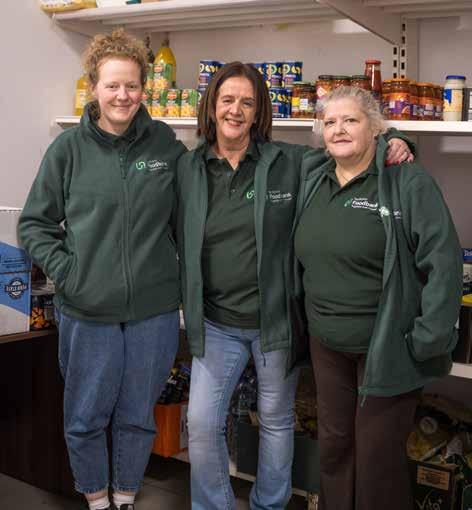
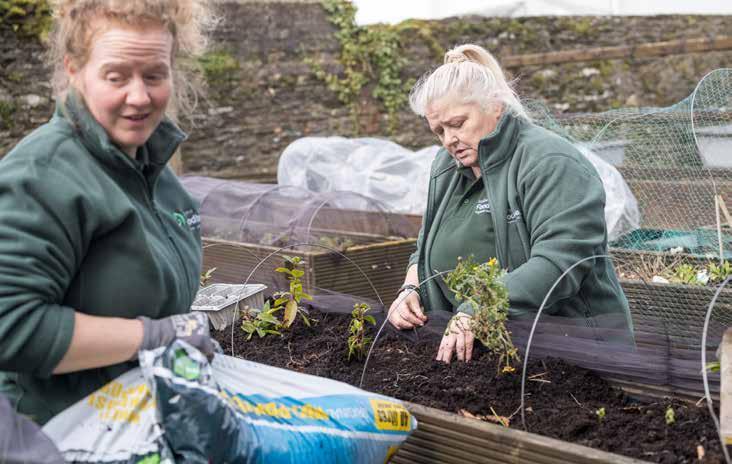
Ursula Doherty, the manager of Strabane Community Project in Northern Ireland, which joined Trussell in 2014, says that her team aim to provide ‘a warm, safe, welcoming space. We look to promote dignity, while breaking down any shame felt by the people we help.
‘When we see people come into our food bank for the first time, they feel like they have no identity because they’re stripped of their self-worth and haven’t
Turn to page 10 f
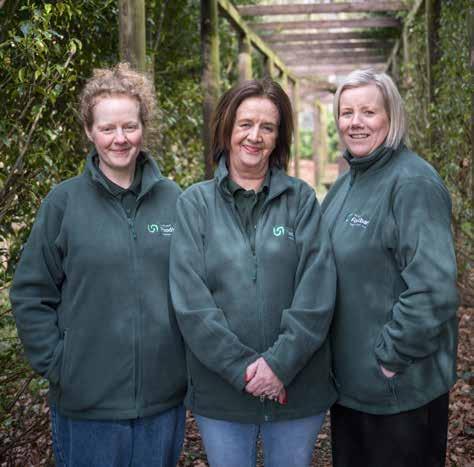
got enough financial resources. But we have a cup of tea and an informal, relaxed conversation, giving them the opportunity to feel secure and accepted.’
The project is situated in an area of Strabane that has experienced some of the highest deprivation rates in the country. It was started by the Sisters of Mercy in 1987 to offer a lunch club and meals-on-wheels service. But since then, the project has increased the scope of its support.
‘When we nourish people with food, there are so many other layers of support that we need to look at based on mental health, ill health and long-term unemployment,’ Ursula says.
‘For many families, mealtimes are a time of anxiety. They may not have the electricity to cook, or the white goods to store the food. As time goes on, we will assess an individual’s needs and then we move them to wraparound support.’
The project runs a community café with a low-cost menu, and arts and craft workshops to tackle loneliness.
‘We also have a beautiful, peaceful, holistic garden,’ says Ursula. ‘We
can introduce people to our growing programmes based on being selfsustainable. They can come to the garden to sit down, do one-to-one counselling in glamping pods or chat with one of our support officers.’
The latest addition to Strabane Community Project will be the Trussell Together garden, which will relocate to Northern Ireland after the Chelsea Flower Show.
Ursula says that the garden will ‘provide a safe space and help us provide a lot more services, whether that’s one-to-one counselling or group sessions. We nourish people with the food that they receive, but we can now further nourish their mind, body and soul. And the garden will bring the community together.’
It was community that empowered Trussell’s Christian founders Paddy and Carol Henderson to set up food
banks in the first place. Back in the 1990s, the couple were running their charity – then known as Trussell Trust – to provide nutrition programmes for children sleeping rough in Sofia Central railway station in Bulgaria. Their work was highlighted by a newspaper in their home city of Salisbury.
Shortly afterwards, they received a telephone call from a Wiltshire mum. She was impressed by their work, but asked whether the couple knew that families couldn’t afford food in their home county.
Carol and Paddy began supplying three-day emergency food parcels out of their garden shed in partnership with their church. Other churches followed suit, and the first Trussell food bank was established in Salisbury in 2000.
Churches remain central to the work of Trussell today. About 800 of its food banks are situated in church buildings. And, while Emma emphasises that volunteers and recipients are from all faiths and none, she adds that that there’s ‘no question’ that the charity has been ‘intimately entwined’ with churches.
‘We couldn’t provide our services without their support. Many of our volunteers are motivated by their Christian faith,’ she explains.
Emma too is motivated by her Christian beliefs and sees God at work in Trussell.
‘I get to visit our food bank centres,’ she says, ‘and when I walk through the door, I get bathed in a radical welcome. I feel an encounter with God, and the love of Christ playing out. When you look at the life of Christ, he chose to spend his time with people who were struggling the most. He was there for them.’
The vision of the charity is based on the Bible verse Micah 6:8, which says that God requires people to act justly, to love mercy and to walk humbly with him.

Emma says: ‘We reflect on these values often. We describe the combination of mercy – or compassion – and justice as an infinity loop. Compassion is so important and motivates many of our volunteers.
‘But a food parcel won’t put money on the electricity. It won’t tackle the issues of transportation and getting kids to school. It won’t pay for a new pair of school shoes. It’s insufficient for the challenge ahead of us.’
So Trussell campaigns for lasting change.
‘Compassion without justice potentially becomes collusion with a system that’s wrong,’ says Emma. ‘Justice is what calls us to speak about and build a future

where nobody is hungry. And walking humbly shapes our work. We can’t end hunger for ever on our own, but together with others we can end the need for food banks.’
Emma explains how greater social change is required if a country without food banks is going to become a reality.
‘We seek to create change in the systems that bring people to food banks,’ she says. ‘To do so, we engage with people in local councils and people in positions of power.’
Emma points to the UK government’s lifting of the two-child benefits cap last month as a policy change that will make a ‘material difference’ to many families.
‘Last year,’ she reveals, ‘we provided 2.6 million emergency food parcels, but over 900,000 of those were for children. We know that families with multiple children are overrepresented at food banks.’
Trussell is seeking justice for other vulnerable groups in society too.
‘This year, we campaigned hard against cuts to disability benefits,’ says Emma. ‘Seventy-five per cent of people we see at food banks come from a household where somebody is disabled. If you’re disabled, there are additional costs and barriers to accessing work.
‘We’ve also seen an increase in the number of people who are in work and still not managing to make ends meet, and a more than 290 per cent rise in the number of people coming from pension-age households.’
The scale of food poverty in the UK can sometimes feel overwhelming. But both Ursula and Emma are encouraged by the stories of beneficiaries.
Emma says: ‘Laura, who is now a policy advocate for Trussell, recalls feeling overwhelming shame that she wasn’t able to provide food for her child. She says that she felt as if she had 10 tonnes on her shoulders. When she first came into a Trussell food bank, she
remembers the warmth of welcome she received.
‘When she walked out, she felt like it was only nine tonnes on her shoulders. Because of that first encounter, Laura came back, accessed support and was able to resolve some of the challenges that she was facing. It didn’t fix everything. But it made it more bearable and made her feel like she wasn’t alone.’
As Ursula relates her own stories, including one about somebody that she met at Women’s Aid, the emotion in her voice is audible.
‘This lady had lived a very hard life through domestic violence, and her family was completely fractured,’ she says. ‘She was finally able to leave the marriage, but she was so low. She knew she had to do something and needed practical support.’
After coming to Strabane Community Project years later, the woman began rebuilding her life. She told Ursula: ‘I know I have a purpose in my life, and I have hope. That’s the biggest thing – hope.’
The War Cry invites readers to send in requests for prayer, including the first names of individuals and details of their circumstances, for publication. Send your Prayerlink requests to warcry@salvationarmy.org.uk or to War Cry, 1 Champion Park, London SE5 8FJ. Mark your correspondence ‘Confidential’.
Becoming a Christian
There is no set formula to becoming a Christian, but many people have found saying this prayer to be a helpful first step to a relationship with God
Lord Jesus Christ,
I know that I have done things in my life that are wrong and I’m sorry.
Thank you that I can ask you for forgiveness because of the sacrifice you made when you died on the cross.
Please forgive me and help me to live a better life in the future as I learn how to love you and follow your way of living.
Thank you, Lord Jesus.

If you’ve prayed this prayer, scan the QR code or contact us using the coupon on this page

Nigel Bovey gives chapter and verse on each book
In his first letter to Christians in what is now Turkey, Peter concentrated on the subject of suffering. Now close to death (1:13 and 14) and possibly imprisoned in Rome, he writes another letter, focusing on how to endure opposition and suffering.
The spiritual resources are twofold: God’s power and God’s promises.
Using the same Greek word that throughout the Acts of the Apostles describes the life-changing power of the Holy Spirit (‘dunamis’ – as in the word ‘dynamite’), Peter reminds his readers: ‘His divine power has given us everything we need for a godly life’ (1:3 New International Version).
He also tells them that God has given ‘very great and precious promises’ (1:4).
By relying on God’s power and knowing God’s word, believers will grow in Christlike virtue and will stay faithful in times of trial to receive a ‘rich welcome into the eternal Kingdom’ (1:11).
God’s promises are not human inventions. Peter himself saw and heard God confirm Jesus as his Son at the Transfiguration (1:16–18 and see Mark 9:2–8). Similarly, Old Testament prophecies were not man-made but inspired by God (1:19–21).
Peter turns to the nature of the opposition: false prophets and teachers with ‘destructive heresies’ that deny the divinity of Jesus (2:1). Arrogant and greedy, hedonistic and adulterous, they seek to lead new Christians away from the faith with their ‘empty, boastful words’ (2:18). They are hypocrites, offering freedom while they themselves are ‘slaves of depravity’ (2:19).
God’s word says that in the last days before Jesus’ second coming, ‘scoffers’ will appear, denying that he will return (3:2–4). The answer to such accusations is to know God’s word (3:5–7).
God promises that the ‘day of the Lord’ will come ‘like a thief’ (3:10) and that, at that time, God will dispense judgement and destroy those who oppose him (3:7).
God promises that a new Heaven and Earth – ‘where righteousness dwells’ (3:13) – awaits those who, through relying on God’s power and trusting in his promises, endure suffering in this present life.

To receive basic reading about Christianity and information about The Salvation Army, complete this coupon and send it to
War Cry 1 Champion Park London SE5 8FJ a
Or email your name and postal address to warcry@salvationarmy.org.uk


Feature by Ewan Hall
Bee-lieve it or not, the world needs bees. Next Wednesday (20 May), the United Nations is raising awareness of the partnership between humans and the humble insect on World Bee Day.
The day – which was first celebrated in 2018 – was proposed to the UN by the government of Slovenia, with support from the international federation of beekeeping associations, Apimondia. The date was chosen because it coincides with the birthday of Anton Janša, an 18th-century pioneer of modern beekeeping, who came from Slovenia.
World Bee Day aims to highlight the role that bees and other pollinators play in human and environmental health. According to conservation charity WWF-UK, one in every three mouthfuls of our food depends on pollinators doing their job.
This year’s theme for the day, Bee Together for People and the Planet, emphasises the vital partnership between humans and bees in sustaining communities and ecosystems. The day is intended to demonstrate how the combined strengths of traditional knowledge and modern technology can support more sustainable beekeeping.
Despite being small, the bee makes an enormous impact on the world through its daily life. Buzzing around consistently, it sustains other life by pollinating plants, even though its efforts often go unnoticed.
We may be able to relate. Perhaps at times we feel small, unseen or unsure whether what we do truly matters. Our actions may seem insignificant in the context of the wider world. Yet there is someone who always sees our effort and perseverance: God.
One Bible writer describes how God knows about what can seem the most insignificant details of our lives. He acknowledges to God: ‘You have searched me, Lord, and you know me. You know when I sit and when I rise; you perceive my thoughts from afar’ (Psalm 139:1 and 2 New International Version).
God knows all about us because he loves us. Even if we feel overlooked by people, he notices our every action and understands our every thought – and all that we do matters to him.


1. Tussle (5)
4. Disorder (5)
8. Constellation (3)
9. Punctuation mark (5) 10. Prickle (5) 11. Taxi (3)
12. Extreme (5) 13. Organise (7) 16. Flag (6) 19. Regret (6) 23. Masterly (7) 26. Entitlement (5)
28. Night bird (3) 29. Welcome (5)
30. Perfect (5)
31. Hatchet (3) 32. Claw (5) 33. Restore (5)
2. Send money (5) 3. Pacify (7) 4. Fight (6)
5. Change (5)
6. Fleeced (5) 7. Dullard (5) 9. Morsel (5) 14. Snake (3) 15. Revolver (3) 17. Noah’s ship (3) 18. Nothing (3)
Sooner (7) 21. Sum (5)

Each solution starts on the coloured cell and reads clockwise

22. Catchphrase (6) 23. Saturated (5) 24. Clumsy (5) 25. Lethal (5) 27. Harvest (5) 1. A cause of delay (4-2)
North Atlantic flatfish
Pill
Lacking physical strength
Round shape 6. Set a boat afloat
O M B
Fill the grid so that every column, every row and every 3x3 box contains the digits 1 to 9
Look up, down, forwards, backwards and diagonally on the grid to find these words associated with forgiveness

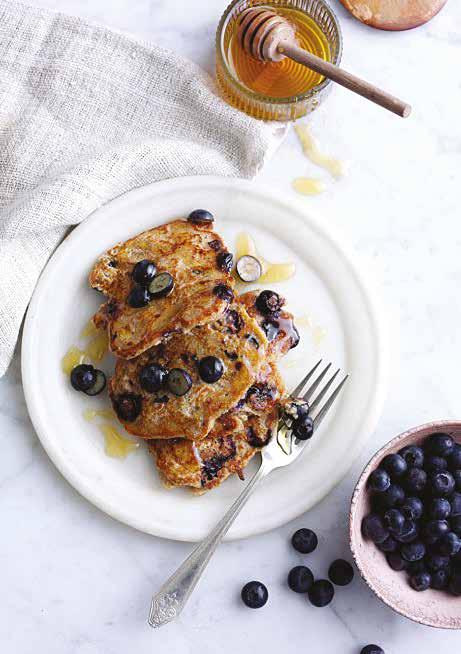
INGREDIENTS
100g oats
1tsp baking powder
½ tsp ground cinnamon
Salt
1 ripe banana
150ml unsweetened almond milk
1tsp vanilla extract
50g blueberries, halved
1tbsp coconut oil
Honey or maple syrup, to serve (optional)

INGREDIENTS
200g blackberries
1tbsp cornflour
2tbsp water
150g caster sugar
100g butter, at room temperature
100g selfraising flour
50g desiccated coconut
2 eggs
Custard, to serve

Place the oats in a food processor and grind to turn into flour. Transfer to a bowl and stir in the baking powder, cinnamon and a pinch of salt.


Add the banana, almond milk and vanilla extract to the food processor and blend until smooth. Pour the mixture into the bowl with the dry ingredients and stir until fully combined. Gently fold in the blueberries.
Heat the coconut oil in a frying pan over a medium heat and add a few spoonfuls of batter to the pan. Cook the pancakes for a few minutes, until bubbles appear on the surface, then flip them over for another minute, until cooked through. Repeat with the rest of the mixture.
Serve the pancakes with honey or maple syrup, if using.
Lightly butter 4 x 250ml pudding moulds and line the bases with circles of non-stick baking paper.
Place half the blackberries in a small pan, then mix in the cornflour, water and 50g sugar. Cook for 3-4 minutes, until the blackberries are soft and the sauce has thickened. Add the remaining blackberries and leave to cool.
To make the sponge, place the butter, flour, coconut, eggs and remaining caster sugar in a bowl and beat them together until smooth.
Spoon the cooled blackberry mixture into the bottom of the pudding moulds, then pour the sponge batter on top and level the surface.
Loosely cover the top of each mould with a square of buttered foil. Cook the puddings in the top of a covered steamer for 30-35 minutes, until the sponges are well risen.
Loosen the edges of each pudding with a knife and turn out on to plates. Remove the lining paper and serve immediately with custard.