Jesus Christ Superstar returns to the West End


Jesus Christ Superstar returns to the West End
Top players take to the crease in Women’s T20 World Cup
‘I turned away from drugs and towards God’


The Salvation Army is a Christian church and registered charity seeking to share the good news of Jesus and nurture committed followers of him. We also serve people without discrimination, care for creation and seek justice and reconciliation. We offer practical support and services in more than 700 centres throughout the UK. Go to salvationarmy.org.uk/find-a-church to find your nearest centre.
The Salvation Army first published a newspaper called the War Cry in London in December 1879, and we have continued to appear every week since then. Our name refers to our battle for people’s hearts and souls as we promote the positive impact of the Christian faith and The Salvation Army’s fight for greater social justice.
Performers and audience members alike will be hoping for dry weather next weekend (20–21 June) for West End Live. Taking place in Trafalgar Square, with edited highlights being streamed online, the event is said by the organisers to be the biggest free musicals celebration in Europe. As we report this week, tens of thousands of people are expected to attend, all looking forward to hearing compositions from their favourite shows.
West End Live has been running for more than 20 years, which is a significant length of time, but the event is a lot younger than some of the shows it features.
A good musical can seem to have an indefinite lifespan. Many of the shows still popular today are more than a half a century old. Among them is Jesus Christ Superstar, which was first released as a concept album in 1970.
The rock opera is about to begin a new run at the London Palladium, with Sam Ryder in the title role. In this week’s issue, we hear from two people about the way the show, which is based on events of 2,000 years ago, portrays the Bible story of Jesus’ ministry and what his followers and critics thought of him.
Editor: Andrew Stone, Major
Managing Editor: Philip Halcrow
Staff Writer: Emily Bright
Staff Writer: Claire Brine
Staff Writer: Ewan Hall
Editorial Assistant: Linda McTurk
Graphic Designer: Mark Knight
Graphic Designer: Matt Penberthy
Email: warcry@salvationarmy.org.uk
The Salvation Army United Kingdom and Ireland Territory
Champion Park London SE5 8FJ
Tel: 0845 634 0101
Subscriptions: 01933 445445 (option 1, option 1) or email: subscriptions@satcol.org
Founders: Catherine and William Booth
International leaders: General Lyndon Buckingham and Commissioner Bronwyn Buckingham
Territorial leaders: Commissioners Jenine and Paul Main
Editor-in-Chief: Major Andrew Stone


Lyricist Tim Rice tells us: ‘Jesus is one of the most influential people to have ever existed. His story affects everybody in western culture. Whatever people believe, this isn’t a story you can ignore.’
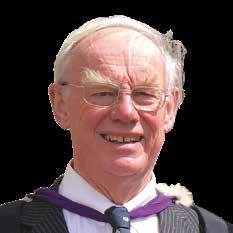
Ian Bradley, author of the book Music of the Night, which examines the faith elements of many musicals, comments: ‘There’s no Resurrection scene. To that extent, it isn’t a Christian musical. Of course, it’s not written as one. The writers’ interest is not in Jesus as the Son of God, but in the impact that Jesus and, to some extent, his message had on his followers.’
Jesus is the Son of God, and his life and teachings changed the world for ever as people came to discover that they were born not to put on an act to impress others, but to experience God’s love and joy in their lives.





and
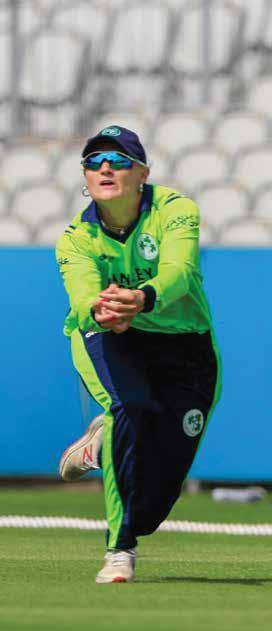
All-rounder Kathryn Bryce is leading Scotland into the tournament


England’s Heather Knight is taking part in her 11th World Cup
Feature by Emily Bright
Fans of the ICC Women’s T20 World Cup don’t like cricket – they love it. And this year they will have plenty of opportunities to get up to speed with the 12-team tournament, which is being hosted by the England and Wales Cricket Board.
For those unable to make it to the grounds, Radio 5 Live, Radio 5 Sports Extra and the Test Match Special podcast will be delivering all the action from across the 24-day competition, from the opening match at Edgbaston between England and Sri Lanka onwards. Meanwhile, Sky is televising many of the matches live, some of them – including the final on Sunday 5 July – being made available on free-to-air TV.
Scotland and Ireland begin their World Cup campaigns by playing each other at Old Trafford, while defending champions New Zealand take on the West Indies at the Hampshire Bowl.
Also playing on the opening weekend are six-time champions Australia and India – who are a force to be reckoned
with after winning the ODI (or 50-over format) World Cup last year.
England have a point to prove after the West Indies sent them crashing out of the competition in the group stages at the last T20 World Cup in 2024. But for all-rounder Heather Knight, who has been part of the England squad for 10 World Cups and is in the latter stage of her career, a sense of perspective is everything.
‘I put a lot of pressure on myself to try and perform,’ she told BBC Sport ahead of the tournament, ‘because I thought “this might be my last one, I really want to do well”, and it wasn’t particularly helpful. And that’s certainly something I’ve taken into the last two or three years.
‘I want to live in the moment and to try and contribute as much as I can and yeah who knows? If I’m playing well, if I’m enjoying it and if I’m still wanted there could be things in the future.’
Maybe we can understand what it’s like for someone to put pressure on
themselves to perform. Perhaps we do it to ourselves. We may feel as though we are not doing well enough in all kinds of areas of life.
Sometimes when we feel under pressure it can help us if we reframe our worries. And many people around the world find they can do so by turning to a source of loving support to strengthen and comfort them in times of stress.
They recognise the truth contained in a Bible passage that shows how a person who puts their faith in God experiences his help. It contains a recollection of how in a time of trouble ‘your constant love, O Lord, held me up’ and says that in times of anxiousness and worry ‘you comfort me and make me glad’ (Psalm 94:18 and 19 Good News Bible).
We don’t need to be stumped by our biggest challenges. We can know the constant love of God. All we need to do is ask for his help, and he will provide all the strength that we need to face each day. Howzat?
‘We are at risk of a lost generation,’ warned Alan Milburn, the former health secretary, in his report into youth unemployment published at the end of last month. He discovered that almost one million people aged 16 to 24 are not in education, training or employment. Up to 60 per cent of them have never had a job, rising from 40 per cent in 2005.
National newspaper headlines focused on the negative outcomes for young people – ‘Snowflake generation’, ‘Job misery’ and a ‘Record of failure’. But we should be careful not to dismiss an entire generation.
In his assessment, Milburn continued: ‘Every young person has something to give: a skill, an aptitude, a potential. No young person should be written off because of where they start in life: the family they are born into, the school they attend, the health condition they have, or the barriers they face.
‘I do not accept the caricature of a generation that is not interested in employment. I do not accept that mental health is simply an excuse. Nor do I accept that the answer is to tell young people who are struggling simply to try harder.’
Having taken time to reflect, I agree. Each young person has their own unique strengths and skills and wants to succeed. For those who are struggling to find work, there may be barriers – whether that’s social inequality, prejudice or health issues, to name a few. Telling young people simply to ‘try harder’ doesn’t change anything. But believing in them and helping them flourish does.
Someone who saw the potential in empowering young people was the early Christian leader Paul. He told his protégé Timothy: ‘Don’t let anyone look down on you because you are young, but set an example for the believers in speech, in conduct, in love, in faith and in purity’ (1 Timothy 4:12 New International Version).
Timothy had travelled across the eastern Mediterranean, spreading the gospel and had become a church leader in Ephesus, in modernday Turkey. His experiences show what’s possible with encouragement and God’s help.
We can learn a lot from young people. They’re not a lost generation; they just need to find someone who can unlock their potential.
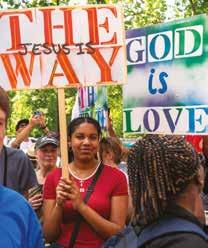
Marchers share messages of hope
Seven thousand Christians from across the UK and beyond joined a march in central London to celebrate Jesus, faith, worship and prayer. Organised by Ichthus Christian Fellowship and UK church leaders, the Jesus March culminated in a time of live music and prayer in Trafalgar Square.
In the wake of a rise in nationalism, people were asked not to bring political placards or national flags or try to promote their own causes. Instead, during the day, participants shared messages of compassion, reconciliation and hope.
Christian leader the Rev Les Isaac said: ‘Jesus March is about the Church being visible on the streets of London to come together in all our unity, in our worship and in our prayers to be a gift to London.’
The replica of St Edmundsbury Cathedral
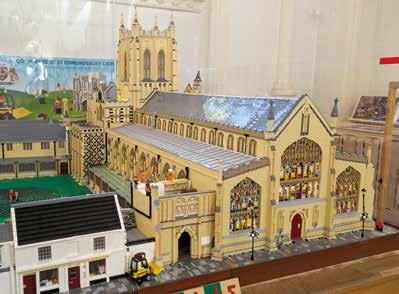
The final brick has been placed in a decade-long community project to build a Lego replica of St Edmundsbury Cathedral, reported BBC News.
The model, located in a corner of the cathedral in Bury St Edmunds, Suffolk, is made from about 200,000 pieces. Work on the structure began in May 2016 and involved more than 70 volunteers.
Created as a fundraising initiative, one brick was added to the model for each pound donated.
‘This model now stands as a testament, not just to craftsmanship, but to what our community can accomplish together,’ said the Very Rev Joe Hawes, dean of St Edmundsbury. ‘When the Lego cathedral build began in May 2016, we could never have imagined the commitment it would take to reach the moment of adding the final brick.’
Knitters’ items go shawl over the world
A Salvation Army knitting group has distributed more than 1,560 handcrafted shawls, scarves and squares to members of the public over the past 15 years, as a tangible display of hope.
Based in Leeds Central Salvation Army church, the Prayer Shawl Ministry group meet monthly, offering a space for people to socialise and pray as they knit items for others.
Their creations have gone all over the world and have supported people through life’s ups and downs, marking weddings and births as well as comforting those who are grieving or experiencing homelessness.
Major Nicola Barker, a leader at the church, recalls: ‘I took a prayer shawl to someone in hospital over Christmas, as her family were all in Australia and couldn’t visit her. I met her on a particularly difficult day, but the shawl gave her a lot of comfort.
‘The fact that each item has been thought about and prayed over means so much to people when they’re going through something – even those that are not of faith get something out of that.’
The rock opera Jesus Christ Superstar begins a brand-new run at the London Palladium next week (Saturday 20 June). Sam Ryder takes the role of Jesus while Boy George, Layton Williams and Julian Clary are among the famous faces playing Herod. As the curtain goes up on the latest production, lyricist
Tim Rice talks about his and composer Andrew Lloyd Webber’s intentions when they wrote the musical, while Ian Bradley, author of a book about musicals, investigates the messages of faith it contains
Feature by Emily Bright and Claire Brine
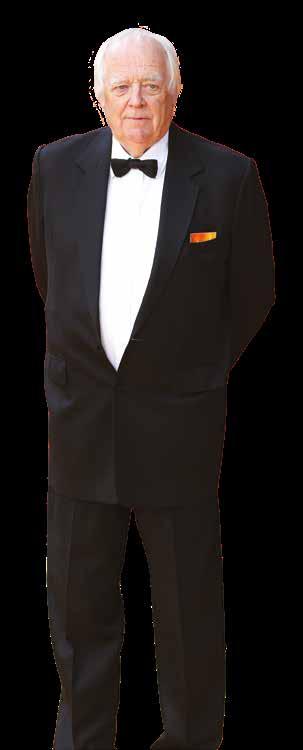
Jesus is one of the most influential people to have ever existed. His story affects everybody in western culture. Whatever people believe, this isn’t a story you can ignore.
Jesus speaks a lot in the Bible – so he was easier to write than Judas. When I wrote the songs ‘Hosanna’ and ‘Gethsemane’, I just had to adapt the words that were already on the page. But with Judas, I had to make it all up because there’s nothing there. So I wondered what I would have done in his position. Would I have thought Jesus was God? Would I have followed him blindly or would I be worrying about what might happen to my race?
no desire to challenge anyone’s beliefs, our musical was about Jesus the man as seen by Judas Iscariot. So Jesus had to have some human failings. We know that he had great doubts in the Garden of Gethsemane, where he prayed before he was arrested.
This is the story of Jesus from Judas’s point of view, and when Judas dies at the end of the musical, he is thinking: ‘Perhaps Jesus is God. I don’t know.’ In his last song, he even says: ‘Jesus, I only want to know – are you God?’ He doesn’t get the answer. That’s deliberate. Andrew and I aren’t saying what the answer is. People can draw their own conclusions.

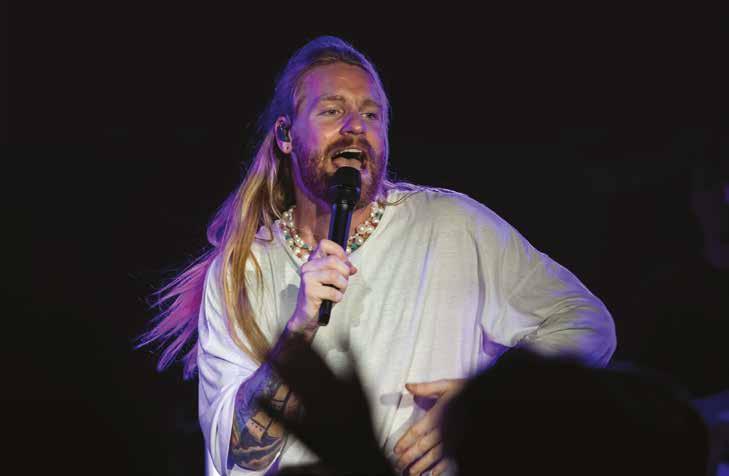
Sam Ryder, who is playing the title role in the new production of ‘Jesus Christ Superstar’
The show is an interesting take on Jesus because it’s seen through the eyes of Judas – the disciple who betrays him. Judas believes that the disciples have got too much of Heaven on their mind, and that Jesus has become too big for his boots. You have also got Mary Magdalene, who finds Jesus a compelling figure and sings ‘I Don’t Know How to Love Him’. She finds him scary, but also extraordinarily appealing. Then there’s Pilate, who is puzzled by Jesus. He can’t make him out.
Interestingly, Jesus Christ Superstar ends with the Crucifixion. There’s no Resurrection scene. To that extent, it isn’t a Christian musical. Of course, it’s not written as one. The writers’ interest is not in Jesus as the Son of
Jesus Christ Superstar first came out in 1970, yet it’s still enormously popular and powerful. When you see interviews with those who play Jesus, they say that the story affects and moves them, even if they’re not Christian.
I have met people who converted to Christianity after seeing Jesus Christ Superstar, because they find Jesus very human. He wrestles with God in the song ‘Gethsemane’, which is very biblical. He is saying that he wants this cup of poison to be taken away from him, but he will accept what God wants. I’ve also met people who find the actual Crucifixion scene – which is played out to music –profoundly moving, and who have been drawn to Christianity through it.

TIM COLLINGS describes the peace that he found when he surrendered his life to God after years of being addicted to cocaine
Interview by Claire Brine
Tim Collings was at rock bottom. His marriage was over. He was battling a cocaine addiction. And the medication he was taking to treat his bipolar disorder and paranoid schizophrenia diagnosis wasn’t helping.
‘I was in a very dark place of desperation,’ says Tim, a former music industry sound engineer and Glastonbury Festival technical manager. ‘The police knew me well, because they were used to talking me down from wanting to “end everything”, once even from a car park roof. I was crying out for help because I was so messed up. But I always knew that I could never do it. It would have killed my mum.
‘Despite the fact that I was living in hell – and feeling like a zombie due to the antipsychotic drugs I was prescribed – I’d often find myself rocking up to The Salvation Army in Newton Abbot. Back then, I was living with my mum, so I’d turn up drunk to band practice, just to sit and listen to the music. It had always been my spiritual home. A lot of the people there had known me all my life.’
Ever since he grew up in what he describes as a ‘traditional Salvation Army family’, Tim had felt connected to God through Christian music and its accompanying lyrics. It was while he was playing in the church’s brass band, as a 13-year-old, that he felt a calling to explore his faith more deeply. But he didn’t know how to go about it.
Two years later, Tim had stopped going to the church and started experimenting with drugs, keen to see what else life had to offer him. For 22 years he was addicted to cocaine. But he could never quite shake off the Christian beliefs that had stirred his heart in childhood.
‘Even when I was off my head, I always remained a believer in Jesus Christ,’ he explains. ‘I always had faith. But I wasn’t always a follower.
‘During the 30 years in which I was living a life of sin and debauchery, I knew that there was a reason behind my struggles. I can remember being drunk one night and telling a friend that one day I’d have to give up the party lifestyle because sometime in the future I was going to become a soldier in The Salvation Army. I could always see that there was a bigger picture for me.’
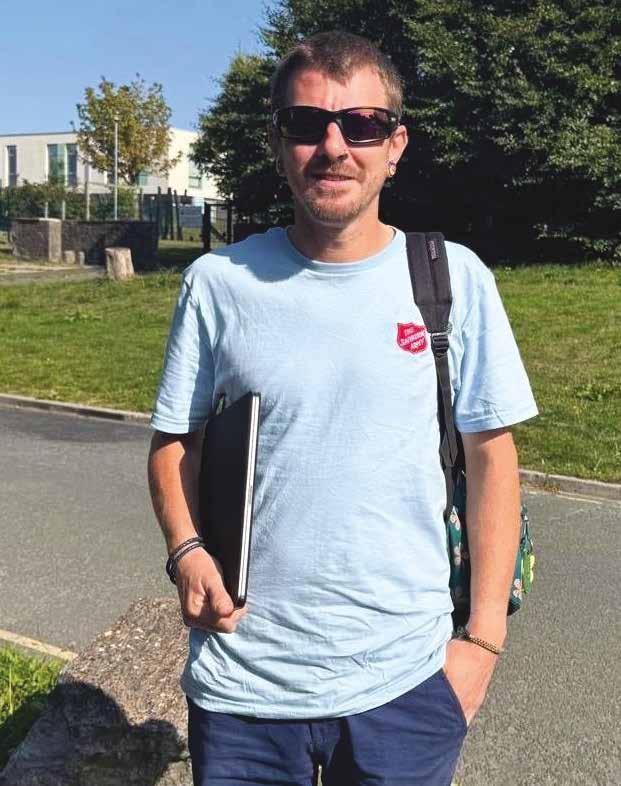
Next month, Tim’s words will finally be realised as he is enrolled as a uniform-wearing soldier at Plymouth Whitleigh Salvation Army church. Every Sunday morning, he sits at the grand piano, pinching himself that he gets to lead the
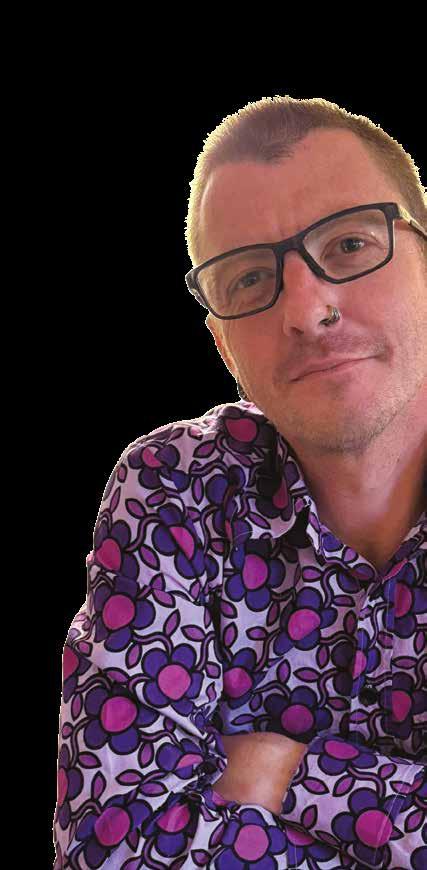
congregation in worship. He is also part of a wider Salvation Army team that is in the process of setting up a Core Recovery church, a faith-based initiative designed to support individuals in recovery from addiction, health conditions and life struggles.
‘I feel it’s my calling from God to use my experiences as an addict to bring people back to him,’ he explains. ‘Because when an addict walks through our church doors, I get it. I’ve got that experience to help others.’

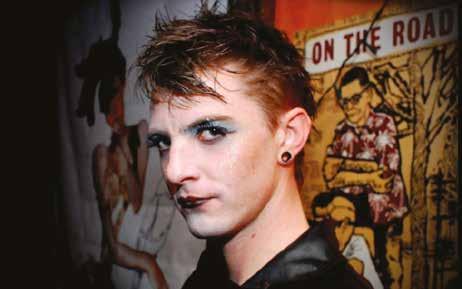
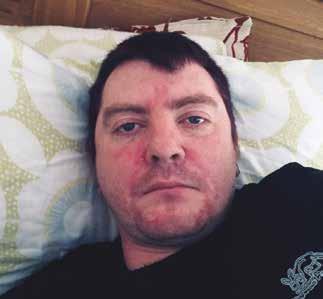
Tim during his ‘wilderness’ years
always sense the tension.’
Three years after his dad left, Tim’s mum remarried, and her husband became stepdad to Tim and his older siblings. Every week, the whole family would attend the Salvation Army church in Newton Abbot.
‘On Sundays, there would usually be three worship services, Sunday school, two musical open-air meetings – and my mum would still find the time to cook a roast dinner and make a trifle,’ Tim says. ‘At the age of seven, I became a junior soldier. I knew that God was speaking to me – and I’d say that’s when my faith really started.’
The next year, after the family had spent an ordinary morning at church, an unimaginable tragedy occurred which changed life for ever.
‘We’d had our trifle, and Justin – my 13-year-old brother – went upstairs to play,’ Tim remembers. ‘Mum asked me to
go and tell him that he needed to do the dishes. When I got upstairs, he was sitting on the landing, so I told him about the dishes and went off to my bedroom. I was eight.
‘A little later, I went out to talk to Justin again, but he was still sitting in the same position. I picked up his left hand and slapped his face with it. When I let go, it just flopped. Suddenly I thought: “Something’s not right here.” I called for my mum. She ran upstairs, saw Justin and screamed.’
Tim darted to the corner of the landing, curling himself up in a ball. The next thing he can remember is sitting on the frontdoor step, listening to the siren of an
Turn to page 10 f
From page 9
ambulance as it drove towards the house.
‘We don’t really know what happened or why Justin died,’ Tim says. ‘There are lots of theories. It was just horrific.
‘After Justin died, I took the week off school. Then life carried on. There was no therapy in the late 1980s. You just had to get on with it. People didn’t know how to deal with trauma back then.’
The tragedy of Justin’s death was difficult for Tim to understand. But despite the pain of his loss, he found a little comfort by reflecting on an experience that the brothers had shared six weeks earlier.
‘Justin had sneaked me into a Salvation Army event that was being run for teenagers,’ Tim says. ‘And during the service, he got up on the stage to share
his testimony, saying: “If God wanted to take me home now, then I’m ready.” It felt like such a powerful thing for a 13-yearold to say. It’s one of my last memories of him.’
Though Tim’s life was turned upside down by the death of his brother, he is quick to explain that his faith ‘wasn’t battered’. He didn’t doubt God’s existence. He kept looking up for guidance.
Then came what he calls the ‘downward spiral’. It started when he was 15 years old.
‘My school had a commercial recording studio on site and a teacher agreed to show me how to use it during my lunch breaks,’ says Tim. ‘So I got into recording, then live sound engineering. My claim to fame is that I taught the band Muse how to
use the recording studio.
‘Once I’d left school, I started running music festivals, and in the early 2000s, I was headhunted by a group of artists. We became Arcadia Spectacular at Glastonbury Festival – the spider-type stage made from scrap military metal, which is basically a rave into the night. I designed the stage’s computer system that synced the flames to the music and was responsible for pressing the right buttons when we wanted to use the flamethrowers, which were actually 40-feet-high propane gas explosions.’
Tim’s interest in the music industry –and the party lifestyle that appeared to accompany it – gave his mum cause for concern.
‘She said to me that I shouldn’t hang around with people who were going to be a bad influence on me,’ Tim says. ‘But the truth was, I was the bad influence. I earned a lot of money back then, but most of it went up my nose. I was a cocaine addict, having been given my first line of the drug when I was 18.
‘To a young and innocent Christian boy, the sex, drugs and rock’n’roll lifestyle that I was being offered seemed very glamorous. It was a crazy time – and I was always chasing the next high. But all I got in return was temporary happiness. I put my mum through hell.’
After Tim’s years on the festival circuit came to an end, he moved to Dartmoor. He got married, started running a smallholding and began breeding goats. His wife landed a job breaking in Dartmoor hill ponies. Sadly, the marriage failed.
‘This was all around the time when my mental health started to decline,’ says Tim. ‘I’d abused my body with drugs for so many years. I received all kinds of diagnoses – for bipolar disorder, paranoid schizophrenia and anxiety, as well as other problems due to drug-related issues. I was on antipsychotic medication. I was written off by everybody.’
Feeling desperate, with nowhere else to turn, Tim fell to his knees and begged
God for help.
‘There was one particular day when I said: “God, what shall I do?”’ he remembers. ‘Nothing else was working for me. I knew that faith was the one thing in my life that had never left. So I prayed. And the Lord answered me in two words: “Christian community.”’
I knew that I was there to heal
Tim searched online and came across the website for a Christian community in Bridport called Pilsdon. Since 1958, it has been offering refuge to people in crisis, supporting them as they rebuild their lives and find new direction. Tim knew it was where he was meant to be.
‘I applied and was accepted – but then Covid struck,’ says Tim. ‘So I spent the
next 18 months living at my mum’s, then moved to Pilsdon in 2021. While I was there, my job was to hand-milk the cows and take care of the sheep. It was hard. But that was because I was beginning to look at myself. I knew that I was there to heal.’
Tim threw himself into community living. He reflected on the choices of his past. He got clean from drugs. And he drew closer to God. When he left the community in 2023, he was ready to face the future.
‘I went back to The Salvation Army in Newton Abbot,’ he says. ‘I started a cleaning job in Wetherspoons, and eventually set up my own fencing, maintenance and decorating business. I came off my bipolar and schizophrenia medication, because we discovered that I had been misdiagnosed. I actually think I have undiagnosed ADHD, and I have also received a diagnosis for complex PTSD. But it was the moment when I surrendered
my life to Christ fully that everything really began to blossom.’
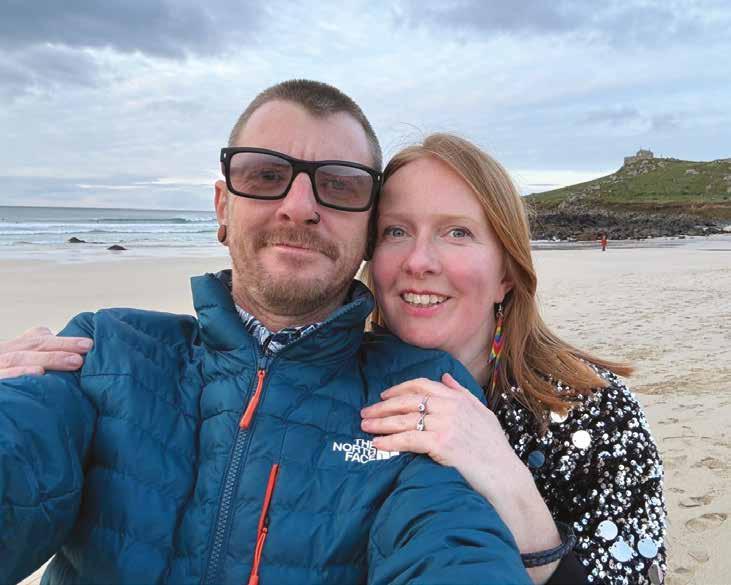
Last year, after Tim made the decision to commit the rest of his life to Jesus, he met a Christian woman called Helen. Months later, they were married. Tim was thrilled to become ‘Dad’ to her adopted son. This month, the family celebrate Tim’s four years of sobriety.
‘I used to be so horrible,’ he says. ‘With drugs, I was the ringleader, trying to get everyone wrecked. But now, I’m a Jesuslover. My faith means everything to me. From the moment I wake up, I live for Christ. He’s the reason I’m here.
‘The point of my story is: don’t wait. I’d urge anyone to take Jesus into their life right now. I spent 30 years in the wilderness, chasing a high from drugs, but I never found it. That’s because the high I was looking for could only be found in Jesus. He is all I’m chasing now.’
The War Cry invites readers to send in requests for prayer, including the first names of individuals and details of their circumstances, for publication. Send your Prayerlink requests to warcry@salvationarmy.org.uk or to War Cry, 1 Champion Park, London SE5 8FJ. Mark your correspondence ‘Confidential’.
Becoming a Christian
There is no set formula to becoming a Christian, but many people have found saying this prayer to be a helpful first step to a relationship with God
Lord Jesus Christ,
I know that I have done things in my life that are wrong and I’m sorry.
Thank you that I can ask you for forgiveness because of the sacrifice you made when you died on the cross.
Please forgive me and help me to live a better life in the future as I learn how to love you and follow your way of living.
Thank you, Lord Jesus.
If you’ve prayed this prayer, scan the QR code or contact us using the coupon on this page

Nigel Bovey gives chapter and verse on each book
For its size, this short letter poses a disproportionate number of conundrums. Being ascribed to ‘Jude … a brother of James’ (verse 1 New International Version) could mean that the author is also ‘Judas’, a brother of Jesus (see Mark 6:3), but scholars are not agreed.
The mysteries further deepen when the writer cites ‘Old Testament’ events that are not recorded elsewhere in the Bible.
Neither the archangel Michael and the Devil’s argument over the body of Moses (9) nor Enoch’s prophecy about the punishment of the wicked (14) appear in the set of books traditionally included in the Old Testament.
Beyond dispute, though, are the subjects that Jude raises: apostasy (the falling away from faith) and heresy (teaching that contradicts the faith).
Jude says that his readers must contend for the true faith that was given ‘once for all’ time (3). He emphasises that the true faith is based on God’s love and ‘the mercy of our Lord Jesus Christ to bring you to eternal life’ (21).
The challenge is twofold. First, false teachers are misinterpreting God’s gracious willingness to forgive sin as a licence for reckless immorality (4).
Among other things, Jude writes, they ‘pollute their own bodies’ (8), ‘slander’ (10), ‘follow their own evil desires’ and ‘boast about themselves’ (16).
Secondly, they deny that Jesus is the Christ (4) – the definition of ‘Antichrist’ according to John (see 1 John 2:22).

Ultimately, as he did with the subversive angels, the sexually immoral citizens of Sodom and Gomorrah, the murderous Cain, the wayward prophet Balaam and rebellious leader Korah, God will punish those who oppose him (11–13).
Although Jude warns that believers should expect opposition, falling away from the faith is not inevitable. They are to build themselves up by praying, keeping themselves in God’s love, being merciful to doubters and rescuing those whose souls are in mortal danger (17–23).
In contrast to the dreaded judgement that awaits the wicked, God is able to keep the faithful from falling and ‘to present you before his glorious presence without fault and with great joy’ (24).
To receive basic reading about Christianity and information about The Salvation Army, complete this coupon and send it to Jude
War Cry 1 Champion Park London SE5 8FJ

Or email your name and postal address to warcry@salvationarmy.org.uk

Feature by Ewan Hall
Hundreds of performers are ready to give a big hello to tens of thousands of theatre fans in central London. Taking place in Trafalgar Square next weekend (20–21 June), West End Live is said to be Europe’s largest free musical theatre celebration.
The annual event, sometimes described as the ‘Glastonbury for theatre lovers’, will showcase more than 50 West End favourites, both long-running productions – including Hamilton and Mamma Mia! – as well as newer shows, such as Paddington the Musical
The aim of the open-air event is to make musical theatre more accessible. It allows connoisseurs of the genre to see their favourite theatre stars up close, while also introducing newcomers to live musical performances. Fans unable to make it to the capital in person can still get in on the act by following coverage on social media accounts and watching video highlights on YouTube.
Watching a production can leave audiences amazed by how deeply the music and storytelling affect them. They may find themselves connecting to a certain character or storyline. And in those moments – whether listening or watching – they can be overcome with emotions such as joy, anger or sadness.
While not all of us have seen a West End production, we can all relate to feeling powerful emotions, both good and bad – because there are times when life goes smoothly and times when it feels challenging.
When Christians are overwhelmed by painful emotions, they are consoled by knowing that God is there beside them.
One early Christian who was well acquainted with tough times wrote that he had come to know God as ‘the Father of compassion and the God of all comfort, who comforts us in all our troubles’ (2 Corinthians 1:3 and 4 New International Version
If we choose to let God into our lives, he will be with us not only through moments of immense joy – such as when we get a new job, successfully complete school or celebrate a family occasion – but also in moments of grief and loss.
And in our times of sorrow, he offers comfort – with an assurance that he could never let us go.

Crowds gather in Trafalgar Square for last year’s West End Live
ACROSS
1. Rapid (4)
3. Fluid bag (3)
5. Vagabond (4)
7. Self-acting (9)
9. Grime (4)
10. Elegy (4)
11. Musical drama (5)
14. Die in water (5)
15. Under (5)
17. Braking system (5)
18. Site (5)
19. Open sore (5)
20. Larceny (5)
23. Small rodents (4)
25. Trial (4)
27. Dug out (9)
28. Departed (4)
29. Worthless (3)
30. Toy (4) DOWN
1. River crossing (4)
2. Tense (4)
3. Bend forward (5)
4. Seat (5)
5. Flog (4)
6. Froth (4)
7. Haughtiness (9)

8. Amassed (9)



Fill the grid so that every column, every row and every 3x3 box contains the digits 1 to 9
11. Beginning of something (5)
12. Weird (5)
13. Concerning (5) 14. Douse (3) 16. Armed conflict (3)
Look up, down, forwards, backwards and diagonally on the grid to find these football clubs

INGREDIENTS
Serve with the potato tortilla chips. SERVES 4-6


100g potatoes, thinly sliced
Olive oil
1 onion, peeled and thinly sliced
1 green pepper, cored, deseeded and sliced into strips
1 garlic clove, peeled and crushed
300g lean beef mince
2tsp ground chilli powder
1 packet ready-made taco seasoning
2 gem lettuces
Low-fat sour cream, grated cheese, chilli flakes, pickled jalapeños and fresh coriander, to serve
4
INGREDIENTS
15 baby potatoes, halved
Salt
Rapeseed oil
4 chicken breasts
Freshly ground black pepper
8 rashers bacon
2tbsp fresh tomatoes, chopped
1 jar ready-made pesto

Boil the potatoes for 2 minutes, drain and pat dry on kitchen paper. Set aside.



Heat a sauté pan with a little oil and cook the onion, pepper and garlic until soft.
Add the mince, chilli powder and most of the taco seasoning. Fry until brown.
In a separate pan, fry the potato slices in a little oil until crisp.
Transfer to absorbent kitchen paper to drain.
Sprinkle with the remaining taco seasoning. Lay the leaves of the gem lettuces on a serving dish. Add some of the beef mixture to each leaf and top with sour cream, cheese, chilli flakes, jalapeños and coriander.

Cut the potatoes in half and place in a saucepan of salted water. Bring to the boil. Reduce the heat and simmer for 10 minutes or until the potatoes are tender. Drain and set aside.
Heat a griddle pan and lightly oil.
Cut open the chicken in the middle lengthways but not completely in half.
Season the chicken.
Grill on both sides until the chicken is cooked through.
Grill the bacon under a moderate heat until crispy, then cut into strips.

Add the tomatoes, bacon and most of the pesto to the warm potatoes and stir in well, crushing some of the potatoes. Top the potato mixture with the chicken and drizzle with extra pesto, to serve.

A heart at peace gives life to the body, but envy rots the bones
Proverbs 14:30 (New International Version)